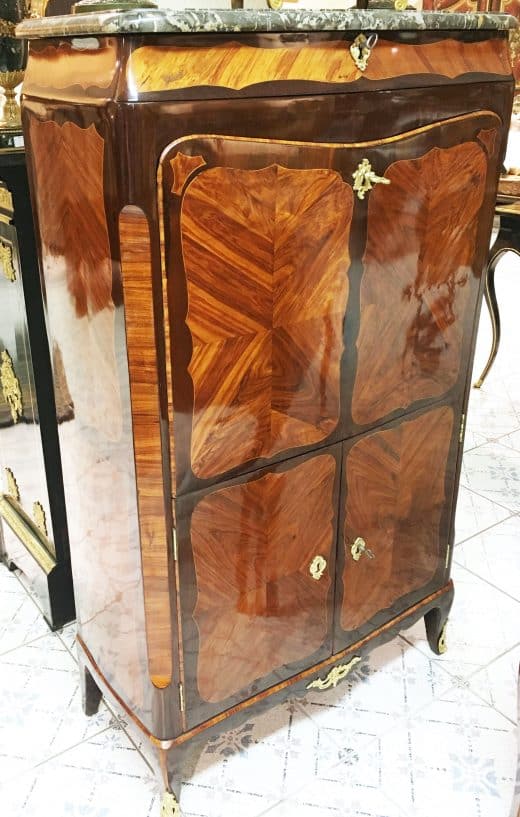
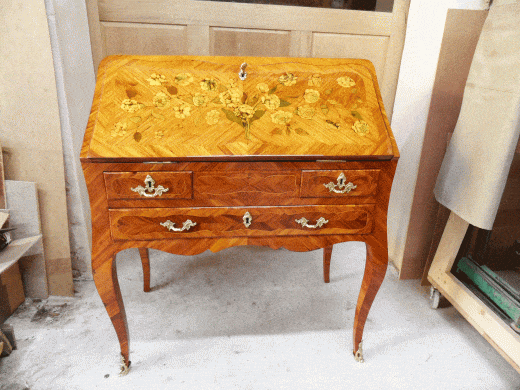
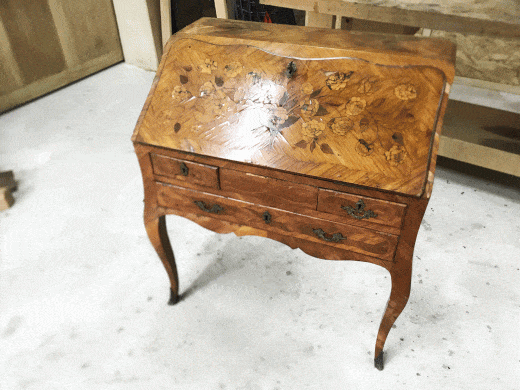
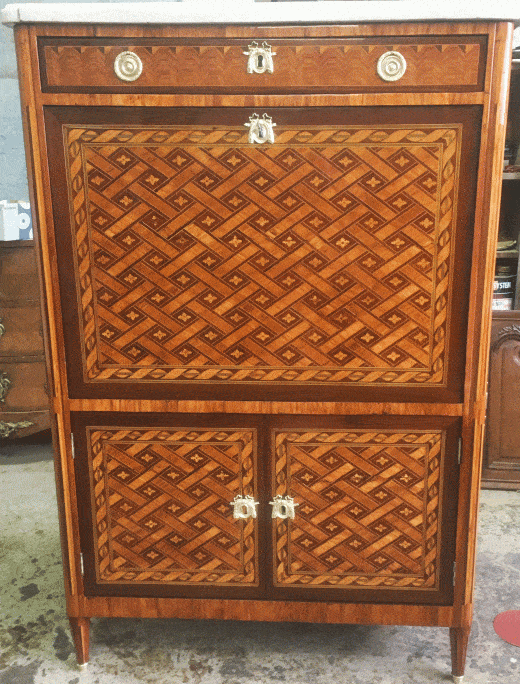
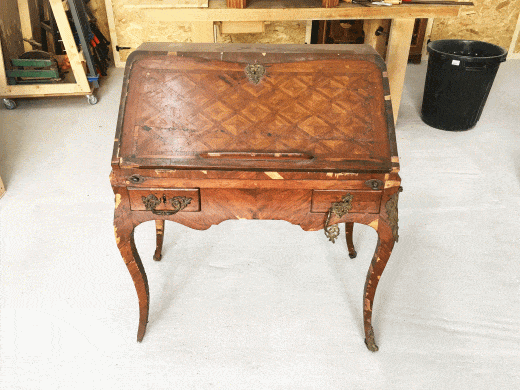
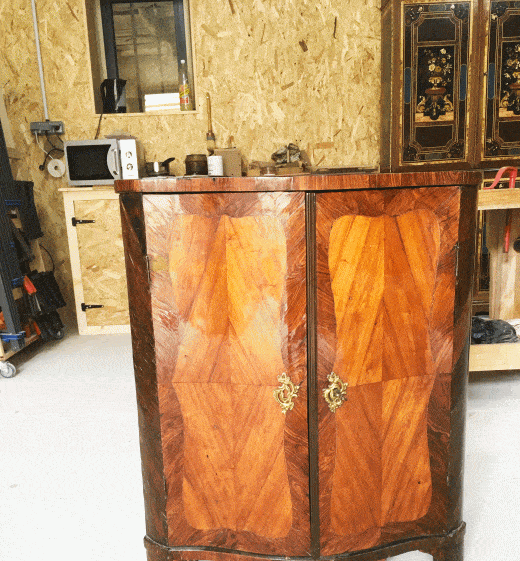
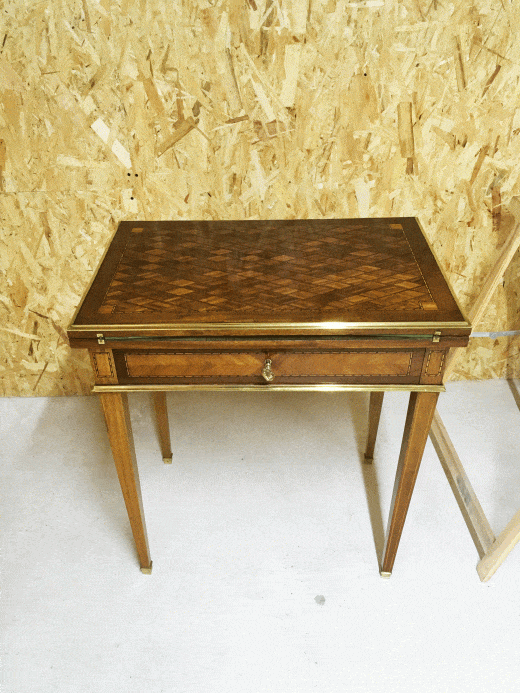
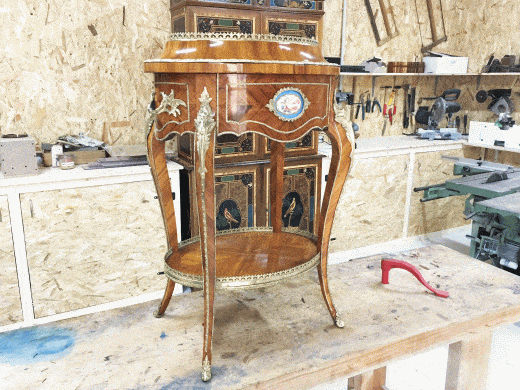
Secretary stamped P.ROUSSEL JME

Ebénisterie Matheu VATH

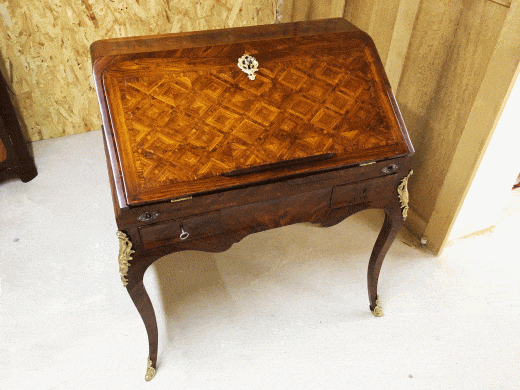
Here are some images of the restoration of a secretary desk stamped by Pierre Roussel (1723-1782). Having become a master cabinetmaker in 1745, Pierre Roussel set up shop on Rue de Charenton, in the Faubourg Saint-Antoine, under the sign "L'Image de Saint Pierre" (The Image of Saint Peter). Thanks to his skills as a cabinetmaker and especially as an exceptional marquetry artist, he quickly gained a great reputation. In 1762, he became a sworn member of his guild. By 1767, he was considered one of the best cabinetmakers of his time. Highly regarded by his colleagues, he became a representative of the cabinetmakers' guild in 1777 and then syndic two […]
Mazarine Chest of Drawers

Ebénisterie Mathieu VATH

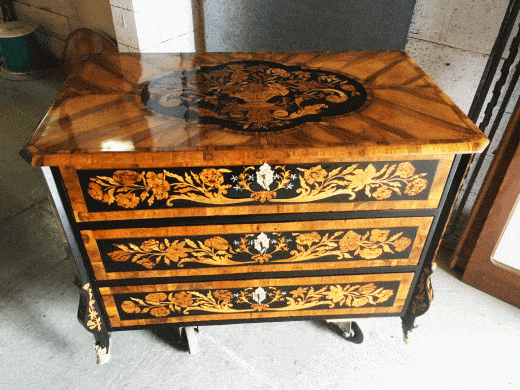
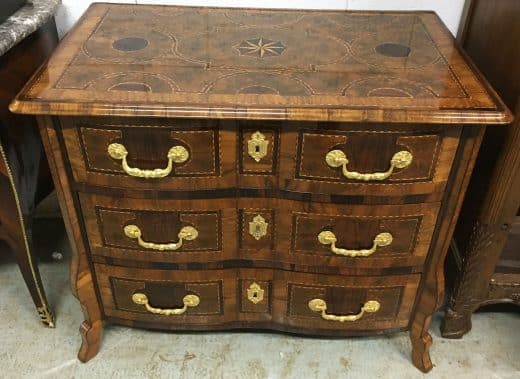
Here is a charming Louis XIV period Mazarine commode. With a serpentine front, it opens with three drawers in three rows. Furthermore, a marquetry top featuring a compass rose on an end-grain wood background crowns it. Its fir frame is also veneered with a very fine olive wood veneer, both end-grain and straight-grain, and rosewood. The sides are made of ash, while the stringing and compass rose are boxwood. Finally, the rails are joined with straight dovetail joints on the sides, which has […]

Louis XVI style sewing box

Ebénisterie Mathieu VATH

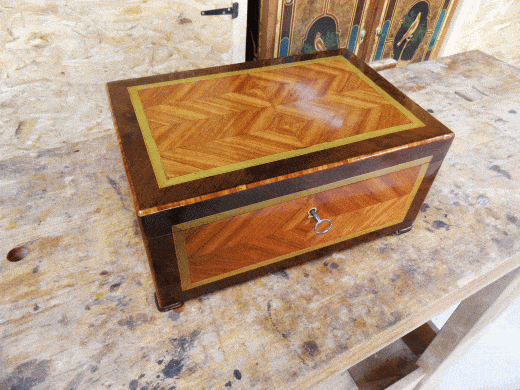
This sewing box dates from the Napoleon III period. Its frame is made of conifer. It is veneered with Rio rosewood, mahogany for the interior, and bound with boxwood and green-stained maple. A great quality of this box is that its lid has not warped. This is often the major problem with this type of object. People forget to lock them, and the wood warps. It then becomes very difficult to find the "trick" to make the box close properly without extensive restoration. Restoration work […]

Louis XVI style table

Ebénisterie Mathieu VATH

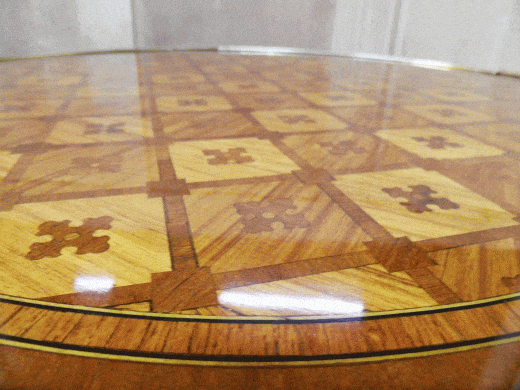
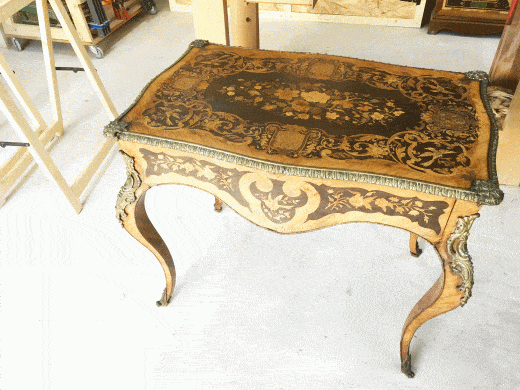
Here is a Louis XVI style table, which is probably an early 20th-century piece. It was likely made in the Faubourg Saint-Antoine, or perhaps at the École Boulle. I have seen apprentice furniture of this quality made by students during their training. Its frame is oak, while the veneer is rosewood and mahogany with a black inlay. The restoration was straightforward, apart from a lack of rosewood in the marquetry […]

Empire Bed

Ebénisterie Mathieu VATH

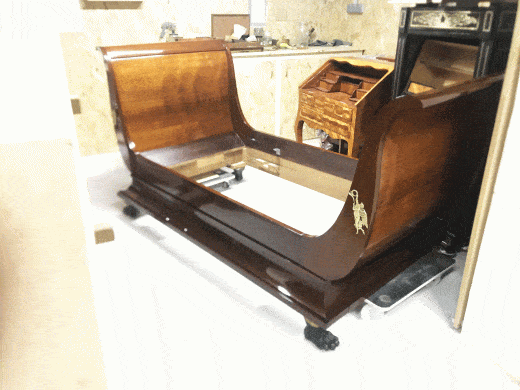
The "boat" bed, with its characteristic curve, is a French invention that appeared during the Directory period. It then became very fashionable during the Empire and the Restoration. Here, the Empire style is recognizable by its lion's paw feet. Two mahogany pieces. However, the varnish on this bed had worn away, so that the two pieces of mahogany that make it up were no longer distinguishable. The restoration. The biggest task was therefore to revarnish the bed: a major undertaking, given the surface area to cover. But it was necessary […]

Secretary Napoleon III

Ebénisterie Mathieu VATH

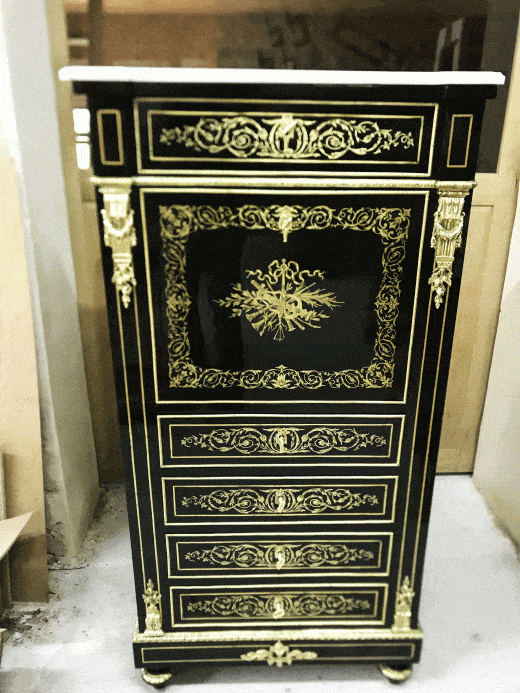
On the restoration side, there wasn't much to do: the brass fittings were reattached with fish glue and by infiltration, then stripped and varnished. The most difficult part of this type of furniture is the black stain. Over time, pear wood darkens, loses its color, and turns gray. It then needs to be stained, without, of course, obscuring the brass. To do this, I fill and polish the piece until the brass becomes a true mirror. Then, I apply a hot logwood stain, and then […]

Louis XV slant-front desk (After restoration)

Ebénisterie Mathieu VATH

Some time ago, I told you about this desk that was being restored. Well, here it is finished. The varnishing took three weeks, allowing enough time for the varnish to dry properly and achieve the best possible result. To review the restoration process: Louis XV slant-front desk. Here are some before and after photos.

Louis XV slant-front desk

Ebénisterie Mathieu VATH

The restoration of a lovely slant-front desk, or as Riesener calls it in his memoirs, a "tomb-shaped secretary," began two weeks ago. Now that the restoration phase is complete and the varnishing has begun, I'm taking a moment to provide a brief summary. Description of the desk: Its frame is made of oak and fir, veneered with rosewood and violet wood. Furthermore, the drop-front features floral marquetry in boxwood, natural and stained maple, and hornbeam. In addition, the desk has a large drawer made of […]

Corner cabinet in Boulle marquetry from the Napoleon III period

Ebénisterie Mathieu VATH

A classic restoration of Boulle marquetry: rehydration of the old glue by infiltration, creation and gluing of the missing brass fittings, and reconstruction of the base, which was in poor condition but not beyond repair. Finally, the bronzes were cleaned and a clear French polish was applied. Proof that appearances can be deceiving: even a badly damaged piece of furniture can regain its former beauty.

Commode returning from Egypt

Ebénisterie Mathieu VATH

During the turbulent period of the French Revolution, furniture production declined sharply, and most artisans faced very difficult times. Overall, from the Directory to the Consulate, furniture and seating had little time to evolve. Some Egyptian-inspired motifs had already appeared, but it was with the Egyptian expedition (1798-1801) that they formed a distinct style. However, the "Return from Egypt" style lasted only about ten years at most: it was quickly replaced by the Empire style, imposed by Napoleon. This commode features all of these elements…

Secretary stamped Martin Ohneberg

Ebénisterie Mathieu VATH

This week marks the completion of the restoration of a Louis XVI period secretary. Martin Ohneberg (master craftsman in 1773), who created this piece, was an excellent marquetry craftsman. Indeed, he used very high-quality rosewood. Furthermore, he produced numerous pieces of furniture with very simple lines but exquisite marquetry, including an infinite variety of drop-front secretaries. This particular one is veneered in rosewood and amaranth, with a mosaic marquetry of maple florets on a red satinwood ground. Moreover, the framing bands are made of […]

Louis XIII style desk

Ebénisterie Mathieu VATH

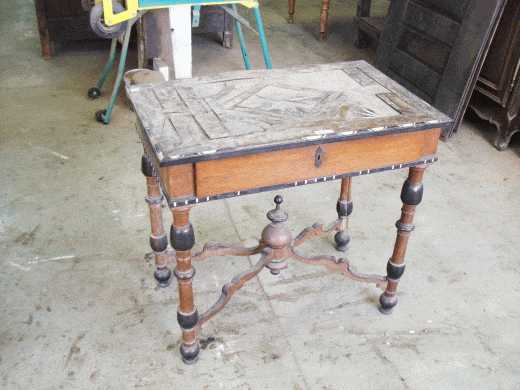
A look back at the restoration of a 17th-century Louis XIII table. It's made of solid walnut, veneered with walnut, ebony, ivory, and boxwood. It had spent a long time in an attic, and its top unfortunately suffered considerably. Much of the veneer was missing. I first removed what little veneer remained. It was very easy: it was completely detached. All I had to do was lift it with a thin blade and it would come right off. I then re-glued the top, adding material where the […]

Louis XIII Cabinet

Ebénisterie Mathieu VATH

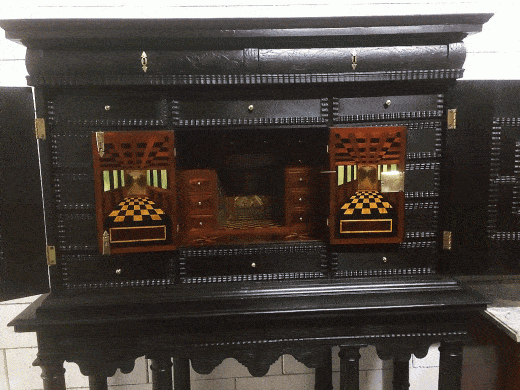
A look back at a fascinating restoration project (at least for me). So fascinating, in fact, that I forgot to take photos at the beginning! This cabinet dates from the 17th century. Its upper section has two drawers in the cornice and two doors. The base features two drawers in the frieze, supported by eight turned feet, and a top on ball feet. Inside, there are twelve drawers and two doors, which conceal a theater and eleven more drawers. The feet and moldings are made of solid pear wood. The rest of the […]

Majorelle Table

Ebénisterie Mathieu VATH

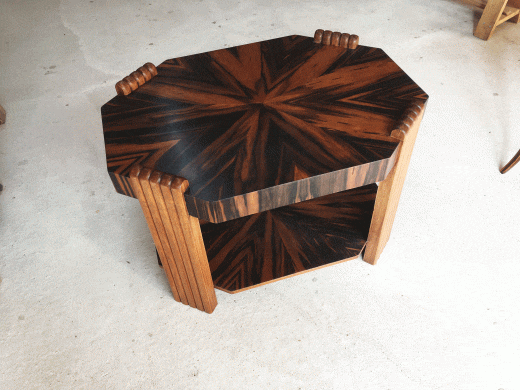
Here is a table in pure Art Deco style. It is veneered with Macassar ebony, and its legs are mahogany. It probably dates from the 1920s. Louis Majorelle is best known as one of the great cabinetmakers of Art Nouveau. It is too often forgotten that he was also one of the forerunners of Art Deco, as this table perfectly demonstrates. As for restoration, as always, the veneer requires the most work: there are gaps, it is peeling… But the most difficult thing on this table is the […]

Transition chest of drawers in the style of Topino

Ebénisterie Mathieu VATH

A month ago, a lovely Transition-style commode arrived at the workshop. It reminds me of the work of the cabinetmaker Charles Topino (circa 1742-1803) – who received his master craftsman's certificate on July 4, 1773. But it doesn't bear his stamp, nor any other for that matter. Proof that a piece of high-quality furniture doesn't need a stamp. Its marquetry could very well have come from Topino's workshop. He did, in fact, sell marquetry panels to haberdashers and his colleagues, who used them to adorn their furniture. This commode could therefore be inspired by Topino […]

Louis XV slant-front desk stamped HEDOUIN (Restoration complete)

Ebénisterie Mathieu VATH

Remember that slant-front desk? Well, it's finished. It wasn't easy, but it's regained its former glory. All that's left is to install the drawer locks and the leather before it goes back to its owner. I remade a large part of the legs using sawn kingwood. I cut it to the correct thickness, scraped, sanded, and oxidized it before gluing. That way, there was no need to sand the entire piece of furniture, which would have damaged it even more.

Louis XV slant-front desk stamped HEDOUIN

Ebénisterie Mathieu VATH

Thanks to its stamp, this slant-front desk can be dated between 1738 and 1783. Jean-Baptiste Hédouin's life remains relatively unknown. After completing his master craftsmanship, he set up his workshop on Rue Traversière-Saint-Antoine. All his furniture is of high quality. Primarily in the Regency and Louis XV styles, almost all veneered in sheets or with grid patterns, they are also quite varied: wardrobes, flat and slant-front desks, bookcases… But chests of drawers make up the largest part of his production. Most of them adopt the […]

Louis XV corner cabinet, stamped JM CHEVALLIER

Ebénisterie Mathieu VATH

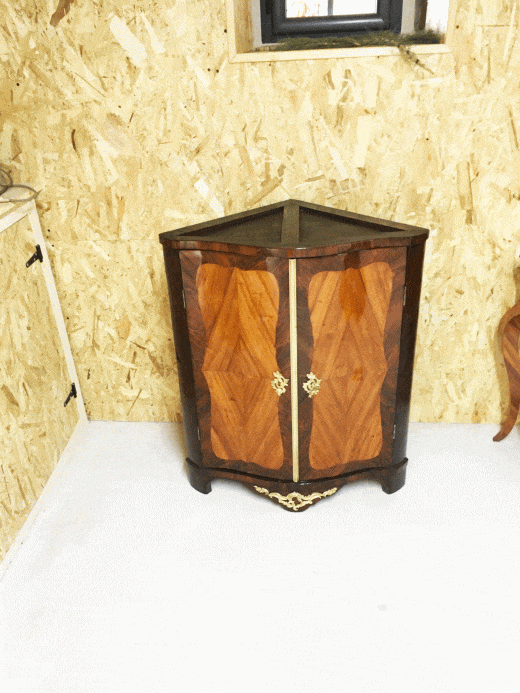
Here is a corner cabinet stamped by Jean-Mathieu Chevallier. It is made of solid oak, veneered with rosewood and violet wood, with a boxwood inlay. Jean-Mathieu Chevallier was already established on Rue de Grenelle, under the sign of "La Croix Chevallier," when he received his master craftsman's certificate in 1743. He subsequently expanded his business considerably. He was notably in business with André-Charles Boulle, one of the sons of the famous cabinetmaker. Furthermore, he participated in furnishing the Hôtel du Duc de Talmont and the Château de […]

Napoleon III planter and Louis XVI chest of drawers

Ebénisterie Mathieu VATH

This week, two pieces of furniture left the workshop: a Napoleon III jardinière in rosewood veneer and a Louis XVI chiffonier in rosewood and violet wood veneer. If this piece had seven drawers, it would have been called a "semainier" (weekly chest of drawers). Here are some photos of their restoration.

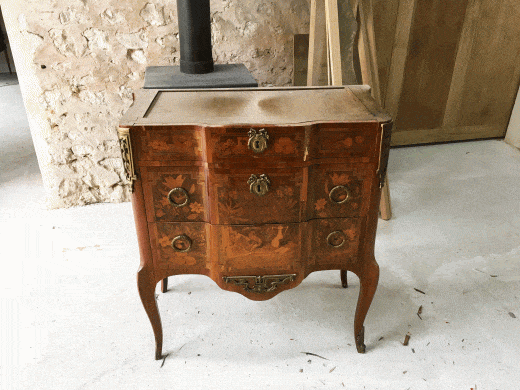
Louis XV commode stamped JC Ellaume

restauration de mobilier

Restoration of a Louis XV period commode stamped JC Ellaume. This commode is veneered in rosewood and palisander with floral marquetry on the drawer fronts. The frame is made of oak and softwood. Jean-Charles Ellaume, whose name is also spelled Allaume, became a master craftsman in Paris on November 6, 1754. Many pieces of furniture bearing his stamp are known, mostly Louis XV commodes. For over thirty years, in his workshop on Rue Traversière, he produced numerous high-quality pieces. These are primarily […]

Mazarine Chest of Drawers

Ebénisterie Mathieu VATH

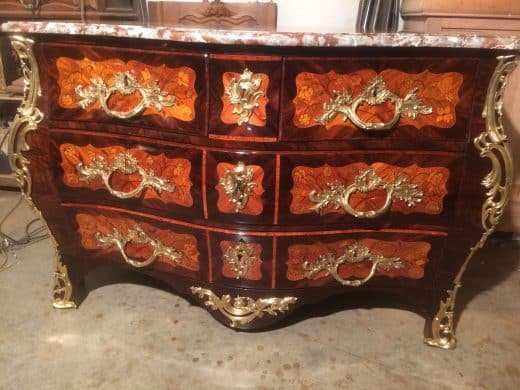
This week, we're revisiting the restoration of a Louis XIV period commode, a commode known as a Mazarine commode. But where does the name "Mazarine" come from? Well, it seems that the first example was made for the famous Mazarine Library, quite simply. The illustrious creator of the commode was none other than André-Charles Boulle himself. In 1708, for Louis XIV's bedroom at Trianon, he revolutionized a type of furniture: the commode. It owes its name to its practical, "commode" shape, compared to the chests that were so common at the time. Now on display at Versailles, the two […]
Alexandre Morell's Cartel Boulle – The End

Ebénisterie Mathieu VATH

After several hours of cutting, gluing, re-gluing, and cleaning the surfaces, we finally reach the finishing stage. I chose to varnish this cartel clock with a French polish. This finish enhances the marquetry, protects it, and remains easily reversible, like all my work. I always use a clear shellac varnish, on wood as well as other materials. The varnishing process is difficult to explain: only hours and hours of practice allow you to acquire all the secrets of this traditional technique. Once […]

Alexandre Morell's Cartel Boulle – Continued

Ebénisterie Mathieu VATH

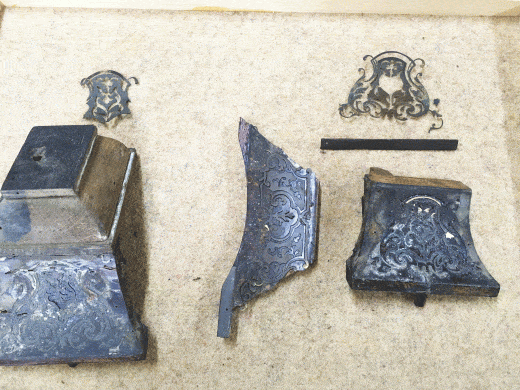
Once the various structural elements were glued back together, I tackled the tortoiseshell and brass marquetry. As you'll see, on this clock it's in very, very bad condition; practically nothing is holding. So, all the brass has to be removed. The tortoiseshell, however, is holding well; it's only partially detached. The first step in restoring this marquetry is therefore to remove and set aside each brass element. The second is to clean off the old glue, […]

Alexandre Morell's Boulle Cartel

Ebénisterie Mathieu VATH

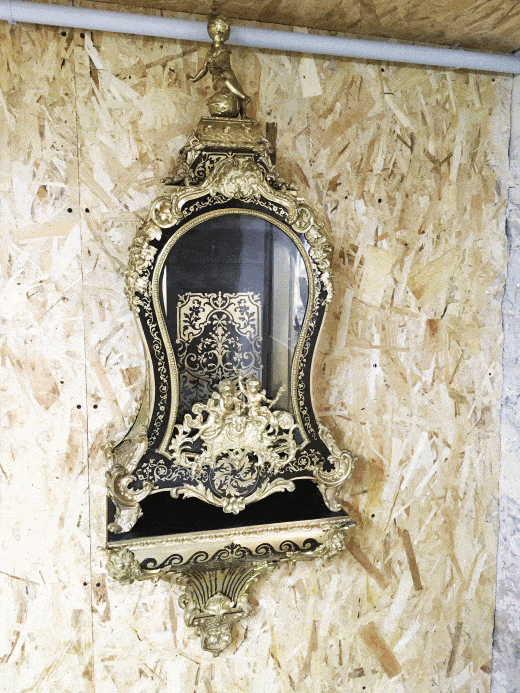
Here is my first client, or patient… whichever you prefer. It's a Boulle marquetry cartel clock in brown tortoiseshell, ebony, and brass. As the photos show, it's not in very good condition. A lot of the brass is missing, and what remains is peeling off everywhere. At first glance, it's always difficult to precisely date a Boulle cartel clock. Moreover, this one doesn't bear a maker's mark. On the other hand, it has corkscrew screws, typical of the 18th century, and few visible tool marks. Yet, I had a hunch it was a copy […]

Tool cabinet – End

Ebénisterie Mathieu Vath

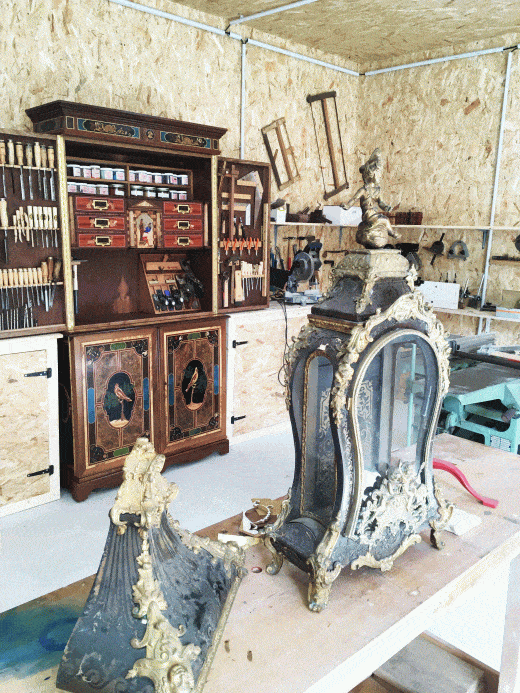
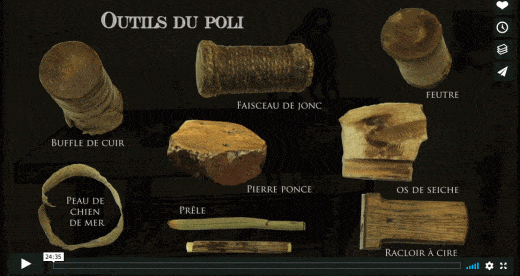
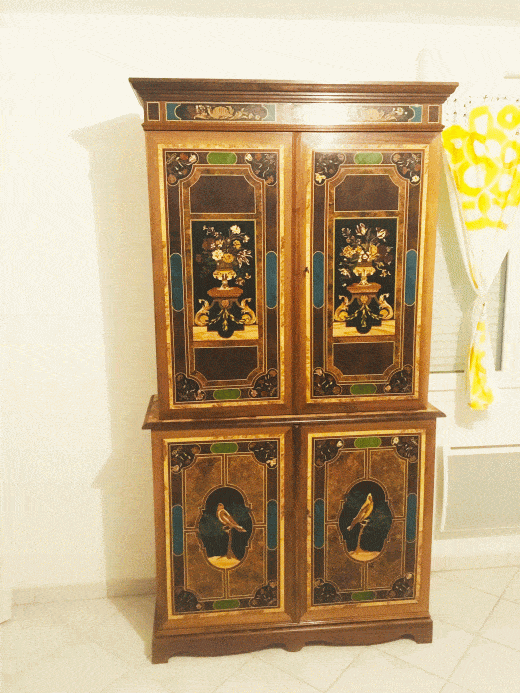
And there you have it, it's finished and ready to use. All the tools are in their proper place. All that's left is to find bronze fittings for the handles and keyhole escutcheons. For the finishing technique, I used the same one applied to furniture of that period: polishing. I first scraped the surface, then sanded it with 150-grit sandpaper. Next, I applied Venetian tripoli mixed with olive oil using a piece […]

Tool cabinet – Michelangelo's The Creation of Adam

Ebénisterie Mathieu Vath

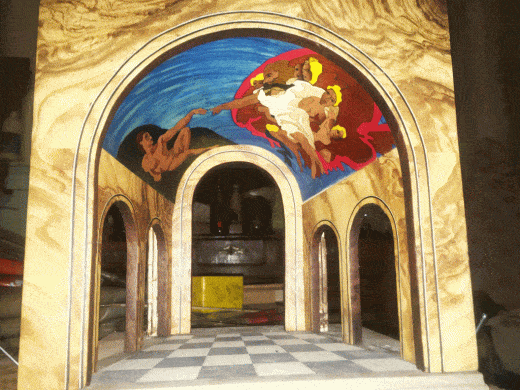
I indulged myself with this marquetry project; I had always wanted to recreate this famous marquetry fresco. This allowed me to revisit David Roentgen's "mosaic marquetry" technique. I created a pack with a hornbeam leaf, a sycamore maple leaf, and a pear leaf to make the figures, as pear wood is the best for reproducing skin tones. To tint the background, I dipped it in different baths to produce this effect of […]

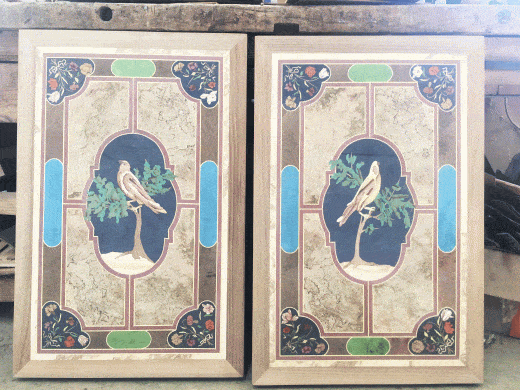
Tool cabinet – The sculptor

Mathieu Vath

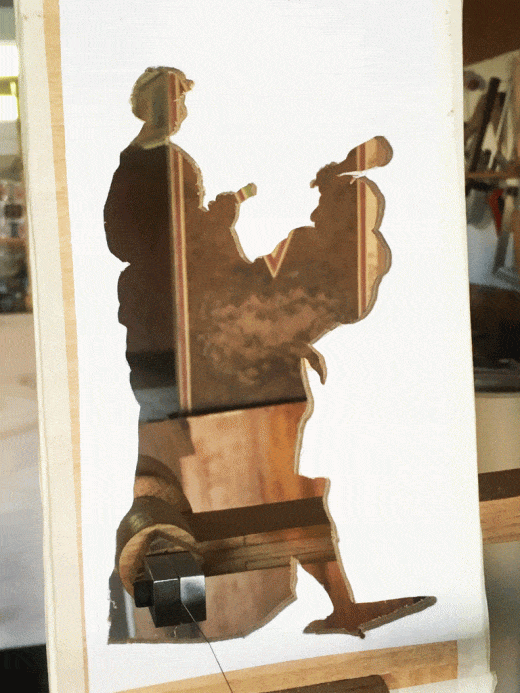
With this tool cabinet, I wanted to explore and put into practice several avenues I was researching. One of them was to tackle the marquetry technique of a famous 18th-century cabinetmaker, David Roentgen. This "mosaic marquetry" involves cutting a single sheet of veneer using a conical saw. Each piece is then colored by dipping it in a chosen dye. However, there were two difficulties: the conical sawing, which is tricky on 0.6 mm veneer, and the dyeing of the wood. When I make […]