Boulle Dubois Cartel

Restoration of a Louis XV period brown tortoiseshell Boulle Dubois cartel clock, the dial of which bears an engraving with the monogram of Louis XV.
Restoration. Conservation. Creation

Restoration of a Louis XV period brown tortoiseshell Boulle Dubois cartel clock, the dial of which bears an engraving with the monogram of Louis XV.
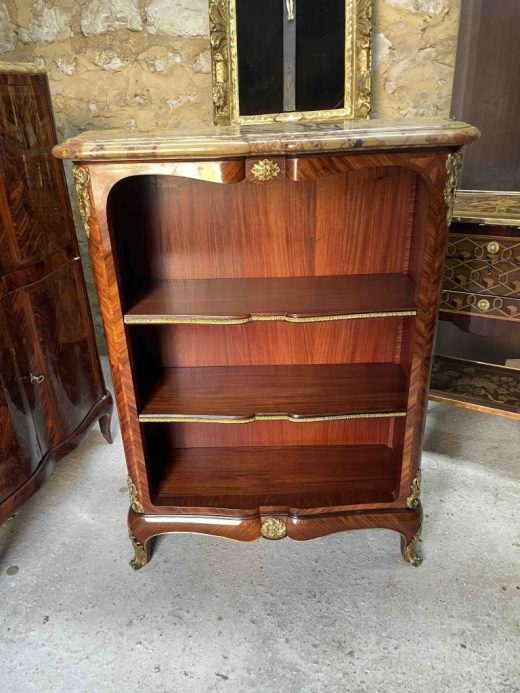
The restoration of this Louis XV style bookcase, dating from the Napoleon III era and stamped by Léon Dromard, is now complete. Its structure is made of oak, covered with a kingwood veneer, displaying a style very close to that produced by the cabinetmaker Pierre IV Migeon in the 18th century. But do you know what a bookcase is? A bookcase is a small, open storage unit that appeared in the 18th century, designed to hold books and decorative objects. Appreciated for its lightness and elegance, it quickly became a staple in refined interiors, […]
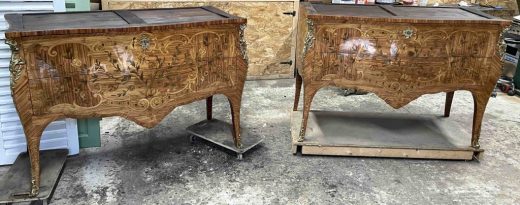
Here is the latest major restoration project undertaken by Raphaël, our apprentice. It involves a pair of Louis XV style commodes bearing an unknown stamp, CCS, which could be attributed to Charles Claude Saunier, an early work by the latter. Please find below the detailed account of the work carried out by Raphaël. Enjoy your reading. Restoration of a Pair of Louis XV Commodes This restoration project was carried out on a set of two commodes, designed according to the aesthetic and technical principles of the Louis XV style. This style […]

This is the first cartel clock restoration undertaken by Raphael, focusing on this Louis XV cartel clock in Boulle marquetry of brown tortoiseshell and brass. Restoring a cartel clock is a complex task requiring considerable time and meticulous attention to detail. The curved shapes make gluing delicate operations, and it is generally necessary to reattach large sections of the brass elements. Condition report: This cartel clock presented widespread soiling, an oxidized and tarnished varnish, as well as several lifting and missing pieces in the brass and tortoiseshell marquetry. […]
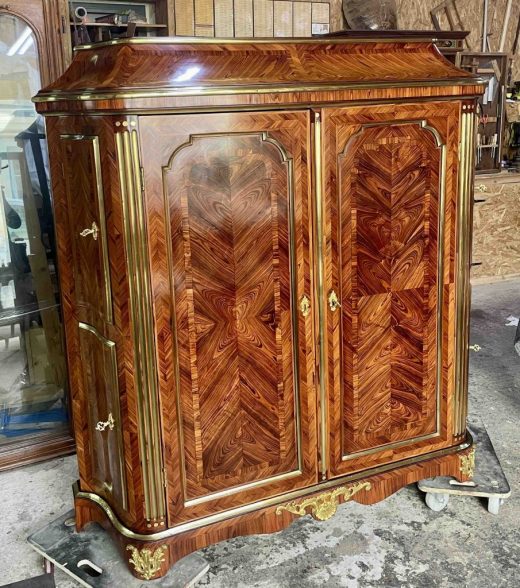
Restoration of a Regency-style cabinet, probably dating from the 1740s, stamped by Pierre IV Migeon. Constructed of oak and softwood, this cabinet, which could also be considered a bookcase, is entirely veneered in kingwood, rosewood for the top, and walnut for the interiors. The doors are veneered with a butterfly-wing pattern, while the side doors feature a square motif, typical of Migeon's decorative vocabulary. The ogee cornice is edged with a half-round brass molding. The uprights […]
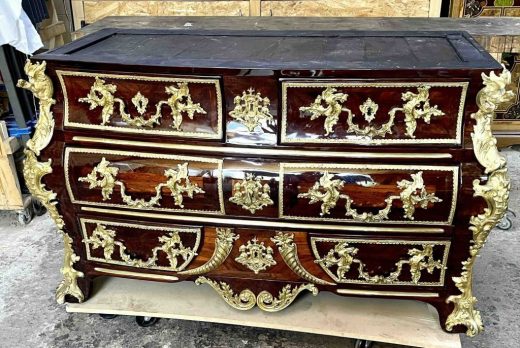
Restoration of a Regency period commode, topped with a 30 mm thick Rance marble slab, molded with a corbelled edge following its contours. This commode, curved in plan and elevation on the front and sides, is veneered with snakewood and satinwood. It has four drawers (simulating six) arranged in three rows. Its voluminous feet evoke the clawed paws of a dragon. The commode is adorned with brass fluting and chased and gilded bronze mounts: chased waterleaf frames framing the drawers, thick drop handles with shell motifs, wide plates […]

Restoration of an 18th-century Louis XV period clock case made of Martin varnish, with a red lacquer background and polychrome oil-painted decoration. The case of this clock was made by François Duhamel, and the movement is signed by Michel Lamy, clockmaker to Monseigneur the Dauphin. François Duhamel, a Parisian cabinetmaker, born in 1723, became a master on February 3, 1750, and lived until February 2, 1801. He resided on the rue du Faubourg Saint-Antoine and specialized in the manufacture of clock cases. In 1775, he was commissioned to appraise […]

Restoration of a Louis XV commode stamped by Jean-Baptiste Fromageau. Constructed of oak and conifer, this commode is inlaid with rosewood within violet wood frames. Curved at the front and flared at the sides, it features four drawers in three rows and is topped with a grey Sainte-Anne marble slab. Jean-Baptiste Fromageau, son of a master cabinetmaker, was born around 1725. After obtaining his master craftsman's certificate on November 5, 1755, he set up his workshop on Rue Traversière before establishing himself on Rue du Faubourg Saint-Antoine. The Dauphin almanac mentions […]
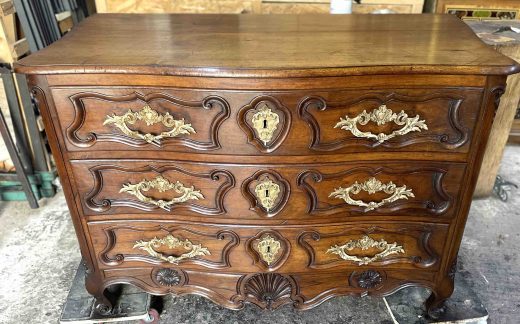
This week, a bit of a change of pace with solid wood. It feels good to get the gouges out again and work on walnut for the restoration of this chest of drawers.
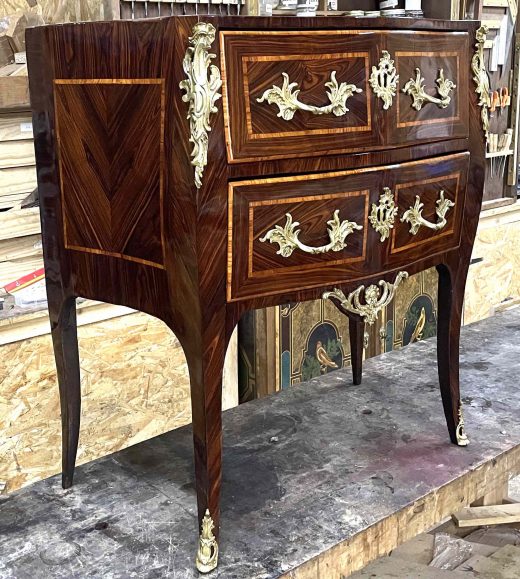
And here is the latest restoration by Raphaël, my apprentice. It's a Louis XV period commode. It's veneered in rosewood and violet wood on an oak and softwood frame. Condition report: A perfect project for tackling structural and veneer restoration. Almost all the panels are detached and too short, the joints are loose, both sides are detached from the uprights and split right down the middle, and of course there's a lot of detachment and […]
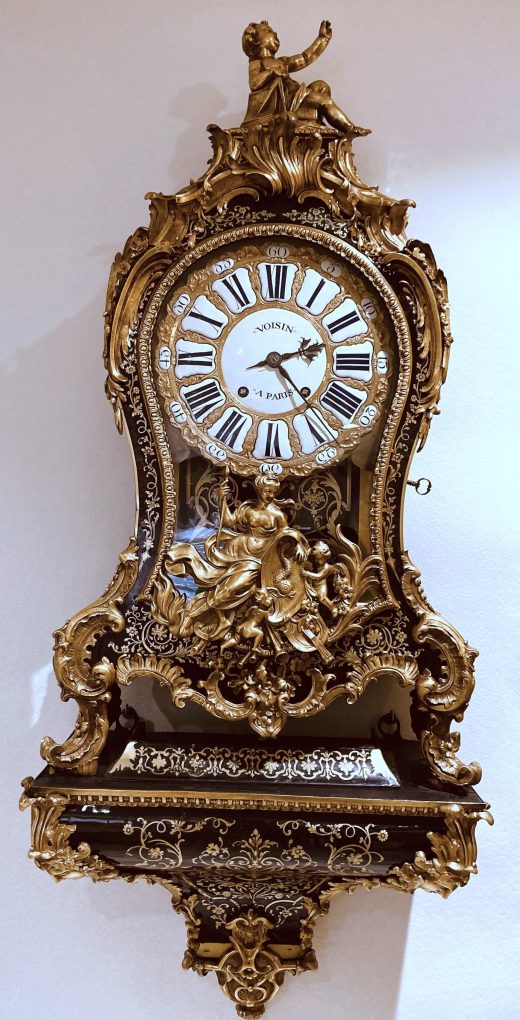
Restoration of a Louis XV cartel clock in tortoiseshell and brass marquetry, the movement of which is signed by Charles Voisin (born 1686-1760), Master Clockmaker in 1710. The distinctive feature of this clock is that the bronze mounts are stamped with the crowned C mark. The crowned C was established by an edict of 1745, which required bronze workers to mark their pieces with a small, distinctive letter, a C surmounted by a crown, thus subjecting them to a tax. This tax applied to both objects and furniture adorned with it. It is a […]
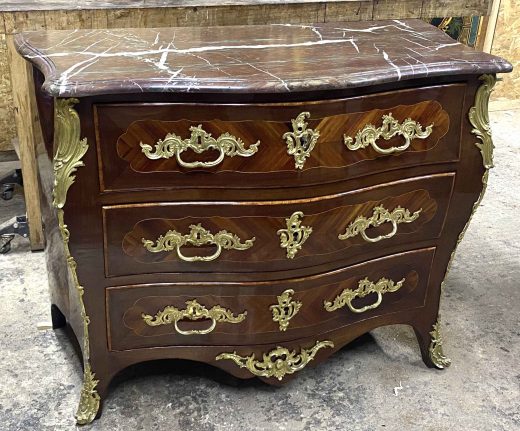
Restoration of a Louis XV commode, stamped by Nicolas Alexandre Lapie, veneered in amaranth and satinwood on a beautifully crafted oak frame. The sides and drawer fronts are made of softwood, and the marble top is Campan griotte marble. Nicolas Alexandre Lapie, son of Nicolas Lapie, a pottery merchant in the Faubourg Saint-Antoine, and brother of the master cabinetmaker Jean Lapie, Nicolas Alexandre (known as the Elder) appears to have been born around 1730. He registered his master's letters at the Châtelet in Paris on the 17th […]
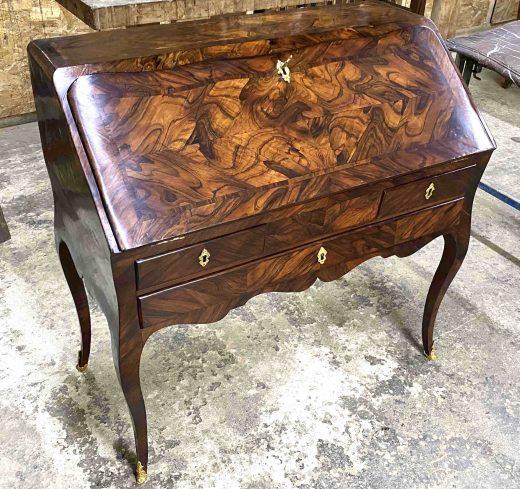
Raphaël's first restoration project was this Louis XV period rosewood veneer slant-front secretary. It was a complete restoration involving numerous veneer grafts and a waxed, filled finish. A delicate job, as rosewood is unforgiving. The slightest misstep with the chisel, or excessive sanding, and its beautiful blond patina disappears, revealing the original dark color and causing unsightly stains. Therefore, there was no choice but to scrape and sand the newly sawn veneer and cut it to the correct thickness before gluing it […]
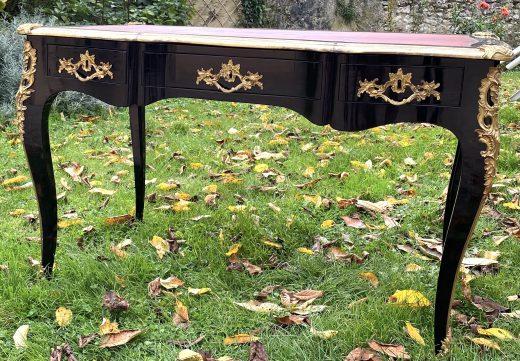
Restoration of a Louis XV desk stamped by Jean-Girard-Théodore SAR. A magnificent desk of exceptional craftsmanship. The legs, apron, and drawers are made of walnut. The top is softwood. The entire piece is veneered with beautiful Indian ebony. Jean-Girard-Théodore SAR was born in 1724 and became a master craftsman on October 1, 1766. Established on Rue de Lappe in the Faubourg Saint-Antoine, he worked primarily for several colleagues, including Migeon from 1755, Coulon in 1774, and Dubuisson, among others.
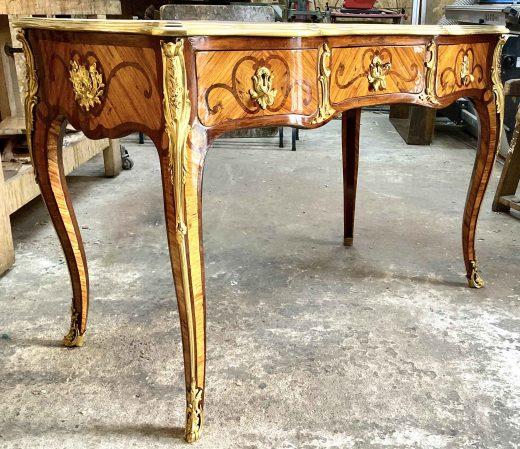
Restoration of a Louis XV desk veneered in rosewood and violet wood on an oak and softwood frame. Replacement of missing veneer, cleaning, and refinishing with a French polish. Cleaning and conservation of the leather. Removal and steam cleaning of the gilt bronze mounts. To see previous restorations: https://ebenisterie-mathieuvath.fr/en-ce-moment-a-latelier/
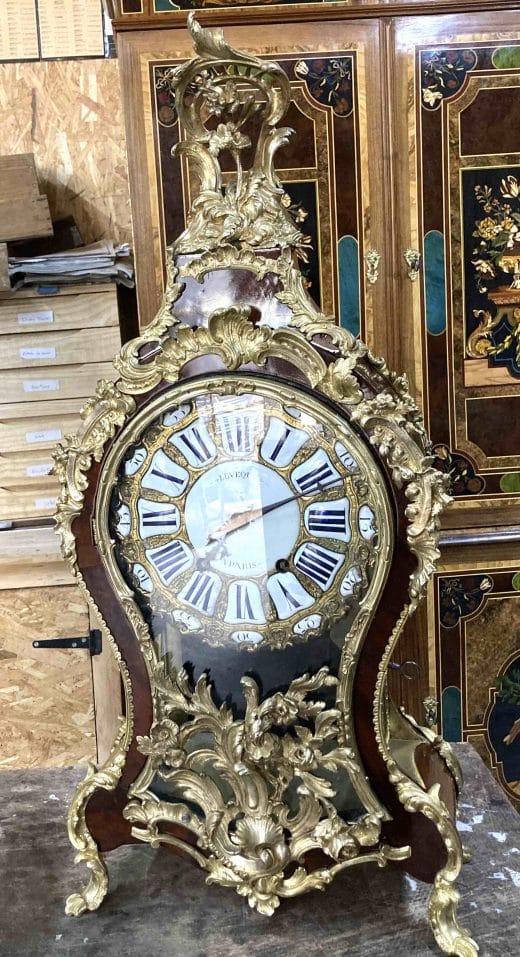
Restoration of a Louis XV period cartel clock signed LEVEQUE A PARIS with its original movement. The surprising thing about this clock is that it is made of mahogany. And as curious as it may seem, despite the tool marks, the quality of the workmanship and the wood appear entirely authentic. With its shape and rocaille bronze mounts typical of the Louis XV style, it could therefore be a clock made from the second half of the 18th century. A precursor, then, to the appearance of mahogany in French furniture. The restoration has […]
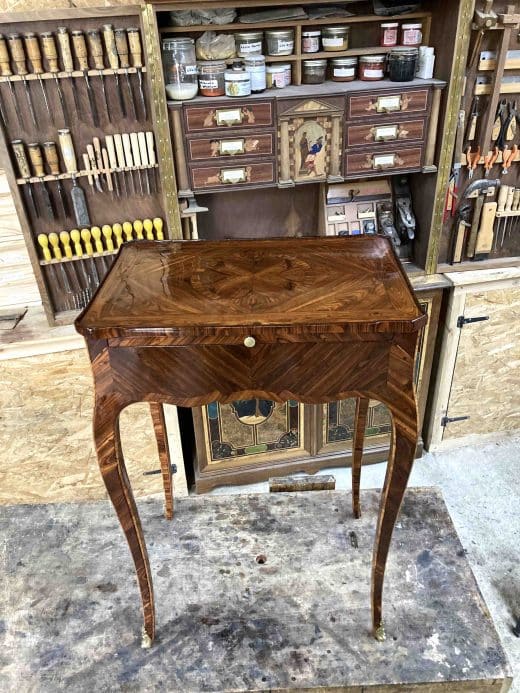
Restoration of a mid-18th-century side table or writing table veneered in kingwood and rosewood for the chamfers. A minor restoration for everyday use. The most time-consuming part was reattaching approximately 90% small pieces of rosewood. To see previous restorations: https://ebenisterie-mathieuvath.fr/en-ce-moment-a-latelier/
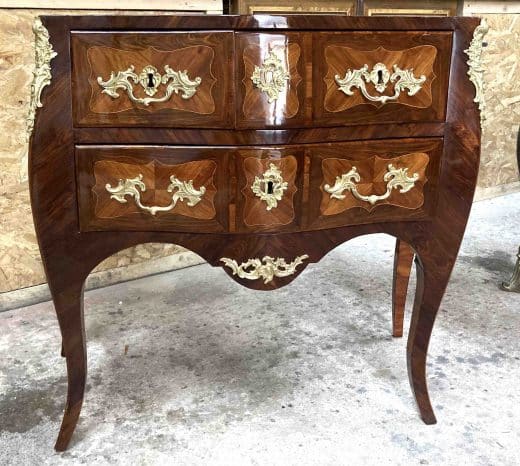
Restoration of a Louis XV period commode veneered in rosewood and violet wood. The commode, also known as the commode sauteuse, appeared during the Regency period, between 1705 and 1730, and is attributed to the cabinetmaker Charles Cressent. It consists of two drawers or two rows of drawers. The body is raised on half-height supports, with the body occupying half the height of the piece and the other half the legs. Intended to distinguish itself from the heavy and massive Louis XIV style, it is slender and graceful, almost ethereal. After restoration […]
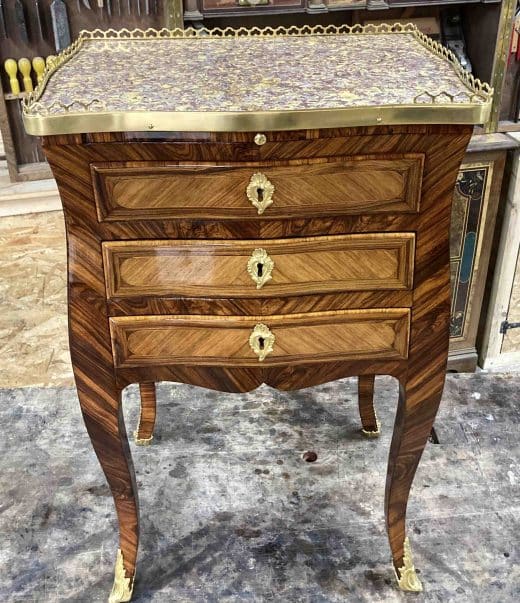
Restoration of a Louis XV period drawing table, or more precisely, a writing table, veneered in rosewood, with a satinwood back. Born from the passion for correspondence in the 18th century, fashionable merchants deployed all their ingenuity to create numerous models of utilitarian tables to be placed in the center of a room. These table models differed from ordinary tables; they were generally equipped with a writing surface and drawers for storing ink and quills. It is in […]
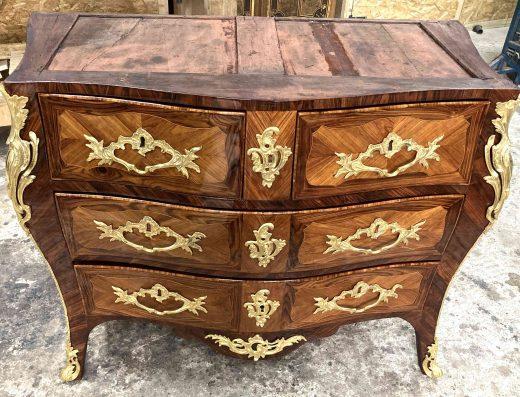
Restoration of a Louis XV commode stamped by the Parisian cabinetmaker Pierre Roussel. This commode is constructed of oak and softwood panels. It is veneered with rosewood arranged in a herringbone pattern, framed by violet wood. The stringing is boxwood. The Roussel family: Son of Michel Roussel, a journeyman cabinetmaker originally from the Cotentin region, he was the only one to choose cabinetmaking rather than joinery, unlike his younger brothers Jacques, Michel, and Louis. Pierre Roussel obtained his master craftsman's certificate on August 21, 1745, and established himself in the Faubourg Saint-Antoine, on rue […]
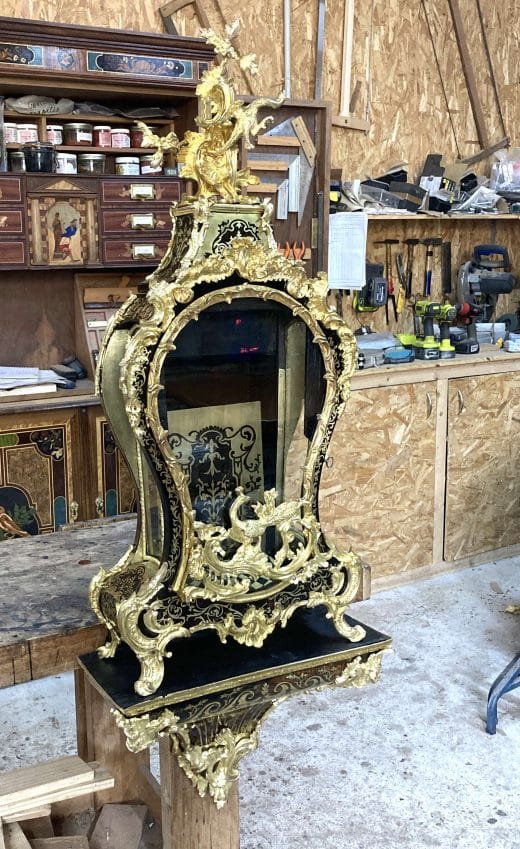
Restoration of a Louis XV period clock and its lamp base in pure Rococo style. It is constructed of solid oak and veneered with brass and tortoiseshell. Do you know what Rococo style is? Rococo style belongs to the early period of the Louis XV style (1723-1750) and reached its peak around 1730. It is characterized by rich naturalistic decoration. It drew inspiration from artificial grottoes and elements of rock recreated in asymmetrical compositions. This decoration, which marks the beginning of the Baroque, is complemented by seashells, elements […]
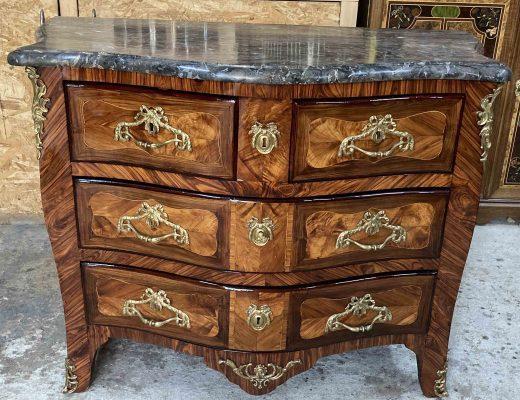
A true renaissance for this chest of drawers, which I call Louis XV/Transitional because its form and construction are entirely Louis XV. However, the handles and keyhole escutcheons are typically Louis XVI. And I can attest that these are indeed its original fittings. The nail holes match perfectly, and there are no other holes beneath the bronze mounts. So, even if this piece of furniture doesn't conform to what is commonly called the Transitional style, this chest of drawers is most certainly one of the first […]
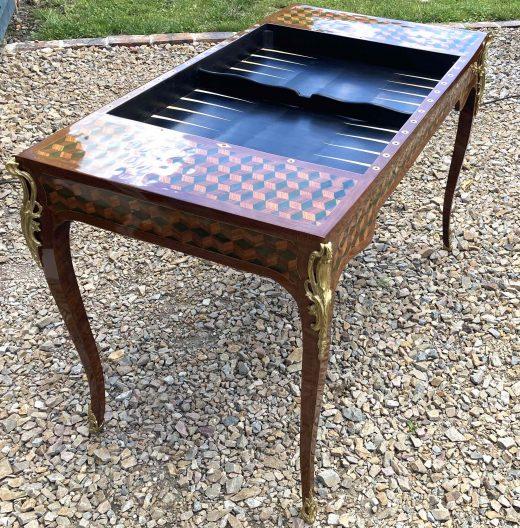
Restoration of a Louis XV period marquetry game table (or backgammon table) with dice (or cubes) veneered in amaranth, rosewood, violet wood, palisander, ebony, and ivory. This table is stamped by the Parisian cabinetmaker Pierre Roussel (September 28, 1723 – June 7, 1782). The Roussel family, sons of Michel Roussel, a journeyman cabinetmaker originally from the Cotentin peninsula, were the only ones to choose cabinetmaking rather than joinery, unlike his younger brothers Jacques, Michel, and Louis. Pierre Roussel obtained his master craftsman's certificate on August 21, 1745, and established himself in the Faubourg Saint-Germain-des-Prés.
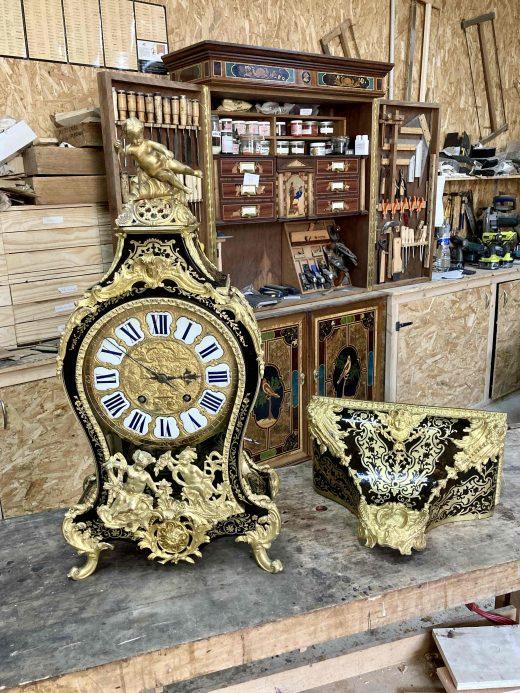
Here are some images of the restoration of a clock case that some of you may have seen during the work at the Mans'Art fair this year. This Louis XV period clock case is inlaid with tortoiseshell and brass, and the frame is oak. The bronze mounts bear the hallmark of the Crowned C. The Crowned C was established by an edict of 1745, which required bronze workers to mark their pieces with a small distinctive letter, a C surmounted by a crown, thus subjecting them to a tax. This tax applied to […]
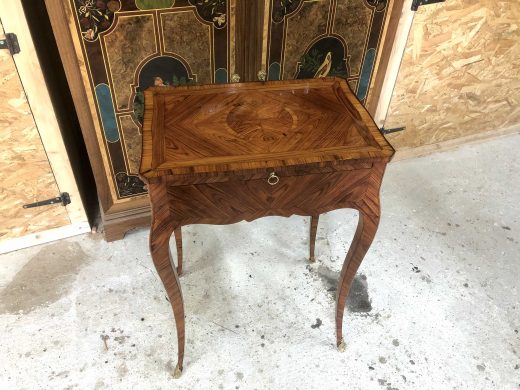
Before/after the restoration of a Louis XV writing table veneered in kingwood on solid oak. It has two side drawers and a central pull-out shelf beneath the leather-covered top. Besides the significant discoloration of the varnish, there were some small areas of peeling and missing veneer. The missing pieces were replaced with new veneer, which was sawn, scraped, and sanded, then cut to the correct thickness before gluing in order to avoid disturbing the patina beneath the bleached varnish. The […]
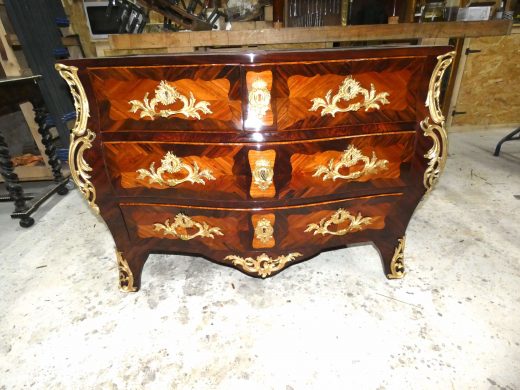
This is a significant restoration project for this Louis XV commode, originally veneered in rosewood and violet wood. It took me some time to determine if it was indeed violet wood, as the commode had undergone so much restoration that there was almost as much rosewood as violet wood. Fortunately, the drawers are still in fairly good condition and are indeed made of violet wood, so I conclude that the commode was […]
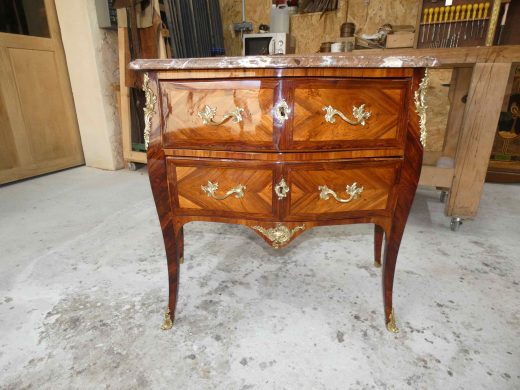
The commode with a jumping habit seems to have been invented during the Regency period, between 1705 and 1730, by the cabinetmaker Charles Cressent, and subsequently became widespread in the Louis XV style. It consists of only two drawers or two rows of drawers. The body must be raised on cabriole legs of about half height, with the body occupying half the height of the piece and the other half the legs. The observer thus has the impression that the piece has legs allowing it to jump like a frog. The width offers straight, curved, or […]
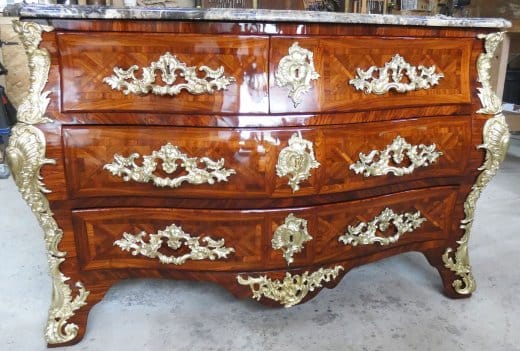
Extensive restoration of this superb Louis XV period commode, stamped on all four uprights by Jean-Baptiste Hedouin. The frame and drawers are constructed of solid oak, fir, and walnut. The edges of the frieze and geometric marquetry in violet wood are veneered with satinwood. Two types of violet wood are visible: one with a very tight grain and veining for the lozenges, and a second, more intricate type for the marquetry edges, uprights, and rails. The […]
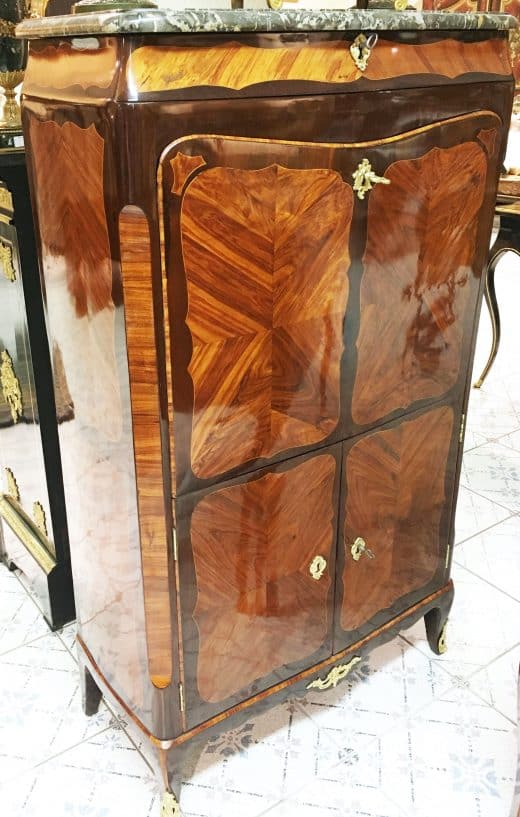
Here are some images of the restoration of a secretary desk stamped by Pierre Roussel (1723-1782). Having become a Master Cabinetmaker in 1745, Pierre Roussel set up shop on Rue de Charonne, in the Faubourg Saint-Antoine, under the sign "L'Image de Saint Pierre" (The Image of Saint Peter). Thanks to his skills as a cabinetmaker and especially as an exceptional marquetry artist, he quickly gained a great reputation. In 1762, he became a sworn member of his guild. By 1767, he was considered one of the best cabinetmakers of his time. Highly regarded by his colleagues, he became a representative of the cabinetmakers' guild in 1777 and then syndic two […]
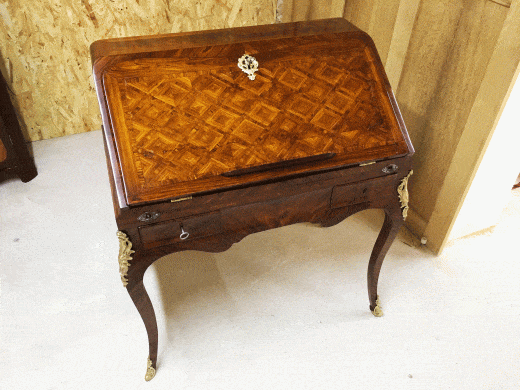
Remember that slant-front desk? Well, it's finished. It was quite a task, but now it's regained its former glory. Only the drawer keyholes and the leather upholstery remain to be fitted before it's returned to its owner. A large part of the legs has been remade from sawn violet wood. This was cut to the correct thickness, scraped and sanded, then oxidized before being glued, so as not to have to sand the entire piece of furniture […]
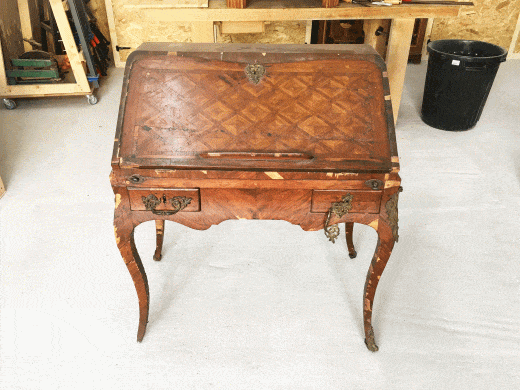
Thanks to its stamp, it is possible to date this slant-front desk, or cantilevered desk, between 1738 and 1783. The life of Jean-Baptiste Hedouin is relatively unknown. After becoming a master craftsman, he set up his workshop on Rue Traversière-Saint-Antoine. All the furniture he produced was of high quality. His pieces, primarily in the Regency and Louis XV styles, almost all veneered in sheets or with grid patterns, were varied: wardrobes, flat and slant-front desks, bookcases… but it was the commodes that constituted the largest part of his output.
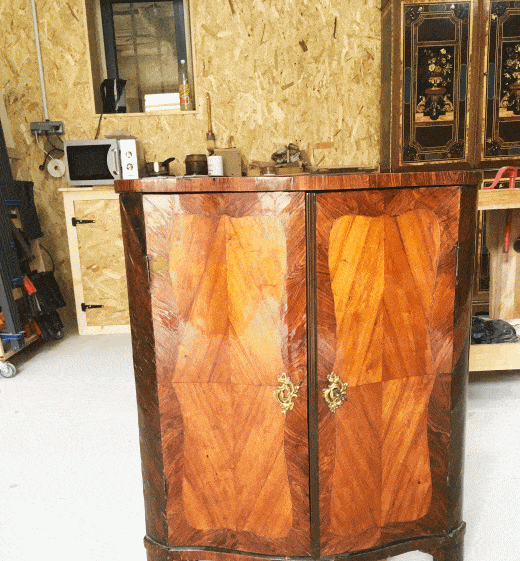
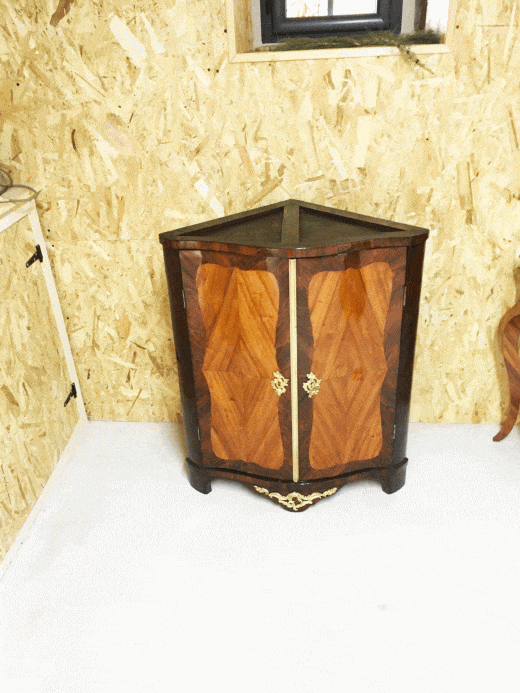
Here is a corner cabinet stamped by Jean-Mathieu Chevallier. It is made of solid oak and veneered with rosewood and violet wood with a boxwood inlay. Jean-Mathieu Chevallier was already established on the rue de Grenelle under the sign "à la Croix Chevallier" when he obtained his master craftsman's certificate in 1743. He subsequently expanded his business considerably, had business dealings with André-Charles Boulle, one of the sons of the famous cabinetmaker, and contributed to furnishing the Hôtel du Duc de Talmont, as well as the Château de Villegénis, which he had purchased […]
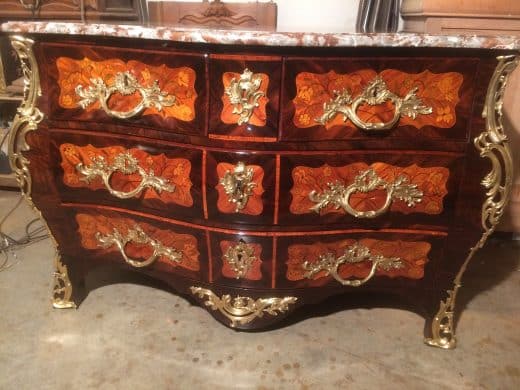
Restoration of a Louis XV period commode stamped JC Ellaume. This commode is veneered in rosewood and palisander with floral marquetry on the drawer fronts. The frame is made of oak and softwood. Jean-Charles Ellaume, also sometimes written as Allaume, received his master craftsmanship in Paris on November 6, 1754. Many pieces of furniture bearing his stamp are known. These are mostly Louis XV commodes. It was in his workshop on Rue Traversière that he produced numerous high-quality pieces of furniture for over thirty years, […]