Transition Stumpff Chest of Drawers
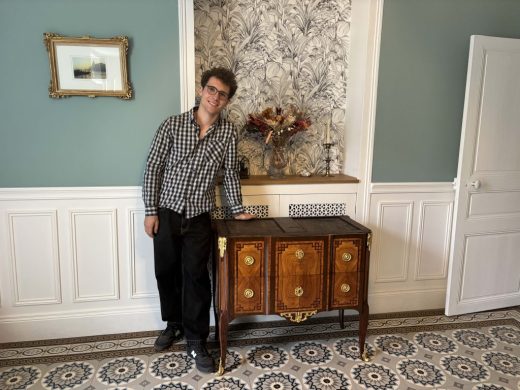
Raphaël, notre apprenti, a restauré une commode Transition estampillée Stumpff. Ce travail lui vaut la médaille d’or nationale au concours Un des Meilleurs Apprentis de France 2026.
Restoration. Conservation. Creation

Raphaël, notre apprenti, a restauré une commode Transition estampillée Stumpff. Ce travail lui vaut la médaille d’or nationale au concours Un des Meilleurs Apprentis de France 2026.
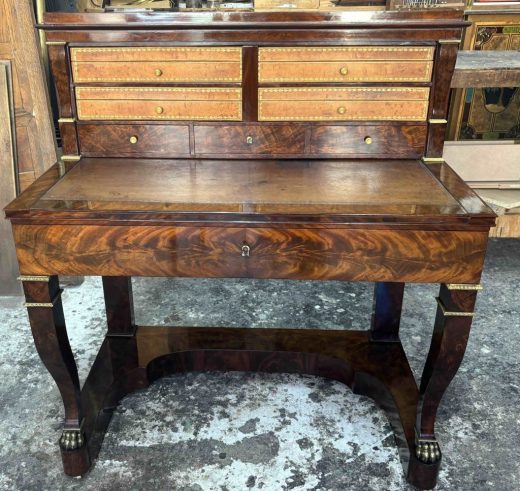
Restoration of an Empire bonheur du jour in mahogany veneer, stamped Antoine-Nicolas Lesage: top reattached, veneer missing, gilt bronzes cleaned and shellac finish redone.
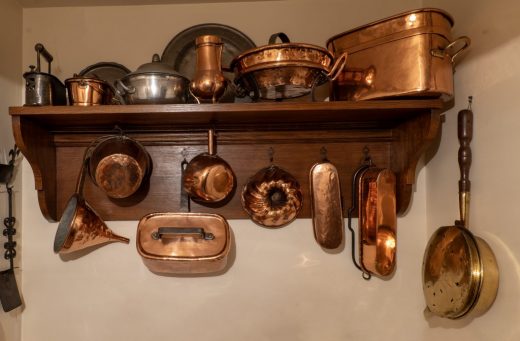
Voici une table provençale d’époque Louis XV, ainsi qu’un ensemble de cuivres. Ces derniers datent en partie du XVIIIe siècle et en partie des deux premiers tiers du XIXe siècle. Vernis, ils sont en parfait état. Les étains, quant à eux, datent du XVIIIe siècle. De même, la dinanderie et ses ustensiles en fer sont du XVIIIe siècle. Certains ustensiles sont d’ailleurs plus anciens, ce qui est très rare. Je propose ces objets à la vente. Donc, si vous êtes intéressé(e), n’hésitez pas à me contacter. Table provençale Il s’agit […]
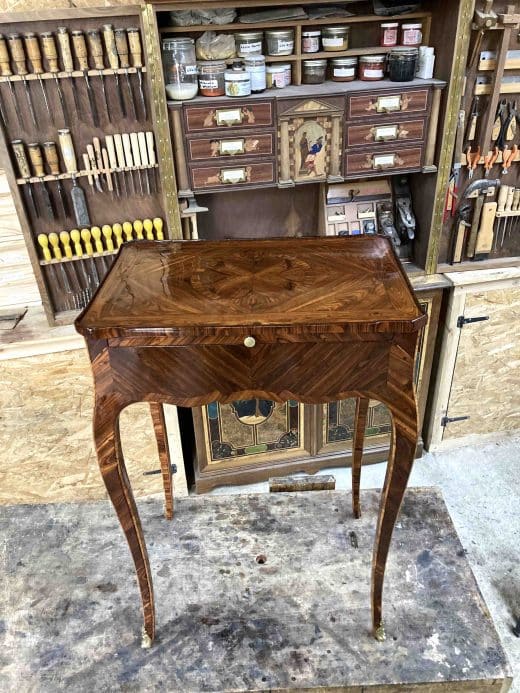
Restoration of a mid-18th-century side table or writing table veneered in kingwood and rosewood for the chamfers. A minor restoration for everyday use. The most time-consuming part was reattaching approximately 90% small pieces of rosewood. To see previous restorations: https://ebenisterie-mathieuvath.fr/en-ce-moment-a-latelier/
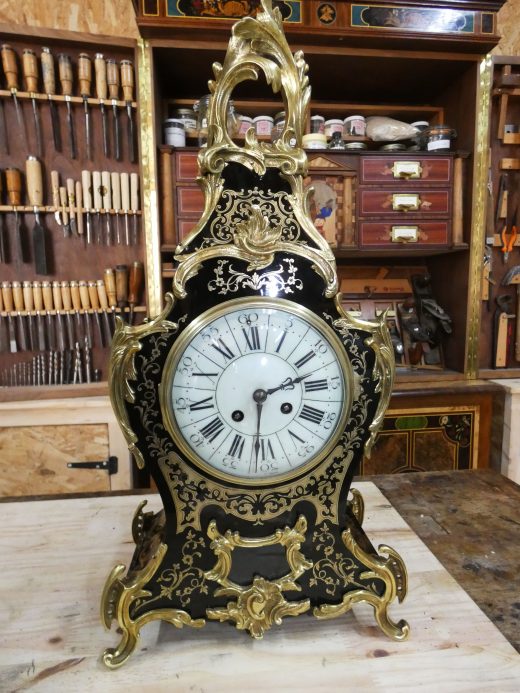
Restoration of a Napoleon III period marquetry clock in brown tortoiseshell on a black ground and brass. Despite dust, oxidation, and years spent in the depths of an attic, this small clock is in very good condition. Except for a missing piece of brass on the right side of the capital, it is complete. The gilding is still clearly visible beneath the layer of grime, and the structure is in perfect condition. The restoration was therefore straightforward: re-gluing all the marquetry under vacuum, then a light cleaning, and a varnishing with […]
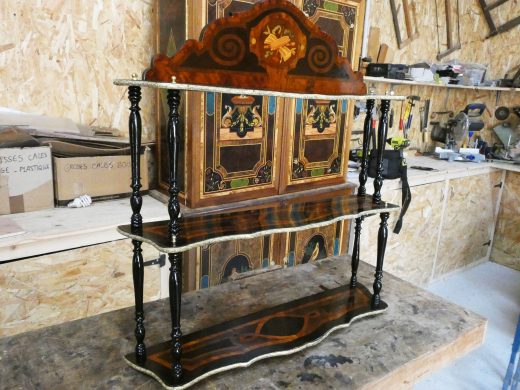
Restoration of a Napoleon III period wall shelf veneered in blackened pearwood, rosewood, amaranth, amboyna burl, and marquetry with a music theme. Underneath the dust, aside from small losses in the blackened pearwood and rosewood, and slight dehydration, there was nothing too serious. A few veneer grafts, a vacuum-sealed glue application, a thorough cleaning, a coat of clear French polish, and voilà! All this without using sandpaper. Except for lightly sanding the varnish […]
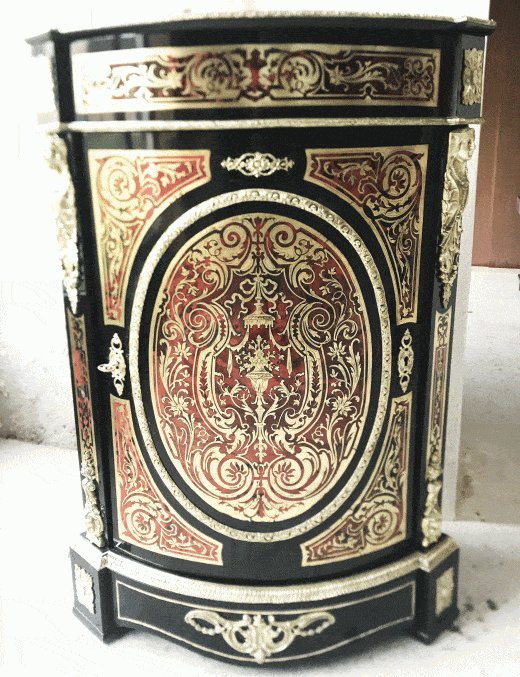
A classic restoration of Boulle marquetry: rehydration of the old glue by infiltration, creation and gluing of the missing brass fittings, and reconstruction of the base, which was in poor condition but not beyond repair. Finally, the bronzes were cleaned and a clear French polish was applied. Proof that appearances can be deceiving: even a badly damaged piece of furniture can regain its former beauty.
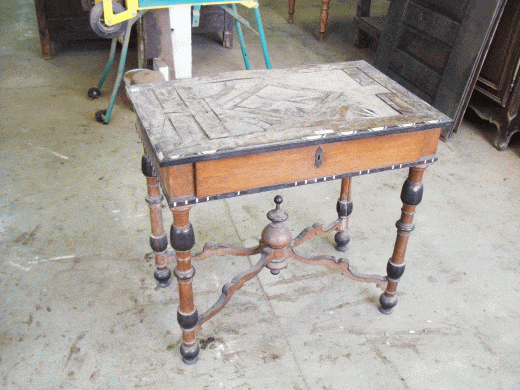
A look back at the restoration of a 17th-century Louis XIII table. It's made of solid walnut, veneered with walnut, ebony, ivory, and boxwood. It had spent a long time in an attic, and its top unfortunately suffered considerably. Much of the veneer was missing. I first removed what little veneer remained. It was very easy: it was completely detached. All I had to do was lift it with a thin blade and it would come right off. I then re-glued the top, adding material where the […]
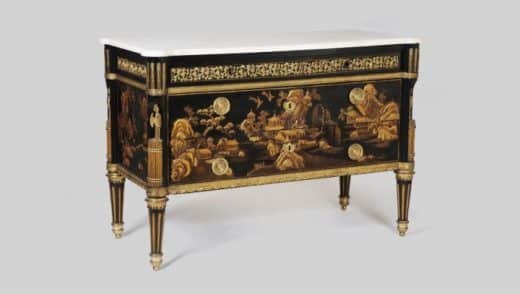
Cette année, pour la deuxième année consécutive, les Journées du patrimoine permettaient de visiter une partie des réserves et les ateliers de restauration du mobilier national. Ainsi, l’édition 2019 exposait la commode de « l’ingratitude ». Cette commode a d’ailleurs une histoire bien particulière. La Couronne la commande, et elle est livrée le 13 juillet 1789, veille de la prise de la Bastille. Son créateur est l’ébéniste Pierre-François Guignard, reçu maître le 21 janvier 1767. Or, payé par le Garde-Meuble le 13 juillet, il prend dès le lendemain une part […]
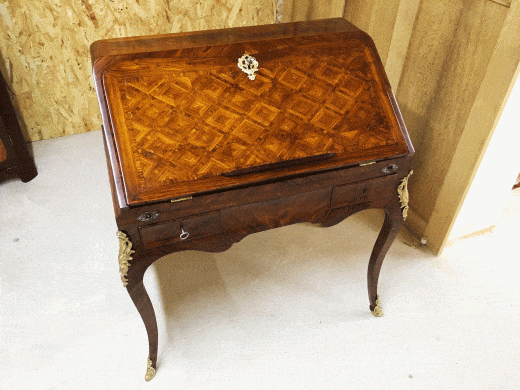
Remember that slant-front desk? Well, it's finished. It wasn't easy, but it's regained its former glory. All that's left is to install the drawer locks and the leather before it goes back to its owner. I remade a large part of the legs using sawn kingwood. I cut it to the correct thickness, scraped, sanded, and oxidized it before gluing. That way, there was no need to sand the entire piece of furniture, which would have damaged it even more.
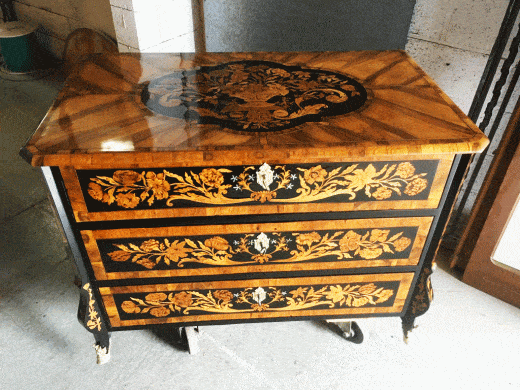
This week, we're revisiting the restoration of a Louis XIV period commode, a commode known as a Mazarine commode. But where does the name "Mazarine" come from? Well, it seems that the first example was made for the famous Mazarine Library, quite simply. The illustrious creator of the commode was none other than André-Charles Boulle himself. In 1708, for Louis XIV's bedroom at Trianon, he revolutionized a type of furniture: the commode. It owes its name to its practical, "commode" shape, compared to the chests that were so common at the time. Now on display at Versailles, the two […]
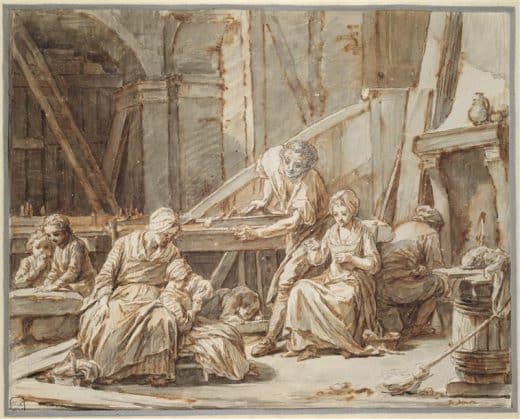
A drawing by Nicolas Bernard Lépicié, which you can admire at the Museum of Fine Arts in Orléans. Surely a future marquetry project. One can sense the living and working conditions of the men who created these pieces, imbuing them with their expertise and a part of themselves. In this way, they inscribed their lives and their stories within the larger narrative of history. This is the very essence of the restorer's craft. The furniture restorer is merely a custodian of memory. They ensure that the soul of the piece is preserved […]
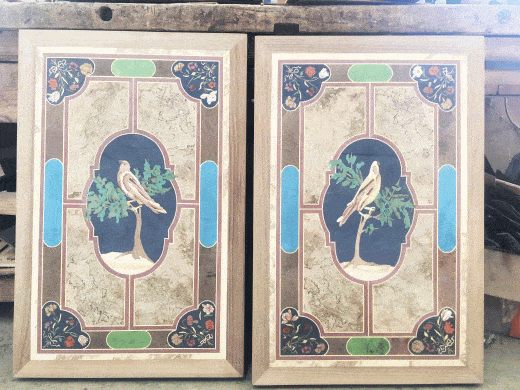
Here are some pictures of the creation of the birds for the marquetry on the lower doors. I cut them out using a marquetry easel, then inserted them into a background of blackened pear wood. The branches are made of walnut.
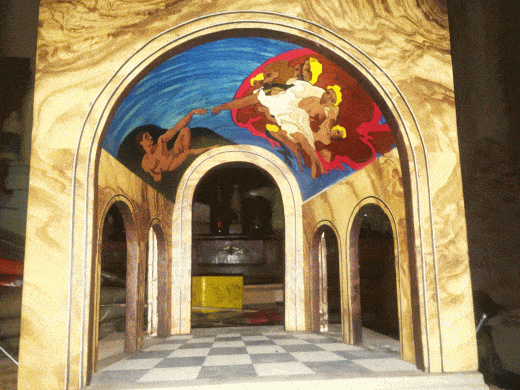
I indulged myself with this marquetry project; I had always wanted to recreate this famous marquetry fresco. This allowed me to revisit David Roentgen's "mosaic marquetry" technique. I created a pack with a hornbeam leaf, a sycamore maple leaf, and a pear leaf to make the figures, as pear wood is the best for reproducing skin tones. To tint the background, I dipped it in different baths to produce this effect of […]