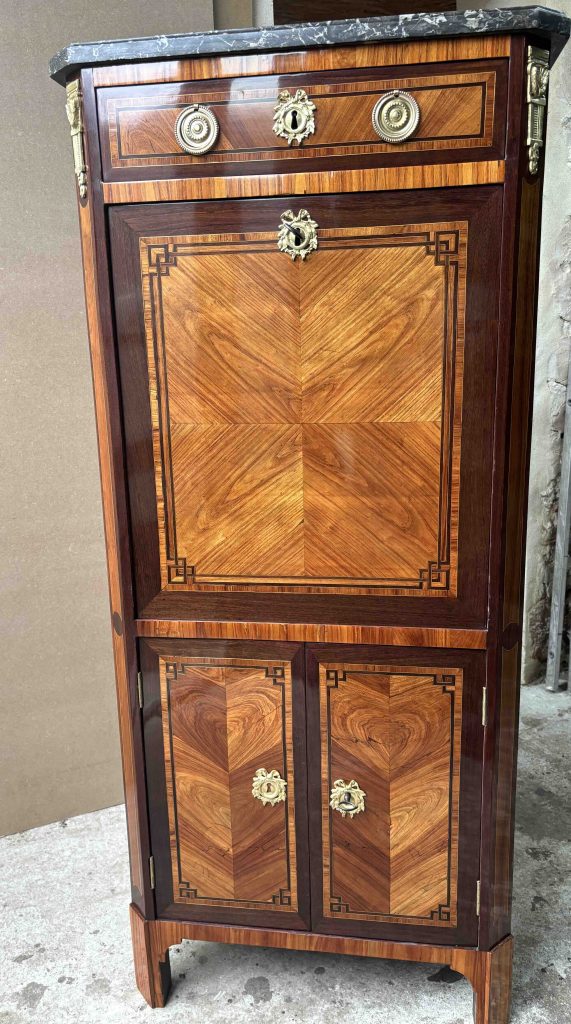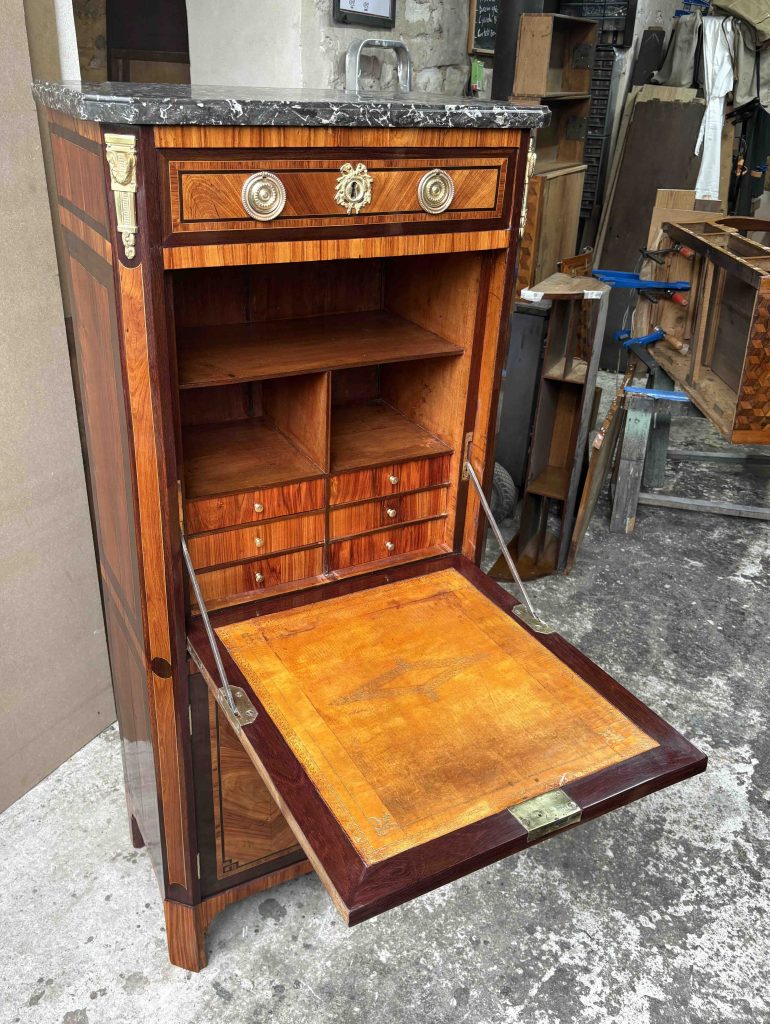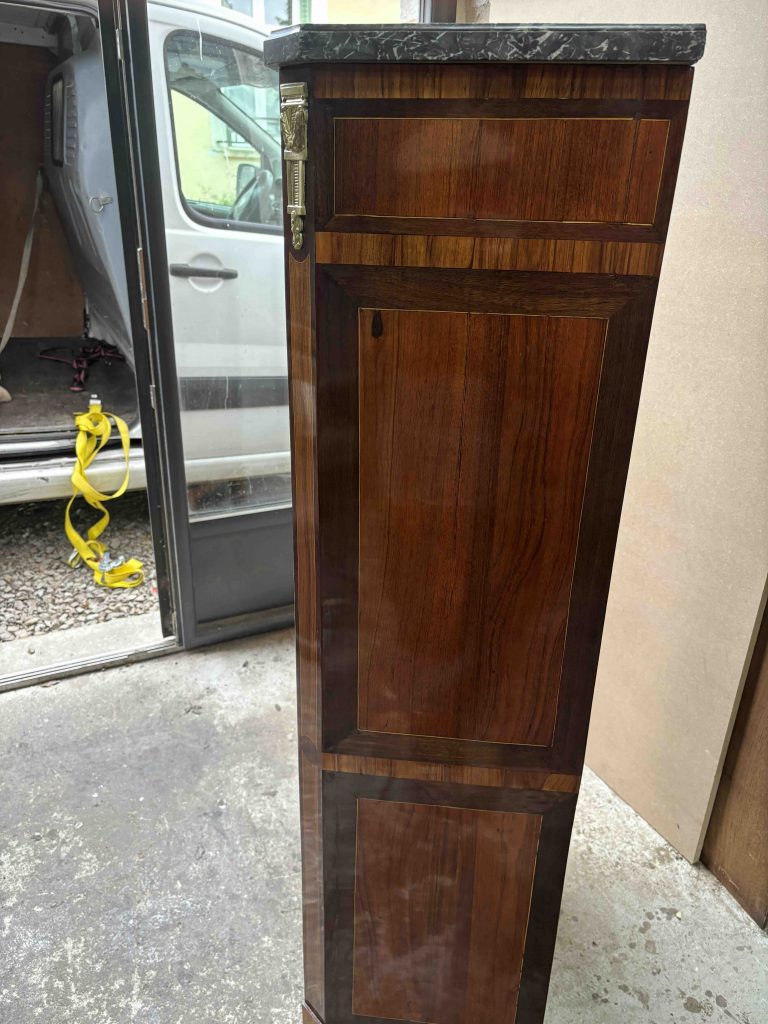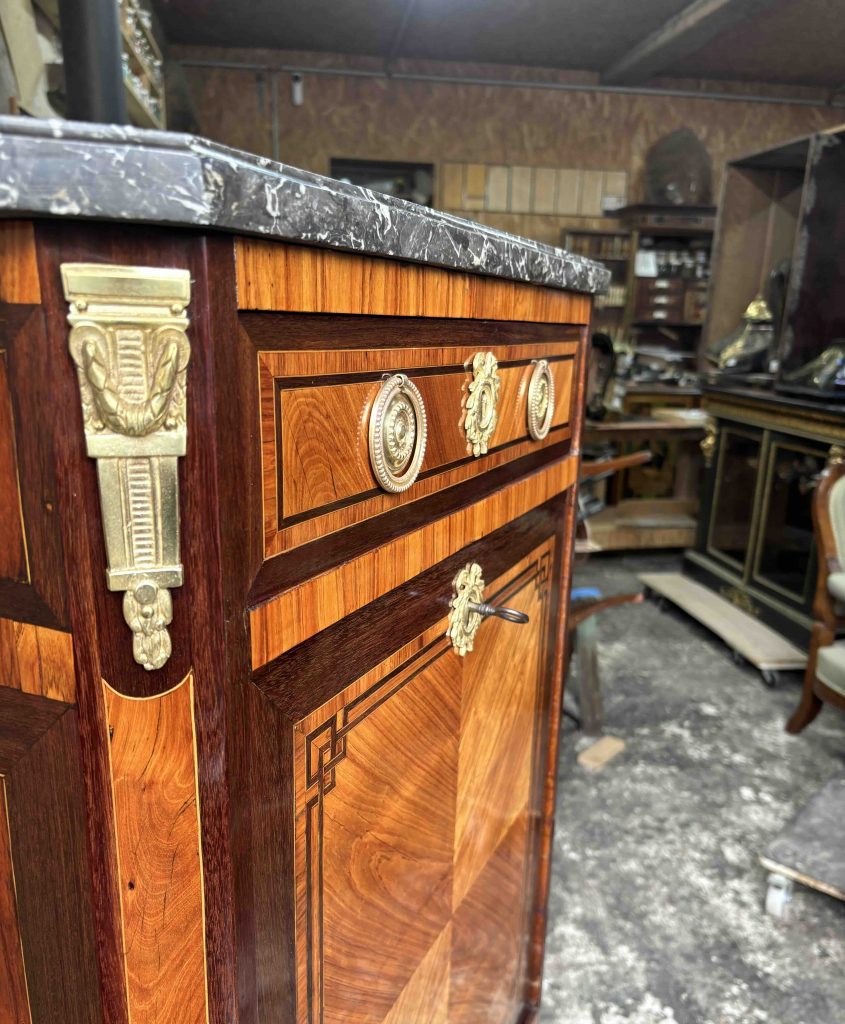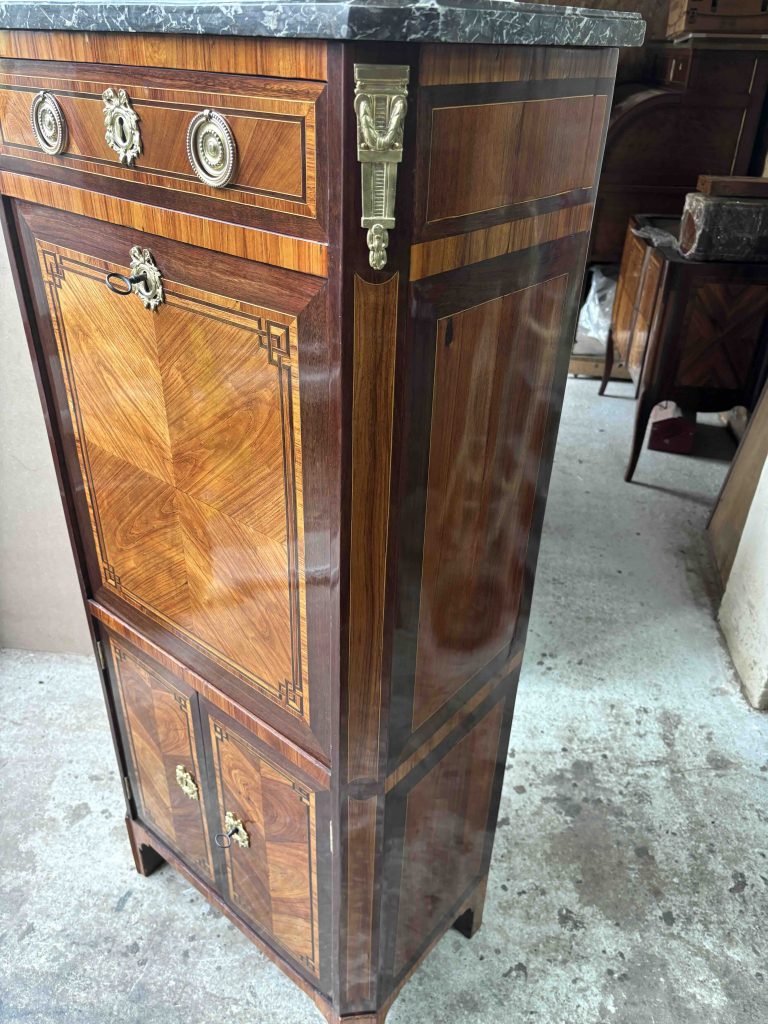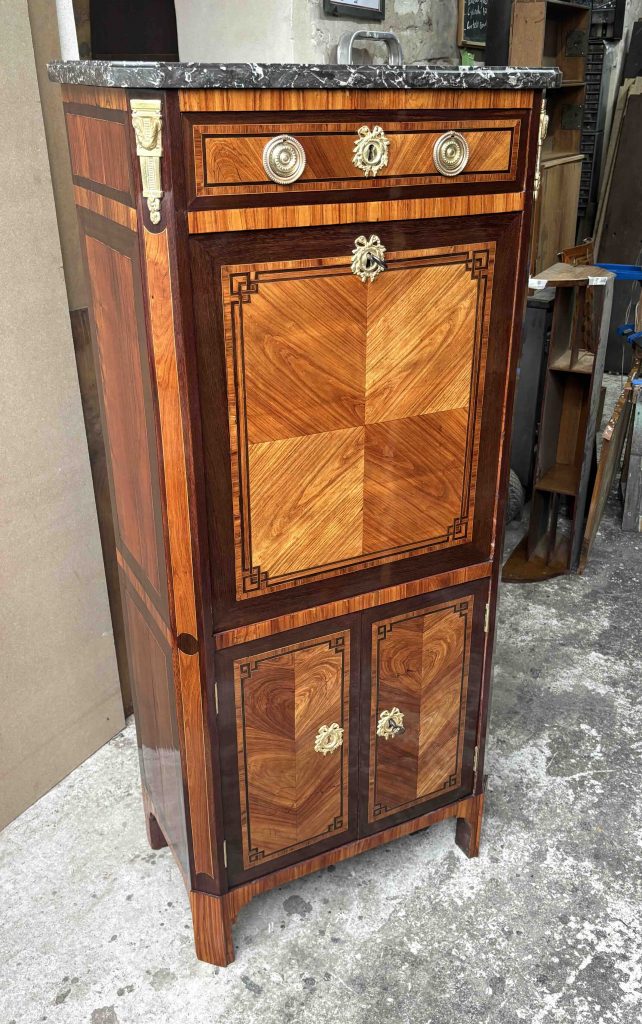
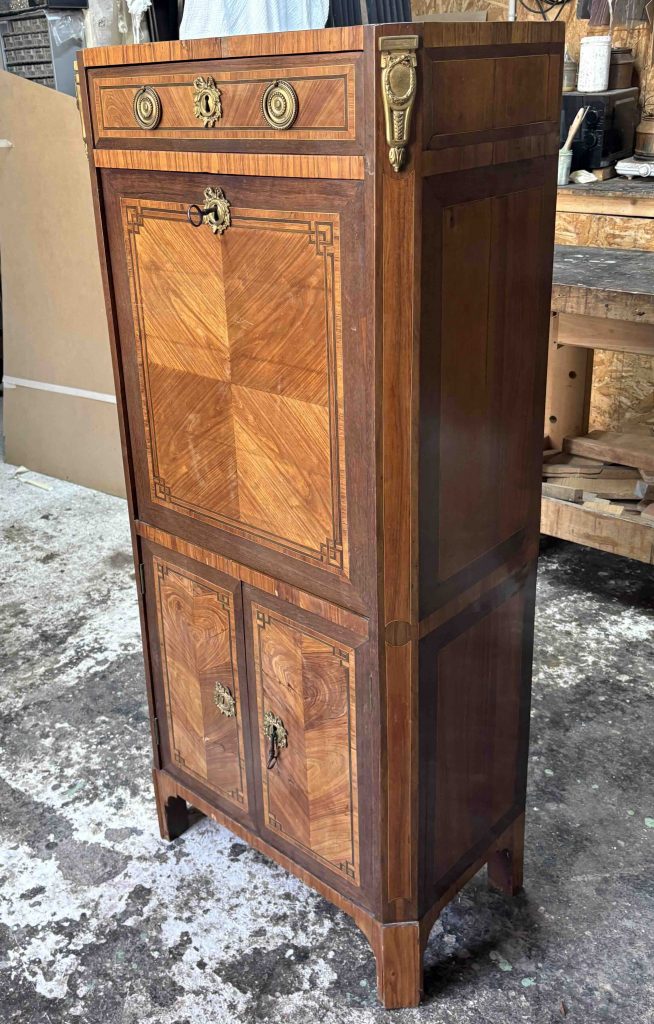
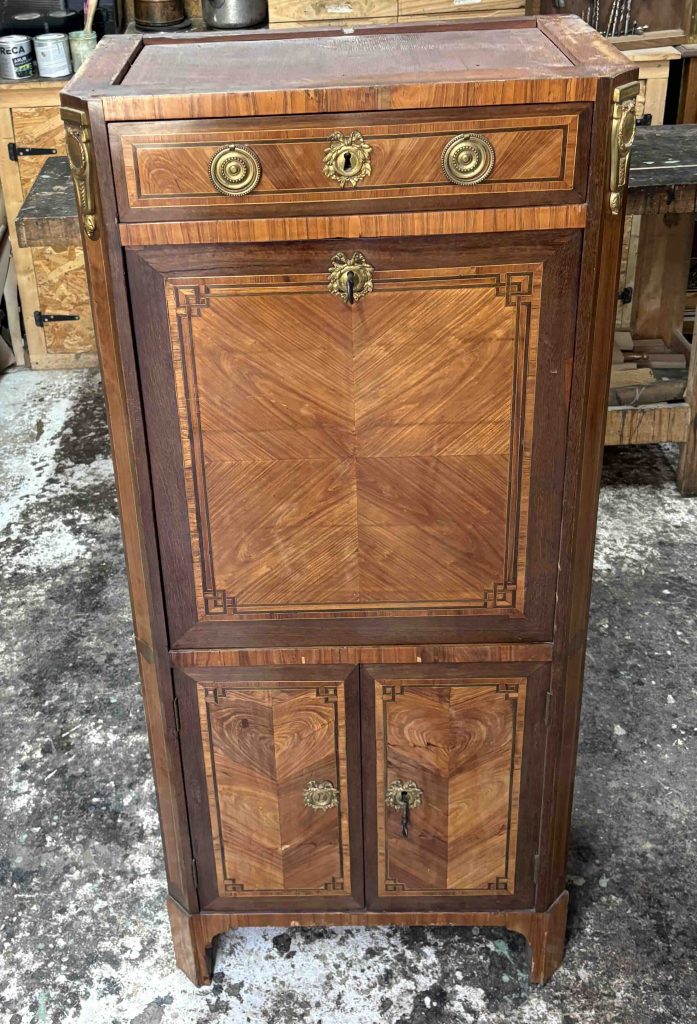
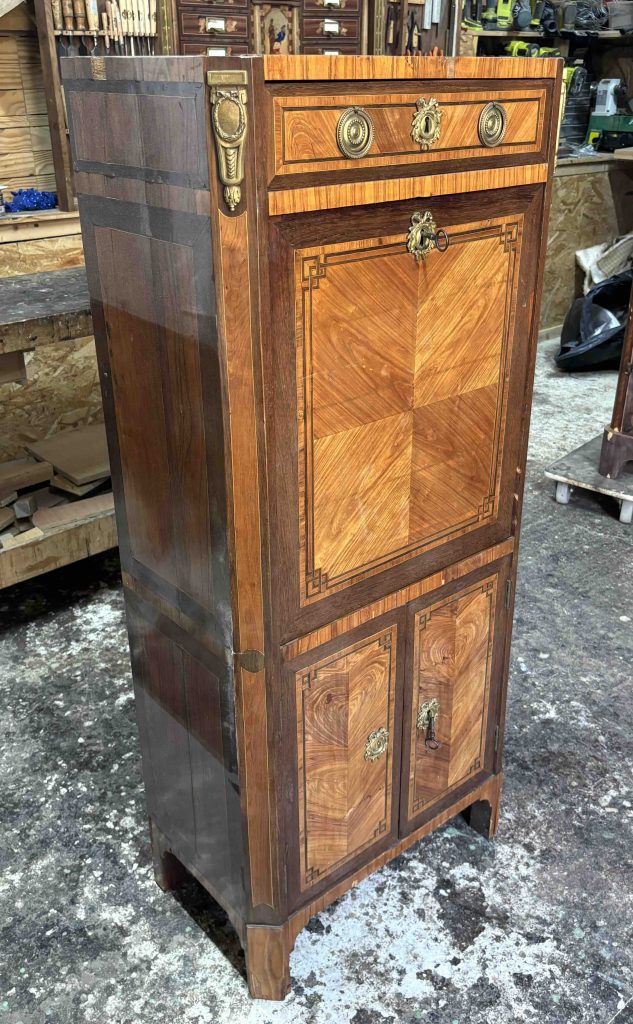
This Louis XVI style secretary desk, stamped JG Schlichitg, is veneered in rosewood, satinwood (on the sides), and amaranth, on an oak and softwood frame. It opens with two lower doors, a central drop-front, and a top drawer. The interior comprises six drawers and three niches. Given its small size, 1.20 meters, it can be described as a lady's secretary desk.

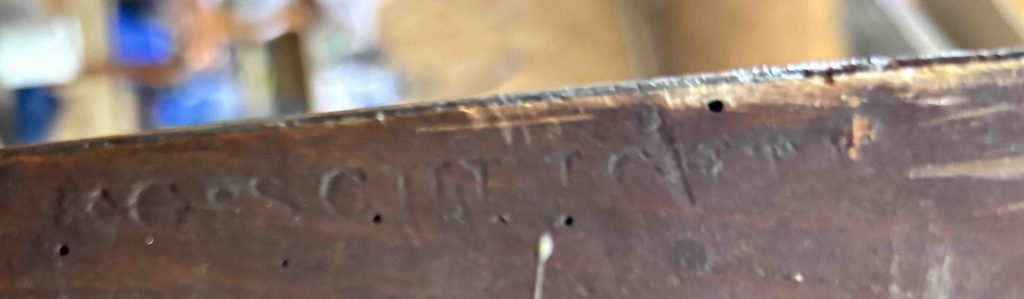
Jean-Georges Schlichtig († February 1782)
Jean-George Schlichtig was a Parisian cabinetmaker of German origin, admitted as a master on October 2, 1765. Established first on the rue du Faubourg-Saint-Antoine and then on the rue Saint-Nicolas, he worked during the pivotal period marking the transition from the Louis XV to the Louis XVI style. His production, primarily composed of commodes, secretaries, roll-top desks, dressing tables, and storage units, is distinguished by its exceptionally meticulous craftsmanship, characterized by the use of precious wood veneers (rosewood, violet wood, amaranth, satinwood, or palisander), highly precise geometric or figurative marquetry compositions, and the use of high-quality chased and gilded bronze mounts. His furniture demonstrates a perfect mastery of Parisian cabinetmaking techniques from the second half of the 18th century and illustrates the evolution of forms toward a more rigorous and architectural aesthetic, characteristic of the taste of the time. neoclassical. Several works attributed to Schlichtig are associated with an aristocratic and royal clientele, notably Marie Antoinette, while their presence in public collections and on the art market confirms the importance of this craftsman among Parisian cabinetmakers active during the reigns of Louis XV and Louis XVI. After his death in 1782, his wife continued to run his workshop and business until 1787.
BIBLIOGRAPHY
- French Furniture of the 18th Century – Pierre Kjellberg – Les Editions de l'Amateur – 1989
- The workshops Parisian cabinetmakers and joiners in the 17th and 18th centuries – Guillaume Janneau – Serg Editions – 1975
- French Cabinetmakers from Louis XIV to the Revolution – Editions du Chêne – 1989 – Alexandre Pradere
State of affairs report
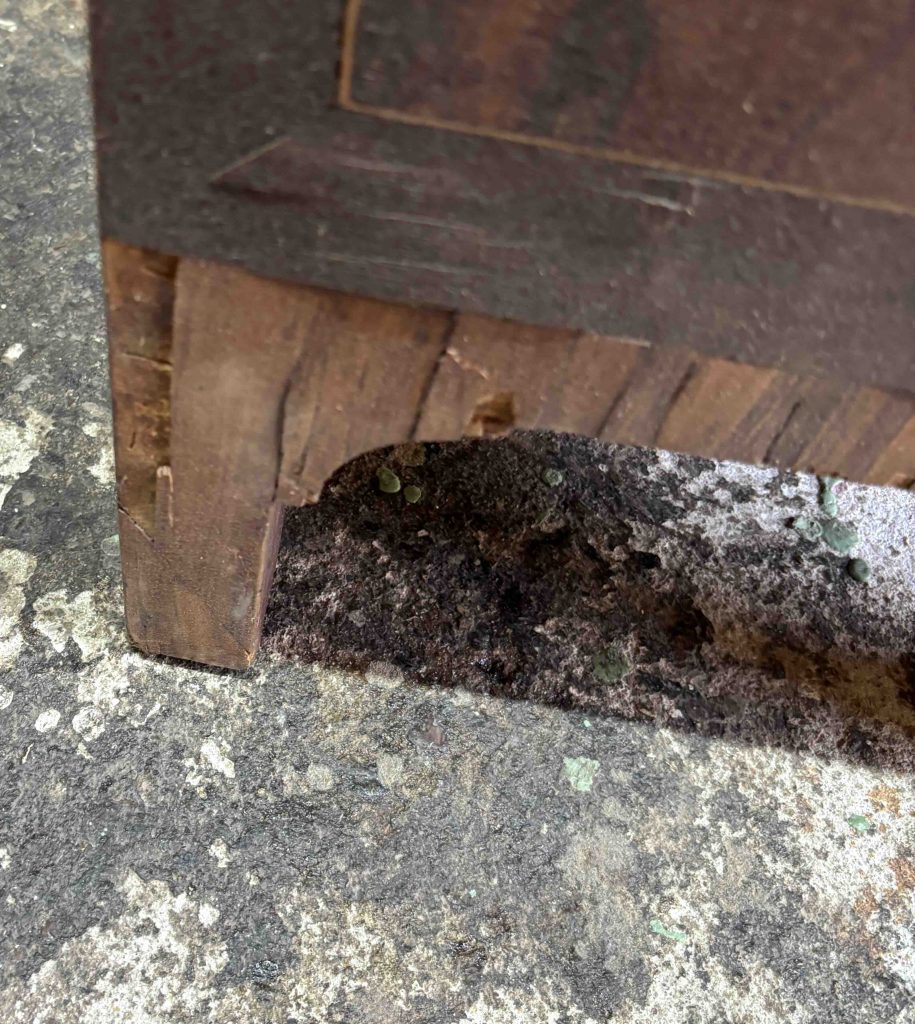
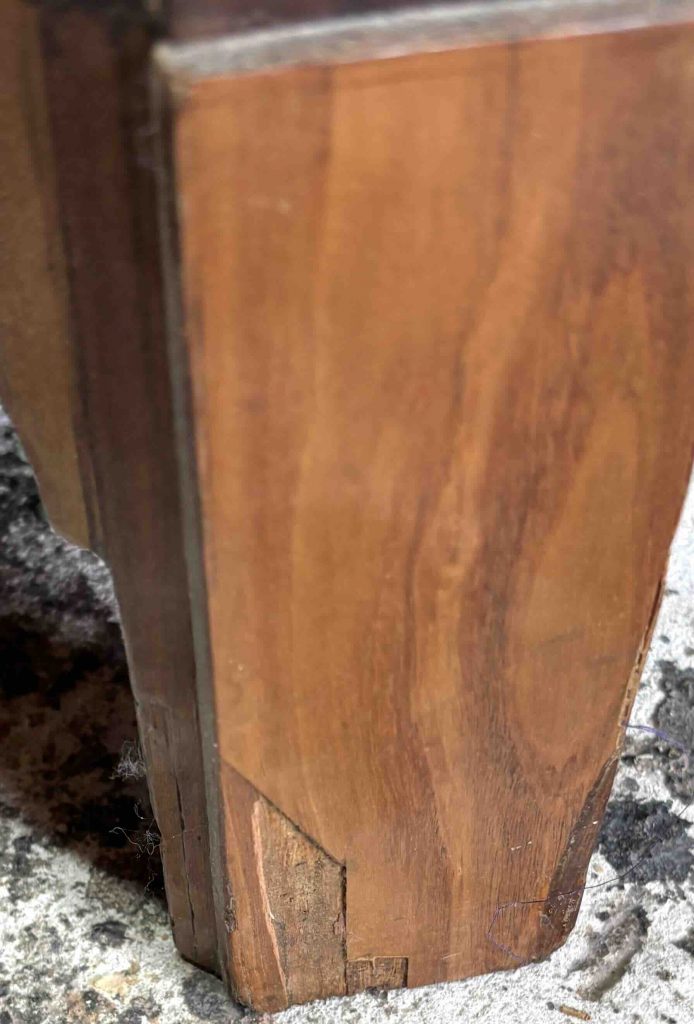
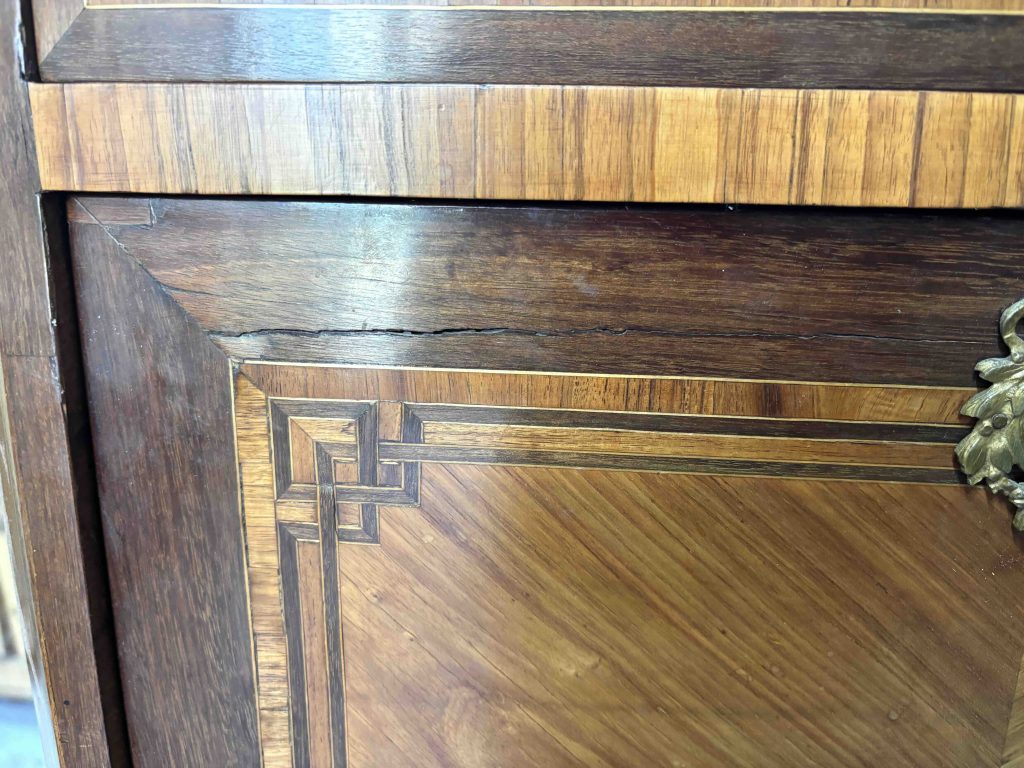
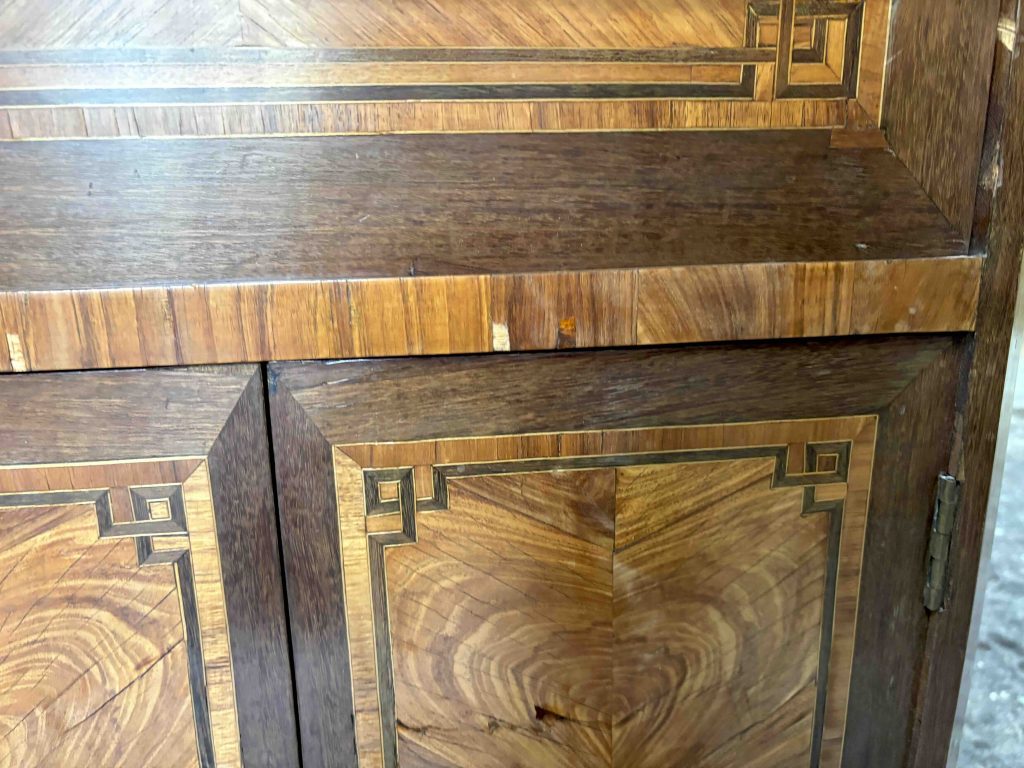
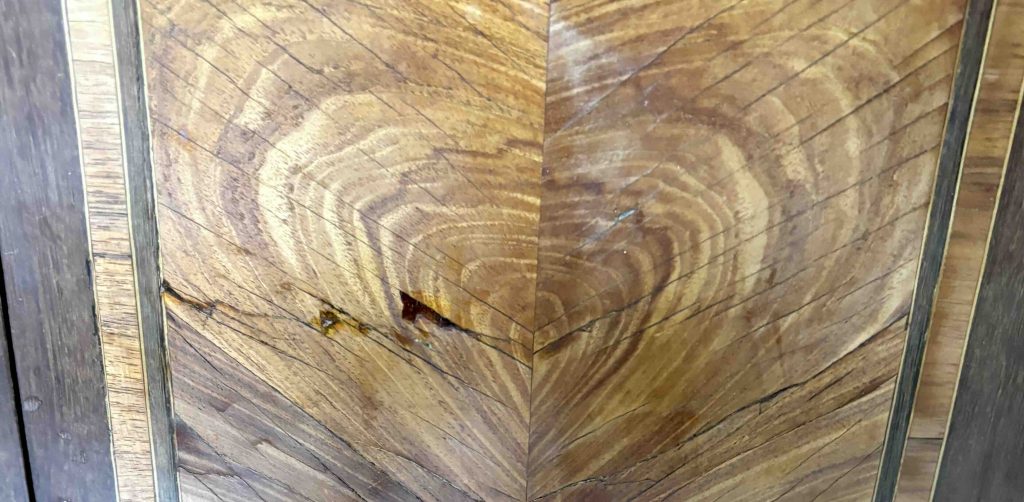
This piece of furniture was in relatively good condition. There were chips and peeling veneer, with the veneer lifting in some places. In addition, the doors, drop-front, and drawer required adjustment and restoration to working order.



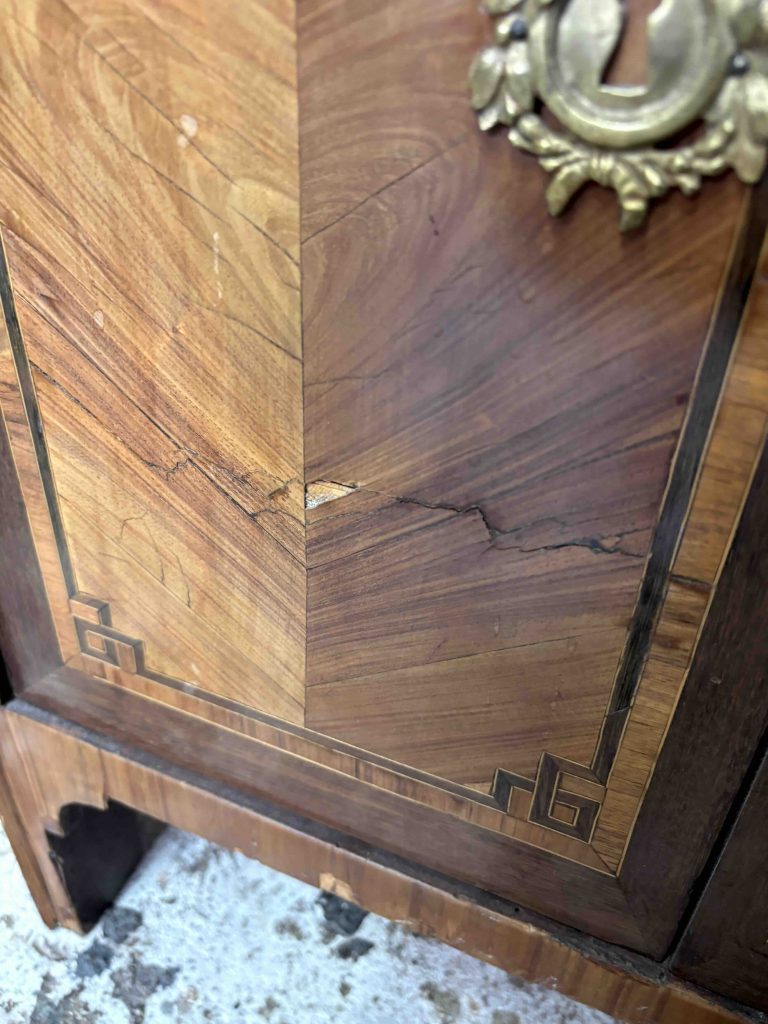
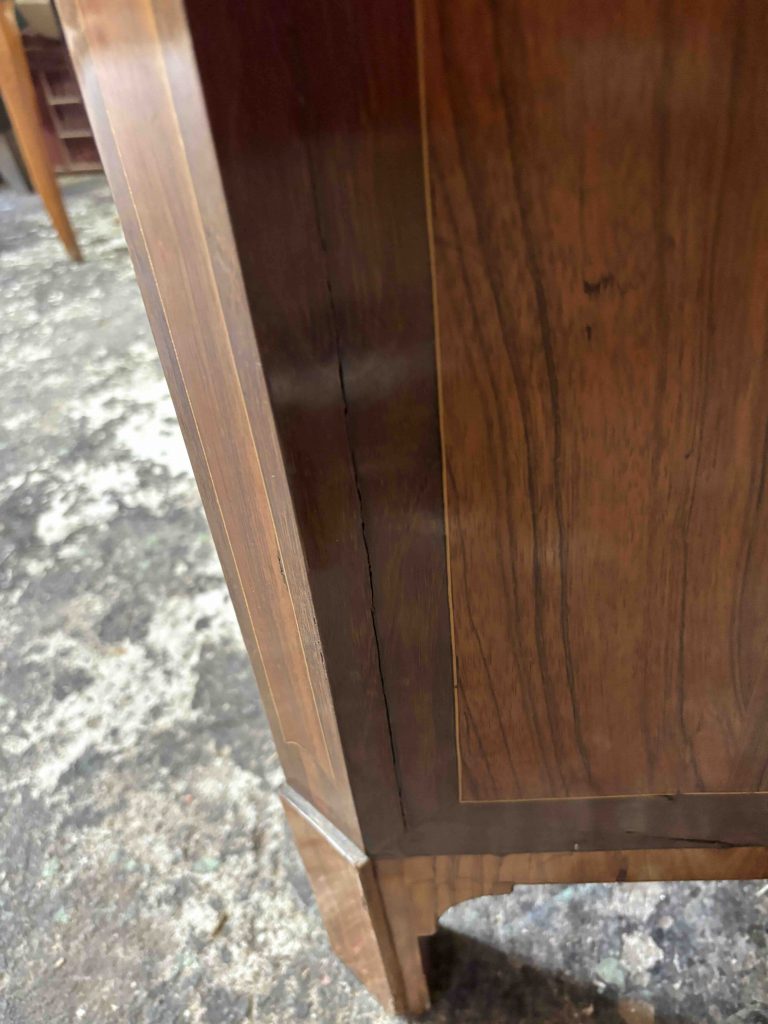
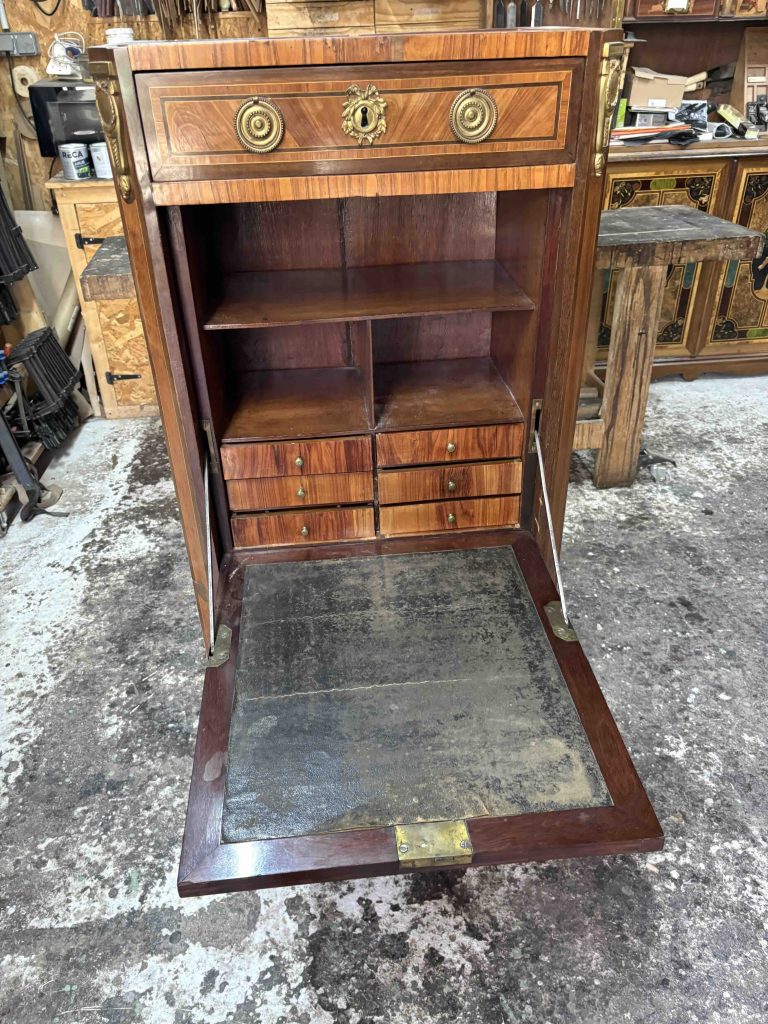
The Restoration
The restoration work therefore consisted of replacing the missing veneer with new pieces of veneer that were sawn, scraped, sanded, and cut to the correct thickness as a backing before being glued with hot glue. All the veneered surfaces were rehydrated to ensure the consistency and stability of the adhesives for the future. The shellac finish was thinned and then reworked with a colorless shellac. The bronzes were cleaned with gel.