Rochelaise table in rosewood and ebony

Ebénisterie Mathieu Vath

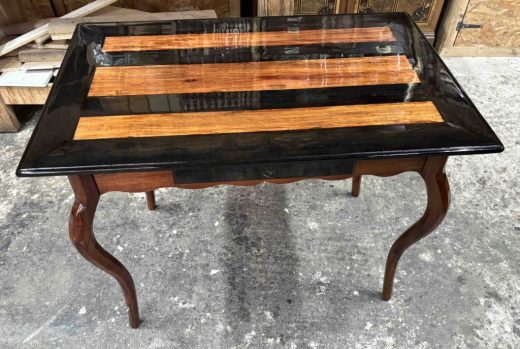
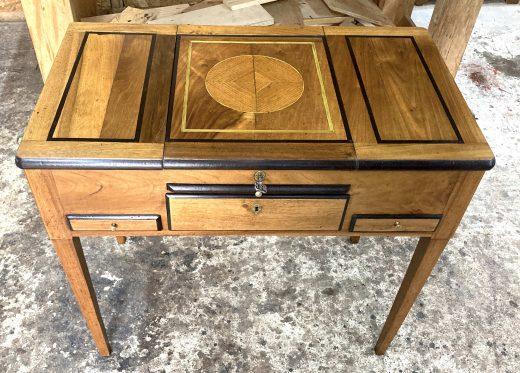
Restoration of a Louis XV salon table, made in La Rochelle in the mid-18th century. This piece is distinguished by its parquet top, alternating rosewood and ebony. It opens with a drawer integrated into the front apron, whose shaped moldings and cabriole legs with octagonal sides testify to exceptional craftsmanship. The table is made exclusively of solid rosewood for the base, the parquet top, and the drawer boxes, while solid ebony is used for the […]
Directoire armchairs

Ebénisterie Mathieu Vath

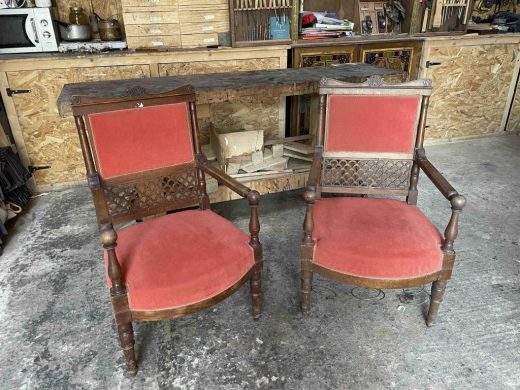
Restoration of a pair of Directoire period armchairs (circa 1795–1805), made of solid mahogany, except for the veneered stretchers. These chairs display the clean, balanced lines characteristic of the Directoire style, a transitional period between the strictures of the Louis XVI style and the codes of the Consulate. Assembled using mortise and tenon joints, they are made of solid mahogany. The straight armrests are extended by turned supports, typical of the late Directoire. The legs are turned in a baluster shape and slightly tapered at the bottom. The rectangular backs are framed with simple molding, […]

Empire Table

Ebénisterie Mathieu Vath

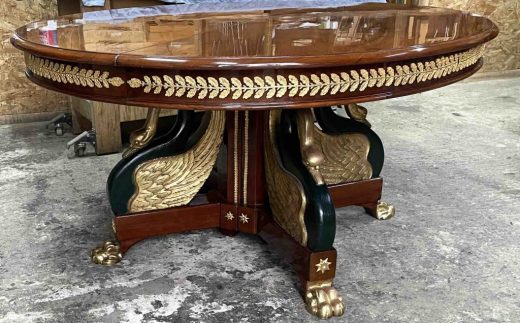
The restoration of this Empire dining table is now complete. The work focused primarily on the finishing touches. We removed the previously applied polyurethane varnish and applied a French polish to the solid mahogany top and its four-legged base decorated with swan neck motifs and lion's paw feet. The apron features an oak frieze. Length x Width = 162 x 140 cm. Length x Width with extensions = 252 cm.

Wedding wardrobe from Bayeux with swans

Ebénisterie Mathieu Vath

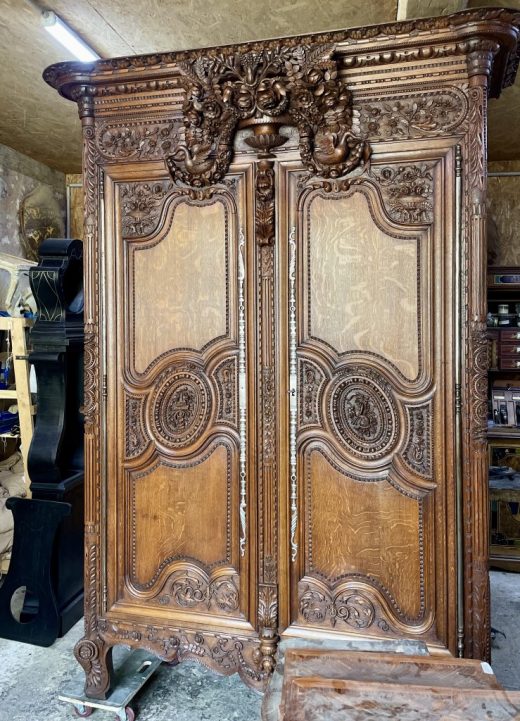
A lightening of the finish was carried out on a Bayeux wedding armoire, distinguished by its motifs of swans, figures, and hunting and musical attributes. The piece is made of quarter-sawn oak, also known as "merrain," and is attributed to the Caen plain, dating from the first half of the 19th century. The restoration work consisted of lightening the waxed finish to remove the multiple layers of tinted wax that darkened the entire piece. This process revealed the beautiful honey-blond hue of the oak […]

La Rochelle chest of drawers in "Isles wood"«

Ebénisterie Mathieu Vath

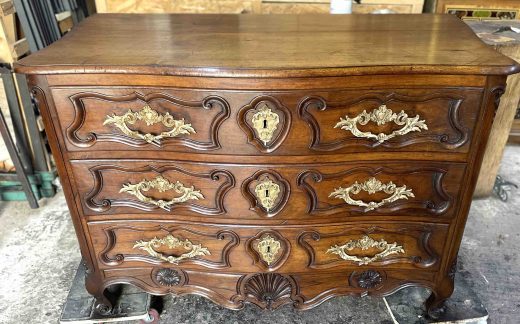
A look back at the restoration of this rare port chest of drawers, crafted from solid woods brought back from both the Orient and the West Indies, combining four precious woods: mahogany, satinwood, Palo Santo, ebony, and, most notably, a fifth wood, Royal ebony. This chest of drawers opens with three wide drawers in three rows of Palo Santo, interspersed with Ceylon ebony crossbars, and is topped with a solid framed top composed of parquet flooring, primarily enlivened by Royal ebony crossbars against a mahogany background (some sections are mottled or […]

Wardrobe of Bretteville the Proud

Ebénisterie Mathieu Vath

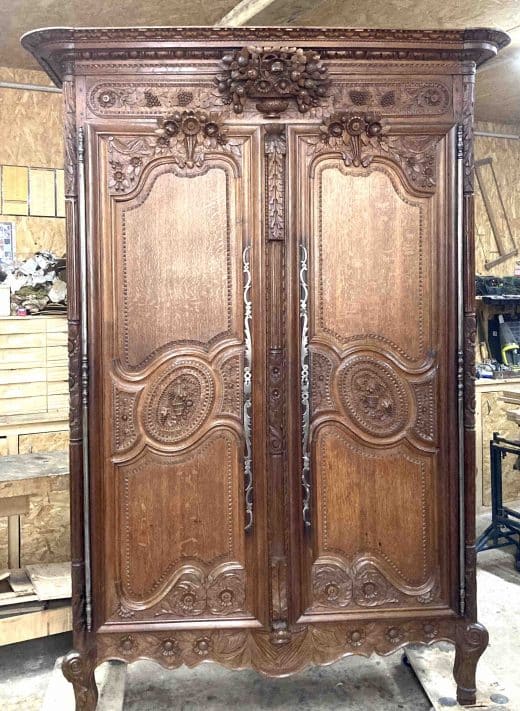
It was in the mid-17th century that what we now call the Norman armoire originated. However, it was from the 18th century onward that it acquired the characteristic form we know today: with its two doors, resting on cabriole legs and featuring a wide, sculpted cornice, it combines Louis XV structure and style with Louis XVI motifs. It was during this same period of economic and social stability, allowing for a certain improvement in living standards, that it entered the homes of both the bourgeoisie and the peasantry. The 19th century would be […]

Small chest of drawers from La Rochelle

Ebénisterie Mathieu Vath

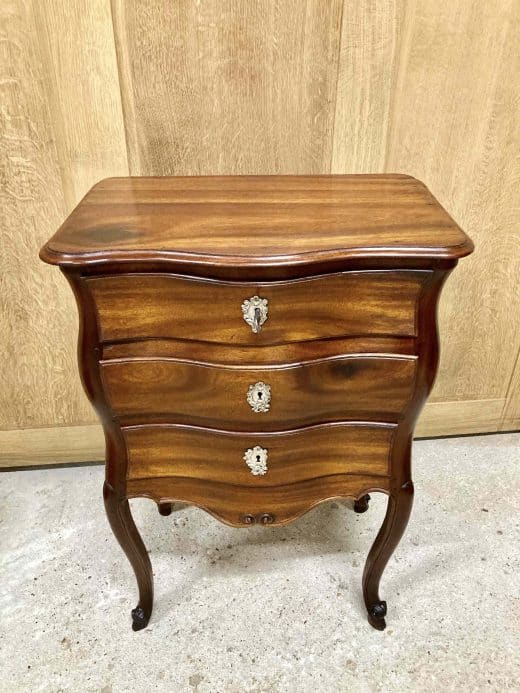
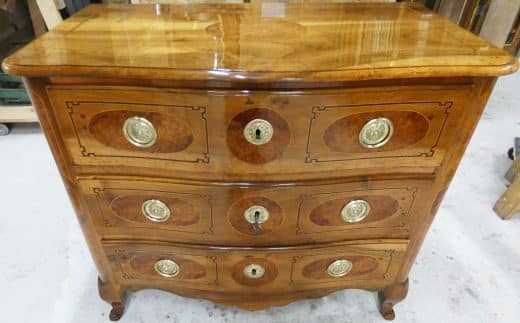
Here is the restoration of a small Louis XV commode in solid satinwood and ribboned satinwood. It is curved on all sides, including the back, and opens with three drawers in the front, as well as a pull-out candle holder at the back. La Rochelle, 18th century. Its top, molded with a corbel edge highlighted by a cavetto molding, is made of ribboned satinwood, which is also found on the front and sides, while the base is made of fine satinwood punctuated with so-called "snail" feet ending in split goatskin feet. Note the unusual proportions but especially the curves […]

Louis Philippe Buffet

Ebénisterie Mathieu Vath

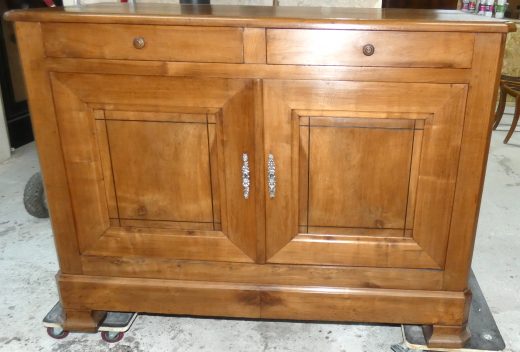
For a change of pace this week, a bit of what's called "rustic" furniture. It's a welcome change from veneer, and to be honest, it's not unpleasant. I'm even quite pleased to have this kind of piece to restore because, unfortunately, many of these pieces, having lost their market value, end up in the landfill or are simply burned. Moreover, these aren't pieces that require a huge amount of work. For this Louis Philippe two-part sideboard, the restoration consisted of replacing the chestnut planks […]

"Cabaret" pedestal table«

Ebénisterie Mathieu Vath

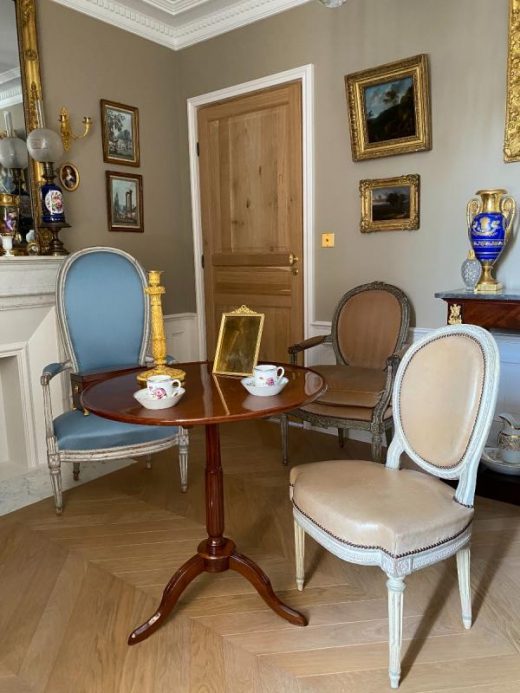
Very fashionable at the end of the 18th century, the cabaret table, or cabaret table, is characterized by a raised, basin-shaped top. Its slightly concave shape with a raised rim all around allows for the safe serving of various beverages such as teas, hot chocolates, and other drinks. This model, similar to those made by the cabinetmaker Canabas, is made of solid mahogany from Saint-Domingue with metal reinforcement under the legs. The biggest problem, in fact, was with the legs; they wobbled in all directions. The […]

Empire X-Leg Desk

Ebénisterie Mathieu Vath

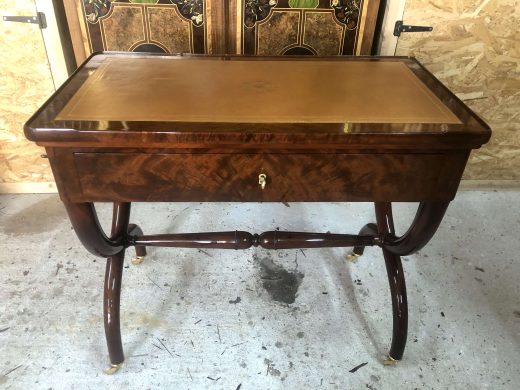
Here are some images of the restoration of this desk, with a solid mahogany base and mahogany burl veneer for the rest. Note that the recessed top is made from a single 12mm thick plank of solid mahogany burl. Here is the desk before restoration. The bulk of the work is on the legs. They are broken at the middle joint. They have already been repaired and are held together only by additional screws. Two cracks can be seen at the […]

Prie-Dieu

Ebénisterie Mathieu Vath

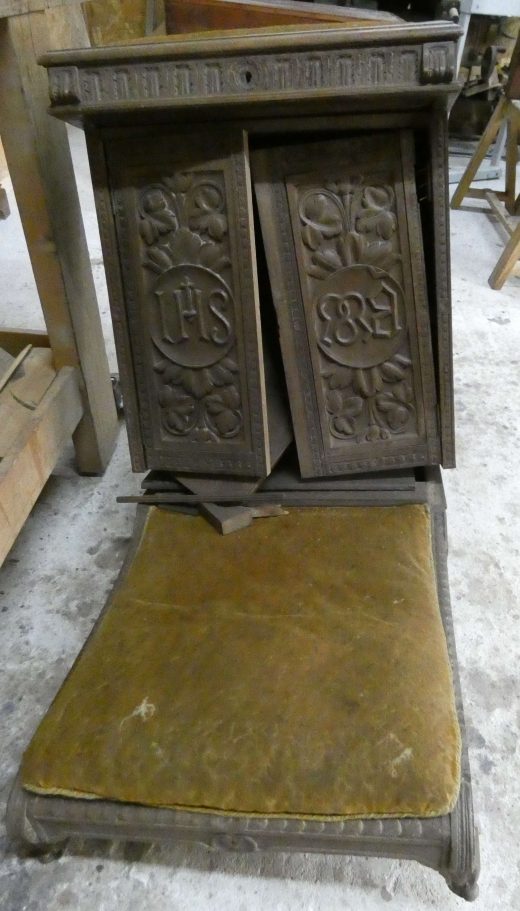
A first contact and a truly beautiful job by Rachèle on the restoration of this walnut prie-dieu dating from the late 19th century. The project was quite daunting. Left abandoned for years, it had been ravaged by wood-boring insects. The first task was to treat the piece with anoxic agents for 21 days. Then, as nothing was holding together anymore, each element was disassembled, which wasn't too difficult, and then glued back together […]

Secretary of the Board of Directors

Ebénisterie Mathieu VATH

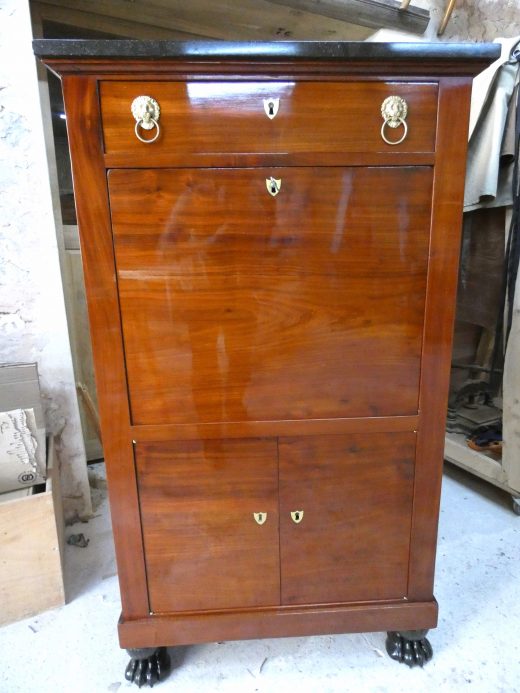
Here is a secretary desk in the most understated style of the Directoire period. Its frame is made of solid beech and conifer, and it is veneered with mahogany and mottled mahogany. It is very simply adorned with bronze handles in the form of a lion's head holding a ring in its mouth. The keyhole escutcheons are in the shape of a shield. The interior comprises seven drawers, the middle one of which opens with a key. The drop-front opens with a period three-point lock. The lower section consists of three drawers, or has been transferred […]

N. PETIT Roll-Top Desk

Ebénisterie Mathieu VATH

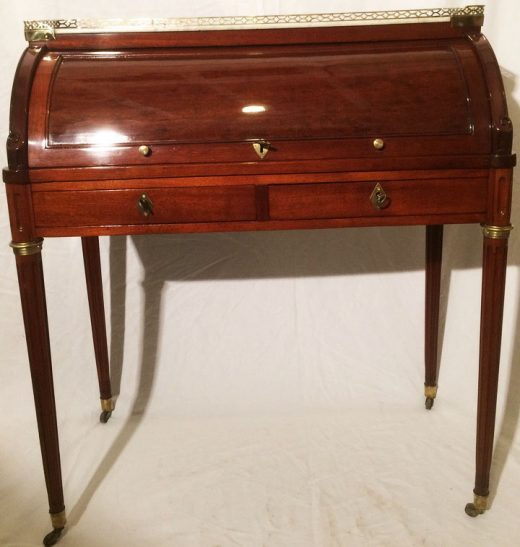
DIMENSIONS: H.71 W.104 D.52 This roll-top desk perfectly matches those made by Nicolas Petit's workshop between 1770 and 1791, the year of his death. Indeed, with a few exceptions, Nicolas Petit primarily produced this type of secretary in molded mahogany, resting on fluted legs and topped with white marble. Simple in style, they reflected the taste of the period. It comprises two drawers in the frieze, two side pull-out shelves, and a central pull-out shelf that locks when the drop-front is closed. The interior consists of […]

Chest of drawers in the style of the Axe

Ebénisterie Mathieu VATH

Here are some photos of the restoration of a solid walnut commode, veneered with thuya burl inlay and Greek key stringing in amaranth and boxwood. The drawers and the interior and back panels are made of fir. Despite the curved stretcher, its shape, and its feet, this commode is indeed in the transitional style but from the Louis XVI period. In the title, I wrote "in the style of the Hache family" because it is certain that this commode originated in the Dauphiné region. But whether it is a product of the famous […]

Empire bed

Ebénisterie Mathieu VATH

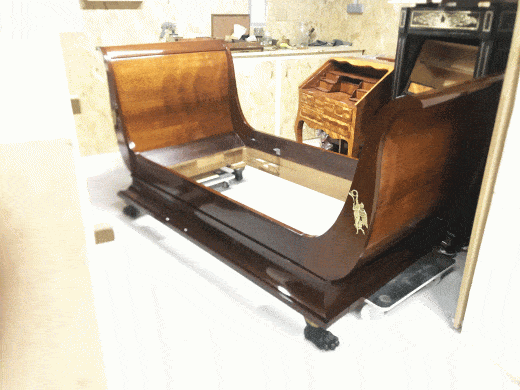
The "boat" bed, with its characteristic curve, is a French invention that appeared during the Directory and was very fashionable during the Empire and the Restoration. It is easily recognizable here by its lion's paw feet. The varnish on this bed had worn away, making it impossible to distinguish between the two mahogany pieces. The mahogany is known as Cuban mahogany (Swietenia mahogani), from Cuba, a Spanish colony. Evidence of its importation into Spain, specifically Seville, dates back to 1519-1520. It was used by Philip II between 1563 and 1584 during the construction of the Palace […]

Louis XIII Cabinet

Ebénisterie Mathieu VATH

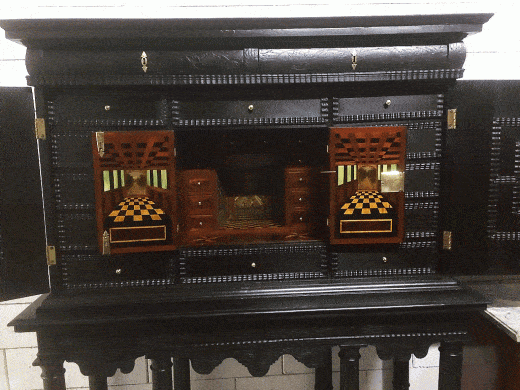
A look back at a fascinating restoration project (at least for me). So fascinating, in fact, that I forgot to take photos at the beginning! This cabinet dates from the 17th century and features two drawers in the cornice and two doors in the upper section. The base consists of two drawers in the frieze supported by eight turned feet and a top resting on ball feet. Inside are twelve drawers and two doors concealing an interior theater, as well as eleven more drawers. The feet, along with […]

Regional cabinet

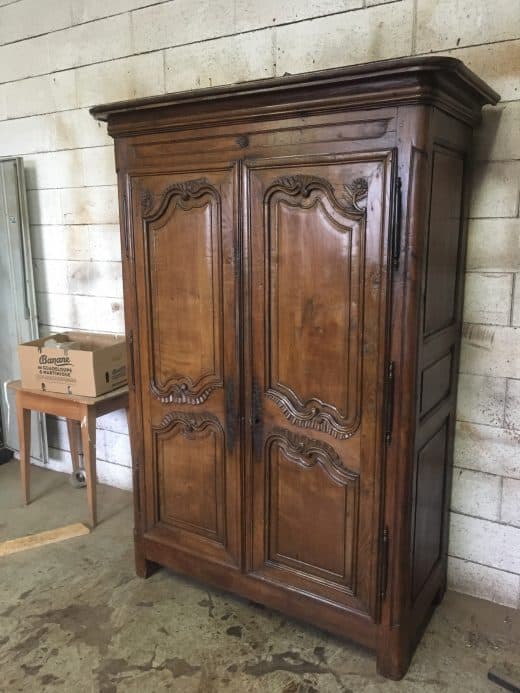
Restoration of a regional solid oak wardrobe. This wardrobe was completely disassembled and overhauled. Every joint was re-engineered to ensure easy disassembly and reassembly. All panels were reamed to their original dimensions. Holes, missing pieces, and chips were filled with new solid oak. The grafts were then treated with an antiquing agent. The doors were adjusted for perfect operation. The piece was then cleaned, stripped, and finished with beeswax.