cherry wood sideboard
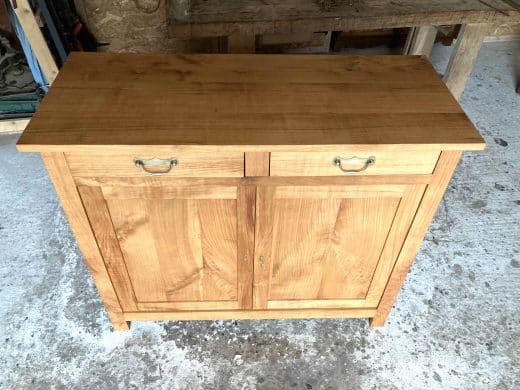
Construction of a solid cherry wood sideboard. Oak plywood back panel and solid oak drawer and shelf. Oiled finish.
Restoration. Conservation. Creation

Construction of a solid cherry wood sideboard. Oak plywood back panel and solid oak drawer and shelf. Oiled finish.
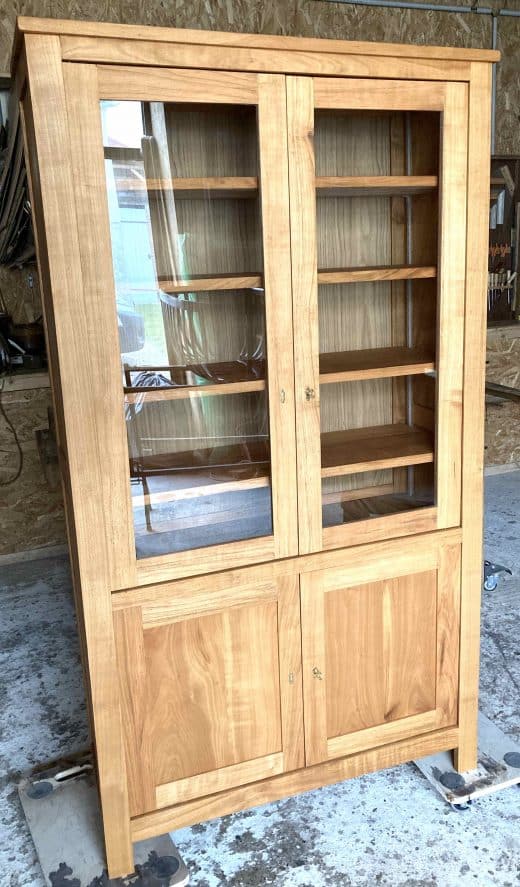
Construction of a solid cherry wood bookcase with an oak plywood back panel and aluminum adjustable shelves. Oiled finish.

Construction of a TV-hi-fi unit, with vinyl record bin, in tinéo and rosewood veneer on oak plywood and solid oak, black steel legs.
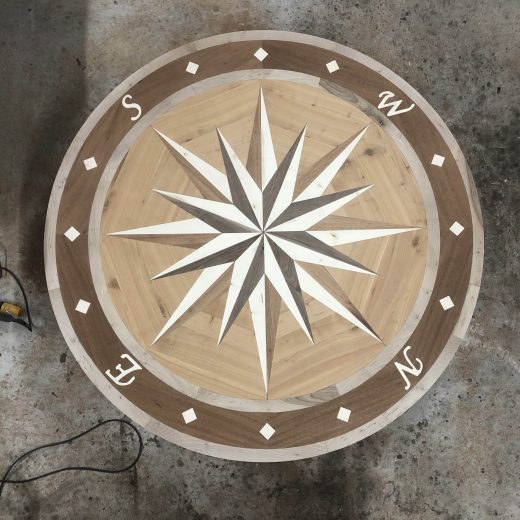
Creation of a compass rose in 8mm solid wood, veneered onto 8mm plywood. It is composed of maple, dark walnut, and sipo for the rose itself; cherry for the background; and sapele, light walnut, and maple for the frieze and cardinal points. It will be integrated into a solid walnut parquet floor; unfortunately, I am not doing the installation… I hope to be able to see and show you the final result soon.
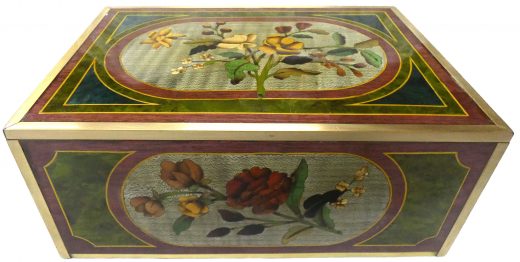
The brief was to create a multi-movement secret box inspired by Japanese boxes but with French-style marquetry. This box comprises three movements to access the secret drawer and a spring-loaded button concealed beneath the veneer that allows the drawer to be ejected. For the form and marquetry, I drew inspiration from the traveling secretary attributed to Jean-François Oeben. The geometric shapes and colors closely correspond to what this cabinetmaker […]
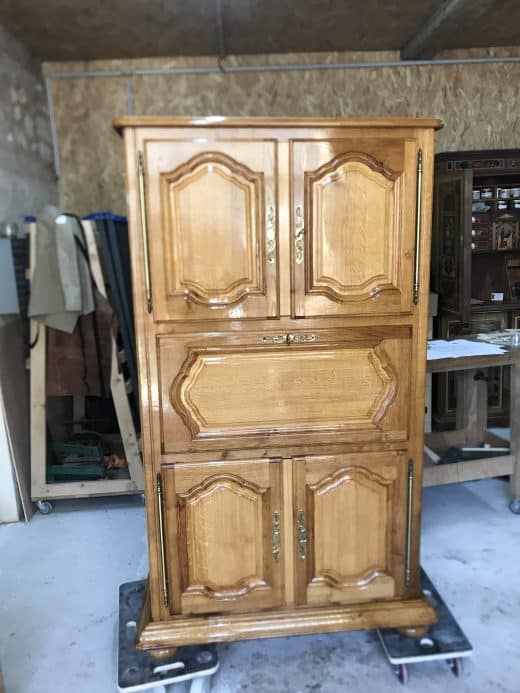
A brief look back at the making of a Louis XIV style secretary desk in solid oak with cherry and walnut inlay for the drop-front and drawers. Finished in golden oak and varnish.
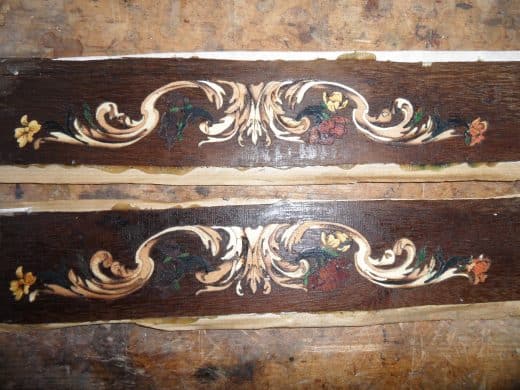
To kick off the new year, I'm excited to present my latest project. I'm embarking on a replica of this box attributed to André Charles Boulle. You'll be able to follow its progress and even come see it in person, as it will be my main subject for marquetry work at various exhibitions and events over the next few years. And yes, I'm talking about several years, as it's an extremely time-consuming project. But first, I had to find and select the different types of wood that make up the […]
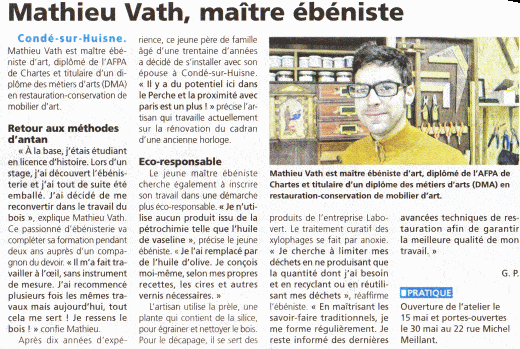
Here is an article that appeared in Le Perche on Wednesday, May 15, 2019.
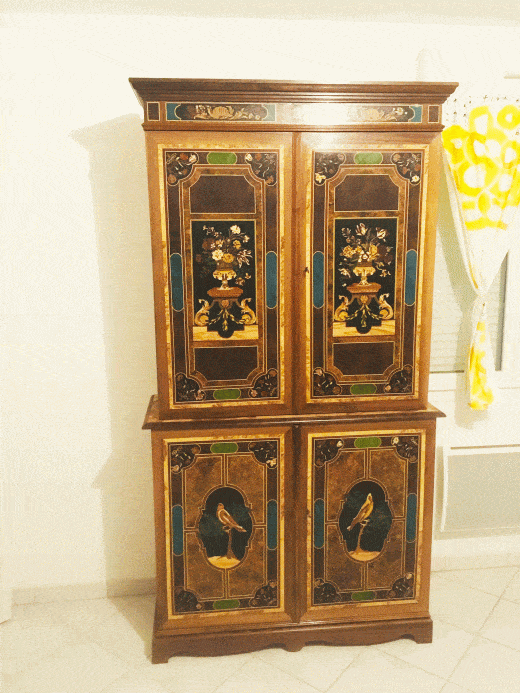
And there you have it, it's finished and ready to use. All the tools are in their proper place. All that's left is to find bronze fittings for the handles and keyhole escutcheons. For the finishing technique, I used the same one applied to furniture of that period: polishing. I first scraped the surface, then sanded it with 150-grit sandpaper. Next, I applied Venetian tripoli mixed with olive oil using a piece […]
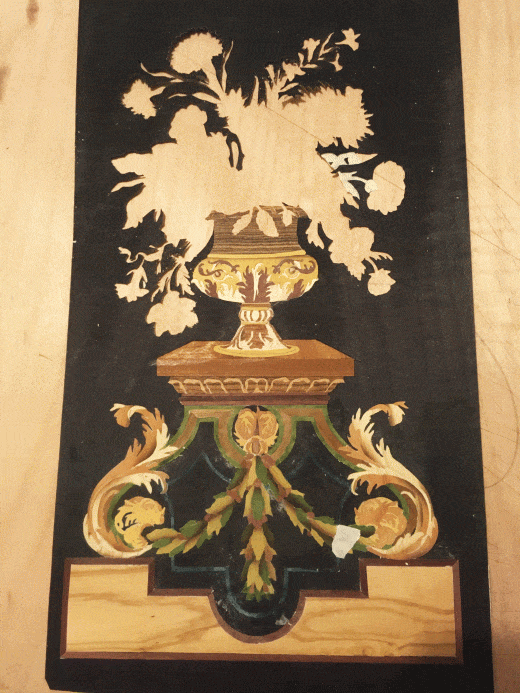
For these marquetry designs, I drew inspiration from Pierre Ramond's book, "André-Charles Boulle, Cabinetmaker, Chaser, and Marquetry Maker to the King." I used the marquetry drawings from the Boulle workshop cabinet (circa 1715–1720). I simply modified them by removing the birds and the butterfly to simplify the design. Then, I partially employed the "Boulle" method for the acanthus leaves and the vase. Finally, I used the wood painting technique for the flower bouquets.
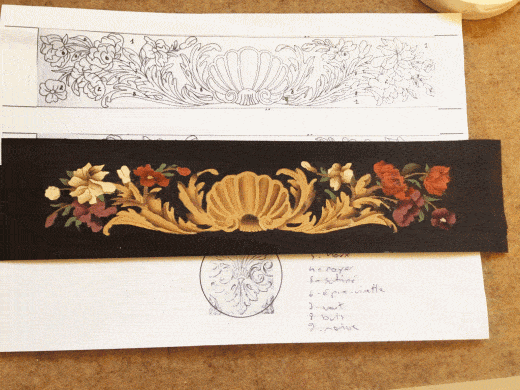
Here are some photos of the marquetry on the tool cabinet. For the corner pieces, I was inspired by those on a table by Pierre Gole, a predecessor and major influence of André-Charles Boulle. For this cabinet, I needed to make 16 corner pieces. So, to save time, I decided to use the Boulle marquetry technique. I made four bundles of different colored woods to obtain four different marquetry designs from a single cut. Therefore, there are four identical designs, but with different flower colors. Then, […]
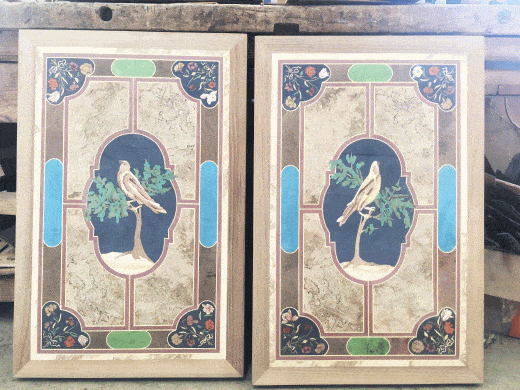
Here are some images of the creation of the birds that make up the marquetry on the lower doors.
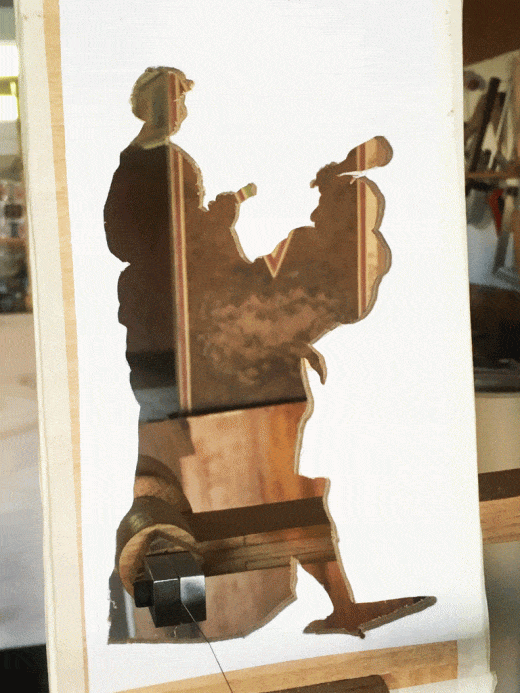
The idea behind this tool cabinet was to explore and implement the various projects I was researching. One of these ideas was to tackle the marquetry technique of a famous 18th-century cabinetmaker, David Roentgen. This technique, known as "mosaic marquetry," involves cutting a single sheet of veneer using a conical saw and then coloring it by dipping each piece in a pre-defined dye. However, there were two problems to overcome: Conical sawing, which is difficult to […]
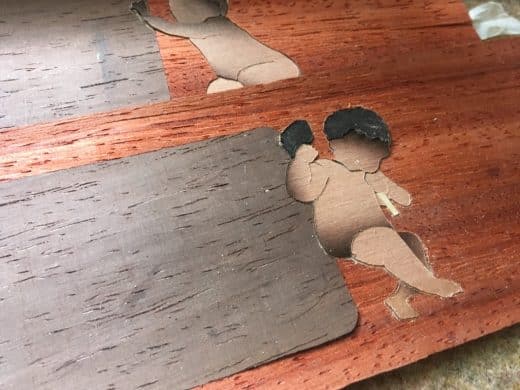
I crafted the frame from solid walnut, the panels from poplar, and the doors from plywood. I researched various marquetry patterns, drawing heavily on the books on marquetry by Pierre Ramond—essential references and bedside books on the subject. For the interior drawer decorations, I was inspired by the cupids depicted on J.H. Riesener's Table of the Muses.
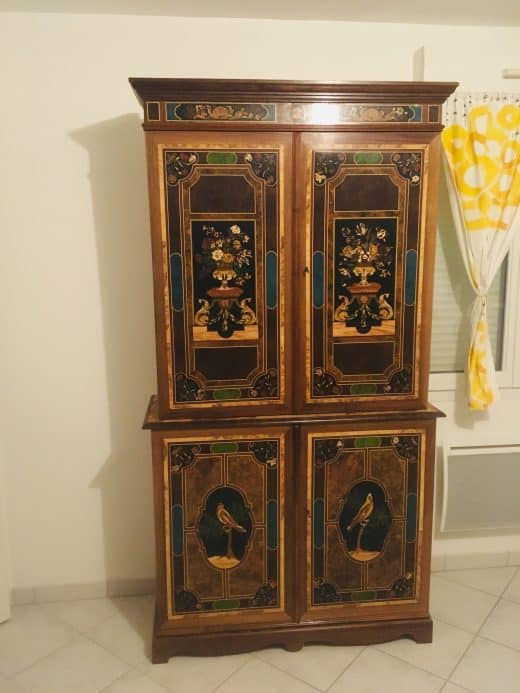
Since the workshop is under renovation, today I'll begin describing the various stages involved in making this tool cabinet. The idea came to me while looking for a way to store all my tools in a single piece of furniture. For the style, I had recently restored a Masarine commode in the style of the HACHE family in Grenoble. When I embark on a personal furniture project, I like to explore new techniques. And I had never before tackled the Louis XIV/Regency style.