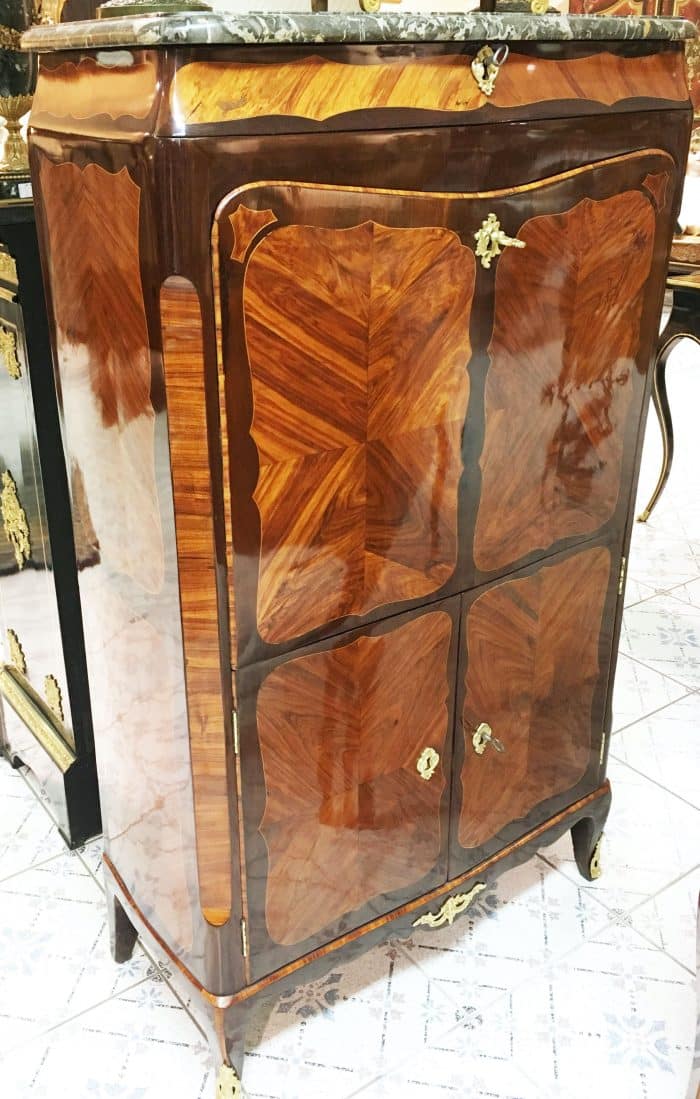
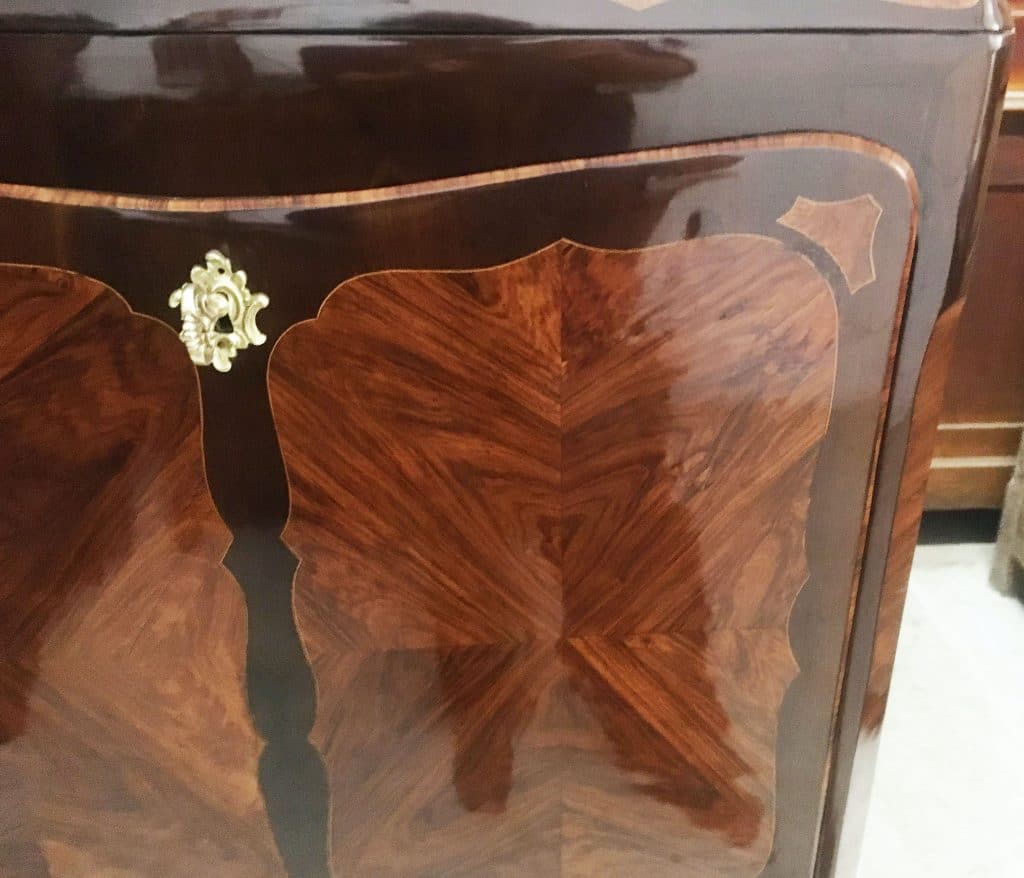
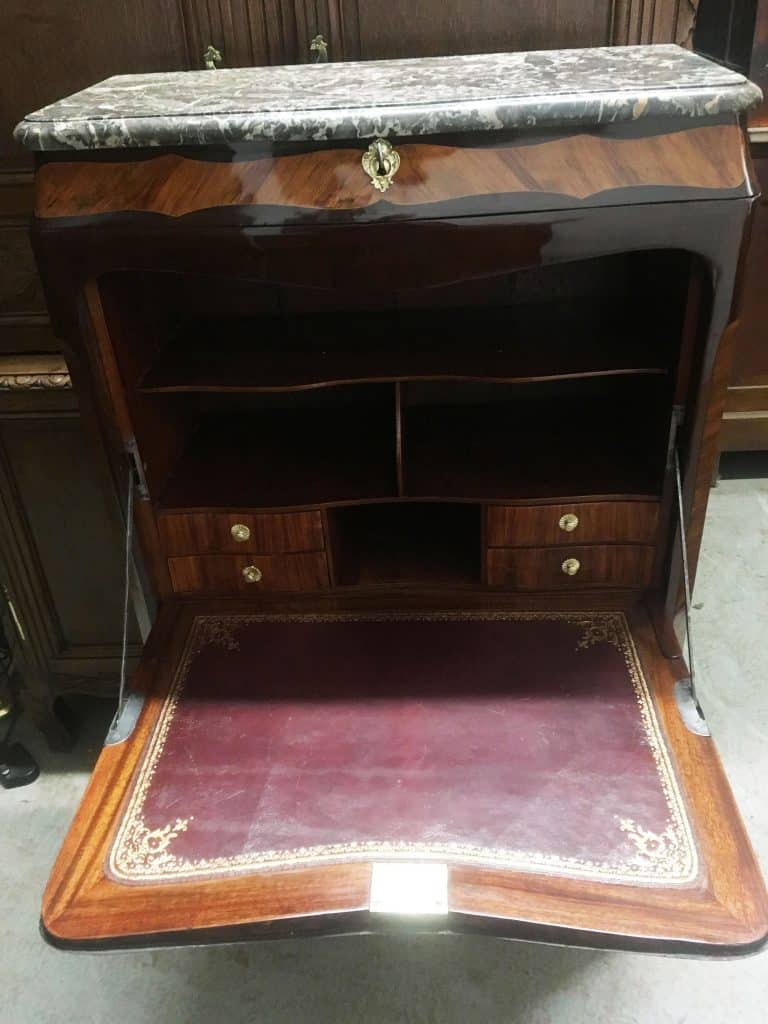
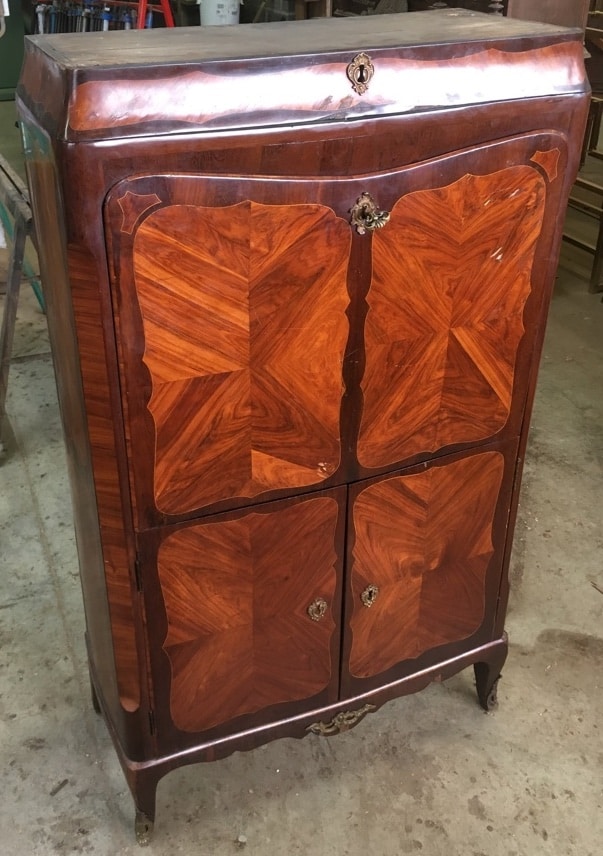
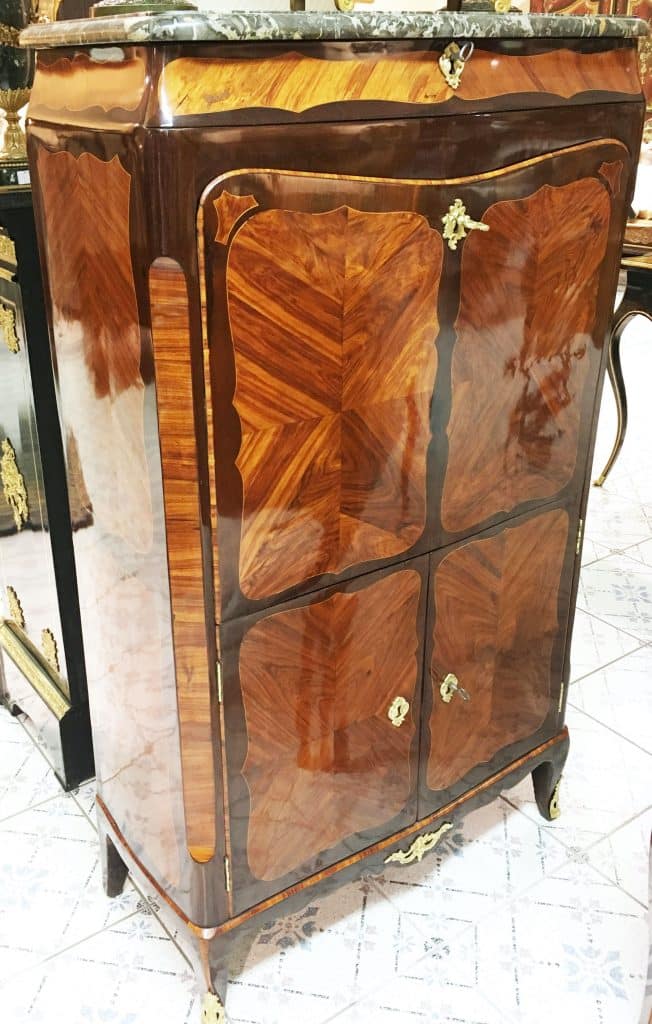
Here are some images of the restoration of a secretary stamped by Pierre Roussel (1723-1782).
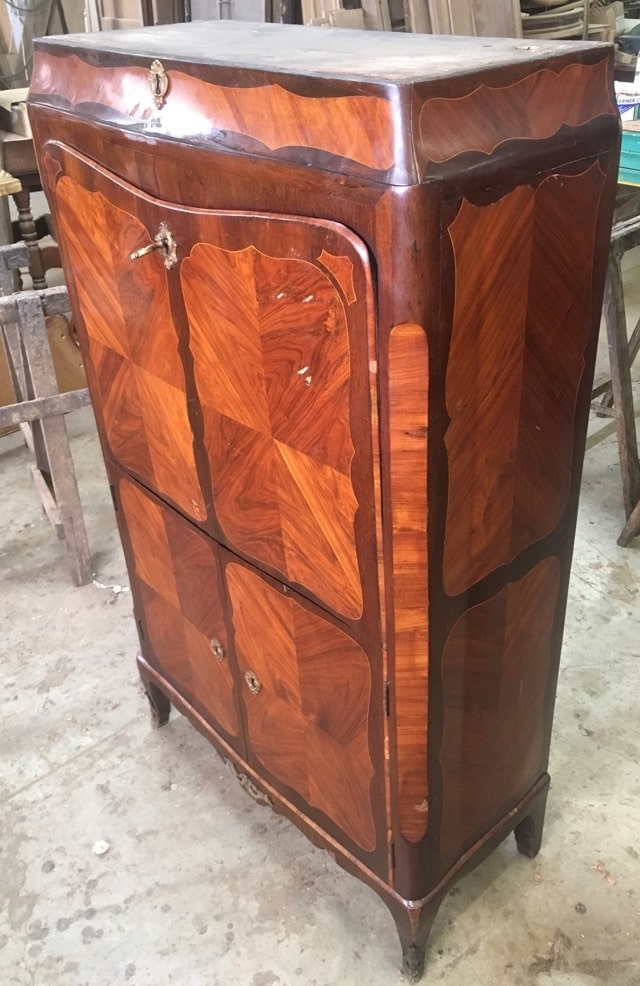
Having received his Master Cabinetmaker's Certificate in 1745, Pierre Roussel established himself on Rue de Charonne, in the Faubourg Saint-Antoine, under the sign "L'Image de Saint Pierre" (The Image of Saint Peter). Thanks to his exceptional skills as a cabinetmaker and, above all, as a marquetry artist, he quickly gained a great reputation. In 1762, he became a sworn member of his guild. By 1767, he was considered one of the finest cabinetmakers of his time. Highly regarded by his peers, he became a representative of the cabinetmakers' guild in 1777 and then its syndic two years later. His abundant and varied productions adapted to all the styles of the 18th century with elegance and refinement.
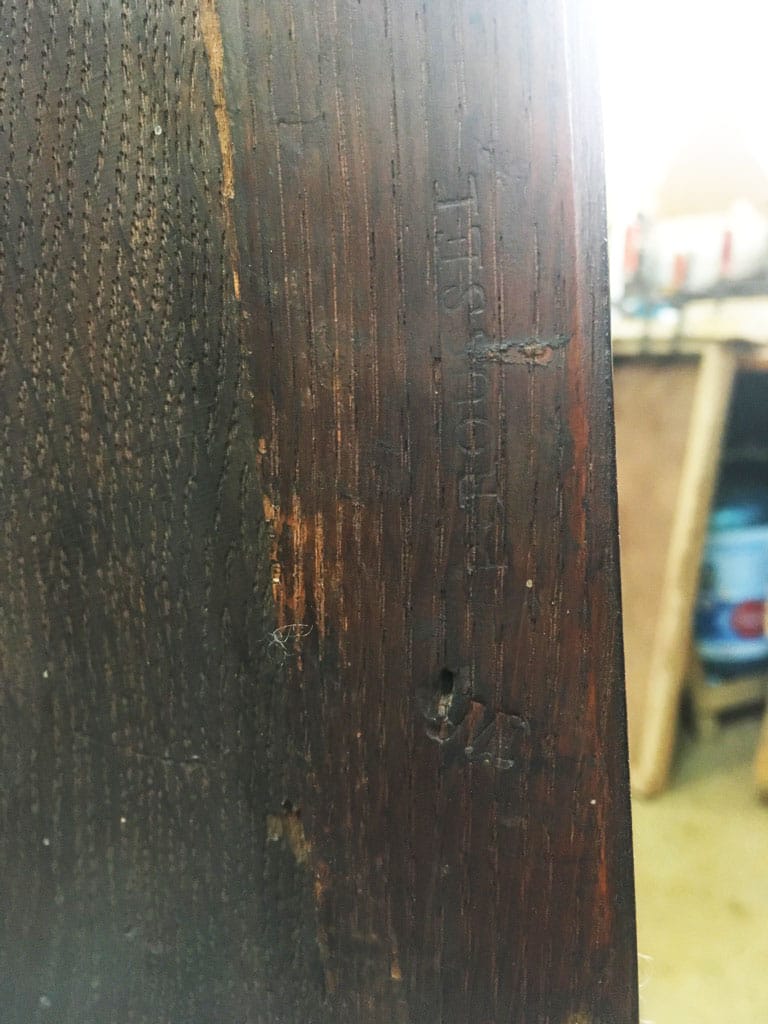

You might be wondering what the JME brand is?
On August 20, 1751, Parliament voted to establish the Jurande. "The court orders that the said letters patent be registered… in accordance, however, with the charges, clauses, and conditions set forth in the aforementioned decrees of the Court of July 12, 1745, January 20, 1749, and May 21, 1751…"»
The Jurande is the community of Cabinetmakers and Joiners (JME).
It was composed of a principal or syndic and six jurors. The guild's role was to manage day-to-day affairs, select and verify masterpieces, monitor the quality of production in Parisian workshops, and prosecute unlicensed workers. The guild's statutes were established in 1743 and registered with Parliament in 1751. From that date onward, a separation was established between the joiner and the sculptor. The latter regained all of his prerogatives.
From 1743 onwards, the guild's jurors toured all the workshops four times a year, applying the guild's mark to the pieces that met their established criteria. They levied a 10-sol tax and confiscated defective merchandise. The mark was registered at the guild's office on a lead block (Paris). In the provinces, this only applied to large manufacturing centers (Lyon, for example) with local regulations. Upholsterers who sourced their materials from independent craftsmen used counterfeit stamps. Counterfeiting was punished by fines and criminal prosecution.
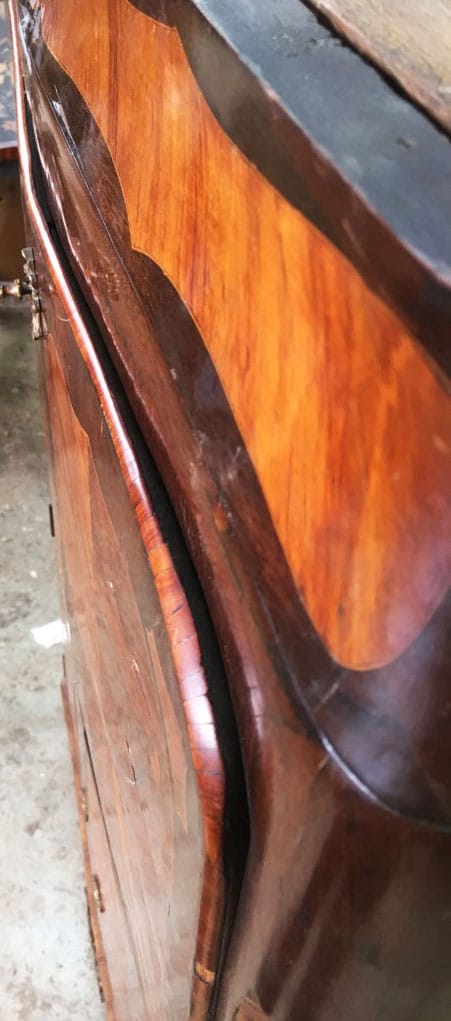
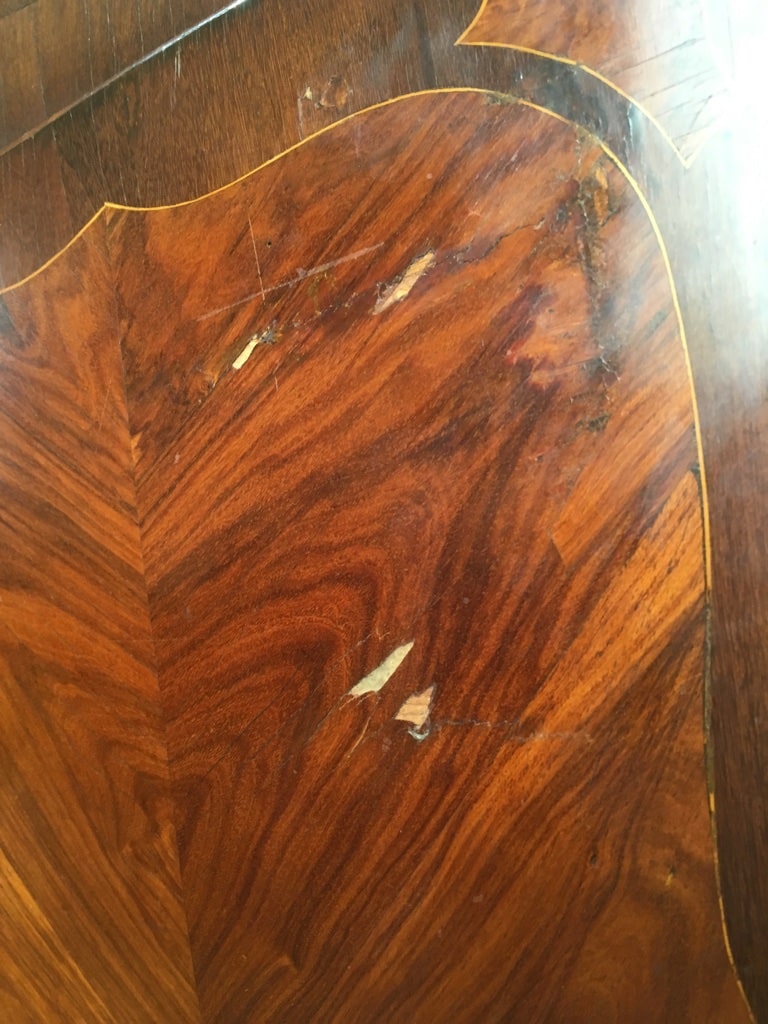
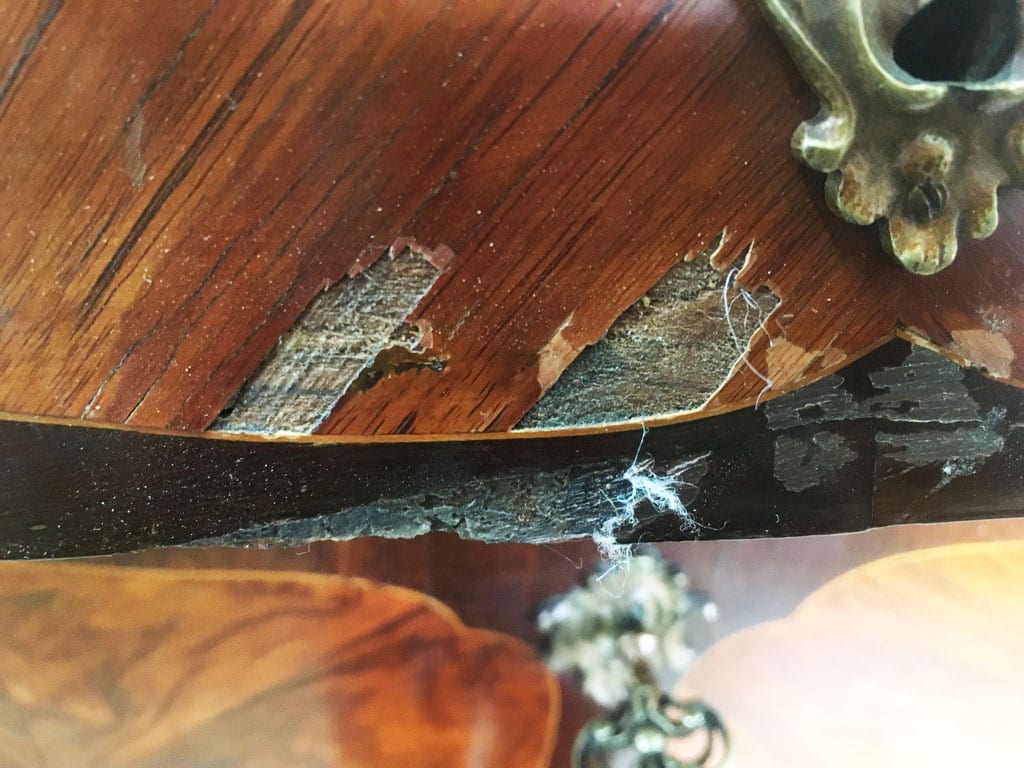
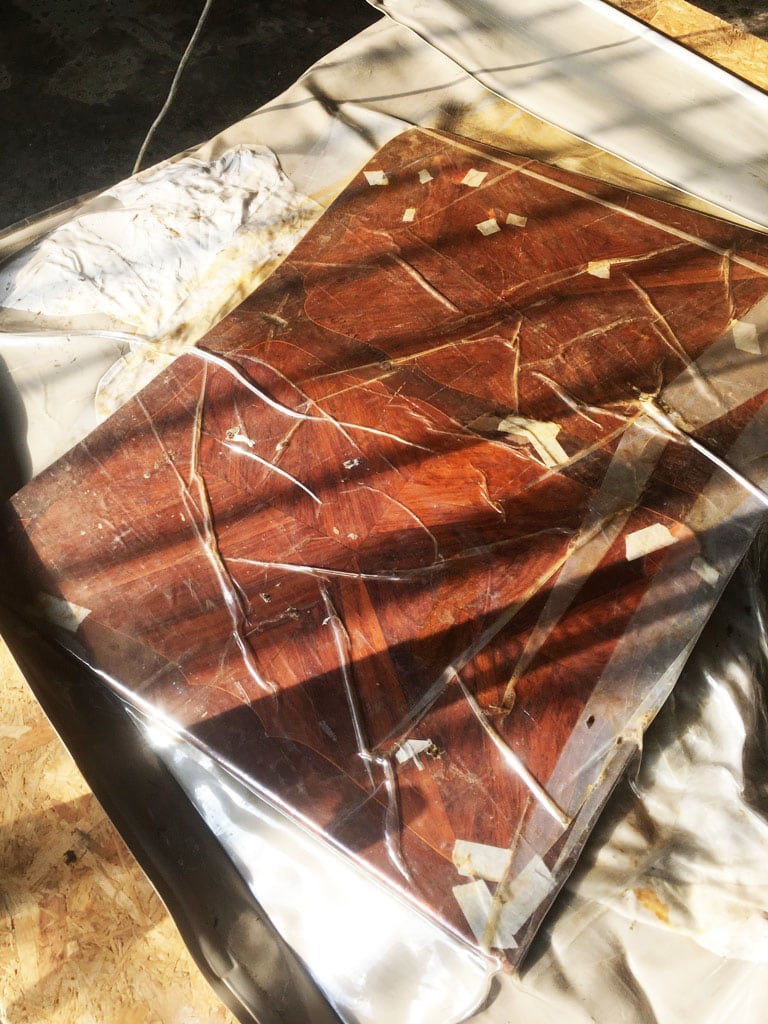
Veneer torn off 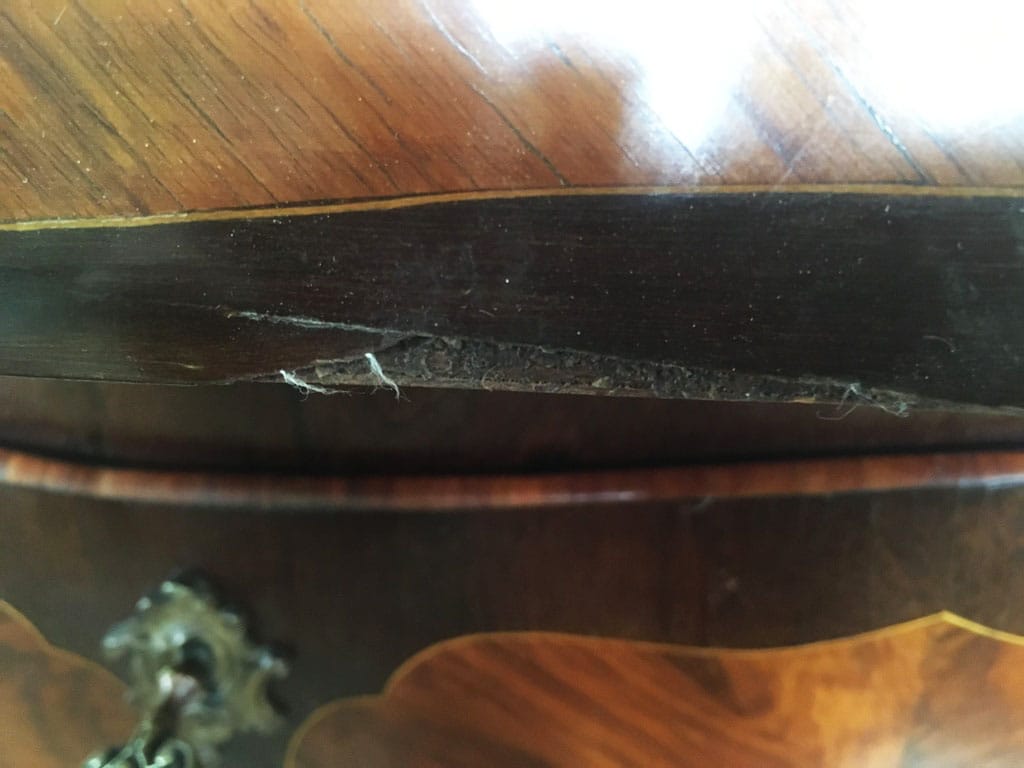
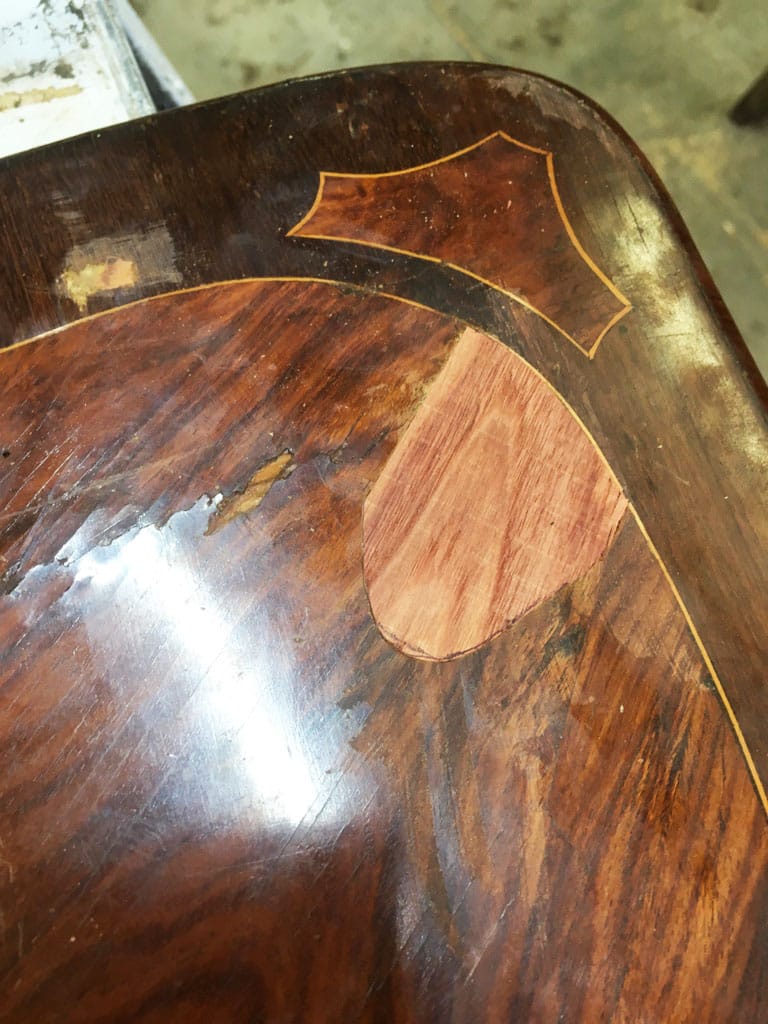
Lack of veneer 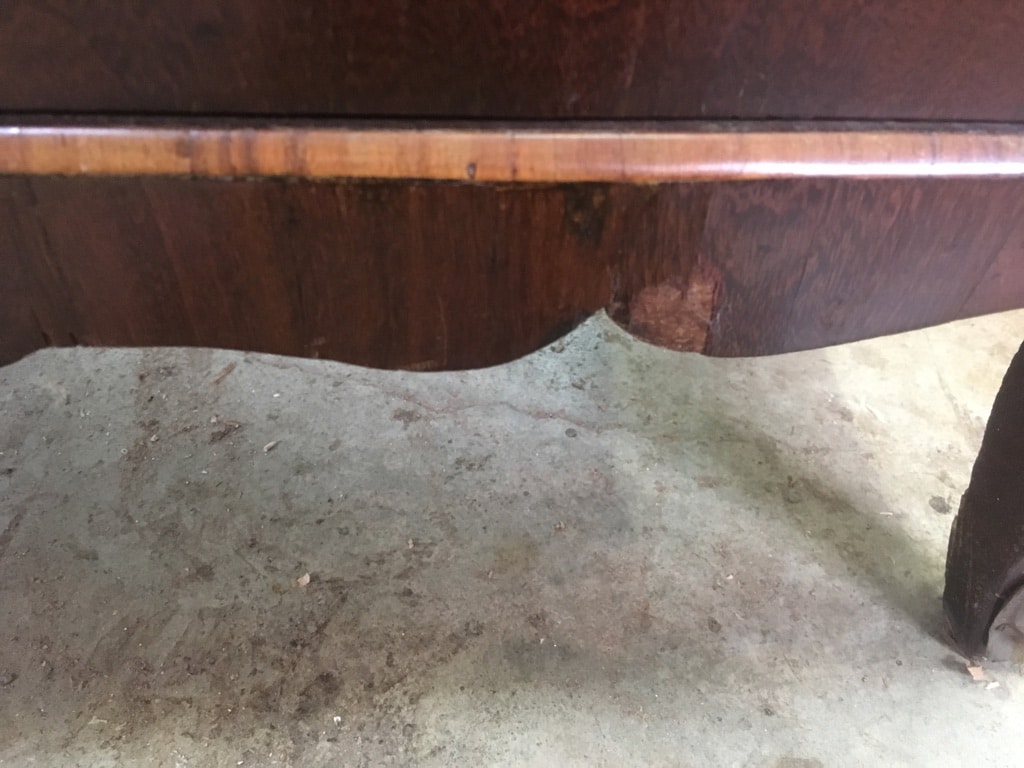
Lack of veneer
BIBLIOGRAPHY
- French Furniture of the 18th Century – Pierre Kjellberg – Les Editions de l'Amateur – 2008
- Cabinetmakers of the 18th Century – Count François de Salverte – Art and History Publishers – 1934