
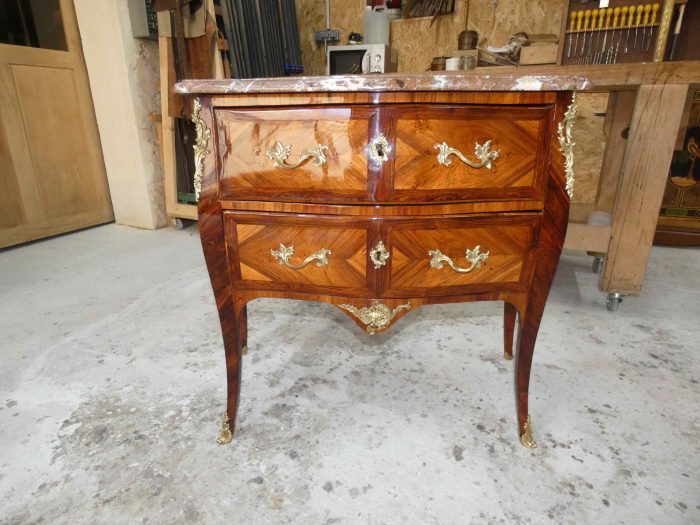
The commode with a "jumping" effect appears to have been invented during the Regency period, between 1705 and 1730, by the cabinetmaker Charles Cressent, and subsequently became widespread in the Louis XV style. It consists of only two drawers or two rows of drawers. The body is raised on cabriole legs of a medium height, with the body occupying half the height of the piece and the other half the legs. This gives the impression that the piece has legs that allow it to jump like a frog. The width is available in straight, curved, or crossbow shapes. The marble top follows the lines of the front and sides. A horizontal rail separates each drawer; the bottom one is adorned with a bronze-mounted finial.
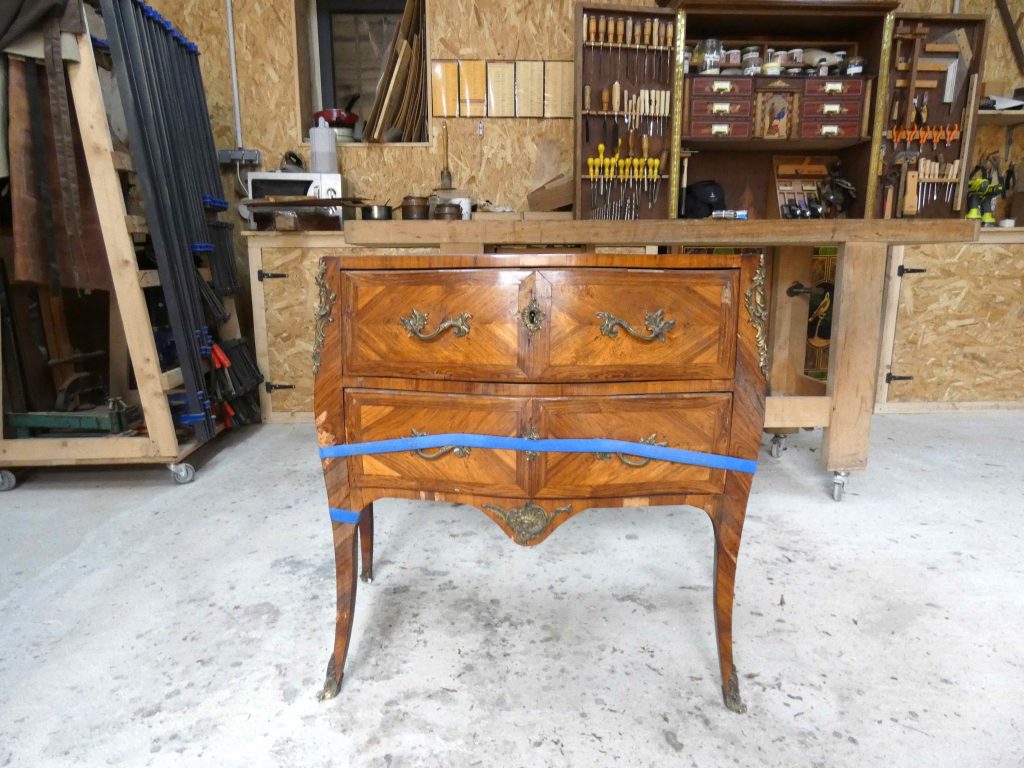
This chest of drawers has a solid beech frame and is veneered with rosewood framed with violet wood. The three front rails are veneered with satinwood.
State of affairs report
Upon arrival at the workshop, this chest of drawers presented a major problem: nothing was held together. All the joints and glued pieces had completely separated, and the back legs were entirely detached from the side panels. There were also quite a few missing veneers, precisely because the frame was in poor condition.
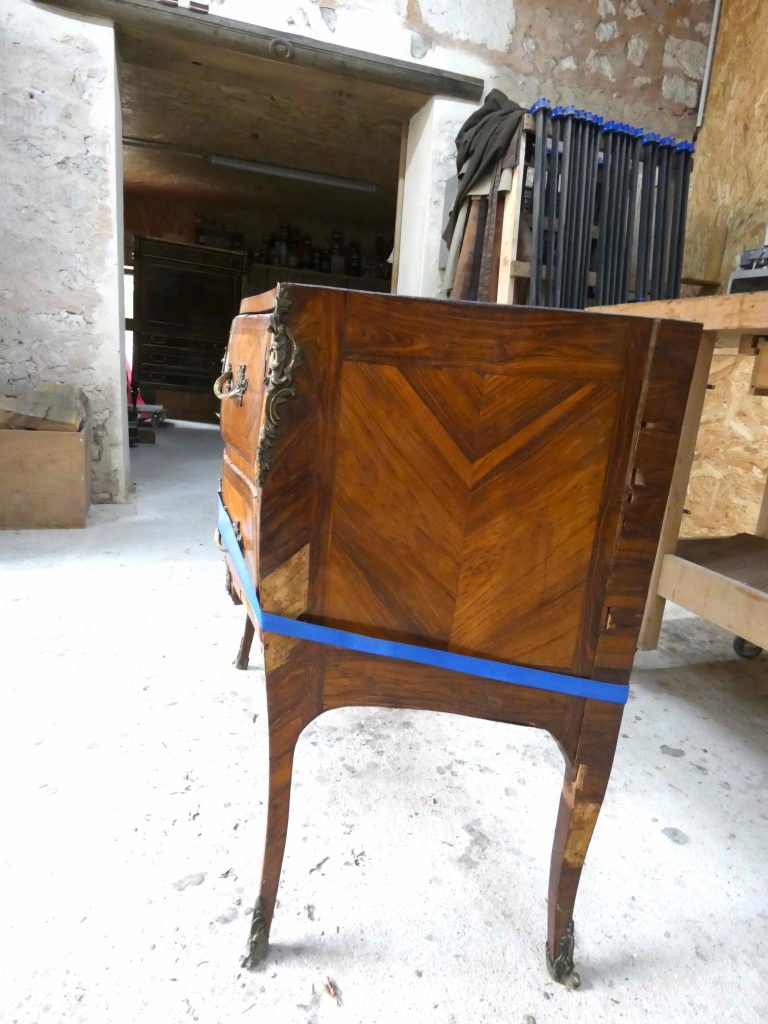
Right side before restoration 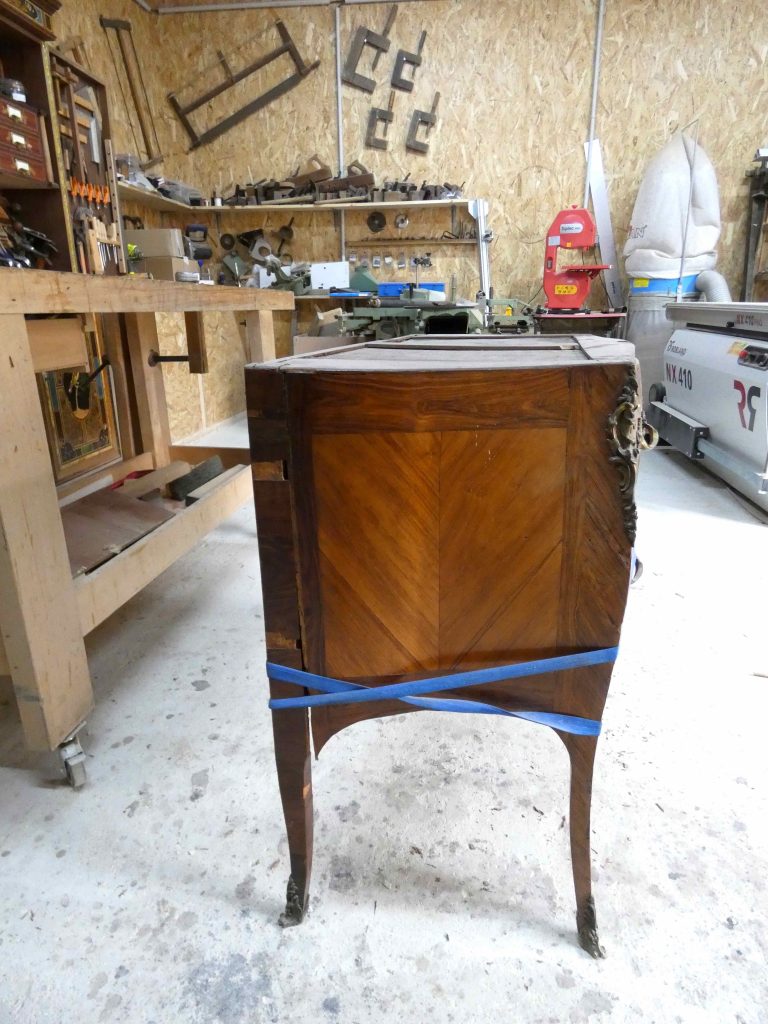
Left side before restoration 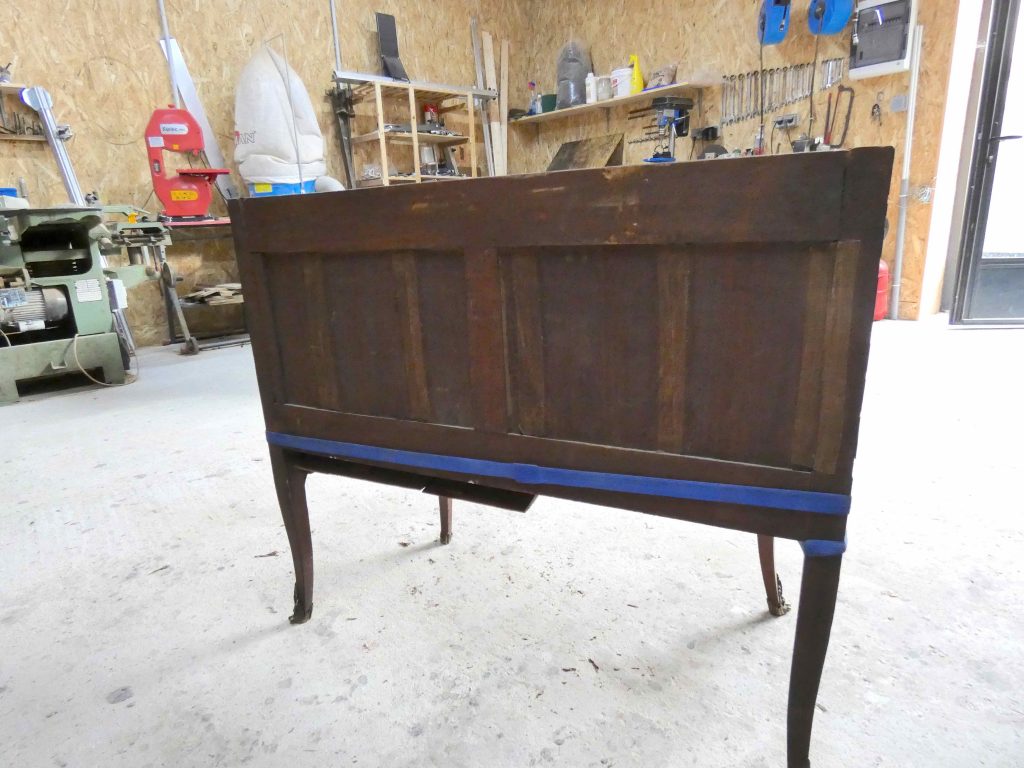
Rear front restoration 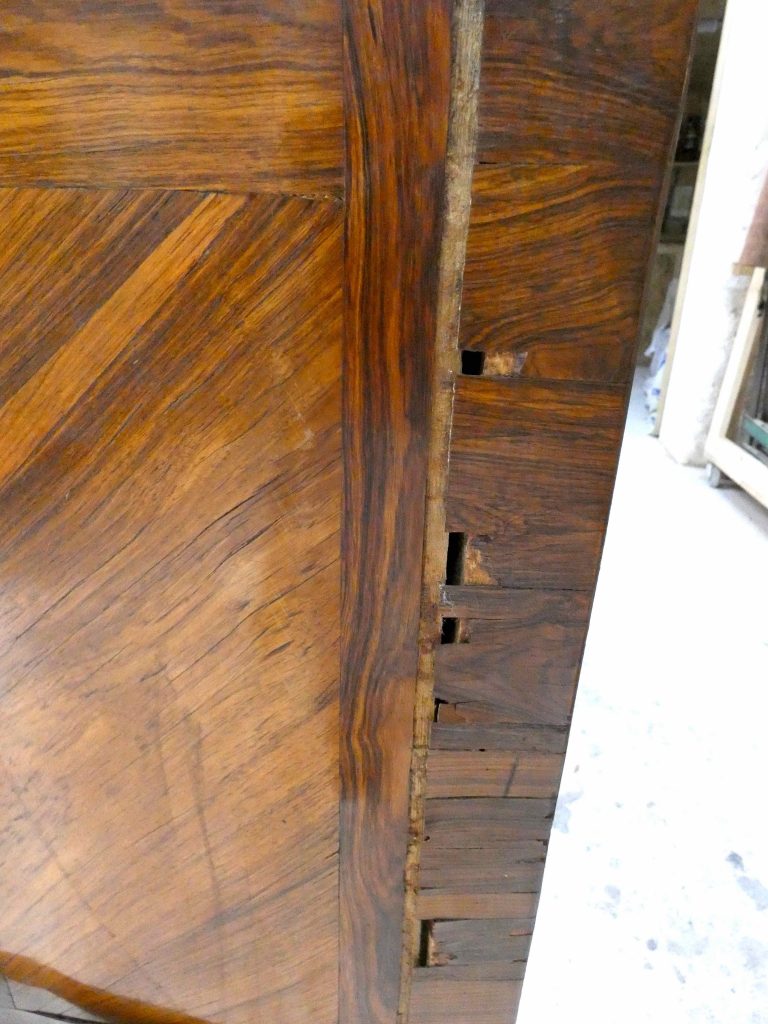
rear foot lifted 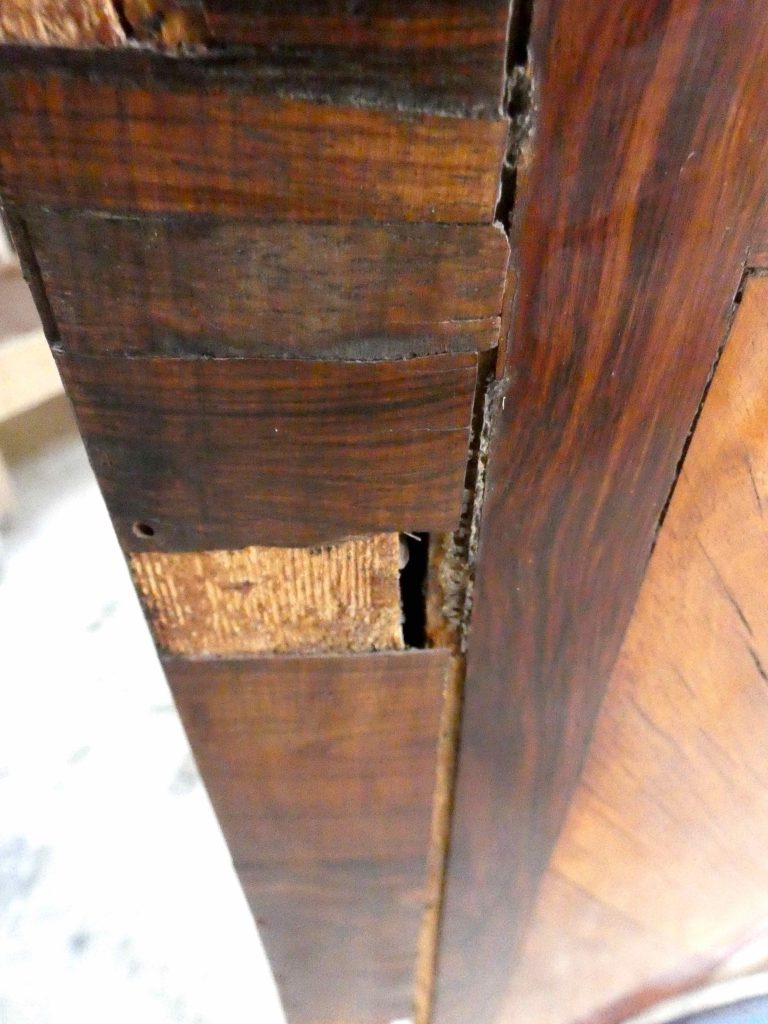
rear foot lifted 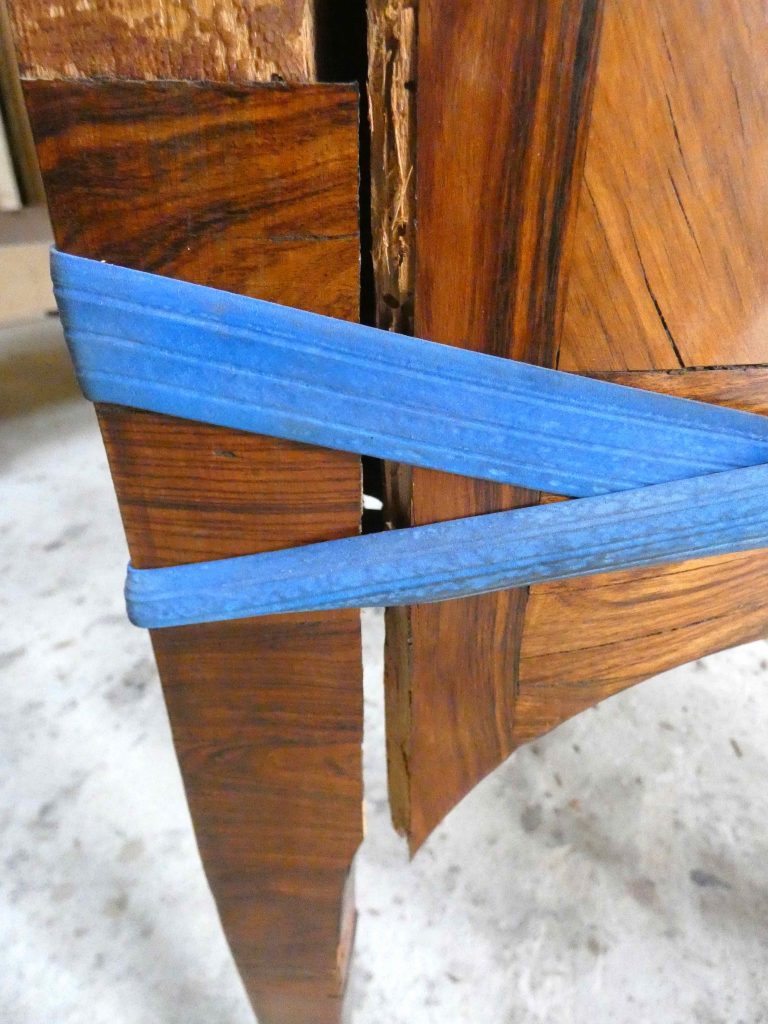
rear foot lifted 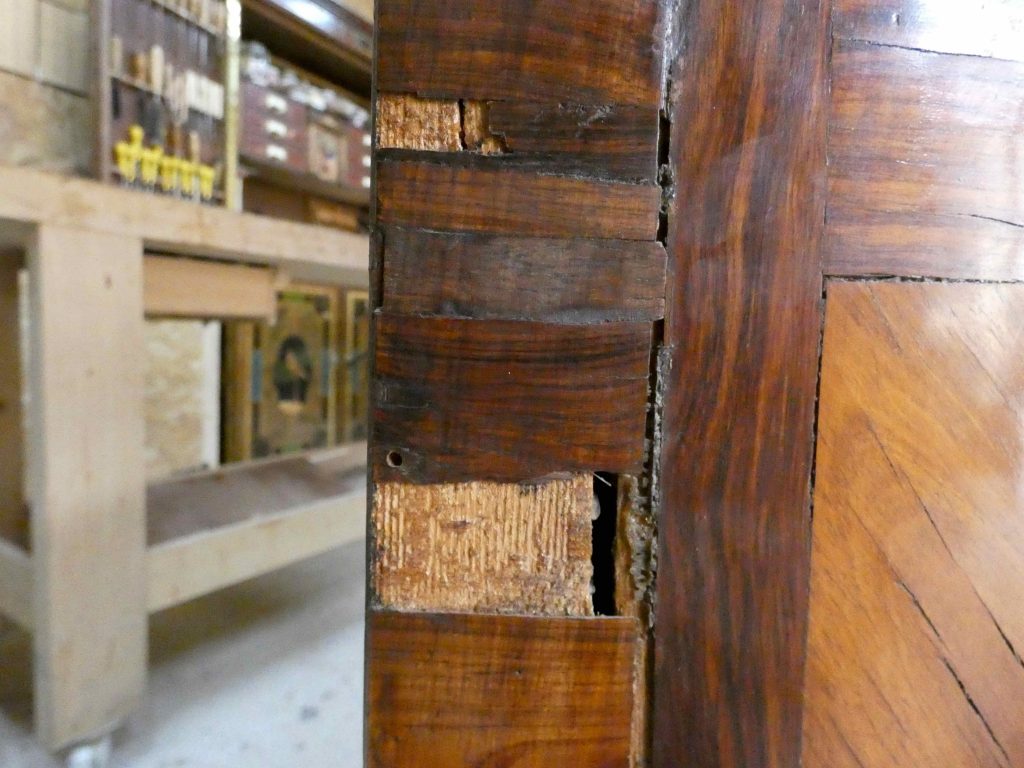
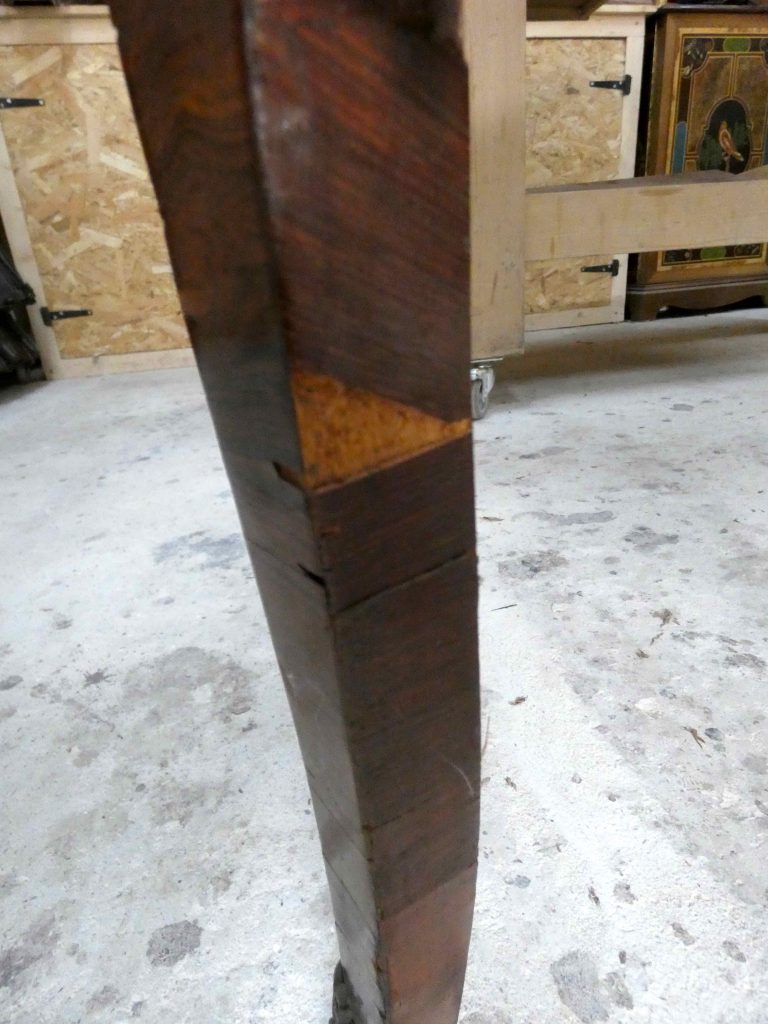
Lack of amaranth veneer 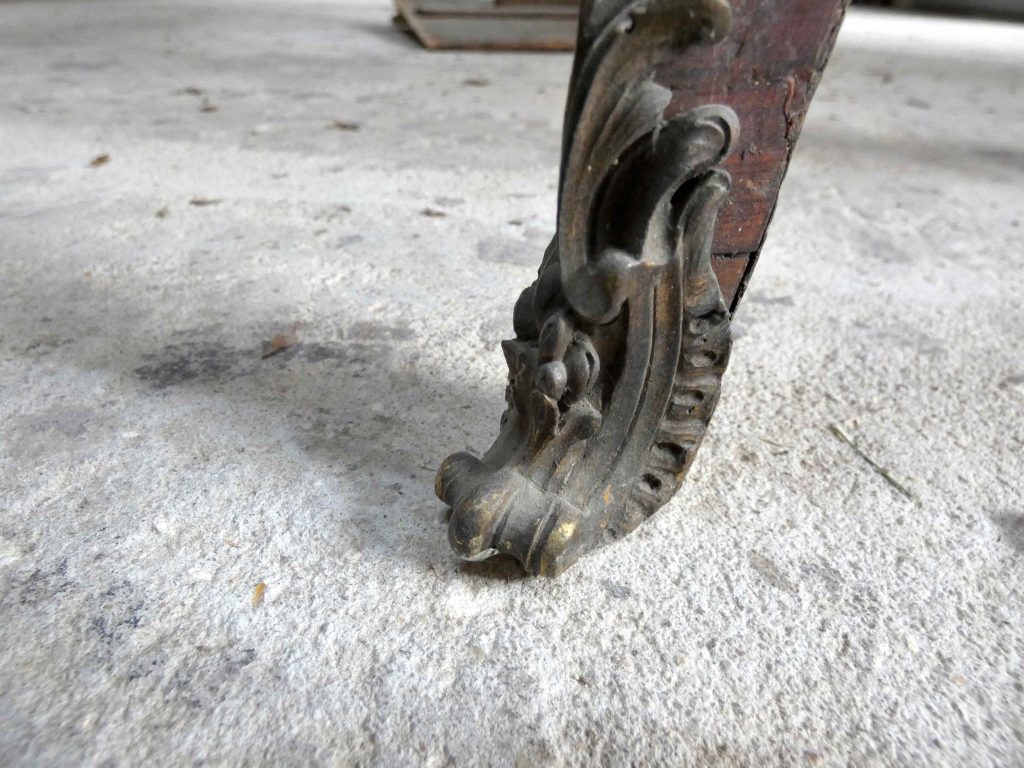
Front shoe restoration 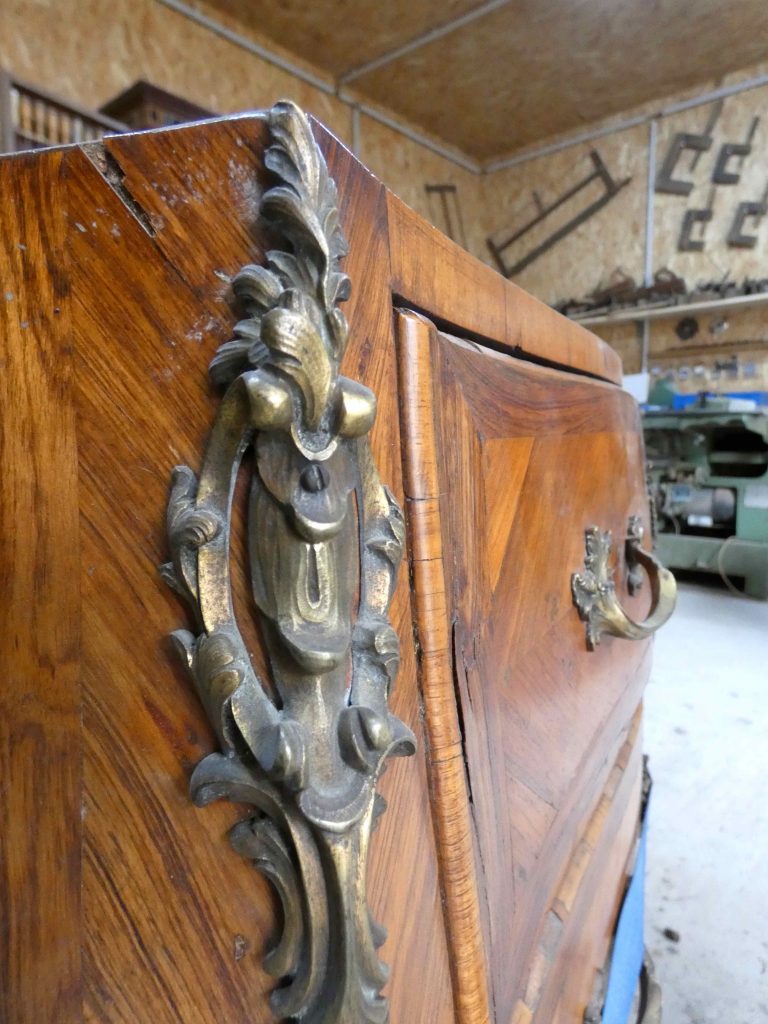
Fall before restoration 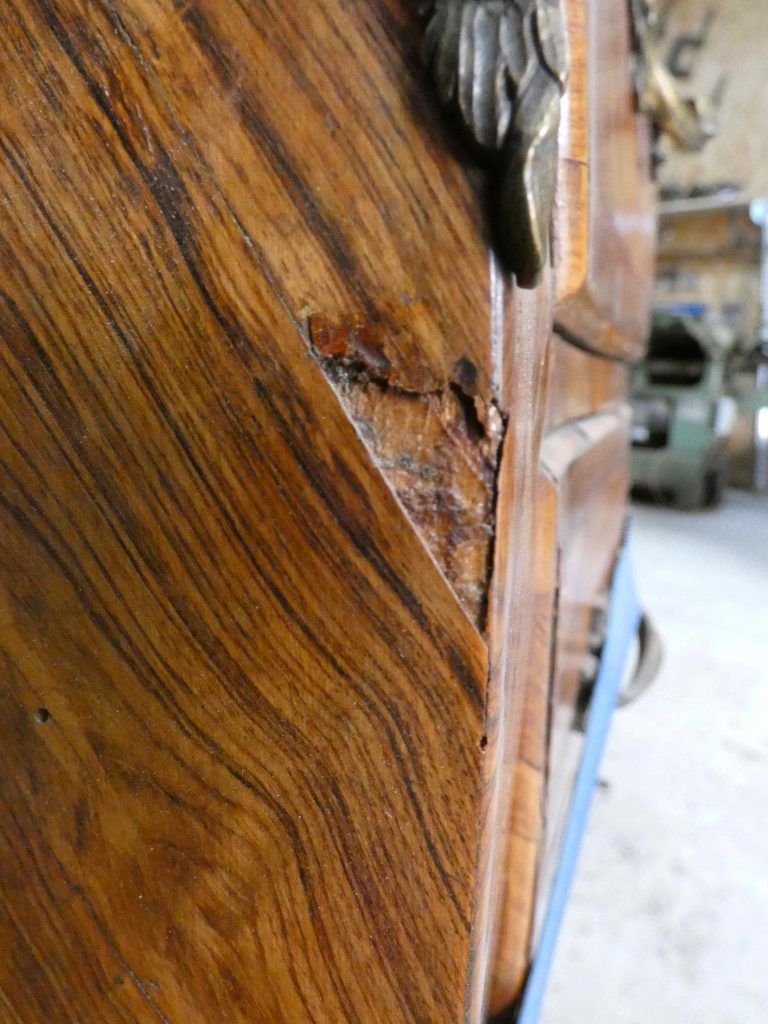
veneer splinter 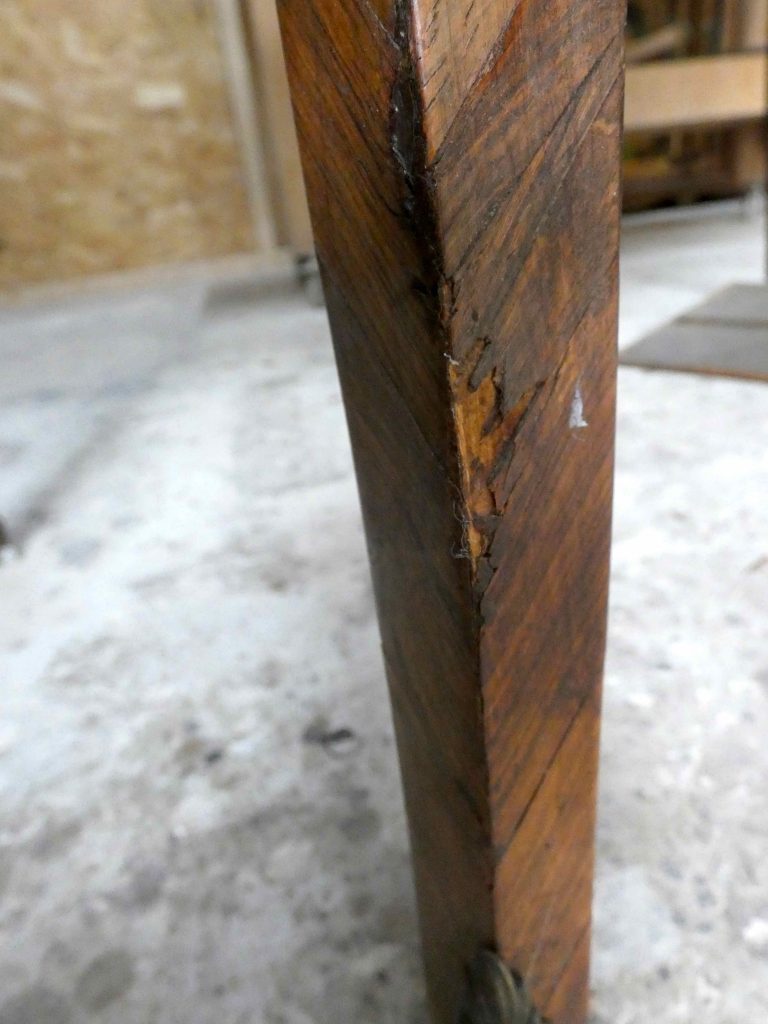
veneer splinter 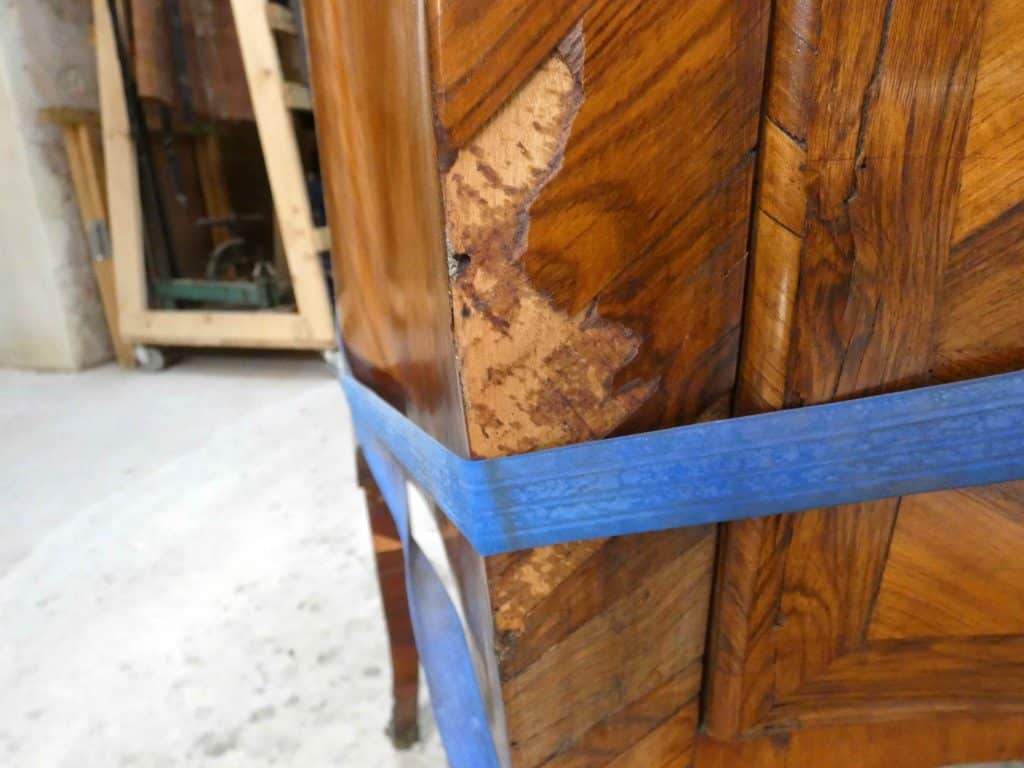
Veneer torn off and poor veneer grafting 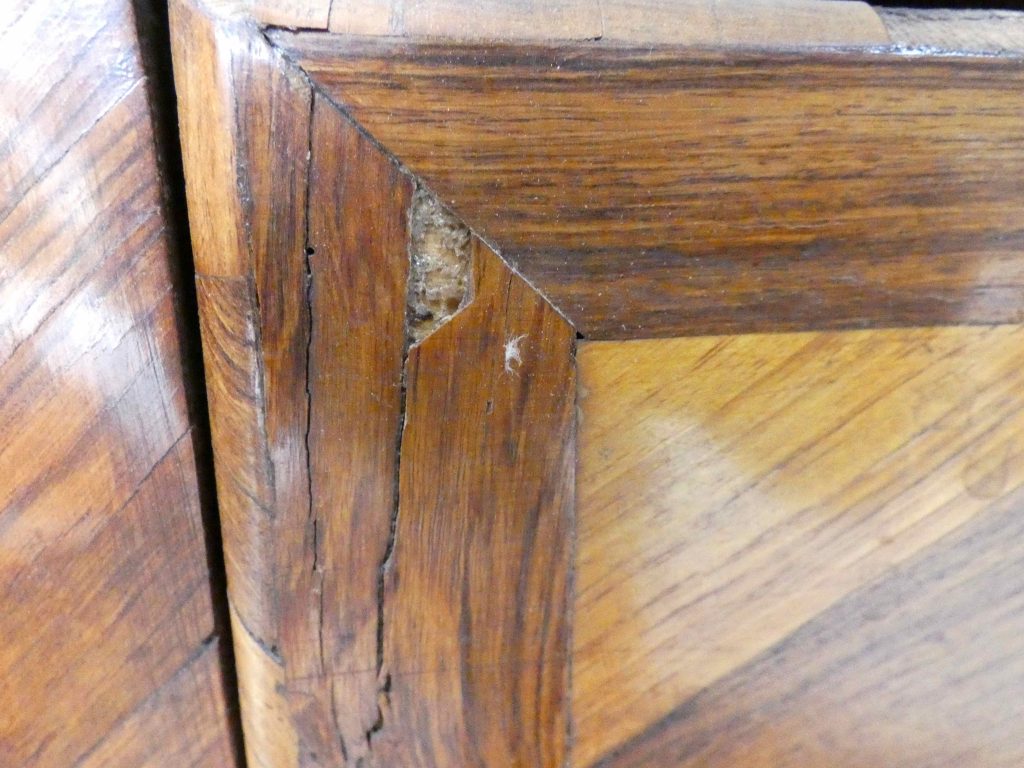
Lack of veneer 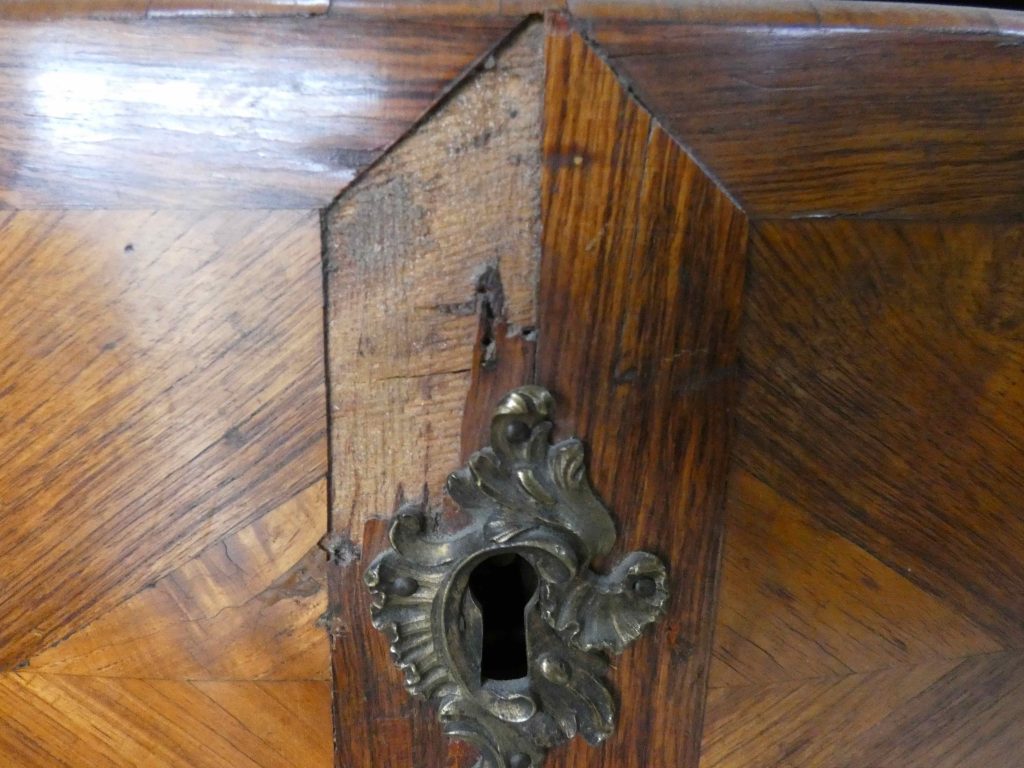
Lack of veneer 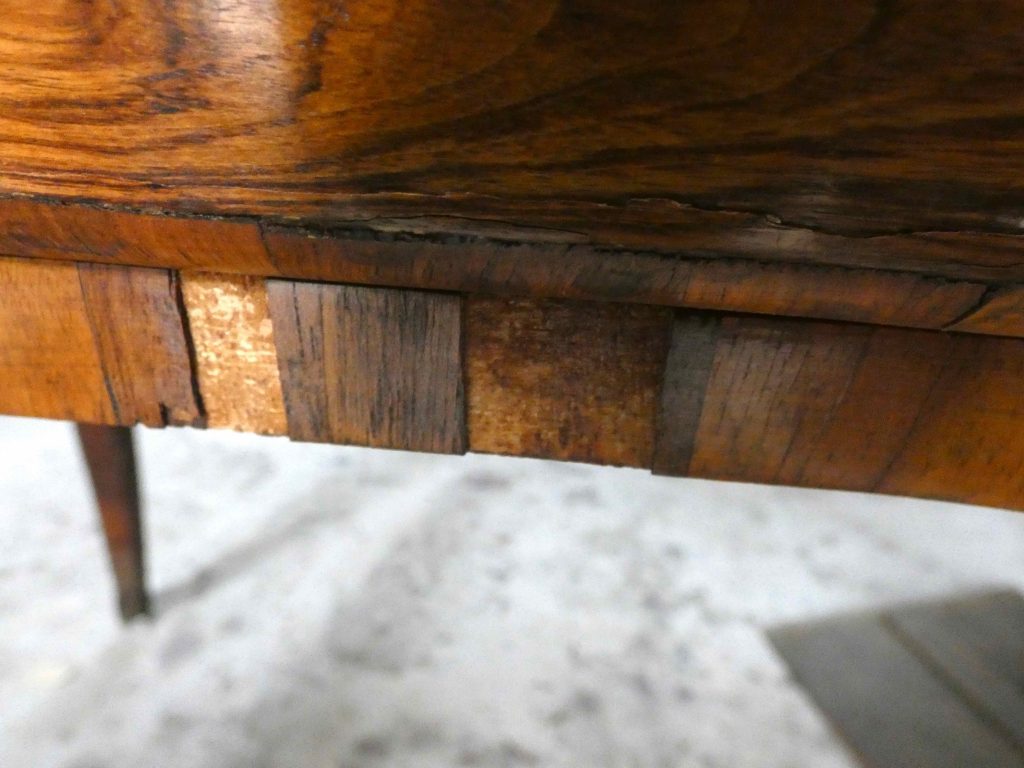
Lack of satin finish 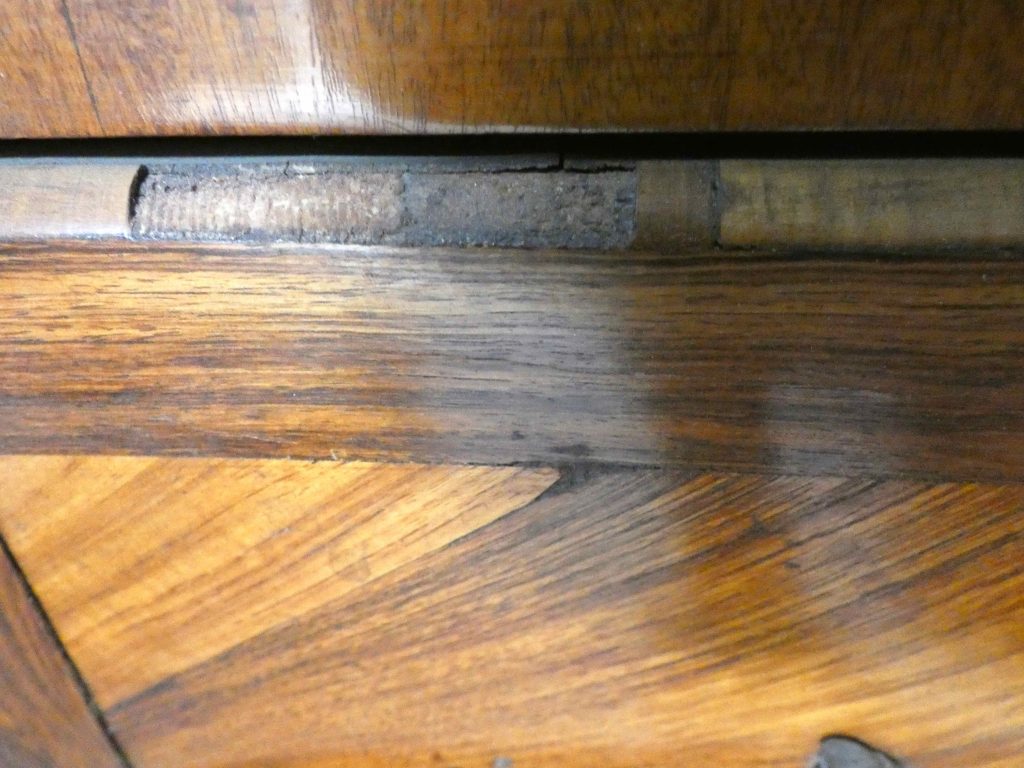
Lack of satin finish 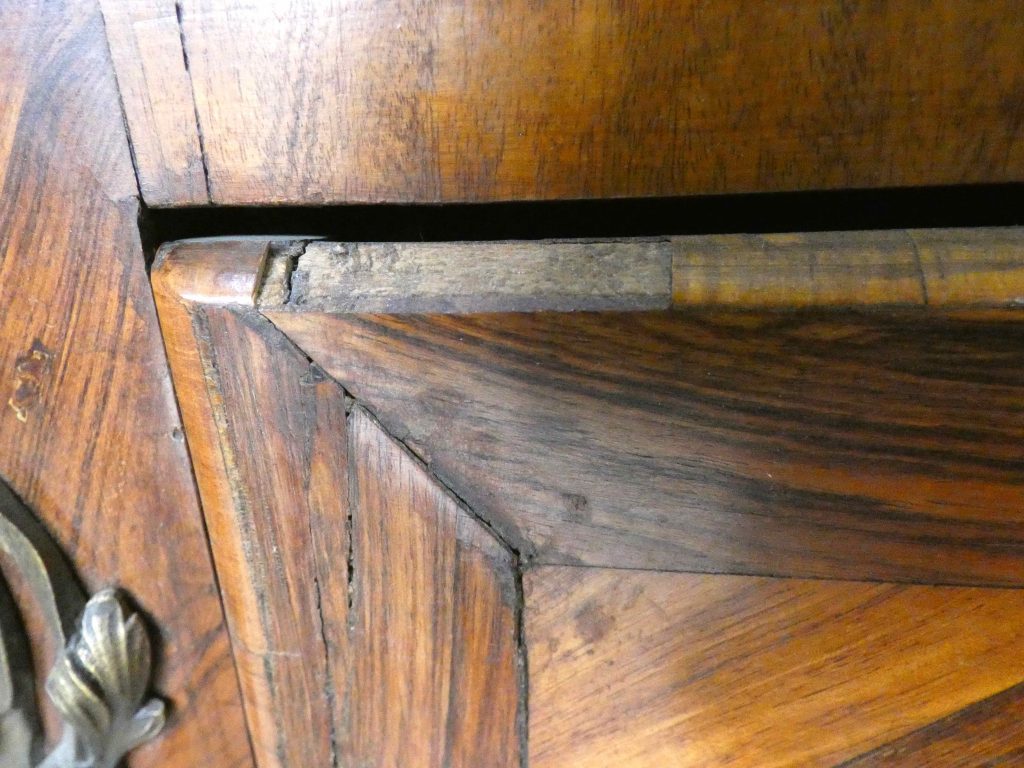
Lack of veneer 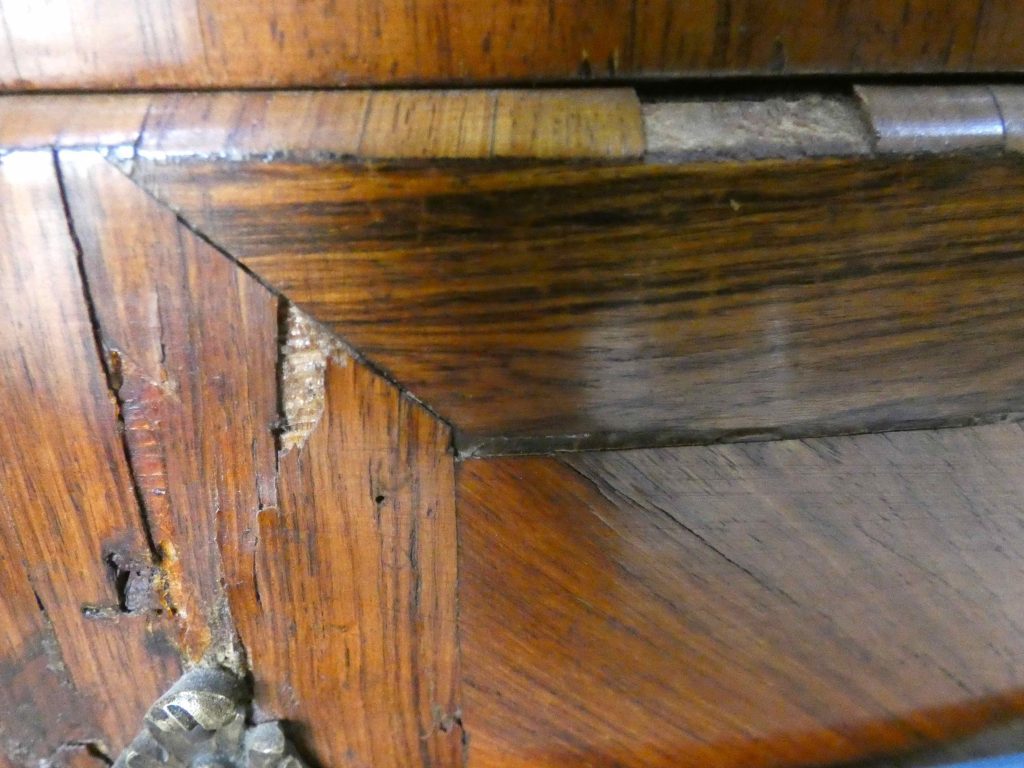
Several veneer defects 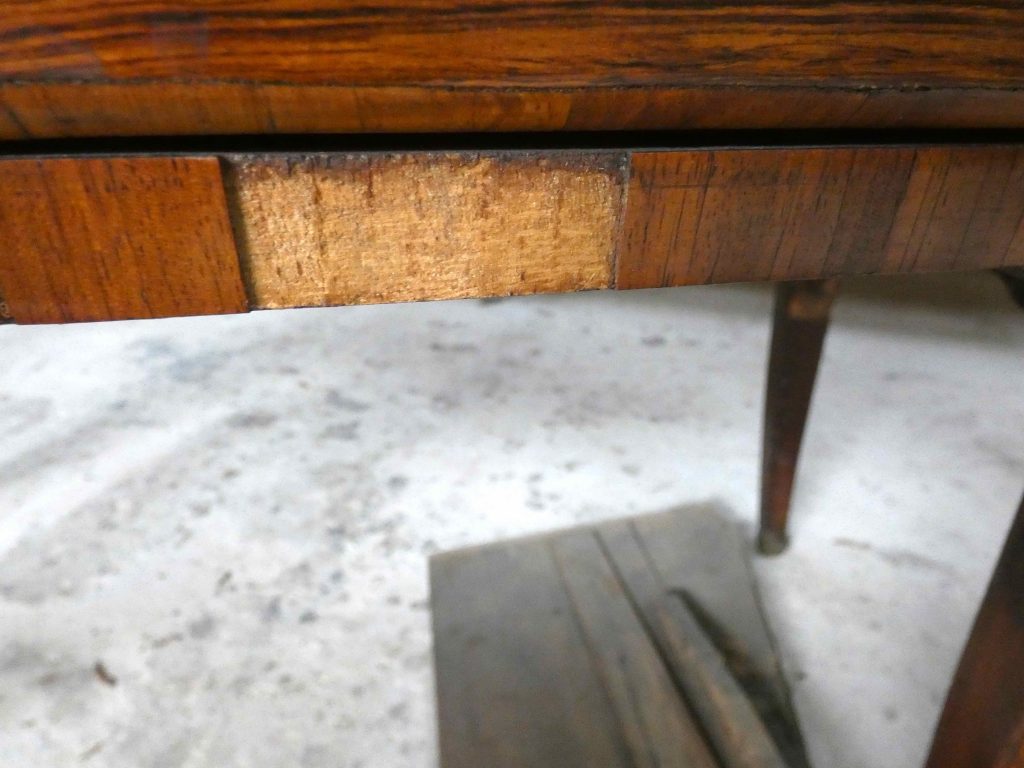
Before restoration 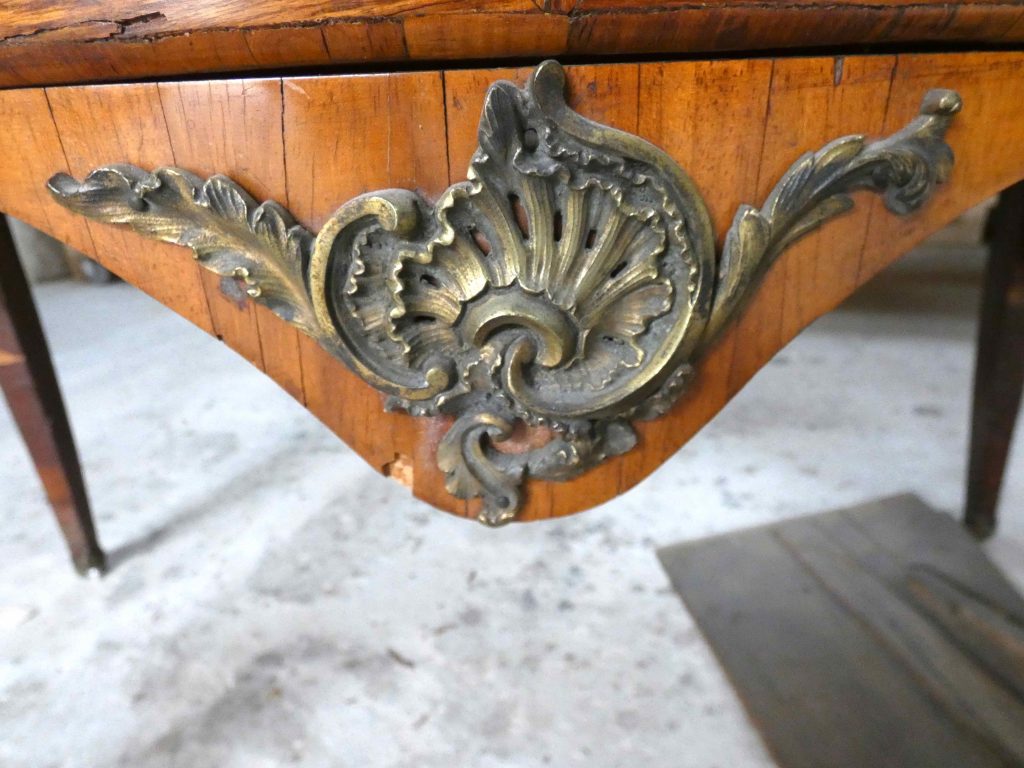
Lamp base 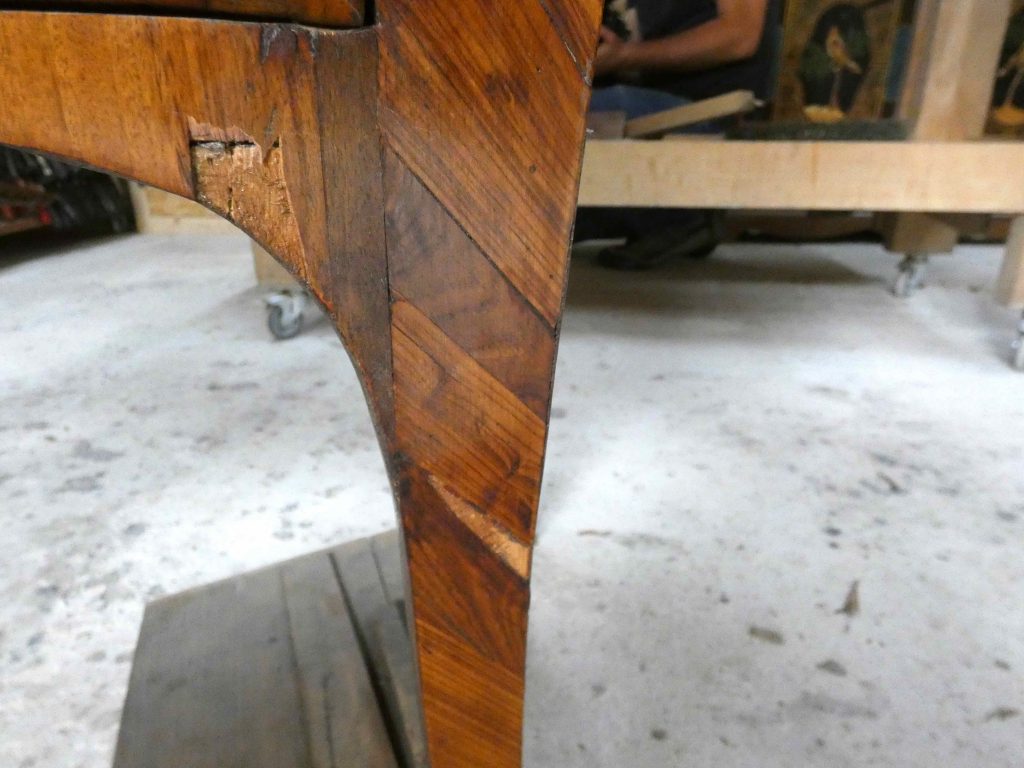
Veneer missing and old restoration 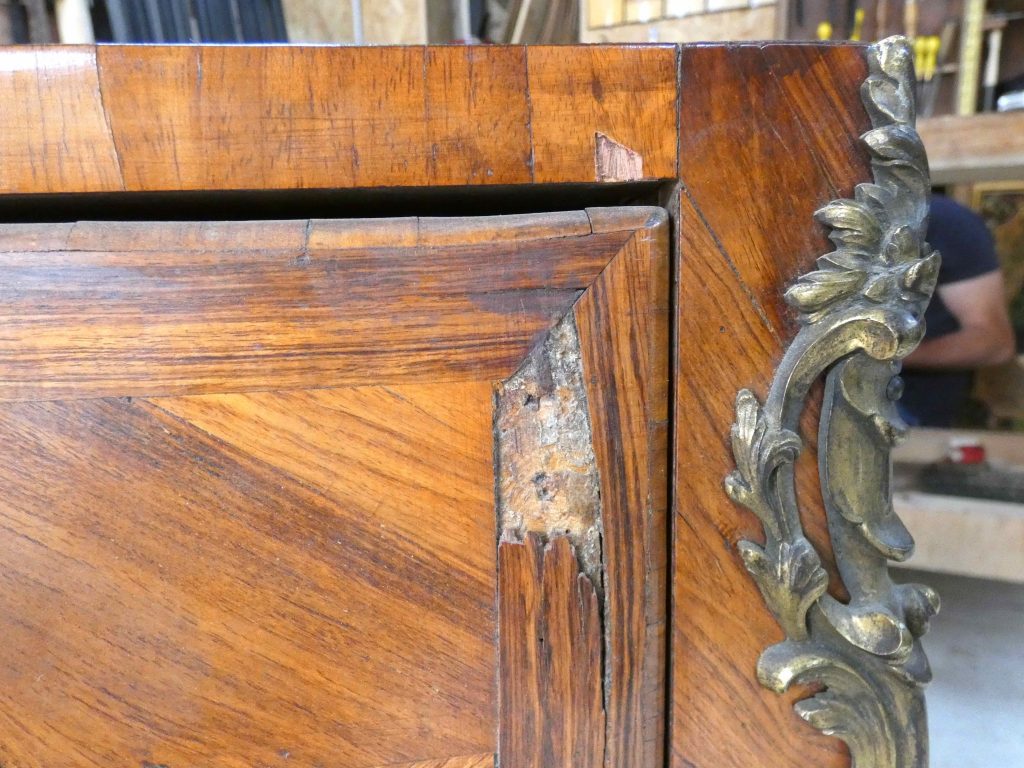
Veneer chips 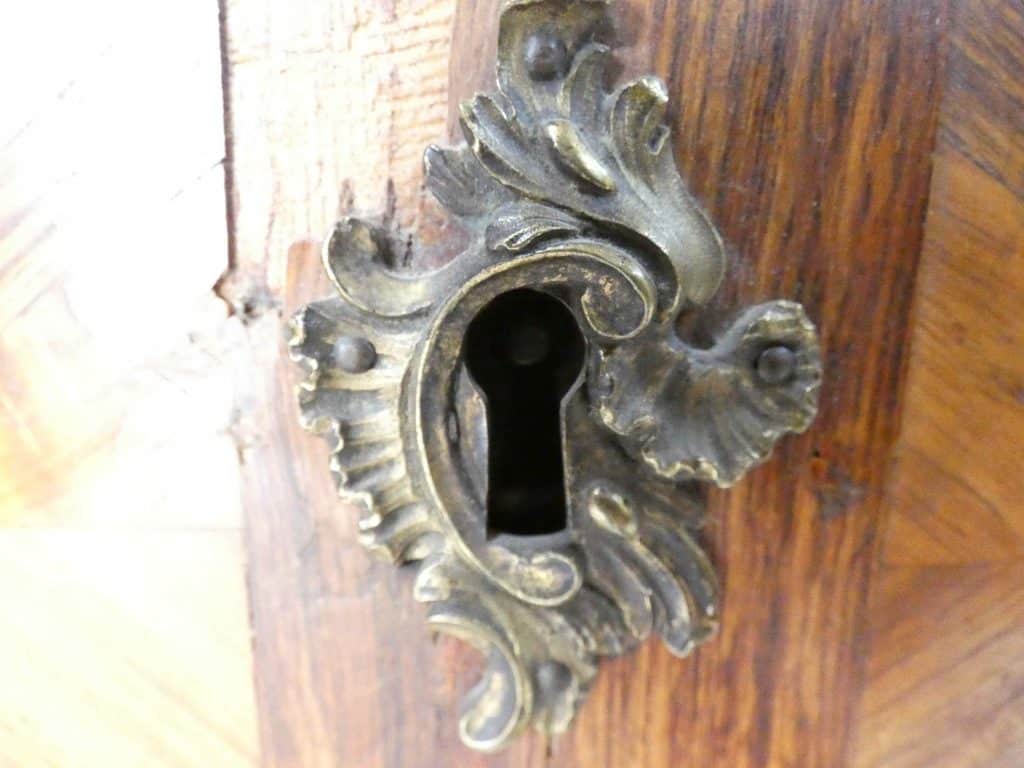
Lock entry before restoration 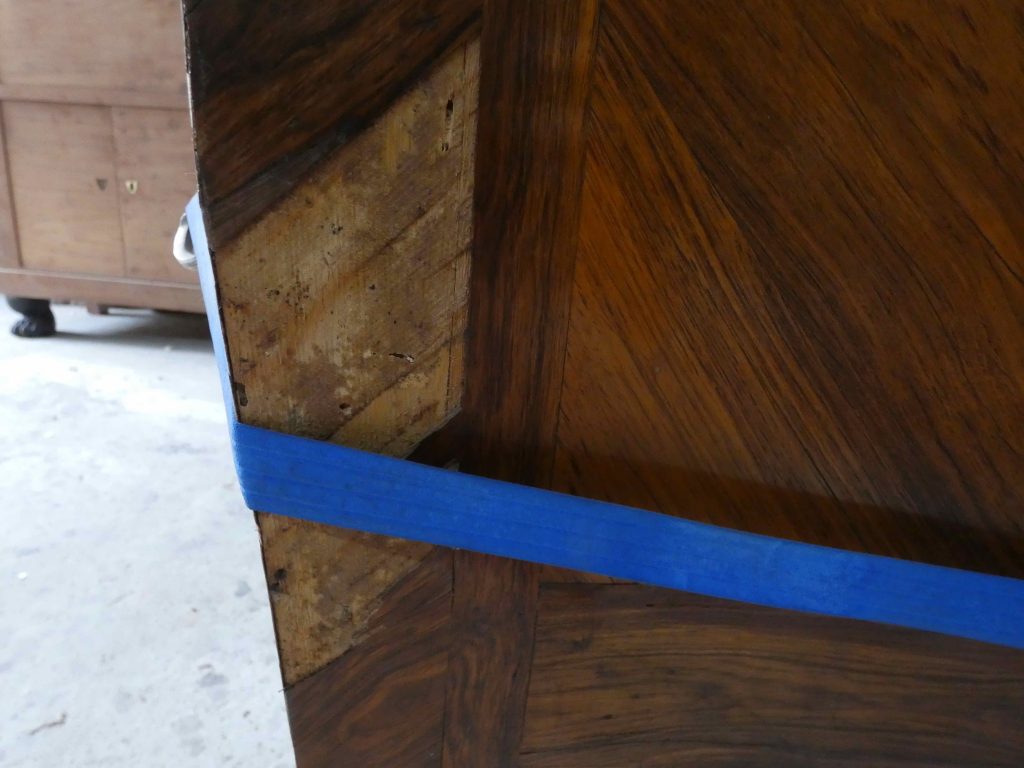
Lack of violet wood 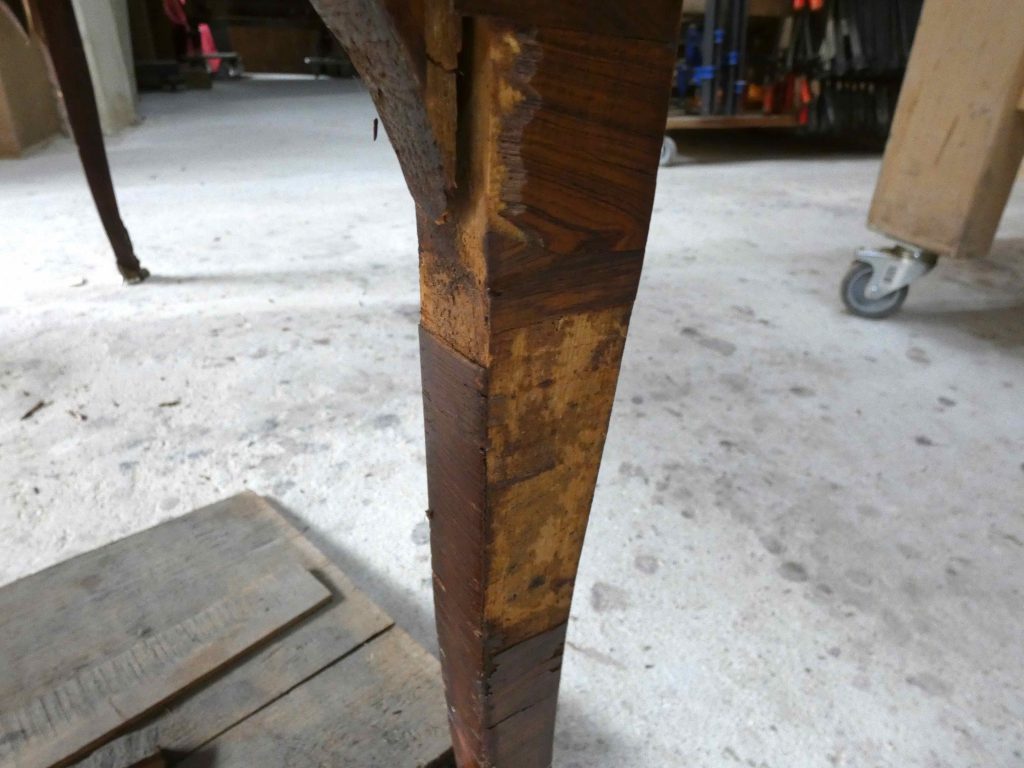
Lack of violet wood 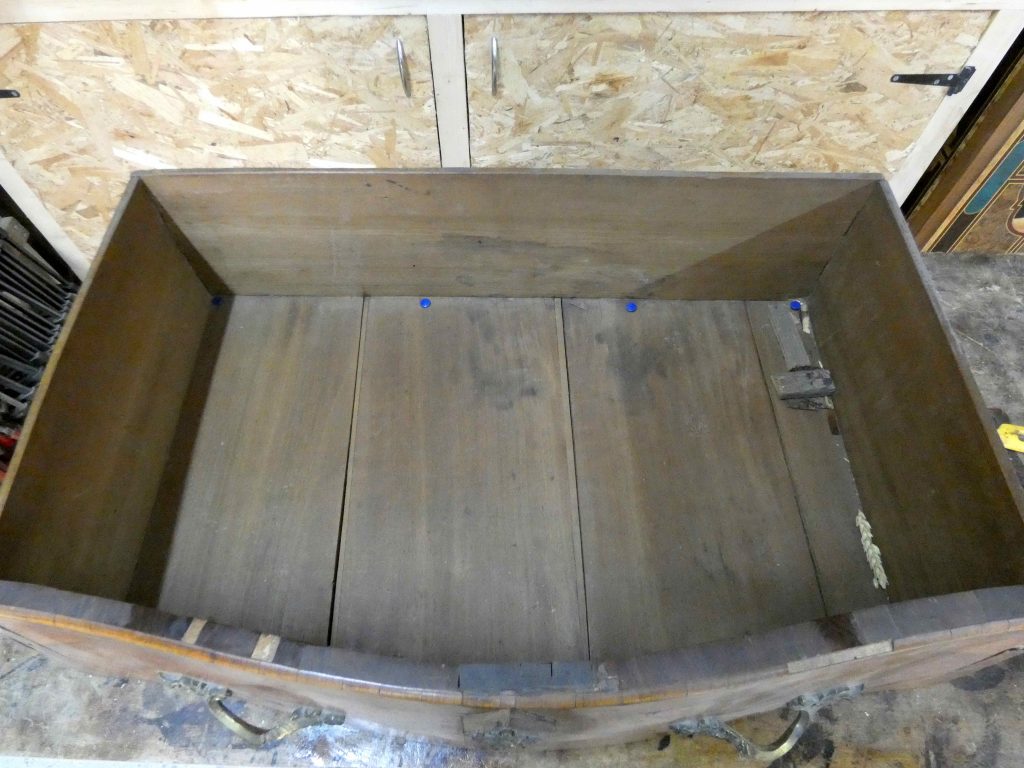
Drawer bottom before restoration 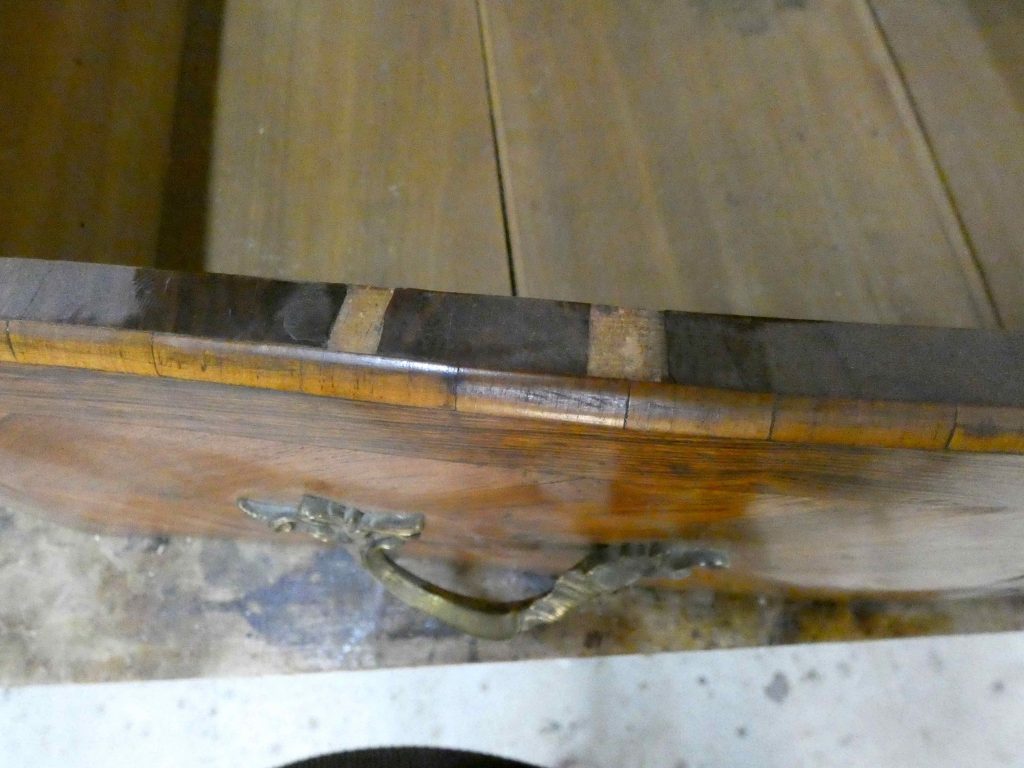
Lack of violet wood 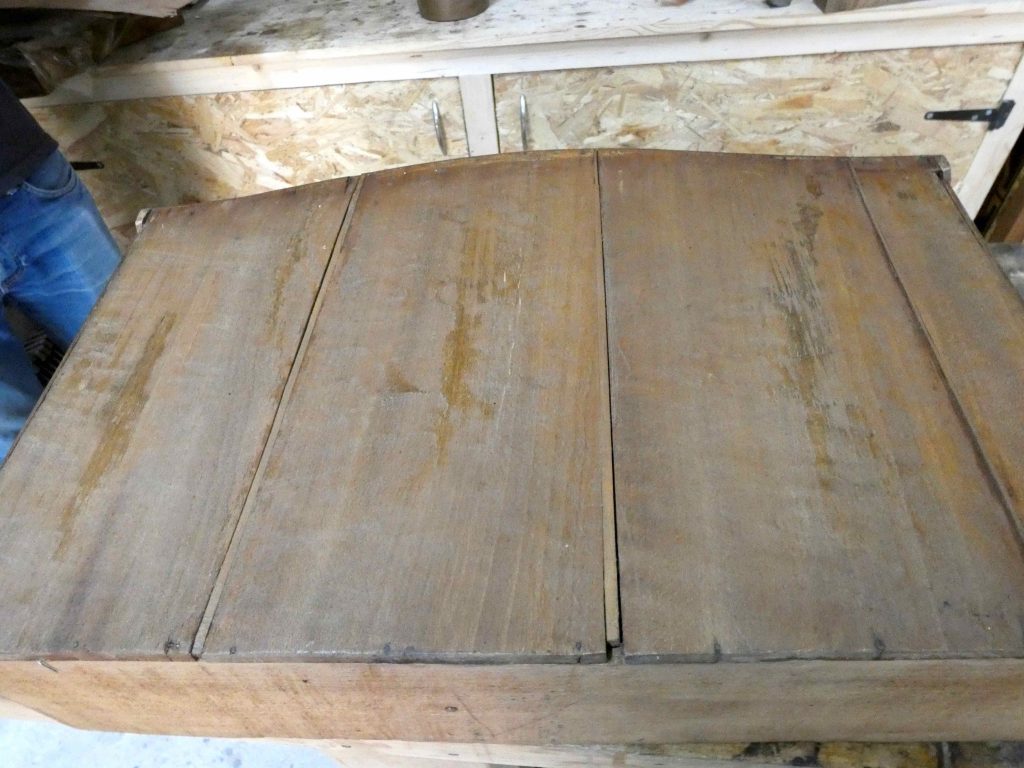
Old beechwood flipot 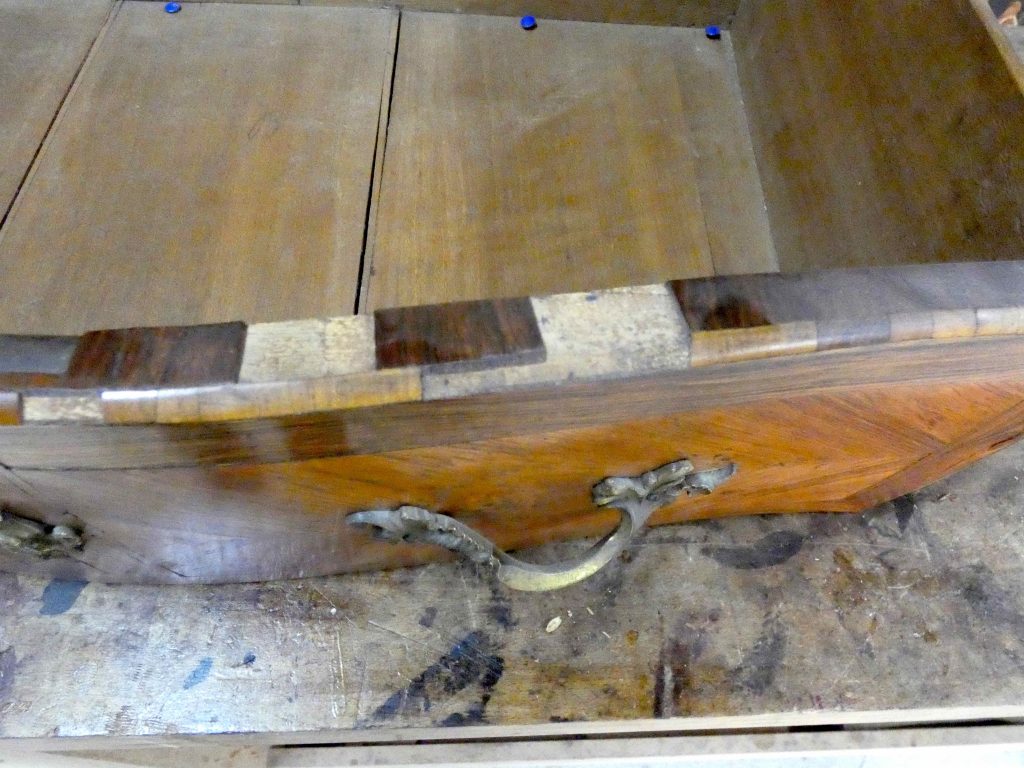
Veneer shortages 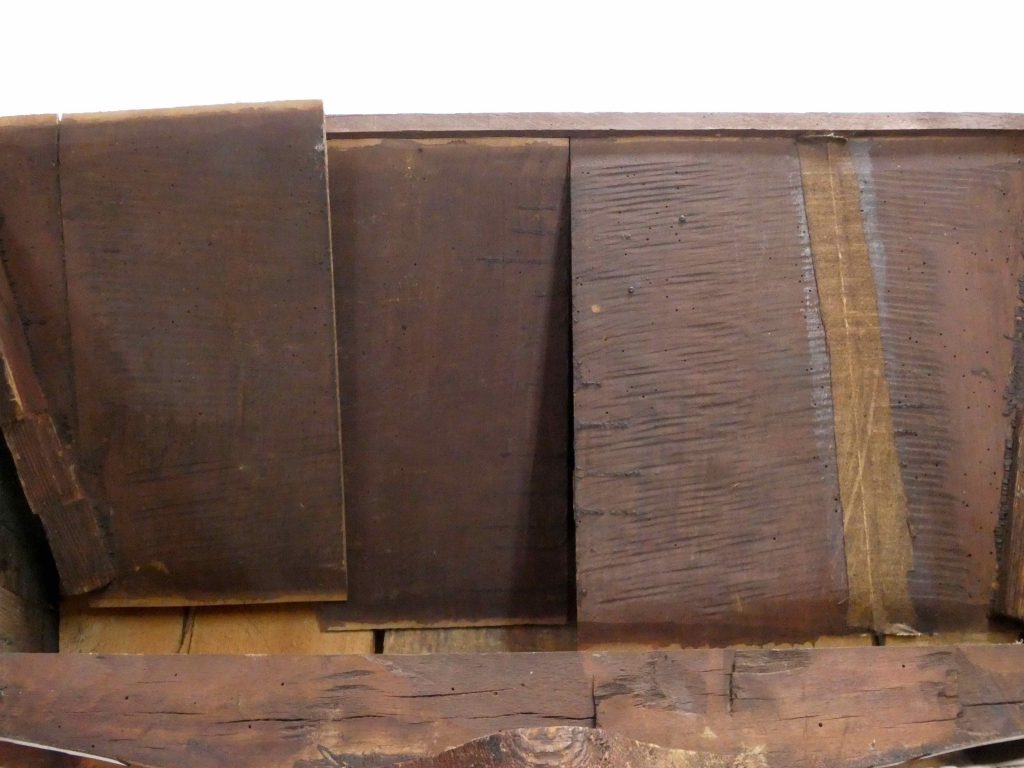
Background before restoration 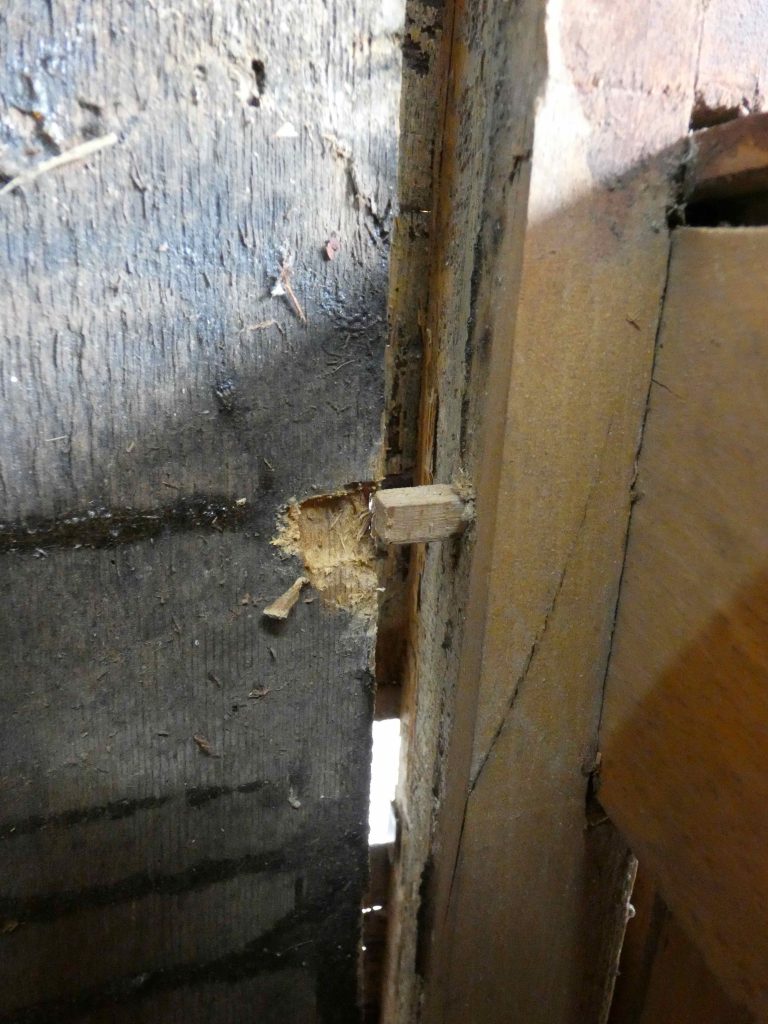
rear cross pin 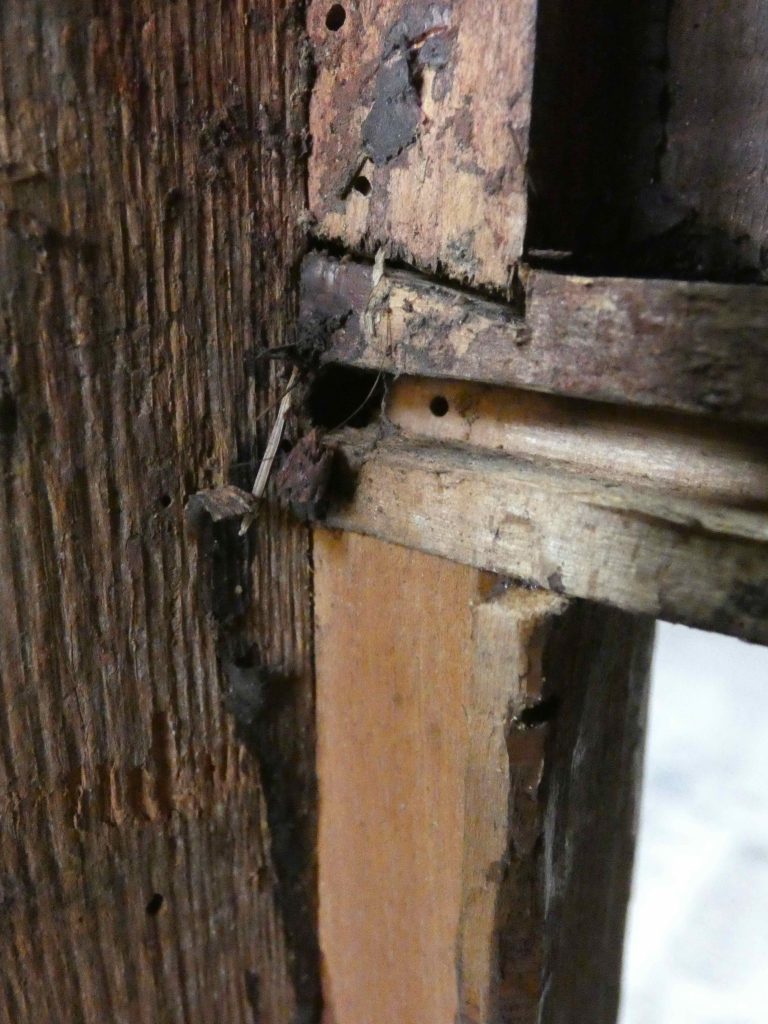
Dovetail joint at the front
Restoration
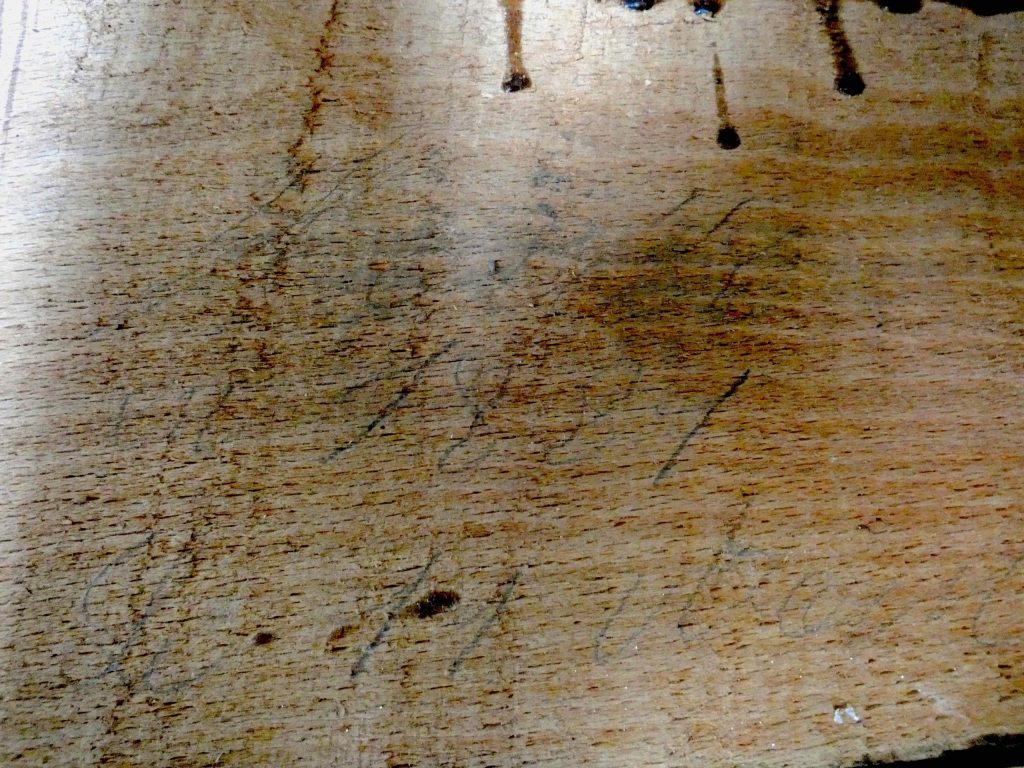
To begin, the piece of furniture had to be completely disassembled. It wasn't very difficult; half the work was already done. A small surprise that I greatly appreciated: a small piece of evidence of a former colleague's visit, with this barely legible inscription: "Restored in 1881 on August 11th." The disassembly also allowed us to identify some tool marks and observe previous restorations.
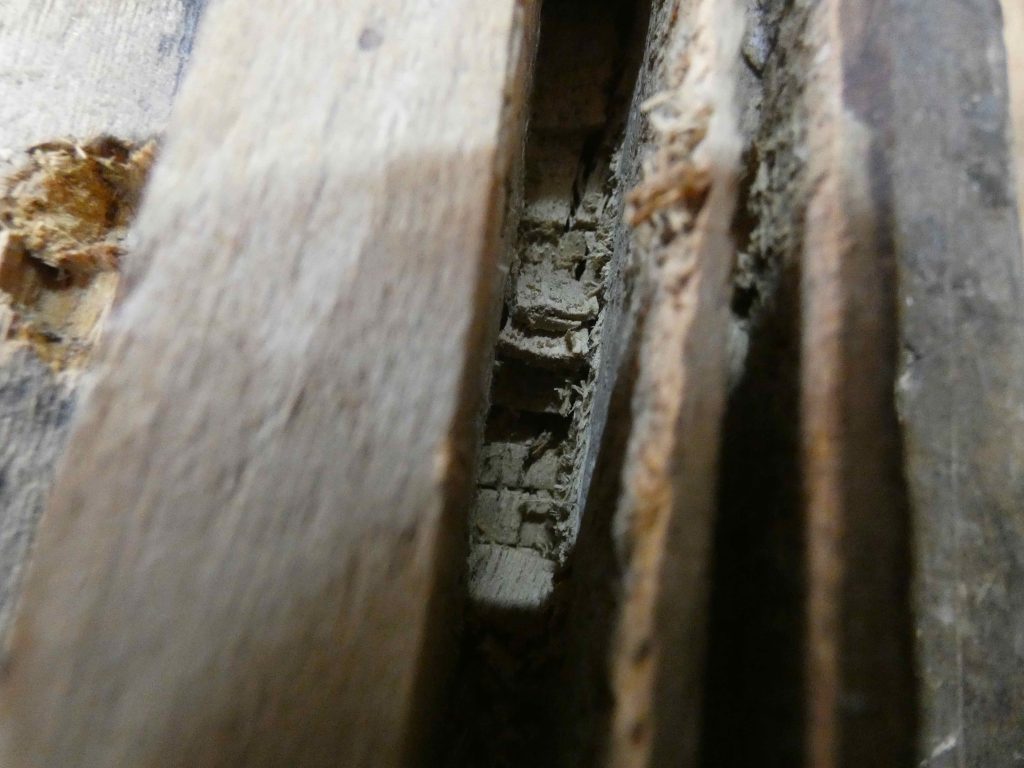
After disassembly, I reattached the rear legs to the sides. Then I performed a vacuum sealing and re-gluing process, having first prepared the missing veneer grafts, taking care to scrape, sand, and shape them to the correct thickness so they wouldn't need to be reworked once glued. I did the same to the drawer fronts. For the crossbars, I re-glued the veneer using traditional methods with a hot block and clamps.
Before reassembling the case, the panels were adjusted to the correct width by gluing a piece of wood to each side so that it would fit into a groove and be invisible. The frame was then reattached using fish glue.
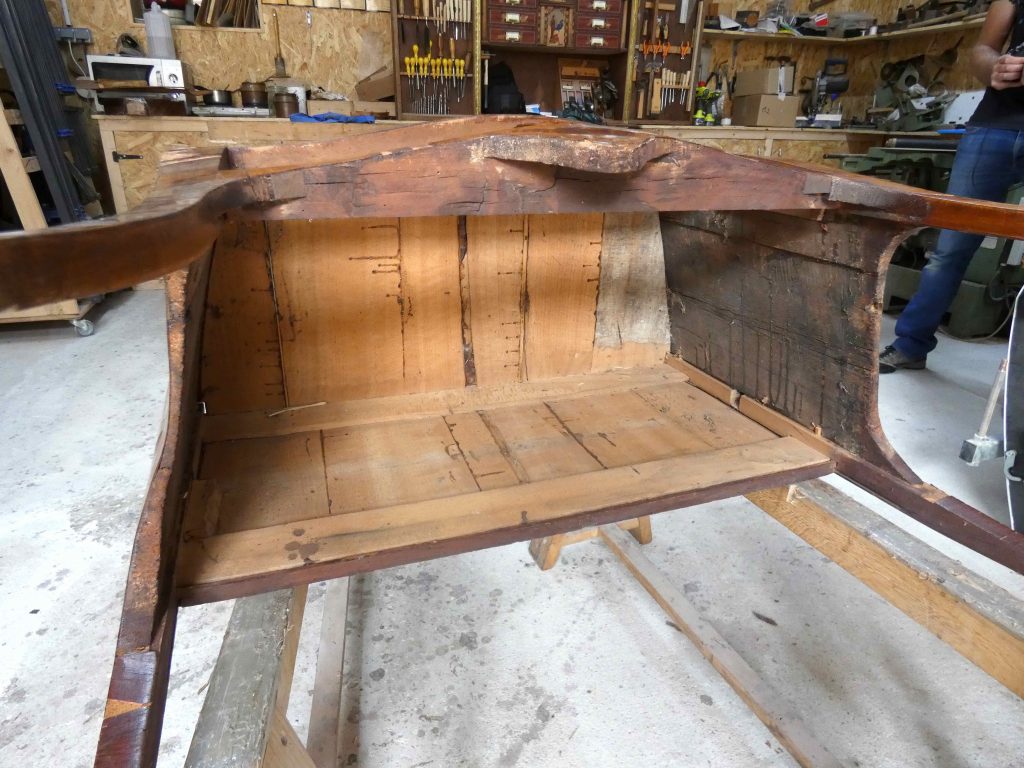
Currently being dismantled 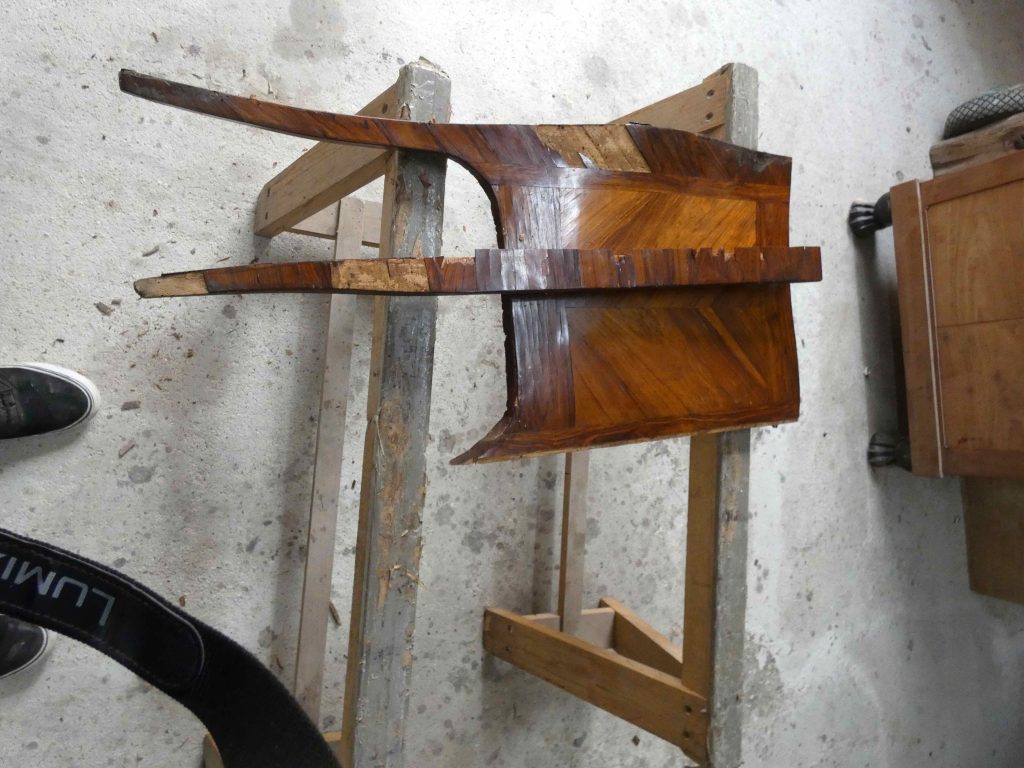
After disassembly 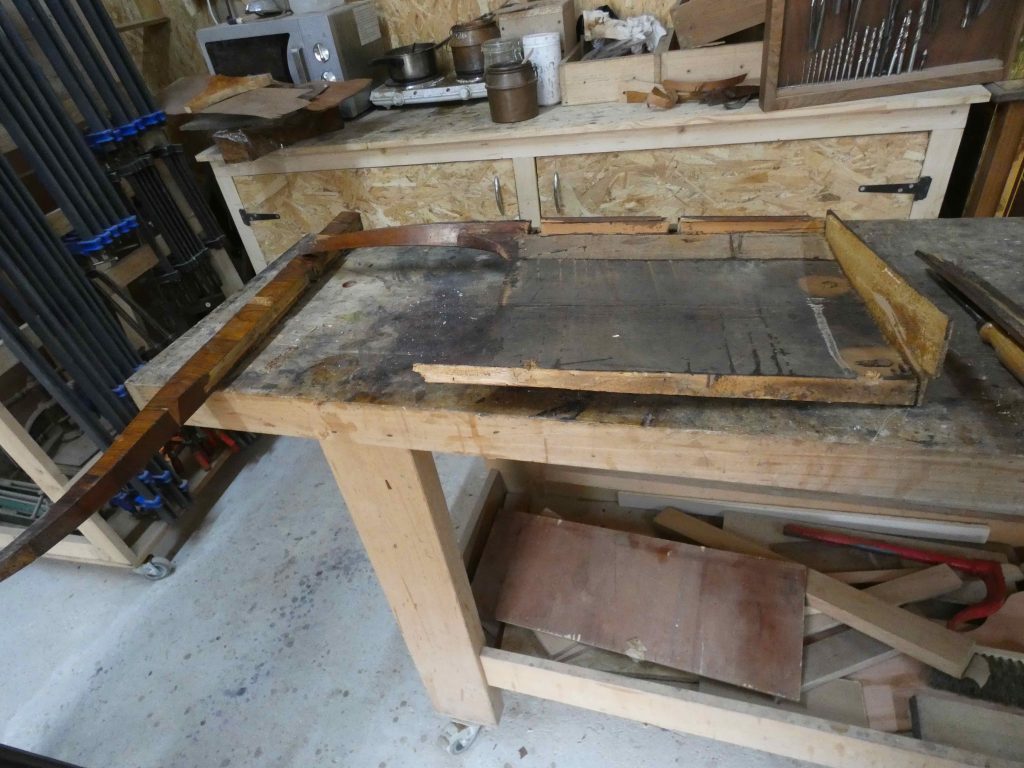
After disassembly 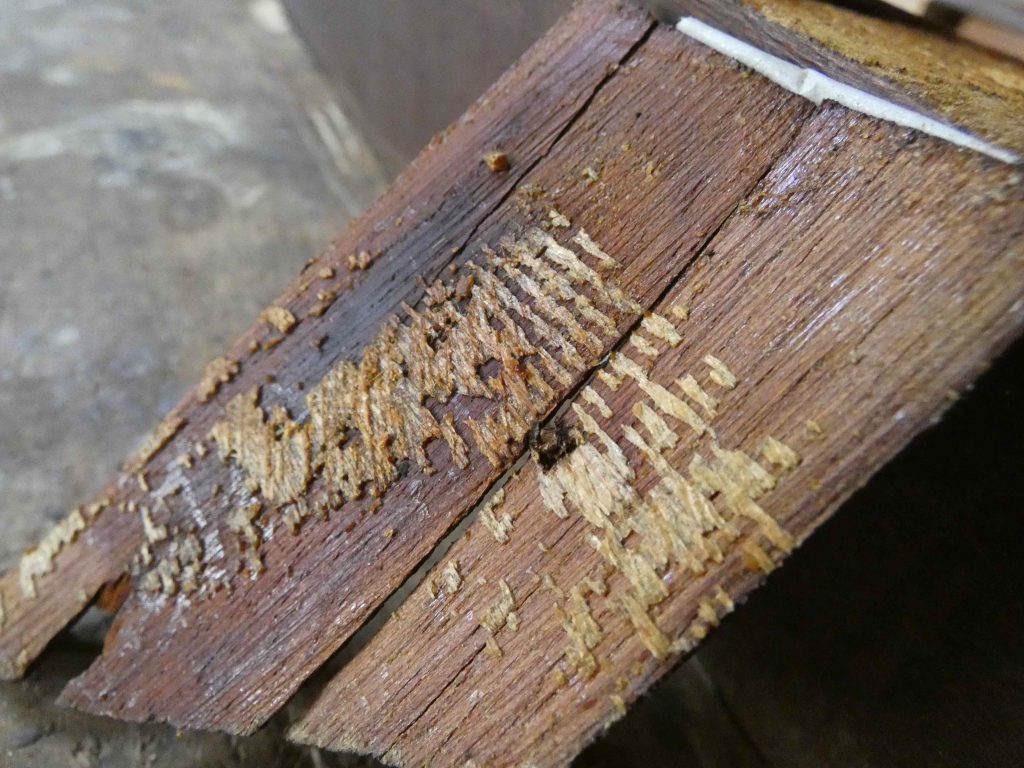
Traces of a toothed iron on the back of the satin veneer 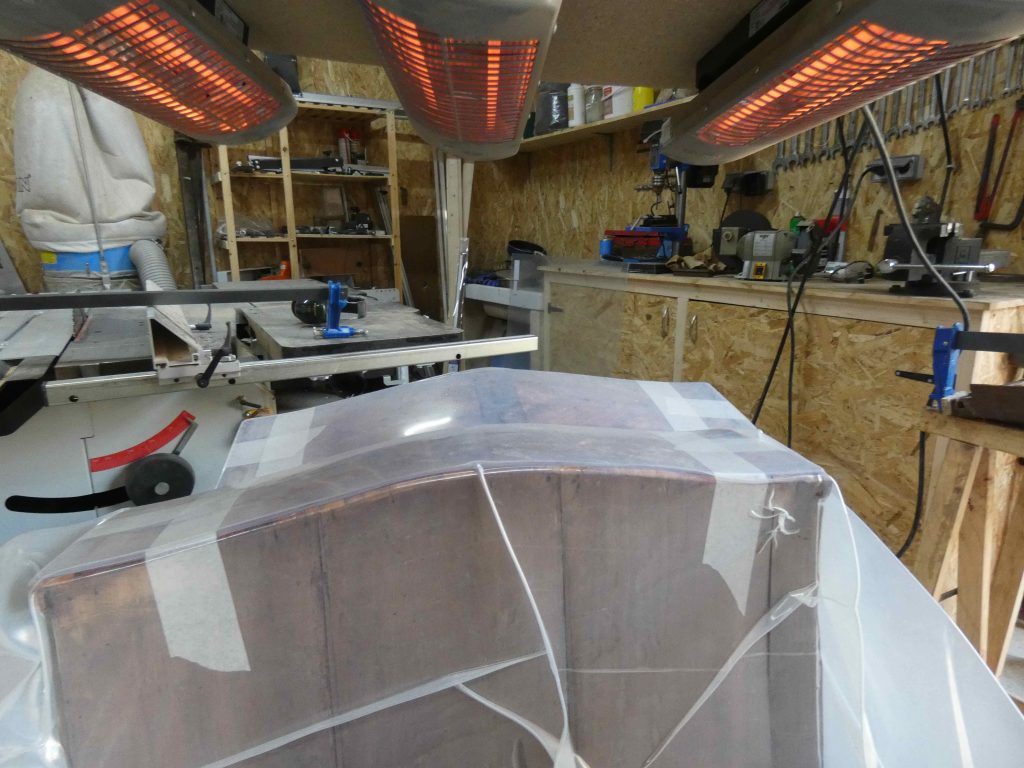
Re-gluing the drawer veneer 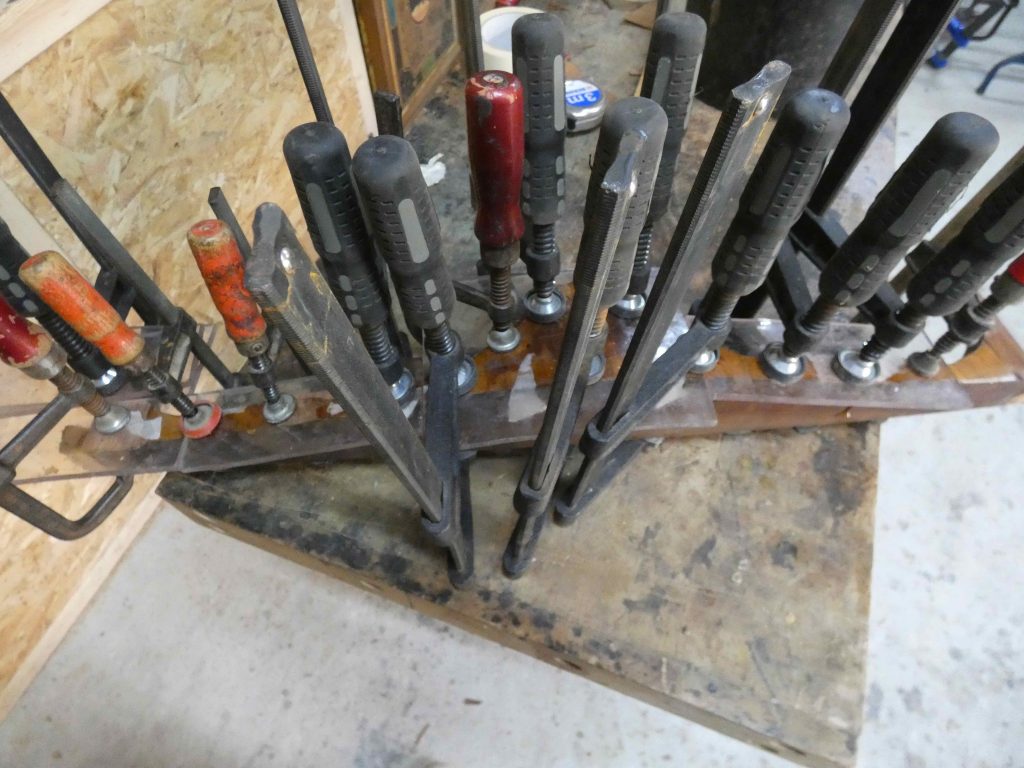
Re-gluing the veneer to the crossbeams 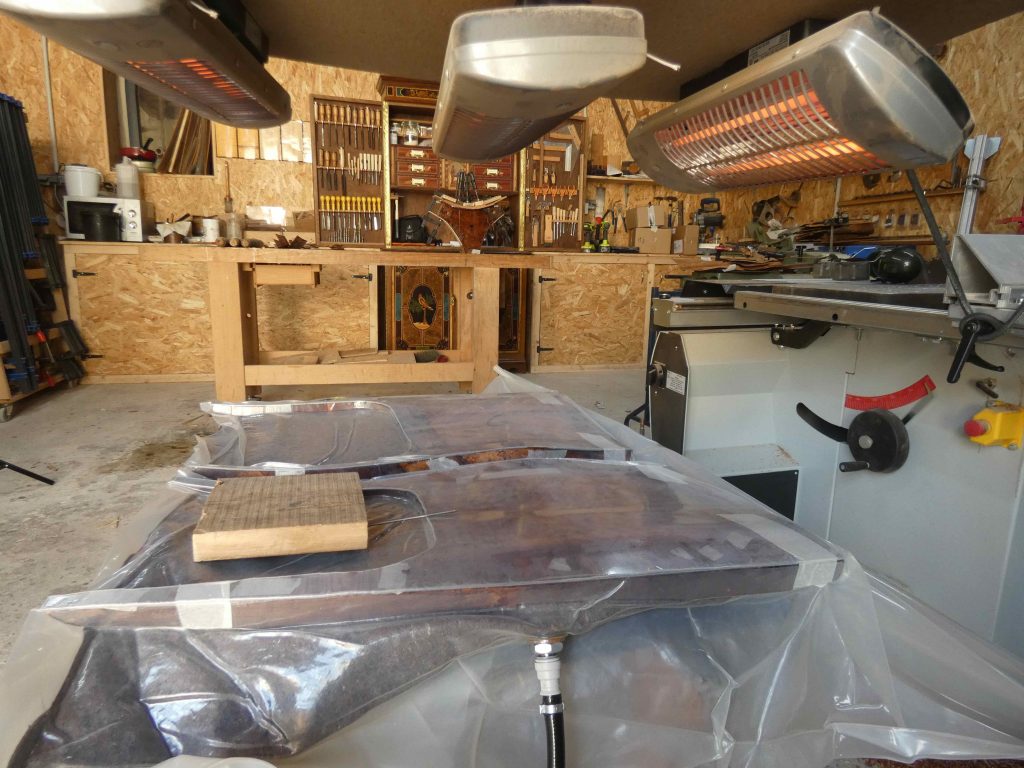
Re-gluing the side veneer 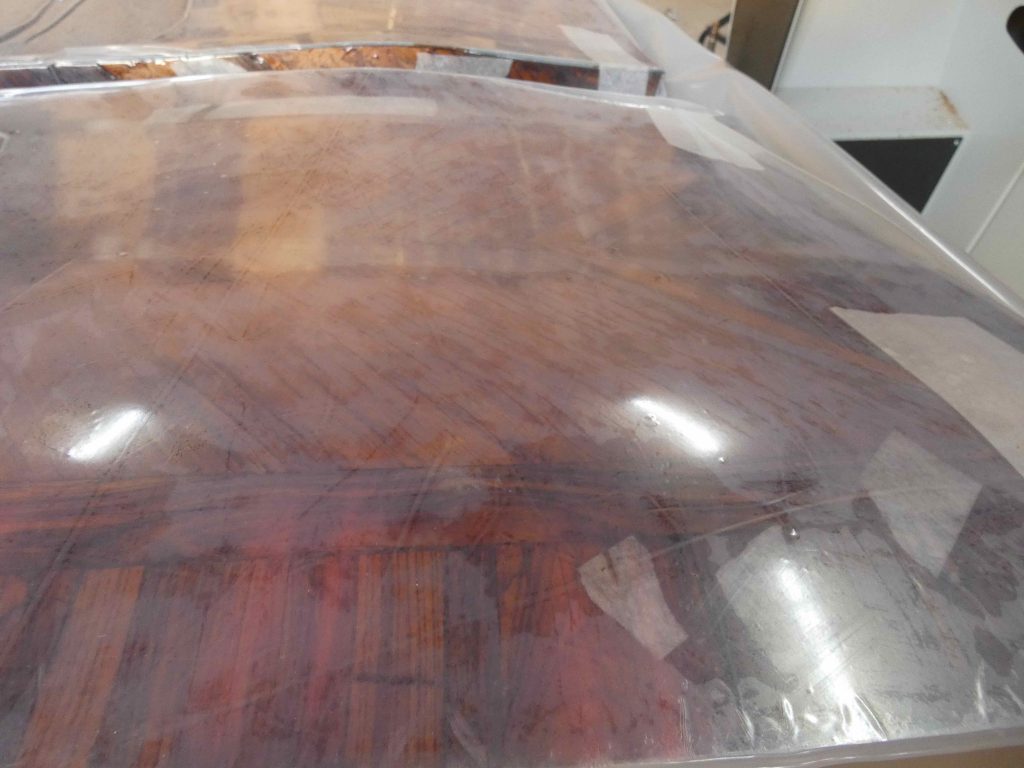
Vacuum re-gluing 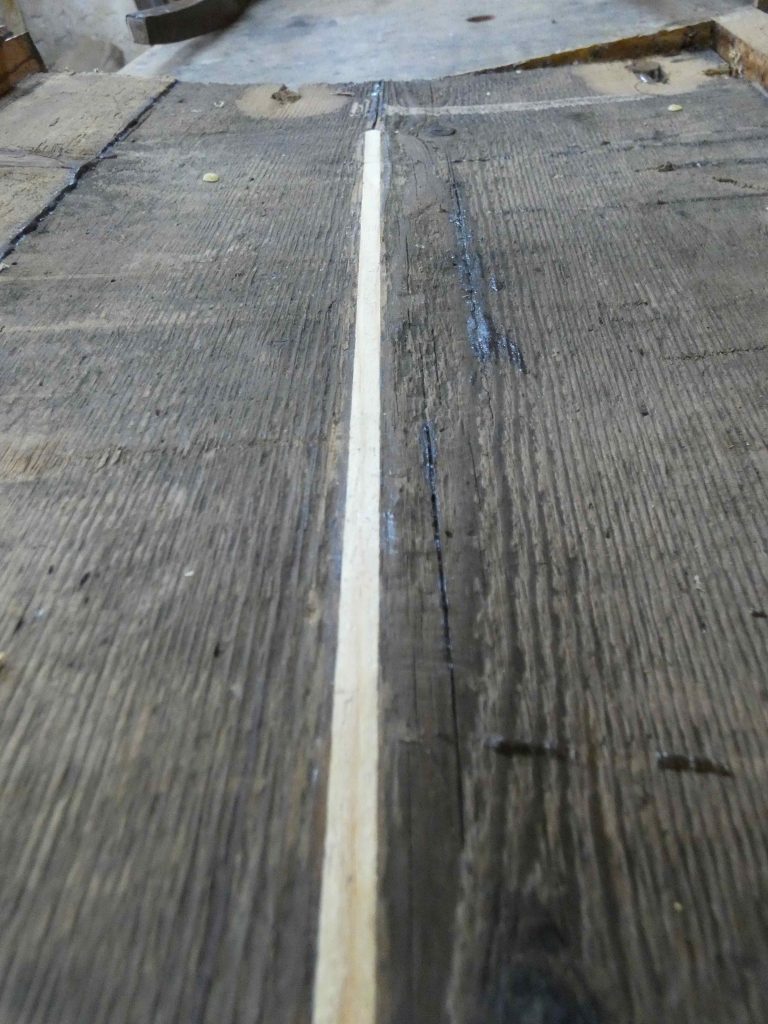
Fir graft to fill a crack on the left side 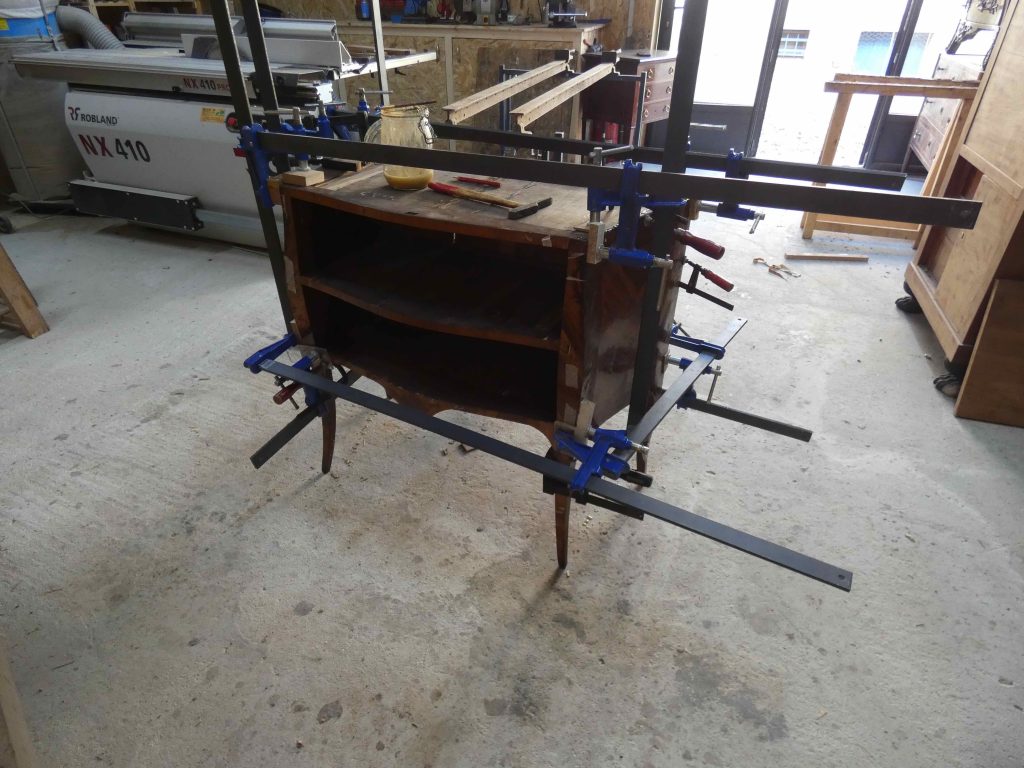
Regluing the case 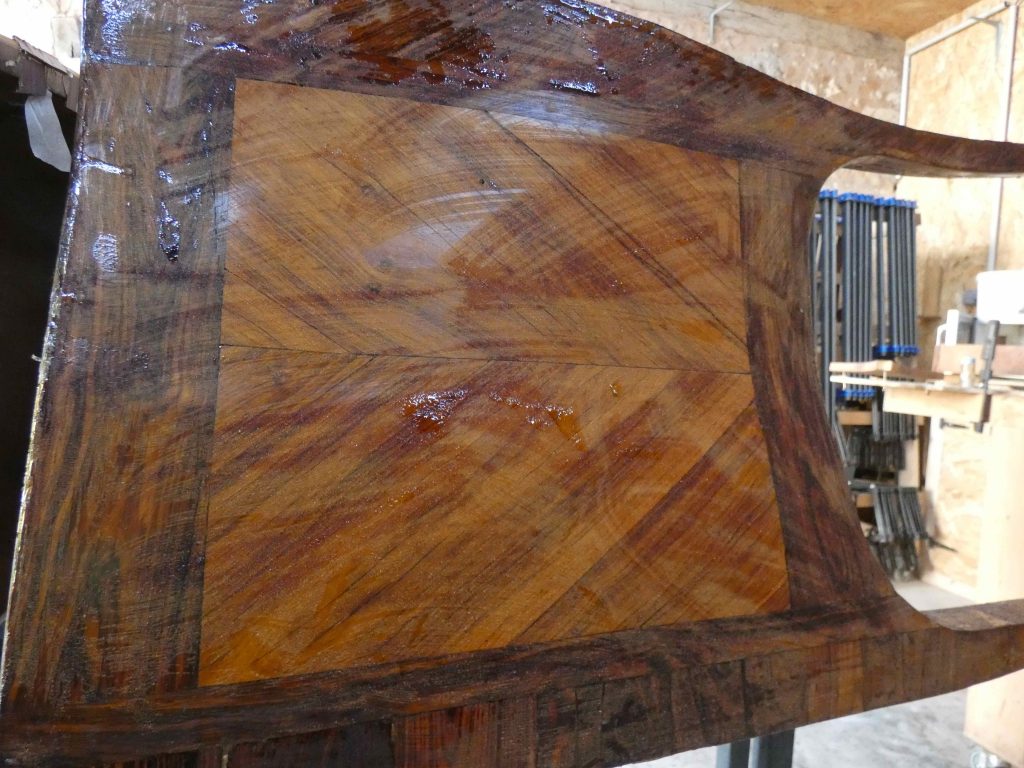
Stripping
The old varnish was then stripped with a stripper that easily removed the varnish film without damaging the wood pores, thus preserving the original fill. The grafts were then oxidized, and I applied a French polish using a recipe based on sandarac, elemi, mastic, and colorless shellac. This varnish recipe was found in a late 19th-century book.
Veneer torn off and poor veneer grafting 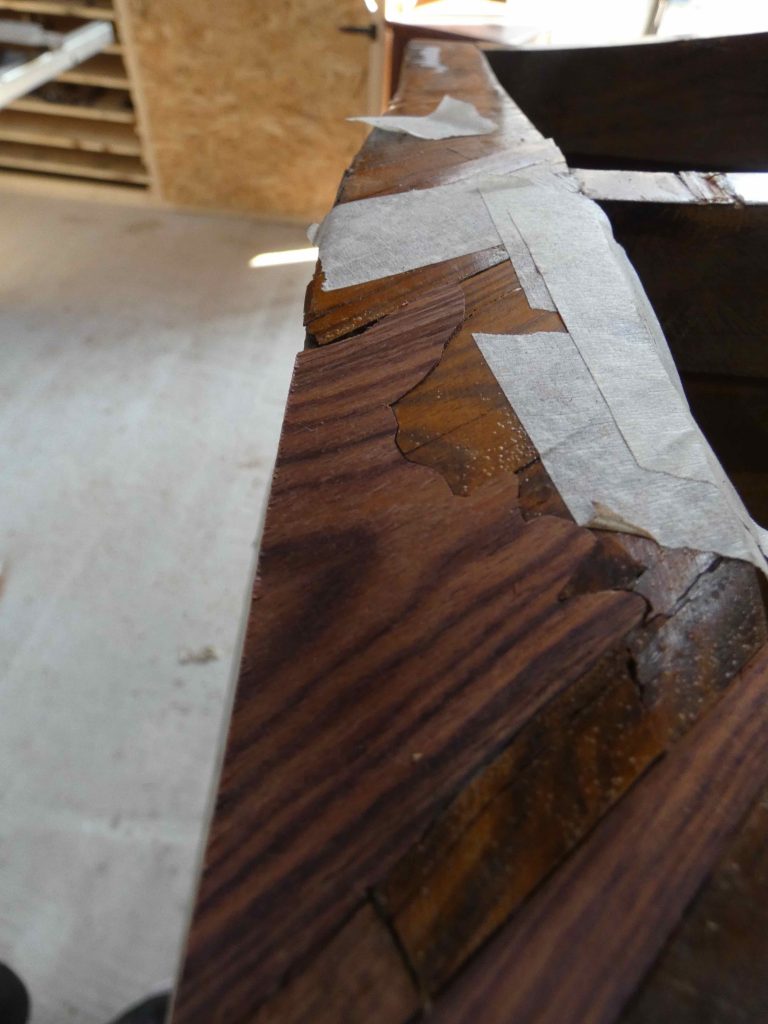
Violet wood graft on the left upright 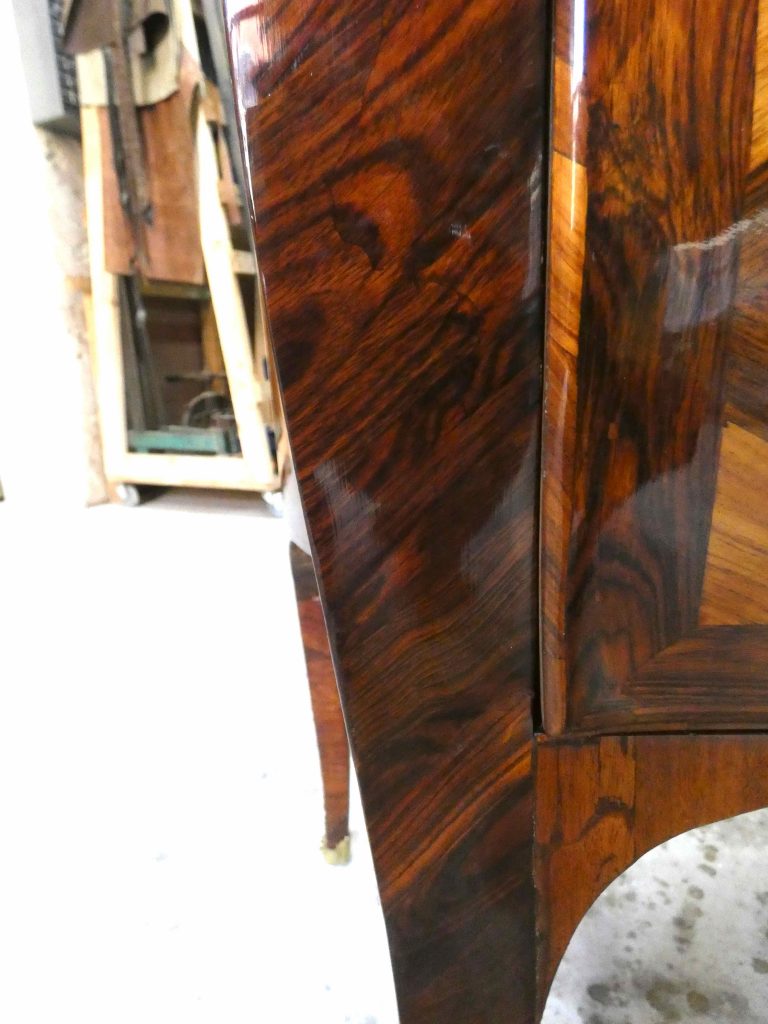
Veneer graft on the left upright after restoration
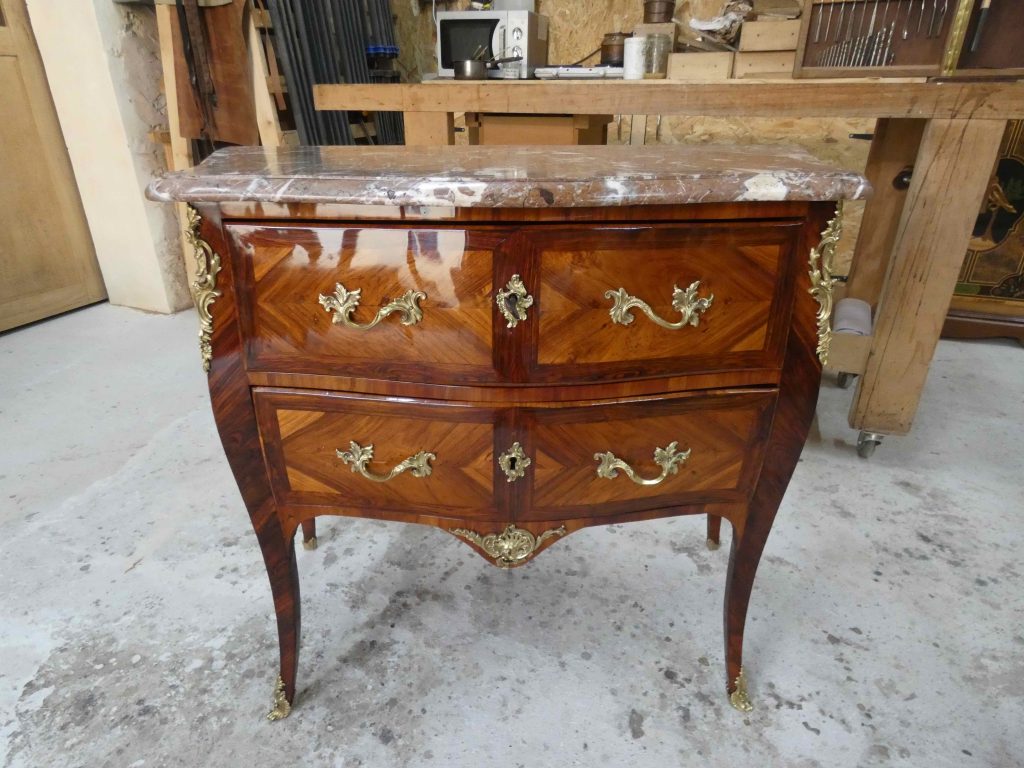
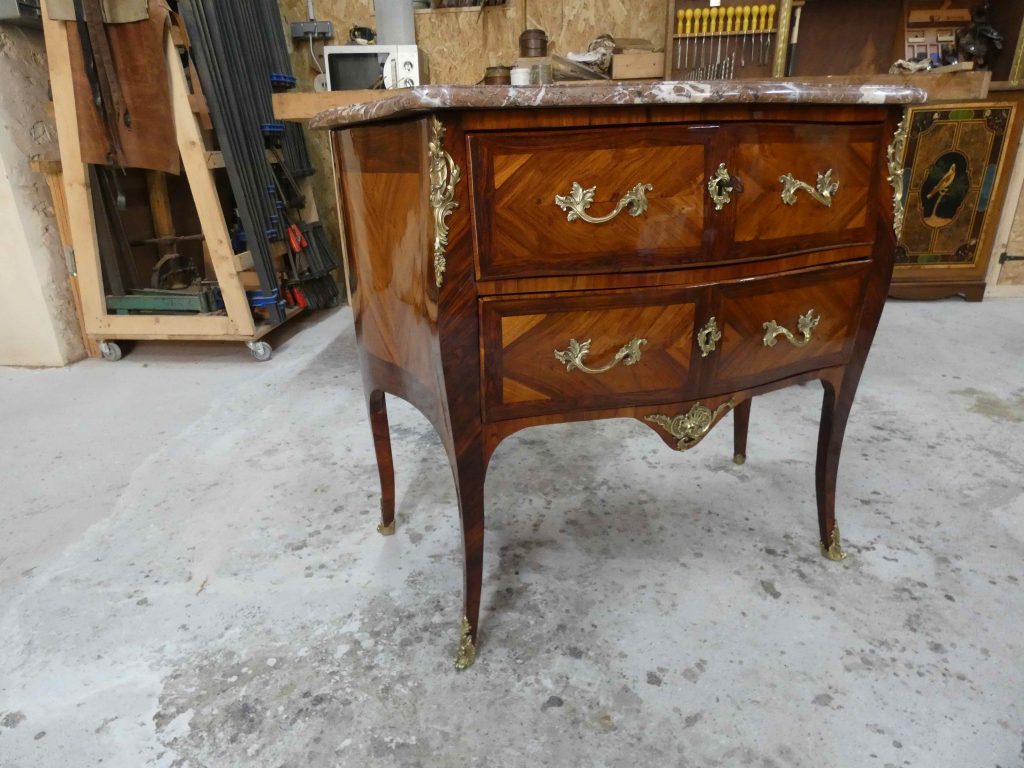
After restoration 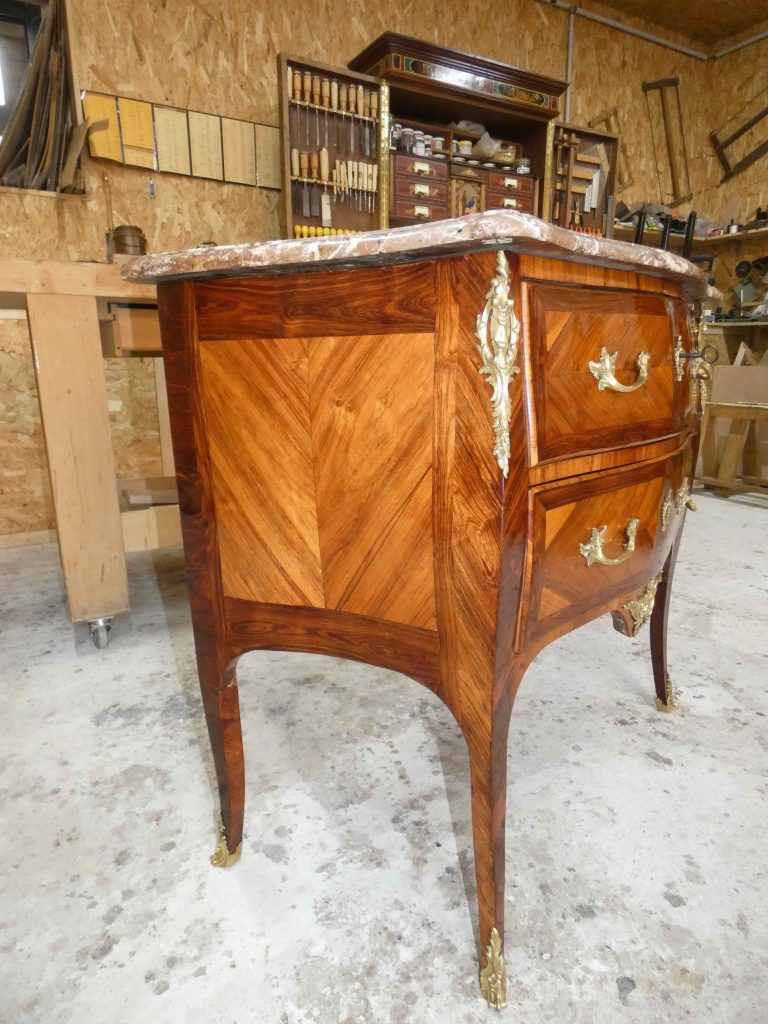
Left side after restoration 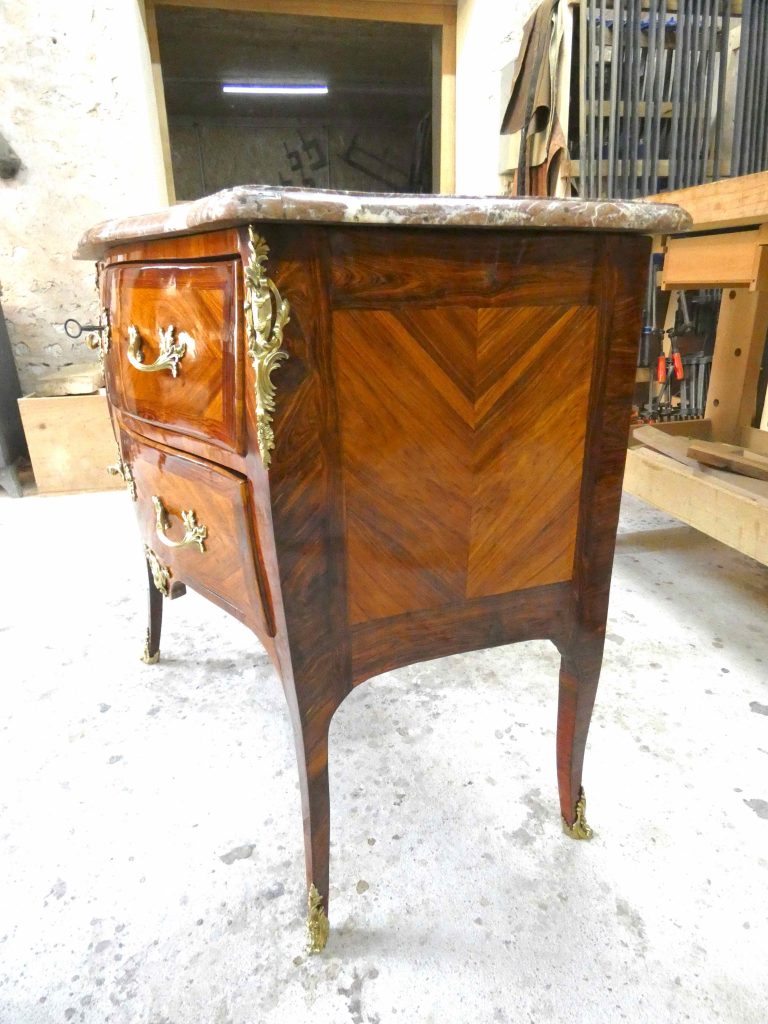
Right side after restoration 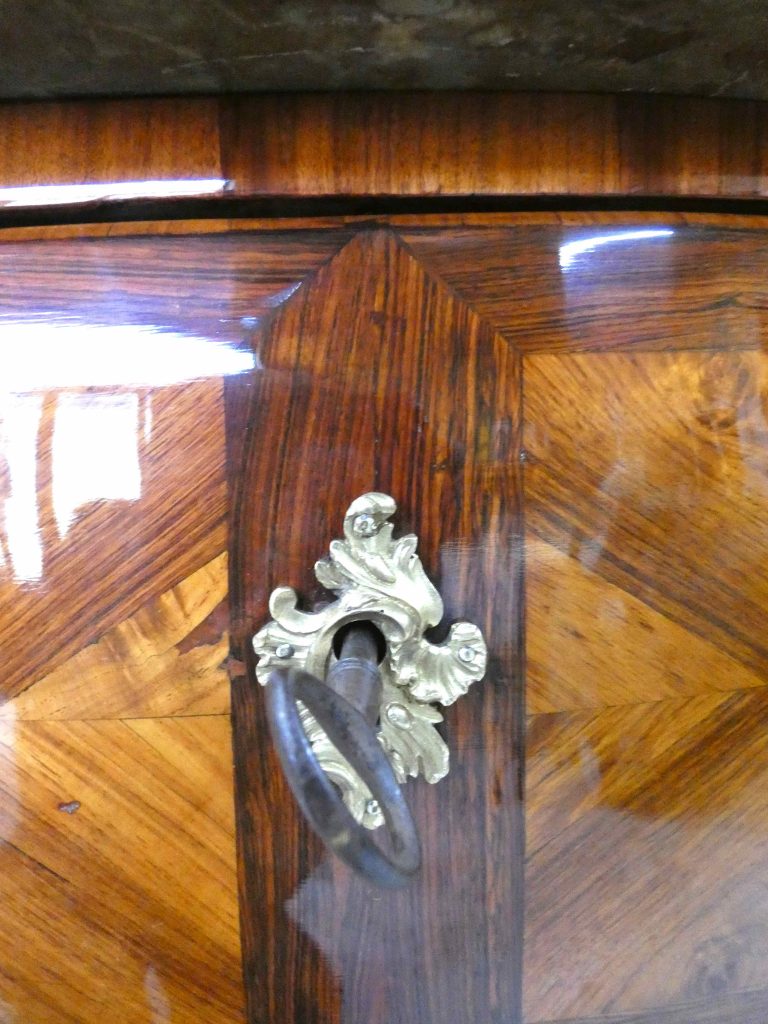
Grafting after restoration 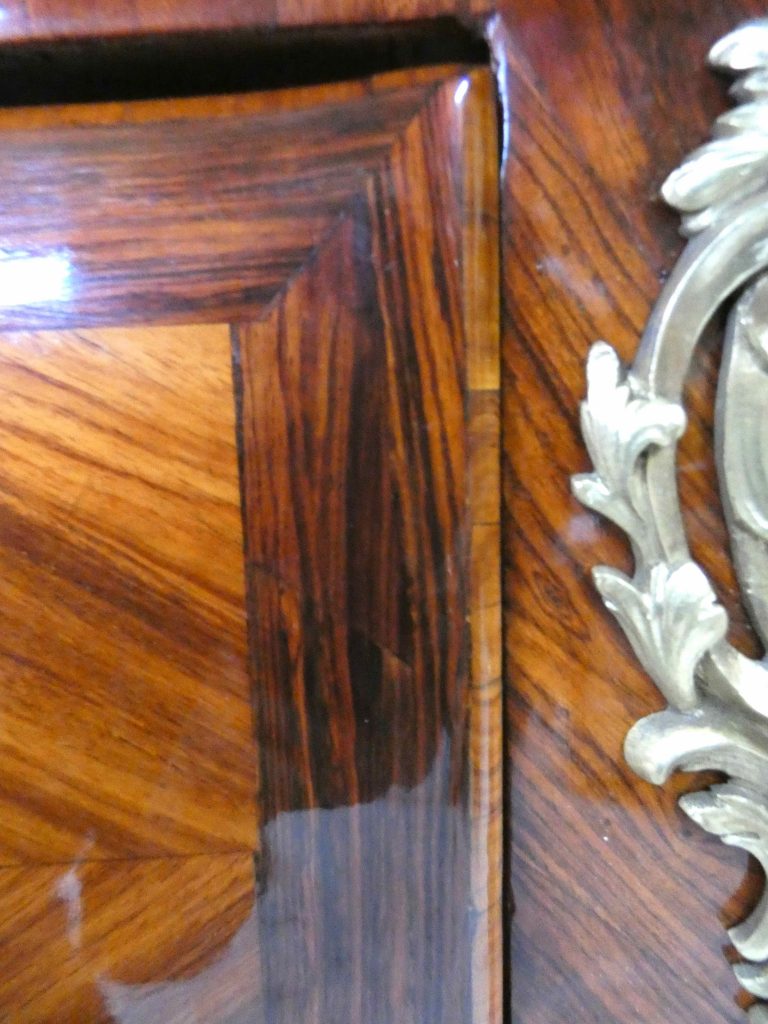
Grafting after restoration 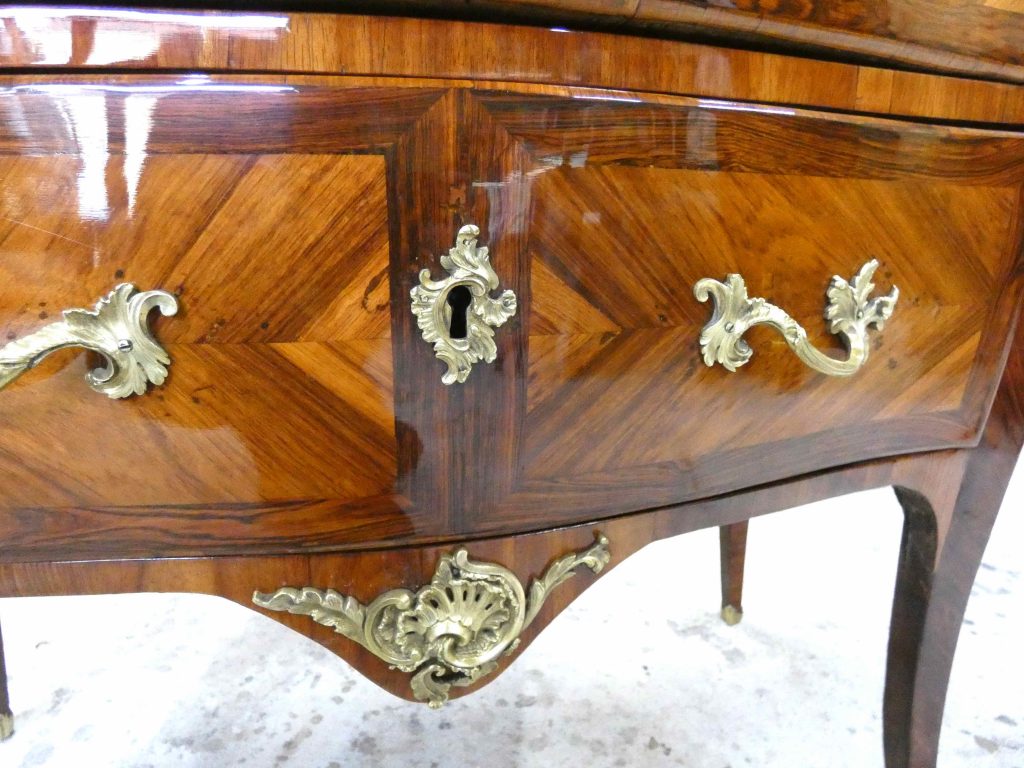
After restoration 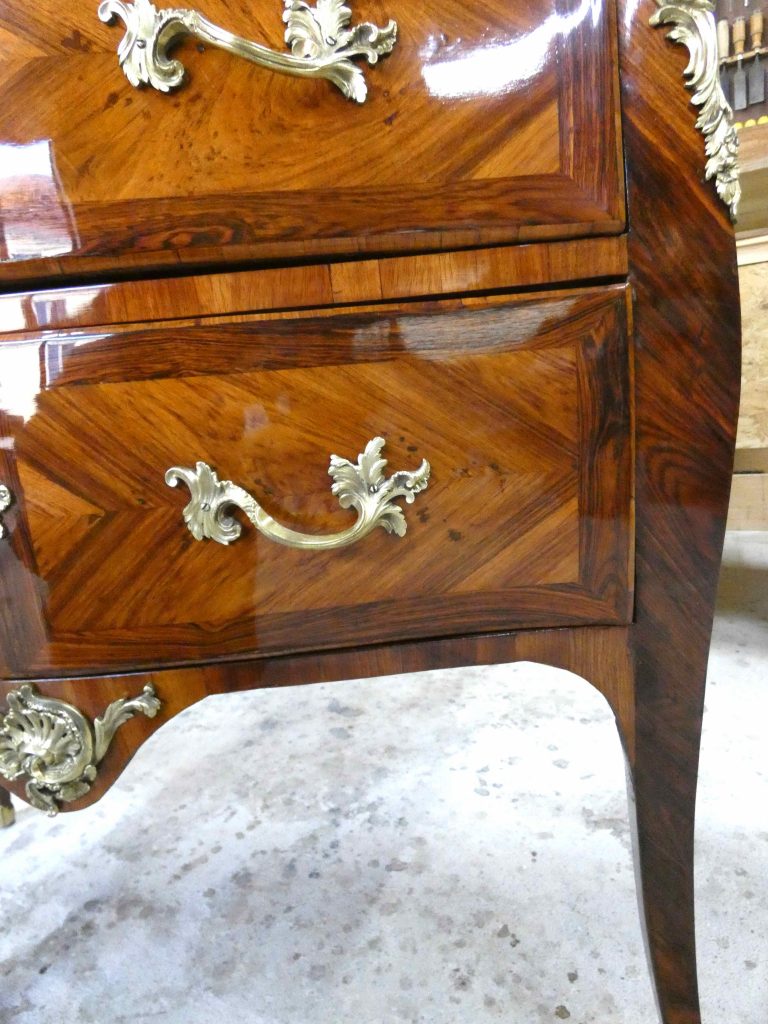
After restoration 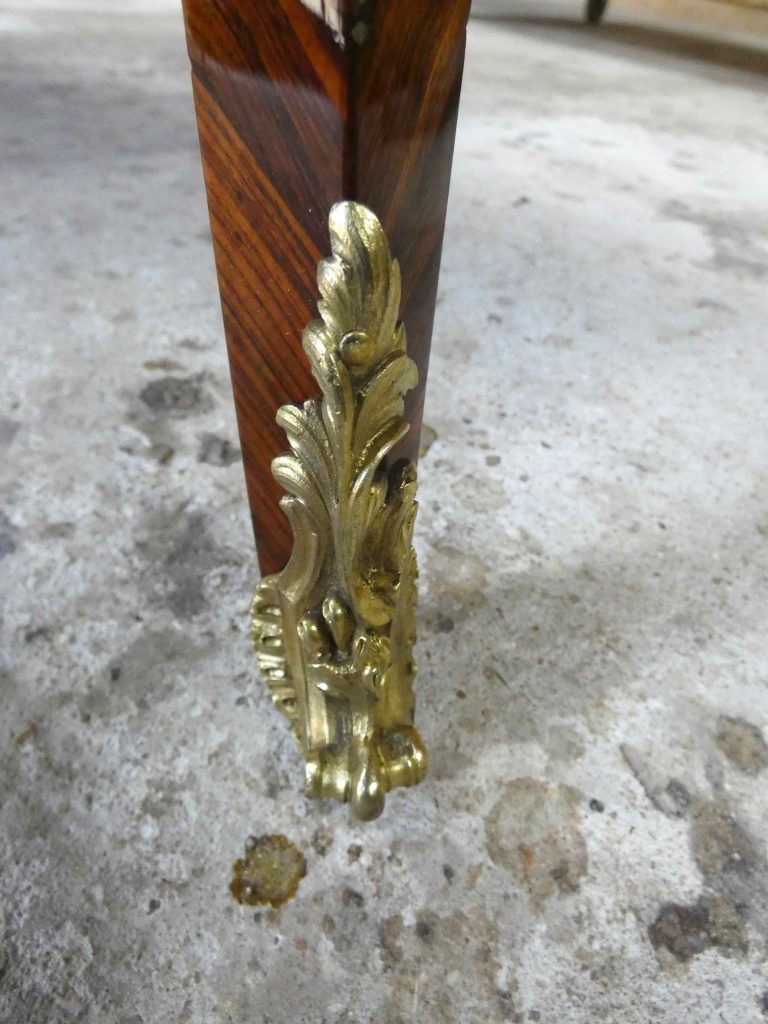
Hoof after restoration 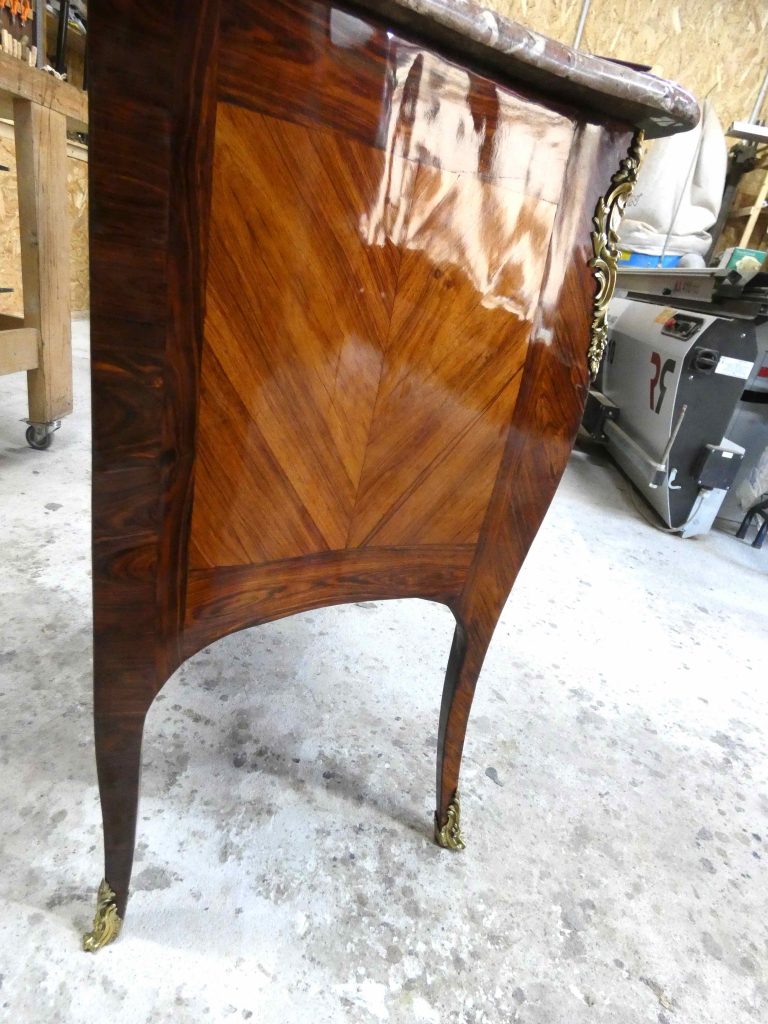
After restoration 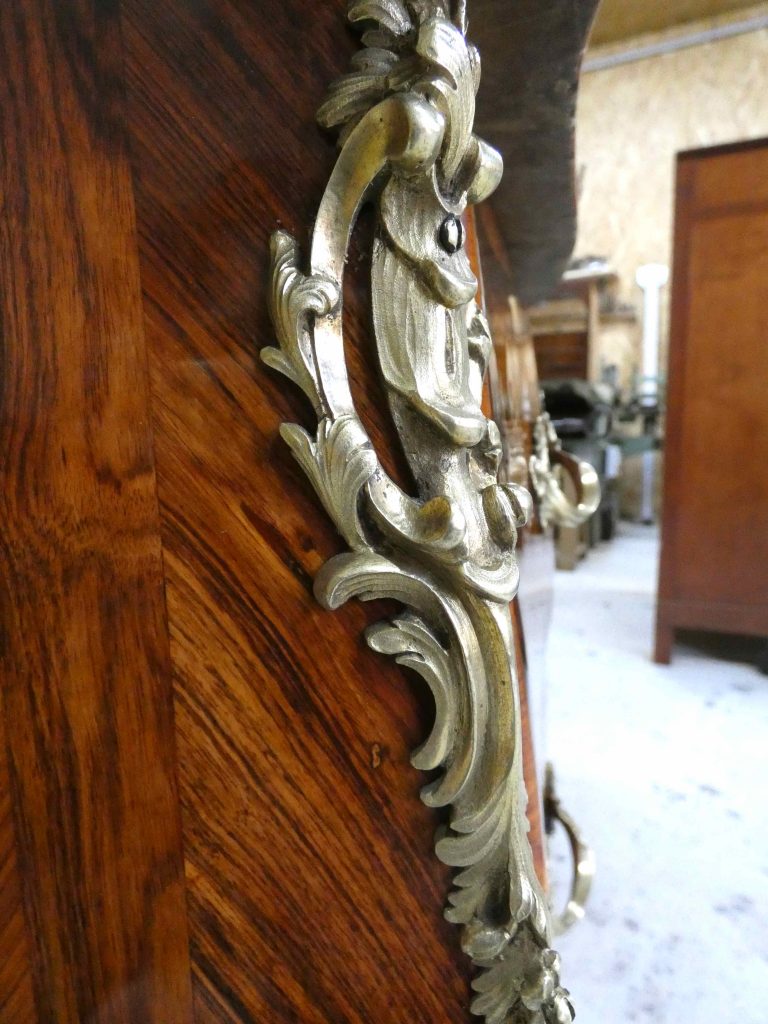
Fall after restoration 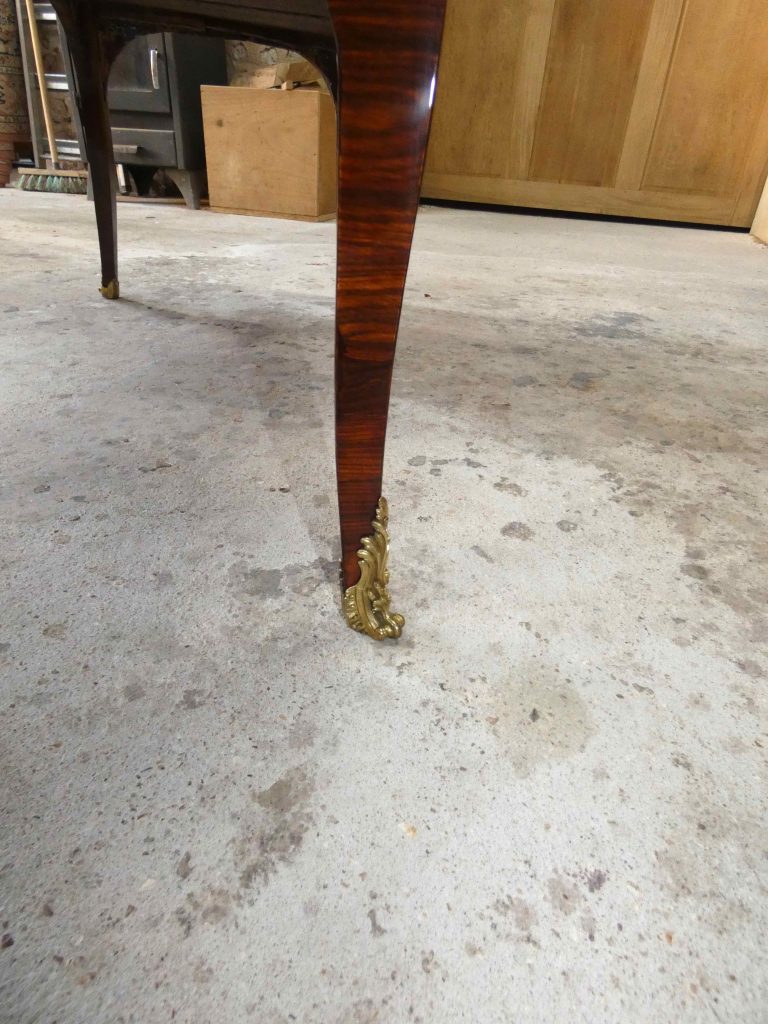
After restoration 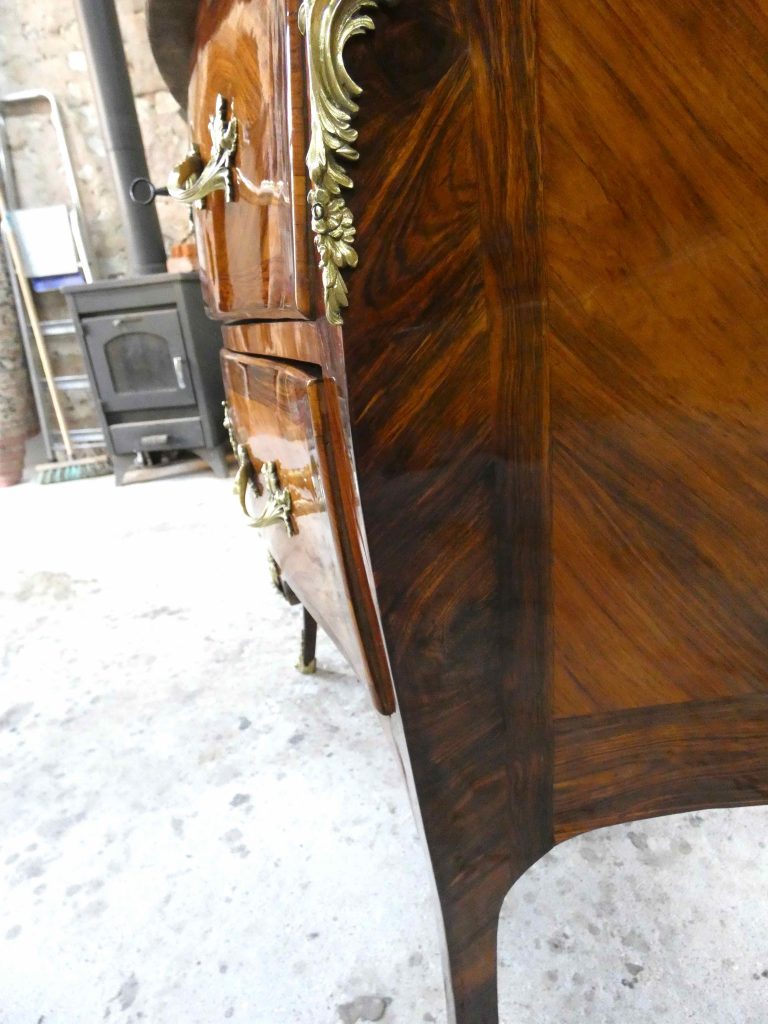
Grafting of the rightful amount after restoration 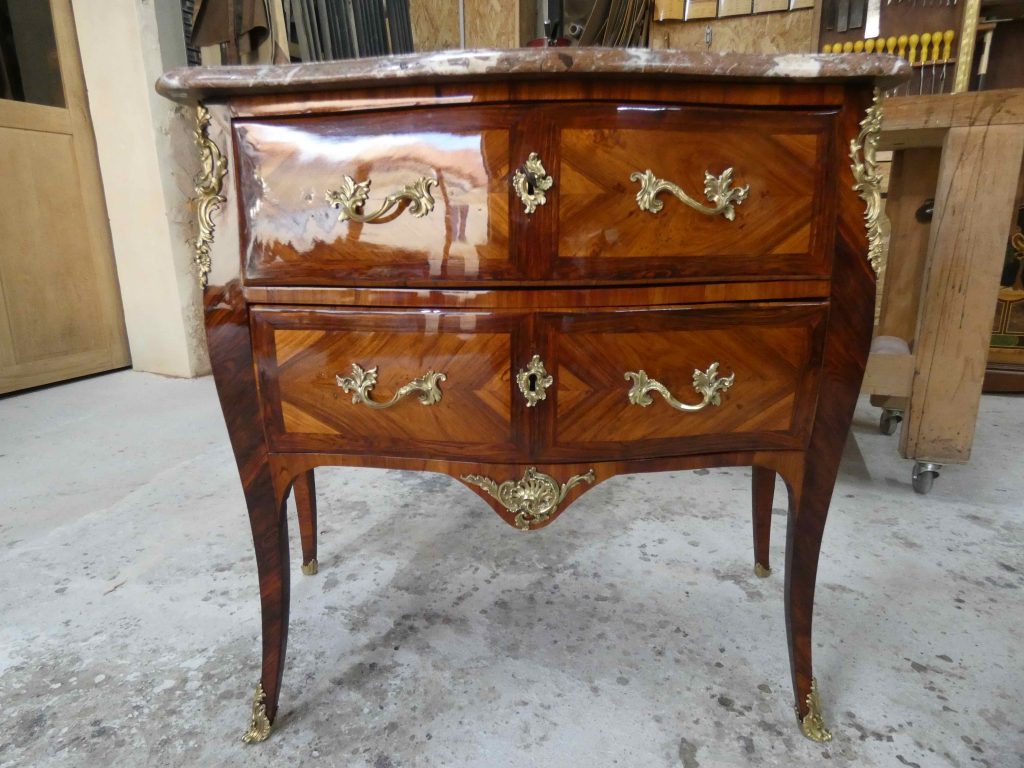
After restoration
You can see some of the steps involved in restoring this chest of drawers in the following video…
To see previous restorations : https://ebenisterie-mathieuvath.fr/en-ce-moment-a-latelier/
It's wonderful! Here I have the office of the head of loans at the Banque Lyonnaise. It's similar to Charles de Gaulle's. I'd like to know how to clean the bronze on the feet, handles, locks, and corner pieces of the desk. My desk top is leather edged in gold. It seems to be the same type of wood as yours. I'm going to start the renovation this winter. Thank you, it's encouraging to see your results. You do excellent work.