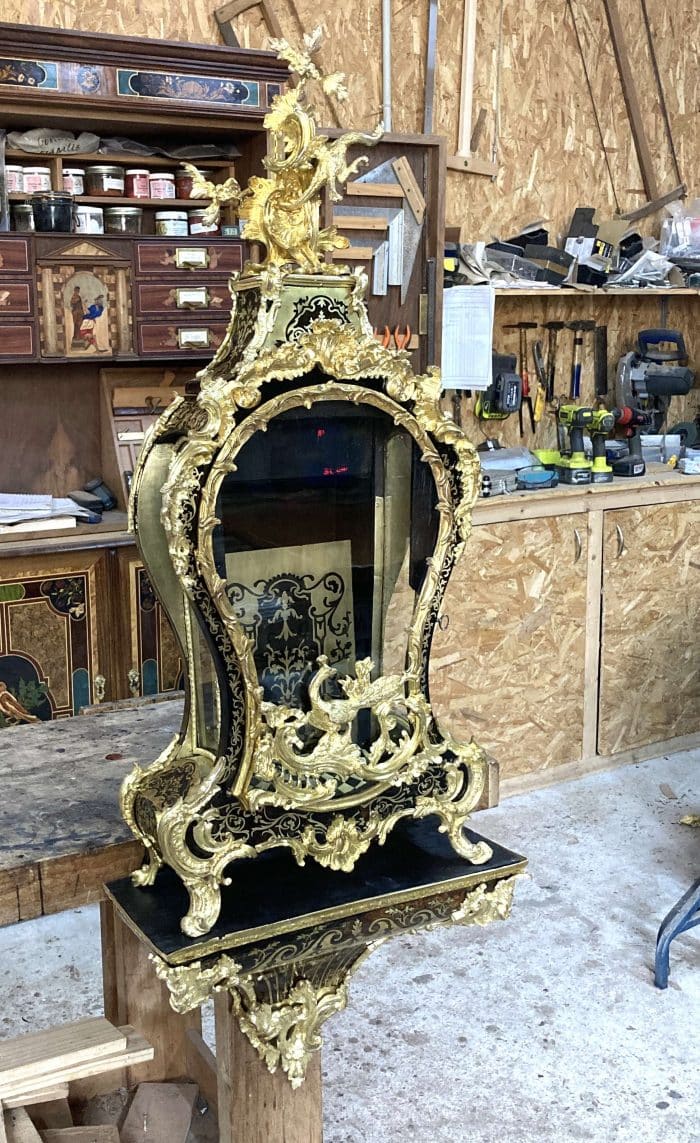
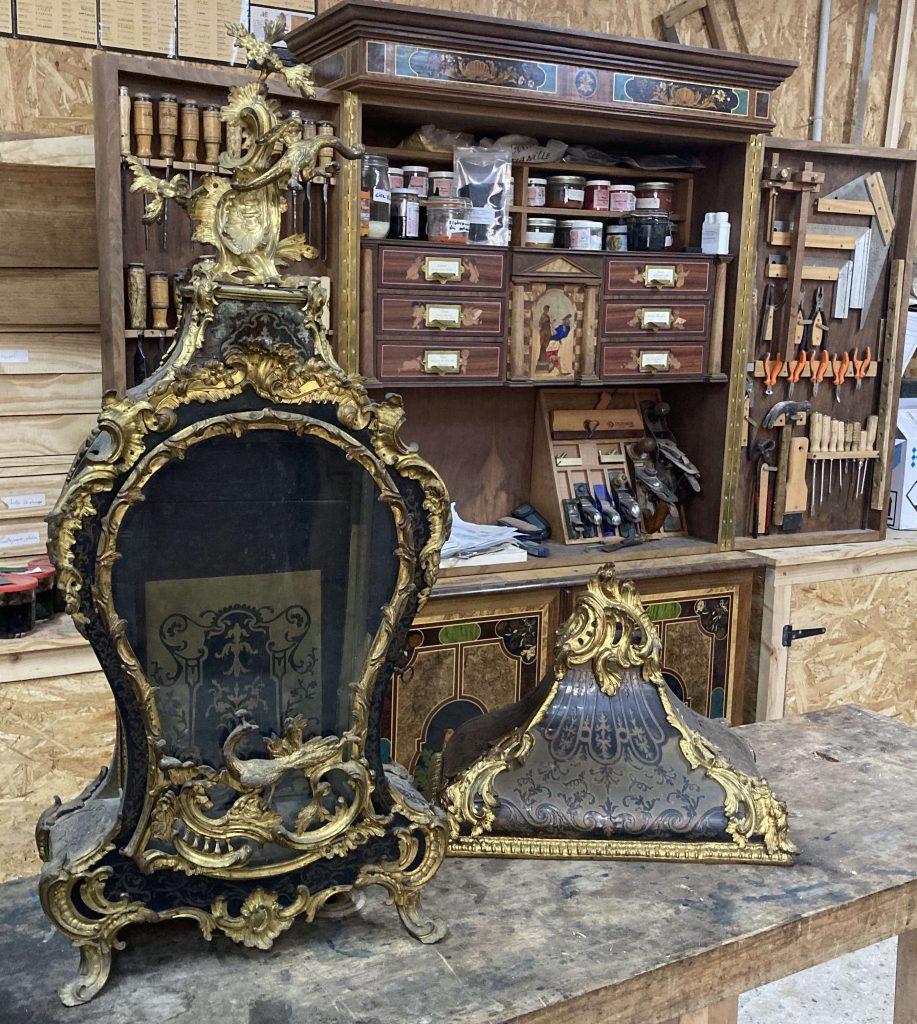
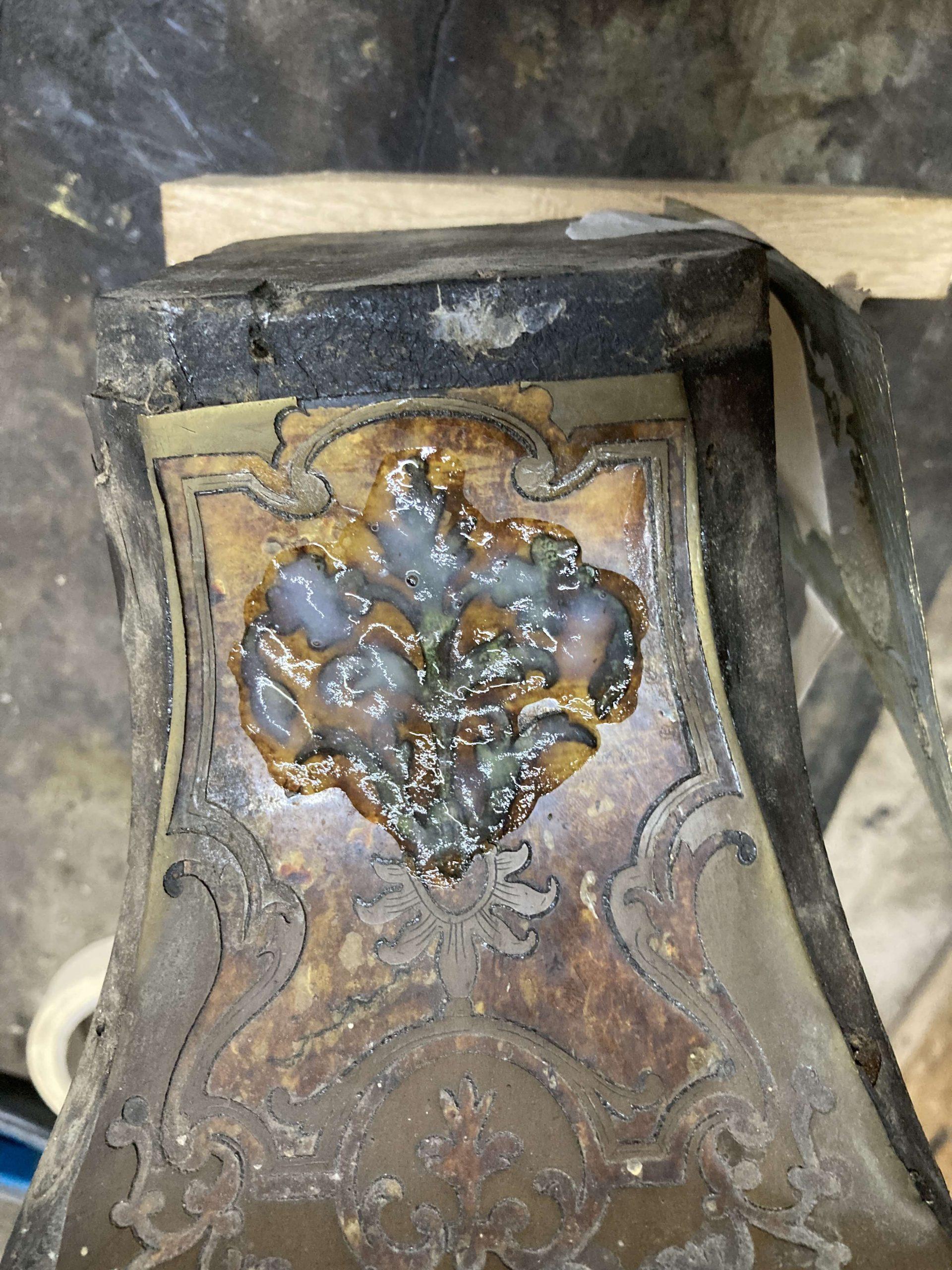
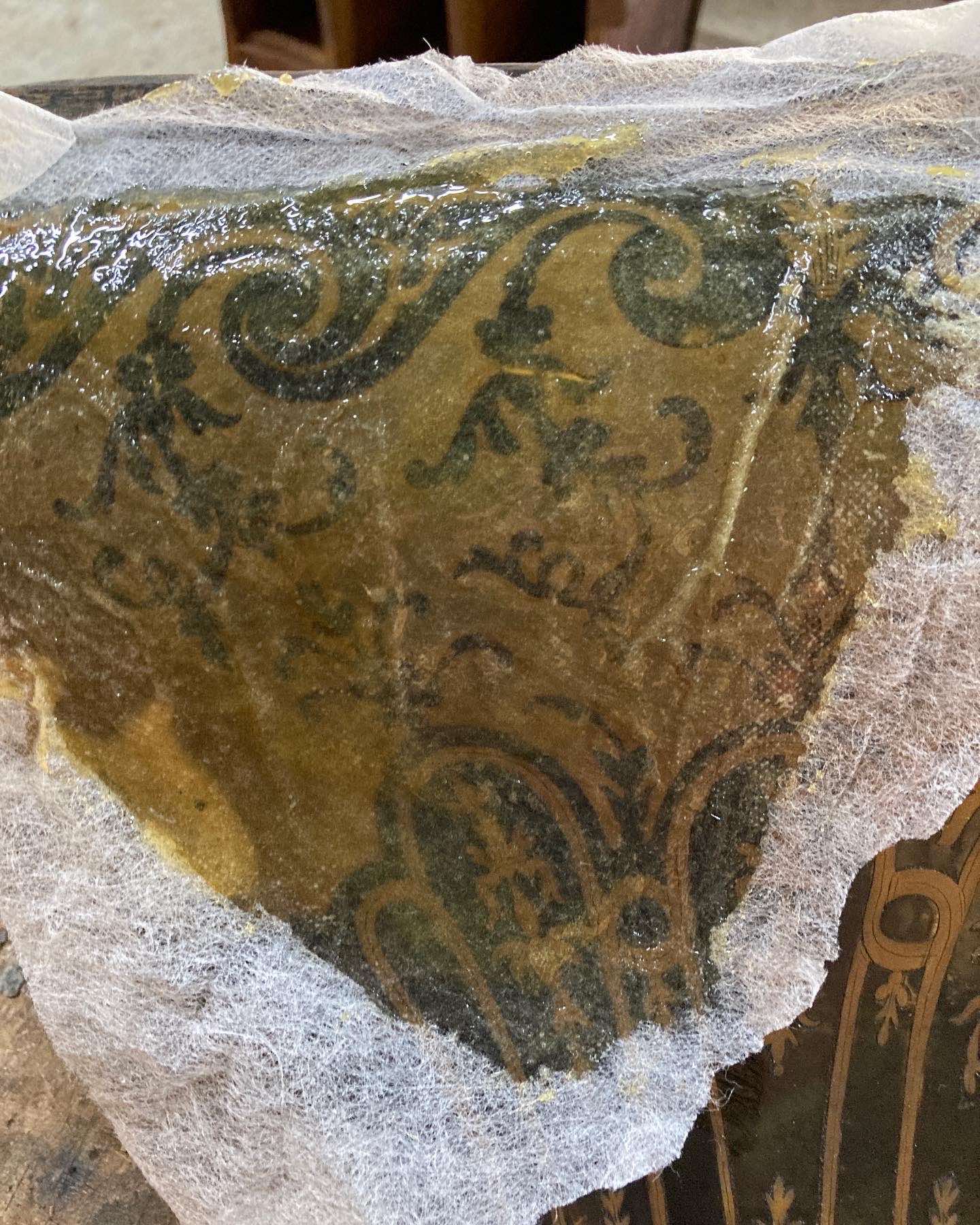
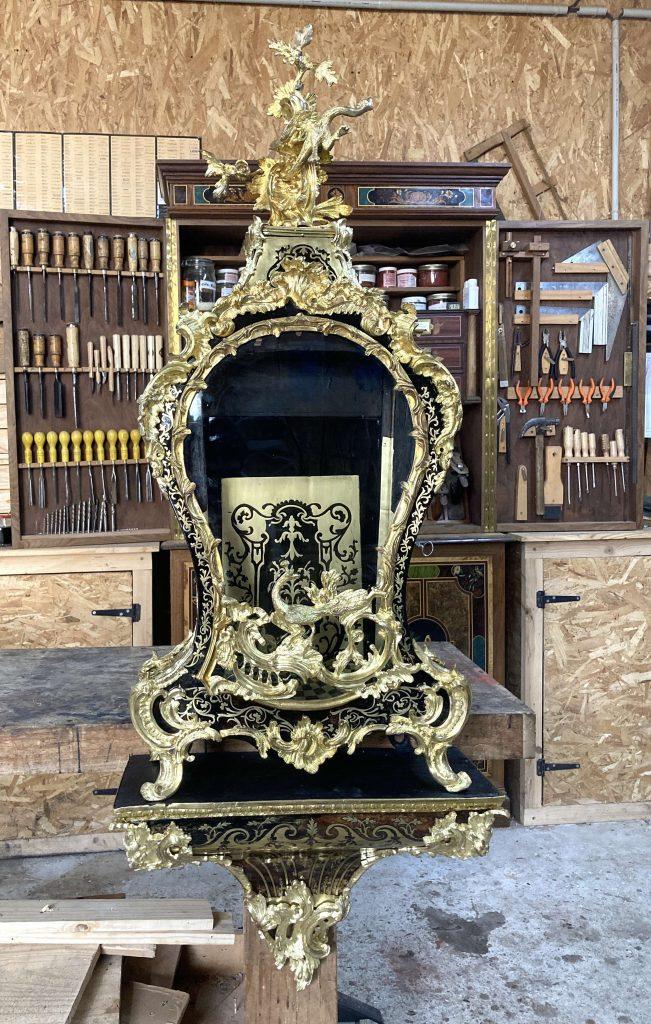
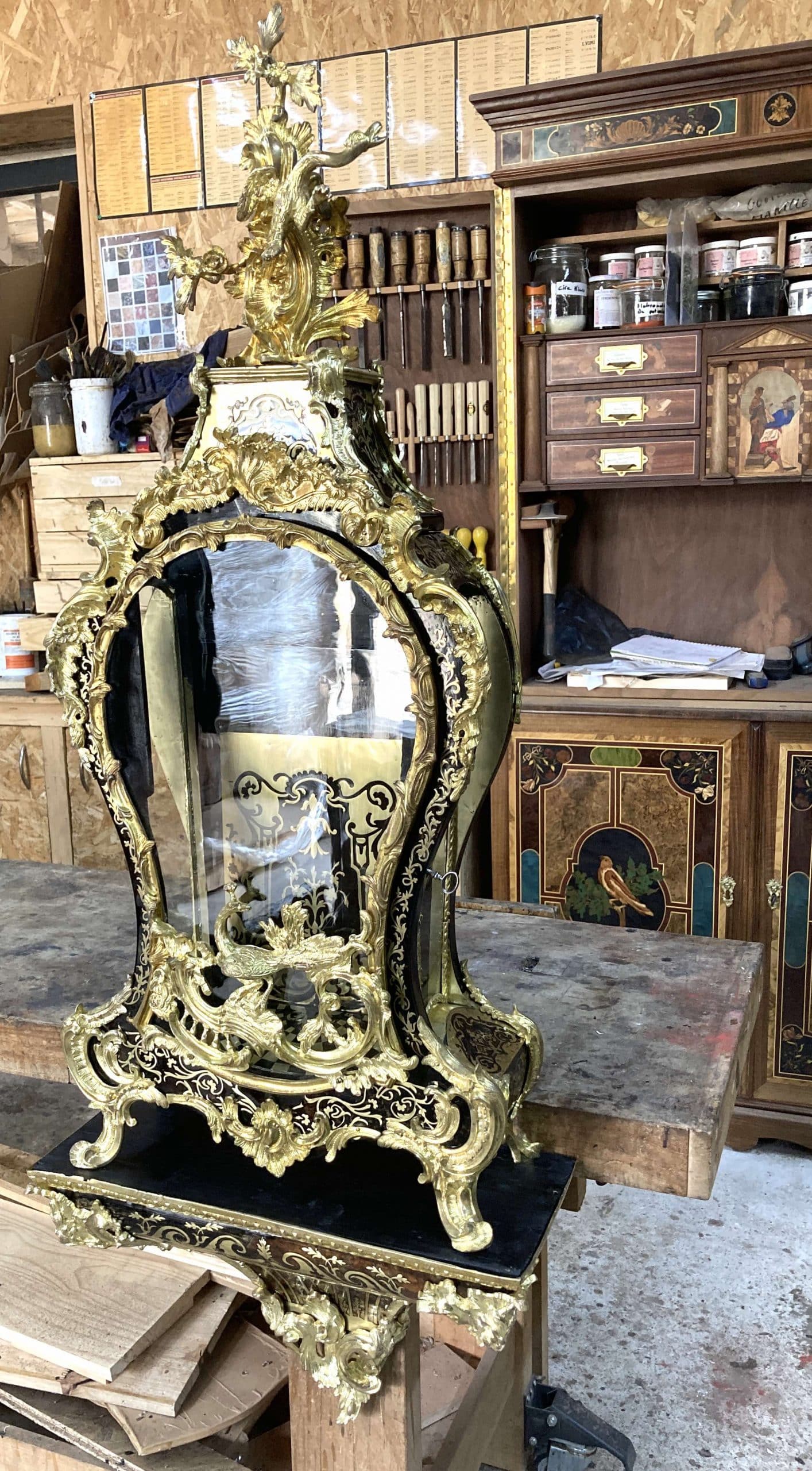
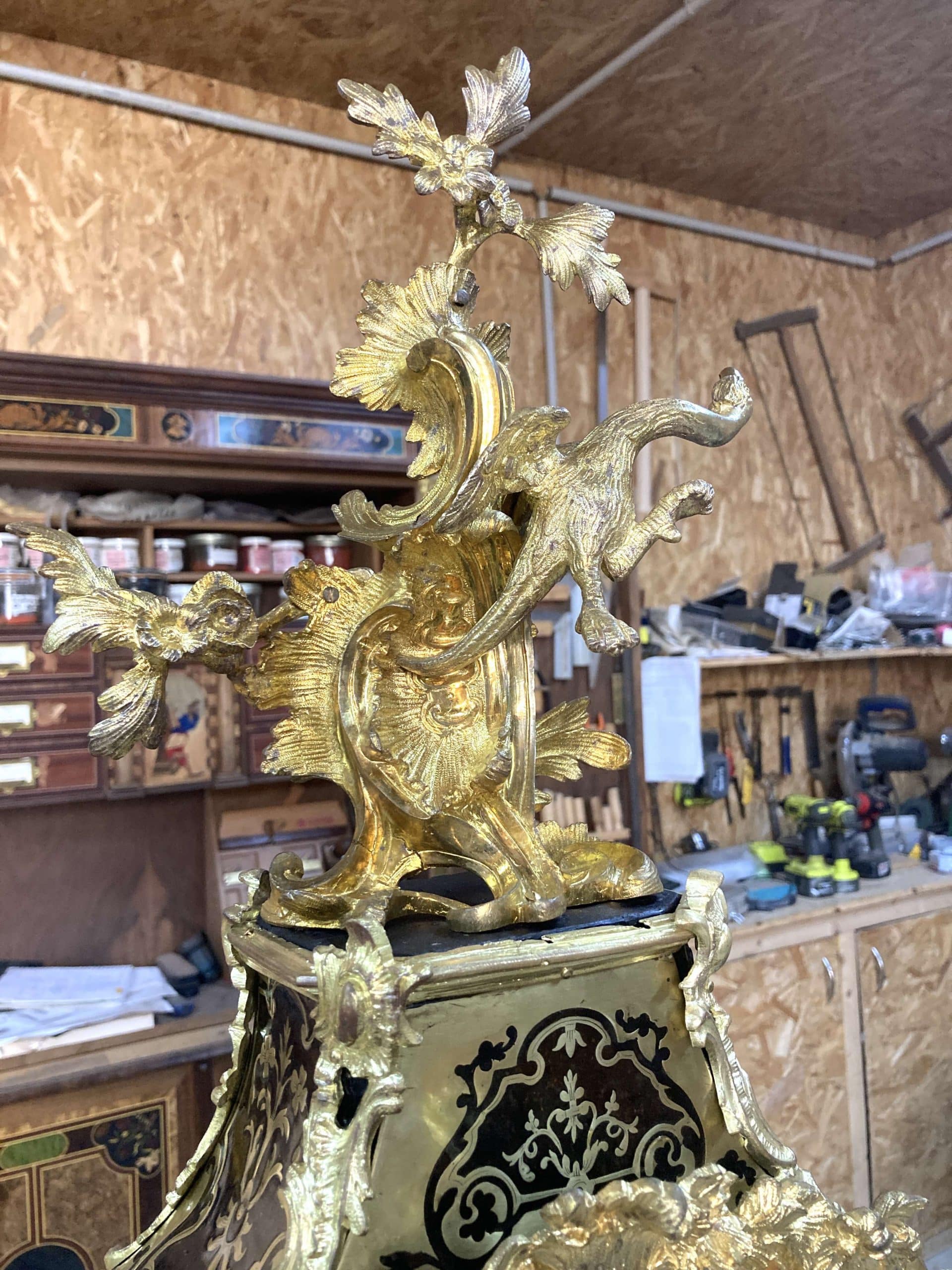
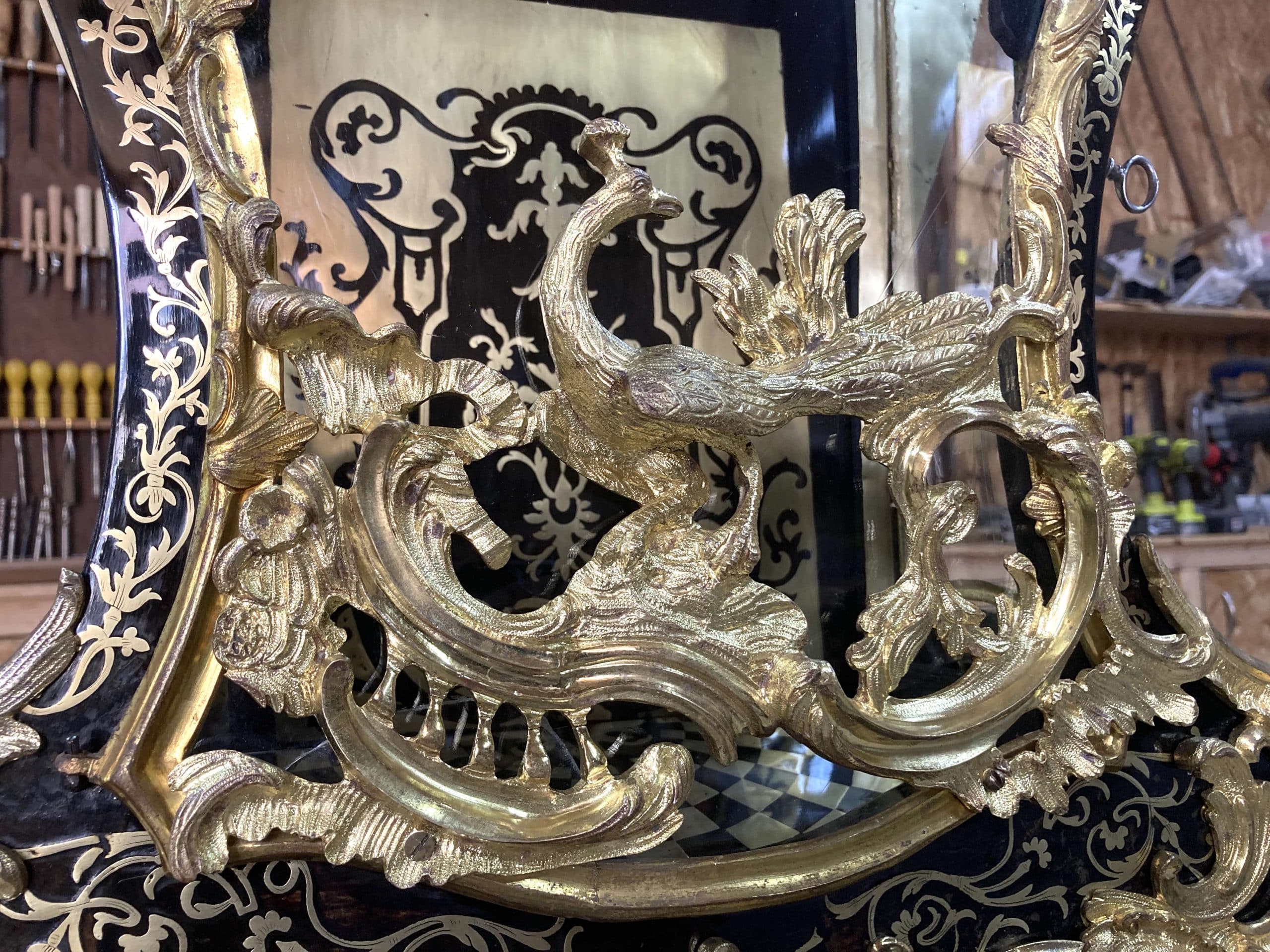
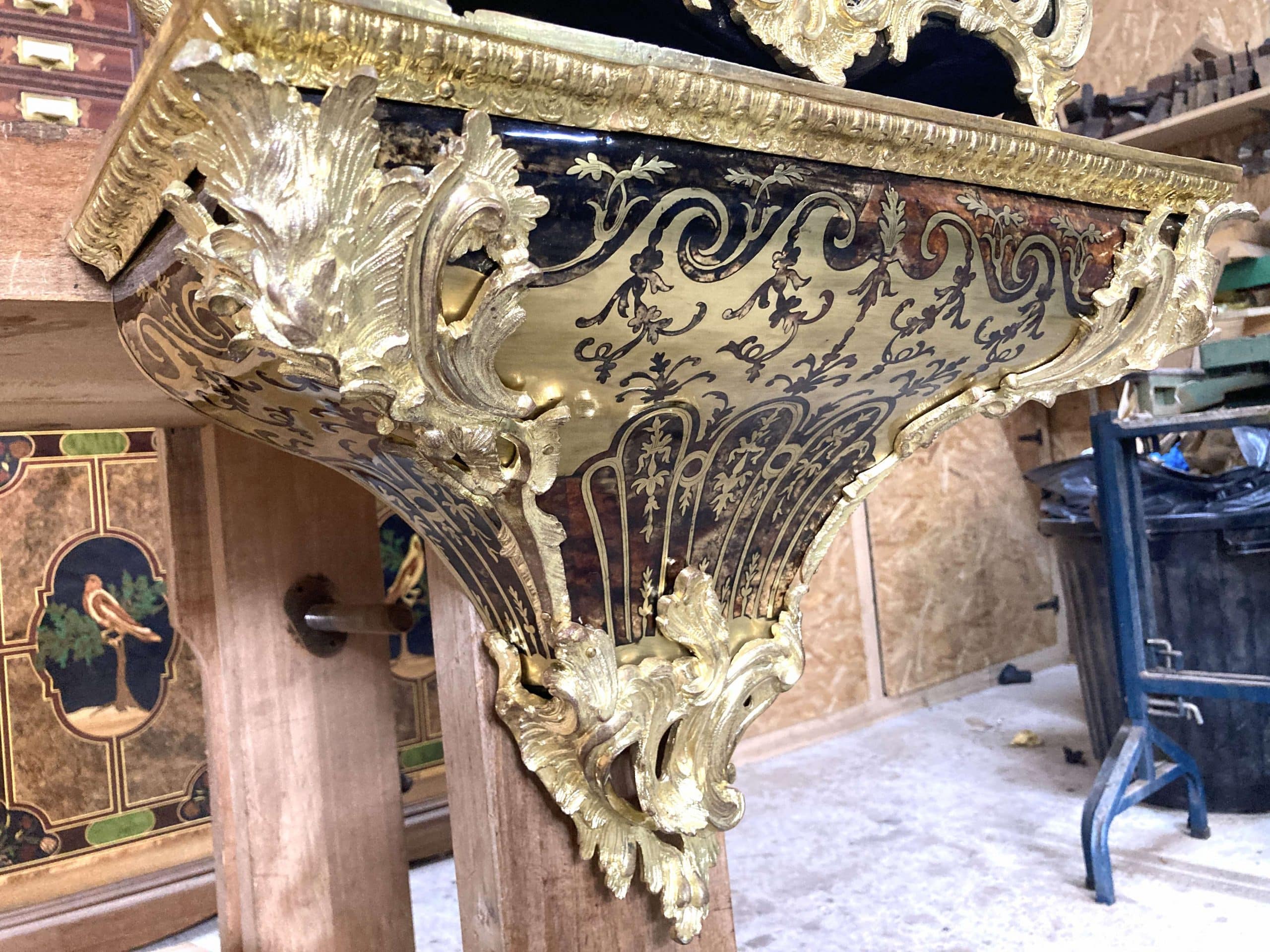
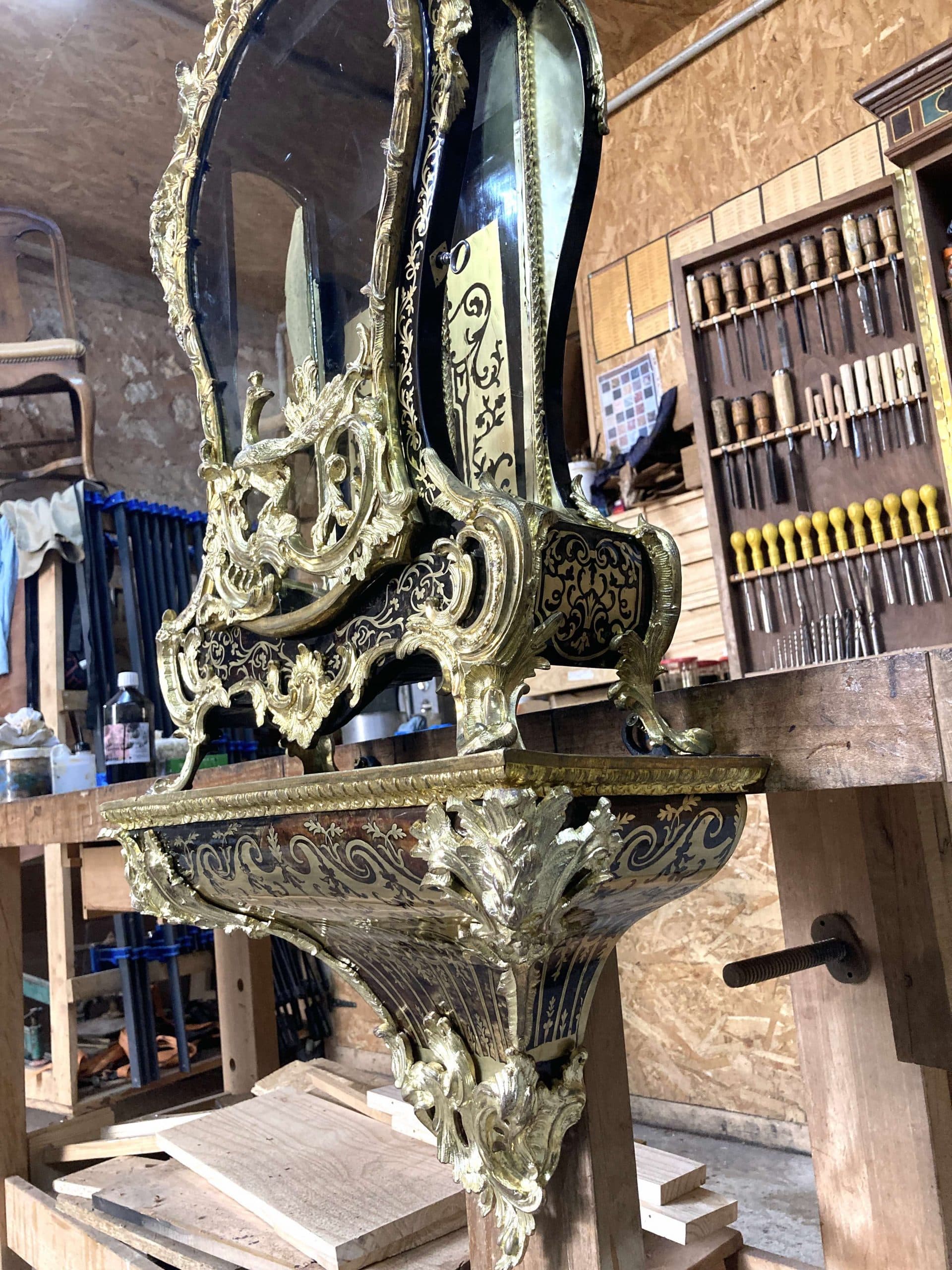
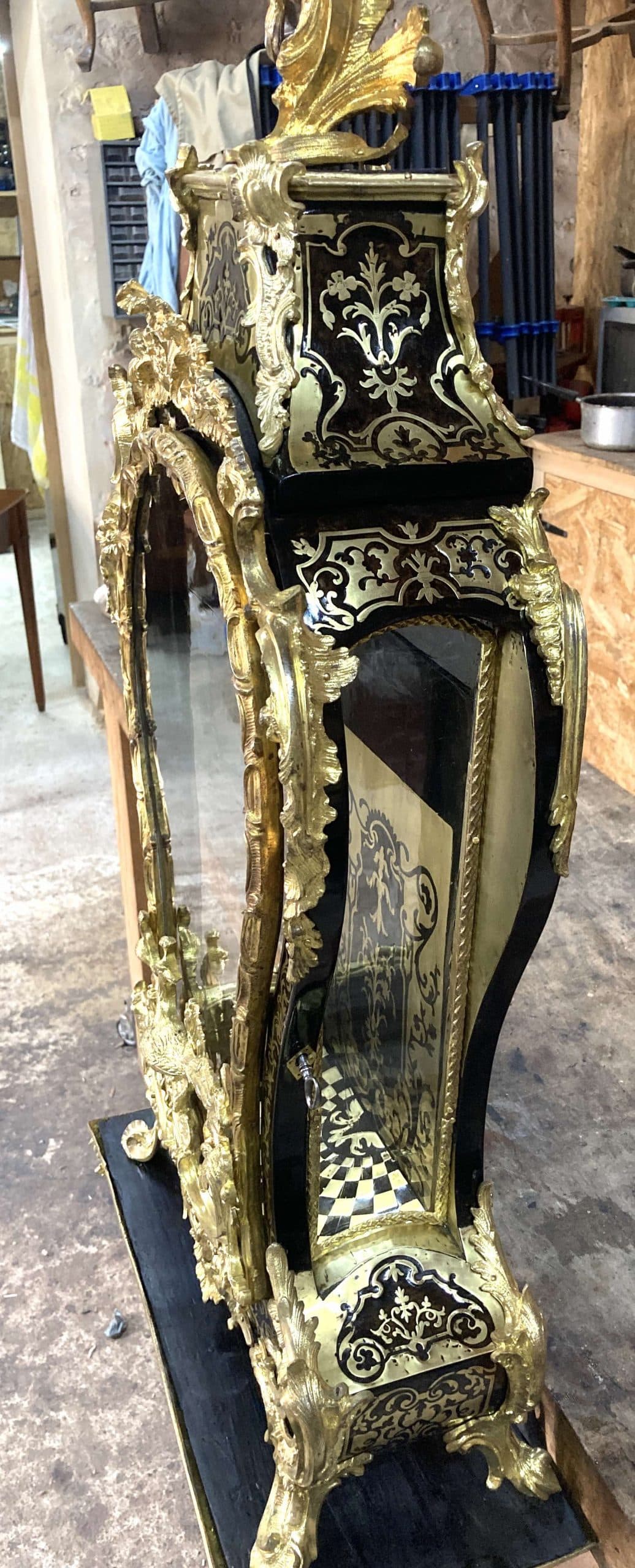
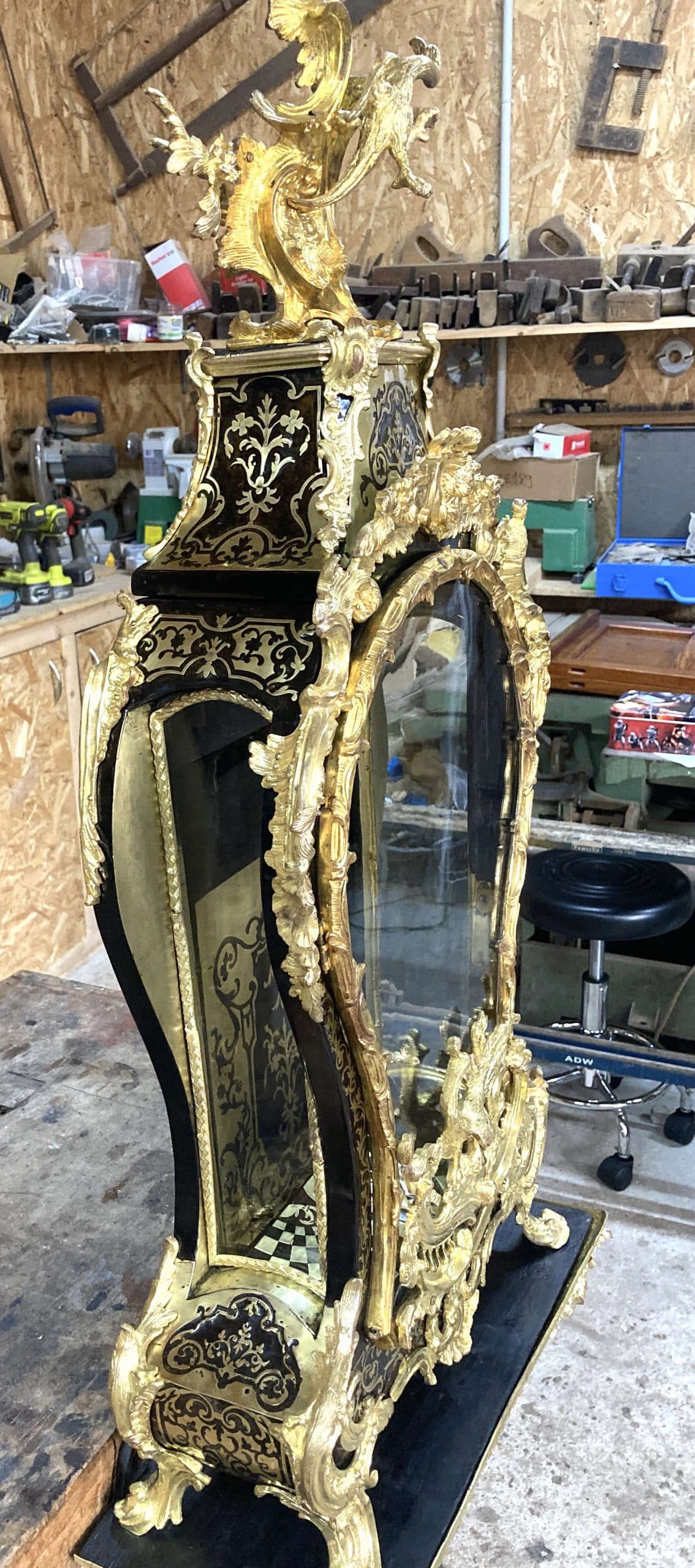
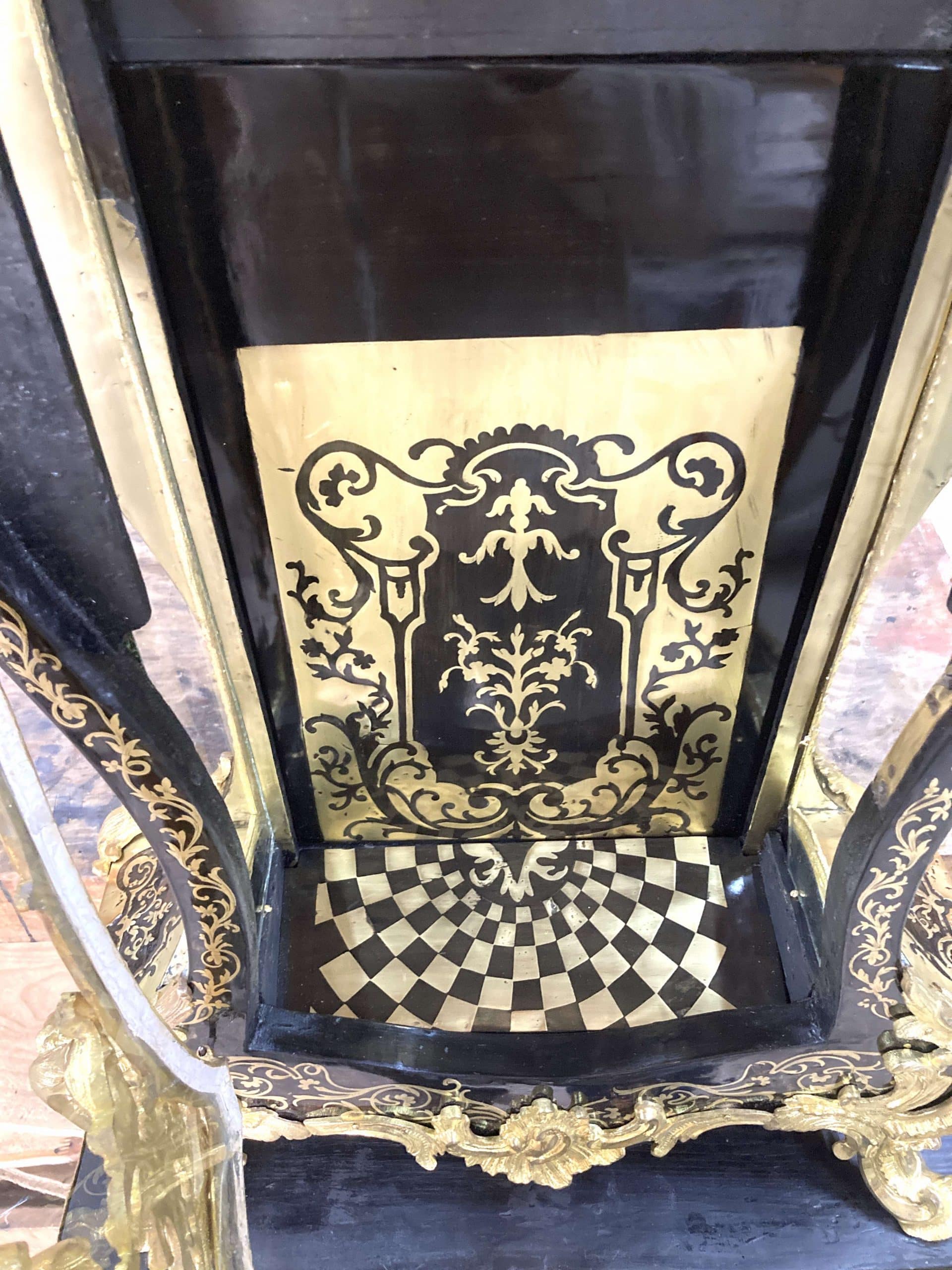
Restoration of a Louis XIV period cartel clock and its lamp base in pure Rococo style. It is built in solid oak and veneered with brass and tortoiseshell.
Do you know what the rocaille style is?
The Rococo style, situated in the early period of the Louis XV style (1723-1750), reached its peak around 1730. It is characterized by rich, naturalistic decoration. Inspired by artificial grottoes and recreated rock formations, it was arranged in asymmetrical compositions. This decoration, which marks the beginning of the Baroque, is further enhanced by seashells, geological features, cascading foliage, jagged palmettes, and floral motifs, all within compositions of asymmetrical curves and counter-curves.
The term Rockery This is the title given to a print made in 1737 by the French architect and engraver Claude Augustin Duflos the Younger (1703-1770), after François Boucher. The composition features an assemblage of seashells and plant ornaments with a garden in the background. The whole is asymmetrical, fragmented, and whimsical. Each element is inspired by nature but transformed by the artist's imagination.
This heavily ornamented style spread throughout Central and Western Europe around the middle of the century. The Italians nicknamed it "Rococo." In England, it influenced the Chippendale style (1754-1770). In Germany, it became dominant thanks to the architect François de Cuvilliés (1695-1768), a draftsman from Hainaut in the service of the Elector of Bavaria, whose ornamental style, rich in plant motifs, spread across Europe through a series of engravings published in 1738. In Italy, the Venetian Republic adopted it in a theatrical manner. In Spain, Austria, and Bavaria, it took the form of a late Baroque style, characterized by pronounced asymmetry, which borrowed elements from the French Rococo.
Before restoration
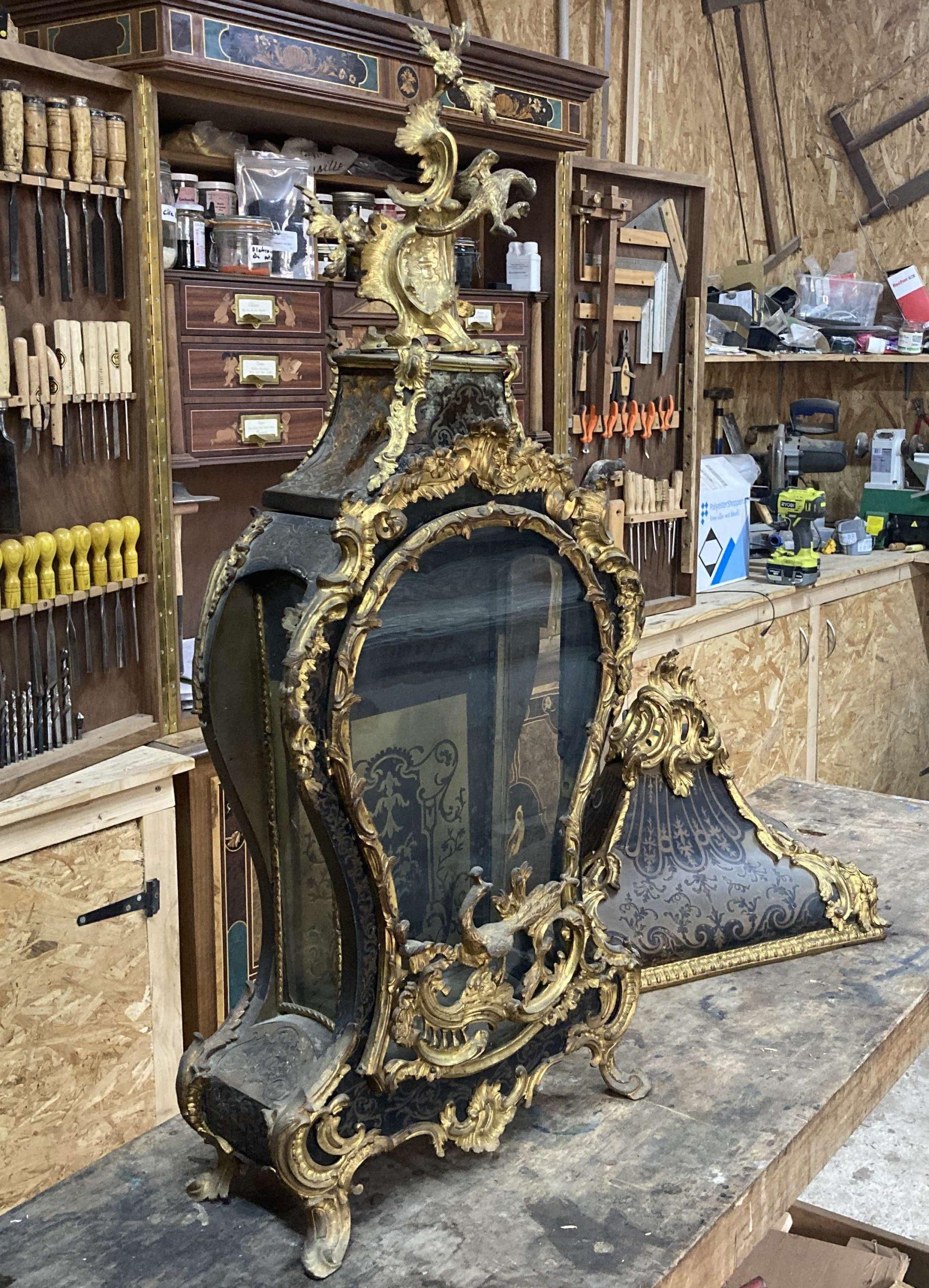
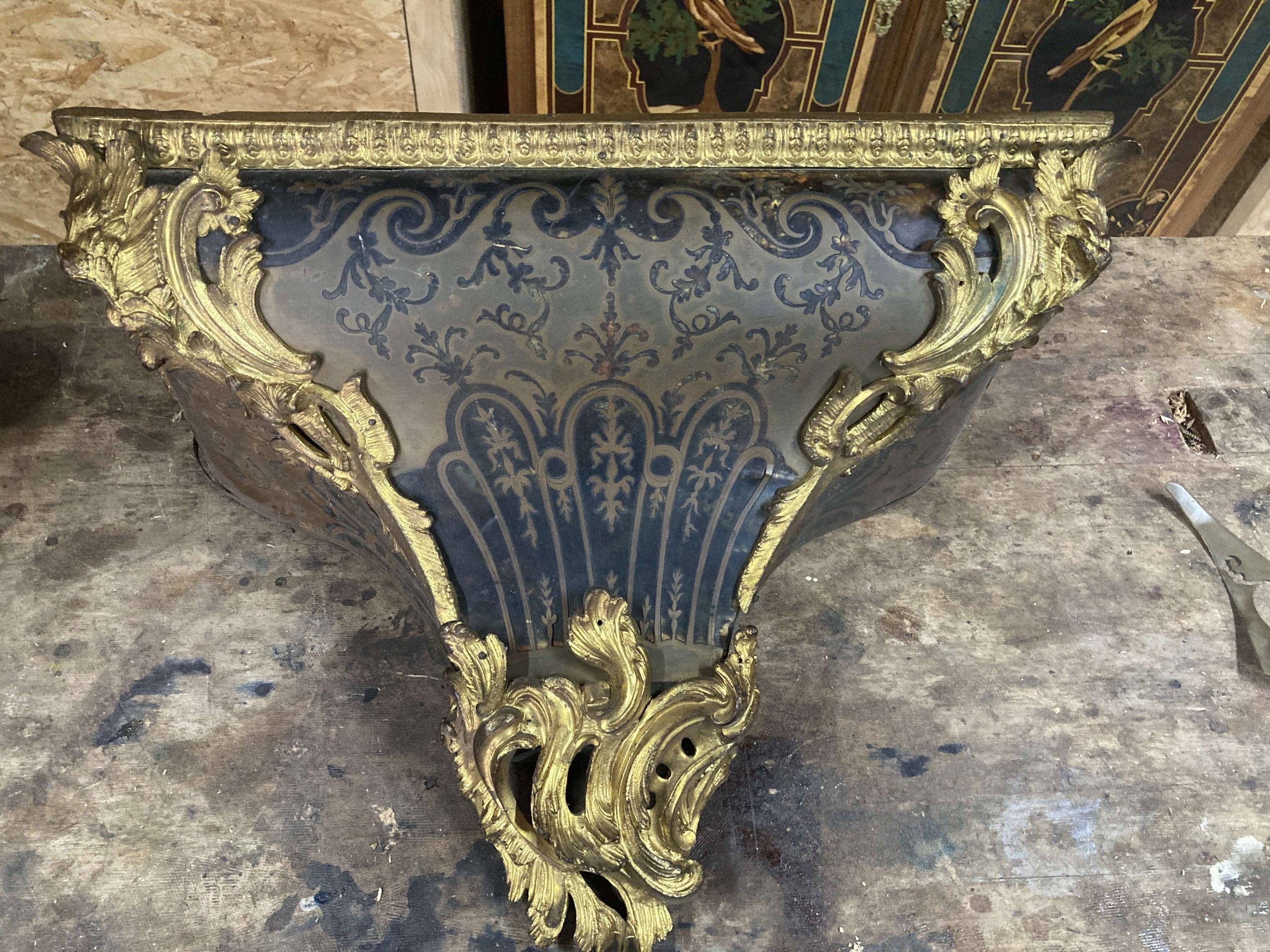
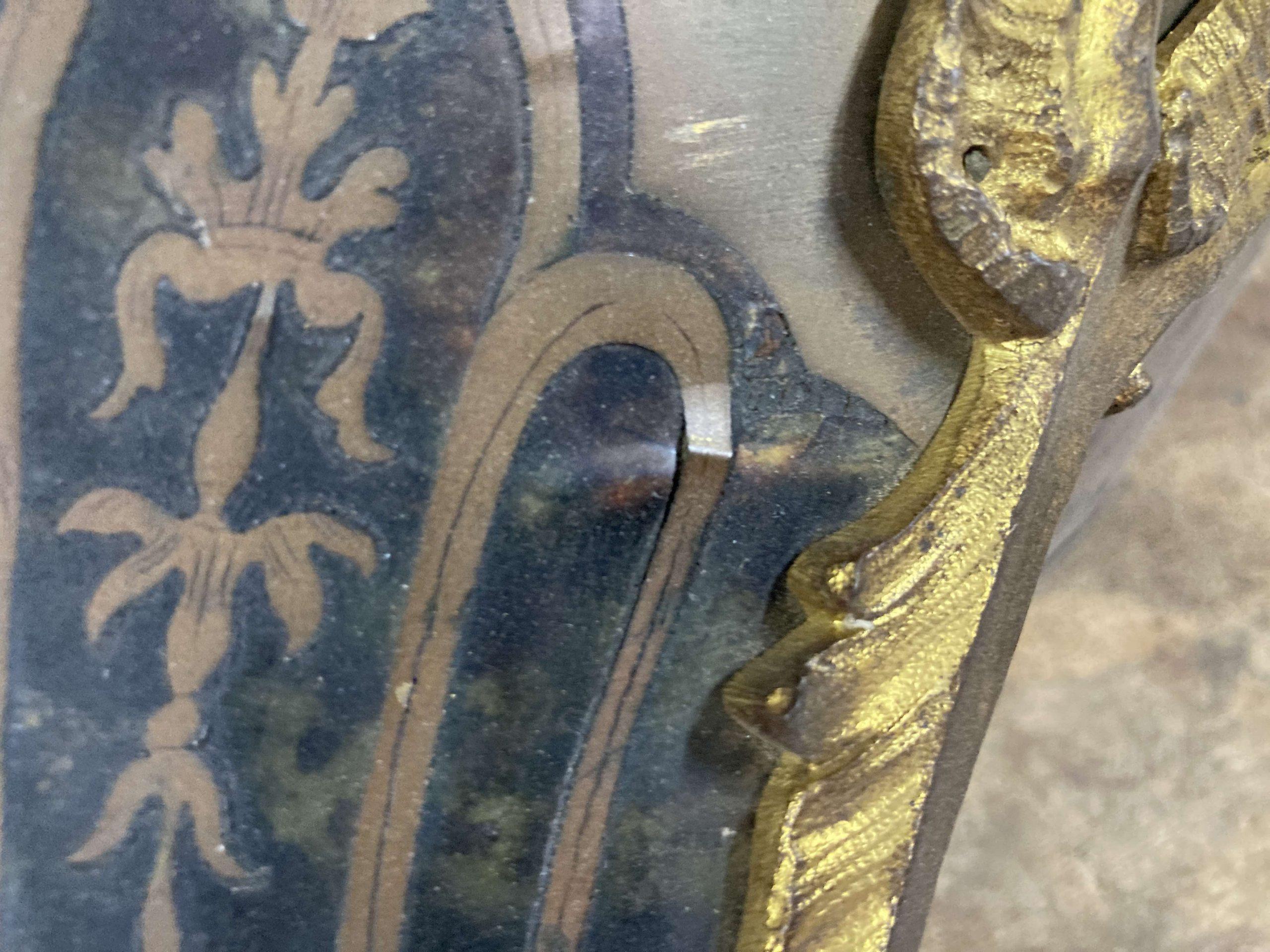
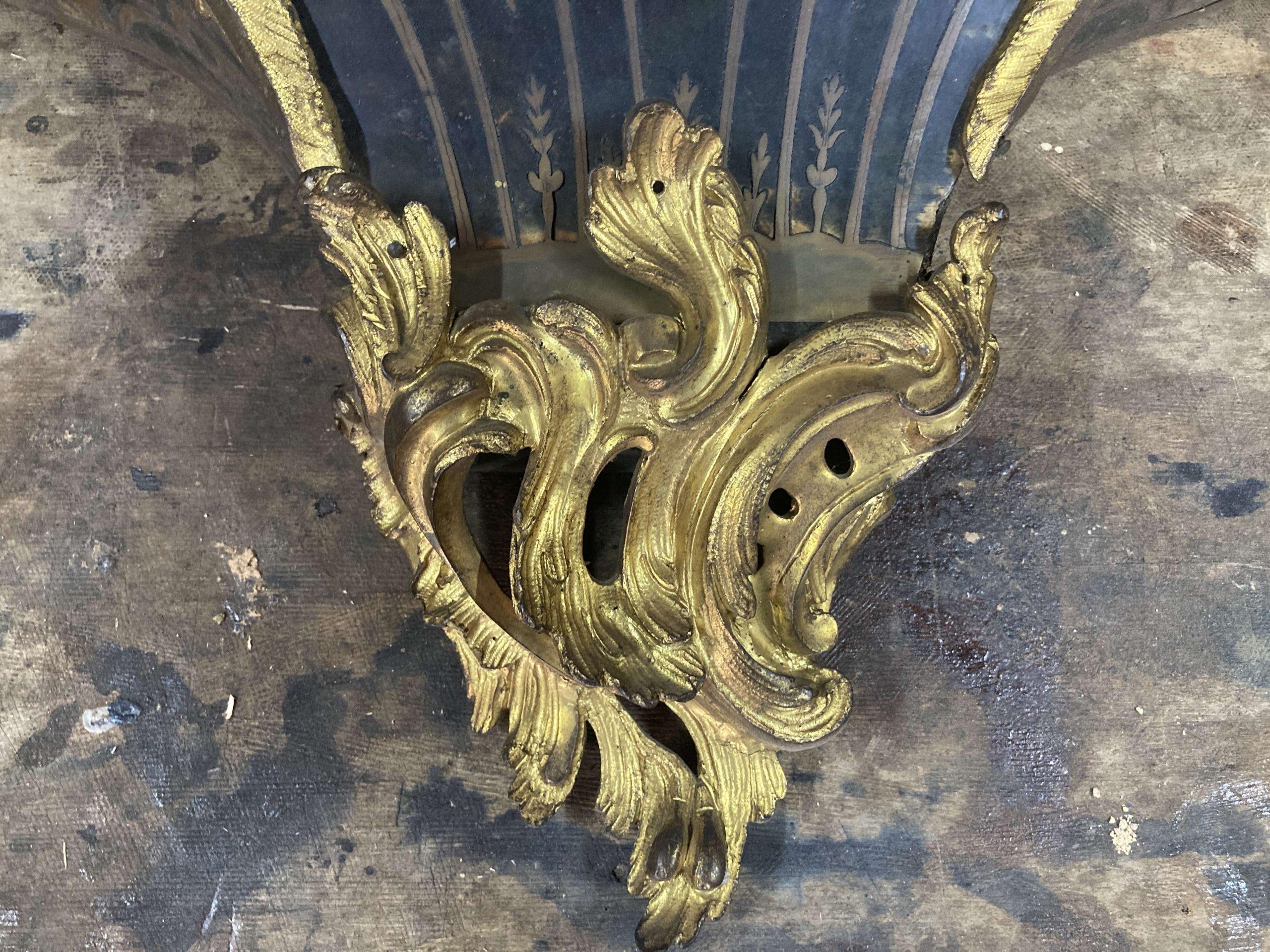
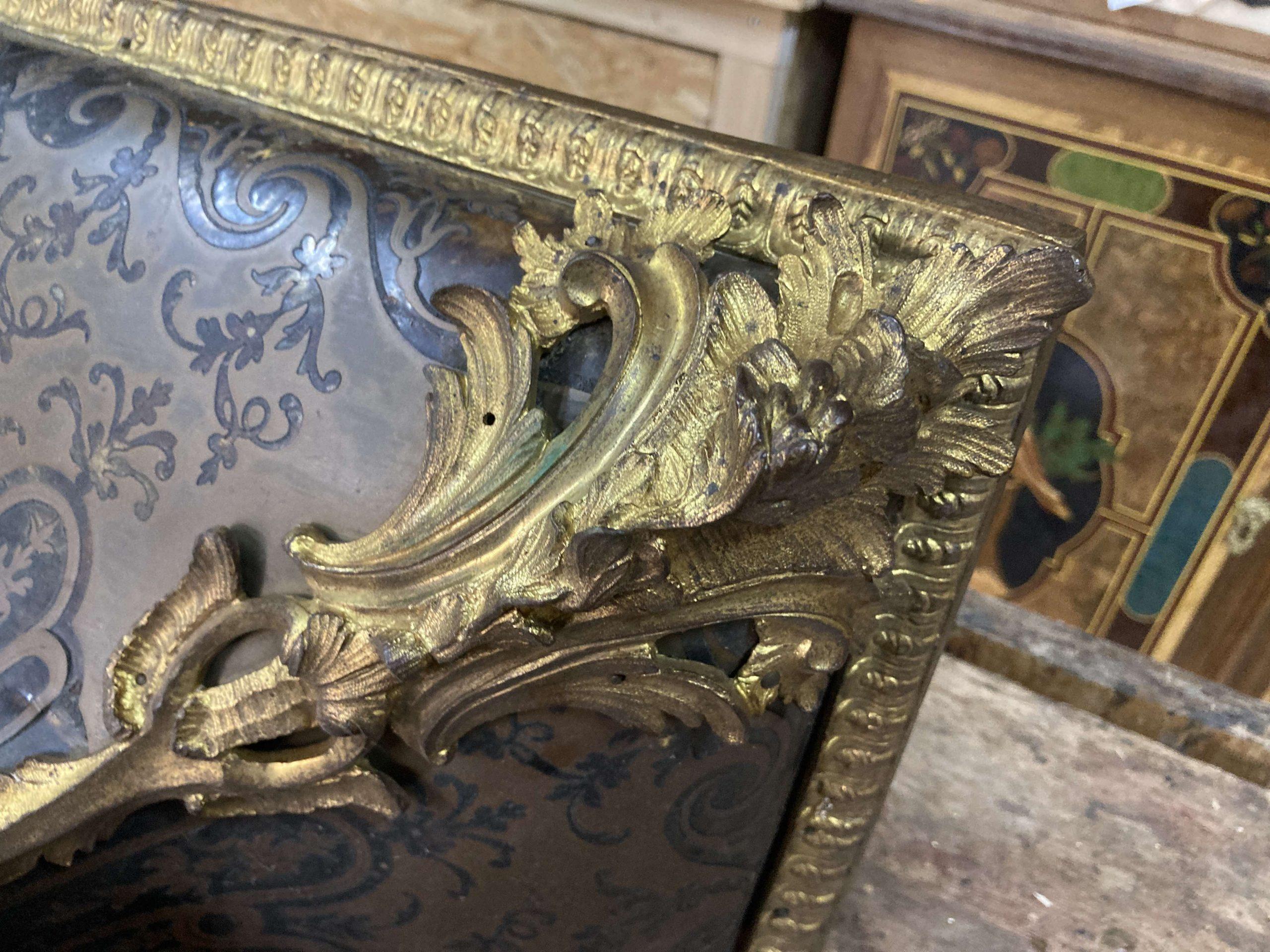
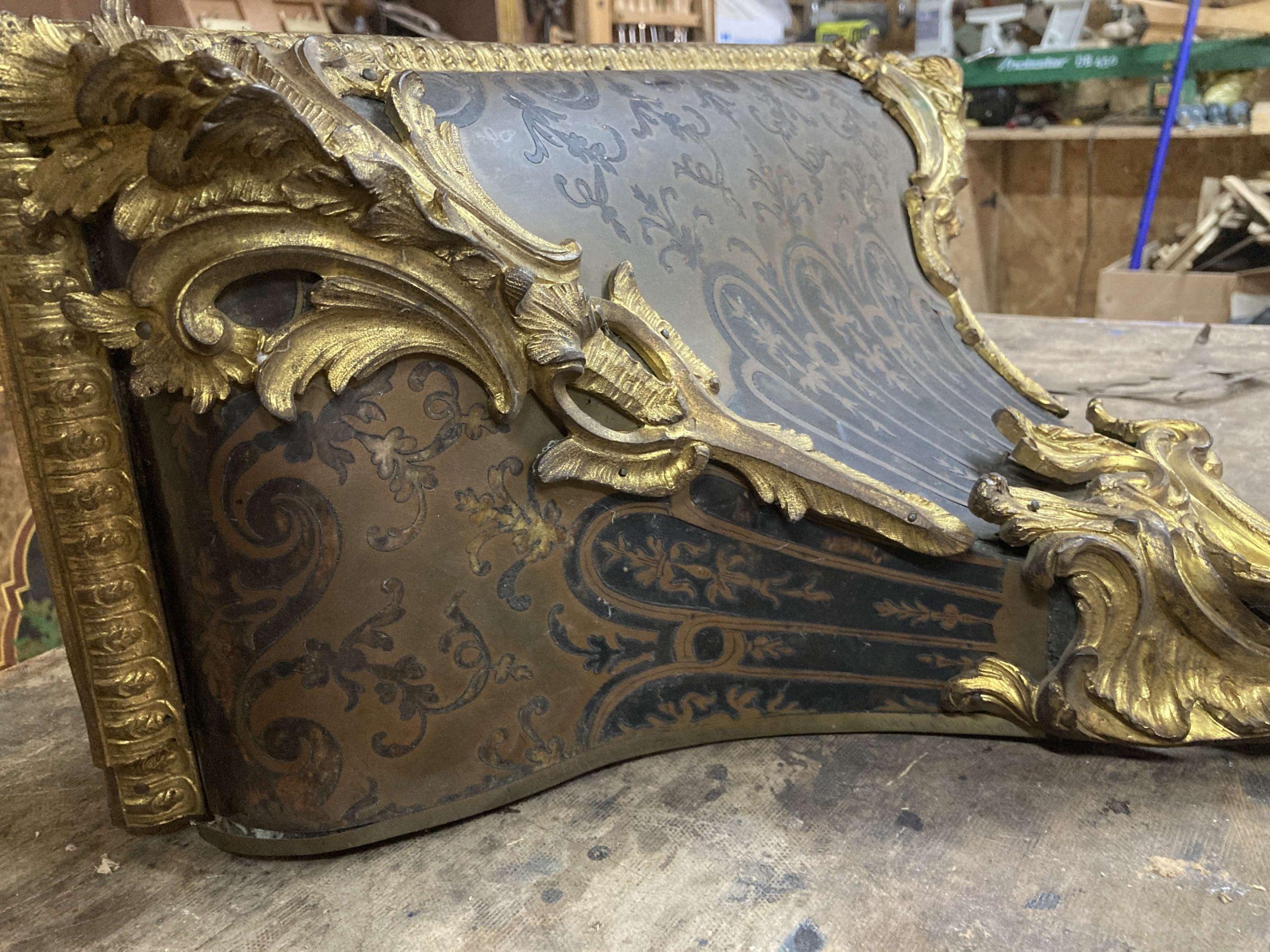
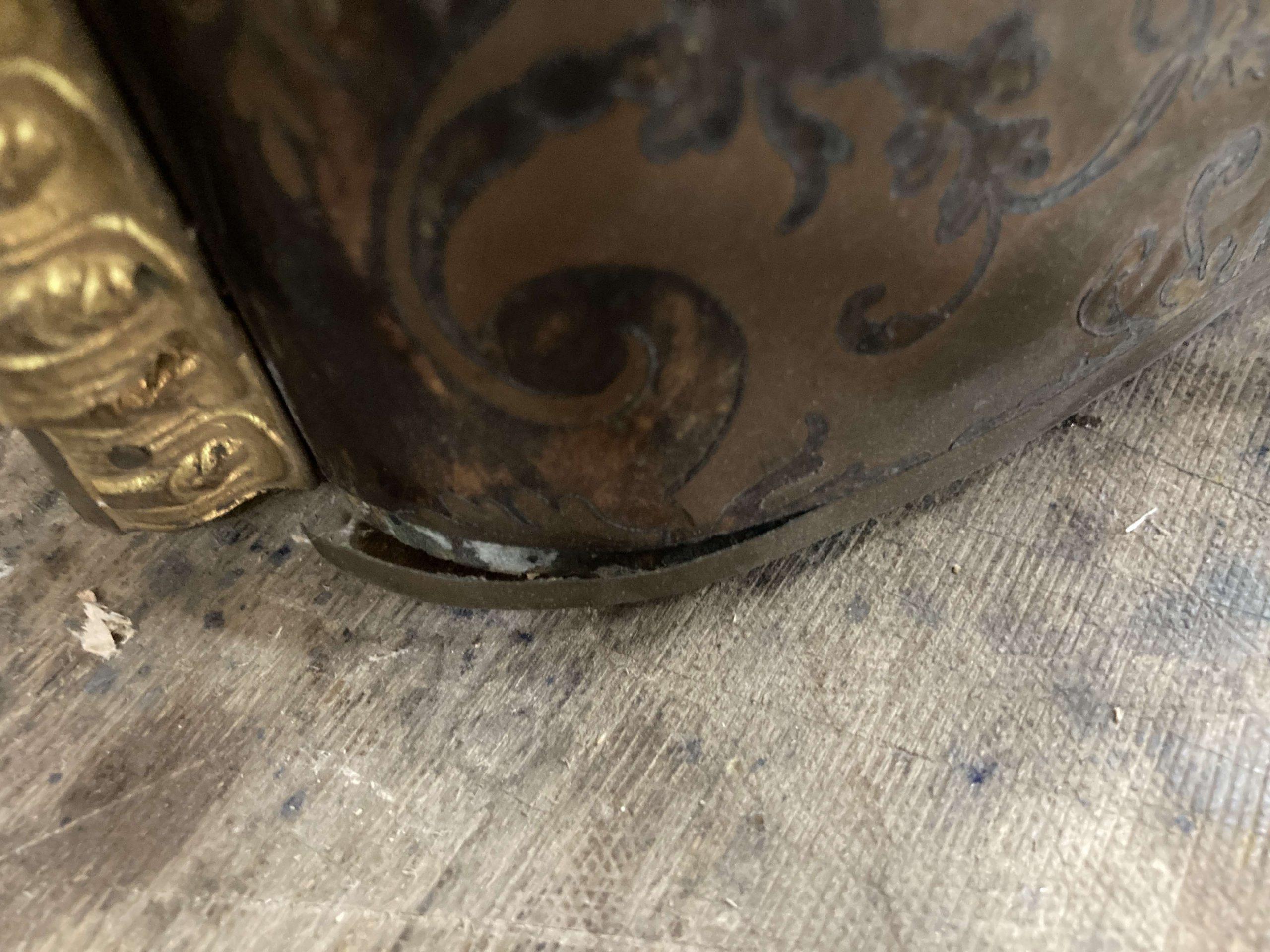
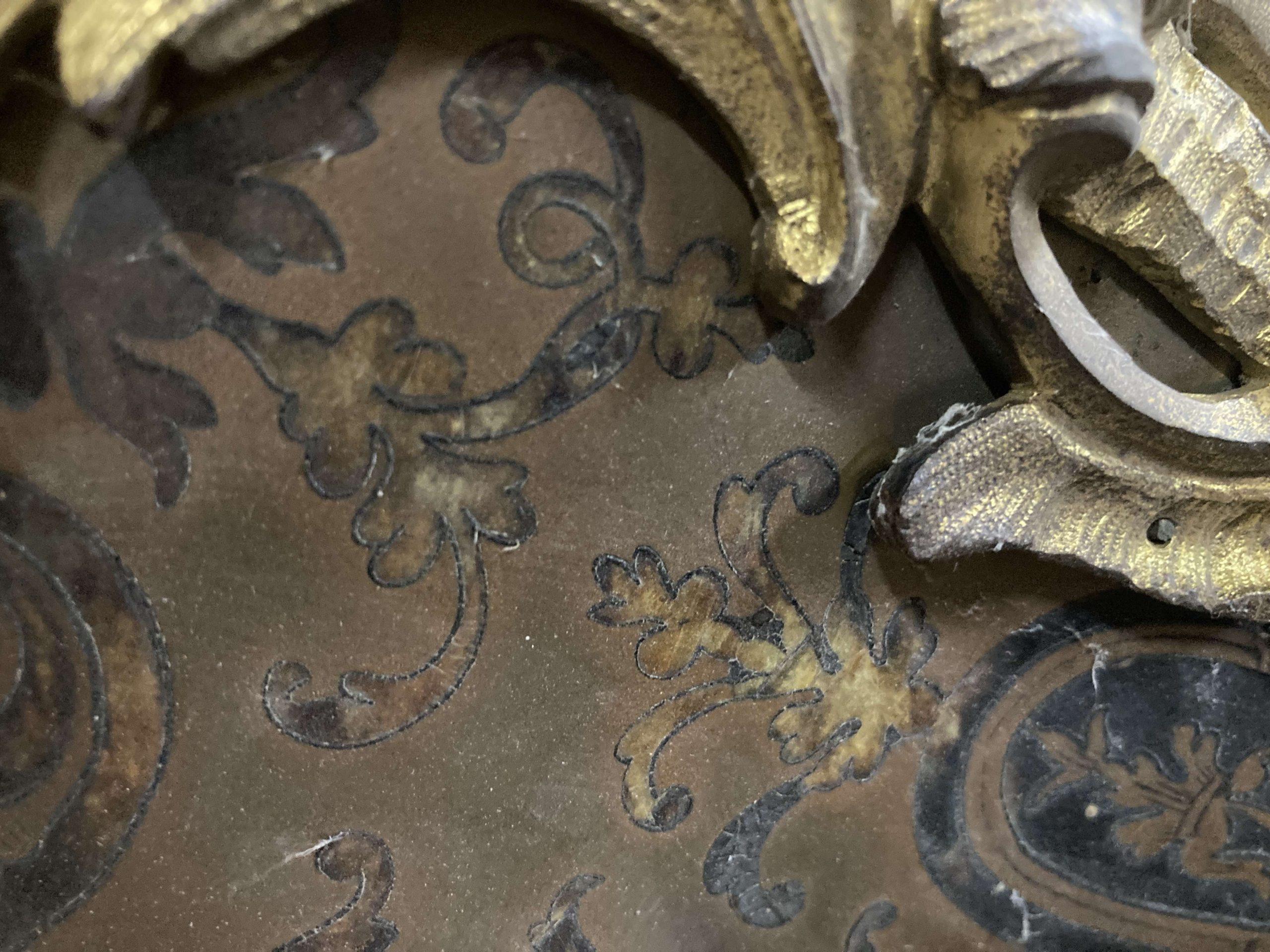
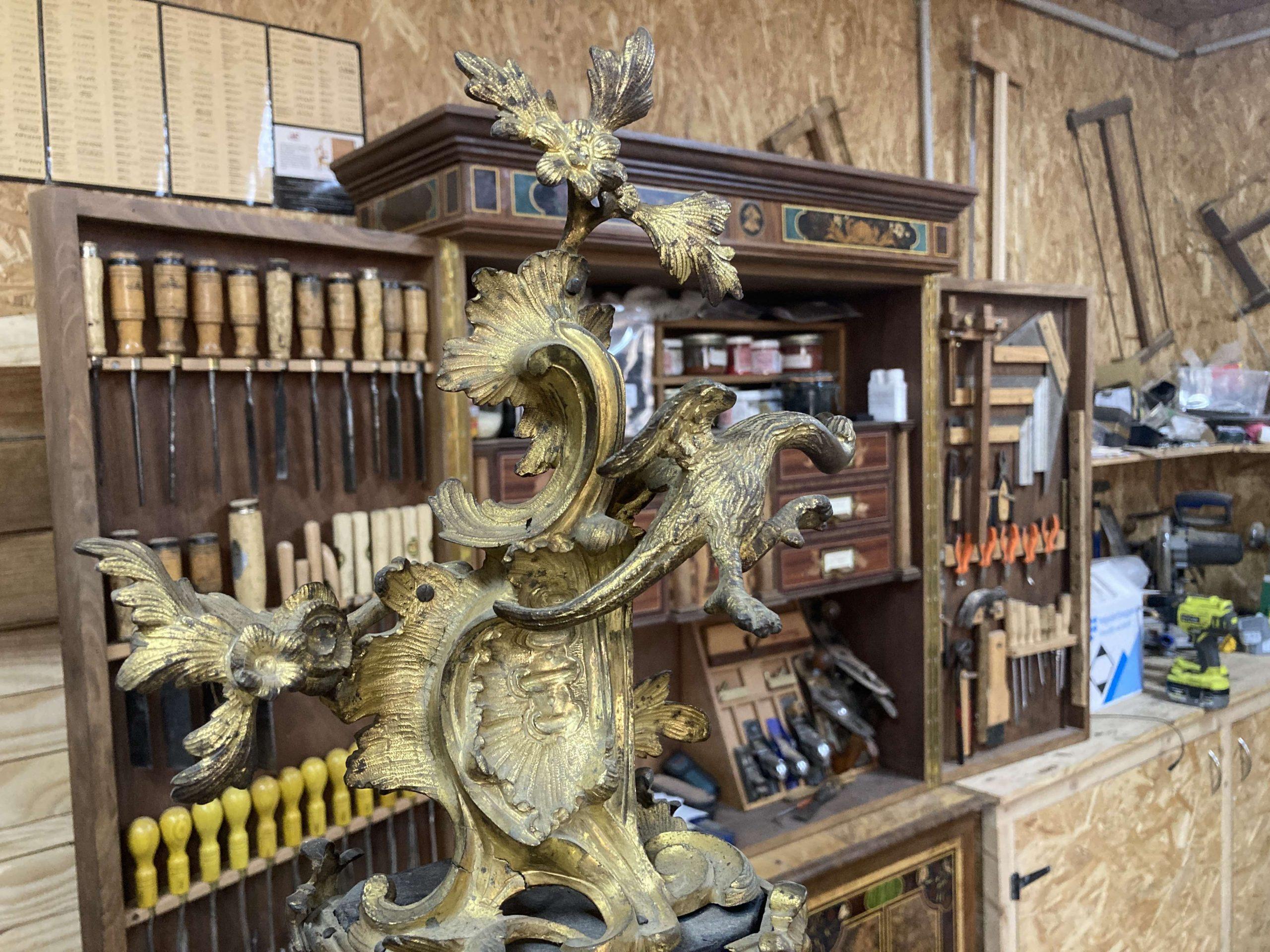
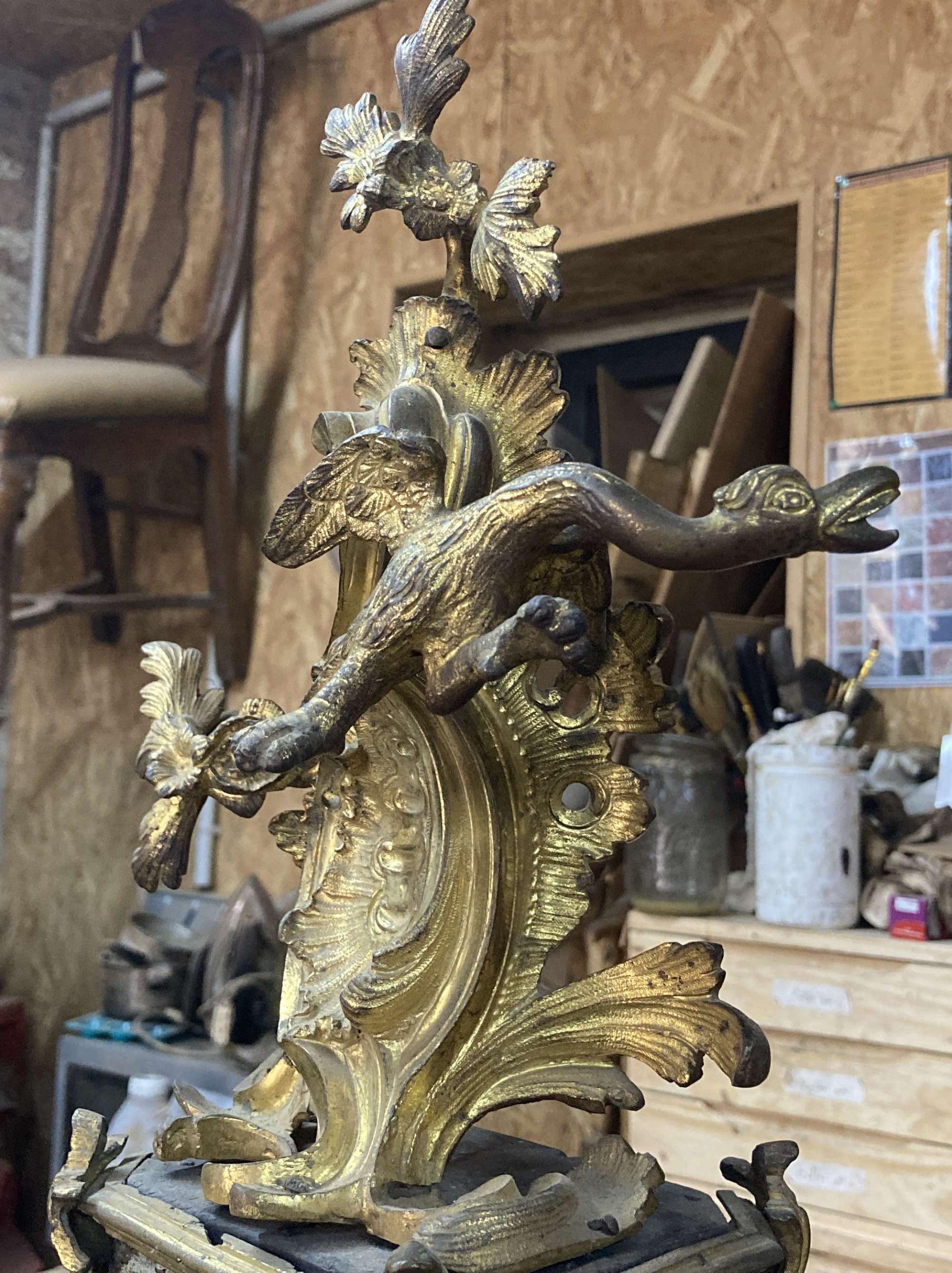
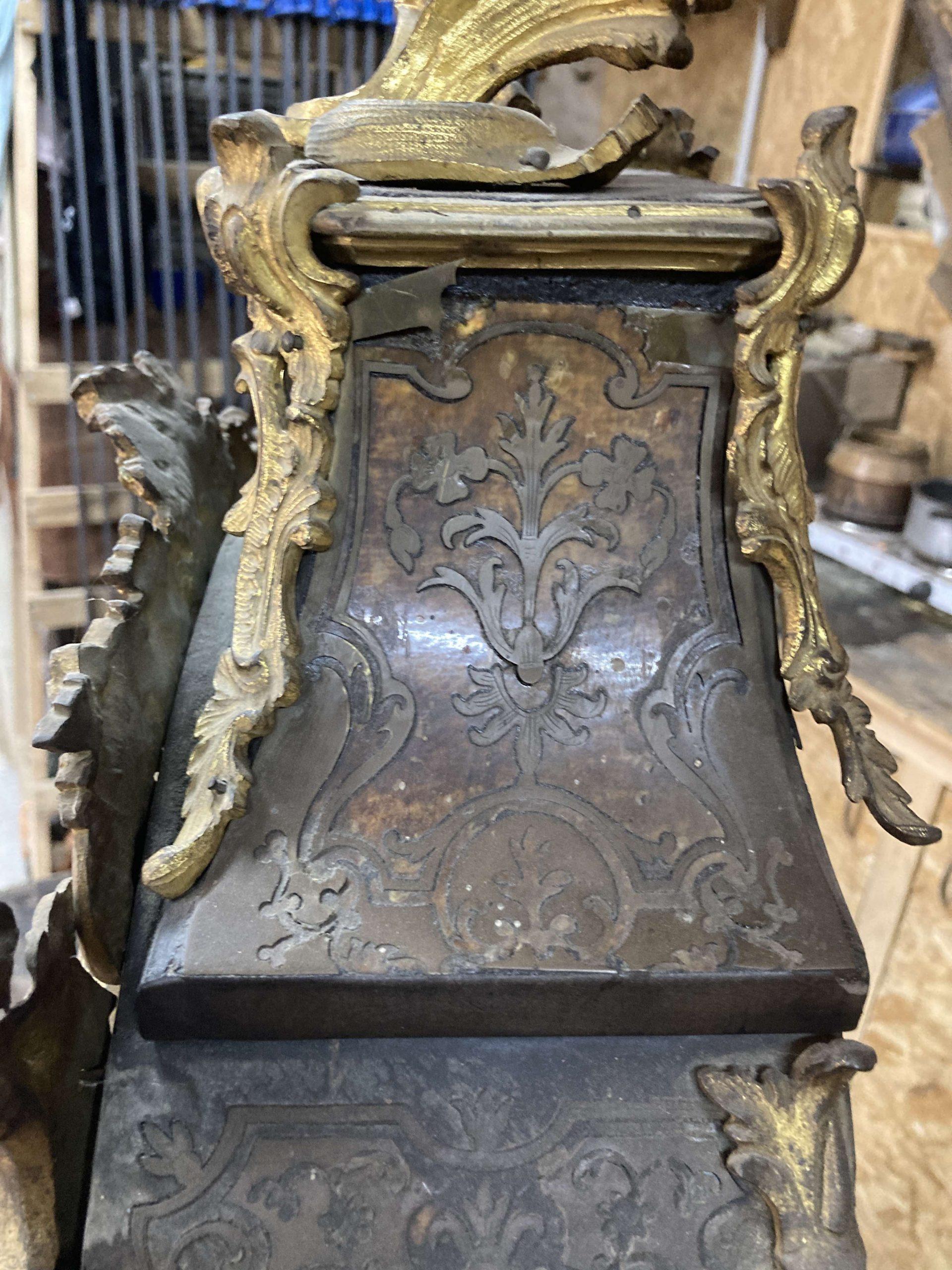
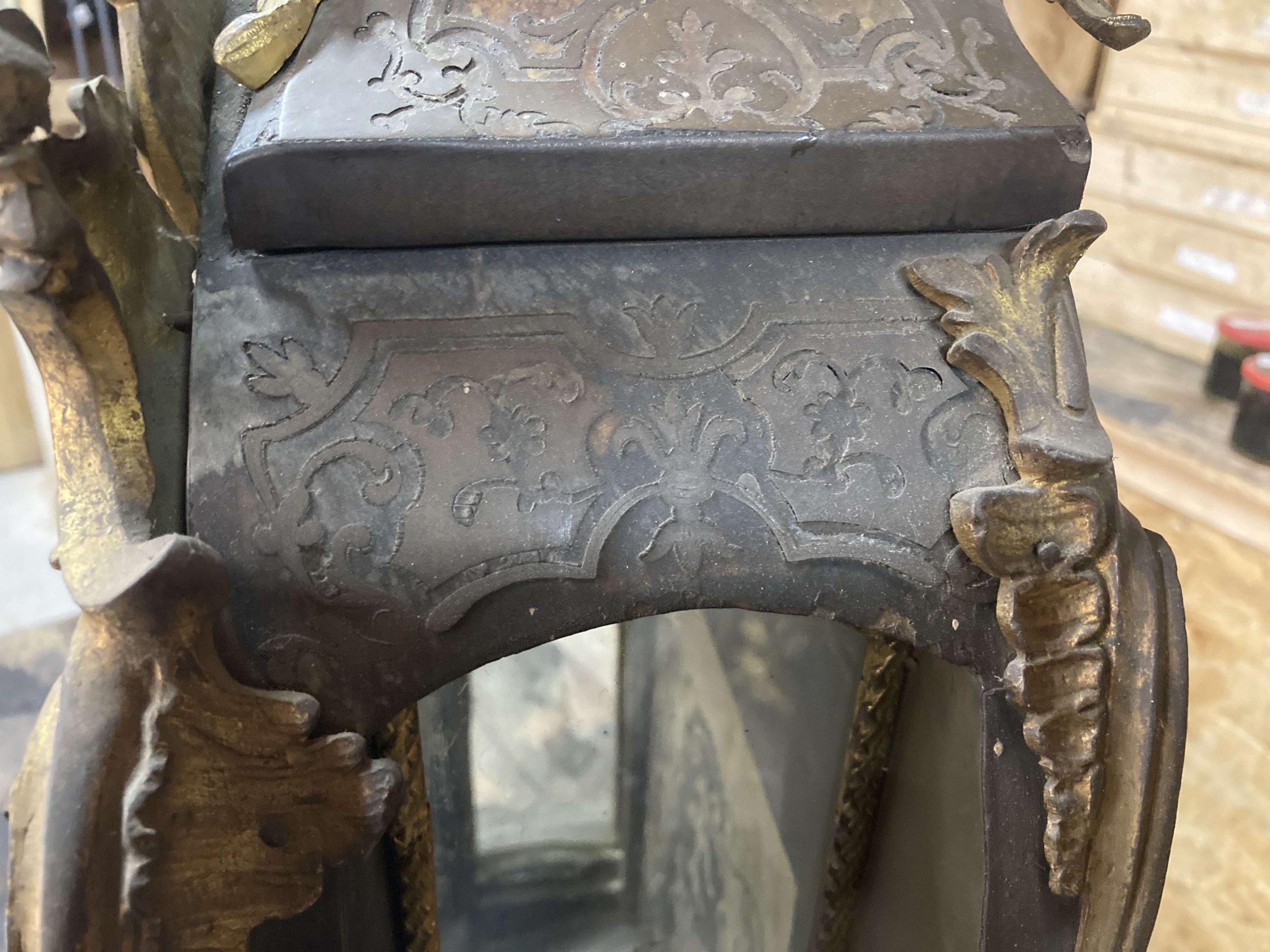
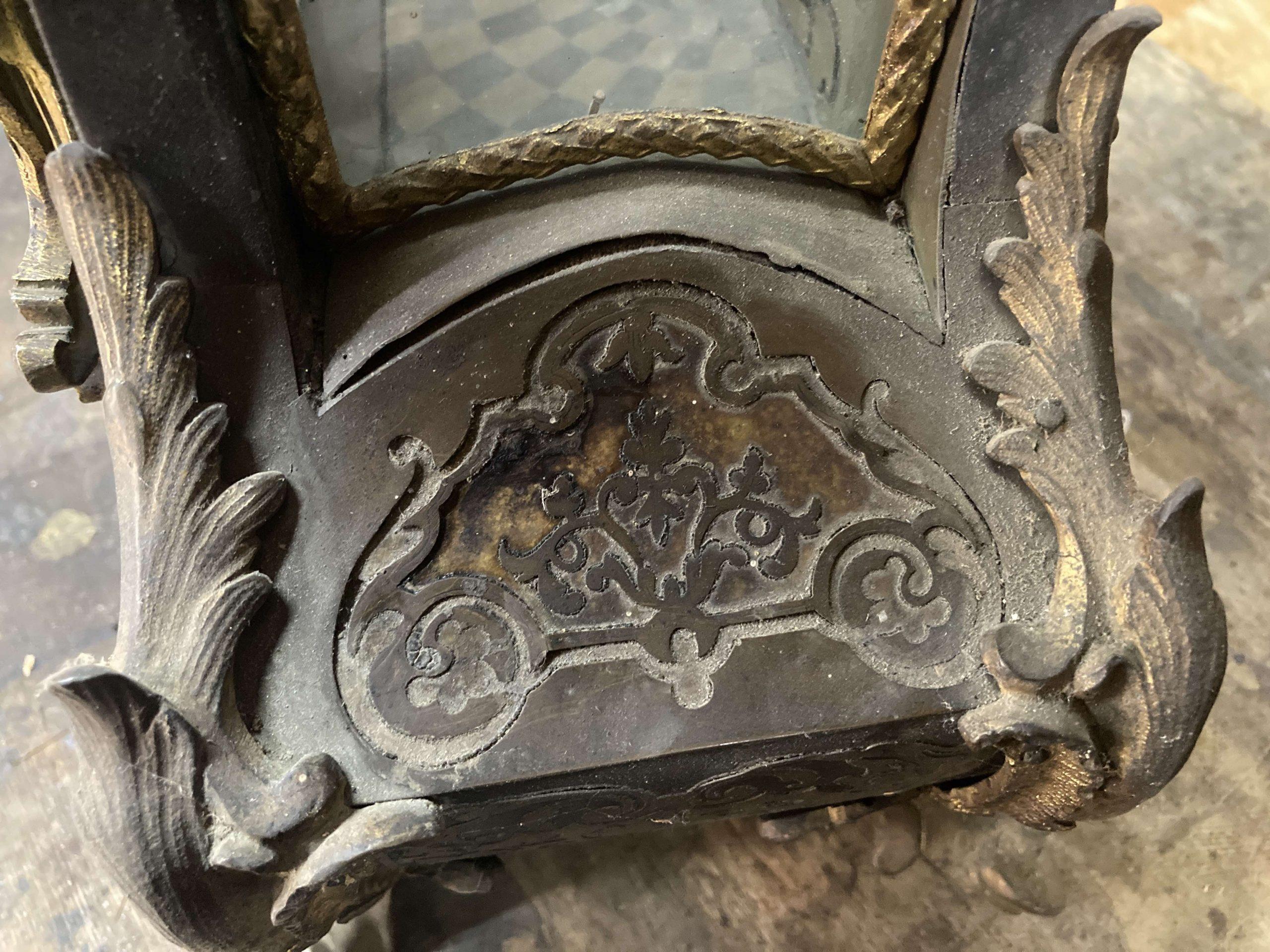
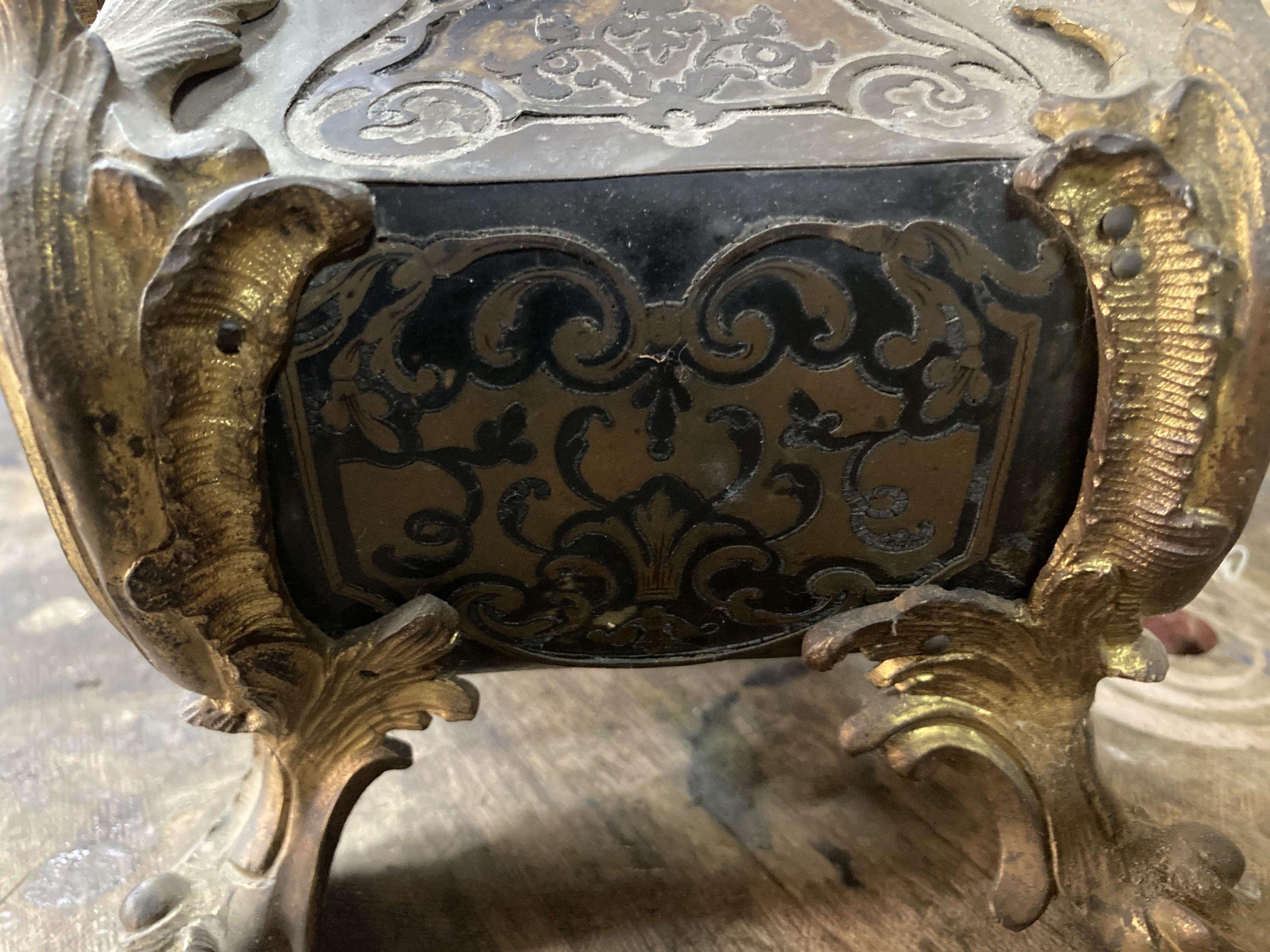
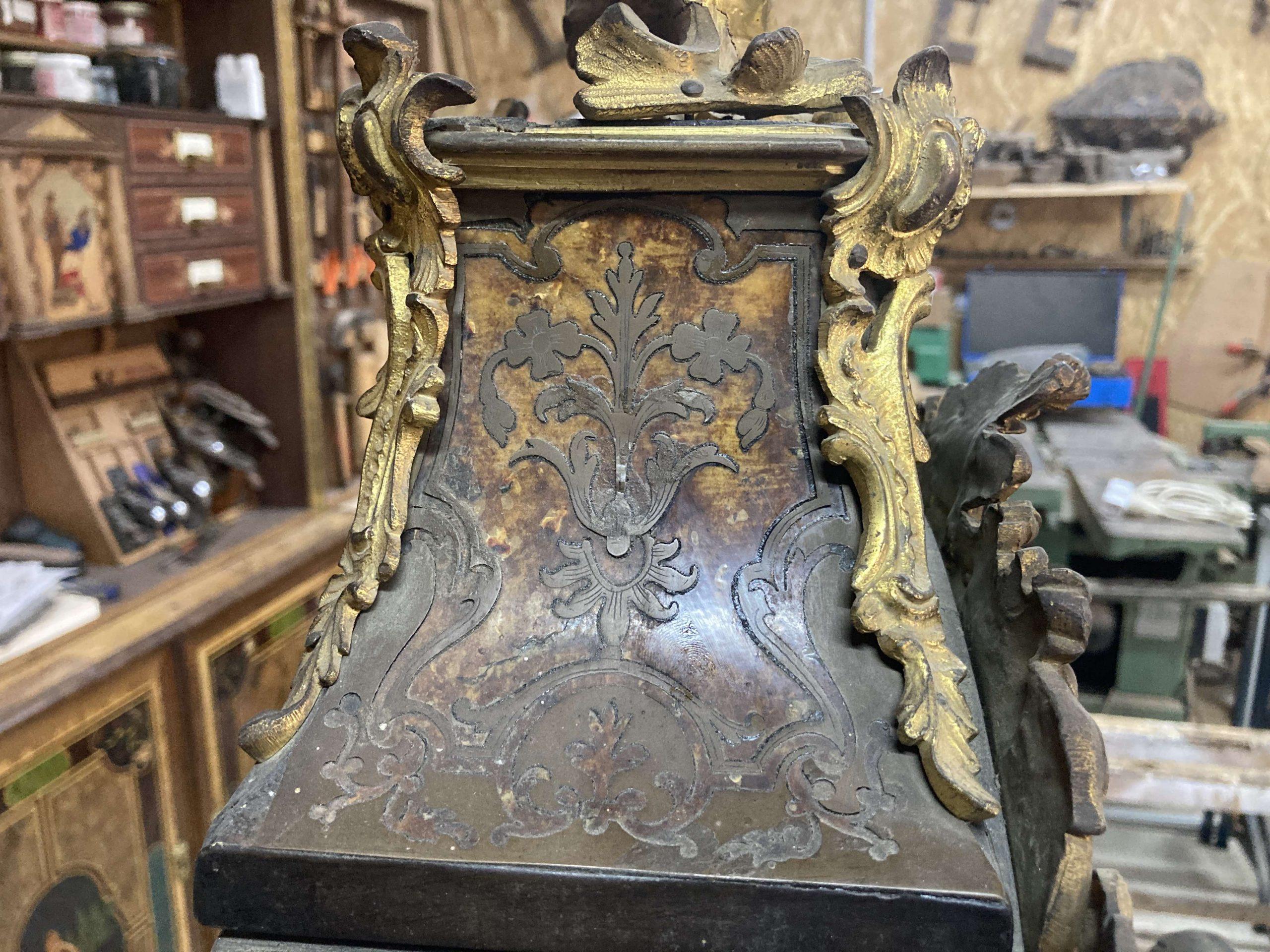
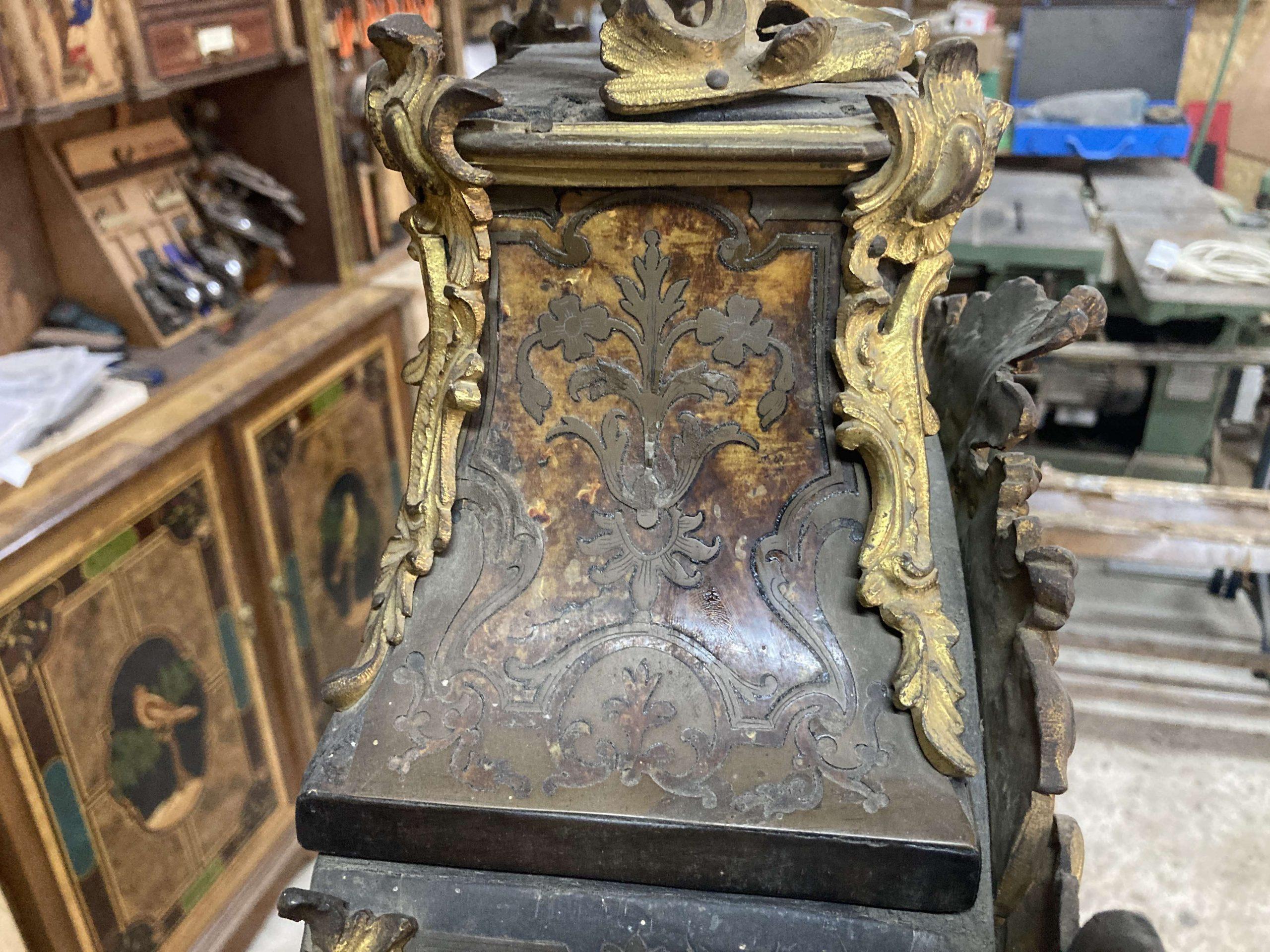
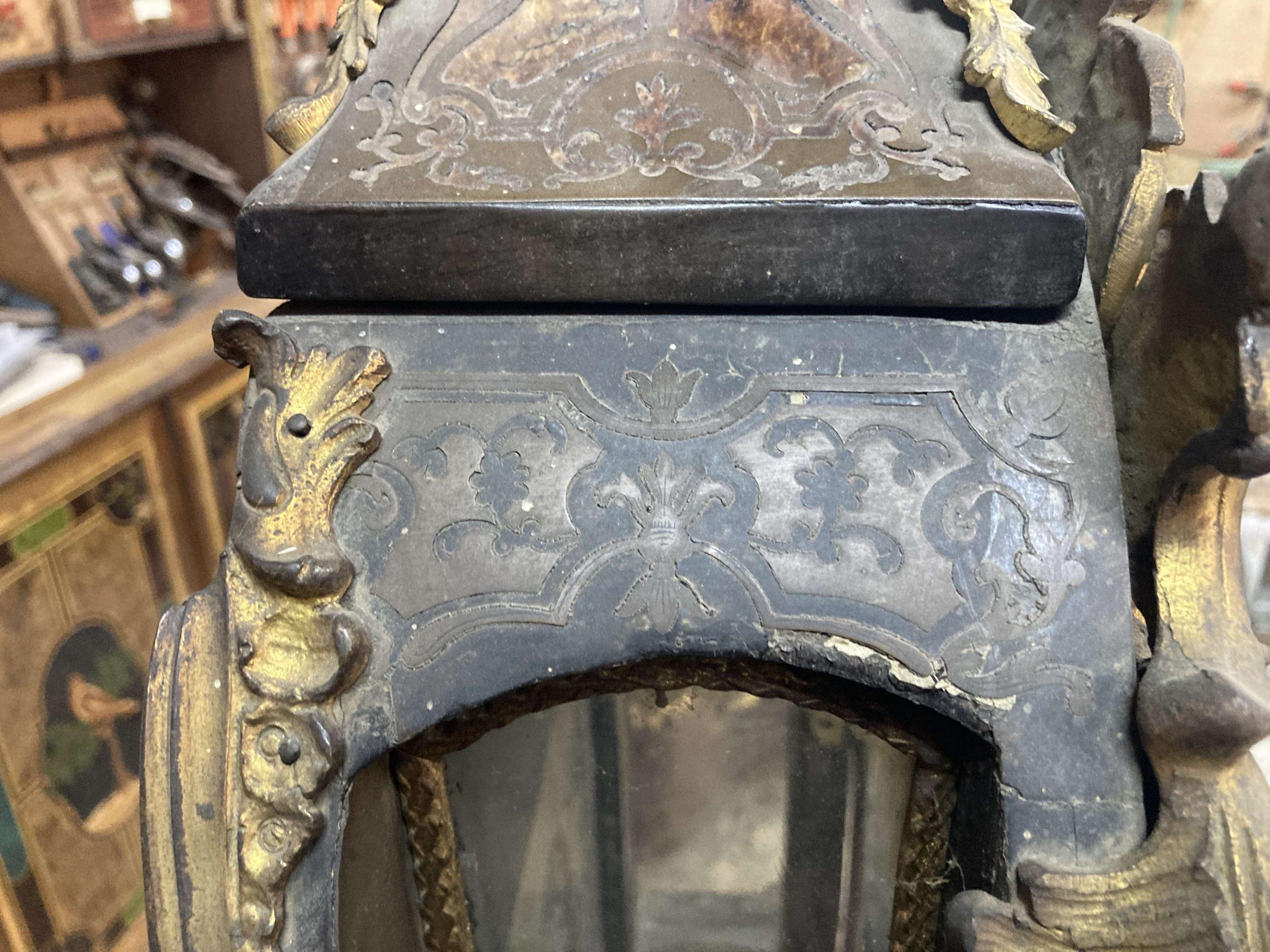
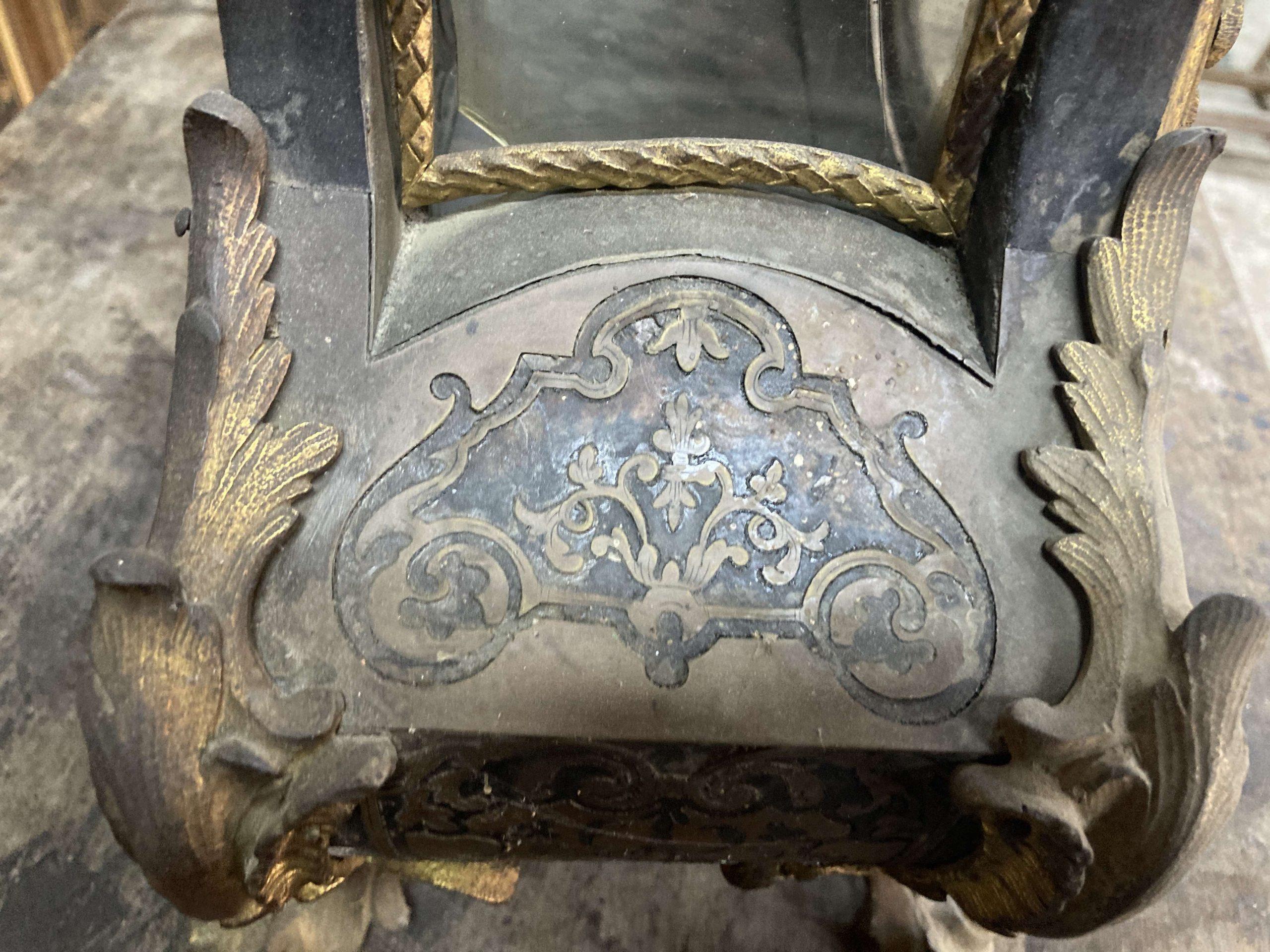
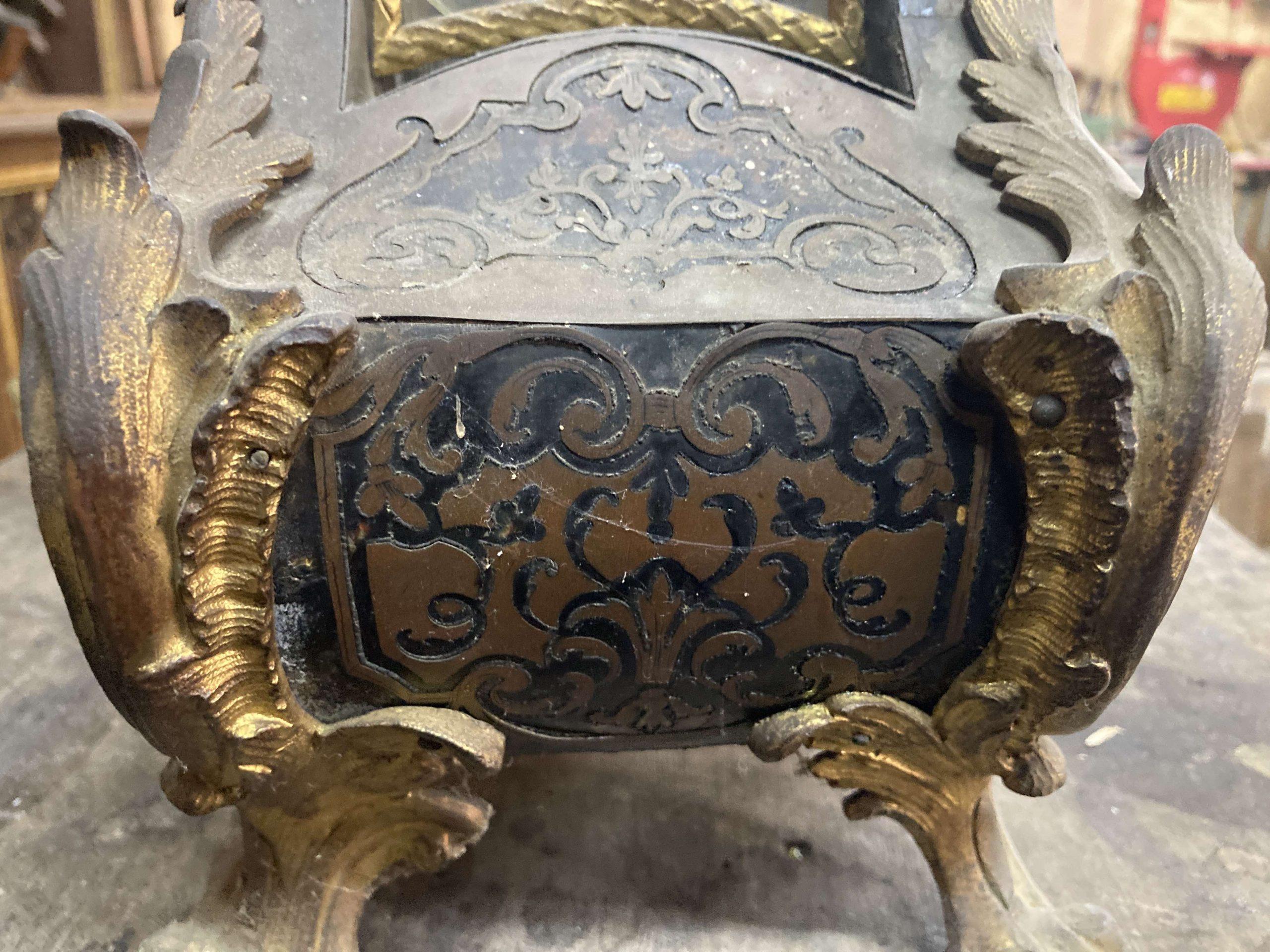
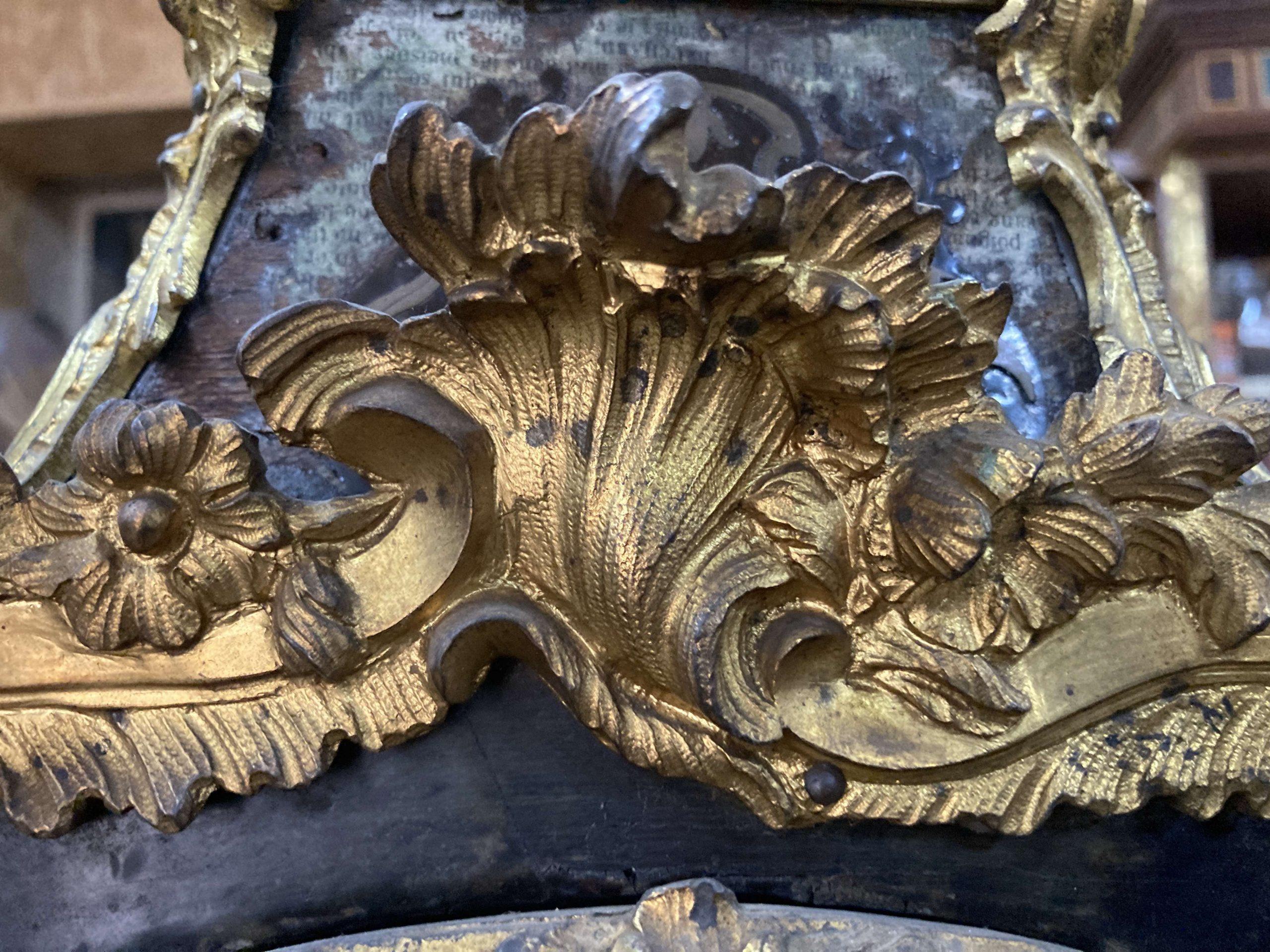
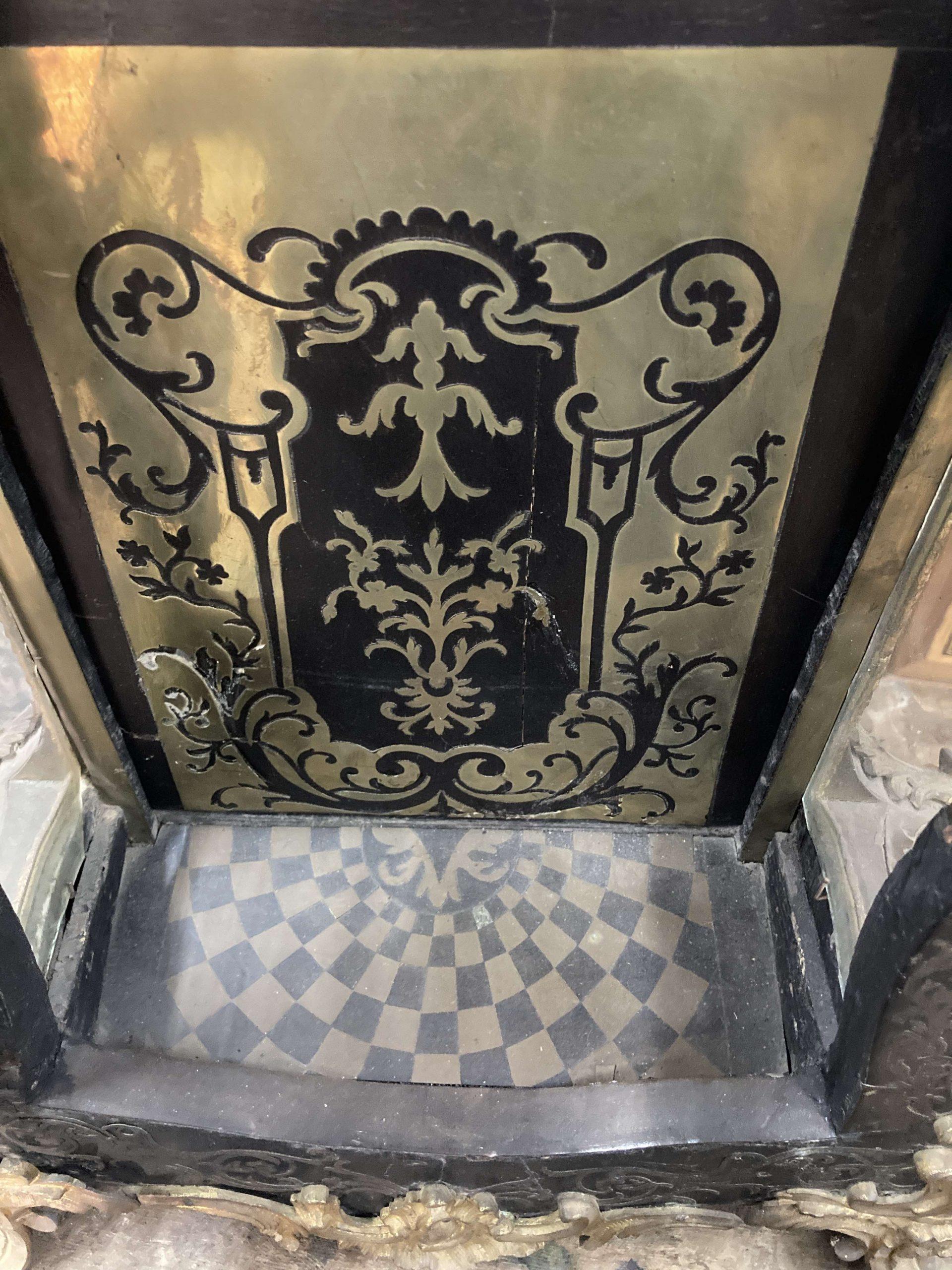
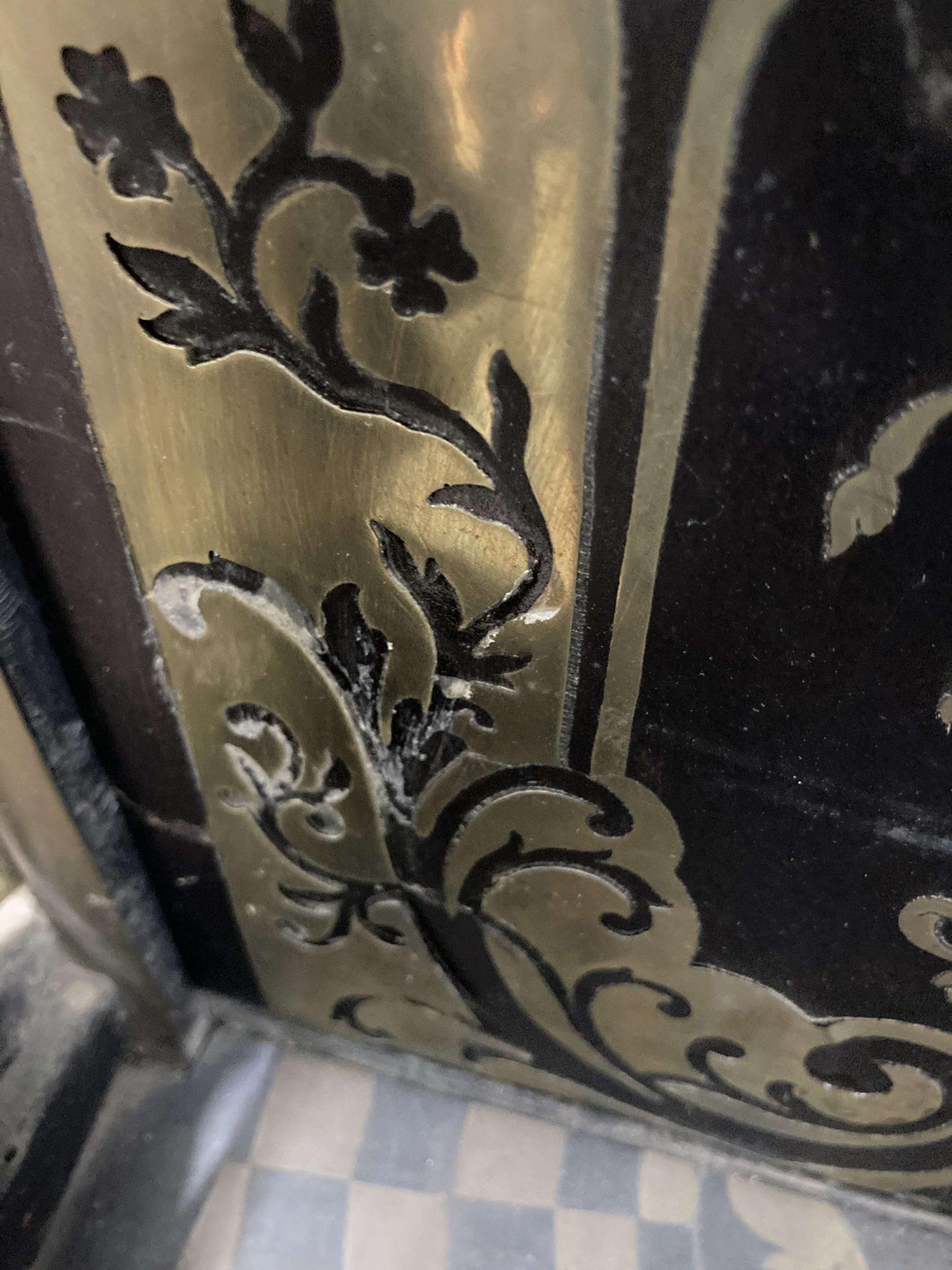
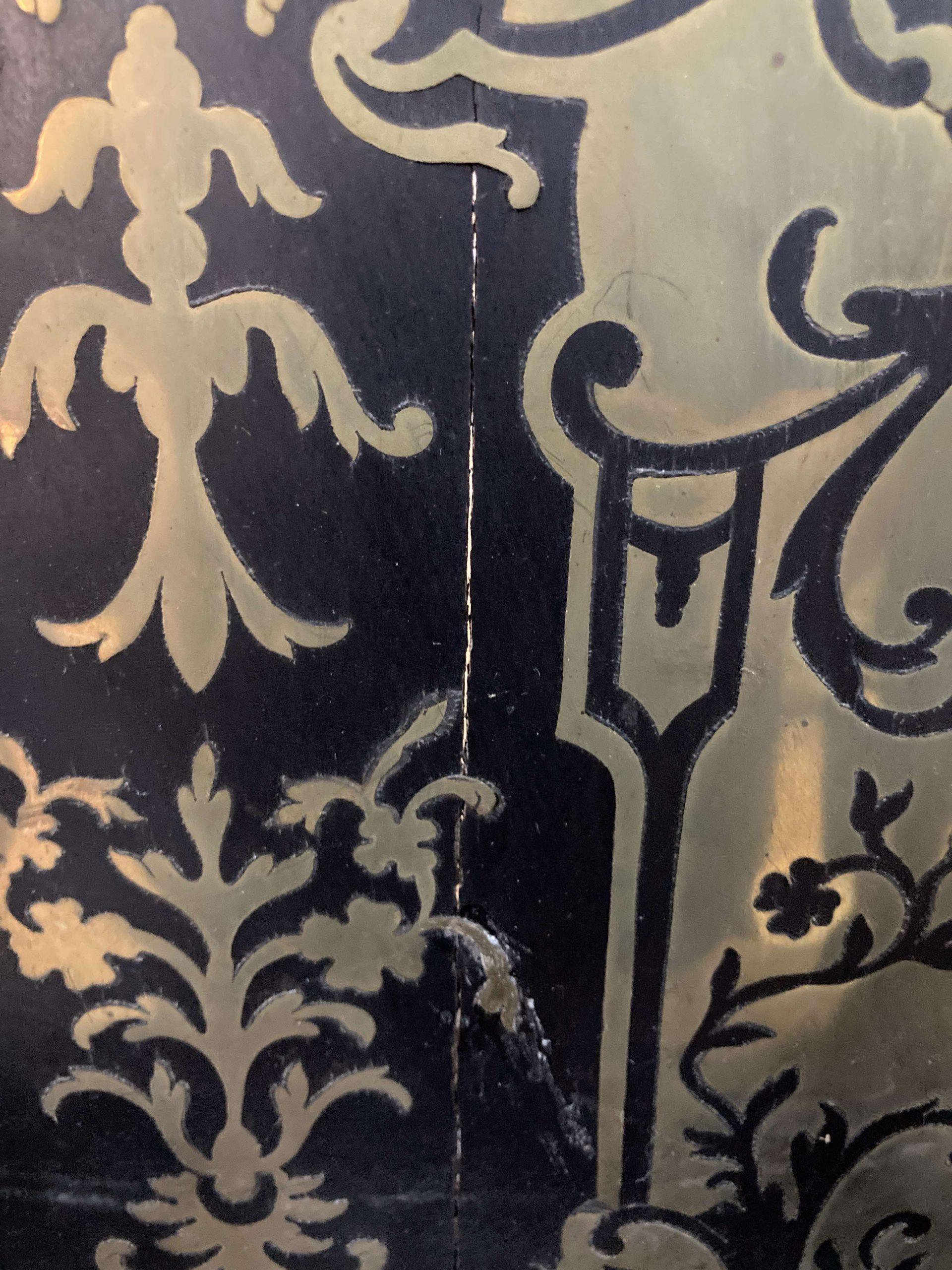
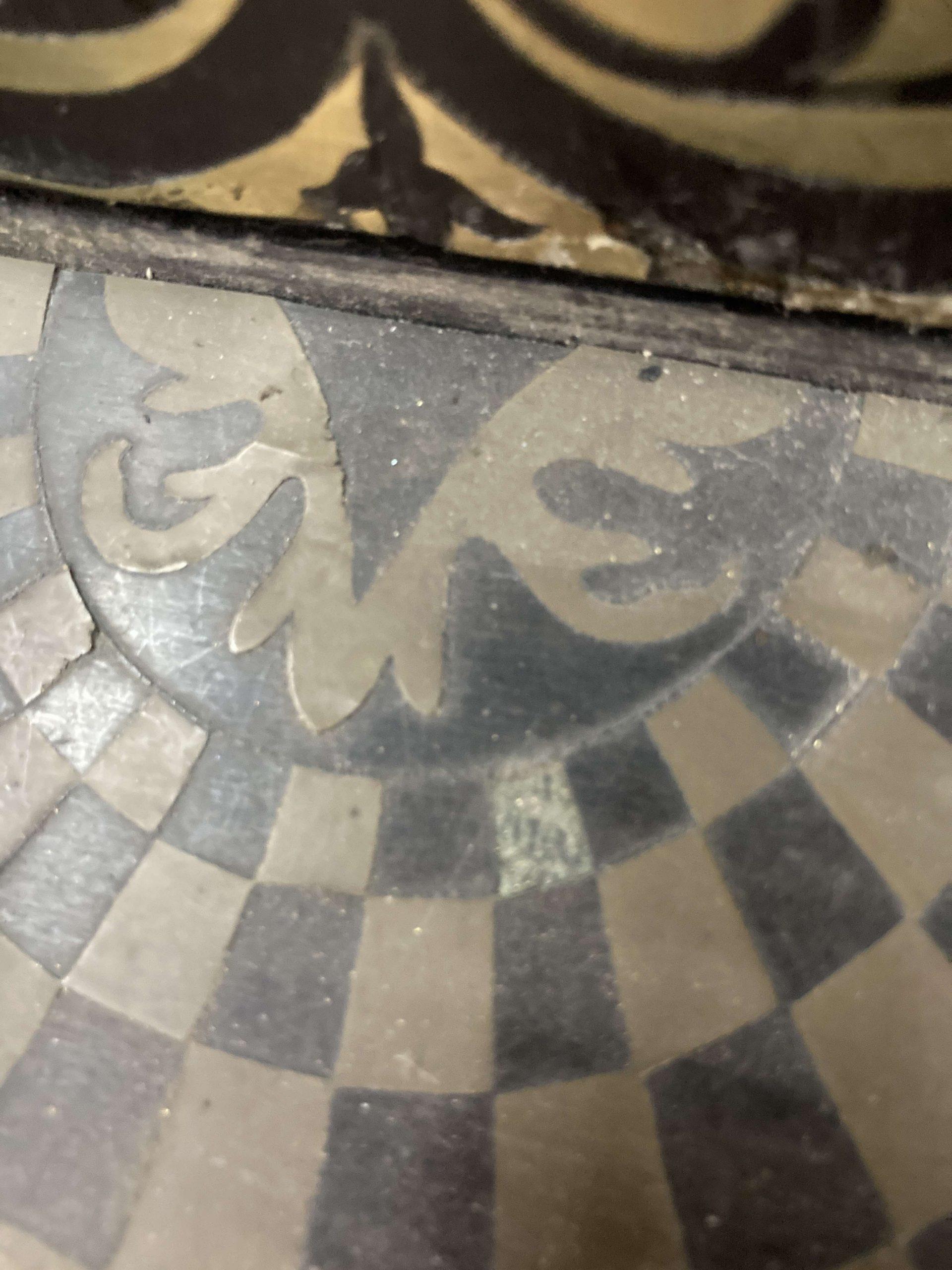
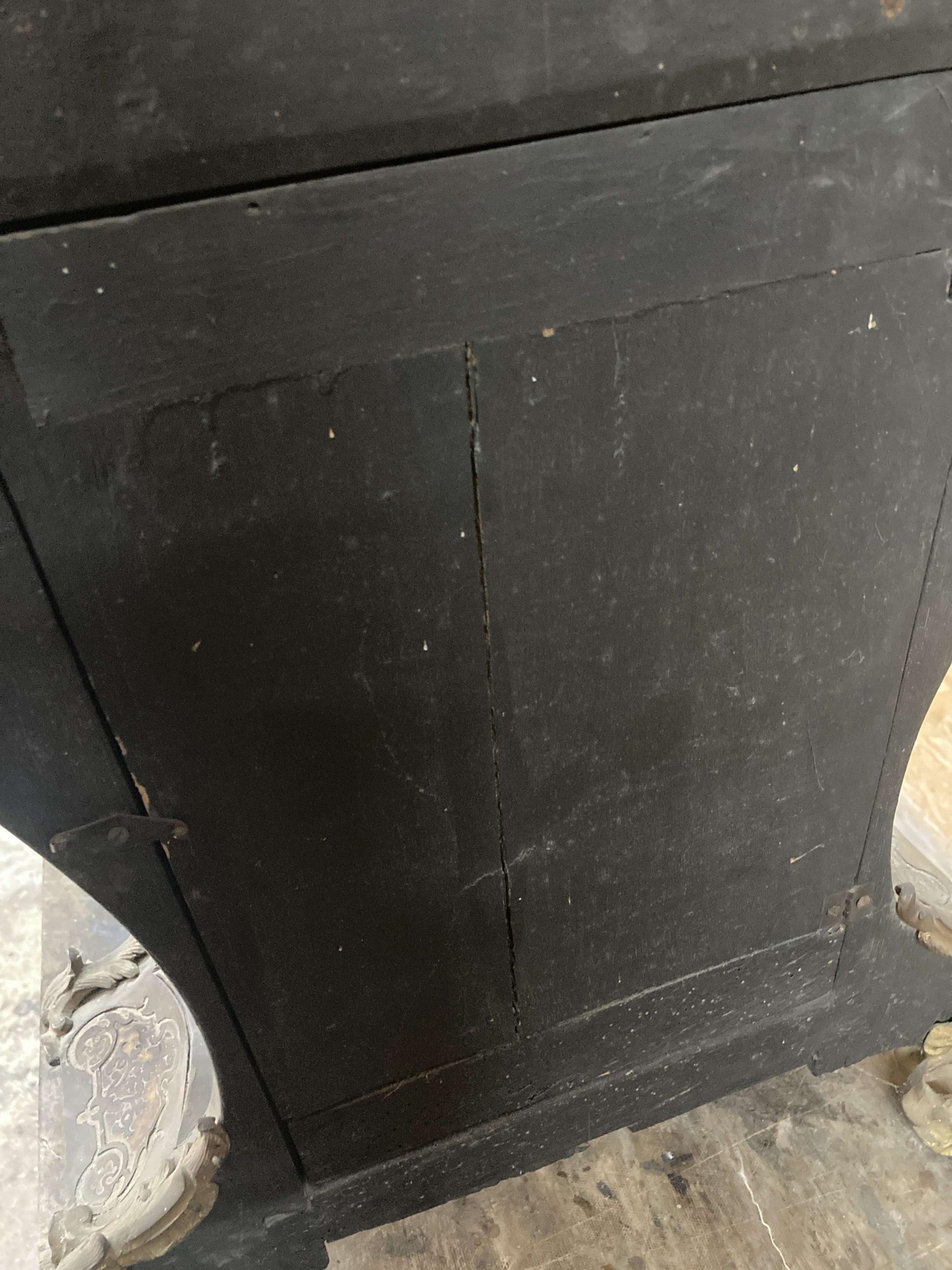
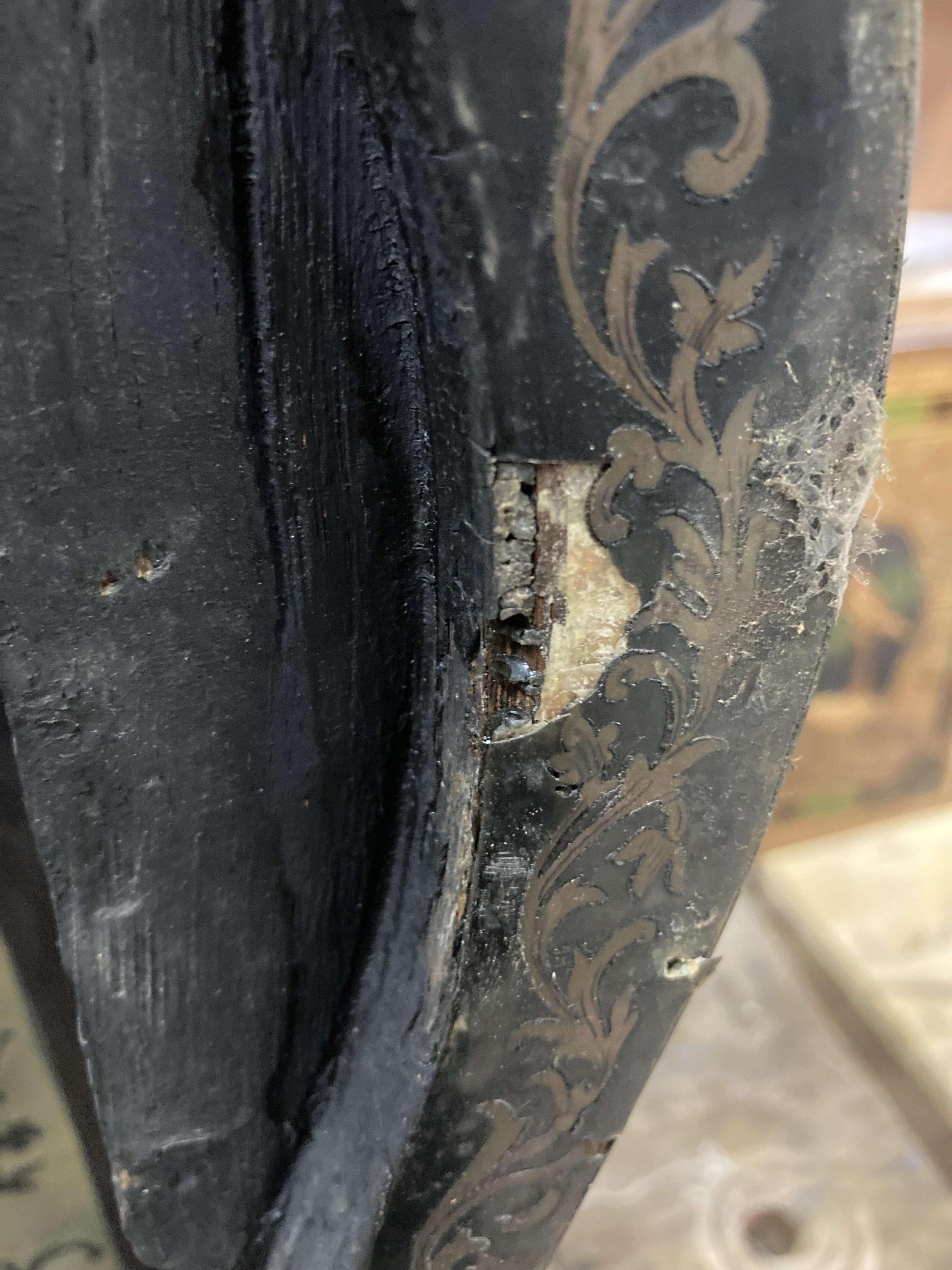
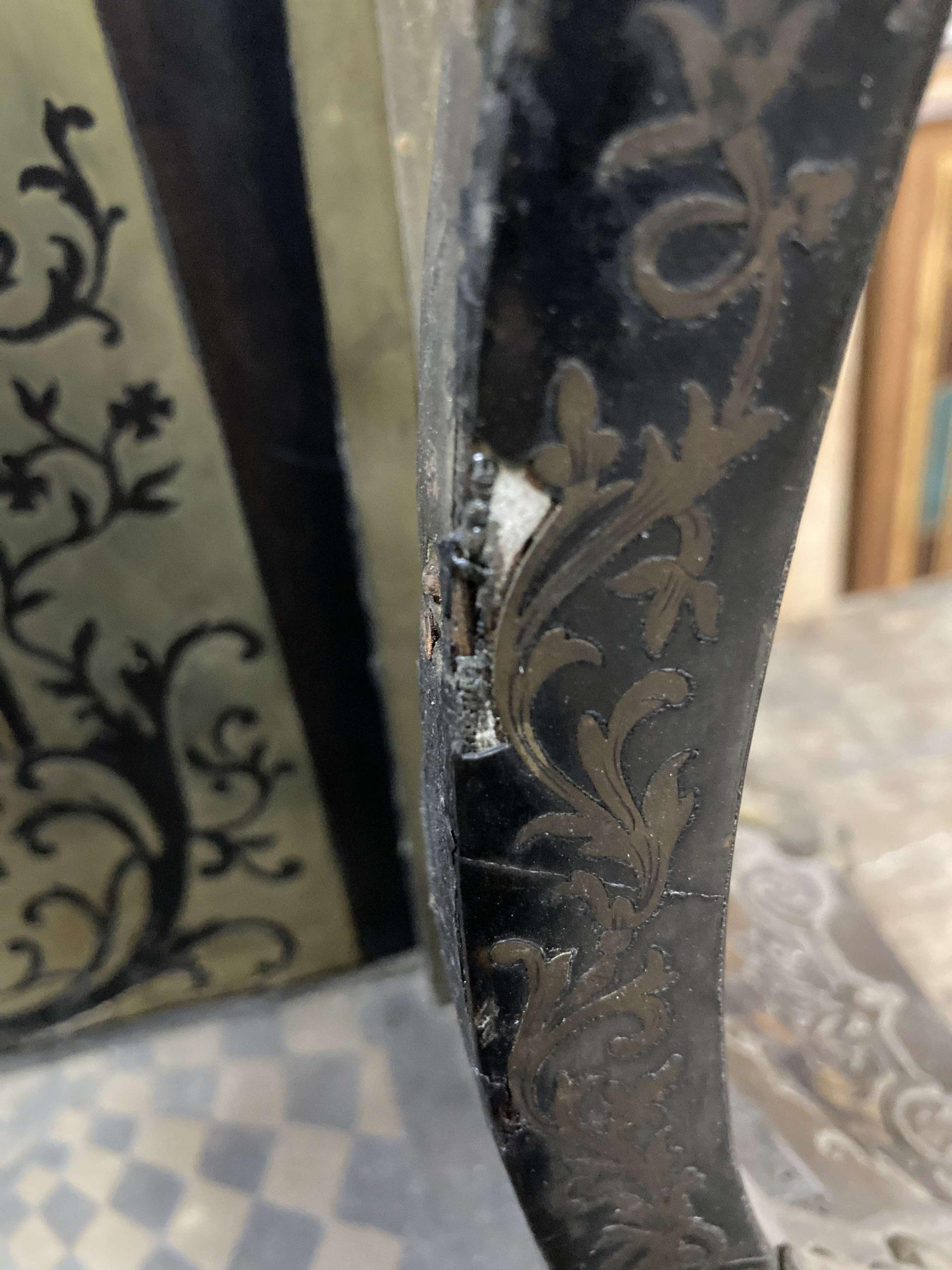
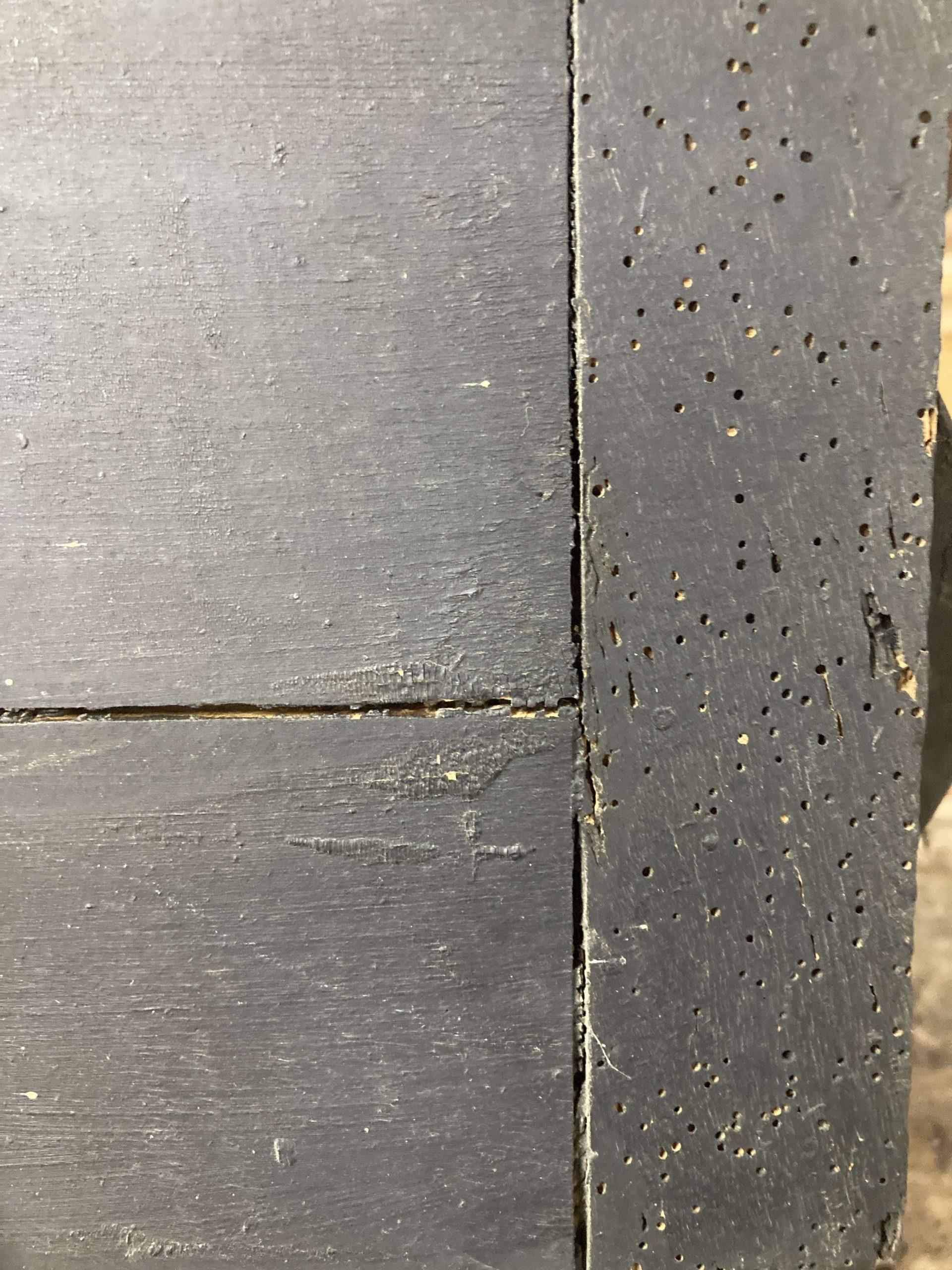
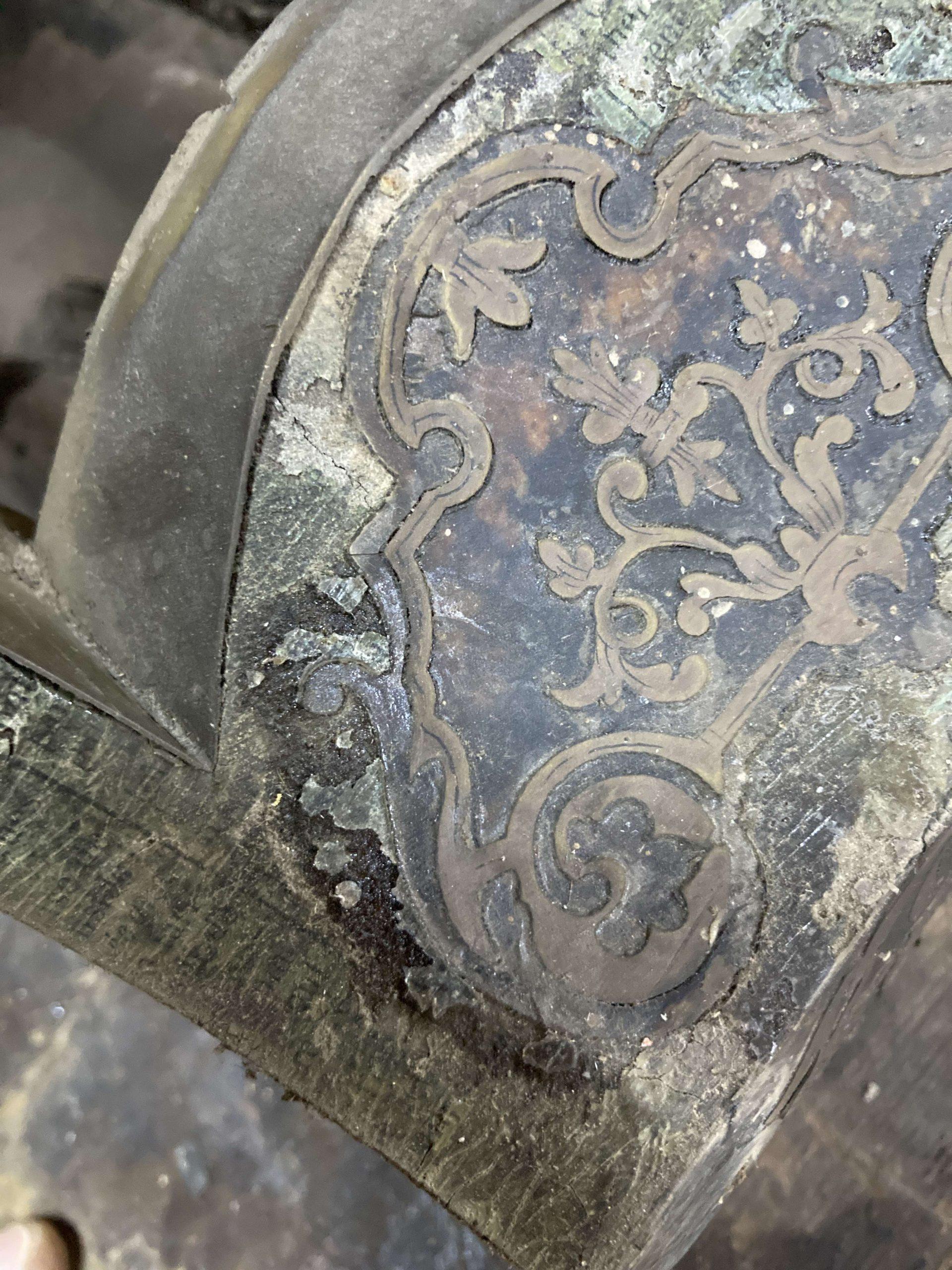
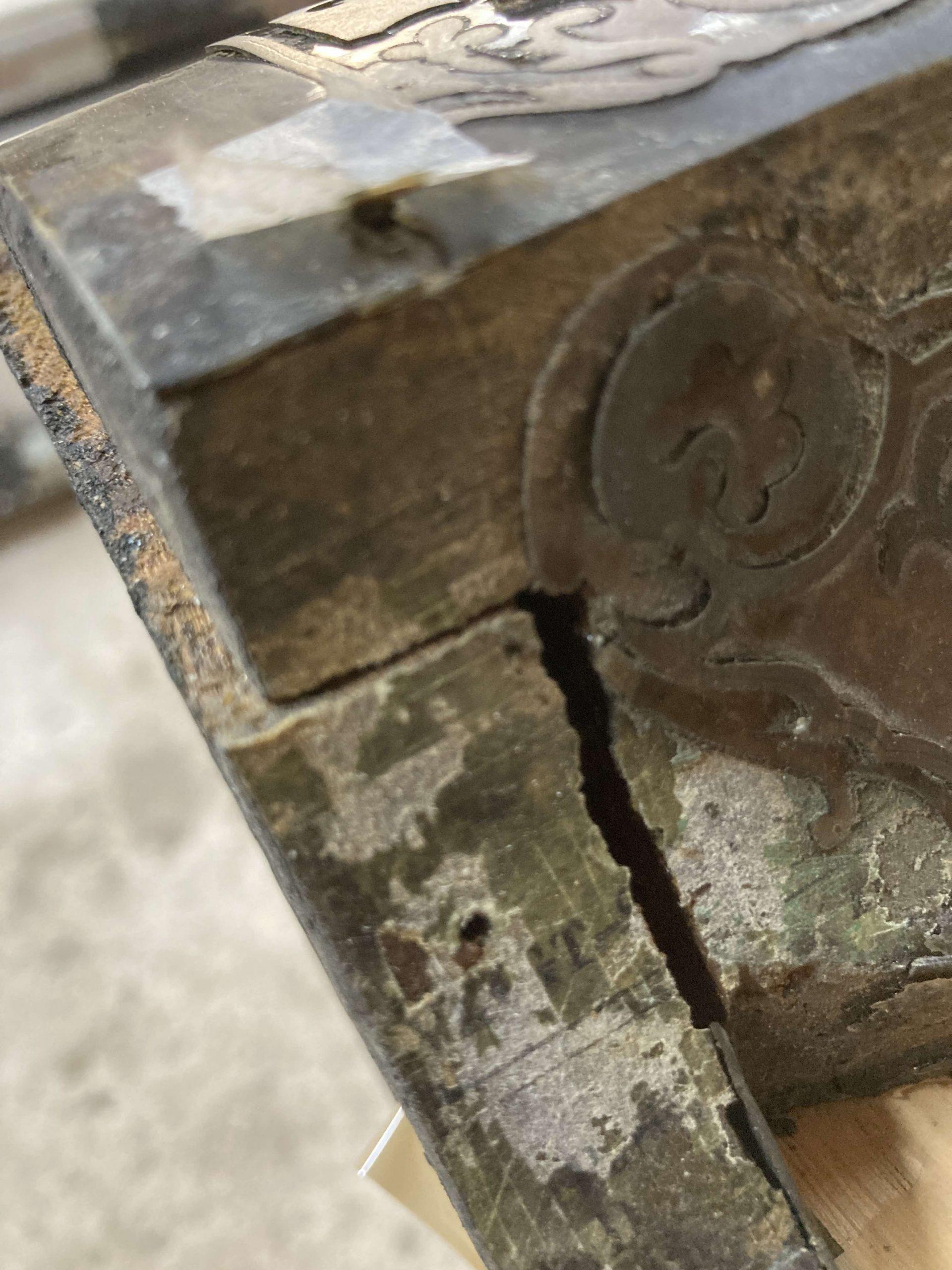
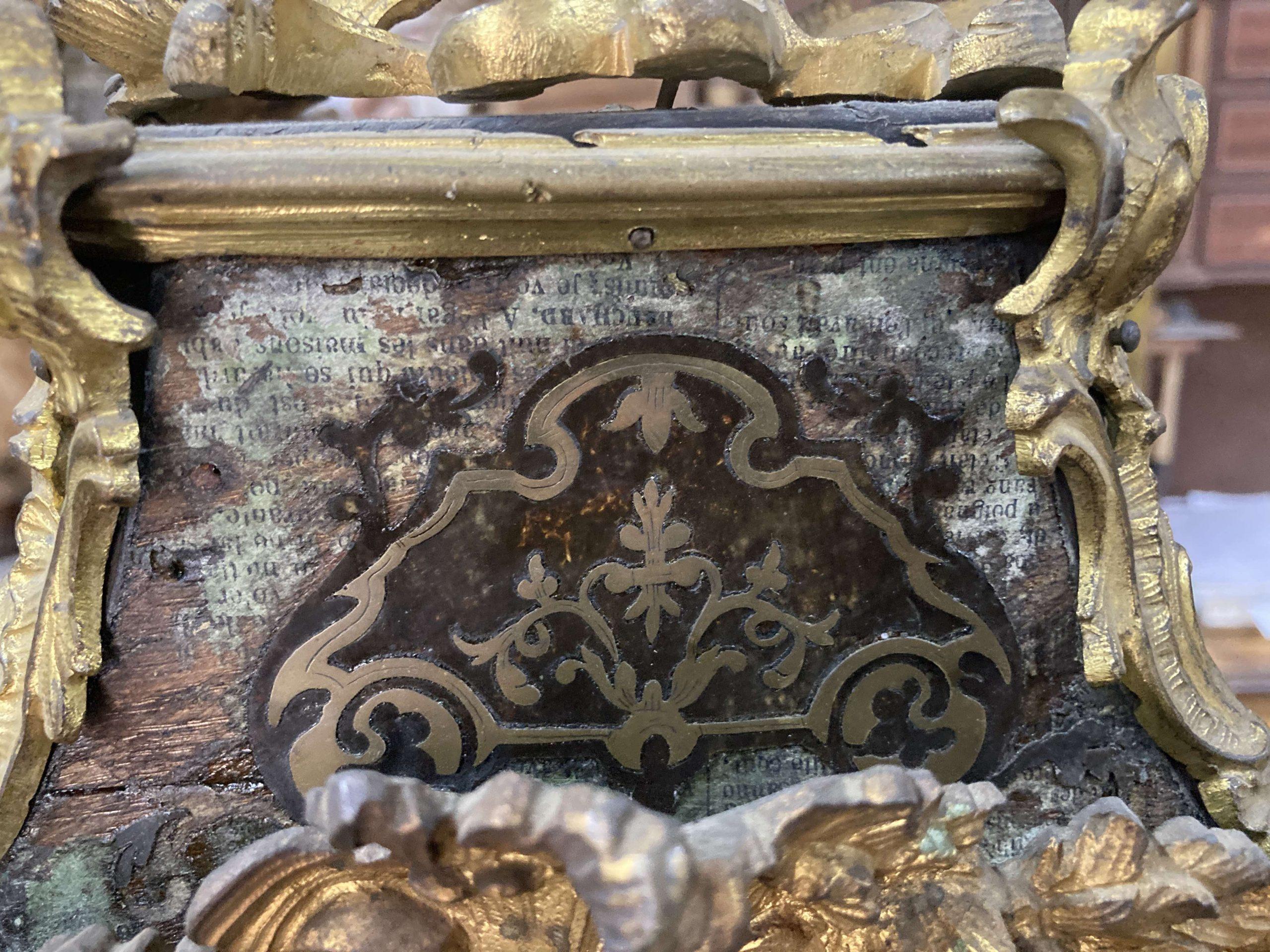
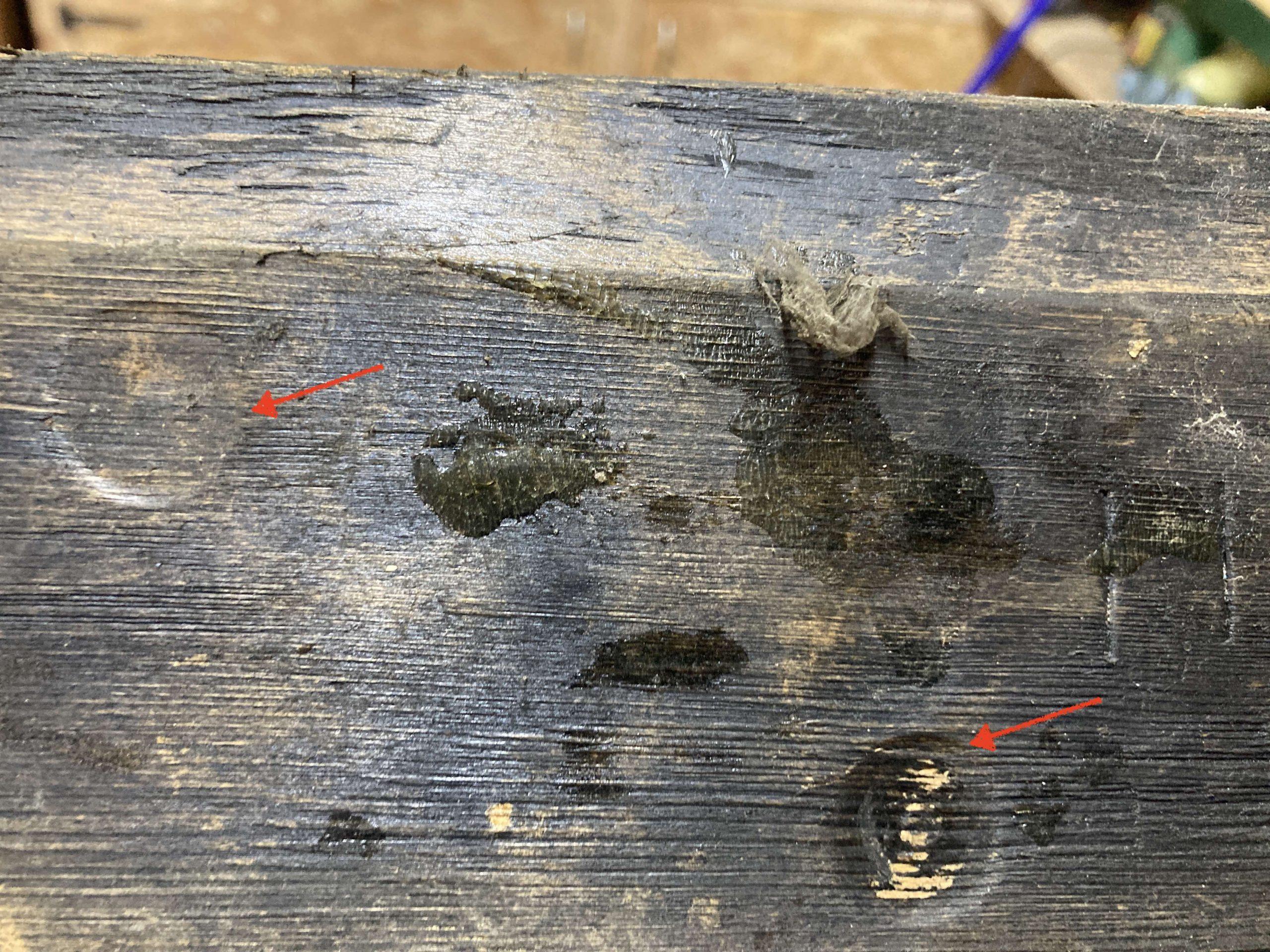
Some tool marks
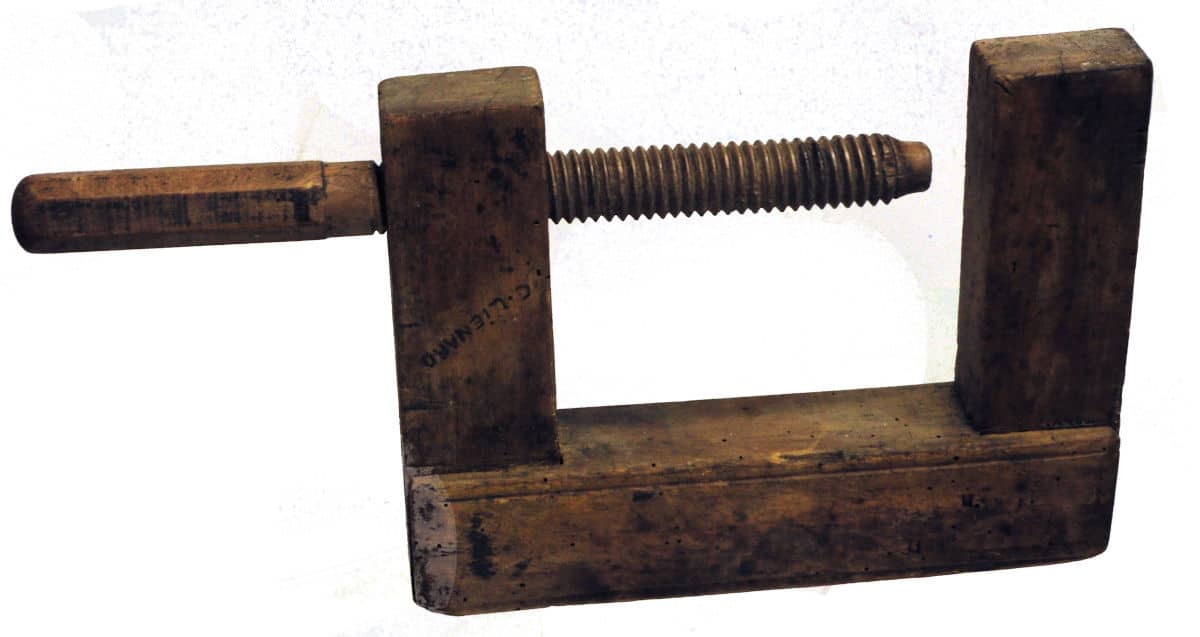
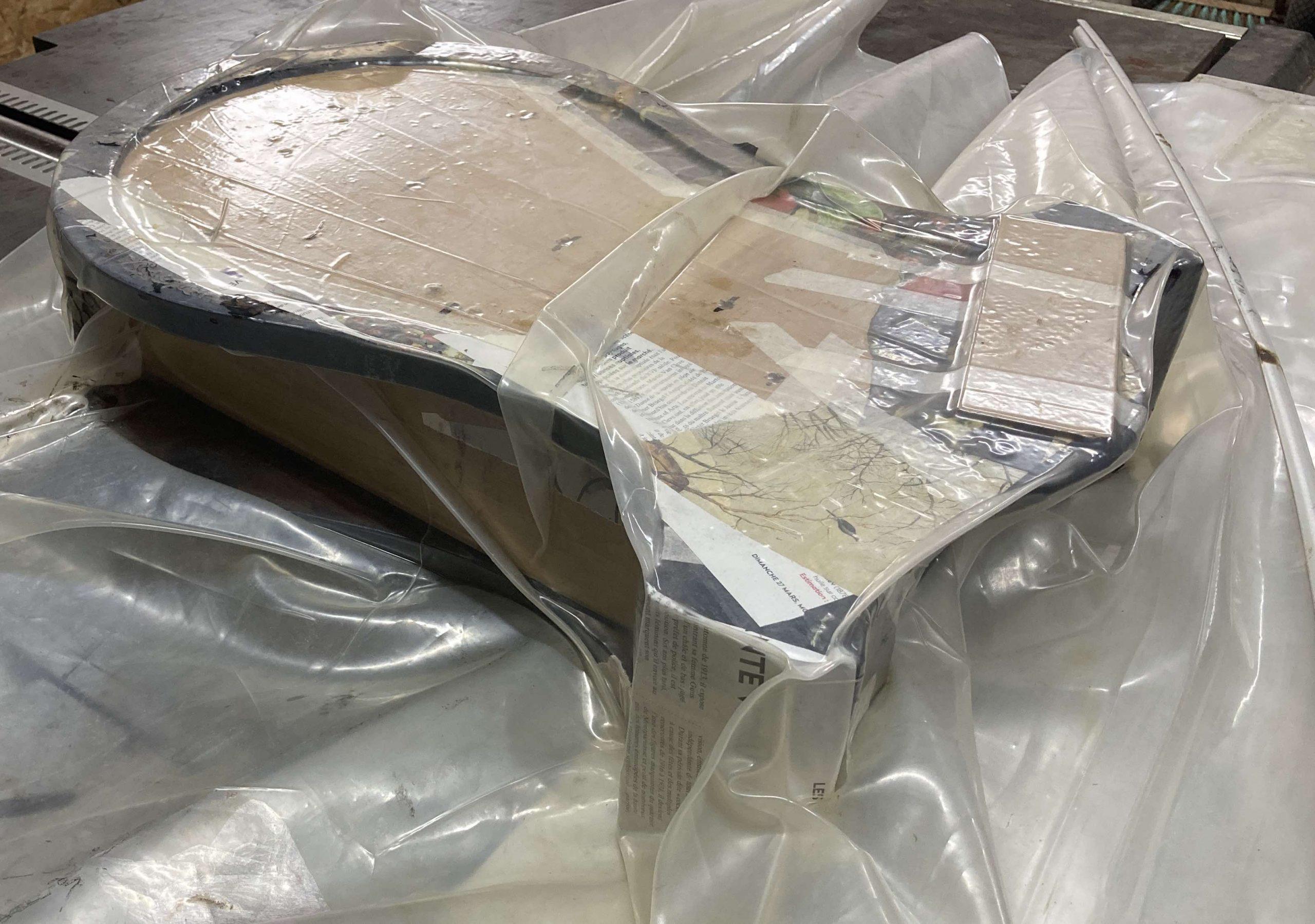
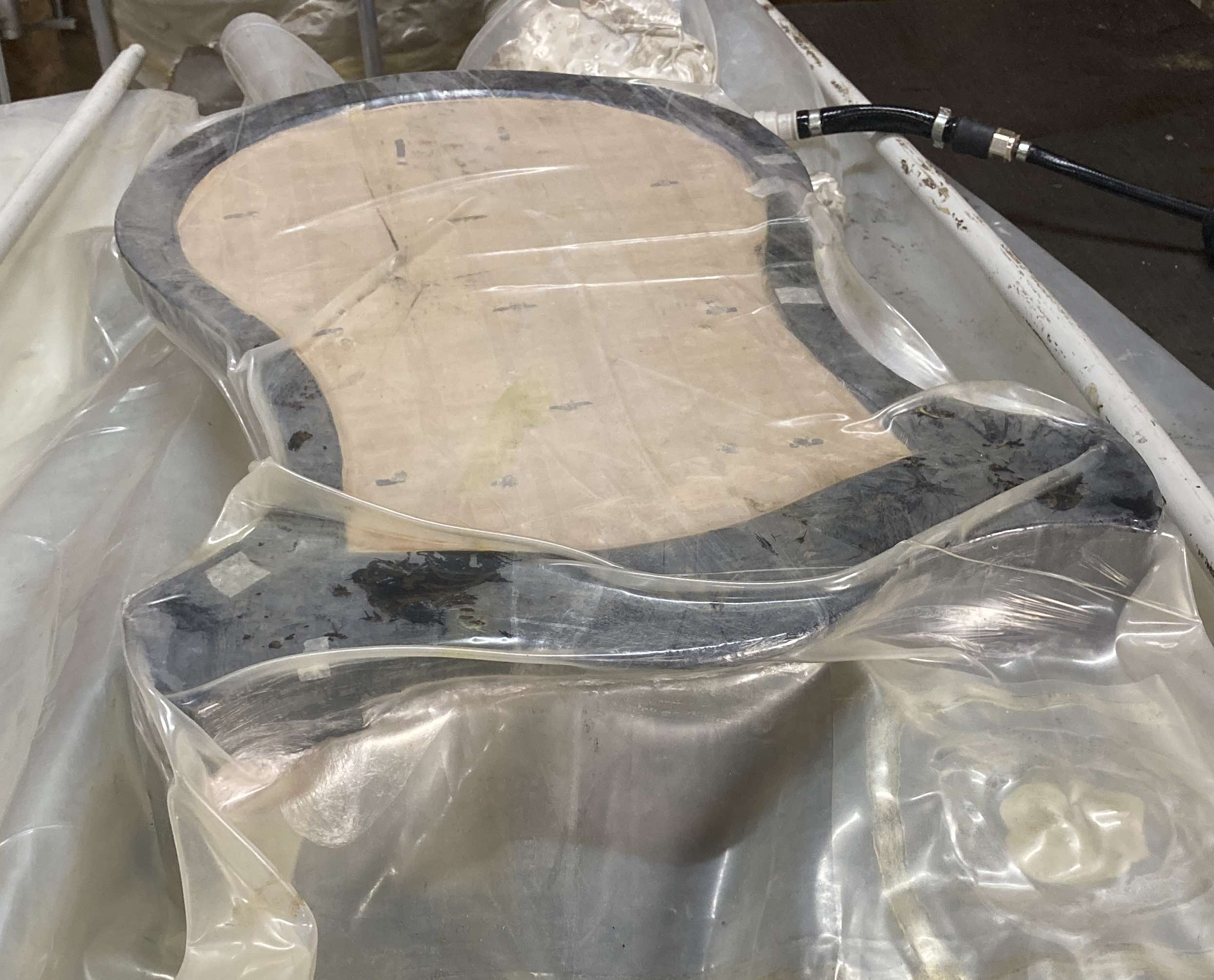
The Restoration
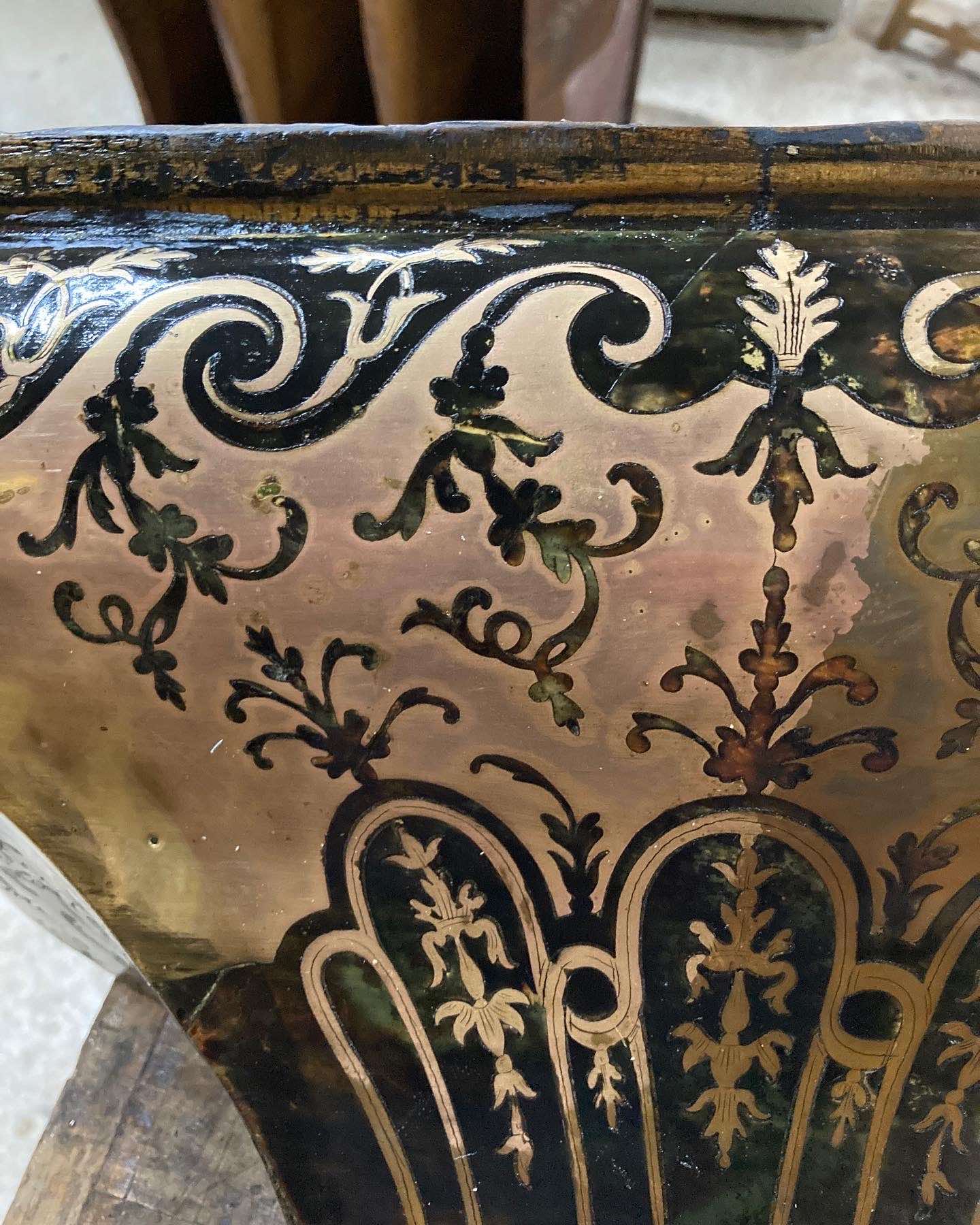
After restoration
To see previous restorations : https://ebenisterie-mathieuvath.fr/en-ce-moment-a-latelier/