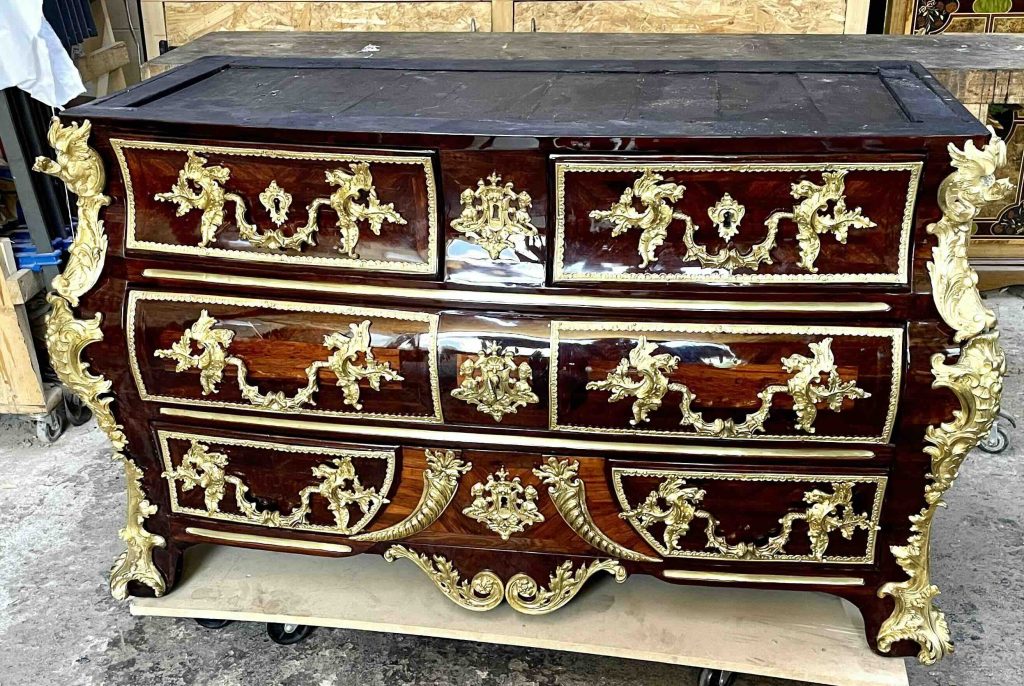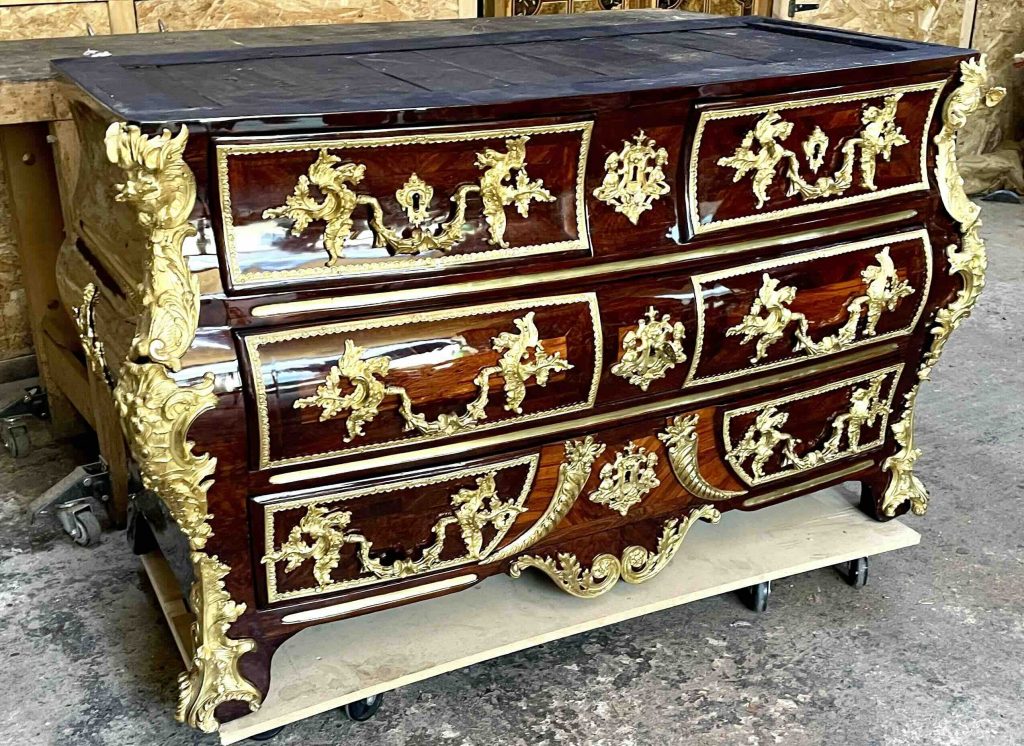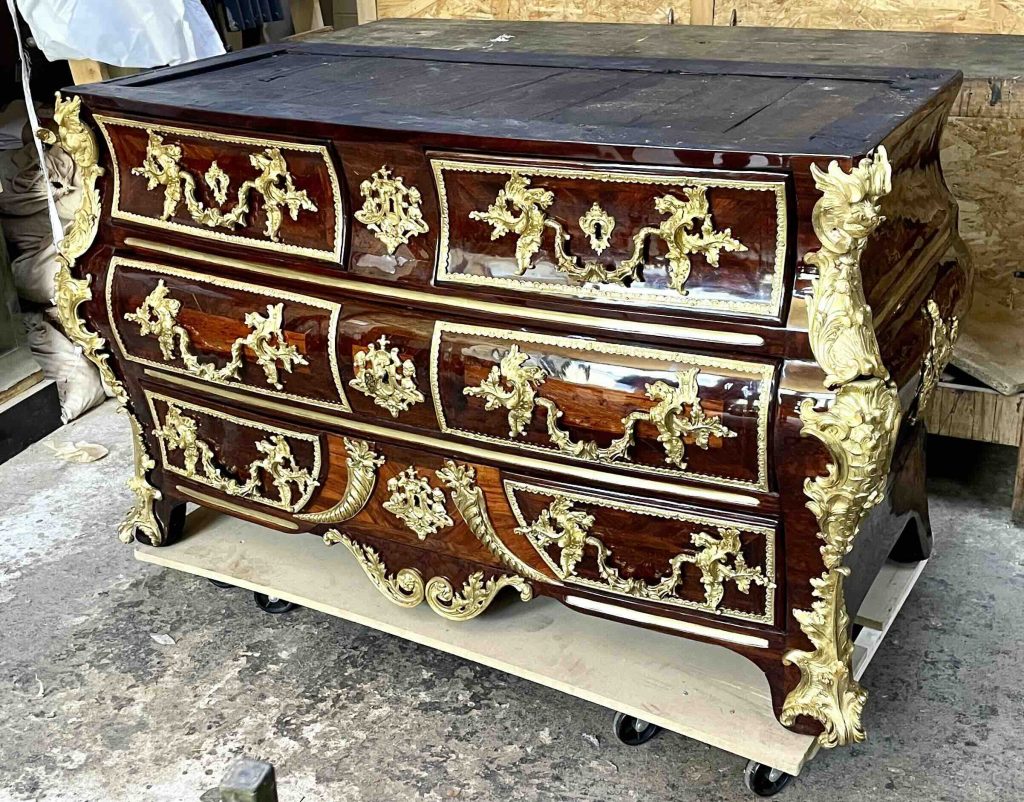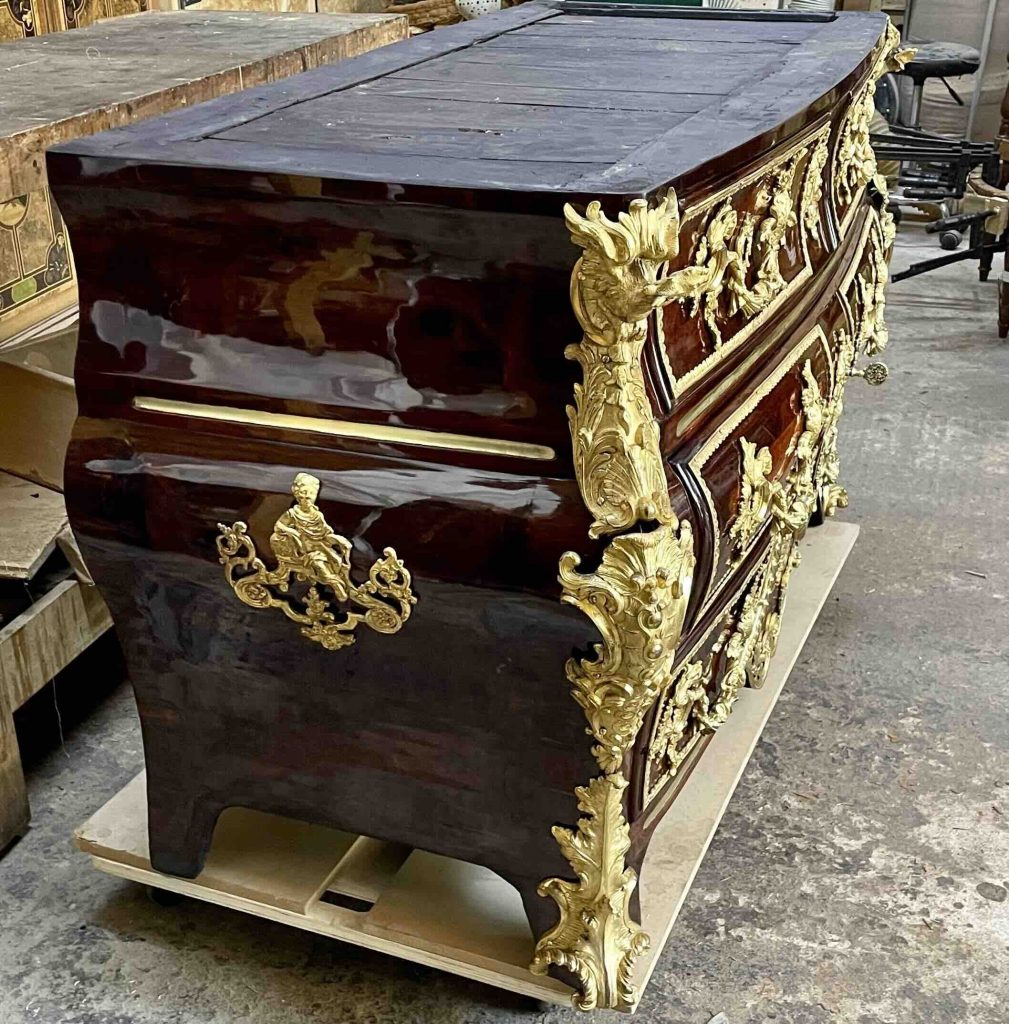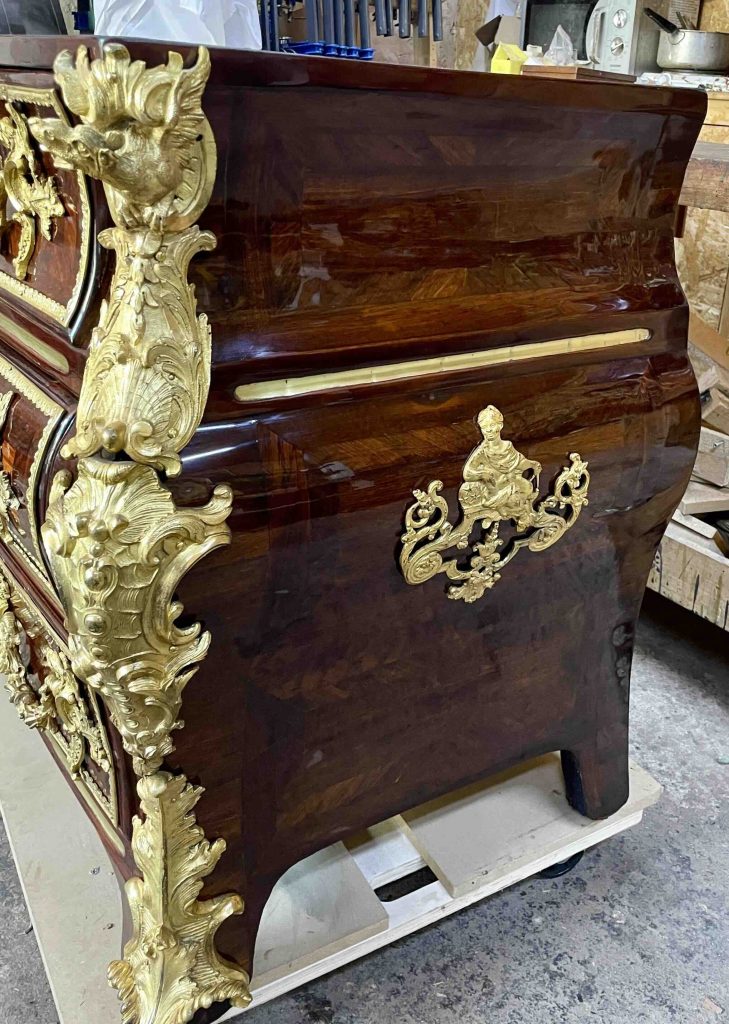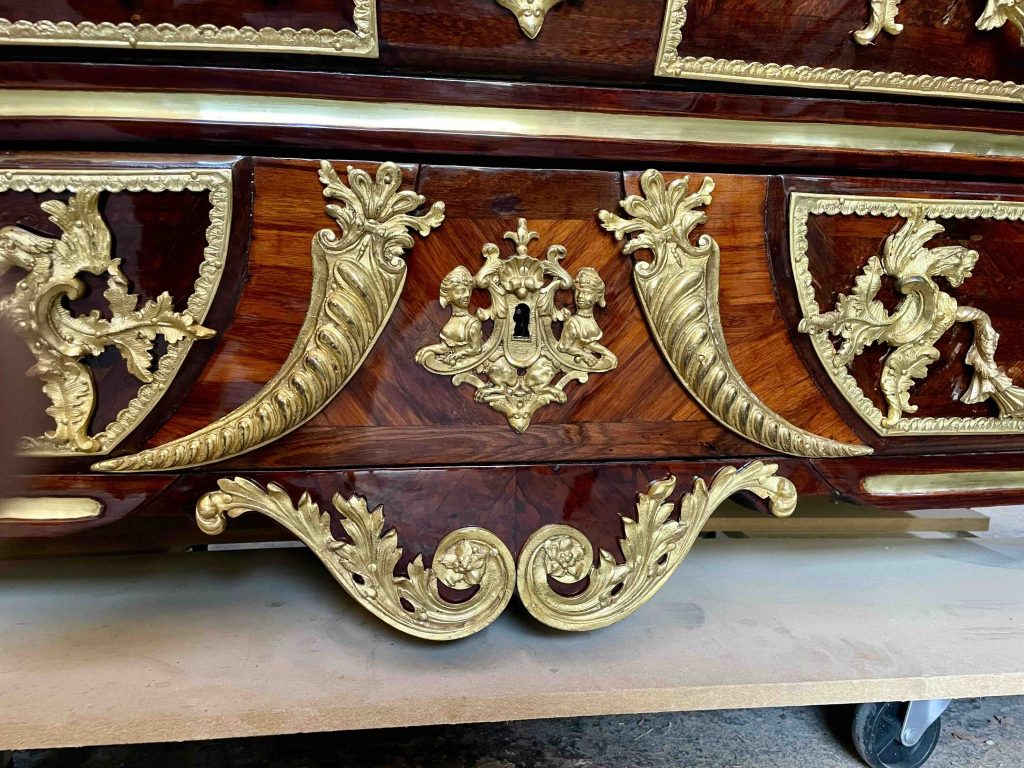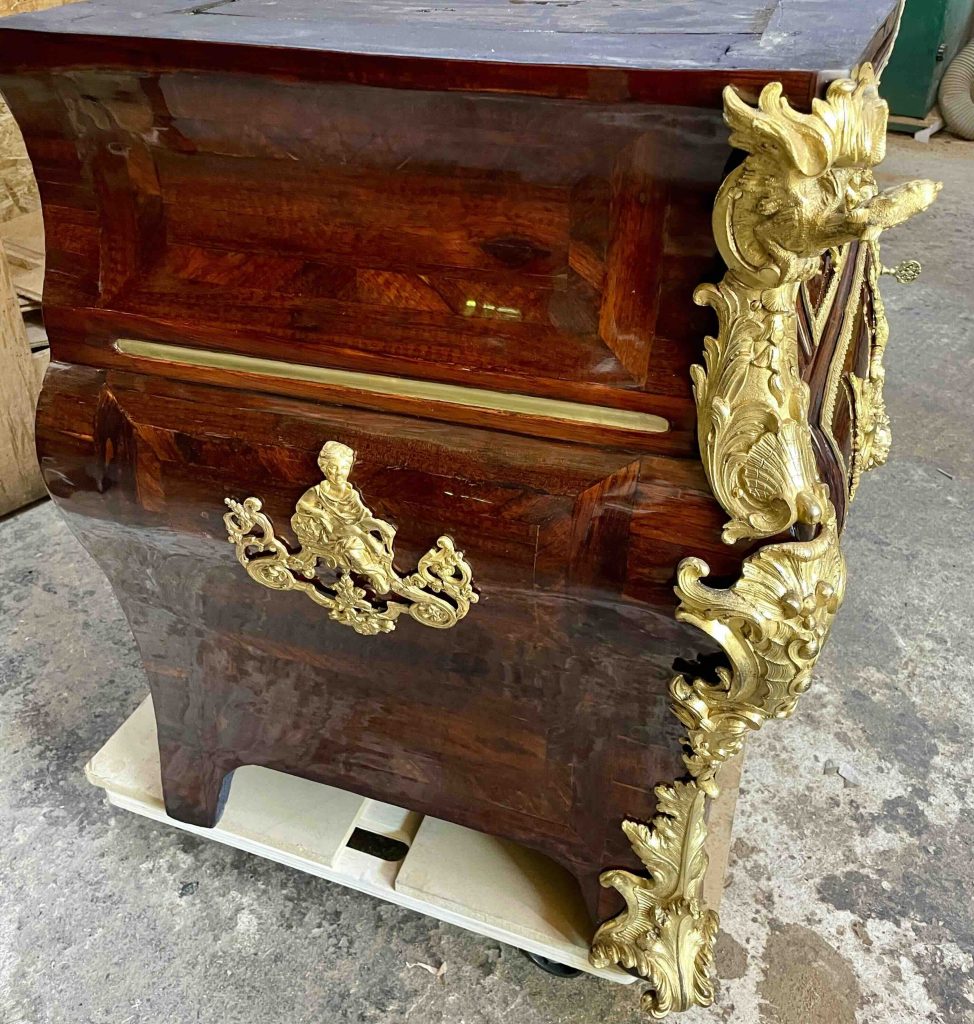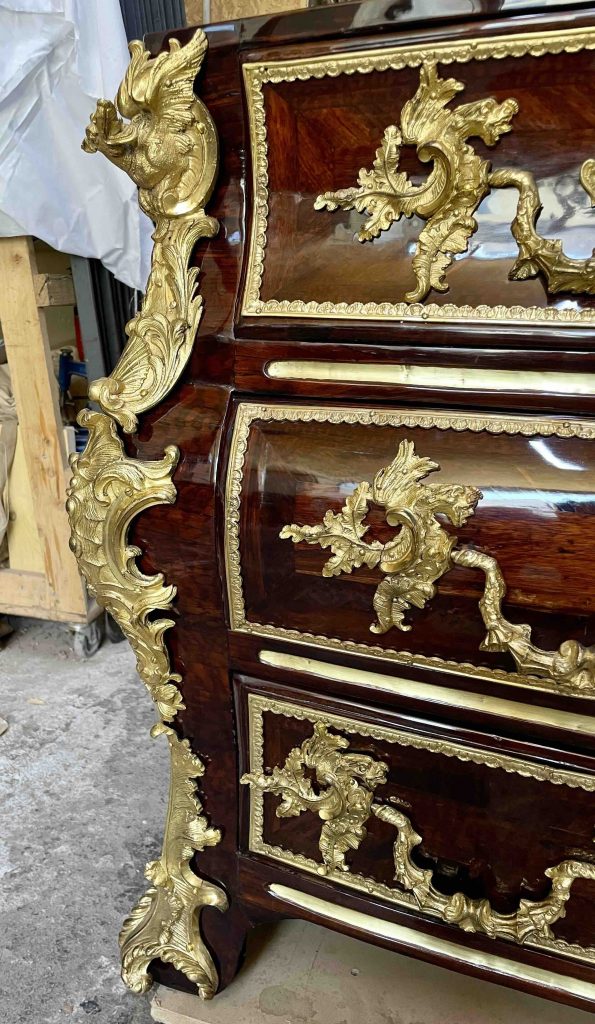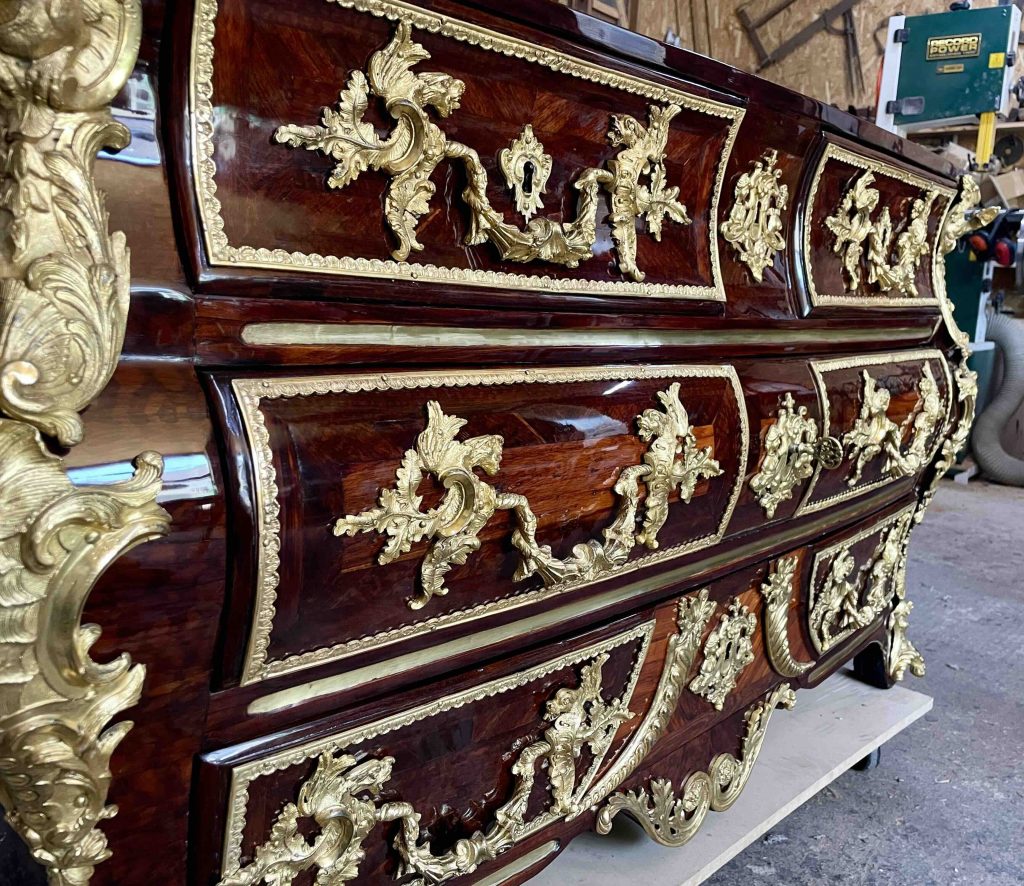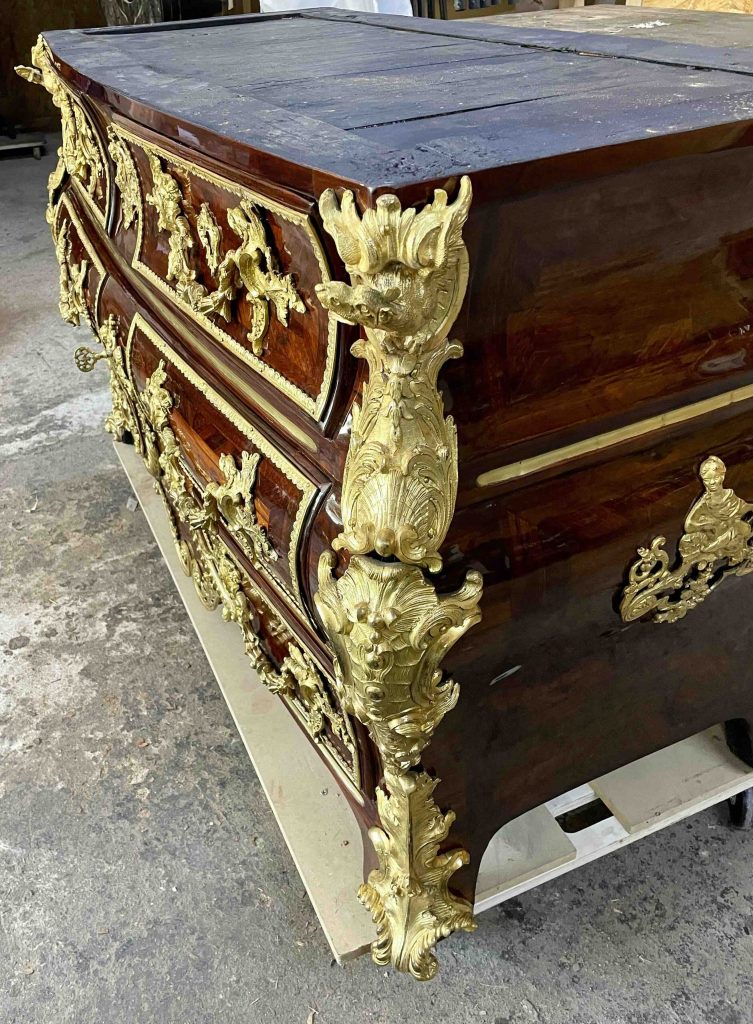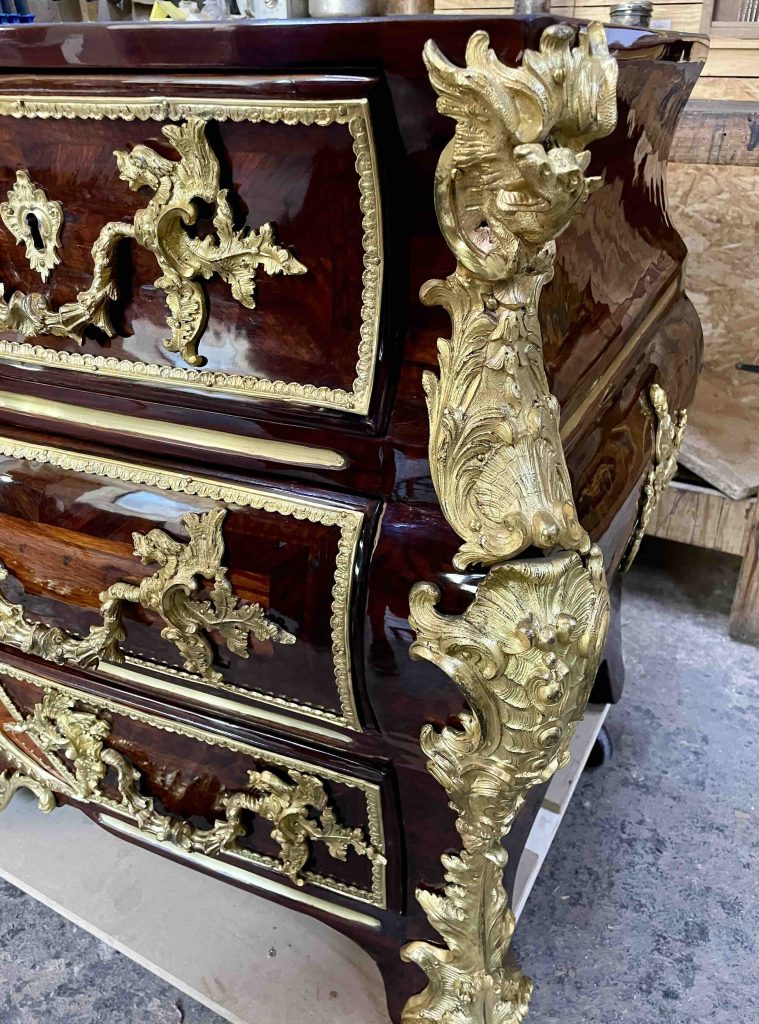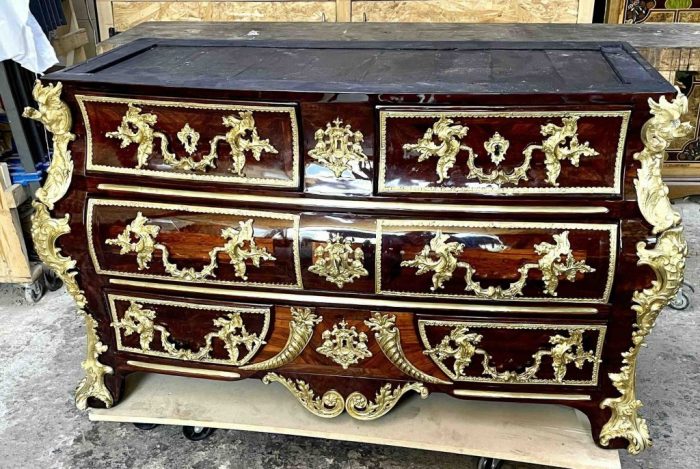
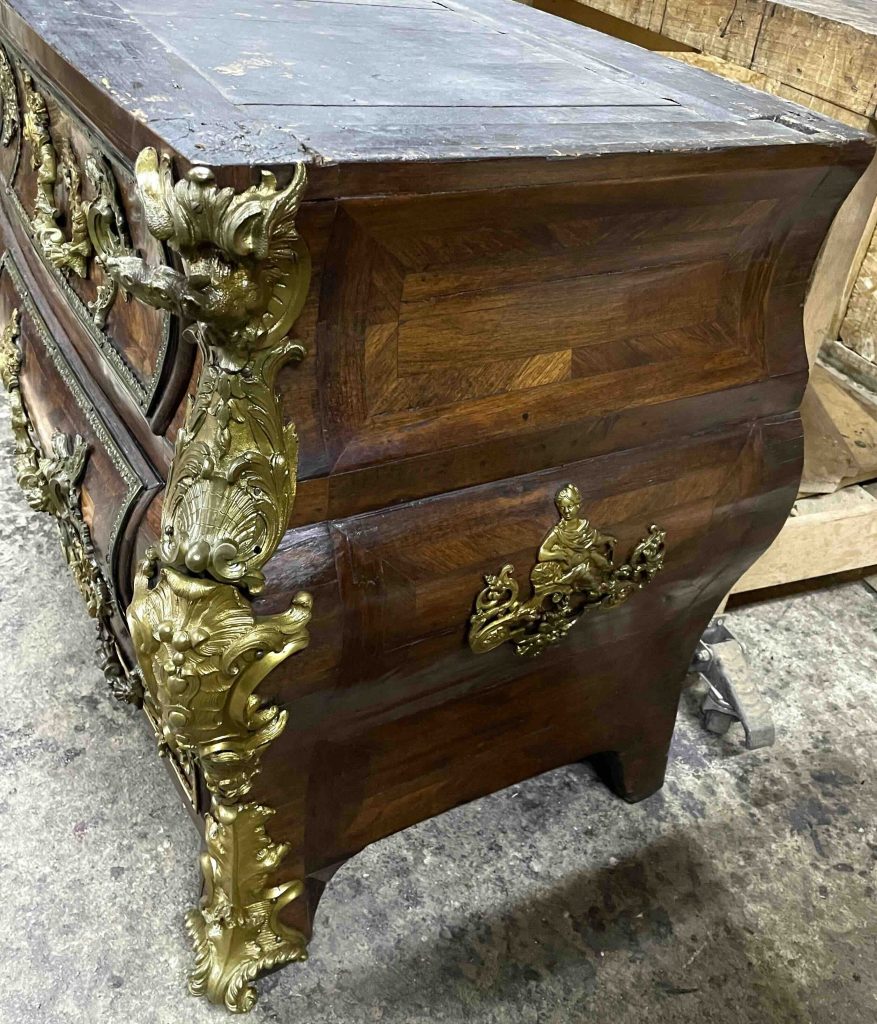
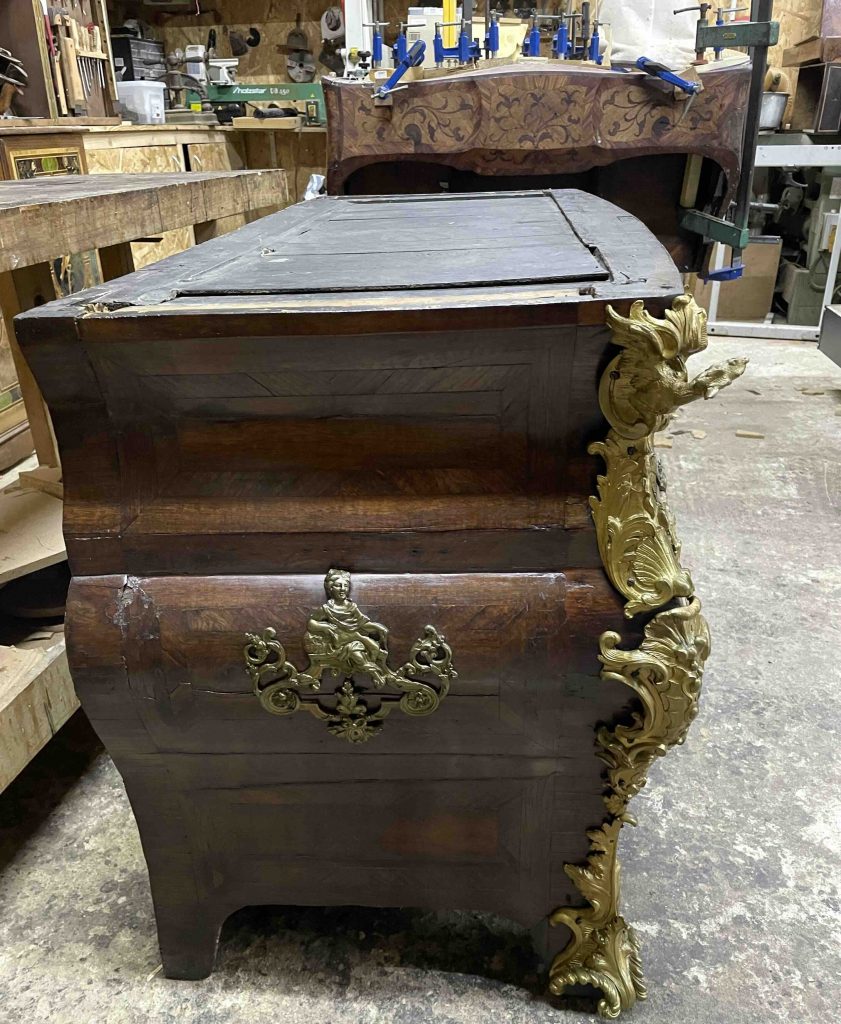
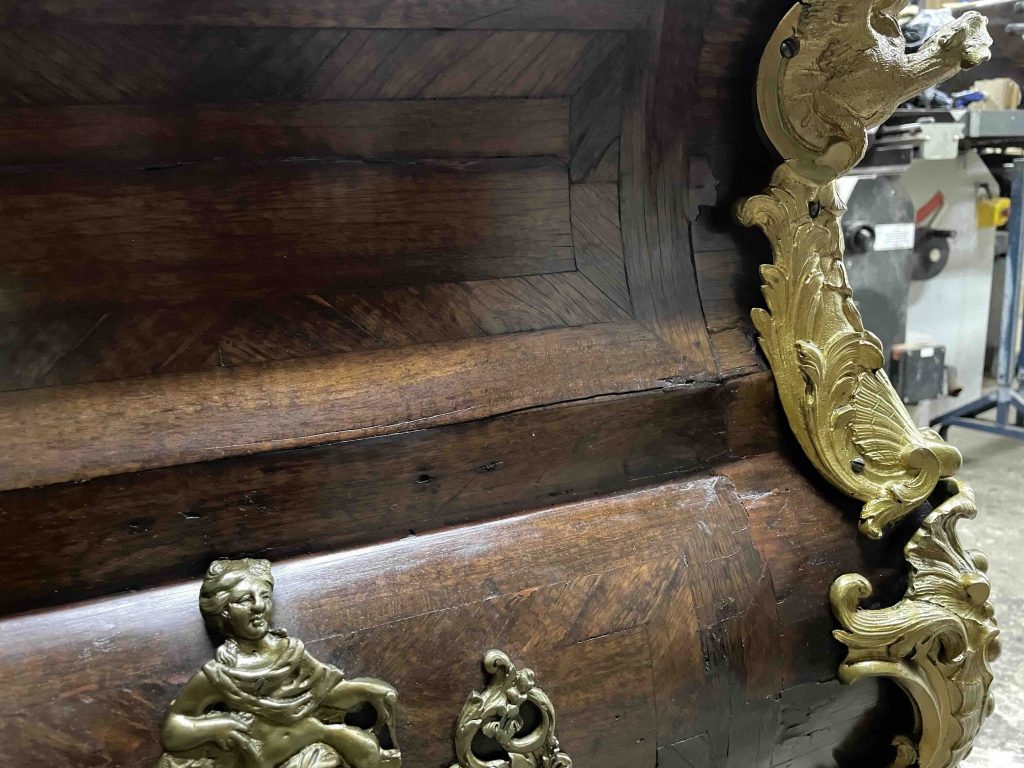
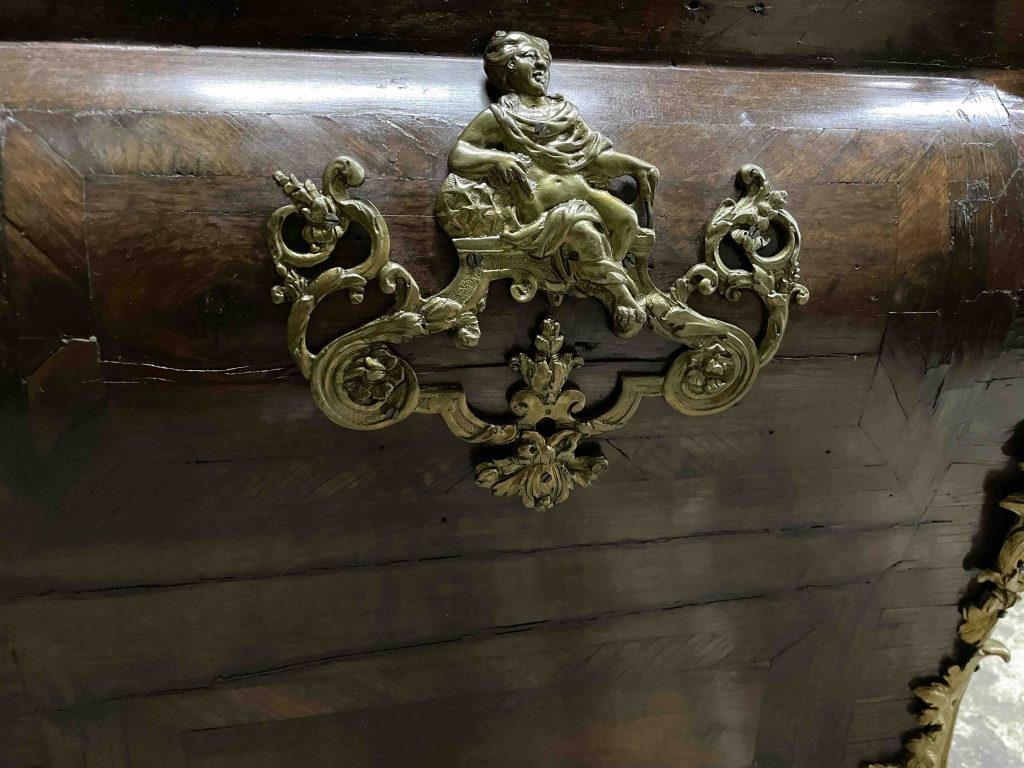
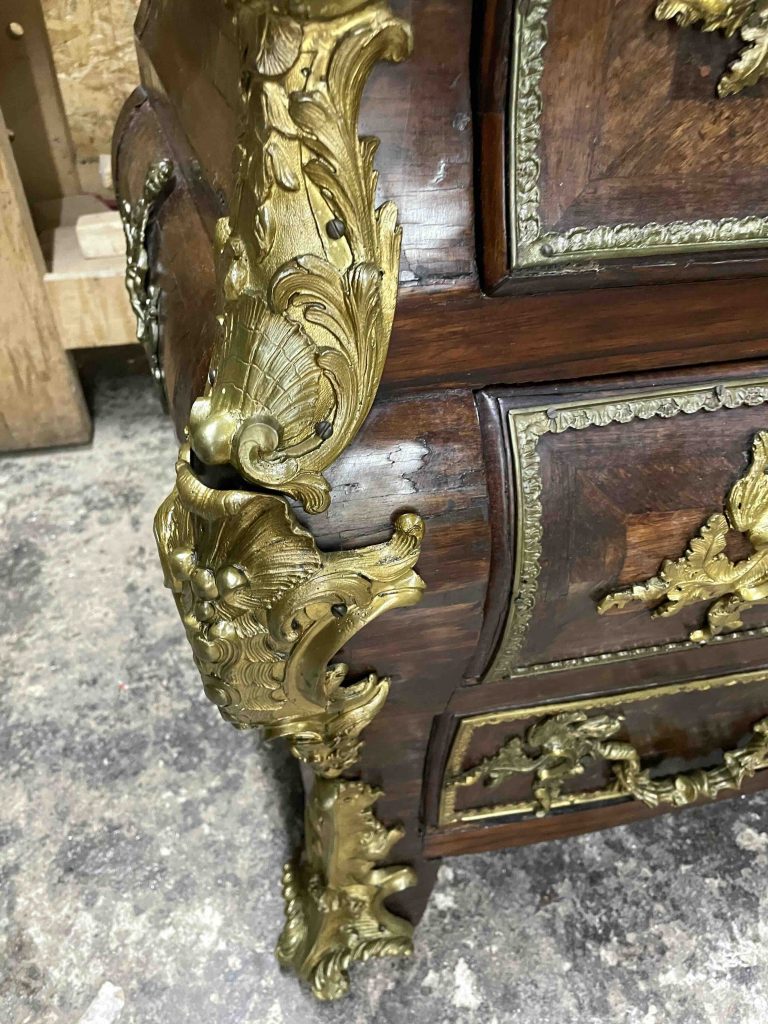
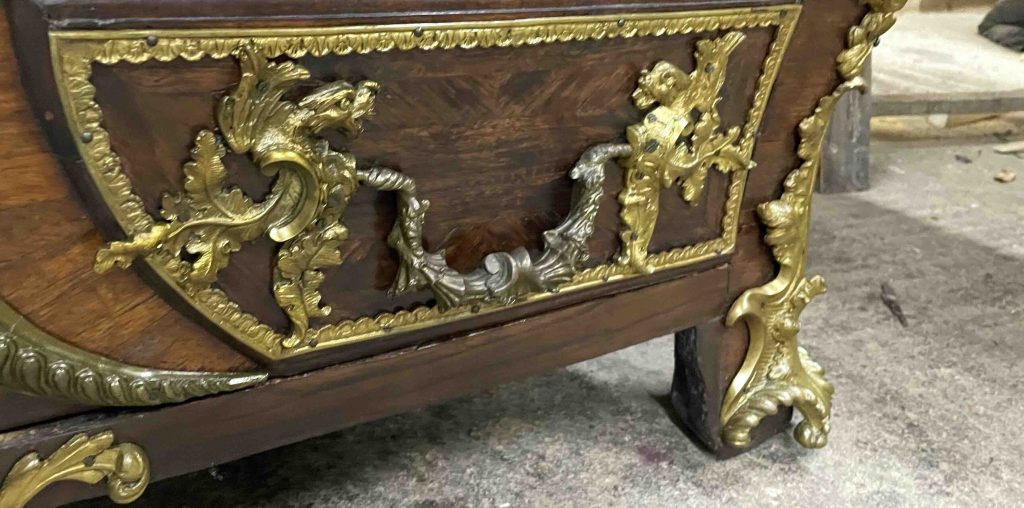
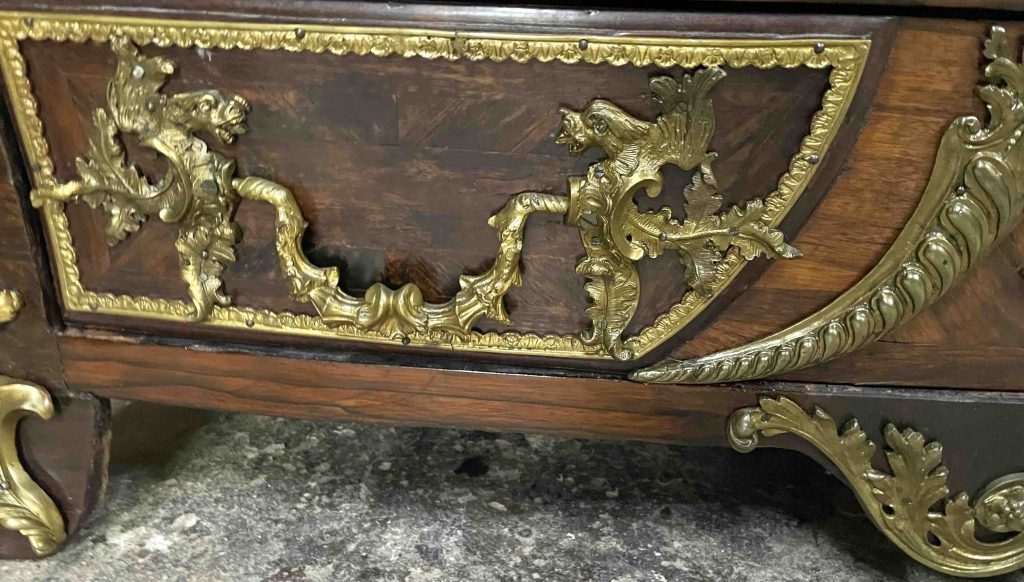
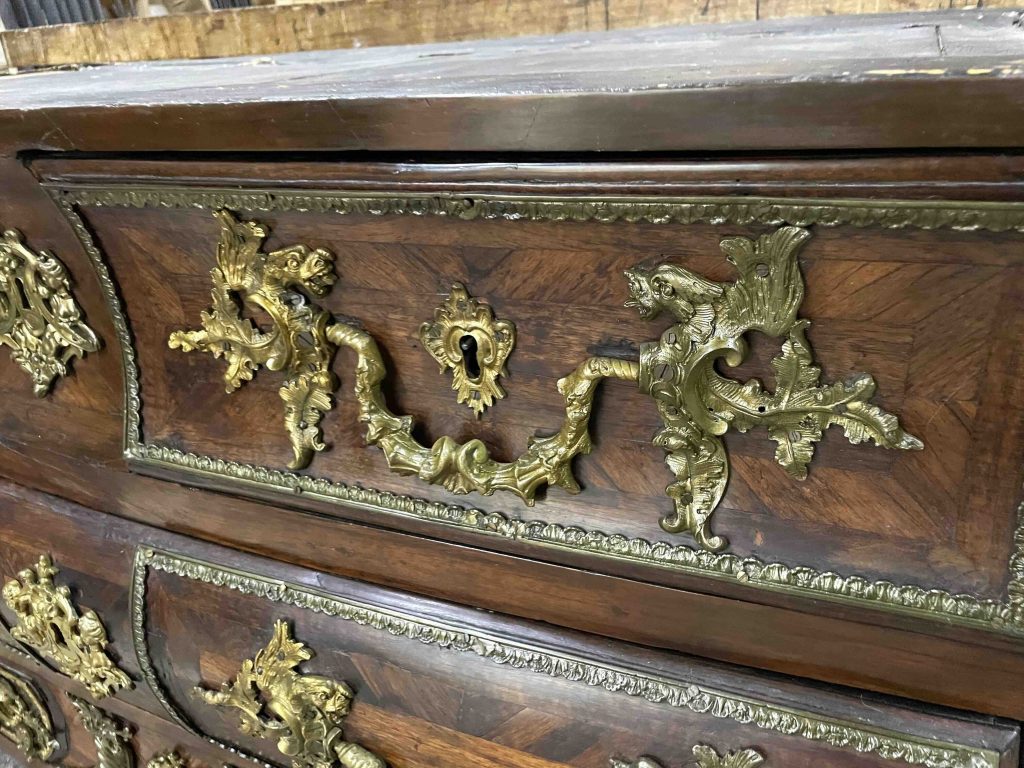
Restoration of a Regency period commode, topped with a 30 mm thick Rance marble slab, molded with a corbel following its contours. This commode, curved in plan and elevation on the front and sides, is veneered with snakewood and satinwood. It has four drawers (simulating six) arranged in three rows. Its voluminous hooves, evoking the clawed feet of a dragon. The commode is adorned with brass fluting and a set of chiseled and gilded bronzes: chiseled frames of water leaves framing the drawers, thick drop handles with shells, wide plates with dragons, central keyhole escutcheons with back-to-back sphinxes, very important corner drops decorated with dragons in the round, floral drops, gadroons, plumes and shells, gadrooned moustaches in cornucopias, a lamp base with acanthus spirals facing the apron and finally large allegories of Astronomy on the sides.
Although dragon-shaped handle plates are relatively rare, occasional examples can be found (notably on commodes by Mathieu Criaerd). However, the dragon corner mounts adorning this commode are as extraordinary as they are unique. Dragon bronzes are characteristic of the work of certain great cabinetmakers of the Regency period, which ushered in the craze for chinoiserie. Present on a commode, they demonstrate a certain pomp and inevitably evoke Charles Cressent or Noël Gérard, but also, more occasionally, Antoine-Robert Gaudreaus.
State of affairs report
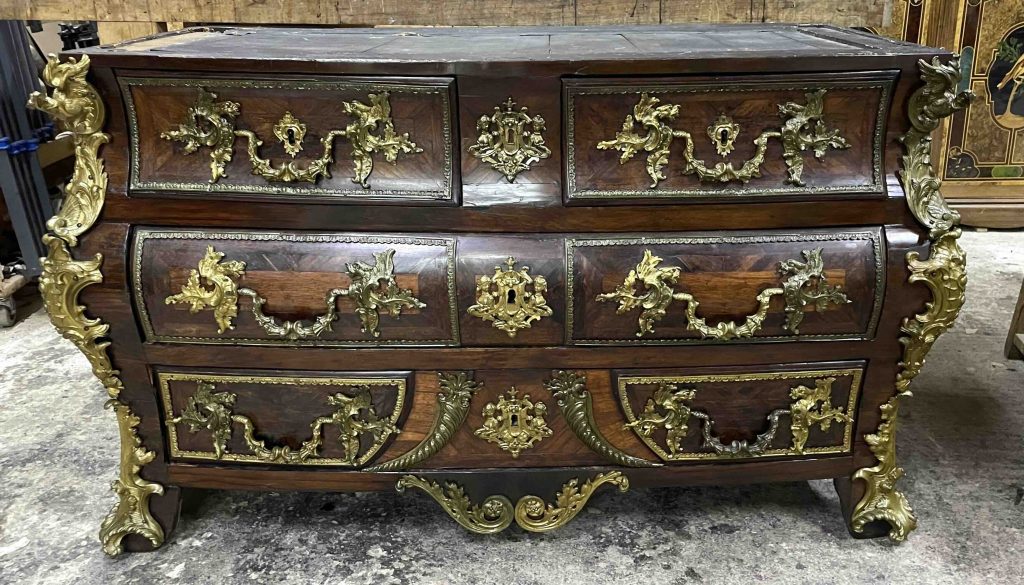
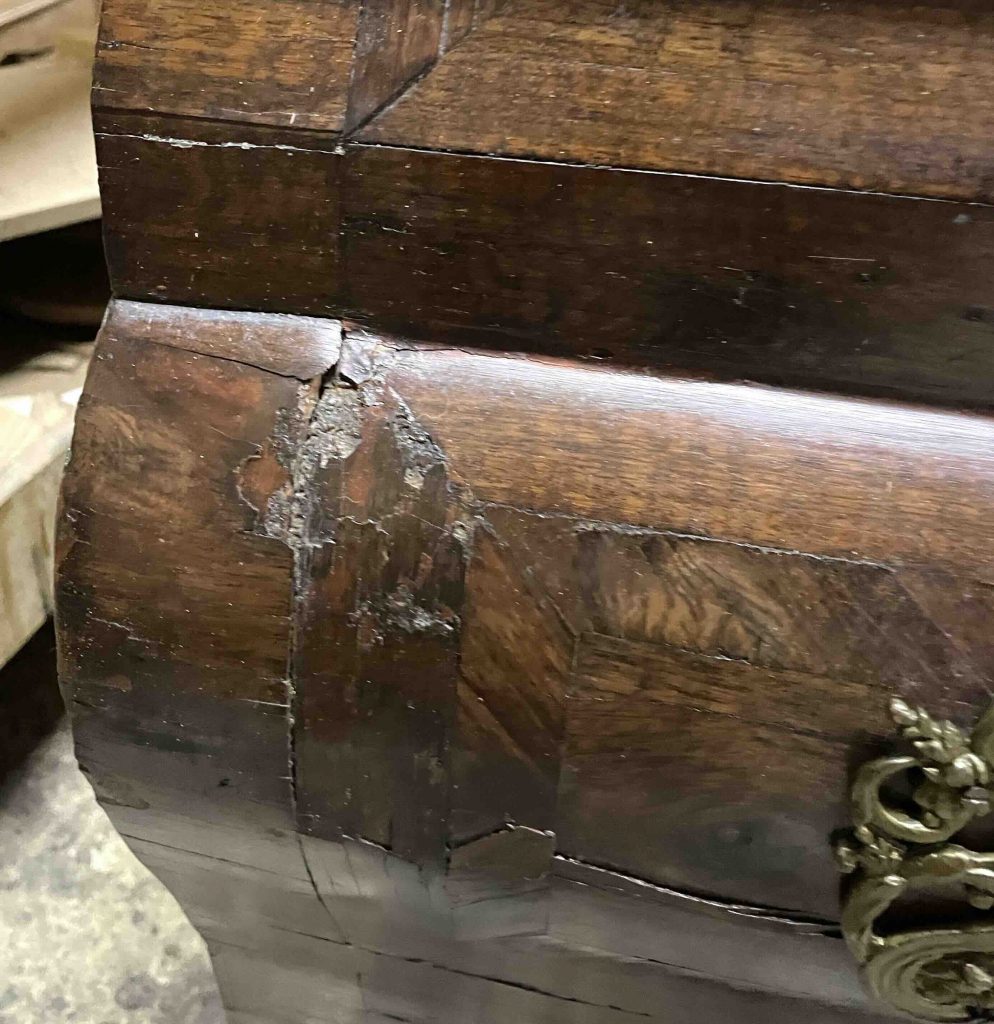
This imposing chest of drawers was in a rather dilapidated state. On the frame and structure, many of the joints were detached, and numerous metal reinforcements and pieces of wood had been added. All the panels were coming loose, and the sides were cracked and separated from the front and rear uprights.
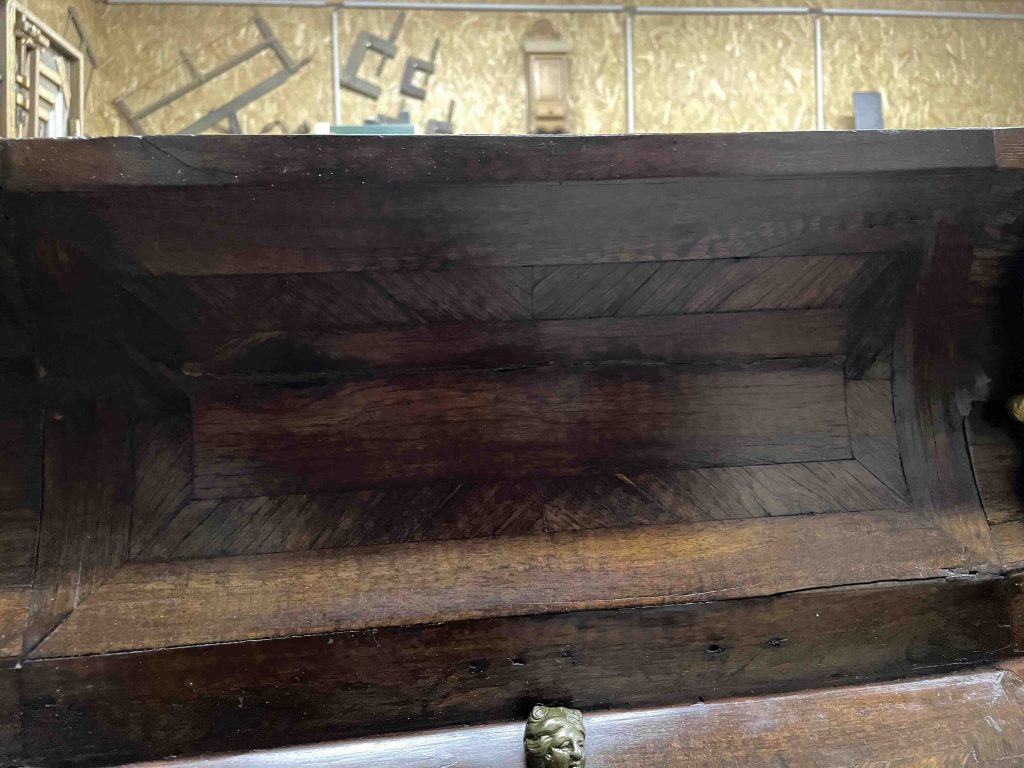
As for the veneer, the sides and drawers were in relatively good condition with few missing pieces. However, there were some holes and the veneer showed significant dehydration of the glue on all surfaces.
The most significant problem was on the facade. It had been heavily restored, and the snakewood veneer had been replaced with rosewood.
The Restoration
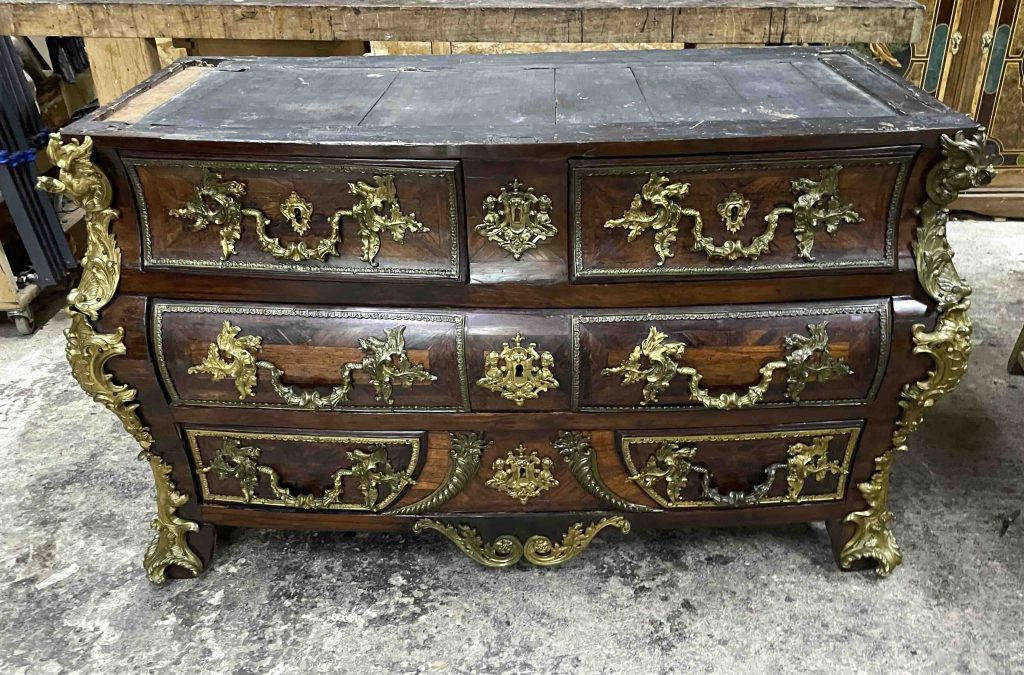
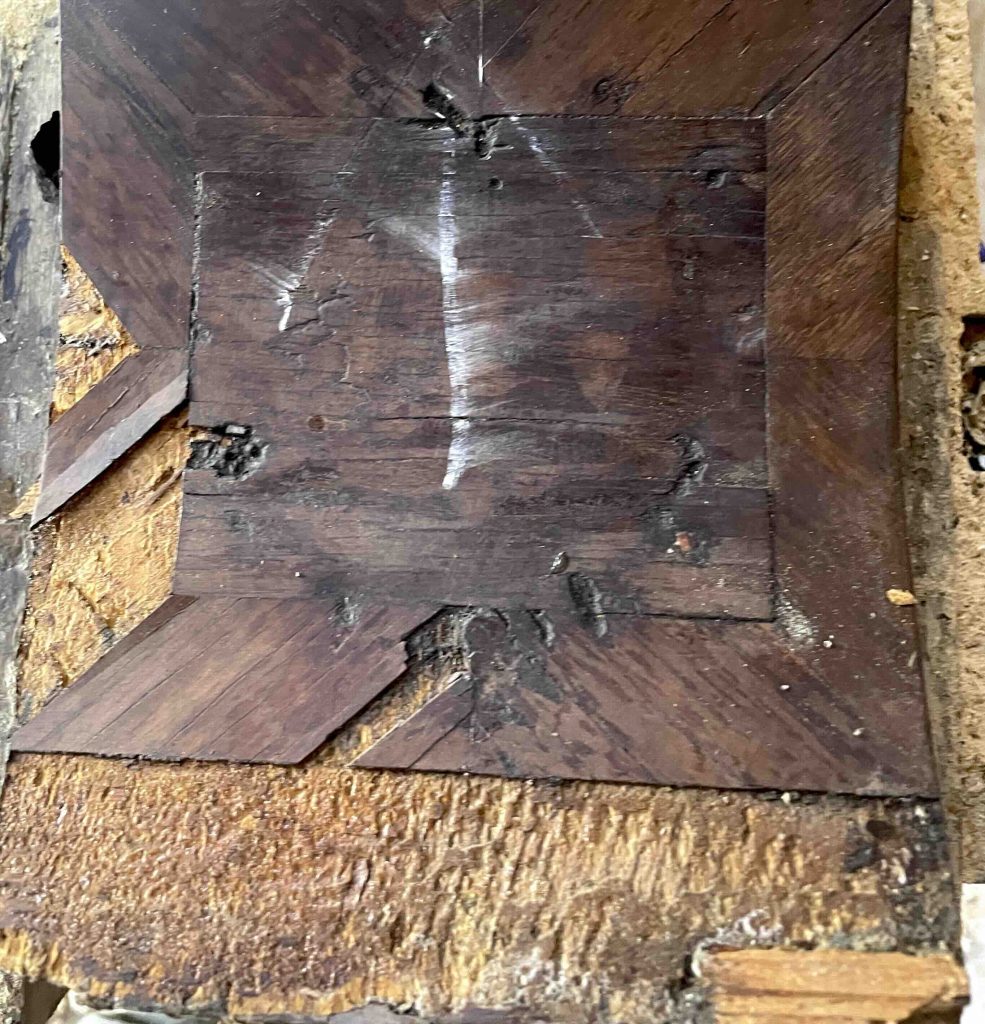
In consultation with my client, and in order to stabilize the structure of the sides, the option of removing the veneers was chosen. This is a delicate decision, as this intervention is extensive and highly invasive, and does not constitute conservation work. We are therefore dealing with a major restoration operation requiring specialized expertise, as it can cause irreversible damage that was not present before the restoration. Removal is therefore not undertaken lightly, and in addition to the cost and time involved, it is essential to master every step for a flawless result.
Before tackling the veneer, there were numerous panel reamings, solid wood grafts, comb tenons, and various gluing techniques to restore the chest of drawers' strength.
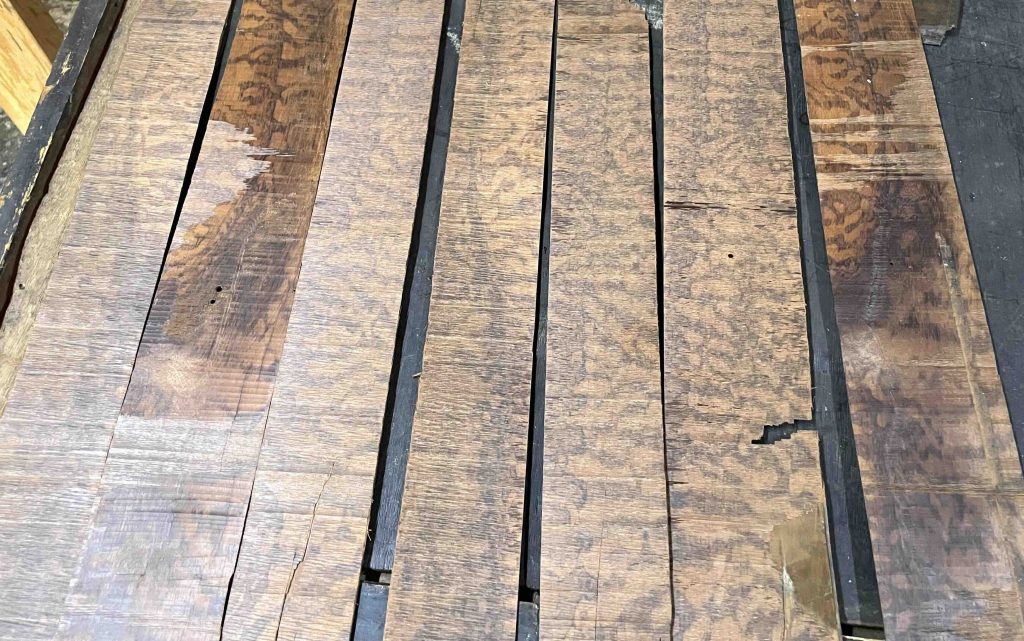
As for the front, the rosewood veneer was removed from the uprights and drawers and replaced with new snakewood veneer, scraped, sanded and cut to the correct thickness on the back facing before being glued with hot glue.
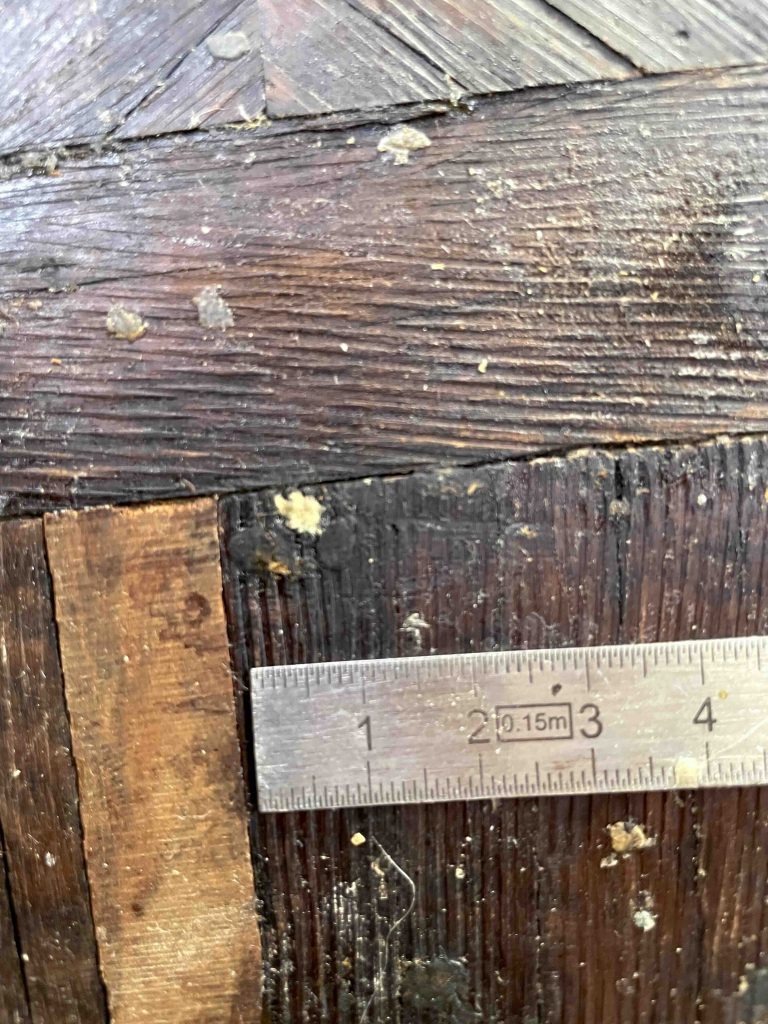
A pleasant surprise: under the sleepers, we found the locations of the old fluting, so we restored it. The same was true for the step on the lower sleeper bridge, which had been filled with an oak slab.
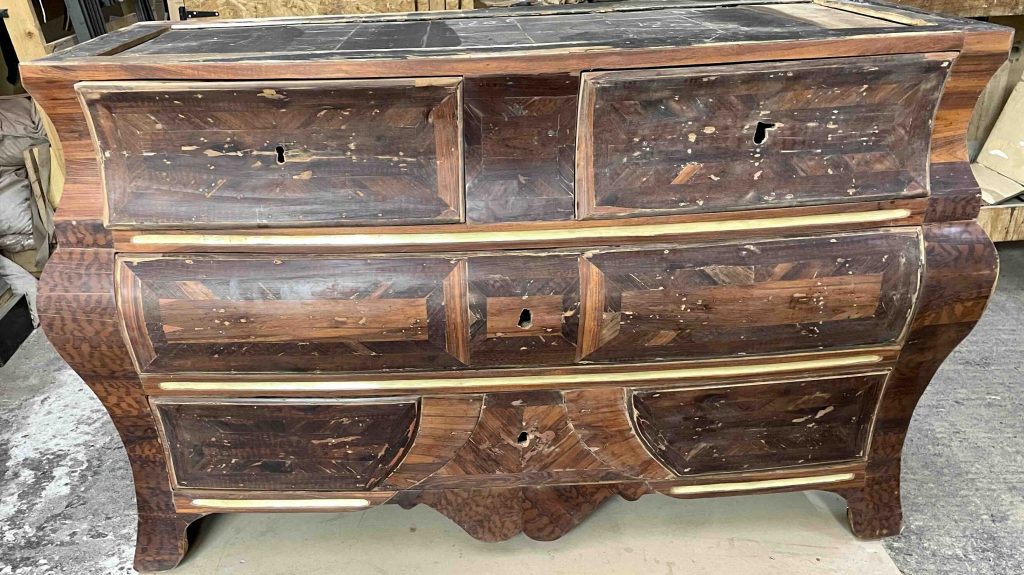
After filling with pumice, the new veneer grafts were oxidized to match the color of the old veneers. Finally, a colorless shellac finish was applied with a pad. After a brief visit to the gilder, the bronzes were reattached.