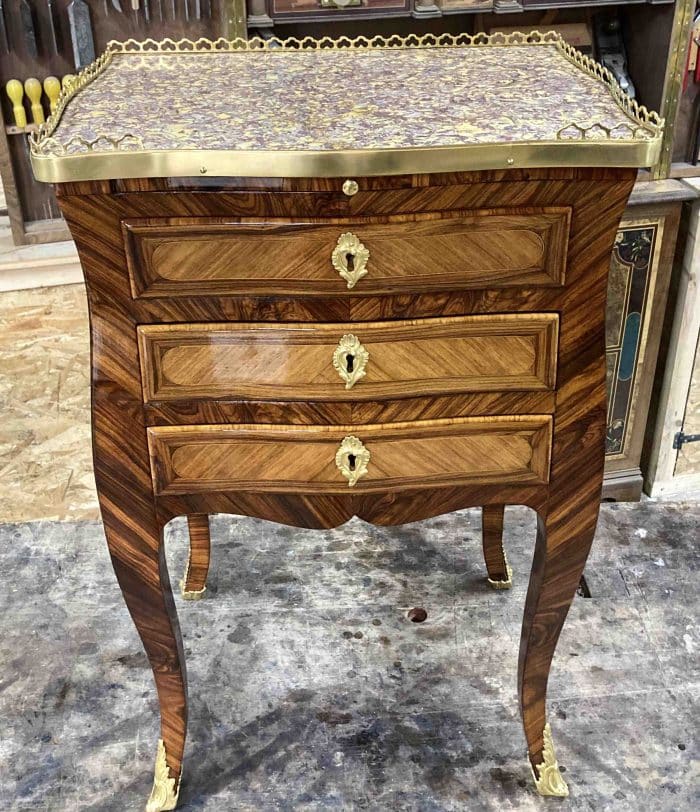
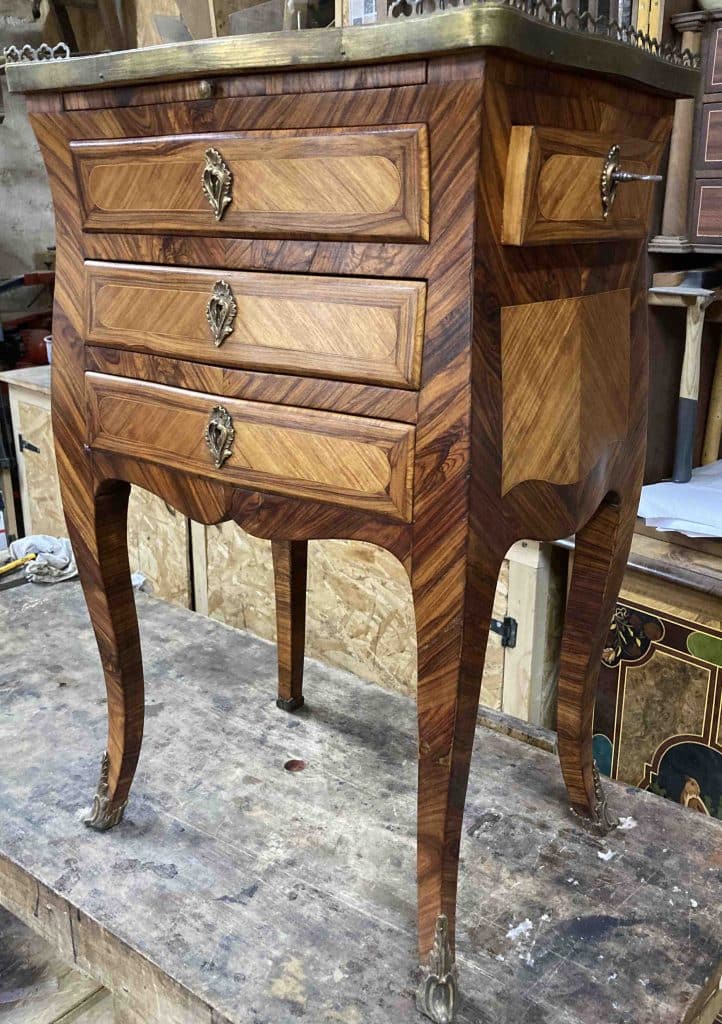
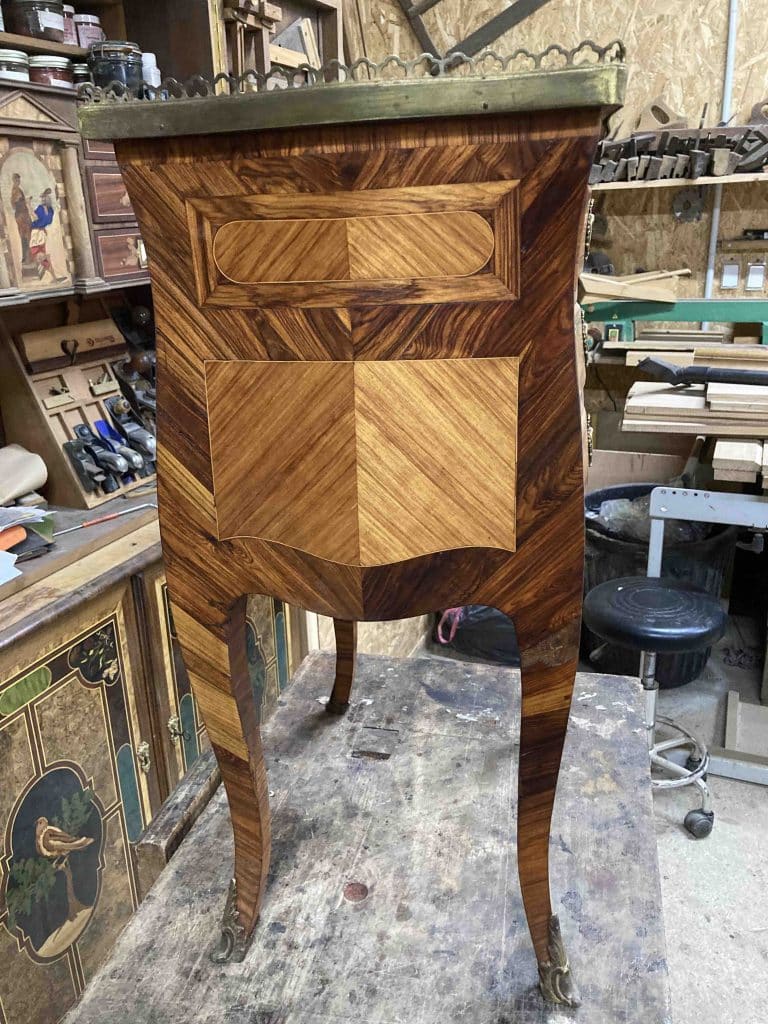
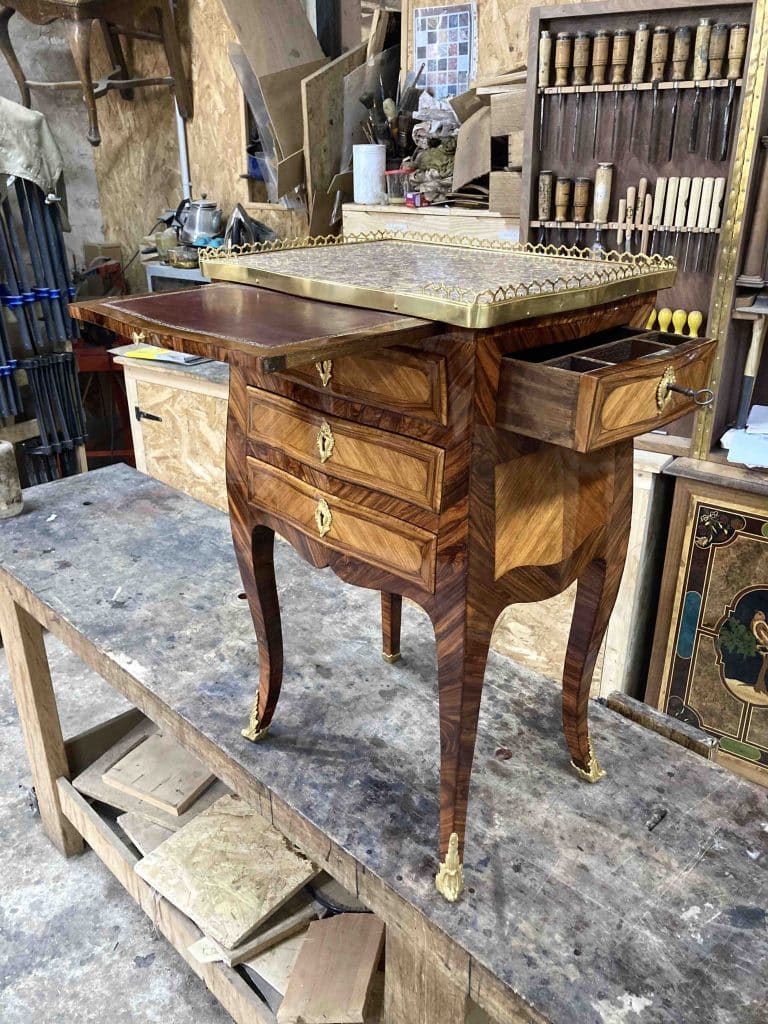
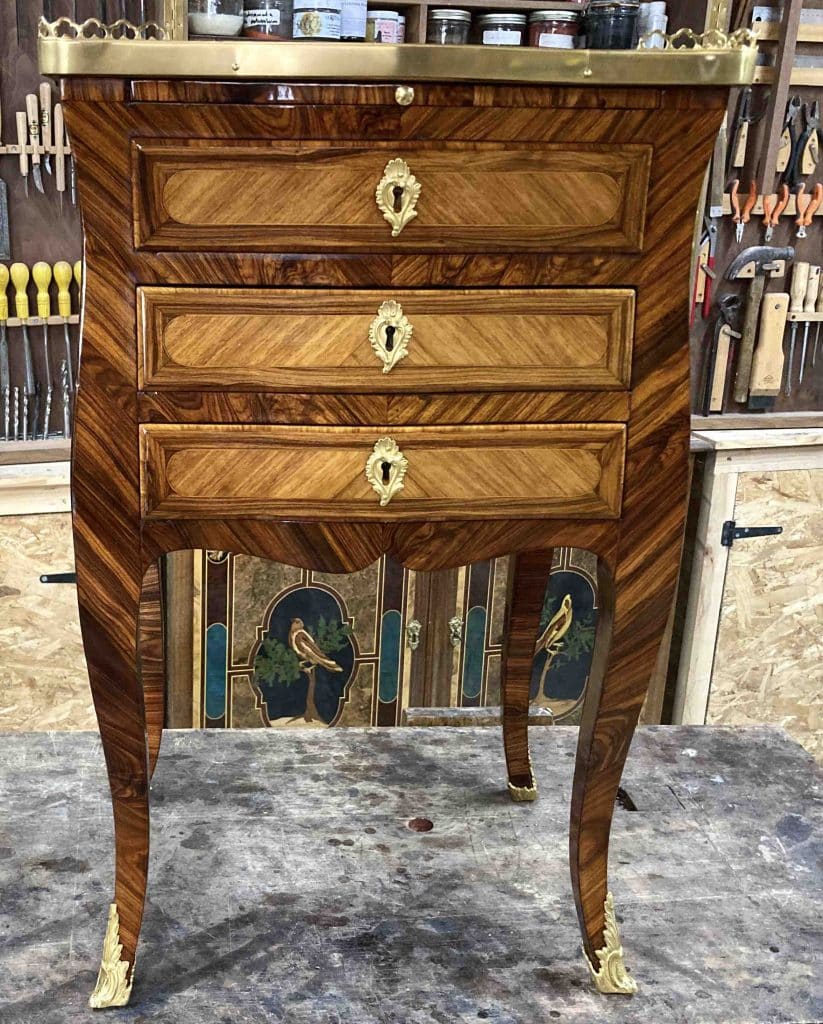
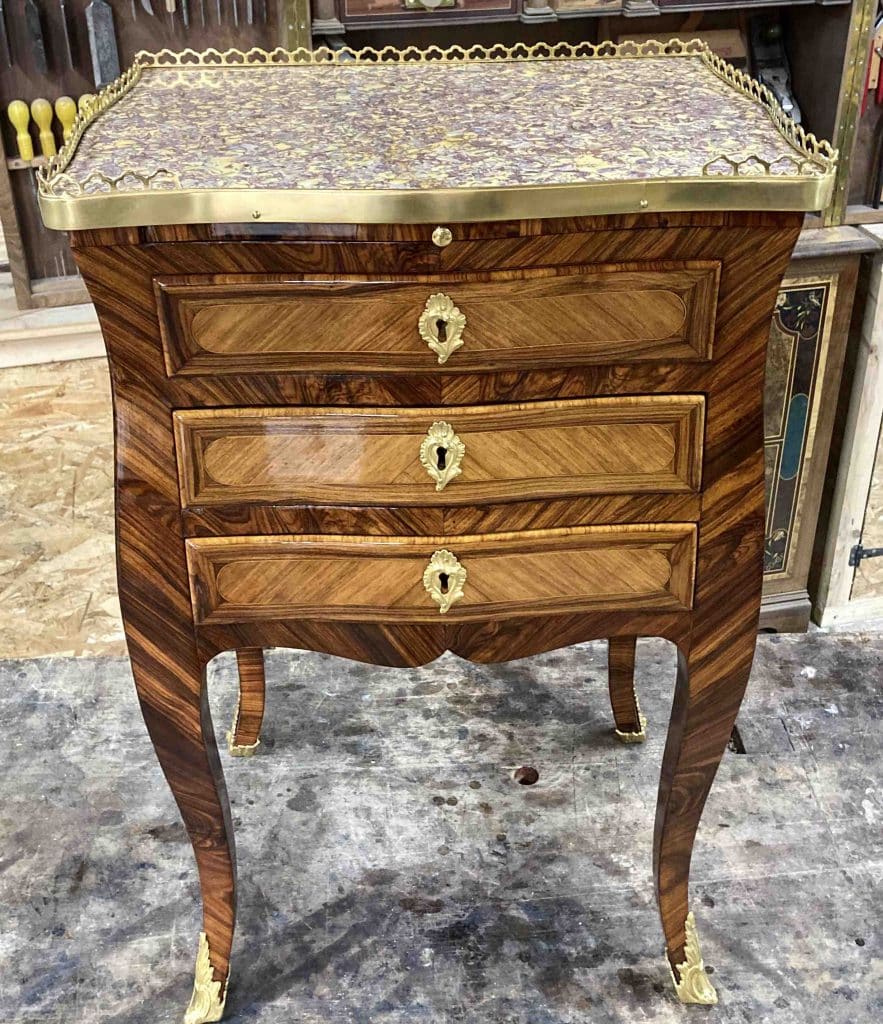
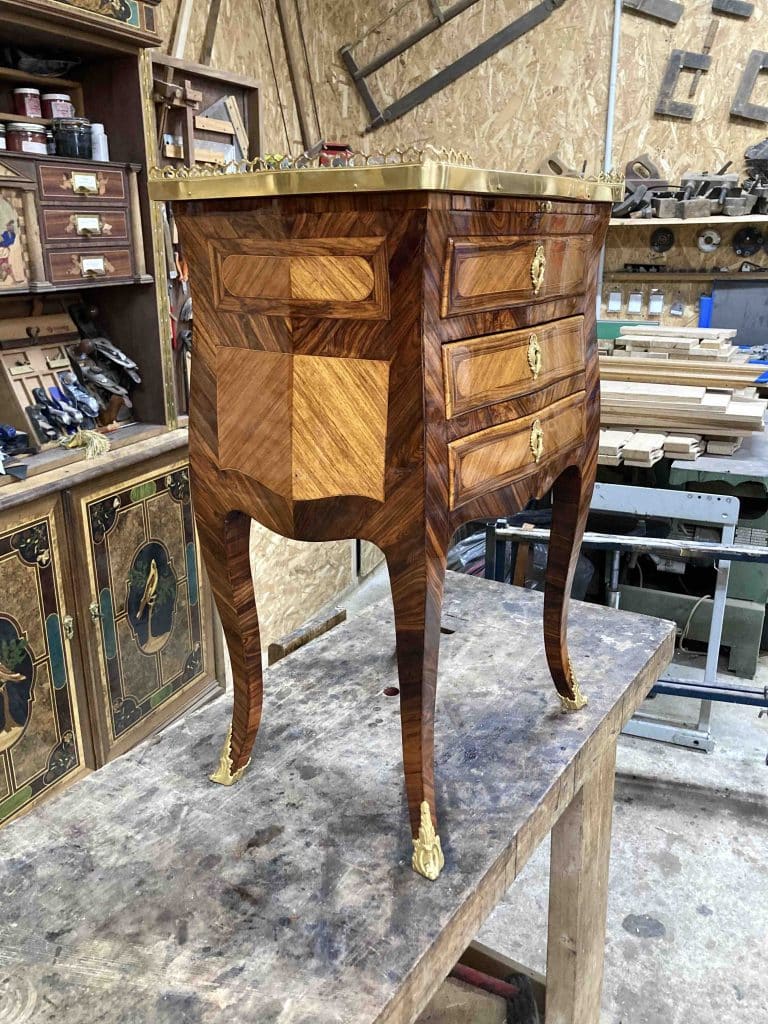
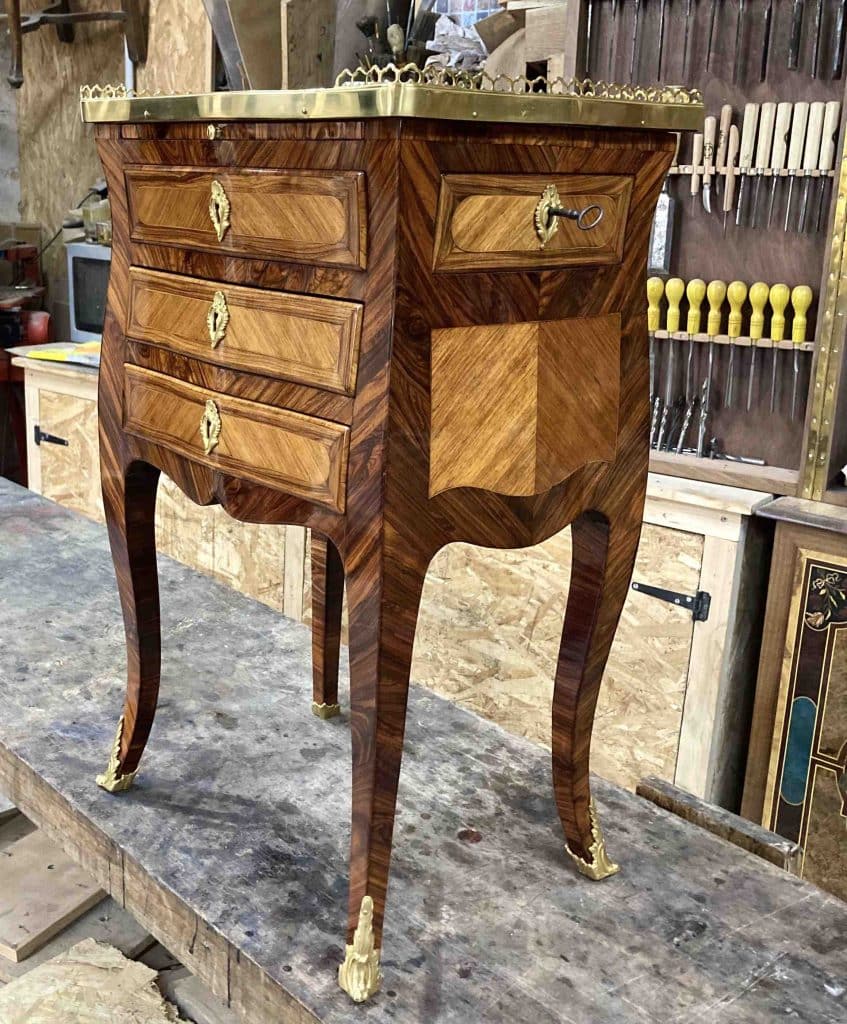
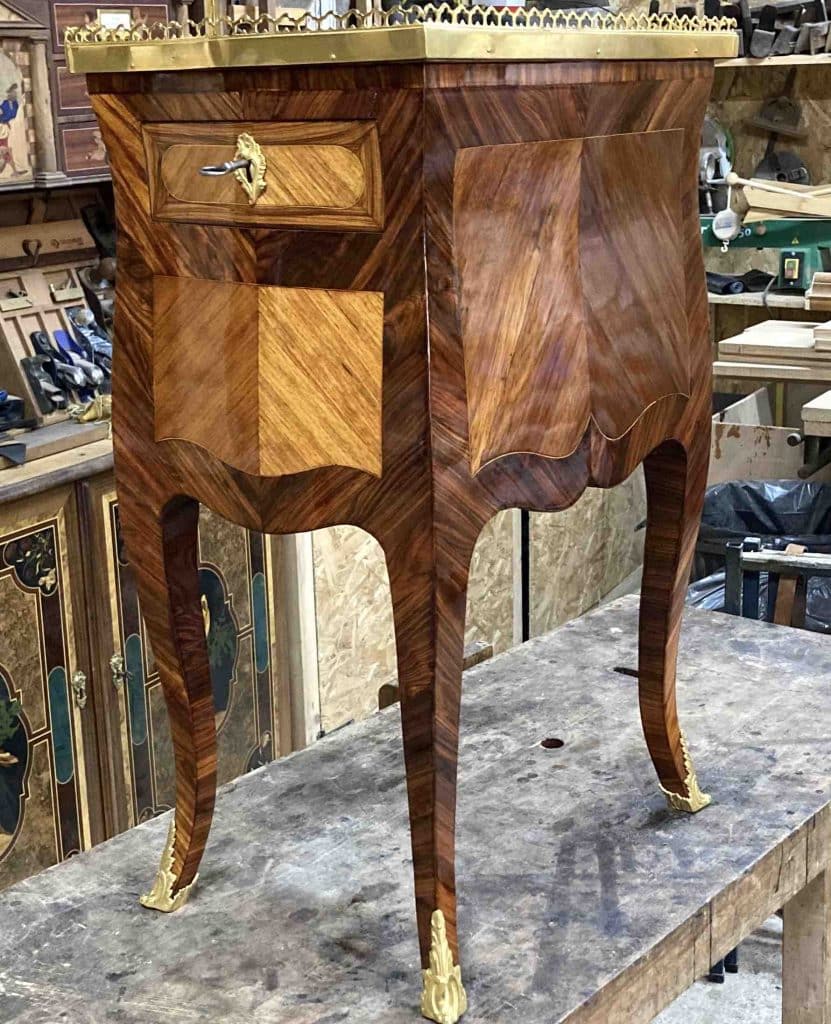
Restoration of a Louis XV period drawing table, or more precisely, a writing table, veneered in rosewood with a satinwood back. Born from the 18th-century passion for correspondence, fashionable merchants deployed all their ingenuity to create numerous models of utilitarian tables to be placed in the center of a room. These tables differed from ordinary tables; they were generally equipped with a writing surface and drawers for storing ink and quills.
It was at the end of the 17th century that the term "writing table" first appeared in the general inventory of the Crown's furniture. It was also called a "writing table." For example, in 1681, we find:«A table that opens, with two hatches at the top, furnished inside with a writing desk, and outside with red velvet… ».
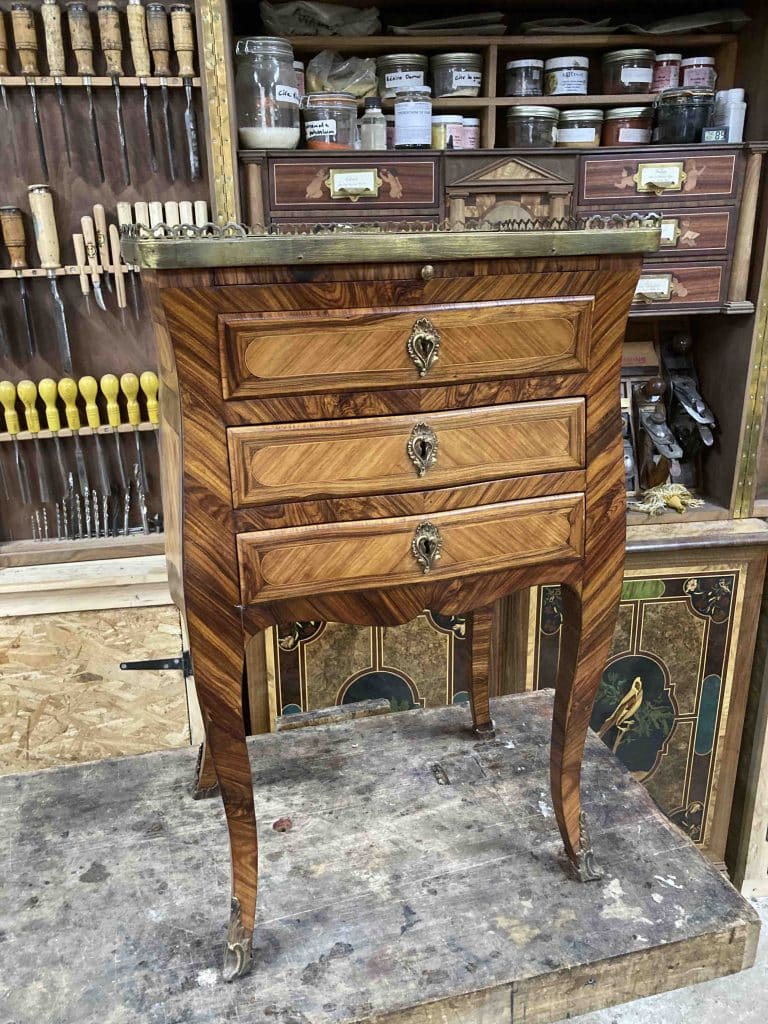
This table arrived at the workshop in fairly good overall condition. The frame showed no cracks, and the veneers were only slightly peeling. No, the main damage was actually due to excessive restoration, resulting from over-sanding. Besides a few poorly aged repairs, the numerous holes, mainly on the corners and especially in the satin veneer on the back, were unfortunately a major drawback.
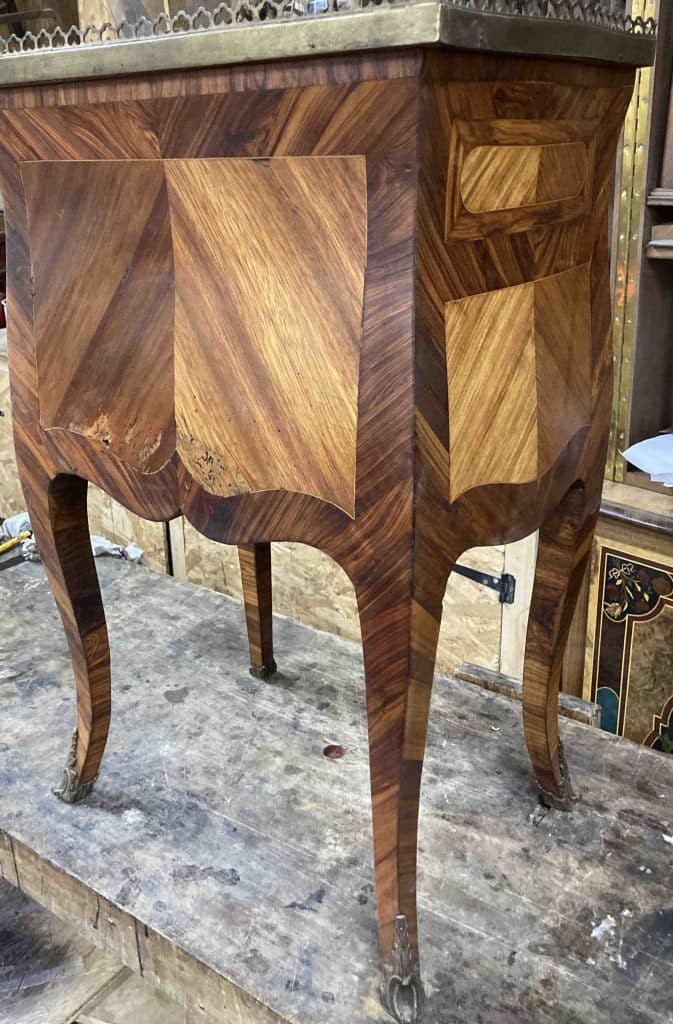
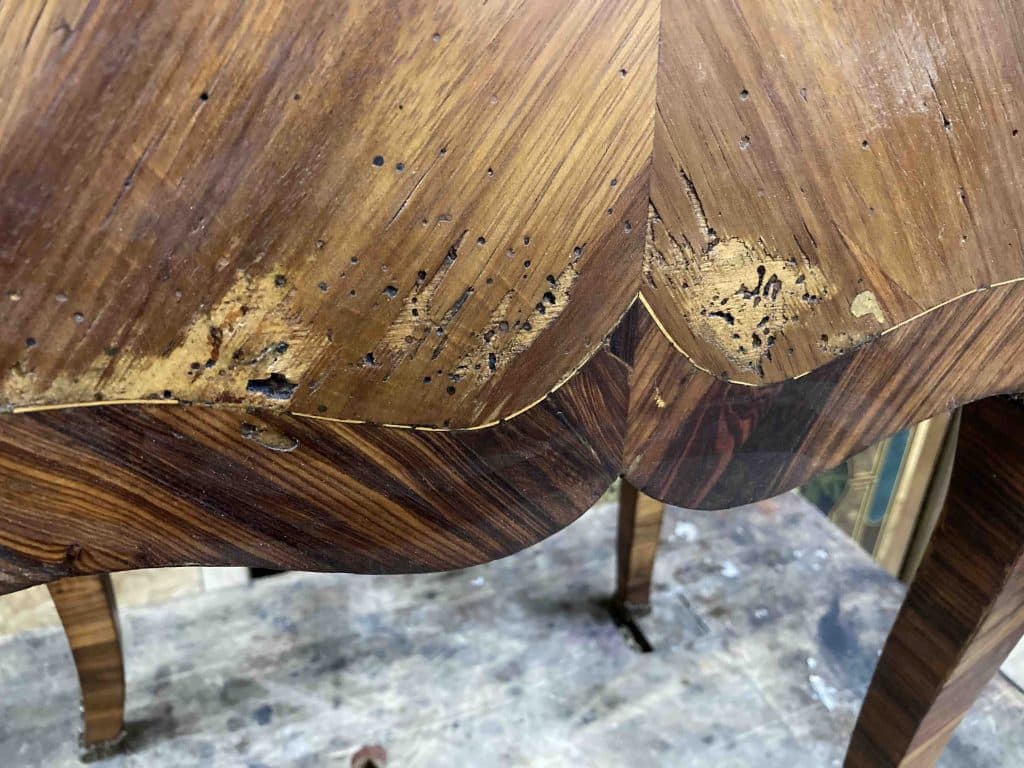
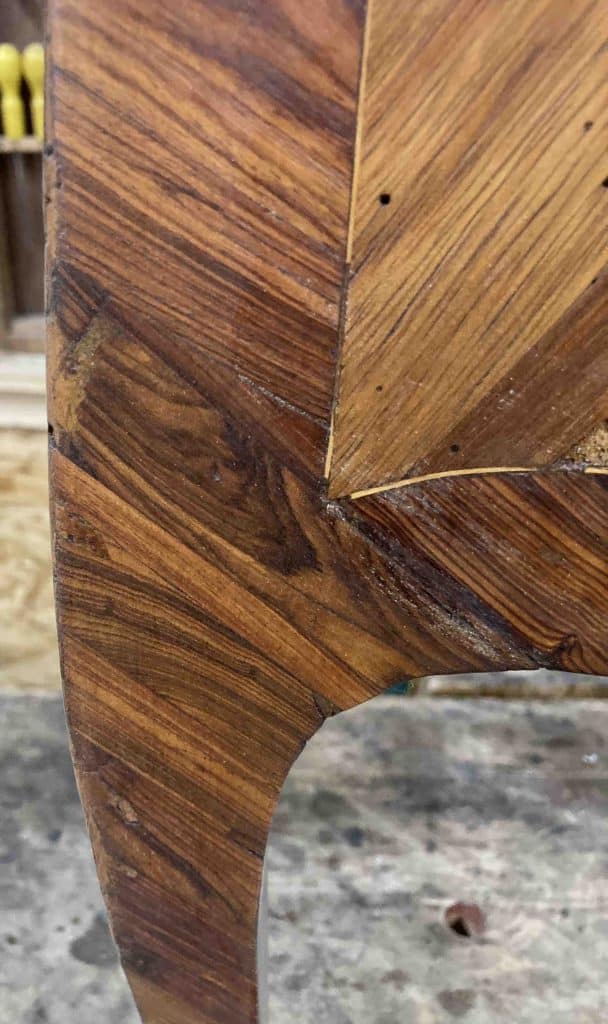
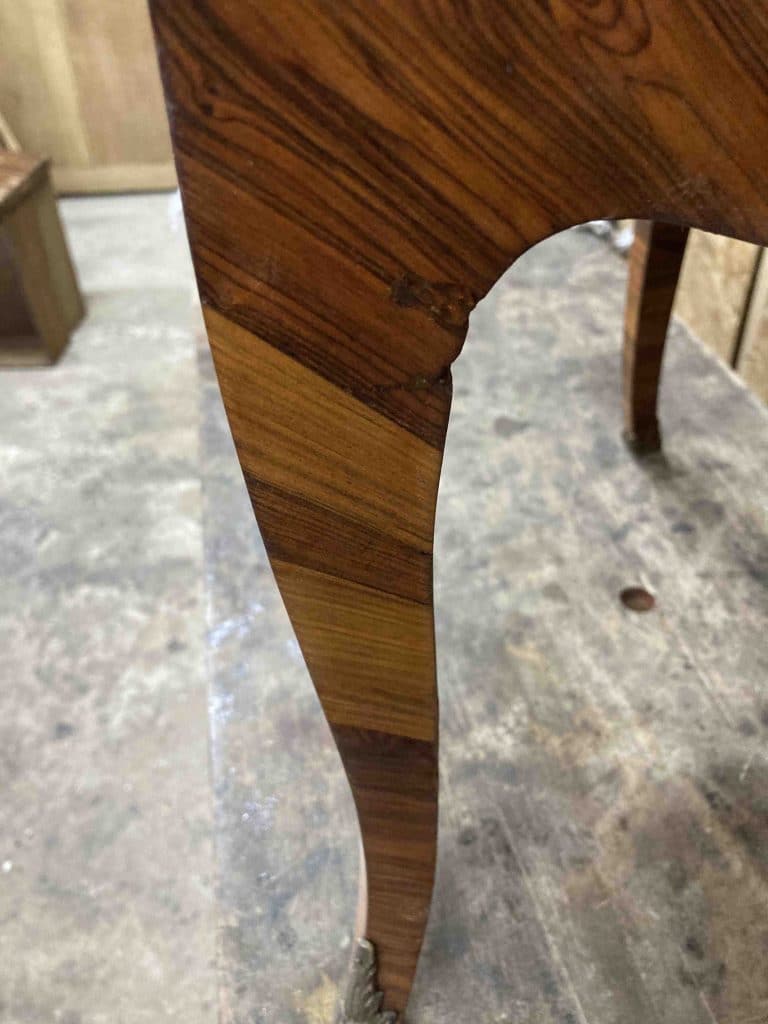
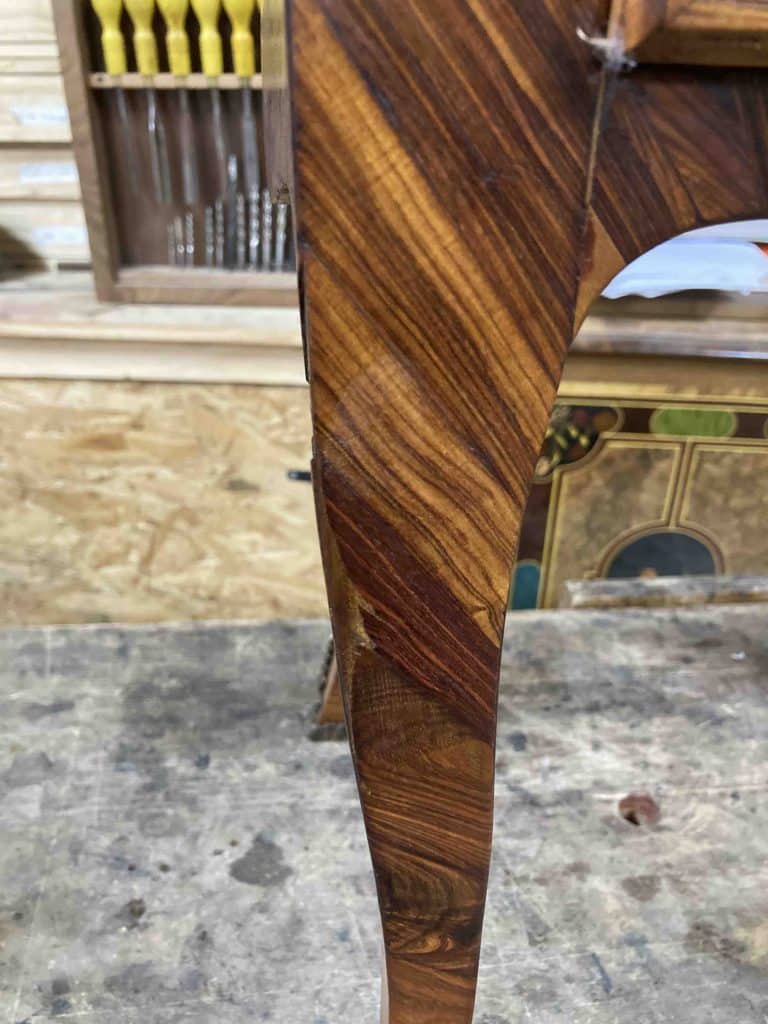
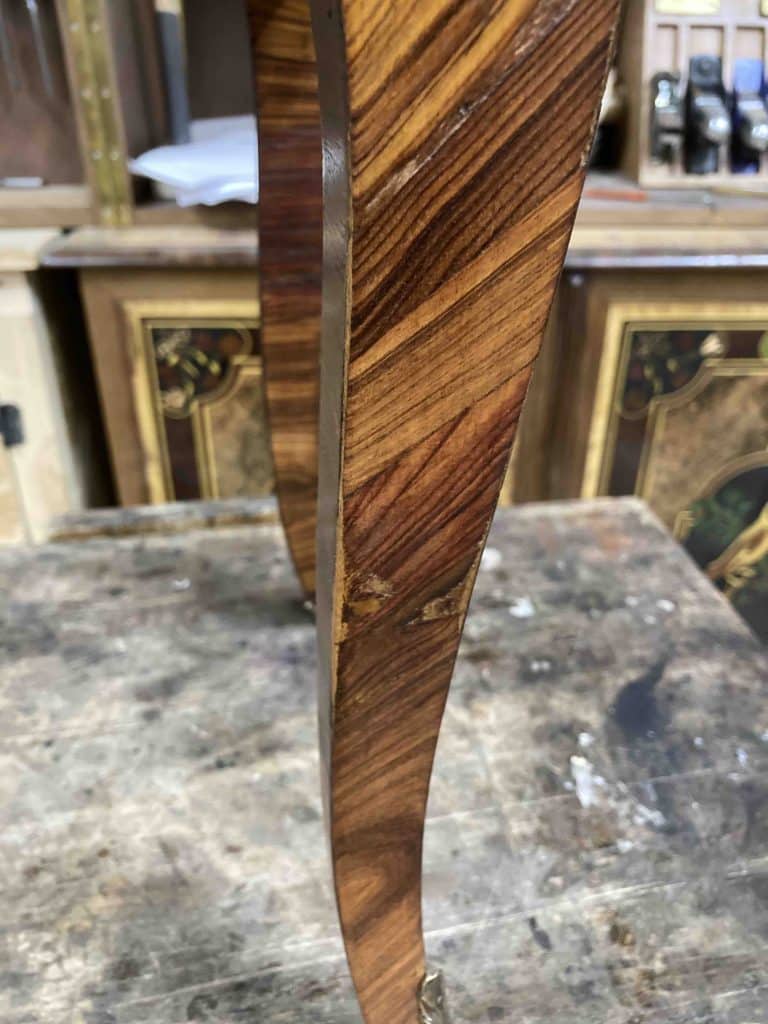
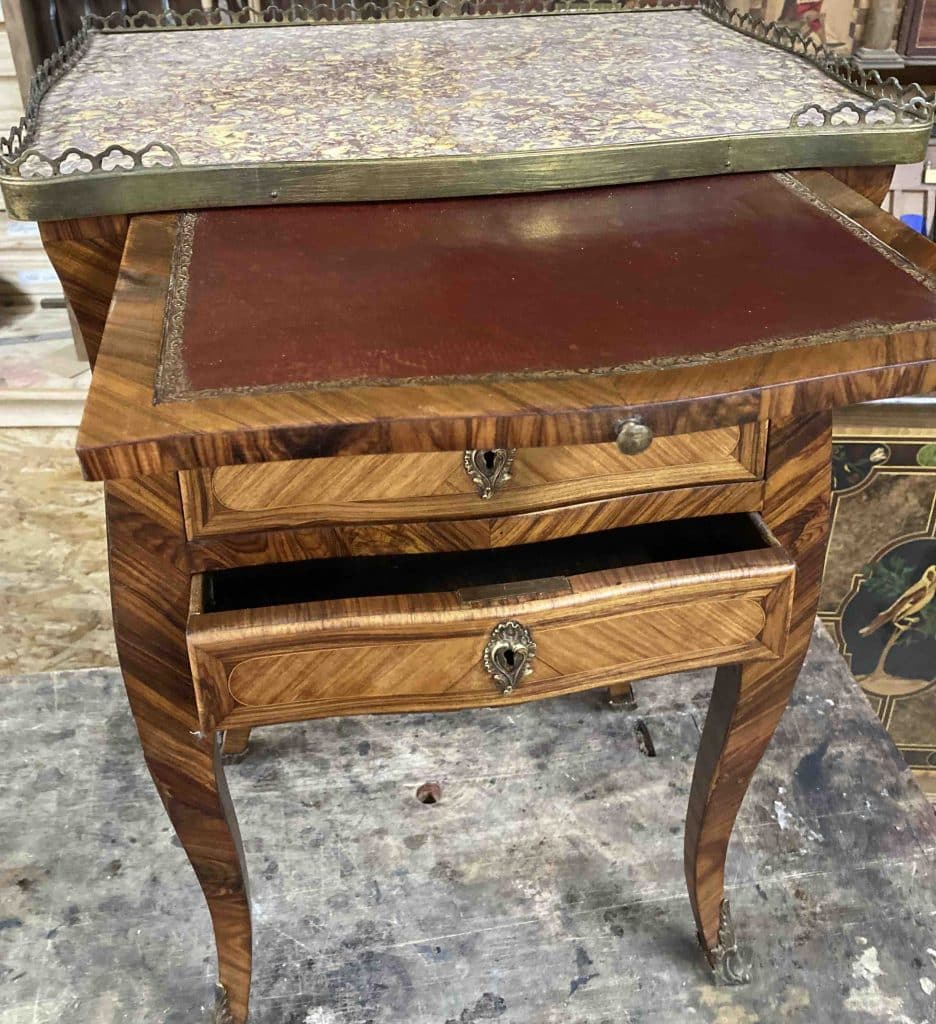
In the interest of preservation and to avoid further damage to the piece, the work was carried out with a focus on conservation. The few missing veneers were replaced with sawn, scraped, sanded veneer, cut to the correct thickness as a backing before being glued with hot glue. Most of the small holes were filled with watercolor between coats of varnish. Larger holes in the satinwood veneers were concealed with a very thin sheet (shavings made with a plane from satinwood veneer) and then touched up with watercolor.
After oxidizing the grafts, a colorless buffer varnish was then applied.
To see previous restorations : https://ebenisterie-mathieuvath.fr/en-ce-moment-a-latelier/