Transitional dresser

Ebénisterie Mathieu VATH

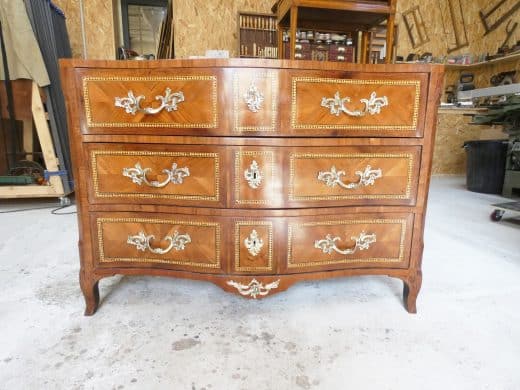
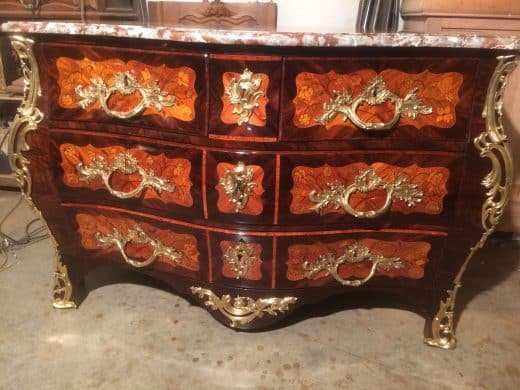
Here is a very simple commode from eastern France, probably dating from the late 18th century. Its front is slightly curved and its uprights are chamfered. The bronze mounts are probably not original. The frame is made of solid softwood, the uprights of oak. The drawer bottoms are set in a rebate and slide on the drawer fronts, which is typical of provincial work. A small unusual feature: the commode has no top panel; the marble slab rests directly on the frame. At the level of […]
Louis XVI commode stamped JA BRUNS

Ebénisterie Mathieu VATH

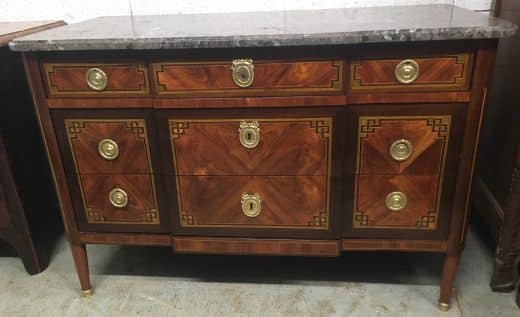
This week marks the completion of the restoration of a Louis XVI commode stamped JA BRUNS. Its frame is oak, except for the side panels, backs, drawer fronts, and two drawer bottoms, which are made of softwood. It is veneered with rosewood in a butterfly pattern and amaranth for the edges. The false fluting is in boxwood and ebony. A green-stained maple fillet outlines the Greek key corners. A few satinwood additions from previous restorations are visible. The marble top is Sainte-Anne gray. This commode […]

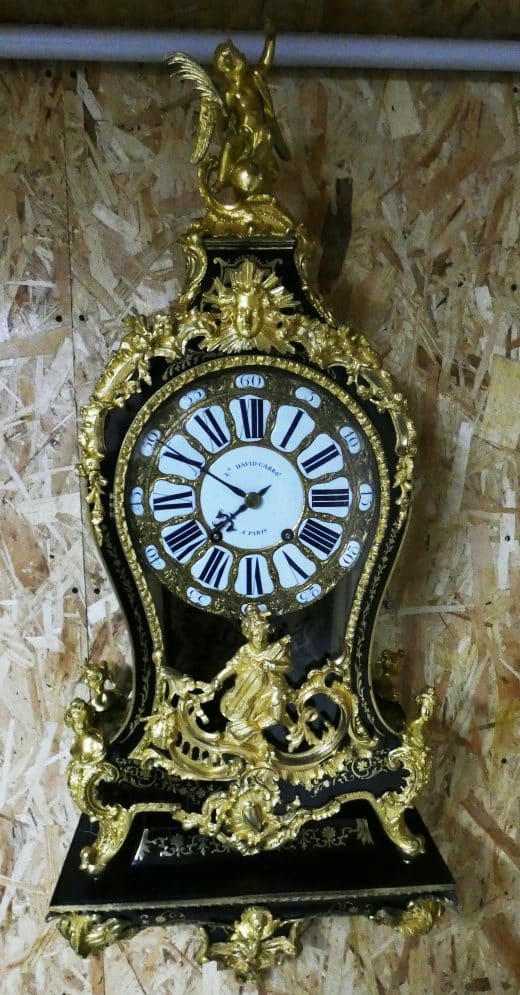
Label signed "Louis David Carré in Paris"«

Ebénisterie Mathieu VATH

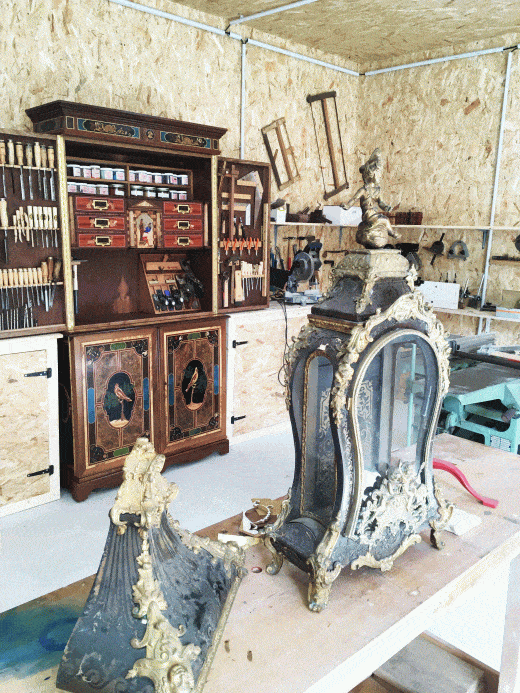
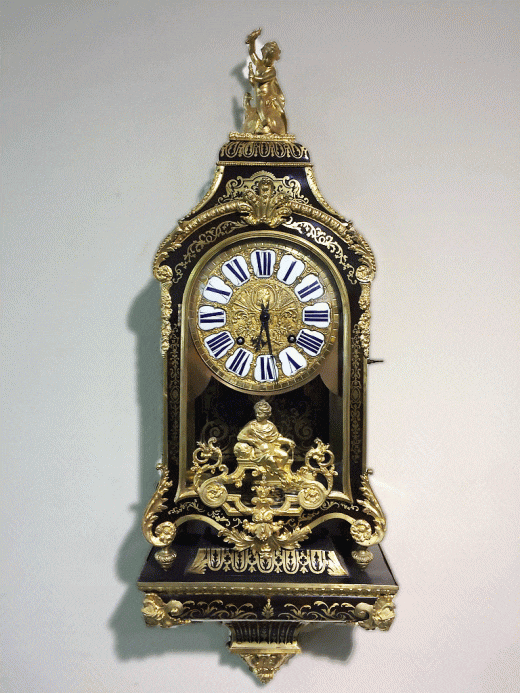
After several weeks of work, the restoration of this clock is finally complete. It is a Louis XV period clock in brown tortoiseshell and brass marquetry, with rosewood restorations. The dial is by Louis David Carré, nephew of Julien Le Roy, who became a master craftsman on December 31, 1748. Lodged at the Louvre from 1744, he was elected a juror in 1775. The greatest treasure of this clock lies in its bronze mounts. They are truly magnificent, and above all, they are in very good condition. There is only […]

Louis XVI style sewing box

Ebénisterie Mathieu VATH

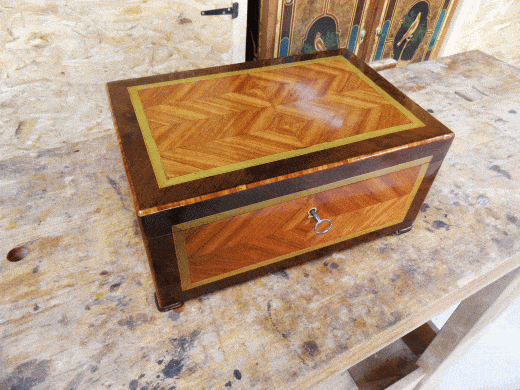
This sewing box dates from the Napoleon III period. Its frame is made of conifer. It is veneered with Rio rosewood, mahogany for the interior, and bound with boxwood and green-stained maple. A great quality of this box is that its lid has not warped. This is often the major problem with this type of object. People forget to lock them, and the wood warps. It then becomes very difficult to find the "trick" to make the box close properly without extensive restoration. Restoration work […]

Louis XVI style table

Ebénisterie Mathieu VATH

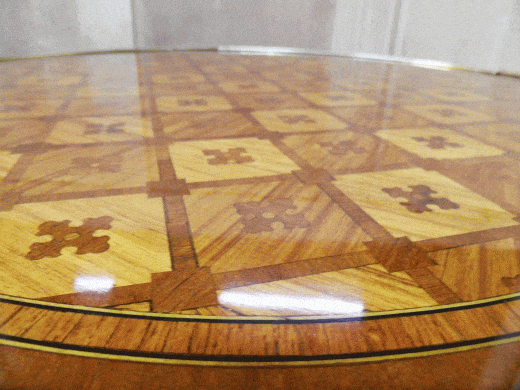
Here is a Louis XVI style table, which is probably an early 20th-century piece. It was likely made in the Faubourg Saint-Antoine, or perhaps at the École Boulle. I have seen apprentice furniture of this quality made by students during their training. Its frame is oak, while the veneer is rosewood and mahogany with a black inlay. The restoration was straightforward, apart from a lack of rosewood in the marquetry […]

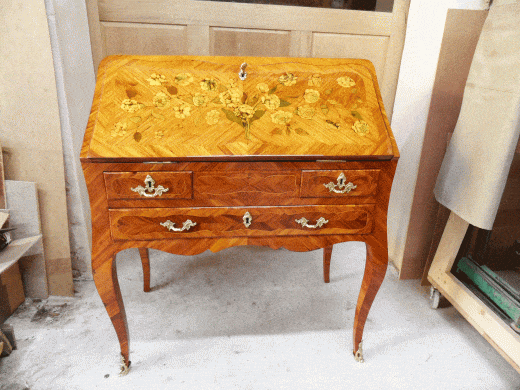
Louis XV slant-front desk (After restoration)

Ebénisterie Mathieu VATH

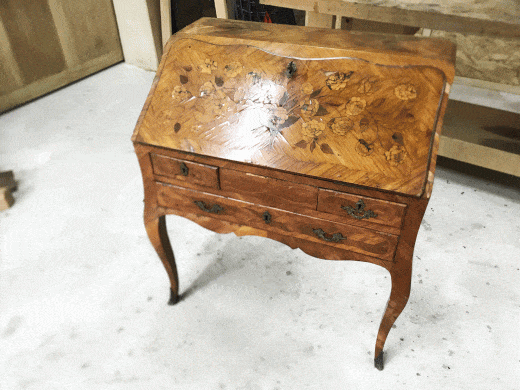
Some time ago, I told you about this desk that was being restored. Well, here it is finished. The varnishing took three weeks, allowing enough time for the varnish to dry properly and achieve the best possible result. To review the restoration process: Louis XV slant-front desk. Here are some before and after photos.

Louis XV slant-front desk

Ebénisterie Mathieu VATH

The restoration of a lovely slant-front desk, or as Riesener calls it in his memoirs, a "tomb-shaped secretary," began two weeks ago. Now that the restoration phase is complete and the varnishing has begun, I'm taking a moment to provide a brief summary. Description of the desk: Its frame is made of oak and fir, veneered with rosewood and violet wood. Furthermore, the drop-front features floral marquetry in boxwood, natural and stained maple, and hornbeam. In addition, the desk has a large drawer made of […]

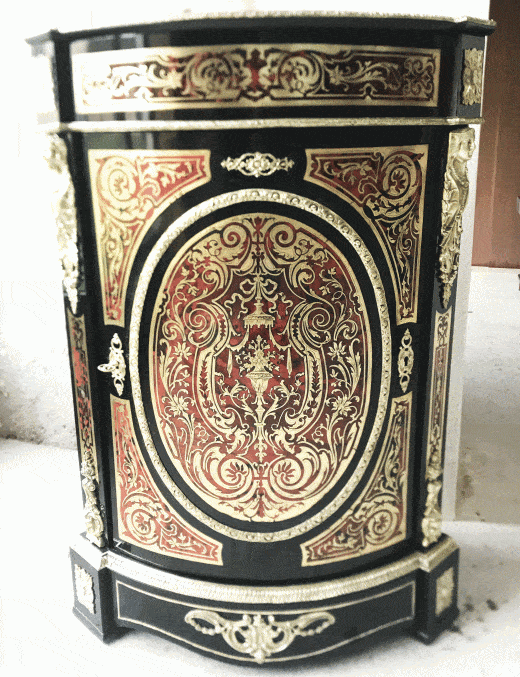
Corner cabinet in Boulle marquetry from the Napoleon III period

Ebénisterie Mathieu VATH

A classic restoration of Boulle marquetry: rehydration of the old glue by infiltration, creation and gluing of the missing brass fittings, and reconstruction of the base, which was in poor condition but not beyond repair. Finally, the bronzes were cleaned and a clear French polish was applied. Proof that appearances can be deceiving: even a badly damaged piece of furniture can regain its former beauty.

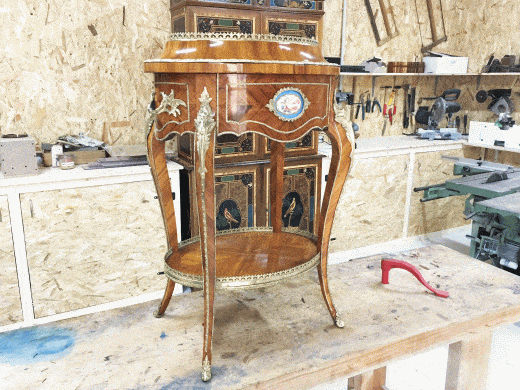
Napoleon III planter and Louis XVI chest of drawers

Ebénisterie Mathieu VATH

This week, two pieces of furniture left the workshop: a Napoleon III jardinière in rosewood veneer and a Louis XVI chiffonier in rosewood and violet wood veneer. If this piece had seven drawers, it would have been called a "semainier" (weekly chest of drawers). Here are some photos of their restoration.

Louis XV commode stamped JC Ellaume

restauration de mobilier

Restoration of a Louis XV period commode stamped JC Ellaume. This commode is veneered in rosewood and palisander with floral marquetry on the drawer fronts. The frame is made of oak and softwood. Jean-Charles Ellaume, whose name is also spelled Allaume, became a master craftsman in Paris on November 6, 1754. Many pieces of furniture bearing his stamp are known, mostly Louis XV commodes. For over thirty years, in his workshop on Rue Traversière, he produced numerous high-quality pieces. These are primarily […]

Alexandre Morell's Boulle Cartel – Marquetry

Ebénisterie Mathieu VATH

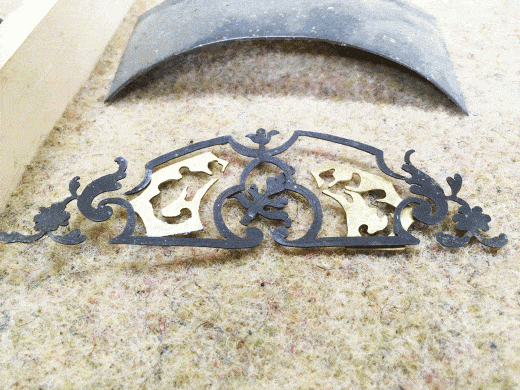
I reattached the structure, removed the brass, cleaned up the remaining animal glue, and eliminated the traces of superglue and neoprene adhesive. Next came cutting the new pieces of brass and tortoiseshell to fill the gaps. So, as usual, I took an impression of the missing piece. I then glued this paper onto a brass plate, which was itself glued with fish glue to a 4mm plywood base. This made the plate easier to cut. Retrieving the brass piece is simple: […]

Alexandre Morell's Boulle Cartel

Ebénisterie Mathieu VATH

Here is my first client, or patient… whichever you prefer. It's a Boulle marquetry cartel clock in brown tortoiseshell, ebony, and brass. As the photos show, it's not in very good condition. A lot of the brass is missing, and what remains is peeling off everywhere. At first glance, it's always difficult to precisely date a Boulle cartel clock. Moreover, this one doesn't bear a maker's mark. On the other hand, it has corkscrew screws, typical of the 18th century, and few visible tool marks. Yet, I had a hunch it was a copy […]