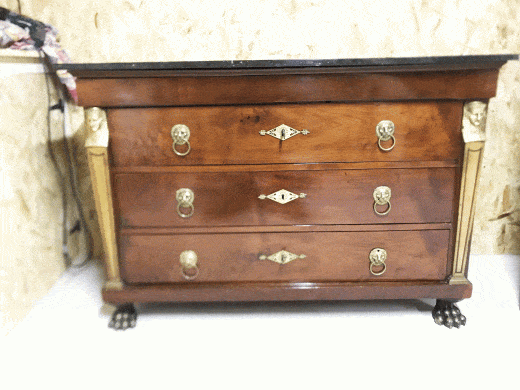
Commode returning from Egypt

Ebénisterie Mathieu VATH

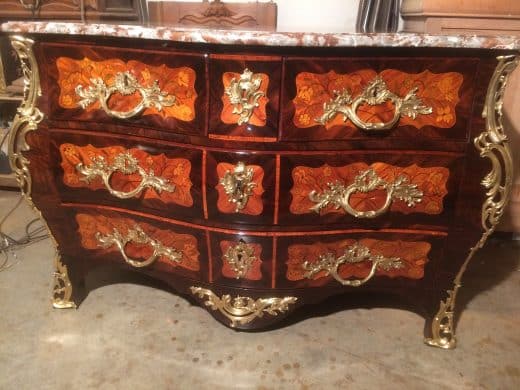
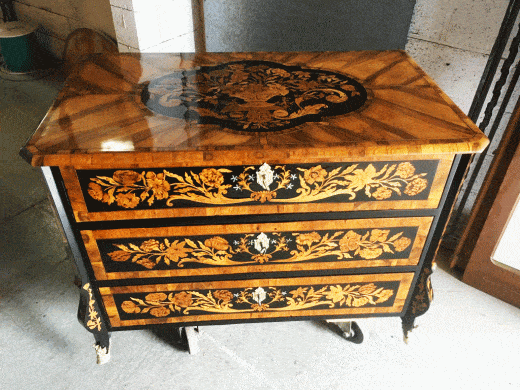
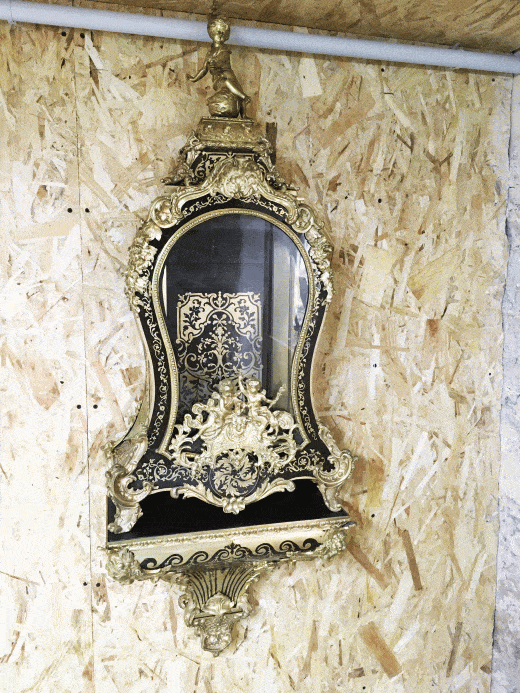
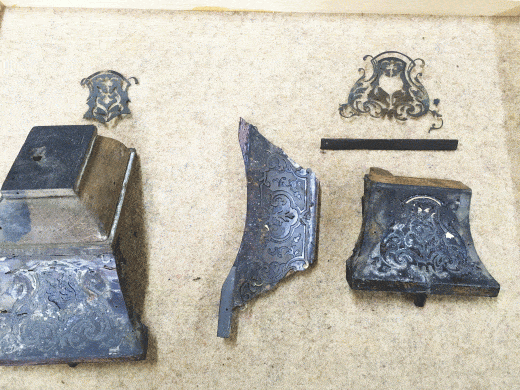
During the turbulent period of the French Revolution, furniture production was considerably diminished, and most artisans experienced very difficult times. Overall, from the Consulate to the Directory, furniture and seating had little time to evolve. However, even though some decorative motifs inspired by Egypt had already appeared, it was after the Egyptian expedition (1798-1801) that they evolved into a unique style. The so-called "Return from Egypt" style, however, lasted only a short time: a decade at most, as it would […]
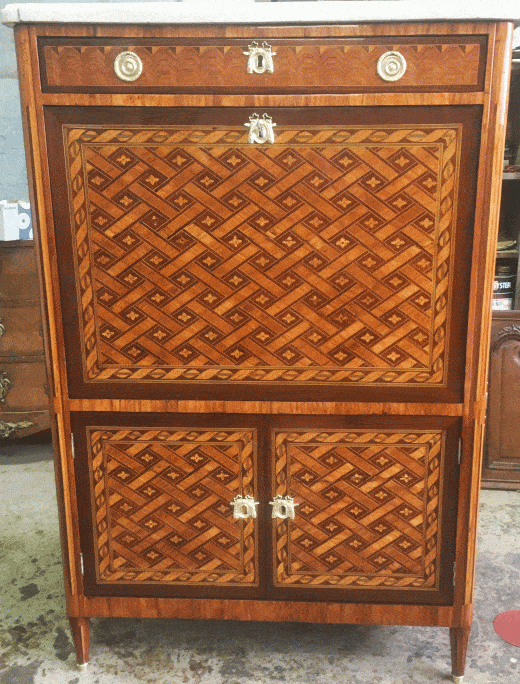
Secretary stamped Martin Ohneberg

Ebénisterie Mathieu VATH

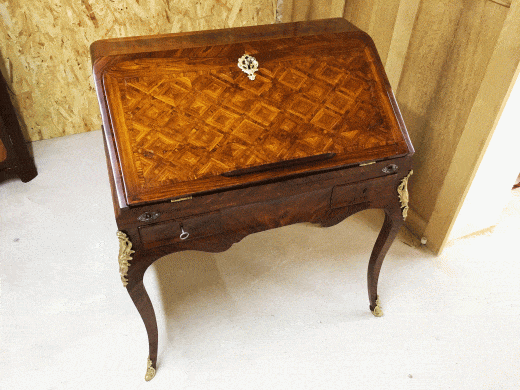
This week marks the completion of the restoration of a Louis XVI period secretary. Martin Ohneberg (Master in 1773), the cabinetmaker who crafted this piece, was an excellent marquetry artist and used very high-quality rosewood. He produced numerous pieces of furniture with very simple lines but exquisite marquetry, including an endless variety of drop-front secretaries. This particular one is veneered with rosewood and amaranth, and features a mosaic marquetry of maple blossoms on a red satinwood ground. The framing bands […]

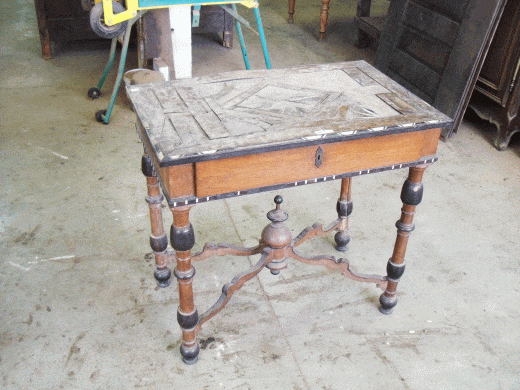
Louis XIII style desk

Ebénisterie Mathieu VATH

A look back at the restoration of a 17th-century Louis XIII table. It is made of solid walnut and veneered with walnut, ebony, ivory, and boxwood. This table had spent a long time in an attic, and unfortunately, the tabletop suffered considerably. Many sections of veneer were missing. The restoration therefore began by removing what little veneer remained. It was very easy; it was completely detached. I simply had to lift it with a thin blade, and it came right off. After having […]

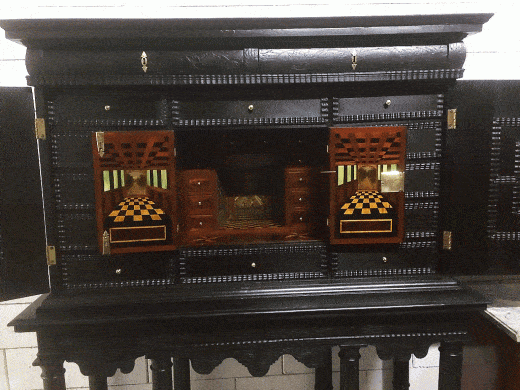
Louis XIII Cabinet

Ebénisterie Mathieu VATH

A look back at a fascinating restoration project (at least for me). So fascinating, in fact, that I forgot to take photos at the beginning! This cabinet dates from the 17th century and features two drawers in the cornice and two doors in the upper section. The base consists of two drawers in the frieze supported by eight turned feet and a top resting on ball feet. Inside are twelve drawers and two doors concealing an interior theater, as well as eleven more drawers. The feet, along with […]

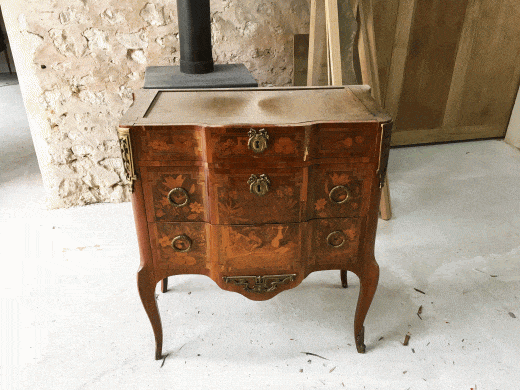
Transitional dresser in the style of Topino

Ebénisterie Mathieu VATH

A month ago, a lovely transitional commode arrived, which reminds me of the work of the cabinetmaker Charles Topino (circa 1742-1803) – he received his master craftsman's certificate on July 4, 1773. However, this commode does not bear his stamp, nor any stamp for that matter. This confirms that a stamp is not necessary to possess a piece of high-quality furniture. Furthermore, the marquetry could very well have come from Topino's workshop, as he sold panels of his marquetry to the haberdashers and his colleagues […]

Louis XV slant-front desk stamped HEDOUIN (Restoration complete)

Ebénisterie Mathieu VATH

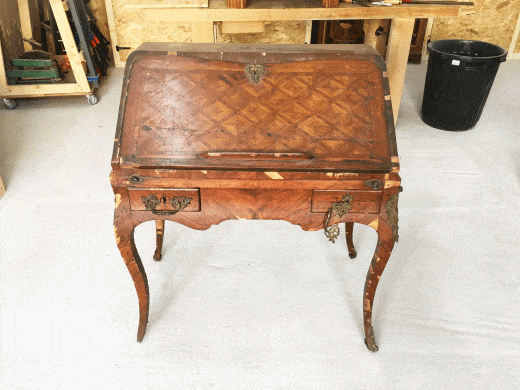
Remember that slant-front desk? Well, it's finished. It was quite a task, but now it's regained its former glory. Only the drawer keyholes and the leather upholstery remain to be fitted before it's returned to its owner. A large part of the legs has been remade from sawn violet wood. This was cut to the correct thickness, scraped and sanded, then oxidized before being glued, so as not to have to sand the entire piece of furniture […]

Louis XV slant-front desk stamped HEDOUIN

Ebénisterie Mathieu VATH

Thanks to its stamp, it is possible to date this slant-front desk, or cantilevered desk, between 1738 and 1783. The life of Jean-Baptiste Hedouin is relatively unknown. After becoming a master craftsman, he set up his workshop on Rue Traversière-Saint-Antoine. All the furniture he produced was of high quality. His pieces, primarily in the Regency and Louis XV styles, almost all veneered in sheets or with grid patterns, were varied: wardrobes, flat and slant-front desks, bookcases… but it was the commodes that constituted the largest part of his output.

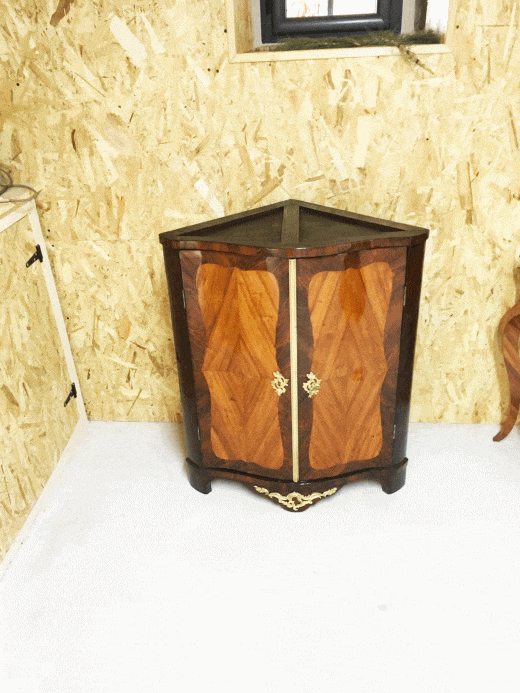
Louis XV corner cabinet, stamped JM CHEVALLIER

Ebénisterie Mathieu VATH

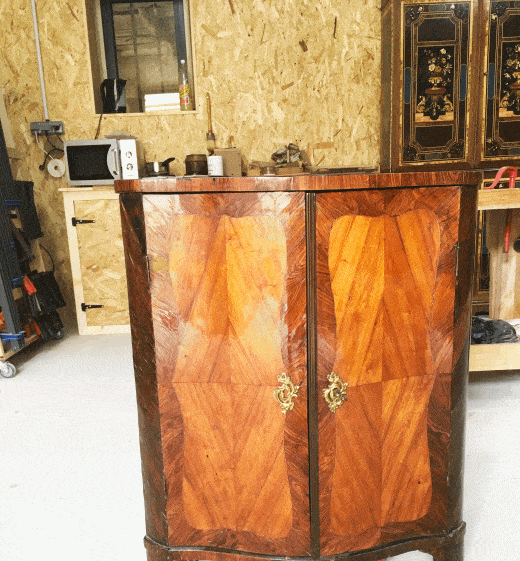
Here is a corner cabinet stamped by Jean-Mathieu Chevallier. It is made of solid oak and veneered with rosewood and violet wood with a boxwood inlay. Jean-Mathieu Chevallier was already established on the rue de Grenelle under the sign "à la Croix Chevallier" when he obtained his master craftsman's certificate in 1743. He subsequently expanded his business considerably, had business dealings with André-Charles Boulle, one of the sons of the famous cabinetmaker, and contributed to furnishing the Hôtel du Duc de Talmont, as well as the Château de Villegénis, which he had purchased […]

Napoleon III planter and Louis XVI chest of drawers

Ebénisterie Mathieu VATH

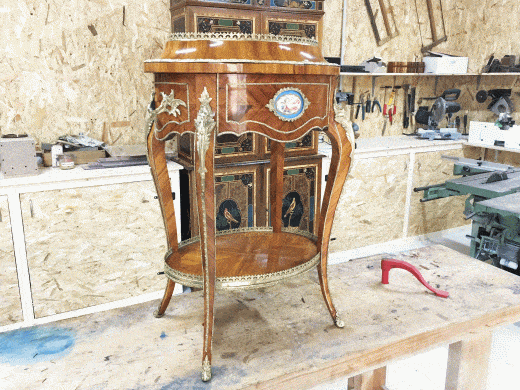
This week, two pieces of furniture left the workshop: a Napoleon III jardinière in rosewood veneer and a Louis XVI chiffonier in rosewood and violet wood veneer. If this piece had seven drawers, it would have been called a "semainier" (weekly chest of drawers). Here are some photos of their restoration.

Louis XV commode stamped JC Ellaume

restauration de mobilier

Restoration of a Louis XV period commode stamped JC Ellaume. This commode is veneered in rosewood and palisander with floral marquetry on the drawer fronts. The frame is made of oak and softwood. Jean-Charles Ellaume, also sometimes written as Allaume, received his master craftsmanship in Paris on November 6, 1754. Many pieces of furniture bearing his stamp are known. These are mostly Louis XV commodes. It was in his workshop on Rue Traversière that he produced numerous high-quality pieces of furniture for over thirty years, […]

Mazarine Chest of Drawers

Ebénisterie Mathieu VATH

This week, we're revisiting the restoration of a Louis XIV period commode, a commode known as a Mazarine commode. But where does the name "Mazarine" come from? Well, it seems that the first example was made for the famous Mazarine Library, quite simply. Moreover, the illustrious creator of the commode was none other than André Charles Boulle himself. For Louis XIV's bedroom at Trianon, he revolutionized a type of furniture in 1708: the commode, which takes its name from its "practical" aspect compared to the chests that were widely used at the time. Today, we're presenting […]

Alexandre Morell's Cartel Boulle – The End

Ebénisterie Mathieu VATH

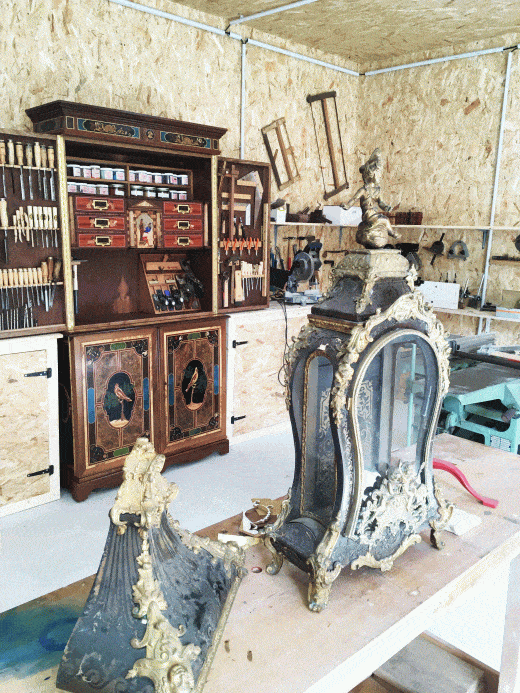
After a few hours of cutting, gluing, re-gluing, and cleaning the surfaces, we finally reach the finishing stage. For this cartel clock, we chose to French polish it because it's a finish that highlights the marquetry, protects it, and is easily reversible (like all my work). I always use a clear shellac varnish, whether on wood or other materials. The varnishing process is difficult to explain; it simply takes hours and hours […]

Alexandre Morell's Cartel Boulle – Continued

Ebénisterie Mathieu VATH

Once the various structural elements were glued back together, I tackled the tortoiseshell and brass marquetry. As you'll see, on this clock it's in very, very bad condition; practically nothing is holding. So, all the brass has to be removed. The tortoiseshell, however, is holding well; it's only partially detached. The first step in restoring this marquetry is therefore to remove and set aside each brass element. The second is to clean off the old glue, […]

Alexandre Morell's Boulle Cartel

Ebénisterie Mathieu VATH

Here is my first client, patient… well, whatever you want to call him. It's a Boulle marquetry cartel clock in brown tortoiseshell, ebony, and brass. As you can see in the following photos, it's not in very good condition. There are many missing brass pieces, and the remaining brass is peeling off everywhere. At first glance, it's always difficult to precisely date a Boulle cartel clock: this one doesn't have a maker's mark. However, it does have corkscrew screws (typical of the 18th century […]

Tool cabinet – End

Ebénisterie Mathieu Vath

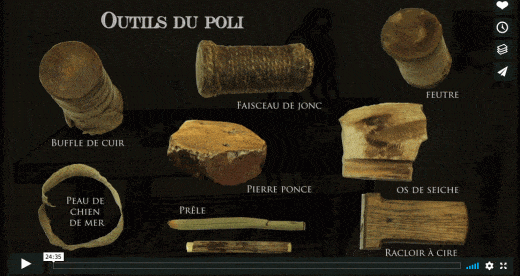
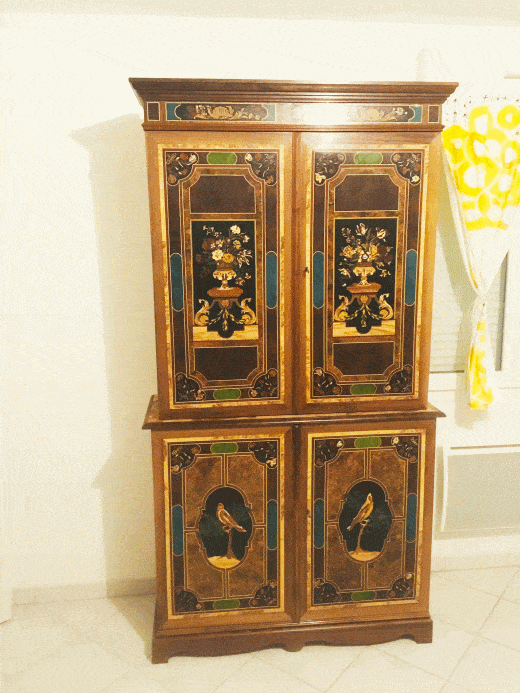
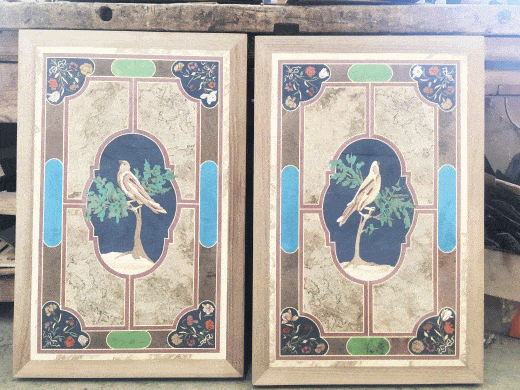
And there you have it, it's finished and ready to use. All the tools are in their proper place. All that's left is to find bronze fittings for the handles and keyhole escutcheons. For the finishing technique, I used the same one applied to furniture of that period: polishing. I first scraped the surface, then sanded it with 150-grit sandpaper. Next, I applied Venetian tripoli mixed with olive oil using a piece […]