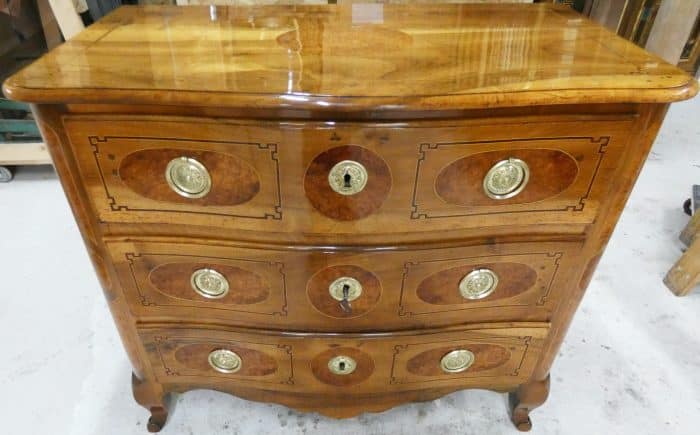
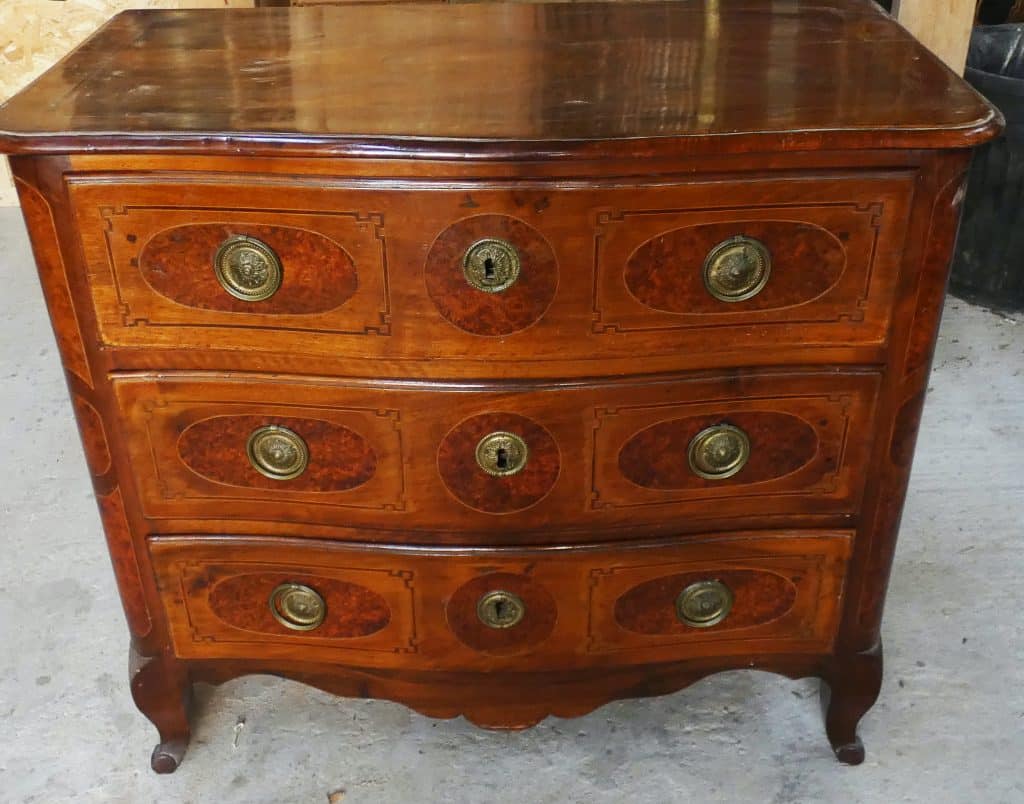
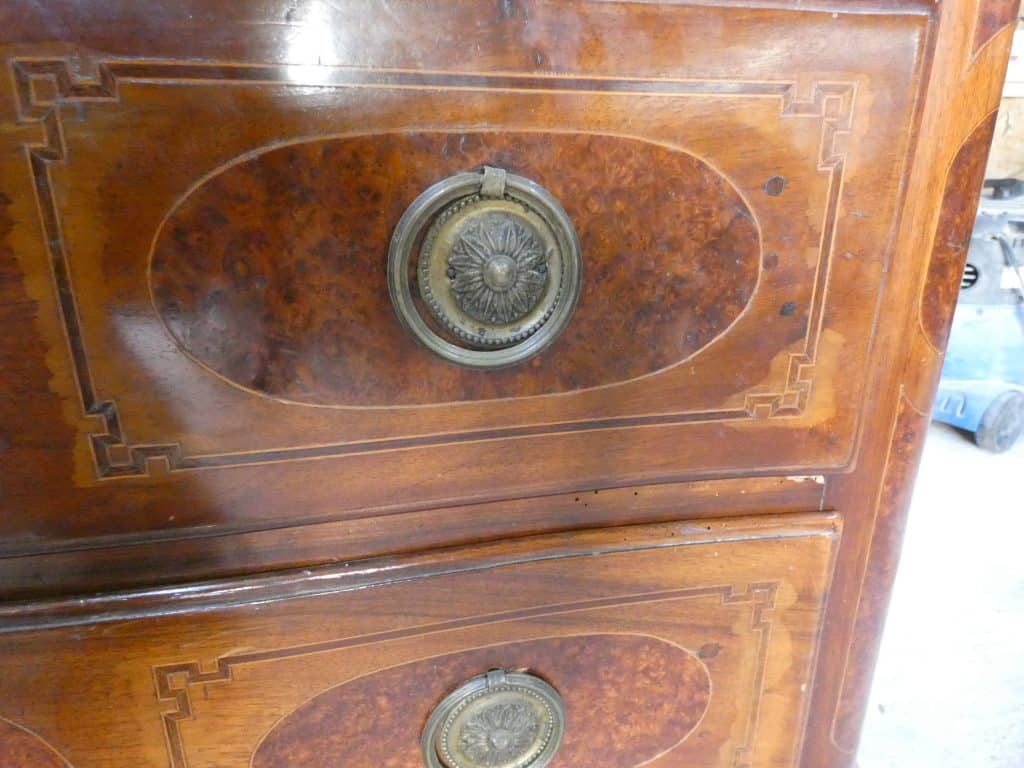
Here are some photos of the restoration of a solid walnut chest of drawers, veneered with thuya burl inlay and Greek key stringing in amaranth and boxwood. The drawers and the interior and back panels are made of fir.
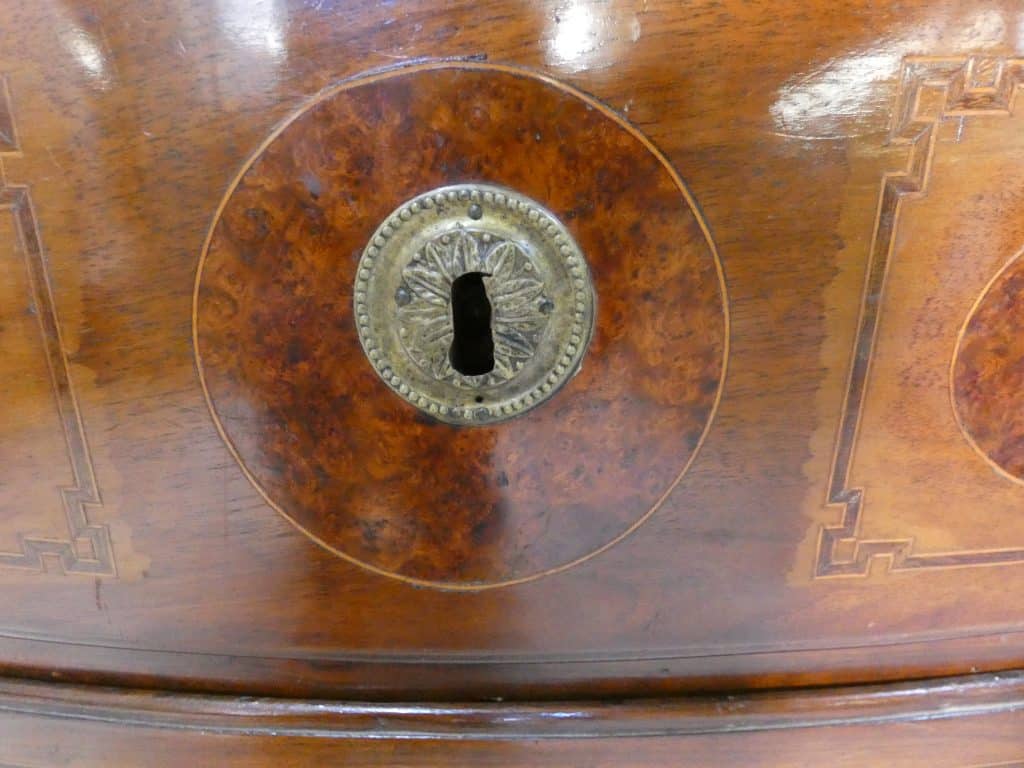
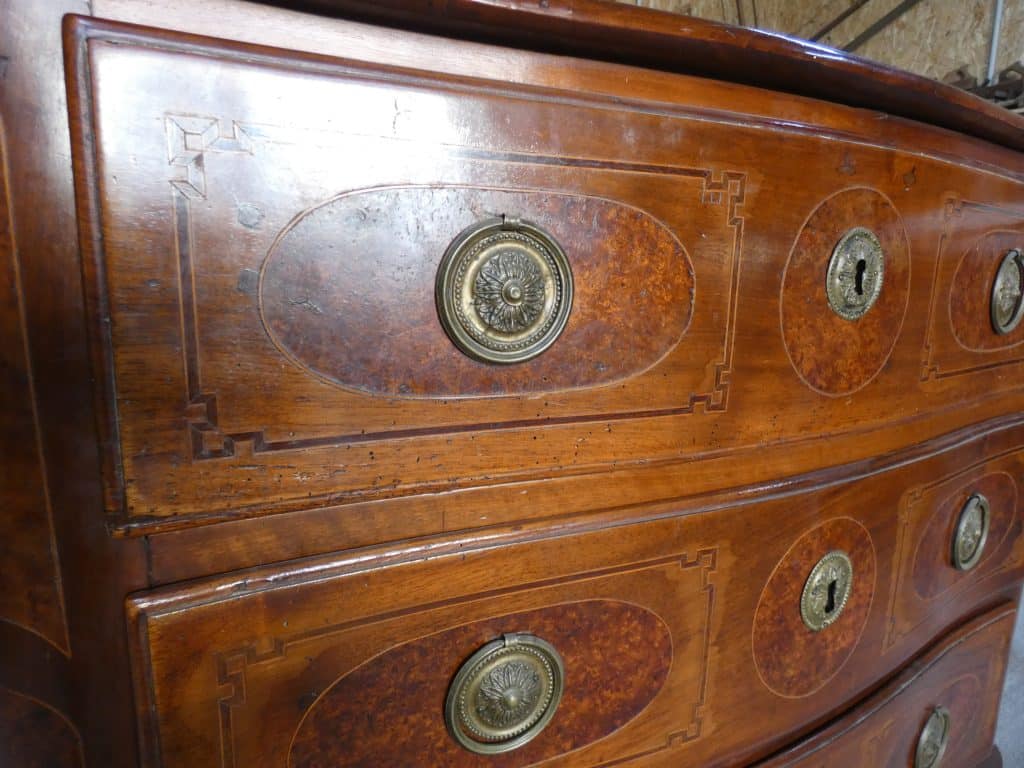
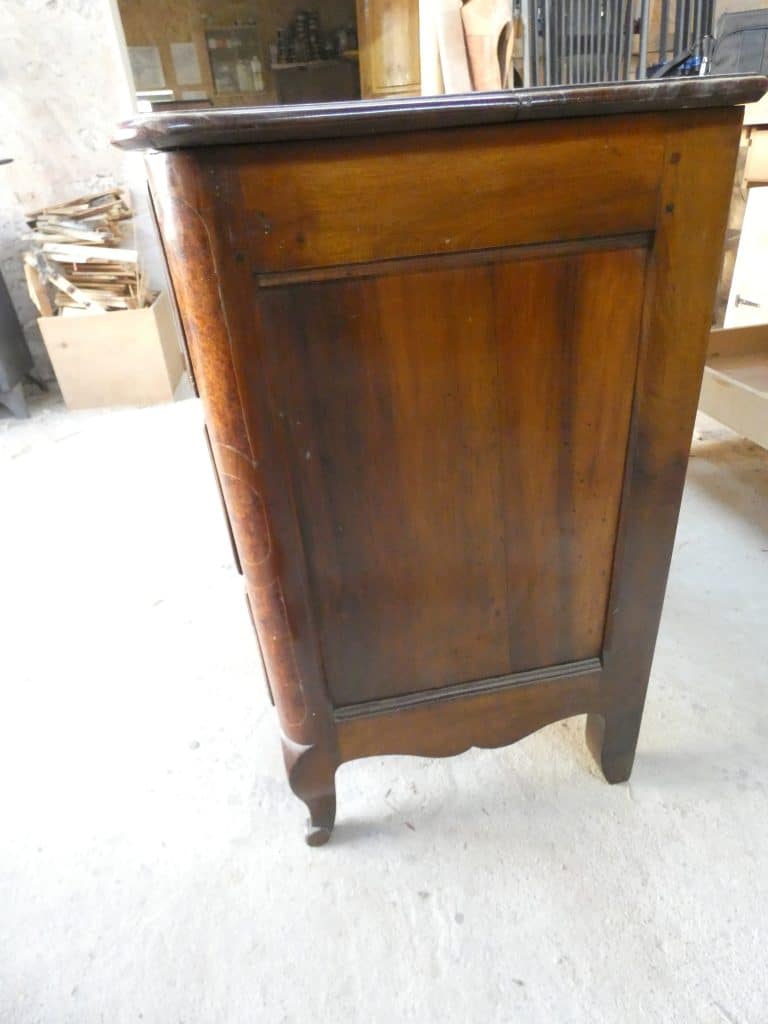
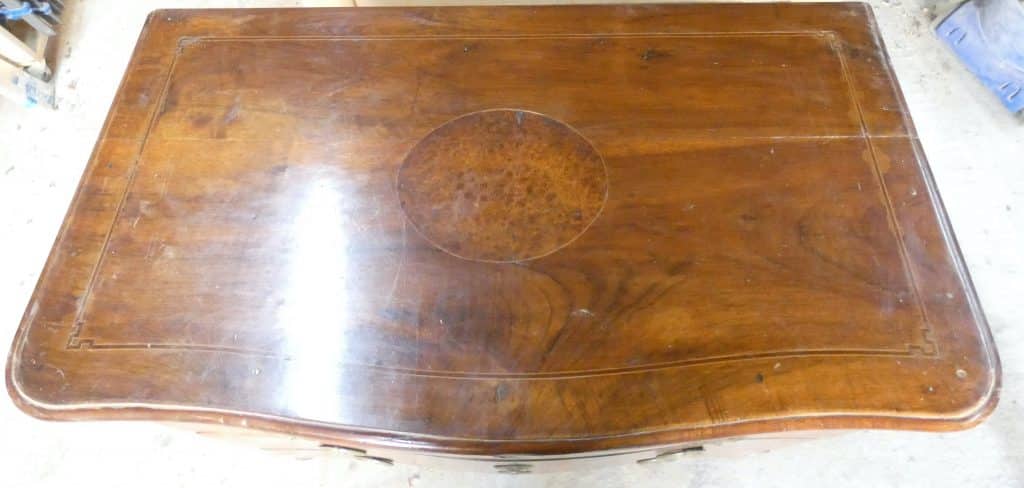
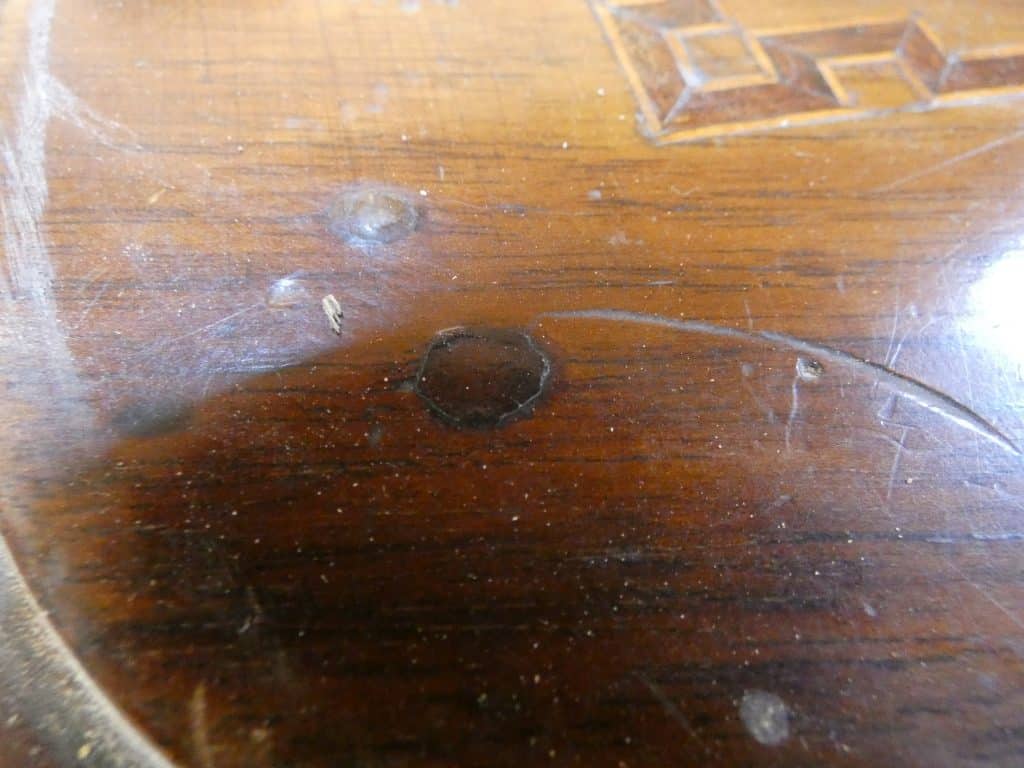
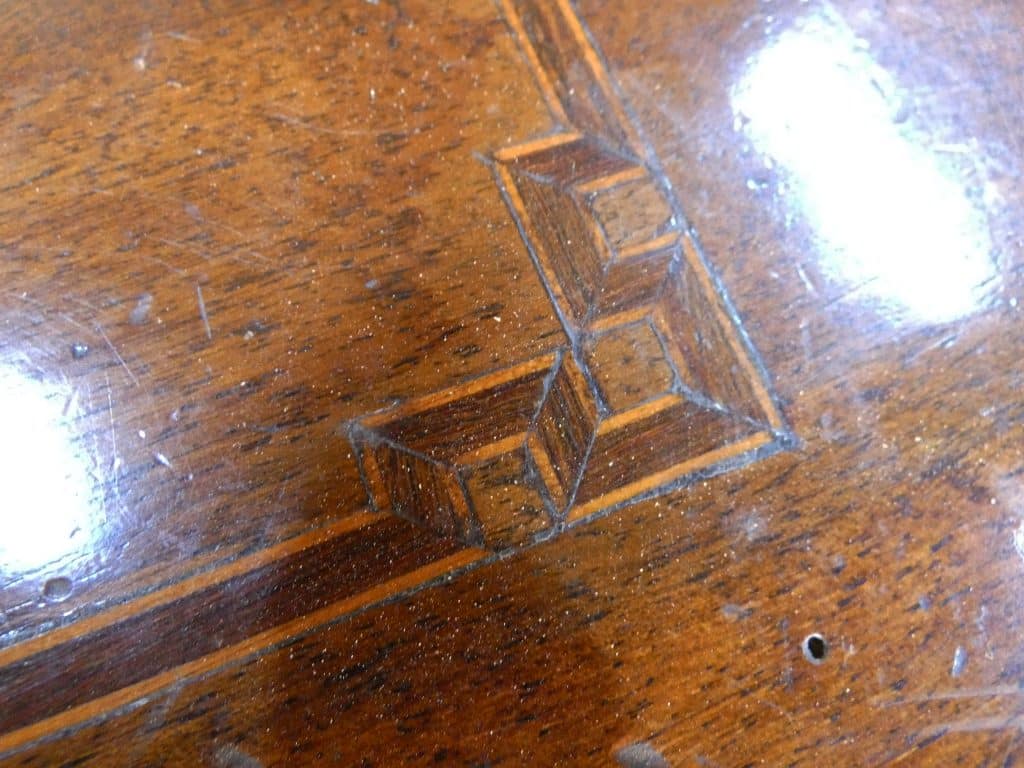
Despite the scalloped shape of the crossbar, its curve and its feet, this chest of drawers is indeed in the transitional style but from the Louis XVI period.
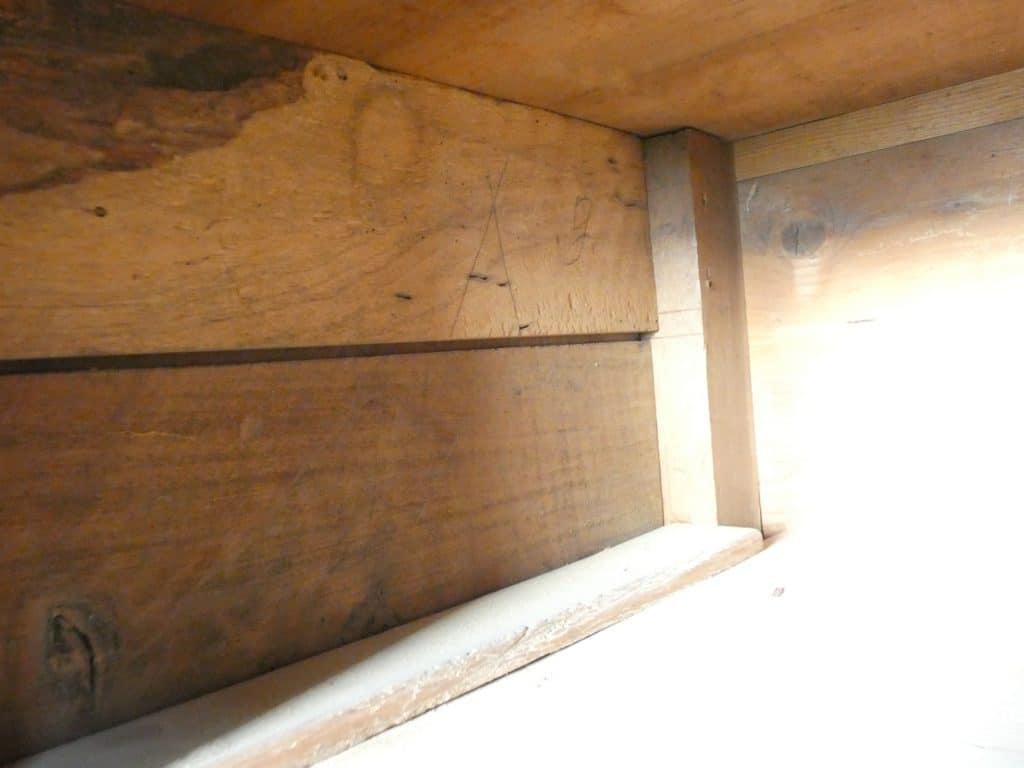
Inside Left 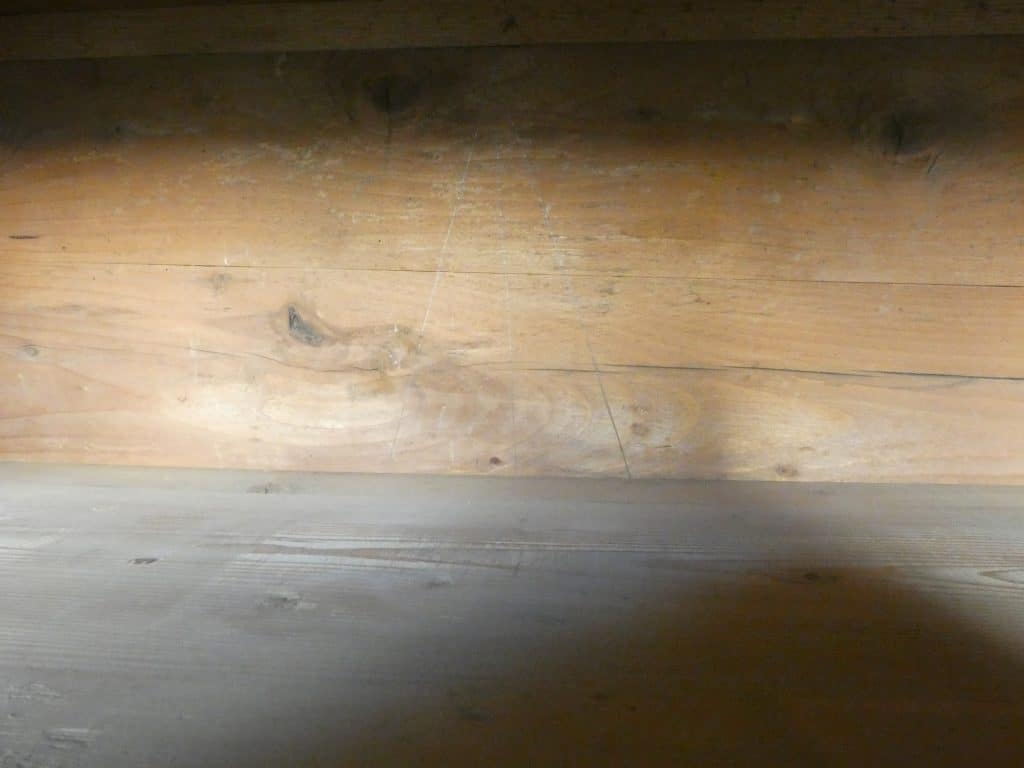
Bottom 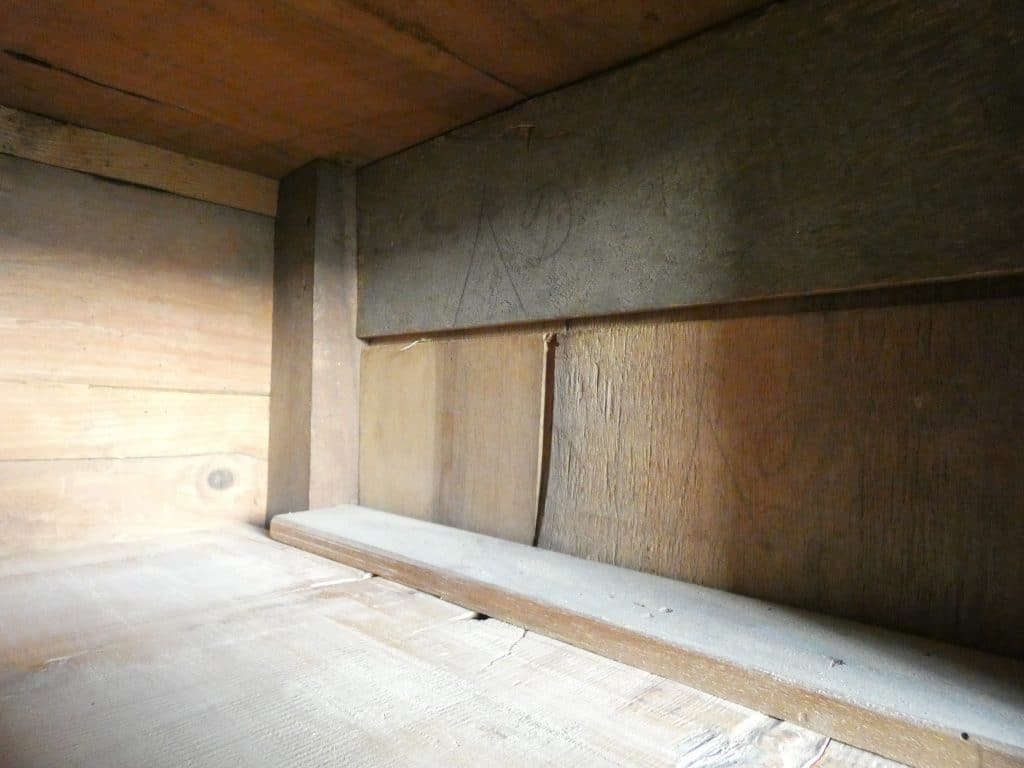
Right Interior
In the title I wrote "in the style of the Hache family" because it's certain that this chest of drawers originates from the Dauphiné region. But whether it's a product of the famous Hache family of cabinetmakers is only my opinion.
The elements in favor of an attribution are: the very characteristic dovetail mounting system for the facade crossbeams, the disc foot, the elongation of the corbel, the choice of woods (walnut, thuya burl, fir) are to be compared with the production of the Haches.
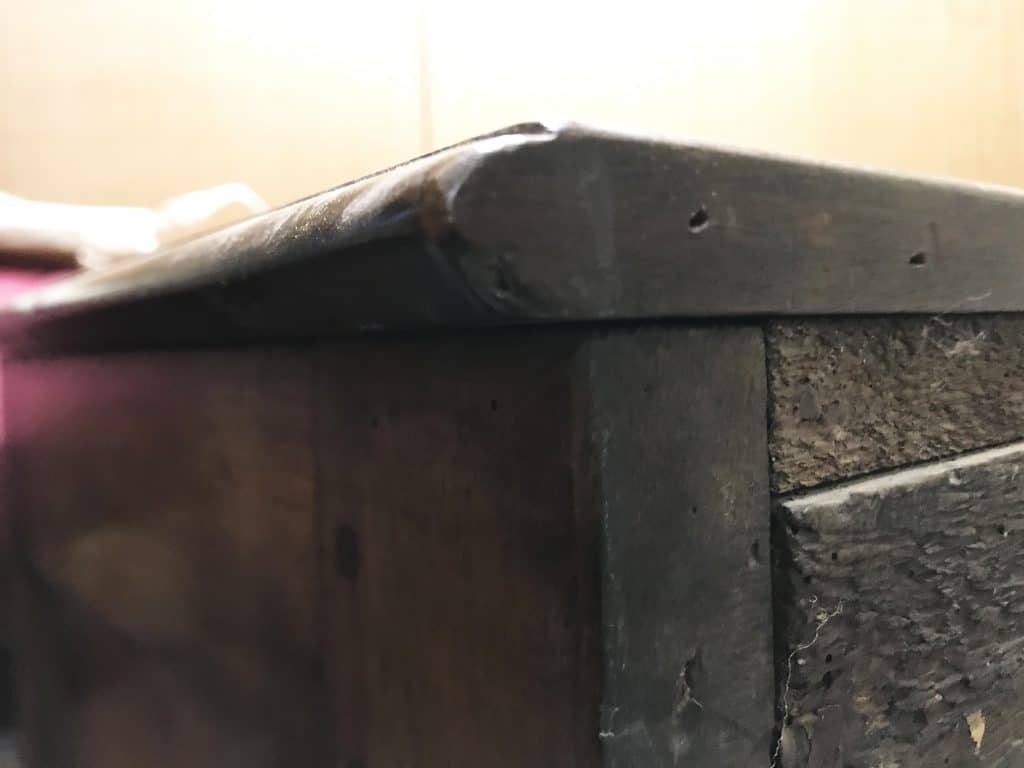
Characteristic elevation of the crow's beak 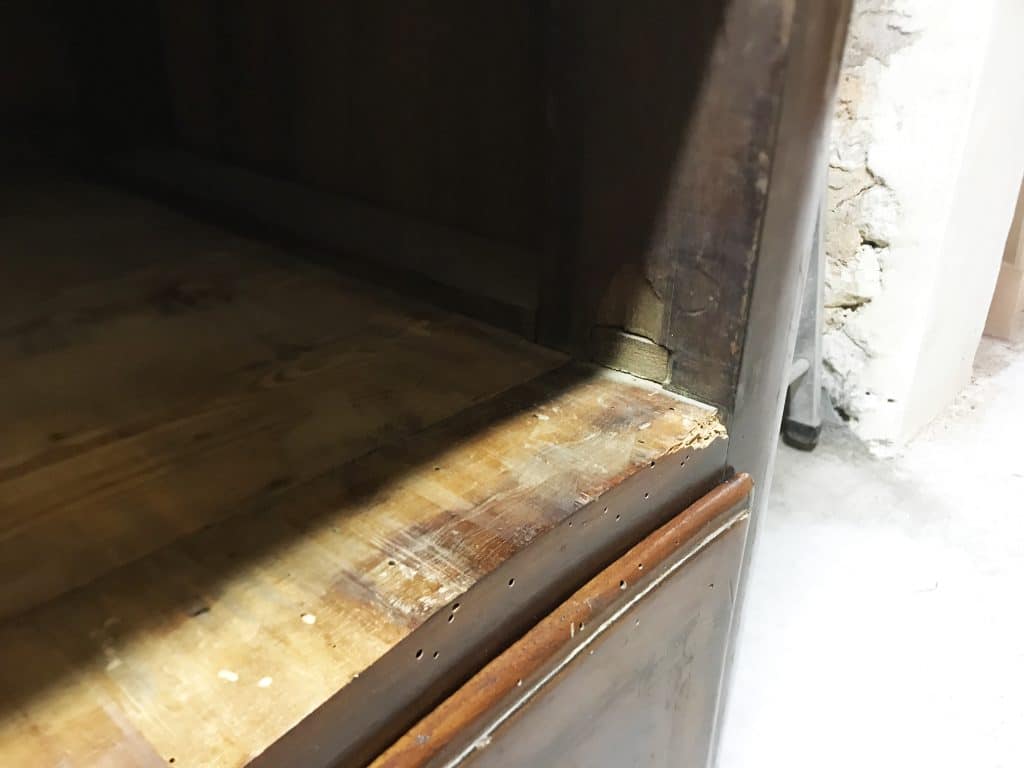
The famous tail and key assembly 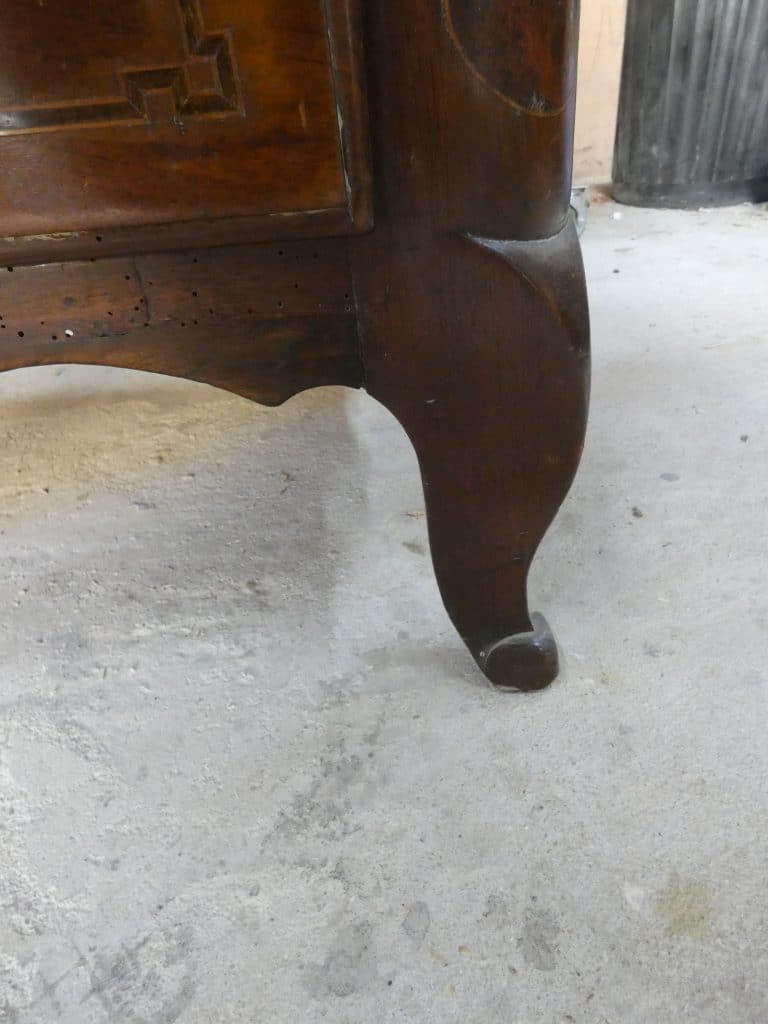
The lozenge foot 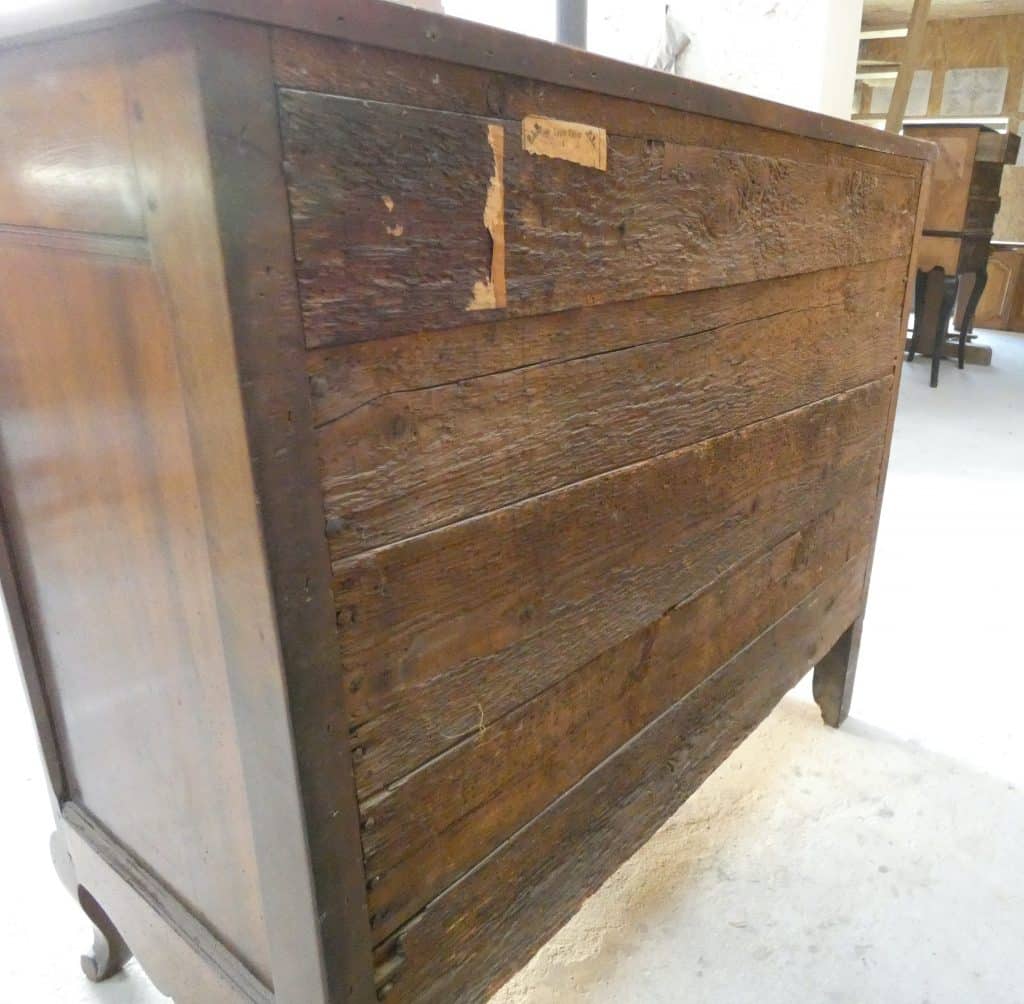
Nailed bottom 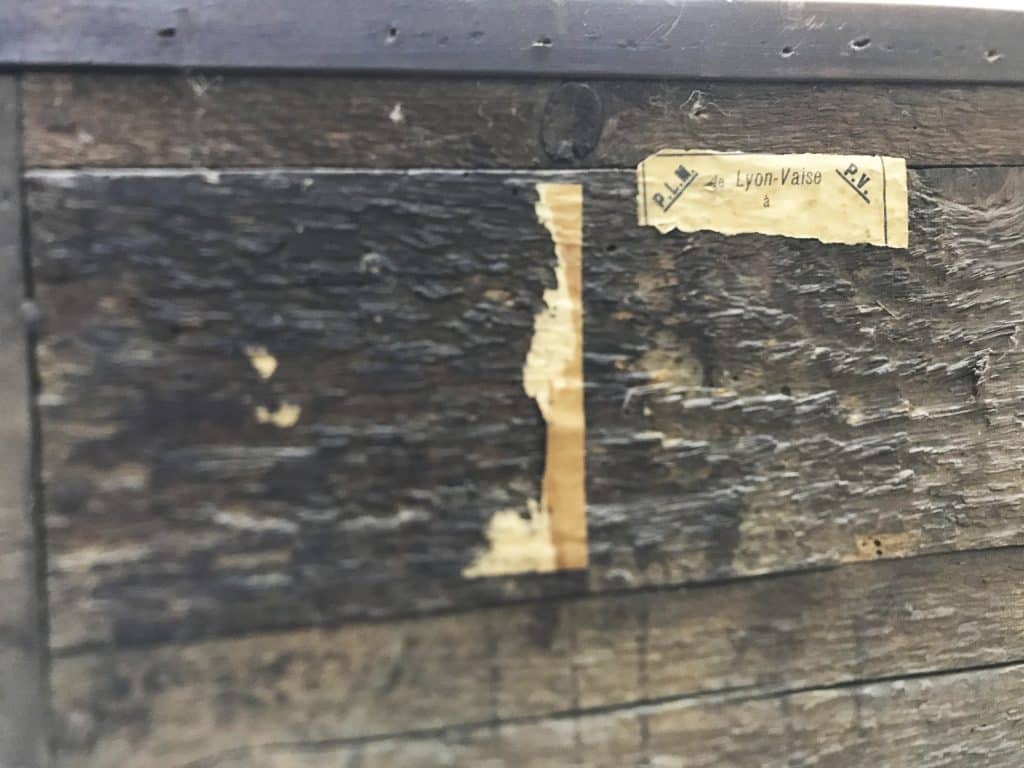
Traces of old labels
But some elements do not fit with the usual criteria for attribution: The disc foot is a little heavy and the shapes are uncommon for the production of axes, the drawer bottoms (which have been restored previously) and finally the absence of a stamp with only a trace of a label on the back.
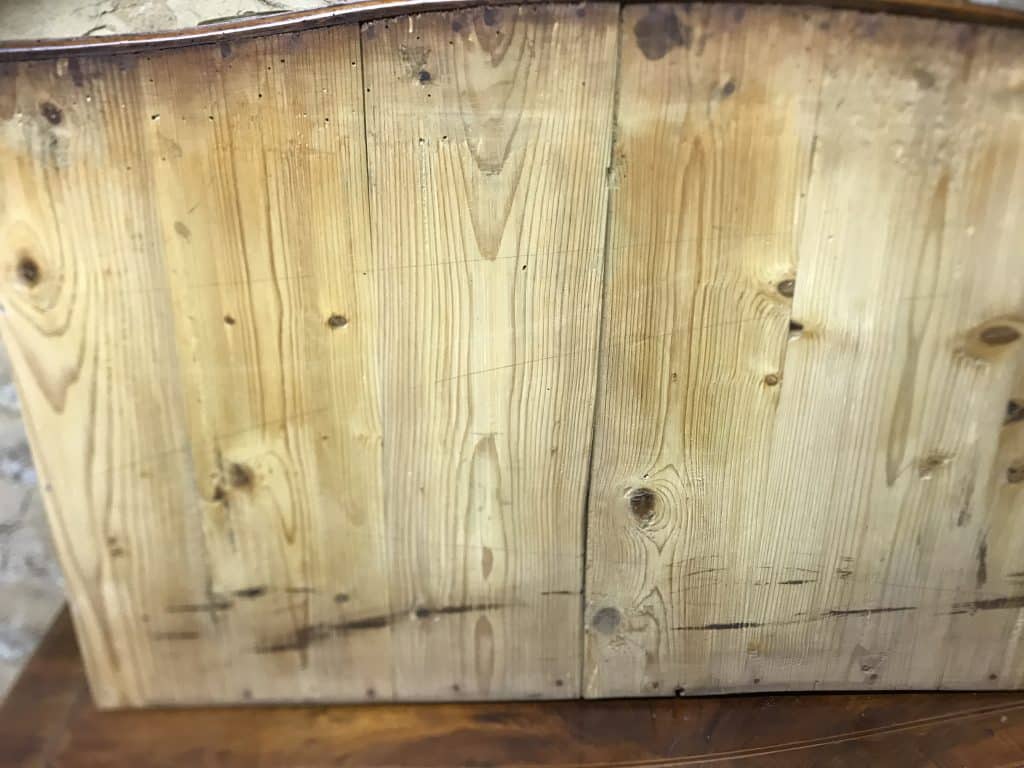
Background previously restored 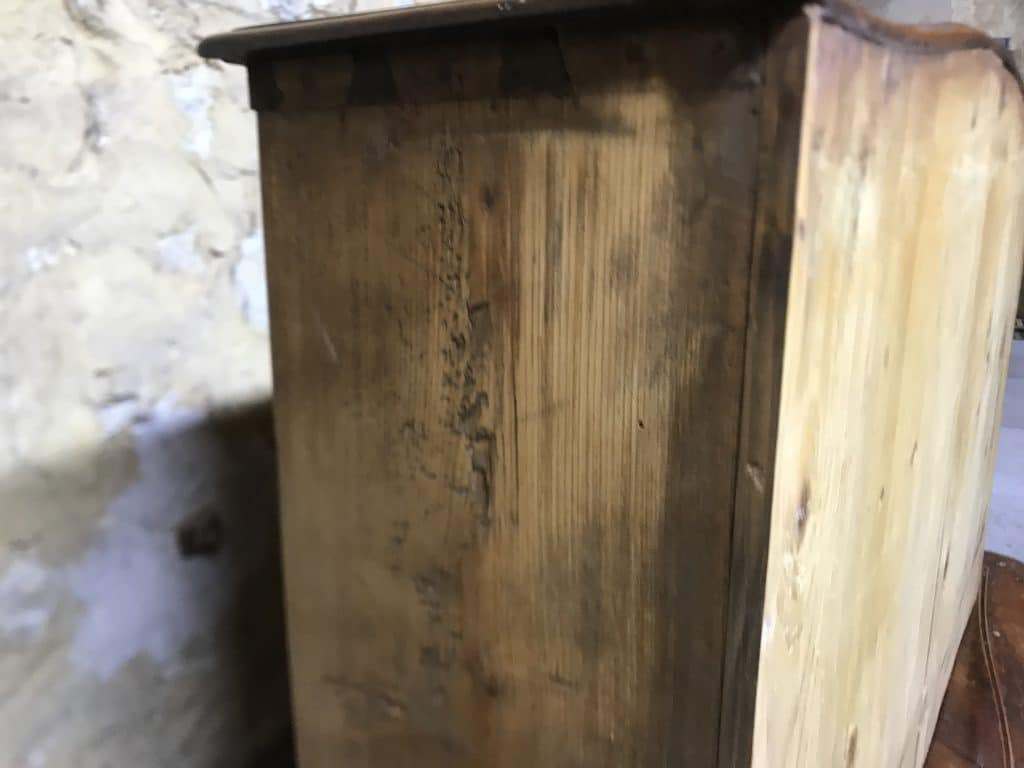
The funds are not set in a rebate. 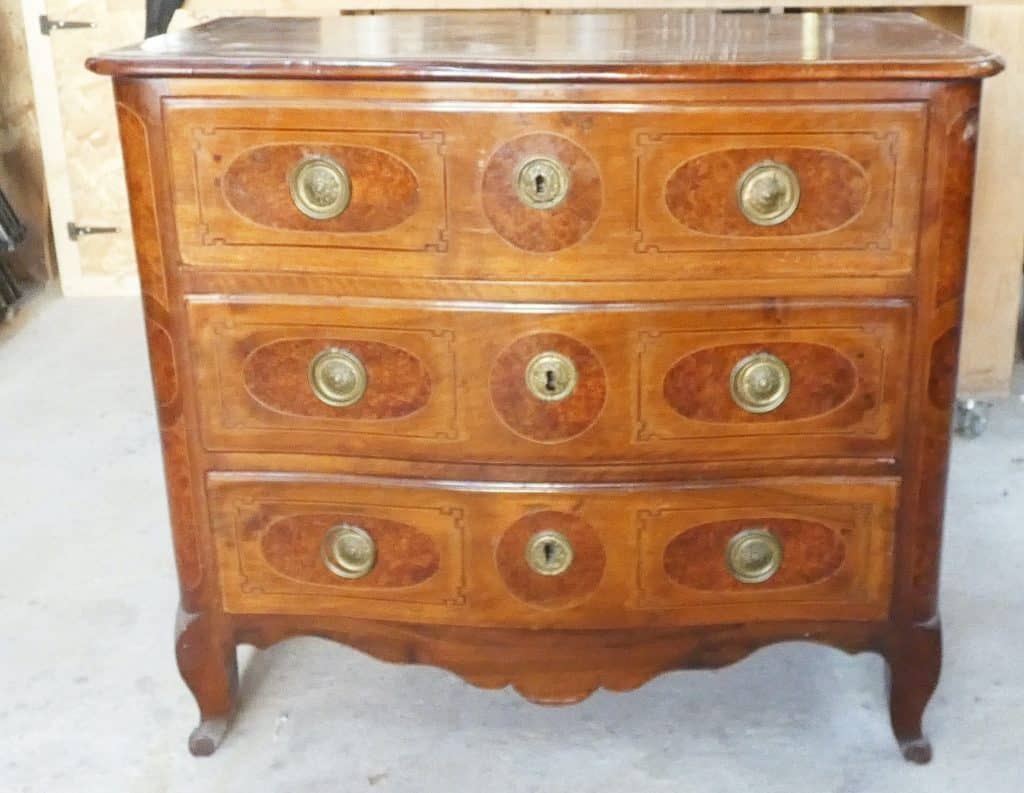
The style is a bit heavy 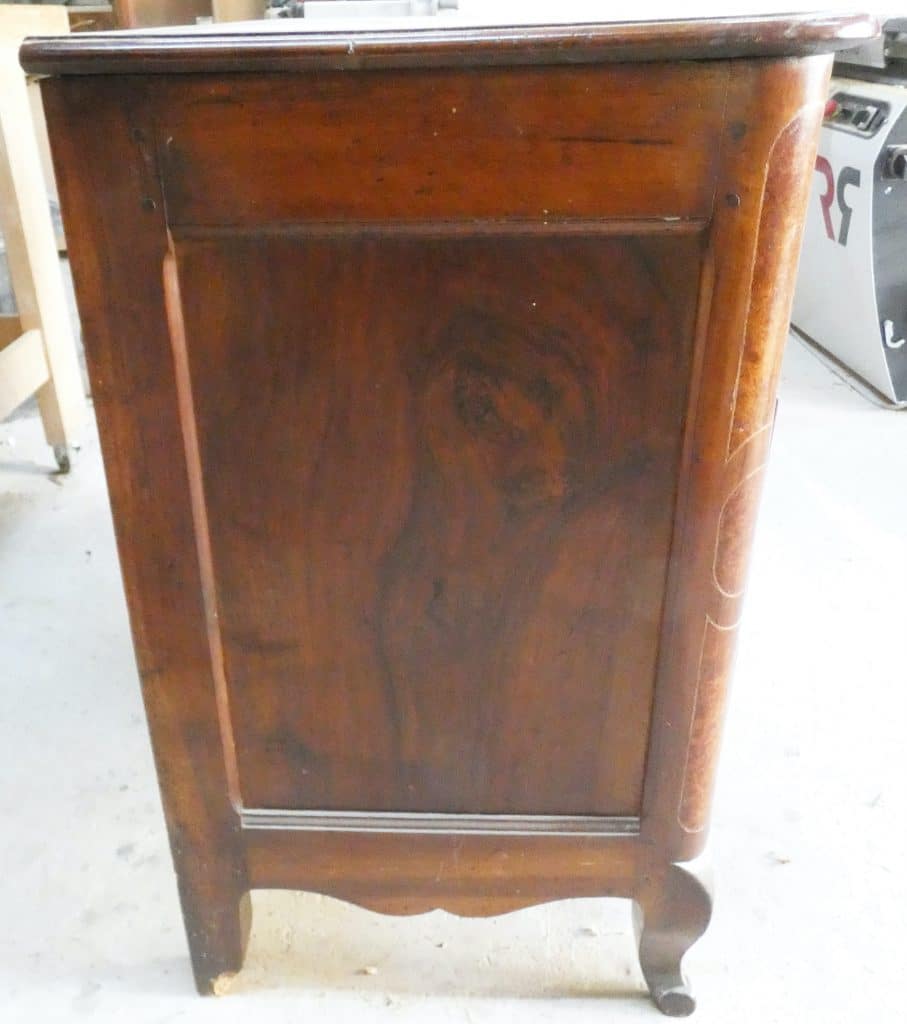
The moldings and chamfers of the crossbars and uprights
So what can we say about this chest of drawers? If we allow ourselves to speculate and hypothesize about its origin, based on the fact that it dates from the late 18th century and is characteristic of work from the Grenoble region, we could imagine it was made by a craftsman who knew the Hache family, or even apprenticed with these cabinetmakers. Perhaps it was a subcontracted piece commissioned by Christophe-André Hache, the last son of the family to run the business until May 13, 1801.
Or it could simply be a copy made by another cabinetmaker in the region.
Another, more ambitious hypothesis is that this chest of drawers was made by Christophe-André himself. Completely overshadowed by the talent of his elder brother, Jean-François, very few pieces of furniture by him exist, and virtually no studies exist on the work of this cabinetmaker.
It shouldn't be assumed that great cabinetmakers only crafted prestigious furniture; they also produced simpler, easier, and quicker pieces. Their work catered to all types of customers. It's often forgotten that these cabinetmakers were simply artisans and business owners who had to make their work profitable to pay their employees and taxes.
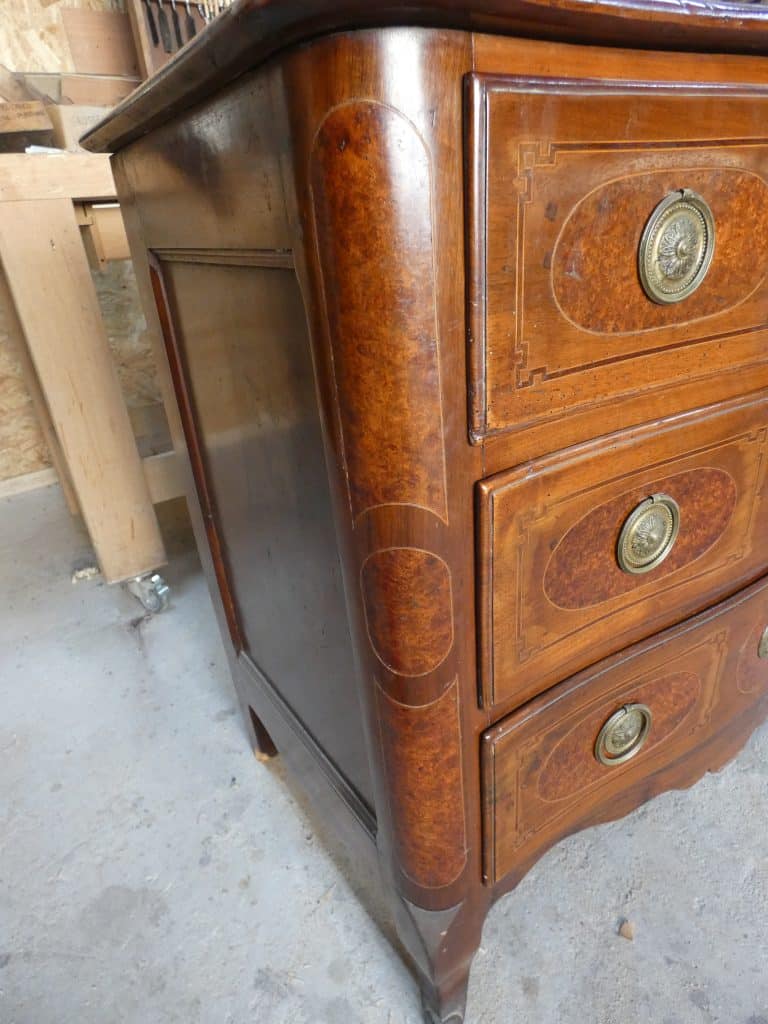
As for the restoration, it was simple. A few grafts of solid walnut, the re-gluing by infiltration of the veneers, the making of a key, the stripping of the very yellow varnish, the cleaning of the bronzes and finally a colorless French polish.
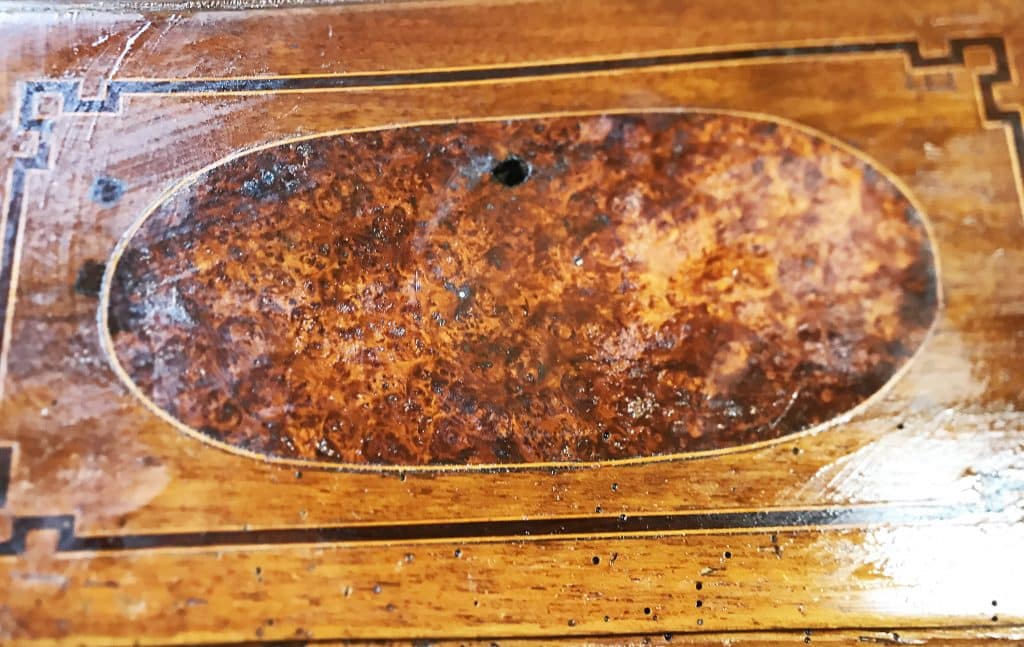
Application of the paint stripper 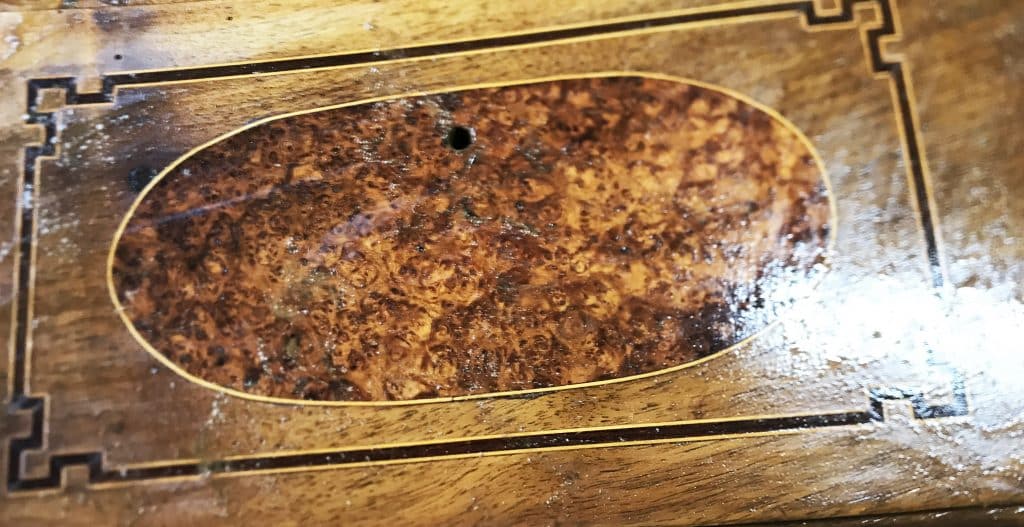
The paint stripper is working.
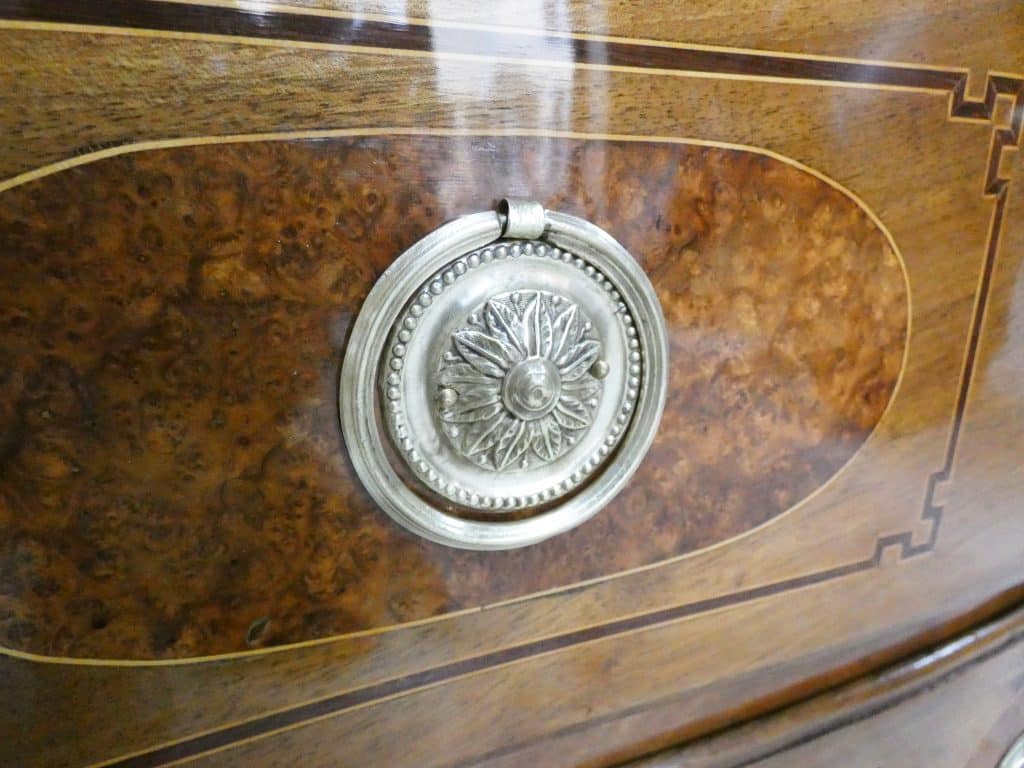
Bronzes after restoration 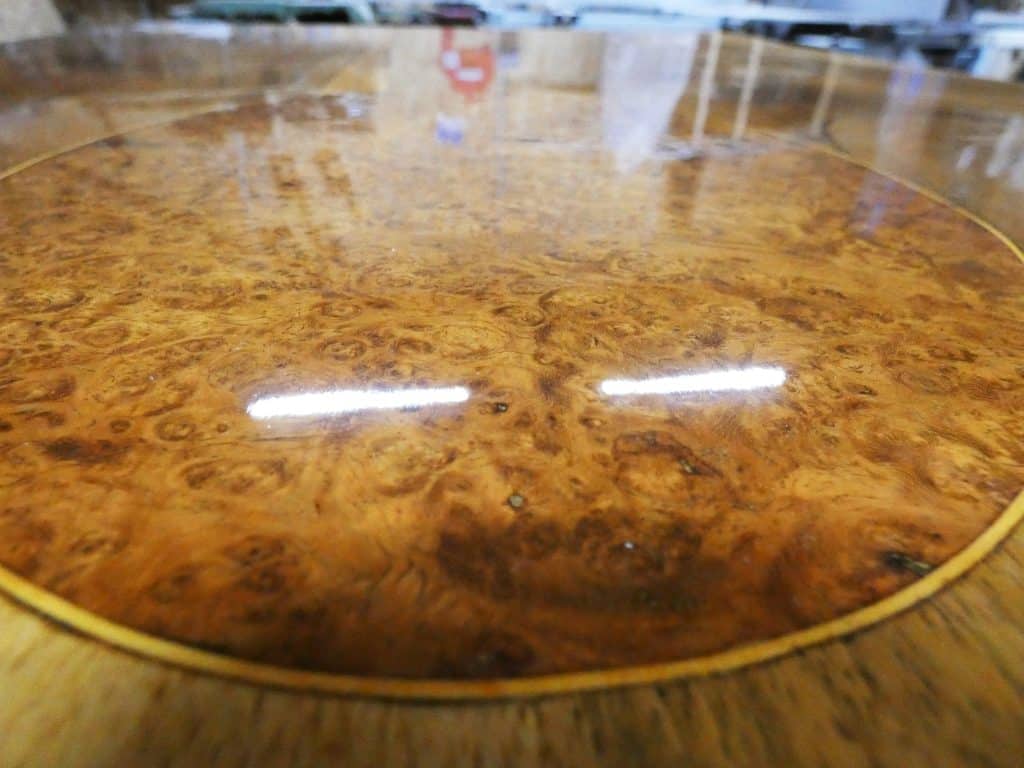
French polish 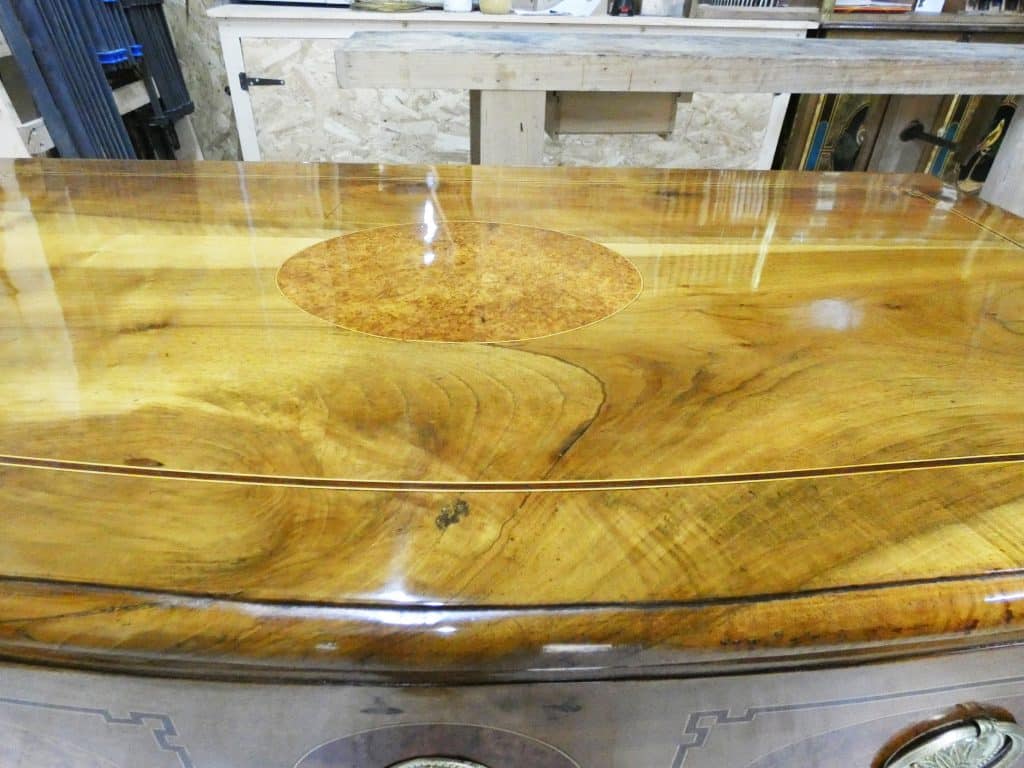
After restoration 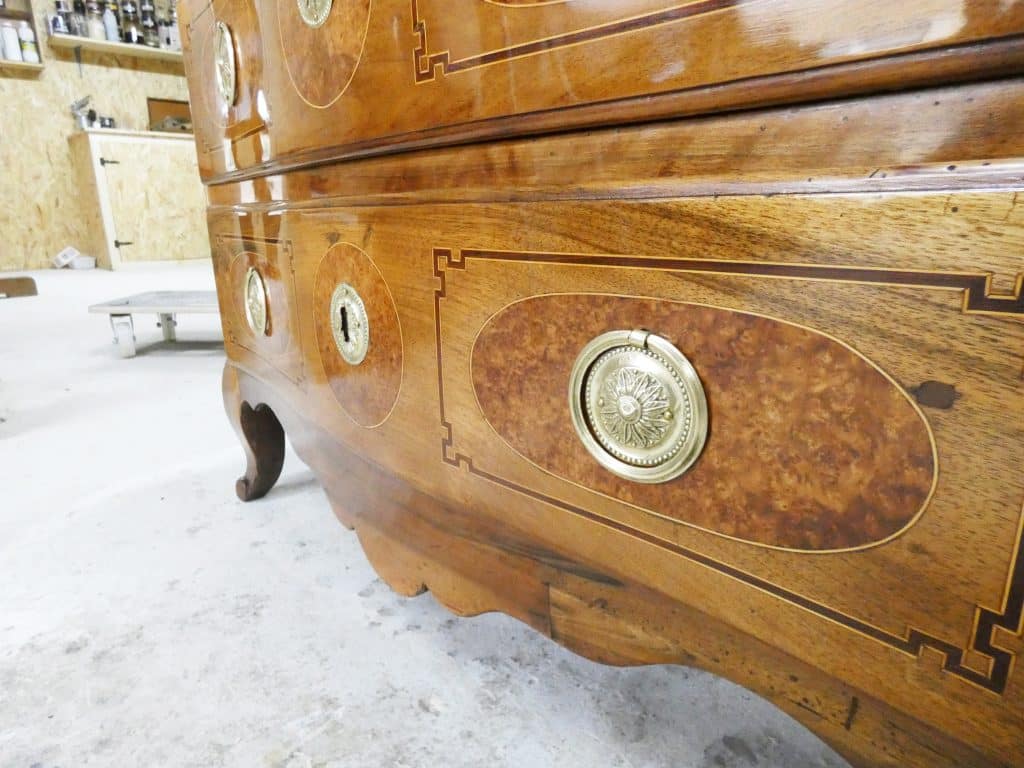
After restoration 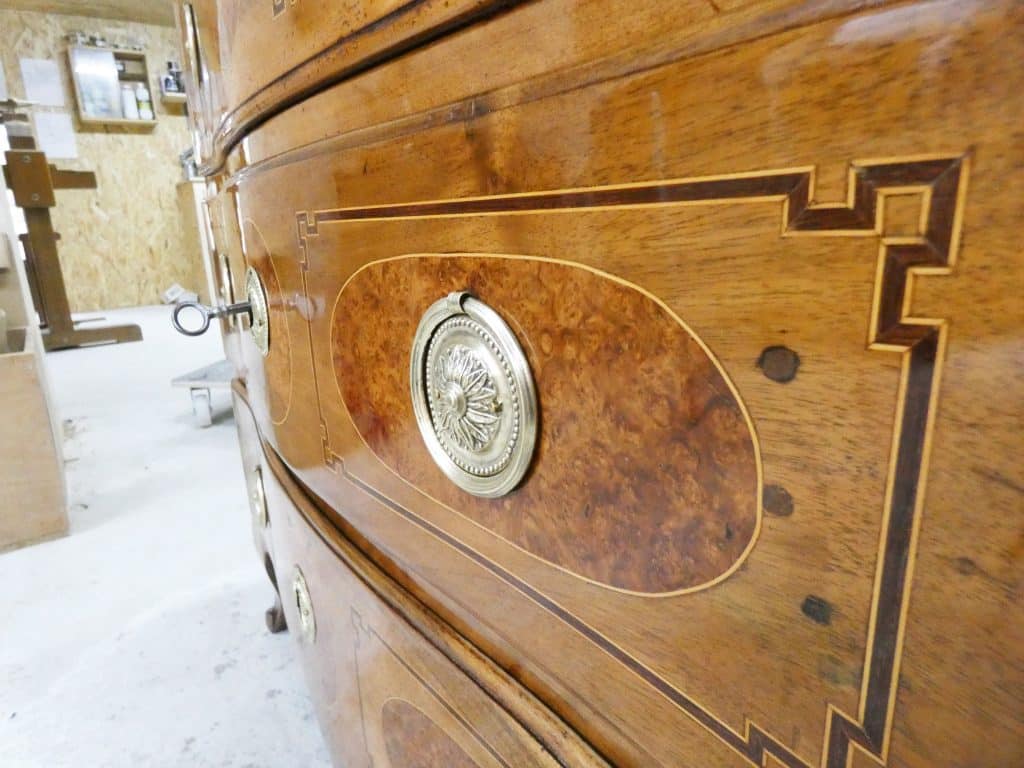
After restoration 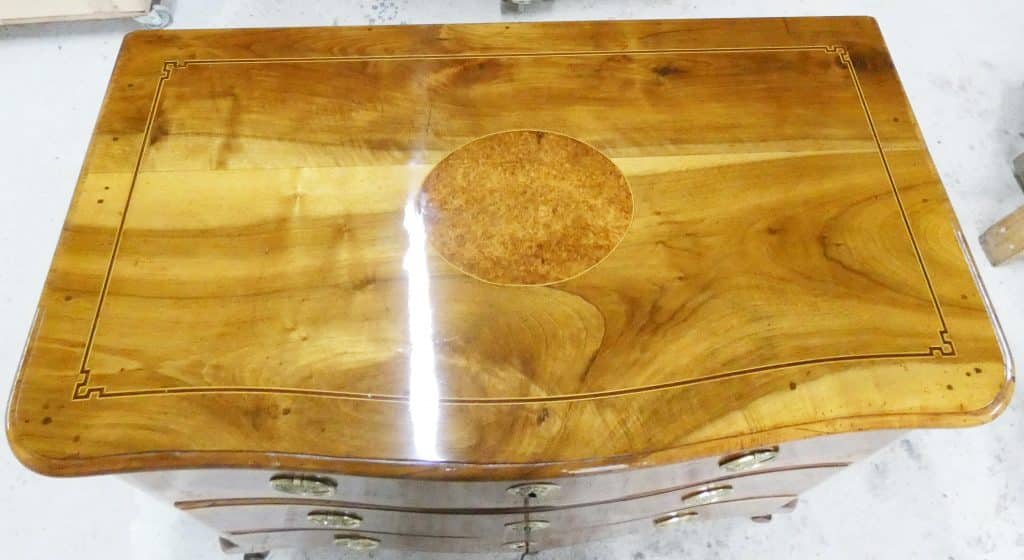
Plateau after restoration 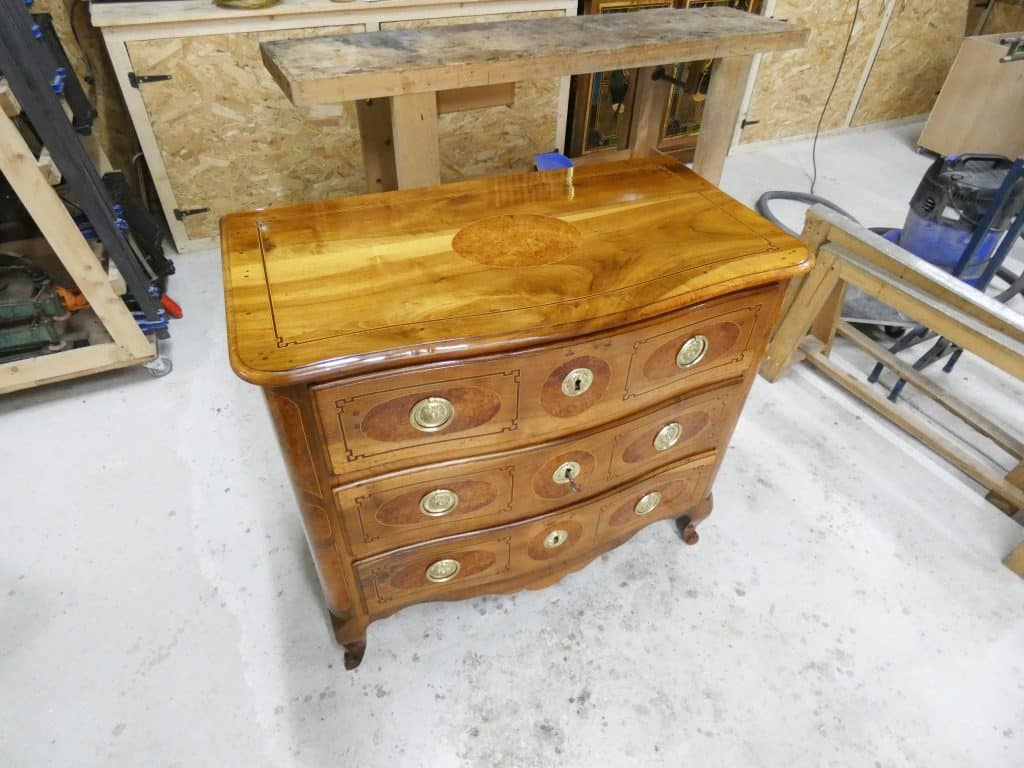
After restoration