
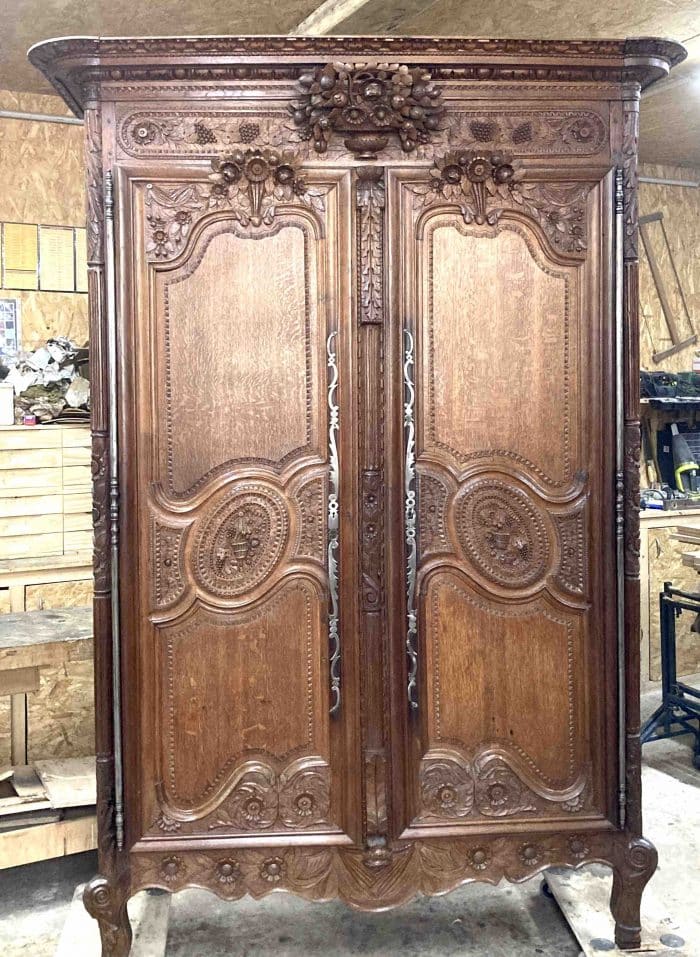
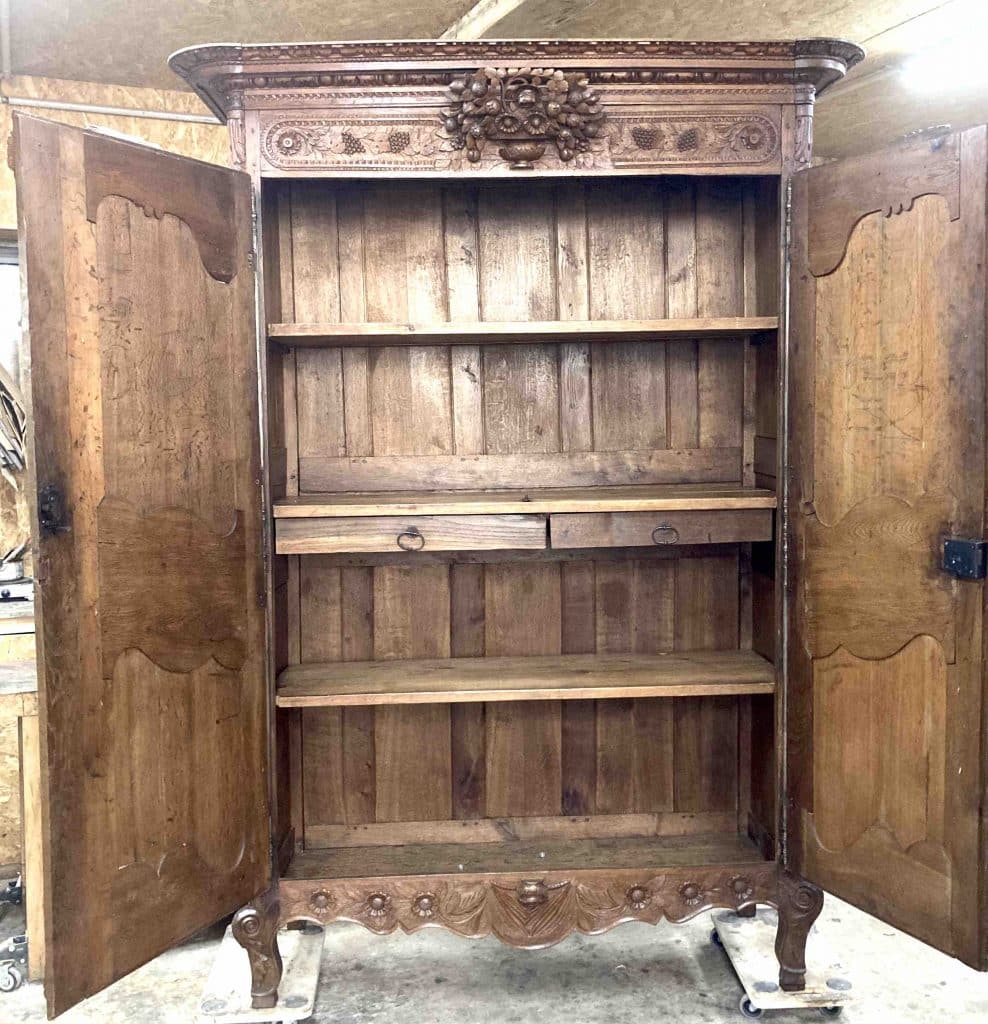
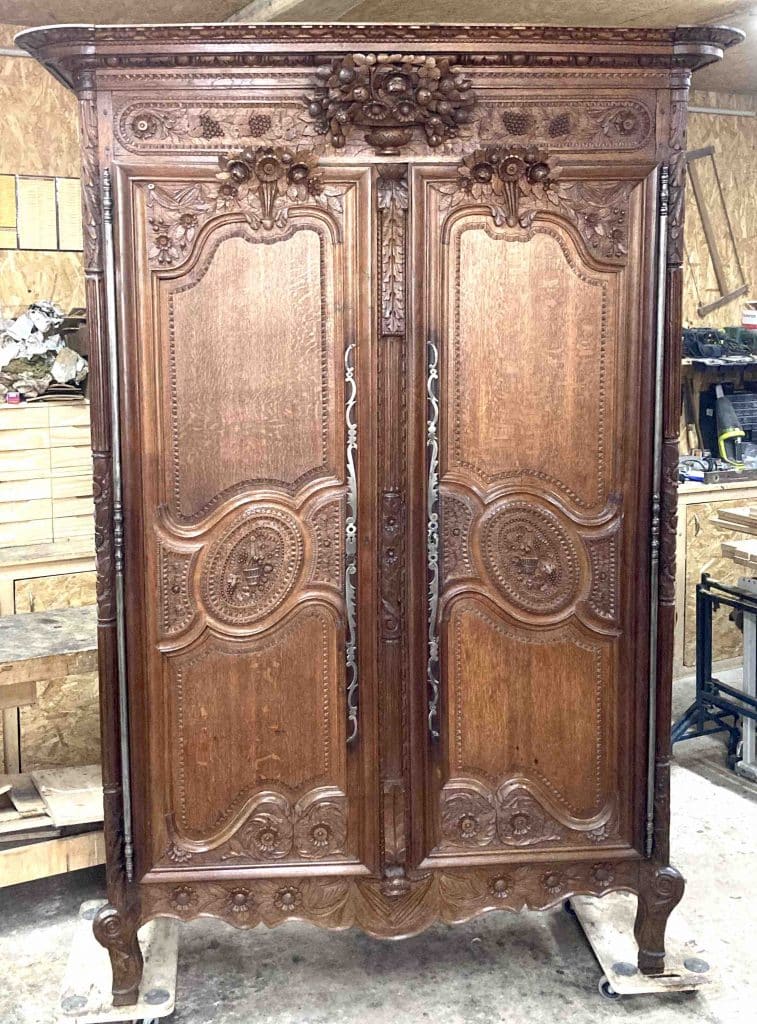
It was in the mid-17th century that what we now call the Norman wardrobe originated. However, it was in the 18th century that it acquired its characteristic form: with two doors, resting on cabriole legs and featuring a wide, sculpted cornice, it combines Louis XV structure and style with Louis XVI motifs. It was during this same period of economic and social stability, which allowed for a certain improvement in living standards, that it entered the homes of both the bourgeoisie and the peasantry. The 19th century would be the golden age of the Norman wardrobe.
Intended to hold the bride's trousseau, linens and the couple's savings, it was not necessarily placed in the couple's bedroom, but occupied the best place in the most beautiful room, as it also represented a symbol of the young bride's social rank.
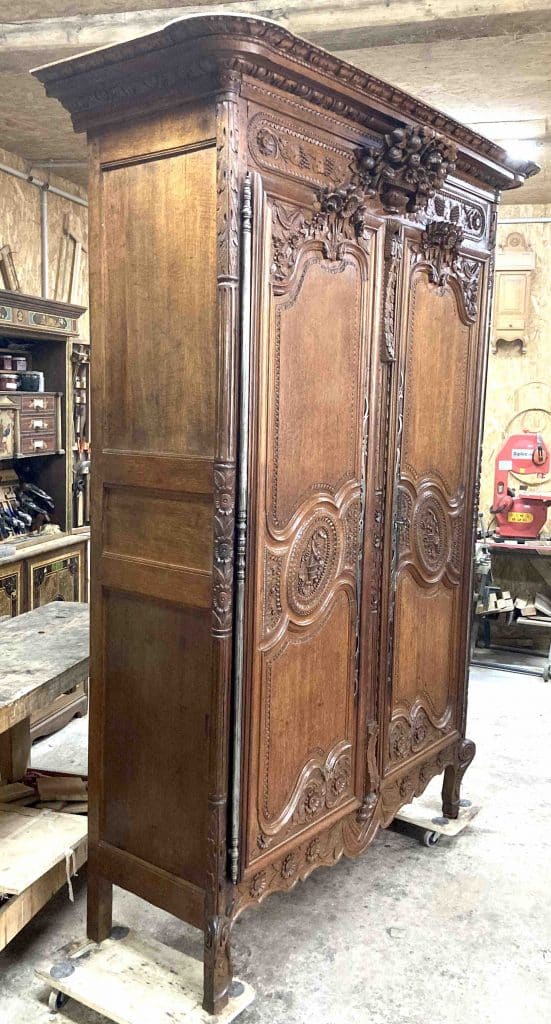
The making of a Norman wardrobe begins as soon as a daughter is born into the family. Tradition dictates that the father has an oak tree cut down between Christmas and New Year's, a period when the sap in the trees is dormant, so that the wood fibers are tighter. The wood is then cut into planks and left to dry until the young woman's wedding, after her First Communion.
The ornaments carved in the wood of the Norman wardrobe are often very elaborate and depend on the wealth of the owner. The wealthier he was, the more numerous the carvings: a basket of flowers, a pair of doves pecking at each other, a quiver filled with arrows and crossed by a torch, or a flower basket carved in high relief in the center of the cornice, oblique medallions adorned with various attributes on the shaped panels.
The ornaments are also symbolic, for example, a farmer father will have motifs in the shape of ears of wheat made, a fruit-growing father will have sculptures representing baskets of fruit transferred onto the pediment of the wardrobe.
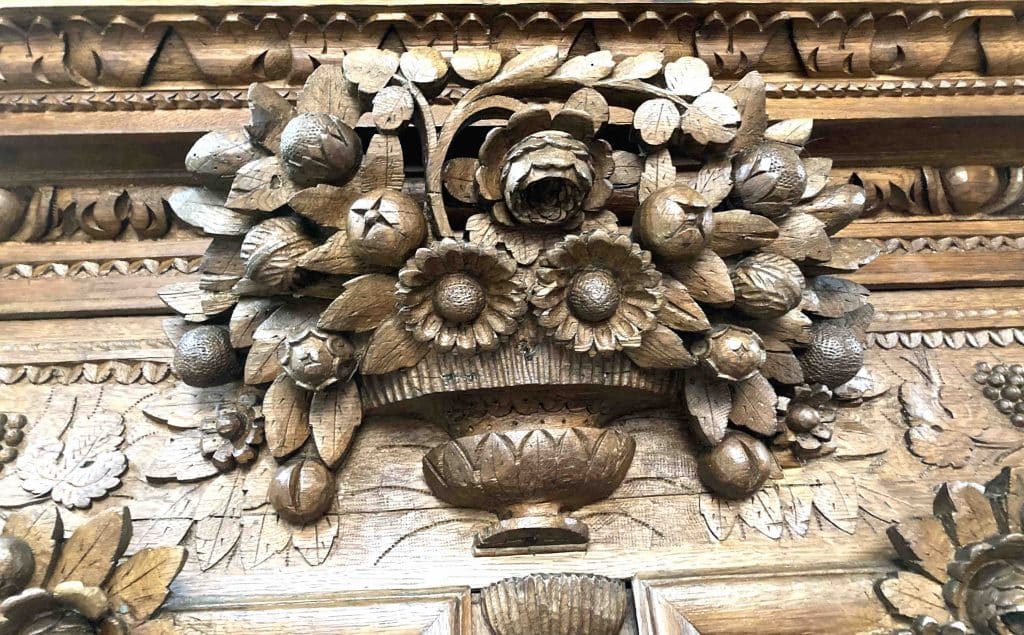
While a single rose cabinet was the simplest model, one with several roses was the most opulent, beauty and price depending on the ornamentation and number of flowers. However, it is rarer to encounter the apple blossom or fruit, a symbol of "sin.".
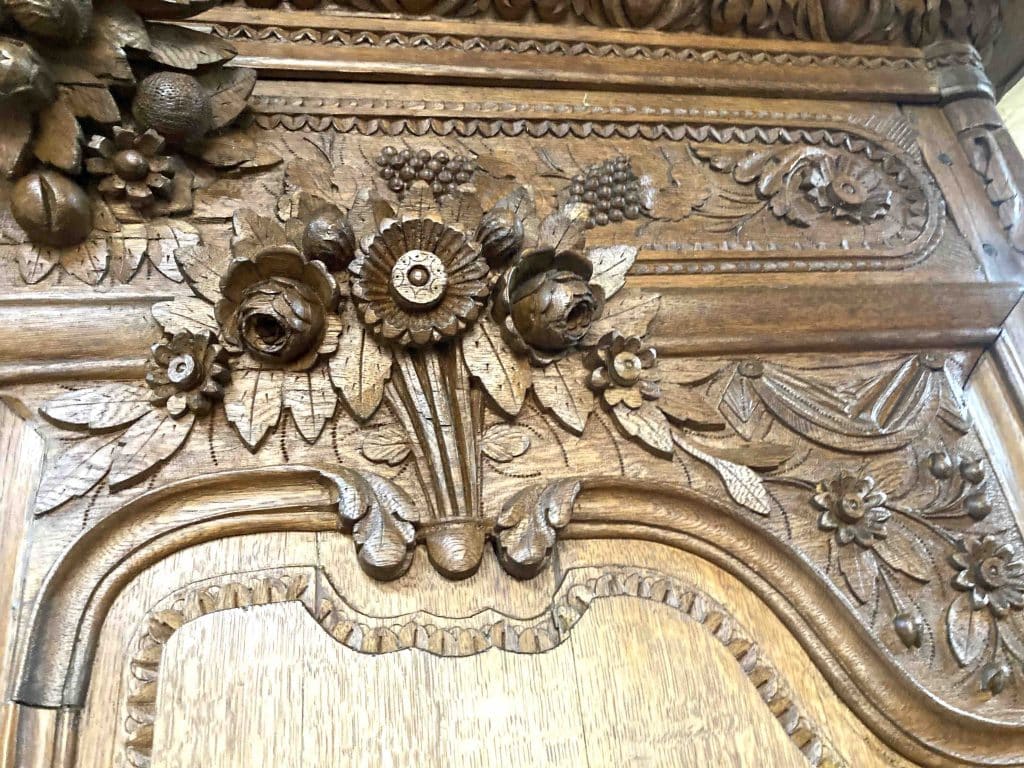
There are a multitude of types of Norman wardrobe, with as many variations as there are villages in these departments: Manche, Orne, Calvados, Seine-Maritime, Eure and Cotentin.
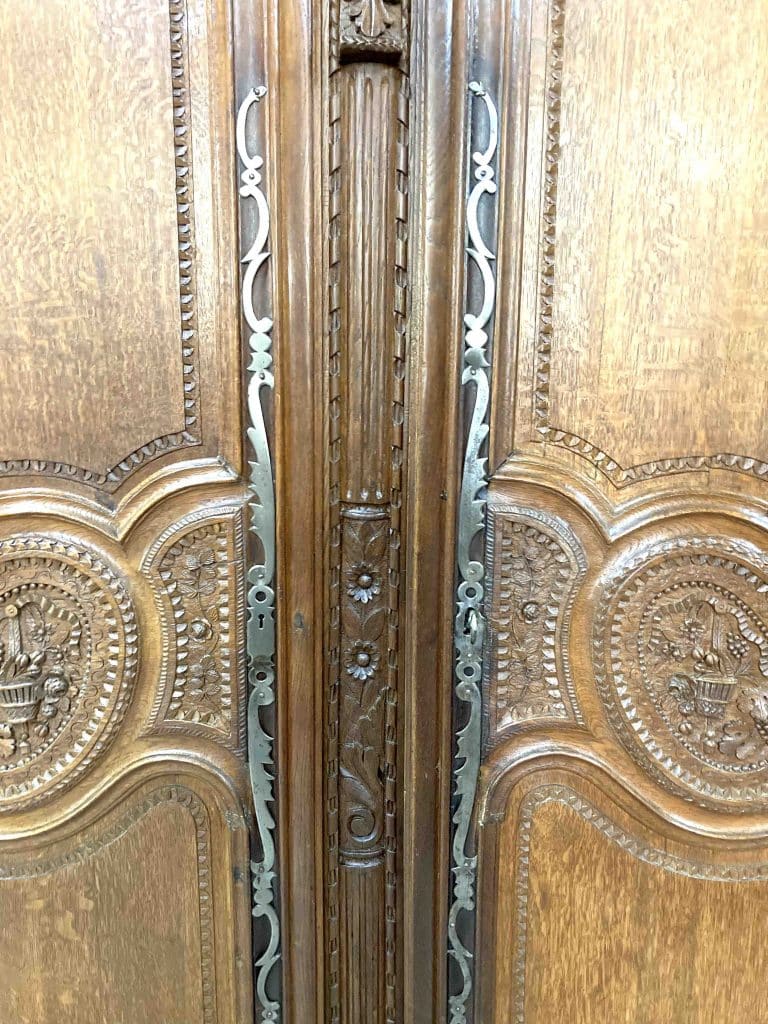
The most elaborate wardrobes were those made in the Caen plain, which forms part of the Bessin region. This fertile area, rich in calcareous silt, fostered the development of large farms. From the early 19th century, this region, unlike the bocage countryside but more comparable to the Pays de Caux plateau, was, in a way, the Norman Beauce. Farms covered on average more than 50 hectares, and sometimes much more. The buildings resembled veritable manor houses and fortresses; some of these very old buildings had even originated from the retreat of large landowners from the nobility to their estates.
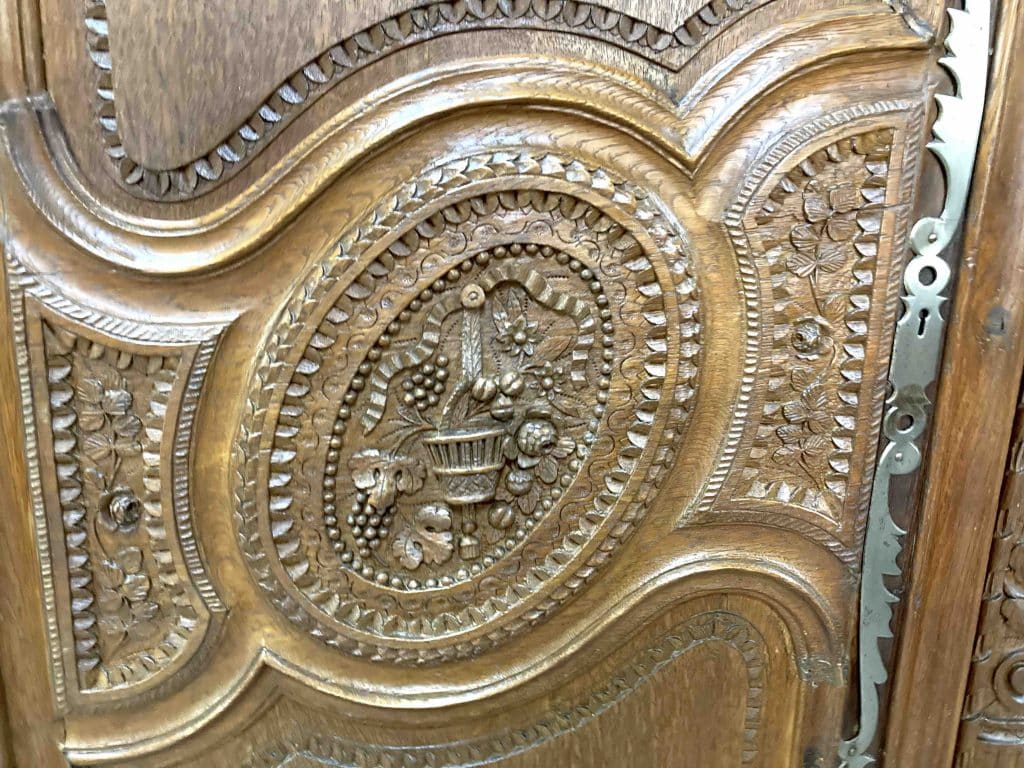
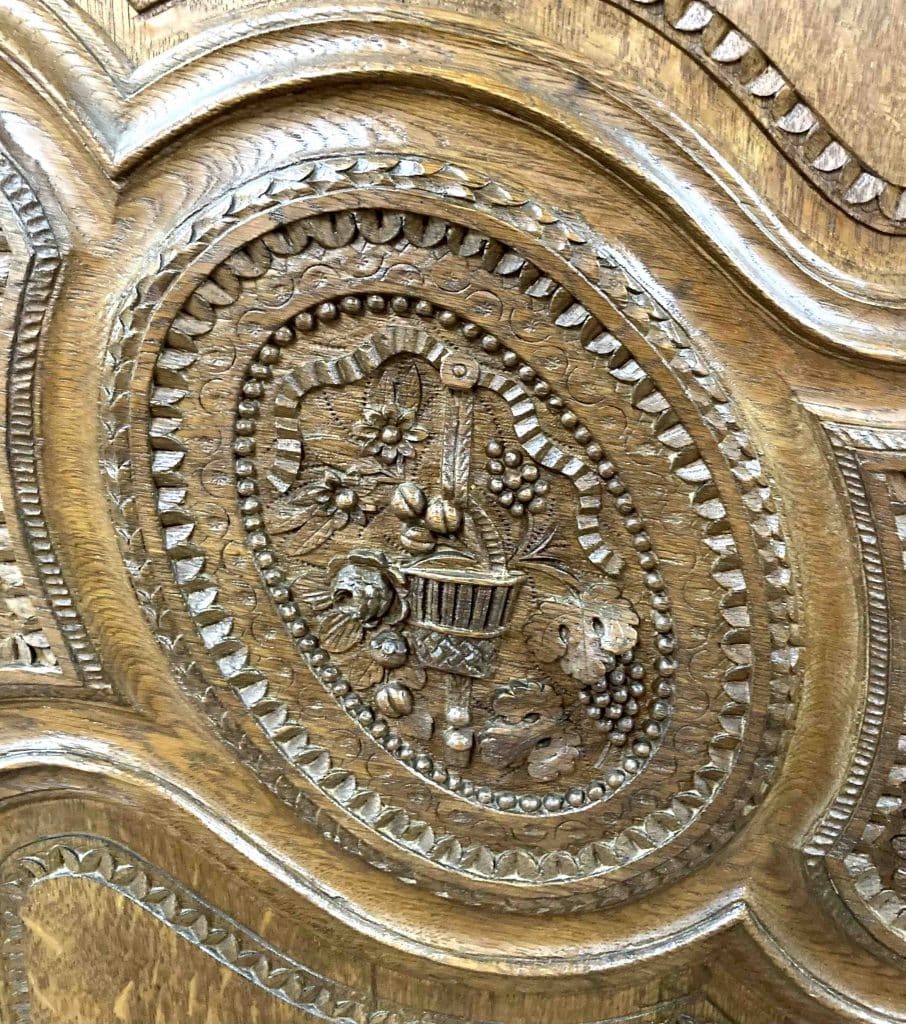
Generally speaking, oak remains the preferred wood, particularly stave oak, prized for its highly decorative marbled effect. Quarter-sawn oak, unlike traditional sawing, is obtained by cutting the tree into quarters. This requires century-old, flawless trees and results in greater waste since the saw cuts are not parallel (similar to the segments of an orange). Much more expensive, it has the advantage of being both lighter and stronger, but above all, its characteristic grain makes it far more beautiful once waxed or varnished. The finest workshops in Normandy have specialized in crafting furniture from stave oak.
Cherry, elm and fir, although more modest, are among the species also used.
BIBLIOGRAPHY
- Wonderful Norman Wardrobes – Jacques Mahier – Charles Corlet Publishing – 2014
- Regional furniture of Lower Normandy – Masson – 1998
To see previous restorations : https://ebenisterie-mathieuvath.fr/en-ce-moment-a-latelier/
I know a buyer for a Norman wardrobe, is it for sale?
Hello, no sorry, it's not for sale