
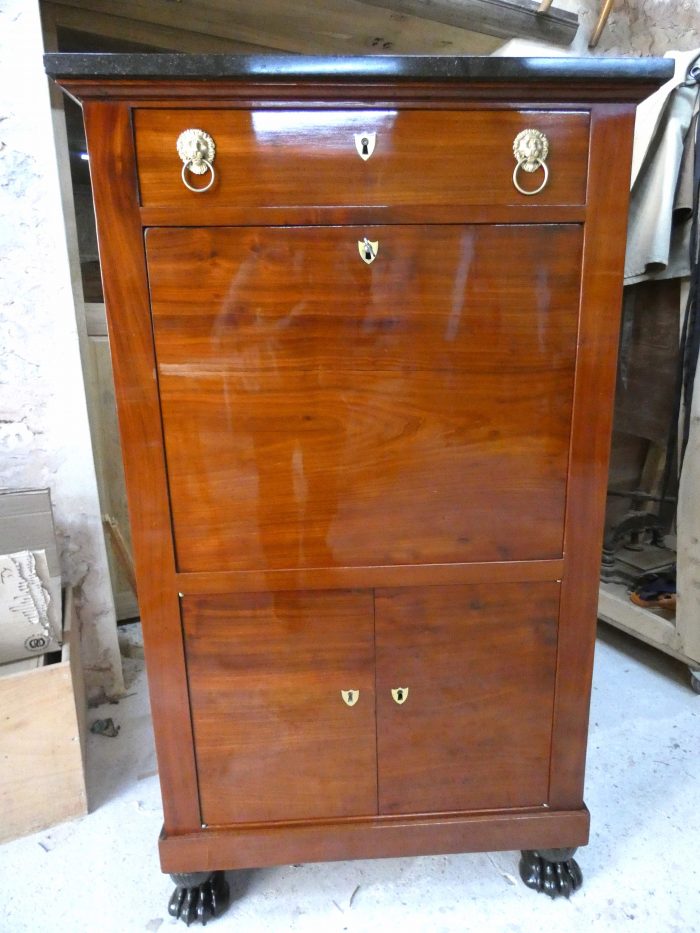
Here is a secretary desk in the most understated style of the Directoire period. Its frame is made of solid beech and conifer, veneered with mahogany and mottled mahogany. It is very simply adorned with bronze handles in the form of lion heads holding rings in their mouths. The keyhole escutcheons are in the shape of shields. The interior comprises seven drawers, the middle one of which opens with a key. The drop-front opens with a period three-point lock. The lower section has three drawers from which Louis XVI-style drawer pulls have been transferred. The front uprights terminate in lion's paw feet carved from walnut.
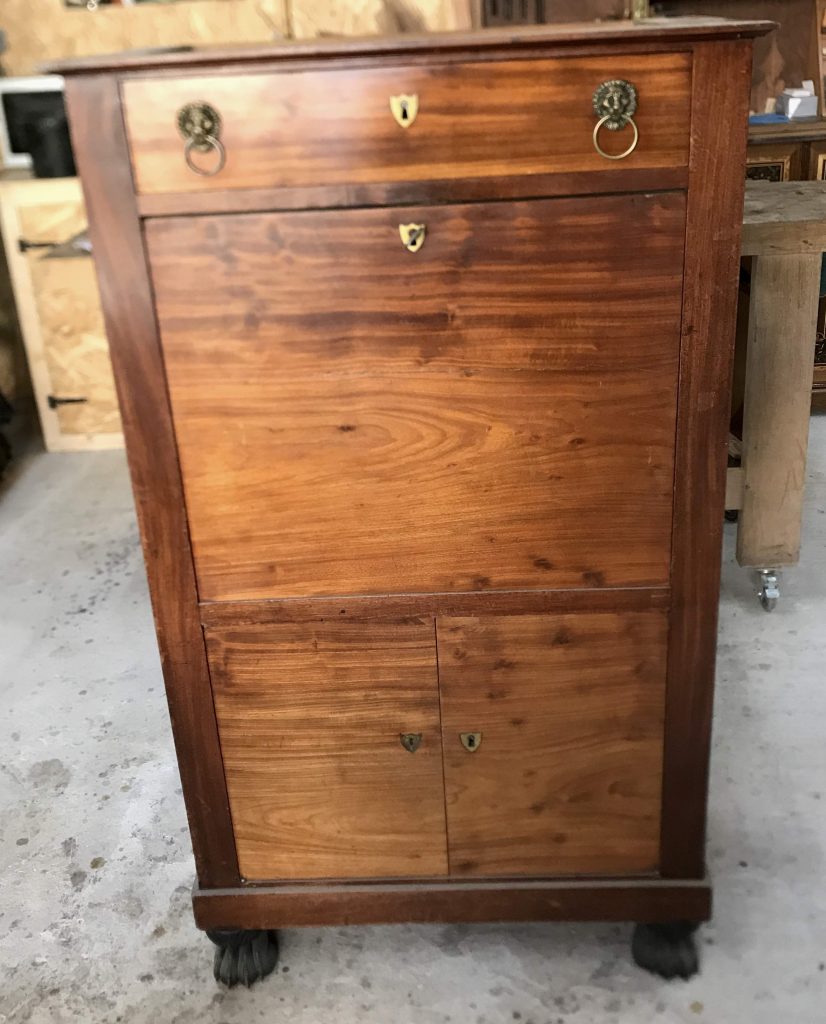
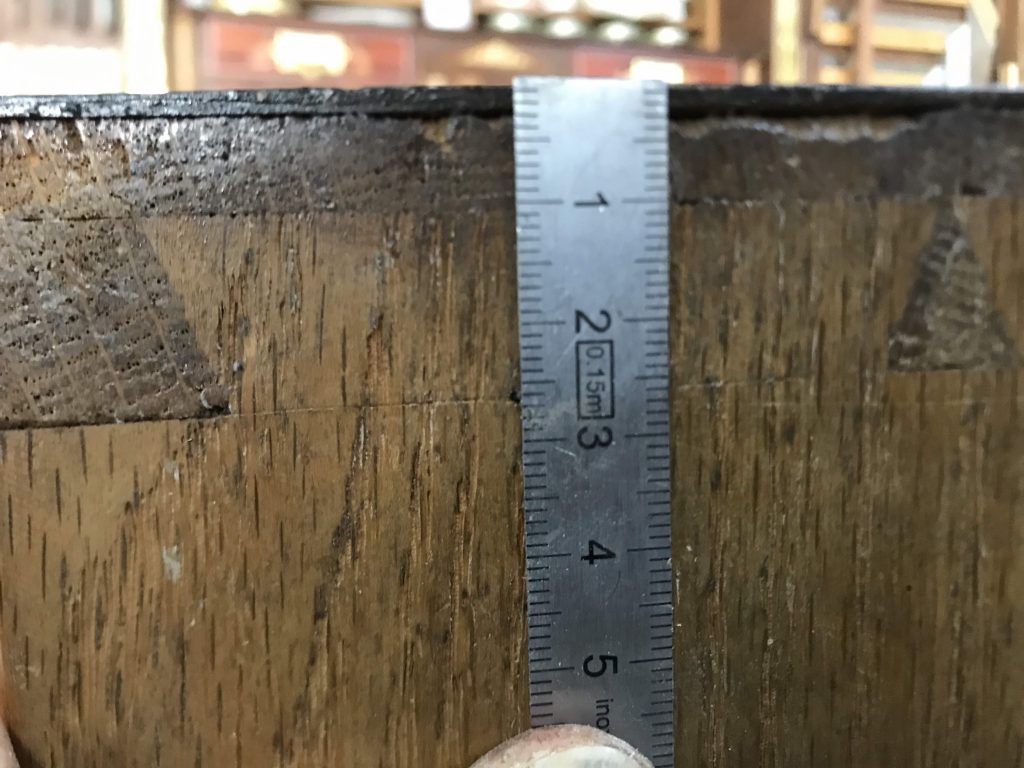
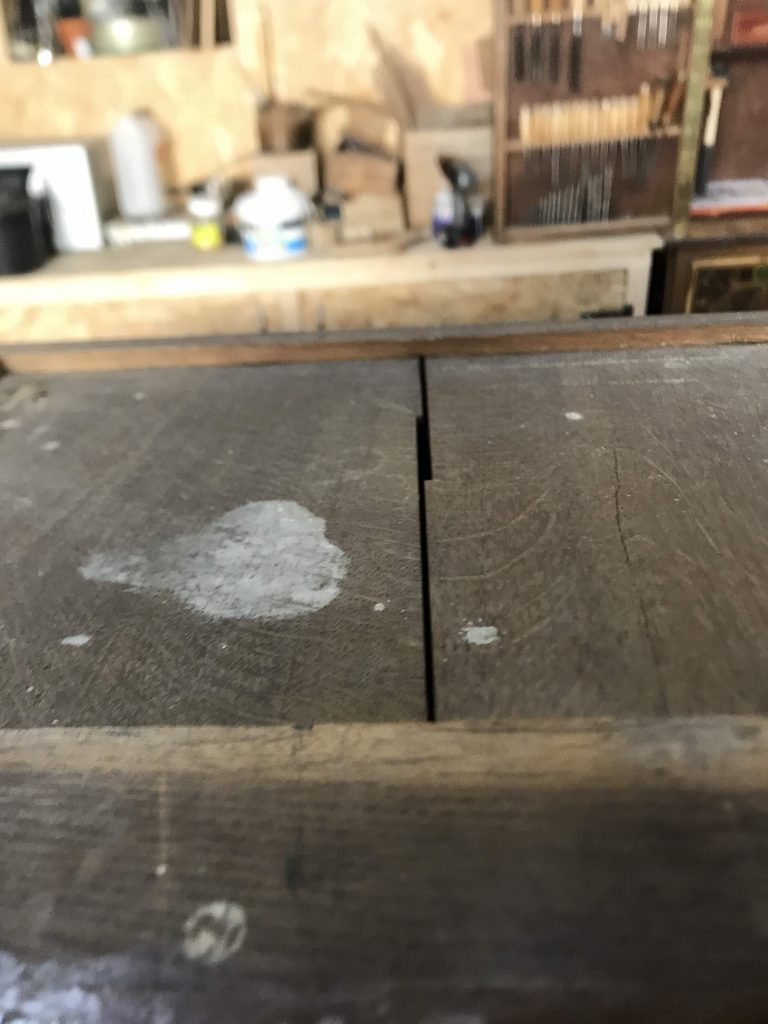
Apart from two small repairs to the lower doors, this piece of furniture has never been restored. The veneer is still its original thickness (approximately 3 mm). However, it has undergone alterations: the two rear legs are missing, and the claw feet have been shortened by two centimeters on the sides. Sections of the cornice and a piece of veneer are missing from the left side. The doors and drop-front are cracked, and the drawer bottoms, as well as the top and back panels, have shrunk. A keyhole escutcheon is missing from the left door.
Before restoration 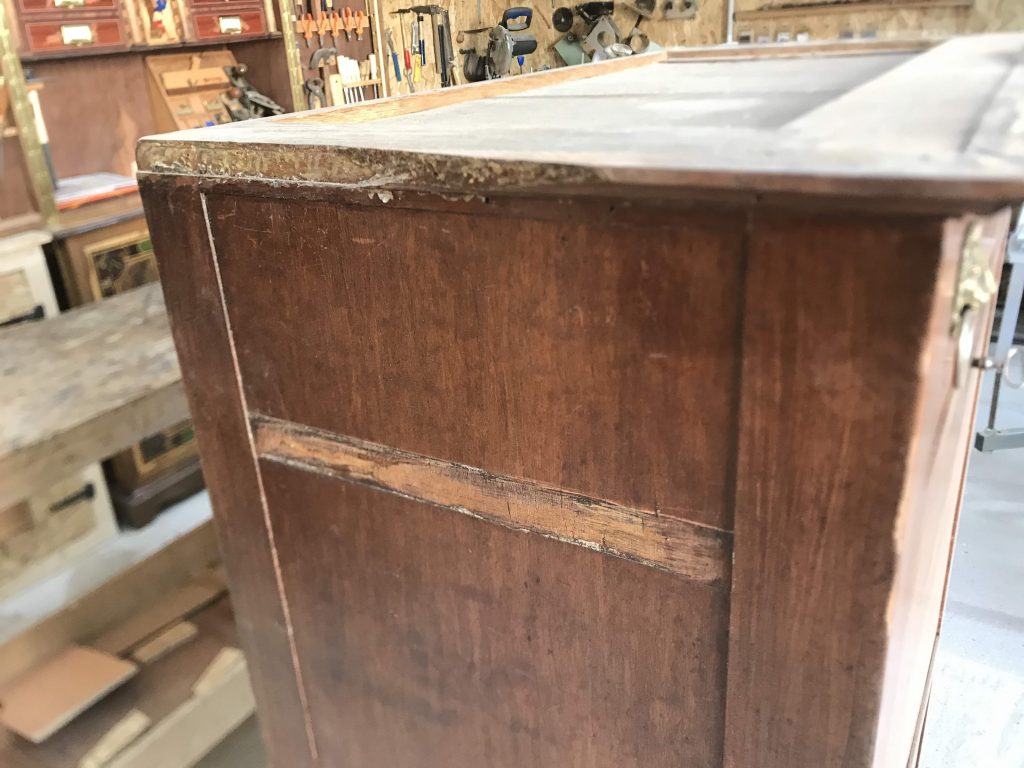
Before restoration 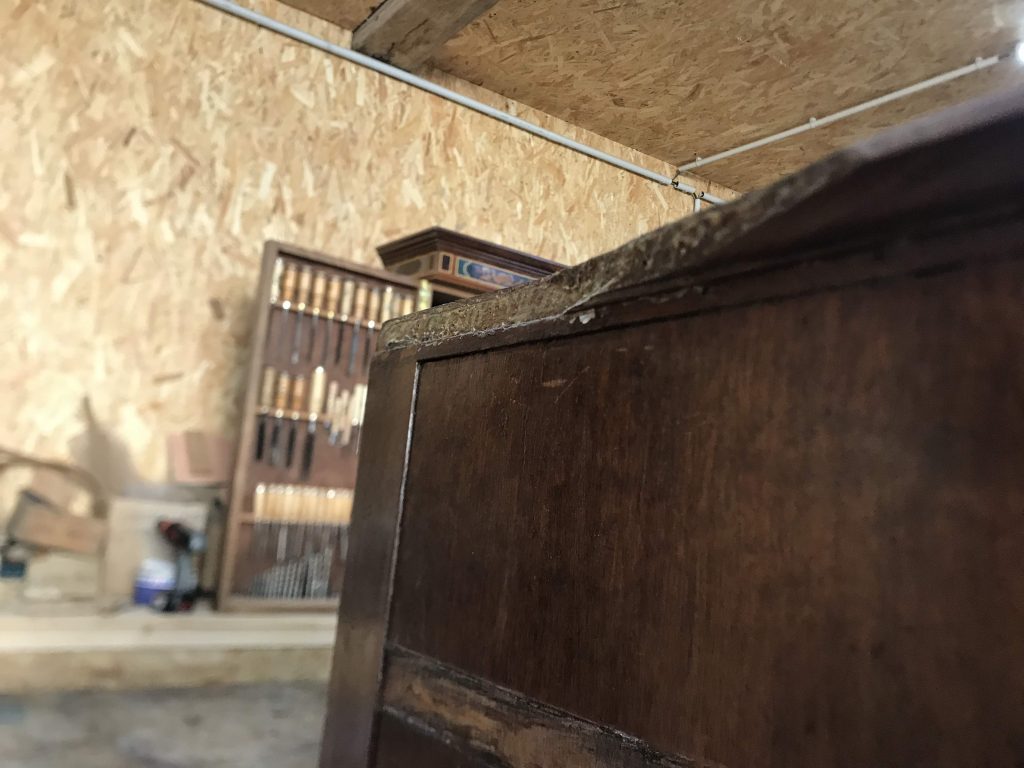
Before restoration 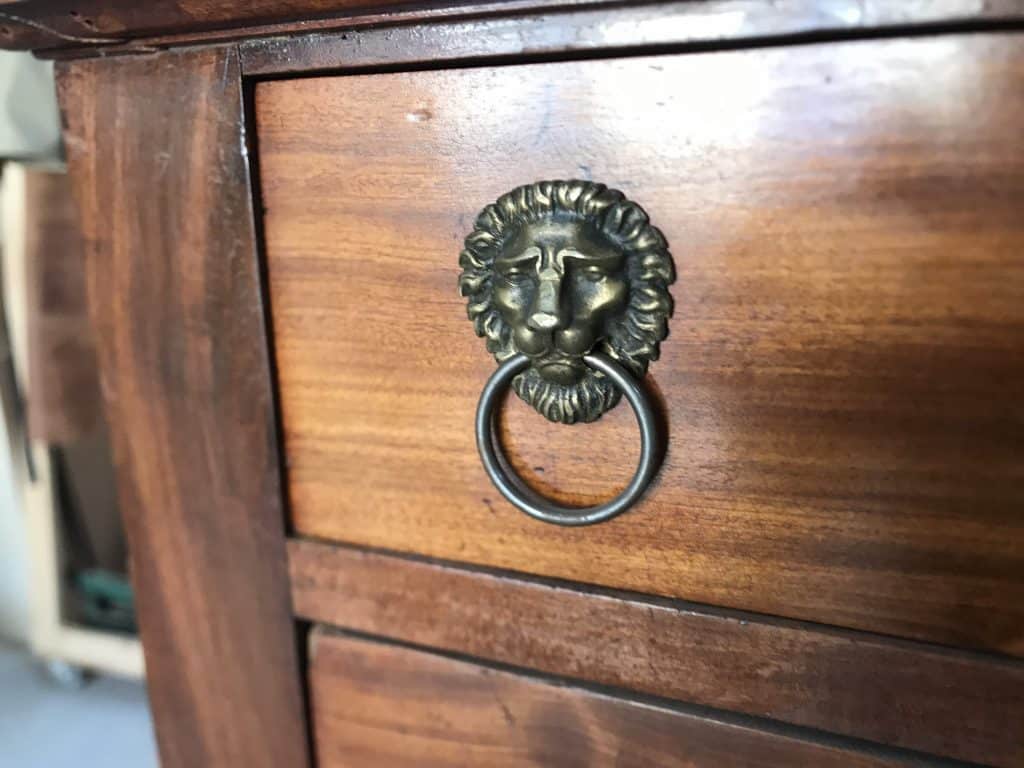
Before restoration 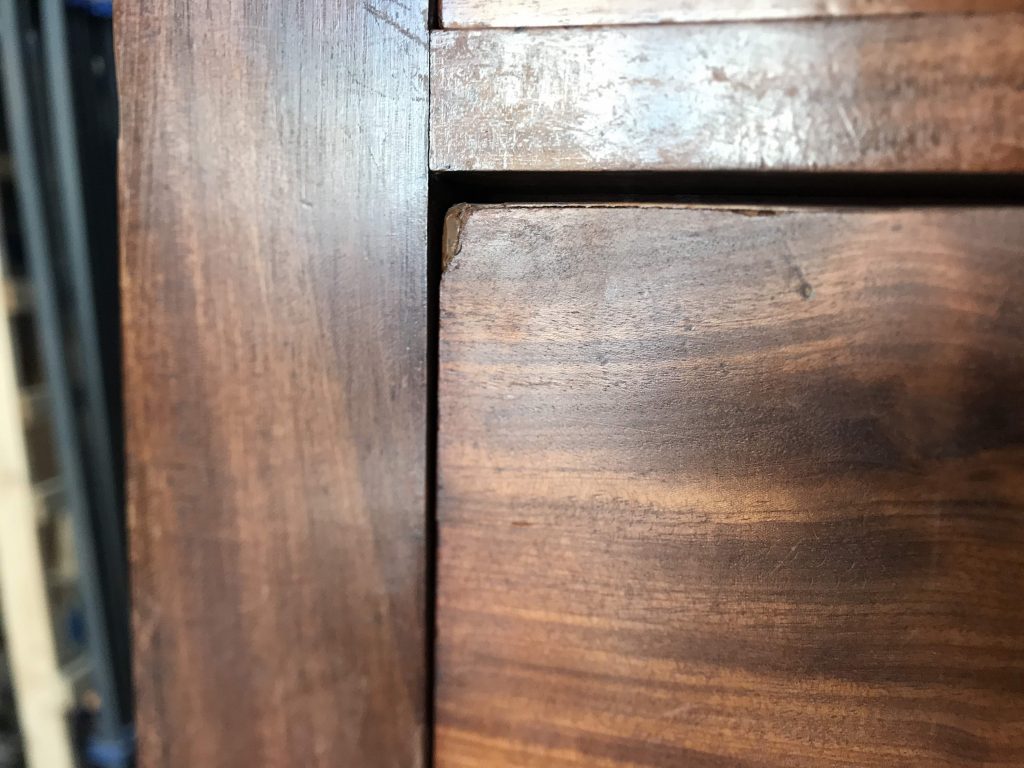
Before restoration 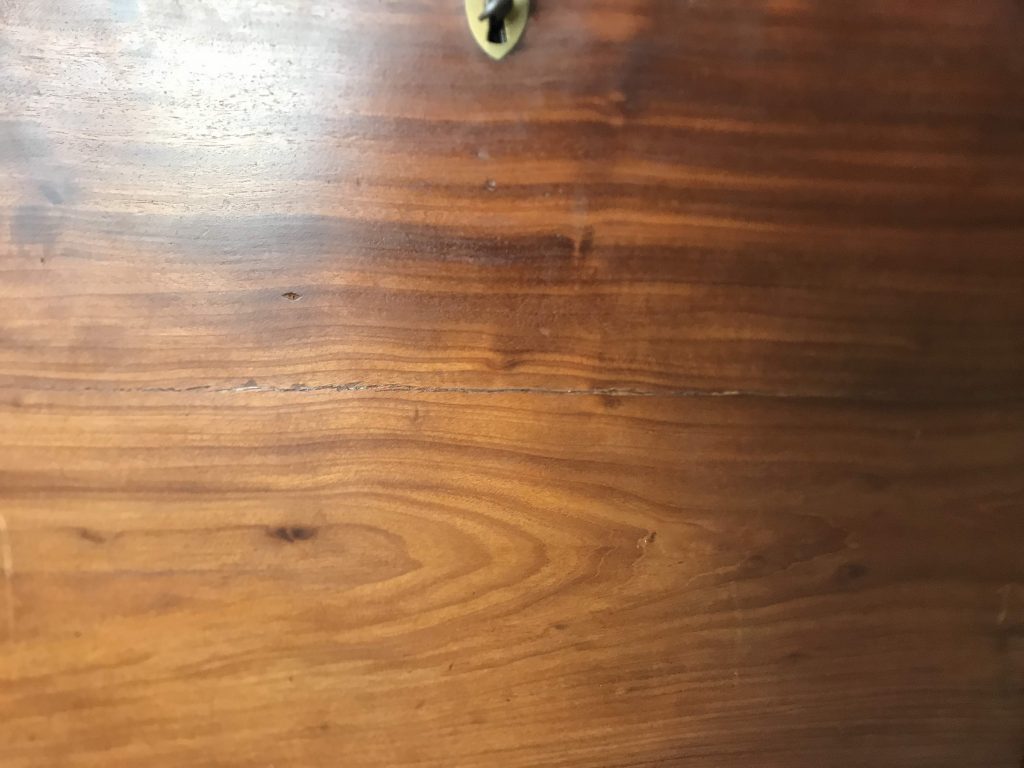
Before restoration 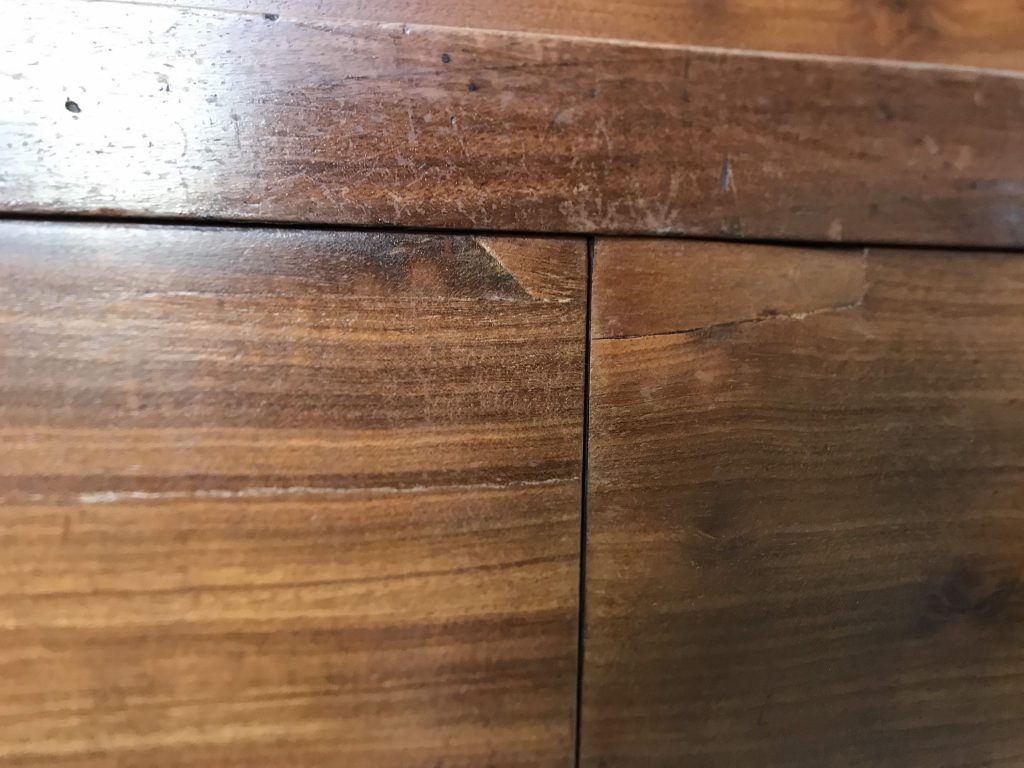
Old veneer grafts 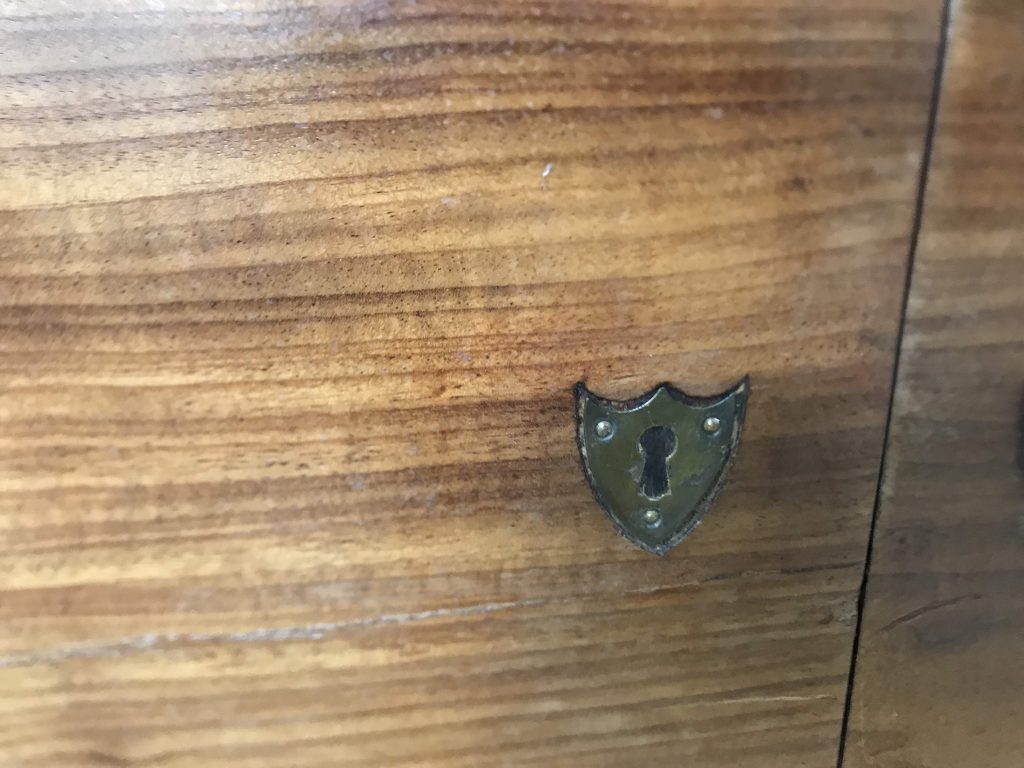
Before restoration 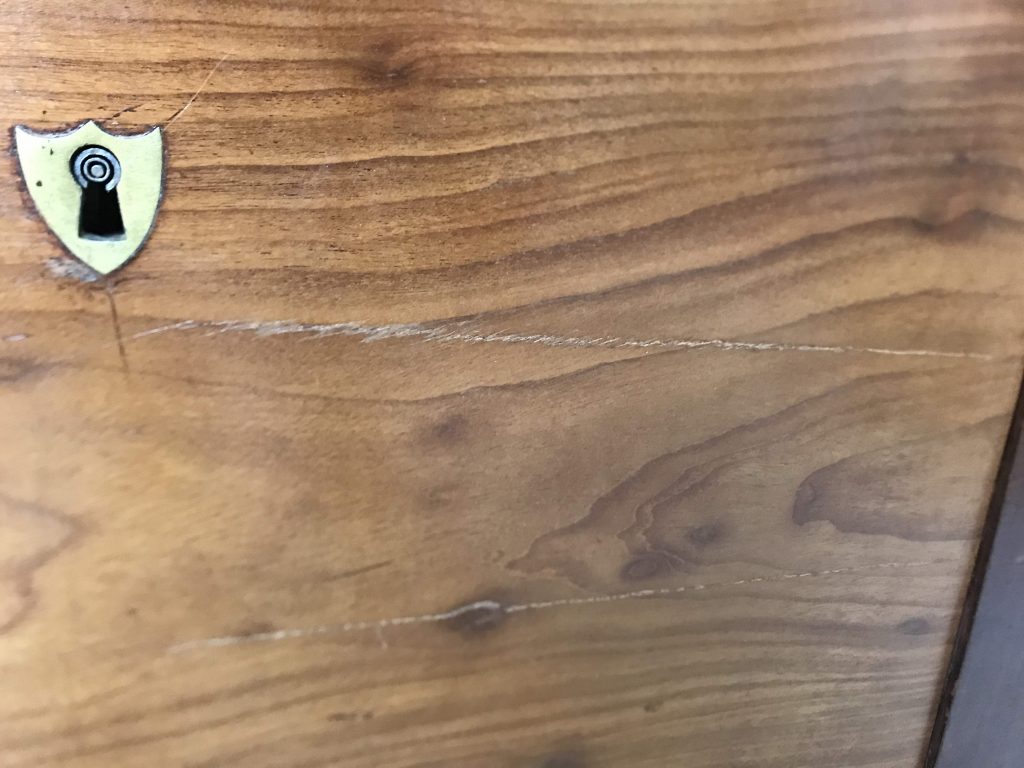
Split toilet seat 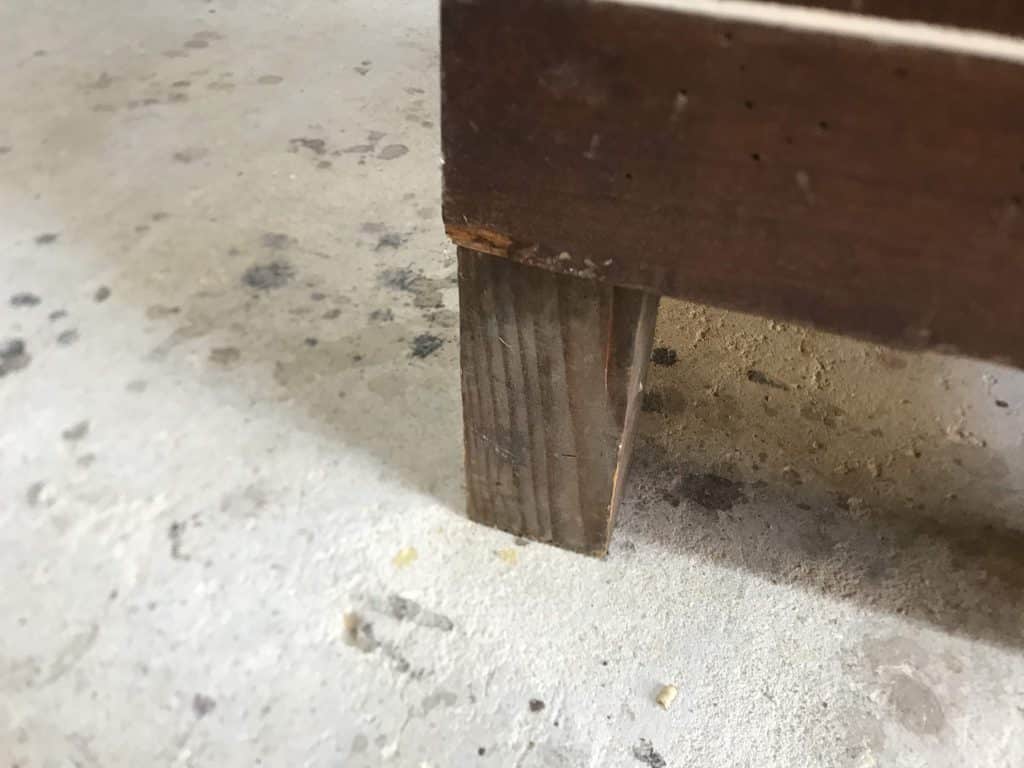
Fir tree call 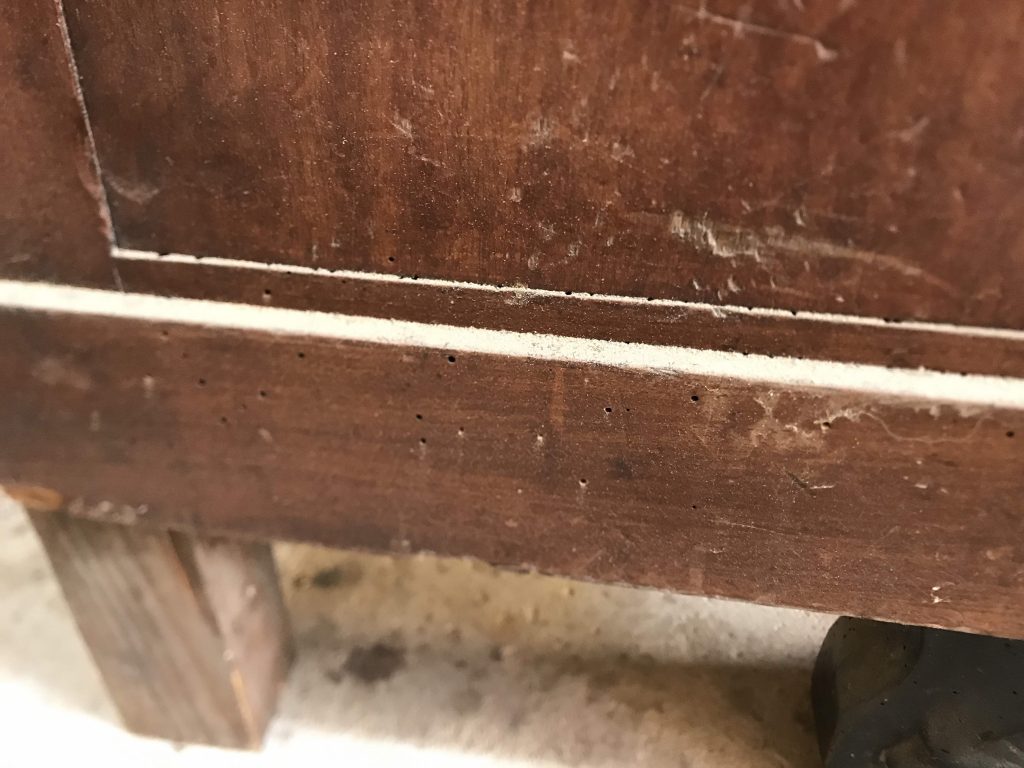
Worm-eaten side 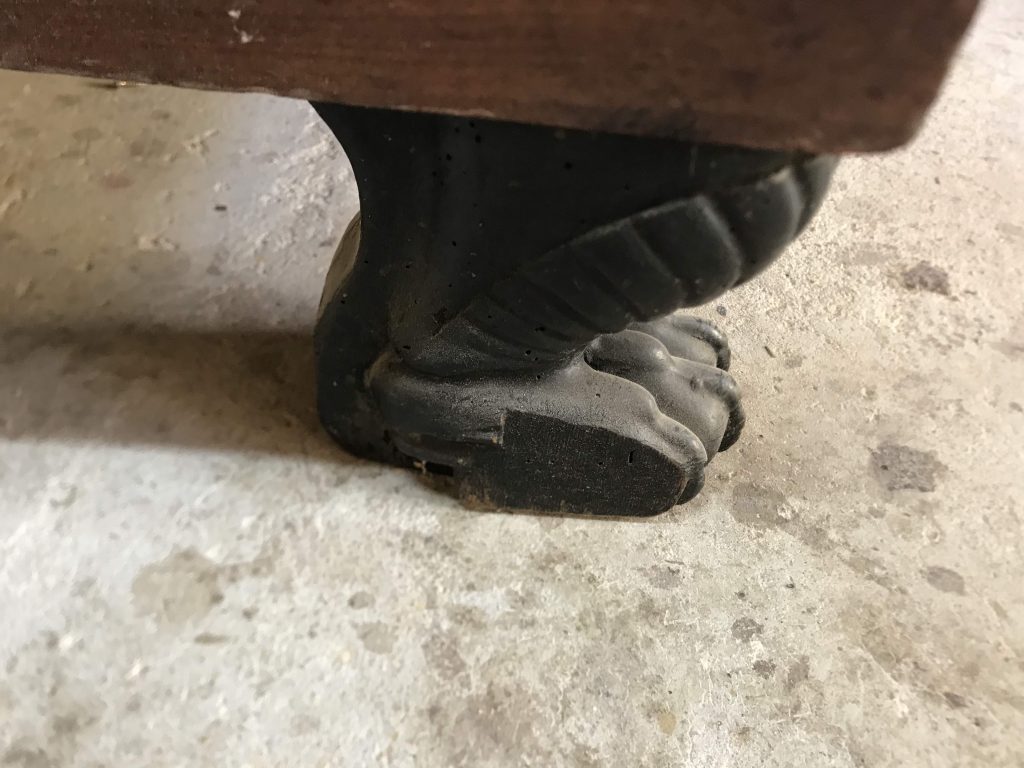
Lack of mass on the left claw 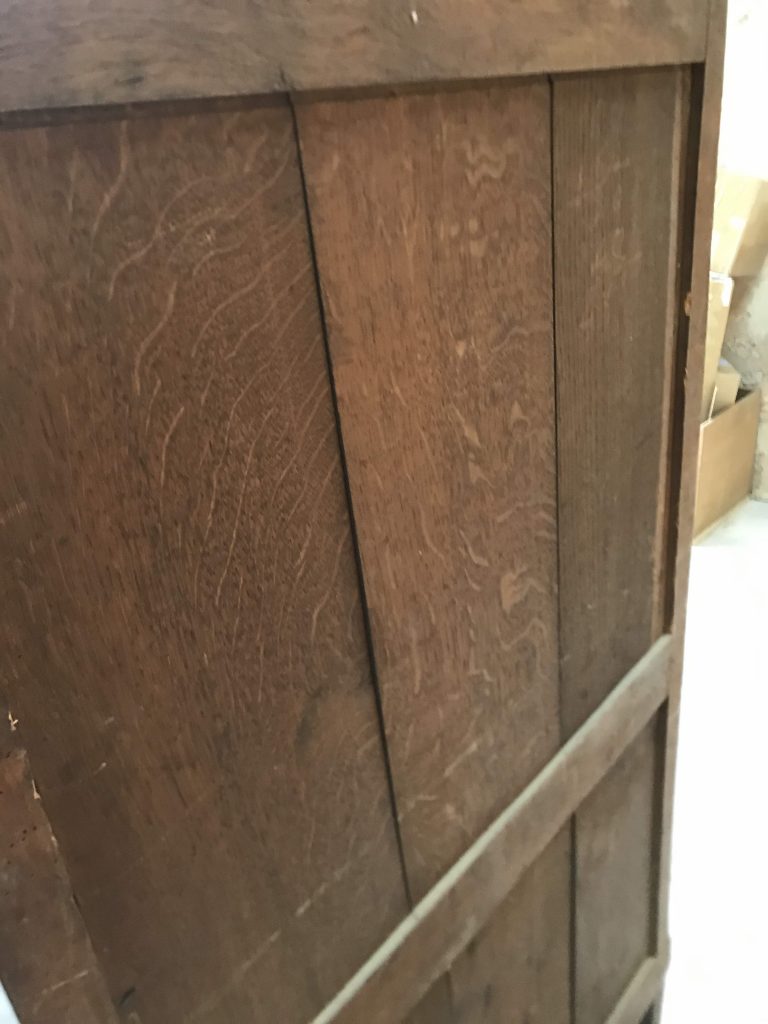
Before restoration 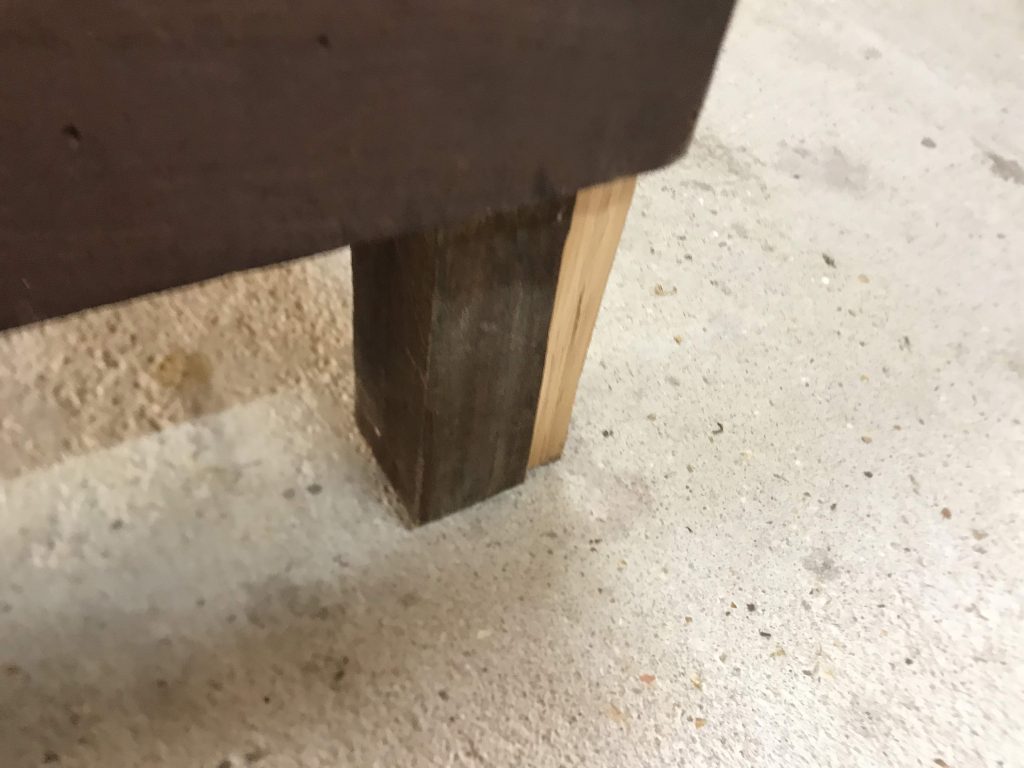
Fir tree call 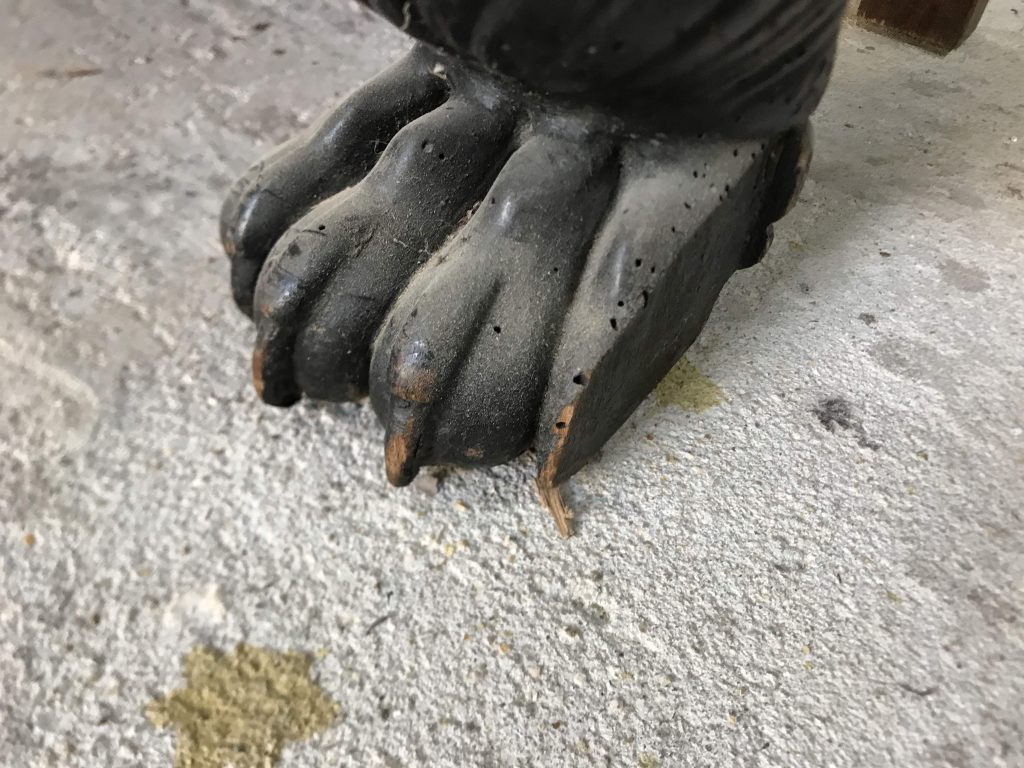
Lack of mass on the right claw 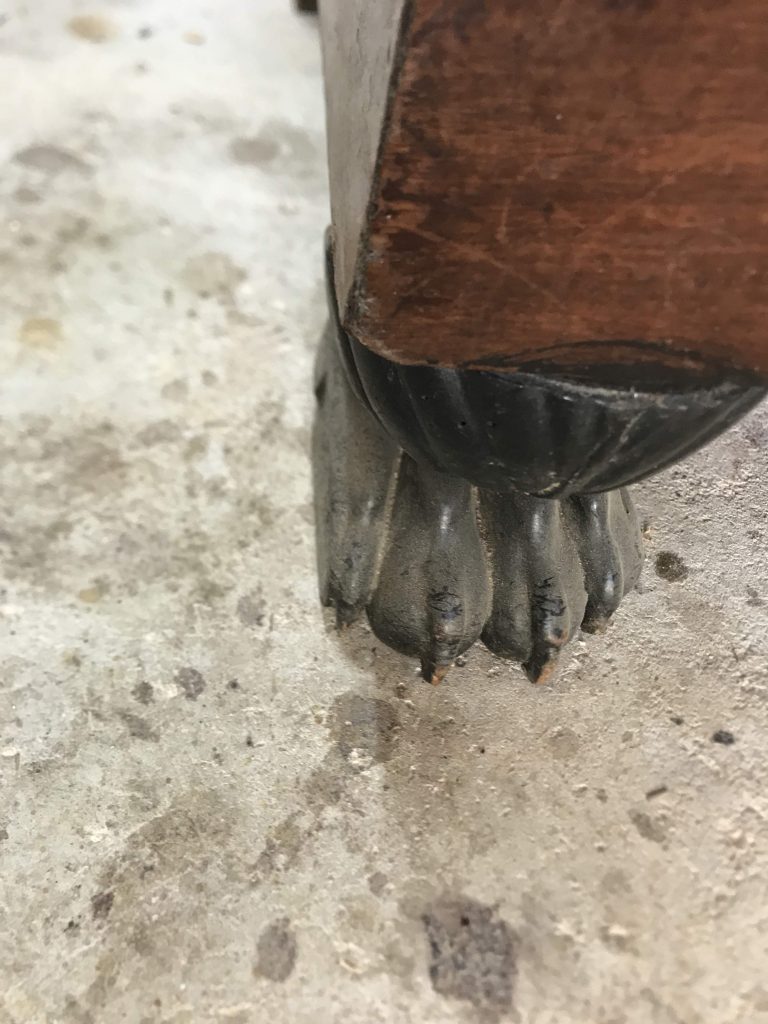
Lack of mass on the left claw 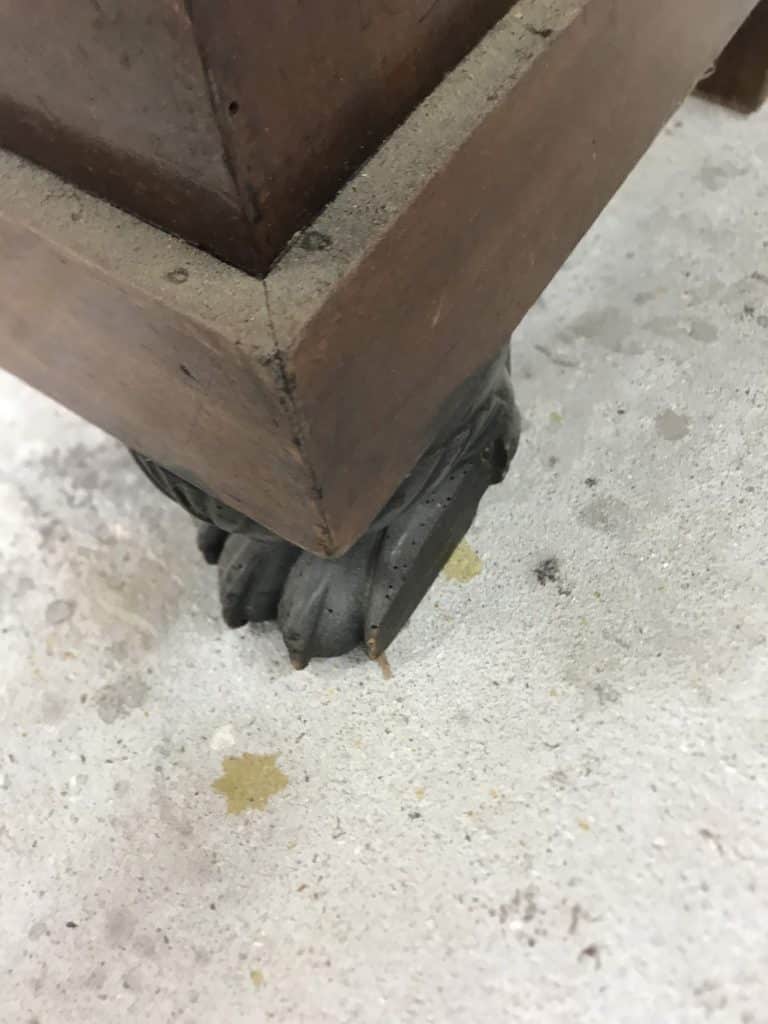
Lack of mass on the right claw 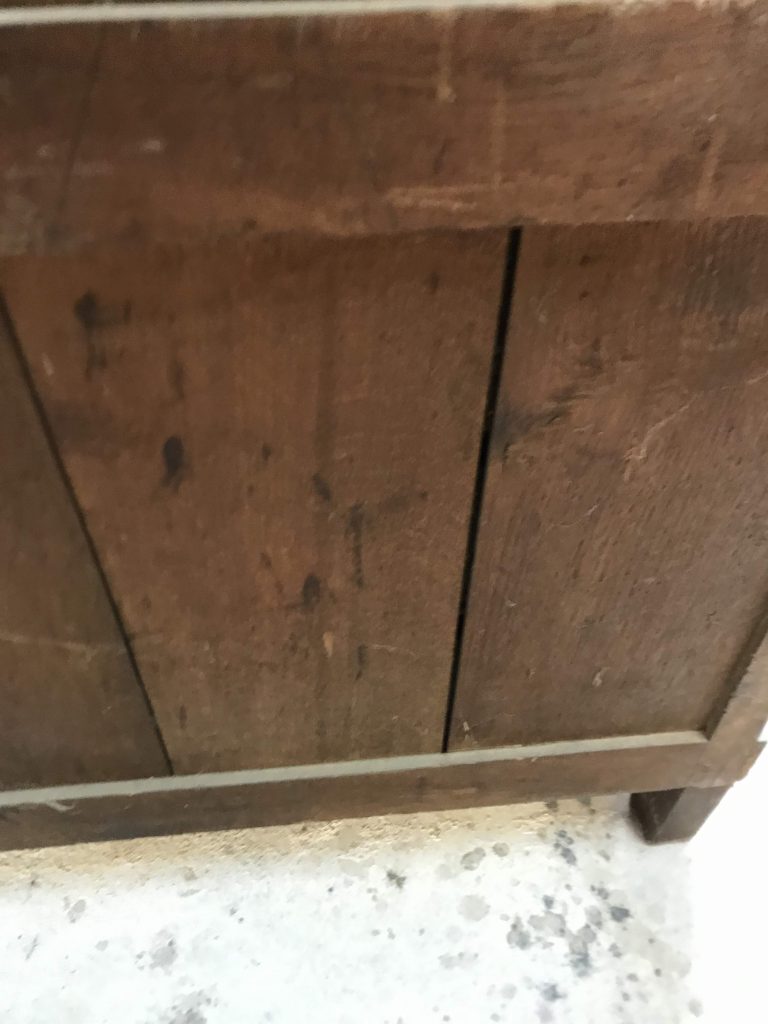
Before restoration 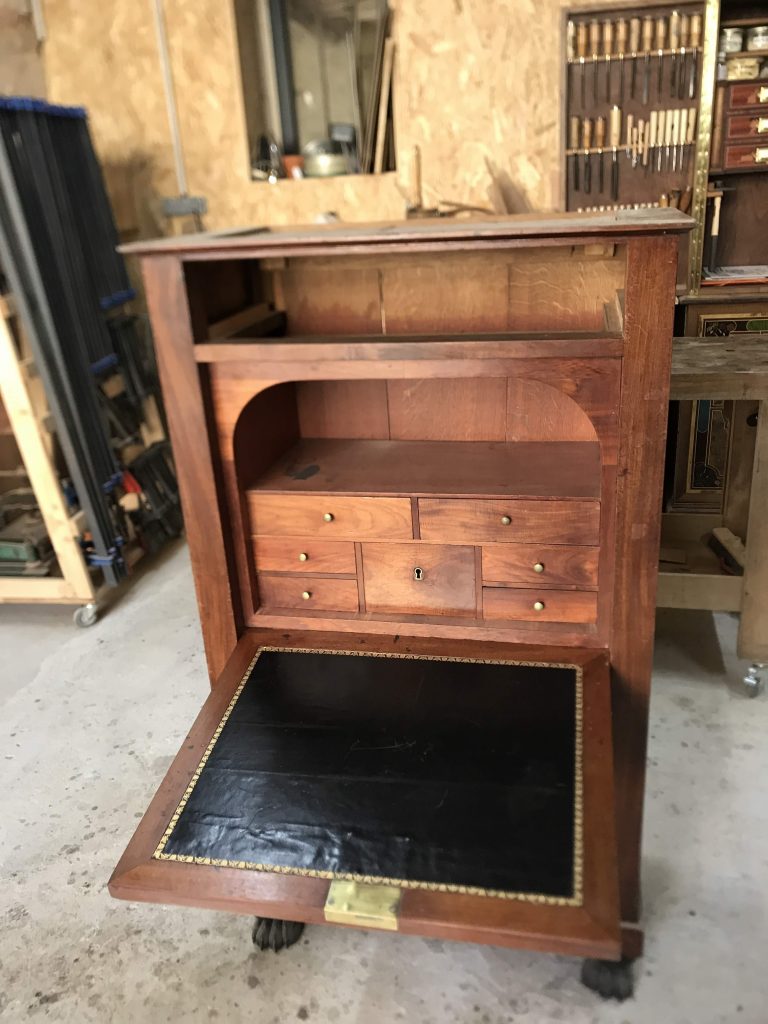
Before restoration
The restoration therefore consisted of reattaching a few elements such as the cornice and the plinth. The cracks in the doors and the drop-leaf needed to be repaired, a new piece of mahogany veneer needed to be made on the left side, and new rear legs needed to be made from beech and veneered with mahogany.
The front legs were grafted with walnut and carved, then I reinforced the grafts with a hide glue primer. Finally, I reapplied the lacquer, striving to match the original color.
After oxidizing the new mahogany veneer pieces, I applied a French polish finish. The lock and key were cleaned and restored to good working order, and the old leather, which was too damaged and torn, was replaced with burgundy leather.
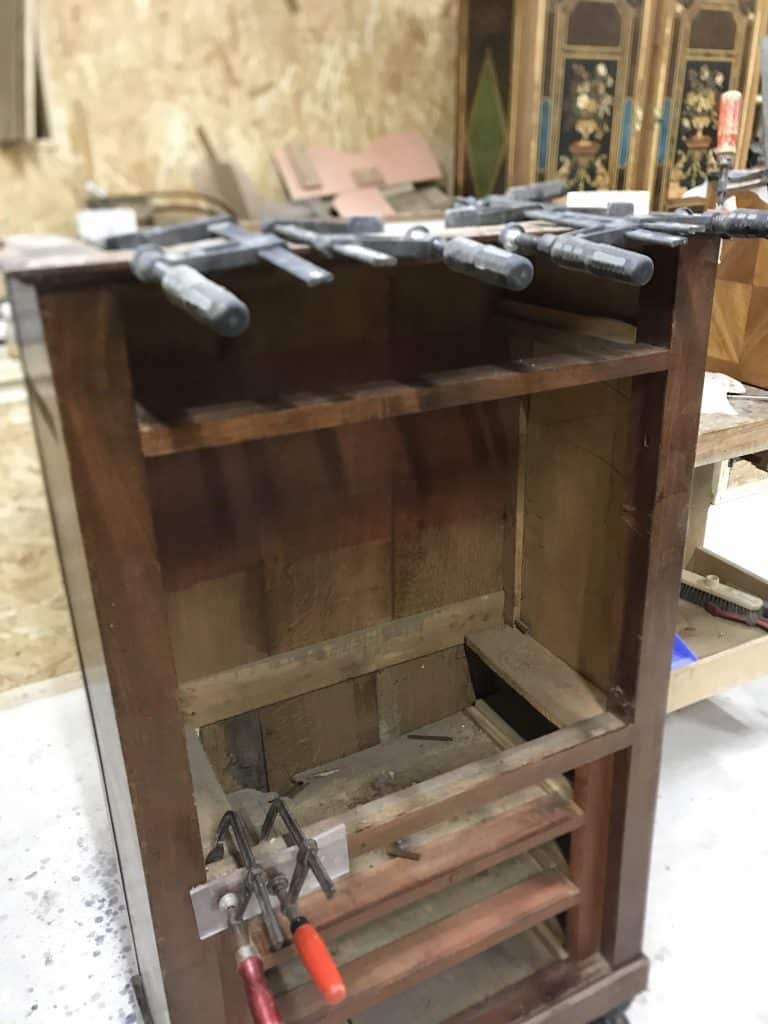
Reattaching the cornice and broken elements 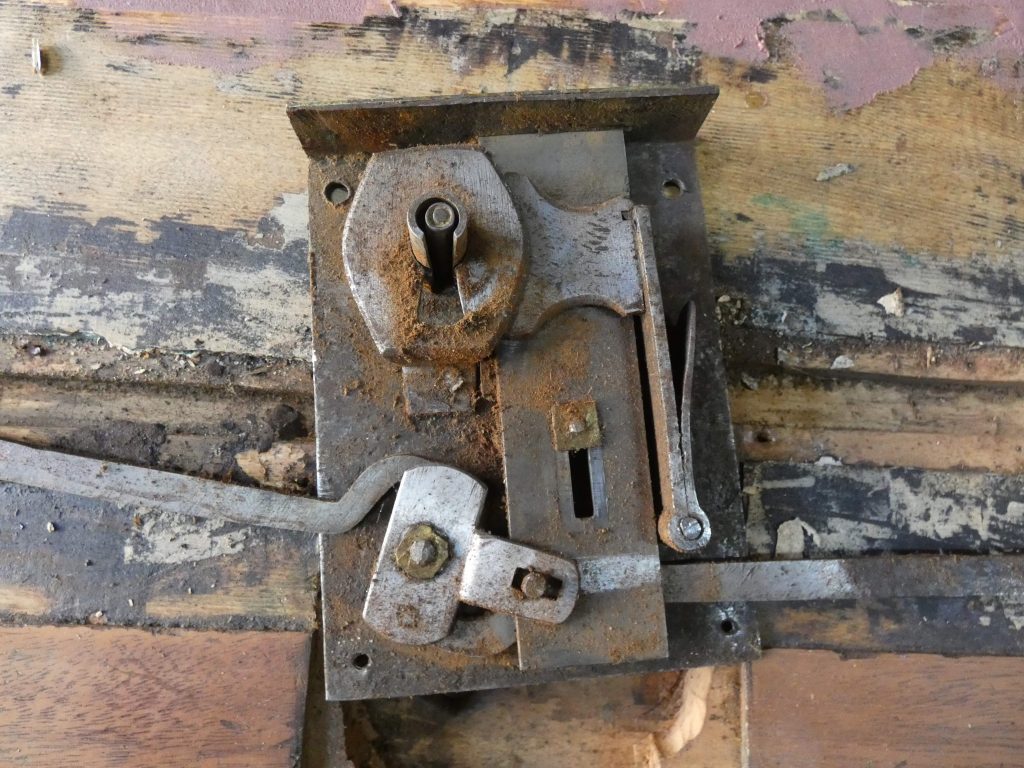
Lock removed 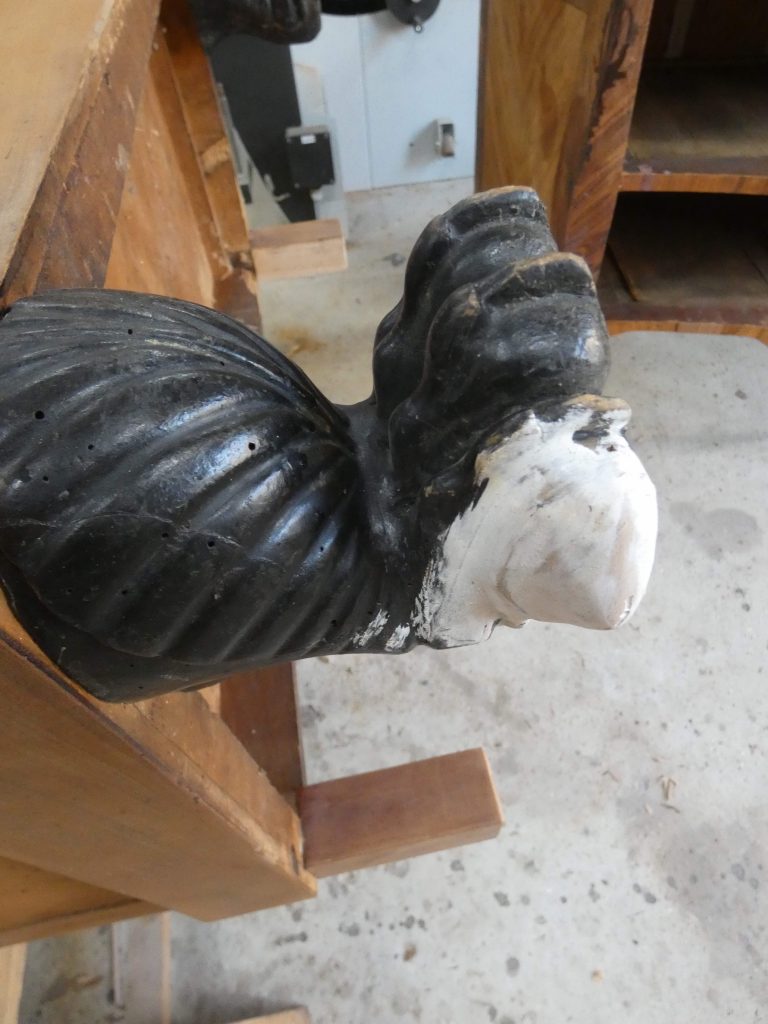
Application of a hide glue primer 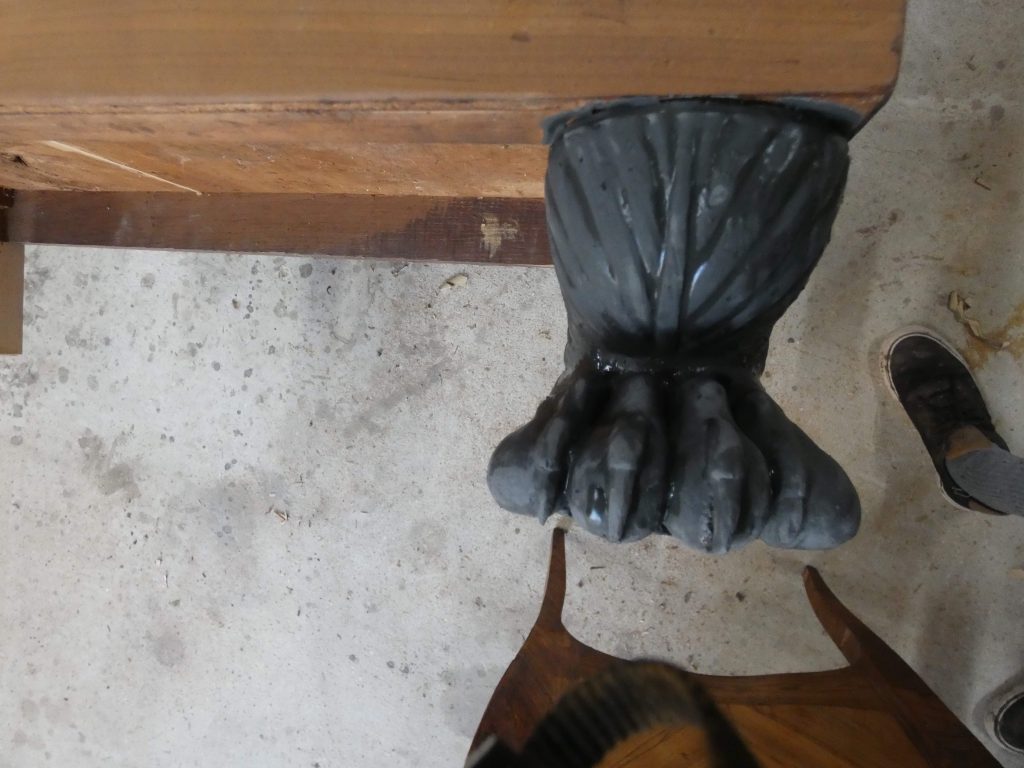
lacquering 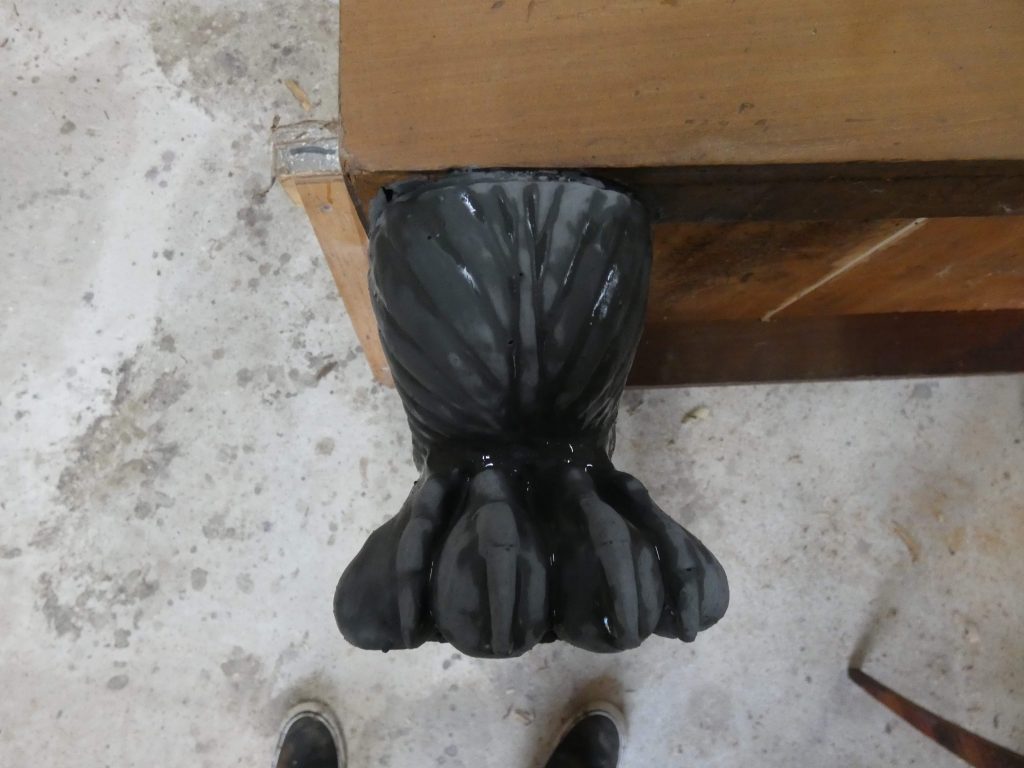
First coat of lacquer
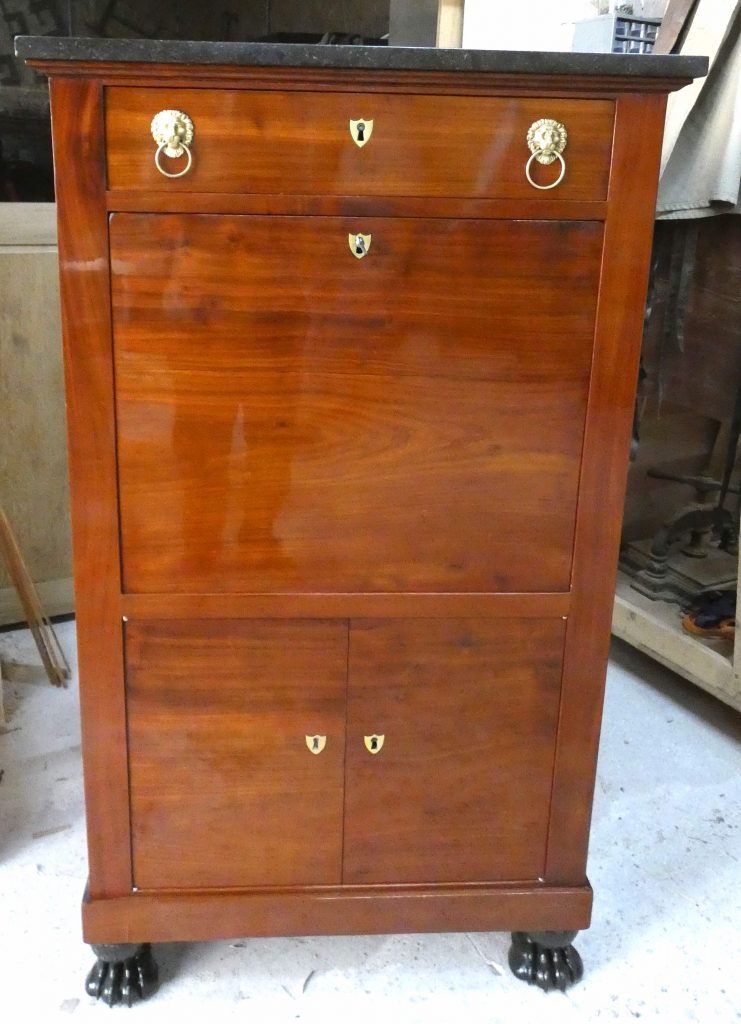
After restoration 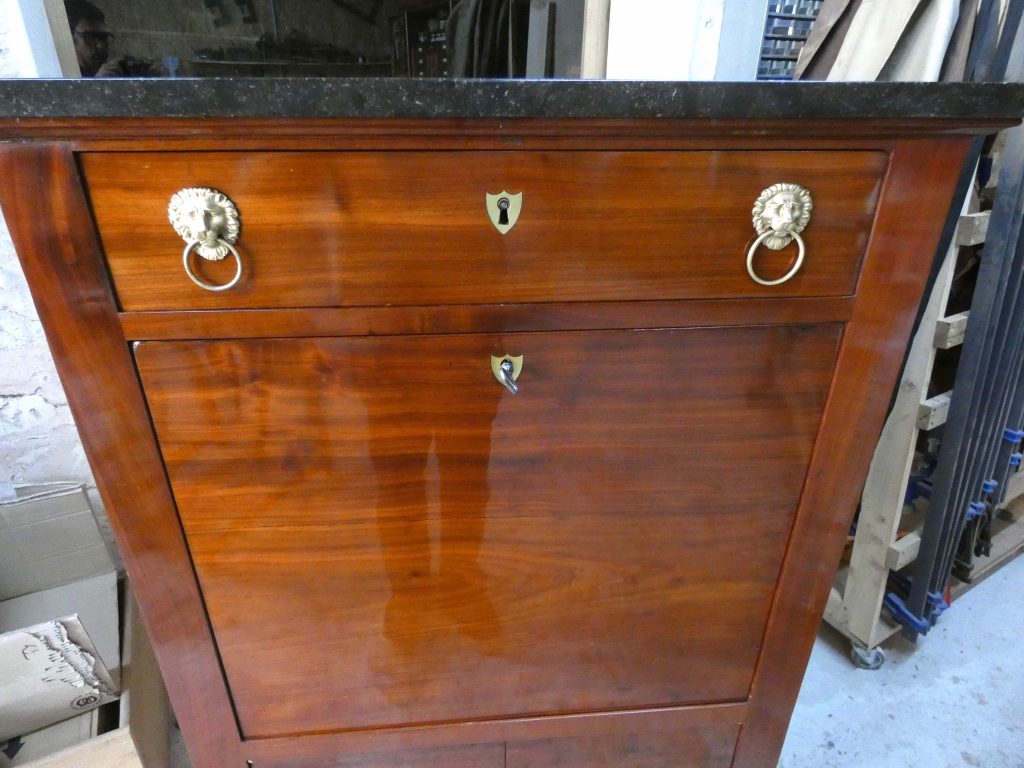
After restoration 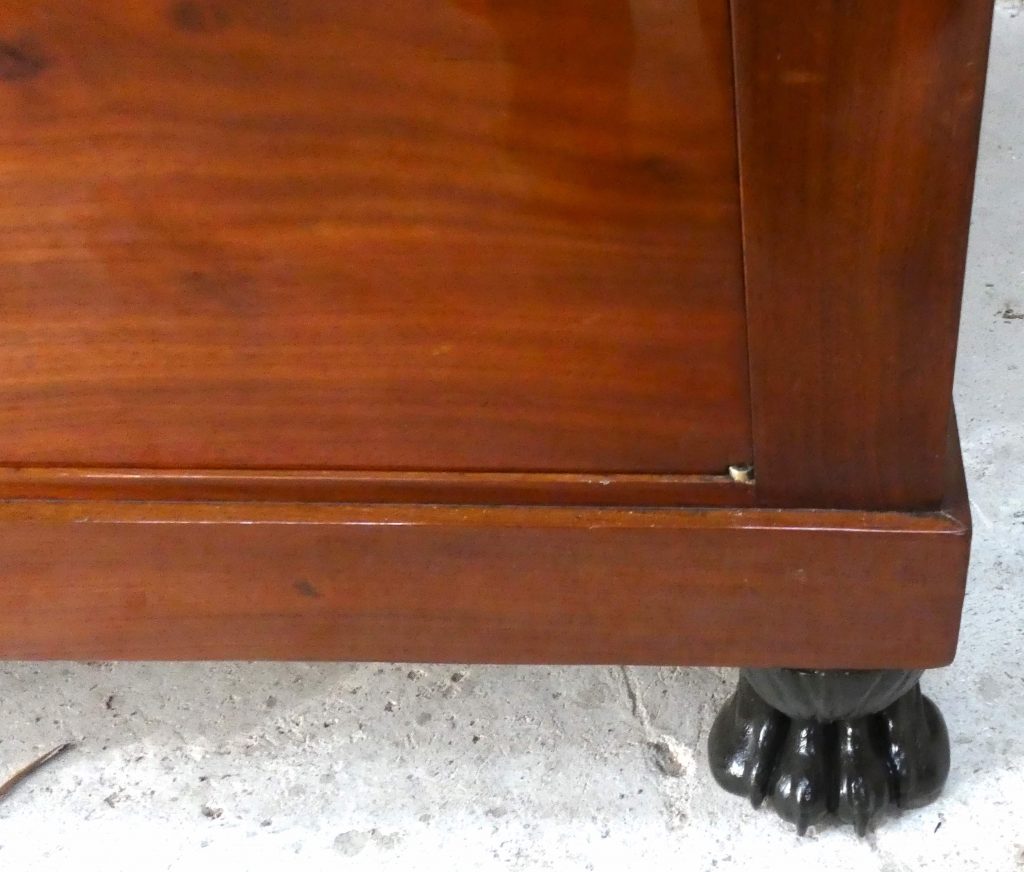
After restoration 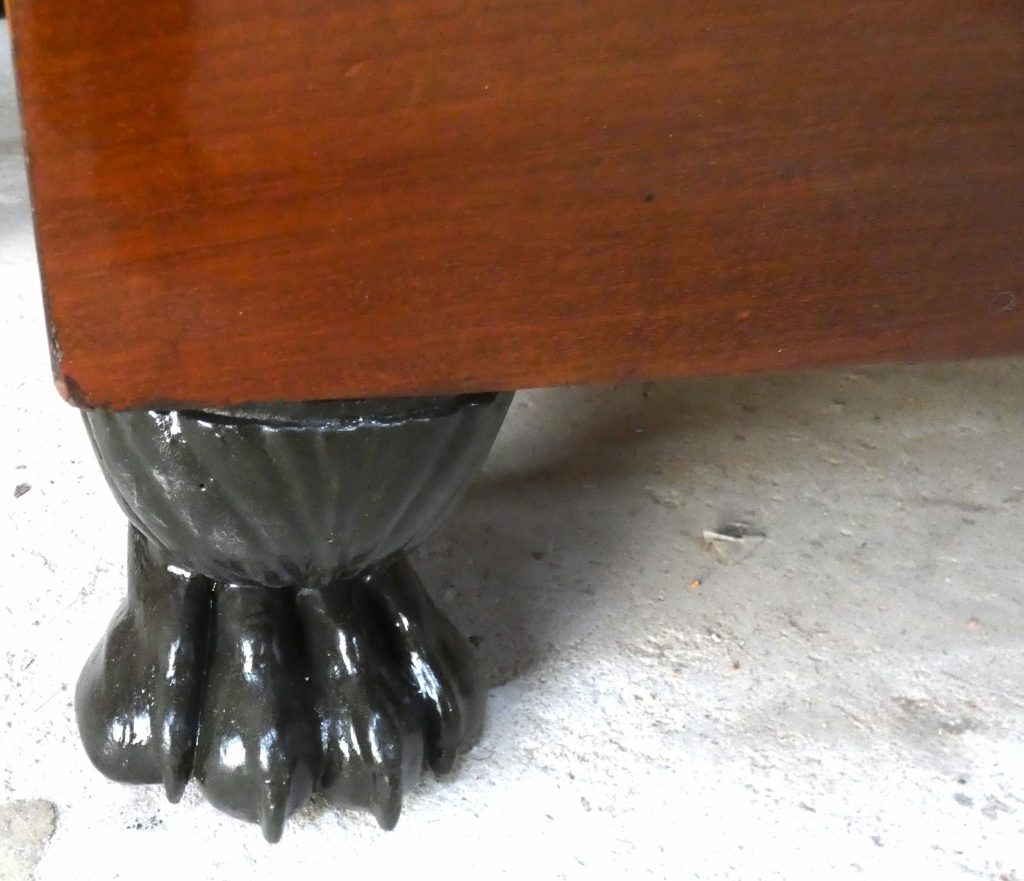
Scratch after restoration 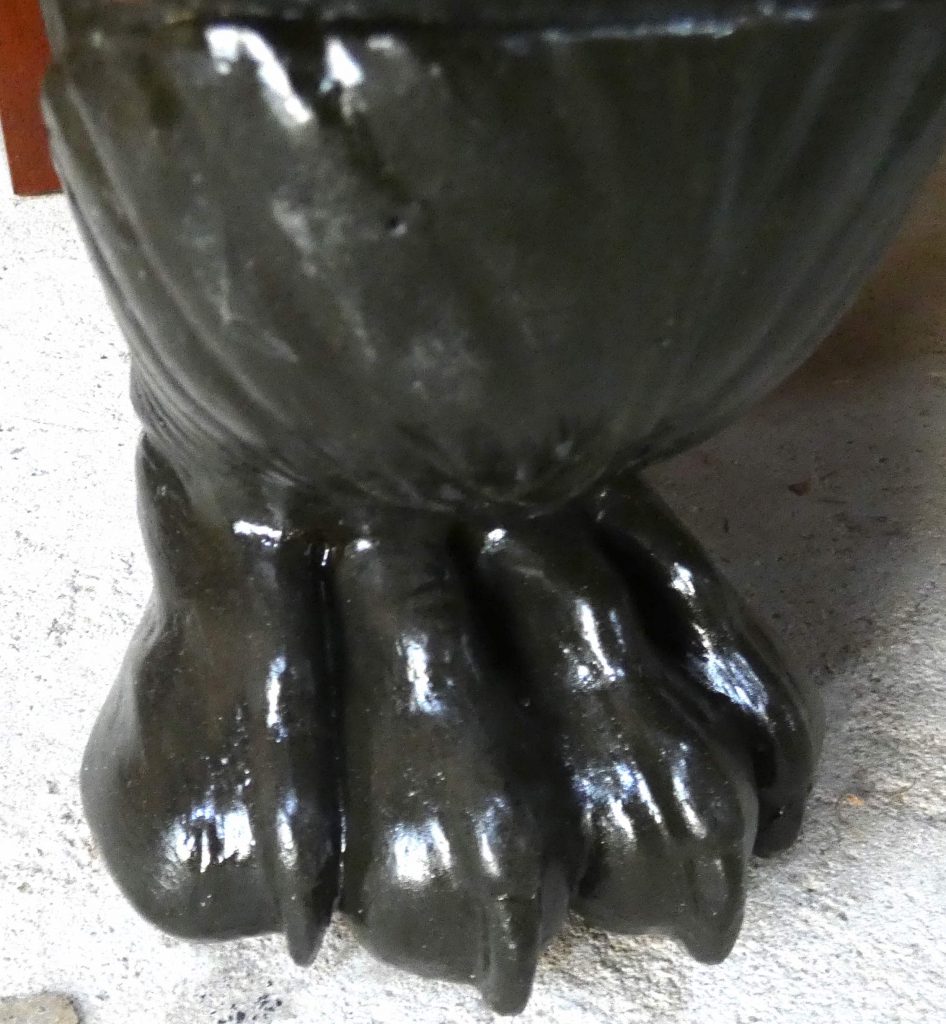
Invisible left foot graft 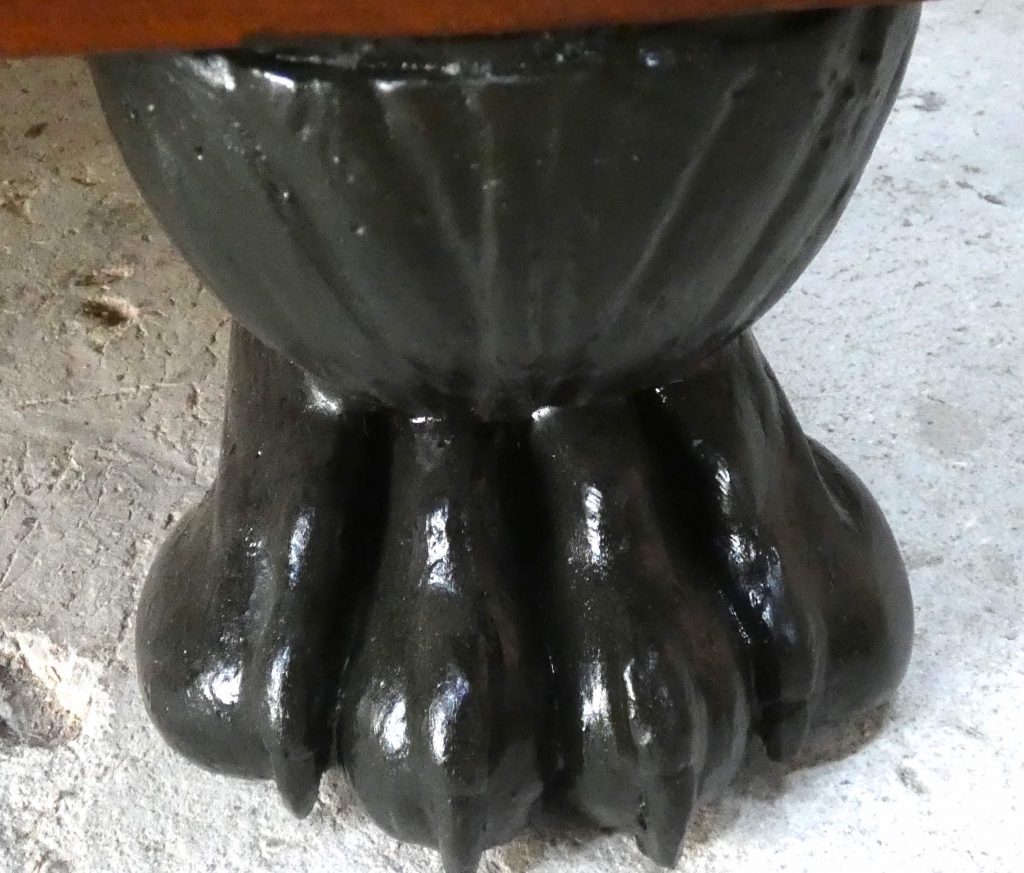
Right foot 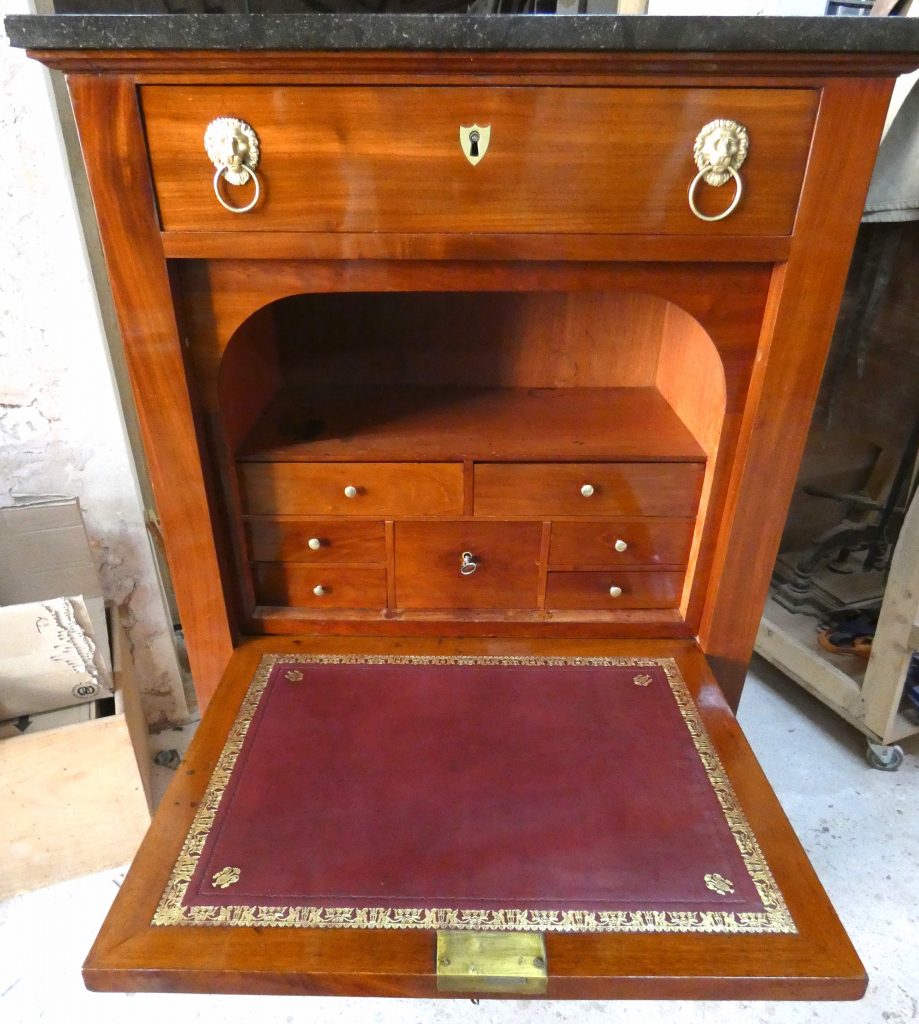
New leather 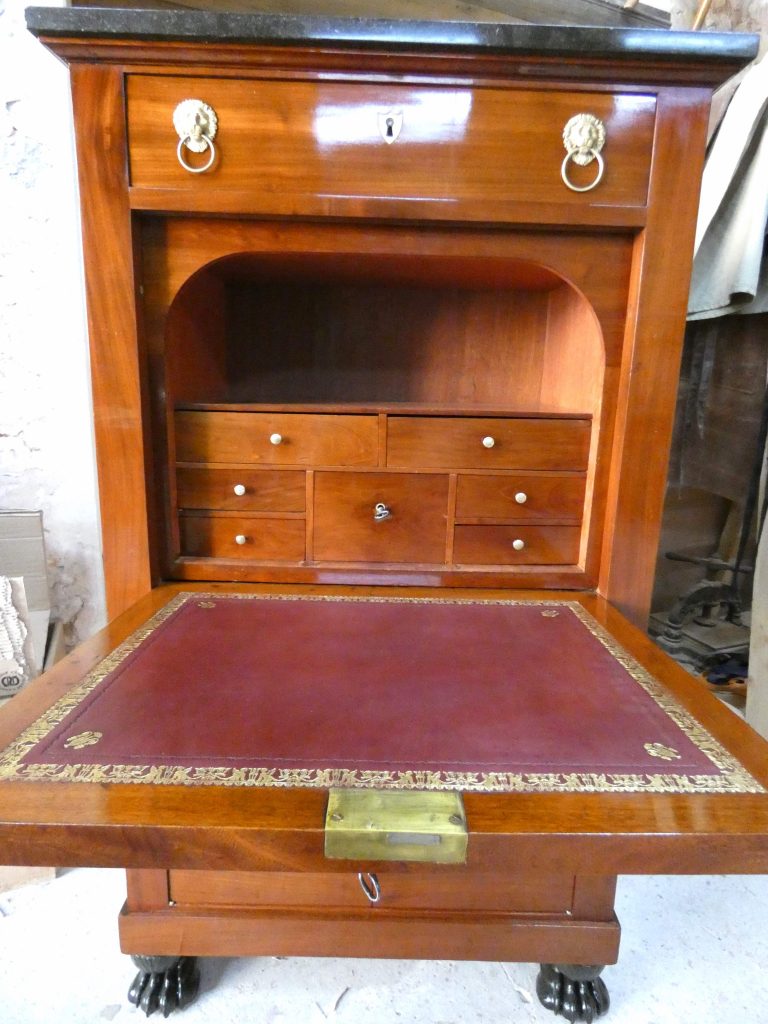
After restoration 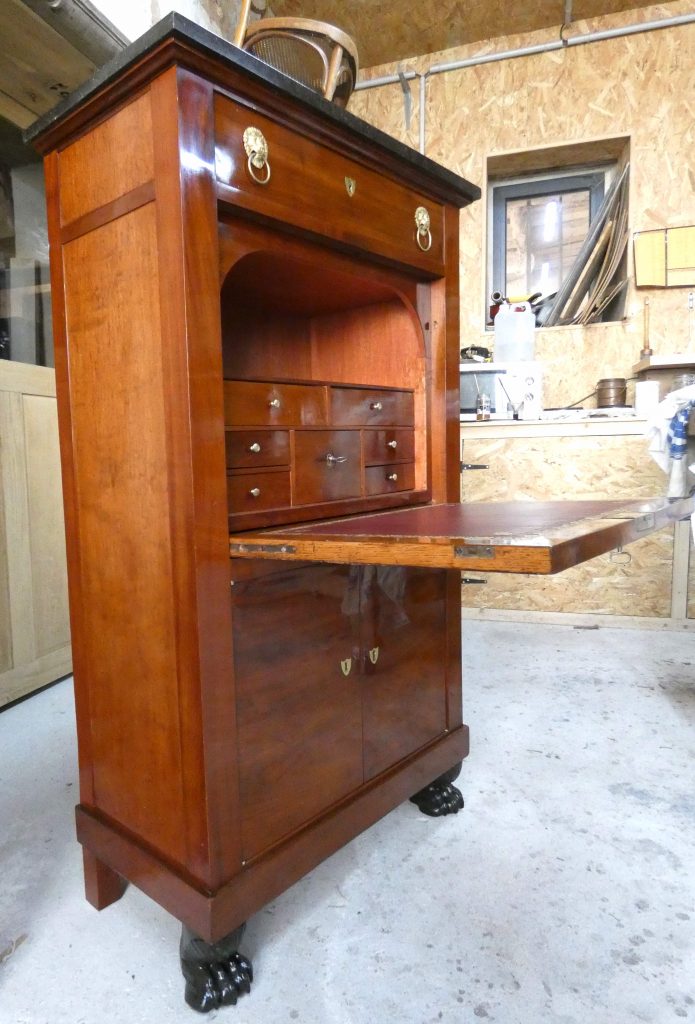
Adjustable toilet seat 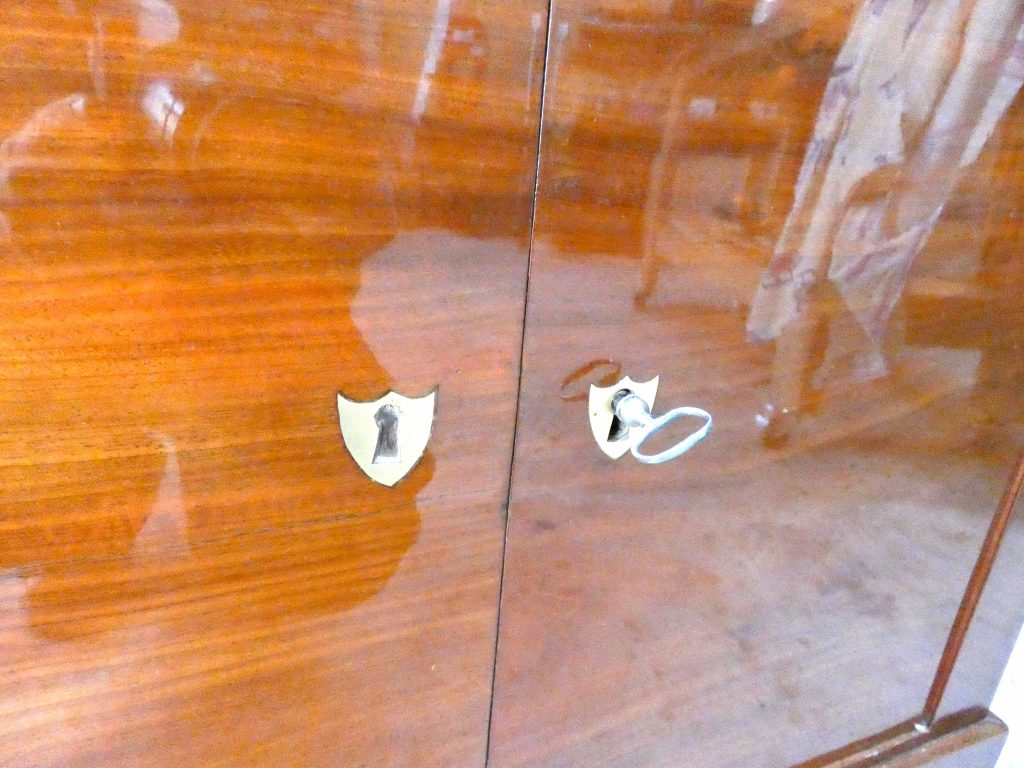
After restoration 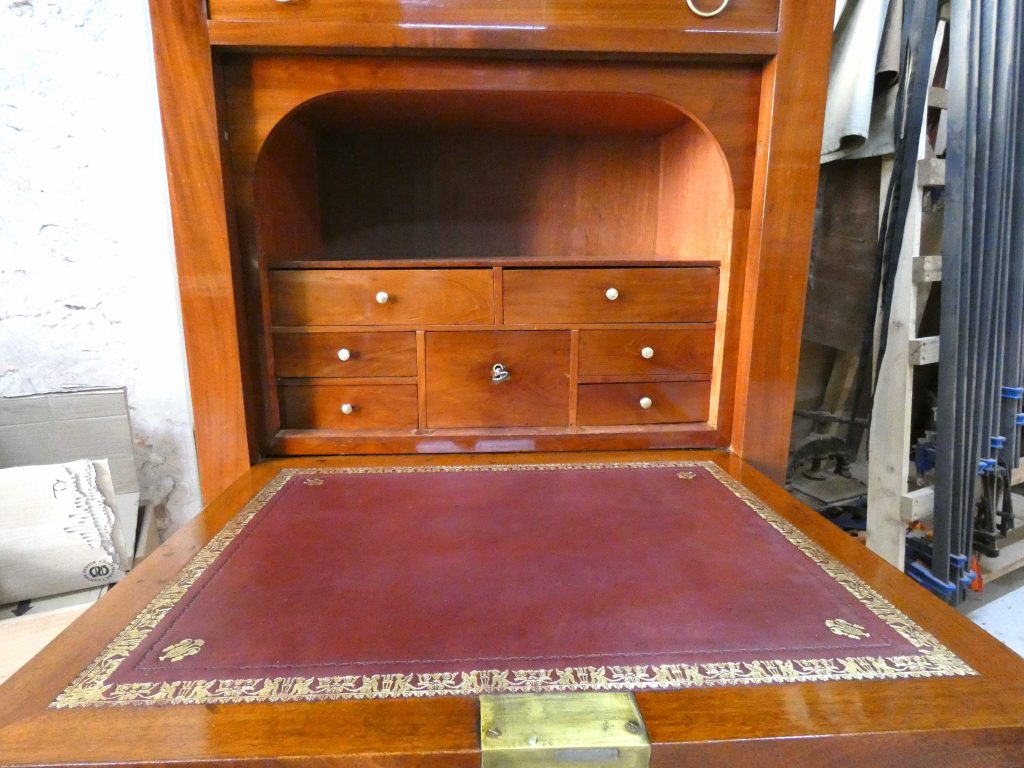
After restoration 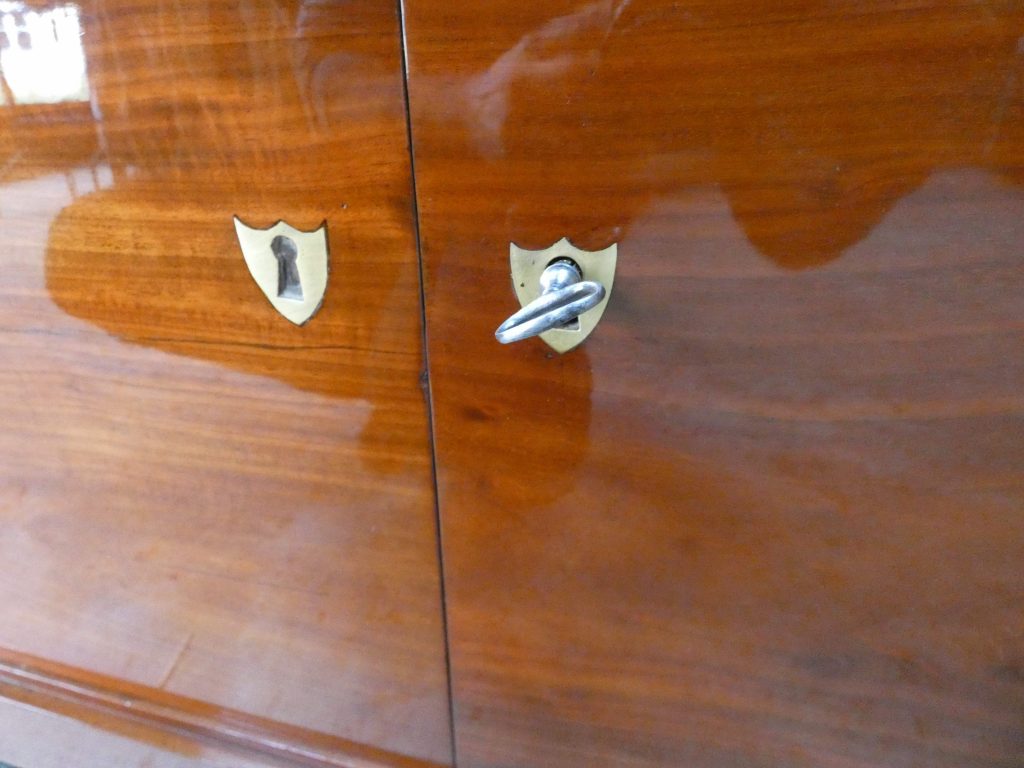
After restoration 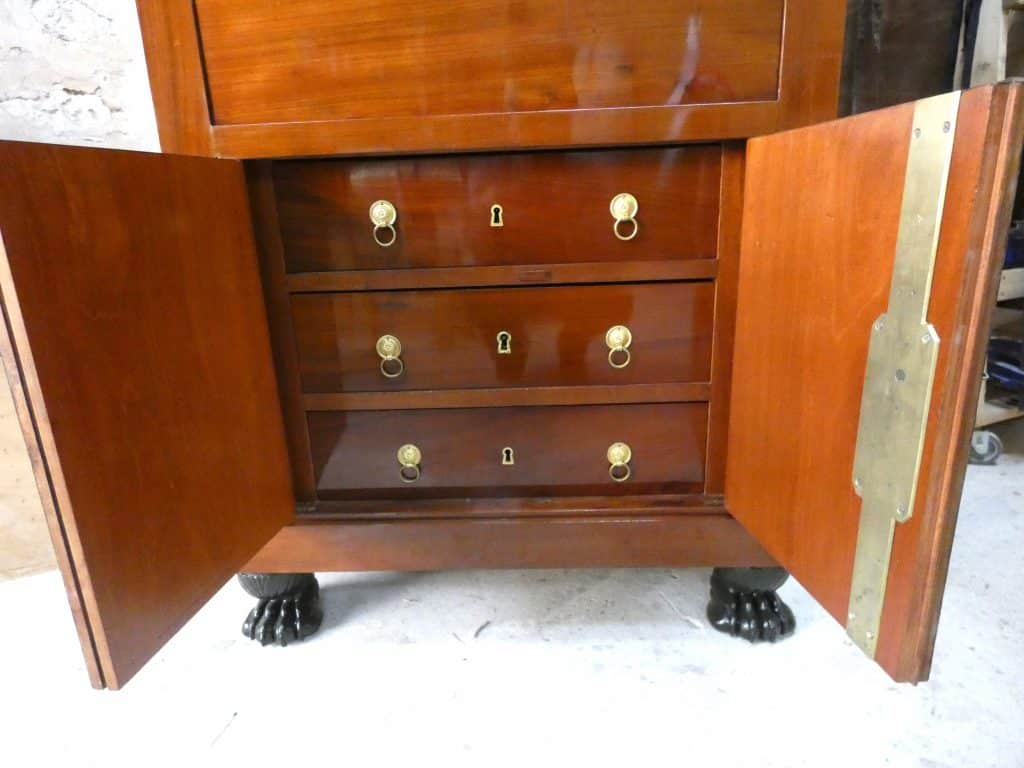
After restoration 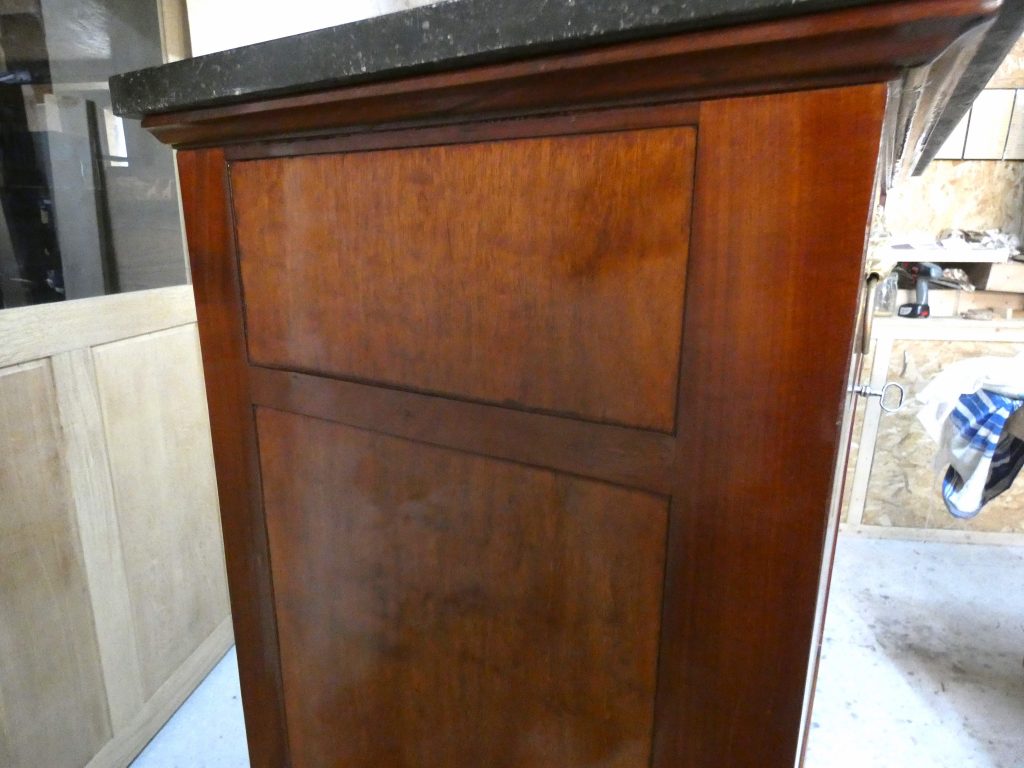
After restoration 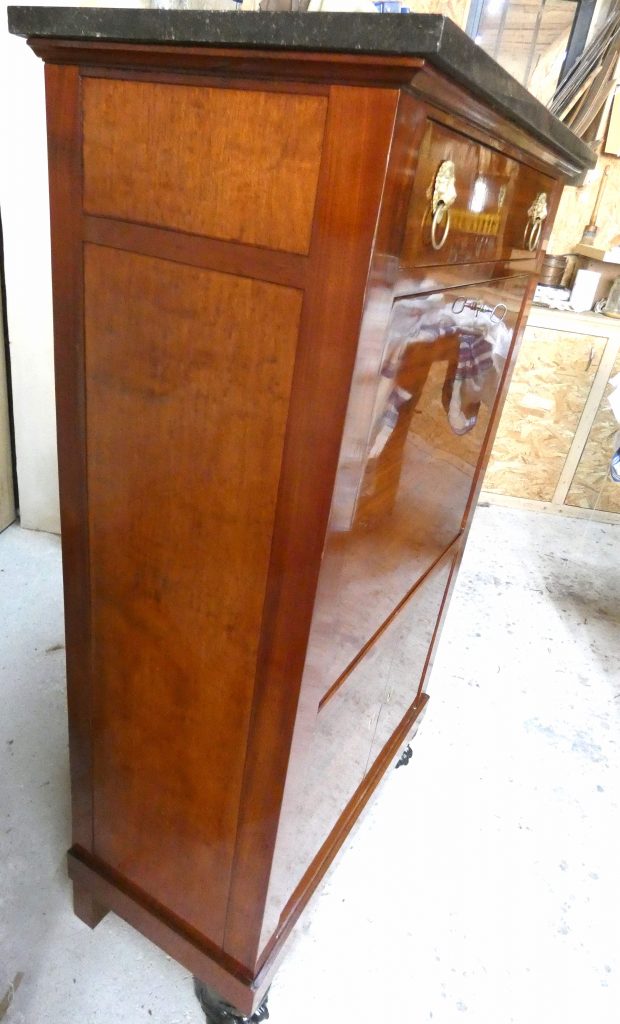
After restoration 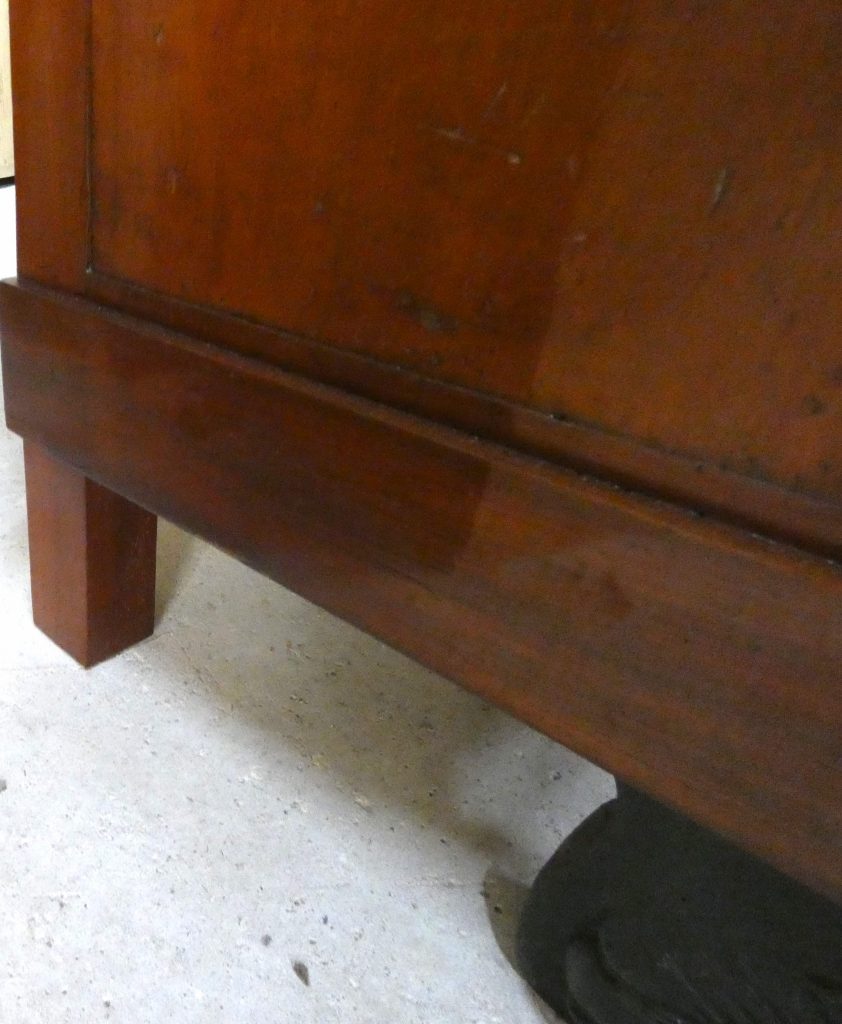
After restoration 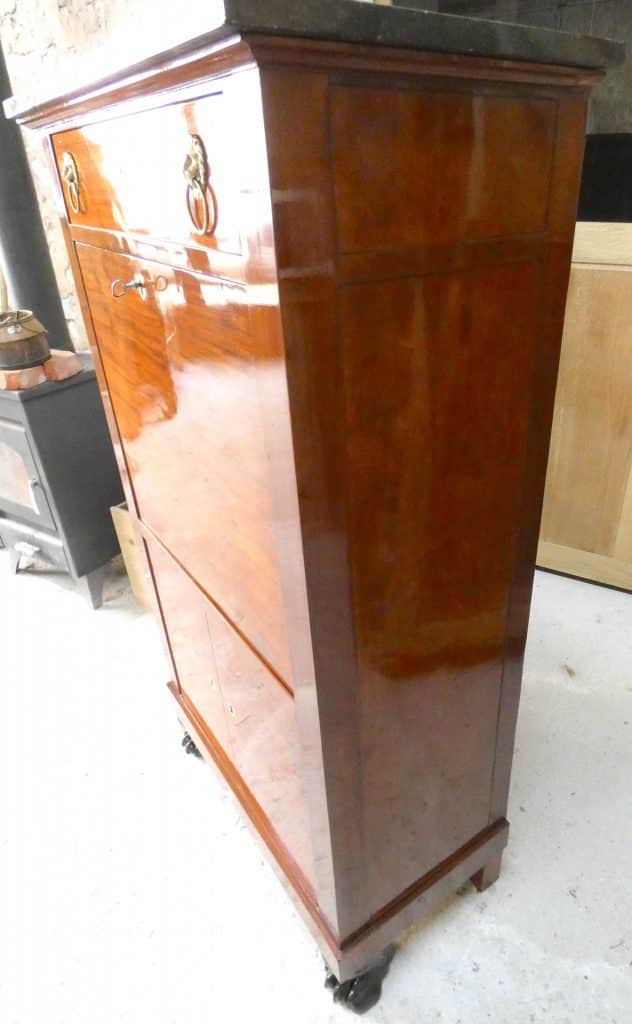
After restoration 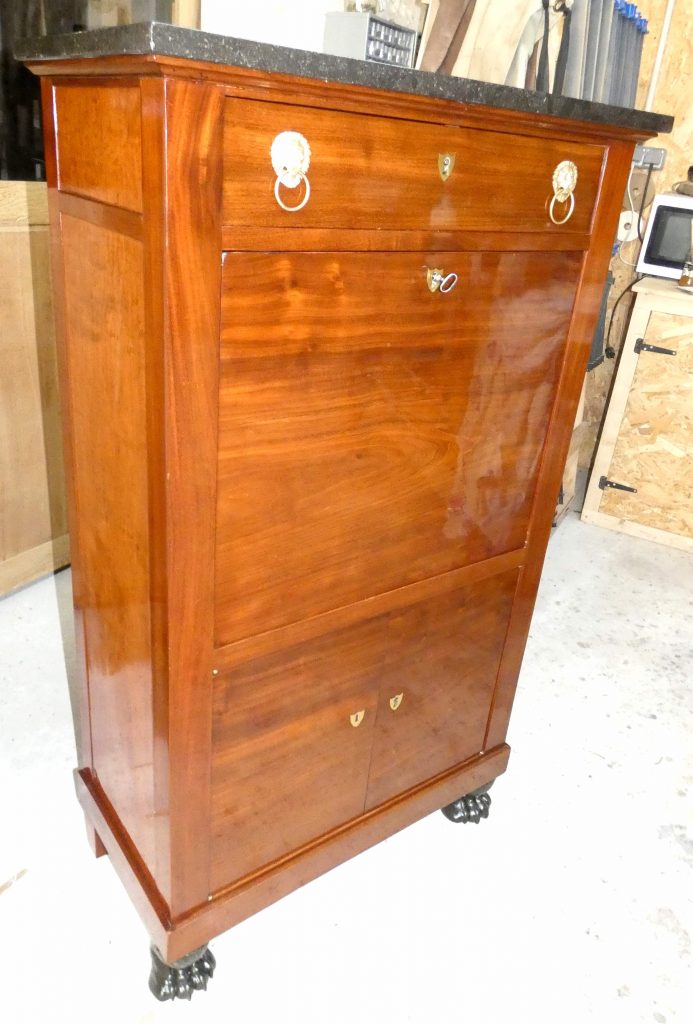
After restoration 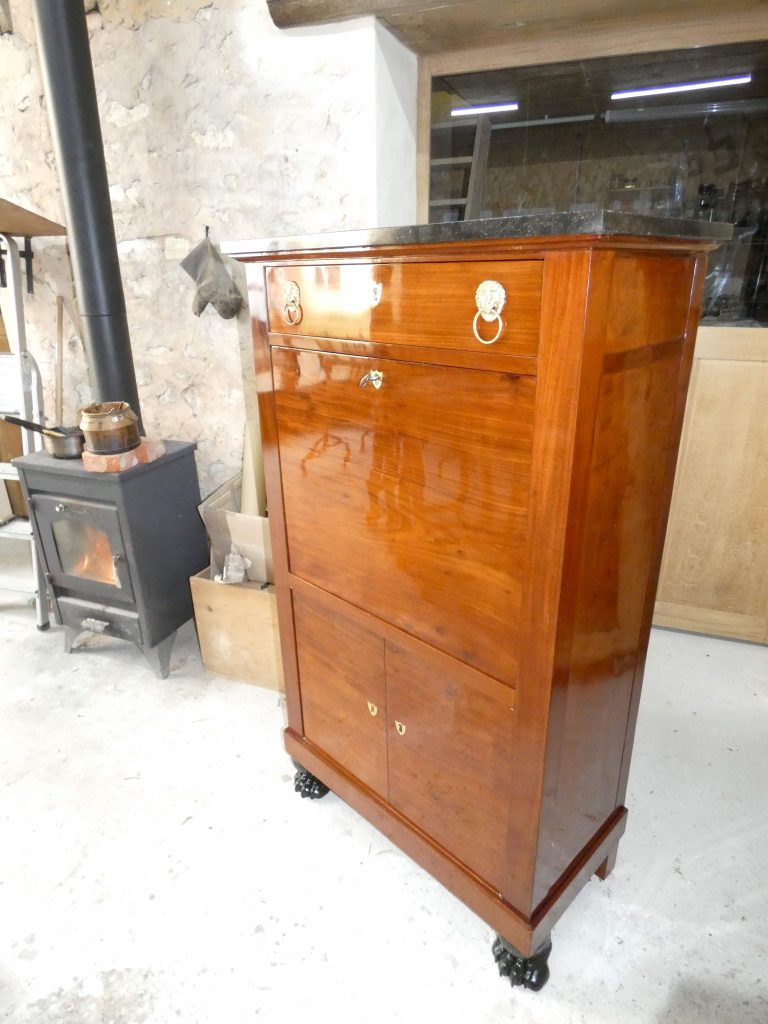
After restoration 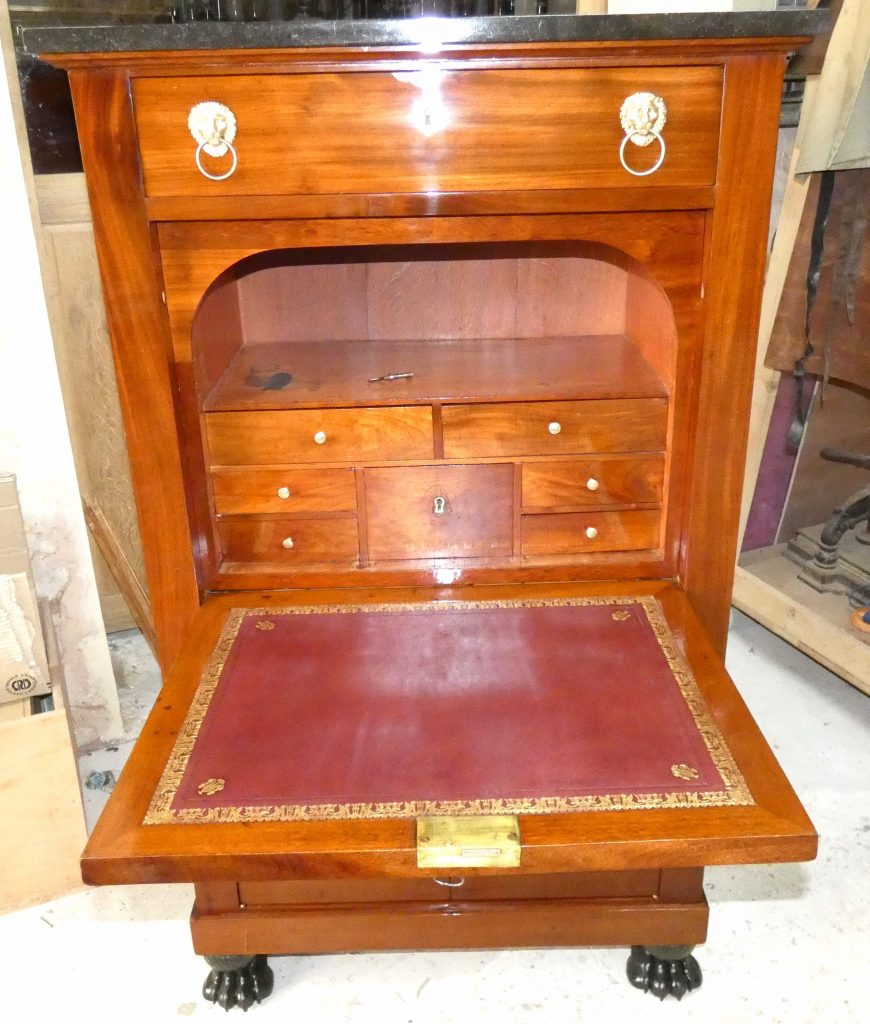
After restoration 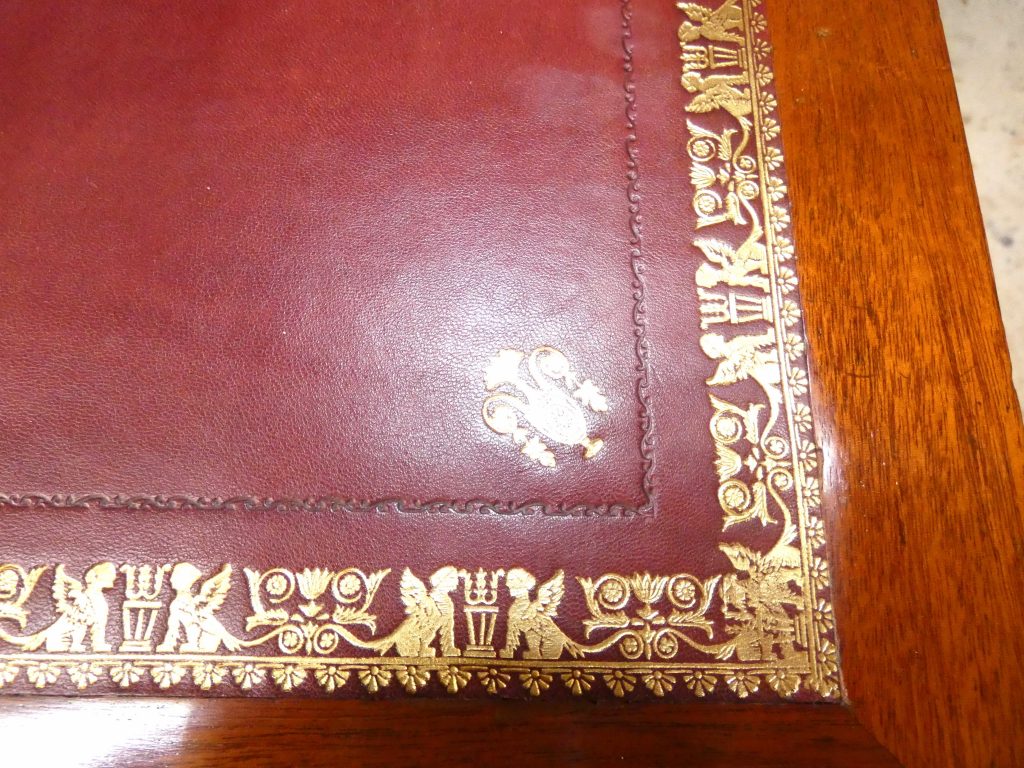
After restoration
To see previous restorations : https://ebenisterie-mathieuvath.fr/en-ce-moment-a-latelier/
ONCE AGAIN. MASTER CABINETMAKER'S WORK
Once again. Thank you.
Good morning,
How did you dismantle the lock and the toilet seat mechanism?
Sincerely
Good morning,
To remove the lock, I removed the leather and then you just need to remove the screw.
Best regards
Good morning,
Thank you for your reply, but that's what I thought. However, after removing the leather, I see no access to the linkage, nor even a difference in the wood indicating that it might have been hidden! The veneer on this toilet seat is 2 to 3 mm thick, and being an amateur, I don't see myself removing it, especially since the seat is cracked.
Since I don't have an email address I can't attach a photo (it's an early 19th century secretary).
Sincerely
Well, if your lock is a three-point lock, it has one vertical bolt and two horizontal ones. Therefore, there are necessarily two wooden plates that have been glued under the leather at the axis of these bolts. It's possible that a veneer has been applied to the lock plate. In that case, there's no other option than to remove it.
Sincerely
Good morning,
In fact, by sanding the leather side of the toilet seat, there is actually a piece of wood added that hides the mechanism.
I managed to remove it and therefore the lock. Now I just need to get a cloverleaf key made because the one I have doesn't fit! What a shame.
Thank you so much.