
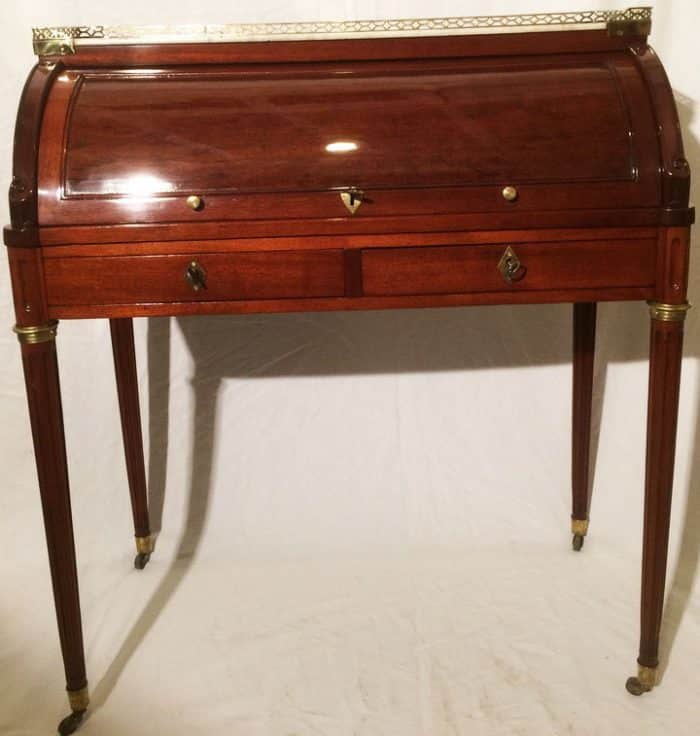
DIMENSIONS: H.71 W.104 D.52
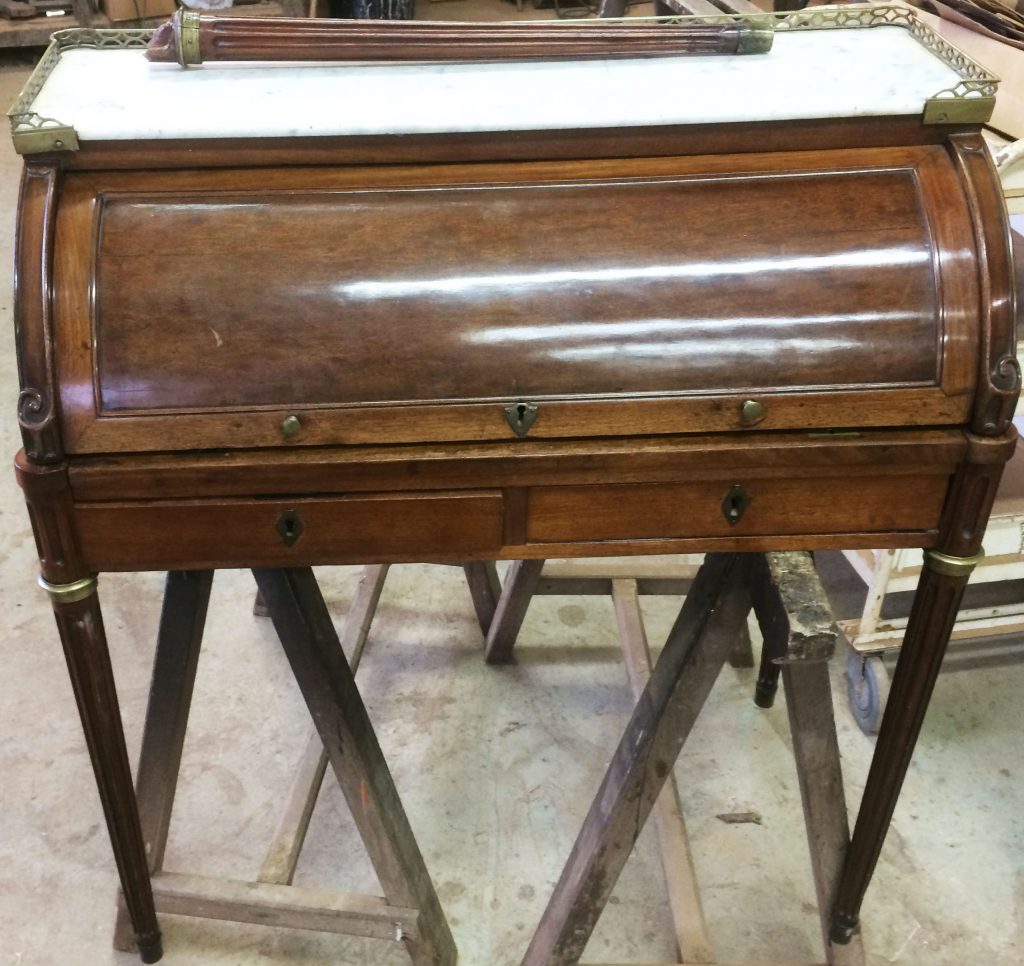
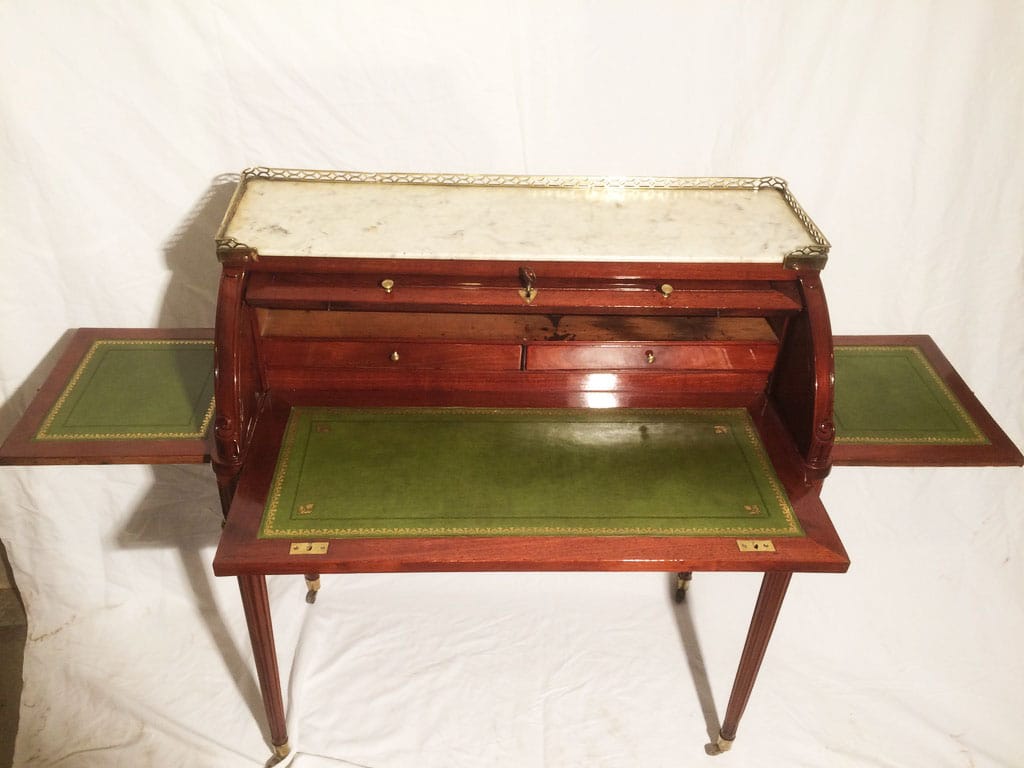
This roll-top desk perfectly matches those made by Nicolas Petit's workshop between 1770 and 1791, the year of his death. Indeed, with a few exceptions, Nicolas Petit primarily produced this type of secretary in molded mahogany, resting on fluted legs and topped with white marble. Their understated elegance reflected the taste of the period.
It consists of two drawers in the frieze, two side pull-out shelves, and a central pull-out shelf that locks when the drop-front is closed. The interior comprises two drawers, the right-hand one containing compartments for an inkwell and pen case. The legs and moldings are Cuban mahogany, while the drawers, as well as the back and sides, are Honduran or West Indian mahogany. The drop-front is veneered with mottled mahogany. The veneer is applied to fir and/or oak. The fittings have likely been replaced with Directoire-style elements, as evidenced by the old Louis XVI handle holes.

Nicolas Petit, Master craftsman Nicolas Petit, who became a master in 1761, opened his workshop on the rue du Faubourg Saint-Antoine under the sign "Au Nom de Jésus" (In the Name of Jesus). He worked there for over thirty years, adapting seamlessly to the evolving styles of the 18th century and quickly gaining considerable renown. His career began with exquisitely refined Louis XV-style commodes with curved forms, secretaries, desks, and small tables, all finely inlaid with flowering branches. With the rise of the "Greek style," he drew inspiration from classical art for the decoration of his furniture. His Transition commodes are often adorned with bronze mounts consisting of two urns surmounted by drapery; others are inlaid with geometric or floral motifs. In the Louis XVI style, he primarily crafted solid wood furniture, which he embellished with lacquered panels or mosaics. Overall, Nicolas Petit's furniture, with its simple and classical decoration, is always tasteful and meticulously crafted.
BIBLIOGRAPHY
- Nicolas Petit 1732-1791 – Anne Droguet – Perrin & fils, Editions de l'Amateur – 2001
- French Furniture of the 18th Century – Pierre Kjellberg – Les Editions de l'Amateur – 2008
- Cabinetmakers of the 18th Century – Count François de Salverte – Art and History Publishers – 1934
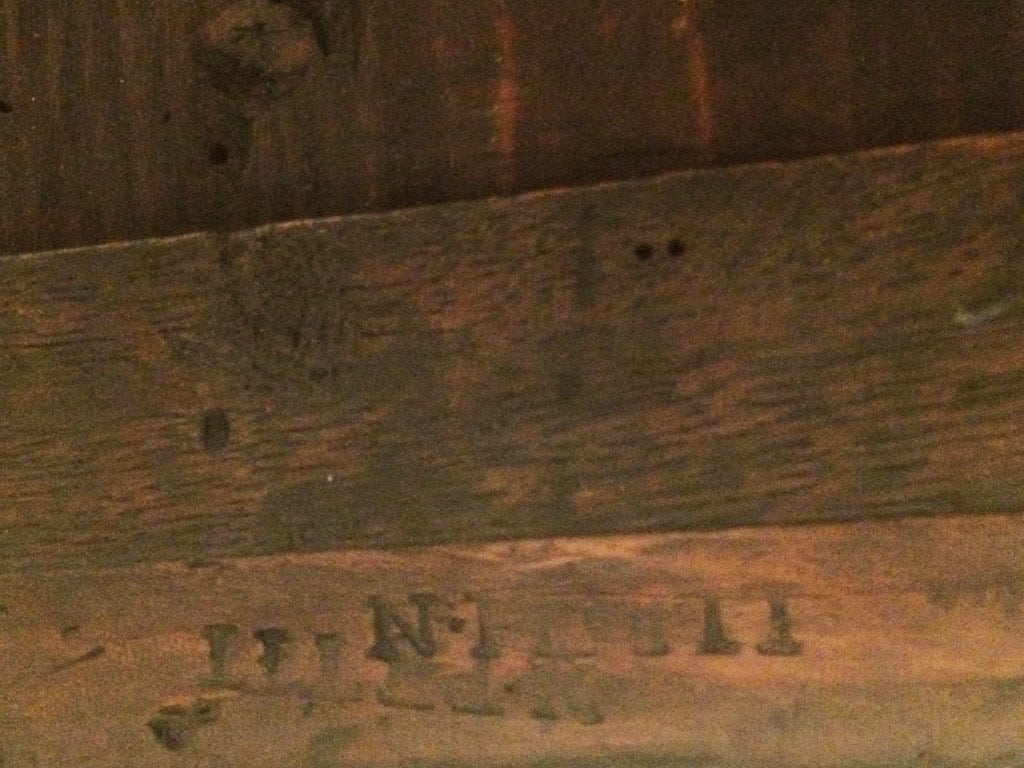
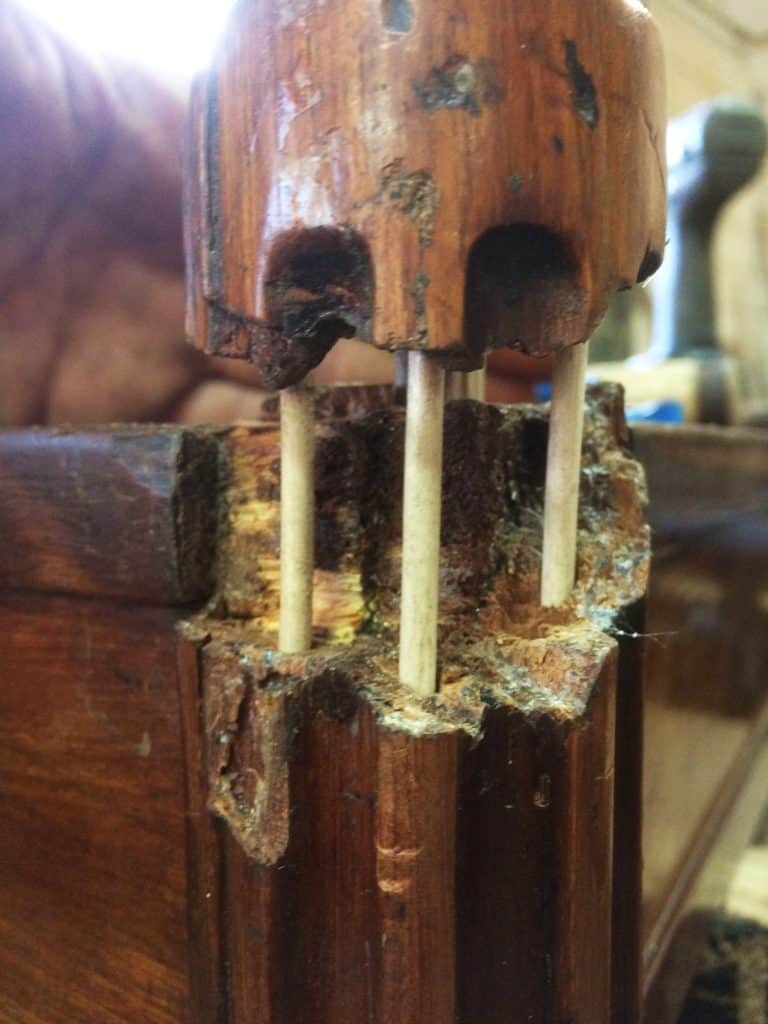
THE The left rear foot was broken. It had already been glued back together with resin and dowels.
To reattach and reinforce it, I cleaned up as much of the resin residue as possible, then I drilled three four-millimeter dowels into the mortise cheeks, and I placed a ten-millimeter dowel in the part with the most material, behind the two tenons.
All of it glued together with fish glue.
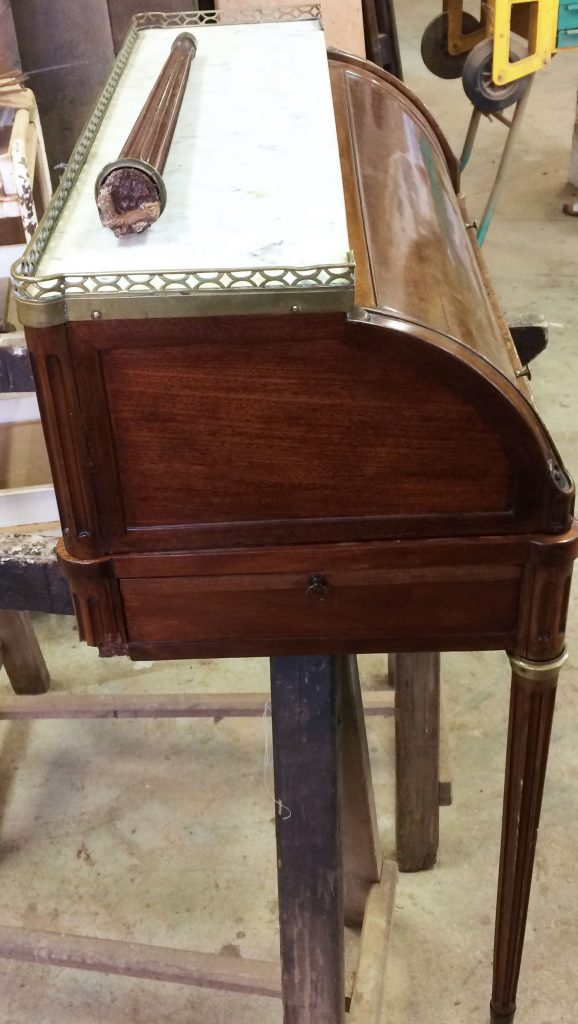
Before restoration 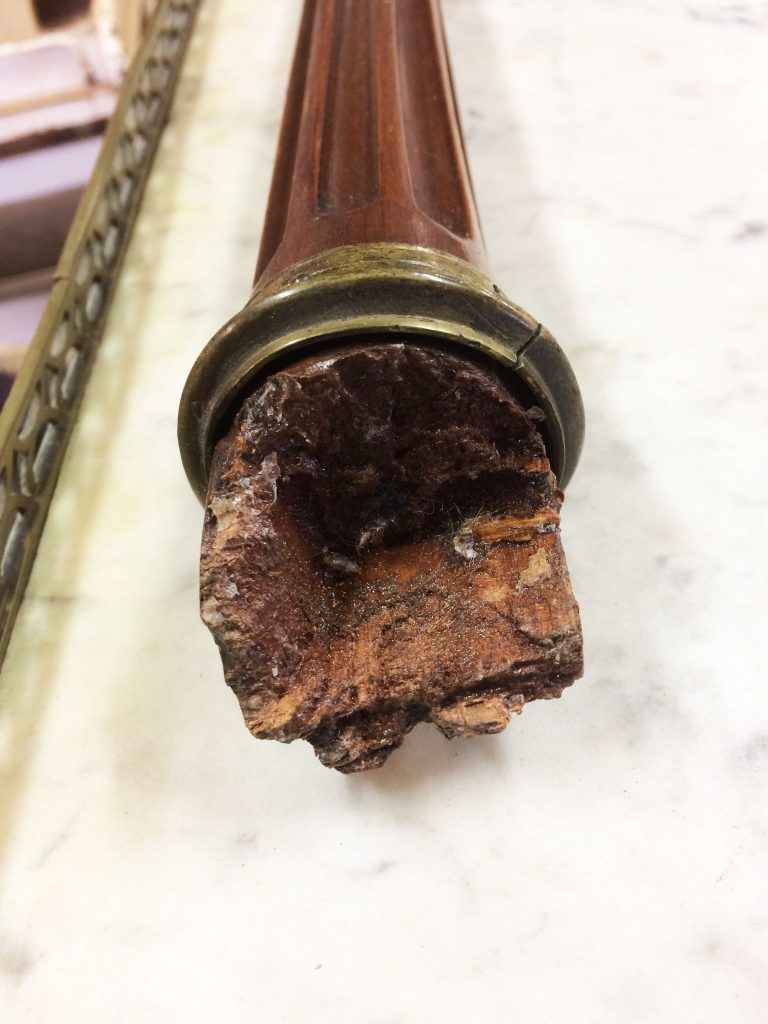
Broken foot 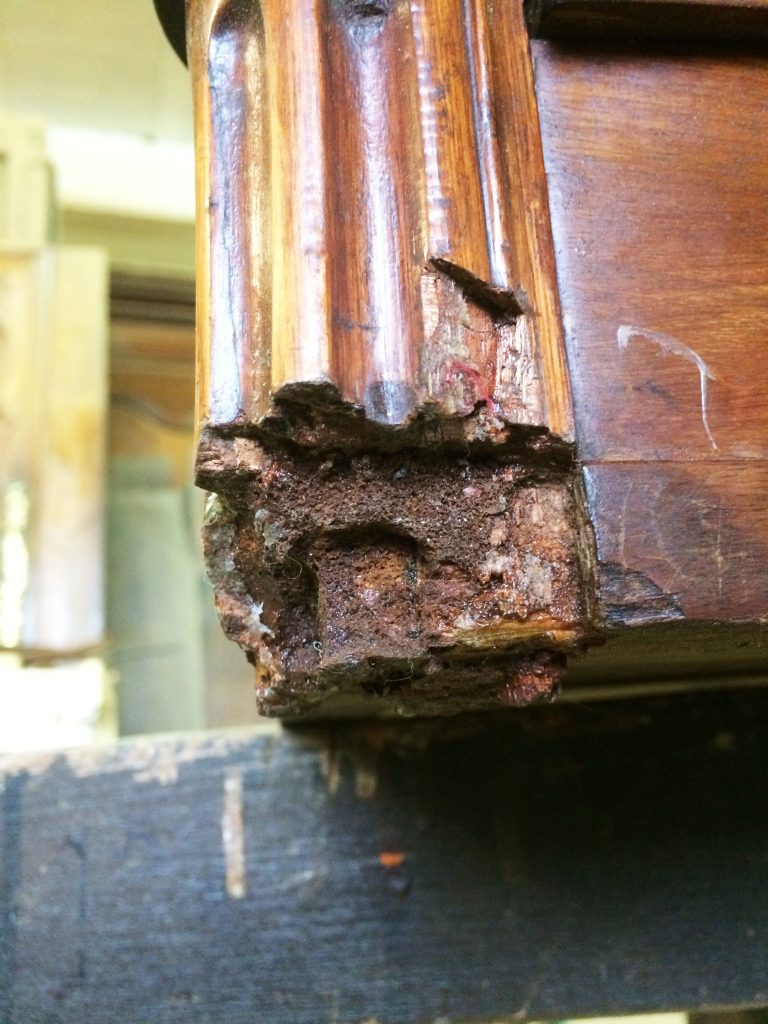
Trace of epoxy resin 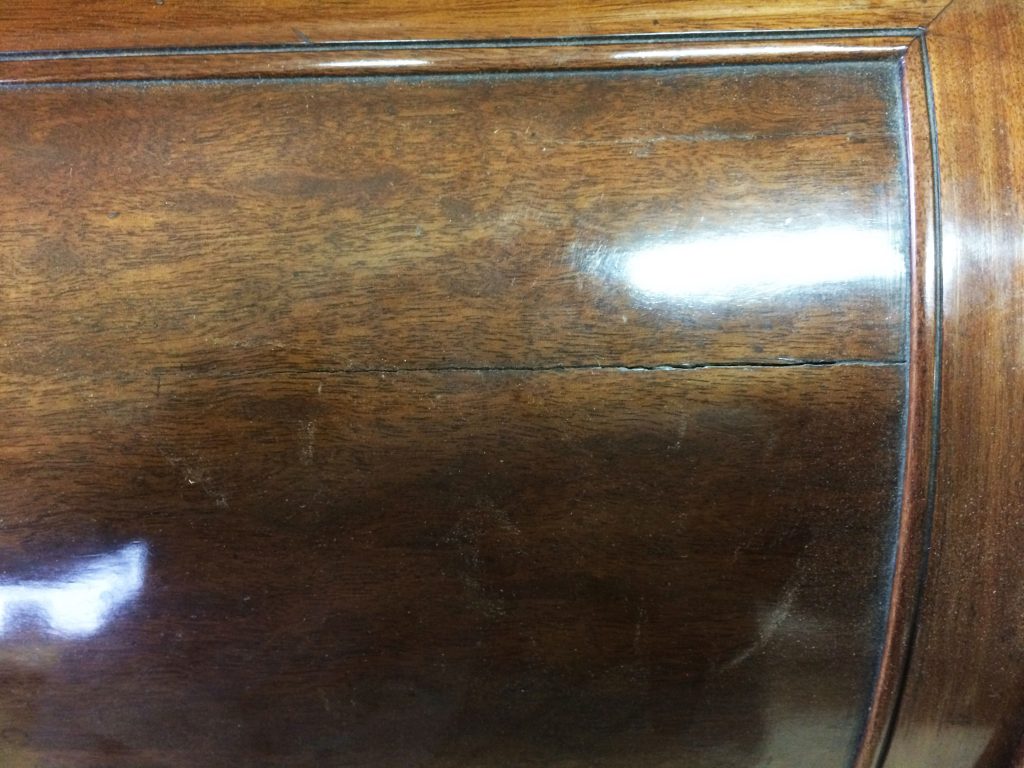
Split soul 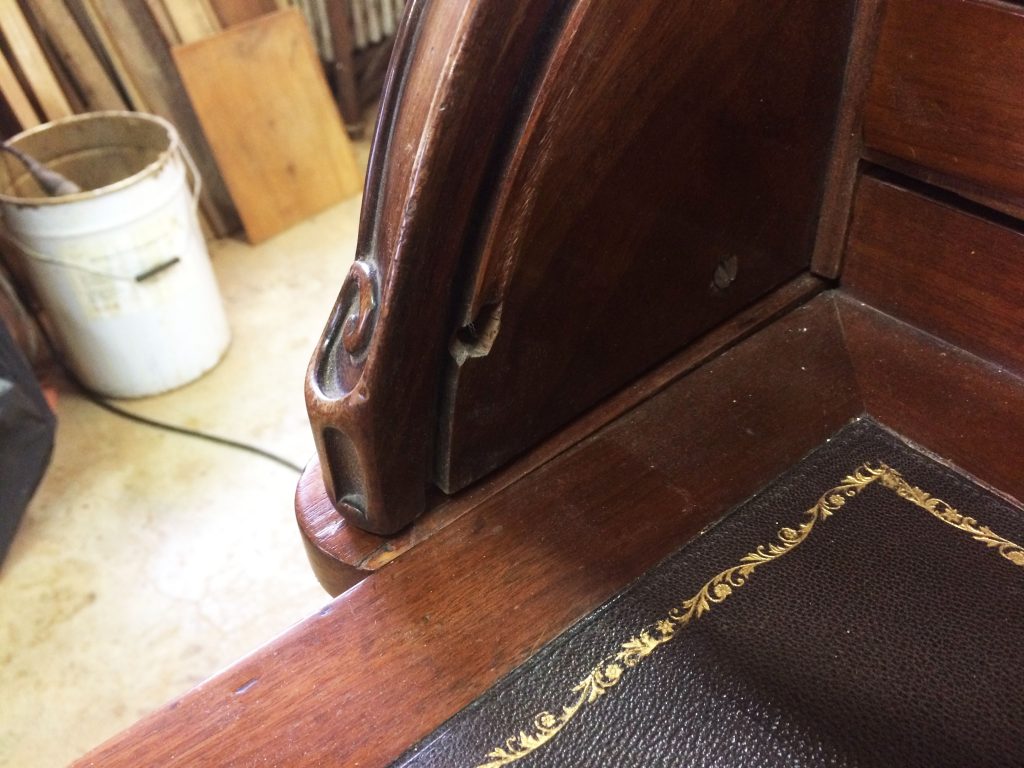
Chip at the toilet seat locking mechanism 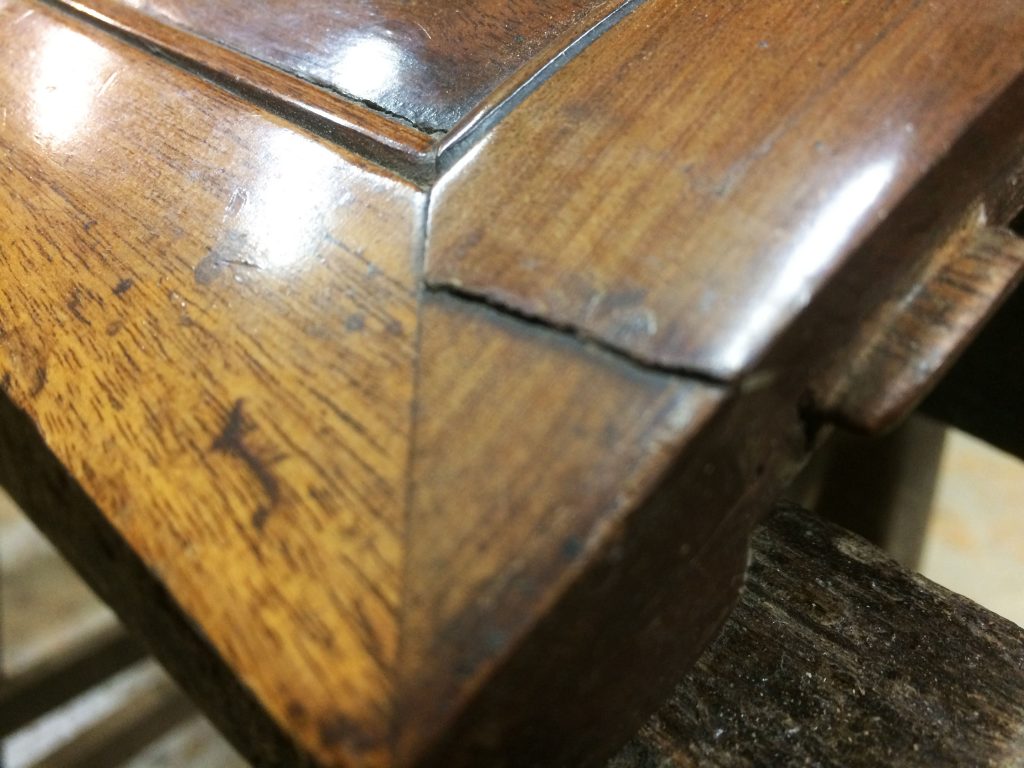
Split toilet seat cushion 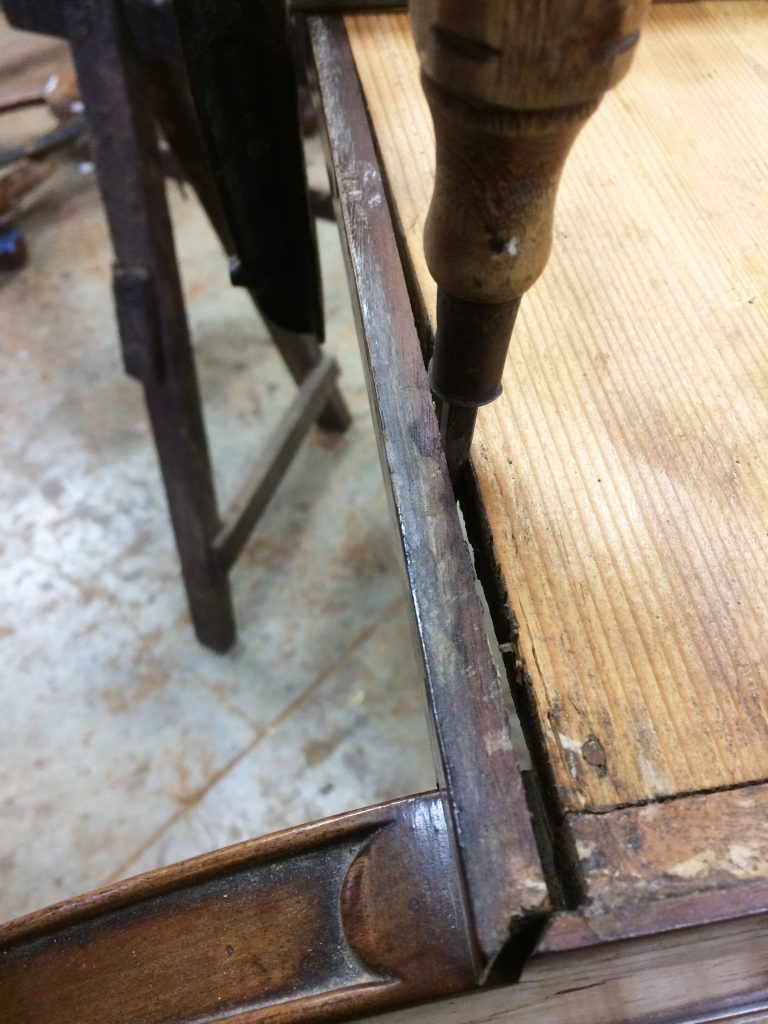
The chopsticks are coming loose 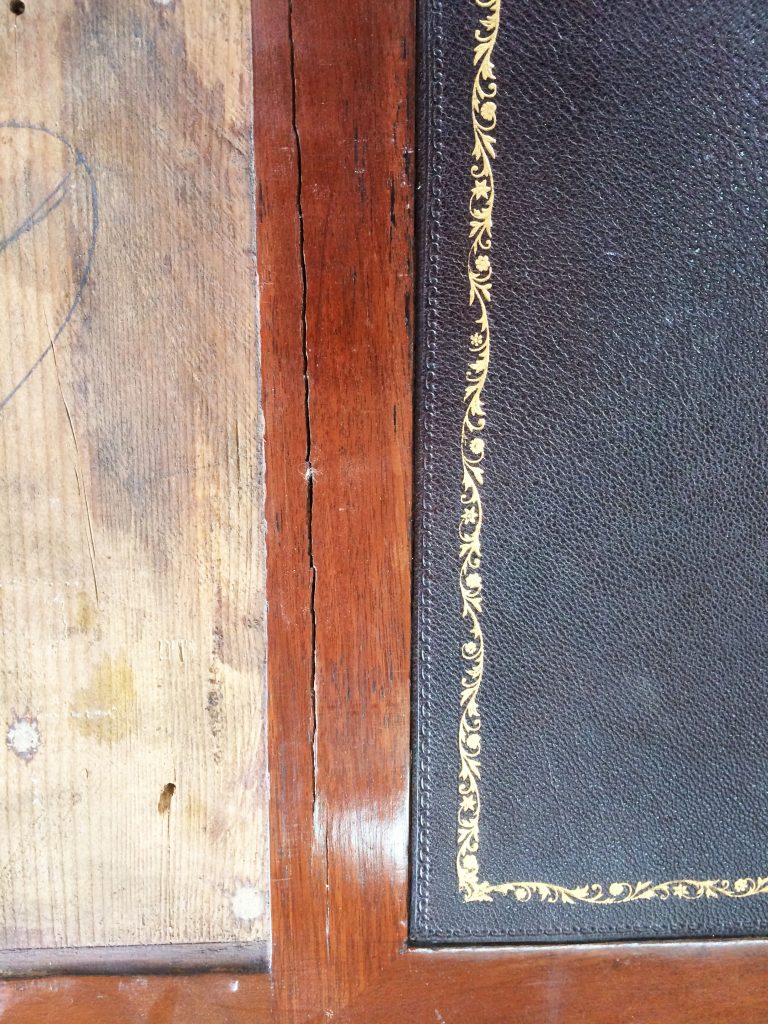
Split soul
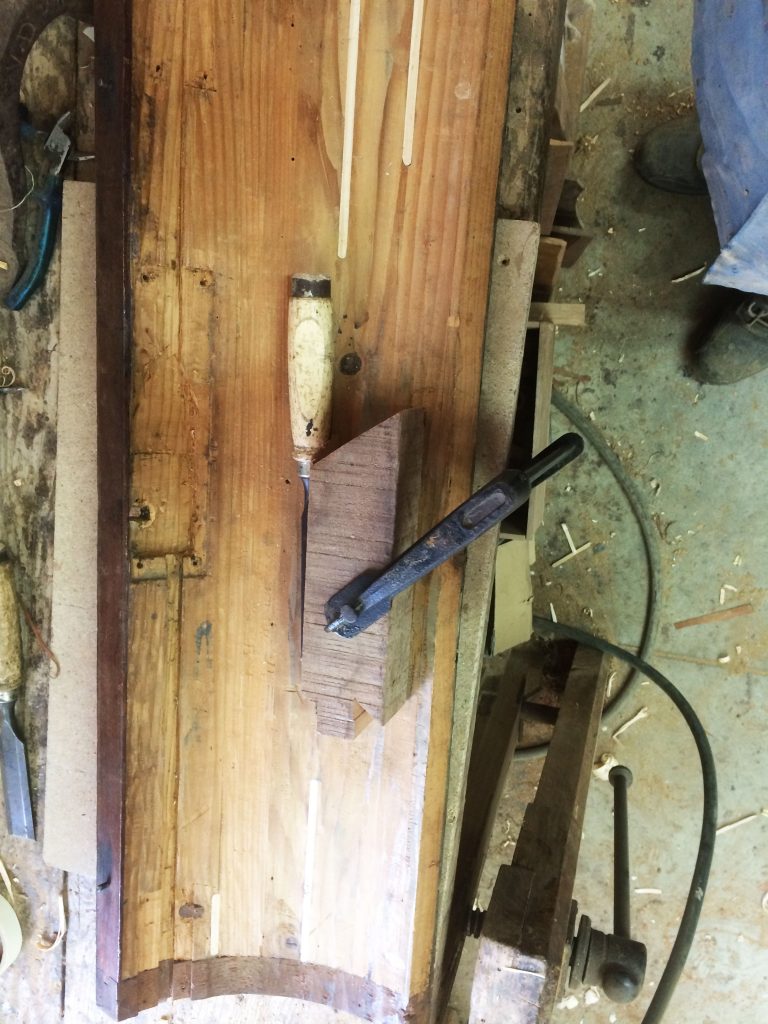
Bracing of the slots in the counter-facing 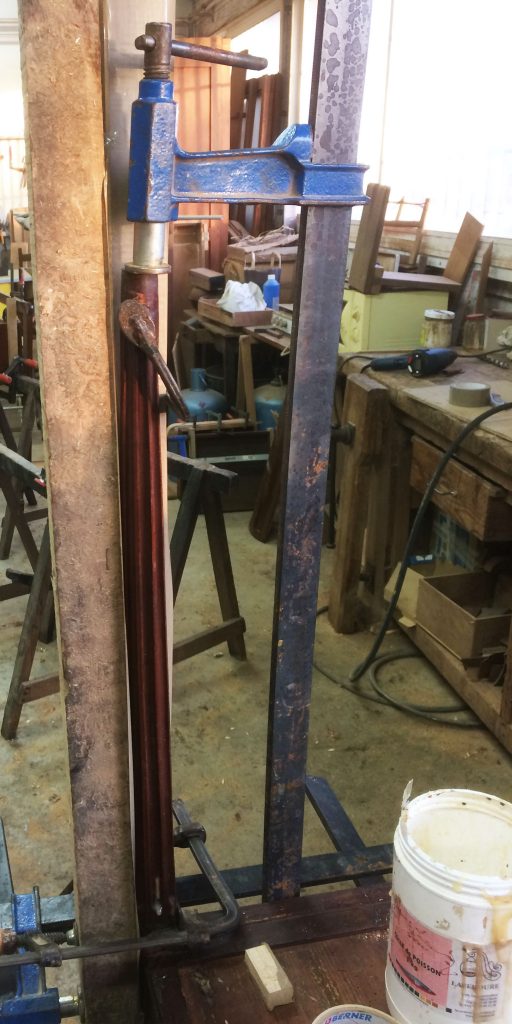
Foot gluing 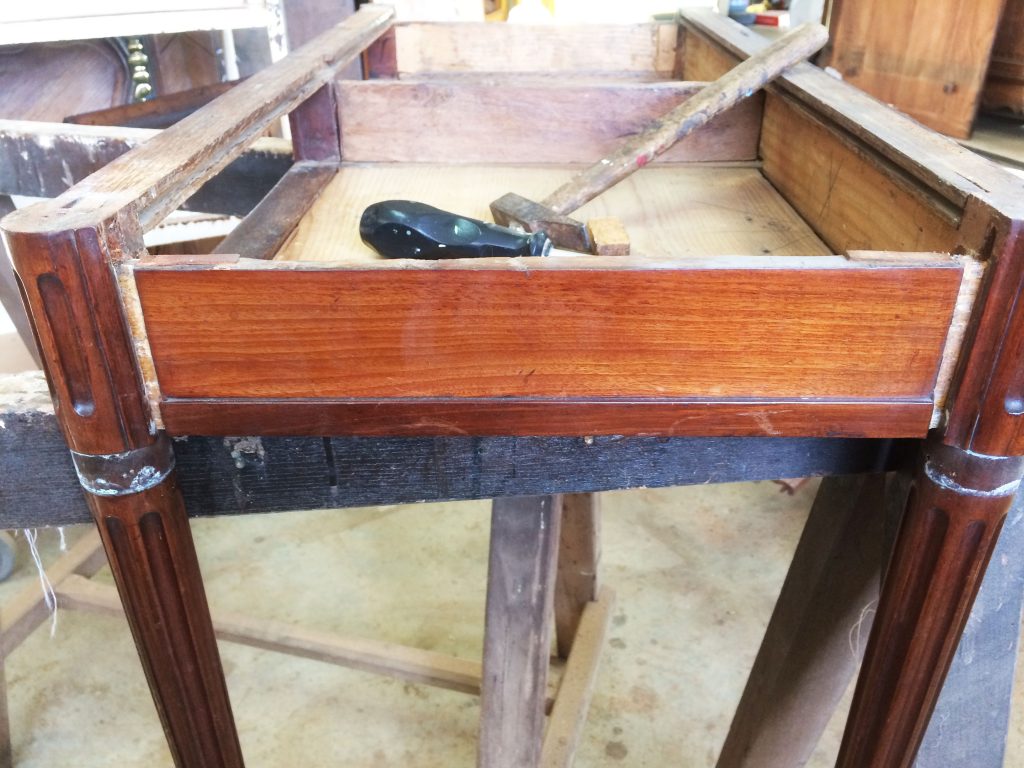
Partial dismantling 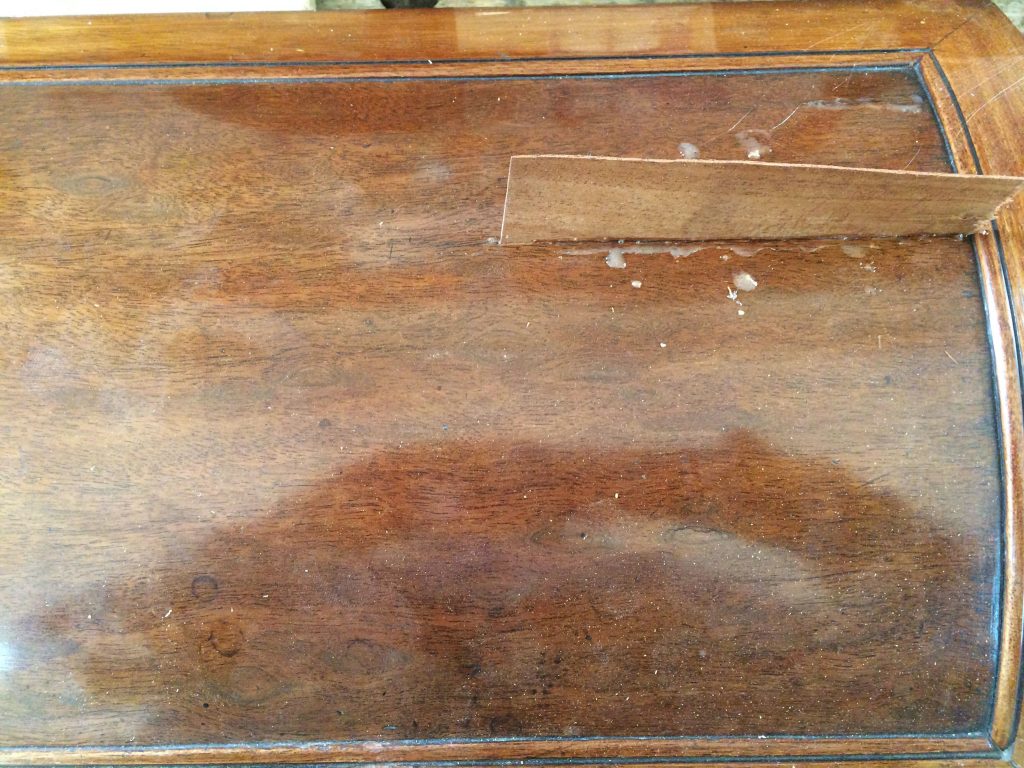
Flipping the slot 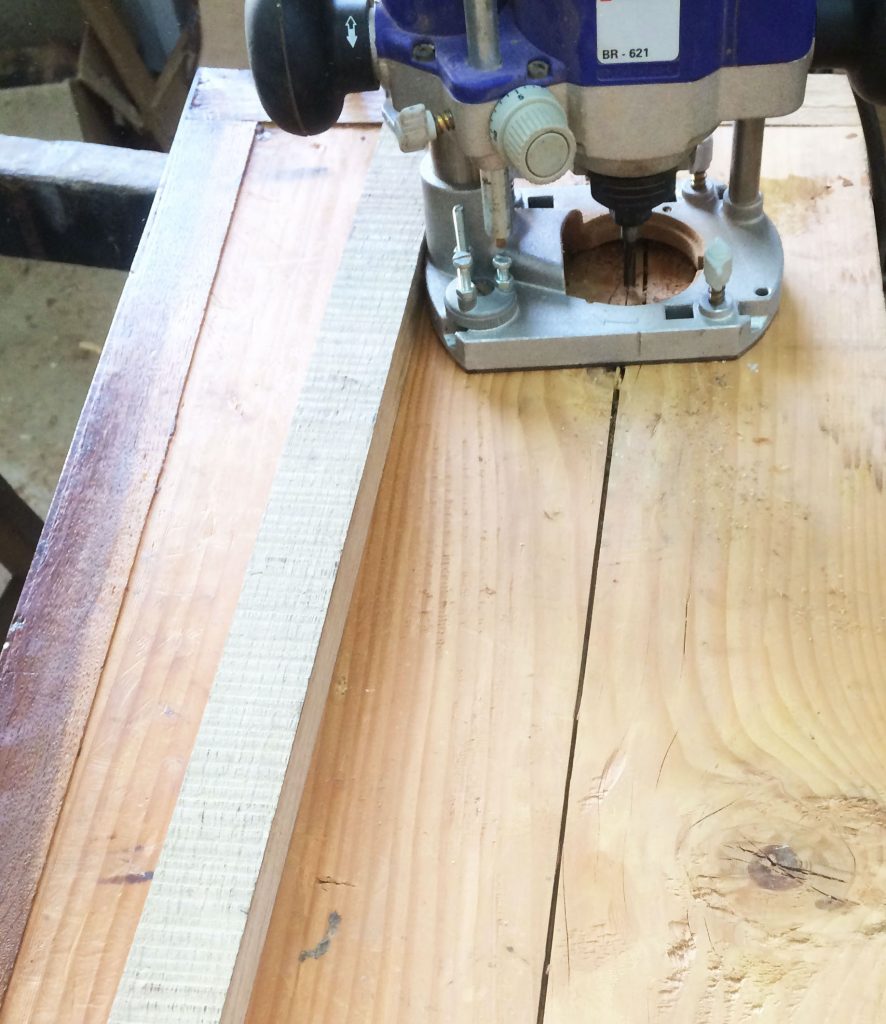
Removing the zipper
To see previous restorations : https://ebenisterie-mathieuvath.fr/en-ce-moment-a-latelier/
Very, very nice work, I'm glad there are still people like you
This art is gradually disappearing, and that's a shame.
Well done