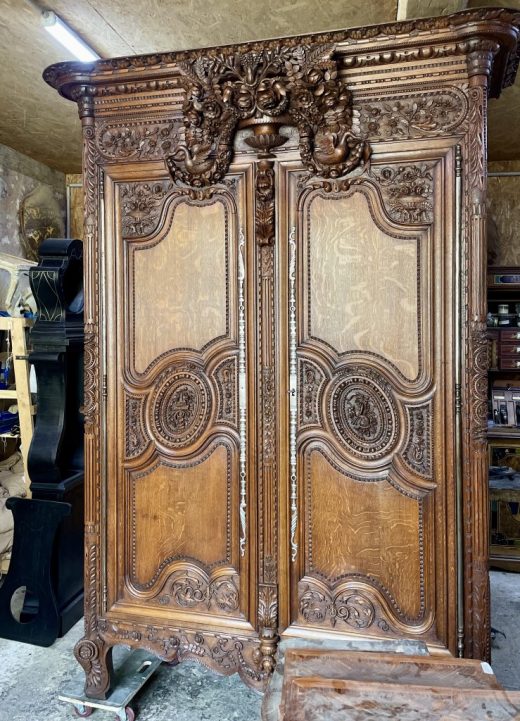
Wedding wardrobe from Bayeux with swans
Ebénisterie Mathieu Vath

A lightening of the finish was carried out on a Bayeux wedding armoire, distinguished by its motifs of swans, figures, and hunting and musical attributes. The piece is made of quarter-sawn oak, also known as "merrain," and is attributed to the Caen plain, dating from the first half of the 19th century. The restoration work consisted of lightening the waxed finish to remove the multiple layers of tinted wax that darkened the entire piece. This process revealed the beautiful honey-blond hue of the oak […]
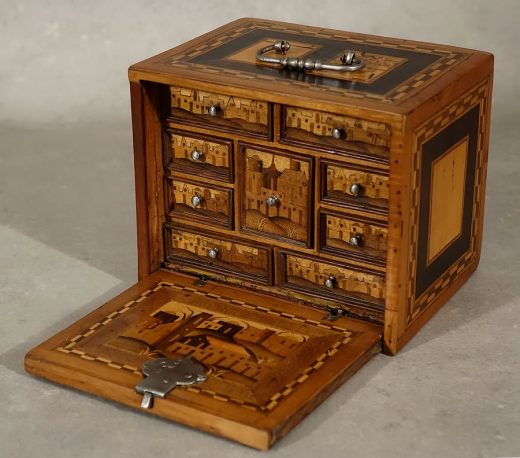
Augsburg Cabinet, 17th century

EEbénisterie Mathieu Vath

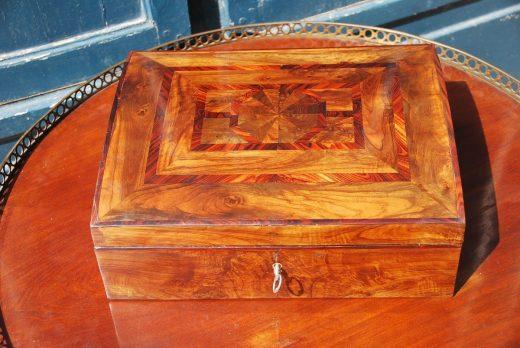
Restoration of a small table cabinet (Height: 14.3 cm – Width: 17.3 cm – Depth: 13 cm), likely a traveling model, made of solid wood with intarsia on all sides, opening with a drop-front concealing eight drawers (the bottom one simulating two drawers). Its composition is particularly rich, incorporating eight different wood species. The frame, made of fir and cherry for the visible parts, is inlaid with large central panels of sycamore maple. These are framed by bands of plum wood, themselves bordered by a double band […]

Art Nouveau desk with Primroses by Louis Majorelle

Ebénisterie Mathieu Vath

Restoration of an Art Nouveau desk stamped by Louis Majorelle in Nancy around 1905. It is made of solid walnut and veneered with primrose flower marquetry. The work consisted of replacing missing veneer, cleaning, and restoring the waxed finish. Louis Majorelle was born in September 1859 in Toul and died in January 1926 in Nancy at the age of 66. Son of the renowned furniture designer Auguste Majorelle, he demonstrated a particular interest in craftsmanship and drawing from a very young age. […]

Money changer's office

Ebénisterie Mathieu Vath

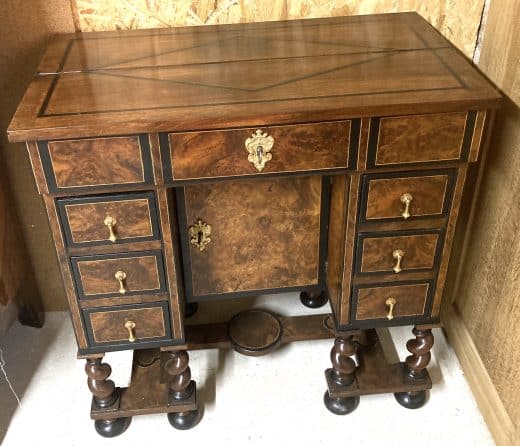
A few weeks ago, I presented you with a money changer's table. Well, here is its successor, the money changer's desk. Inspired by the eight-legged desks more commonly known as "Mazarin desks," the money changer's desk is a smaller version. Designed to be frequently transported, it must ensure the security of the valuables it contains and showcase the prosperity of its owner through its marquetry and veneer decorations, which vary in richness. For those interested in the origins of these pieces of furniture and the money changer's trade…

Money changer table

Ebénisterie Mathieu Vath

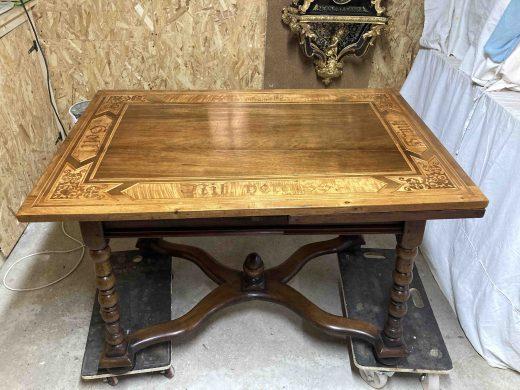
Restoration of a 17th-century money changer's table in solid walnut and walnut and sycamore maple veneer. This table originates from Germany, as indicated by the marquetry inscription on its top: "Trink und iss Gott nit wergiss," which translates as "Drink and eat, but do not forget God." It consists of two drawers, a top, and a sliding extension leaf; the legs are joined by an X-shaped stretcher. What is a money changer's table? The profession of money changer emerged in the 13th century, following the expansion of trade. […]

Louis XVI commode

Ebénisterie Mathieu Vath

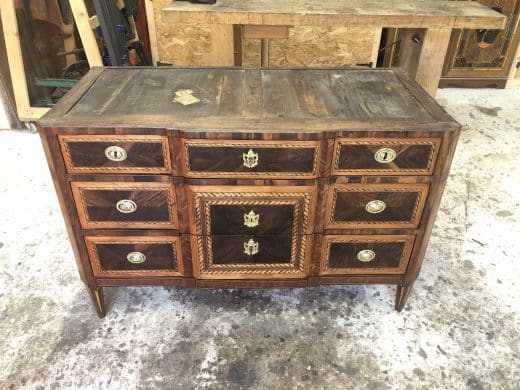
This week, we're restoring a Louis XVI commode with a projecting front, veneered in Rio rosewood, amaranth, and violet wood, with marquetry stringing in boxwood and ebony forming a ribbon wrapped around the wood, the background of the engravings filled with red wax. The tapered legs and canted uprights have faux fluting in ebony and boxwood. There's no maker's mark to attribute this beautiful piece and the high quality of wood chosen for its construction. Regarding the restoration, the work isn't very […]

Louis Philippe Buffet

Ebénisterie Mathieu Vath

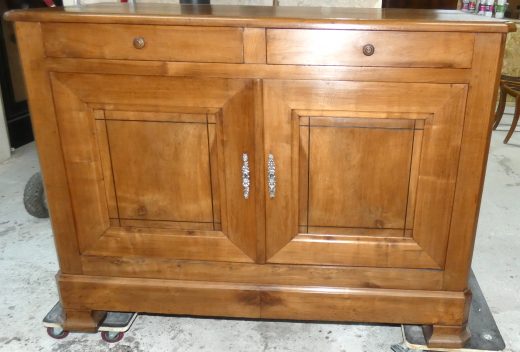
For a change of pace this week, a bit of what's called "rustic" furniture. It's a welcome change from veneer, and to be honest, it's not unpleasant. I'm even quite pleased to have this kind of piece to restore because, unfortunately, many of these pieces, having lost their market value, end up in the landfill or are simply burned. Moreover, these aren't pieces that require a huge amount of work. For this Louis Philippe two-part sideboard, the restoration consisted of replacing the chestnut planks […]