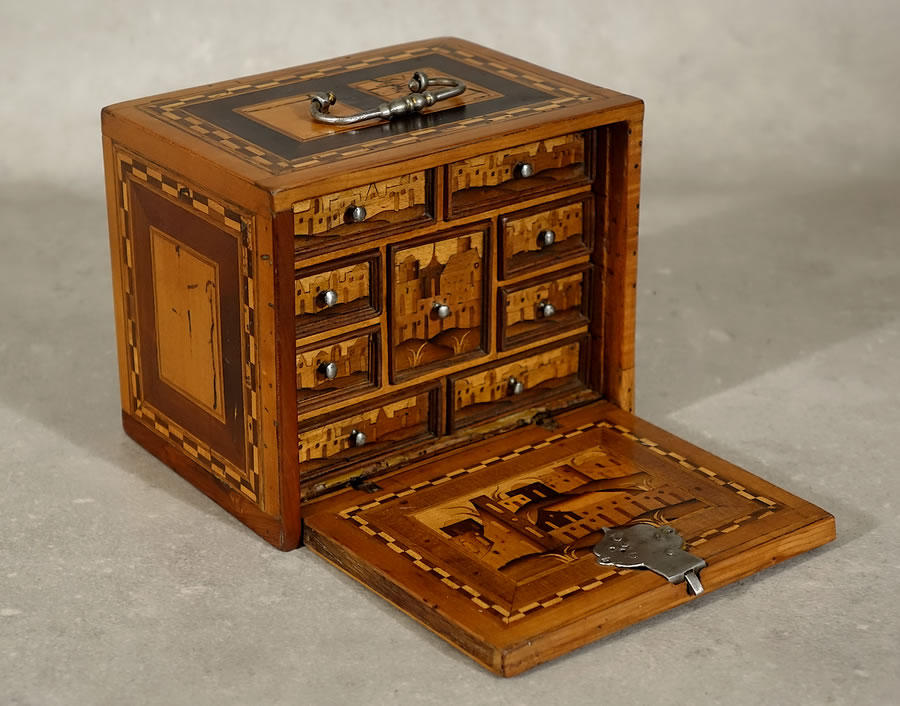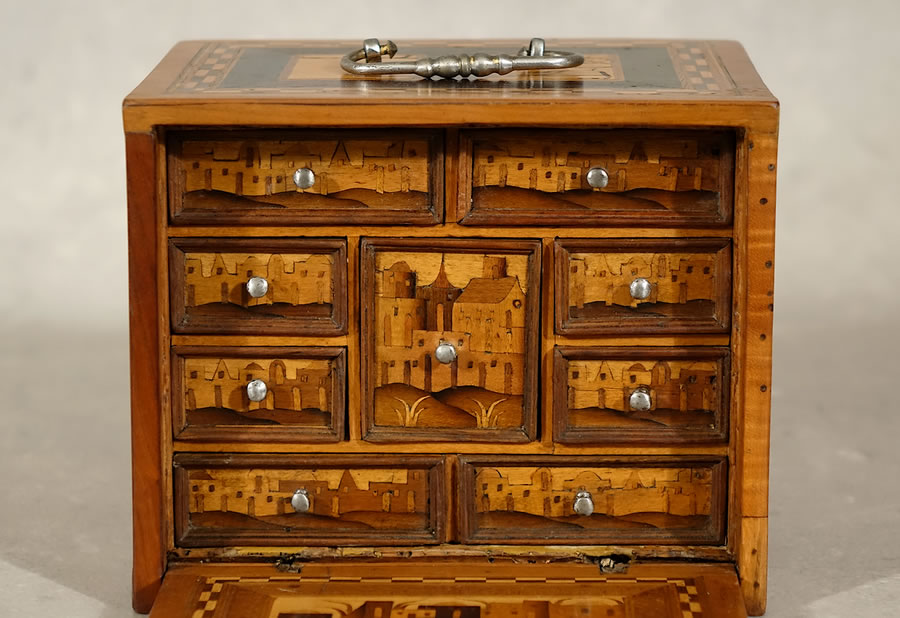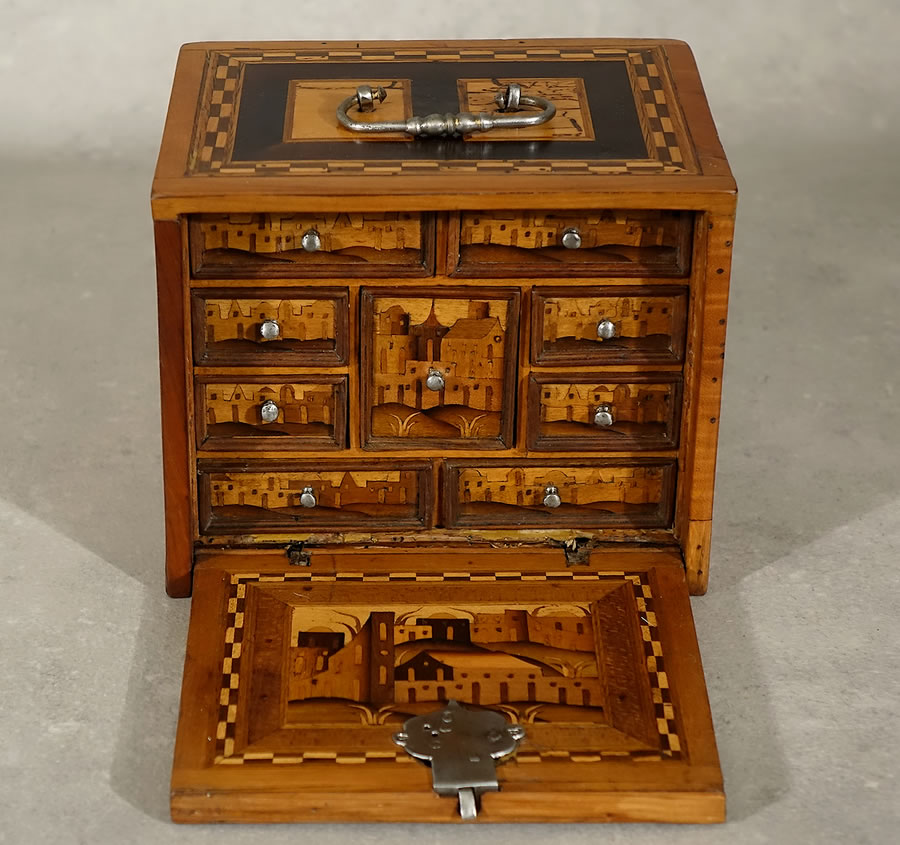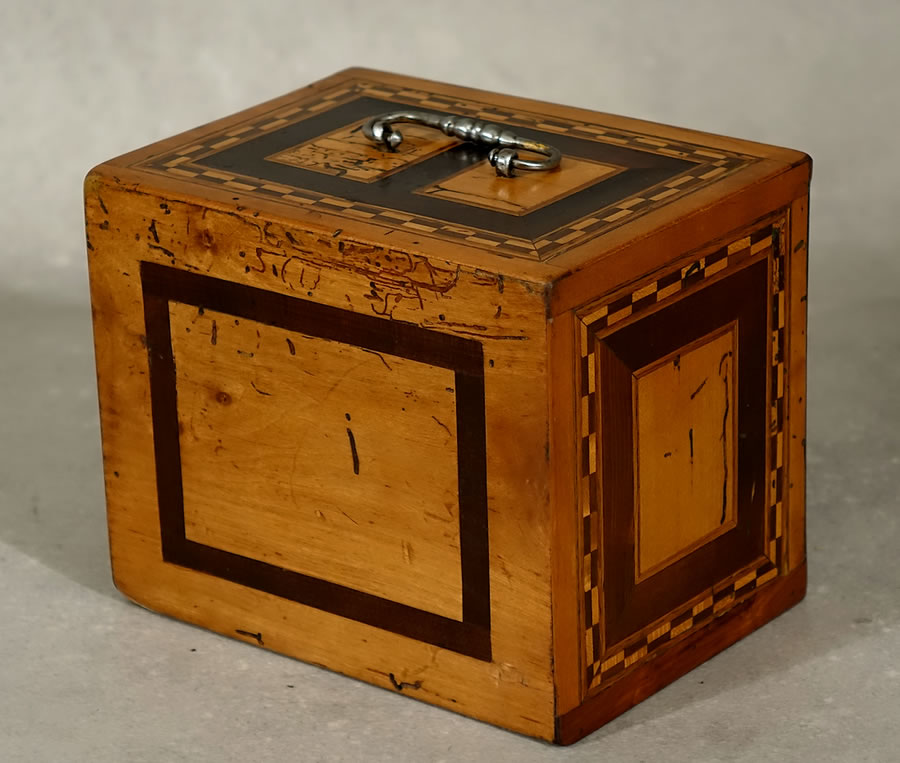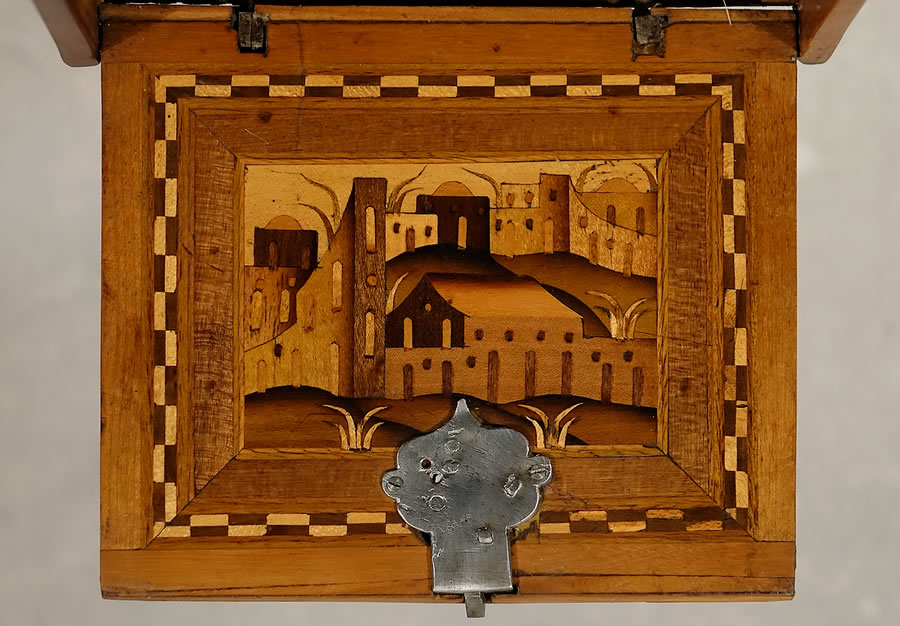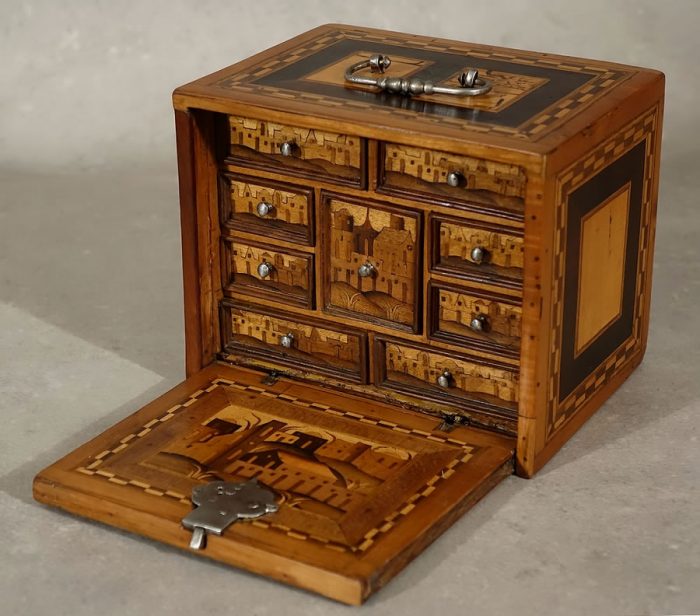
Restoration of a small table cabinet (Height: 14.3 cm – Width: 17.3 cm – Depth: 13 cm), probably a travel model, in solid wood and intarsia on all sides, opening with a drop-front concealing eight drawers (the bottom one simulating two drawers).
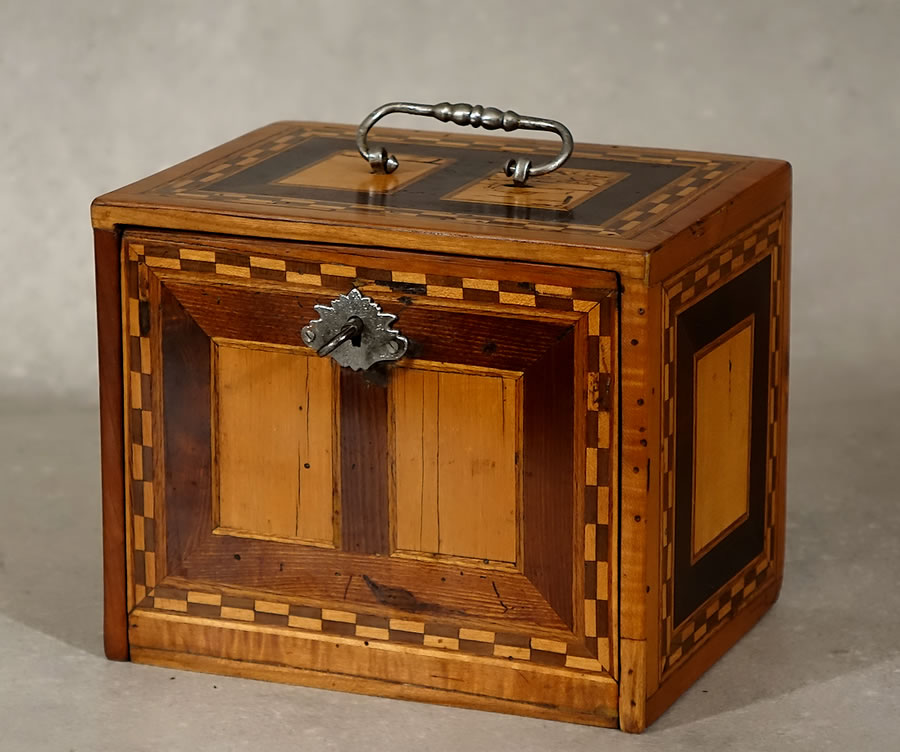
Its composition is particularly rich, incorporating eight different wood species. The frame, made of fir and cherry for the visible parts, is inlaid with large central panels of sycamore maple. These are framed by bands of plum wood, themselves bordered by a string of alternating double bands of plum and boxwood. The whole is edged with numerous thin walnut bands. The interior, decorated with village scenes, uses the same wood species: maple, plum, and boxwood, to which is added a burnished pear wood. A walnut frame surrounds these decorations. The door panel is embellished with a beechwood band.
The construction of this cabinet is of remarkable quality. This is not limited to its exterior decoration, but is evident throughout the entire piece: the top, sides, back, and internal structure. The drawer boxes, assembled with very fine dovetail joints, slide smoothly on intermediate shelves, demonstrating meticulous craftsmanship.
This type of cabinet appeared in Bavarian Swabia, in Augsburg, before spreading into neighboring Tyrol. Although known models are generally small, it is extremely rare to find one of such dimensions while retaining the characteristics of a standard cabinet.
Craftsmen from the Augsburg region of Germany have specialized in making these small collector's boxes intended to hold curiosities, such as ancient coins, archaeological pieces, precious or scientific objects, minerals, small fossils or, more generally, any item likely to constitute a collection.
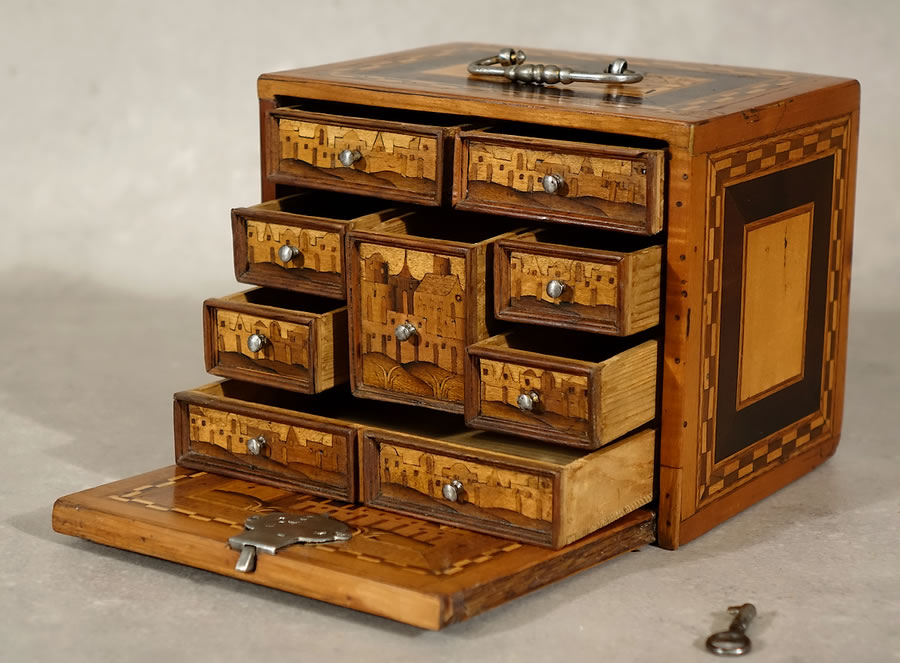
A restoration carried out by Paul, including the stabilization of the veneer elements, the restoration of missing parts, cleaning and the refinishing with Roubo polish.