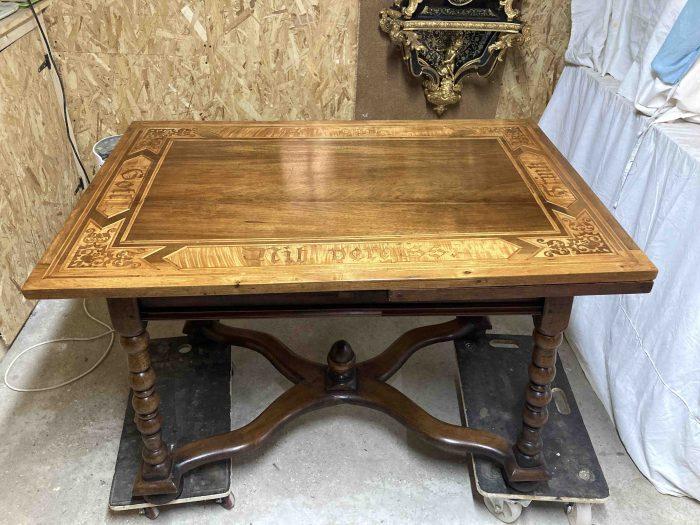
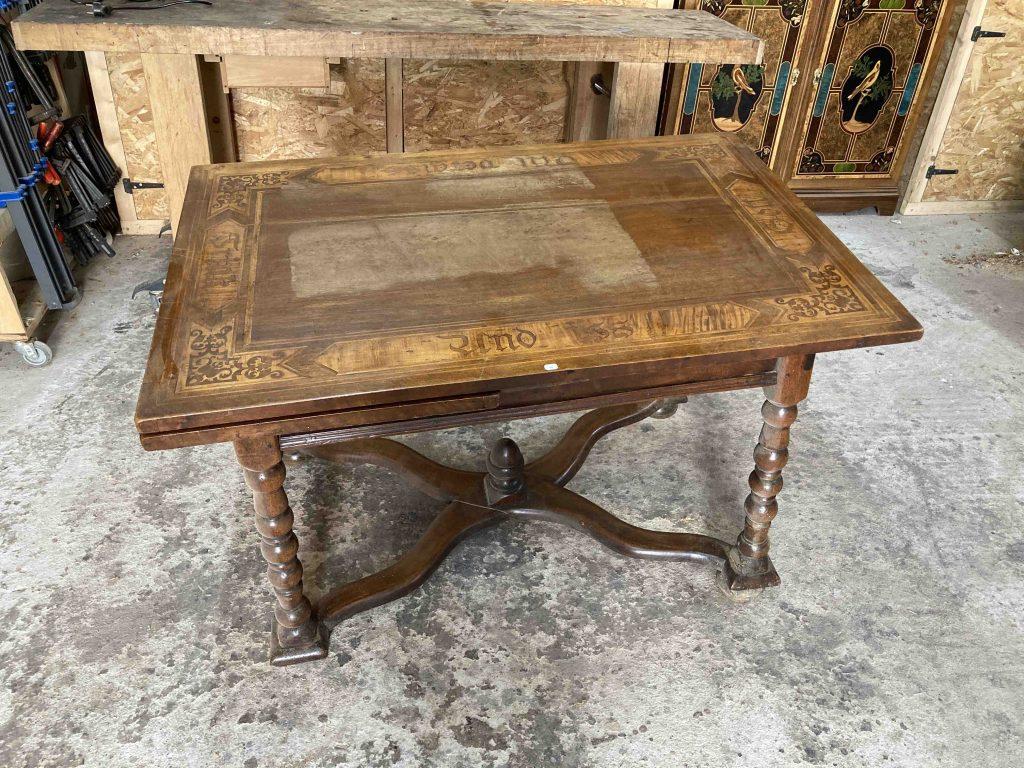
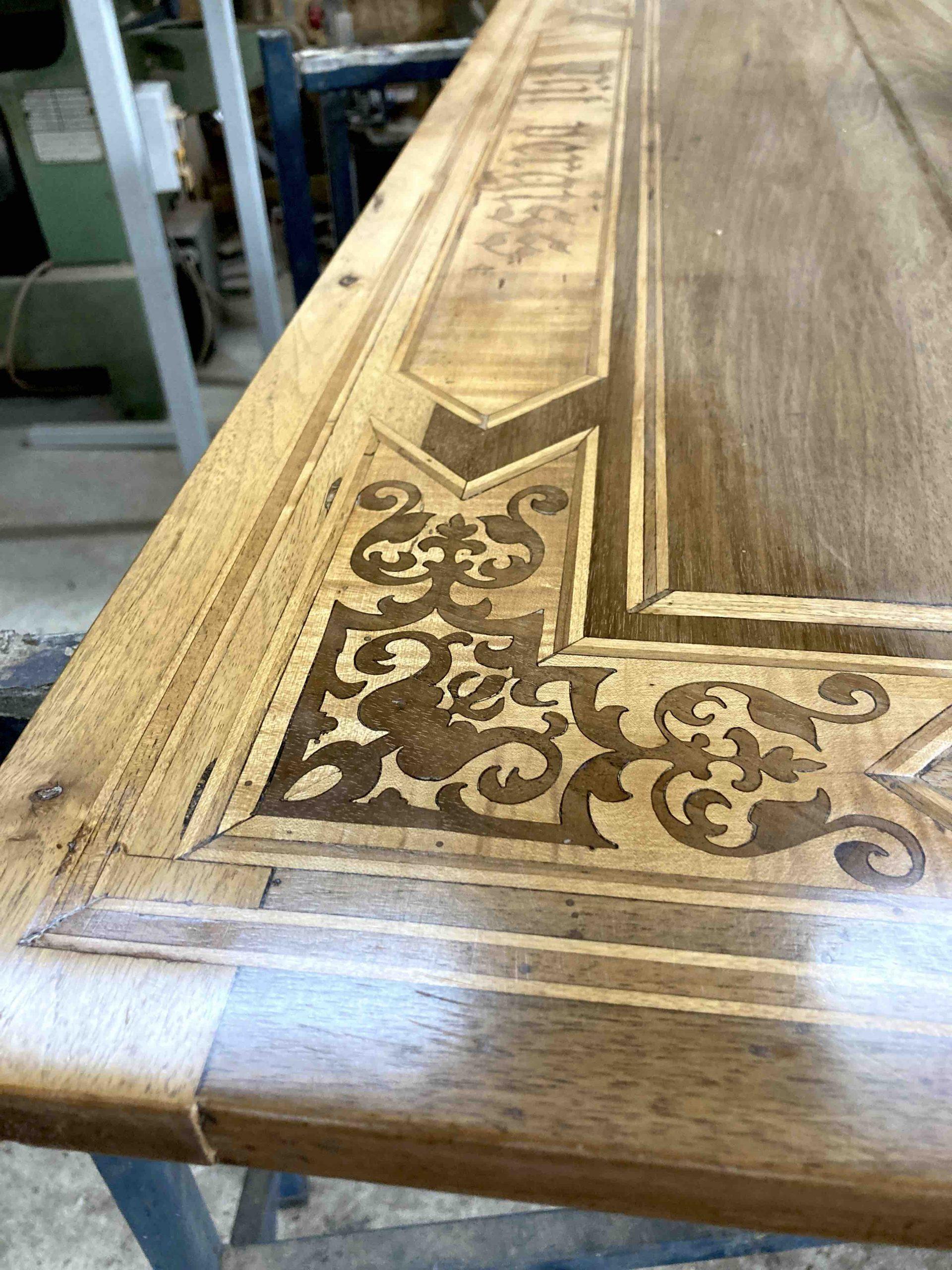
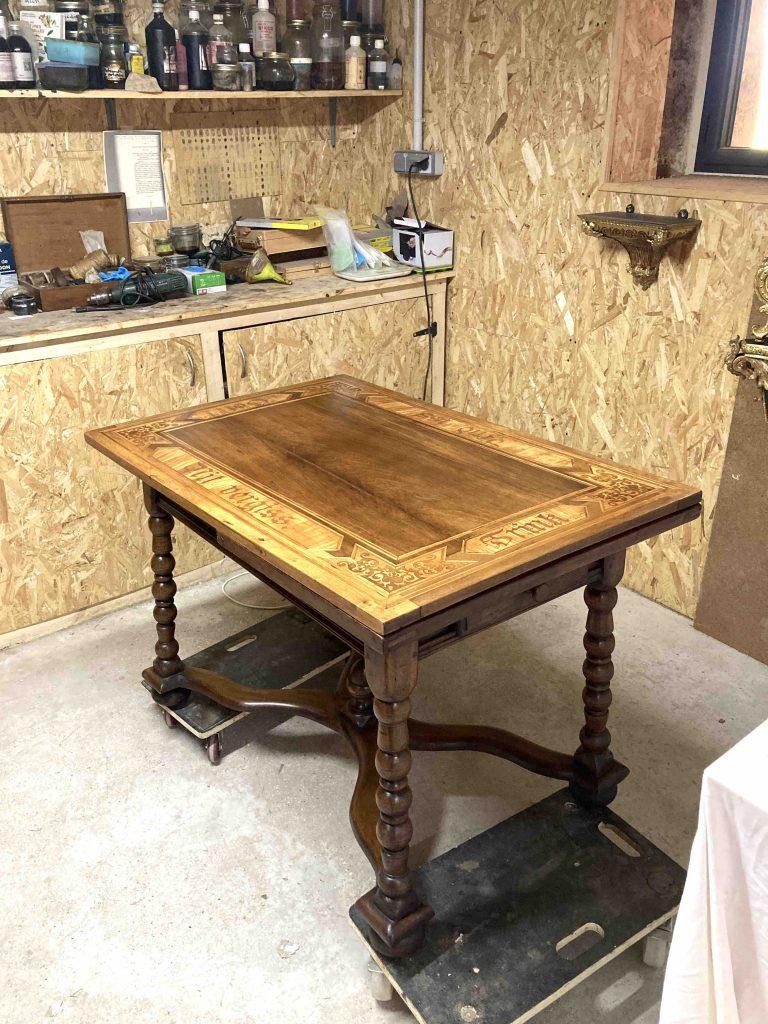
Restoration of a 17th-century money changer's table in solid walnut and walnut and sycamore maple veneer. This table originates from Germany, as indicated by the marquetry inscription on its top: "Trink und iss Gott nit wergiss," which translates as "Drink and eat, but do not forget God." It comprises two drawers, a top, and a sliding extension leaf; the legs are joined by an X-shaped stretcher.
What is a money changer's table?
It was in the 13th century, following the expansion of trade, that the profession of money changer emerged. To keep safe the money exchanged and changed with clients, a piece of furniture entirely dedicated to this trade was created. The money changer's table served as a mobile service for exchanging currency. These tables were found throughout Europe, always near urban centers and major trading hubs.
Money changers played an important role given the wide variety of currencies in circulation. Most set up shop near the city gates, in a prominent location, so that foreign merchants and other travelers could first stop by to exchange their money for the local currency. Over time, money changers established their businesses in specific locations; in Paris, this was on the Grand Pont, later known as the Pont au Change (Exchange Bridge). Like bankers today, their income came in the form of commissions on the sums exchanged.
In the 13th century, the shop's furnishings were very simple. They consisted of a table covered with a rug, a bench, scales, and account books. This equipment was sufficient for all their operations, whether exchanging currency or buying back worthless coins.
Although self-employed, the money changer nonetheless held a public office, which is why he was closely monitored by the authorities. He fulfilled two main tasks: as an independent trader, his business consisted of exchanging different kinds of currency; as a public official, he was responsible for removing counterfeit and clipped coins from circulation. Only money changers could buy coins of lesser value and resell them to goldsmiths or mint masters. For all these reasons, the profession of money changer could be very lucrative, but it was also for this reason that it had to meet very strict requirements.
Despite the fact that these money changers were mandated and supervised by the sovereign, abuses could occur: indeed, some money changers took advantage of their expertise and exploited their clients' ignorance. They were therefore required to weigh and exchange the coins entrusted to them in the presence of their clients, to whom they also had to present the most recent monetary ordinances.
Furthermore, they were required to carry an illustrated book listing the value of both authorized and foreign currency, as well as unauthorized currencies, which the money changer could only consider as base metal. The money changer himself cut the less valuable coins he had purchased into pieces in the presence of the selling customer. It goes without saying that the money changer could only use properly calibrated and certified weights and scales.
In the 15th century, the banking profession emerged with the major invention of the letter of credit, allowing merchants to trade without cash.
State of affairs report
The tabletop was detached in the middle and had already been filled with a walnut graft. The marquetry was slightly detached, but this was barely noticeable because the veneer is very thick. The legs and stretchers were worm-eaten and broken in places. There was a large damp stain on the tabletop.
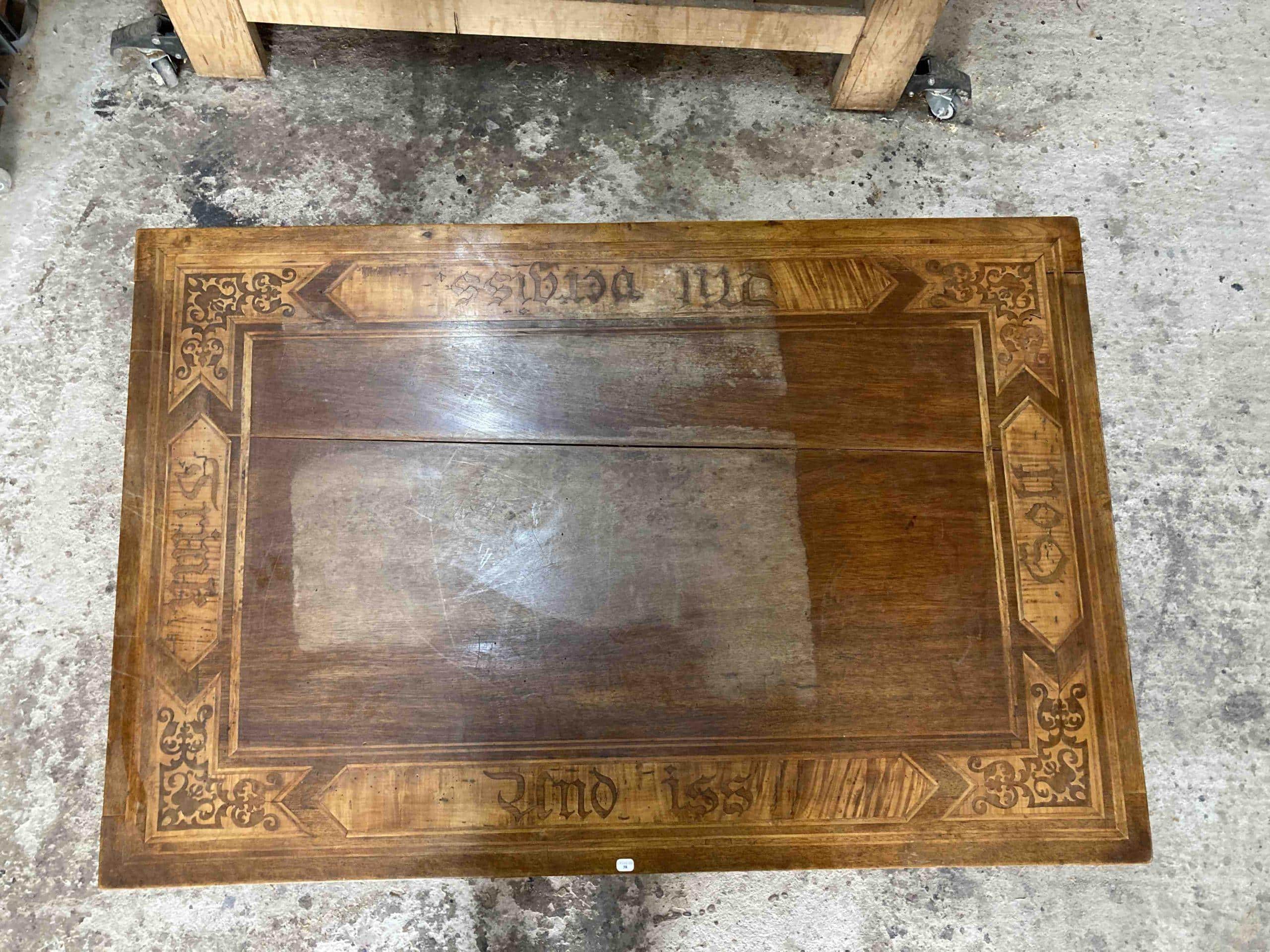
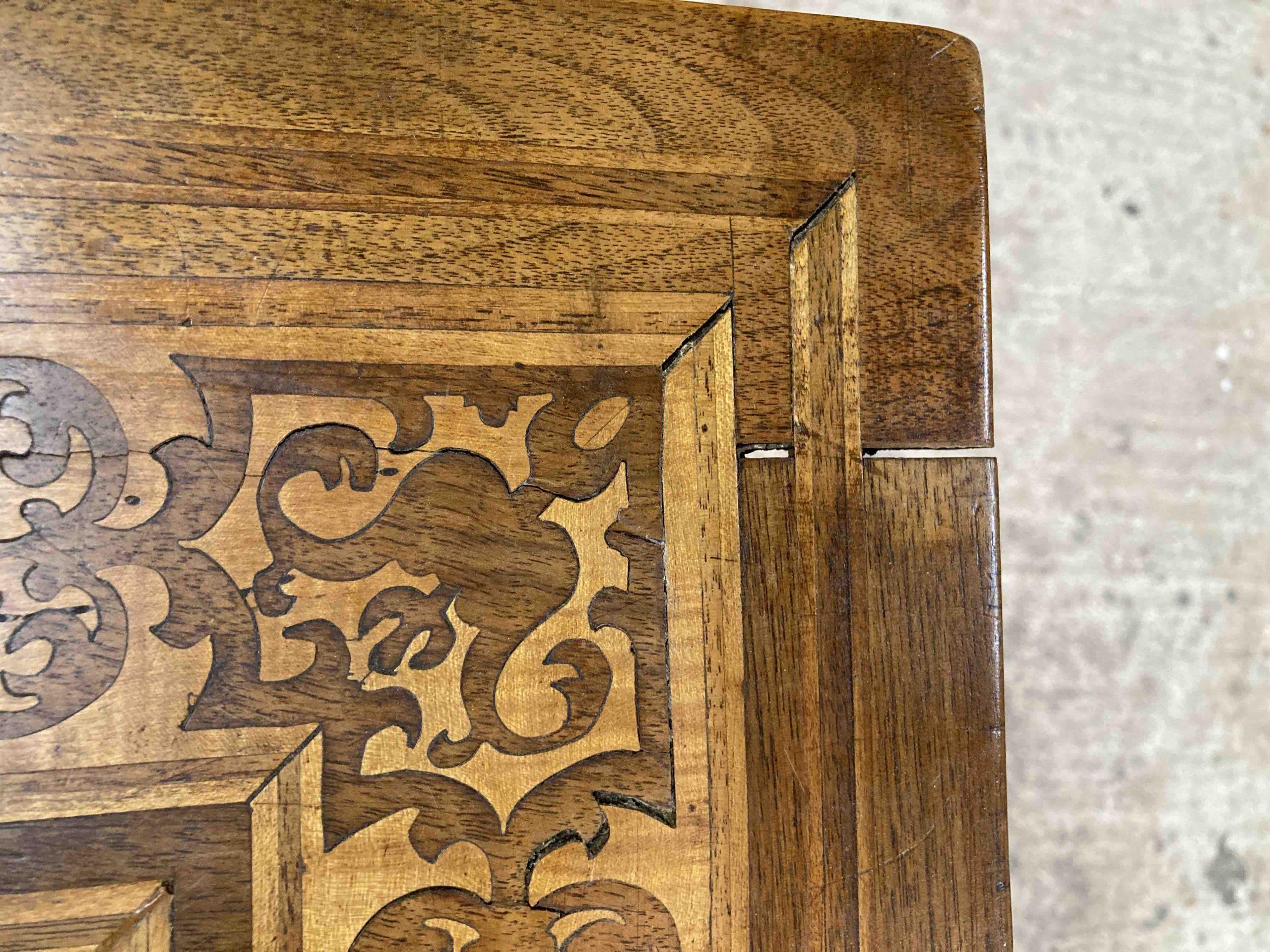
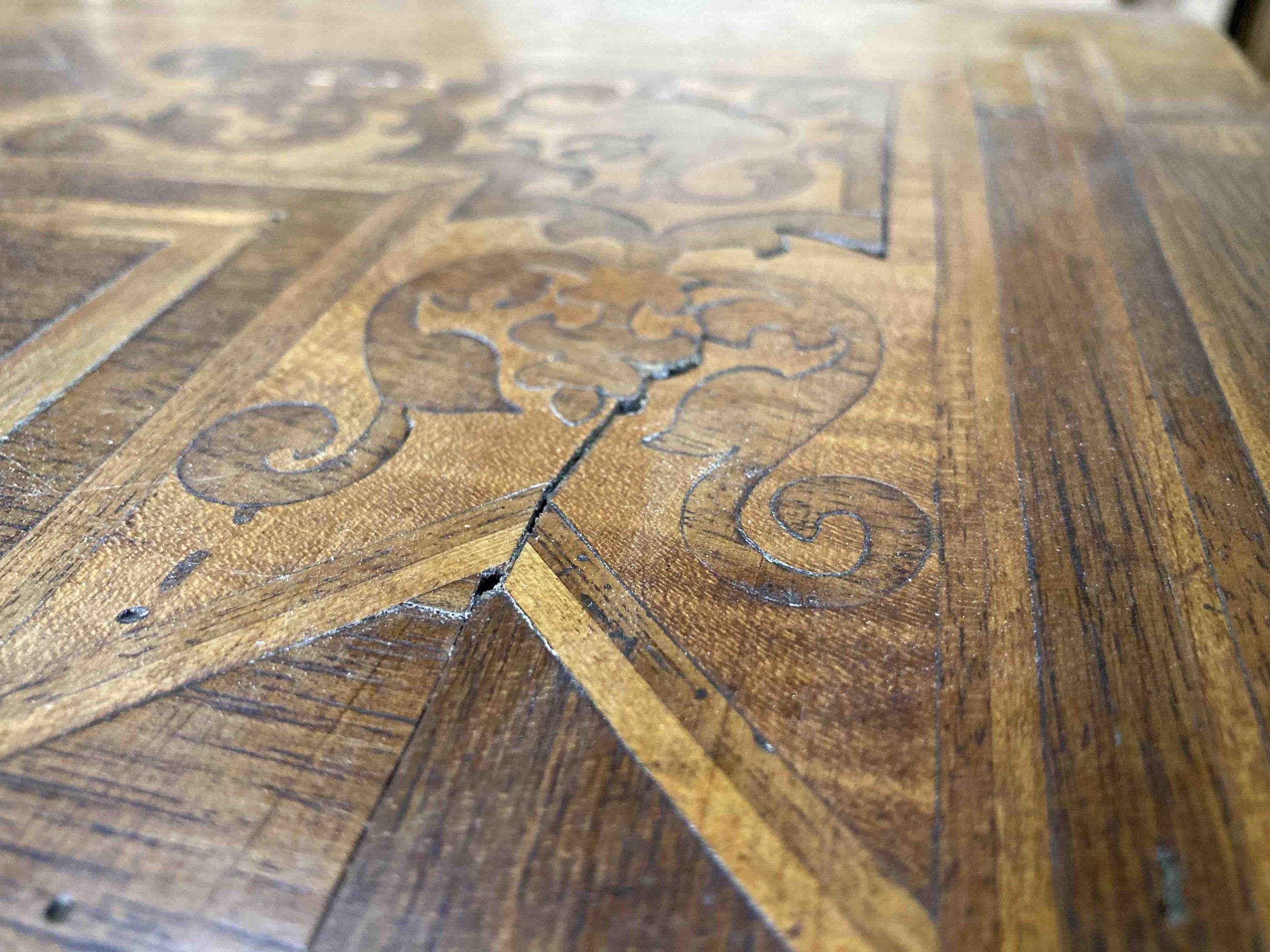
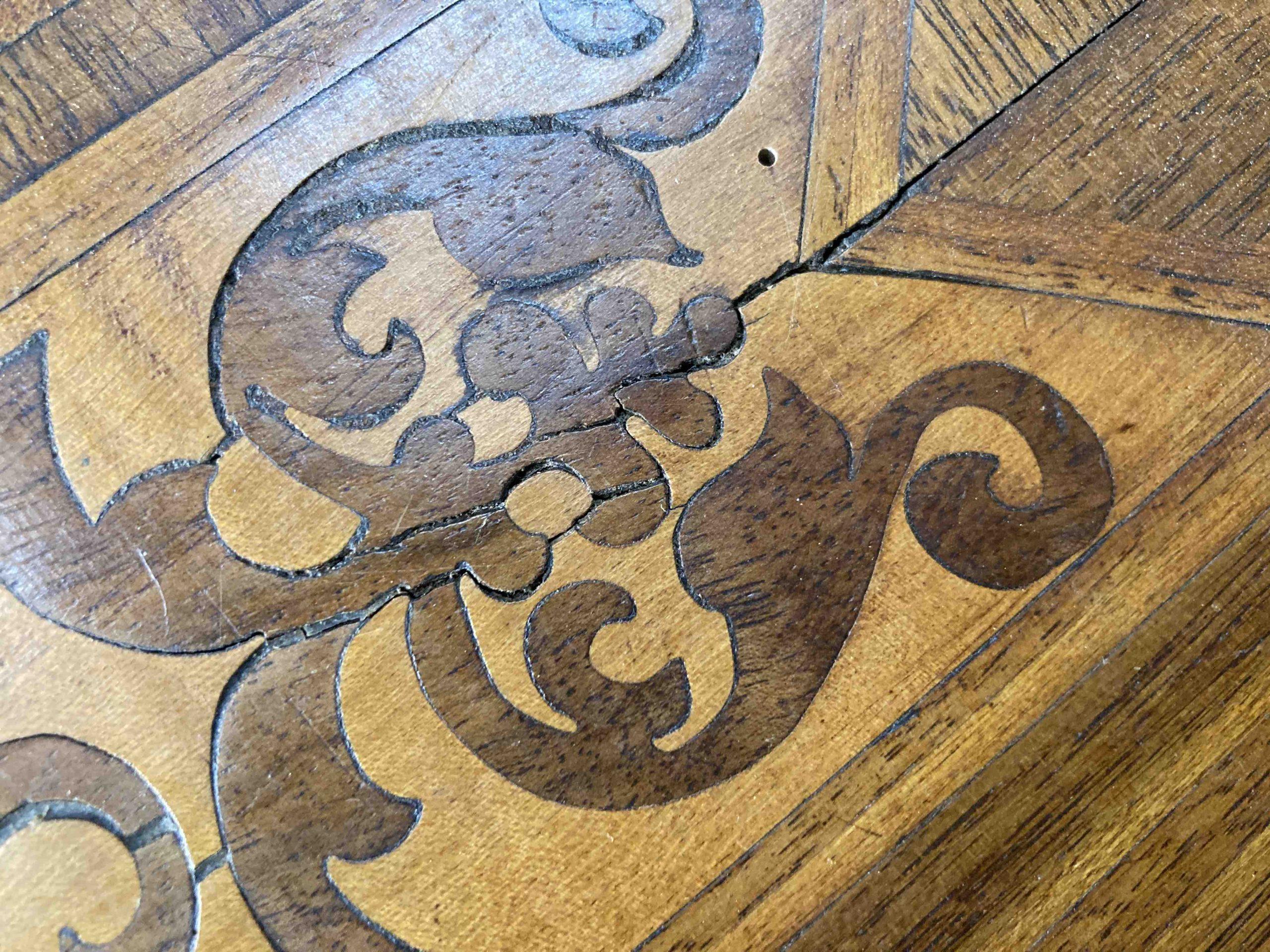
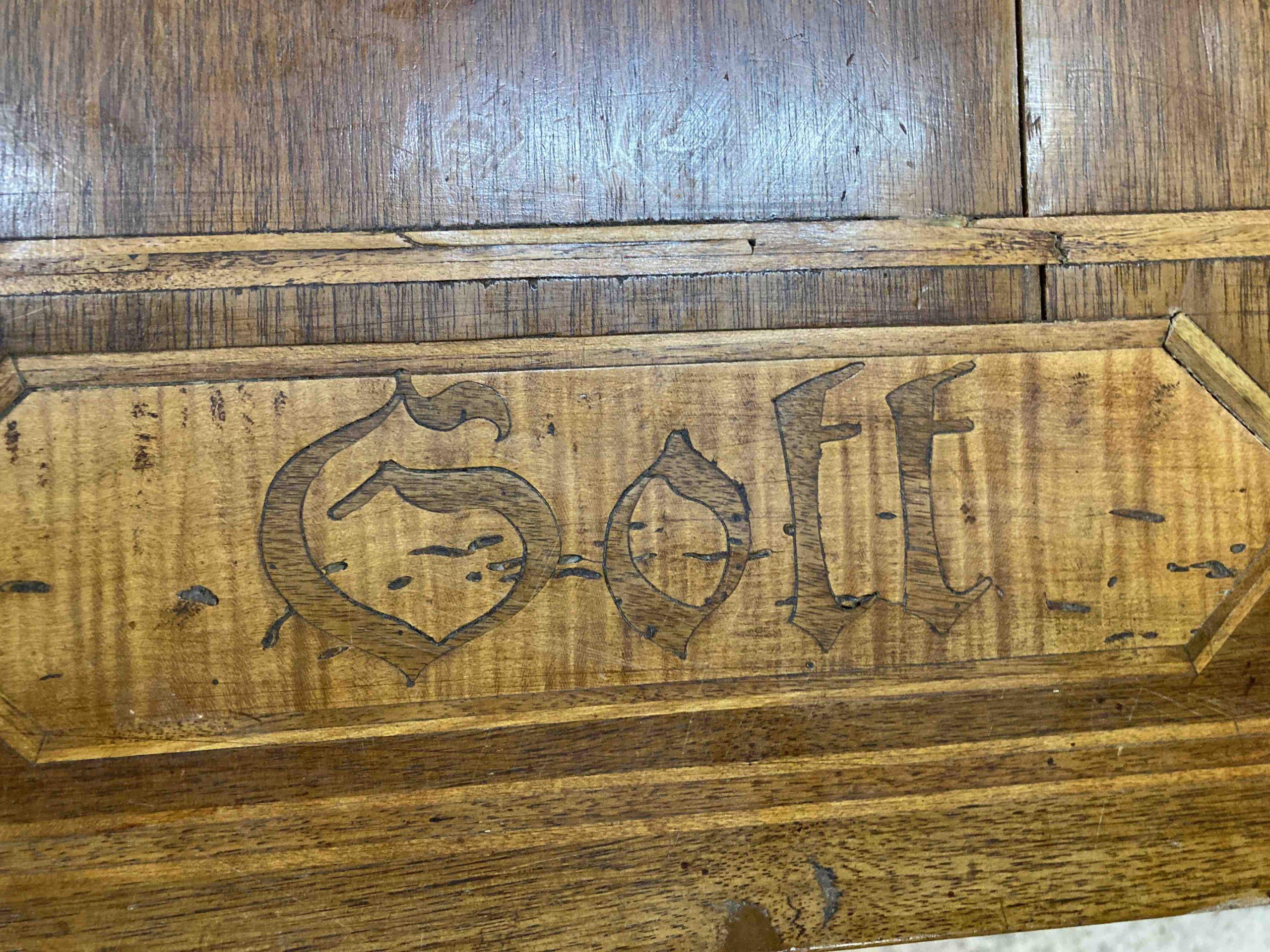
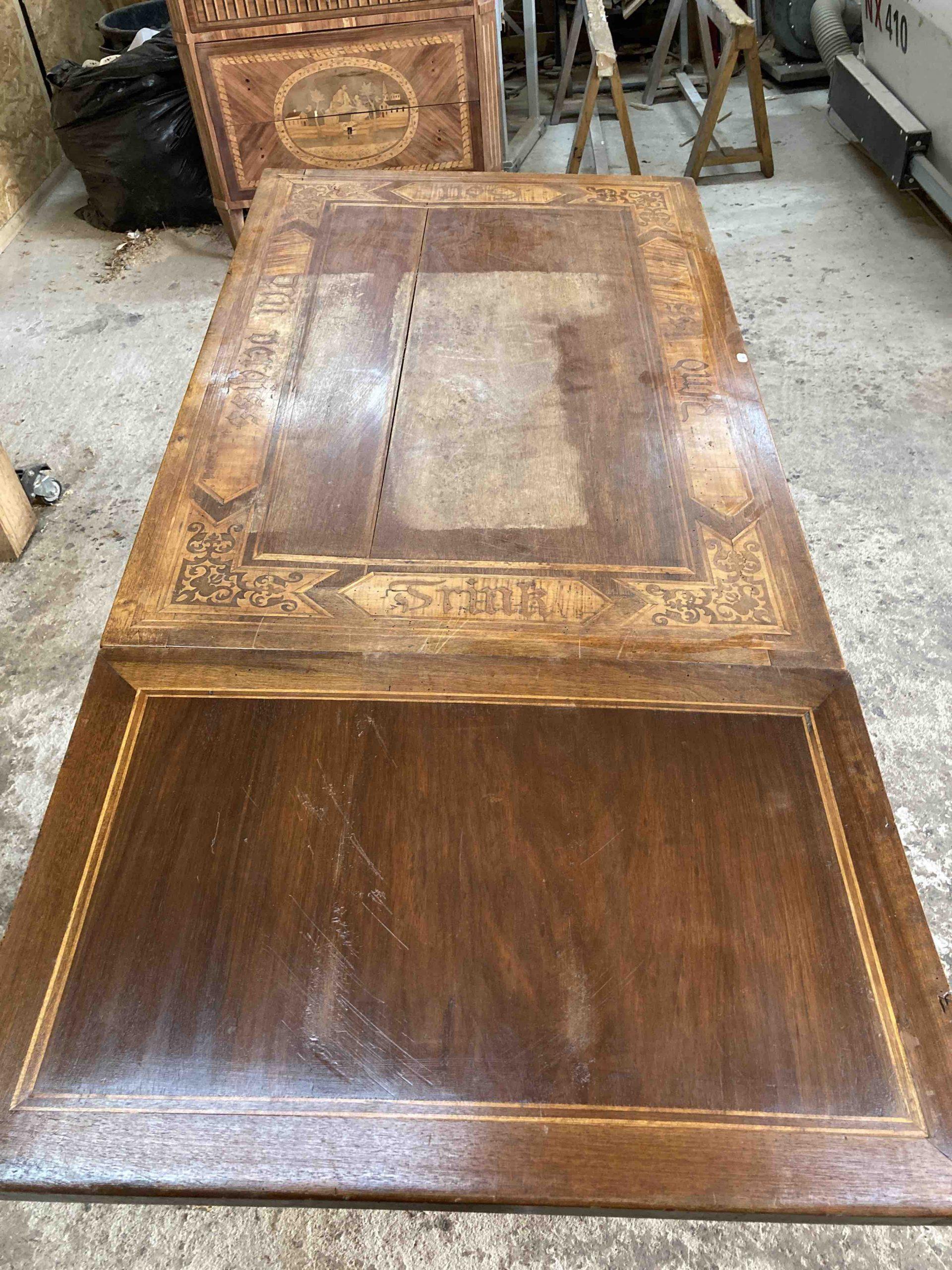
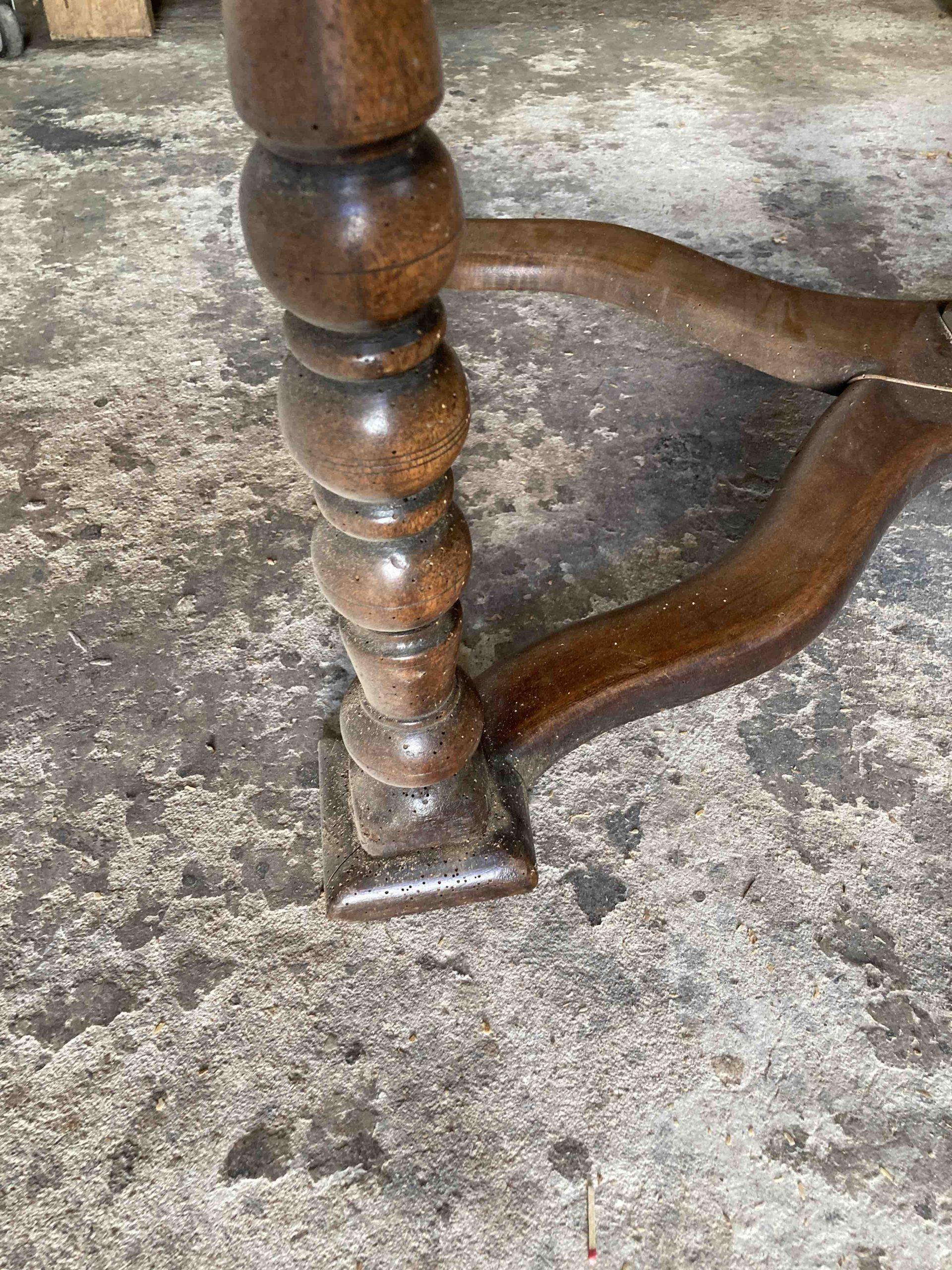
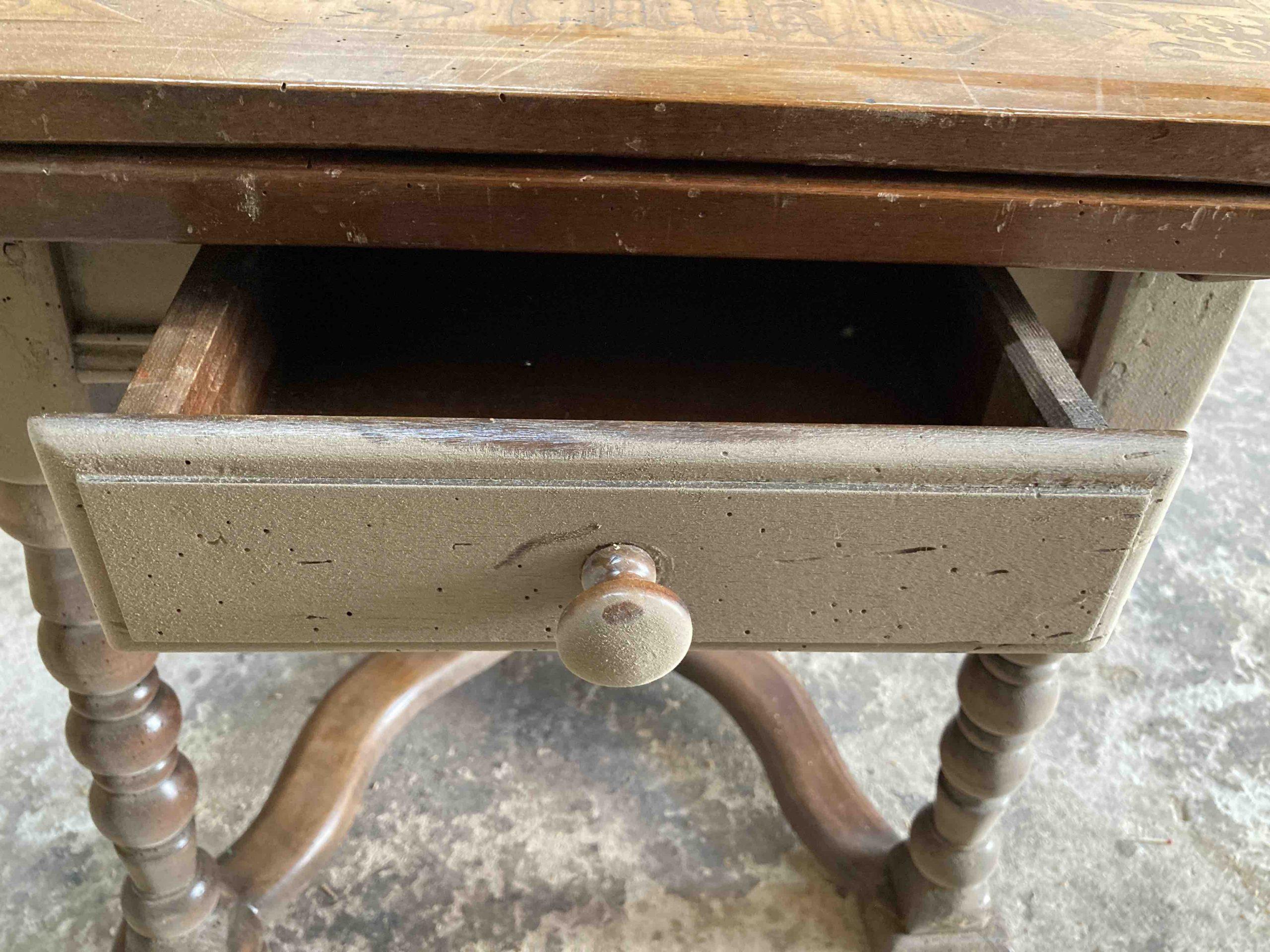
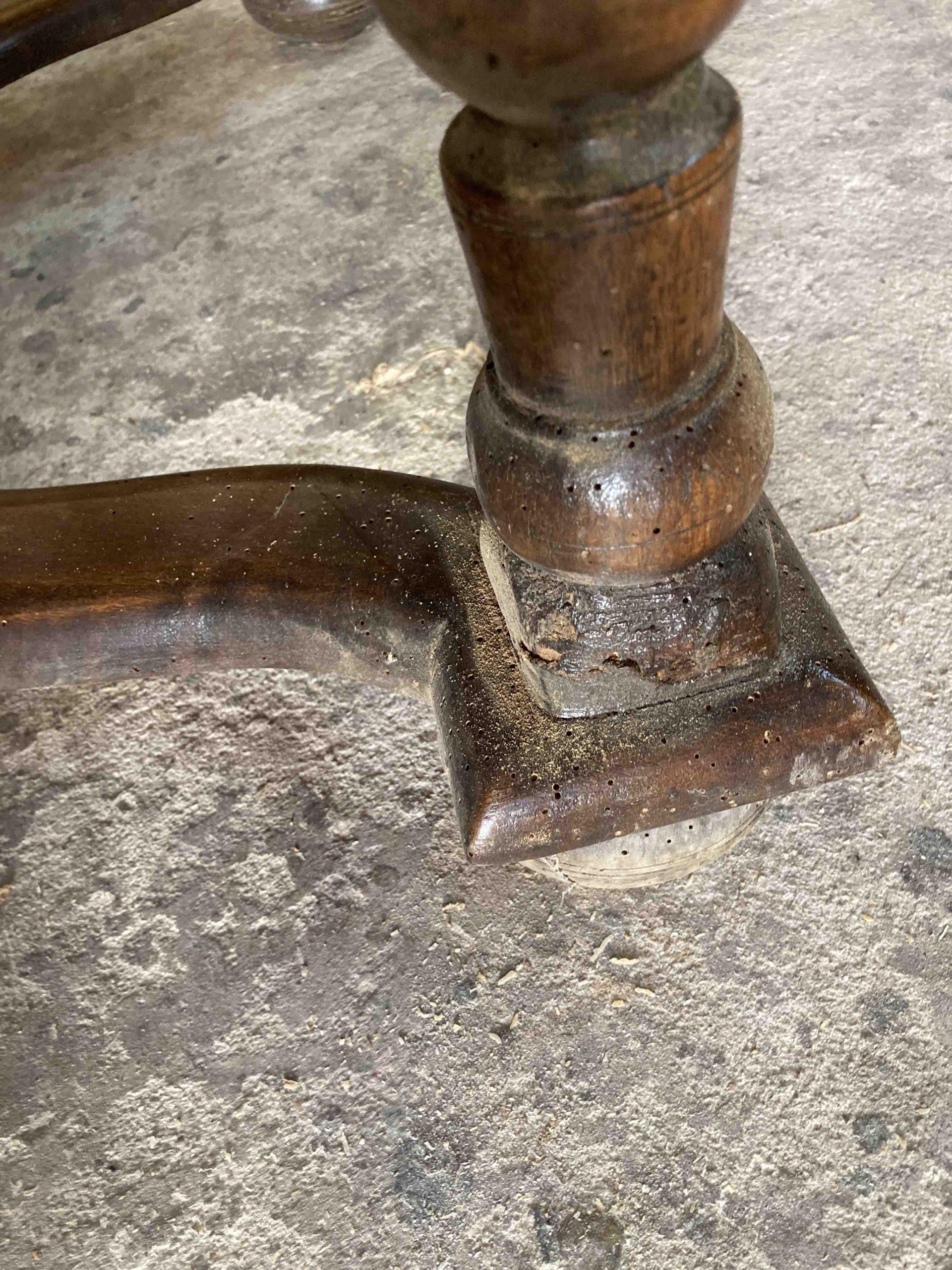
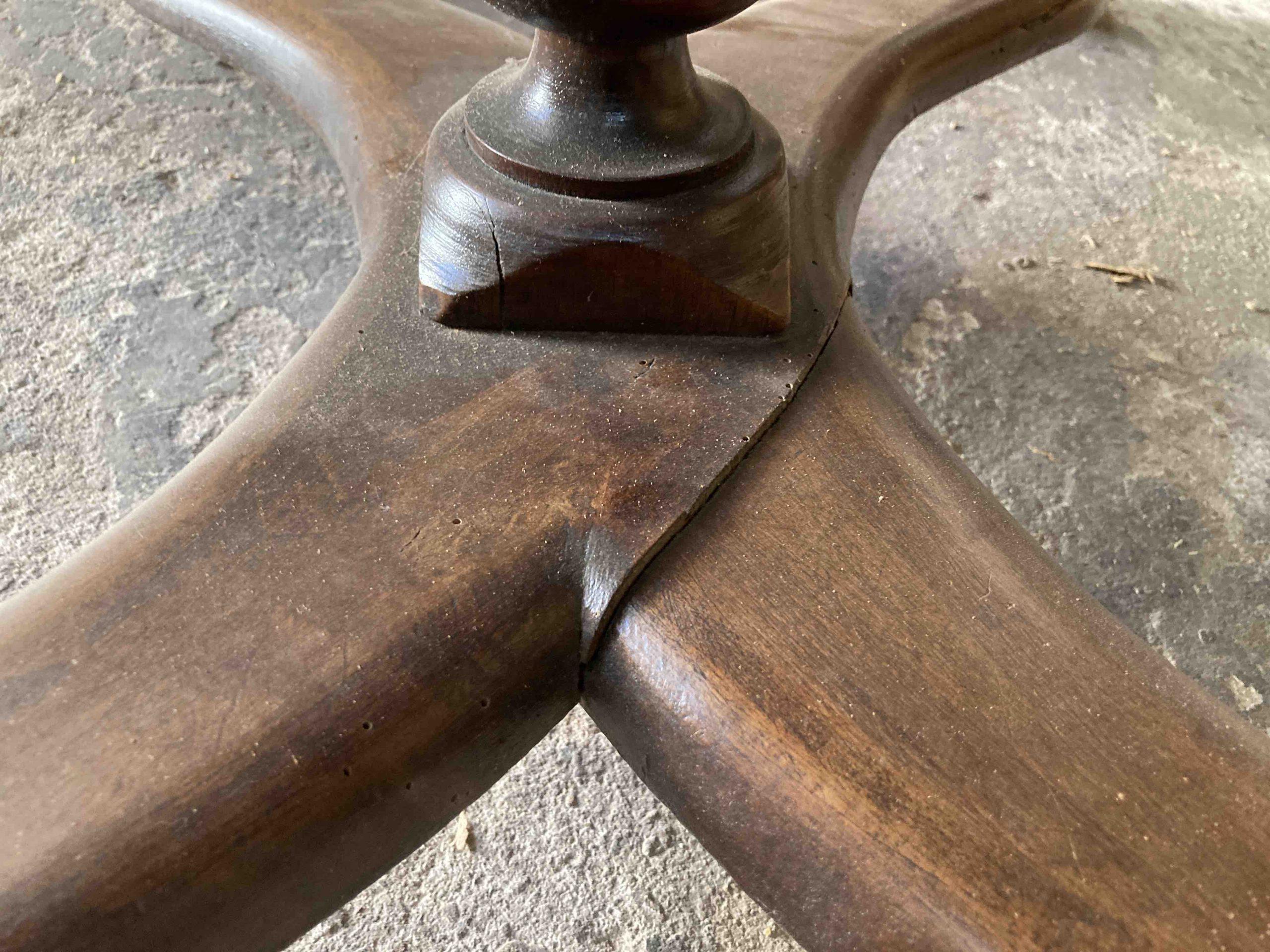
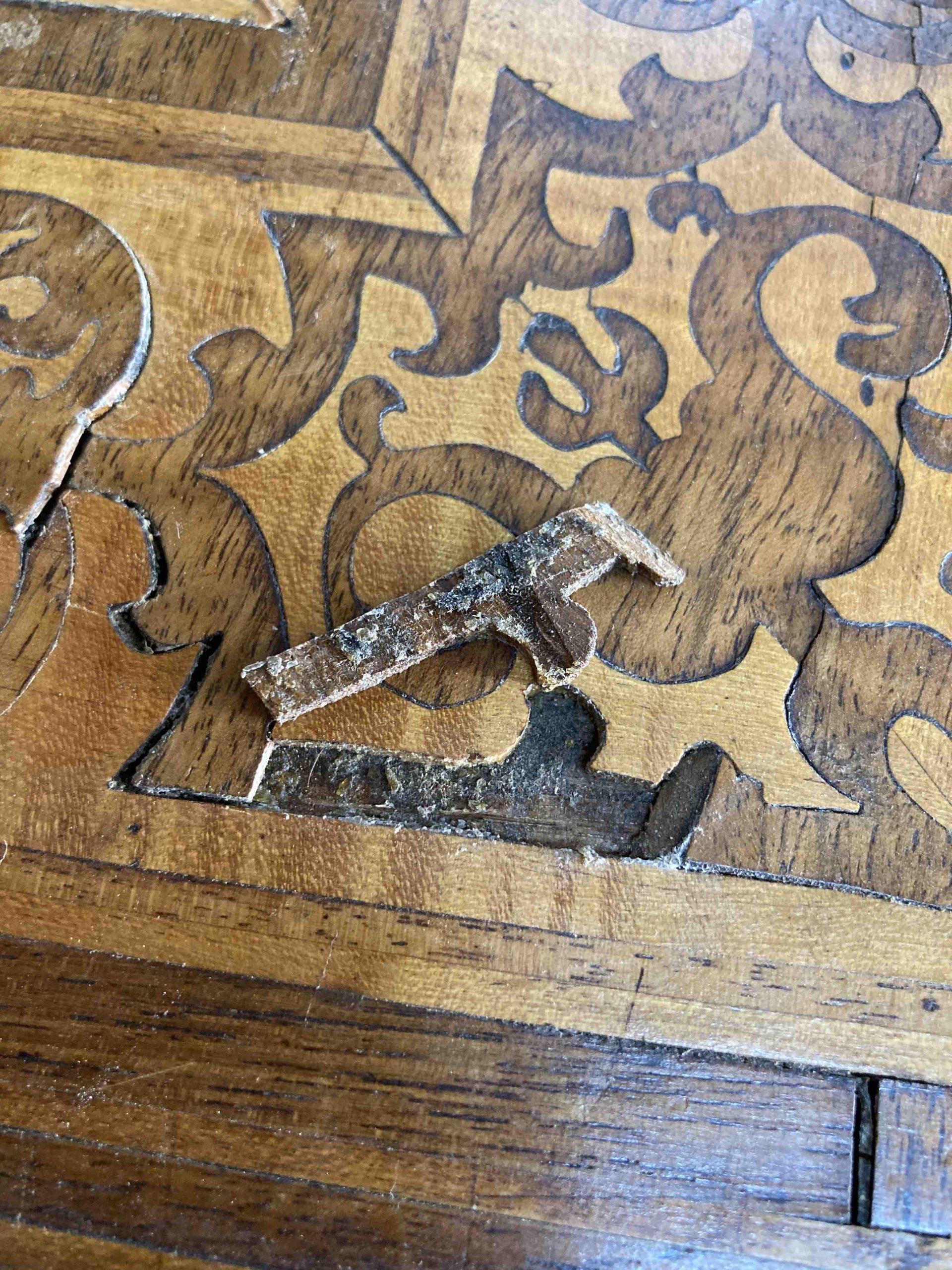
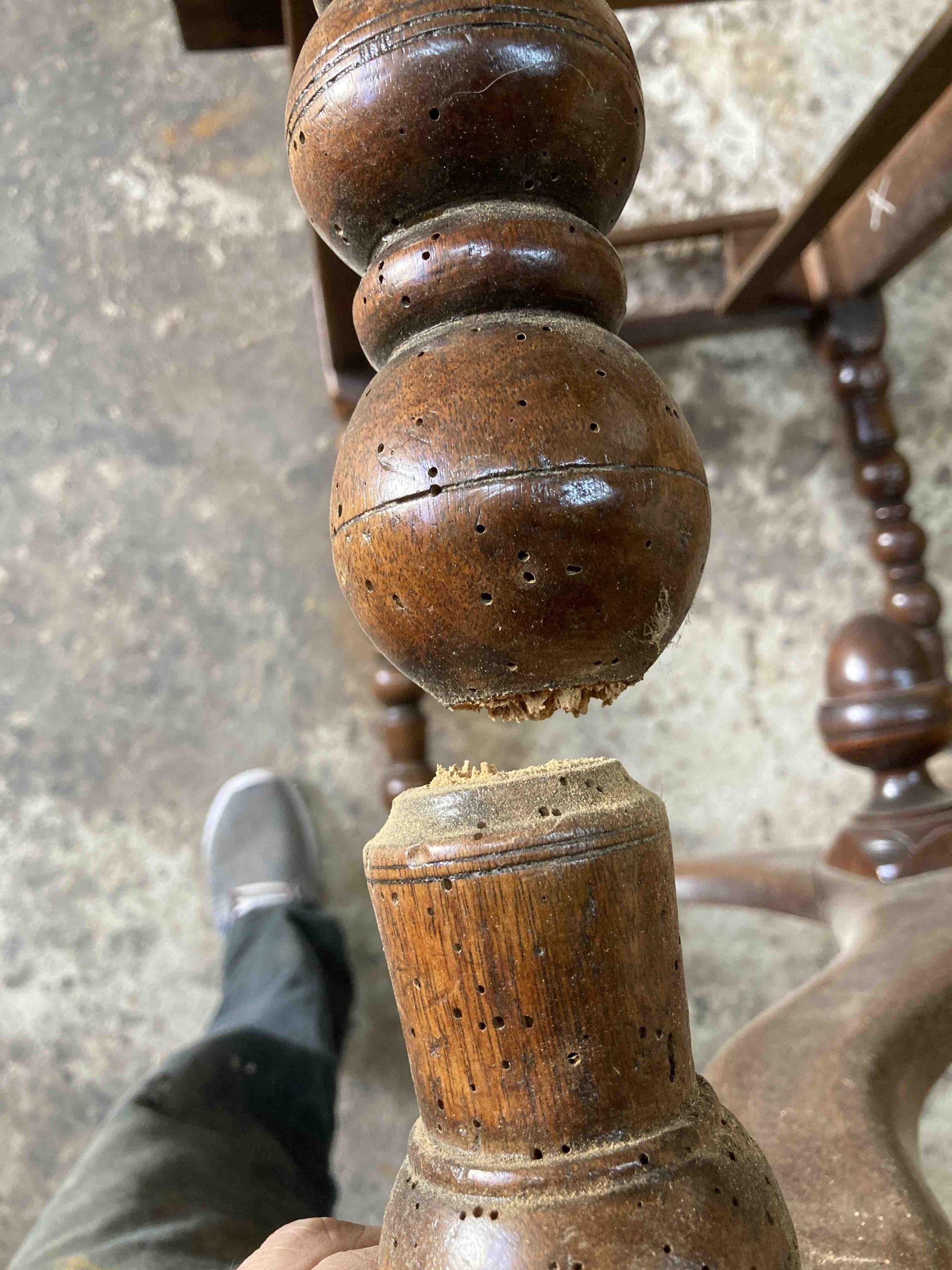
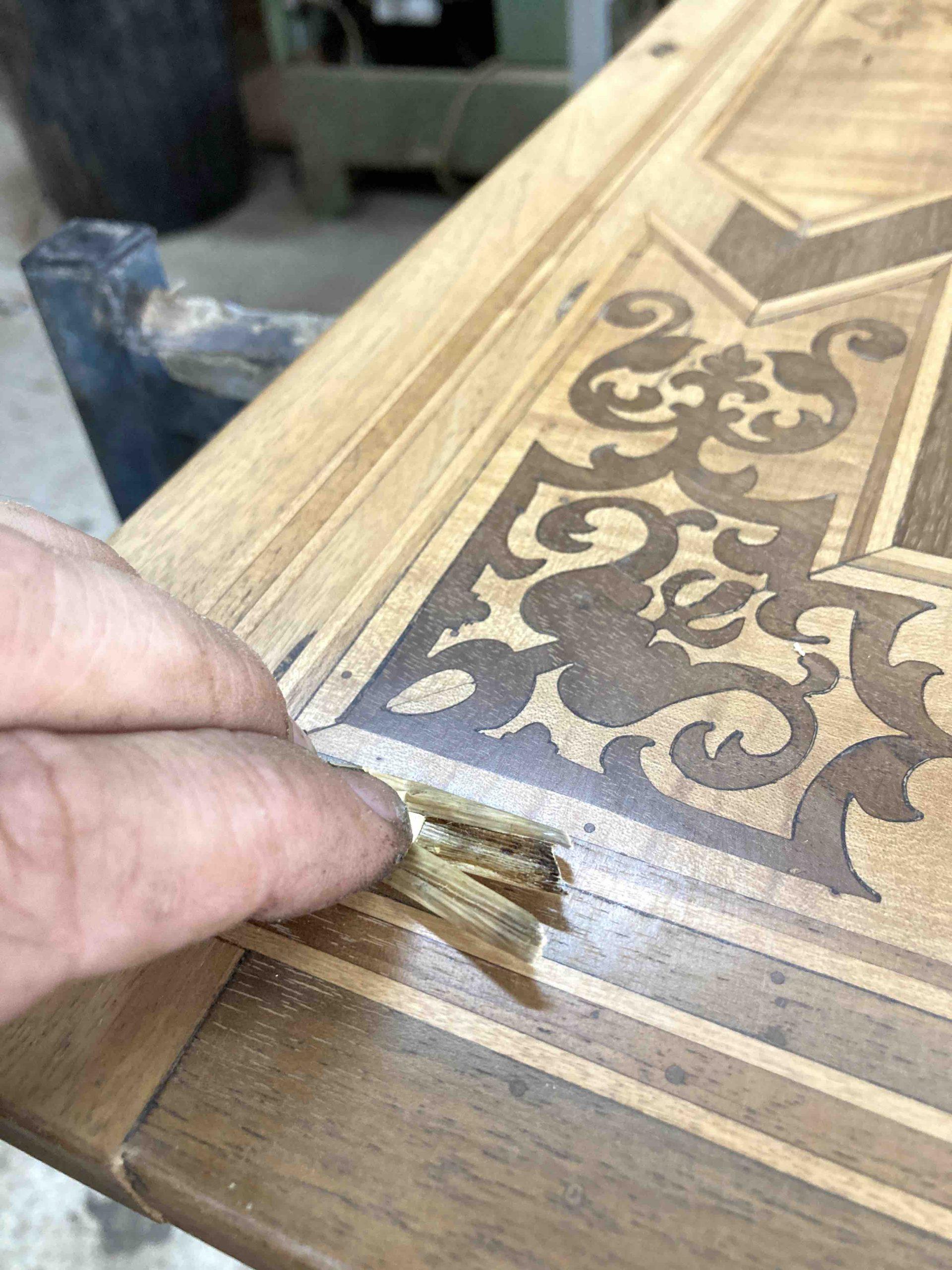
The restoration work therefore consisted of reattaching the tabletop and filling the slight gap with a thin strip of solid walnut. The veneers were reattached using vacuum-sealed adhesive. The worm-eaten areas were consolidated and reattached.
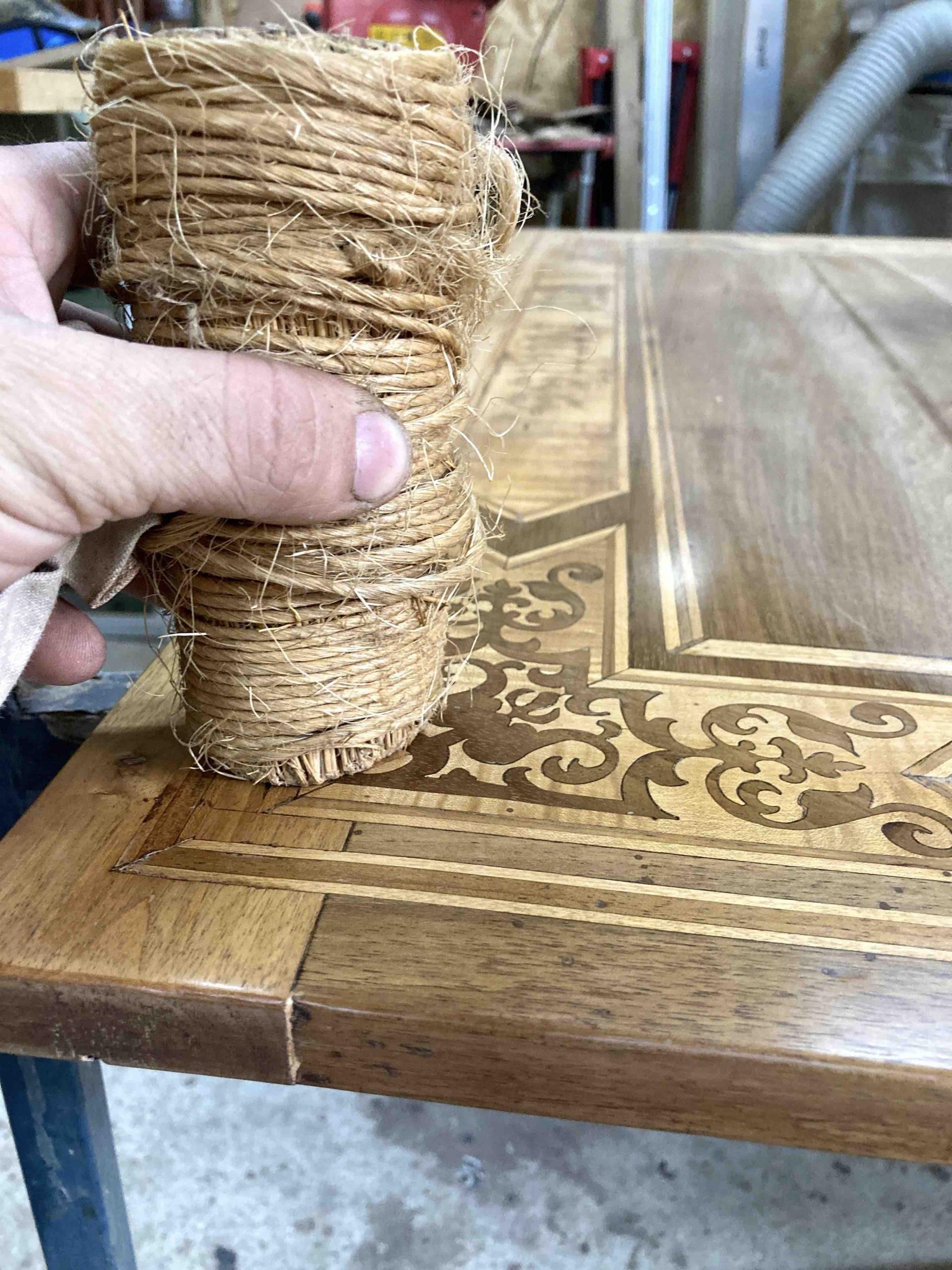
The entire piece of furniture was cleaned to remove excess wax and a Roubo polish was applied. (Thanks to the students of the AFPA in Chartres for this physical exercise in polishing the tabletop).
To see previous restorations : https://ebenisterie-mathieuvath.fr/en-ce-moment-a-latelier/