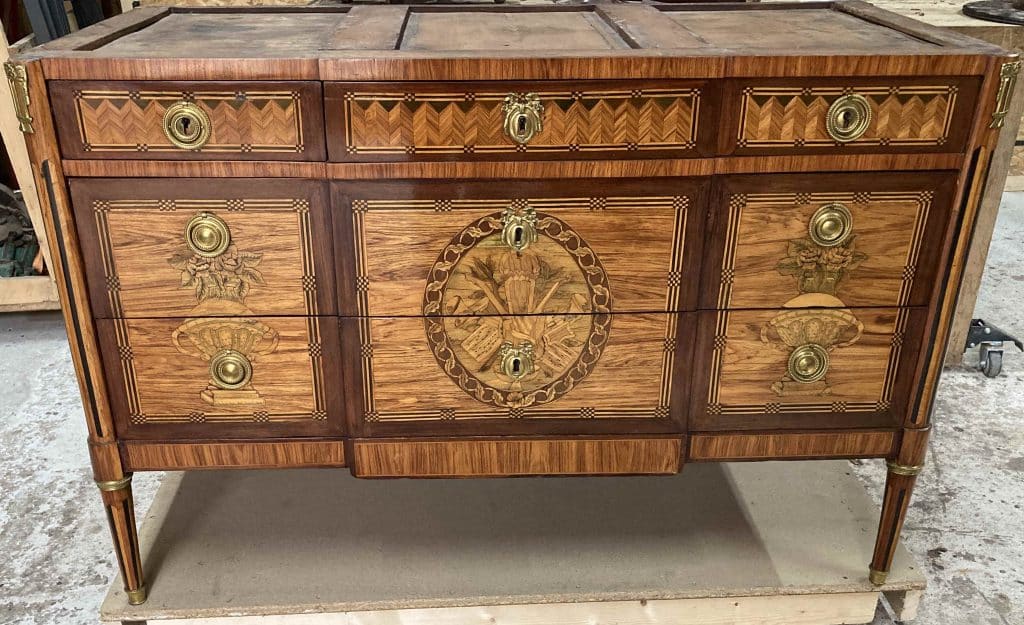
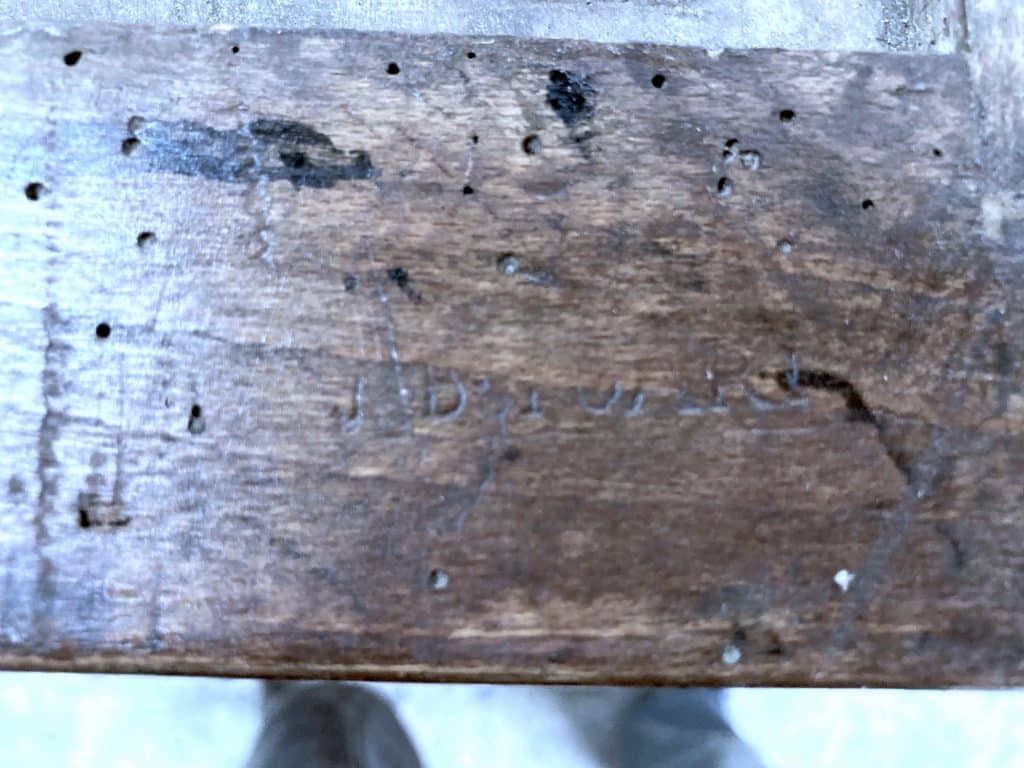
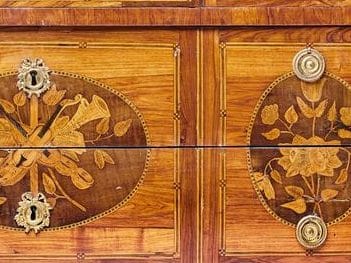
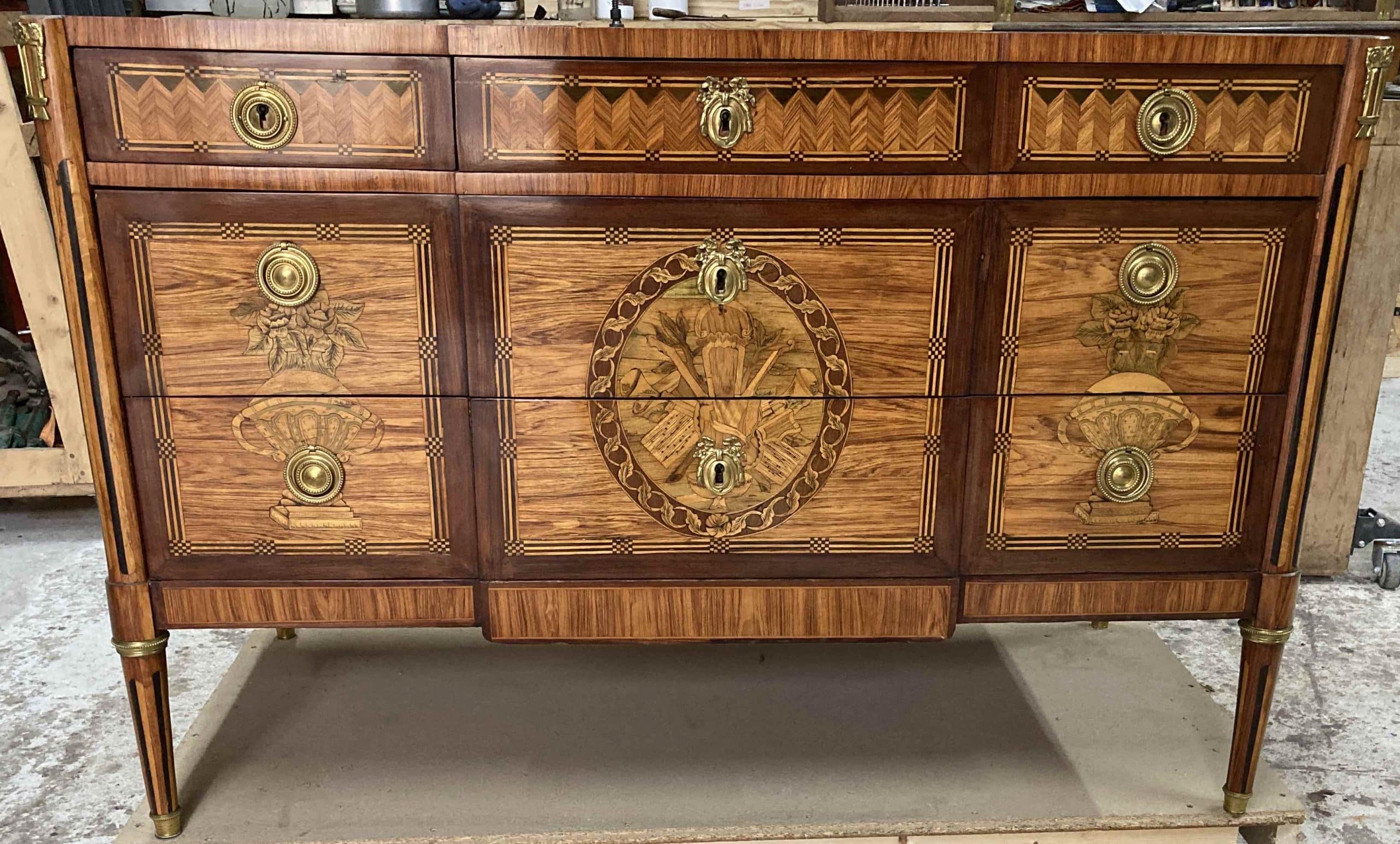
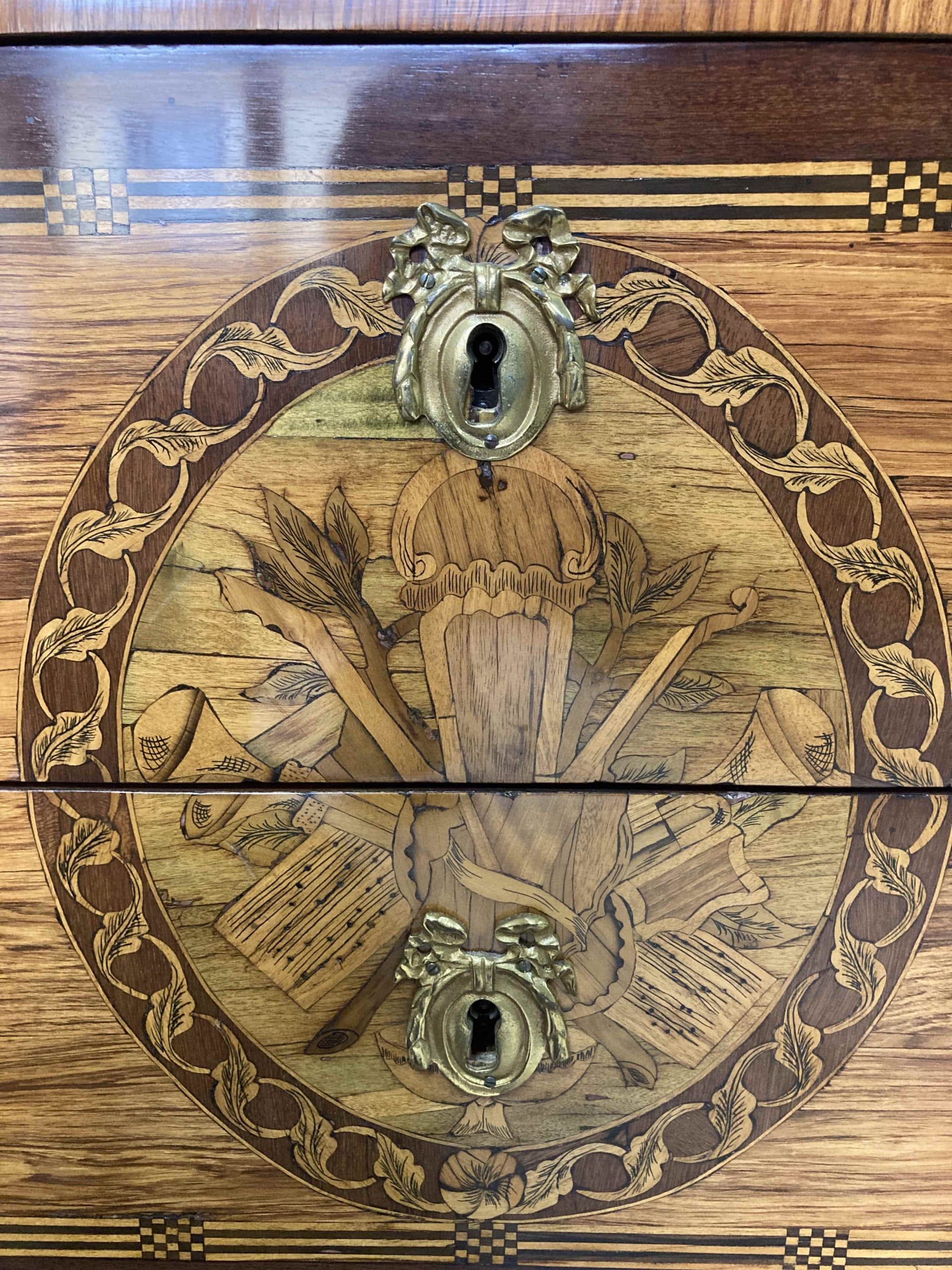
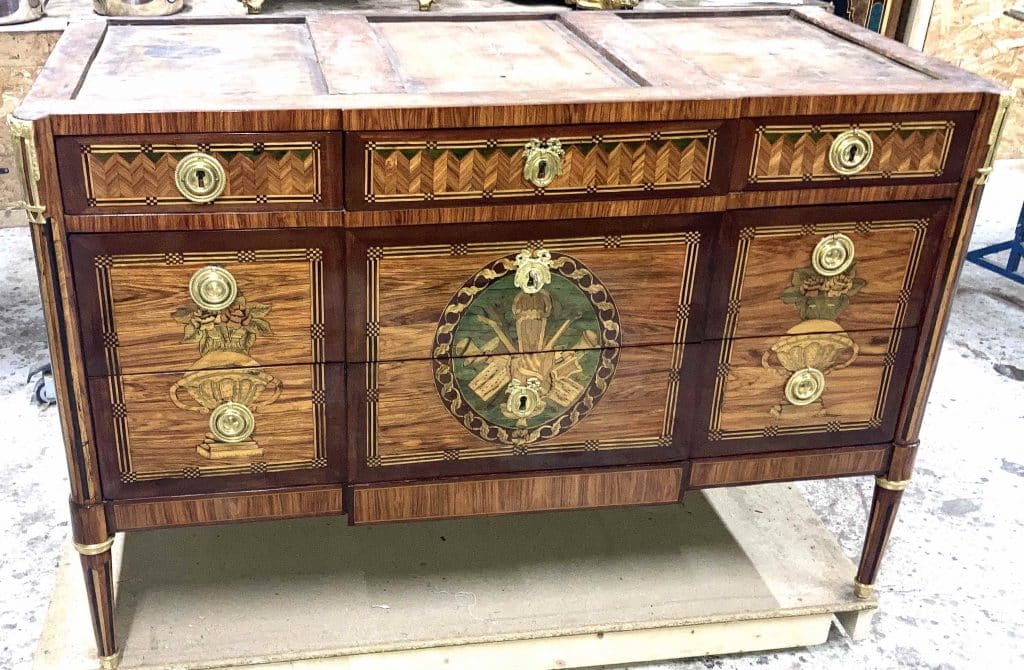
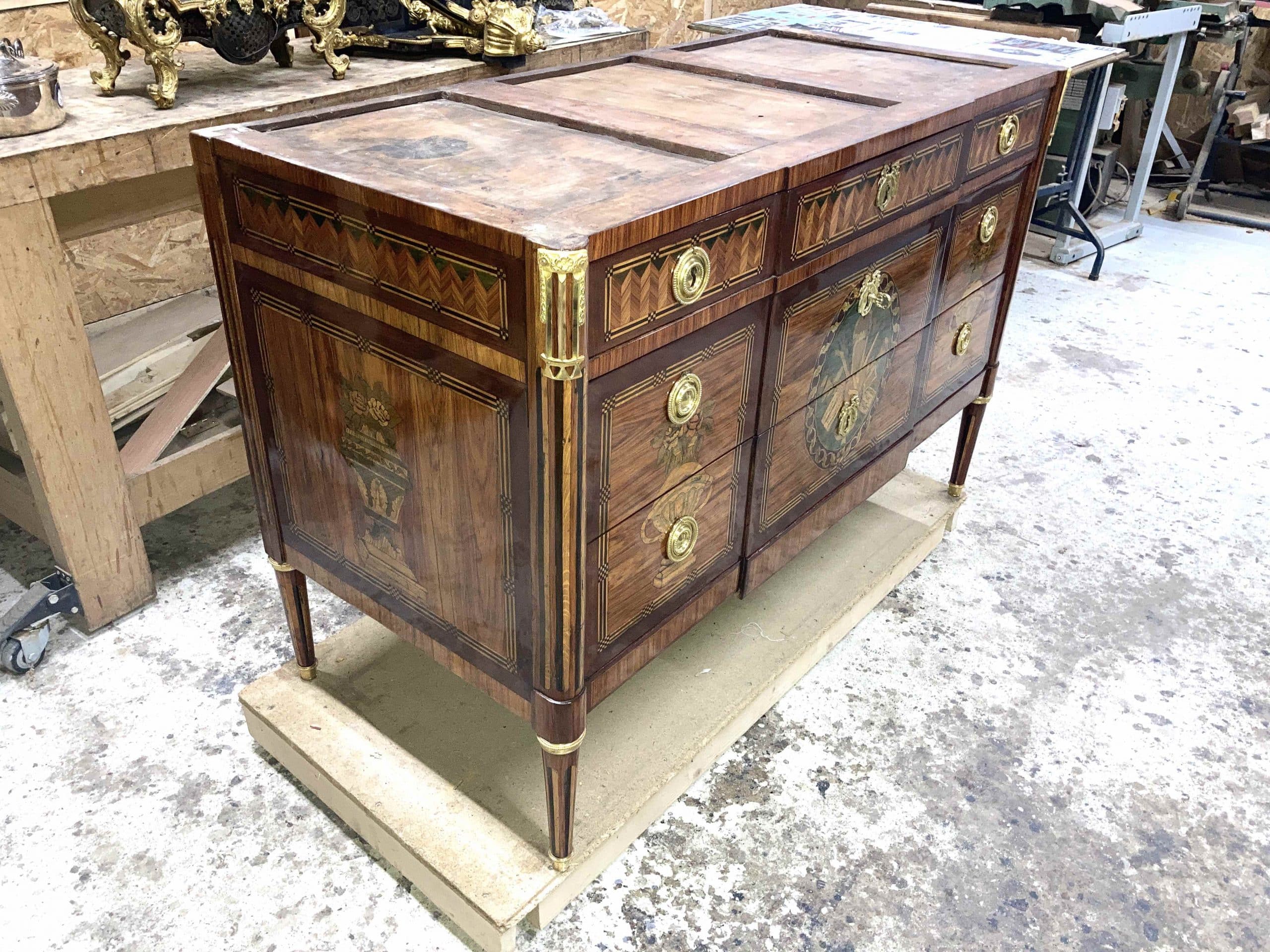
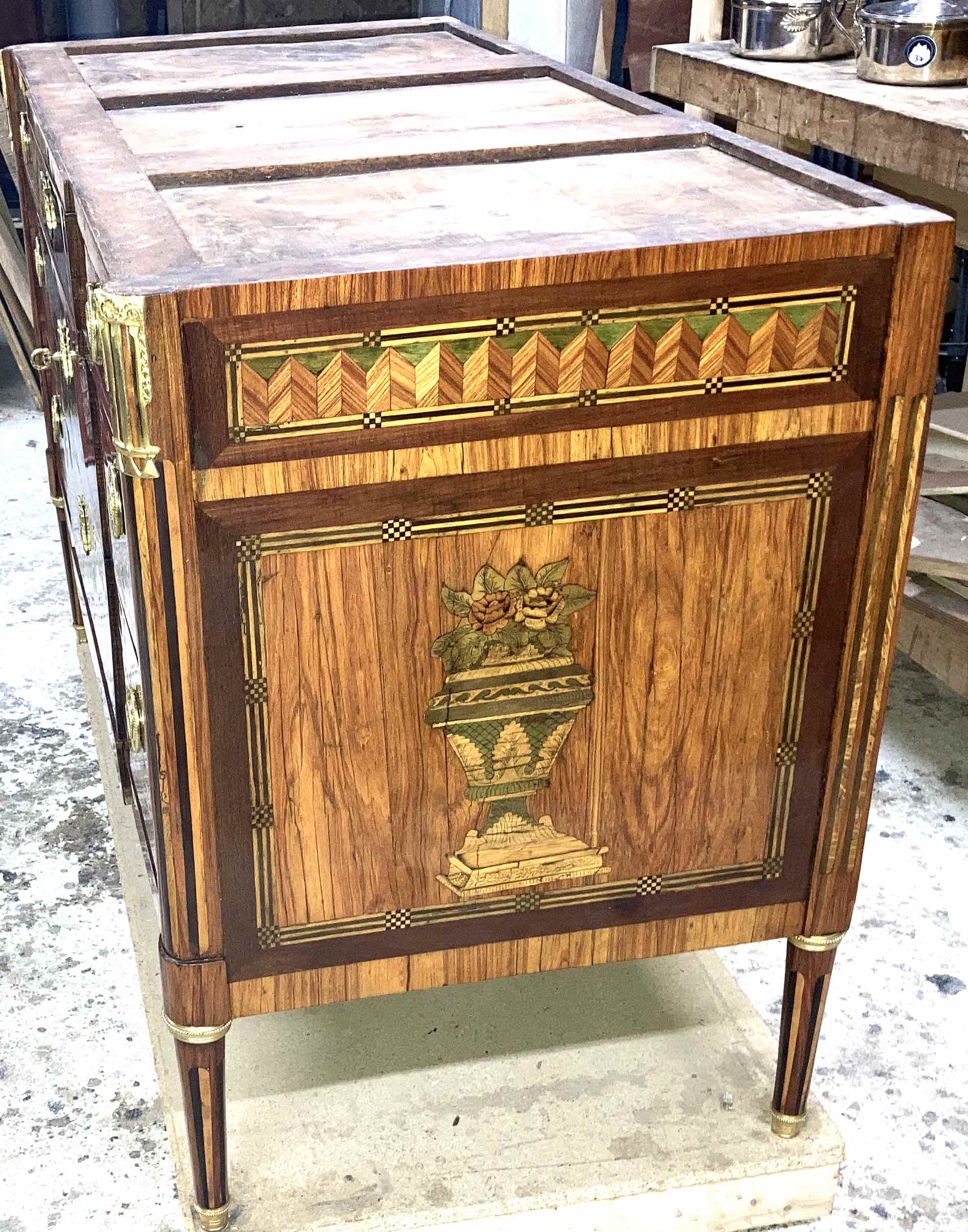
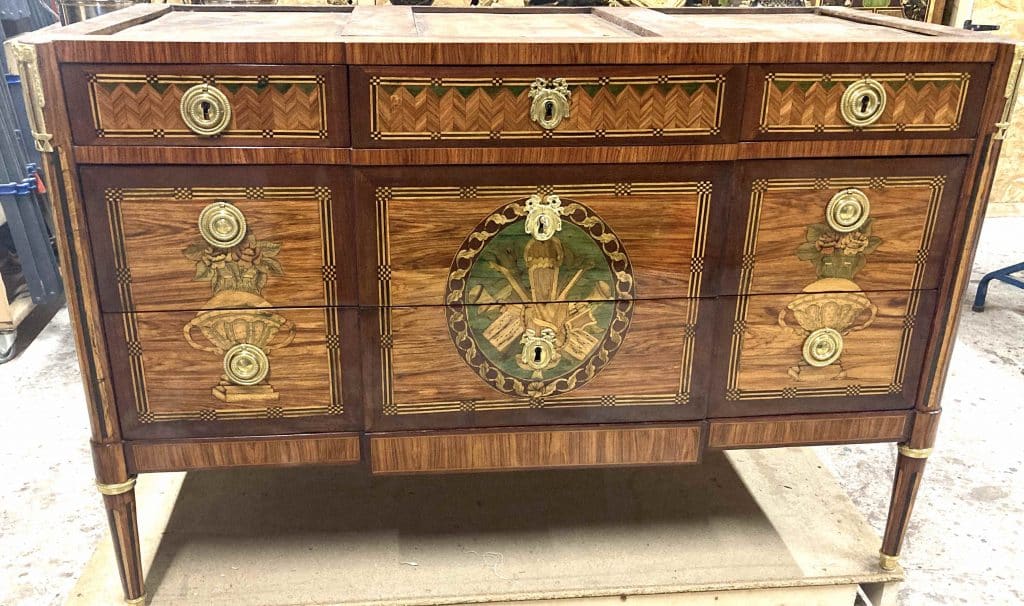
Here is a very pretty Louis XVI period commode veneered in rosewood and amaranth with marquetry of boxwood, pearwood, maple, hornbeam, walnut, blackened pearwood, lemonwood… It is built of oak and softwood. It is stamped twice with the mark of Jean-Baptiste II Tuart. But its maker is probably Jean Lapie.
Born into a dynasty of Parisian cabinetmakers and merchants, whose father, Jean-Baptiste I, obtained his master's degree in 1741 and was active until around 1760, John the Baptist II, Born around 1720, he was not a master cabinetmaker but a master furniture maker and haberdasher, and first established himself on rue Froidmanteau and then on rue Saint-Honoré. As Alexandre Parèdre mentions, and contrary to the assumptions of François de Salverte, it is unlikely that Jean-Baptiste Tuart himself practiced cabinetmaking, but rather that he was a merchant and restorer of furniture and works of art.
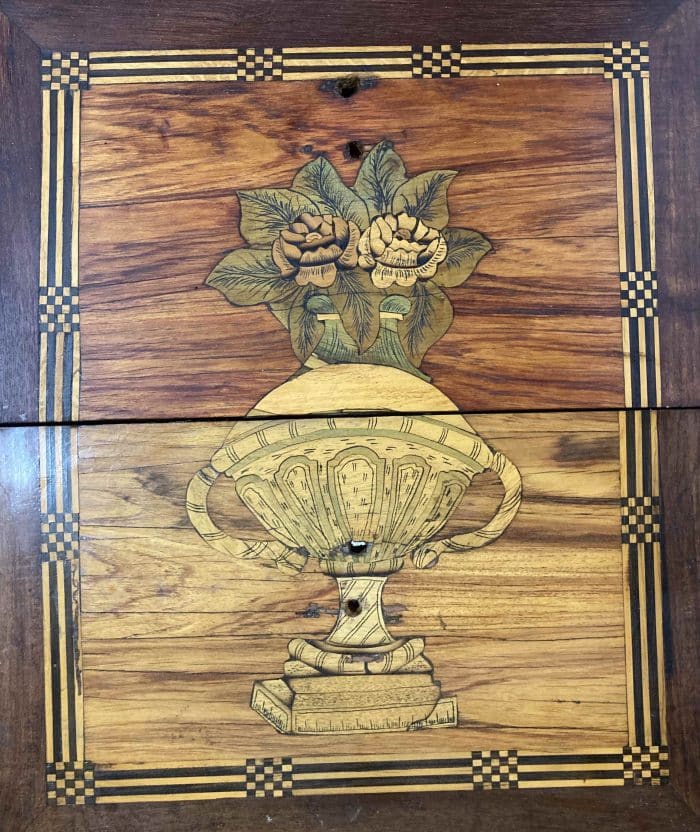
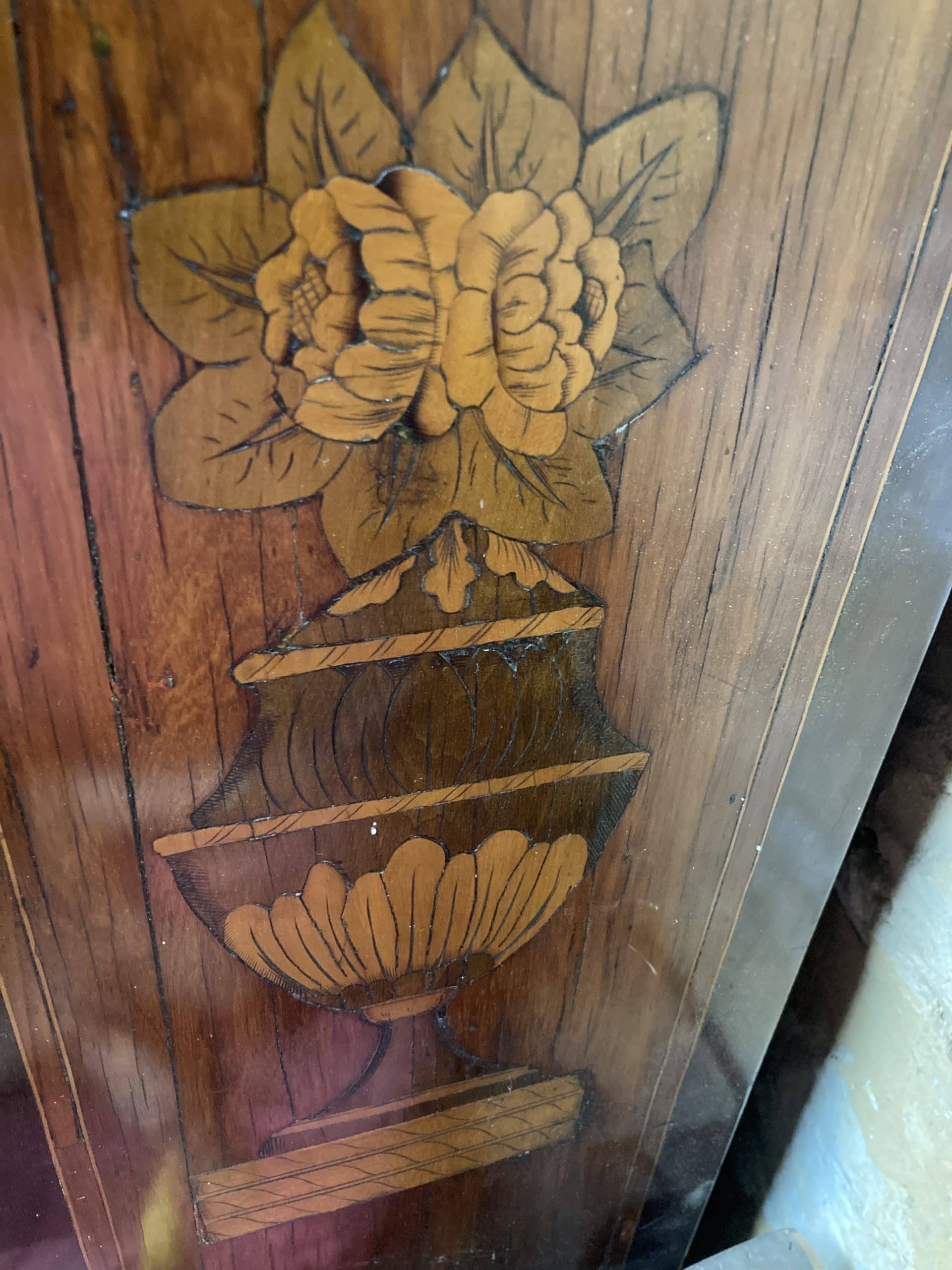
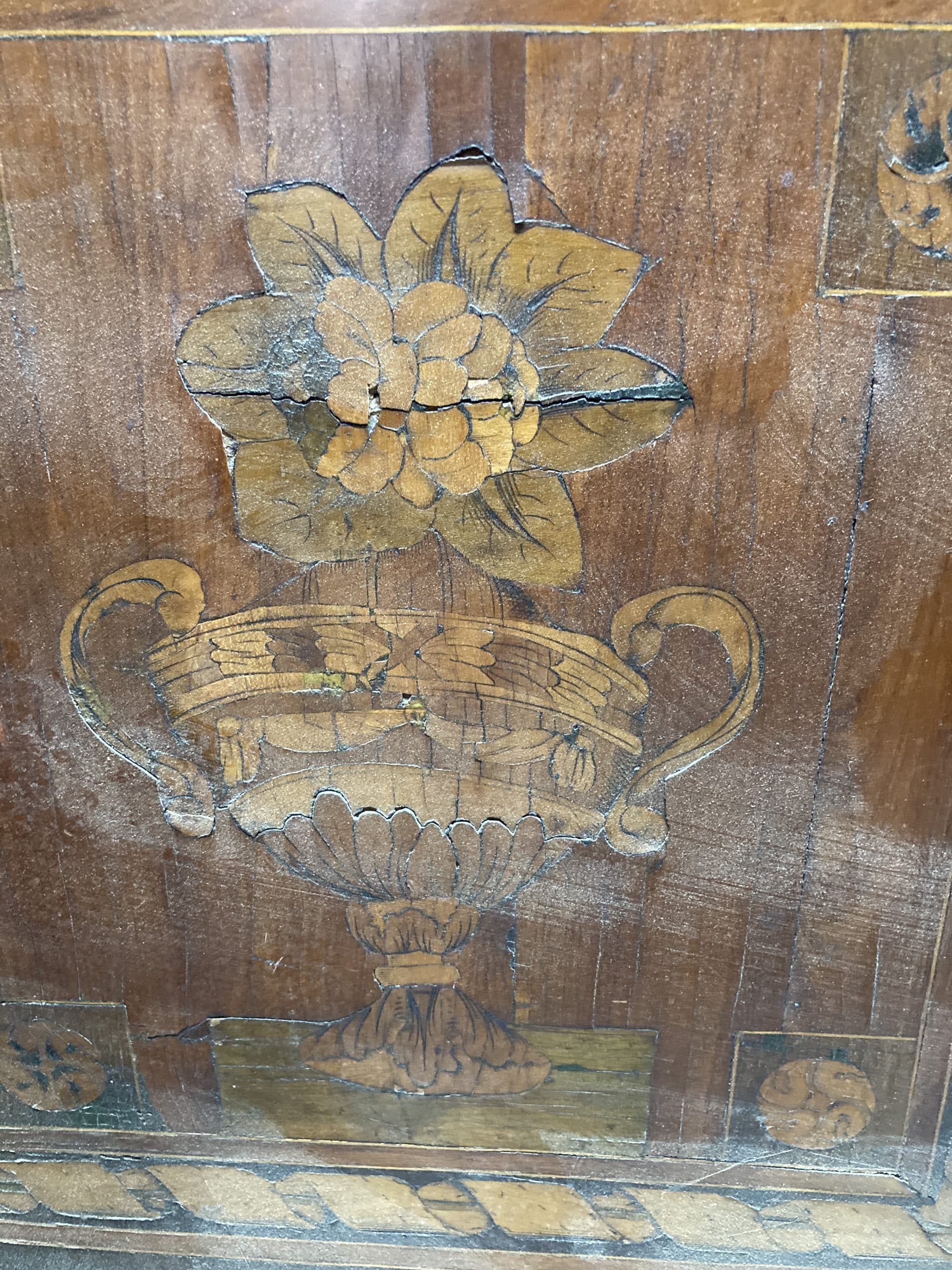
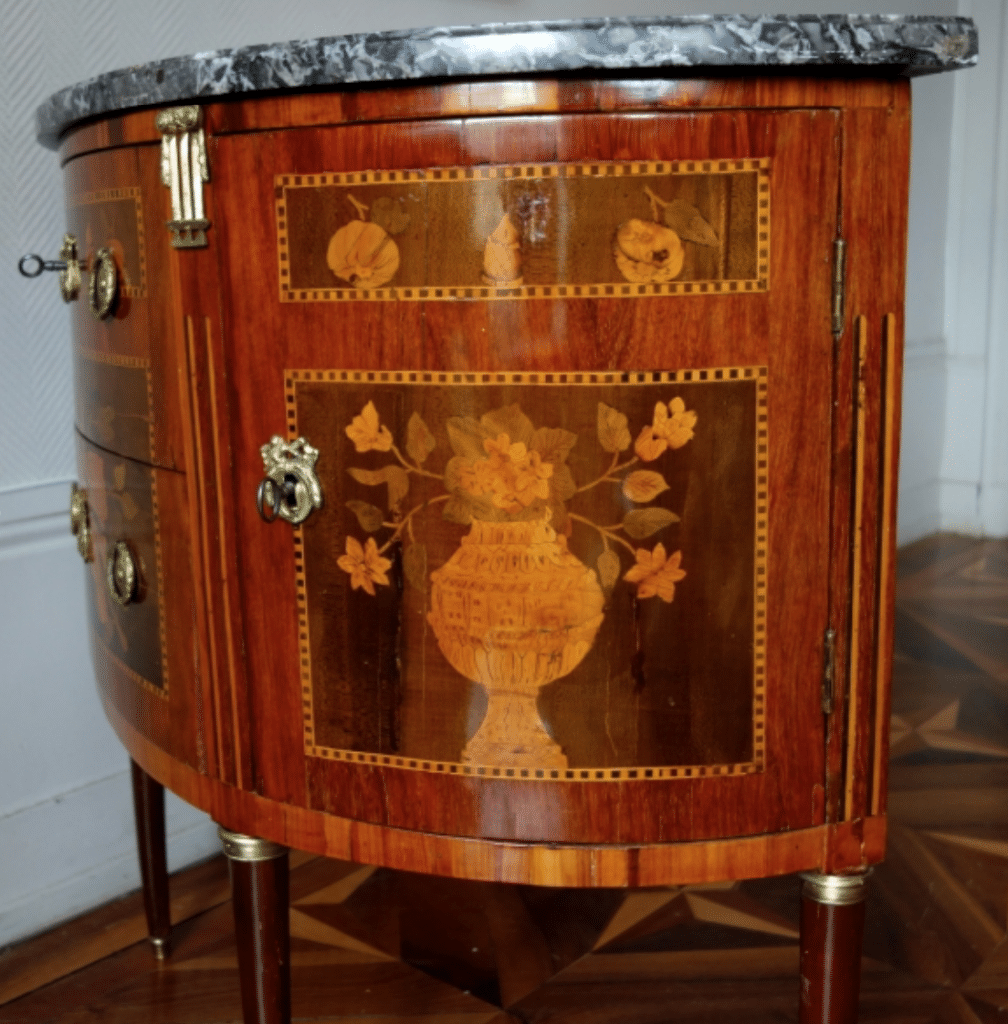
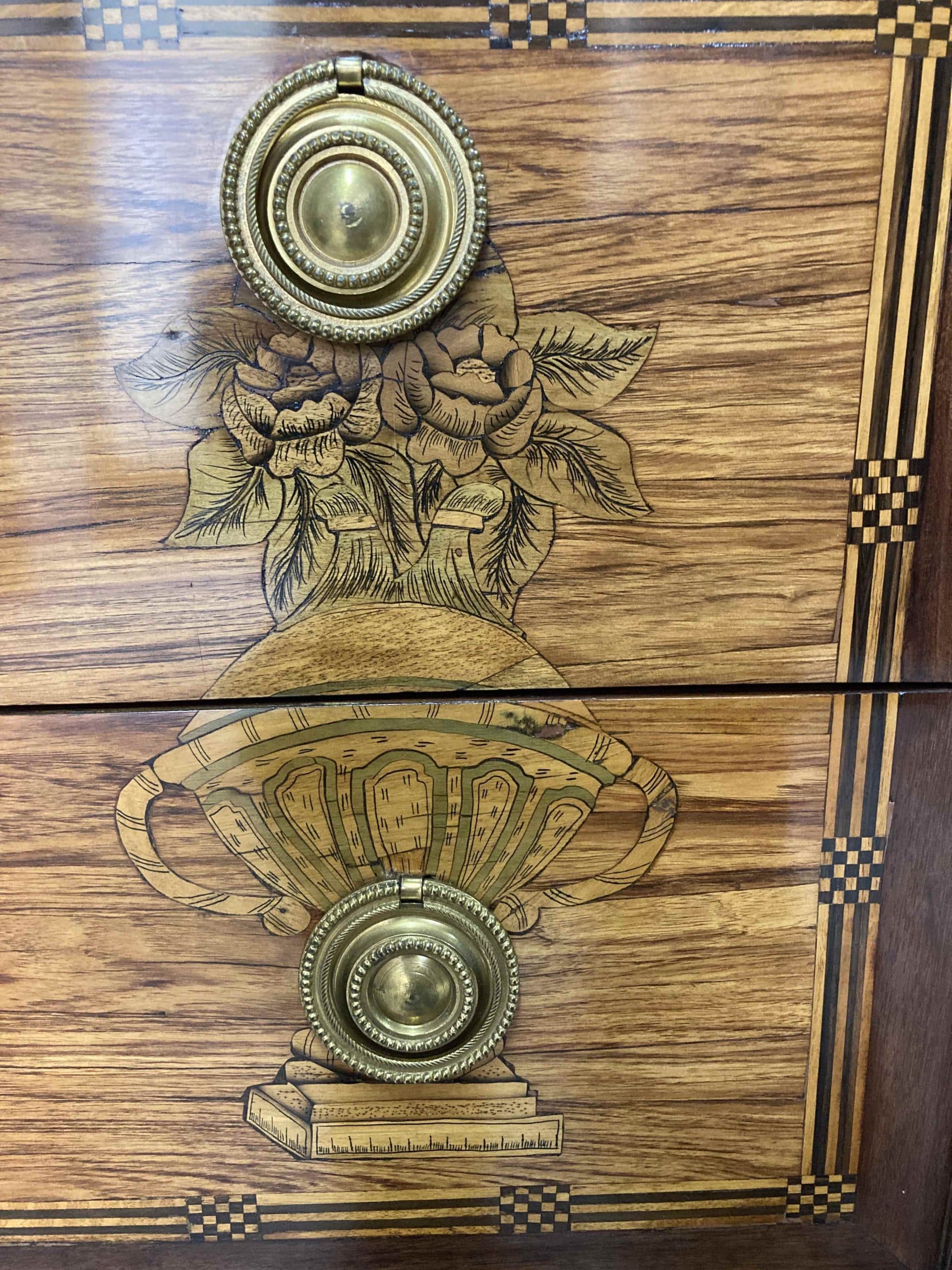
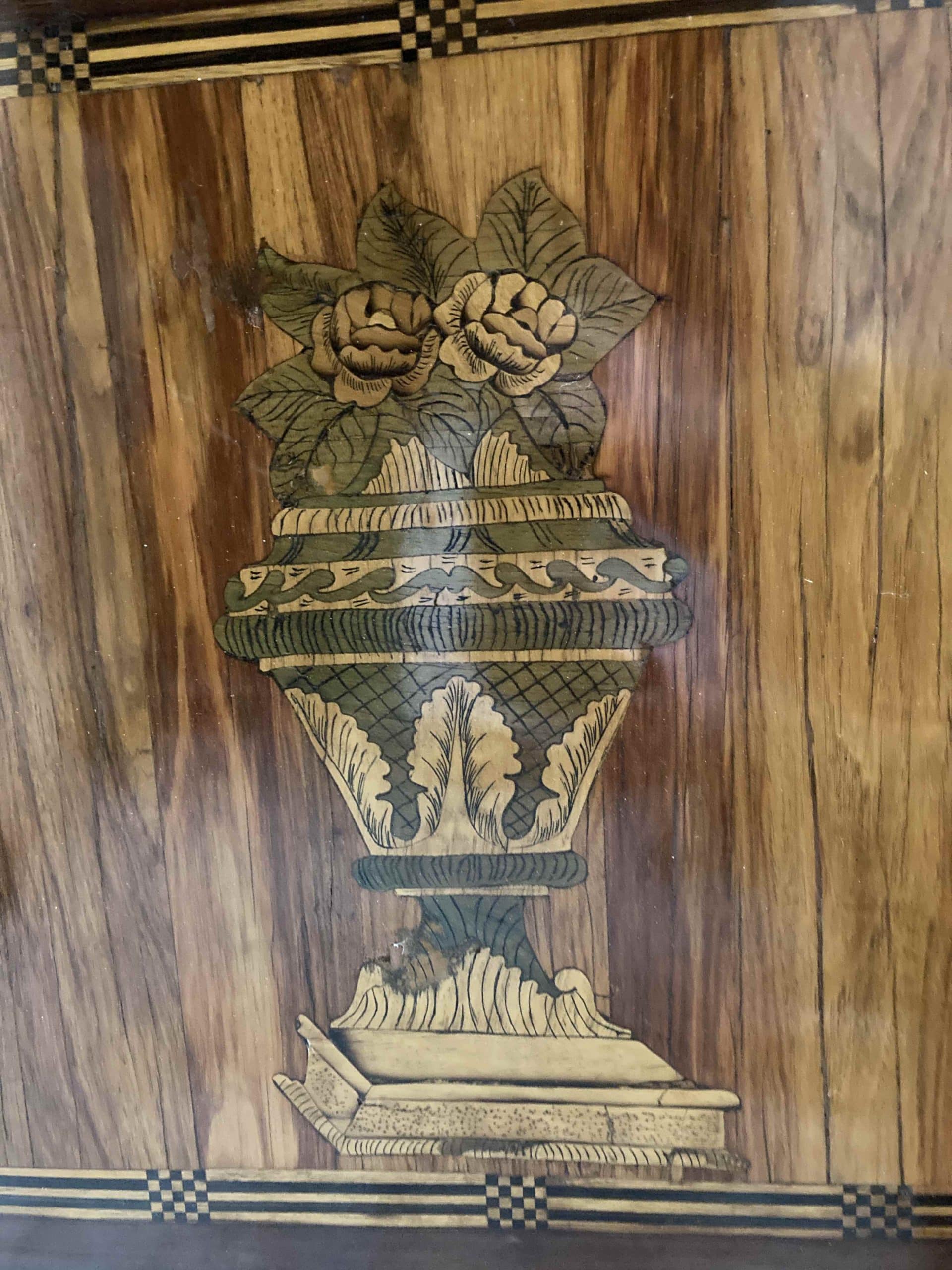
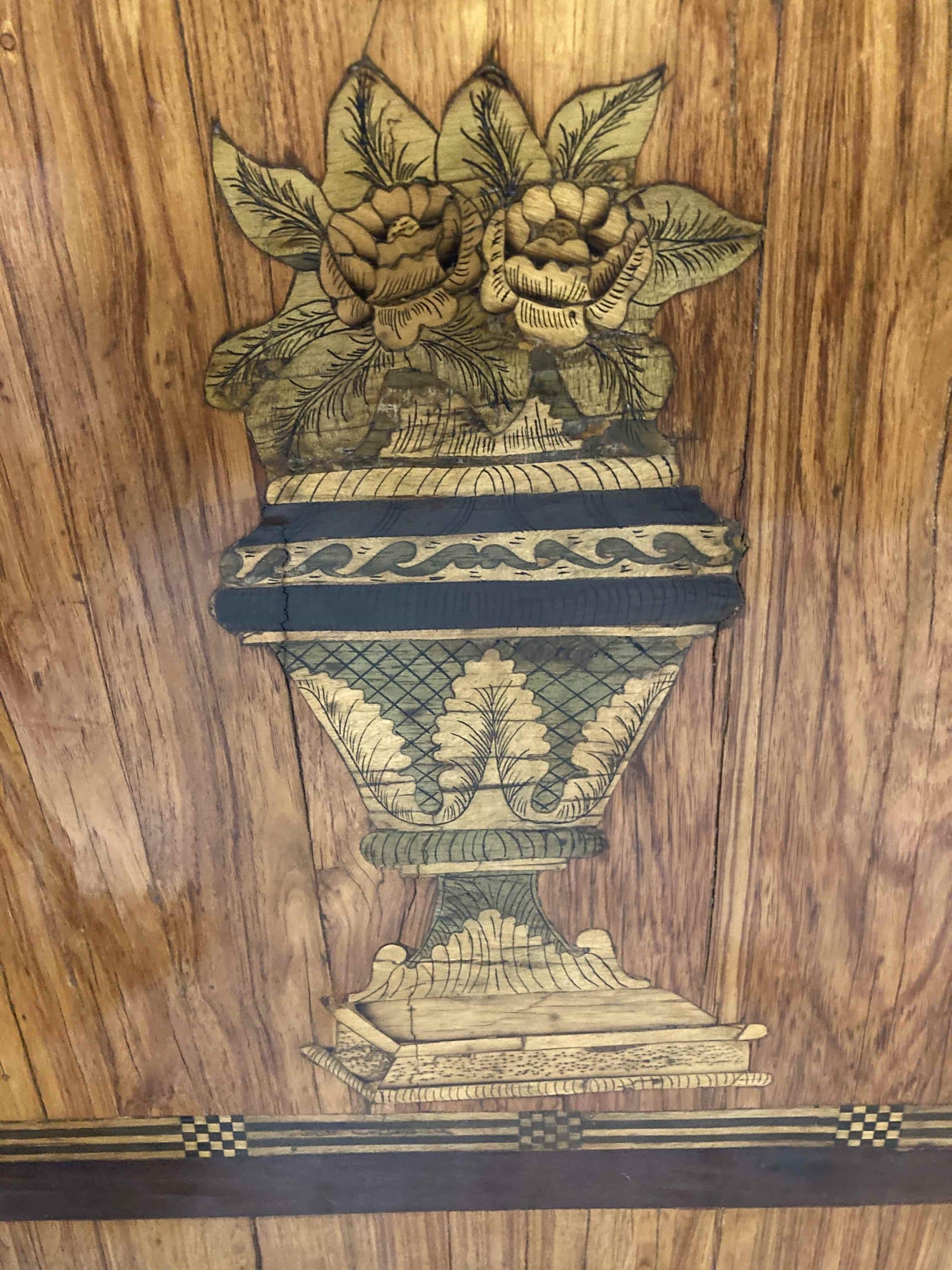
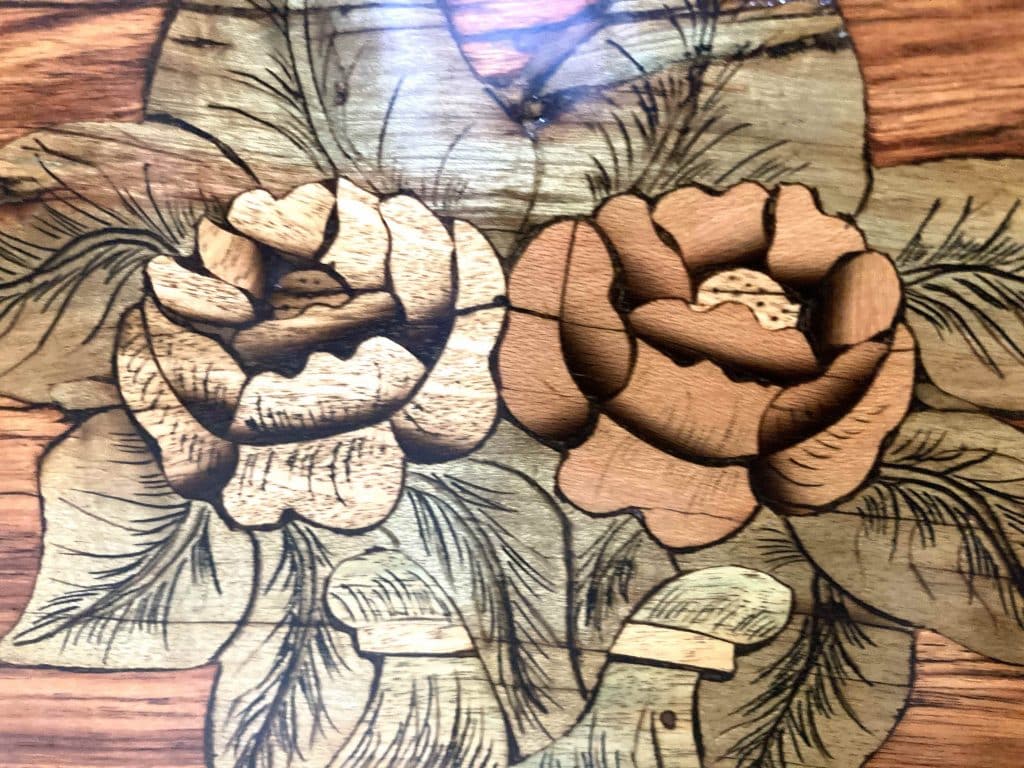
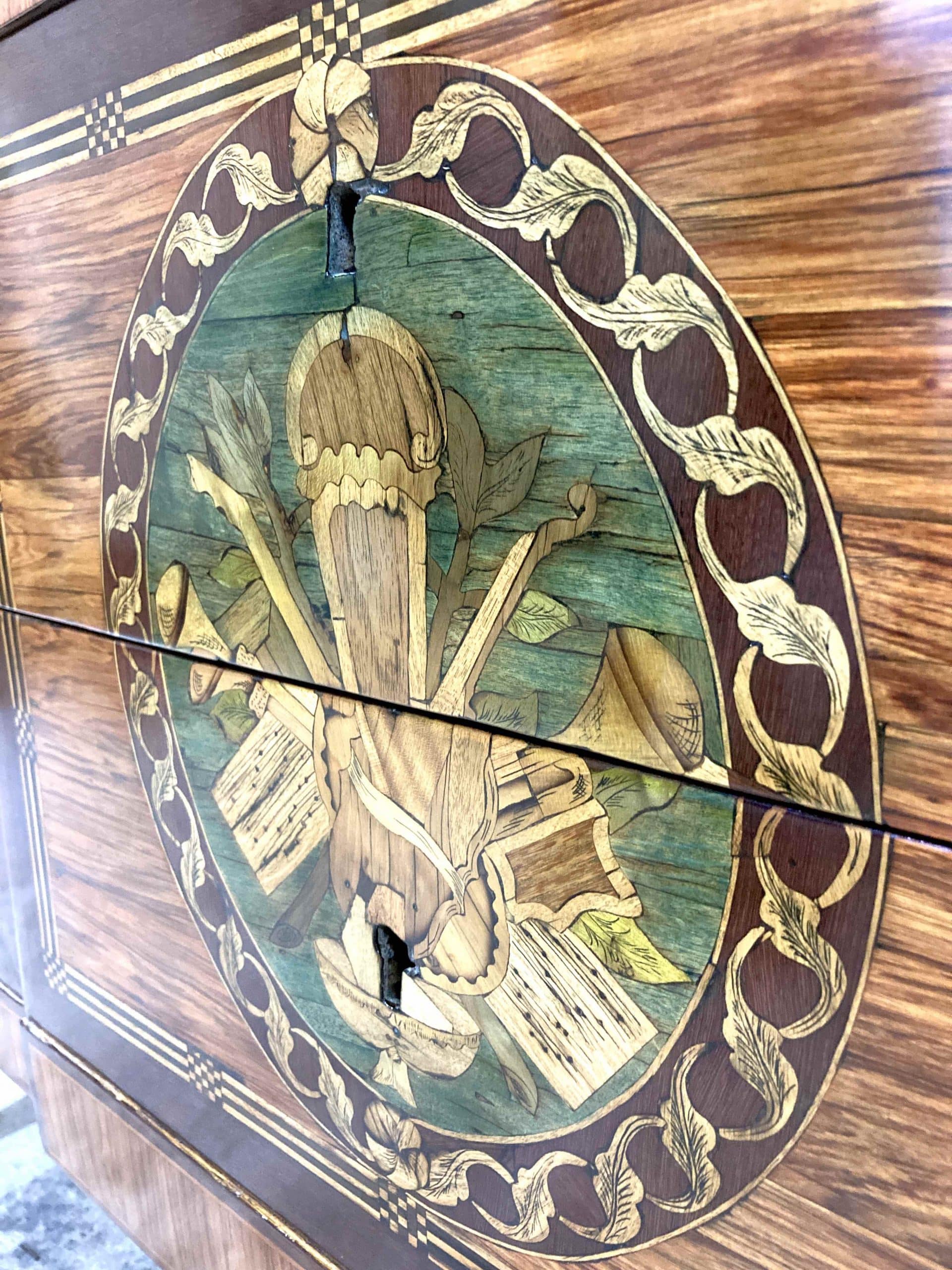
And this is where the hypothesis arises that this piece of furniture was commissioned by Tuart to Jean Lapie (1734 – ?) Master on July 31, 1736. Indeed, by sheer chance, I currently possess a Louis XVI drop-front secretary stamped by Jean Lapie. And it has, with only minor differences, the same marquetry elements. After some research, I was able to identify a stylistic element in Lapie's work which corresponds to the double flower visible in the photo below and which I have found on several pieces of furniture by this cabinetmaker.
Indeed, Jean-Lapie worked primarily for dealers and therefore left behind few pieces of furniture stamped with his name; however, this stylistic element could help identify more of this cabinetmaker's work. Furthermore, if you are aware of any furniture bearing this double flower motif, with or without a vase, please let me know; I would be very interested.
BIBLIOGRAPHY
- French Furniture of the 18th Century – Pierre Kjellberg – Les Editions de l'Amateur
- French cabinetmakers from Louis XIV to the Revolution: Art and History – Alexandre Pradere – Editions du Chêne, 1989
State of affairs report
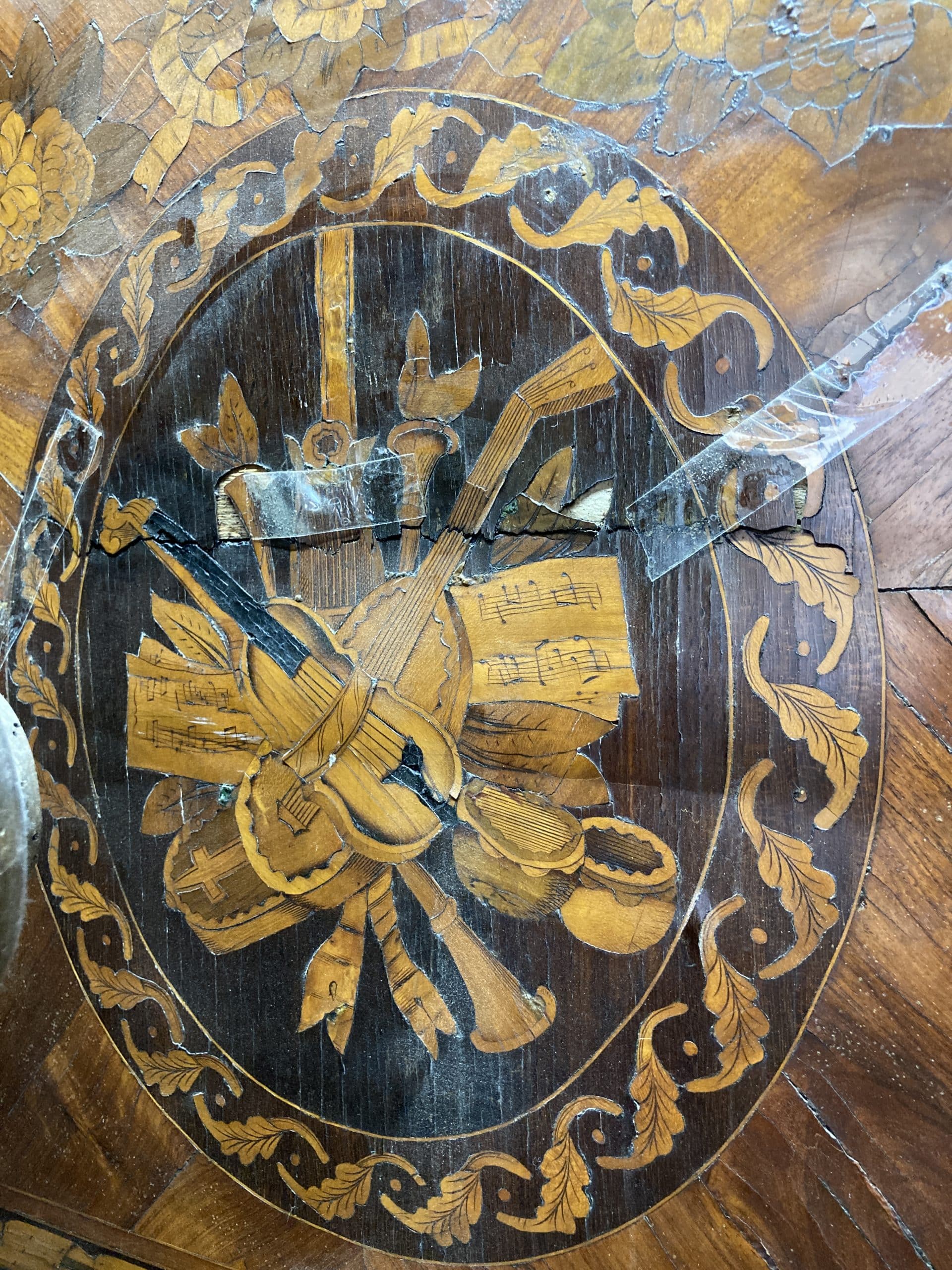
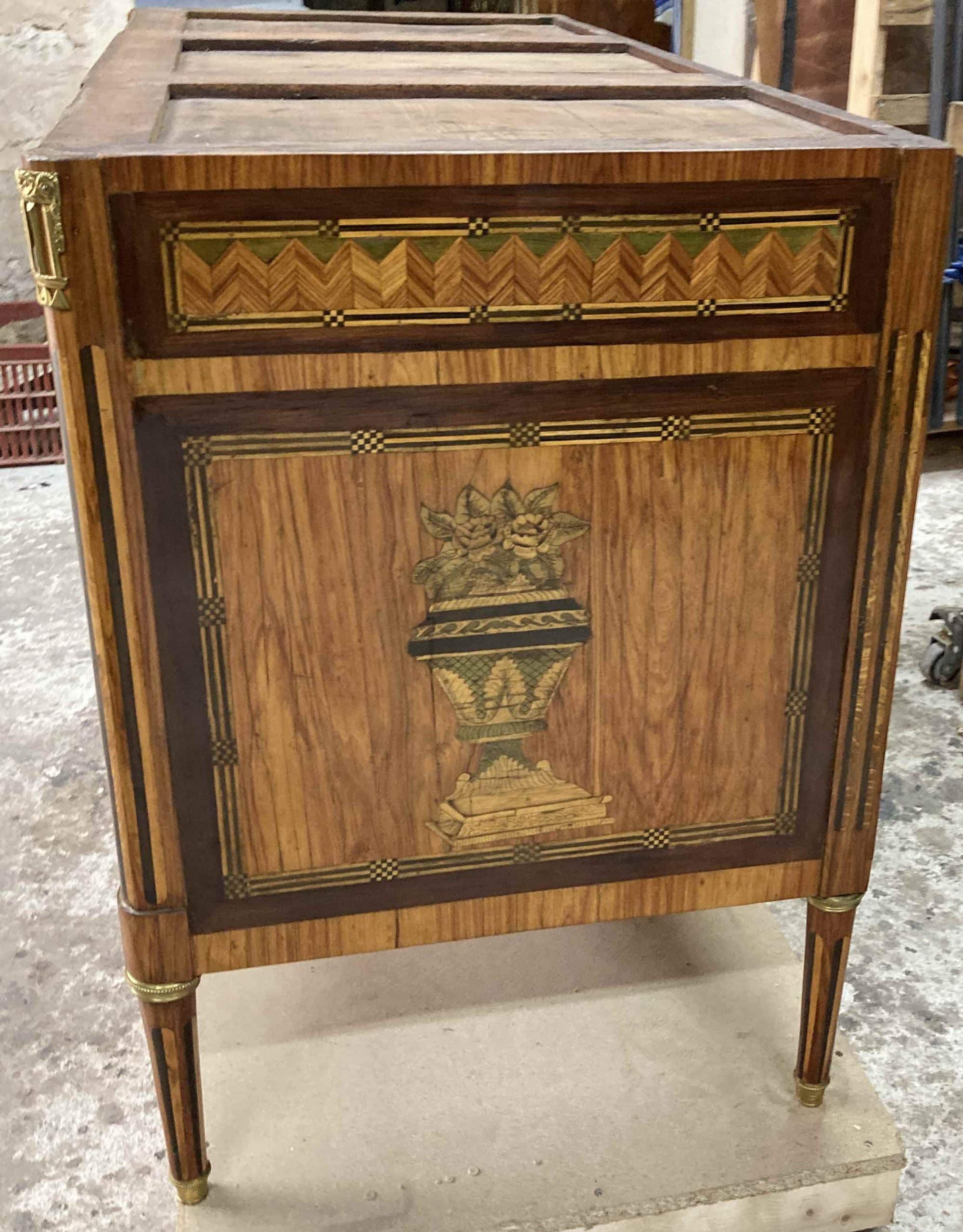
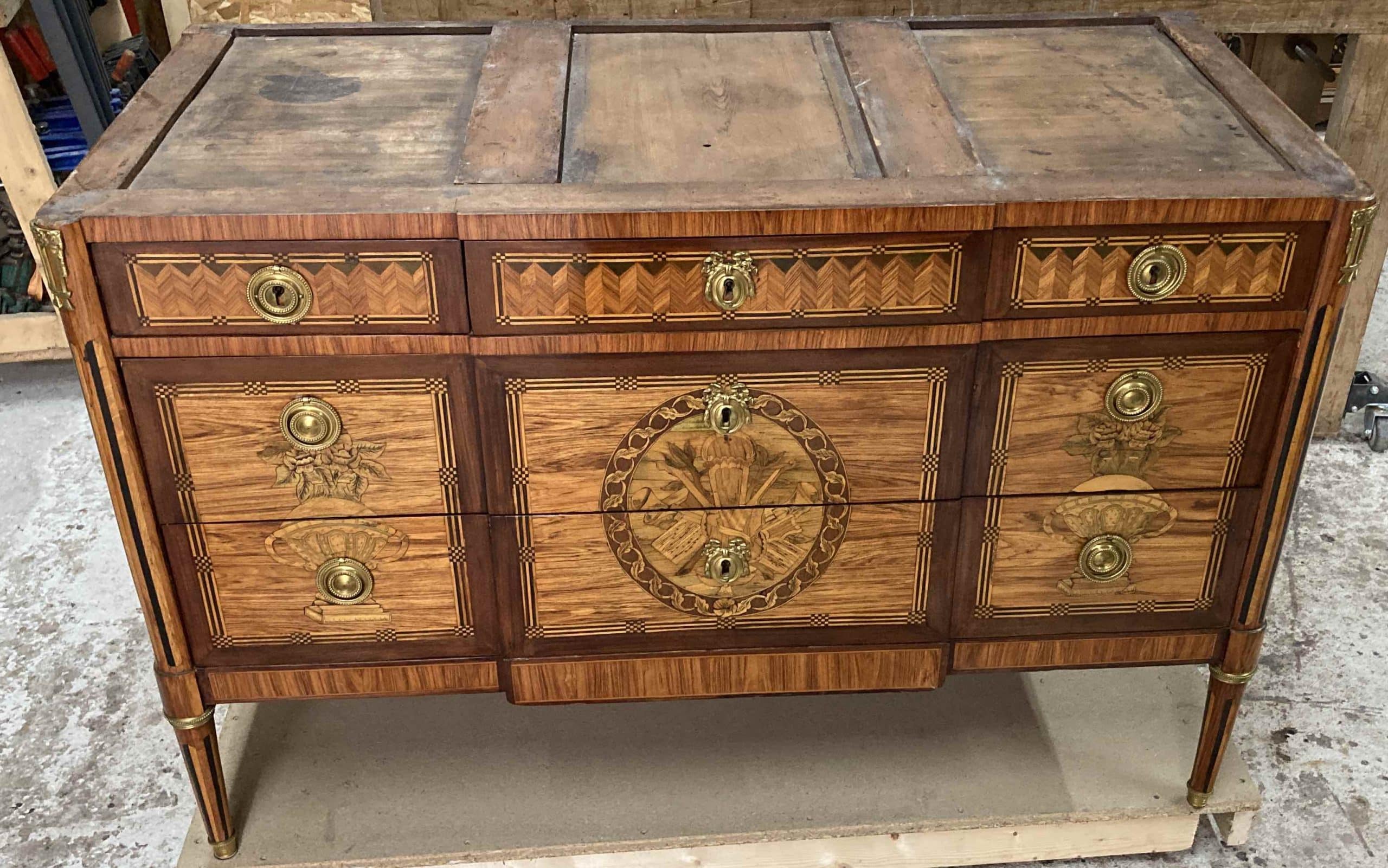
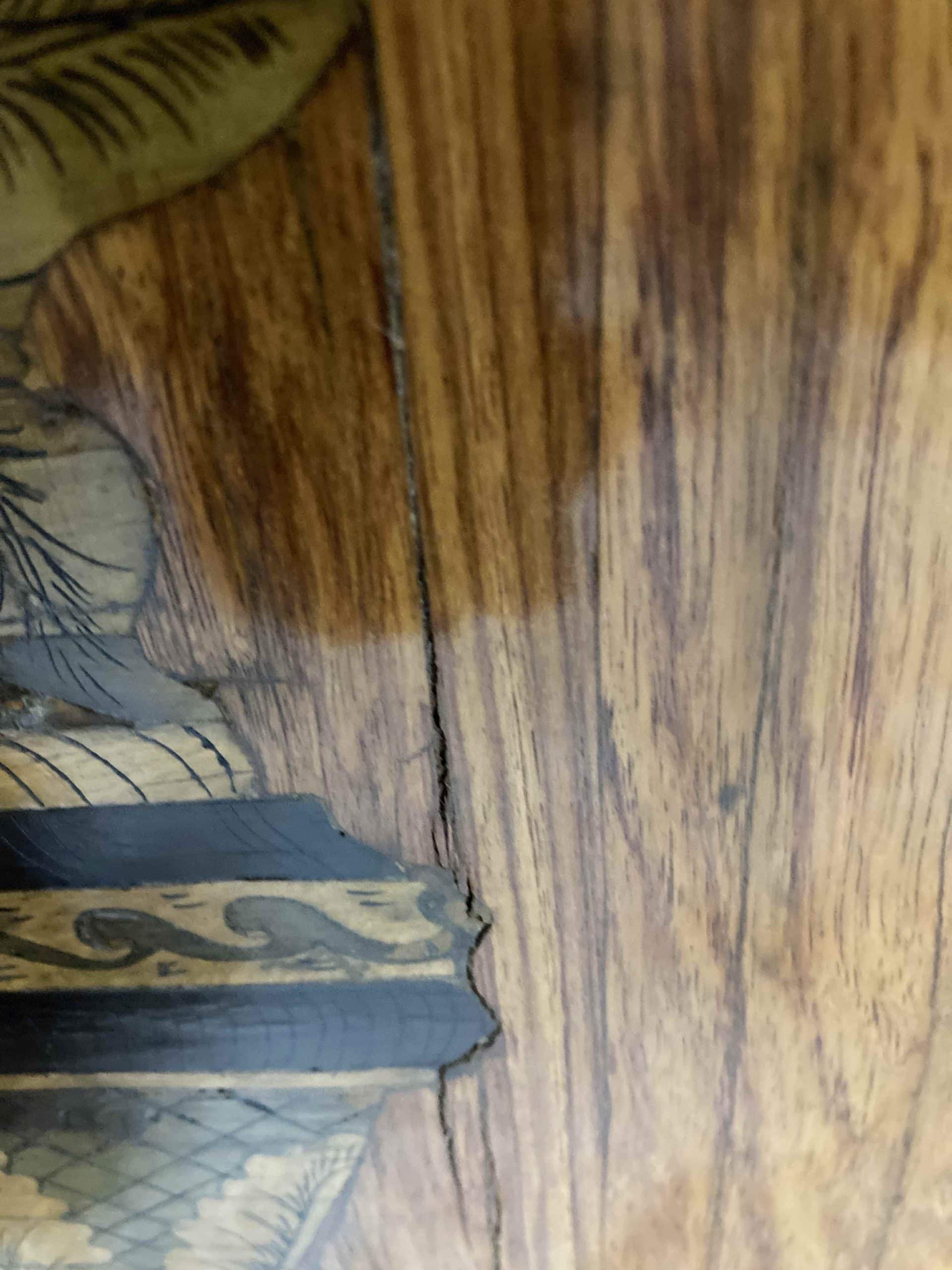
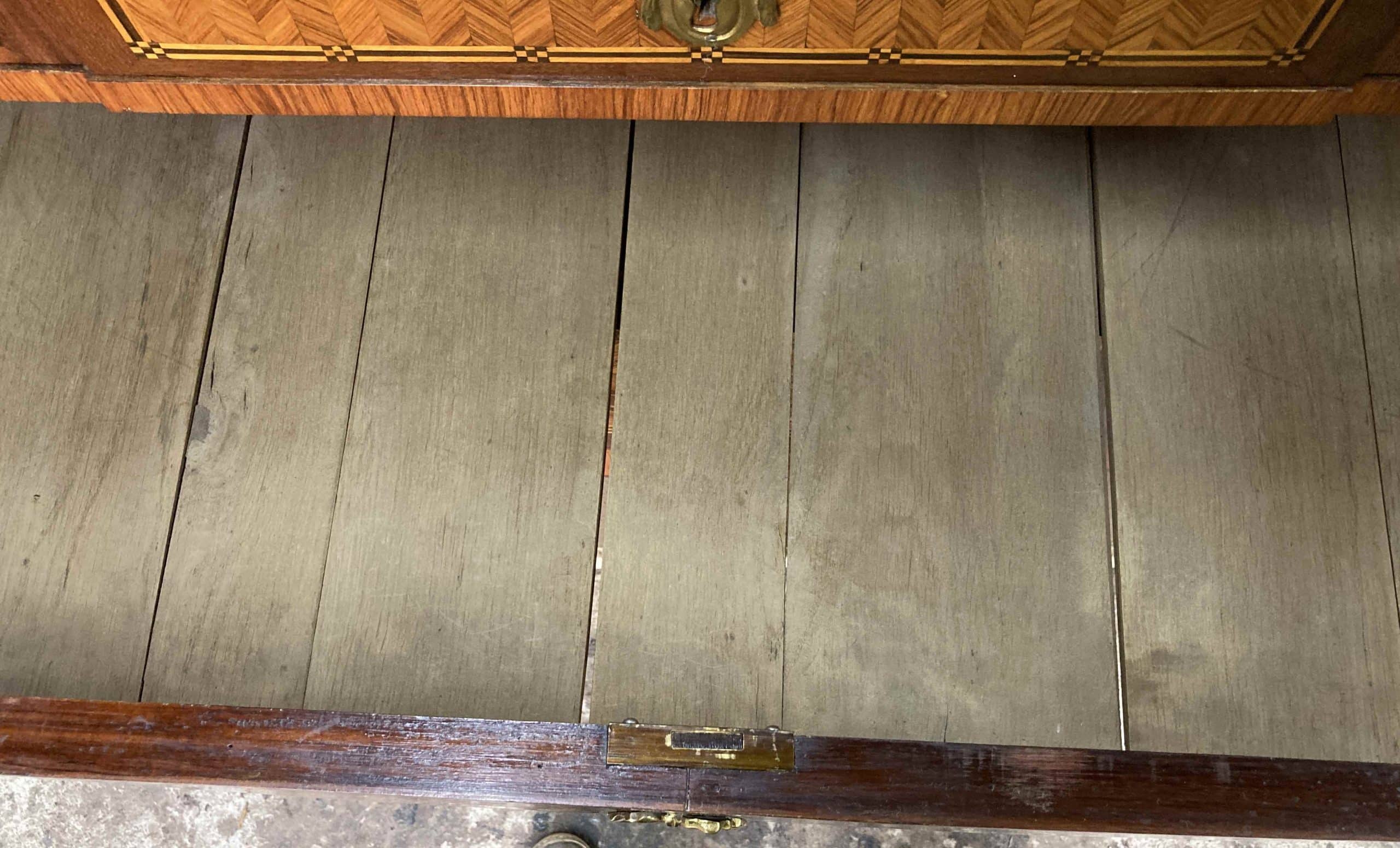
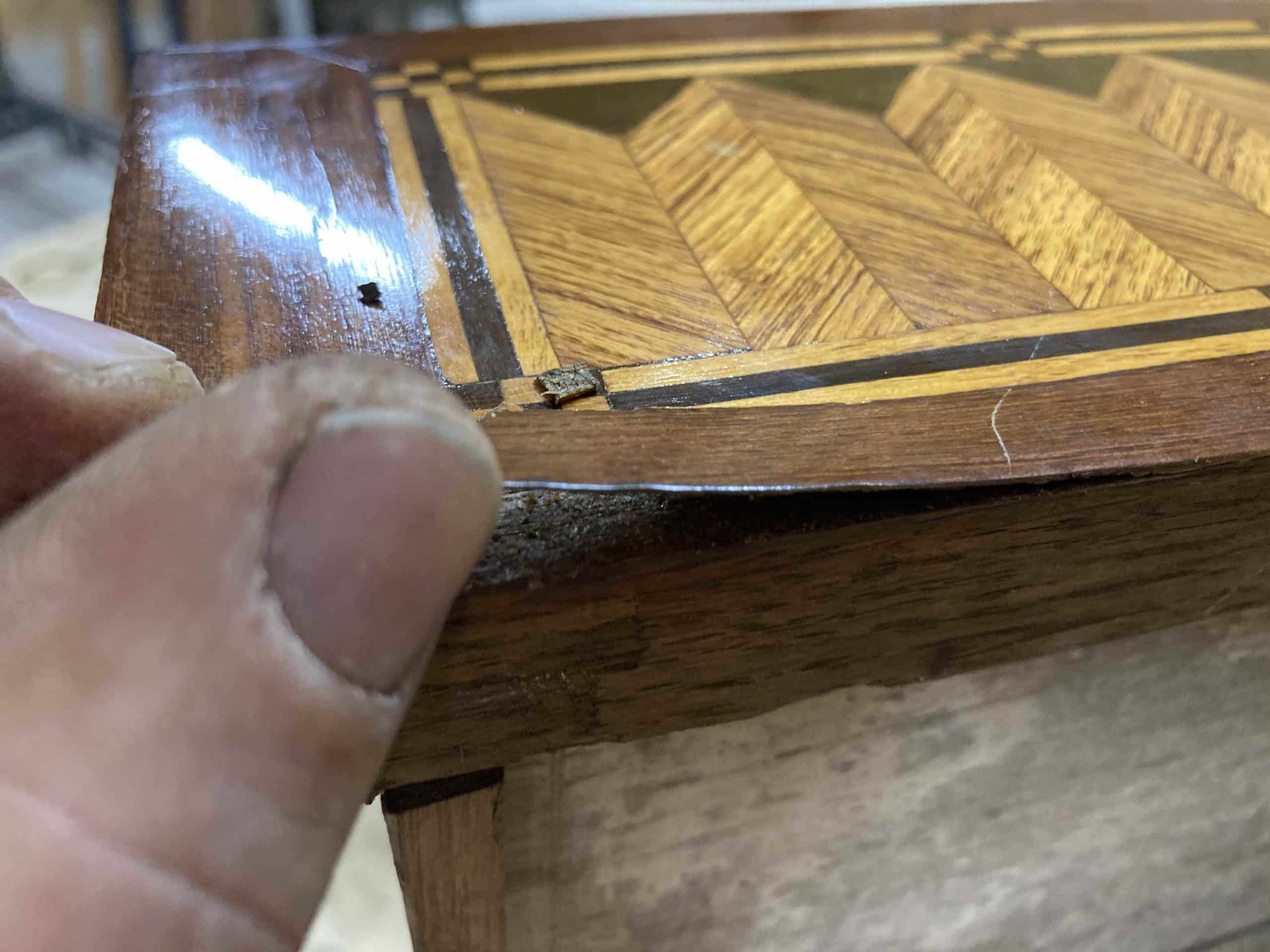
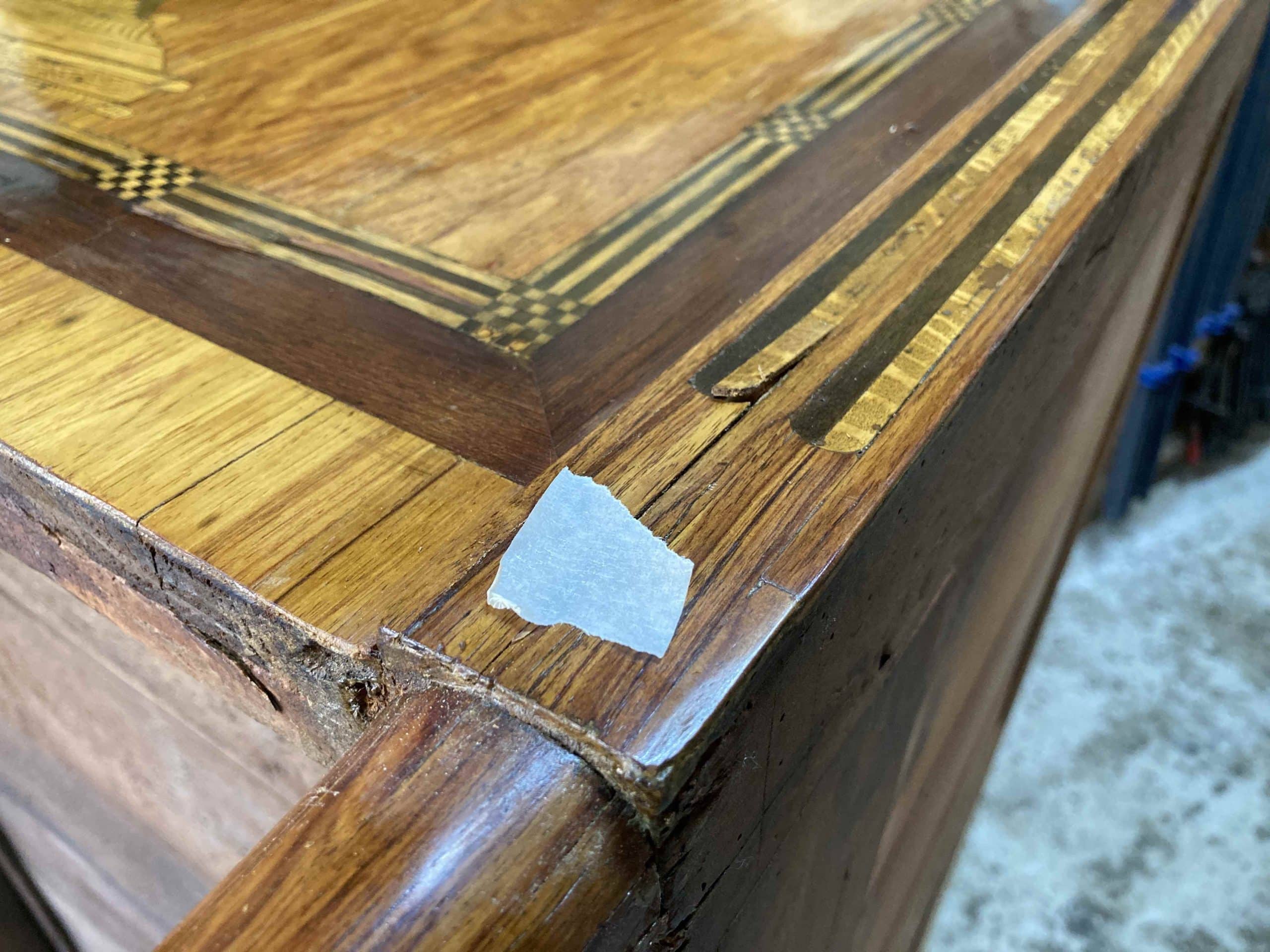
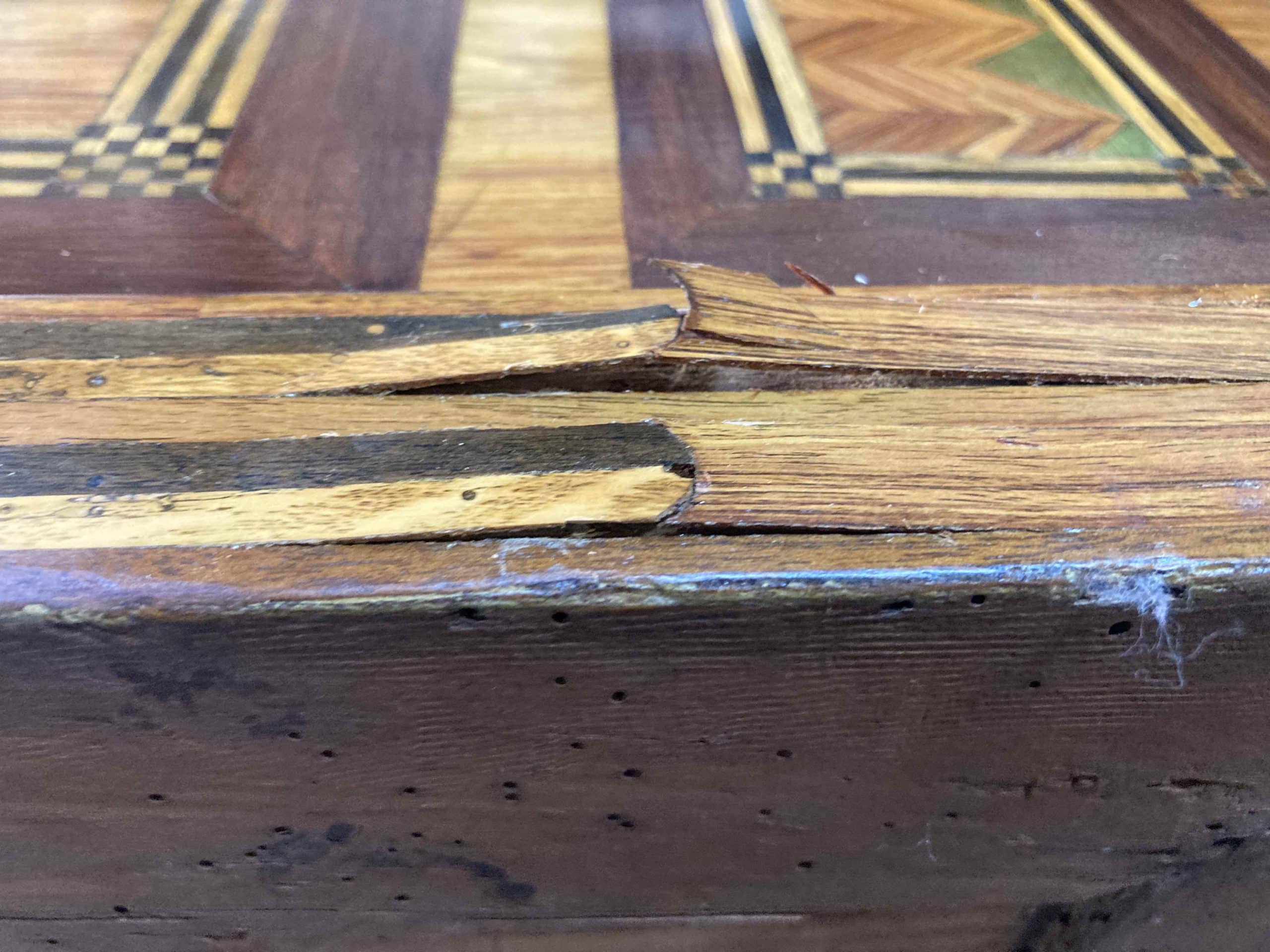
The chest of drawers was in fairly good condition. Apart from a few small chips on the bottom rail, there was no missing veneer. The only issues were: some loose joinery in the frame, a few visible holes in the veneer, and a lot of veneer peeling across all surfaces. Another problem was the discoloration of the wood due to the French polish applied to it.
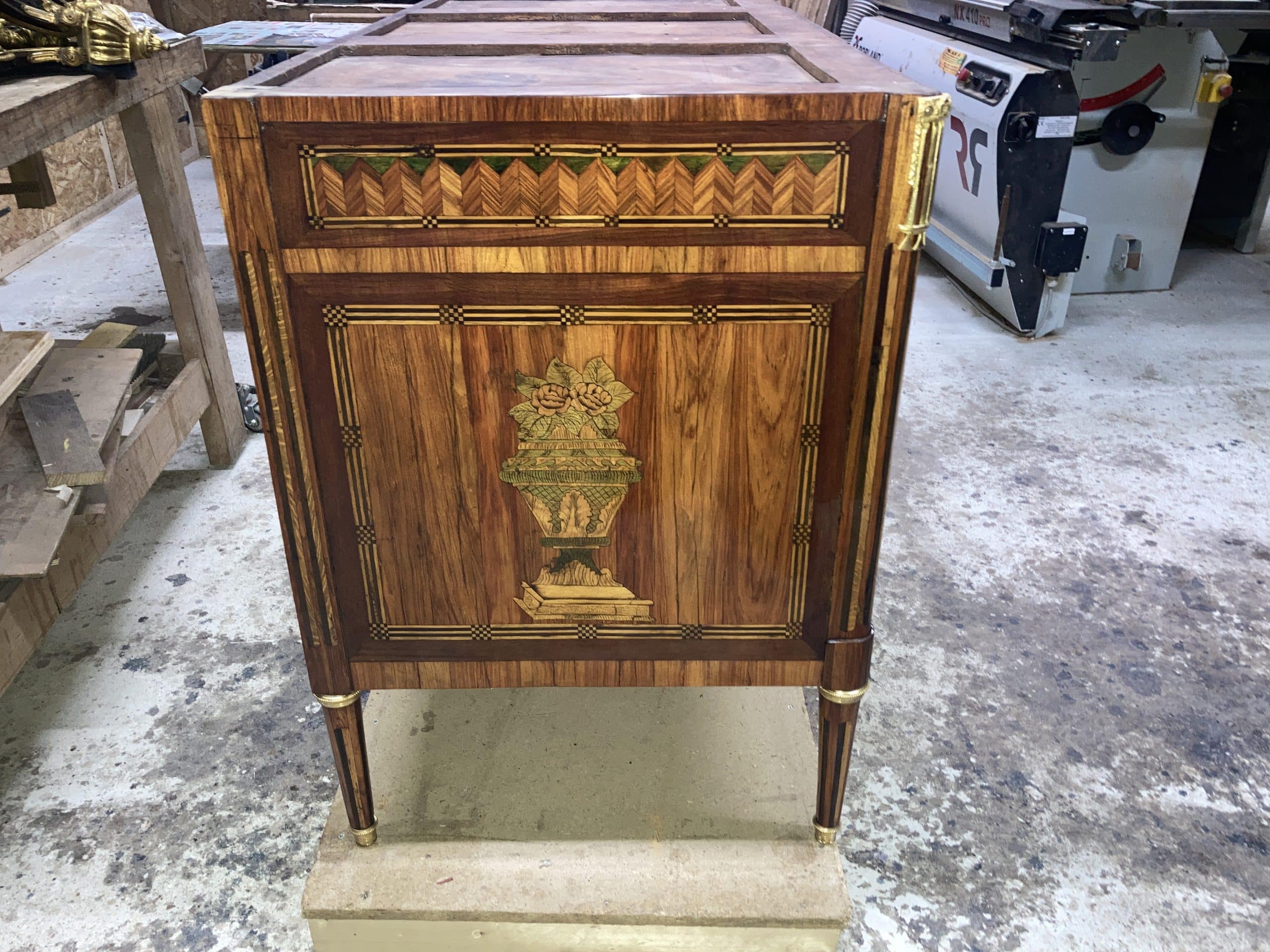
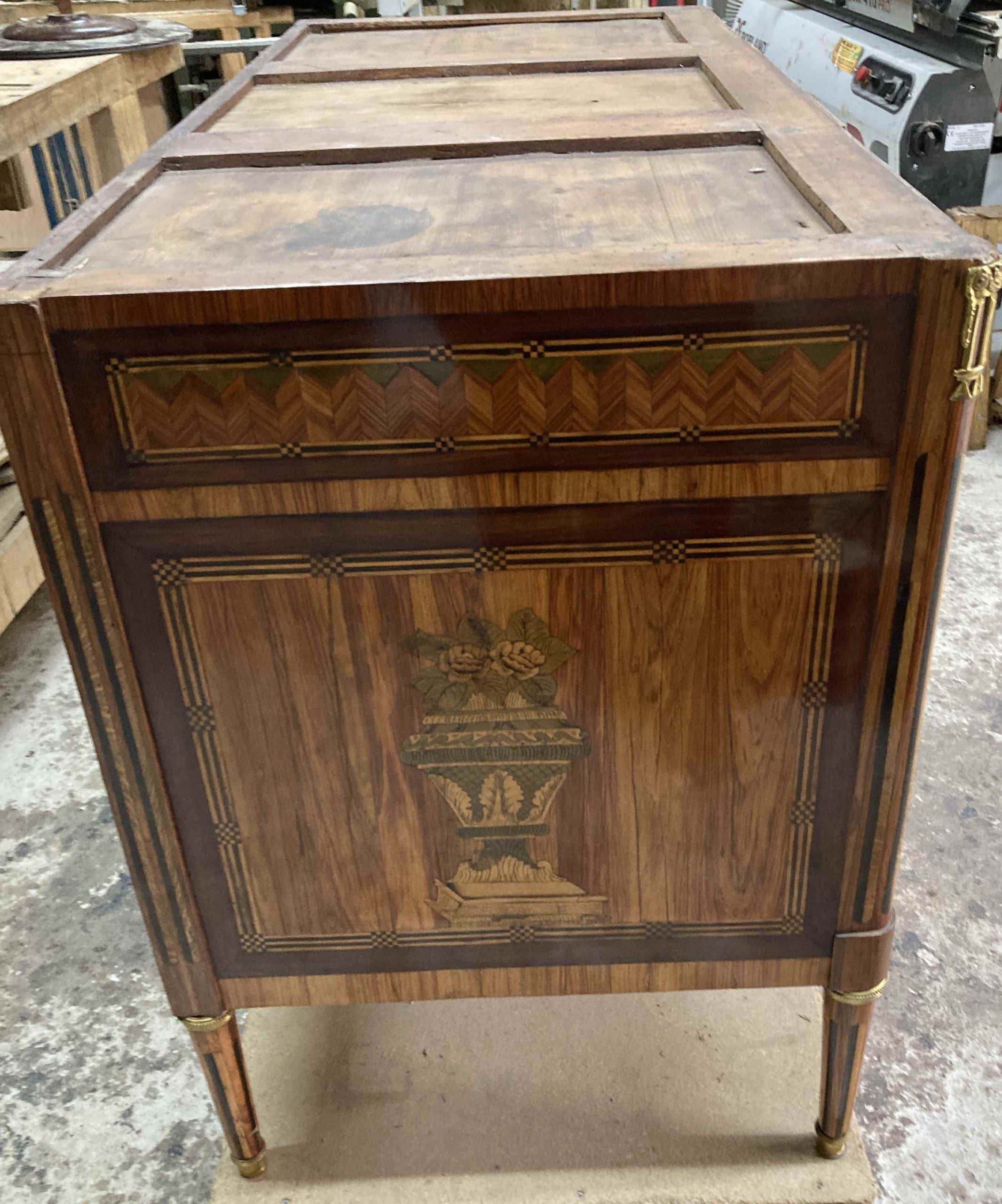
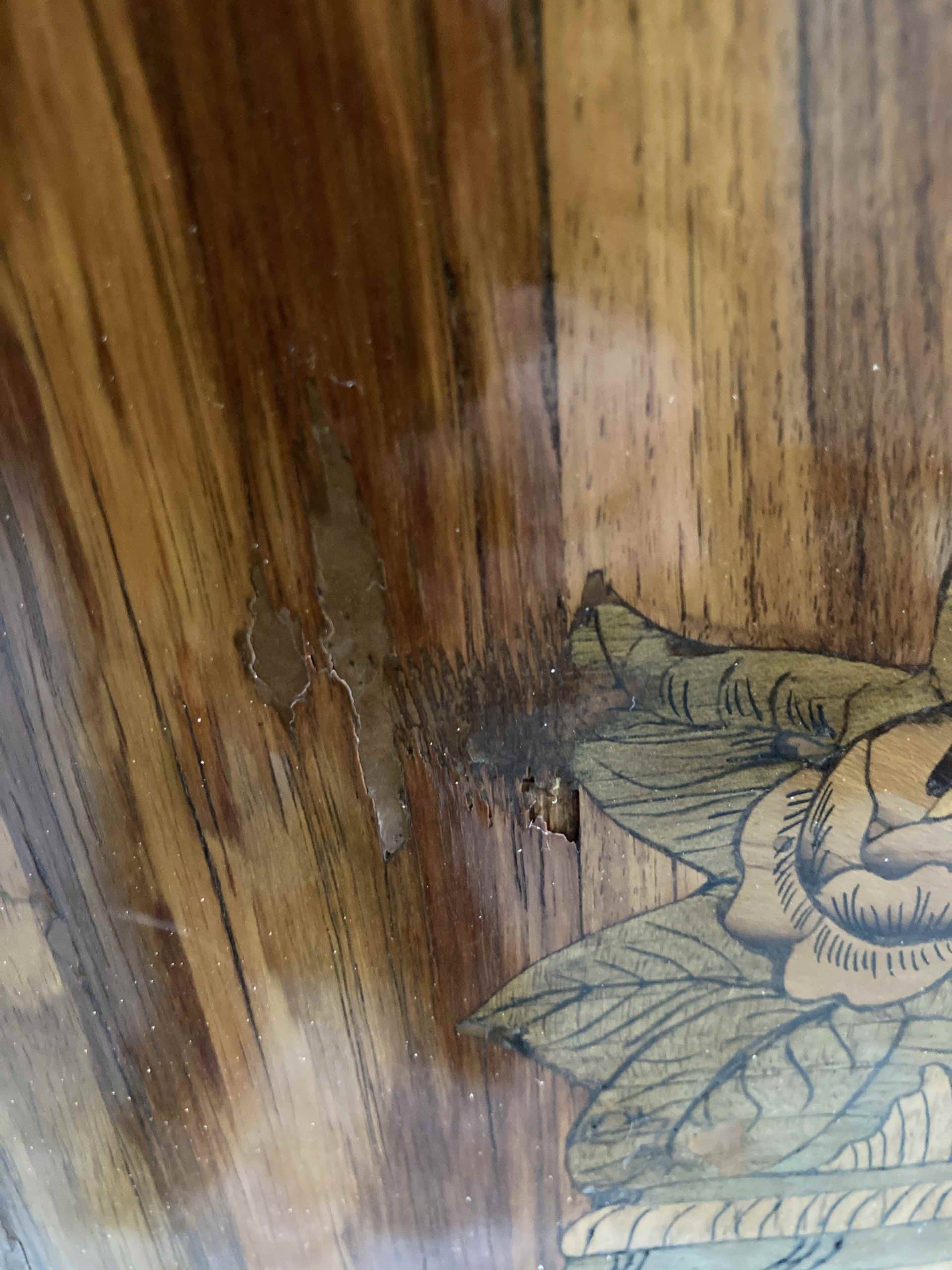
The Restoration
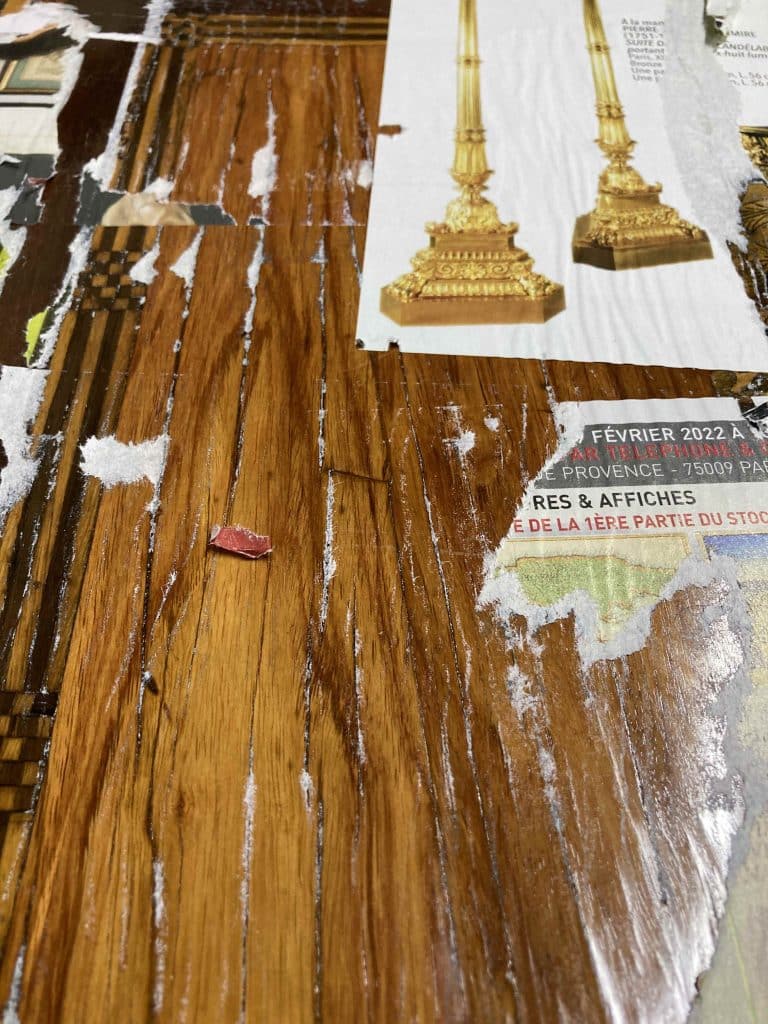
The restoration work on this chest of drawers therefore consisted of rehydrating and thus regenerating the adhesives on all the veneered surfaces, through infiltration and the application of gentle heat. During this process, several layers of paper were positioned to absorb the excess moisture from the infiltrating adhesive. Once the gluing was complete and dry, the areas where the adhesive had penetrated remained bonded to the paper, allowing the effectiveness of this method to be assessed. A simple cleaning with hot water removed any paper residue.
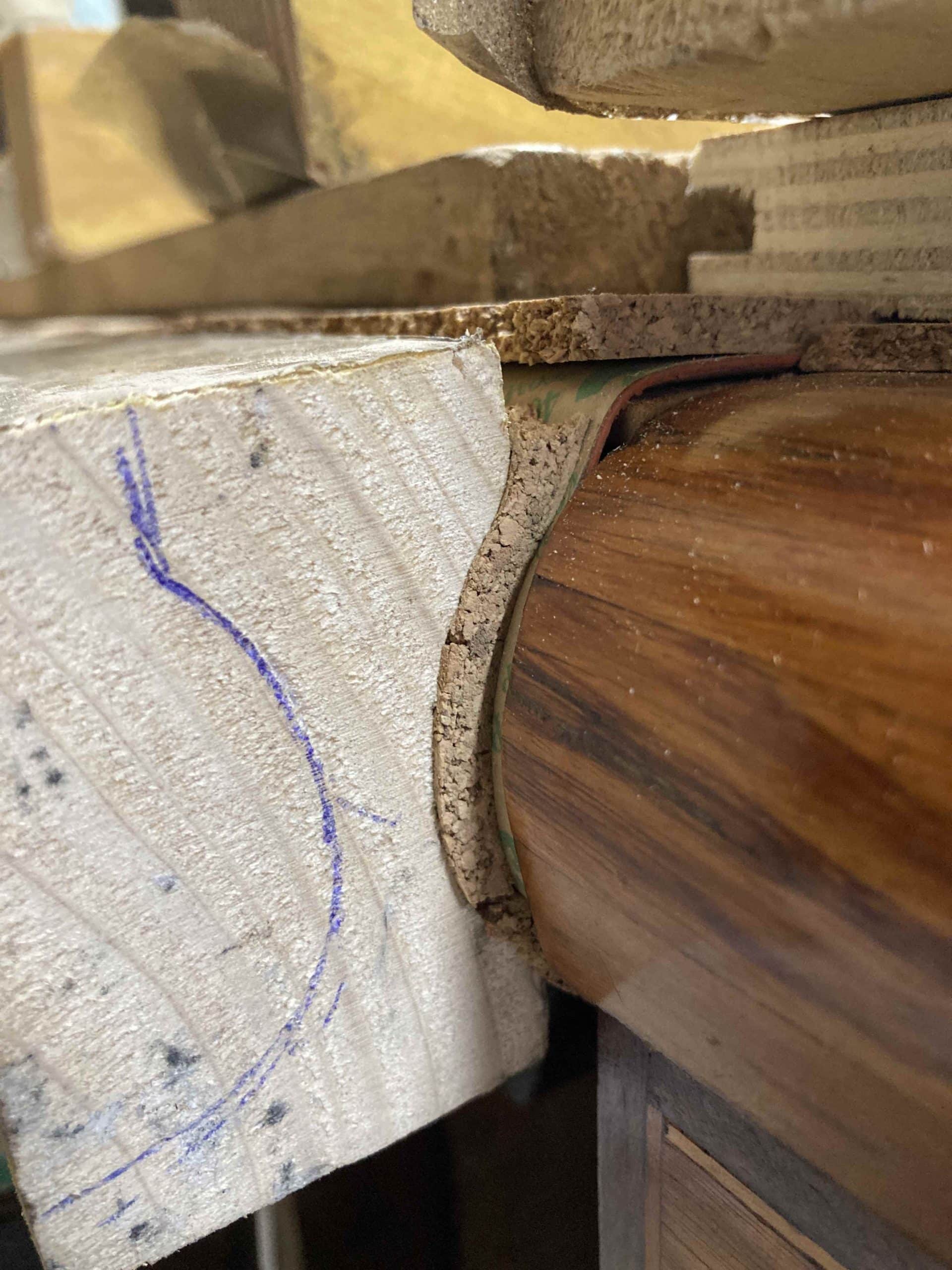
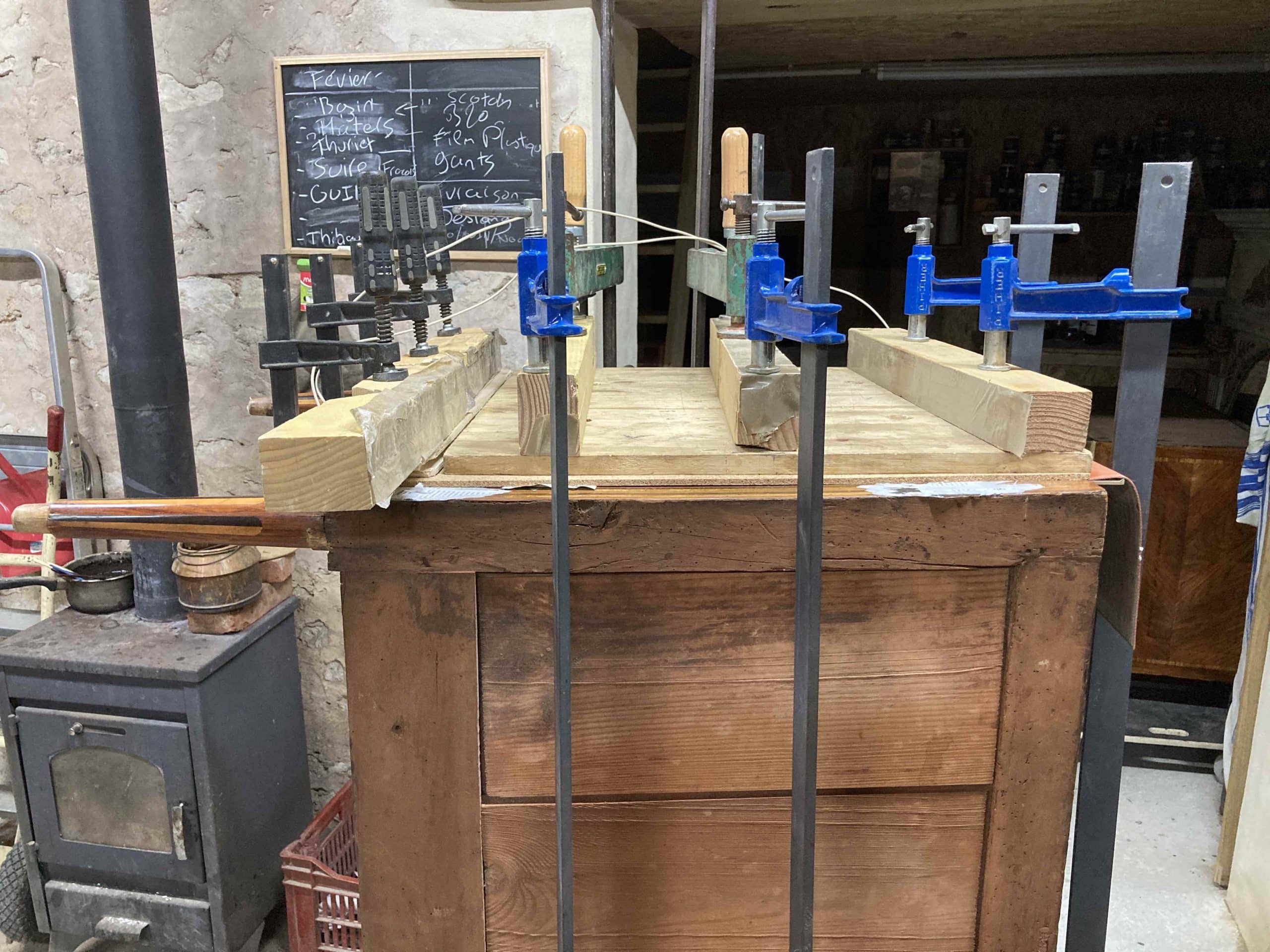
The most important task, aesthetically speaking, was then to work on the wood's color. After removing the old varnish, almost all the colors returned. This chest of drawers was probably restored about fifty years ago and sanded a little too vigorously, which gives the amaranth its almost new color. But this sanding also, unfortunately, caused some holes (which were filled in using watercolor for color retouching) and, most importantly, it removed the top layer of the wood backing of the medallion, which had been stained. Indeed, in the 18th century, when cabinetmakers stained their wood, they used thick veneers. As a result, the stain didn't penetrate to the heart of the wood but only colored the first few millimeters. Therefore, when these woods are sanded, the middle layer is exposed, which is unstained, causing color gaps in the marquetry.
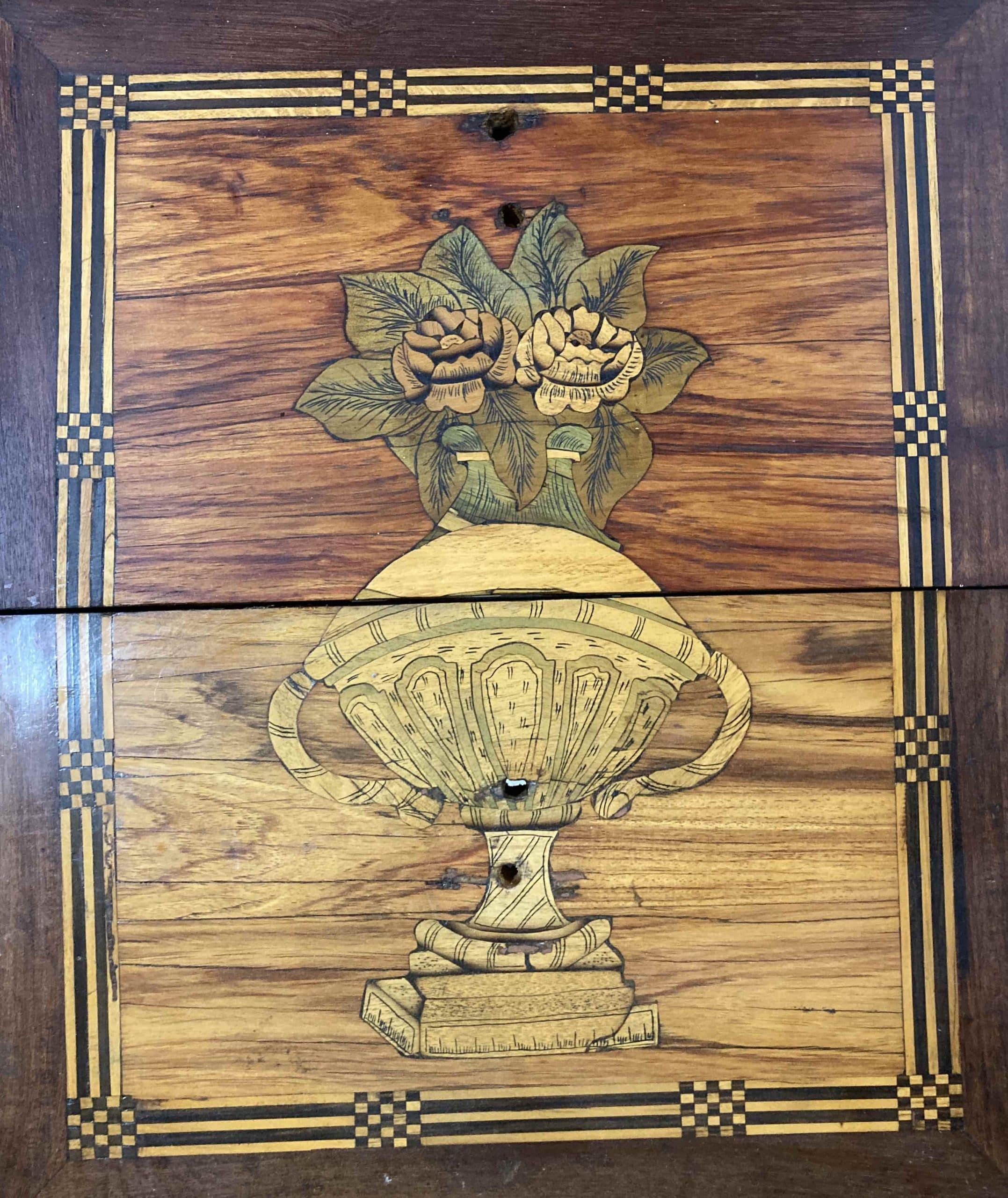
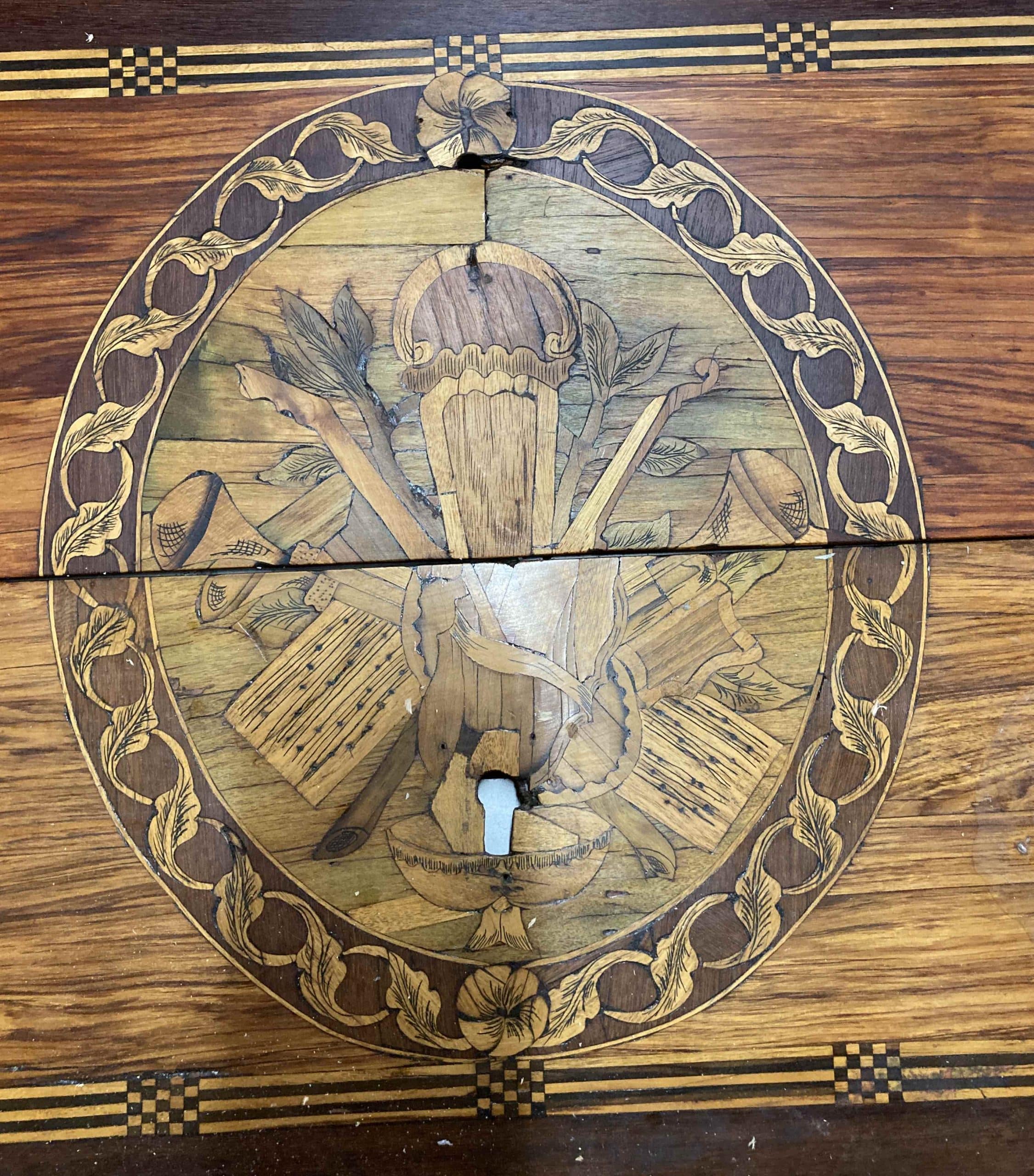
To remedy this defect, I used a color regeneration technique involving the application of moisture and vacuum suction. The aim was to recover the color, which was intact on the reverse side, and transfer it to the surface by drawing air out of the surface. Generally, this technique yields only average results, but for this chest of drawers, the outcome was very satisfactory. This may have been due to the fact that the base had been stained during a previous restoration.
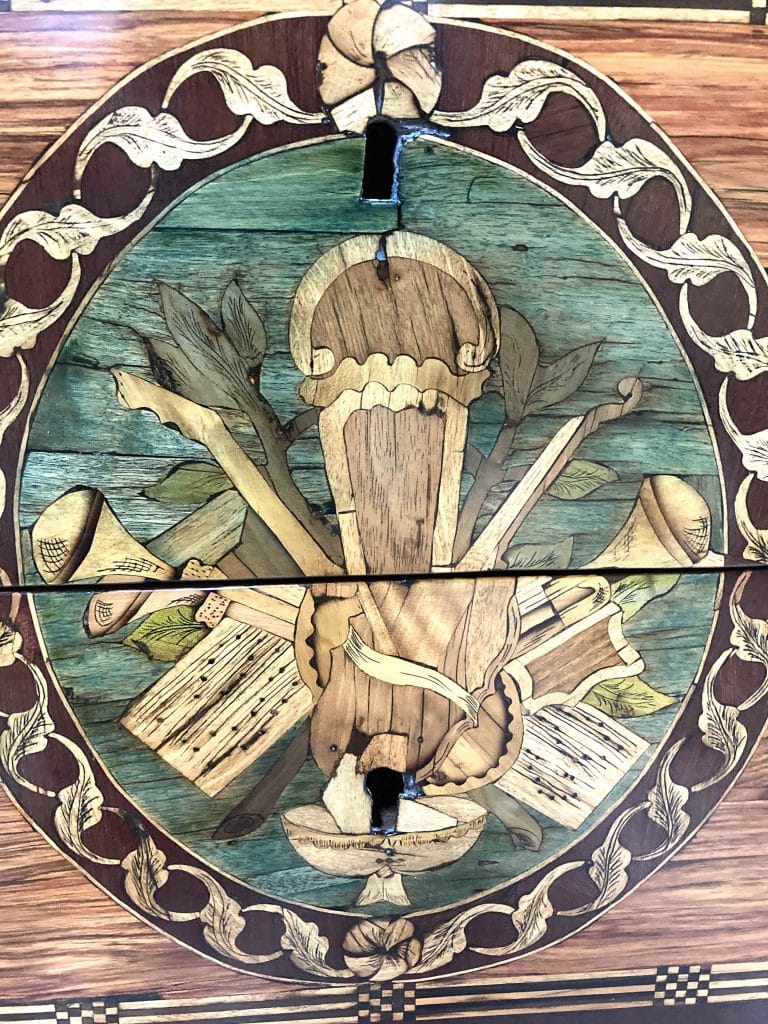
The chest of drawers was then re-varnished with Roubo varnish to preserve and enhance the restored colors. The bronze mounts were simply cleaned with a diluted EDTA solution.
To see previous restorations : https://ebenisterie-mathieuvath.fr/en-ce-moment-a-latelier/