

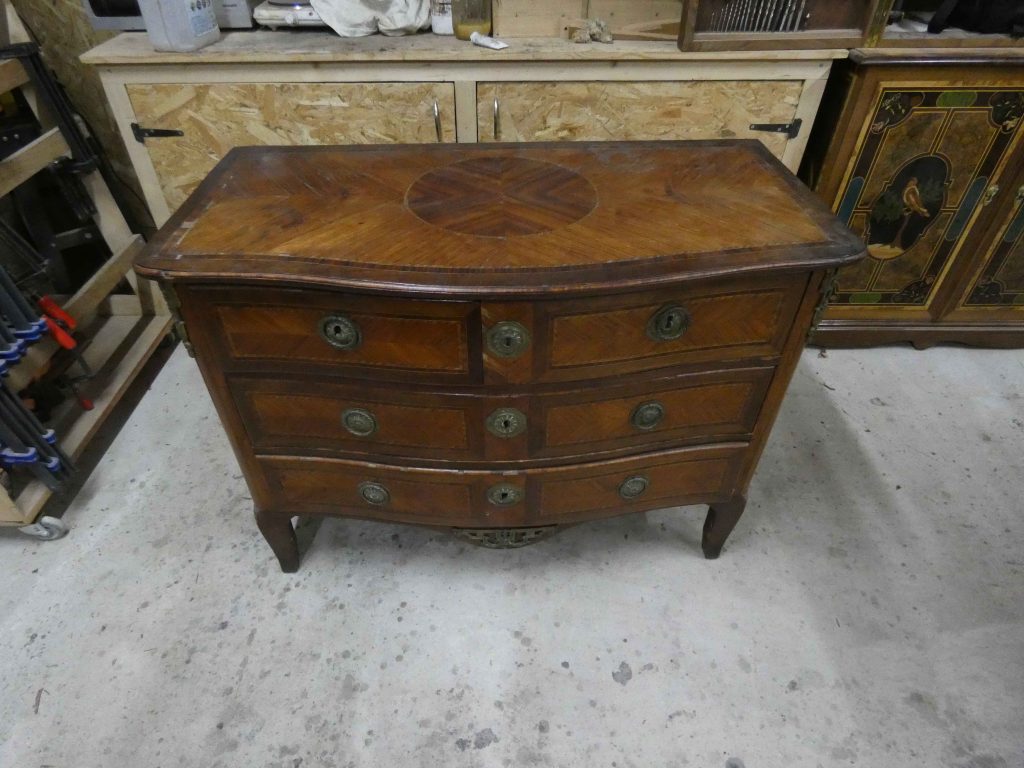
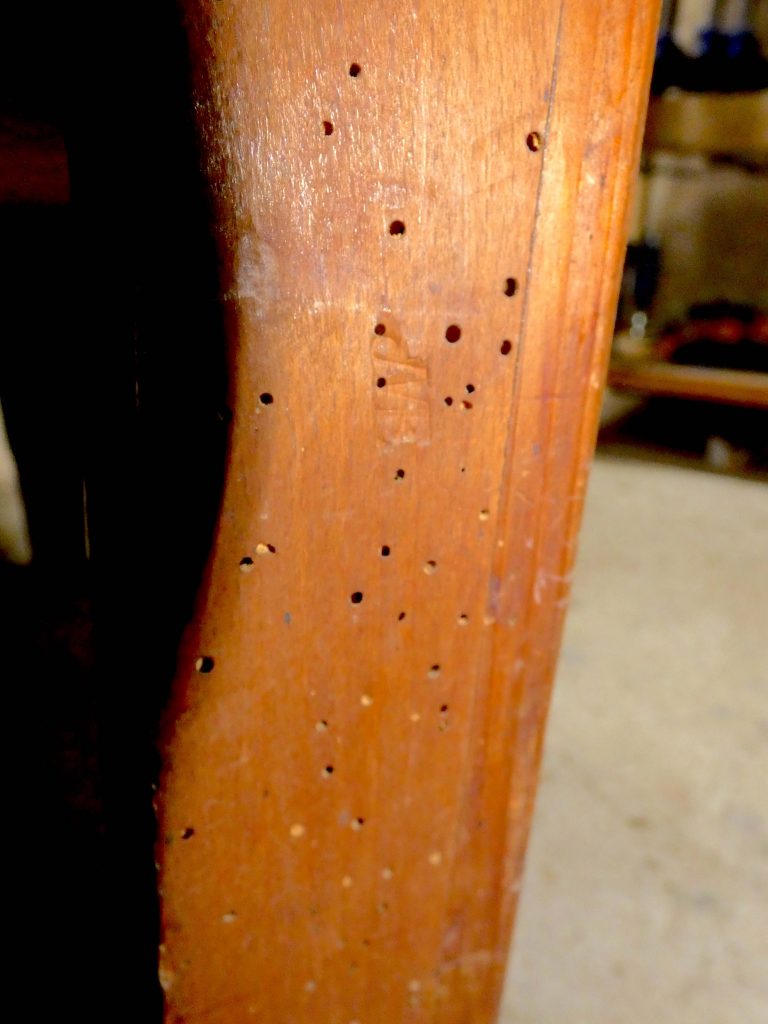
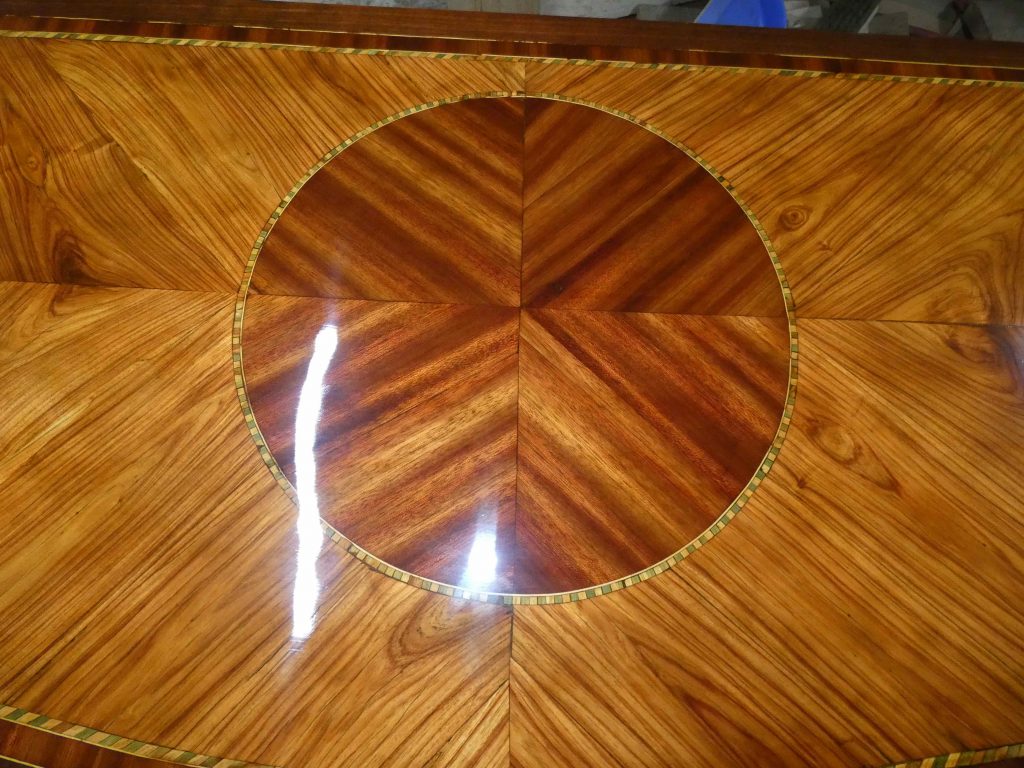
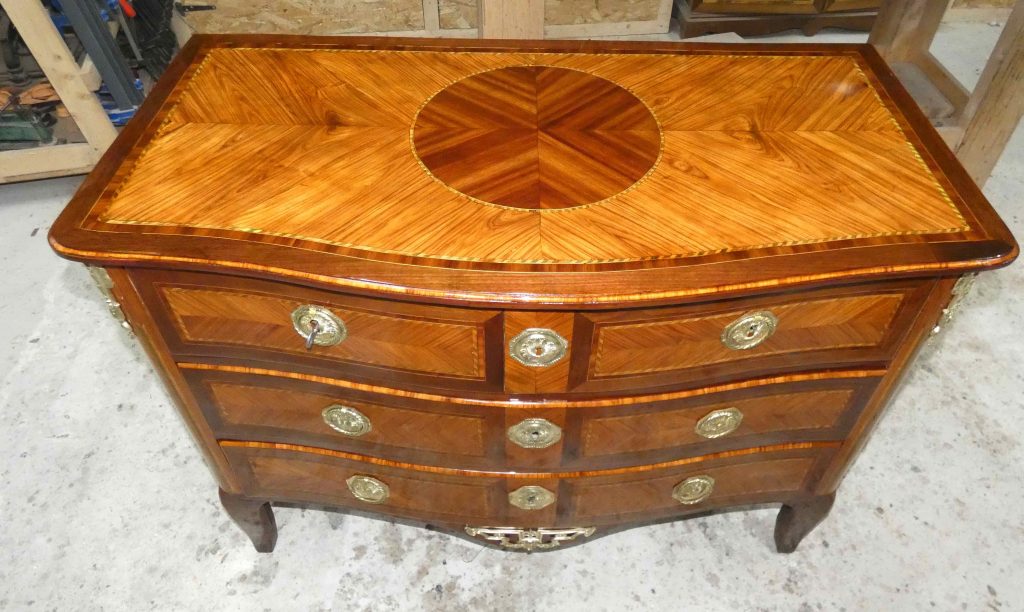
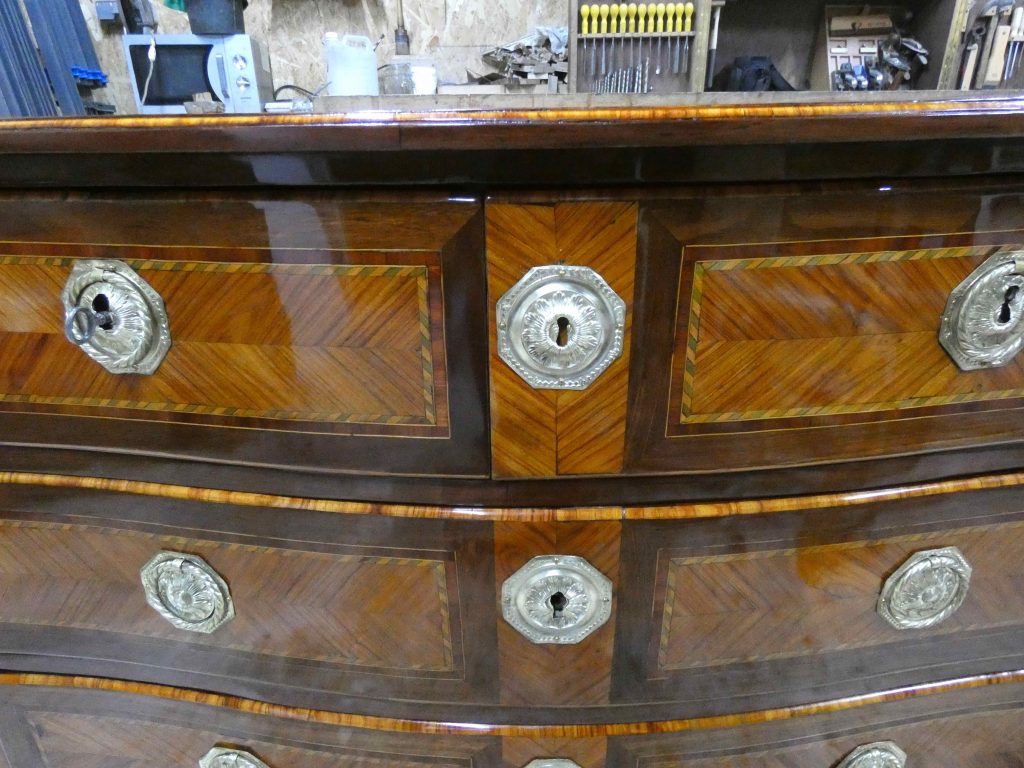
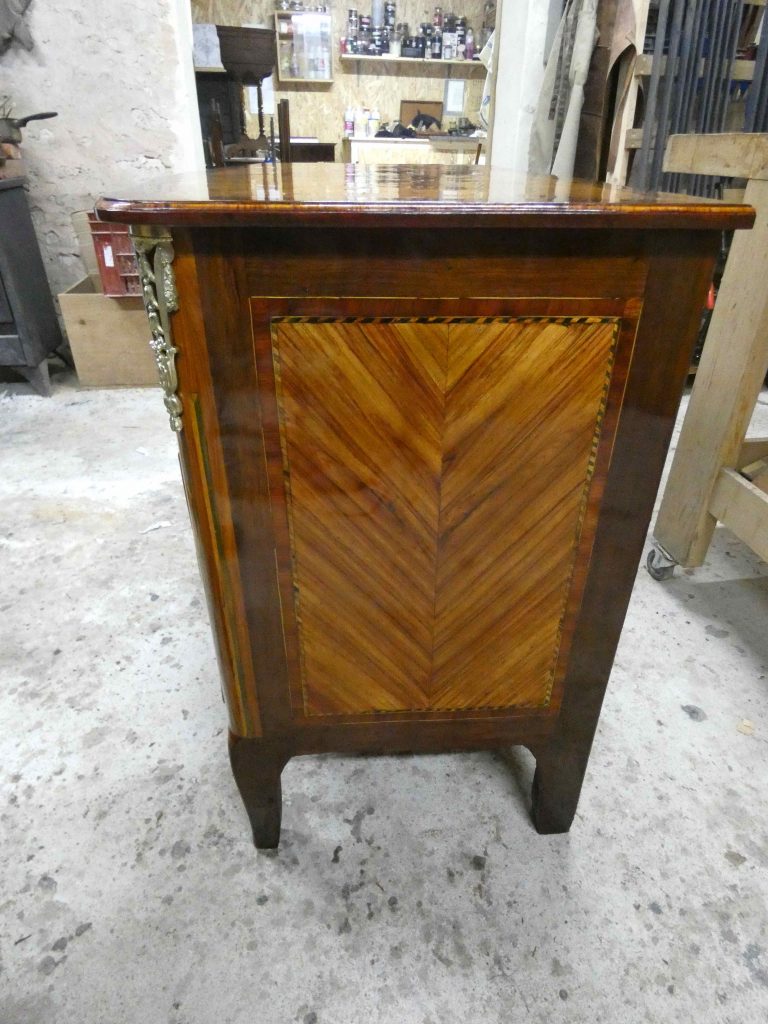
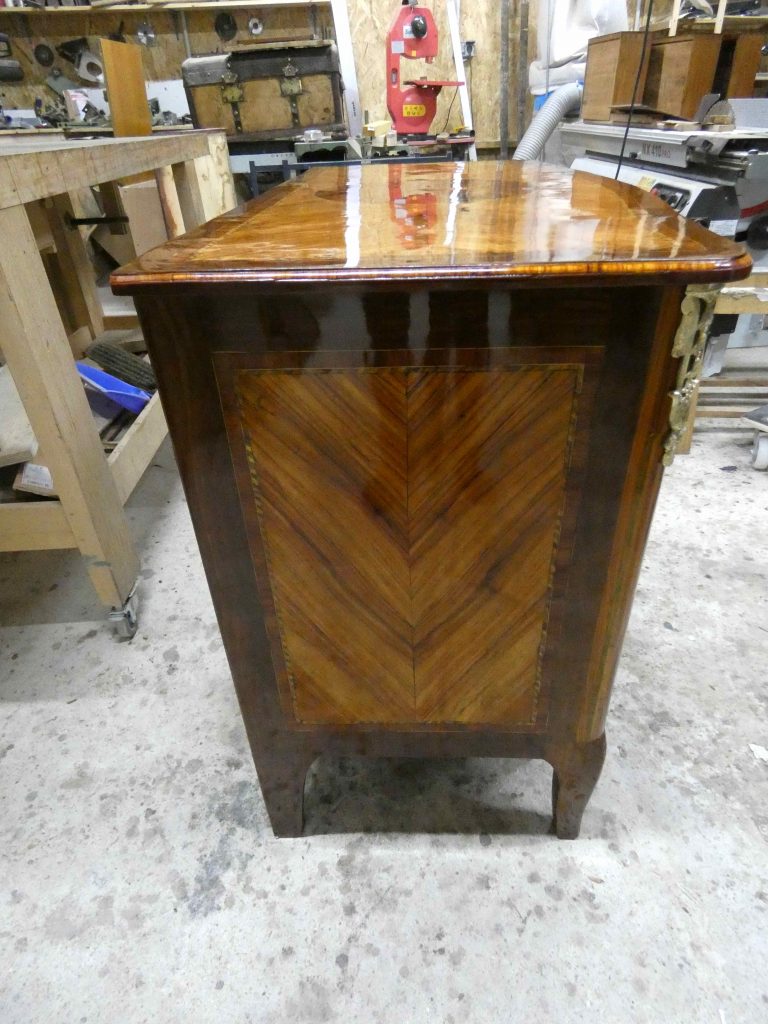
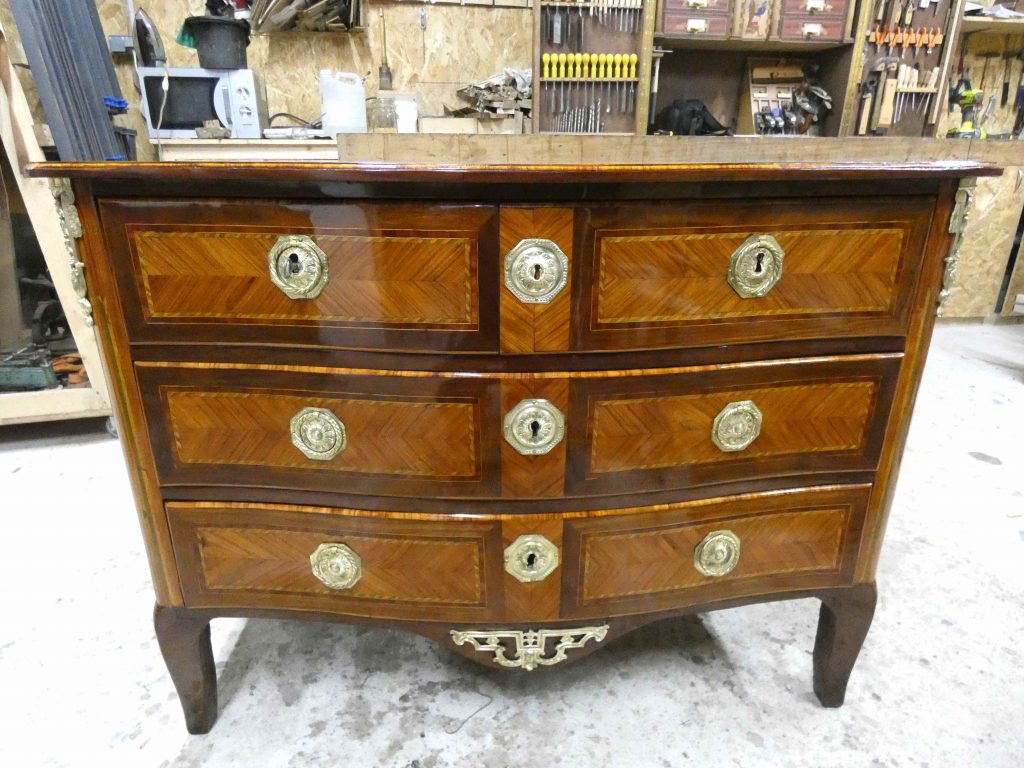
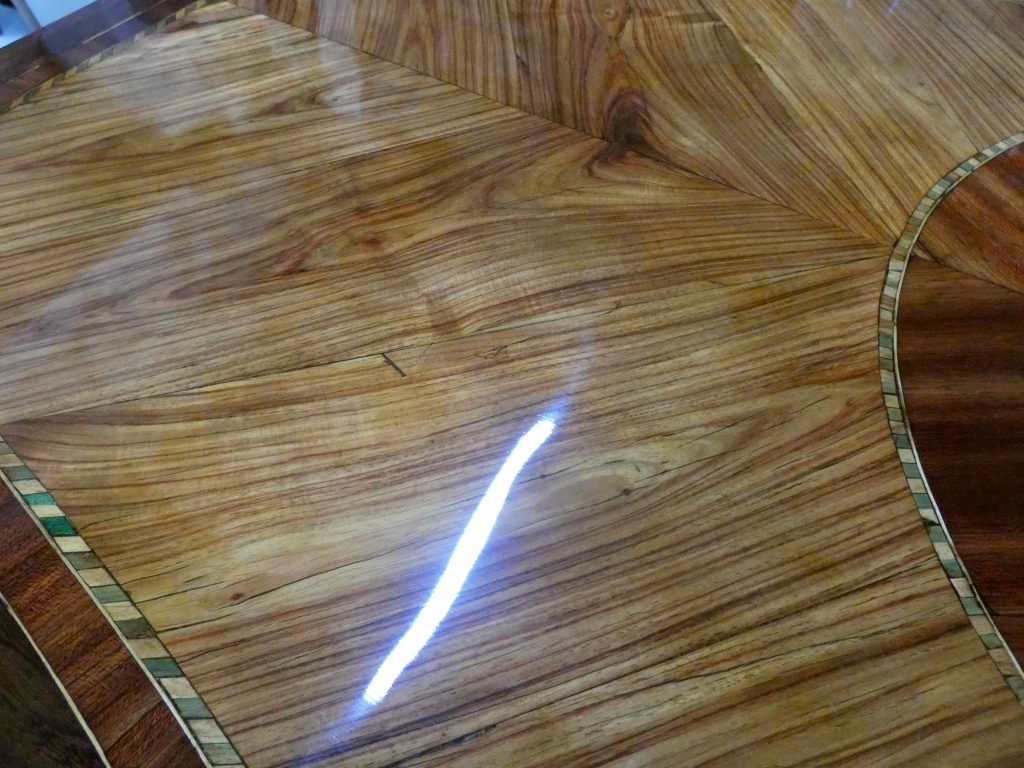
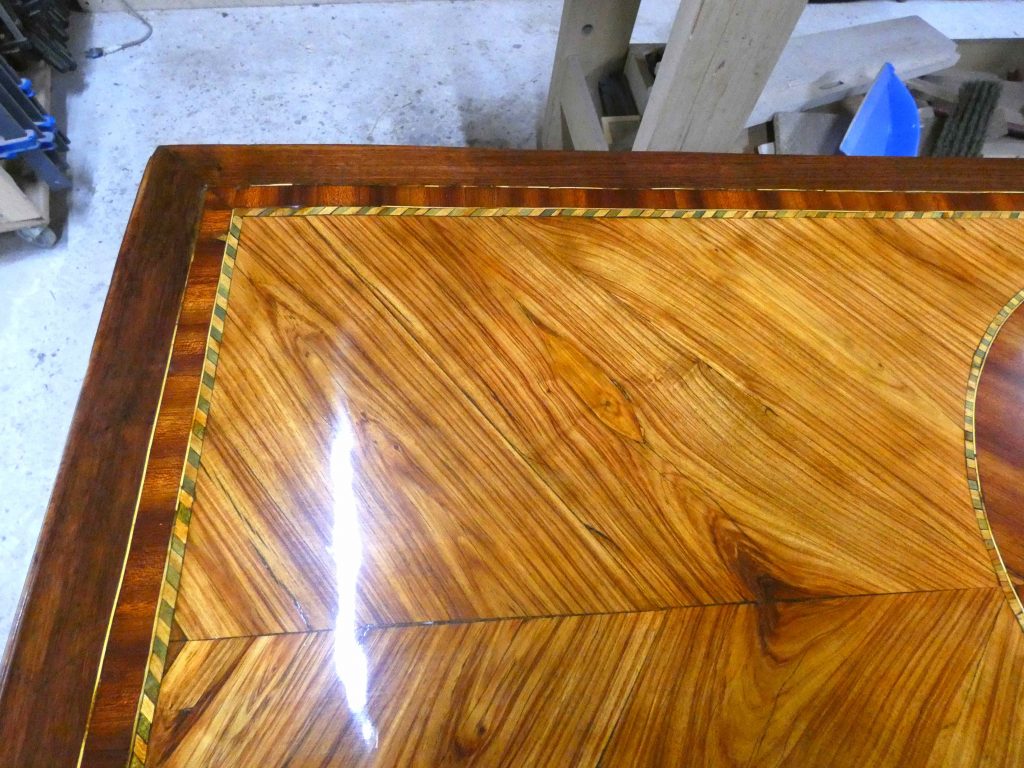
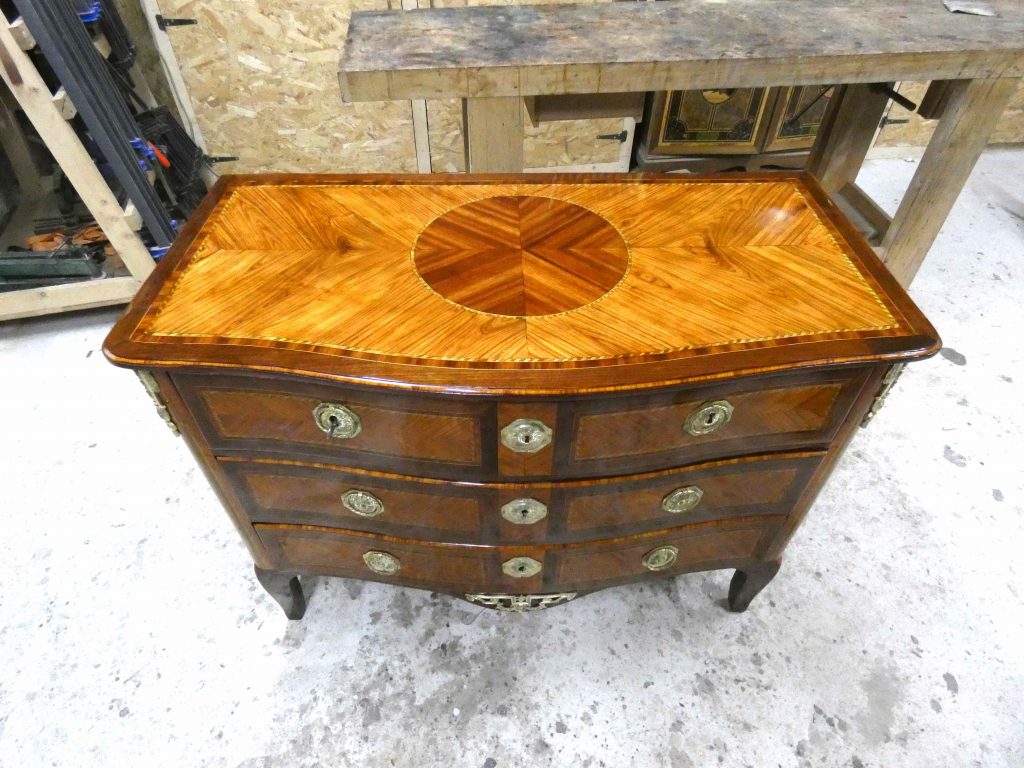
Restoration of a Transition period commode, constructed of fir and oak and veneered in rosewood, with a border of white hornbeam stringing stained green and a satinwood band surrounded by amaranth. The central medallion is made of satinwood veneer assembled in a herringbone pattern. The maker's mark and the JME mark are located at the base of the left rear leg.

André-Antoine Lardin (1724 – August 10, 1790) obtained his master craftsman's certificate on July 1, 1750, and established himself on the rue de Charenton under the sign "Au Bois de Boulogne." He worked there until 1770, when he moved to the rue Saint-Nicolas. His output was considerable. His furniture, in all styles (Louis XIV, Regency, Louis XV, Transition, Louis XVI), is exquisitely crafted, with classical forms and decoration. Besides secretaries, desks, tables, and chiffoniers, he produced an impressive number of commodes, adorned with exceptionally high-quality rosewood or violet wood veneer and inlaid with leaves or butterfly wings within a dark rosewood frame. Lardin's distinctive feature was his stamp, boldly and prominently applied in large letters to several places on the same piece of furniture. His two sons, André-Antoine II and Louis François, collaborated with him, and it was Louis François who succeeded him on rue Saint Nicolas.
BIBLIOGRAPHY
- French Furniture of the 18th Century – Pierre Kjellberg – Les Editions de l'Amateur – 2008
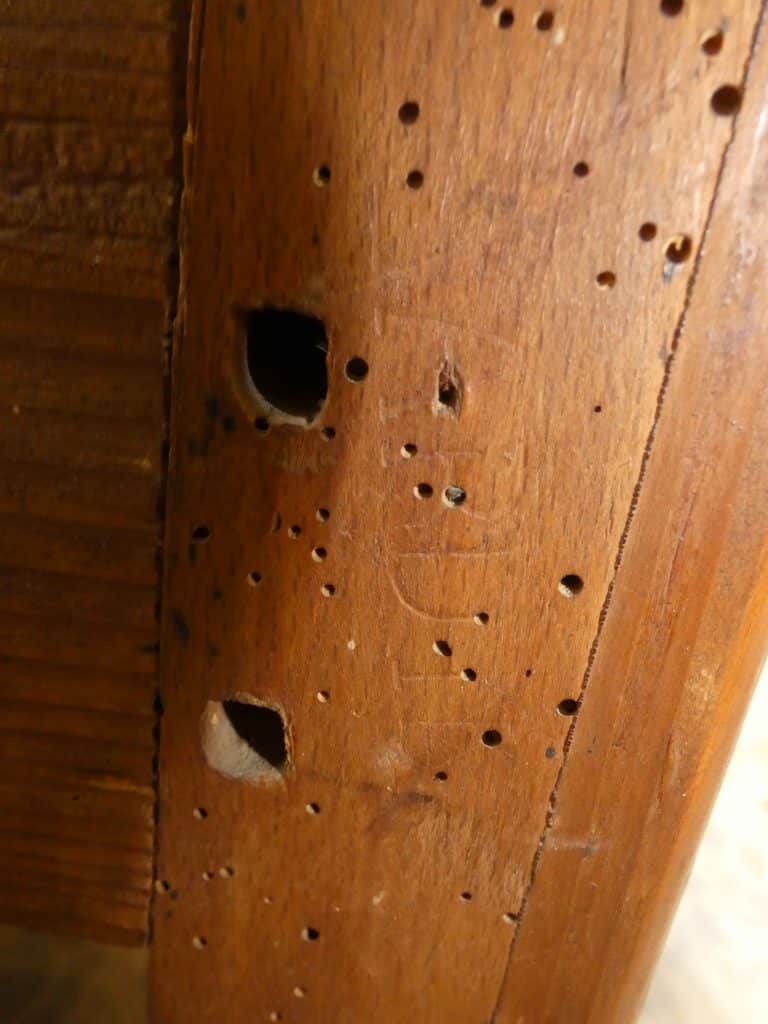
This chest of drawers has undergone a rather damaging restoration; indeed, the back panel and the bottom panel have been replaced with 5mm MDF panels. There are some rather clumsy veneer repairs, and most importantly, the top is cracked along its entire length and is warped by one centimeter in its center.
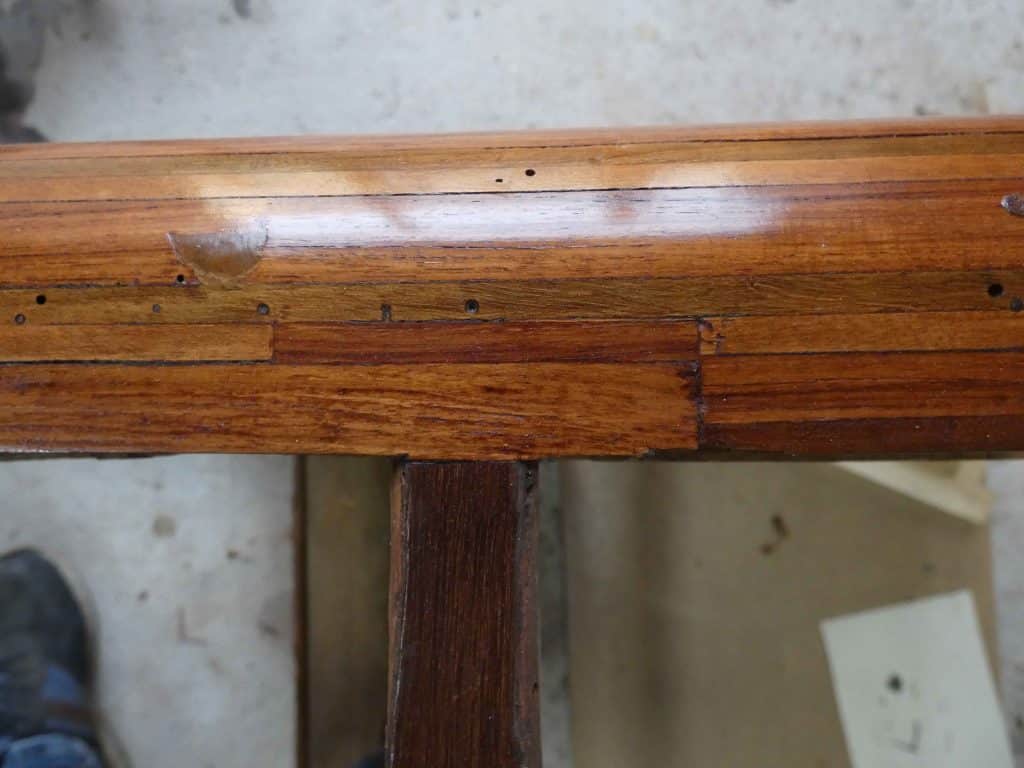
Old grafts 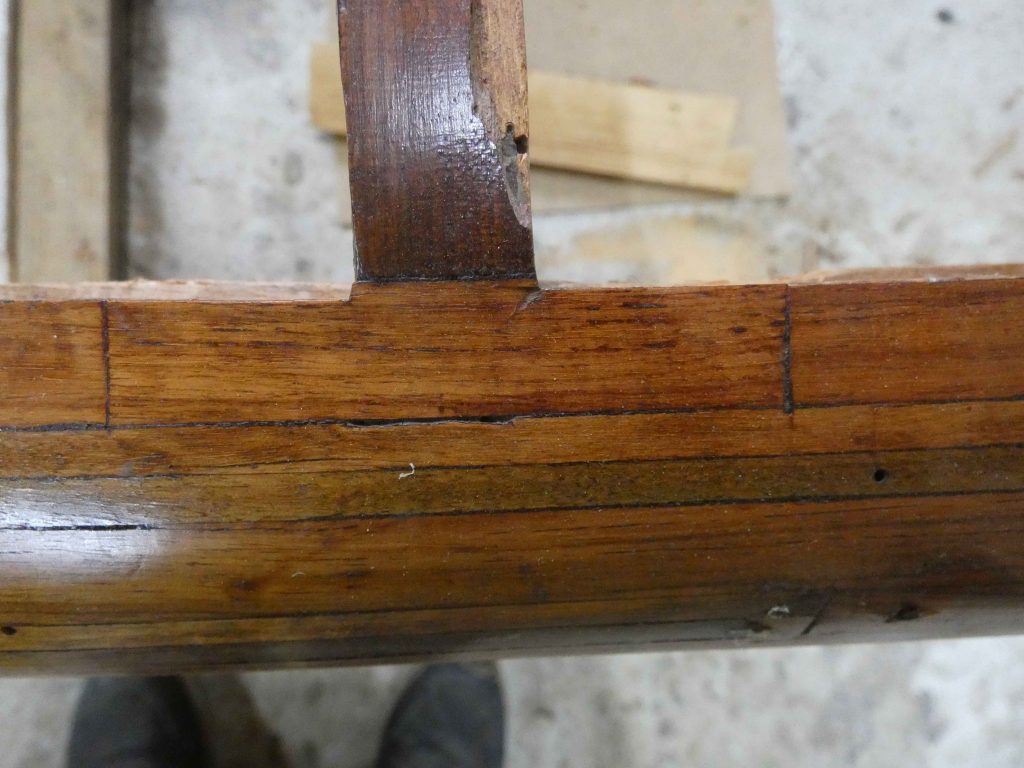
Old graft at the dovetail joints 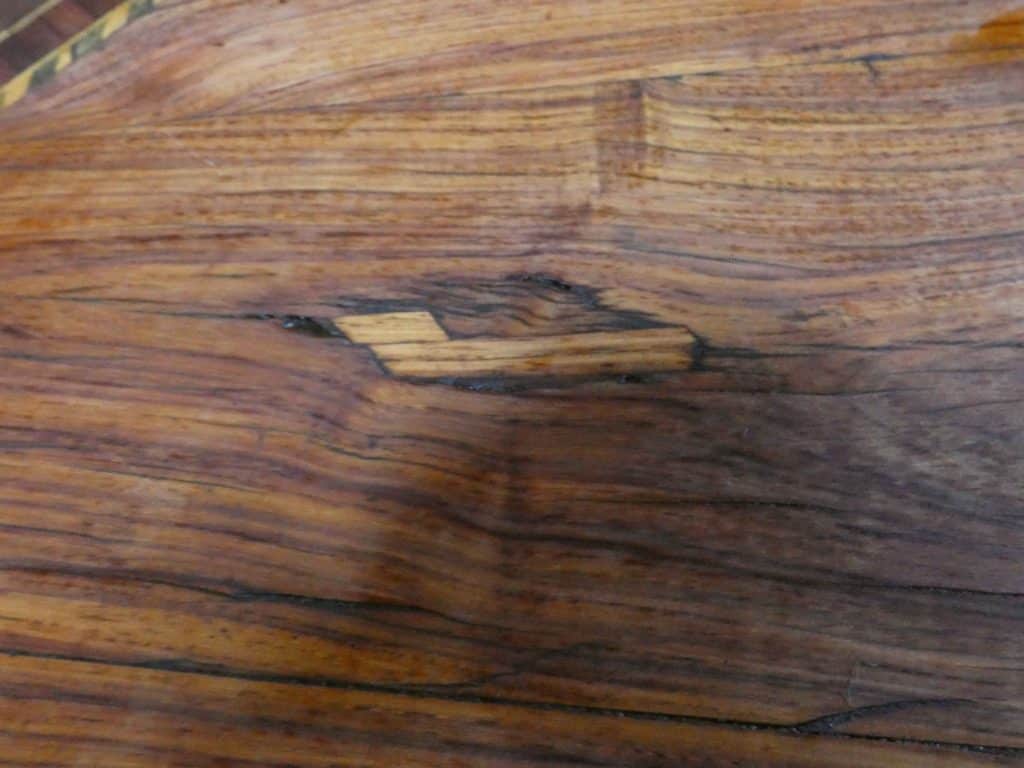
Old veneer graft 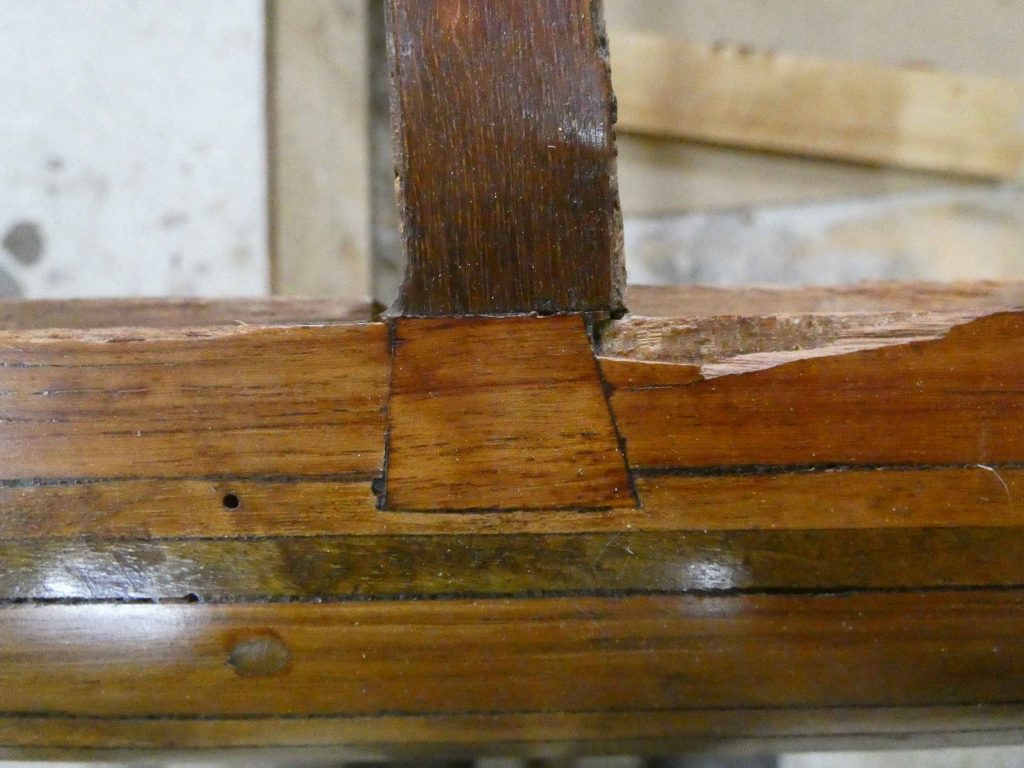
Old graft at the dovetail joints 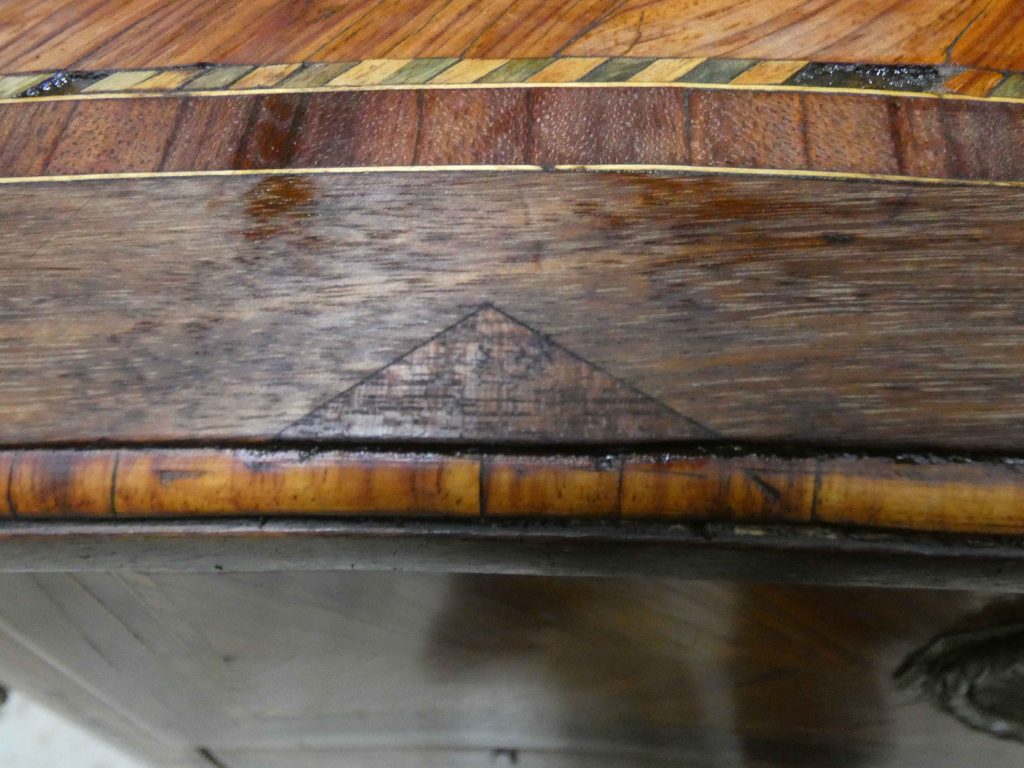
Old amaranth veneer graft 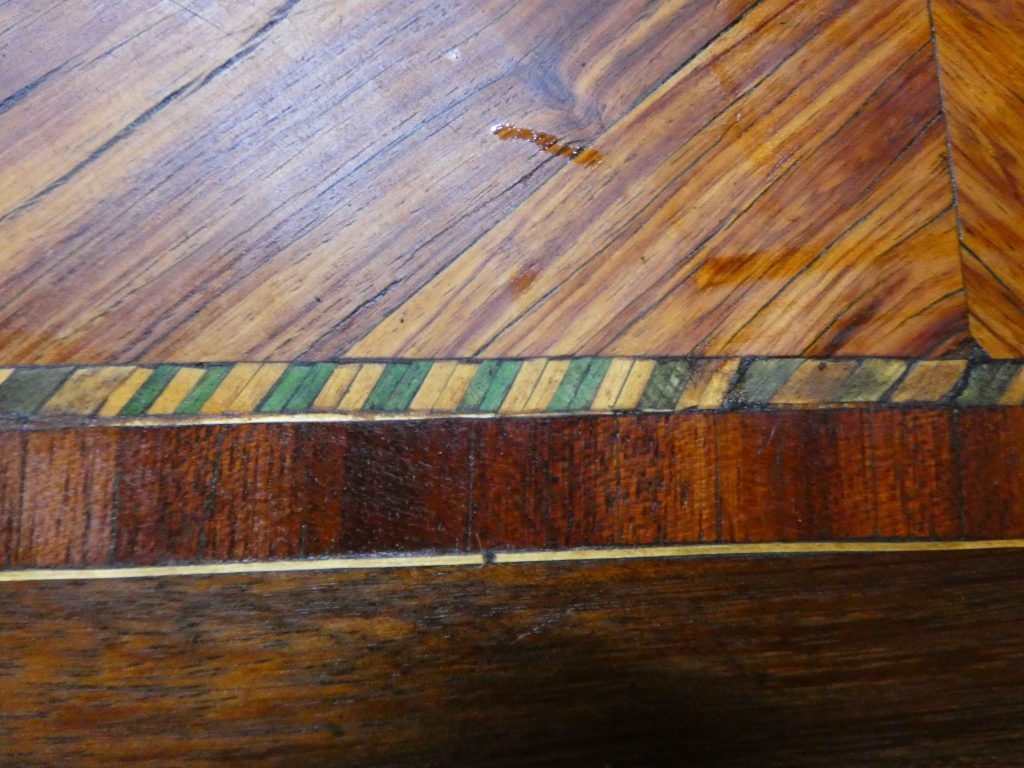
Old compound fillet graft 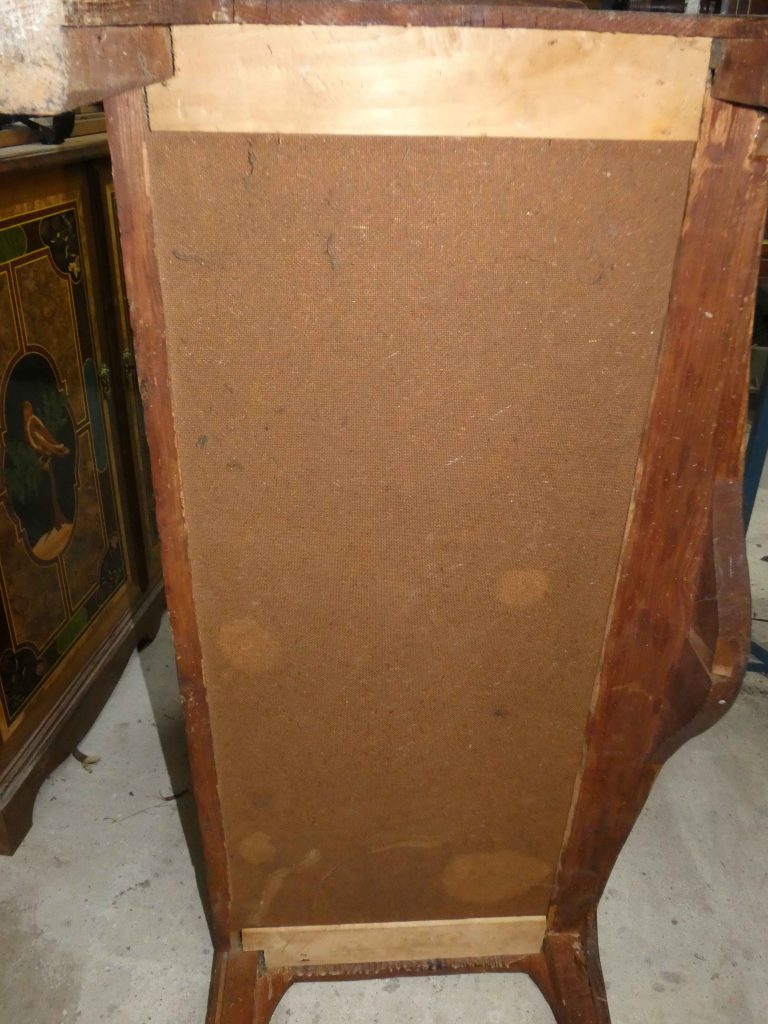
Medium background 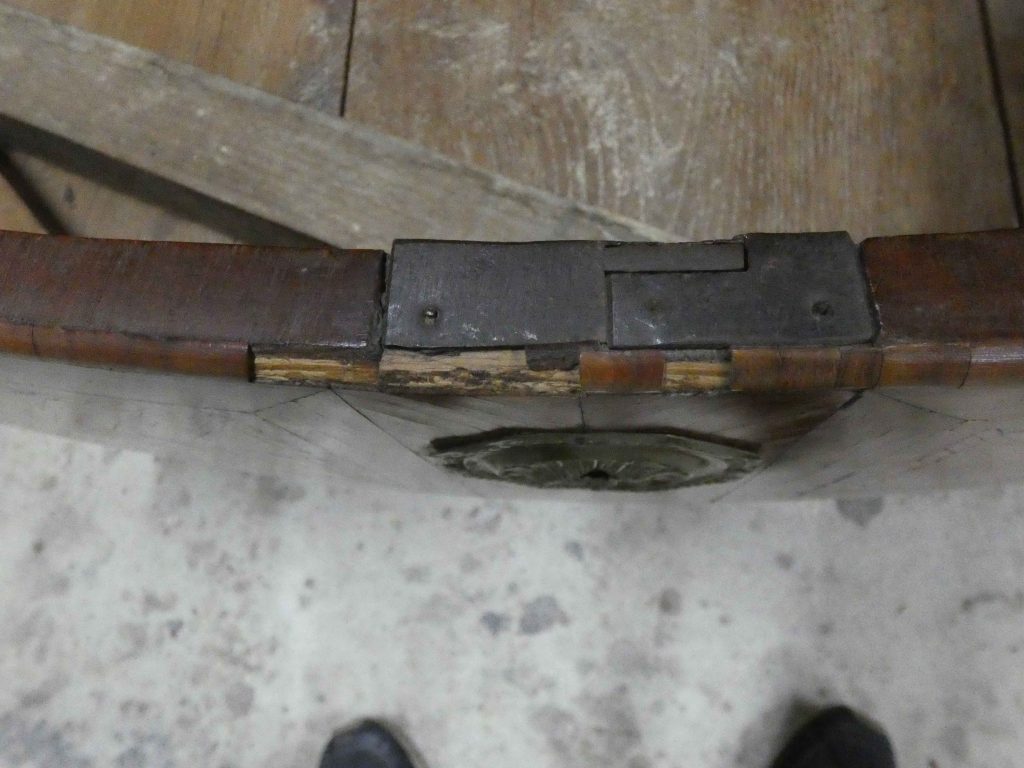
Lack of rosewood 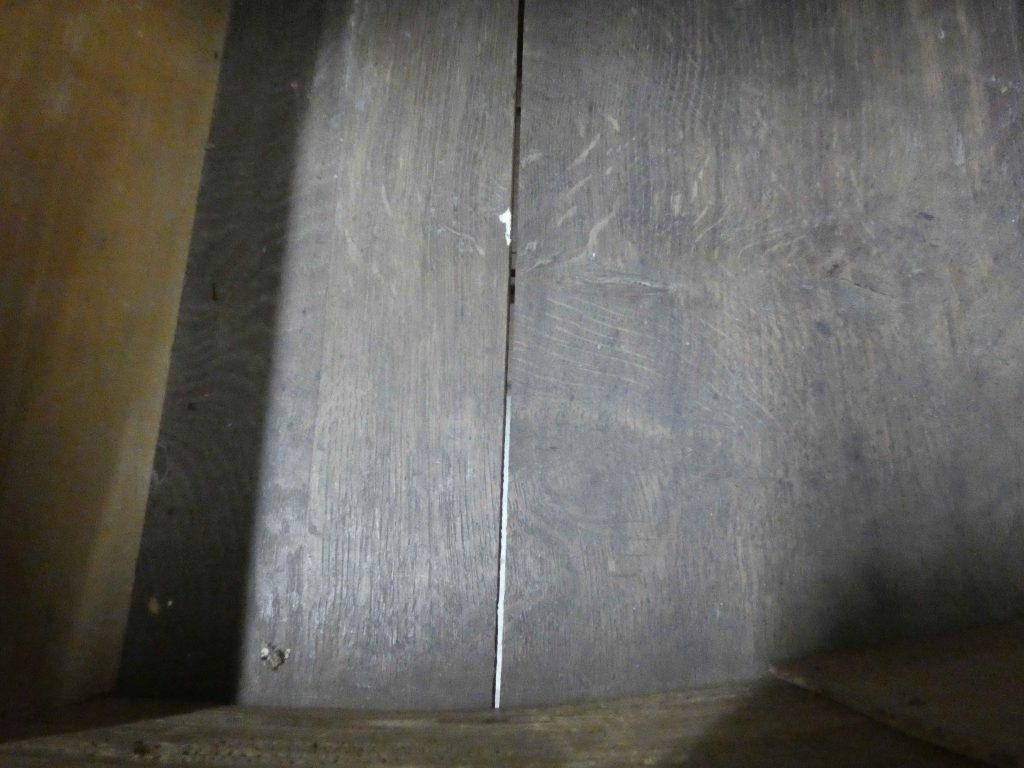
Decoupled fund 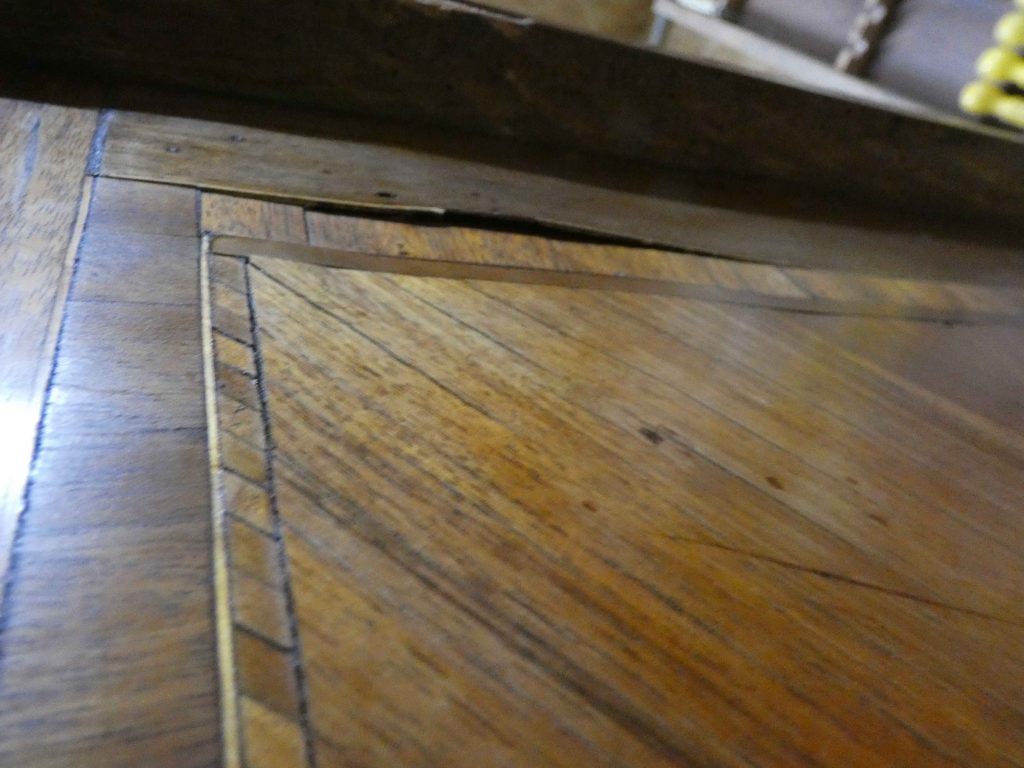
Raised veneer 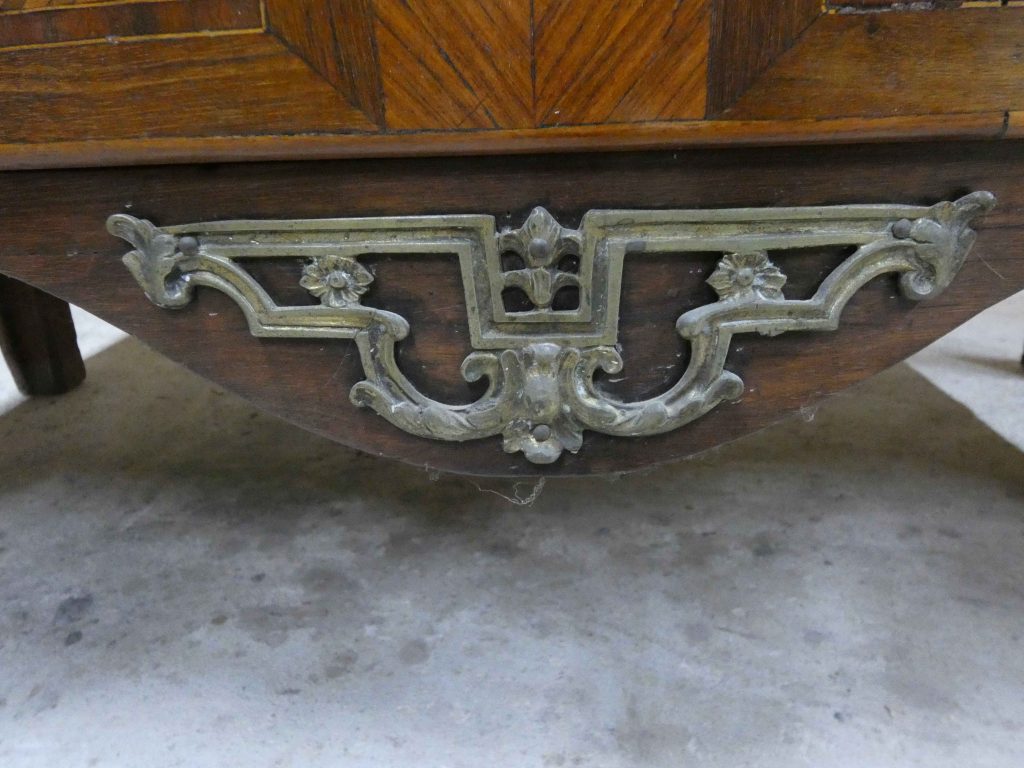
Bronze before cleaning 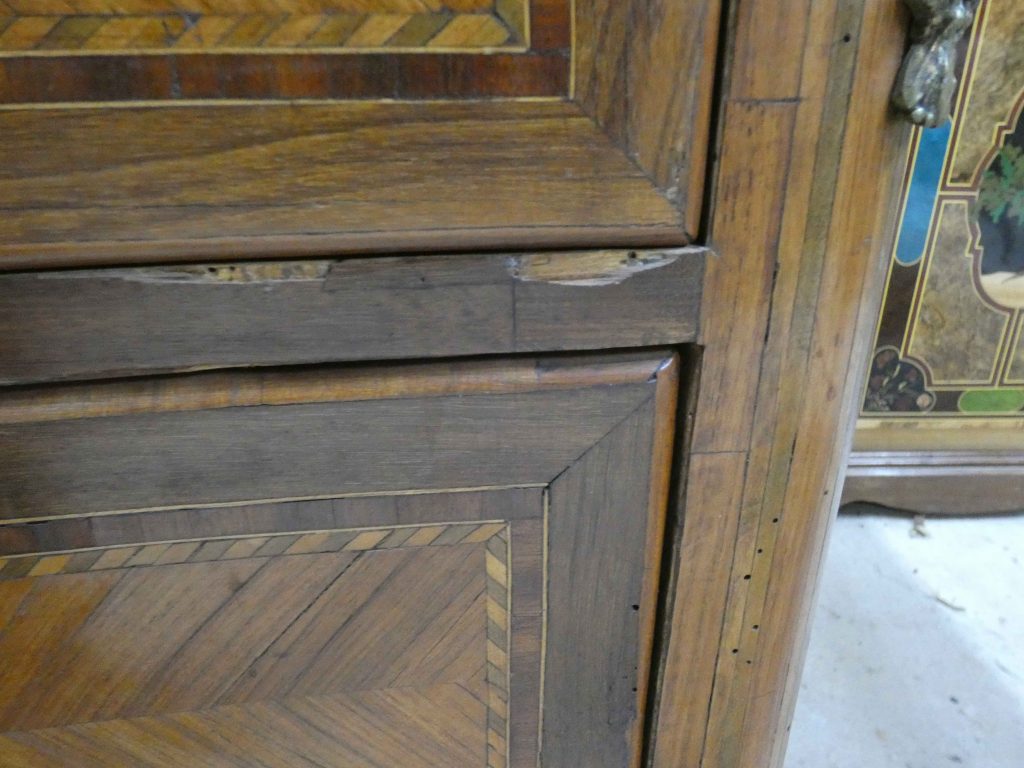
Veneer chips 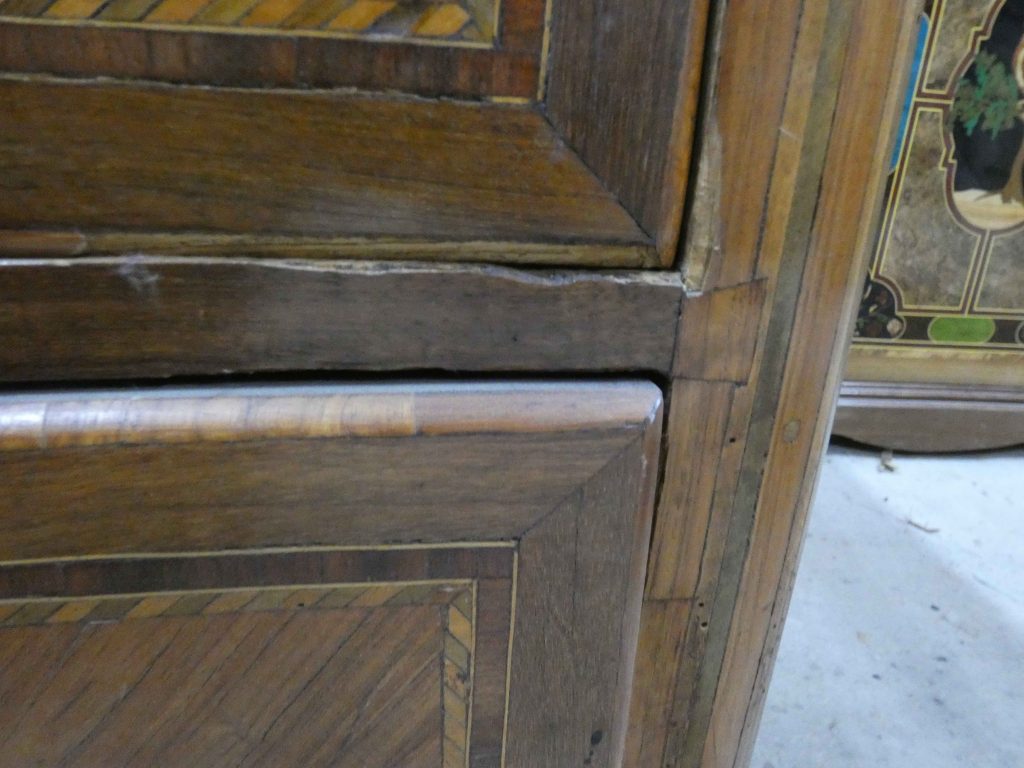
Veneer chips 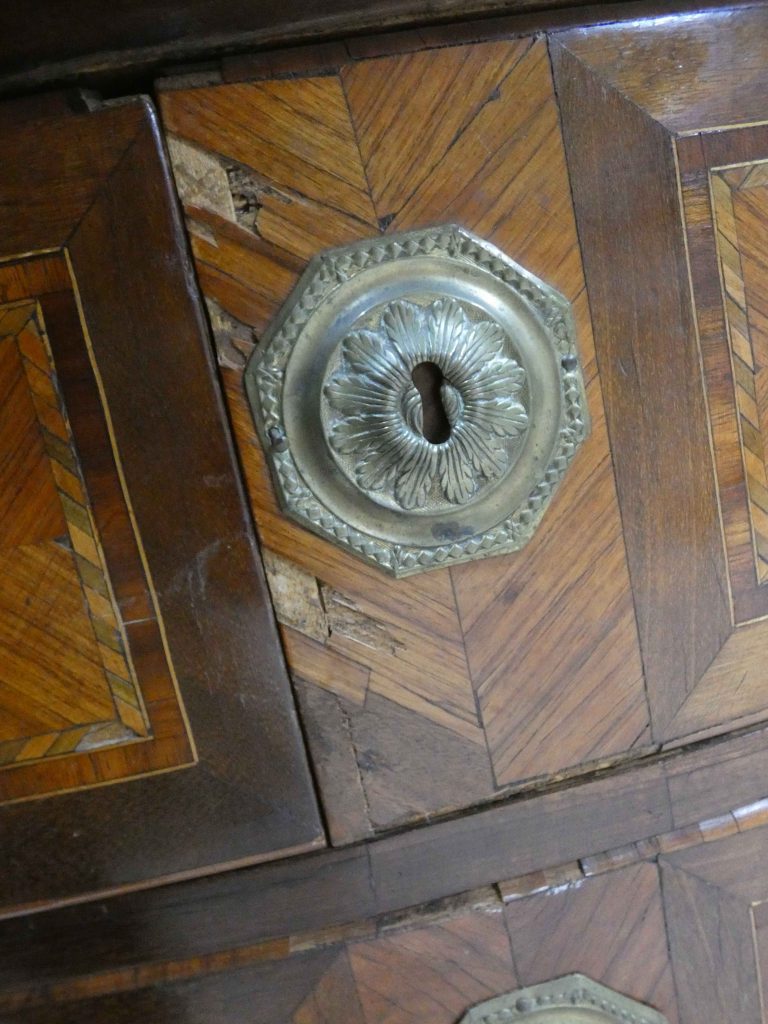
Rosewood veneer chips 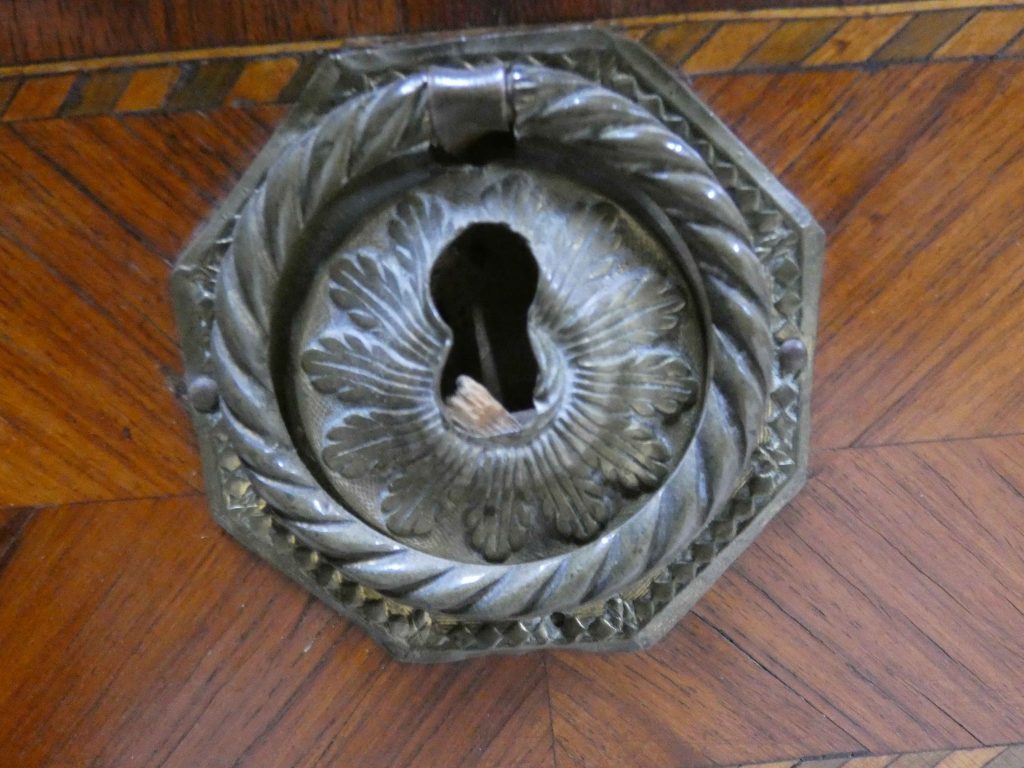
Entry and lock handle 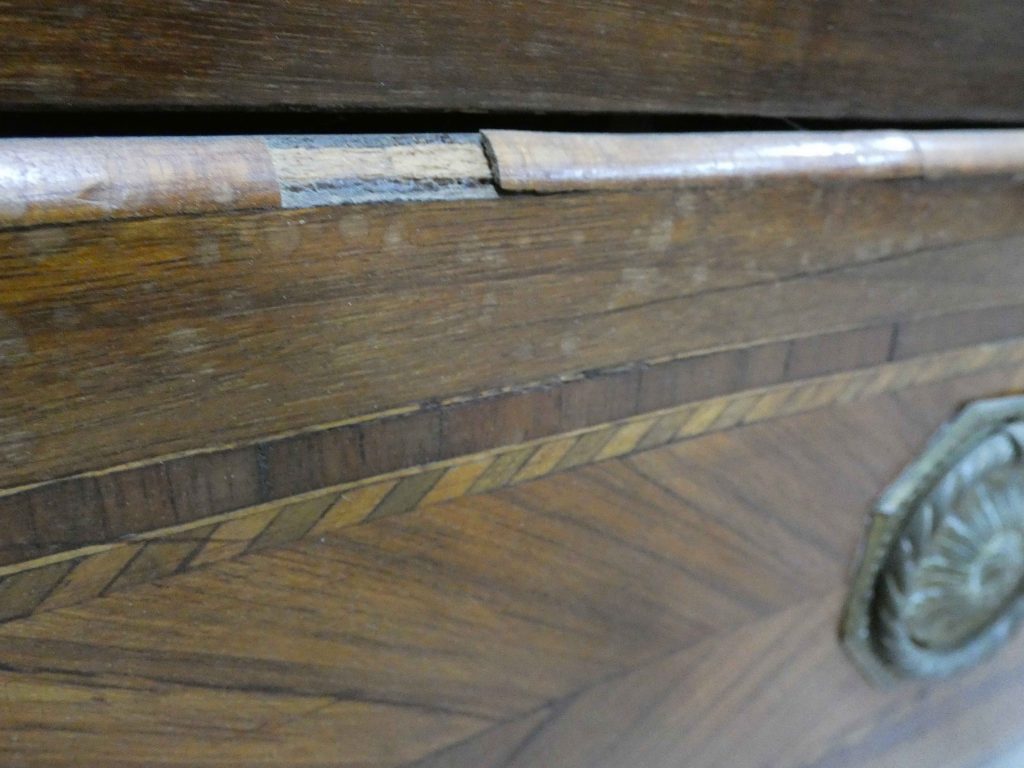
Lack of veneer 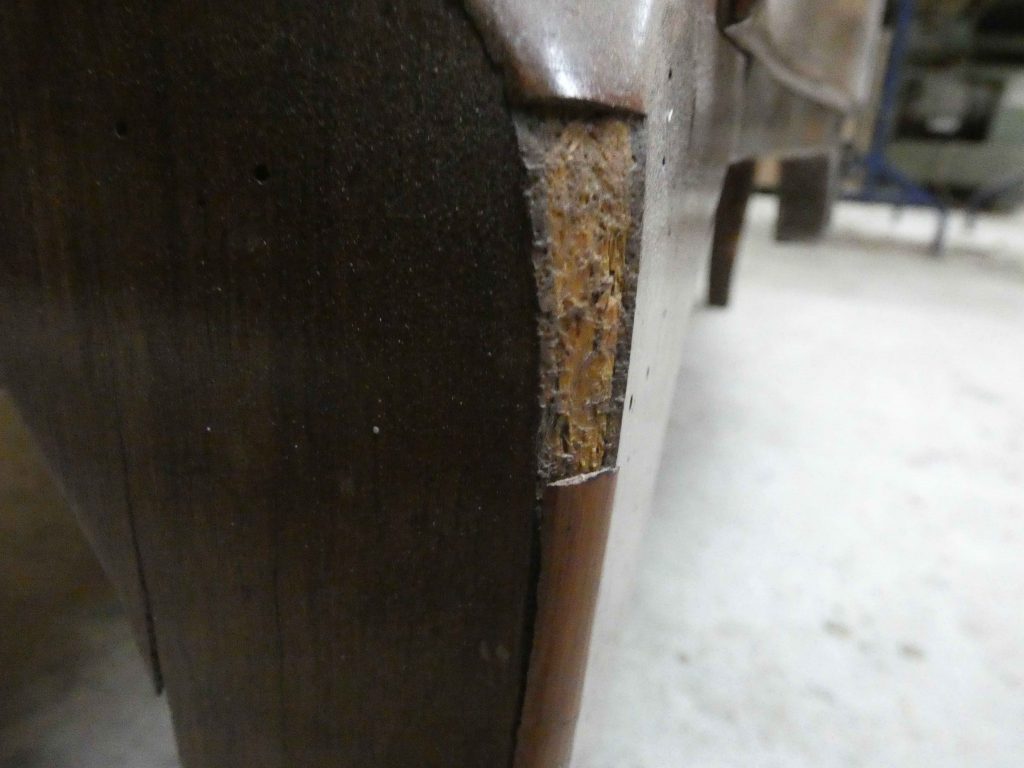
Lack of veneer 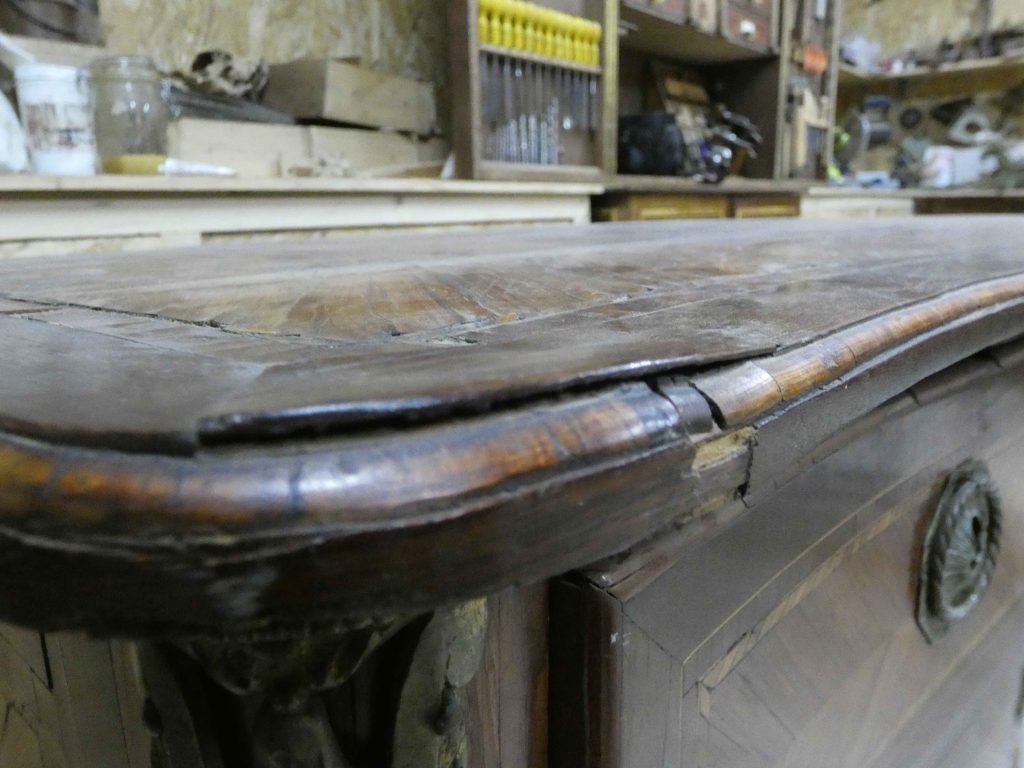
Lifted veneer and gaps 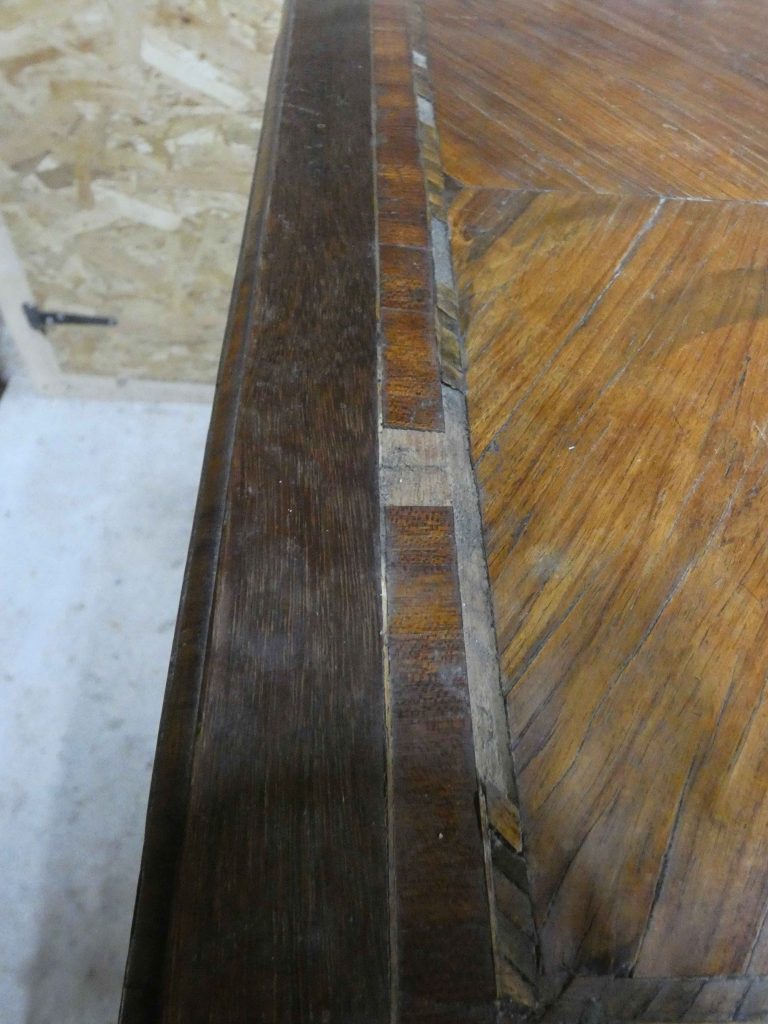
Missing nets and tackling 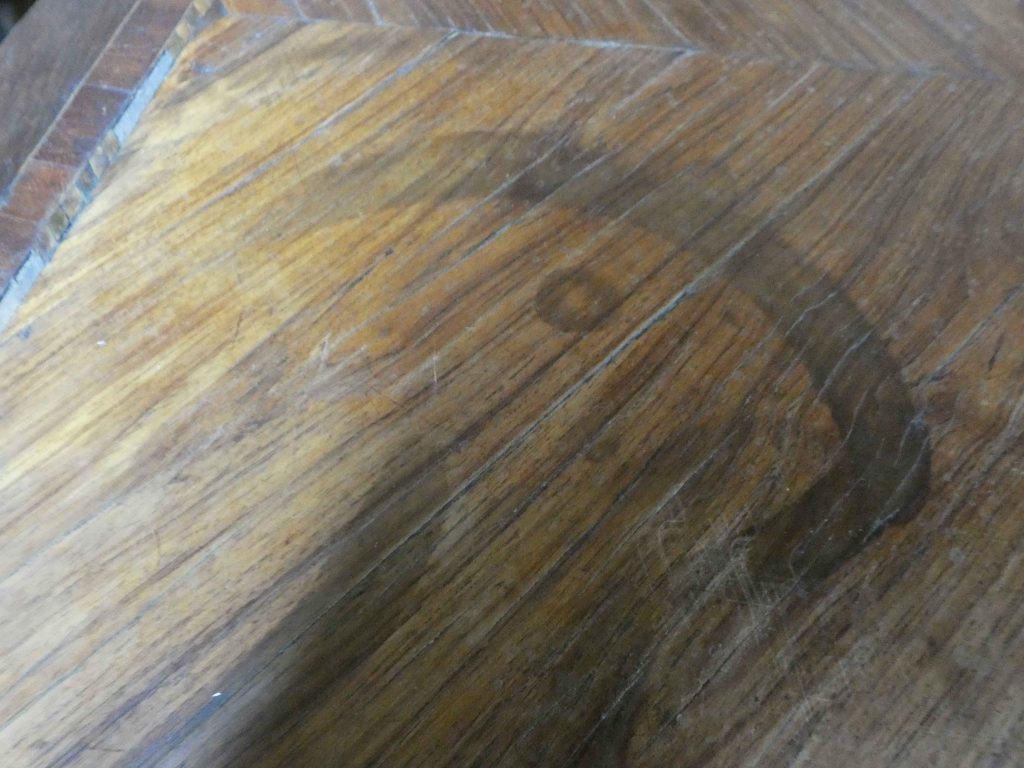
Superficial stain 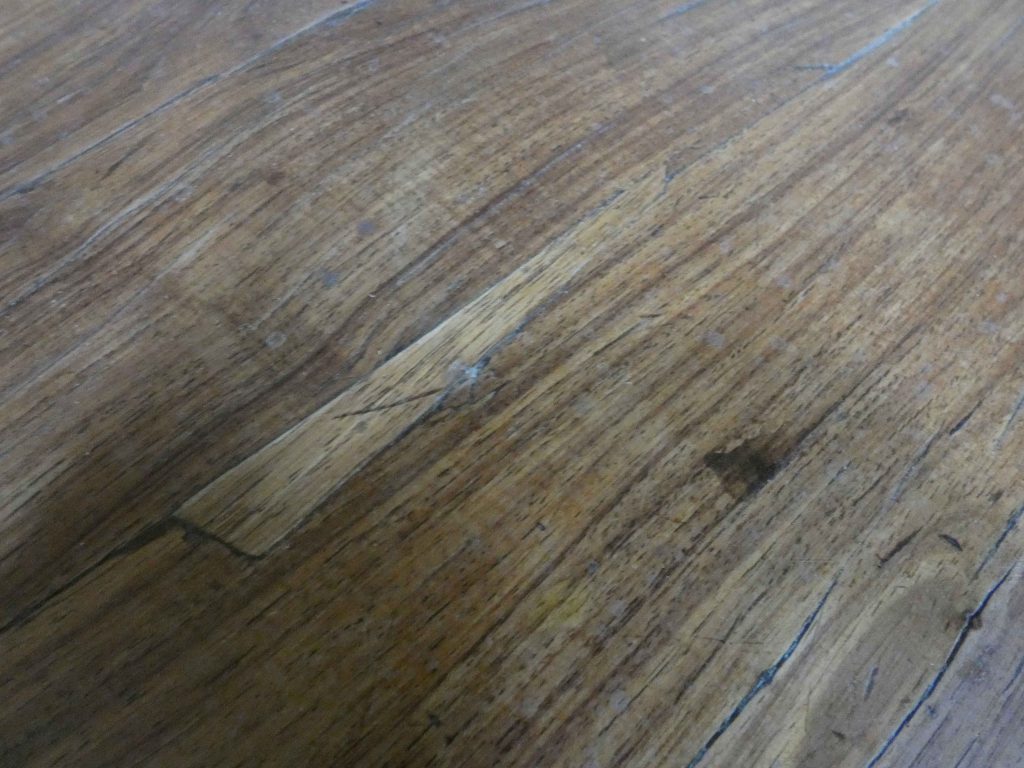
Old veneer graft 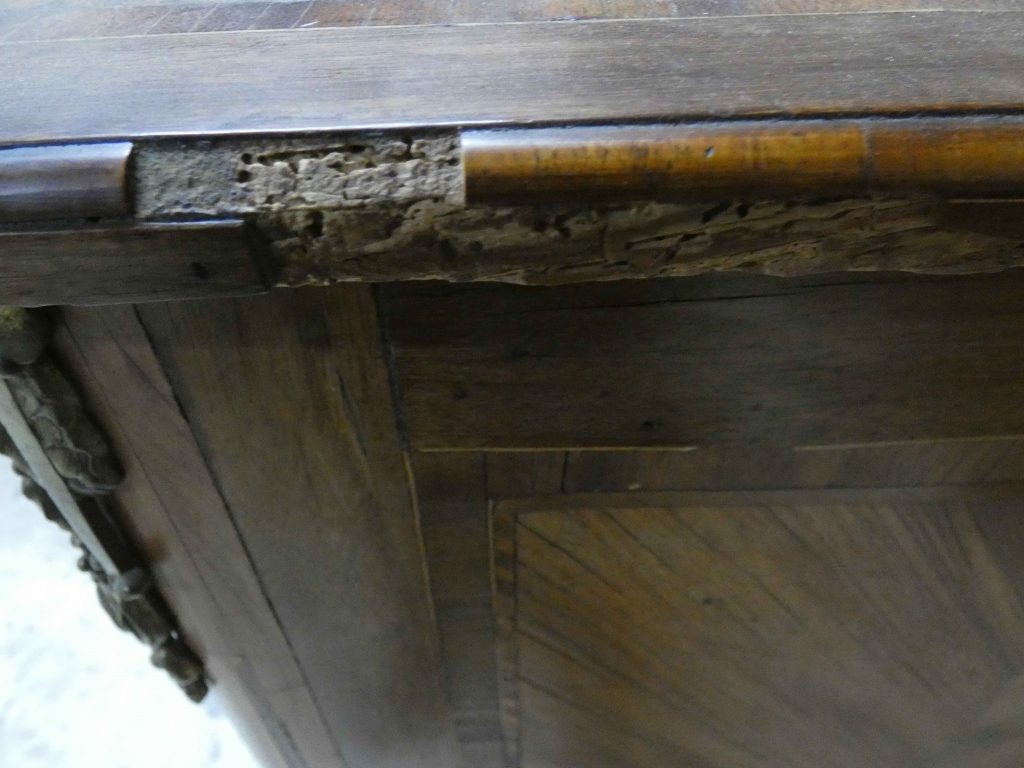
Lack of veneer 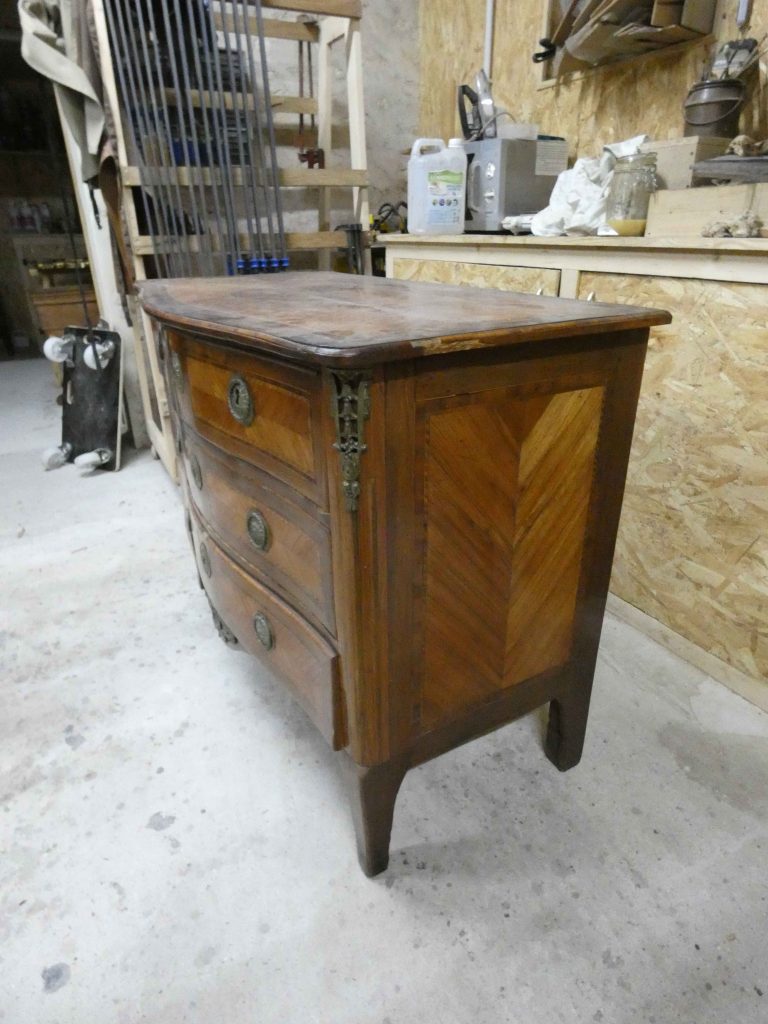
Right side before restoration 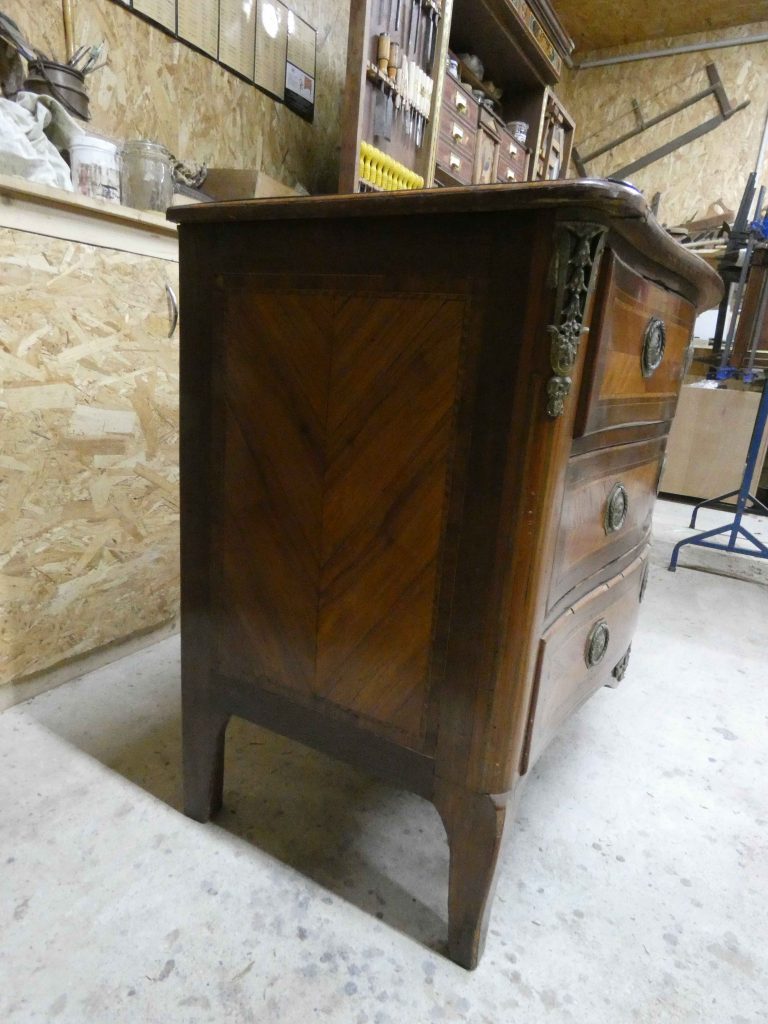
Left side before restoration 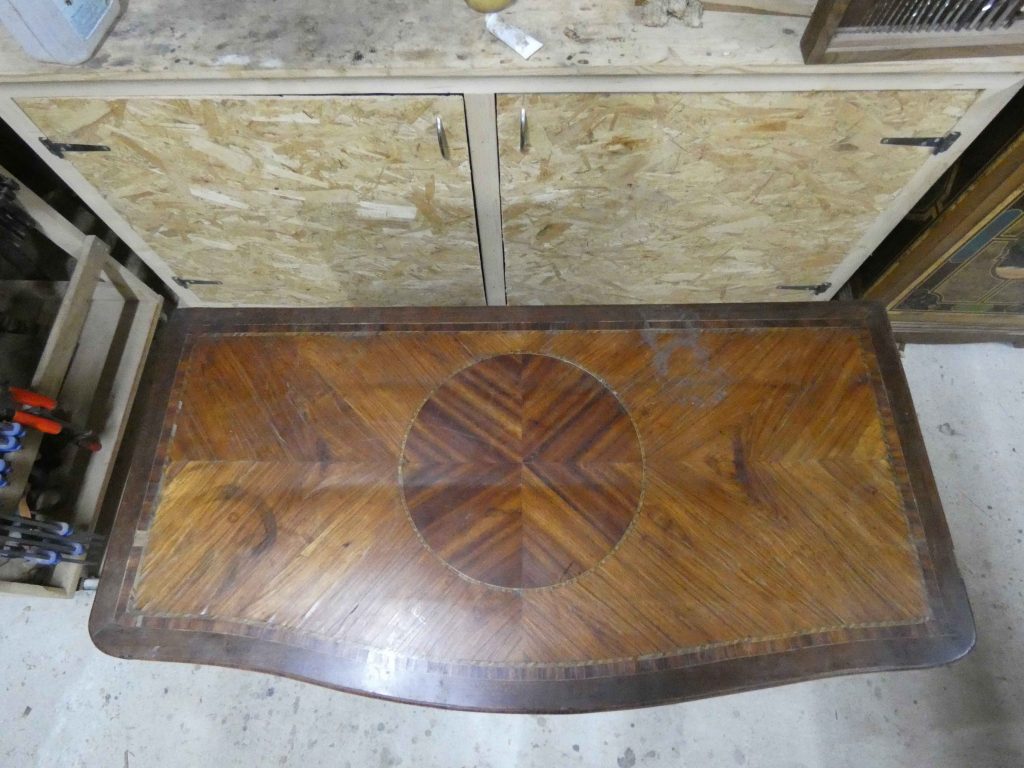
Tray before catering
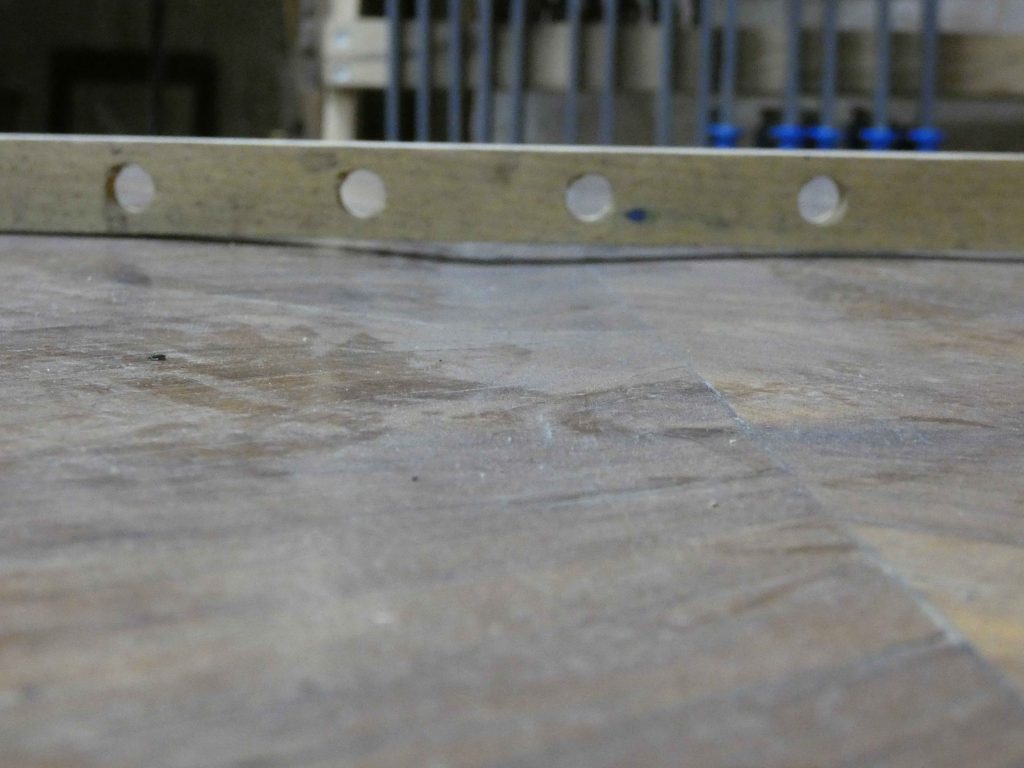
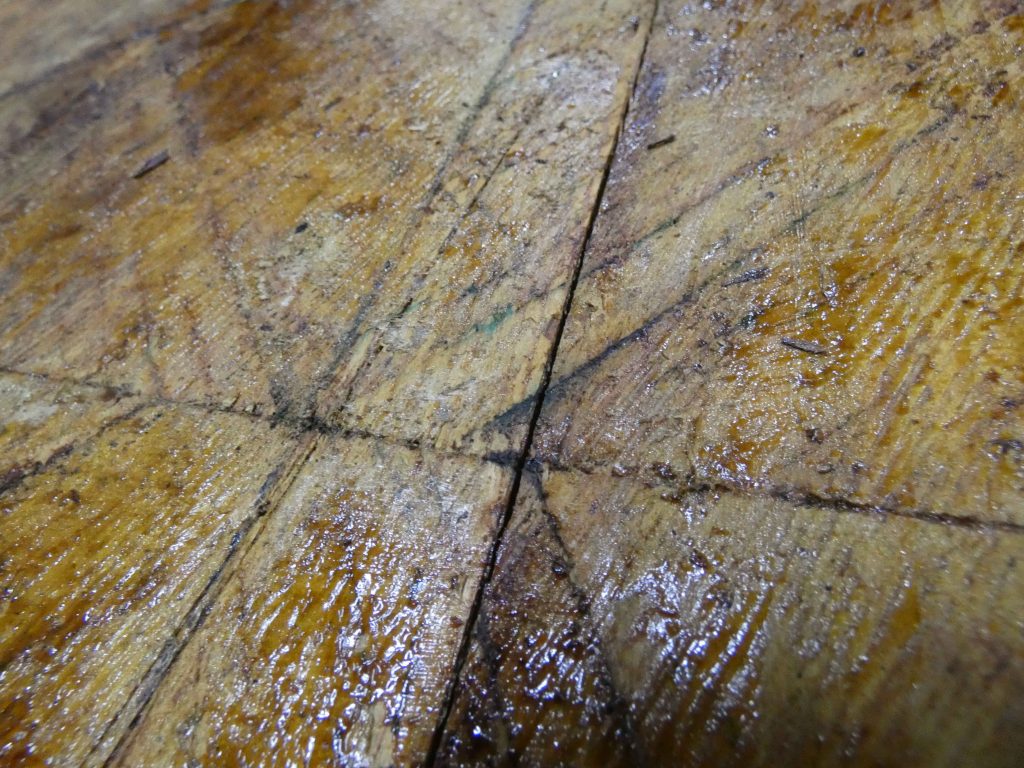
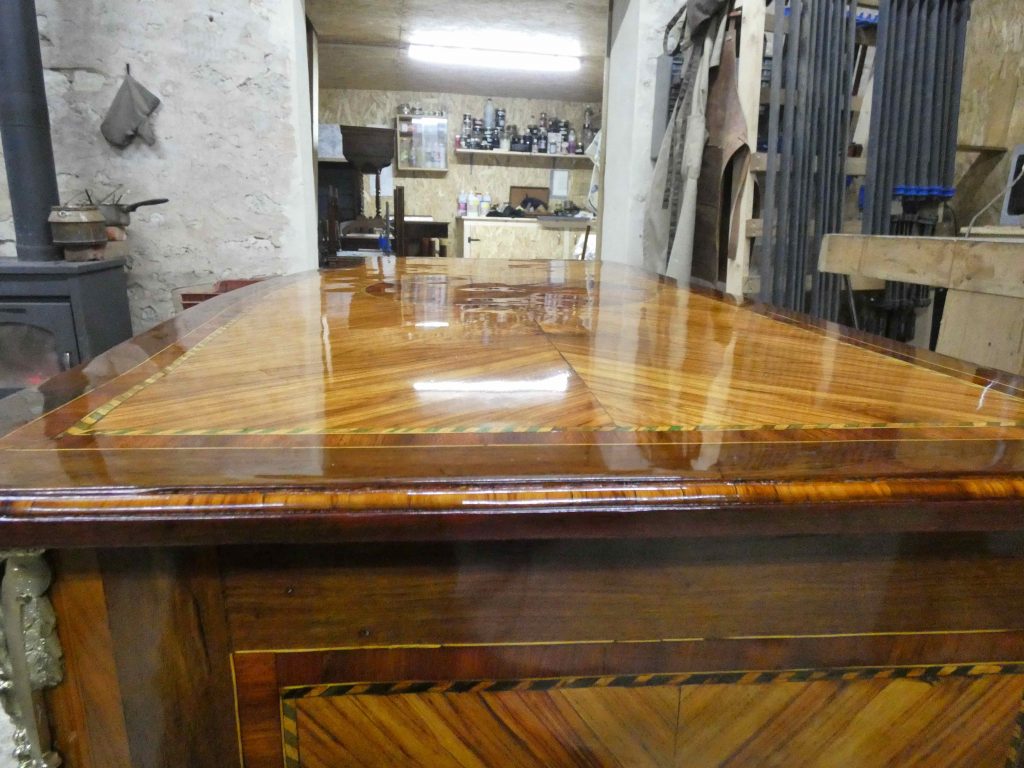
The restoration involved replacing the MDF backing with fir. A few poorly executed grafts were replaced, and missing veneers were filled. Crucially, the veneer on the tabletop had to be removed so that its core could be straightened using thermal shock, thus preserving the magnificent tool marks discovered beneath the veneer. The tabletop was then reamed with a strip of solid fir to restore its original dimensions. The veneer was then pressed back and reattached with hot glue. The side structure and all remaining veneered surfaces were then re-glued using vacuum infiltration.
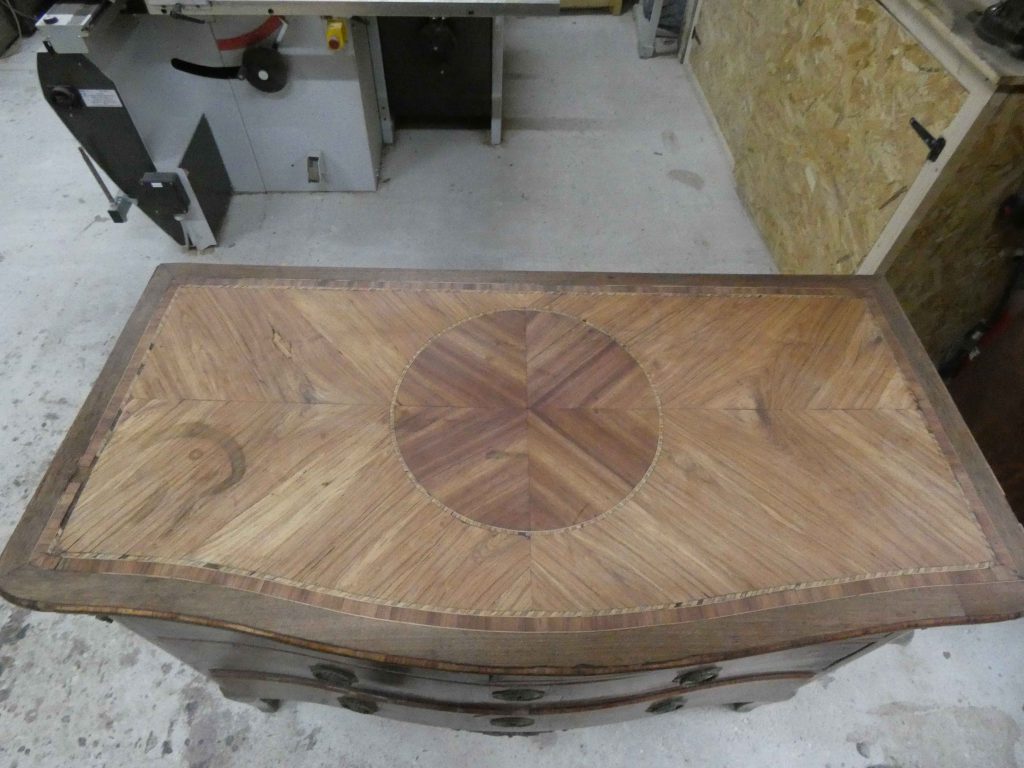
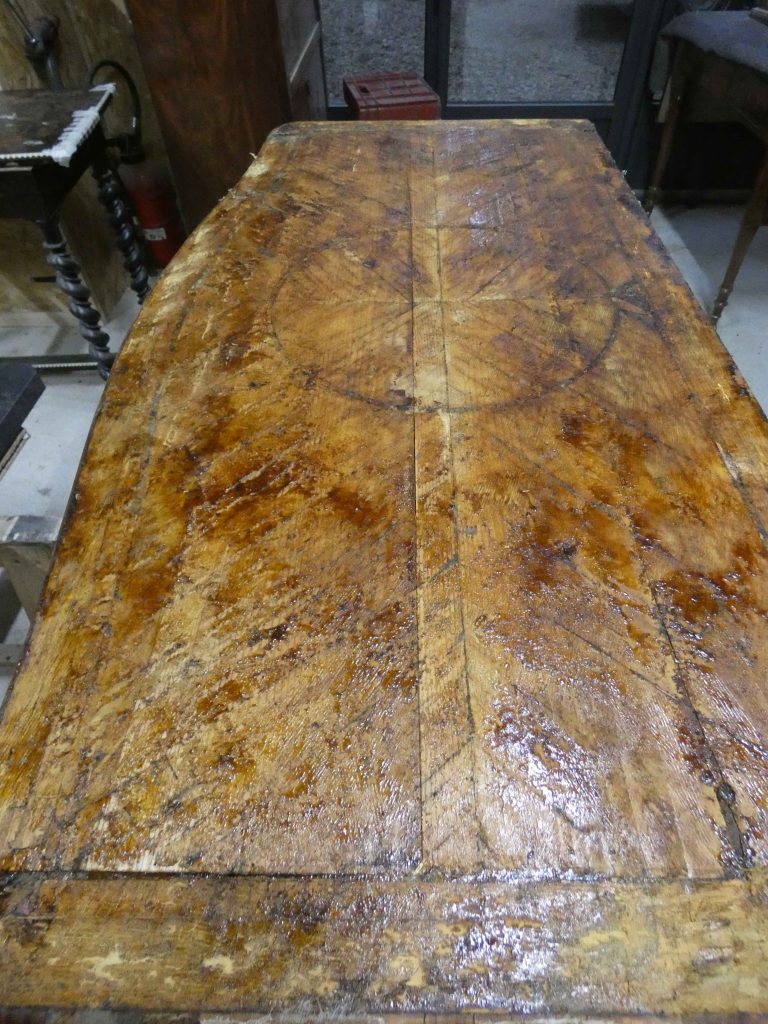
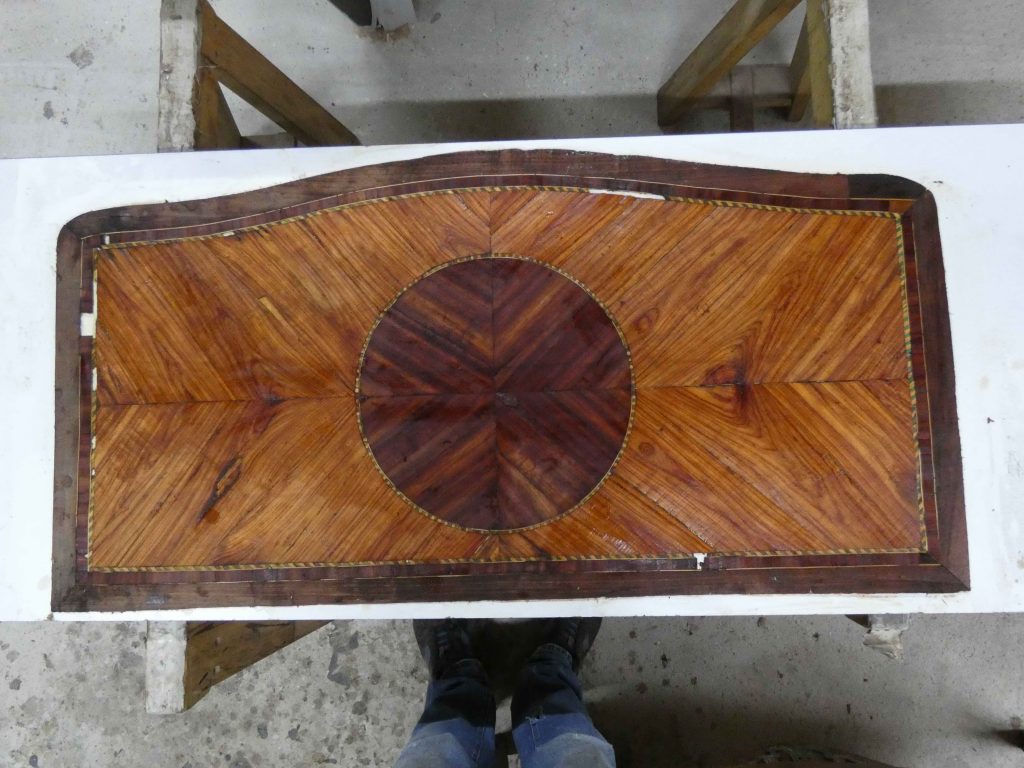
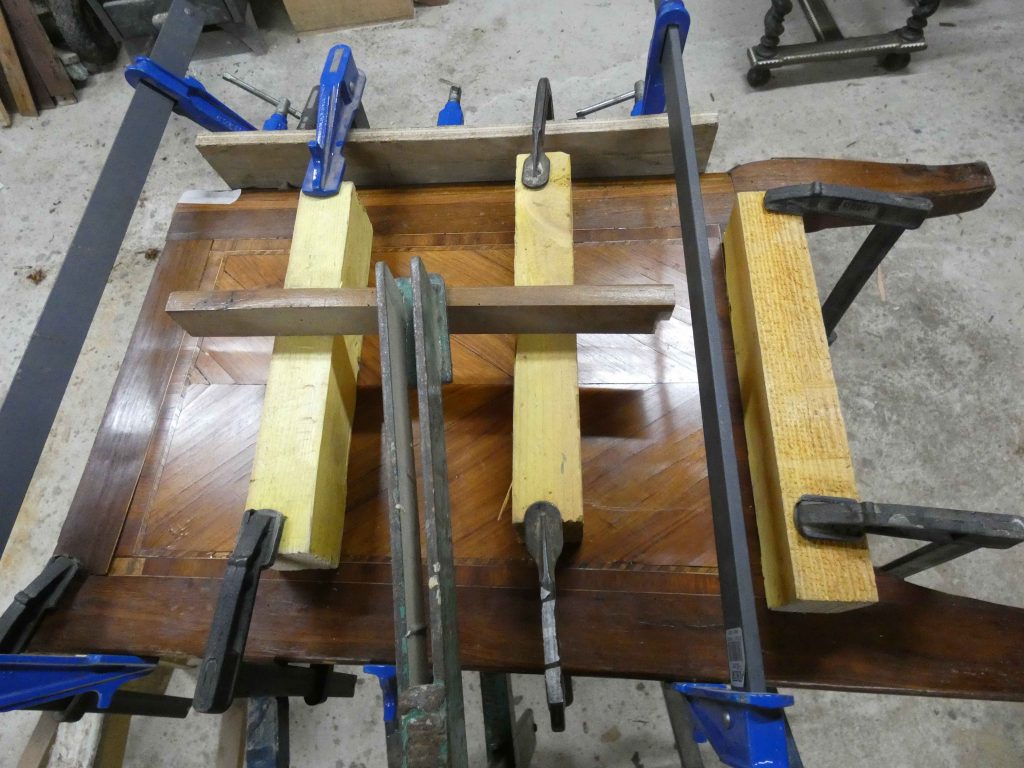
The chest of drawers was then stripped and varnished with a colorless French polish. The bronze parts were cleaned using ultrasound.
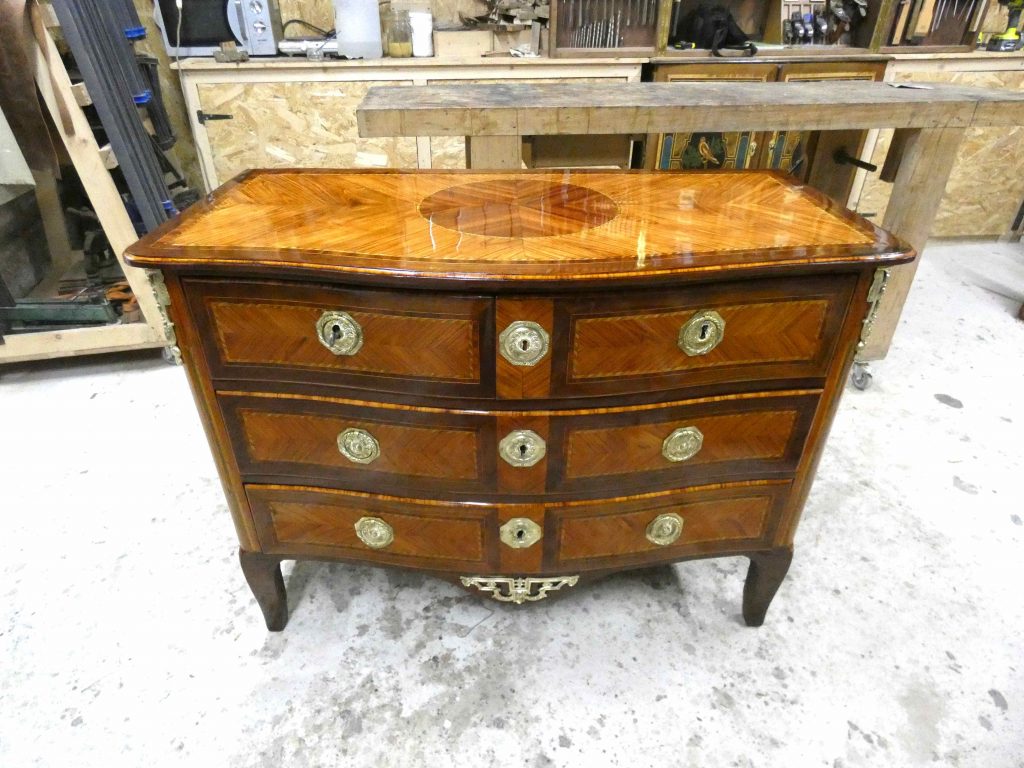
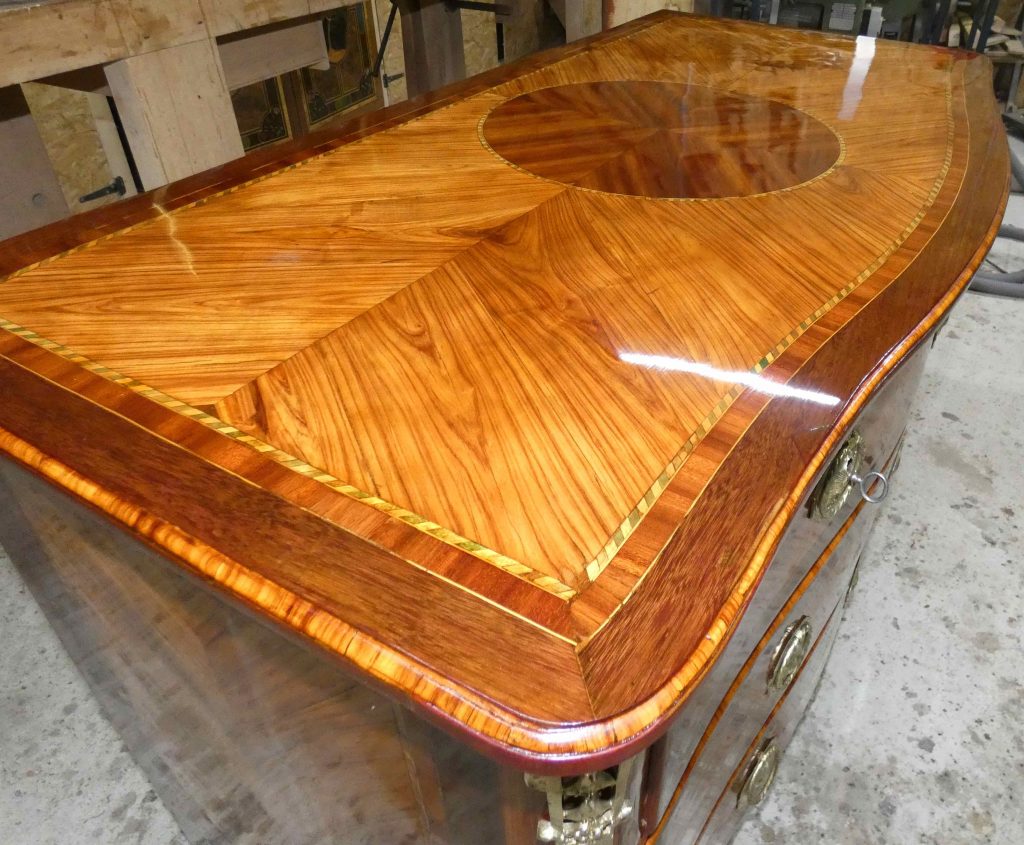
To see previous restorations : https://ebenisterie-mathieuvath.fr/en-ce-moment-a-latelier/
This is the third time I've reread the details of this restoration… What a feat! This is art, with a capital "A." It's a shame your workshop is so far from me; I would have loved to meet you. With all the admiration of an amateur woodworker….
You're welcome!
Magnificent restoration, you are a MASTER CRAFTSMAN worthy of this title. Boujouy
Thank you. And thank you again for these beautiful illustrations of a lover.
Thank you again for sharing these beautiful photos, and I remain truly impressed by your work.
Thank you so much