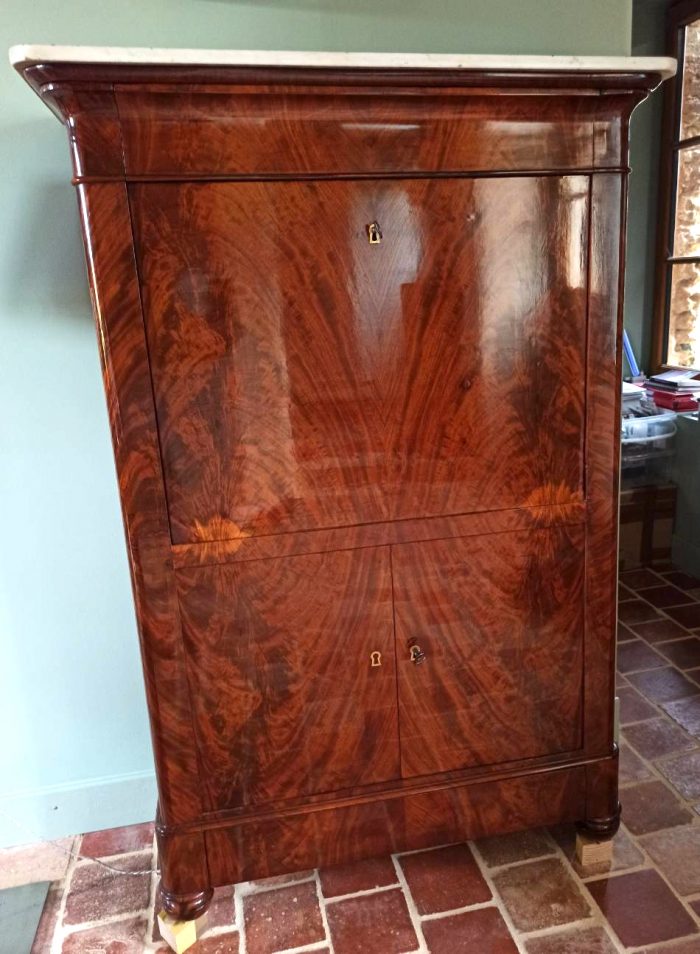
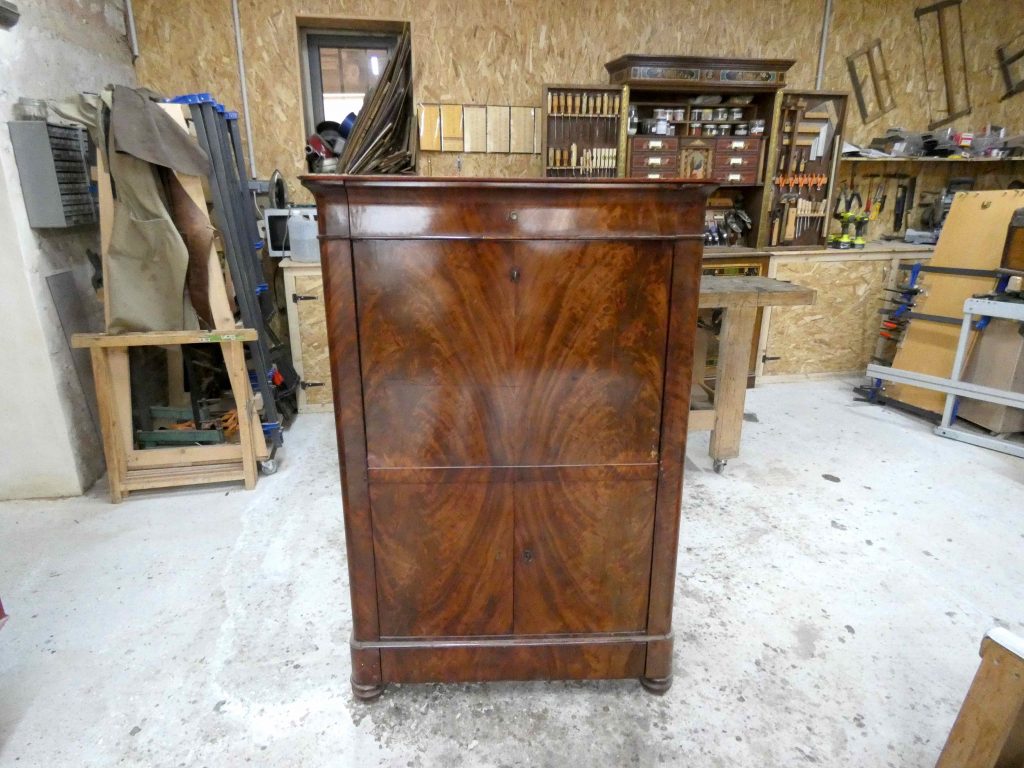
Restoration of a drop-front secretary desk from the Restoration period (1815-1830) veneered in mahogany burl and topped with Carrara white marble.
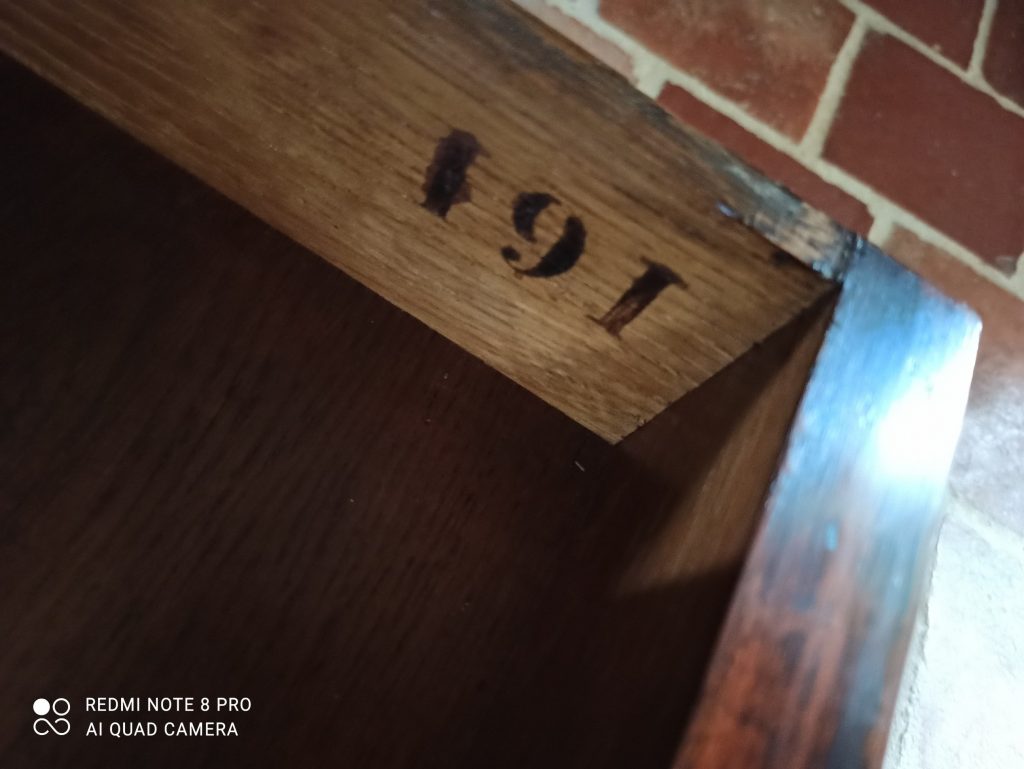
The front legs are round and the rear legs are square. The frame is made of oak and softwood. There is an inventory mark (I91) inside the lower drawer on the right side.
The Restoration style?
After Napoleon's defeat at Waterloo on June 18, 1815, power in France was taken over by the two brothers of Louis XVI: the Count of Provence, who would reign under the name of Louis XVIII (1815-1823), then the Count of Artois, known as Charles X, who would rule until 1830, when he was overthrown by the July Revolution, and replaced by a new king, Louis-Philippe I (1830-1848).
This period It was first and foremost a reaction against the pomp and circumstance of the Empire. It imposed on furnishings and decoration an elegance and refinement that Napoleon's taste for grandeur and splendor had, in a way, obscured. But under the Restoration, it was no longer the commissions of the royal family or those of wealthy aristocrats that set the tone. Fashion now adapted to the needs and tastes of the new bourgeois society, which rented more or less luxurious apartments in Paris, suited to family life.
The concept of comfort is influenced by a certain English way of life. Regency style furniture, particularly chests of drawers, is imported from England.
Restoration-era furniture consists of essential pieces: chests of drawers for storage, large round dining tables, flat desks or secretaries, wardrobes, and sometimes dressing tables in the bedroom. The ornamentation, light and highly refined, emphasizes the structure of the furniture. Molding, abandoned during the Empire period, reappears delicately on consoles, secretaries, tables, and imposing pieces such as bookcases.
Upon arrival at the workshop, this secretary desk had some missing veneer, some dents, cracked sides, and broken hinges. The drop-front was split in the center, and the entire structure was detached.
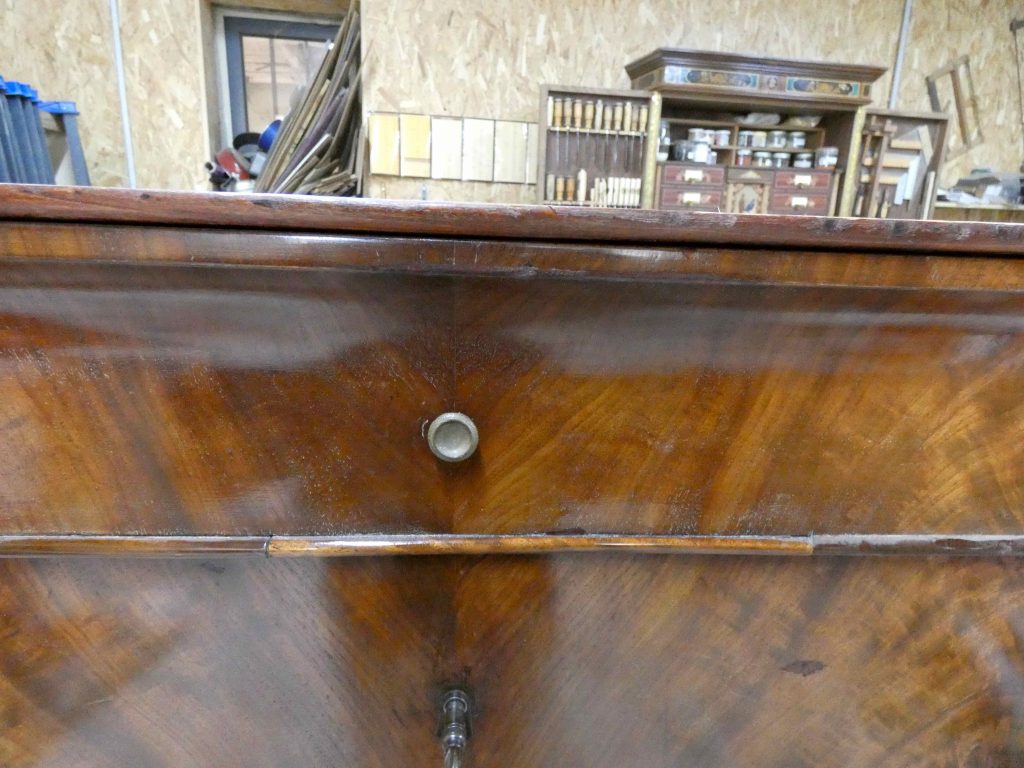
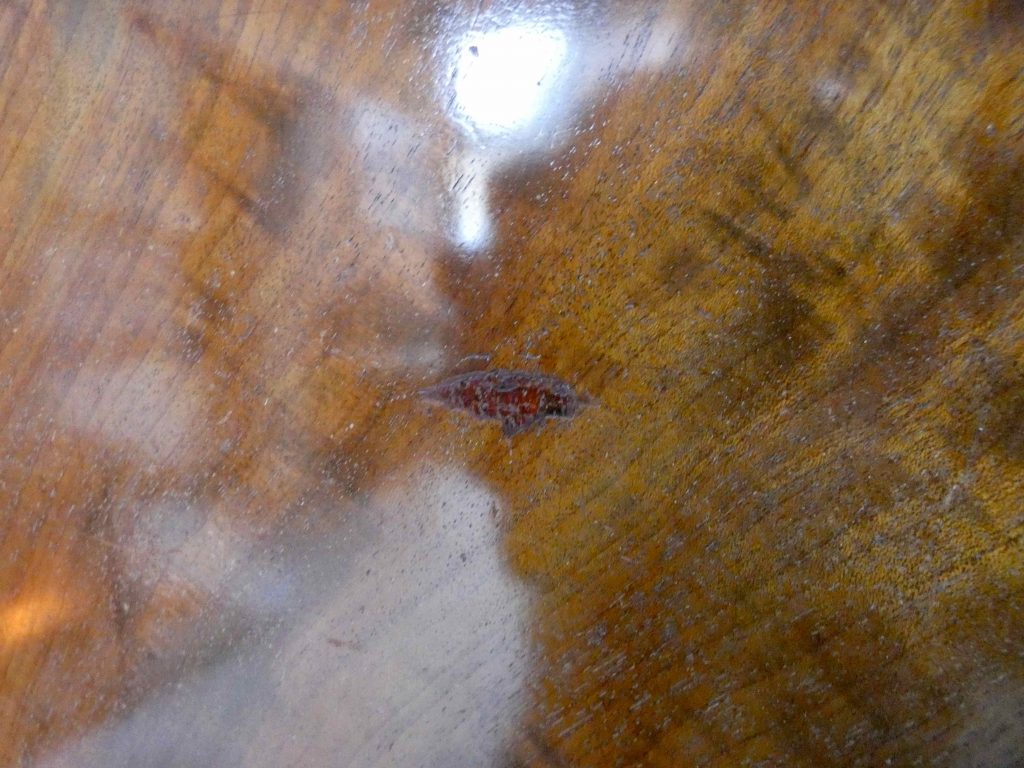
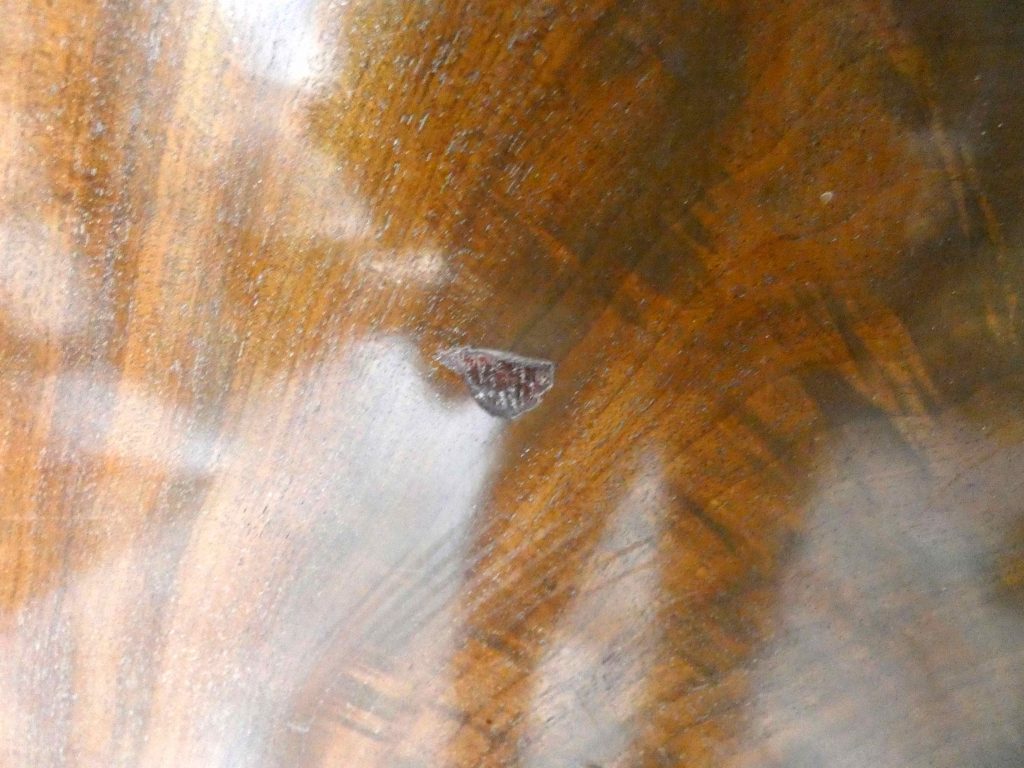
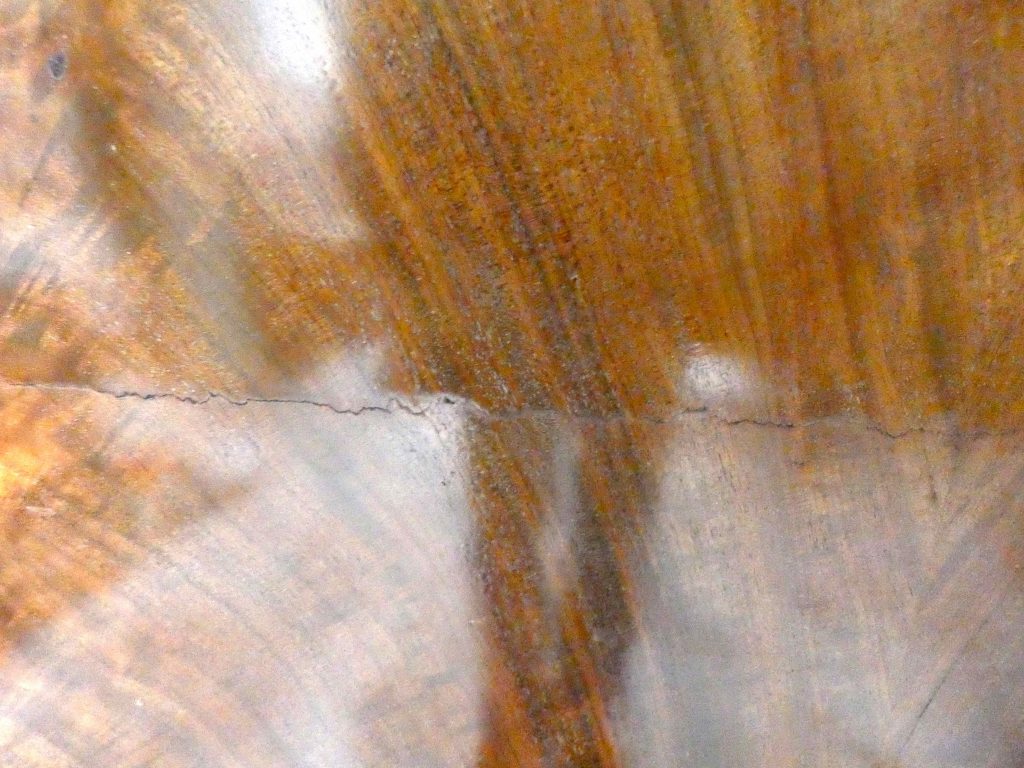
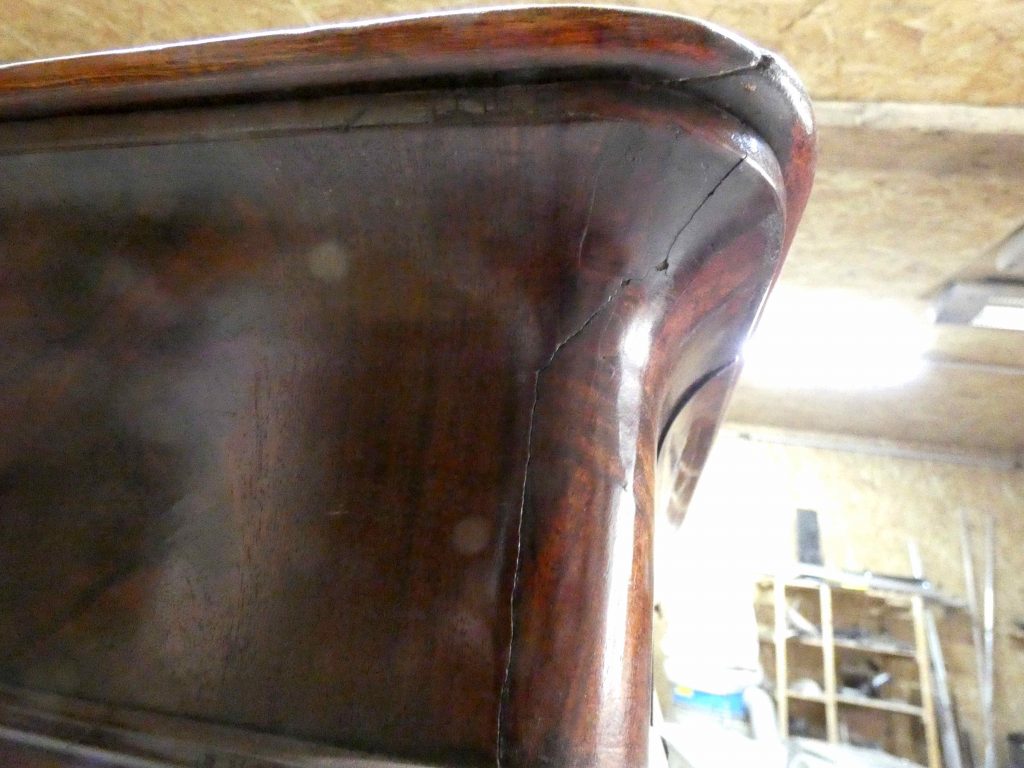
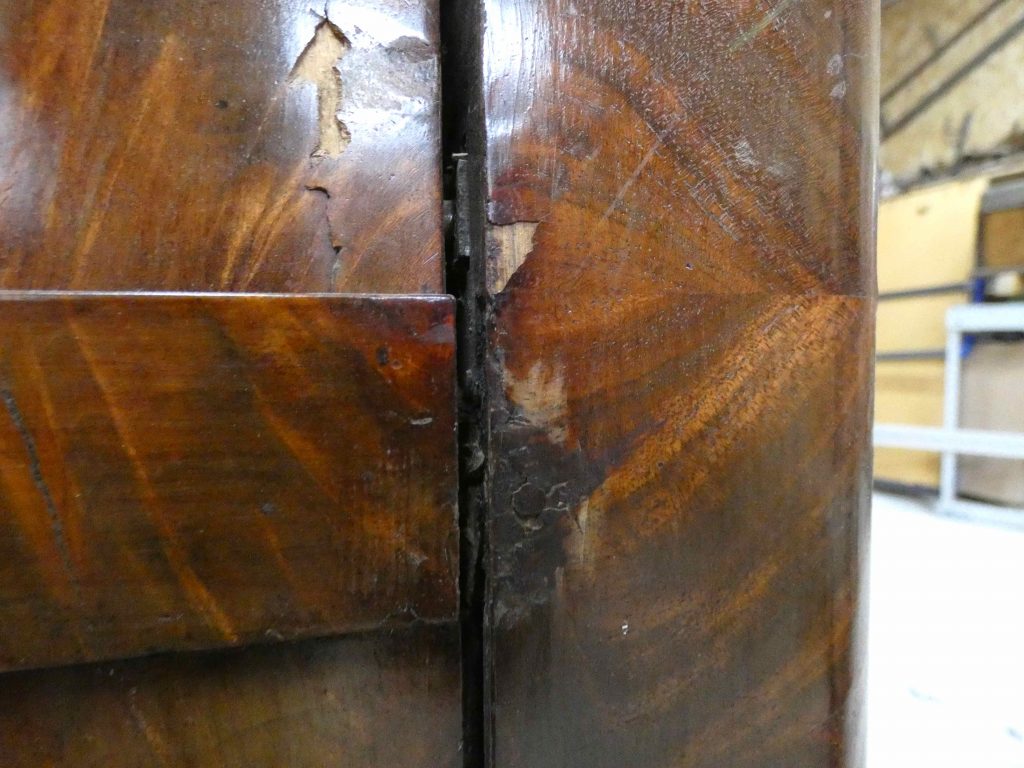
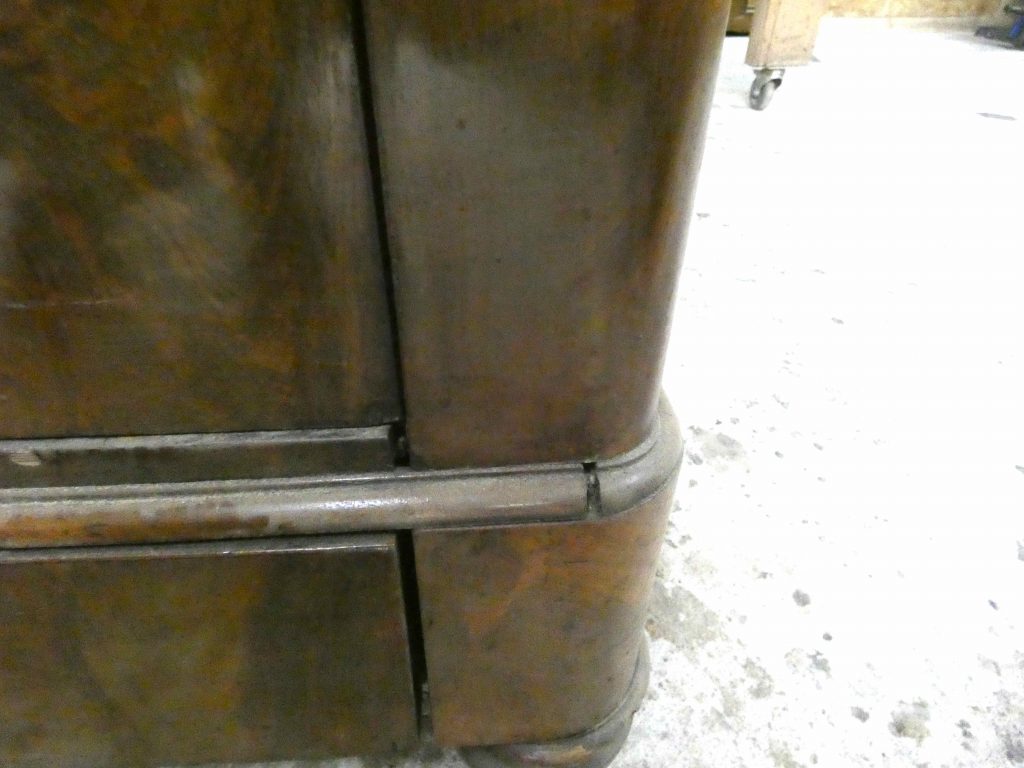
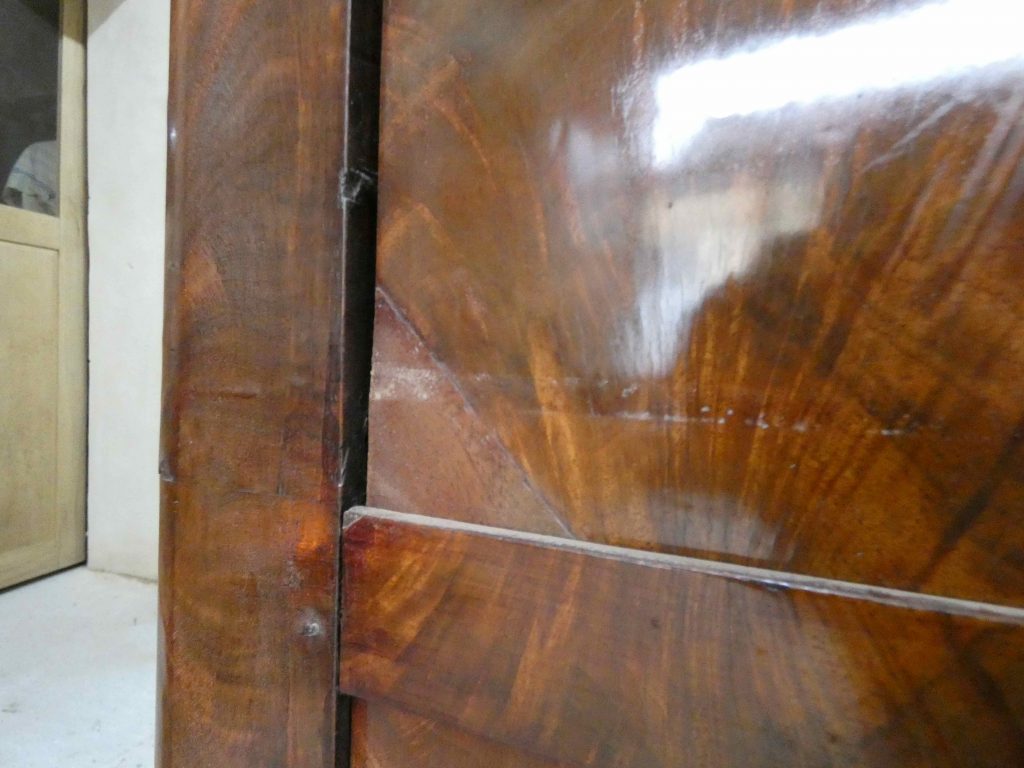
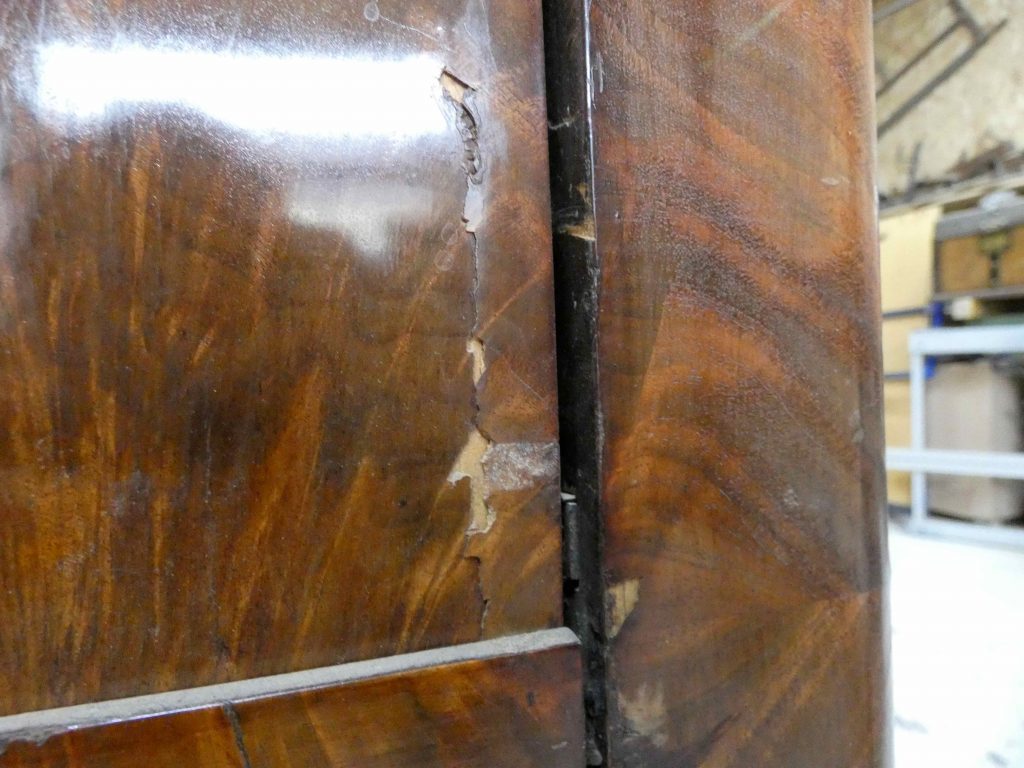
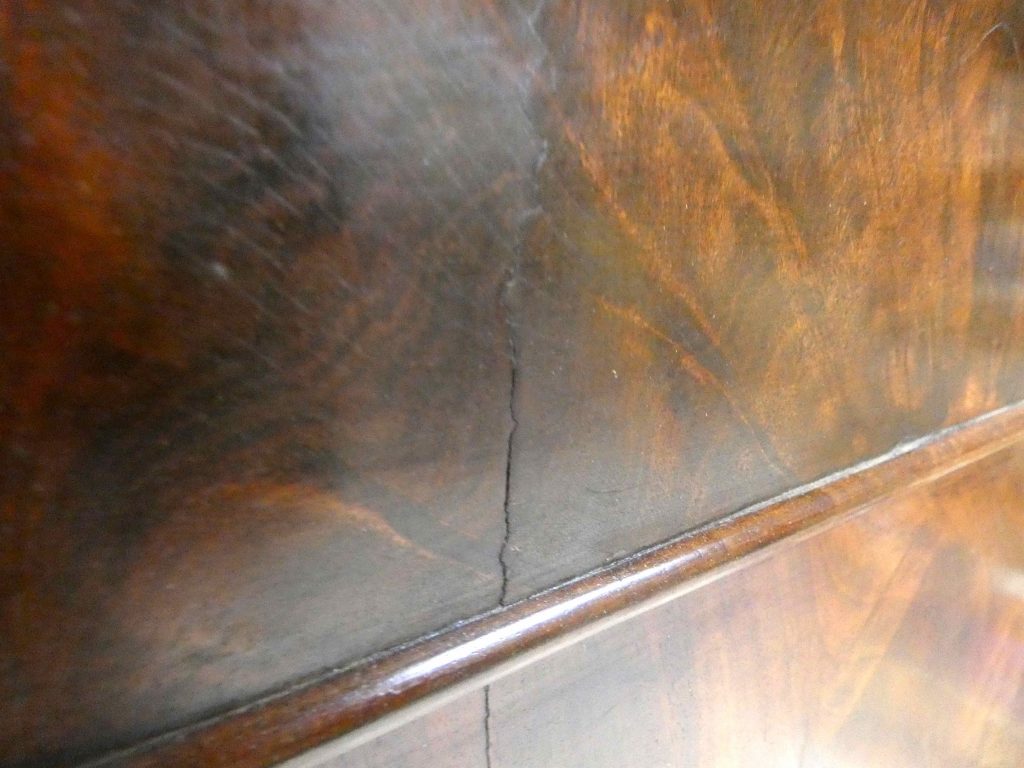
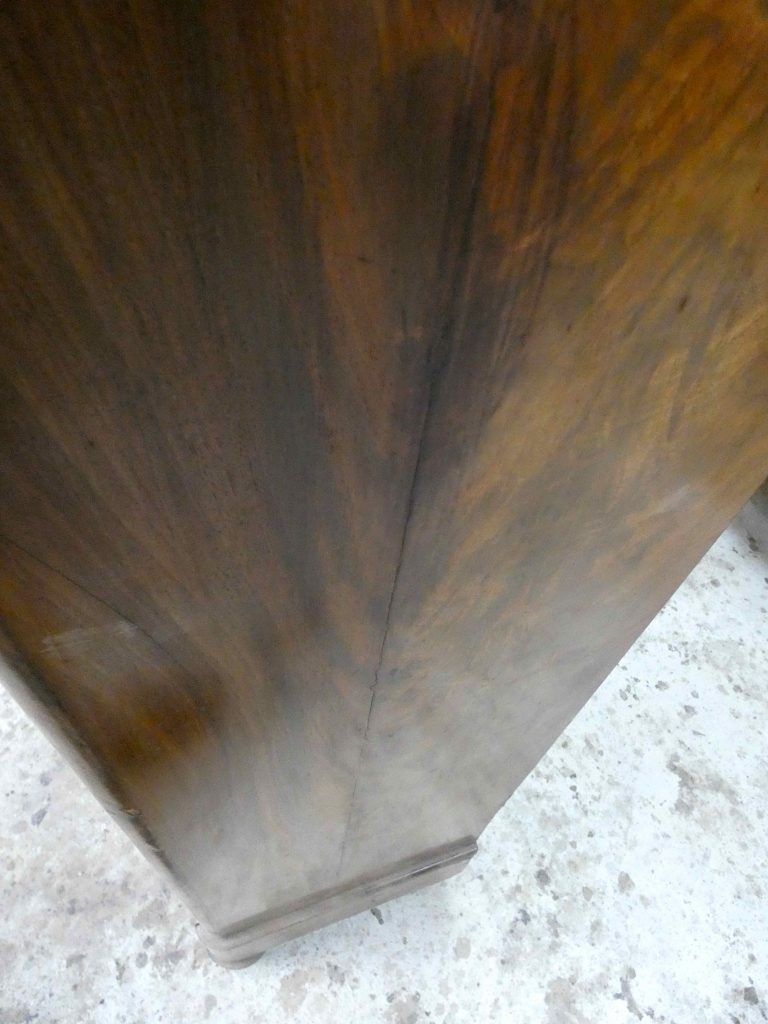
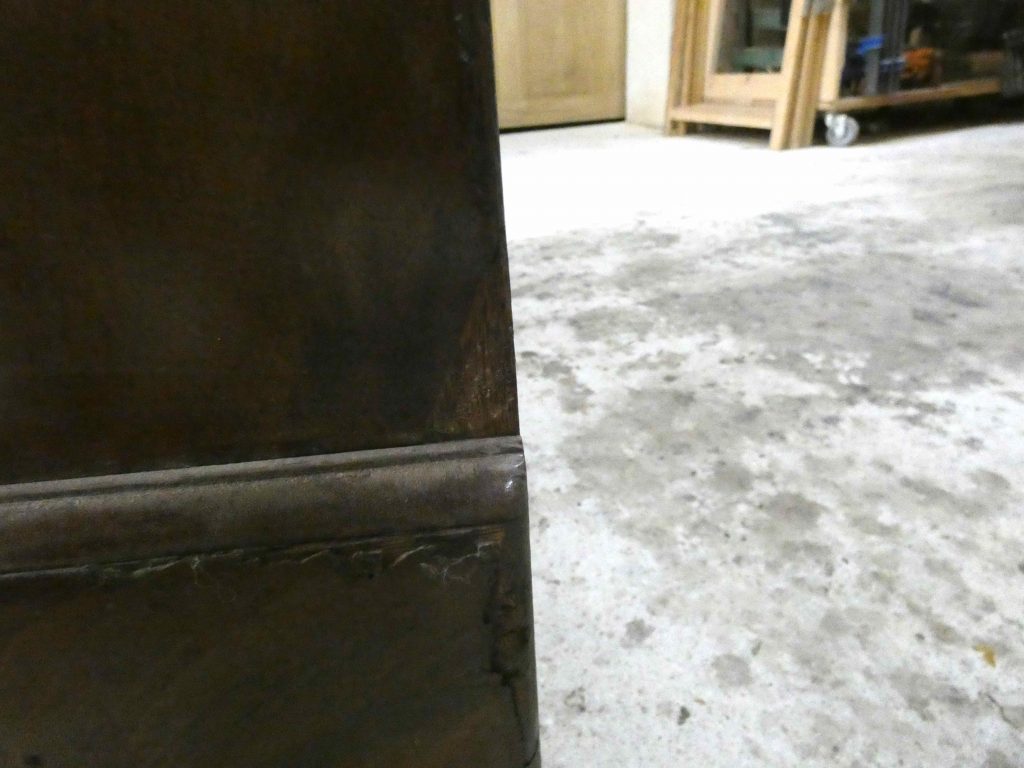
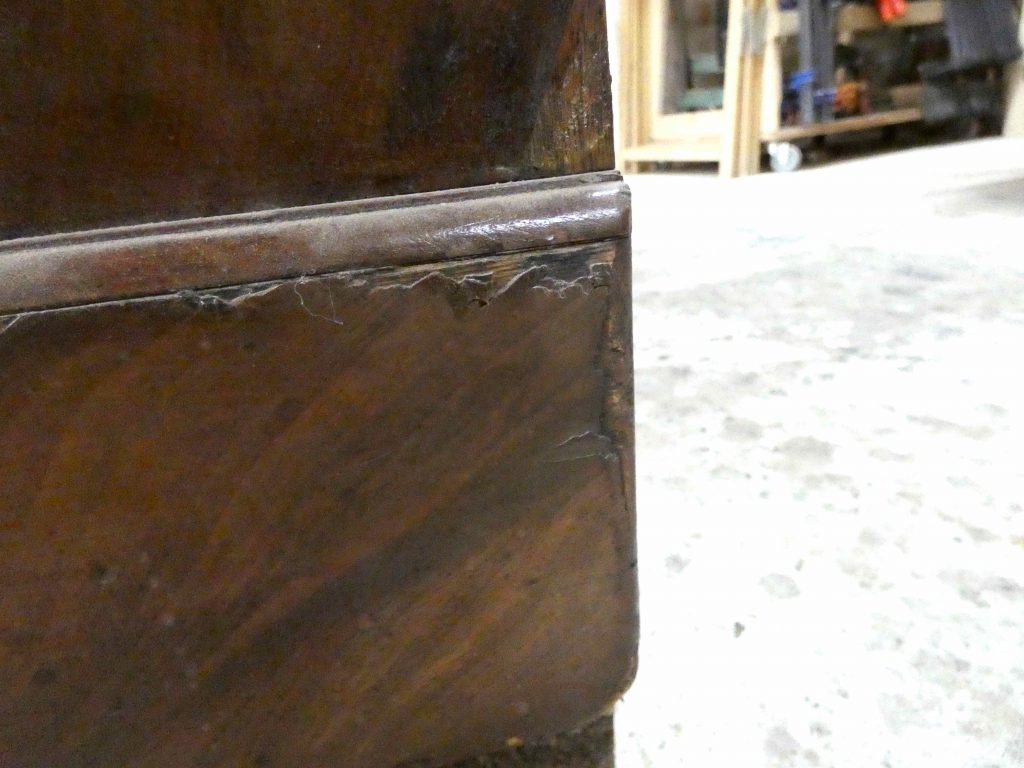
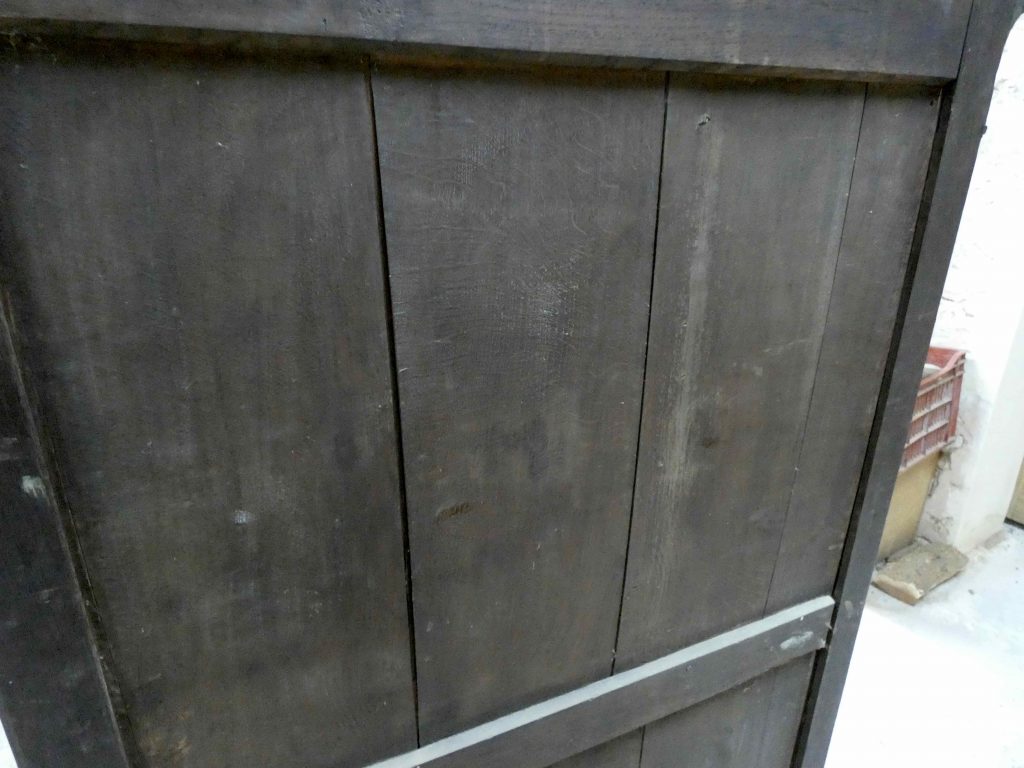
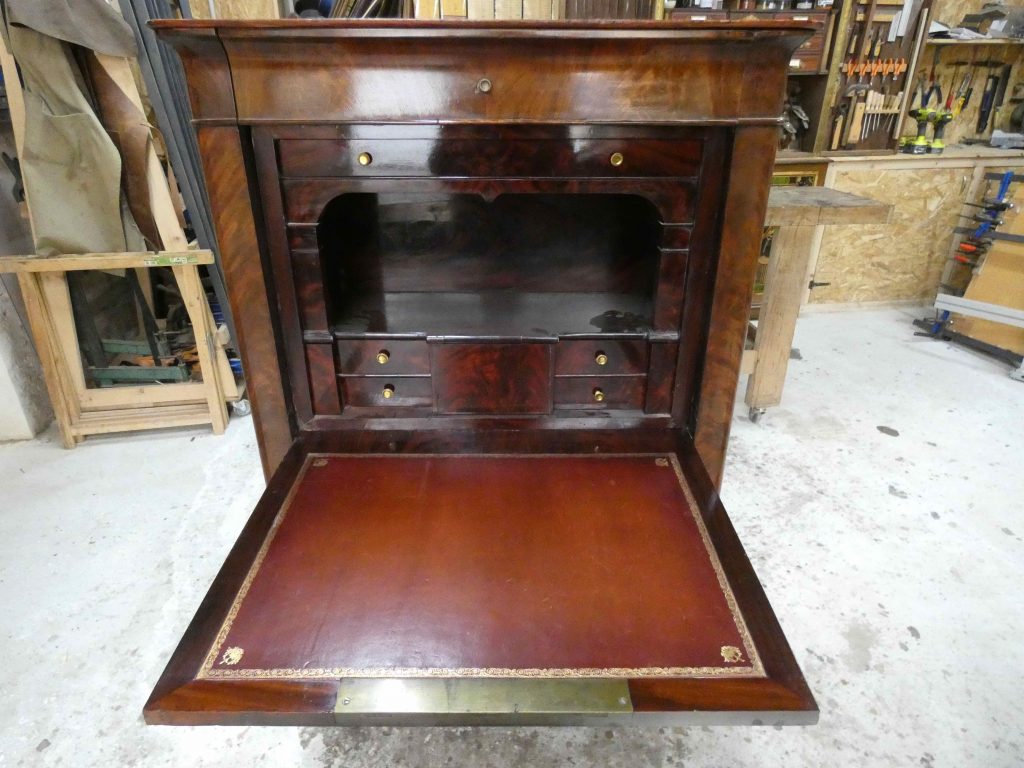
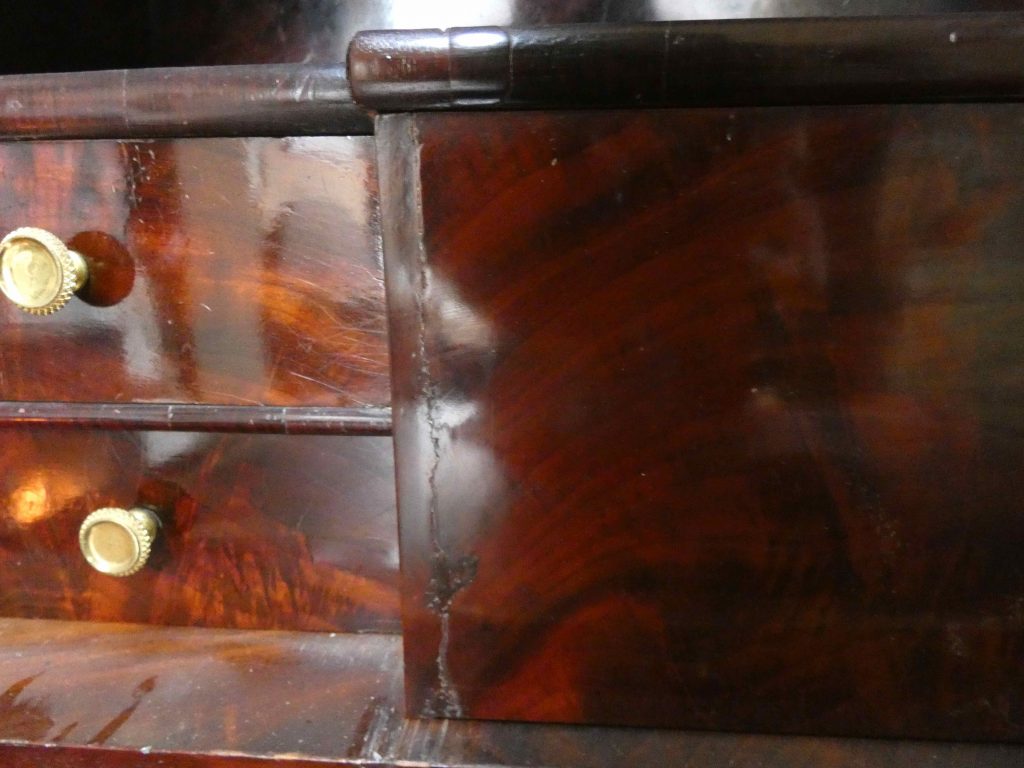
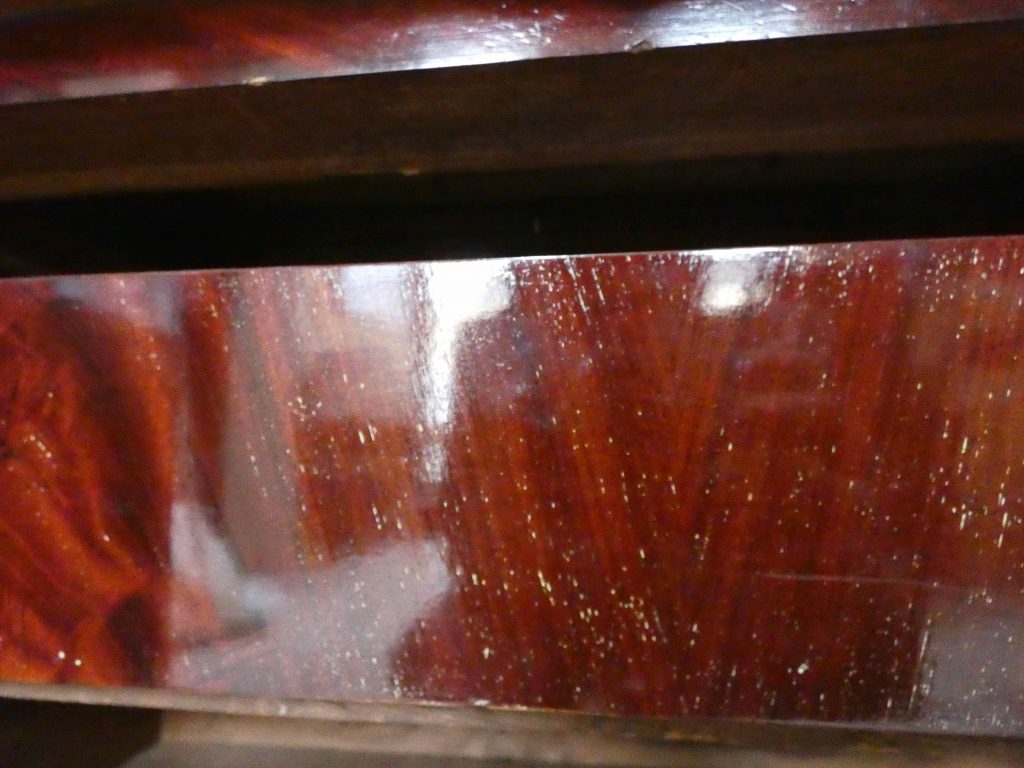
The restoration involved reattaching the structural joints and replacing missing veneer, reattaching and reinforcing the cracked sides, and removing the leather to secure the split in the drop-front. The drawers, drop-front, and doors were readjusted and restored to proper working order.
After cleaning and stripping the old yellowed varnish, this secretary desk was varnished with a colorless pad and then the leather was replaced.
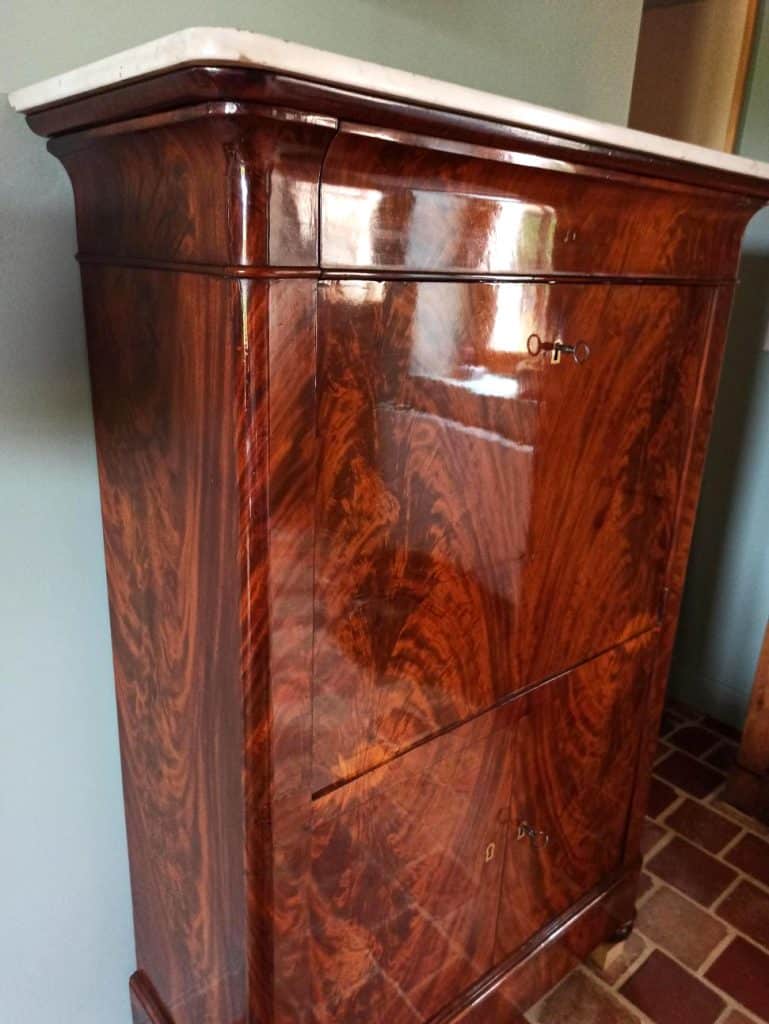
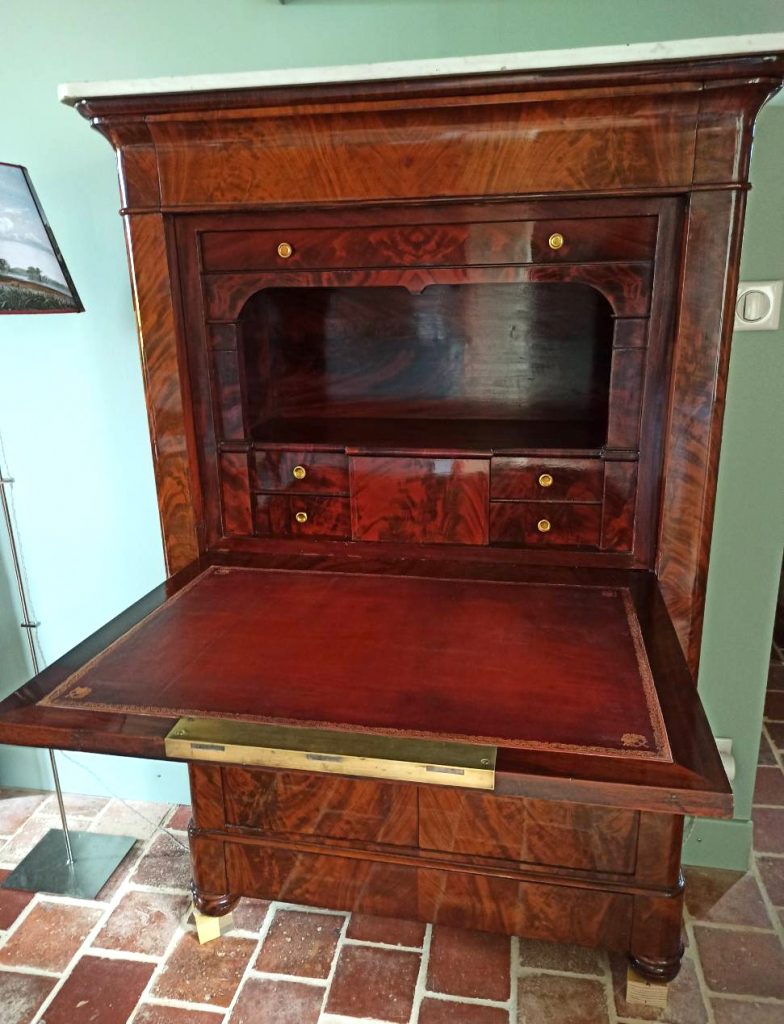
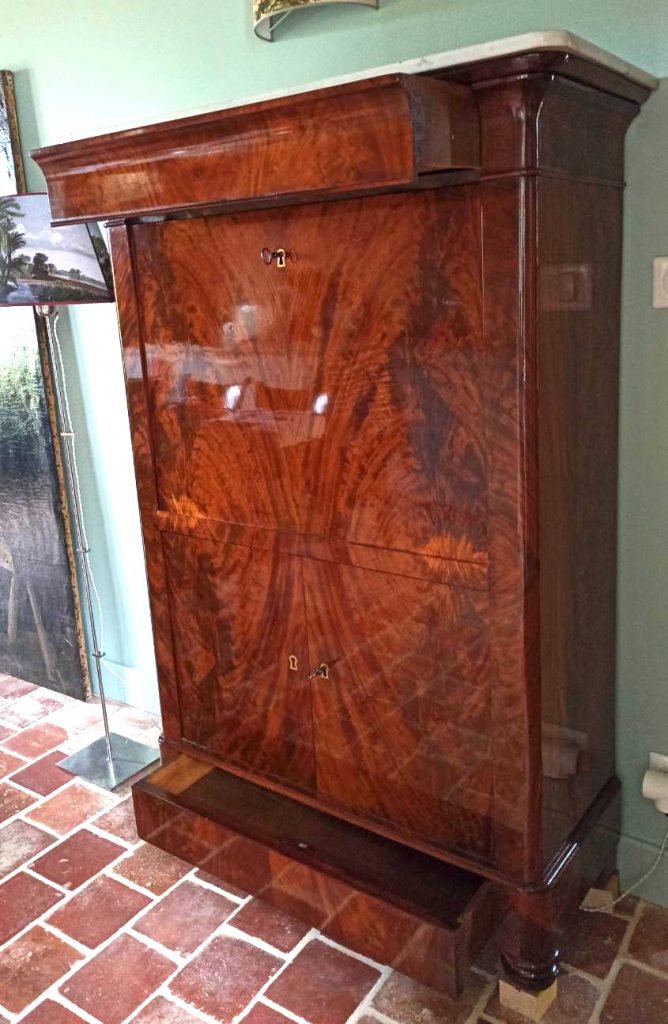
After restoration 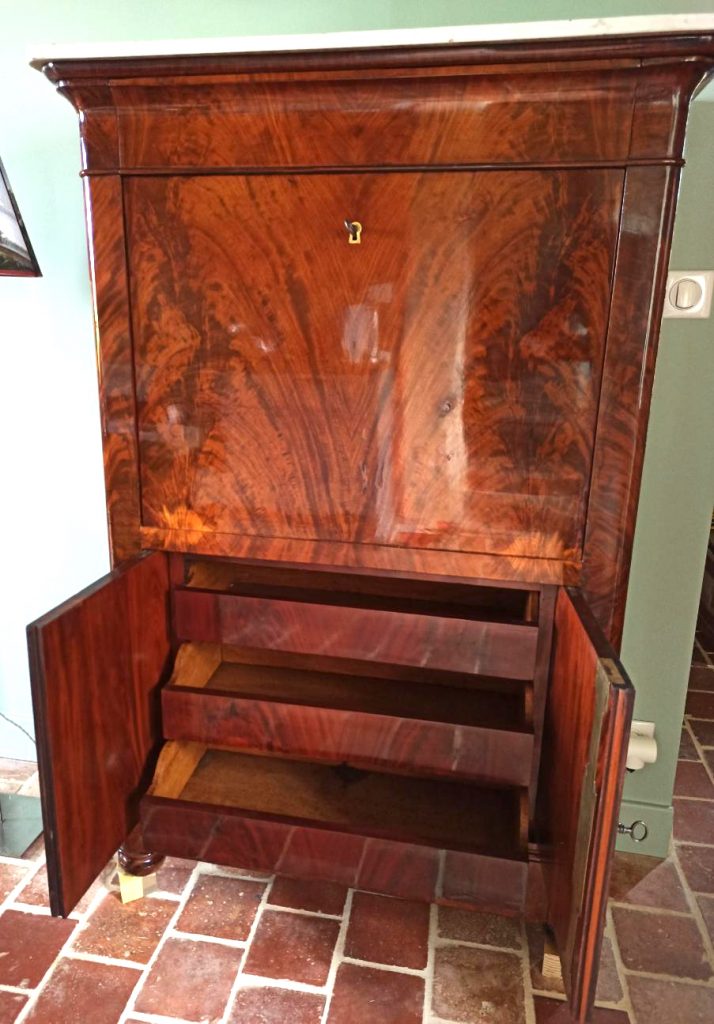
After restoration
To see previous restorations : https://ebenisterie-mathieuvath.fr/en-ce-moment-a-latelier/