After several weeks of work, the restoration of this sign is finally complete.
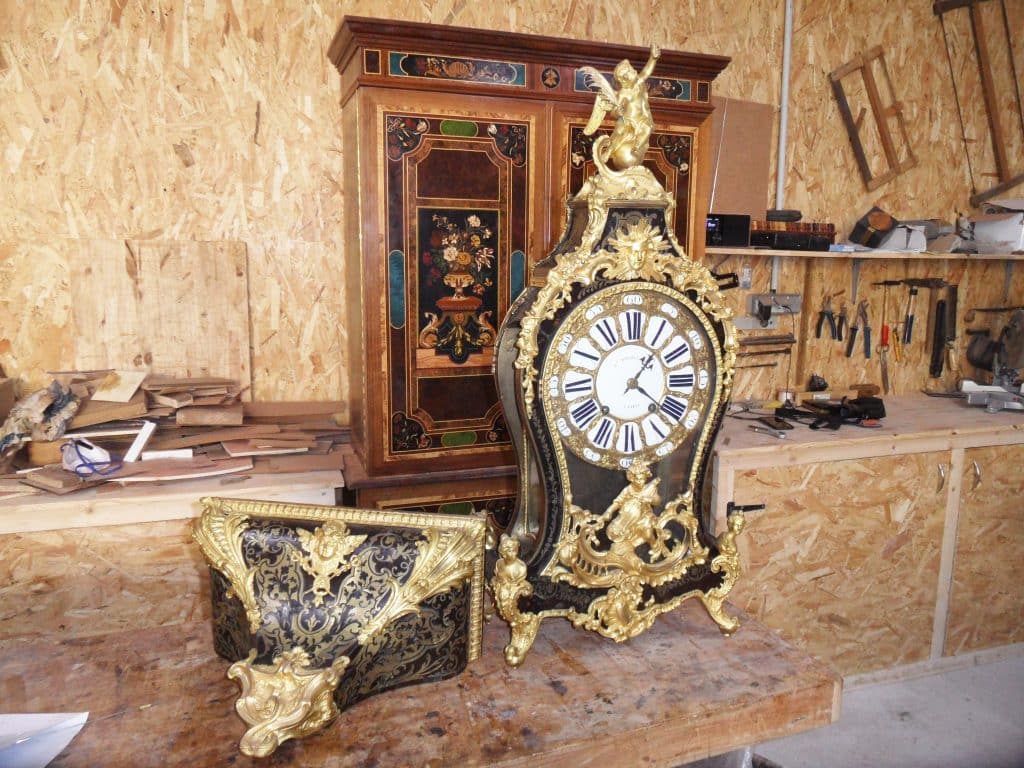
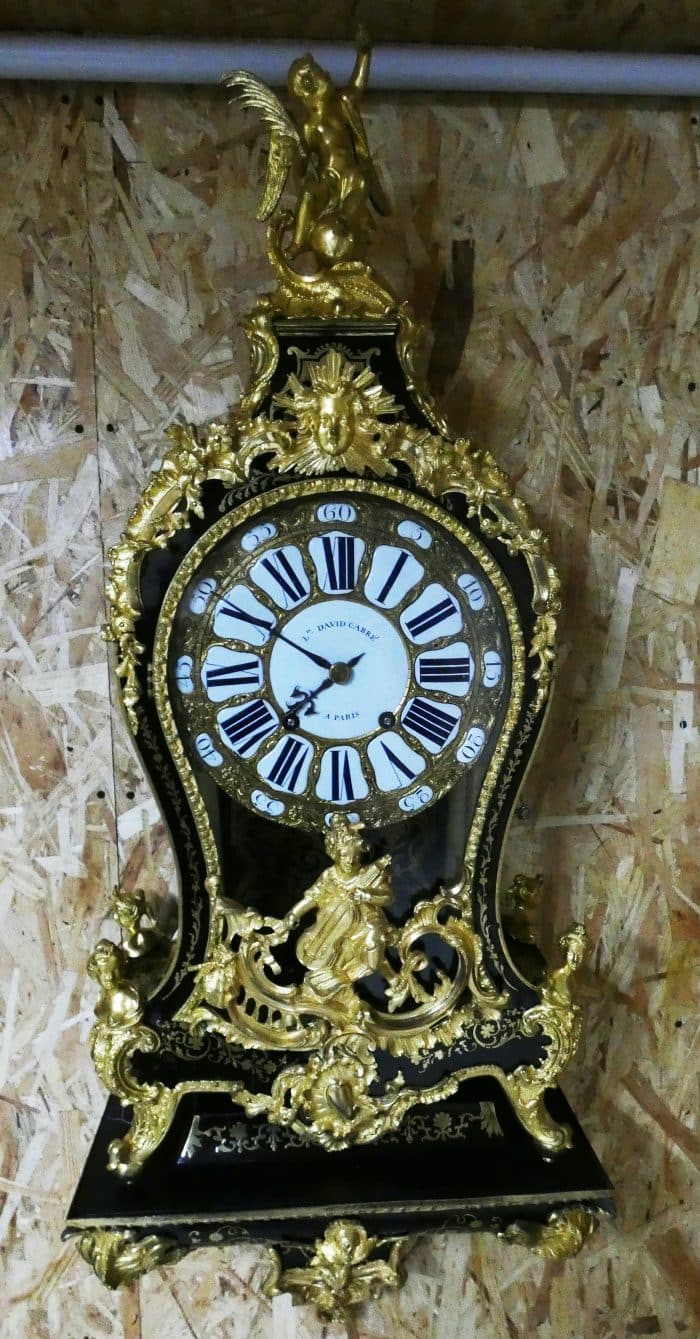
This is a Louis XV period cartel clock in brown tortoiseshell and brass marquetry, with rosewood restorations. The dial is by Louis David Carré, nephew of Jullien le Roy, who became a master craftsman on December 31, 1748. Lodged at the Louvre from 1744, he was elected a juror in 1775.
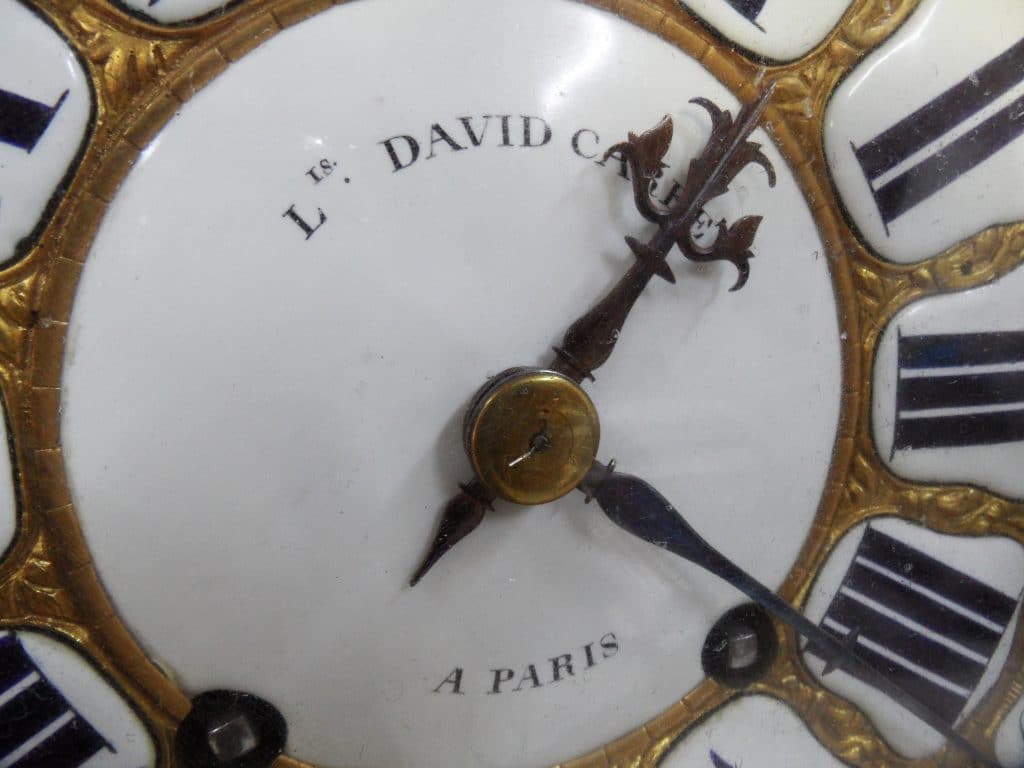
Louis David Carré in Paris 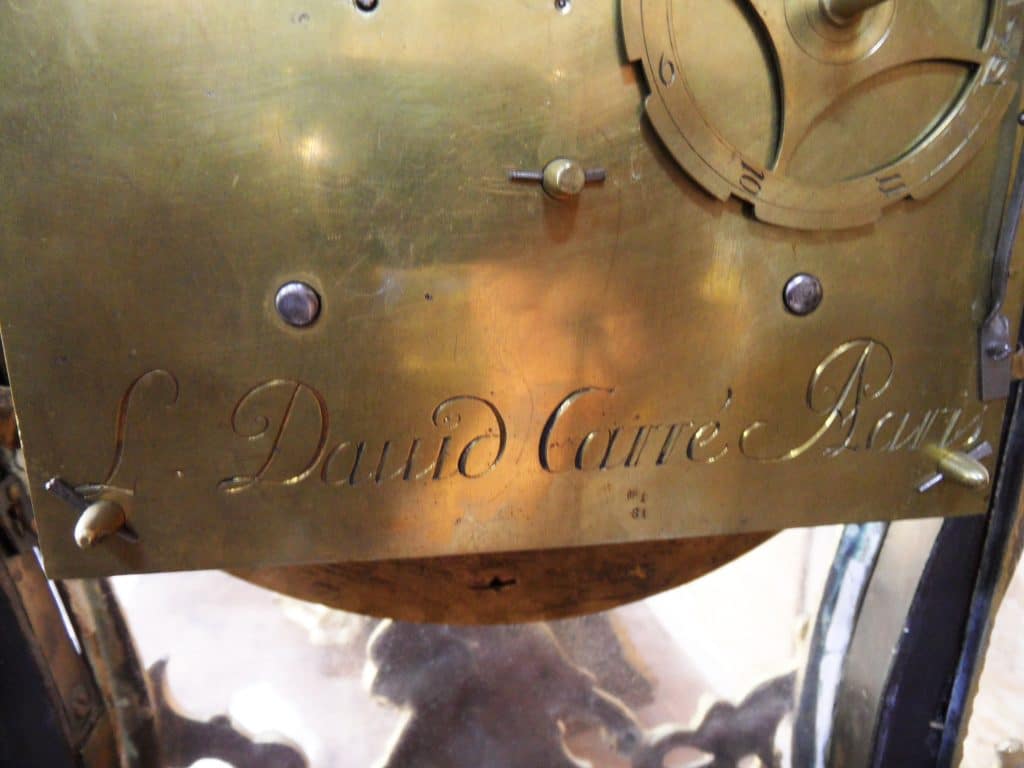
Signature of Louis David Carré
The greatest asset of this cartel clock lies in its bronze mounts. They are truly magnificent, and above all, they are in very good condition. There are very few areas where the gilding is missing, as we can see in the photos of its arrival at the workshop.
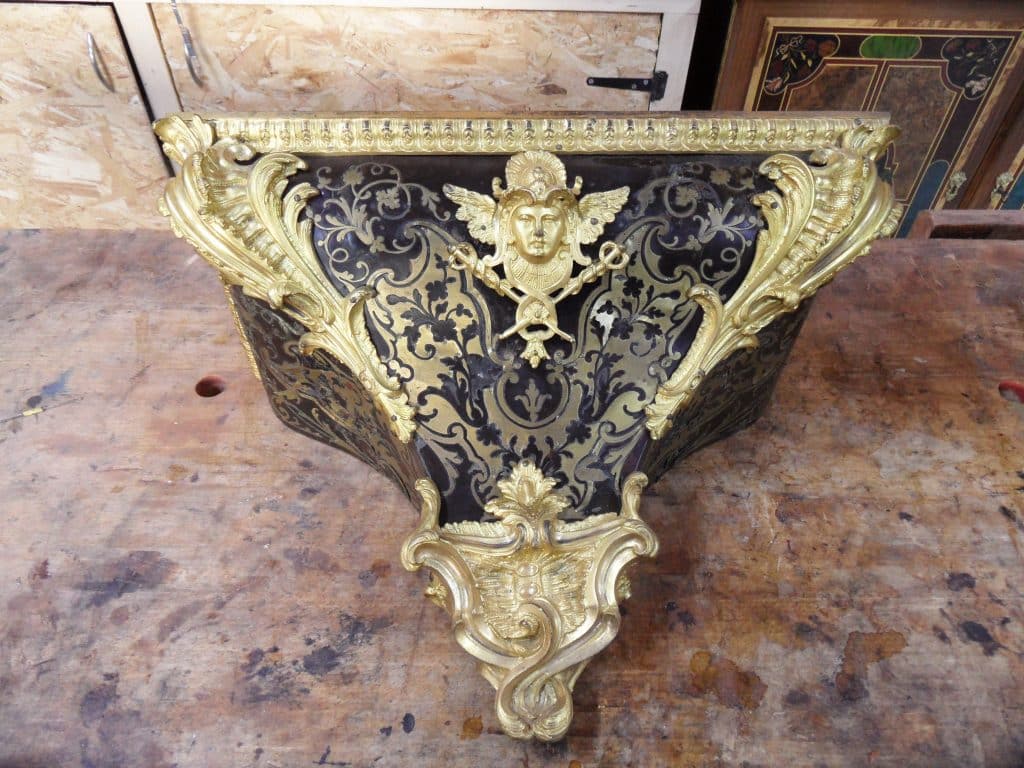
Before restoration 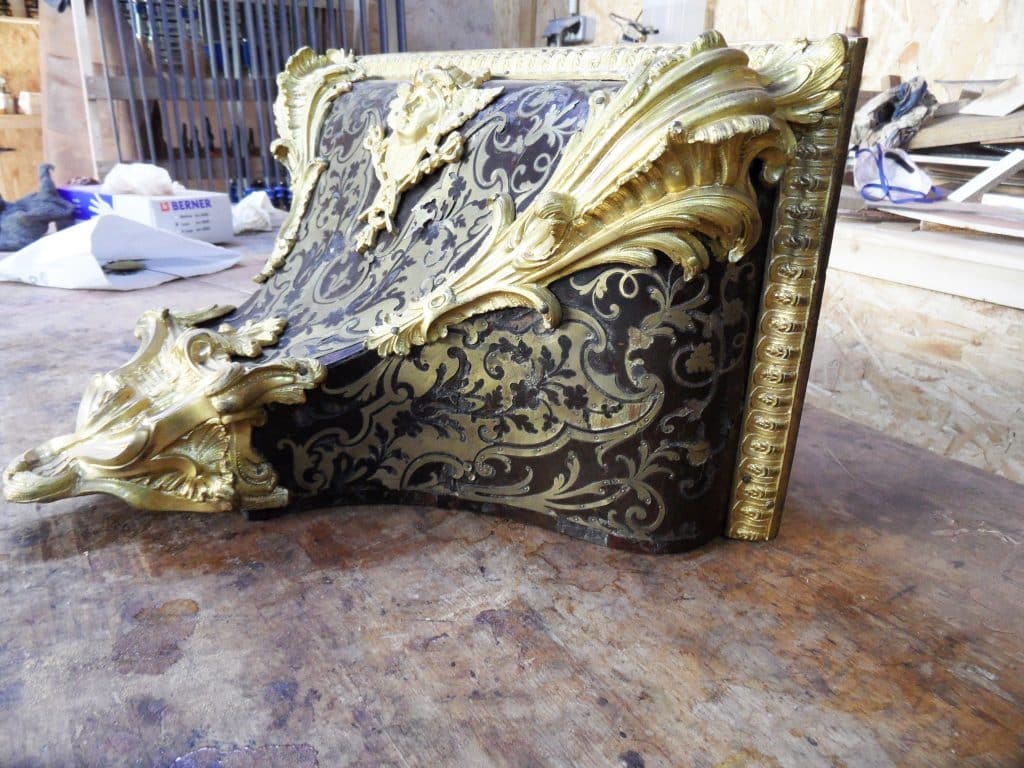
Right side before restoration 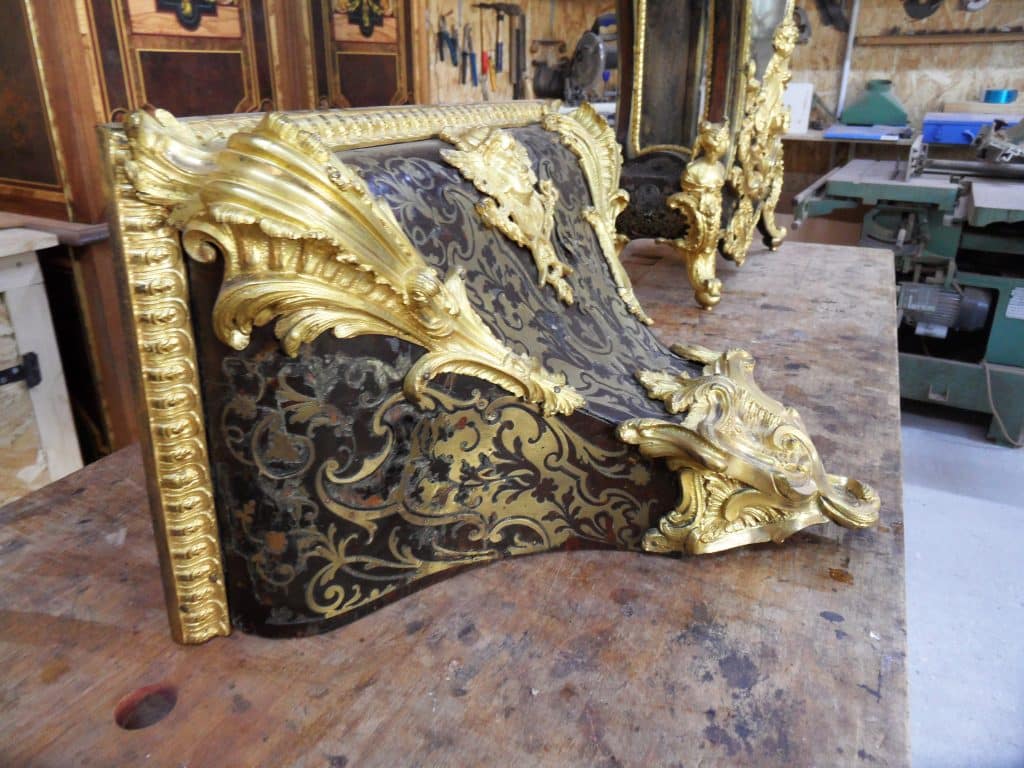
Left side before restoration
Some elements are veneered with rosewood. Is this a restoration or is it original? I would lean towards restoration. The 19th-century restorer, lacking ebony or tortoiseshell, chose rosewood, a wood which, when new, is very dark.
However, since it could not be proven that it was indeed a restoration, it was decided to keep it and lightly tint it, in order to restore its original color and better harmonize it with the rest of the marquetry.
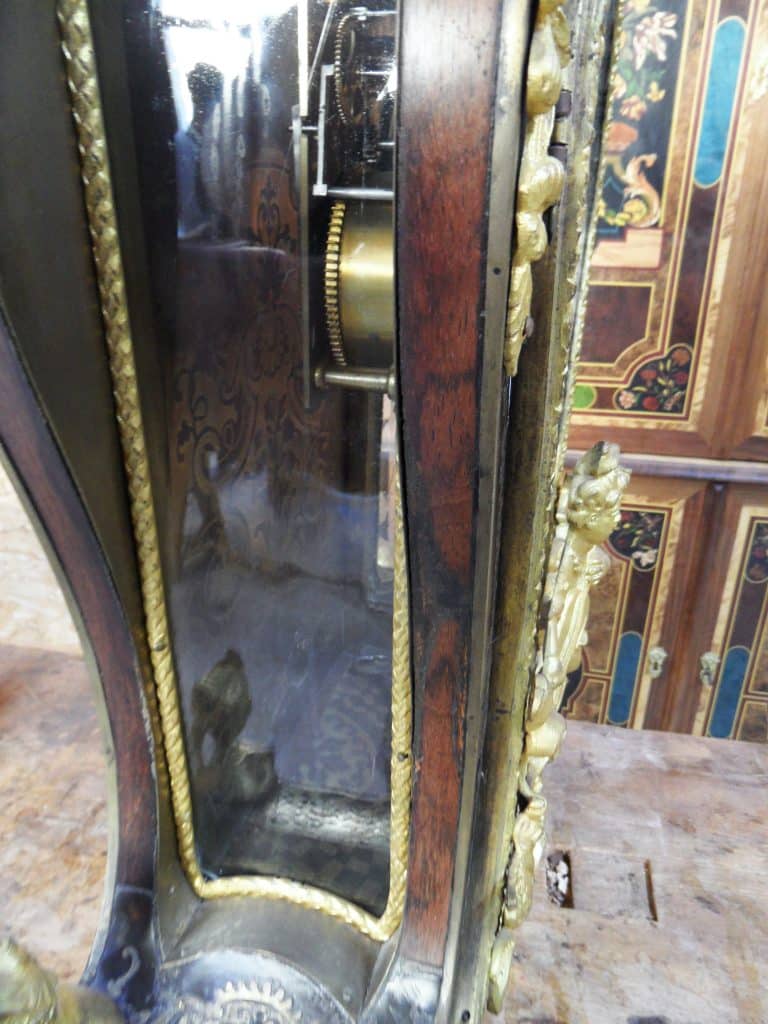
The oak frame is in rather poor condition. All the joints are coming apart.
So I had to glue them back together with fish glue, or hot glue when possible. Furthermore, the core is cracked in several places. And there, it's impossible to tighten and reattach with a clamp. Because the wood has shrunk but the brass hasn't. So I reinforced and filled the cracks so that the marquetry could be returned to its original position, without altering the sides and structure of the clock.
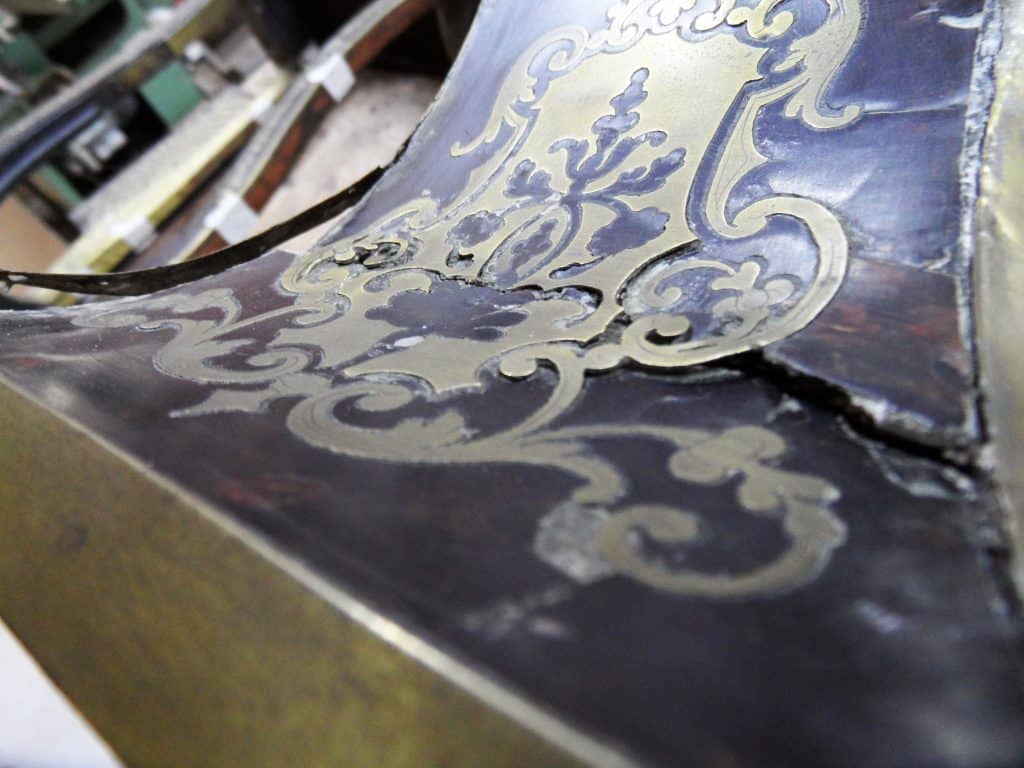
Split soul 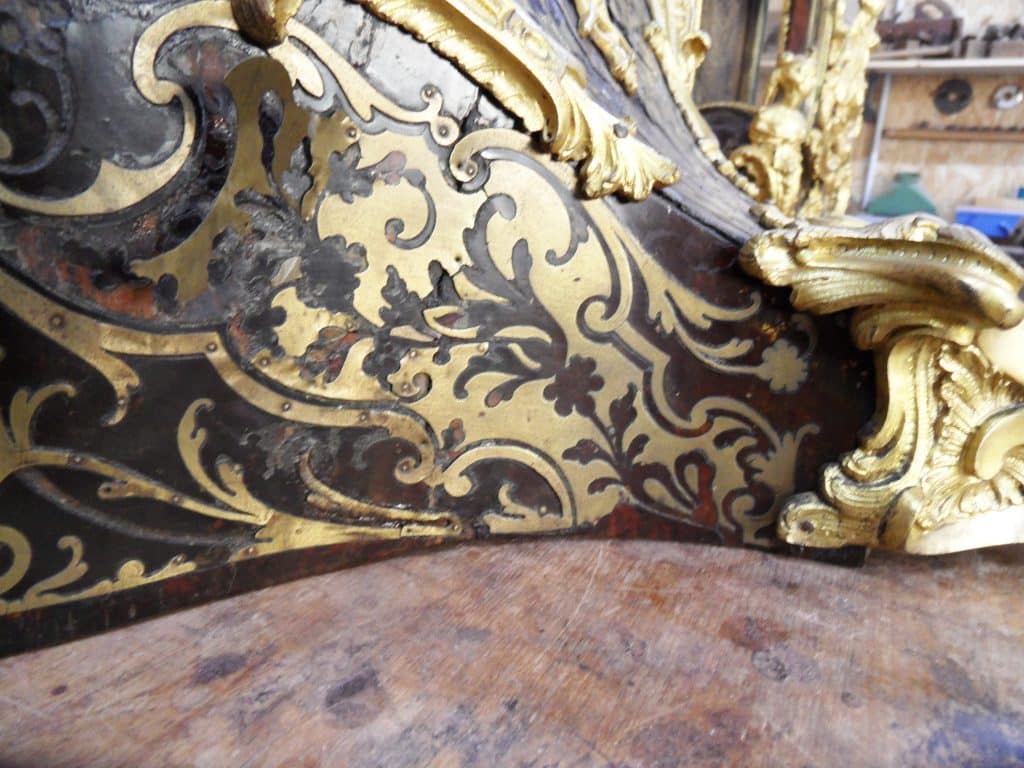
Split soul 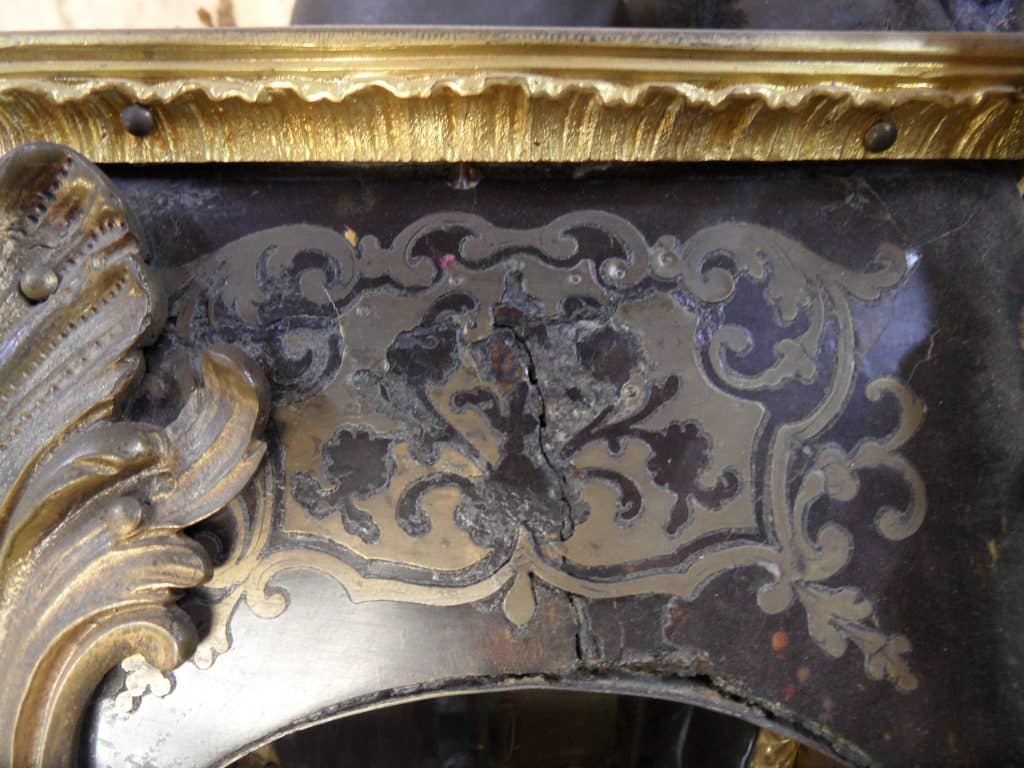
Split soul
Unfortunately, the bulk of the restoration work lies in the tortoiseshell and brass marquetry. Like many pieces of furniture, this clock has been excessively sanded. This was done for convenience and to save time, but despite the engraving on the brass. On this clock, there is practically no trace of the engraving left, and the marquetry is as thin as cigarette paper.
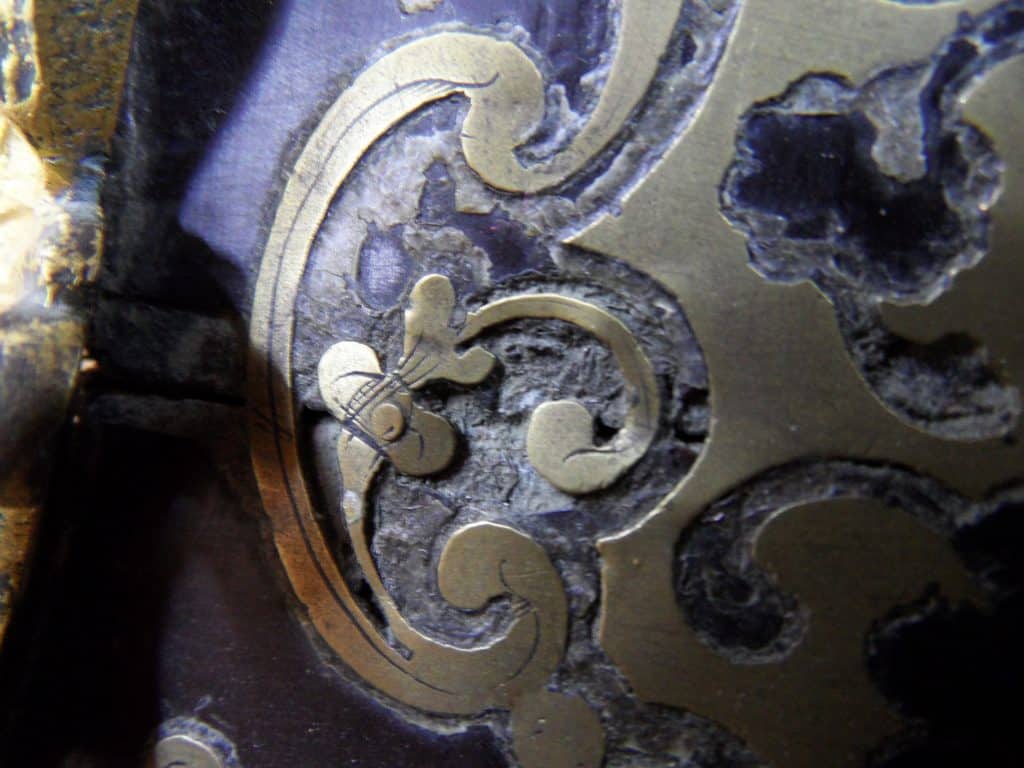
Remnants of engraving and traces of glue 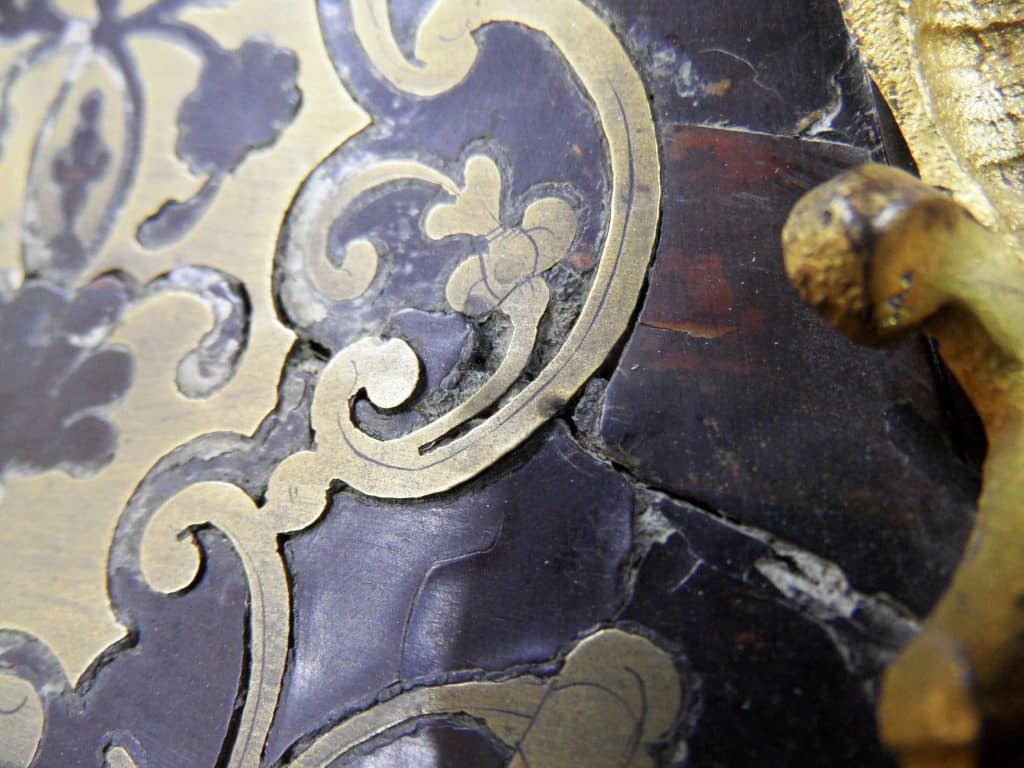
Remains of engraving
So I had to find thin sheets of brass to fill in the gaps in the plating.
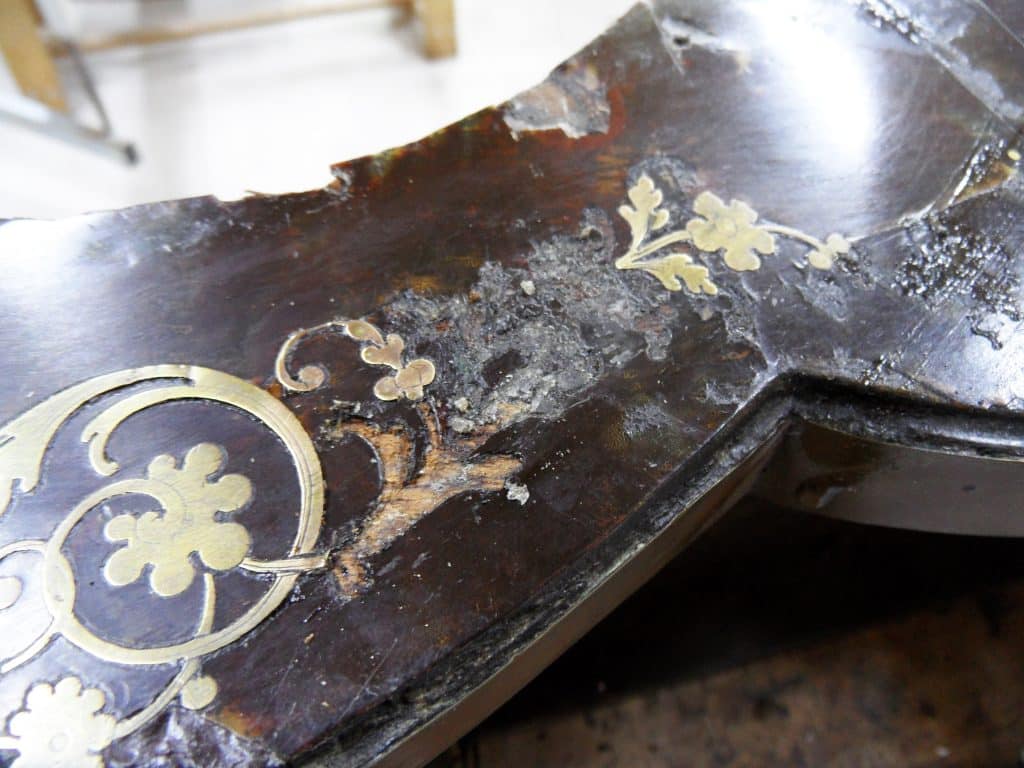
Another major and widespread problem with Boulle marquetry furniture is the use of superglue (cyanoacrylate glue). The brass detaches and fails to hold, but the glue remains stuck on top and is impossible to remove. Only mechanical action (with a chisel) is effective, which necessitates removing the brass.
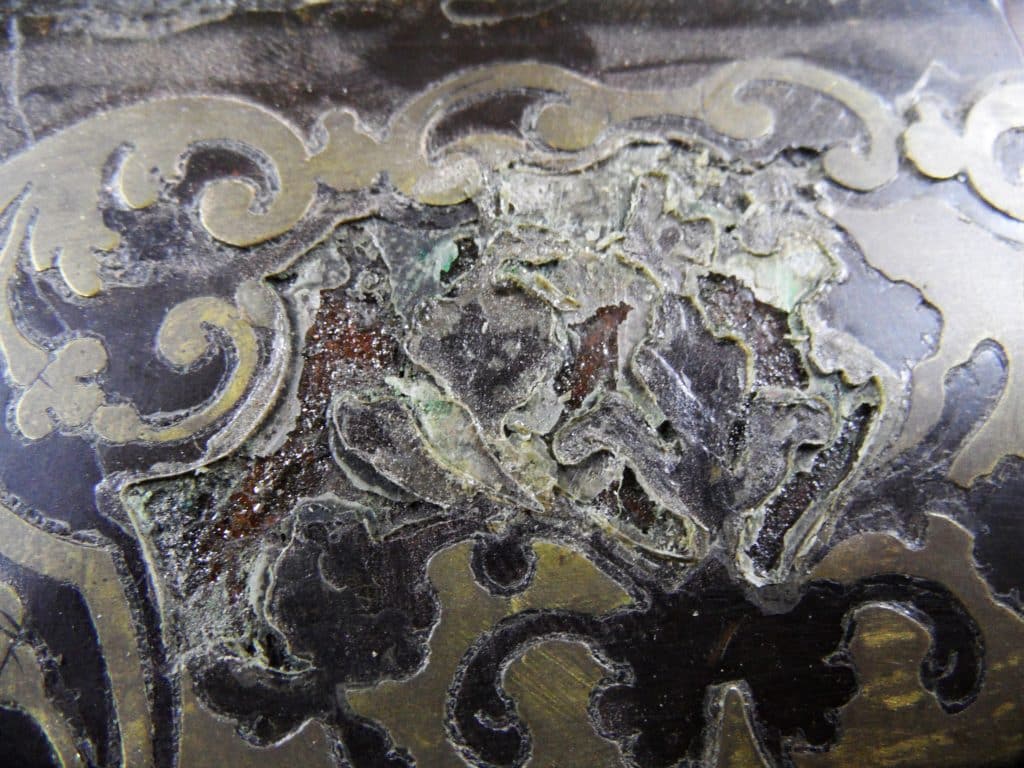
Glue 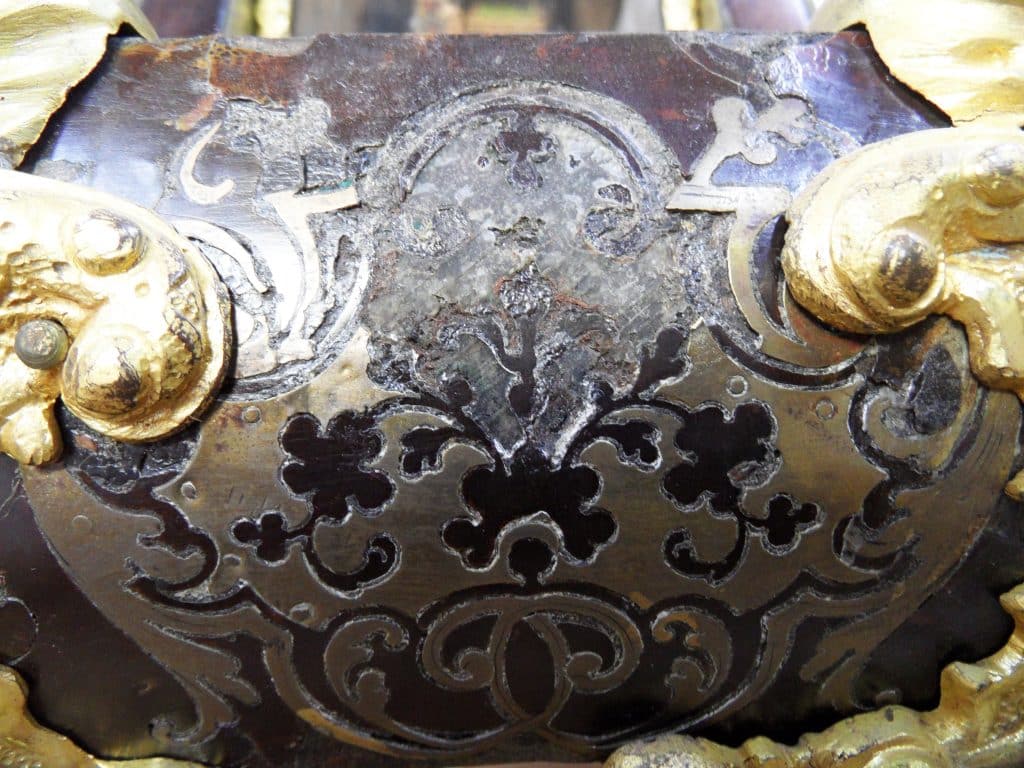
The devastating effects of cyanoacrylate glue 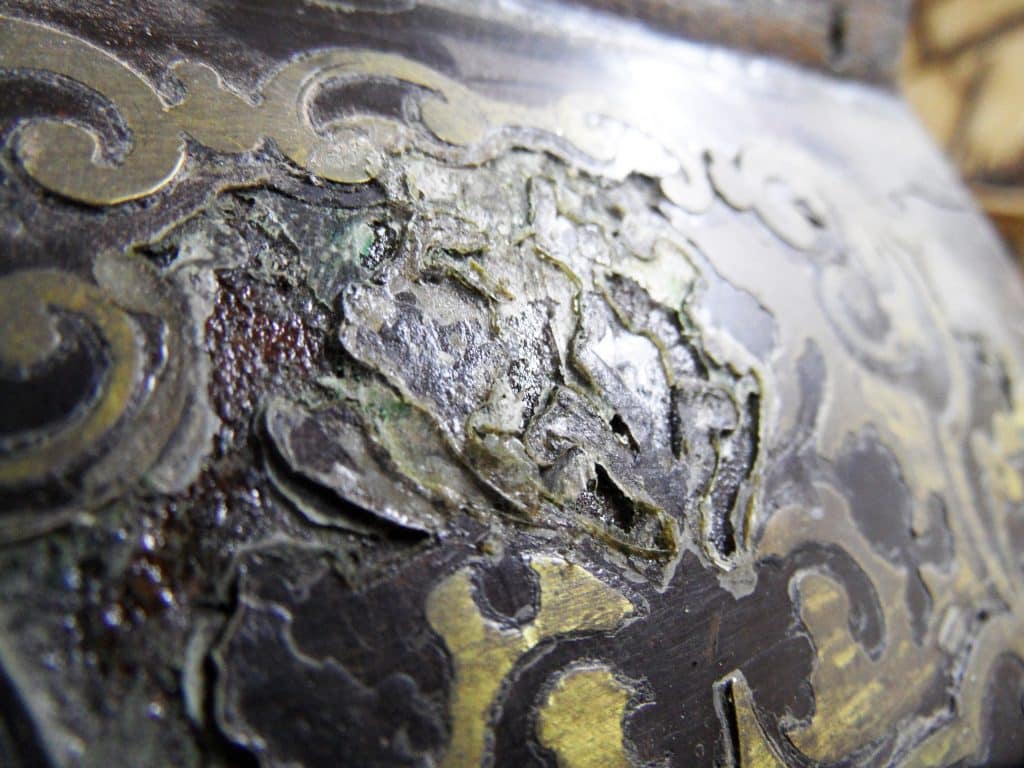
And more glue 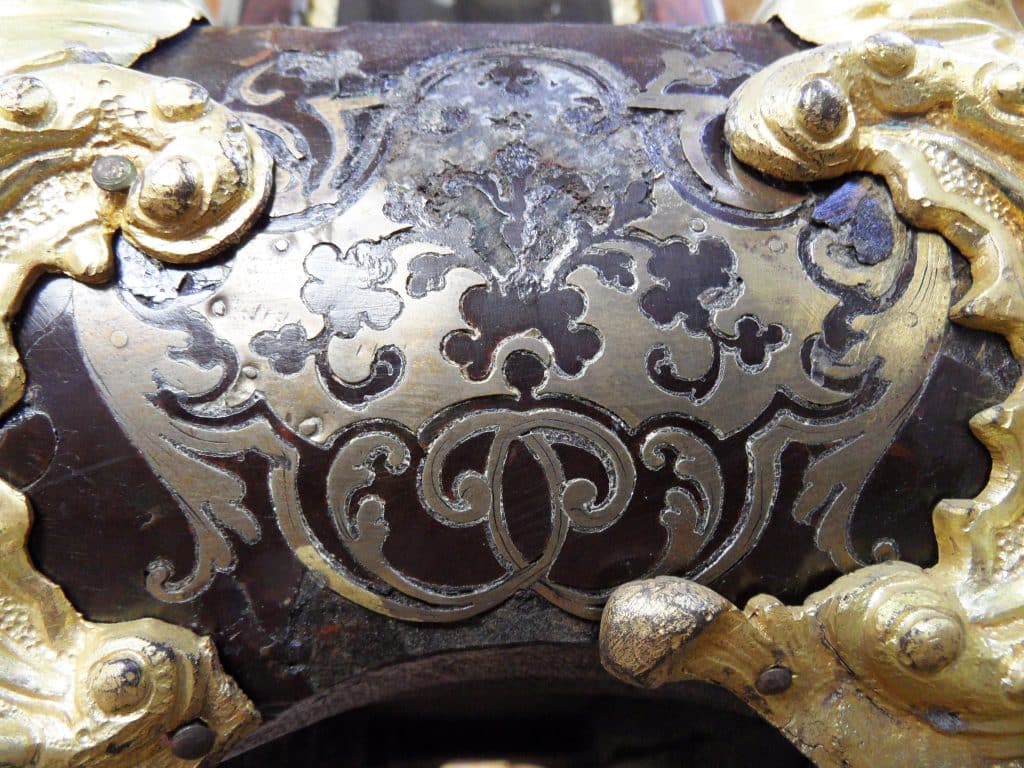
The devastating effects of cyanoacrylate glue
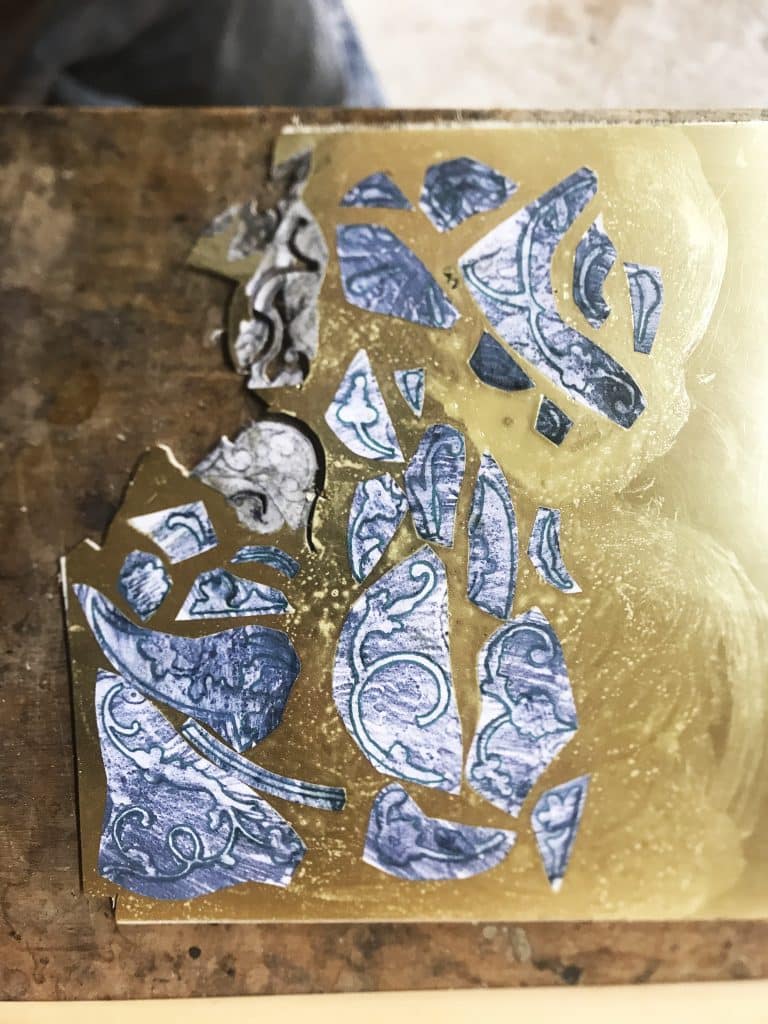
Apart from these major flaws, the restorations involved routine repairs to missing marquetry. These were cut from a very thin sheet of brass (0.2 mm), then glued in place under vacuum and held under pressure for five days. Afterward, the marquetry was cleaned (without sanding), and the joints were filled with Roubo putty.
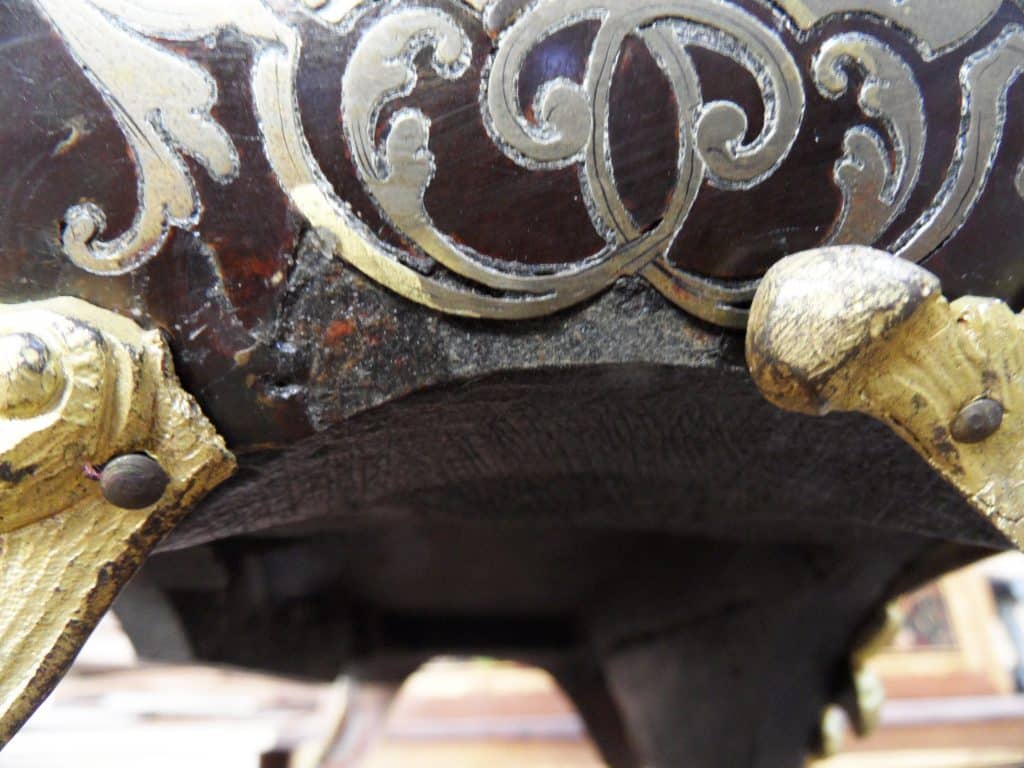
Lack of scales 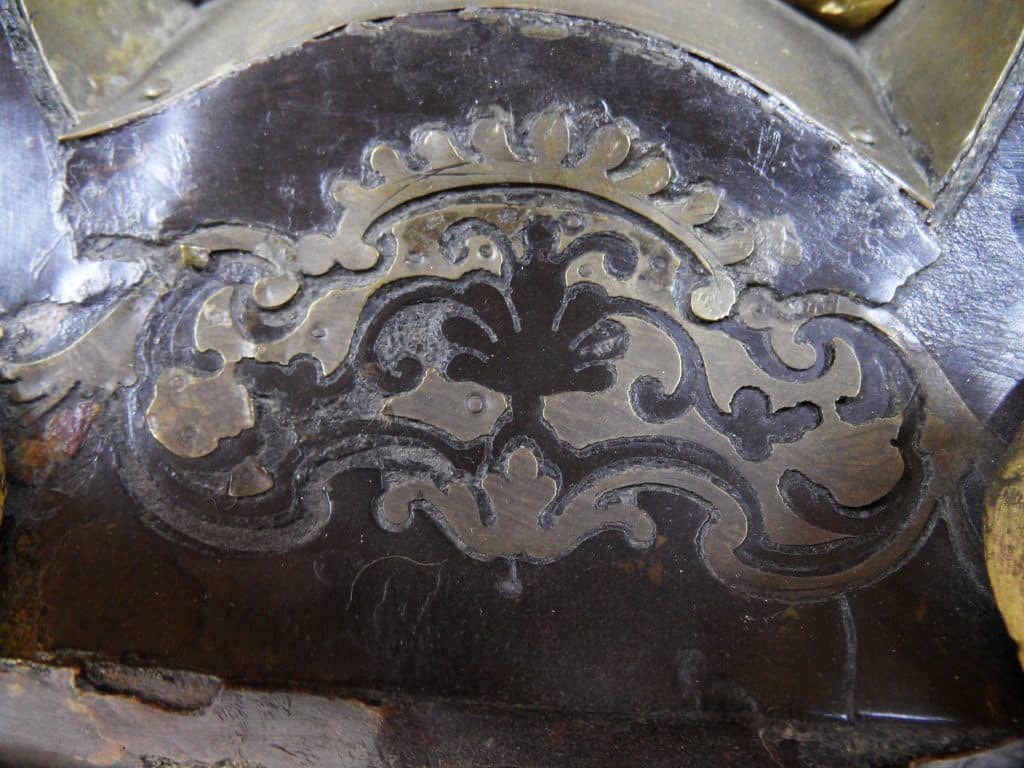
Veneer missing and traces of glue 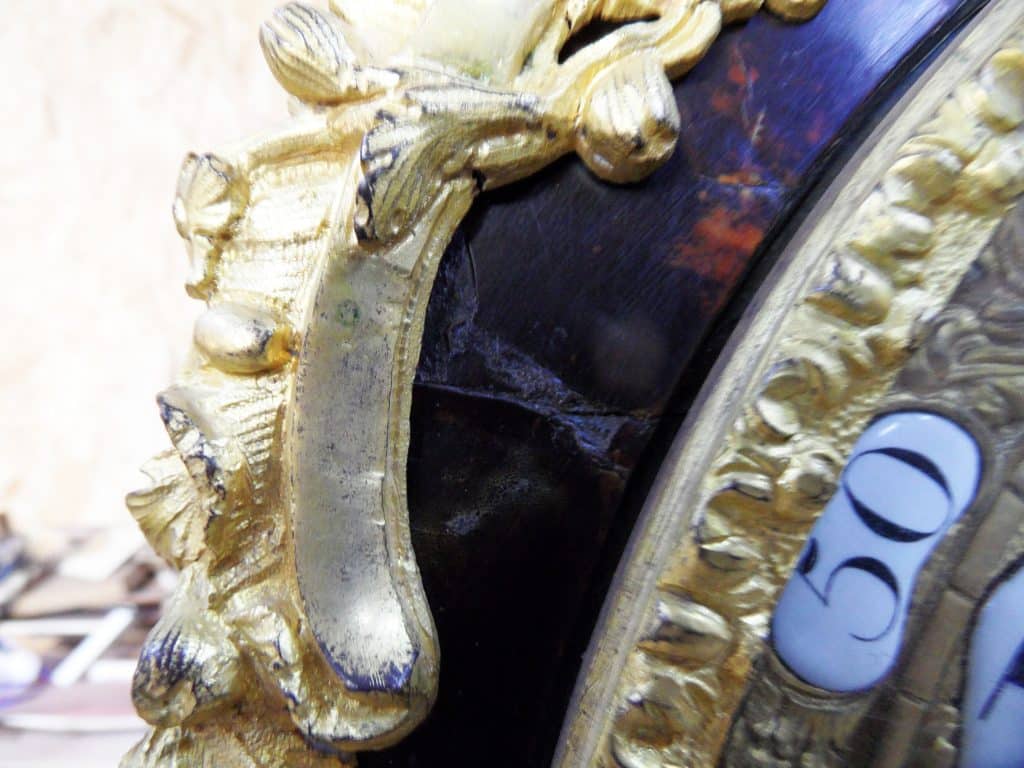
Lack of scales 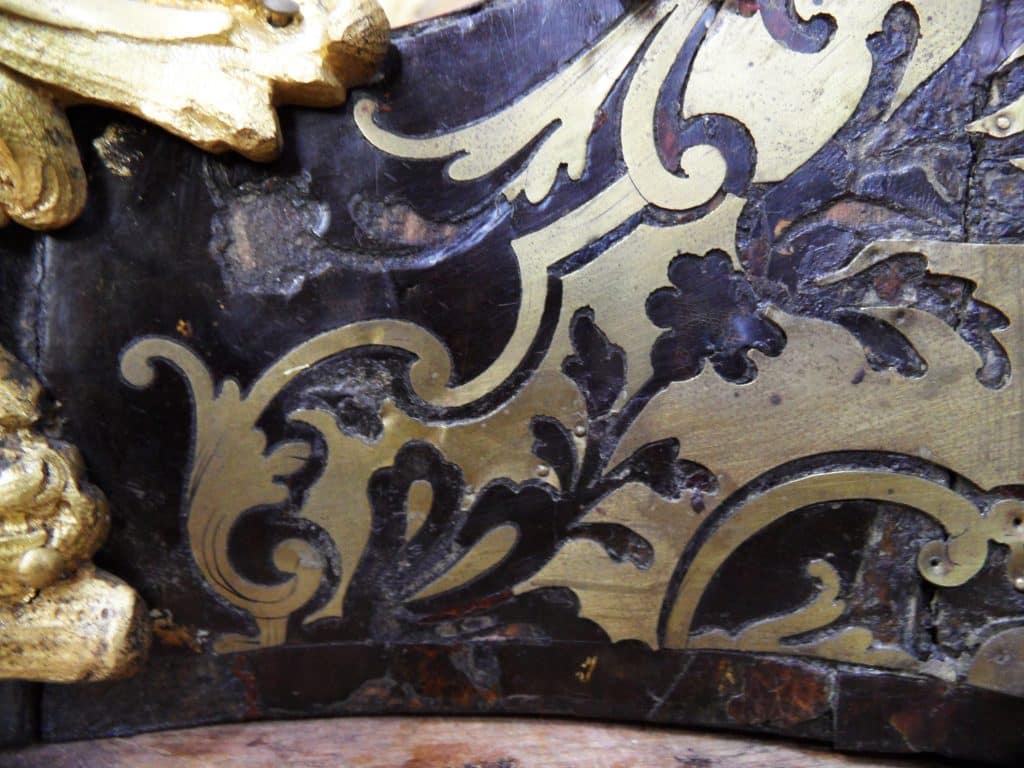
Missing brass and scale on the right side 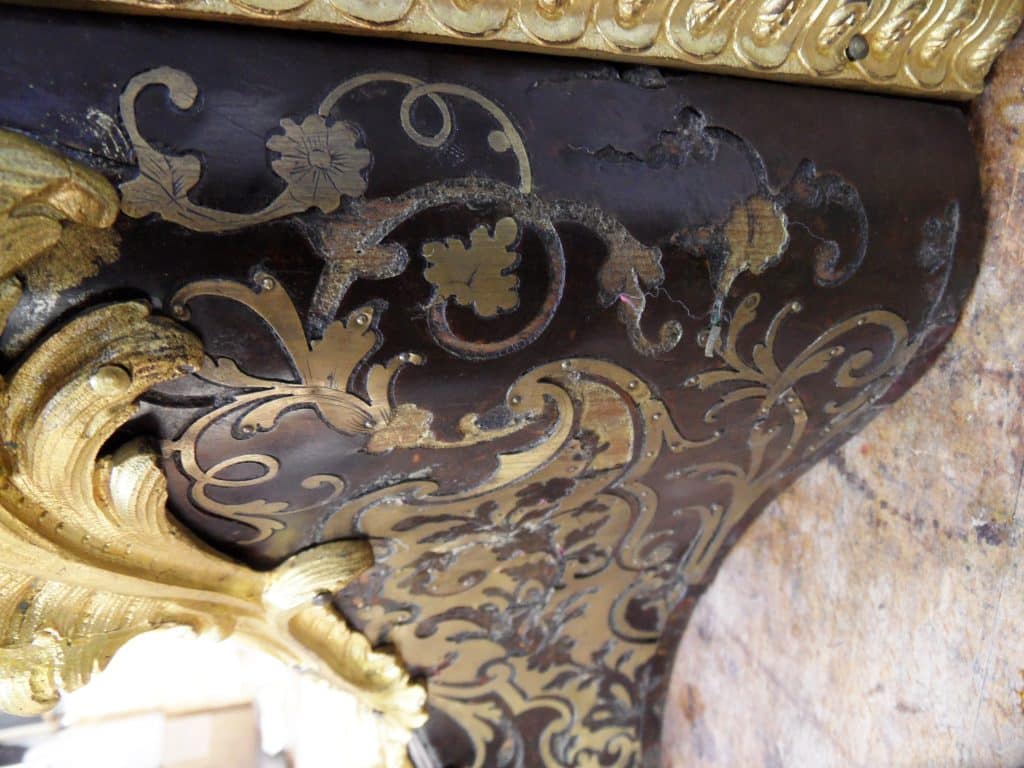
Missing brass on the right side 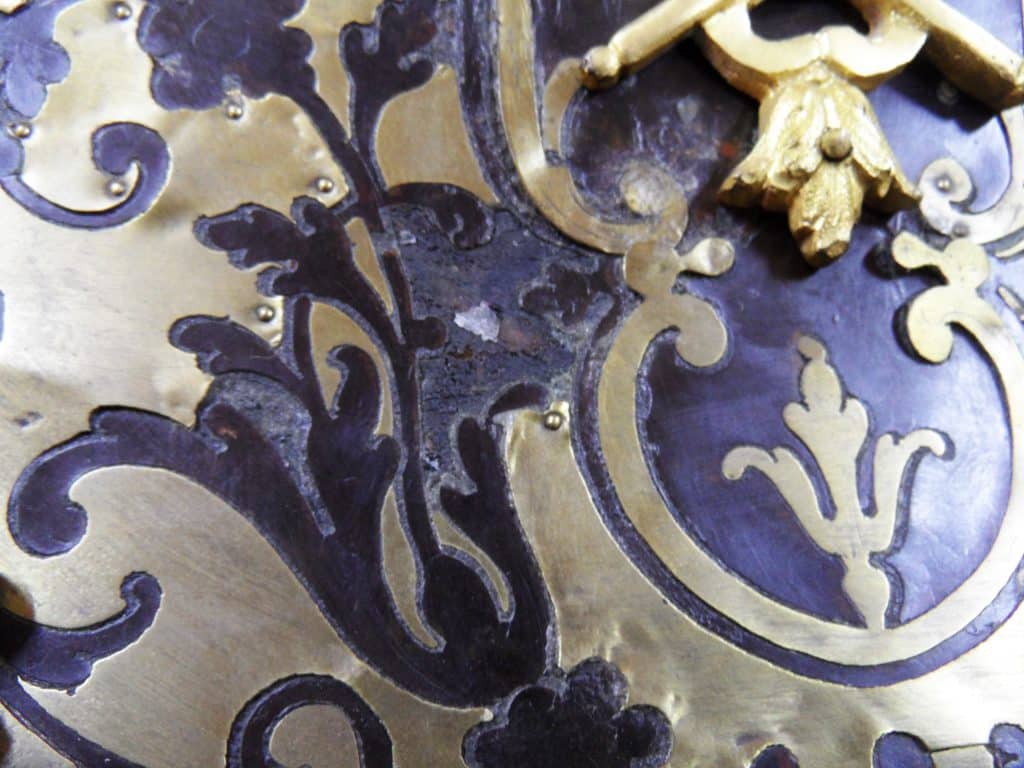
Marquetry defects 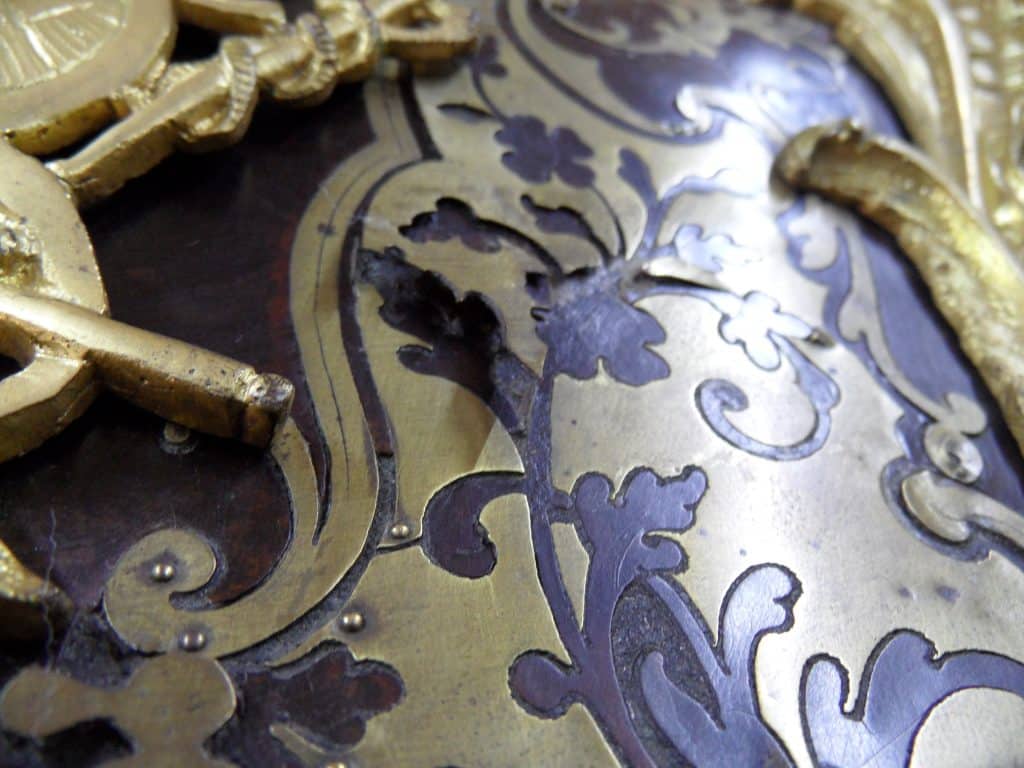
Brass lifting 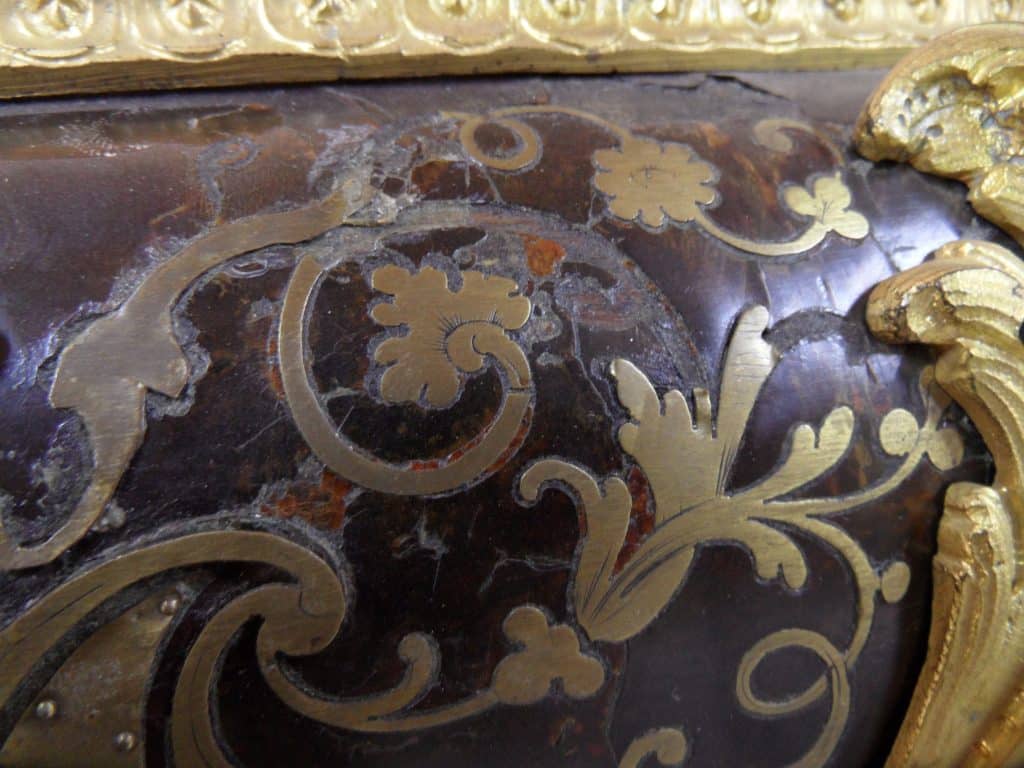
Missing brass and tortoiseshell 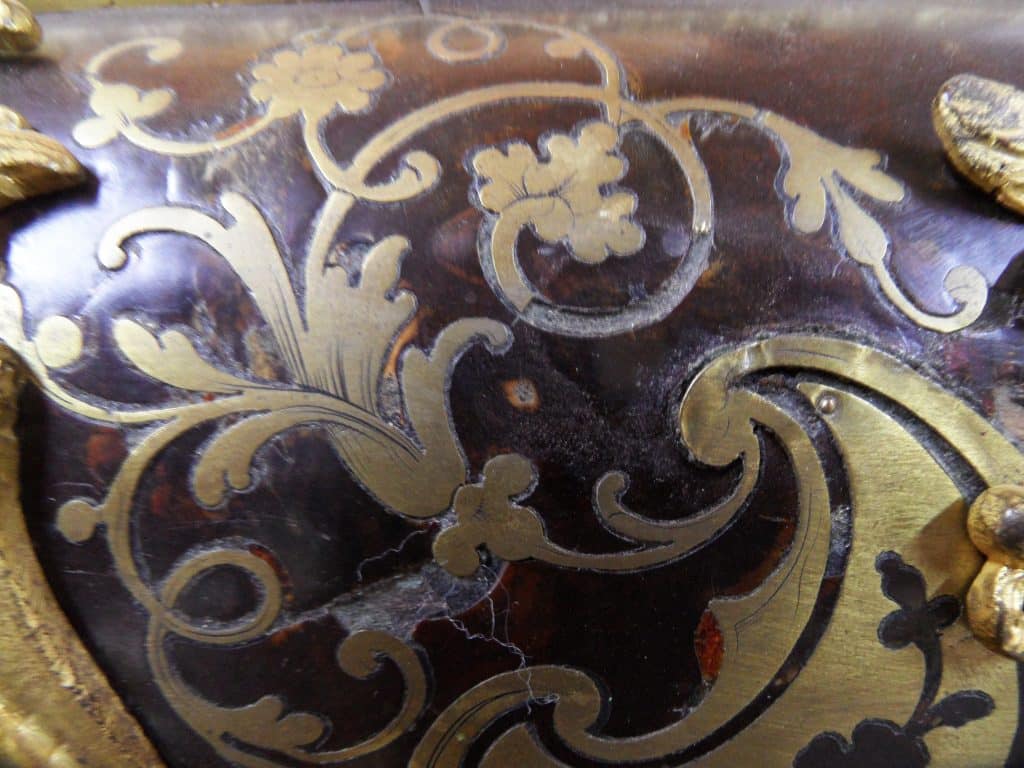
Brass shortages 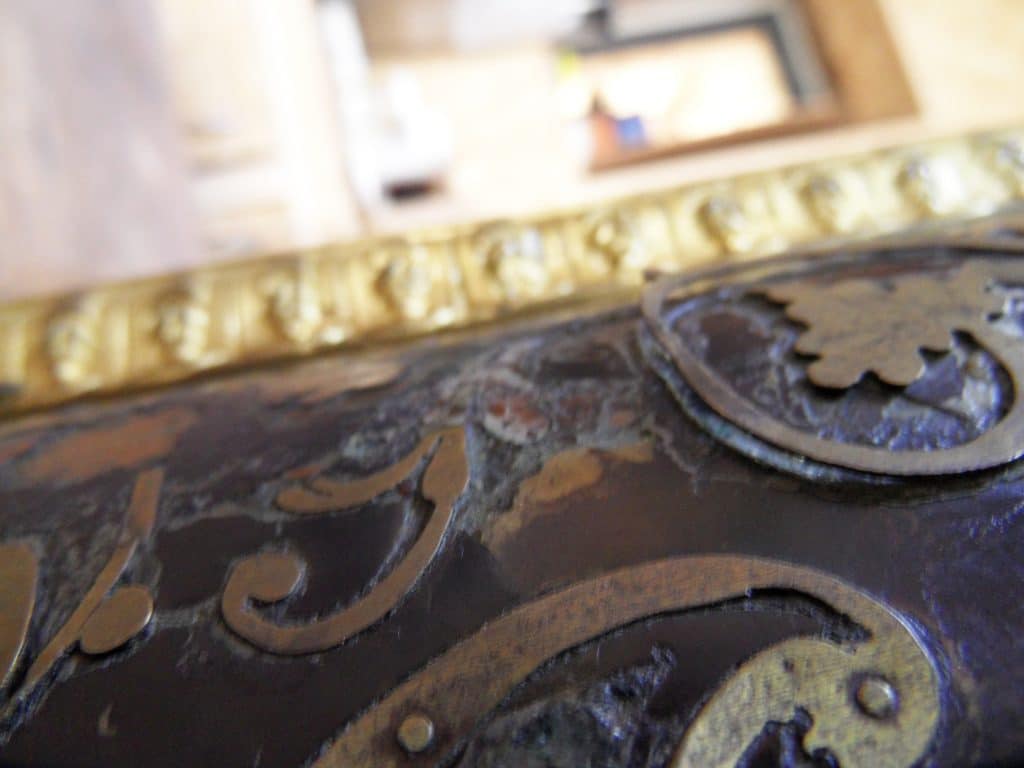
Brass detachment 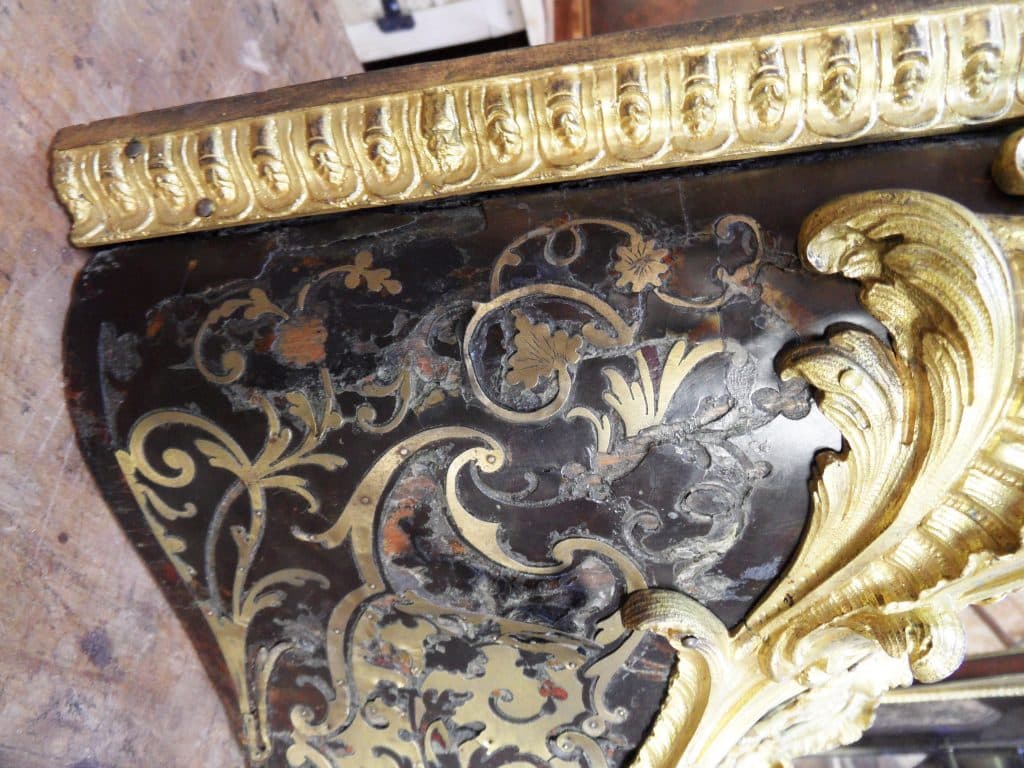
Brass shortages
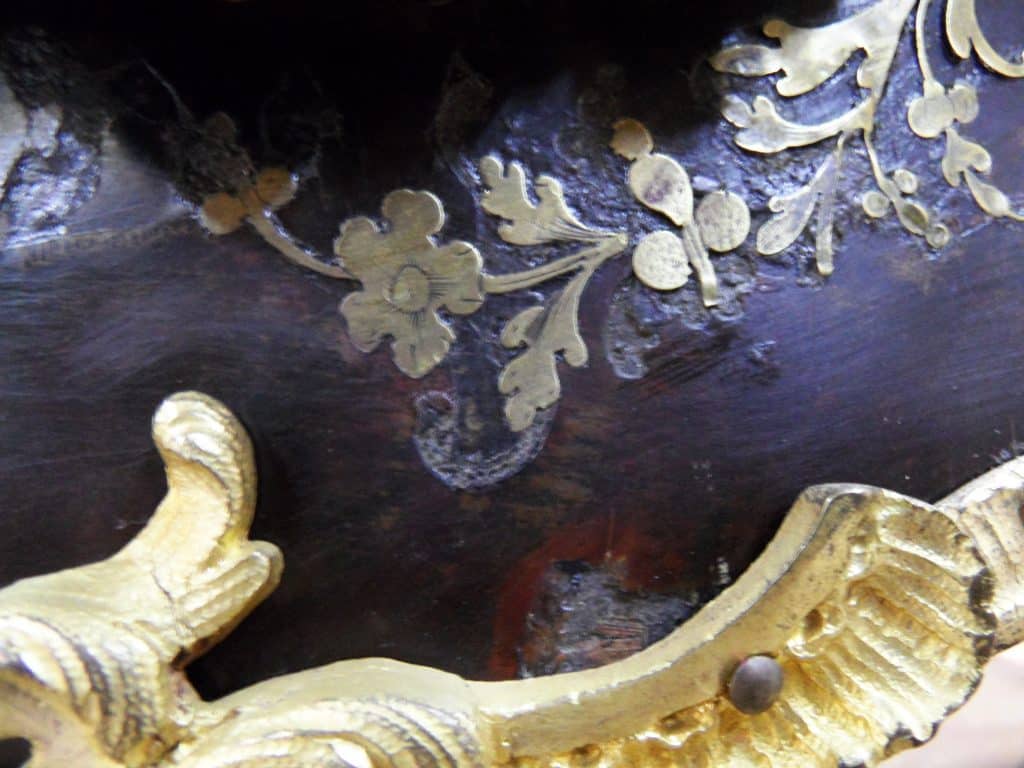
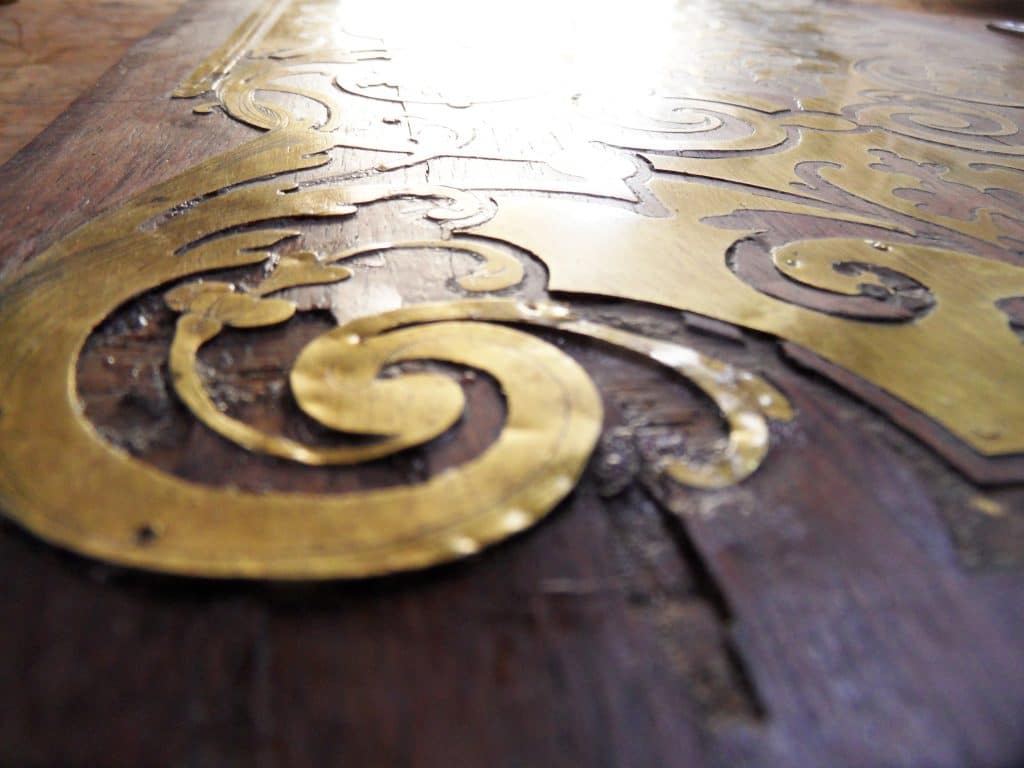
Veneer detached 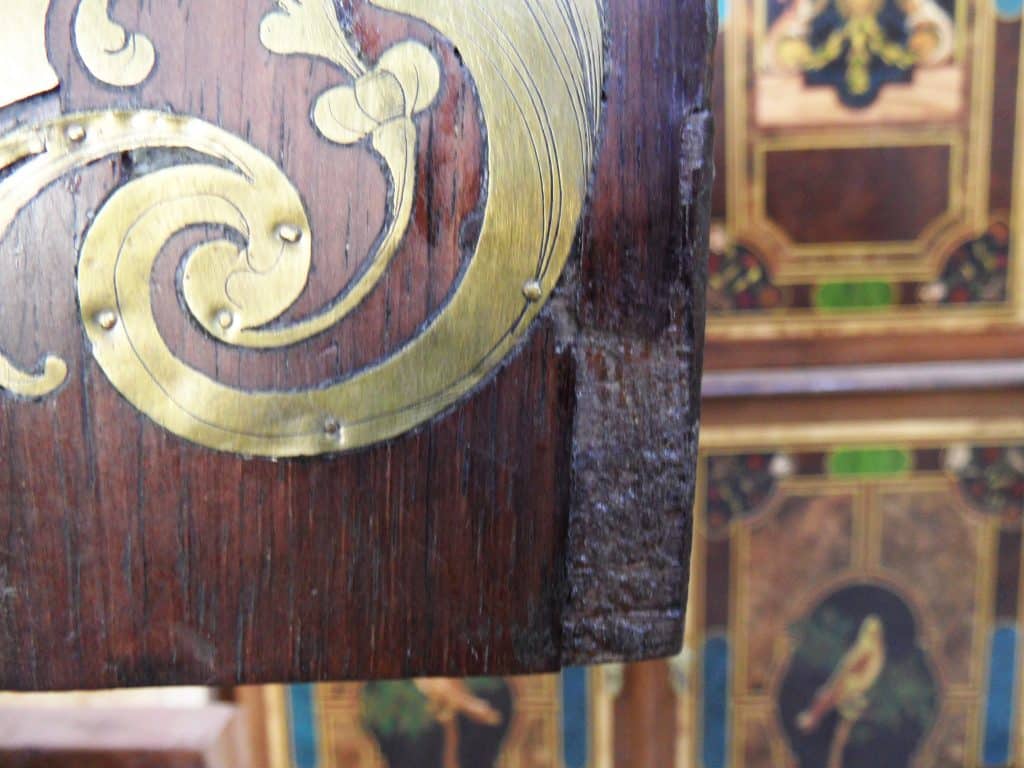
Lack of veneer 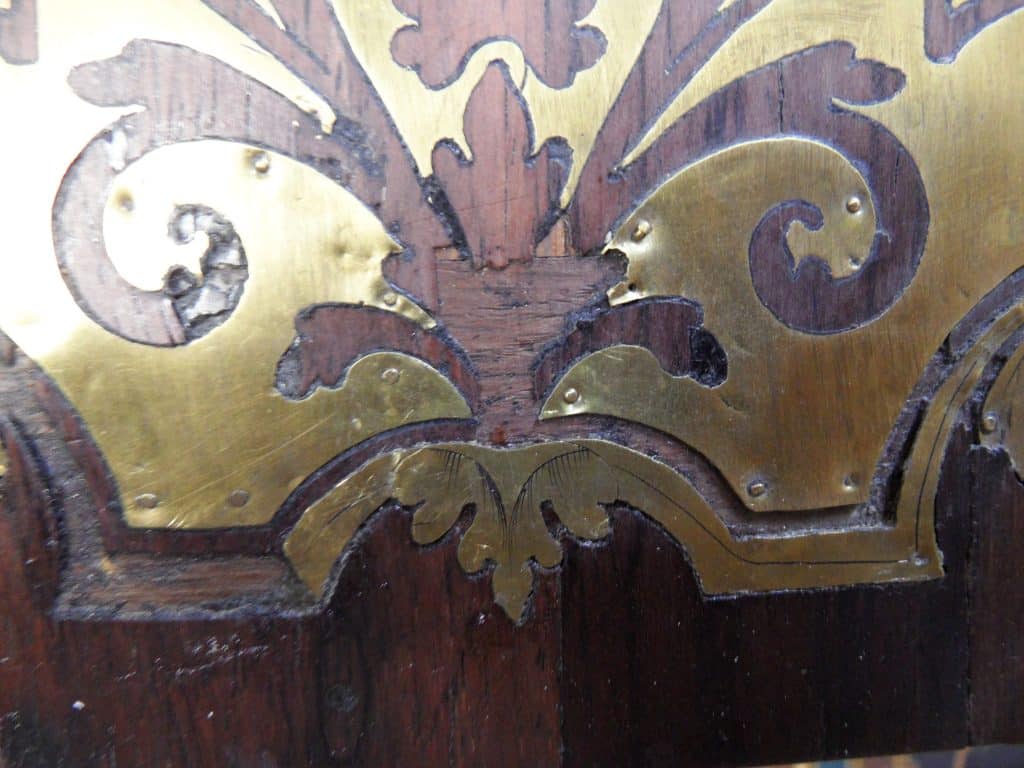
Lack of veneer 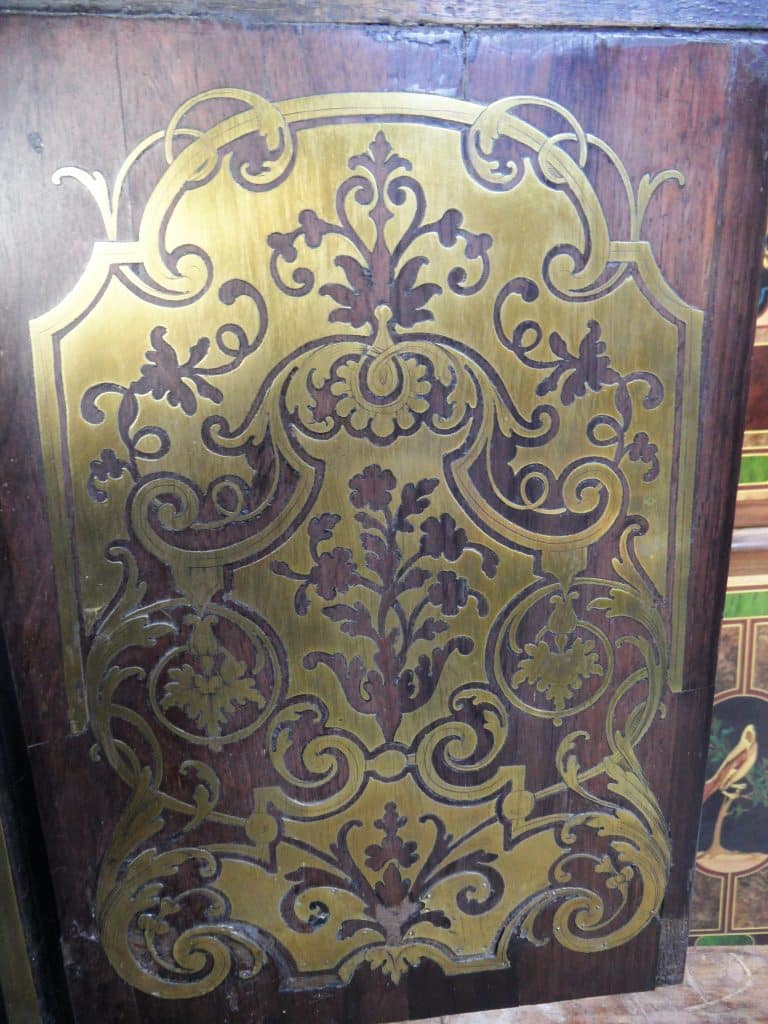
Background before restoration 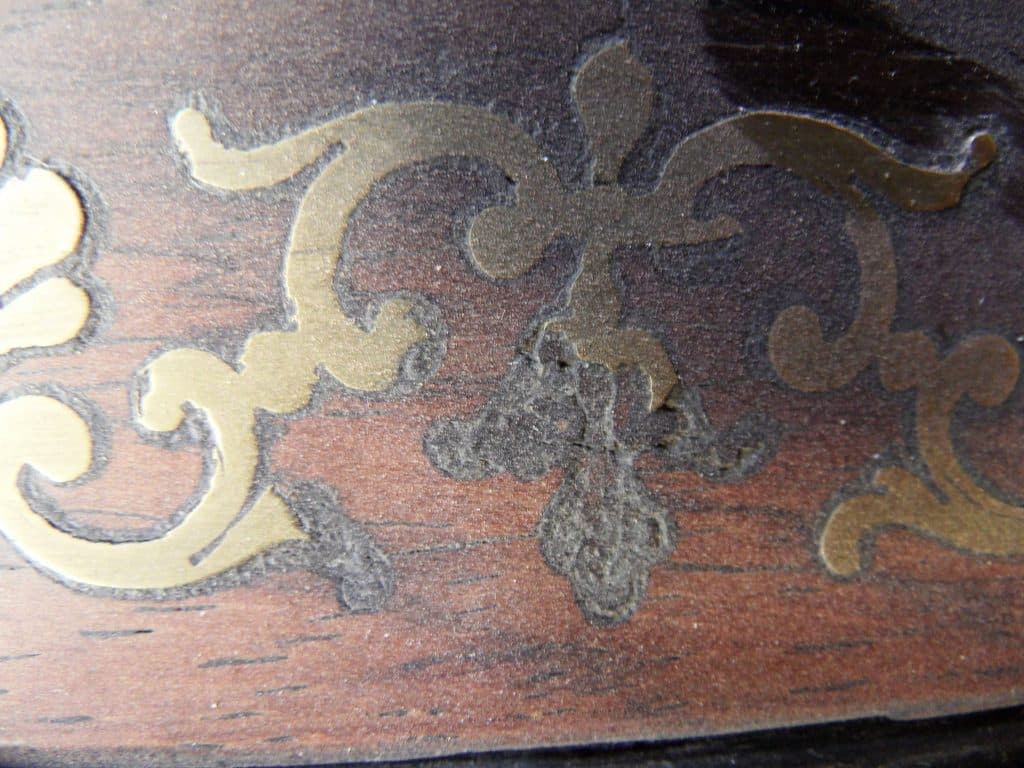
Marquetry defects
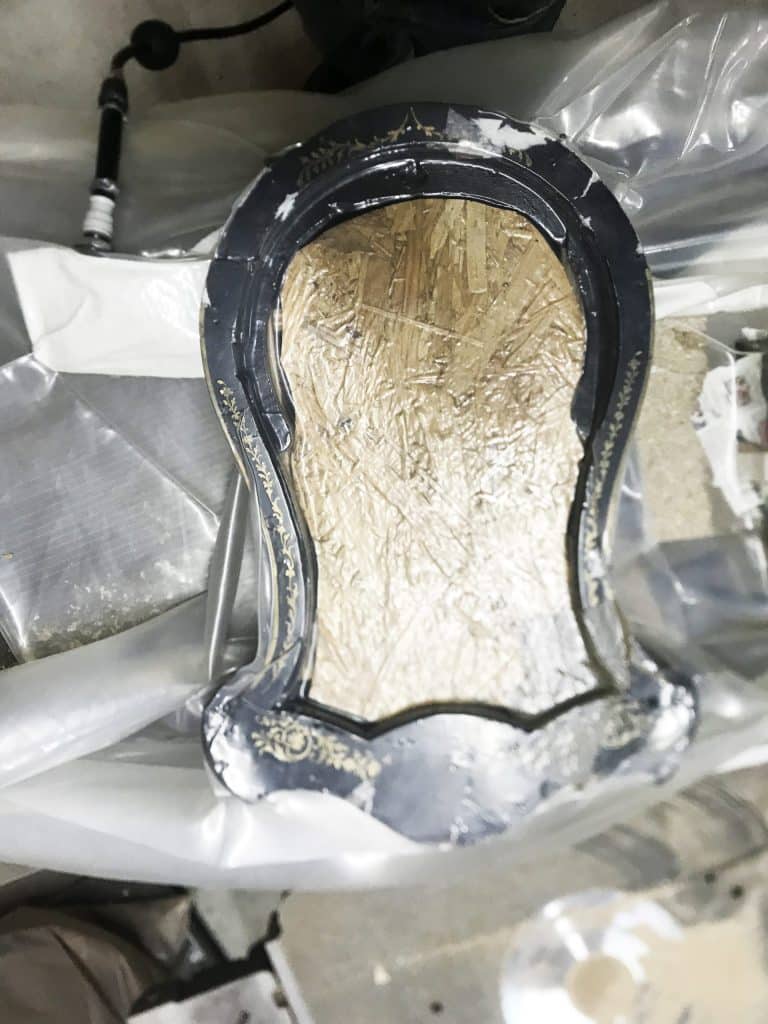
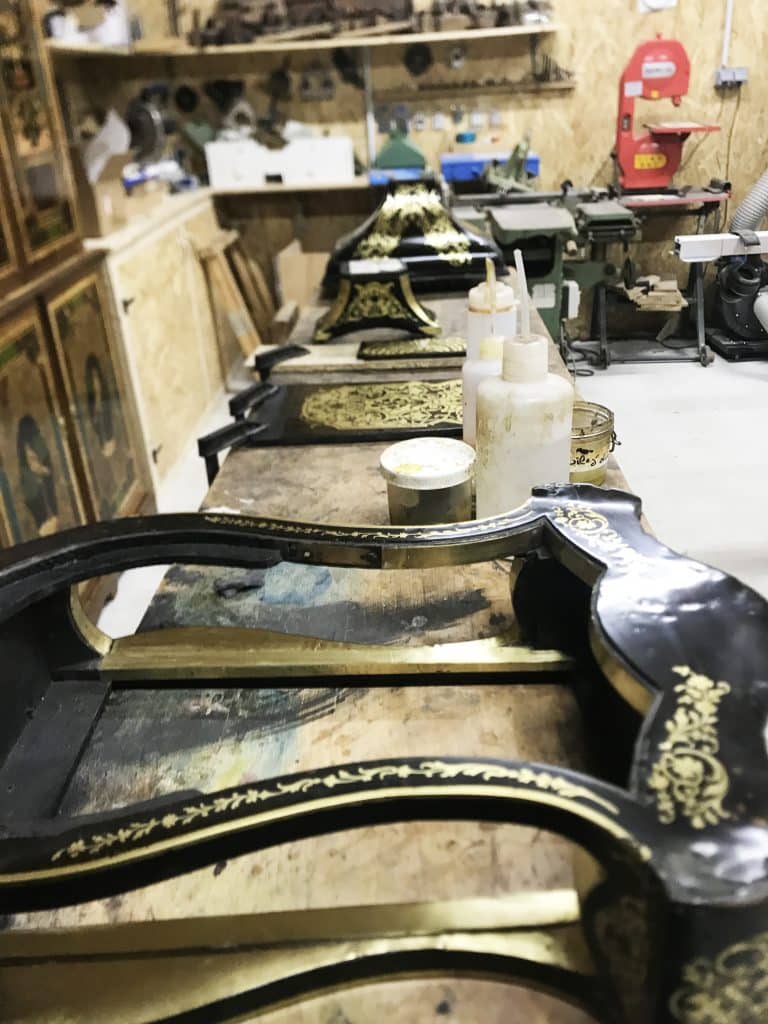
To harmonize the color of the brass with the gilded bronzes, I diffused a potassium sulfide solution, more commonly known as "barège," under a tent. Then, a finish of colorless French polish was applied.
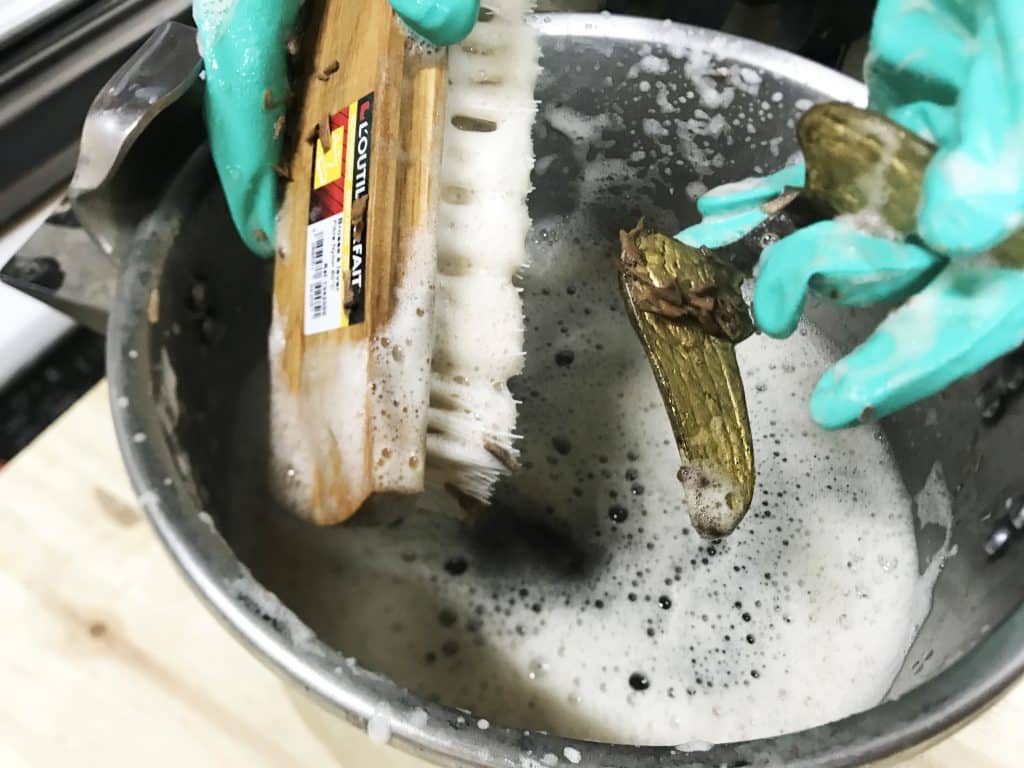
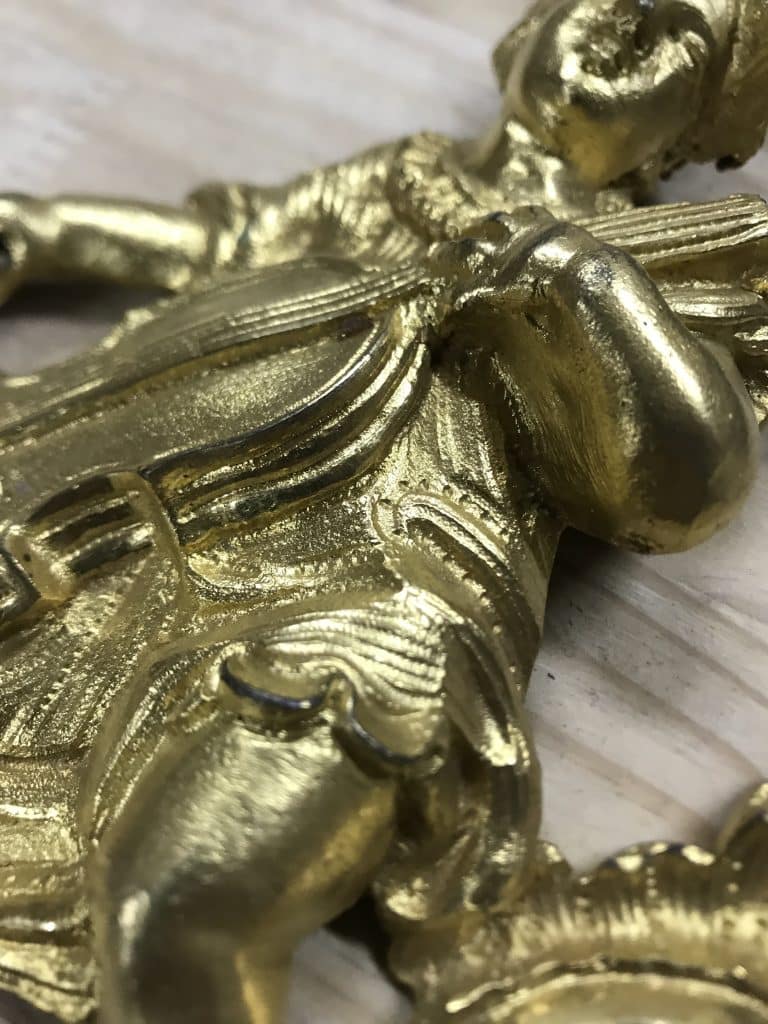
A closer look at the gilding 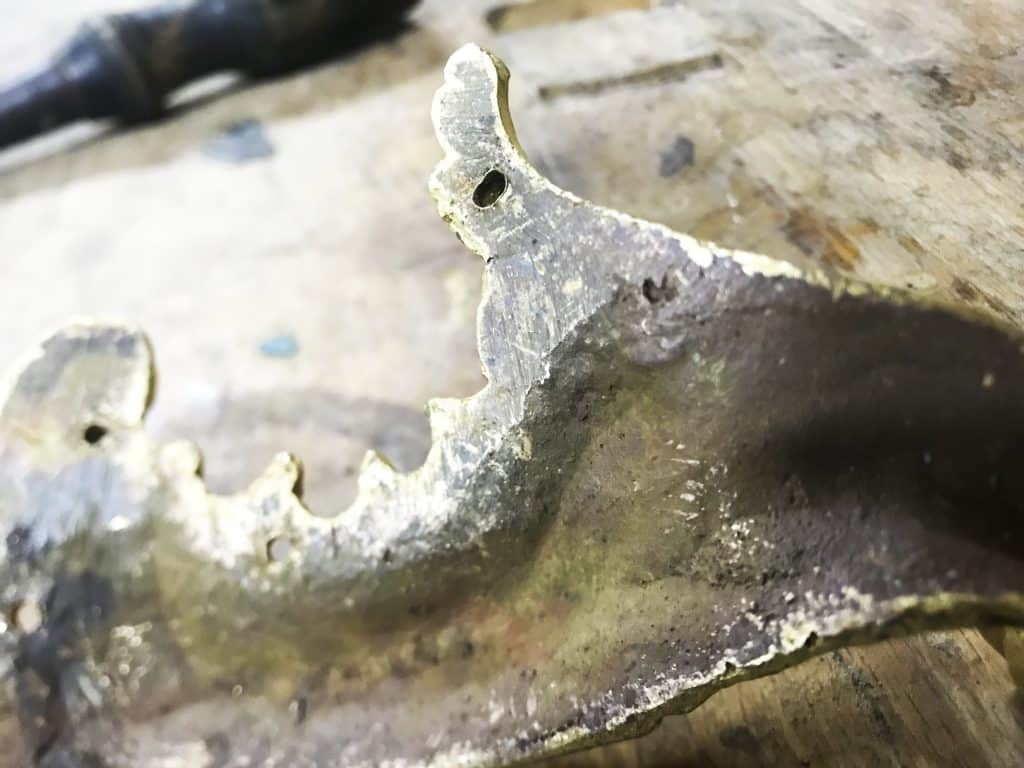
Traces of gilding on the back of the bronzes
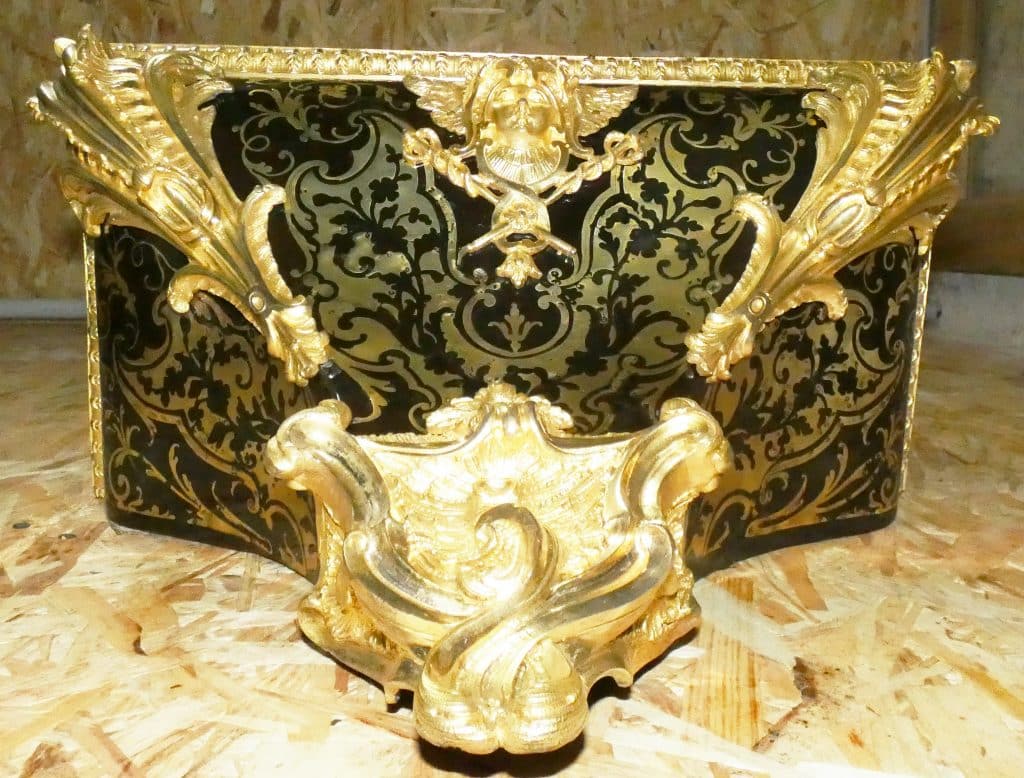
After restoration 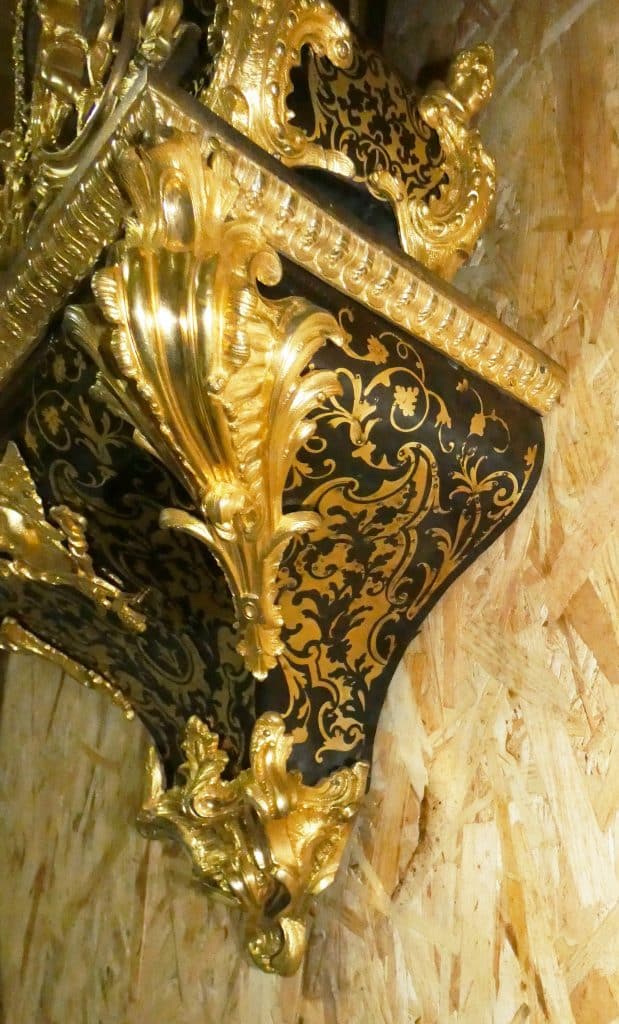
After restoration 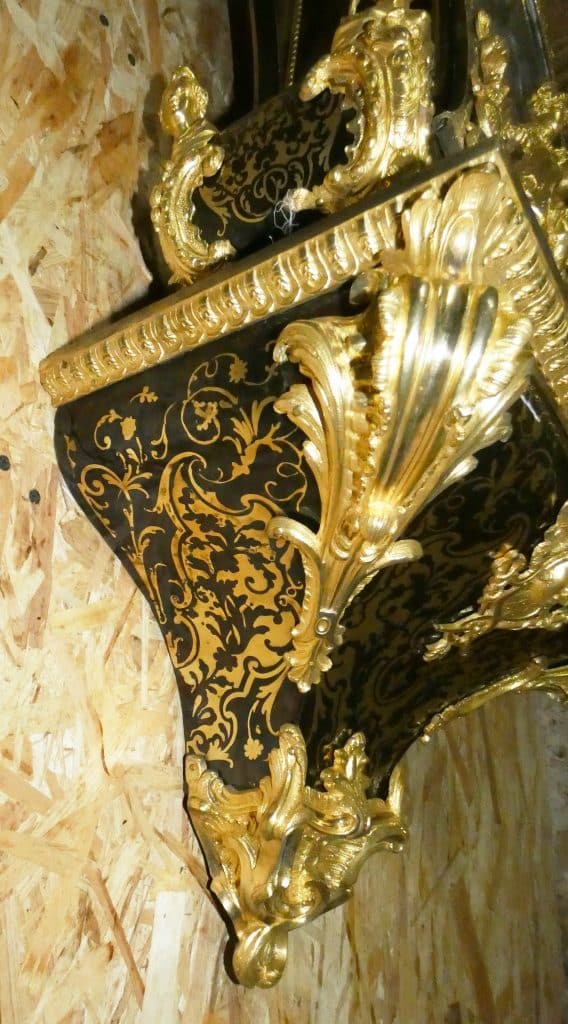
After restoration 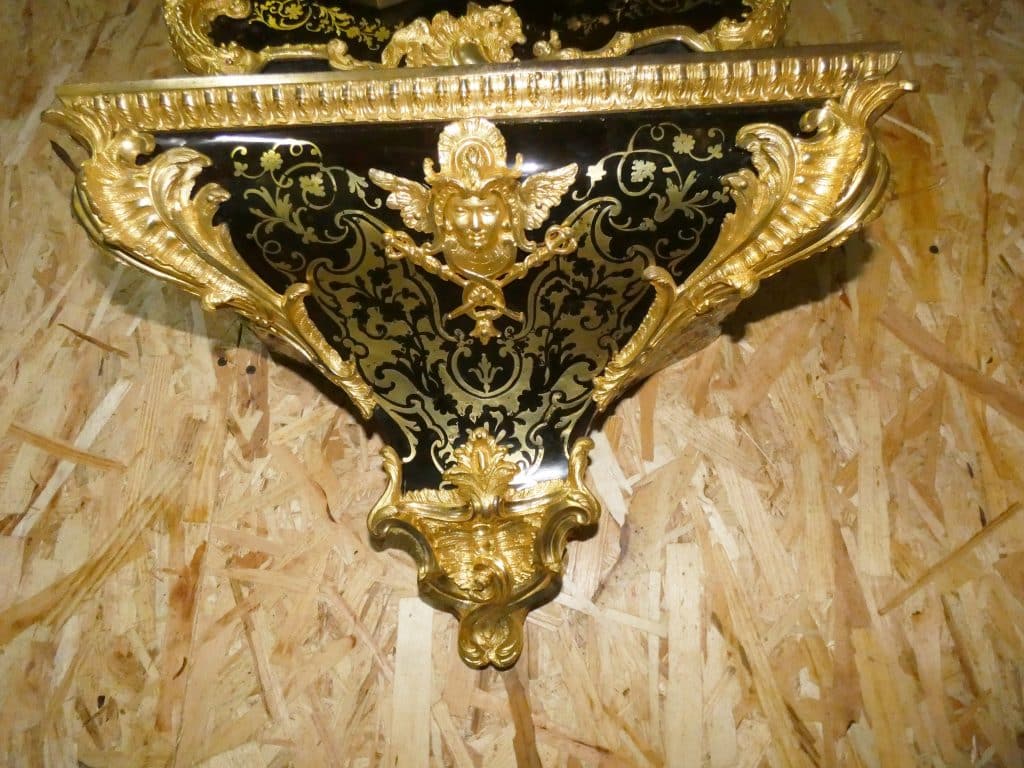
After restoration
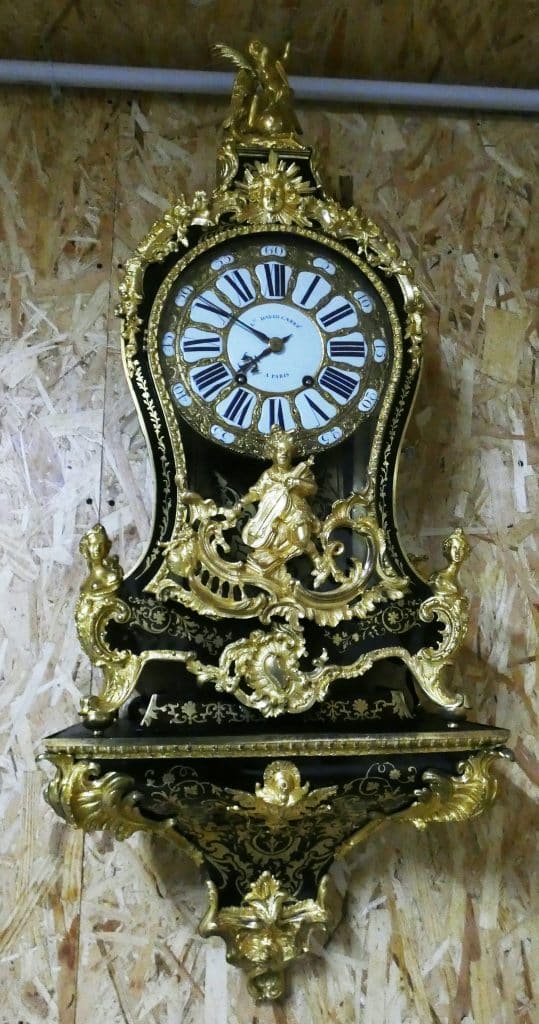
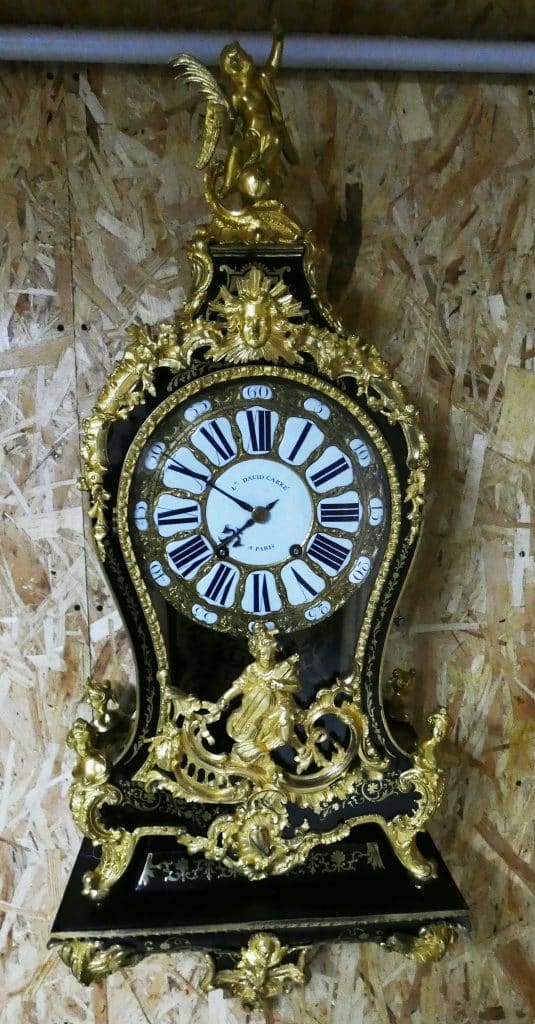
After restoration 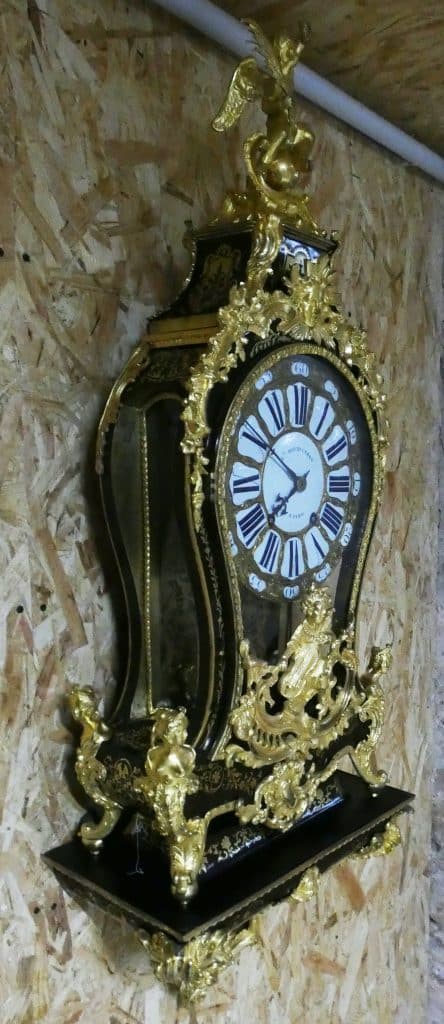
After restoration 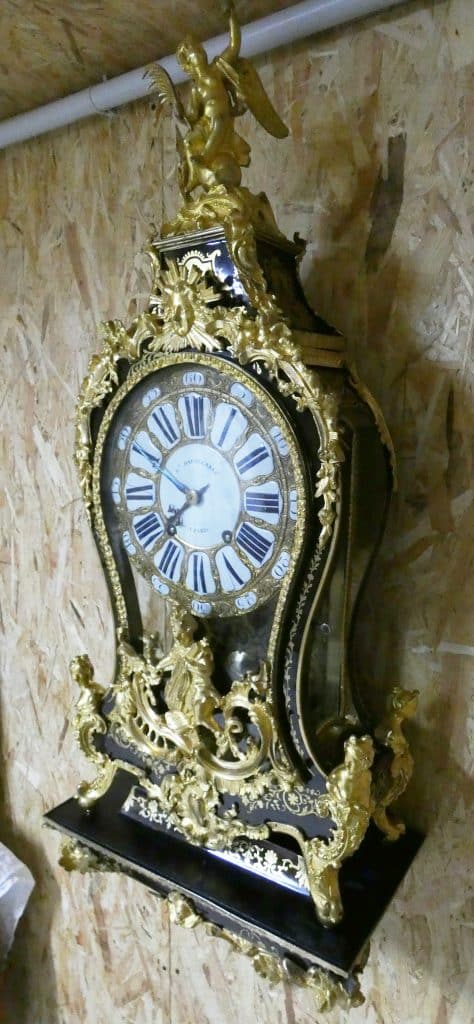
After restoration 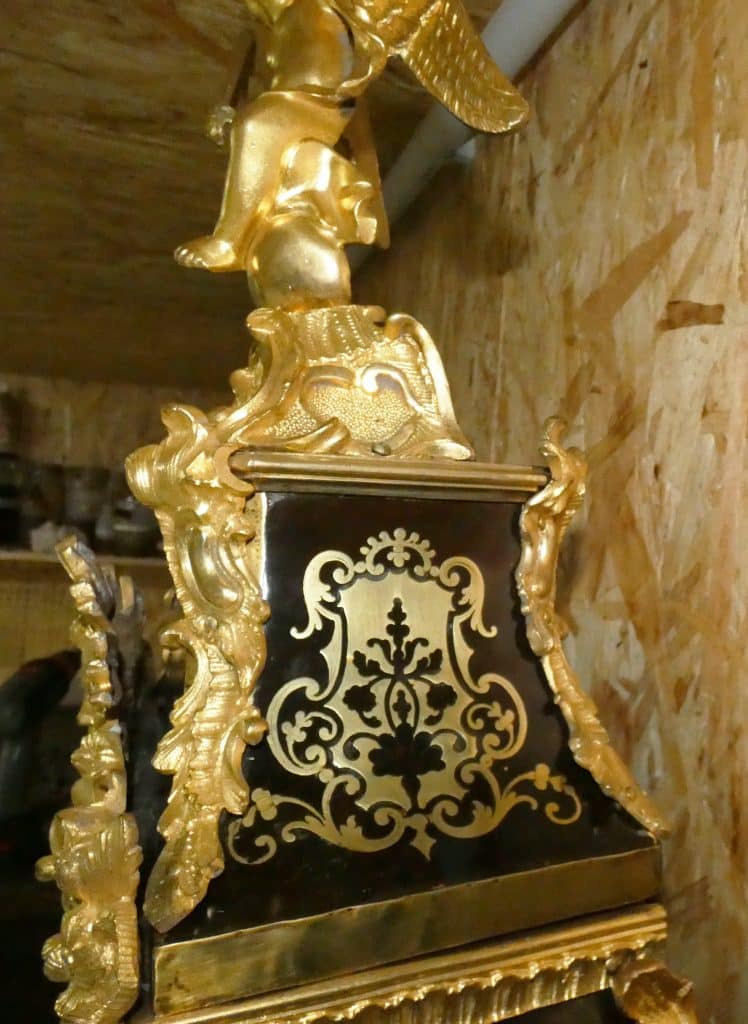
After restoration 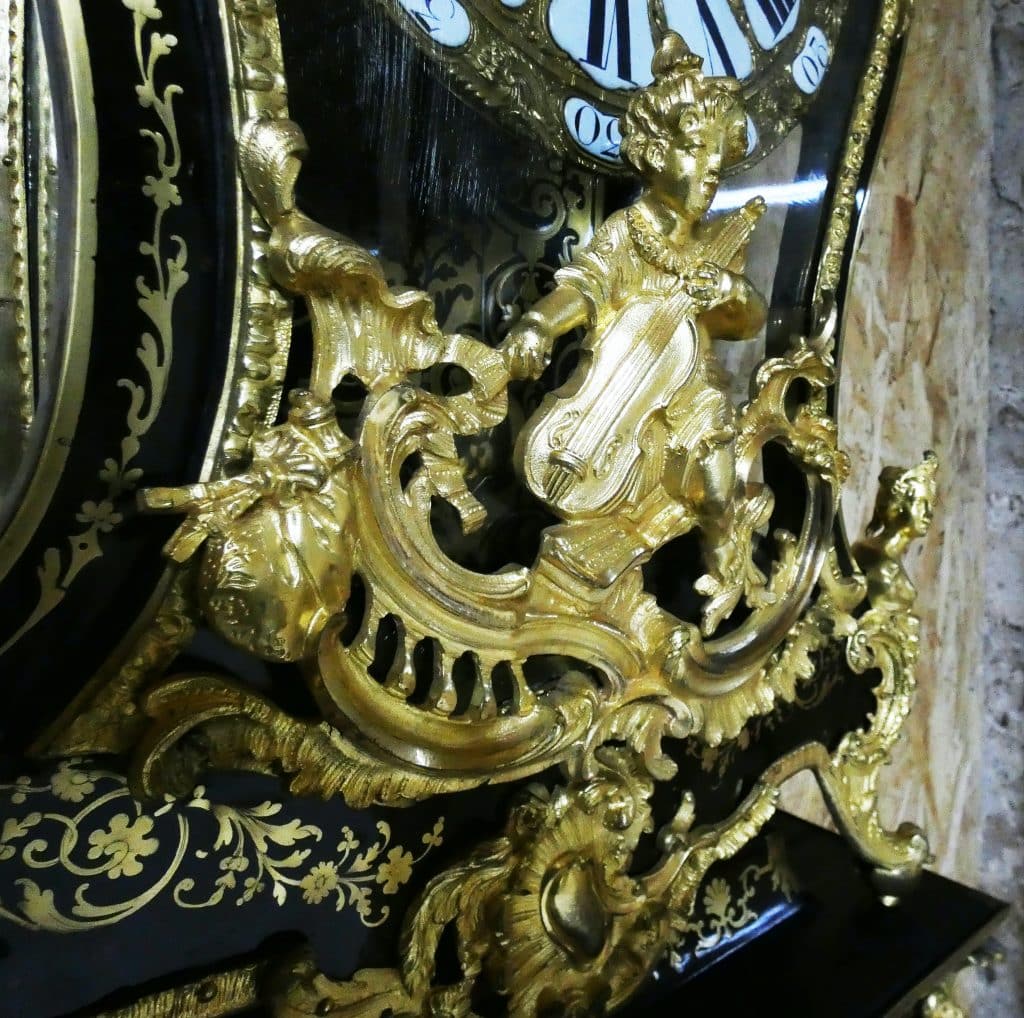
After restoration 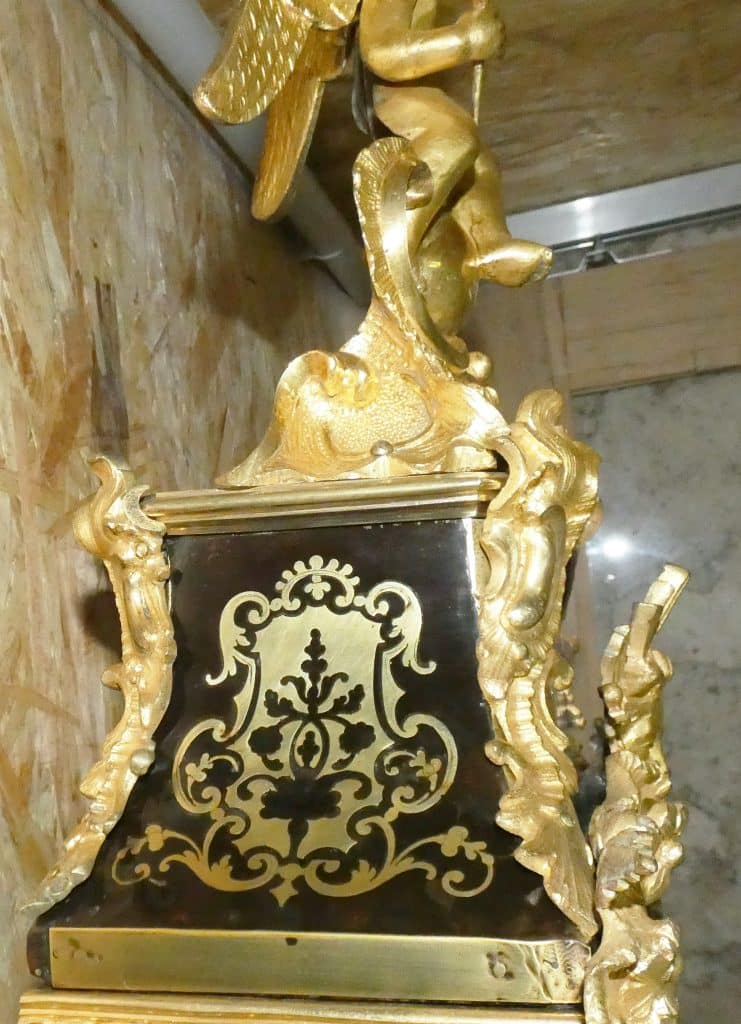
After restoration 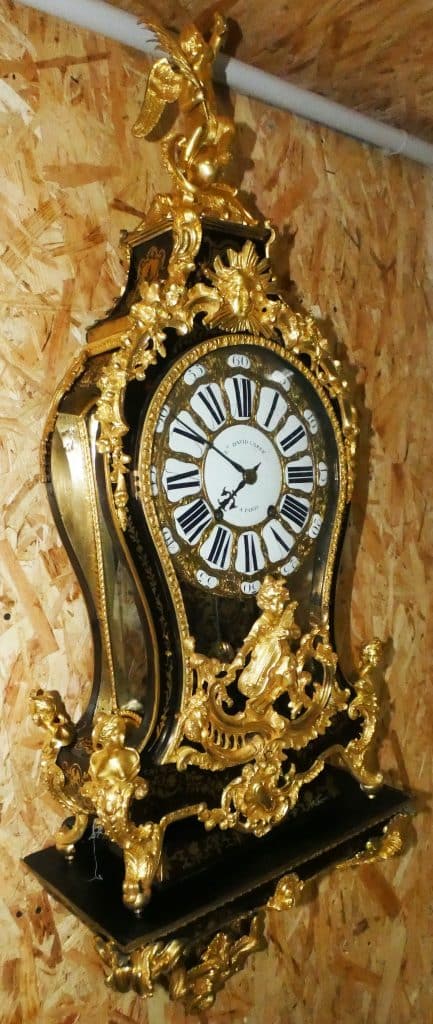
After restoration