
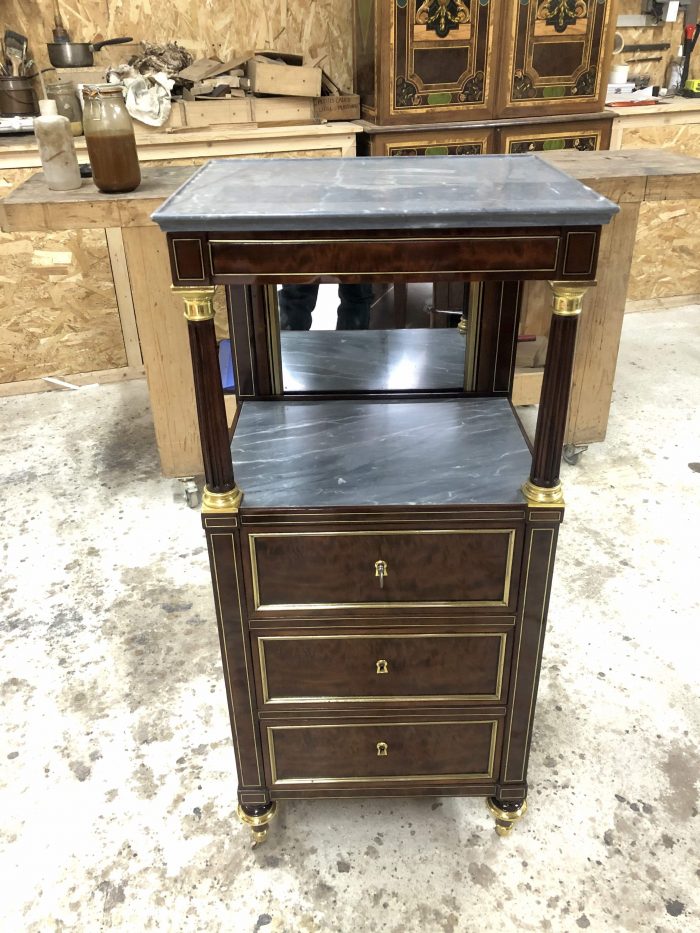
This elegant barber's chair is made of mahogany veneer and mahogany veneer. Dating from the late 18th century, it rests on four tapered legs with casters and opens with three drawers in the front. The niche, with its blue Turquin marble top framed by fluted columns, is surmounted by two side drawers and a sliding marble counter with a recessed base that reveals a sliding mirror on a rack and pinion mechanism, pivoting and framed with ebony and brass stringing.
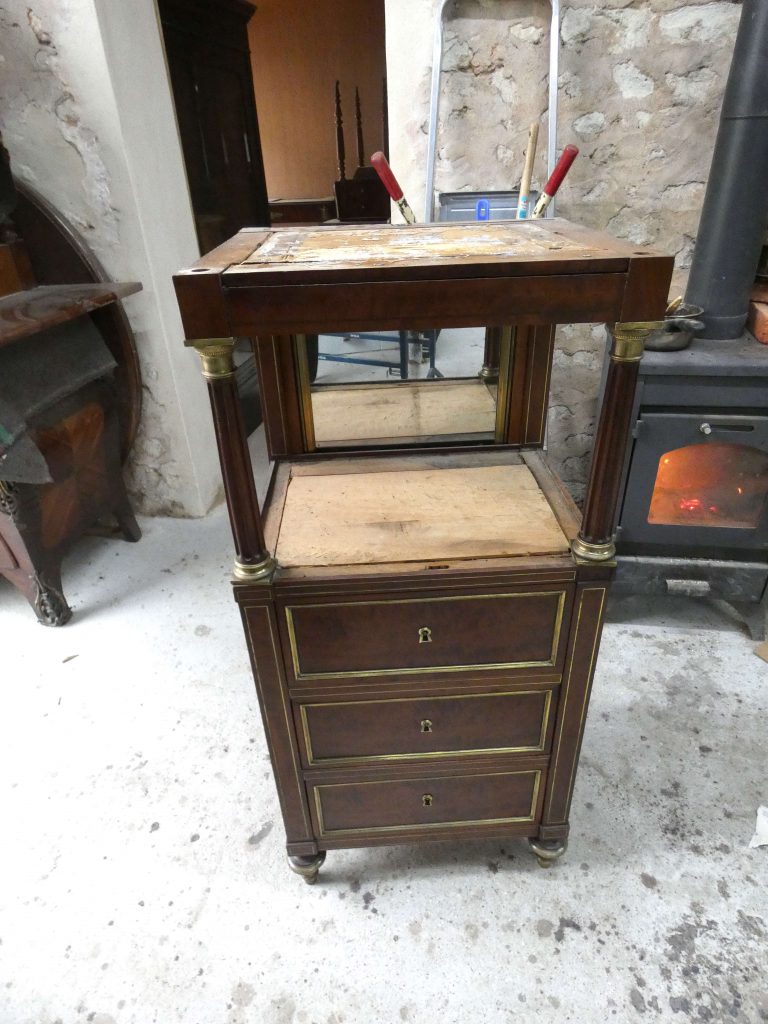
Appearing under Louis XVI, this style of barber's cabinet is a toilet unit intended to hold the porcelain pitcher and basin for the toilet of a man standing, and then to be stored in the niche.
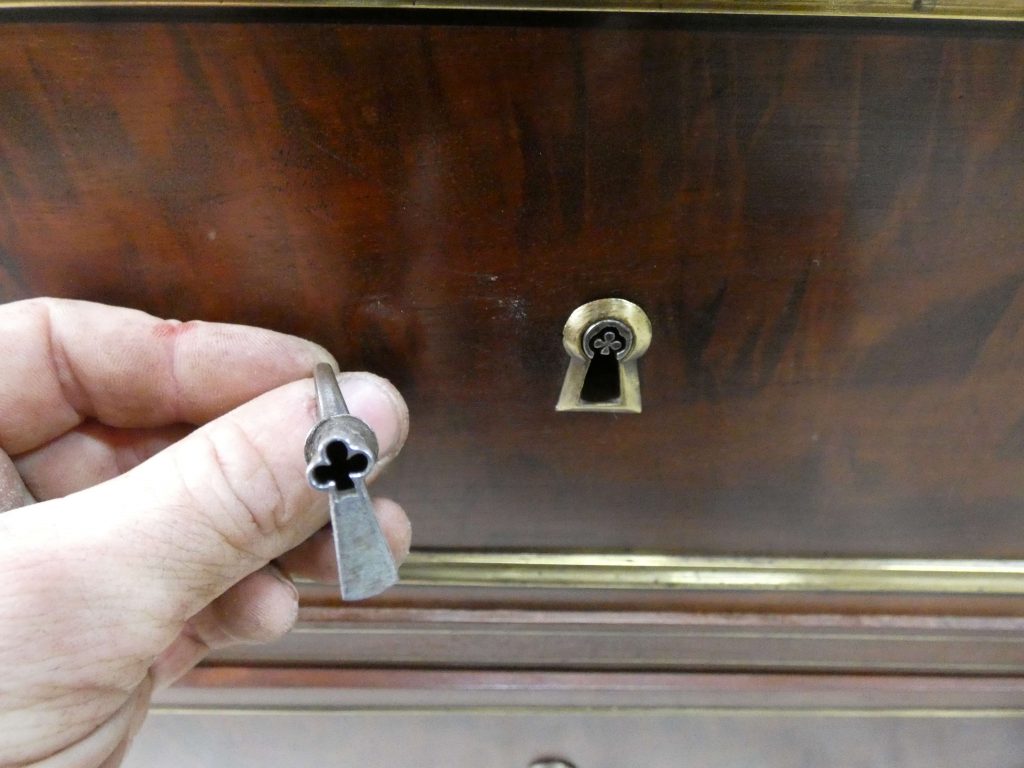
This is a piece of furniture of remarkable quality, both in its craftsmanship and the choice of woods. The uprights are made from a single piece of solid mahogany, from the base to the column. It is adorned with wood and brass moldings and brass and ebony inlay. The drawers are veneered in a very attractive figured mahogany, and the locks are clover-shaped, a mark of quality.
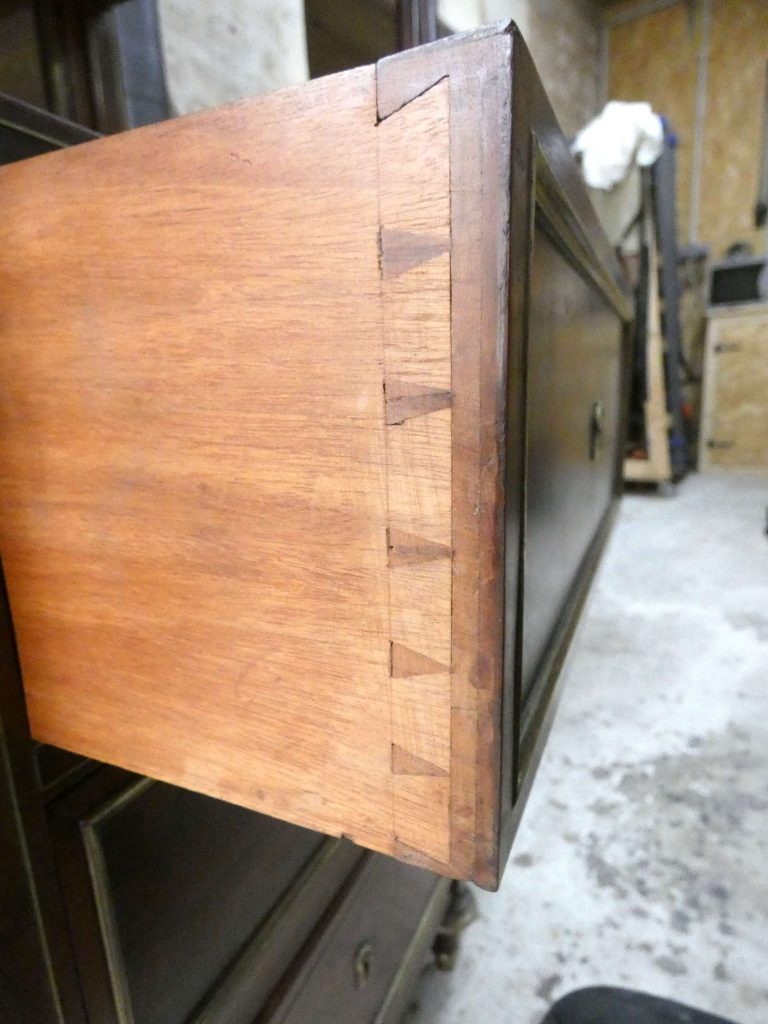
The drawers are made of sandalwood, and the back and lower panels of the mirror are cedar. As Ulrich Leben quotes in his book on Molitor:» The latest innovation in the realm of frivolity is the discovery of sandalwood, with which cabinetmakers craft a multitude of delightful and precious trinkets, which have enjoyed great popularity with the public in recent months. « . (1789 Journal des Luxus). Indeed, cedar and sandalwood have the property of releasing a pleasant odor when they are freshly worked.
The restoration, which involved reattaching all the brass/ebony inlays and filling in any gaps, was a major undertaking. All the front and rear wood and brass moldings were missing and therefore had to be recreated. The bulk of the work involved grafting solid mahogany onto the legs, grafting oak onto the grooves of the marble sliding mechanism, and reattaching the panels and joints.
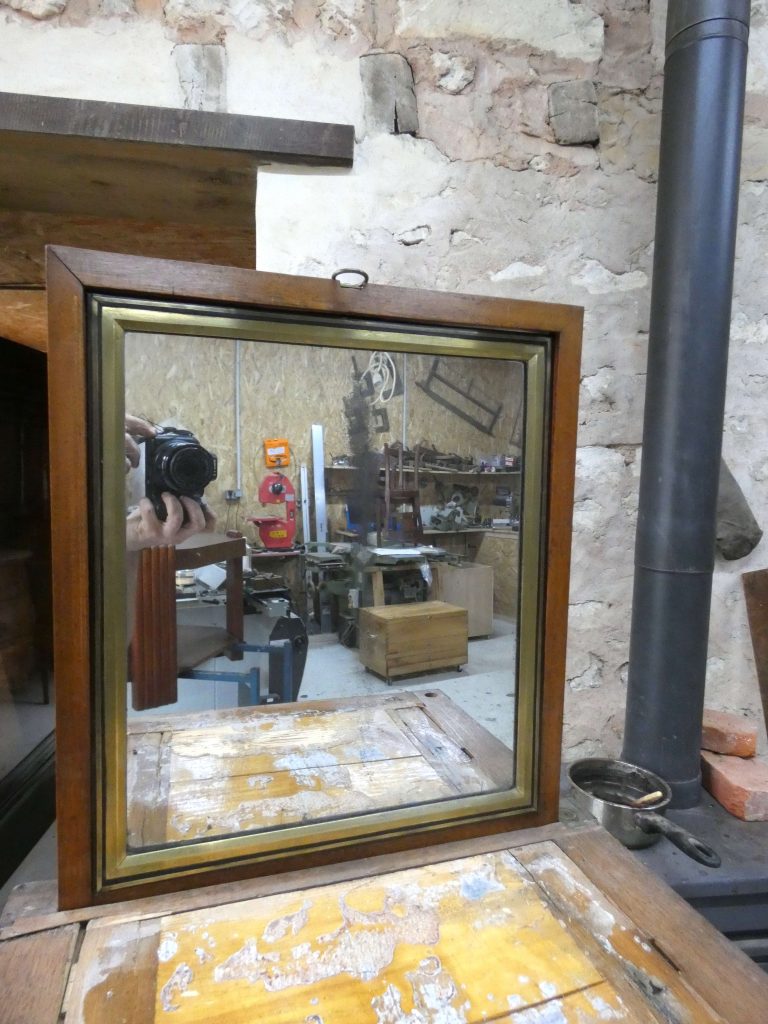
Before restoration 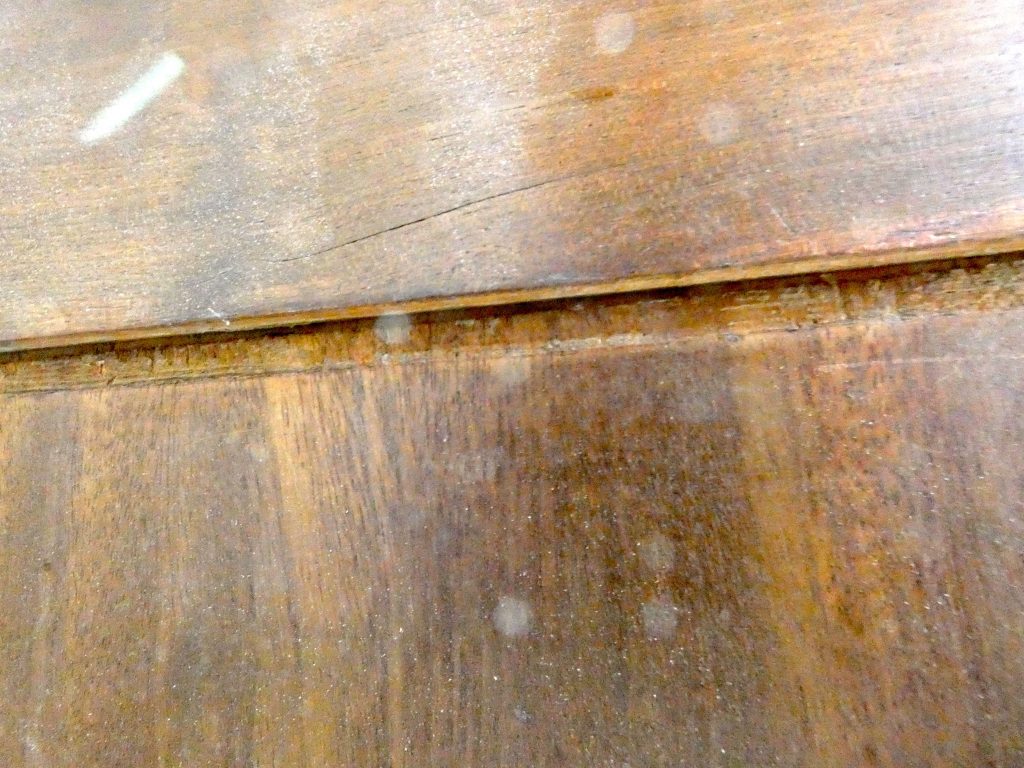
Missing wood/brass moldings 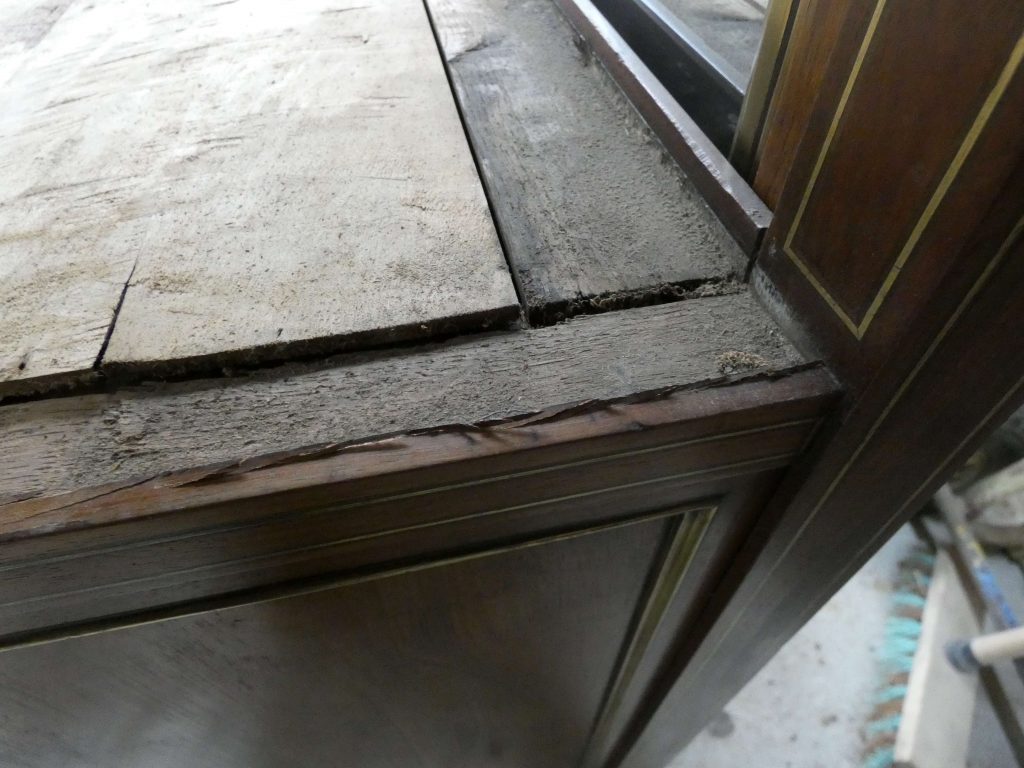
veneer chips 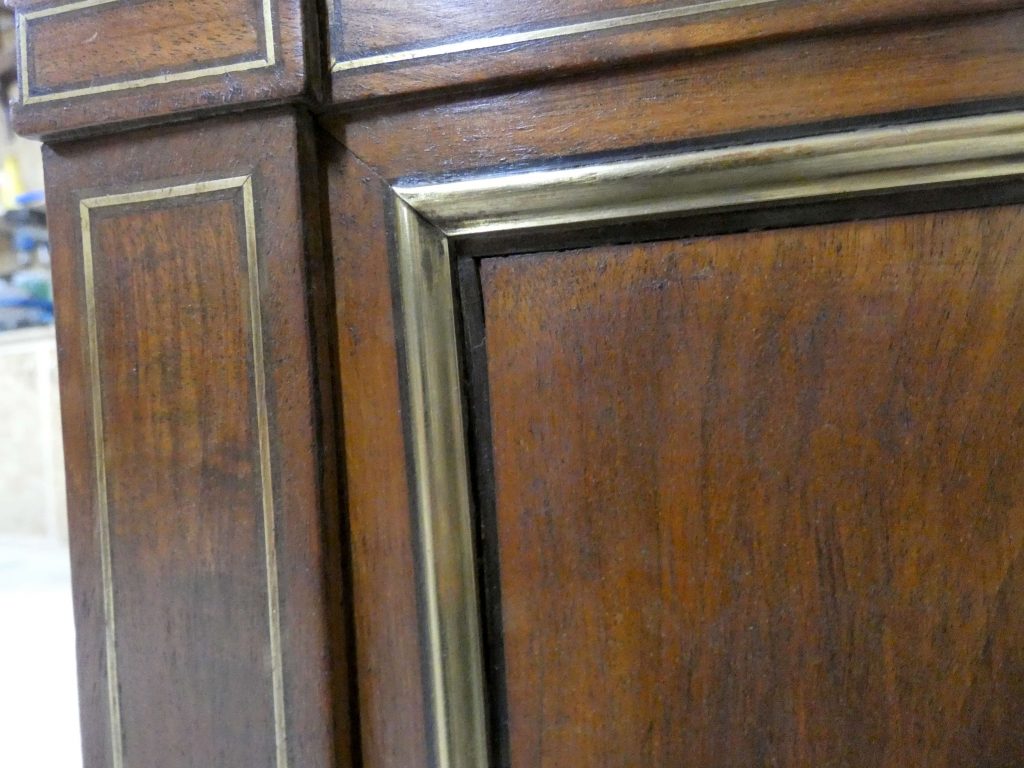
net lifted 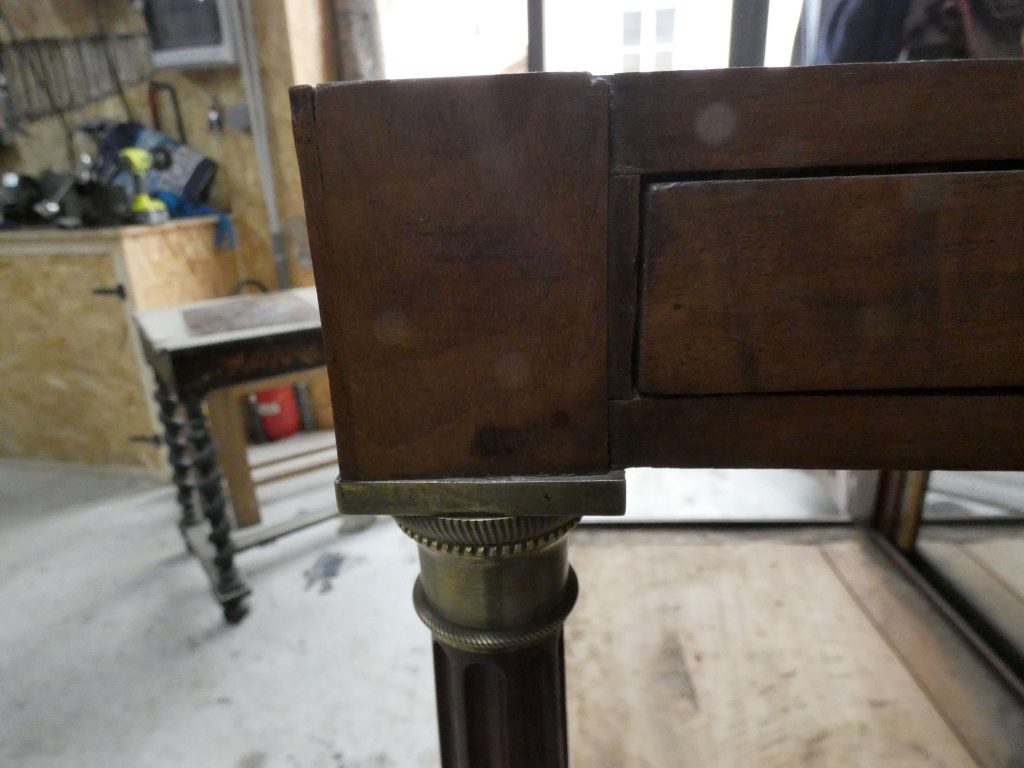
brochure postponed to a later date 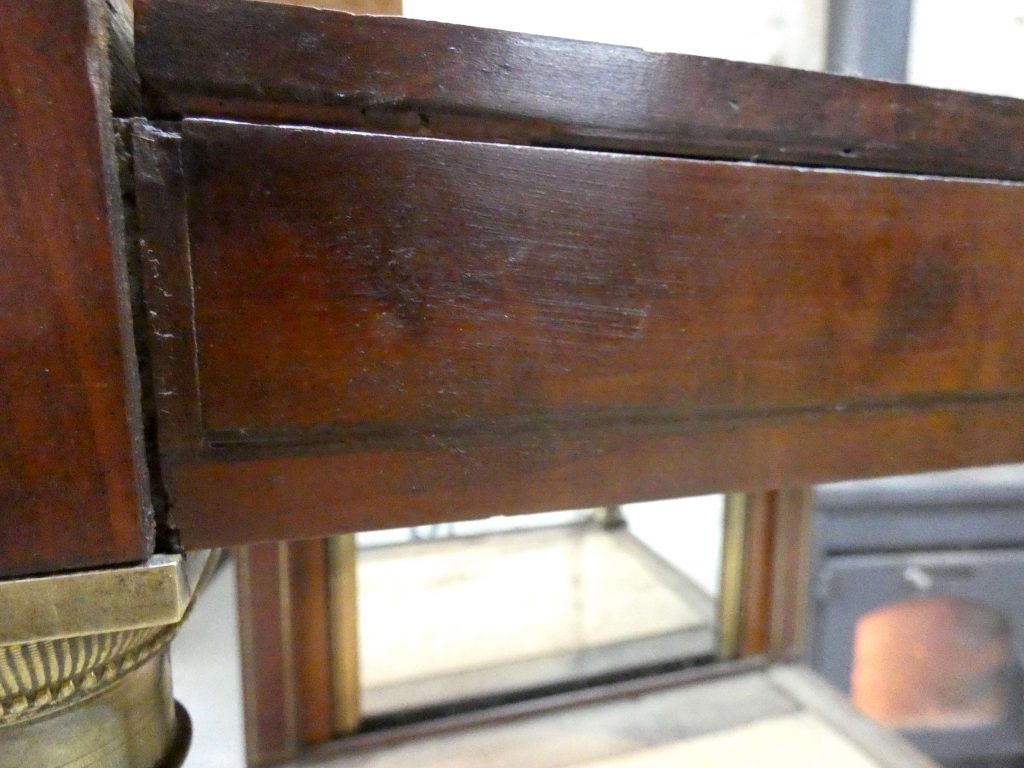
The brass threads have been filled. 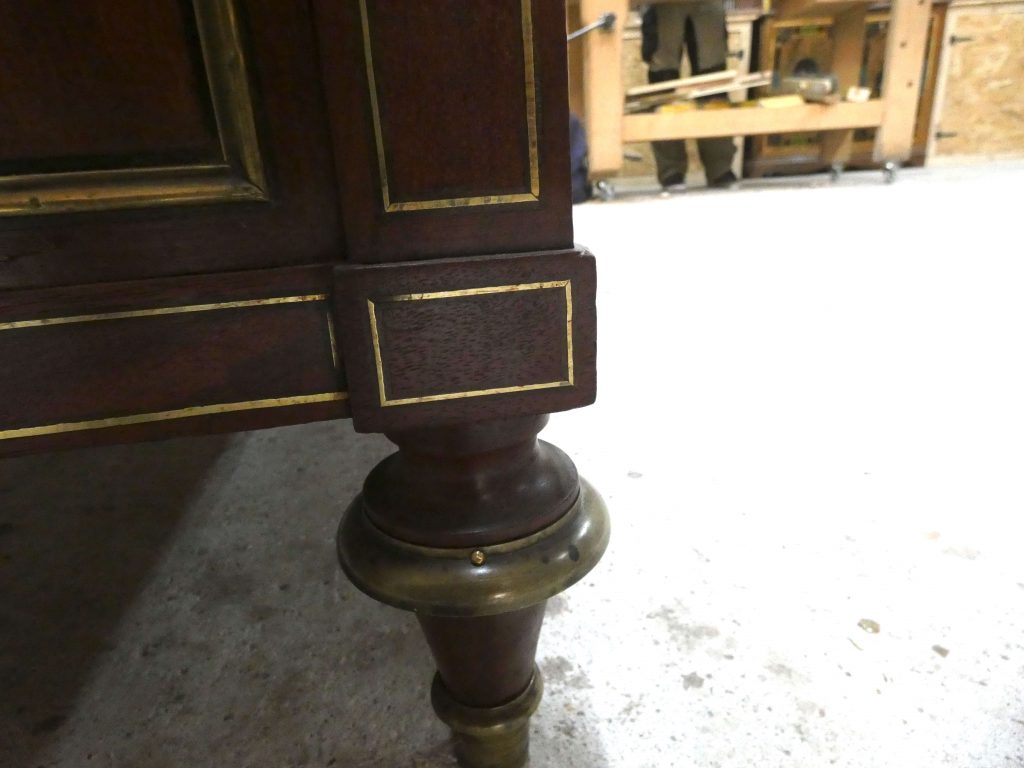
before restoration 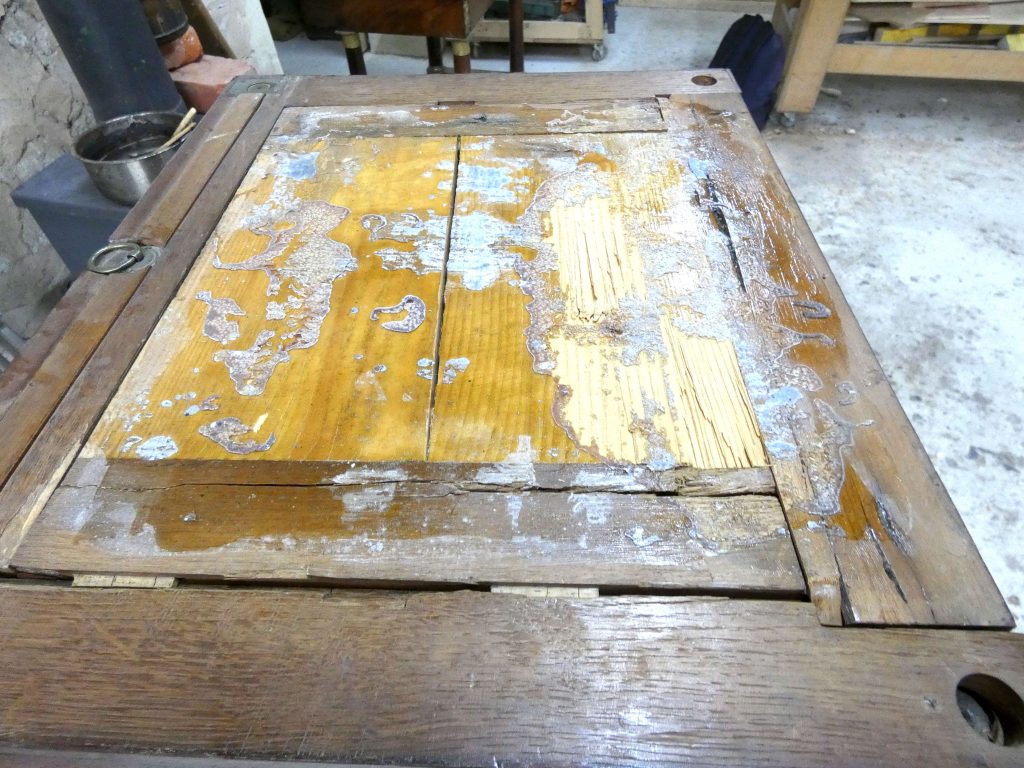
detached marble 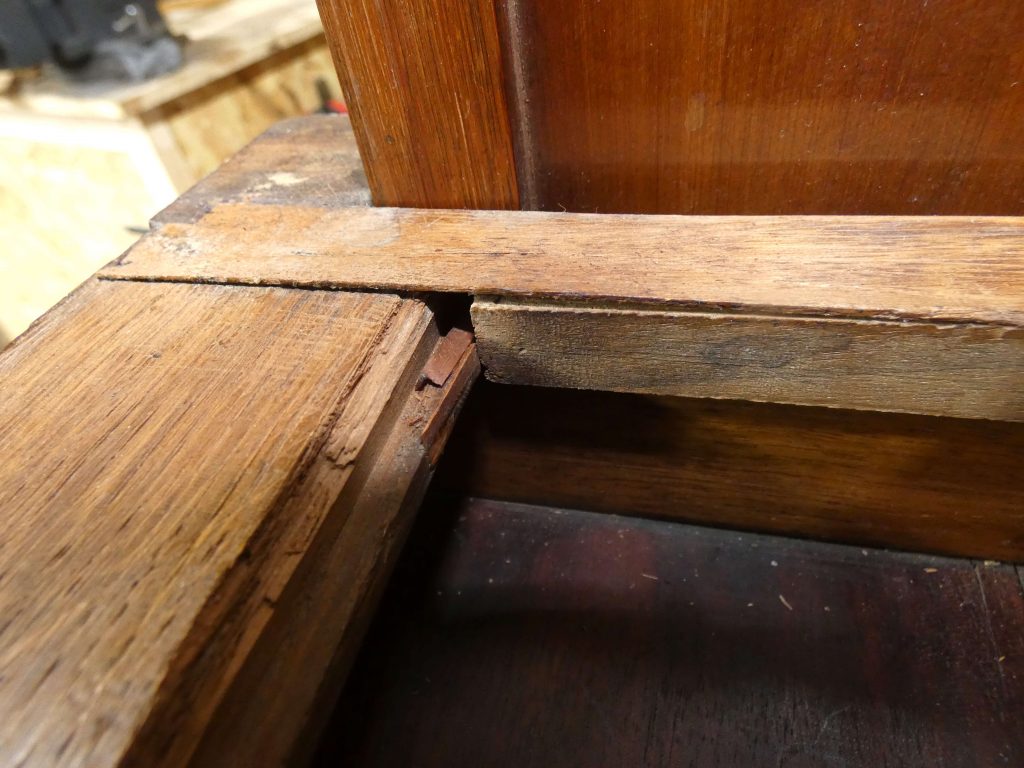
splinter of a groove cheek 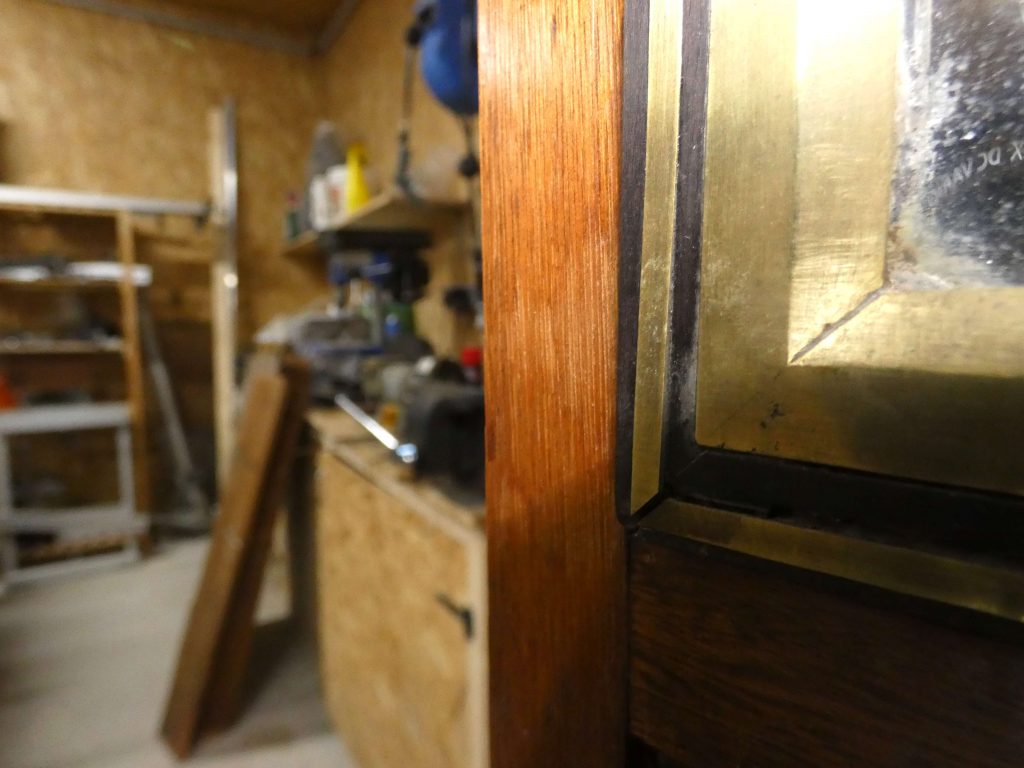
raised brass thread 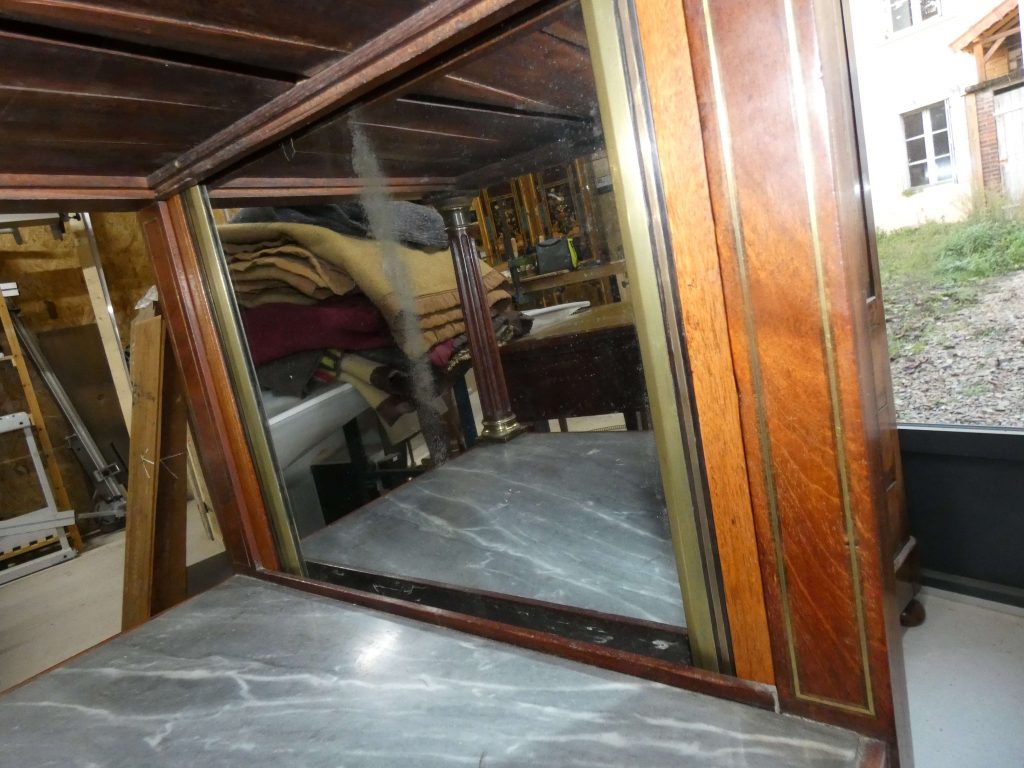
before restoration 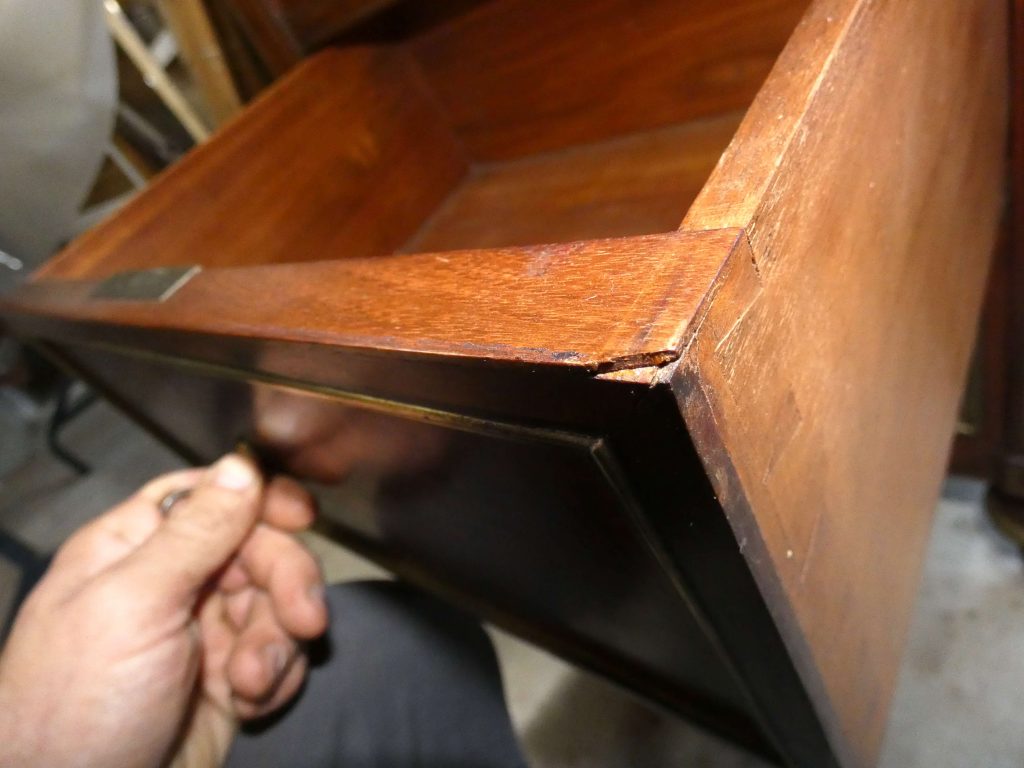
veneer shine 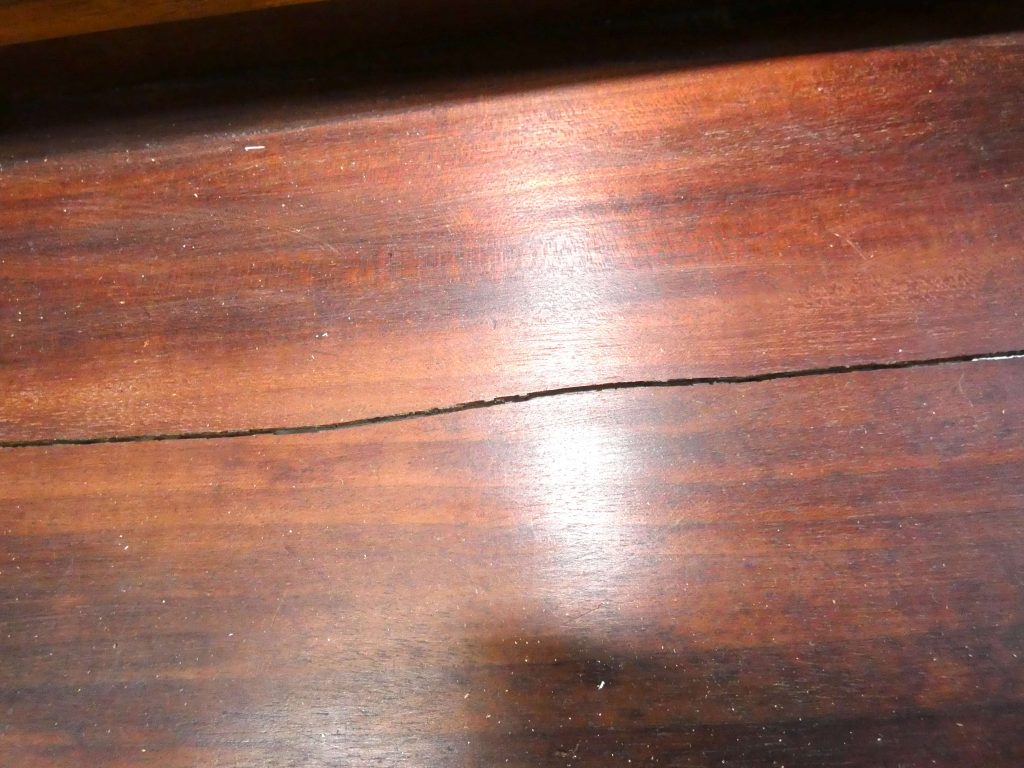
split drawer bottom 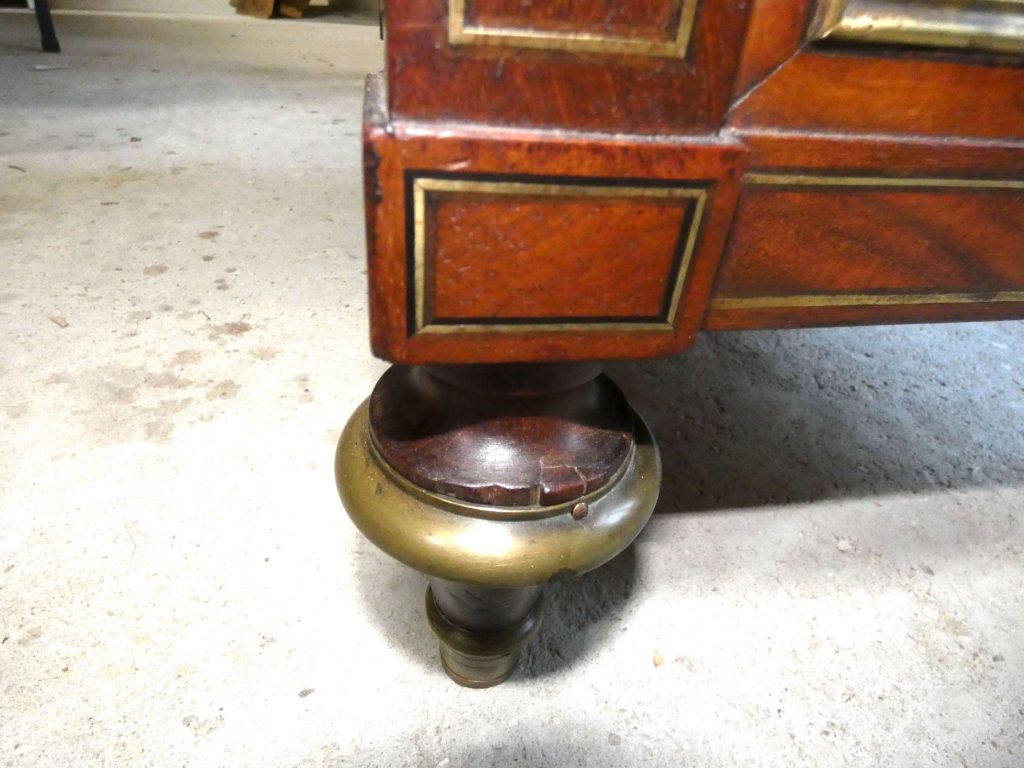
mahogany splinter on the foot 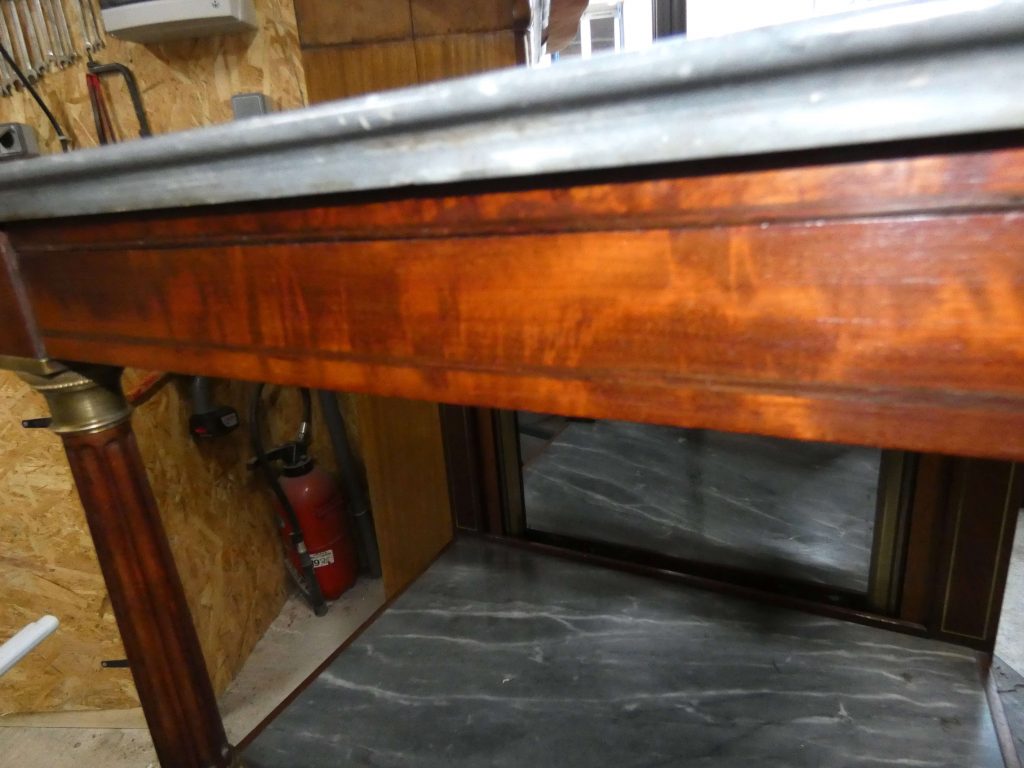
lack of brass threads 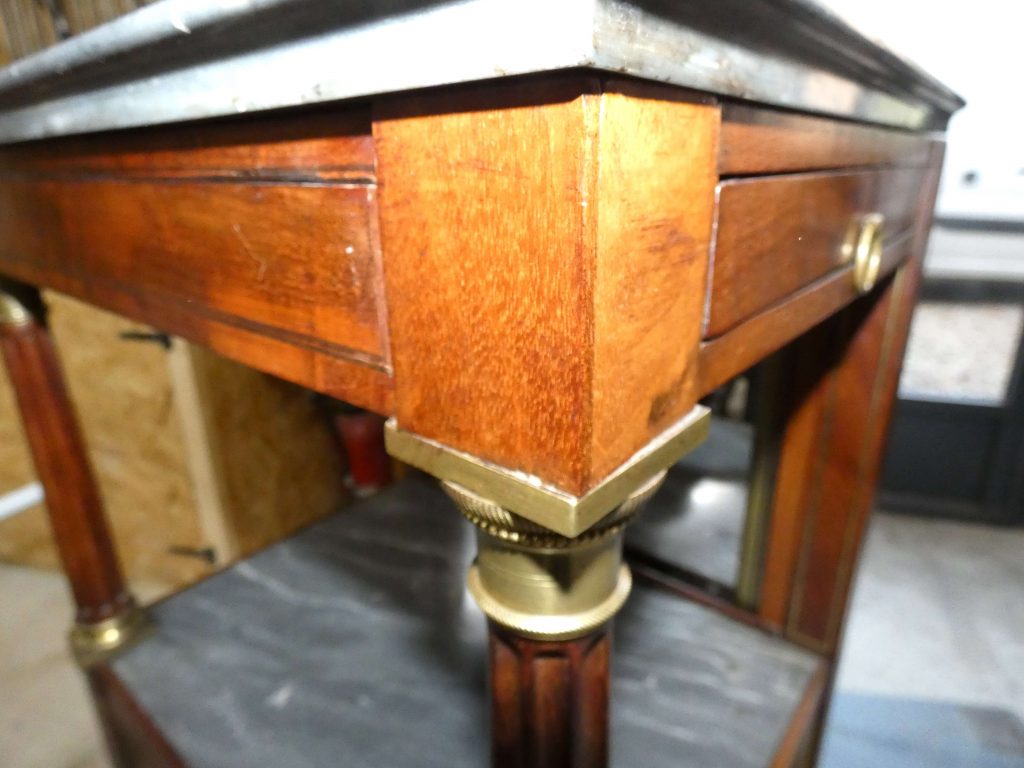
attached plates 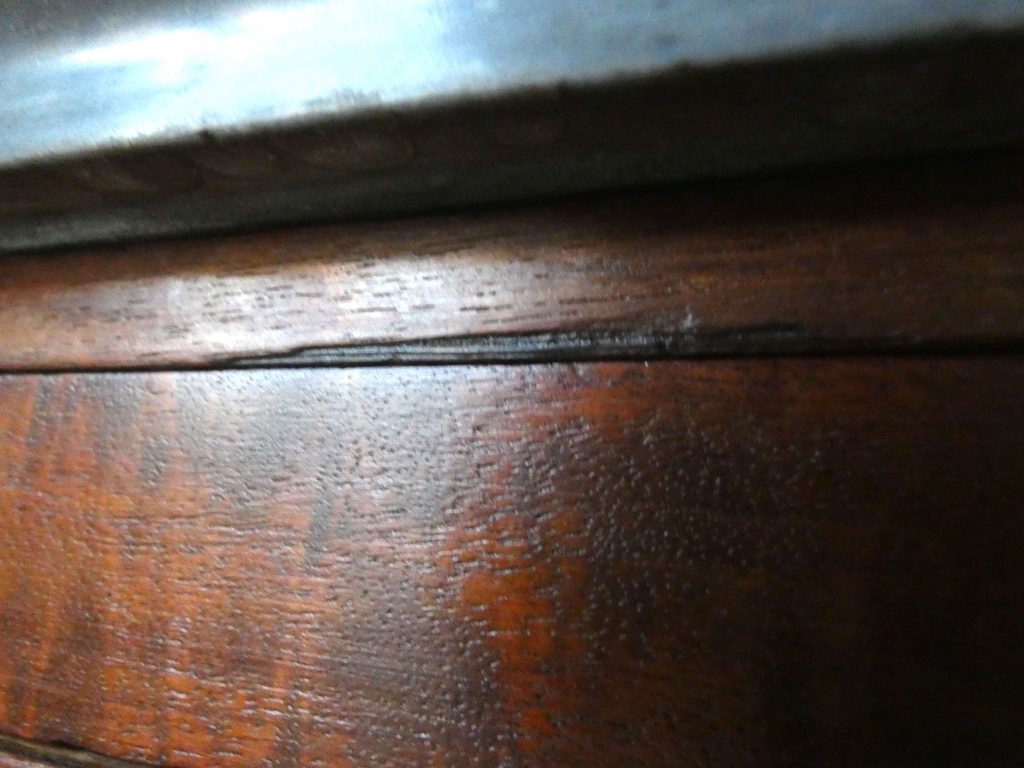
small chip in the veneer 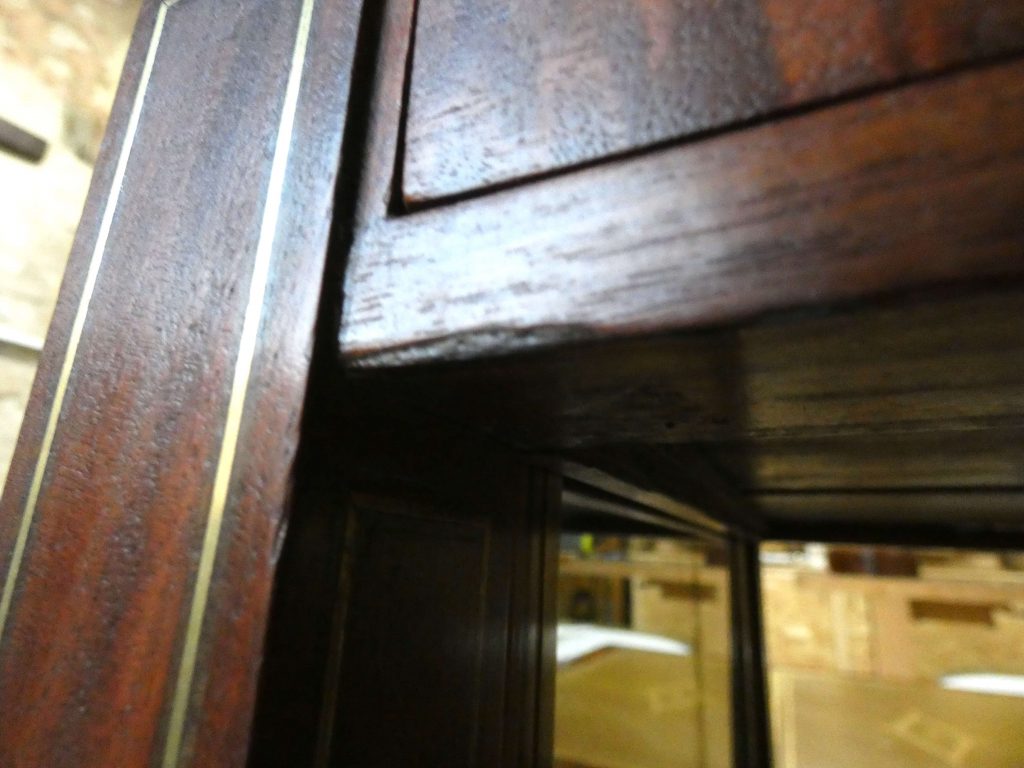
small chip in the veneer 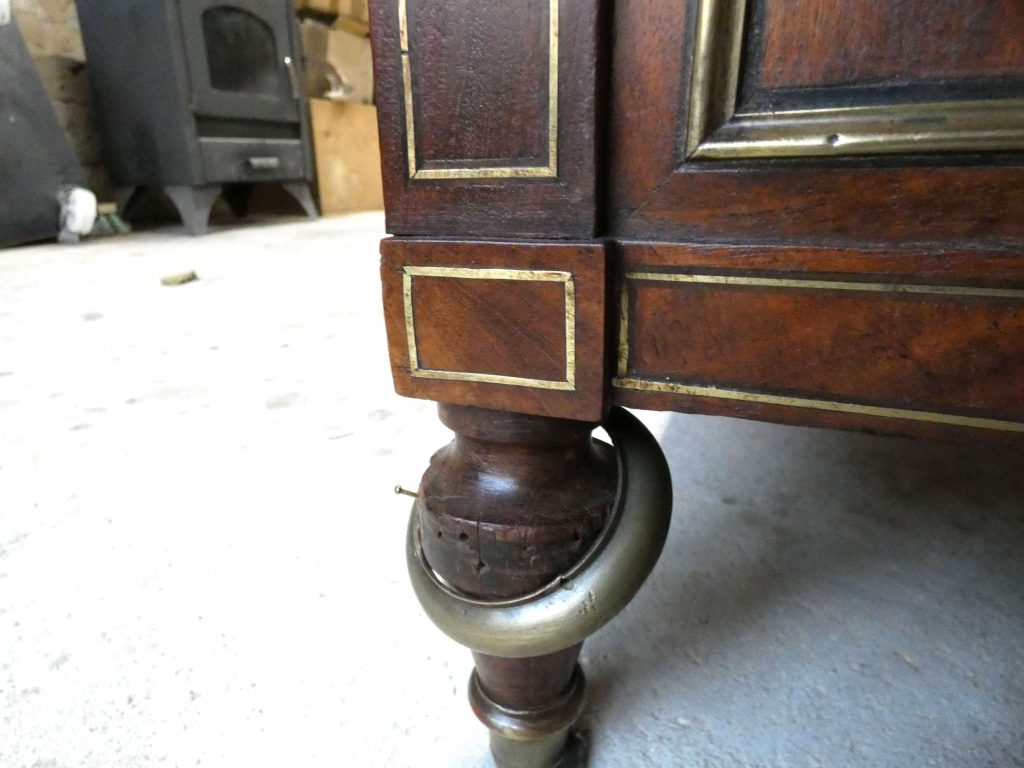
old restoration without the ebony inlays 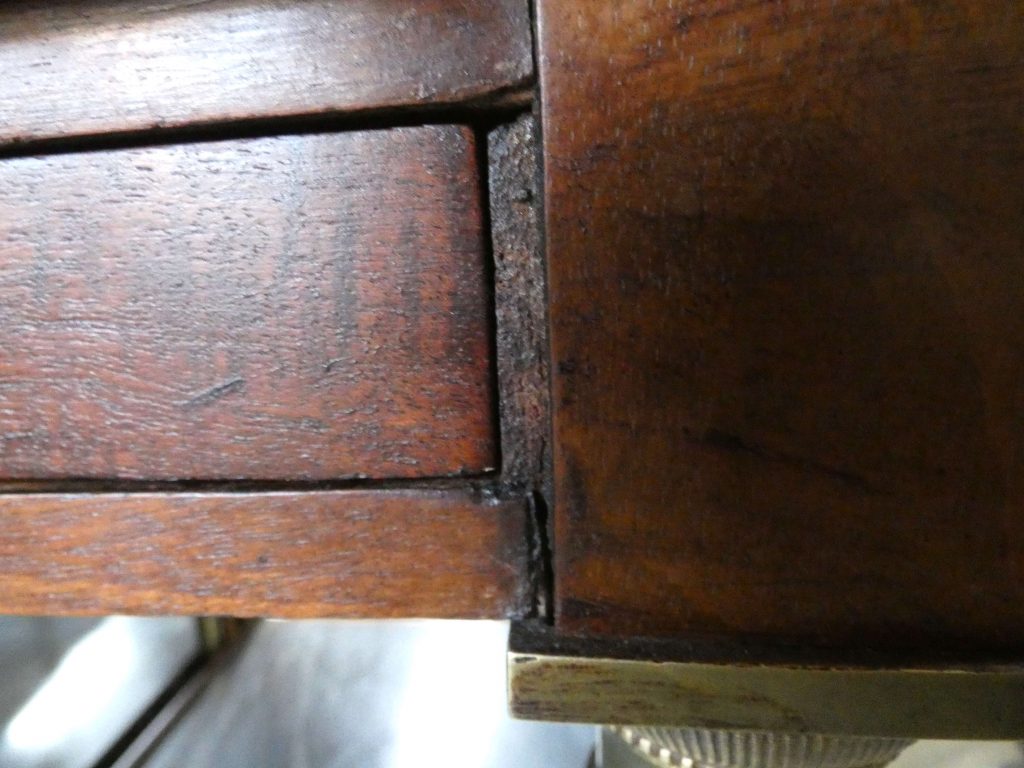
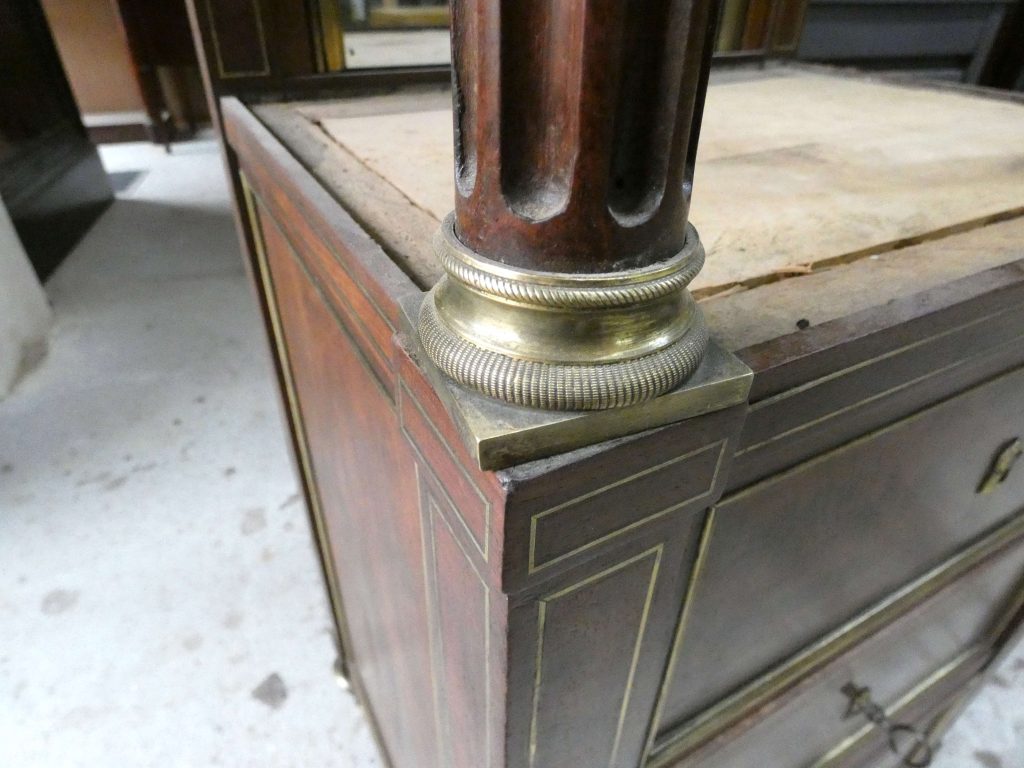
lack of veneer 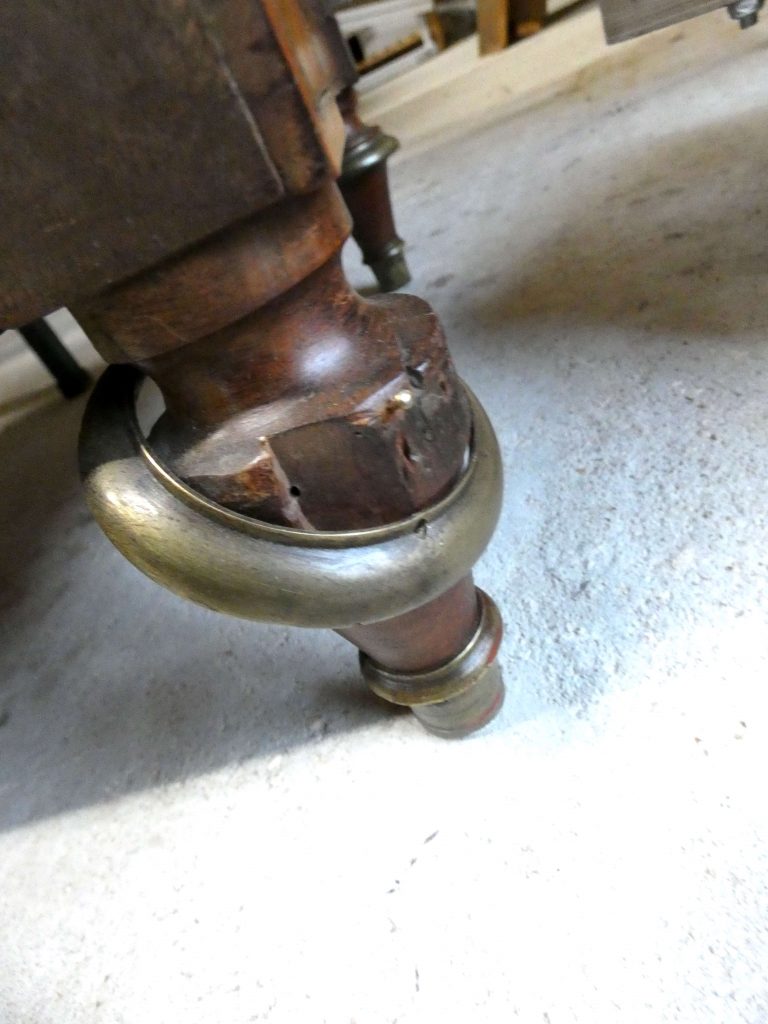
lack of solid mahogany
Cleaning the wax layer covering the piece of furniture with a stripper specifically designed for furniture restoration allowed the underlying structure to be preserved. Then, several coats of clear French polish restored the mahogany's depth and luster. The bronze mounts were removed and the most damaged ones were regilded. Finally, the upper cabinet was reattached after varnishing, and the marble tops were also reattached. .
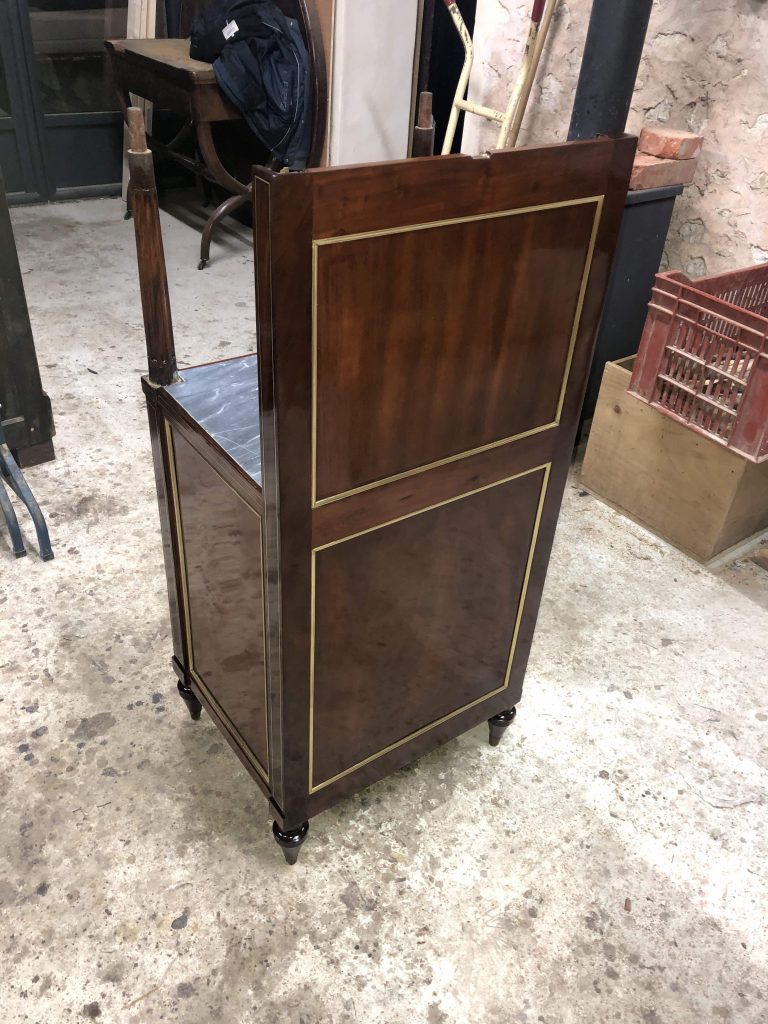
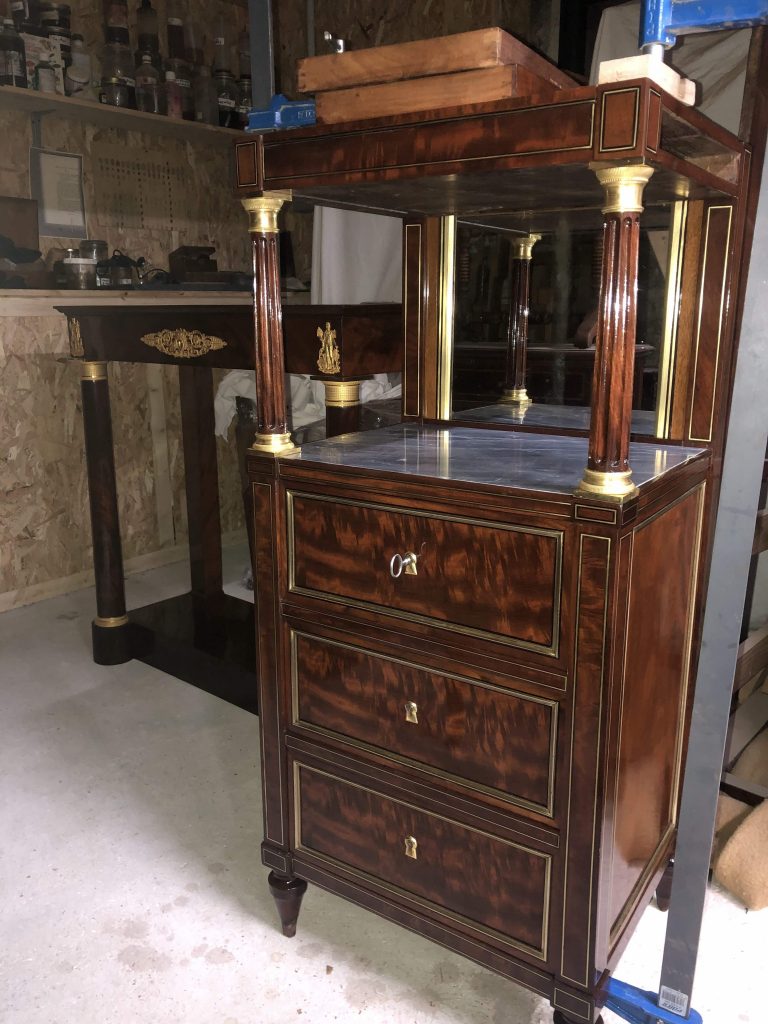
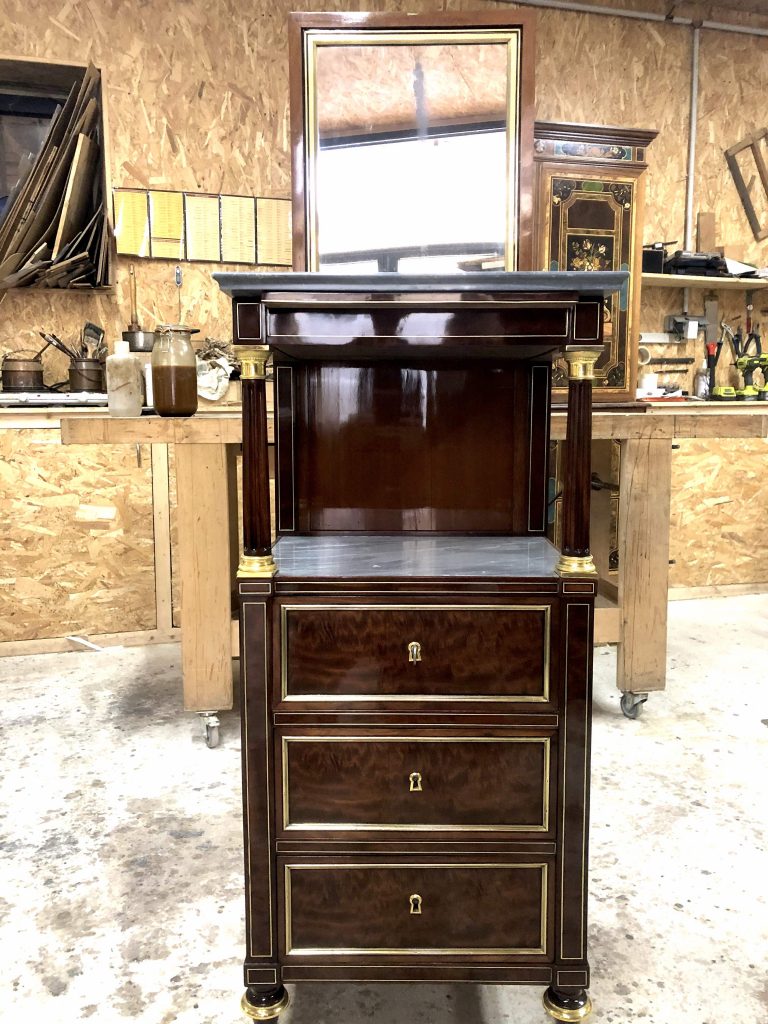
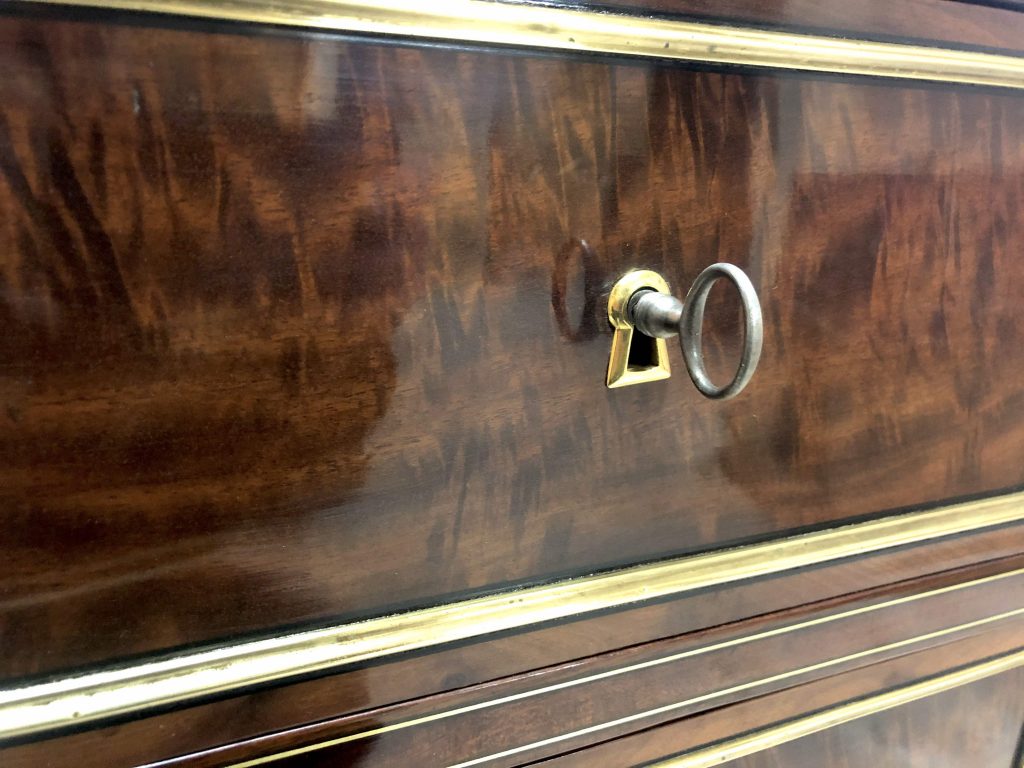
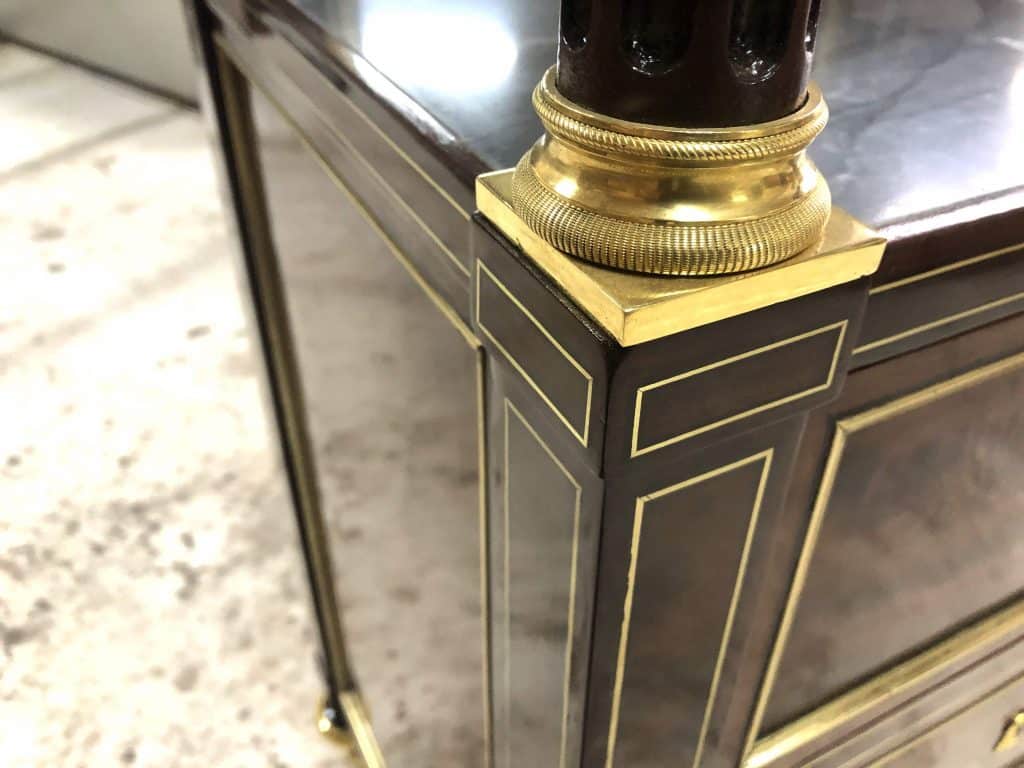
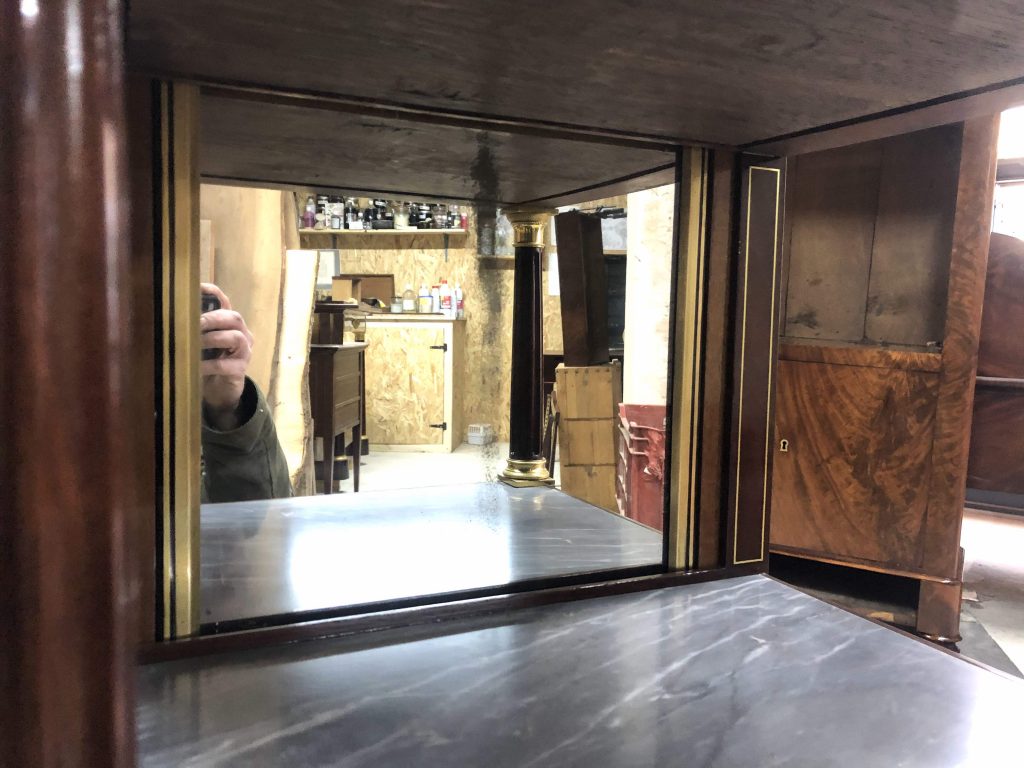
after restoration 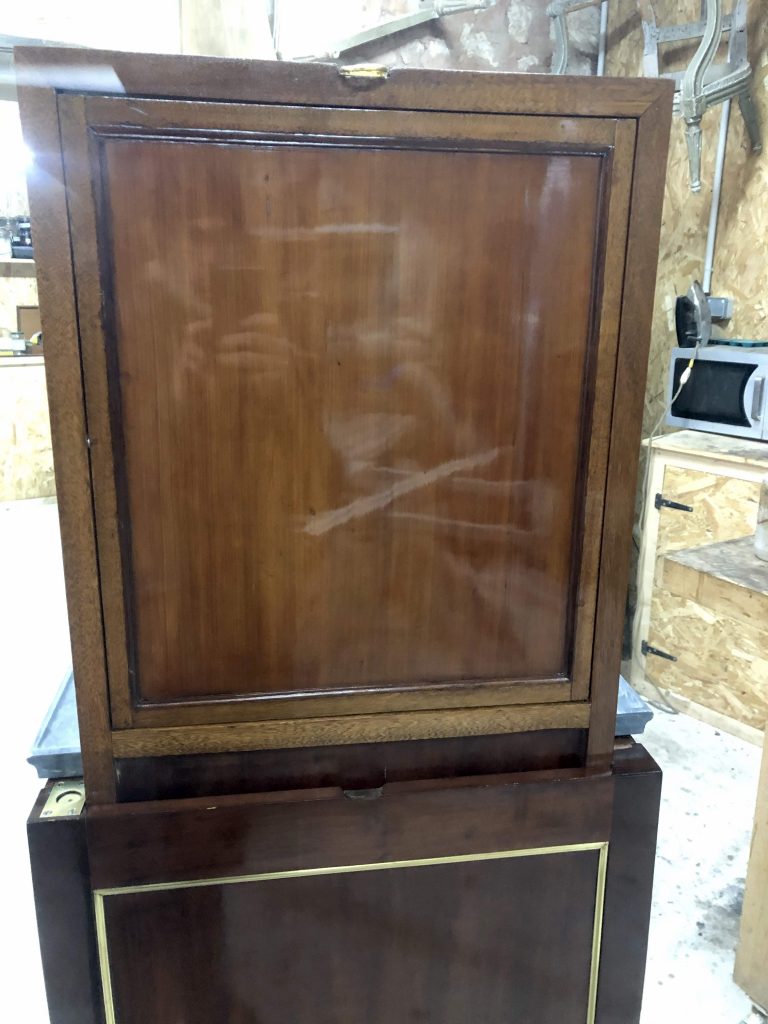
cedar base 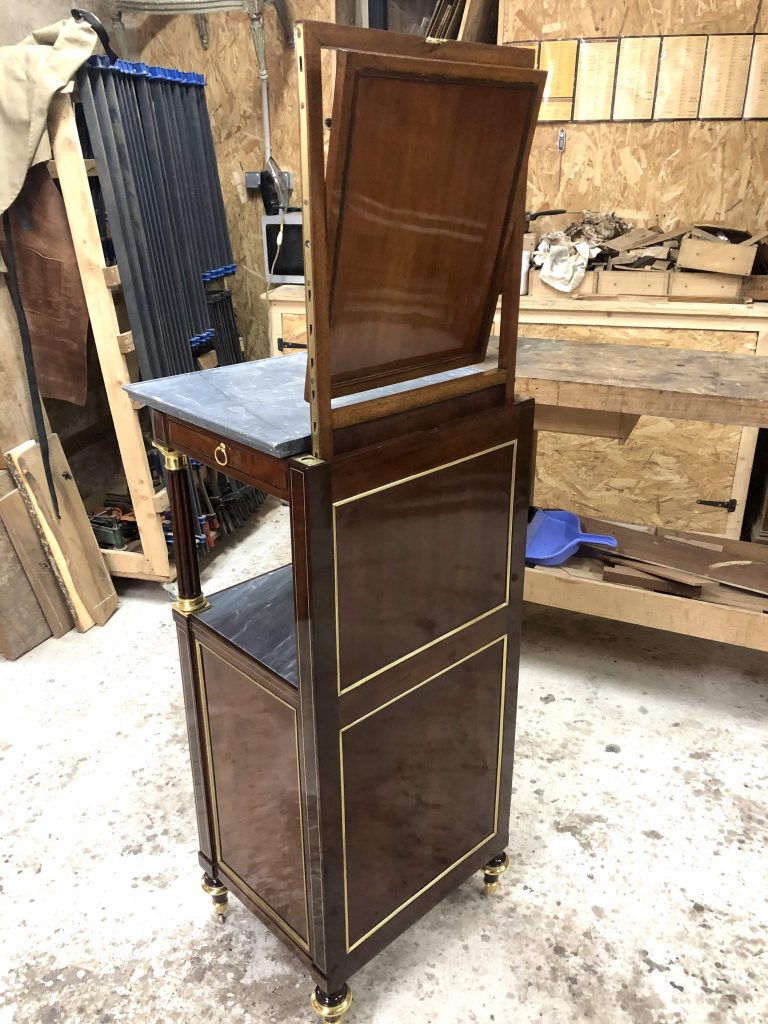
after restoration after restoration 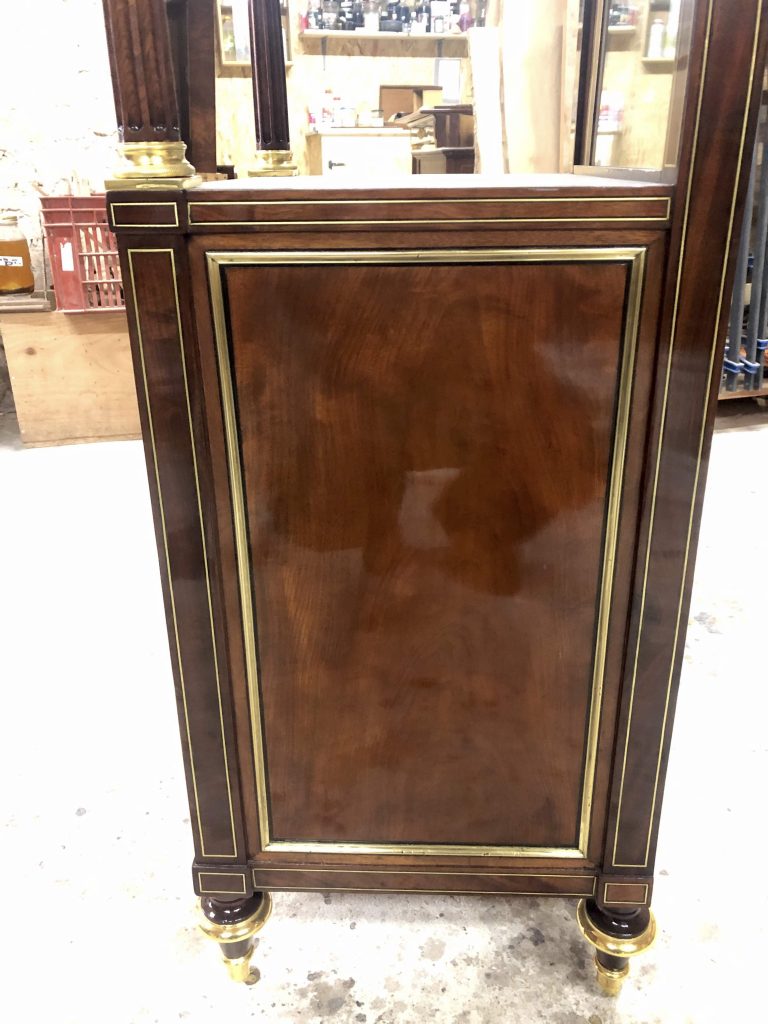
after restoration 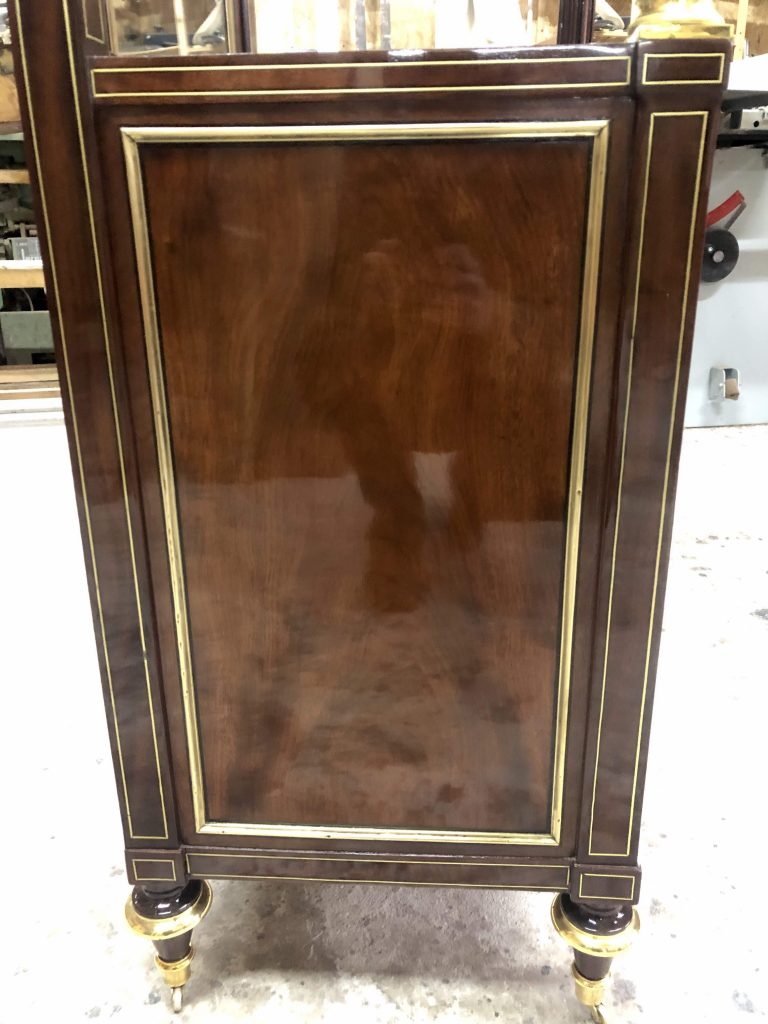
French polish 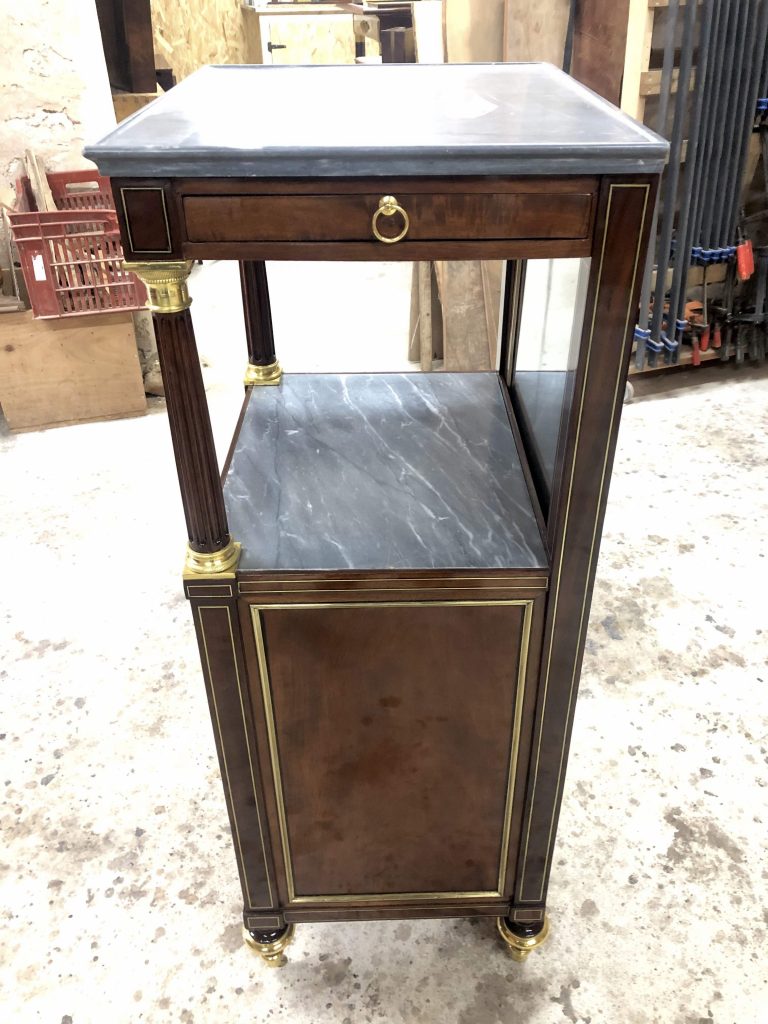
after restoration 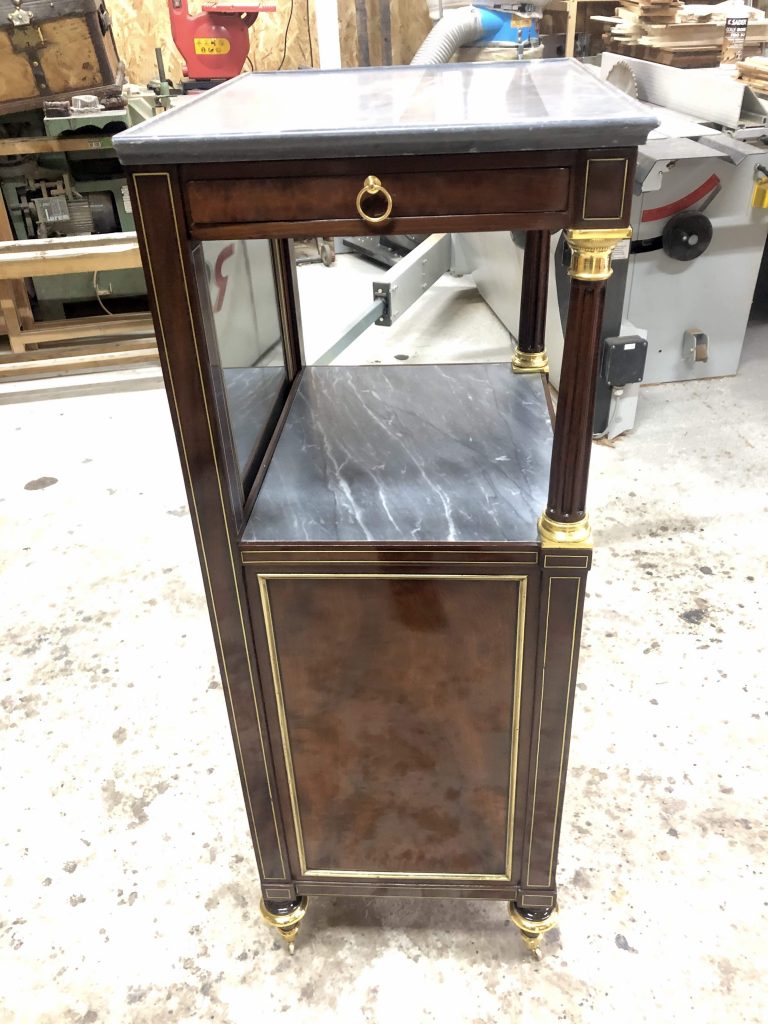
left side after restoration 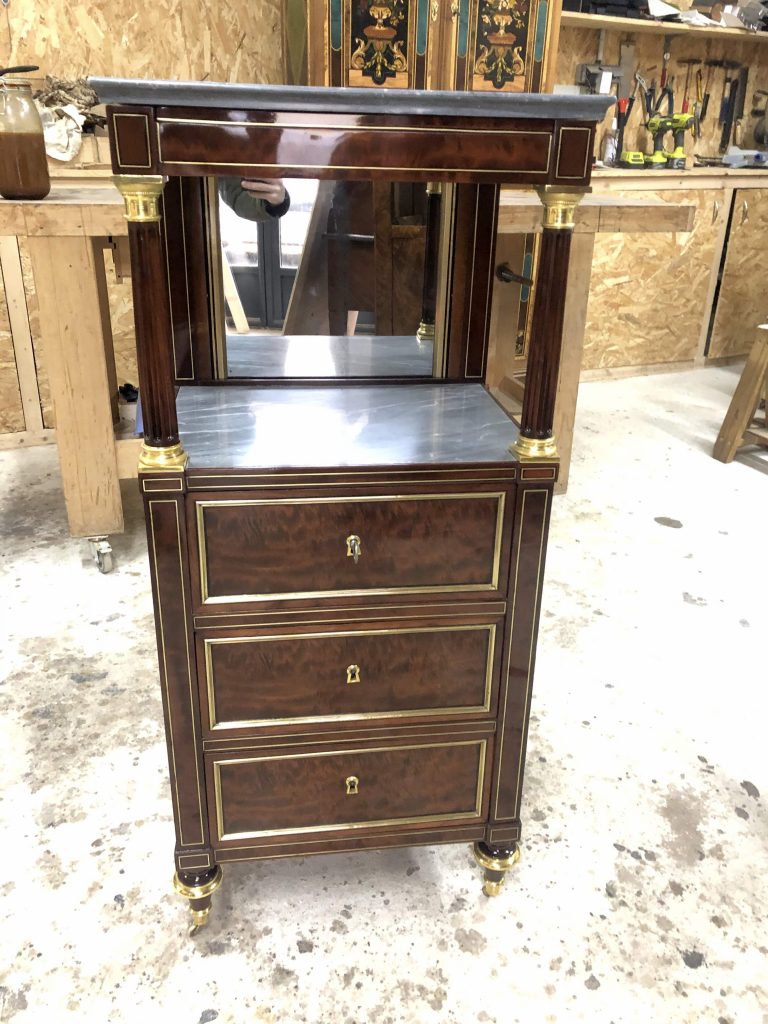
after restoration 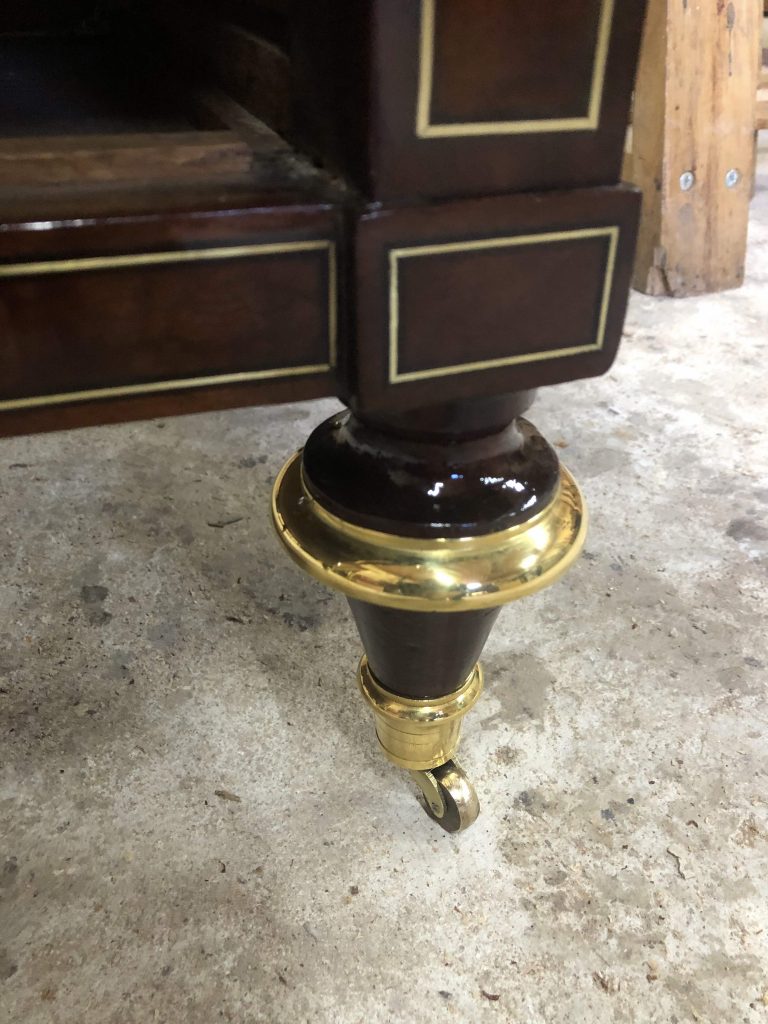
foot with its roulette 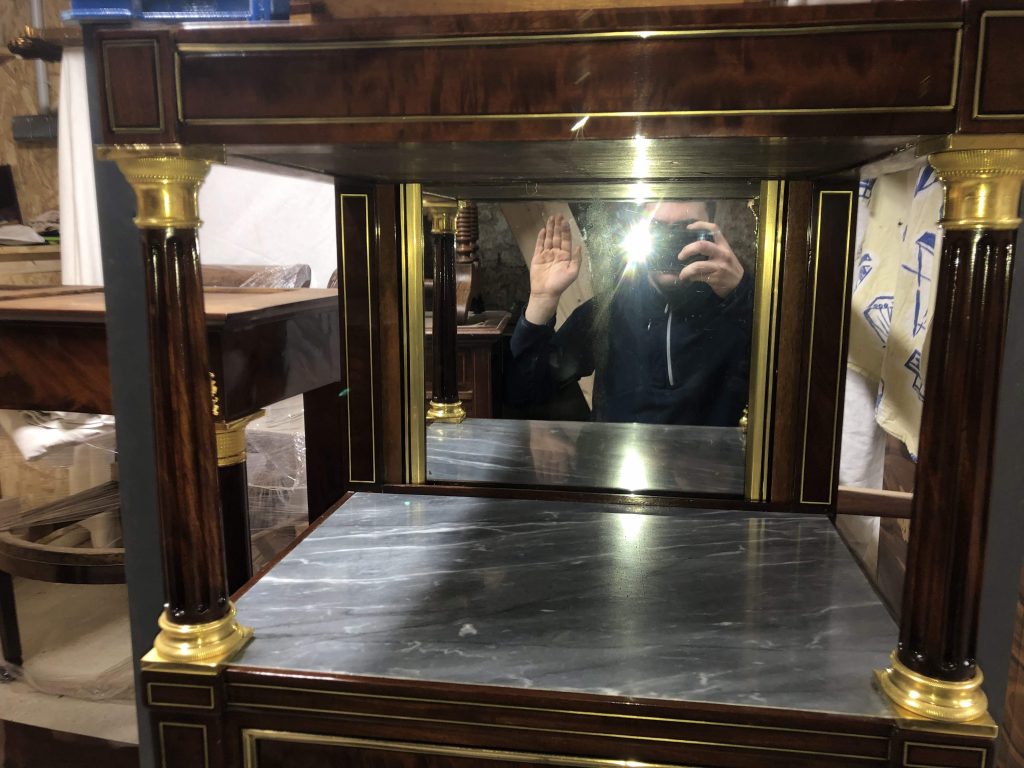
after restoration 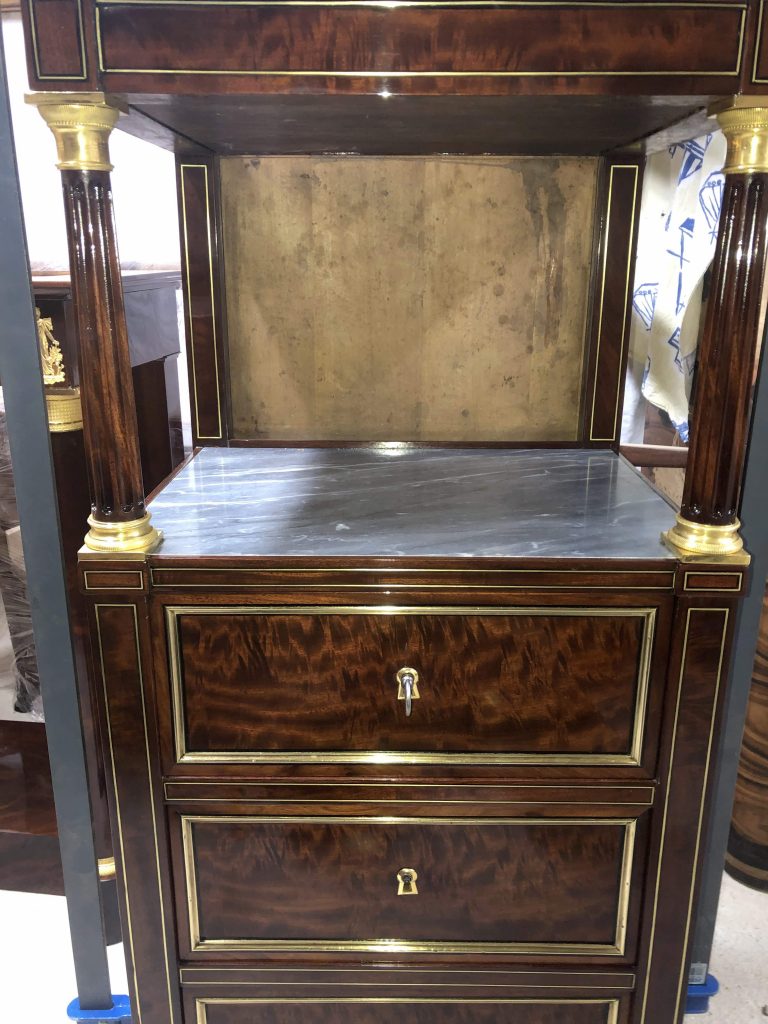
To see previous restorations : https://ebenisterie-mathieuvath.fr/en-ce-moment-a-latelier/
Good morning,
I find your restoration very well done and very well documented.
However, I'm not sure it's from the Louis XVI period. The "barber's cabinet," especially one like this, which evolved considerably, doesn't seem to fit chronologically. I also don't think it's a copy, as the piece appears to be very valuable.
The cloverleaf lock, although replaceable over time, suggests Louis Philippe.
Regarding whether it dates from the Directoire period, the choice of dark wood seems unusual for that era. It suggests a taste for dark woods enhanced by gilded bronzes, as was very common during the reign of Napoleon III.
Have you noticed anything unusual?
Was the screwing industrial, were there markings on the bronze parts, etc.?
Sincerely
Al
Hello, this barber's chair is indeed from the late 18th century. It belongs to the very last group of furniture made in the last 20 years of the 18th century. Furthermore, clover-shaped chairs were only produced during this period and were completely abandoned thereafter.
Here are some links that may provide you with some information.
Sincerely
https://galerielauretta.com/produit/barbiere-acajou-epoque-louis-xvi-estampillee-f-schey/
https://galerie-atena.com/commode-louis-xvi-en-placage-dacajou-et-marqueterie-de-laiton/
https://collection.mobilier-national.fr/objet/GME-16941-000
https://collection.mobilier-national.fr/objet/GME-10361-000
https://collection.mobilier-national.fr/objet/GME-11961-000
https://collection.mobilier-national.fr/objet/GME-17216-000