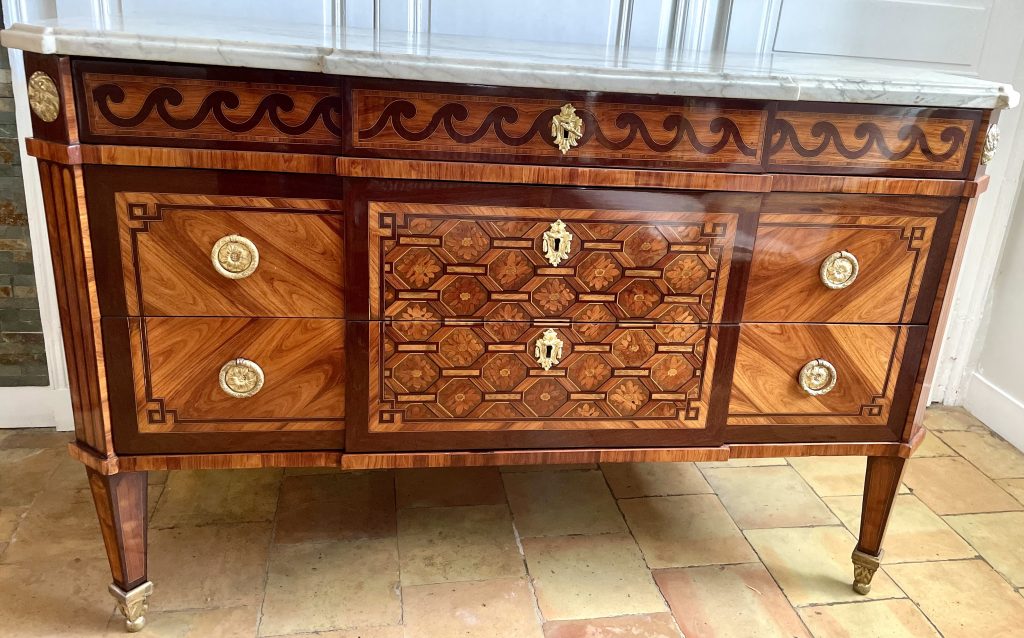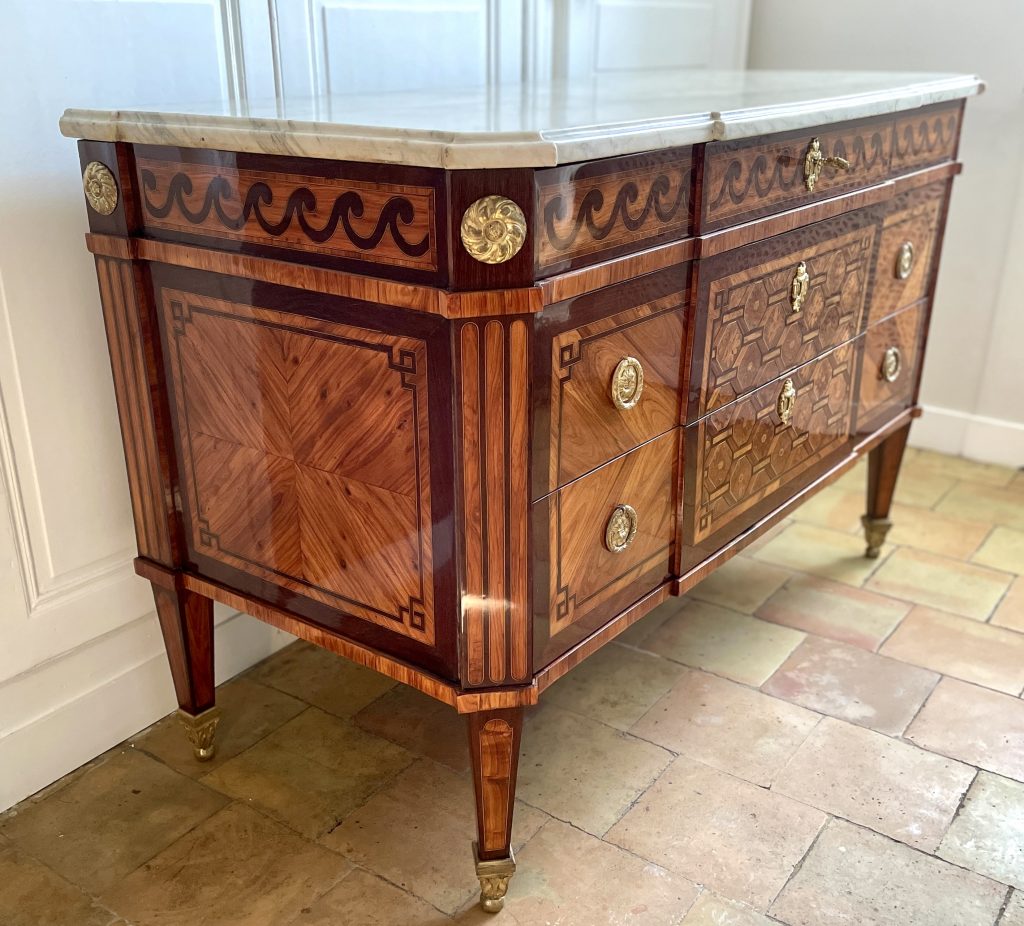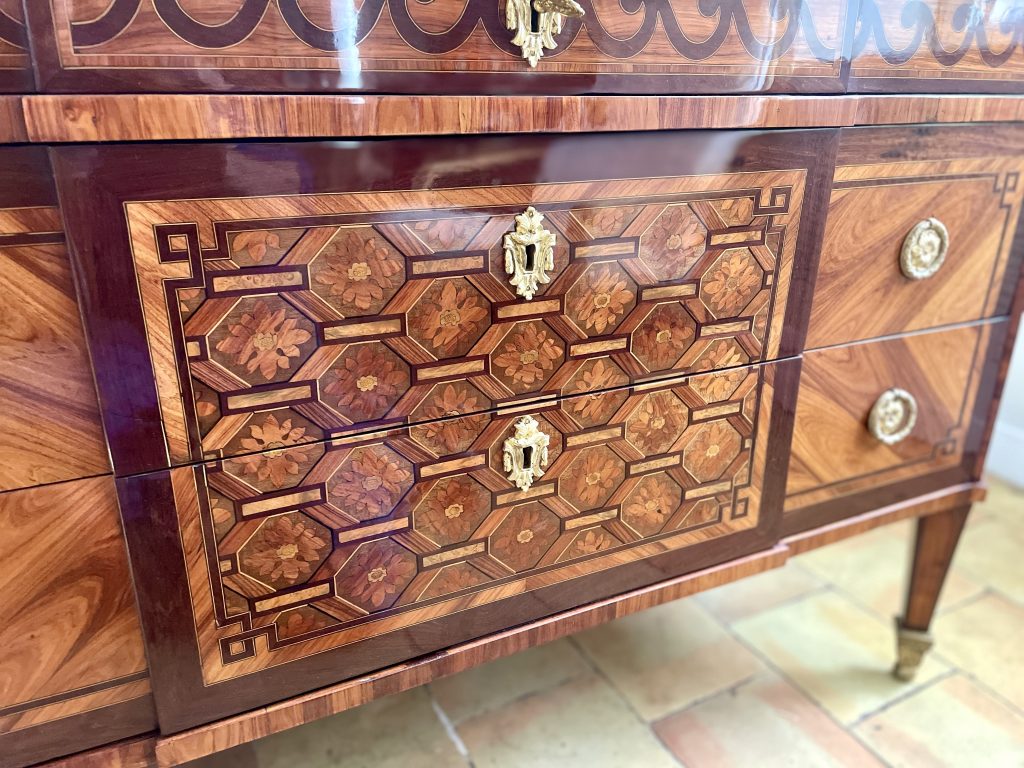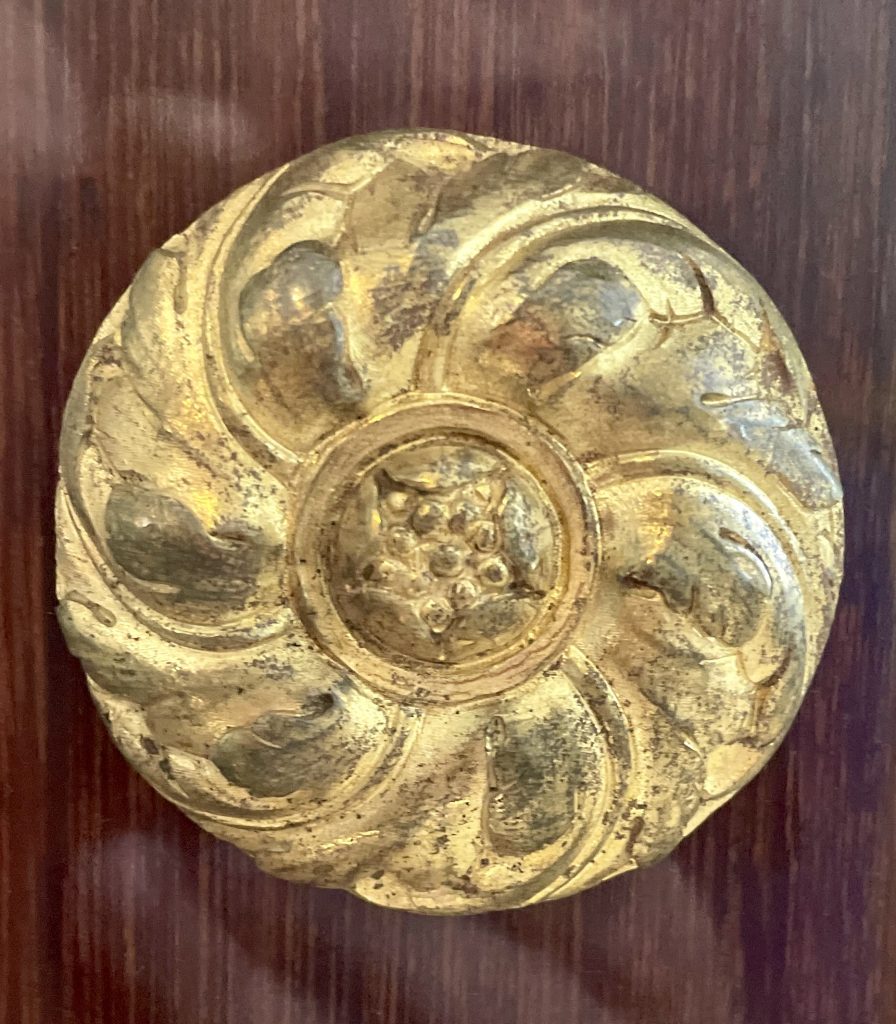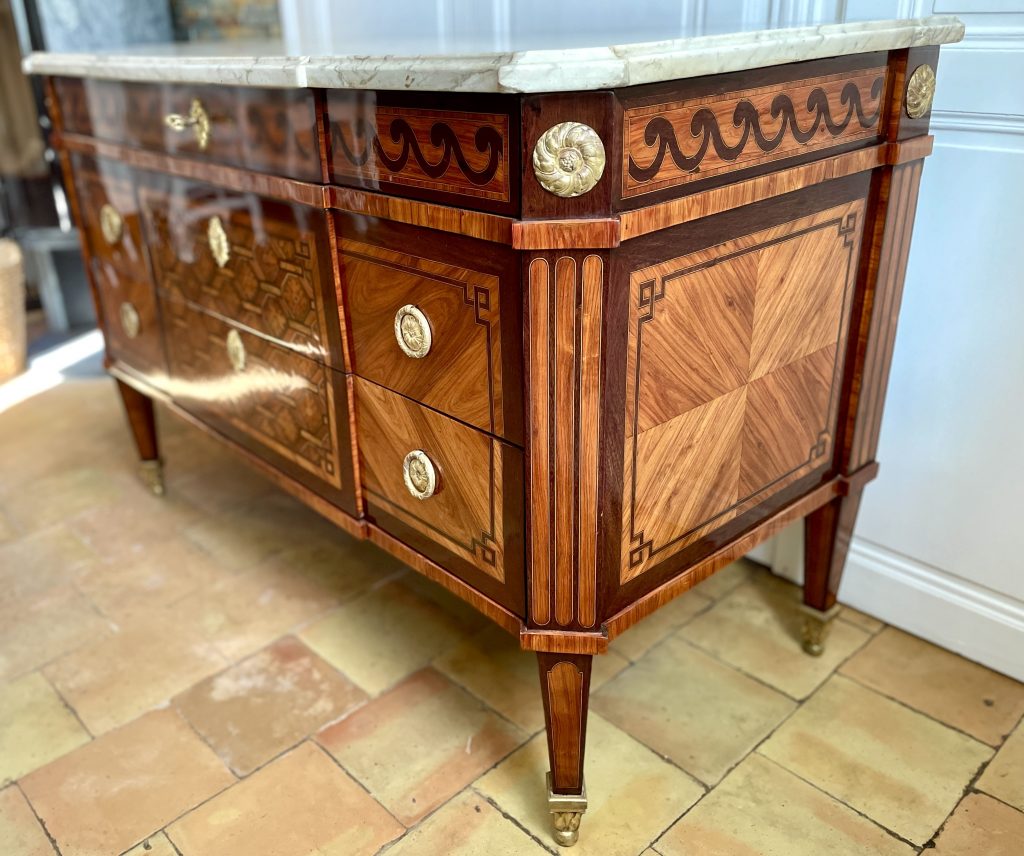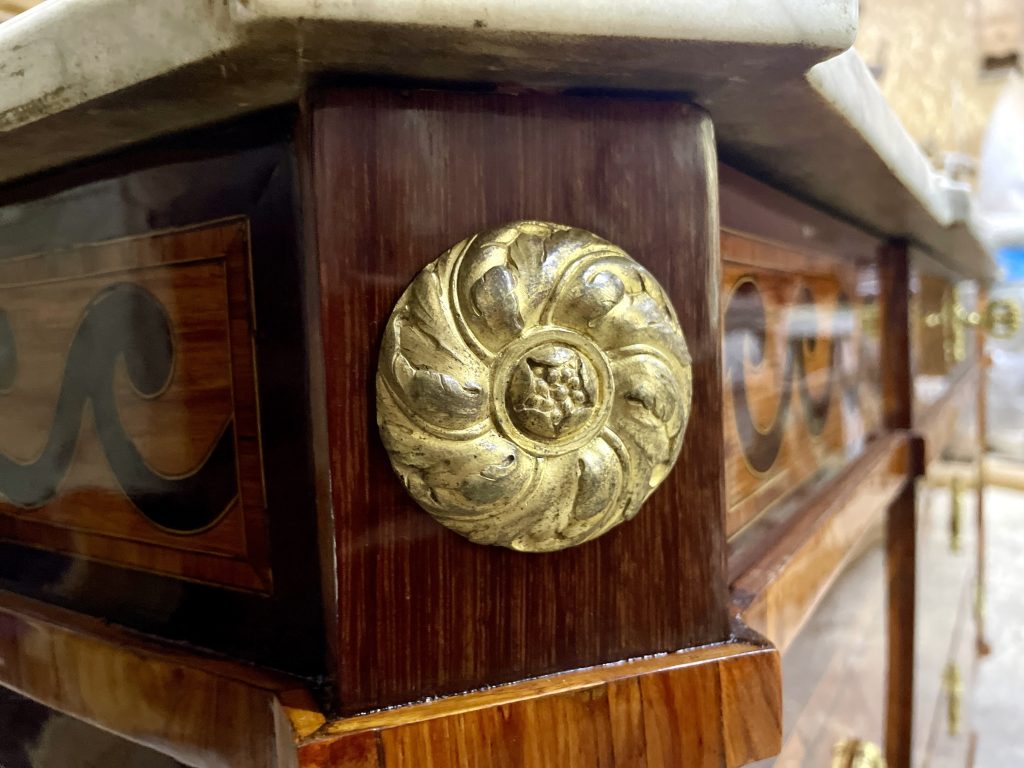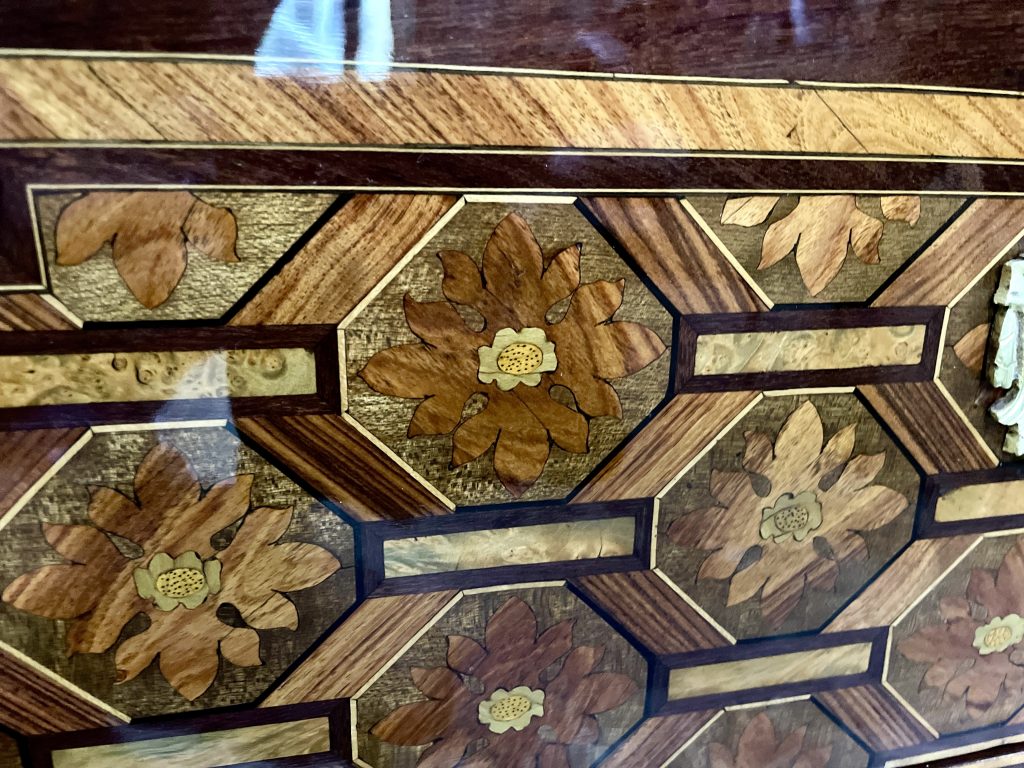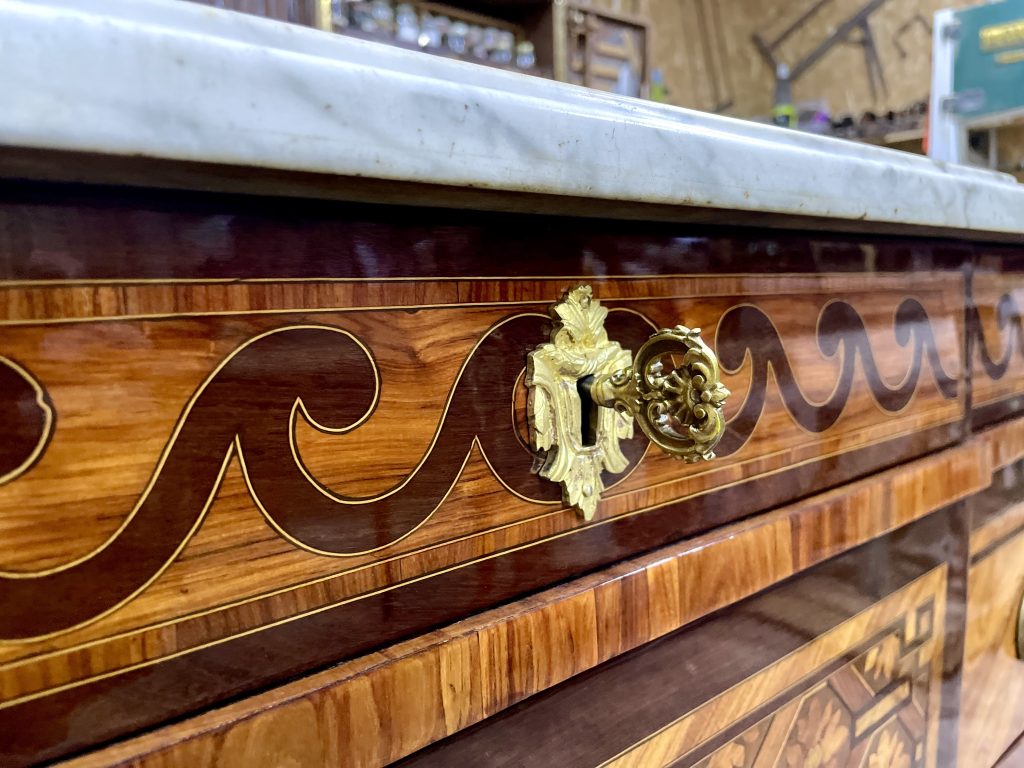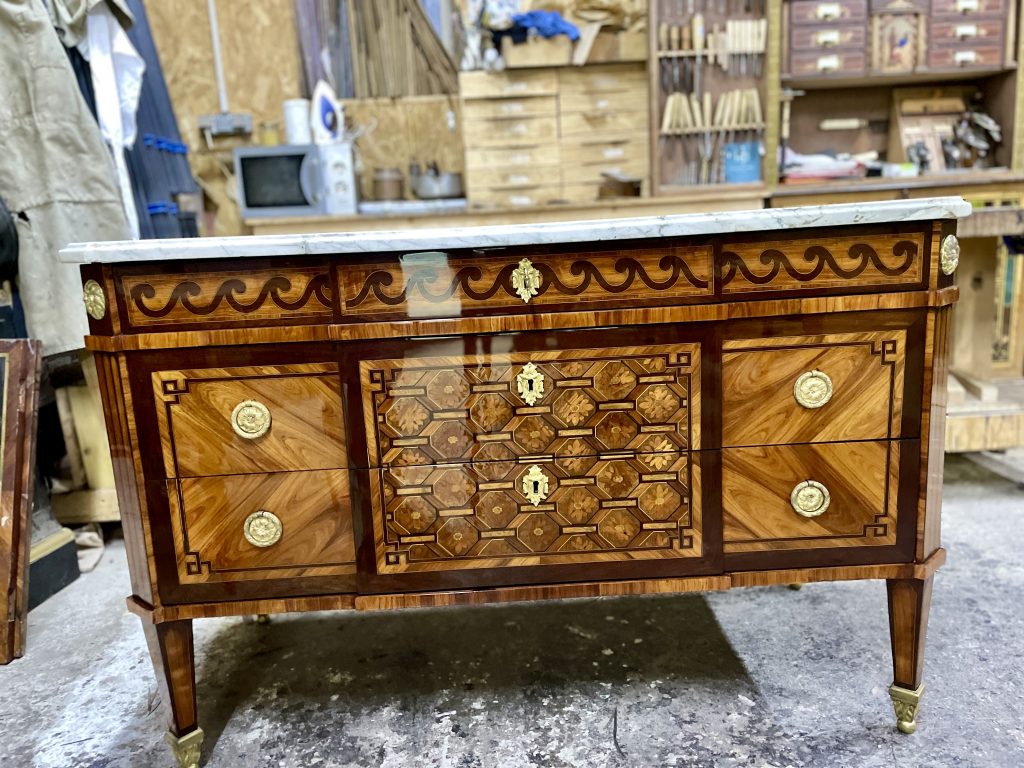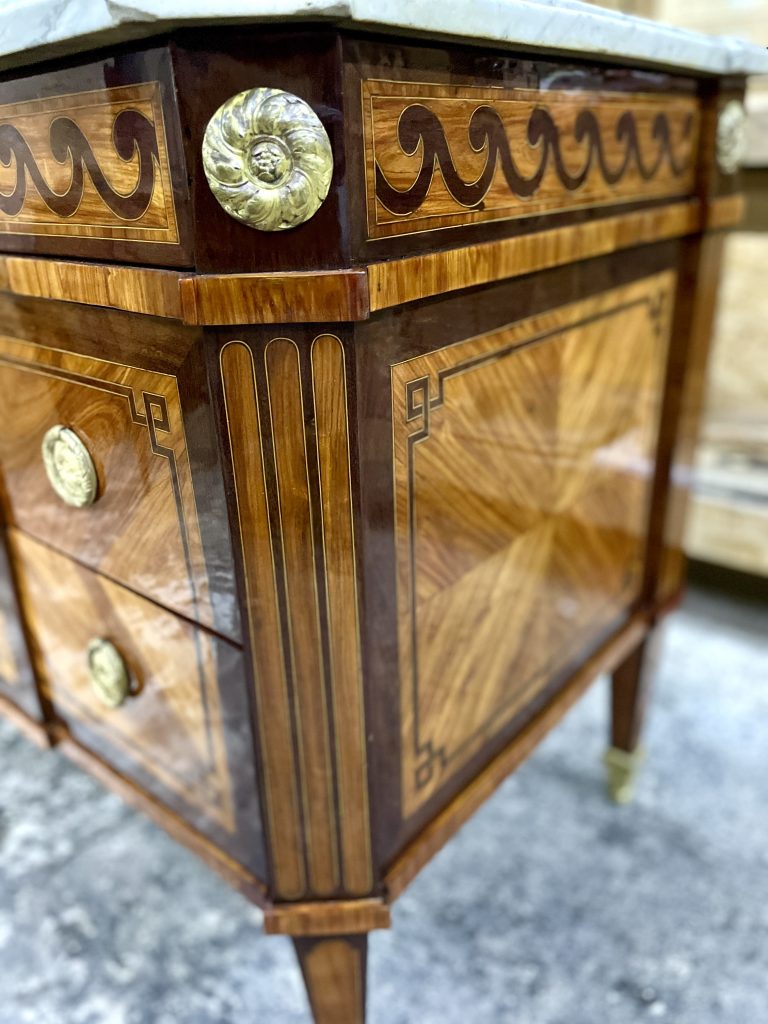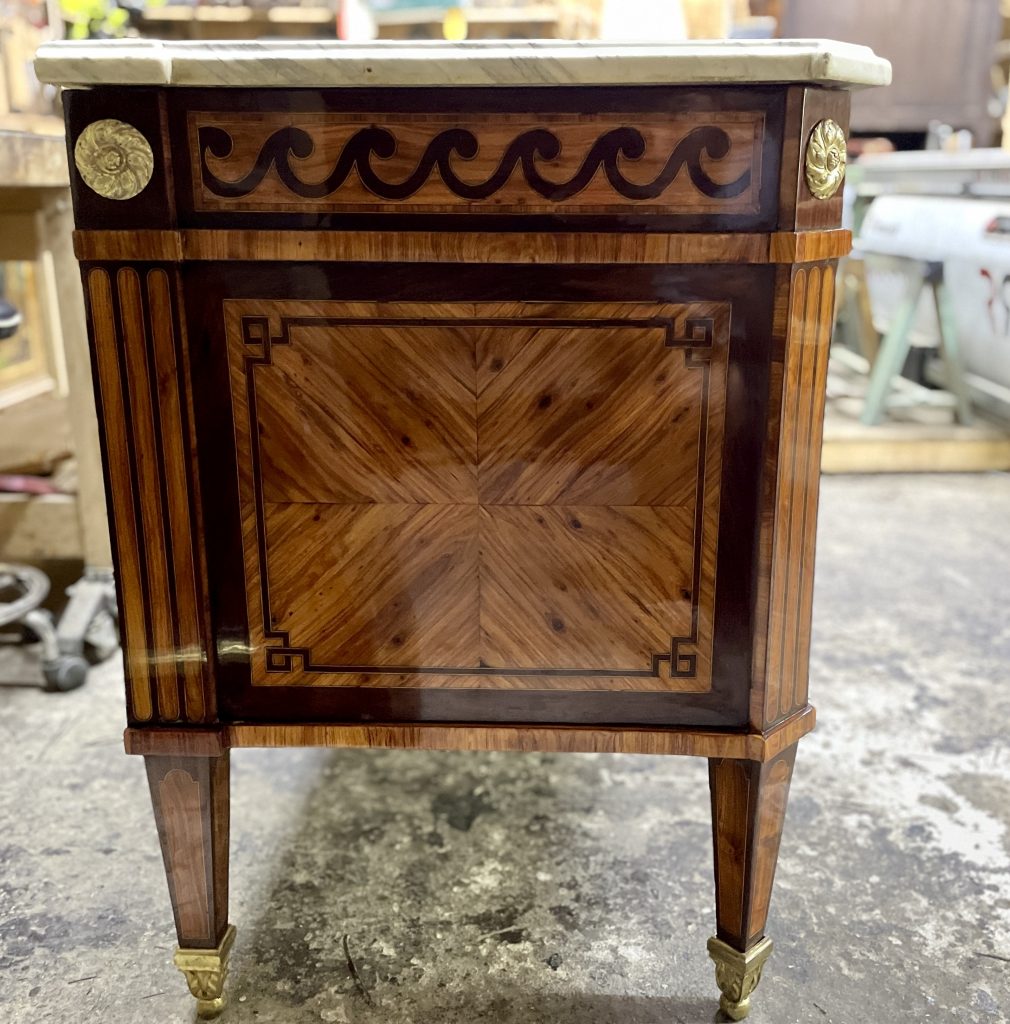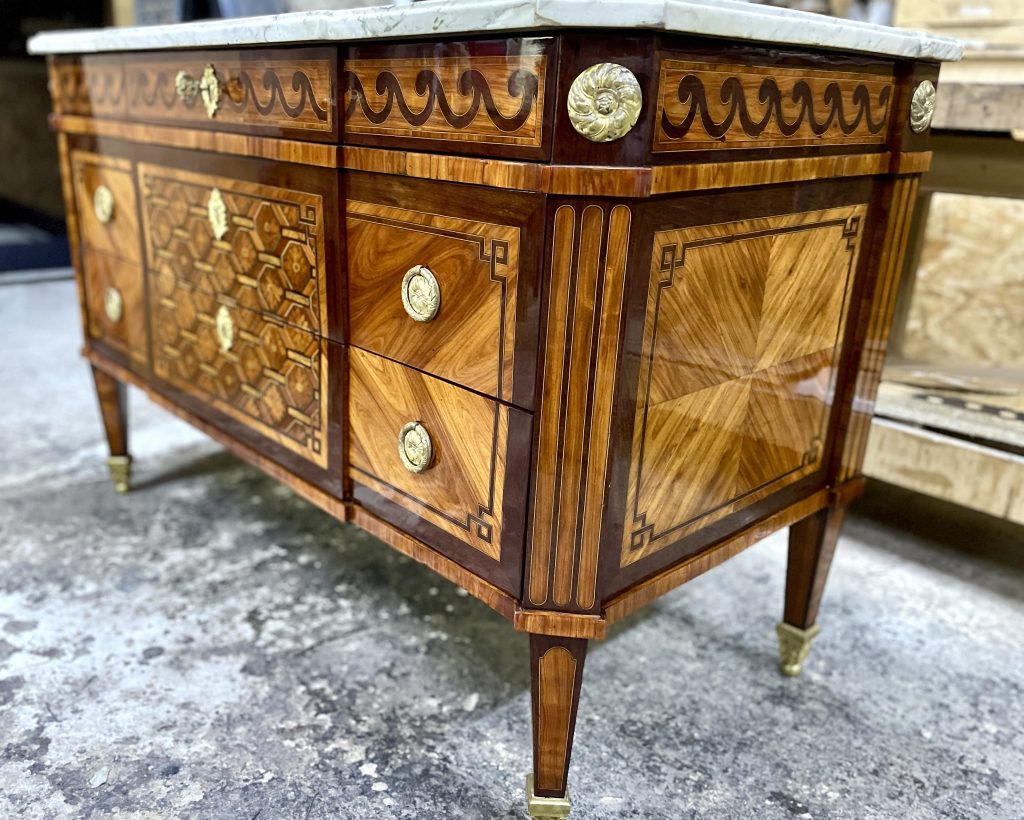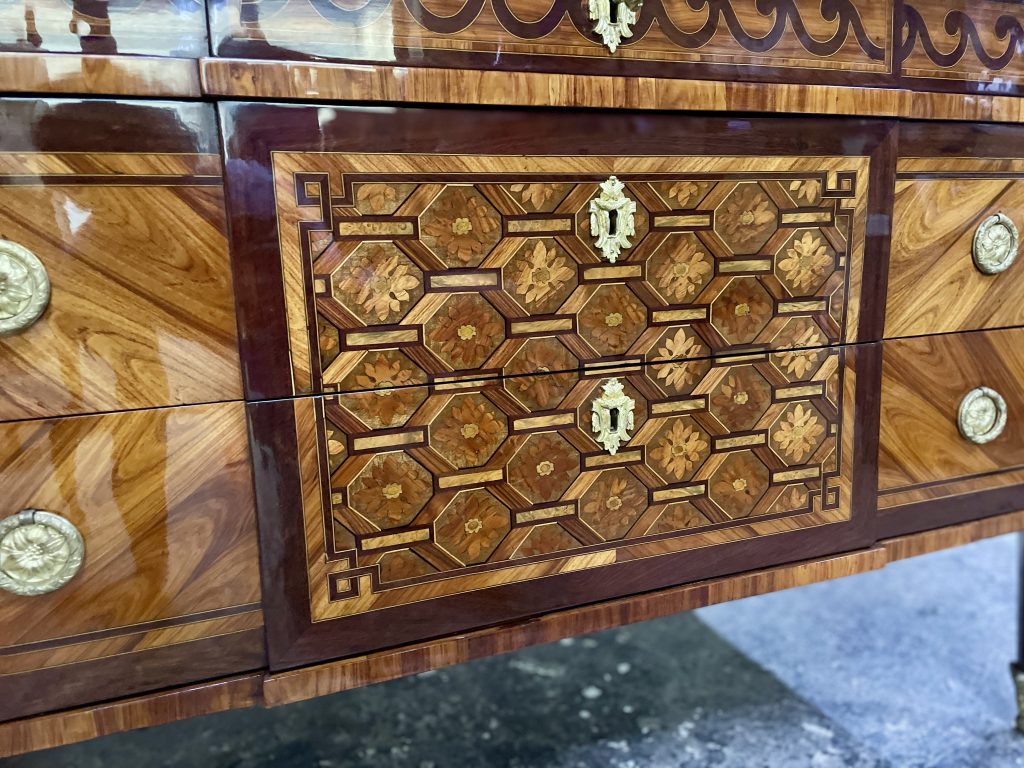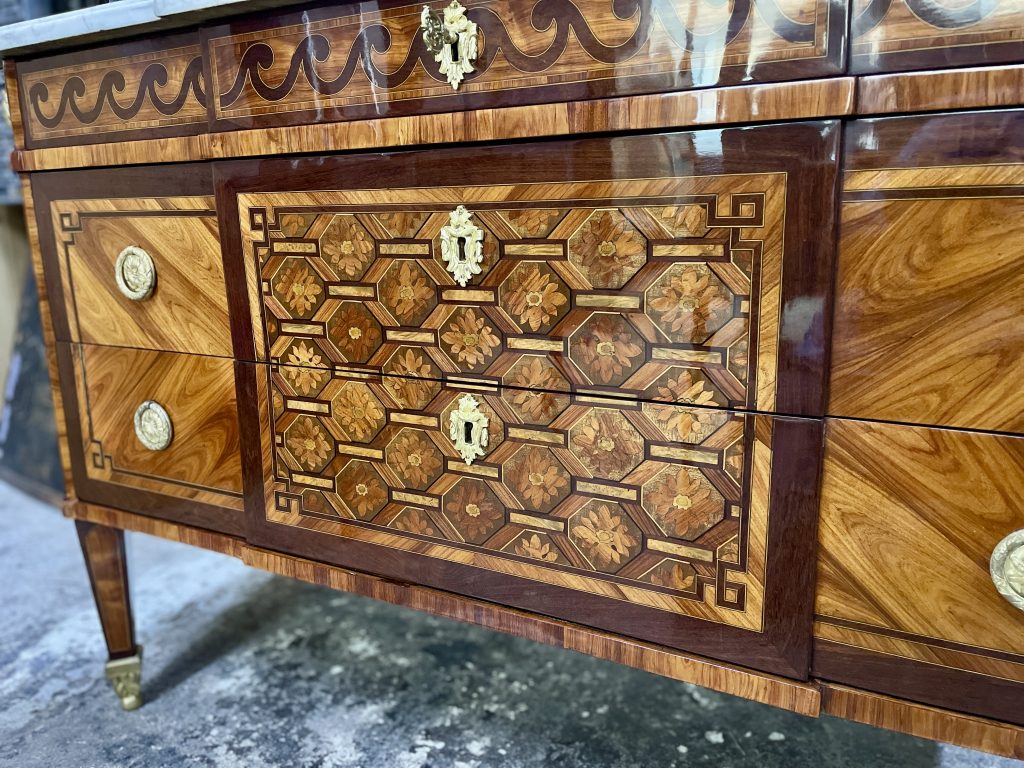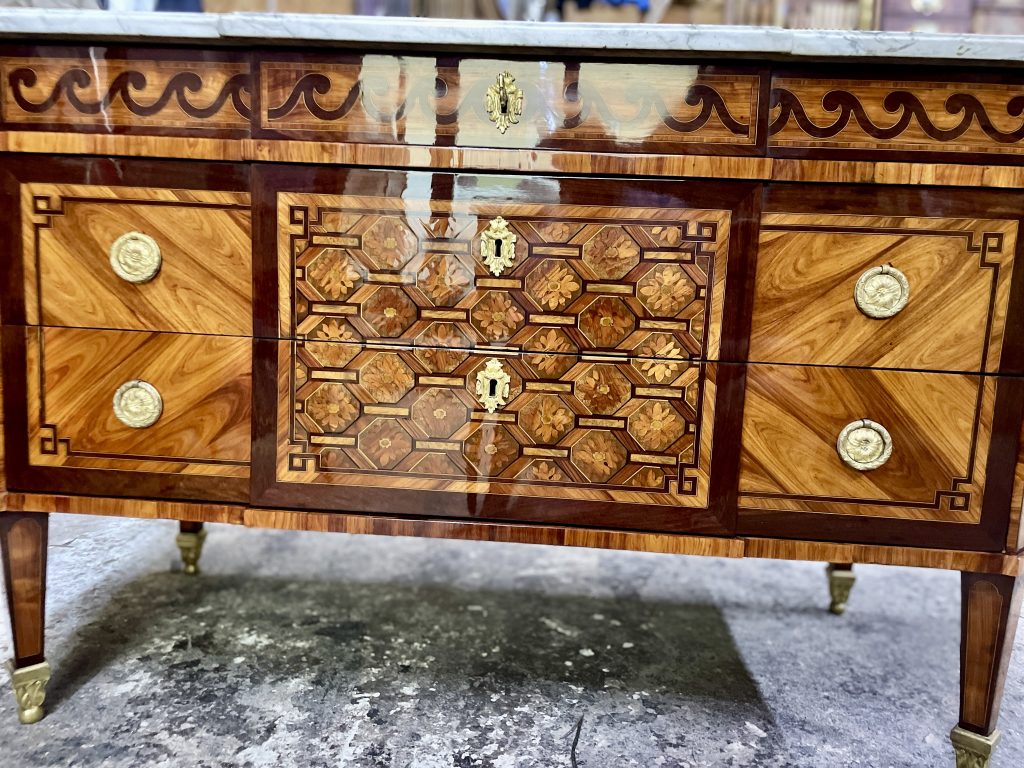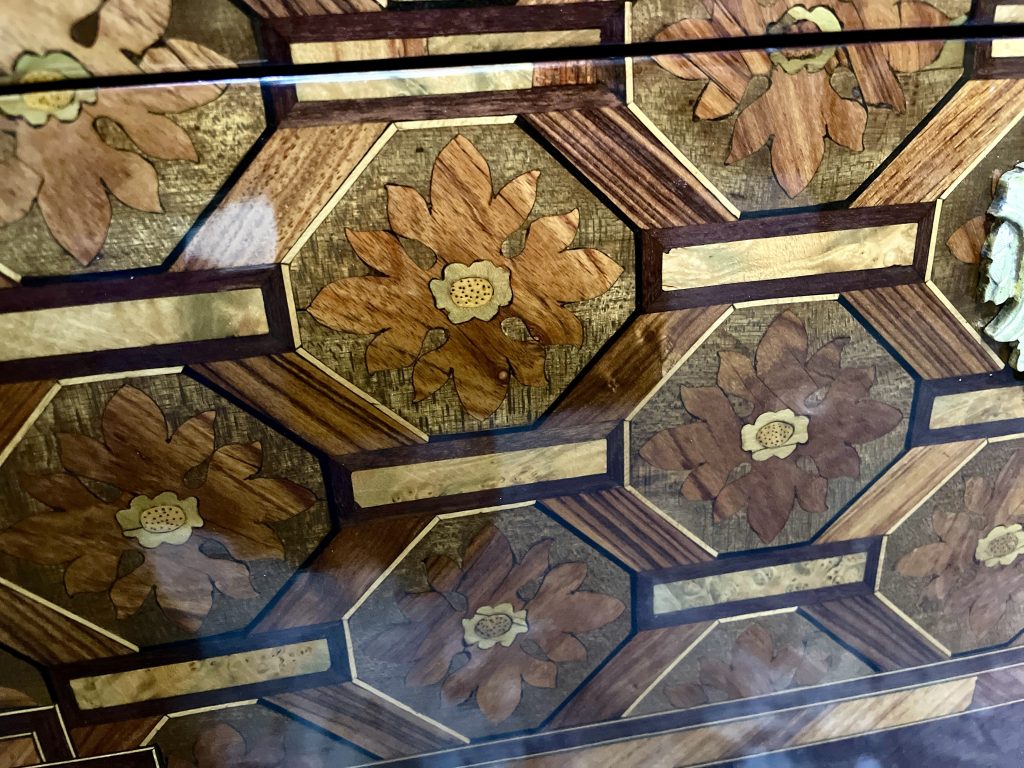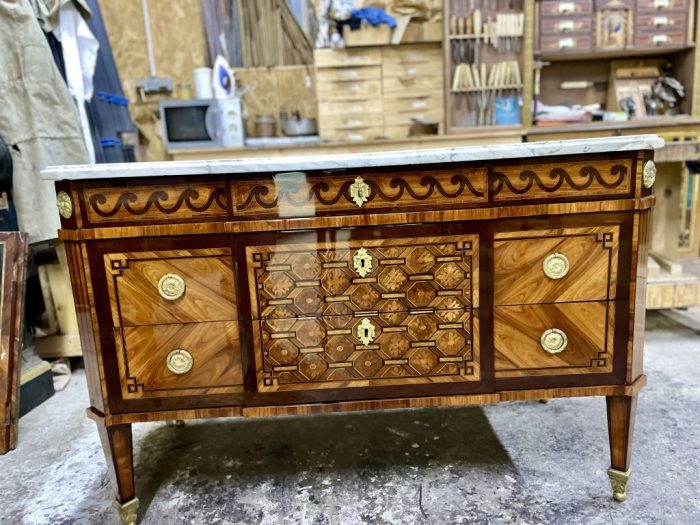
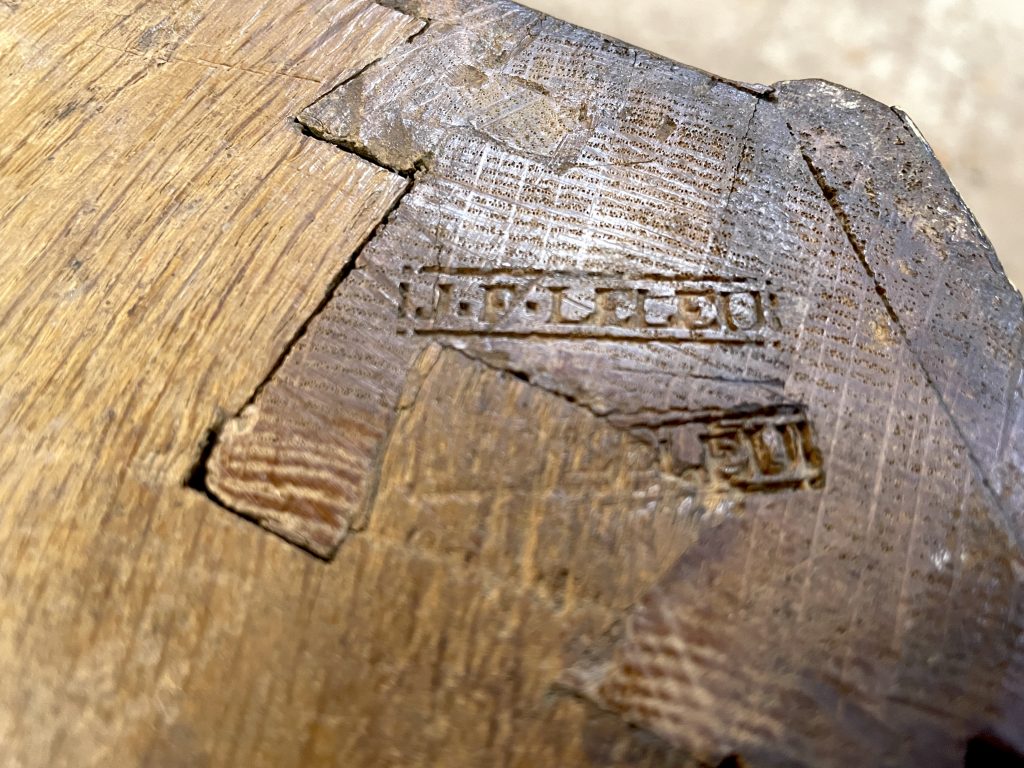
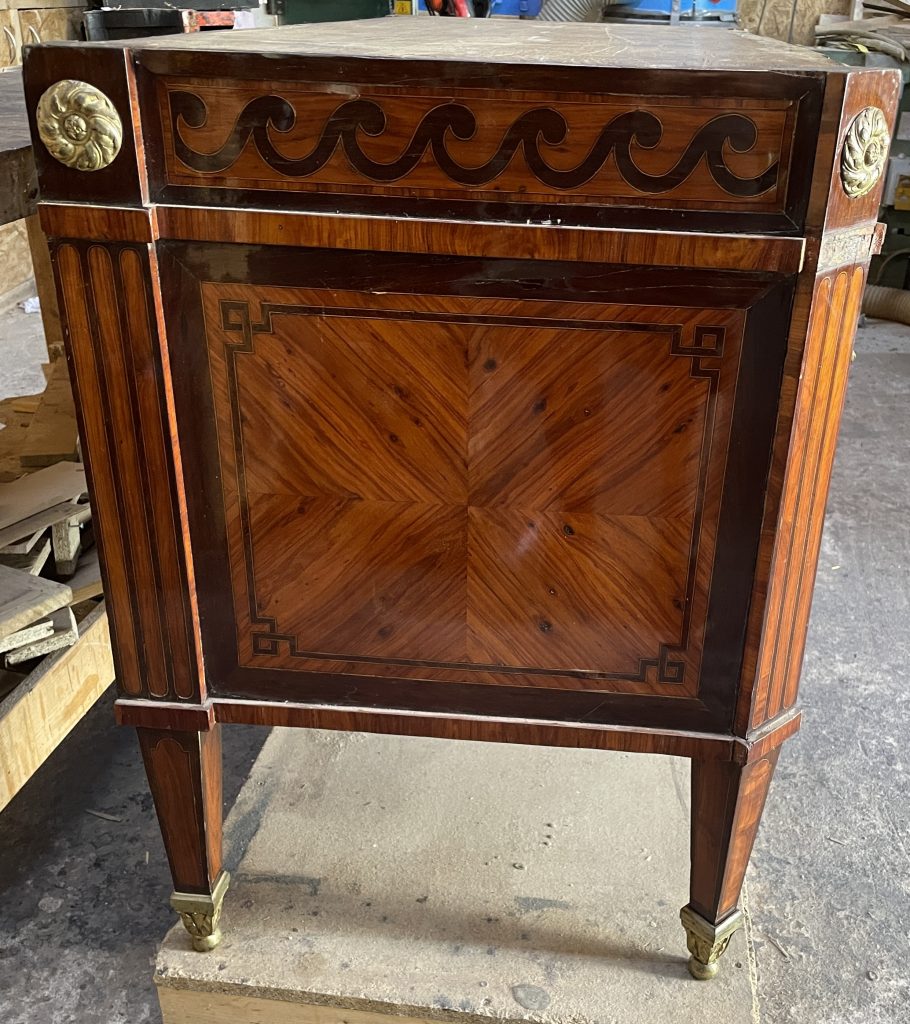
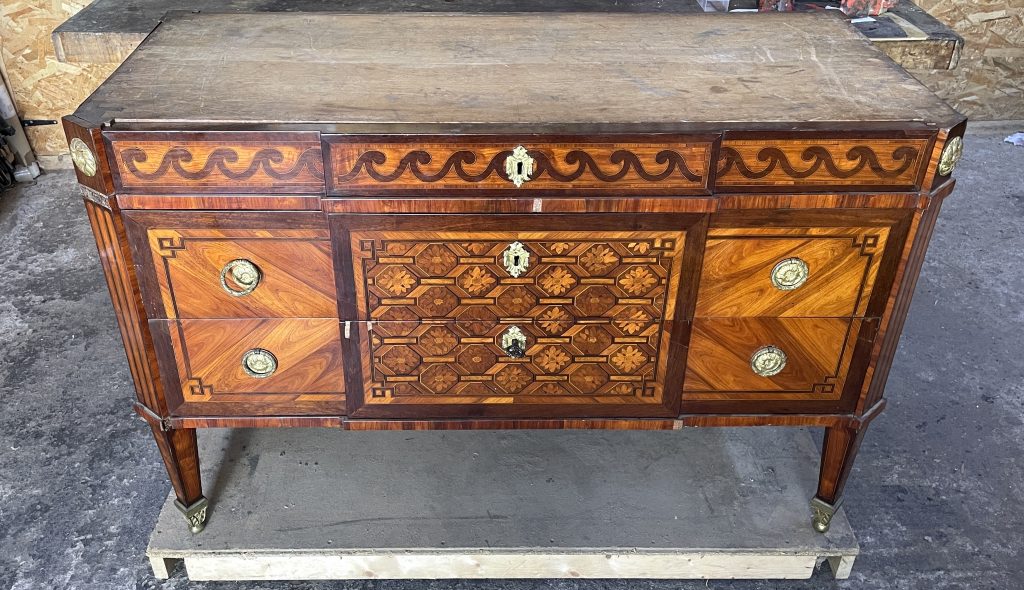
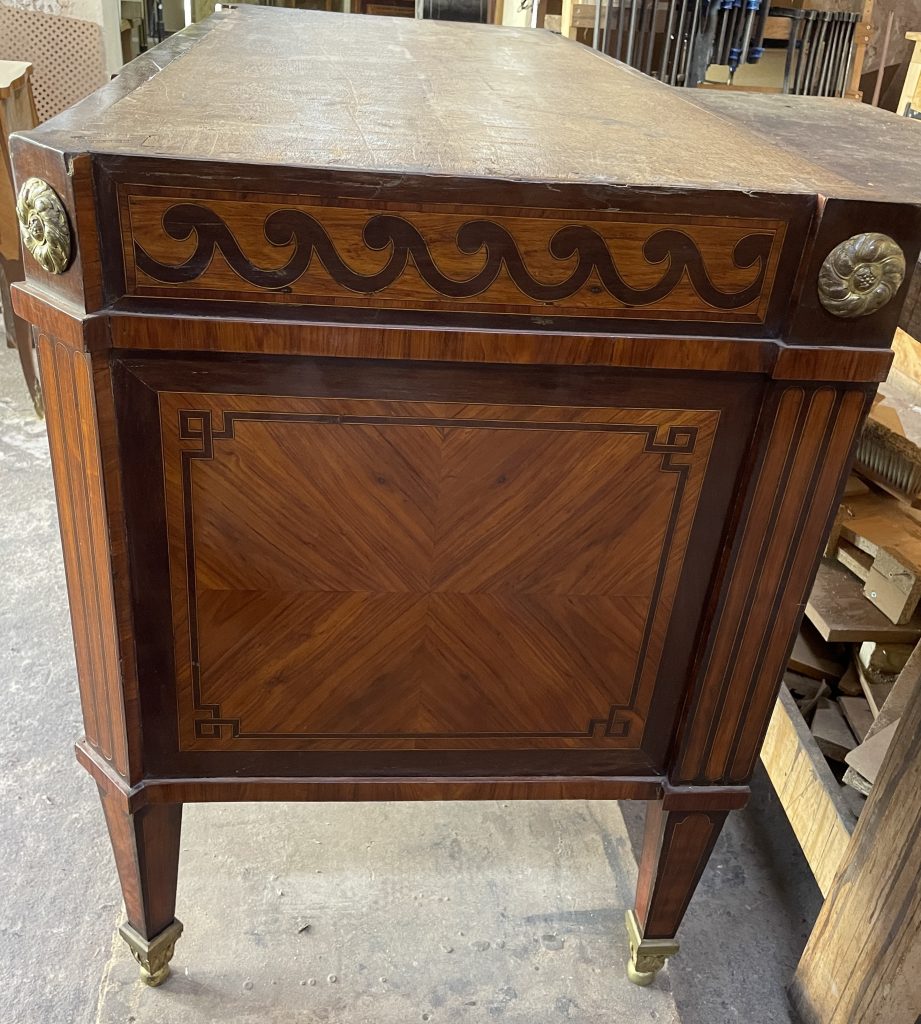
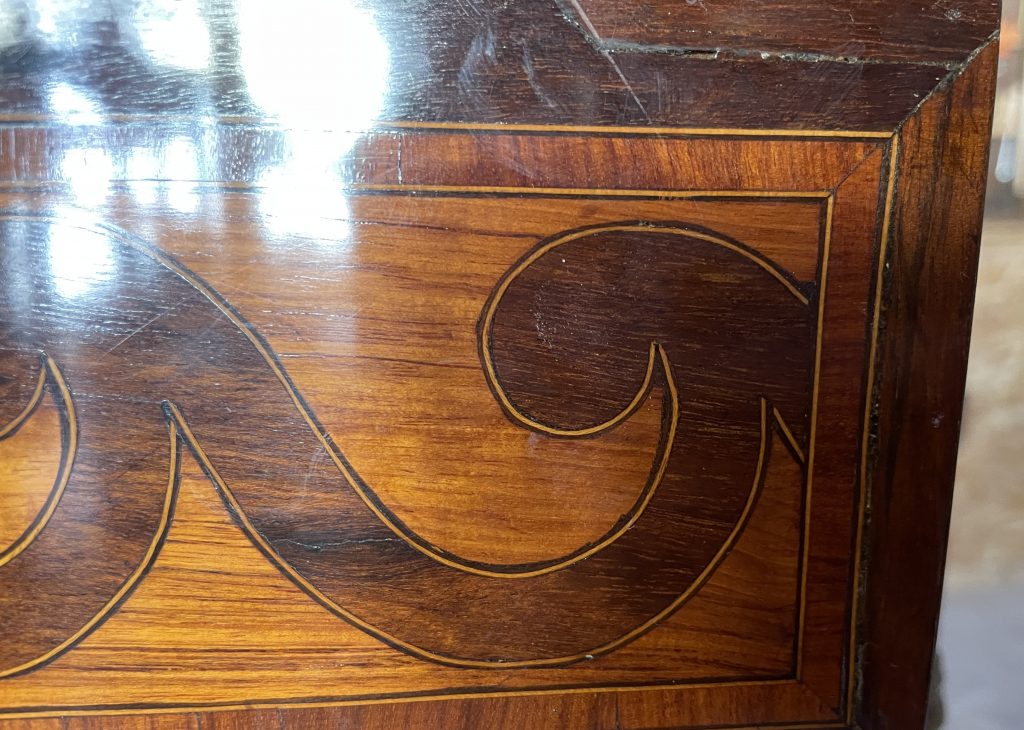
Restoration of a Louis XVI period commode with a central projecting front, stamped JF LELEU. Made entirely of oak, it is veneered with amaranth, rosewood, boxwood, stained maple burl, and tobacco-grey maple. It is decorated with marquetry featuring a frieze of posts on the upper drawer, Greek key motifs, and fleurons in a mosaic of hexagons known as "« marquetry à la reine »"on the central projection. It has three drawers, two of which conceal drawers with crossbars. The front uprights have chamfered corners and simulated fluting. The tapered legs end in foliate ball feet.".
Jean-François Leleu (1729-1807)
Jean-François Leleu was born in Paris in 1729, a period marked by a turning point in the art of furniture making in France, characterized by a growing quest for refinement and balance. At a very young age, he joined the workshop of Jean-François Oeben, a master cabinetmaker renowned for his delicate marquetry, sophisticated forms, and technical innovations. In this workshop, Leleu acquired not only mastery of woodworking, but also a keen eye for detail, decoration, and proportion. It was also with Oeben that he associated Jean-Henri Riesener, which will become its competitor, sometimes its reference, sometimes its mirror.
Upon Oeben's death in 1763, Leleu aspired to take over the workshop, but Riesener was chosen instead. Far from being discouraged, Leleu became master in 1764, opens his own workshop, Initially located on the Chaussée de la Contrescarpe, a stone's throw from the Bastille and the Arsenal, he moved after a few months to larger premises on the Rue Royale, near the square of the same name (now the Rue de Birague and Place des Vosges), and began to distinguish himself with a personal style. He favored straight lines, clean lines, and understated decoration: his furniture is characterized by its nobility and restraint. This taste for rigor did not prevent him from working with a wide variety of wood species (mahogany, rosewood, violet wood, amaranth) and veneers, combining marble and gilt bronze, and even incorporating more exotic elements, such as lacquer panels or... Sèvres porcelain plaques, according to the client's wishes. Just like his master and colleague, he will compete in ingenuity by creating mechanical furniture.
His orders come from the highest echelons of French society. Prince of Condé, Madame du Barry, as well as other aristocratic figures, called upon his services. Leleu's furniture adorned private salons and state apartments.
Leleu's work is characterized by an evolution towards neoclassicism, less ornamental, more geometric, and more restrained than that of the previous generation. While some contemporaries indulged in arabesques and highly ornate decoration, Leleu favored straight lines, tapered legs, delicate pediments, Greek key friezes, and judiciously placed bronze ornaments. Even in his richly decorated commodes, the gilded decoration never overwhelms the structure: it complements it, frames it, and enhances it without concealing it.
The Leleu workshop weathered the Revolution unscathed. While other workshops disappeared or declined due to a lack of patrons or because of a style too closely tied to the Ancien Régime, the Leleu workshop, taken over by his son-in-law Stadler, continues its activity.
At the time of his death on September 3, 1807, Leleu bequeathed an artistic and artisanal legacy, a testament to his era. An examination of his furniture reveals the enduring nature of his taste: what was considered modern around 1780 or 1790 does not appear outdated today. Indeed, Leleu had found a balance between ornamentation and restraint, between luxury and moderation. His works testify not only to technical expertise but also to a sensitivity to fashion and its evolution, notably the transition from late Rococo to the Louis XVI style, then to the "Greek" style, all while maintaining a restrained elegance. He left behind a lasting legacy: valuable furniture preserved in public and private collections, sometimes in palaces, sometimes dispersed, but always recognized for its quality. The Louvre, the Petit Trianon, and other institutions house pieces bearing his name or attributed to his workshop.
BIBLIOGRAPHY
- French Furniture of the 18th Century – Pierre Kjellberg – Les Editions de l'Amateur – 2004
- The stamp "L'Objet d'Art" – number 329 – pp. 60-67 – Jean-Francois Leleu, The Cabinetmaker of the Condé Family – Pierre-Emmanuel Martin-Vivier – 1998
- Furniture and Crafts from the 13th to the 18th Century – Claude Bouzin – Les éditions de l'Amateur – 2003
- Anatomy of Furniture – René Maubert – Vial – 2003
State of affairs report
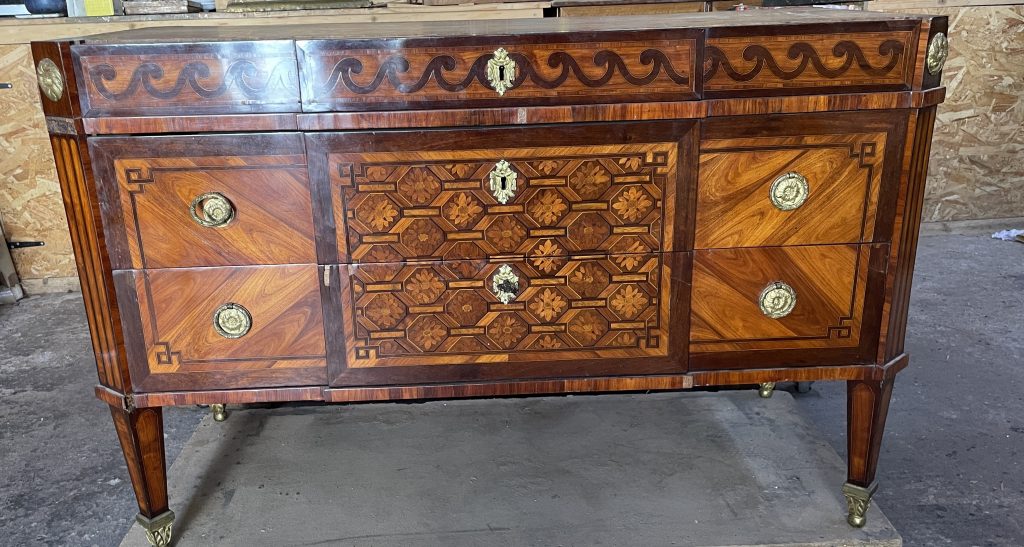
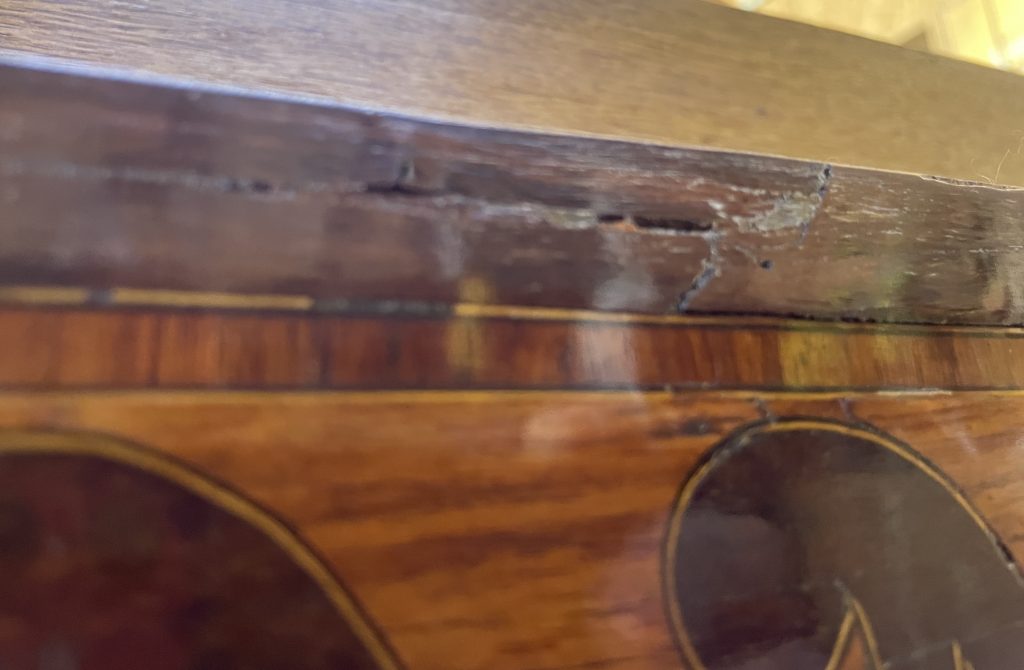
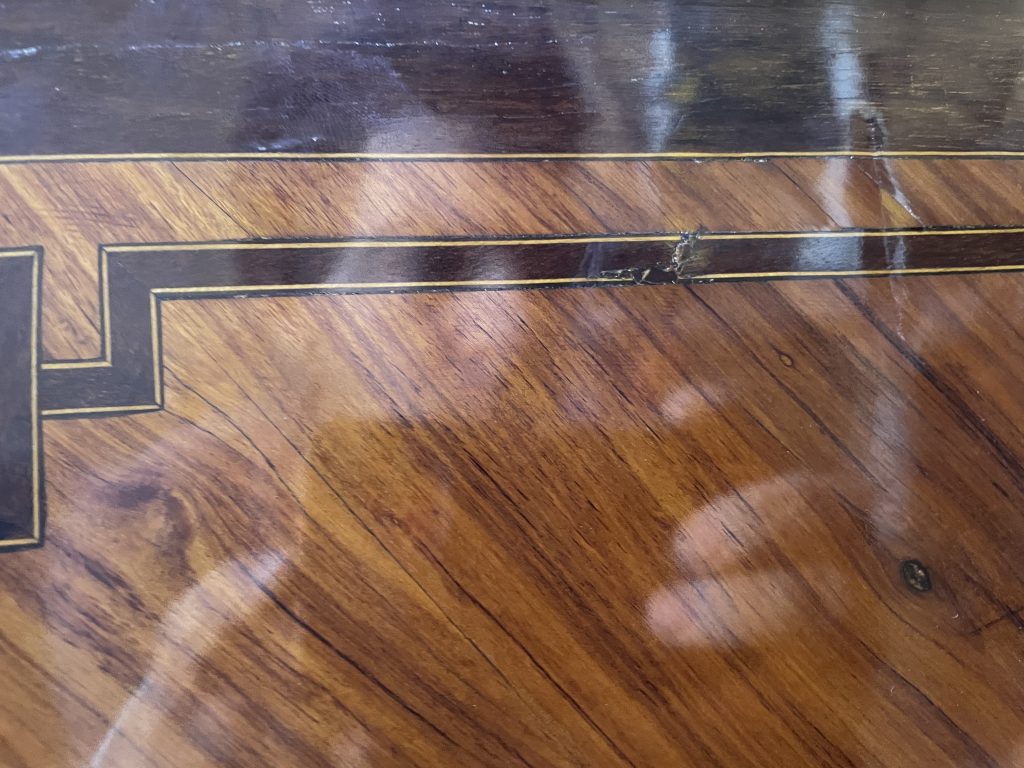
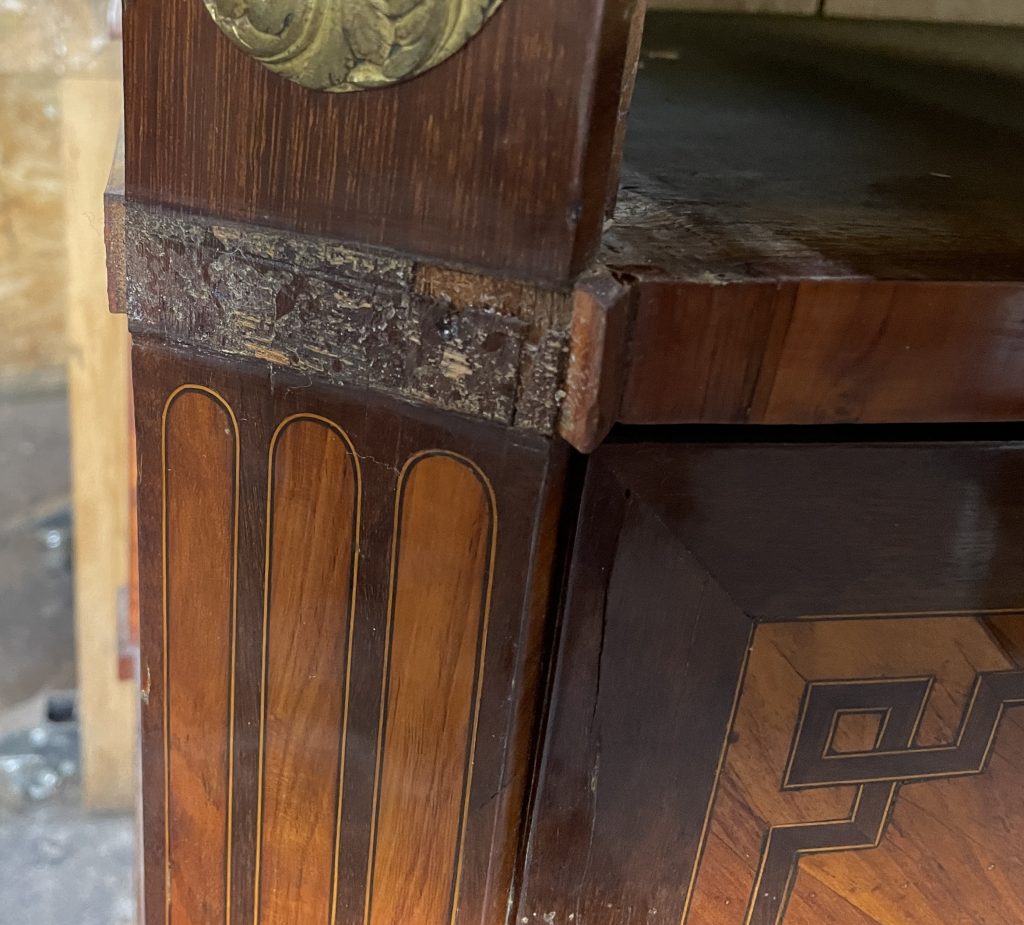
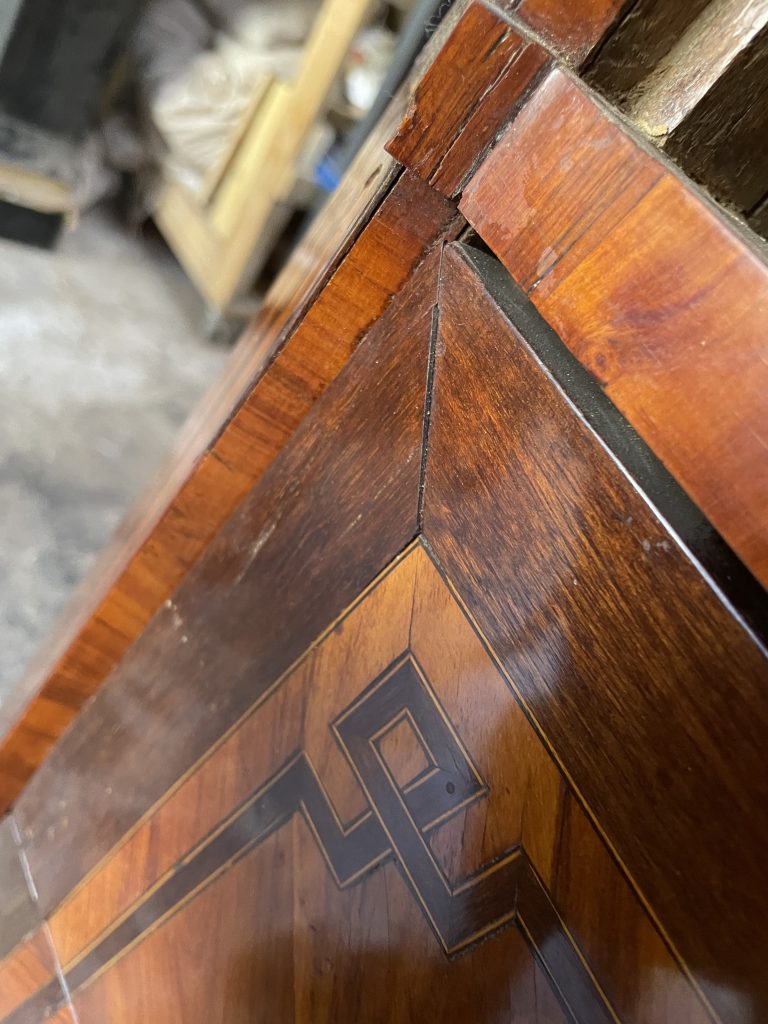
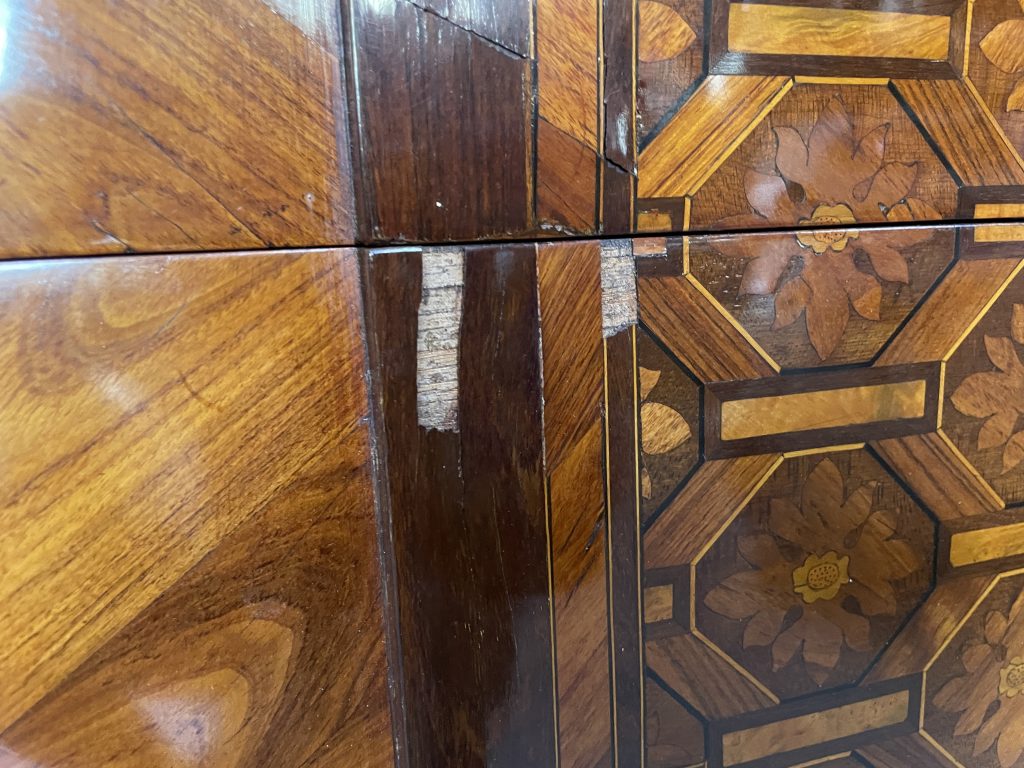
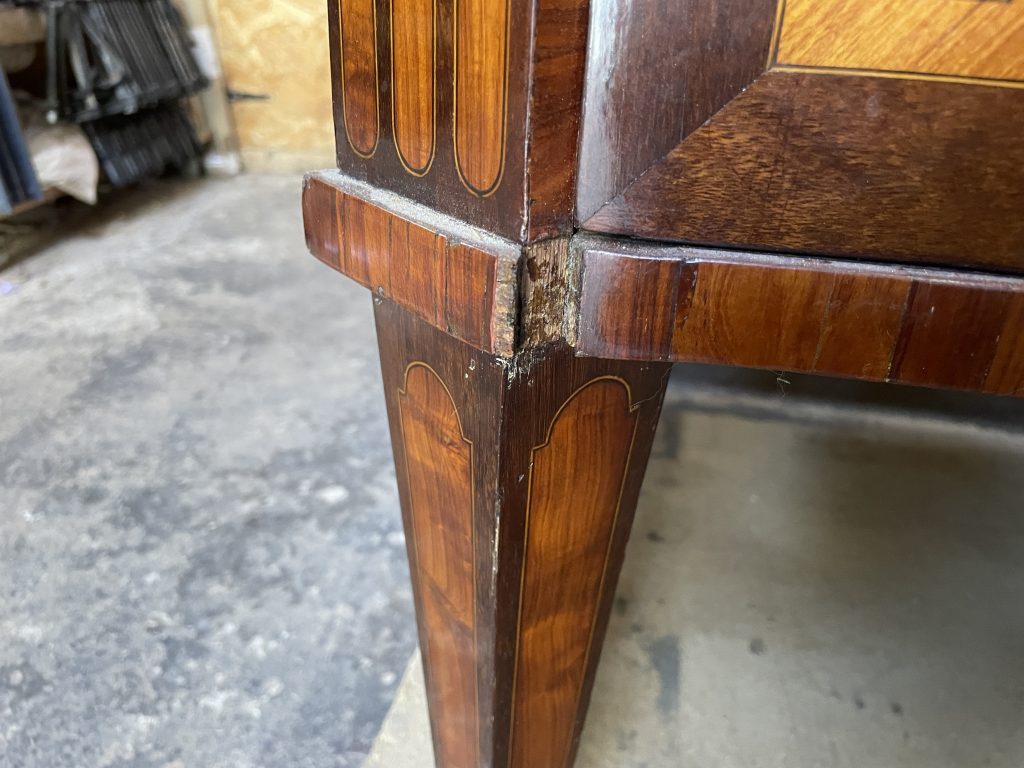
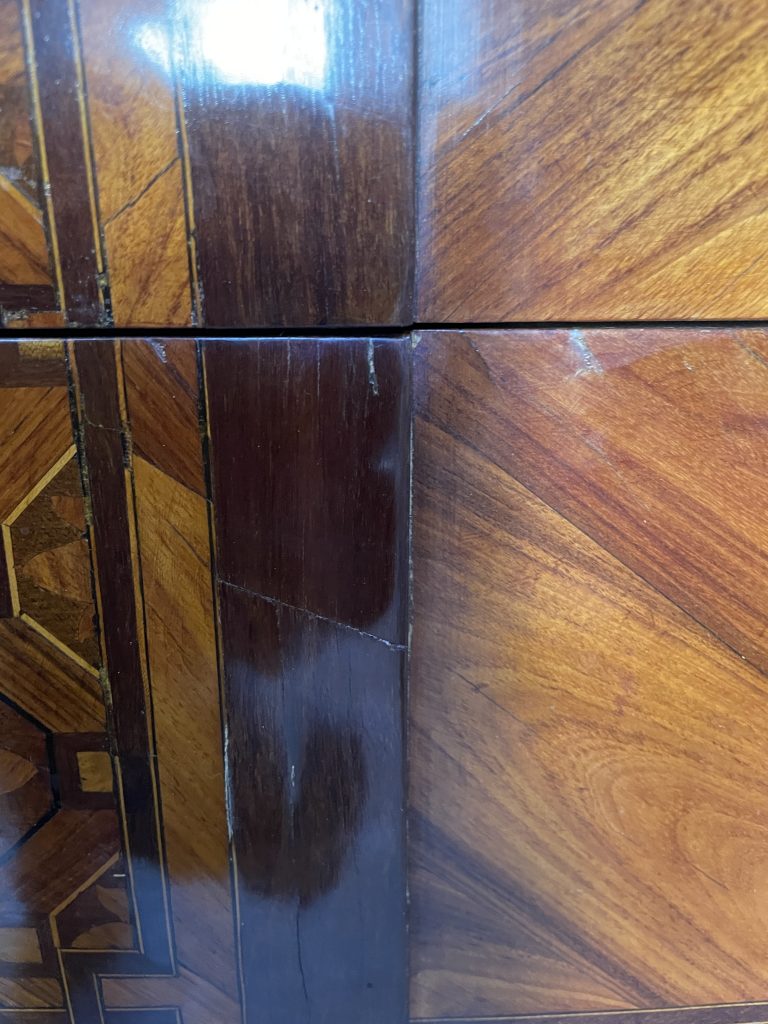
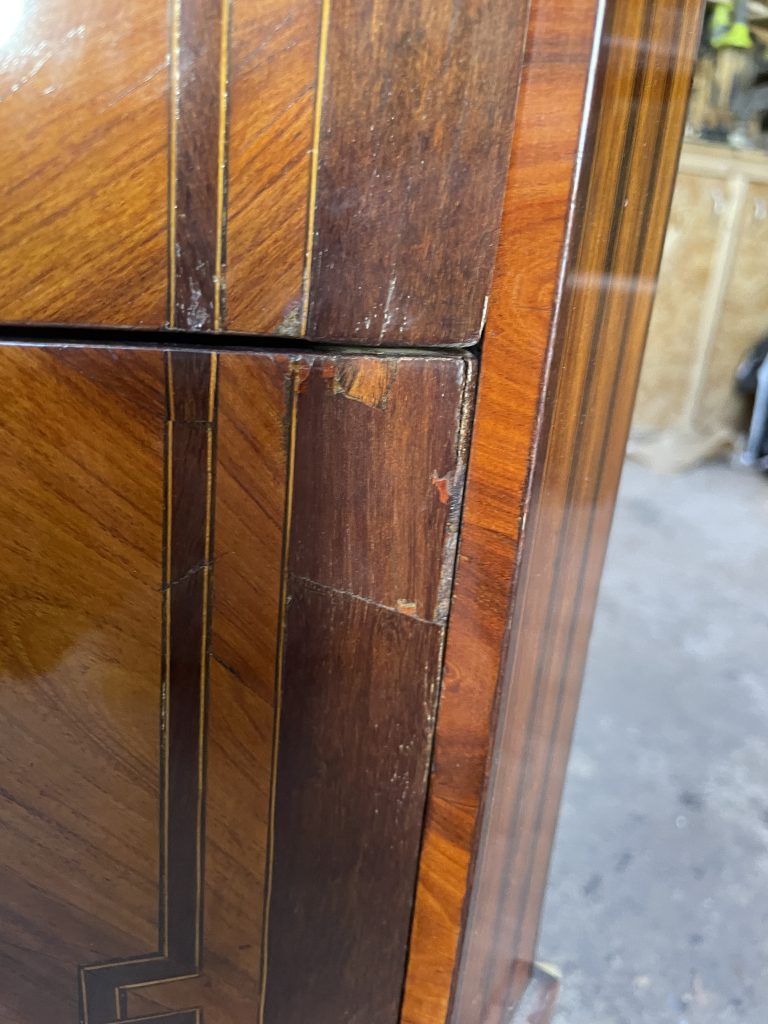
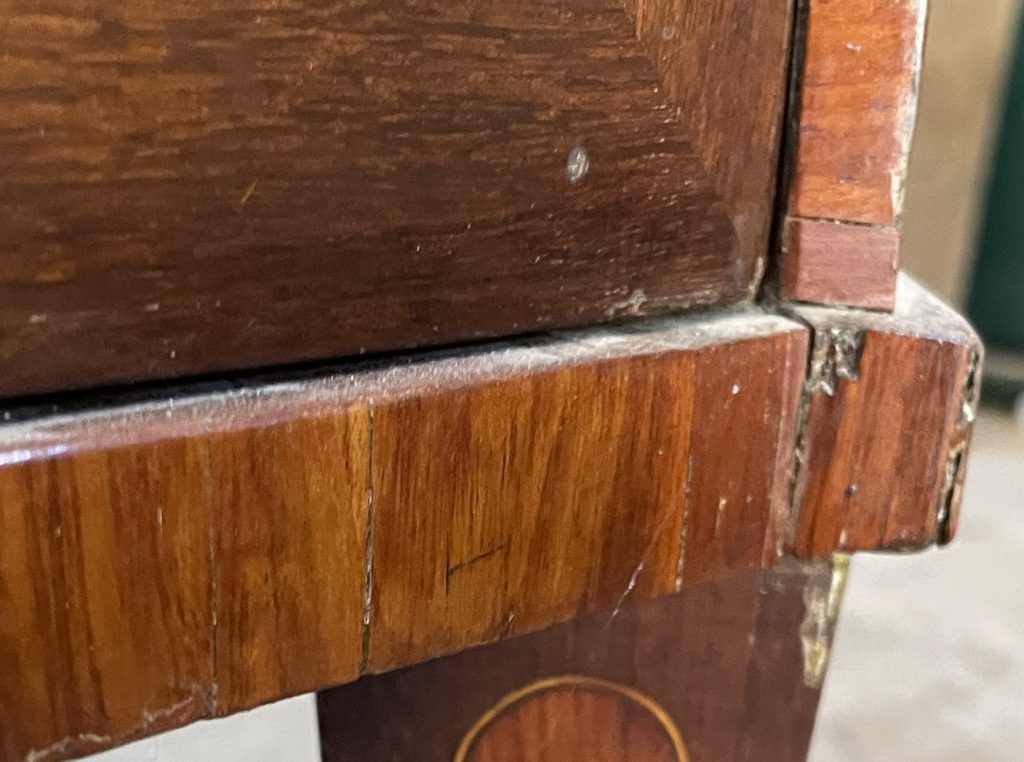
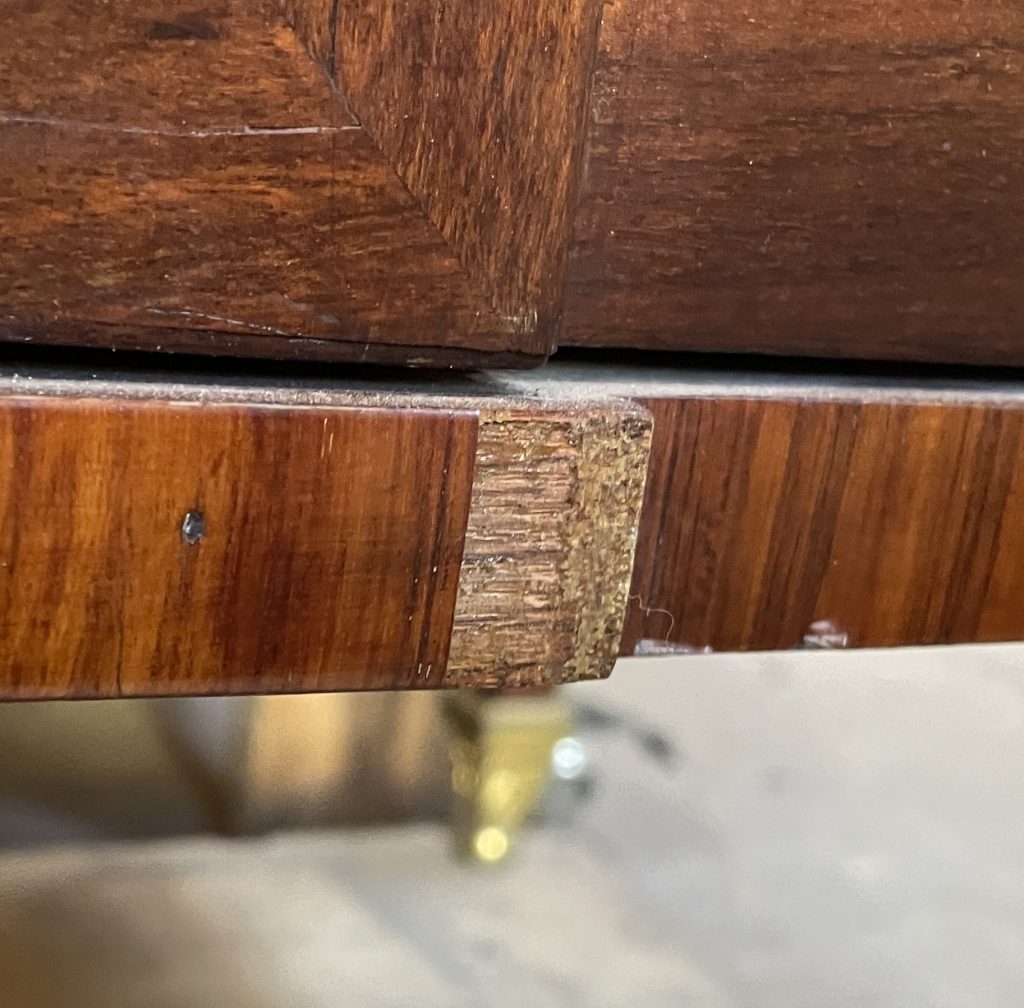
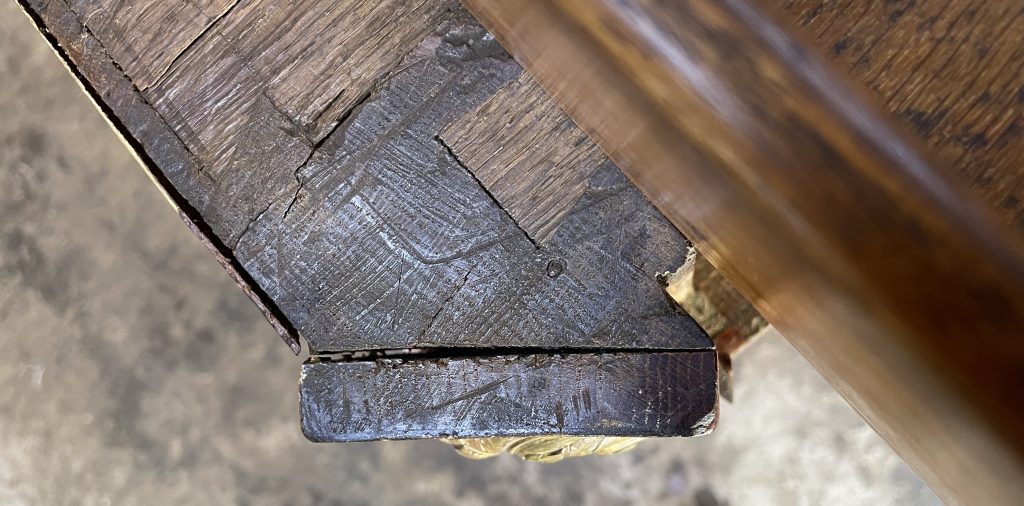
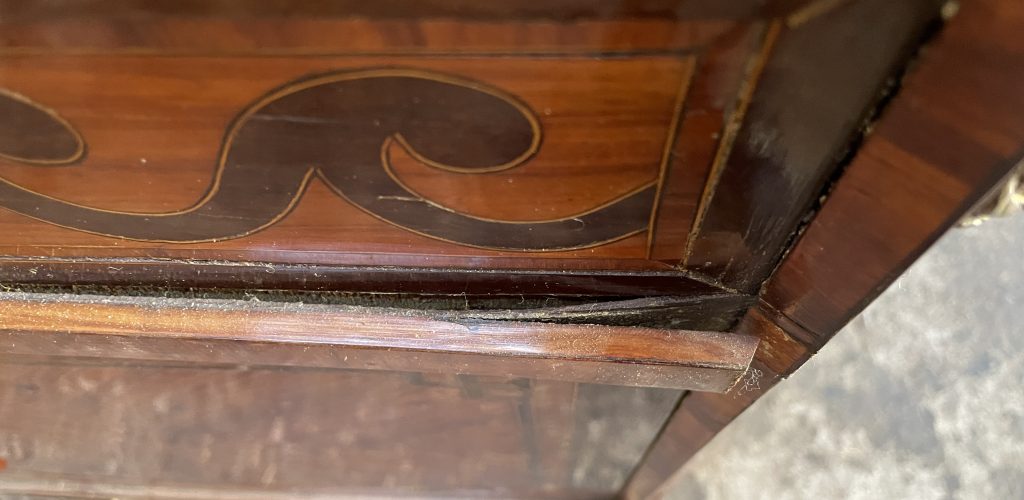
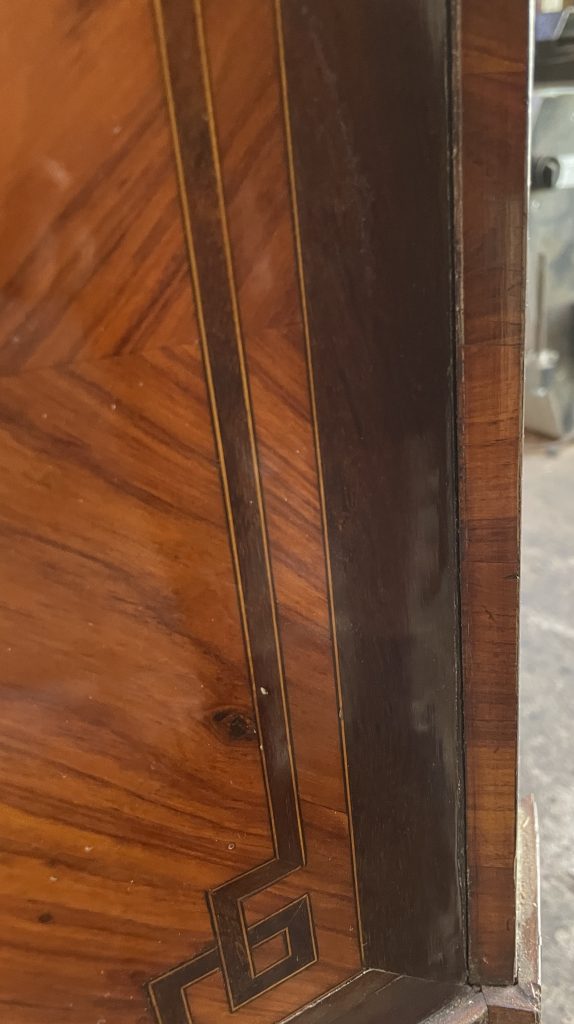
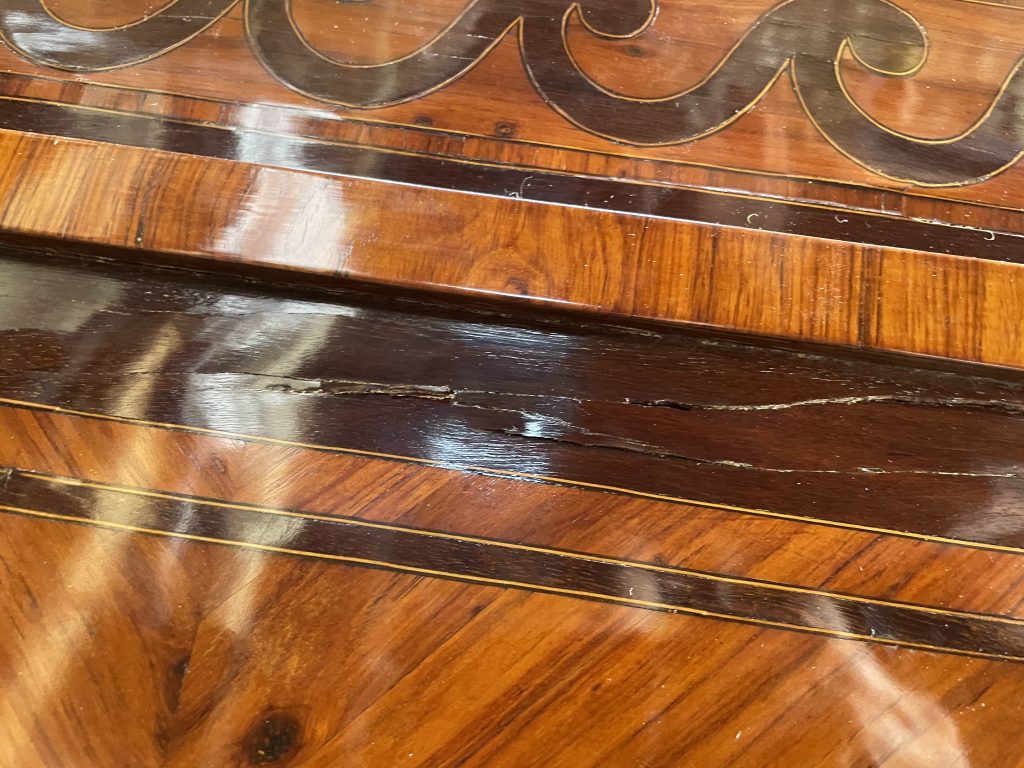
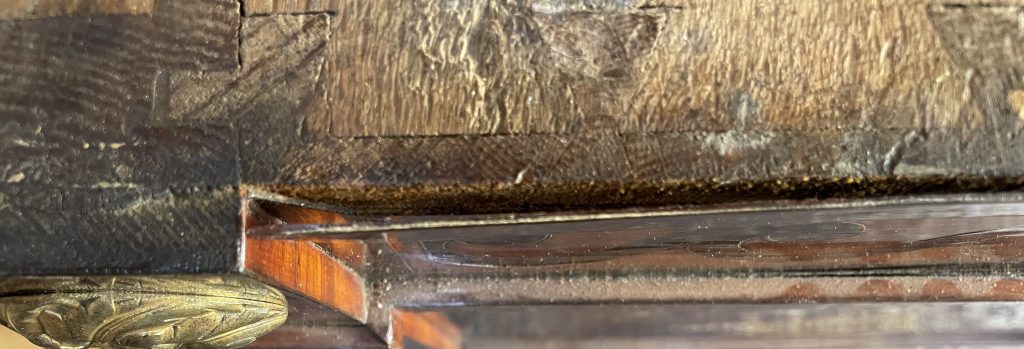
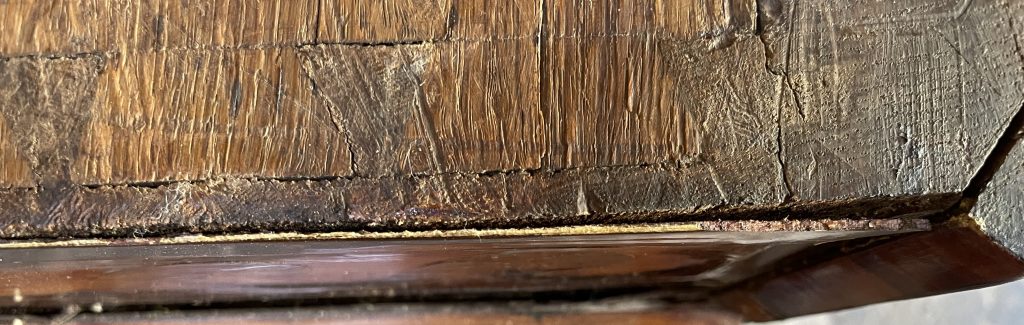
This chest of drawers shows little structural damage. Its design, with interior panels and sides aligned with the grain, allowed the structure to expand and contract without significant stress. Only four elements are affected: the top and bottom moldings are glued against the grain, as are the horizontally glued veneer elements on the sides. When the frame wood expands, these elements are under tension and detach. One plaque on the front left upright was detached, and several molding elements were missing. There are also some missing veneer pieces and rosewood grafts in place of amaranth.
Construction study
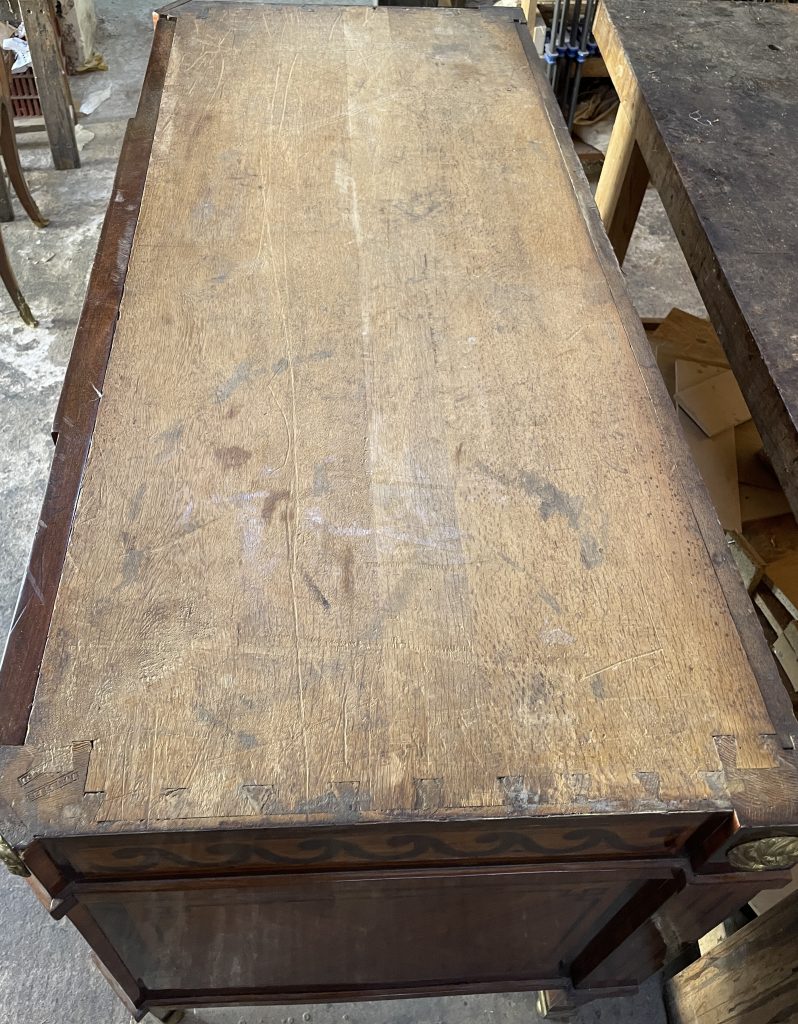
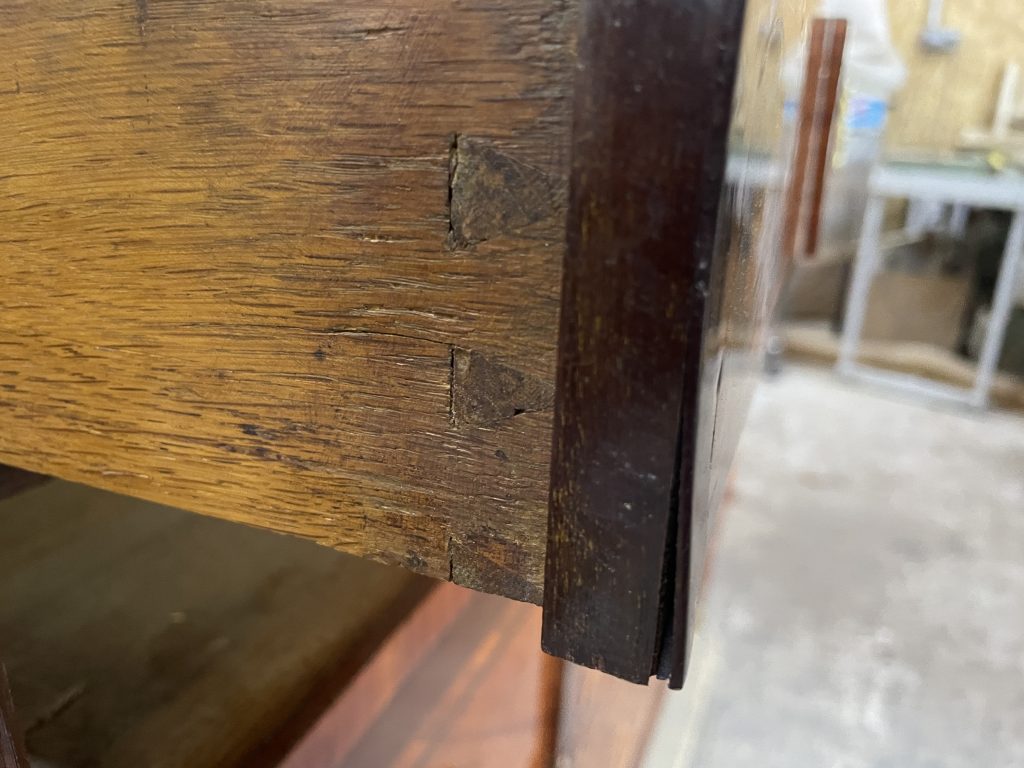
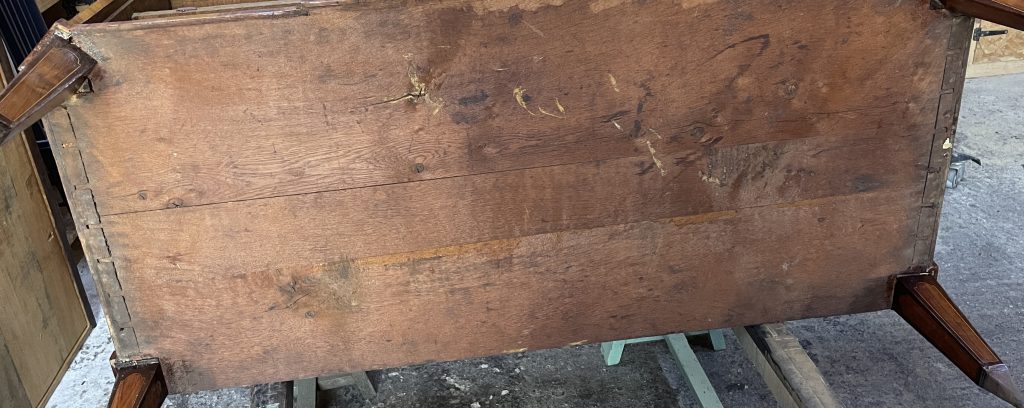
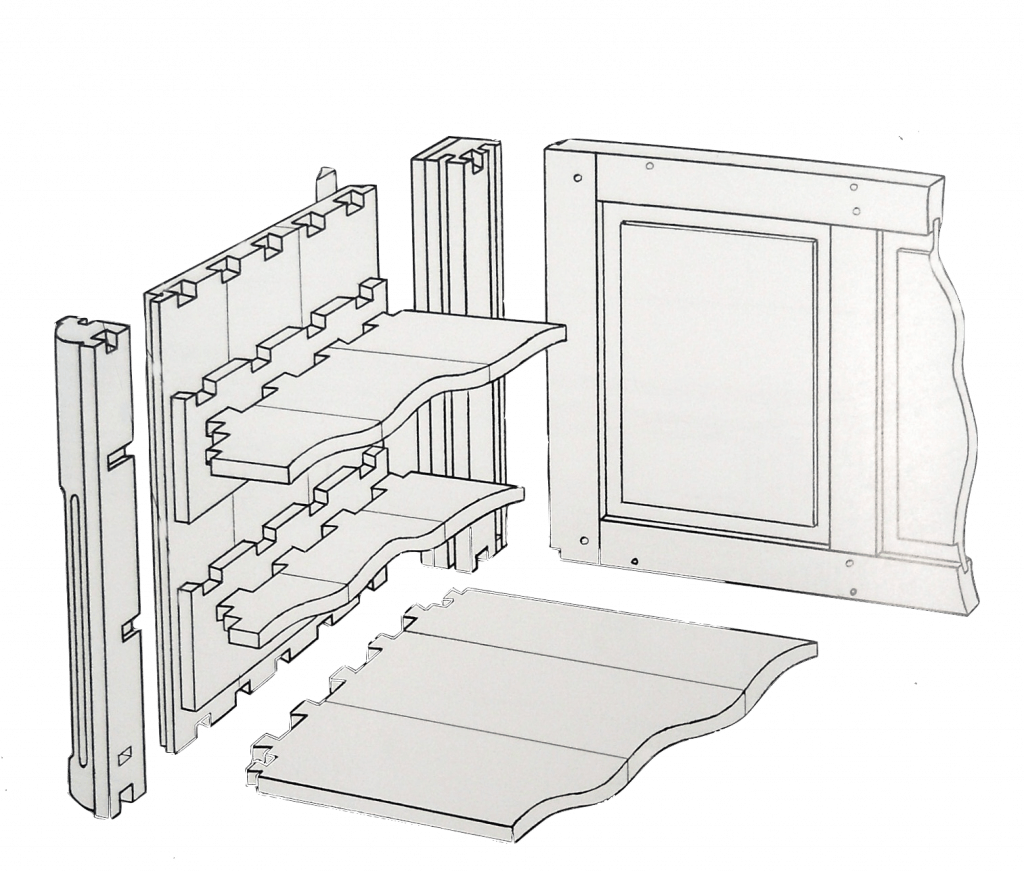
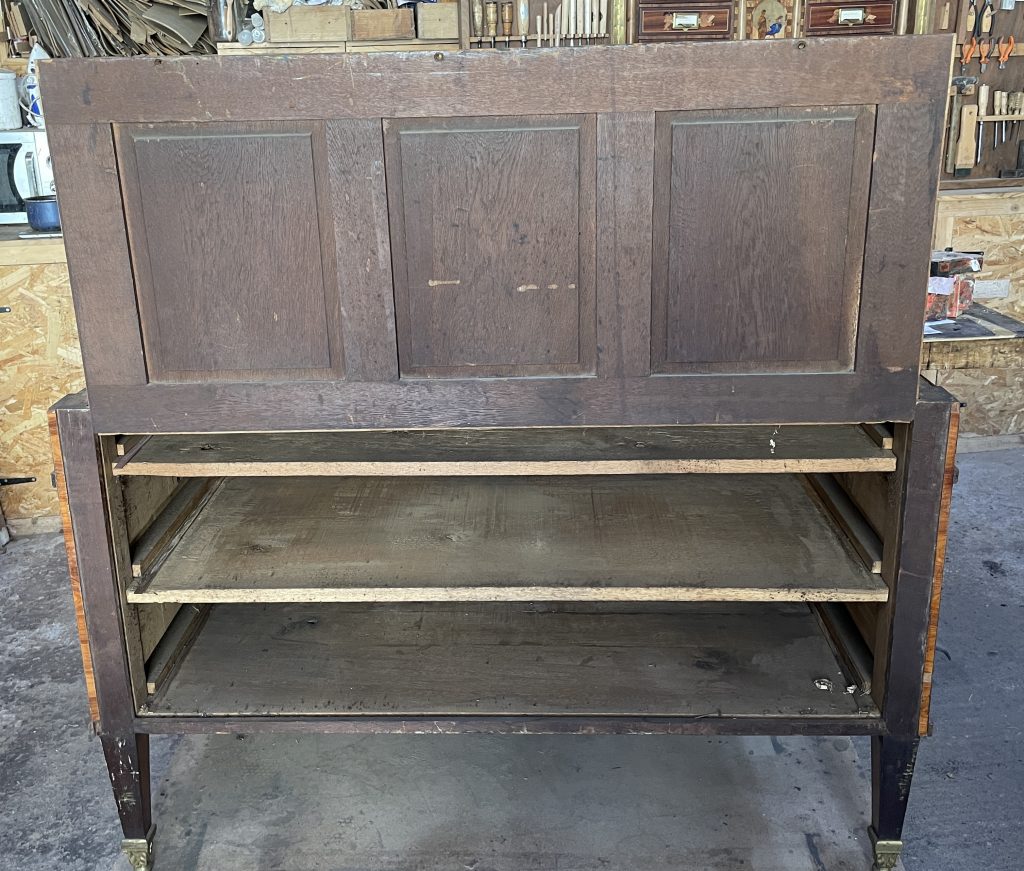
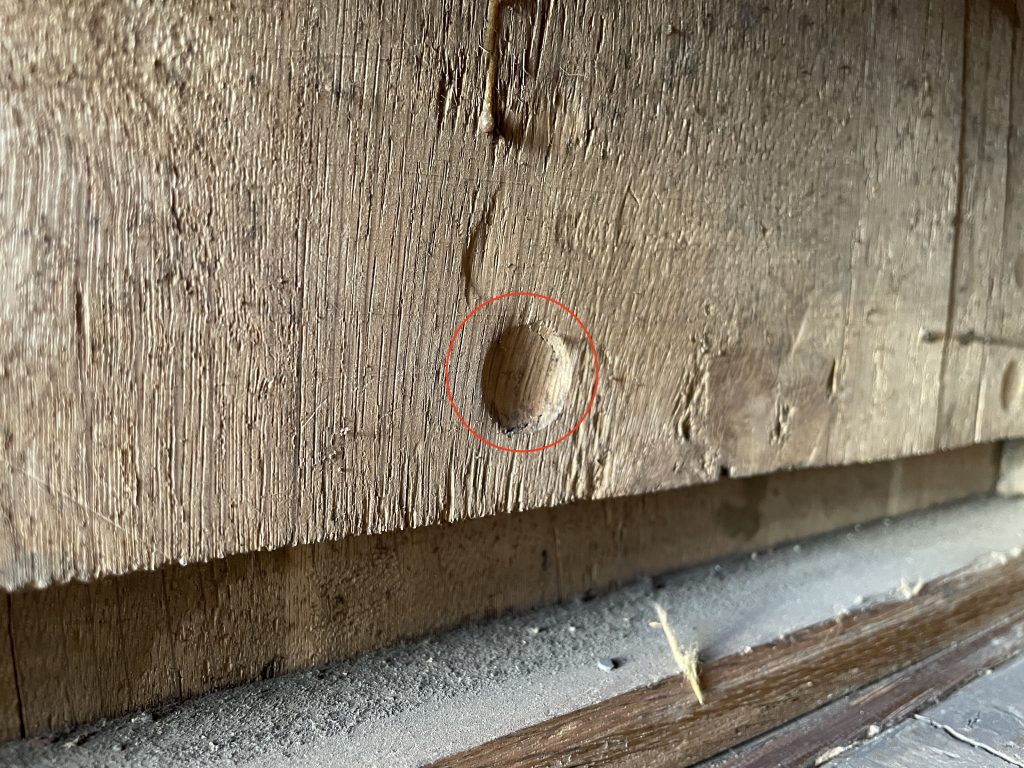
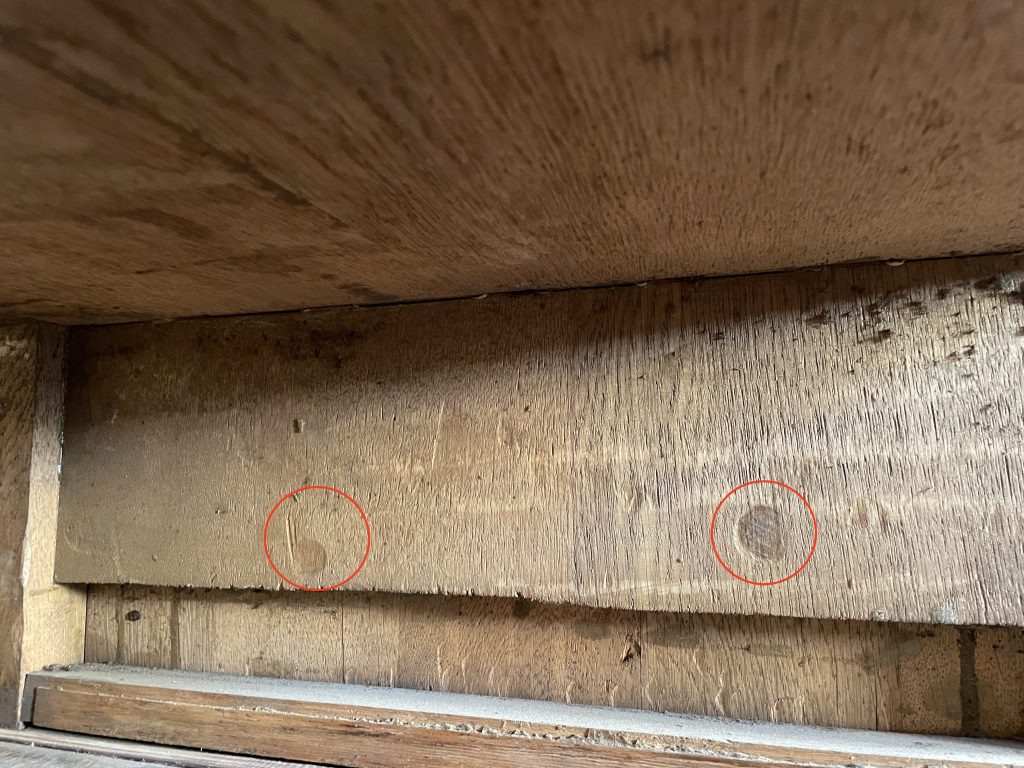
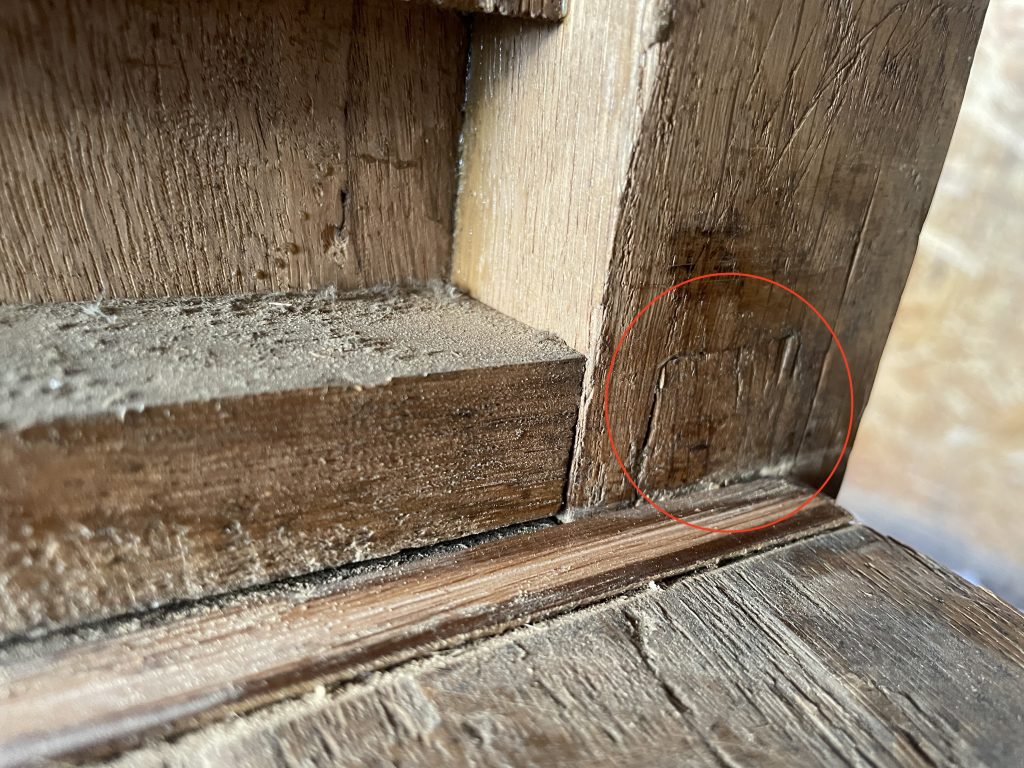
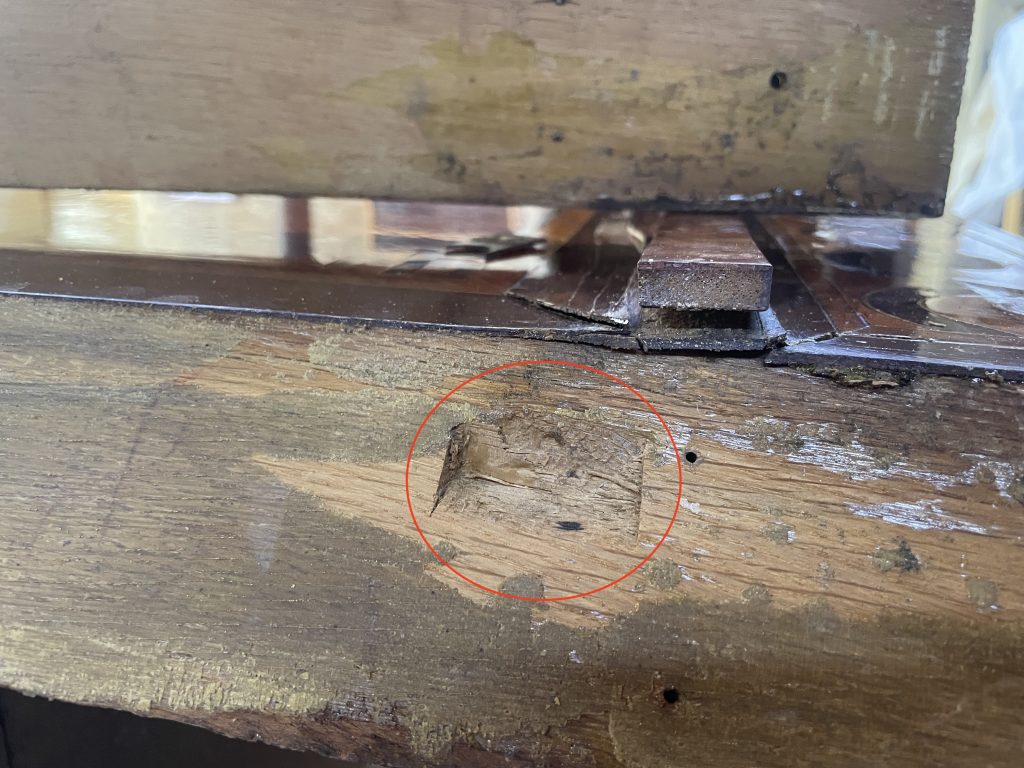
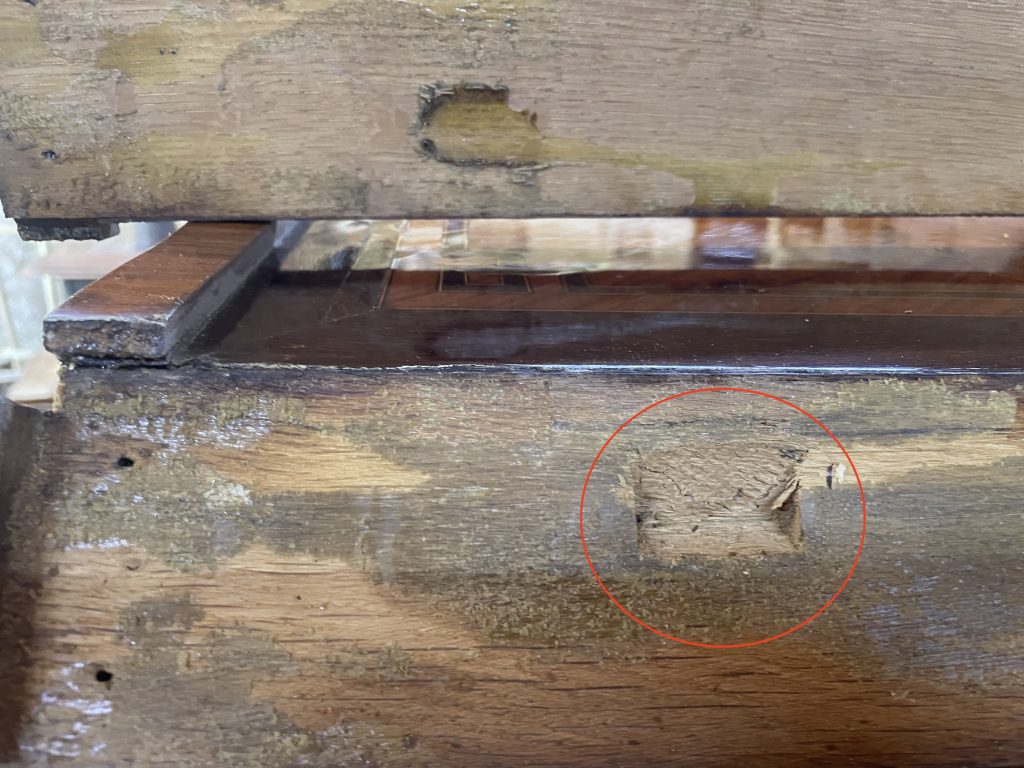
The oak and softwood frame forms a cabinet made of planks joined with butt joints. The top and bottom are joined to the sides with a concealed dovetail joint. The two planks supporting the central drawer and the frieze drawer feature a special joint, characteristic of the high-quality construction also found in Riesener furniture. They are dovetailed into two other planks glued to the sides. The dovetail joint on the upright is inserted through a hole located above the dovetail joint. This hole is plugged with a piece of wood after assembly. The uprights are glued to the tongues on the sides. The back of the cabinet consists of a frame in which panels, separated by two vertical rails, are mortised with flat edges. This back panel slides into the groove of the rear uprights via its tongue and is then screwed to the edge of the top. This is more commonly referred to as a "sash back." This system is also found on Riesener chests of drawers. The drawer bottoms consist of two boards and are grooved into the front and sides, held in place by two screws on the front and three on the back. The drawers are secured with a double-bolt lock. The bronze mounts are fixed to the structure by threaded rods on the back.
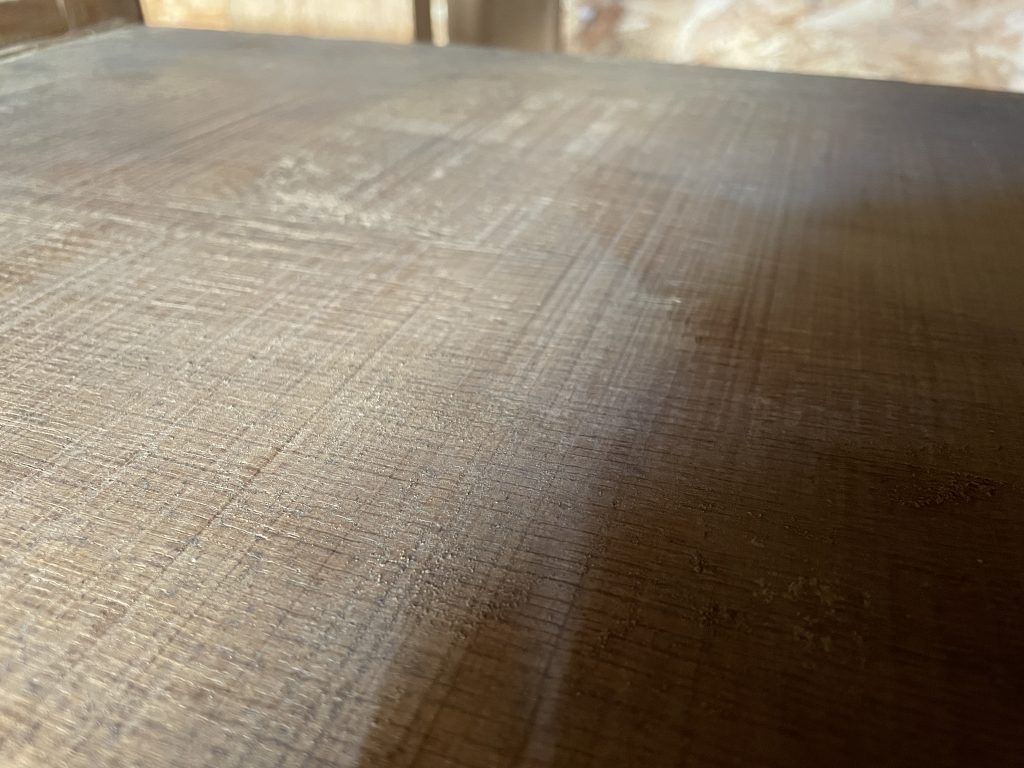
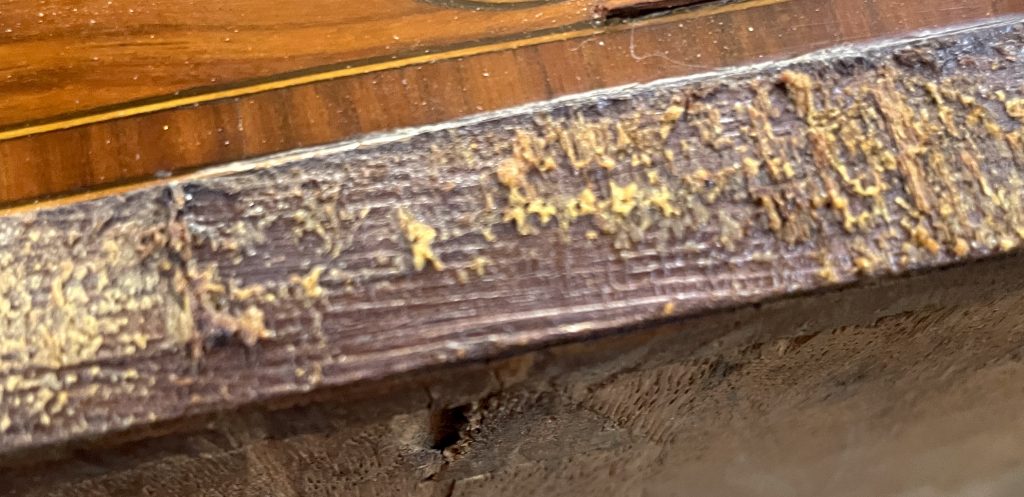
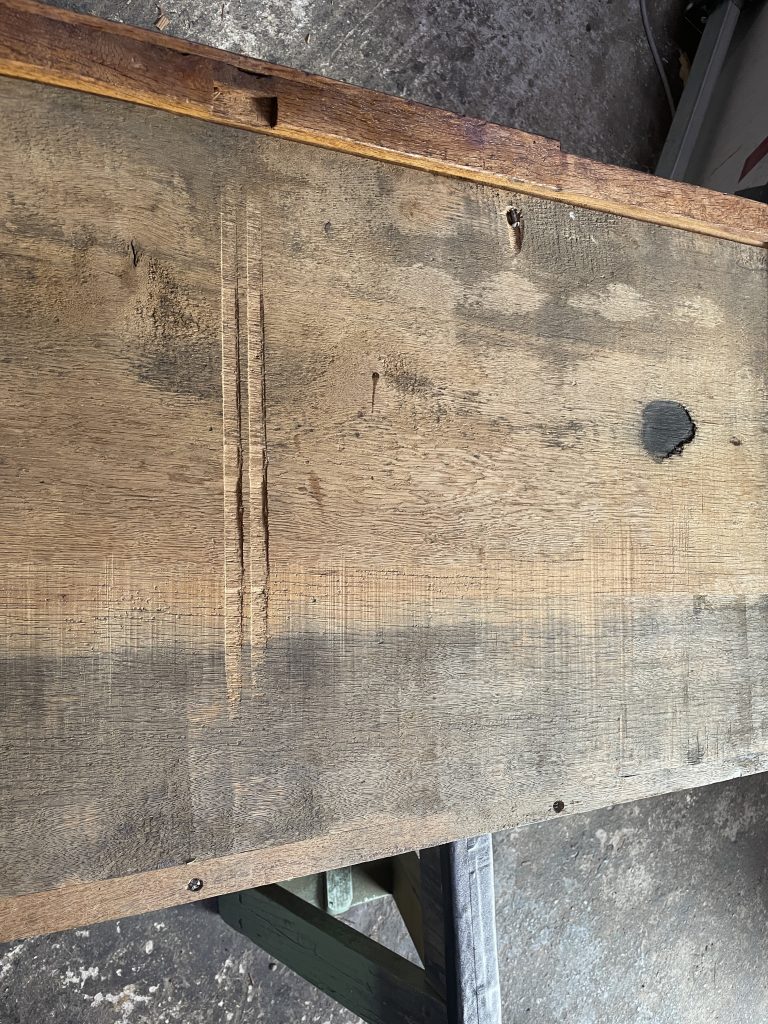
Tool marks
The Restoration
The restoration consisted of reattaching the molding elements that had become detached from the frame. The missing elements were made from oak strips veneered with rosewood, which were sawn, scraped, sanded, and oxidized before gluing. The rosewood veneers were removed and replaced with amaranth. The missing veneer was replaced with veneer that was sawn, scraped, sanded, oxidized, varnished, and applied to the correct thickness as a backing before being glued with hot glue. The veneered surfaces were stabilized by infiltration with glue and placed under pressure for several days. The old shellac varnish was then restored and cleaned. After a slight thinning, the varnish was "rebuilt" with colorless shellac. The bronzes were cleaned with gel and returned to their original positions.