
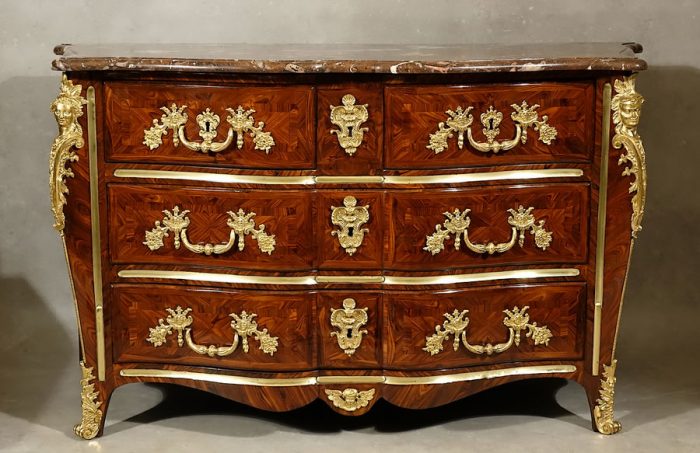
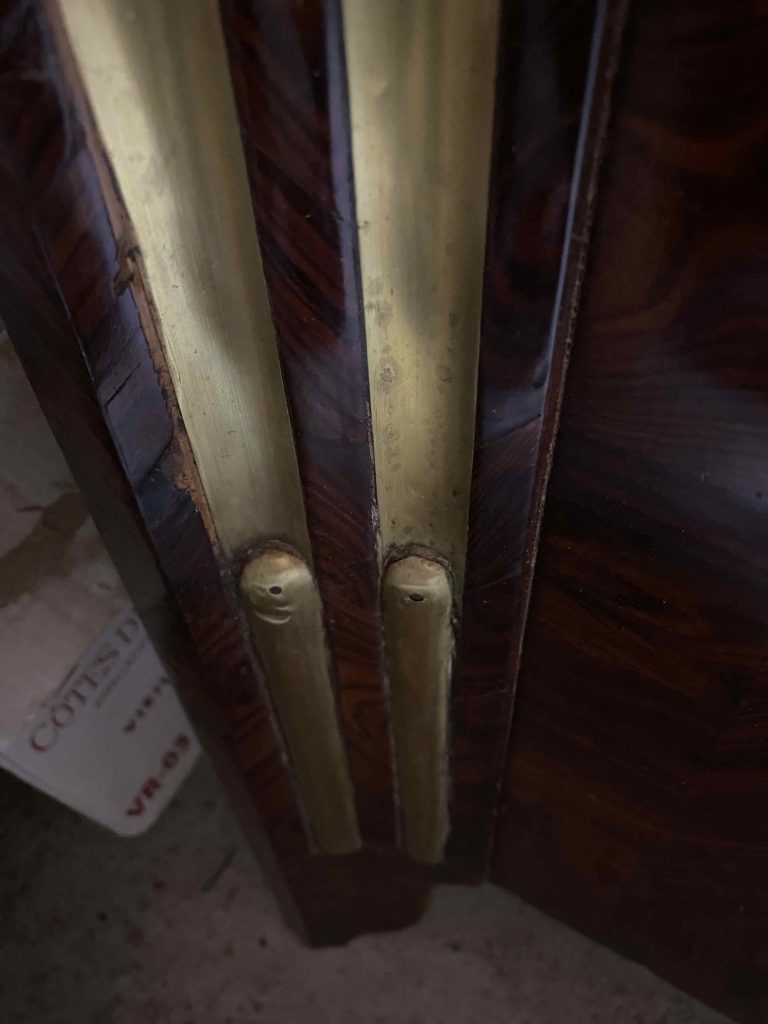
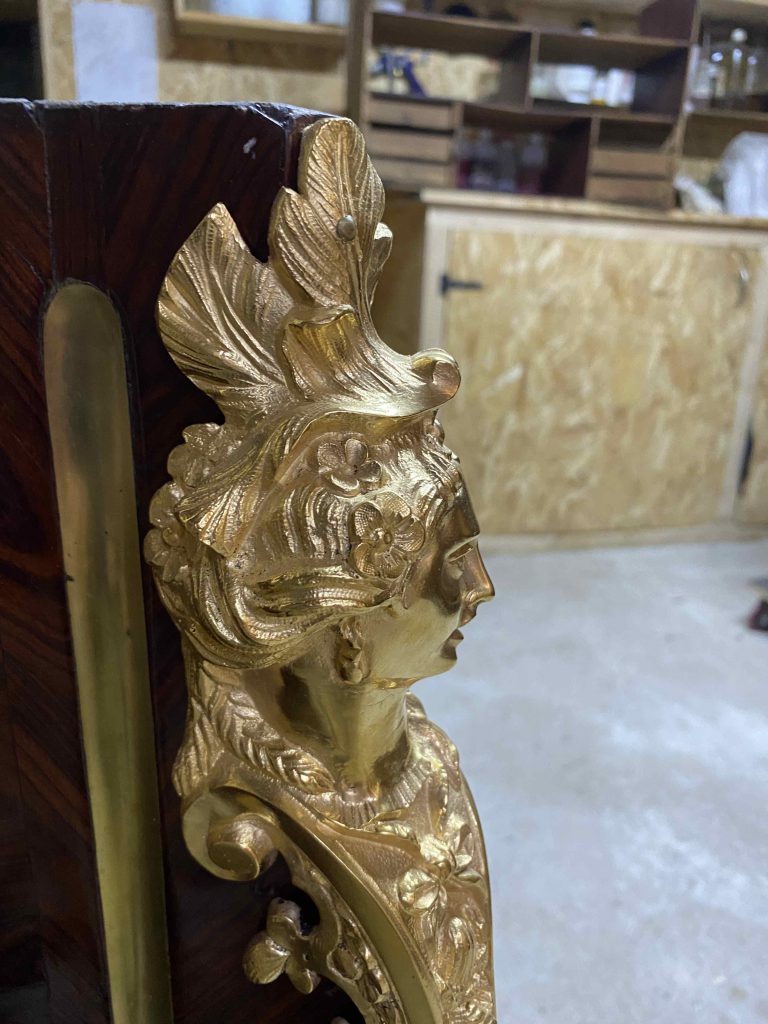
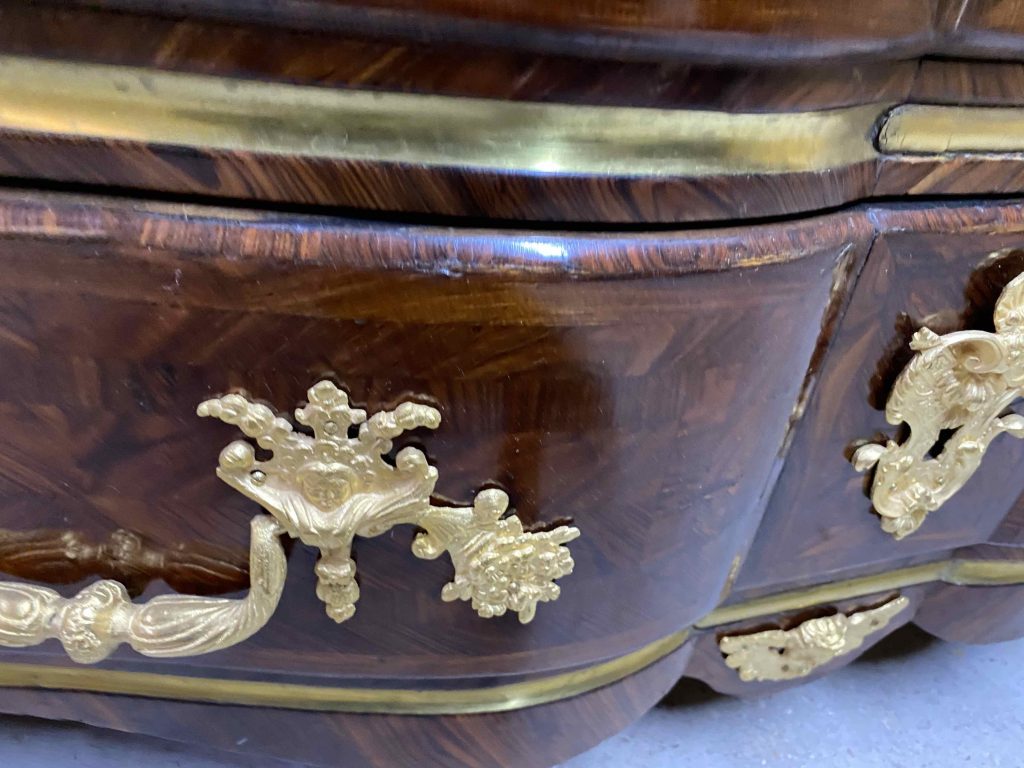
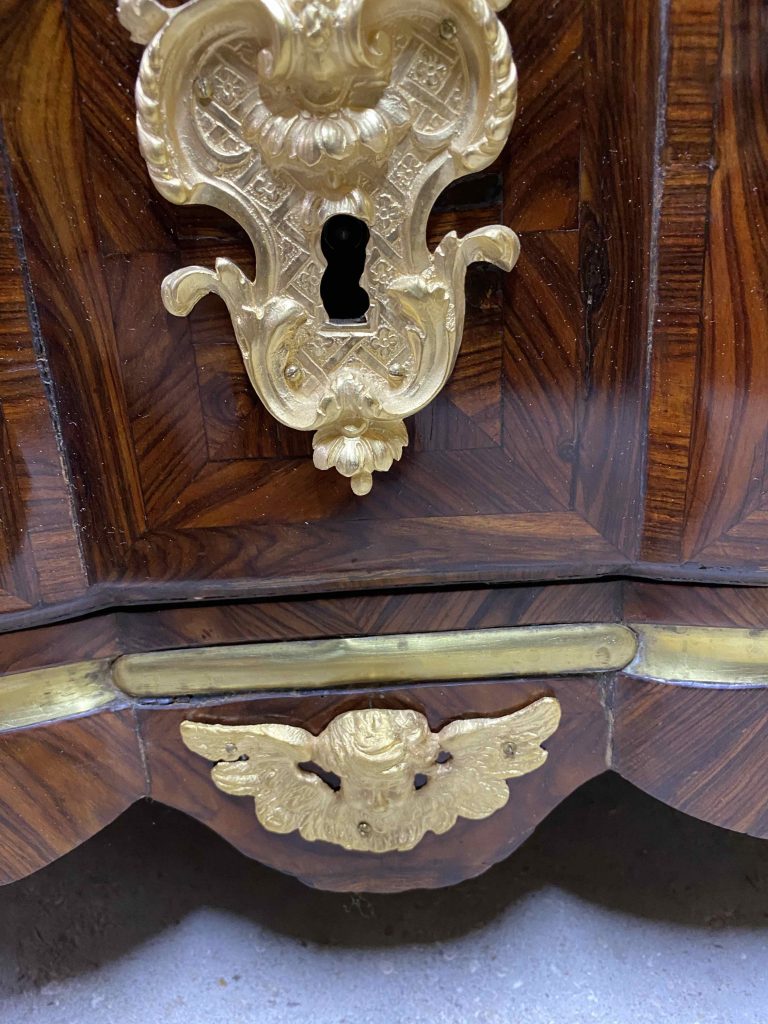
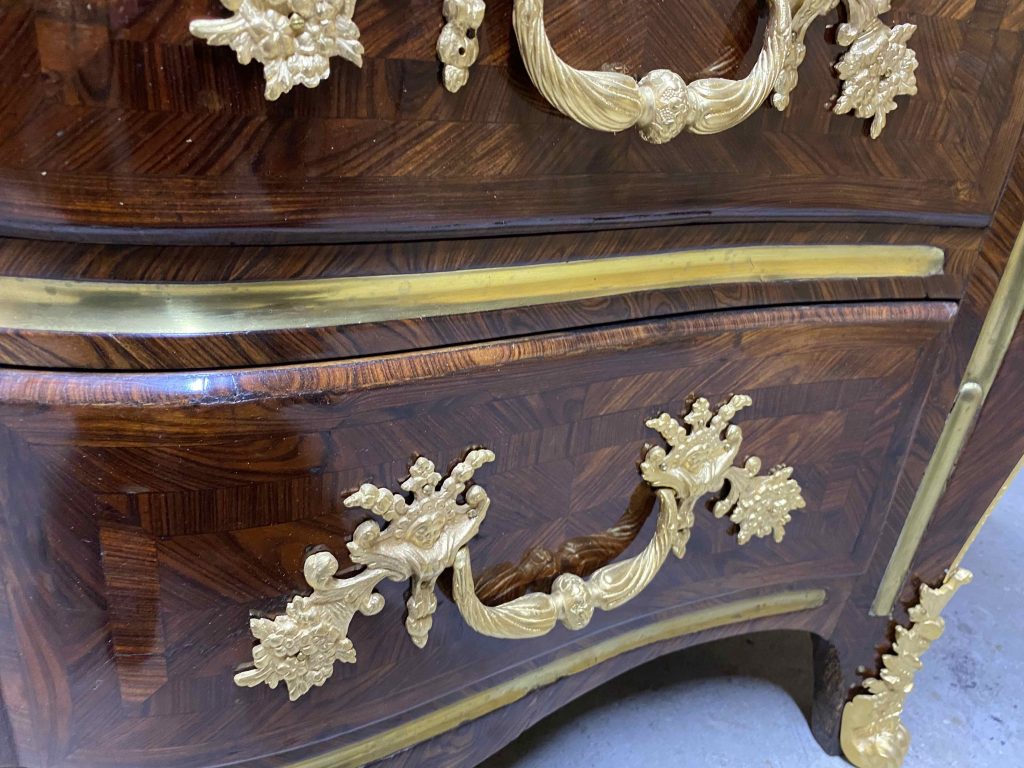
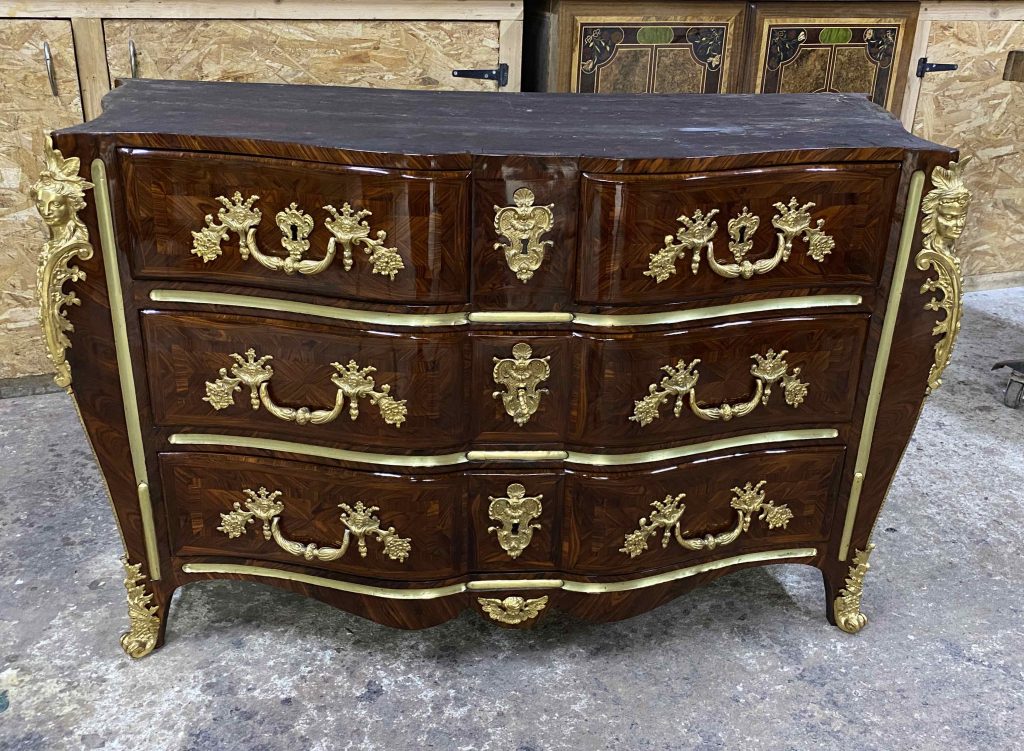
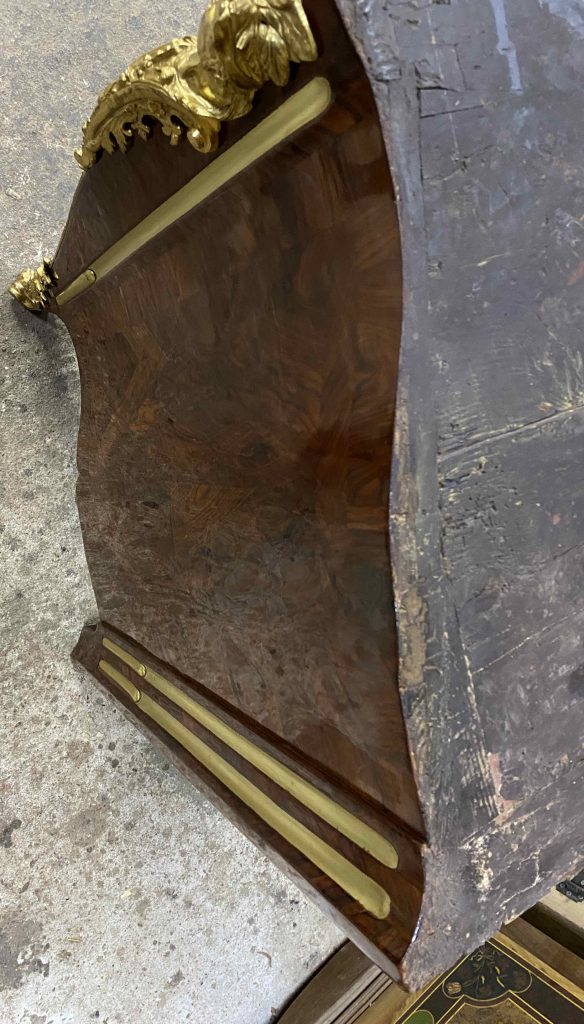
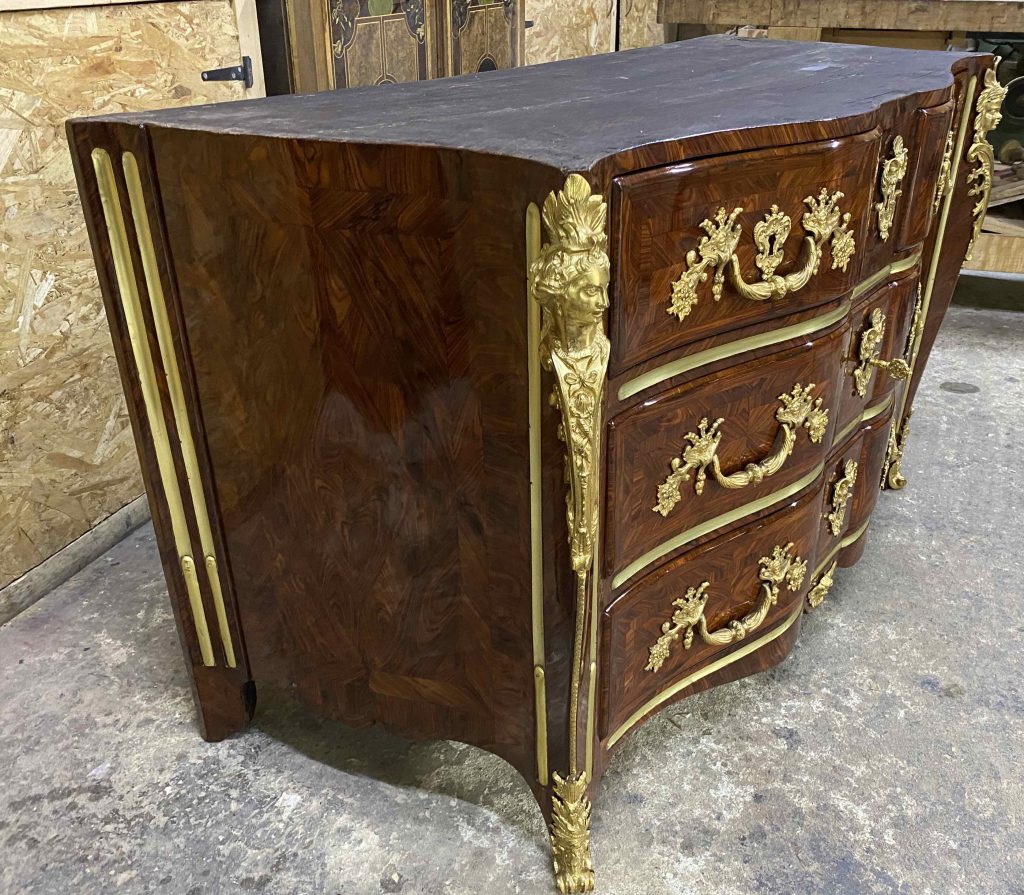
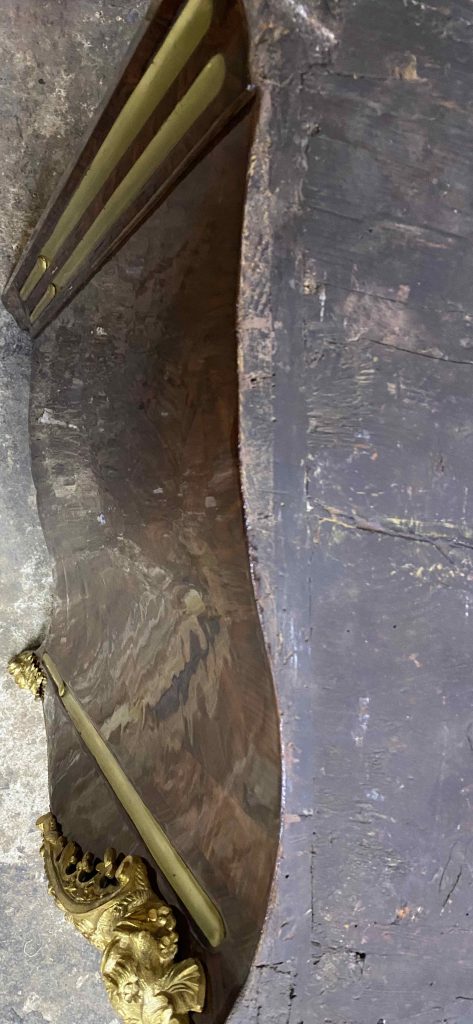
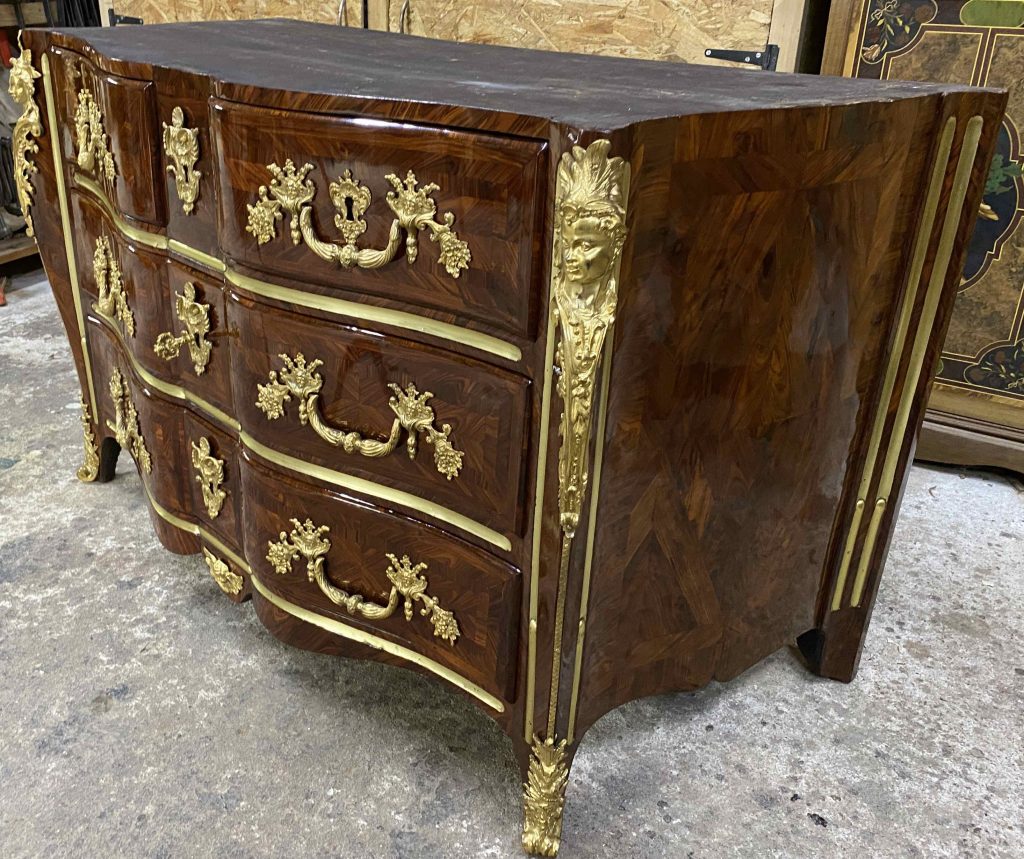
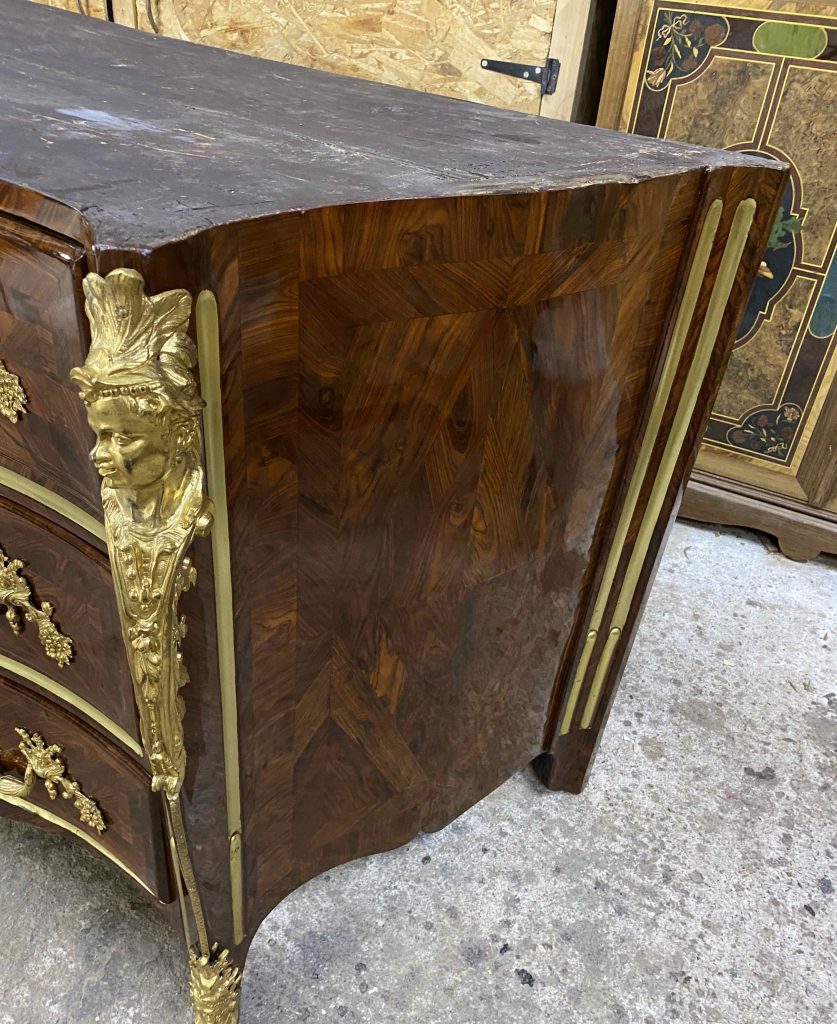
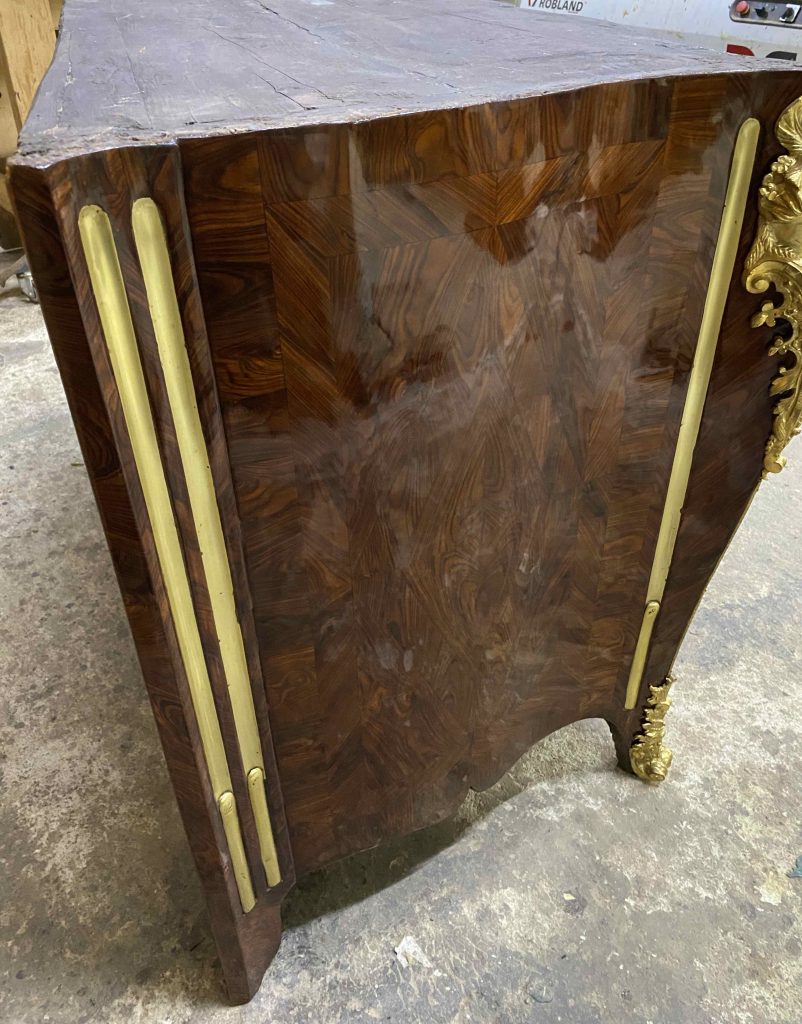
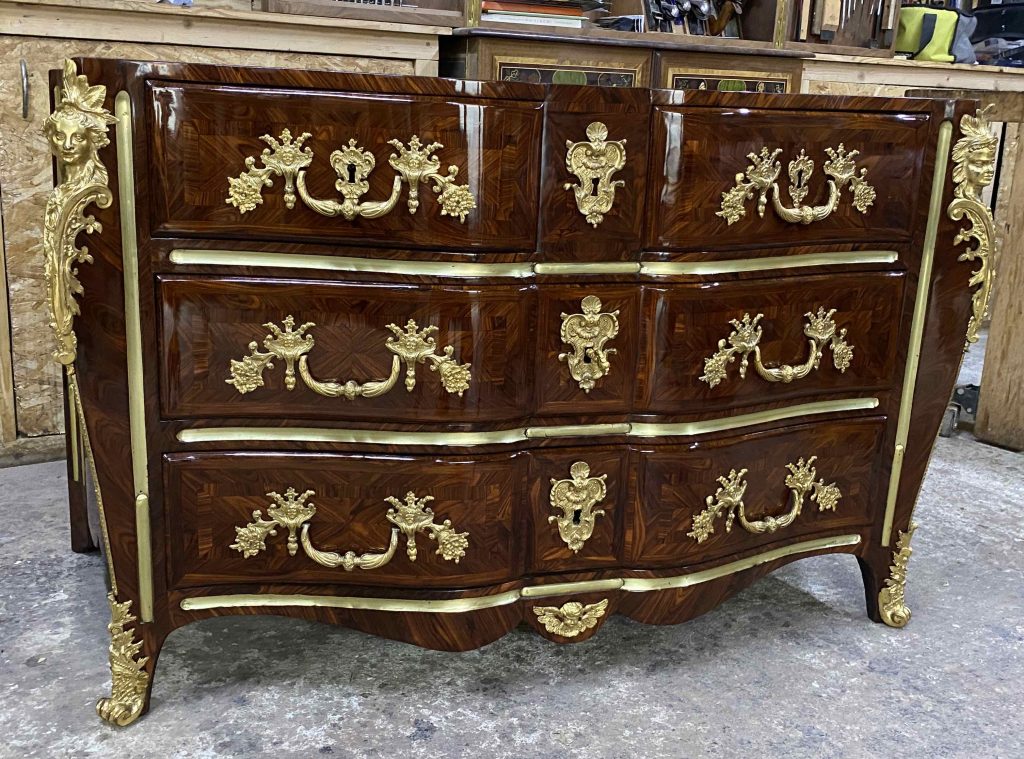
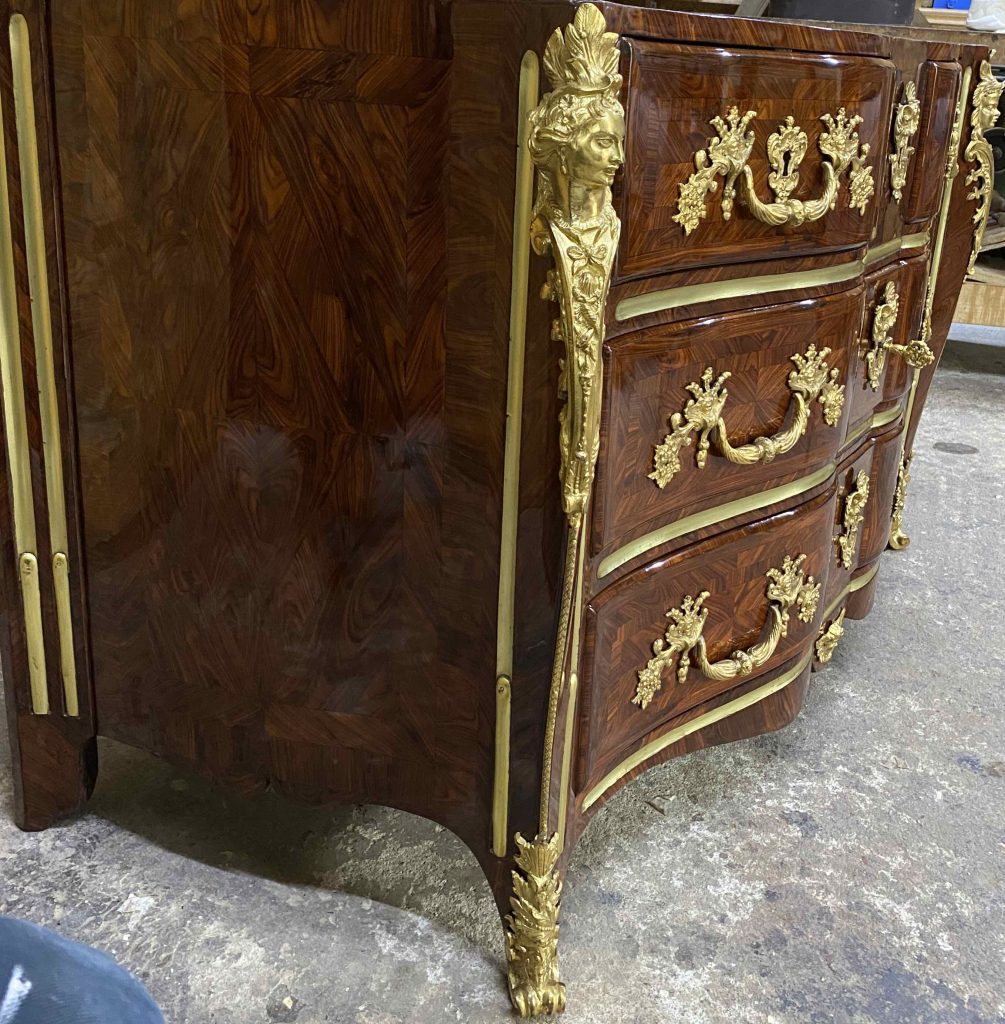
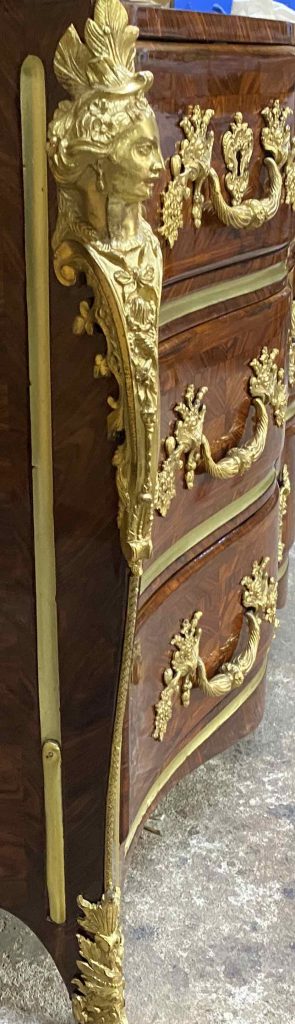
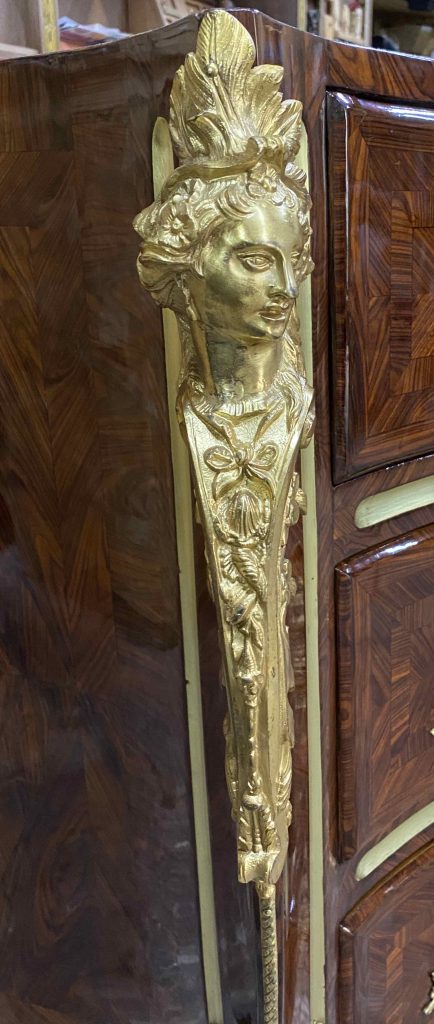
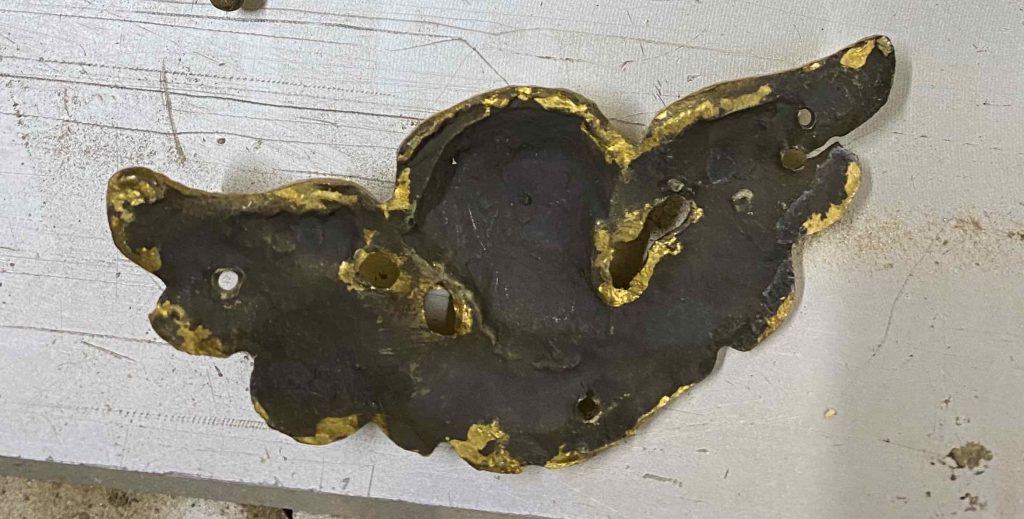
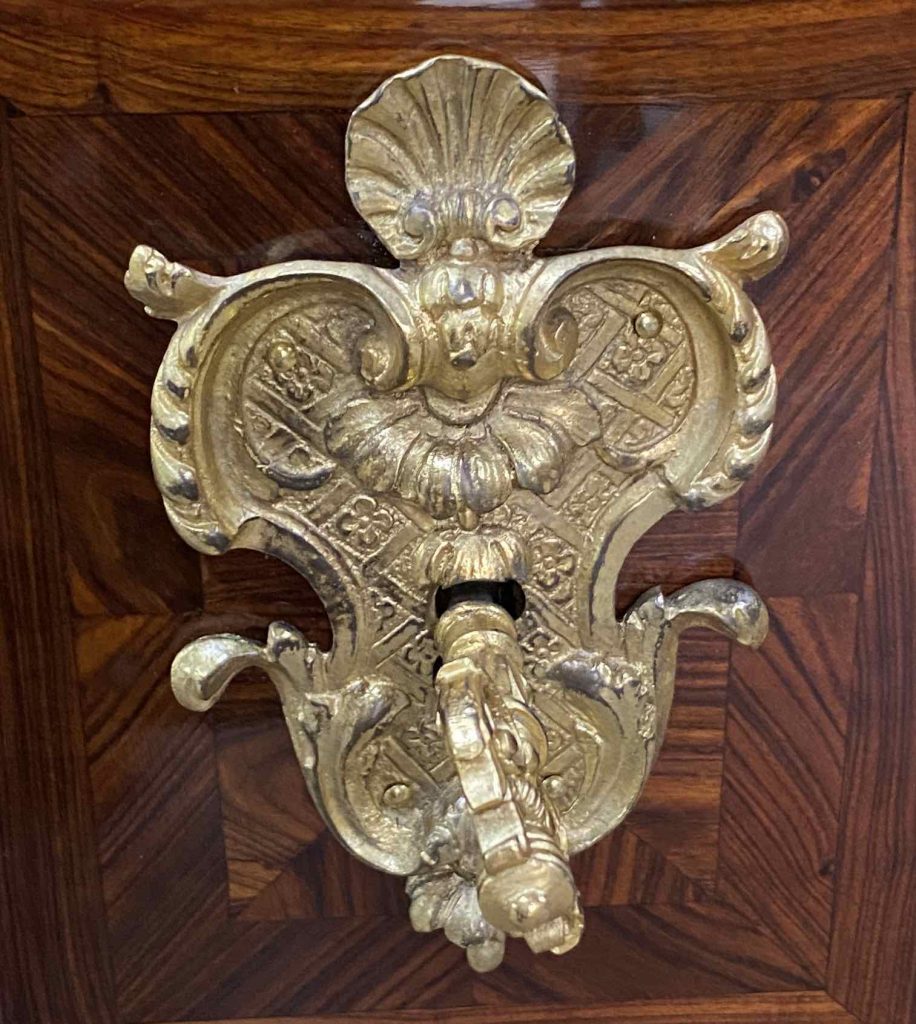
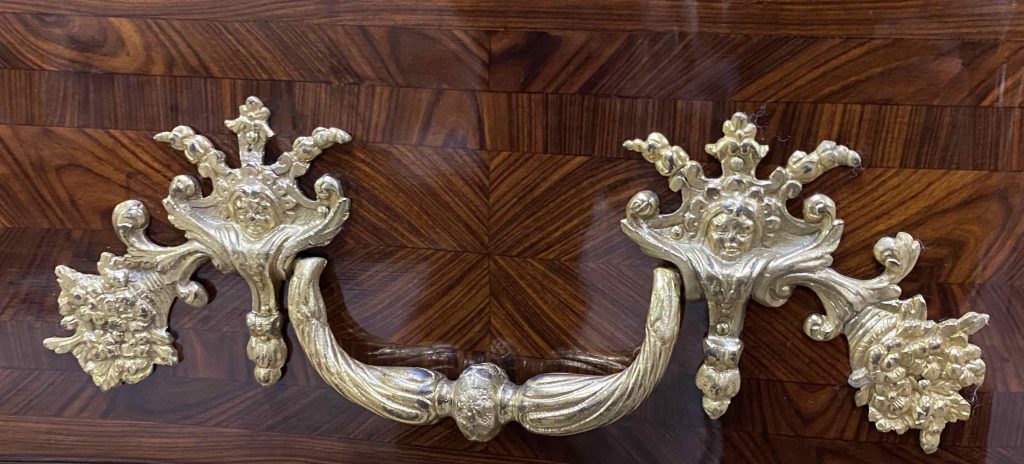
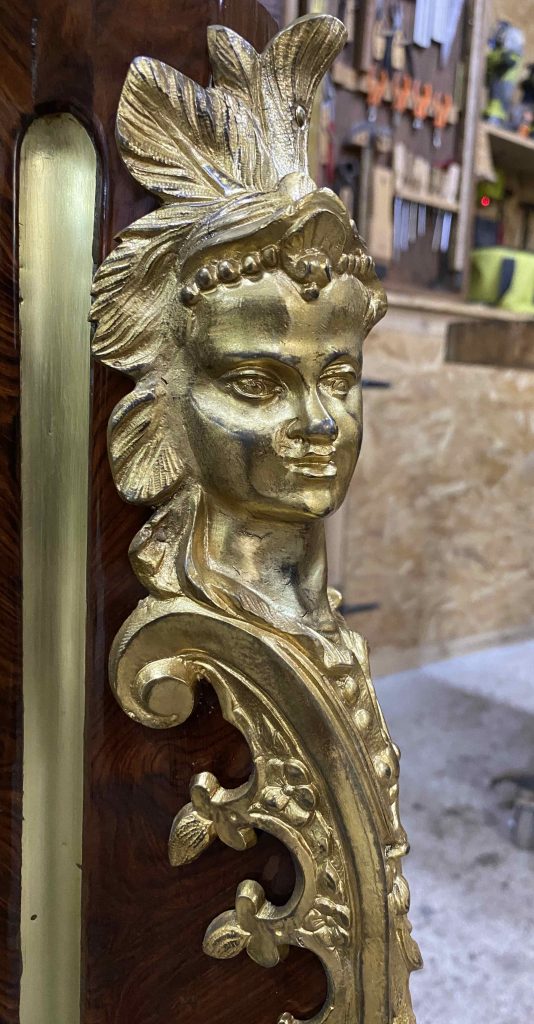
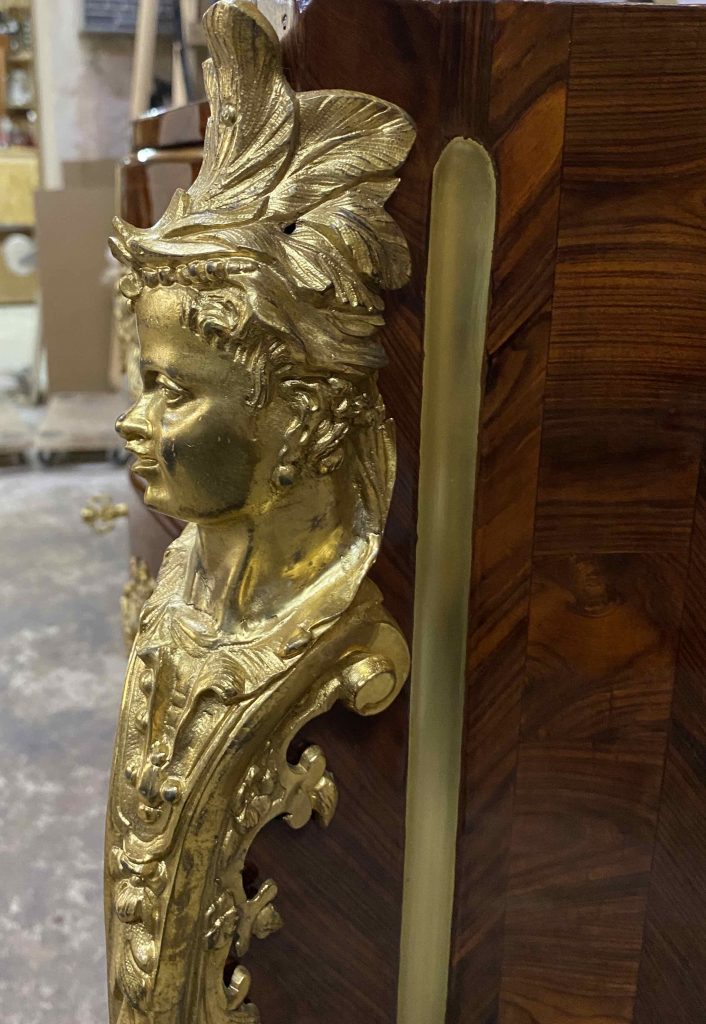
Restoration of a Regency period commode with a serpentine front and espagnolette handles, curved on all sides, veneered in violet wood on a walnut frame, opening with four drawers in three rows and topped with a Belgian Griotte Red marble slab with ears and a corbelled edge. The pinched uprights are dark, as are the front rails, with fluting and brass reeding. Its high-quality bronze ornamentation features superb chasing and includes very rare espagnolettes (seen on only six commodes: four by Etienne Doirat, one by François Lieutaud, and one by Louis Delaitre), "jester" drawer pulls, and S-shaped curved sides punctuated by rear uprights whose cavetto-shaped recess (unlike the traditional projection of Louis XIV and early Regency commodes) is strongly concave.
Etienne Doirat
Etienne Doirat (1665–1732), son of mason Joseph Doirat and Michelle Ferlu, sister of Pierre-Isaac Ferlu, master cabinetmaker, was one of the most important and talented cabinetmakers of the Regency period. He is recorded in the Grand-Rue du Faubourg Saint-Antoine at the time of his marriage in 1704. He obtained his master craftsmanship between 1714 and 1718. Indeed, on October 13, 1714, he is mentioned as a cabinetmaker in a notarial act for the transfer of inheritance rights. Then, on December 5, 1718, he drew up an apprenticeship contract with the title of master cabinetmaker. In 1726, he set up his workshop in the courtyard of the Contrescarpe in the Bastille moat and, in 1731, rented a shop on the fashionable rue Saint-Honoré (run by his son-in-law Louis Simon Painsun), one of the main Parisian addresses for luxury retailers. The production of this cabinetmaker, who worked throughout his life in the Faubourg Saint-Antoine district for a wealthy French and foreign clientele, is, according to Pierre Kjellberg, synonymous with classicism and quality. While Doirat's pre-Regency production is relatively little known, since he only marked his works at the end of this period and during the last years of his career, the works of Jean-Dominique Augarde (Etienne Doirat, Ebony Carpenter) however pointed out that this cabinetmaker had exclusive rights to certain bronze models, including a number of espagnolette models.
Etienne Doirat was one of the few cabinetmakers of his time to affix his stamp, but only at the end of his career. In thirty years of activity, he produced a significant number of pieces, judging by the volume in his post-mortem inventory, but most of his works are unsigned.
His production consisted primarily of commodes. The inventory drawn up on July 14, 1732, a few days after his death, lists a large number of them, including those in the "tomb-like" style, the "Regency" style, and the "S-shaped" style, but also mentions large bookcases, wardrobes, sideboards, secretaries, regulators, and various models of gaming tables, parlor tables, and bedside tables. These pieces of furniture were frequently veneered in amaranth or violet wood, or inlaid with grid patterns.
Unlike his colleagues, he owned his stock of bronze models intended for his exclusive use, mentioned in his inventory as "imperfect lead models used as fittings for chests of drawers and other items".
BIBLIOGRAPHY
- French Furniture of the 18th Century – Pierre Kjellberg – Les Editions de l'Amateur – 1989
- The workshops Parisian cabinetmakers and joiners in the 17th and 18th centuries – Guillaume Janneau – Serg Editions – 1975
- Etienne Doirat, Ebony Carpenter – Jean-Dominique Augarde – The J. Paul Getty Museum JournalVol. 13 (1985), pp. 33-52 – Getty Publications
- Antiques Philippe Glédel
- National Archives – Reference numbers: MC/ET/XXVIII/131 and Cotes: MC/ET/XVI/651
State of affairs report
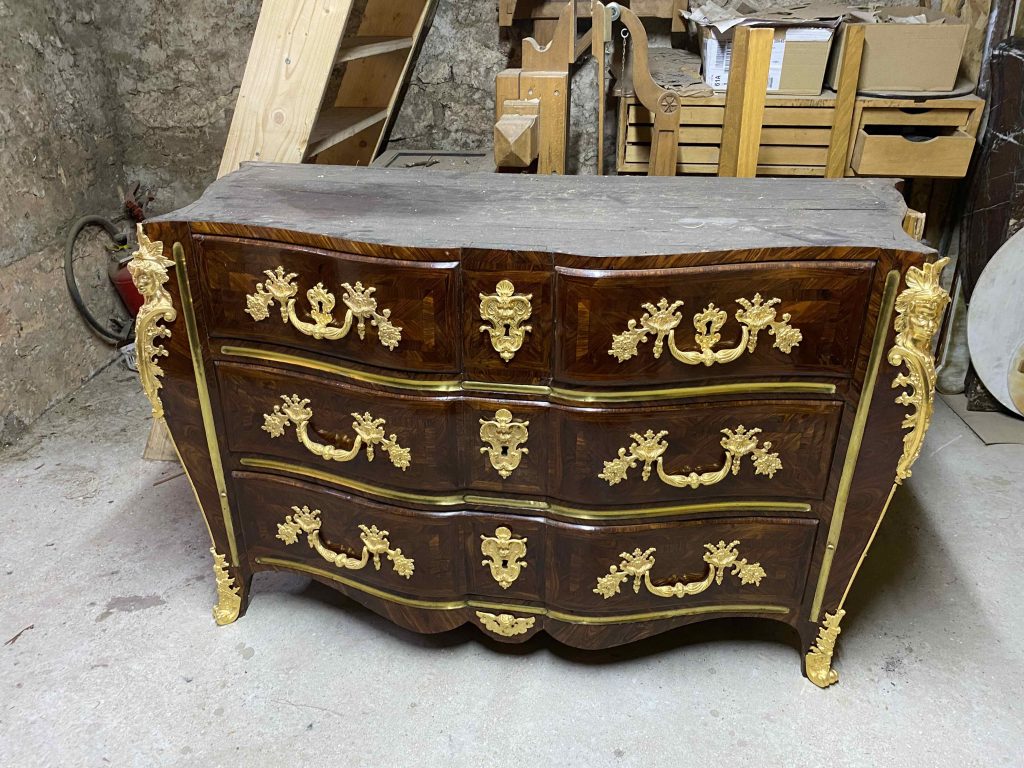
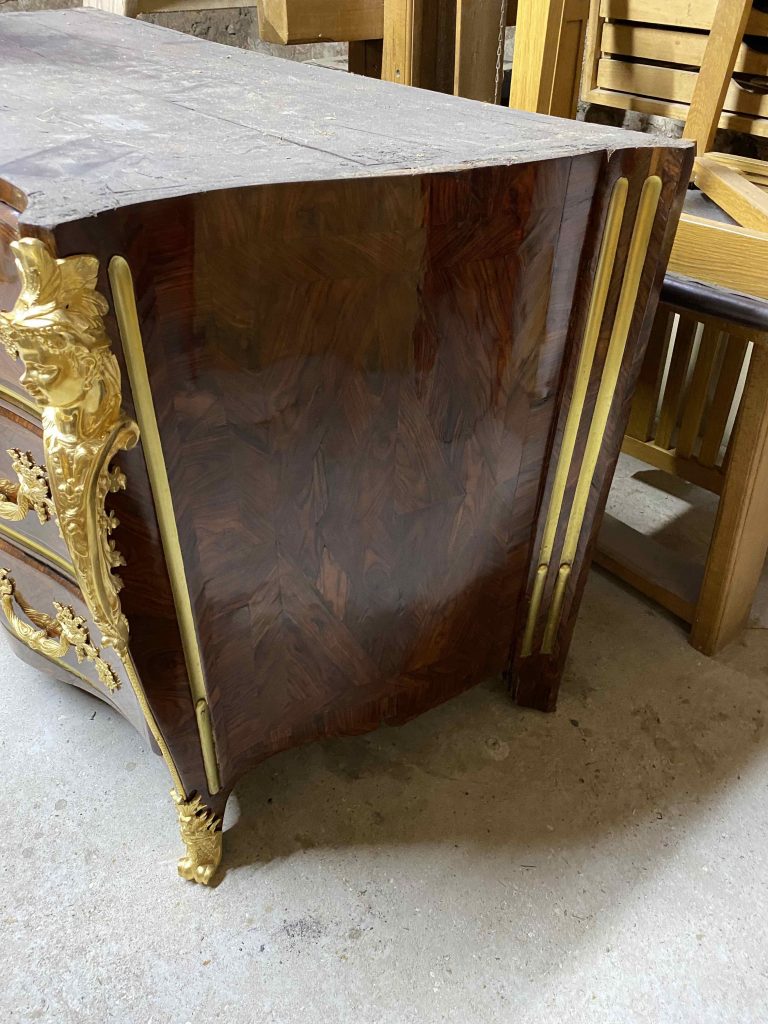
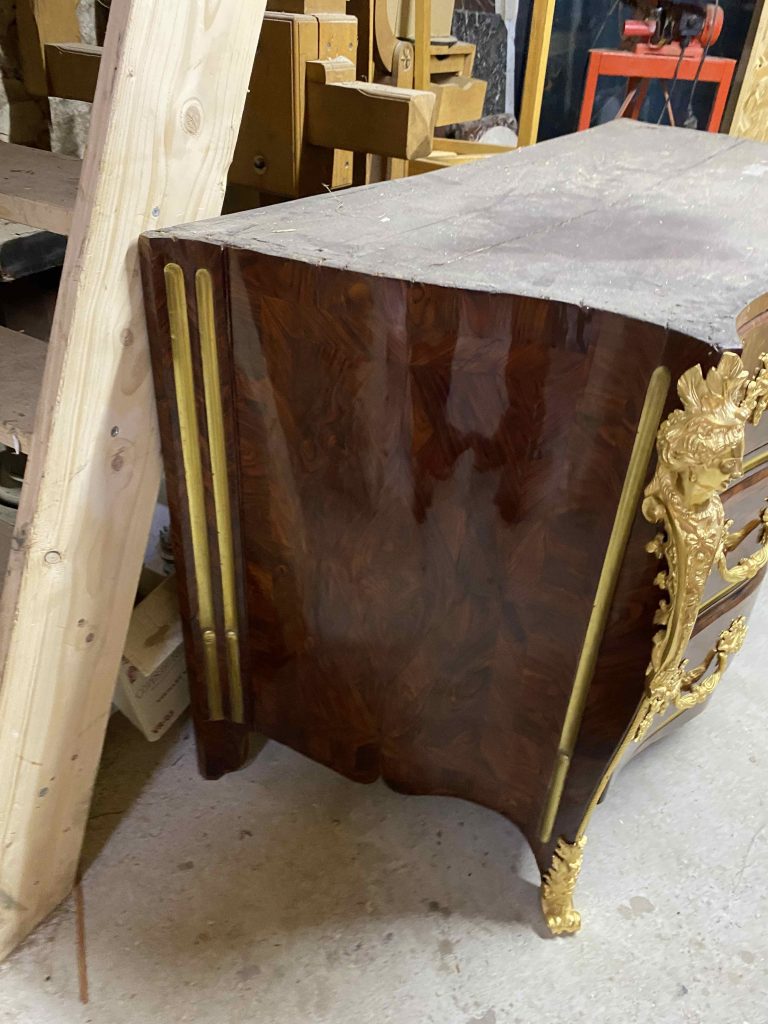
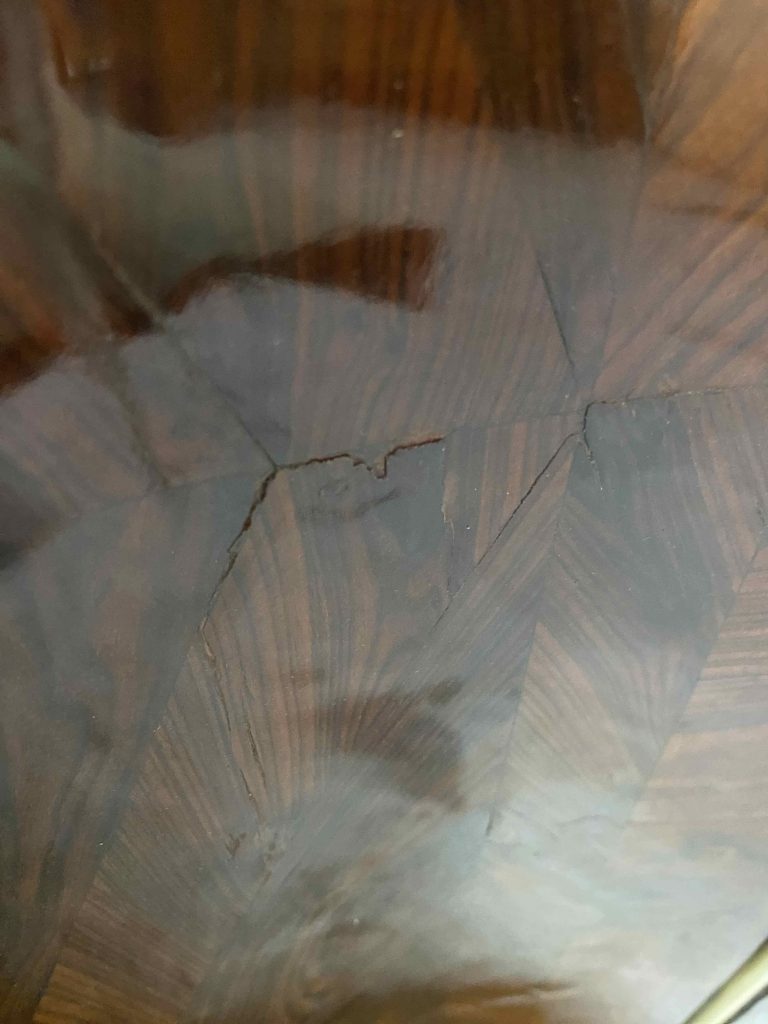
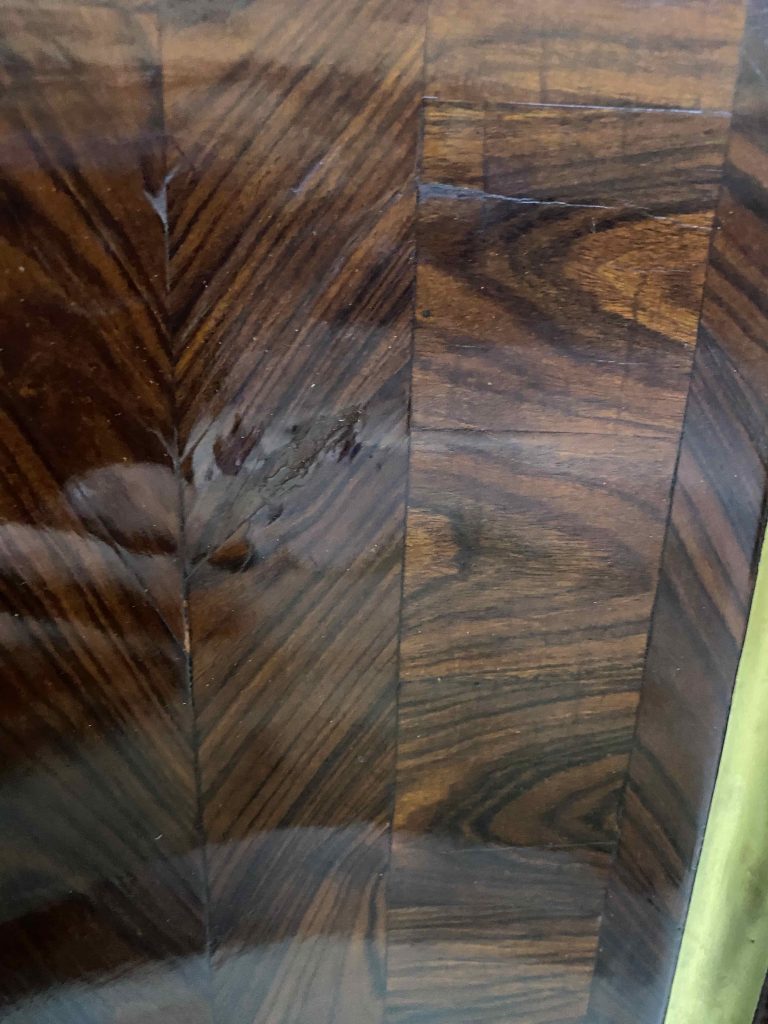
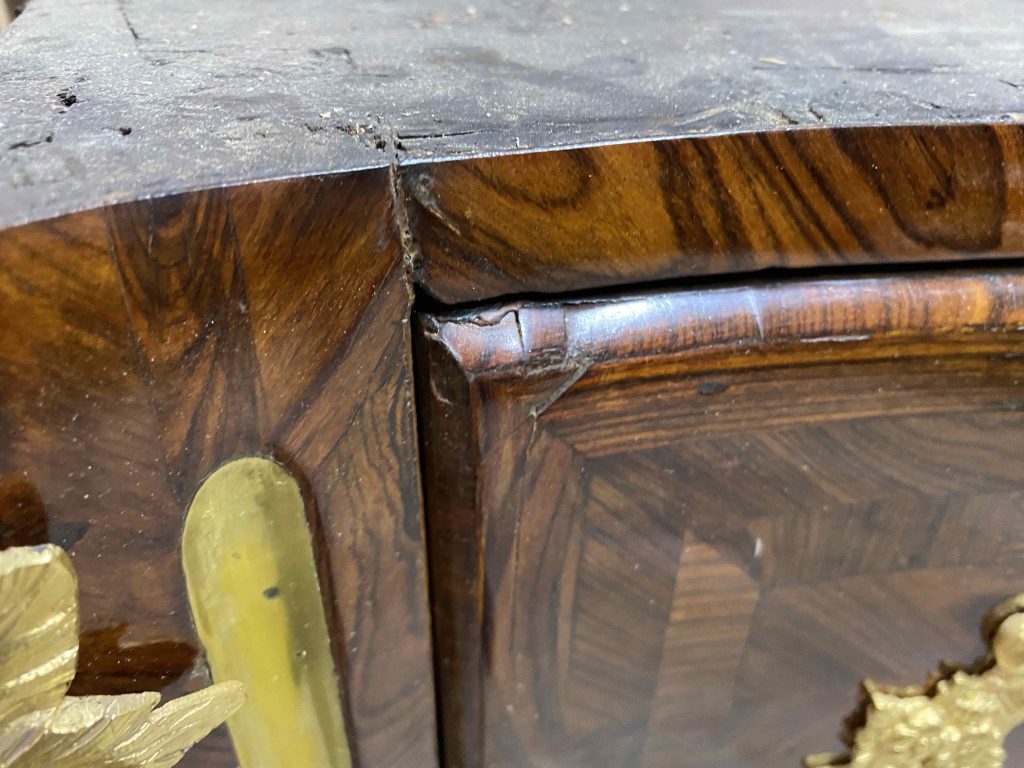
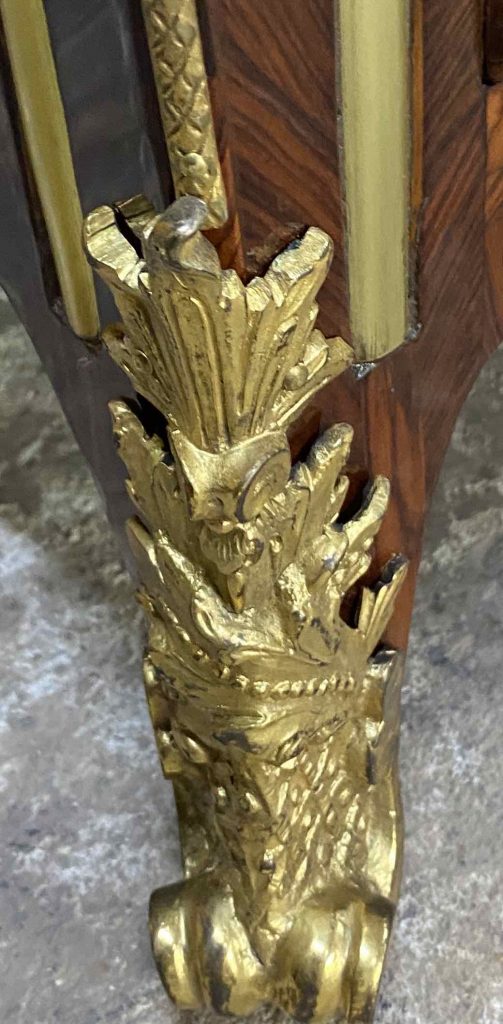
At first glance this chest of drawers might have seemed to be in very good condition but on closer inspection and running a hand around it one could quickly realize that there were multiple peelings of veneer and significant deformations of the veneered surfaces.
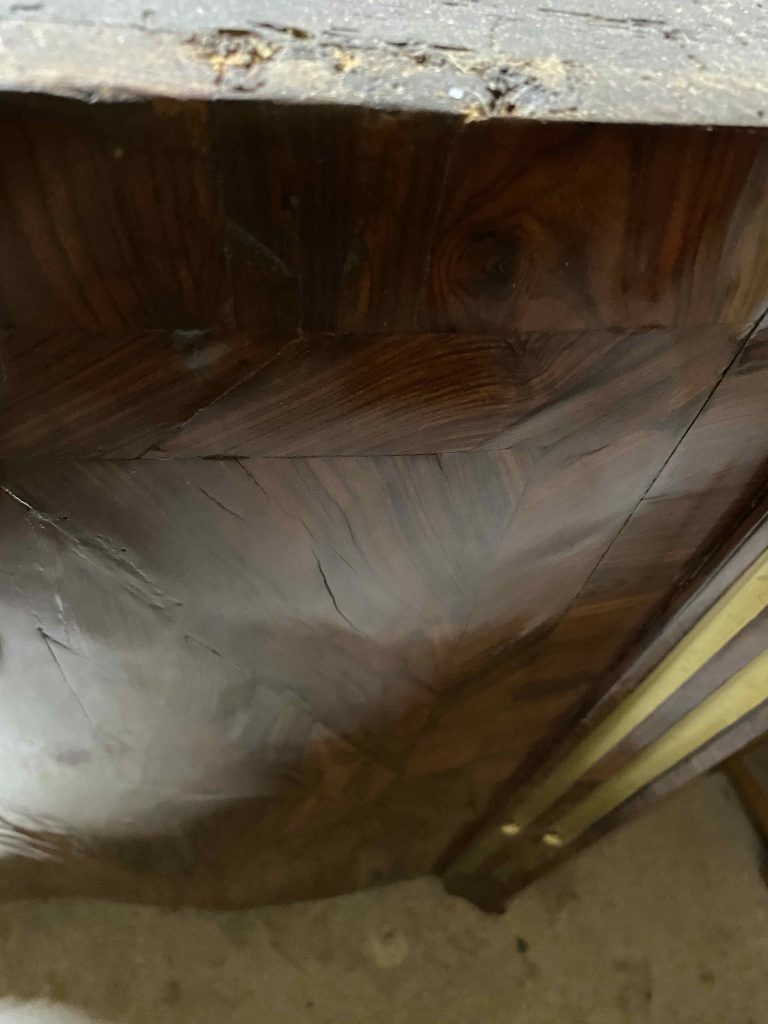
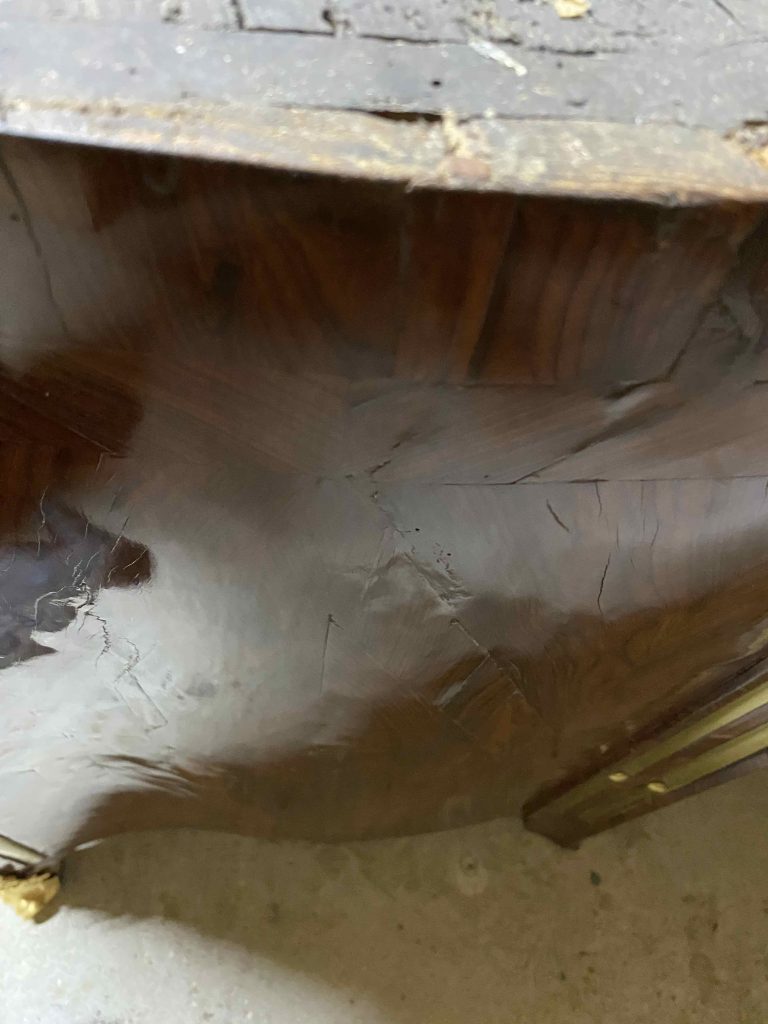
The Restoration
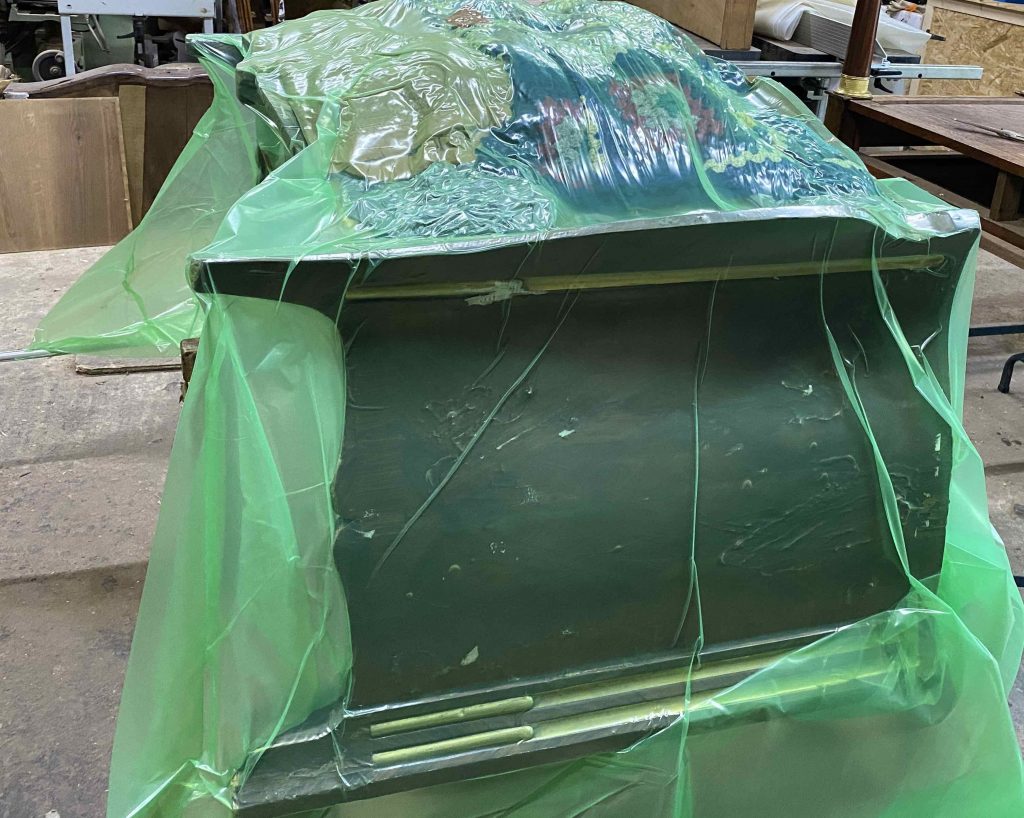
The restoration was complex because the curved sides of this chest of drawers, along with the number of detached pieces, demanded high-quality, precise work. After grafting some violet wood, the regluing was carried out under vacuum to ensure perfect dispersion of the glue and, above all, to maintain perfect pressure on these curved surfaces. I would like to thank Julien Hebras of Atelier Lemaire for his invaluable advice on vacuum-sealing this chest of drawers.
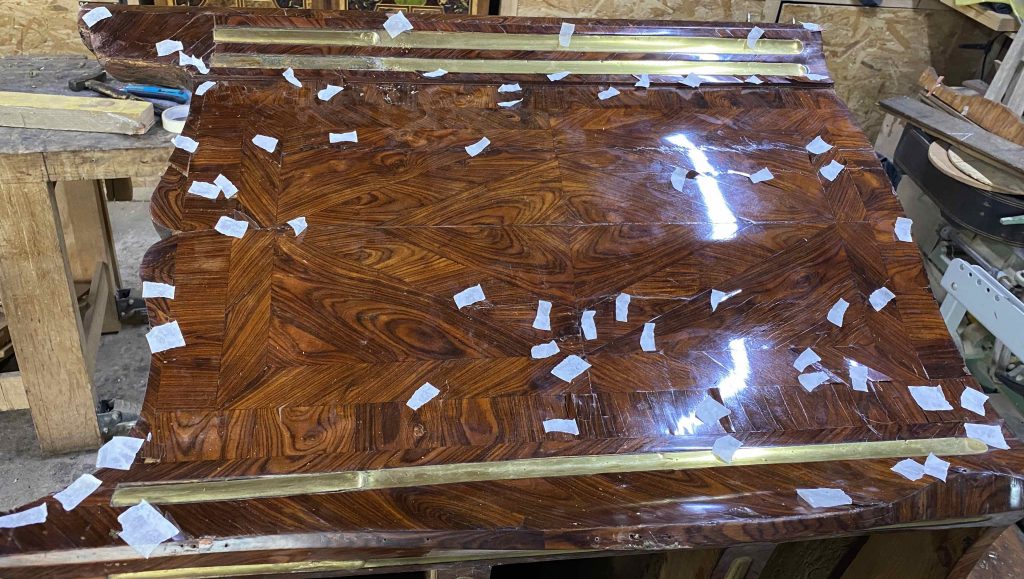
The old finish was then restored and a new coat of clear French polish was applied. The bronzes, after a visit to Mr. Bellino in Nice, regained their luster and a patina worthy of their quality.
Good evening Mathieu, thank you for your erudition (a restorer who complements the antique dealer's research on Doirat is no small feat) and thank you also for not having smashed the chest of drawers (Haha! I was worried). On that subject, I think it would be helpful if you could mention here the pressure exerted on the chest (should we convert bars of pressure to tons of force? ... that's a question from a literature buff, not a mathematician at all) and how you protected it, unless you'd like to keep some of your "recipes" to yourself. Congratulations again and see you soon. Philippe
Thank you Philippe.,
So in theory, atmospheric pressure is about 0.85 kg/cm2 (almost 9 tonnes per m²). However, in practice, it is slightly lower, especially for this type of gluing, and the chest of drawers was filled with fabric bags filled with clay beads to distribute the internal pressure and ensure there are no voids.
See you soon