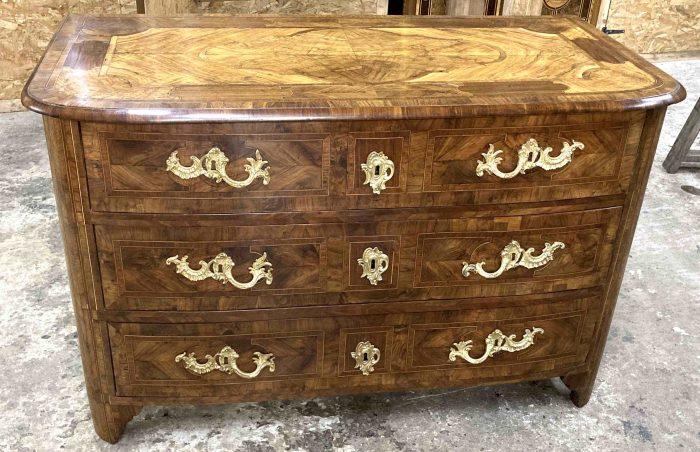
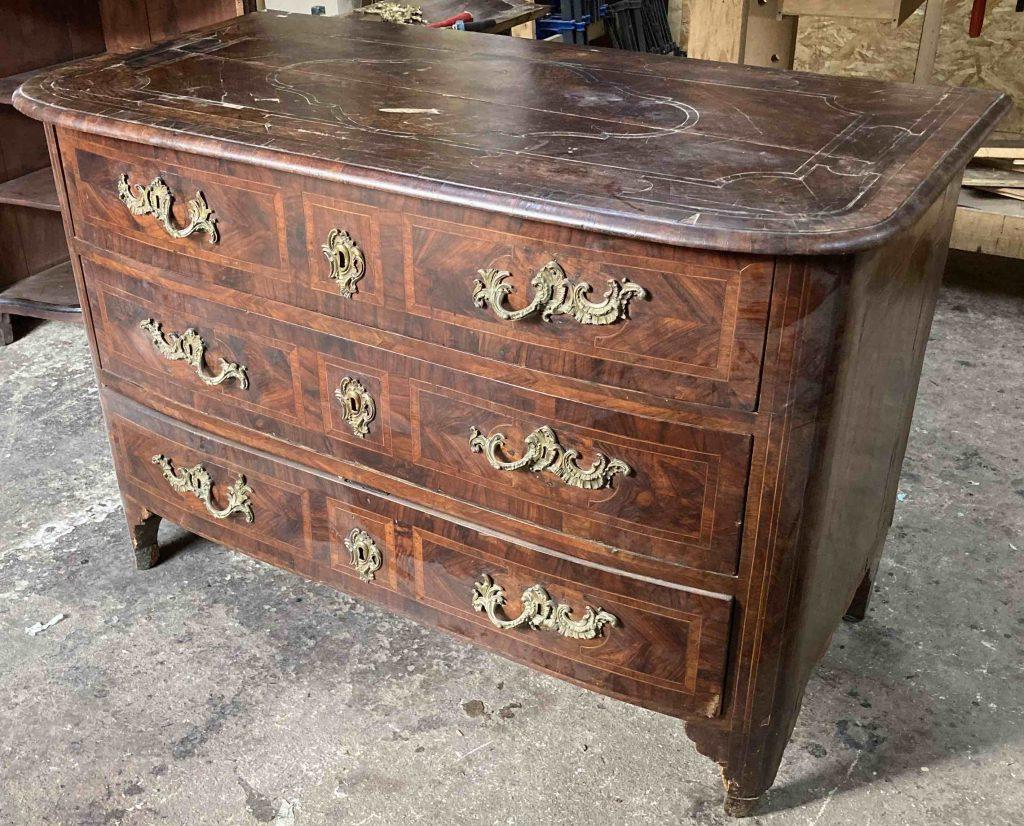
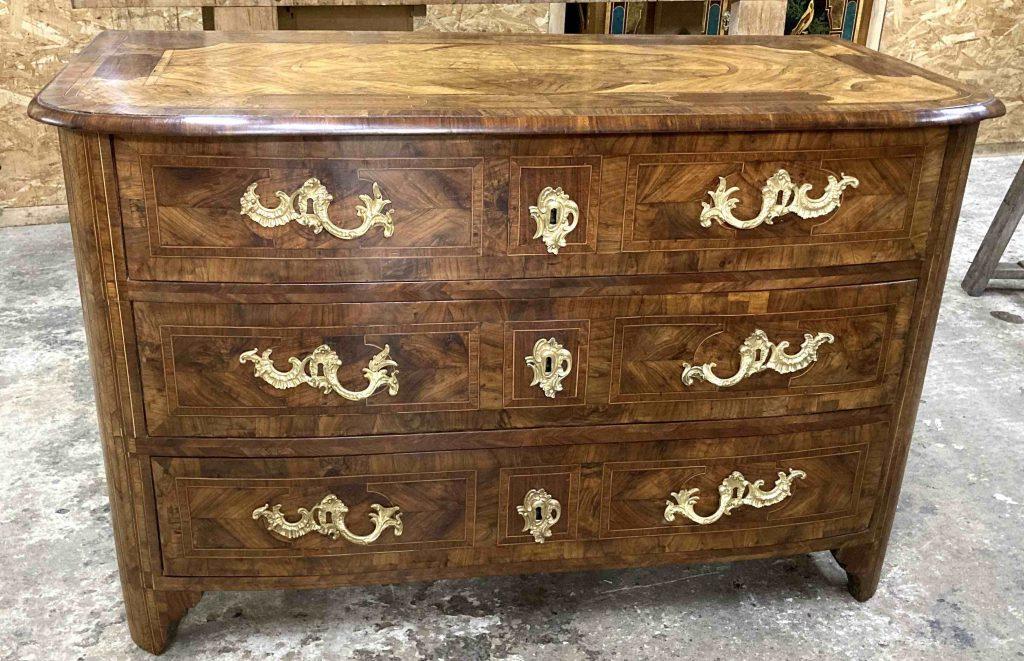
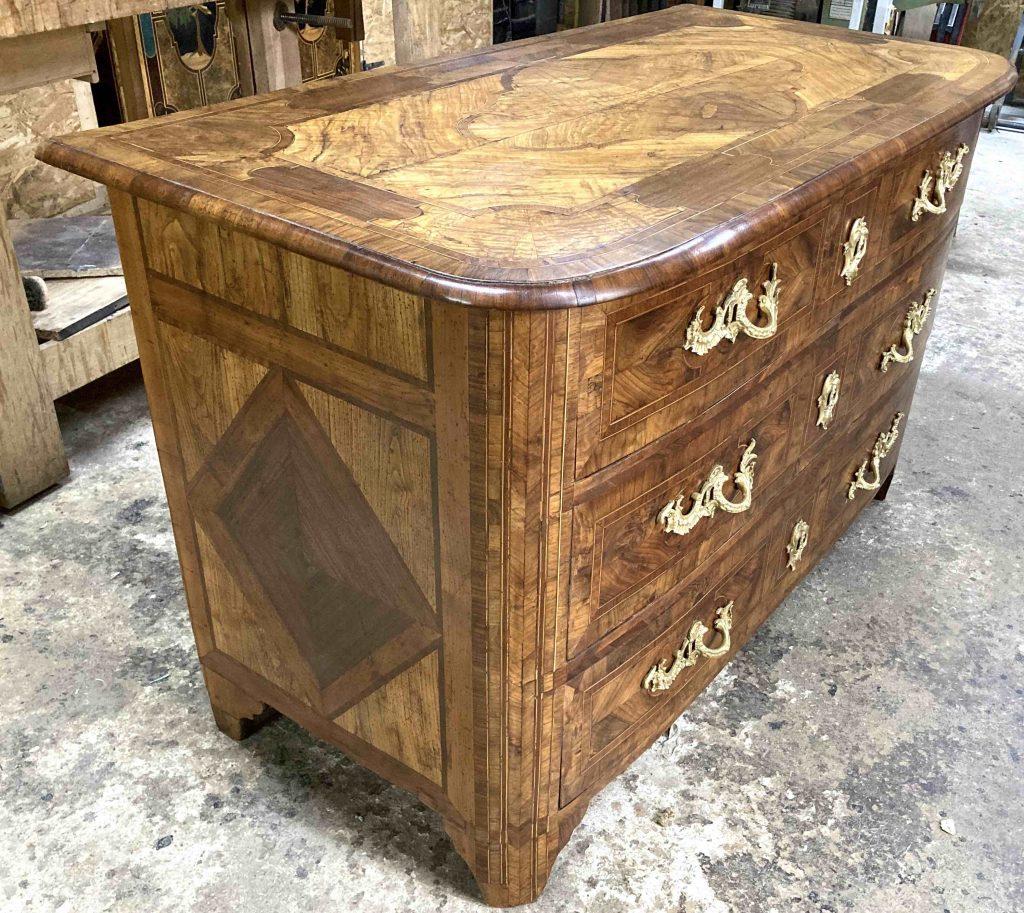
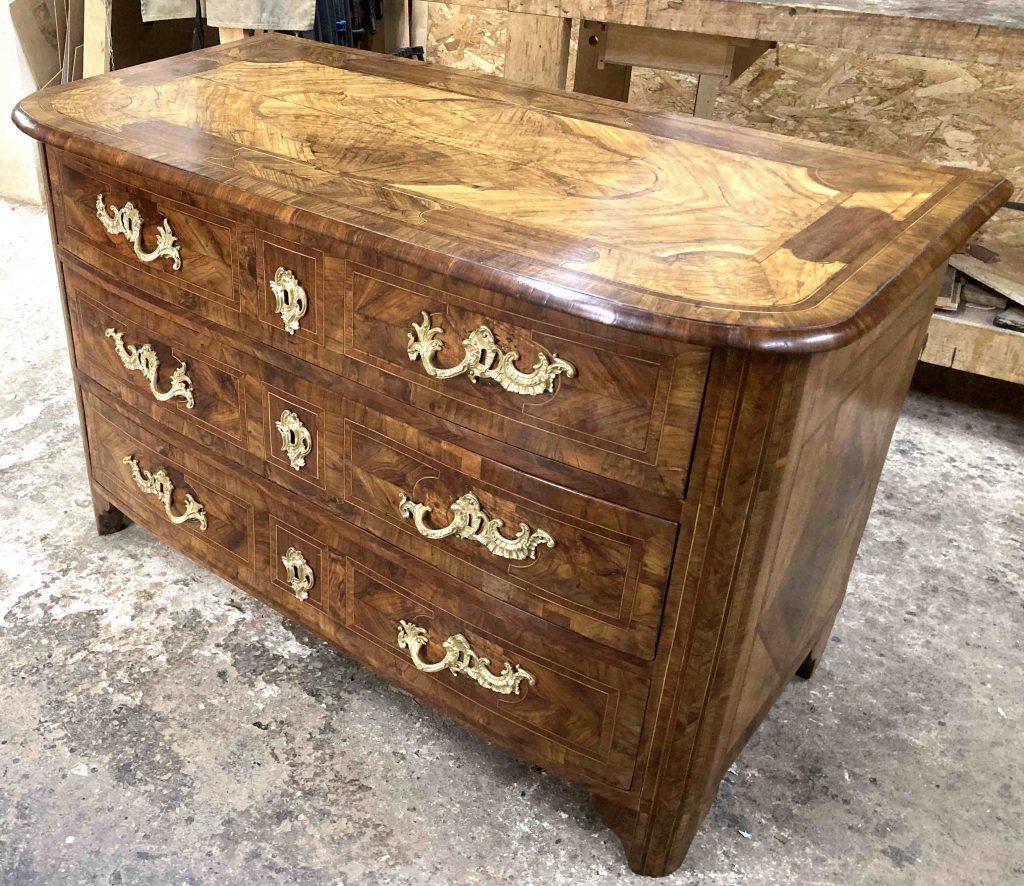
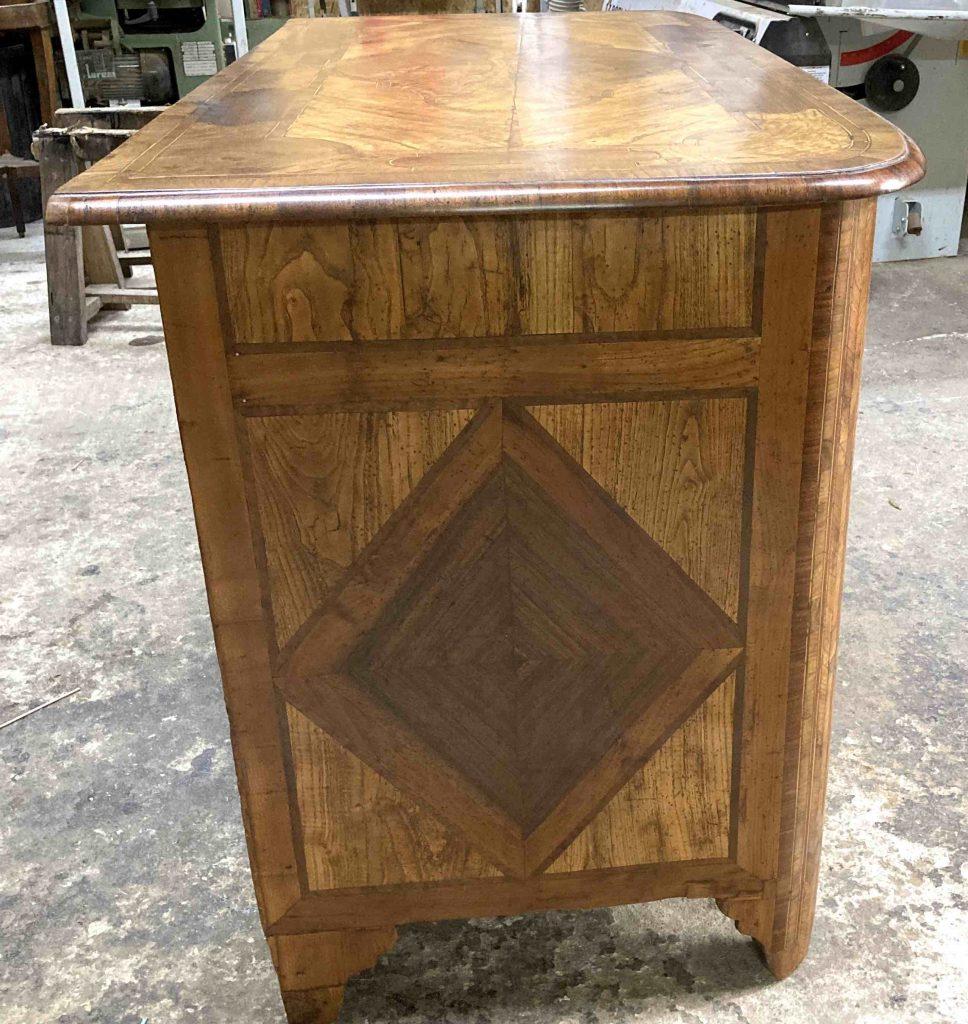
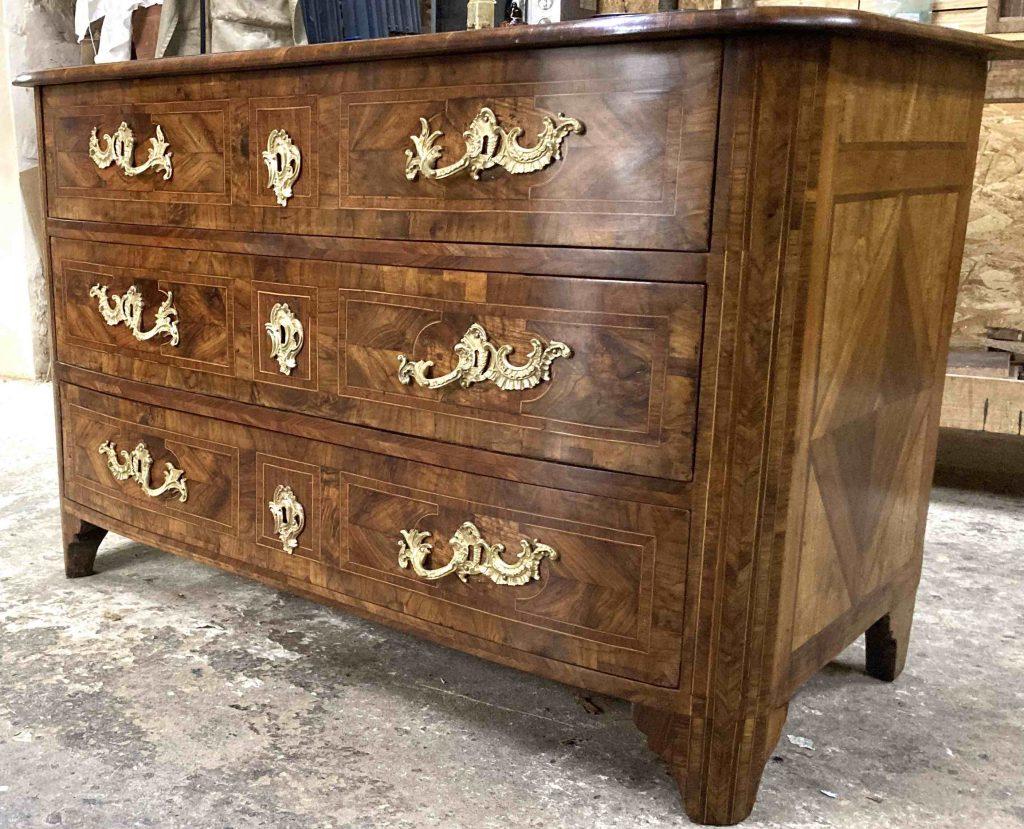
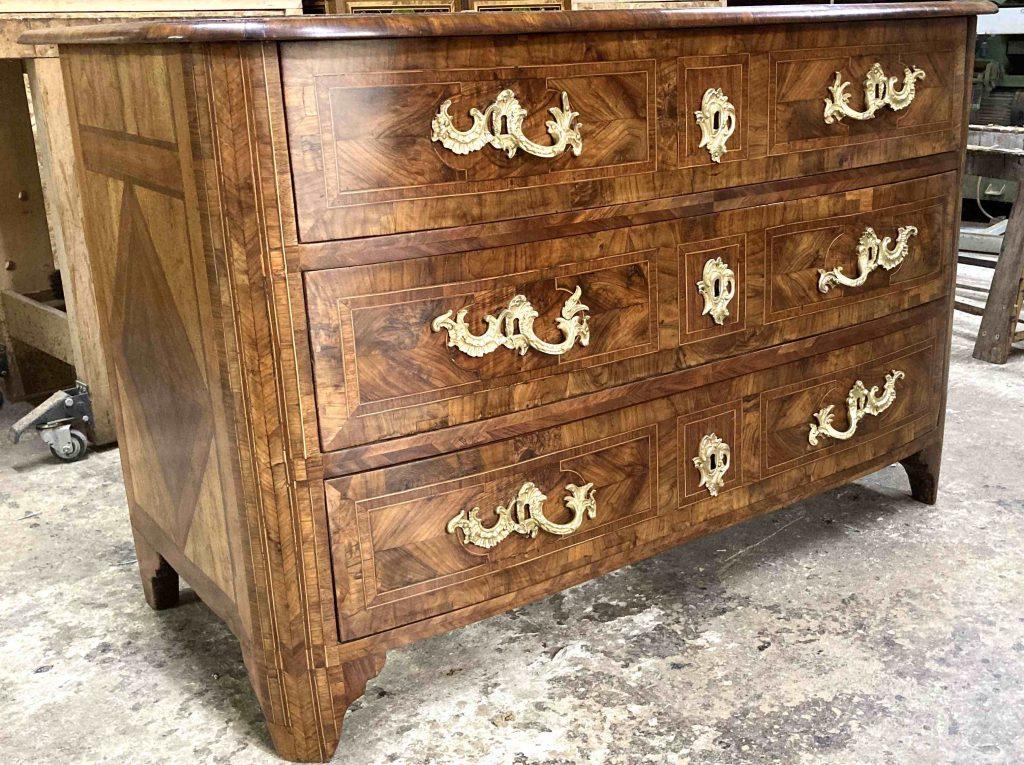
Restoration of a Louis XIV period commode veneered with olive burl, ash and walnut, probably from the Dauphiné region.
This type of chest of drawers (D-shaped), along with the Mazarine chest, is among the very first chests of drawers popularized under Louis XIV. Indeed, the appearance of the very first French furniture resembling the chest of drawers dates only from the 1700s; thus, the oldest known and datable Parisian chests of drawers are those delivered by André-Charles Boulle At Versailles around 1708. Their very simple decorations were inspired by Dutch designs, often crafted by Protestant cabinetmakers who were very fond of native woods, in accordance with the core tenets of the Reformed religion. This was particularly true for olive veneer. Indeed, it was during the great winter of 1709 that thousands of these trees perished and were salvaged by artisans in the Dauphiné region to make furniture (The Century of Louis XIV, p. 249).
But beyond the decorative qualities of the olive tree, it was above all its symbolism—peace, reconciliation, and hope—that fueled its popularity among the Huguenot elite. The high quality of the bronze handles, featuring "sea horses," is particularly noteworthy.
Bibliography
- Voltaire: The Century of Louis XIV. Paris: Garnier Frères, 1919.
- Provincial Cabinetmaking in 18th-Century France and Abraham Nicolas Couleru by Bernard Deloche and Jean-Yves Mornand
State of affairs report
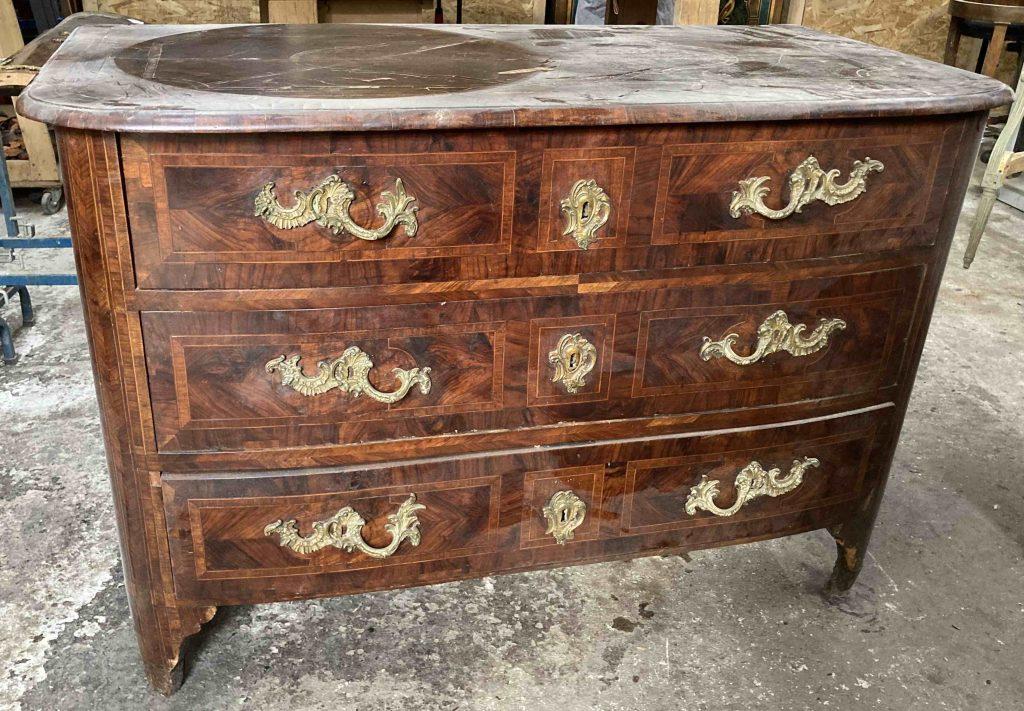
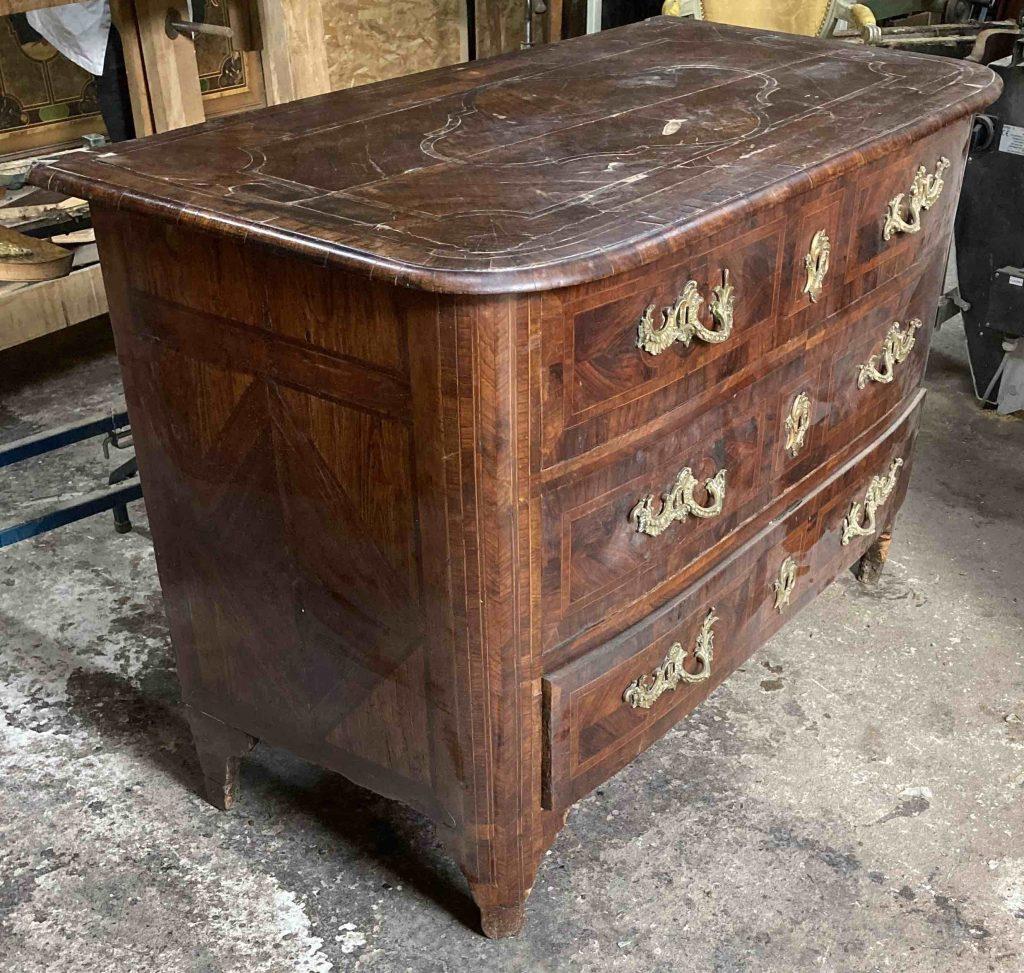
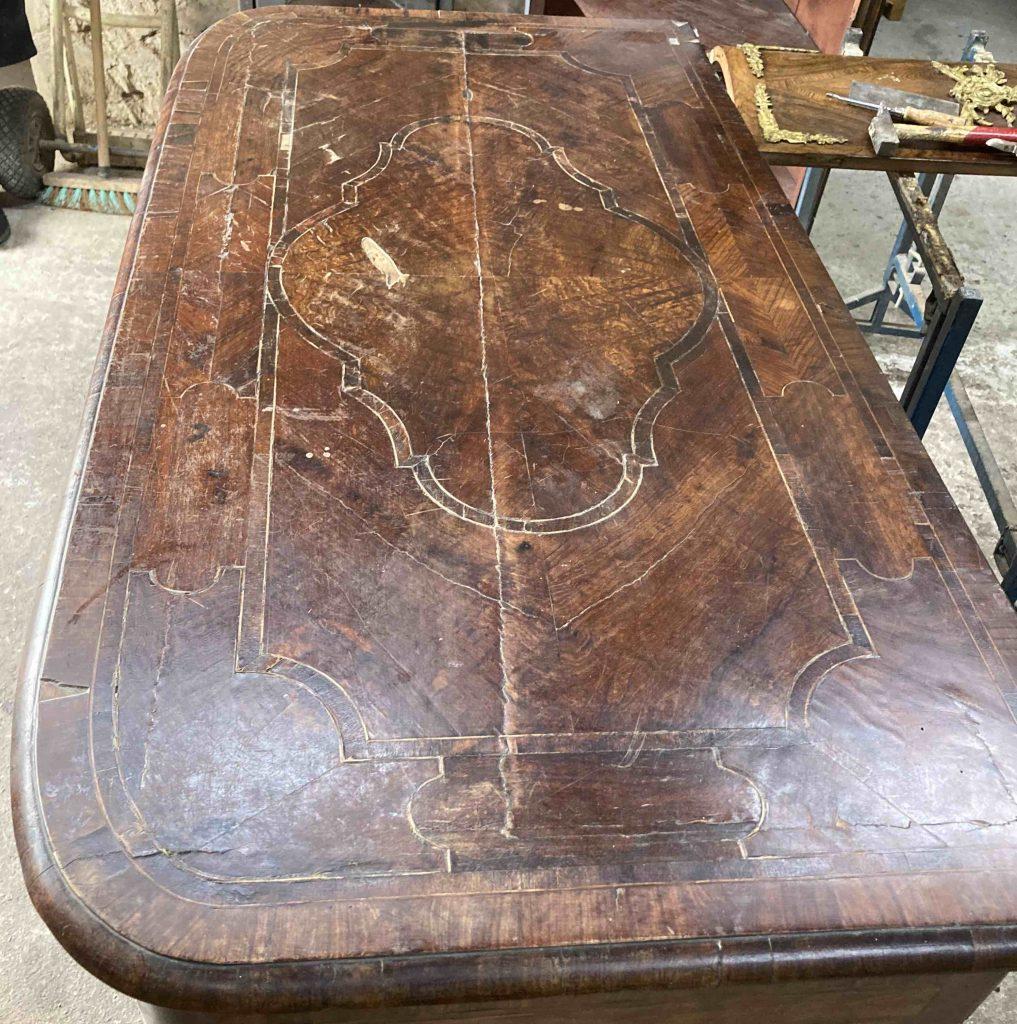
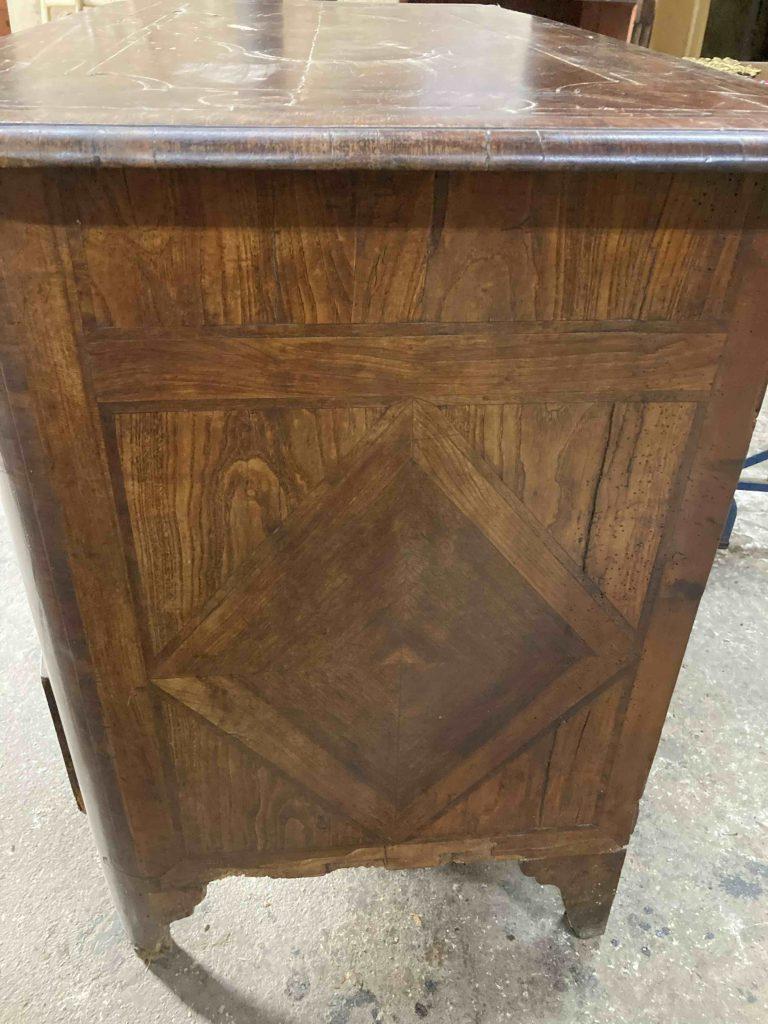
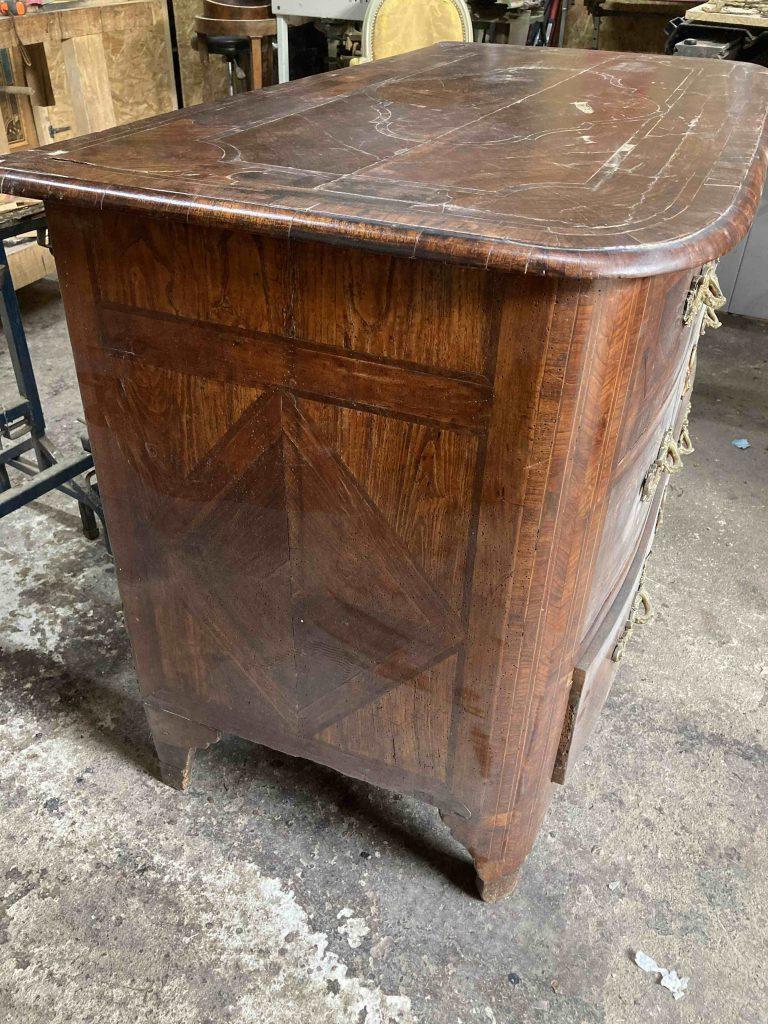
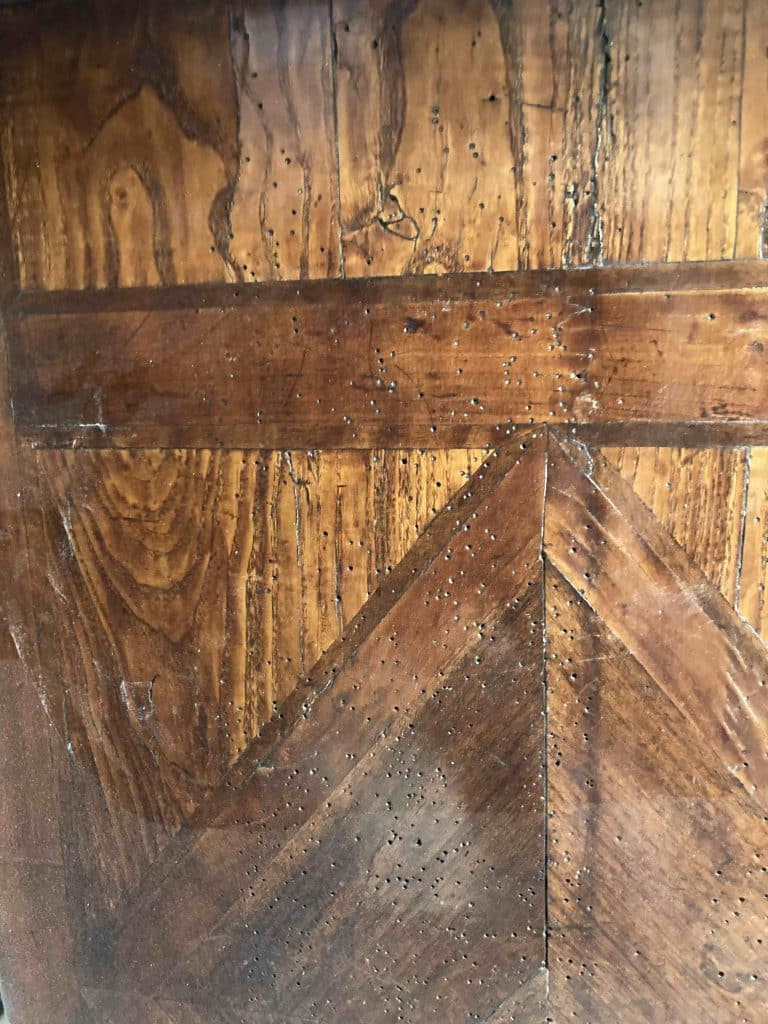
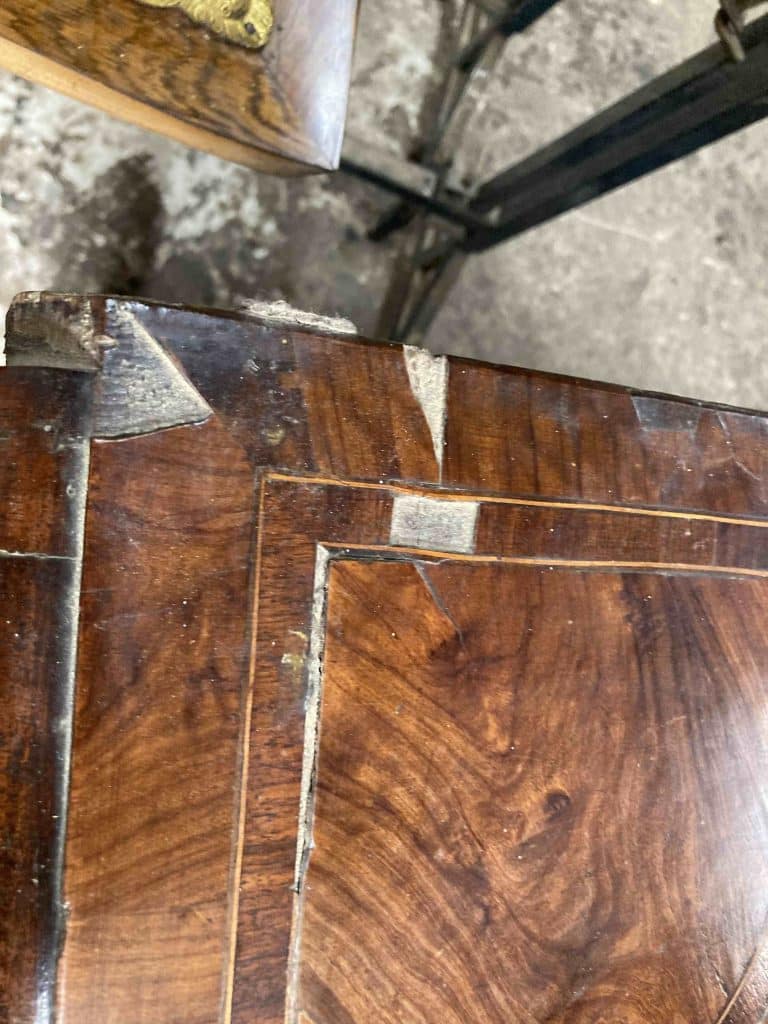
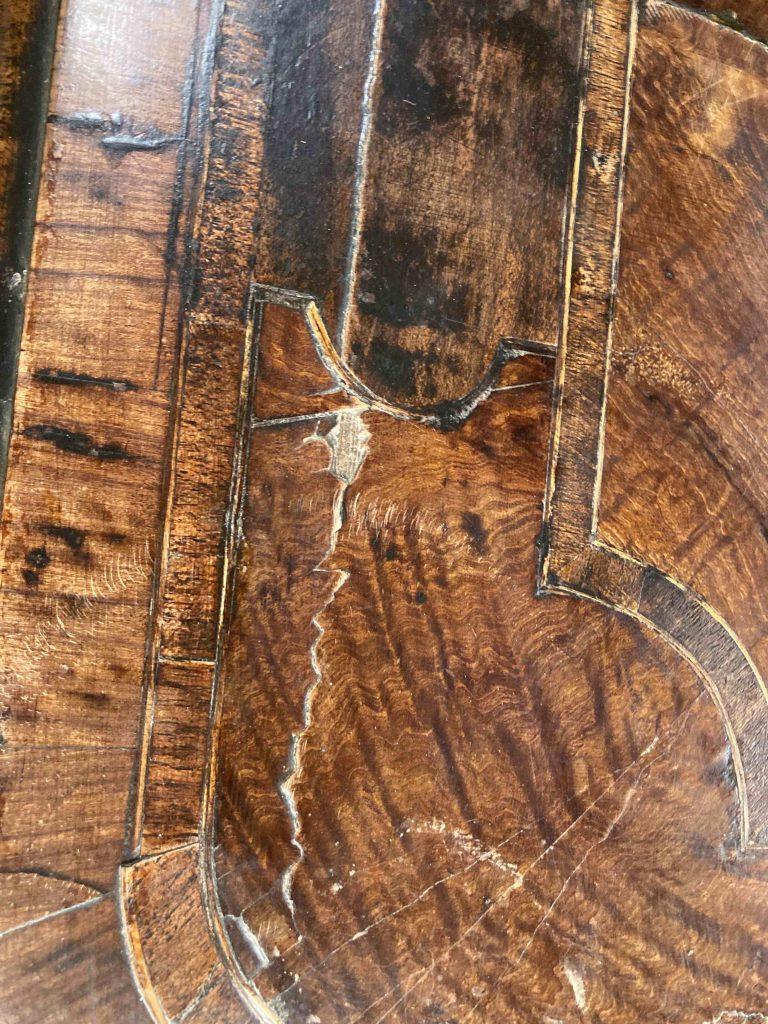
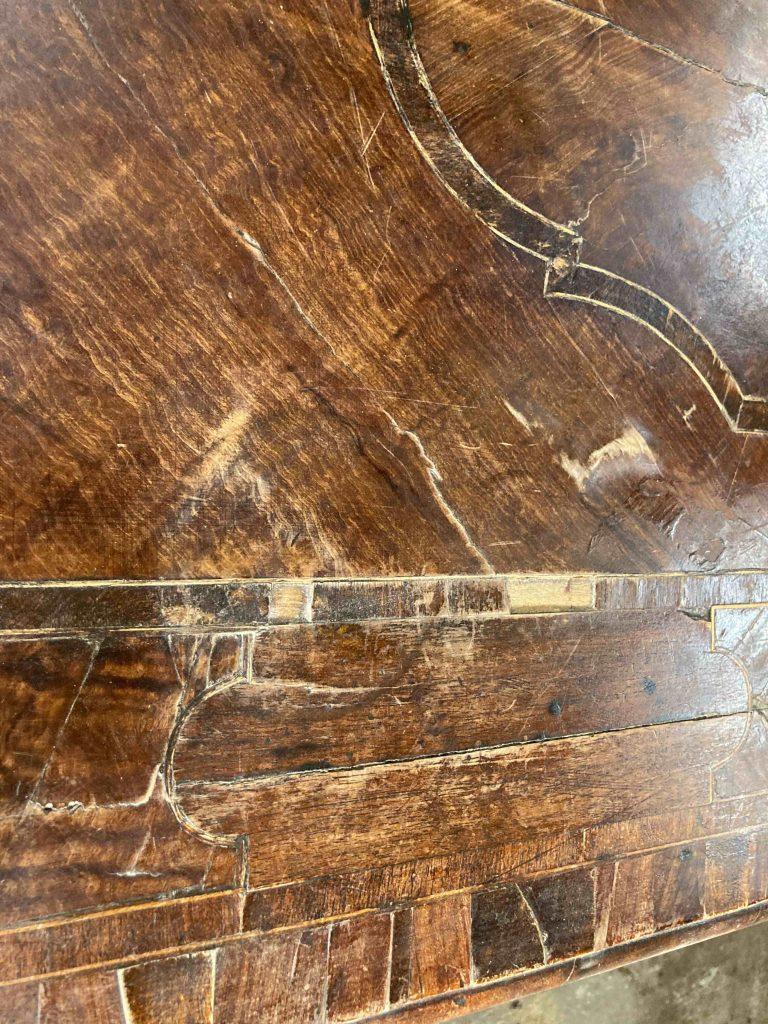
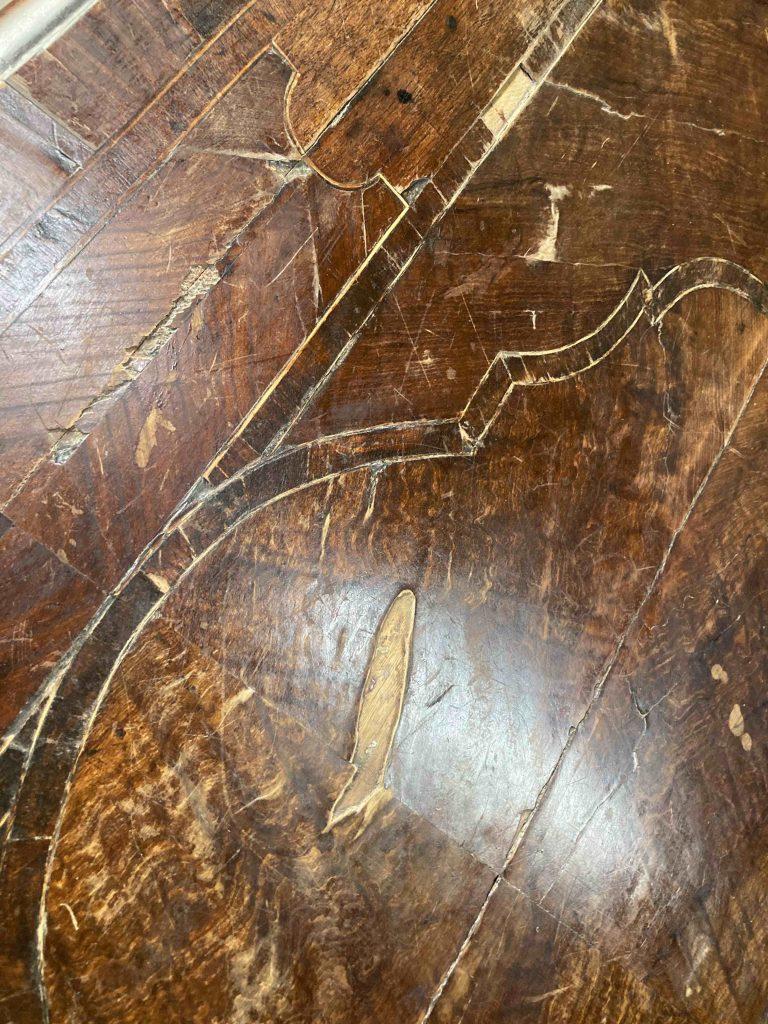
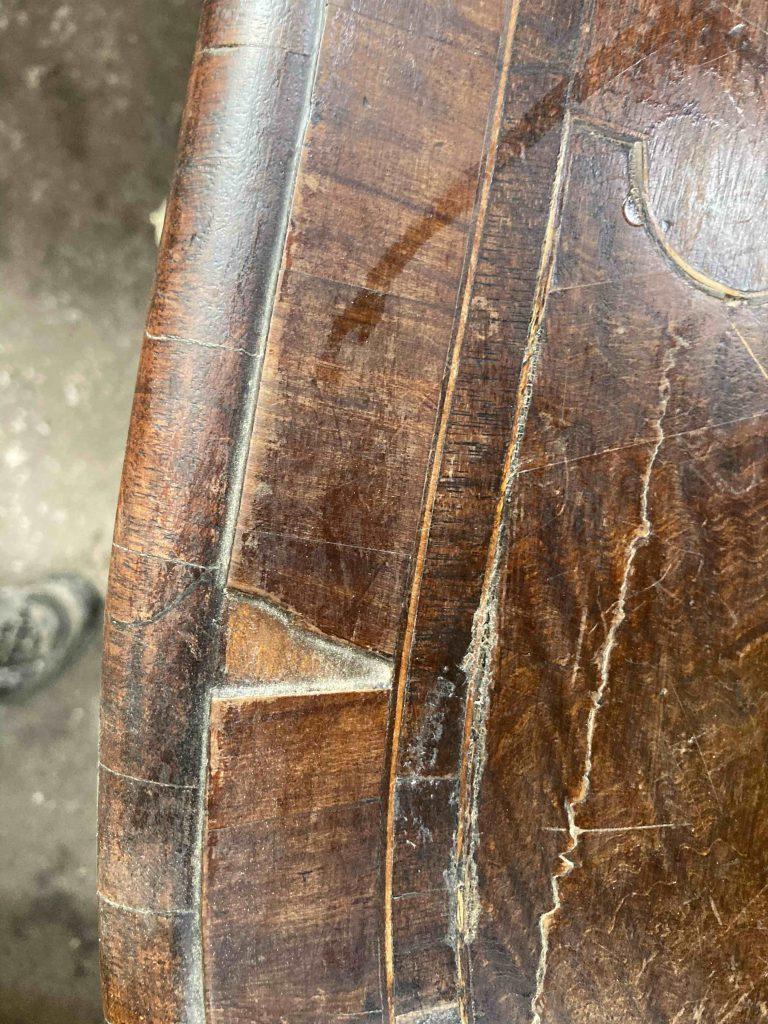
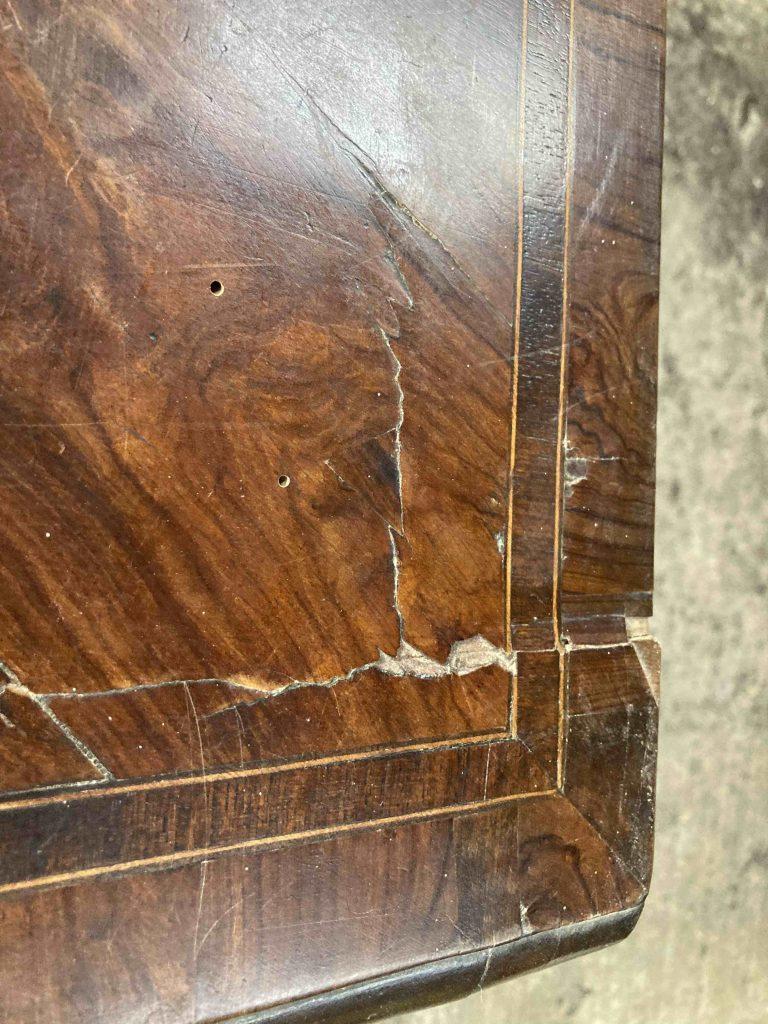
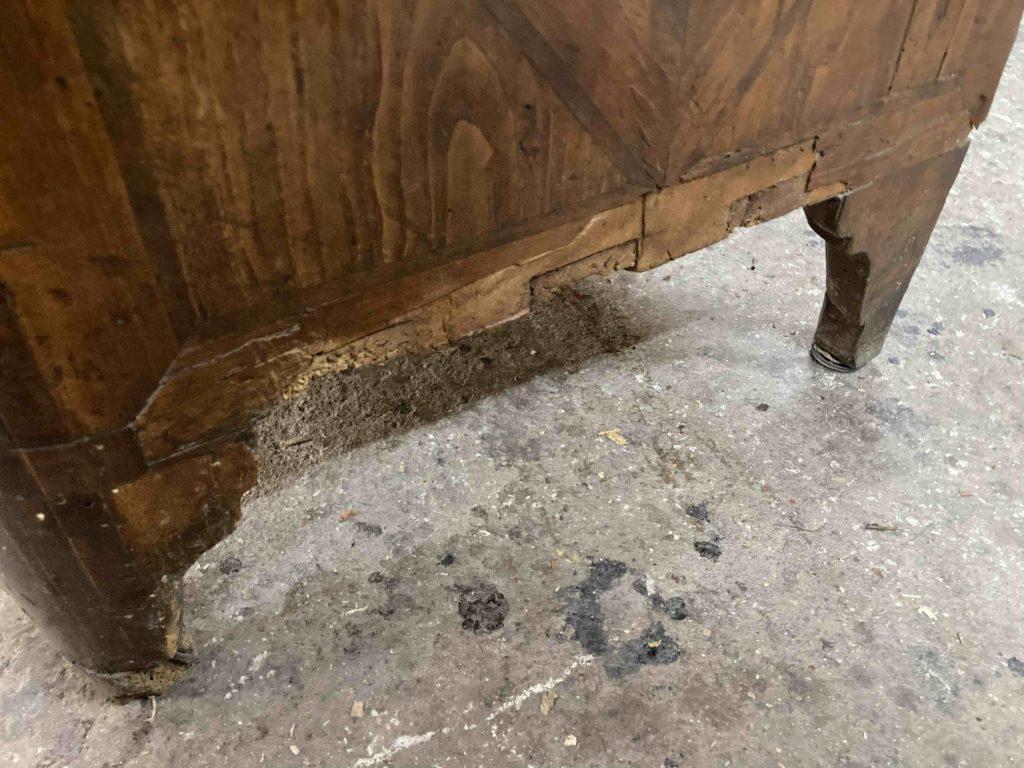
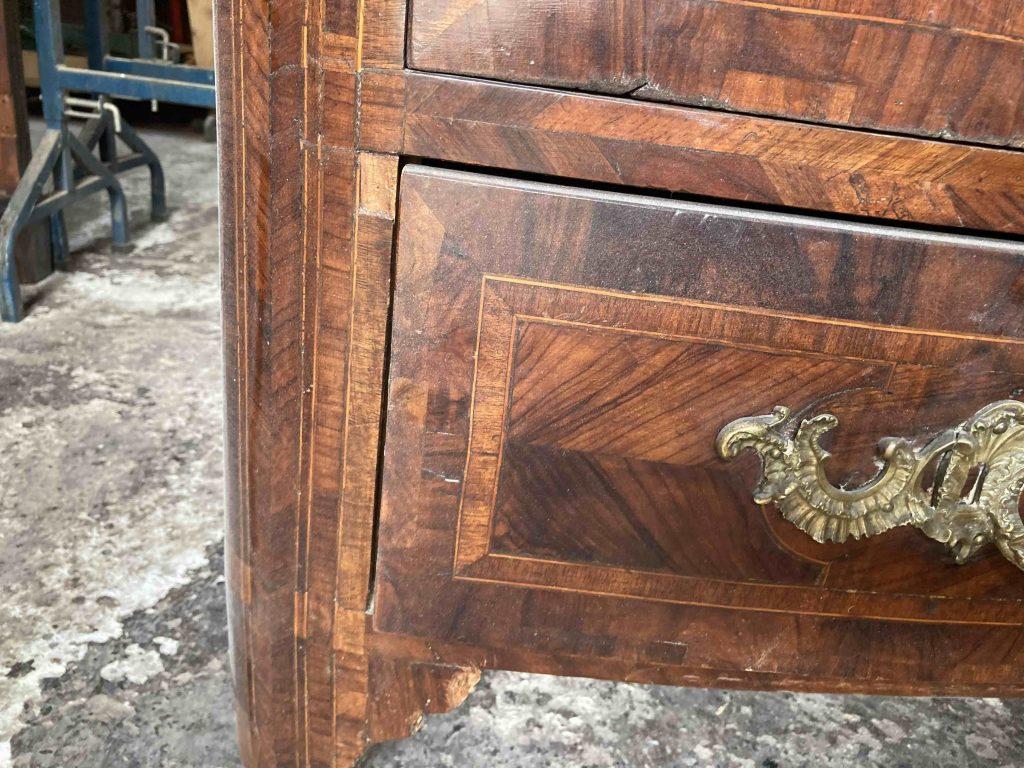
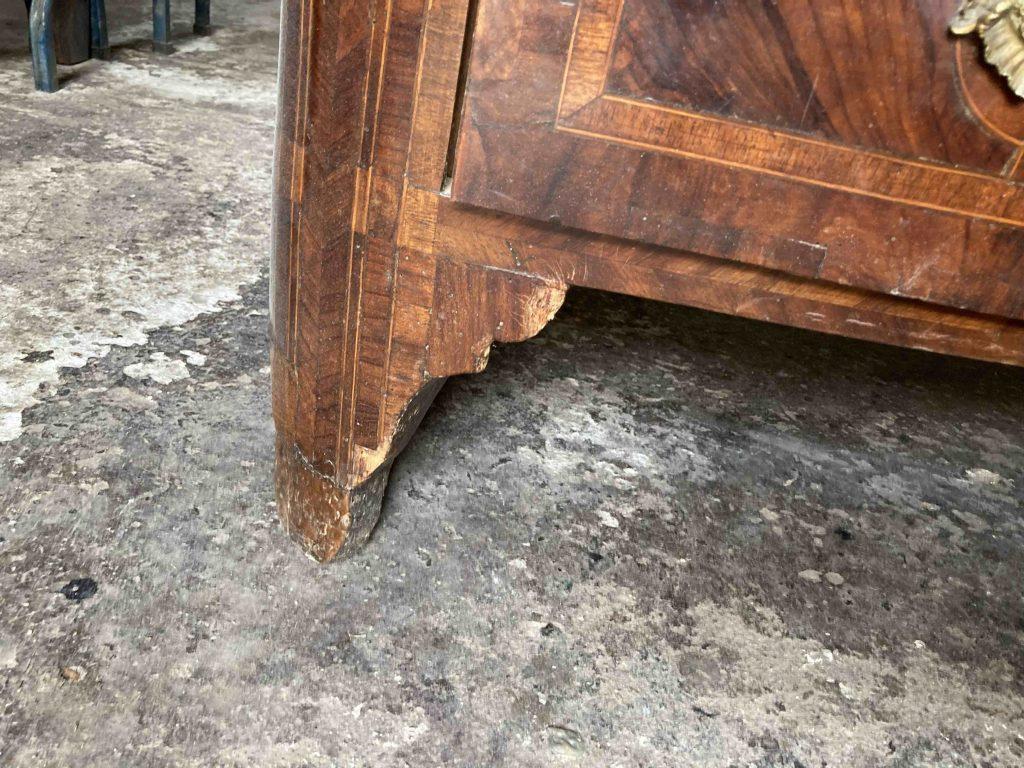
Behind this thick layer of dark wax lay some major problems with this chest of drawers. The sides were heavily infested with wood-boring insects, the top was split in the middle, and there were numerous small pieces of veneer missing, including a large "bump" right in the middle of the top in a very hard-to-find moiré olive veneer.
The Restoration
The restoration work was carried out using conservation techniques. All veneer grafts were made using sawn, scraped, sanded veneer cut to the correct thickness for the backing before gluing. Each graft was made following the contour of the missing pieces to preserve as much of the existing wood as possible. They were then glued with hot glue to ensure reversibility and re-treatment.
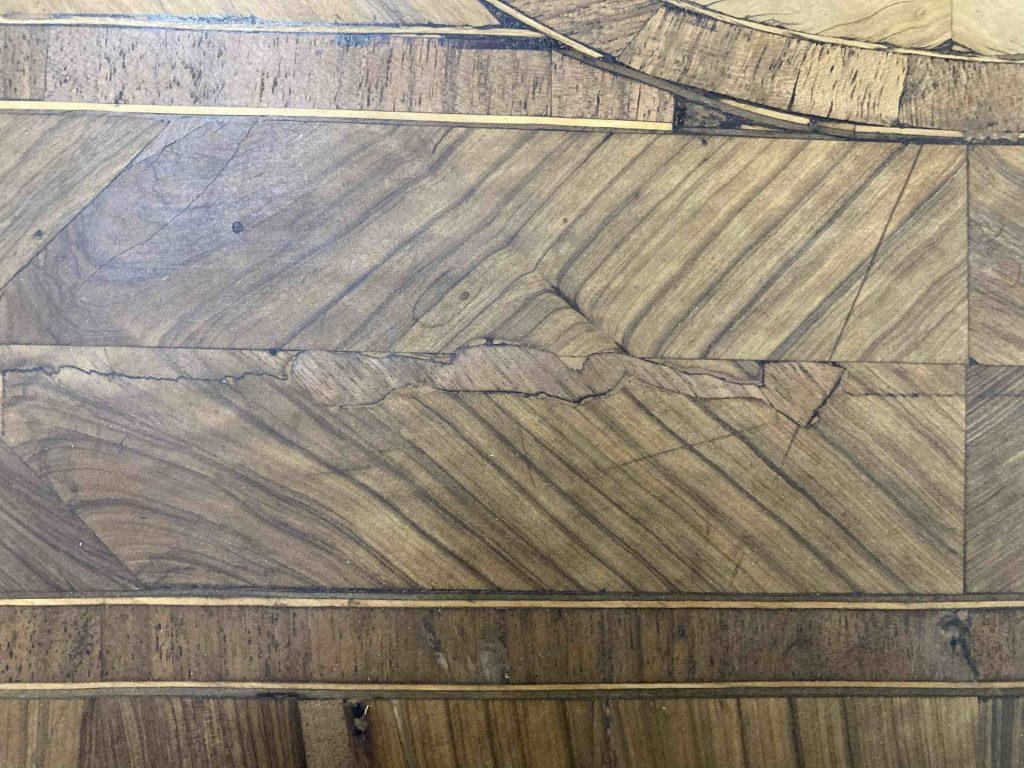
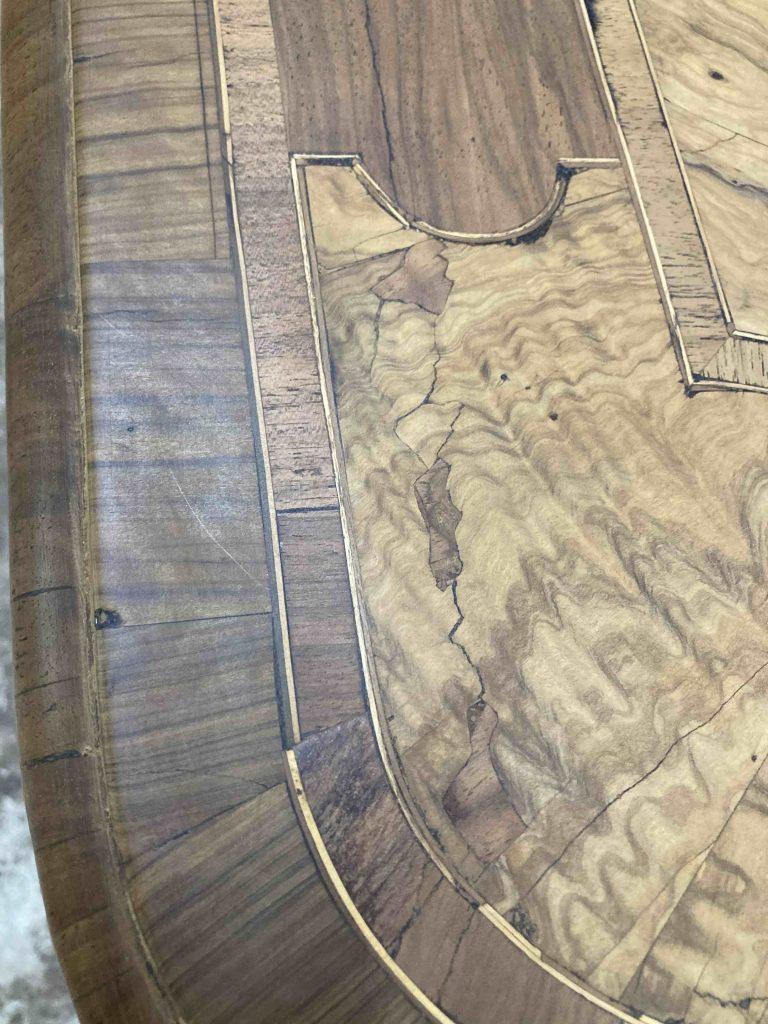
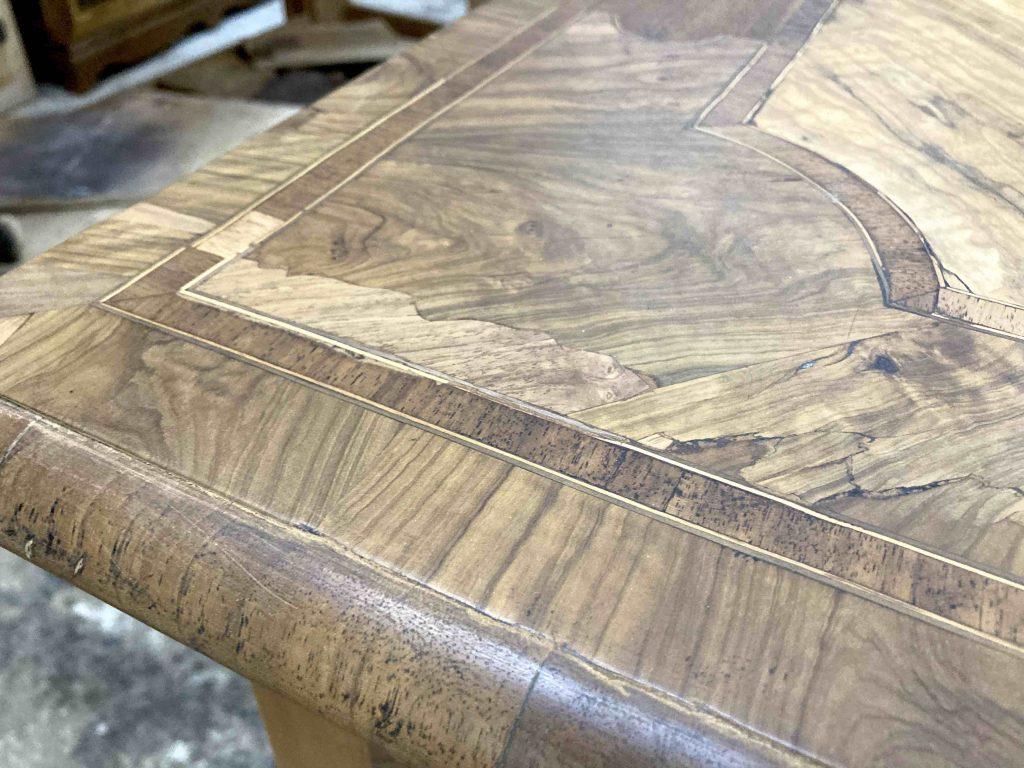
After a good cleaning, the light and warm colors gave this chest of drawers a much brighter and less austere appearance.
The veneer grafts, on the other hand, were oxidized before the waxed, filled finish.
The bronzes (brought back later) were cleaned with steam.
To see previous restorations : https://ebenisterie-mathieuvath.fr/en-ce-moment-a-latelier/