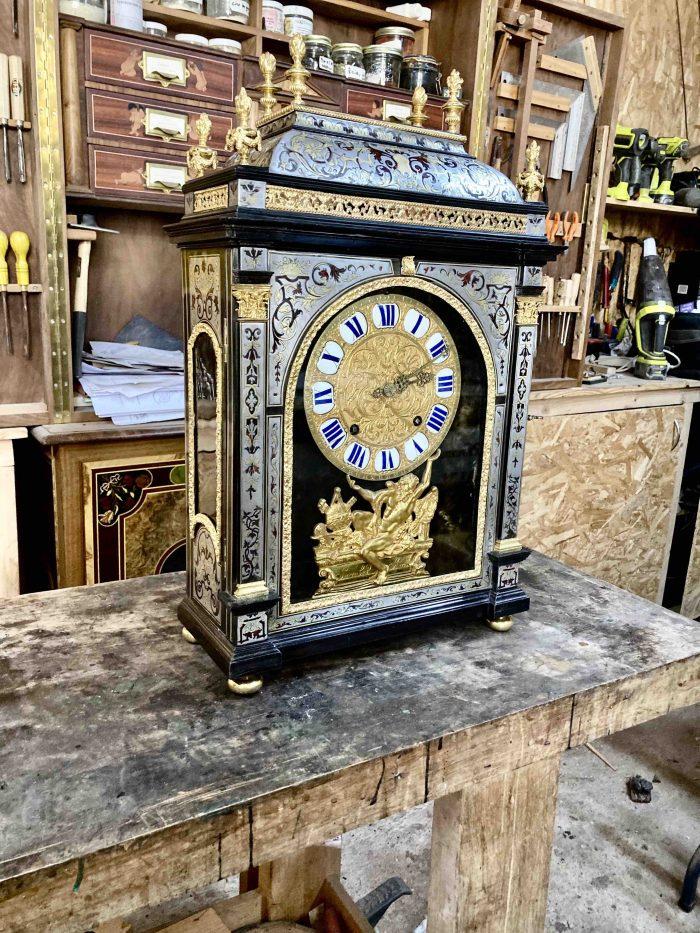
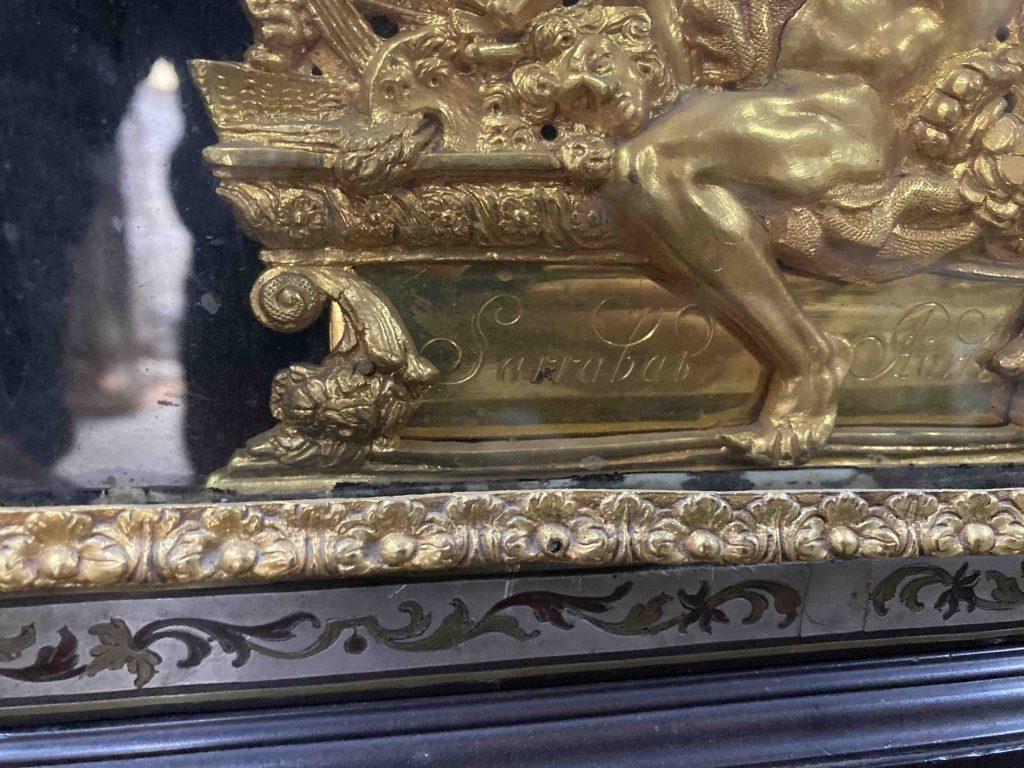
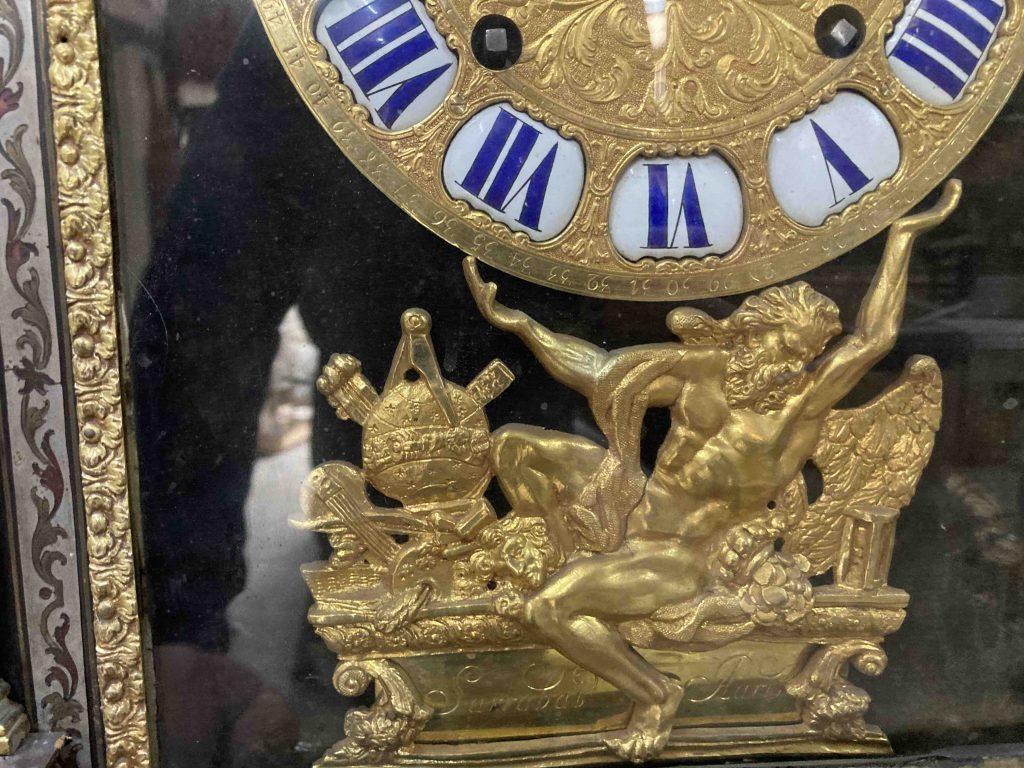
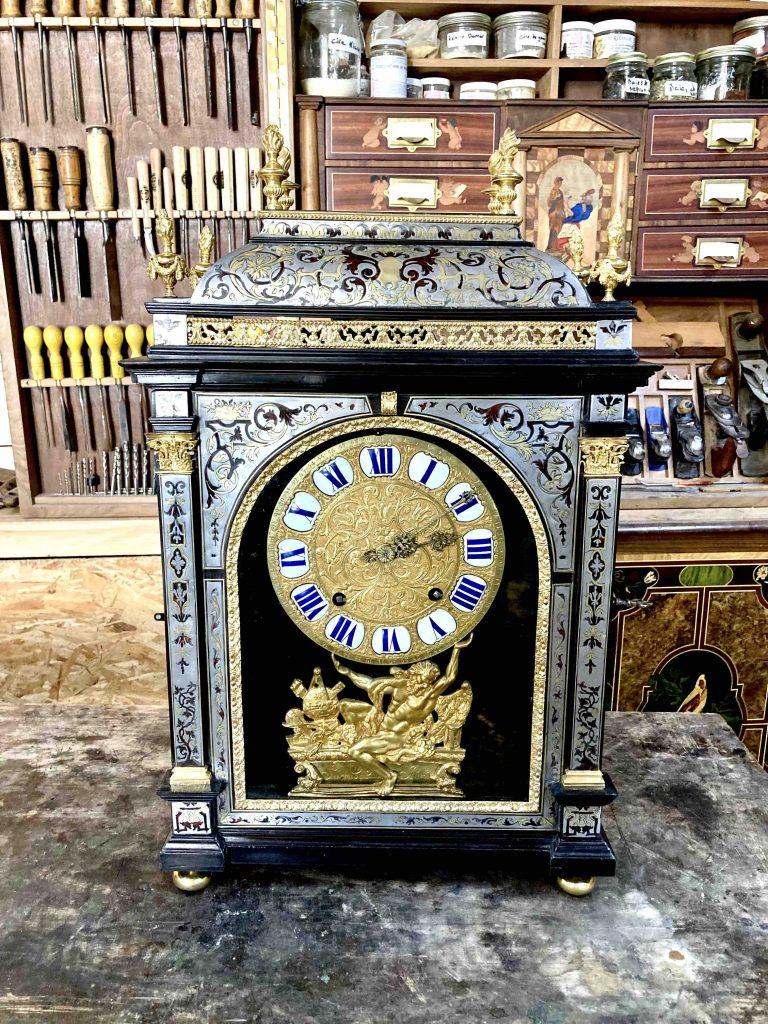
Restoration of a 'religious' clock with striking on the half-hours, signed (dial and movement) 'Sarrabat in Paris', third quarter of the 17th century.
Religious clocks are the earliest forms of clocks dating back to the reign of Louis XIV, the Sun King. Their rise in popularity began around 1660, thanks to the discovery by Huygens of the regulating pendulum. .
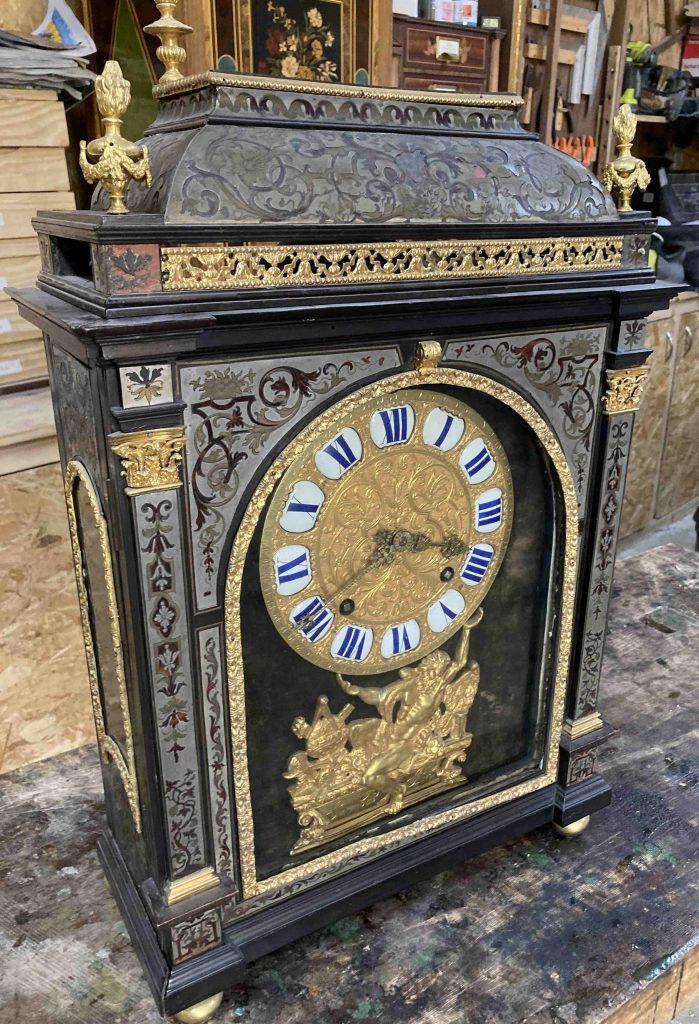
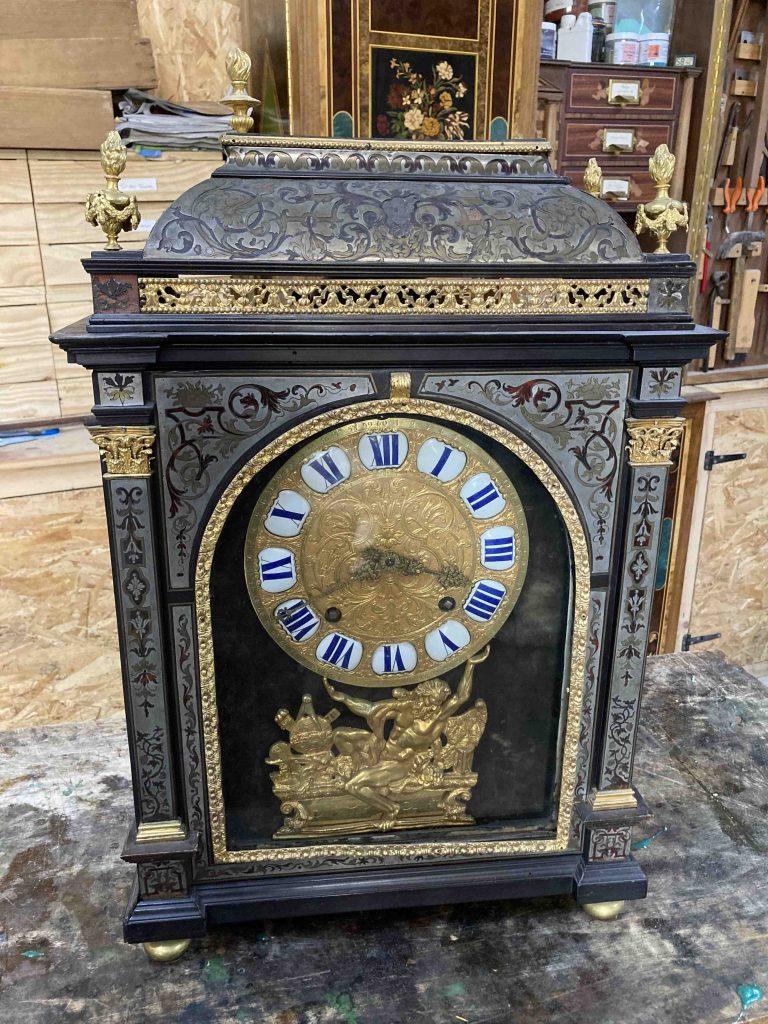
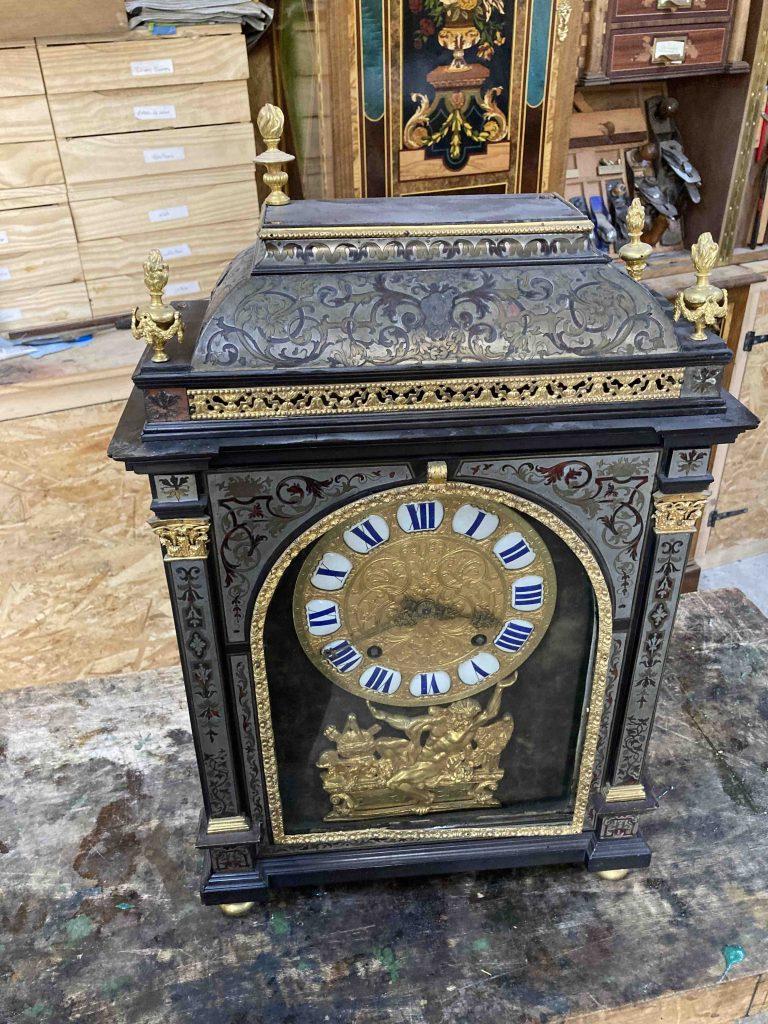
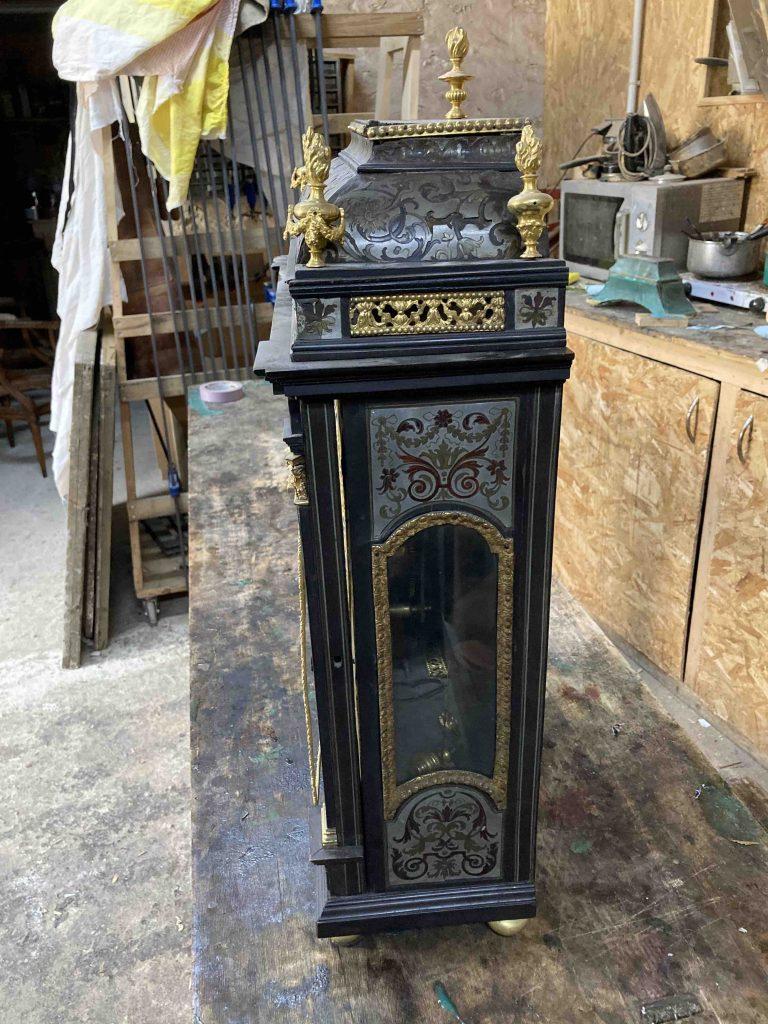
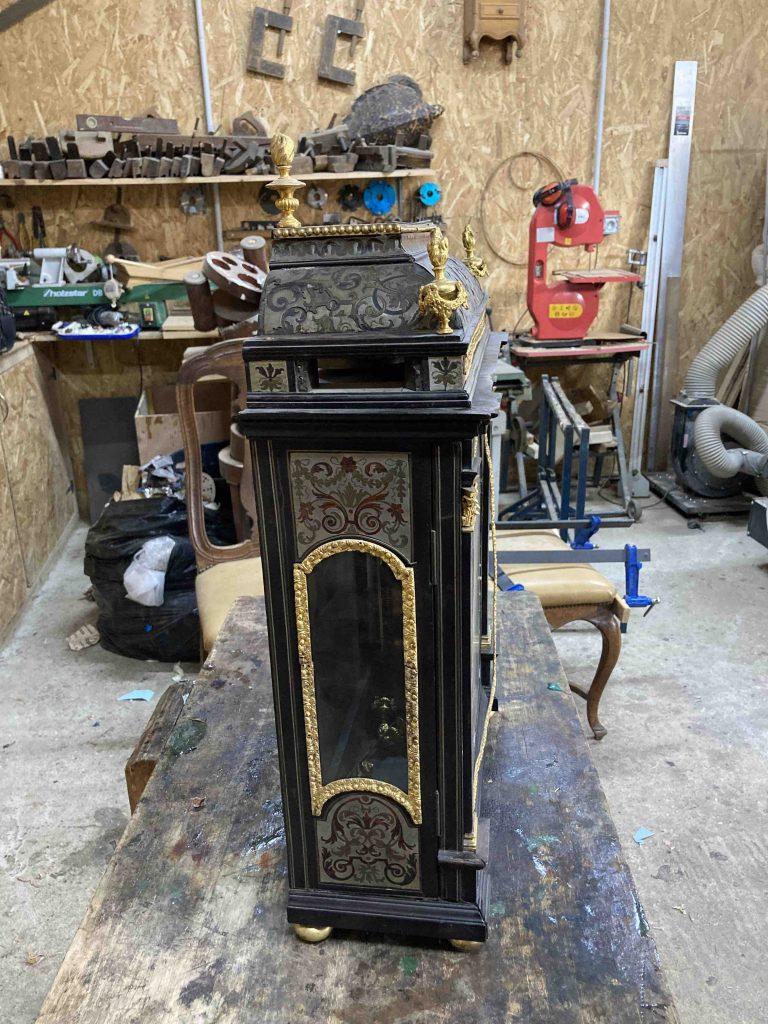
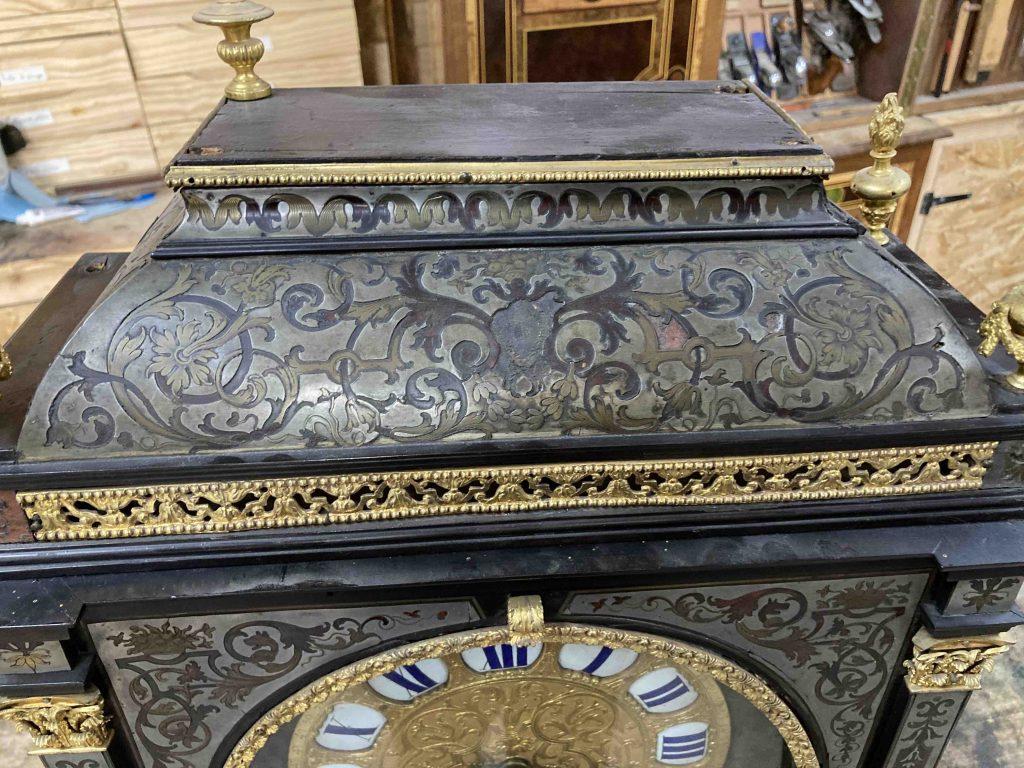
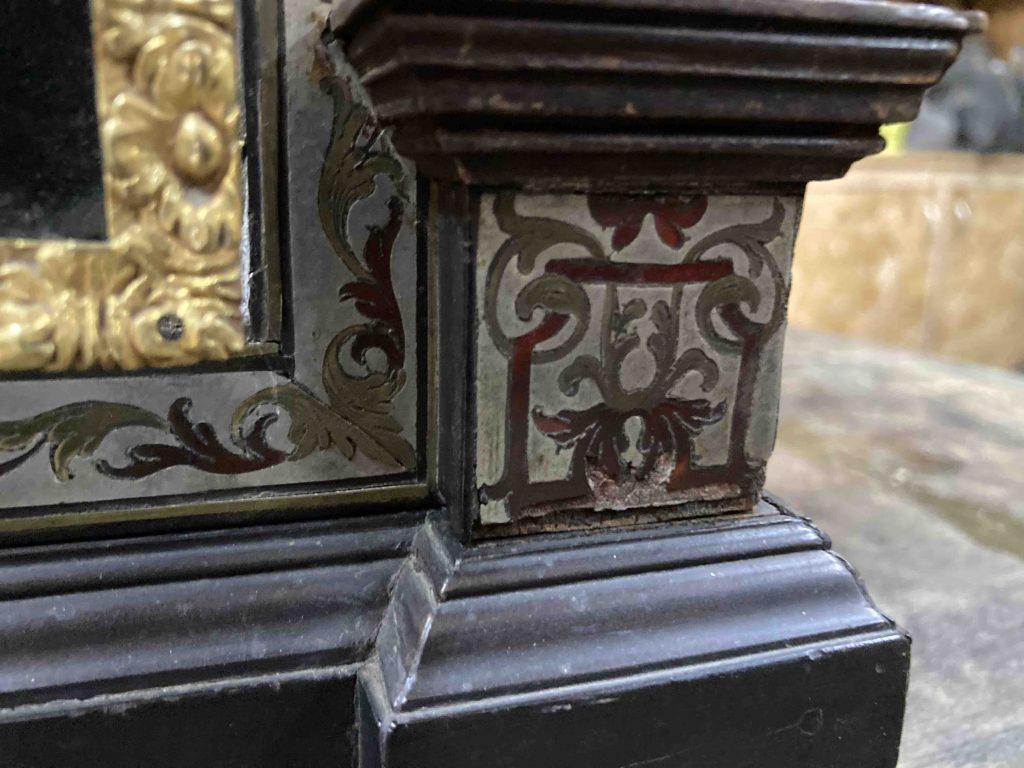
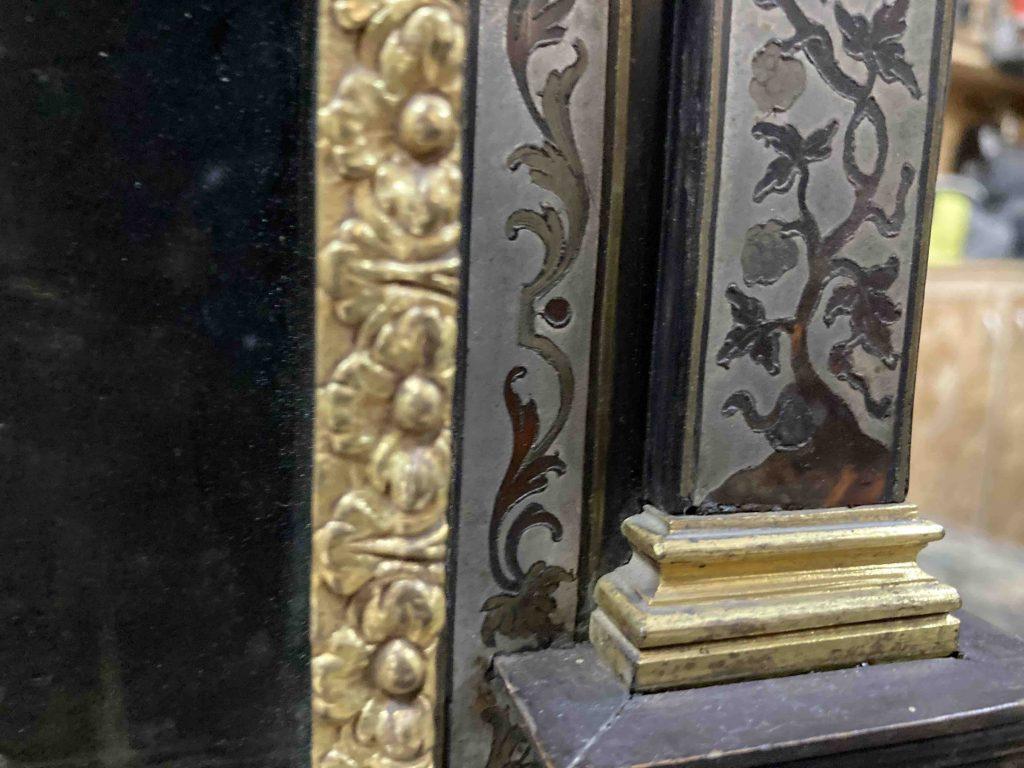
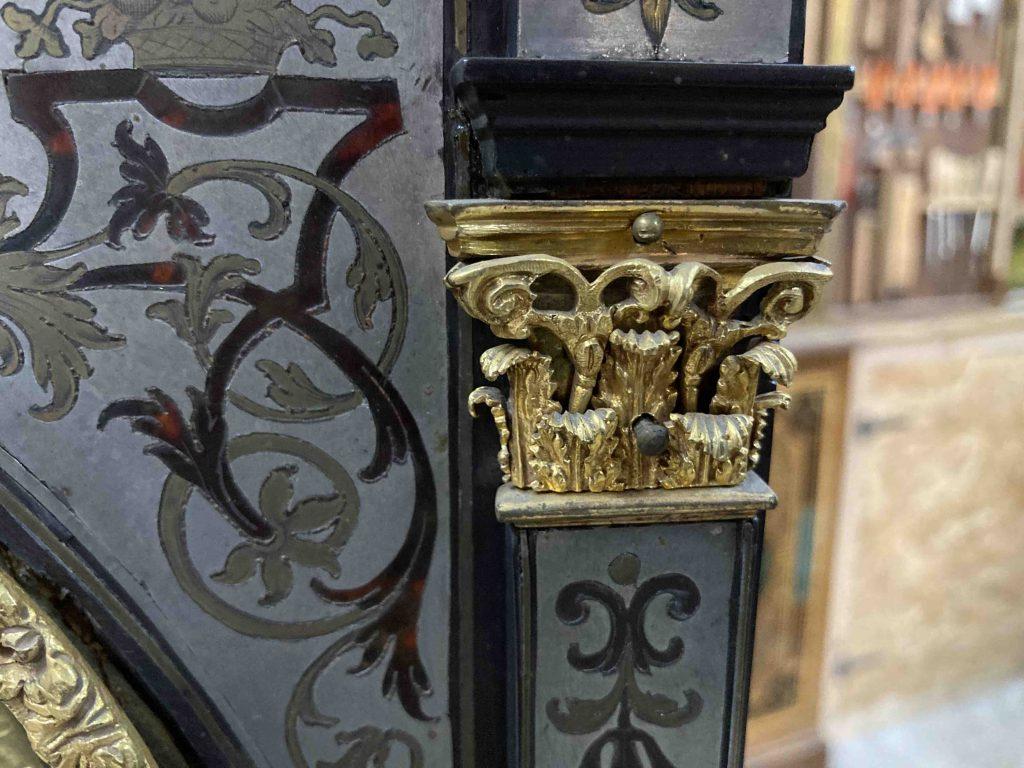
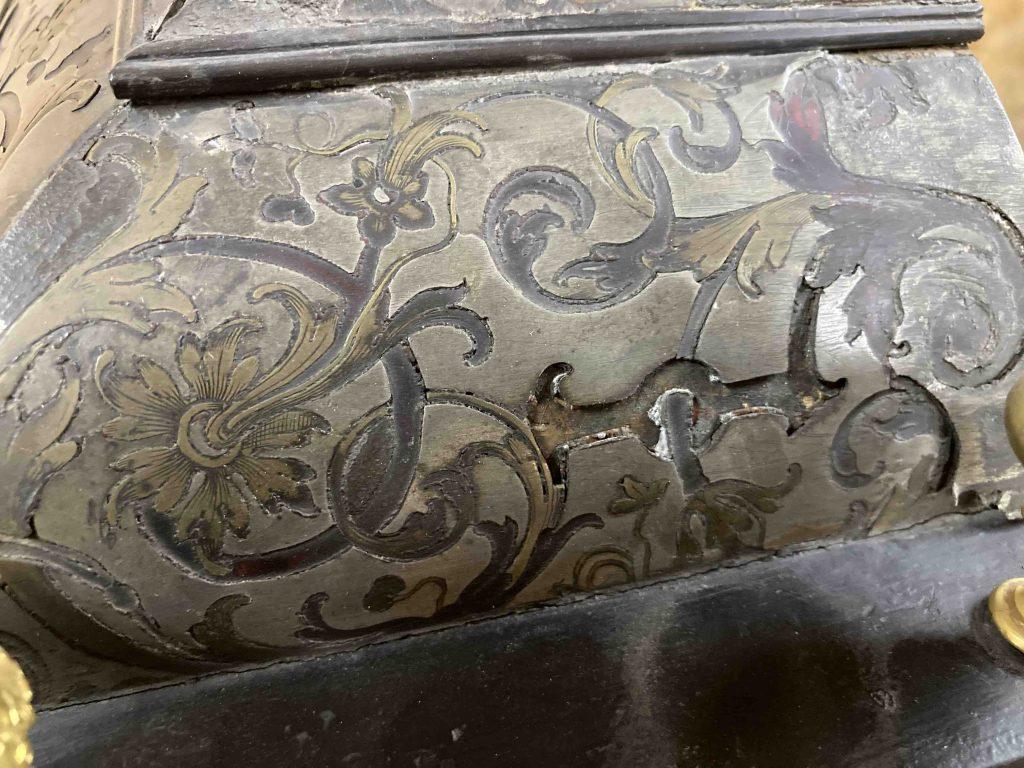
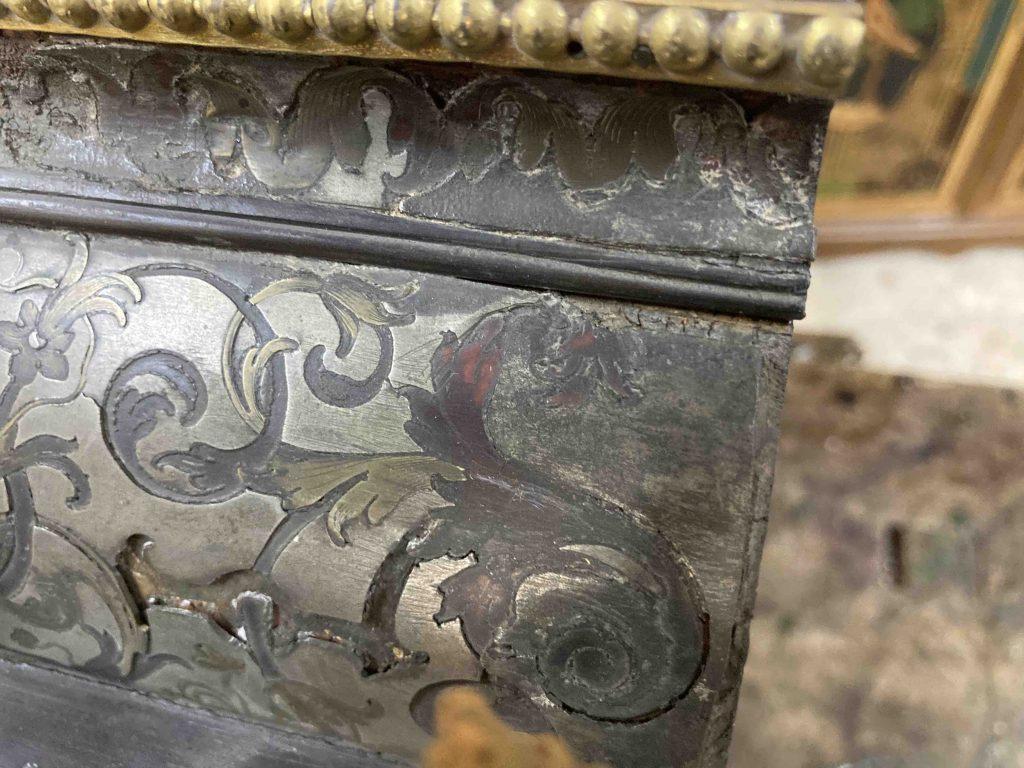
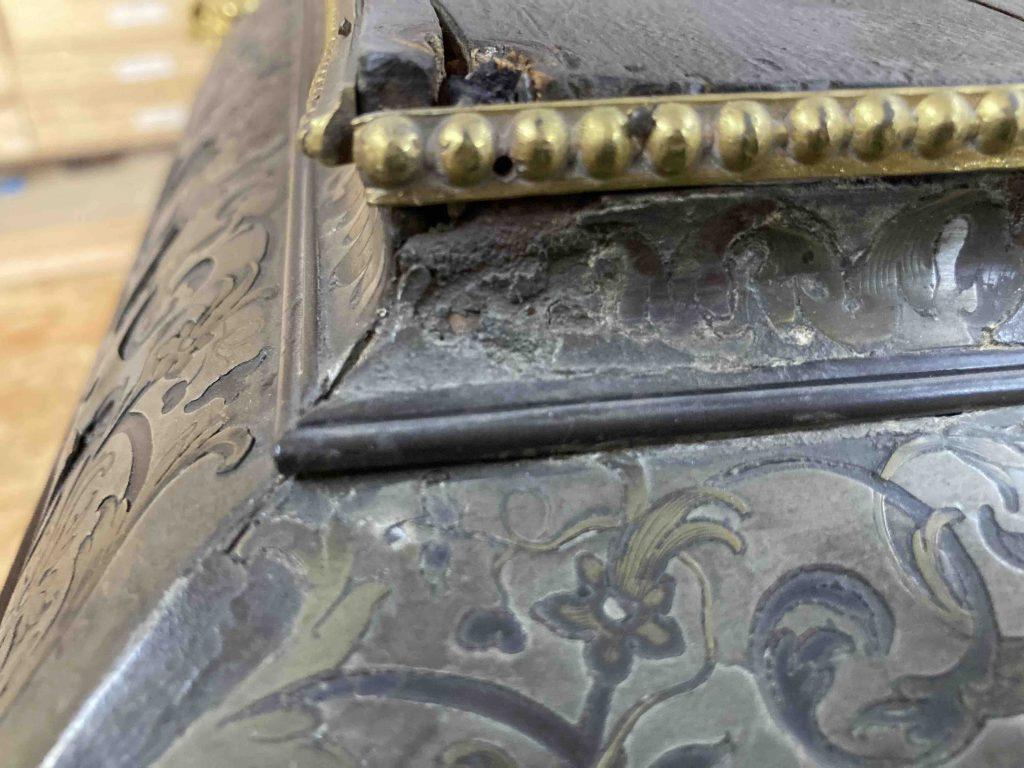
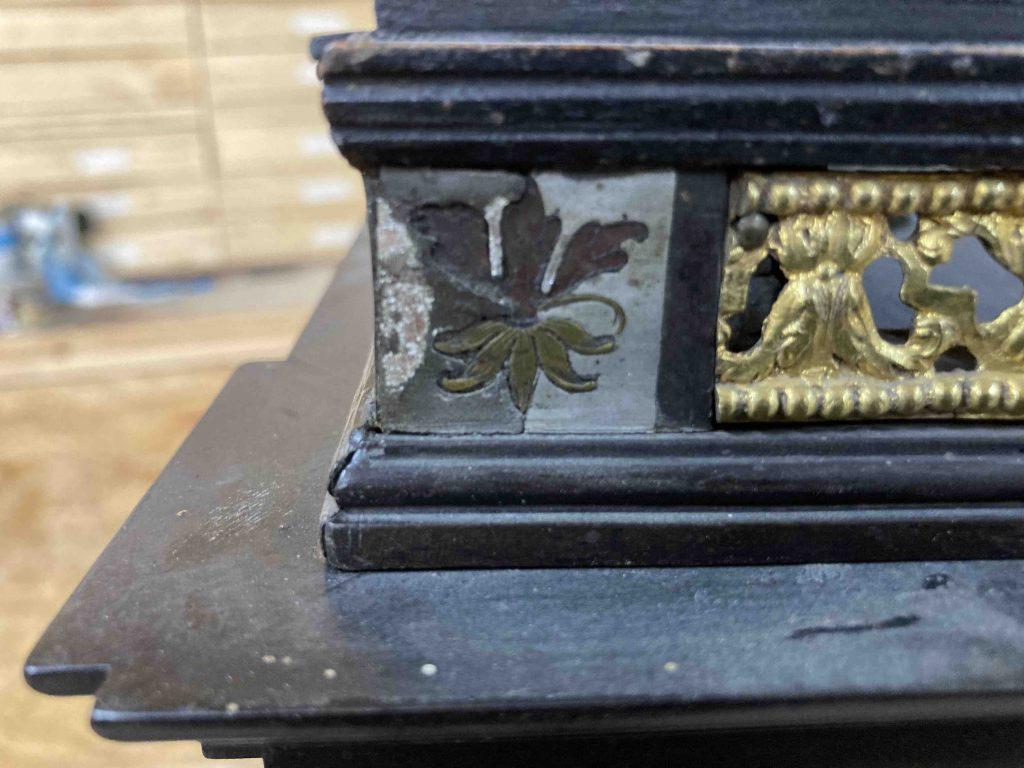
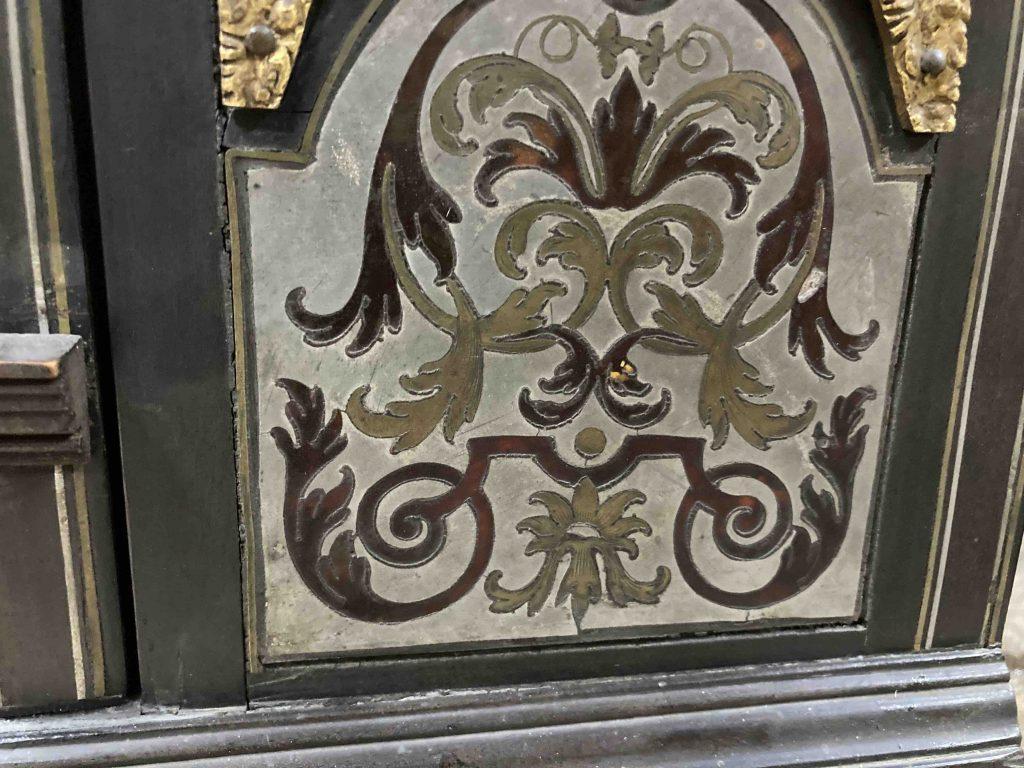
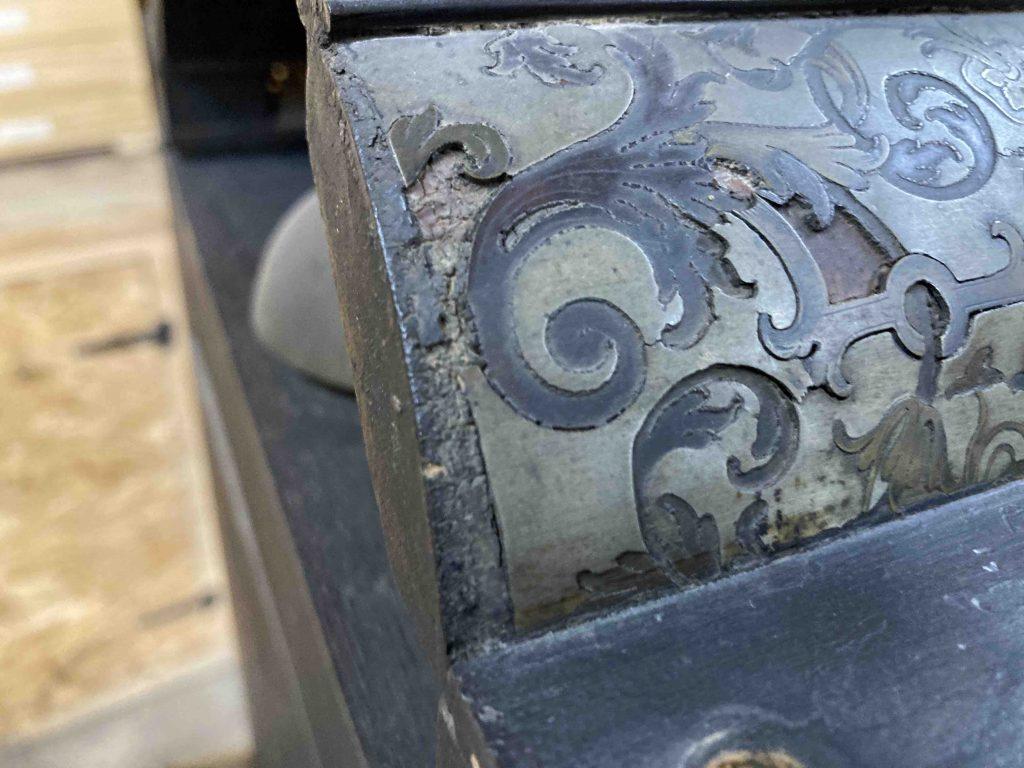
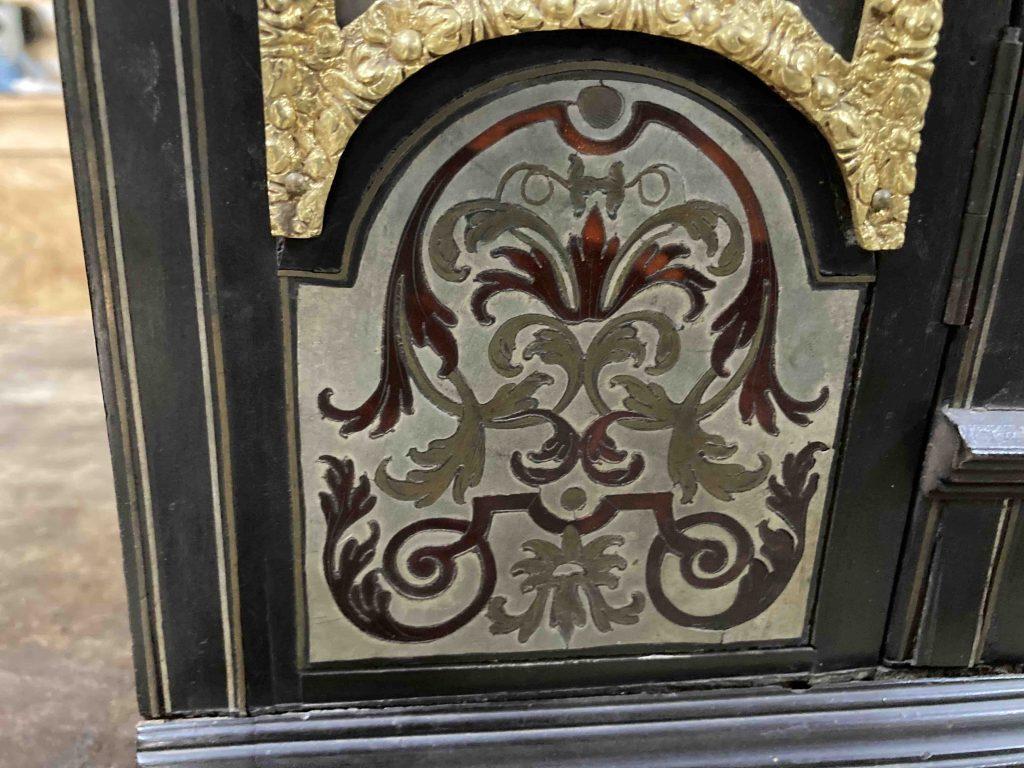
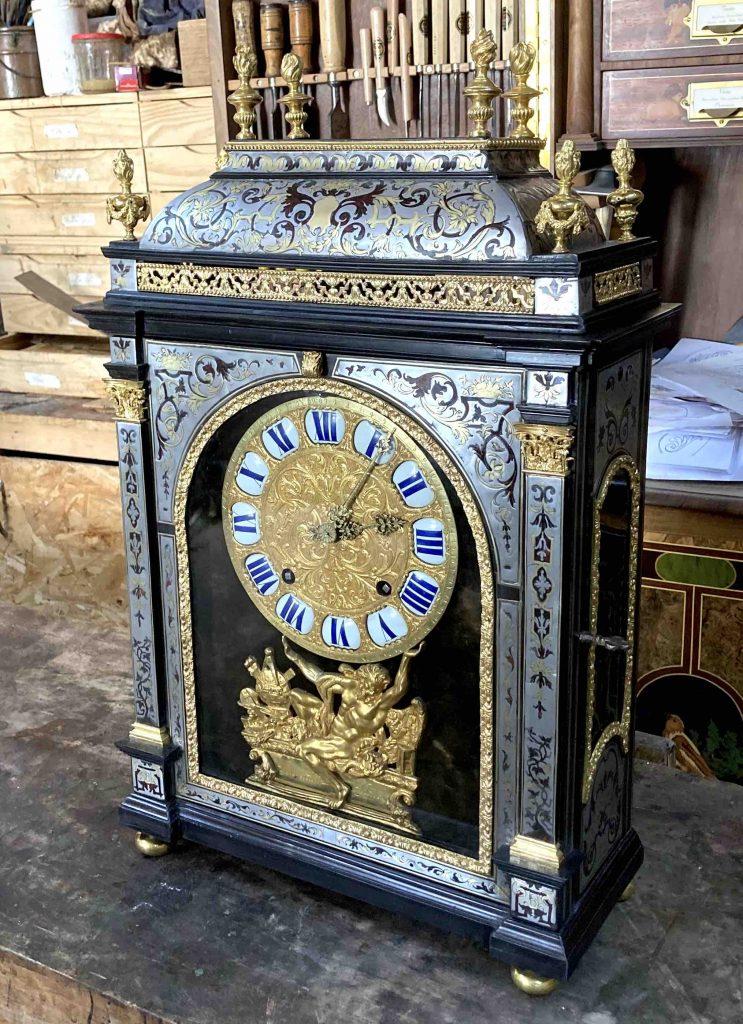
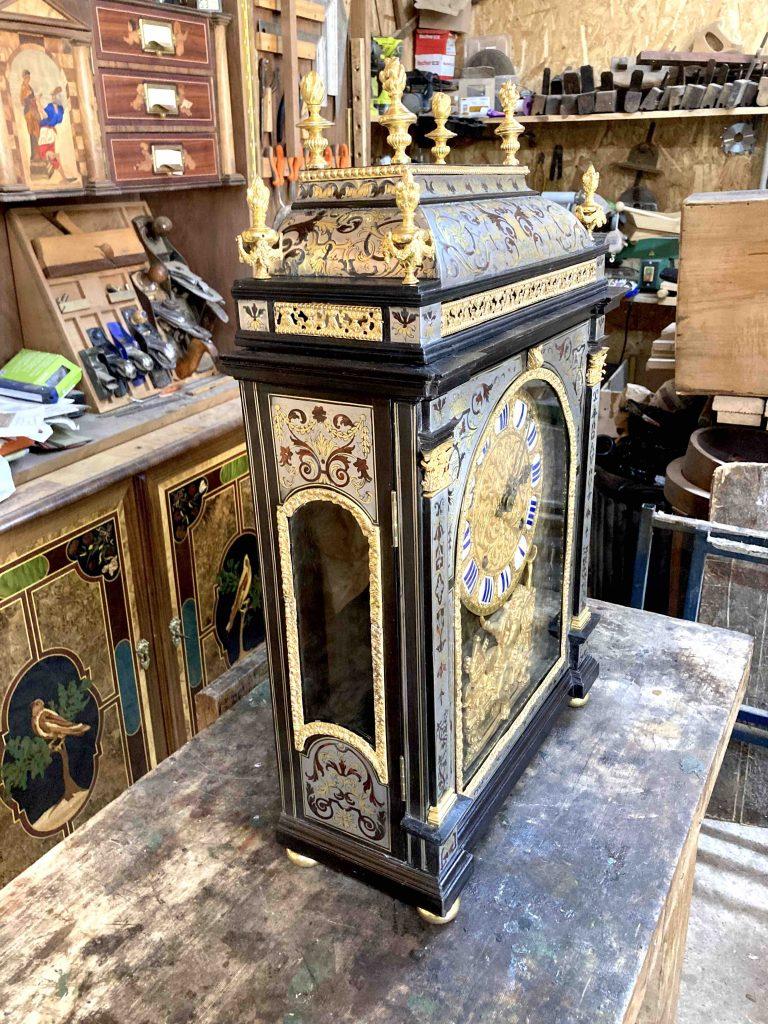
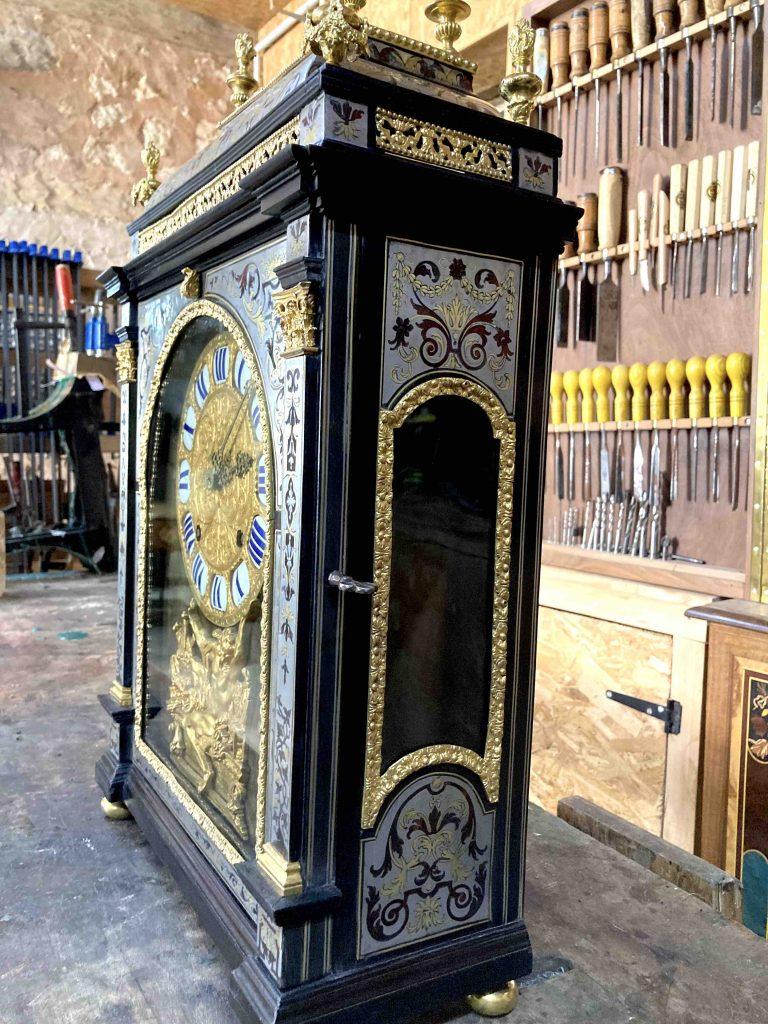
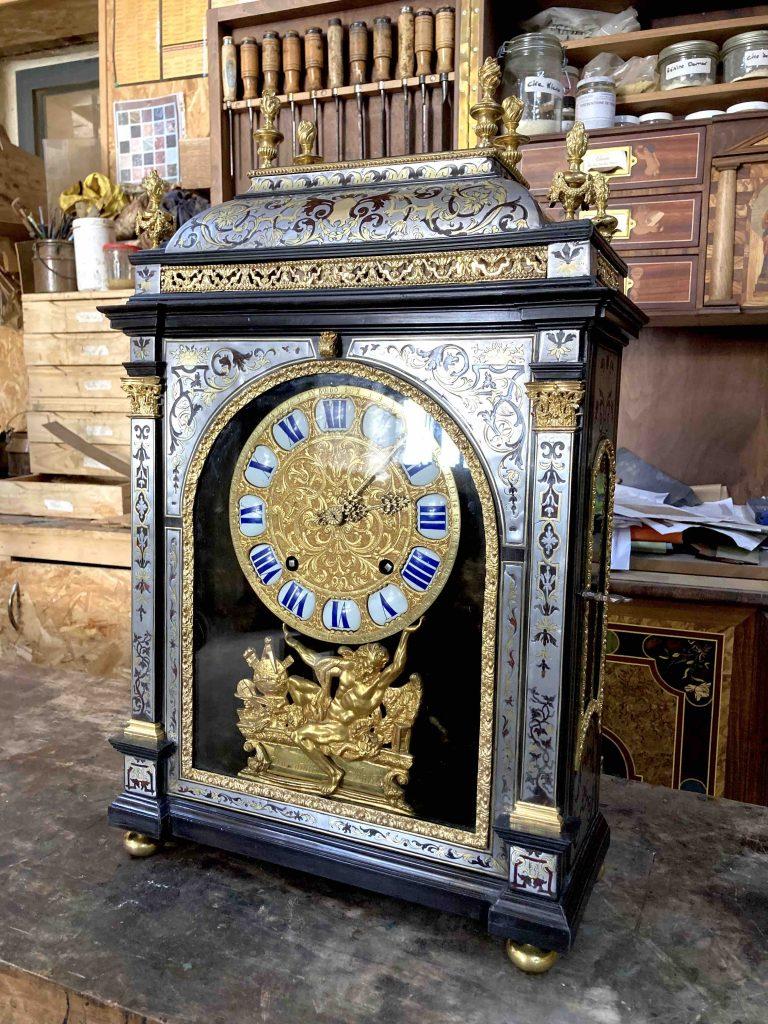
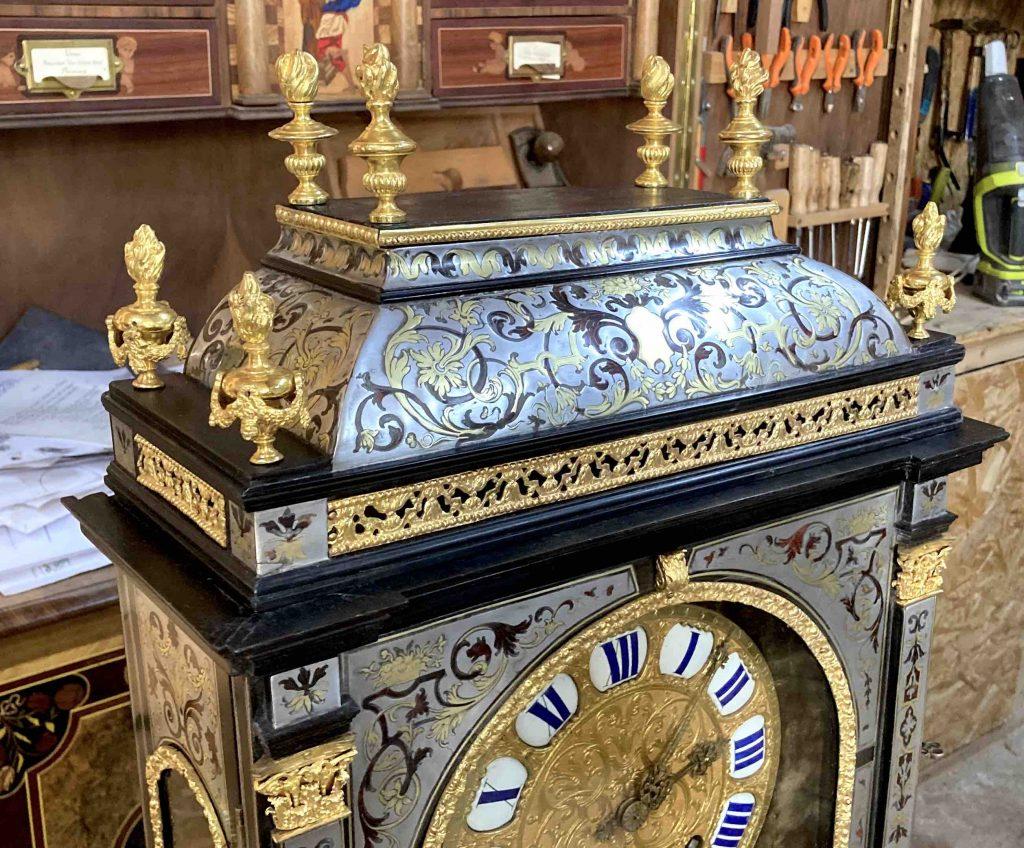
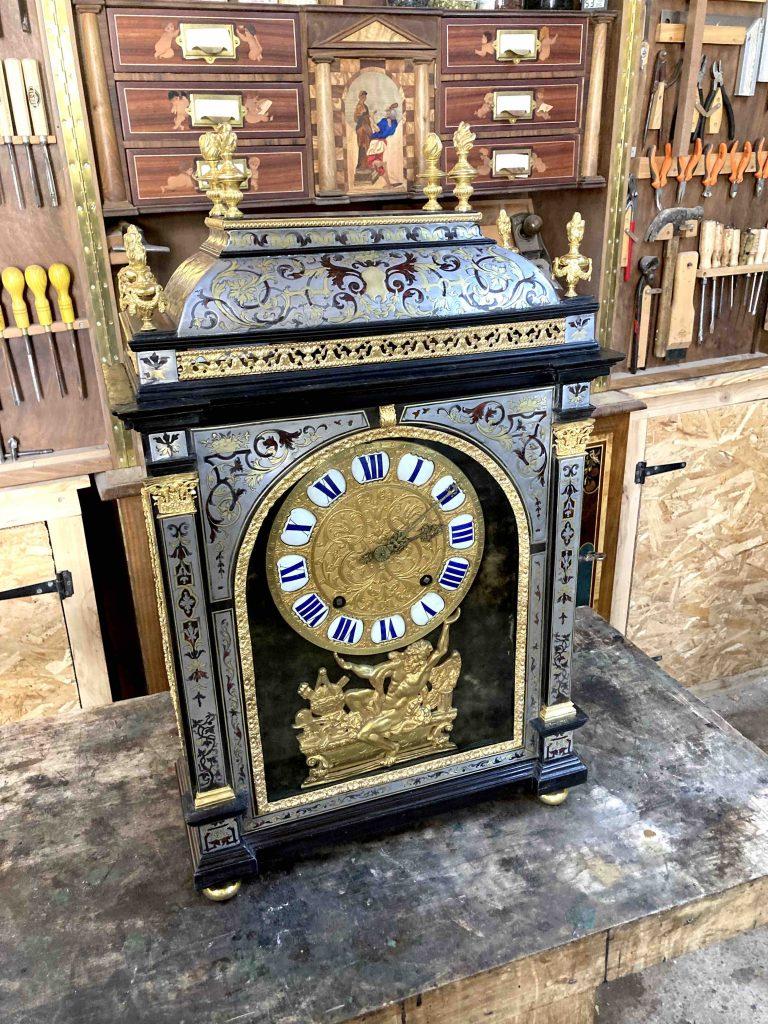
This clock features Boulle marquetry of red tortoiseshell, brass, and pewter on a walnut frame, decorated with gilt bronze mounts and ebony moldings. The lower molding is ebony, and the clock rests on toupie feet. Its form is inspired by contemporary architecture. The architectural façade is framed by two pilasters topped with gilt bronze Corinthian capitals, and its balustrade crown is decorated with finials. Chronos can be seen supporting the dial. The hands are made of cut, engraved, and gilt copper. Its winding mechanism is original.
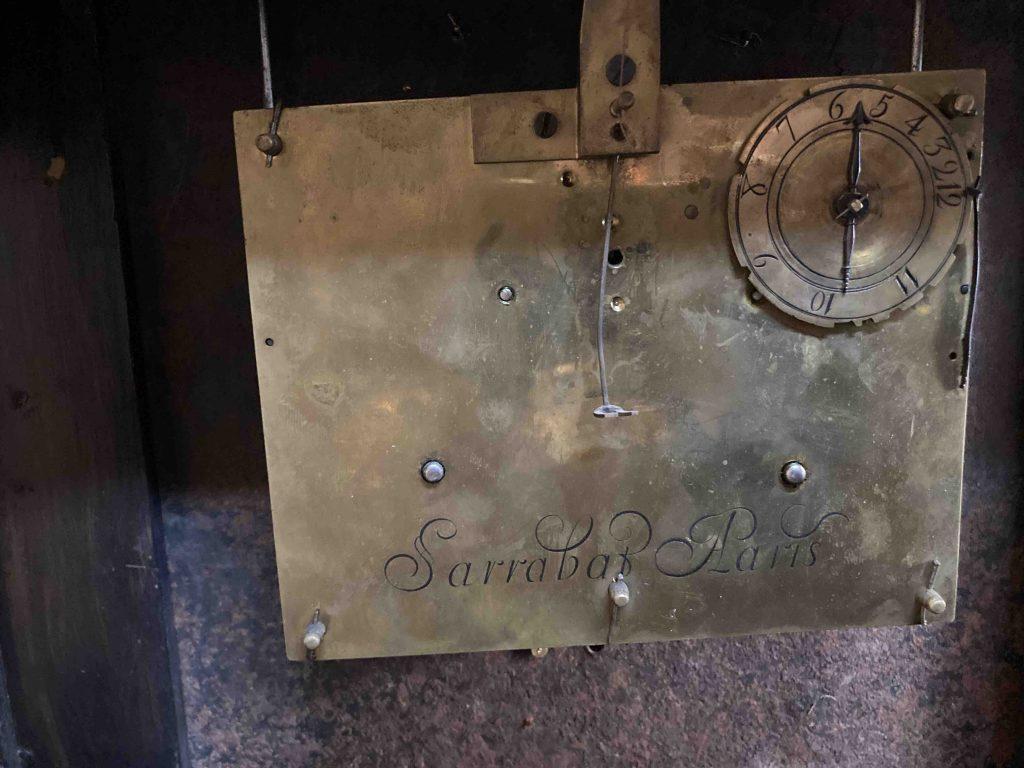
Charles Sarrabat
Probably born around 1615, Charles Sarrabat was the son of Jean Sarrabat, a Protestant watchmaker from Tours, and Marthe Rivière (d. 1646). He was apprenticed in 1632 to Jacques Journault in Poitiers. Before 1649, he was admitted as a "Privileged Watchmaker-Merchant to the King, following the Court." He settled on Rue des Fossés Saint-Germain and married in the Temple in Charenton in January 1647 to the daughter of Isaac Thuret, a merchant from Senlis, sister of the renowned watchmaker of the same name. Meanwhile, his own sister married the engraver Abraham Bosse. Charles Sarrabat died in 1692. Charles and Suzanne had eight children; their sons Daniel (1666–1748) and Isaac Sarrabat became artists, painters, and engravers. His daughter Catharine Sarrabat married the watchmaker Corneille Godeffroy. Charles Sarrabat was originally Protestant but converted to Catholicism in 1686. He was the grandfather of Nicolas Sarrabat (de la Baisse), a mathematician, scientist, and astronomer. Charles's sister, Catherine Sarrabat (1610–1668), married the renowned engraver Abraham de Bosse (1604–1676), who had trained as an engraver under Jean Sarrabat. Charles Sarrabat's clocks are in the Louvre Museum and the Royal Museums of Art and History in Brussels. Few of his works are known today, but some similarities to the work of Isaac II Thuret can be observed.
The Restoration
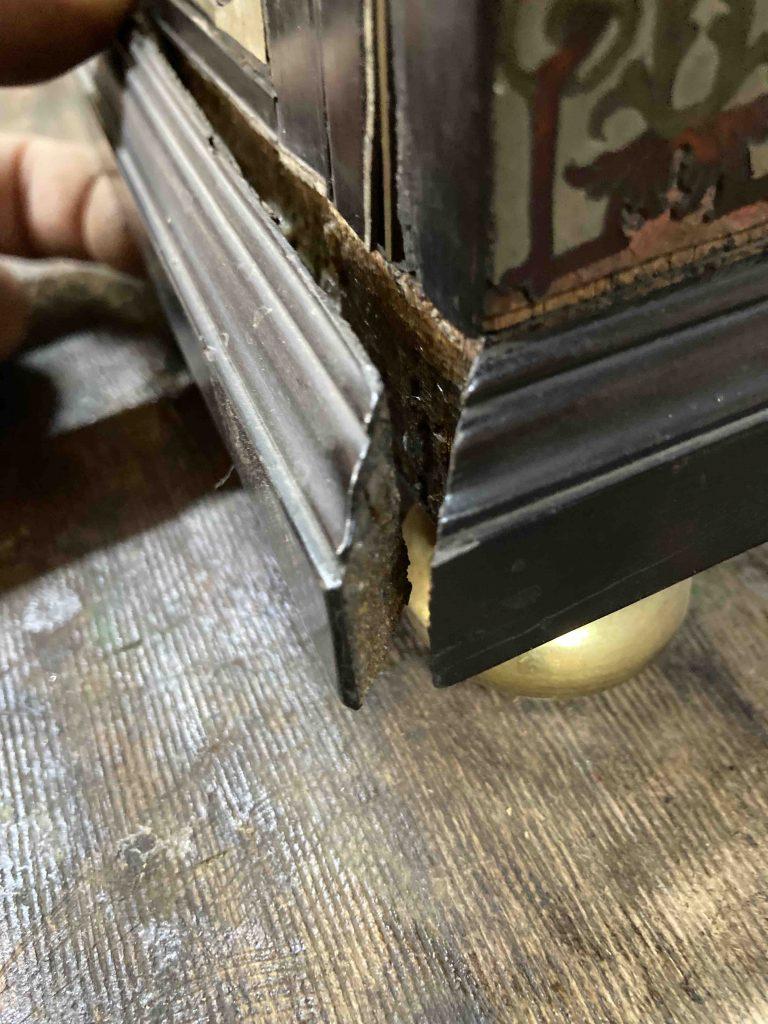
A standard restoration for this type of object. The missing veneer was replaced, and all the marquetry was reattached using vacuum-assisted adhesive regeneration. The frame and moldings were reattached with fish glue. The door mechanism was restored to working order, and a key was fitted. The bronze mounts were steam-cleaned and polished with wax.
It was decided not to engrave the central cartouche of the capital which was restored in brass, in order not to "interpret" a decorative element without knowing what was actually there originally but while still maintaining a good "reading" of the piece of furniture.
To see previous restorations : https://ebenisterie-mathieuvath.fr/en-ce-moment-a-latelier/