
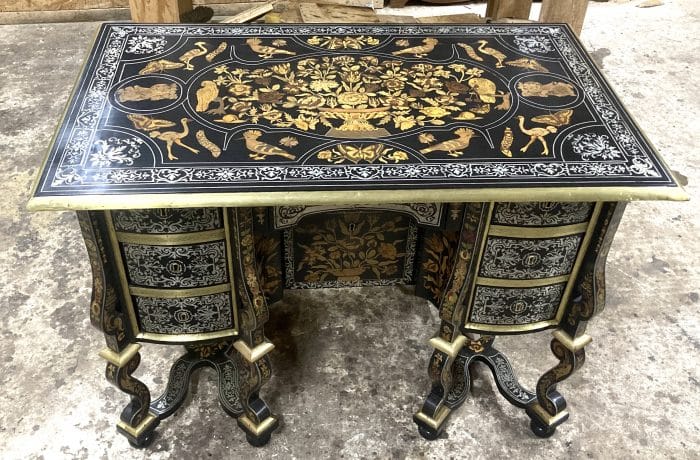
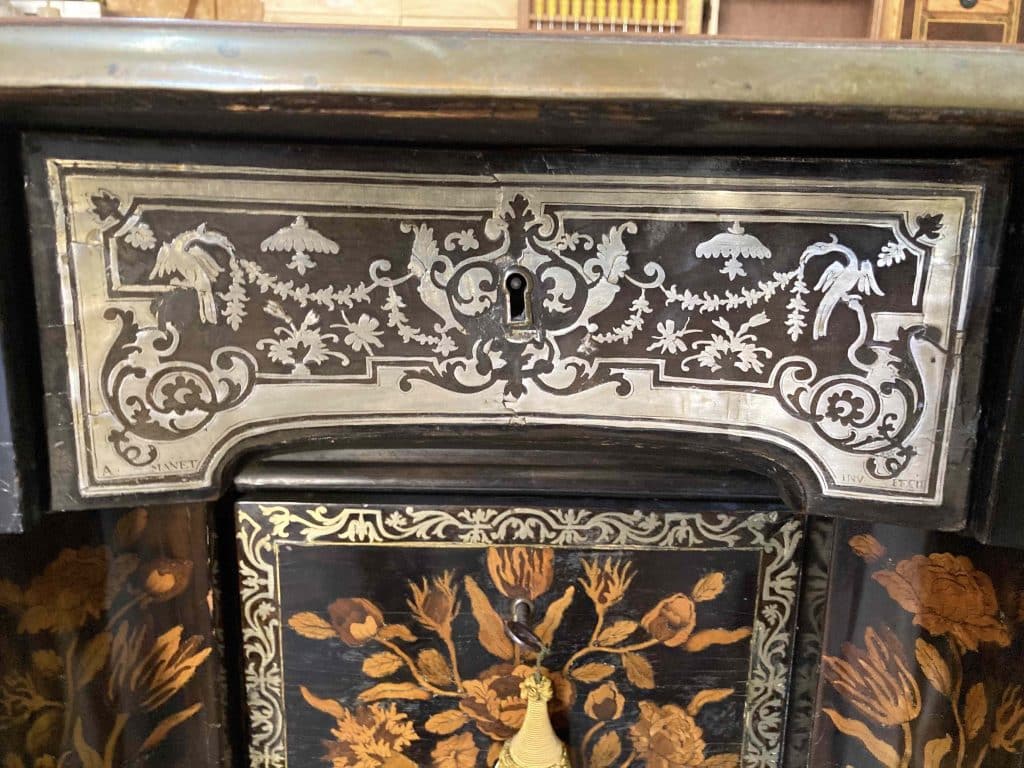
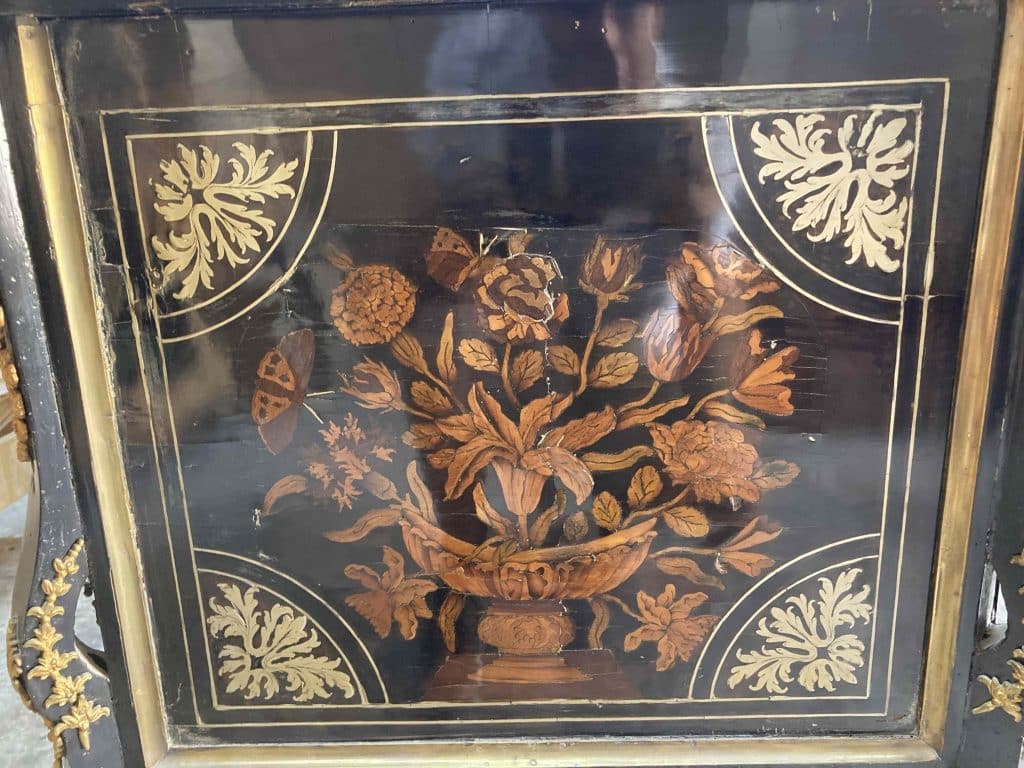
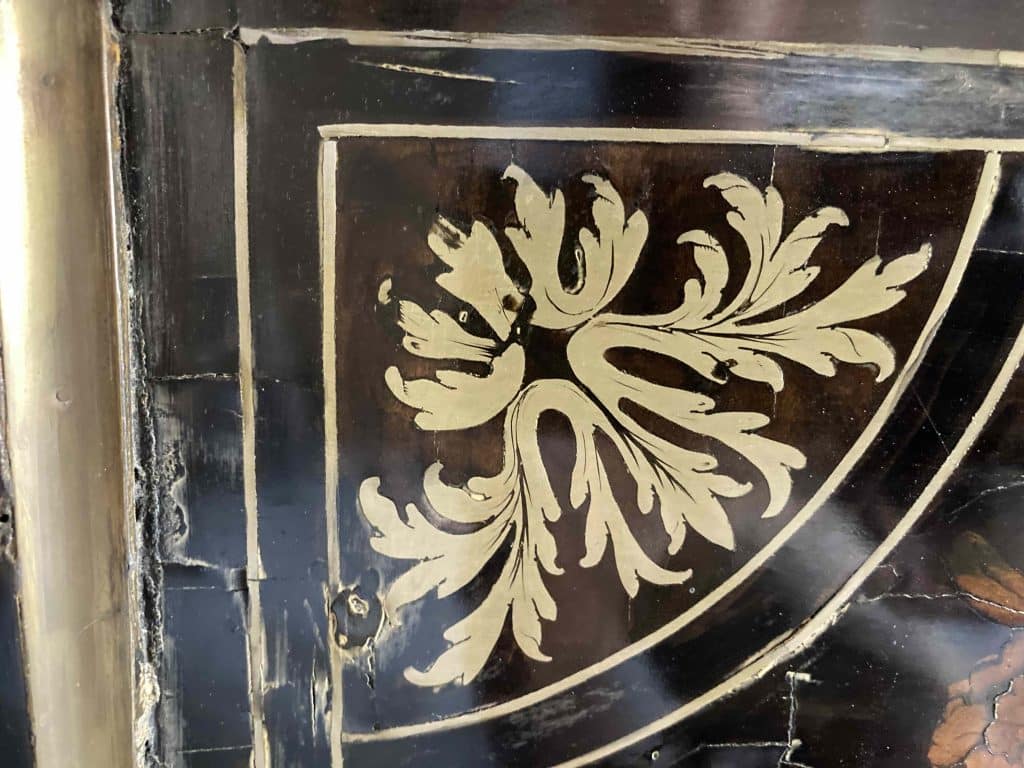
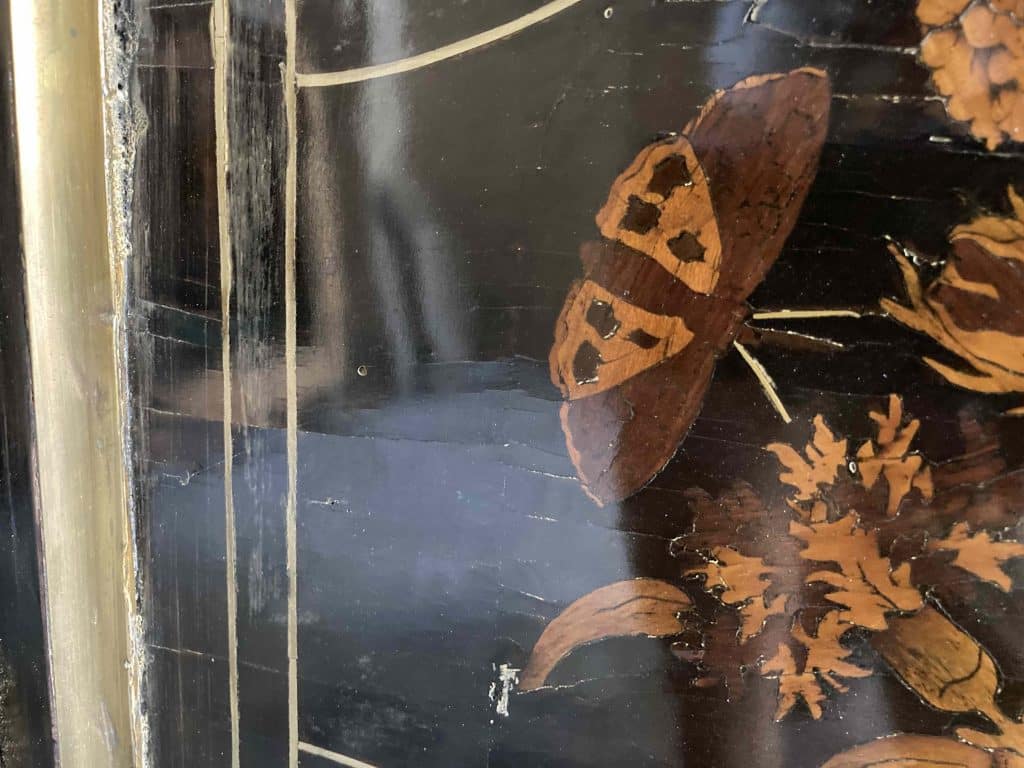
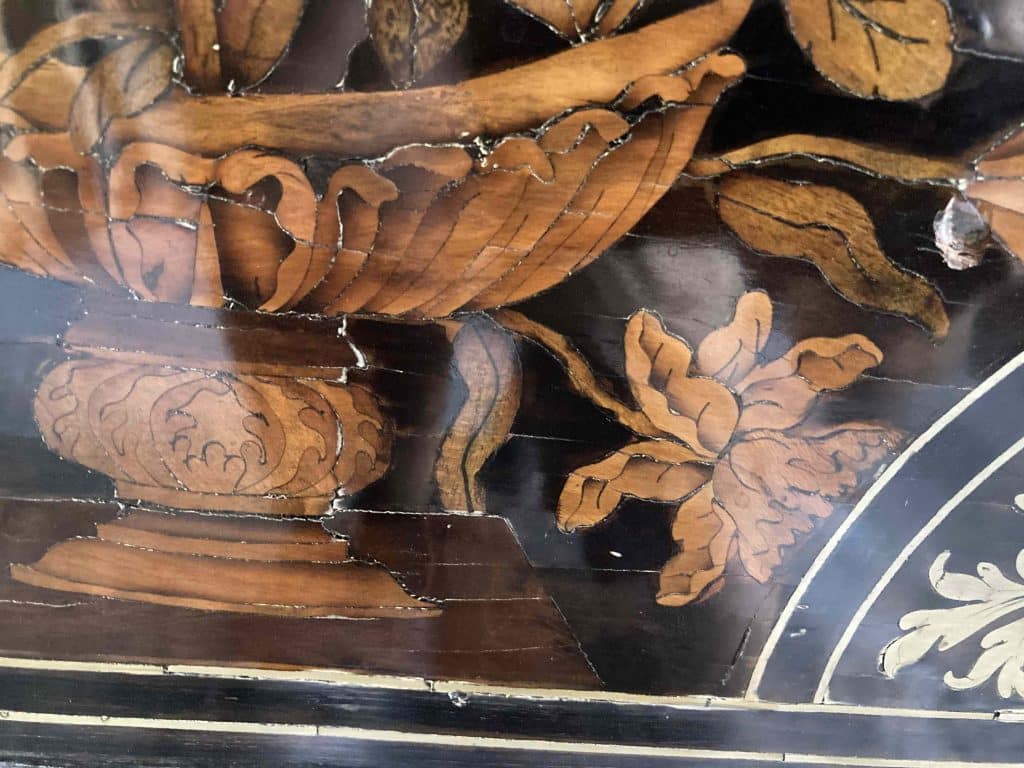
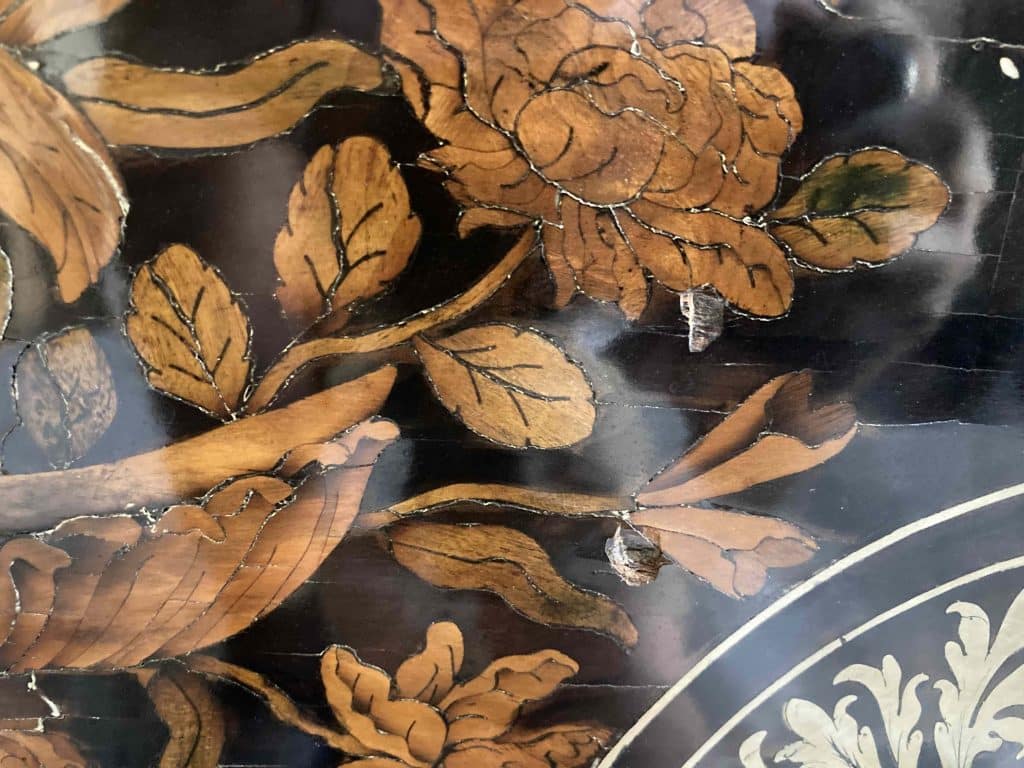
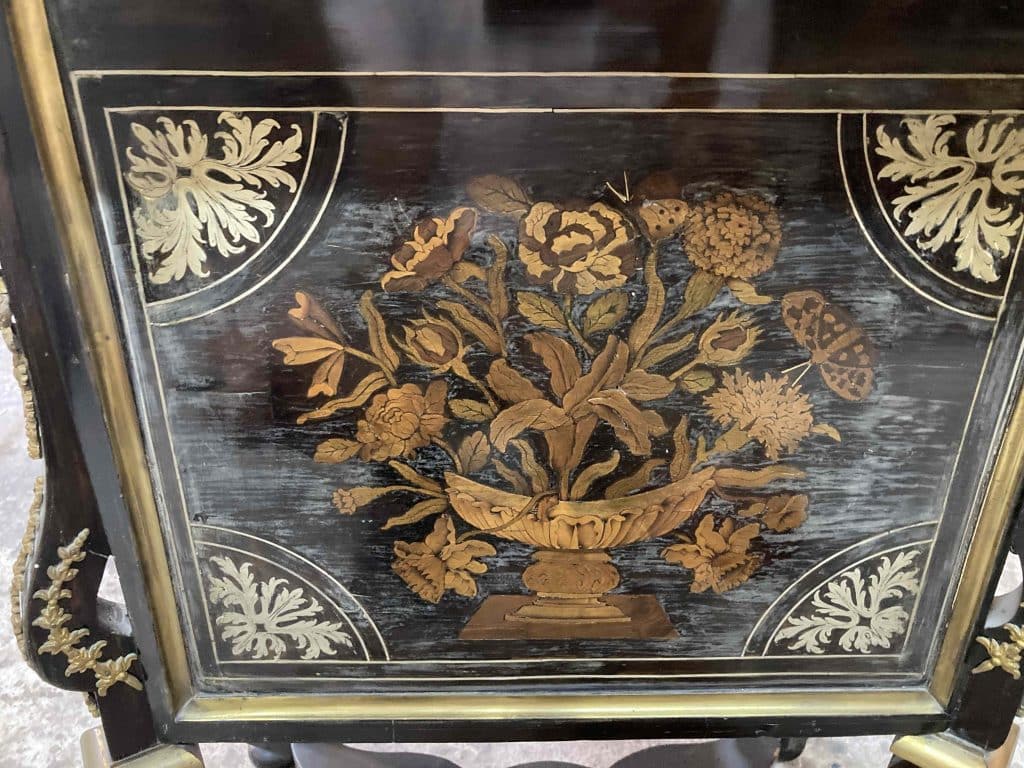
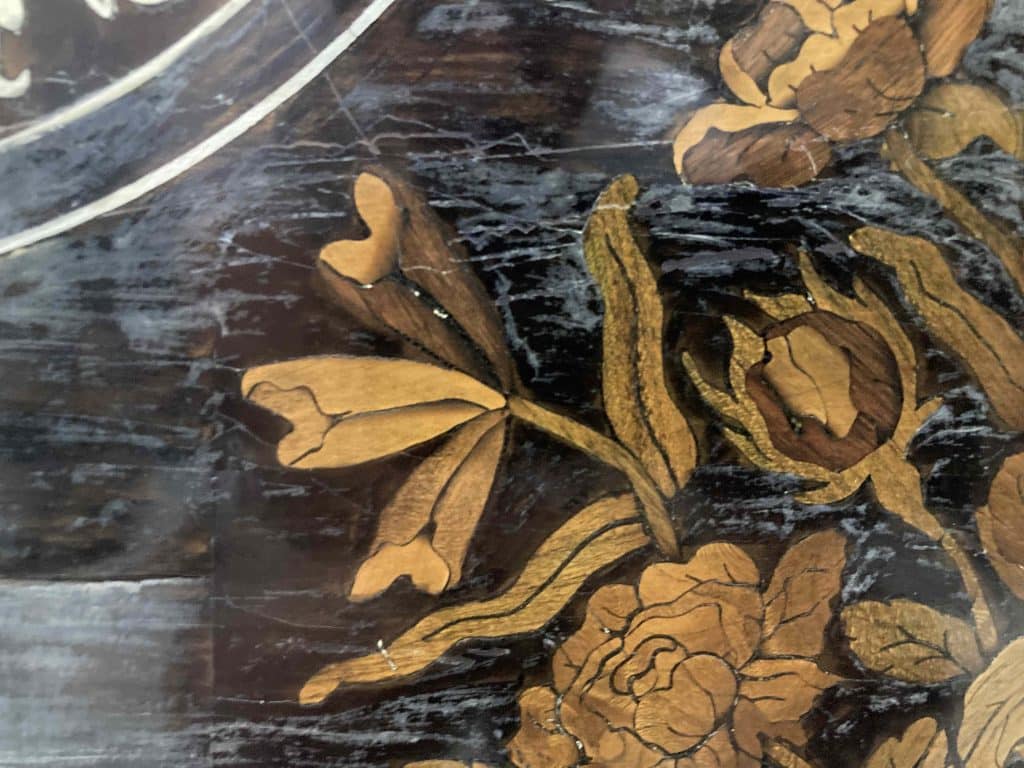
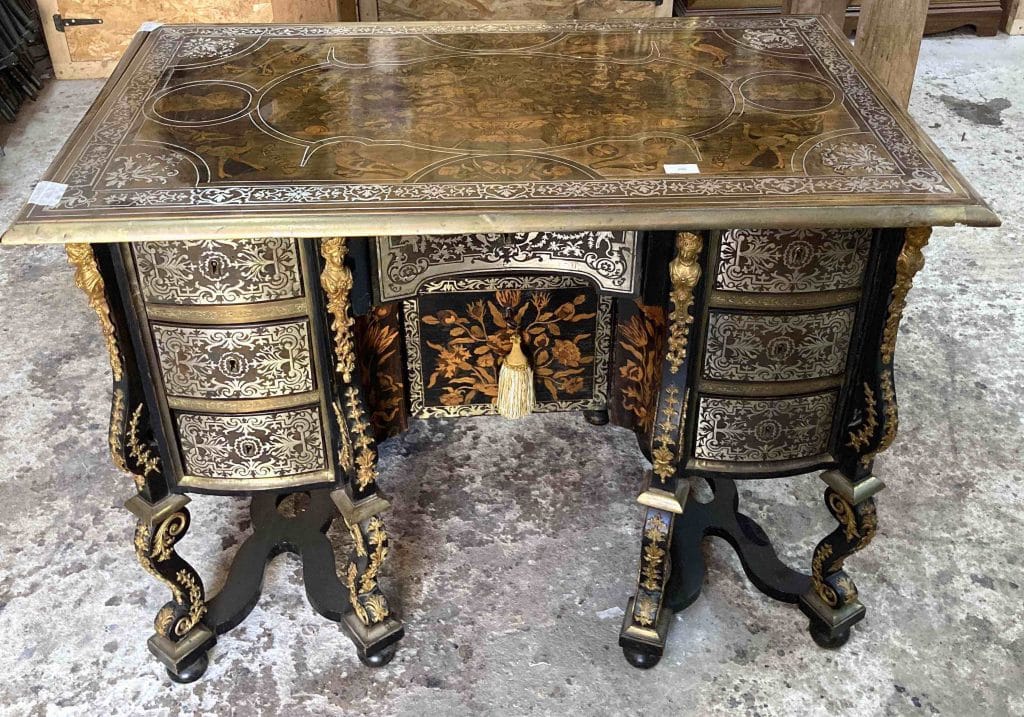
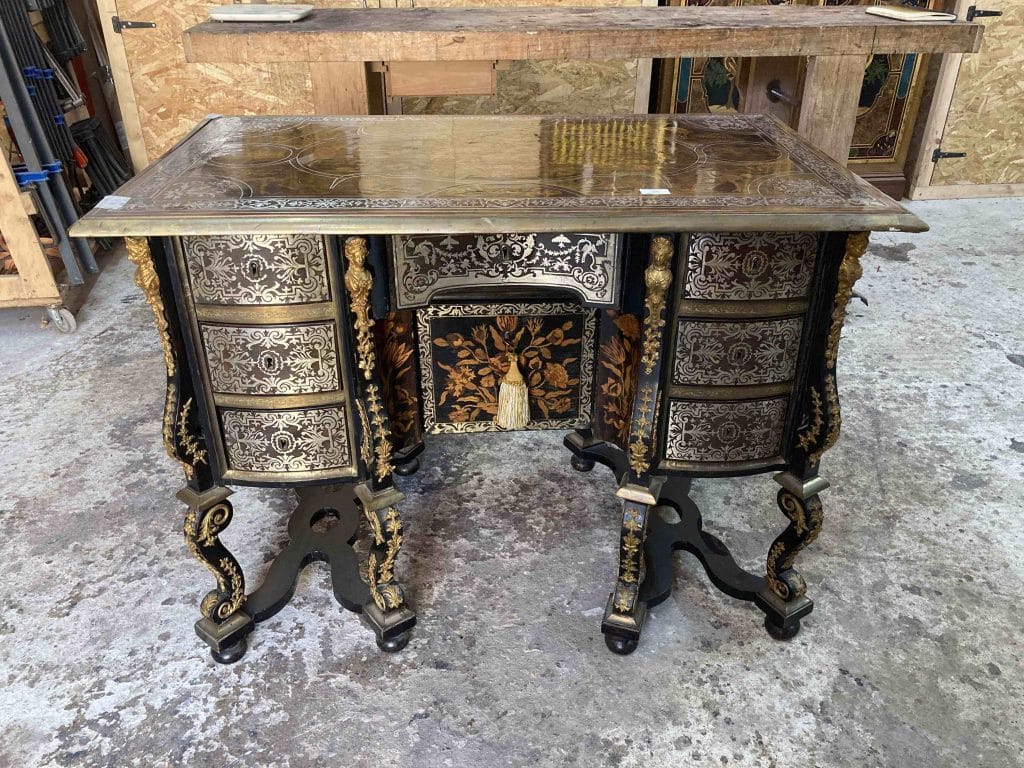
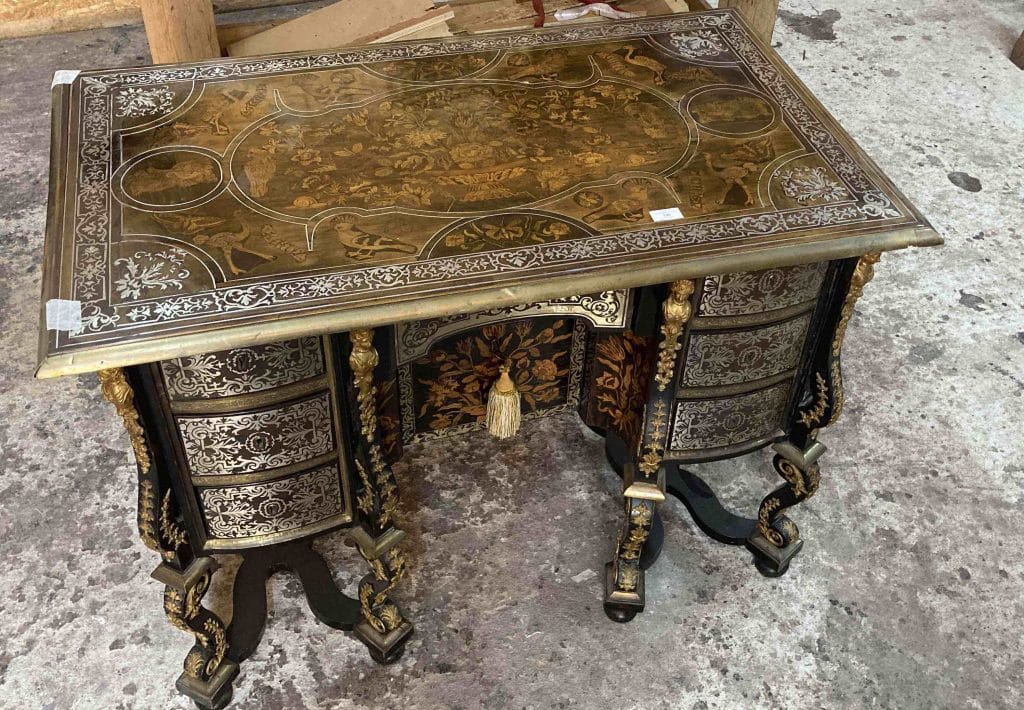
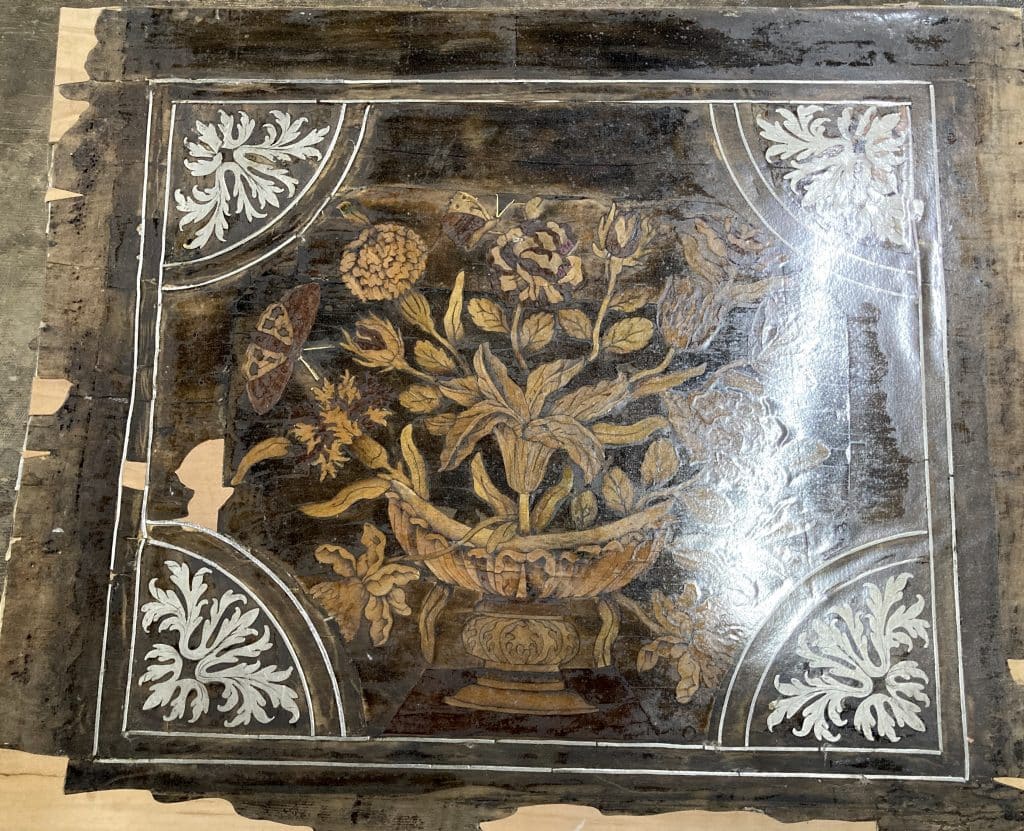
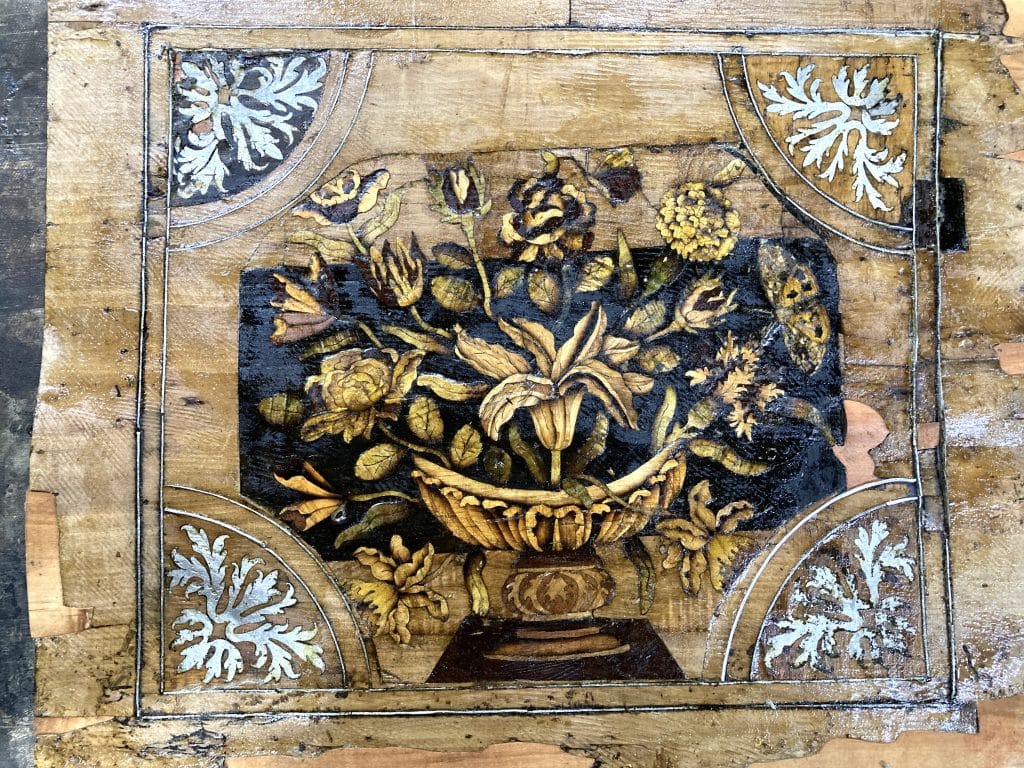
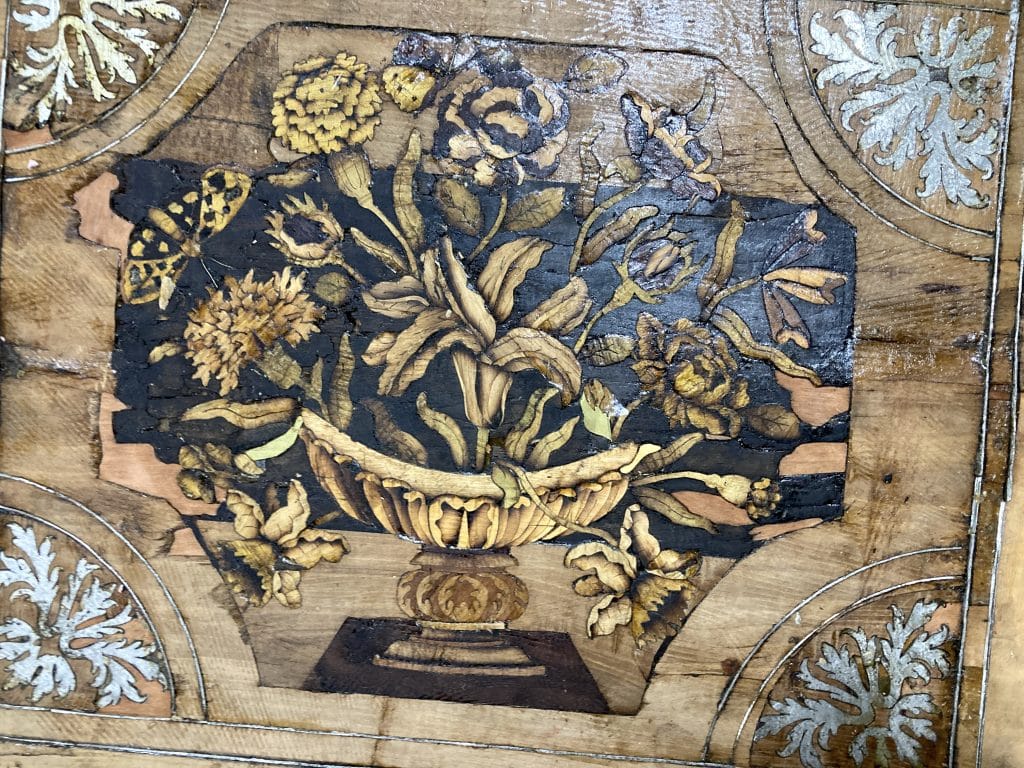
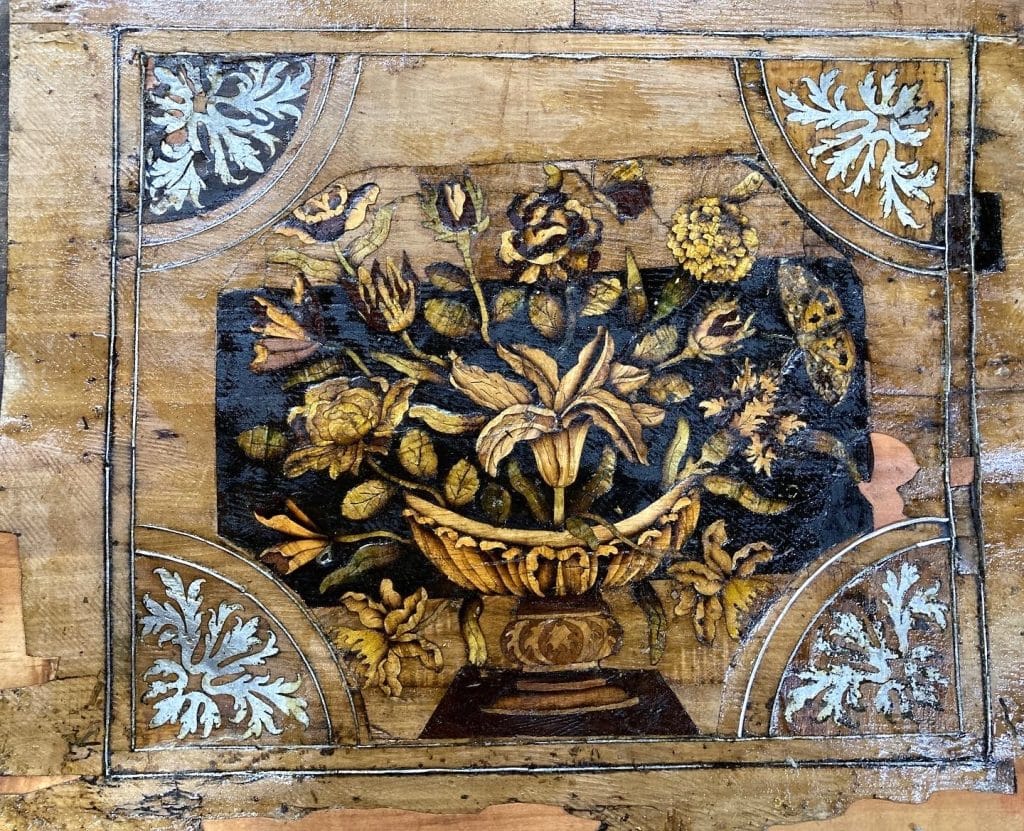
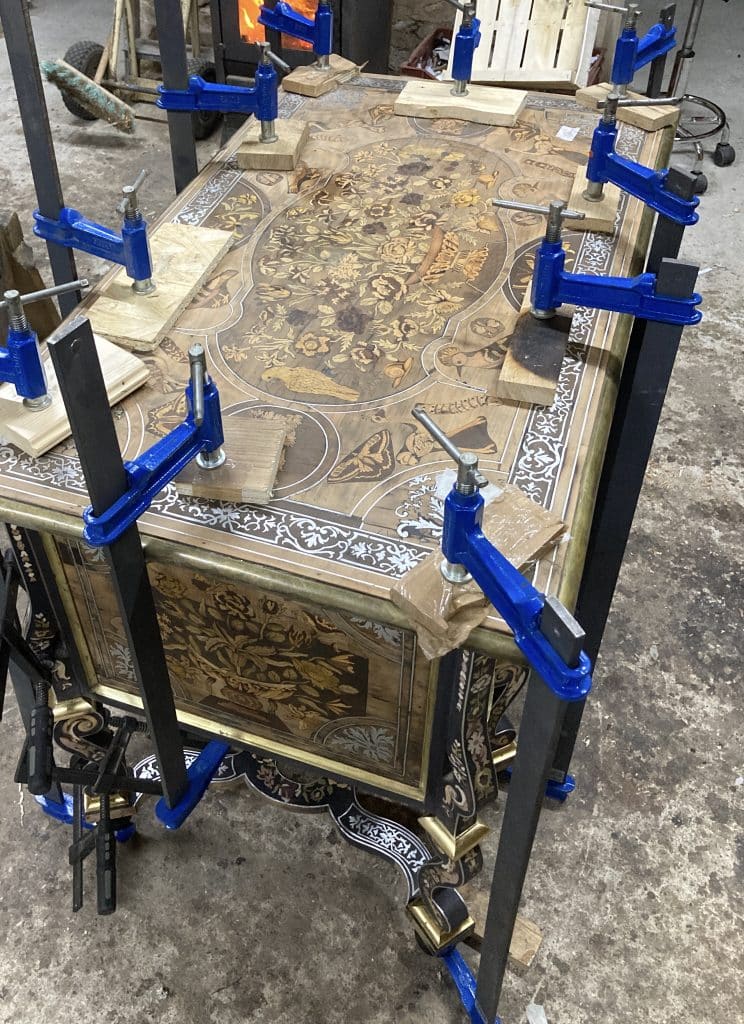
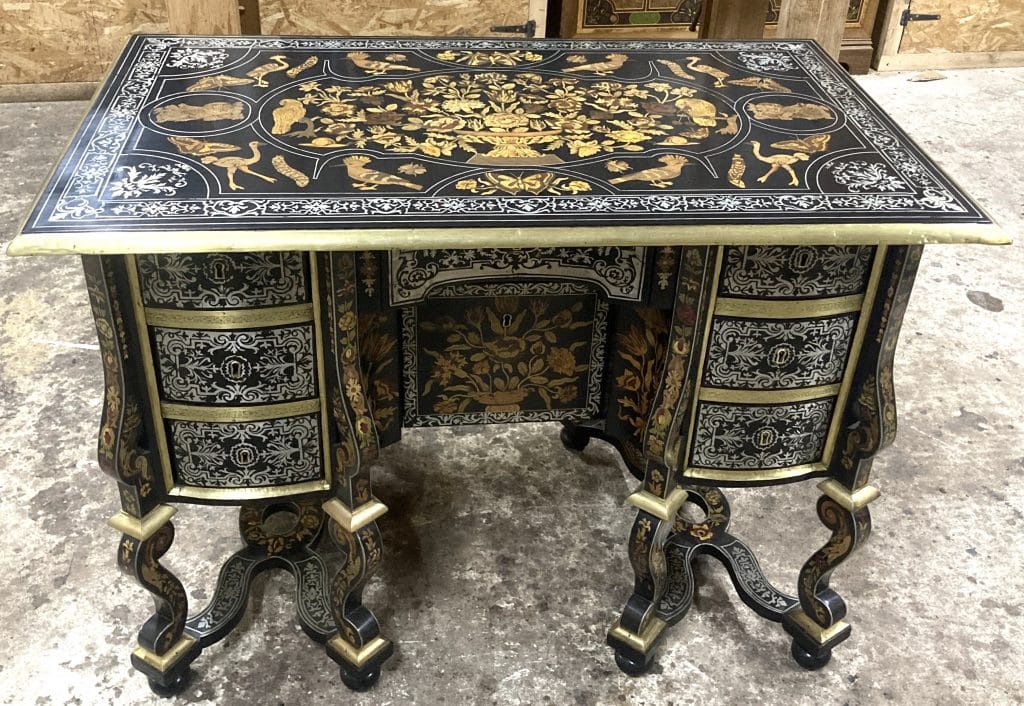
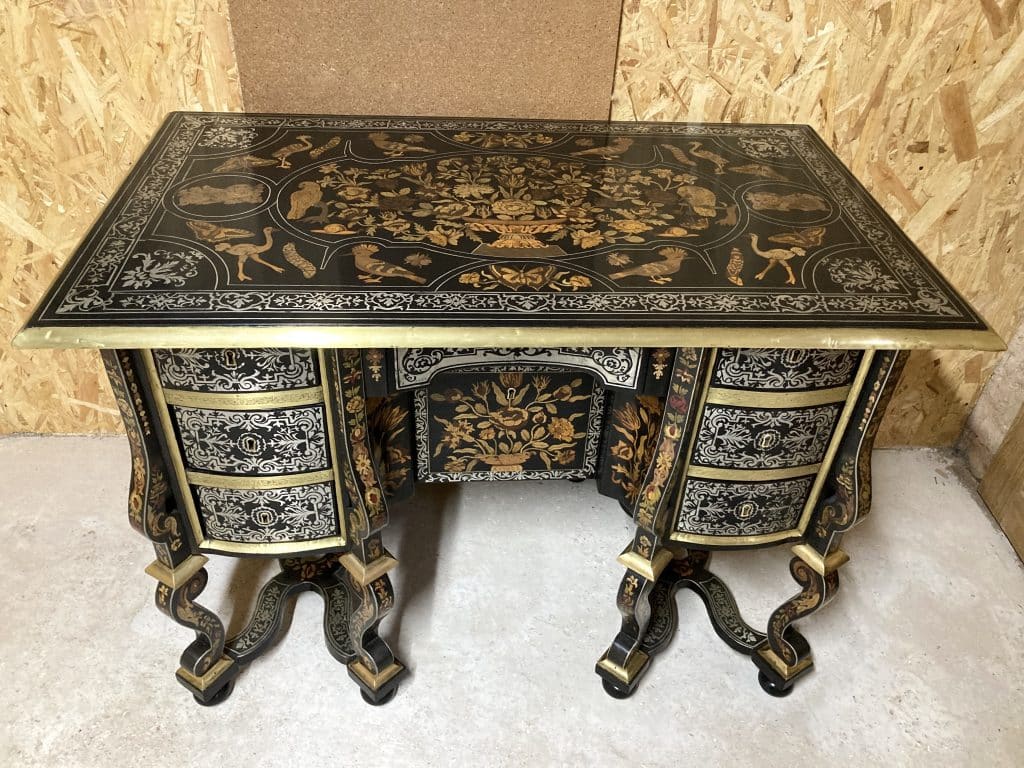
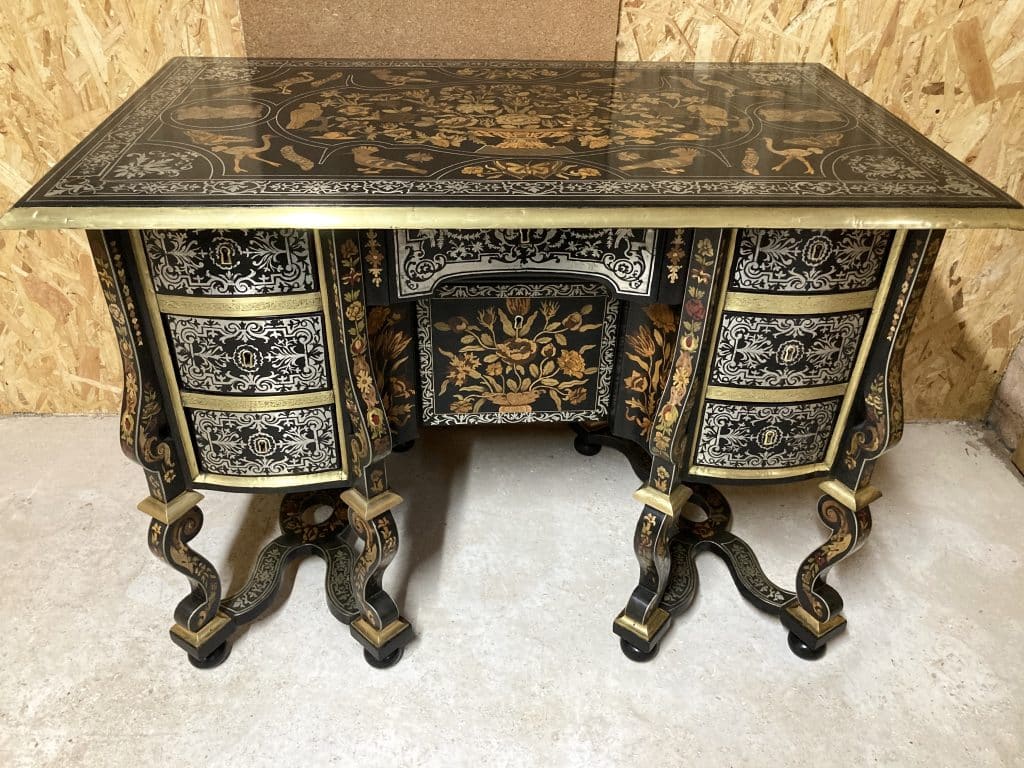
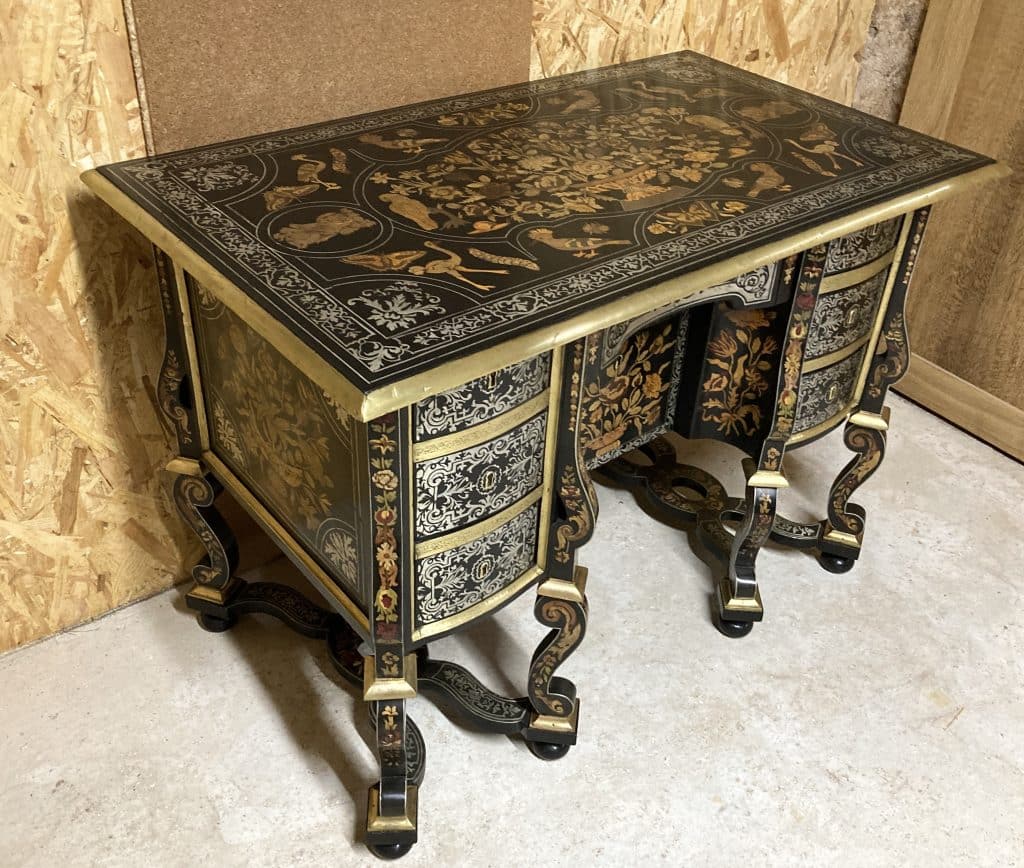
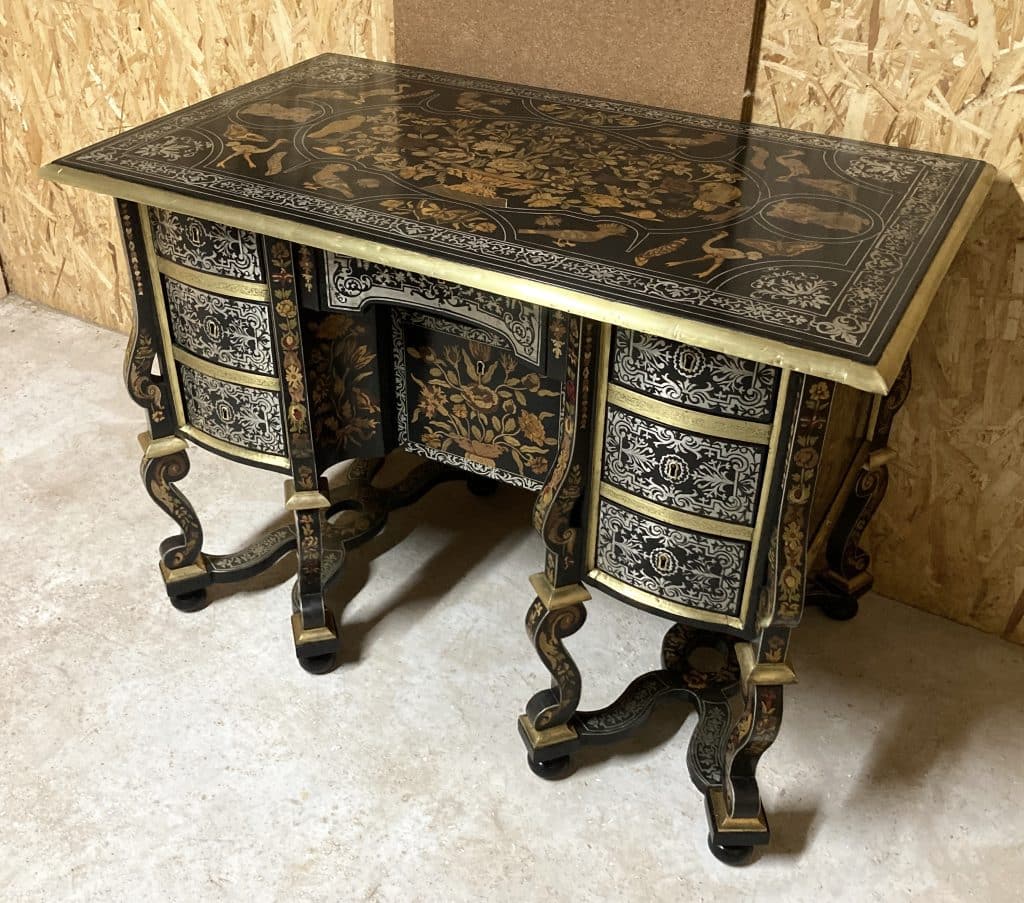
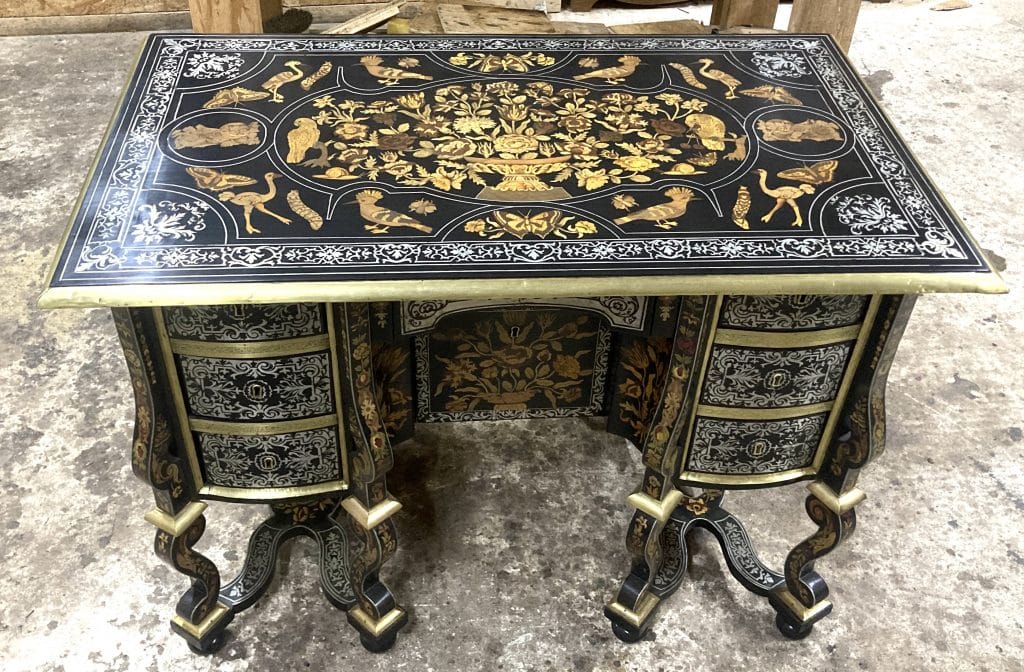
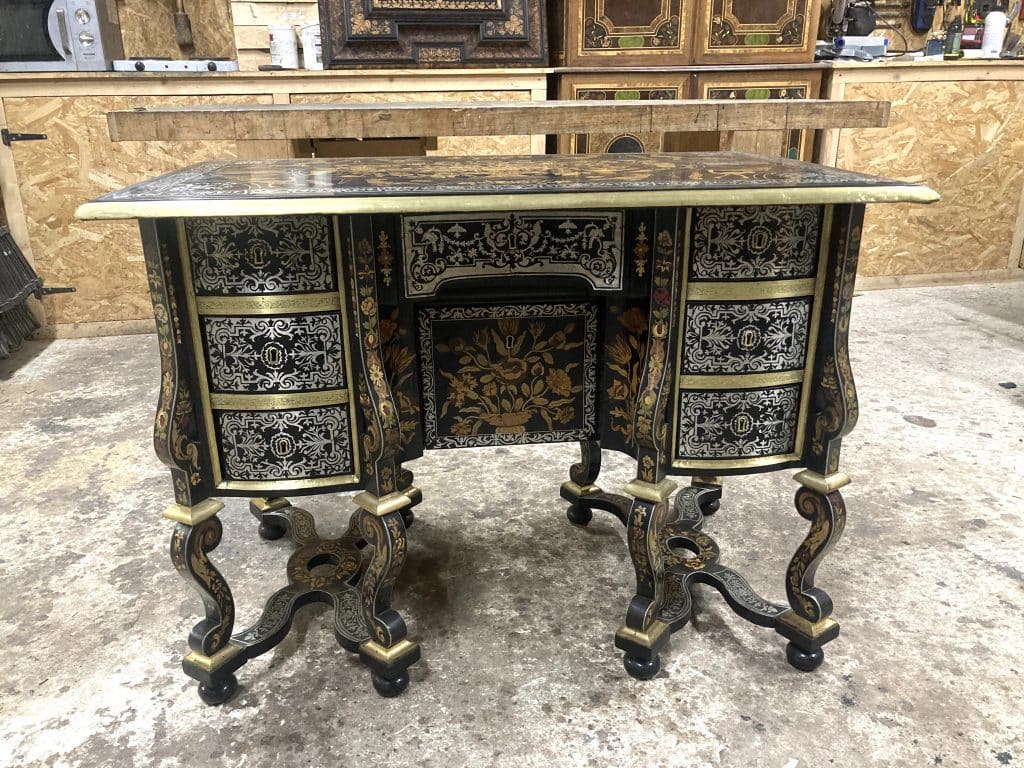
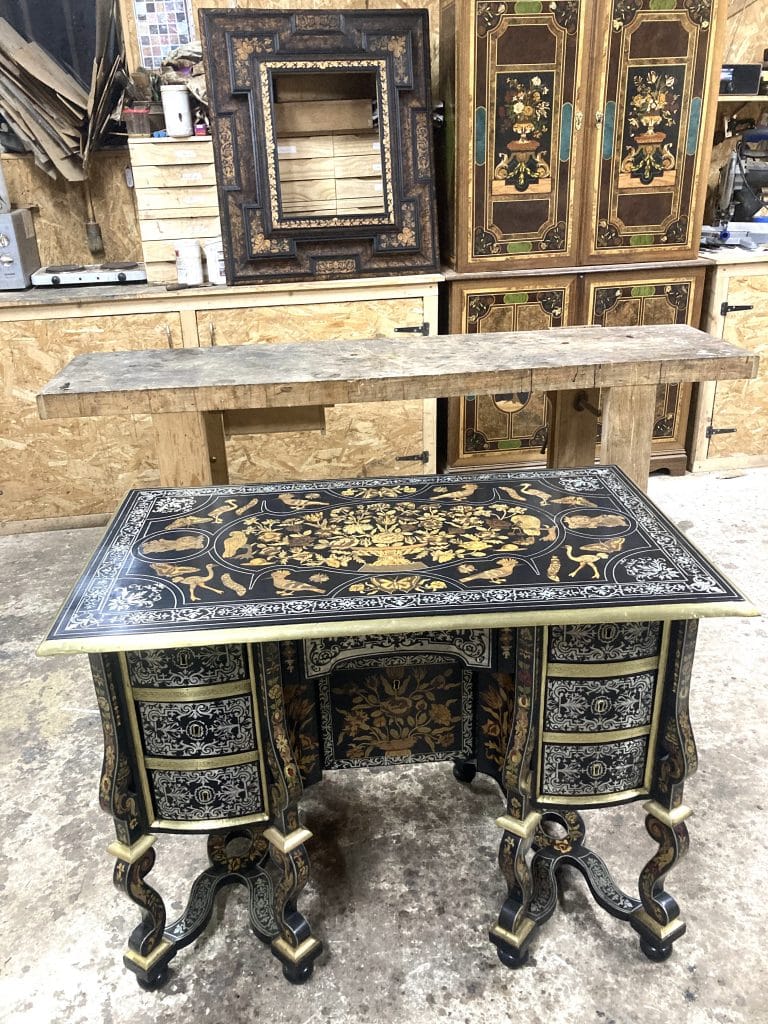
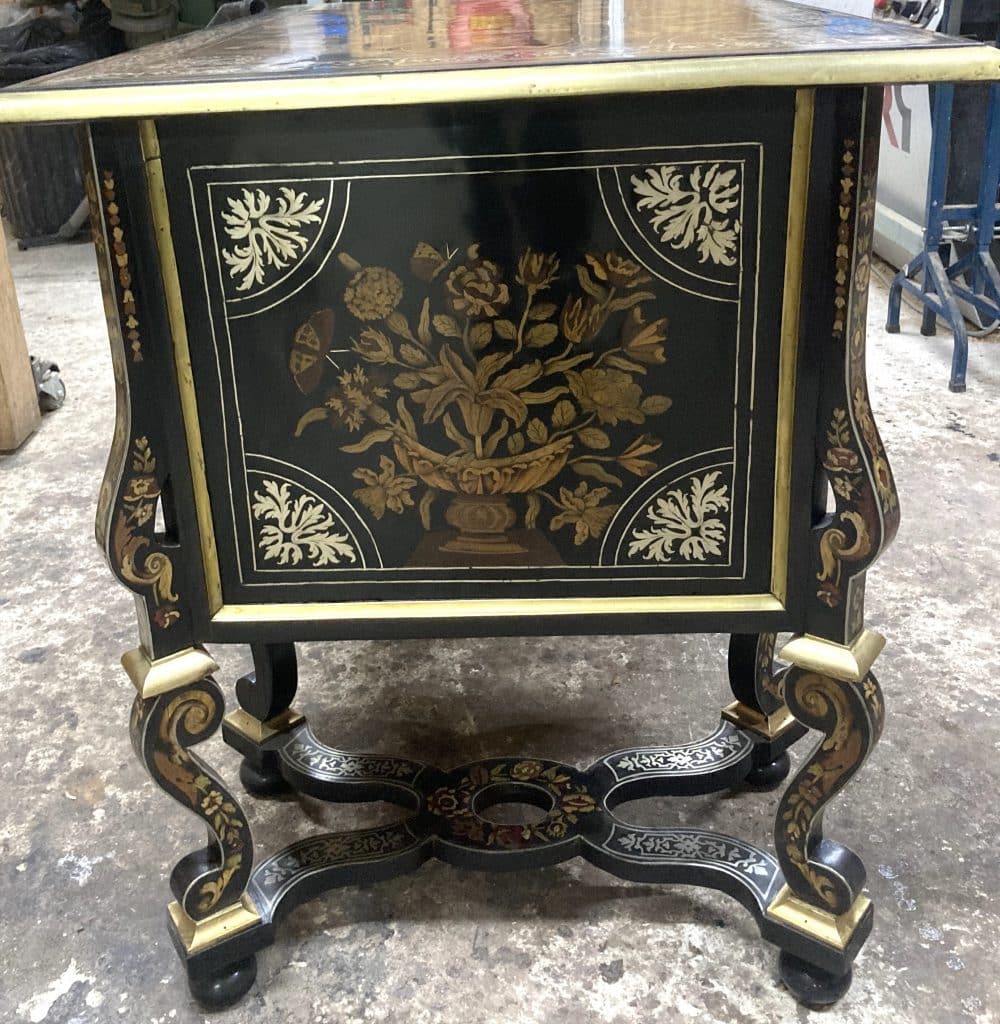
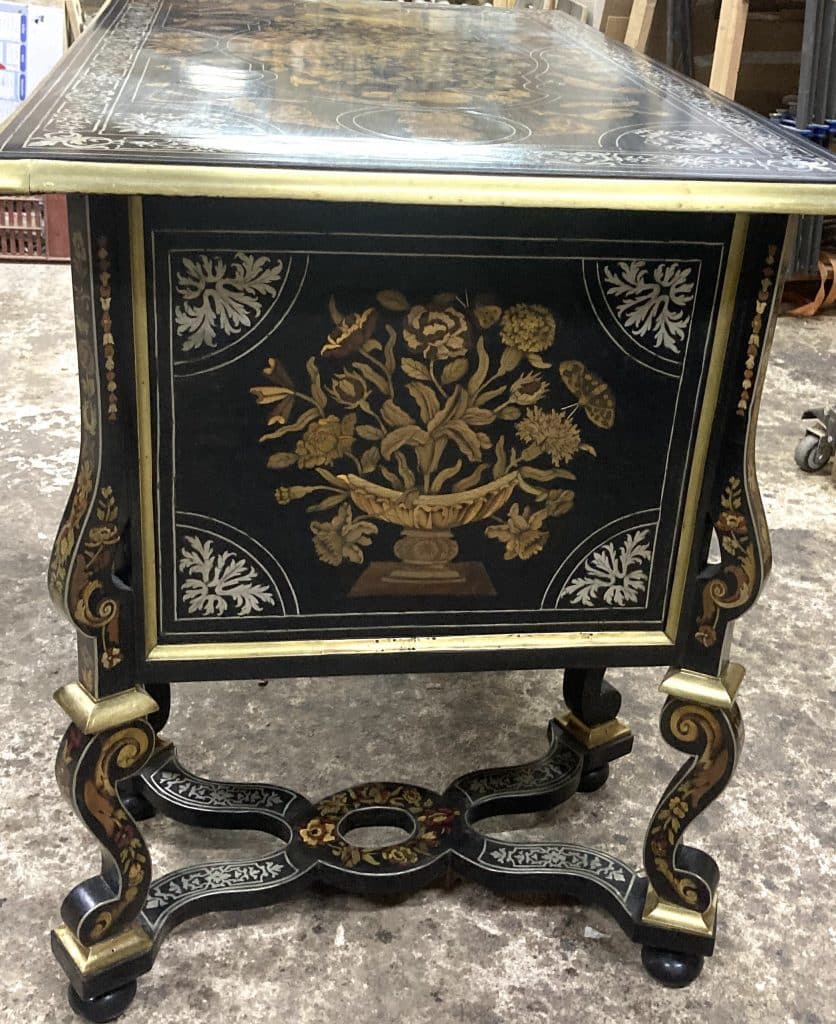
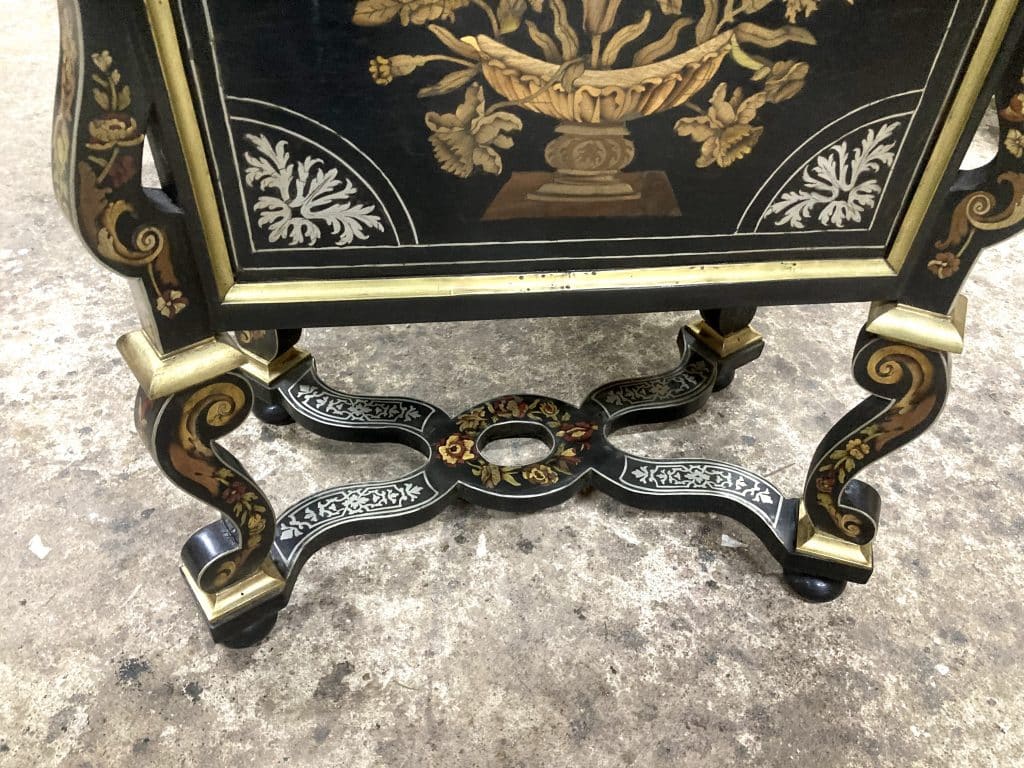
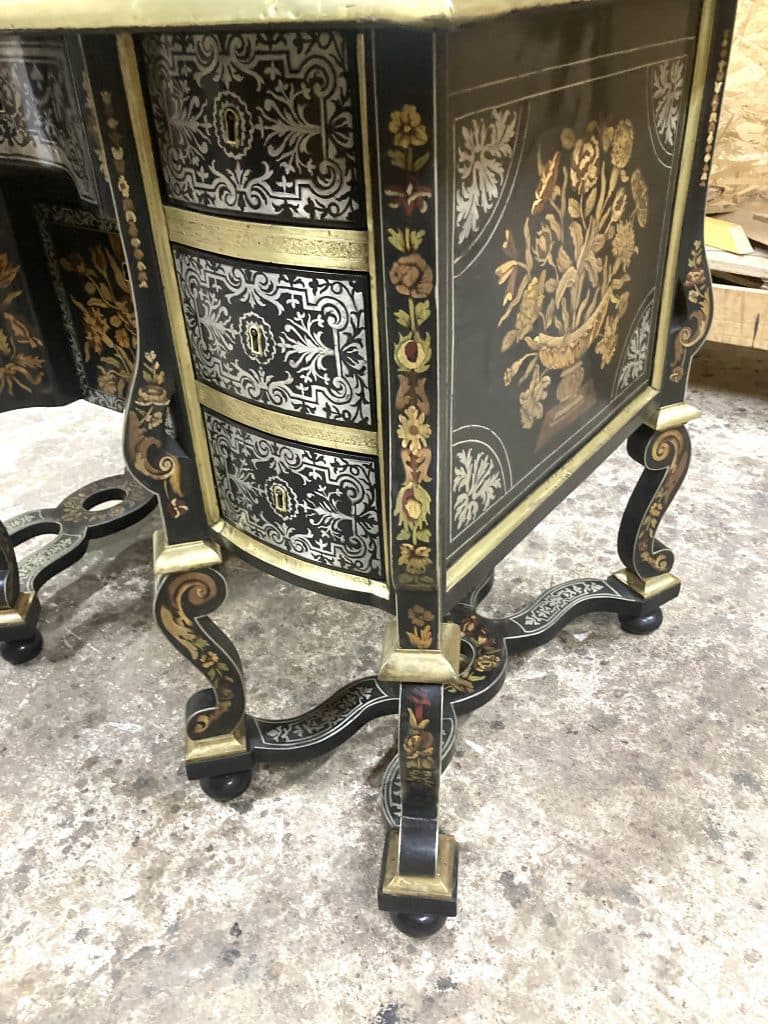
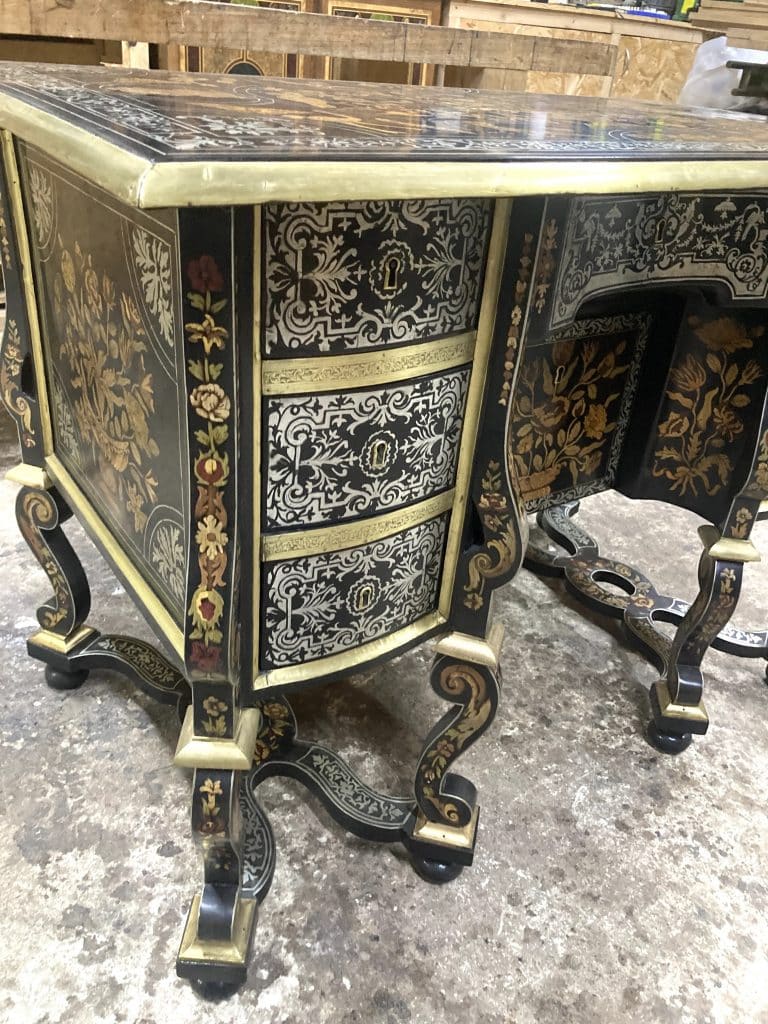
Restoration of an eight-legged desk, commonly known as a "Mazarin" desk, from the Louis XIV period, late/early 17th century. Constructed of pear and solid softwood, the sides and drawer bottoms are also pearwood. It features two side cabinets, each opening with three drawers, and a central drawer above a middle cabinet with rounded corners. The console-shaped uprights and eight console legs are joined by two X-shaped stretchers. The drawer fronts are inlaid with pewter and blackened pearwood, depicting a late 17th-century design. The sides and the drop-front are inlaid with native woods on a blackened pearwood background, representing a bouquet of flowers, including a central lily in the shape of a butterfly, framed by pewter stringing and spandrels. The bronze mounts and the base were added in the 19th century. The marquetry covering it consists of: tin, brass, tortoiseshell, blackened pearwood, maple, hornbeam, holly, boxwood, barberry, amaranth, pearwood and green-tinted maple.
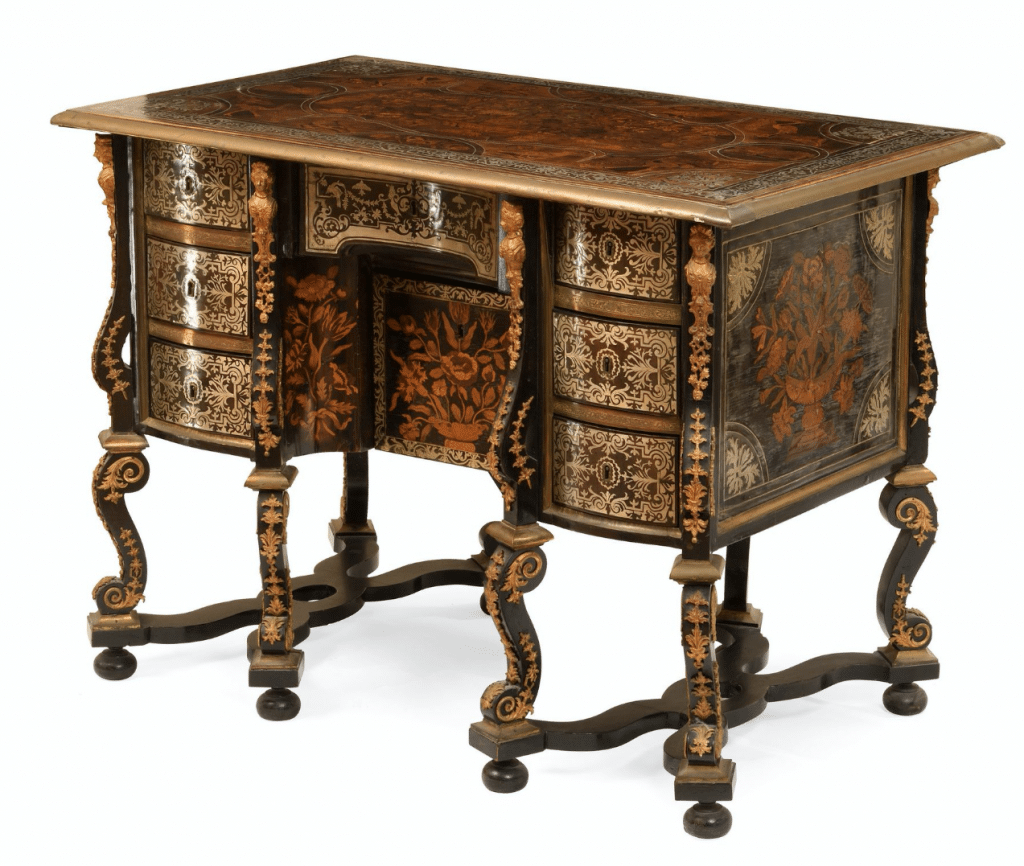

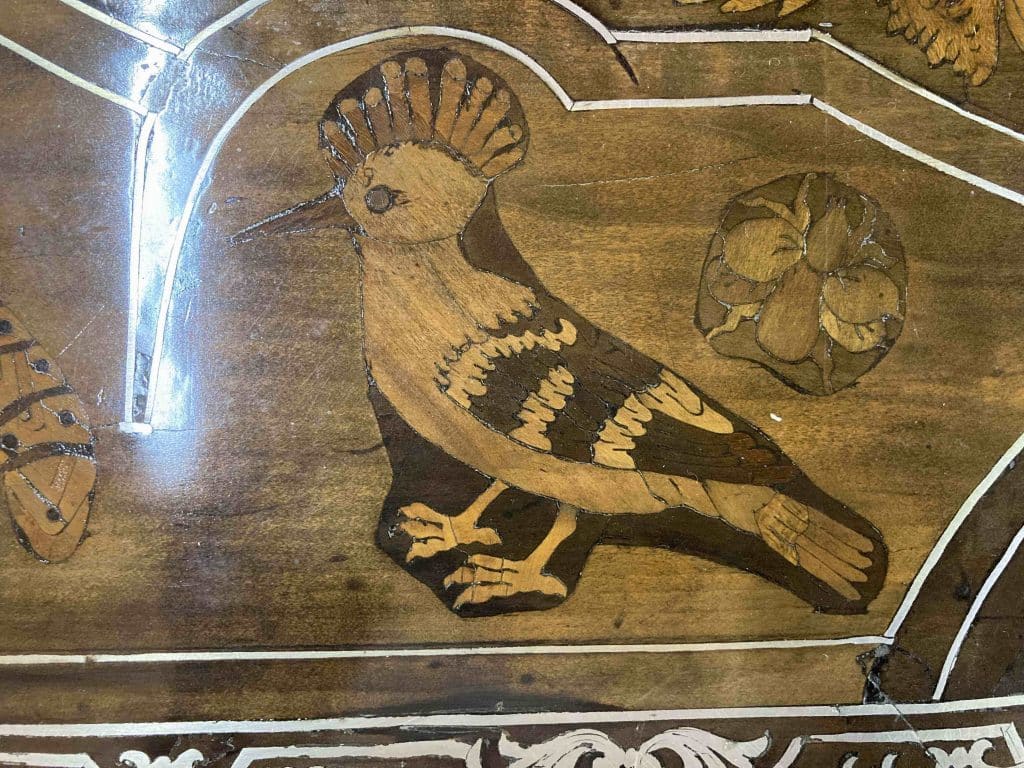
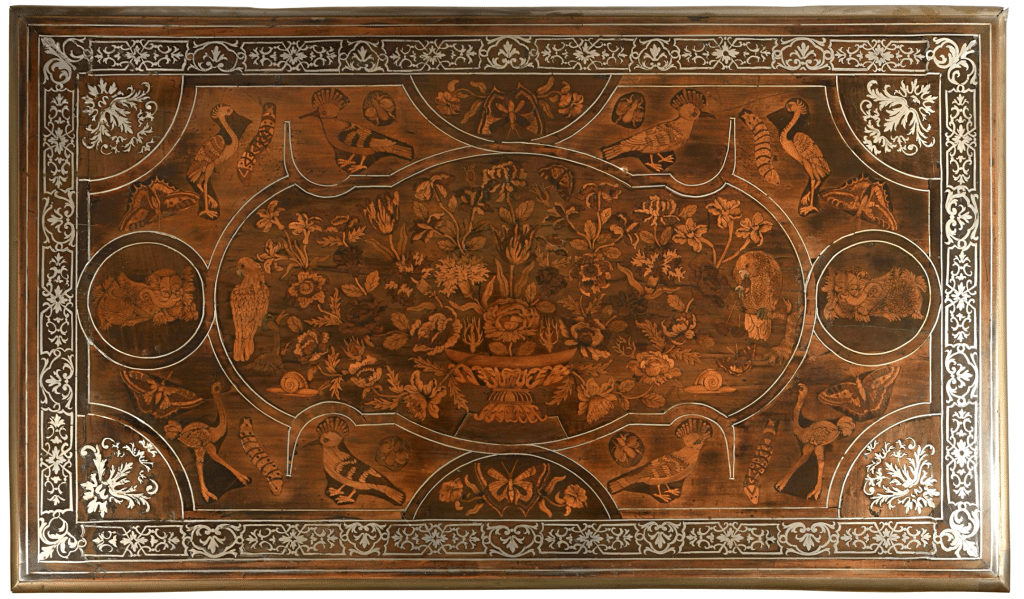
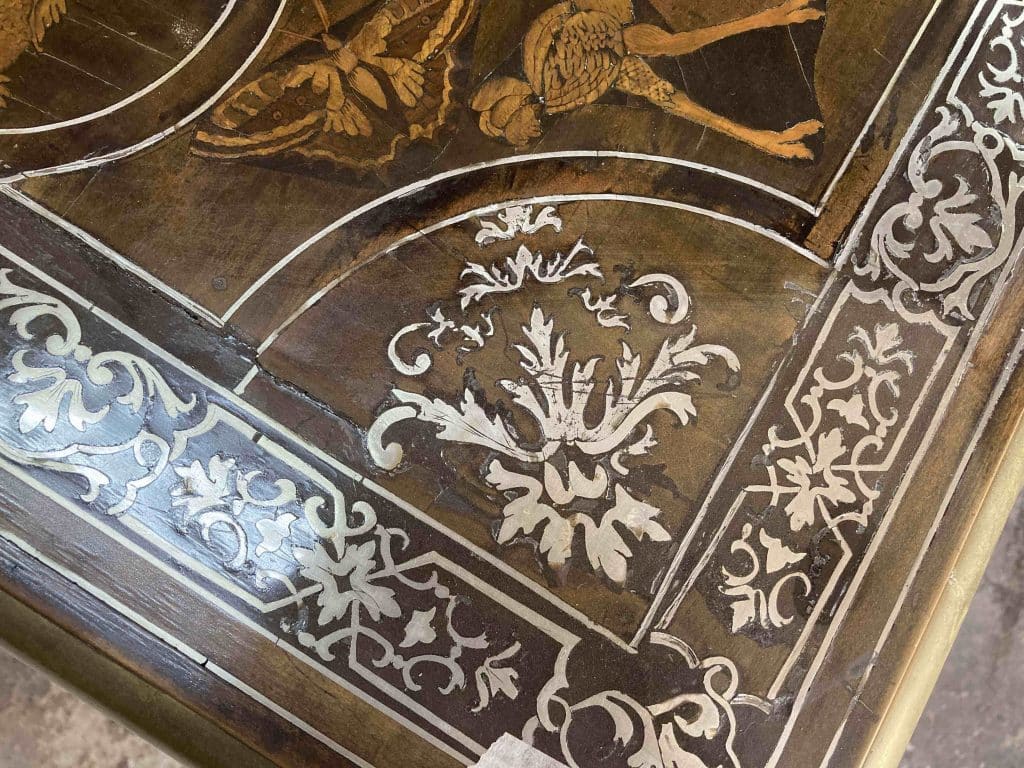
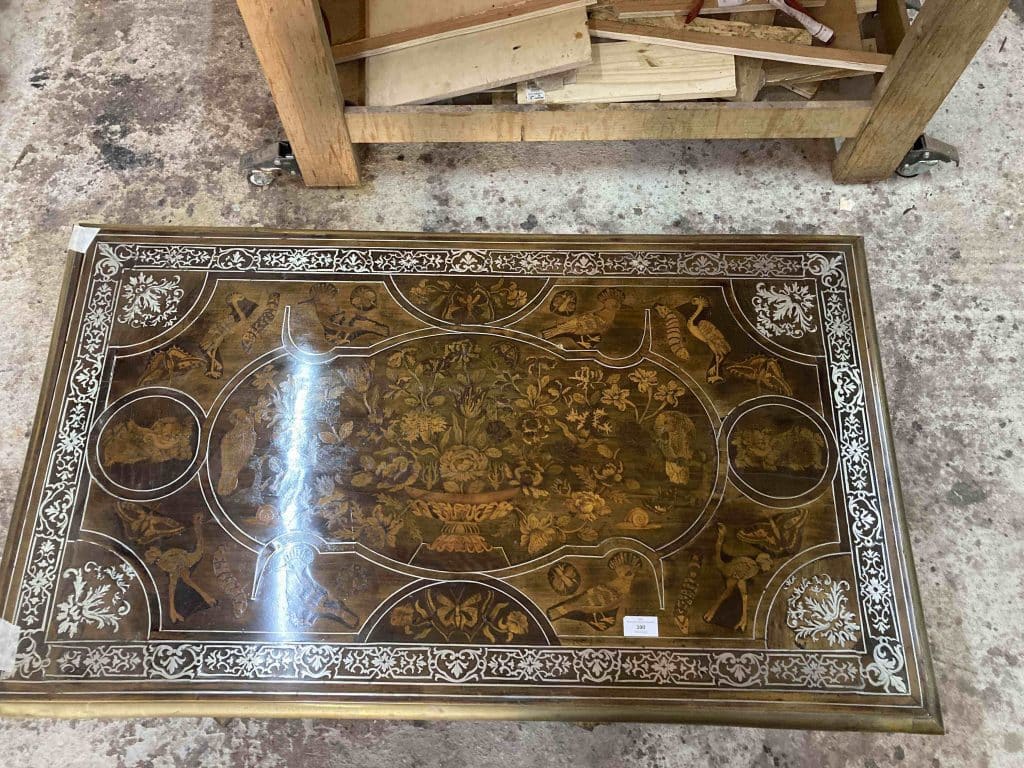
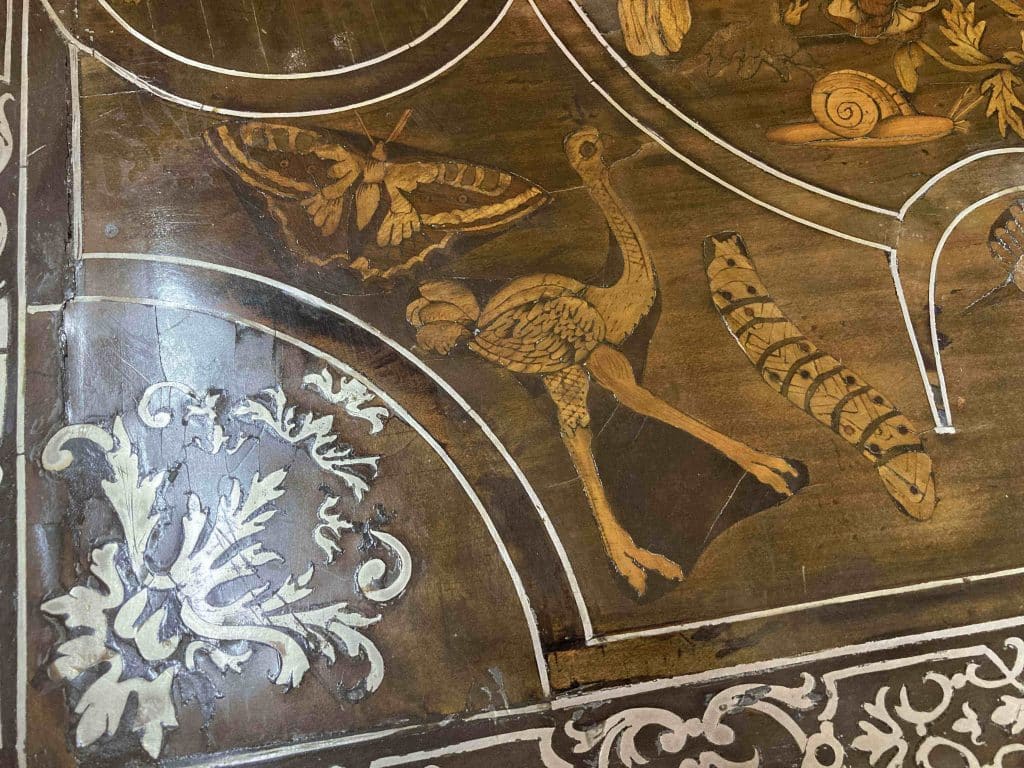
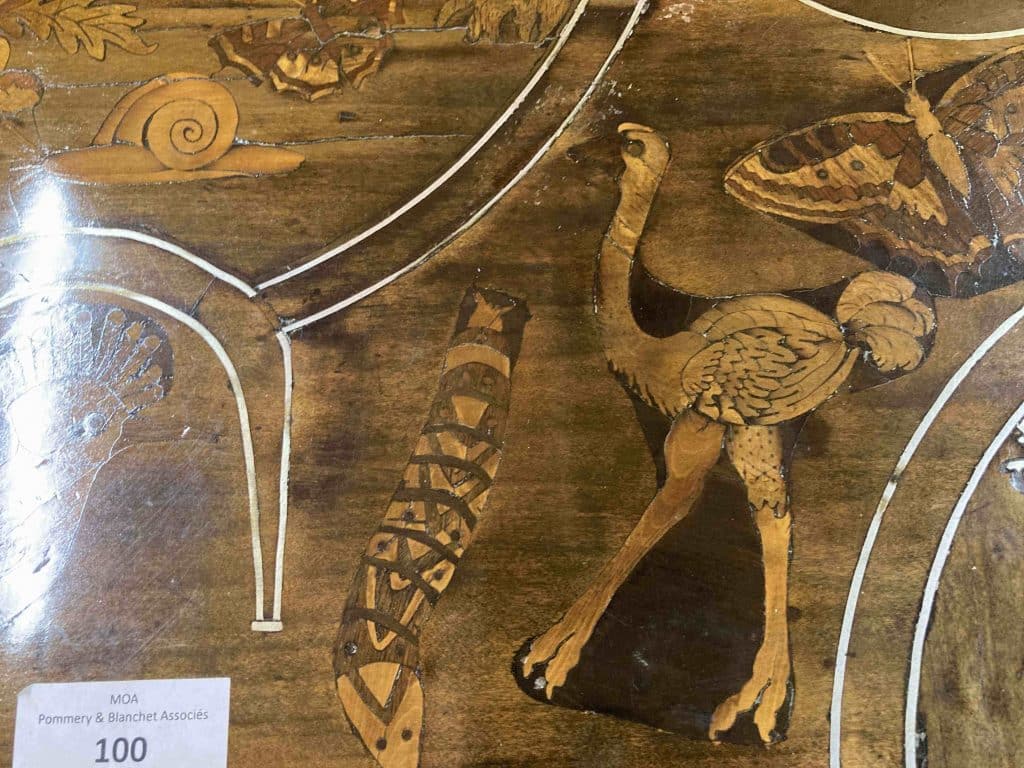
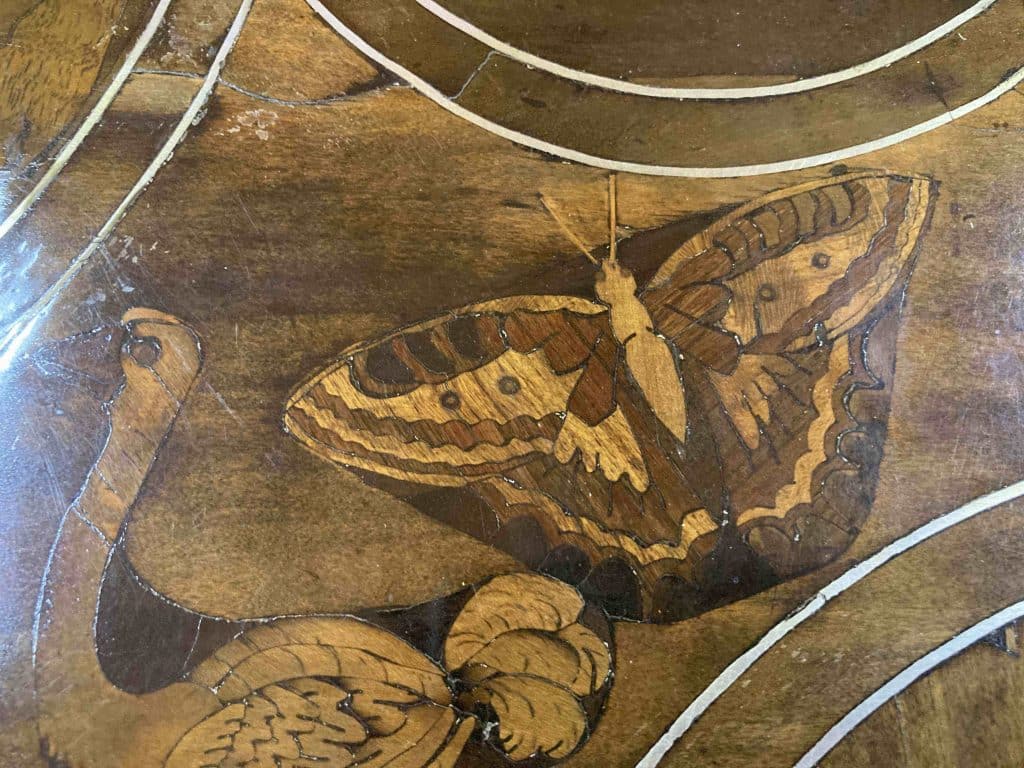
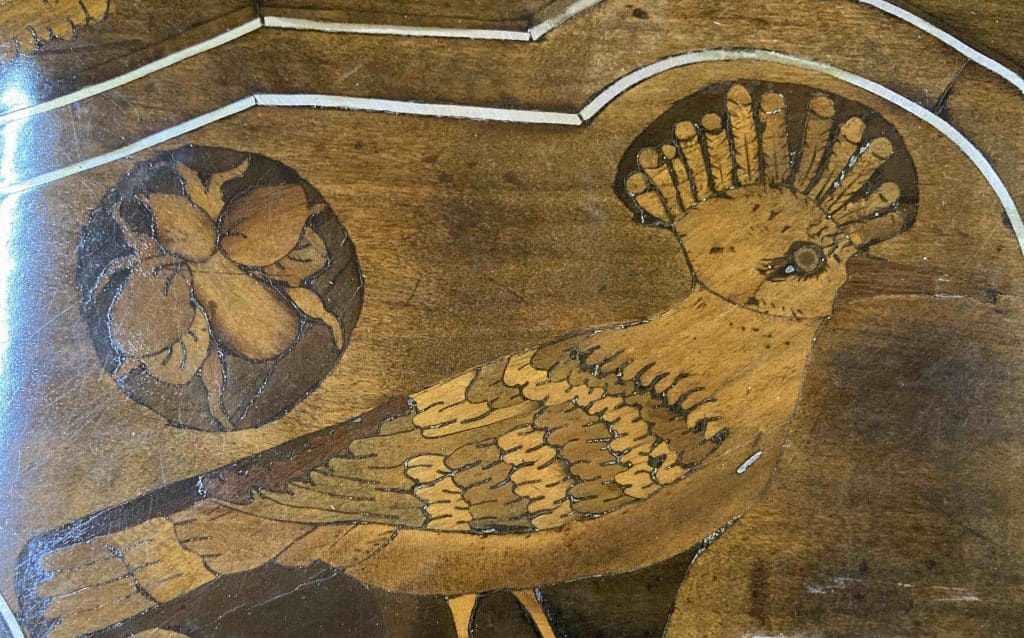
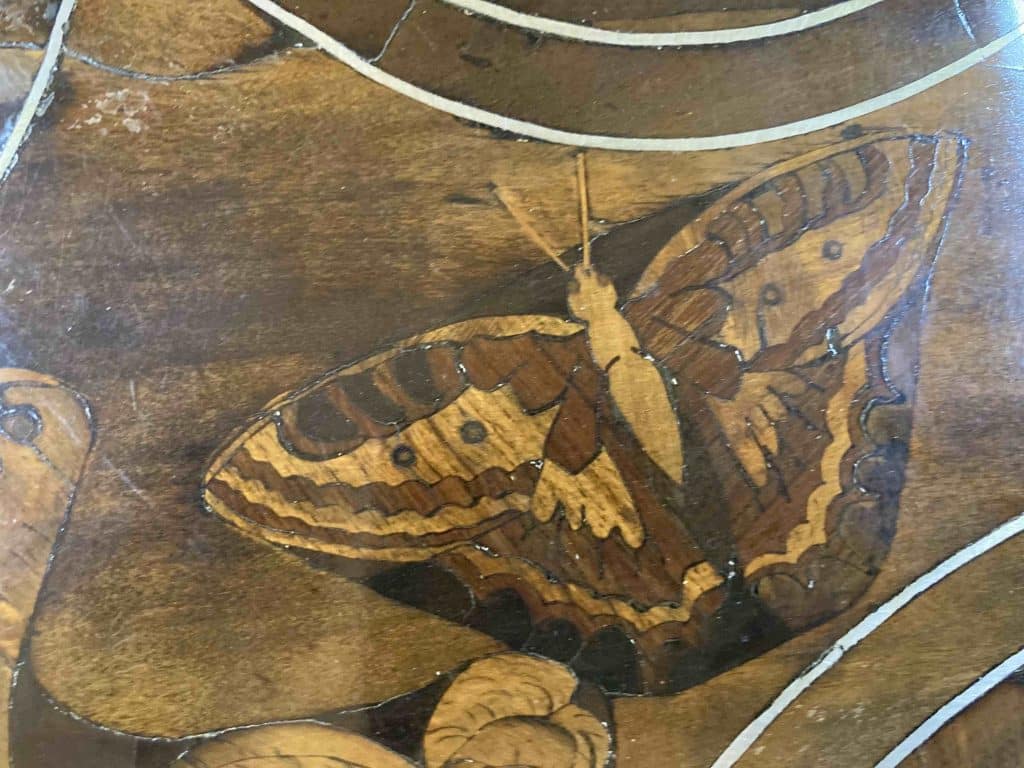
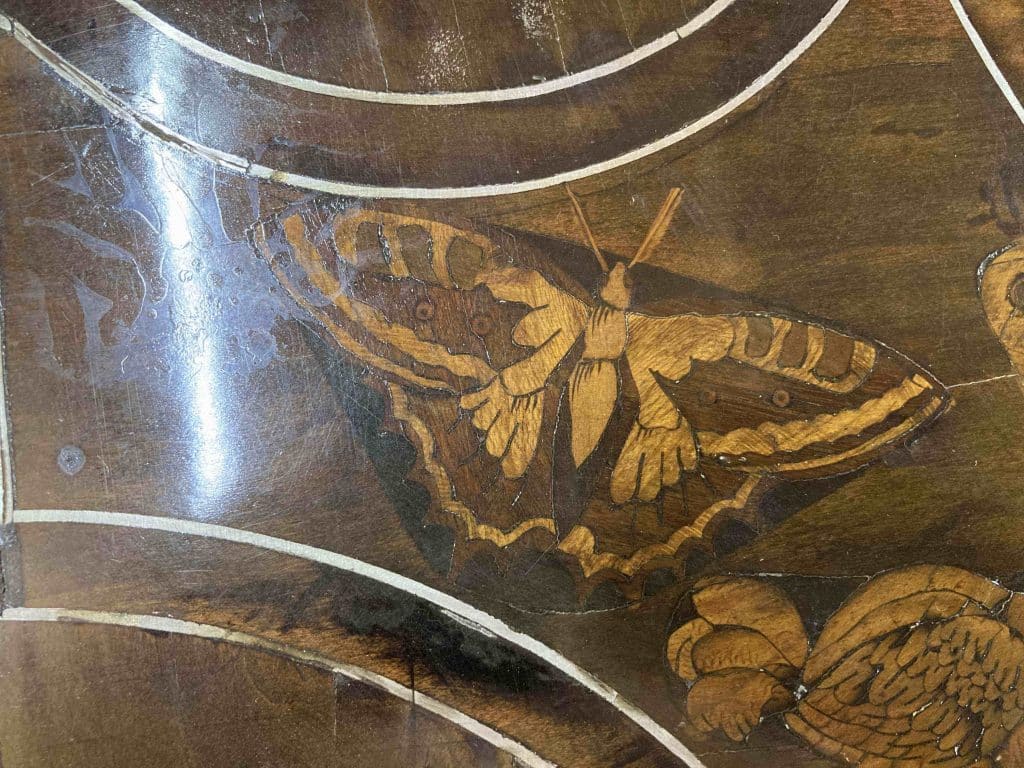
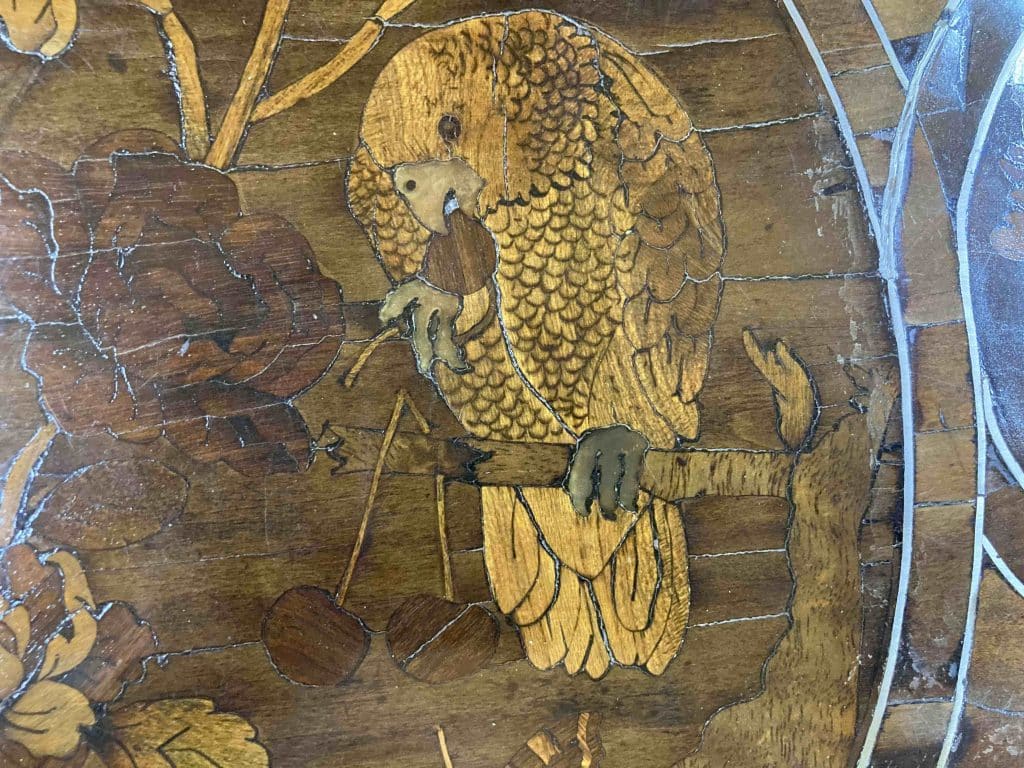
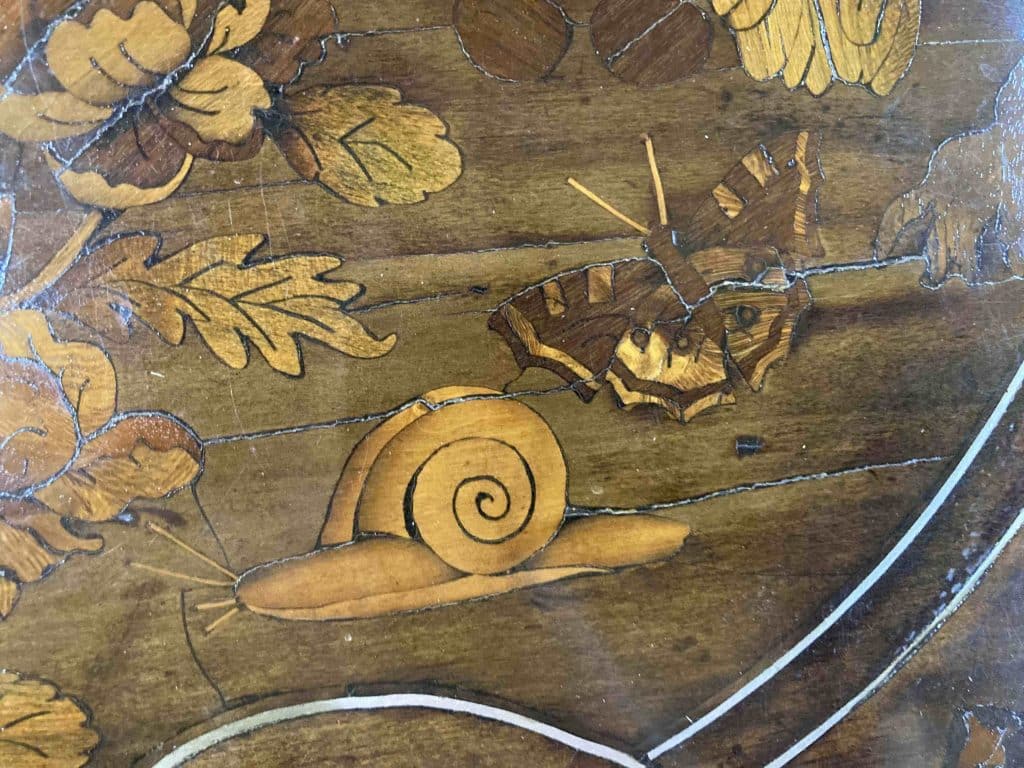
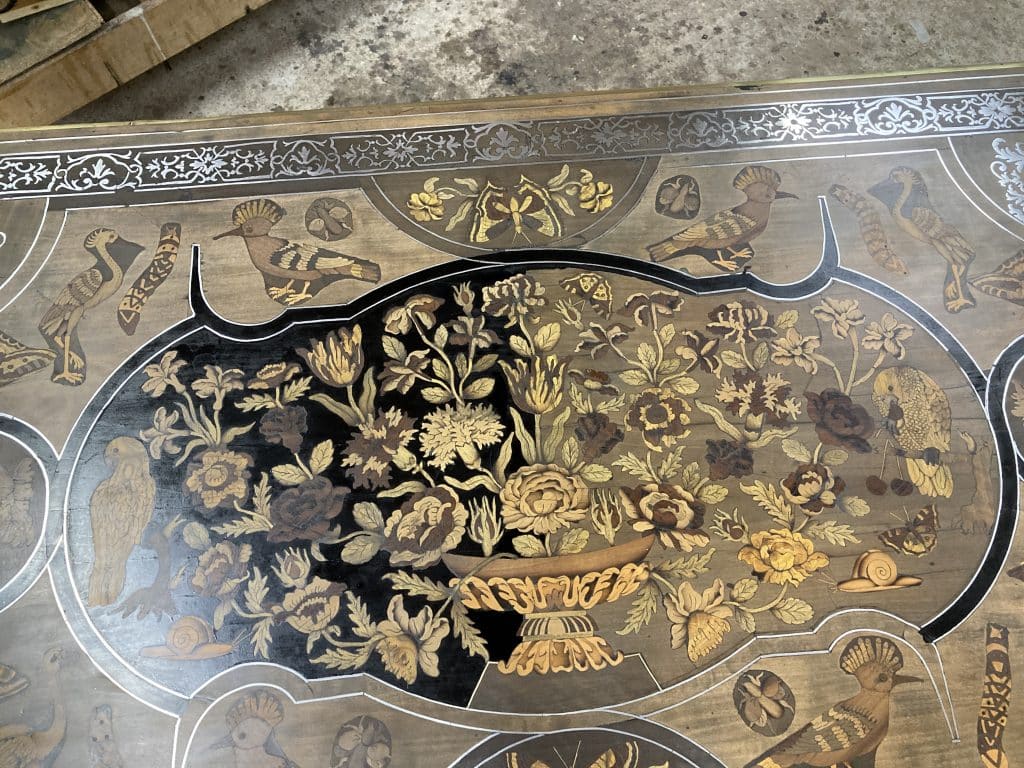
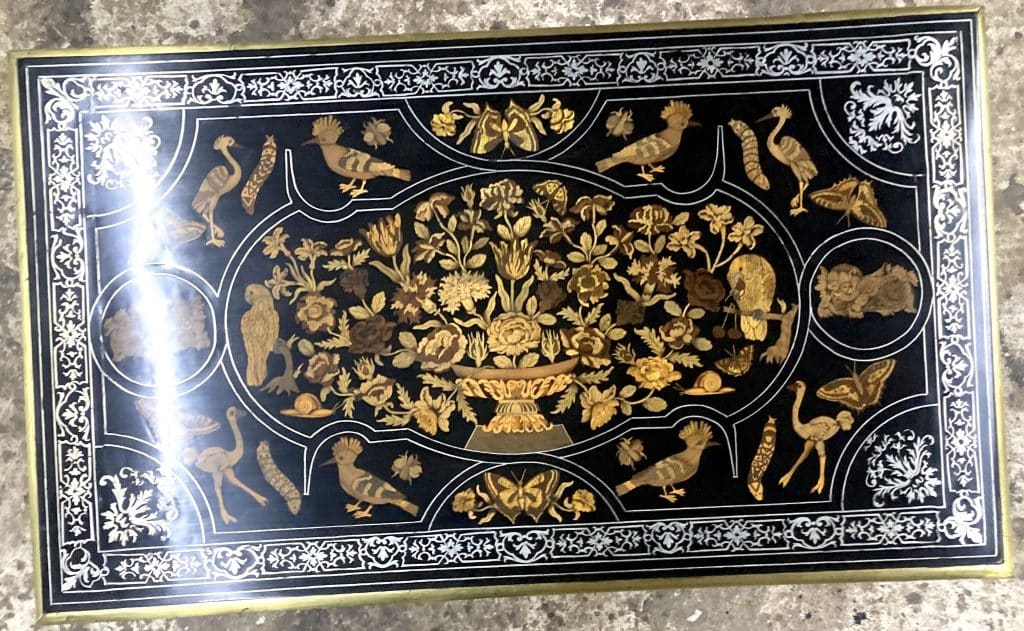
This desk has seven drawers, a central drop-front, and rests on eight console legs joined by two stretchers. All the locks are original. The top is surrounded by a wood and brass molding and features marquetry of a bouquet of flowers and a pewter spandrel, with the addition of exotic animals such as ostriches, two parrots eating a cherry (note that the beak and feet are made of tortoiseshell gilded with gold leaf on the reverse), snails, butterflies, caterpillars, beetles, wading birds, hoopoes, and, more surprisingly, two Yazhi or Yali.
It has two secret drawers on the sides of the central drawer. The base was modified and the bronzes were added in the 19th century.
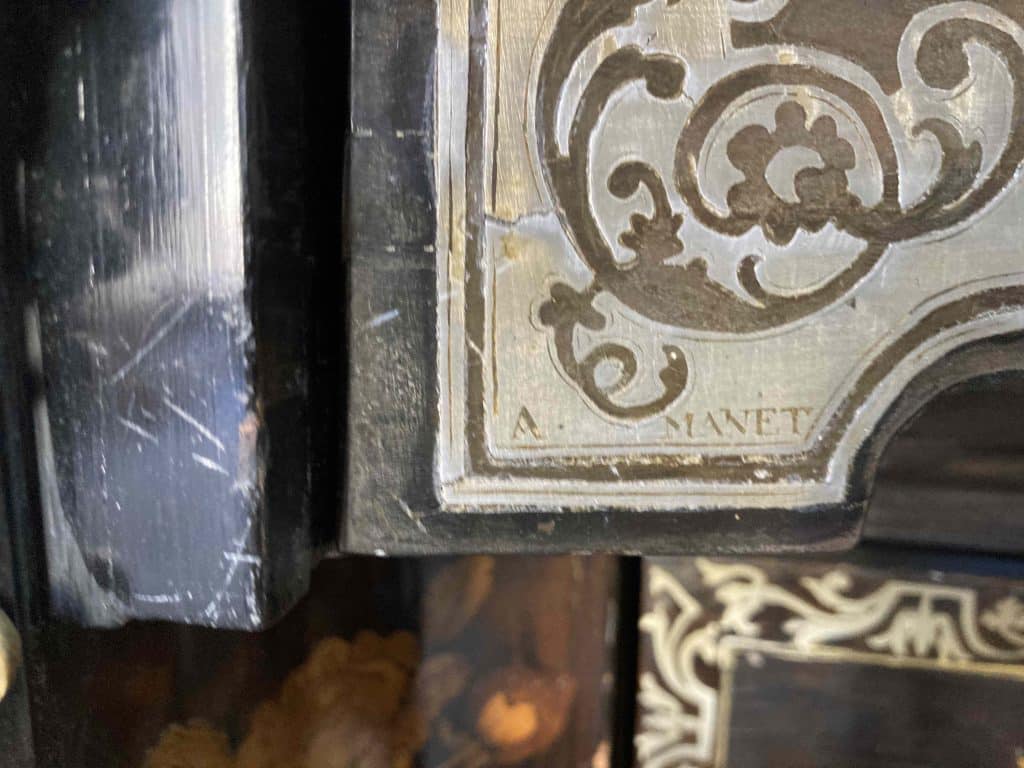
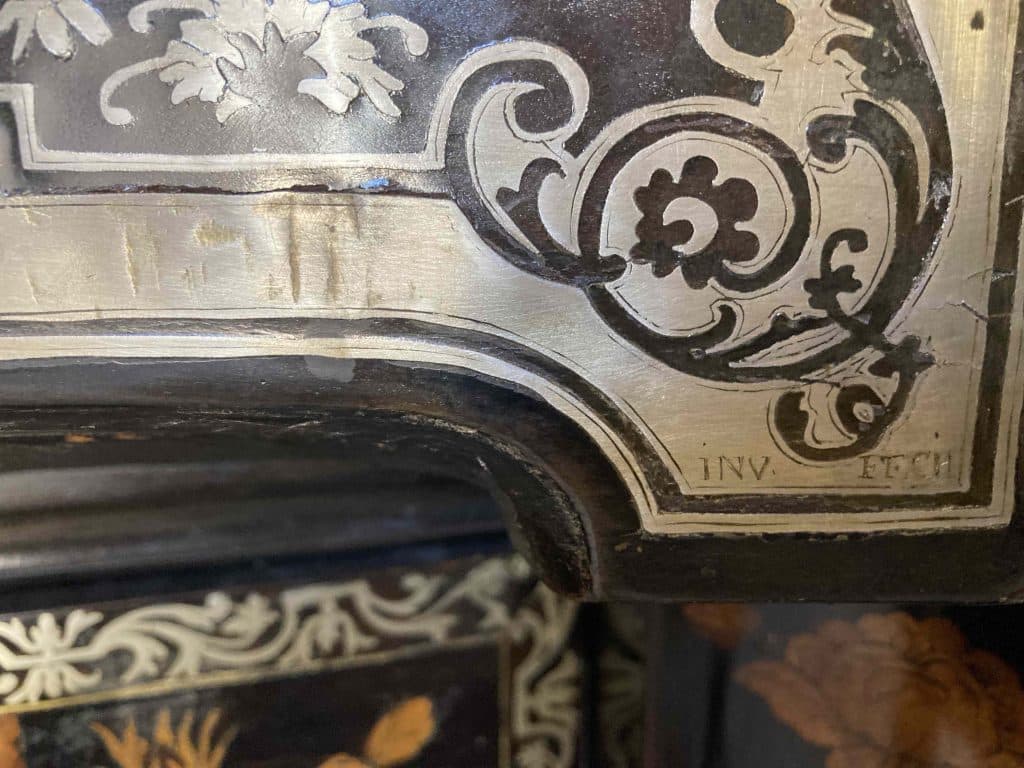
Signed on the central drawer A. MANET inv Fecit.
Ht: 77 cm – Lg: 105 cm – D: 62 cm

THE Yazhi Or Yali.
This is a mythical creature, a chimera of a lion, an elephant, and a serpent. It may have the face of a lion, its paws (and claws) and tail, the fangs of a serpent, and the body, hind legs, and trunk of an elephant. Sometimes called Vyalas, they are known for their ferocity, speed, and strength. They possess the male aggression and masculinity of the lion, the grace of the serpent, and the intelligence of an elephant.. As a transmuted animal, a yazhi is said to be stronger than a lion or an elephant combined, and for this reason, it was used as a mount in wars. Now, statues of the yazhi can be seen in Hindu temples. It is commonly carved on pillars, walls, and at the entrance to side gates of temples.
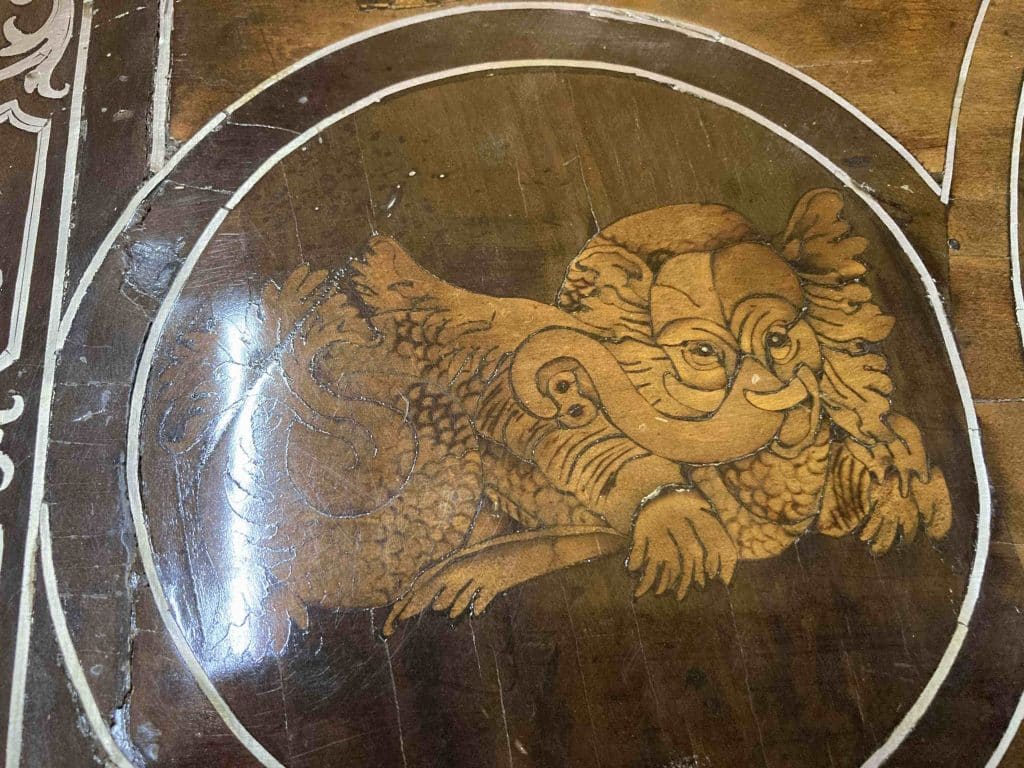
All these animals evoke an Asian theme, particularly the Yazhi people. The patron of this desk therefore had a great interest in this region of the world and likely provided the cabinetmaker with documentation to create the marquetry. It is probable that the rise of the French East India Company, established by Colbert on August 27, 1664, and more specifically the establishment in India at Surat (present-day Gujarat) by the company's director, François Caron, led to the discovery of this marquetry on this desk.
A little information about the tray's construction. It's quite clear that the animals were cut separately from the background and then inserted later, the background being originally black. The technique used was marquetry by layering, as the corresponding parts and counterparts are found on each pair of animals (left/right/bottom/top).
State report
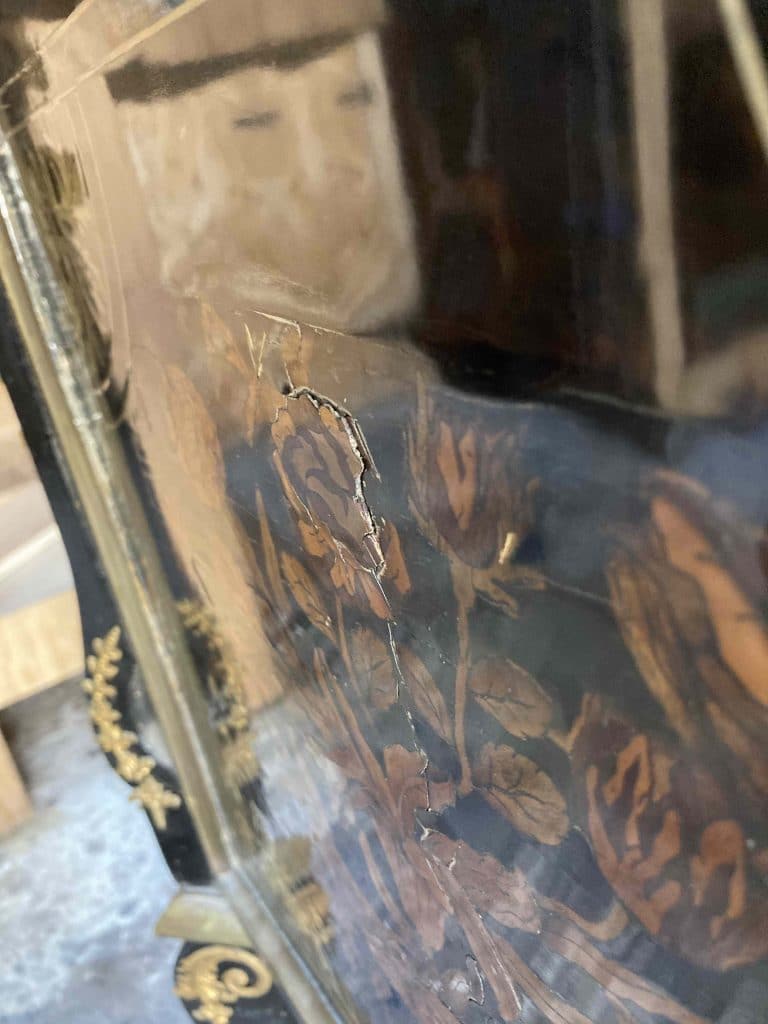
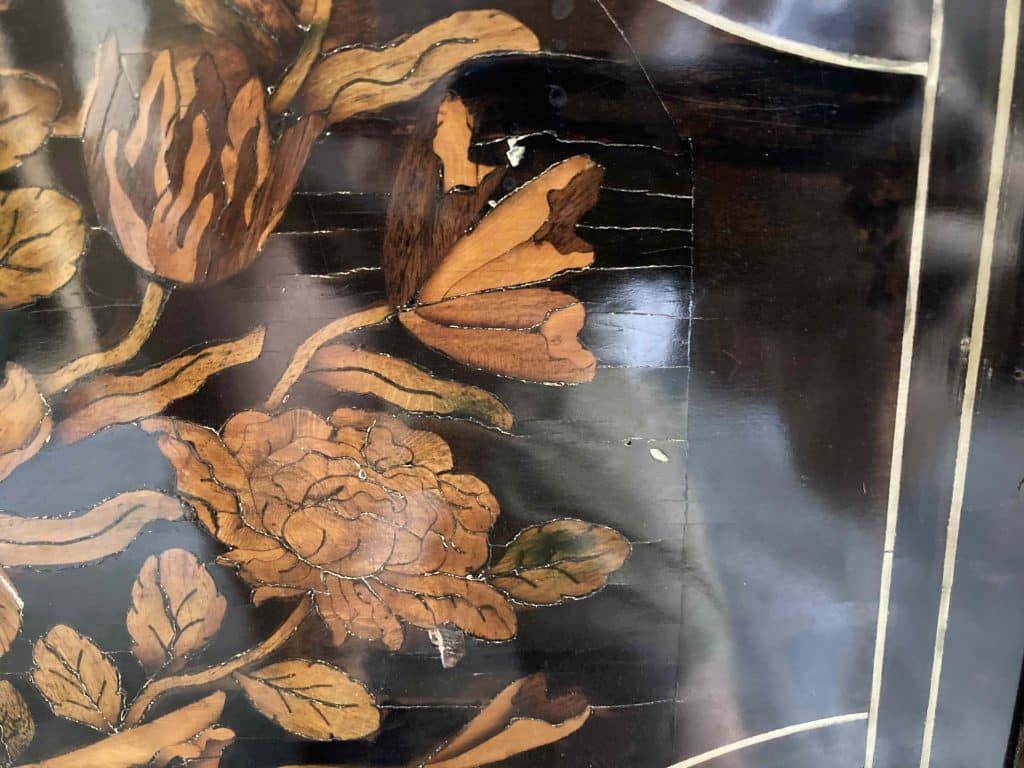
All the marquetry exhibited severe dehydration of the adhesives, particularly the tin and brass. There were some missing wood and tin veneers. Both sides displayed a structural crack along the roofs, running a quarter of the way along their length, with some panel deformation. The tabletop had been incorrectly positioned and re-glued during a previous restoration; the base was not original and presented an aesthetic mismatch with the rest of the cabinet. Finally, the blackened pearwood was discolored and no longer provided a contrasting effect with the marquetry.
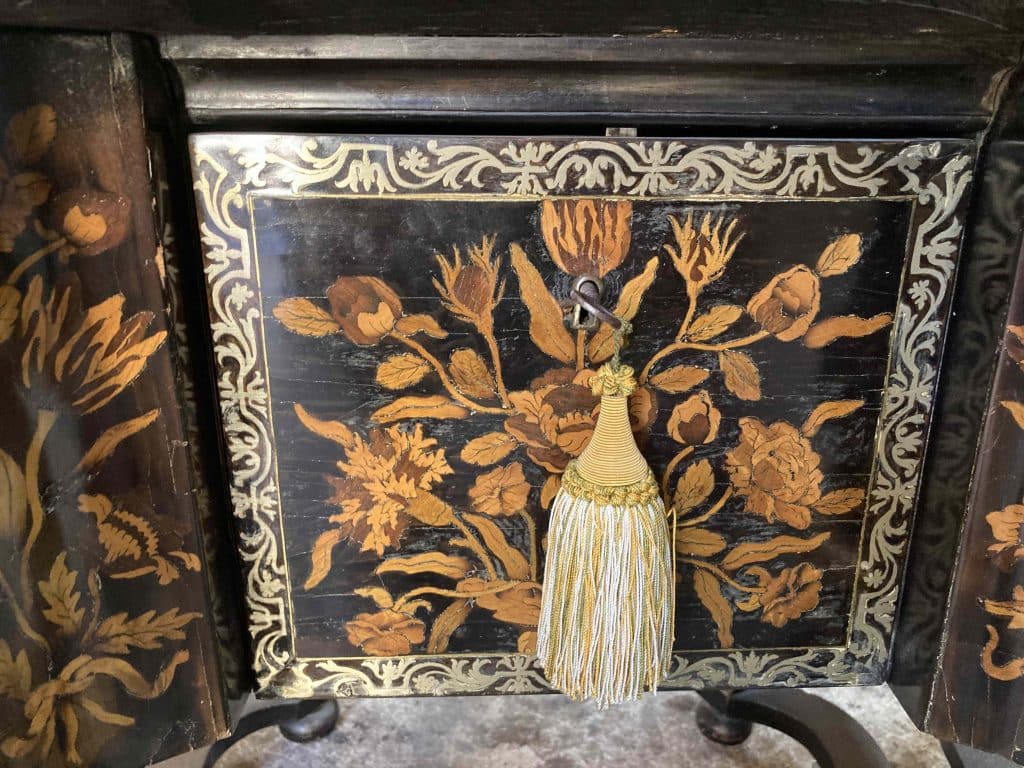
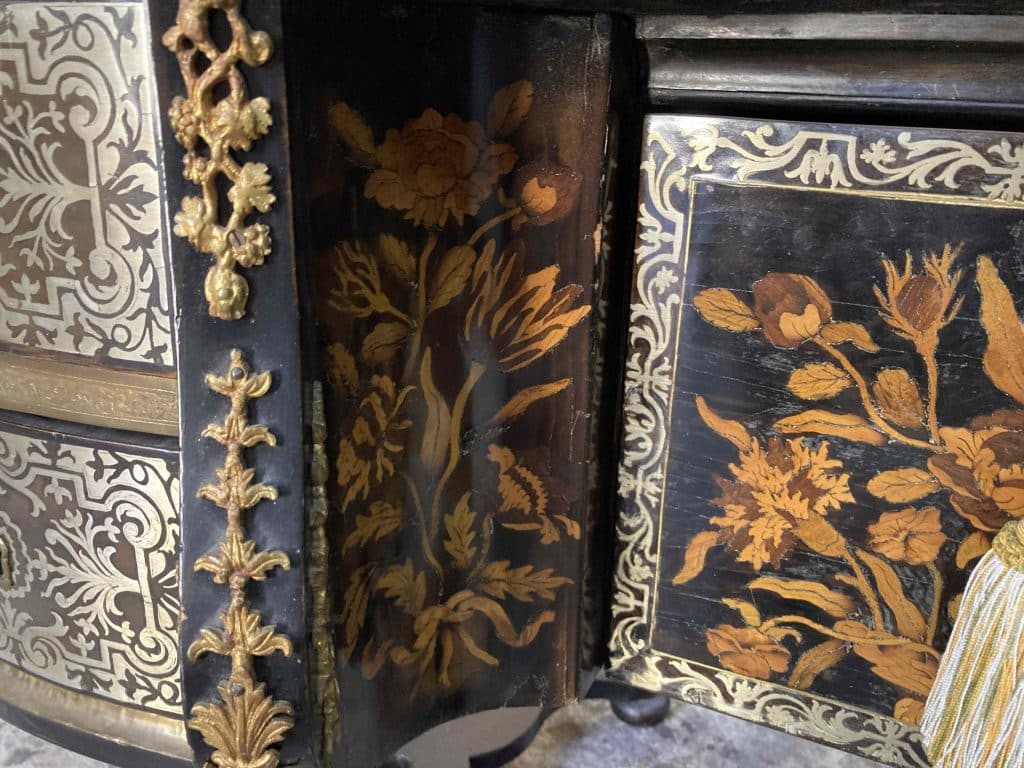
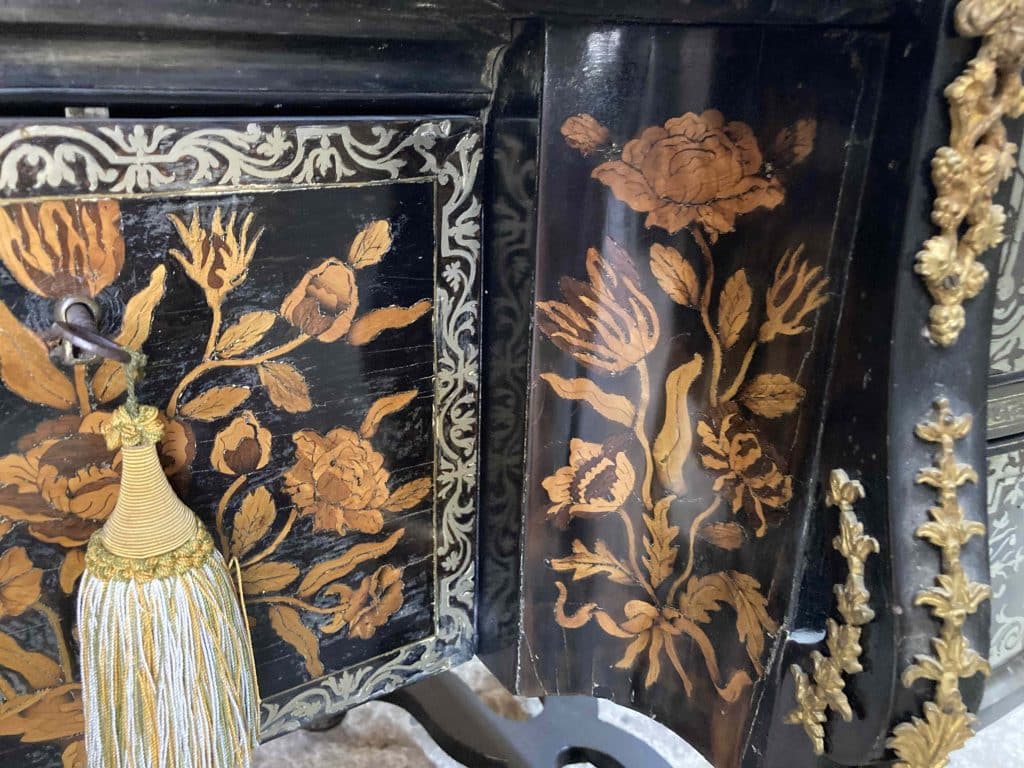
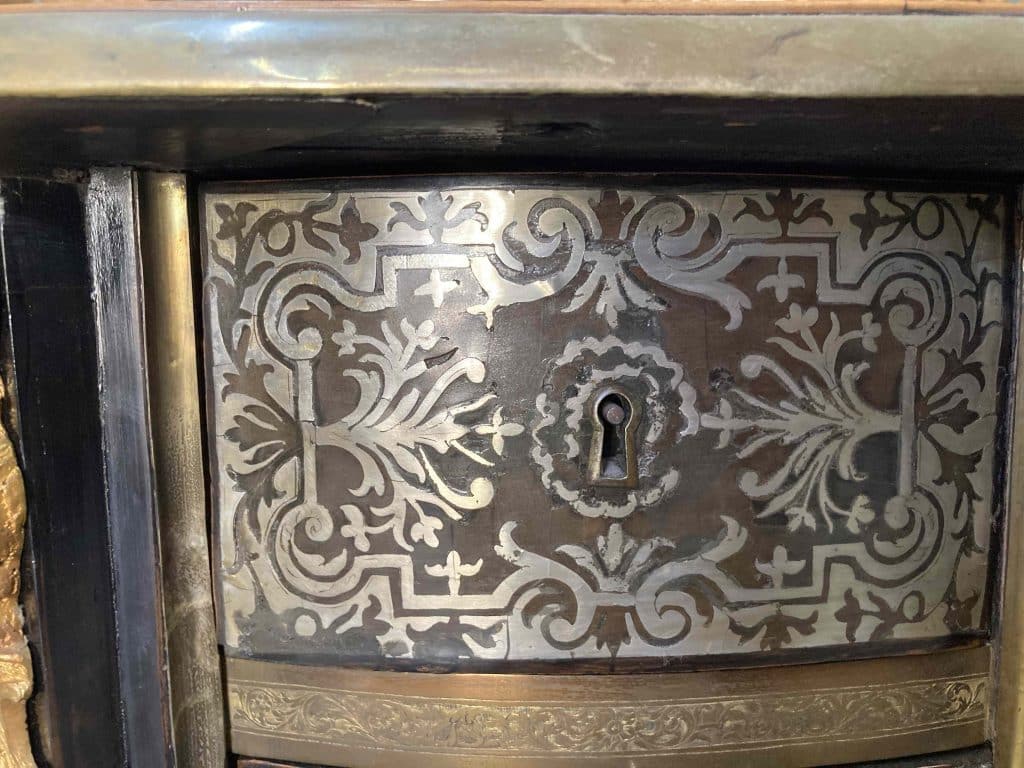
The Restoration
The restoration work took place in several stages.
- First step: the furniture was acclimated to a specific humidity level to ensure its future stability against humidity variations. This step took place over a period of two months to stabilize the furniture at a humidity level of 50%.
- Dismantling of the bronzes
- Removal of the tabletop and dismantling of the foot brackets. This step went without a hitch. As the old adhesives were severely dehydrated, a simple levering motion was all it took to detach these structural elements.
- Re-hydration of the tray adhesives by vacuum infiltration.
- Rehydration of the marquetry on the front of the drawers by vacuum infiltration.
- Restoration of a tin element, of threads.
- Removal of side panels.
- The slots are braced with a piece of solid wood covering two-thirds of their thickness.
- Re-gluing and re-attaching marquetry.
- Dismantling of the base and upright brackets.
- Restoration of the cherry wood uprights.
- Creation of new marquetry in veneer of blackened pear wood, tin, boxwood, amaranth, espenilla, maple and green-stained maple.
- The marquetry is glued with hot glue and the fillets are inlaid.
- Re-gluing the tabletop after adjusting the drawers.
- Re-gluing the base after cleaning the bronze parts.
- Cleaning and stripping
- Staining of the base and oxidation of the new veneers
- Finished with a matte, colorless wax-based French polish.
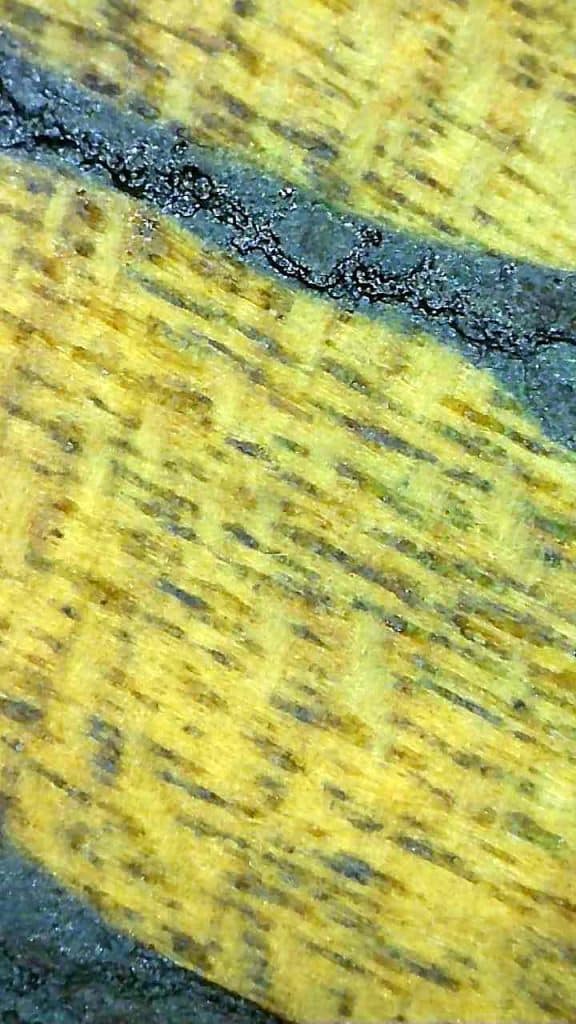
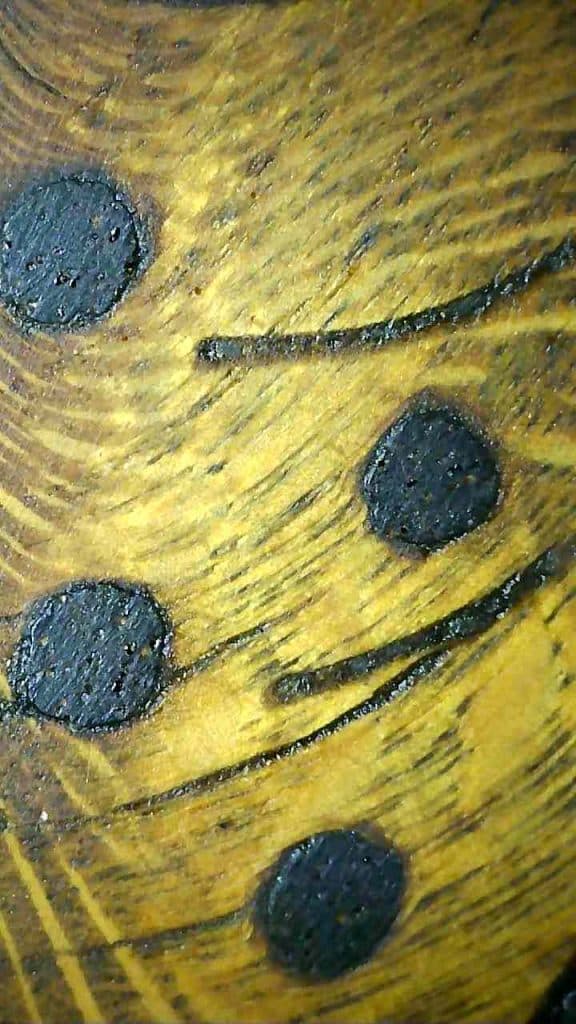
Barberry (Berberis vulgaris)
Barberry is a thorny, deciduous shrub with reddish wood and rapid growth. Reaching 1 to 4 meters in height and 30 cm in diameter, it is very hardy and requires virtually no maintenance. Its bark and roots were long used for dyeing to obtain a yellow color. This species is almost impossible to find today because it is suspected of being a vector of black rust in cereals and has been systematically uprooted since the beginning of the 20th century.
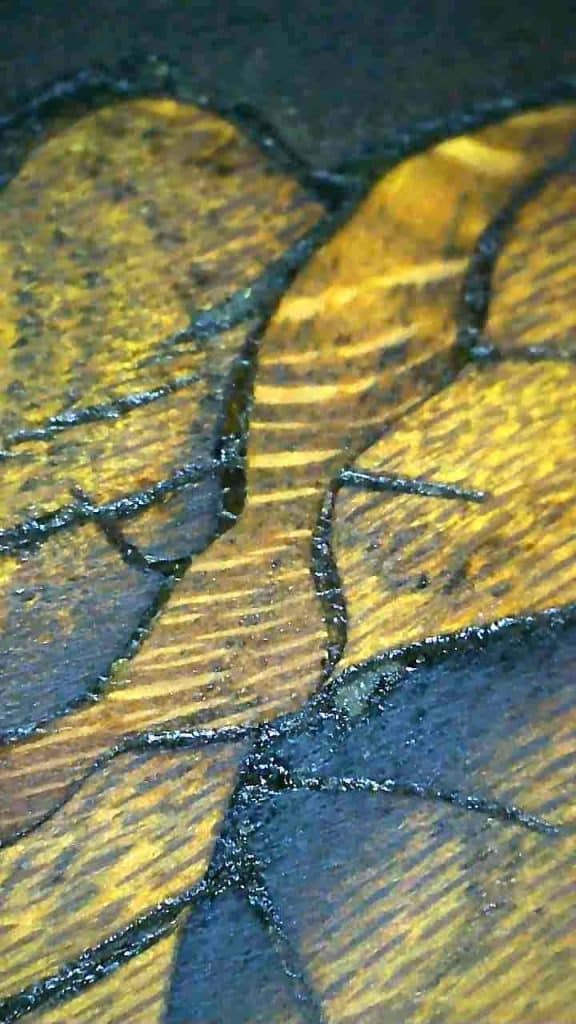
It is an easily recognizable species, because it is often the end wood of the roots that was used (see microscopic feet below).
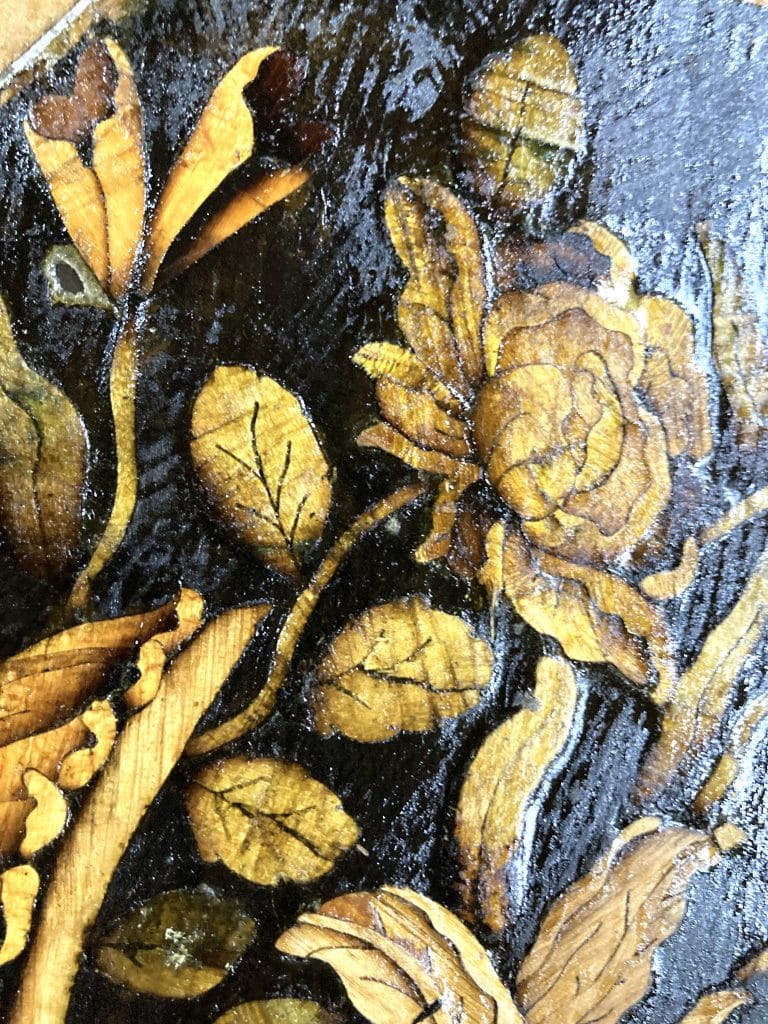
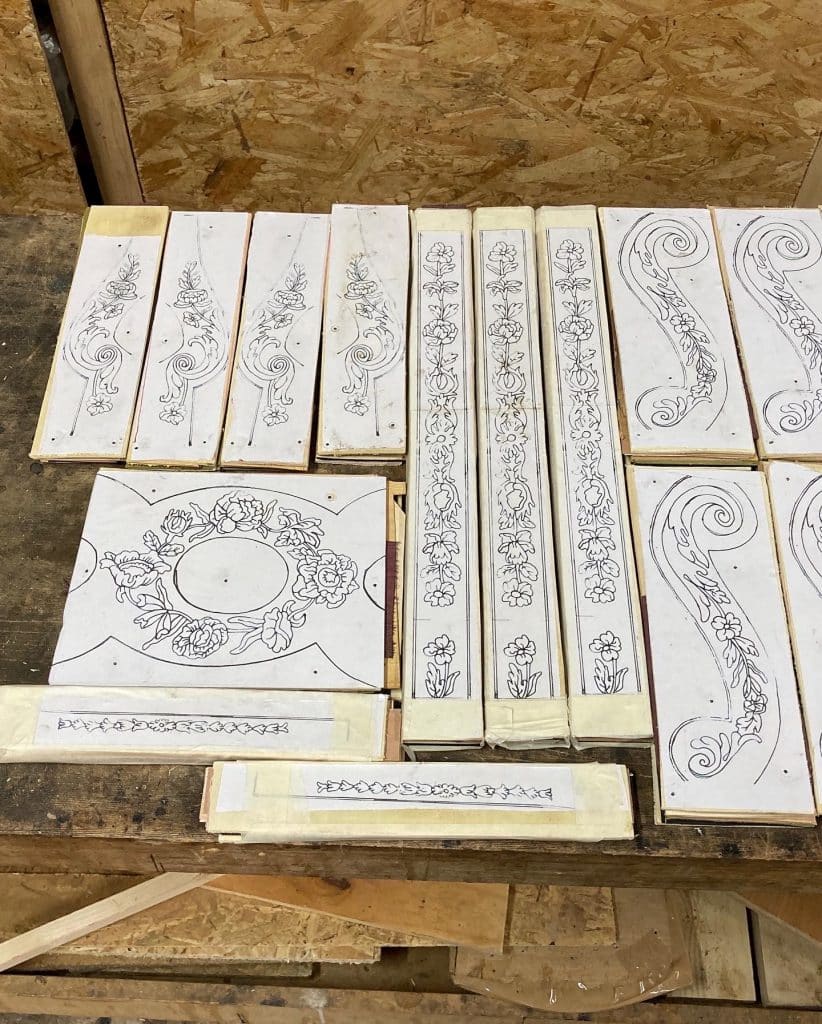
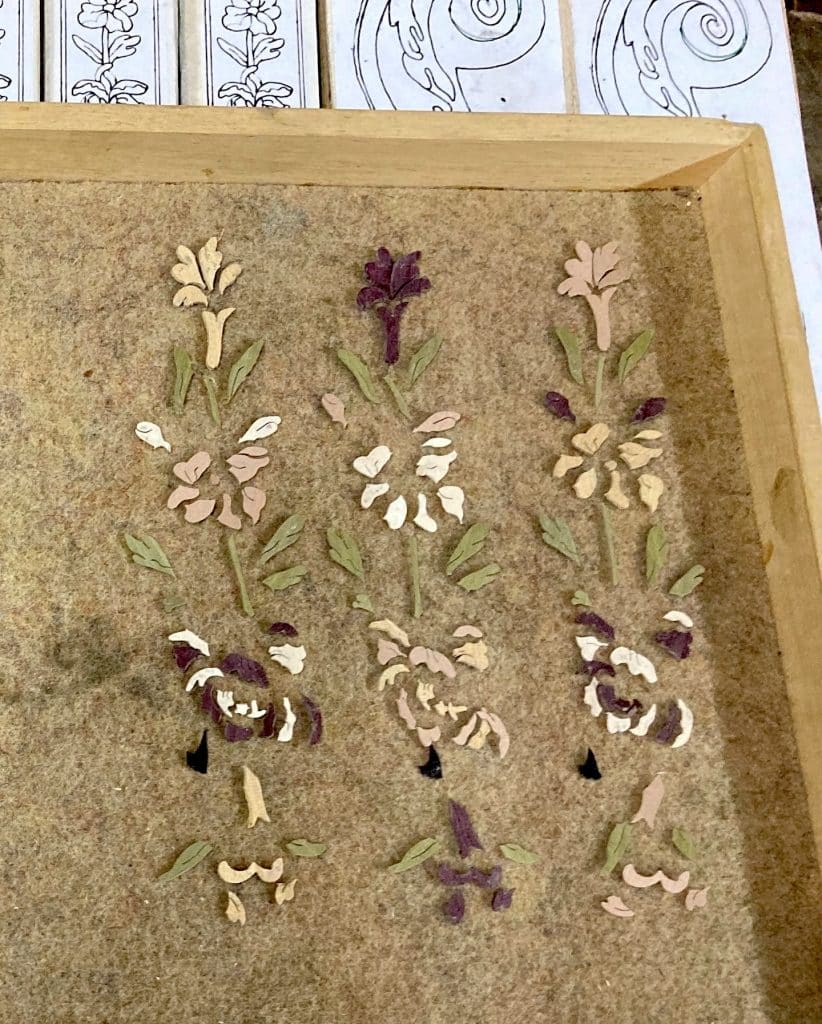
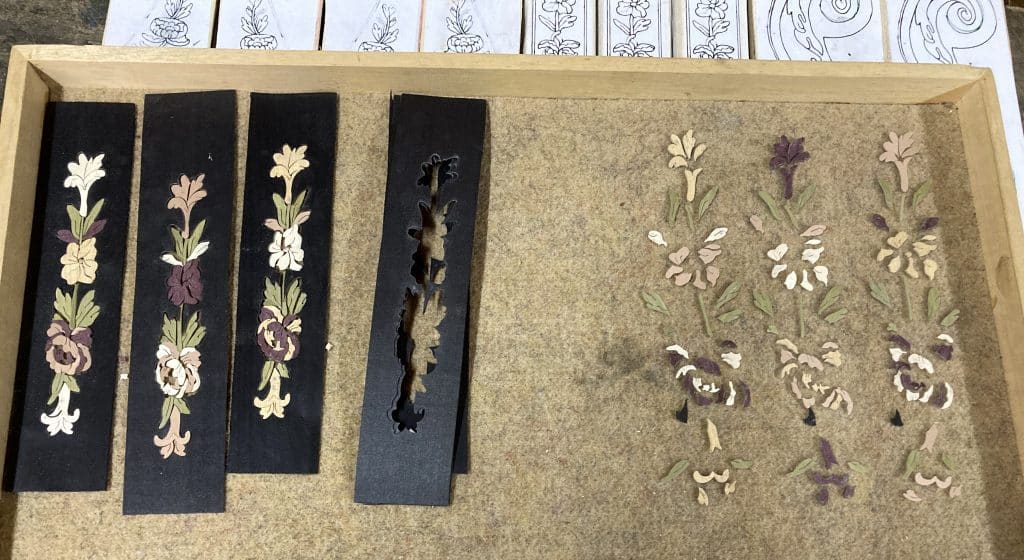
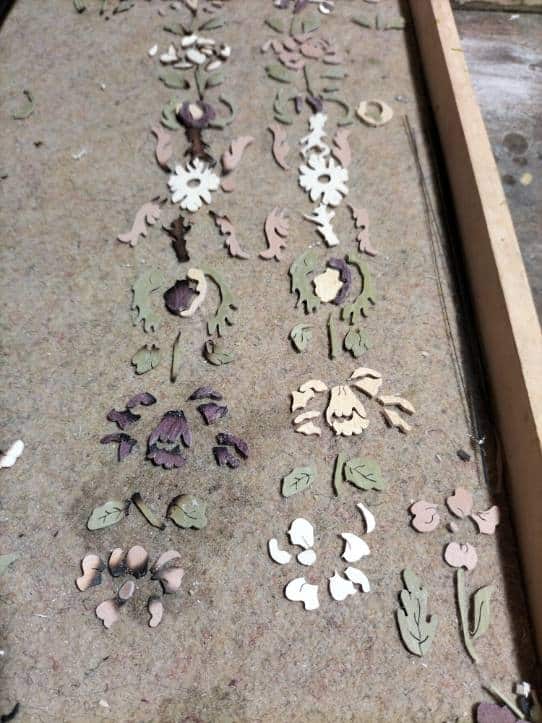
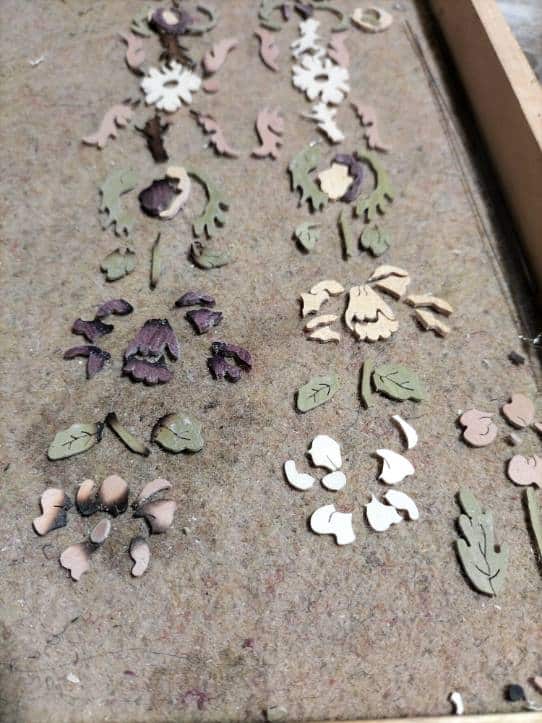
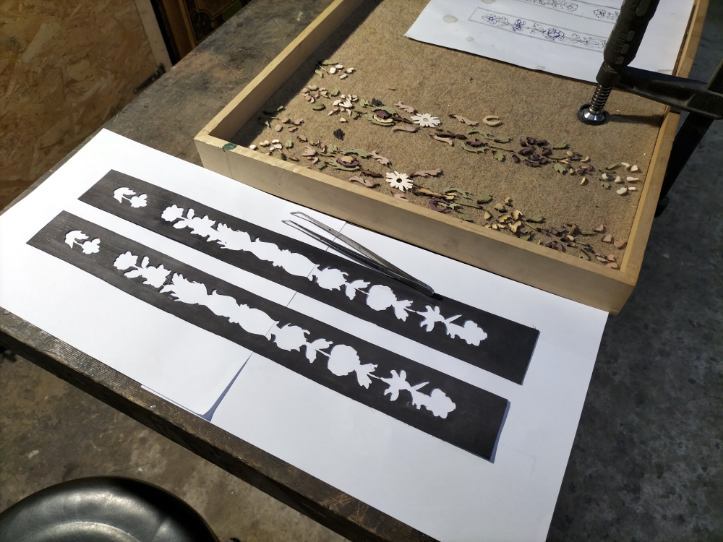
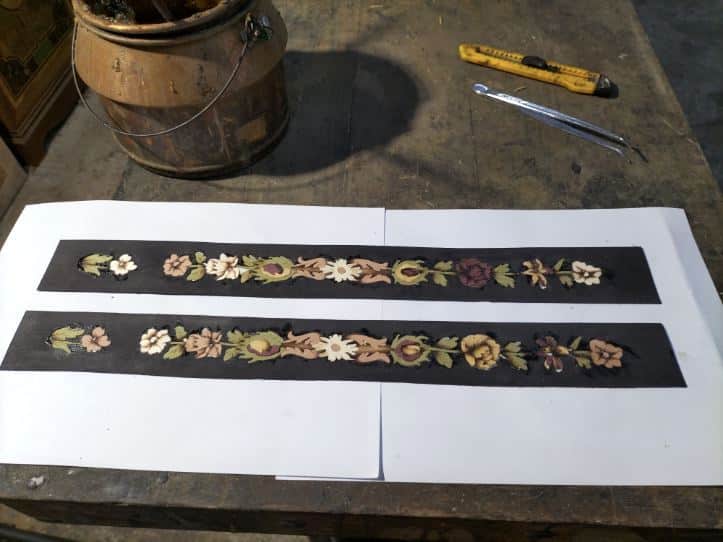
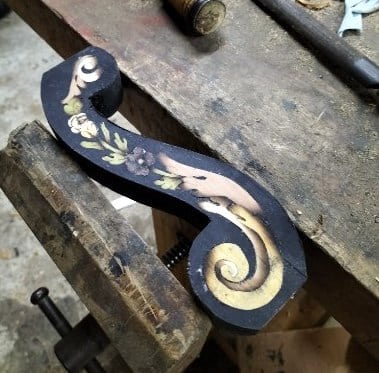
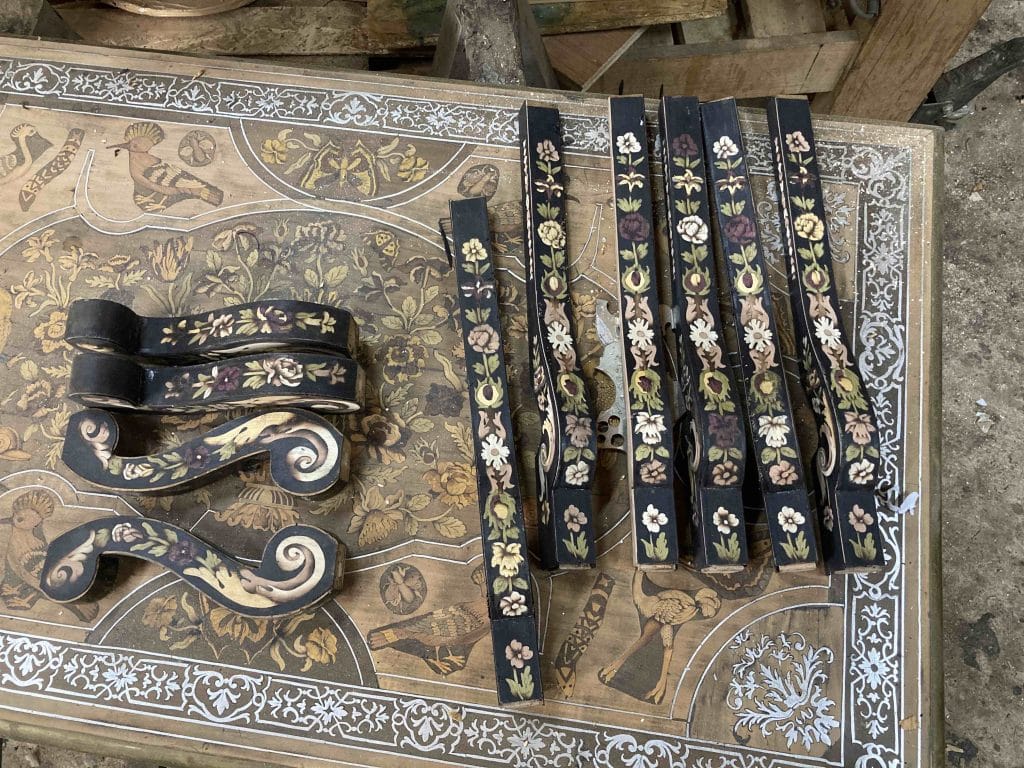
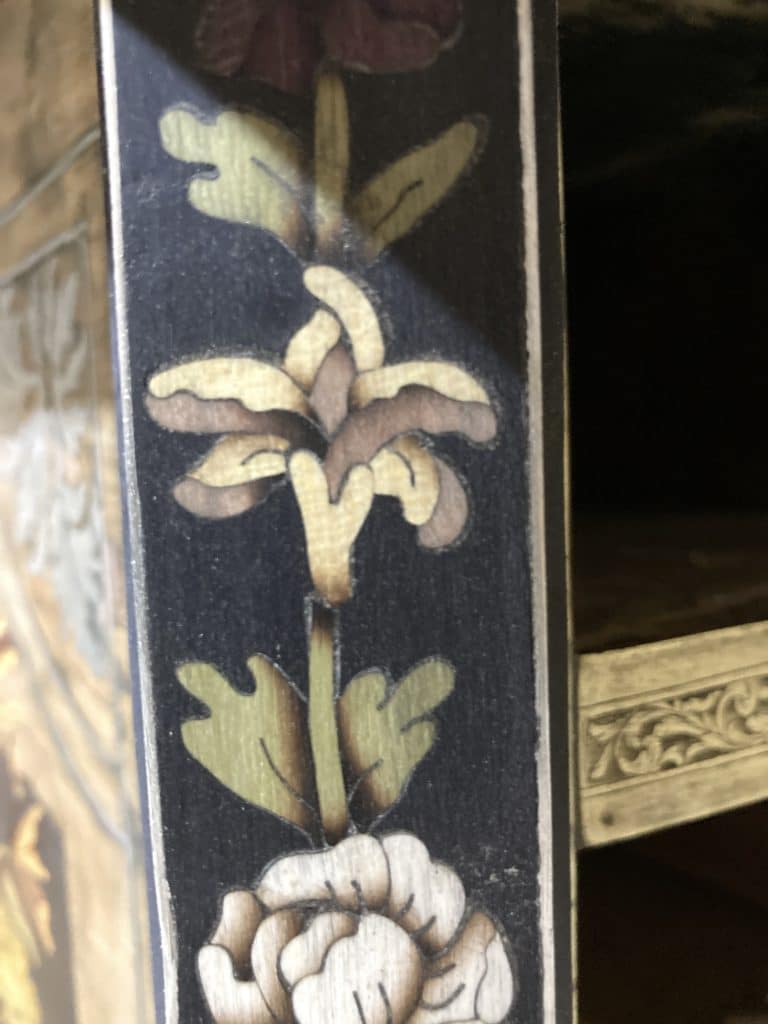
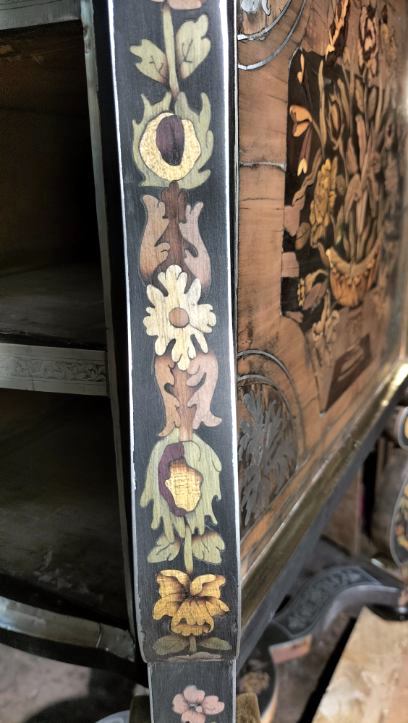
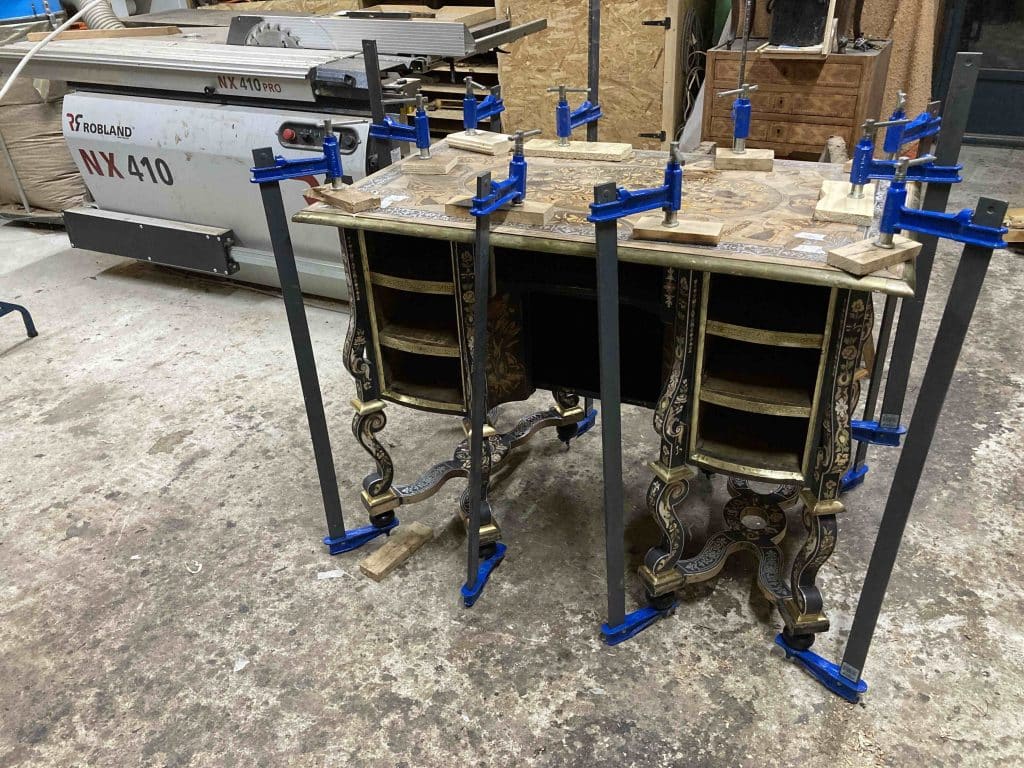
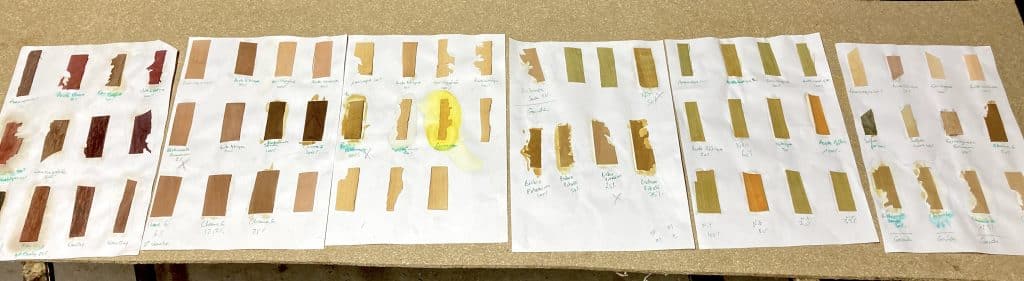
It was a long and challenging process, full of questions. Indeed, I was stepping outside my usual work of restoration and conservation. Should the base be kept, or modified? Which elements should be reproduced, and what inspiration should I draw upon? It was a lengthy process of discussion, in collaboration with my client, of course, but also with my colleagues. I can't claim to have chosen the right solution. The marquetry choices (flowers, leaves) are, with a few exceptions, copies of elements found on the piece of furniture. Is the proportion of wood/pewter marquetry correct?
But it's all about compromise. The new marquetry pieces have been oxidized a shade darker than the existing ones, making them easily identifiable. The aim isn't to deceive by suggesting the base is original, but rather to subtly emphasize that this is an interpretation of what it could have been. I want to thank Noémie for her help during her internship. I hope the shading in the marquetry is starting to come together.
To see previous restorations : https://ebenisterie-mathieuvath.fr/en-ce-moment-a-latelier/
That's amazing! Thank you for sharing these images!
Well done
THANKS
Wonderful! Regardless of the era, whether it's a new creation or a restoration, it leaves one speechless. As a little girl, I would spend hours in awe of furniture like this one, displayed at an antique shop on the Croisette in Cannes. My admiration remains unchanged. Thank you for this illustrated explanation.