
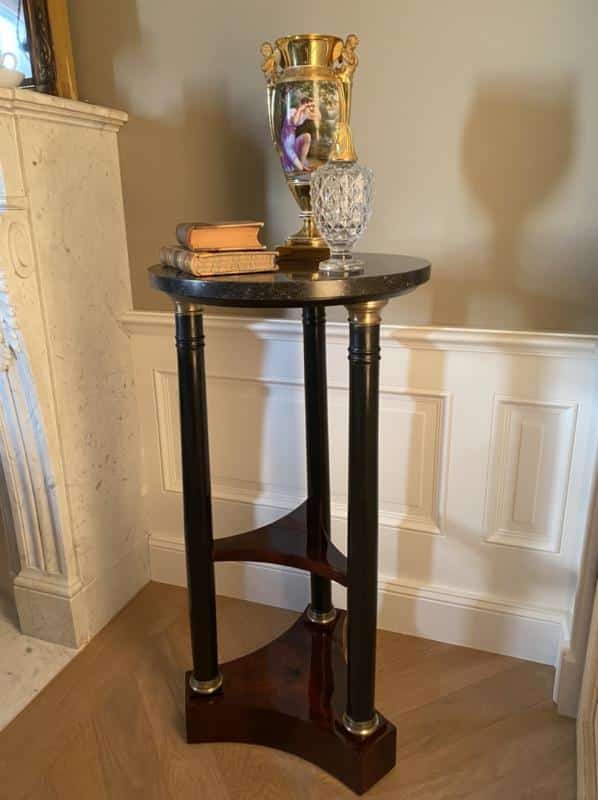
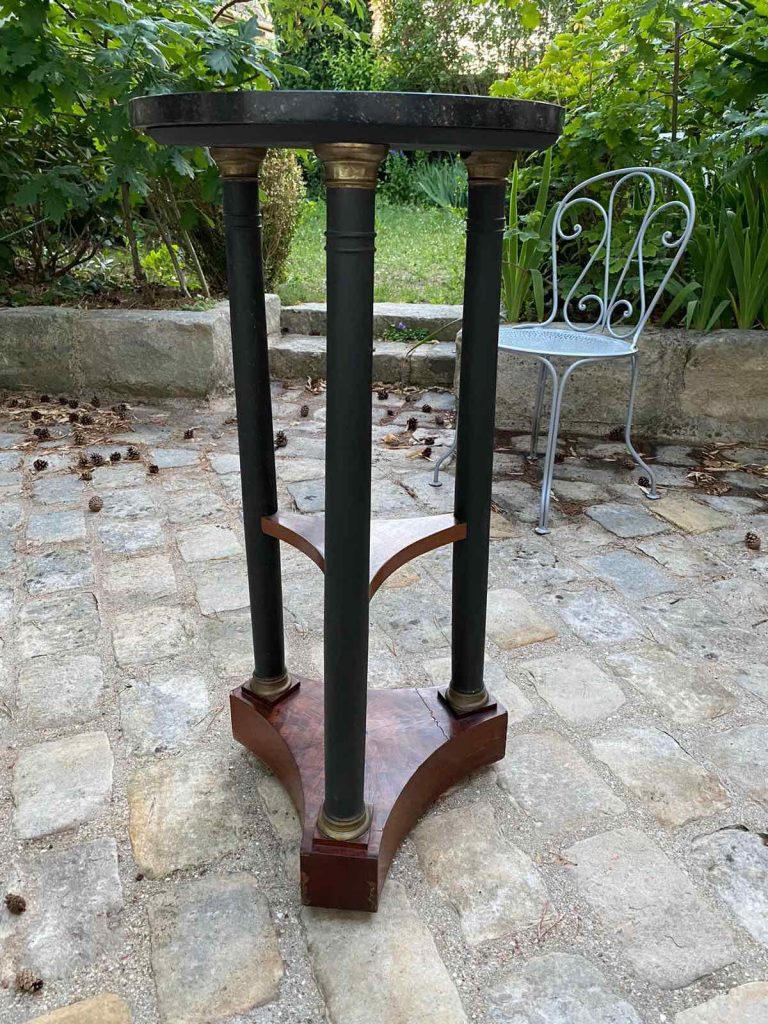
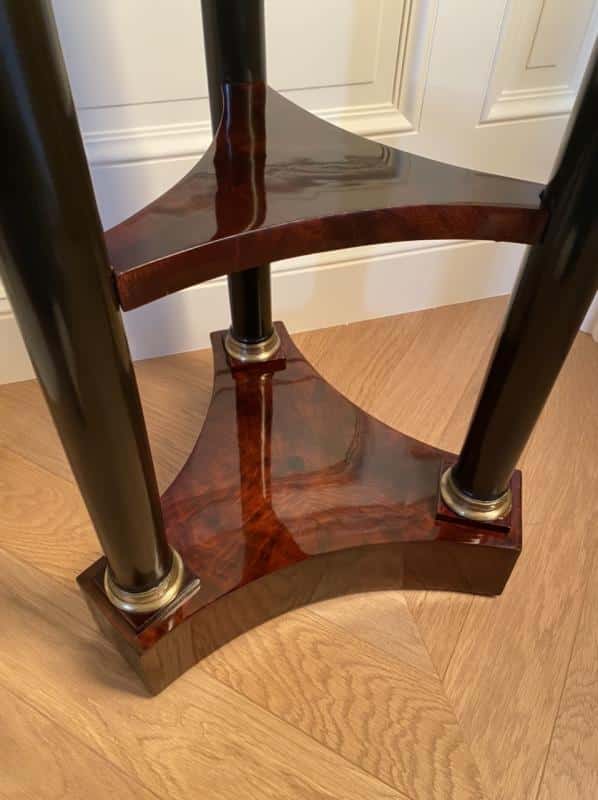
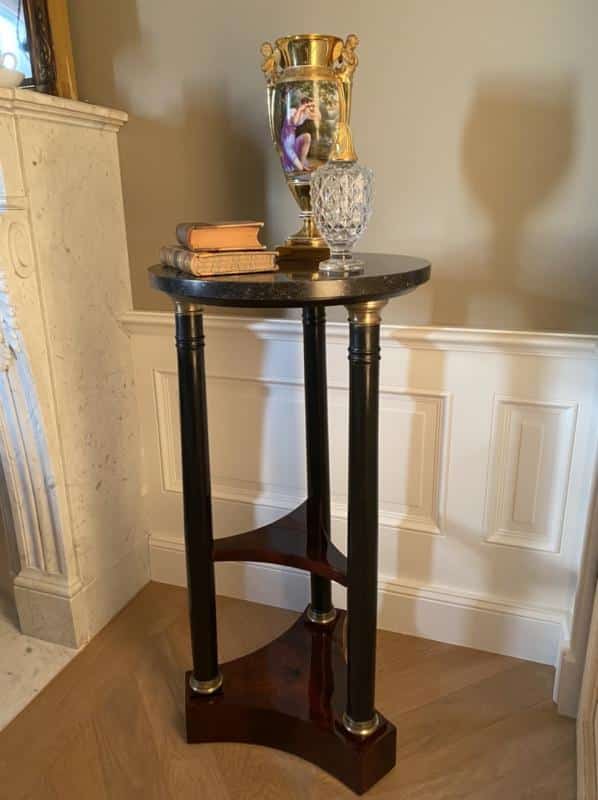
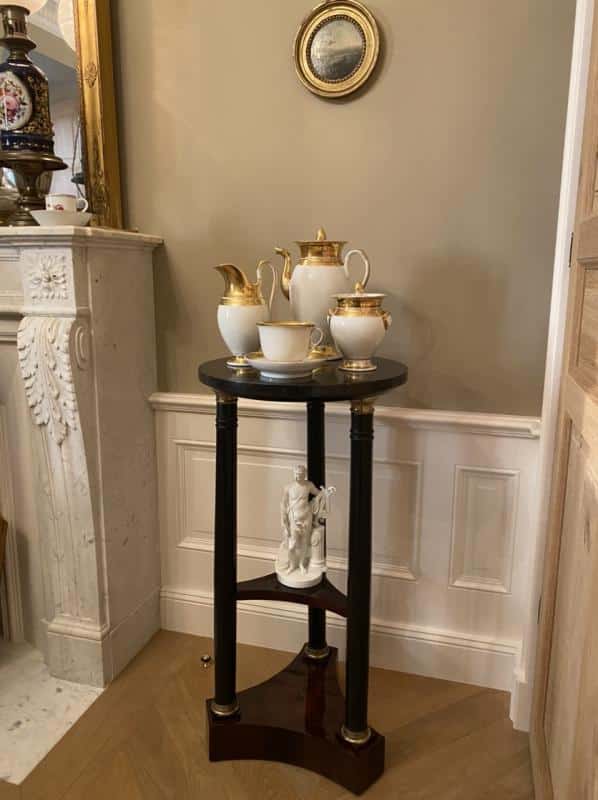
Restoration of a walnut pedestal table (for the legs and structure) with flame mahogany veneer. It rests on three column-shaped uprights, surmounted by a circular black veined marble top adorned with bronze rings.
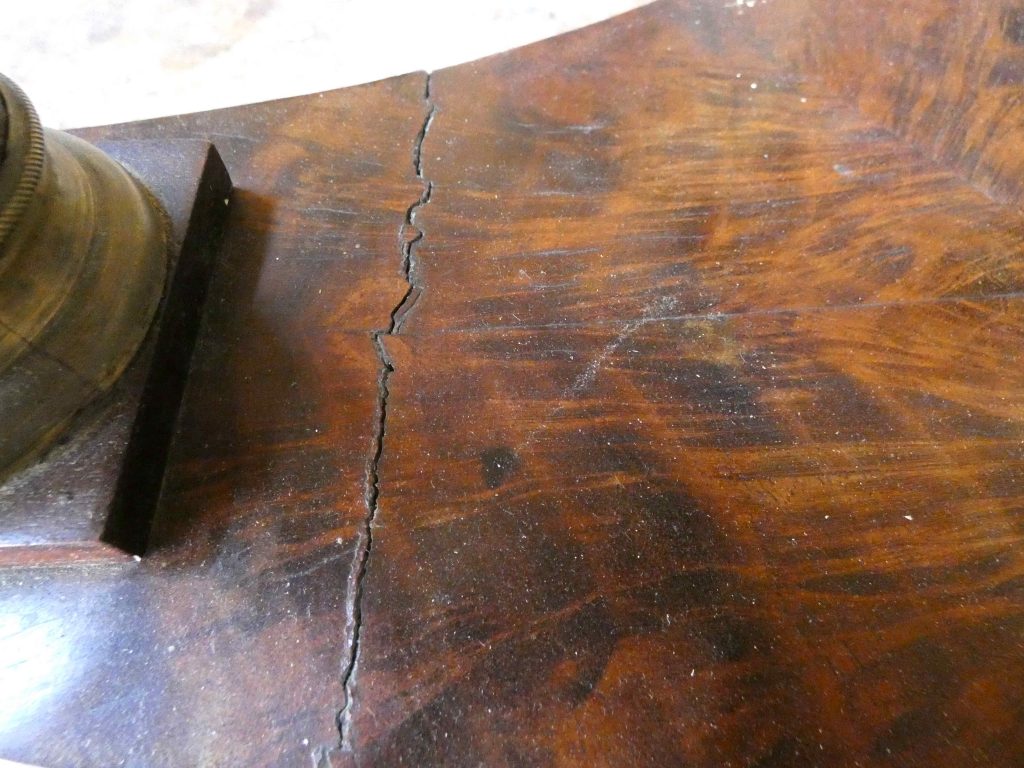
Crack on the plateau 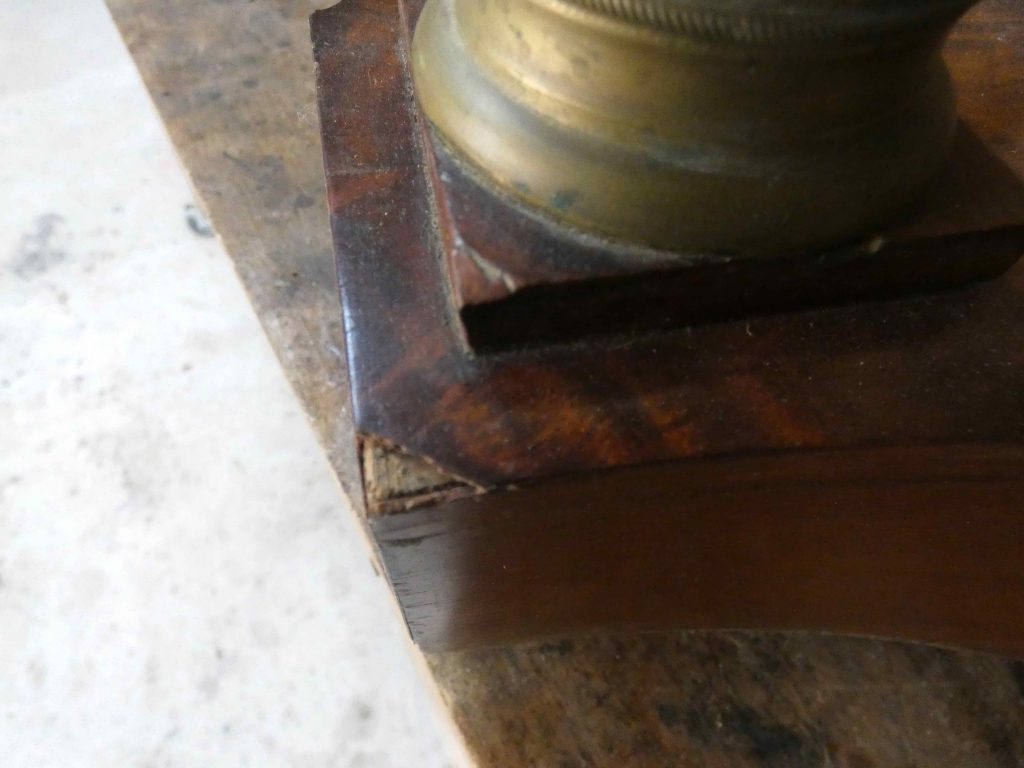
Veneer splinter 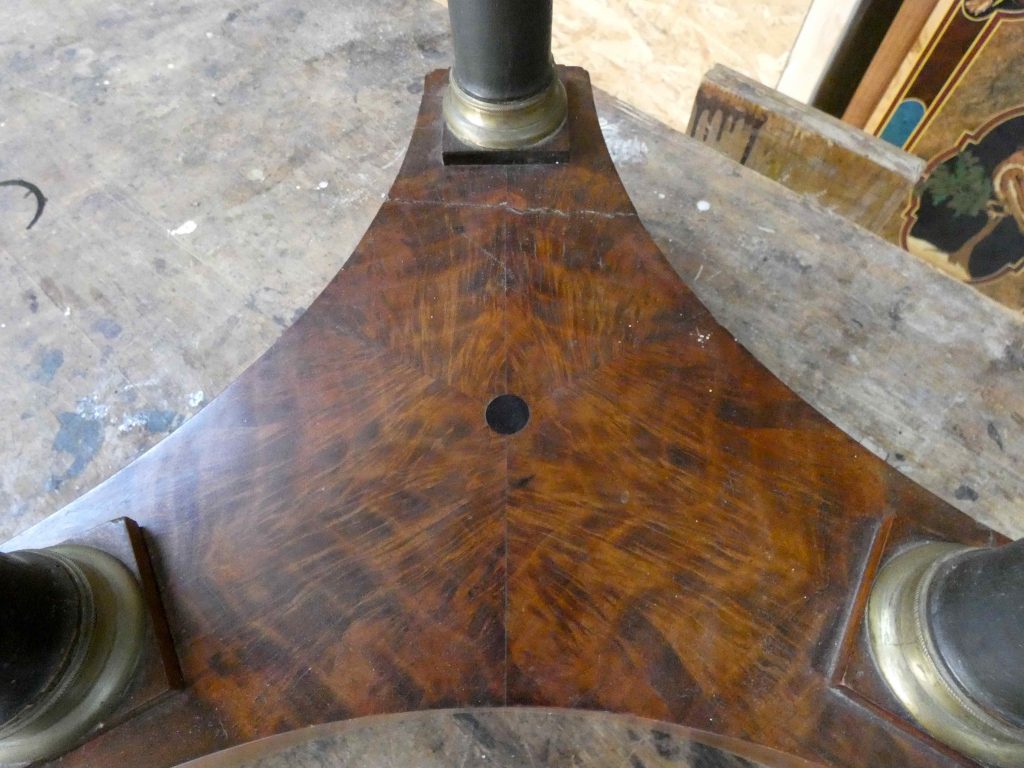
Lower plateau before restoration 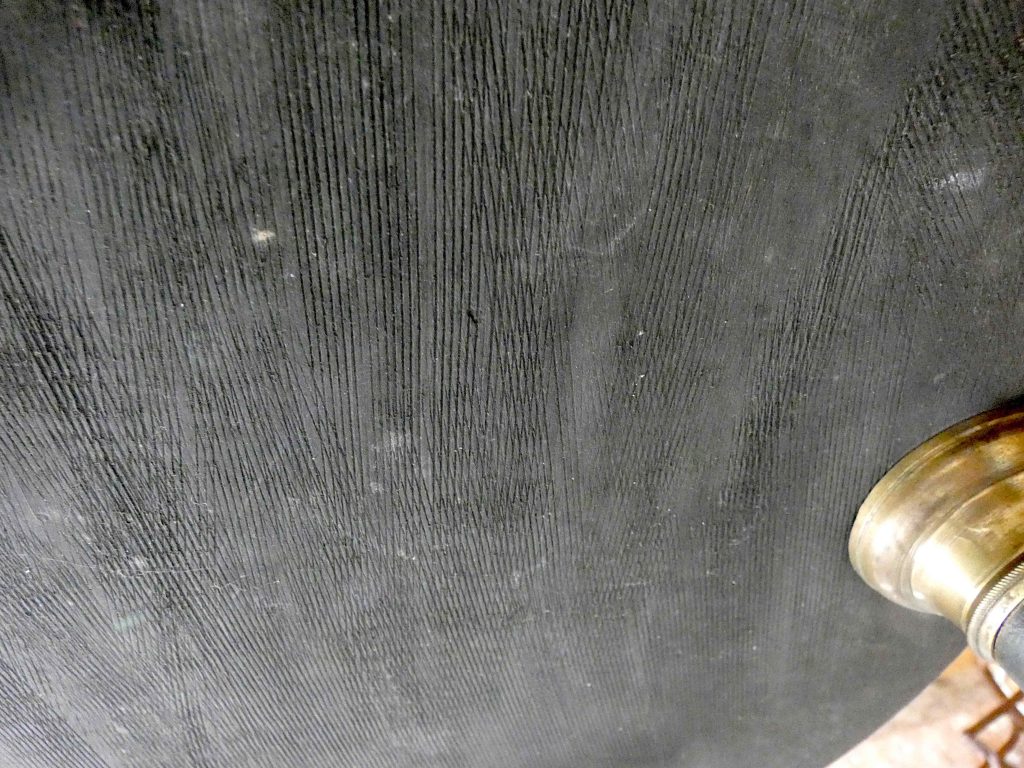
Toothbrush marks 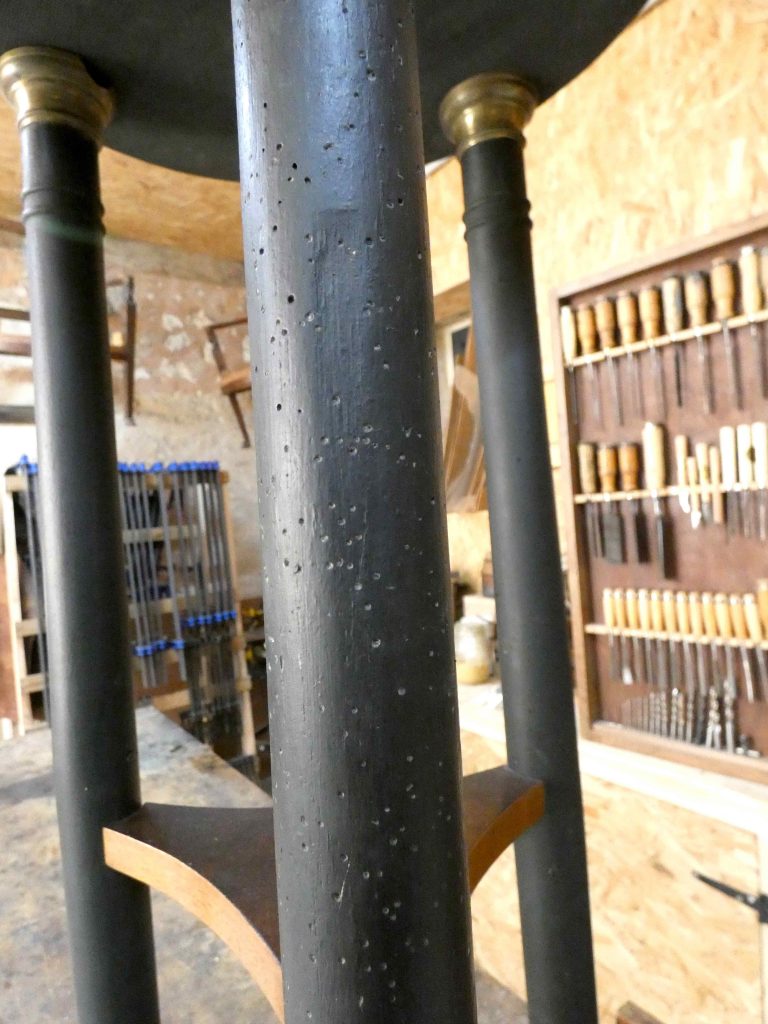
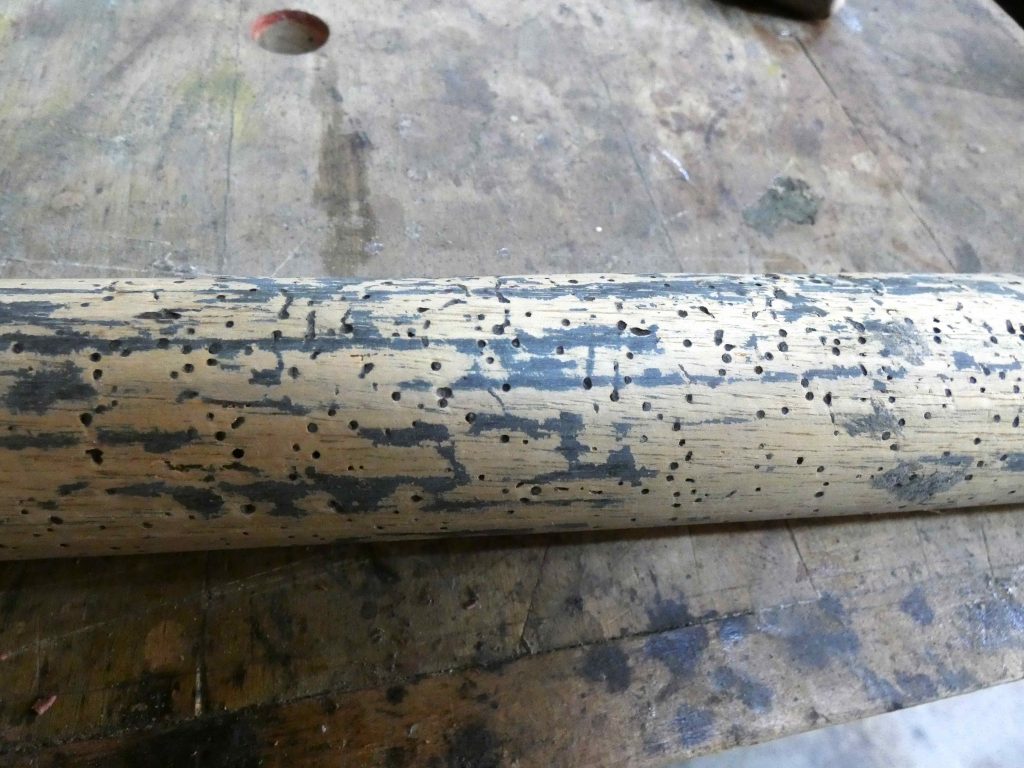
Column eaten away by wood-boring insects 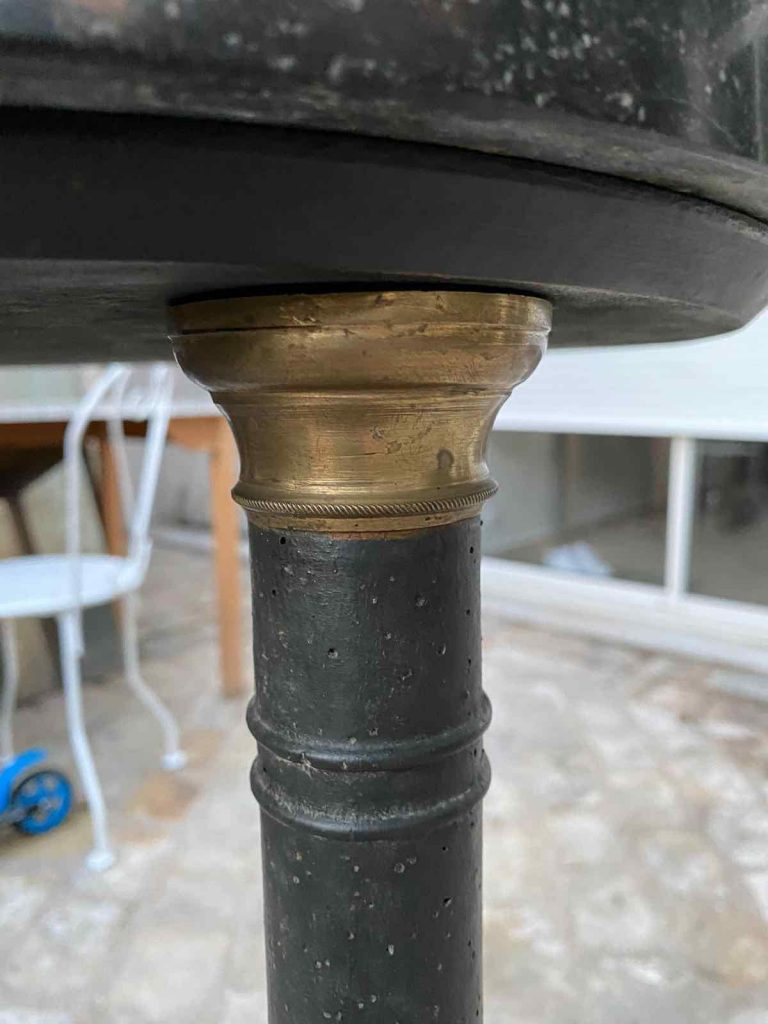
Before restoration
Its restoration consisted of tightening the base plate which was cracked, re-gluing the edge veneers and making some veneer grafts.
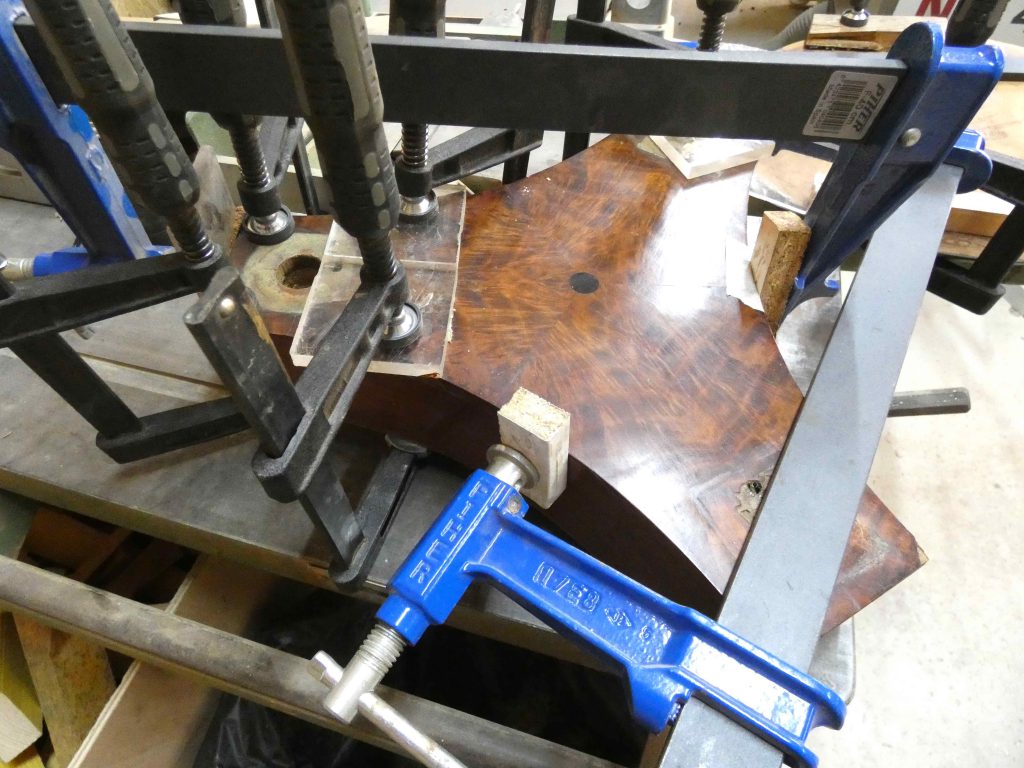
regluing the joints and the slot in the tray 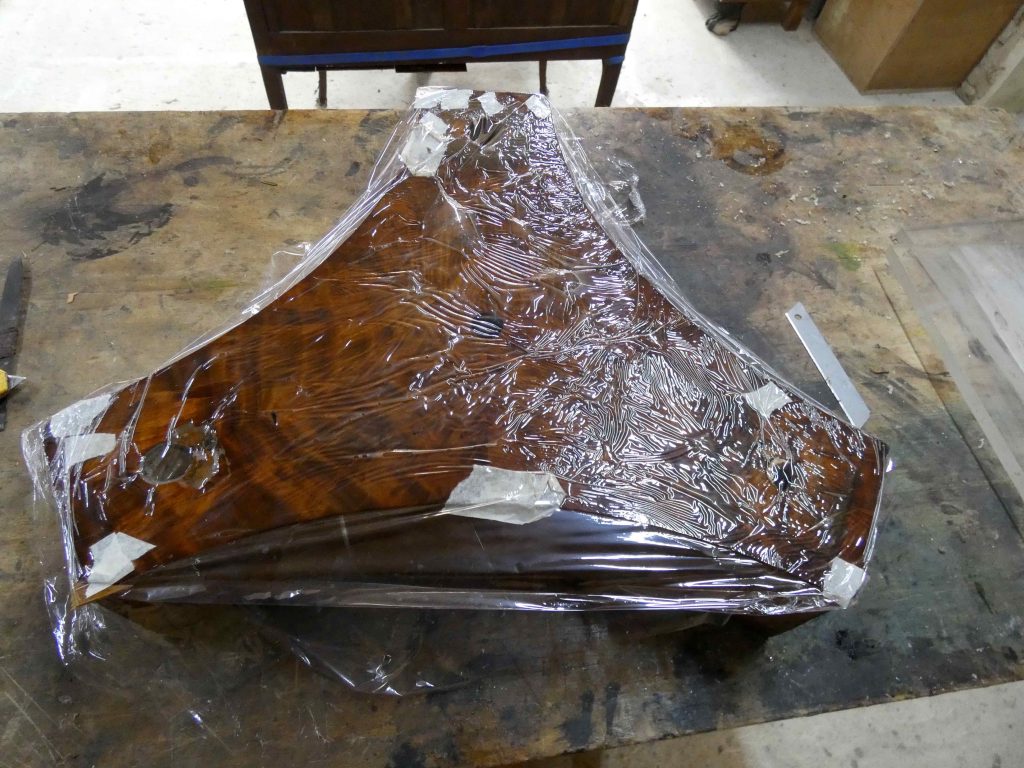
Glue was injected to reattach the veneer. 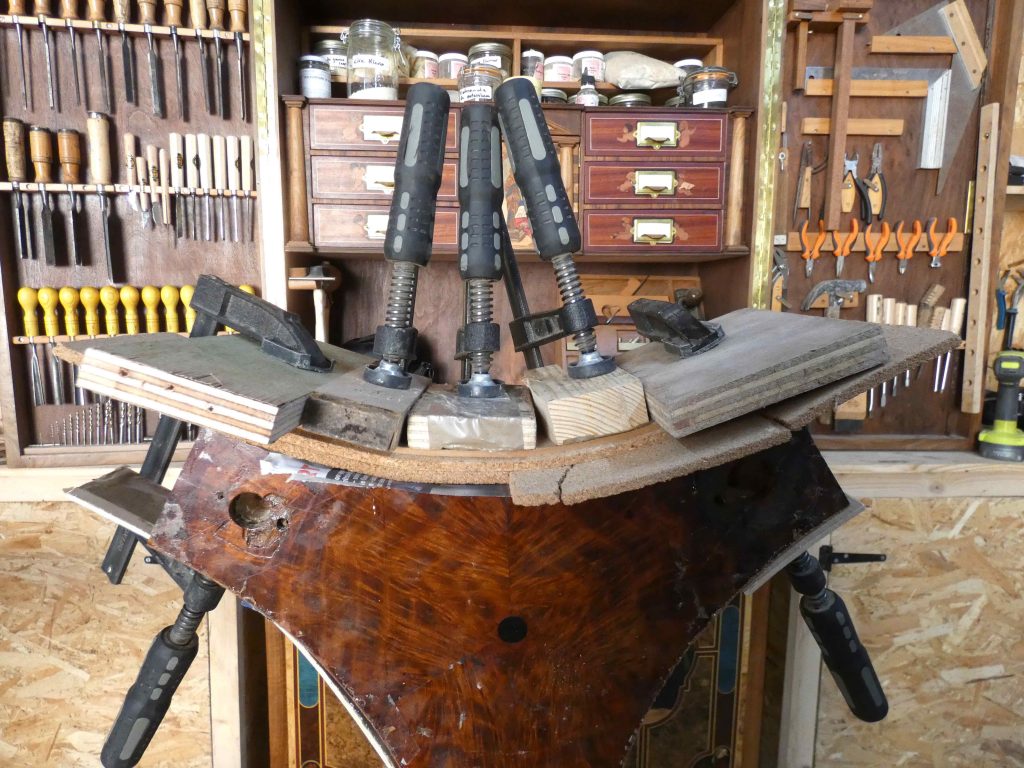
Regluing of edge veneers
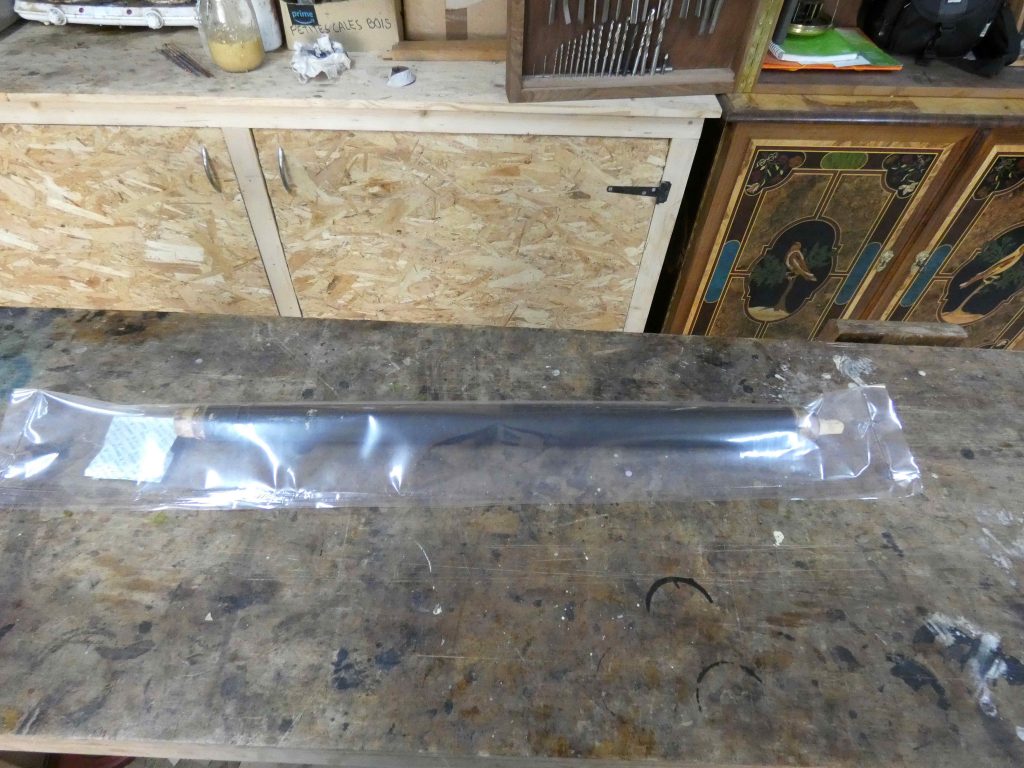
The columns, which were heavily infested with wood-boring insects, were stripped and then treated by static anoxia.
L'’static anoxia is a treatment insecticide by oxygen deprivation, also having an effect on metals by stopping oxidation processes.
It concerns any type of infested or protected object containing wood, fibers, cellulose or metals.
This treatment combats insect larvae, belonging to two main families: xylophages that eat wood (small woodworms) and keratinophages that attack fabrics (moths), paper (booklice or silverfish).
The process involves removing as much oxygen as possible from a sealed bag containing the object, then maintaining the object in this rarefied atmosphere using oxygen absorbers reduced to the required levels.
It's an extremely effective method and above all non-harmful unlike liquid insecticides.
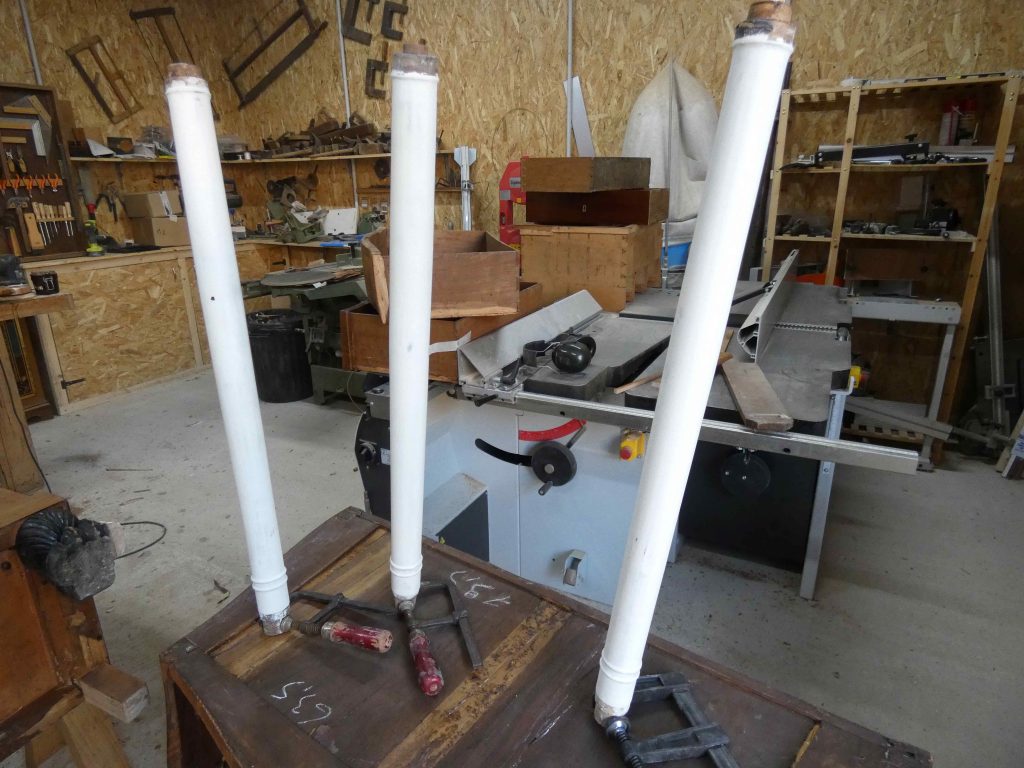
Once treated, I made a traditional lacquer based on hide glue and natural pigments.
The mahogany veneer elements were French polished.
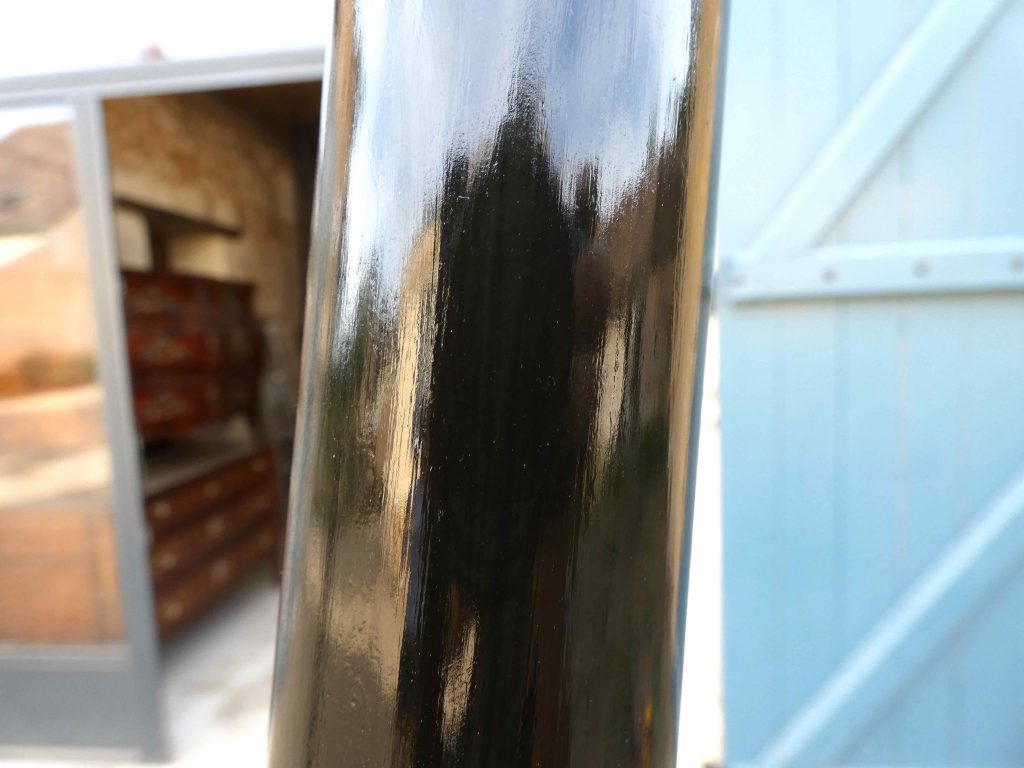
The brushstrokes are still visible 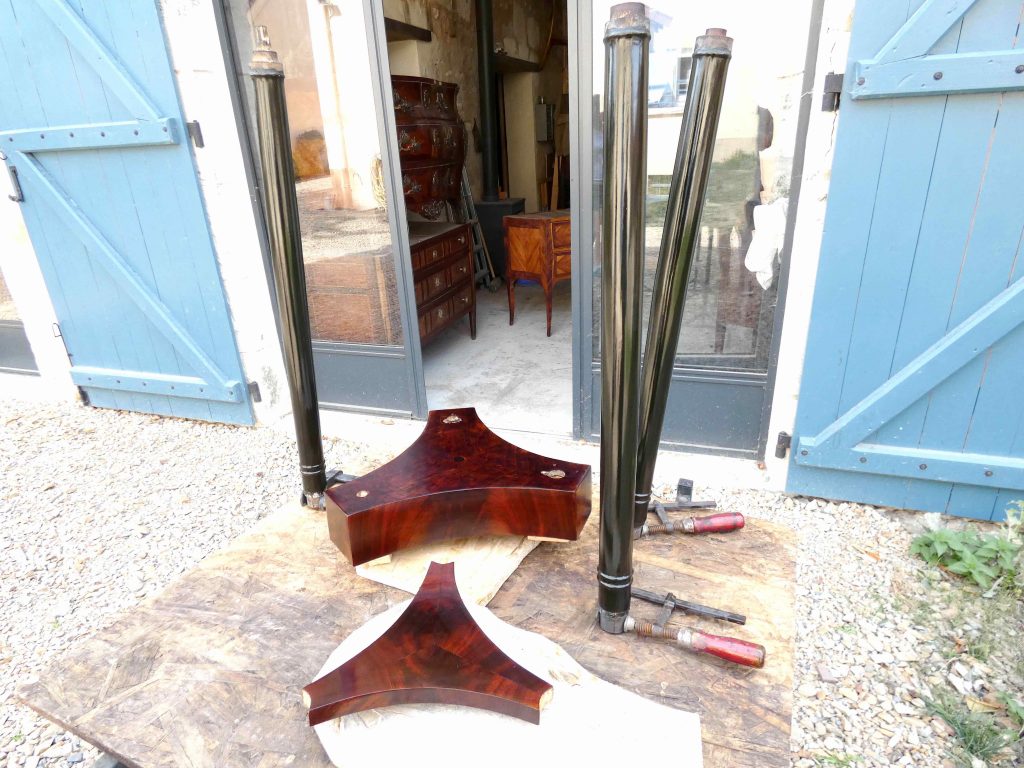
Currently being varnished and lacquered
When the finishing was complete and after cleaning the bronzes, I re-glued the entire stand with fish glue.
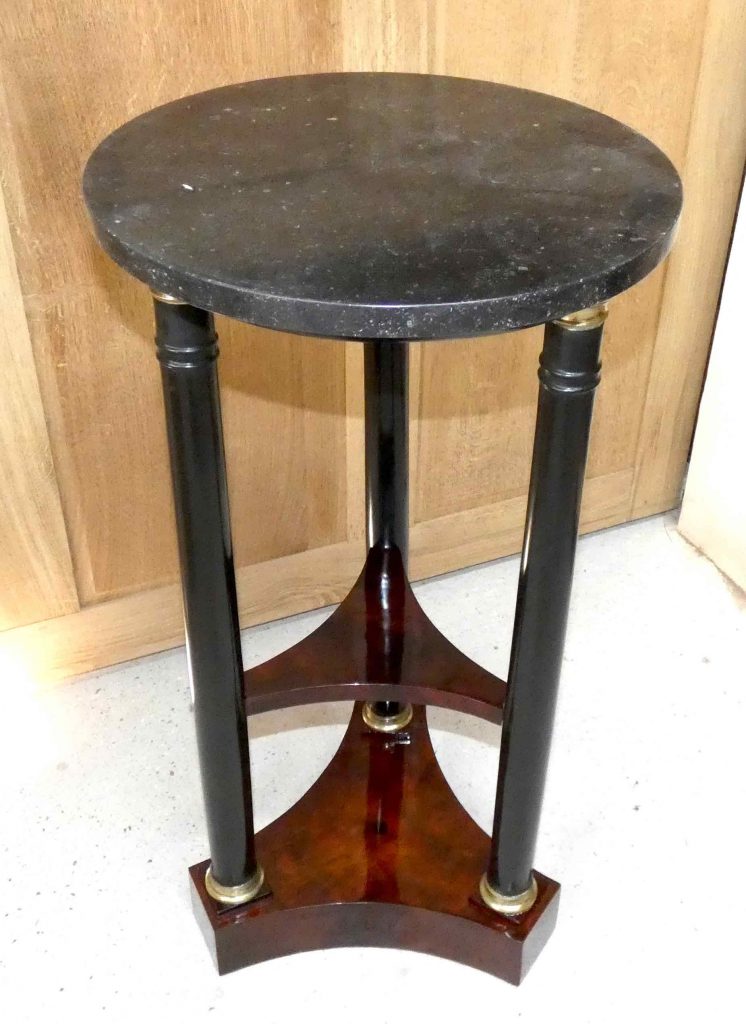
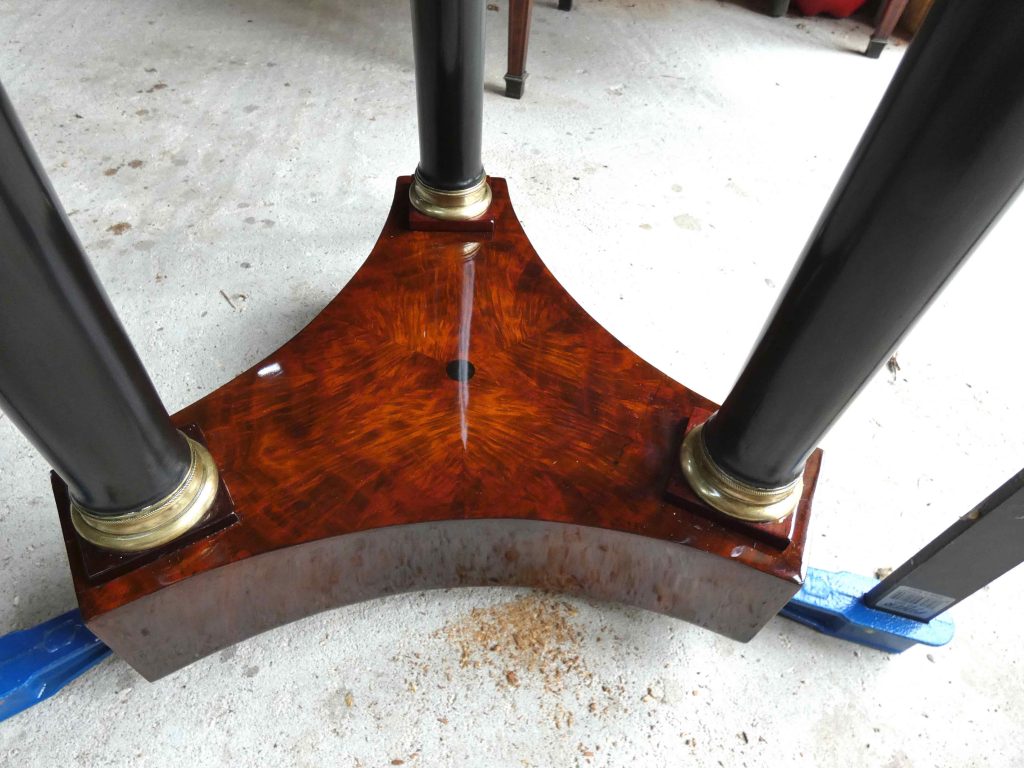
After restoration 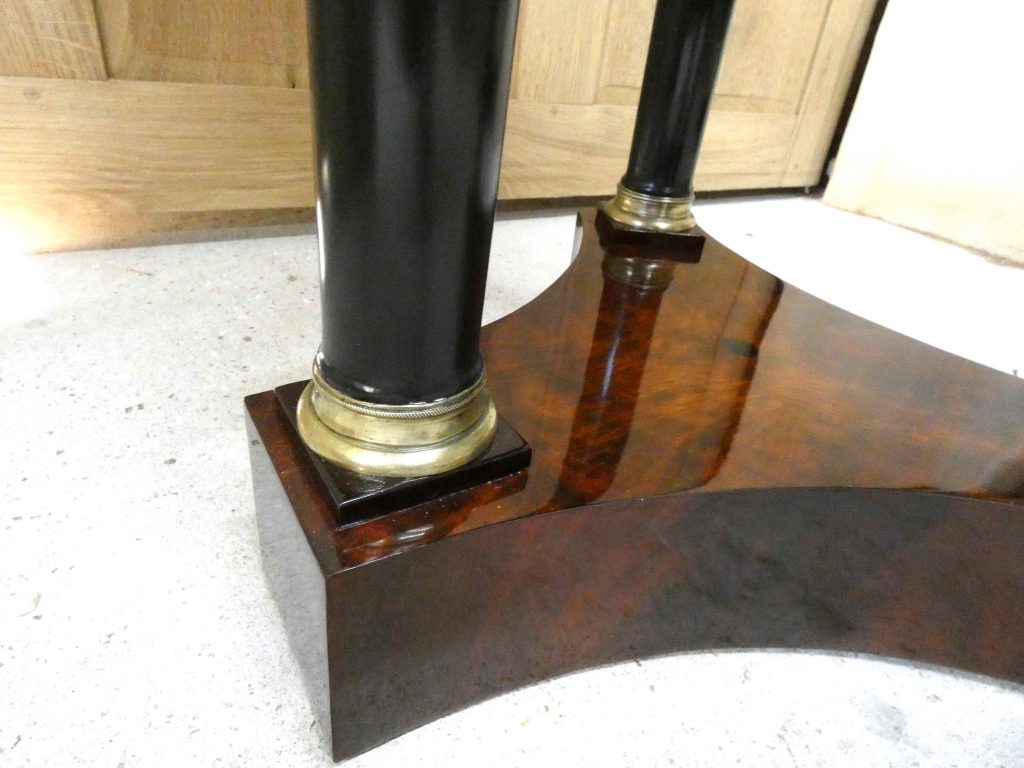
After restoration 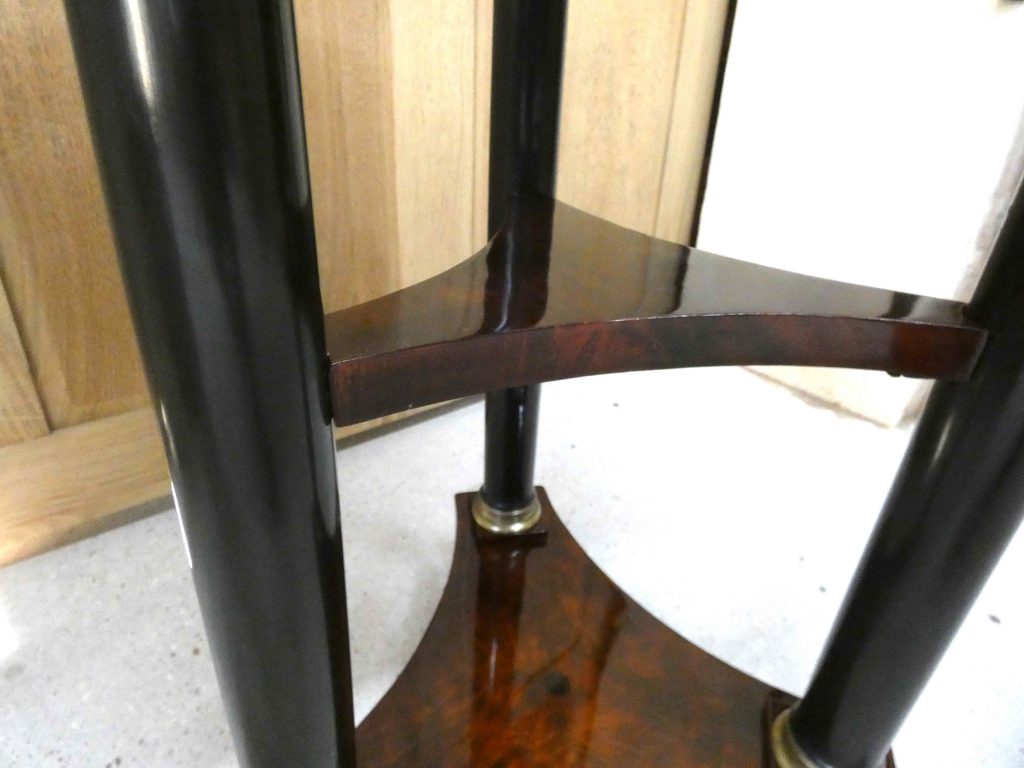
After restoration 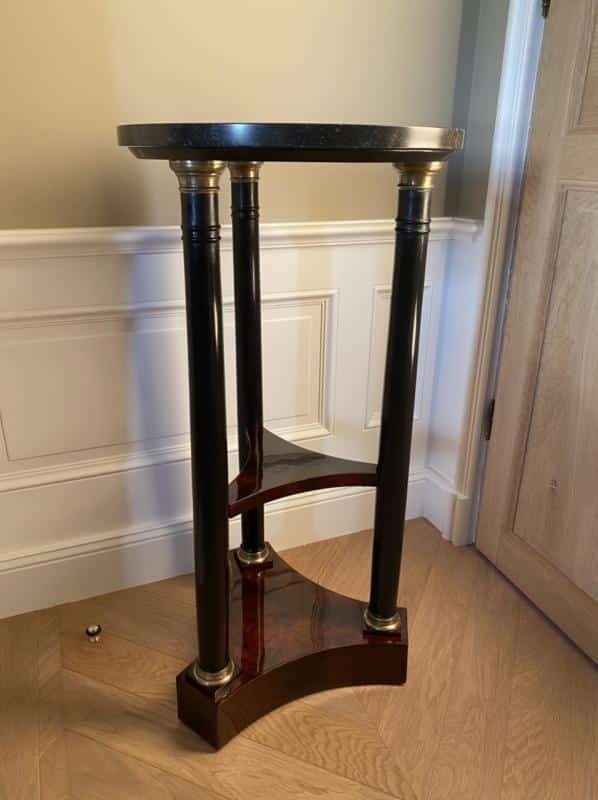
To see previous restorations : https://ebenisterie-mathieuvath.fr/en-ce-moment-a-latelier/
i love this outstanding article