
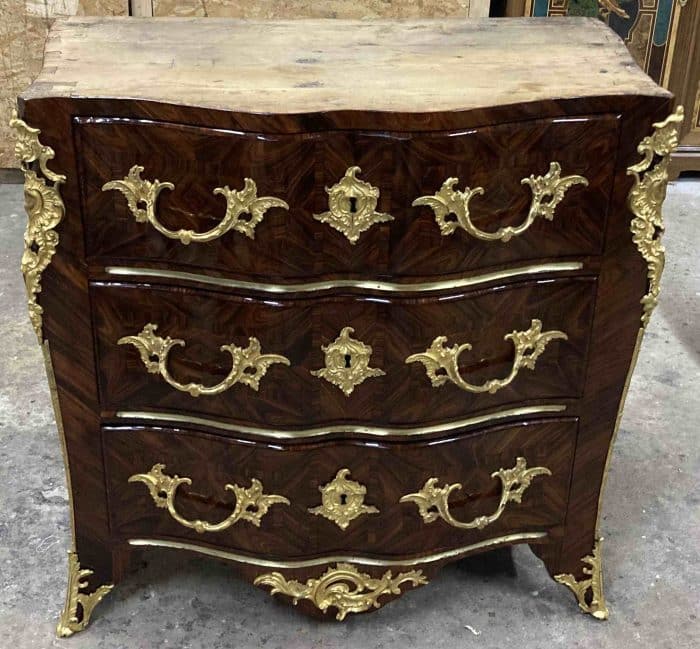
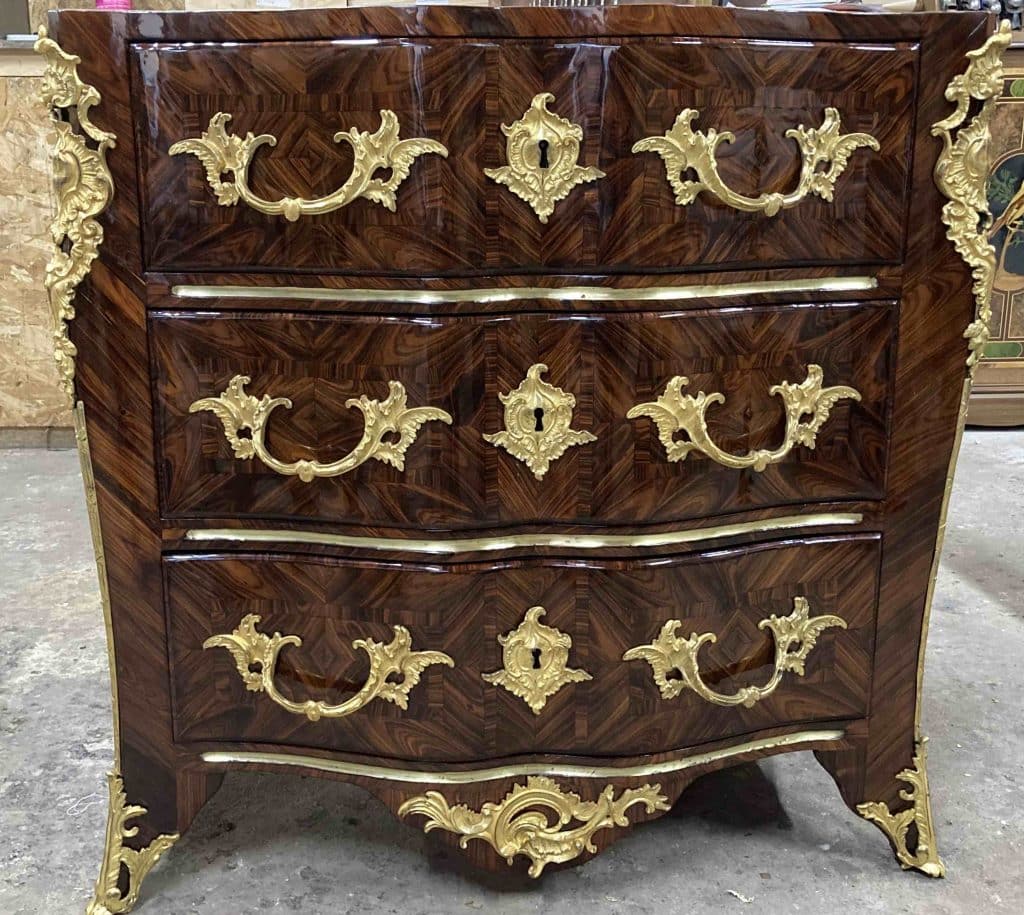
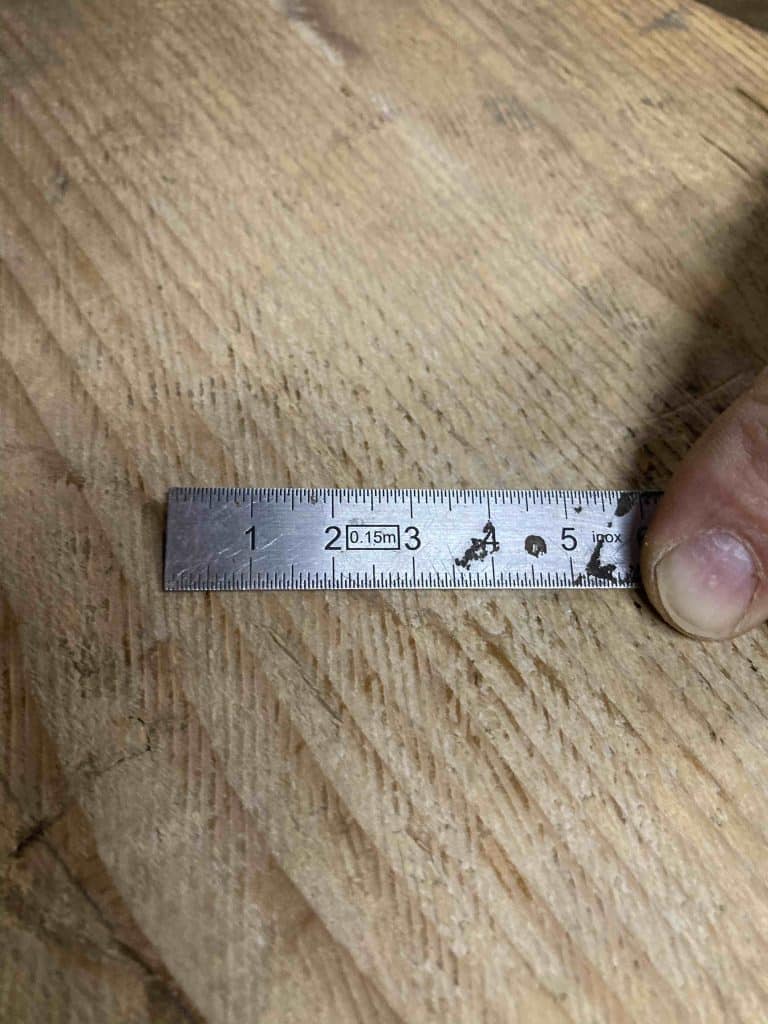
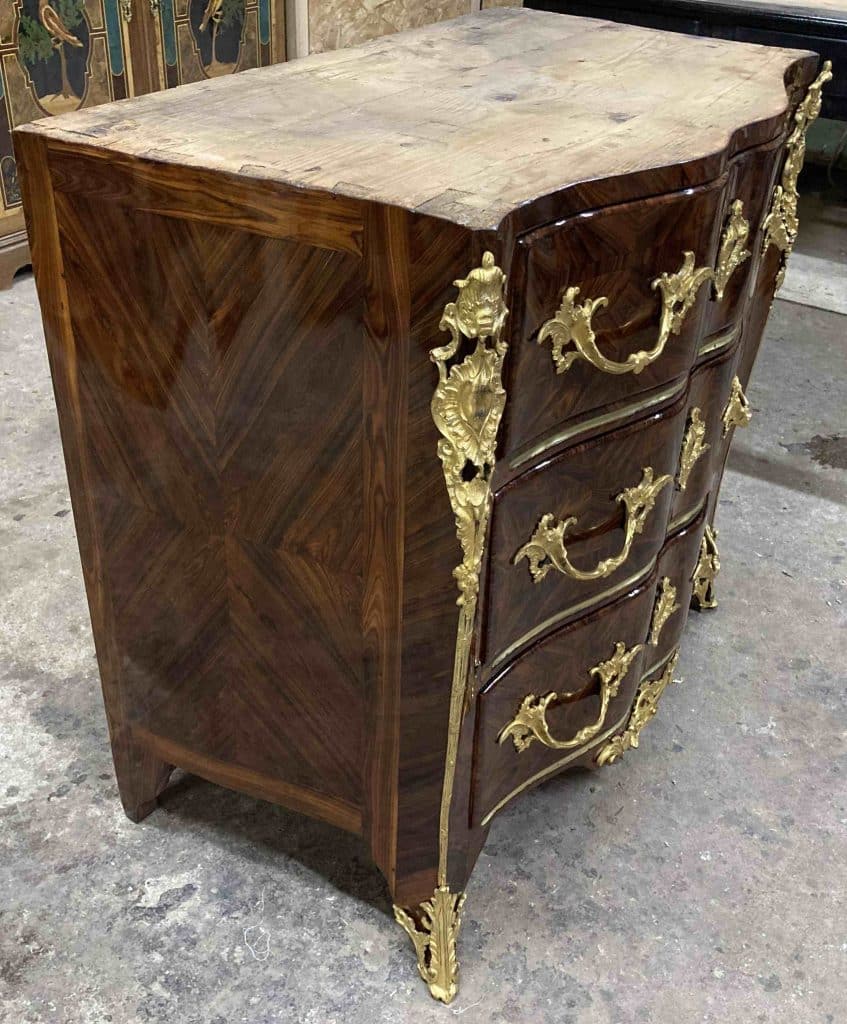
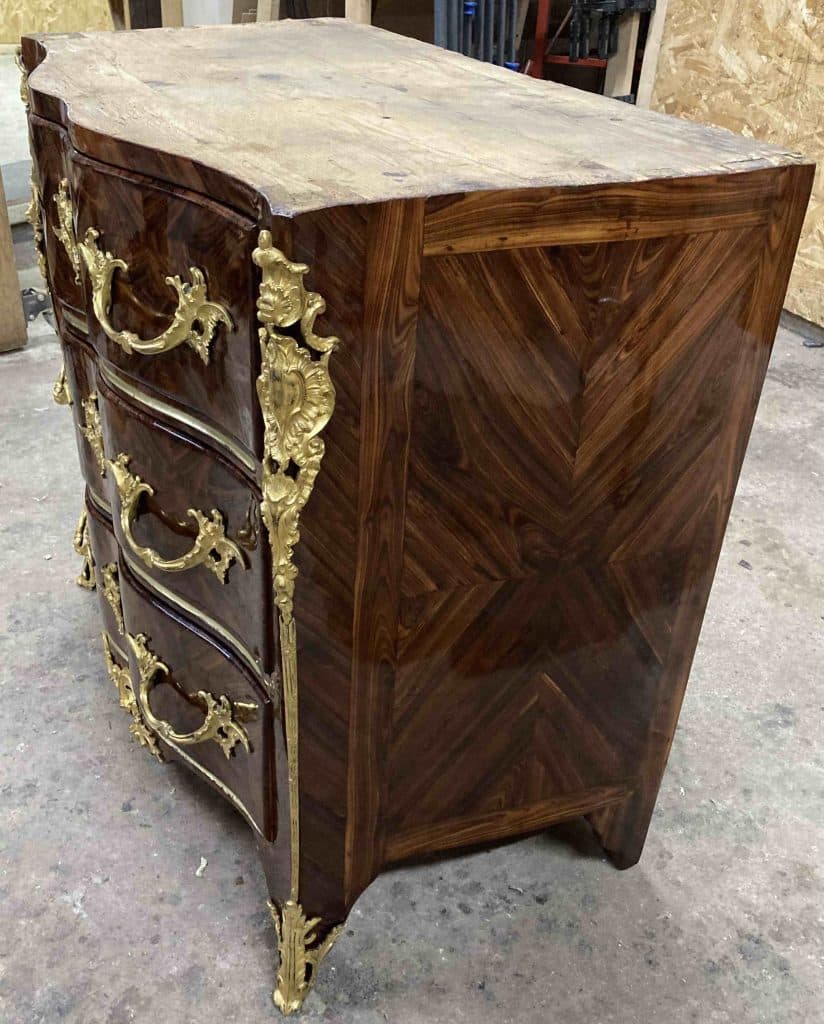
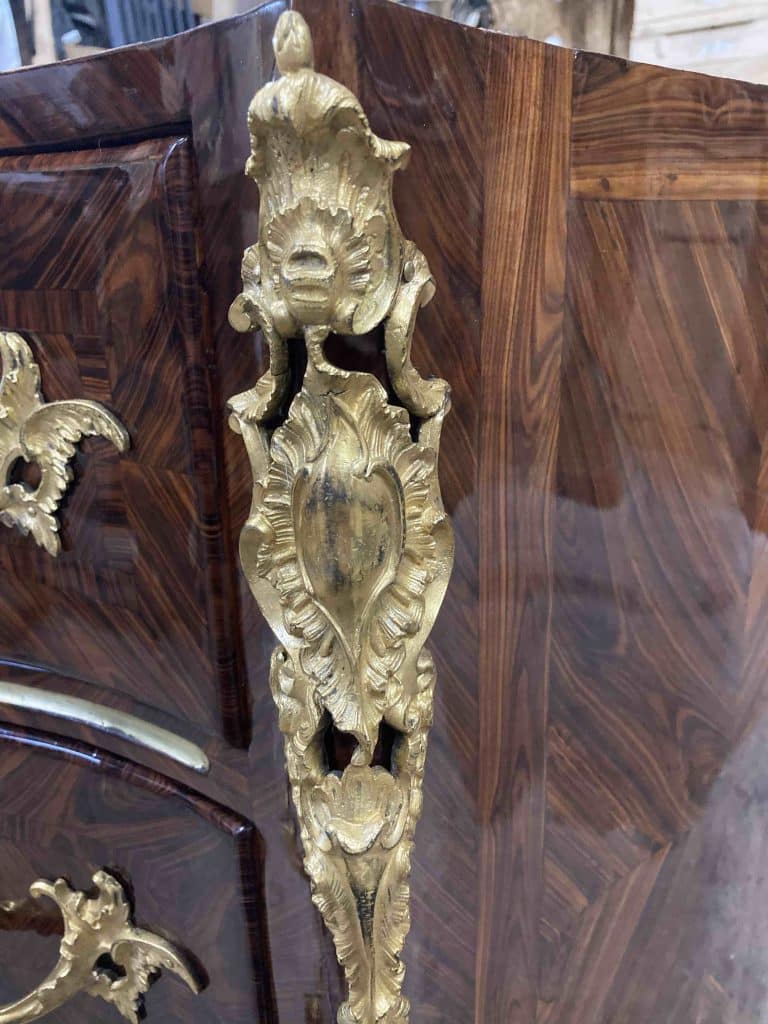
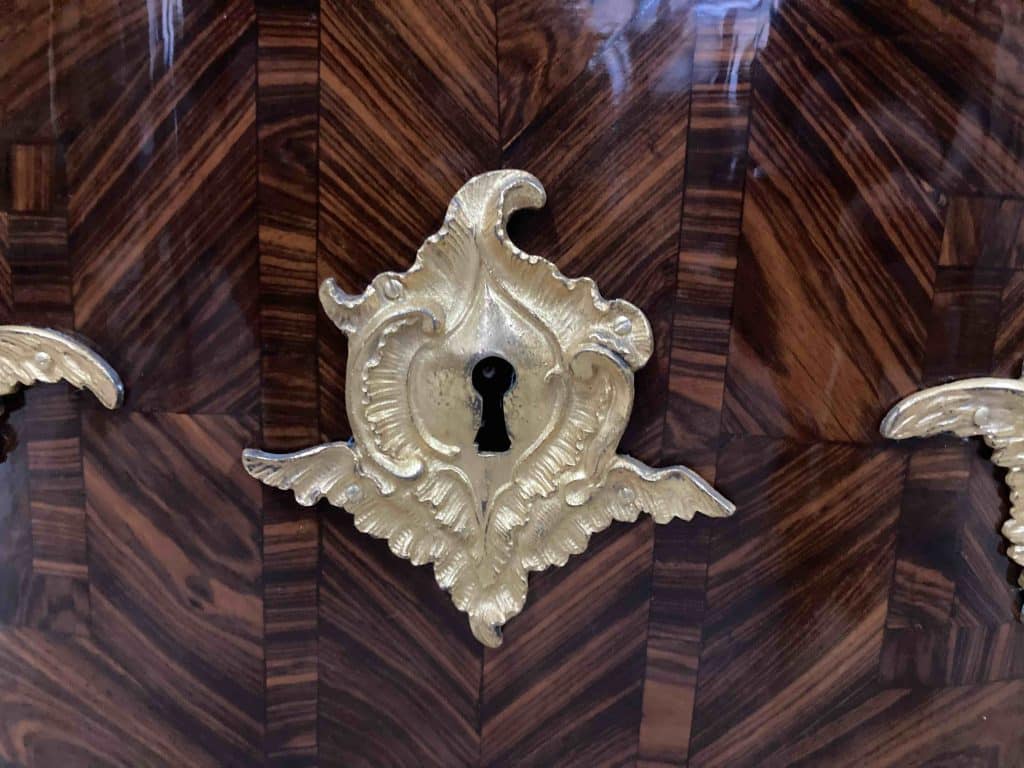
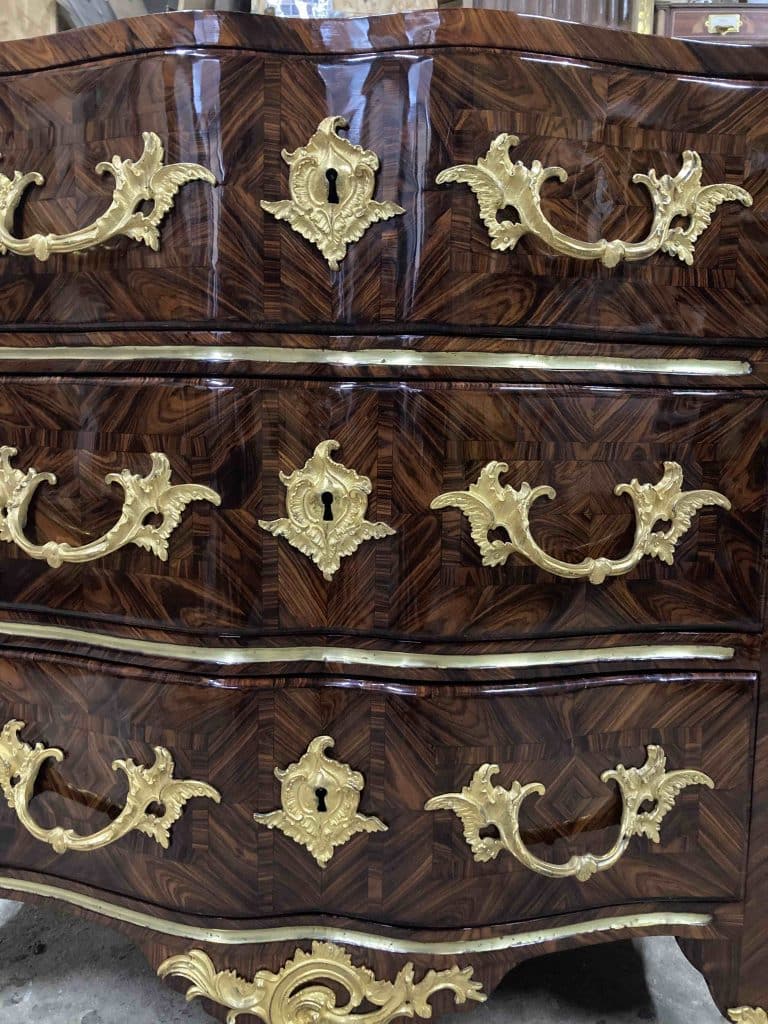
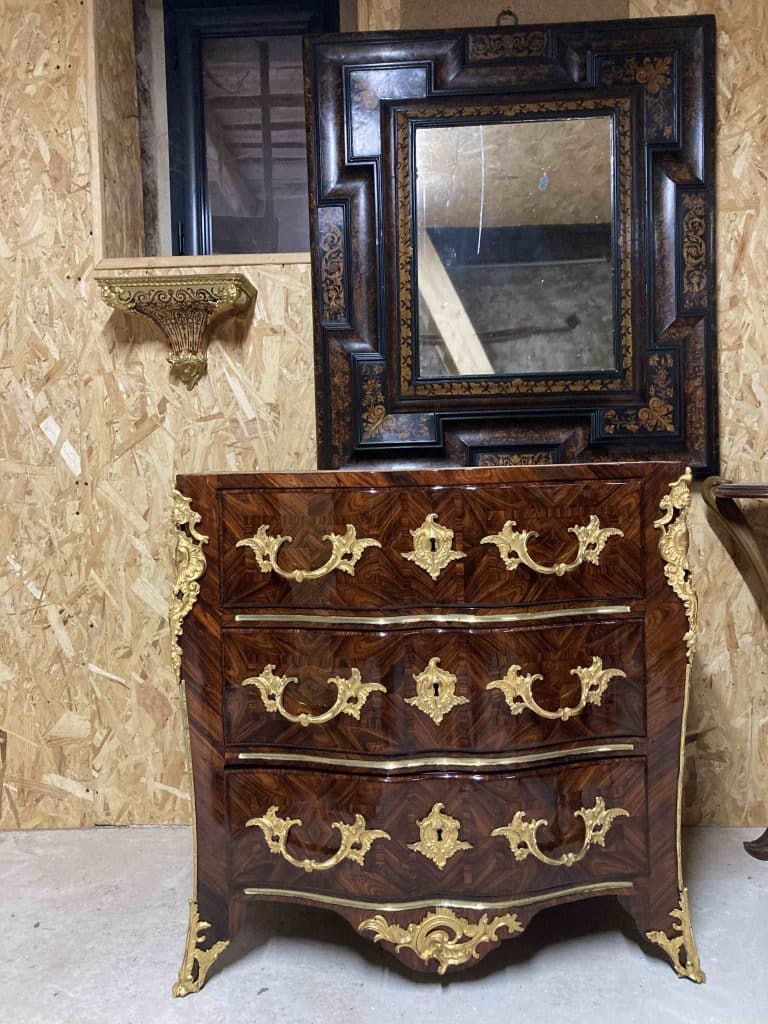
Restoration of a Michel Mallerot-stamped commode. With its serpentine front, it is entirely veneered in violet wood. It is built of fir with beech drawer bottoms and walnut drawer fronts.
You don't know Michel Mallerot?
This is understandable, as Michel Mallerot (1675–1753) is a Parisian cabinetmaker who remains relatively unknown, much like many cabinetmakers of the early 18th century. His identification is due to the discovery of a handwritten pencil inscription, "M. Mallerot," on a commode dating from the Regency period (formerly in the Philippe Glédel collection) and bearing this abbreviated stamp. He is likely first mentioned in the 1927 edition of the work by the Count of Salverte. Cabinetmakers of the 18th century. Their works and their brands (corrected and completed corpus) and Pierre Verlet cites it in the list of cabinetmakers in the second edition of his work: 18th-century French furniture published in 1982.
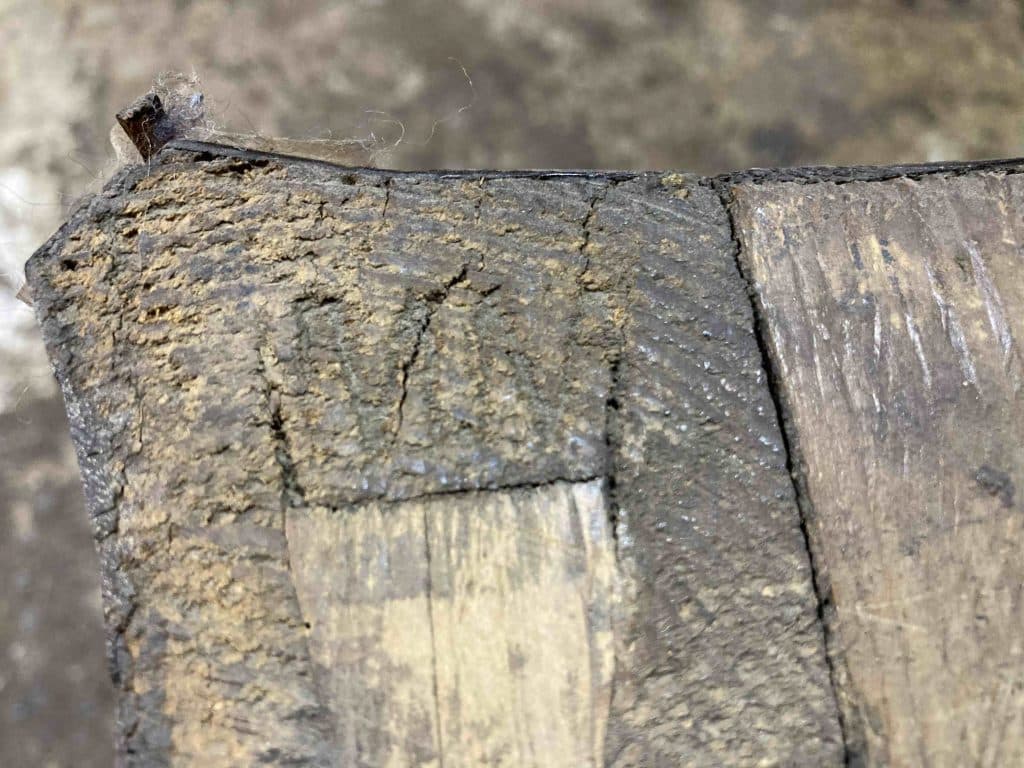
It is worth remembering that it was only from 1743 onwards, following the promulgation of the guilds and then the edict of 1751, that cabinetmakers were required to stamp their furniture. Furthermore, the most renowned cabinetmakers often worked for the mercers or the crown, and in these two instances were not obligated to stamp their work.
Thus he was, along with Sageot, Gaudreaux, Doirat, Lieutaud, Garnier and a few others, one of the first to stamp, and with his simple initials in a broad stroke as were often the first stamps.
While it is appropriate to mention the problem of abbreviated stamps, which made the authorship of the works more delicate, there is certainly a parallel to be made with the cabinetmaker François Lieutaud (who signed FL) but also François Garnier (who signed FG), all cabinetmakers born at the end of the 17th century and working well before the stamp was in use, and all discovered only recently.

Mallerot therefore had his workshop a stone's throw from the old Porte Saint-Antoine and not far from the Bastille. Here we see the fortifications, the rue de Lappe and the rue de la Contrescarpe (now boulevard de la Bastille), the old "Arquebus shooting range", a garden used as a training ground for the arquebusiers of Paris.
Further research allowed me to learn a little more about this cabinetmaker: First, a clarification regarding his address, located "« Rue de la Roquette, on the left, between the Arquebuse site and the Voierie »He married a certain Marie Mellot and had descendants (there is a record of a son who was a carpenter or cabinetmaker). But the most interesting document is one dated 1714 cited as "concerning an agreement between the aforementioned and Nicolas Cibot, for a contract of two and a half years, recorded on 16/5/1714.". National Archives. Central register of notaries of Paris. File of 18th century artisans. We learn from this that the cabinetmaker employed a journeyman at that time.
Thus it is possible to state with certainty that Mallerot was already (and if not before this date) a Master cabinetmaker in 1714.

We find some traces in 1740 "cited during a withdrawal of complaints and amicable arrangement between the said and Réveillat Jean, coppersmith" and that same year concerning "a house elevation" then finally "during the sale of house recorded on 15/02/1756 by the said, for 6,000 livres made to Poupon Gaston, paper merchant".
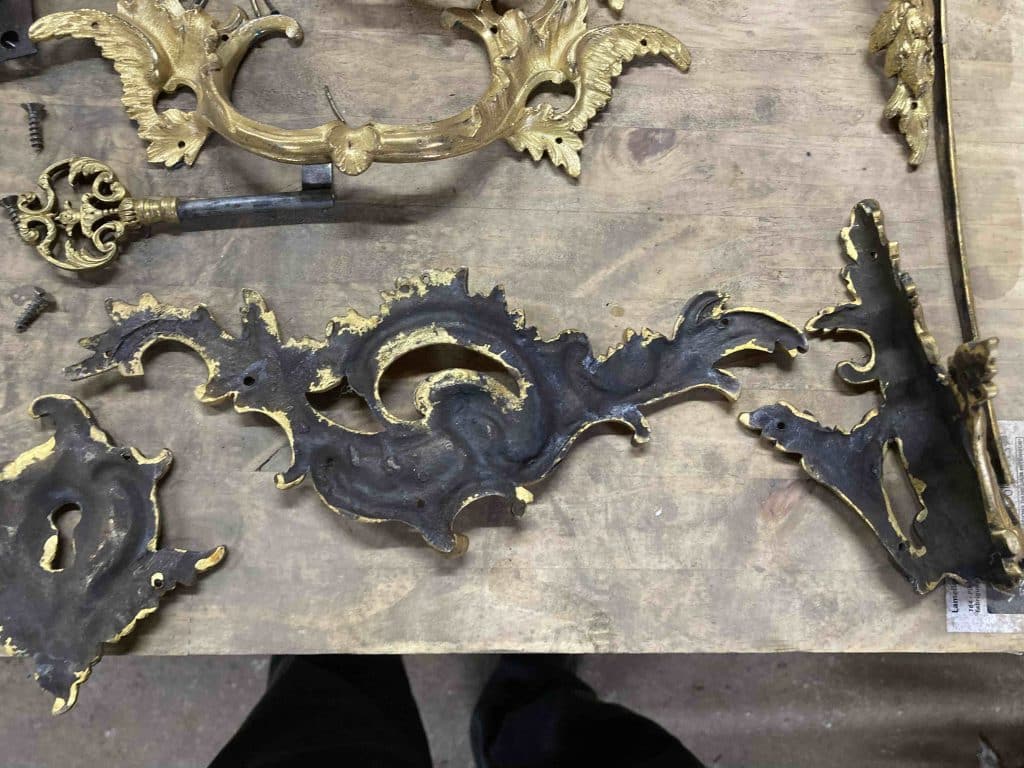
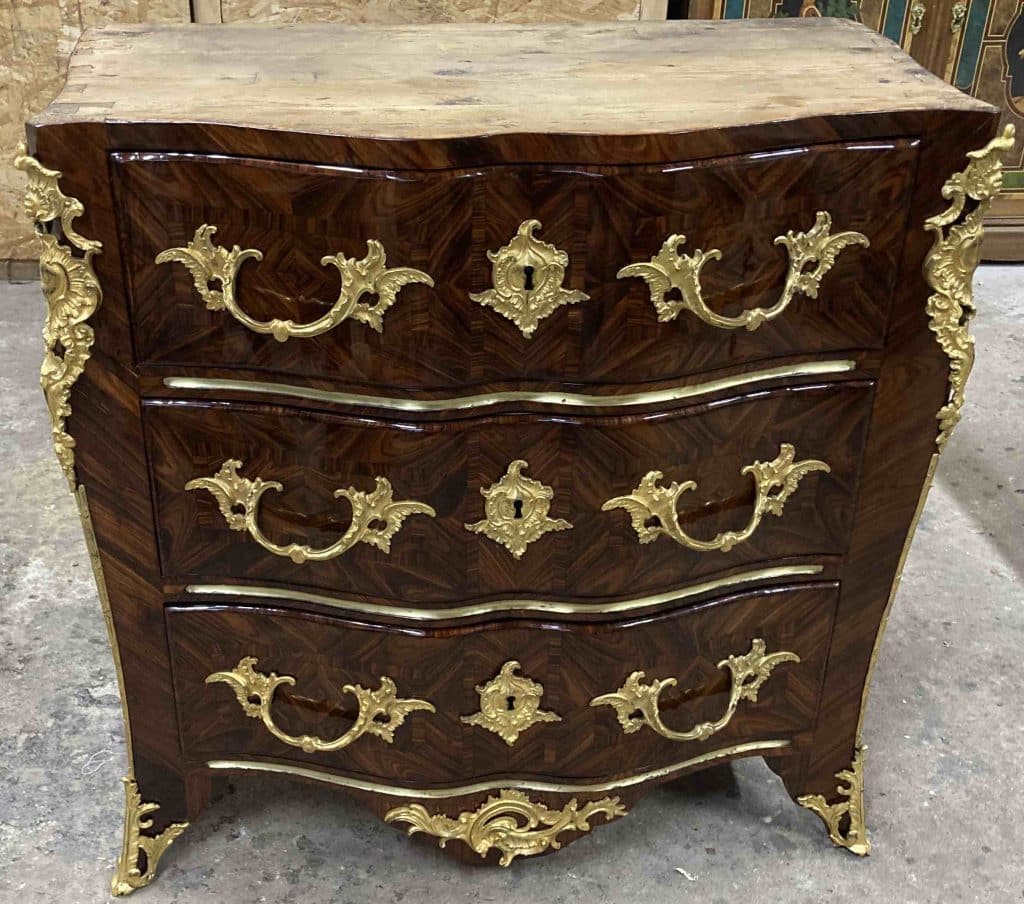
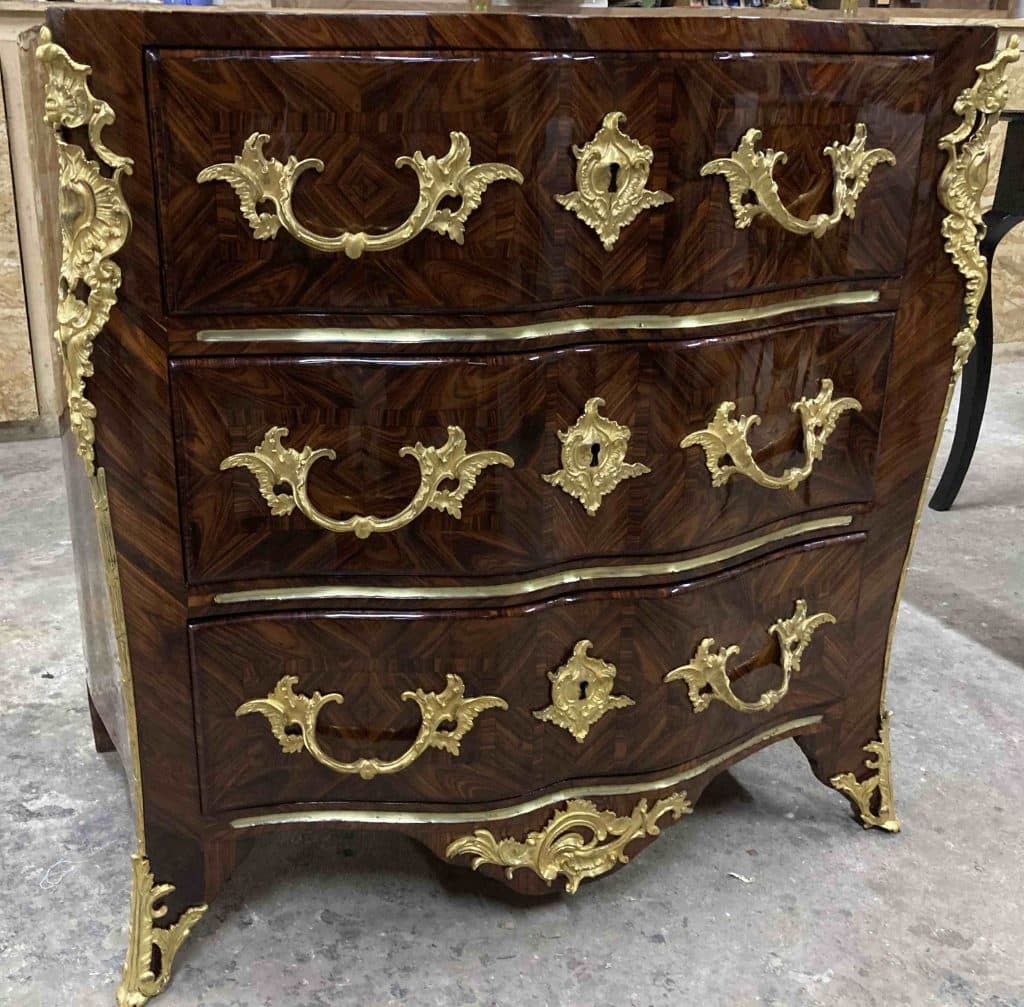
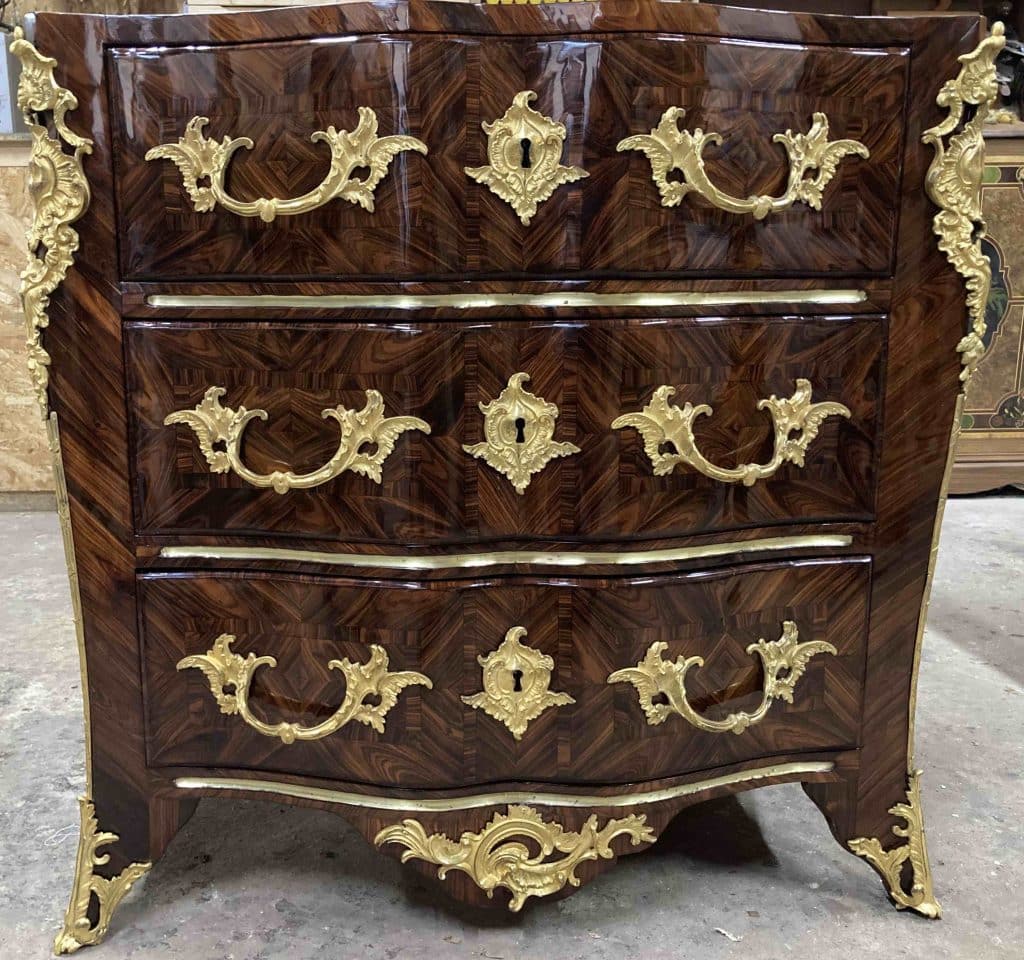

To see previous restorations : https://ebenisterie-mathieuvath.fr/en-ce-moment-a-latelier/
You can find this chest of drawers at Antiques Philippe Glédel
Well, there it was, exactly the stamp I was looking for! It's amazing that a second piece of furniture from this same, relatively unknown cabinetmaker has come back through the workshop!