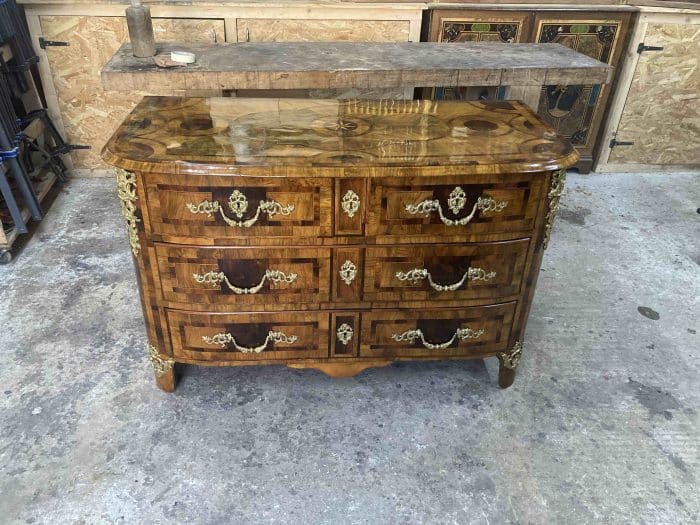
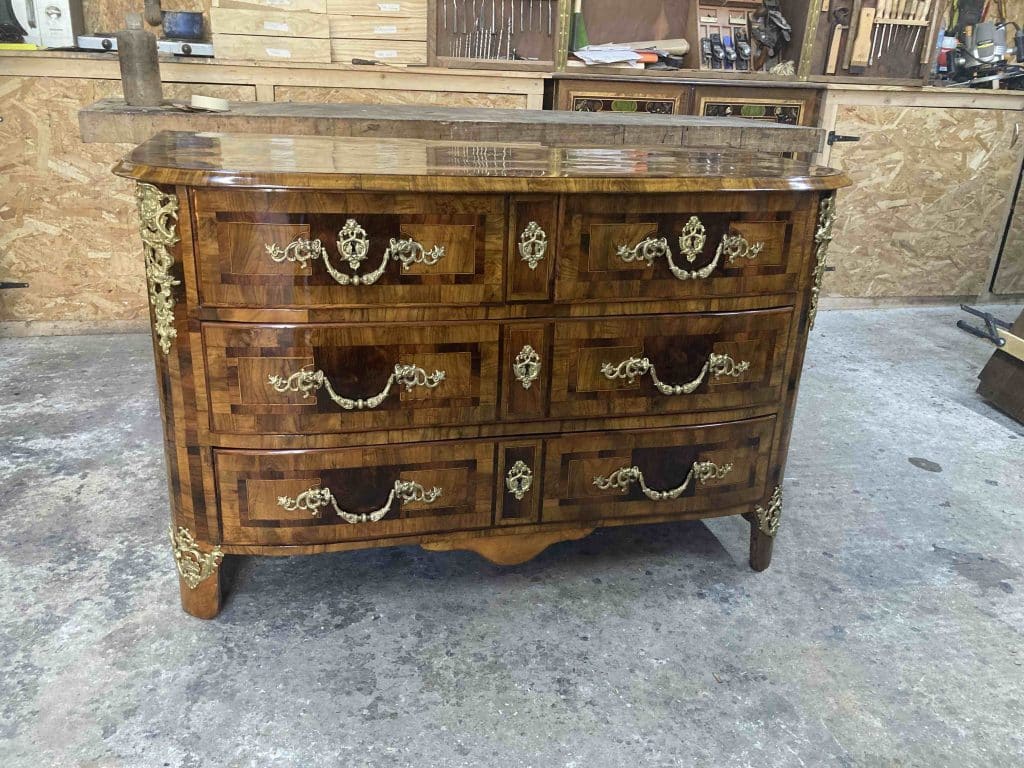
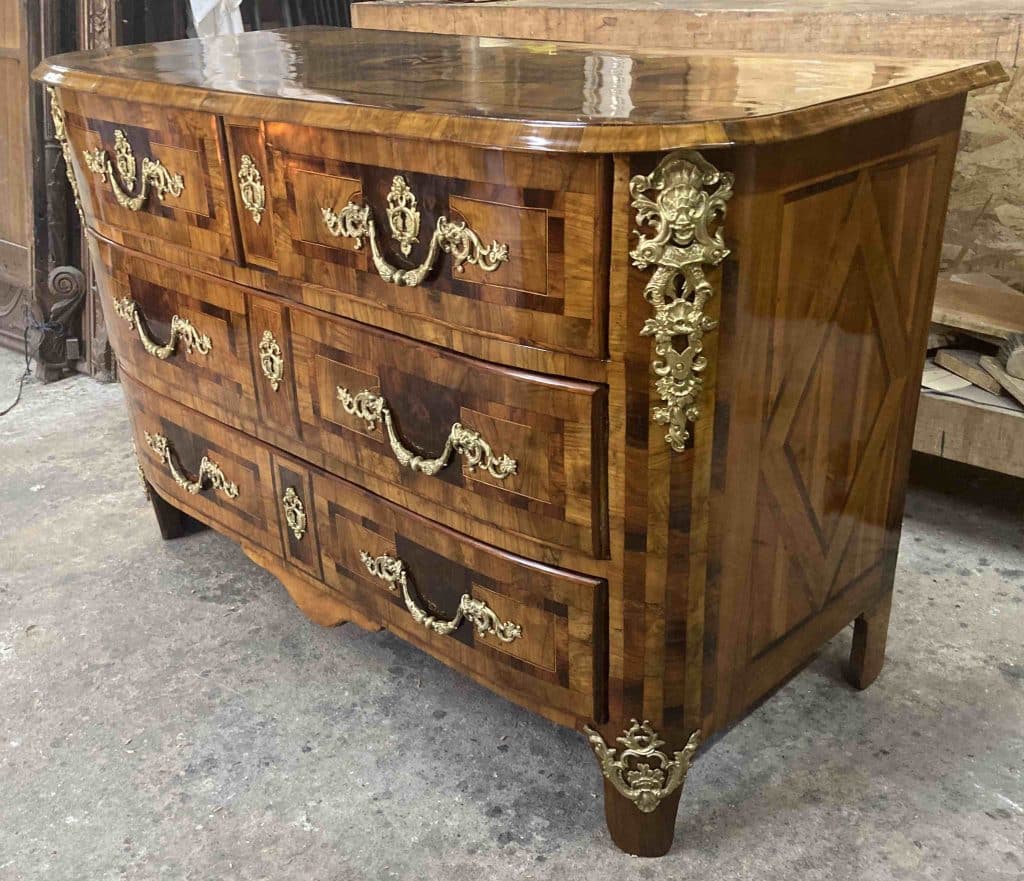
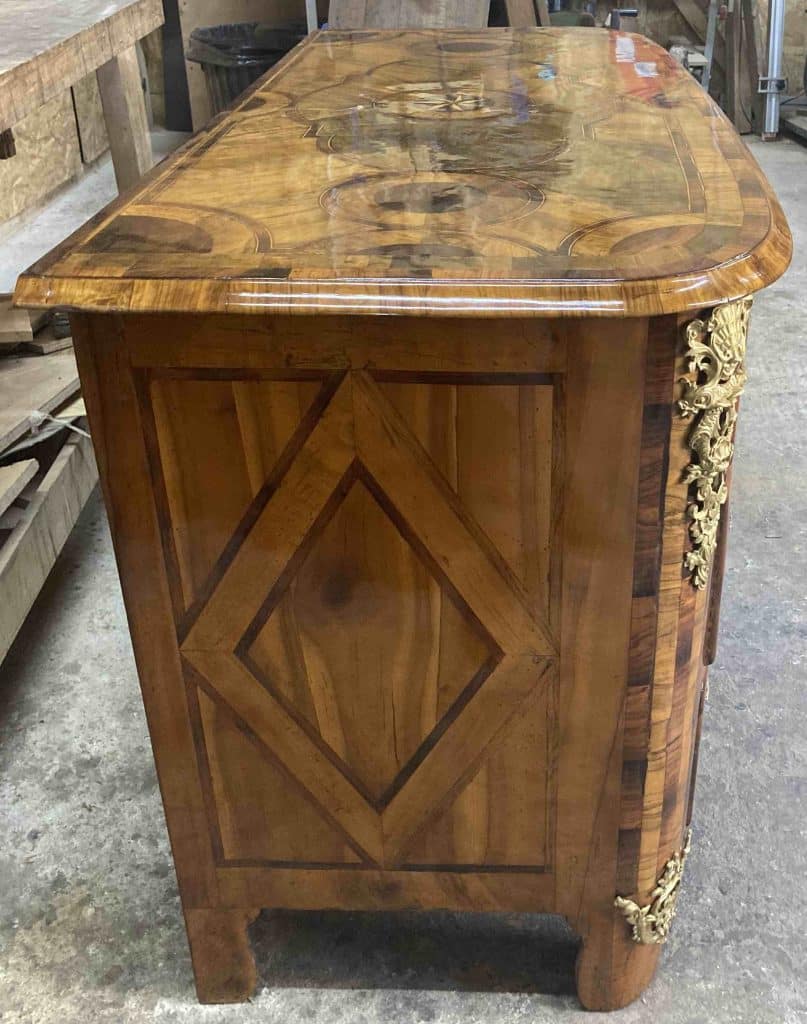
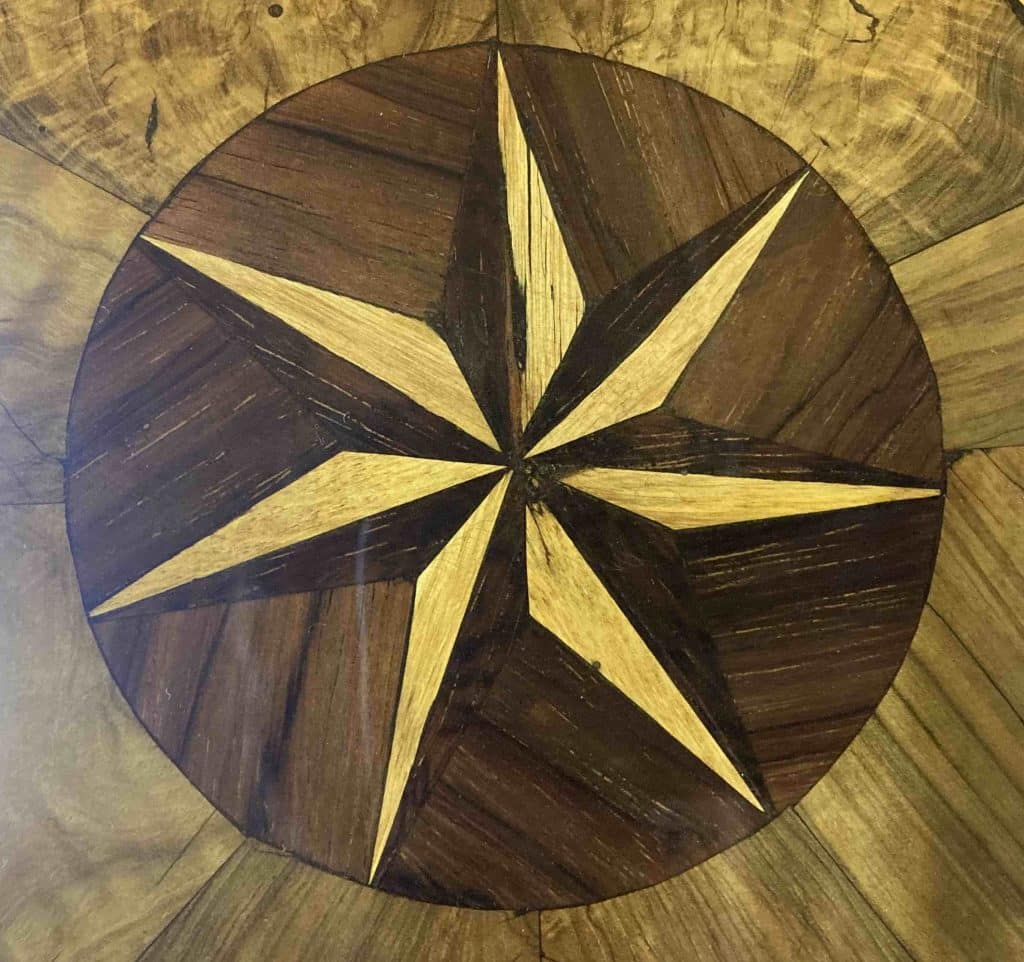
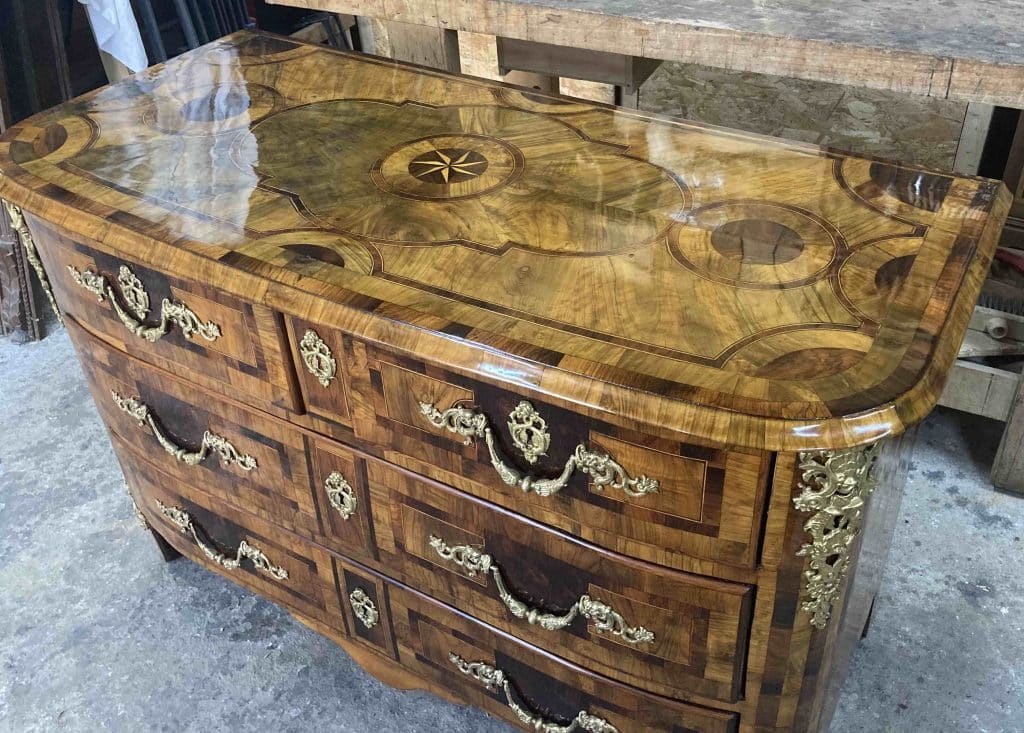
Restoration of a Louis XIV period commode in olive burl, rosewood and boxwood, probably from the Dauphiné region.
This type of commode (D-shaped), along with the Mazarine commode, is among the very first commodes popularized under Louis XIV. Indeed, the appearance of the earliest French furniture resembling the commode dates only from the 1700s; thus, the oldest known and datable Parisian commodes are those delivered by André-Charles Boulle to Versailles around 1708. Their very simple decorations are inspired by Dutch designs, often crafted by Protestant cabinetmakers who were very fond of native woods, in accordance with the core tenets of the Reformed religion. This is particularly true of olive veneer. In fact, it was during the great winter of 1709 that thousands of these trees perished and were salvaged by artisans in the Dauphiné region to make furniture (The Century of Louis XIV, p. 249).
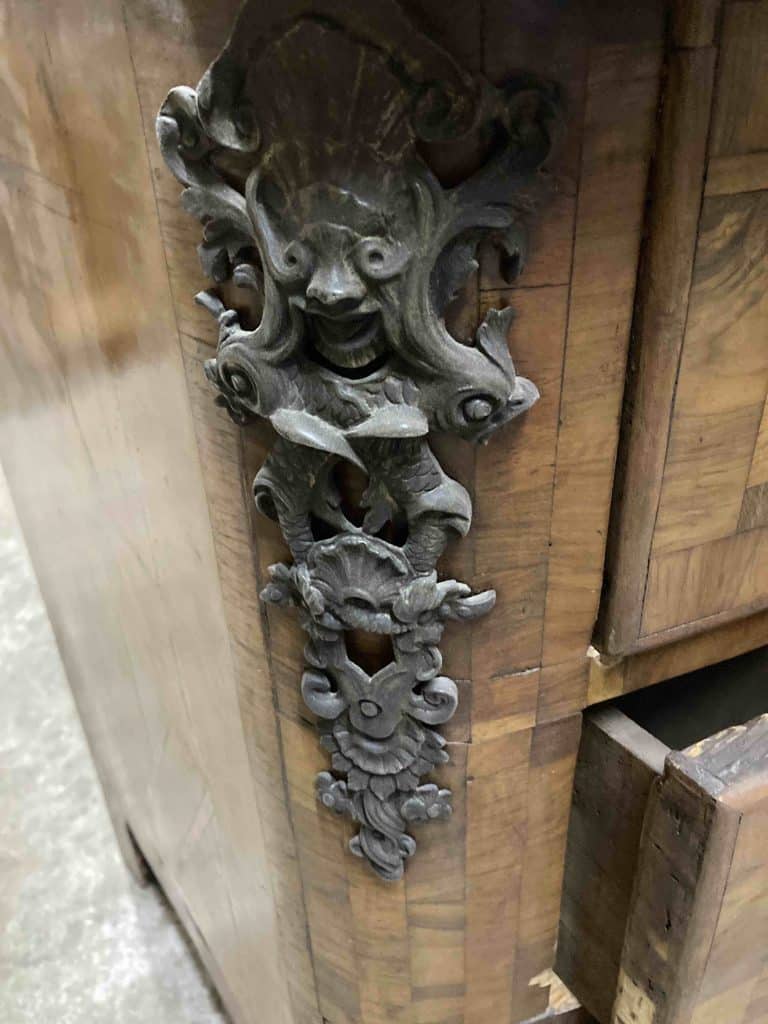
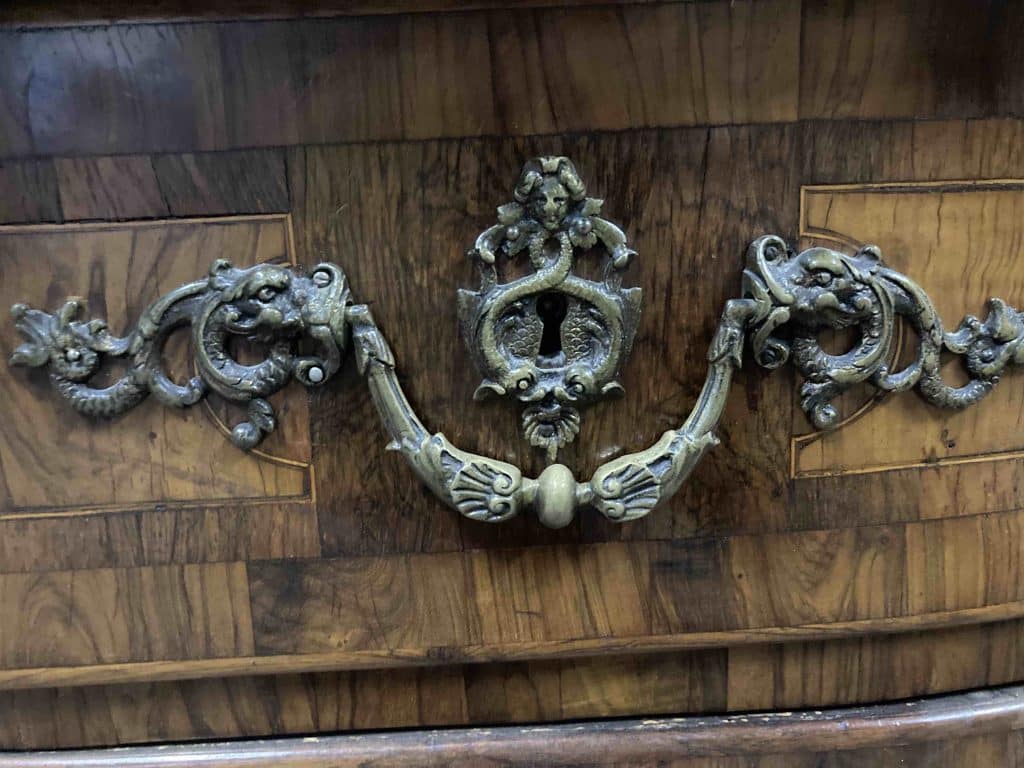
But beyond the decorative qualities of the olive tree, it was above all its symbolism—peace, reconciliation, and hope—that fueled its popularity among the Huguenot elite. The high quality of the bronze handles, featuring "sea horses," is particularly noteworthy.
Bibliography
- Voltaire: The Century of Louis XIV. Paris: Garnier Frères, 1919.
- Provincial Cabinetmaking in 18th-Century France and Abraham Nicolas Couleru by Bernard Deloche and Jean-Yves Mornand
State of affairs report
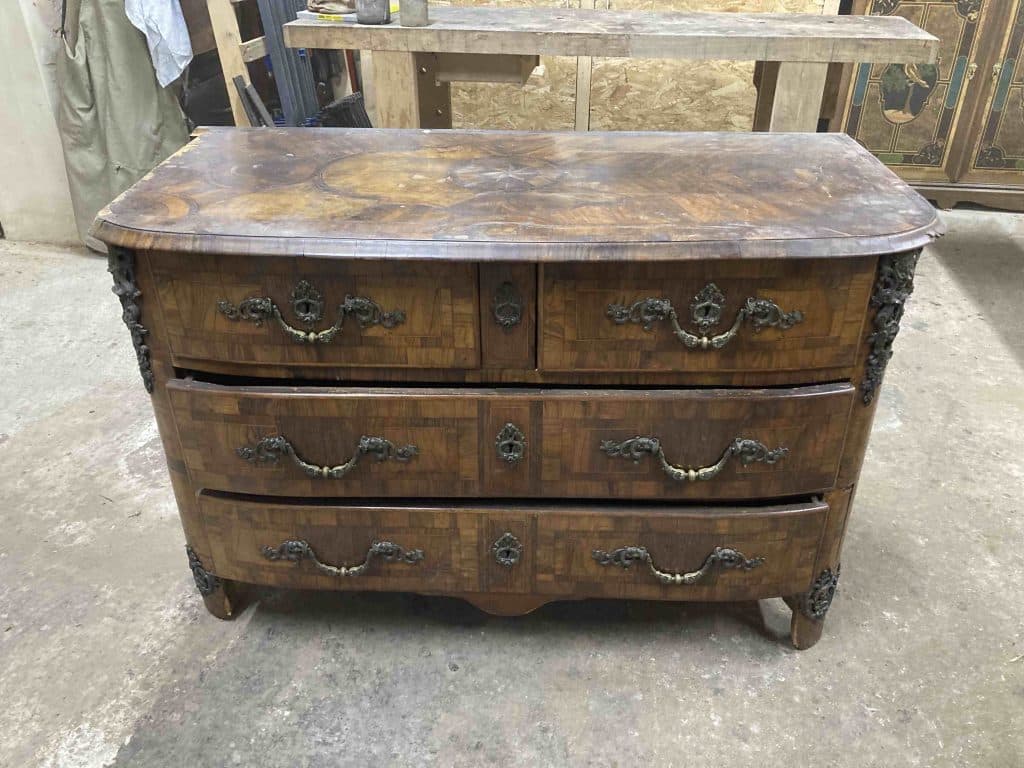
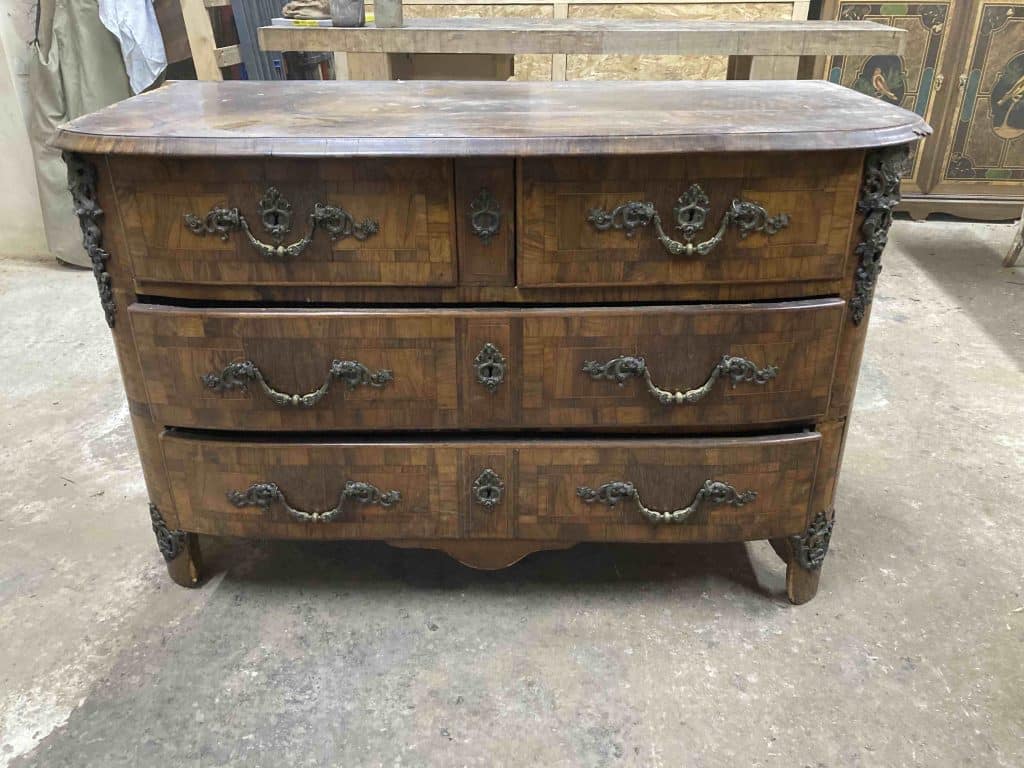
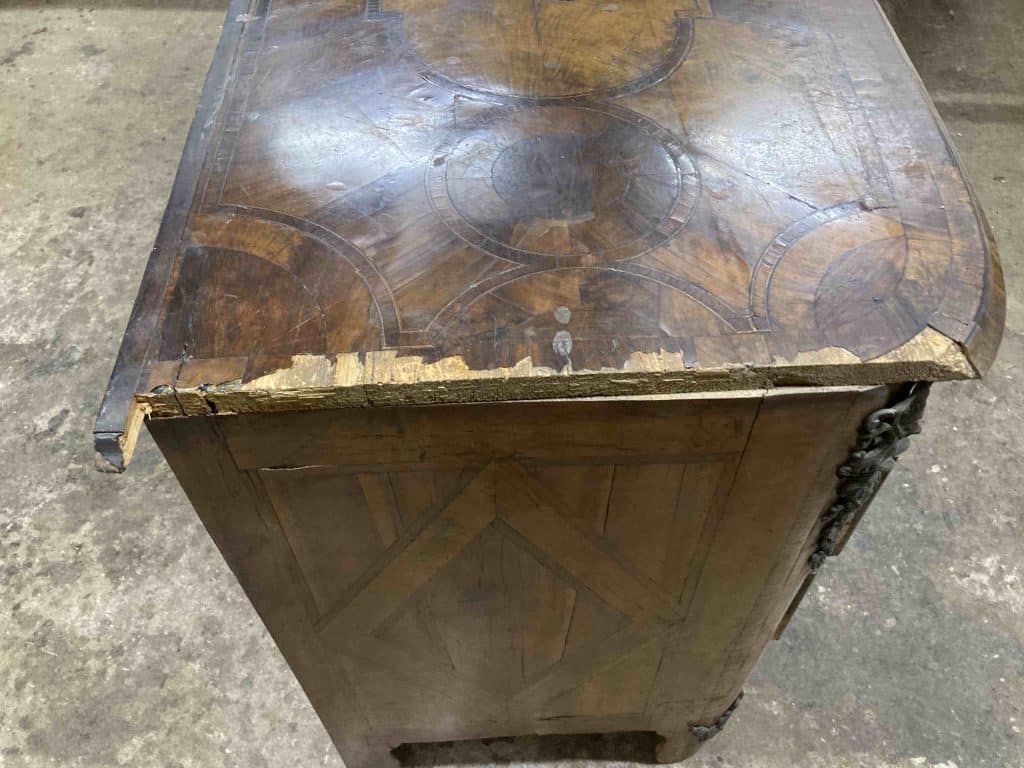
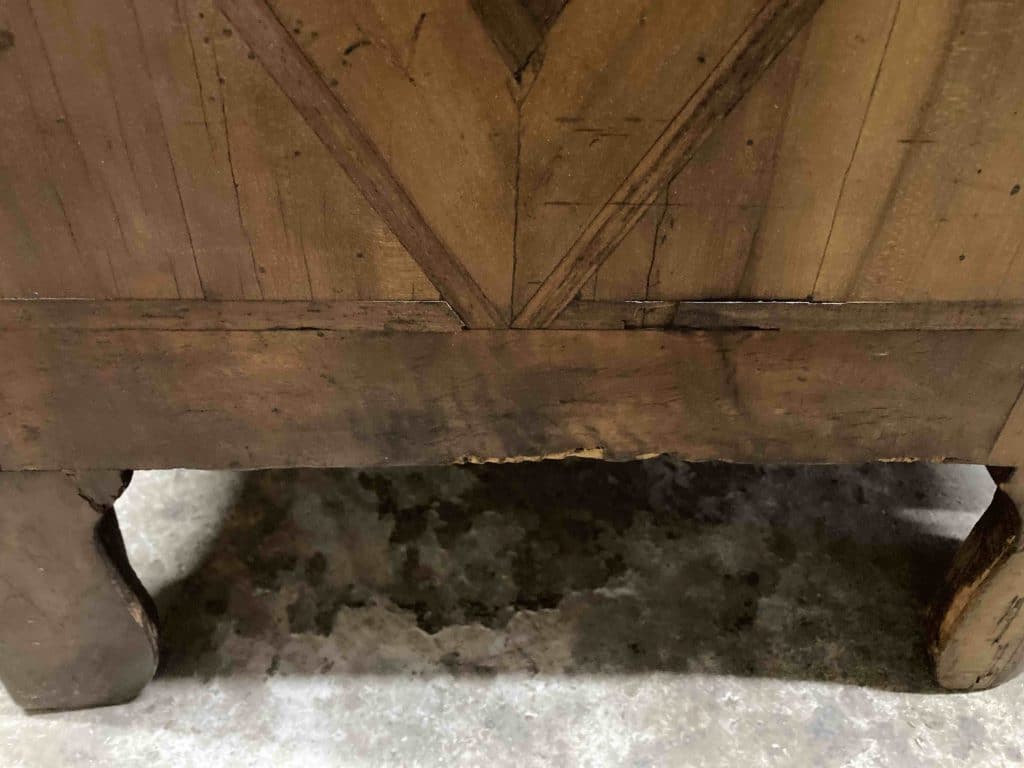
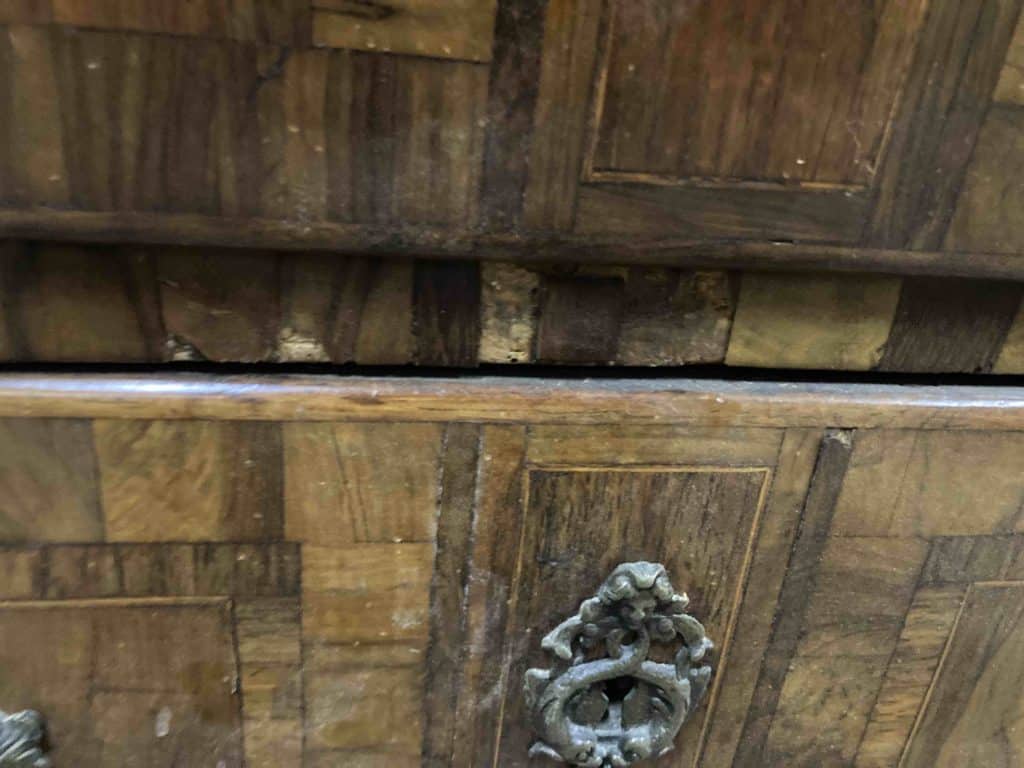
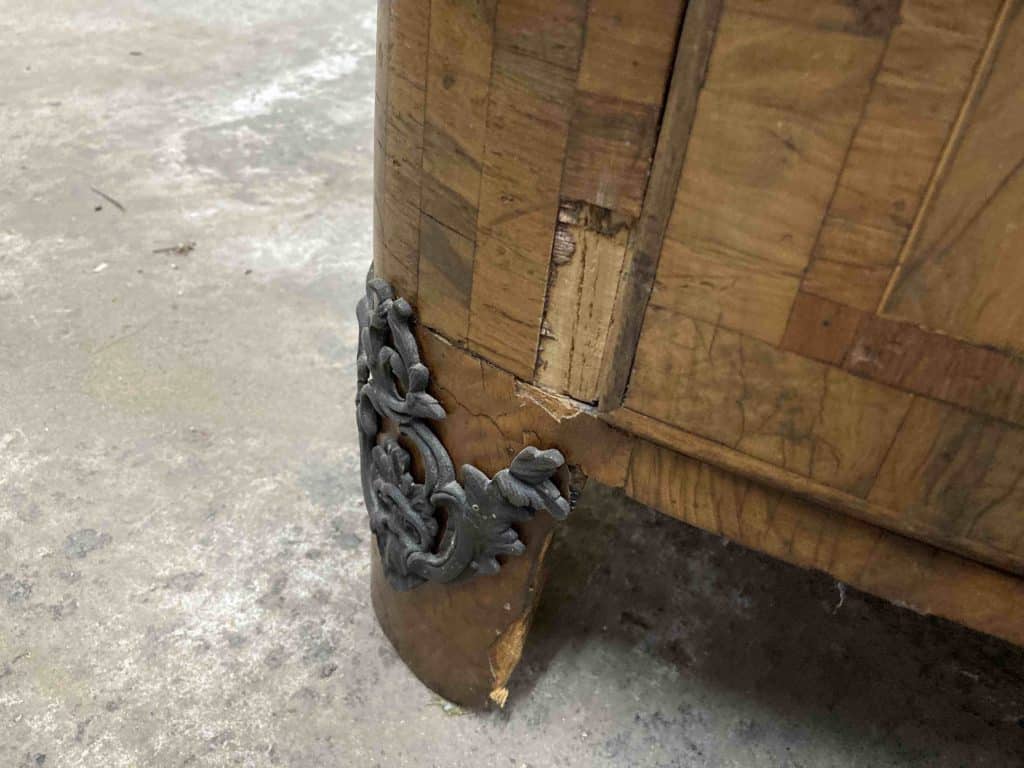
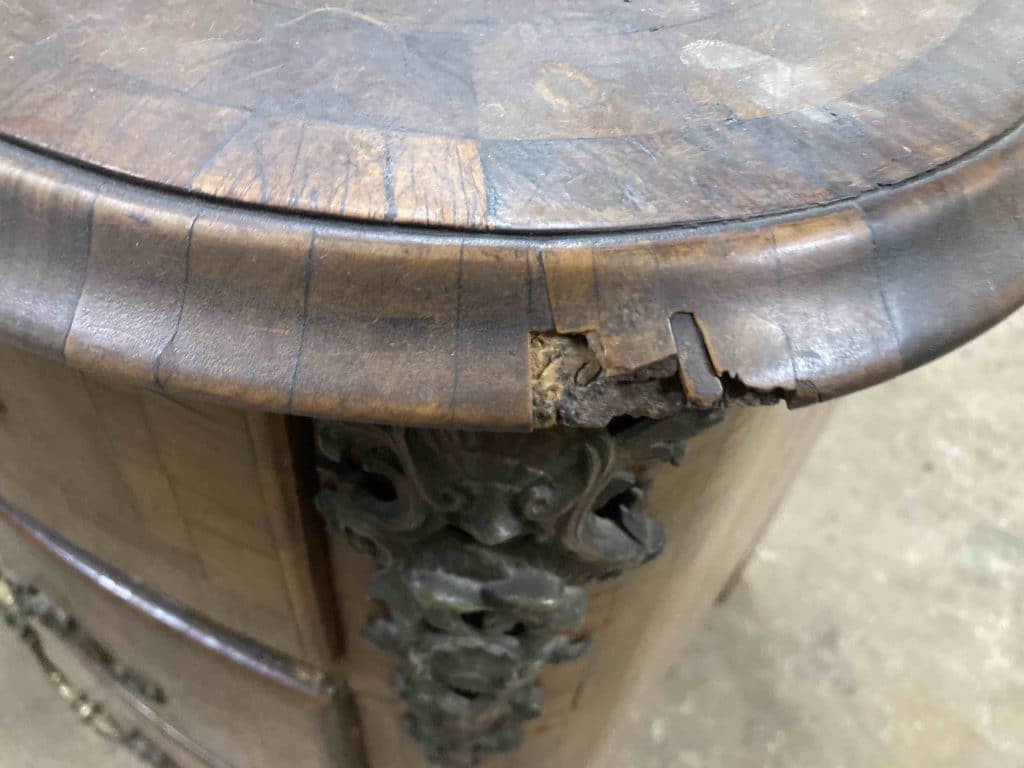
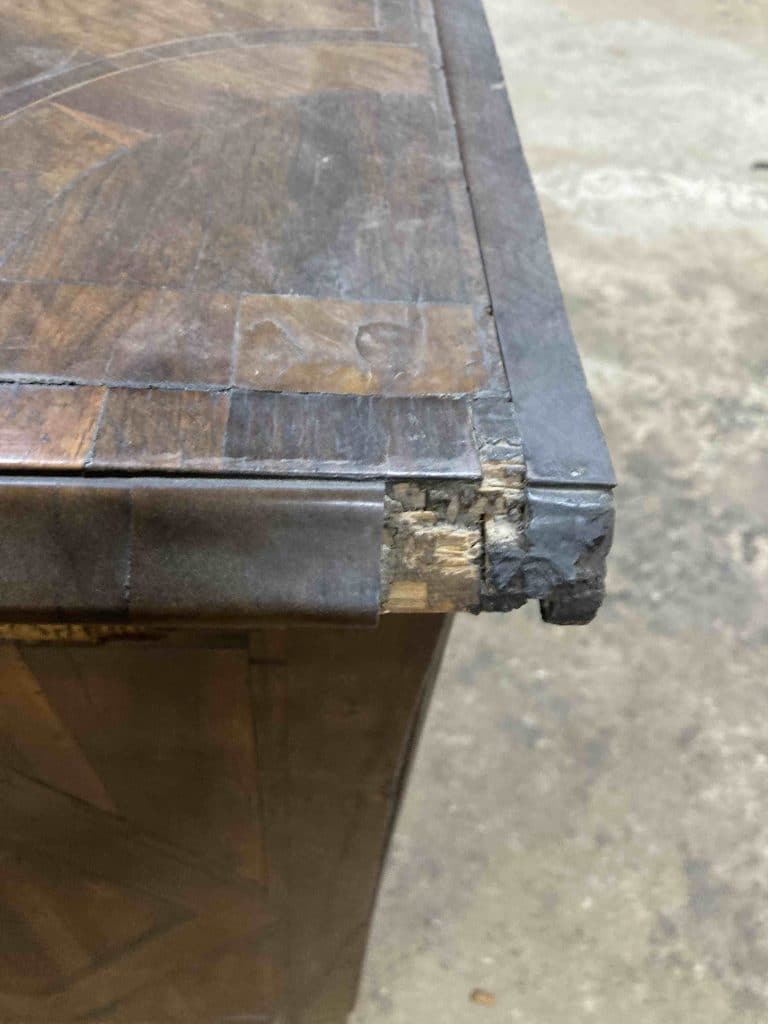
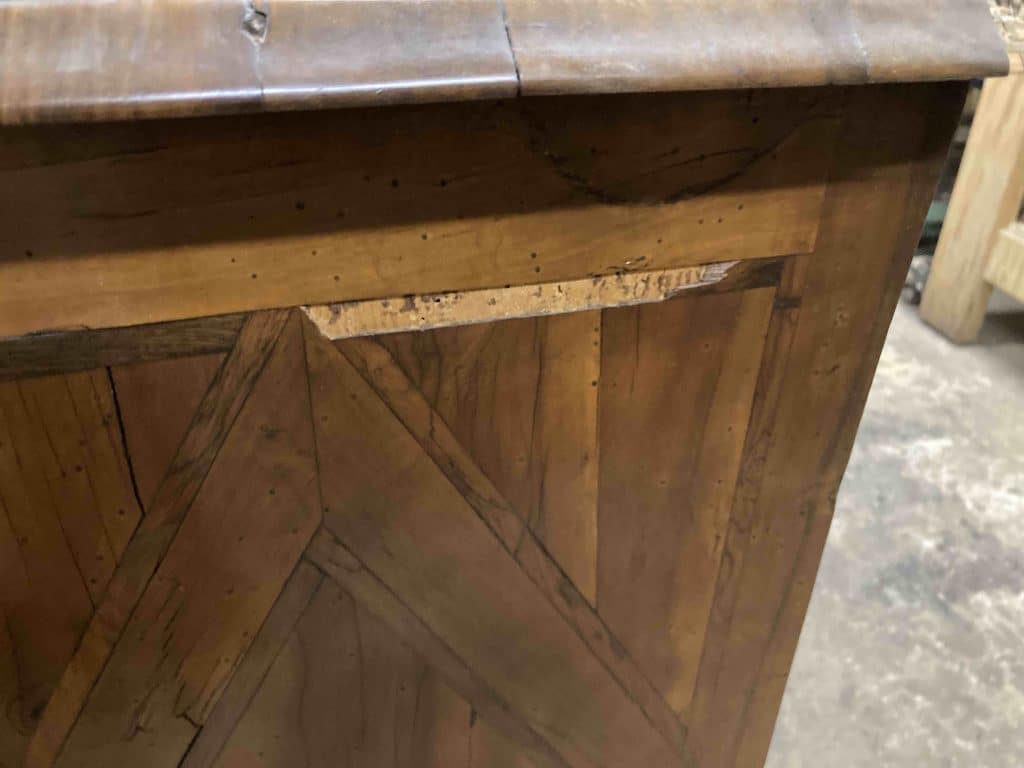
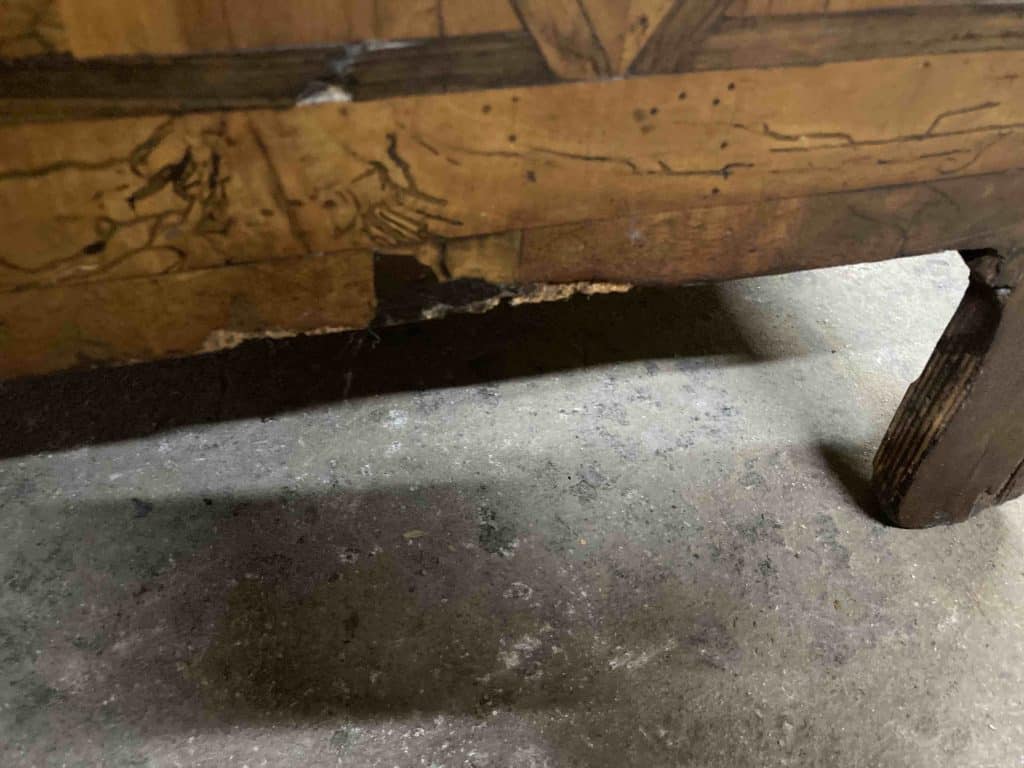
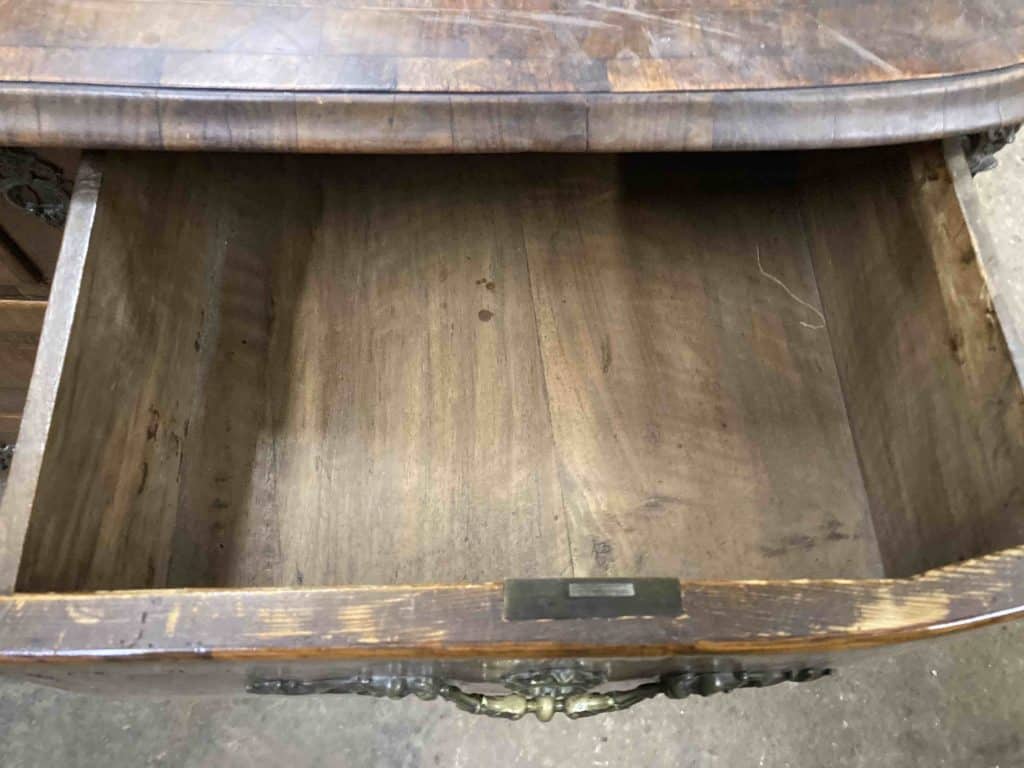
Aside from significant oxidation of the bronze mounts, this chest of drawers arrived in fairly good condition. There were some missing olive veneers (in a patchwork of old grafts of walnut, cherry, rosewood, and one amaranth veneer, quite oxidized by time, and therefore almost invisible from a distance). One edge of the top was detached, and there was veneer peeling on all the veneered surfaces.
The Restoration
The restoration therefore consisted of reattaching the edge banding and replacing the missing olive veneer with veneer (sawn, scraped, sanded, and applied to the correct thickness as a backing) on all surfaces. A few old veneer grafts were redone, only those that were in the most poor condition. All the adhesives on the veneered surfaces were regenerated by infiltration. The chest of drawers was then stripped, filled with pumice, and finally varnished with a clear French polish (congratulations to Arnaud, you've really grasped the art of French polishing. Keep it up, you'll get there!).
The bronzes were cleaned by ultrasound and then protected by a layer of microcrystalline wax.
To see previous restorations : https://ebenisterie-mathieuvath.fr/en-ce-moment-a-latelier/
You can find this piece of furniture at Etienne Thuriet Antique Dealer