
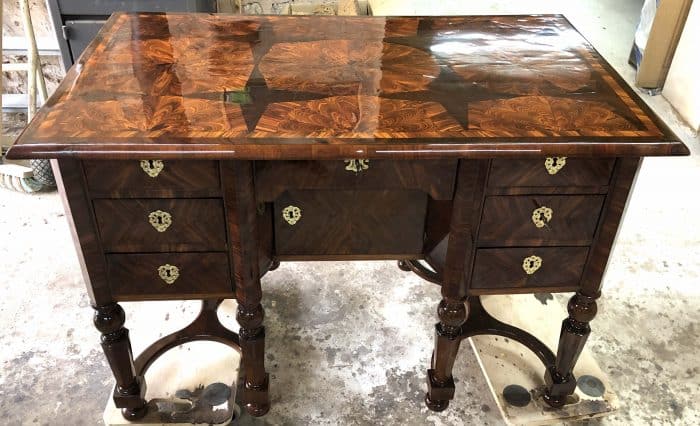
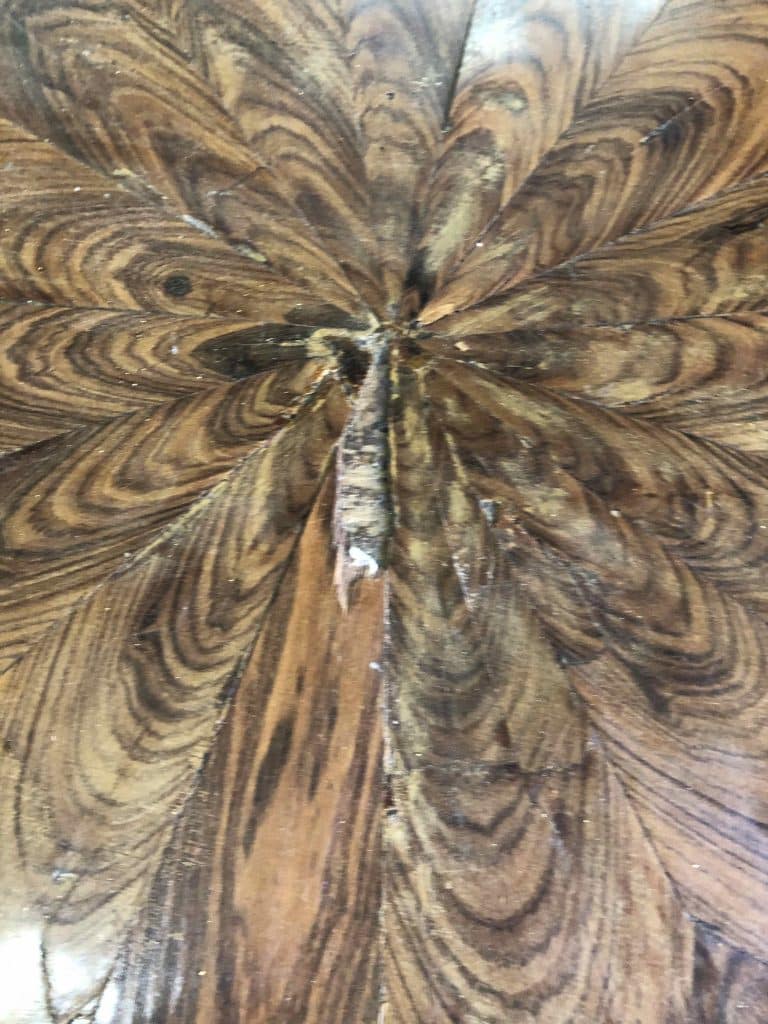
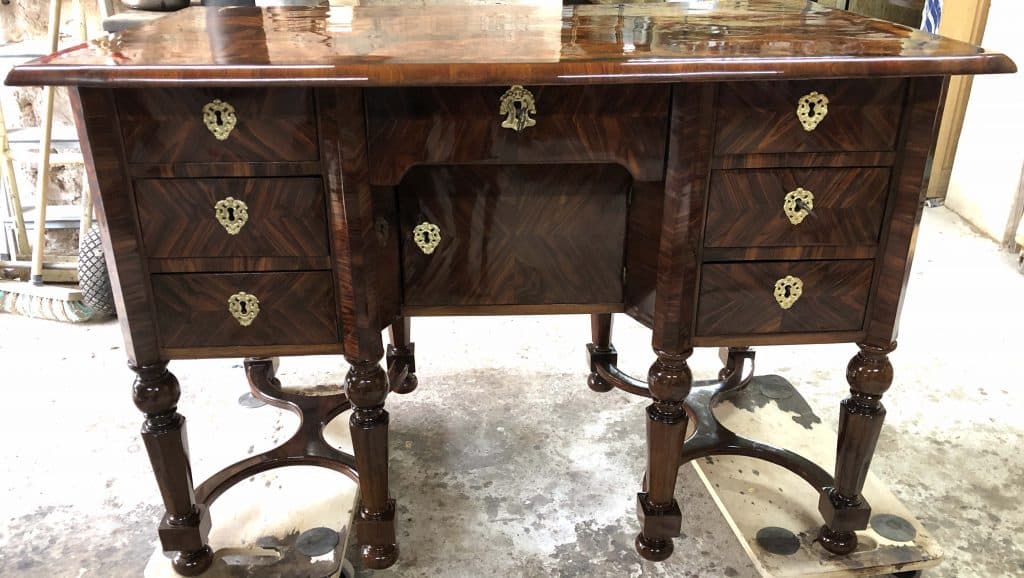
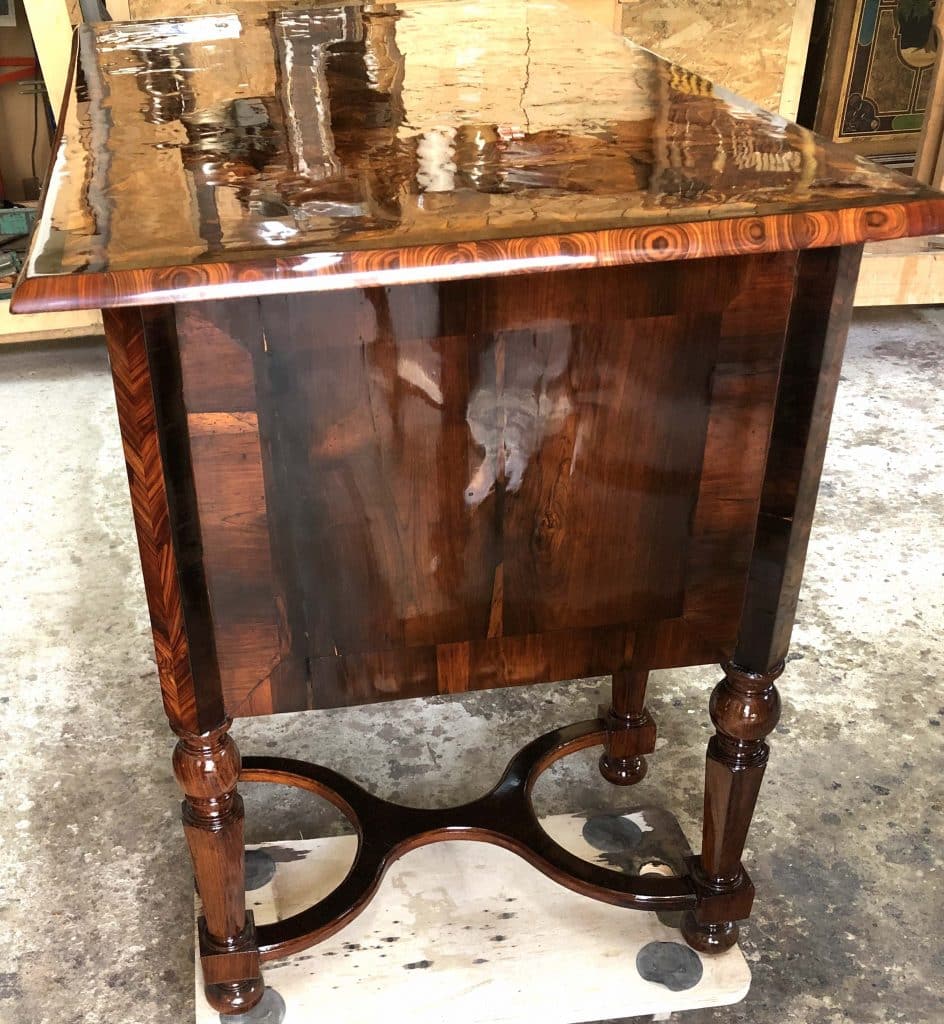
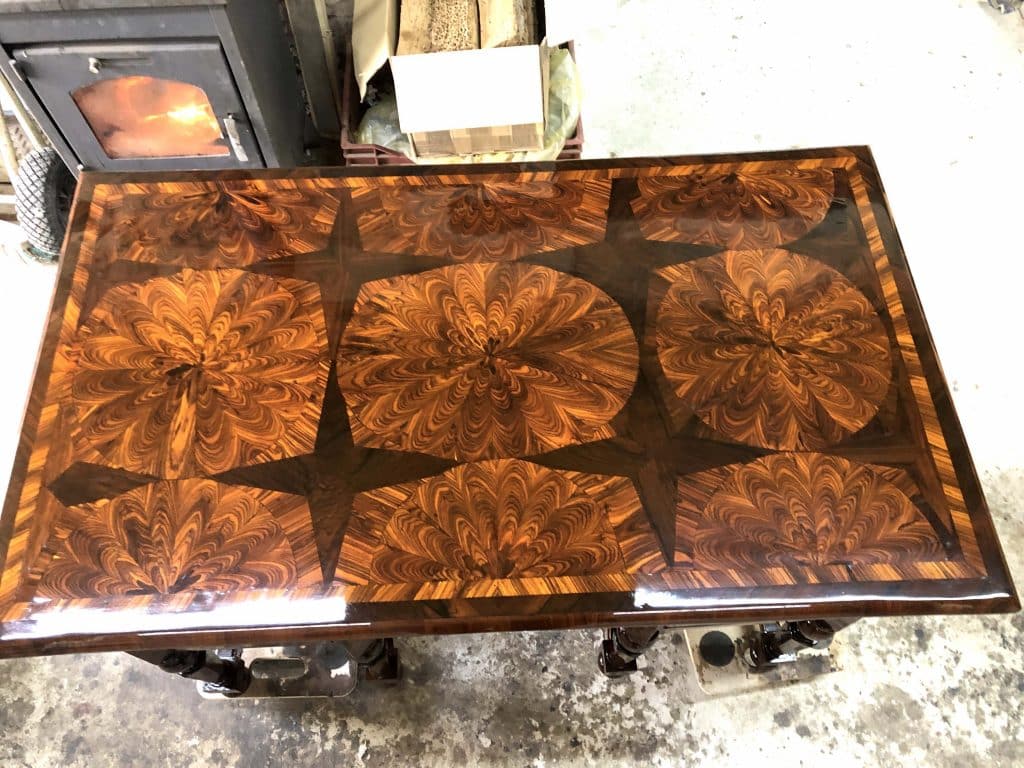
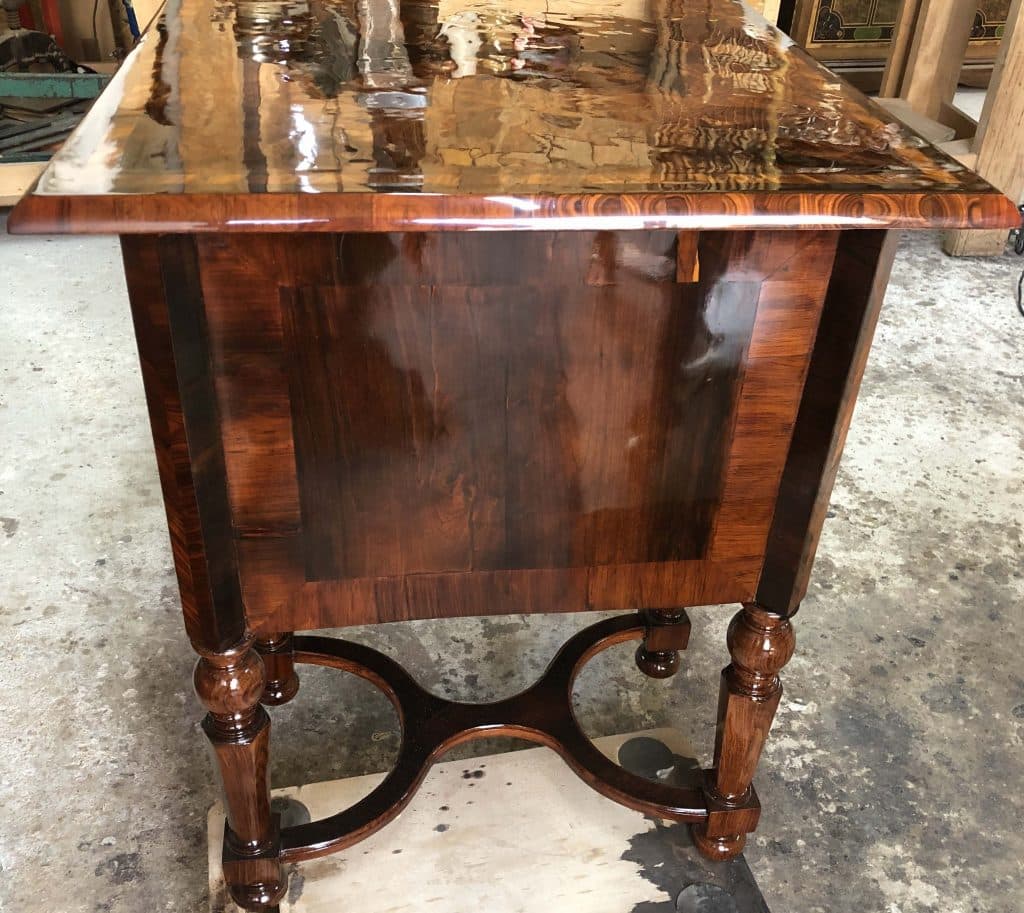
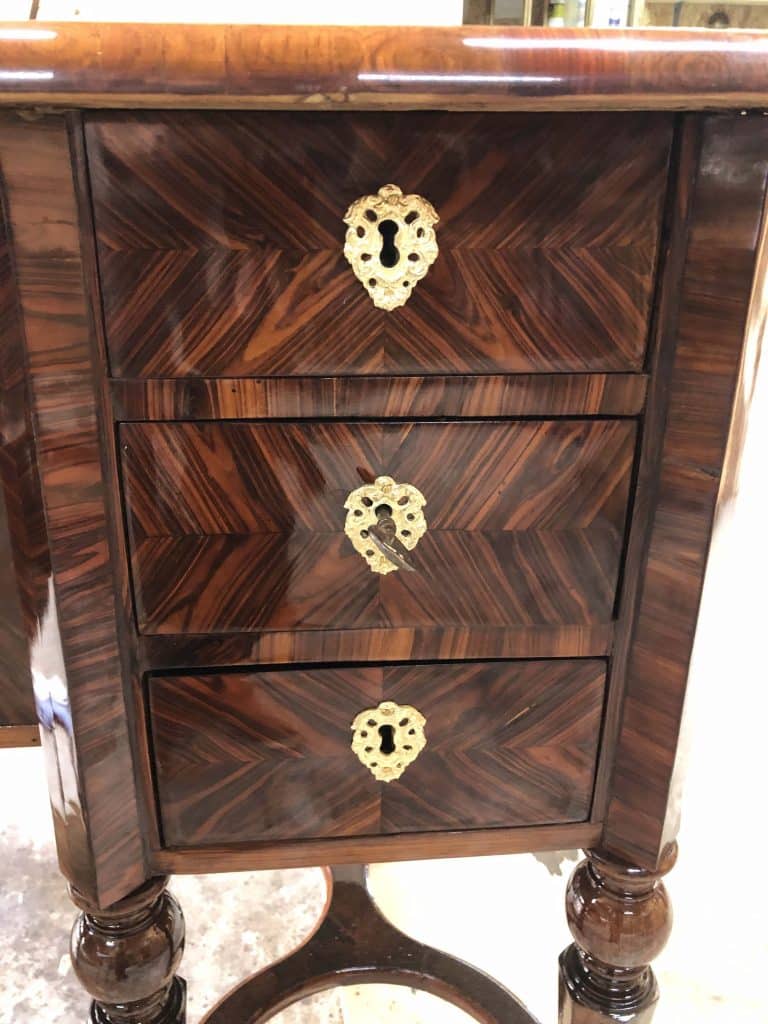
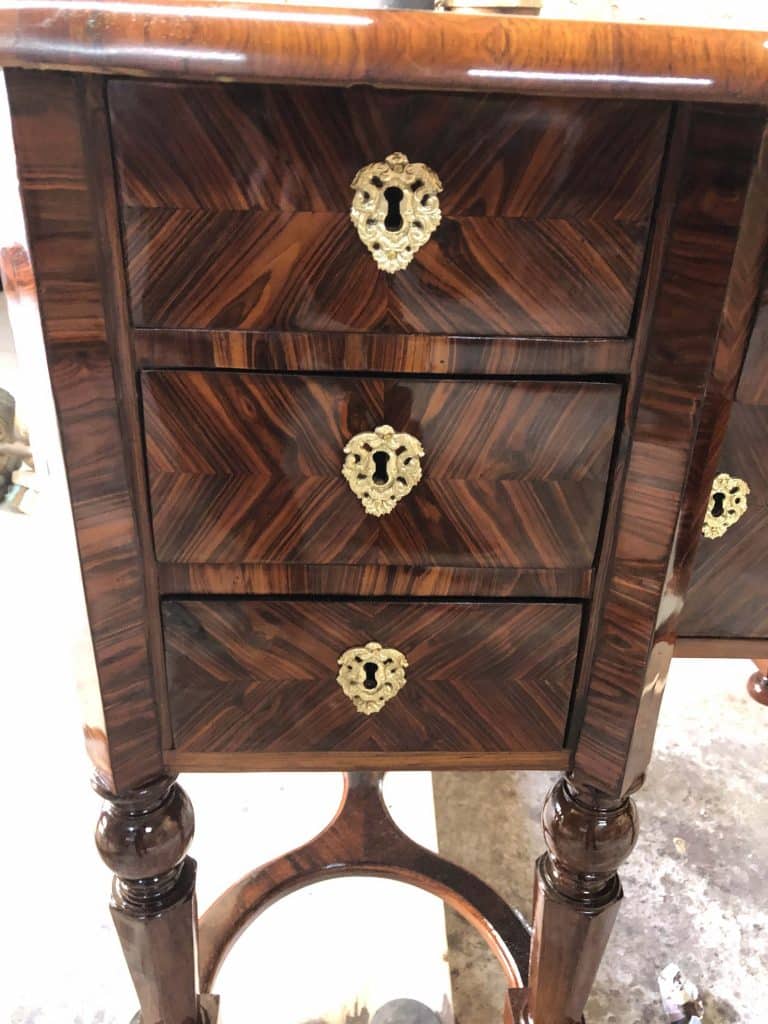
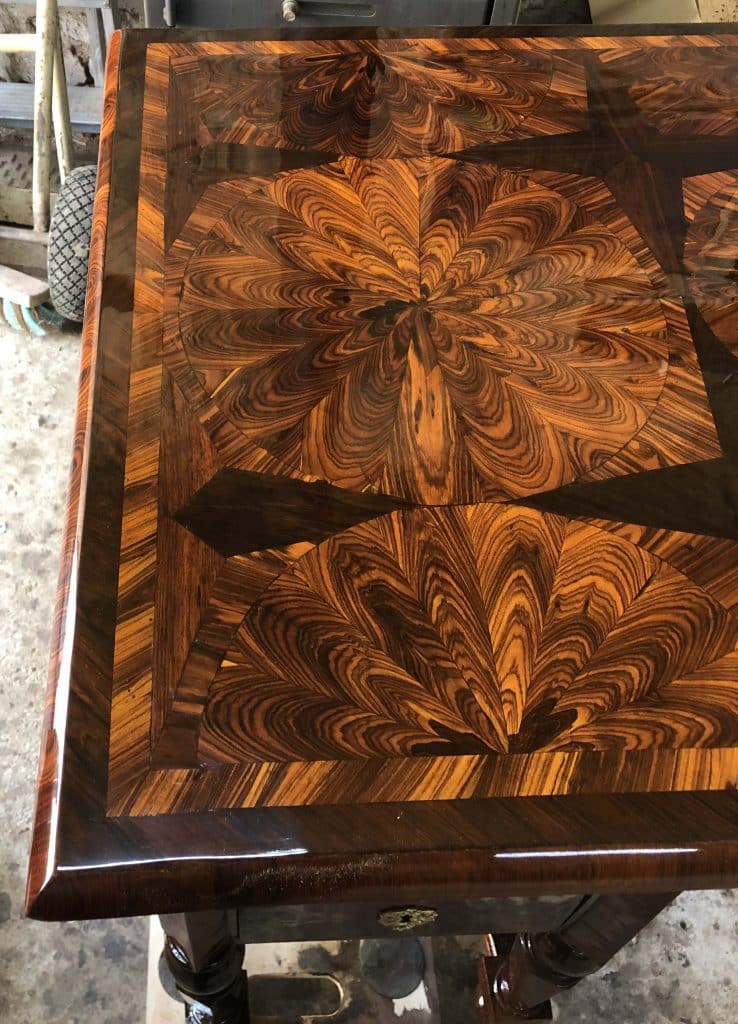
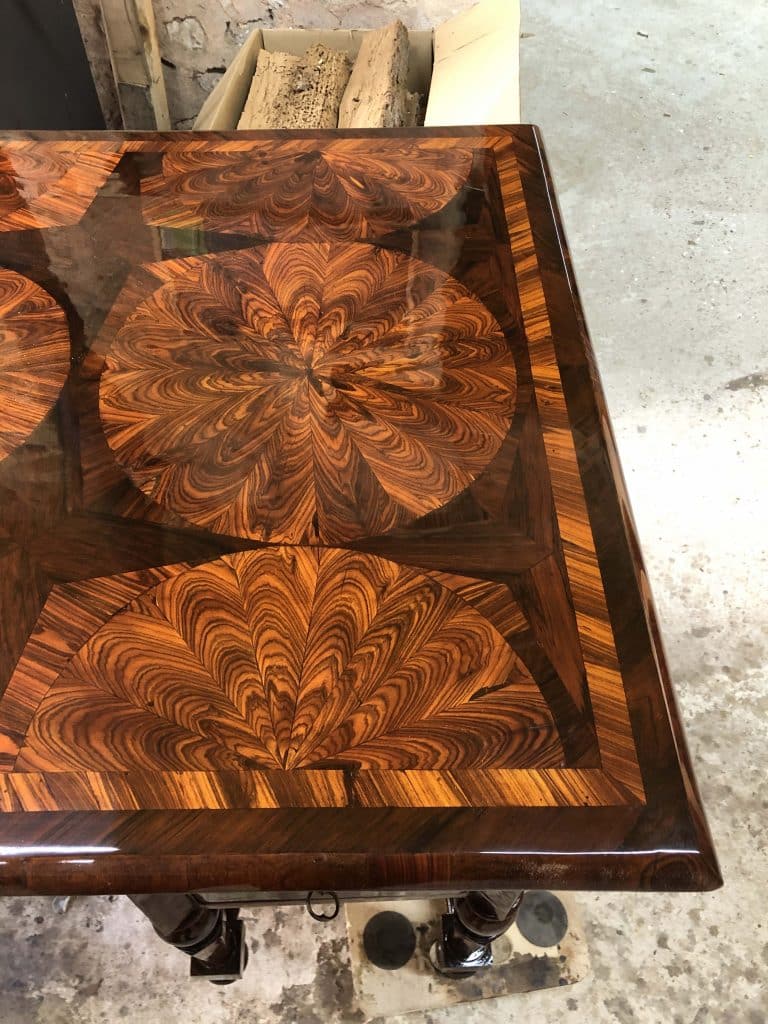
Extensive restoration work has been undertaken on this Mazarin desk, veneered in violet wood and rosewood. It is entirely veneered on fir with a solid rosewood base. The top features a marquetry of rosewood stars surrounded by violet wood butterfly wings in circular patterns.
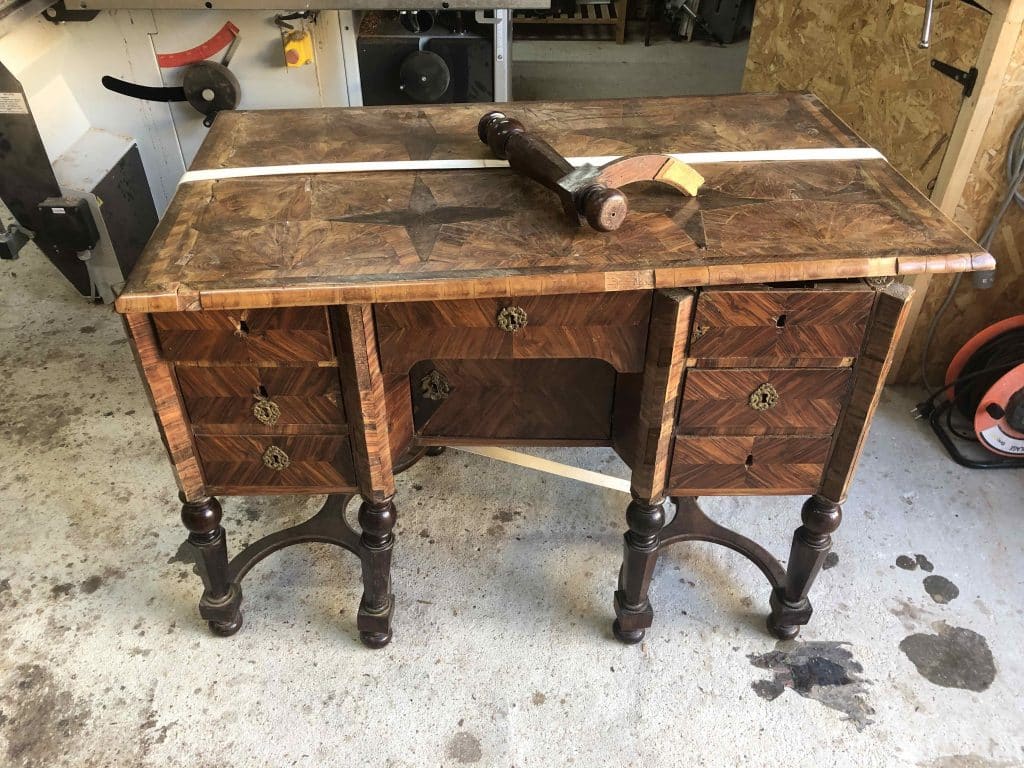
Why the name "Mazarin"?
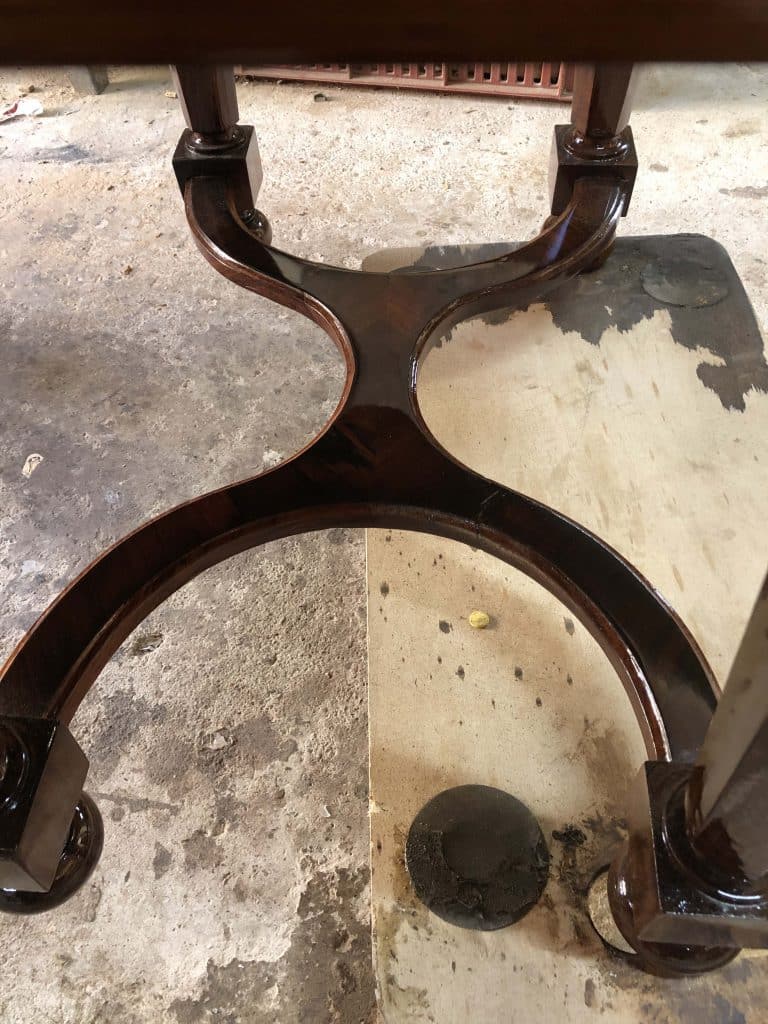
The eight-legged desk is one of the jewels of 17th-century furniture. It only acquired the name "Mazarin" from antique dealers in the 19th century to lend it greater prestige, as it actually appeared only around 1670, well after the cardinal's death in 1661. The oldest example we can precisely date to 1669 was made by Pierre Gole (1620-1684), a cabinetmaker of Dutch origin who became cabinetmaker to the King and whose work was characterized by the application of exotic veneers of ebony, tortoiseshell, and ivory. It generally consists of two side sections, each with three drawers, supported by four legs joined by X- or H-shaped stretchers. The central section is surmounted by a seventh drawer, placed above a small opening.
It doesn't strictly function as a desk; it's more often used as a table, hence the mention in the archives of an 8-legged desk-table. But in reality, this piece of furniture primarily served a ceremonial purpose, intended to display one's social standing and erudition.
Did you know? The word "bureau" (office) comes from "bure," a coarse brown woolen cloth used to cover writing tables to protect them from ink stains. Bure was also used to make monks' robes. A bureau is the table used for writing, and by extension, the word has come to designate the room in which this piece of furniture is located, generally dedicated to intellectual work.
State of affairs report
When it arrived at the workshop, it was in rather poor condition. None of the legs were stable, a stretcher was broken into several pieces, the tabletop was coming unglued, and a slatted edge had detached. Almost all the veneer was peeling off, and to top it all off, the entire piece of furniture was riddled with woodworm.
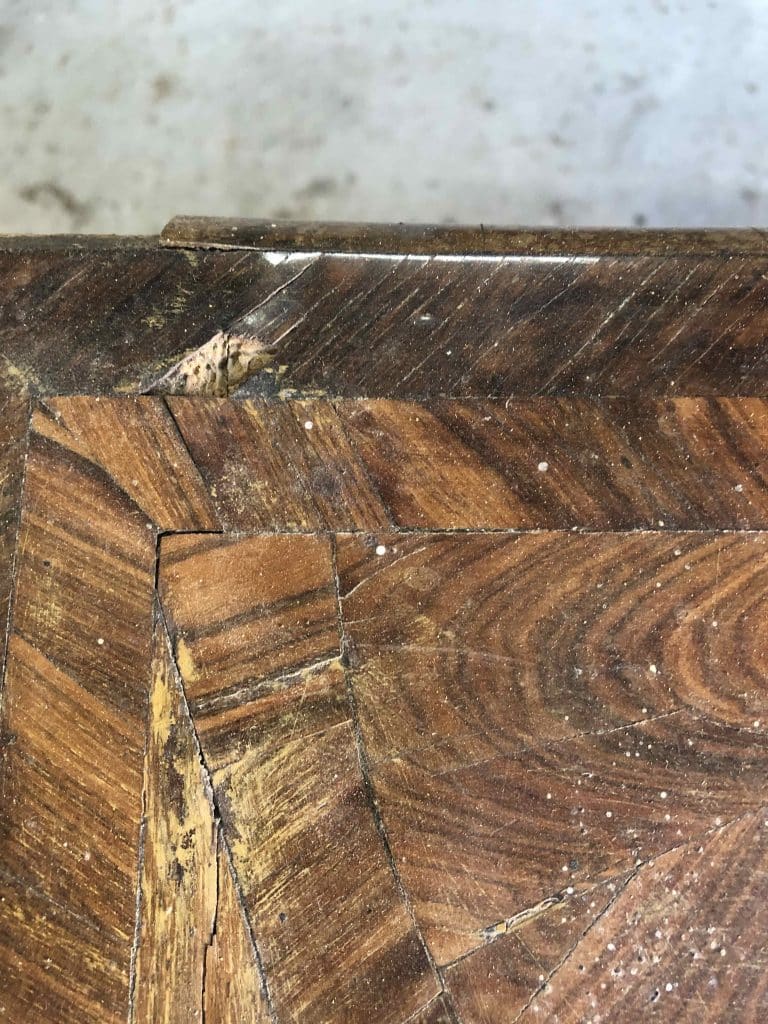
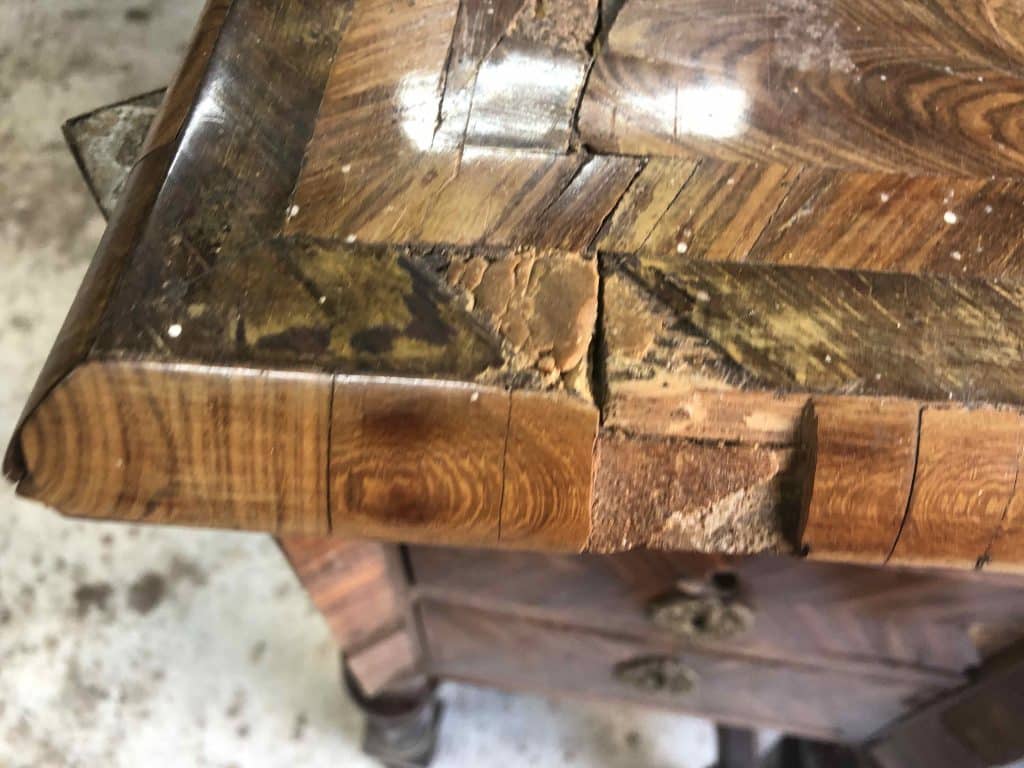
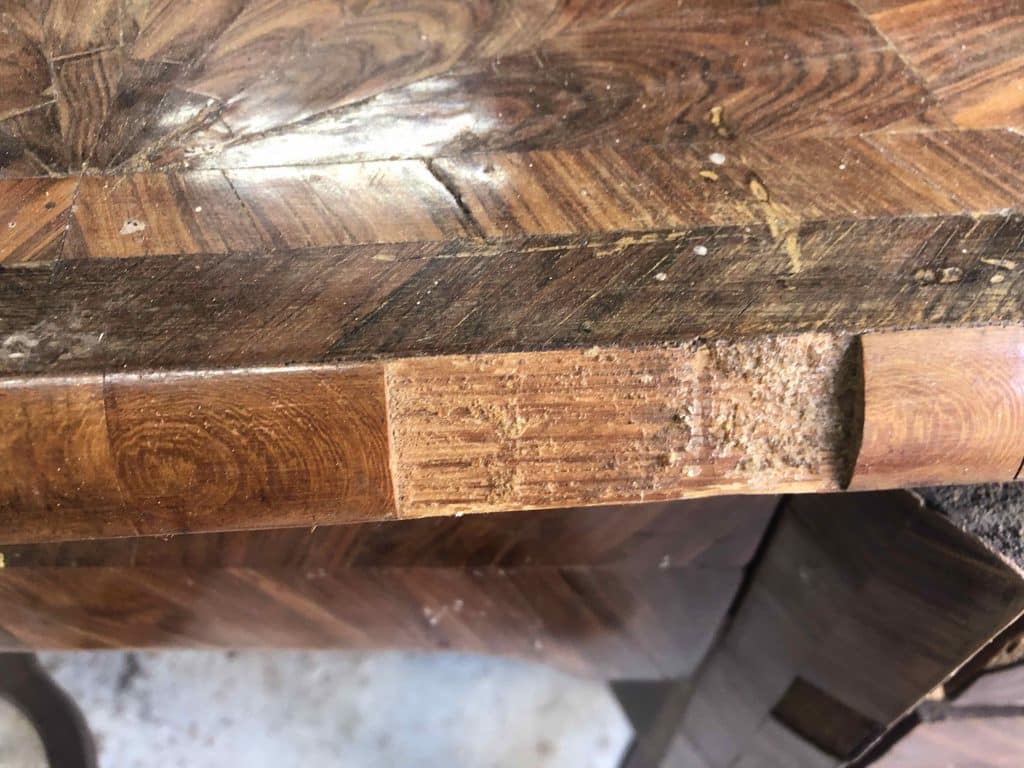
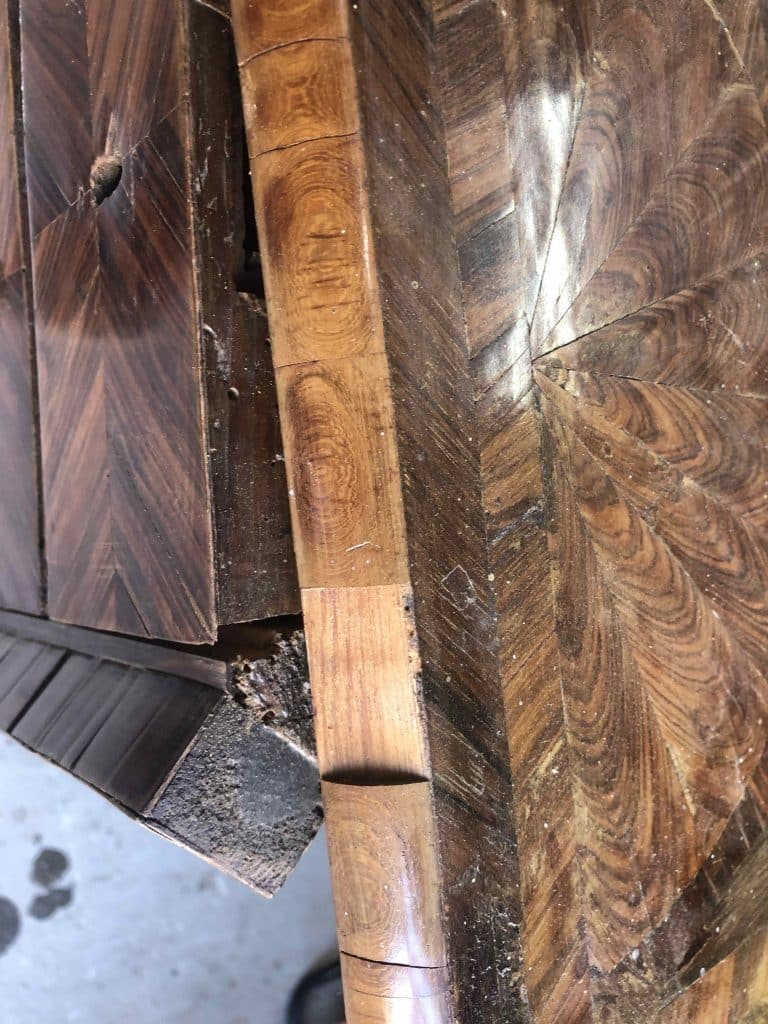
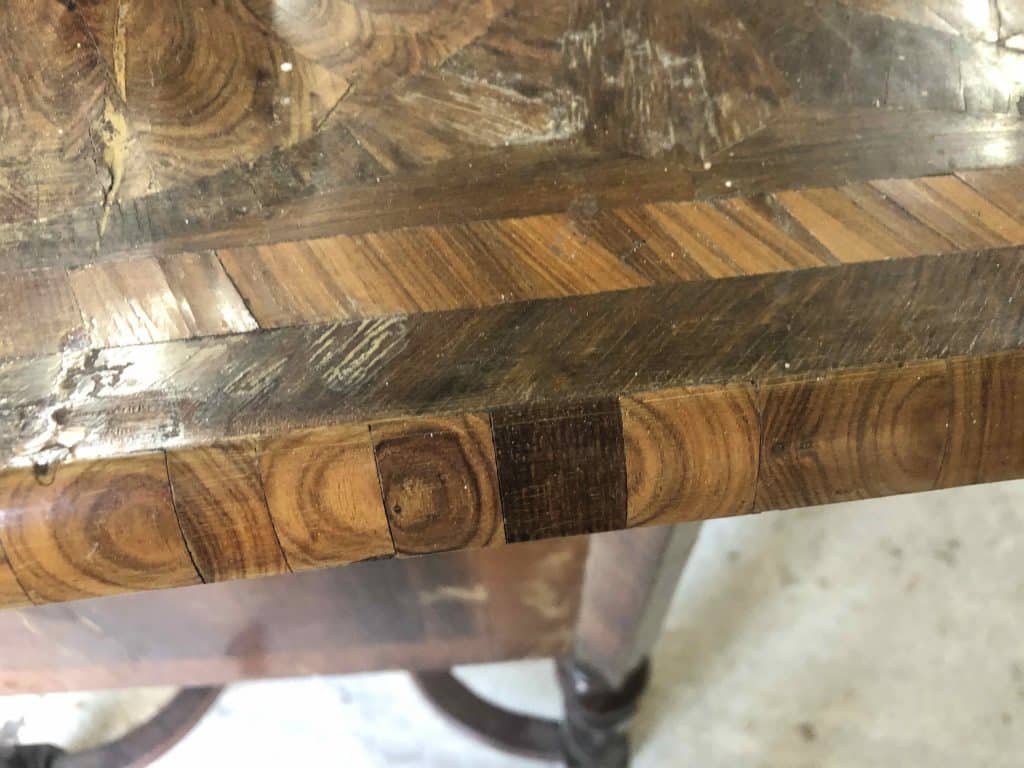
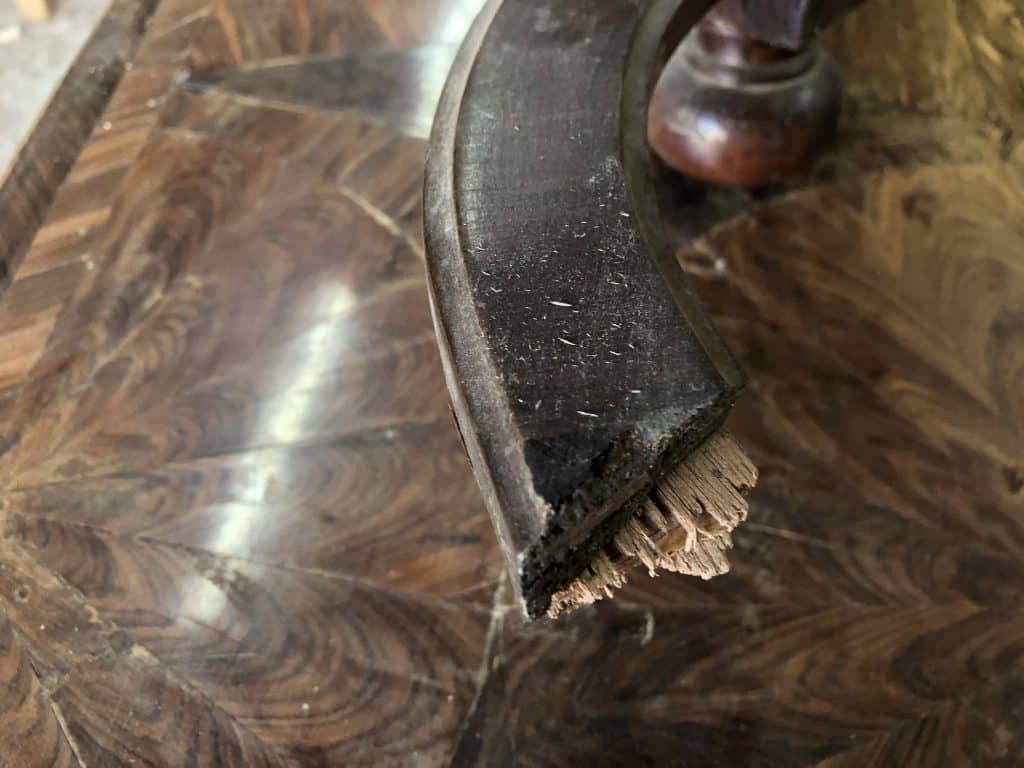
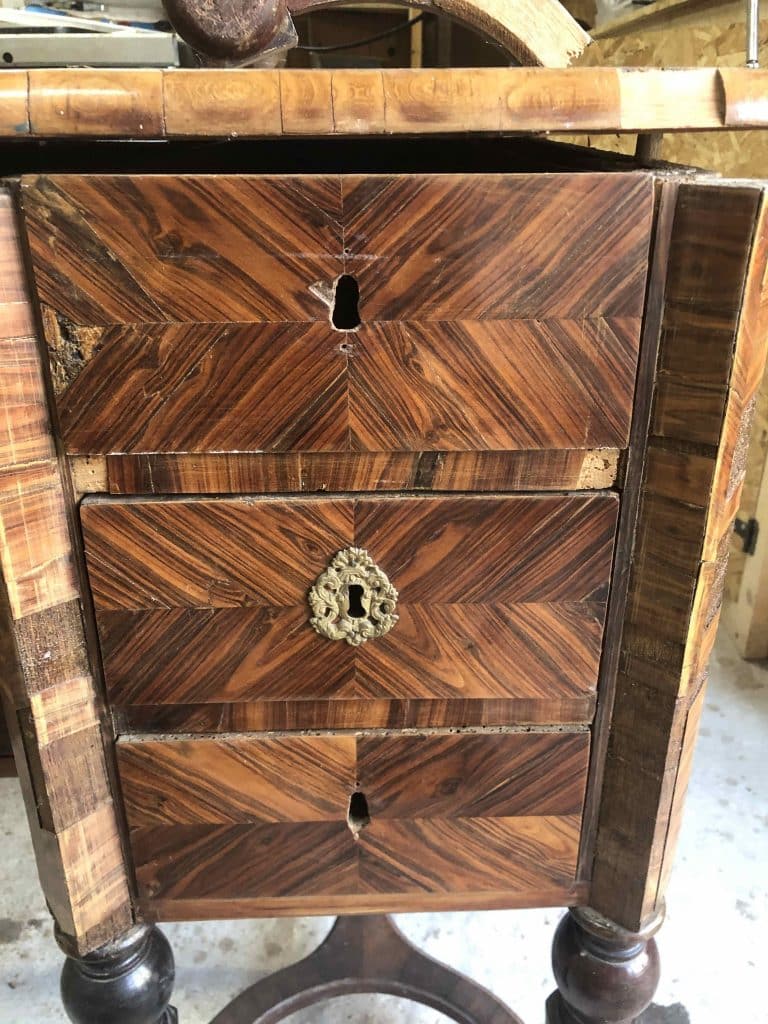
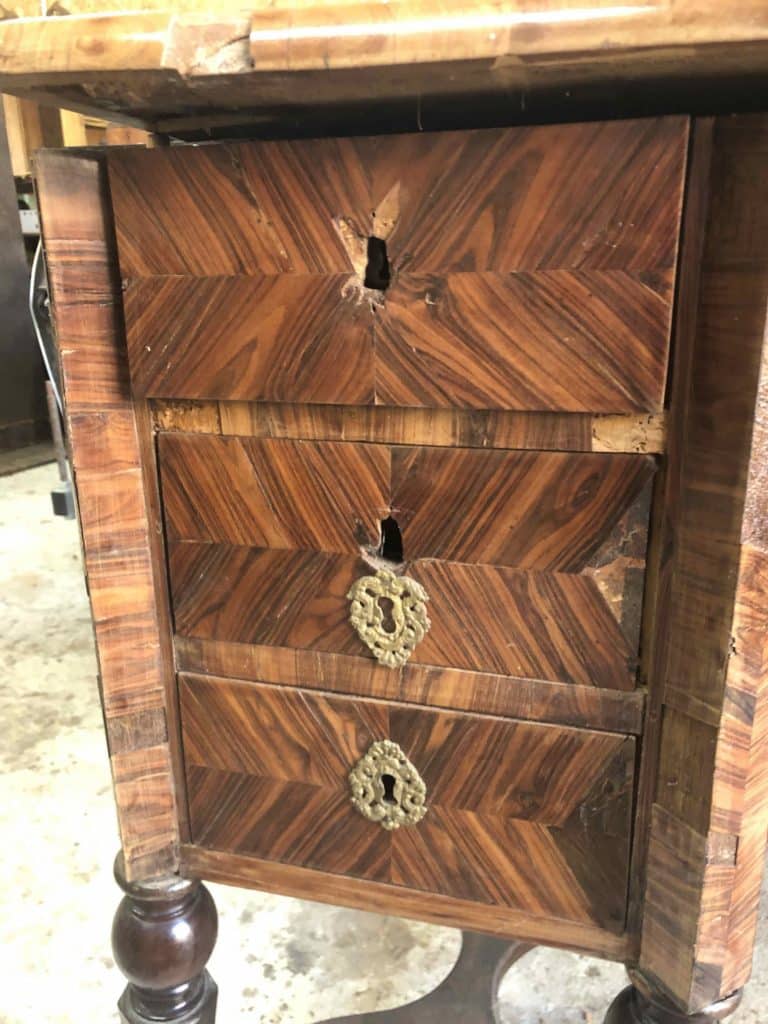
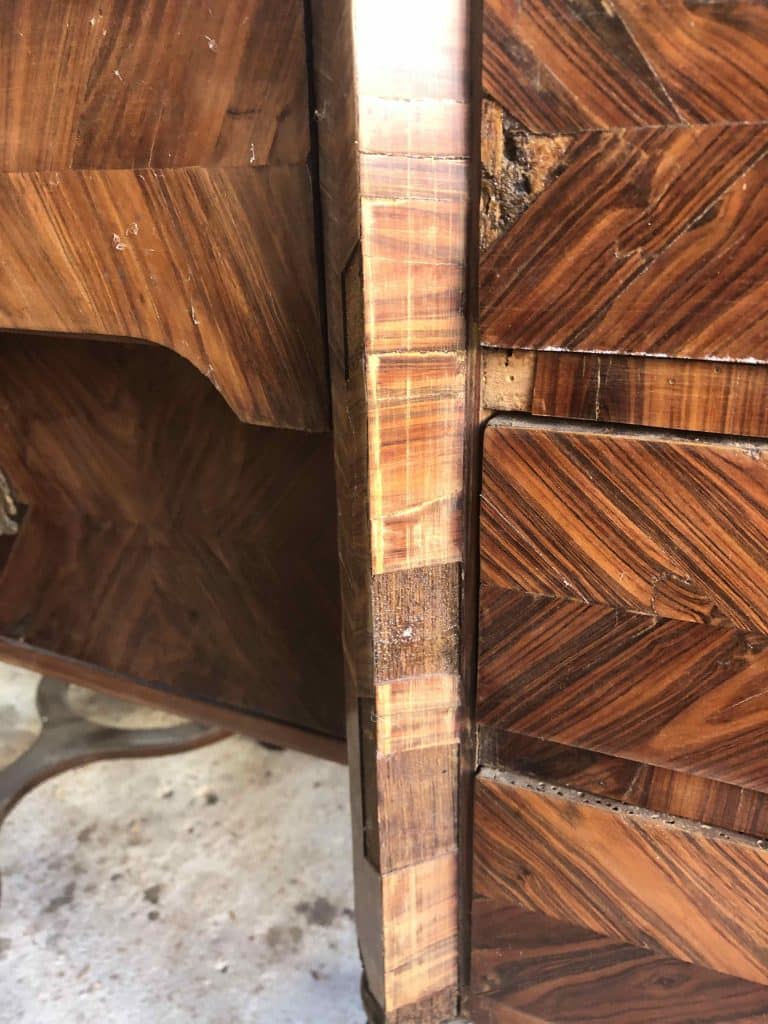
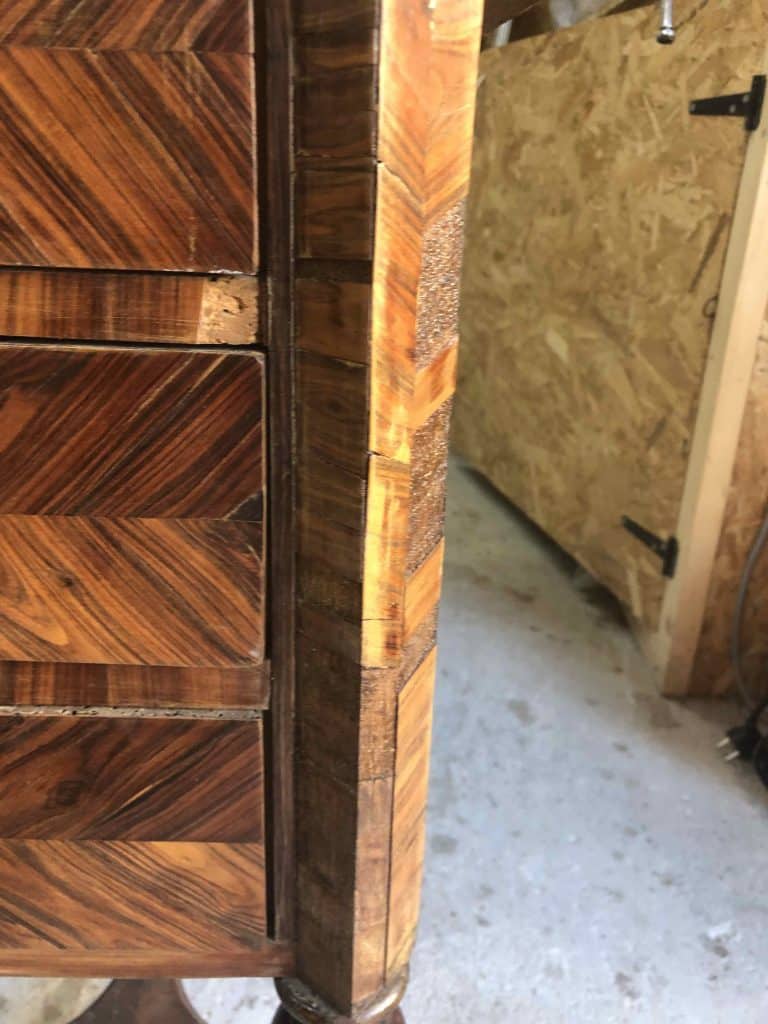
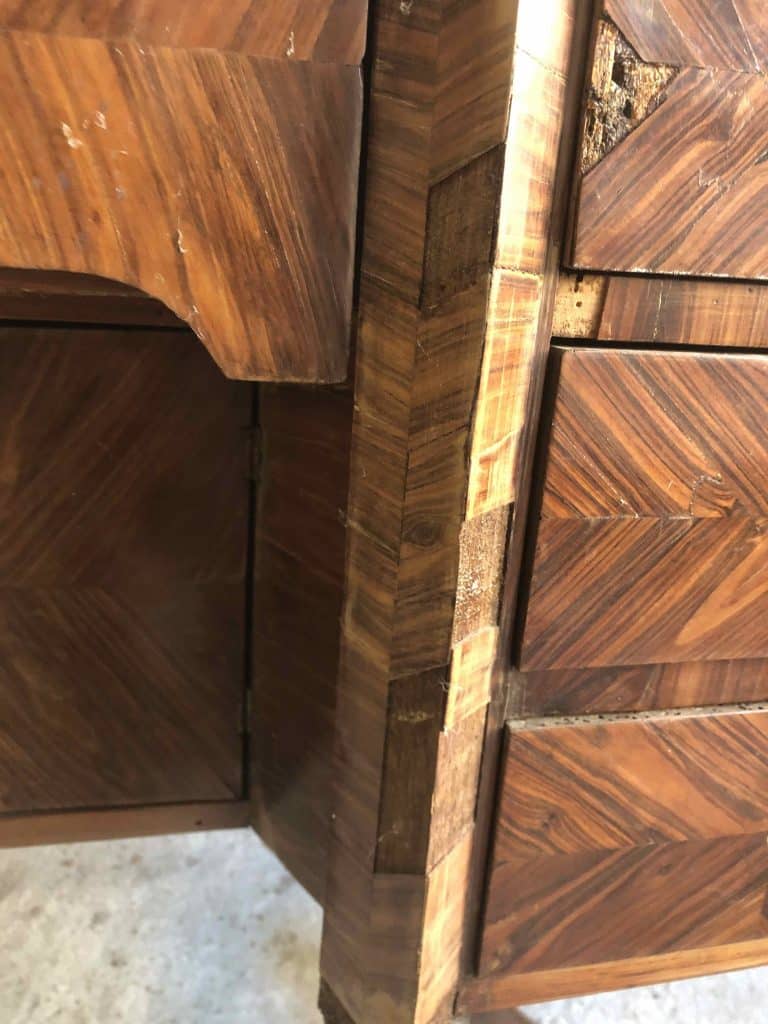
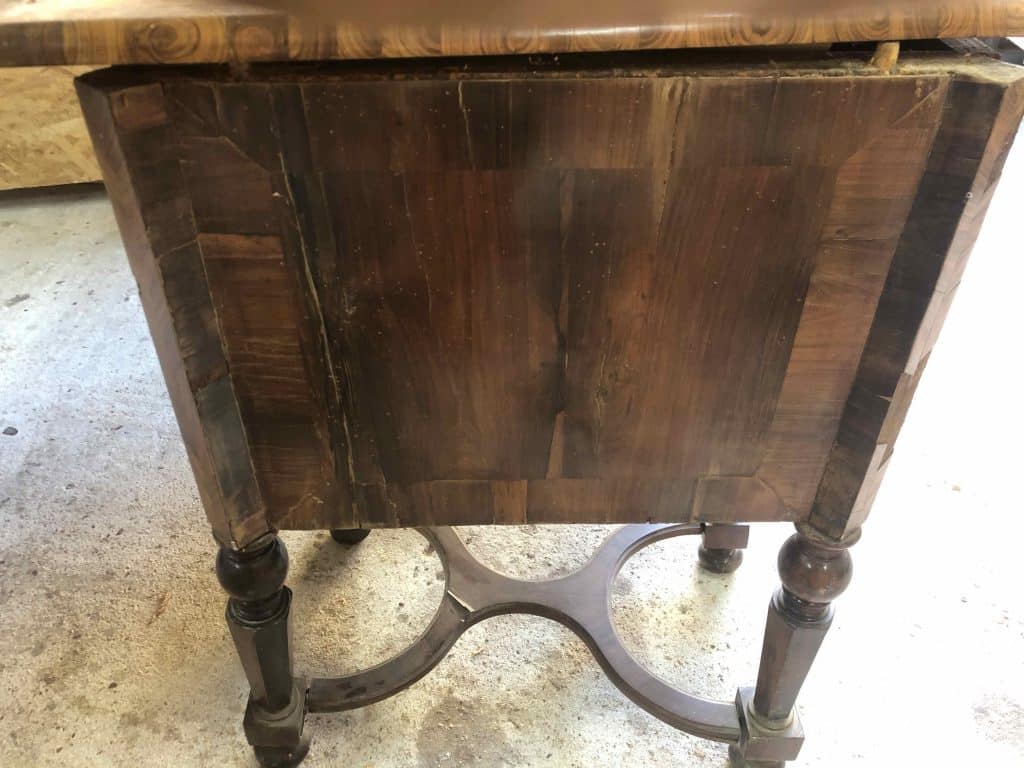
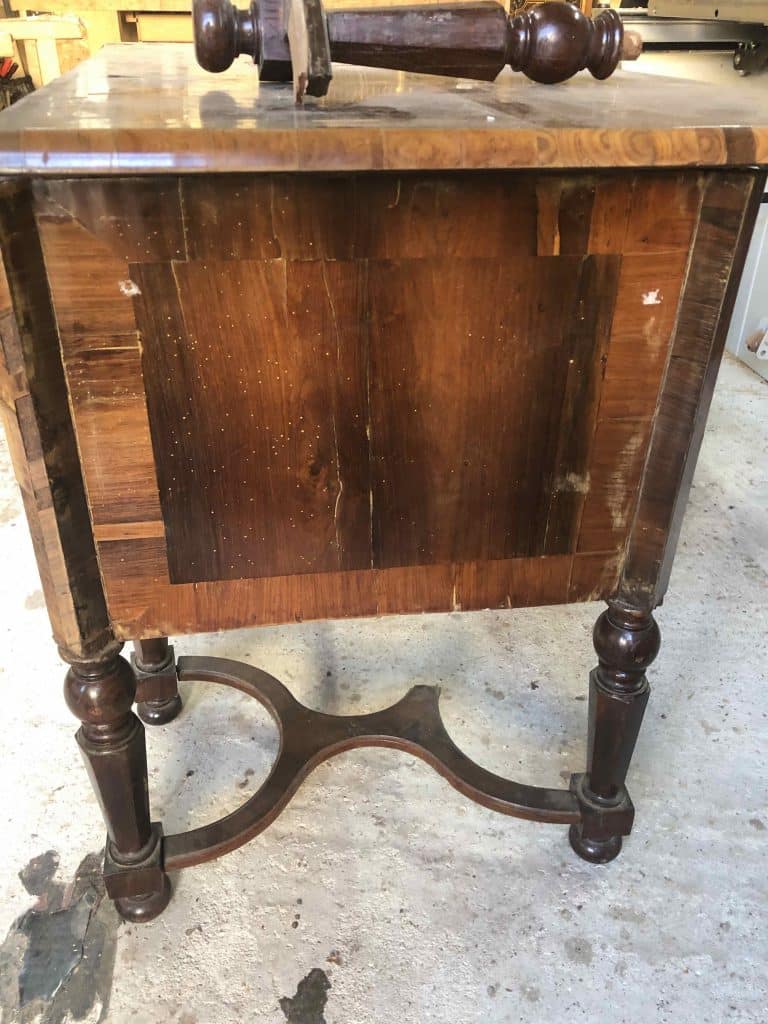
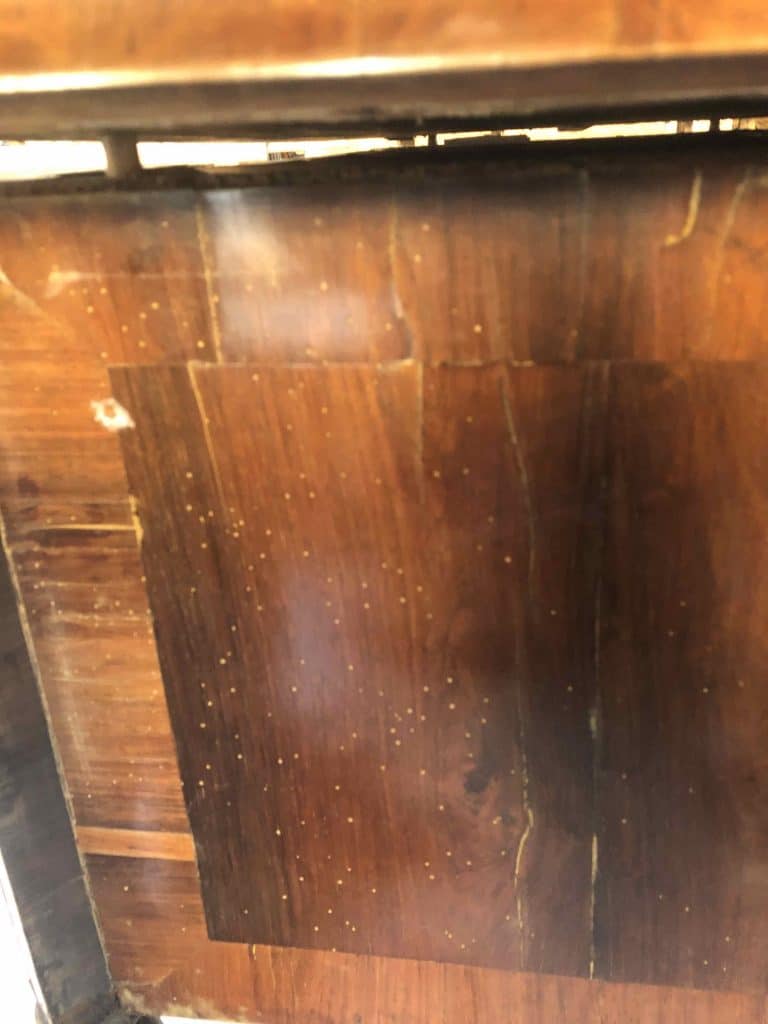
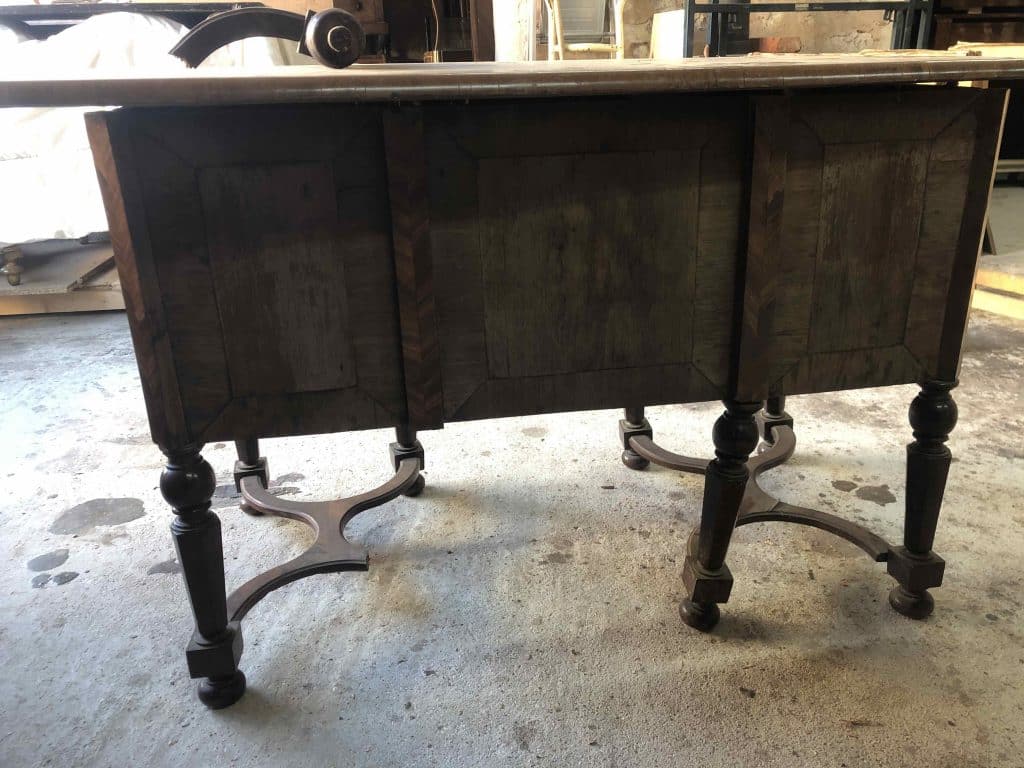
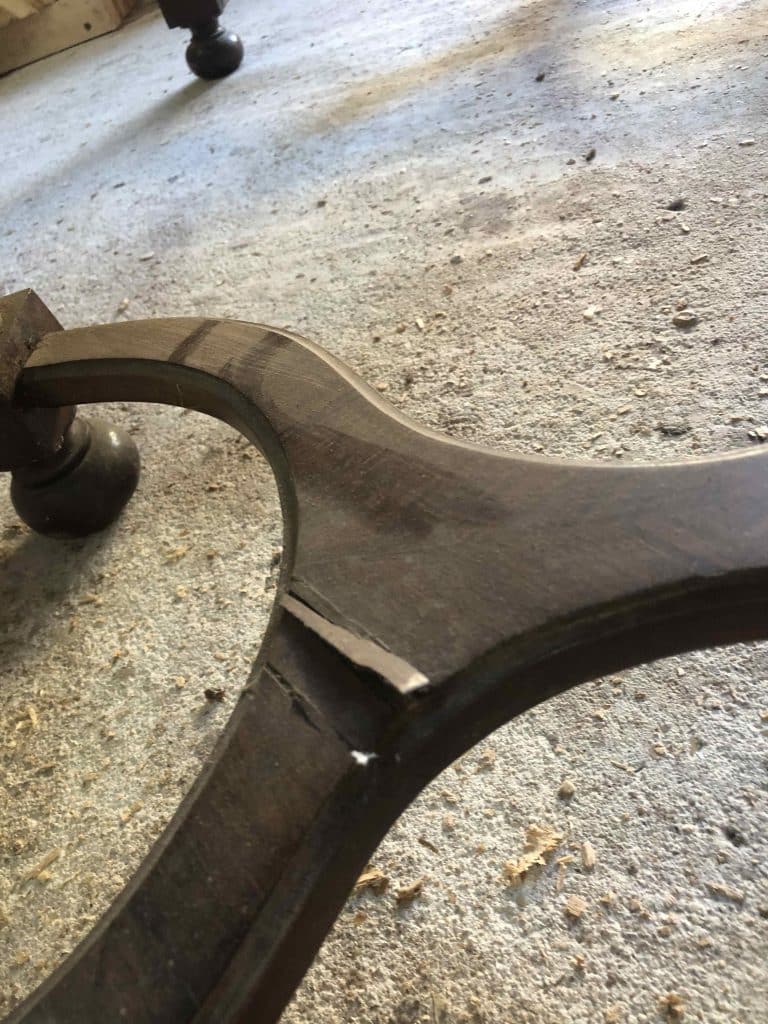
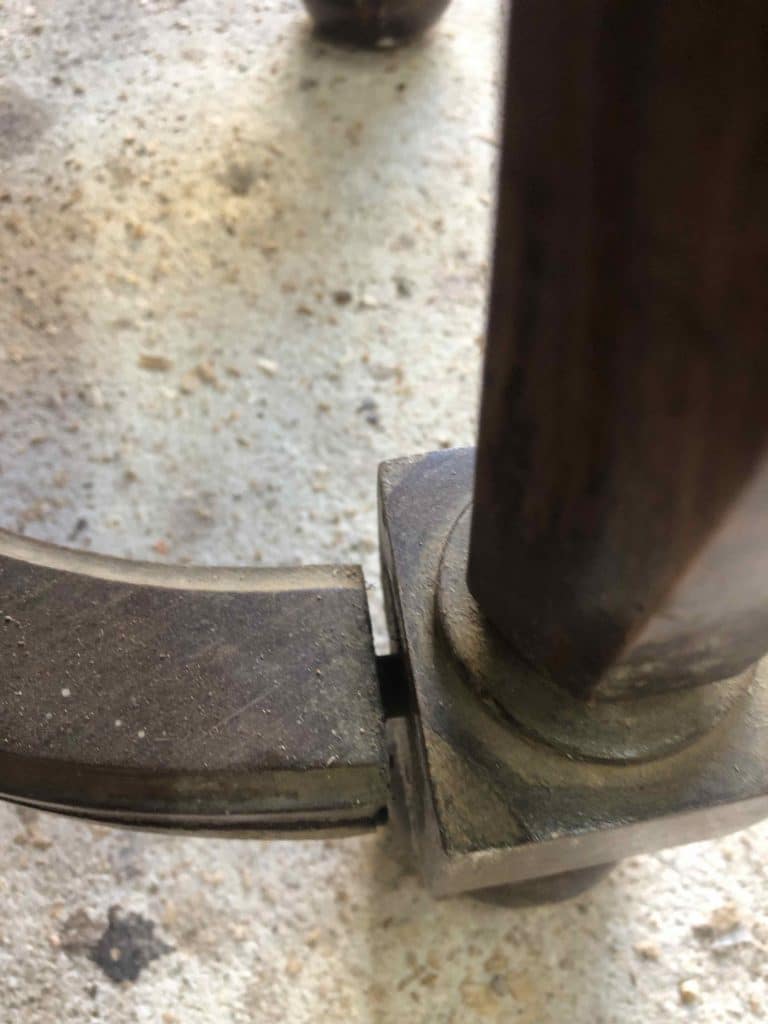
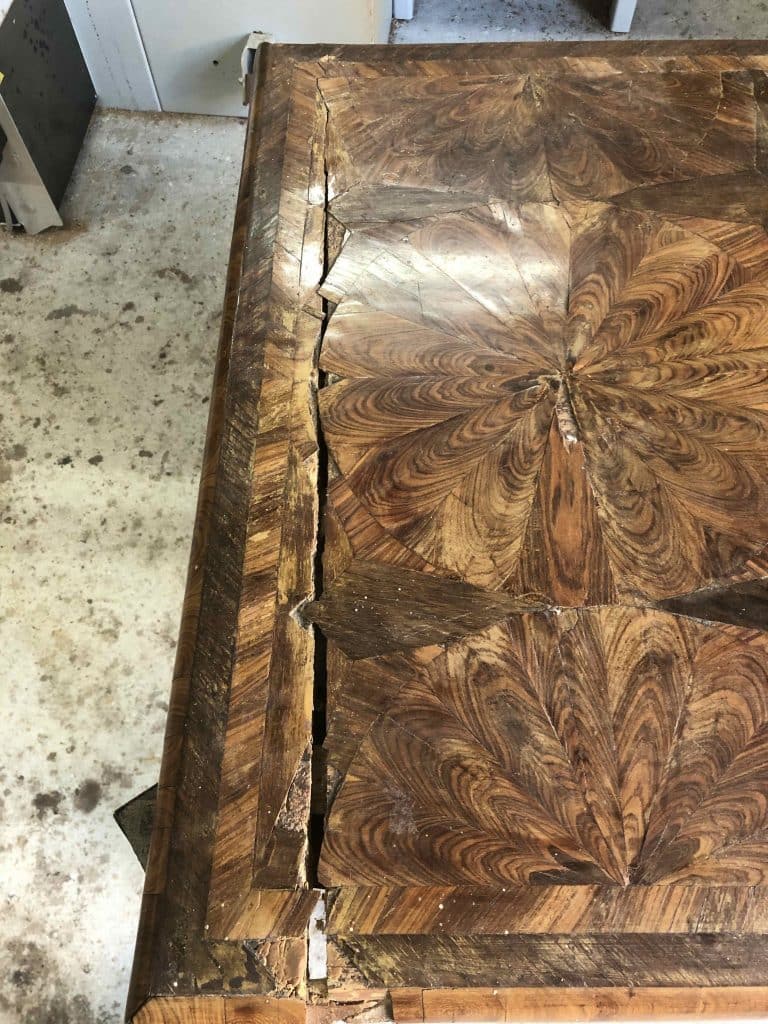
detached comfort
The Restoration
The restoration work therefore began with static anoxia treatment to protect against wood-boring insects. Once this was completed, the joints, as well as the structural and solid parts of the piece, had to be re-glued and rebuilt. The marquetry was treated by vacuum infiltration of glue. The glues on the other veneered surfaces were also regenerated by infiltration with controlled heat not exceeding 60°C. In some areas, the veneer was detaching with simple mechanical lifting. In these areas, mainly on the uprights, the veneer was re-glued using hot animal glue.
The missing veneer was replaced with sawn, scraped and sanded veneer before gluing so that it had the right thickness so as not to have to sand the furniture.
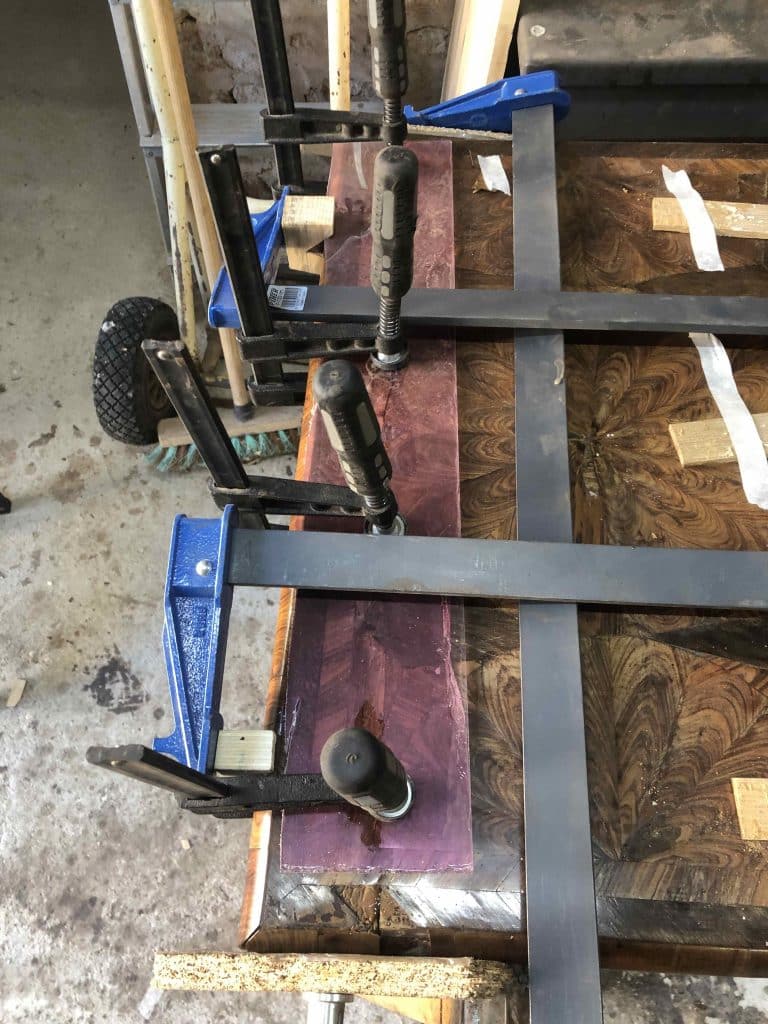
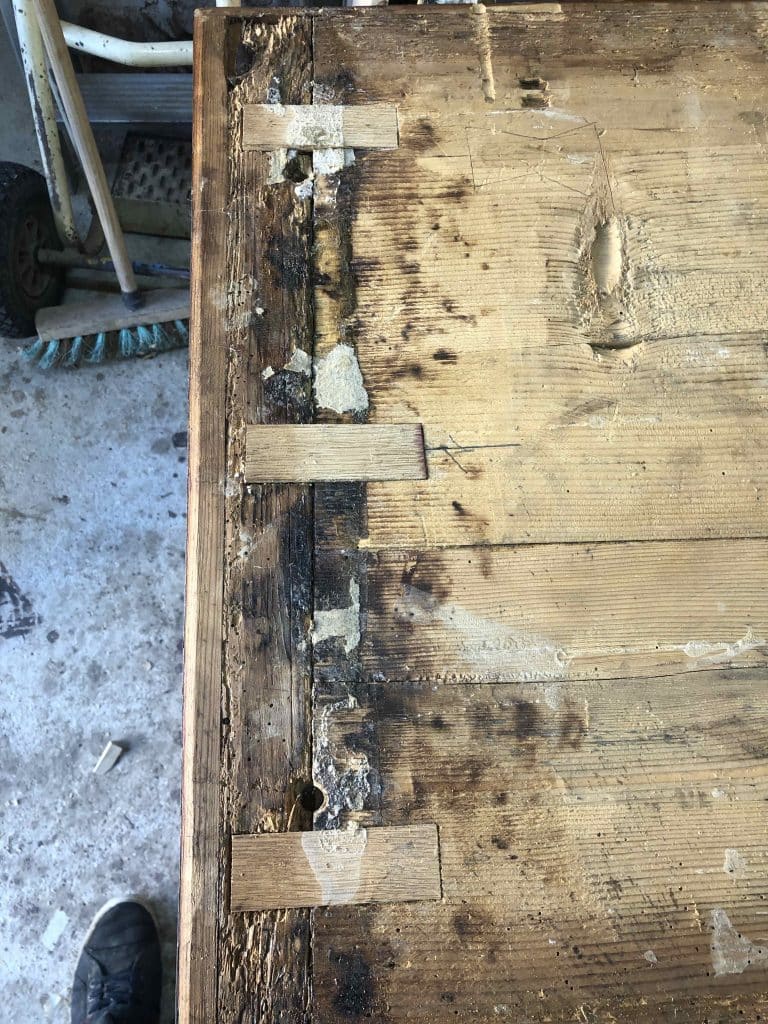
old restoration 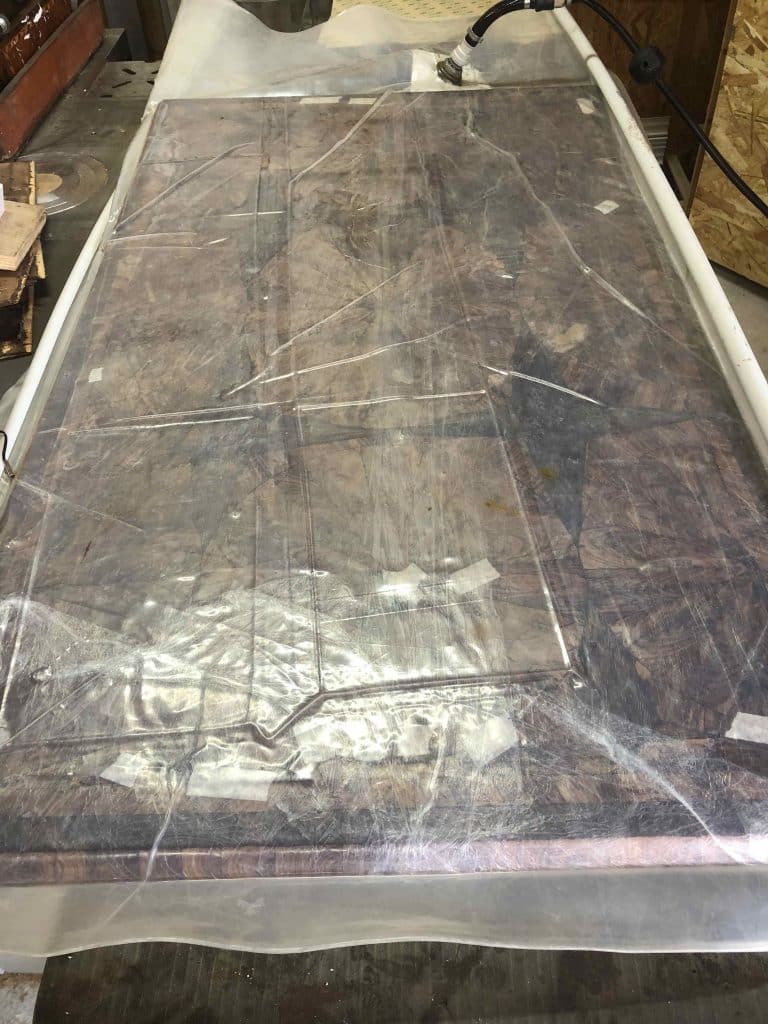
vacuum bonding 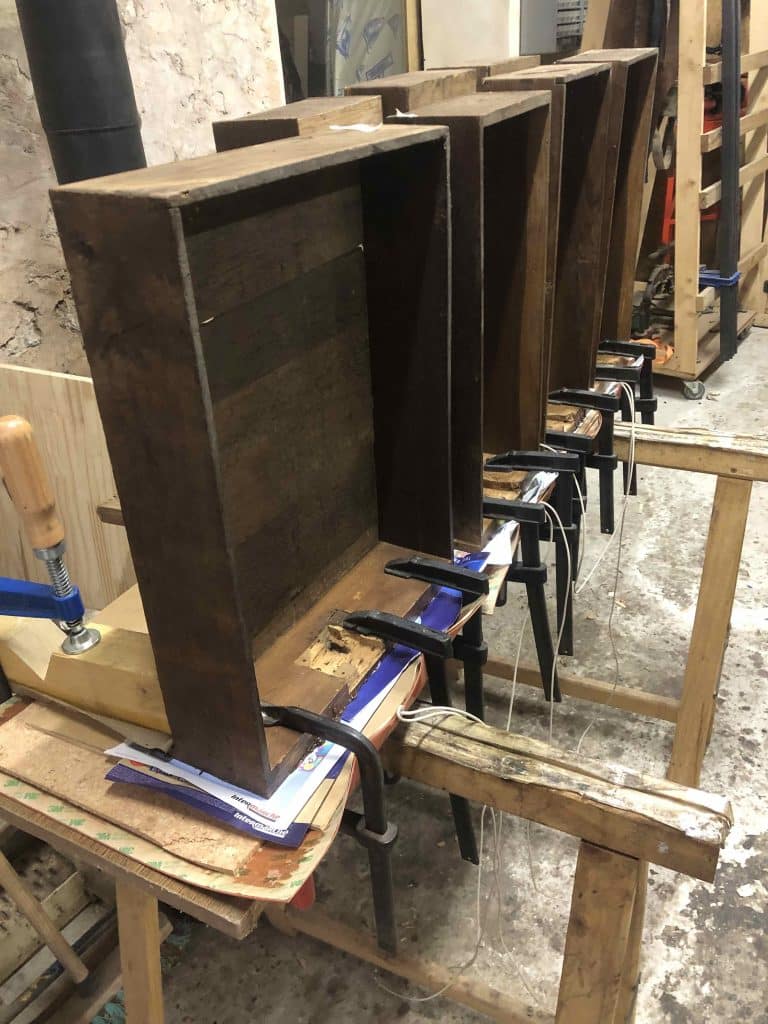
reattaching the drawer fronts 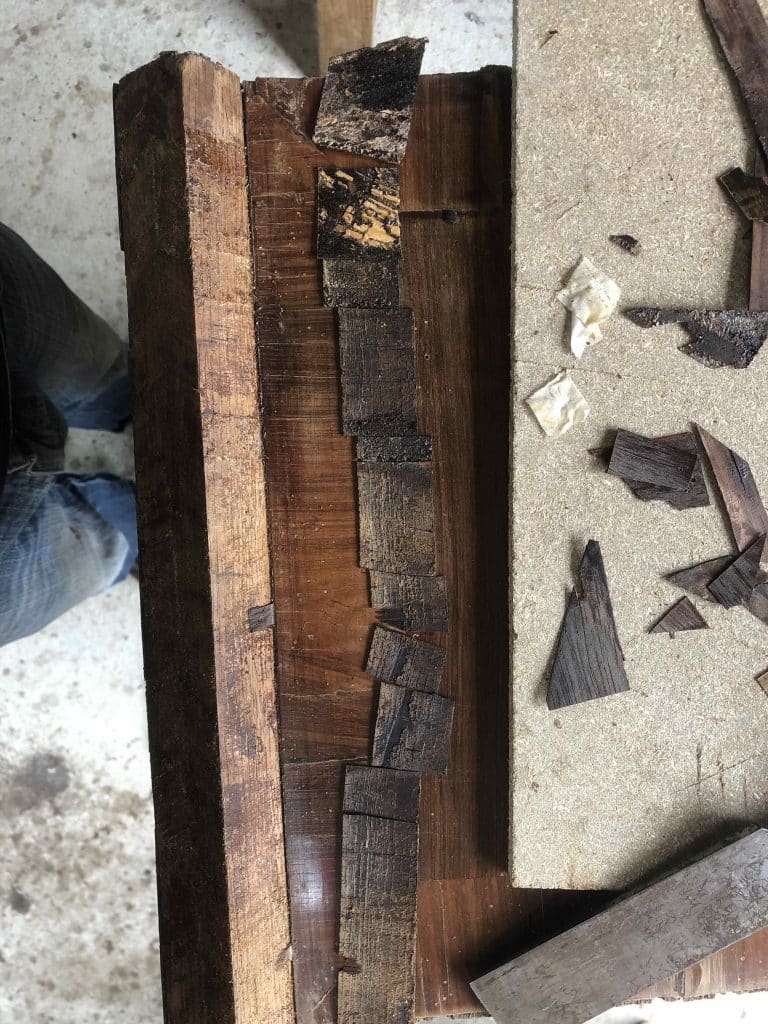
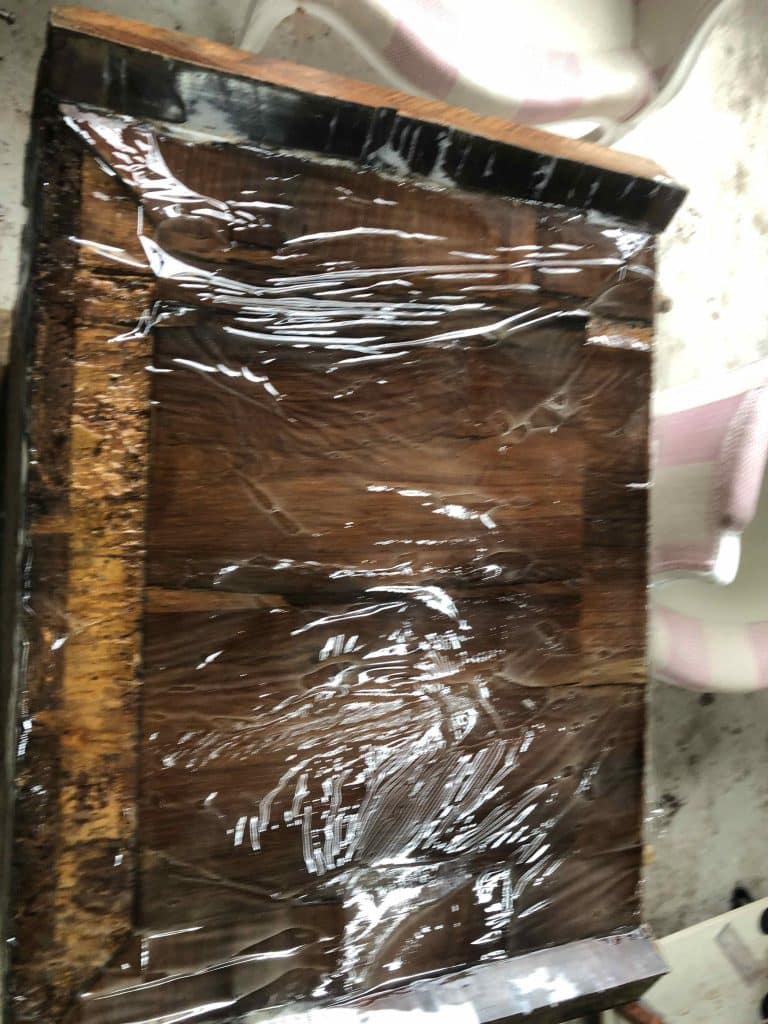
glue infiltration
Finally, the varnish was thinned and the piece of furniture was re-varnished with a pad.
To see previous restorations : https://ebenisterie-mathieuvath.fr/en-ce-moment-a-latelier/
You can find this piece of furniture at Etienne Thuriet Antique Dealer
Exceptional piece of furniture, exceptional craftsmanship, bravo!
Thank you so much
You are really talented… the piece of furniture and the restoration are magnificent.
THANKS
Magnificent restoration, as usual.
THANKS