
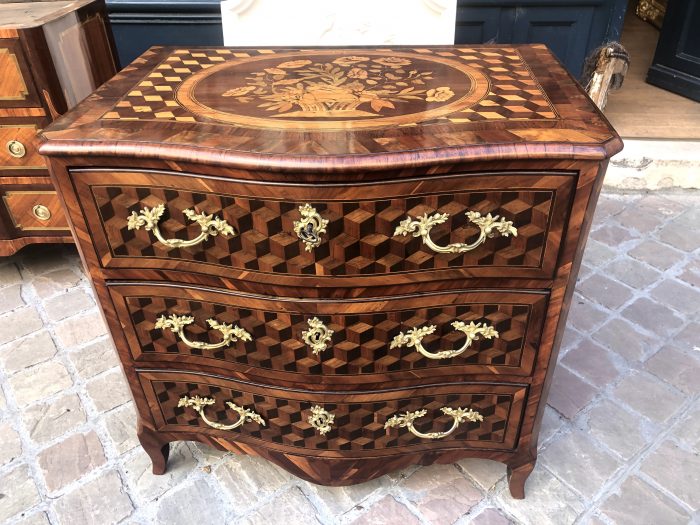
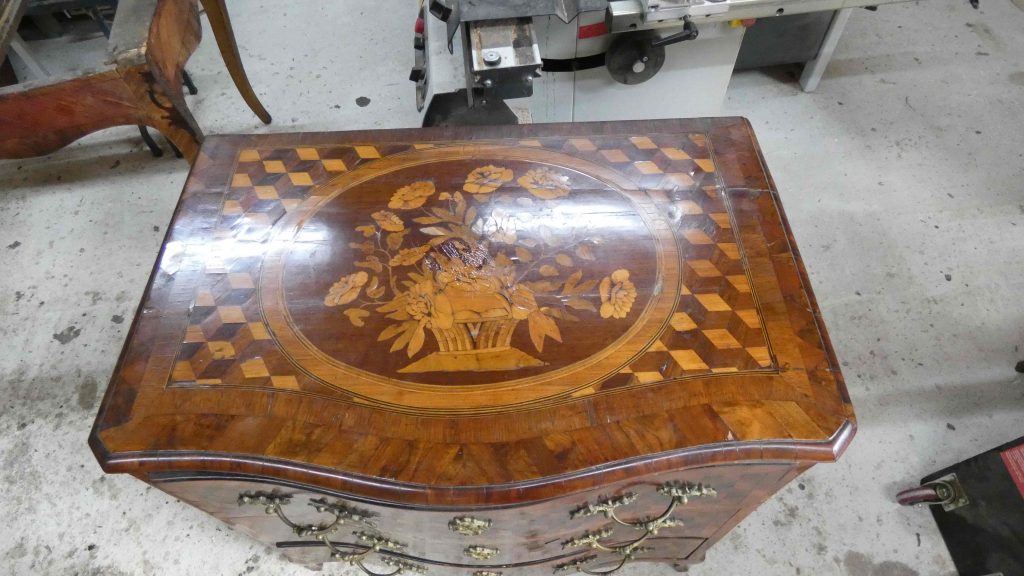
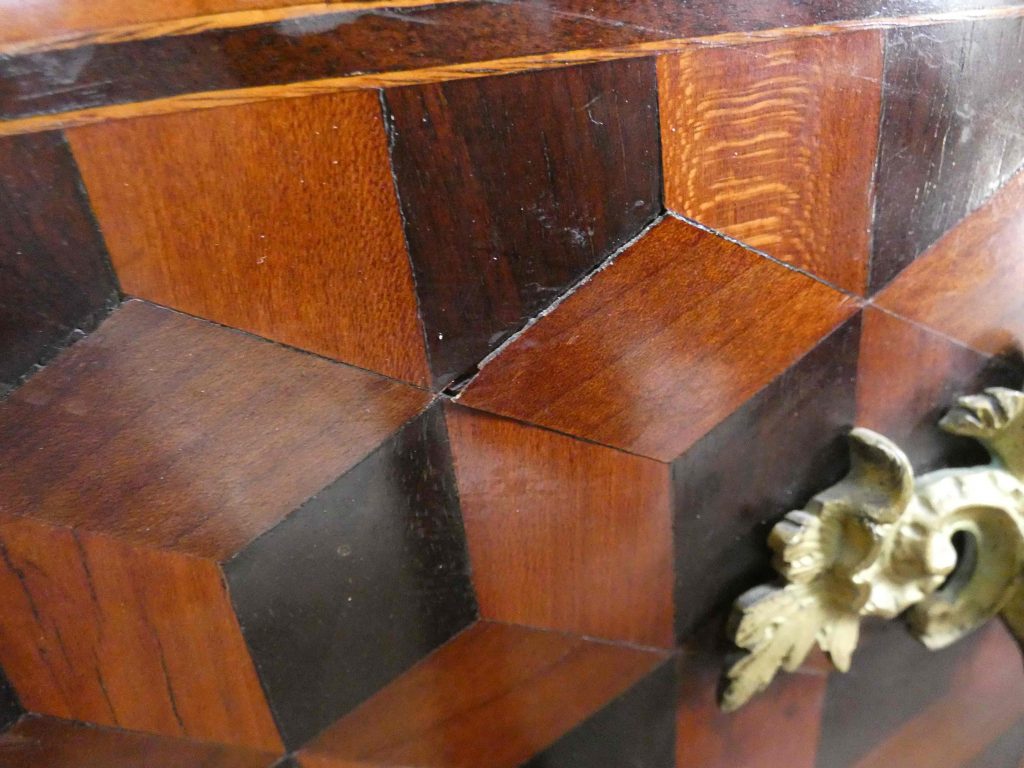
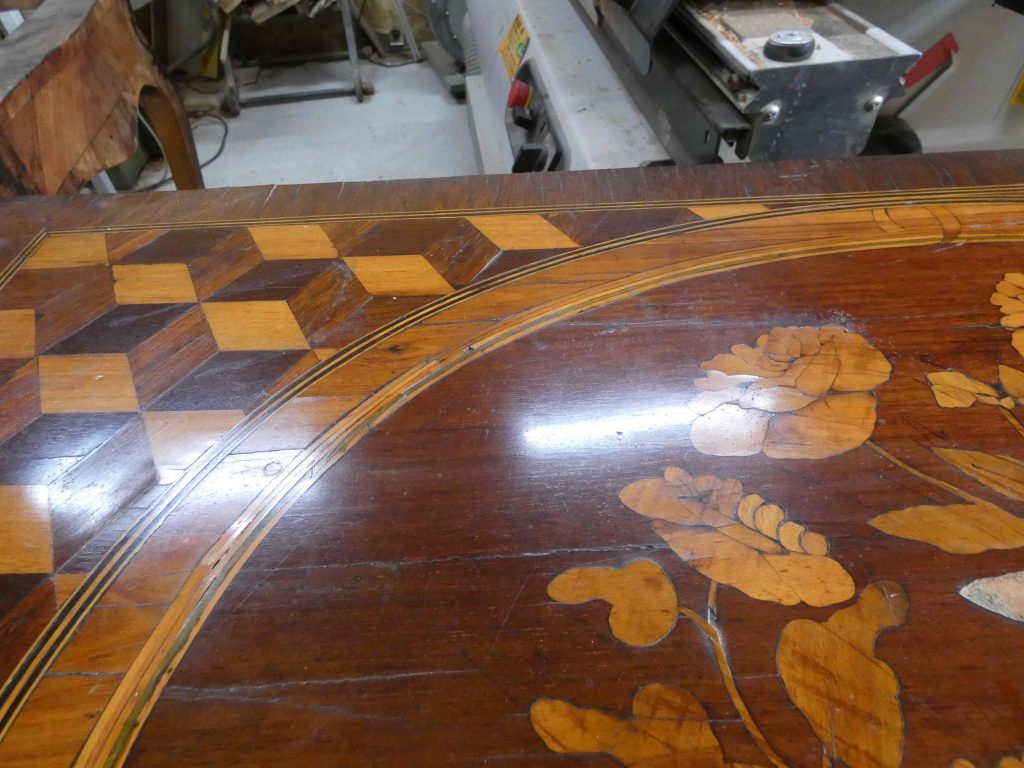
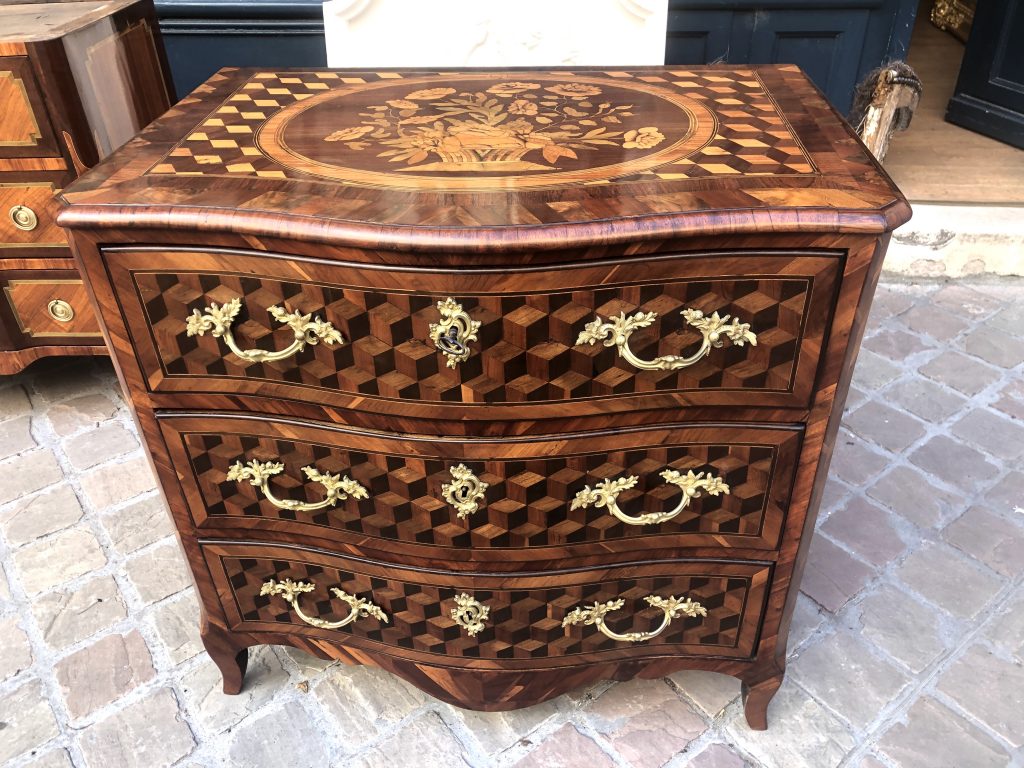
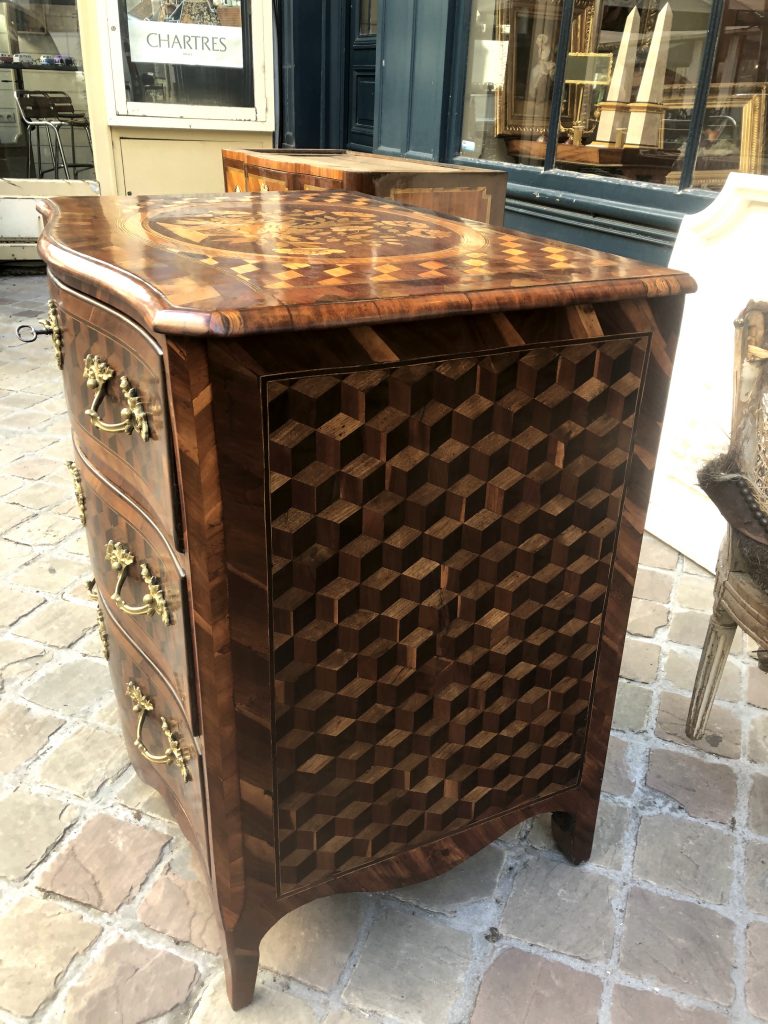
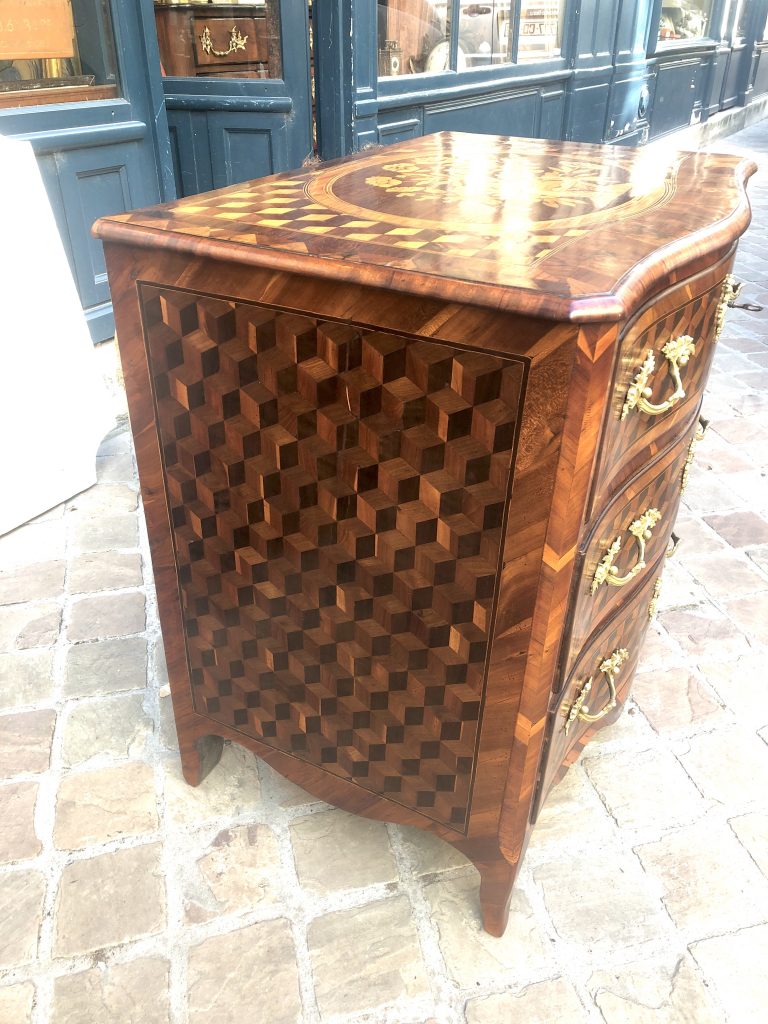
This slightly curved commode, with three drawers, is veneered with bottomless cubes of walnut, plum, and cherry wood. Its top is inlaid with a bouquet of flowers on an amaranth ground. Plum wood is easily recognizable by its sapwood markings, which create a lighter pattern and lend an irregular touch to the design. The frame is made of fir and walnut. It is difficult to define a precise style for this commode. Although Louis XV, it clearly foreshadows the sobriety of the Louis XVI style through the simplicity of the stringing and the framing of the floral marquetry.
Born in Bart in 1716 Abraham-Nicolas Couleru, Pierre-Nicolas, son of Nicolas (1686-1767), a carpenter in Bart, settled in Montbéliard in 1720 with his father. After training as a wheel turner, he began his cabinetmaking apprenticeship in Paris in 1739. Upon his return in 1746, he established himself in Montbéliard and obtained his master craftsman's certificate in 1750. He quickly gained a good reputation, which led to him being patronized by Duke Charles Eugene of Württemberg. He died on August 30, 1812, at the age of 95, after a long career and a prolific output. His long life allowed him to pass on his craft to several descendants: Pierre-Nicolas (1735-1824), Marc-David (1732-1804), and Georges-David (1761-1845).
Until the beginning of Louis XVI's reign, Couleru produced a large number of chests of drawers, desks, secretaries, etc., carefully crafted and tastefully decorated. However, it seems that he specialized in slant-front desks.
BIBLIOGRAPHY
- Provincial Cabinetmaking in 18th-Century France and Abraham Nicolas Couleru – Bernard Deloche and Jean-Yves Mornand – Faton Editions – 2011
Before restoration
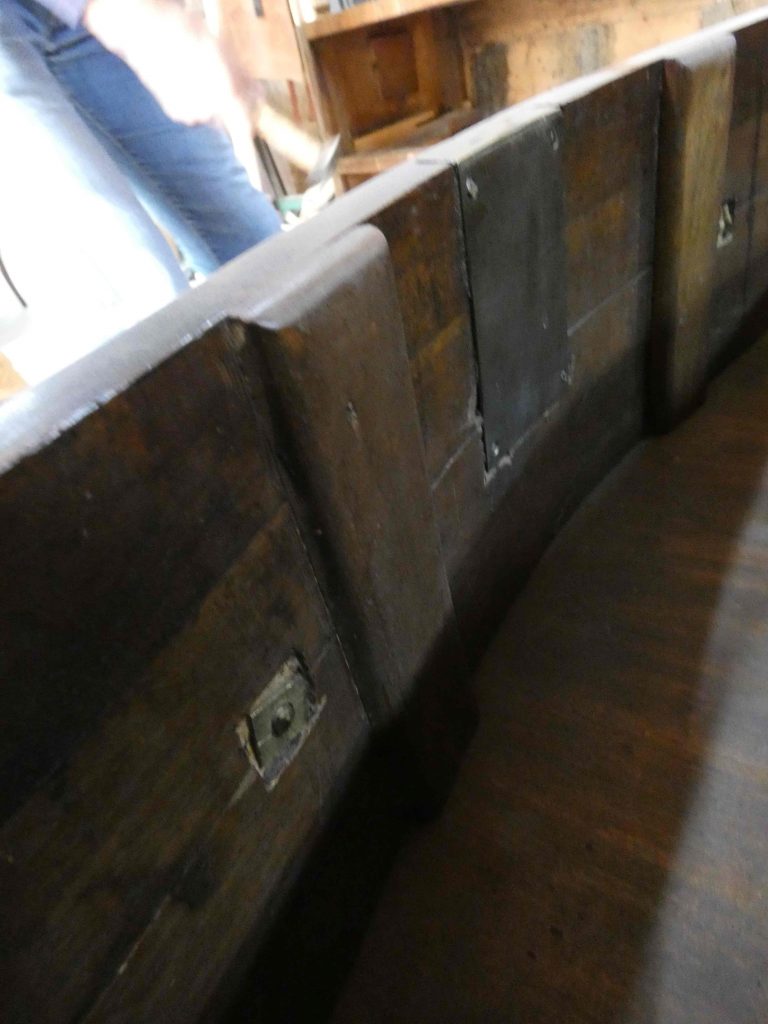
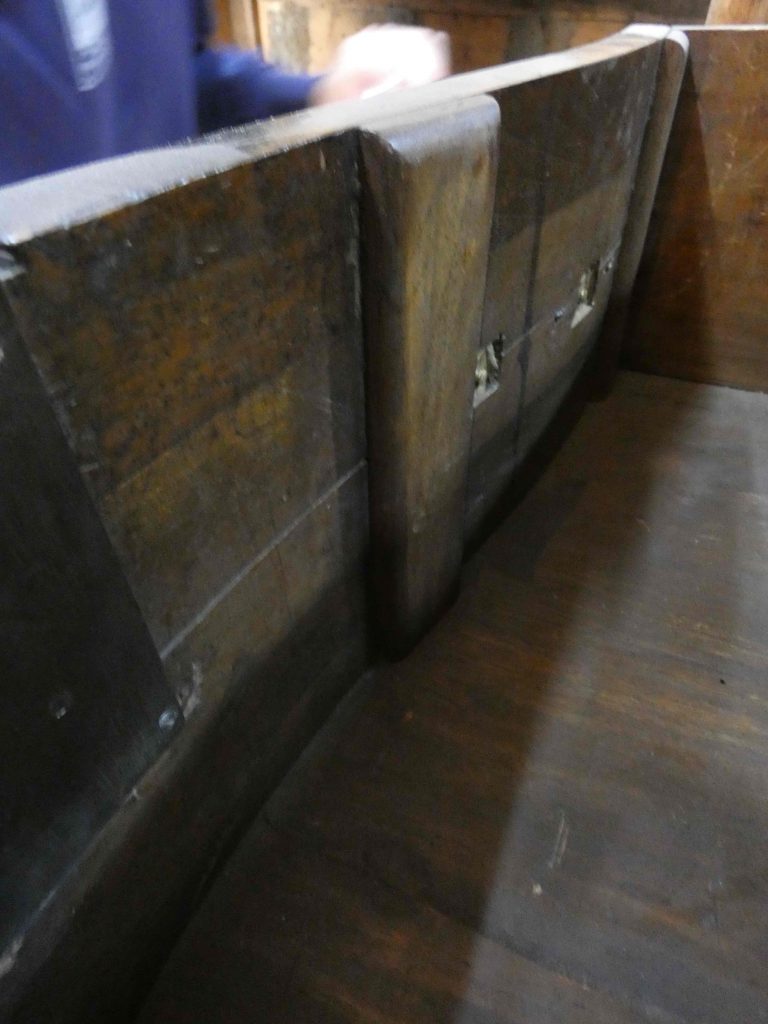
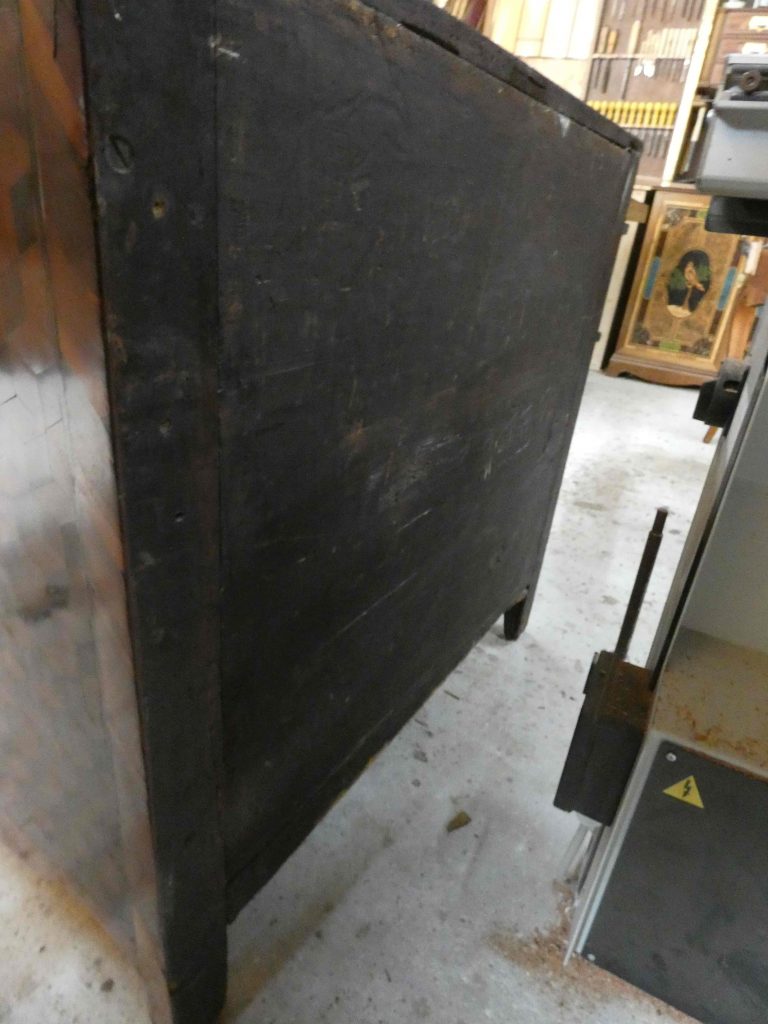
Condition report upon arrival at the workshop: some veneer chips, a few missing stringings, and a small piece of leaf missing from the marquetry on the tabletop. As is often the case with cube marquetry, the glue is severely dehydrated, and the cubes are curling throughout. The structure is in good condition except for the tabletop, which is coming unglued. There are some old rosewood grafts in place of the plum wood.
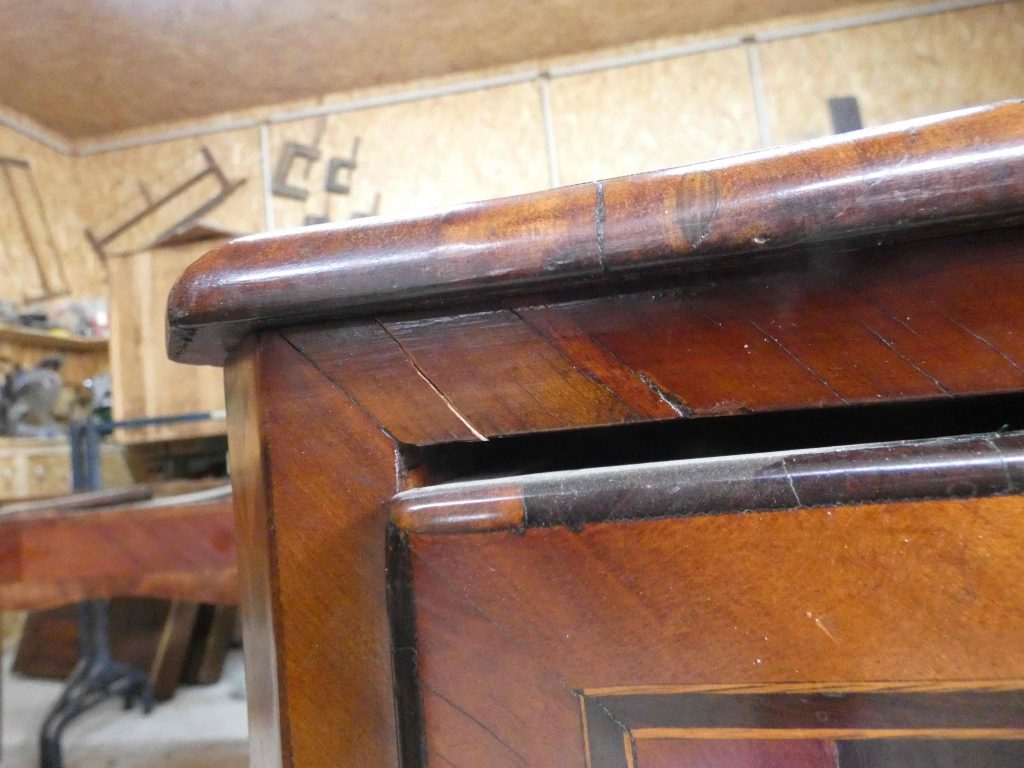
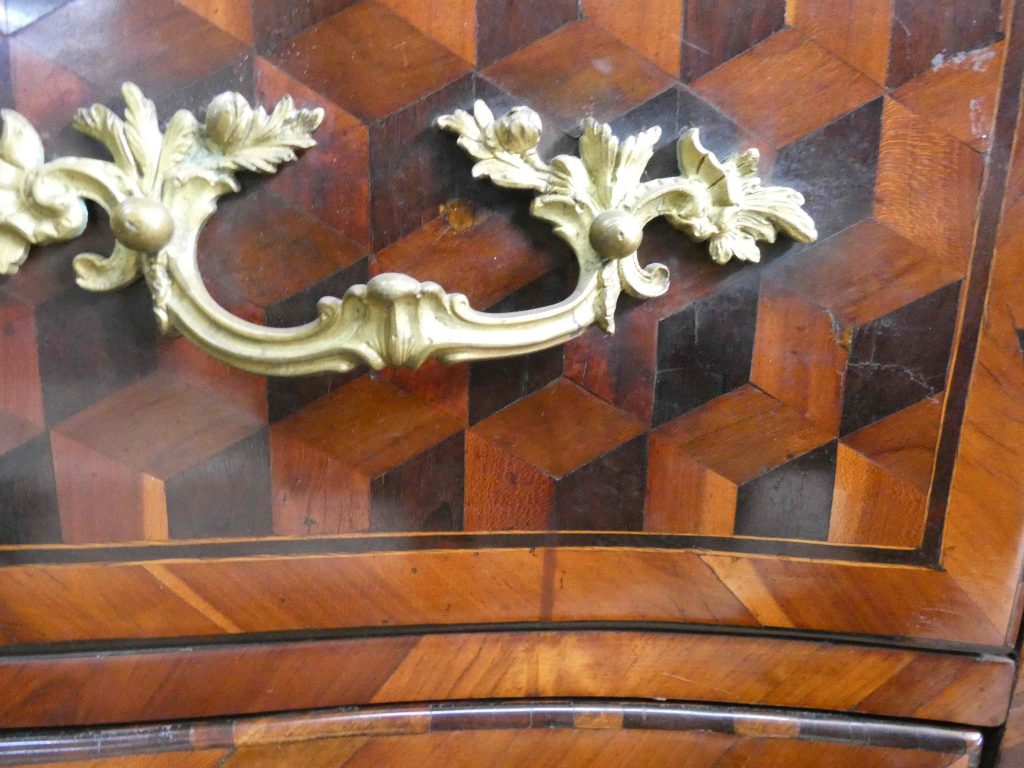
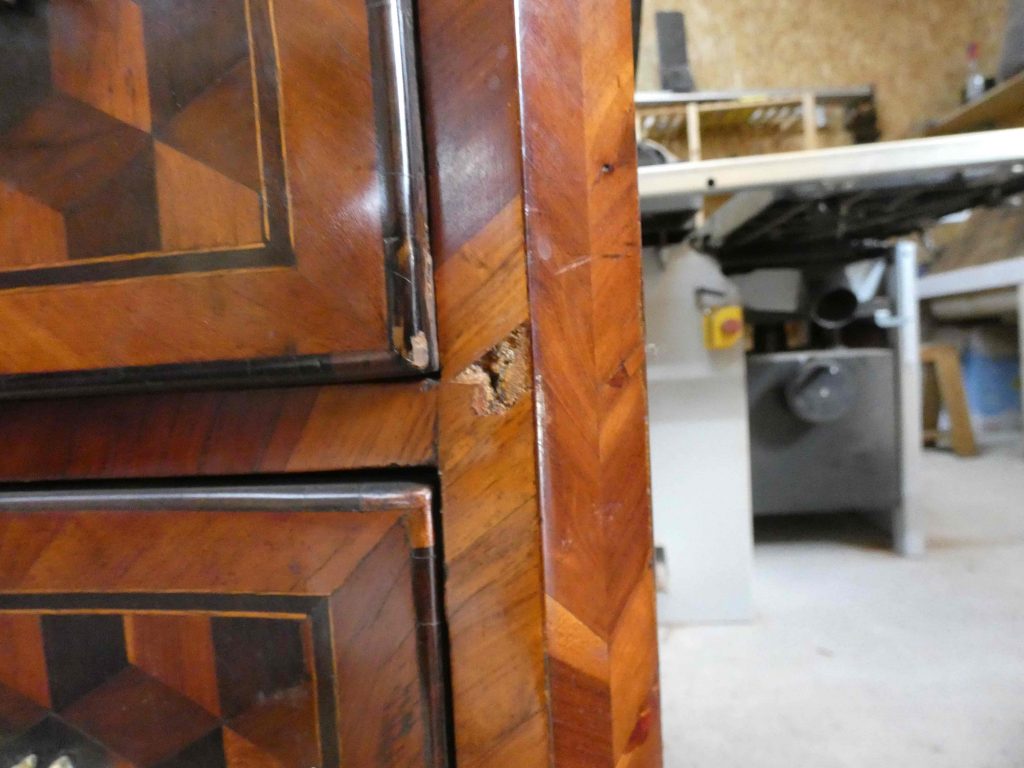
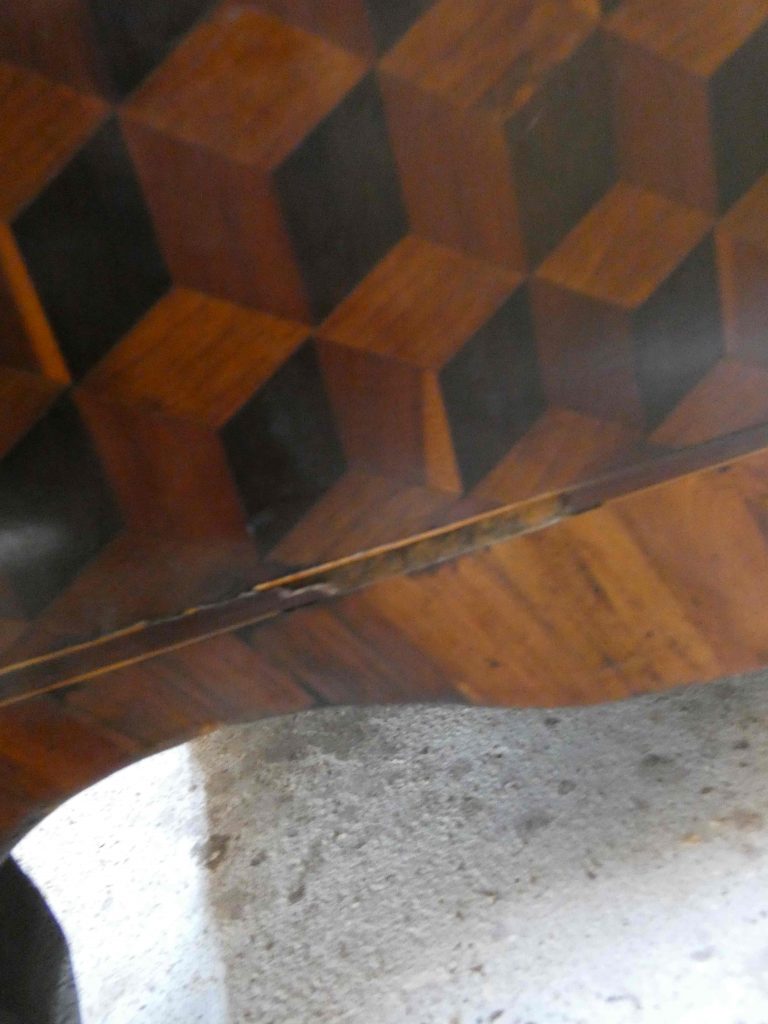
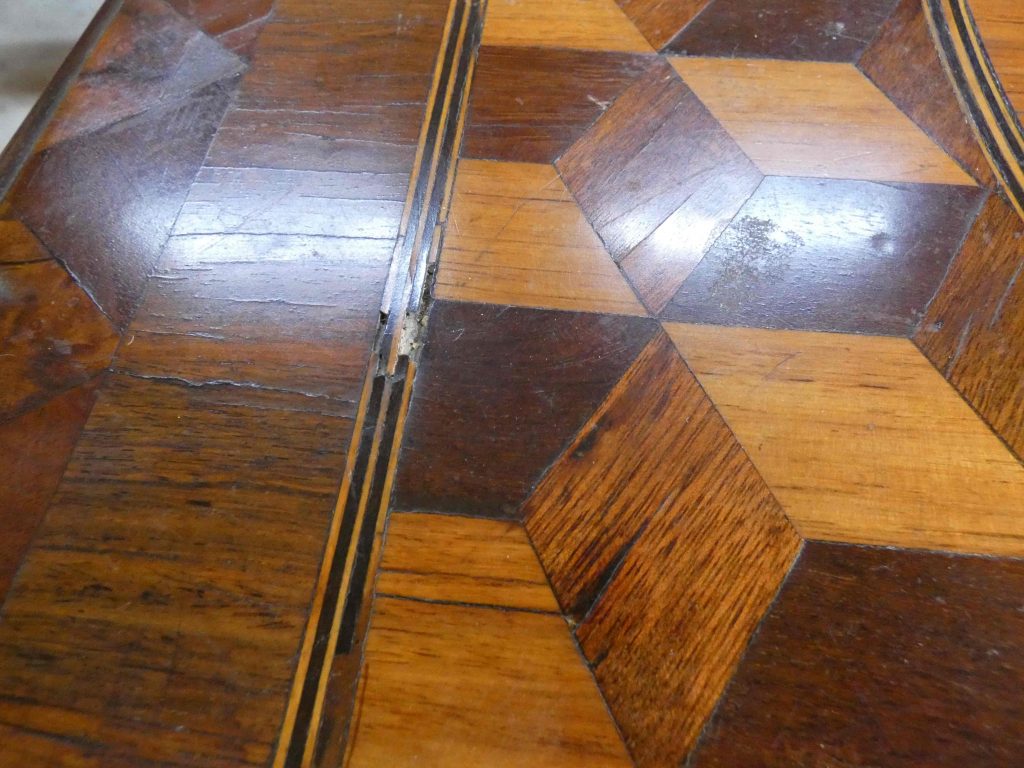
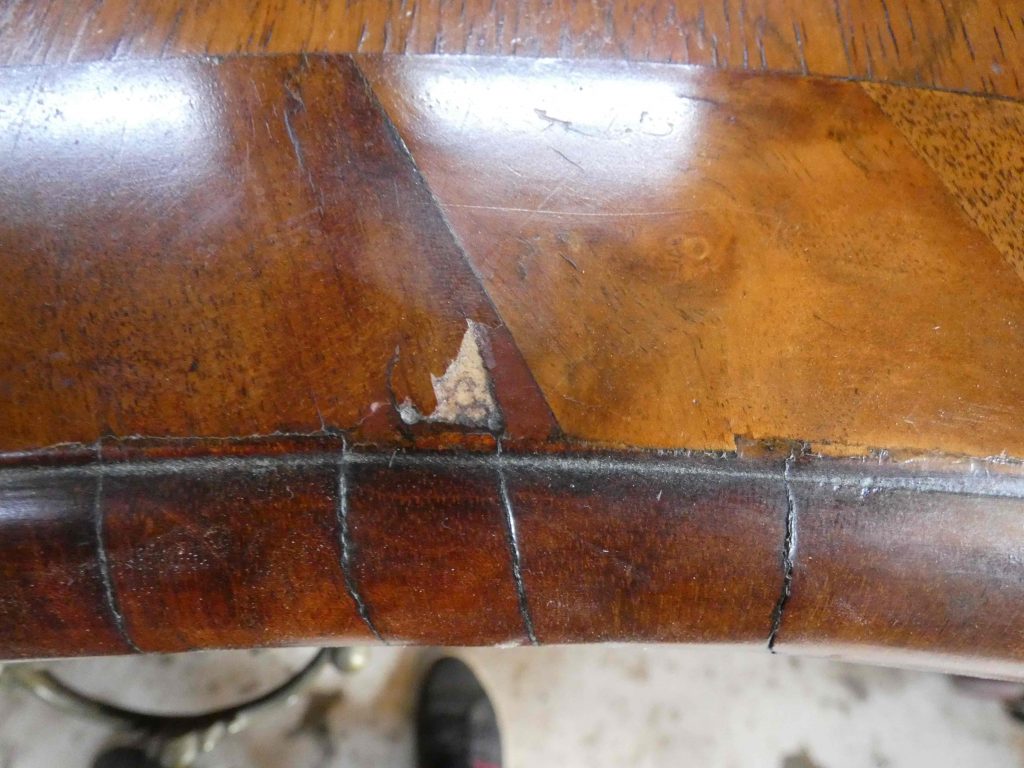
Small burst 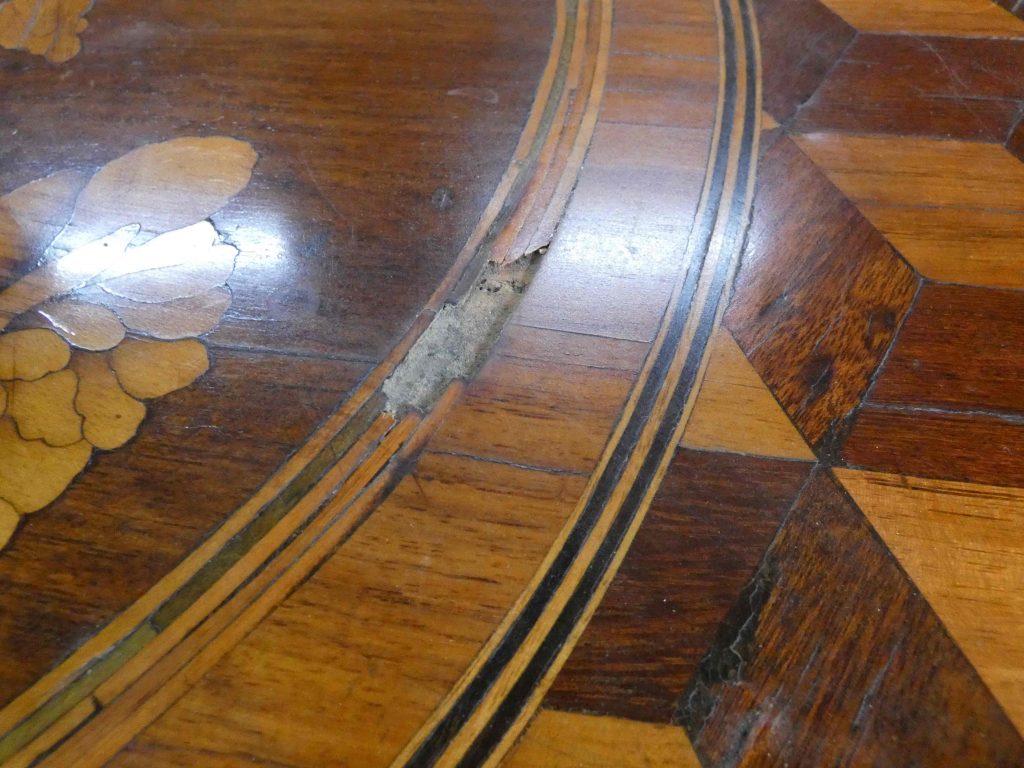
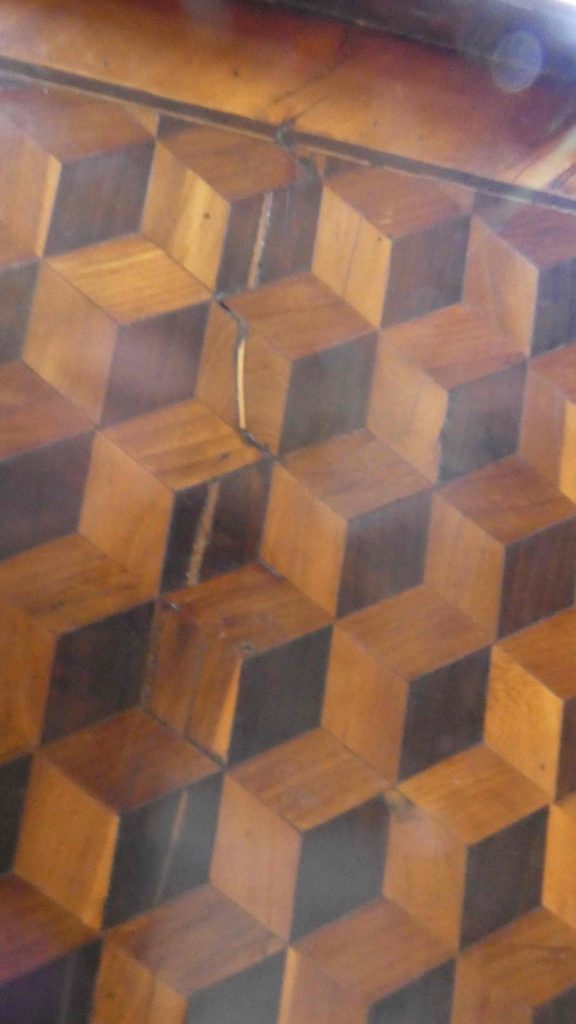
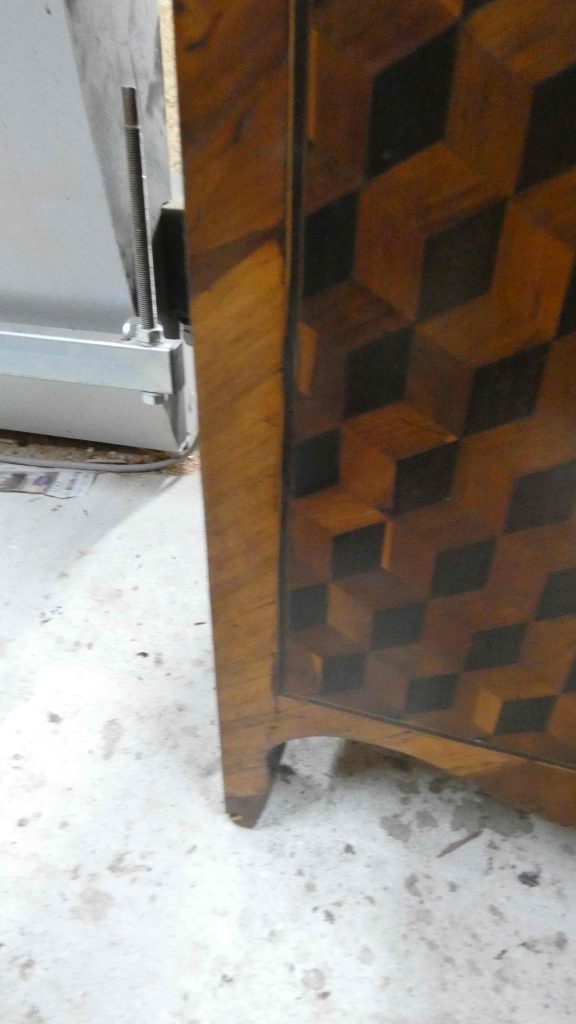
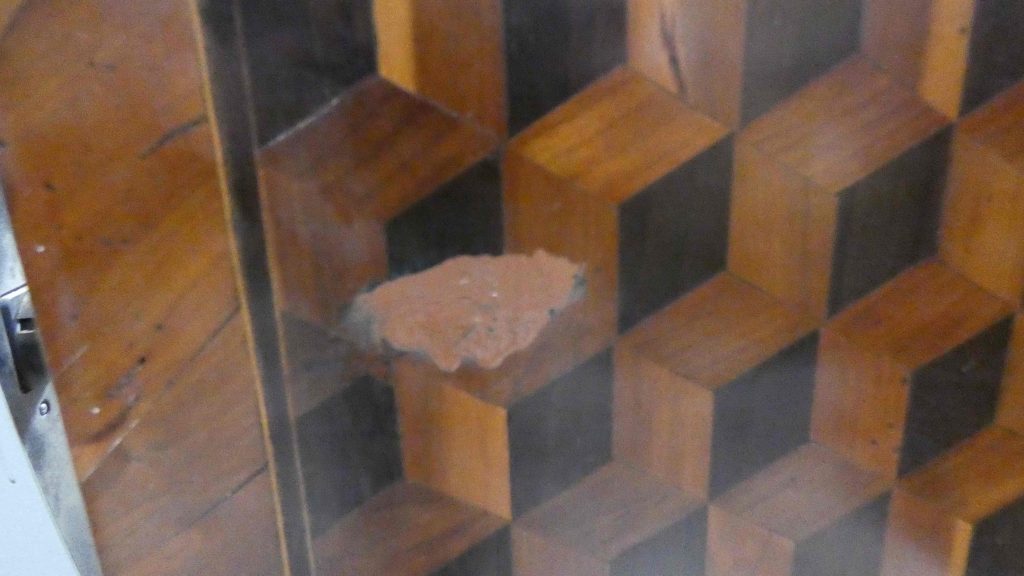
Suspicious blockage 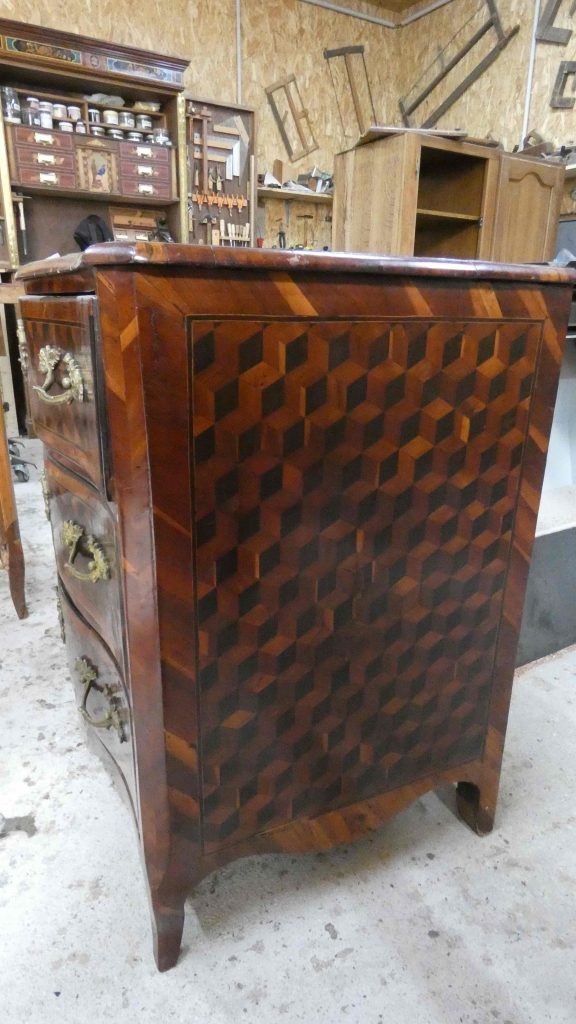
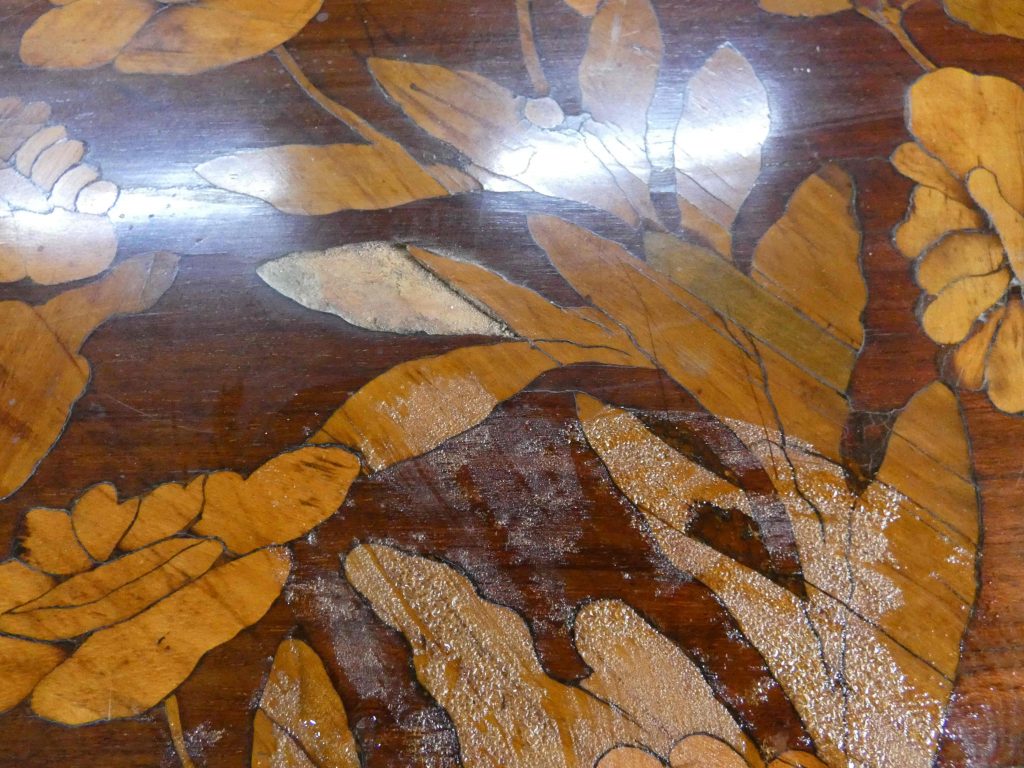
A piece of leaf is missing
The Restoration
The restoration therefore consisted of replacing the missing veneer with new, sawn veneer, which was scraped and sanded before being glued with hot glue. Then, all the glues were rehydrated by infiltration with a slight application of heat.
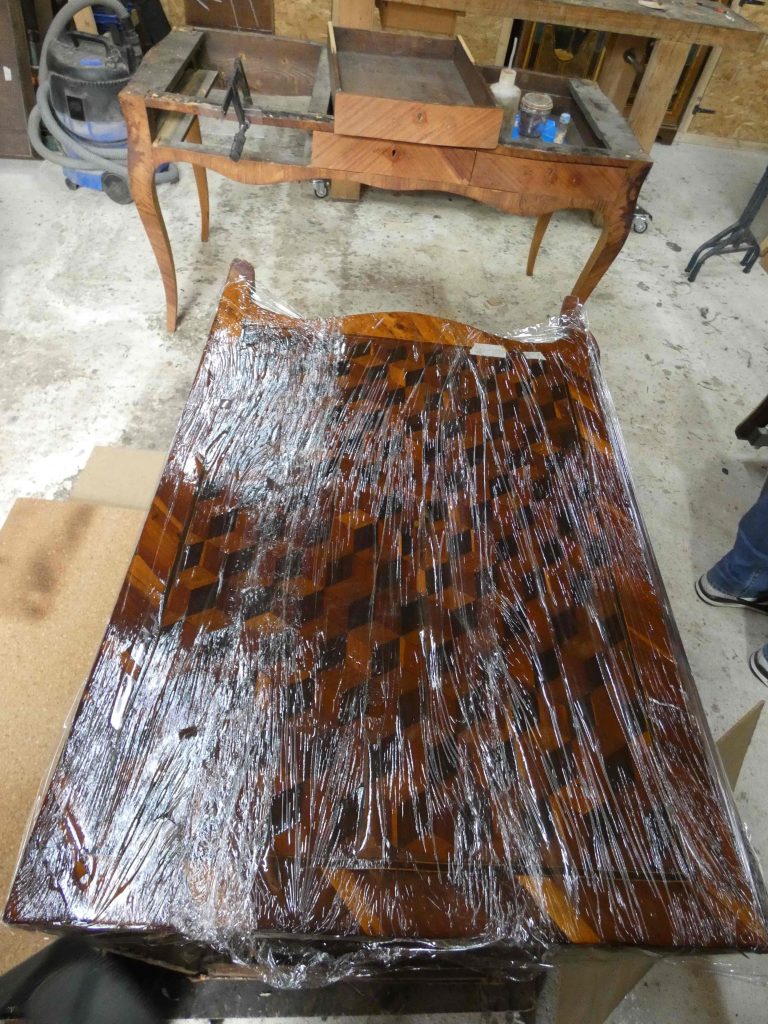
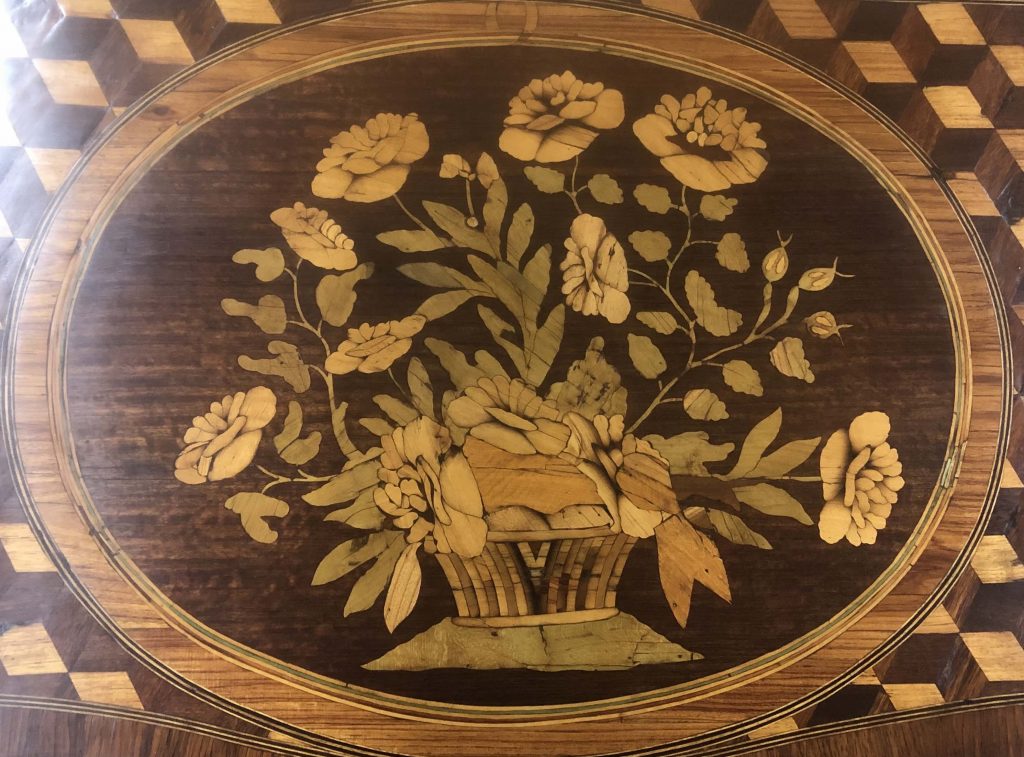
Then, the old varnish was thinned to achieve a polish in the style of Roubo, as he described in his 1774 work. This finish is more in keeping with the one probably used by Couleru in his time, as French polishing only became widespread during the first half of the 19th century.
To see previous restorations : https://ebenisterie-mathieuvath.fr/en-ce-moment-a-latelier/
You can find this piece of furniture at Etienne Thuriet Antique Dealer
Love seeing the pictures of your work and care dedicated to these pieces. Fantastic life you have, thanks for sharing!!
Thanks for reading me!
Magnificent restoration. What talent!