
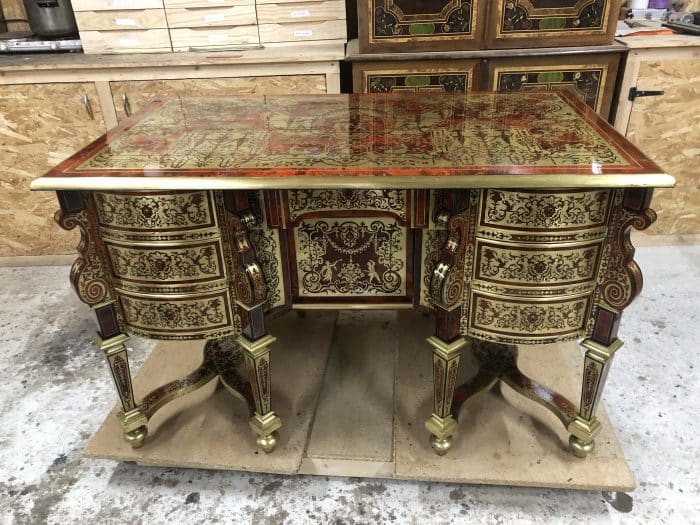
To end this year on a high note, here is a restoration that has occupied a large part of my time this year and which joined its owner a few weeks ago.
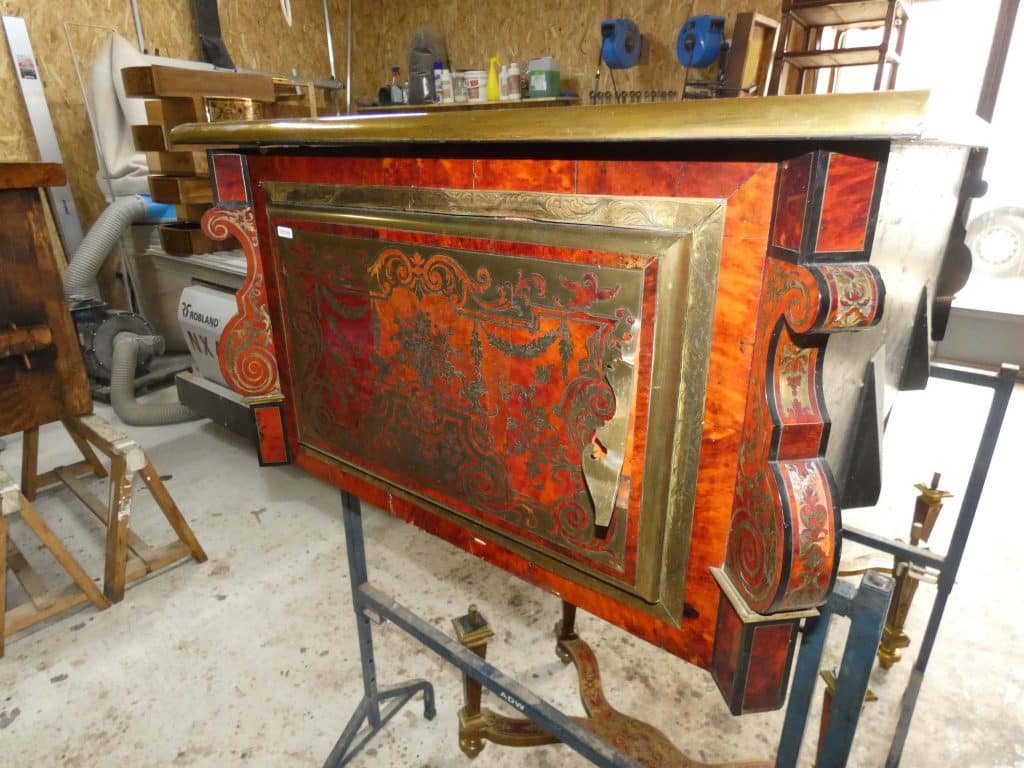
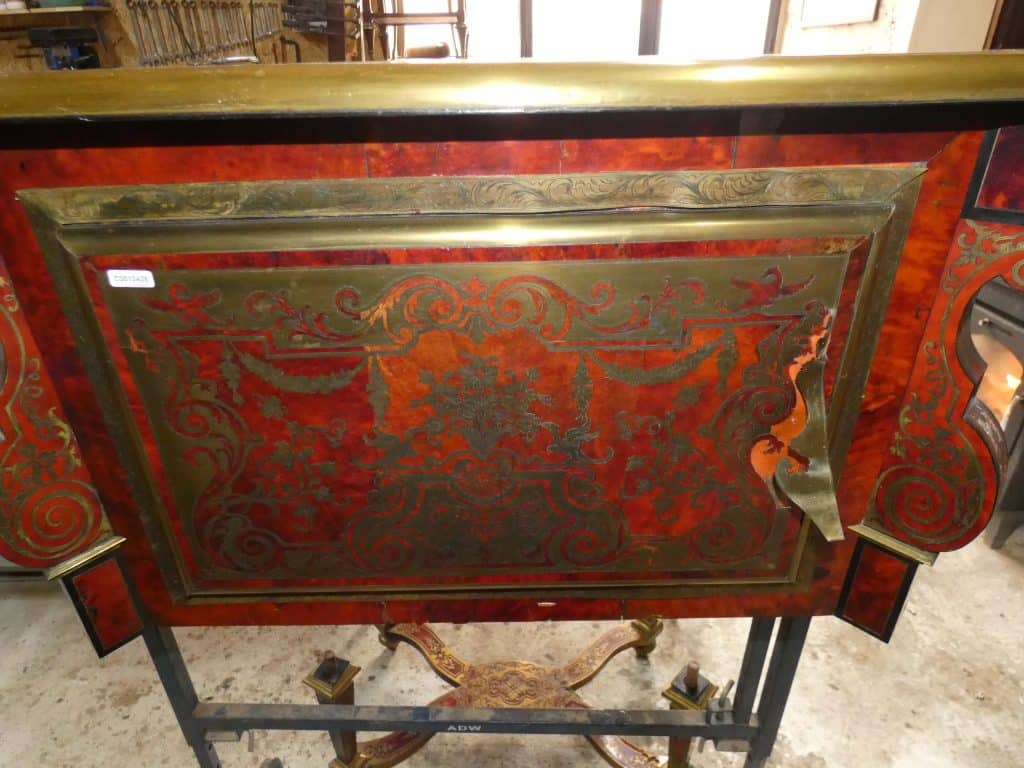
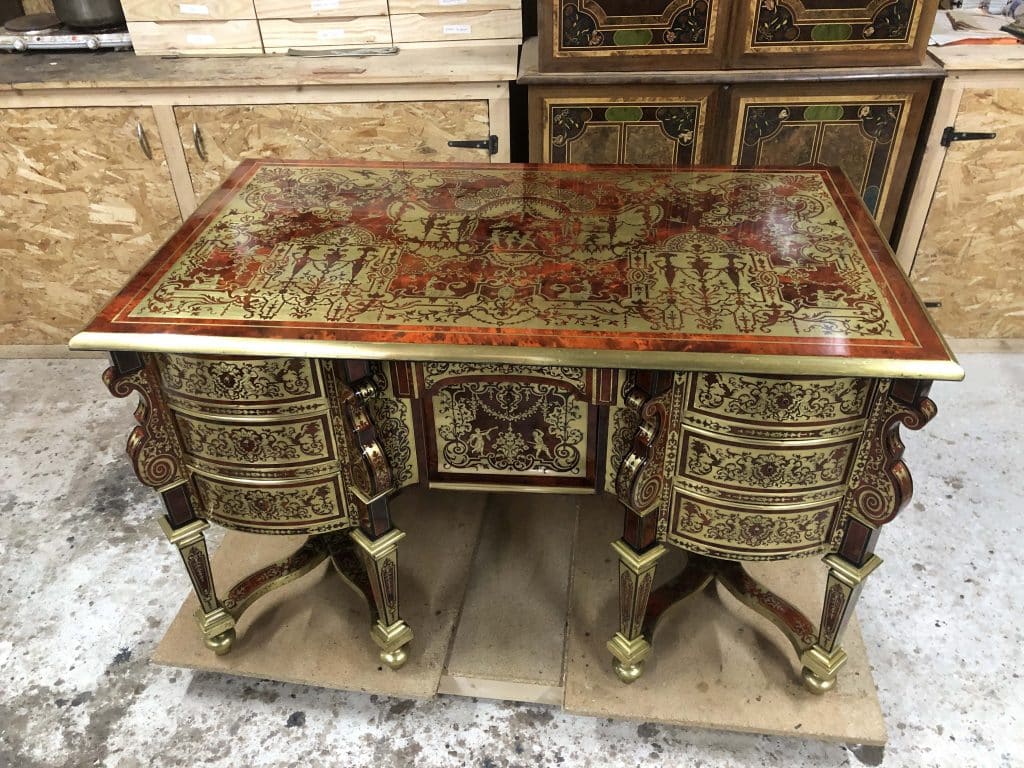
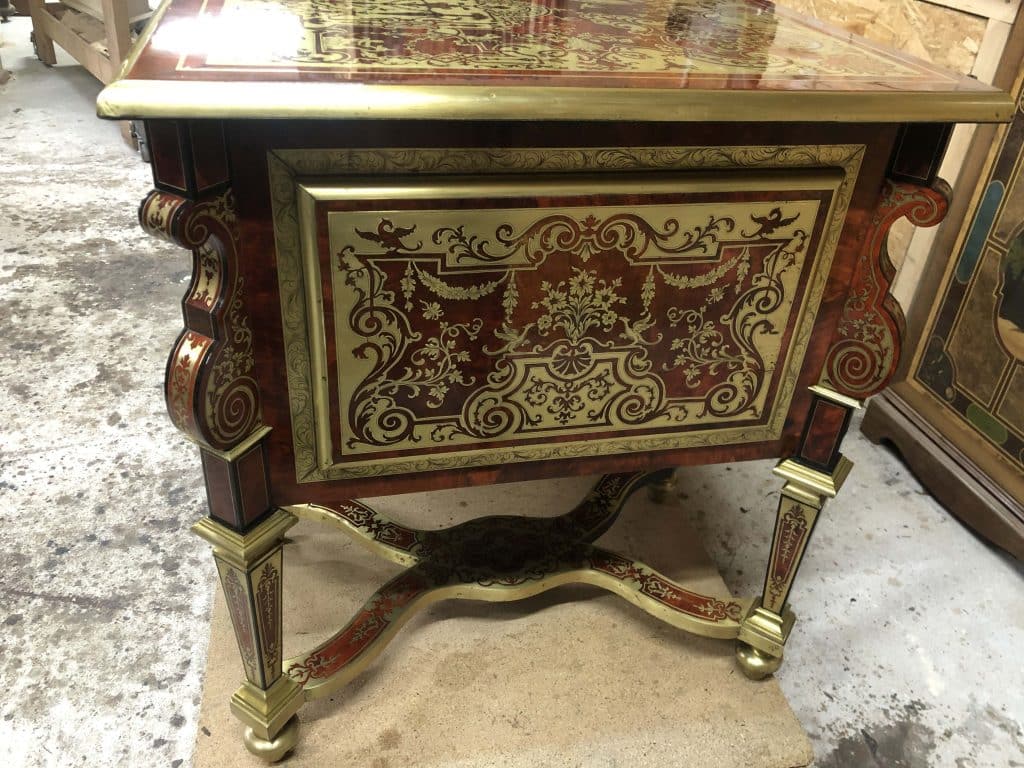
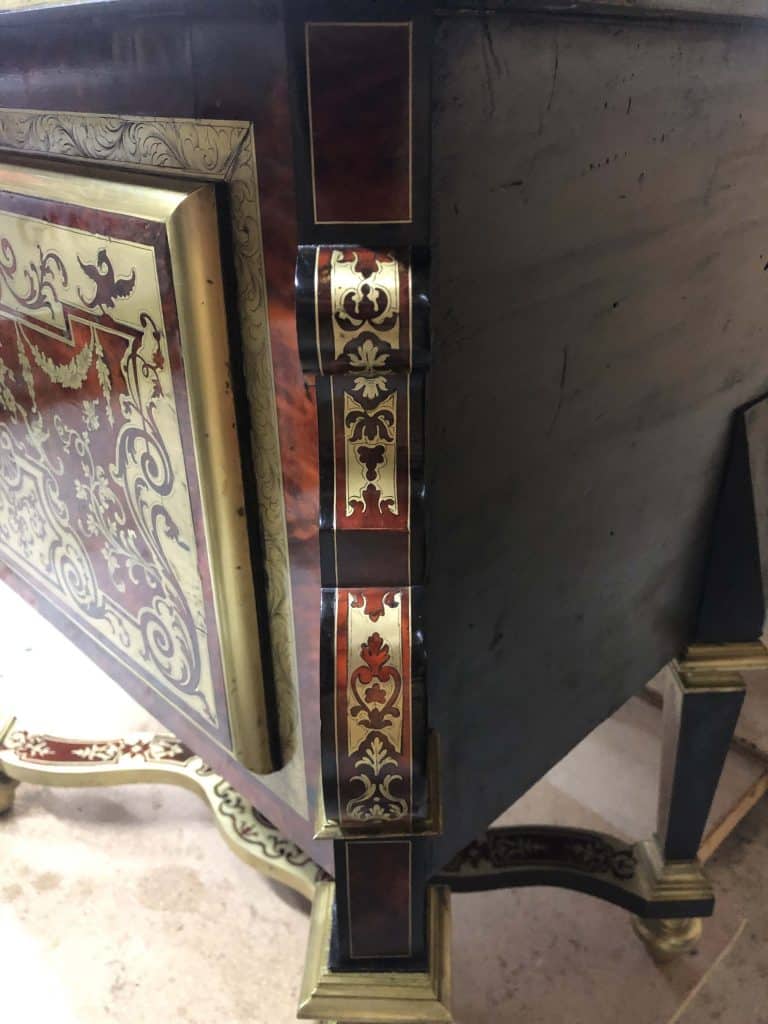
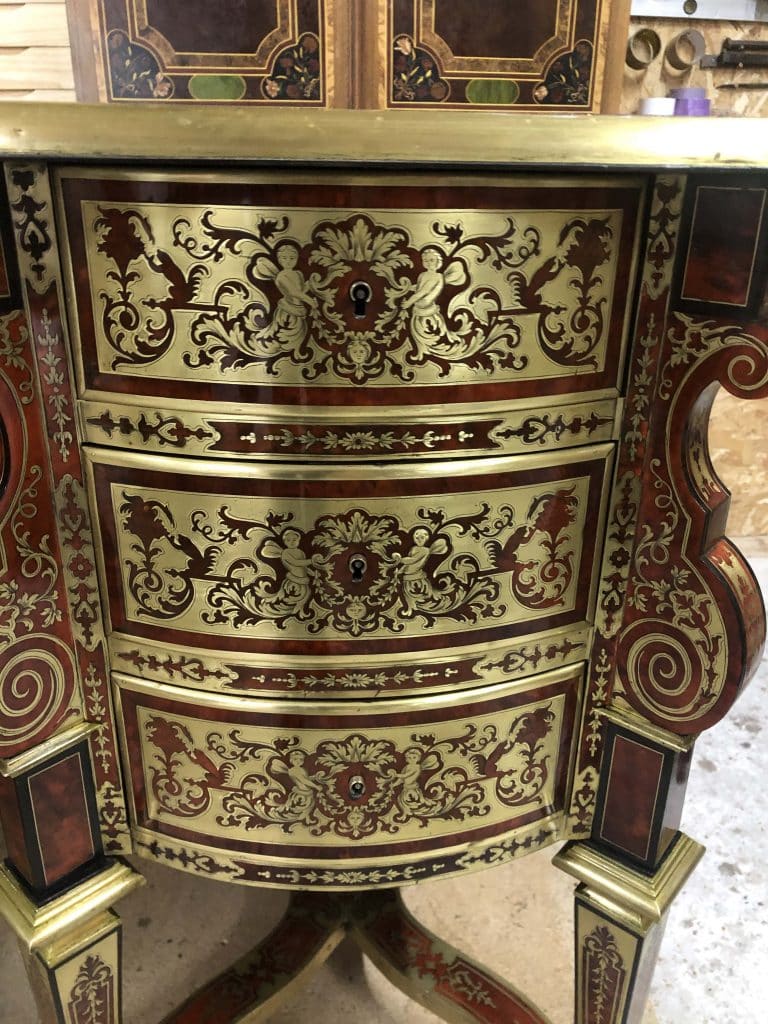
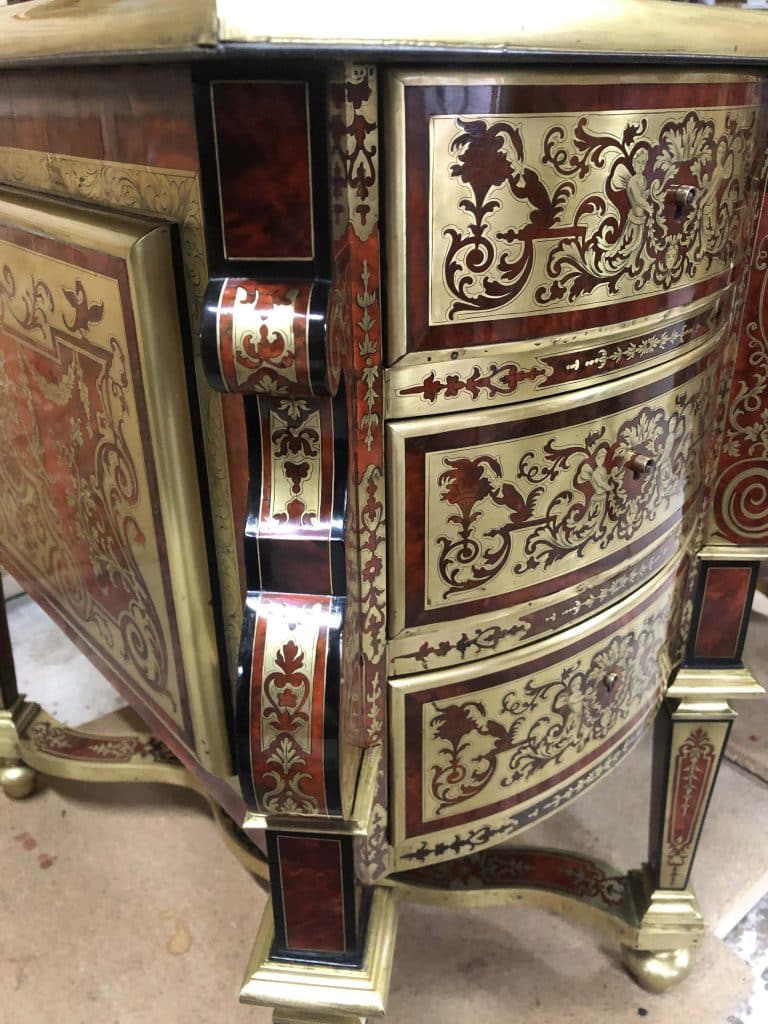
Restoration of an eight-legged writing desk commonly known as a "Mazarin" desk. Constructed of solid oak and softwood, the sides and drawer bottoms are made of light walnut. The marquetry covering it consists of Caret tortoiseshell (Eretmochelys imbricata) on a vermilion red ground, and brass. The whole is framed by delicate ebony stringing. It has seven drawers and a central drop-front. The interior of the drop-front is veneered with ash and walnut. The mounts and legs are gilt bronze. The locks were added in the 19th century. Louis XIV period, circa 1720.
81 x 121 x 72 cm
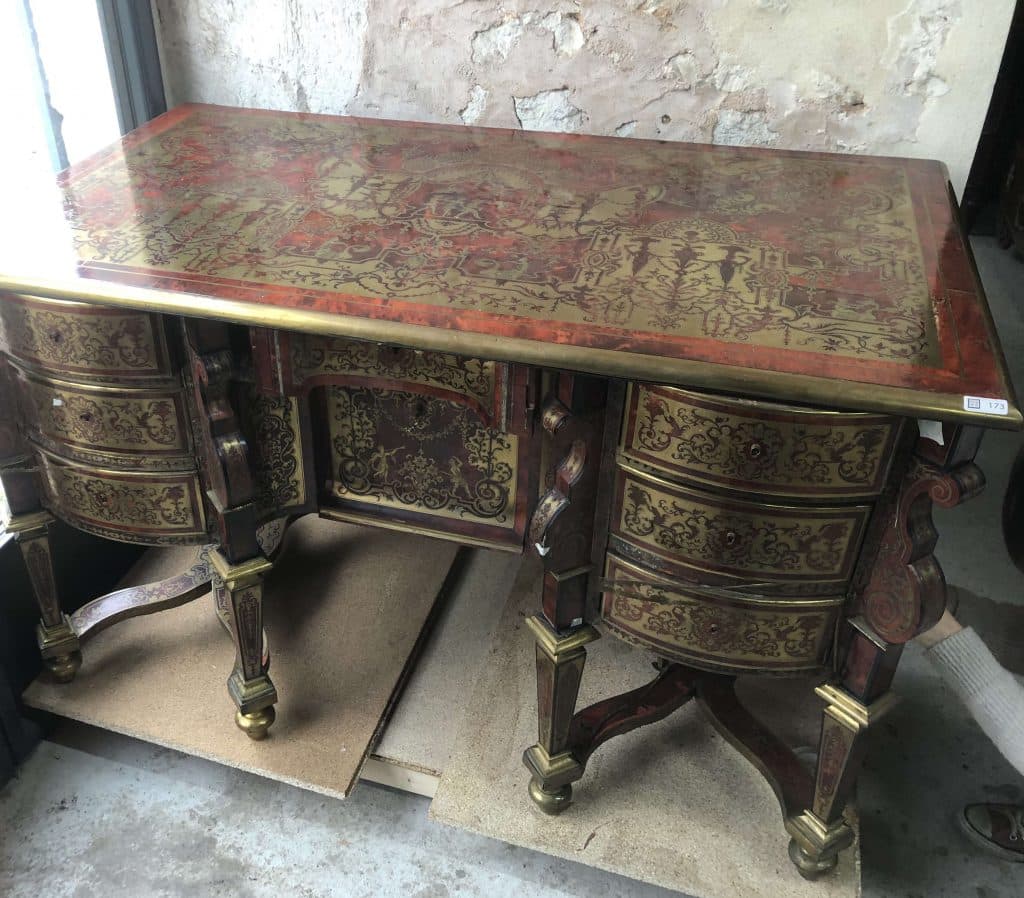
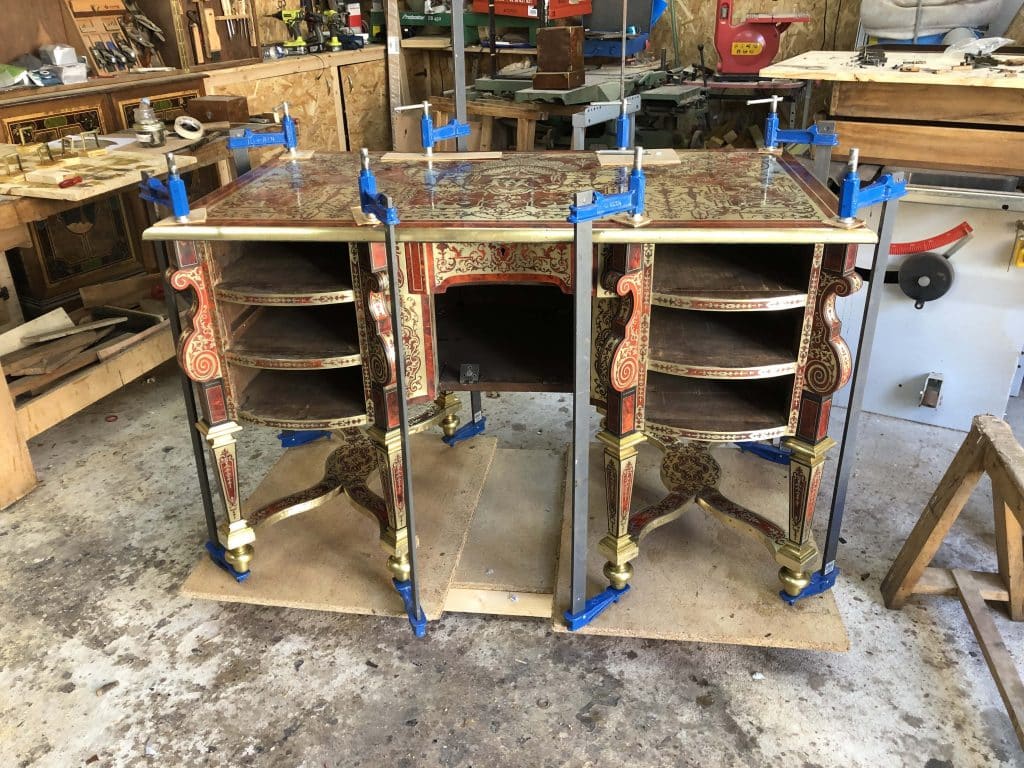
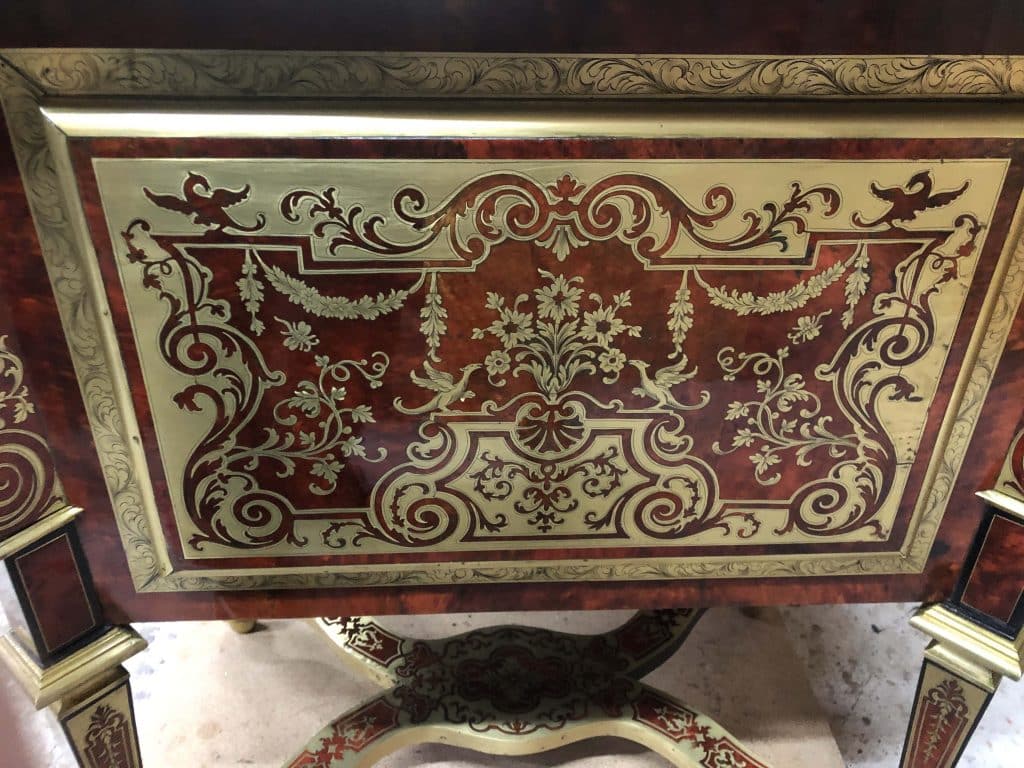
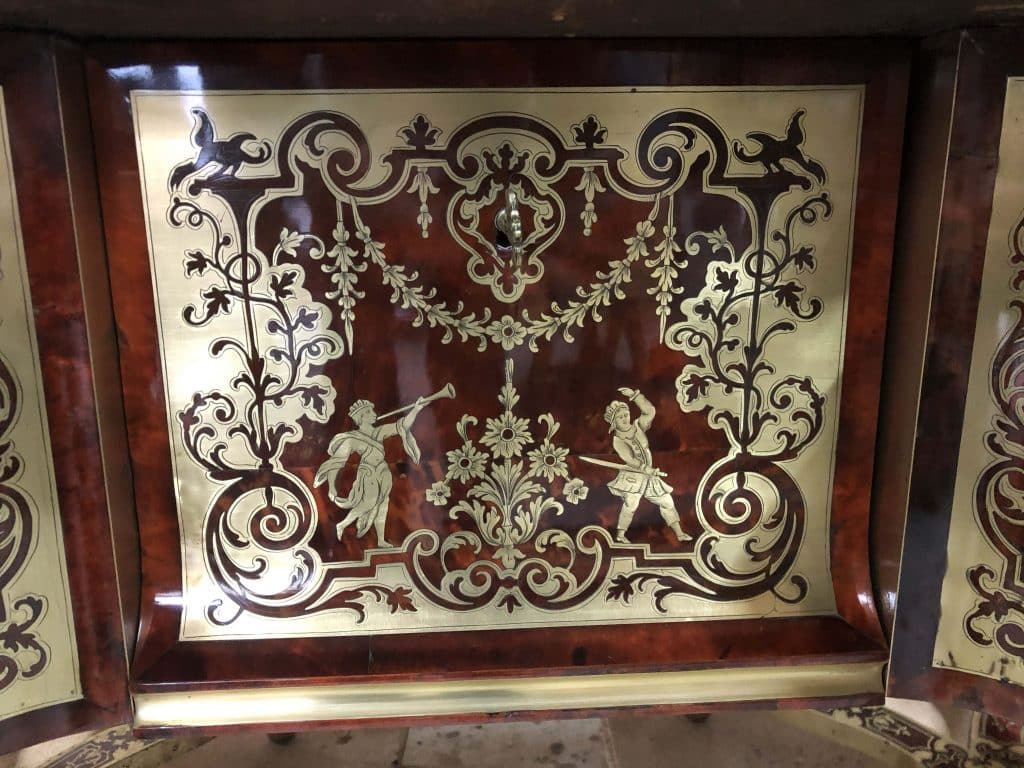
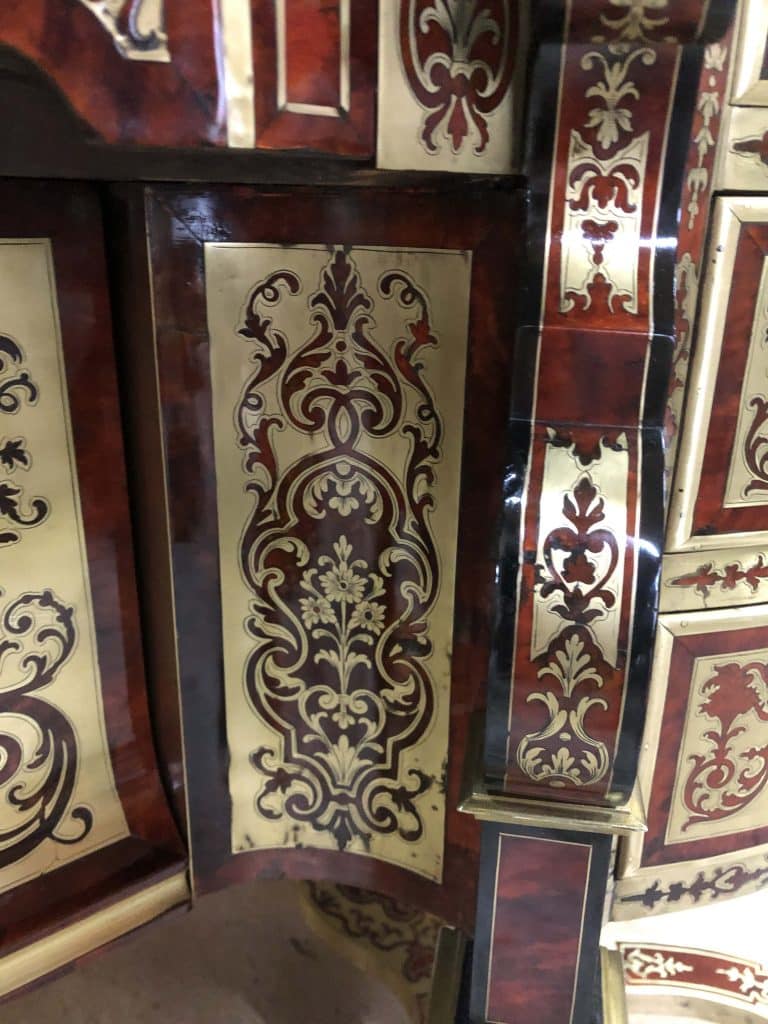
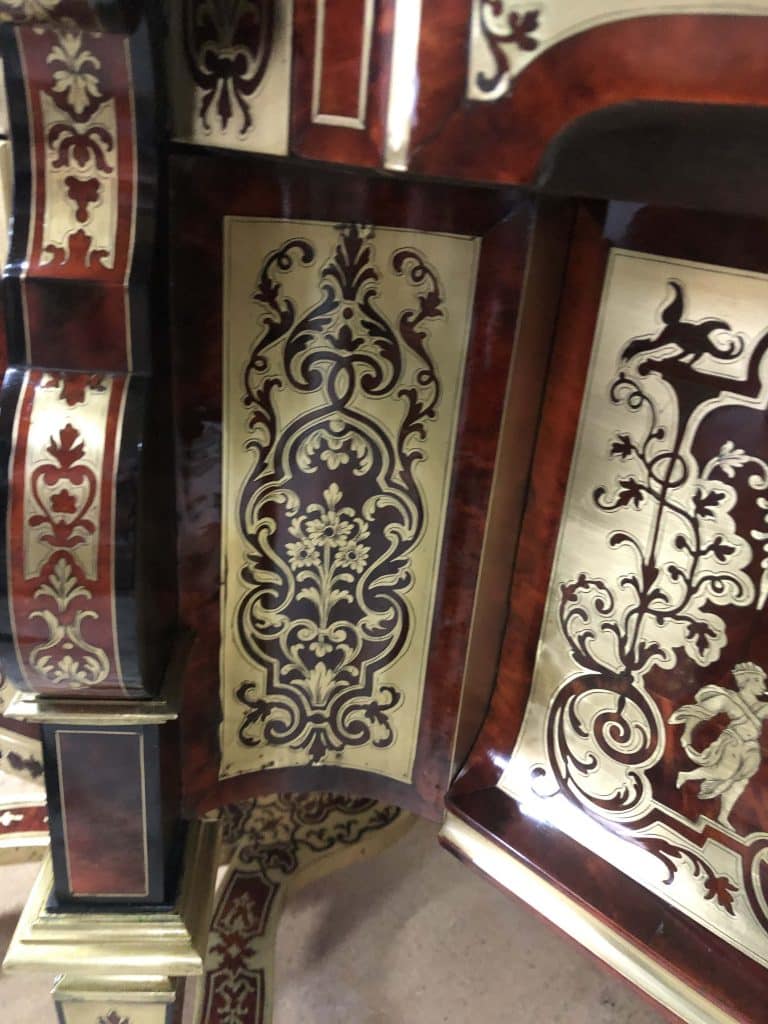
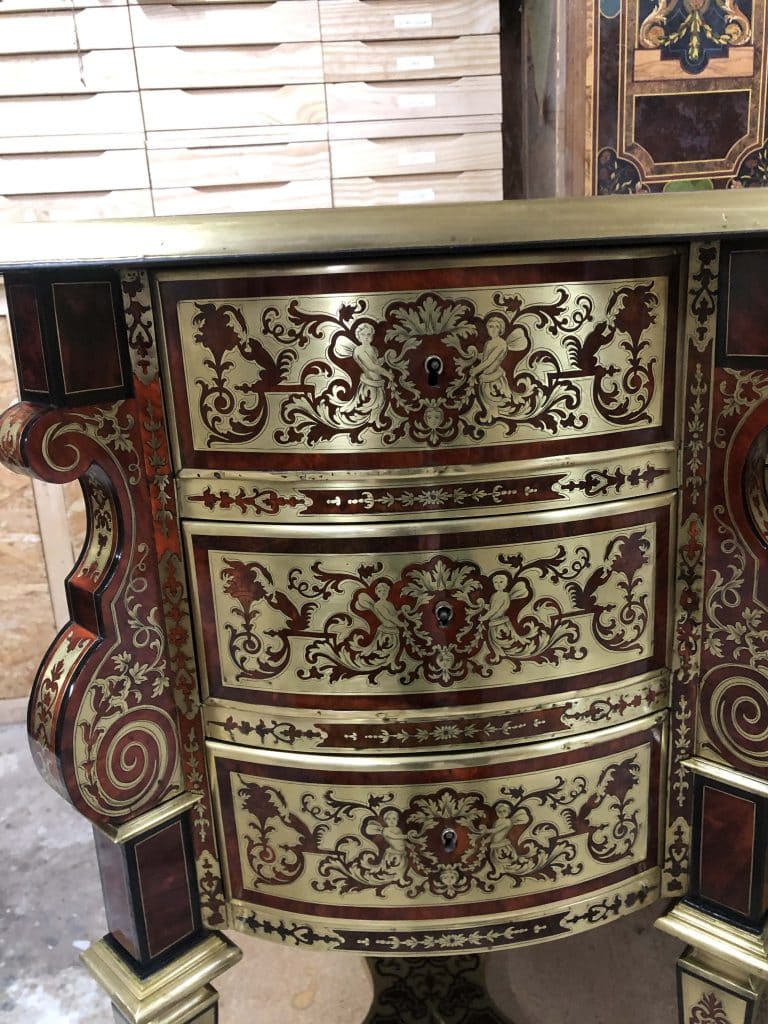
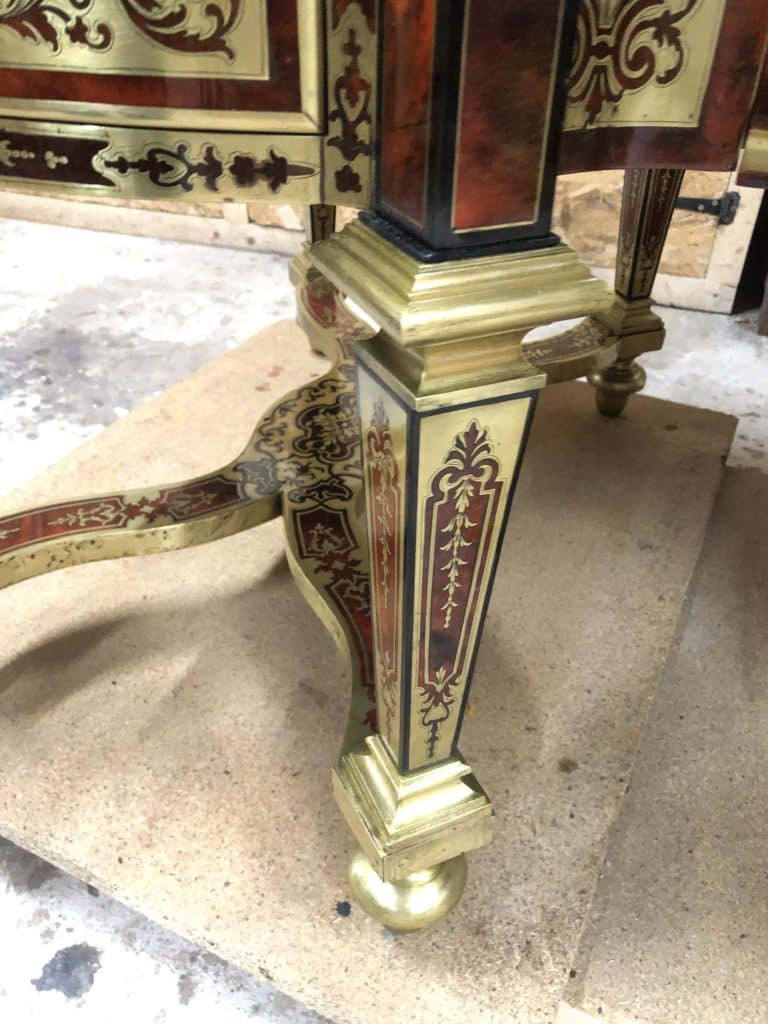
Inlaid with brass, pewter, and red tortoiseshell, with bronze mounts in the foreground and reverse, in the style known as Bérain, this piece features two side compartments, each opening with three drawers, and a central drawer above a middle compartment with rounded edges. The console-shaped uprights and eight console-shaped feet are joined by two X-shaped stretchers. It is worth noting that the marquetry is very likely re-engraved, given its excellent surface condition. Indeed, it is very rare to find furniture from this period with such well-preserved engraving.
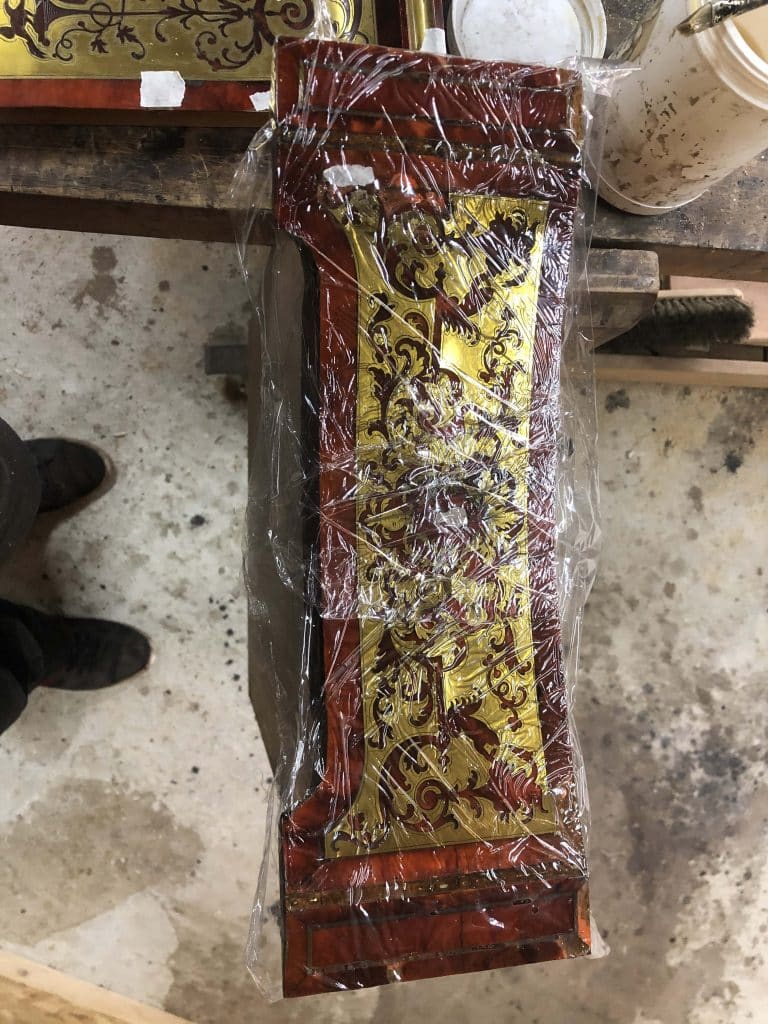
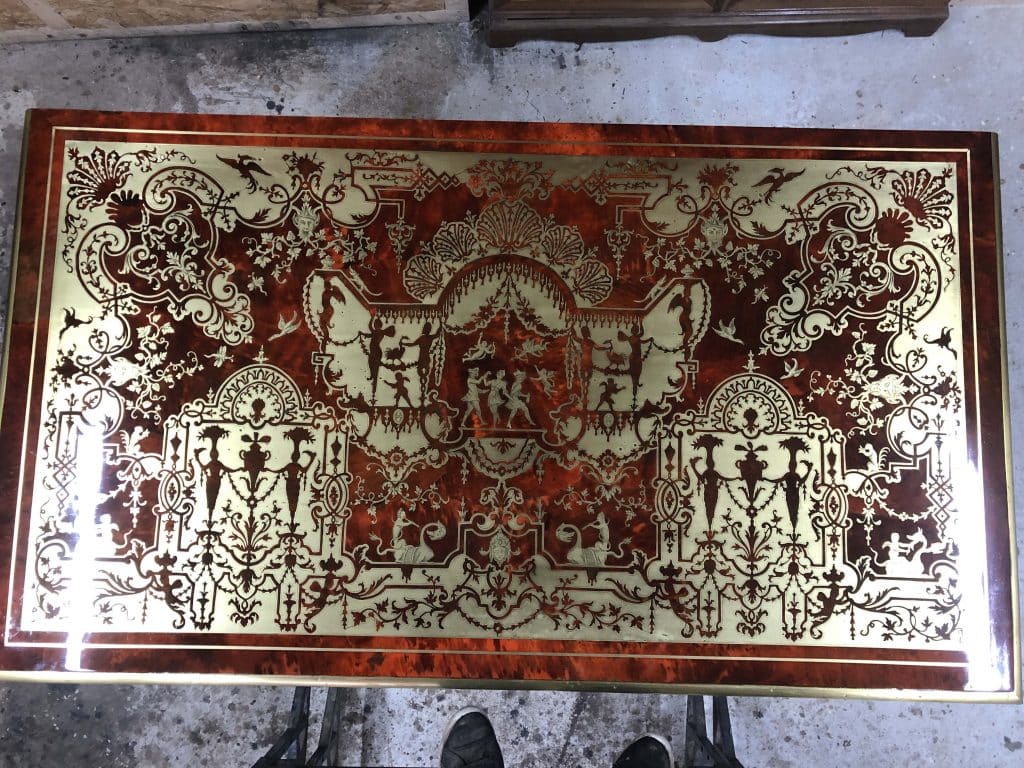
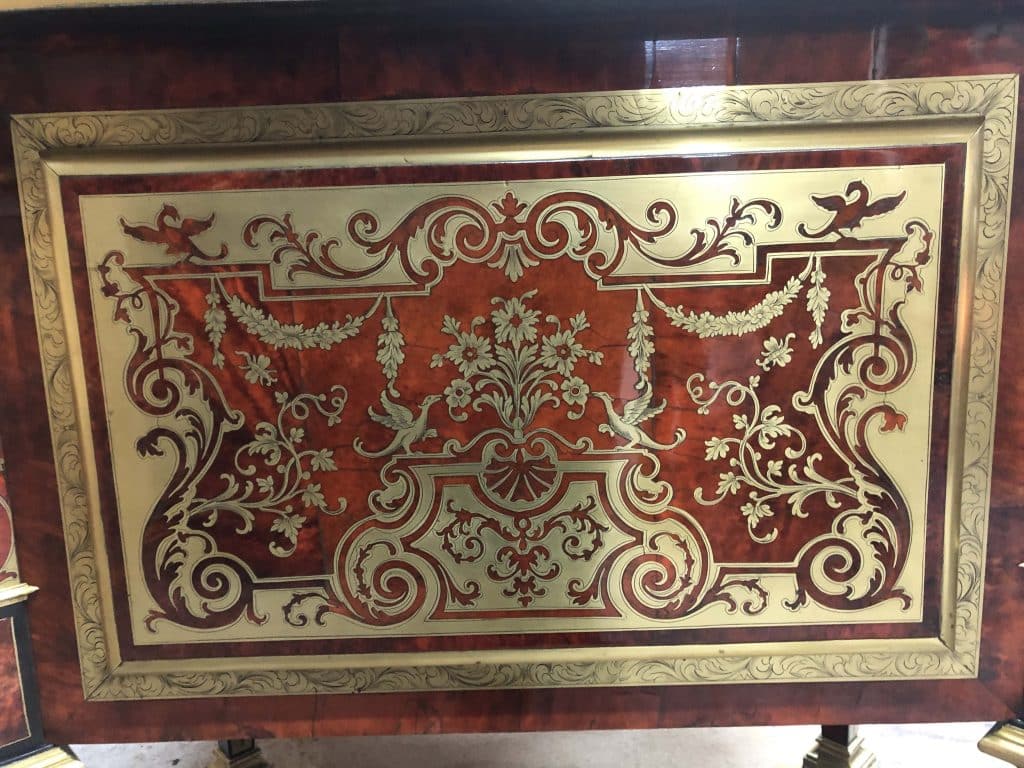
The tray is decorated with a large central composition, arranged beneath a portico whose arched pediment is supported on either side by groups of two figures holding baskets of flowers and fruit. In the center, a group of three standing, dancing figures, surrounded by angels (Cupid) beneath a garland of cascading and ascending ledges, also features figures at the extremities. On either side of the central motif, two other rectangular panels with interlaced uprights and circular pediments each contain two figures crowned with baskets of flowers and fruit, supporting a smoking censer in the center. The rest of the tray's surface is adorned with scrolls, finials, masks, and grotesque figures such as putti, birds, and flying insects. Monkeys playing flutes, mounted on chimeras, are also present in the center and on the sides.
The sides are decorated with polylobed reserves enclosing a large fleuron with rosettes and florets, surrounded by birds. The drawers are adorned with two mermaids and mascarons with scrolling foliage and fleurons. The niche's drop-front depicts a muse playing a trumpet and a sword-bearer. The uprights, feet, and crossbars are covered with scrolling foliage and fleurons.
State report
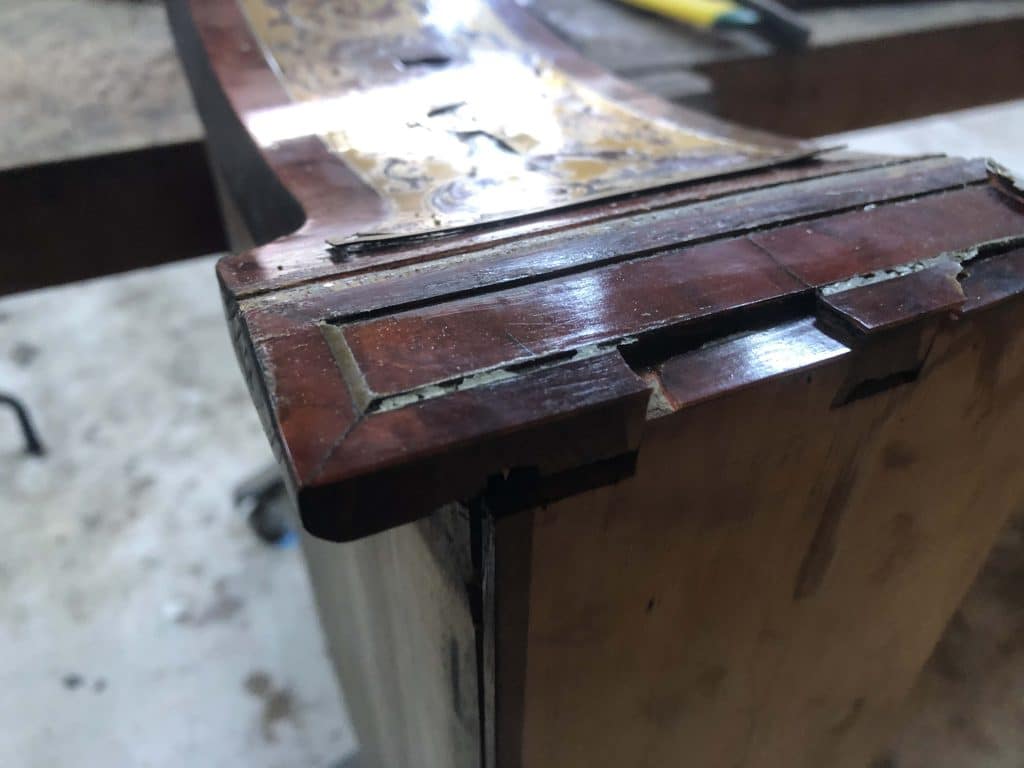
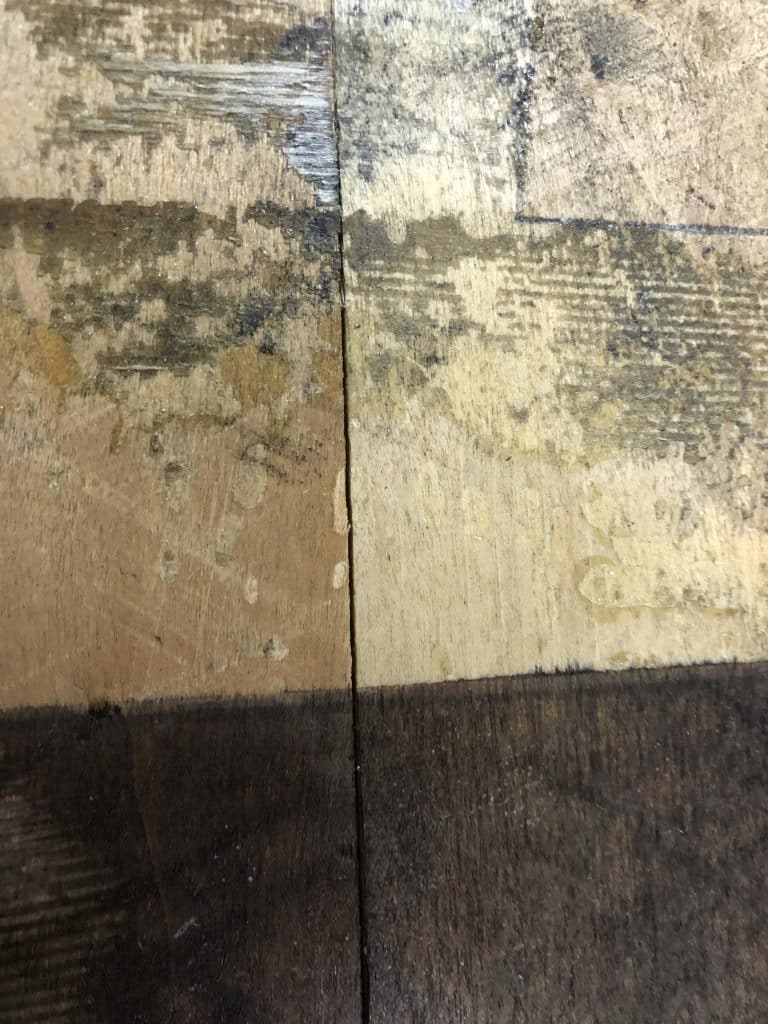
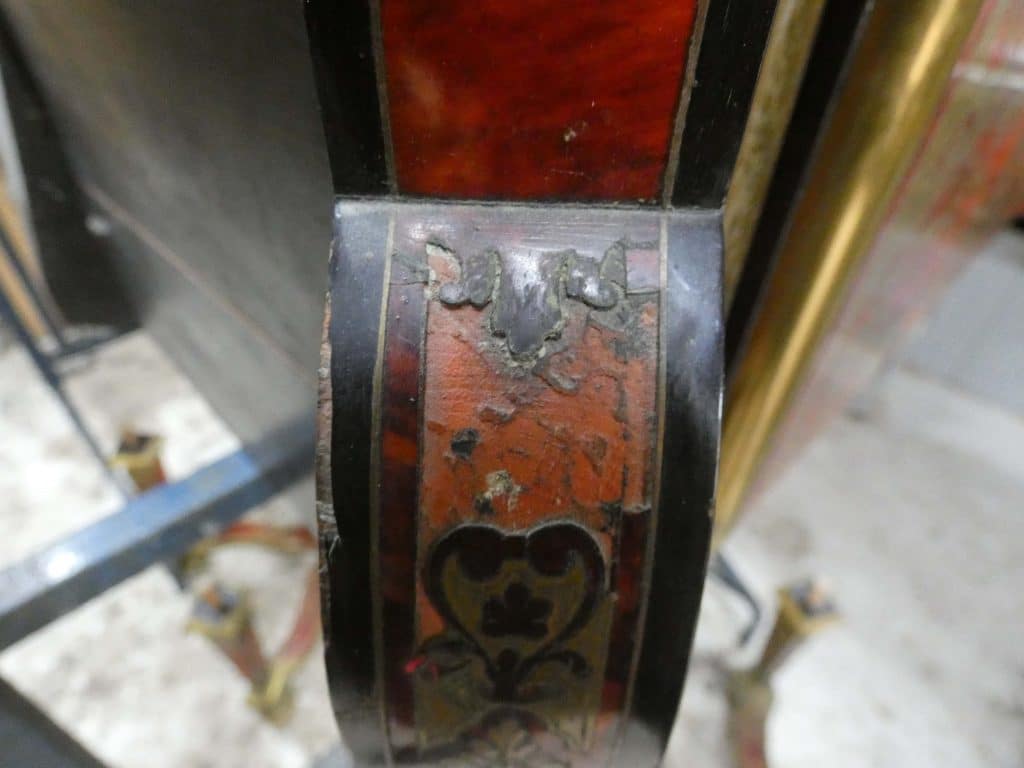
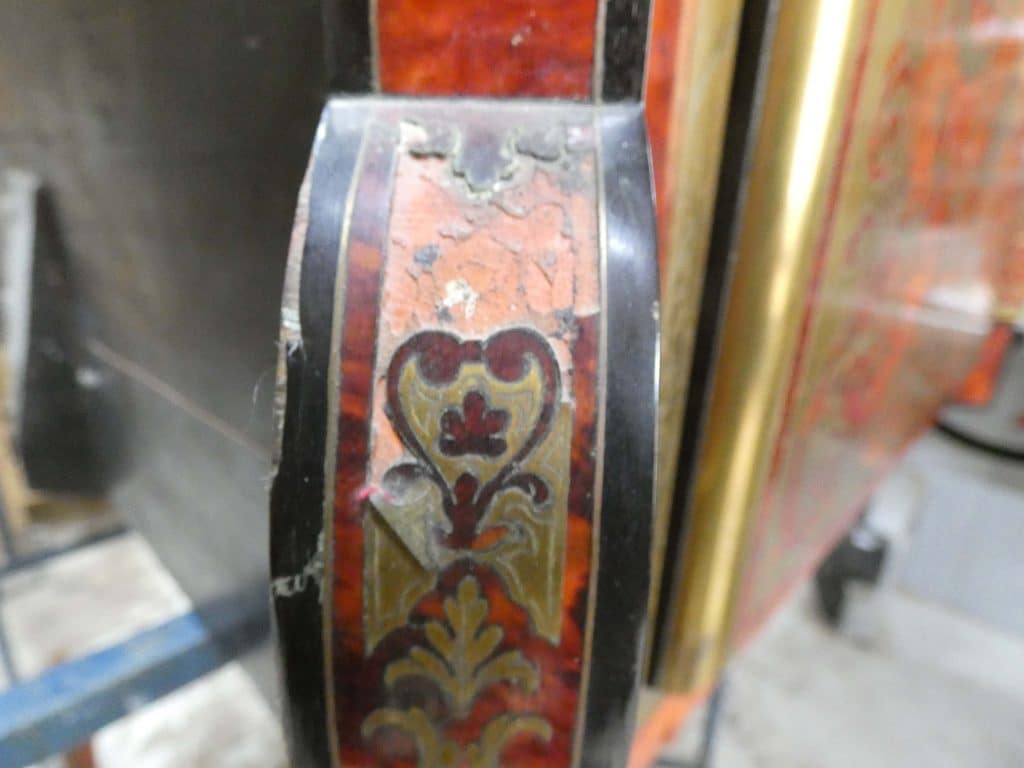
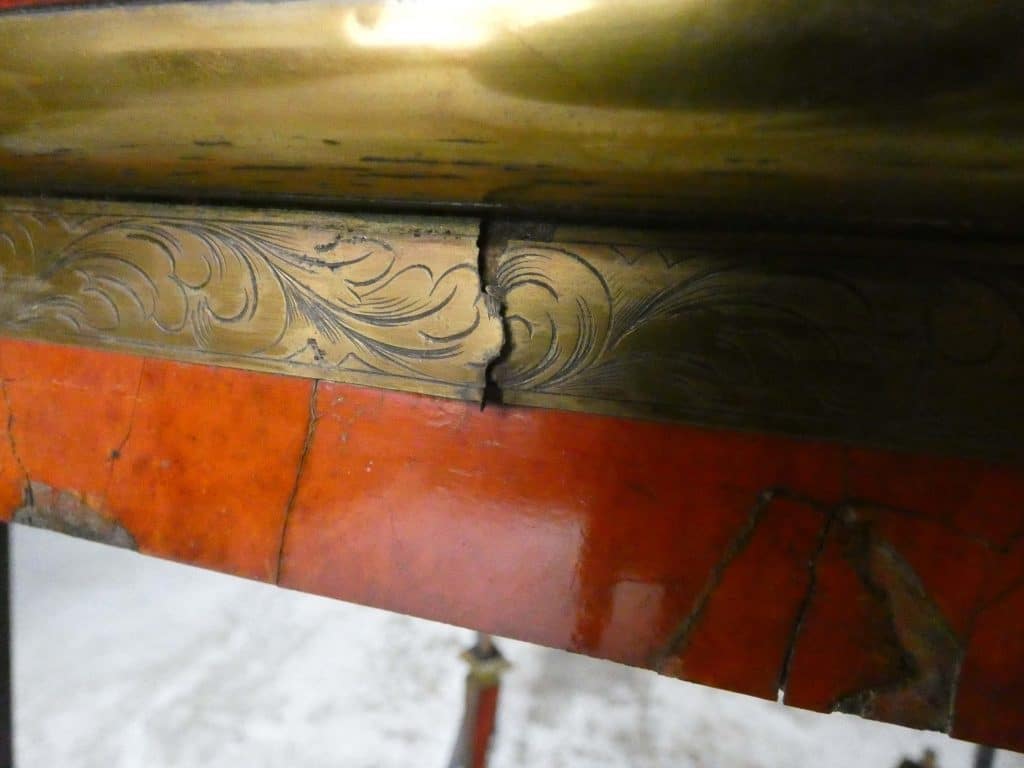
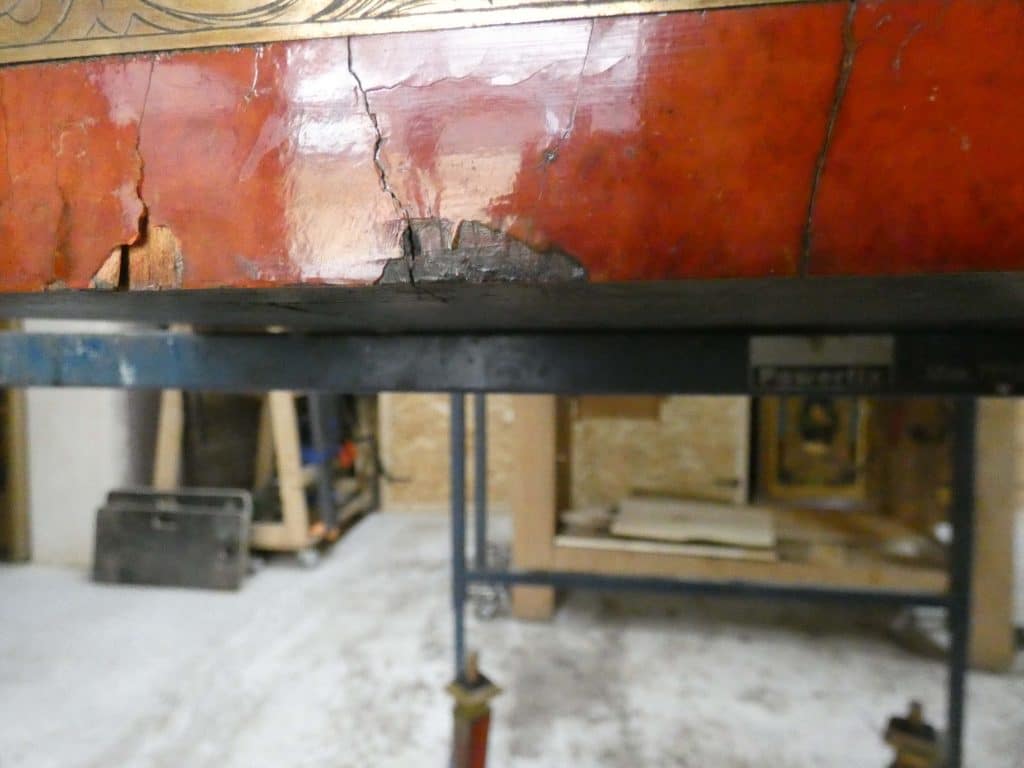
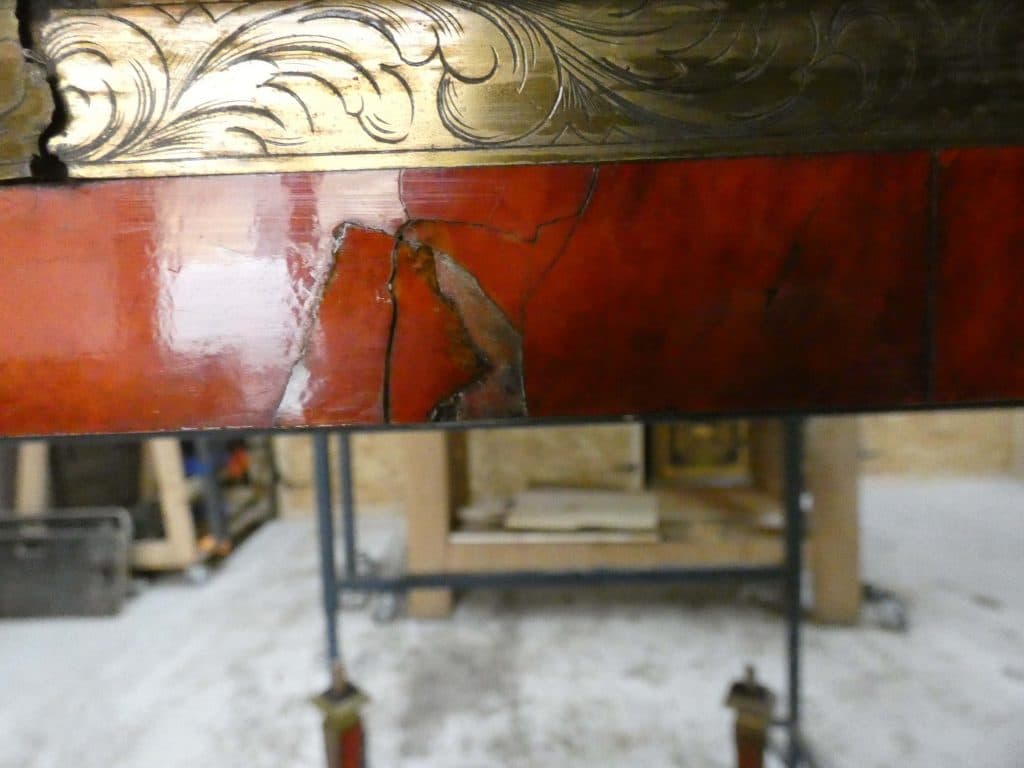
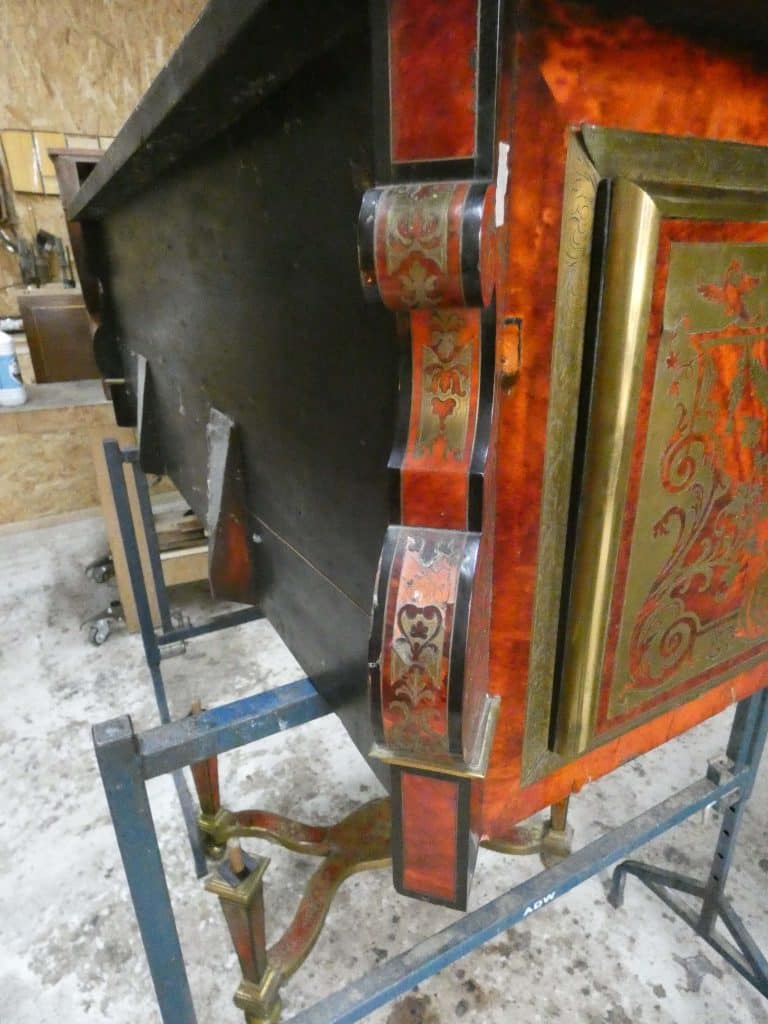
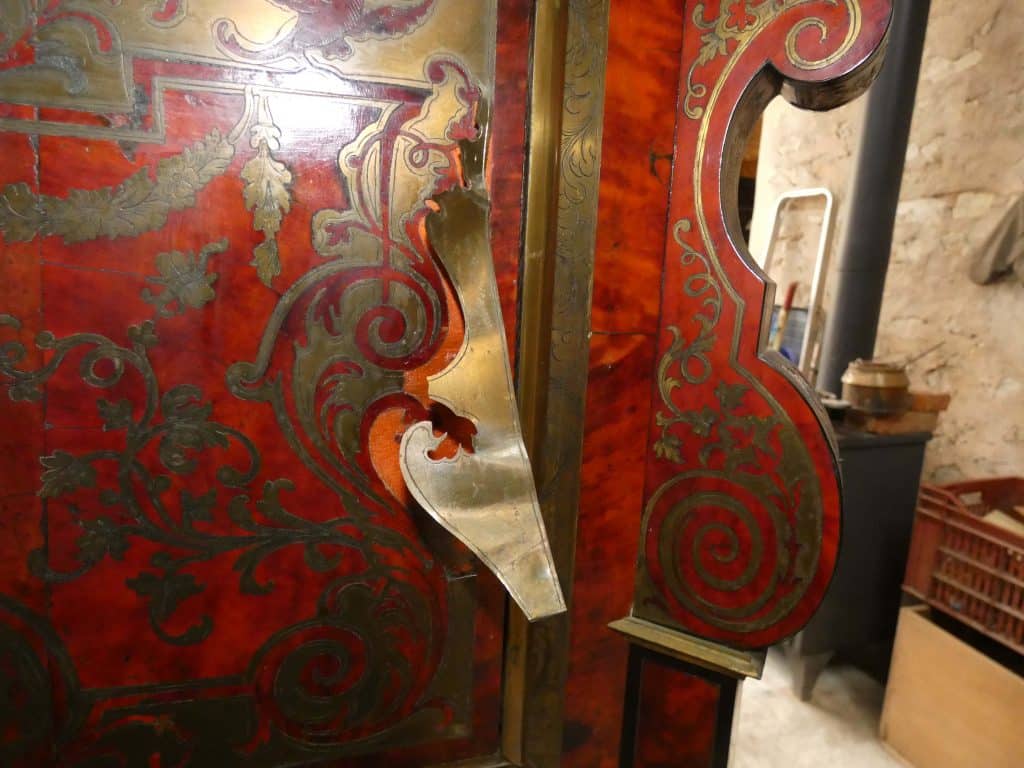
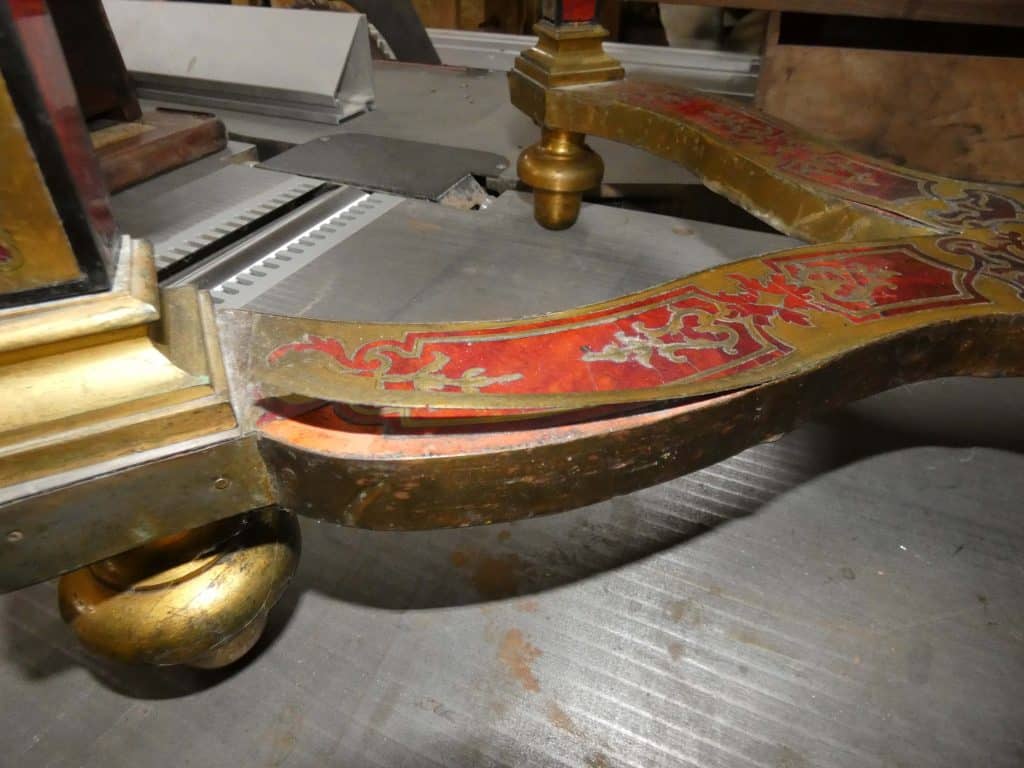
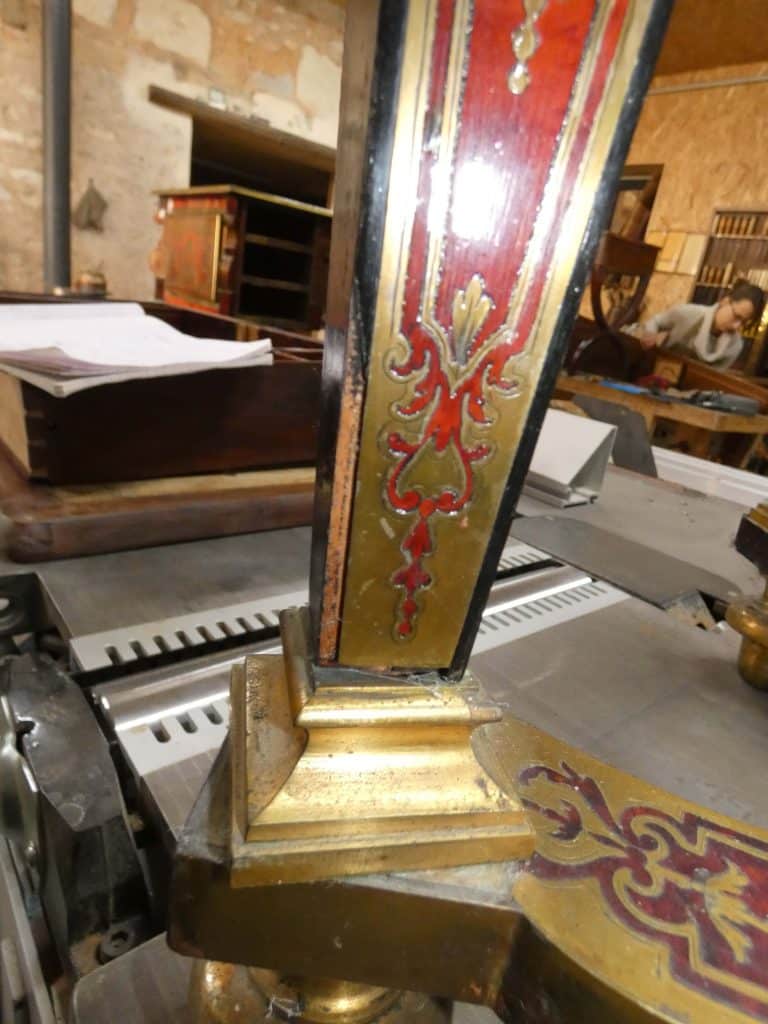
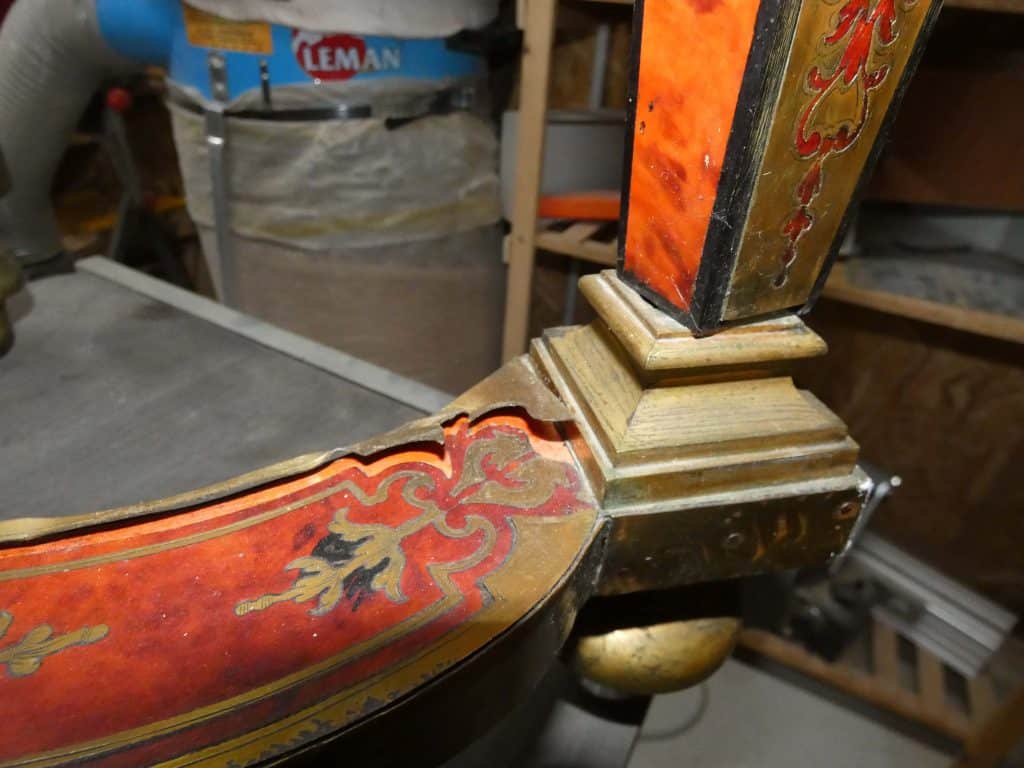
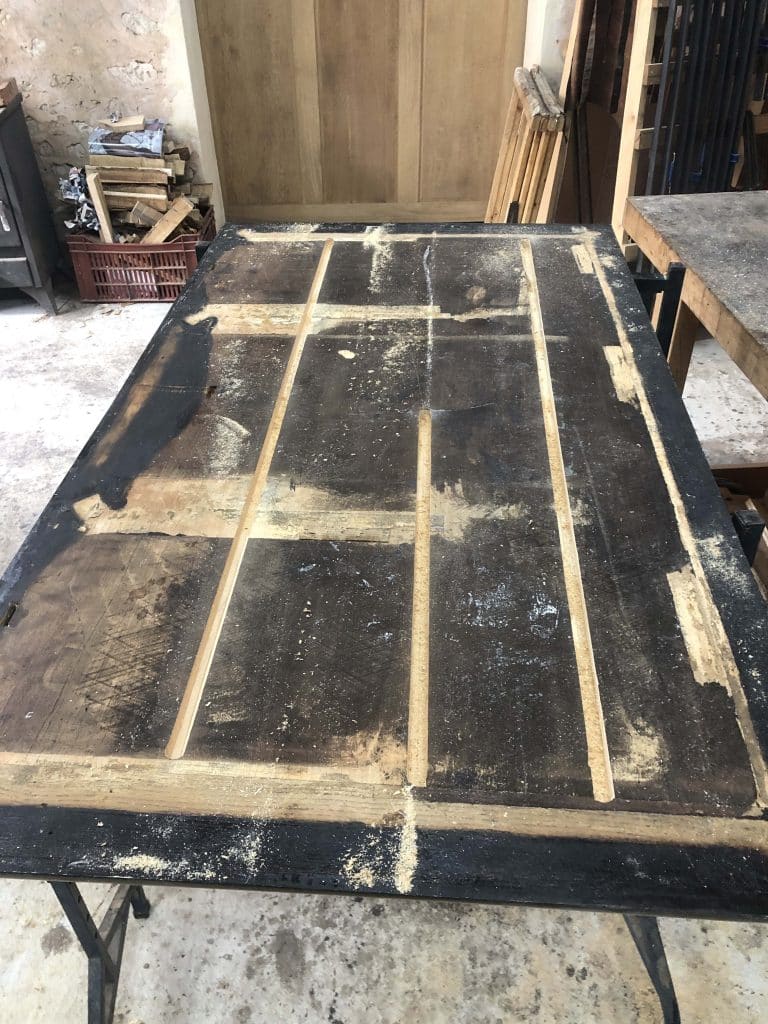
The main structural defects were as follows: the legs were detached from the frame, and the tabletop was slightly warped due to two incipient cracks along its length, making it impossible to open the two upper side drawers. The base was also detached from the frame.
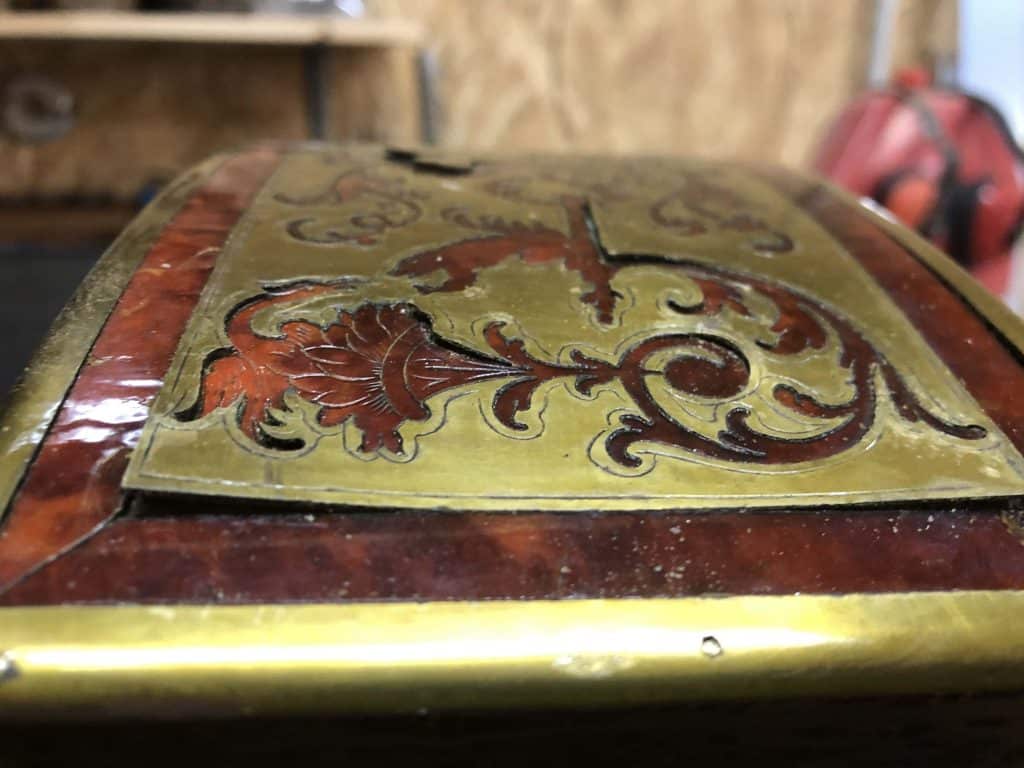
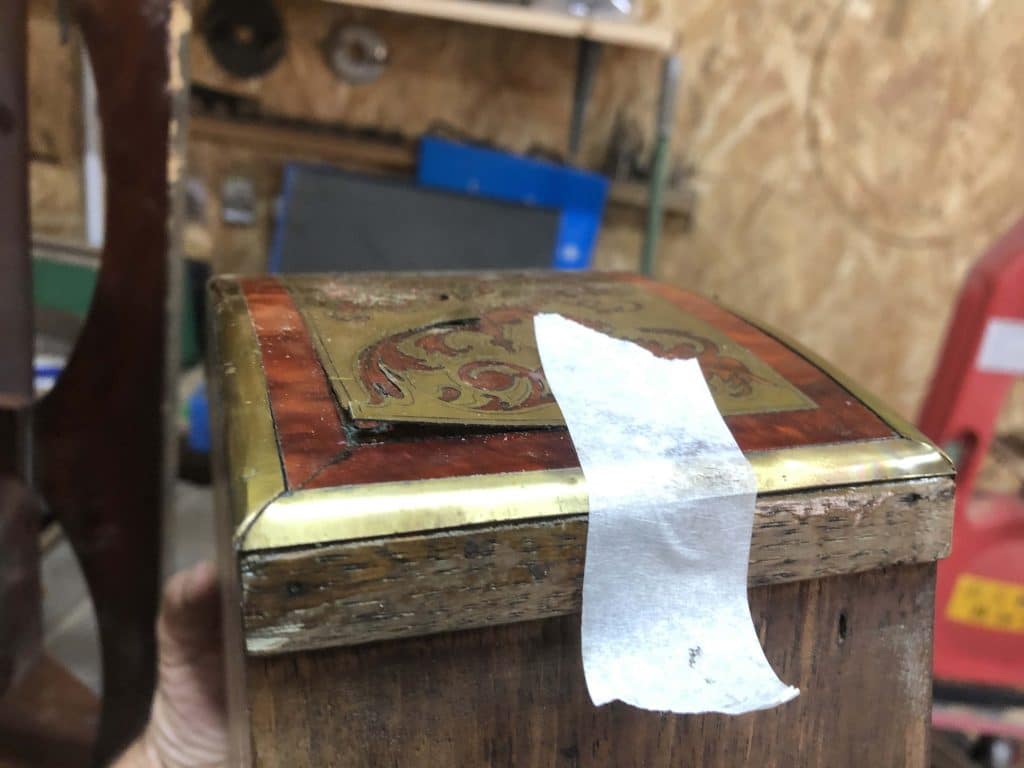
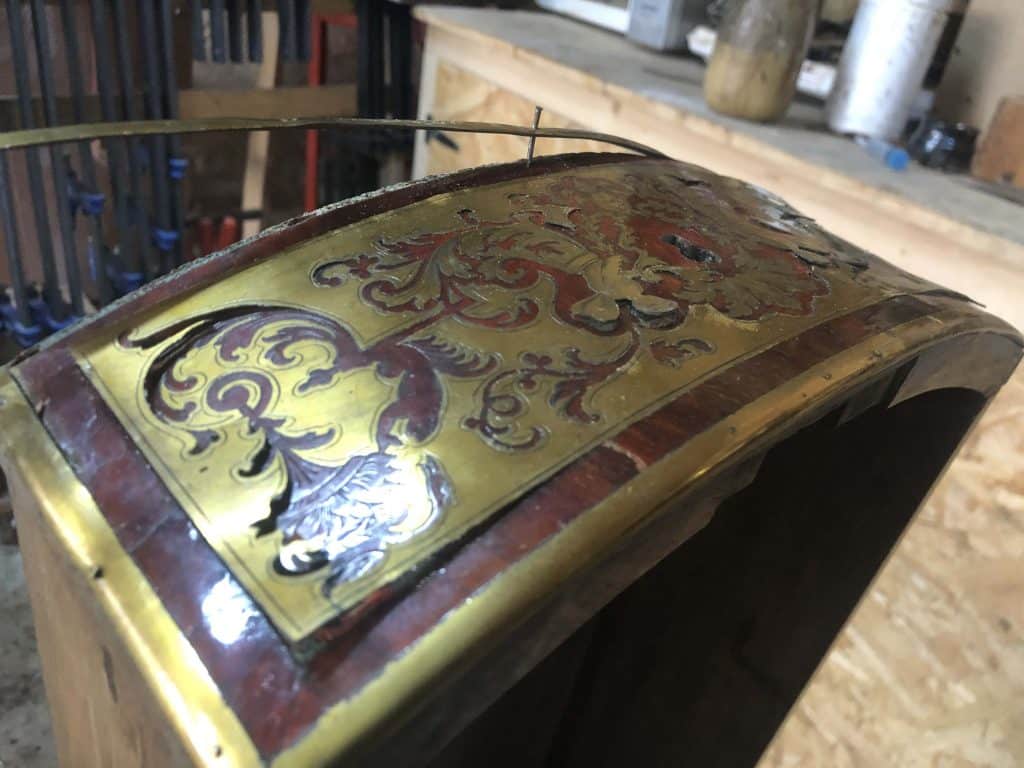
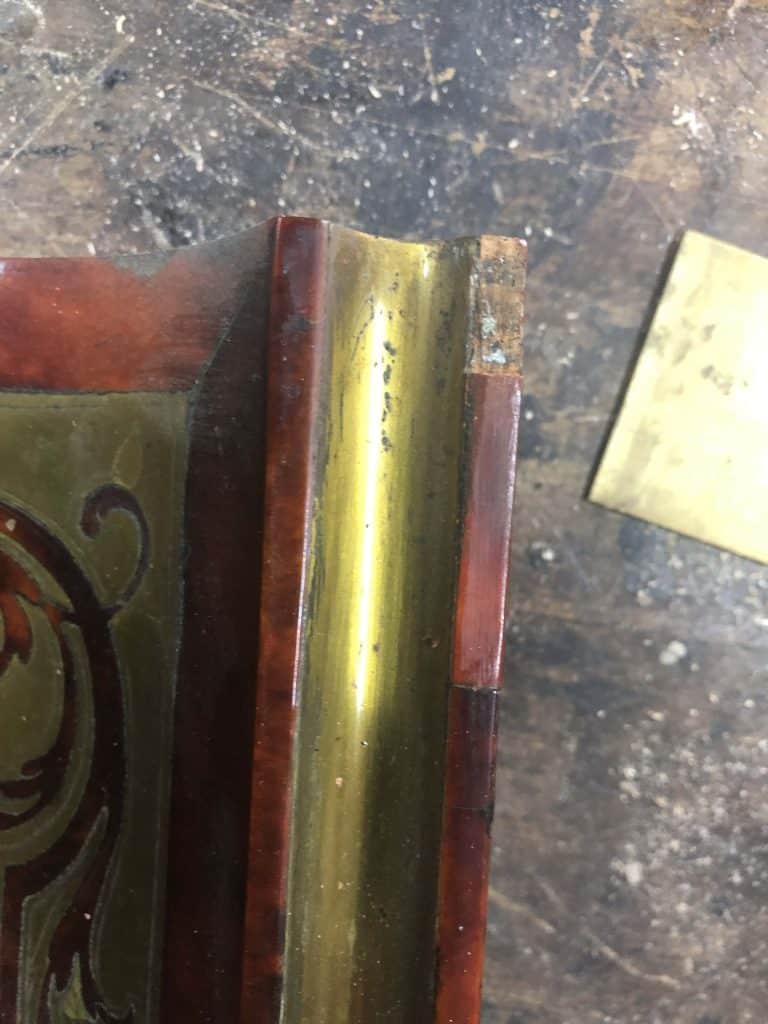
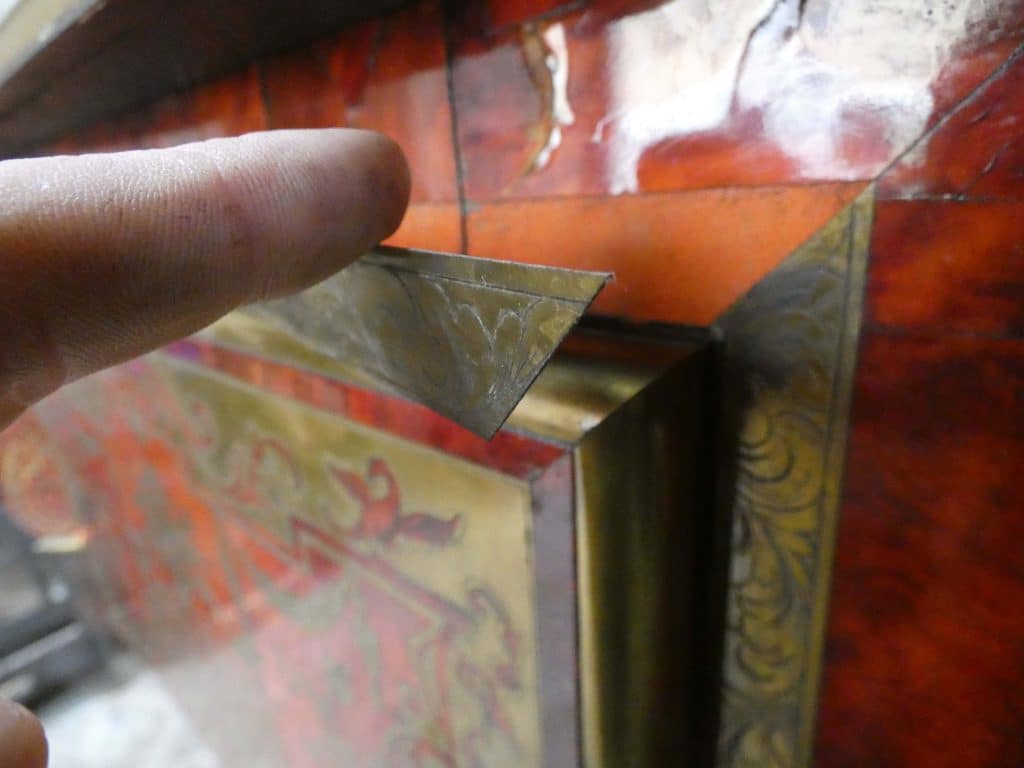
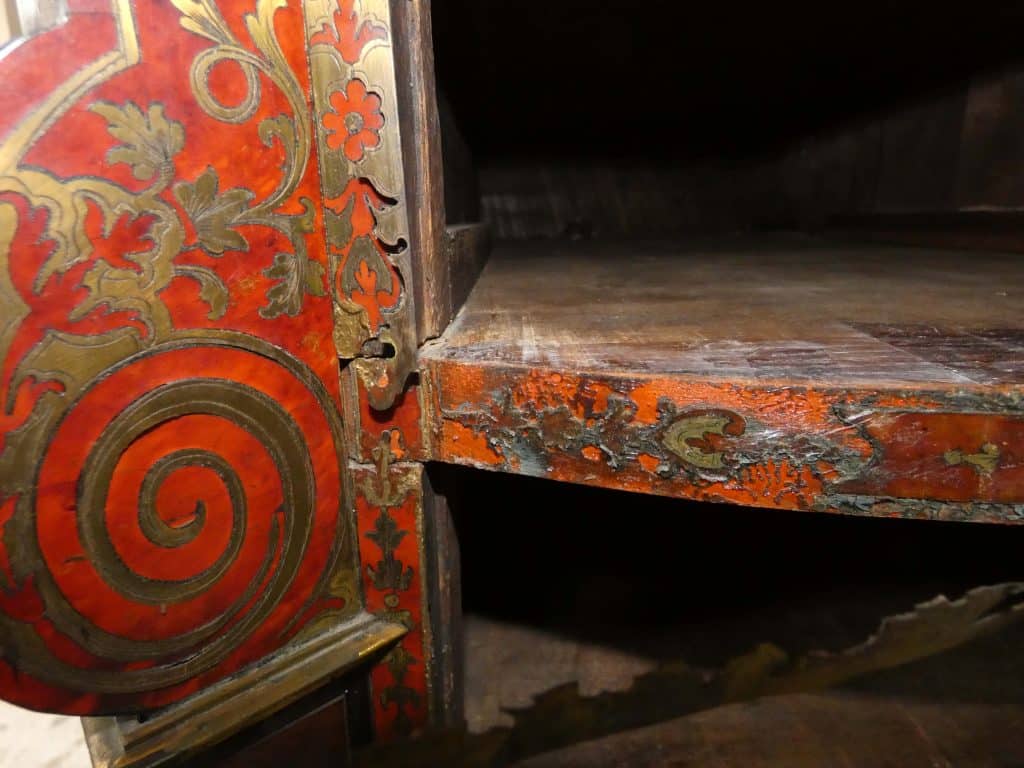
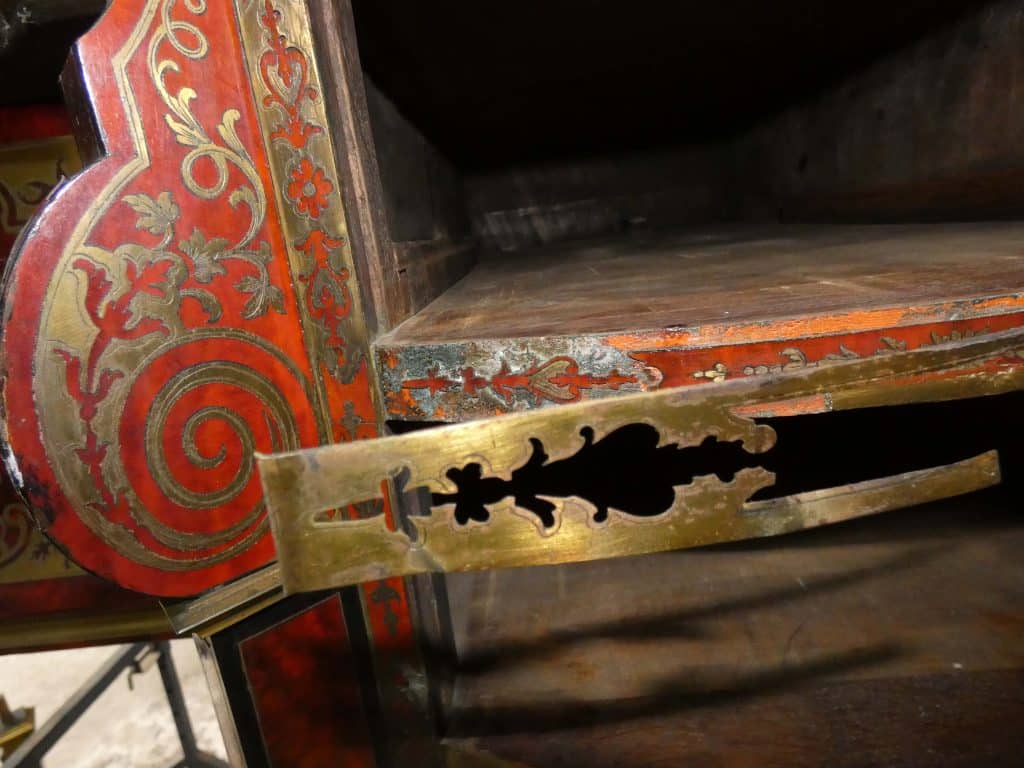
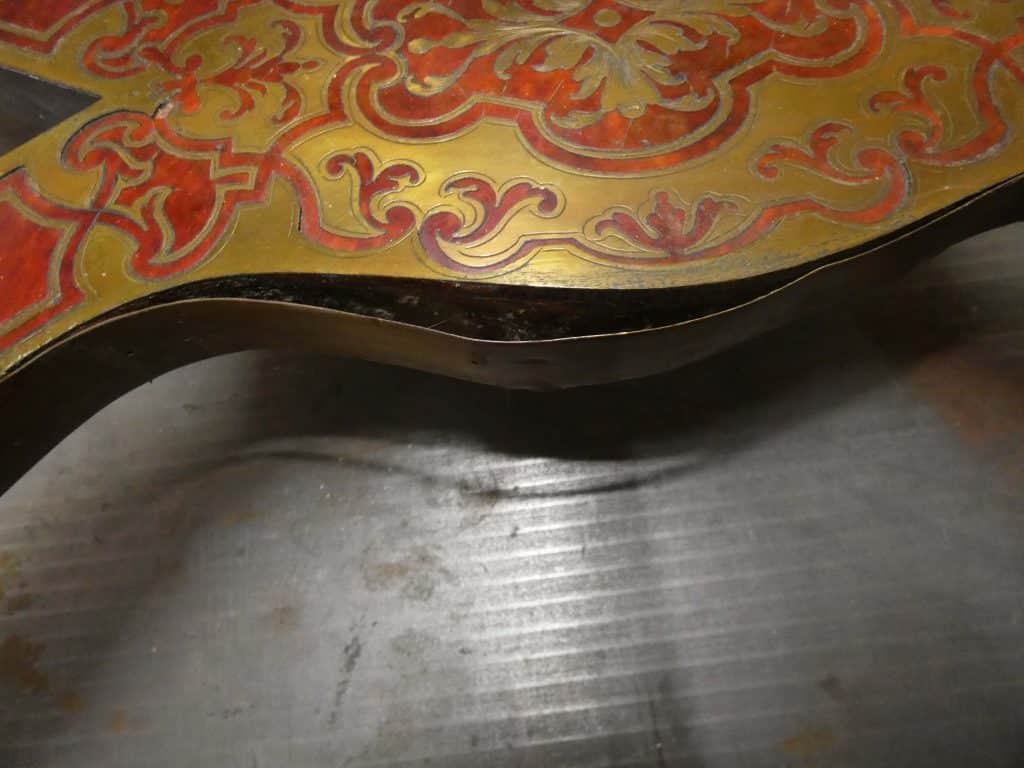
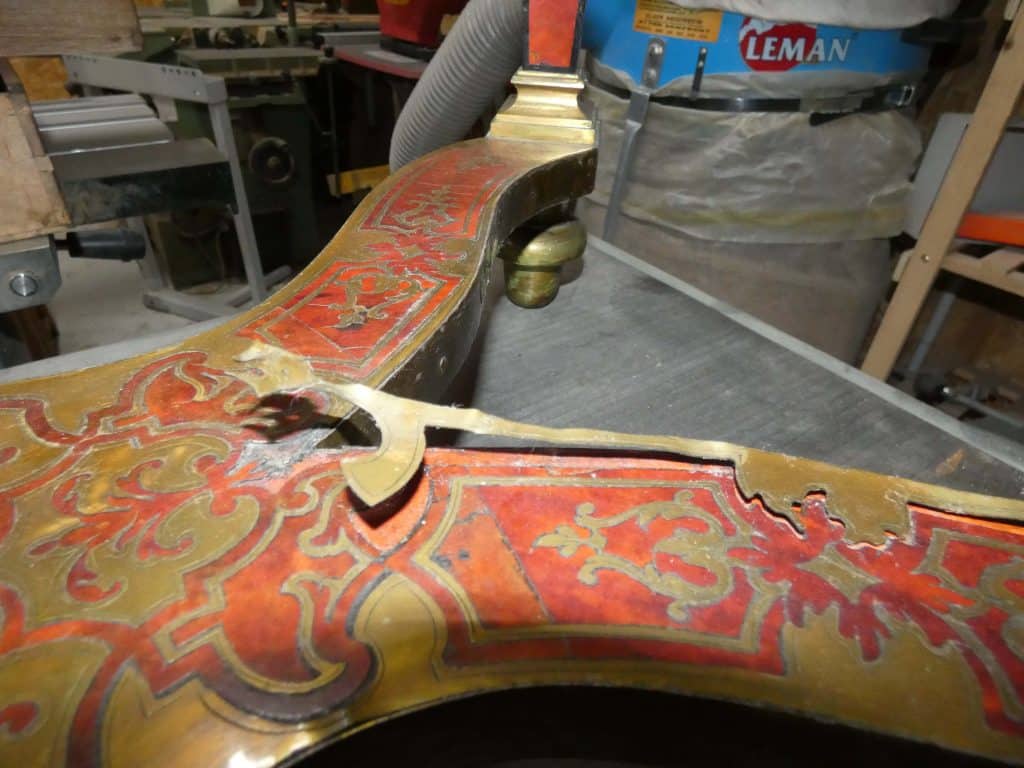
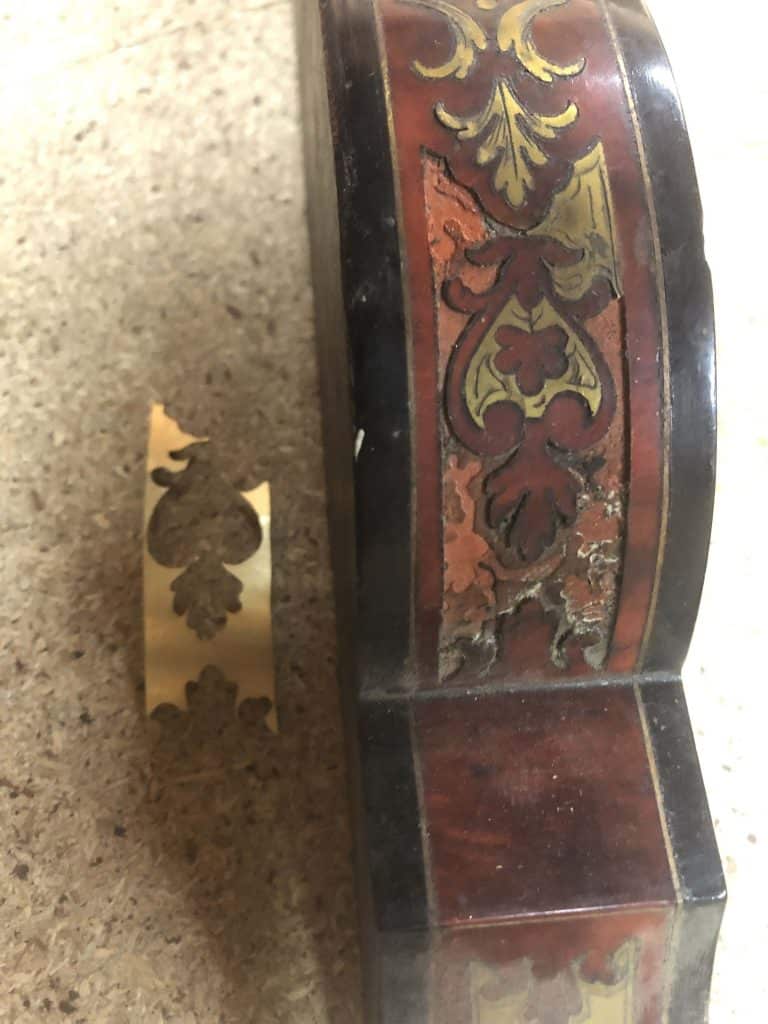
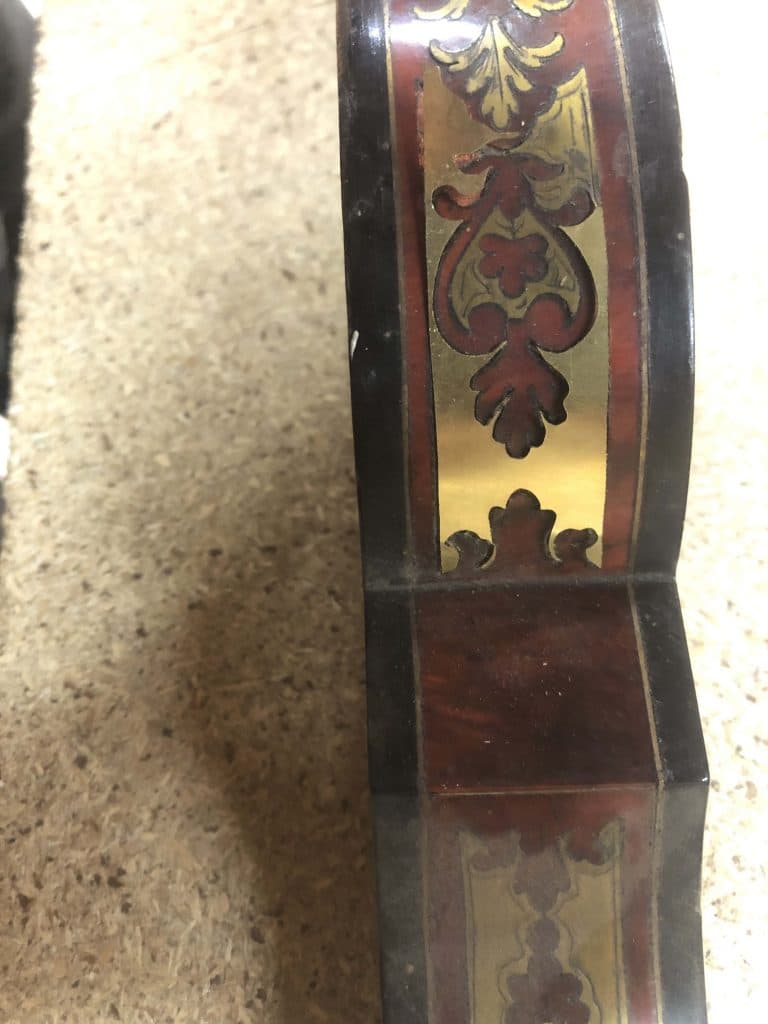
The marquetry appeared to be in good condition, thanks to the cellulose varnish which forms a plastic film. However, this varnish prevents the piece from breathing, which explains why almost all the brass fittings were detached. There were some missing pieces of brass and tortoiseshell.
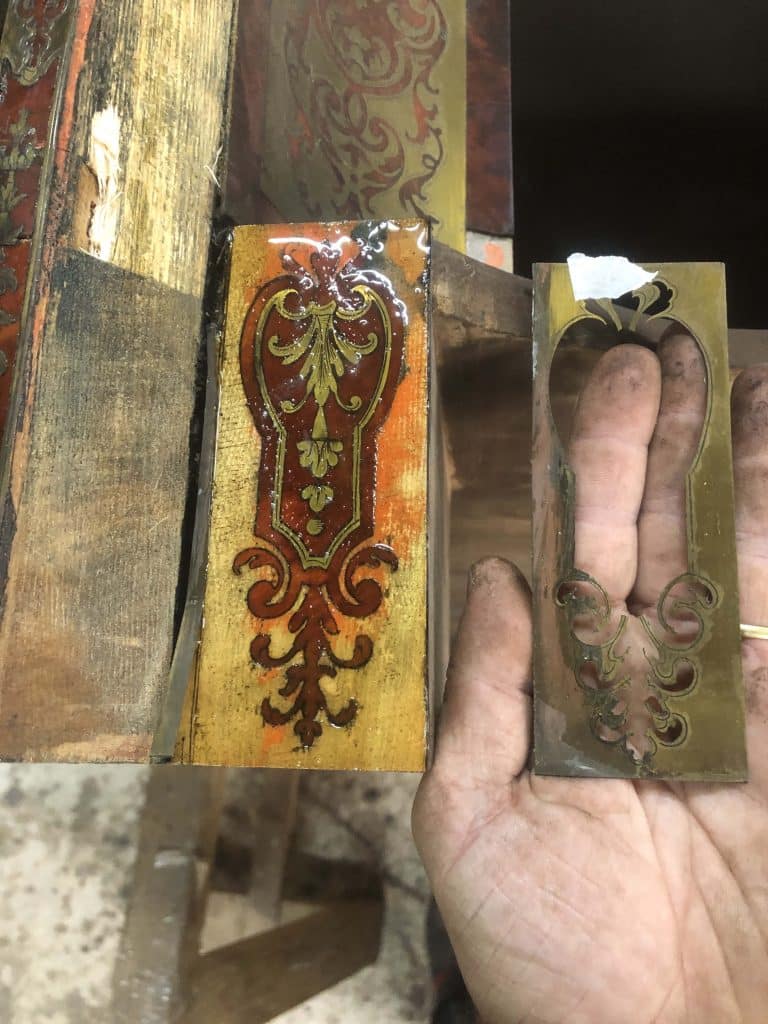
Some brass parts had been replaced with "Sintofer" type resin which had been made up before varnishing.
The entire piece of furniture, even the bronzes, had been spray-varnished with a cellulose-type varnish.
The Restoration
The restoration work took place in several stages.
- First step: the furniture was acclimated to a specific humidity level to ensure its future stability against humidity variations. This step took place over a period of two months to stabilize the furniture at a humidity level of 50%.
- Dismantling of the bronzes
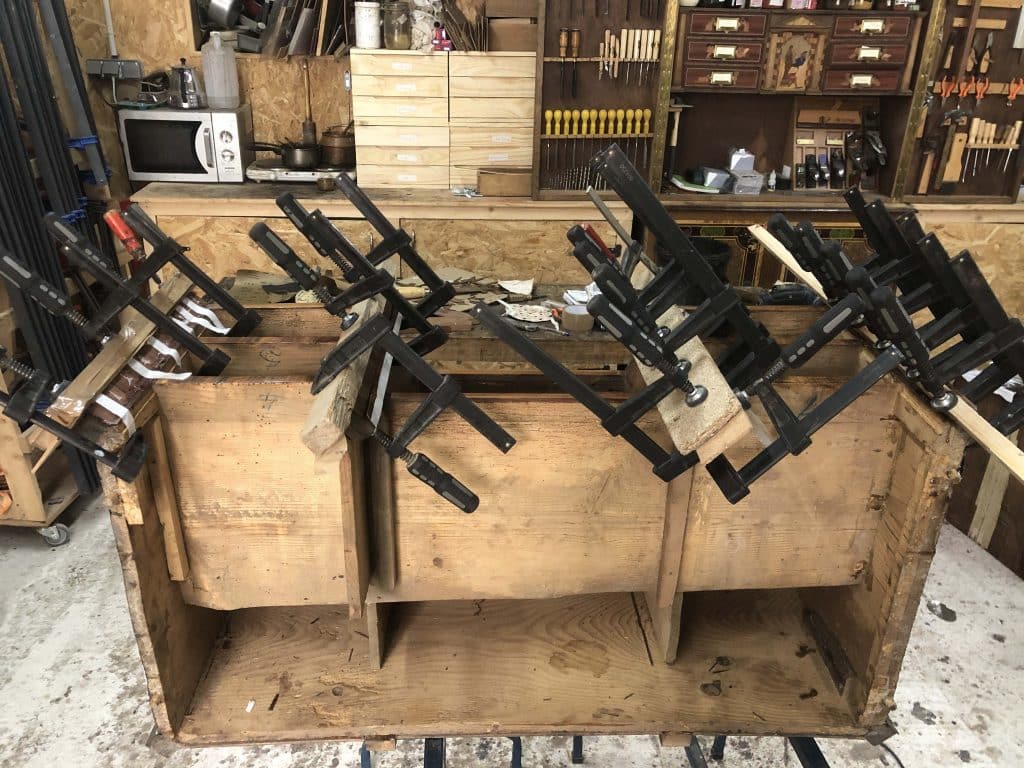
- Removal of the tabletop and dismantling of the foot brackets. This step went without a hitch. As the old adhesives were severely dehydrated, a simple levering motion was all it took to detach these structural elements.
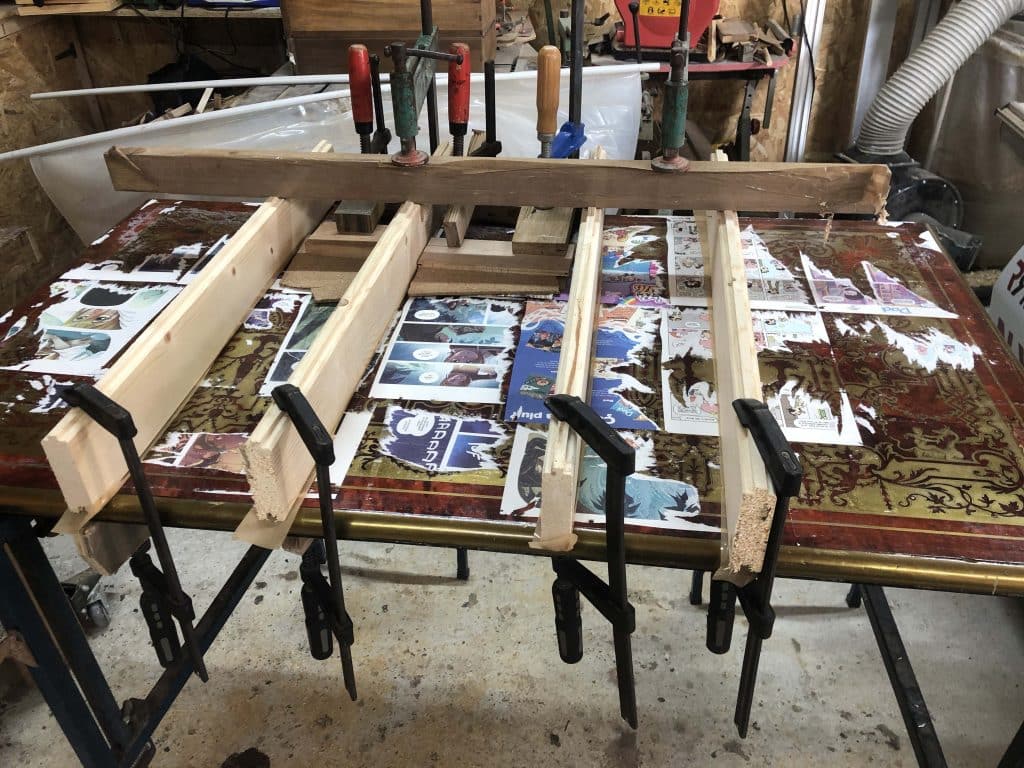
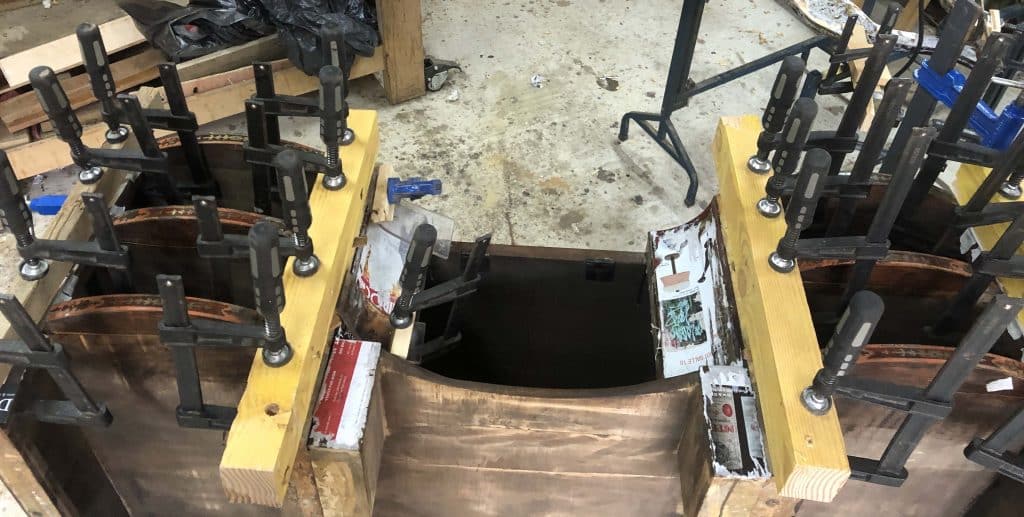
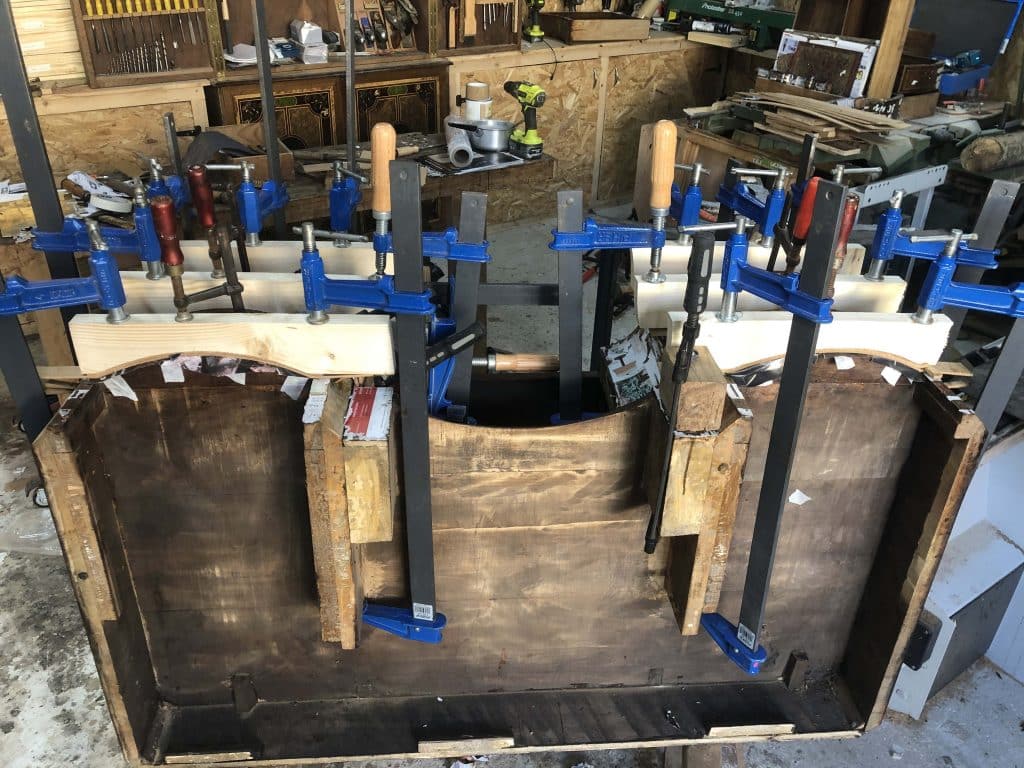
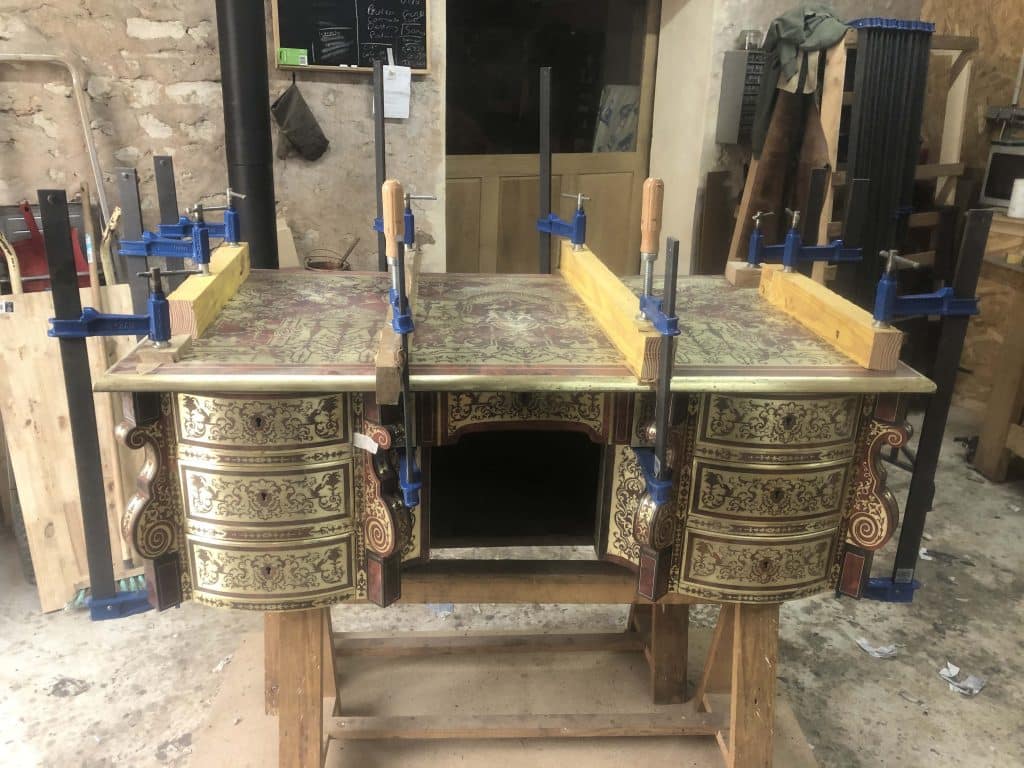
- The three slots in the tabletop were routed to two-thirds of their thickness and bored out using poplar strips with the same moisture content as the original wood. The pieces were then glued with fish glue, carefully restoring the tabletop's flatness as much as possible.
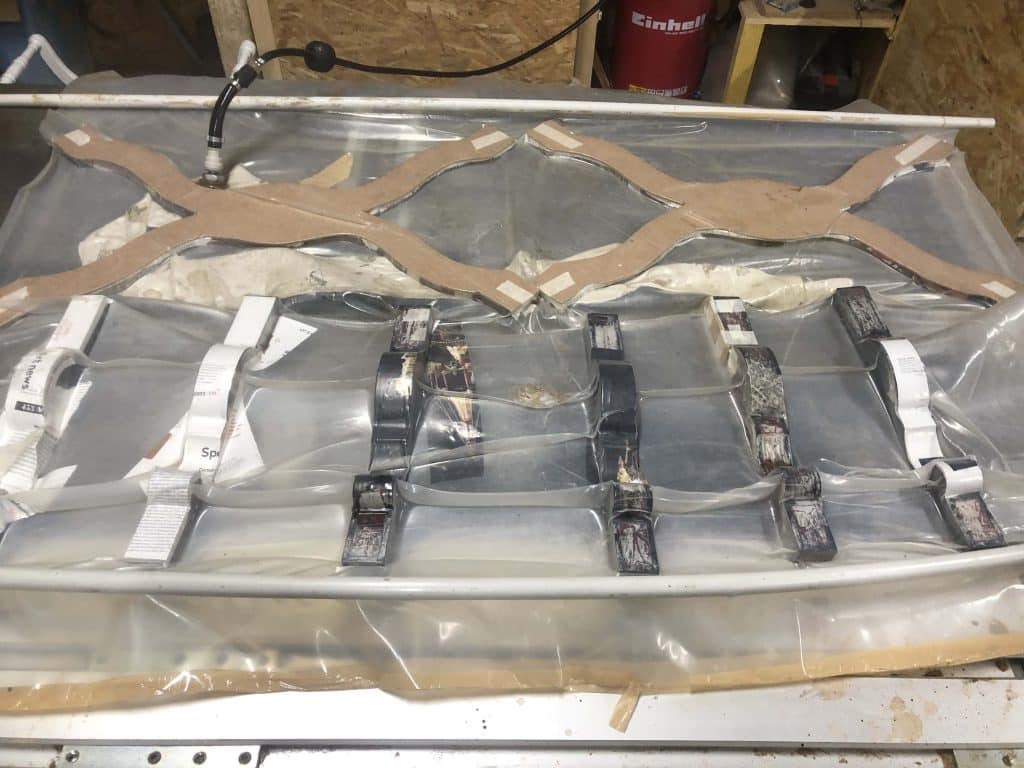
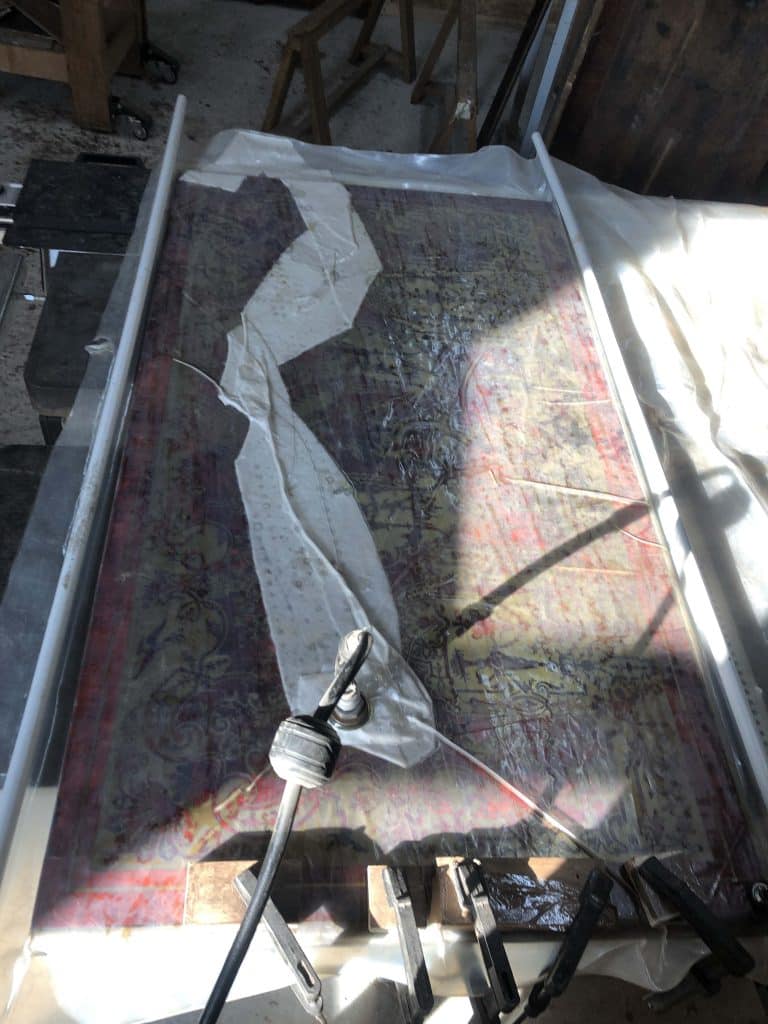
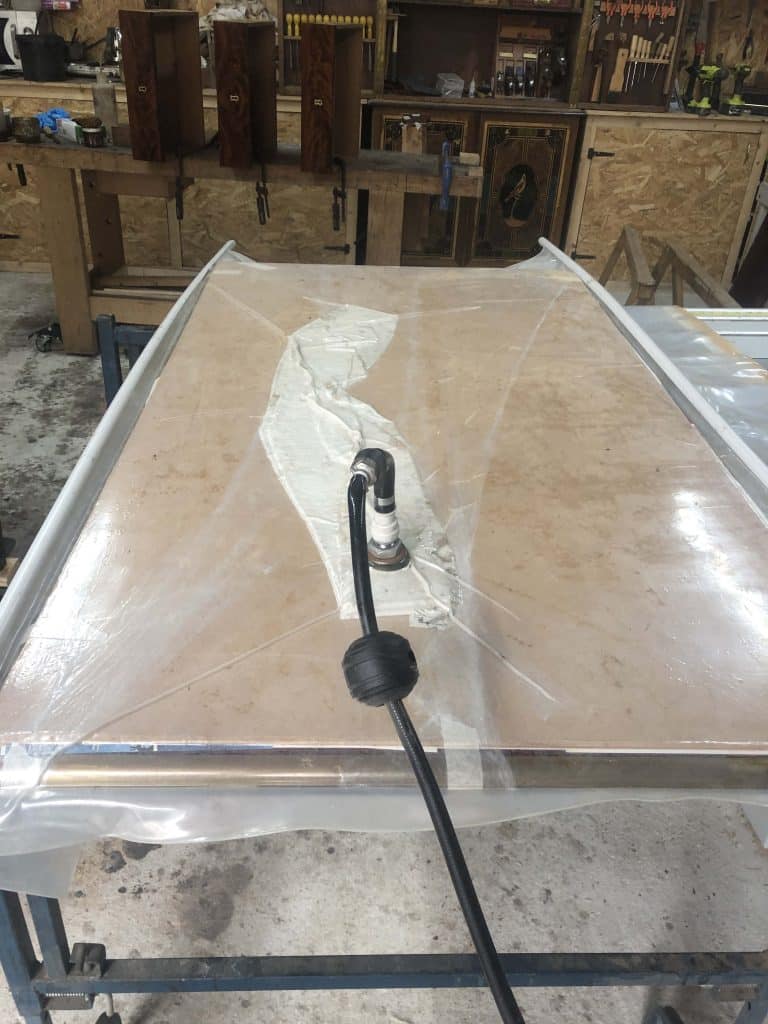
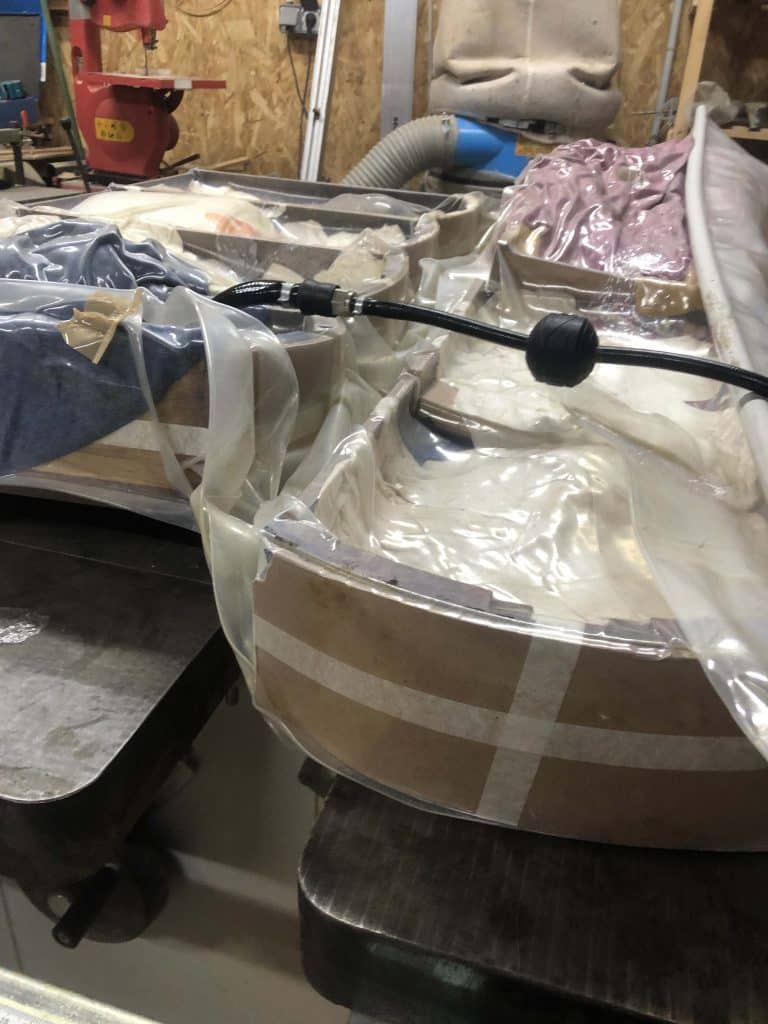
- Re-hydration of the glues on the tray by vacuum infiltration after having previously lifted as many brass parts as possible to facilitate the penetration of the infiltrating glue.
- Rehydration of the marquetry on the front of the drawers by vacuum infiltration.
- Restoration of a brass element, fillets and several scale grafts on the central drawer.
- Restoration of two brass moldings on two drawers.
- Removal of the side panels.
- Re-hydration of the marquetry on the sides and restoration of the tortoiseshell and ebony veneer on the edges.
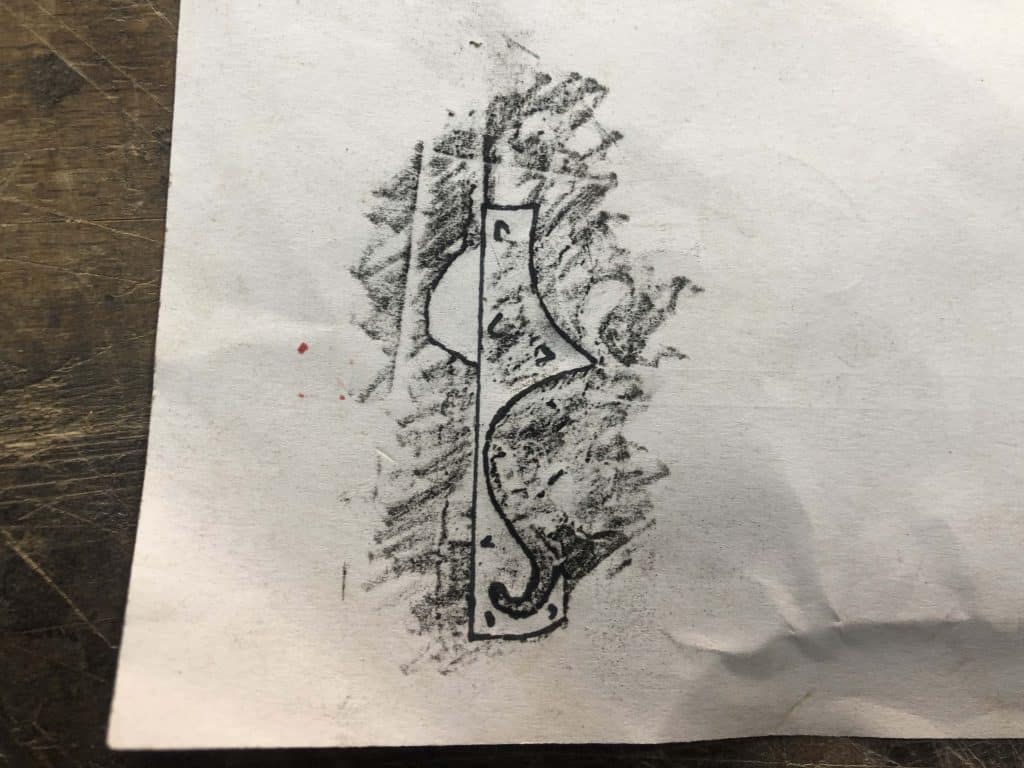
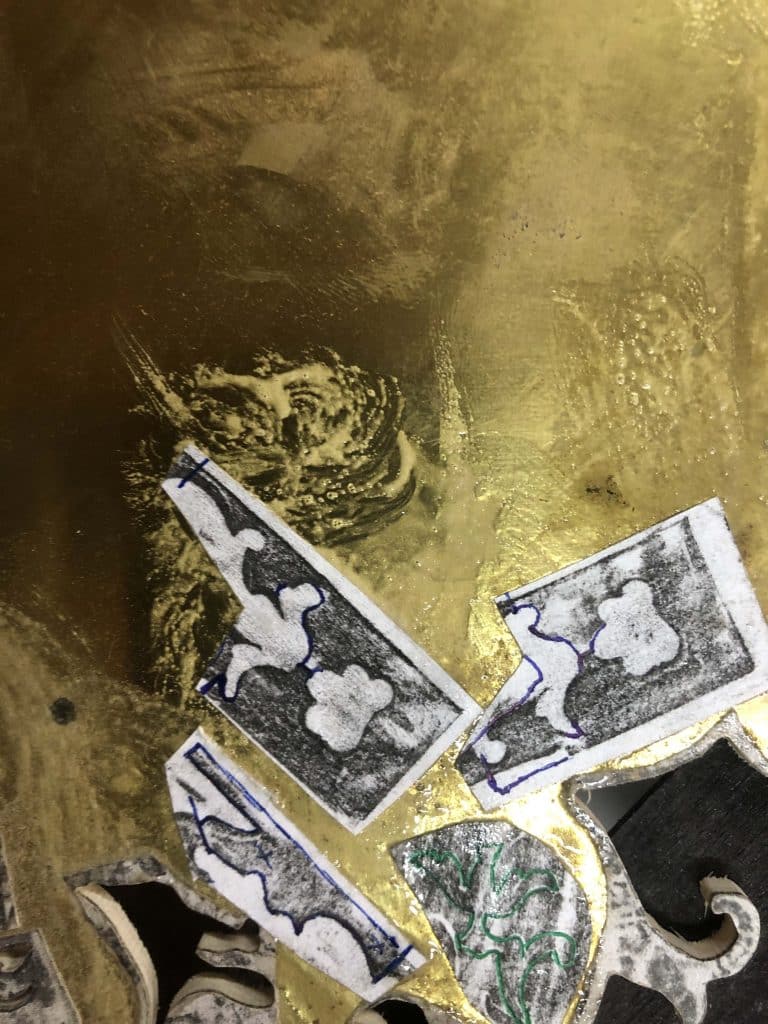
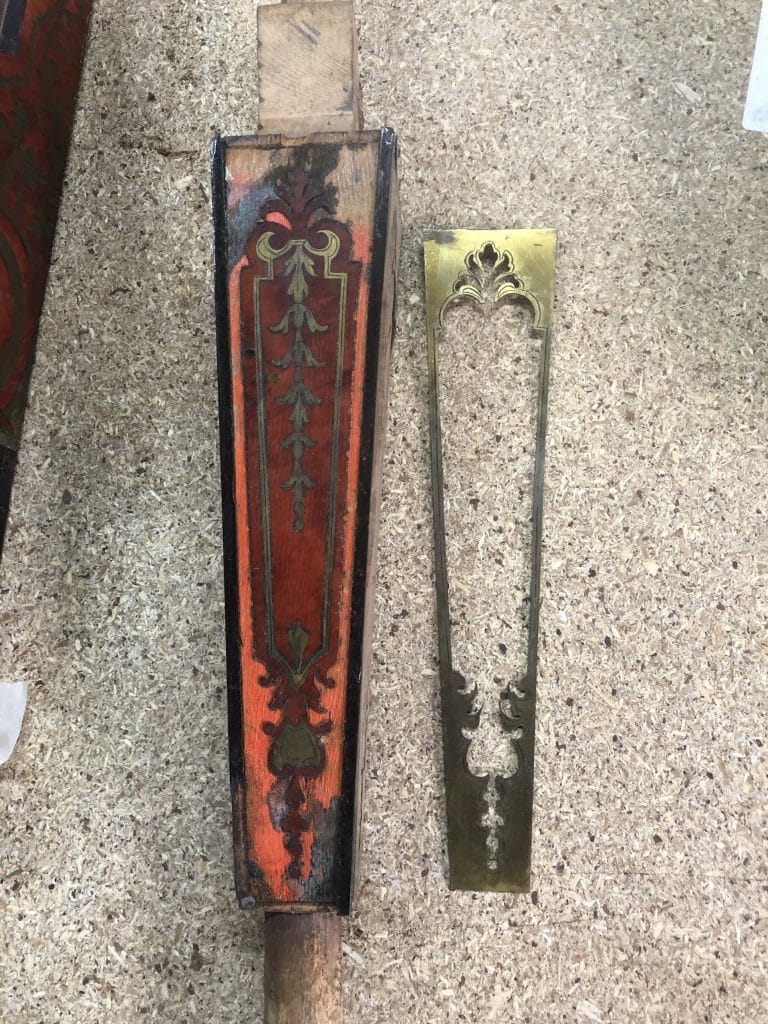
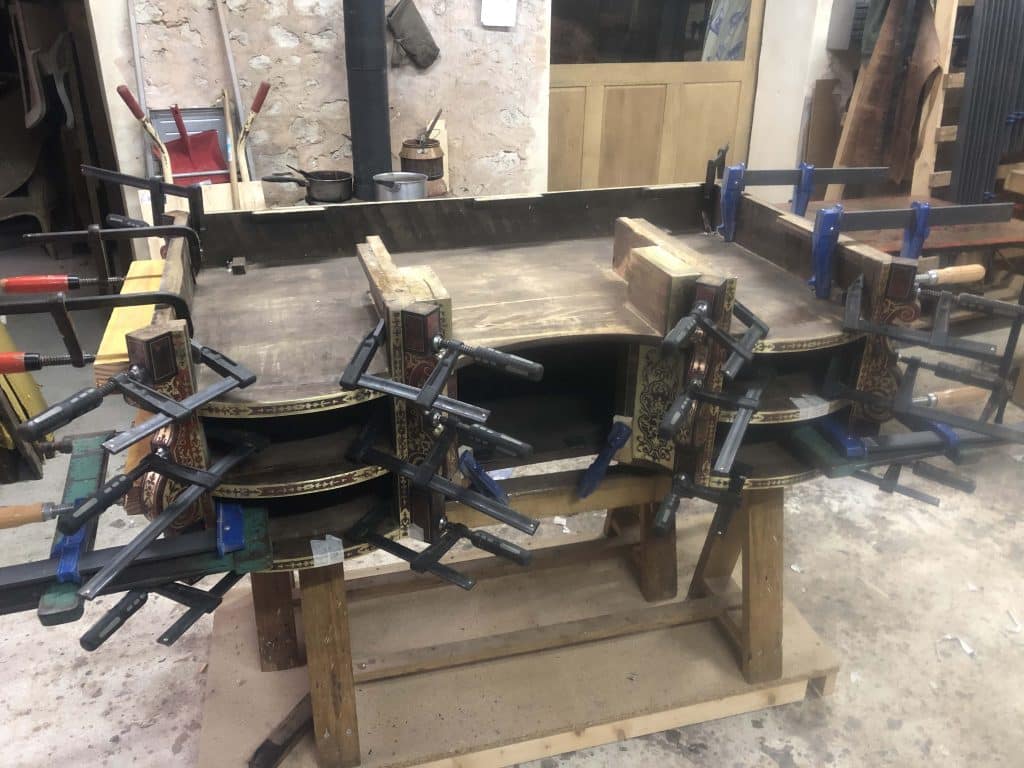
- Removal of all brass plating on the sheaths and brackets. Re-gluing of all parts with fish glue. Restoration of missing tortoiseshell, brass and ebony.
- Re-gluing all the pieces together with fish glue.
- Rehydration of the marquetry on the X-shaped consoles, and replacement of missing and excessively damaged brass elements. Vacuum regluing with fish glue.
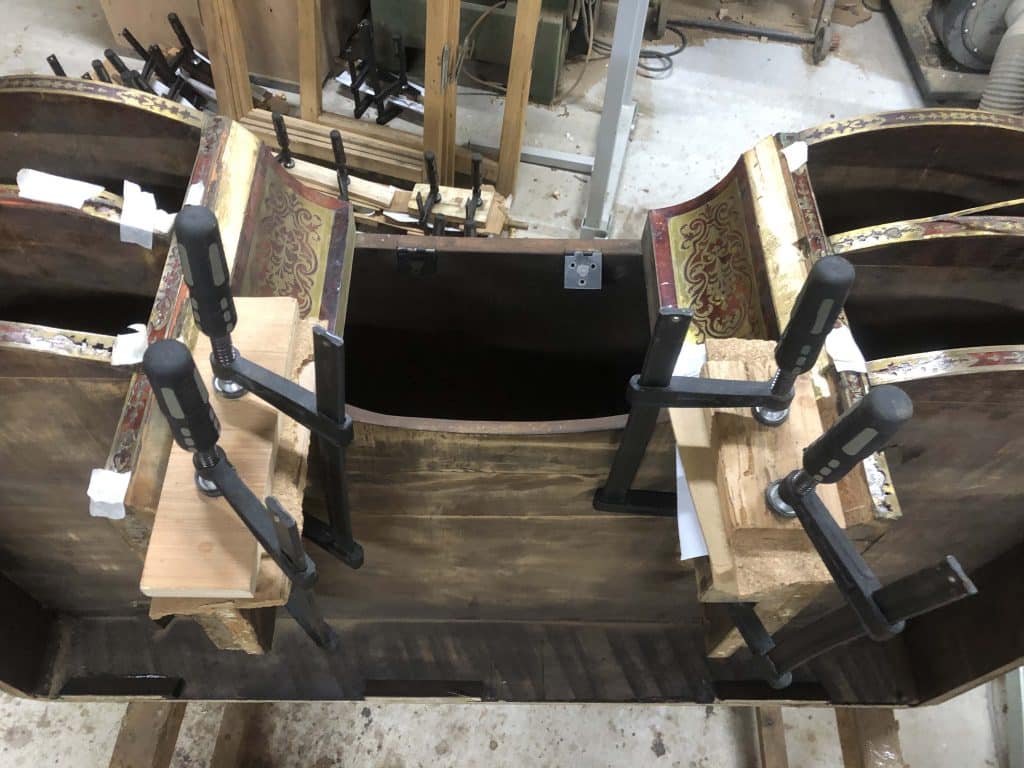
- Removal of all facade veneers to eliminate the dimensional shrinkage of the crossbeams by gluing on a two-millimeter veneer. Filling of missing areas and re-gluing with fish glue under a molding block.
- Re-gluing of the consoles and side panels after stripping and cleaning them.
- Re-gluing the tabletop after adjusting the drawers.
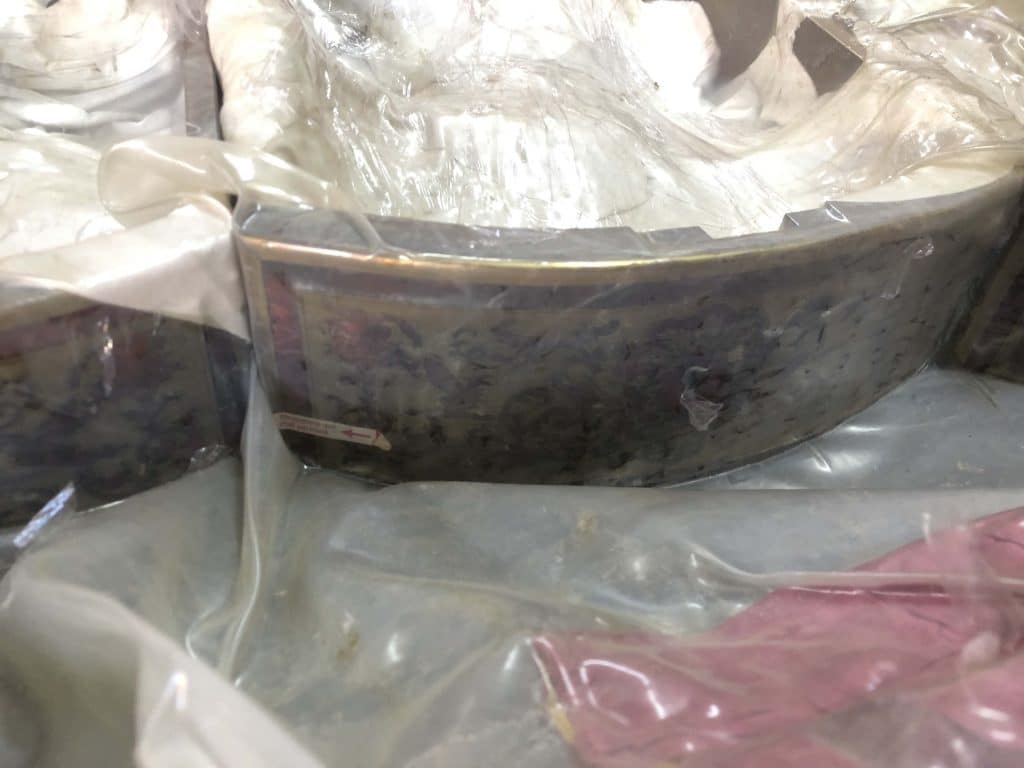
- Re-gluing the base after cleaning the bronze
- Final step, clear French polish.
To see previous restorations : https://ebenisterie-mathieuvath.fr/en-ce-moment-a-latelier/
Magnificent! What work, what virtuosity, both from the creator and your restoration. Discovering your work is always a delight! Thank you for sharing your passion.
Thank you for reading.
Magnificent, speechless, what a gem!
Magnificent work, a truly beautiful skill to preserve, thank you for sharing.
Hi. What do you mean by rehydrating glues by infiltration (under vacuum)?
THANKS
We speak of rehydration or regeneration of glues when a solution of fish glue, water, and a few other ingredients is injected. This technique restores old glues to their original adhesive strength. It's a very effective technique that yields truly remarkable results.
«"Inject" with a syringe while slightly lifting the veneers and fillets?
Both solutions are possible. The best is to do it under vacuum.
You are more than a craftsman, you are an artist. What a work of art! A huge congratulations!
THANKS
Well done, sir.,
A passion, an art…
What beauty and what mastery, magnificent to master such skills.
Thank you for sharing.
Thank you
I myself restored furniture for five years, it's really what I loved most professionally!!!
Well done, a very beautiful restoration and excellent commentary.
Thank you again!
Thank you for your kind comment.
Good morning
I've just discovered your site and it's a pleasure to read your posts.
Well done on your work.