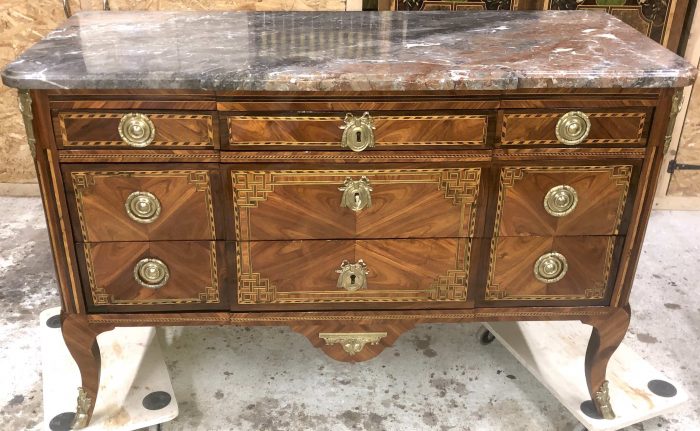
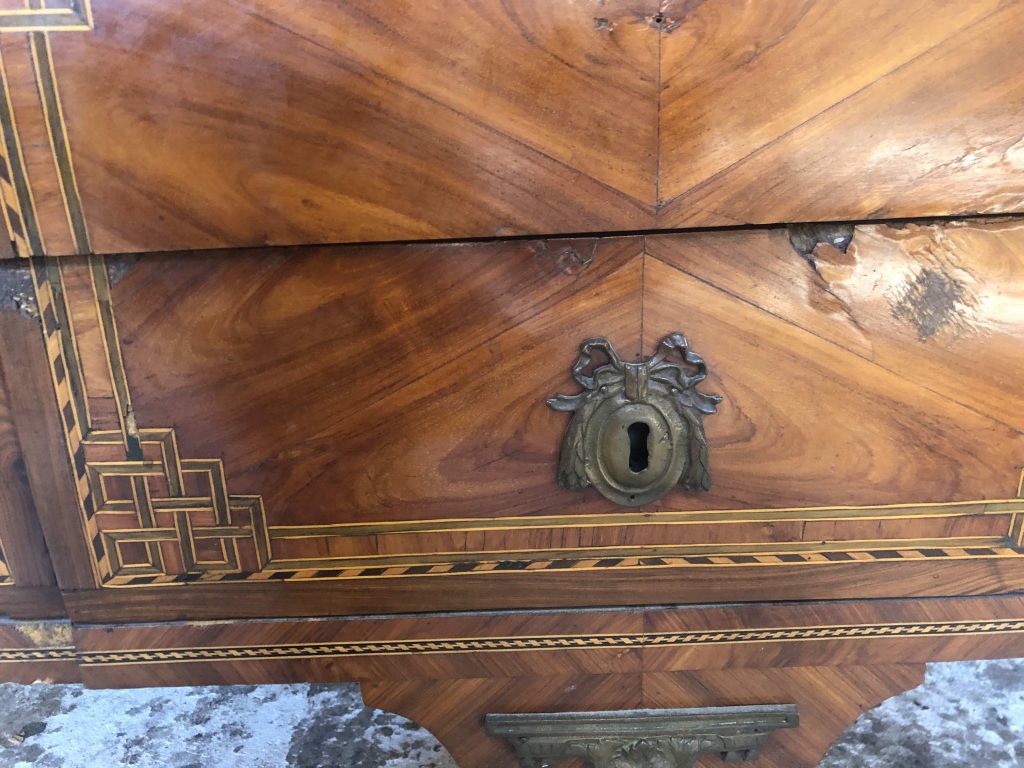
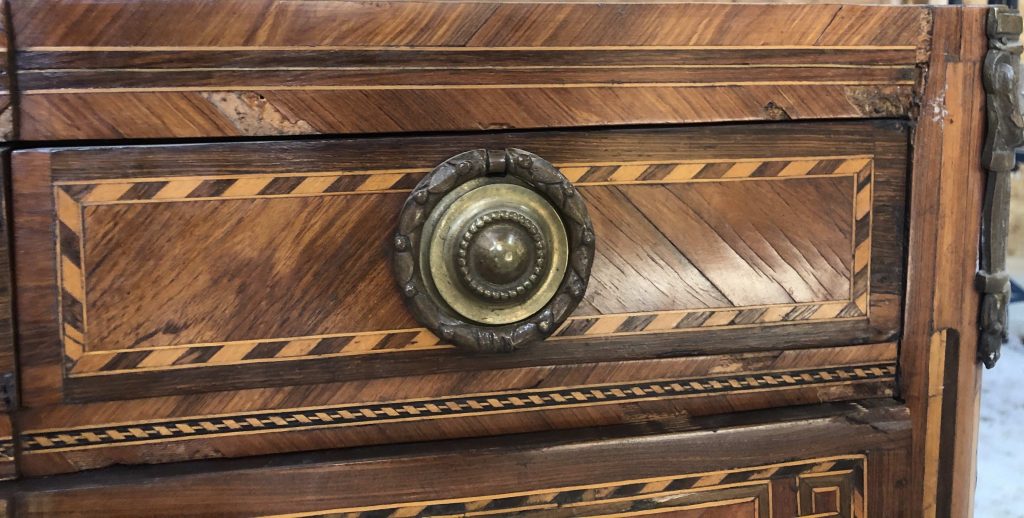
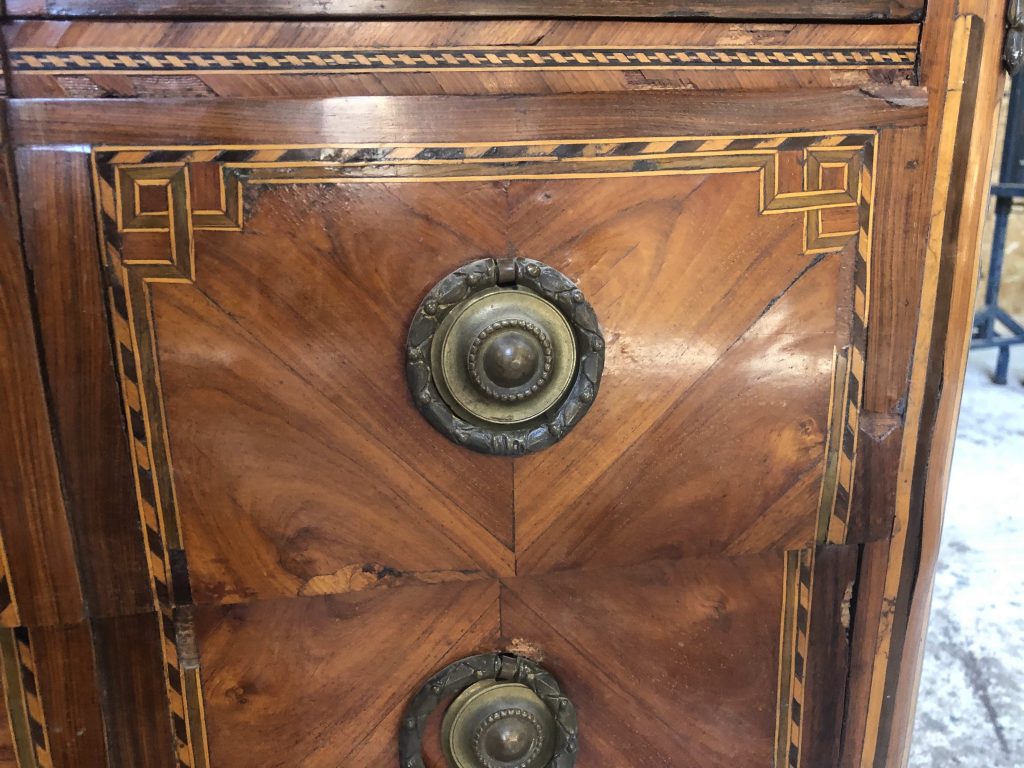
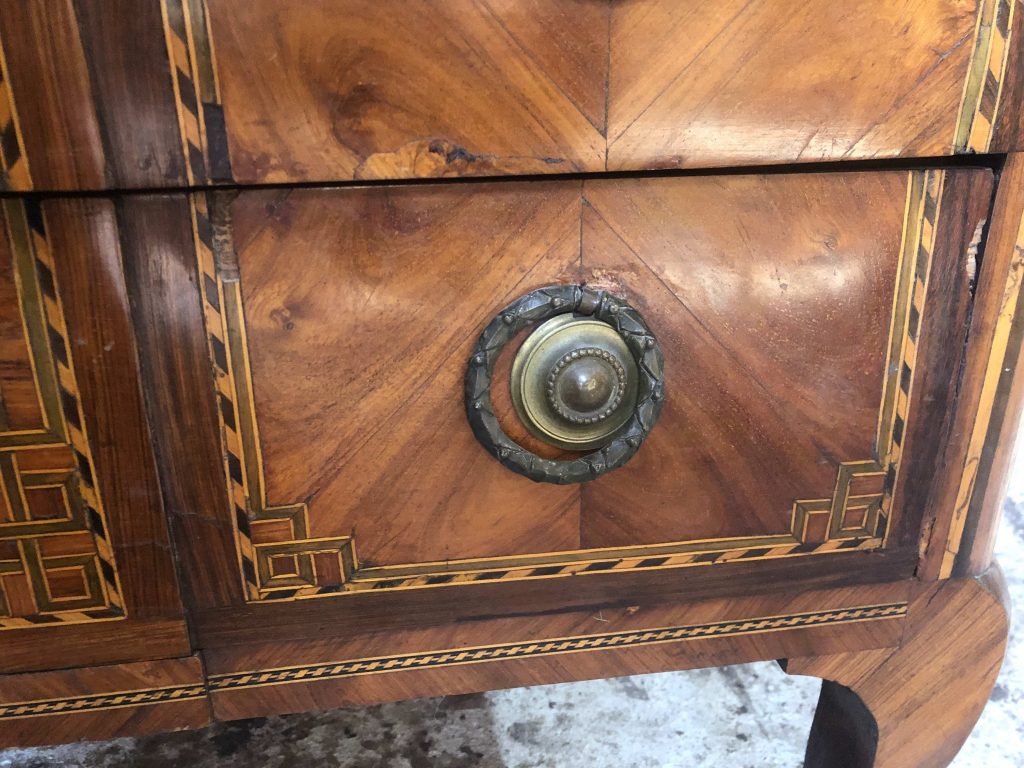
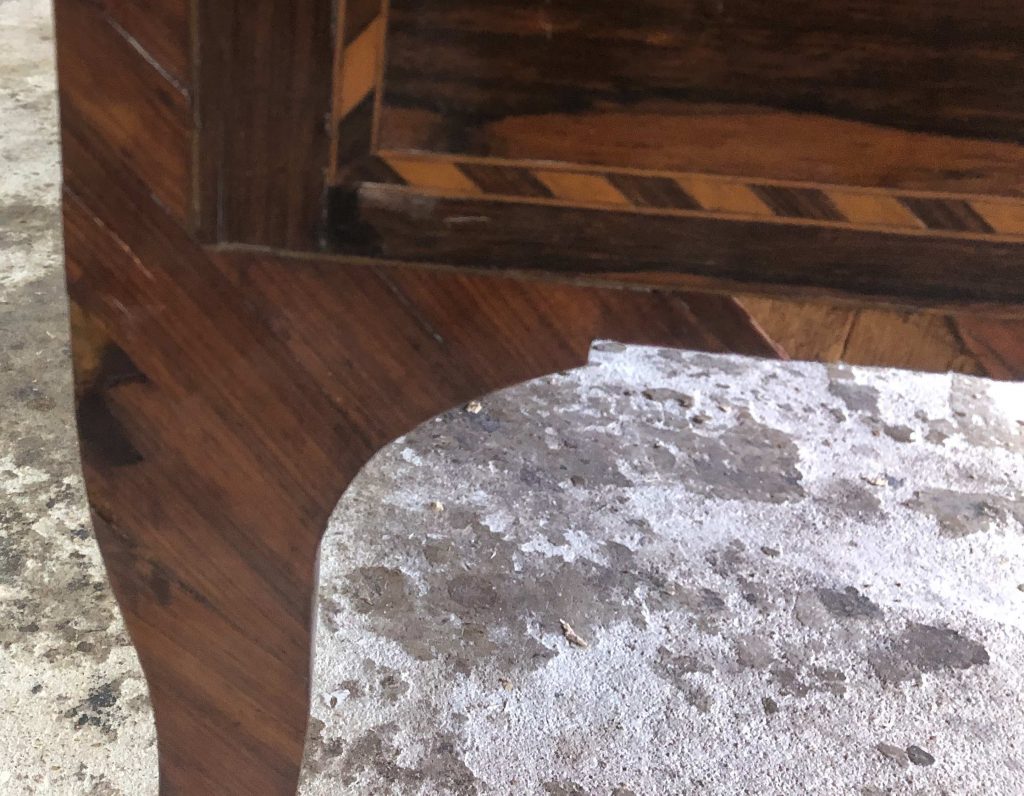
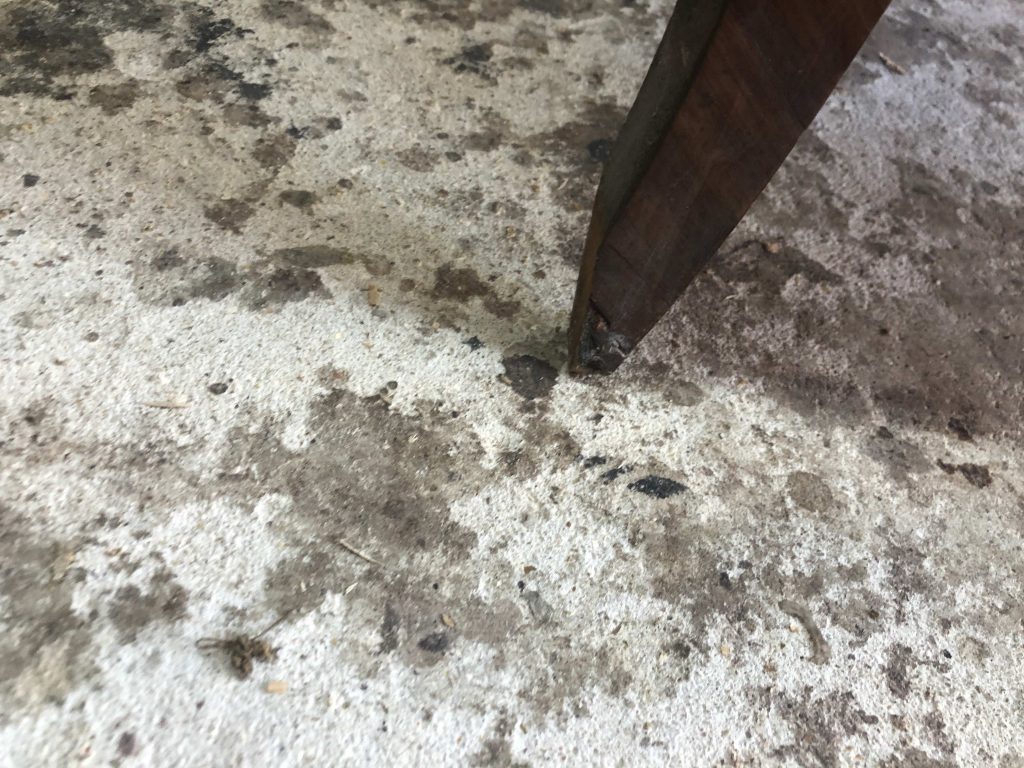
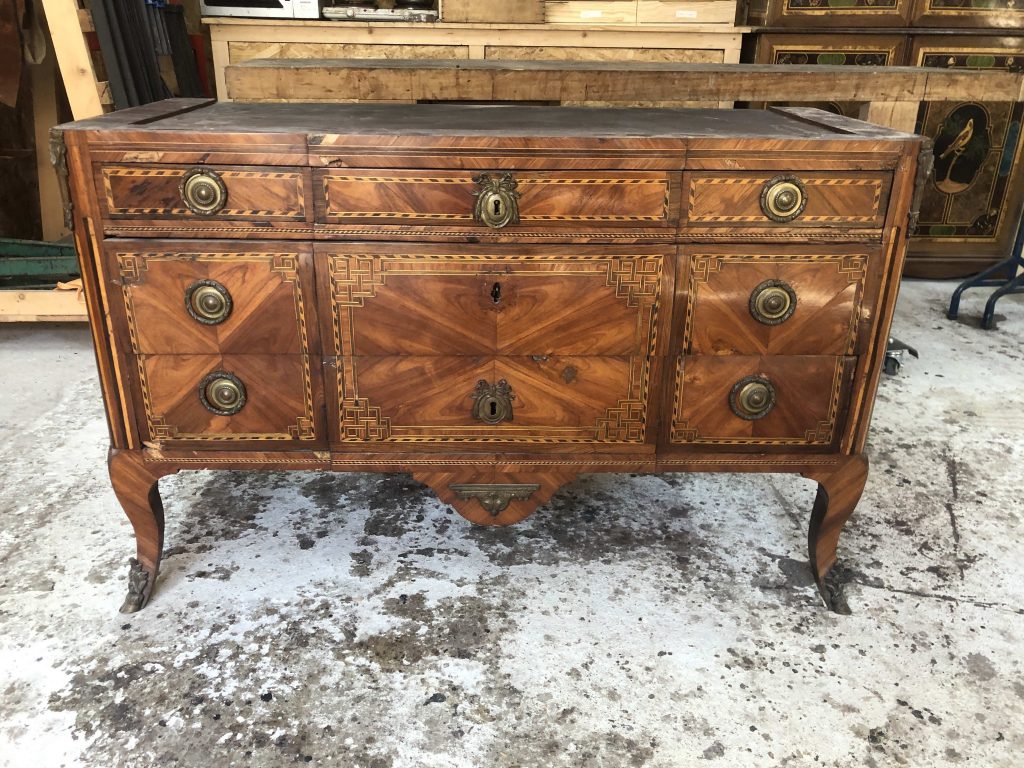
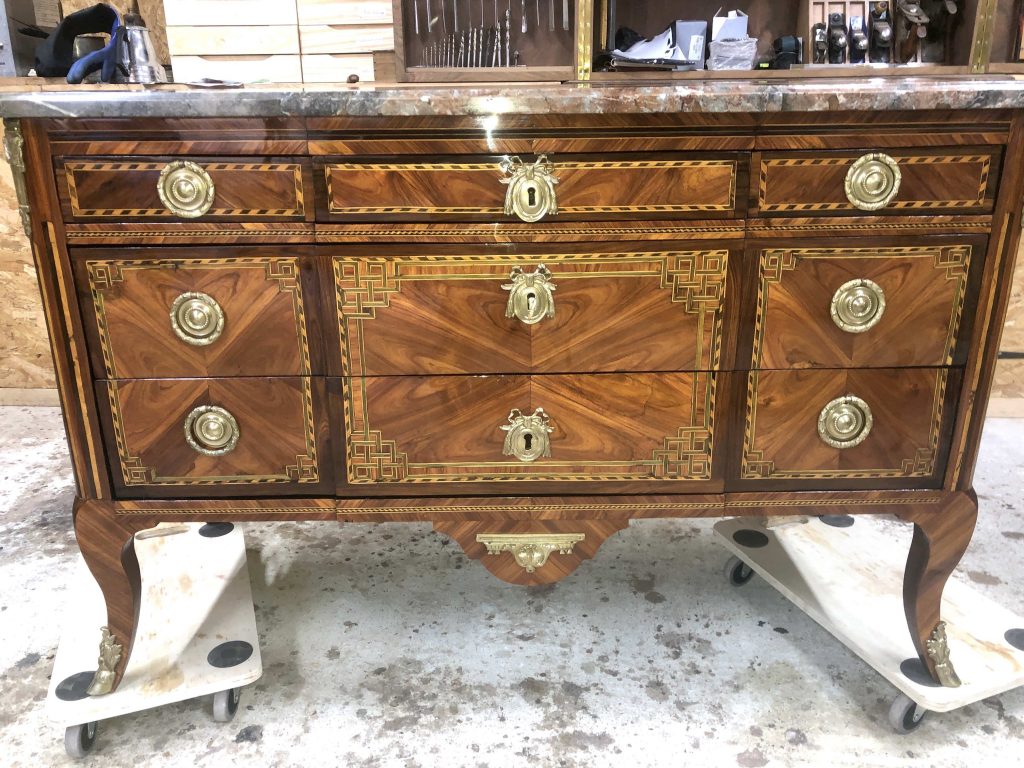
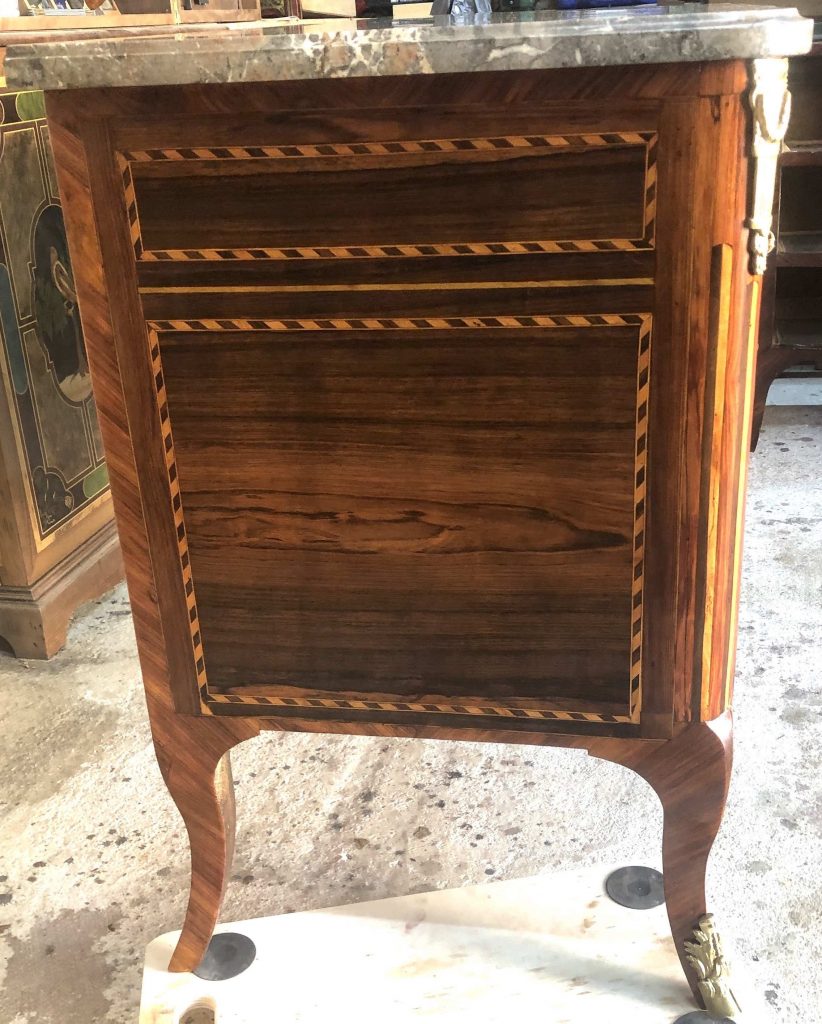
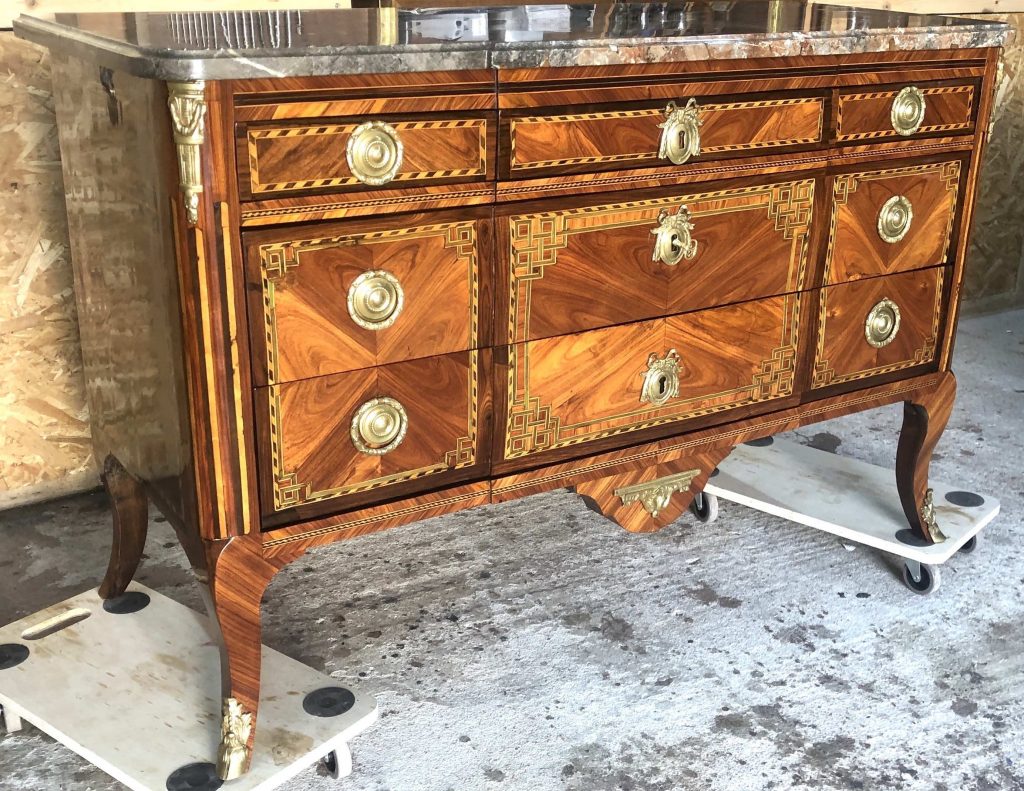
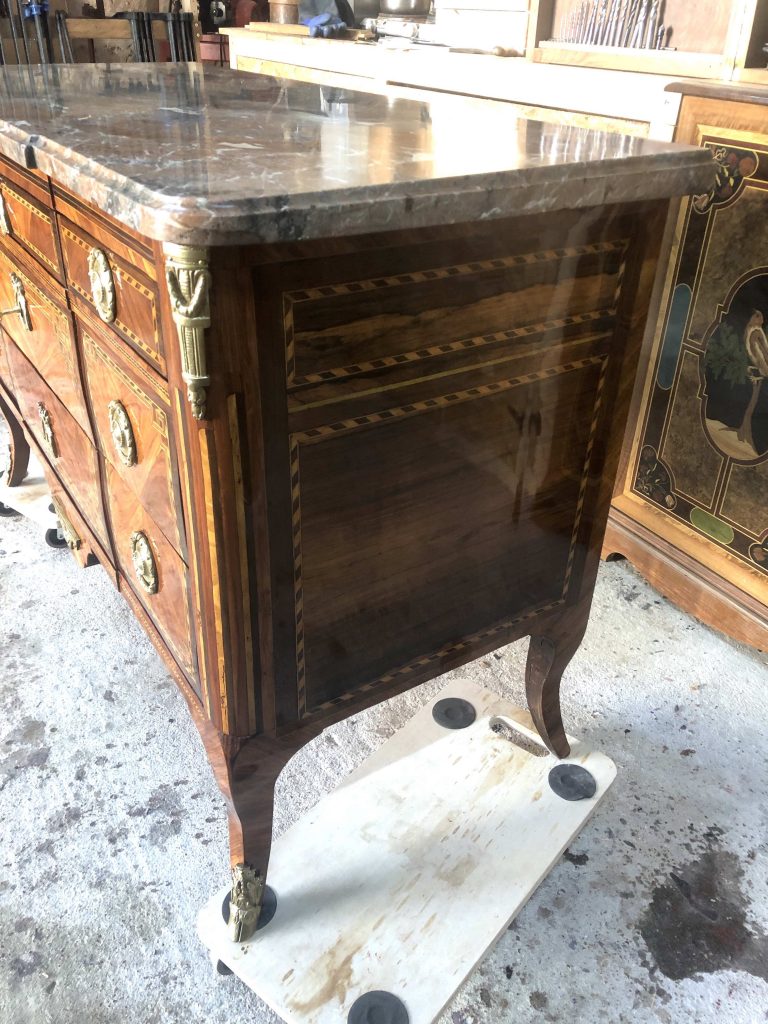
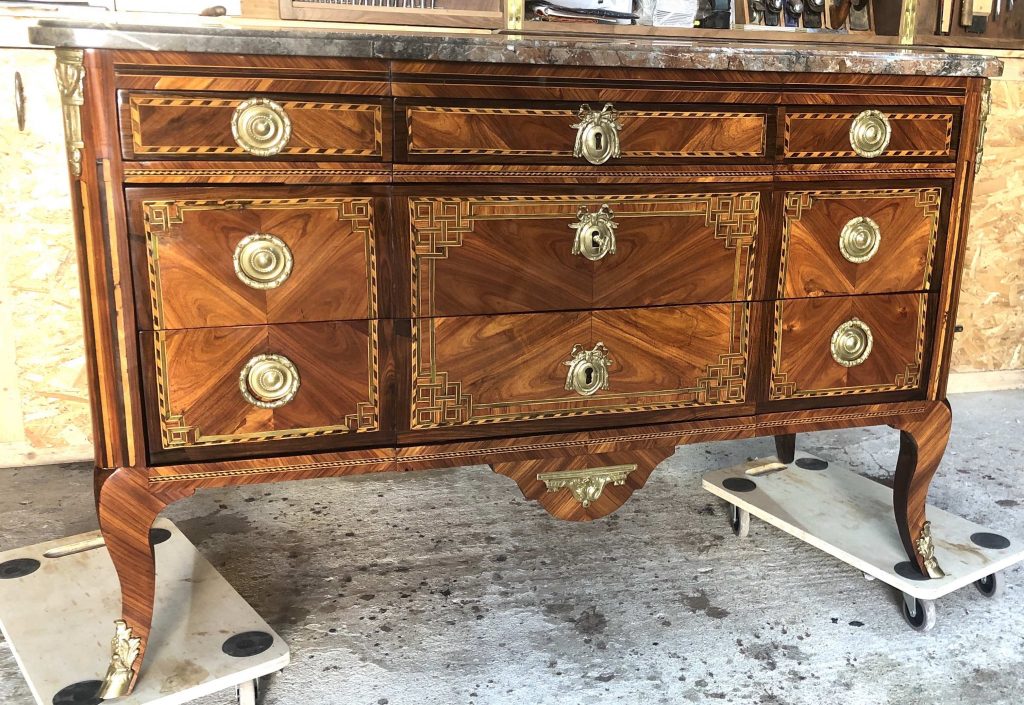
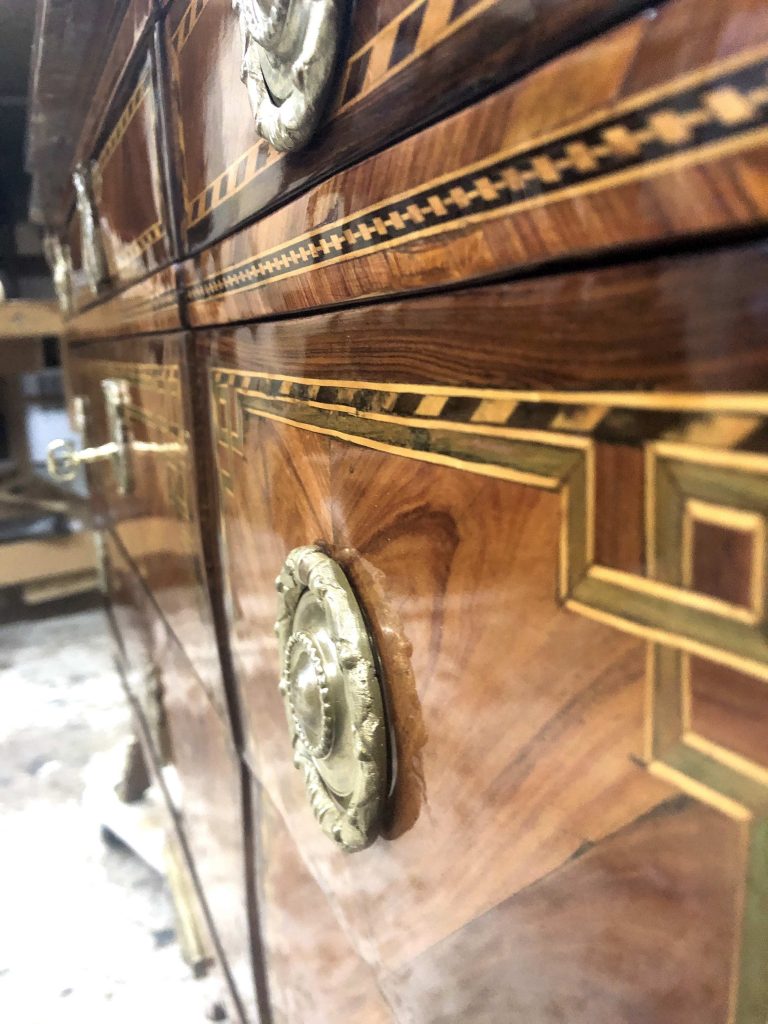
Restoration of a Transitional period commode with a projecting front, veneered in rosewood and palisander. The Greek key-patterned moldings, stained green, are made of hornbeam, and the front features a butterfly wing motif. It opens with two large drawers with concealed crossbars and three drawers in an upper row. The uprights, with simulated fluting, are veneered in ebony and boxwood. It rests on four cabriole legs adorned with hoof-shaped feet. Although it has undergone some structural alterations over the centuries (the top panel and elements of the interior frame), as well as the embellishment of the front rails with more complex moldings, this commode is highly representative of the Transitional style.
Because if you look at it and remove the feet, everything is in the Louis XVI style (the drawer pulls, the keyhole escutcheons). Whereas the base itself is in the Louis XV style (the cabriole leg, the hoof-shaped foot).
The Transition style
The Transition style corresponds to the first part of the Louis XVI style, bridging the gap between the originality of the Louis XV style and the return to classical inspiration of the Louis XVI style. It is generally dated from 1750 to 1774. The Transition style emerged under the impetus of innovative architects who, inspired by the discovery of the ruins of Herculaneum (1738) and Pompeii (1748), sought to distinguish themselves from Louis XV and the excesses of certain ornamentalists who overused curves, returning instead to the rigor and symmetry inspired by the Greco-Roman world. In 1758, the avant-garde collector Ange-Laurent de la Live de Jully commissioned the architect Louis-Joseph Le Lorain to create a series of furniture (now on display at the Château de Chantilly) that broke with the prevailing taste of the time. The Transition style, as its name suggests, is a style of aesthetic exploration that marked the evolution from Louis XV to Louis XVI. Transition furniture was referred to at the time as being "in the Greek style".
State of affairs report
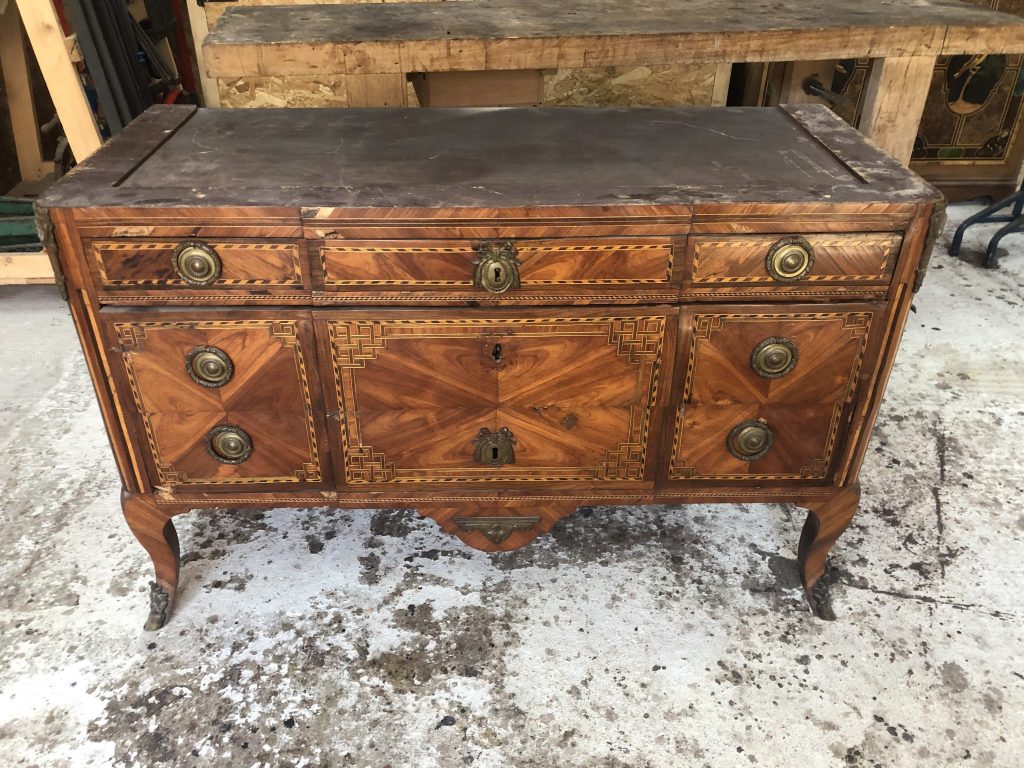
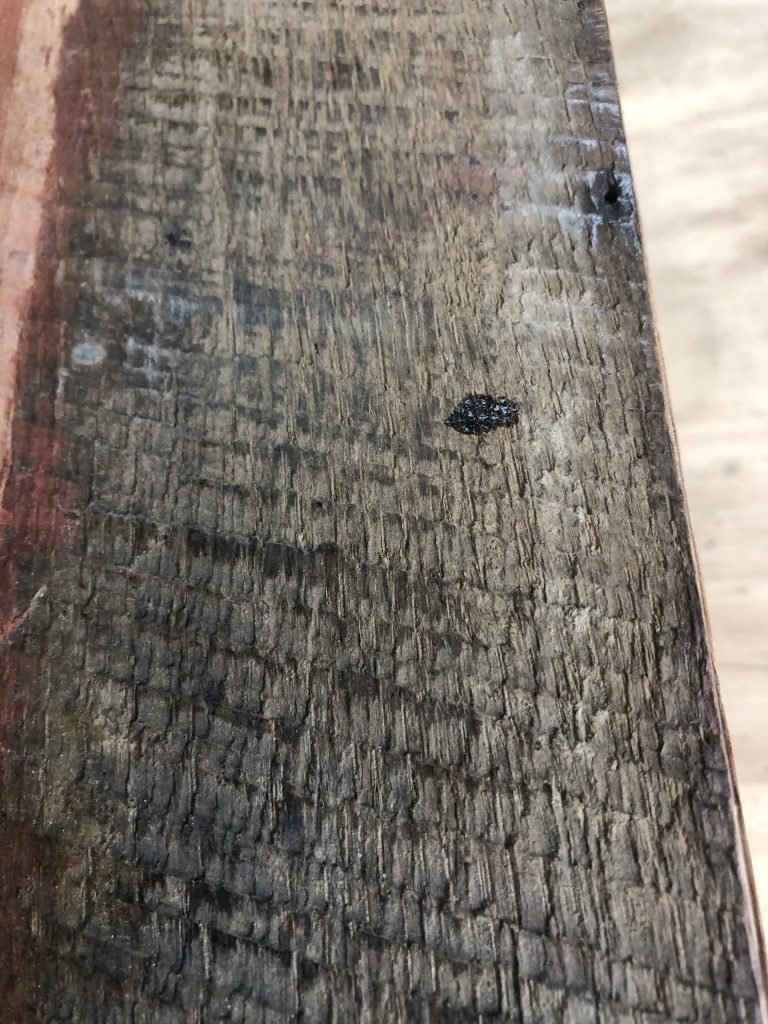
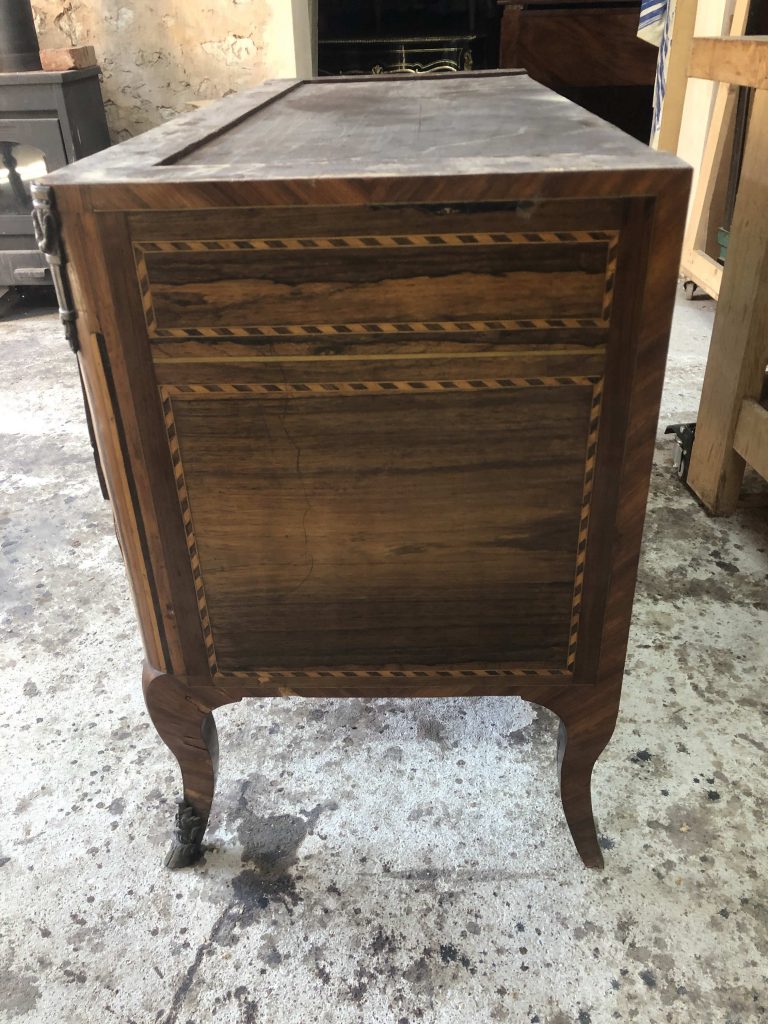
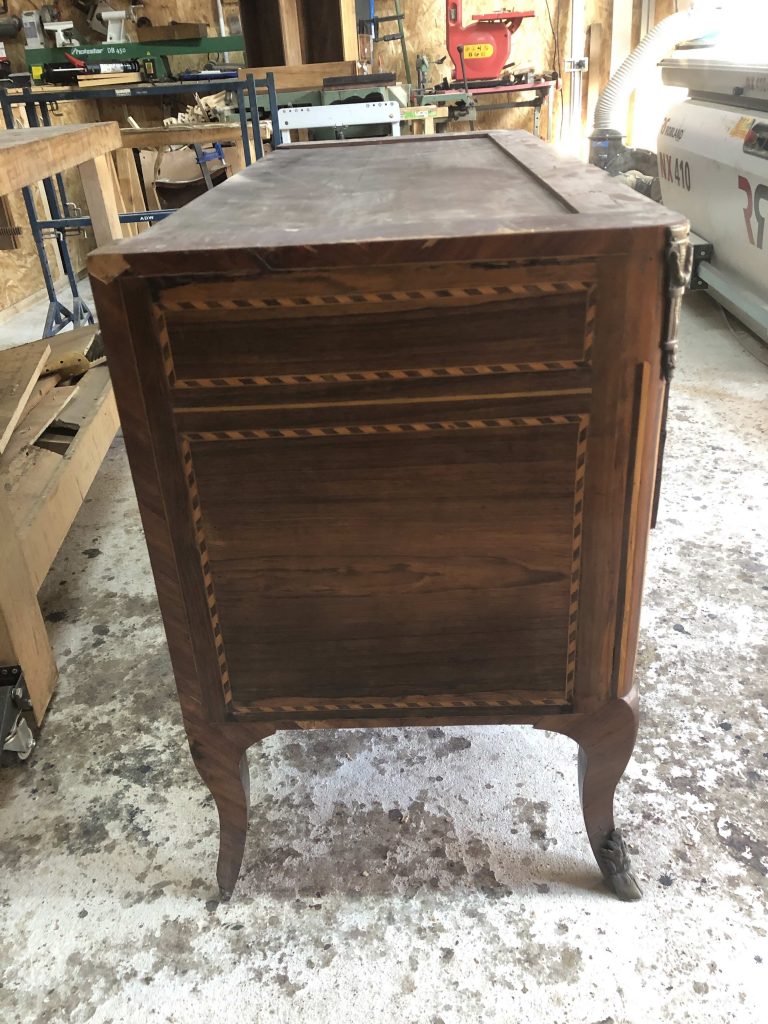
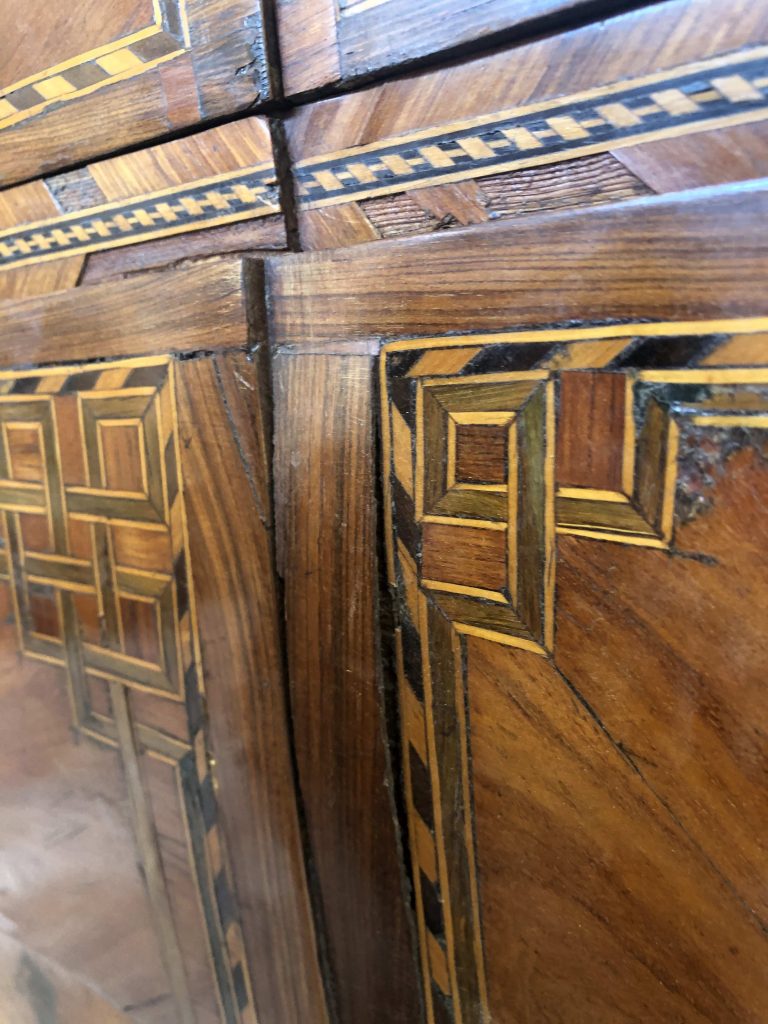
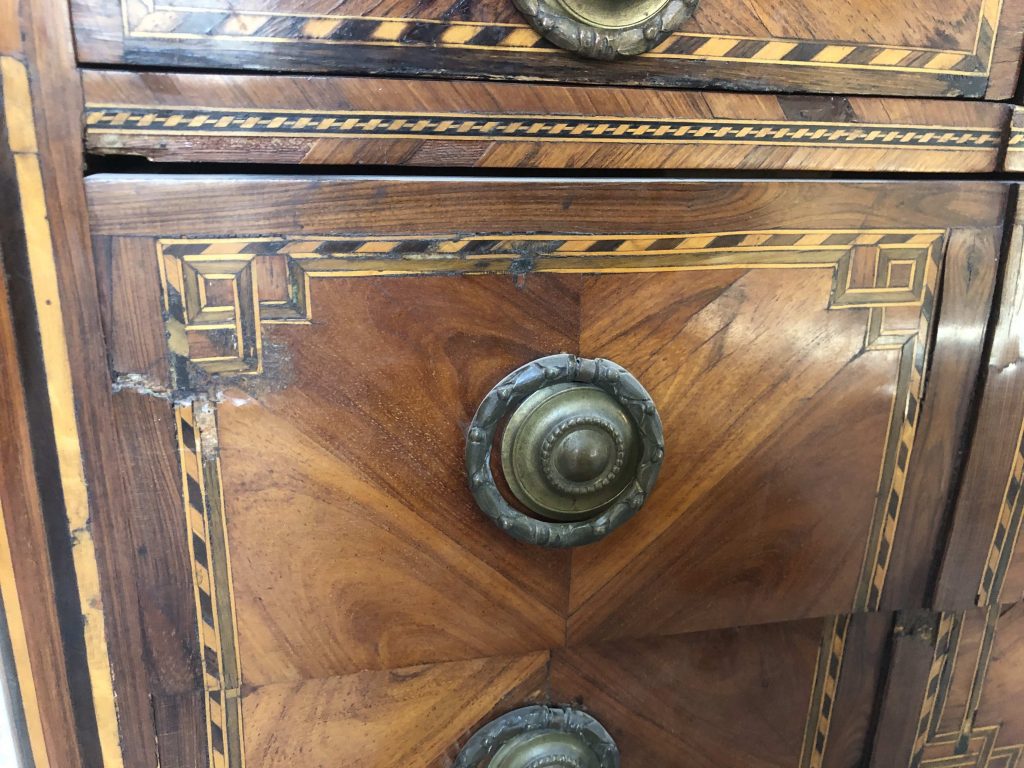
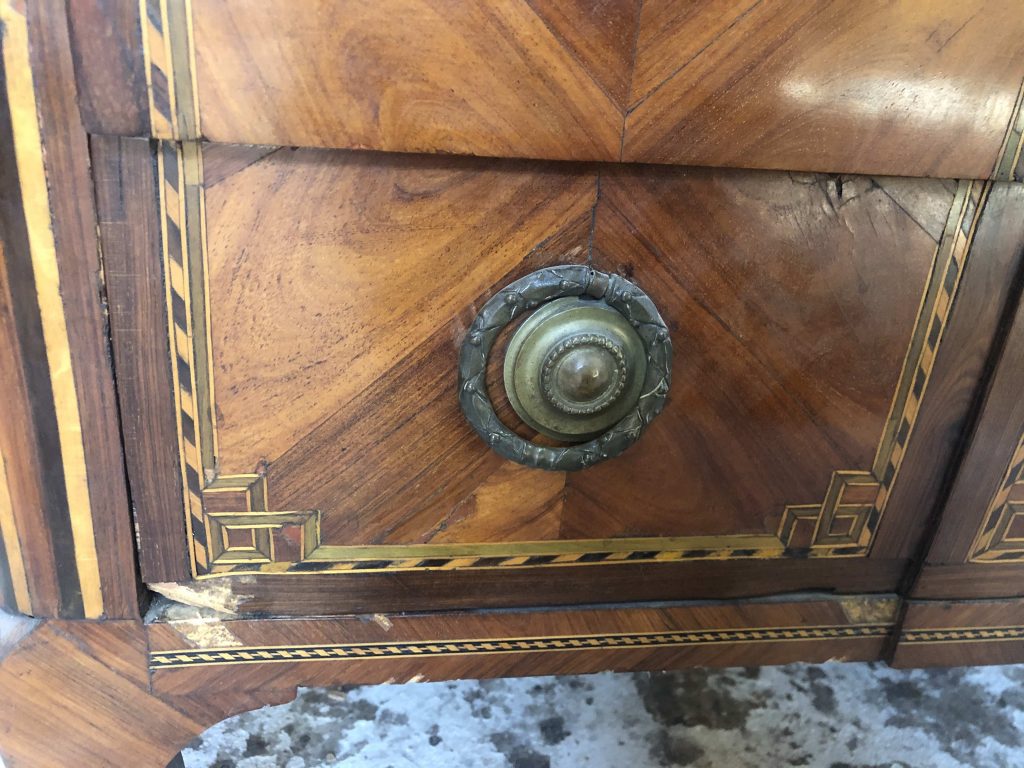
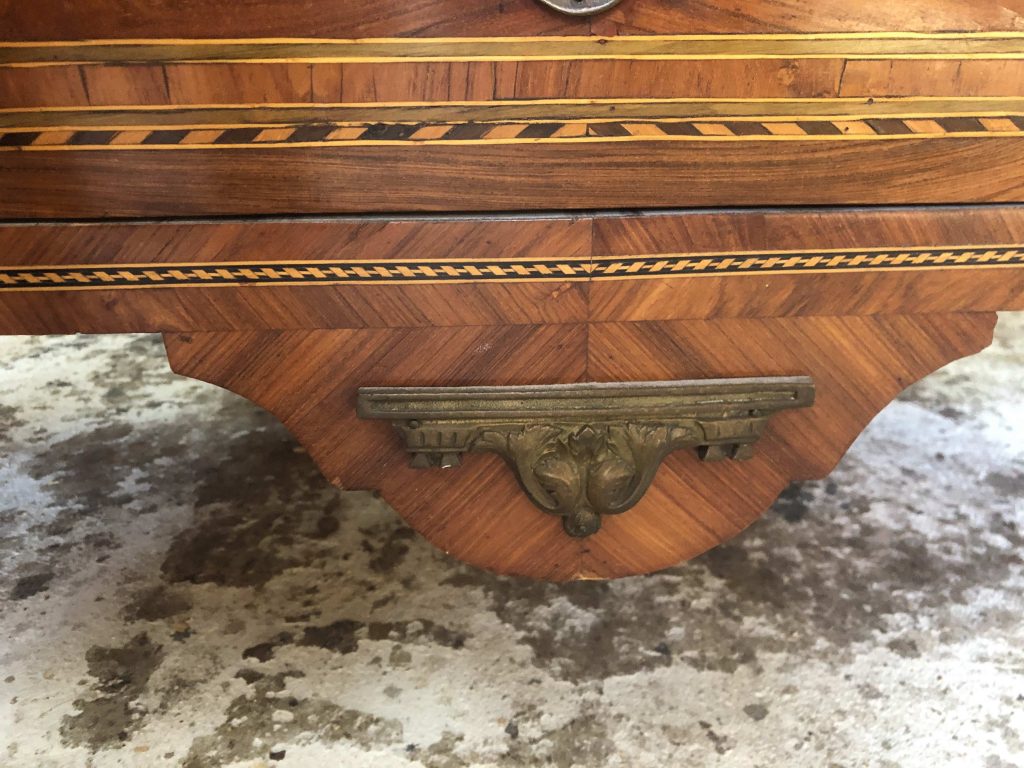
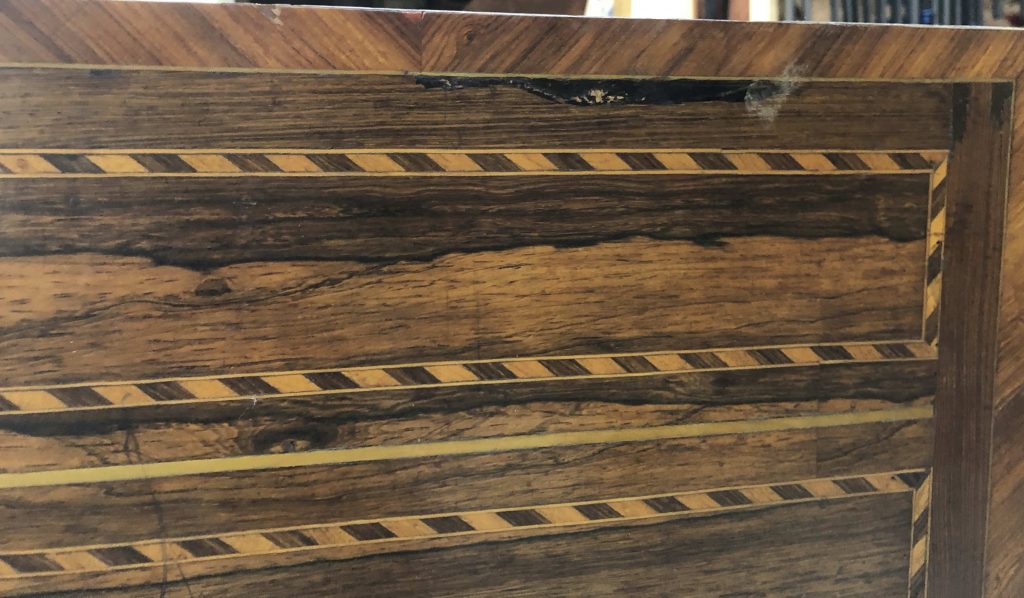
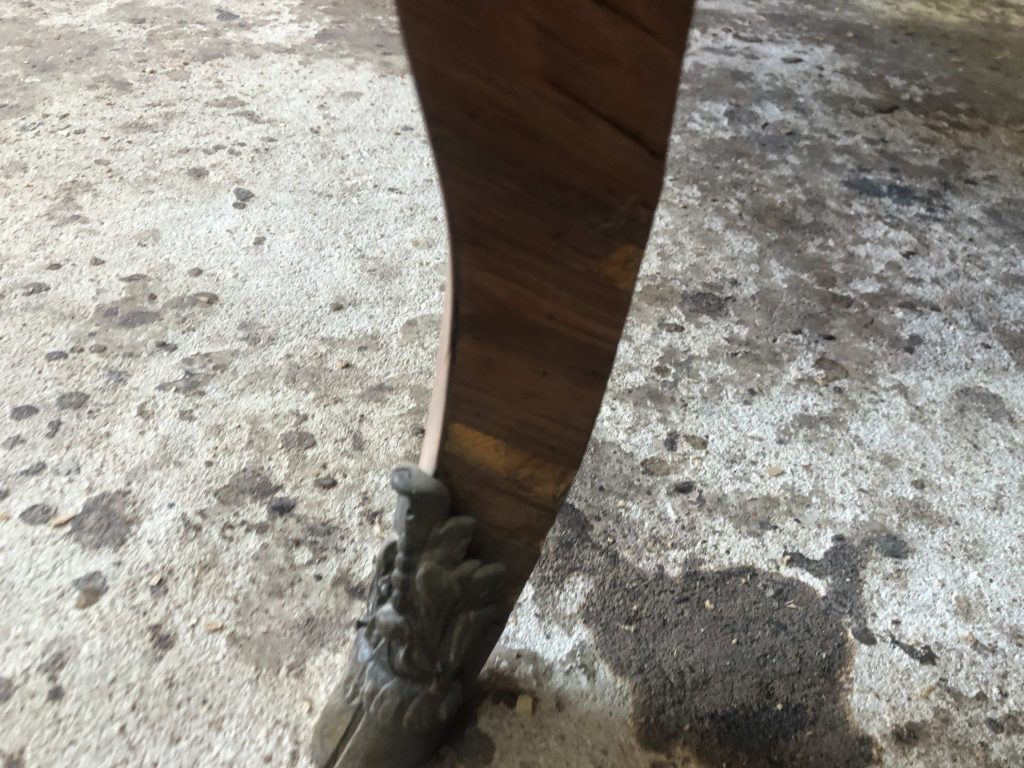
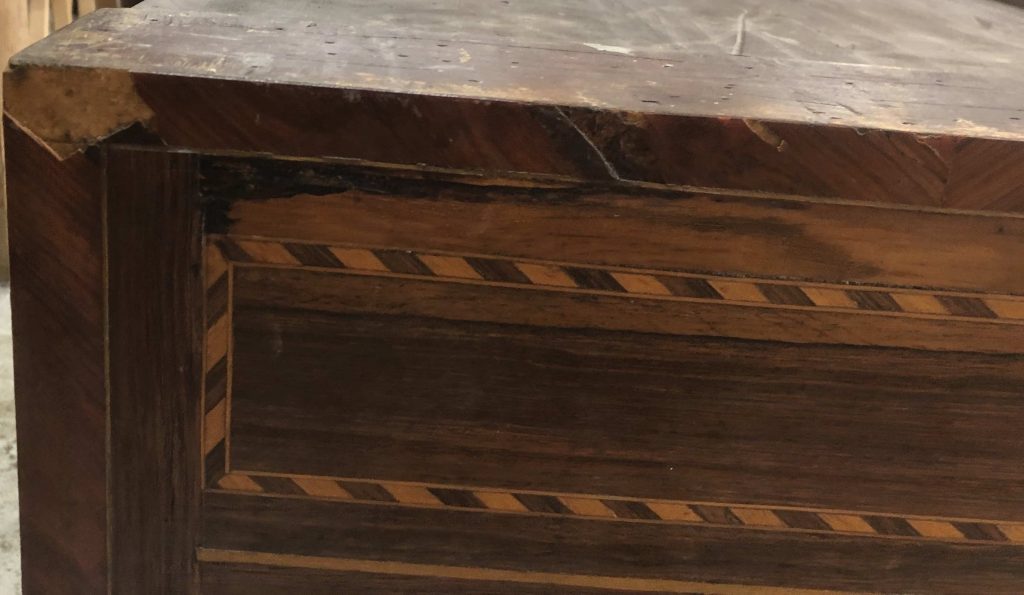
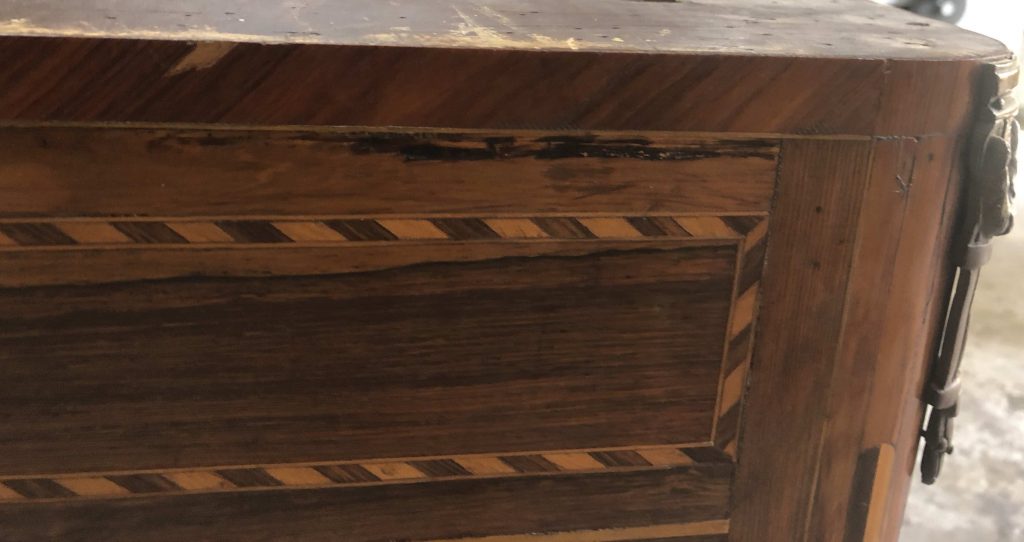
The frame was in fairly good condition. The joints were solid, with no play or splinters. The sides are slightly warped, but a previous restoration using pieces of solid wood glued with the grain running in opposite directions still effectively holds the panels together. The drawers are slightly warped, but nothing too bothersome.
The Restoration
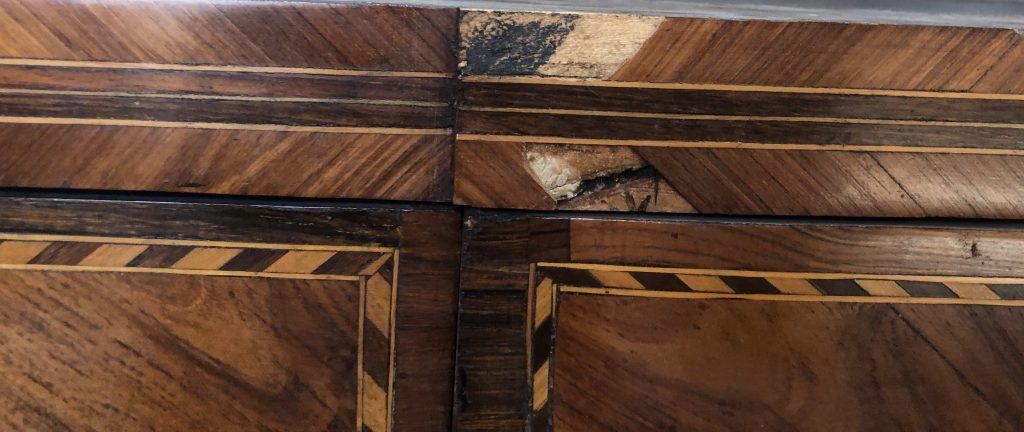
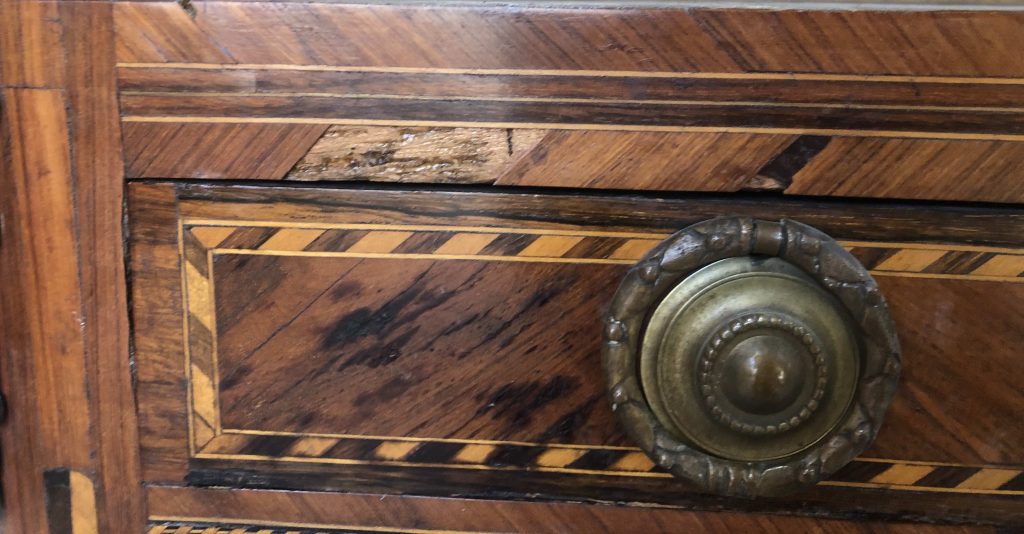
The restoration work will therefore focus on the veneer. There are some missing pieces, some areas where the veneer is peeling, and some holes resulting from excessive sanding during previous restorations. One of these holes is located on the lower right-hand butterfly wing of the front panel and is rather distracting in terms of the piece's appearance. The restoration therefore consisted of re-gluing the veneers by applying hot glue underneath them and filling the missing areas with veneer that was scraped and sanded before gluing, so as not to have to alter the patina by sanding after gluing.
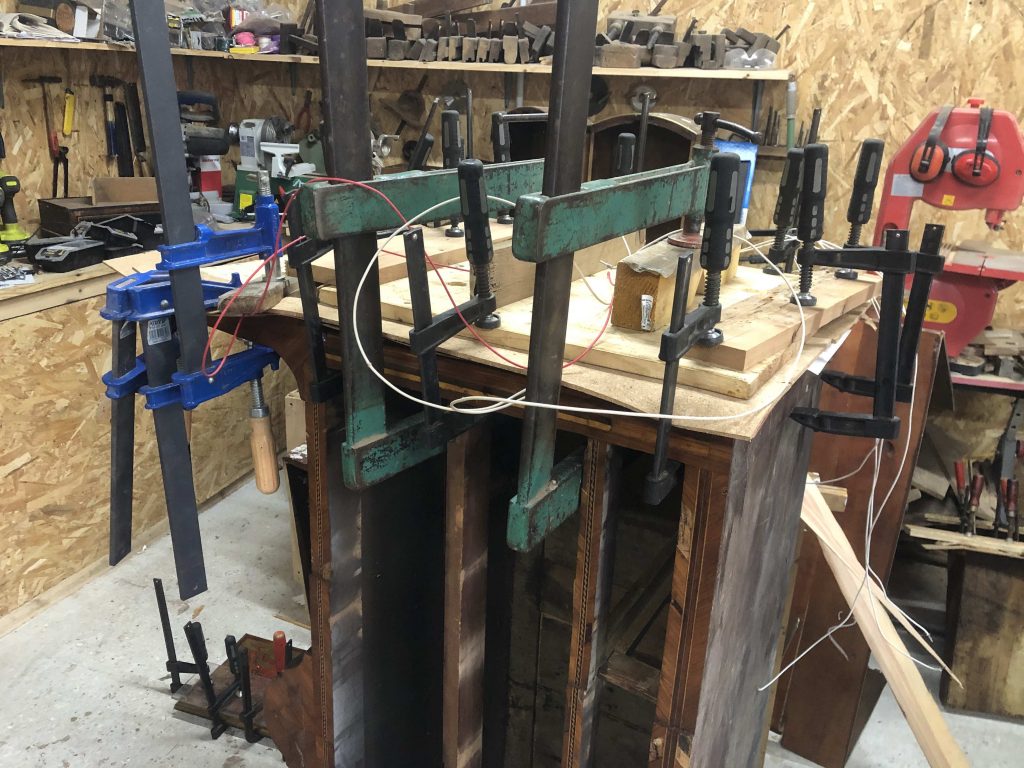
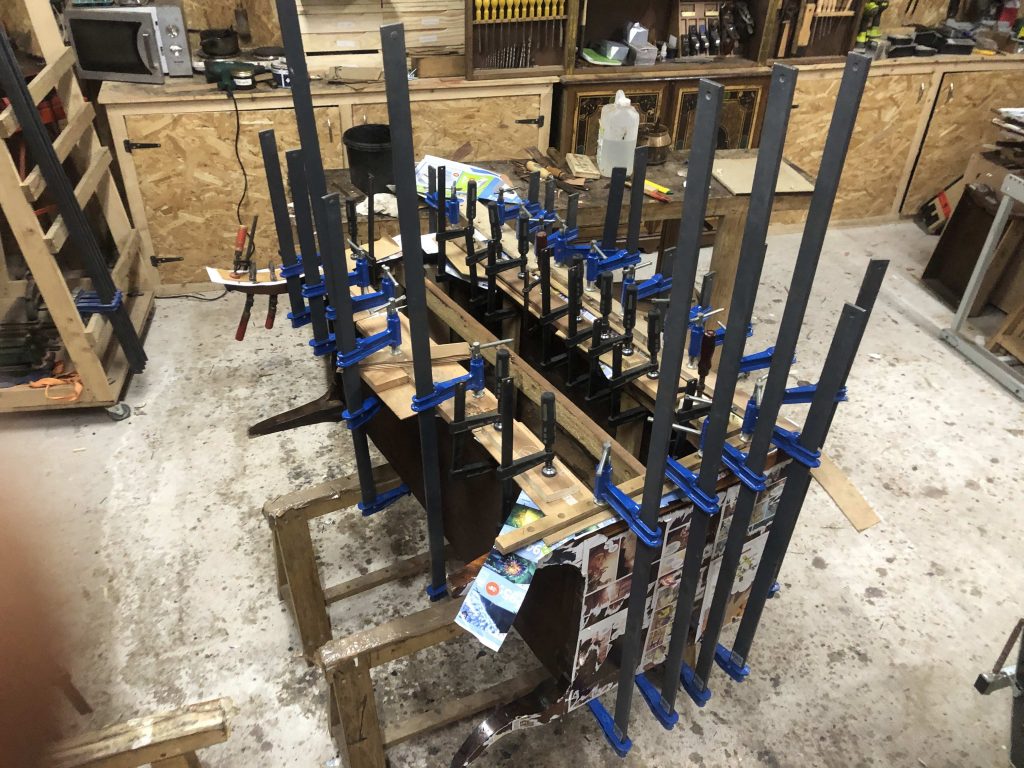
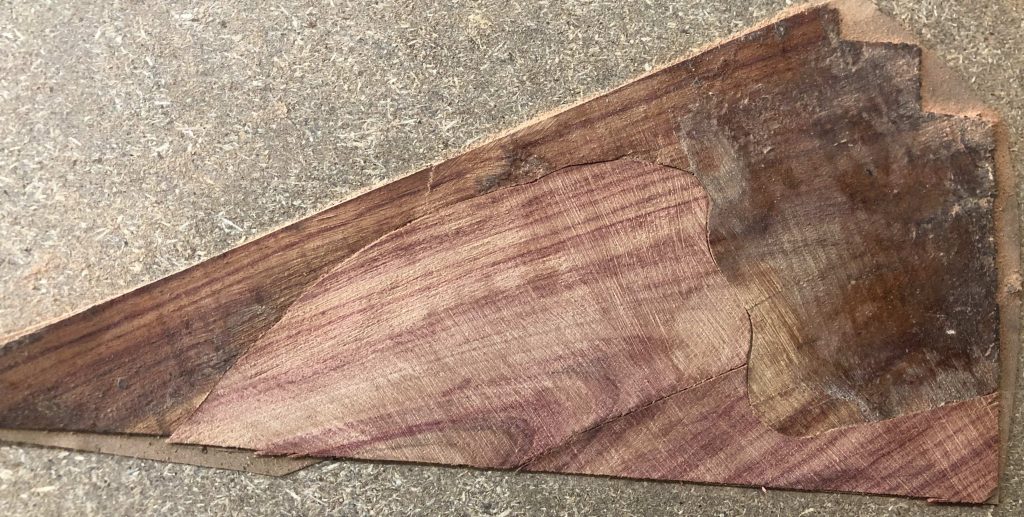
In the case of the hole in the butterfly-wing veneer, I removed the sound veneer and then created a graft using the Boulle joint technique. This method avoids replacing the entire veneer sheet, resulting in the most discreet graft possible to preserve as much of the original veneer as possible. The new veneer was, of course, scraped and sanded on the face and then fitted to the correct thickness on the back.
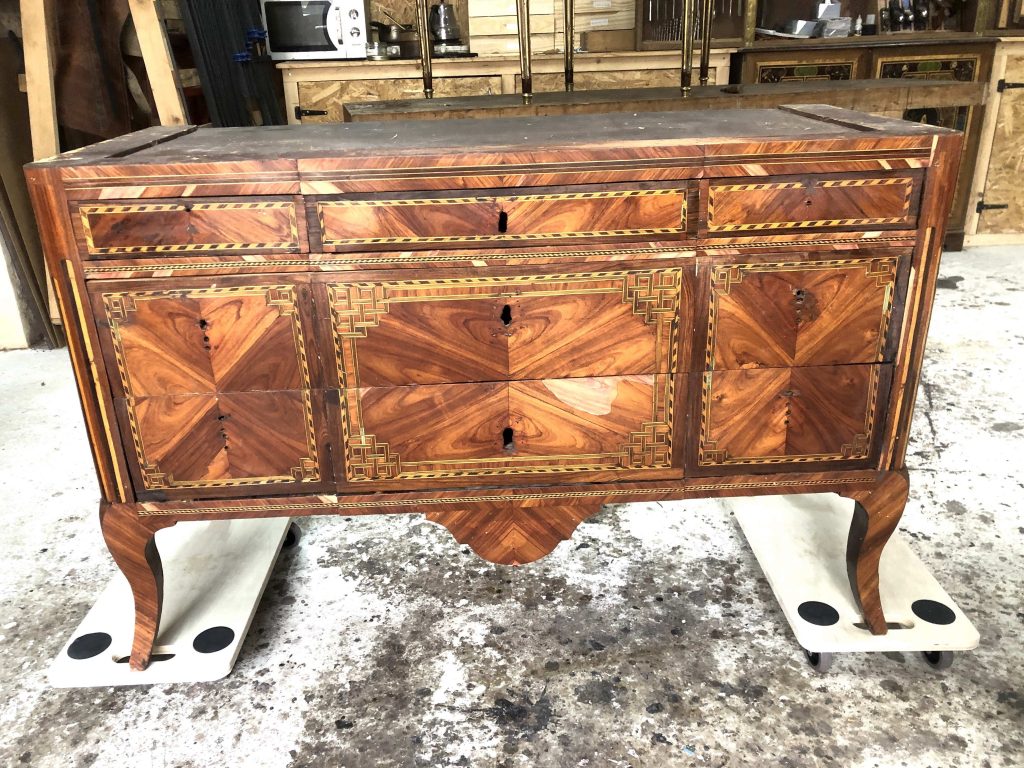
The old, yellowed varnish was then stripped with a non-aggressive product that preserved the underlying pigment in the wood pores. Next, I applied oxidation and some color correction to restore the wood's color and grain.
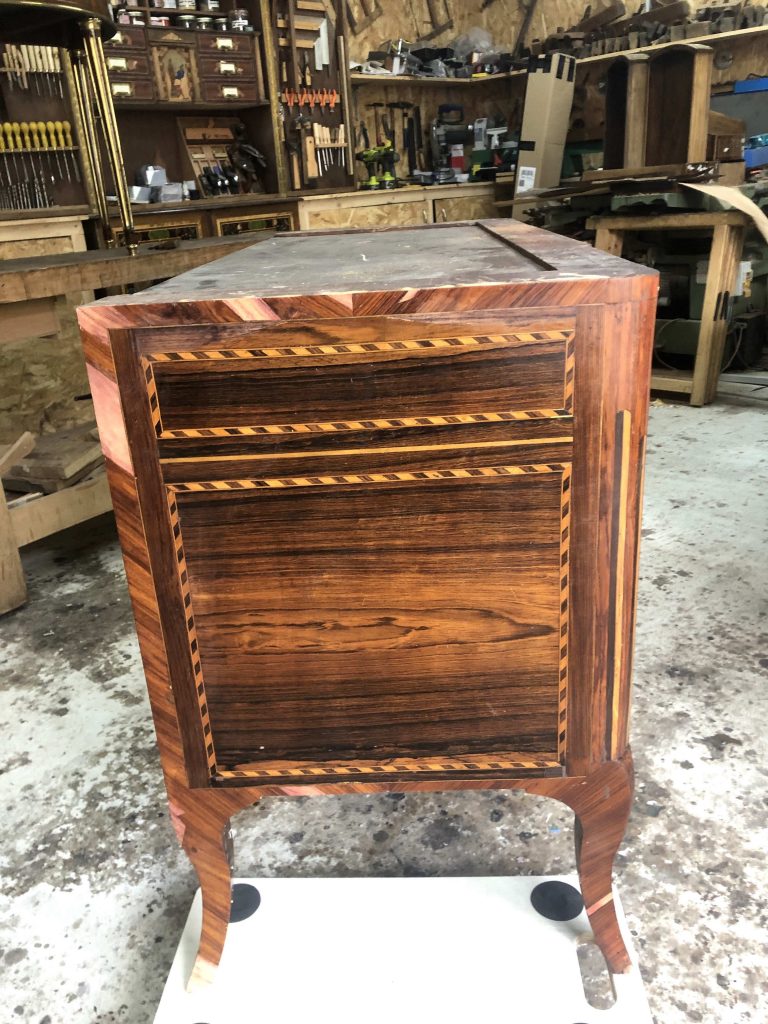
Left side 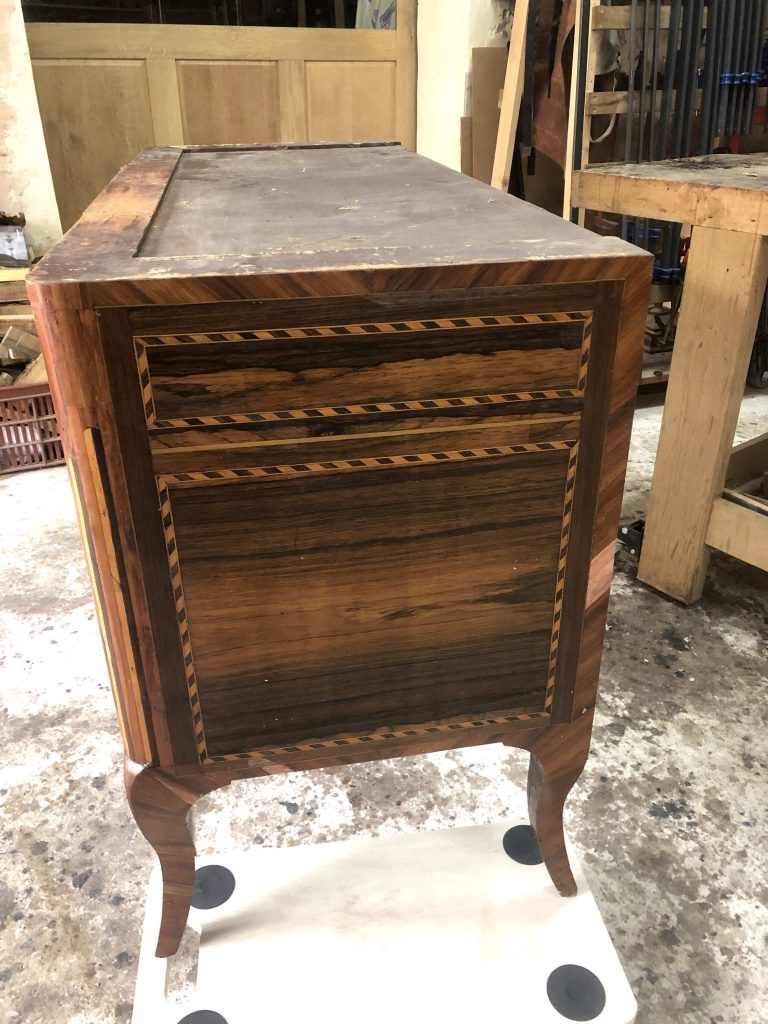
Right side
I then applied a clear polish with a pad. The bronzes were cleaned with Panama wood.
To see previous restorations : https://ebenisterie-mathieuvath.fr/en-ce-moment-a-latelier/