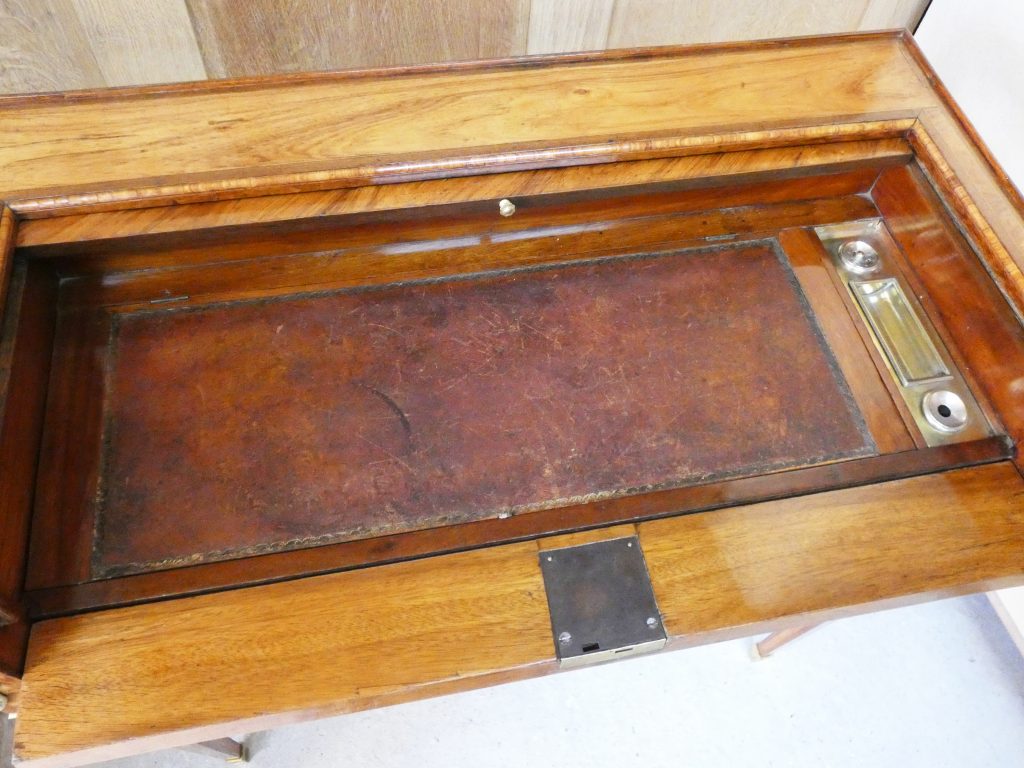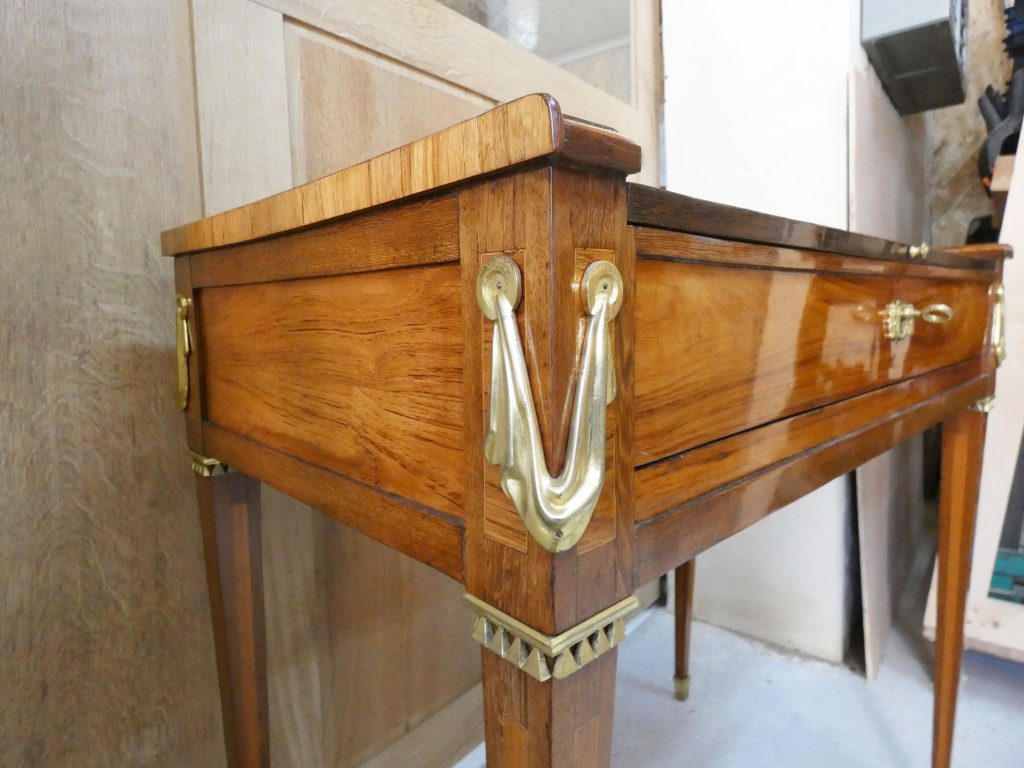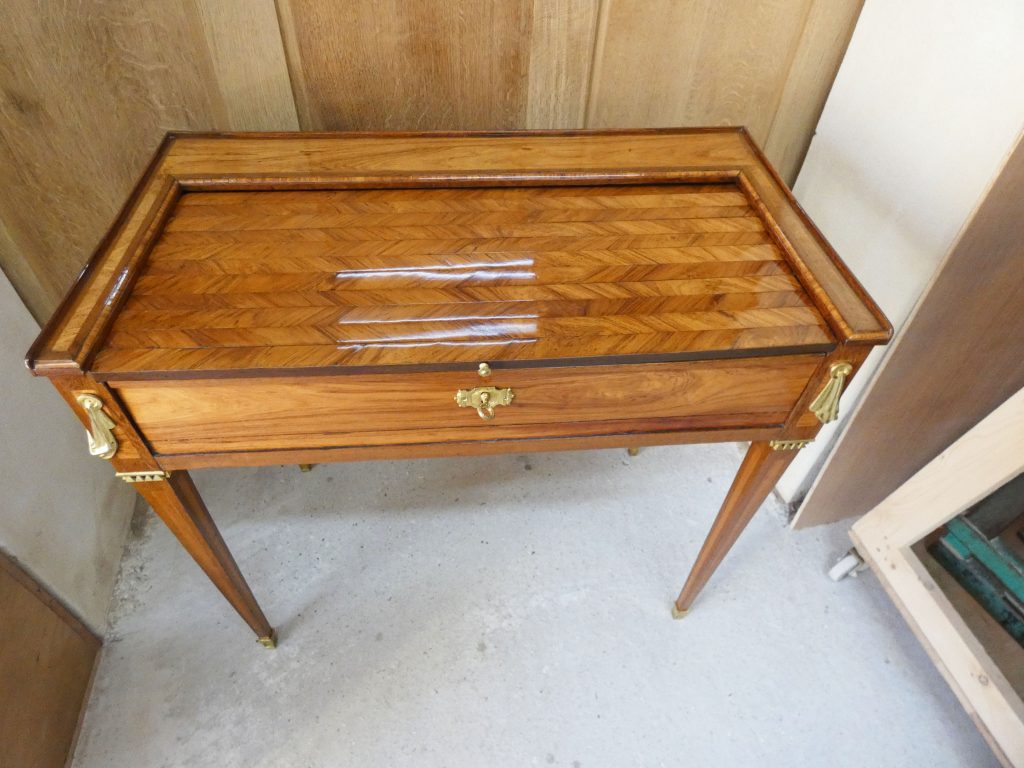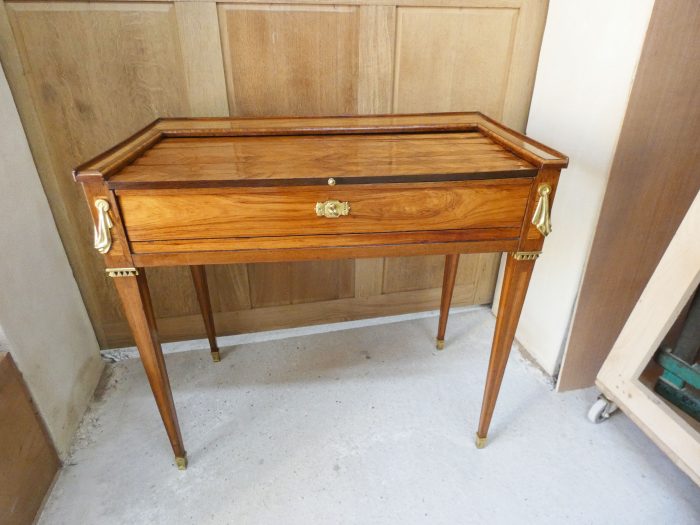
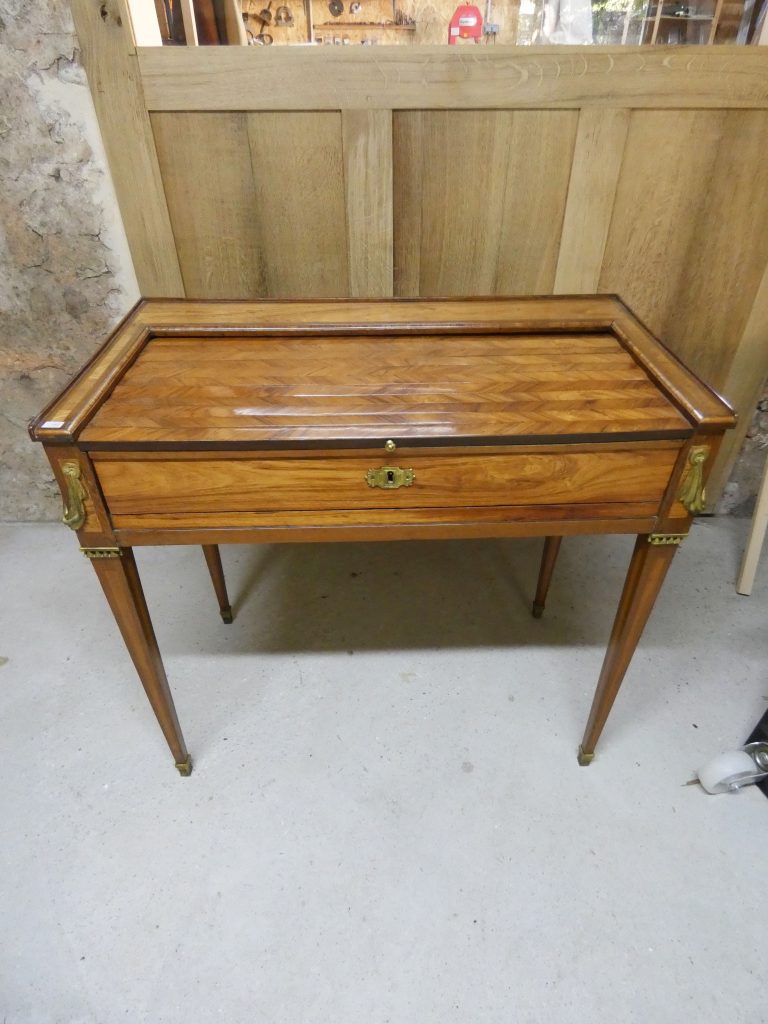
Restoration and conservation work on this rare Louis XVI period tambour desk stamped with Jean-Chrysostôme Stumpff. 1731 - January 17, 1806 – Received Master's degree on August 27, 1766.
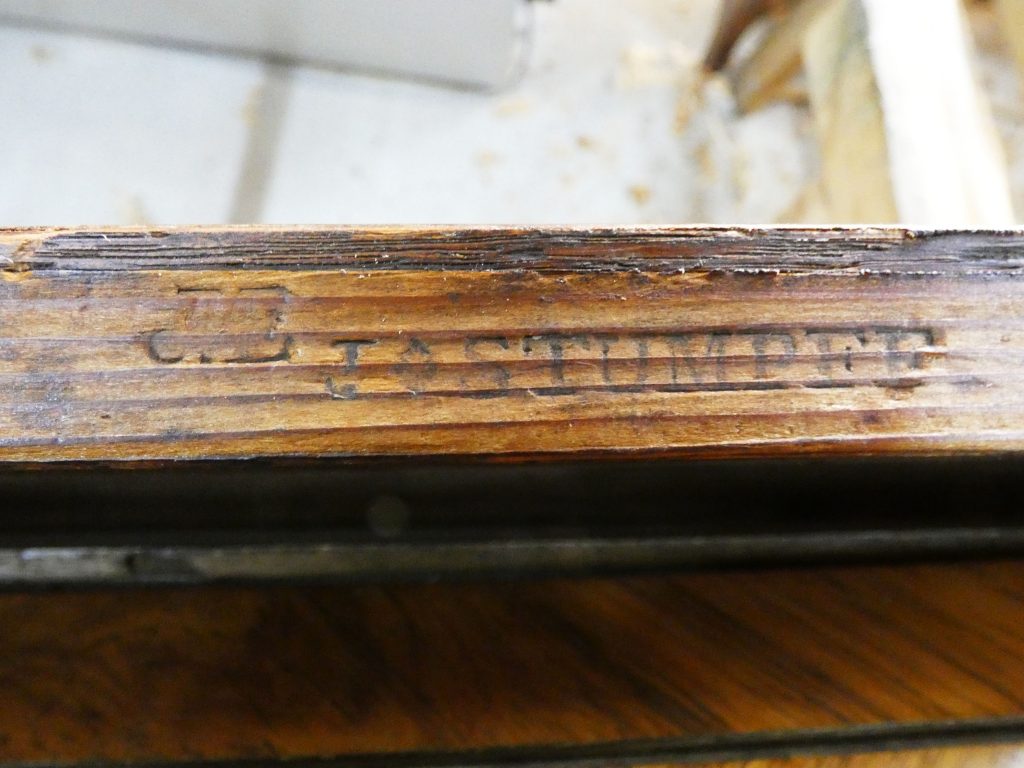
Originally from Schweigern, in Swabia (Germany), he married in 1760 in Paris, at the Swedish embassy, like most of his compatriots of the Reformed faith. His fellow cabinetmaker, Ferdinand Scherdfeger, was also a witness.
It was in his workshop on Rue Saint-Nicolas that he produced some Louis XV style furniture, but above all a large number of transitional and Louis XVI pieces. The high quality of Stumpff's work is distinguished not by feats of marquetry and cabinetmaking, but by great restraint and excellent craftsmanship.
His works are covered with veneers often arranged with opposing grain or in butterfly wing patterns.
BIBLIOGRAPHY
- French Furniture of the 18th Century – Pierre Kjellberg – Les Éditions de l'Amateur – 2008
- The workshops Parisian cabinetmakers and joiners in the 17th and 18th centuries – Guillaume Janneau – Serg Editions – 1975

This desk is entirely in keeping with Stumpff's style. It is made entirely of solid oak veneered with rosewood, amaranth, and a thin strip of boxwood. The drop-front, to which leather is glued, is veneered in satinwood.
Apart from a small area of missing satin finish and a curtain in poor condition, this desk is in excellent condition. The bronze mounts are tarnished, but the gilding is still intact.
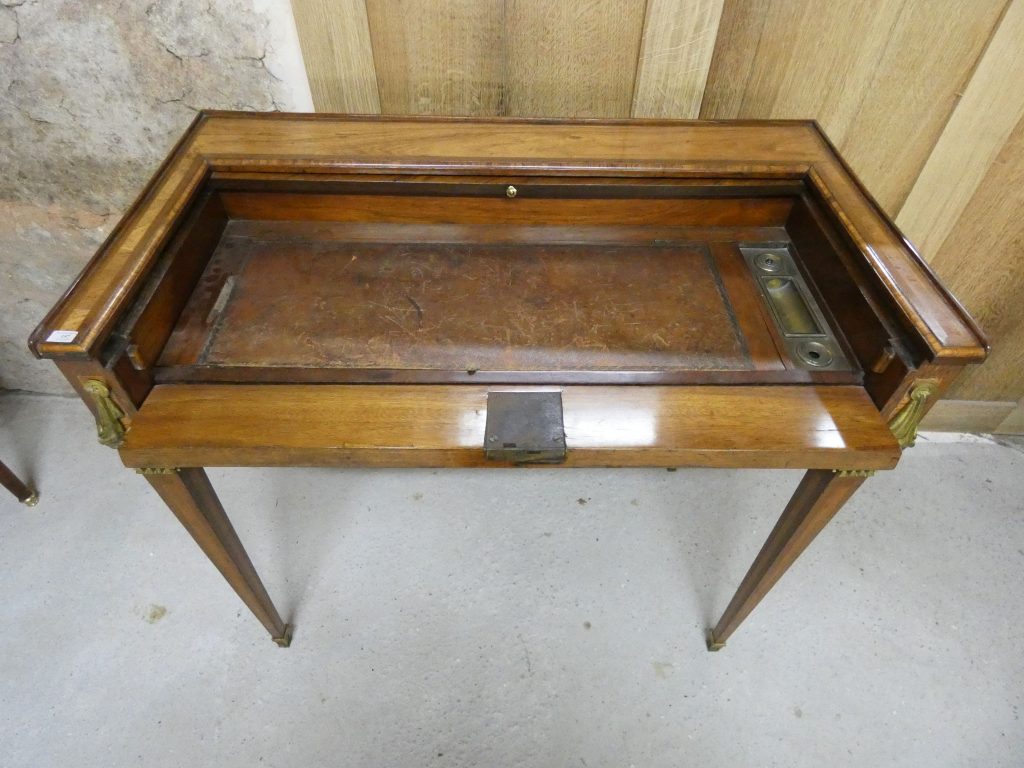
Before restoration 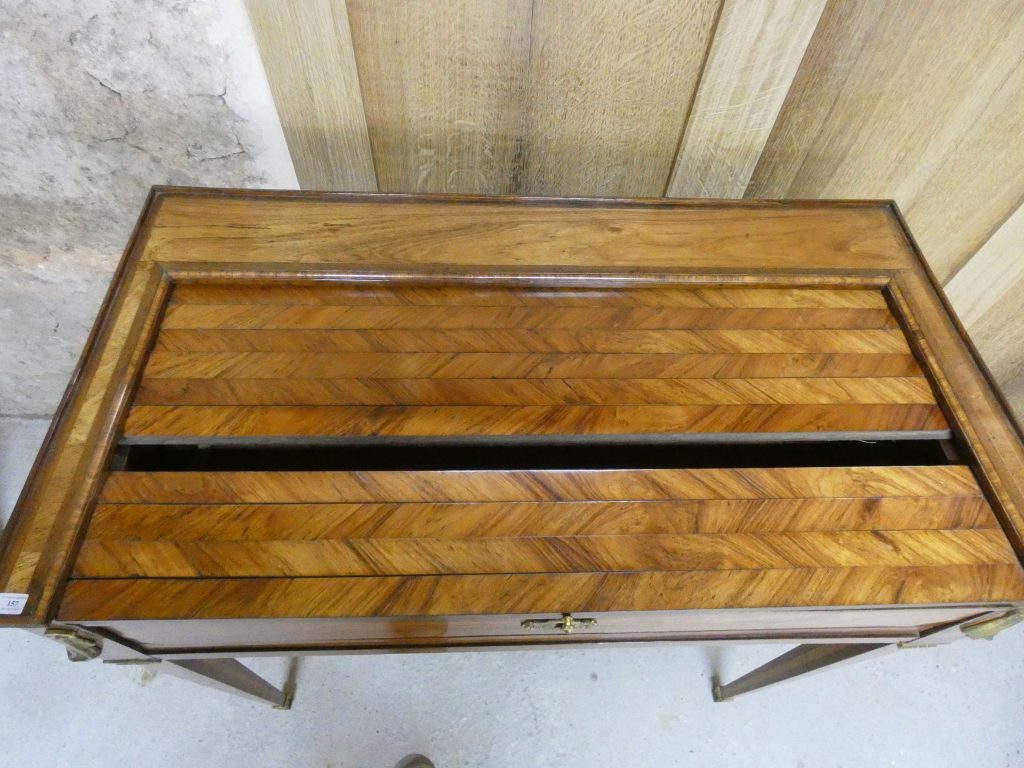
Before restoration 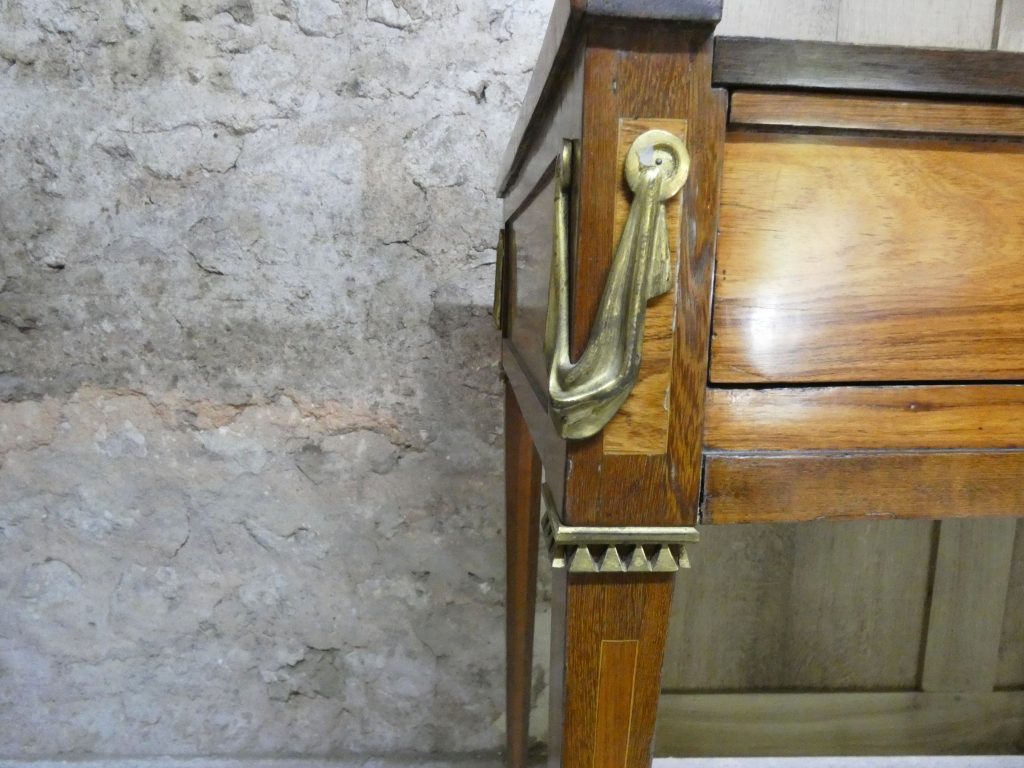
The bronzes are slightly tarnished. 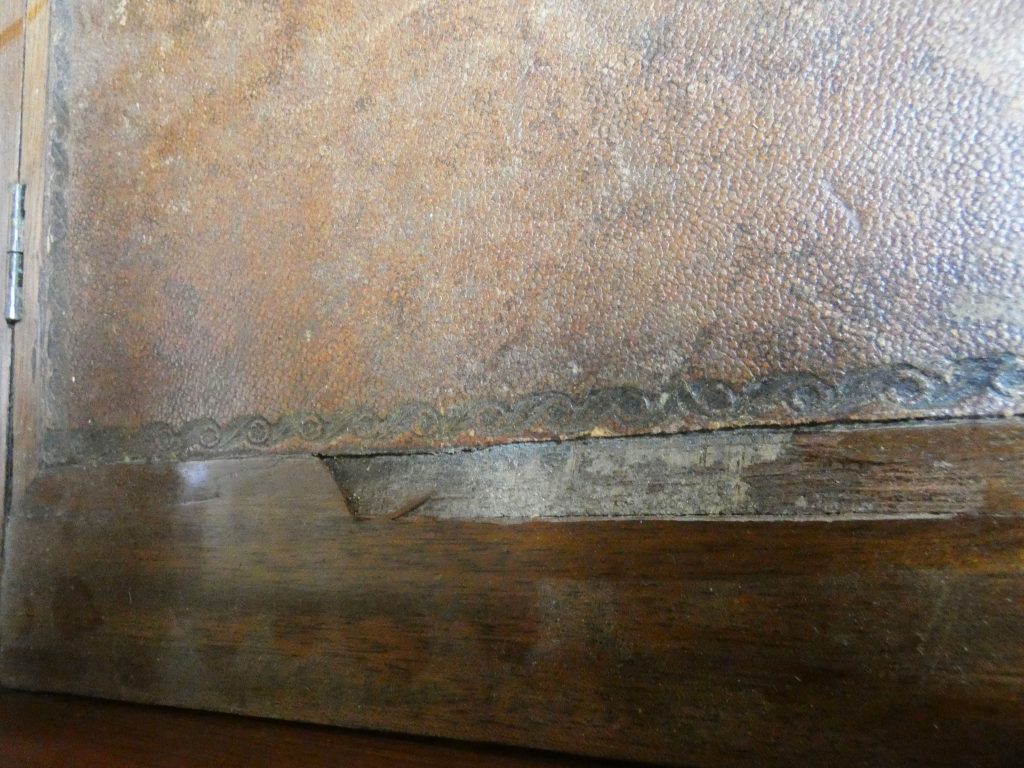
Lack of satin finish 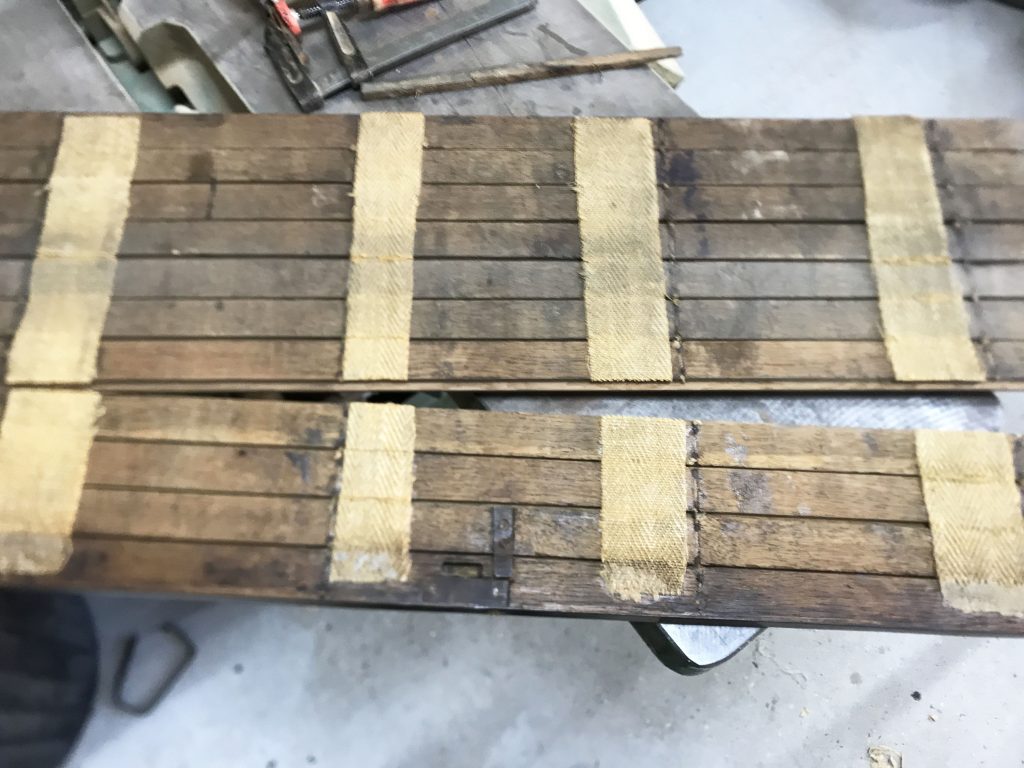
View of the old curtain slat support system
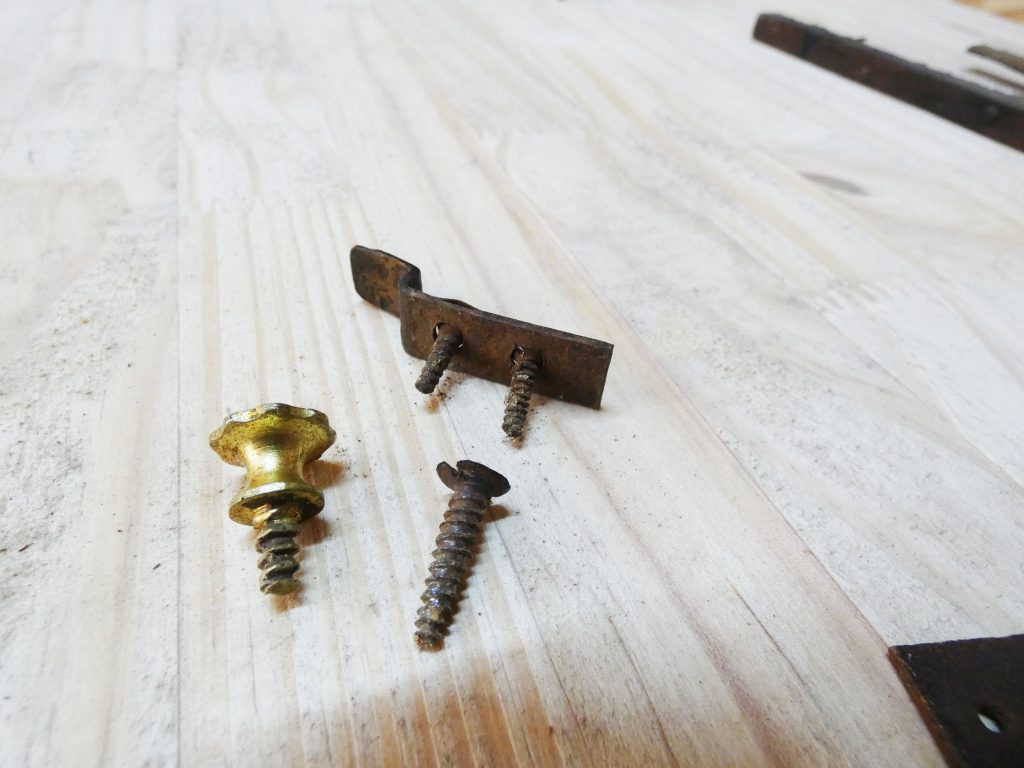
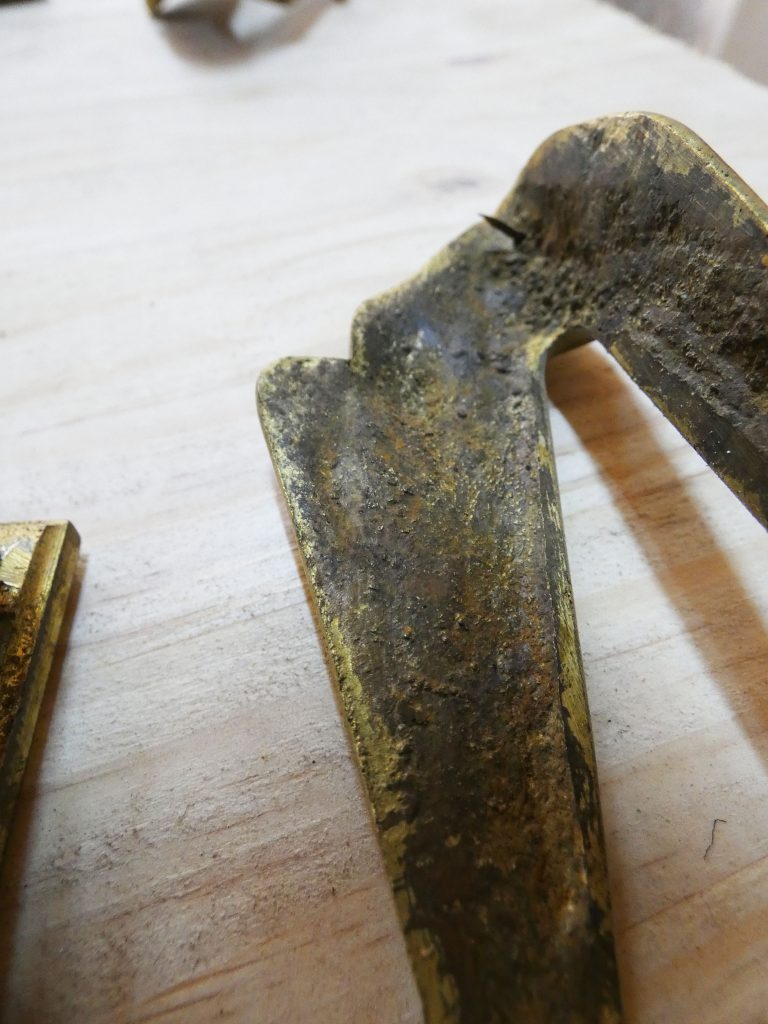
It was therefore decided to intervene as little as possible and to keep as much as possible.
The few pieces of veneer that had come loose were reattached with fish glue. The joints were reattached in the same way.
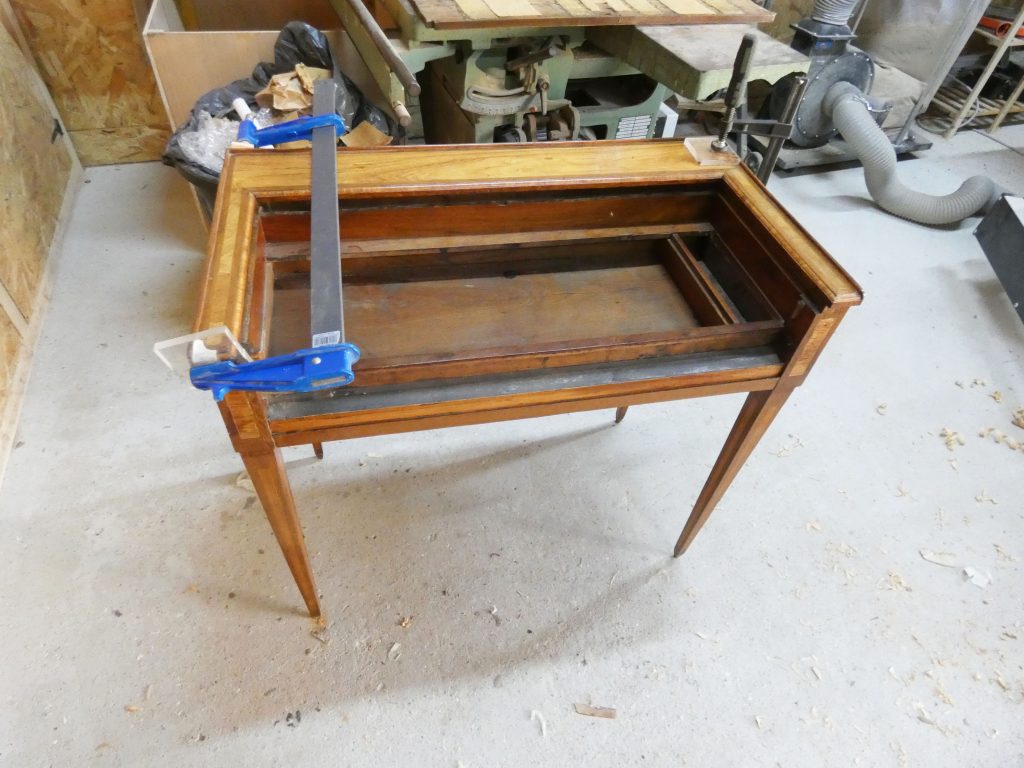
Minor veneer re-gluing 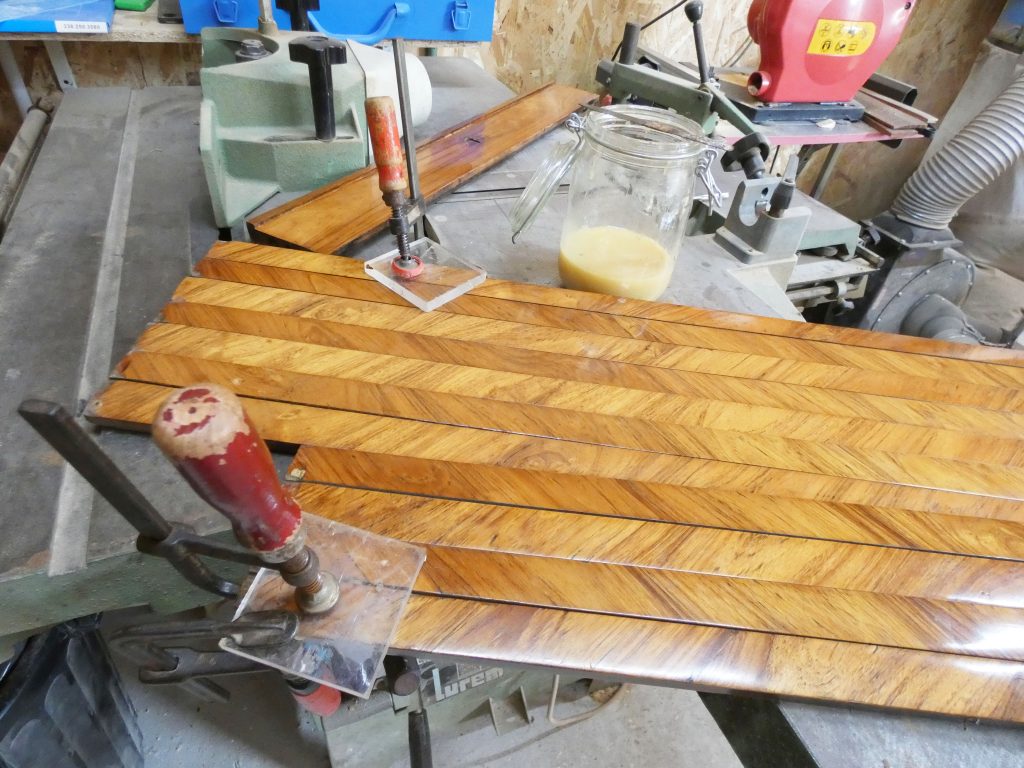
Regluing with fish glue 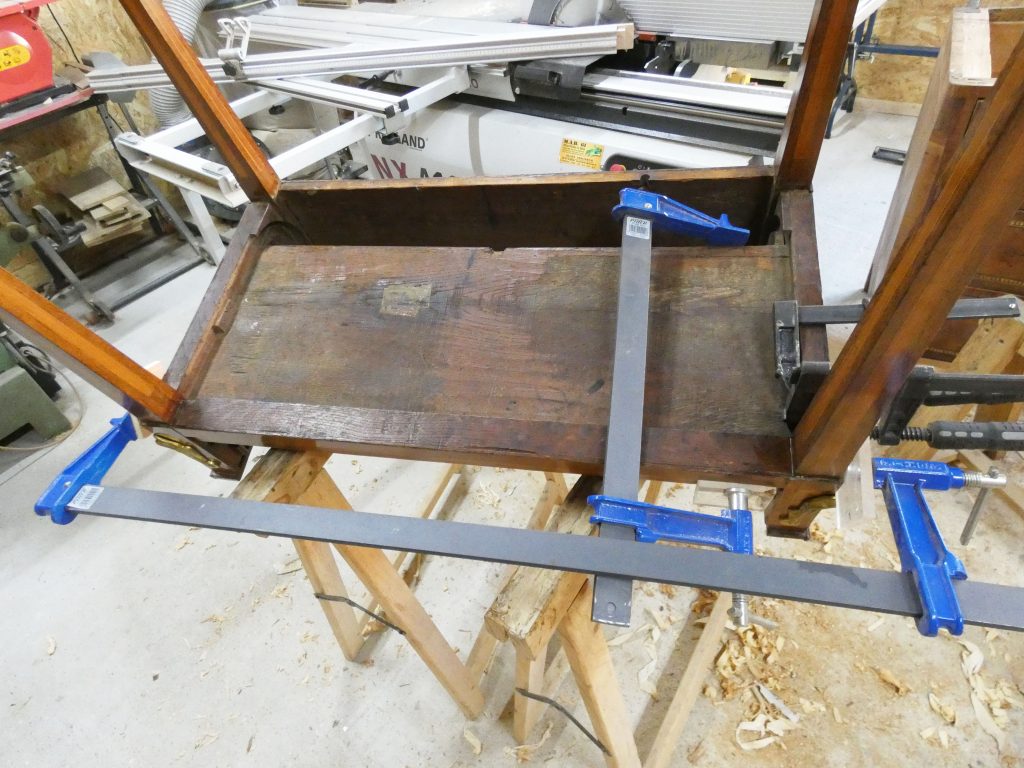
Structural bonding with fish glue
As for the curtain, it had already been restored. The system for joining the curtain slats, consisting of a cord glued into a groove, was broken on almost all of the slats. The previous restorer had therefore opted to glue on upholstery webbing. But these too had worn out and were torn in places.
In order not to erase any trace of the history of this piece of furniture, it was decided to glue new strips of webbing with hot glue and to sign and date them EMV 2020, in order to ensure traceability of the restorations carried out.
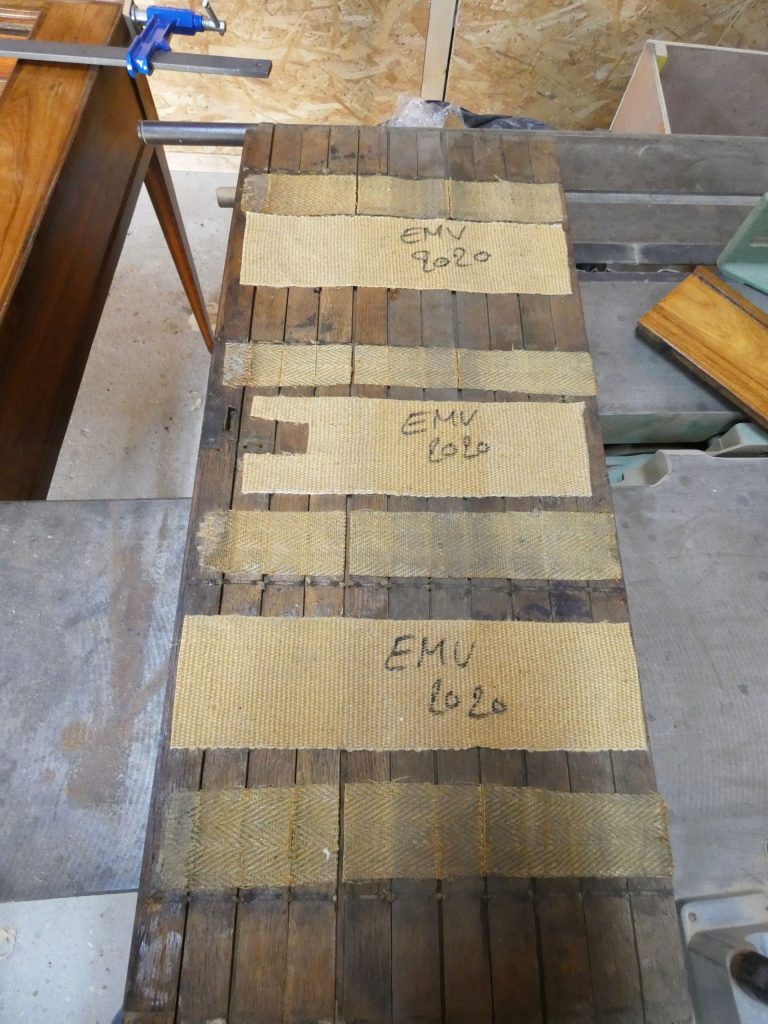
Installation of marked straps
The varnish was completely redone using a few drops of the retouching varnish described by Dessaignes in his 1861 work.« The secrets of the cabinetmaker: a pocket manual for the artist and the amateur (2nd edition)«
The bronzes were simply cleaned with Panama wood.