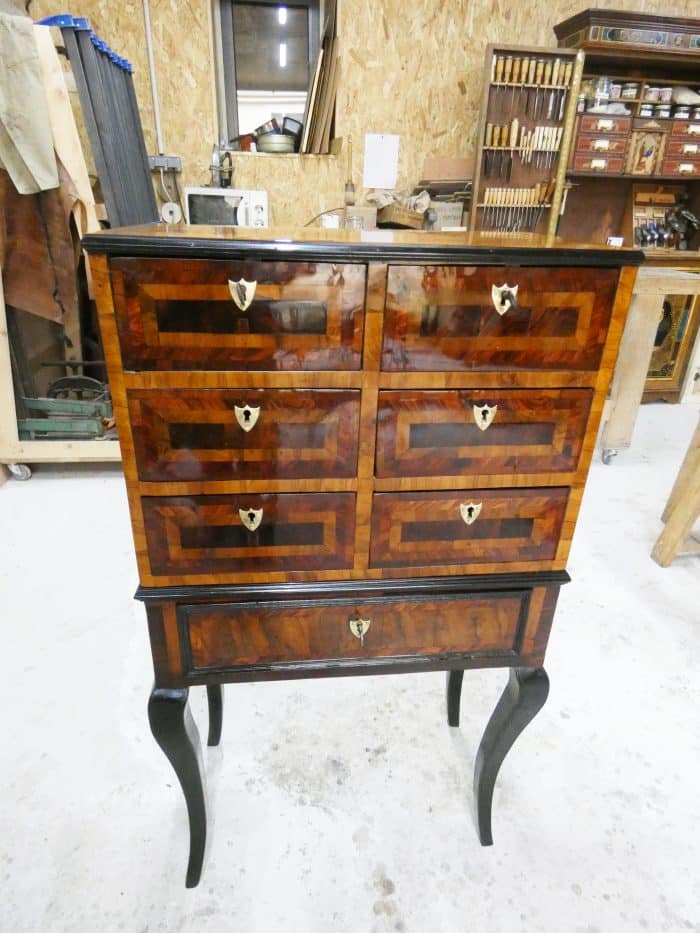
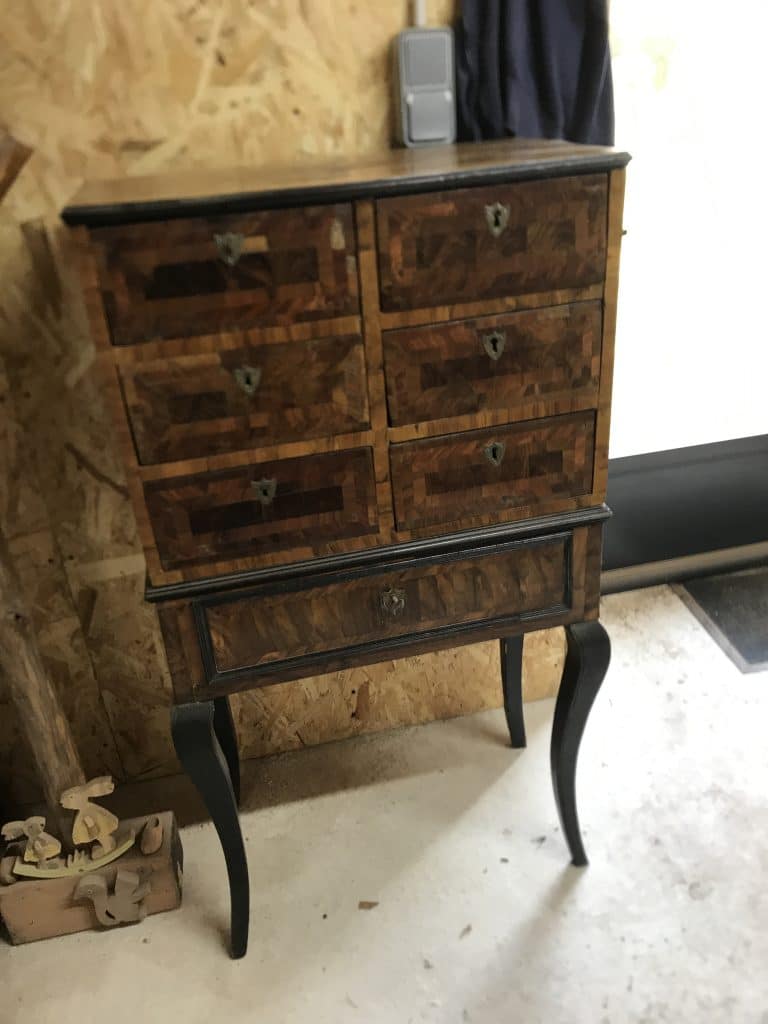
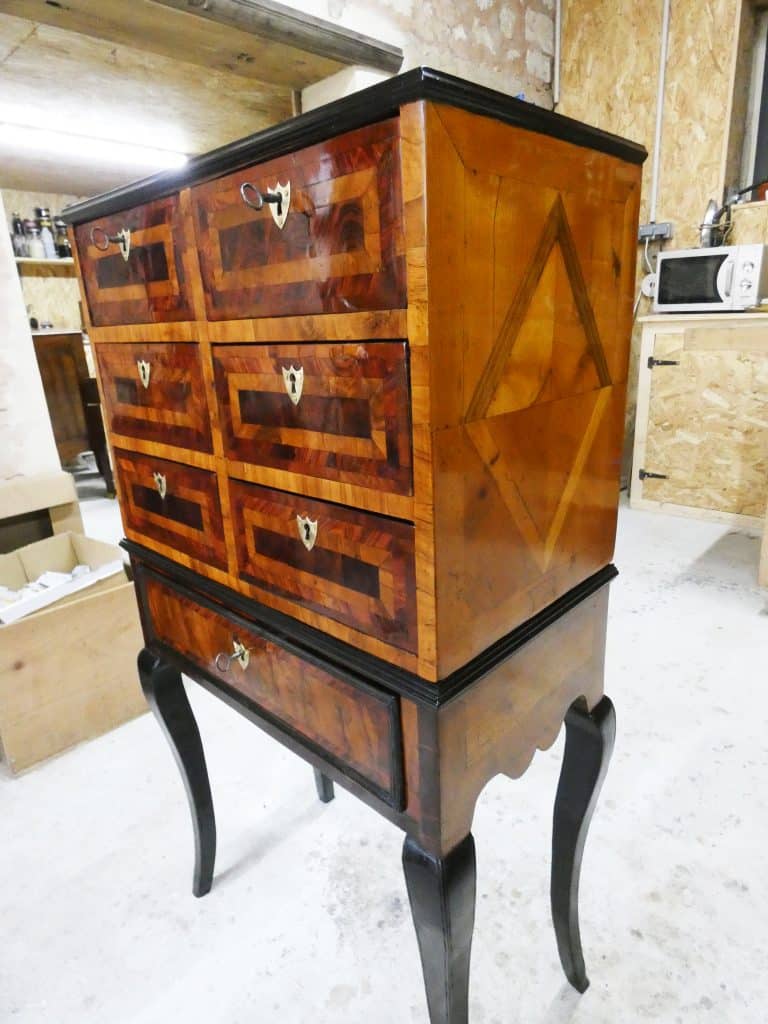
Don't be fooled by the Directoire-style keyhole escutcheons on this cabinet, as it dates from the late 17th or early 18th century. The keyhole escutcheons are clearly not original. In fact, very few original elements remain on this piece of furniture apart from the drawers, the frame, and the base. The veneer on the front, sides, and top has been altered. It's quite clear that the locks have been changed and the escutcheons filled in.
This piece of furniture is entirely made of solid cherry, fir and poplar for the structure and veneered with cherry, walnut, violet wood and rosewood.
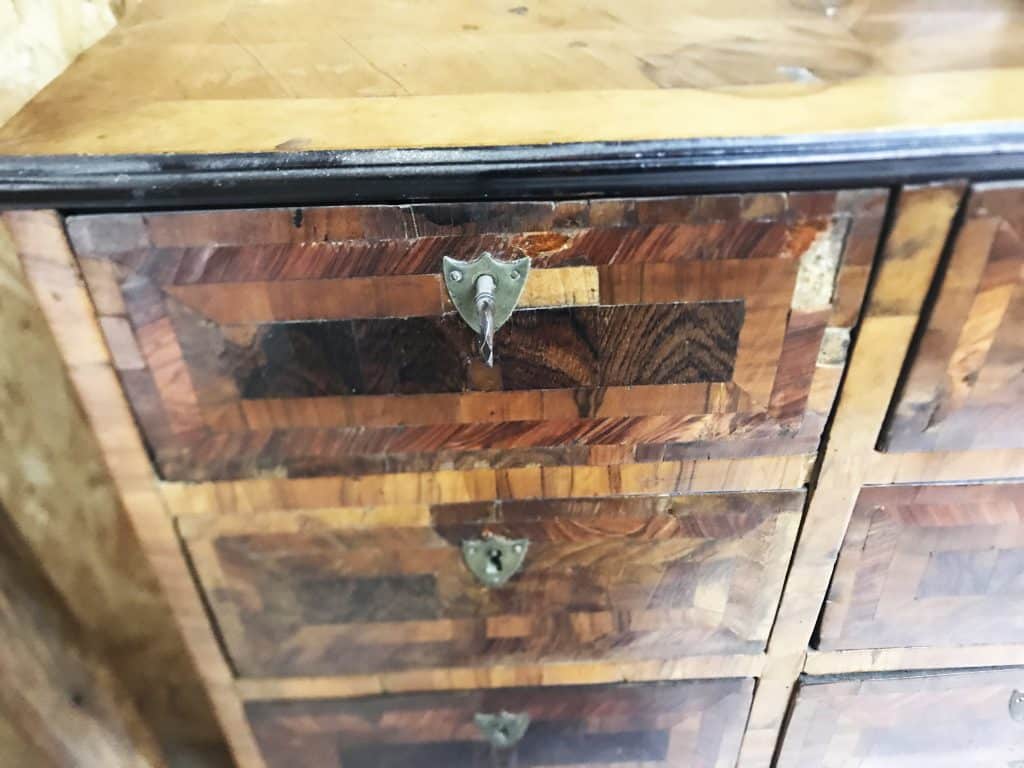
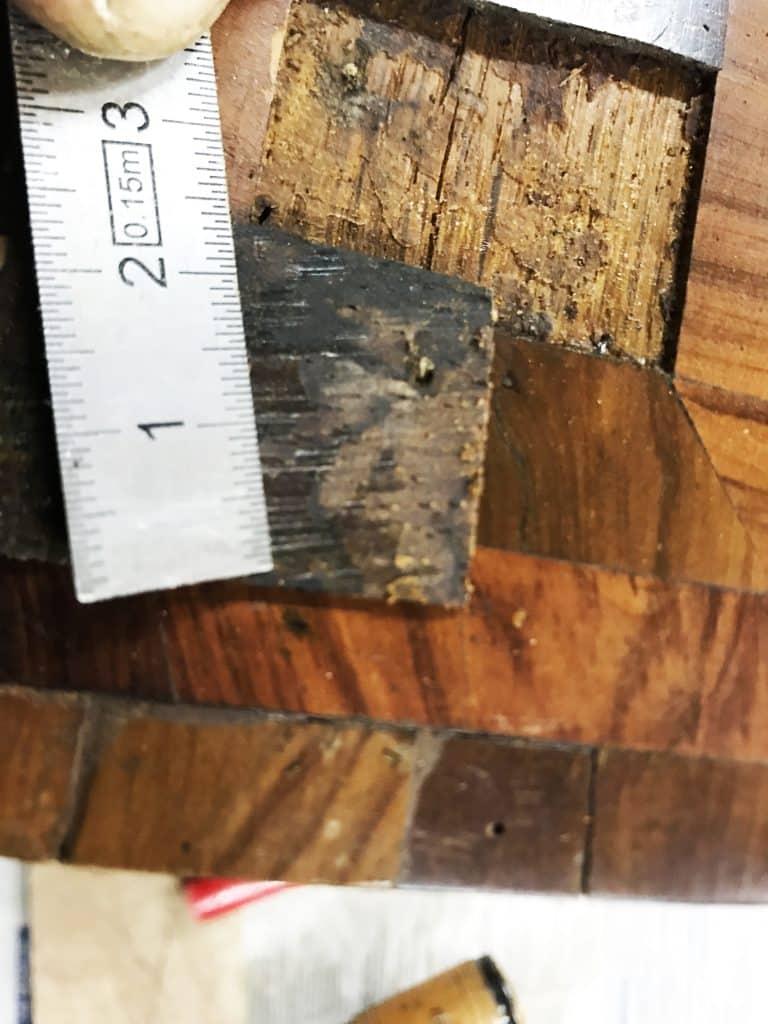
Veneer shortages 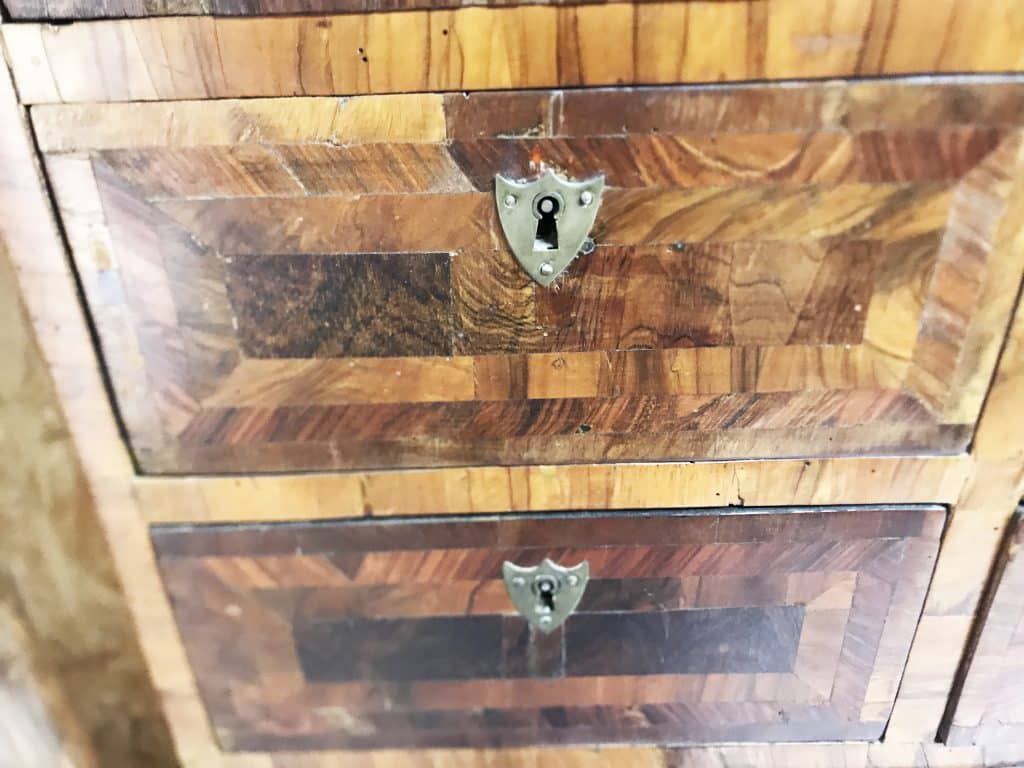
Varnish severely damaged 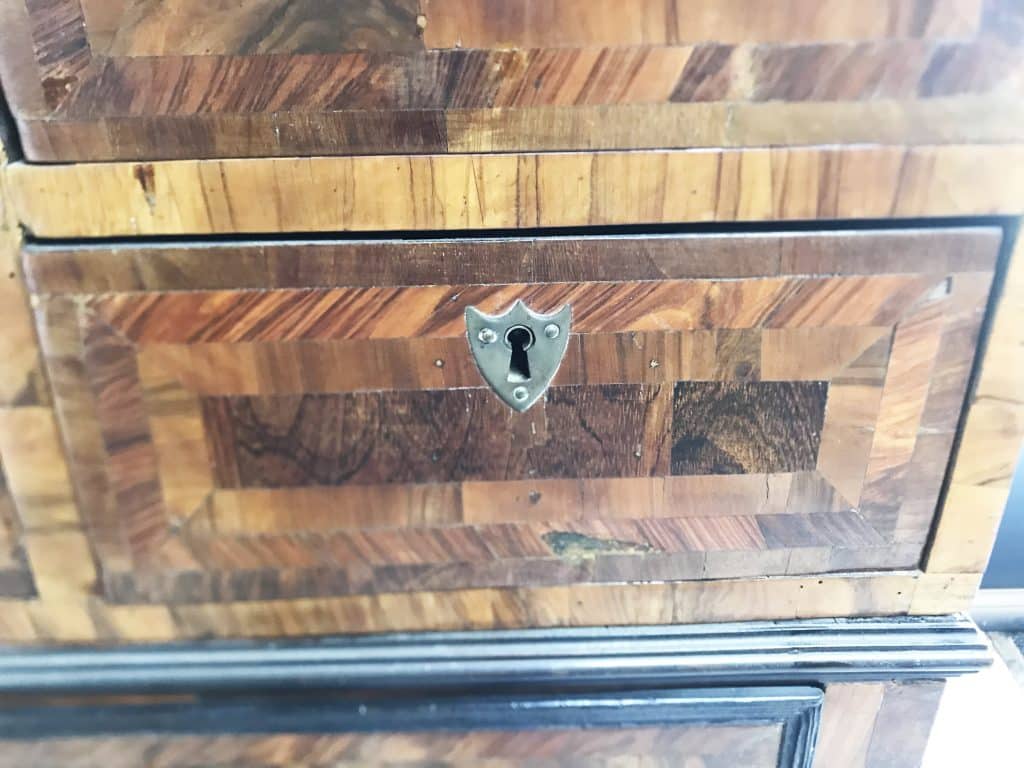
Before restoration 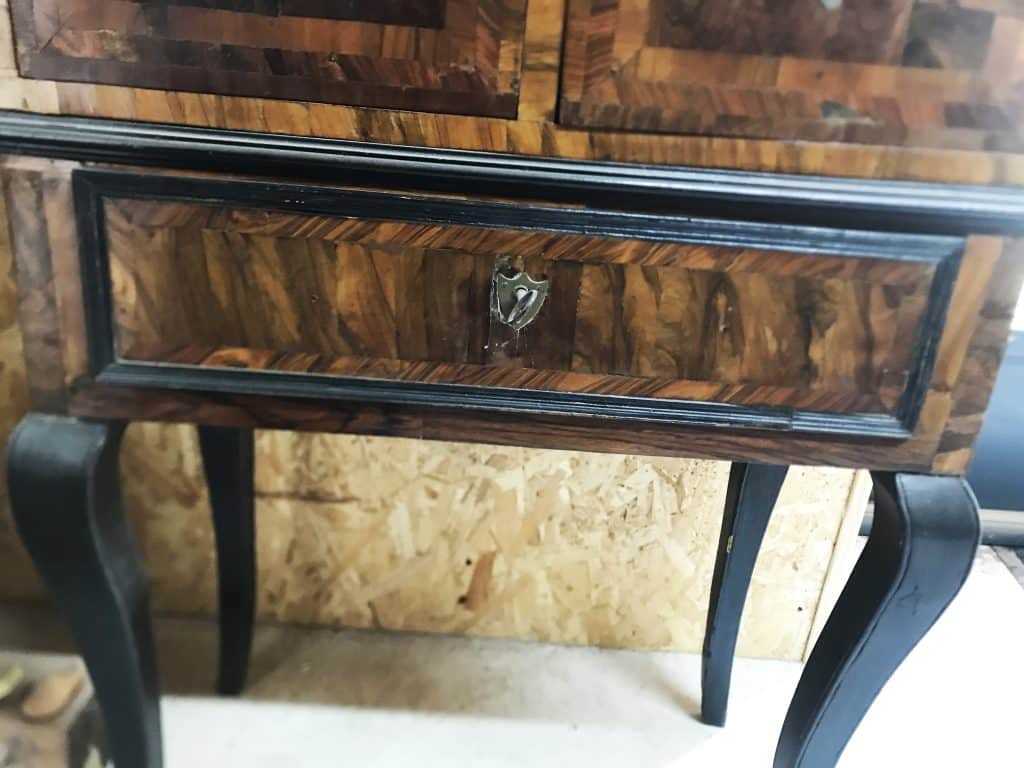
Before restoration 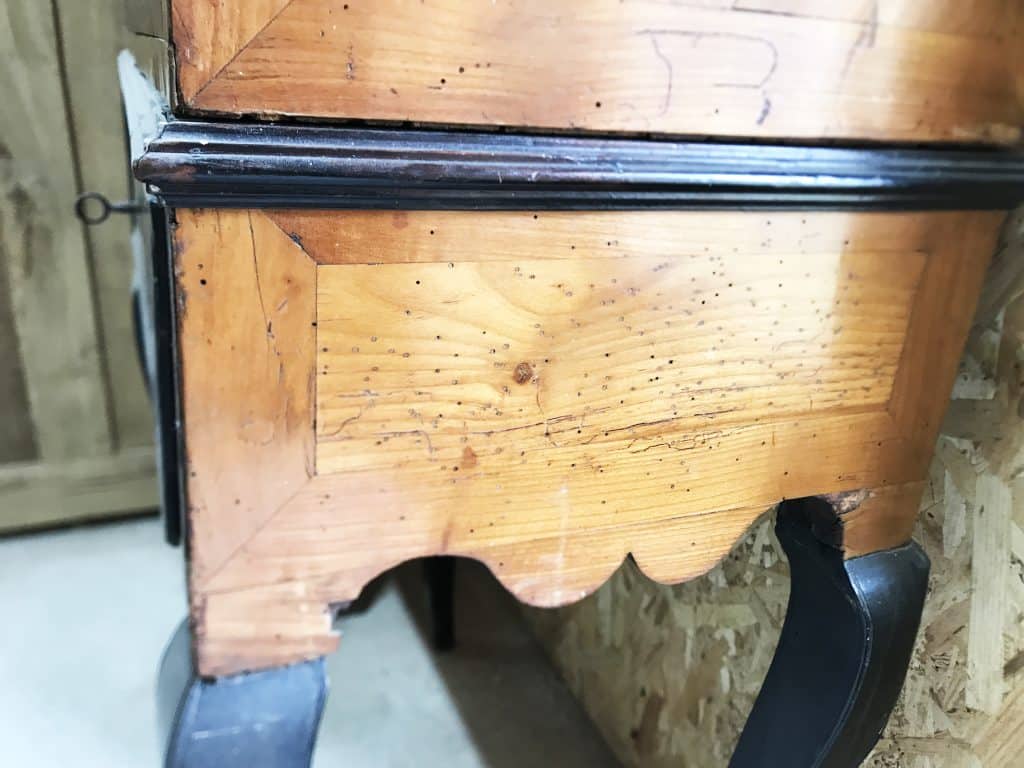
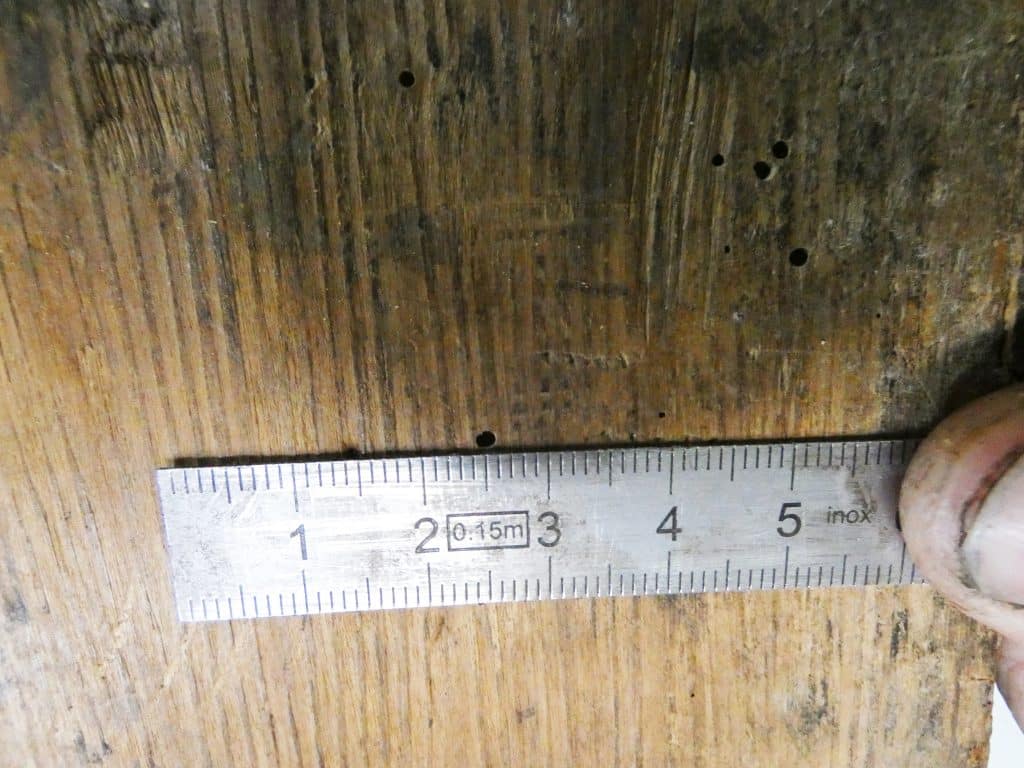
Some missing veneer and, most importantly, wood-boring insects
The main damage to this piece of furniture is to the marquetry. There are some missing pieces on the drawers, a large part of the veneer is peeling off, and the top is badly warped.
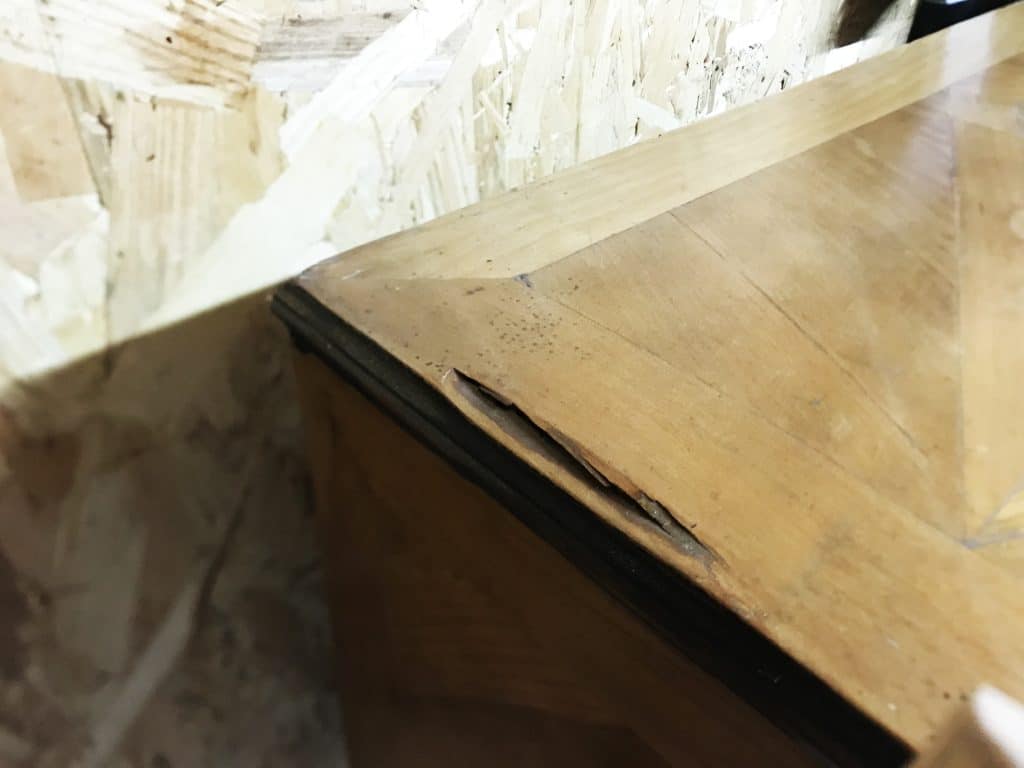
Veneer torn due to core deformation 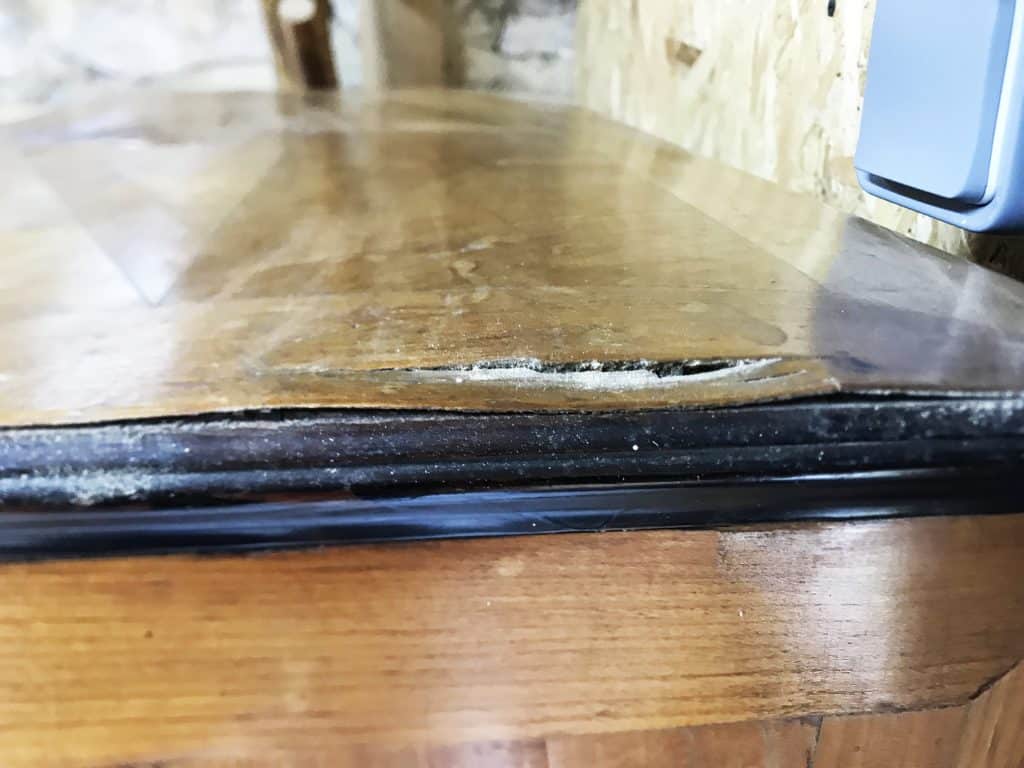
Deformation of the plateau 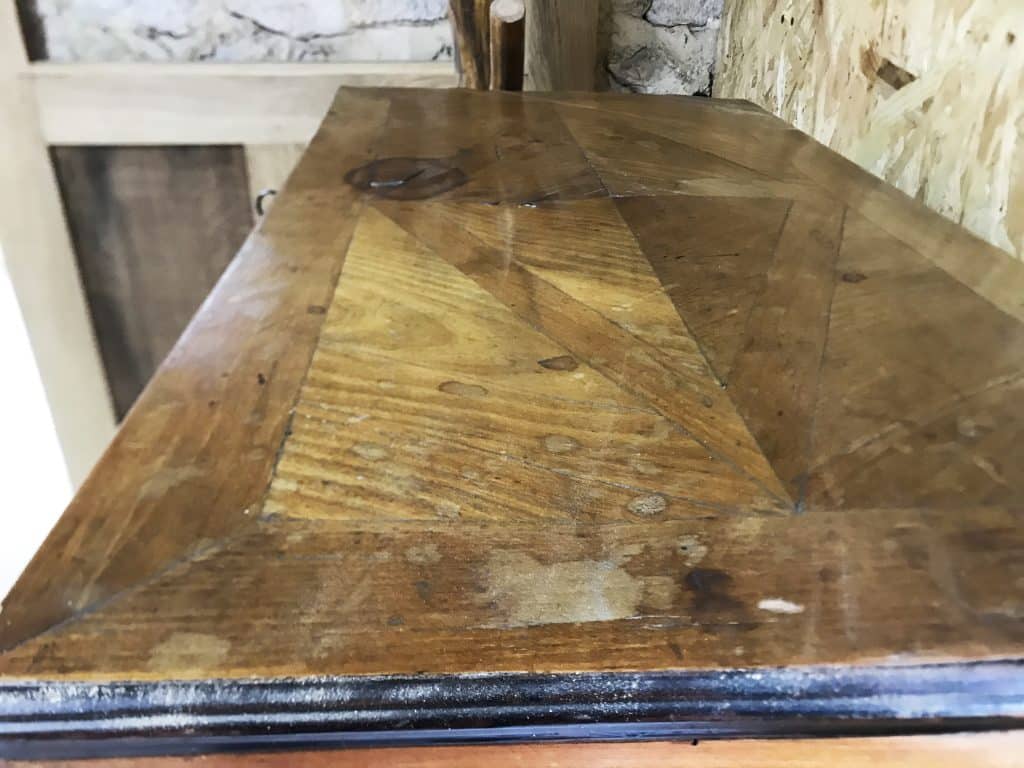
Top panel before restoration 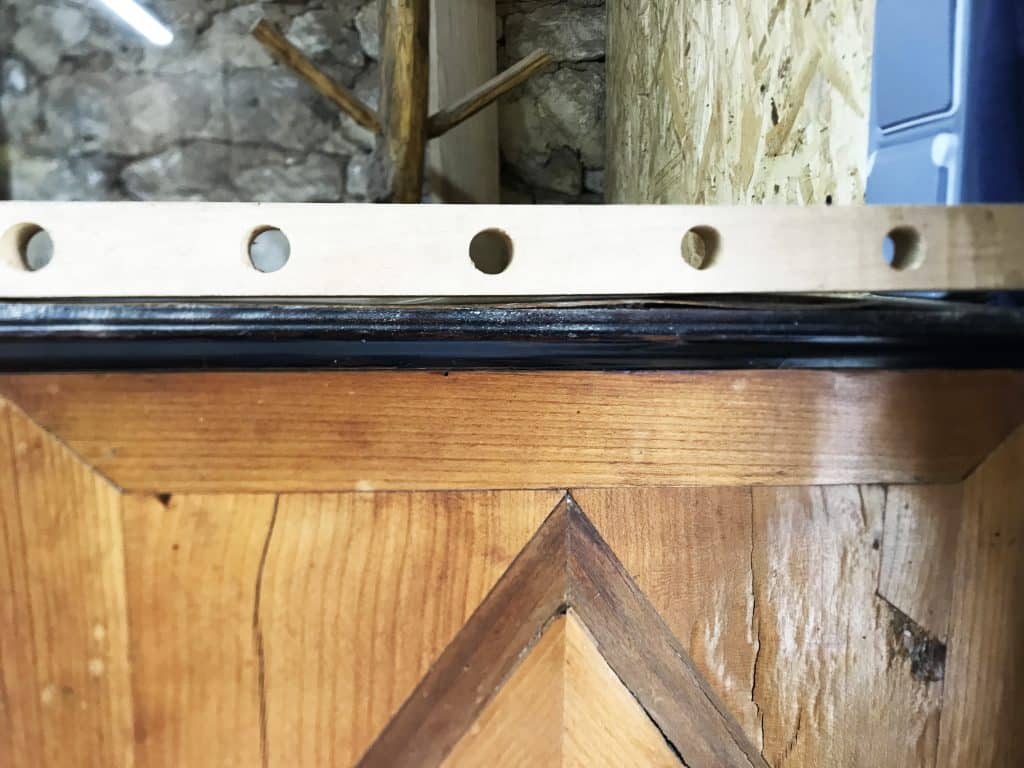
Deformed platform
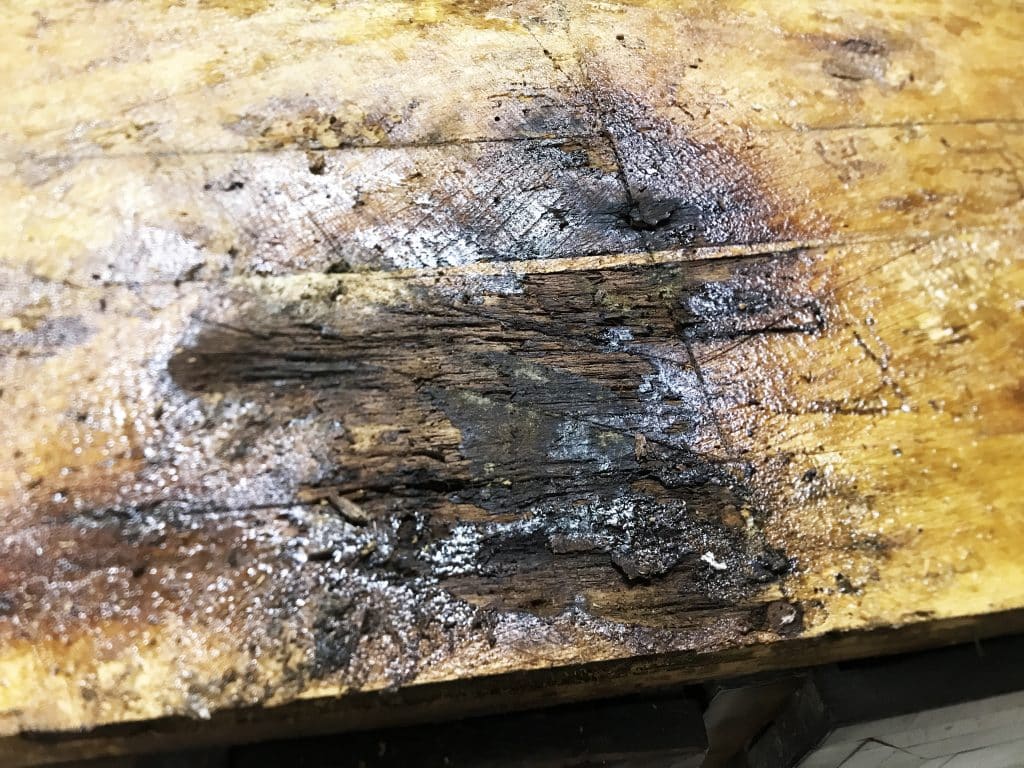
When I started restoring this piece of furniture, I wondered why there was no glue at all in certain places and why the wood was burned under the veneer and on the surface in some areas.
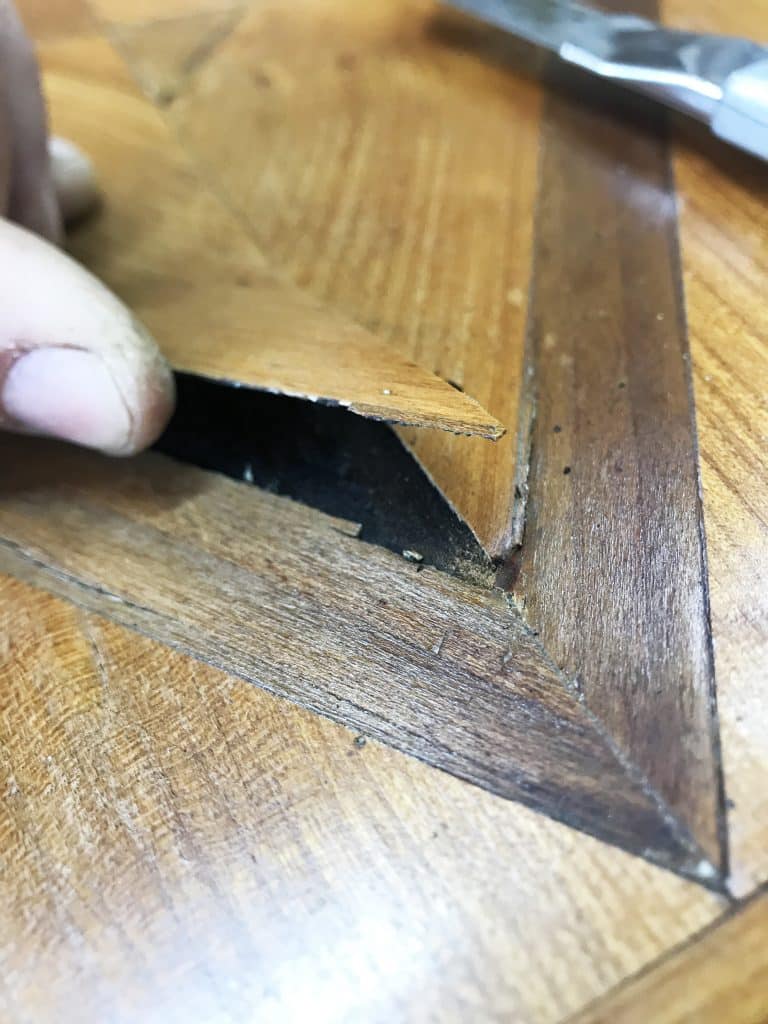
The solid wood is charred beneath the veneer 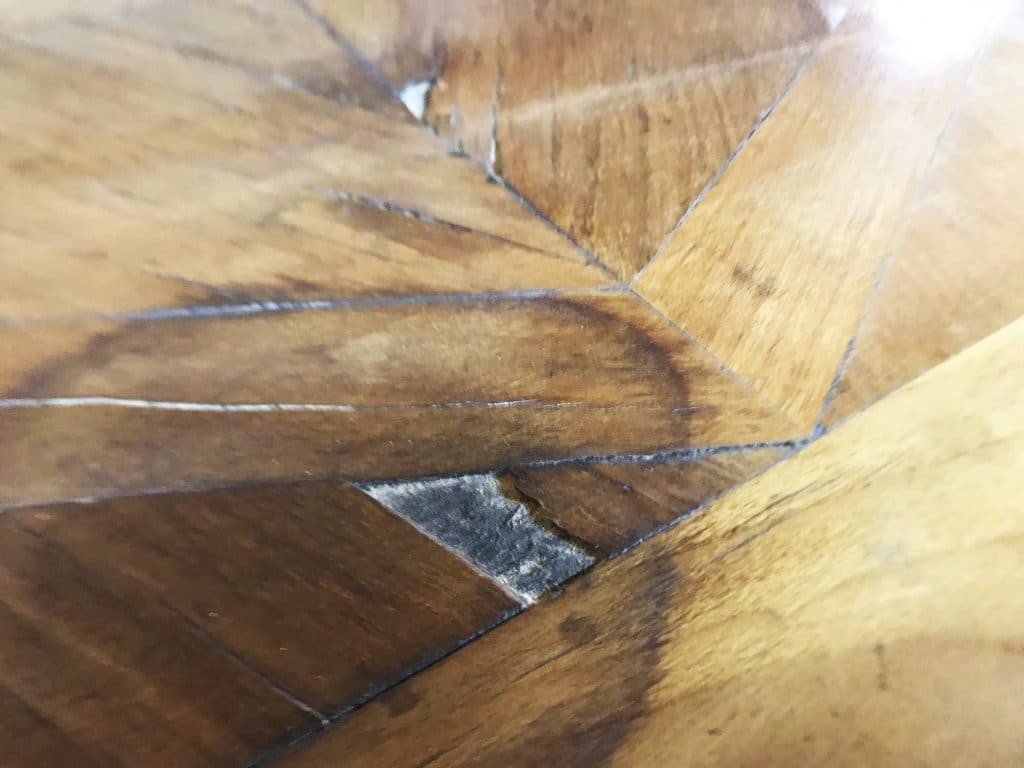
Veneer defect and burn 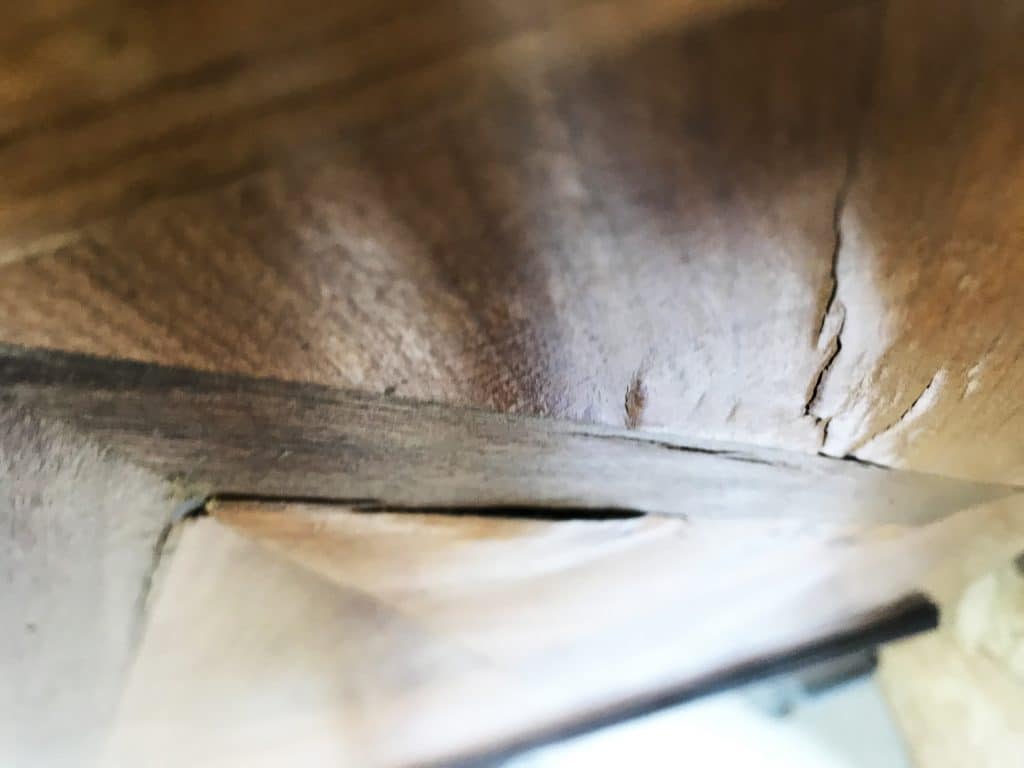
Veneer peeling and blistered 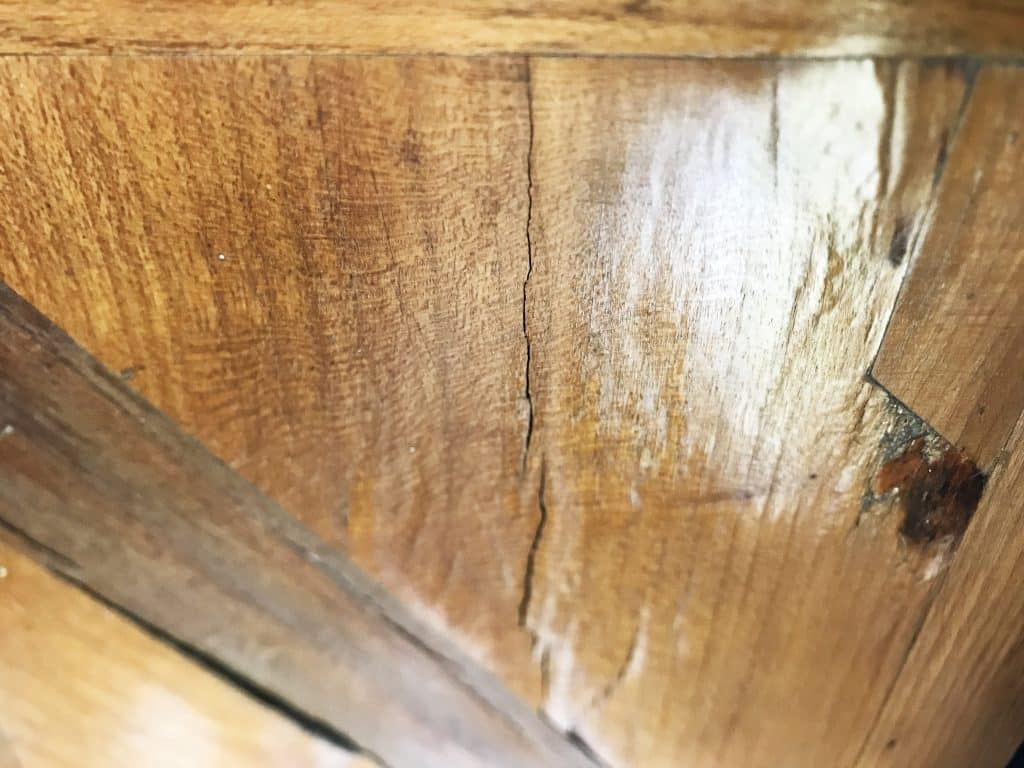
Veneer detached
The answer was given to me when the top veneer was removed, and the explanation is simple. To glue marquetry with hot glue, cabinetmakers heated the wood near a "Sorbonne" ( The name cabinetmakers give to the fireplace where they melt glue, heat the gluing irons, and also heat the wood to be glued. The hearth of this fireplace is high: between 80 cm and 1 m above the ground. We can therefore conclude that the panels of this cabinet were left too long near the fire and began to burn the veneer underneath during the gluing process. This may not have been visible on the surface during manufacturing, but it began to appear during previous restorations and successive sanding, which thinned the veneer and thus revealed the burns.
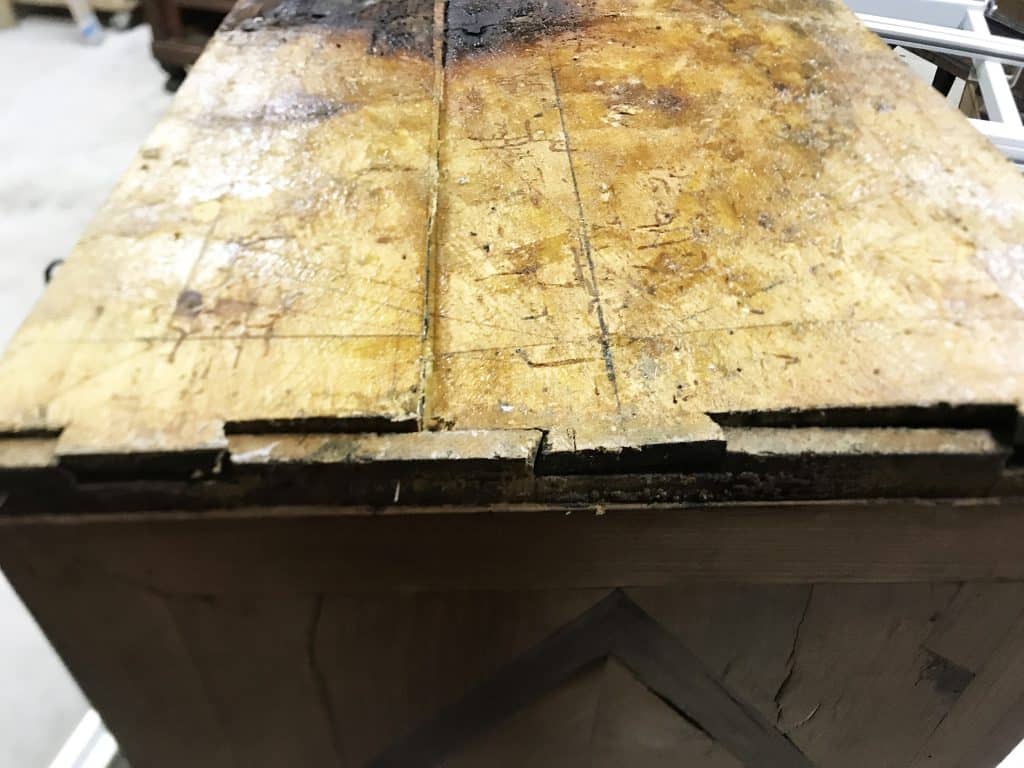
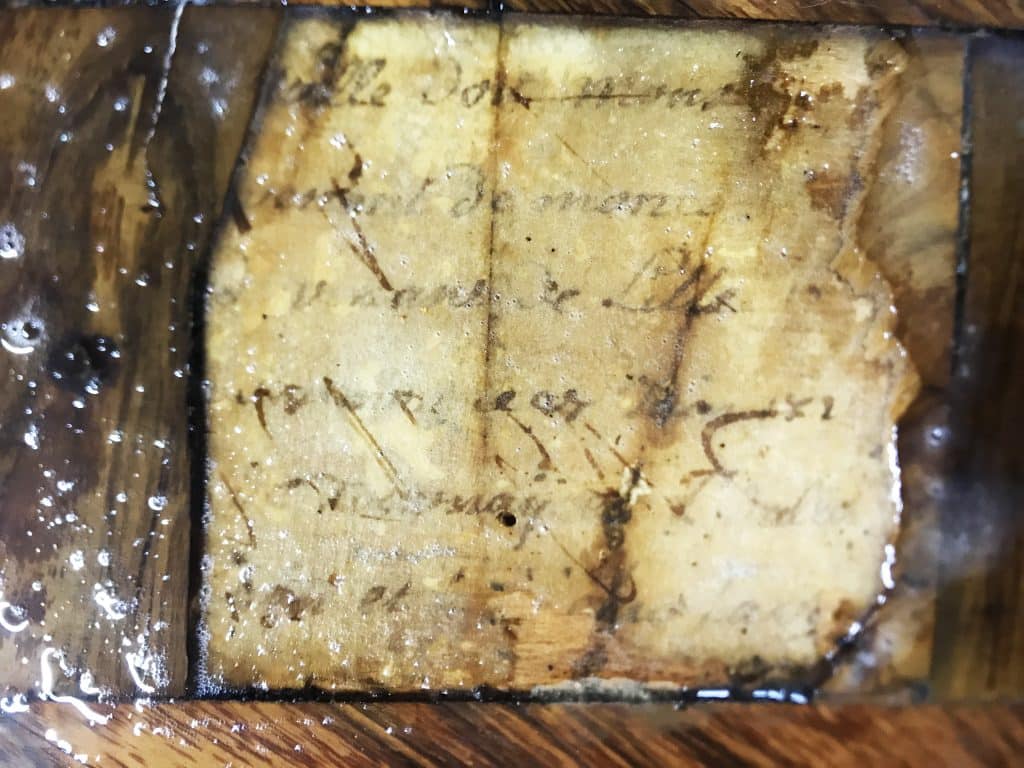
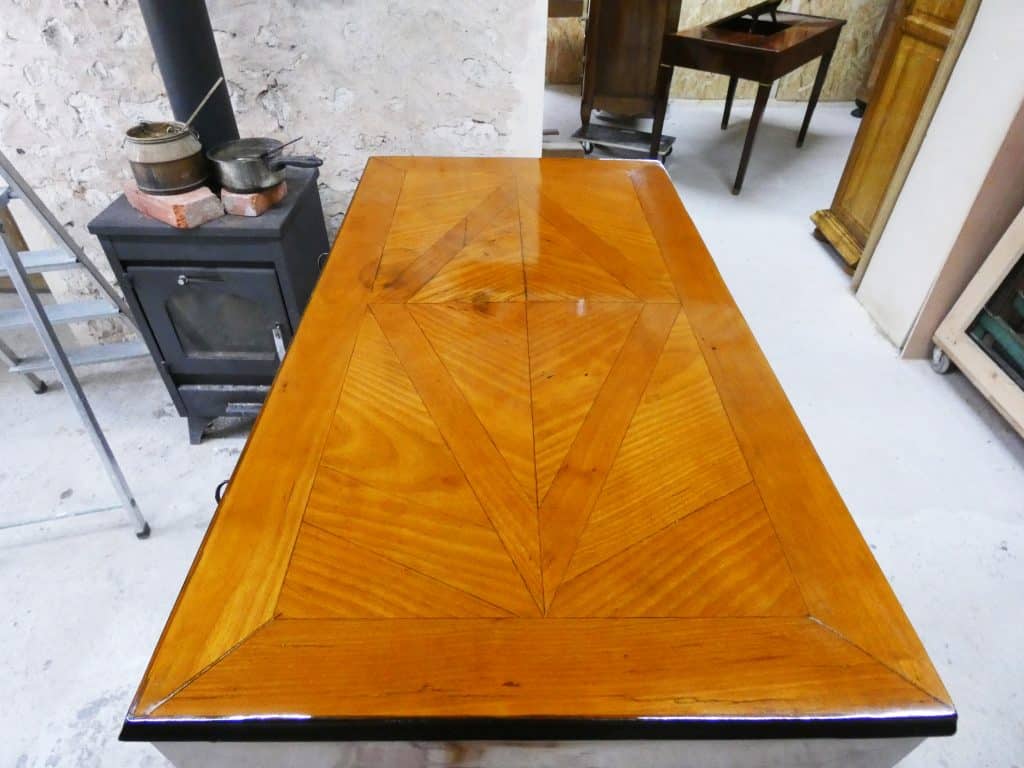
To remedy the warping of the upper shelf, it was decided to remove the veneer and work on the fir panels. These were re-flattened, then resplit, planed to a thickness of 2 mm, and re-veneered in a sandwich construction onto 5 mm plywood to preserve the tool marks and outer bark.
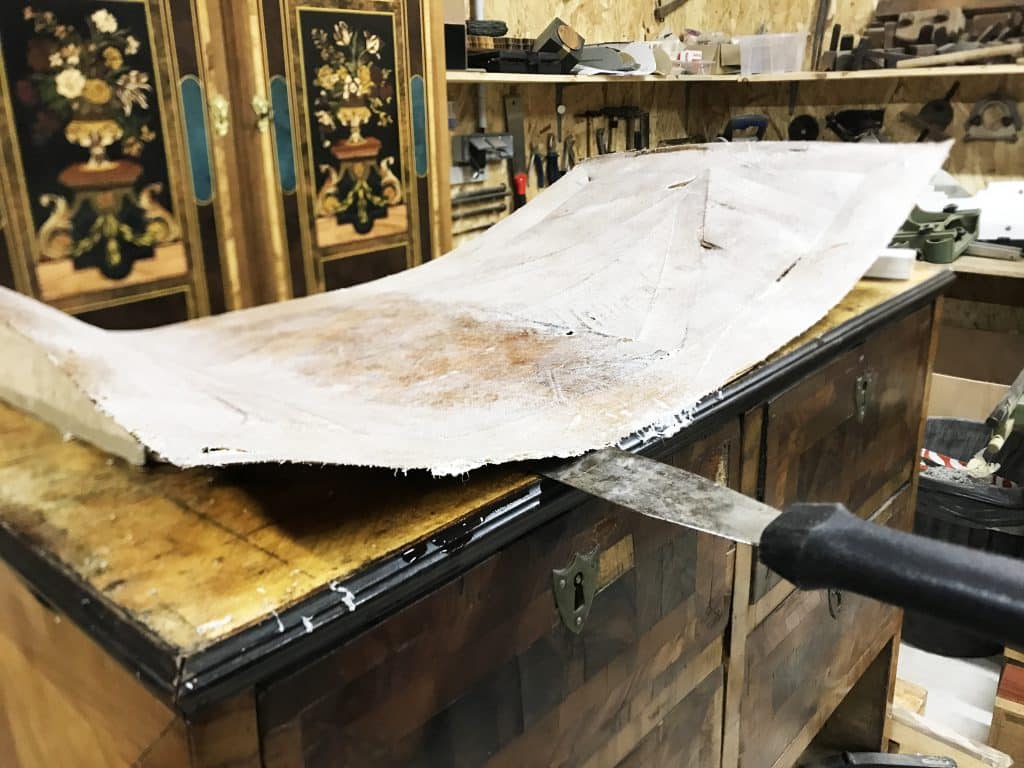
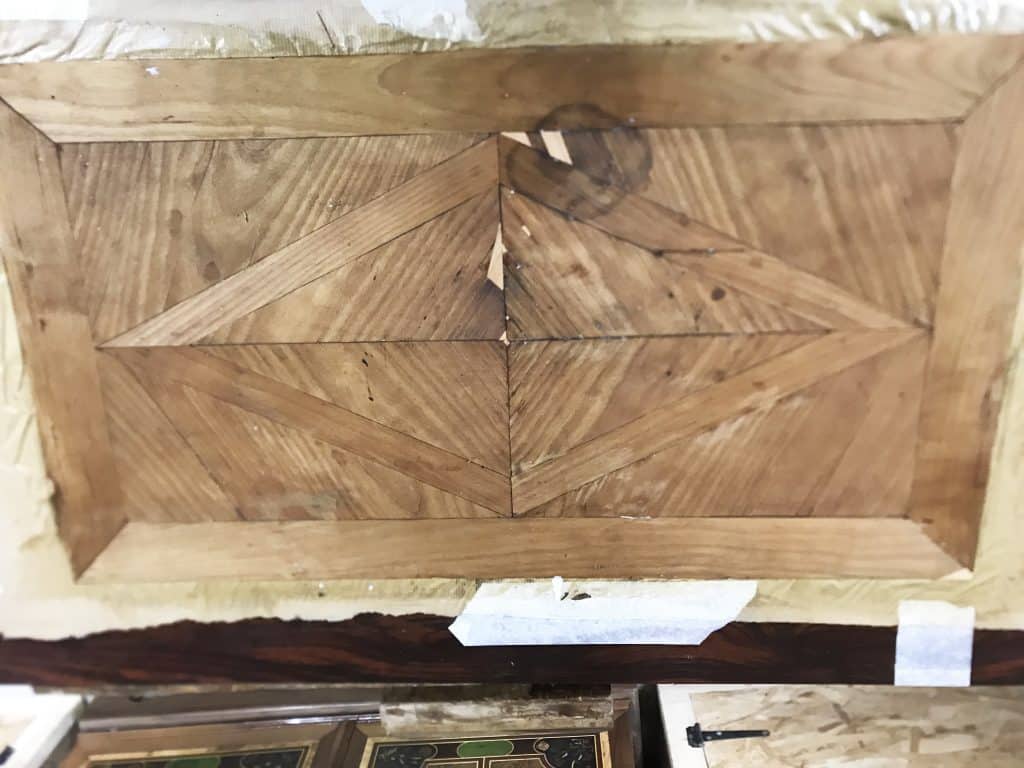
The joints and structure were re-glued using fish glue. All veneered parts were re-glued by infiltration of the glue. The existing entrances and locks were reinstalled, as it is impossible to know precisely what was originally there. There was probably no lock entrance, or perhaps just a simple iron one.
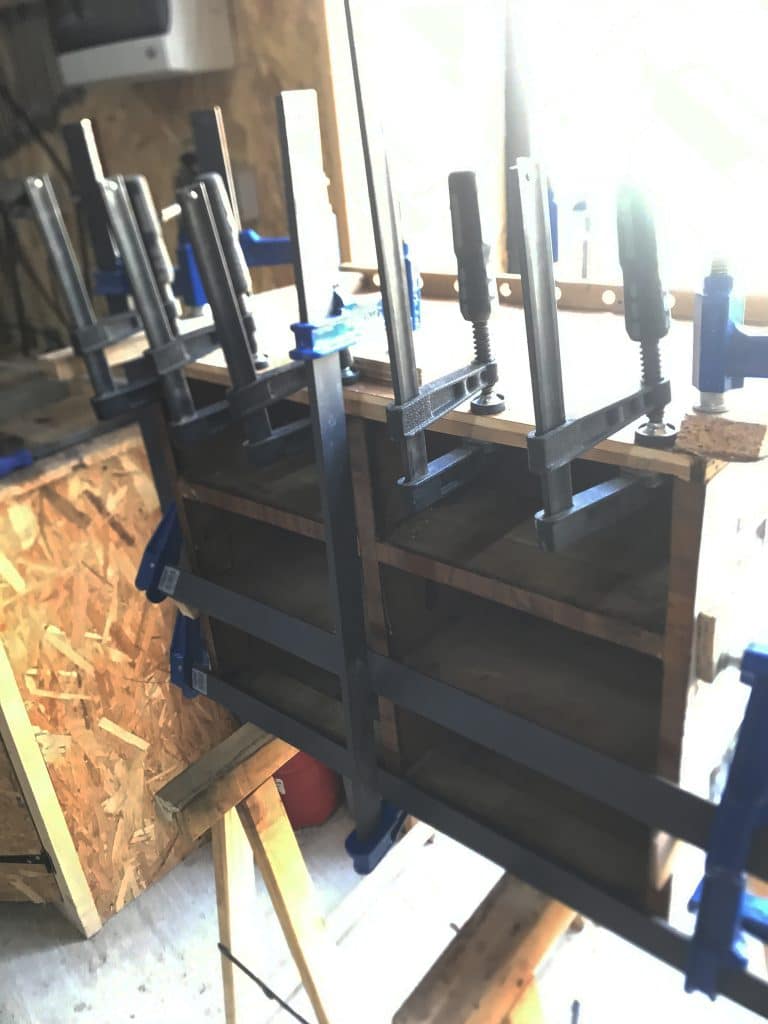
Re-gluing the structure 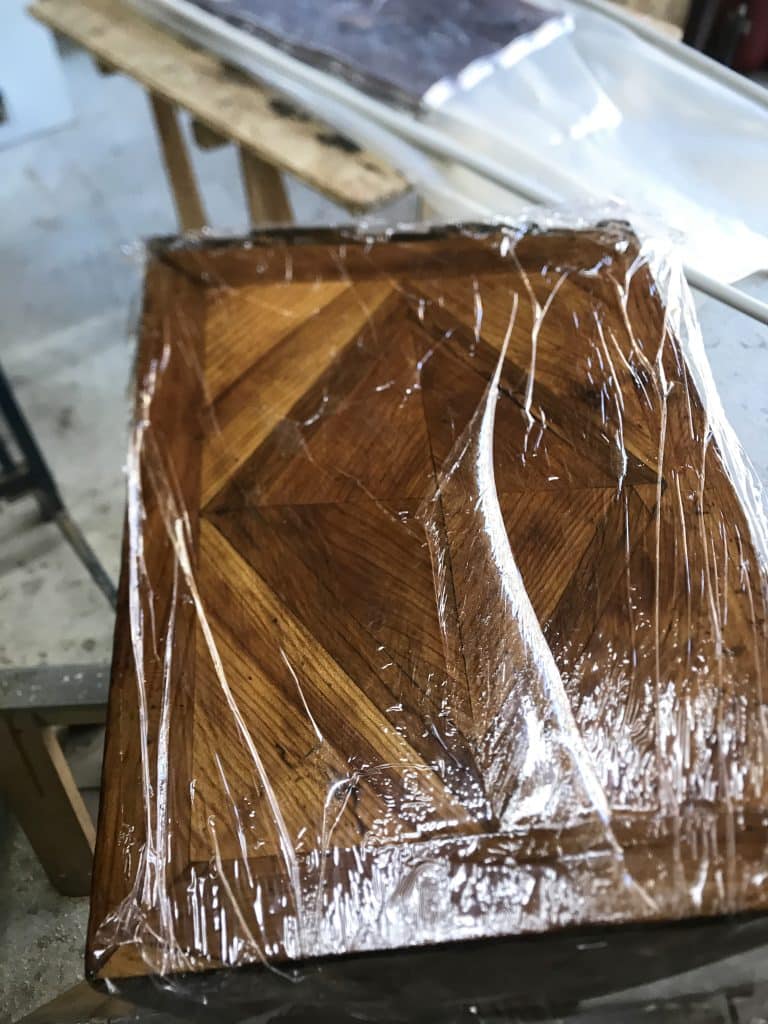
Glue infiltration 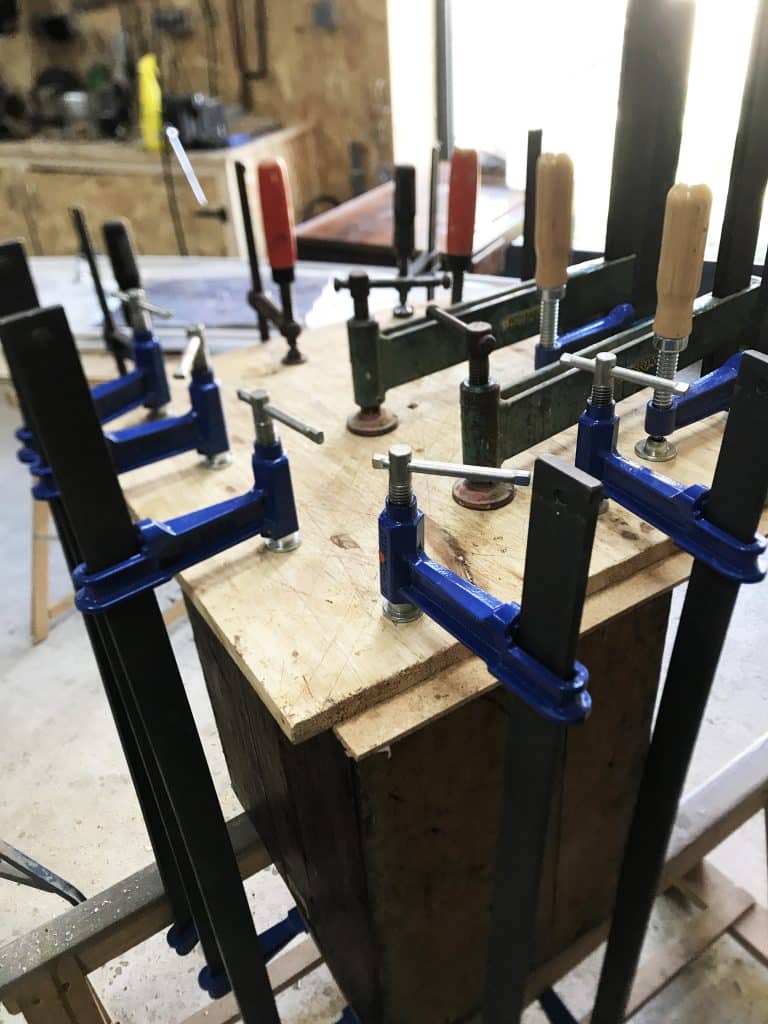
Press release
After restoration 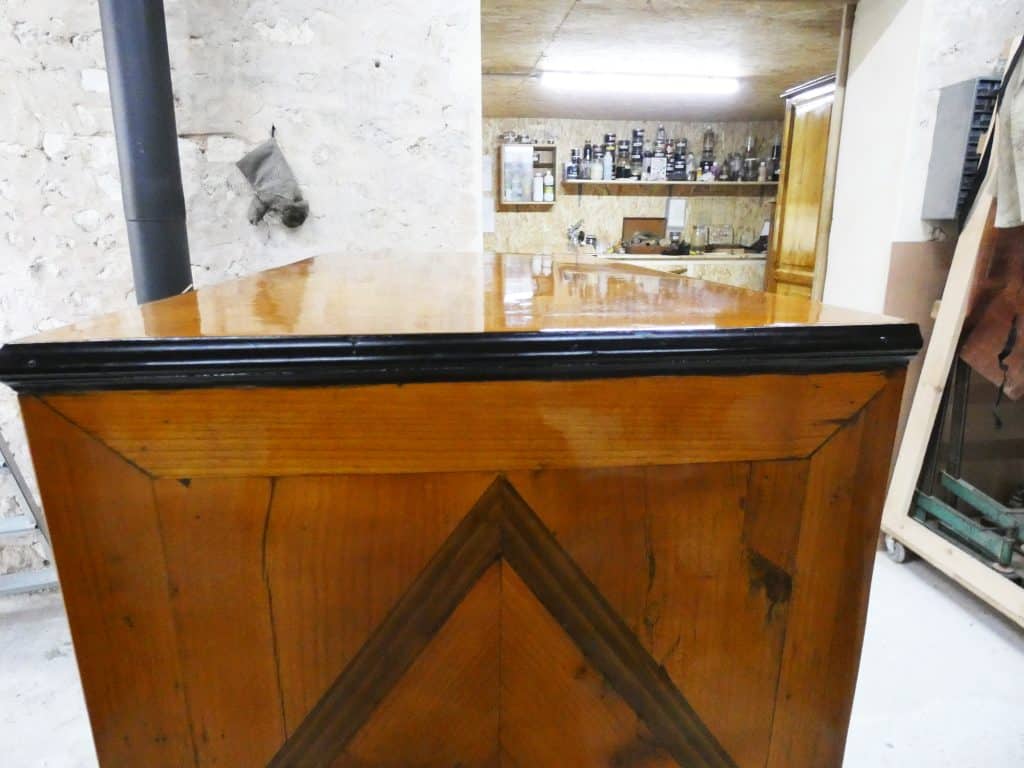
After restoration 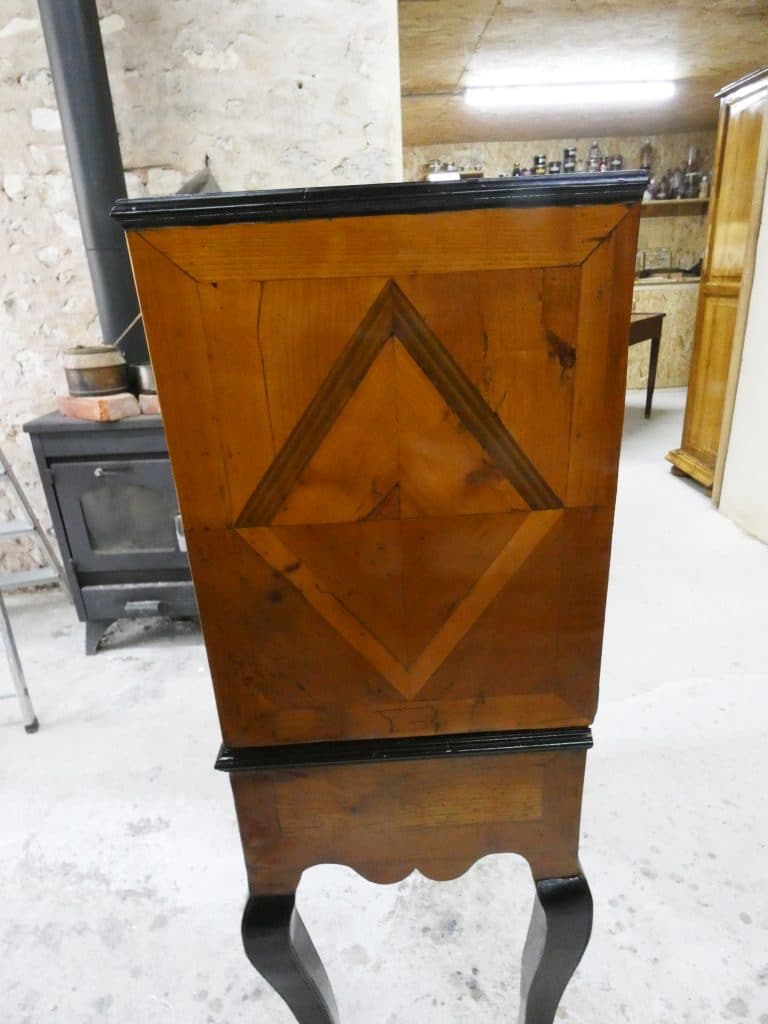
After restoration 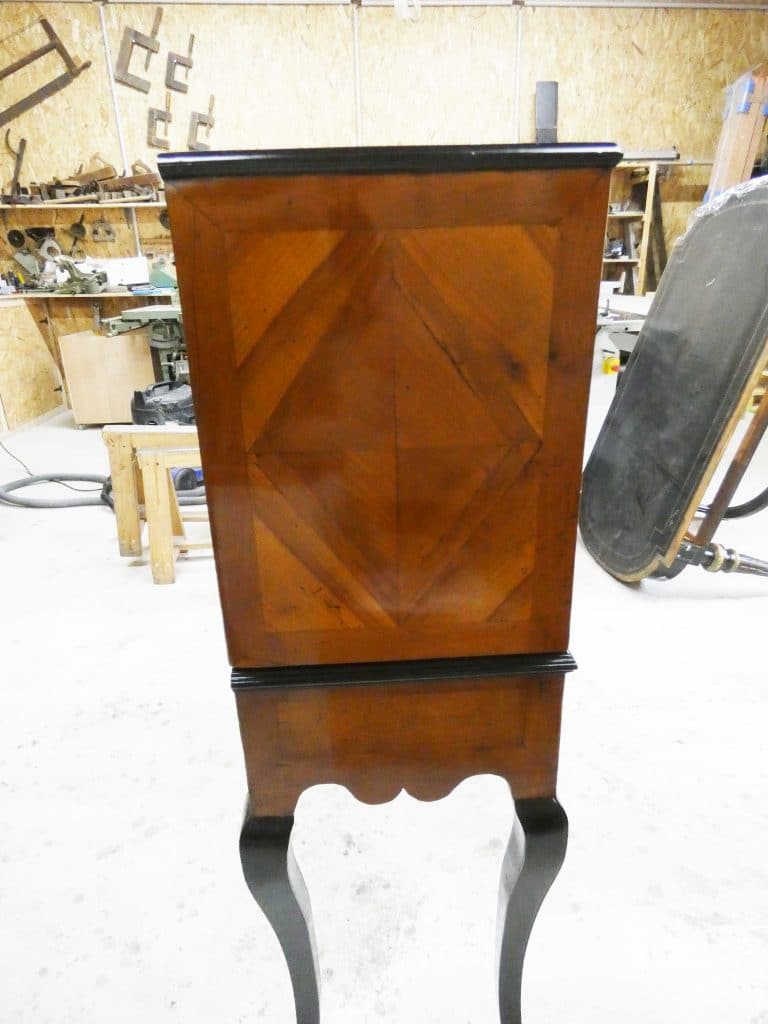
After restoration 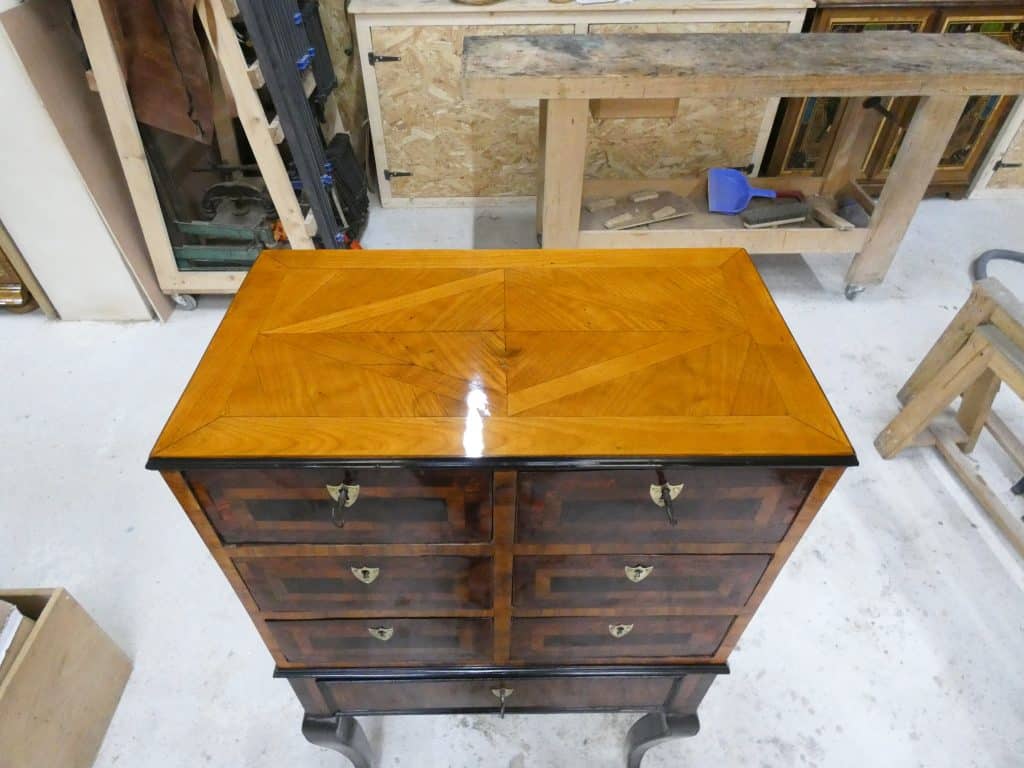
Plateau after restoration