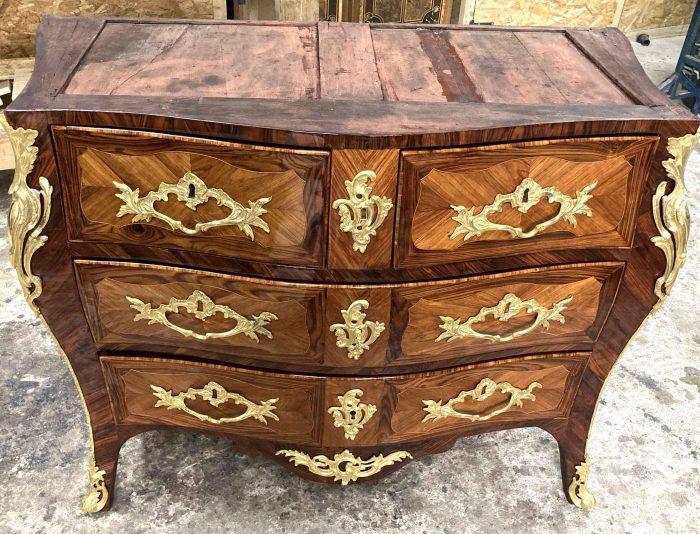
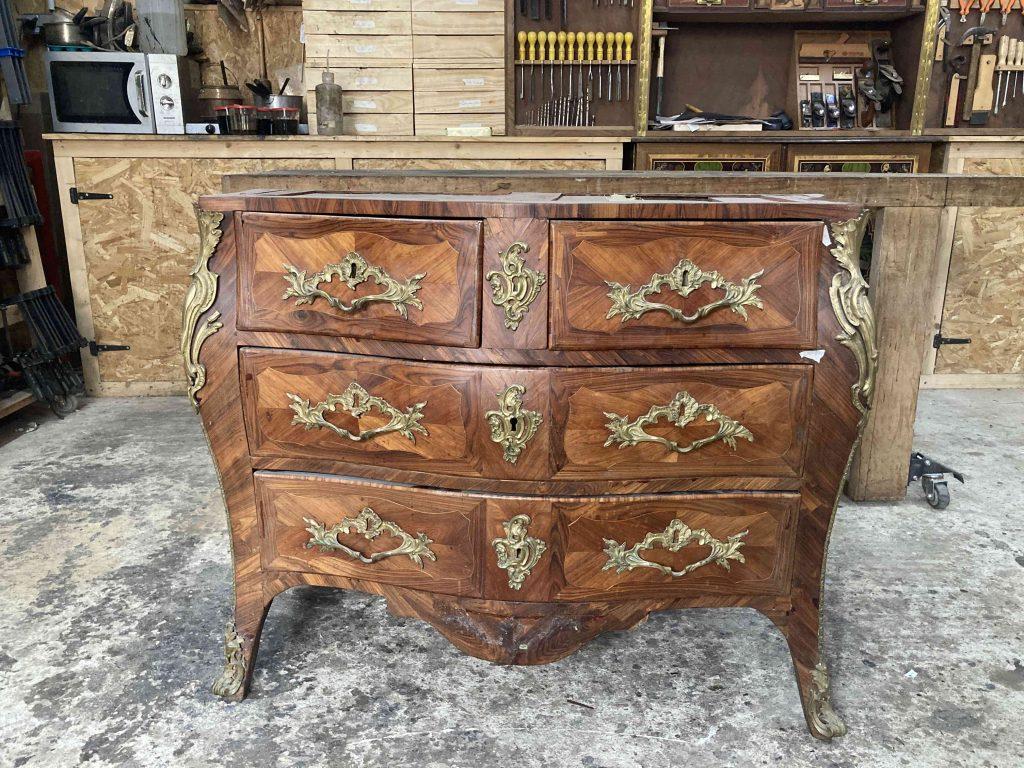
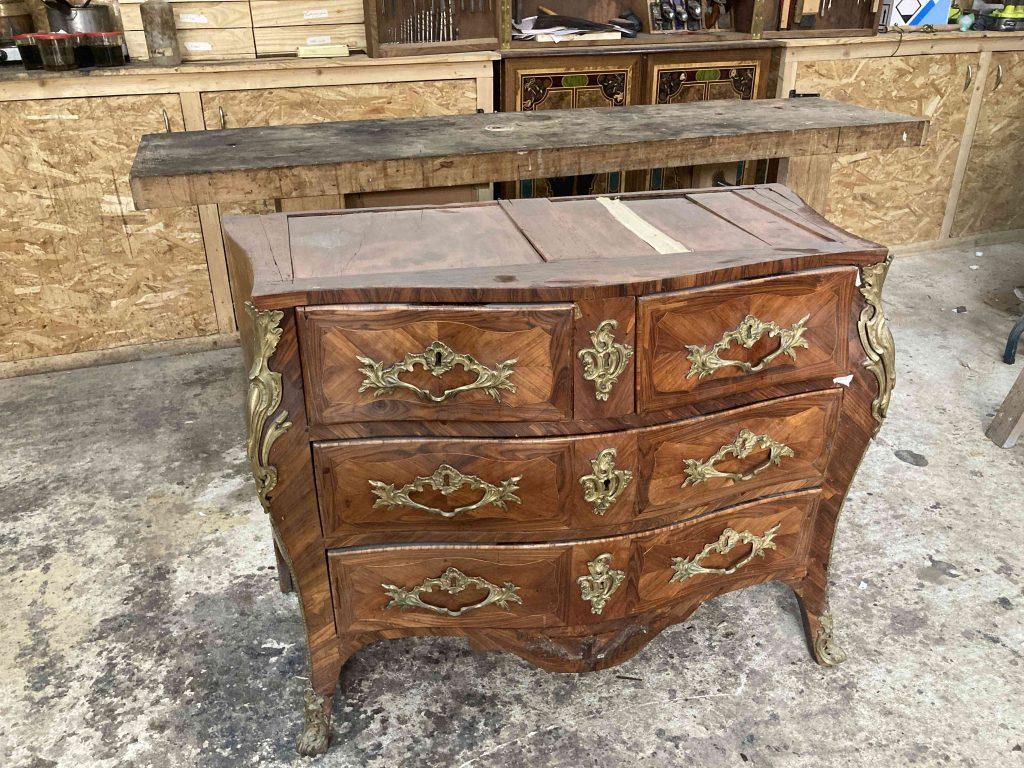
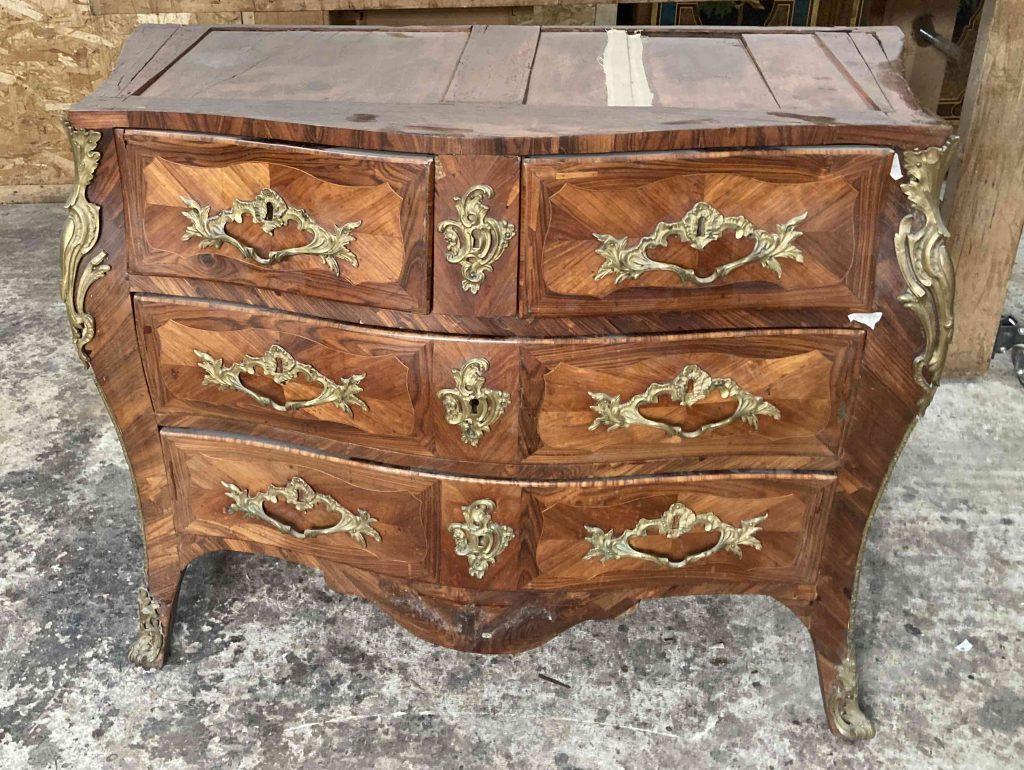
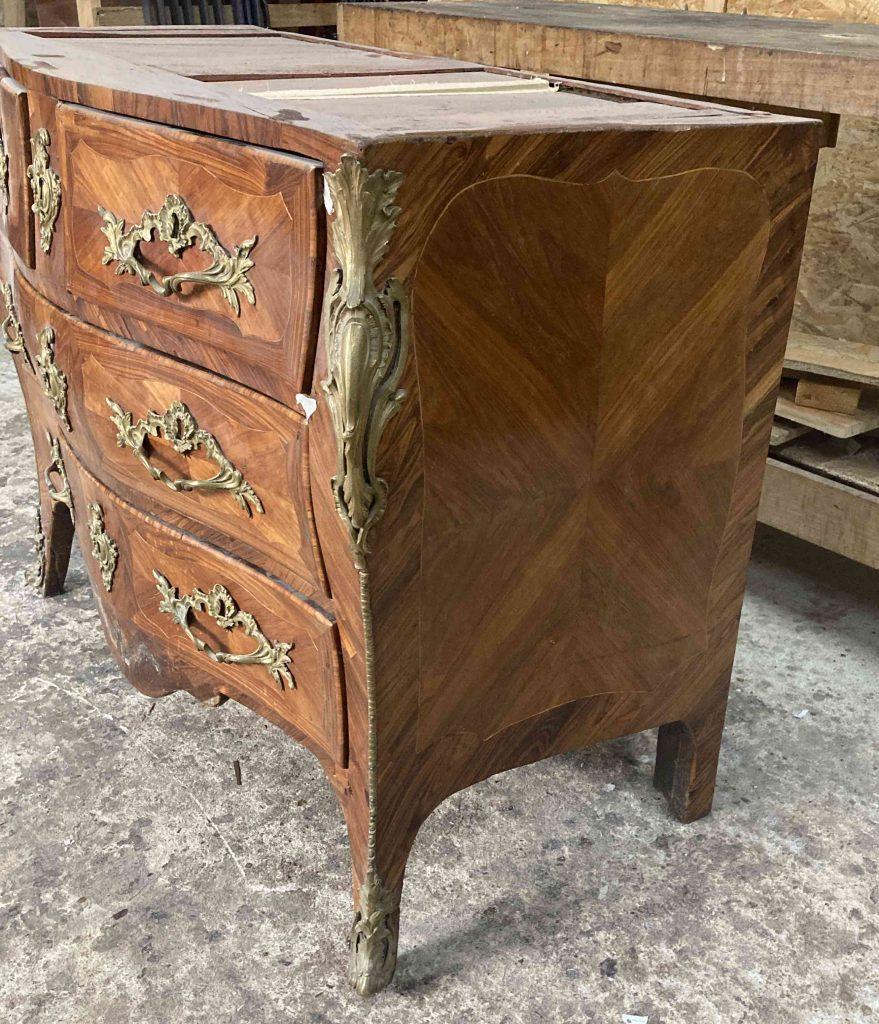
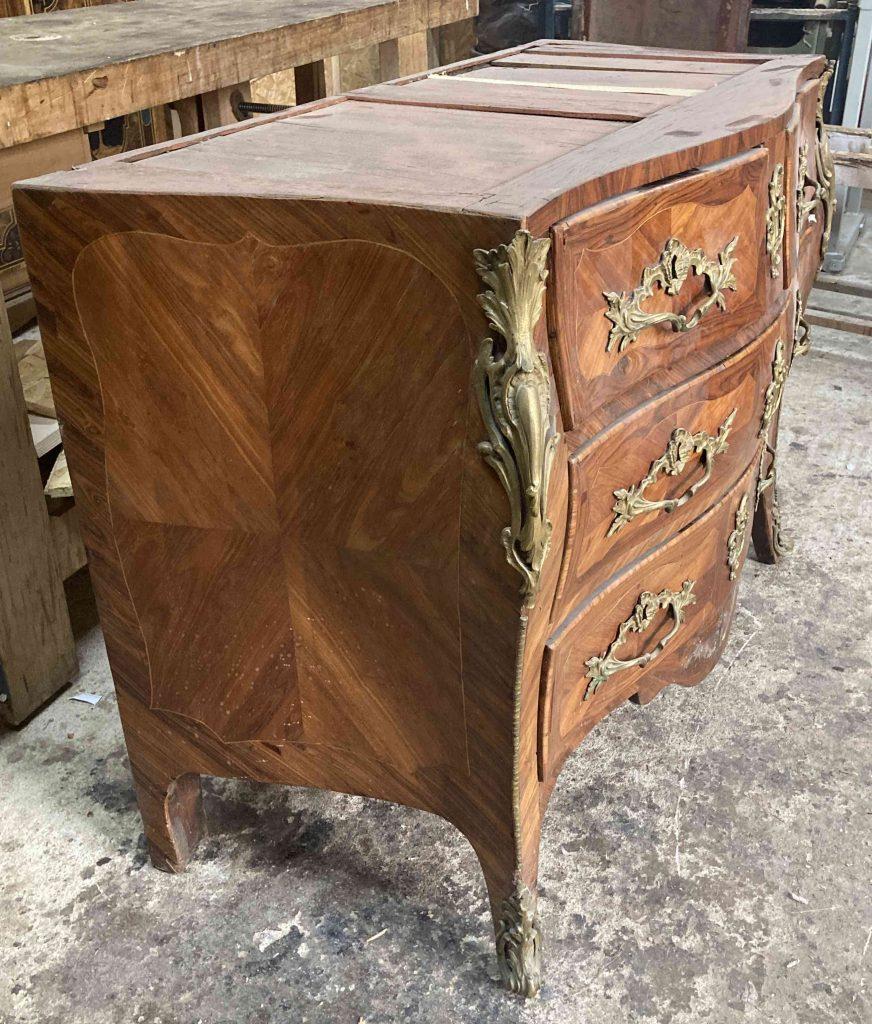
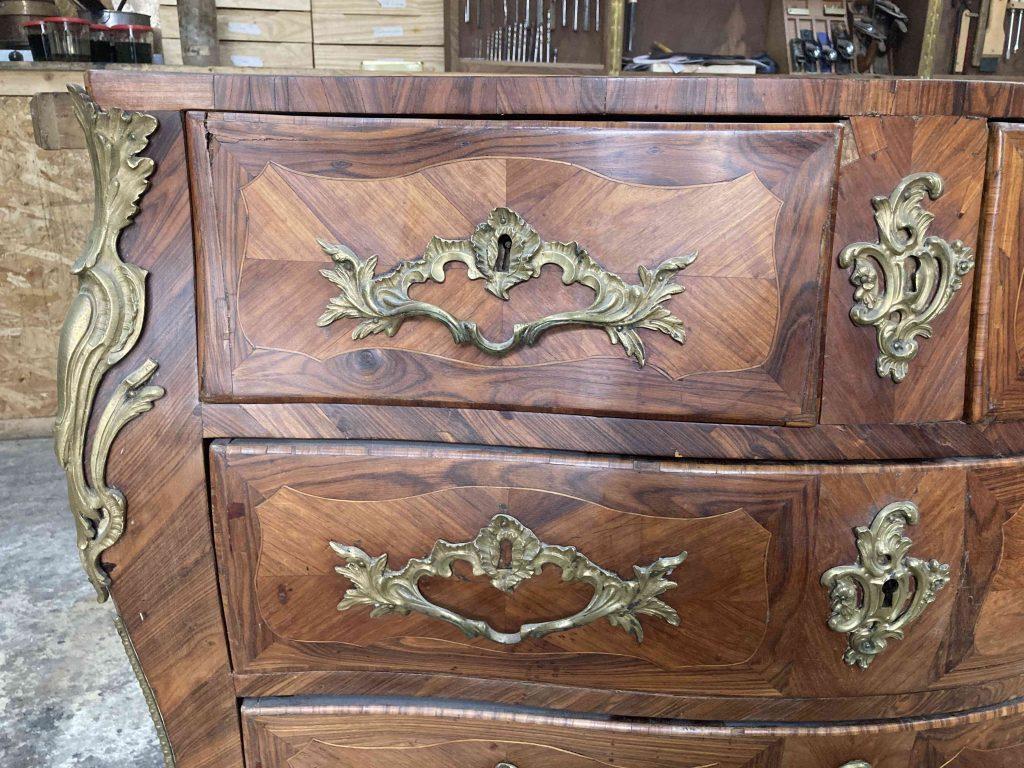
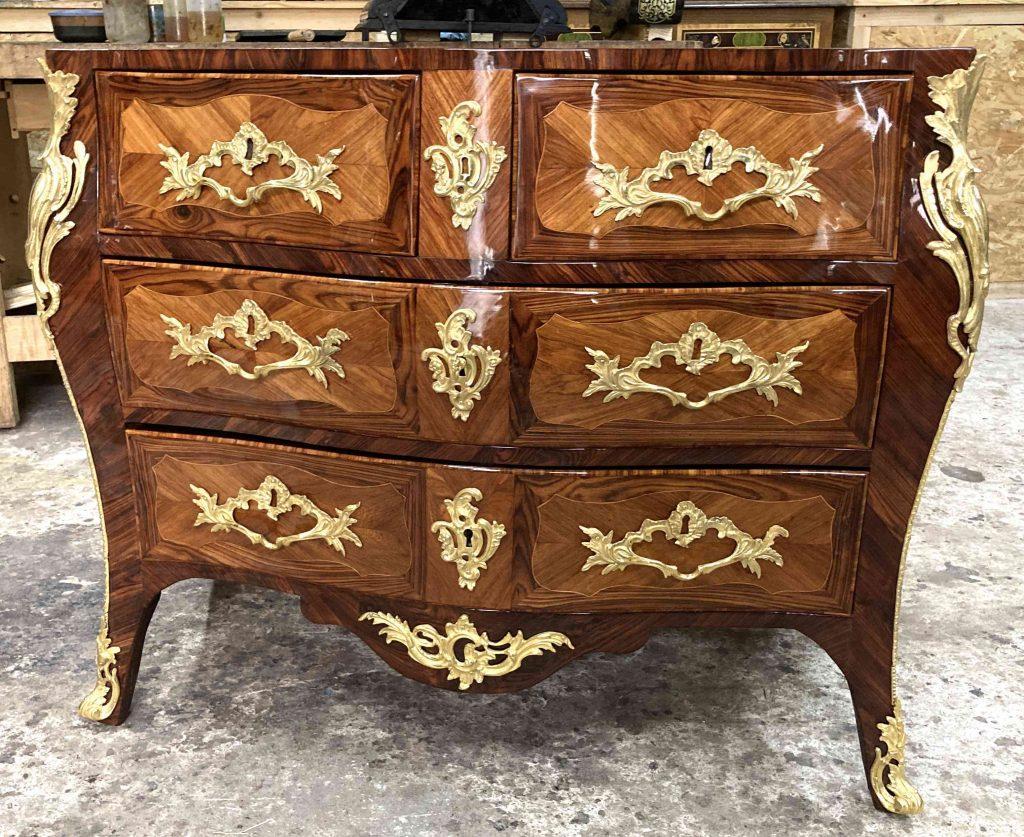
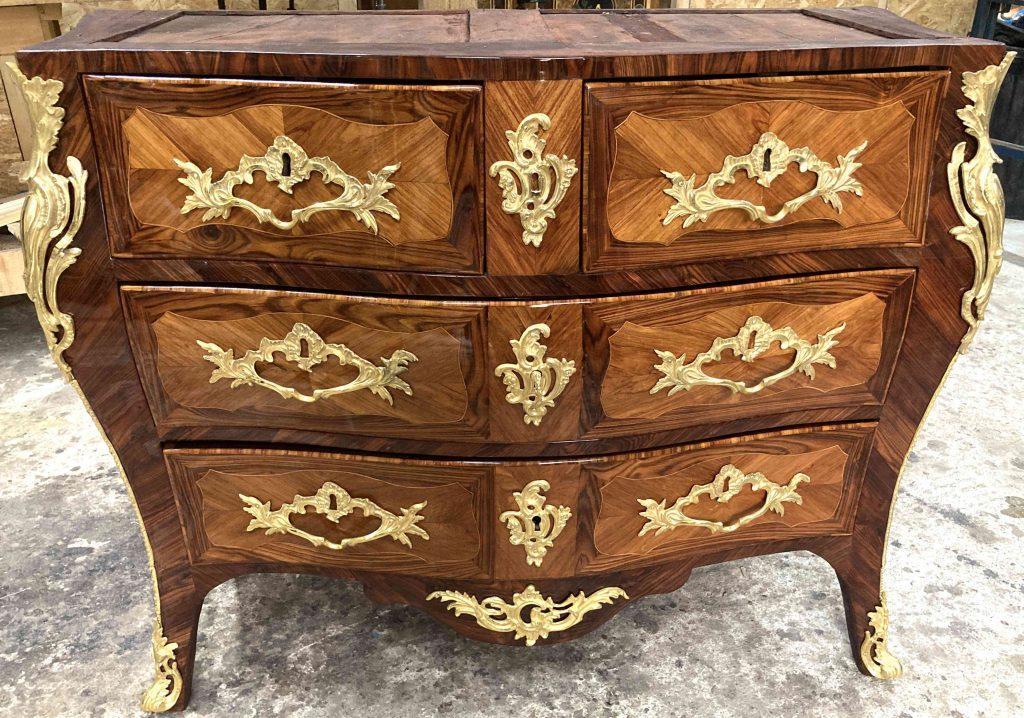
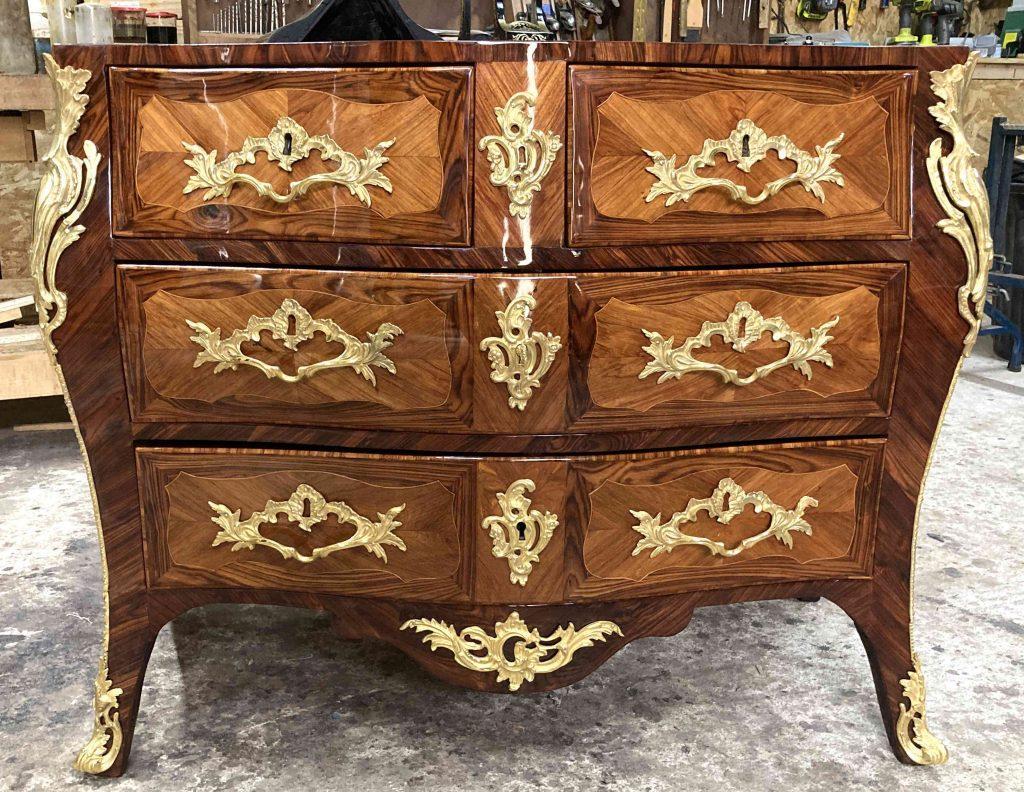
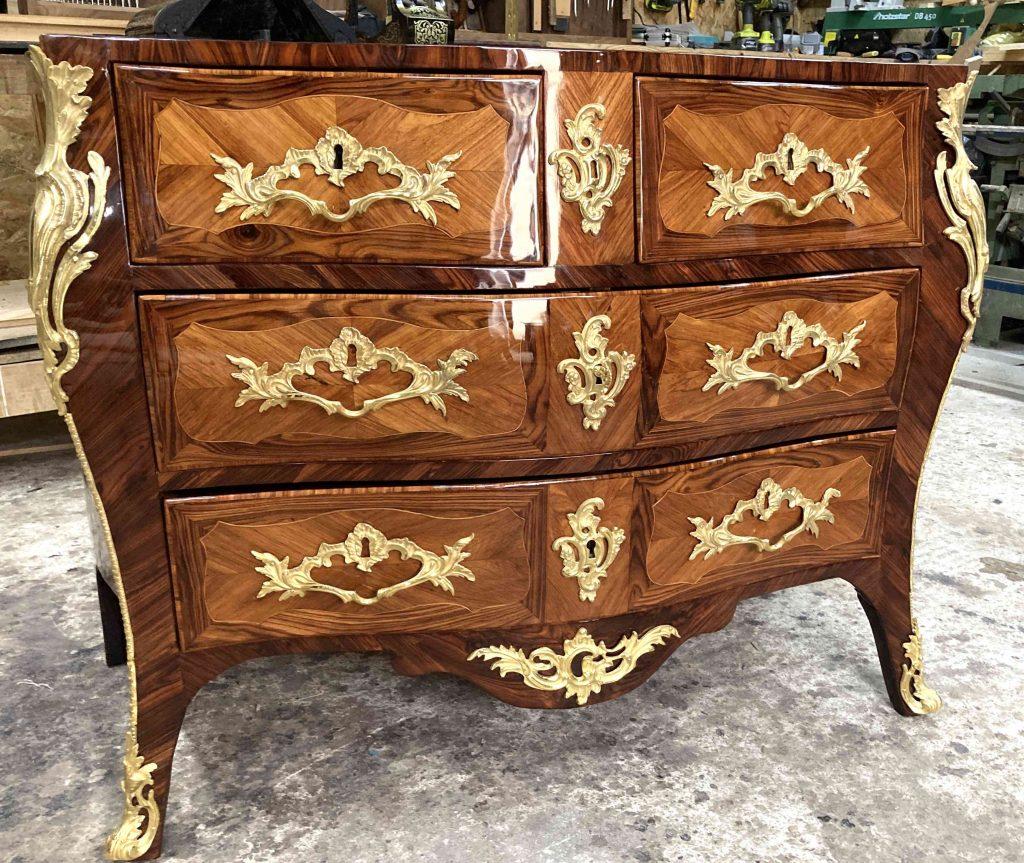
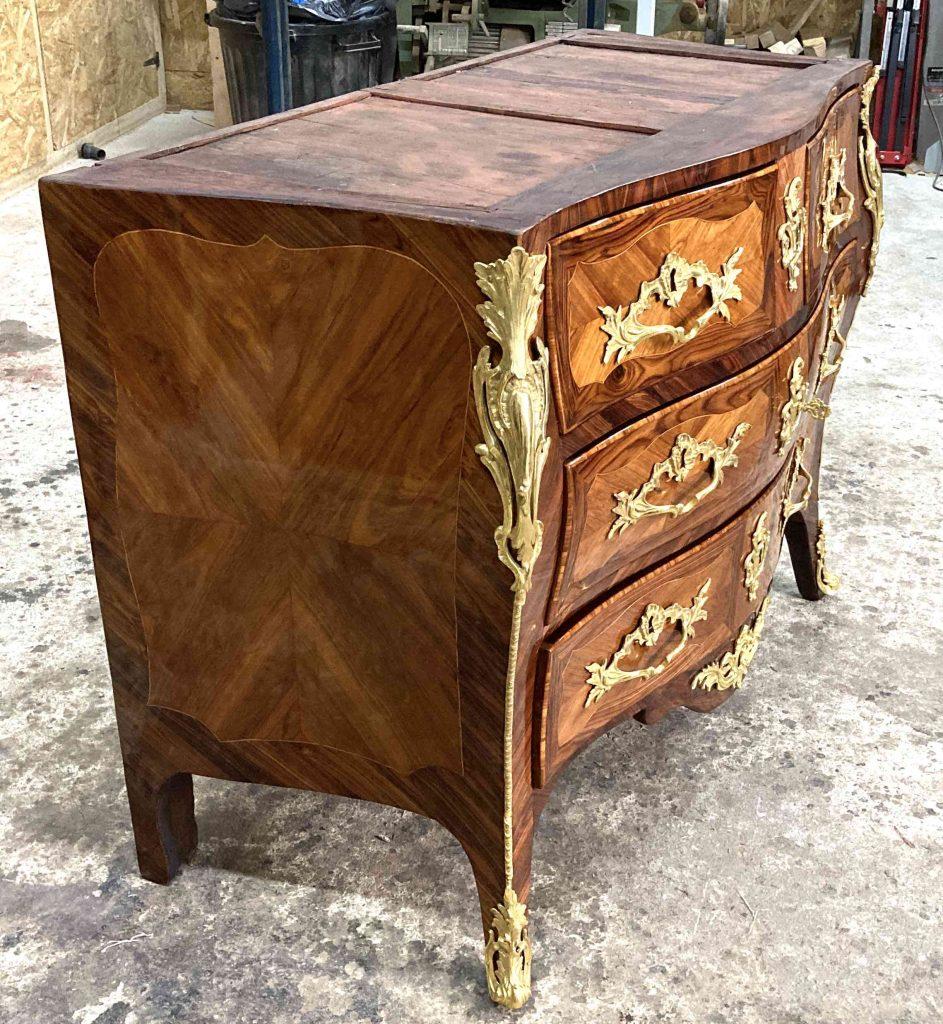
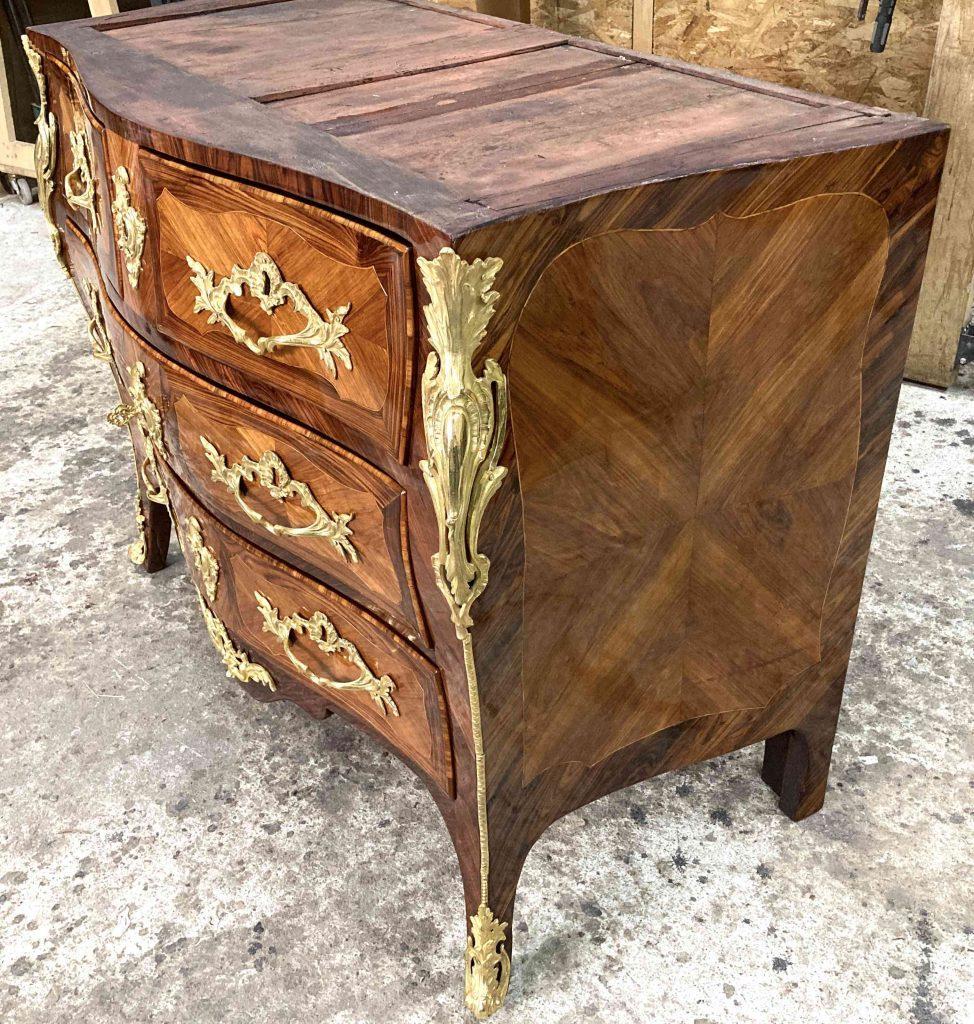
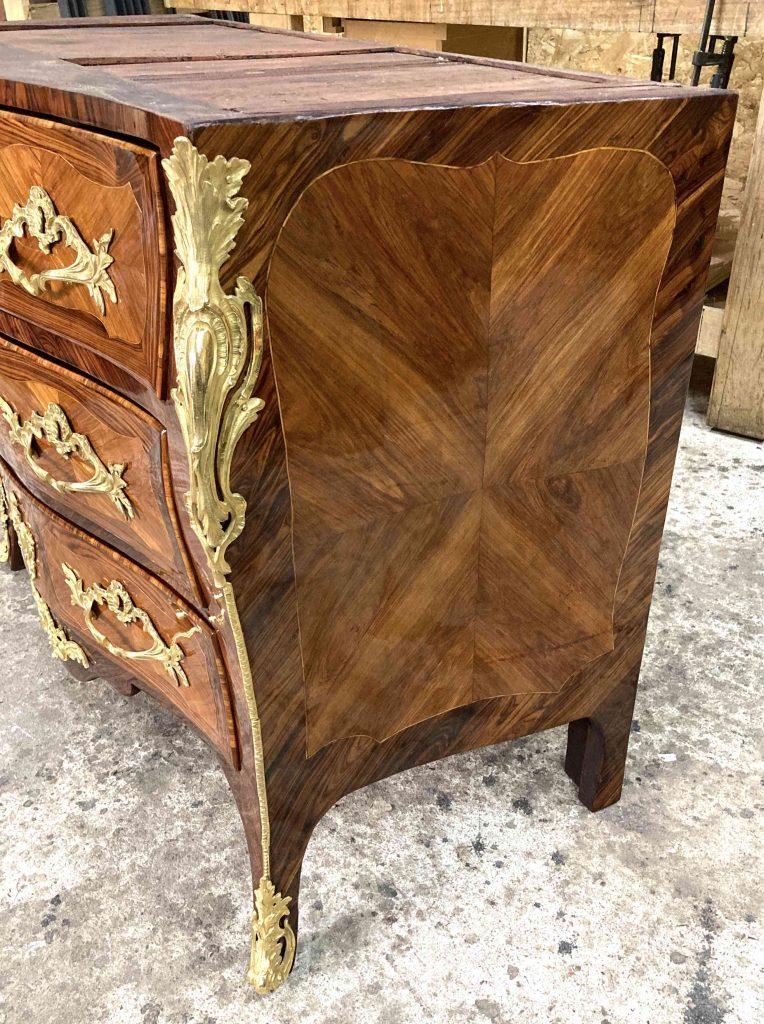
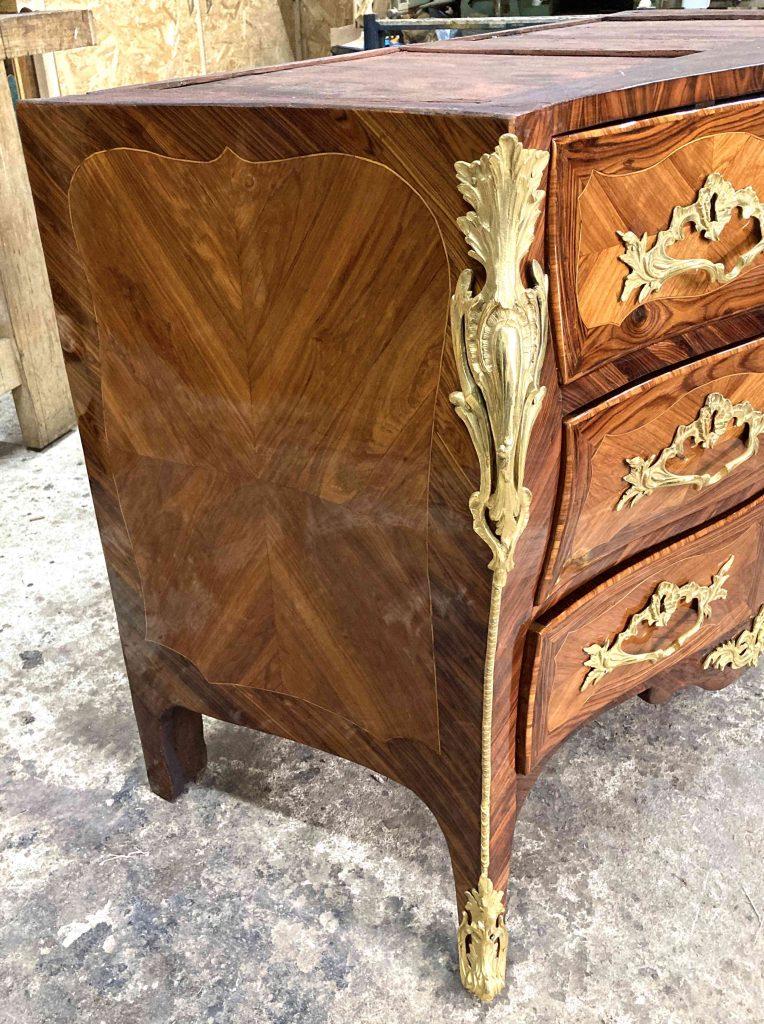
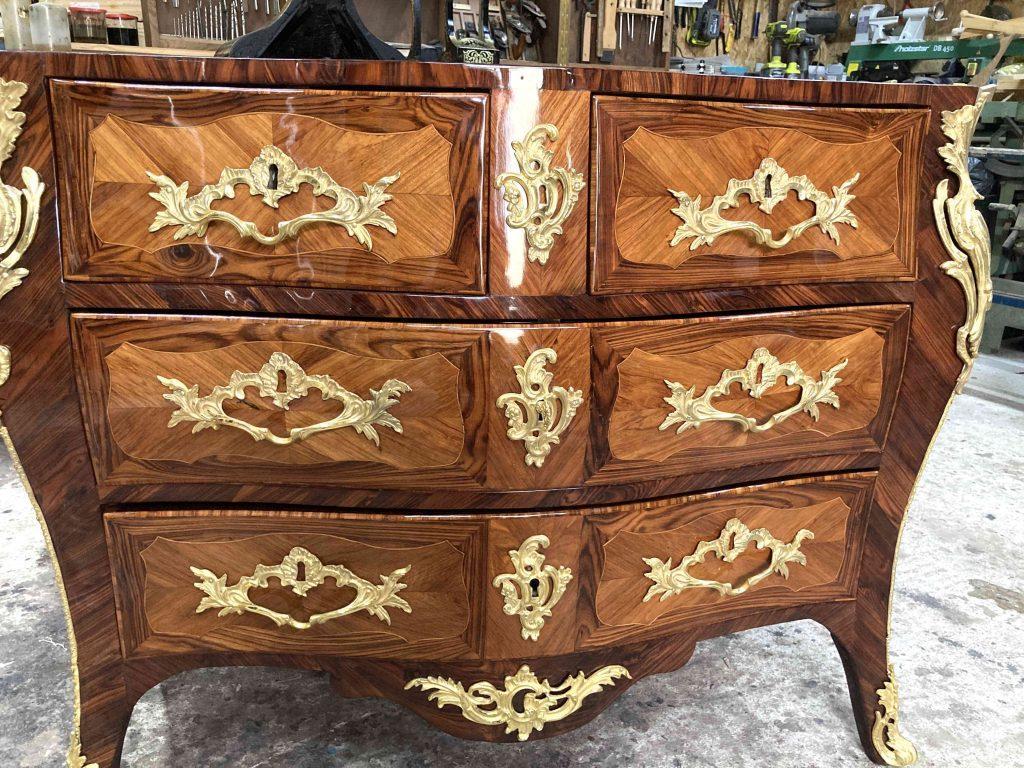
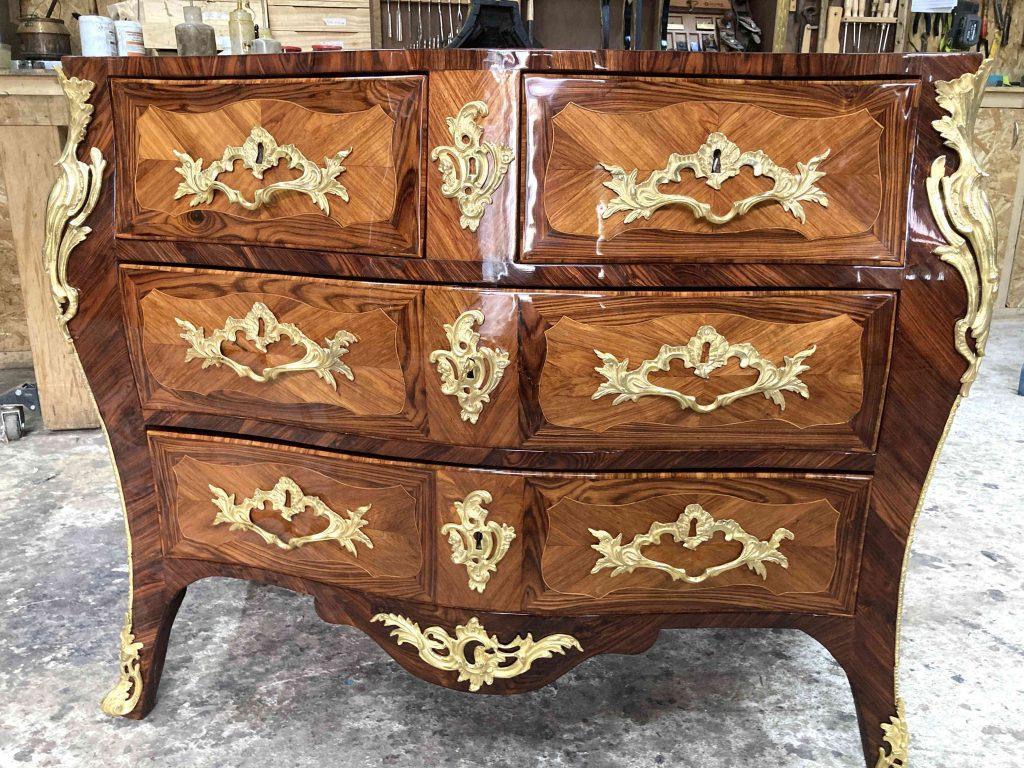
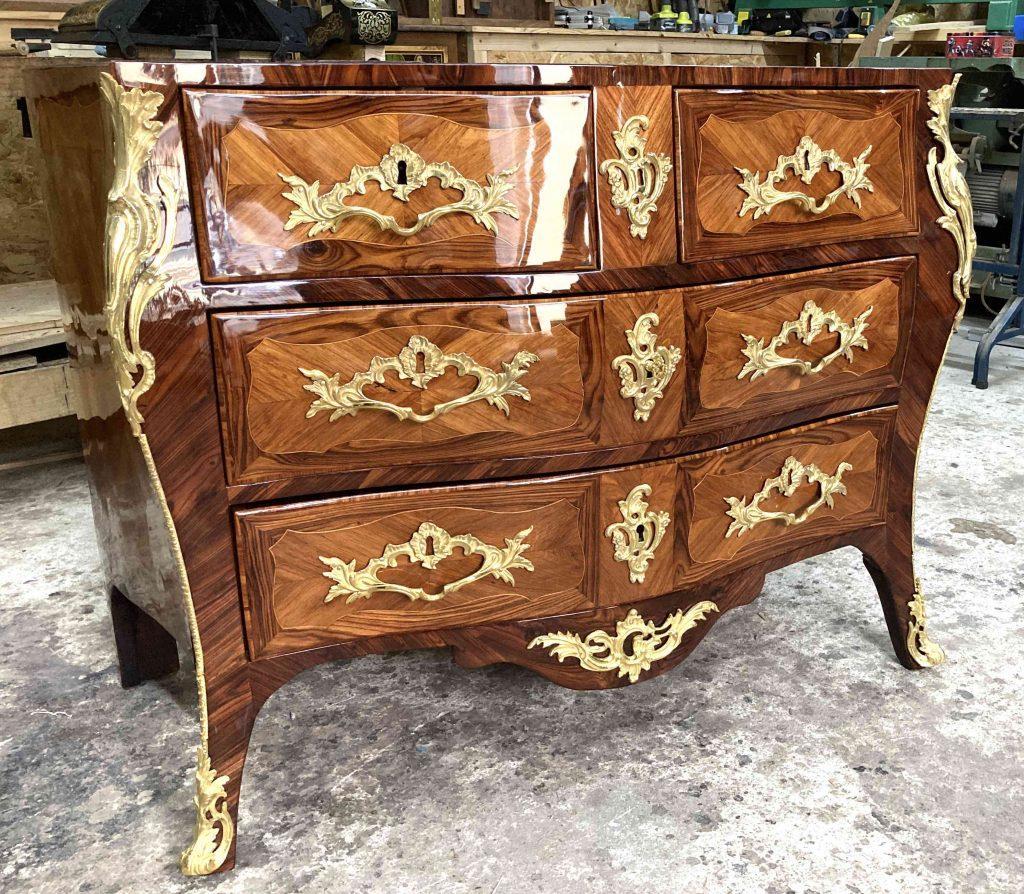
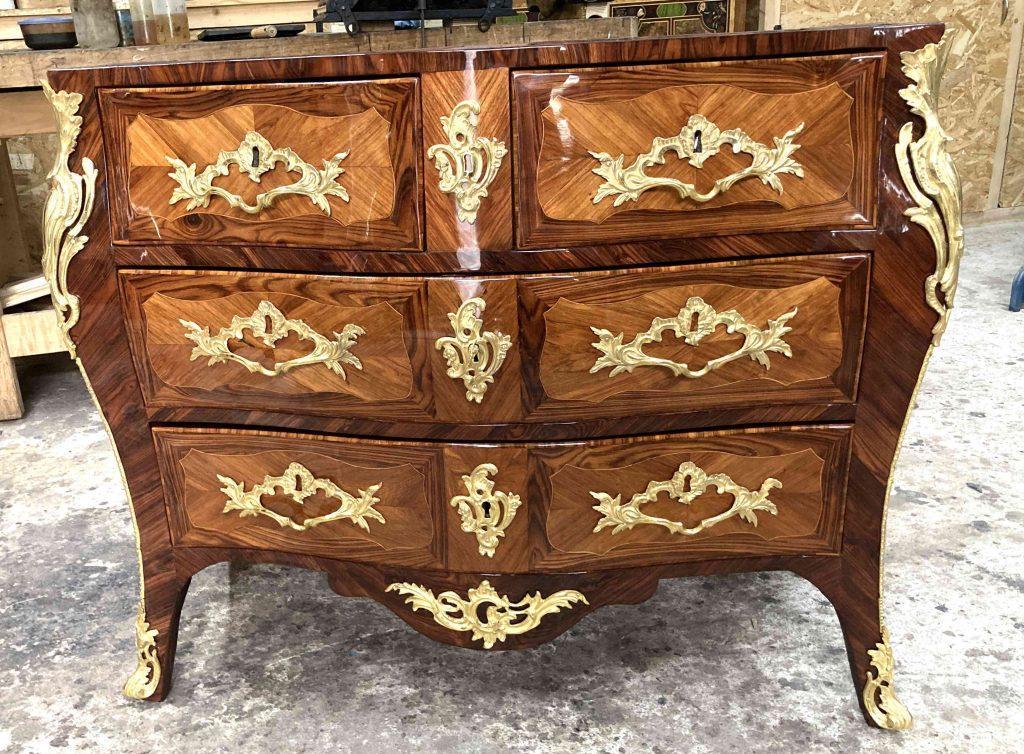
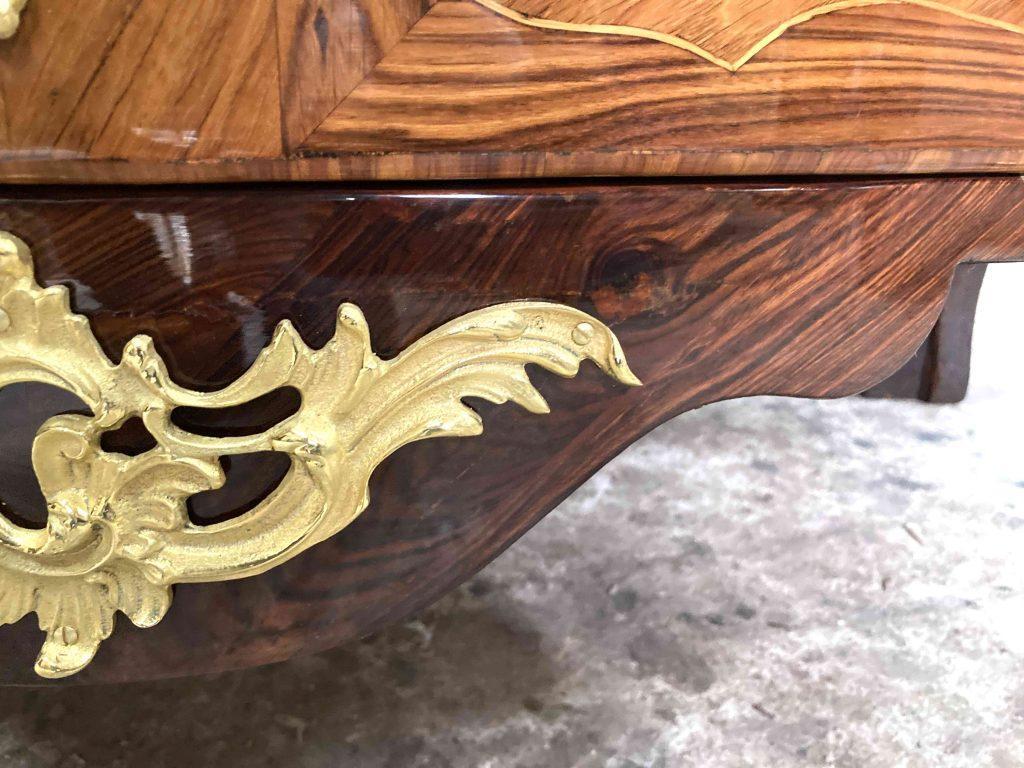
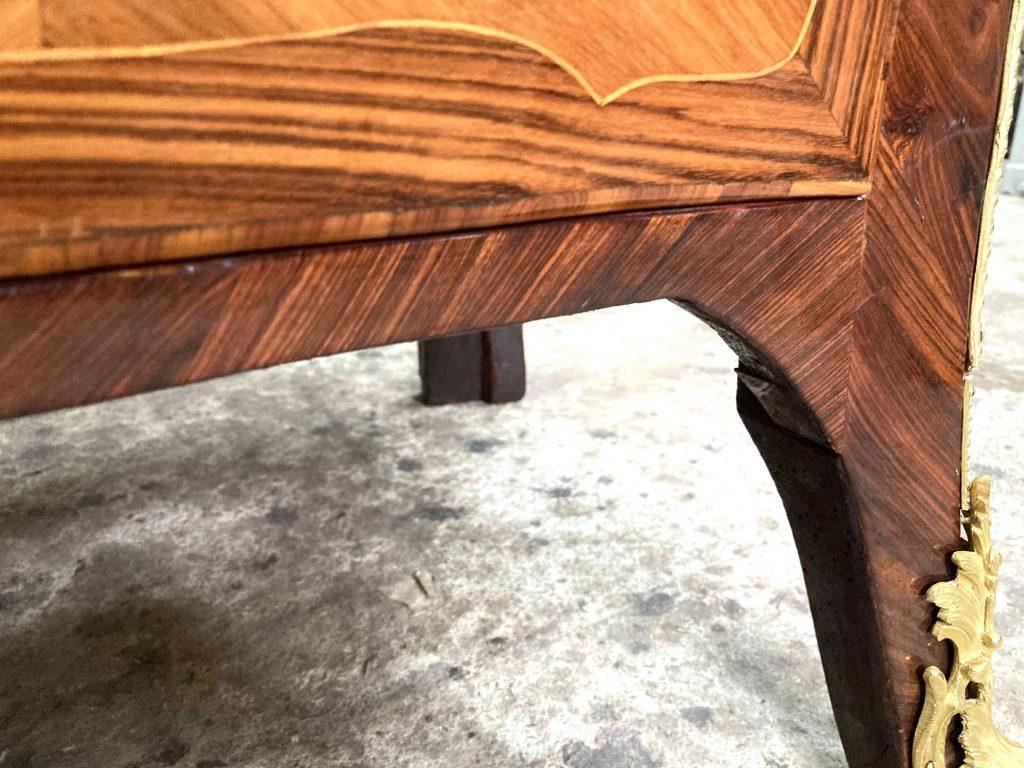
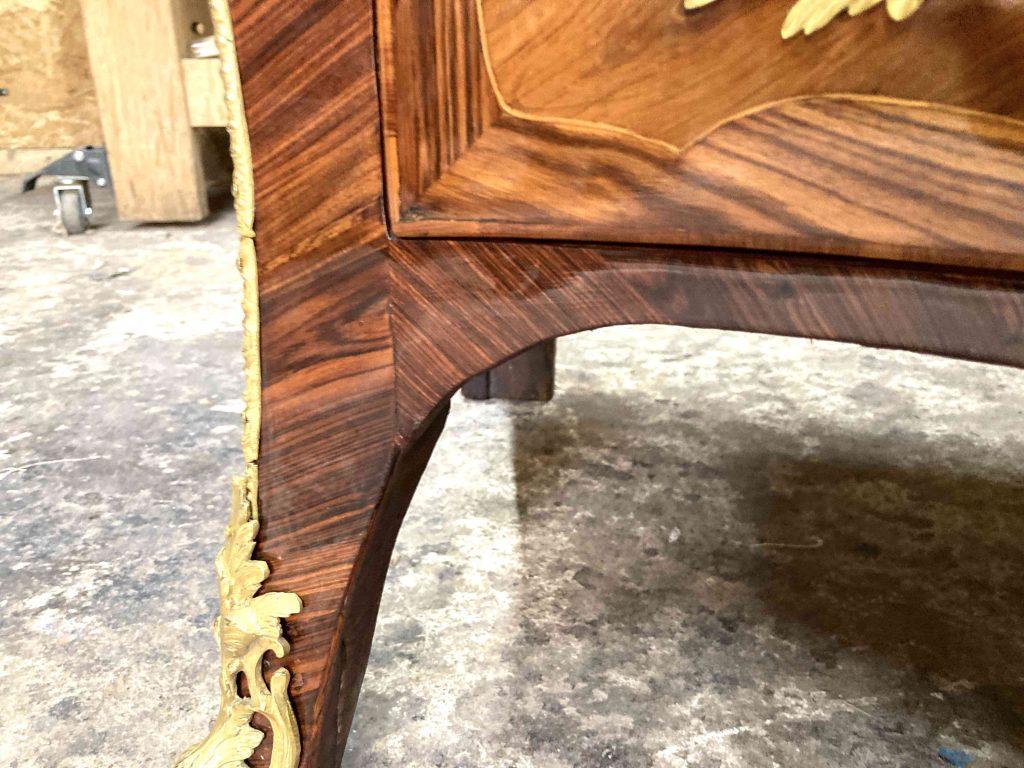
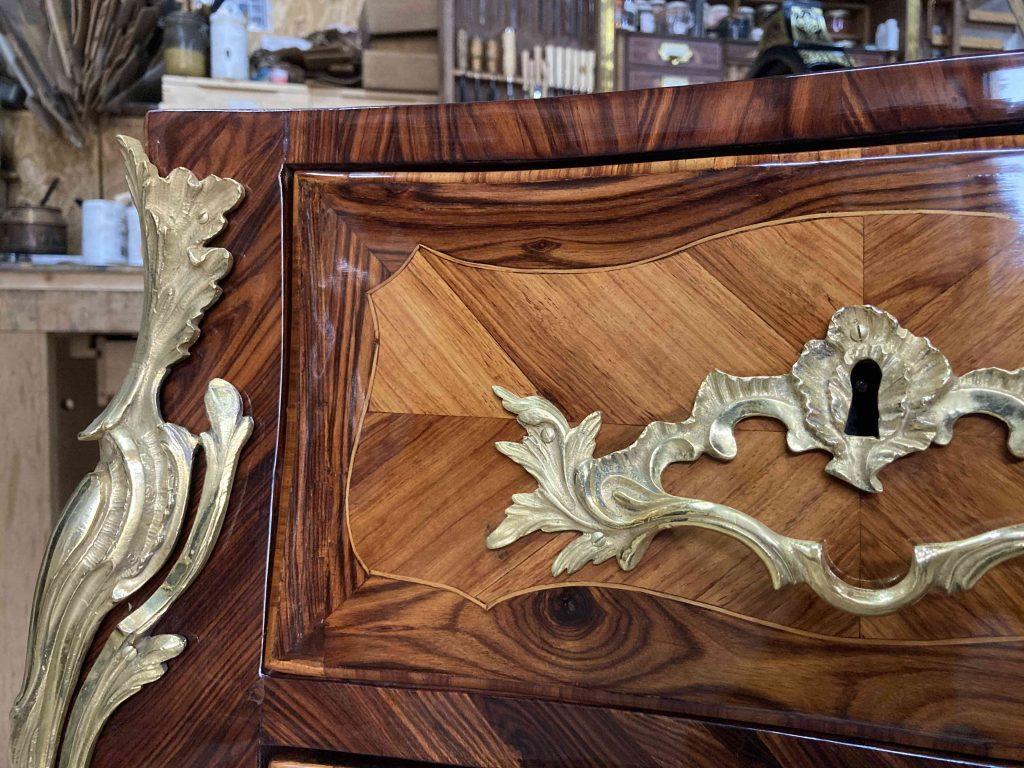
Restoration of a Louis XV commode stamped by the Parisian cabinetmaker Pierre Roussel. This commode is constructed of oak and softwood panels. It is veneered with rosewood arranged in a herringbone pattern, framed by violet wood. The stringing is boxwood.
The Roussels
The son of Michel Roussel, a journeyman cabinetmaker from the Cotentin region, Pierre Roussel was the only one to choose cabinetmaking over joinery, unlike his younger brothers Jacques, Michel, and Louis. He earned his master's certificate on August 21, 1745, and set up shop in the Faubourg Saint-Antoine, on Rue de Charenton opposite Rue Saint-Nicolas, under the sign "L'Image de Saint Pierre" (The Image of Saint Peter). He quickly gained a strong reputation among the leading cabinetmakers of Paris, which led to his appointment as a sworn member in 1762, and then as a sworn accountant in 1763-1764. In 1767, he was chosen as an expert to arbitrate a dispute between his colleague Grandjean and a furniture broker. Recognized and respected by his peers, he became a representative of the cabinetmakers' guild in 1777, then deputy syndic in 1779, and finally syndic the following year. From 1775 to 1780, he received commissions from the Prince of Condé amounting to a total of approximately 10,000 pounds for the Palais-Bourbon and the Château de Chantilly.
The small fortune he earned allowed him to marry one of his four daughters to a notary of the Châtelet; another married a clerk at the registry of the Chamber of Accounts.
He worked for his fellow cabinetmakers and merchants such as Pierre Migeon IV, Adrien Delorme, Joseph Baumhauer, Jean Pierre Latz and Mathieu Guillaume Cramer.
He supplied Honet and Thurin in 1769, then Bétault and Ravary in 1771. He employed the bronze workers Joseph Noël Turpin, André Ravrio, Dubost and the gilder Trufot.
Pierre Roussel died suddenly at the age of fifty-nine. The inventory of his goods, drawn up after his death by the cabinetmakers Leleu and Cochois, attests to the prosperity of the firm. His estate comprised 244 pieces representing a total of 18,000 livres. In the workshops and stores were about fifty commodes, both "square" and "circular" (those in a half-moon shape were called this), other commodes "in the shape of a tomb" and "in the shape of a console", tables in the English style, in the Dauphine style, breakfast tables, tables for various purposes, and a quantity of different works in marquetry or mosaic of Indian woods, in lacquer and in mahogany.
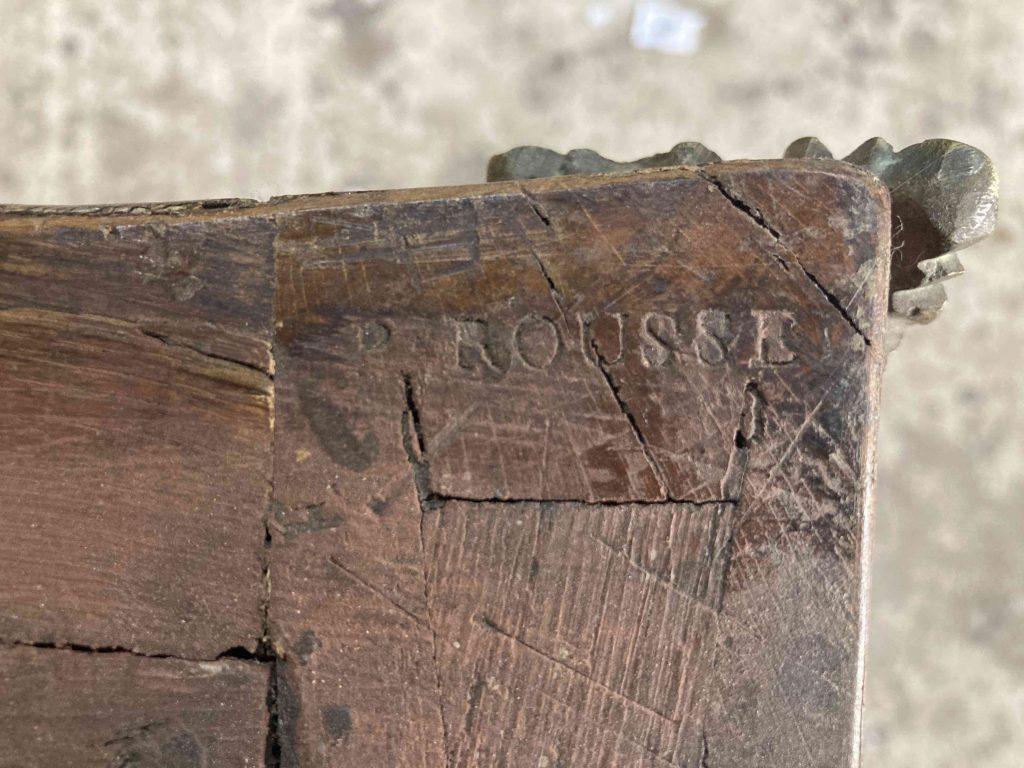
He signed his works with the stamp "P.ROUSSEL". If Pierre "the Younger" continued to use the same stamp as his father after his death, Pierre-Michel would register a slightly different stamp: taller, rounder letters and without slight serifs.
The widow Roussel, née Marie-Antoinette Fontaine, continued to manage the business and, following custom, retained her husband's mark to sign the work of her sons, who were in partnership with her. These craftsmen had proven themselves: the elder, Pierre-Michel, had held the title of master craftsman since August 28, 1766; the younger, Pierre, known as "the younger," since August 13, 1771. The latter remained with his mother, while the former operated a branch shop at 310 rue Saint-Honoré, next to the Jacobin convent, specializing in luxury furniture. He retained the favor of the Prince of Condé and became one of the Court's suppliers. Among the pieces listed under his name in the royal accounts are a "mottled mahogany secretary desk with corner pieces on the sides, adorned with fine bronze mounts," and a matching bookcase that also featured side shelves. He sold his business in the month of Fructidor of year II (August – September 1793) and retired to rue de Gramont where he died on December 15, 1822 at the head of a large fortune.
Pierre the Younger appears in 1785 and 1786 as a supplier to the Menus Plaisirs of Versailles, then, in 1792, he partnered with a certain Mr. Durantin to trade in exotic woods. After 1813, all trace of him is lost. He is known to have been alive in 1820.
BIBLIOGRAPHY
- French Furniture of the 18th Century – Pierre Kjellberg – Les Editions de l'Amateur – 2008
- 18th-Century Cabinetmakers – Count François de Salverte – Art and History Editions – 1975
- The Roussel Family: A Dynasty of Cabinetmakers in the 18th Century (Hardcover) – François Quéré – Faton – 2012
Condition report before restoration
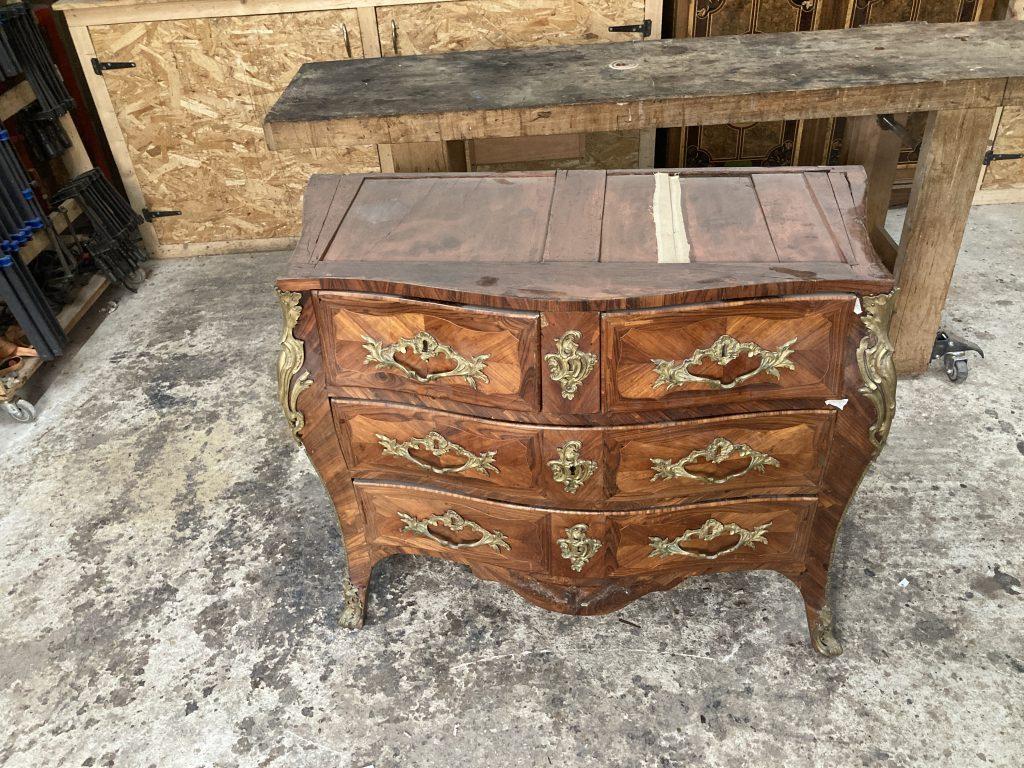
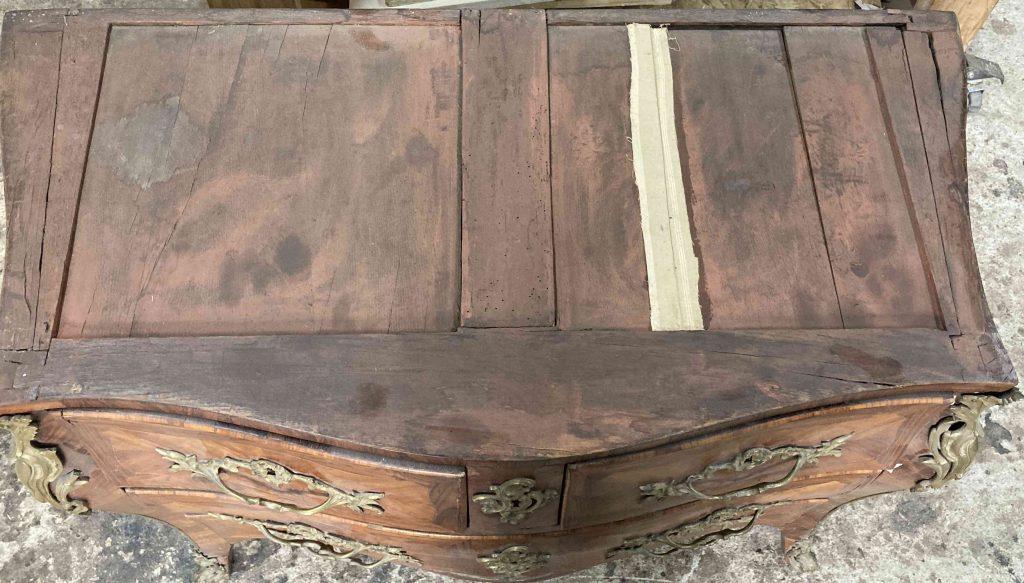
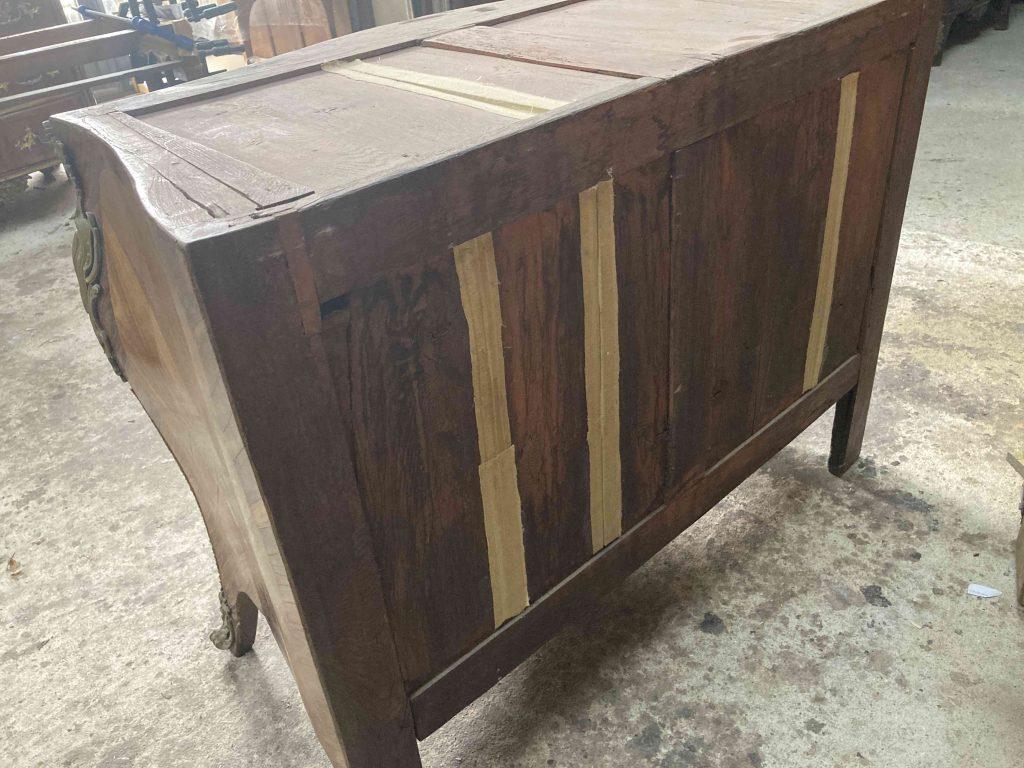
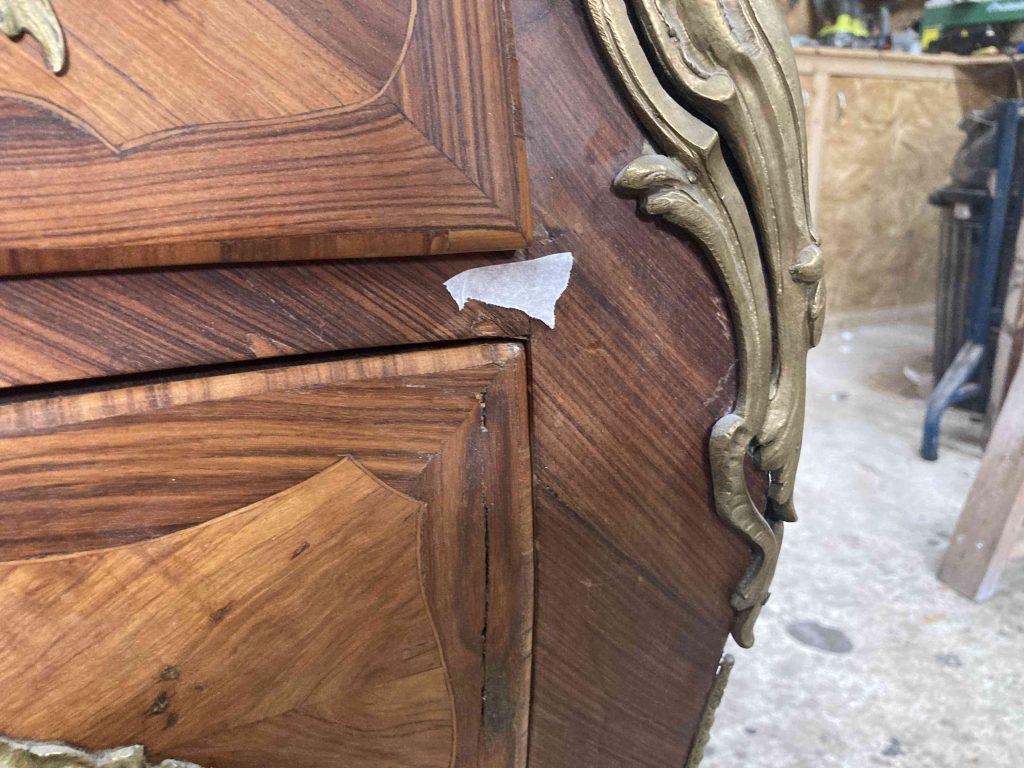
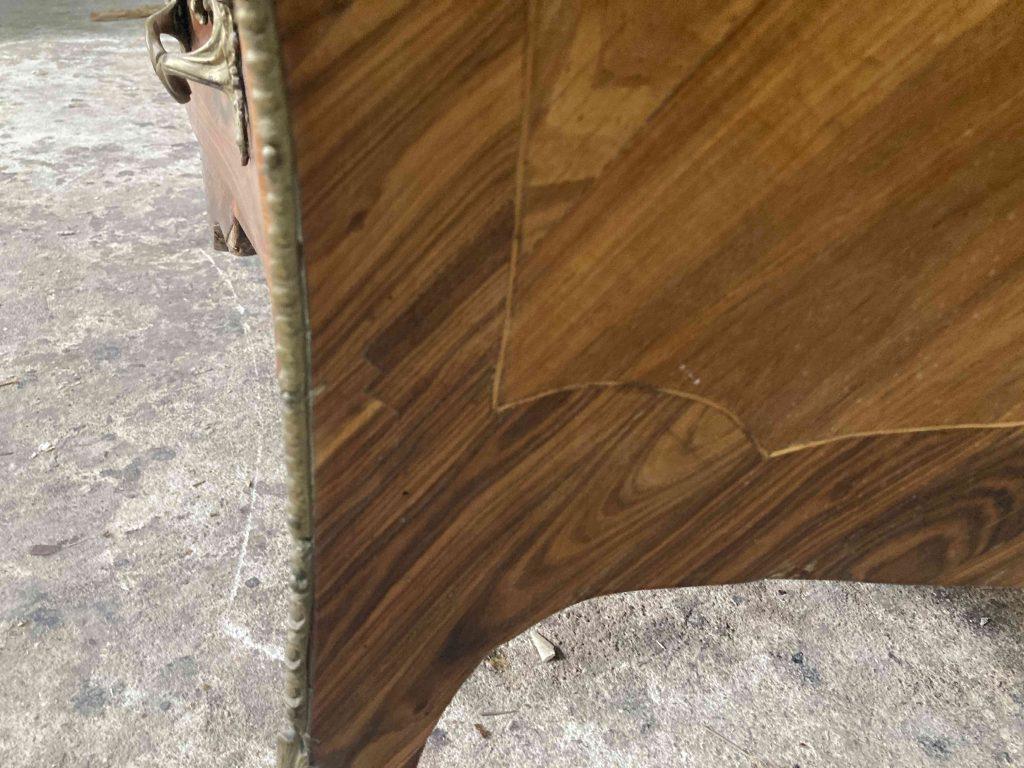
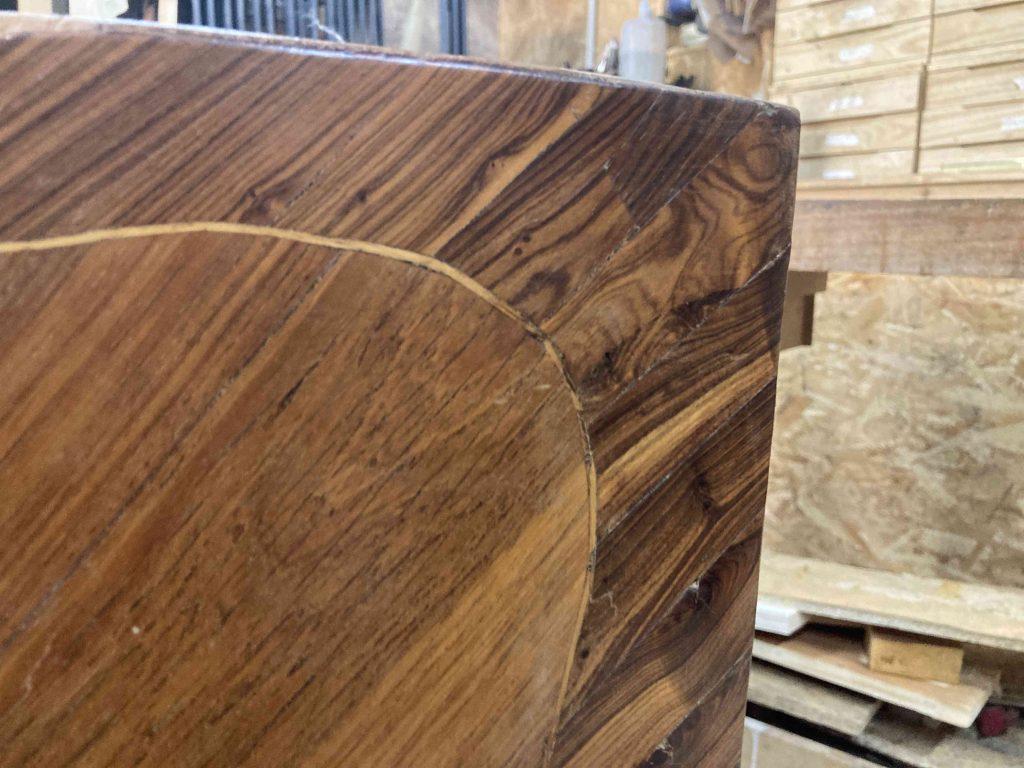
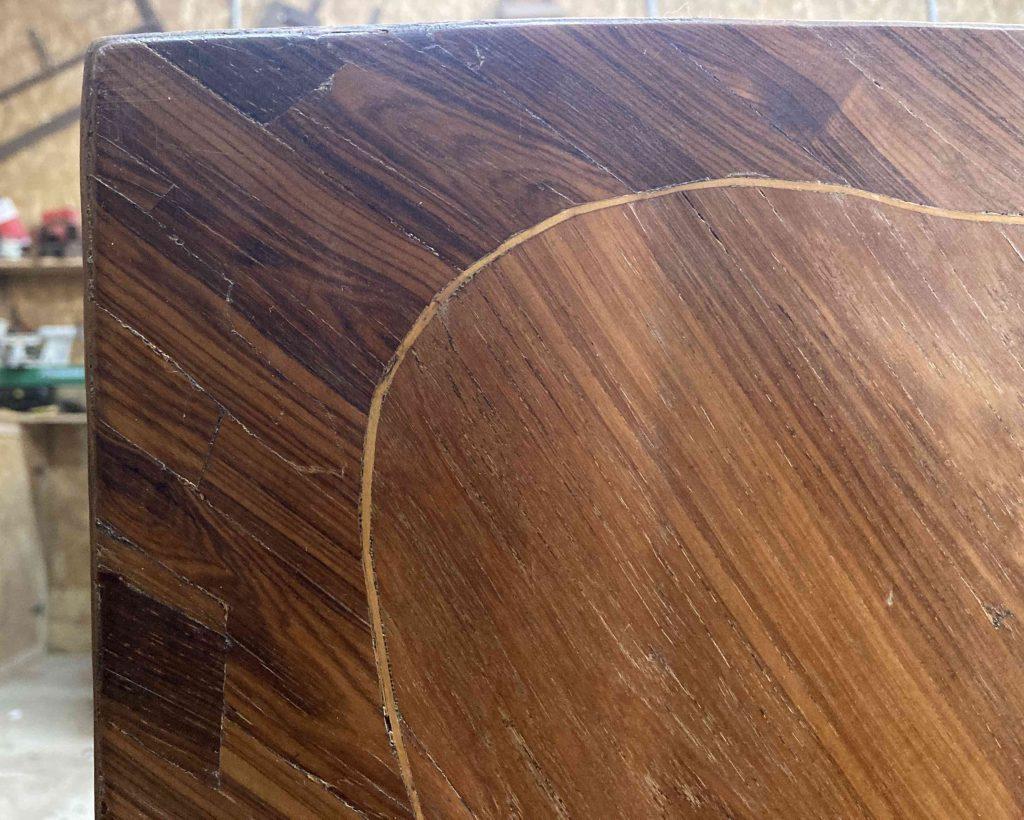
This chest of drawers was in relatively good condition, unlike the furniture I'm usually given. The specifications therefore stipulated restoring the missing veneer, repairing the old, unsightly repairs, rehydrating the veneered surfaces, and overhauling the drawer slides.
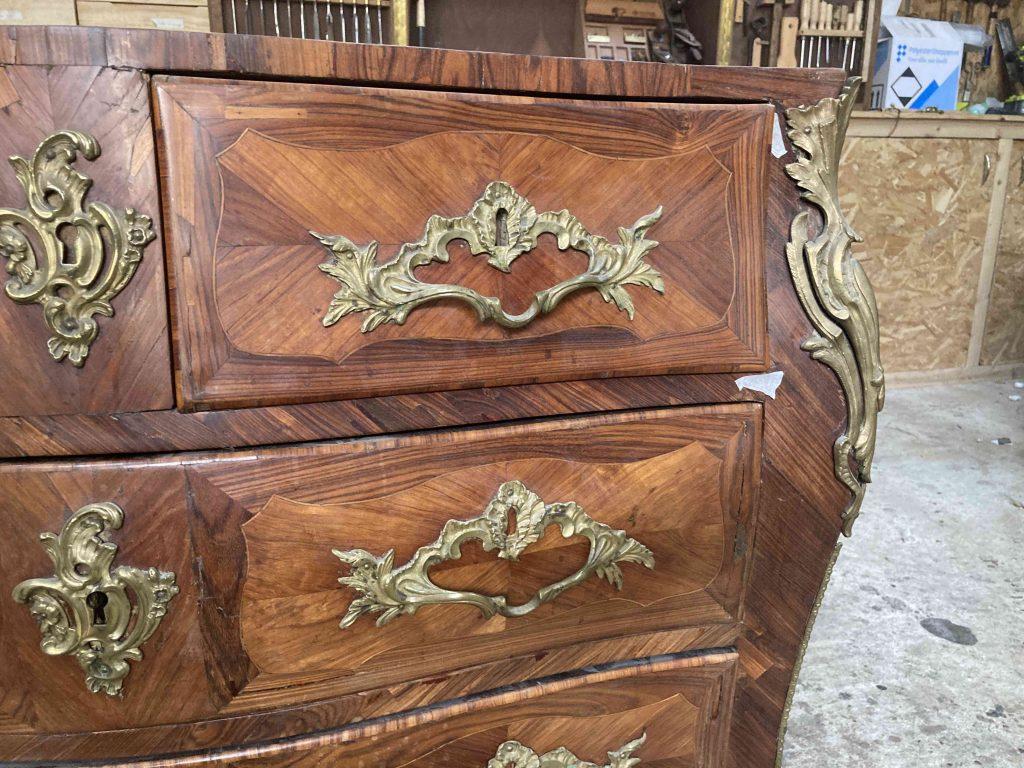
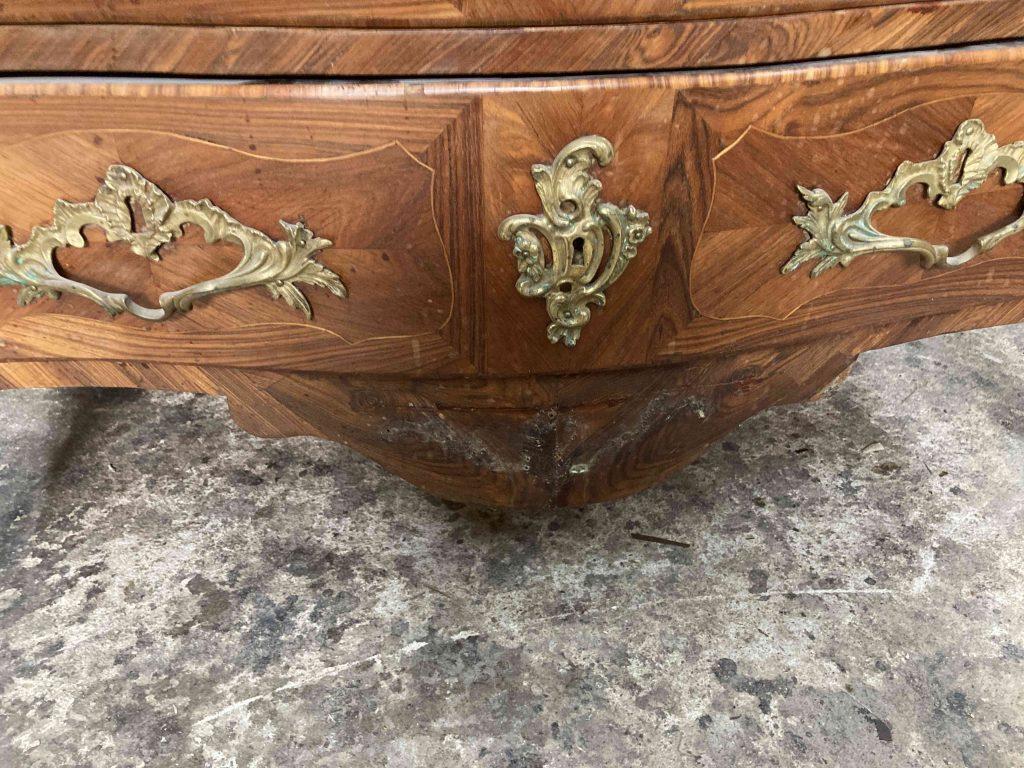
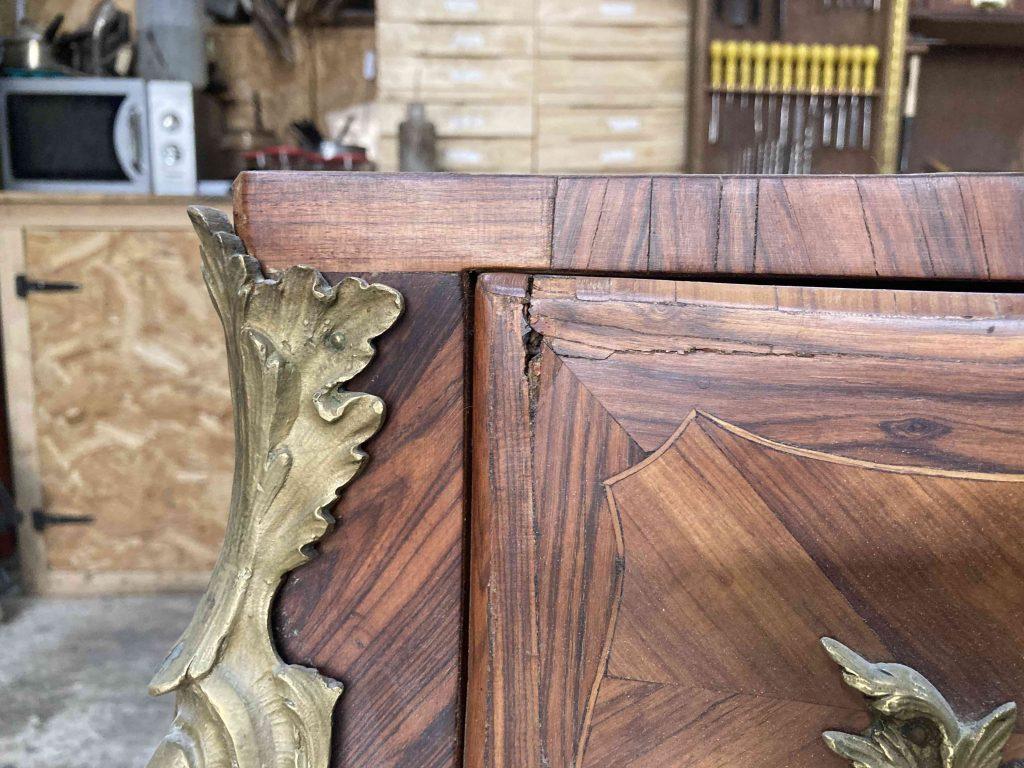
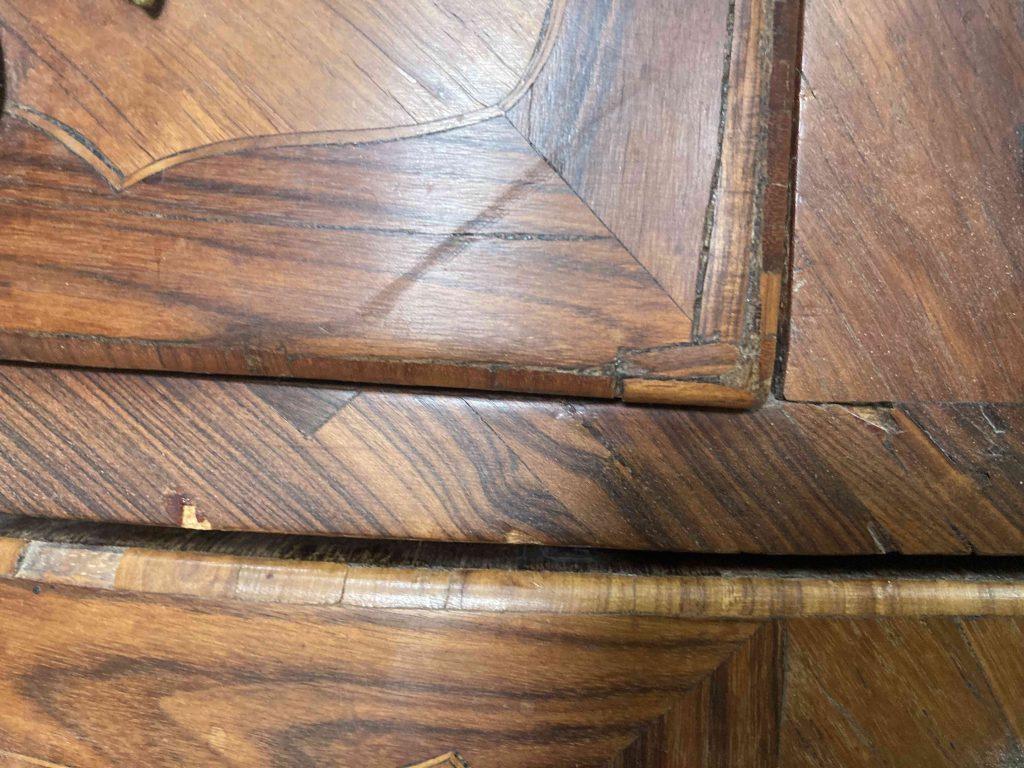
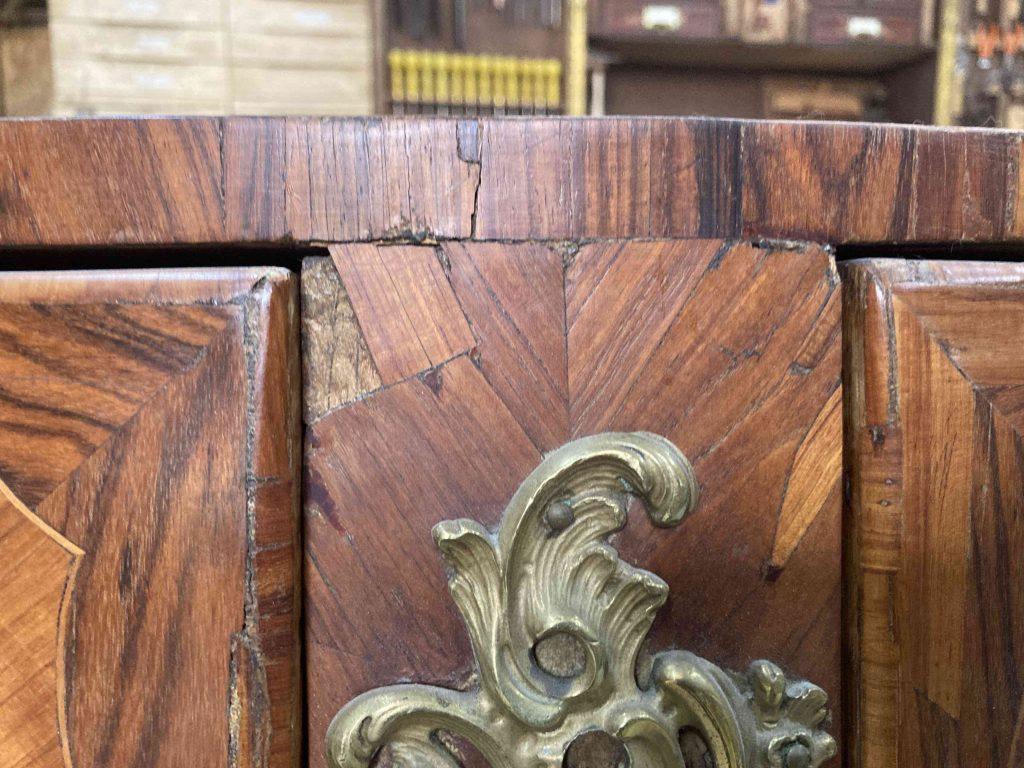
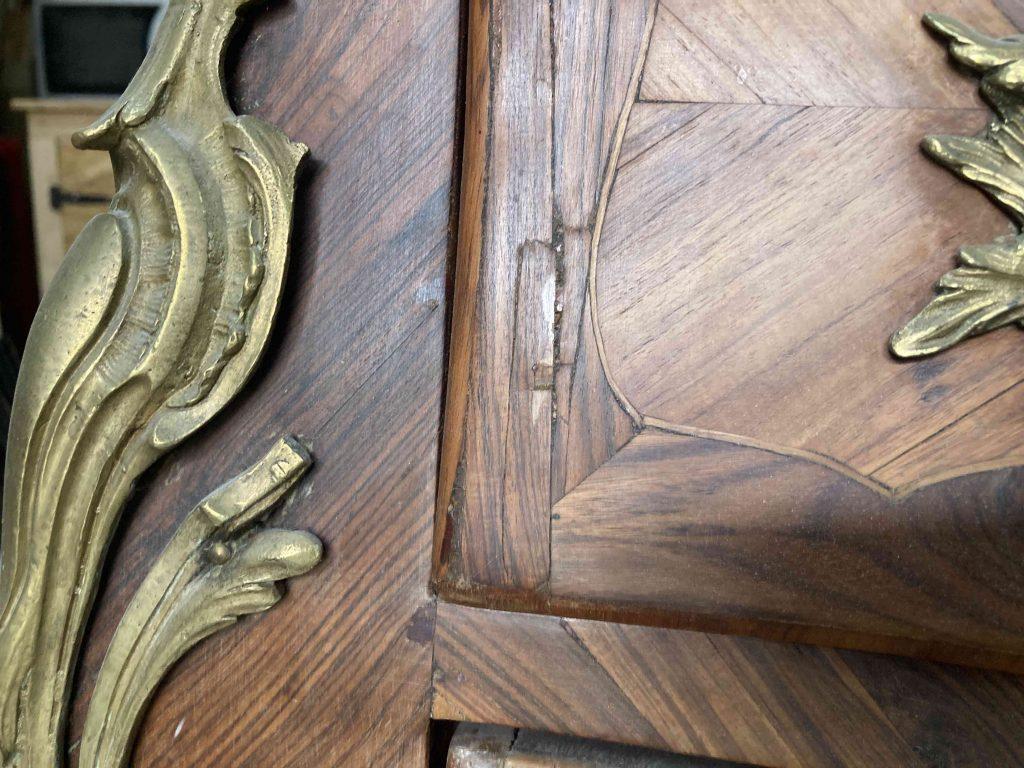
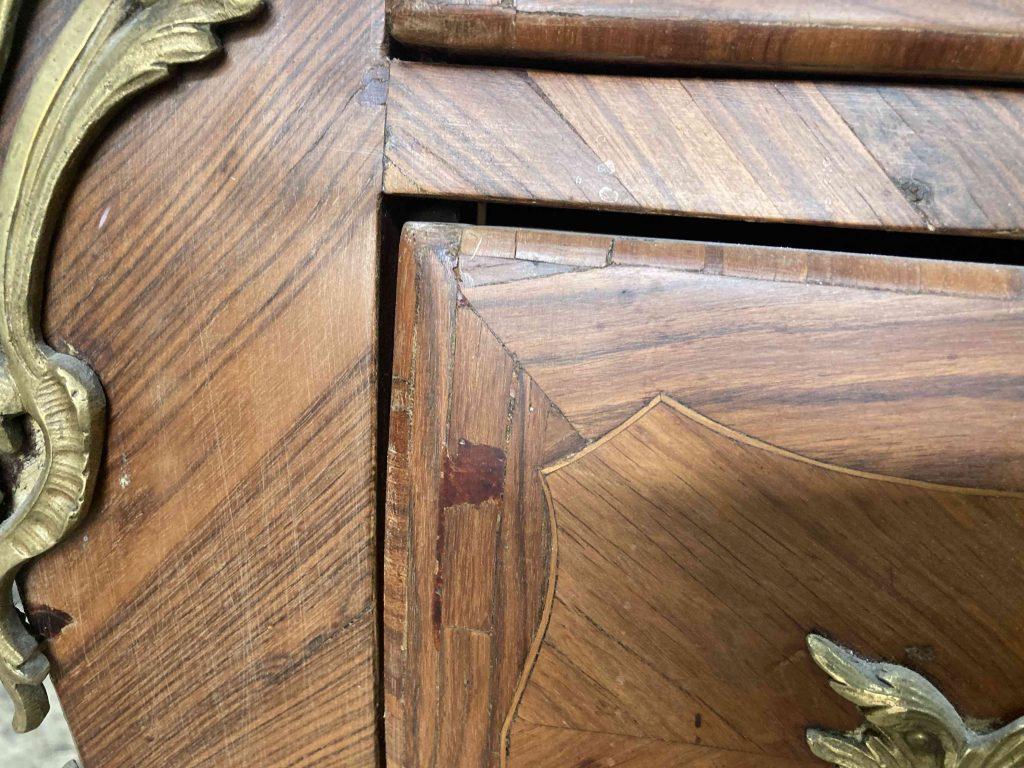
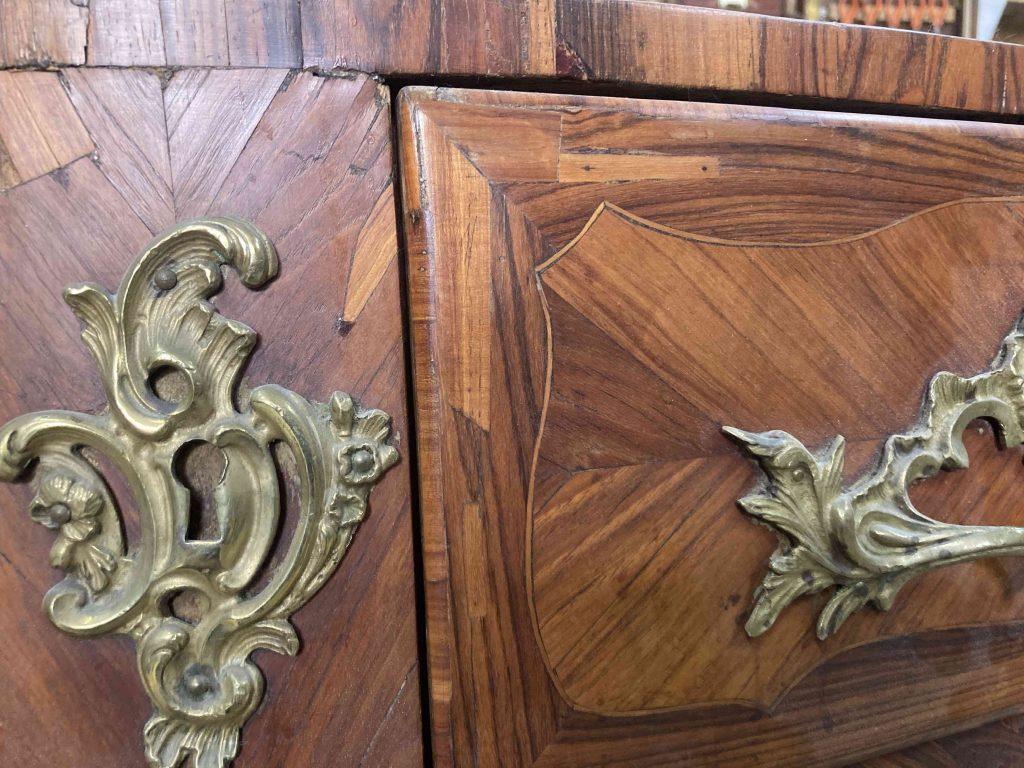
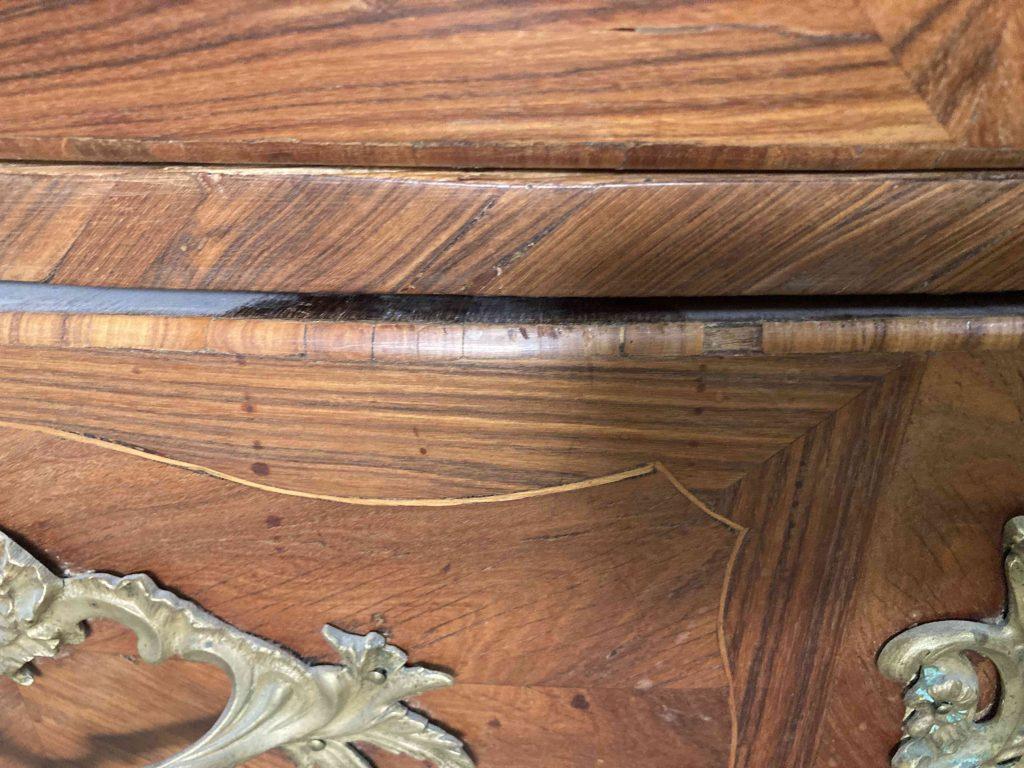
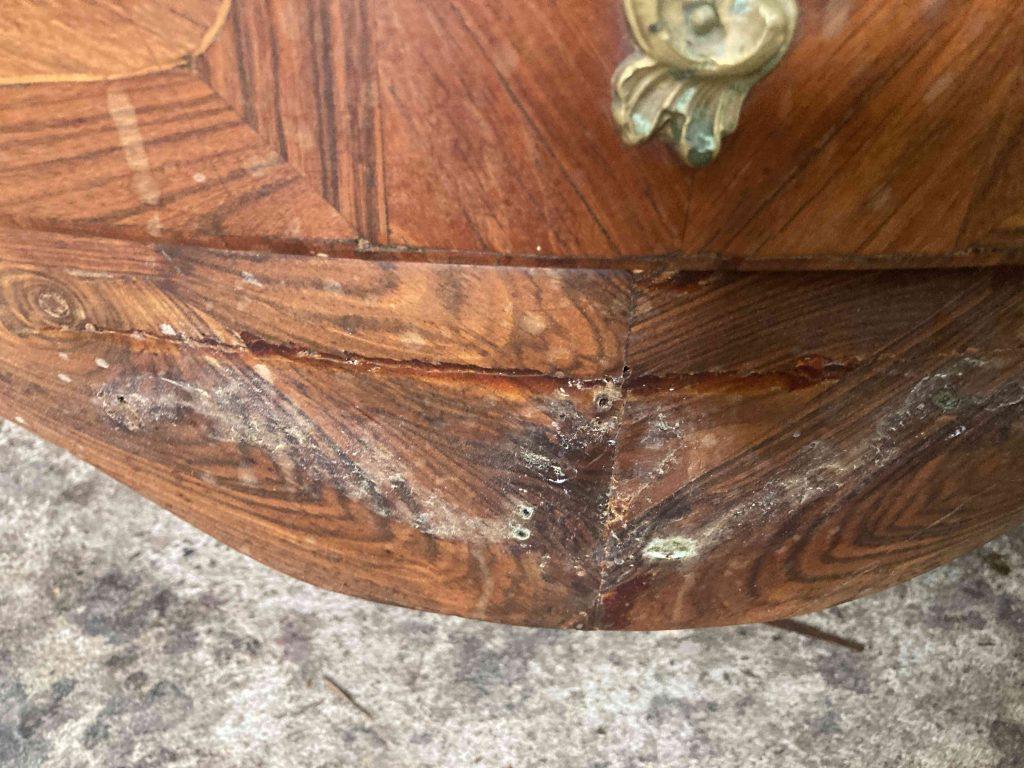
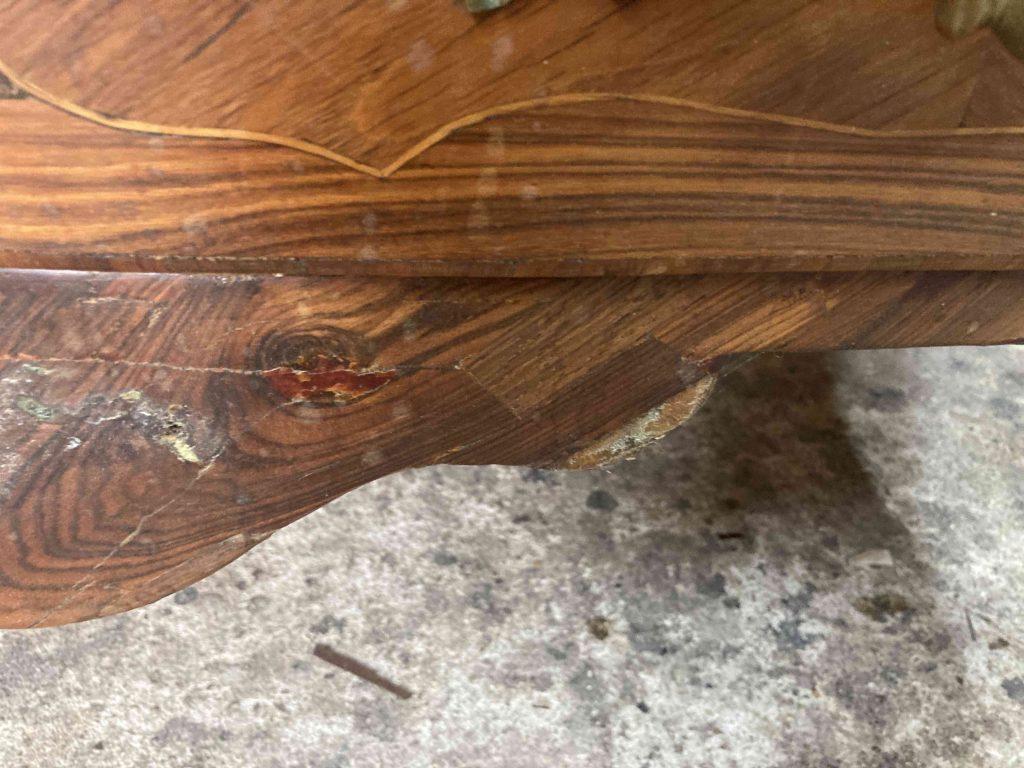
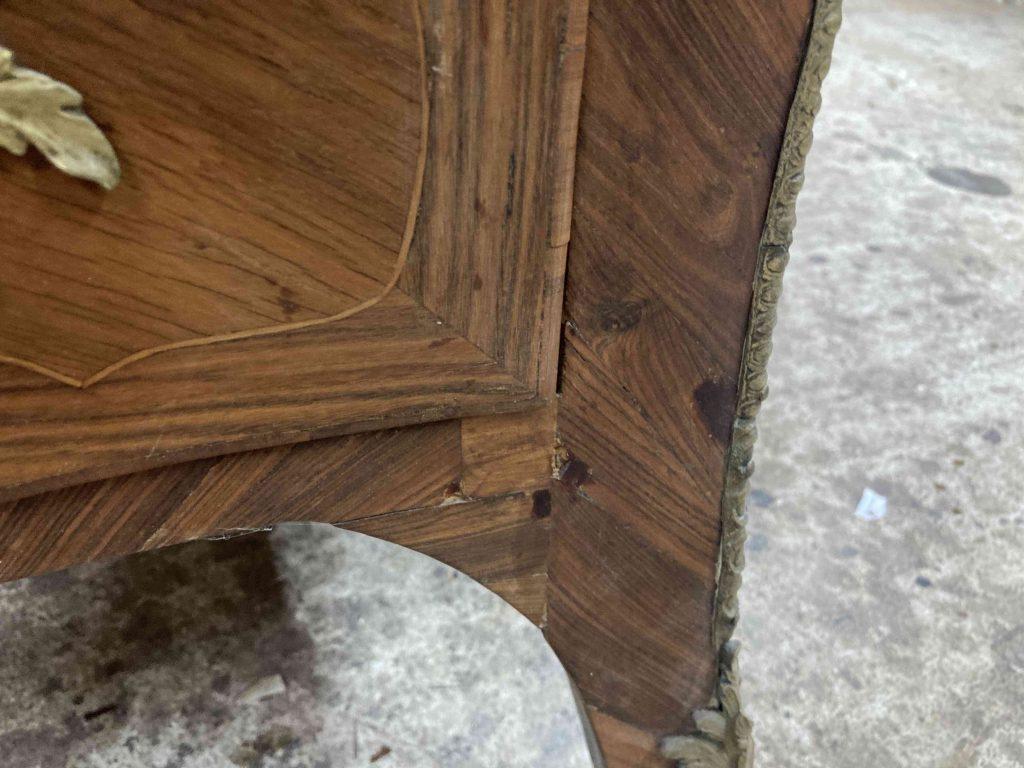
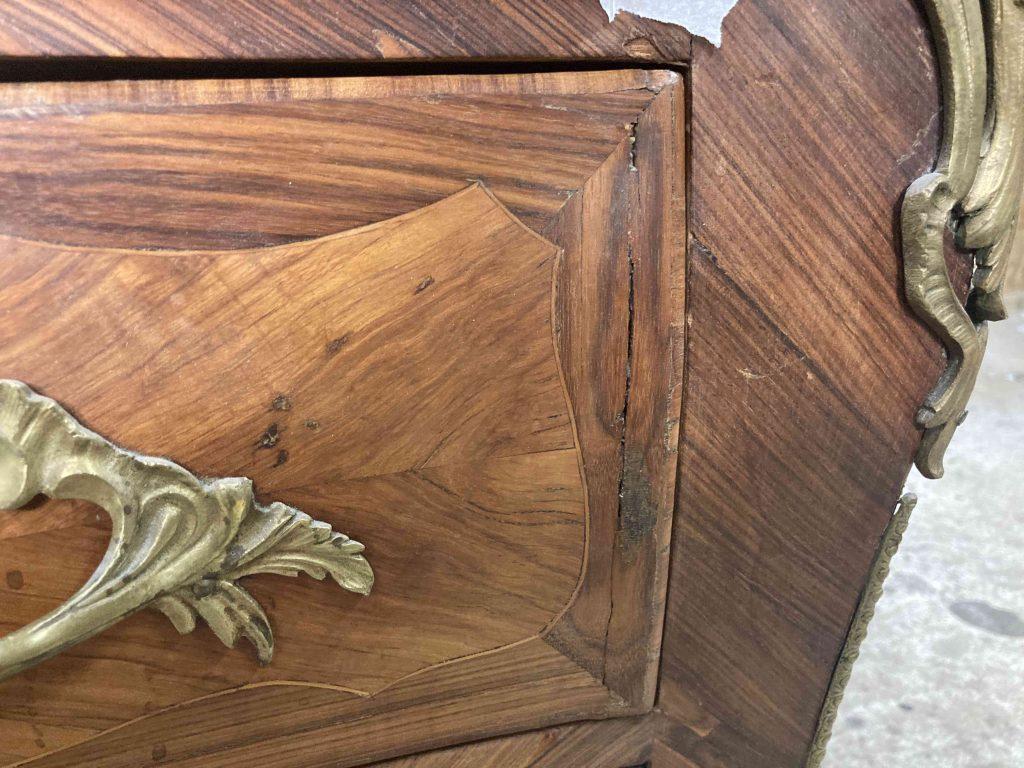
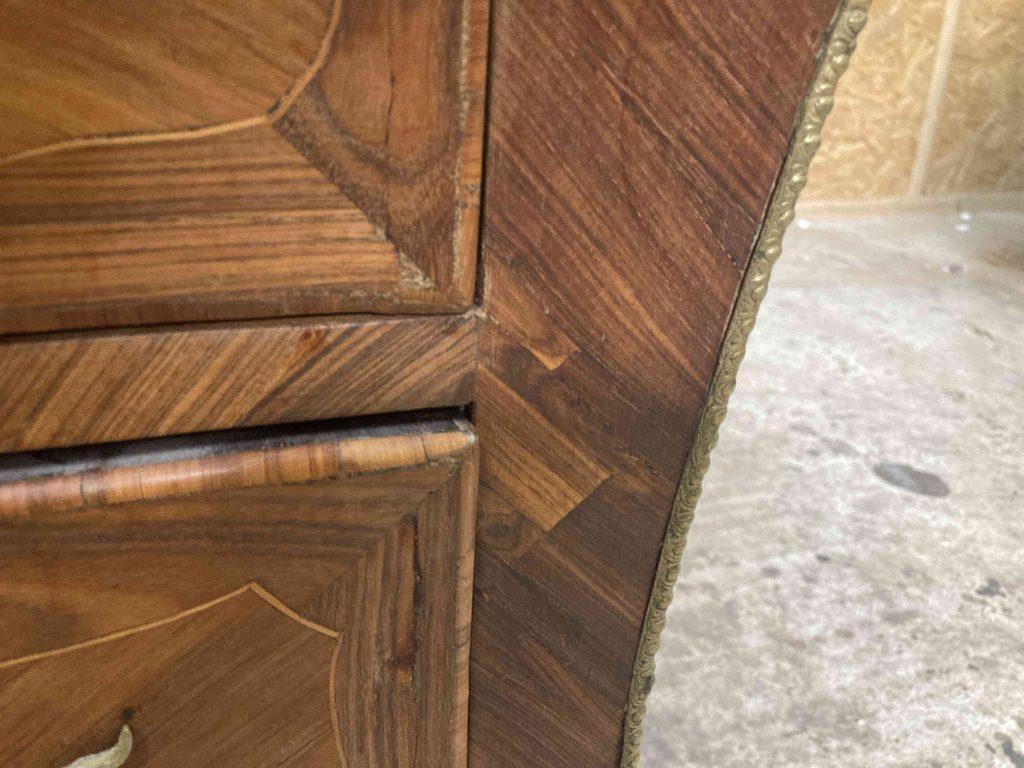
The Restoration
Since the structure was in good condition, dismantling it was absolutely out of the question. I would also like to reiterate that dismantling a piece of furniture is never a routine procedure and that this step must be absolutely justified, as it significantly compromises the preservation of the original glues and joinery.
That's why I opted for vacuum-sealing the sides with a membrane applied directly to them. This process allows for highly effective regeneration of the adhesives. It is only slightly tedious to implement.
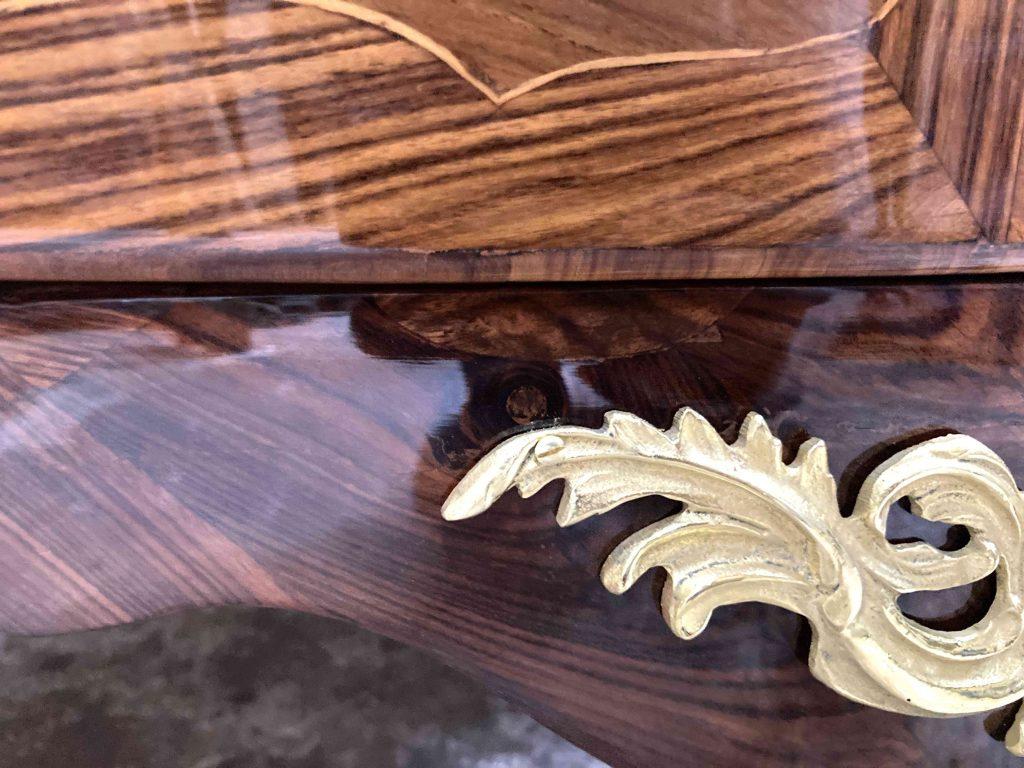
The missing veneers and the old grafts in the wrong grain of the wood were restored by sawn veneer, scraped, sanded and put to the correct thickness on the back face before gluing with hot glue.
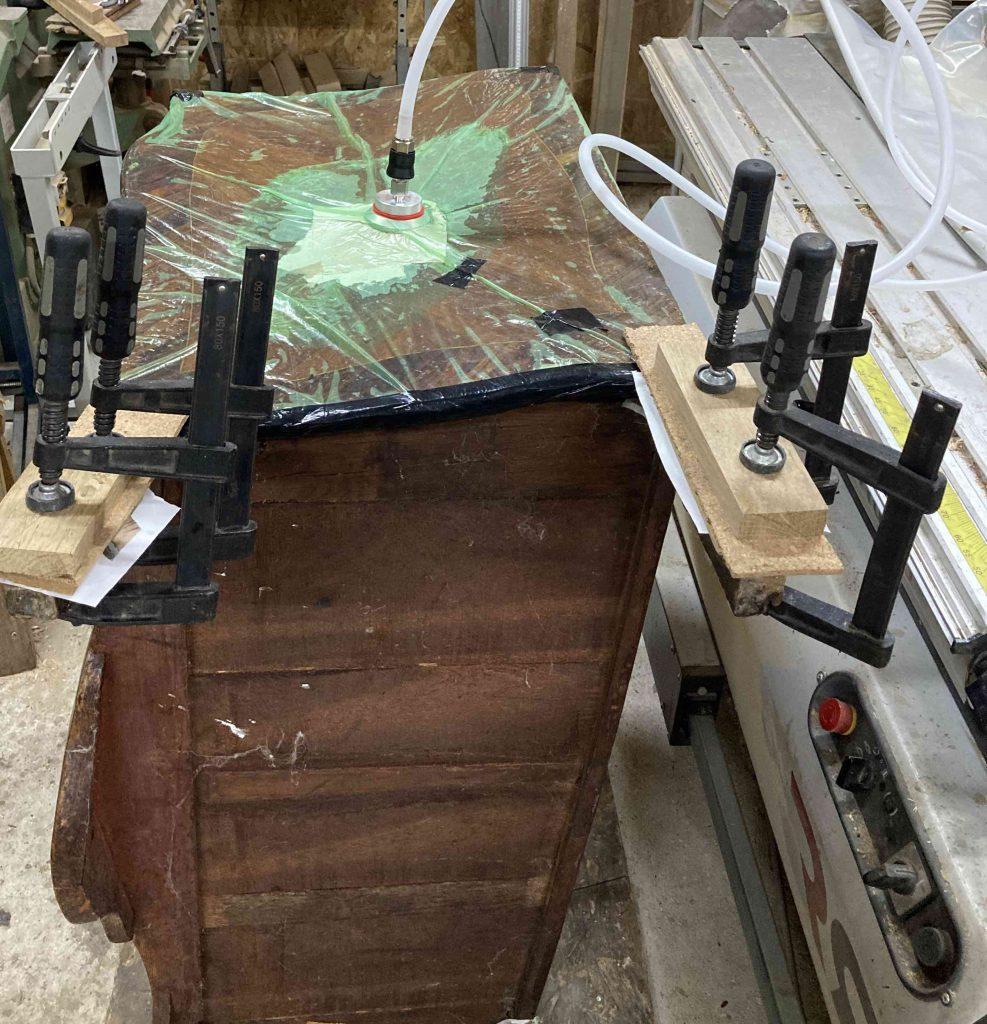
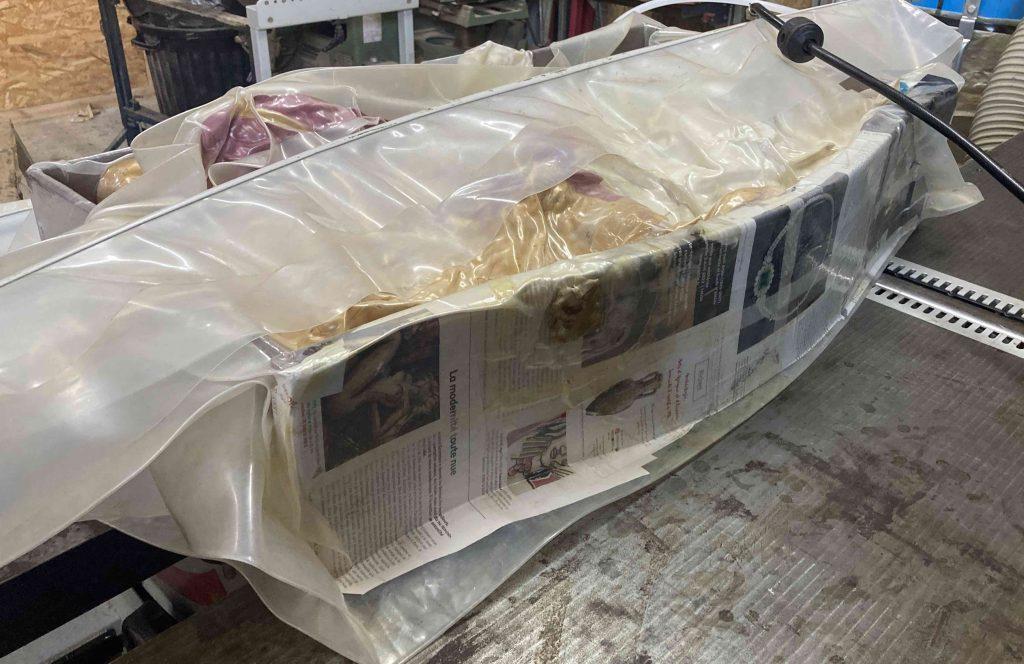
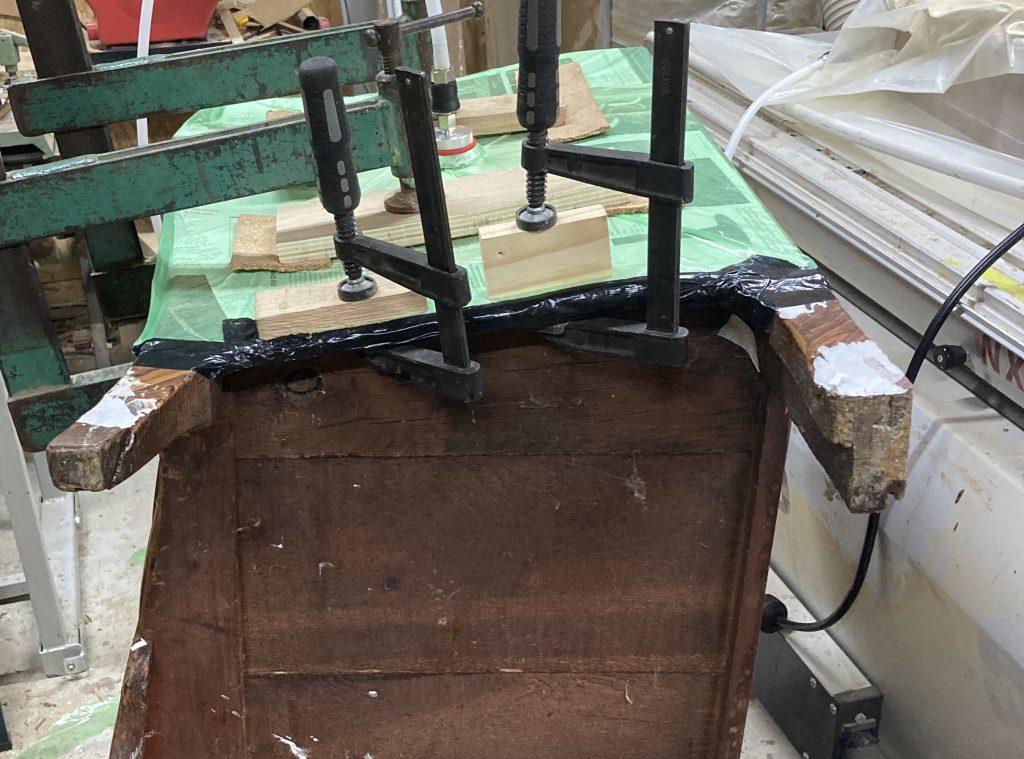
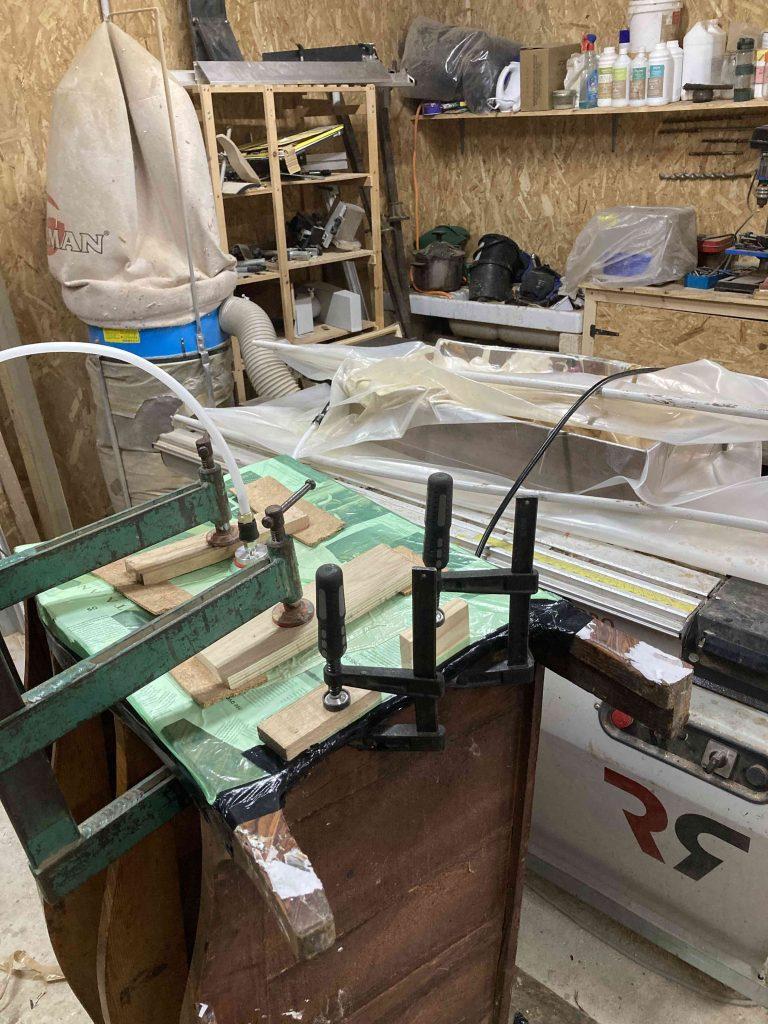
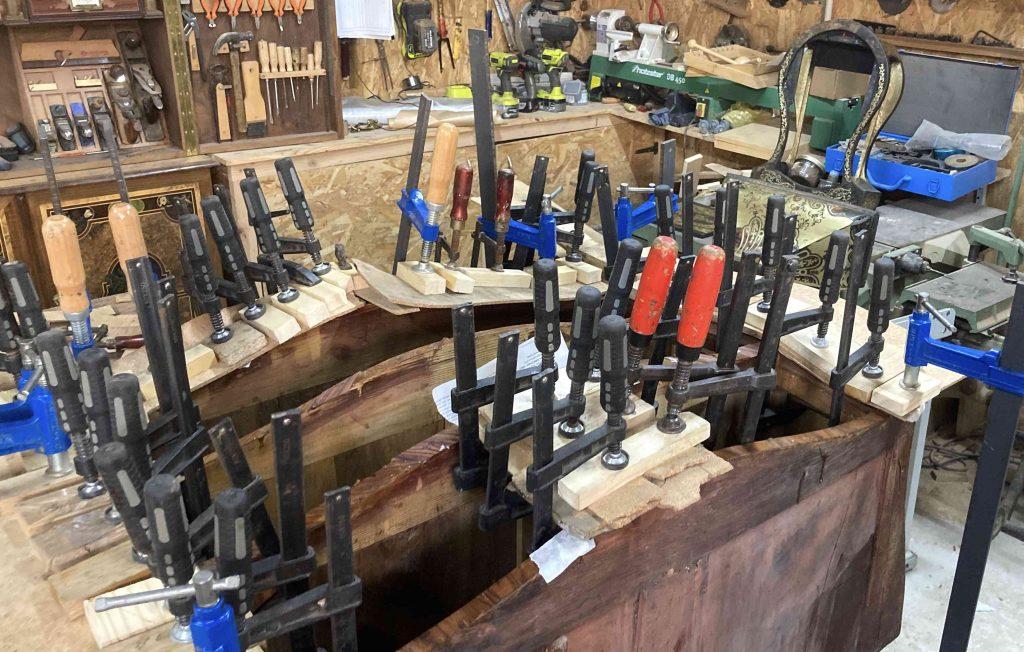
The old French polish was thinned and reworked before a new clear shellac finish was applied. The veneer grafts were first oxidized. The bronzes were restored and gilded by Arte.
To see previous restorations : https://ebenisterie-mathieuvath.fr/en-ce-moment-a-latelier/