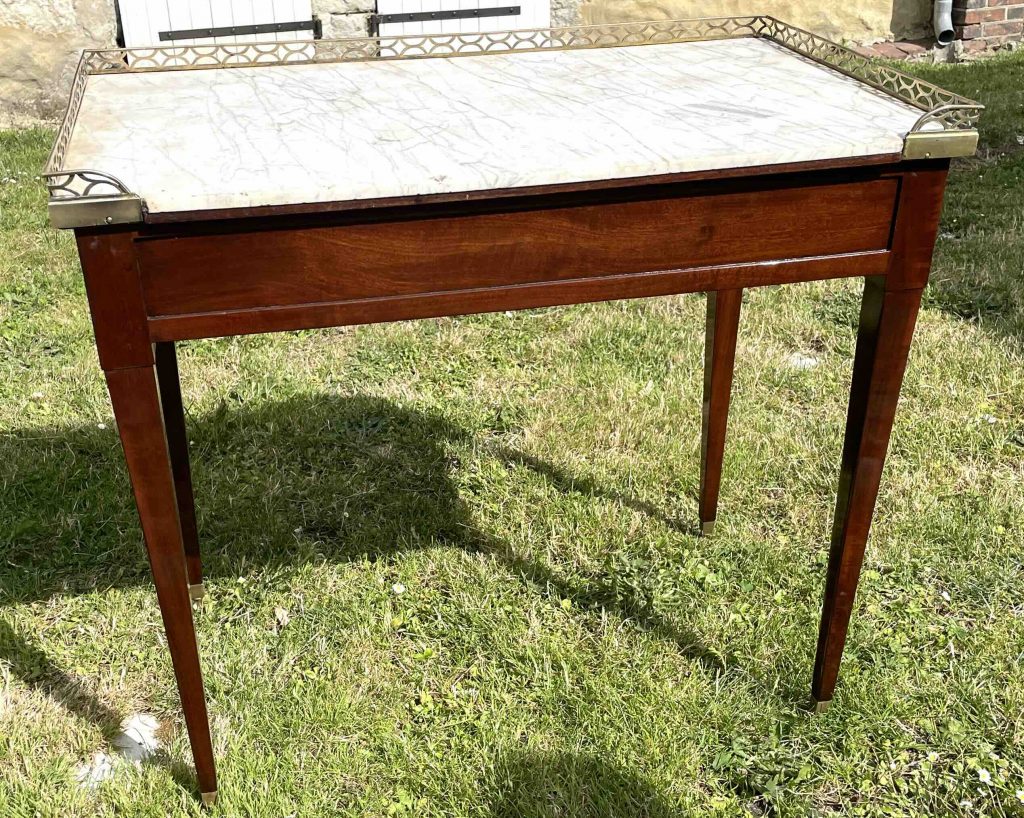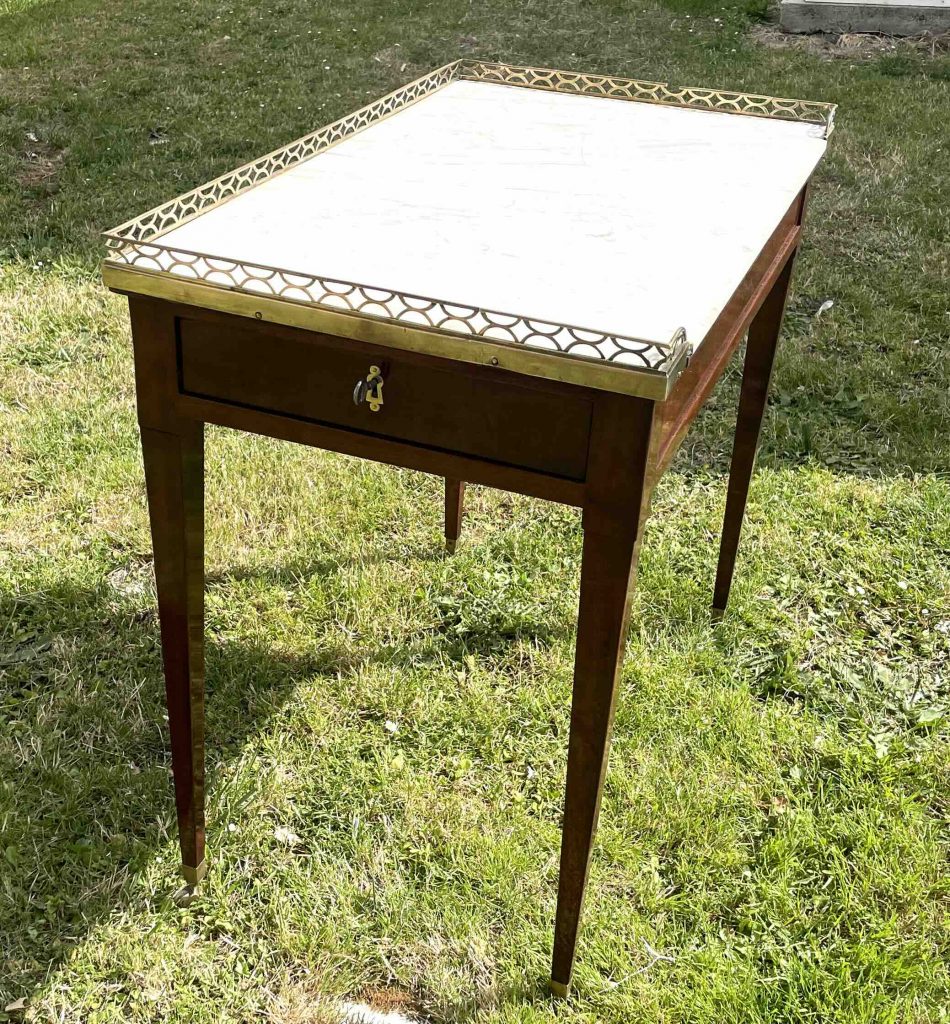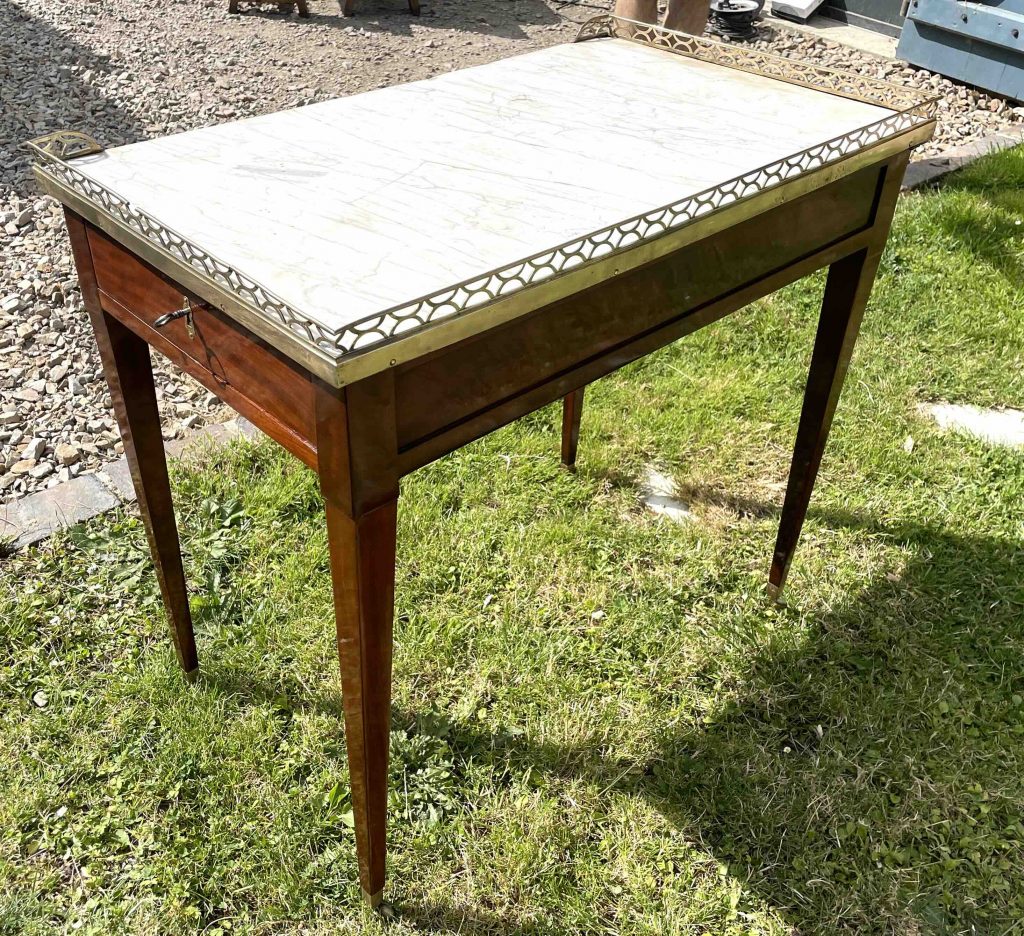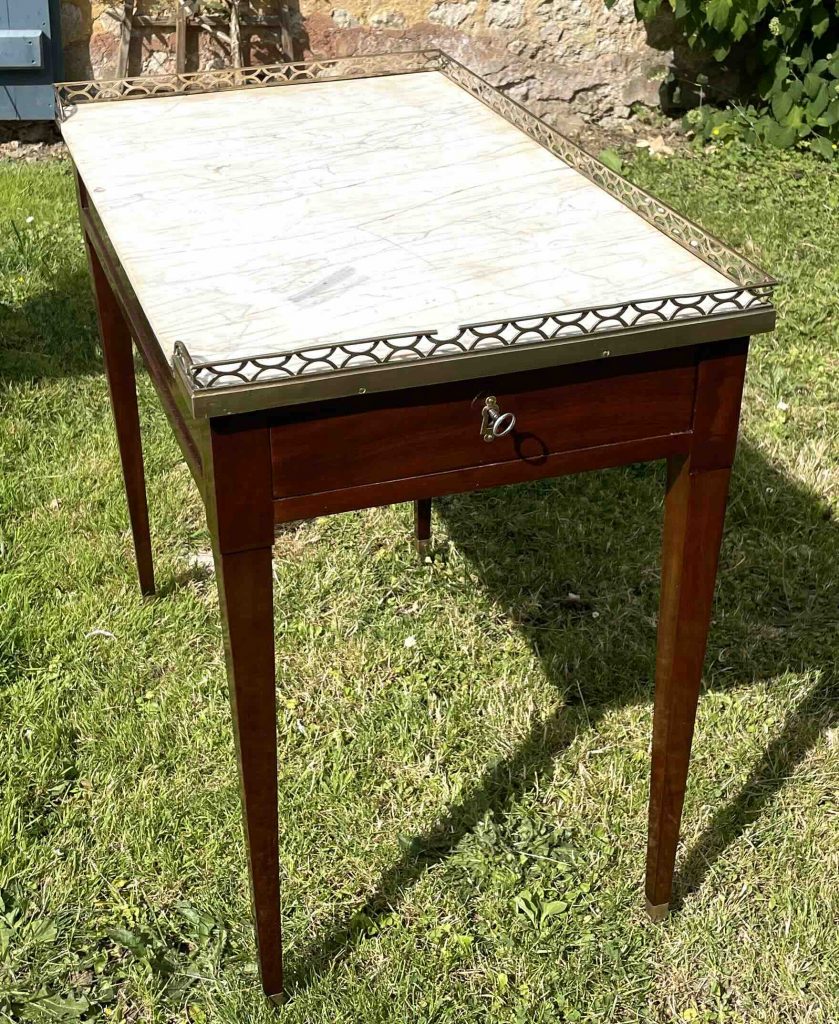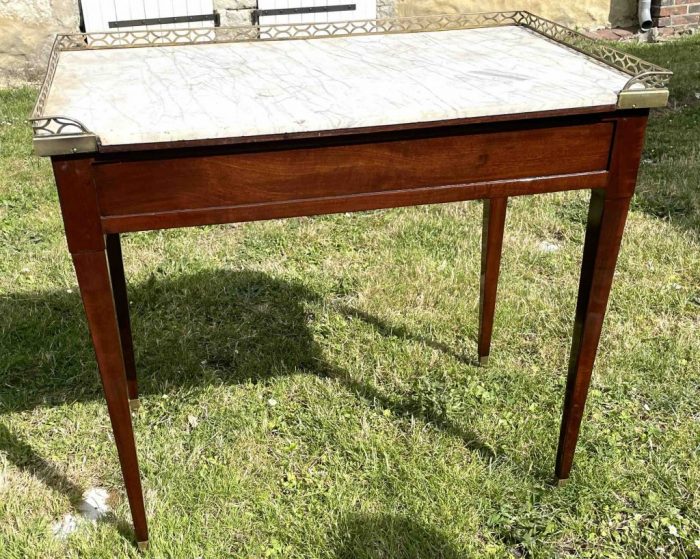
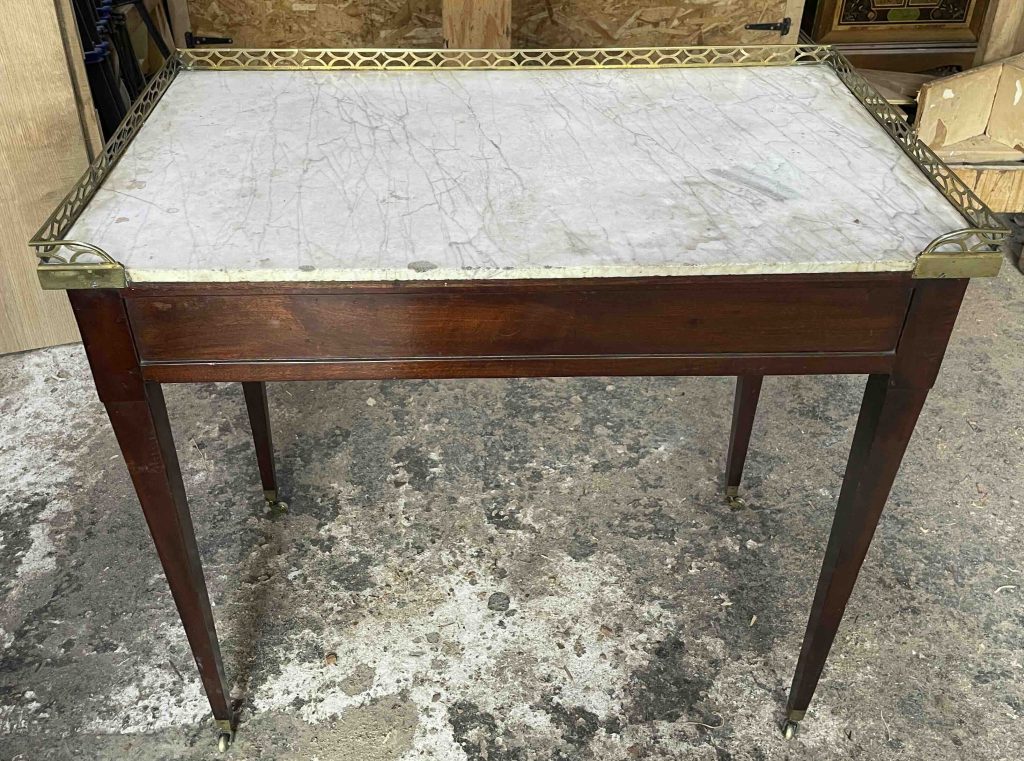
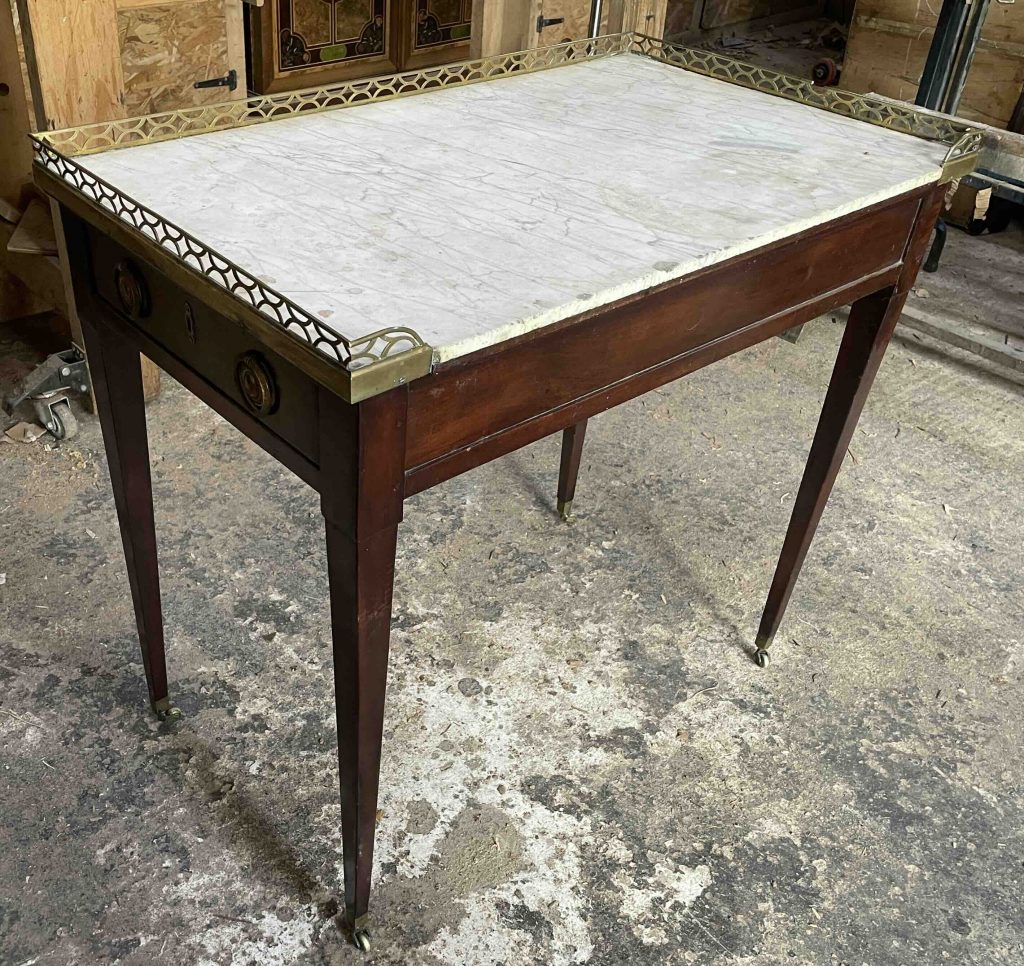
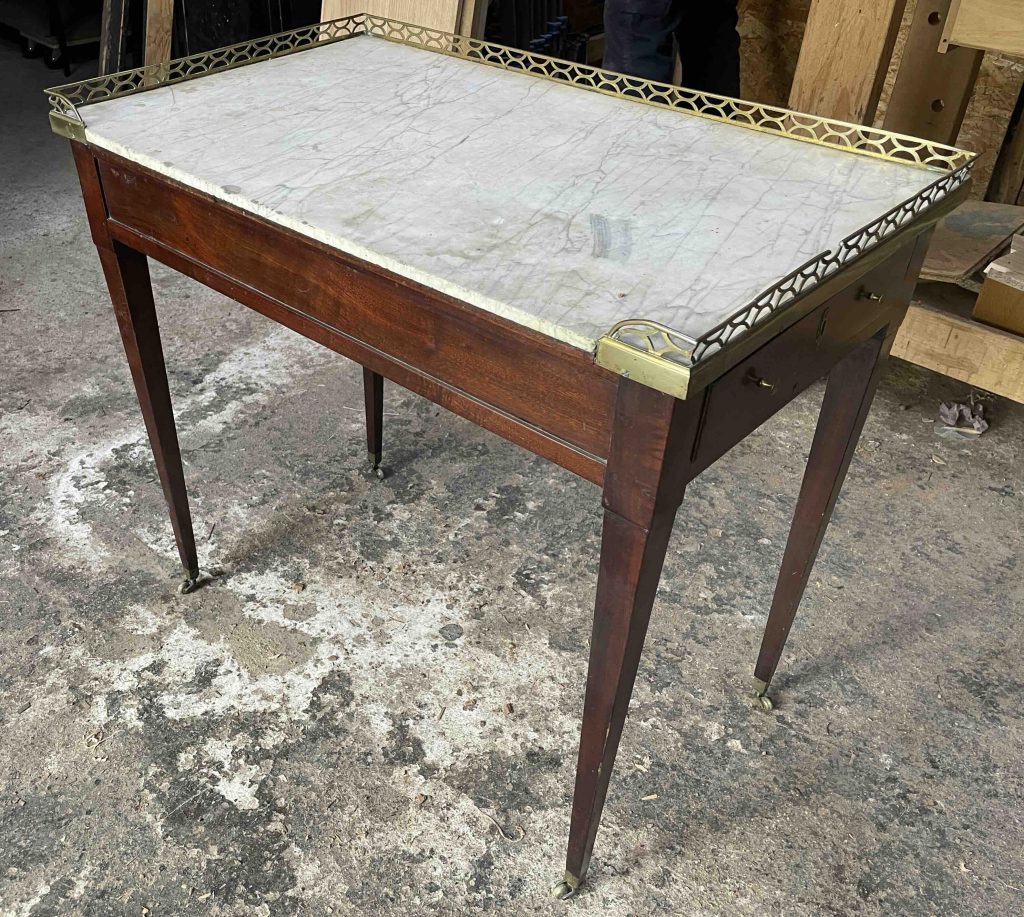
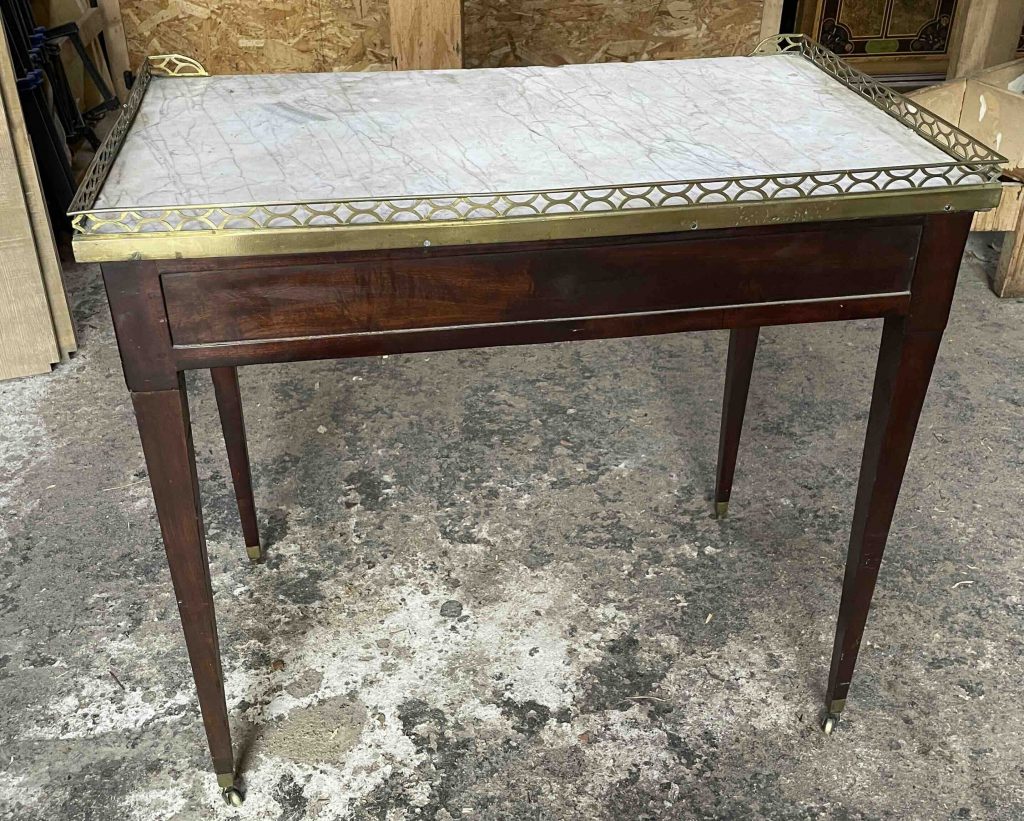
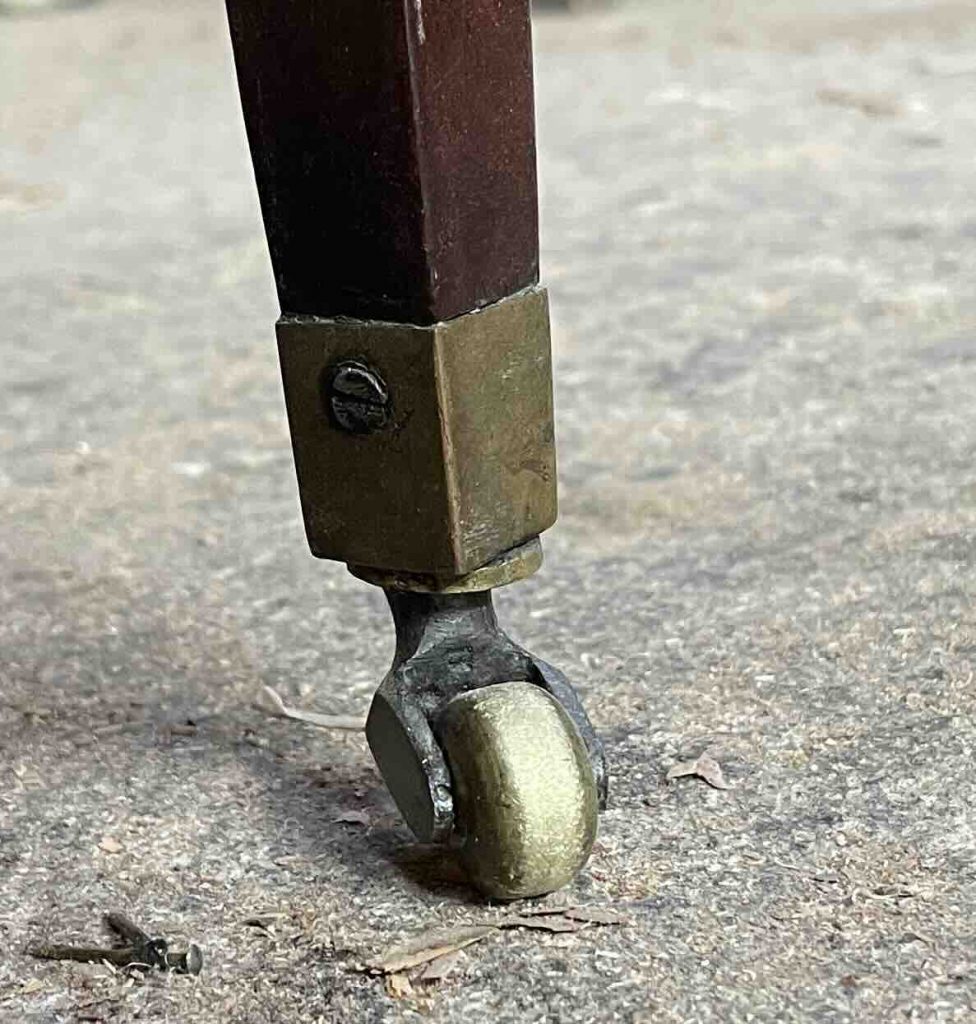
Restoration of a powder table, also known as a dressing table, from the last quarter of the 18th century, stamped G. Jacob and JME. Opening with two drawers in the frieze, it is surmounted by a white Carrara marble top surrounded by an openwork brass gallery. The whole rests on four tapered solid mahogany legs ending in casters. The solid oak stretchers are veneered in mahogany.
Georges Jacob (1739-1814)
Georges Jacob, born on July 6, 1739, in Cheny, Yonne, came from a family of farmers. At a young age, he left his native region for Paris, where he learned chair making in the workshop of Jean-Baptiste Lerouge. He was also influenced by the innovative style of Louis Delanois, a pioneer of Neoclassicism in furniture design. In 1765, at the age of 26, he was admitted to the Order of Architects. master chair maker, opening his own workshop on rue Meslée, in the heart of the furniture artisans' district.
Jacob quickly established himself as one of the most talented craftsmen of his time. His chairs, armchairs, beds, and consoles captivated the royal court and the aristocracy. He became the preferred cabinetmaker of Marie Antoinette, the Count of Artois, and the Count of Provence (the future Louis XVIII), for whom he was appointed "cabinetmaker in ordinary" in 1781.
His style evolved with the times: he introduced the’mahogany in the manufacture of seats, inspired by English fashion, and fully adopts the neoclassicism. His creations are distinguished by straight lines, elegant proportions, and sculpted decorations inspired by Antiquity: garlands, pearls, palmettes, lion heads, and Greek friezes. His furniture combines sturdiness, comfort, and refinement, making it particularly sought after.
The French Revolution disrupted his aristocratic clientele, but Jacob managed to maintain his business thanks to his reputation and the excellence of his workshop. In 1796, he retired and passed the business on to his two sons., George II and above all François-Honoré-Georges Jacob, known as Jacob-Desmalter. The latter would become the main furniture supplier to Napoleon I and the Empire. After the death of his eldest son, Jacob briefly came out of retirement to support the family workshop.
Georges Jacob died in Paris on July 5, 1814, the day before his 75th birthday. Through his talent and that of his descendants, he founded a true dynasty of cabinetmakers, whose name remains associated with the Louis XVI, Directoire and Empire styles. His works, preserved today in numerous museums and collections, testify to the excellence of 18th-century French craftsmanship.
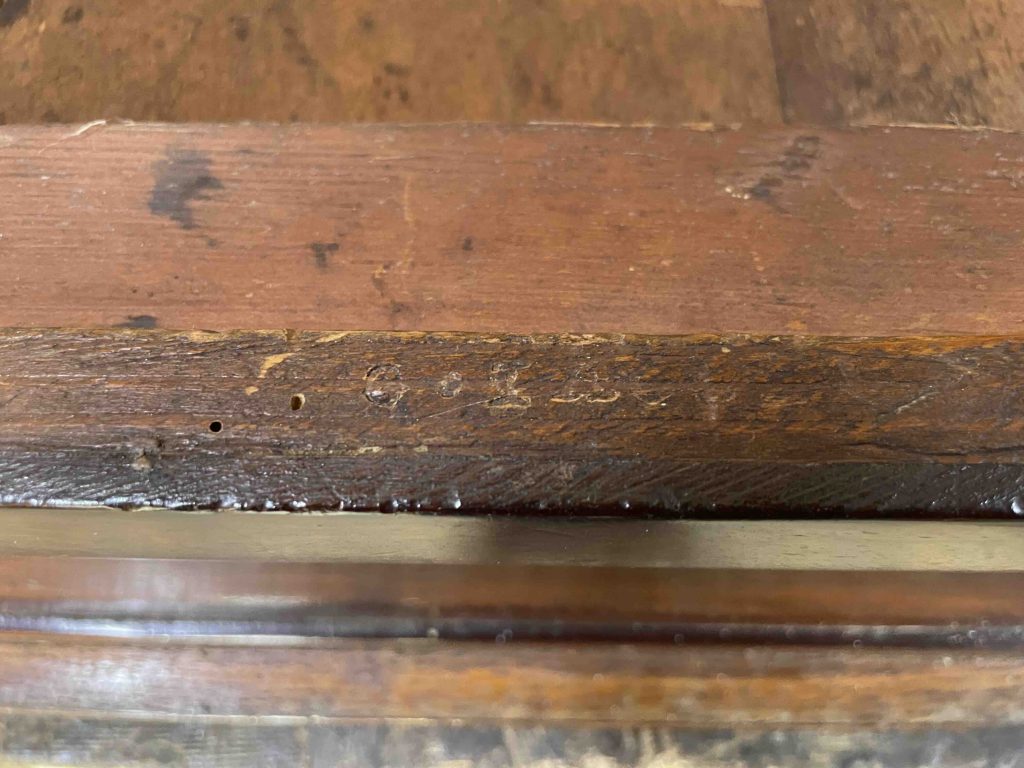
The Restoration
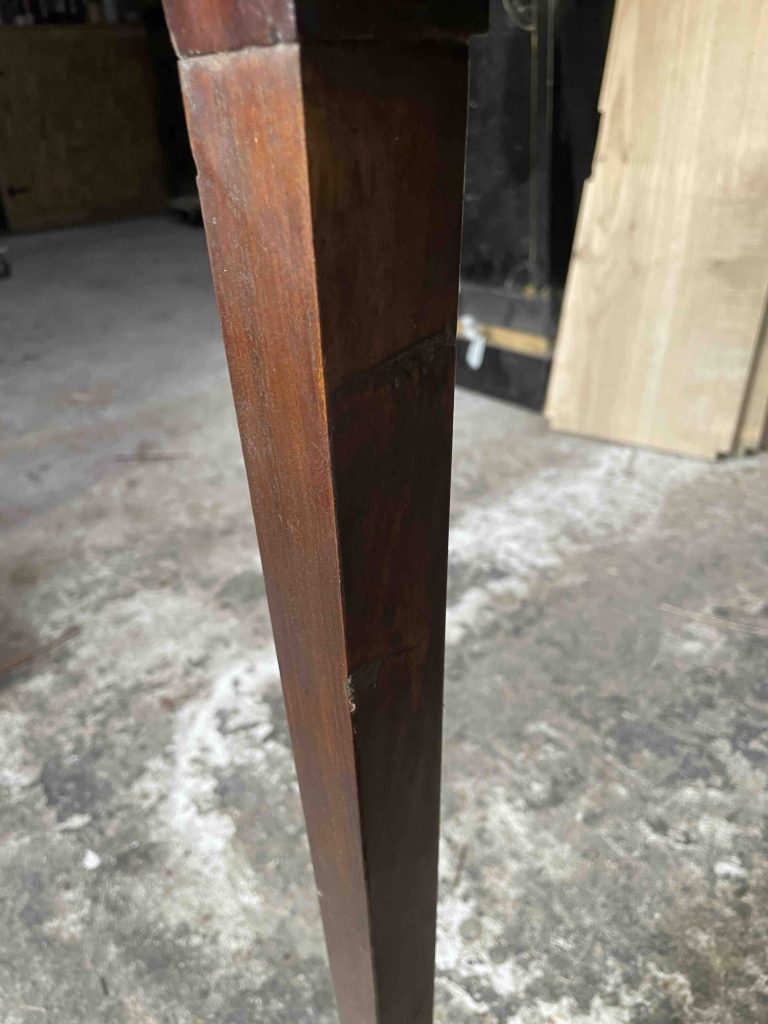
This piece of furniture underwent conservation restoration. The veneers were stabilized by rehydrating the adhesive and applying protein-based glue. The surfaces were lightened and cleaned using a suitable solvent, taking care to preserve the wood's natural oxidation. The surface finish was retained and reapplied with colorless shellac.
Before restoration
After restoration