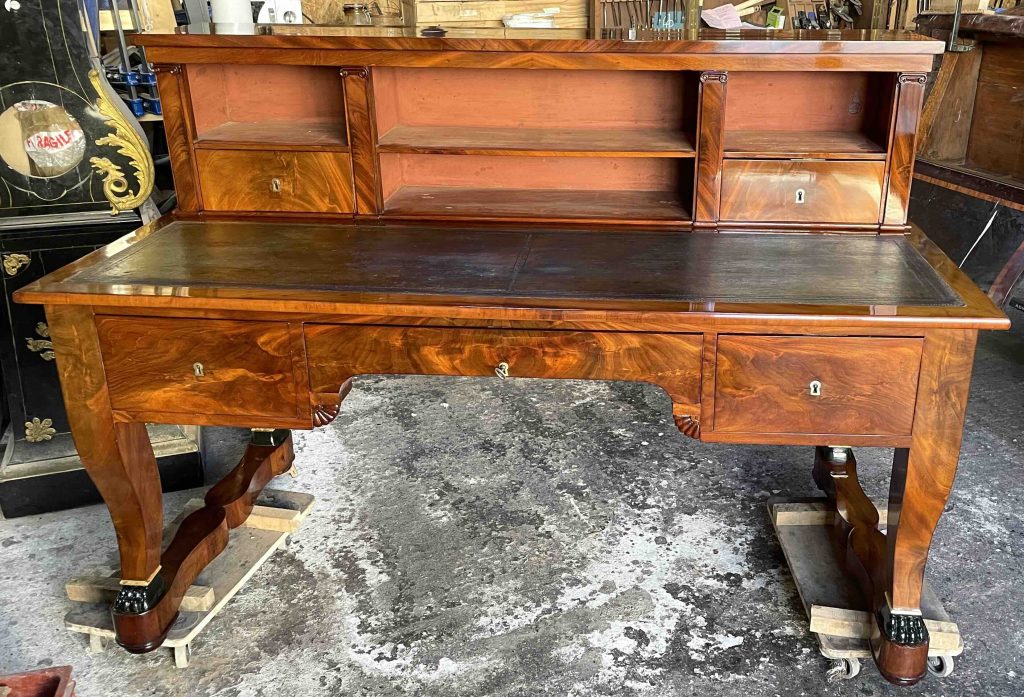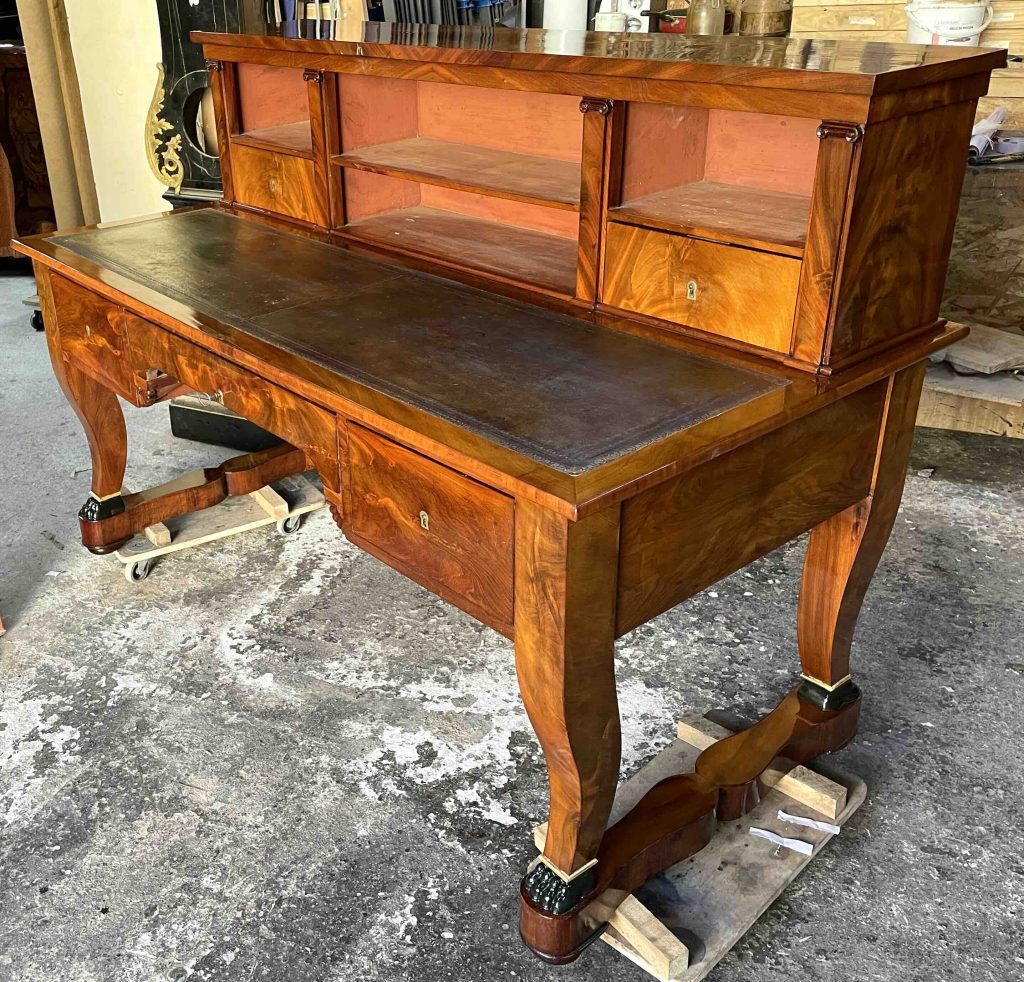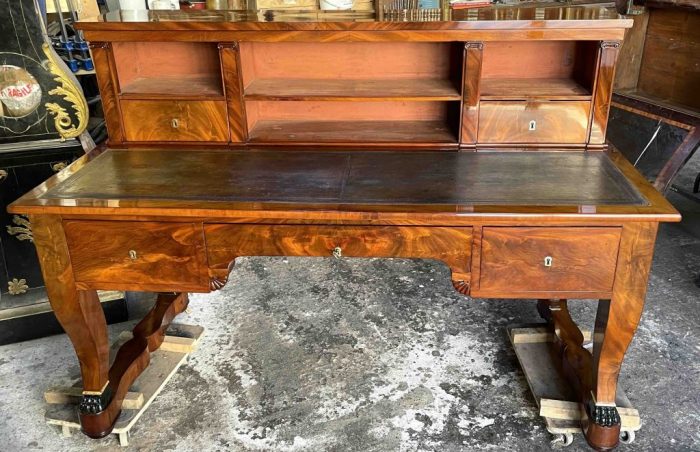
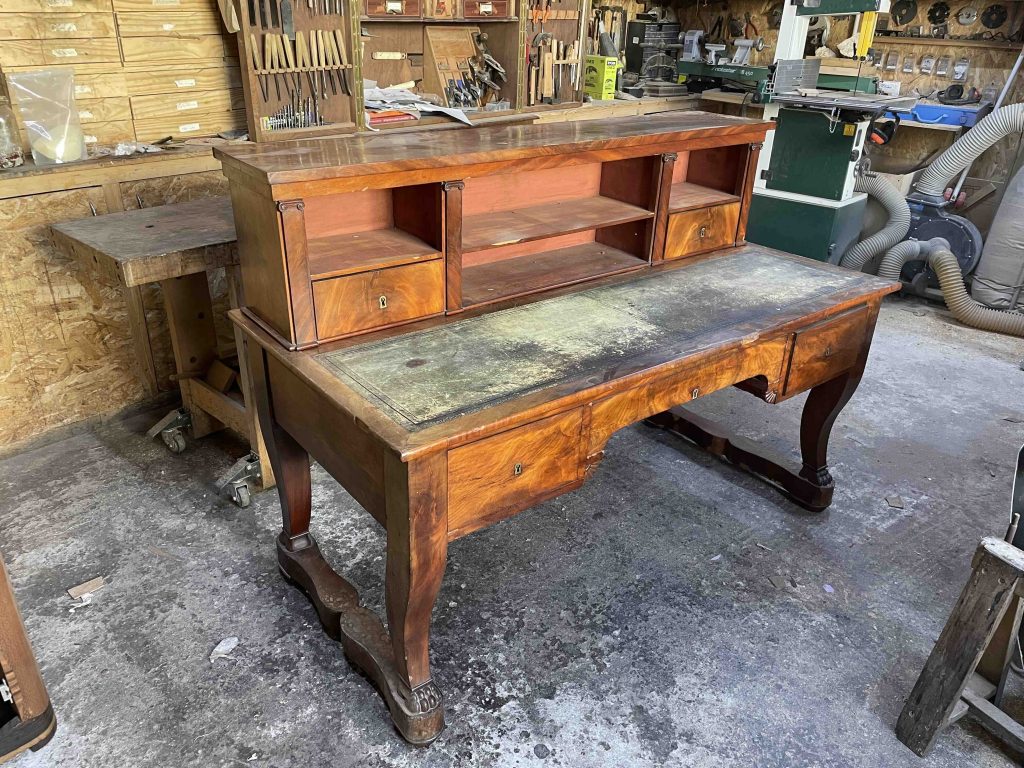
Restoration of an Empire period desk veneered in mahogany burl on an oak frame. The four "chimera thigh" legs are connected by intermediate stretchers and rest on lion's paw feet.
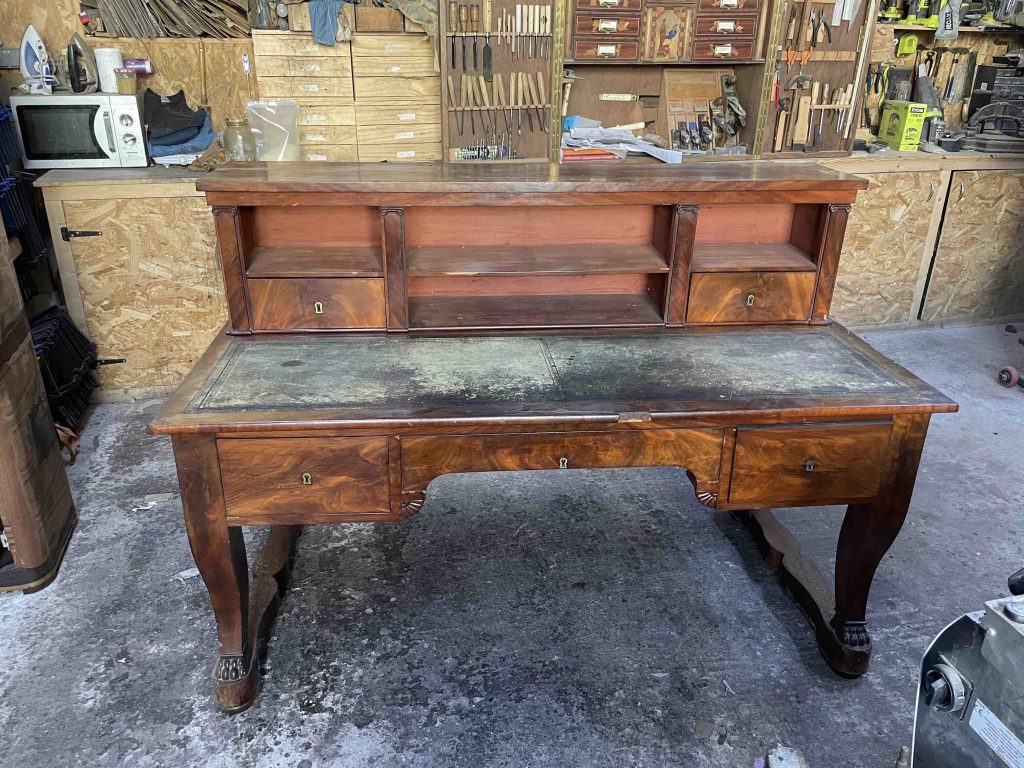
THE Empire style, The Neoclassical style, which emerged in the early 19th century during the reign of Napoleon I, is an artistic and decorative expression closely linked to the Emperor's desire to create a new, grandiose, and imperial aesthetic befitting his power. Heir to the Neoclassical movement initiated in the 18th century, this style drew its inspiration from Greco-Roman and Egyptian antiquity, particularly following major archaeological discoveries at Pompeii and Herculaneum, as well as Bonaparte's Egyptian campaign. This return to antiquity was encouraged as much by intellectual interest as by a political desire to connect with the great civilizations of history in order to legitimize a strong, centralized regime, distinct from the monarchical Ancien Régime.
Under the Consulate and then the Empire (1804-1815), this style became dominant in all artistic fields: architecture, furniture, decorative objects, fashion, and graphic arts. It is characterized by straight, rigorous, and symmetrical lines, massive and structured forms, and a profusion of symbolic decoration: imperial eagles, bees, laurel wreaths, sphinxes, winged lions, columns, Greco-Roman geometric motifs, and so on. Furniture was designed to impress with its grandeur and refinement: boat-shaped beds, mahogany consoles, curule chairs inspired by Rome, pedestal tables, and altar-shaped desks. Mahogany, a prized exotic wood, was widely used, but the difficulties caused by the Continental Blockade forced artisans to also use local woods (maple, walnut, beech). Gilded bronze, finely chiseled, became an essential element of the decor thanks to renowned ornamentalists such as Pierre-Philippe Thomire and Martin-Guillaume Biennais.
This style was adopted by major artistic figures such as the architects Charles Percier and Pierre Fontaine, who notably worked on Malmaison, the residence of Joséphine de Beauharnais. She played a decisive role in promoting the Empire style by influencing the tastes of the court and infusing a more personal refinement into the decorative arts. The style, although austere in its lines, remained imbued with a certain luxury: rich textiles (velvet, silk), gilding, and references to mythology created a solemn and prestigious atmosphere.
The Empire style quickly spread beyond France, becoming an official style in many European courts, notably in Germany, Russia, and Austria, which were captivated by the cultural prestige of Napoleonic France. Even after the fall of the Empire, this style persisted under the Restoration and then influenced other artistic movements of the 19th century, culminating in Art Deco in the 20th. In short, the Empire style was not merely a passing fad: it embodied a political and cultural will to reinvent grandeur through art, by reappropriating the codes of Antiquity to create a modern and coherent imperial aesthetic.
State of affairs report
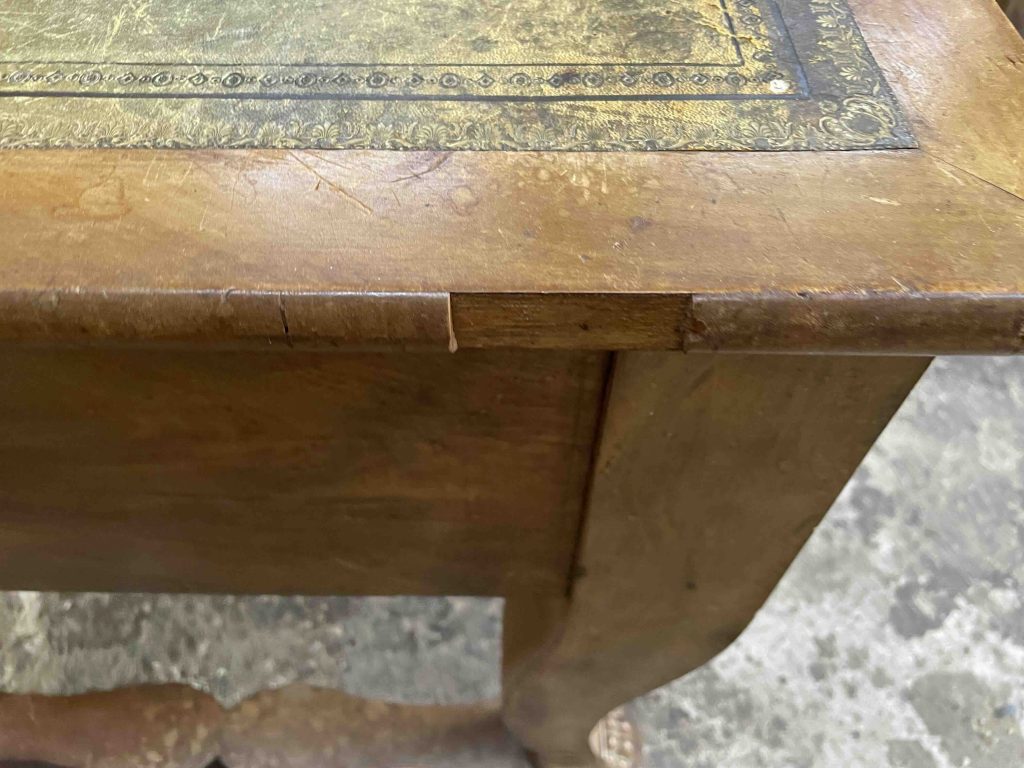
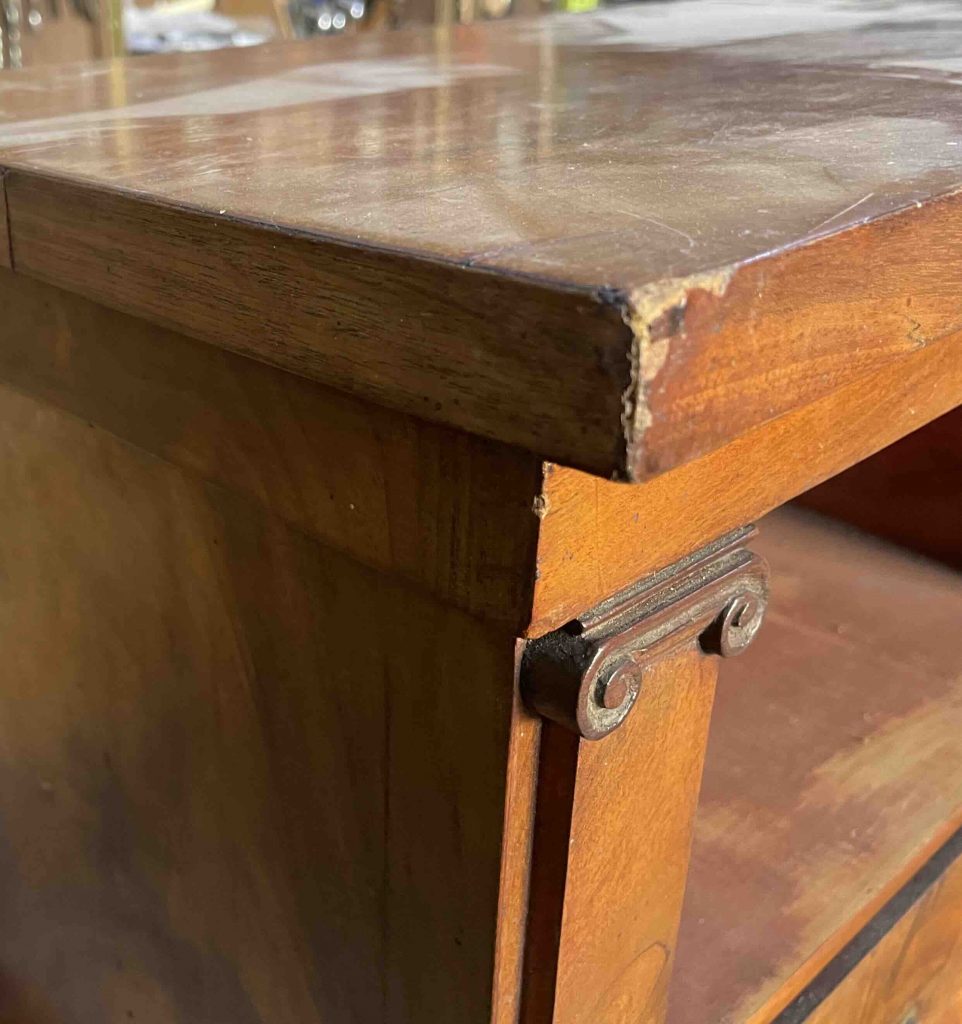
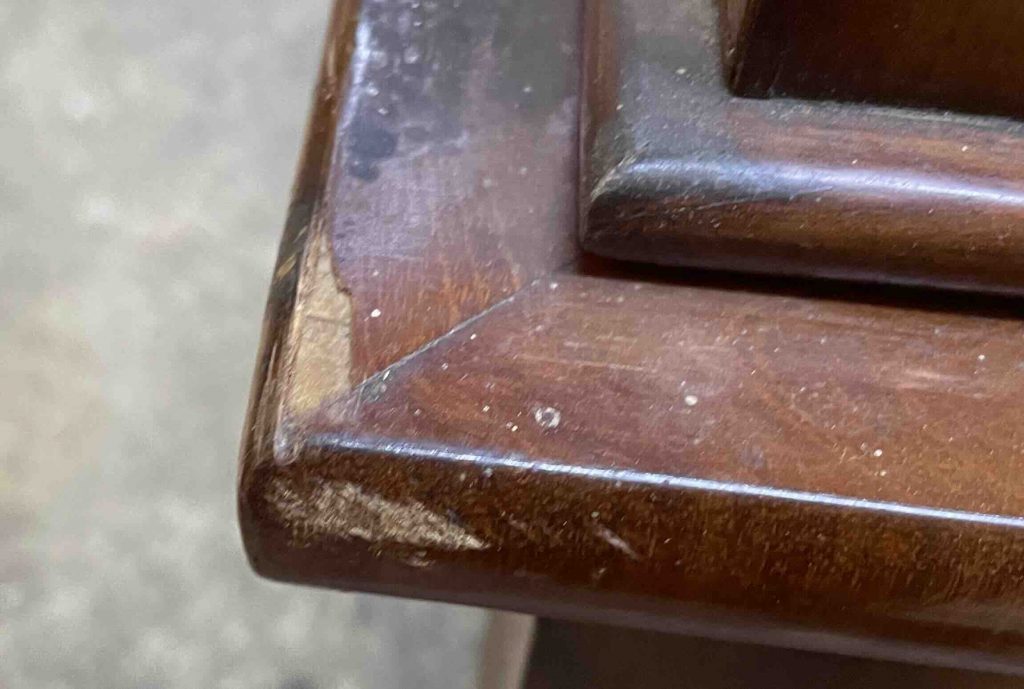
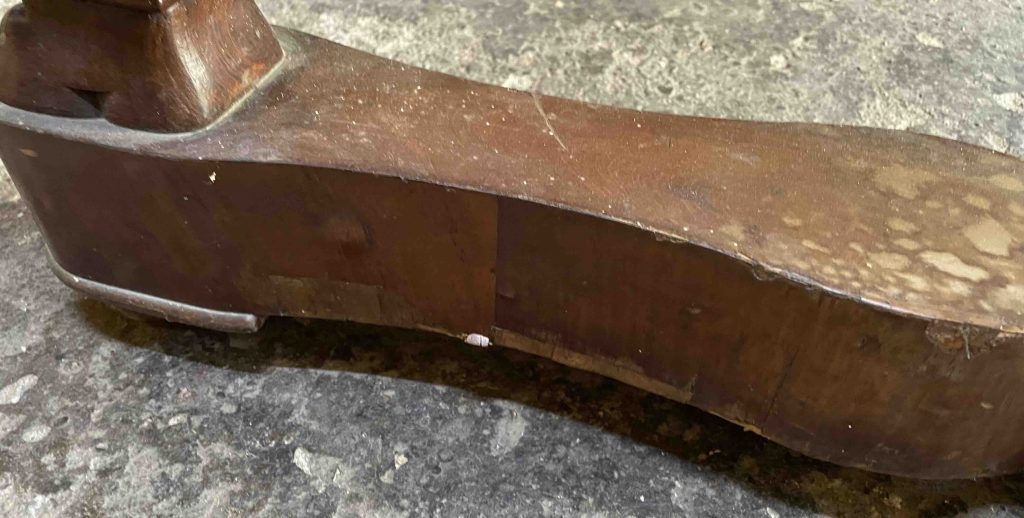
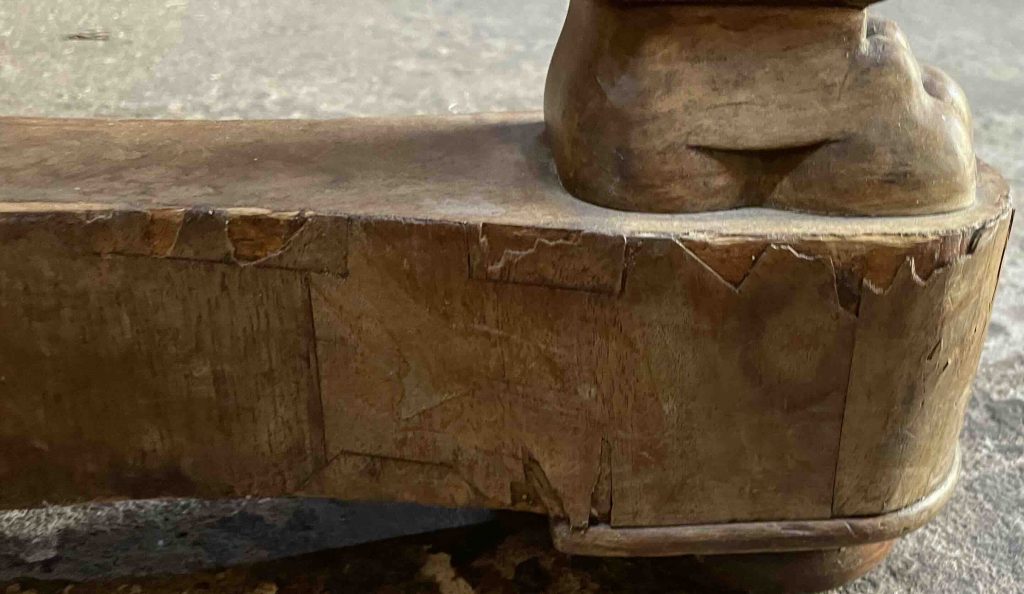
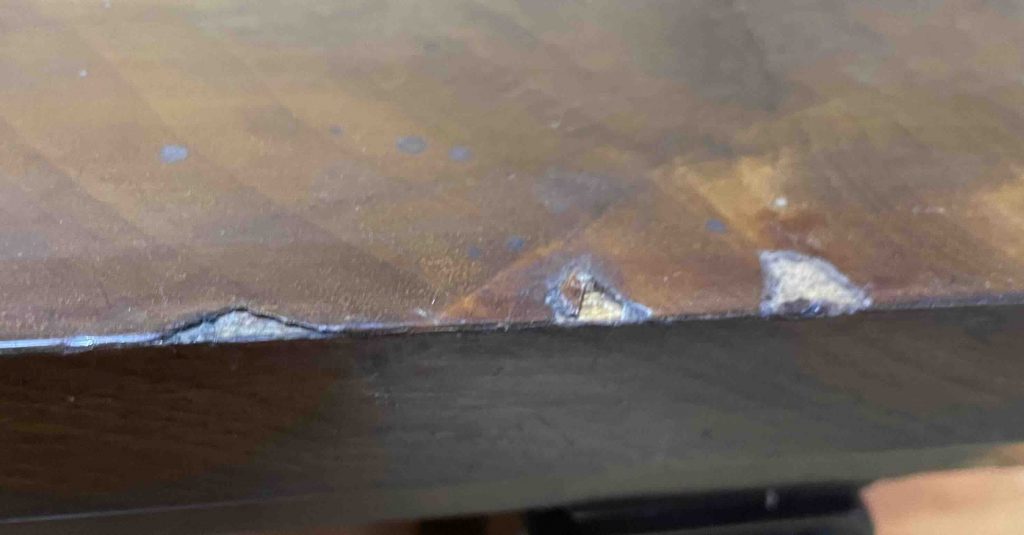
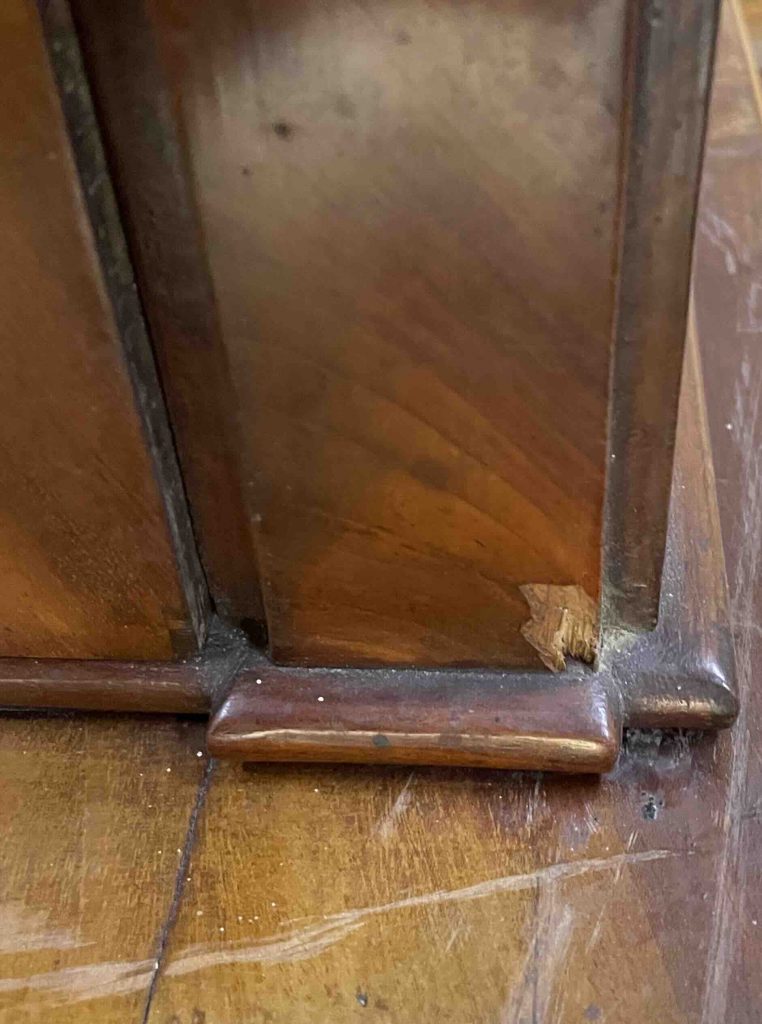
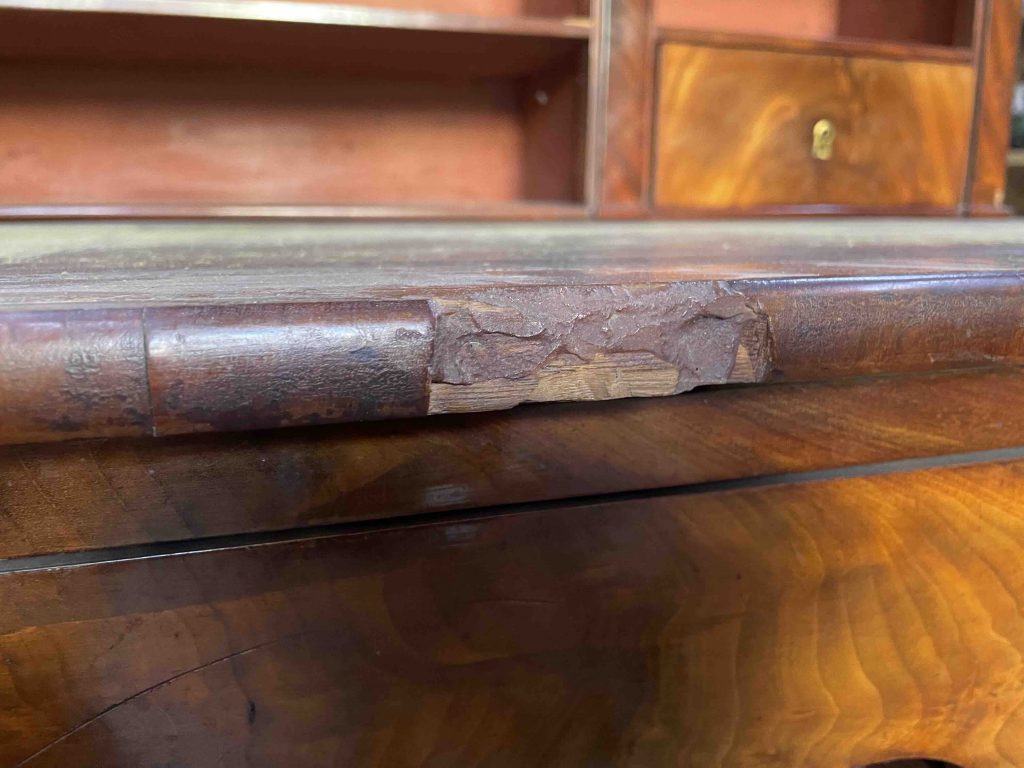
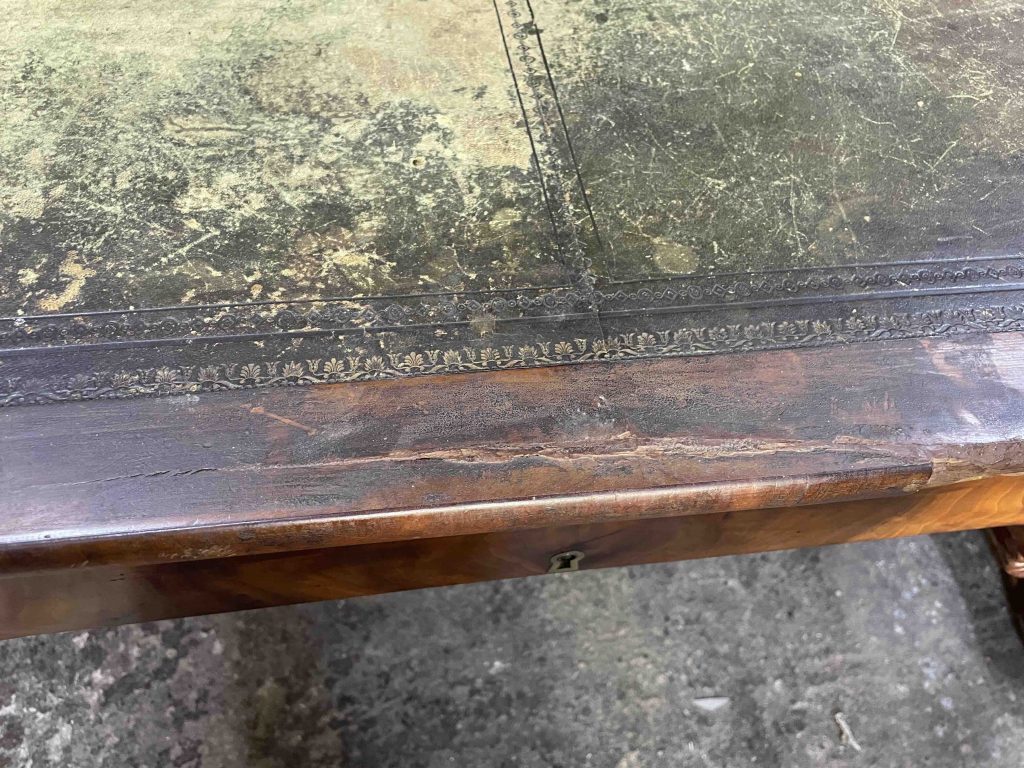
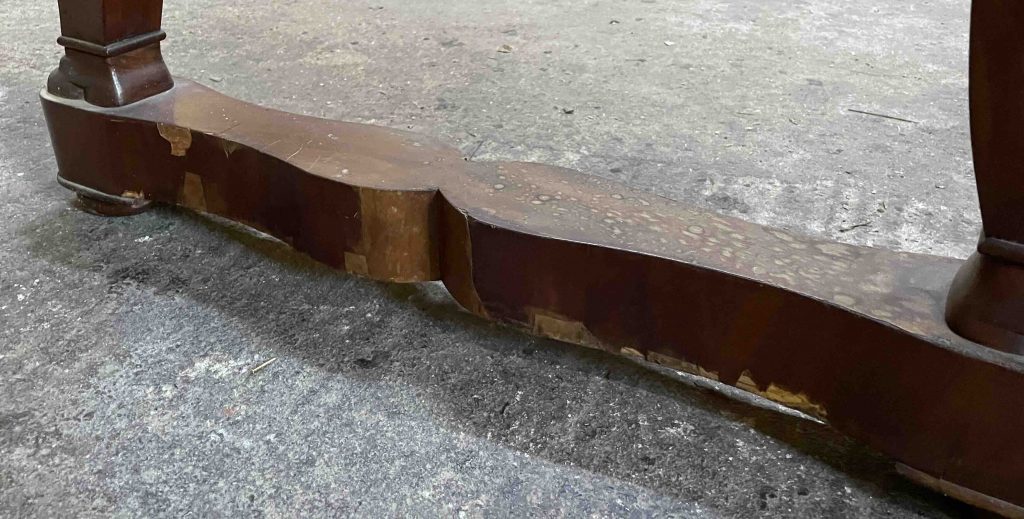
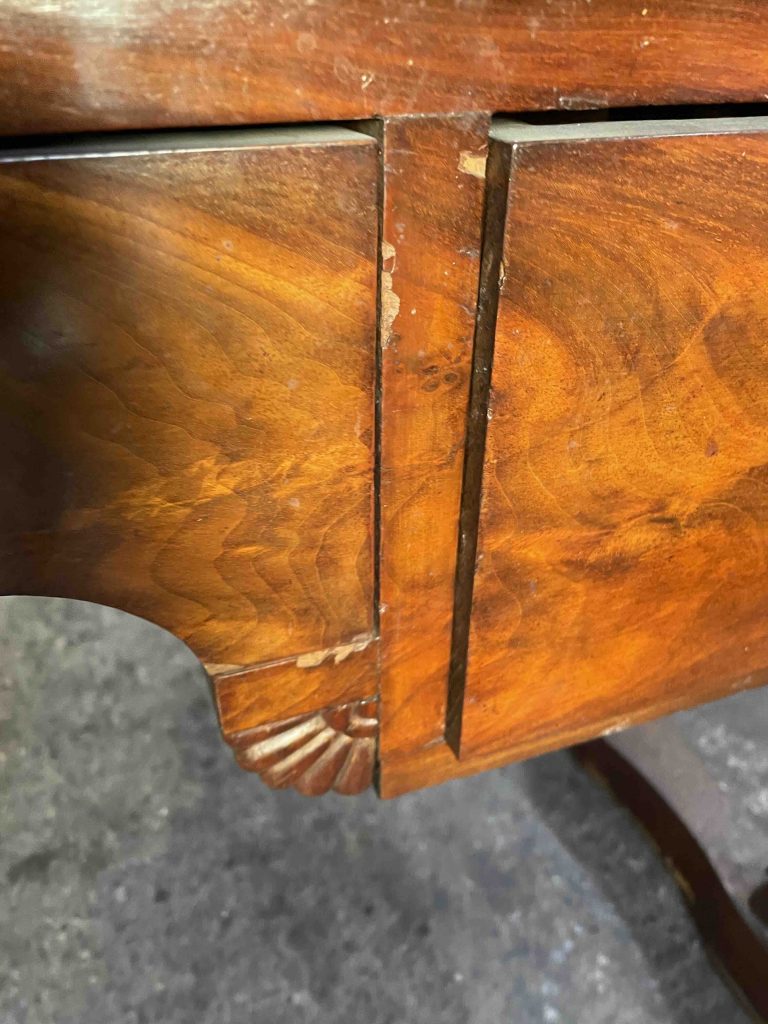
The structure was free of defects and the joints were in good condition. Minor veneer losses, due to tearing or lifting, were present on much of the veneered surface. However, the main intervention concerned the leg braces, where approximately 45 % of the veneer was missing.
The Restoration
For the restoration of this piece of furniture, we reused fragments of old veneer to fill in the missing areas. Thinned on the back, these fragments retained their patina, thus preventing any oxidation. The old varnish was then restored, and a new coat of shellac varnish was applied. The claw feet were refinished with a verdigris patina and then varnished. The upper molding of the feet was gilded with gold leaf. The leather was rehydrated and waxed. All that remains is to replace the cardboard inserts in the tiered stand.