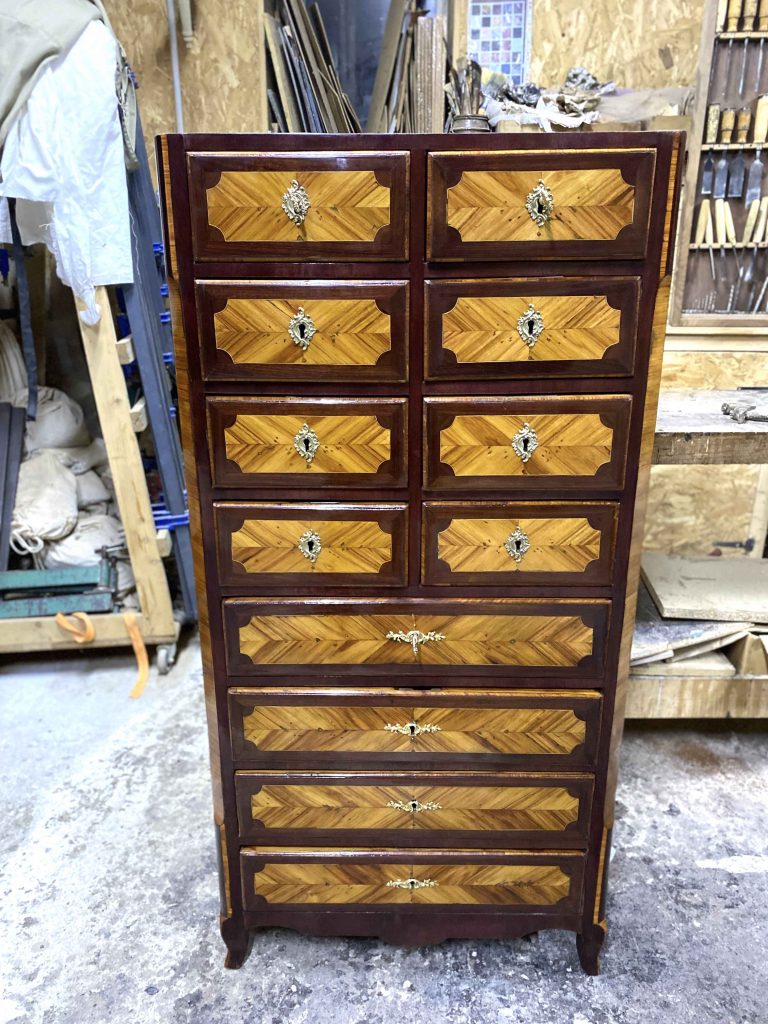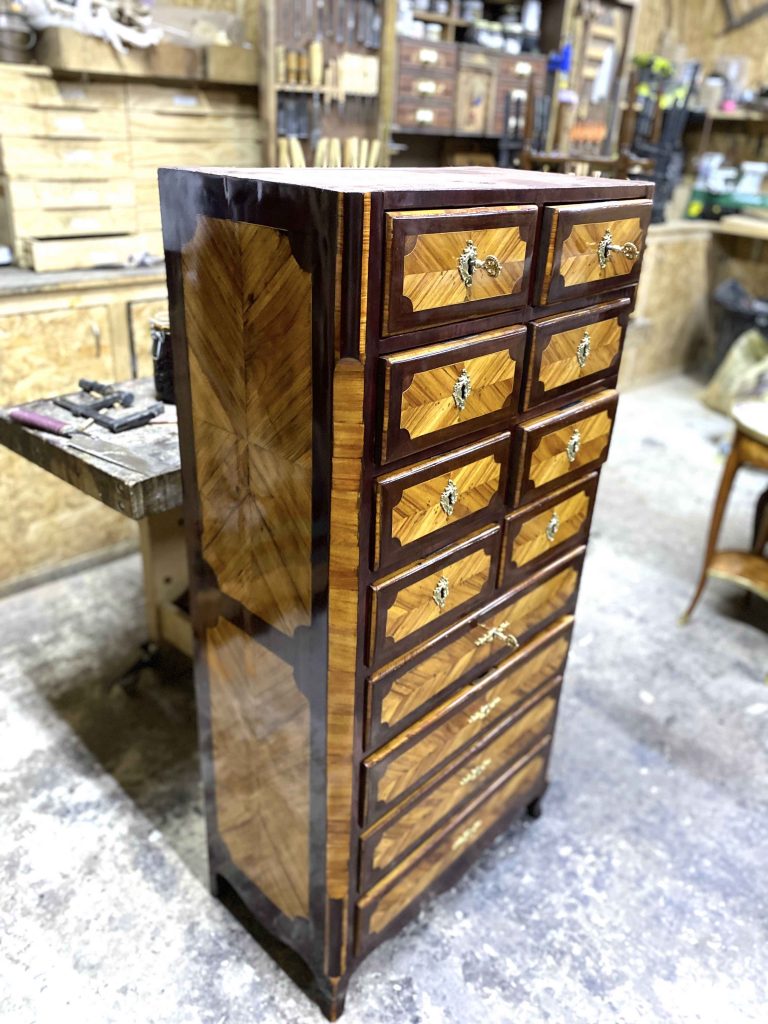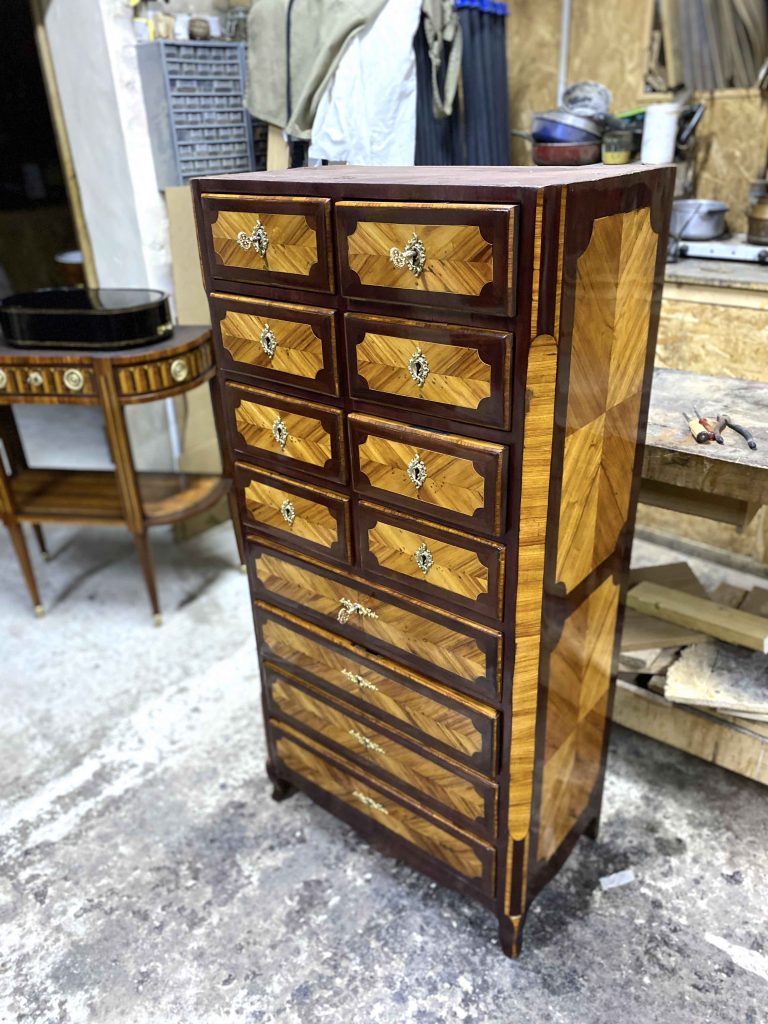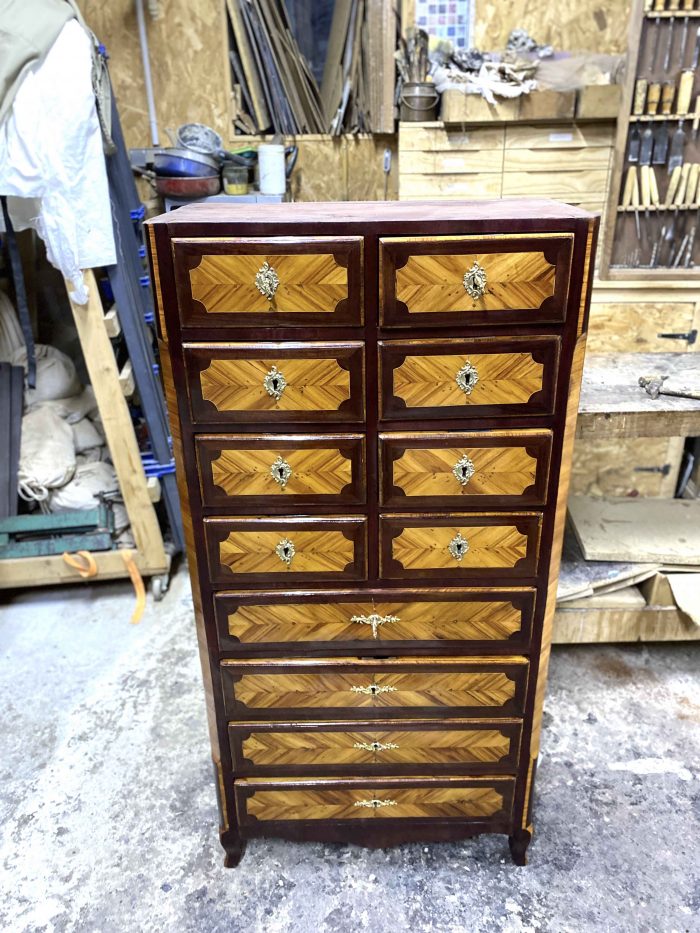
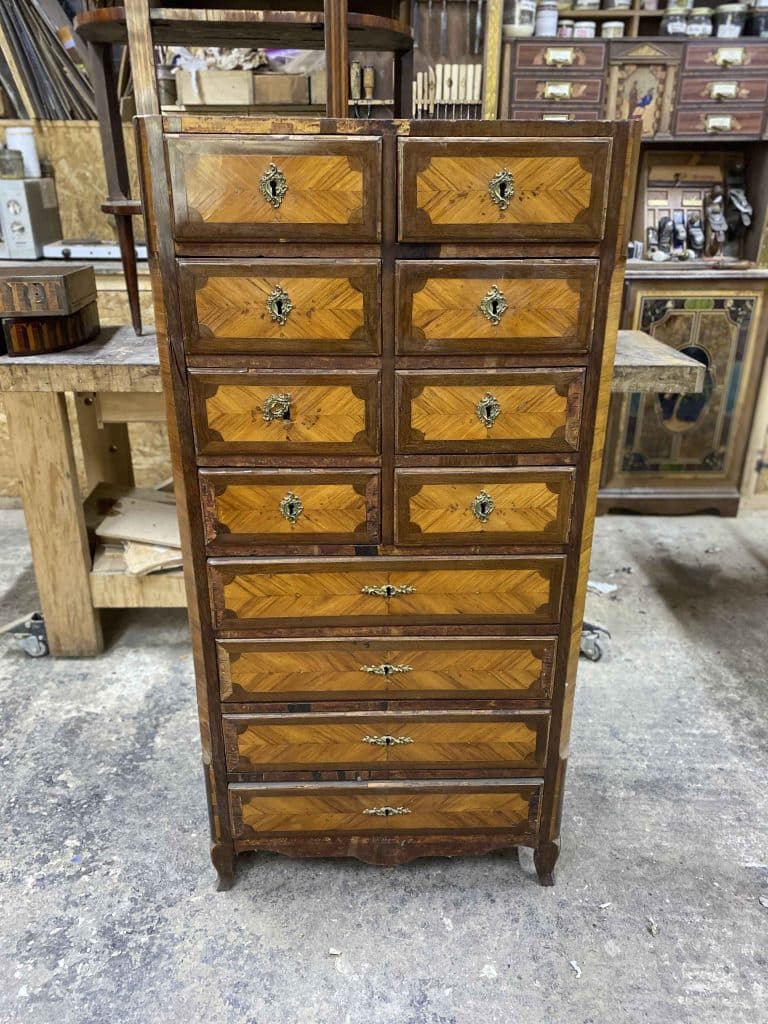
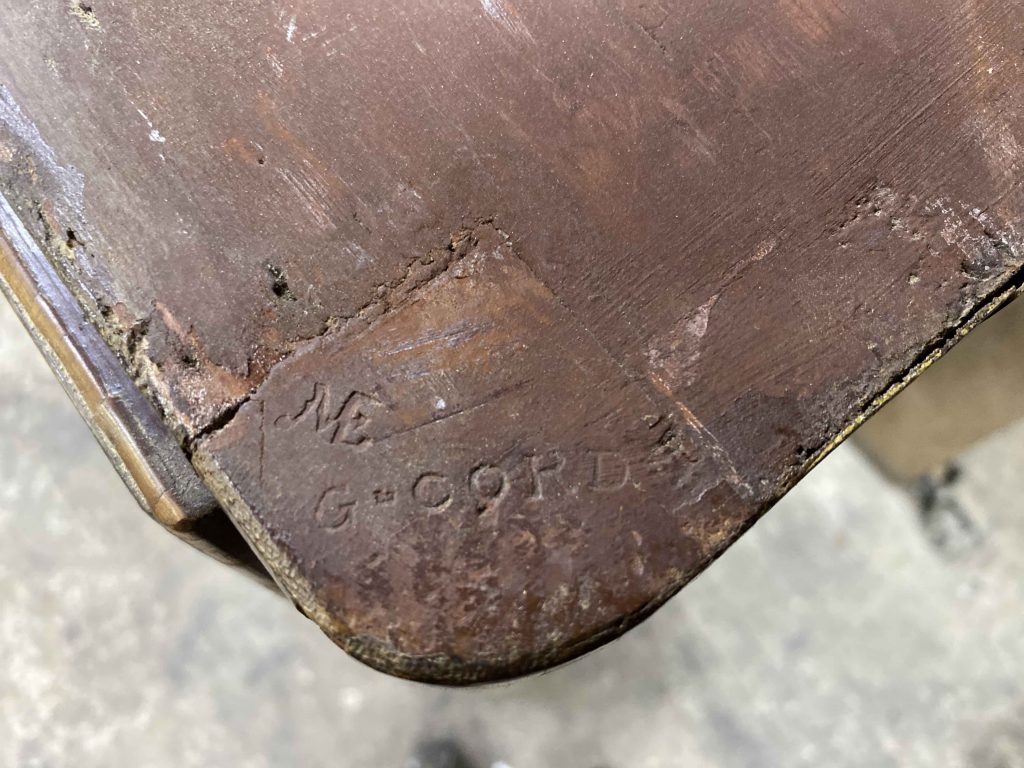
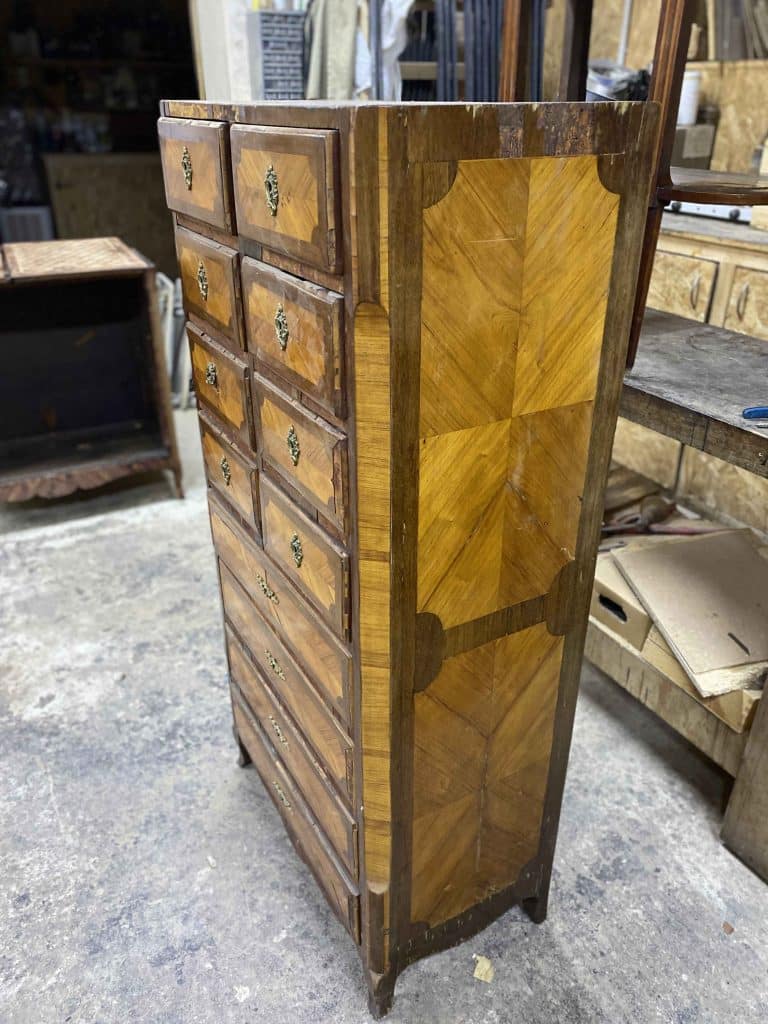
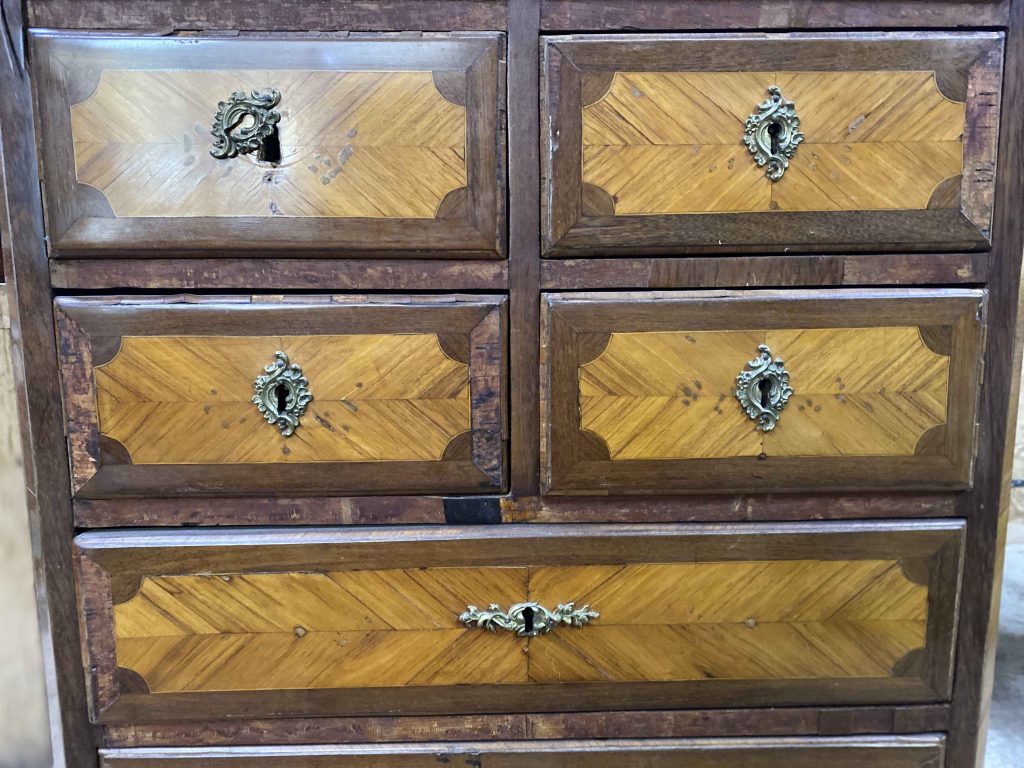
Restoration of a transitional period rag chest stamped by Guillaume Cordié and bearing the hallmark of the guild. It is veneered with rosewood and amaranth and is built of oak and softwood. The bronze fittings were added later.
Guillaume Cordié
Born around 1725, Guillaume Cordié worked as a freelance craftsman before receiving his master's certificate on June 18, 1766. He established himself on the rue de Charonne and remained there until his death. His works, of fine quality and harmonious proportions, are mostly in the Transition and Louis XV styles. It seems he worked extensively for haberdashers and fellow cabinetmakers such as Migeon and Boudin.
He is the designer of a desk with a tiered seat, part of the Mobilier National collection, which demonstrates a real talent for interior design. His small "kidney-shaped" table, from the former Clermont-Tonnerre collection, is not of a commonplace design. Even more original is the reading table that stood next to a charming lady's desk in the former Blanchette collection. Mounted on two carved legs, placed opposite each other beneath its ellipsoidal top, surrounded by a gallery, it featured two cavities covered by a shutter. The ingenious creator of this small The furniture is certainly in good standing among his peers, because a beautiful lady's secretary which was part of the Clermont-Tonnerre collection and of which a replica appeared in the Mirecourt collection, bore jointly, with the stamp of Guillaume Cordié, that of Léonard Boudin.
After his death in 1785, his widow, Marie-Madeleine Courtois, kept the same workshop until the Revolution. She then retired from business and ended her days on the Quai des Célestins, on June 18, 1800, in her seventieth year.
Bibliography
- French Furniture of the 18th Century – Pierre Kjellberg – Les Editions de l'Amateur – 1989
- The workshops Parisian cabinetmakers and joiners in the 17th and 18th centuries – Guillaume Janneau – Serg Editions – 1975
State of affairs report
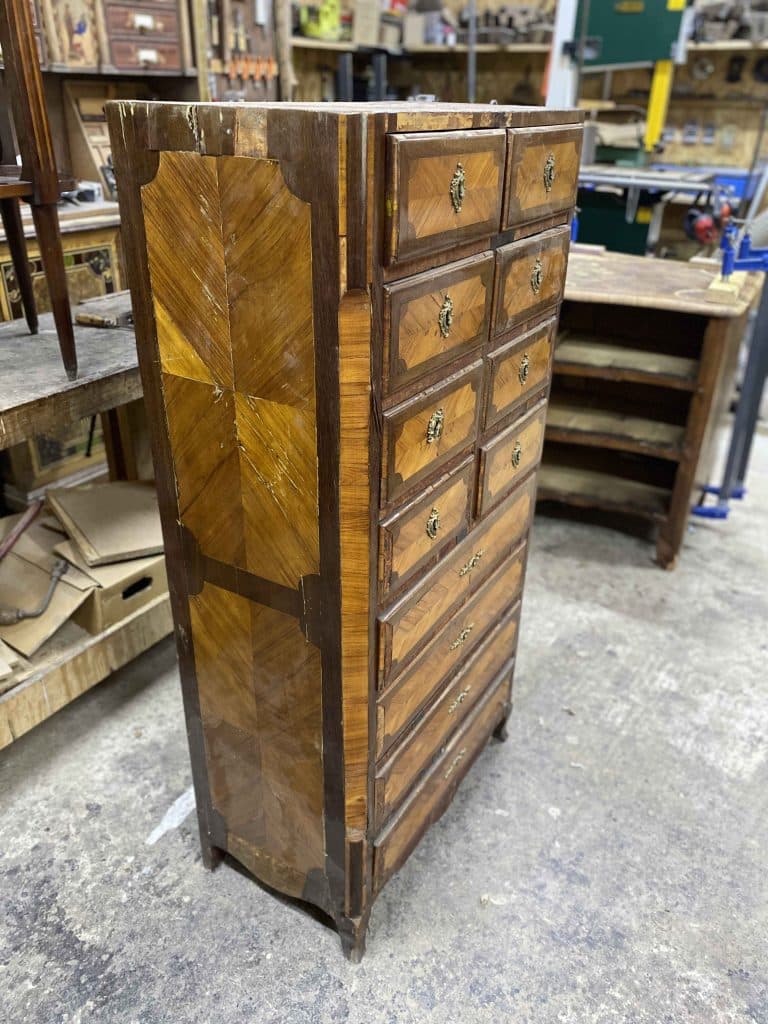
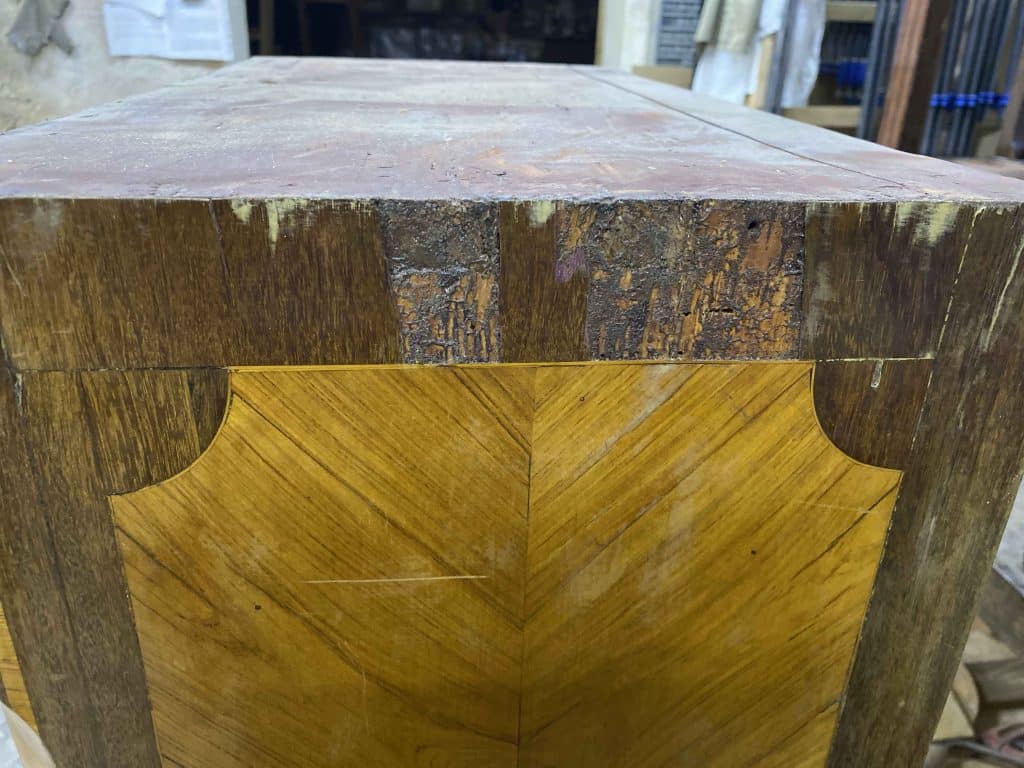
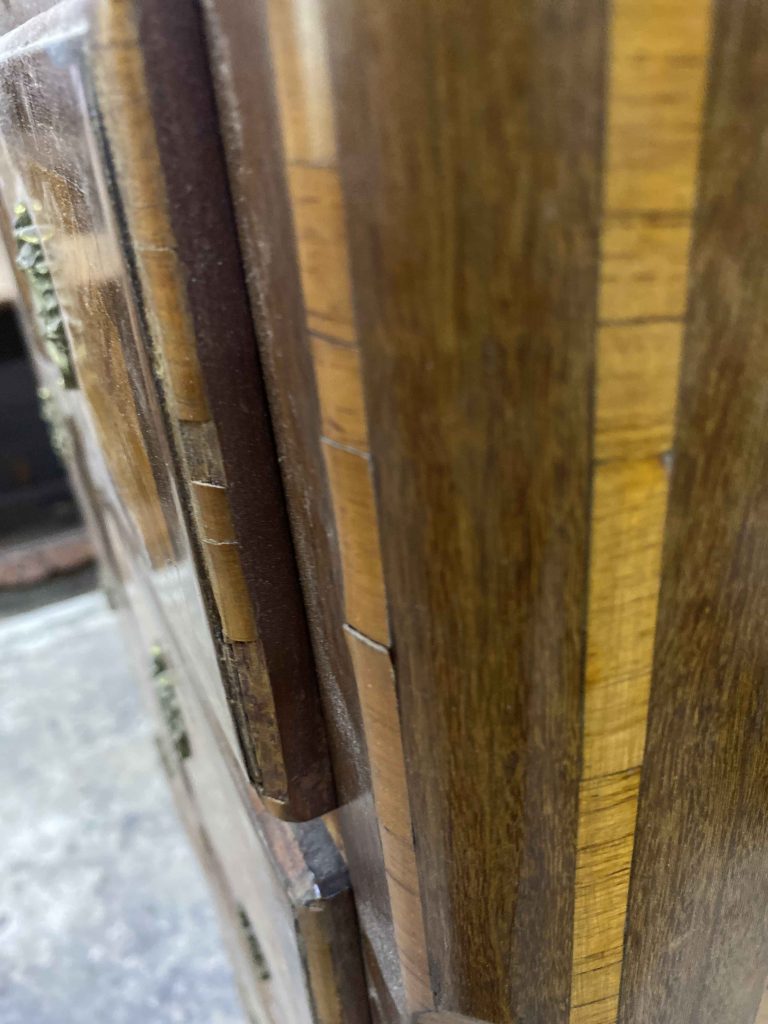
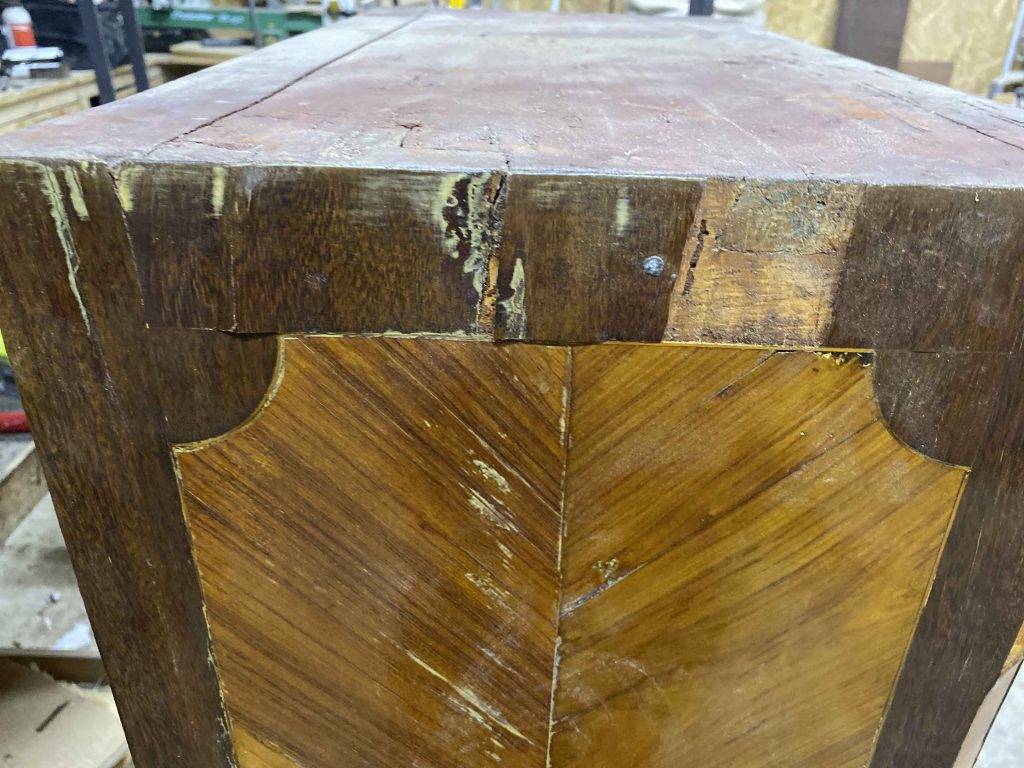
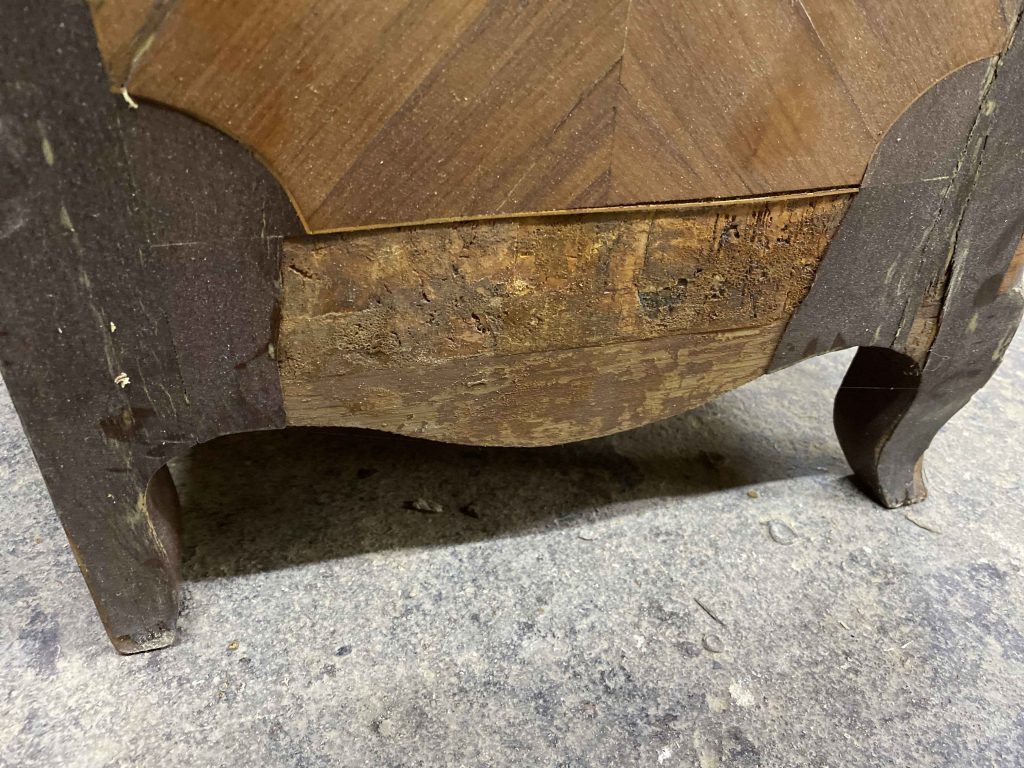
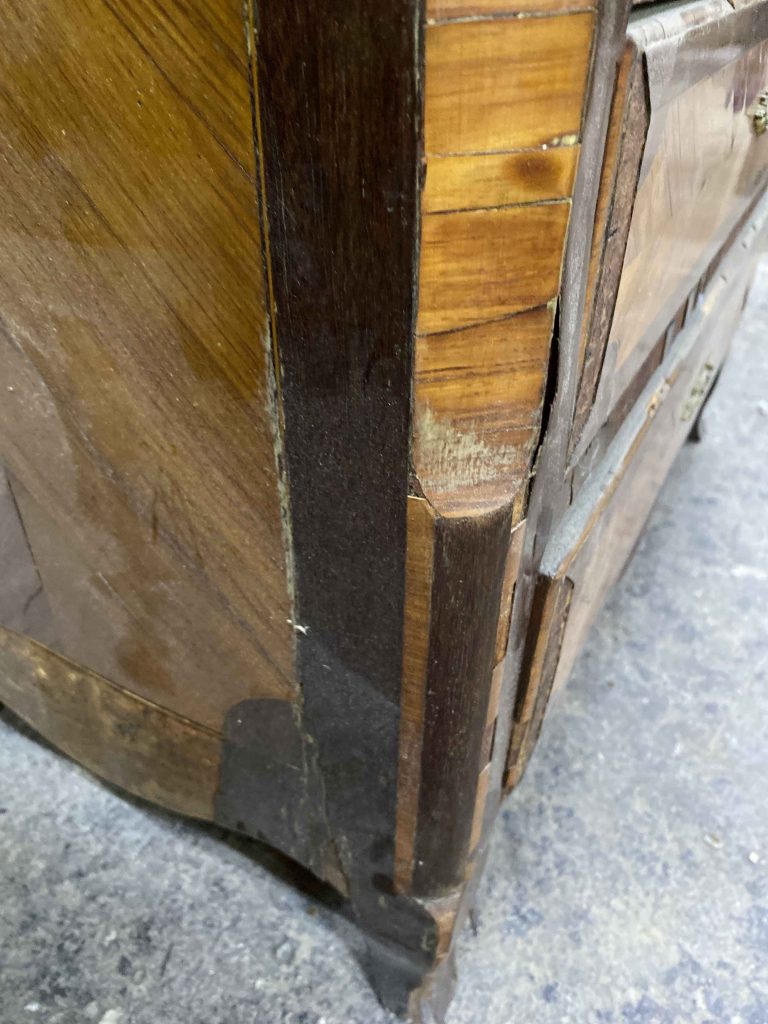
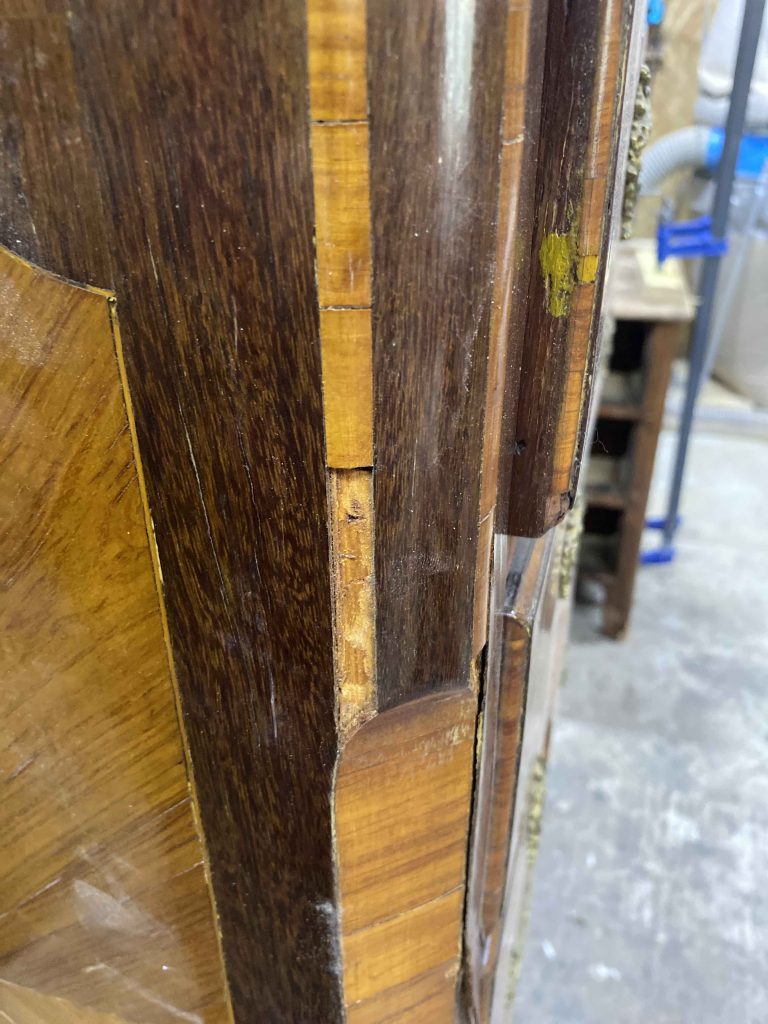
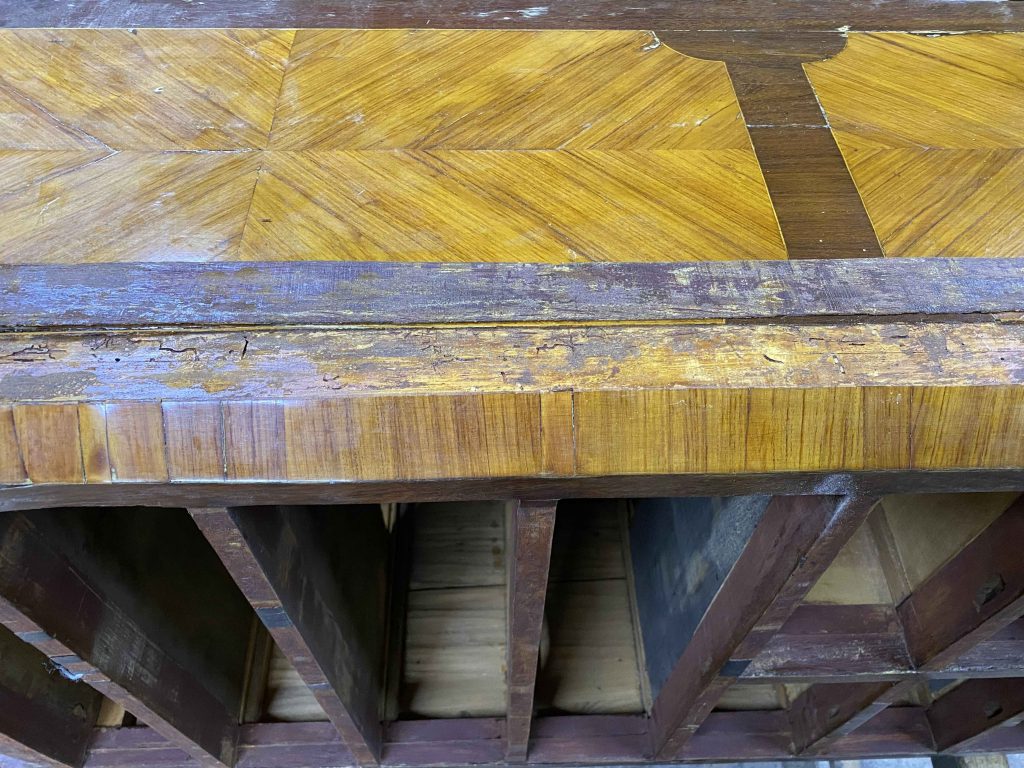
Overall, the frame appeared to be in good condition. However, upon closer inspection, we realized that almost all the veneered surfaces were completely peeling off. Simply running a blade under the veneer was enough to remove it. The sides had some missing amaranth veneer, and three-quarters of the amaranth was missing from the front crossbeams.
The Restoration
Since the frame showed no significant damage, removing the veneer was unnecessary. We therefore rehydrated the old glue with a penetrating adhesive and then pressed both sides and the drawer fronts with a slight application of heat. The front was entirely re-glued using hot glue. Any missing veneer was replaced with sawn, scraped, and sanded veneer, cut to the correct thickness as a backing before being glued in place.
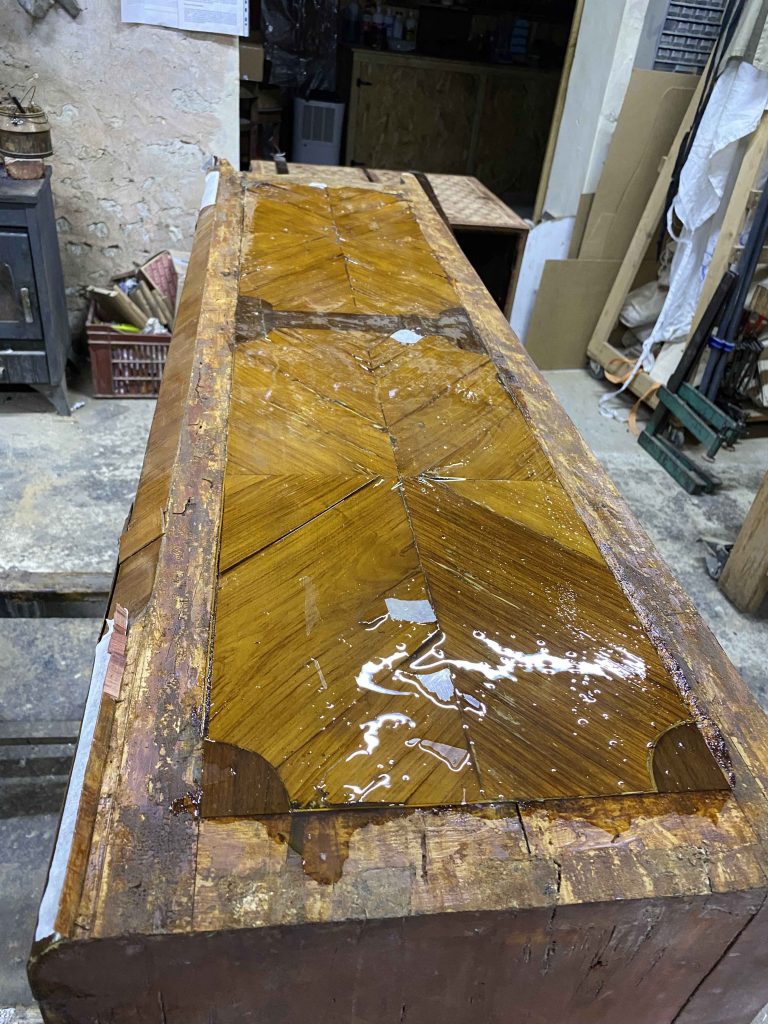
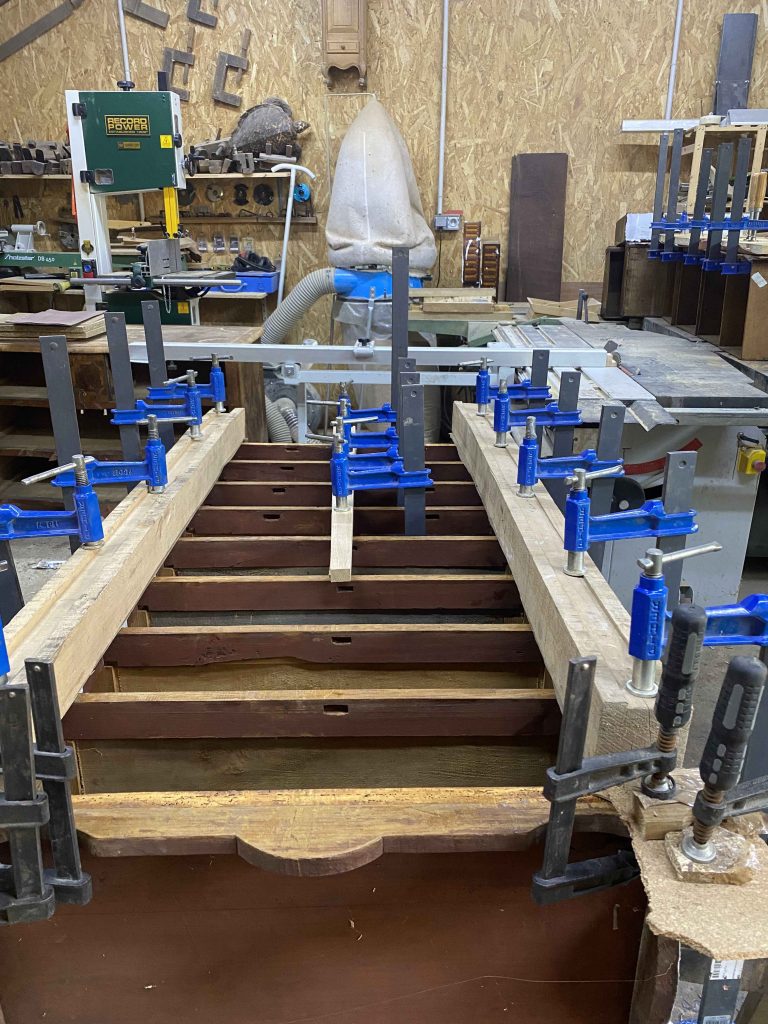
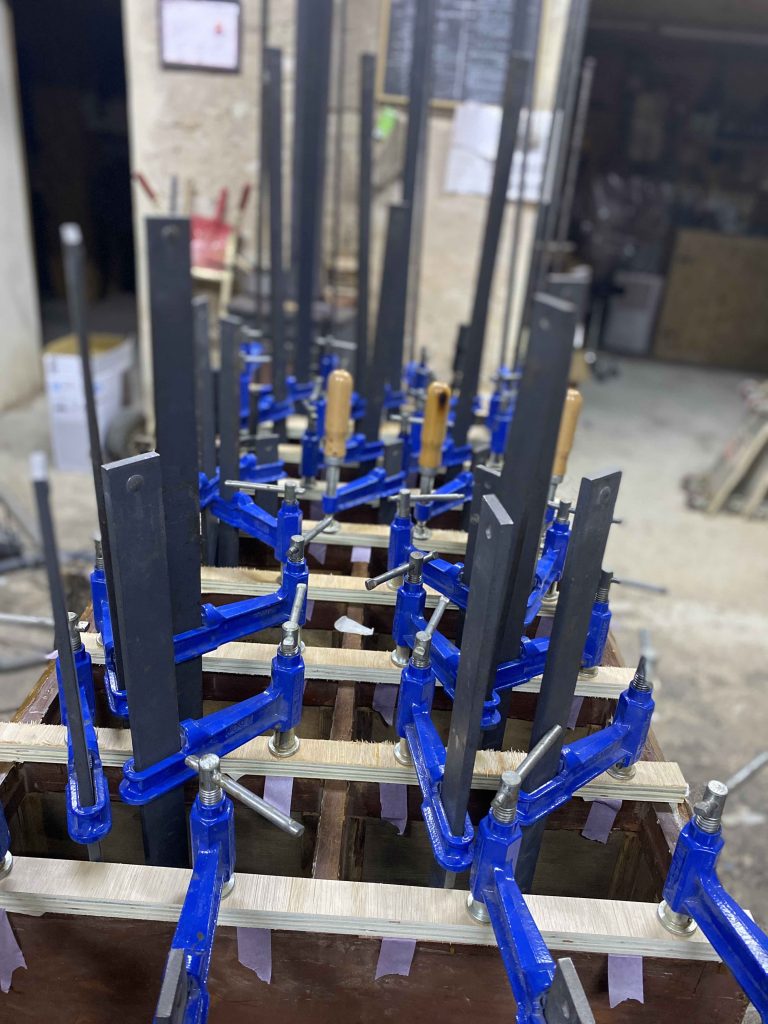
The drawers were then adjusted one by one. This took some time (there are twelve of them, after all!). The locks were restored to working order with their keys. The veneer grafts were oxidized and a clear French polish was applied.