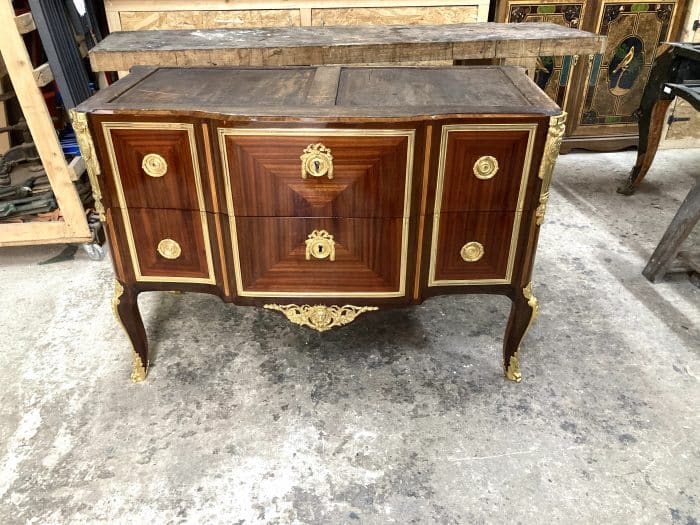
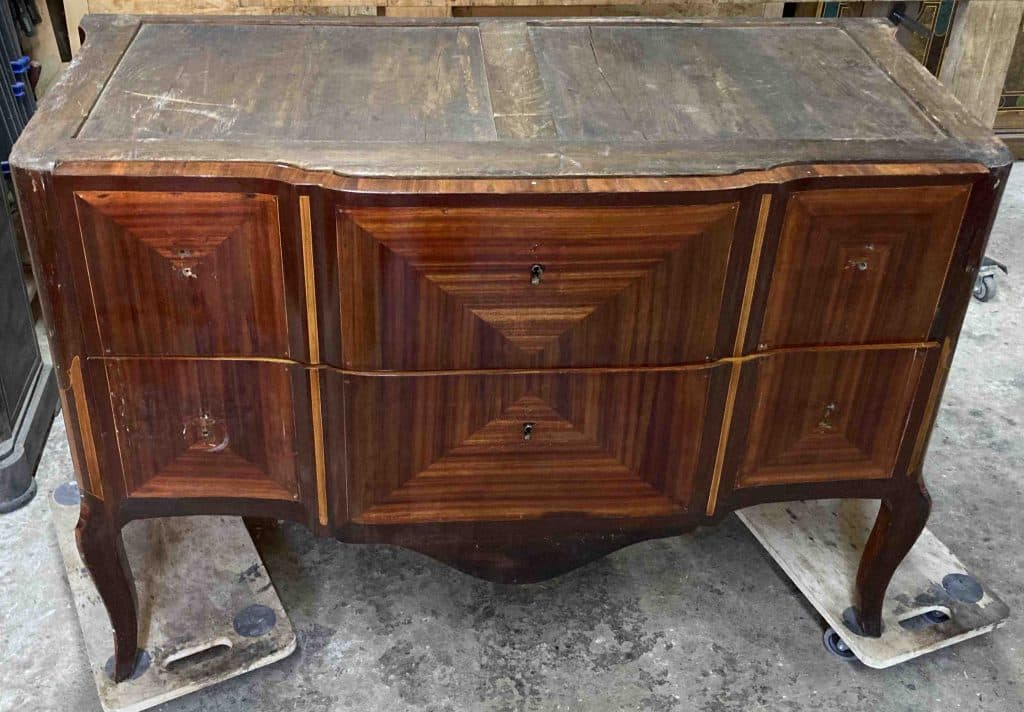
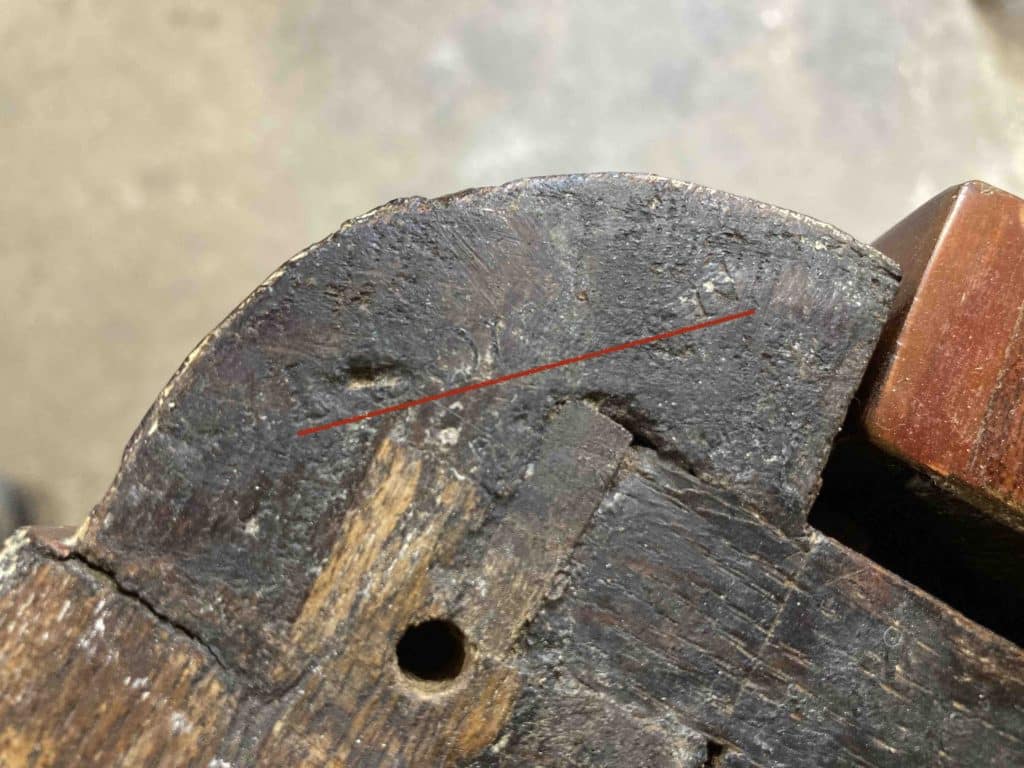
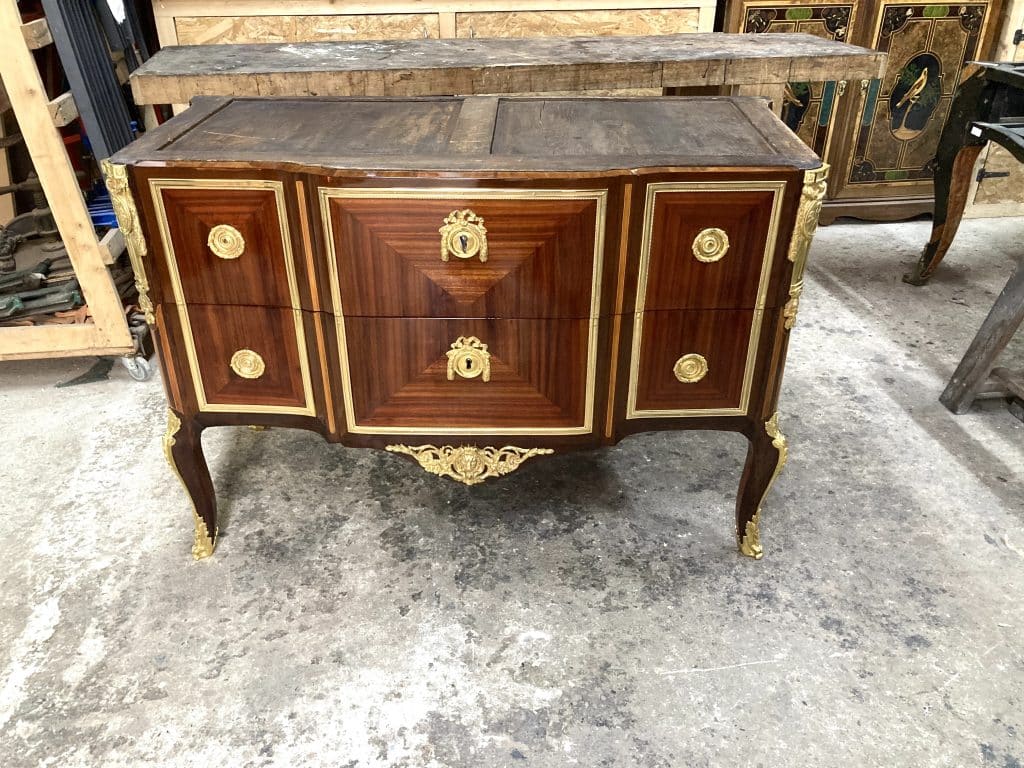
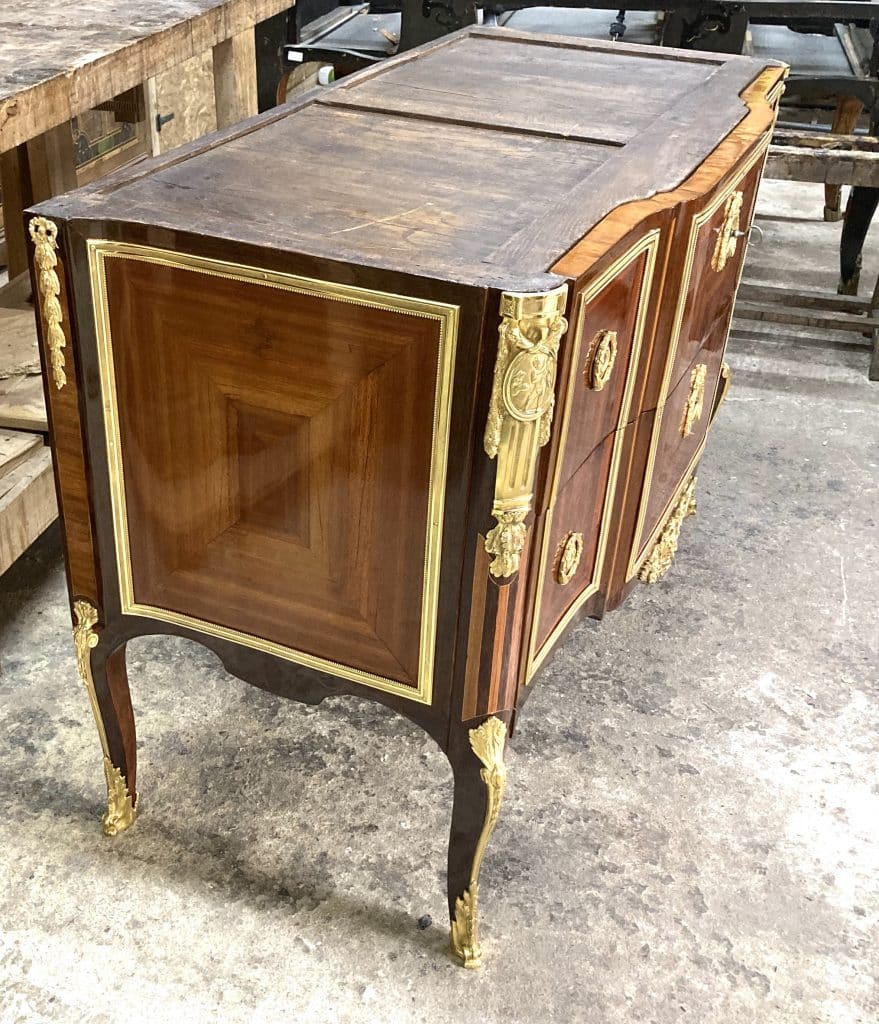
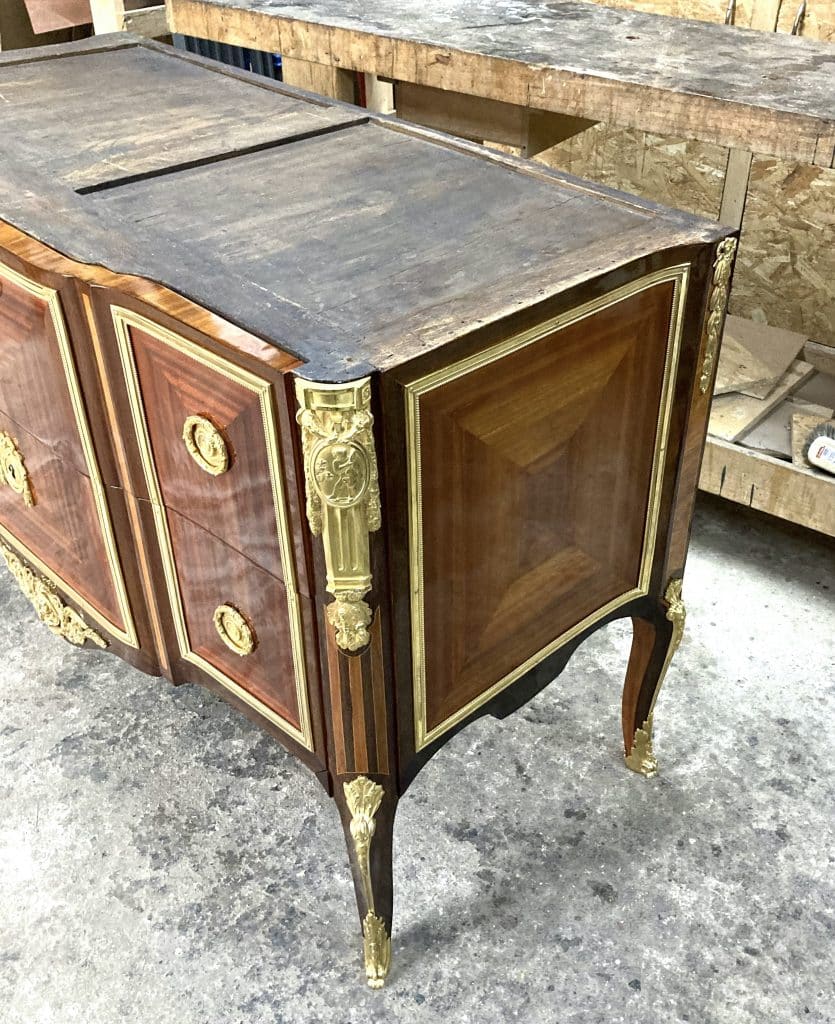
Restoration of a Transition-style commode stamped by the master cabinetmaker Léonard Boudin (1735 in Paris – 20/12/1807). It is constructed of solid oak and veneered with amaranth, rosewood, and ribbon satinwood (Brosimum rubescens), which gives it a highly decorative appearance due to the pronounced interlocked grain of this South American wood. It should be noted that it belongs to the same family as snakewood (Brosimum guianense).
Since Boudin was primarily a merchant during the transition period, it is likely that this chest of drawers is actually by the hand (before mastery) of André Louis Gilbert (1746-1809) who received master status in Paris on July 20, 1774.

Leonard Boudin
Born in 1735 in Paris, into a very modest family, he began his career as a simple laborer. He was quickly employed by Pierre Migeon (a renowned cabinetmaker and merchant). Having obtained his master craftsman's certificate on March 4, 1761, he set up his workshop on Rue Traversière and continued to work for Migeon and other cabinetmakers. Then, from 1770 onward, he received commissions from numerous renowned merchants, such as Louis. Then, from 1770 onwards, he received commissions from numerous renowned merchants, such as Louis Moreau and Gerard Peridiez, and quickly acquired a great reputation for his varied and exquisitely crafted marquetry. In 1772, while still maintaining his workshop, he opened a retail store on rue Fromenteau, which he moved in 1777 to the cloister of Saint-Germain-l'Auxerrois.
Advertisement by Léonard Boudin – December 1777 – in «"The Journal of Small Posters"»
- Mr. Boudin, cabinetmaker and upholsterer of the cloister of Saint-Germain-l'Auxerrois, of a very well-stocked store of furniture of all kinds in the new style, chests of drawers, secretaries and other works of cabinetmaking, fires, arms and clocks gilded with ground gold, clocks with bases of white marble, mirrors, chandeliers and works of China, in vessel and castles of mother-of-pearl.
Faced with a surge in orders, he in turn enlisted the help of other cabinetmakers (including Topino, Evalde, and Denizot) and became one of the leading dealers in Paris. Gradually, Boudin abandoned his own production, offering his clients only the works of his colleagues, hence the double stamp found on numerous pieces (Tuart, Letellier, Dubois, Gilbert, Vié, Topino, Cordié, Birklé, Macret, Latz, Chevallier, Evalde, Fléchy, Péridiez). However, furniture bearing only Boudin's stamp has also been observed, though these pieces were not made by Léonard himself, but rather by his colleagues.
Salverte describes Boudin as "greedy for gain" and cites several steps taken by the cabinetmaker to force some of his colleagues to repay debts that were sometimes minimal.
BIBLIOGRAPHY
- French Furniture of the 18th Century – Pierre Kjellberg – Les Editions de l'Amateur – 2002
- Cabinetmakers of the 18th Century – Count François de Salverte – Art and History Publishers – 1923
- The stamp "The Art Object" – Patricia Lemonnier – Faton – June 1989
- The Essence of Wood – A Macroscopic Identification Manual for Woods Used in French Furniture – 16th-20th Centuries – Hardcover – Patrick Georges – Emmanuel Maurin – Marie-Christine Trouy-Jacquemet – Dominique Bouchardon – Editions du Patrimoine – 2020
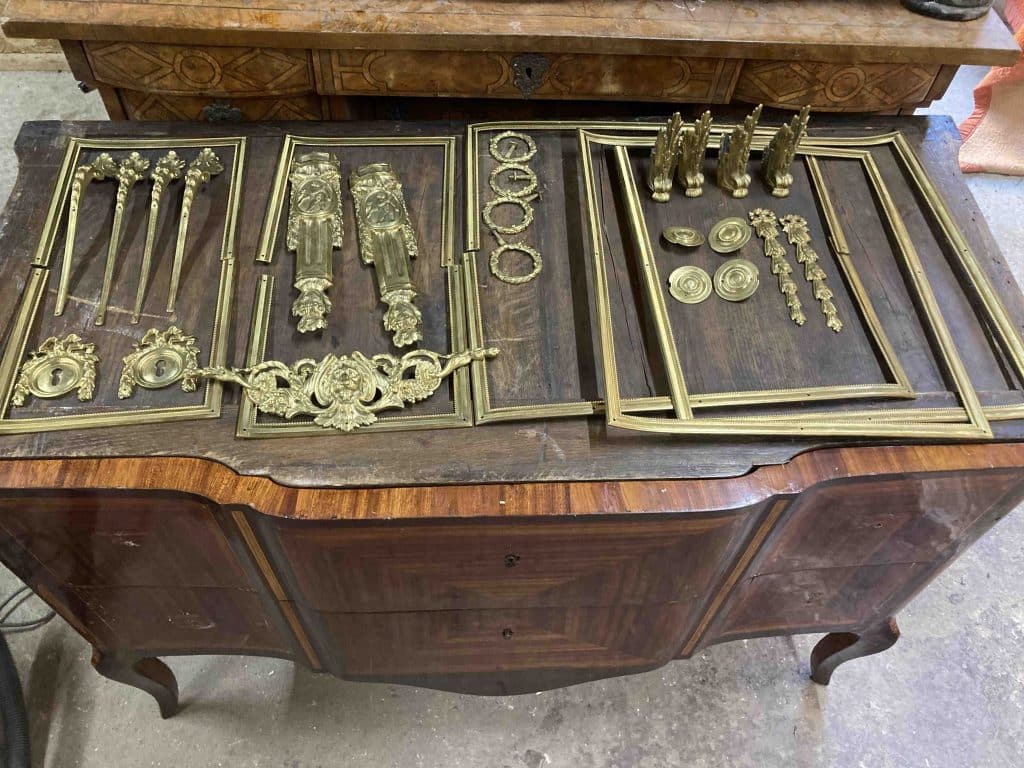
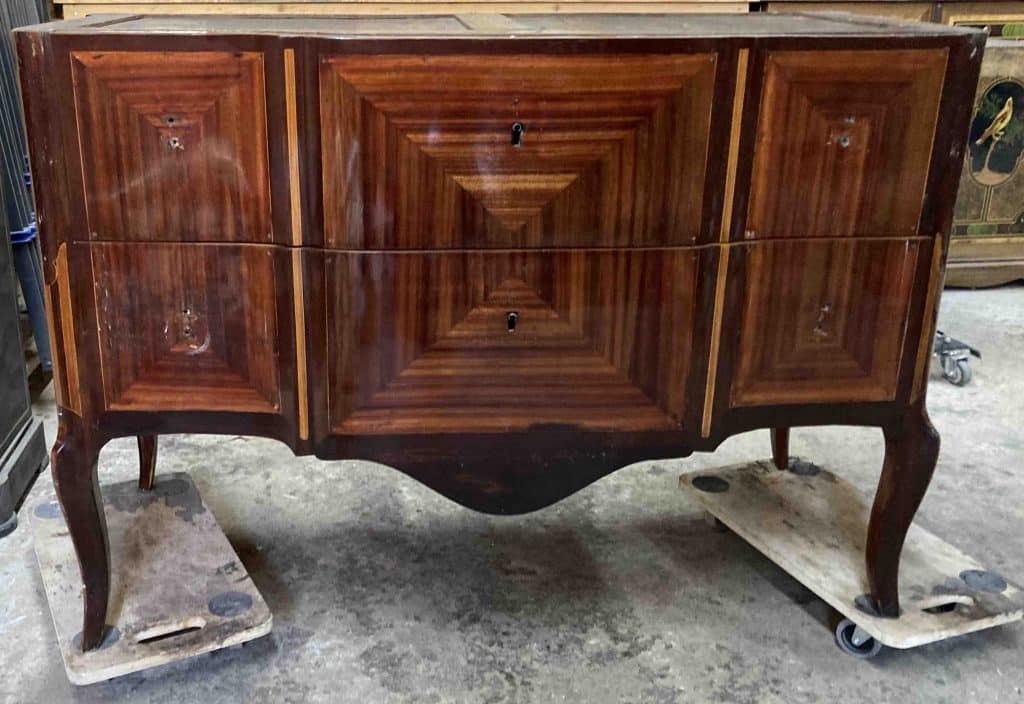
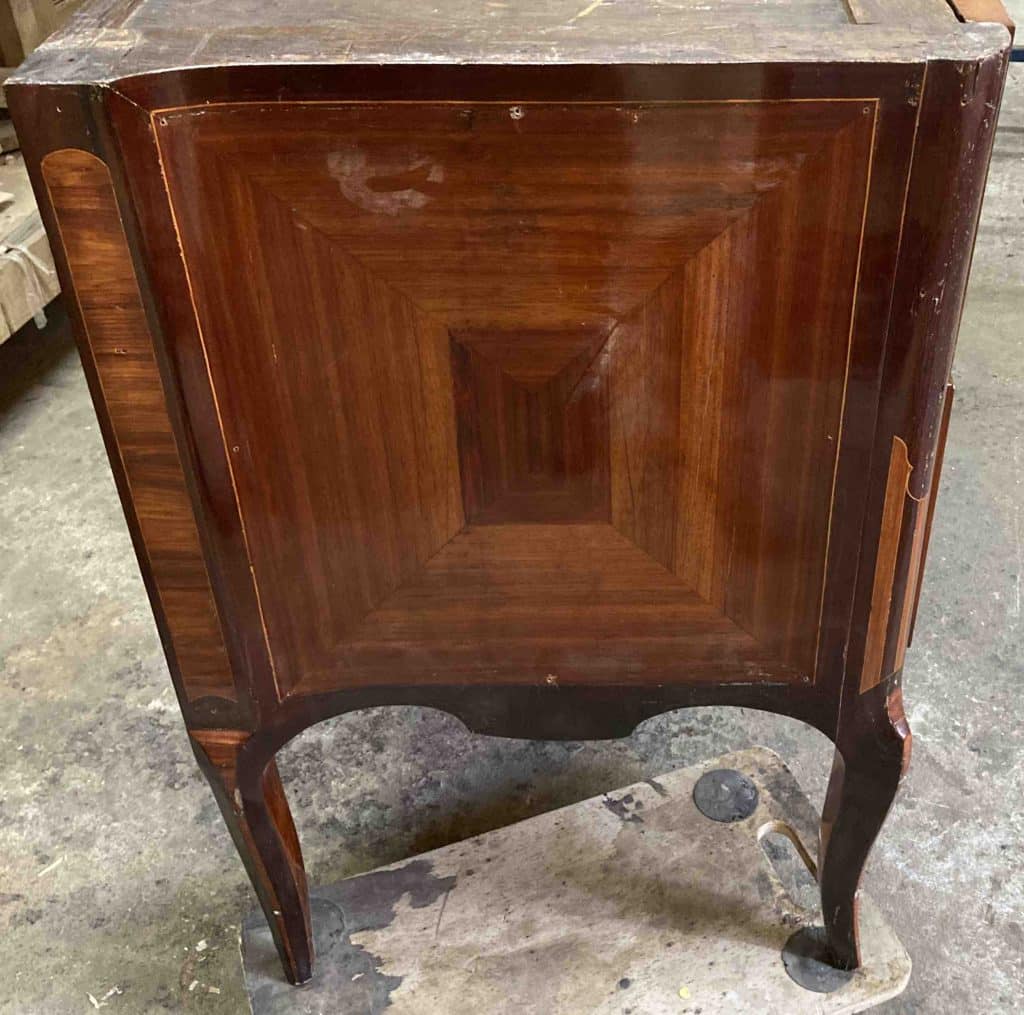
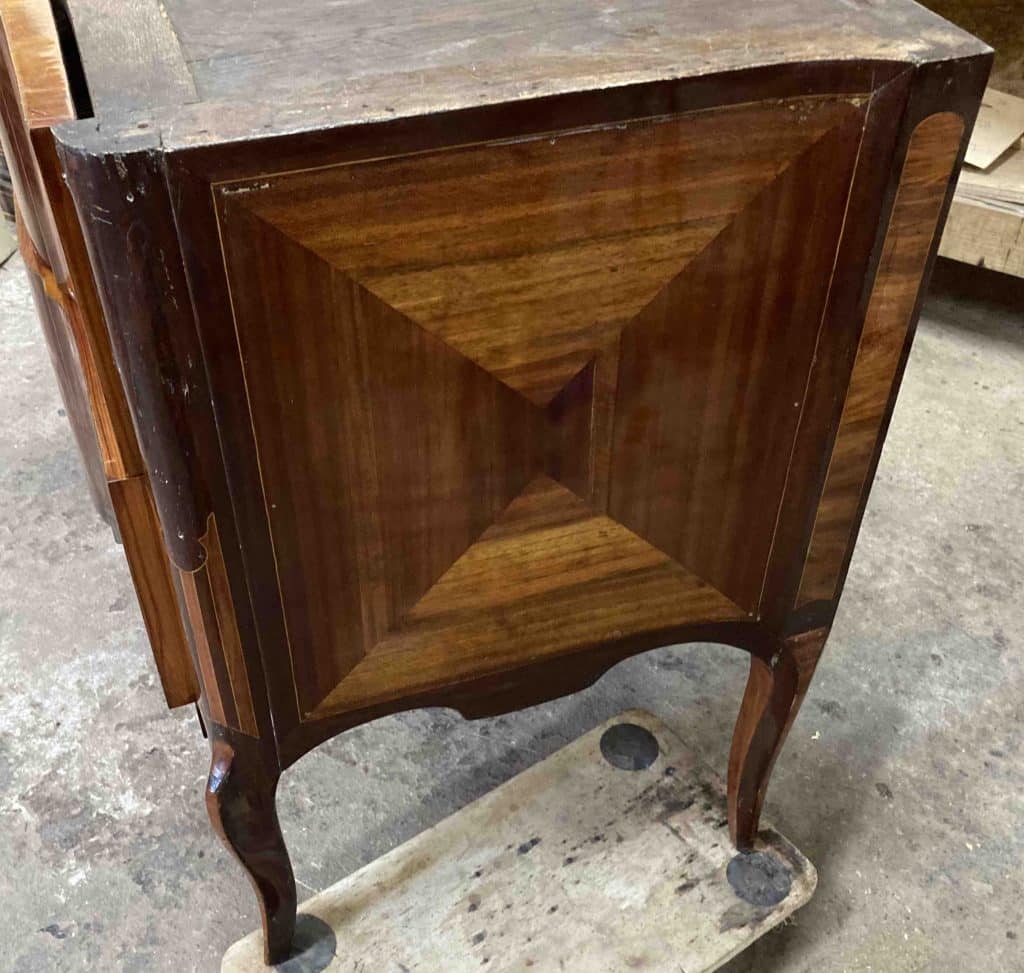
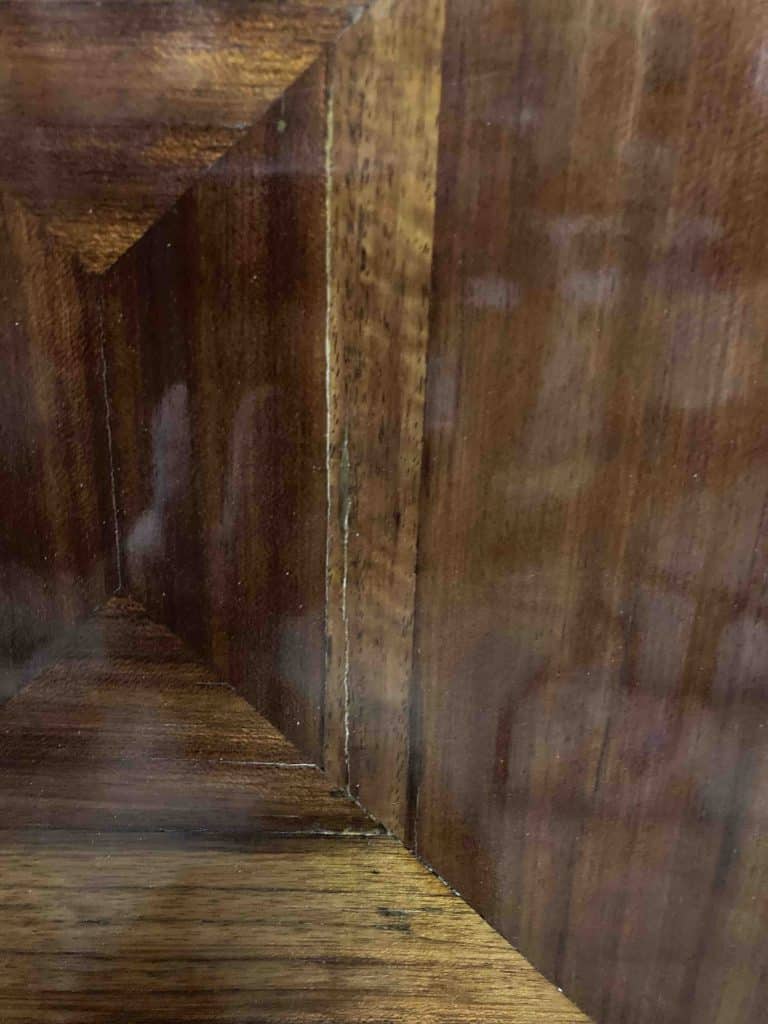
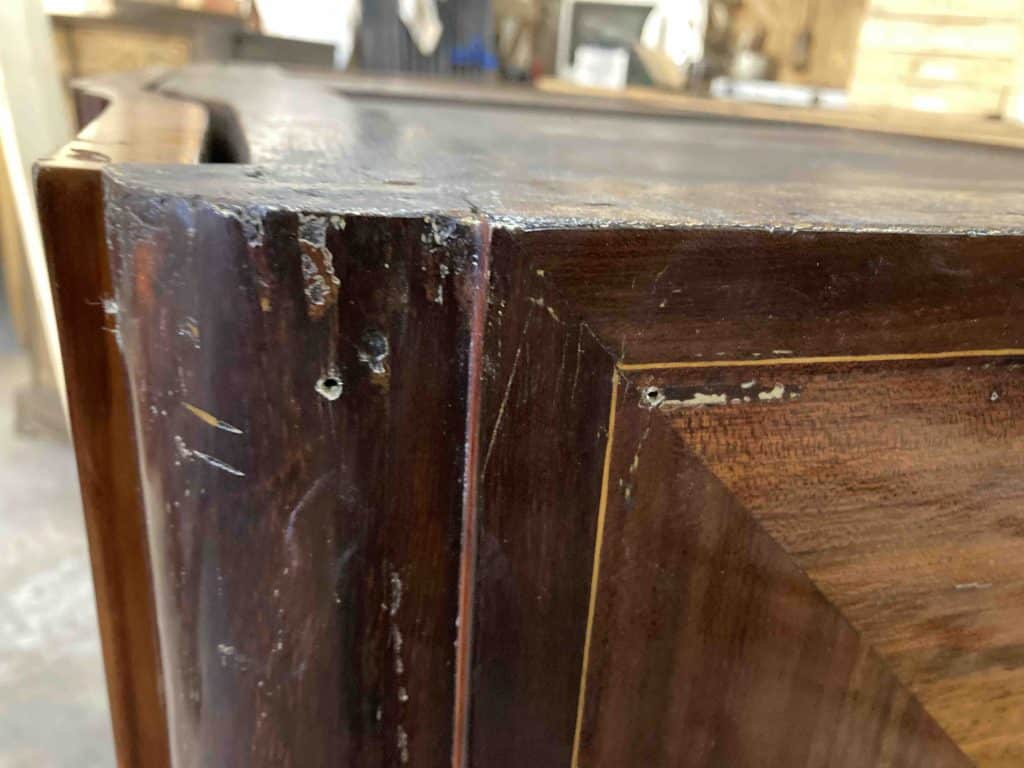
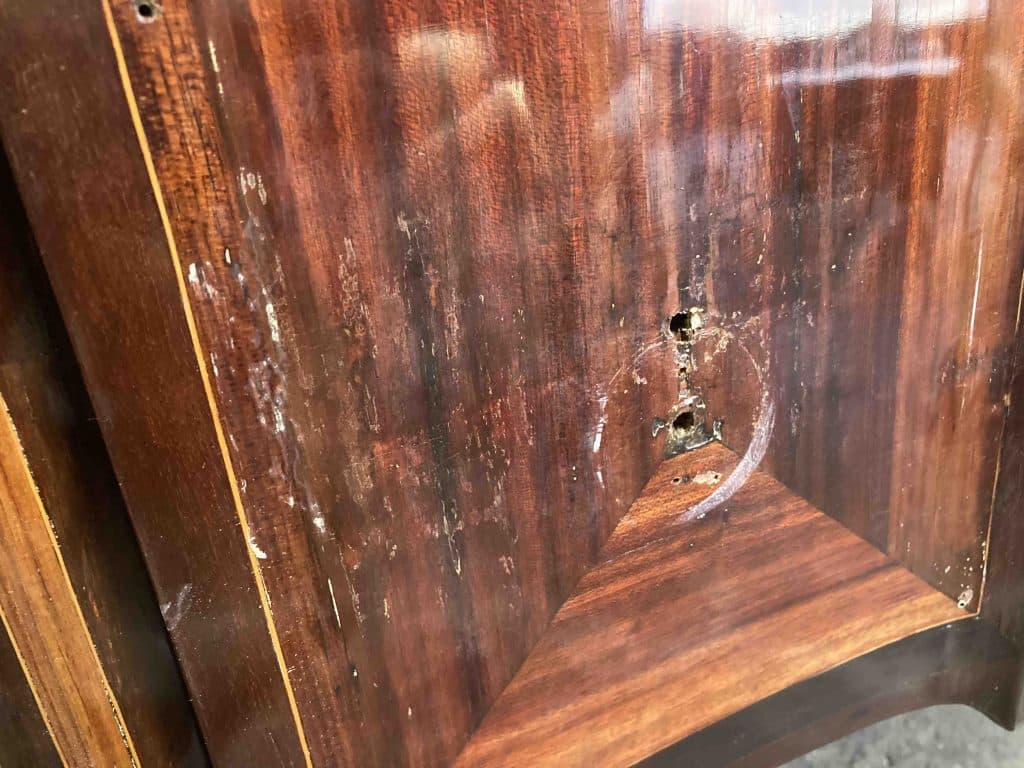
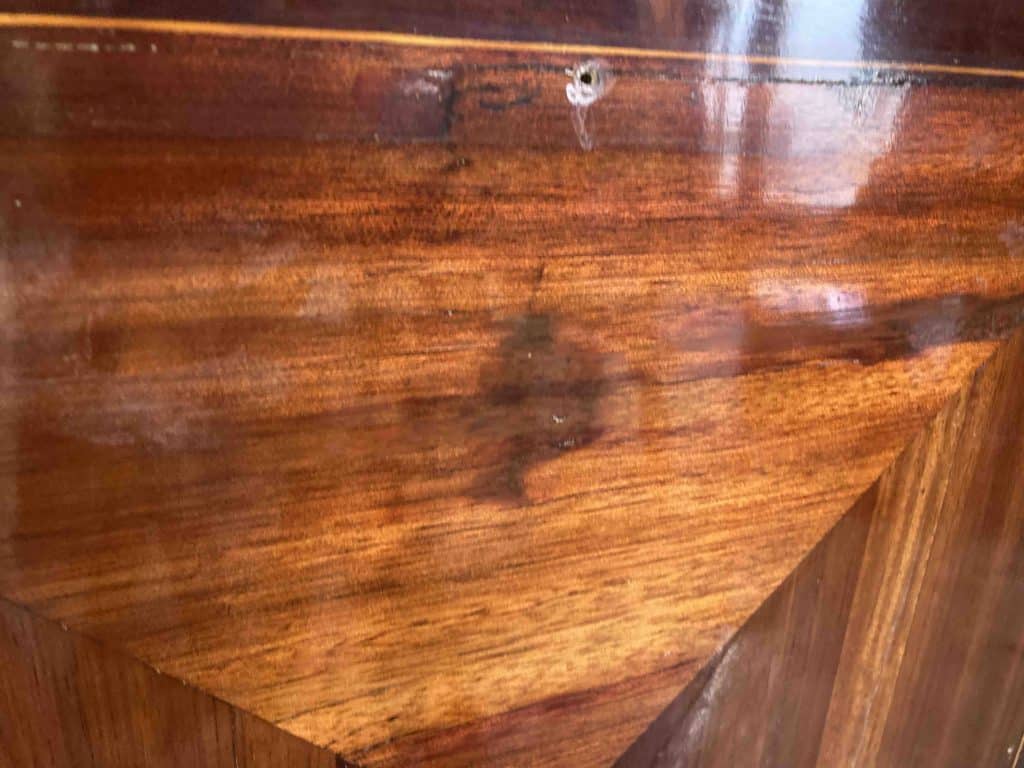
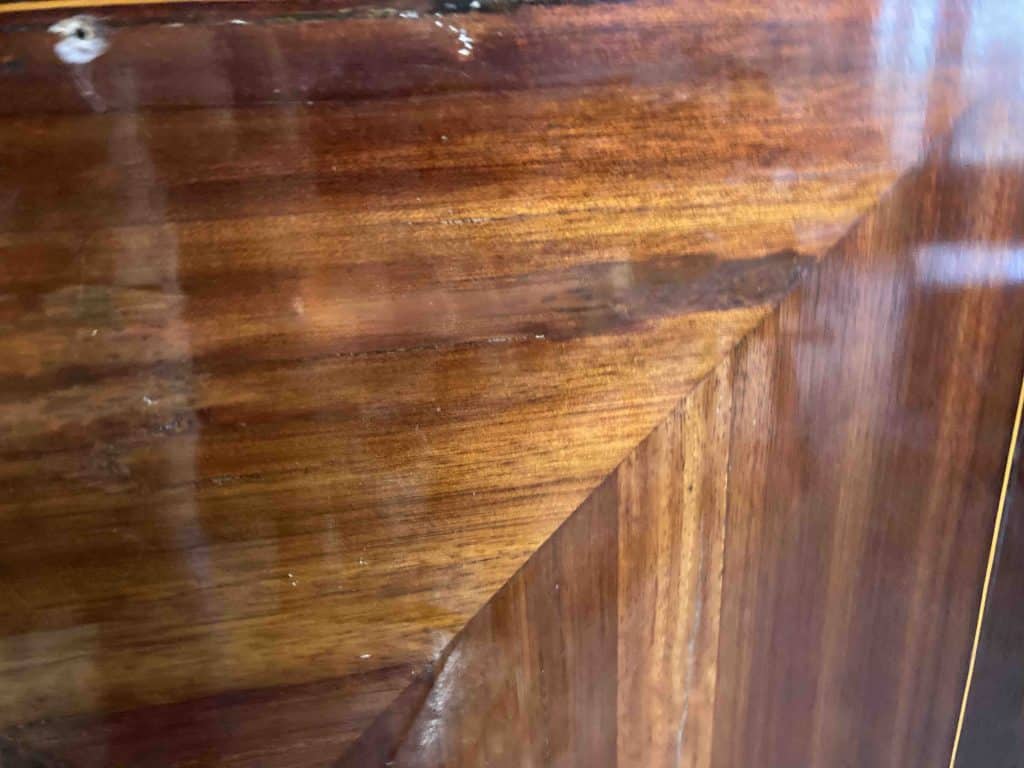
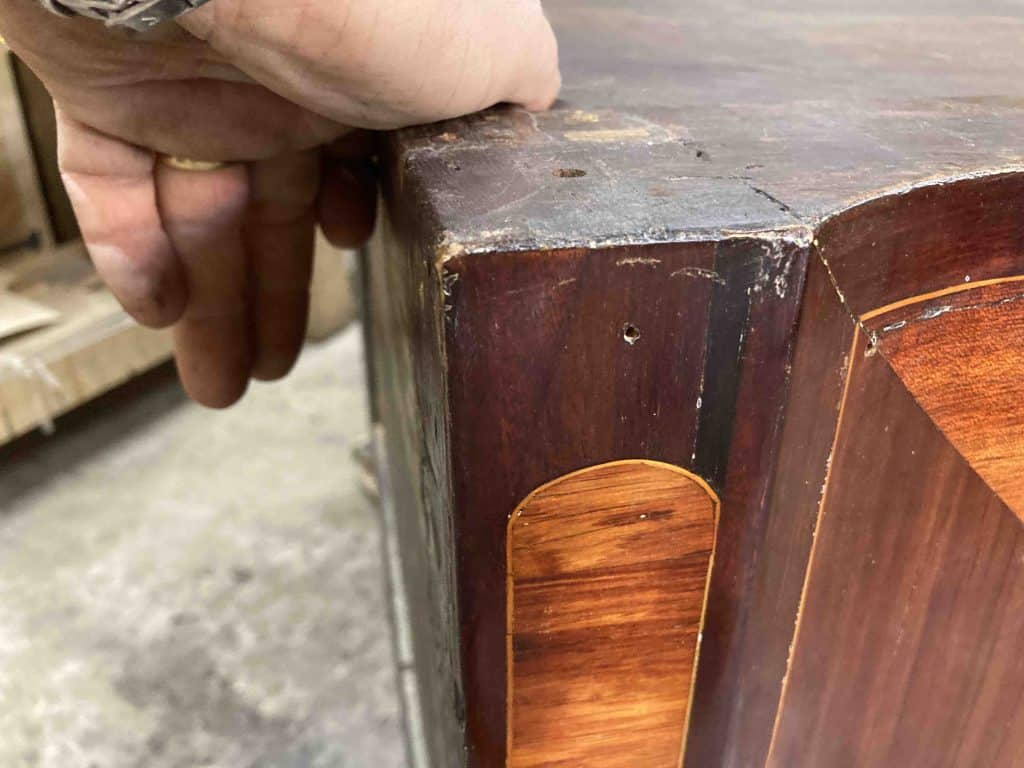
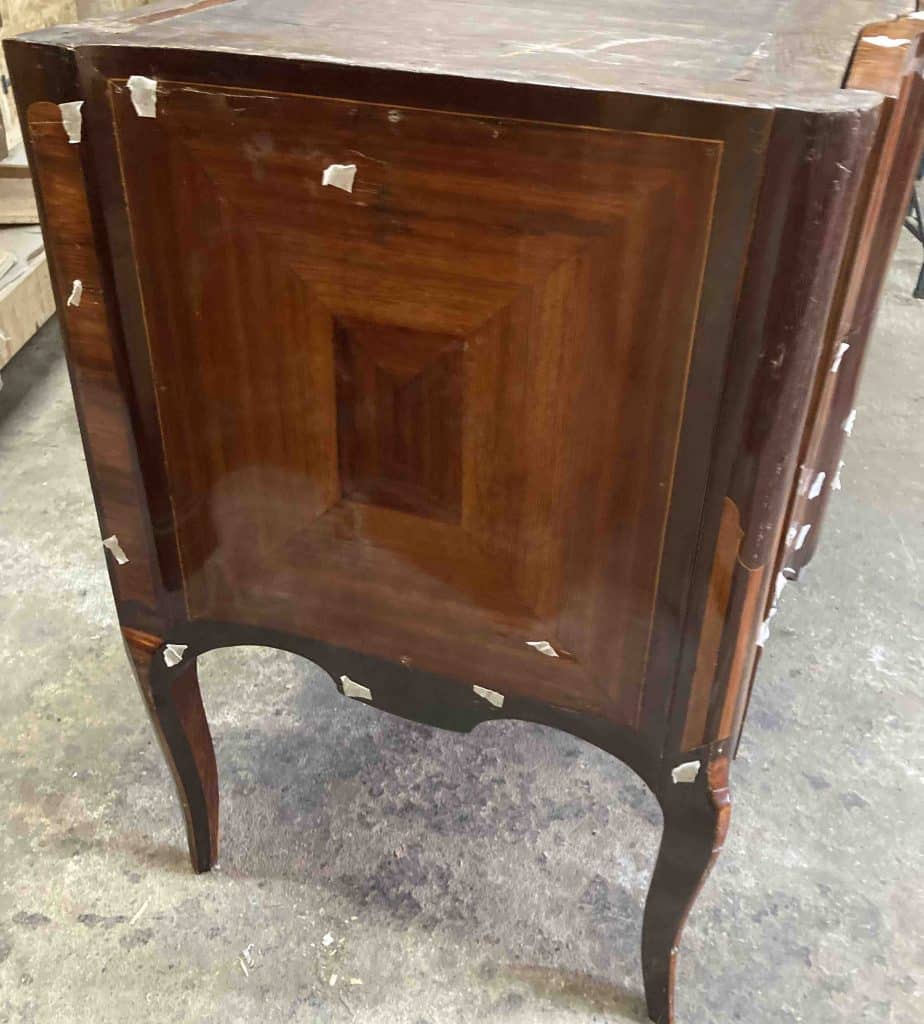
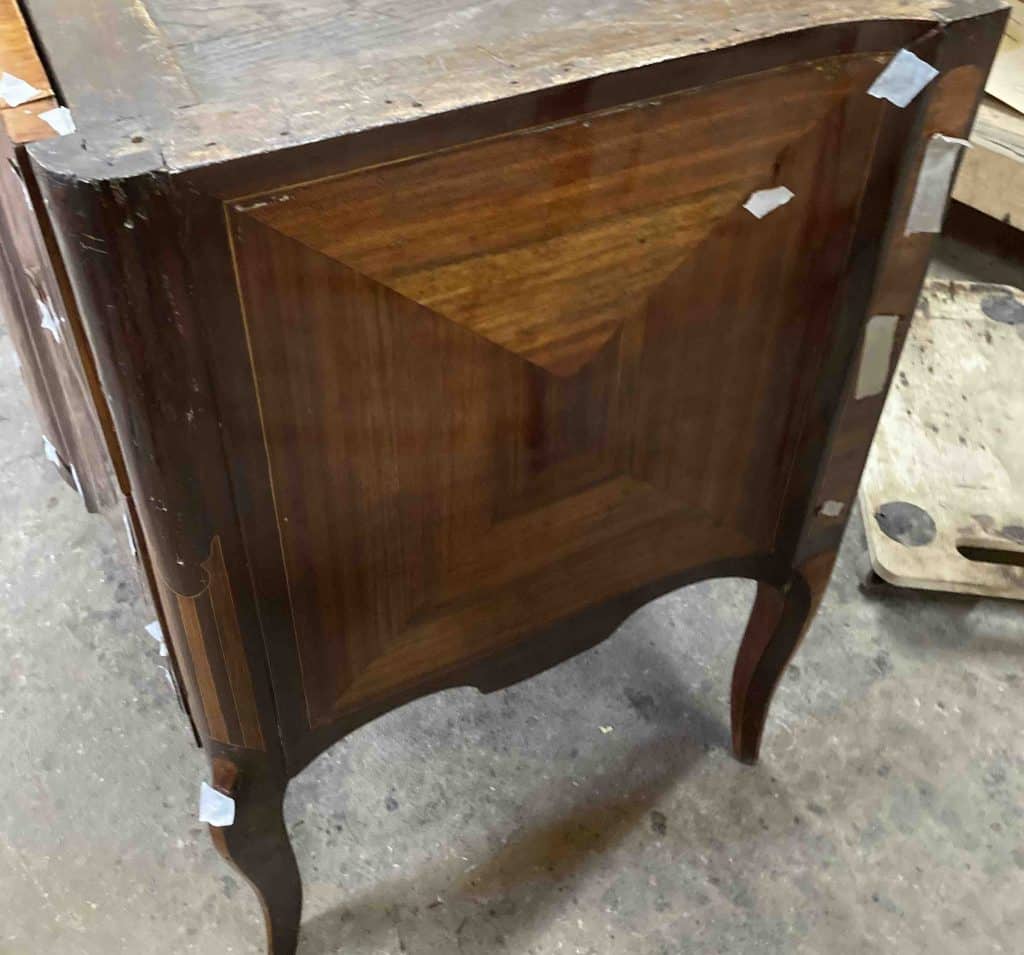
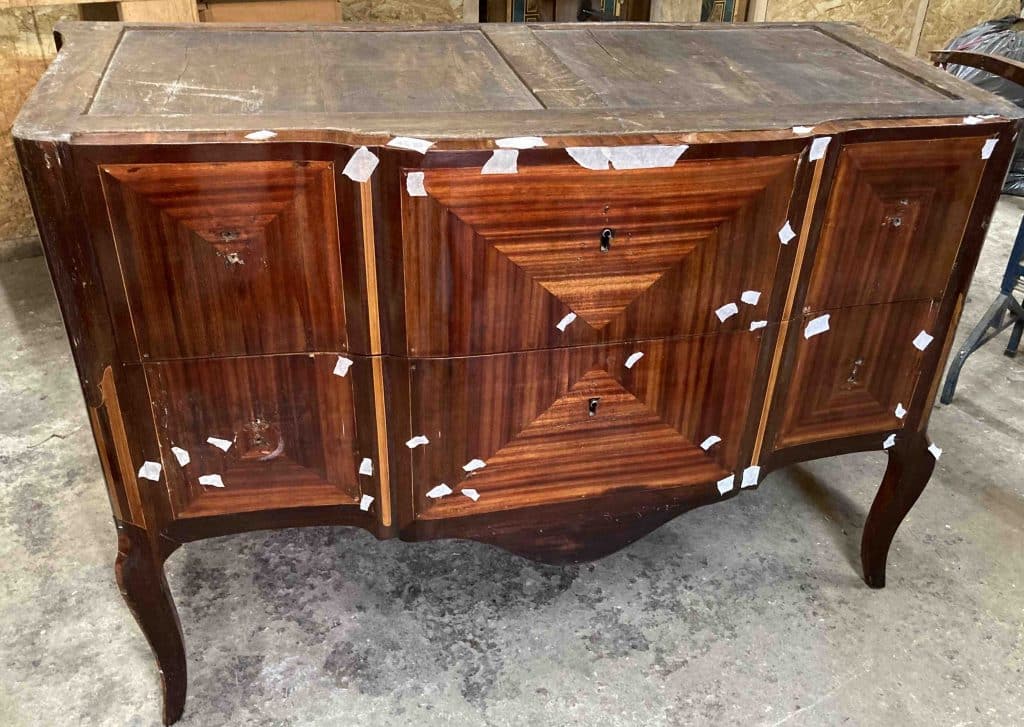
The restoration work on this chest of drawers consisted of removing the thick cellulose varnish, which had yellowed and revealed a multitude of unsightly repairs. Most of the fillings were redone, and the missing pieces were replaced with satinwood veneer, which was sawn, scraped, sanded, and cut to the correct thickness on the backing before being glued with hot glue.
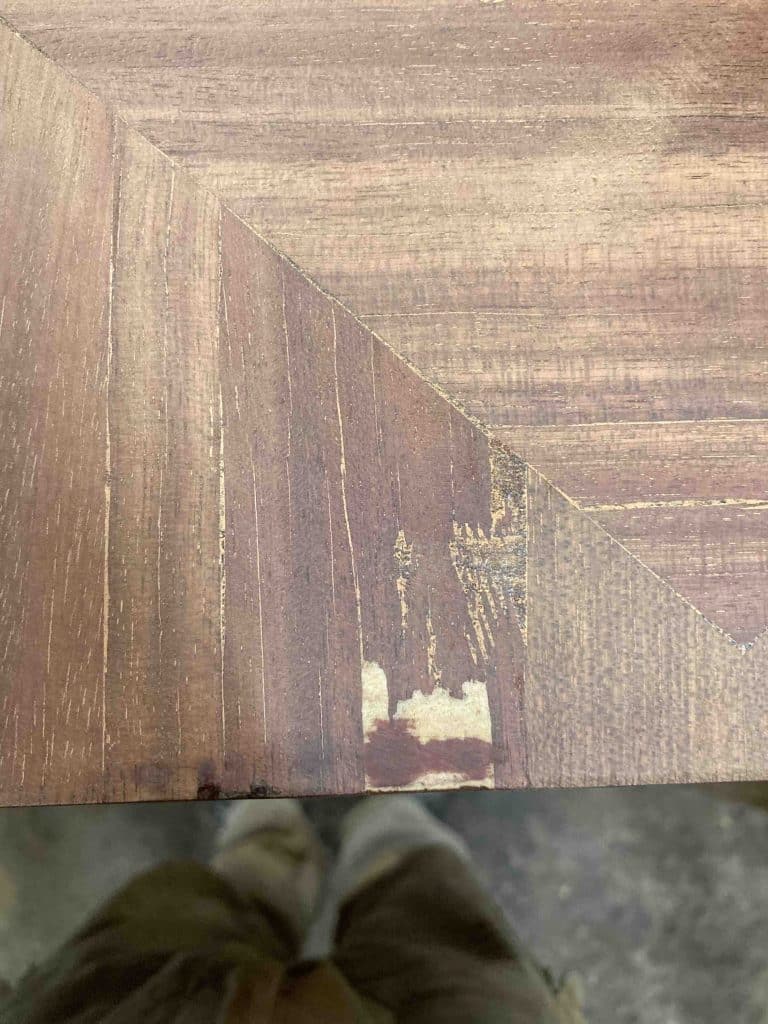
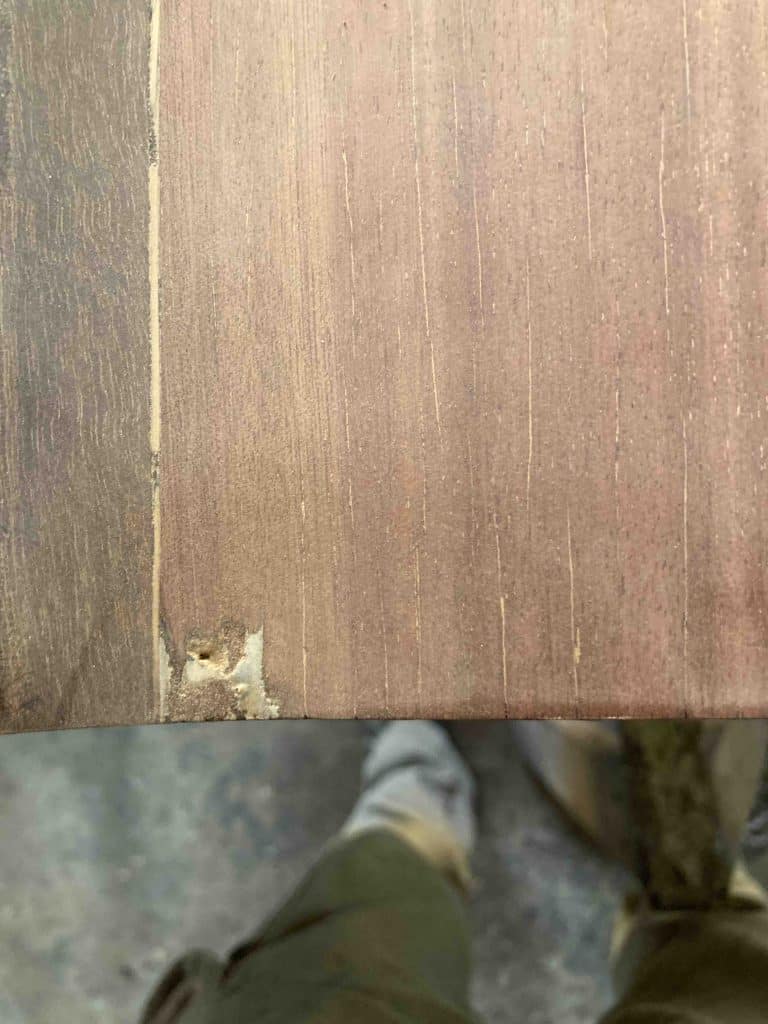
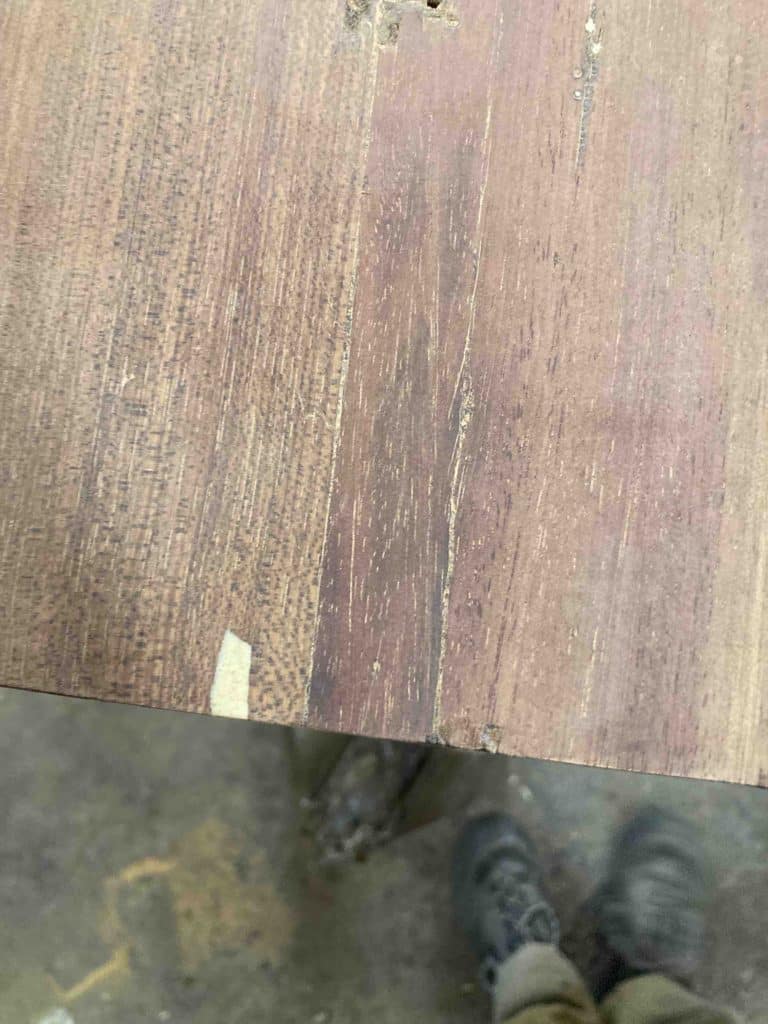
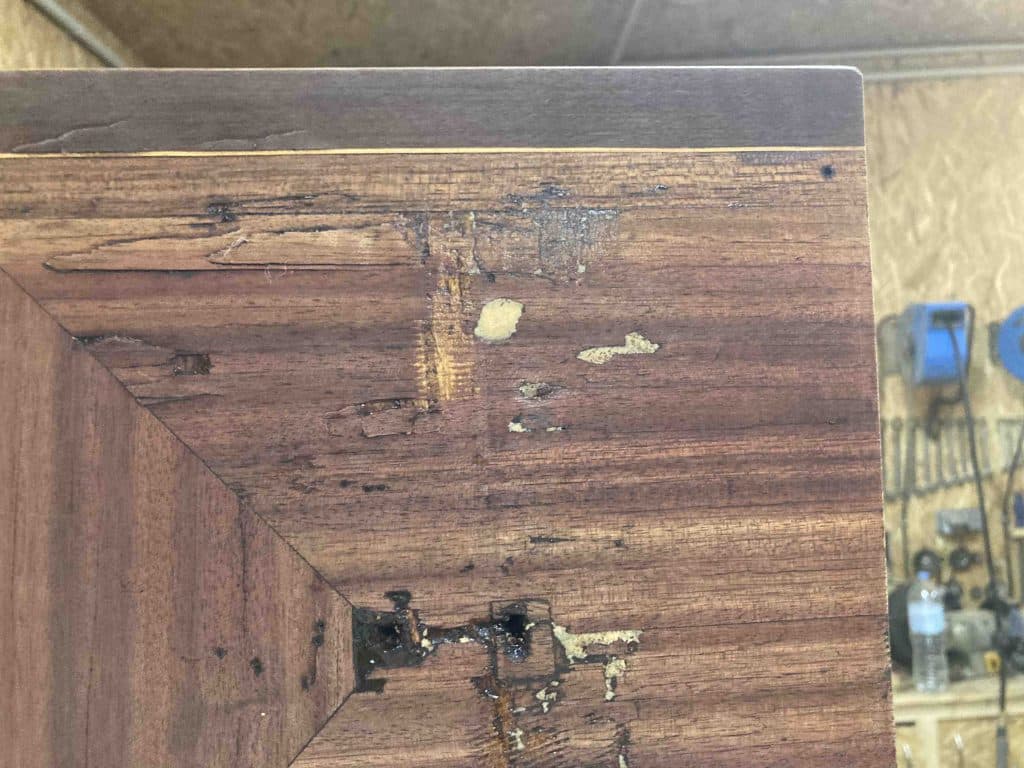
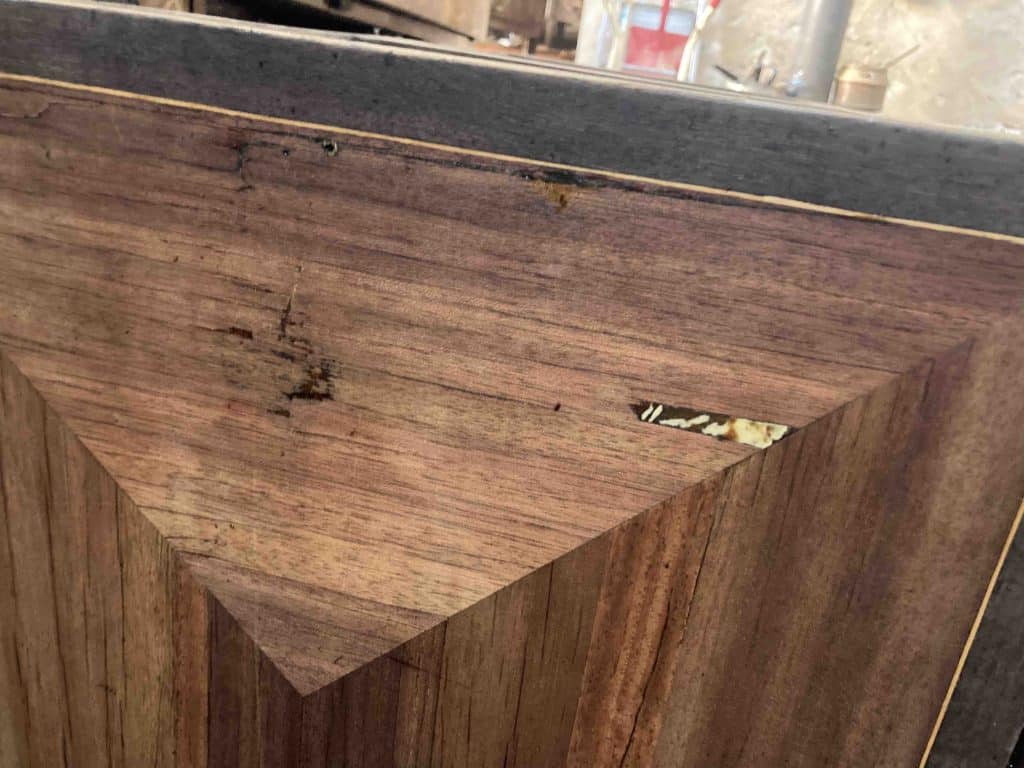
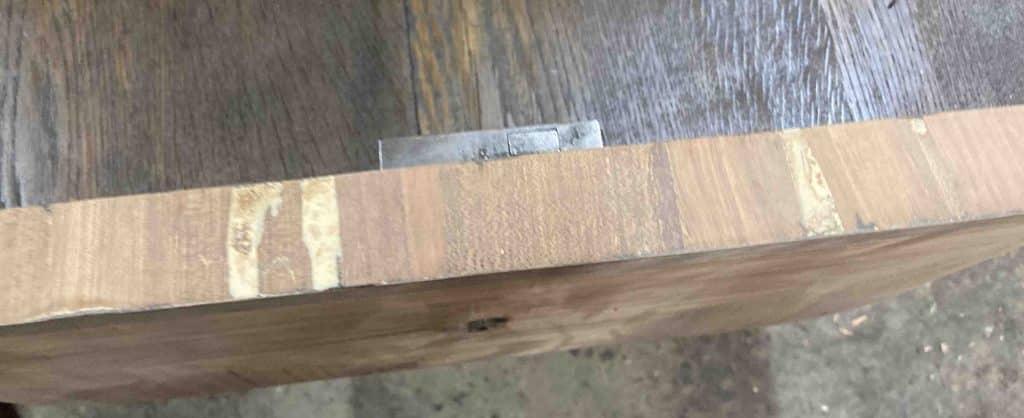
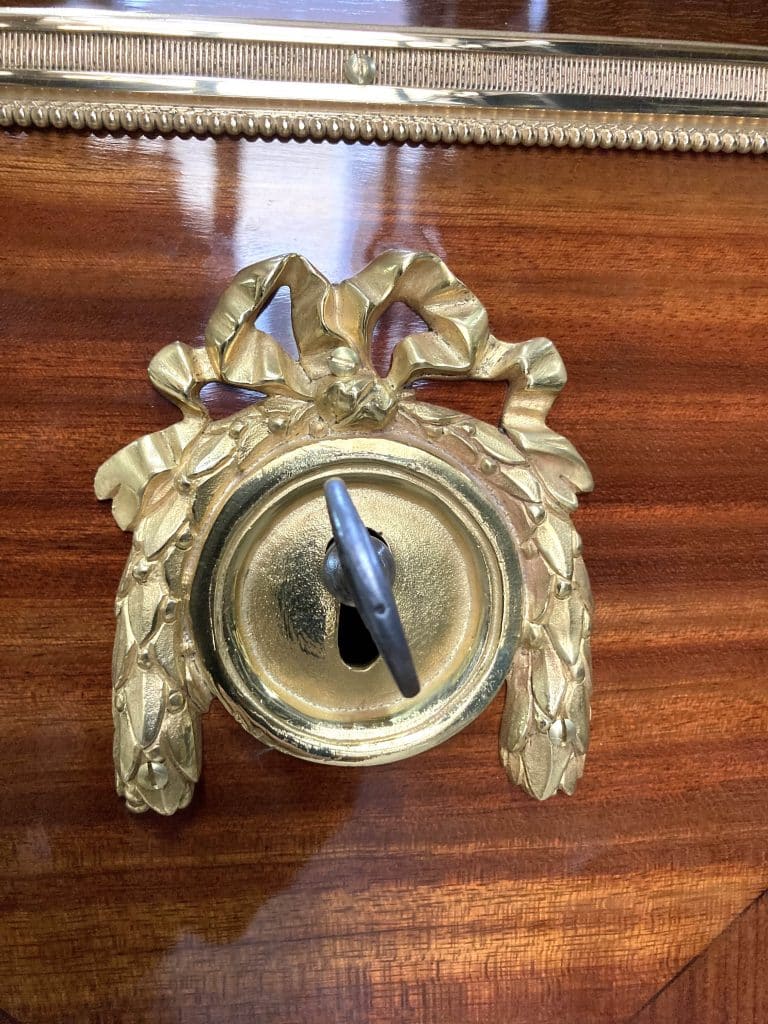
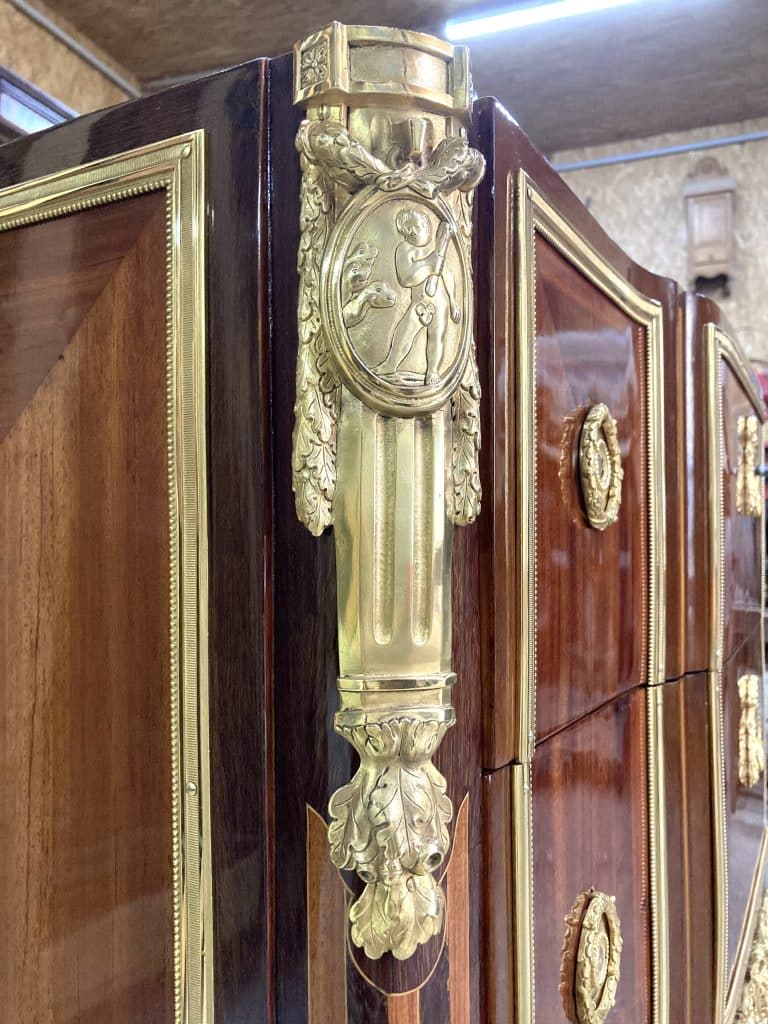
The grafts were then oxidized, and the drill holes were retouched with watercolor. The chest of drawers was finally varnished with a clear French polish. The bronze mounts were regilded by ARTE.
To see previous restorations : https://ebenisterie-mathieuvath.fr/en-ce-moment-a-latelier/