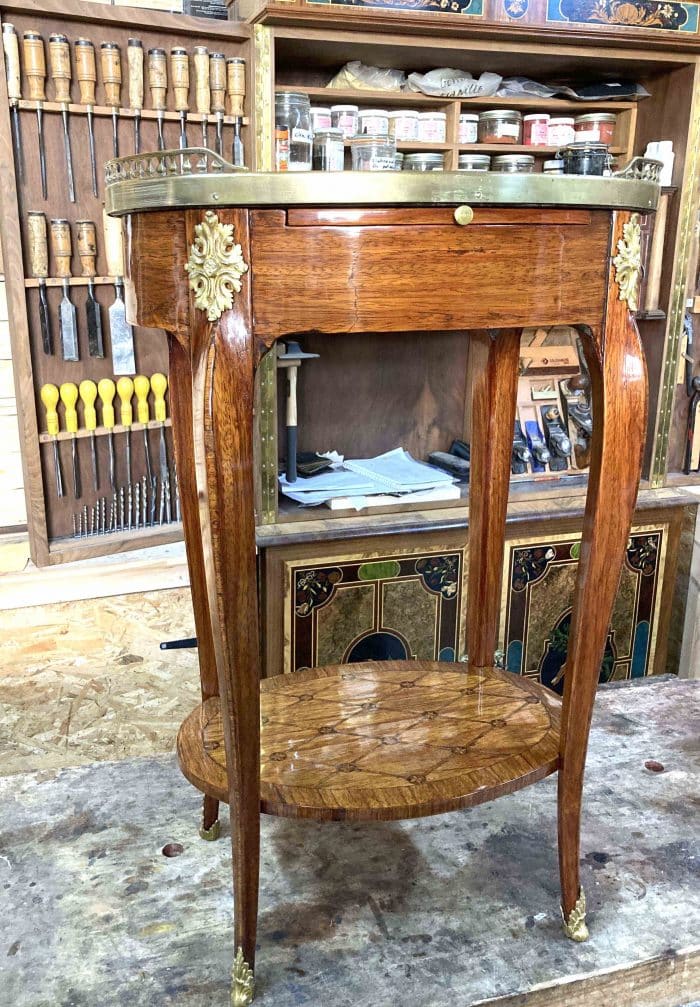
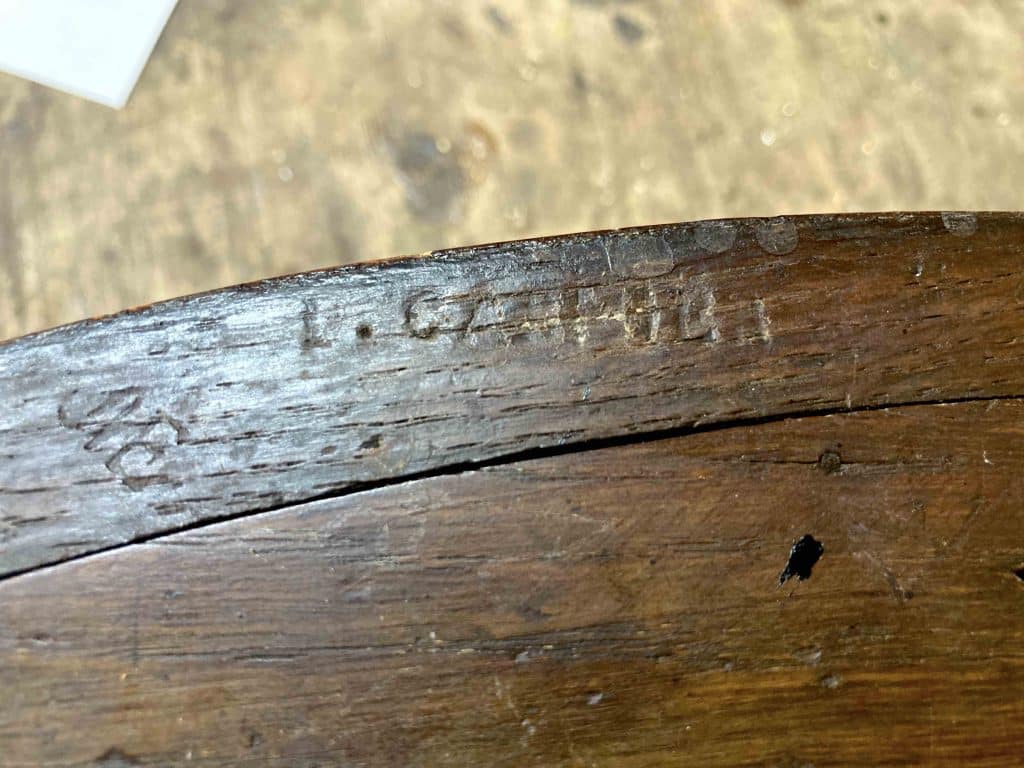
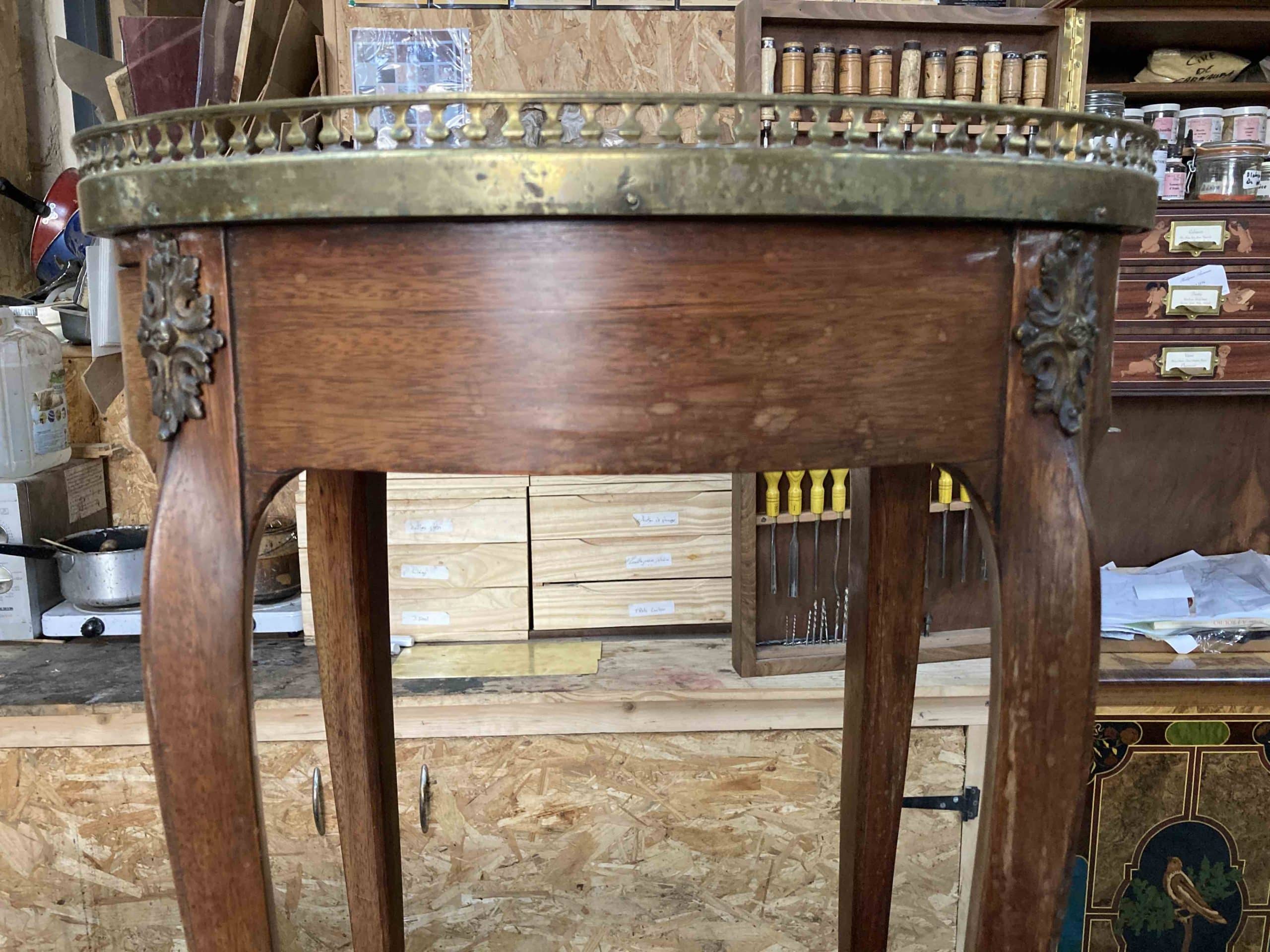
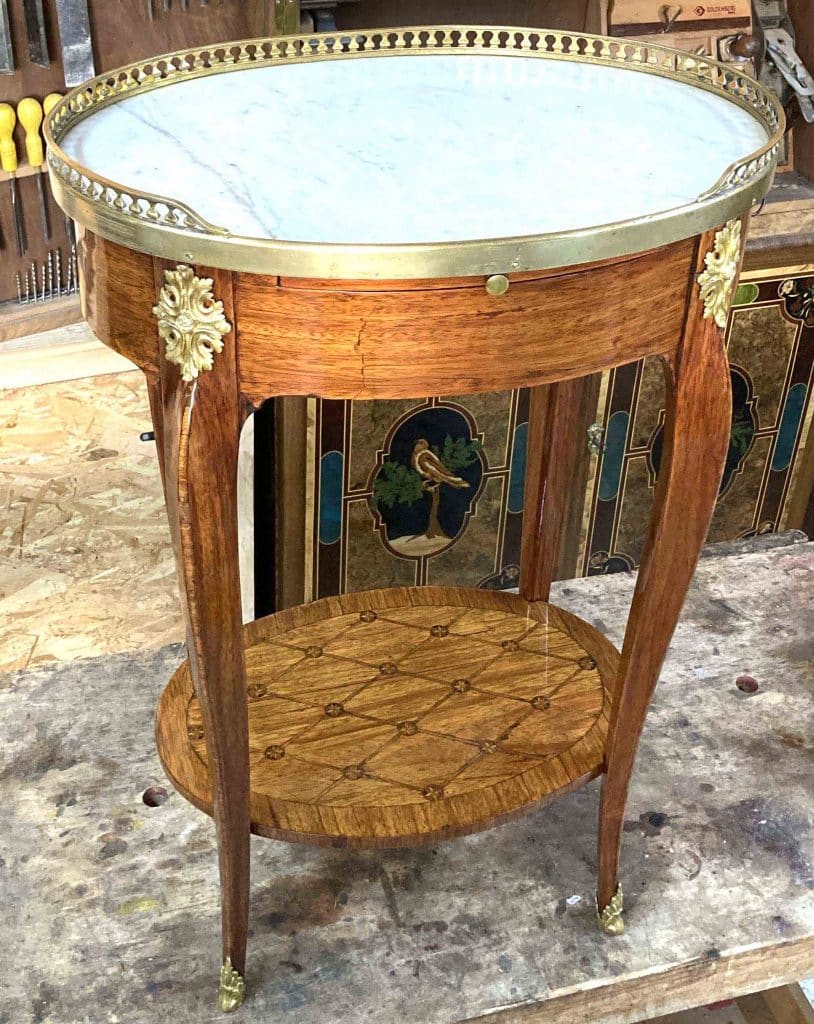
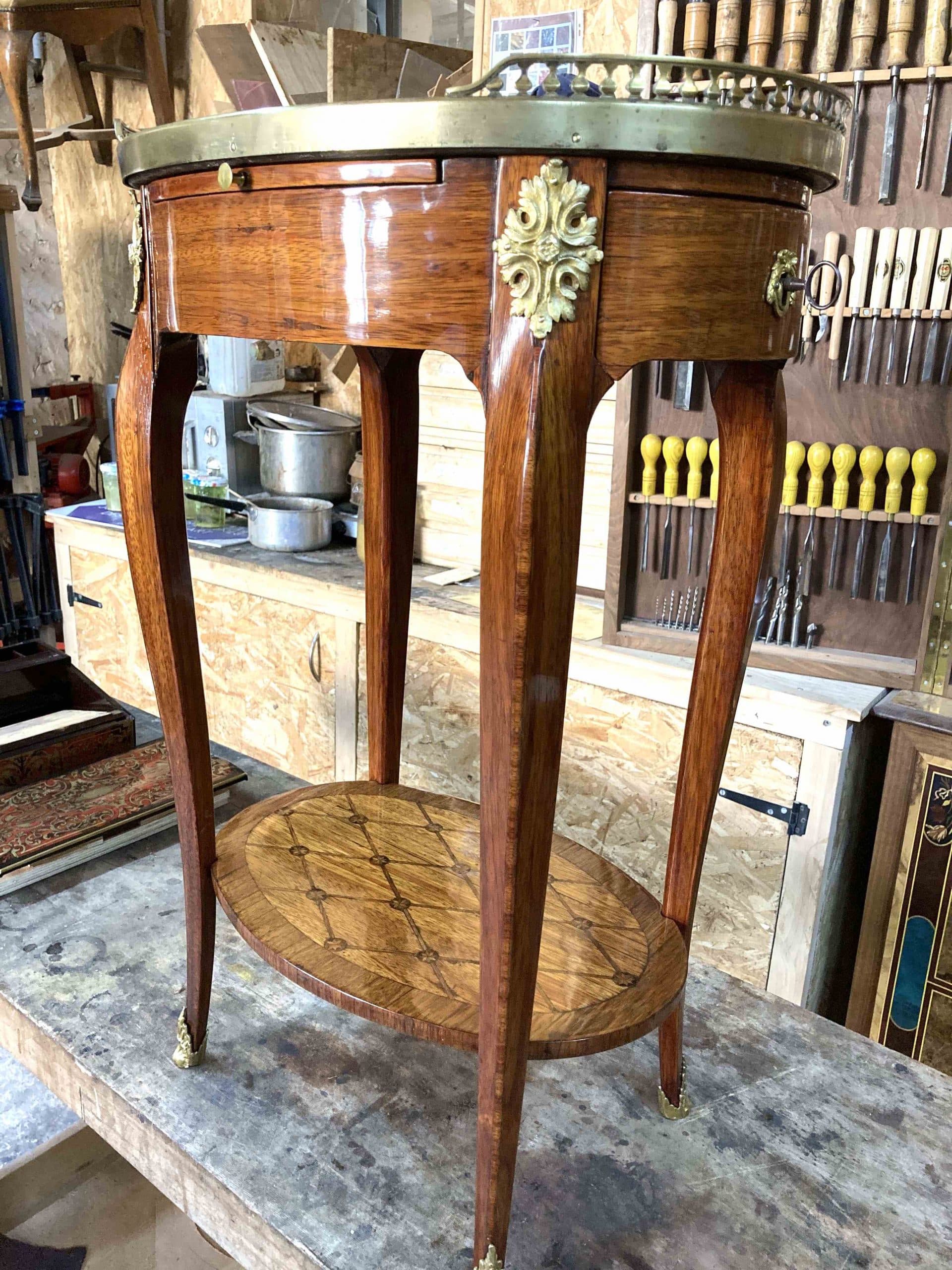
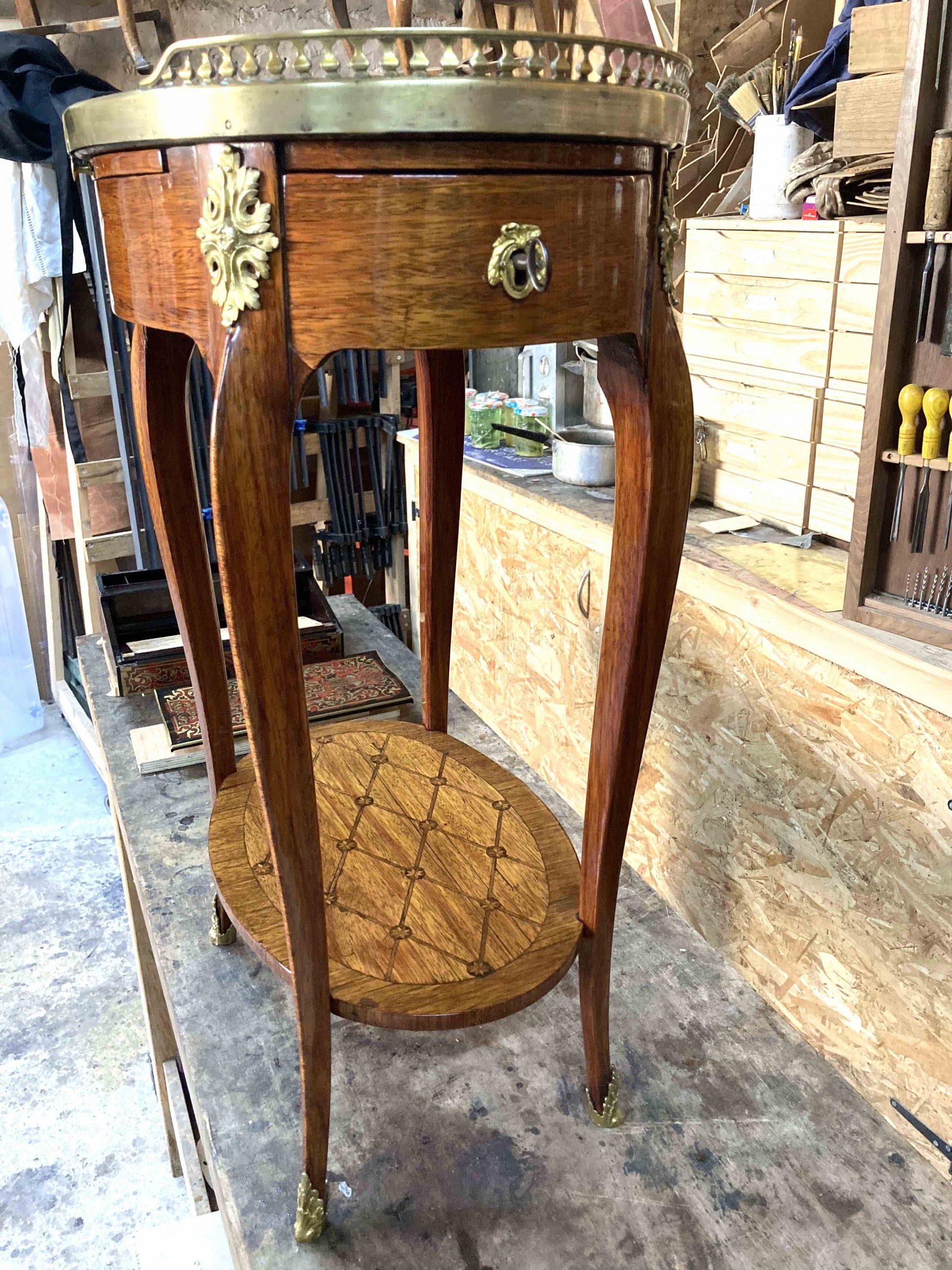
Restoration of a transitional period (1750-1774) satinwood veneer coffee table stamped by Pierre Garnier (circa 1726-1800).
Born in Paris, the son of master cabinetmaker François Garnier, Pierre Garnier obtained his master's certificate on December 31, 1742. In contrast to his father, François left the Faubourg Saint-Antoine for the rue Neuve-des-Petits-Champs, near the Place Vendôme. His clientele consisted of merchants like Léonard Boudin and Pierre Migeon, but above all, of the kingdom's wealthiest figures, such as Louis Georges Erasme, Marshal of France, the Duchess of Mazarin, and the Marquis de Marigny, brother of Madame de Pompadour, to whom he fulfilled numerous commissions. The Petites Affiches of 11 Germinal, Year VIII (April 11, 1800) announced the posthumous sale of his cabinetmaking business at 462 rue Neuve-des-Petits-Champs. The newspaper added: "We will not go into detail about the works of Citizen Garnier, known for 50 years for the quality of his work: any praise would be superfluous.".
State of affairs report
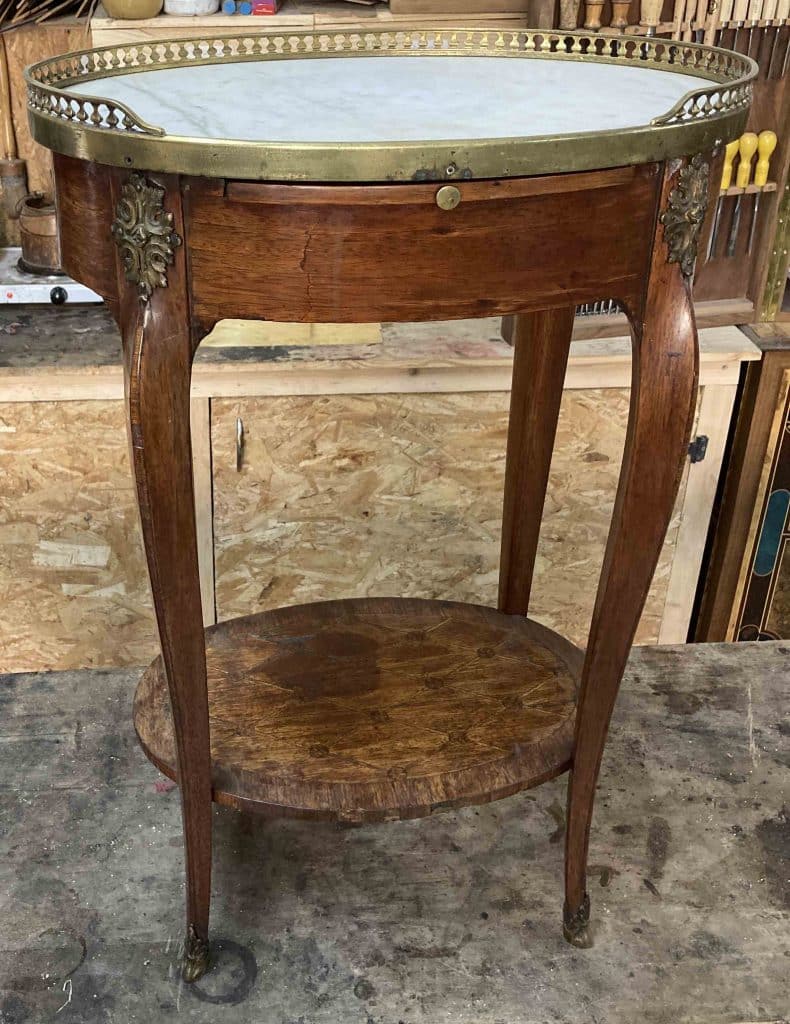
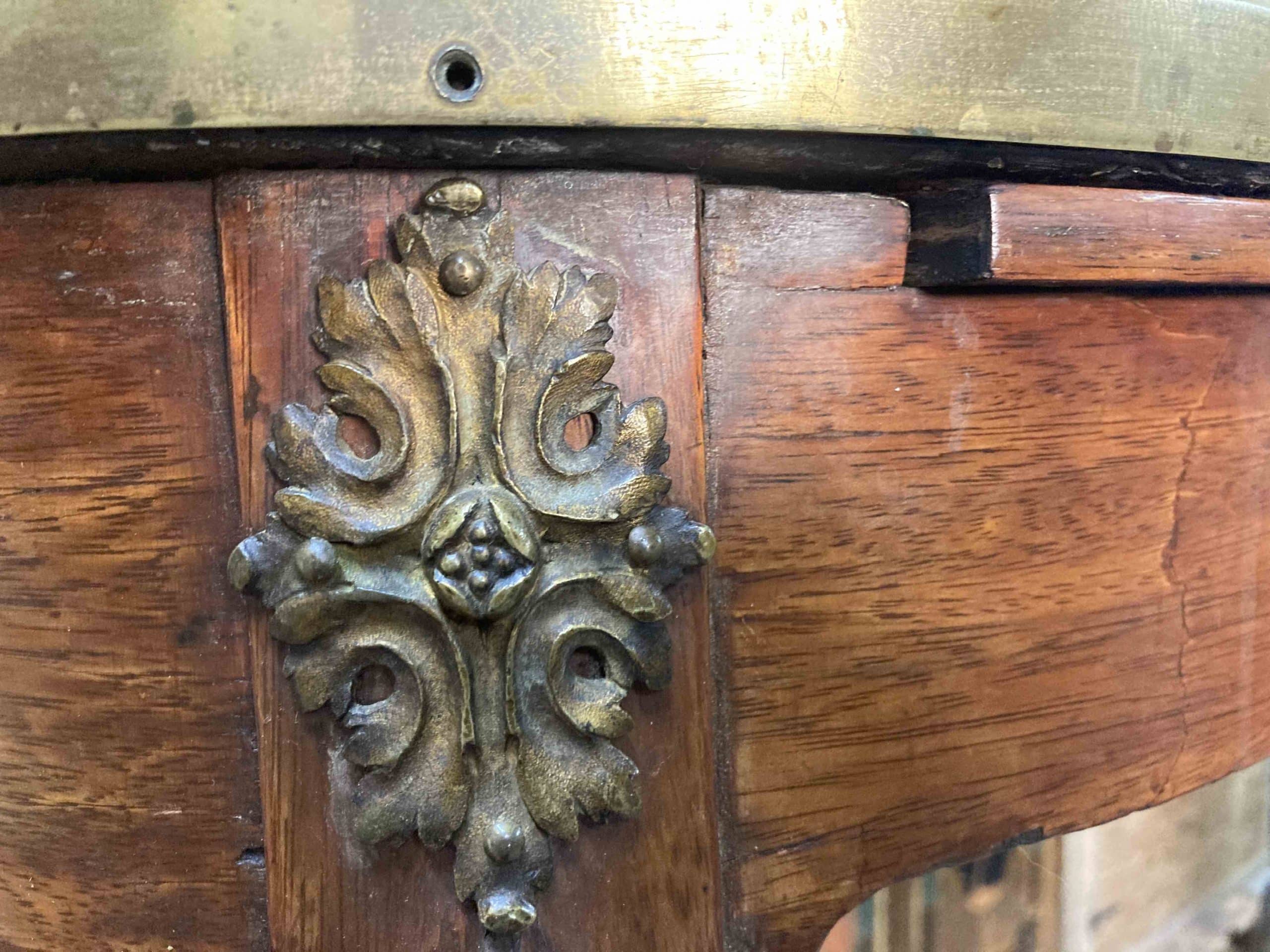
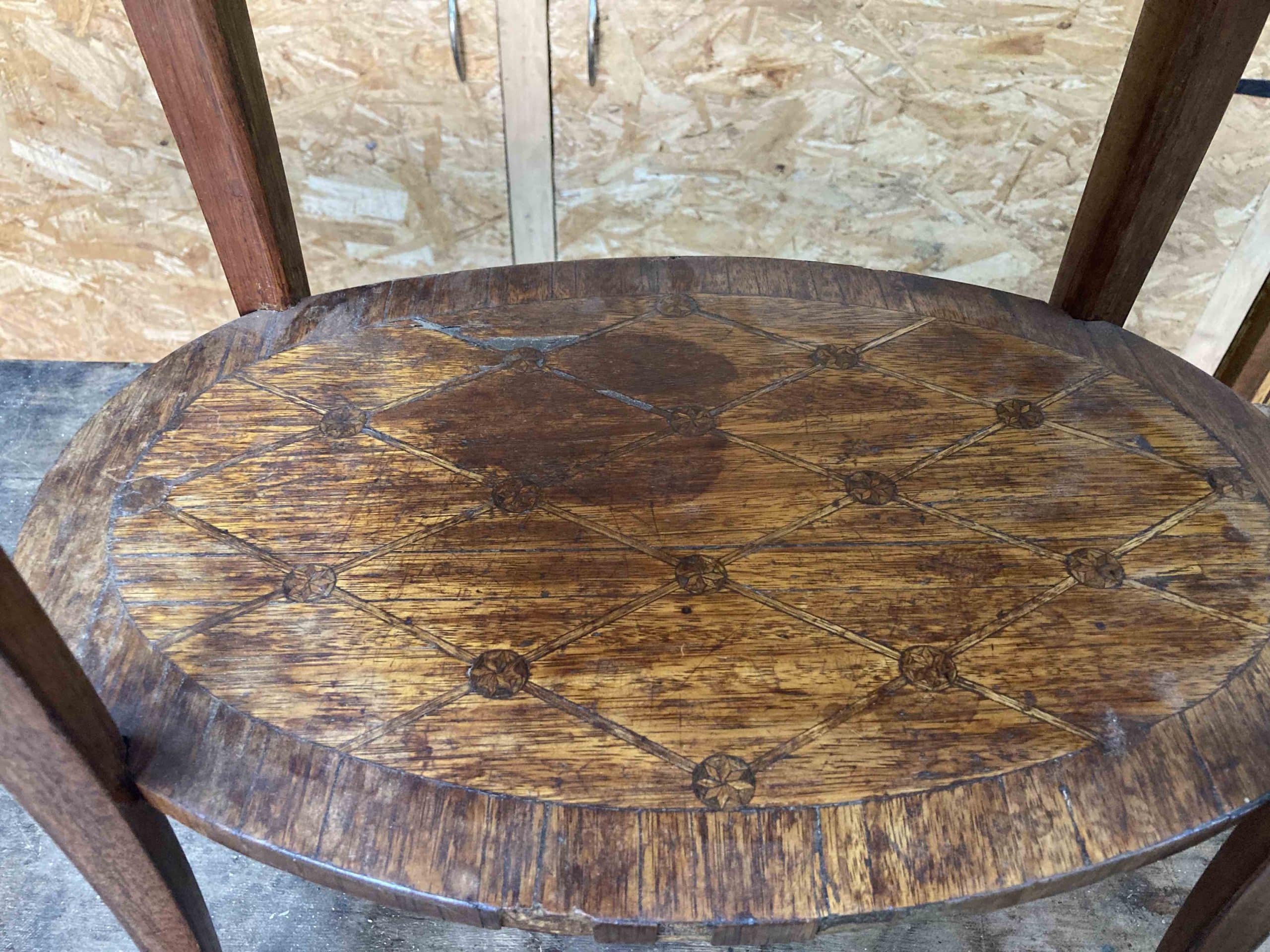
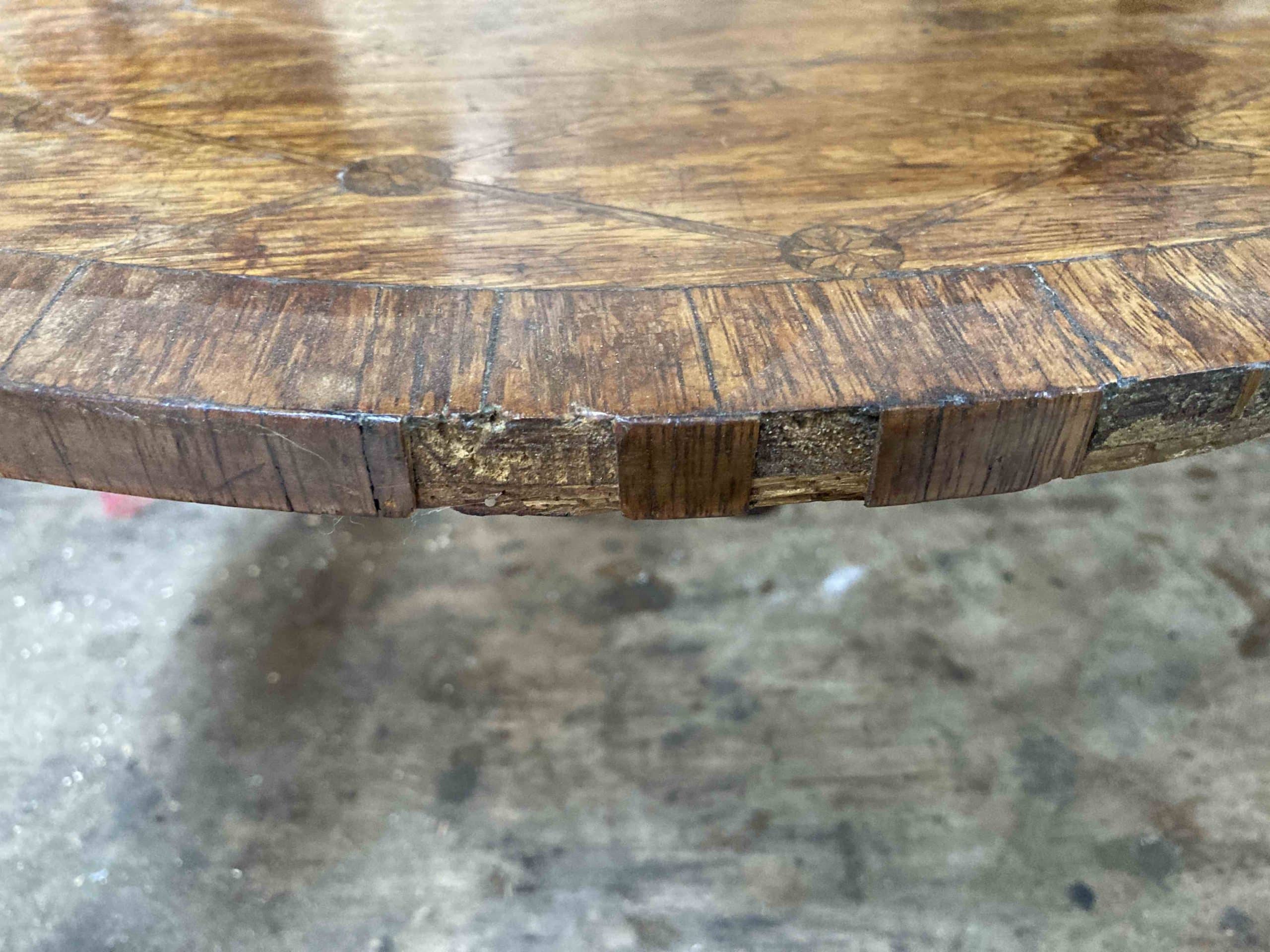
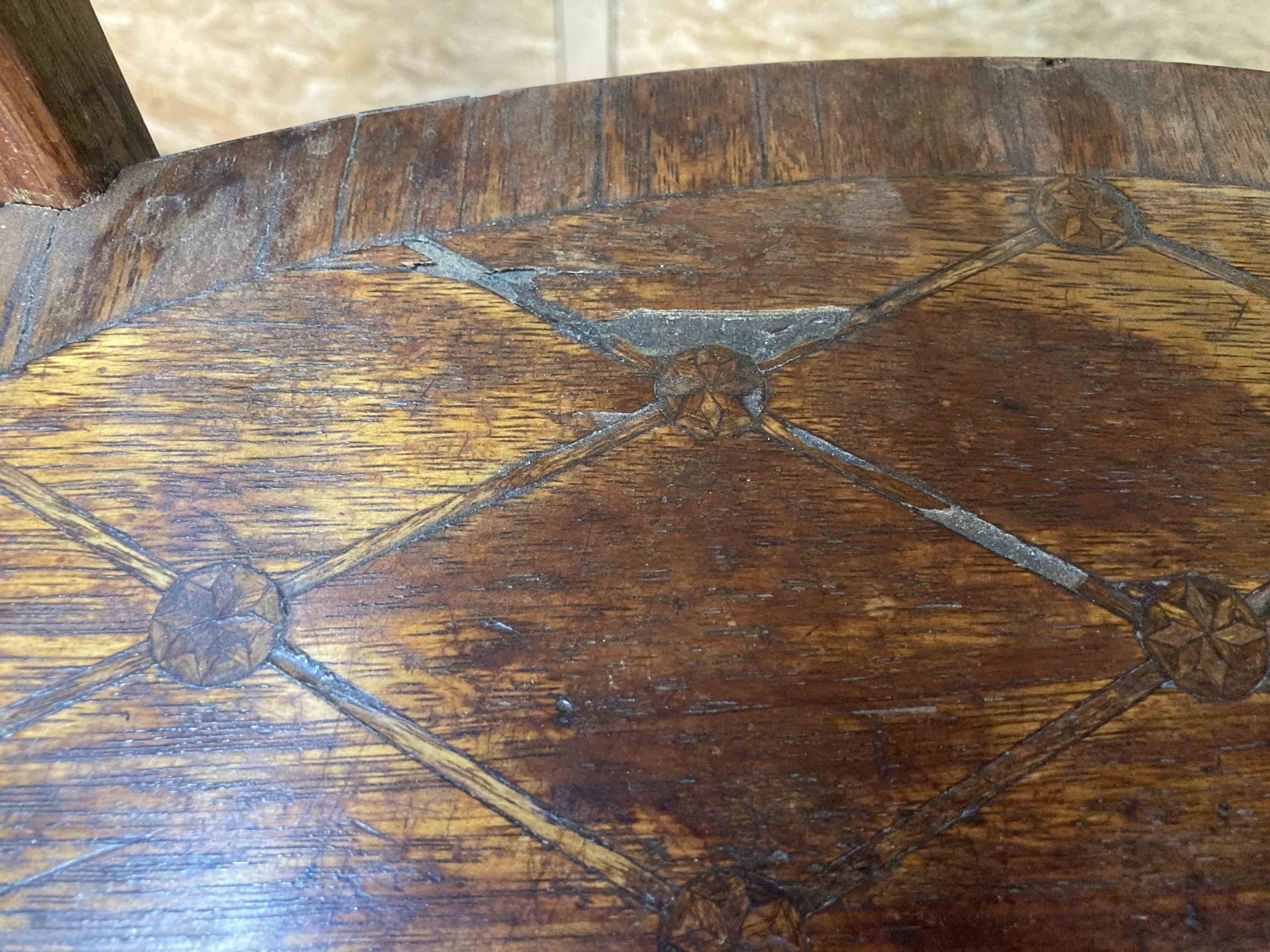
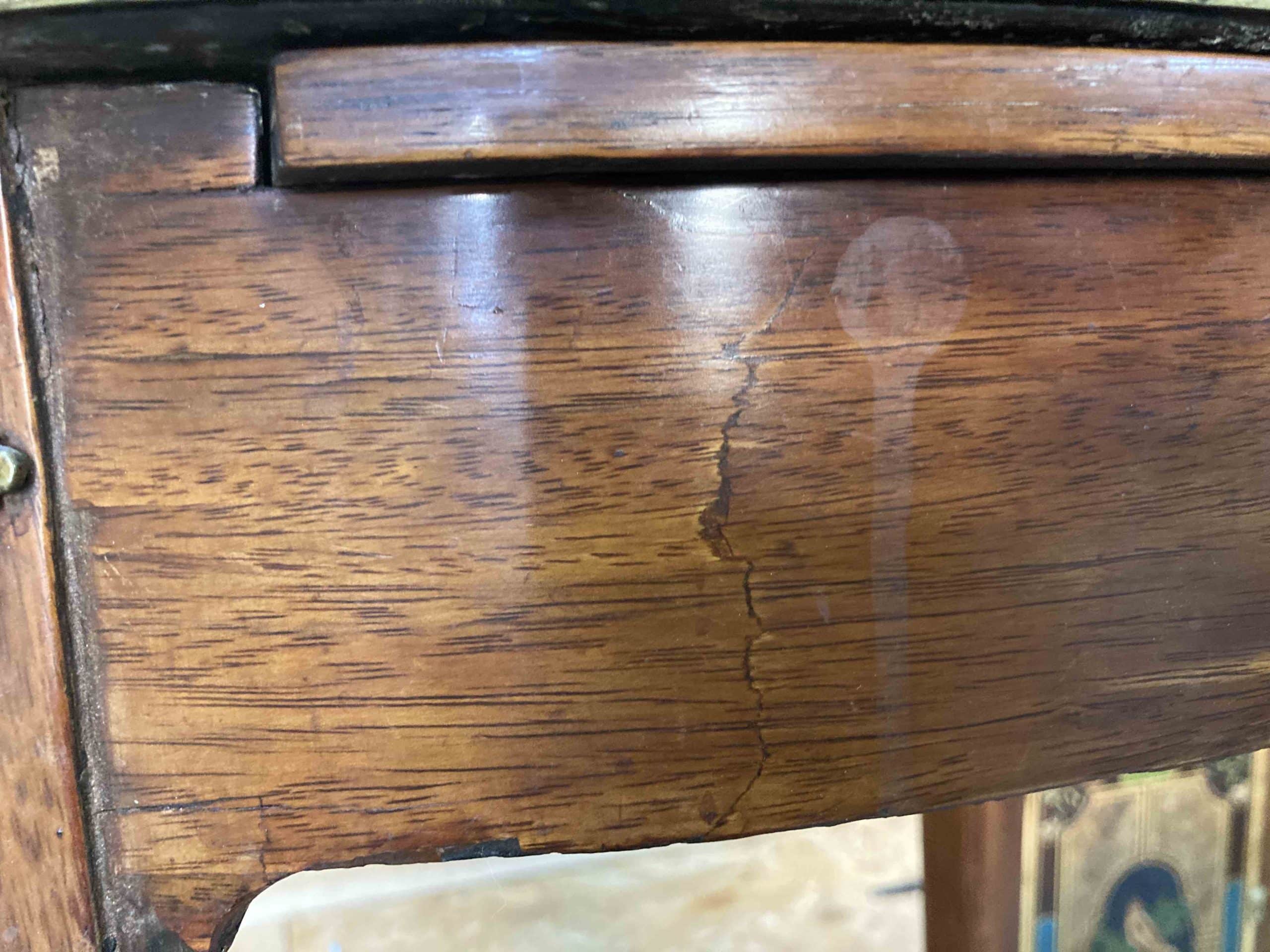
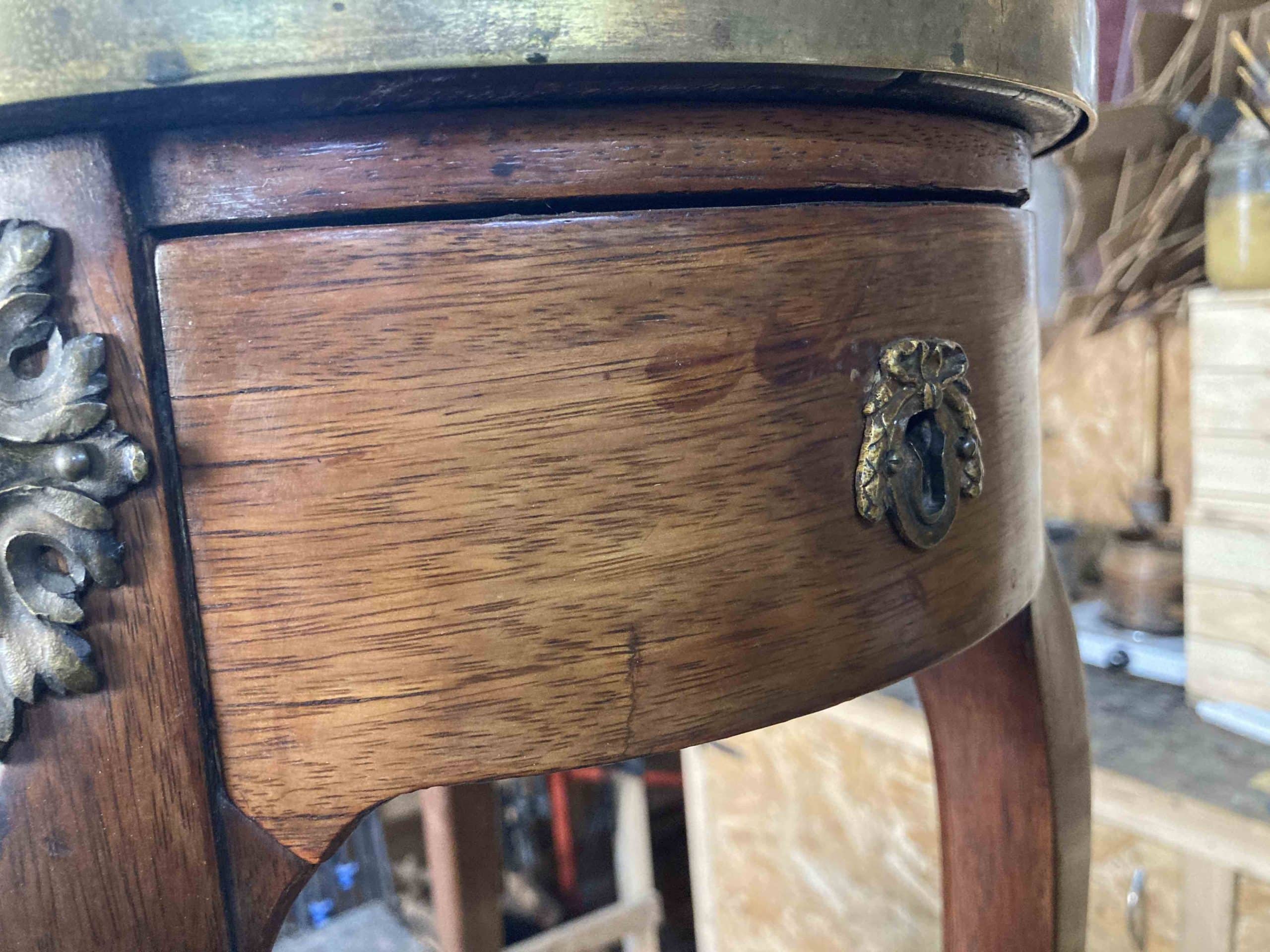
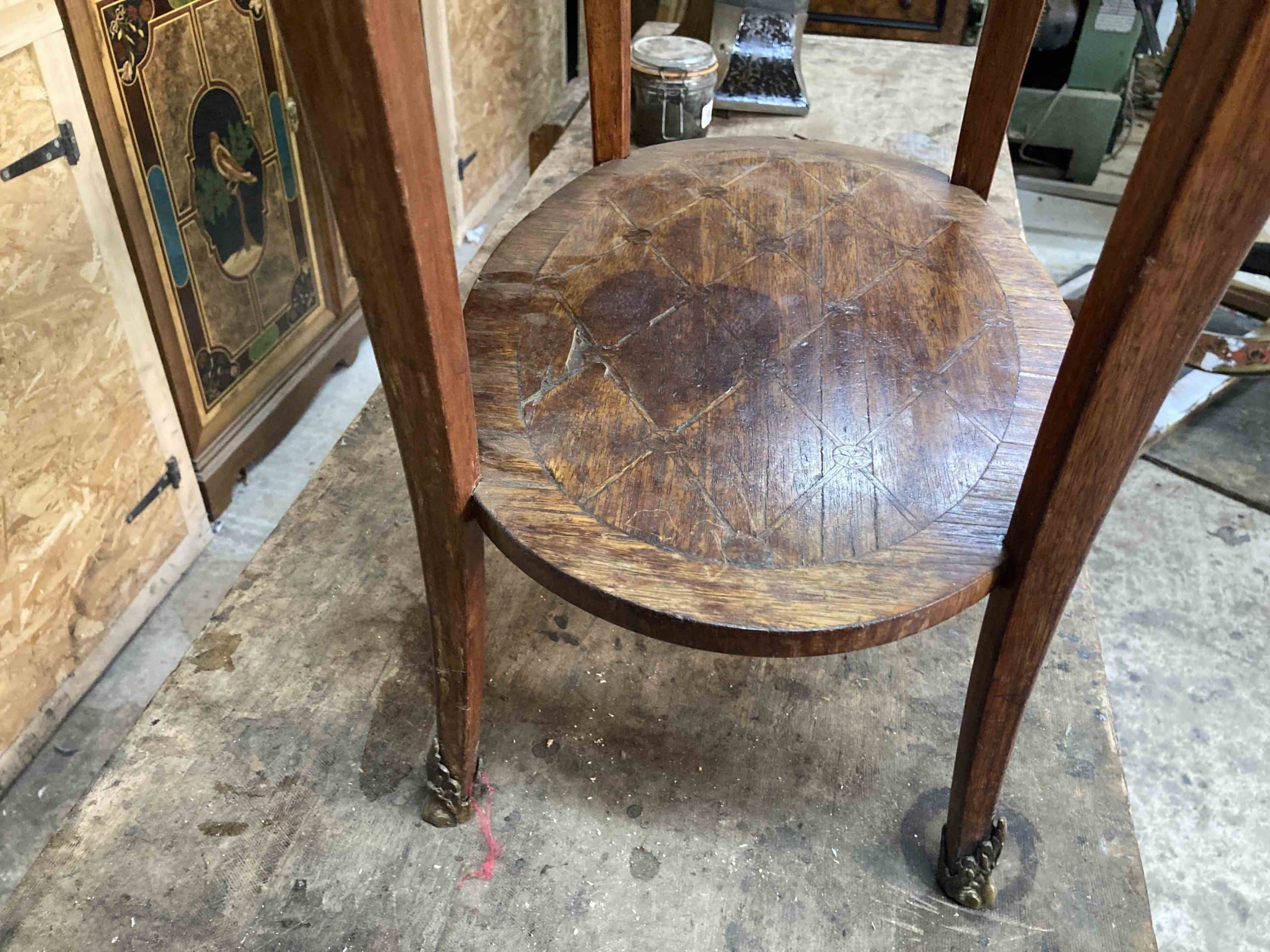
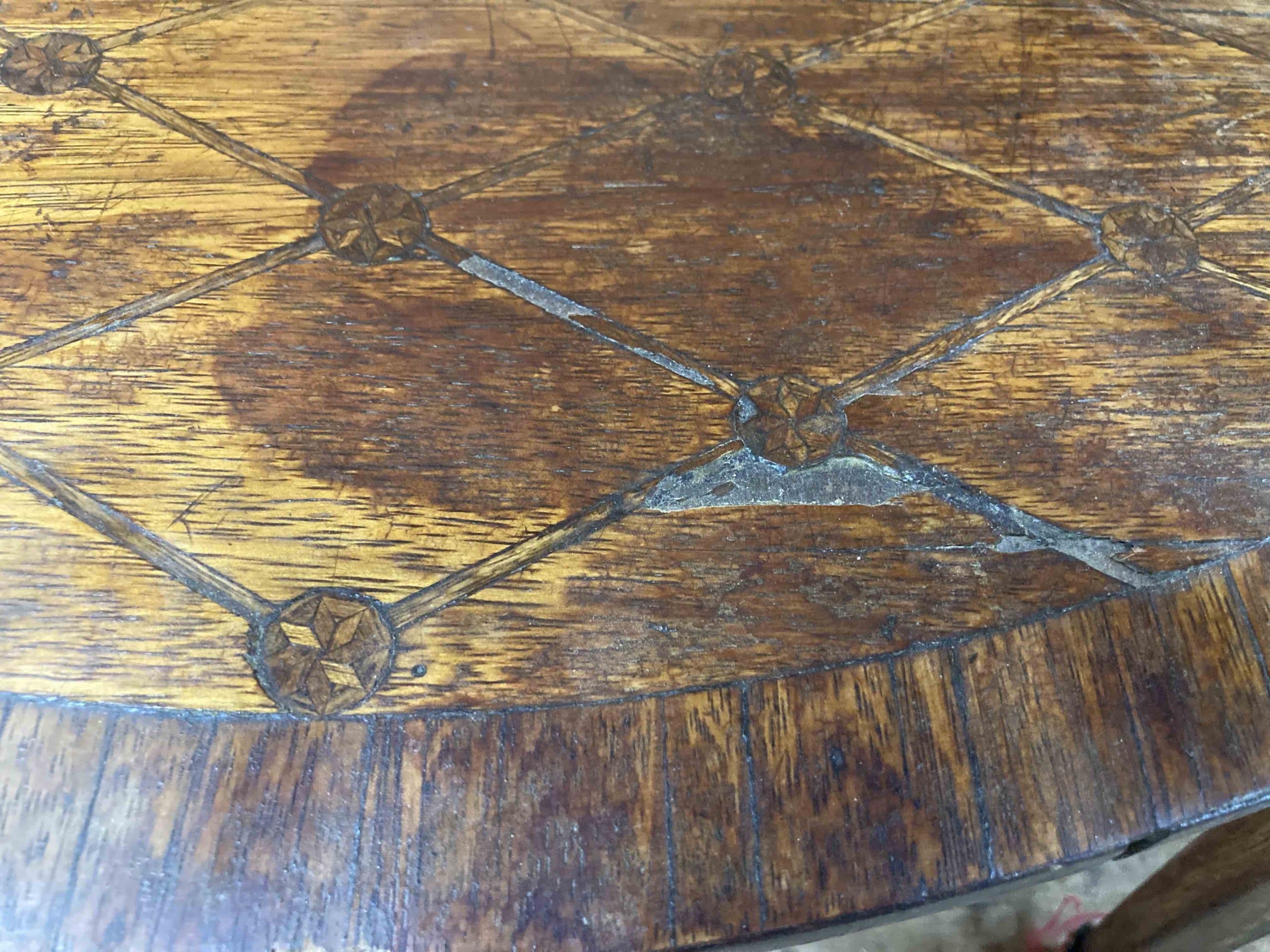
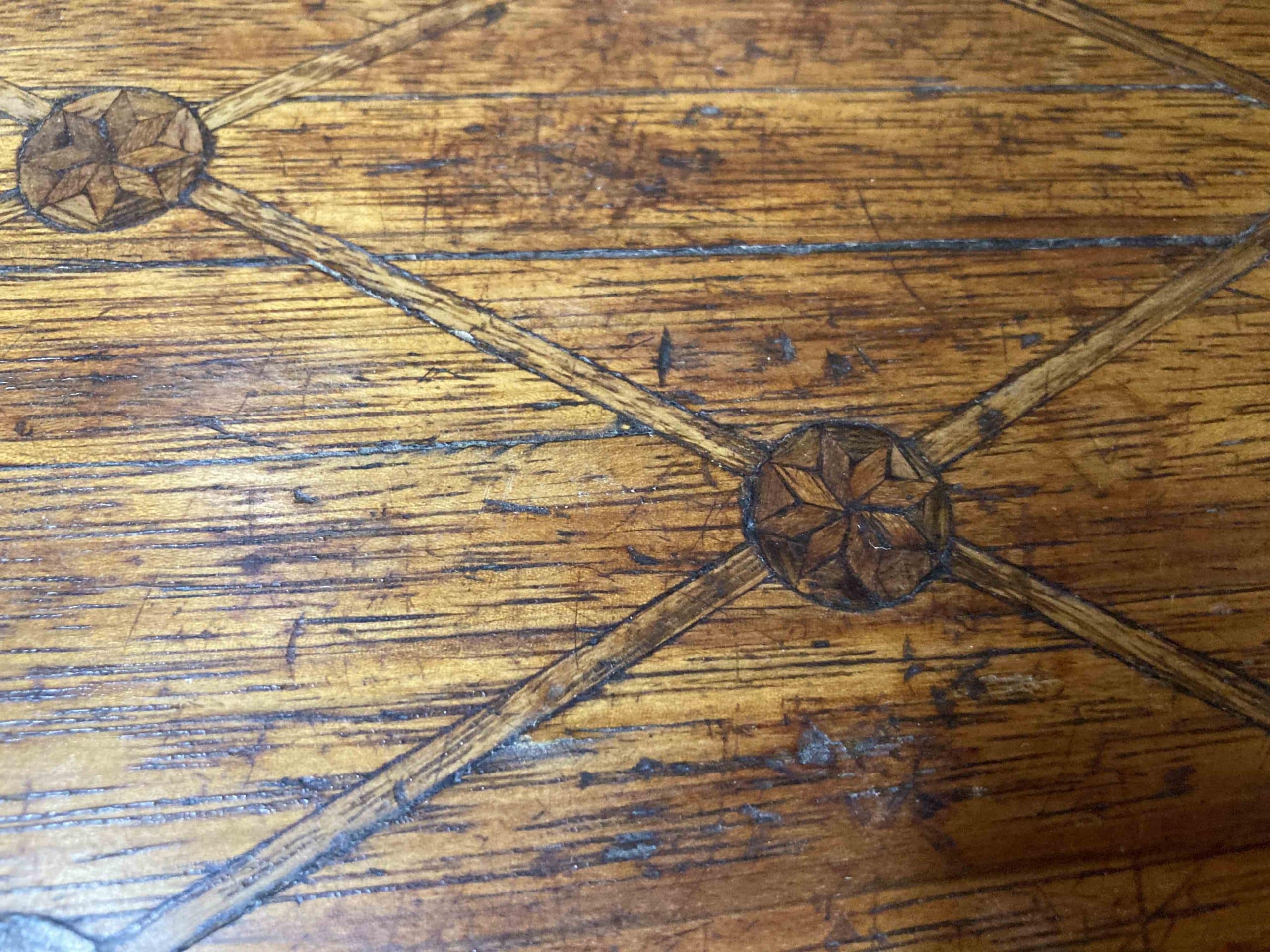
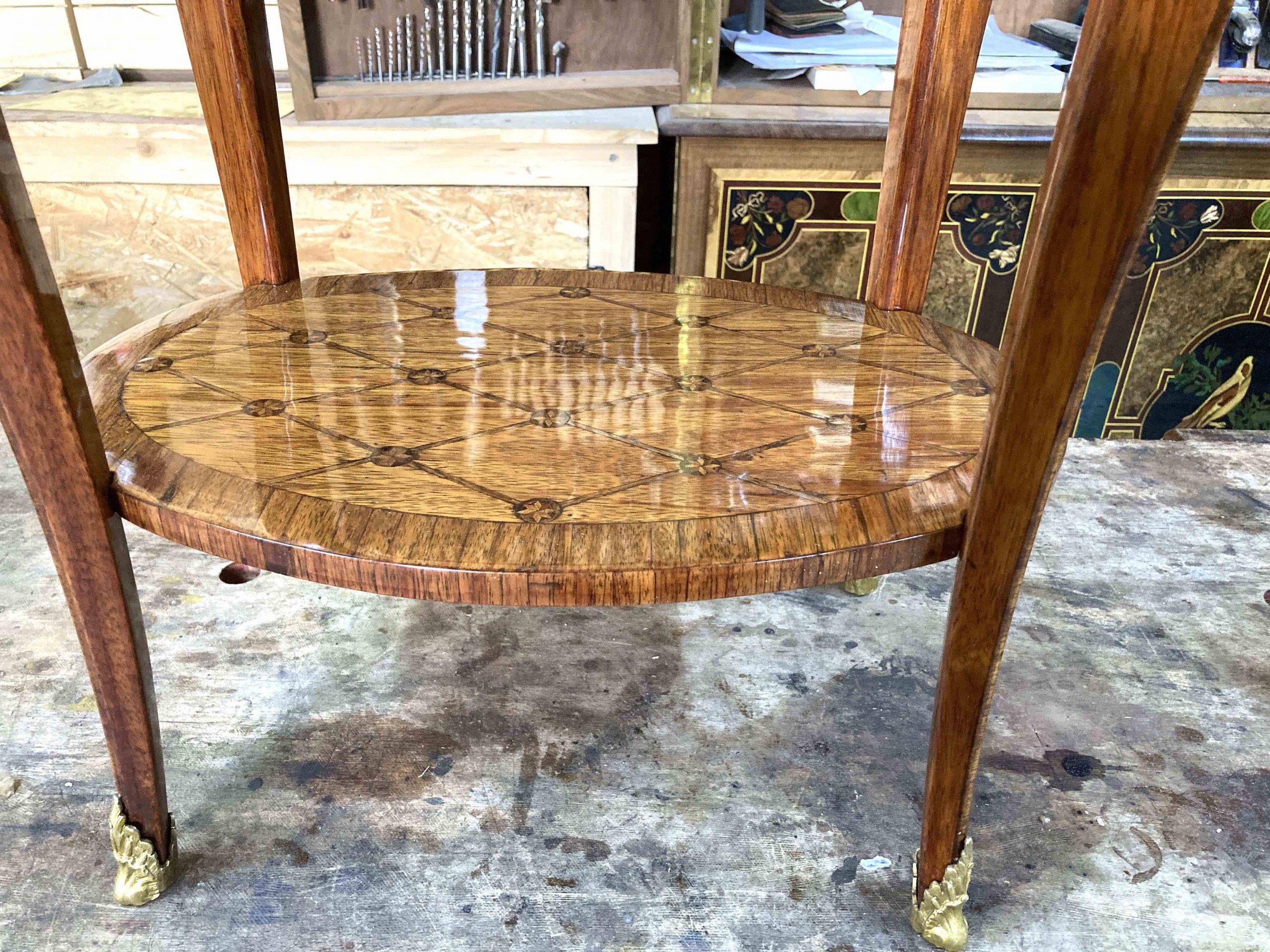
Upon arrival at the workshop, this table had some veneer missing from the edges of the legs and lower shelf, as well as from the tabletop. The veneer on the left side and the back of the rails was almost entirely detached, and there were some small dents on the drawer front and the front rail. The entire piece, including the bronze mounts, was heavily soiled and stained.
The Restoration
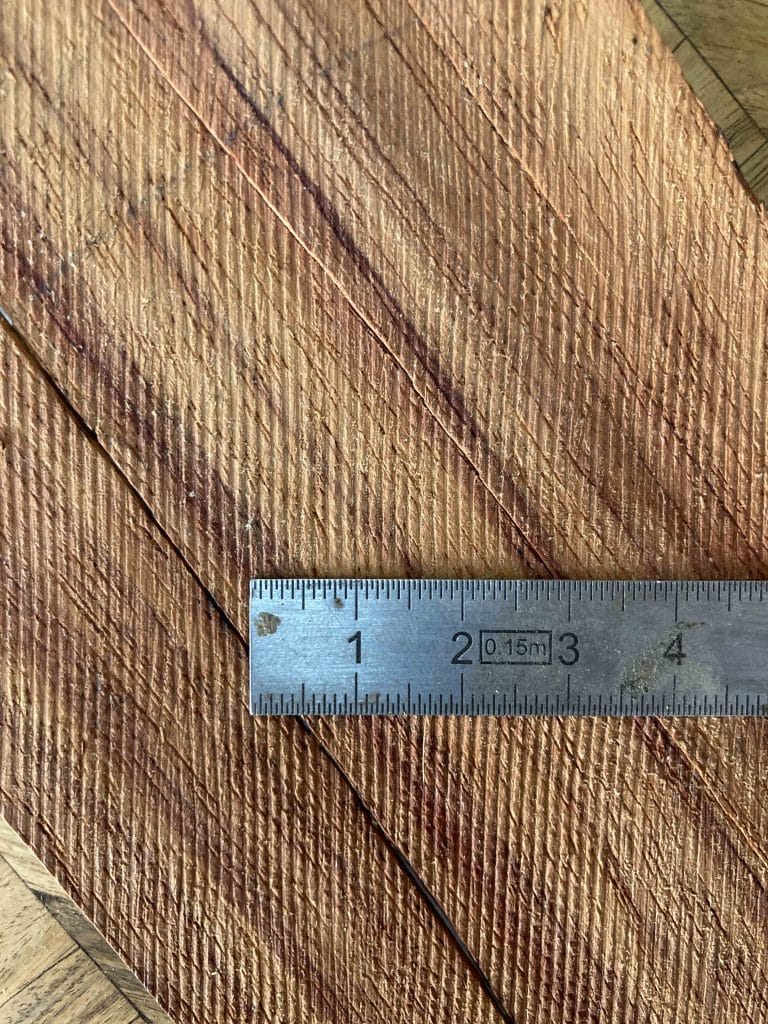
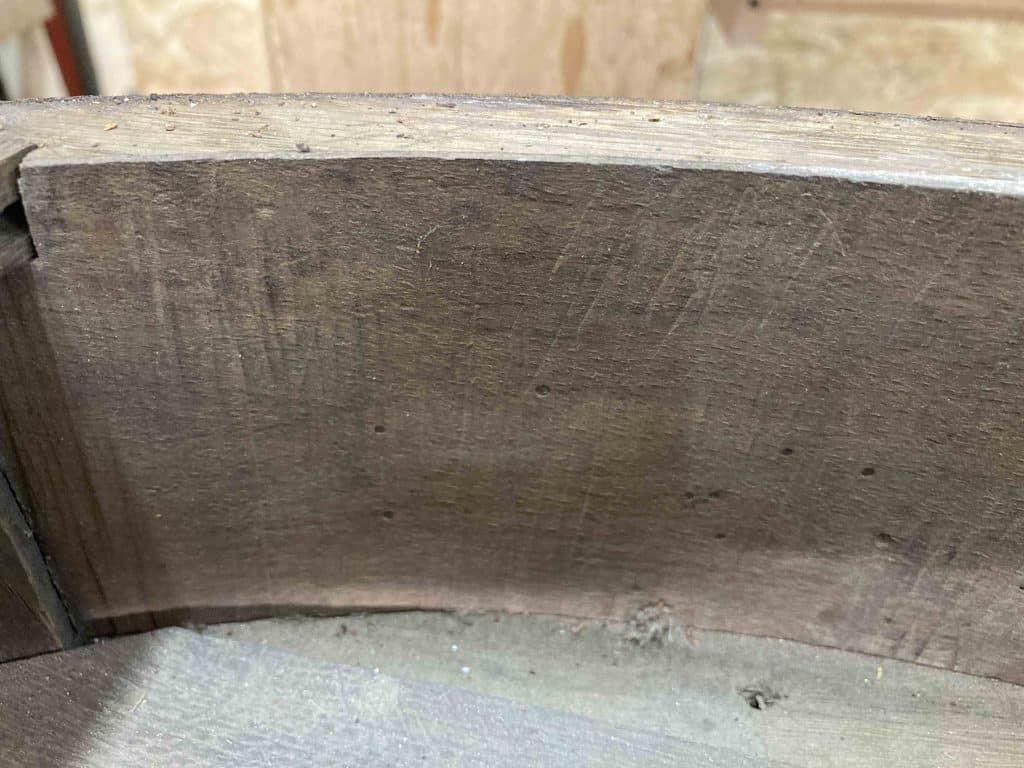
The veneers on the left side and back were therefore removed and then reattached with hot glue. This operation allowed me to measure the toothed iron marks on the back facing.
Measuring the grooves of a toothed or "breasted" plane to a width of 2 centimeters allows us to approximately date the piece of furniture to have been made. Generally, in the 18th century, we would have...th 19th century: 11 to 12 teeth until around 1760 in Paris and other major centers. 14 to 16 teeth from 1760 until the end of the century in the same areas. In smaller towns, wide-toothed blades were retained at least until 1800. Currently, the blades of glue planes have 18 to 20 teeth per 2 centimeters.
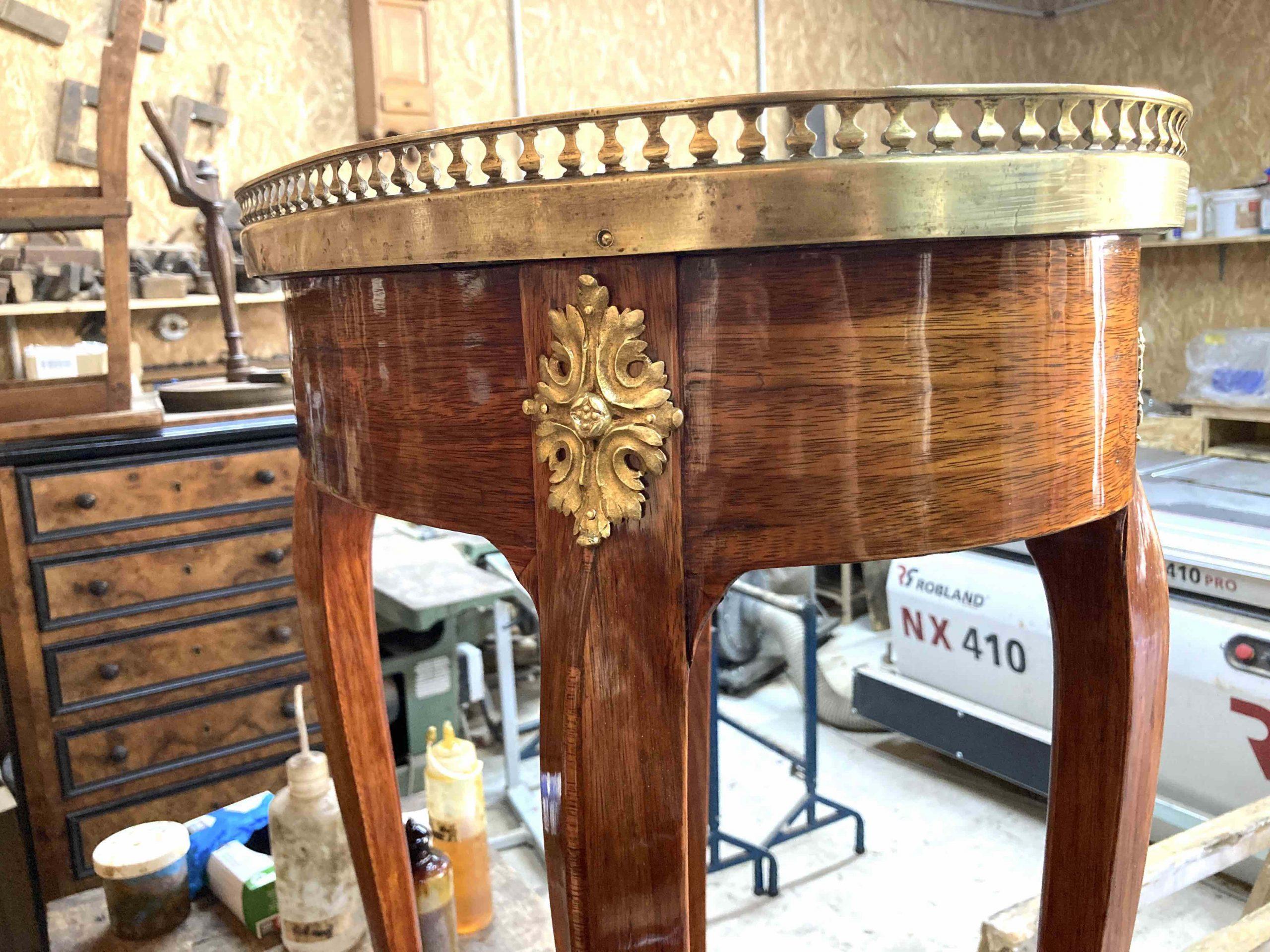
The missing satin veneer was replaced with new veneer that was sawn, scraped, and sanded before gluing to avoid having to sand the surface of the piece, thus preserving the patina and the effects of time. The veneer was then oxidized, and a clear French polish was applied. The bronze mounts were cleaned with Panama wood polish. Congratulations to Clémence for this beautiful work.
To see previous restorations : https://ebenisterie-mathieuvath.fr/en-ce-moment-a-latelier/
You can find this piece of furniture at Etienne Thuriet Antique Dealer