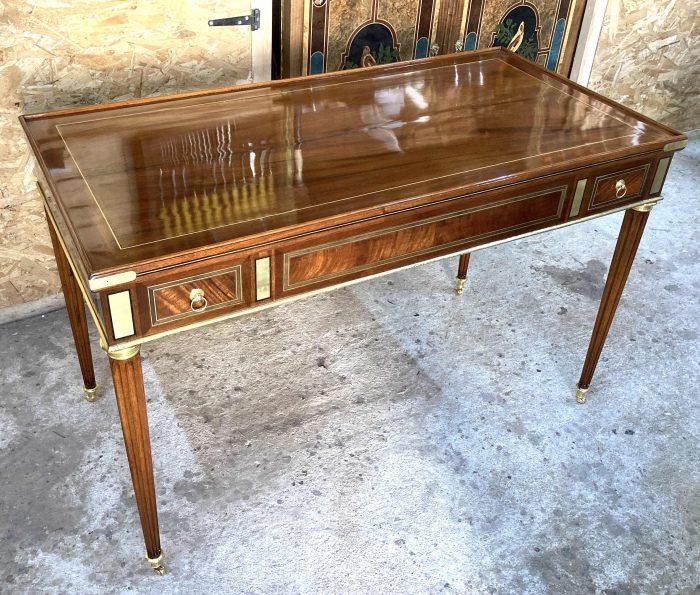
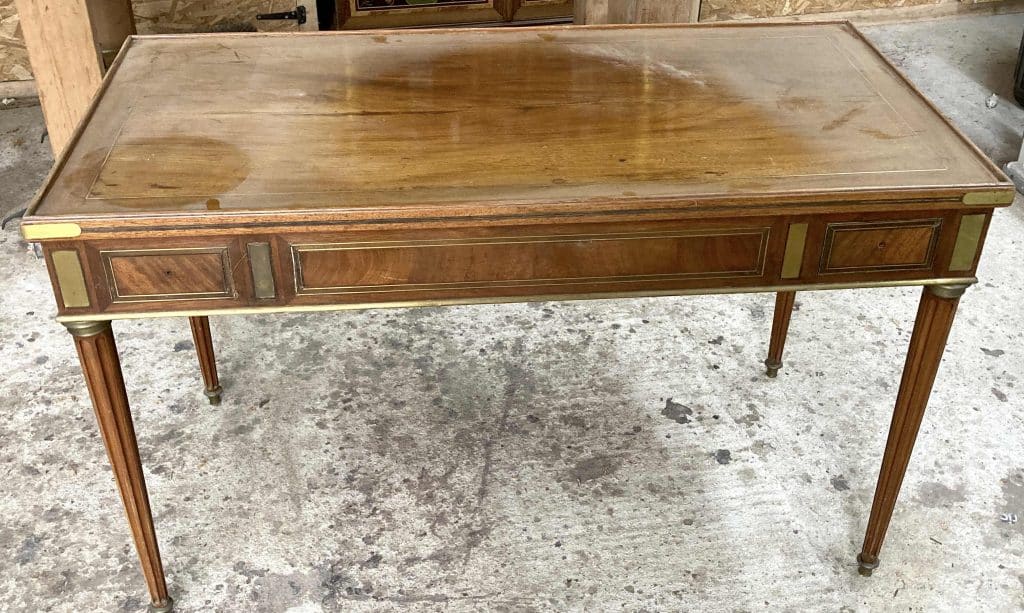
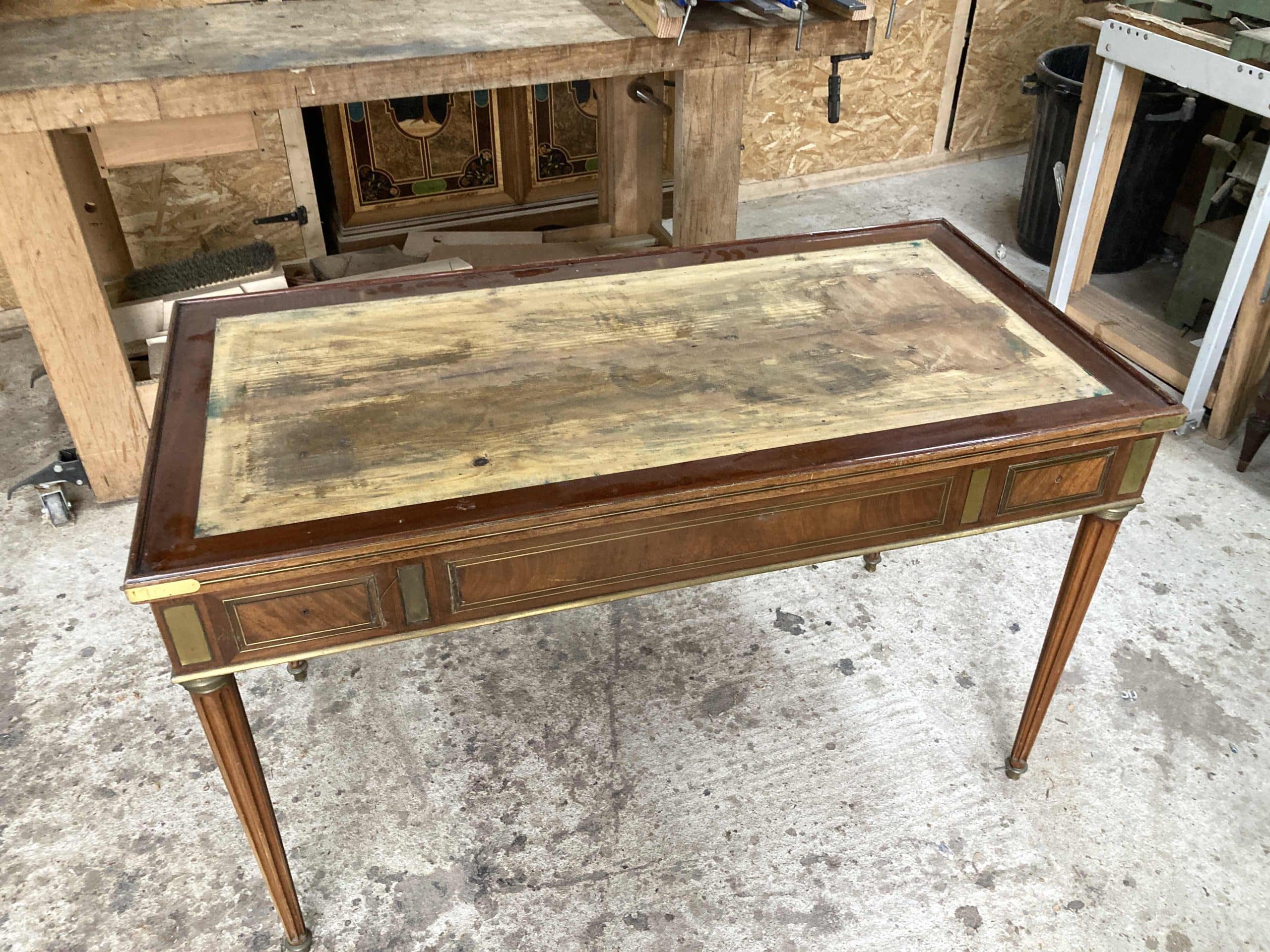
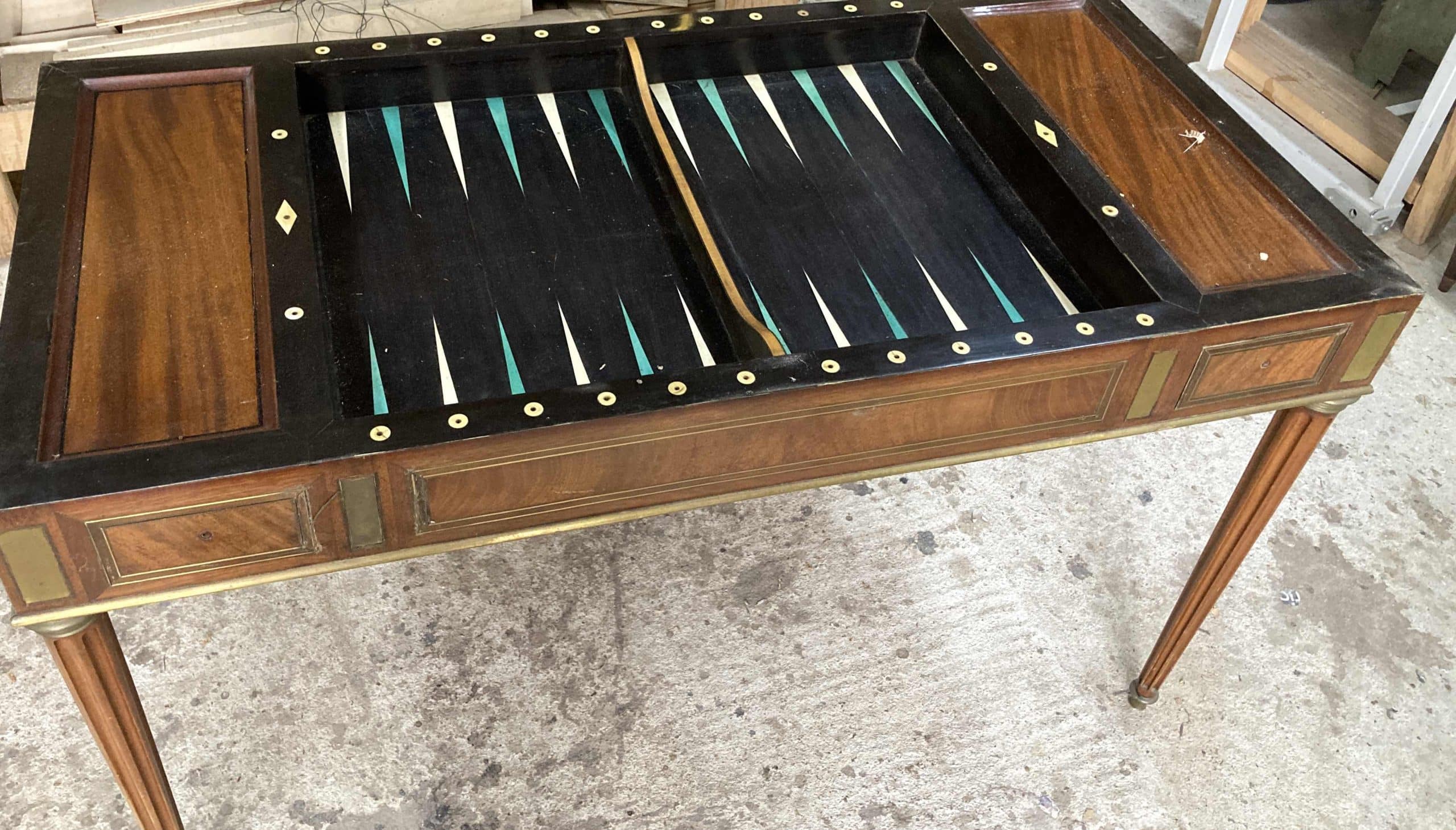
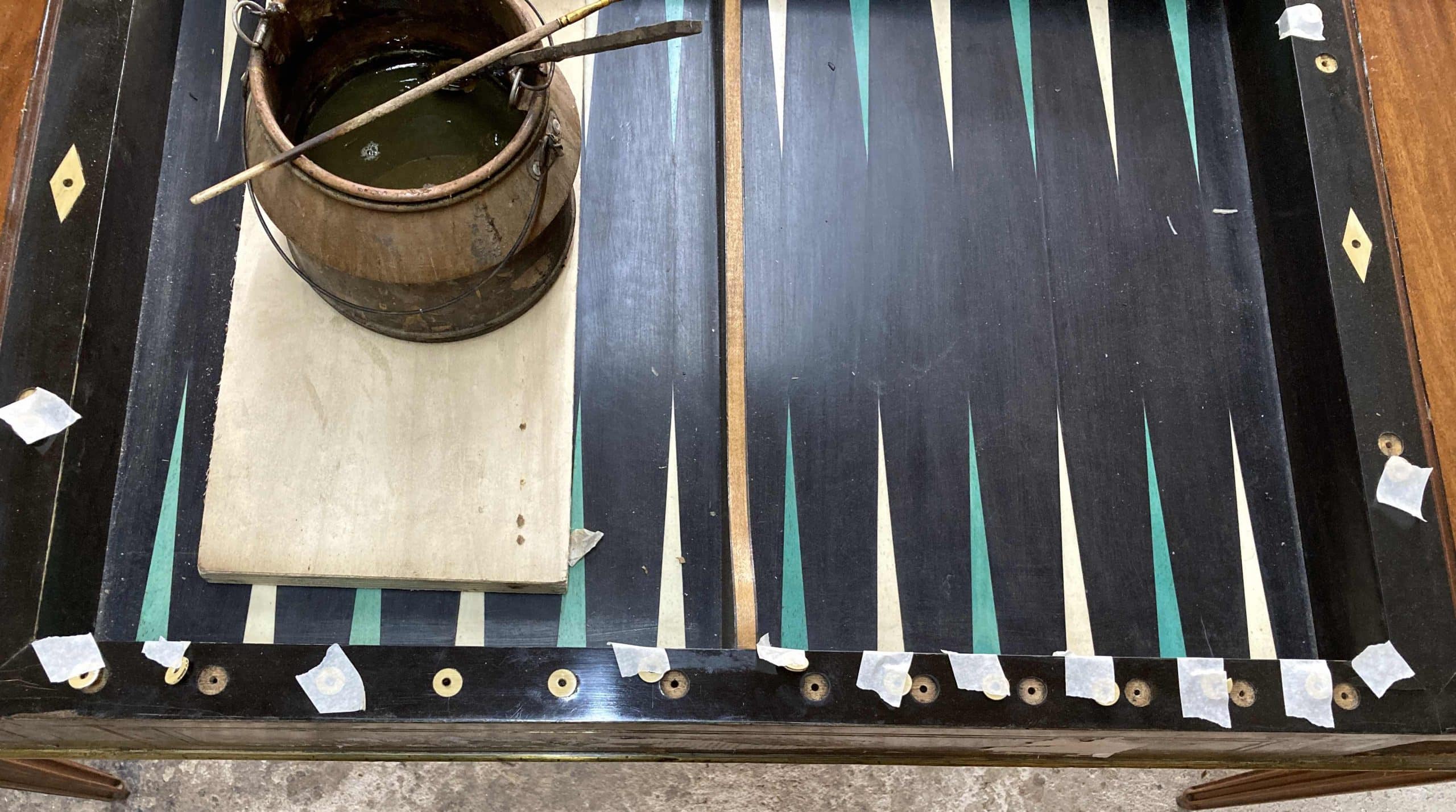
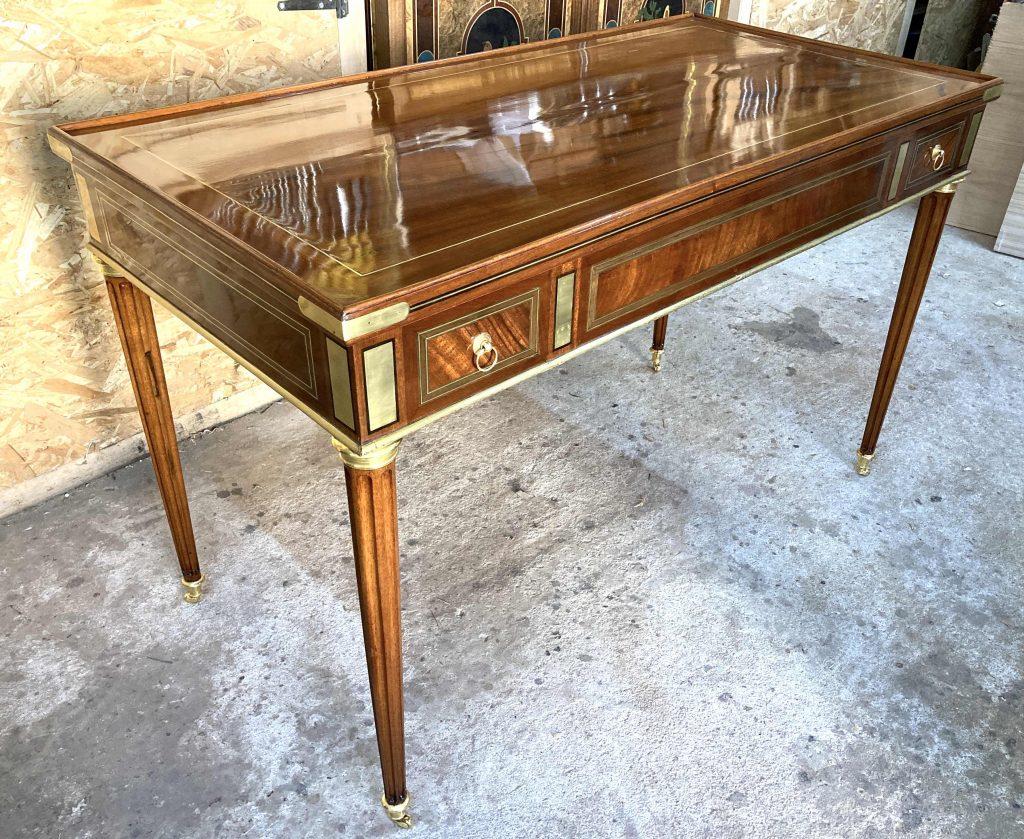
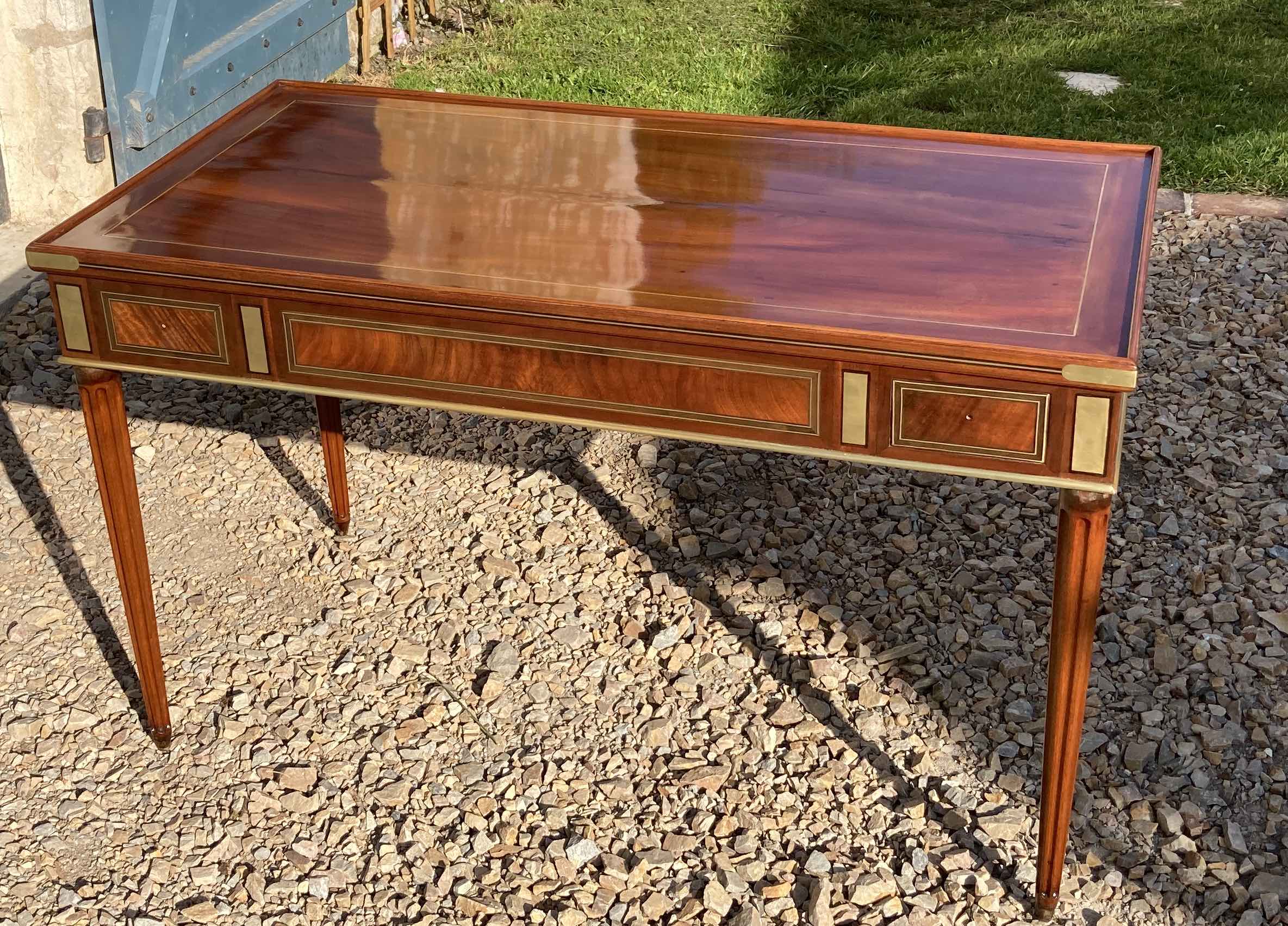
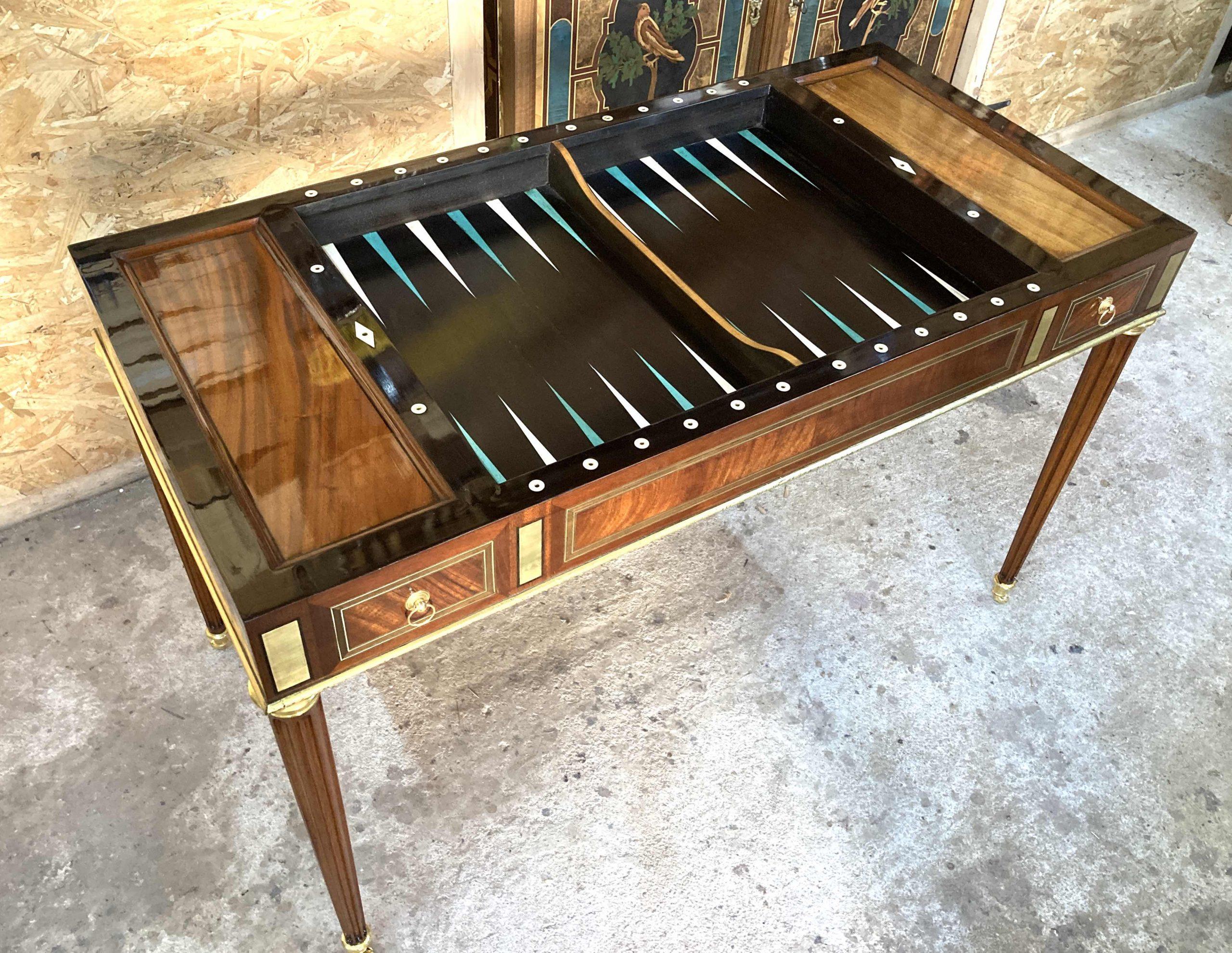
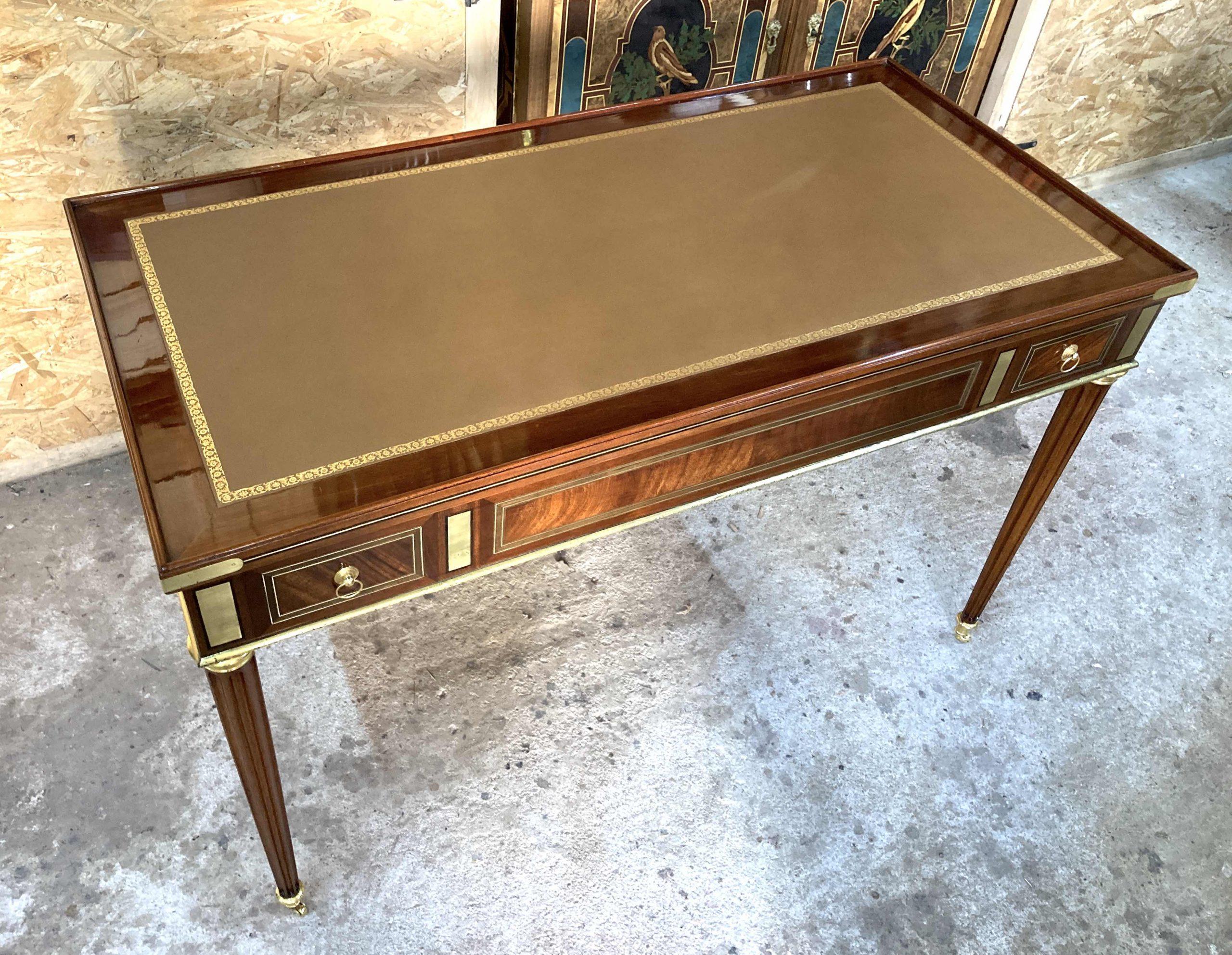
Restoration of a late 18th-century games table (circa 1785) veneered in mahogany burl and inlaid with brass stringing, ebony, and Ferréol (a South American wood named after a 17th-century governor of Guyana). The legs are solid mahogany, and the interior is veneered with ebony and bone dyed green and natural. The tabletop is partially covered in leather and partially veneered in mahogany burl. The interior features two niches, each with a drawer, and a central section containing a backgammon board.
The gaming tables and backgammon
It seems that gaming tables appeared at the end of the 17th century, around 1680. Before then, they were rare; they were chessboards engraved on a marble top, or inlaid on the surface of a rolling table. Apart from these rare tables, trays or chests placed on the table were used. Called "tableaux," these objects were made by tablet makers.
“The house of cards”, Circa 1740. Oil on canvas. Jean-Baptiste Siméron Chardin (1699-1779). The gaming table, on which a young boy is diligently building a house of cards, appears in several of Chardin's paintings from 1735 onwards. It is a very simple piece of furniture, probably made of fruitwood, with a square top covered in green cloth, and a slightly curved apron with a drawer. This type of gaming table was used throughout the 18th century. National Gallery, Washington.
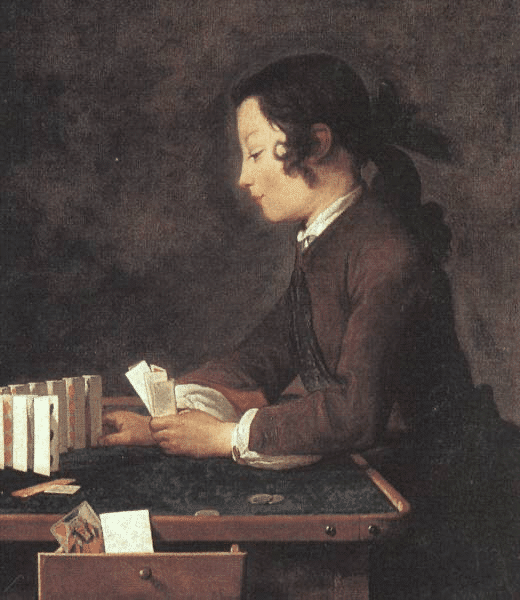
“The house of cards”, Circa 1740. Oil on canvas. Jean-Baptiste Siméron Chardin (1699-1779). The gaming table, on which a young boy is diligently building a house of cards, appears in several of Chardin's paintings from 1735 onward. It is a very simple piece of furniture, probably made of fruitwood, with a square top covered in green cloth and a slightly curved apron with a drawer. This type of gaming table was used throughout the 18th century. National Gallery, Washington.
The game of Trictrac has existed since the Middle Ages; indeed, Alfonso X the Wise (1221-1284), King of Castile, mentions it in his work: “Book of Games” published in 1263.
The origins of the name are said to come from an onomatopoeia, which Laurent Somille, in 1738 in his third treatise, states, quoting: “Backgammon (…) gets its name from the noise made by the checkers, the dice, and the cups.” (extract from “Le grand Trictrac”, Giffert, Paris, 1756, P.1). Another hypothesis stated in; (“Le jeu du trictrac comme on le joue aujourd'hui”, chez Charpentier, Paris, 1715, P.4.), proposes an origin of the Greek word which can be transcribed as “Tris Trakus” which means: three times difficult to play and understand.
Of all dice games, backgammon is undoubtedly the most widespread. The backgammon table appears to have been, in the 18th century, the quintessential gaming table. It was rectangular and, when covered with its lid, served as a writing table. With its felt-lined underside, the backgammon table could also be used as a card table.
The backgammon board is decorated with twenty-four pointed figures on which the pieces move. Twenty-four holes are drilled in the edges of the board at the base of each of the twenty-four points. Three more holes are drilled in each side edge of the board. These edges are called borders. The players' borders each have twelve holes, while the side borders have only three.
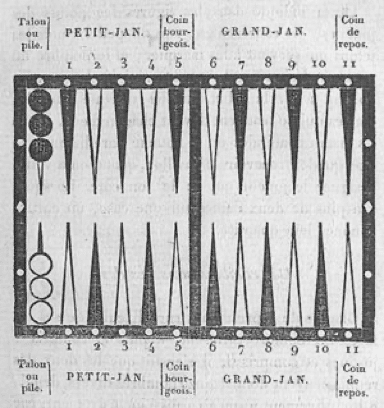
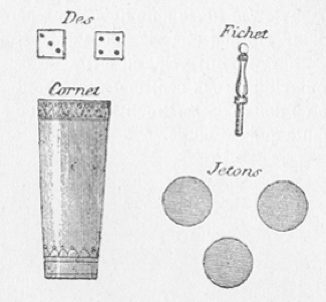
To play a game of backgammon you need:
- -Fifteen black checkers and fifteen white ones. -Two dice and two dice cups. -Three small tokens, one of which is called a "bredouille" (a small token). -Two skittles that travel through the twelve pockets of the cushions. -A small flag called a "pavillon" (a small flag).
Backgammon is a two-player board game of skill and strategy played with dice. Its appeal lies in the numerous possible combinations, the importance of decision-making, and its well-developed rules. It demands constant attention from both players, whether it's their turn or not. Its rich vocabulary, which may seem antiquated to those unfamiliar with the game, is frequently found in French literature. The goal is not to be the first to move all the checkers off the board, but to score the most points. Games usually end before all the checkers have been moved off the board.
State of affairs report
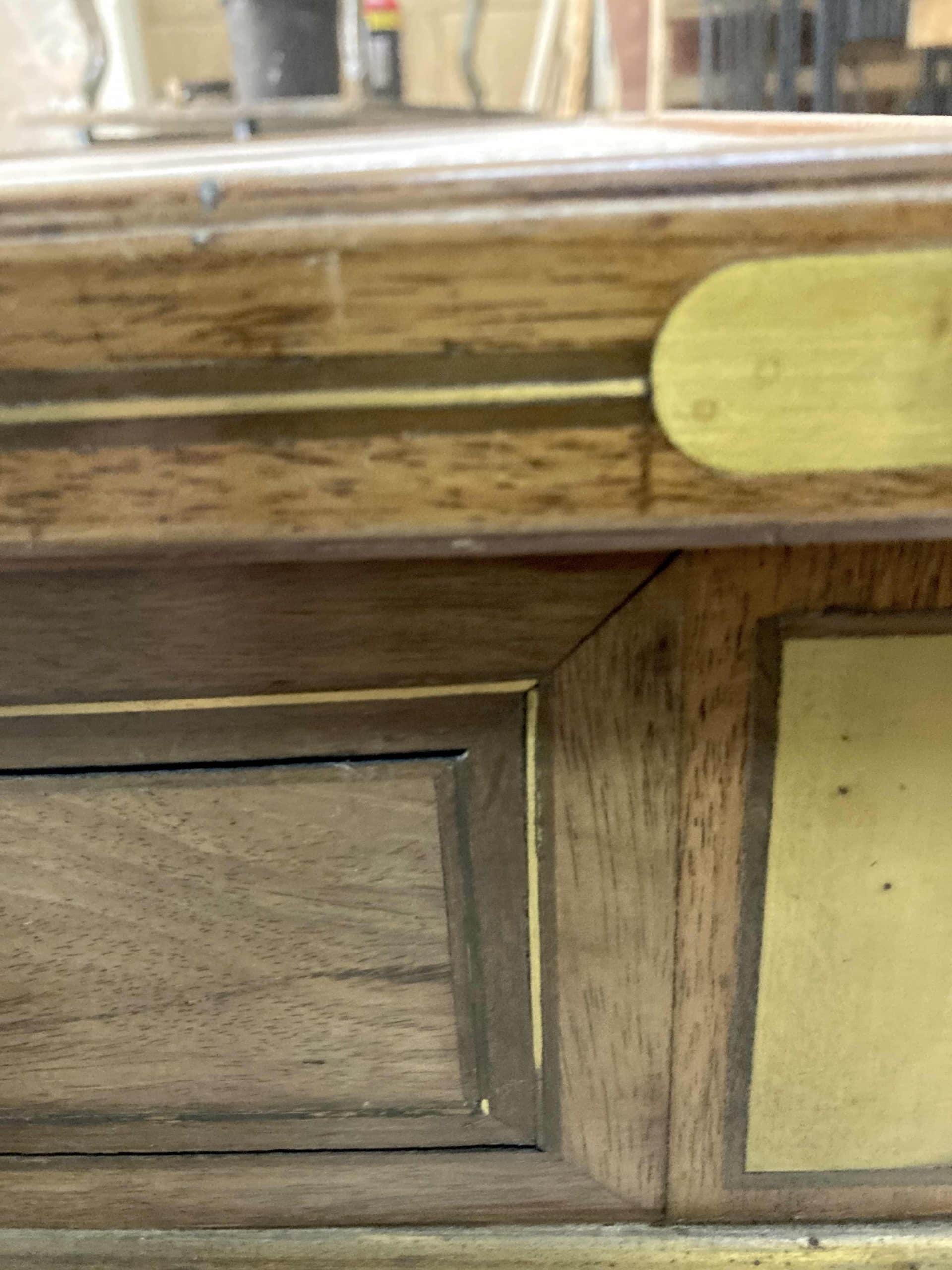
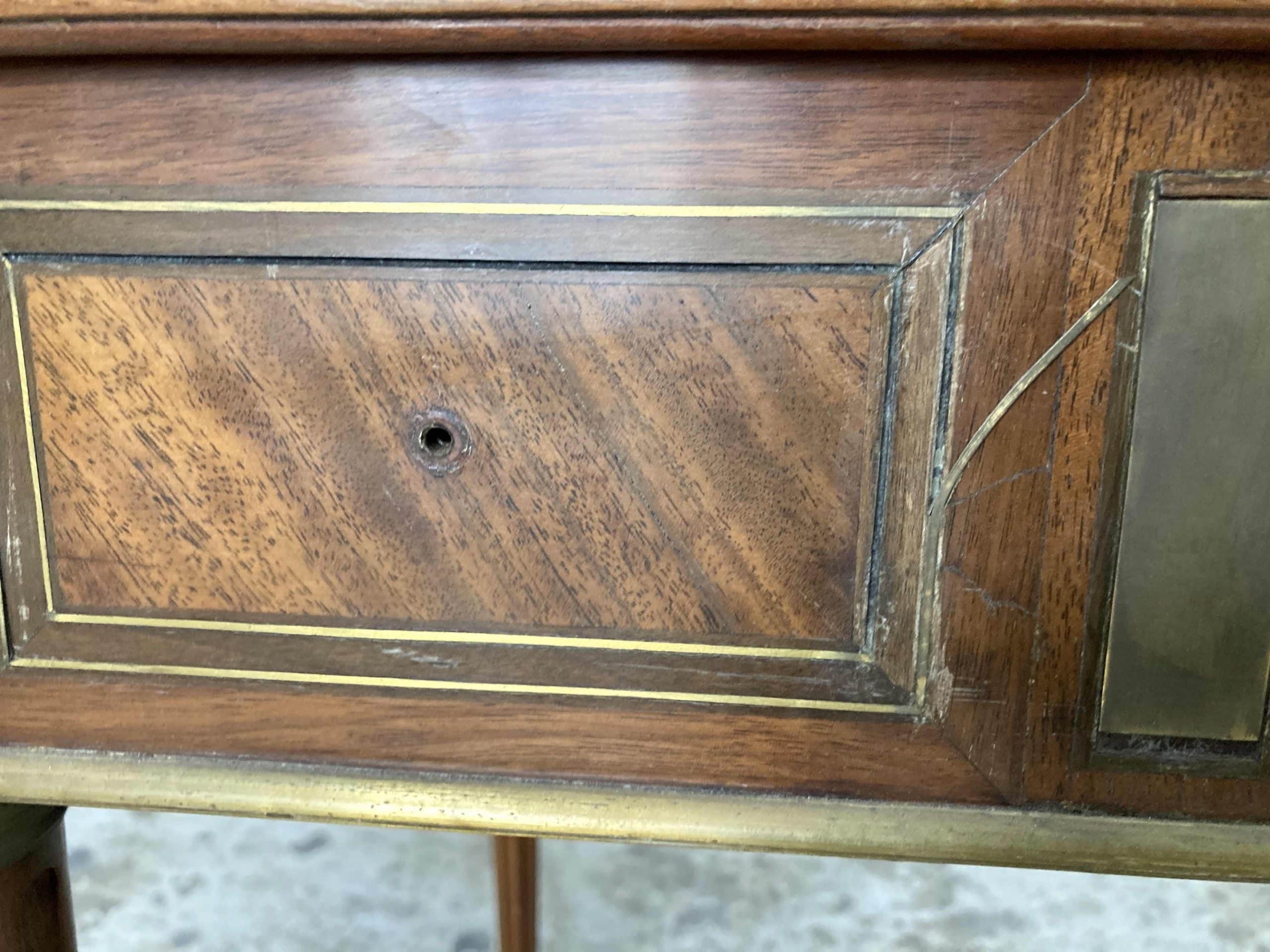
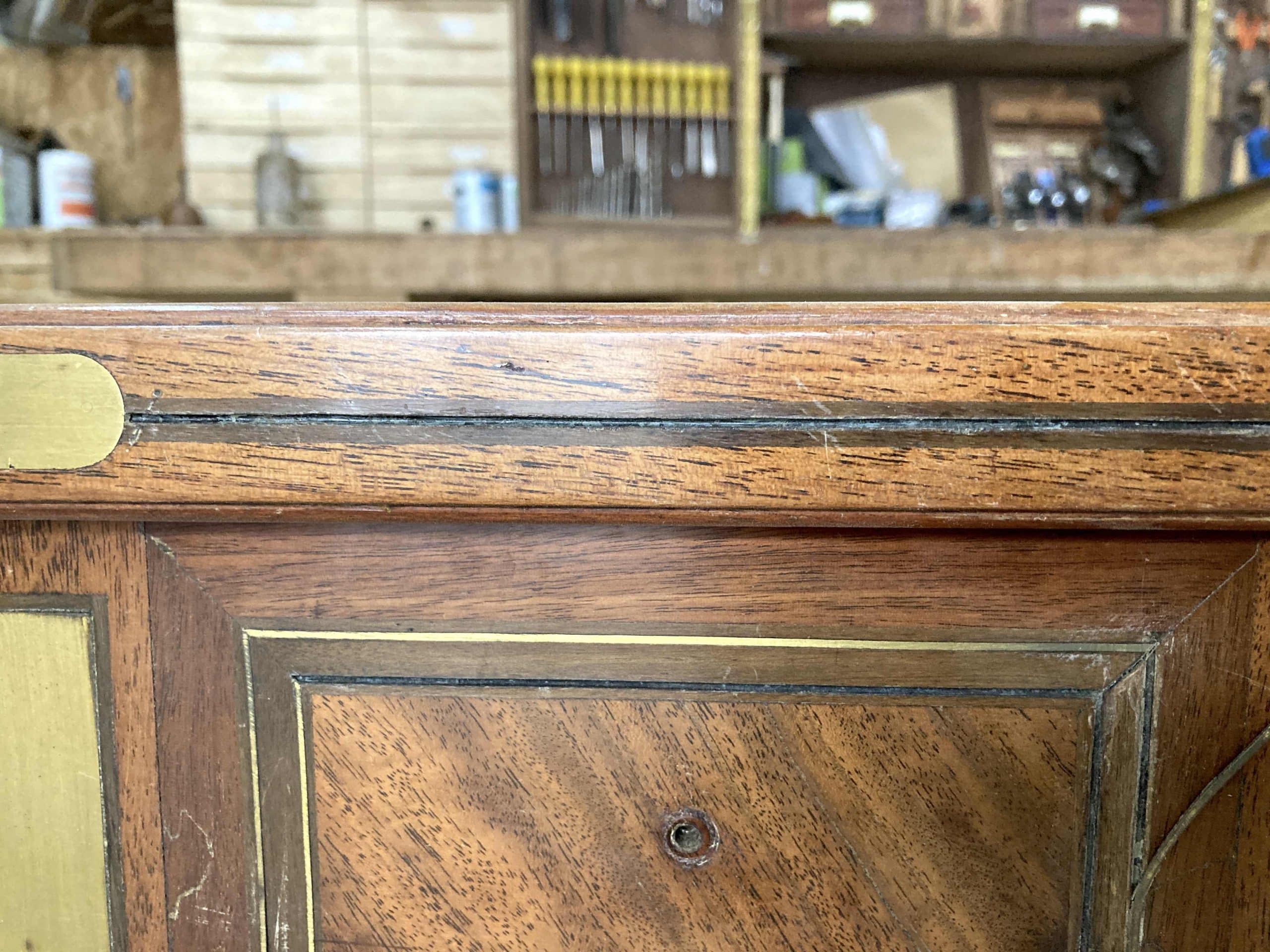
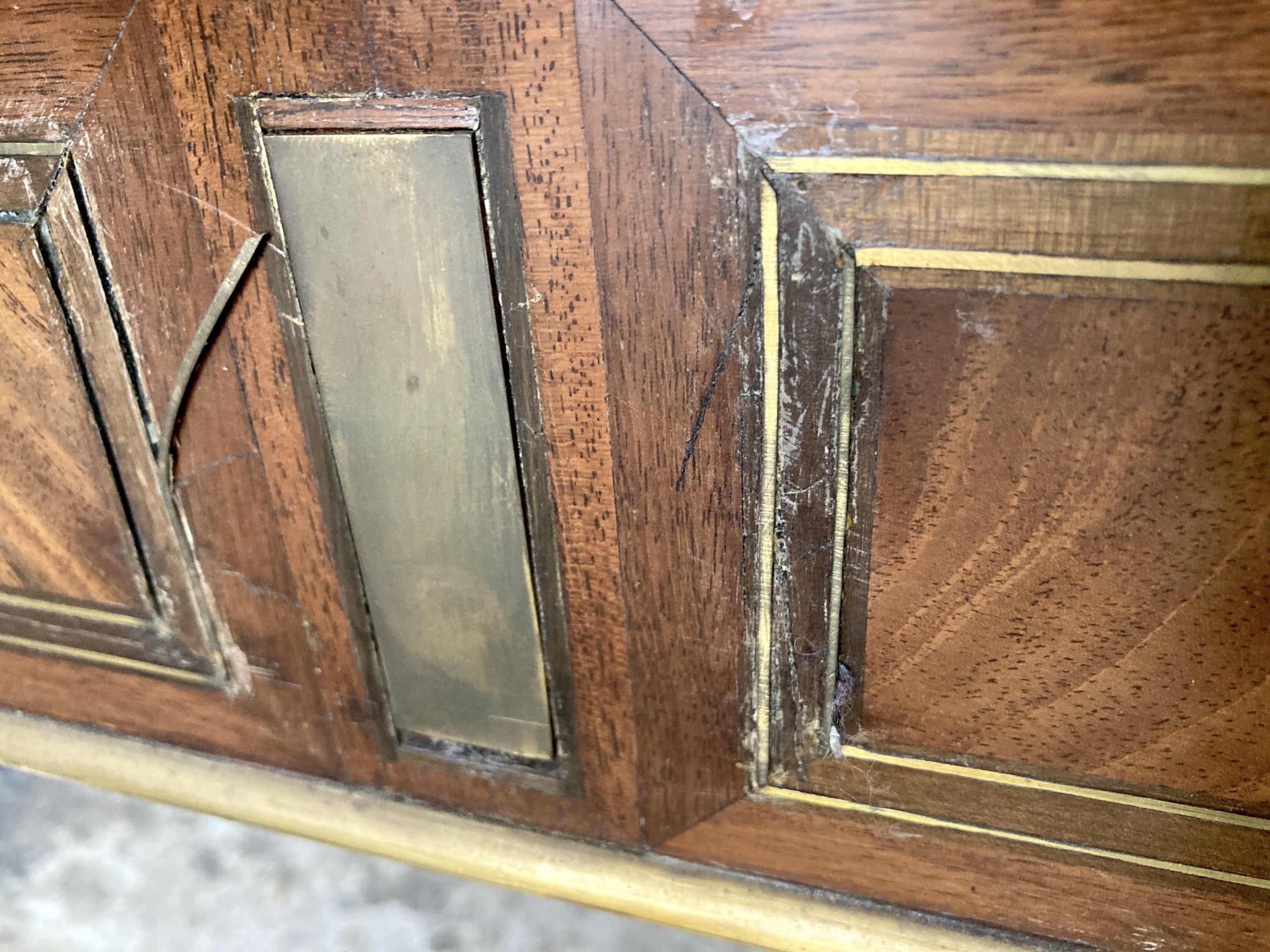
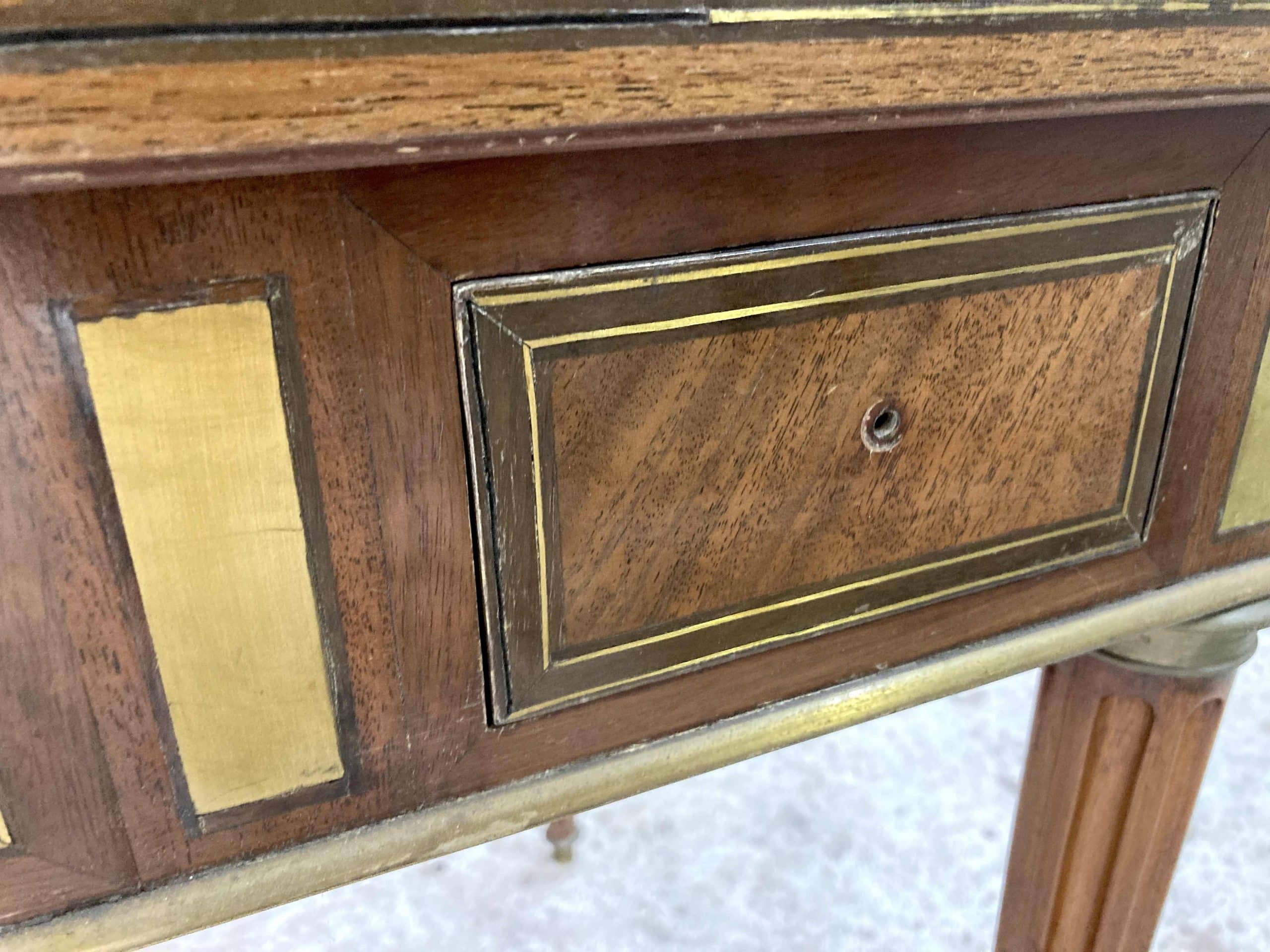
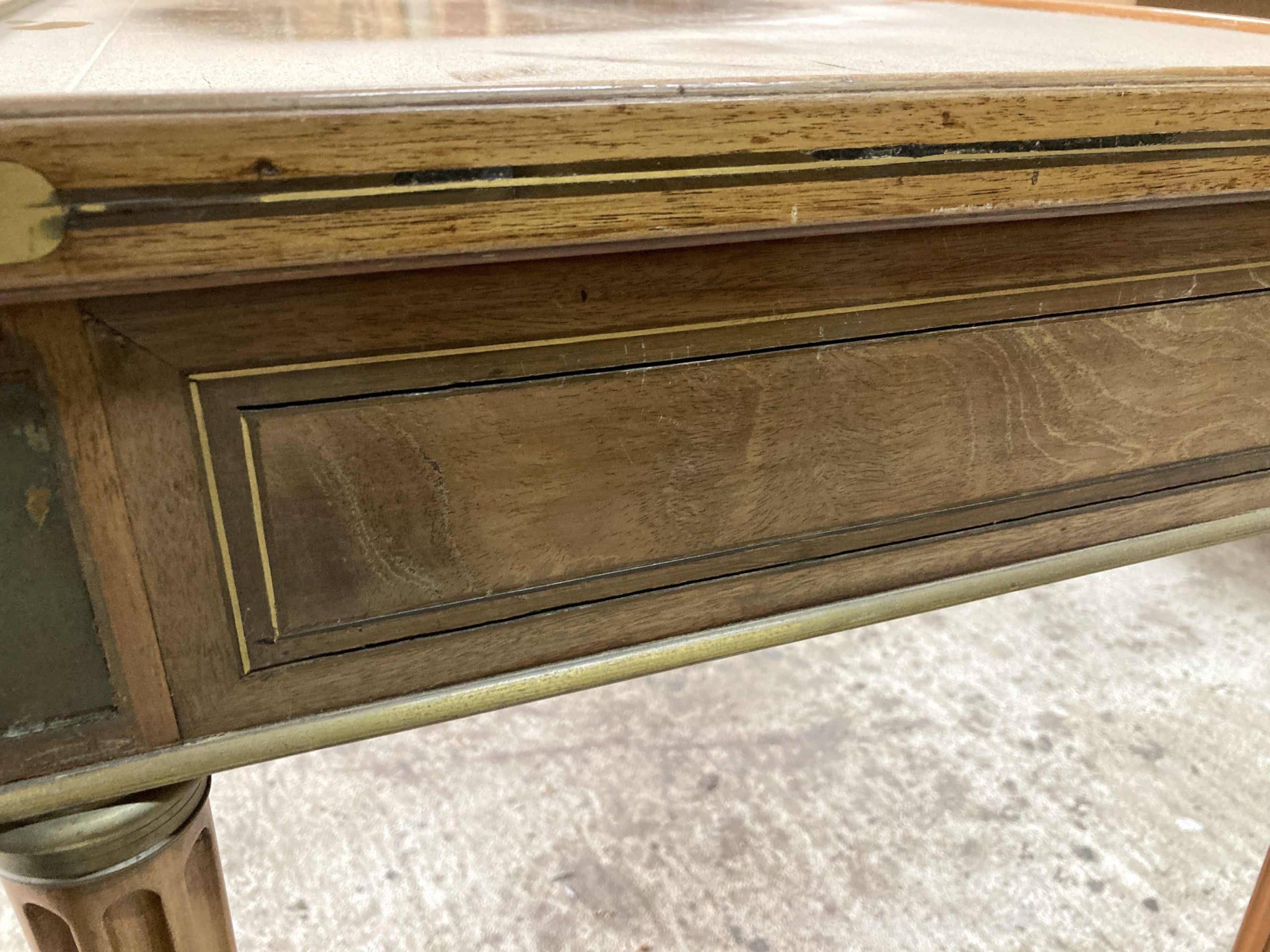
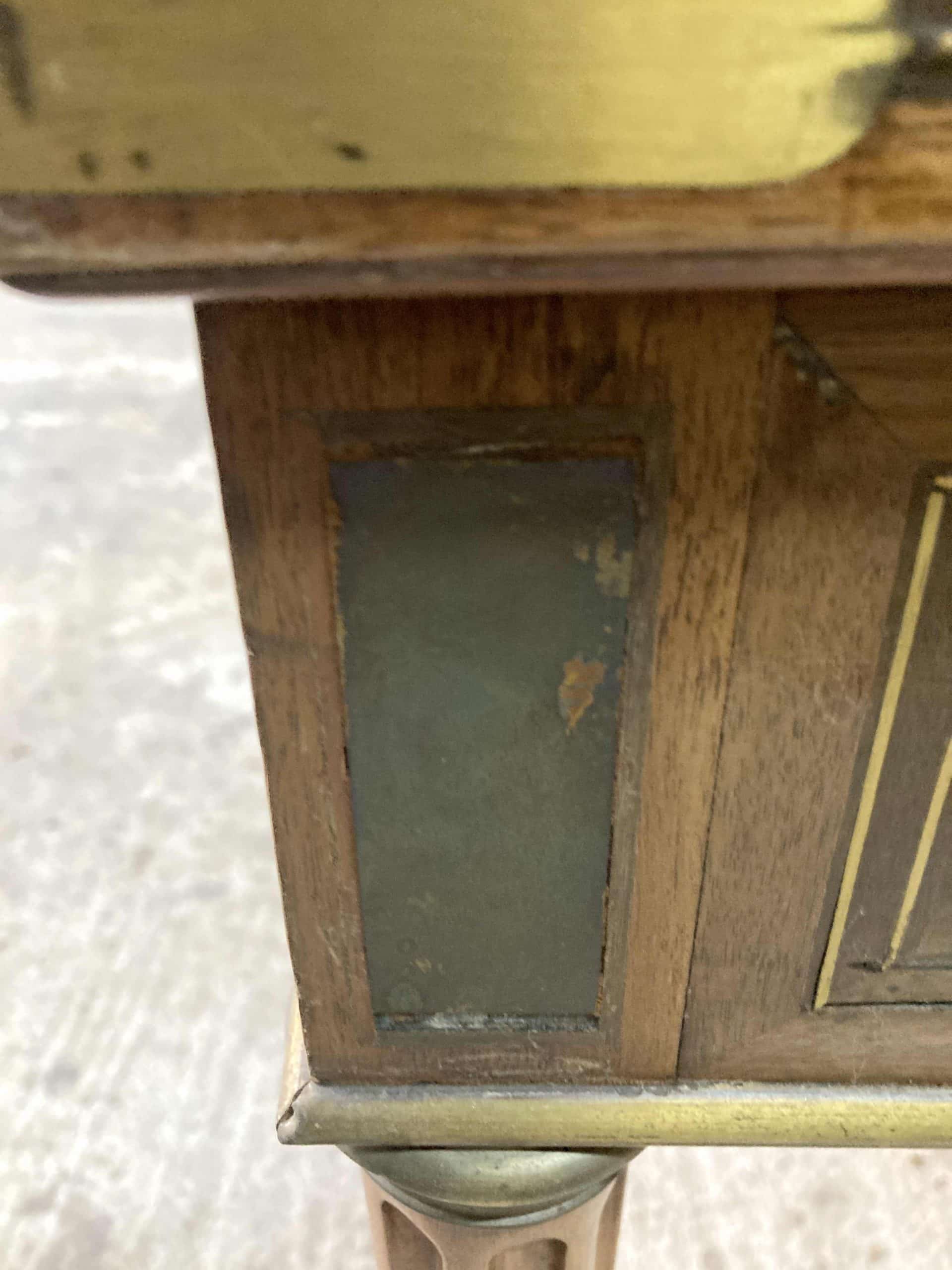
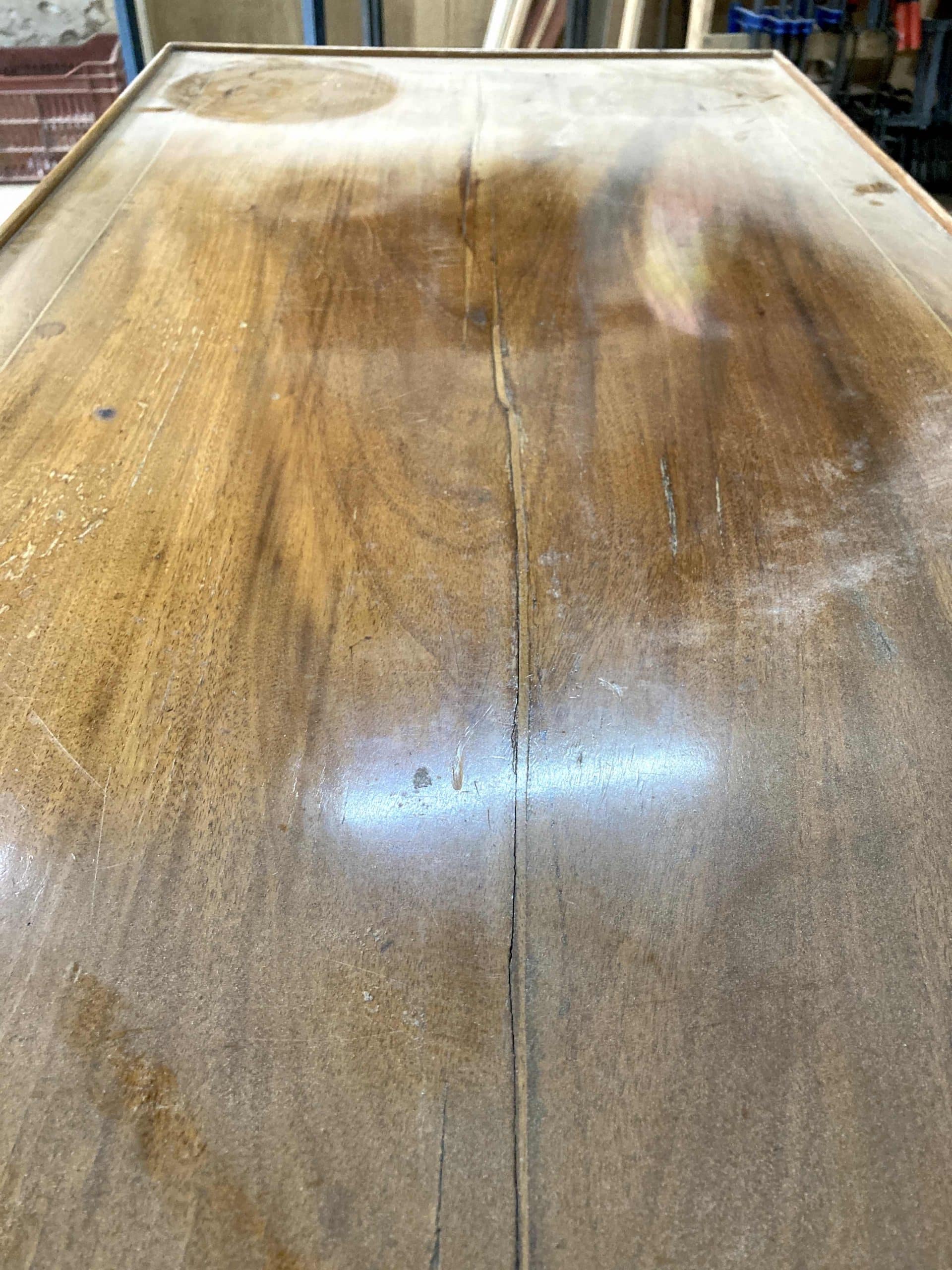
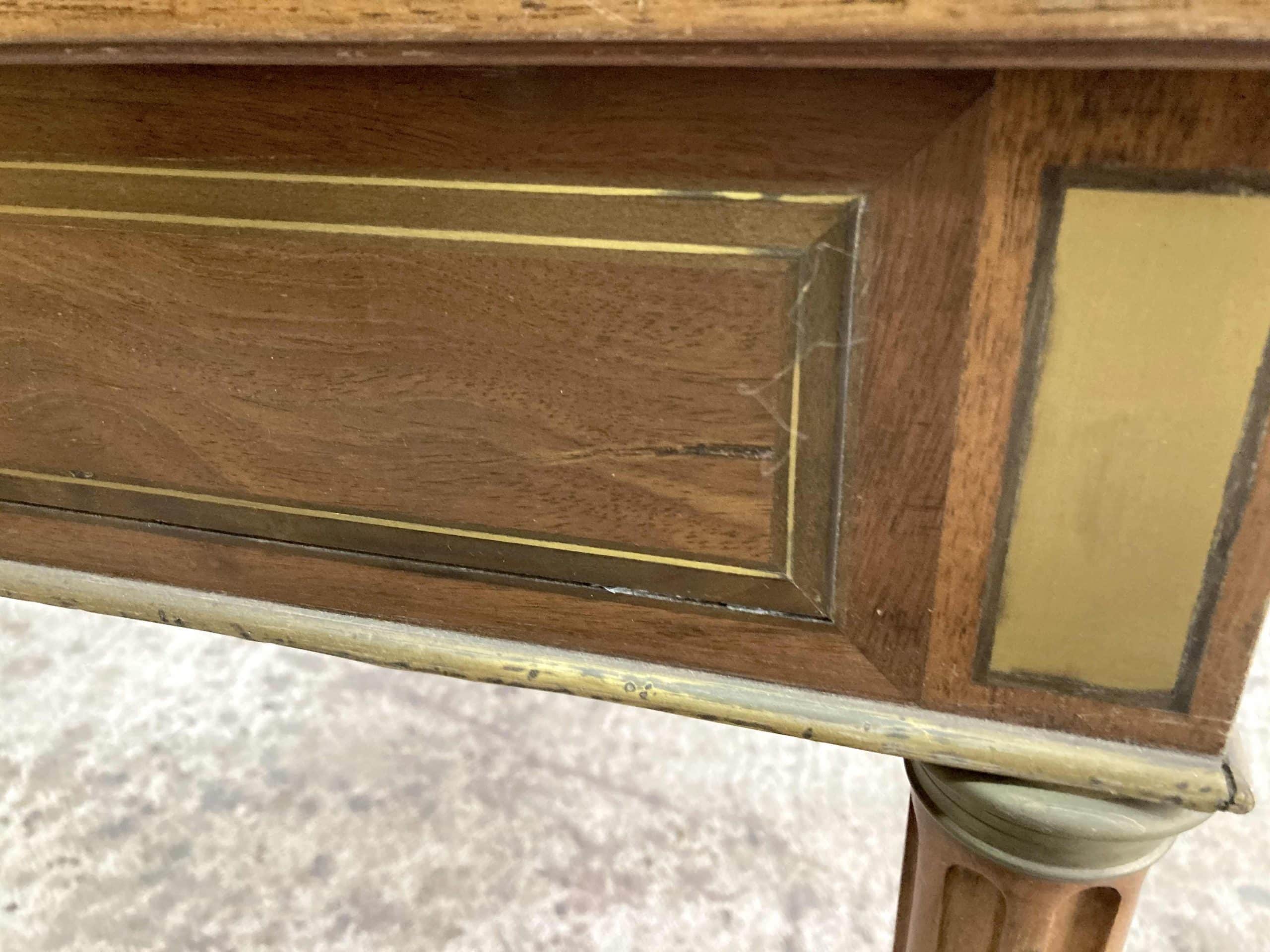
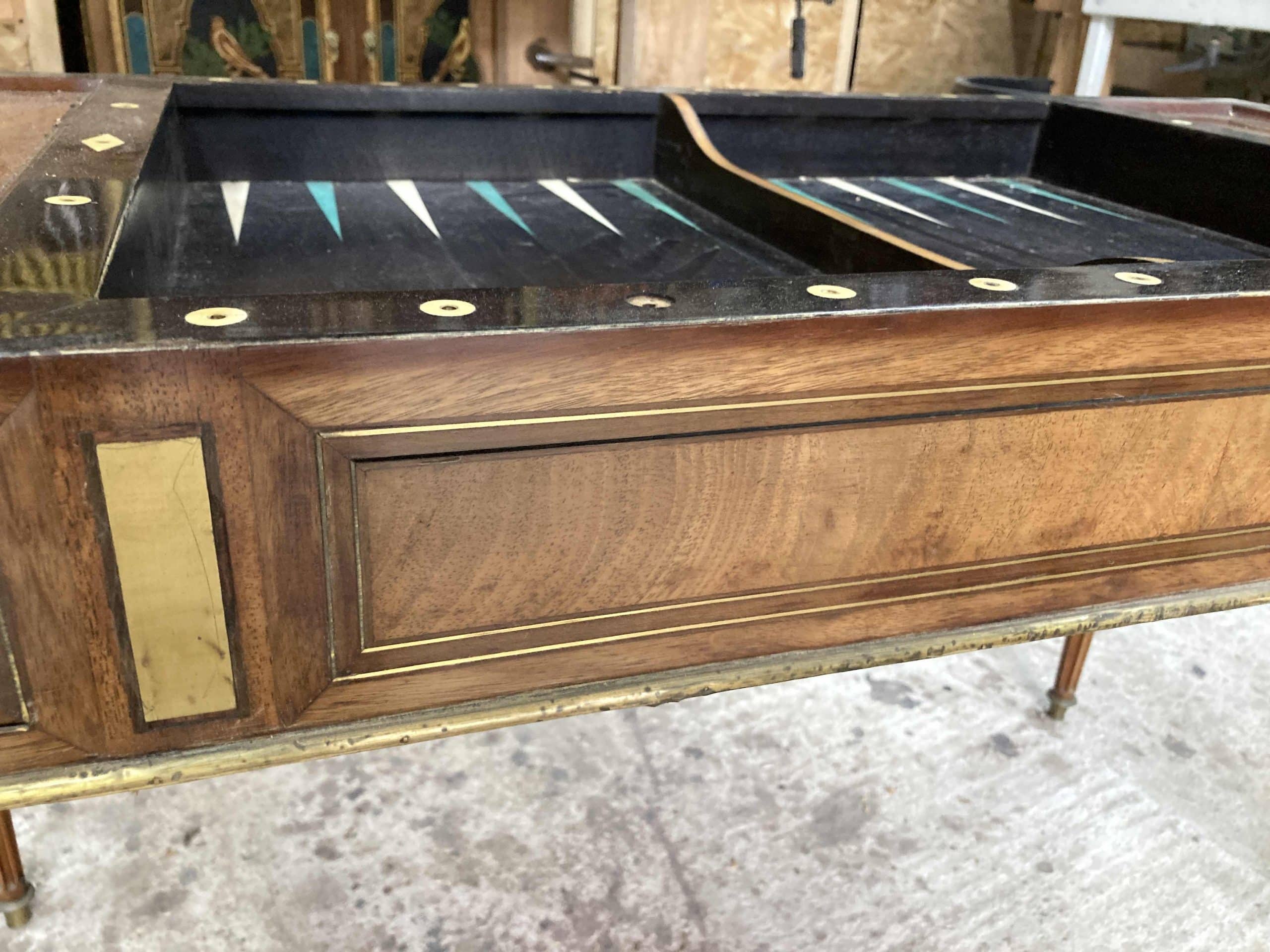
The table's structure was in very good condition. The main damage was that almost all the brass inlay was peeling off, and some was missing. The tabletop was cracked along its entire length, and an old veneer had been installed. Unfortunately, this will be retained, as creating an invisible graft along the length of a mahogany burl is extremely difficult, if not impossible. And since the aim was to preserve as much of the existing veneer as possible, the decision was made to work solely with color matching.
The Restoration
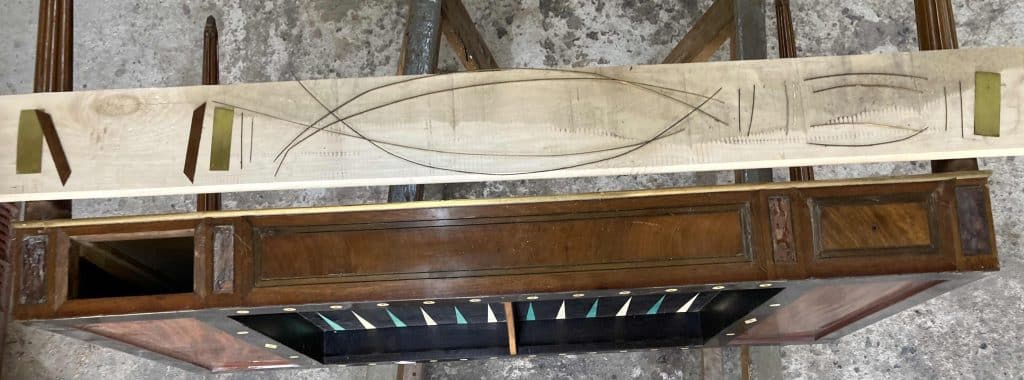
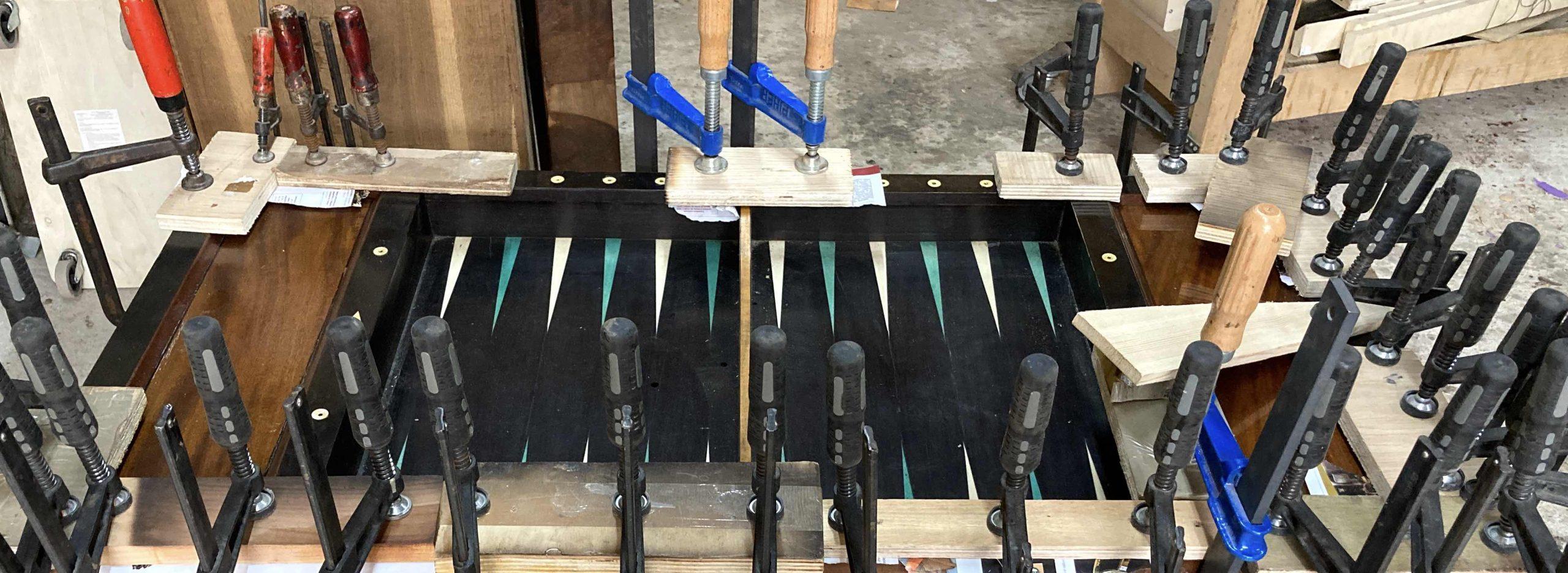
The work therefore consisted of reattaching all the brass inlays as well as the pieces of veneer that were coming loose. The crack in the tabletop was reinforced with a piece of the same wood as the existing one, namely poplar. The bone elements that were coming loose were reattached with hot glue.
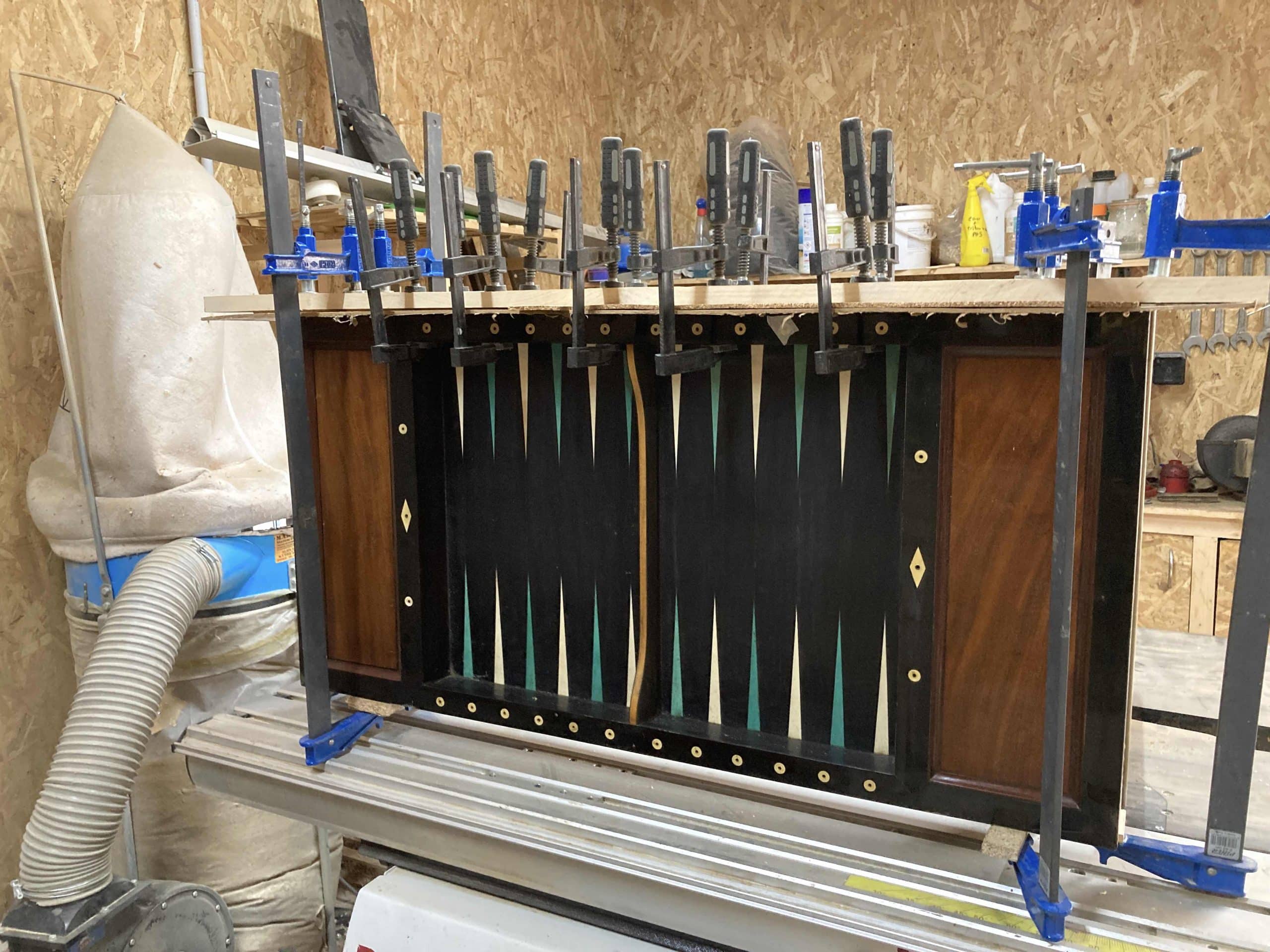
The old varnish was then lightened and then reapplied with a colorless French polish.
To see previous restorations : https://ebenisterie-mathieuvath.fr/en-ce-moment-a-latelier/