
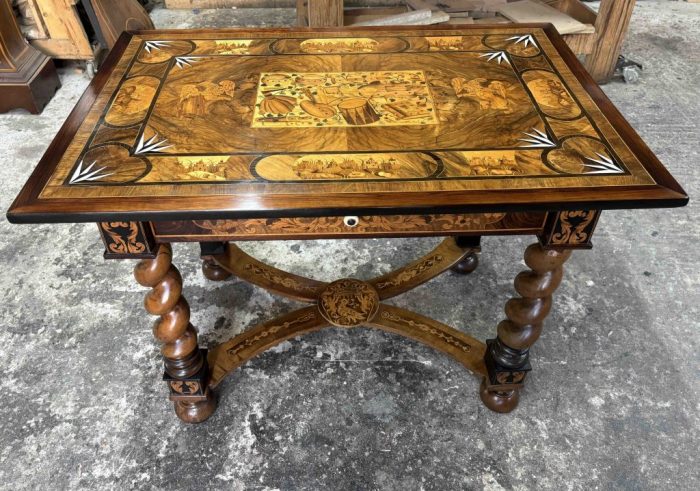
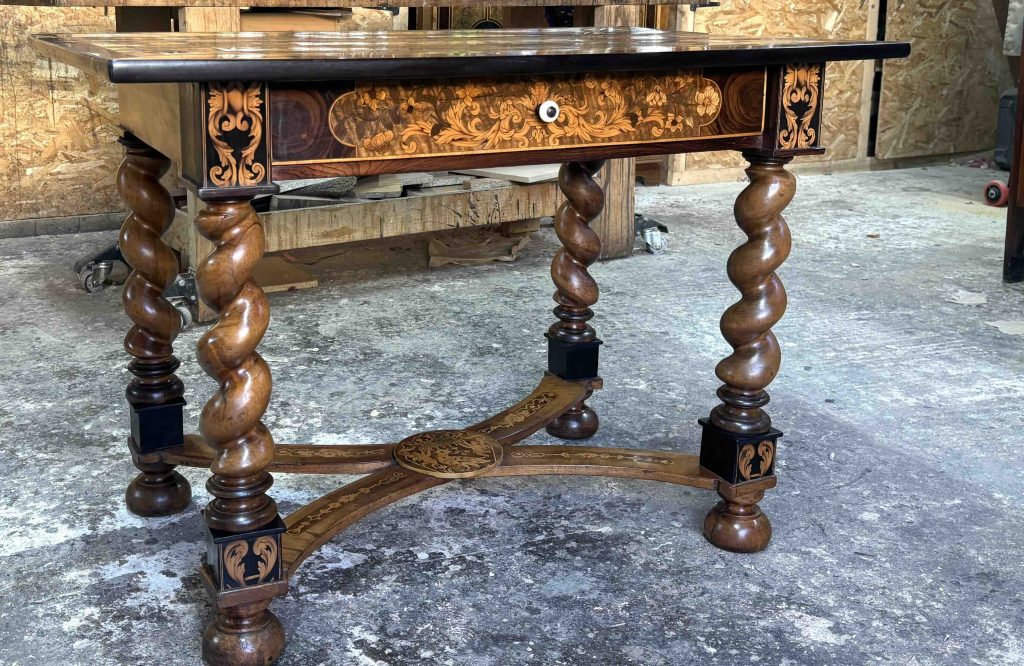
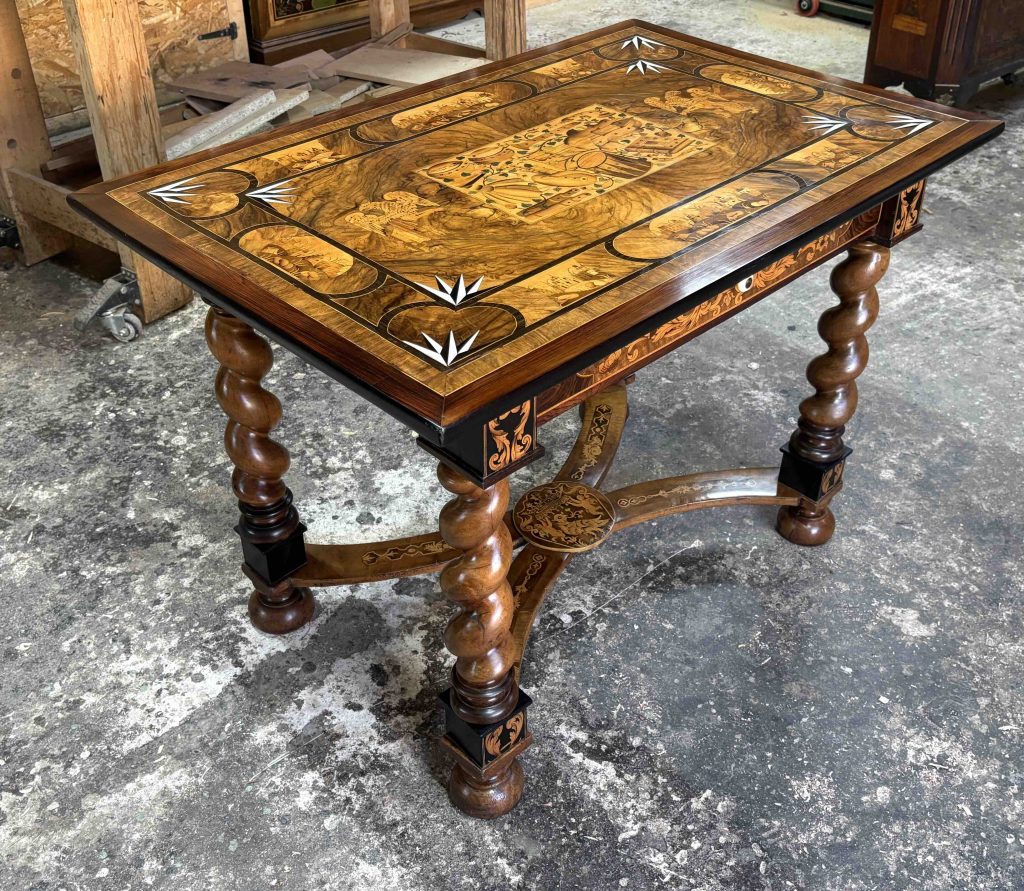
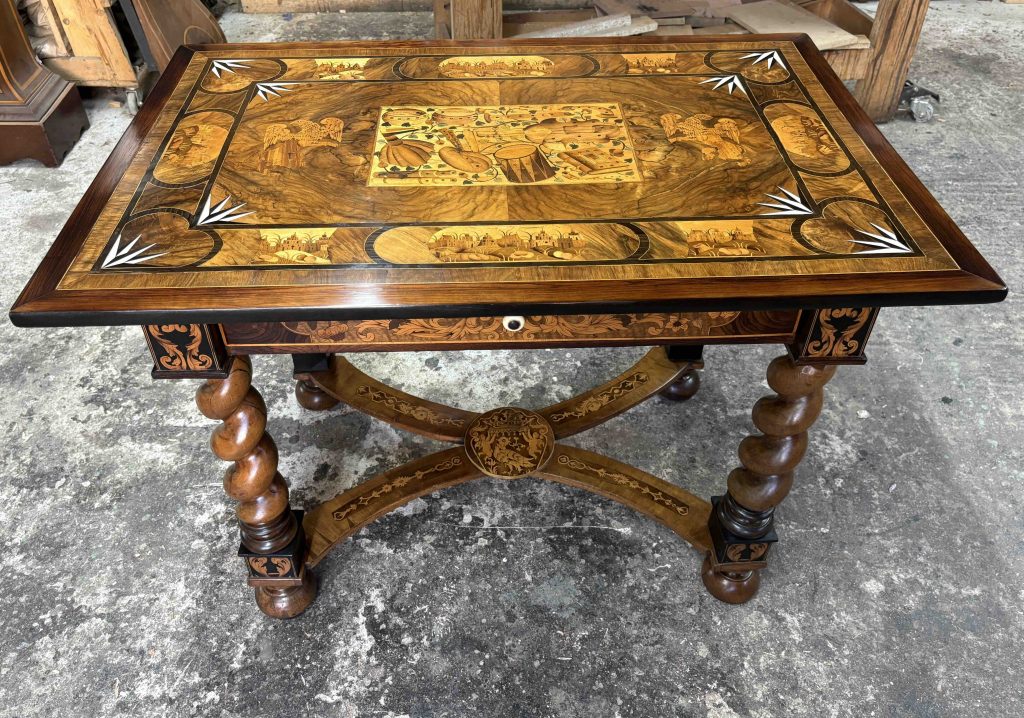
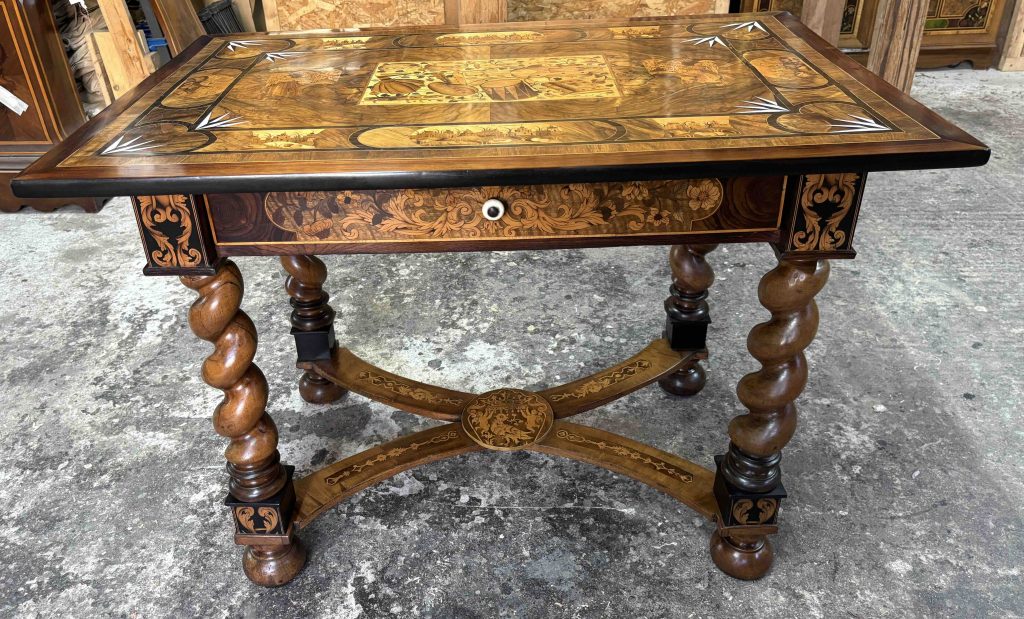
Restoration of a solid walnut table with marquetry decoration featuring "architectural whims" and "wild herbs," originating from the Austrian Tyrol in the mid-17th century. This piece rests on four twisted legs, adorned with flattened ball feet, connected by an X-shaped stretcher. It opens with a wide drawer in the front and is surmounted by a rectangular top.
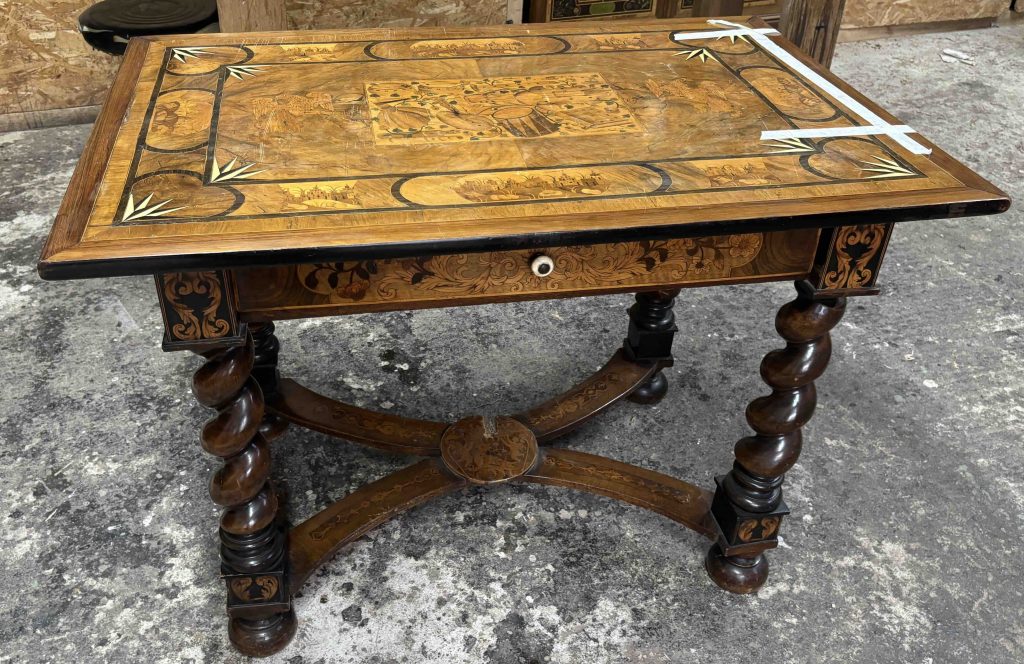
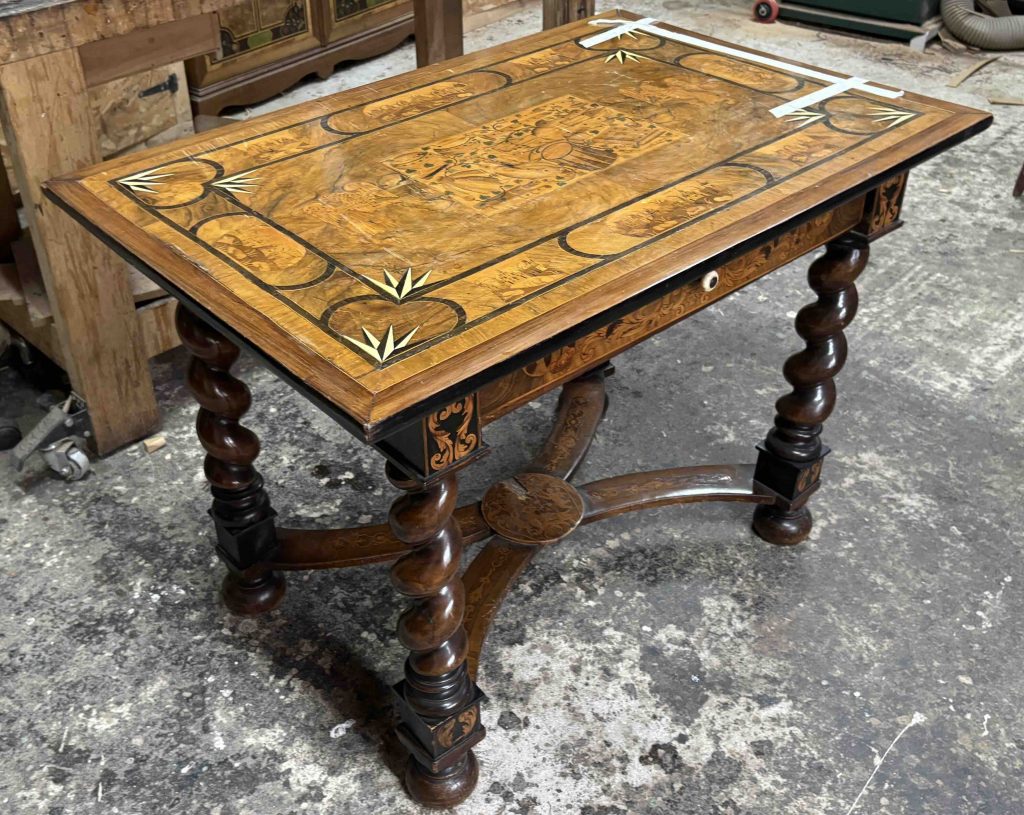
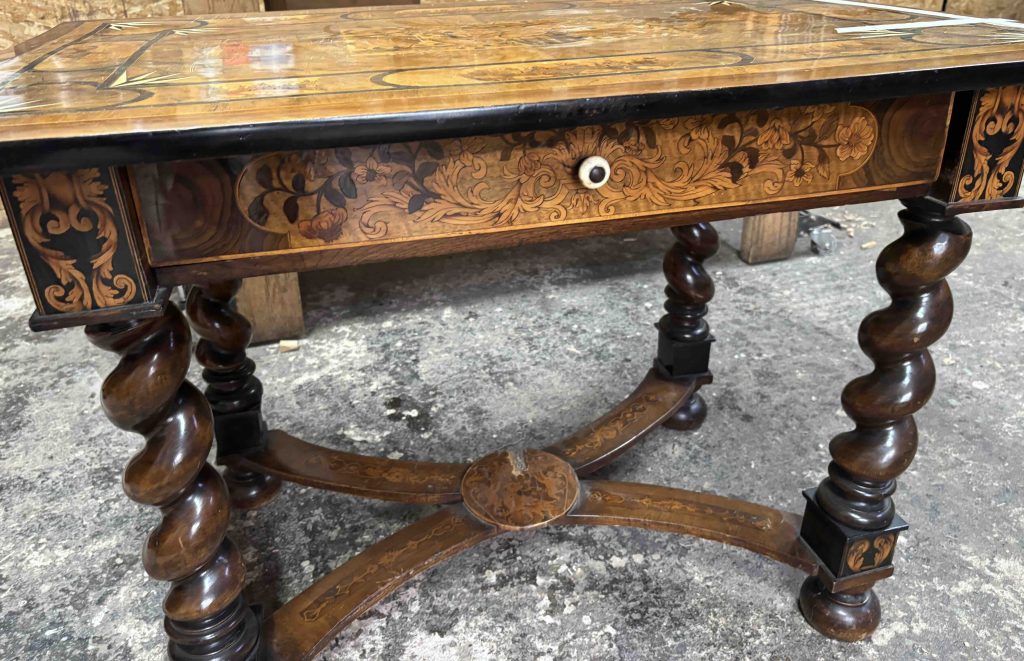
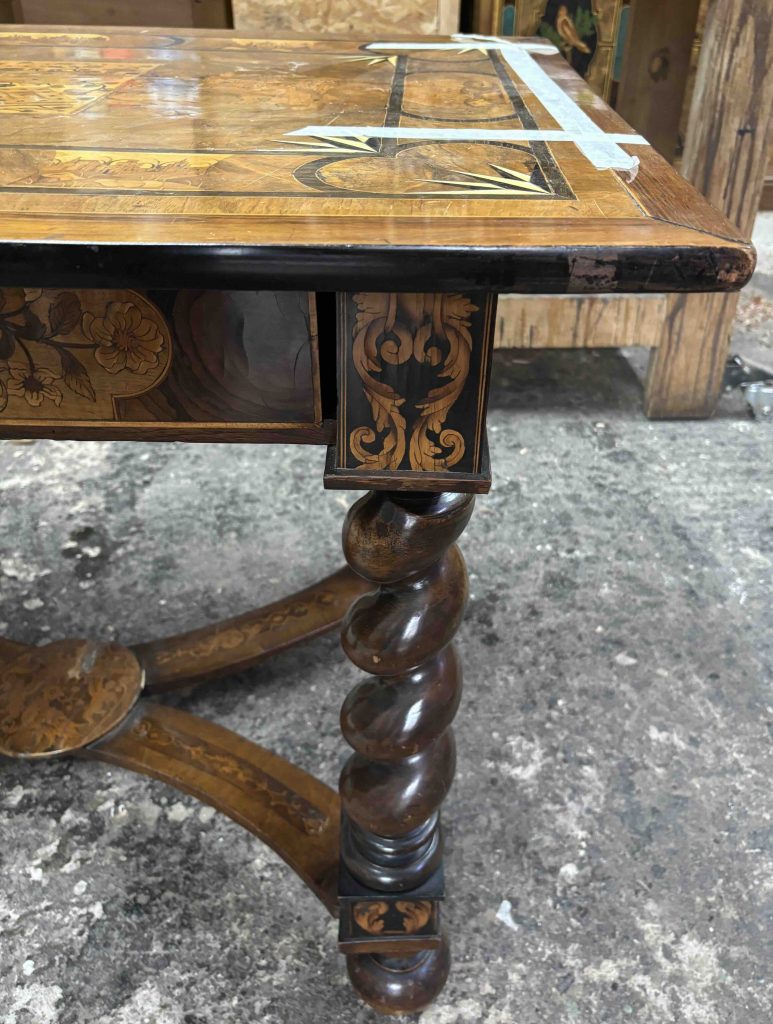
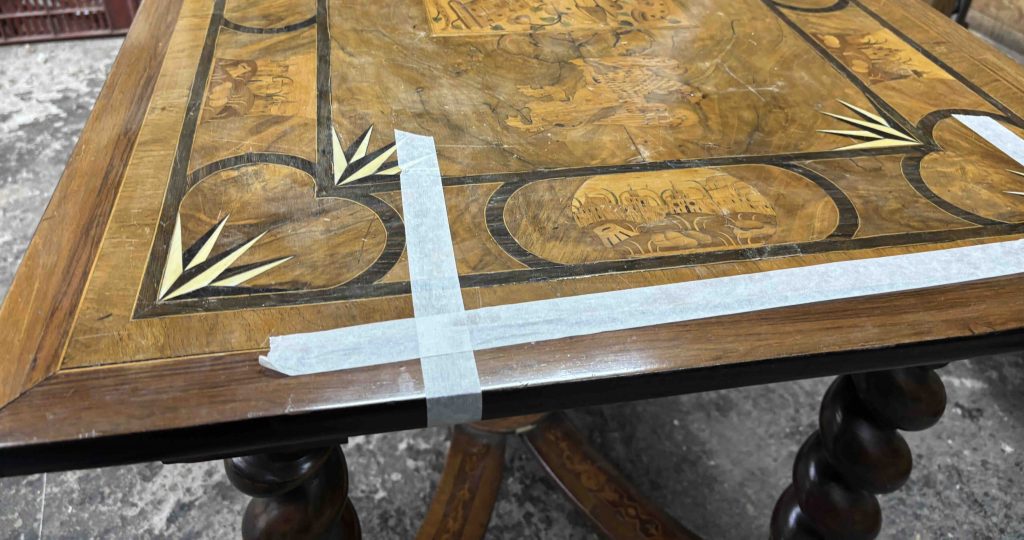
This tray is decorated with a rosewood border, followed by bands delimited by wide fillets of bog oak, themselves framed by boxwood. These plant elements create geometric reserves in the shape of hearts, a motif traditionally associated with Protestant Europe, as well as rectangles and oblong shapes.
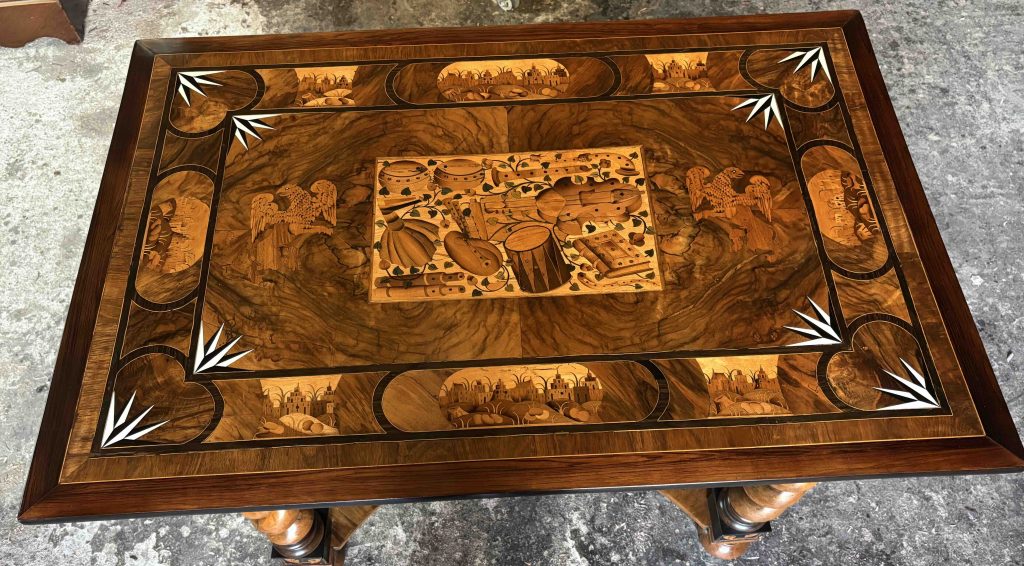
These reserves are adorned with a rich marquetry decoration, highlighting architectural perspectives typical of the Augsburg style.This decor, although reminiscent of "Italian-style" marquetry, is distinguished by its motifs of abandoned village perspectives, where wild grasses are depicted.
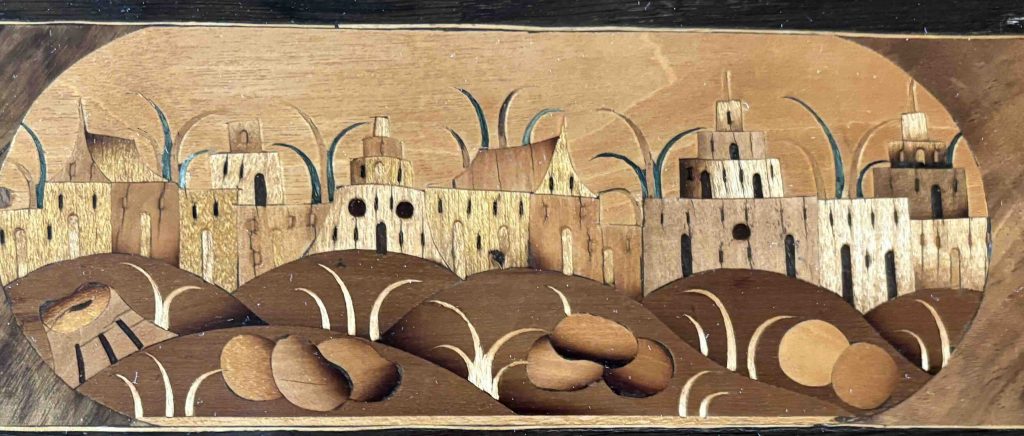
The selection of woods used in production relies primarily on native species, such as pear, apple, sycamore maple, boxwood, swamp oak, and barberry. The inclusion of exotic species, notably rosewood and ebony, enriches the range of available materials. This diversity of woods allows for a wide range of tones, modulated by the application of various sawing techniques (grain, bias, or end grain veneers) and multiple color treatments (natural, stained, shaded, or charred).
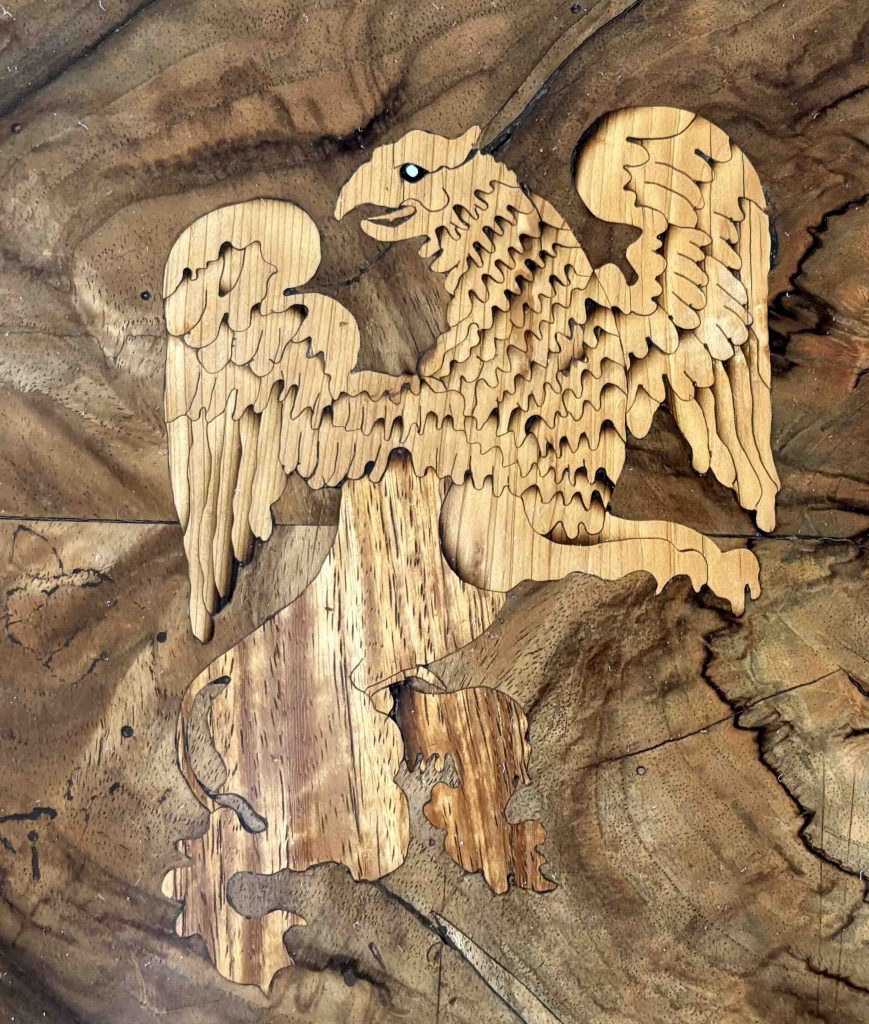
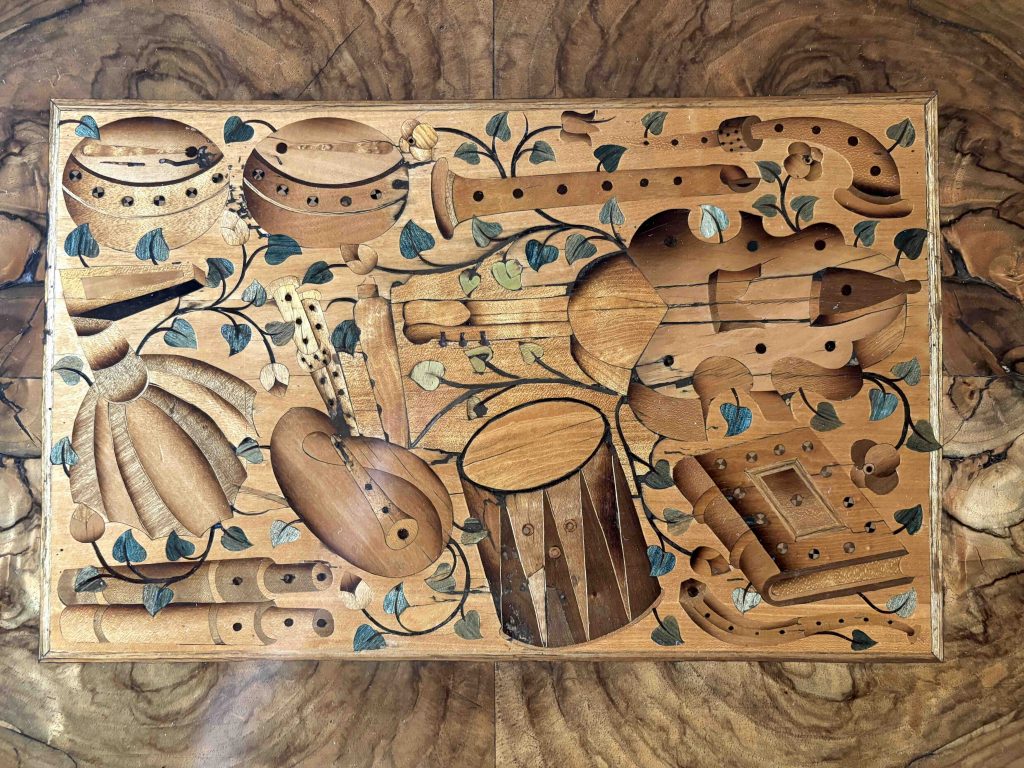
The central panel, flanked by two imposing heraldic griffins, presents a still-life composition with musical instruments, incorporating natural plant elements characteristic of southern Germany, including climbing roses dyed green and ochre. Fan-shaped inlays of ivory and ebony, placed in the spandrels, lend additional brilliance to the whole.
The table's apron is also veneered, but only the connecting blocks and the front drawer are adorned with a rich marquetry design of light and shaded boxwood foliage scrolls, embellished with barberry flowers. Like the drawer front, which features two contrasting marquetry tones and an ivory knob inlaid with ebony, the base is punctuated by a color contrast between the light turned solid walnut and the dark blocks inlaid with boxwood scrolls on a bog oak ground, edged with rosewood. This luminous effect extends to the walnut-veneered stretcher, inlaid with boxwood on a shaded sycamore ground.
At the center of this piece, a medallion stands out for the delicacy and elegance of its decoration, depicting two cherubs supporting a crowned canopy above a phoenix. The base is made of walnut, while the top and stretcher are constructed from a fir core. The drawer box is made of oak.
Hello and thank you for these very well-documented and well-explained photos. Very enriching. And congratulations on the admirable restoration work.
Loïc Coudé, Breton from the 44th
Hello. Thank you so much for your comment! I'm delighted that you enjoyed this article.