
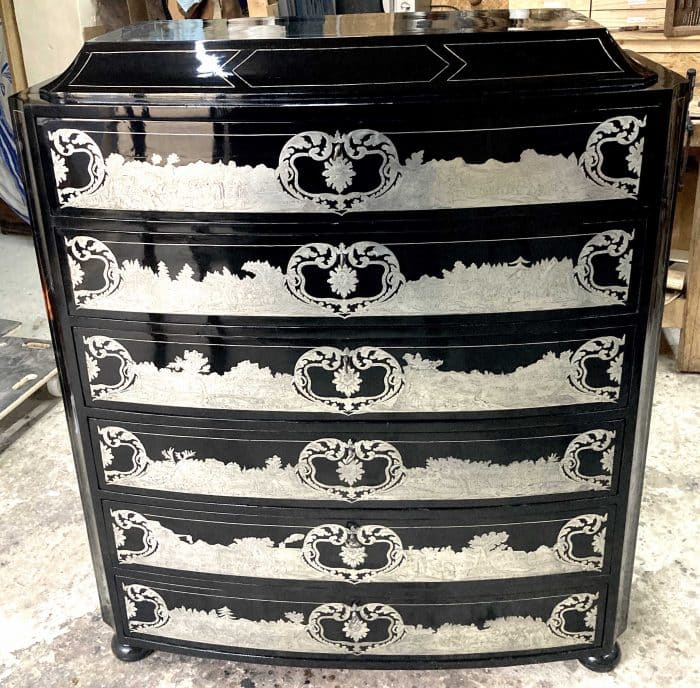
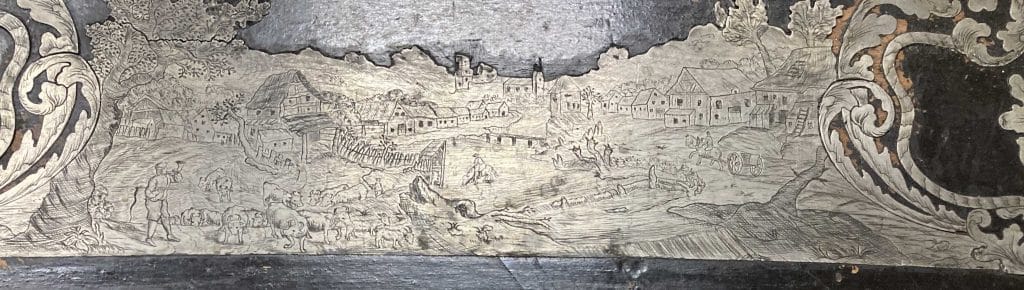
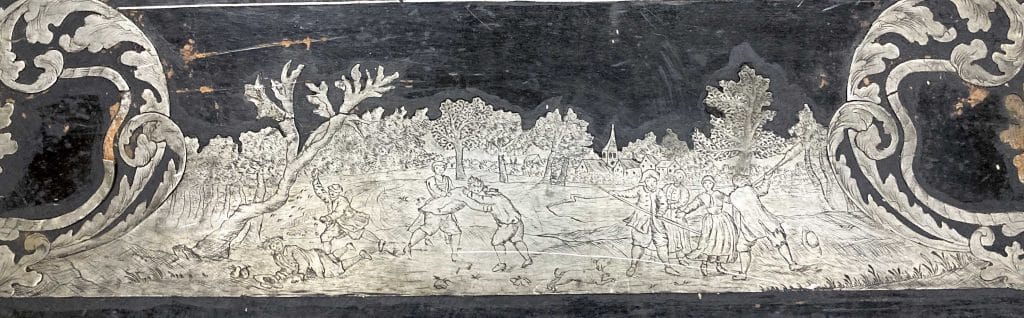
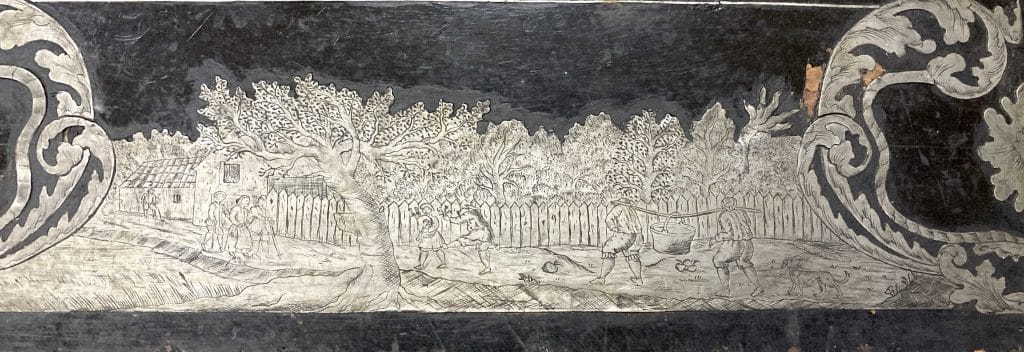
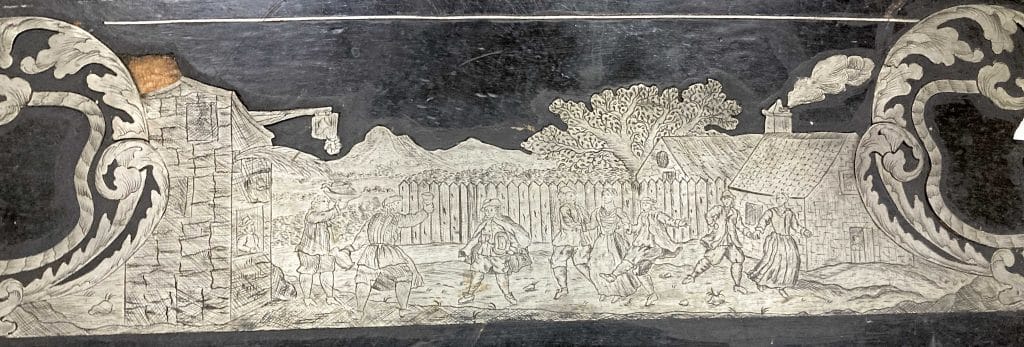
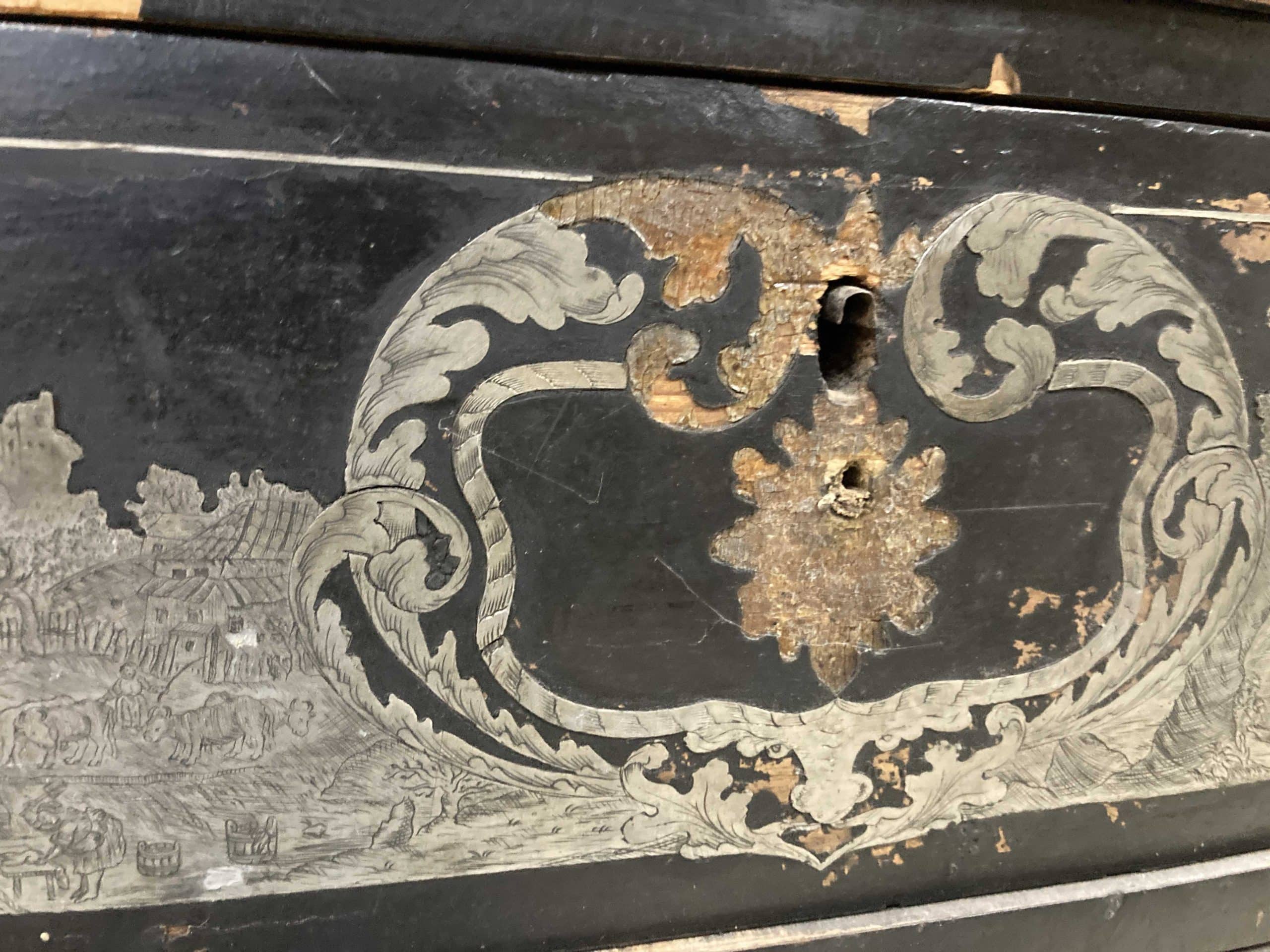
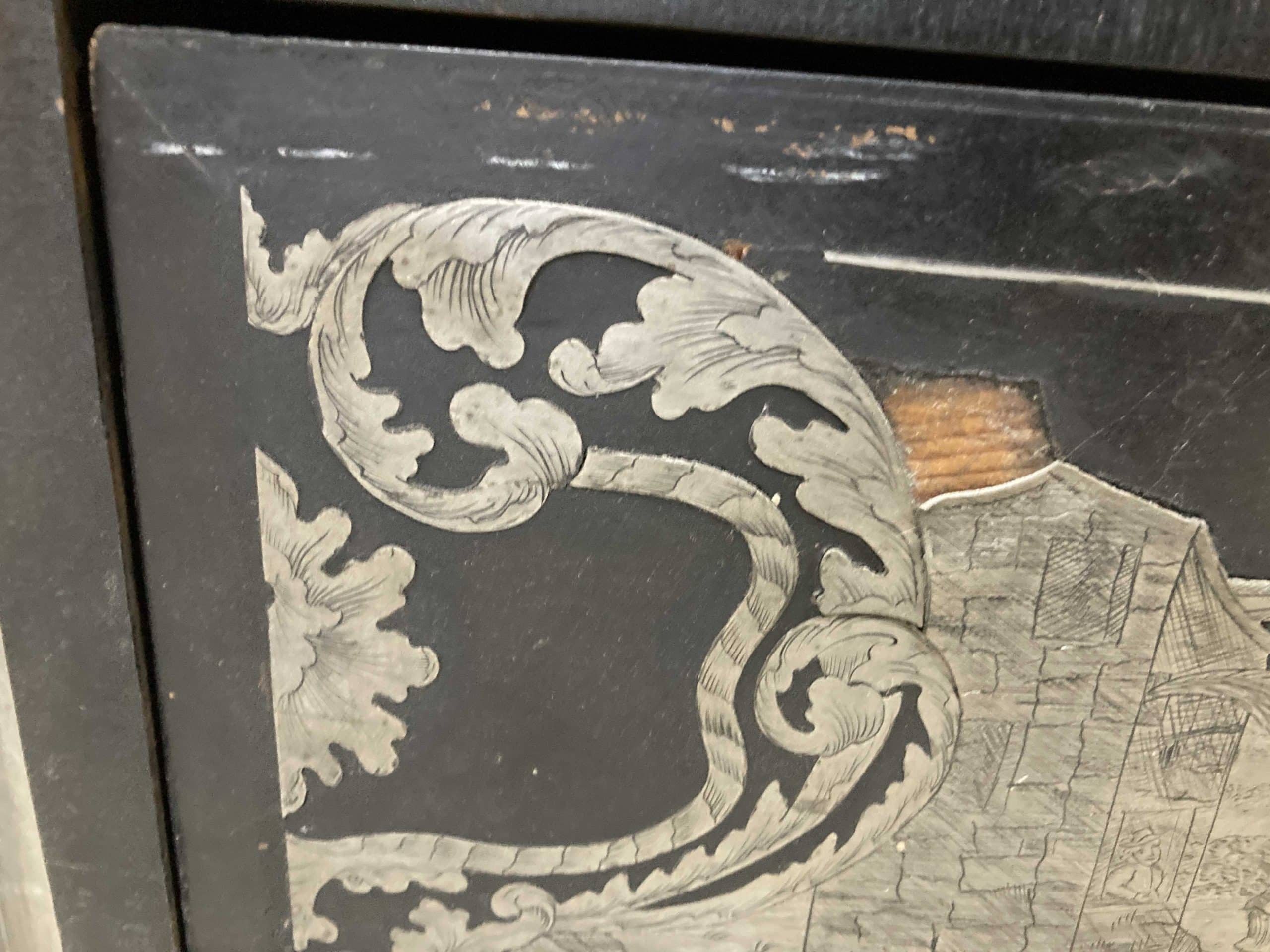
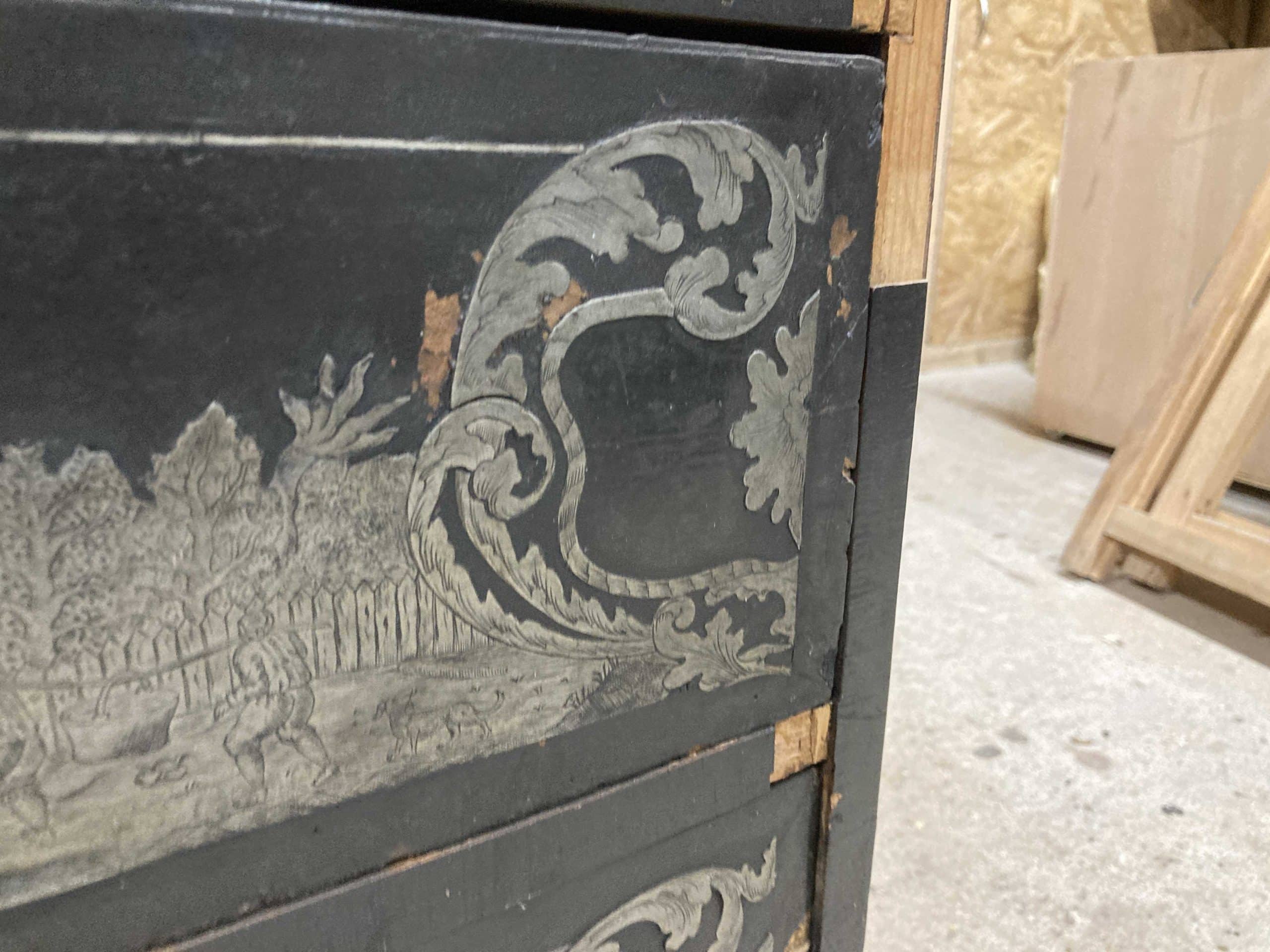
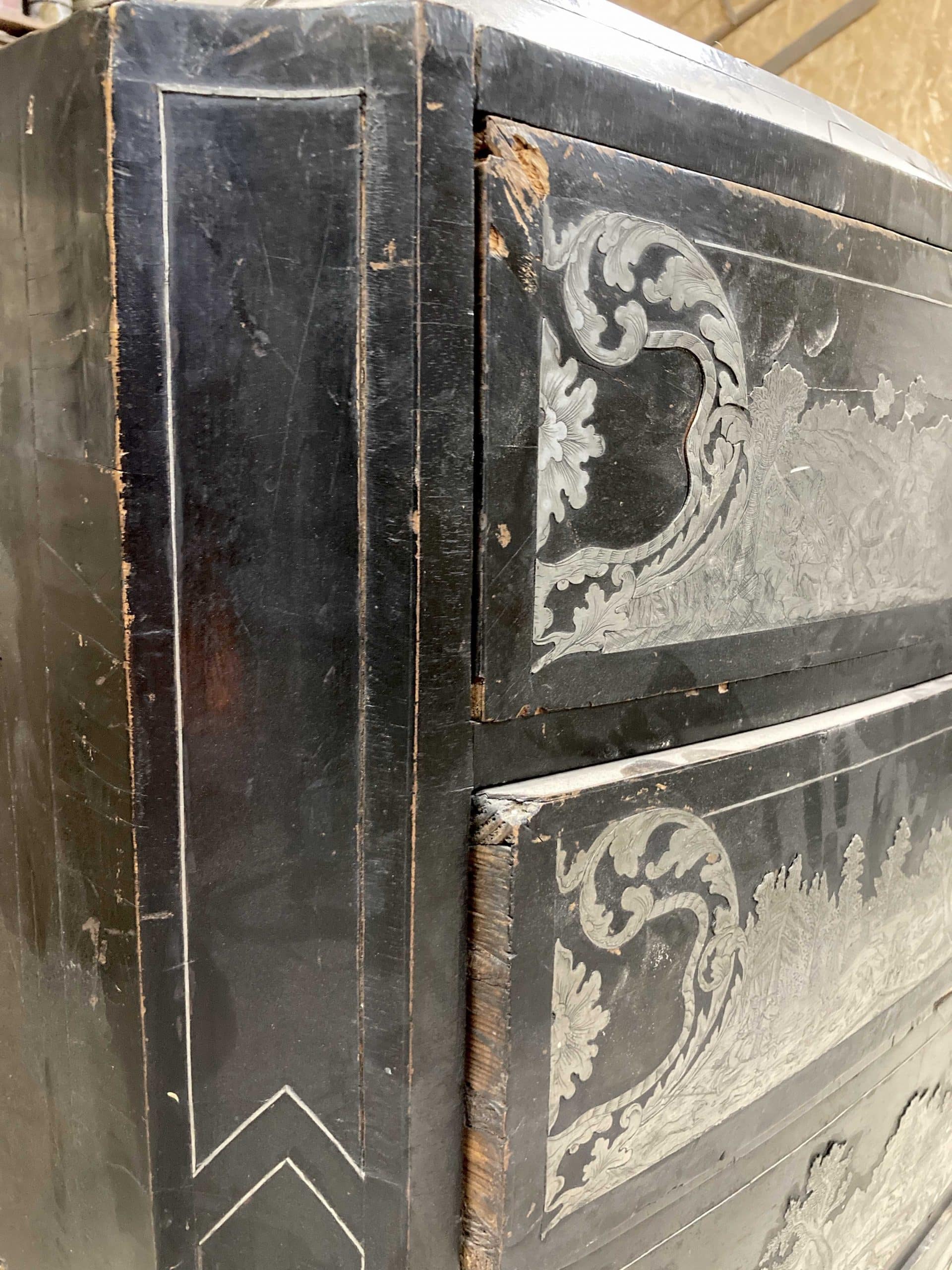
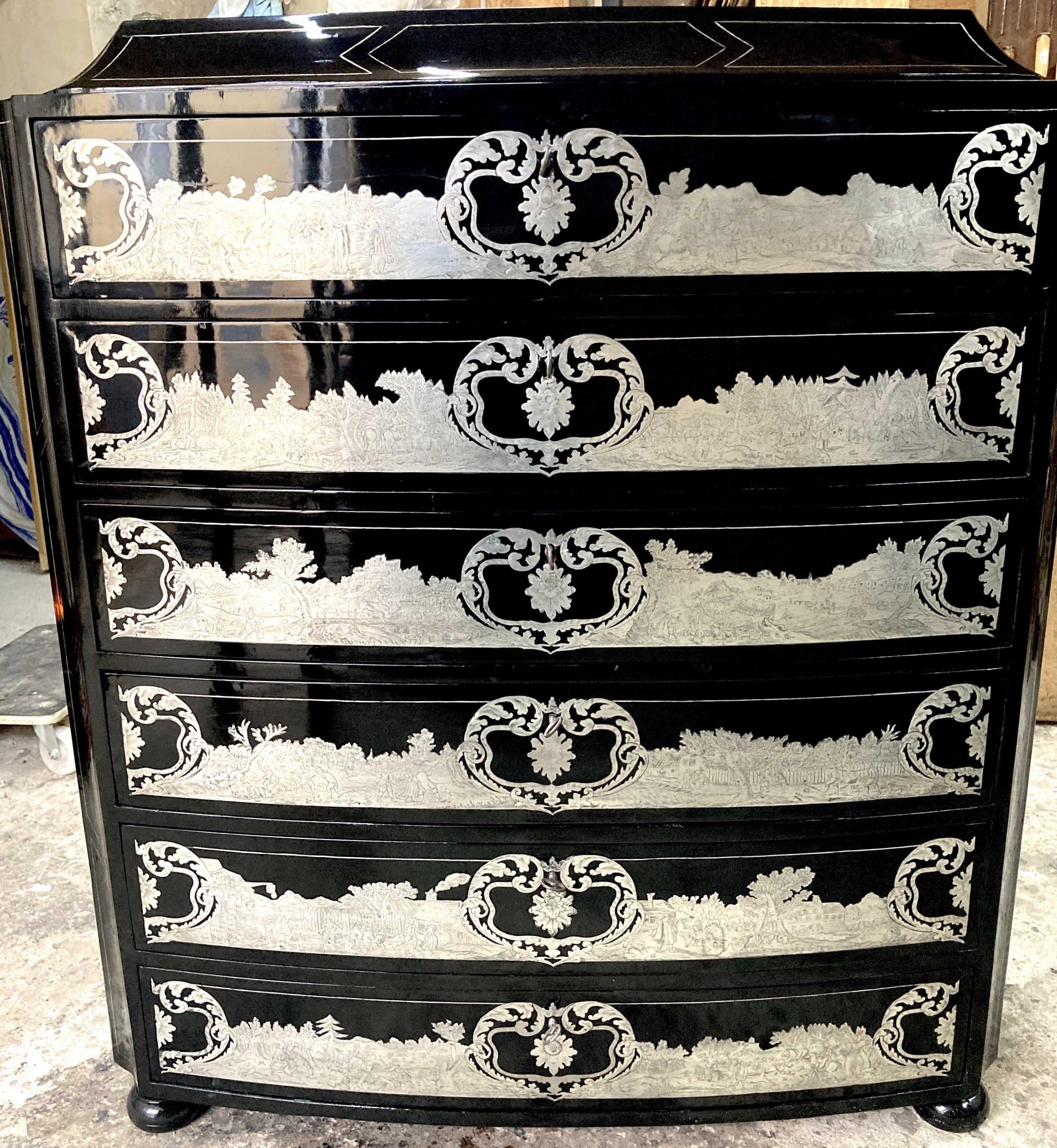
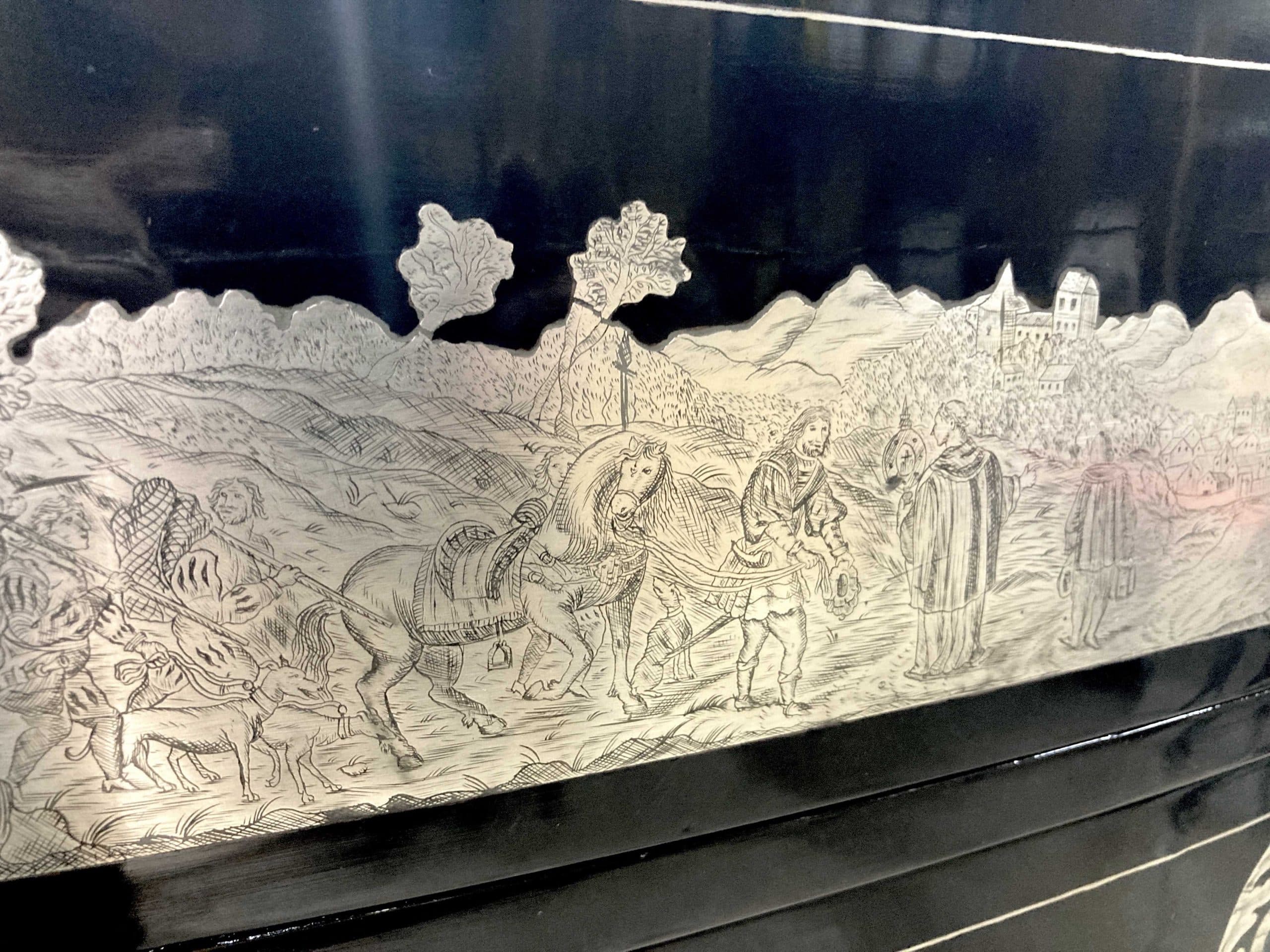
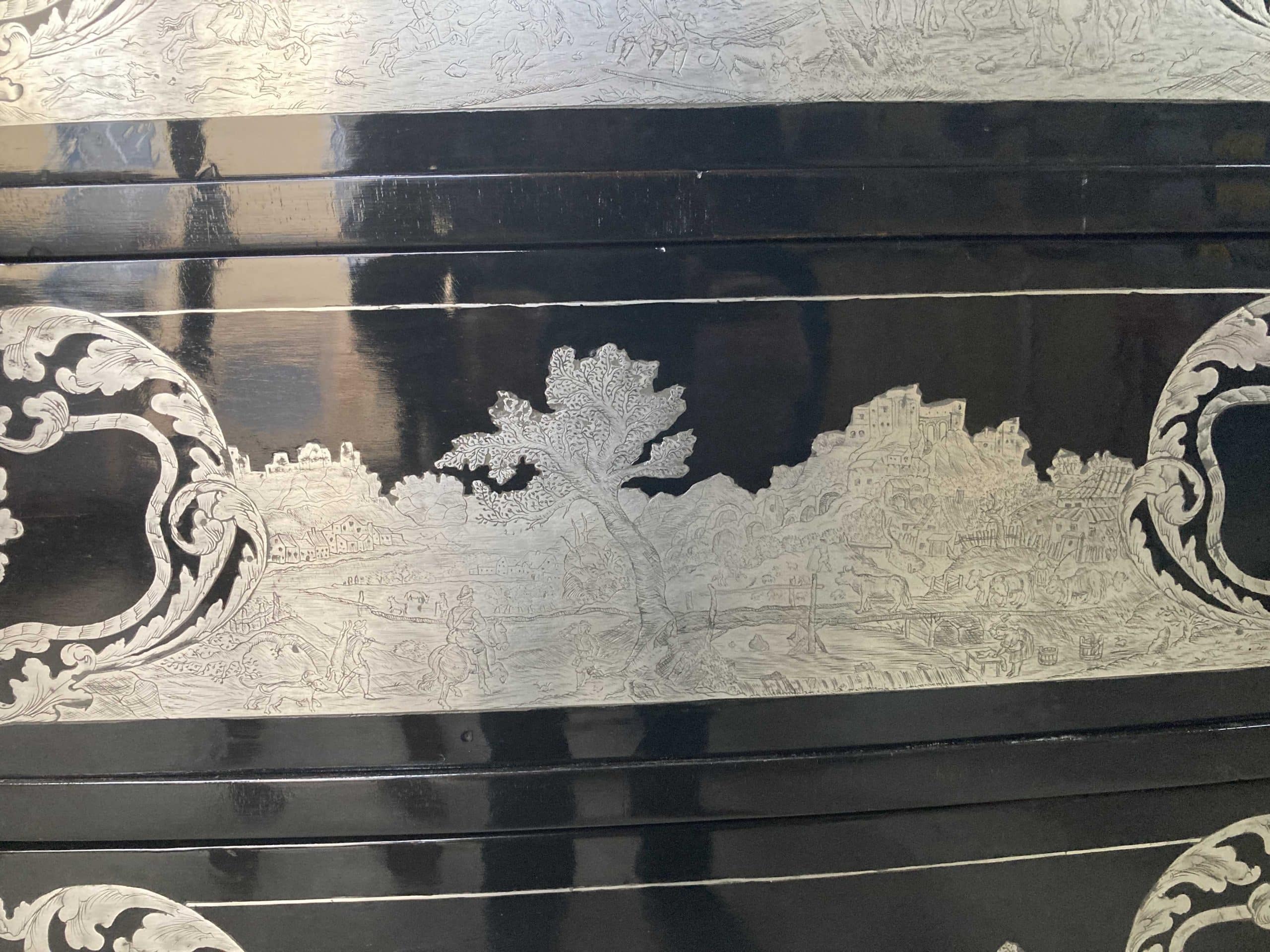
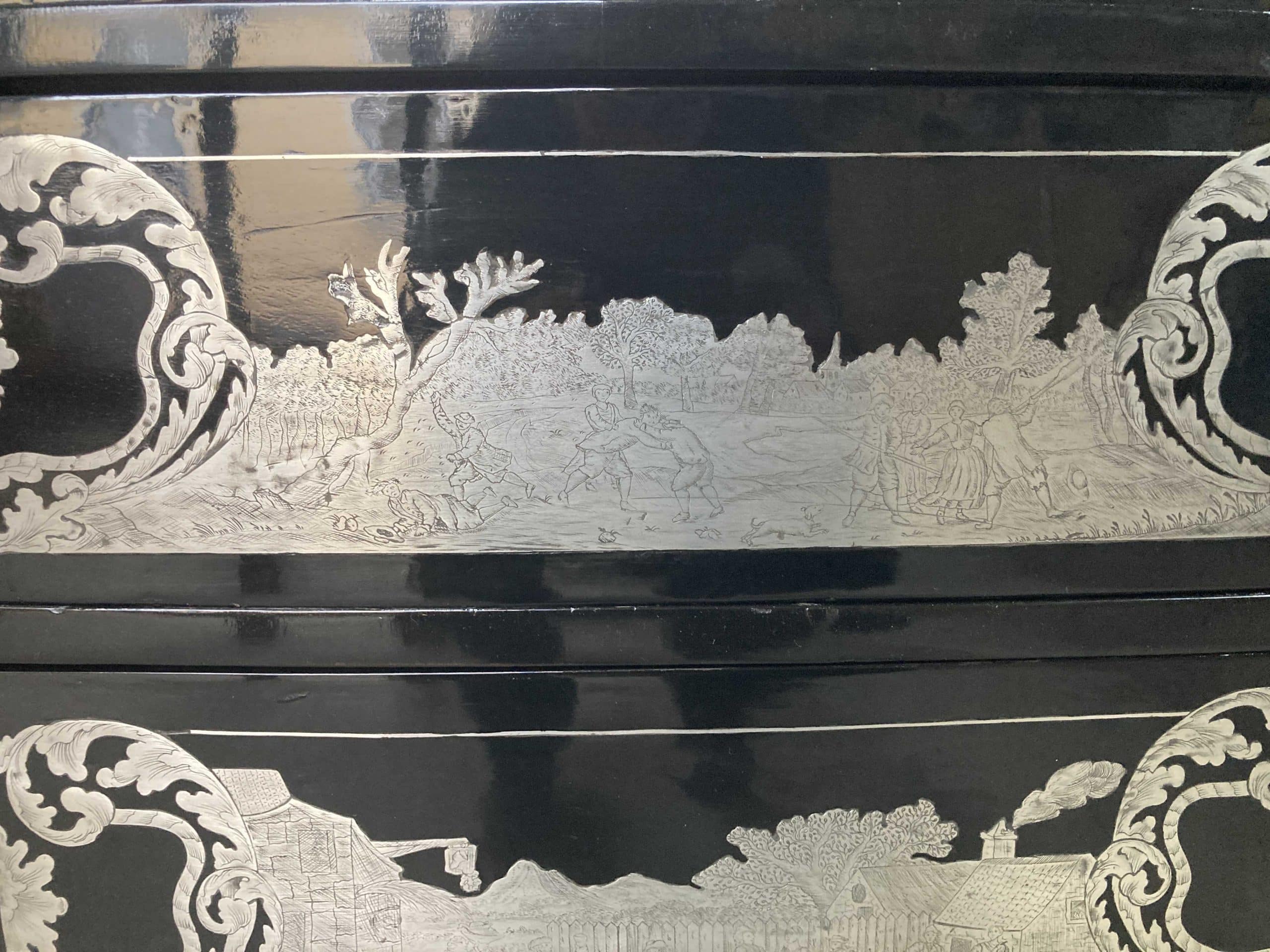
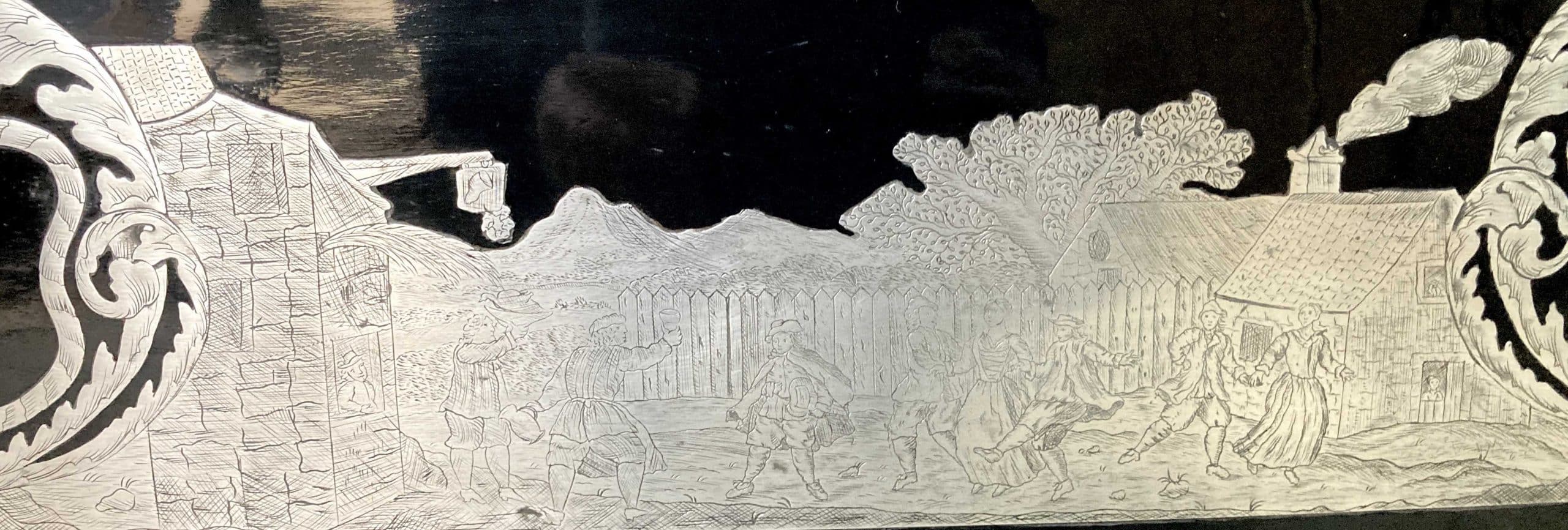
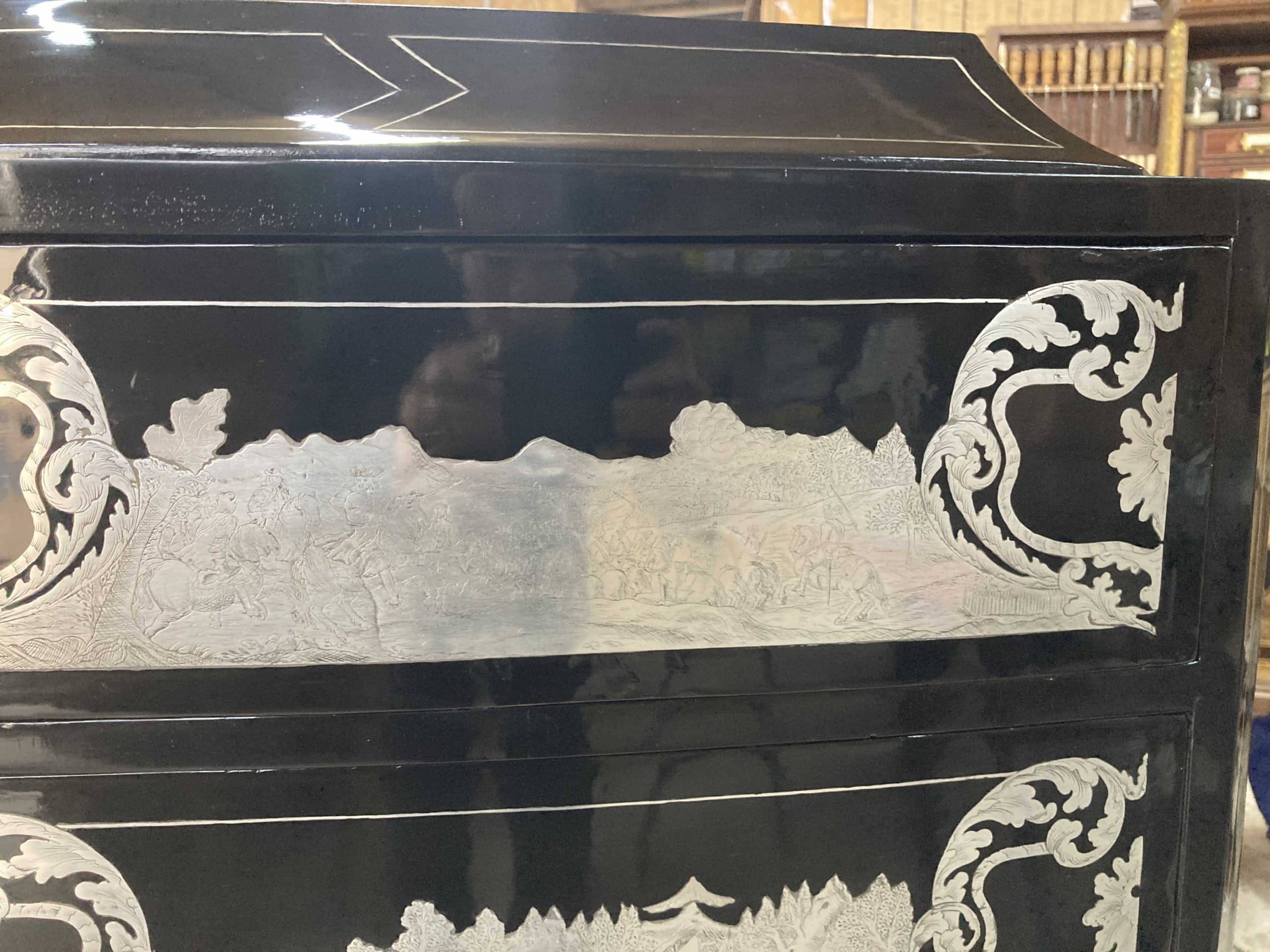
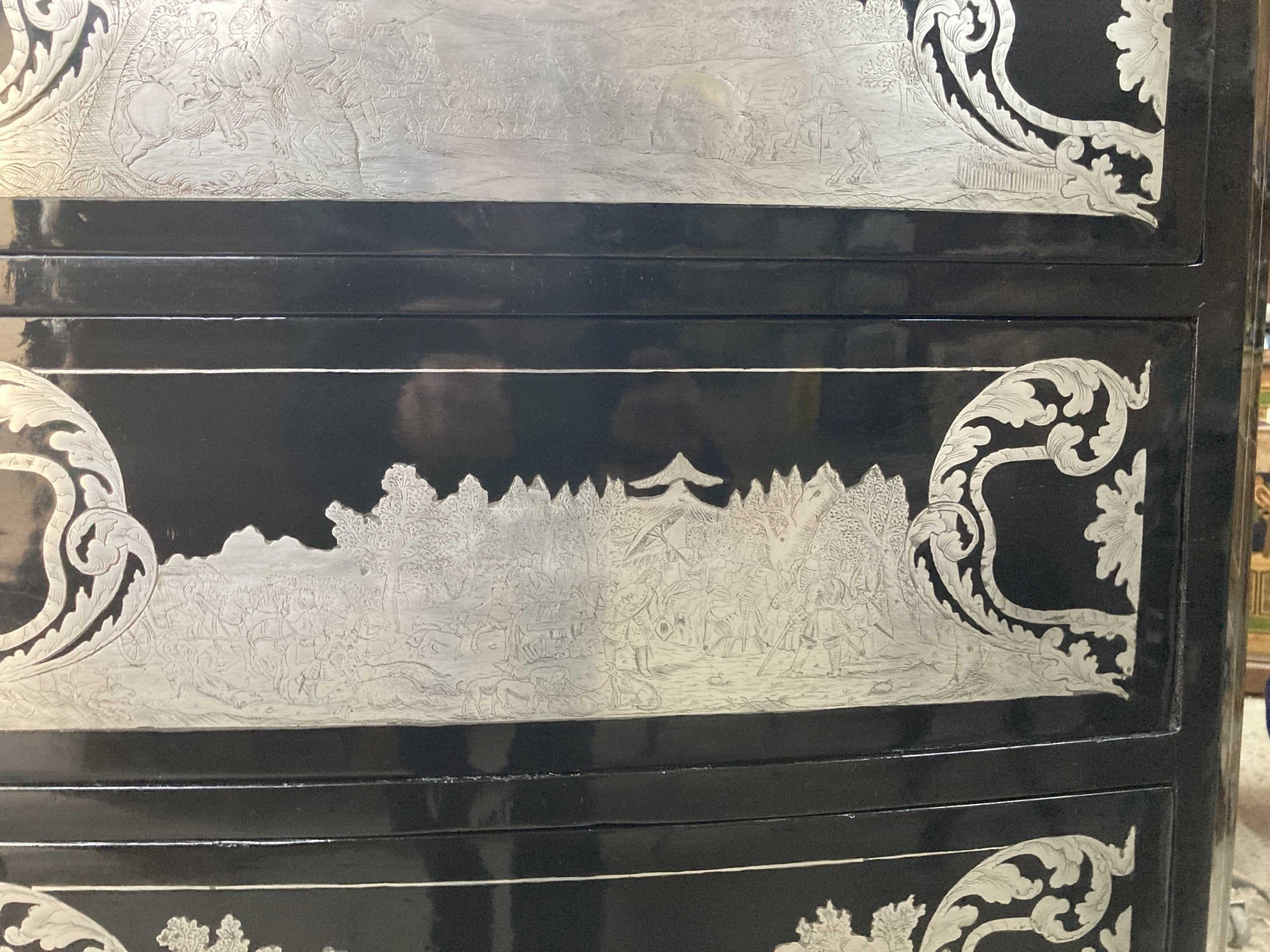
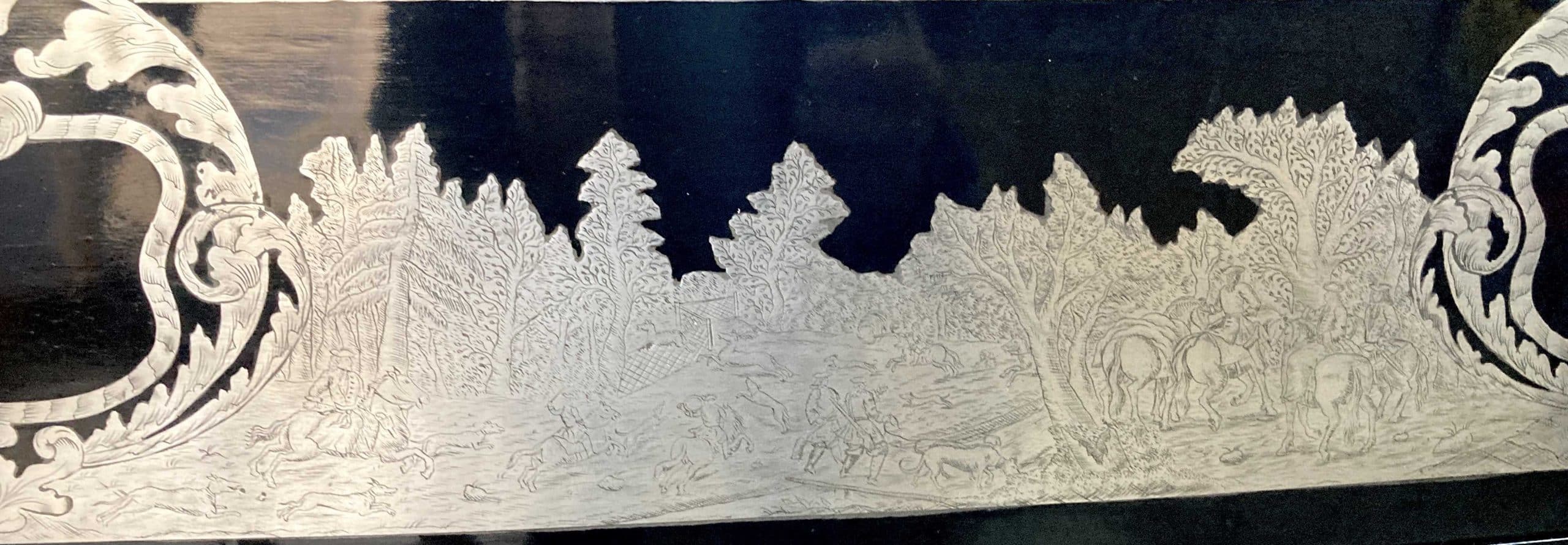
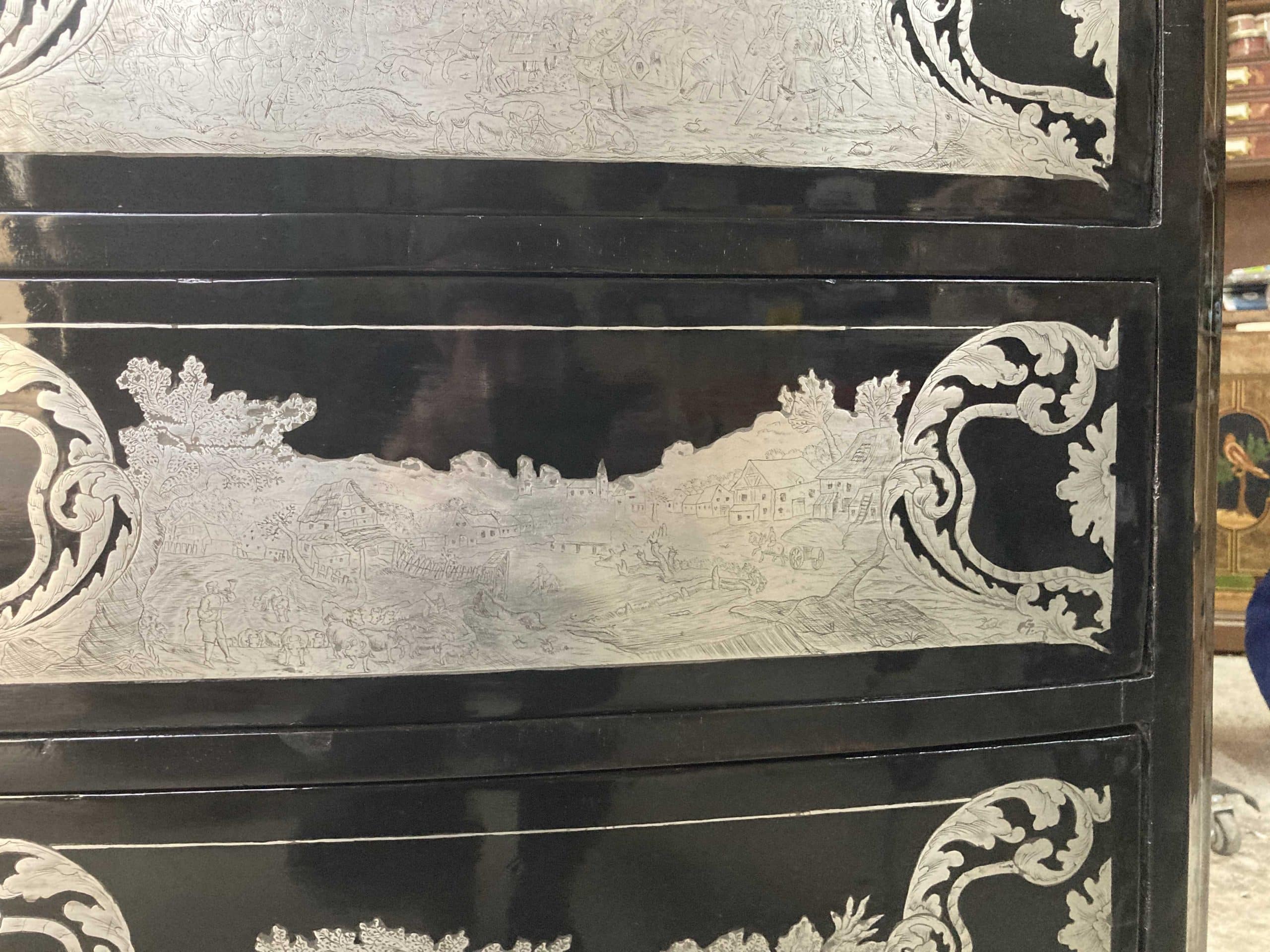
Restoration of this unusual piece of furniture from Austria/Hungary. I must admit I had some difficulty placing it geographically. It was clear that it wasn't from France but rather from Eastern Europe. But where? Fortunately, engravings provide valuable clues; the clothing is consistent with the late 17th and early 18th centuries. The landscapes are composed of mountains and villages; the vegetation consists of deciduous and coniferous trees, and several medieval castle ruins are visible. Therefore, it's not the Northeast region but rather Bavaria, Austria/Hungary.
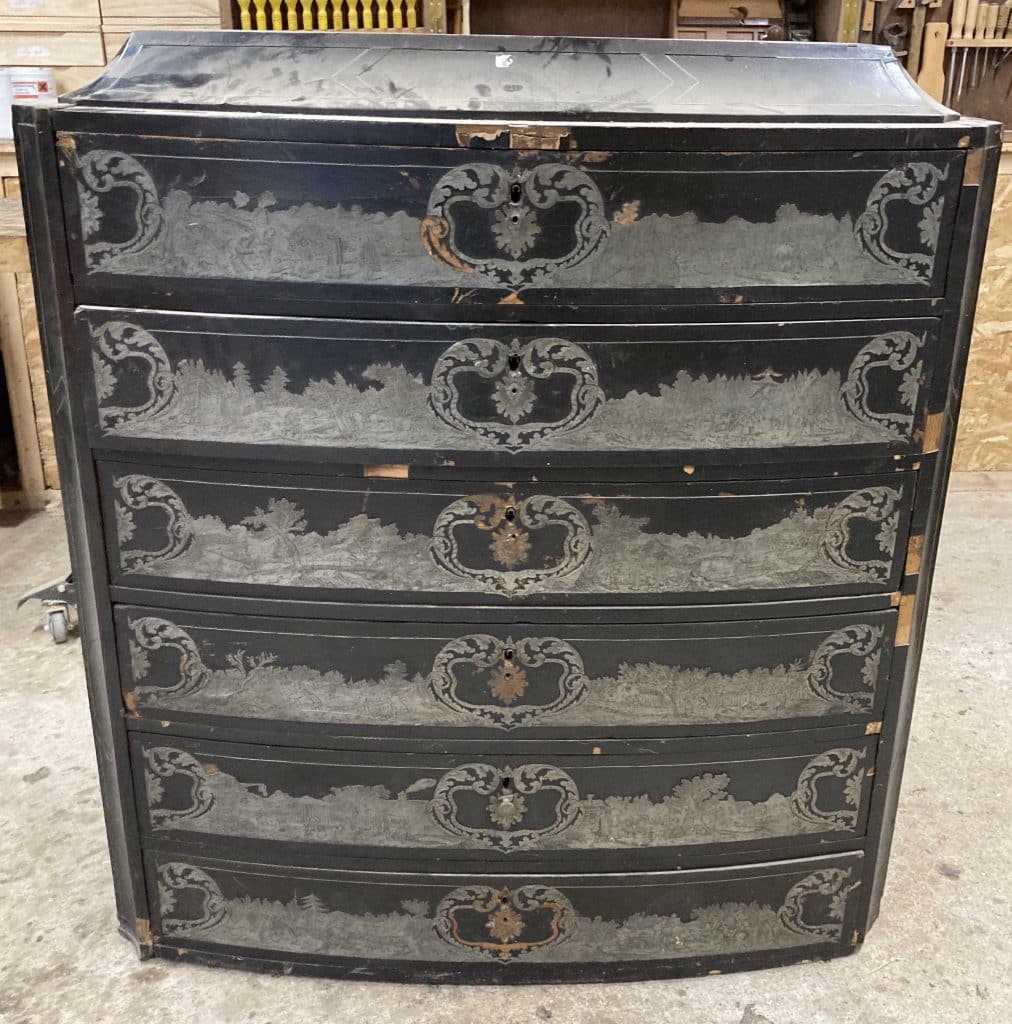
Fortunately, several clues will give us the exact origin of this chest of drawers and, above all, the family to which it belonged: The house Eszterházy.
First clue: Forchtenstein Castle
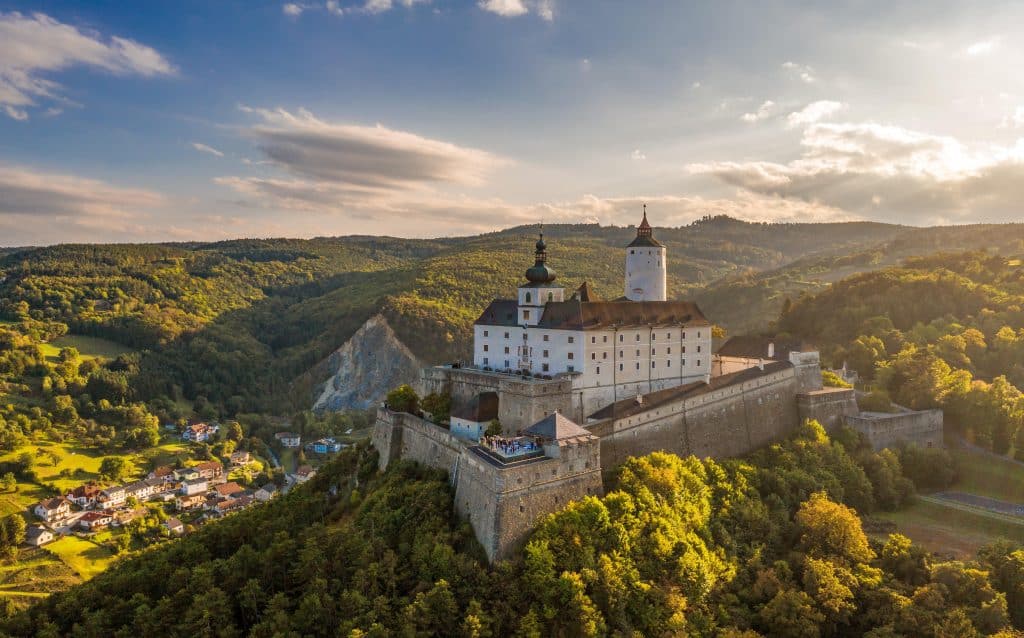
Located southwest of Mattersburg above the Wulka valley, the first part of the castle with the 50m high bergfried was built at the beginning of the 14th century by the lords of Mattersdorf, who later became lords of Forchtenstein.
Around 1450, the lords of Forchtenstein died without male heirs. The Habsburgs inherited the castle for 170 years and made commitments, notably to the Counts of Weißbriach and Hardegg. In 1622, Nicholas Esterházy received the castle from Emperor Ferdinand II, and the Esterházy family was granted the title of Count. Nicholas began by expanding the dilapidated castle, transforming it into a fortress. He completed this work between 1630 and 1634 with the Viennese master builder Simone Retacco, and from 1643 onward with Domenico Carlone for the castle's reconstruction.
His son Paul continued the construction of the castle in the second half of the 17th century according to the plans of the architect Domenico Carlone, emphasizing artistic design. The former fortress became a storage place for weapons, princely archives, and the princely collection of clocks, automata, taxidermied exotic animals, and other cabinet of curiosities. The so-called treasury and miracle chamber was accessible only through a secret passage; the door could only be opened with two different keys. One was kept by the prince and the other by the treasurer.
Today the castle belongs to the private Esterházy Foundation and showcases the history and treasures of this family.
Second clue: Esterházy Palace
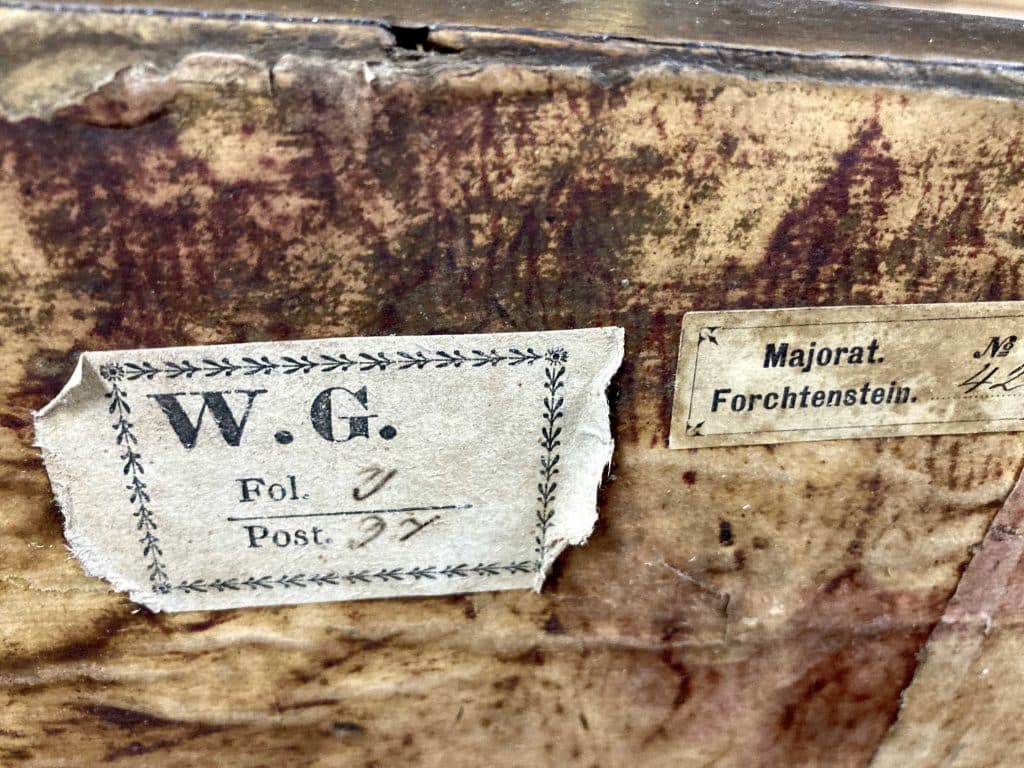
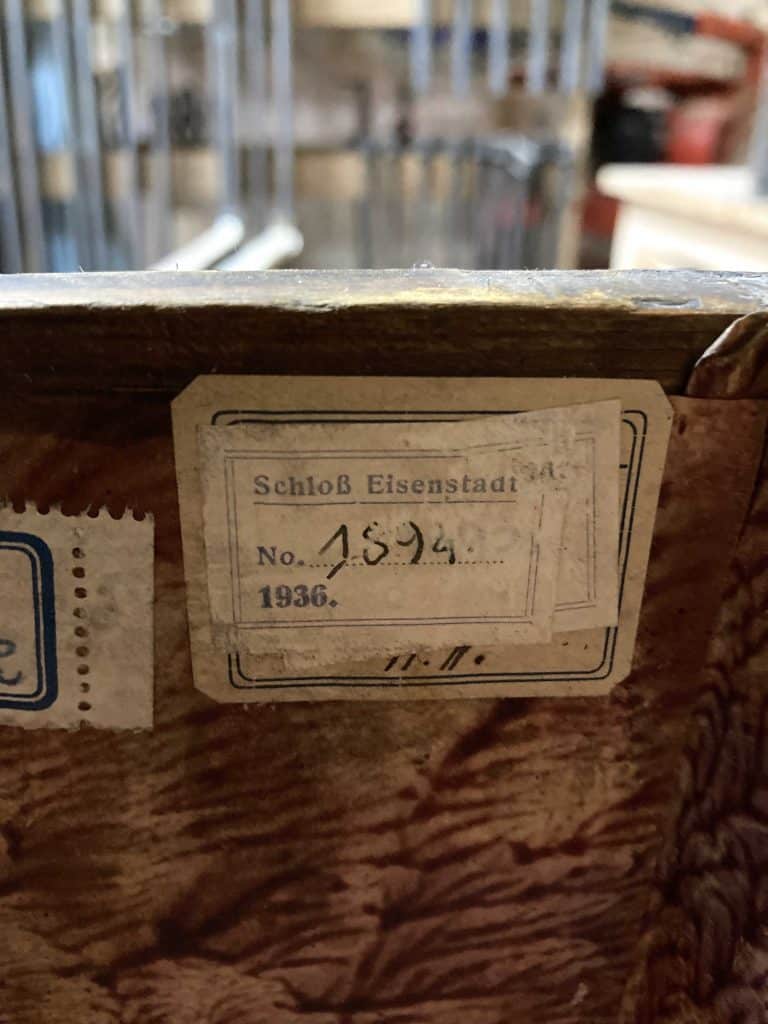
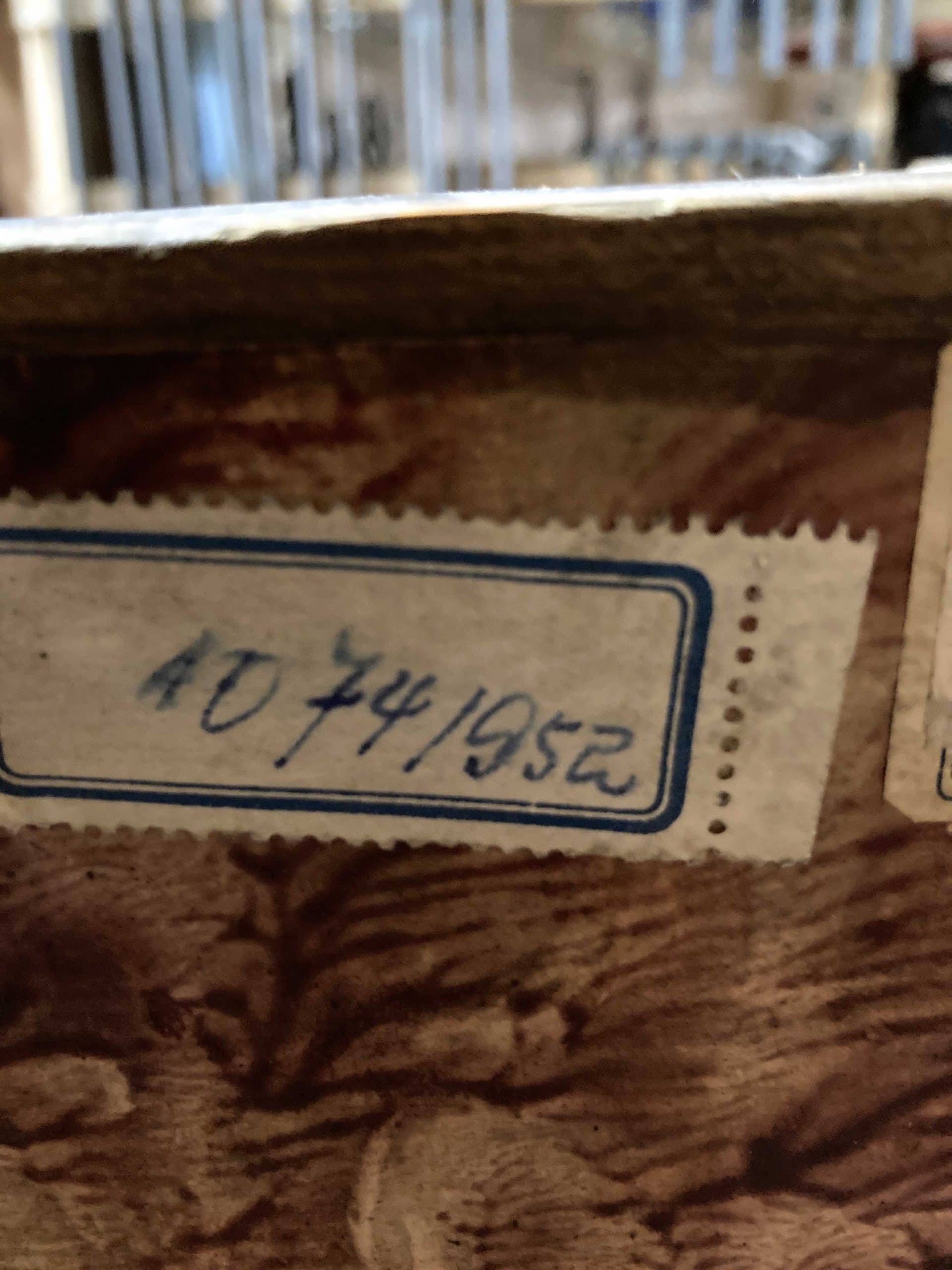
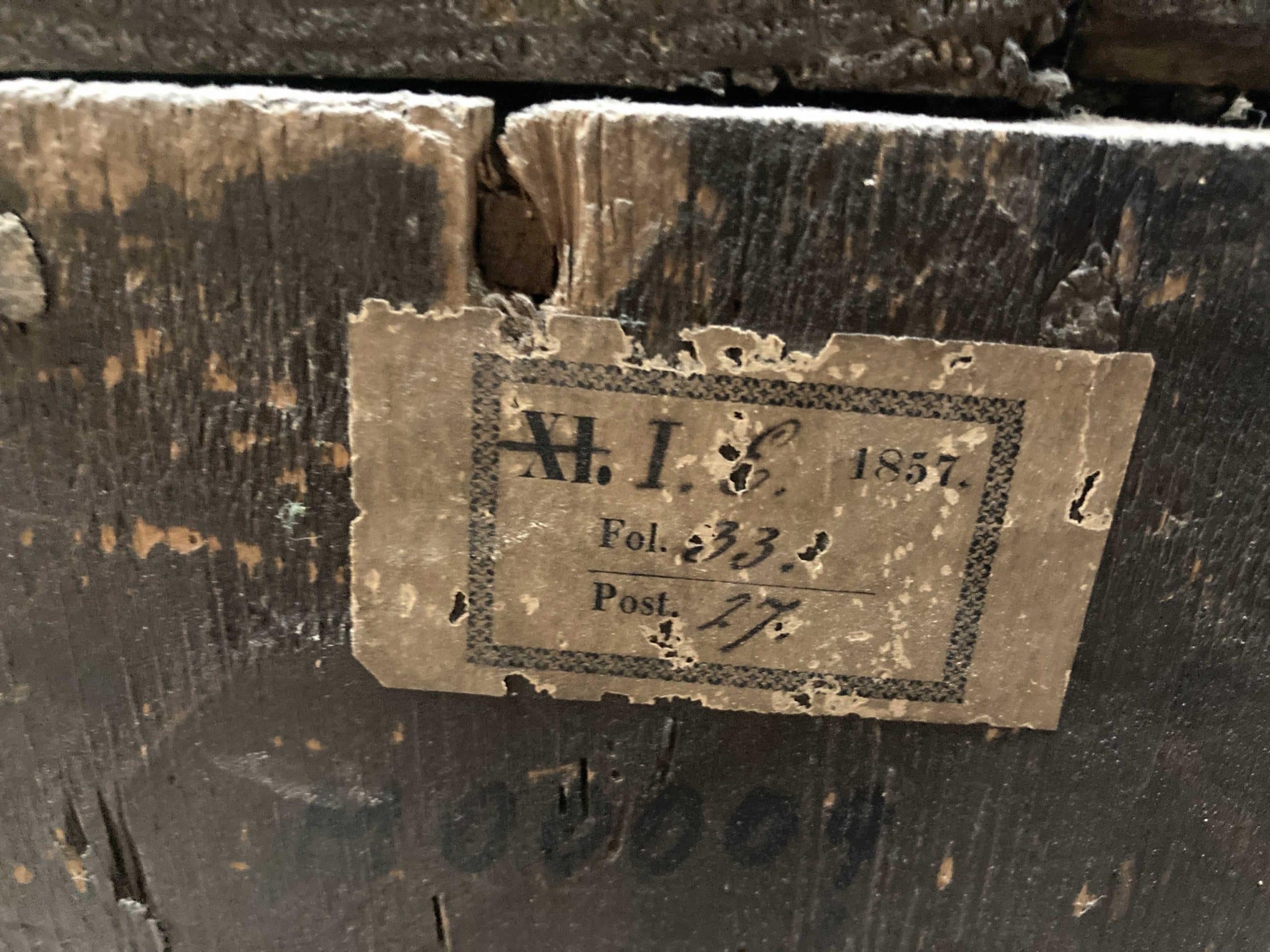
Thanks to a second inventory label, we can chronologically trace the movements of this chest of drawers. Likely commissioned at the end of the 17th or the beginning of the 18th century by a member of the Esterházy family for Forchtenstein Castle, it reappeared in 1936 at the Esterházy Palace, a few kilometers from Forchtenstein.
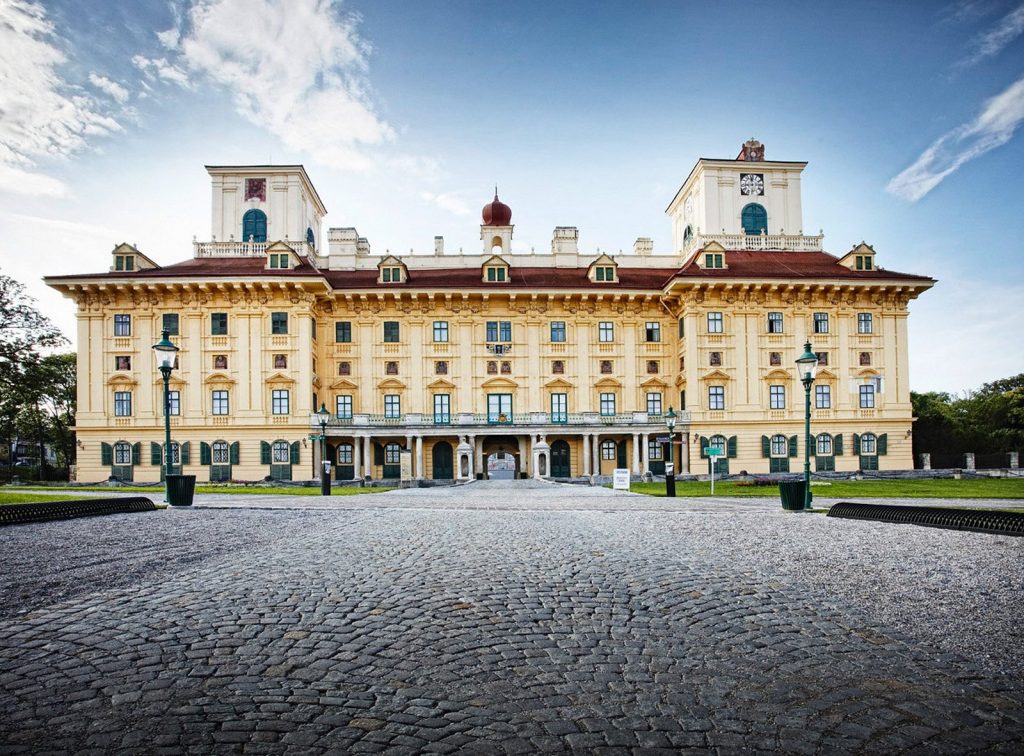
Esterházy Palace is located in Eisenstadt, the capital of Burgenland, the easternmost Austrian state, and is only 57 km south of the city of Vienna.
In 1763, Prince Nicholas I Esterházy ordered the reconstruction of his palace, which dated from 1721. Two architects worked on the project: Johann Ferdinand Mödlhammer initially, and then, from 1765, Melchior Hefele. Construction was completed in 1766. The palace comprises 126 meticulously decorated rooms. With its numerous windows, gardens, and statues, it is considered a Hungarian Versailles. Nicholas had, in fact, visited Versailles in 1764. However, Austrian influences, particularly those of Schönbrunn Palace, can also be seen in the building.
Esterházy Palace, prominently located in Eisenstadt, the capital of Burgenland, is among the finest Baroque palaces in Austria. Once the birthplace and residence of prominent members of the nobility, its architecture is particularly captivating thanks to the Haydn Hall and the Empire Hall, the small Chinese Salon, and the palace chapel where relics are kept in glass coffins.
Third clue: An envelope stuck behind a drawer
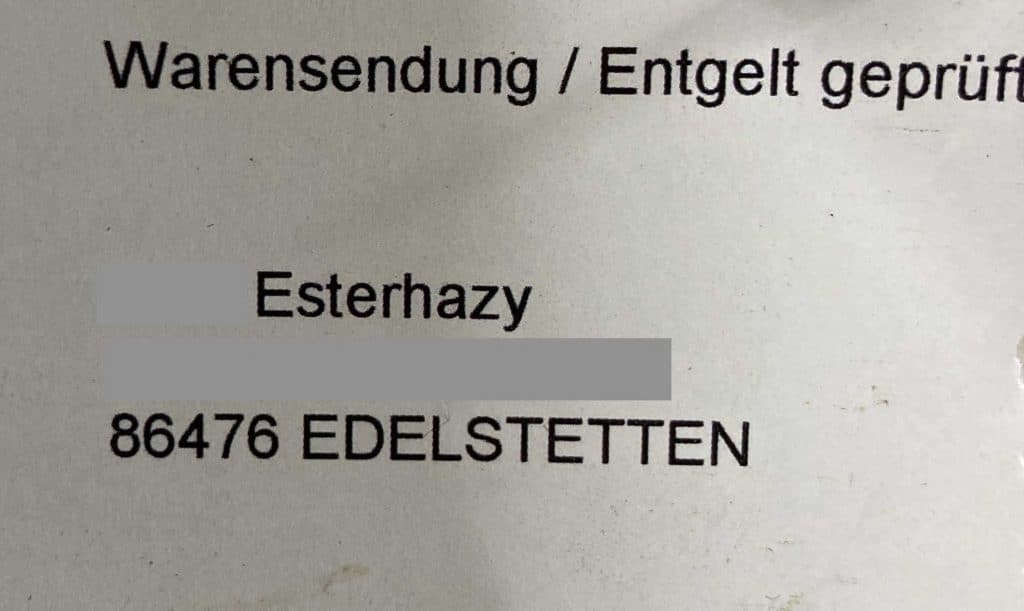
By chance, the discovery of this envelope makes it possible to pinpoint the very recent location (the stamp is in euros) of this chest of drawers and to identify its owner.
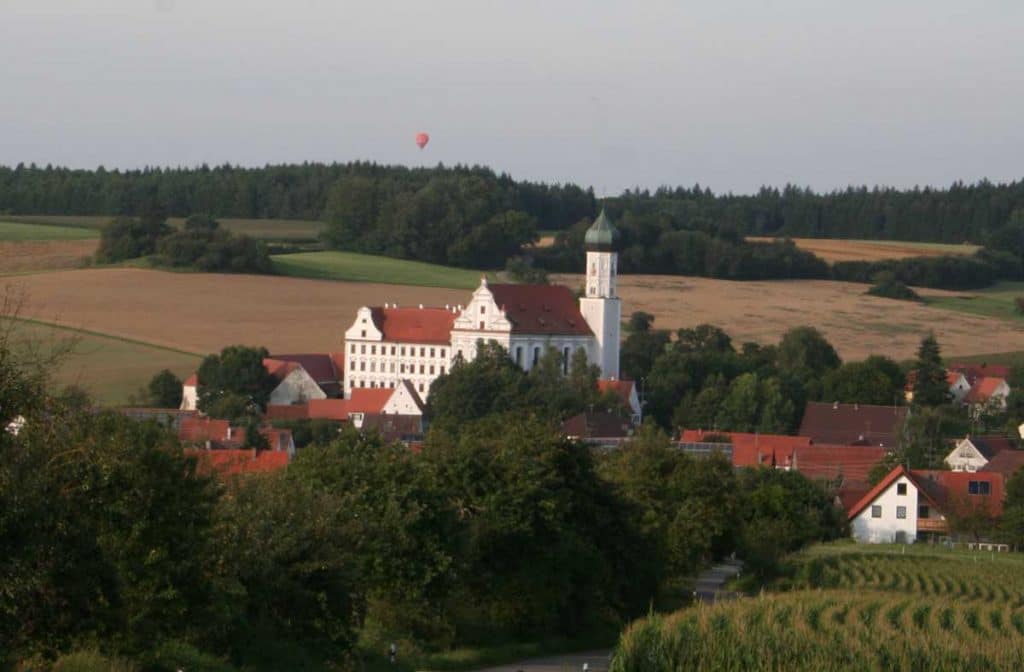
Esterhazy Castle in Edelstetten, Bavaria, contains the Archives of Prince Esterhazy of Galantha.
The Esterházy house
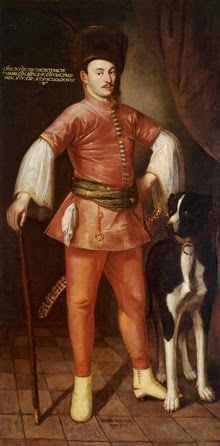
Descended from the minor nobility of Upper Hungary (present-day Slovakia), the Esterházy family traces its origins to the ancient Salomon clan, which dates back to the 12th century. [citation needed]
The first known ancestor of the Esterházy family is Benedek Zerhas de Zerhashaz who later took the name Eszterhás de Galántha, who died in the first part of the 16th century.
From the 17th century onwards, it was among the most important magnate families of the Kingdom of Hungary, the Austrian Empire, and later the Austro-Hungarian Empire. Traditionally supportive of the Habsburg dynasty, it received the title of baron in 1613, that of count in 1626, and the Fraknó/Forchtenstein branch received the title of reigning prince (Fürst) in 1712 from the Holy Roman Emperor.
The purchase by the Hungarian state of the collection assembled by the Esterházy family in 1870 marked the foundation of the Museum of Foreign Art in Budapest.
Sophie Mária Josepha, Princess von und zu Liechtenstein, Countess Esterházy von Galántha, known as the "Countess Esterházy" (born September 5, 1798 in Vienna, died June 17, 1869) was a lady-in-waiting to Empress Elisabeth of Wittelsbach, known as "Sissi".
Karoline Esterházy de Galántha (1805-1851), in French: was the piano student of the composer Franz Schubert, in Zselíz in Hungary (now Želiezovce in Slovakia) and in Vienna.
The writer Péter Esterházy, born in 1950, is a member of the comital branch of the princely family.
The Esterhazy family who were able to order this chest of drawers:
- Paul I Esterházy (1635-1713), Count and later Prince Esterházy of Galántha, also known as a poet and composer, head of the family upon the death of his elder brother Ladislas in 1653
- Michel Esterházy (1671-1721), son of the previous
- Joseph Esterházy (1687-1721), brother of the previous
Scenes engraved from left to right, starting with the top drawer
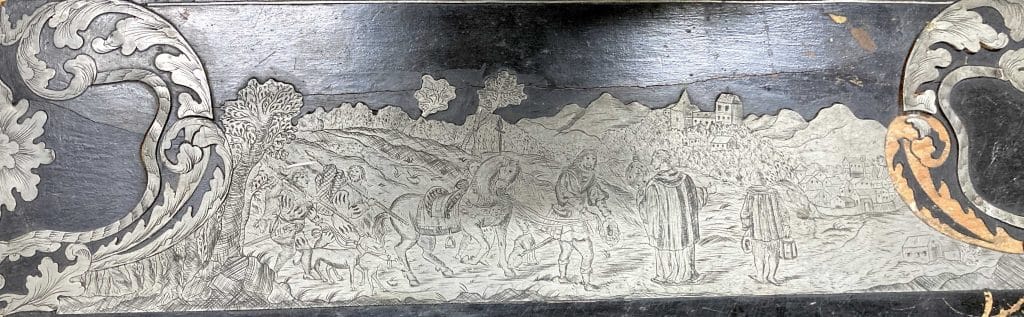
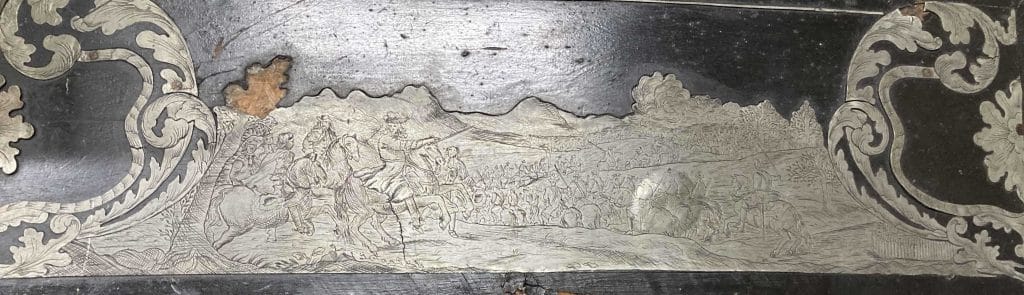
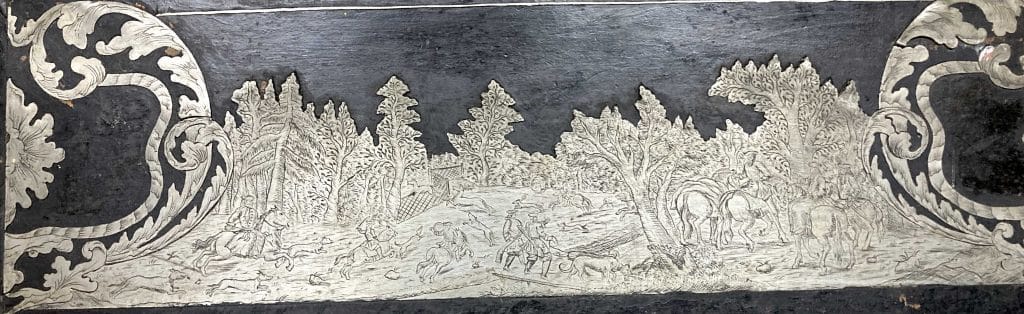
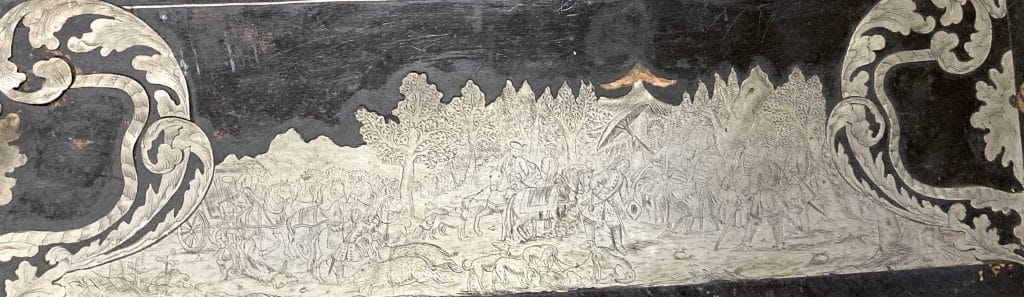
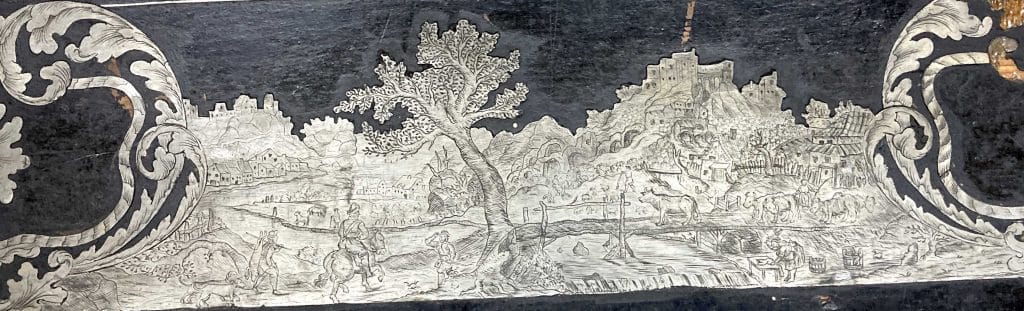
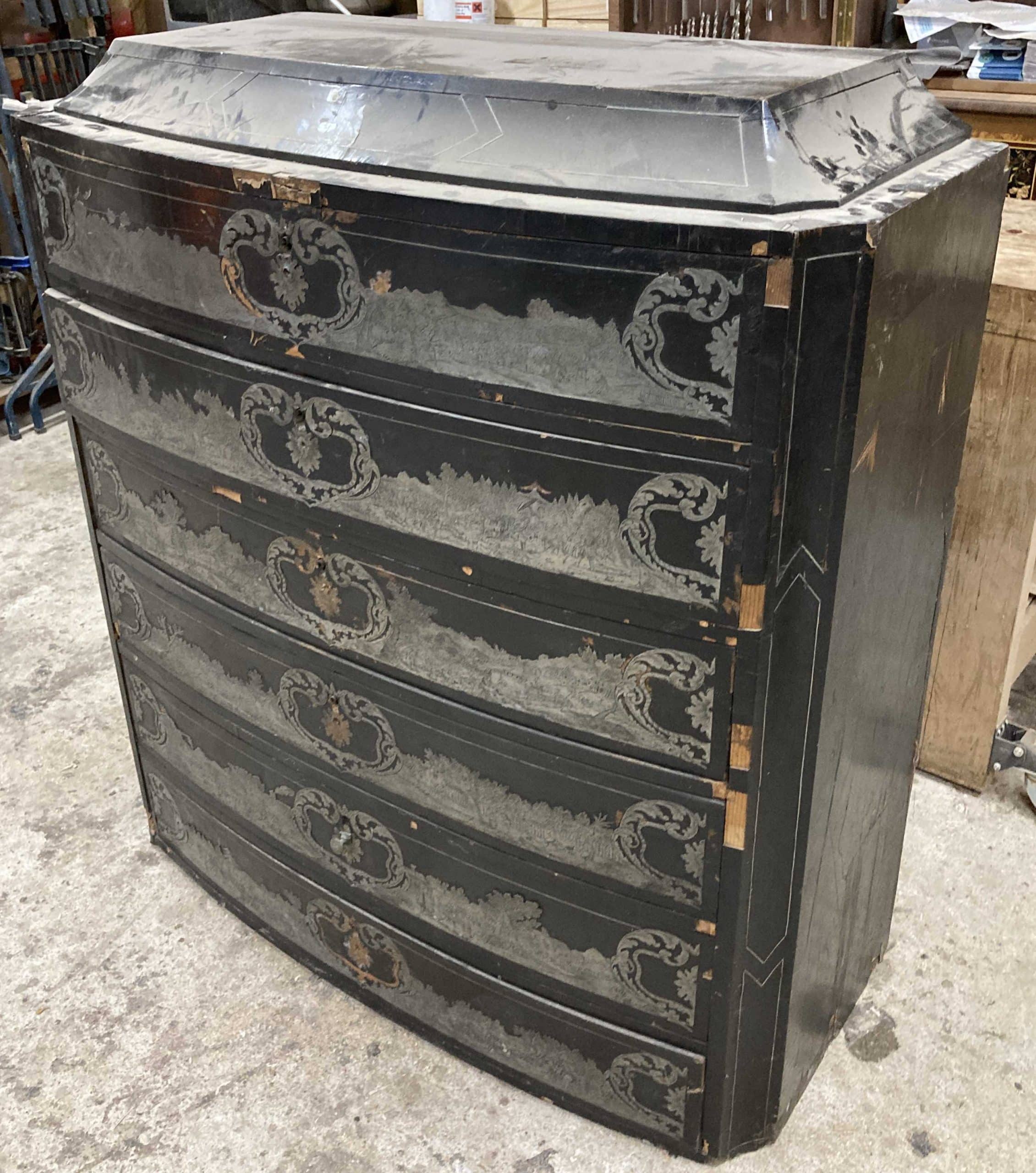
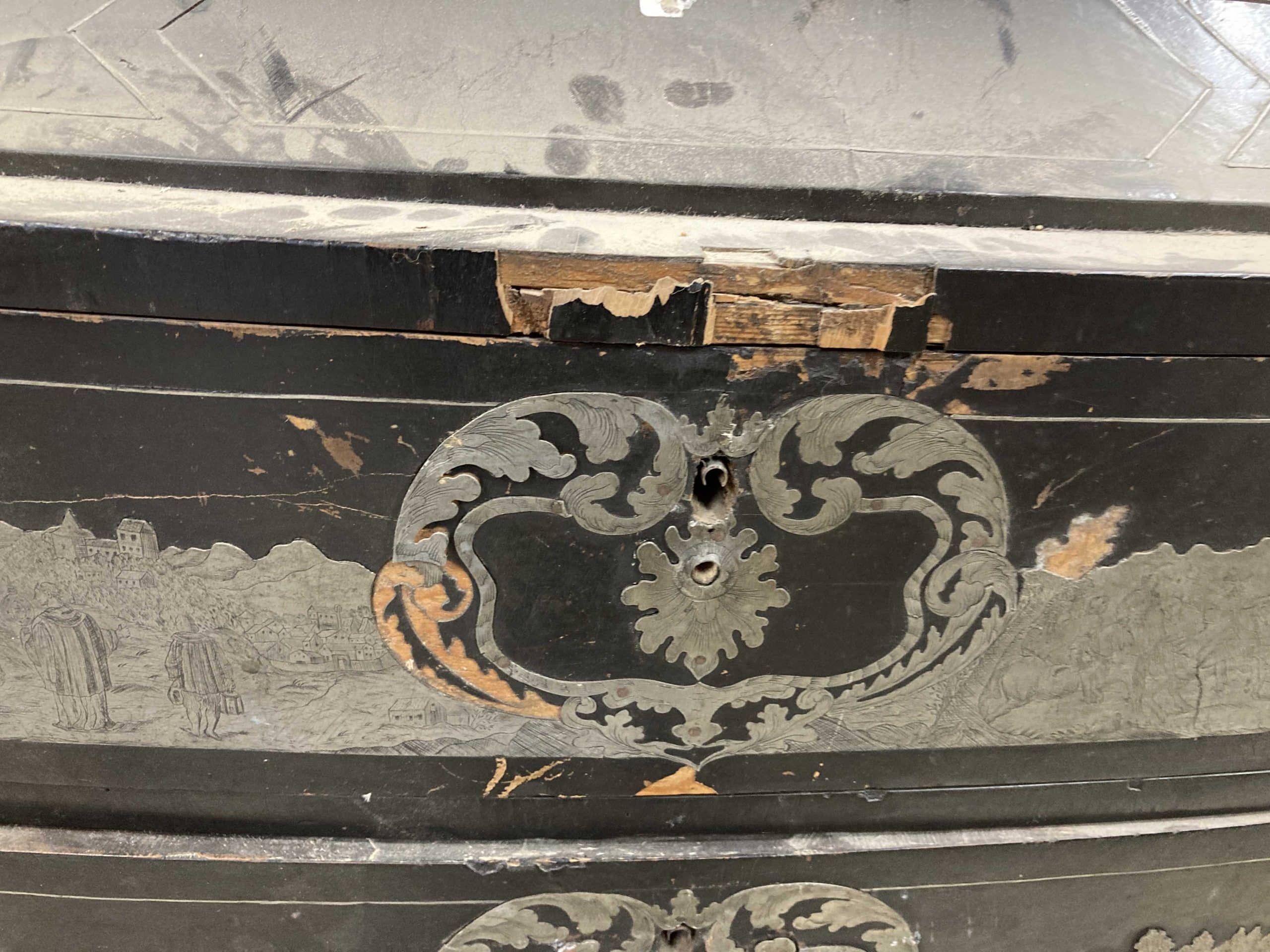
In the background, we see a woman washing her clothes in the river, then a cowherd tending her animals, and a shepherd watching over his sheep. In the distance, we can see a village and the ruins of a castle.
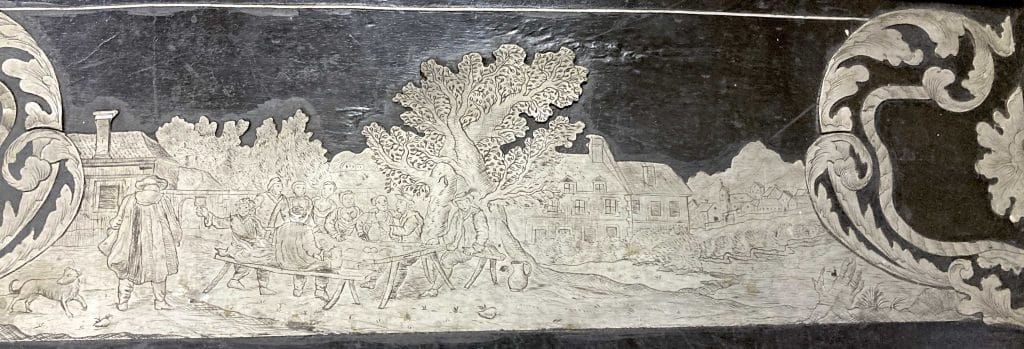
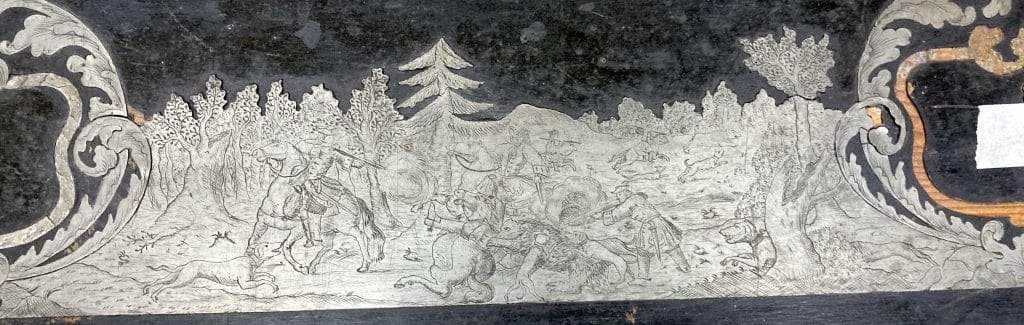
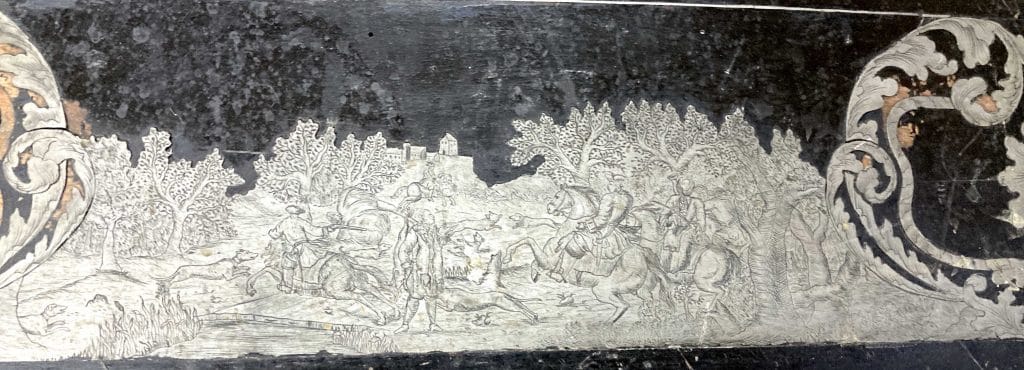
State of affairs report
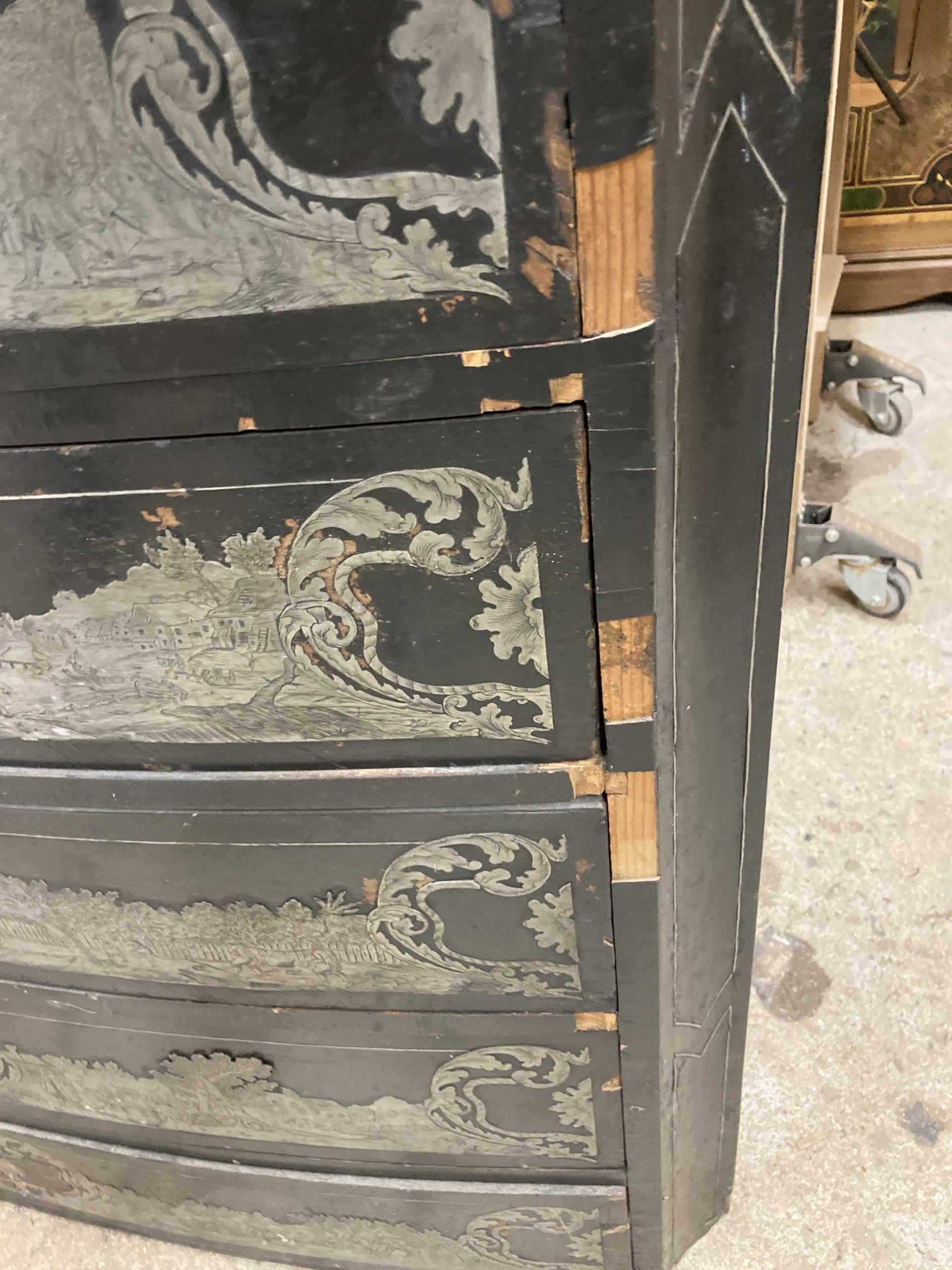
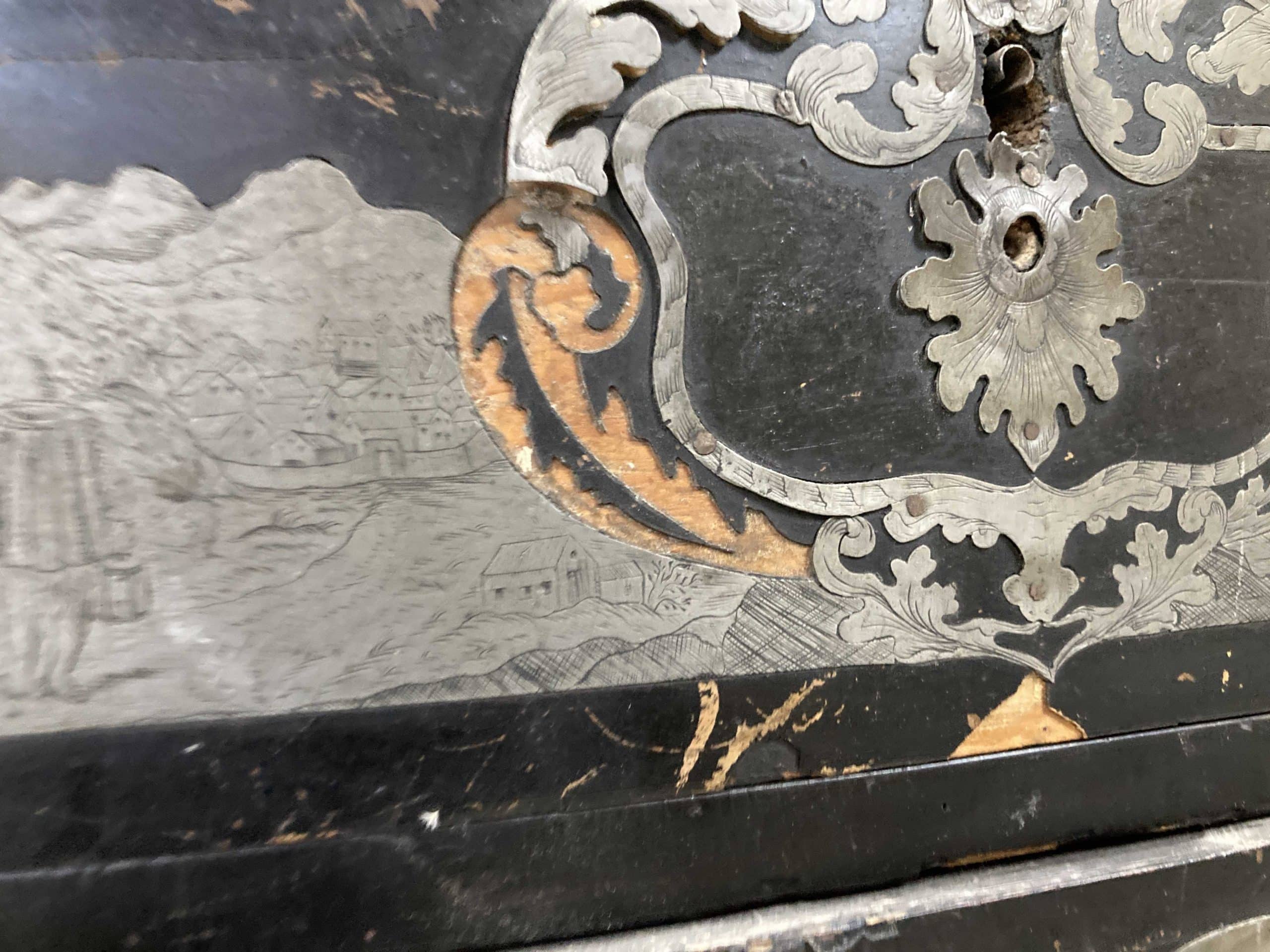
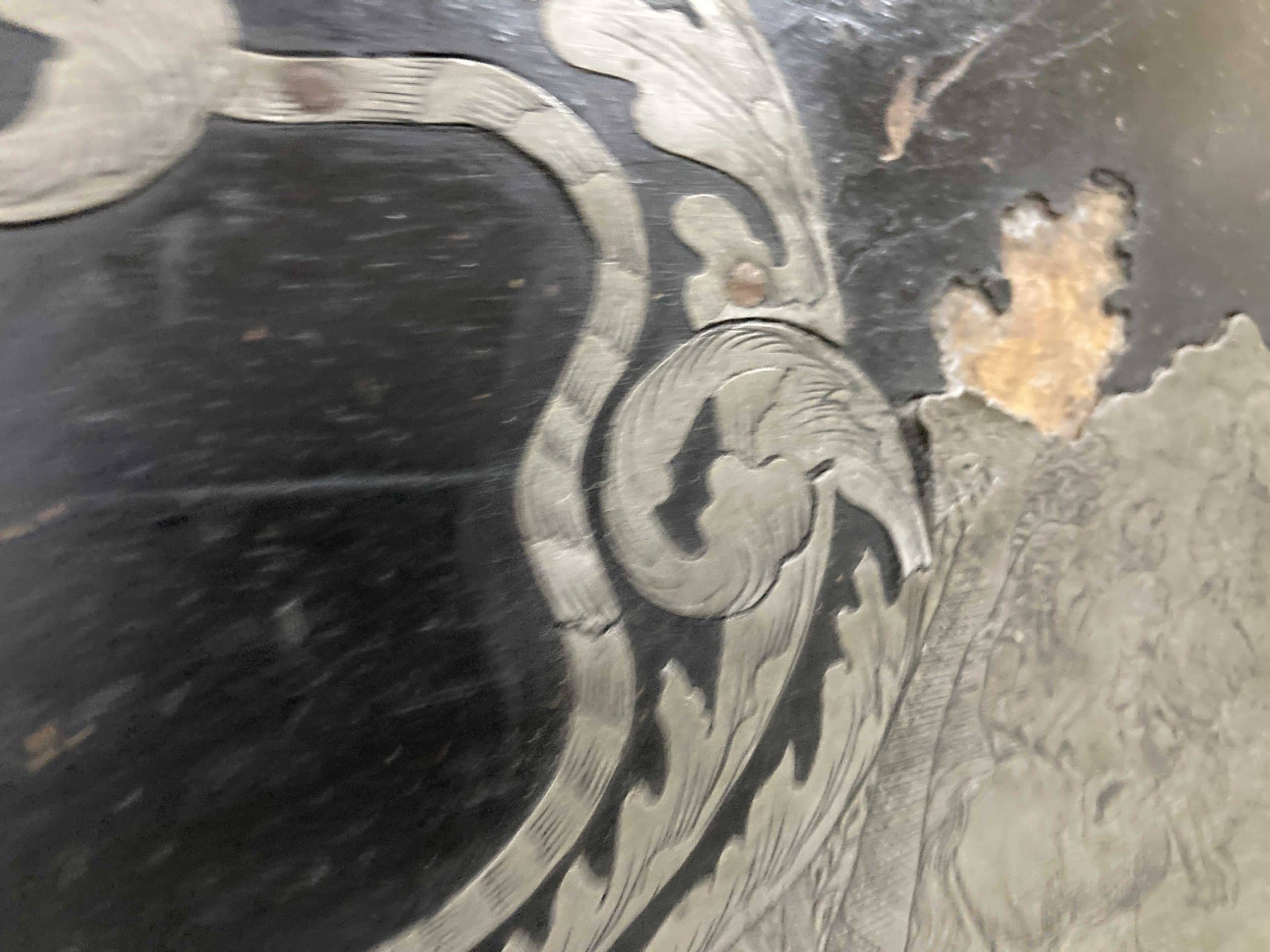
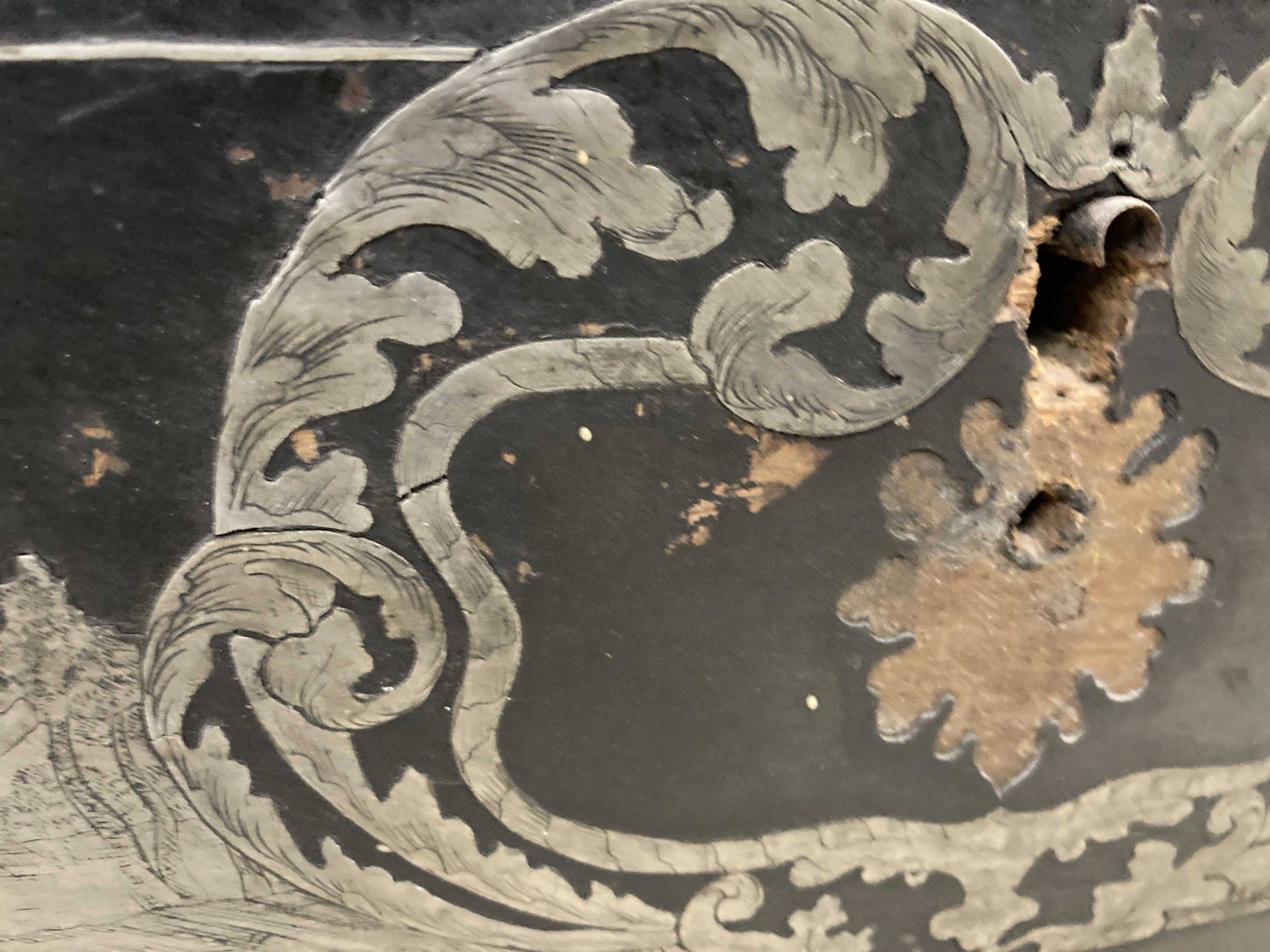
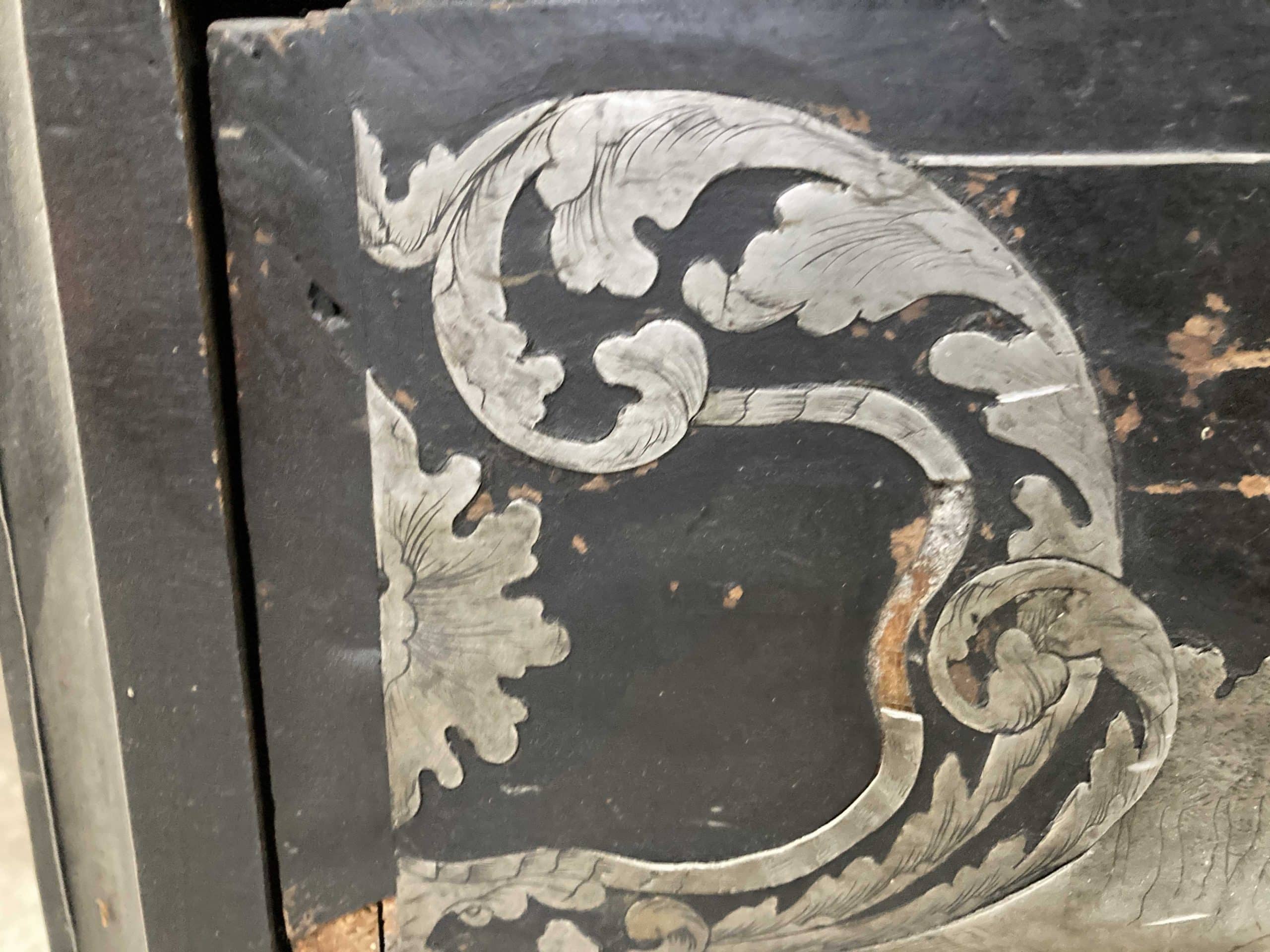
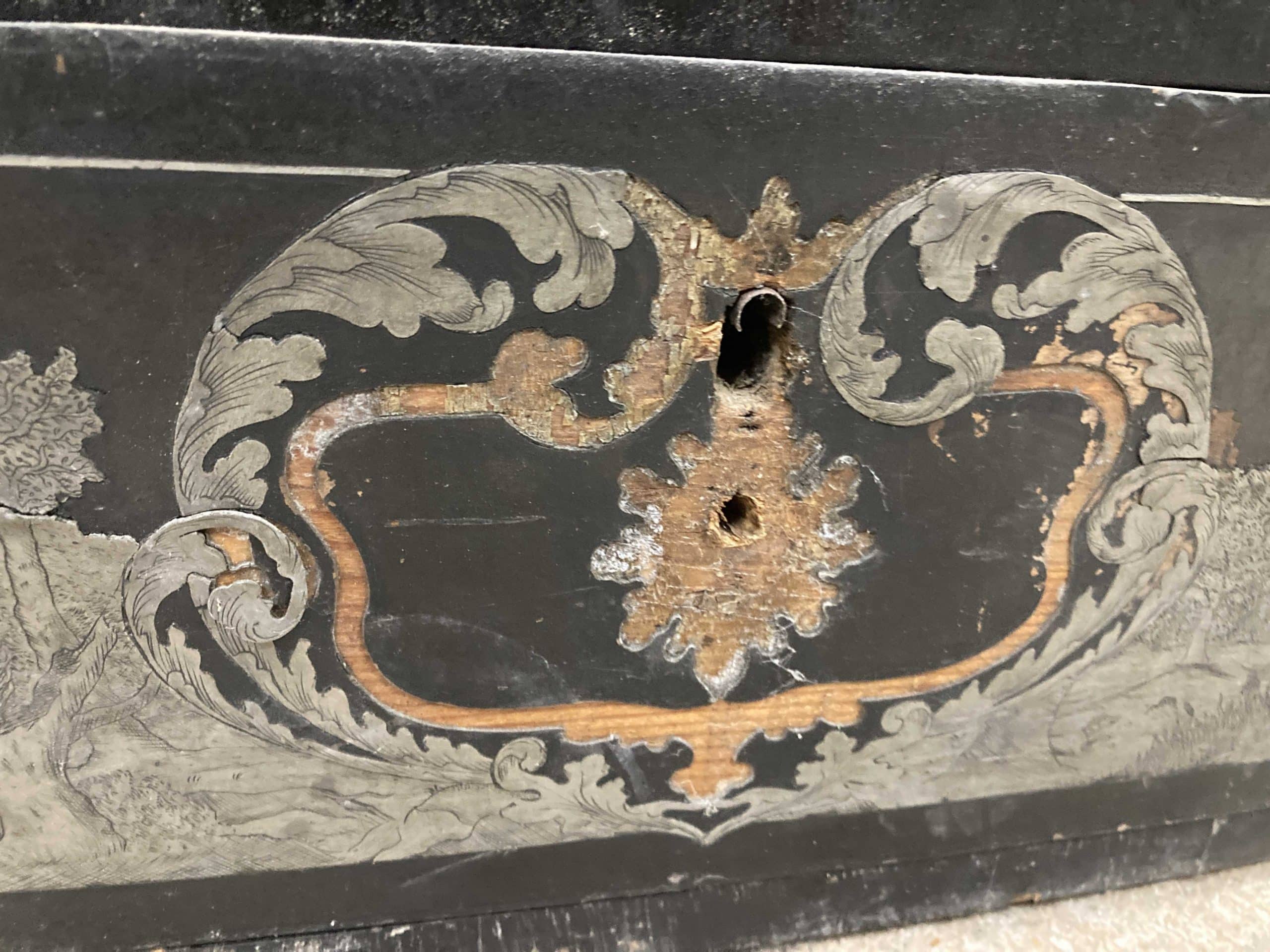
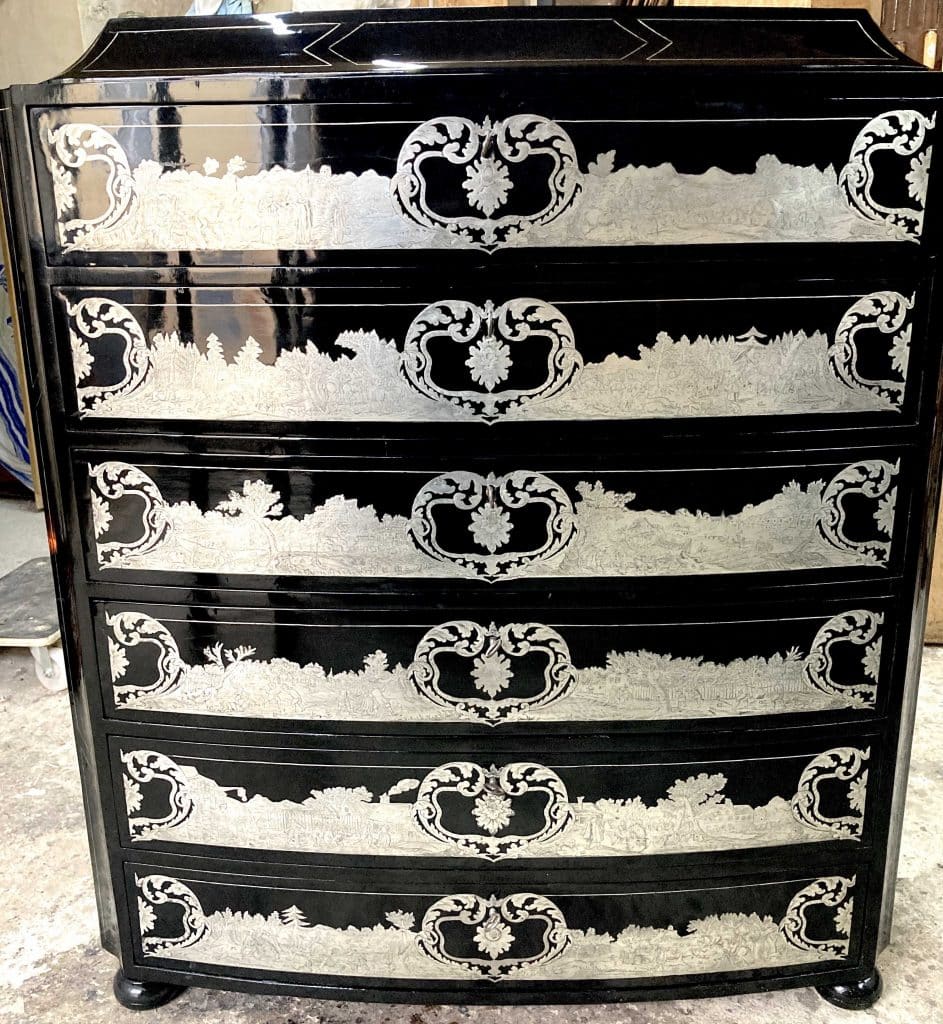
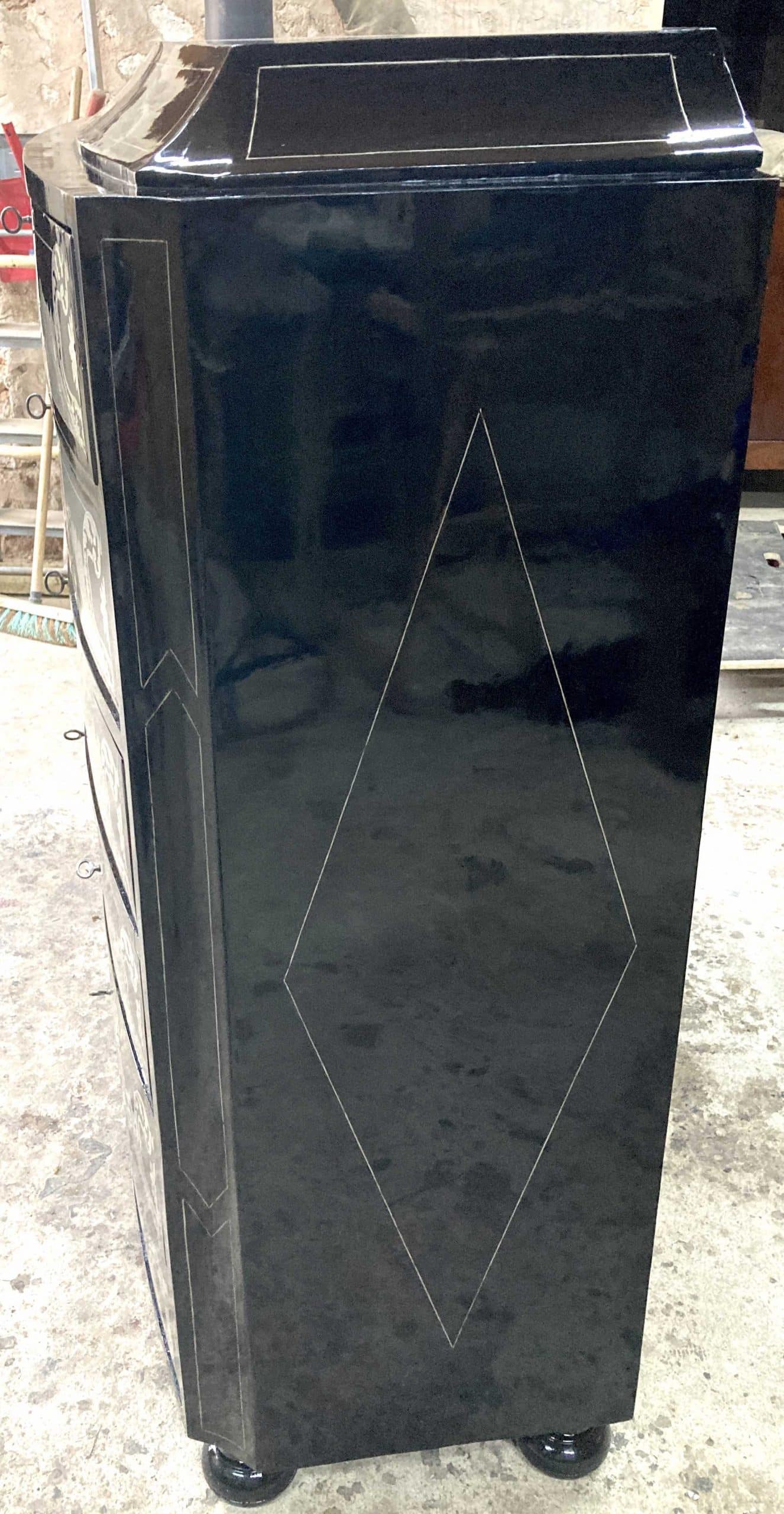
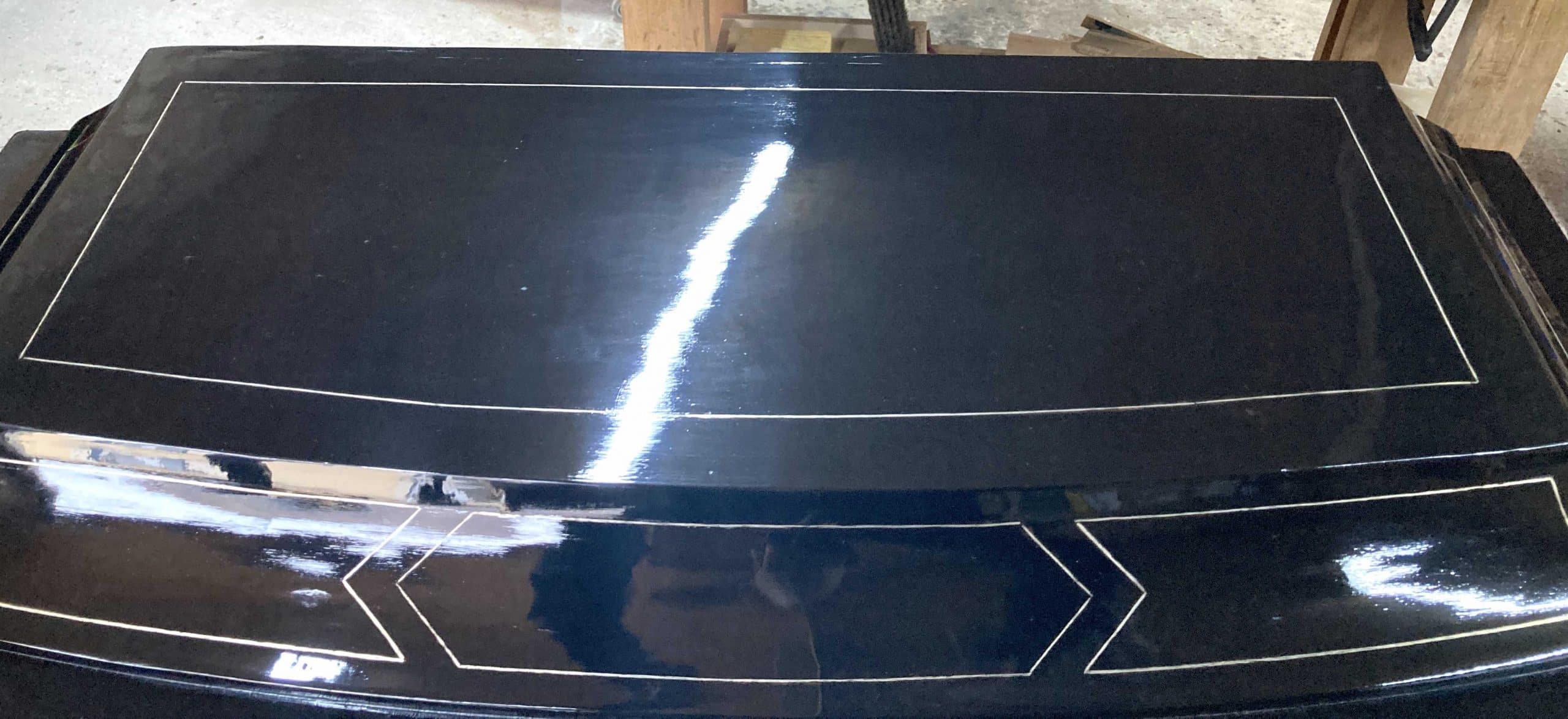
Upon its arrival at the workshop, this chest of drawers exhibited several classic alterations. A significant lack of tin inlay, including that on the sides and top which had been filled with wax, losses of tin veneer and marquetry, total detachment of the tin elements and finally the ball feet are missing.
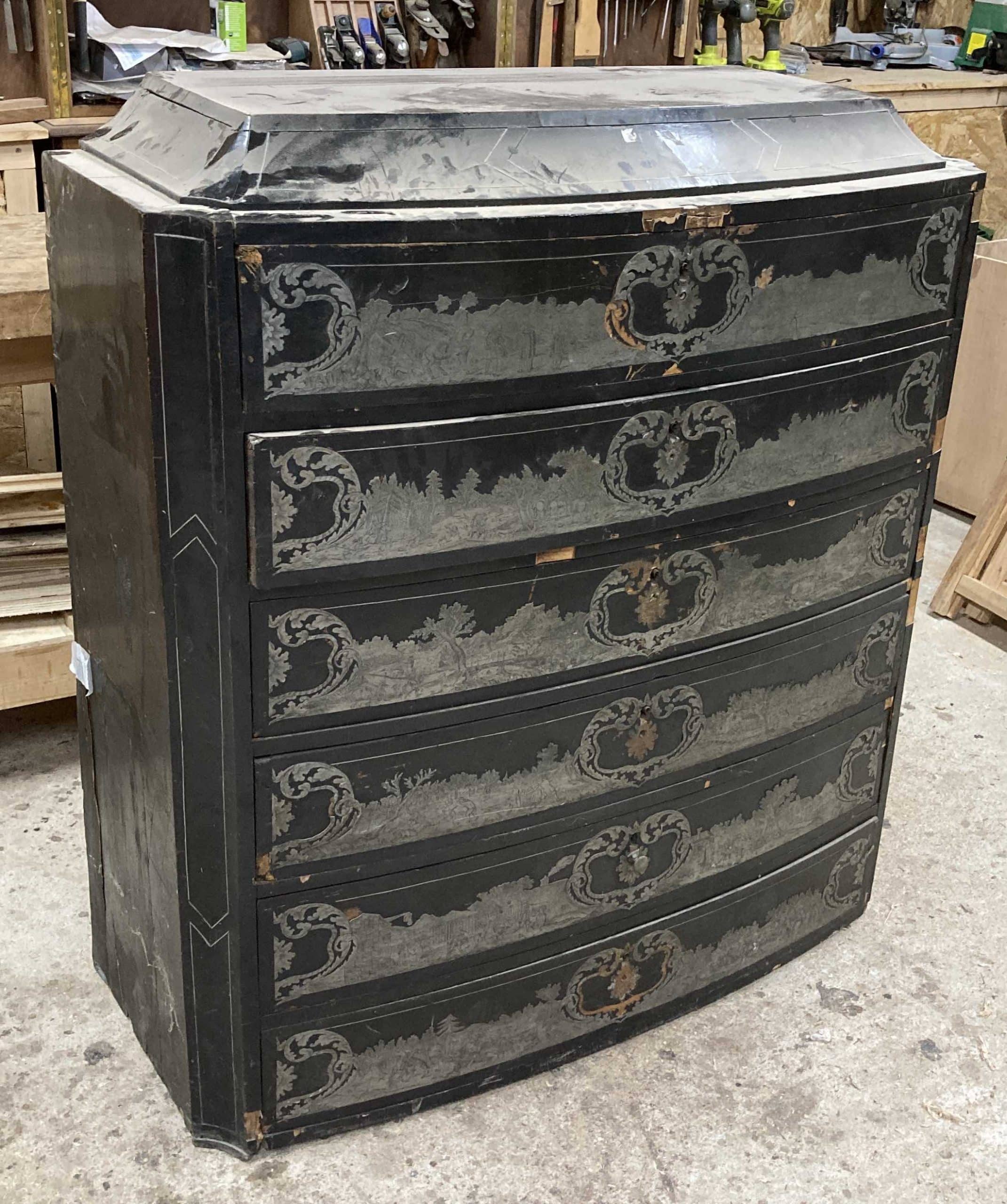
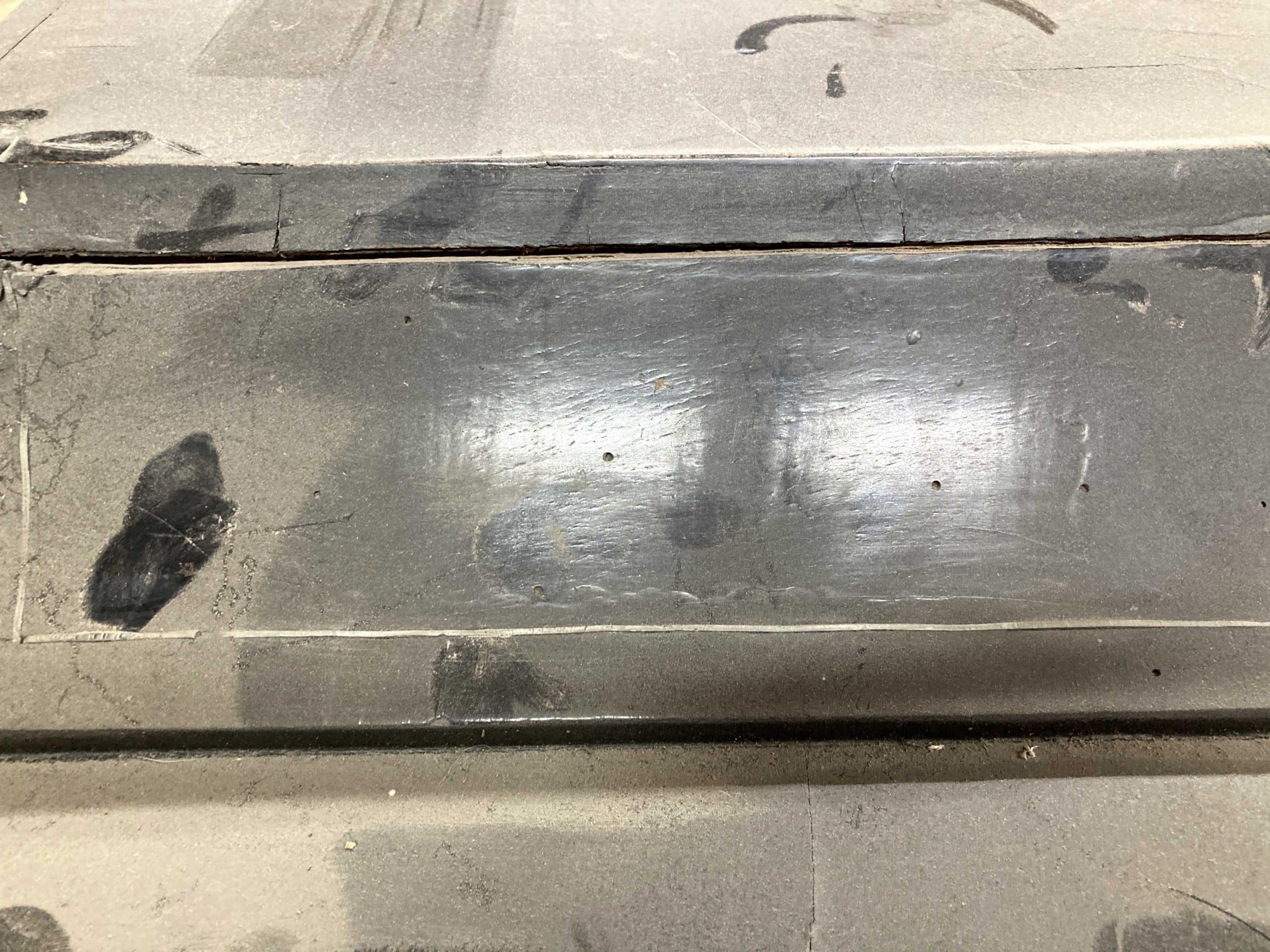
The Restoration
The restoration therefore consisted of removing all the tin marquetry, an extremely easy step since it was simply a matter of lifting them with a thin blade: these were held only by mechanical action and the remaining putty in the joints of the marquetry.
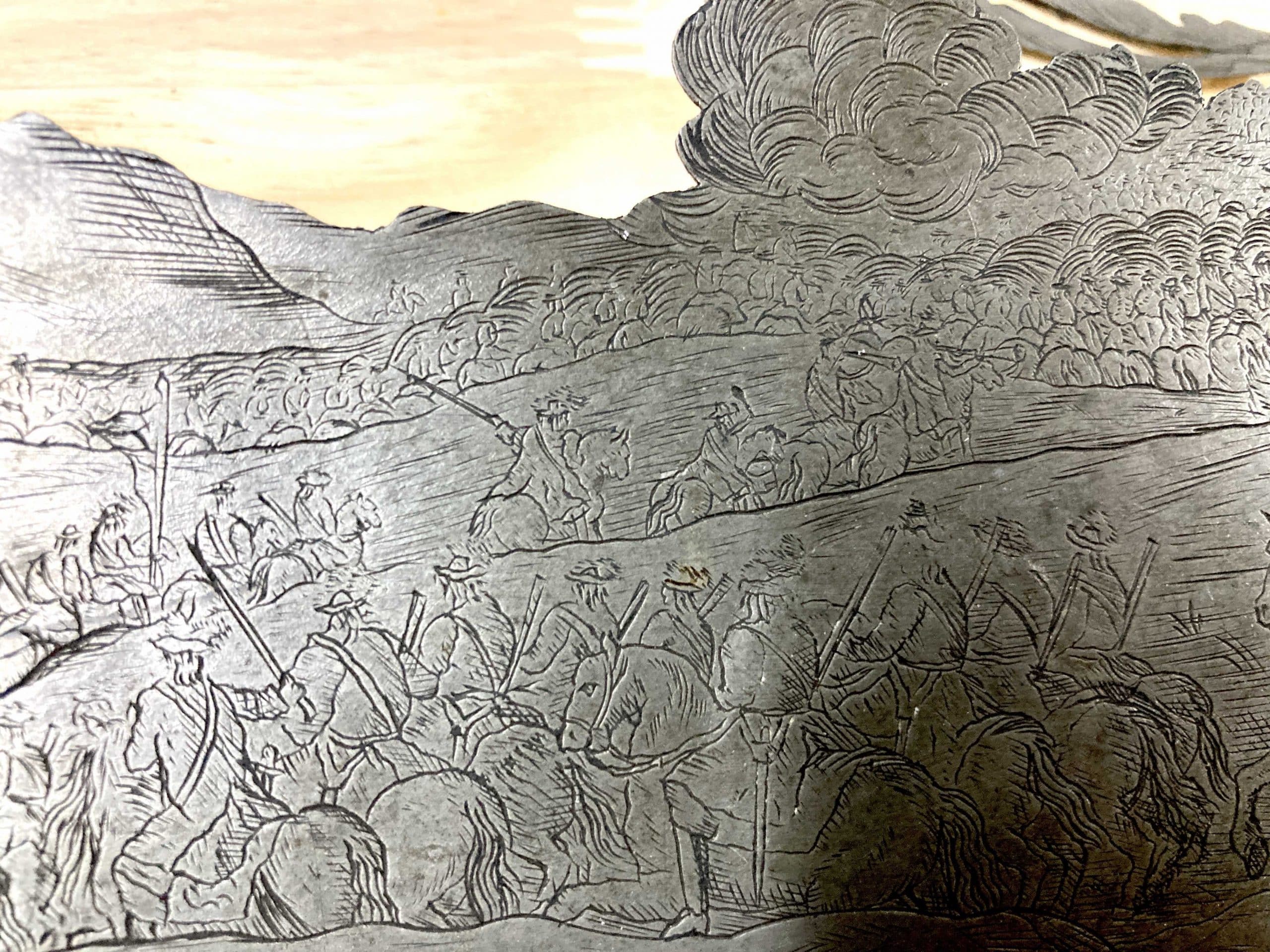
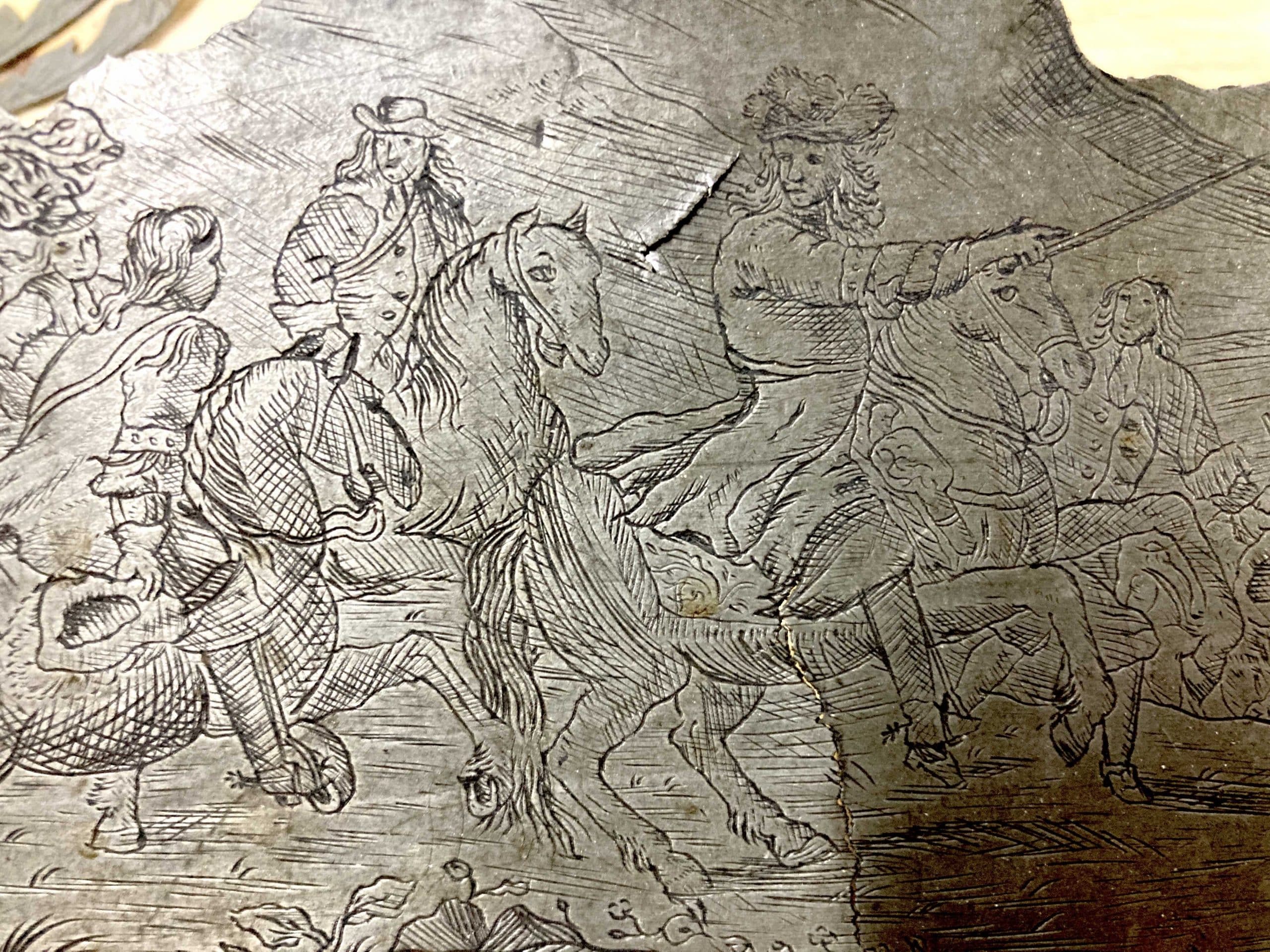
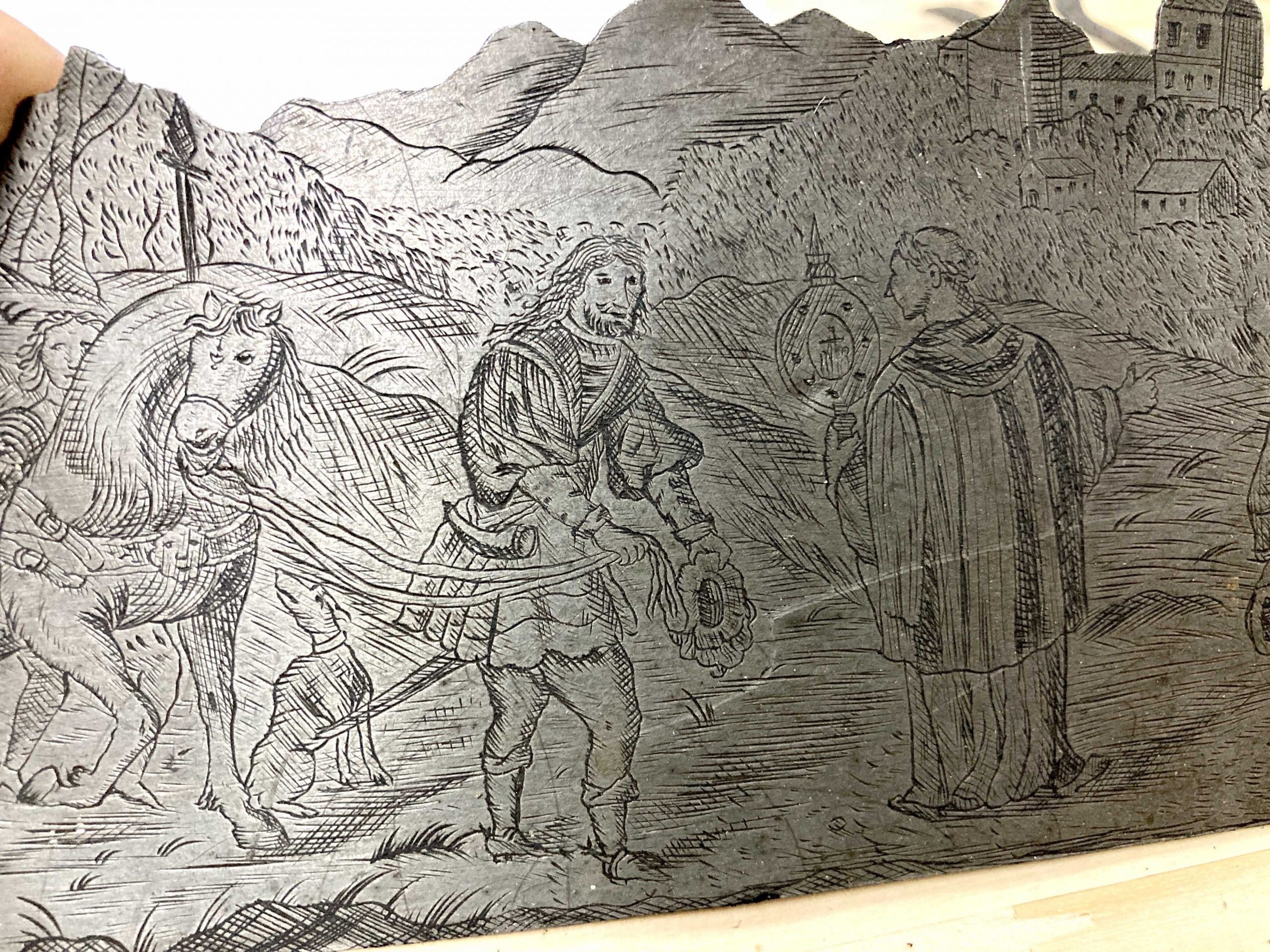
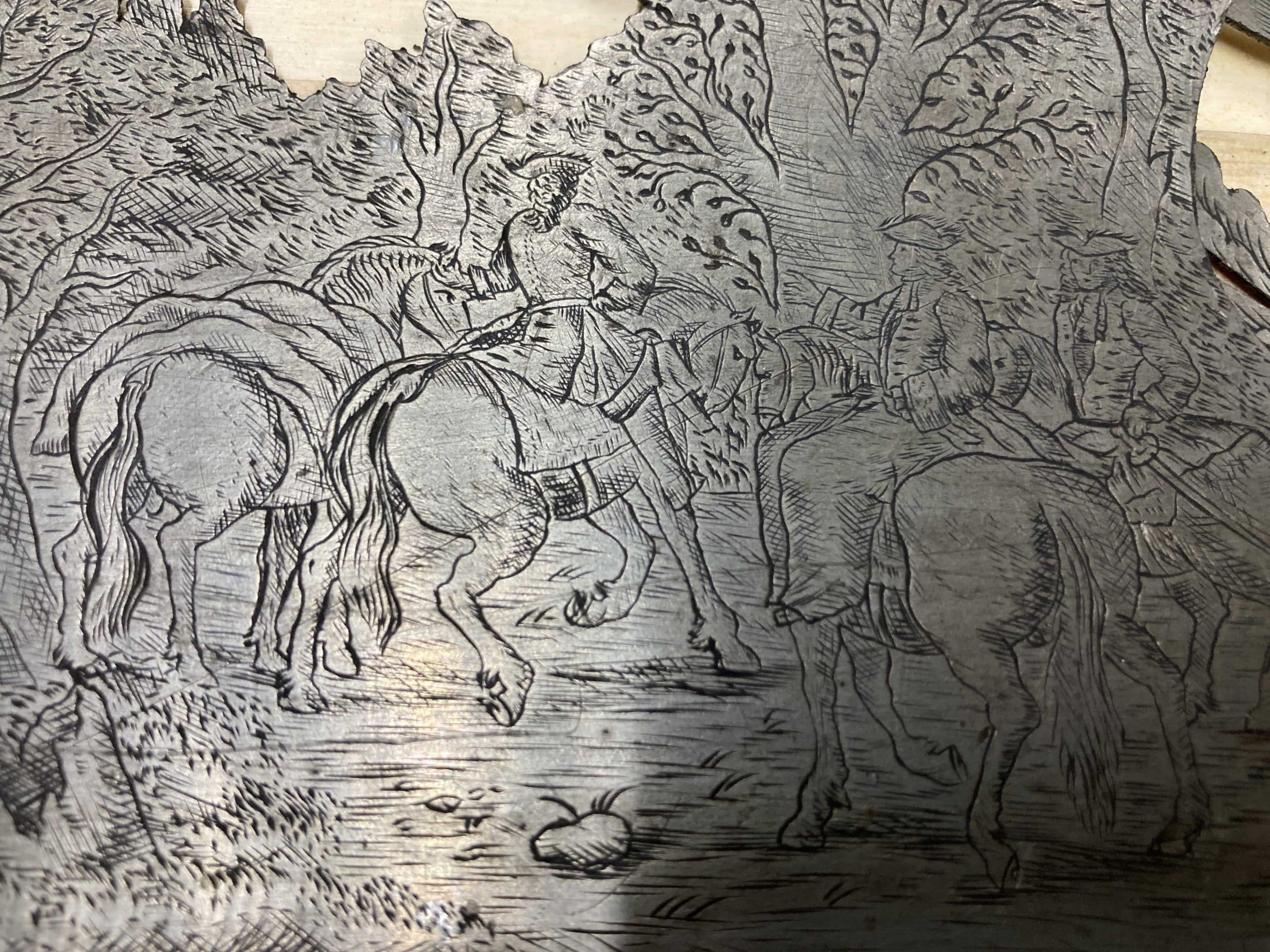
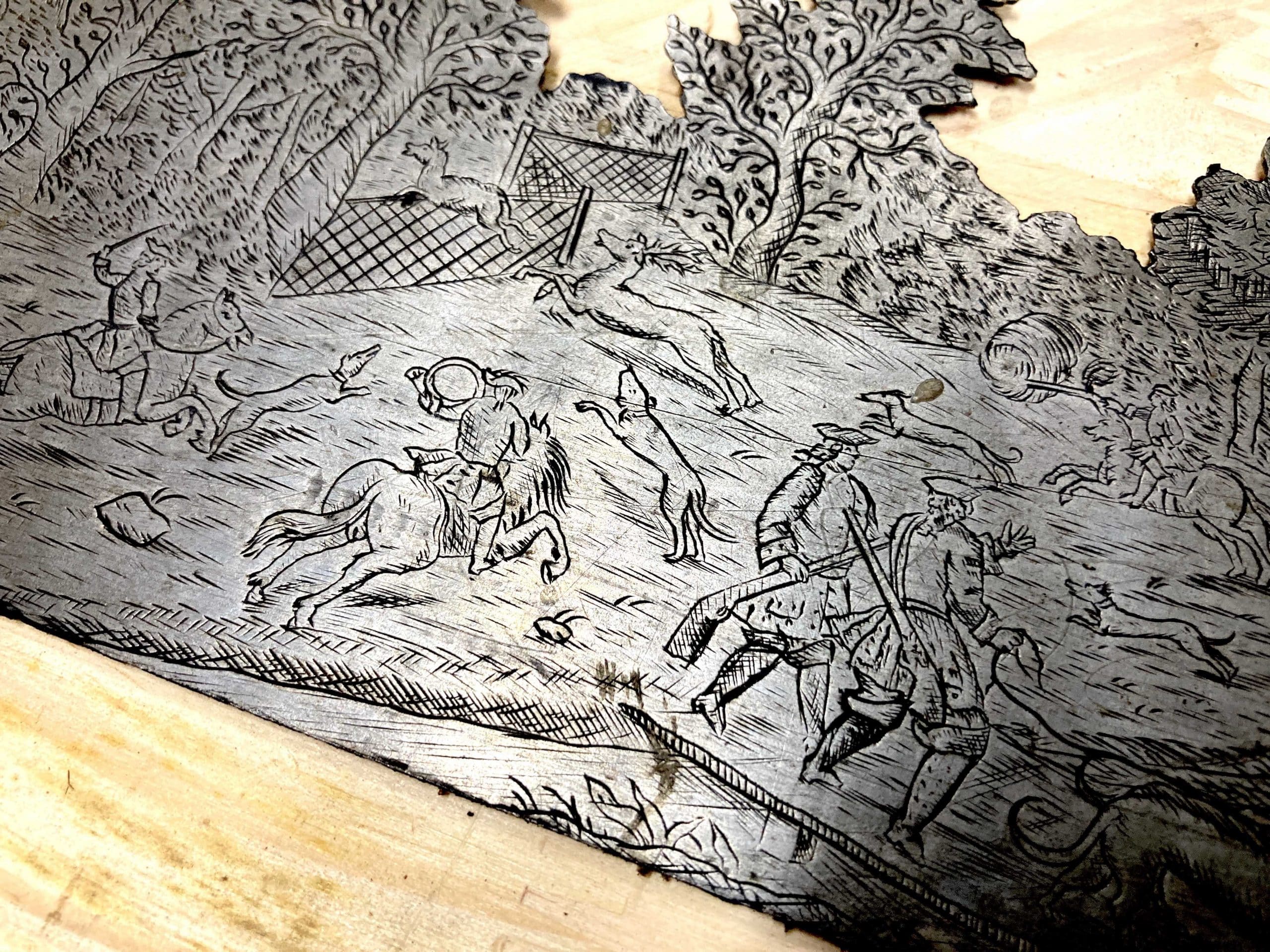
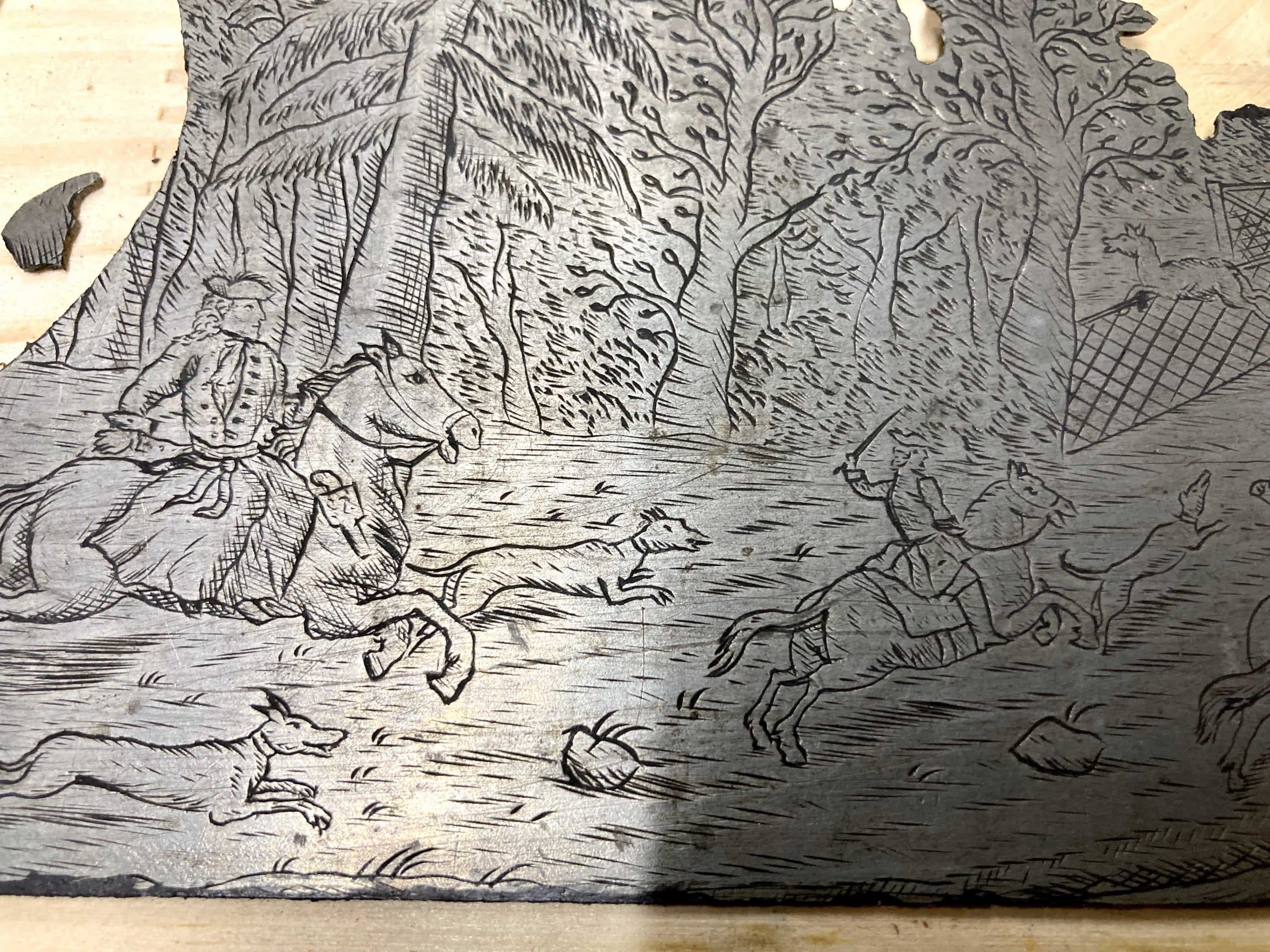
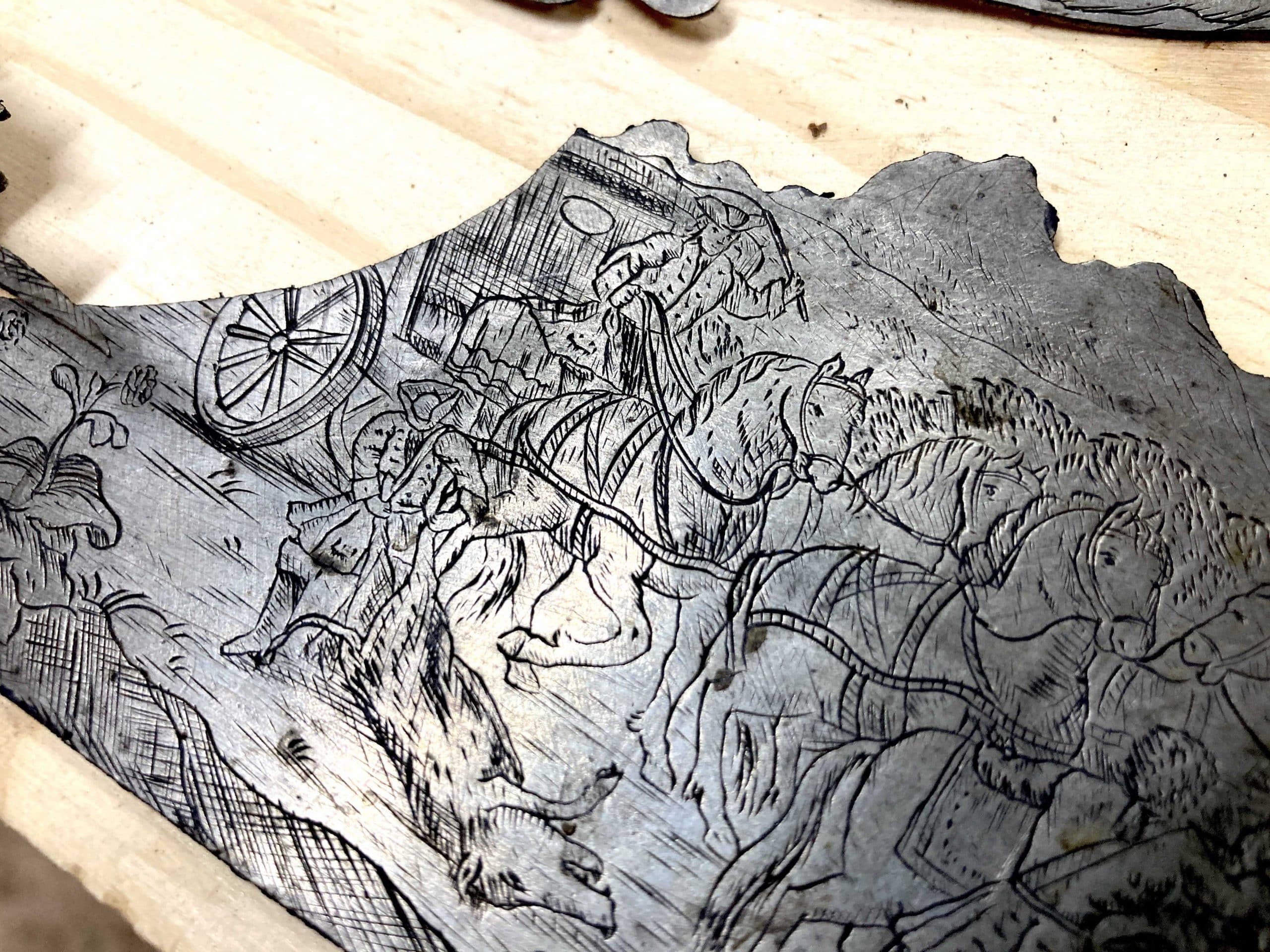
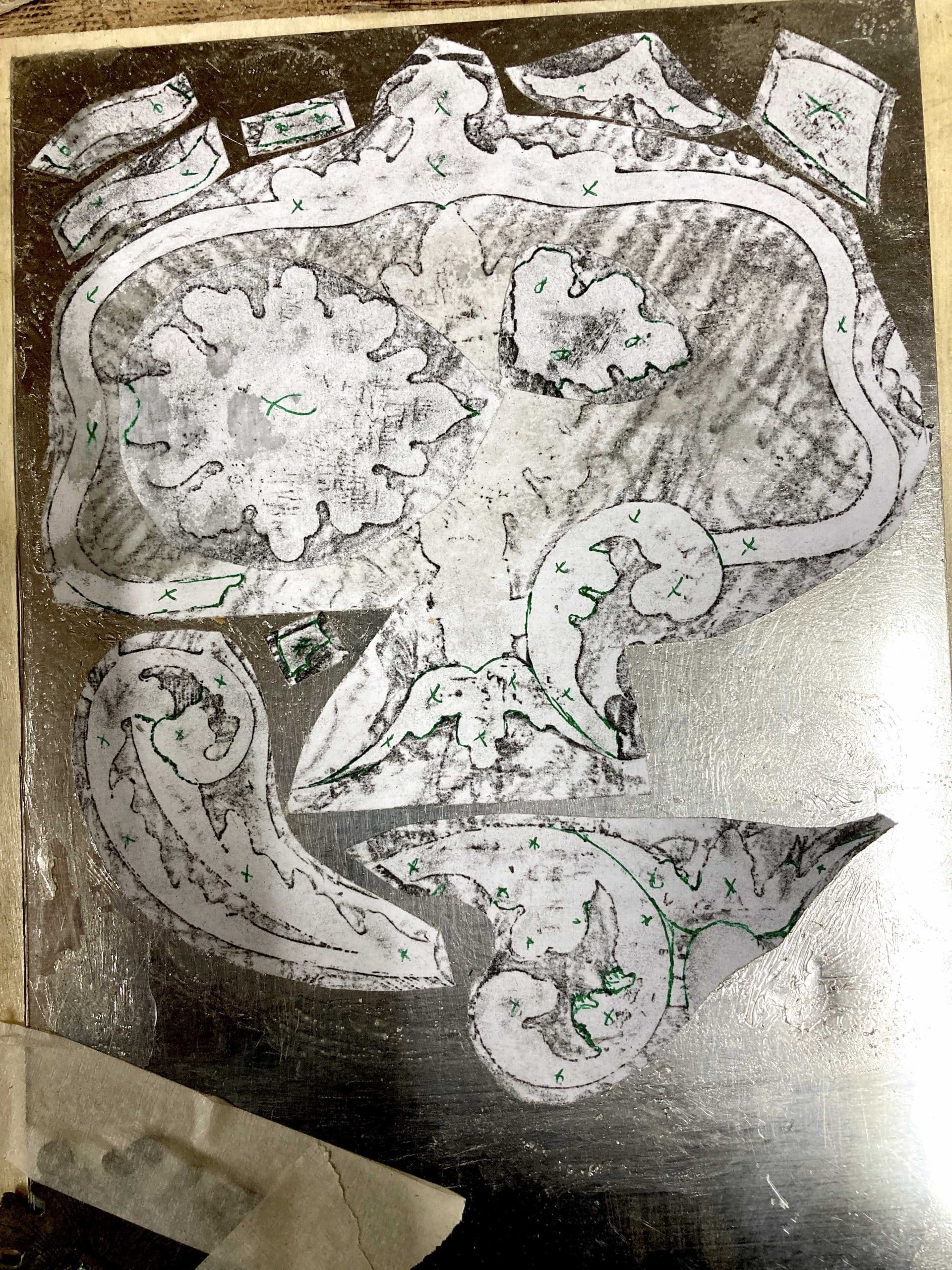
Then the missing tin elements were cut out using a marquetry easel.
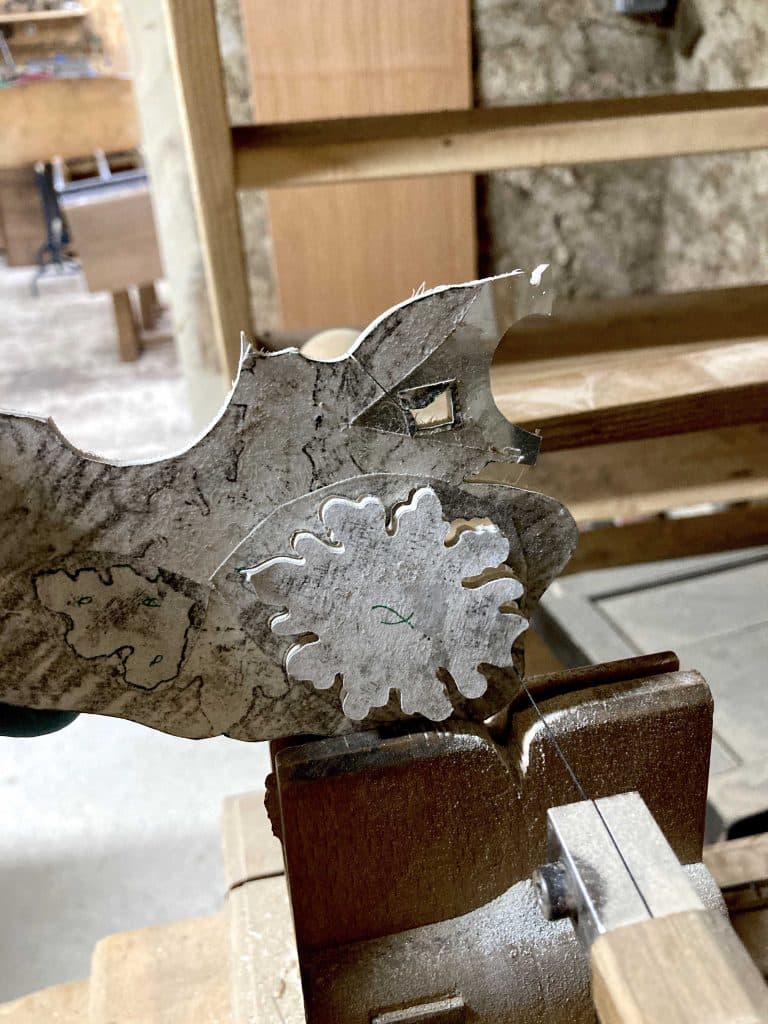
Then, they were glued to the frame with fish glue and smoothed flush with a file and scraper to avoid disturbing the original elements and thus preserving these magnificent engravings. Finally, the rest of the marquetry was re-glued with fish glue, and with a rehydrating glue for the wood veneers. A system of hard/soft shims was used to compensate for any unevenness in the drawer fronts. A heat source of 40 degrees Celsius was applied to activate the regeneration of the old glues.
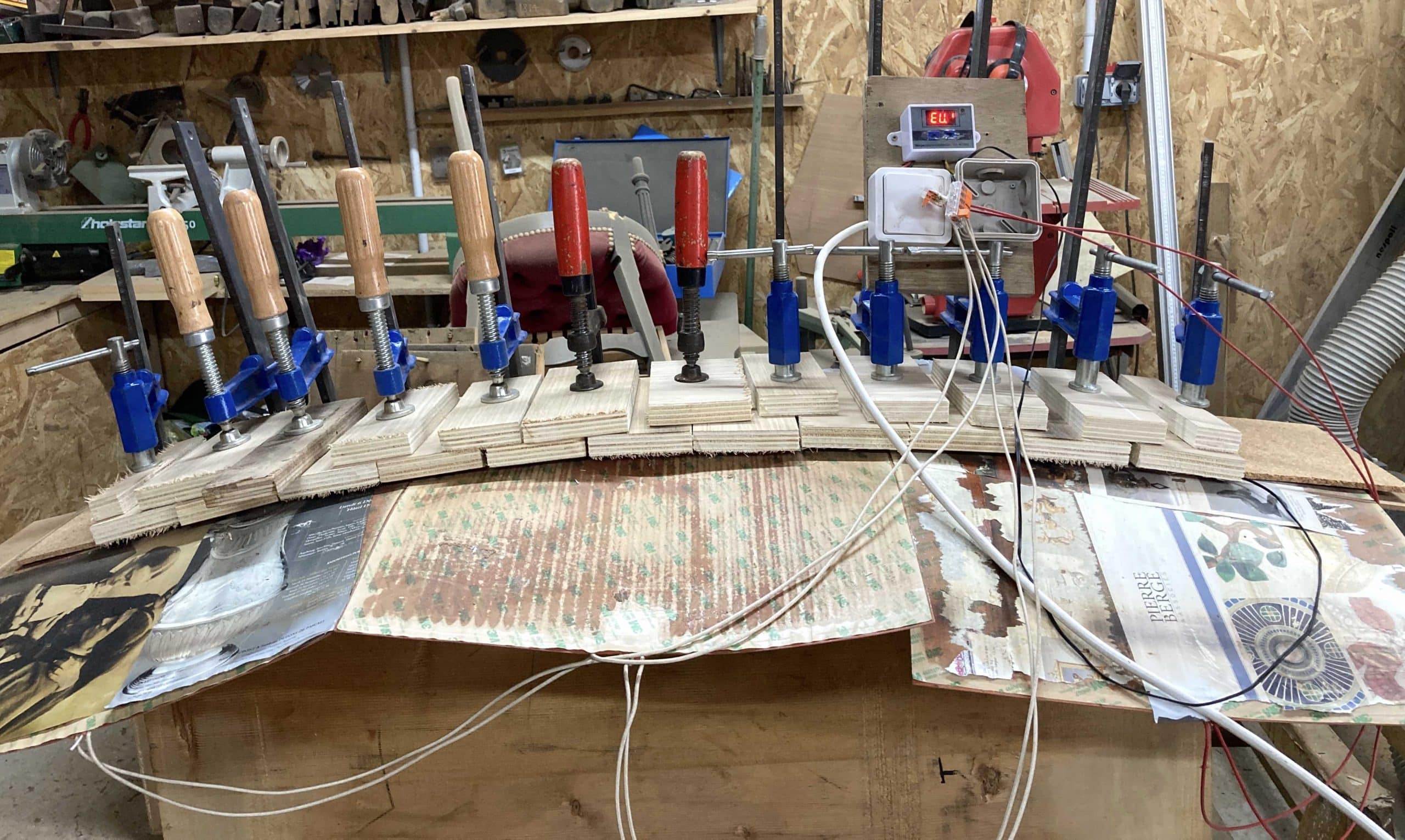
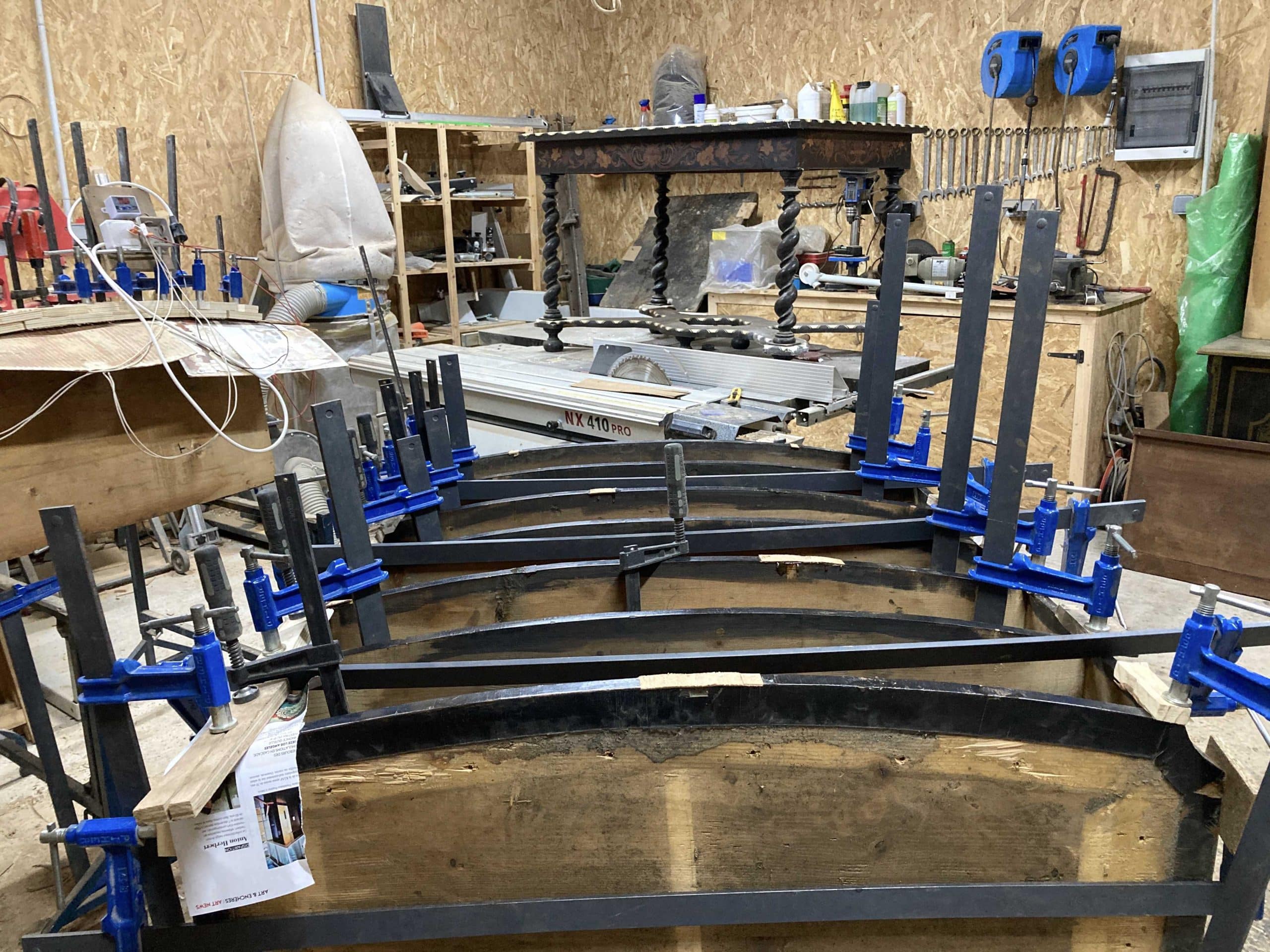
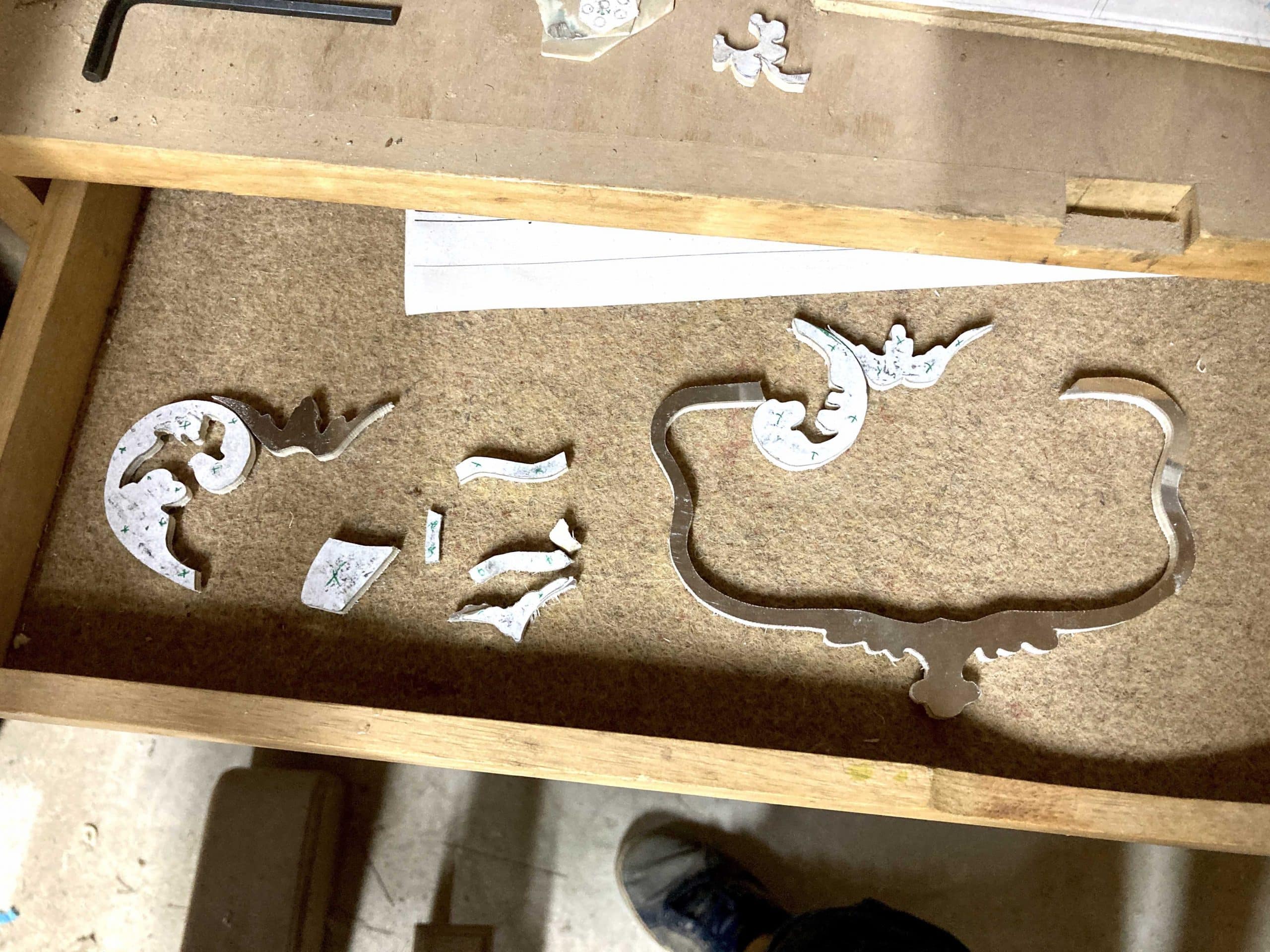
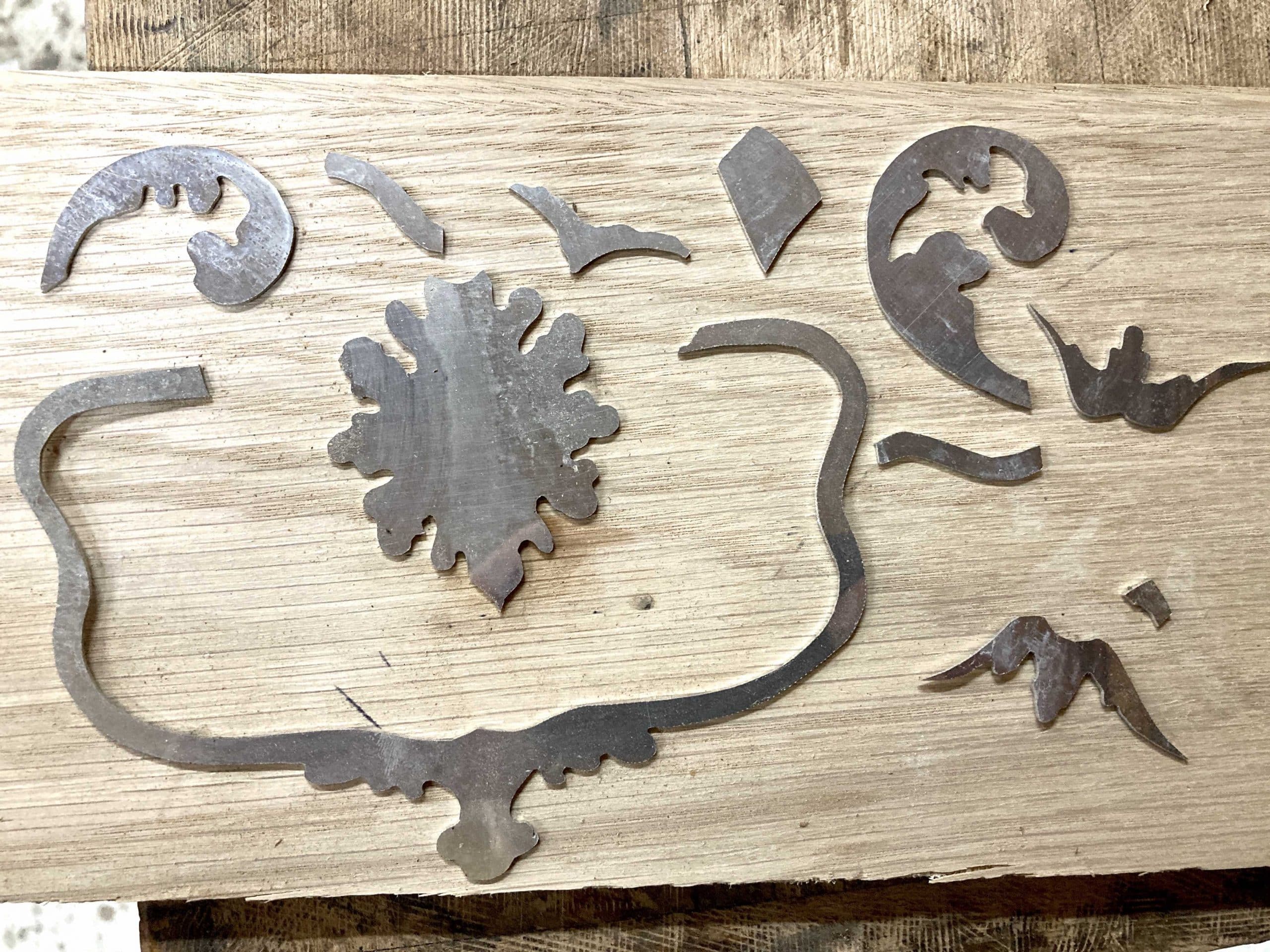
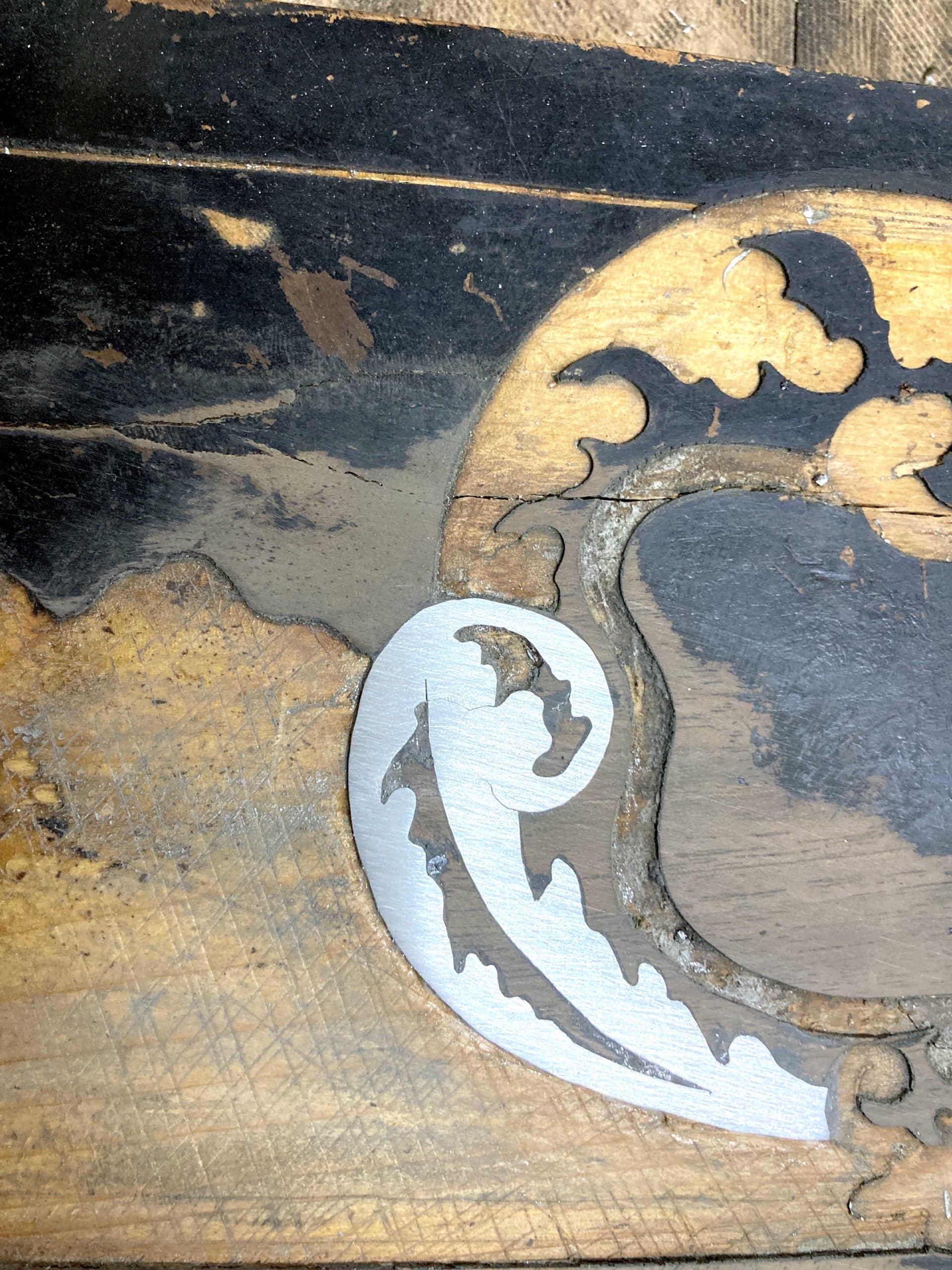
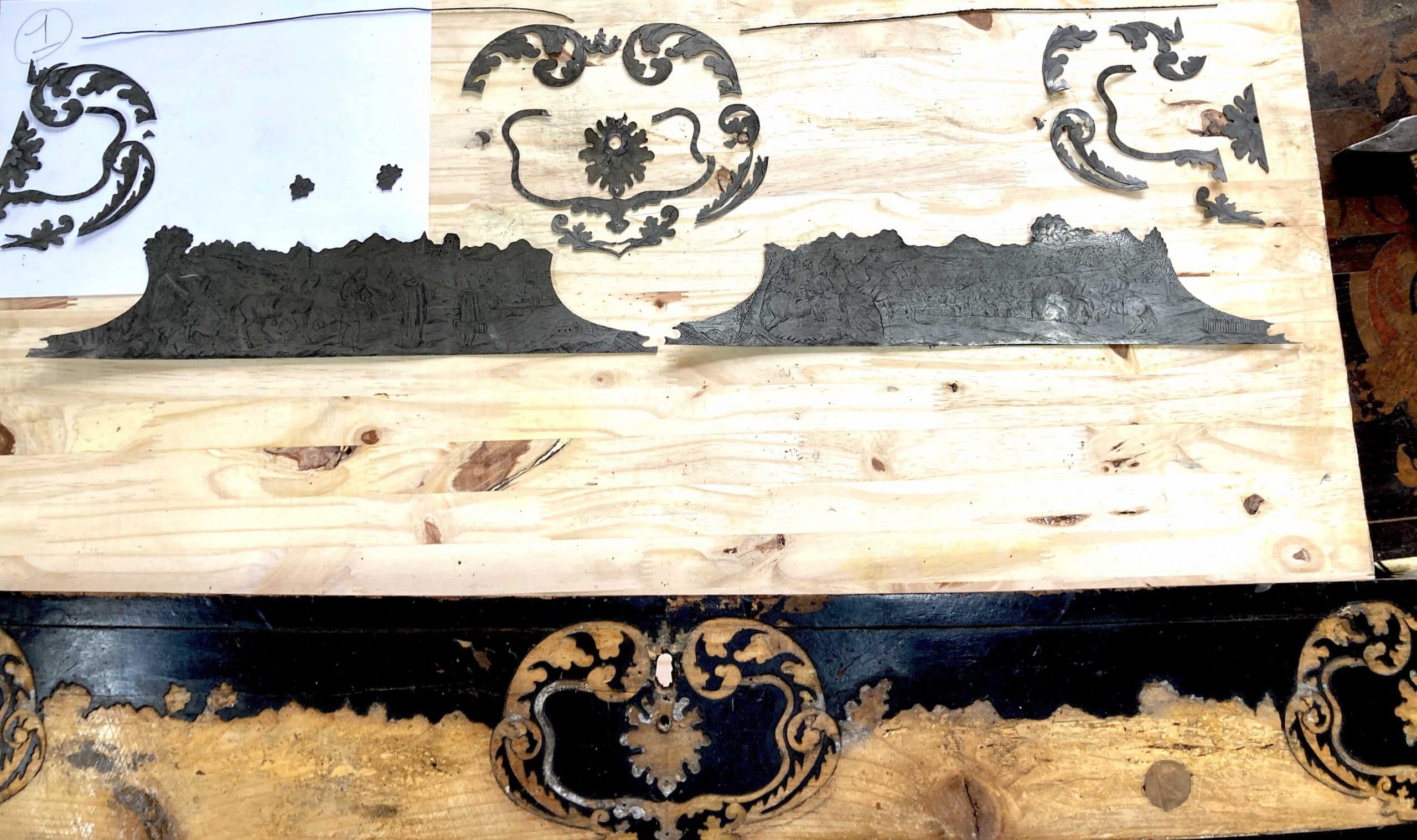
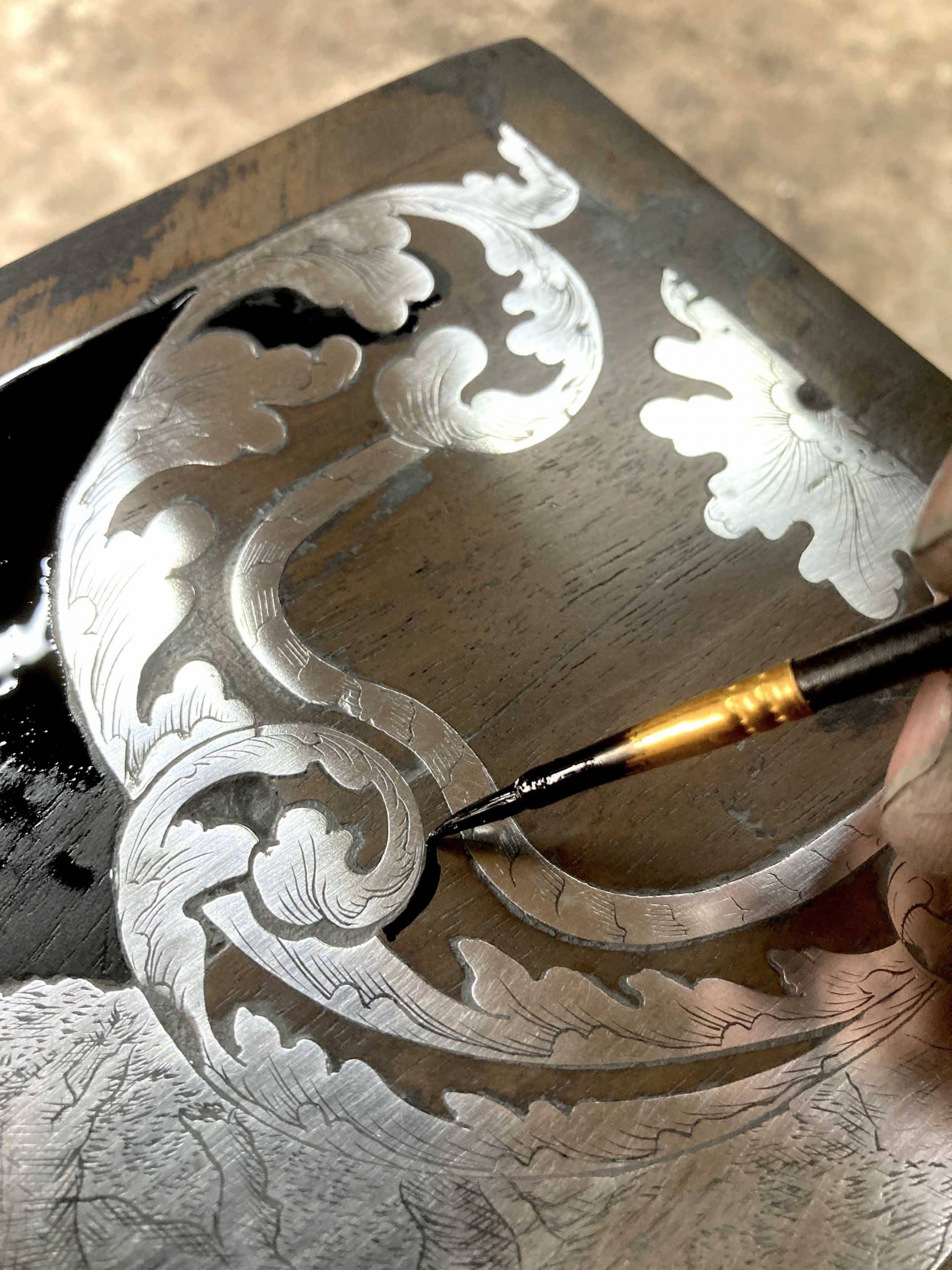
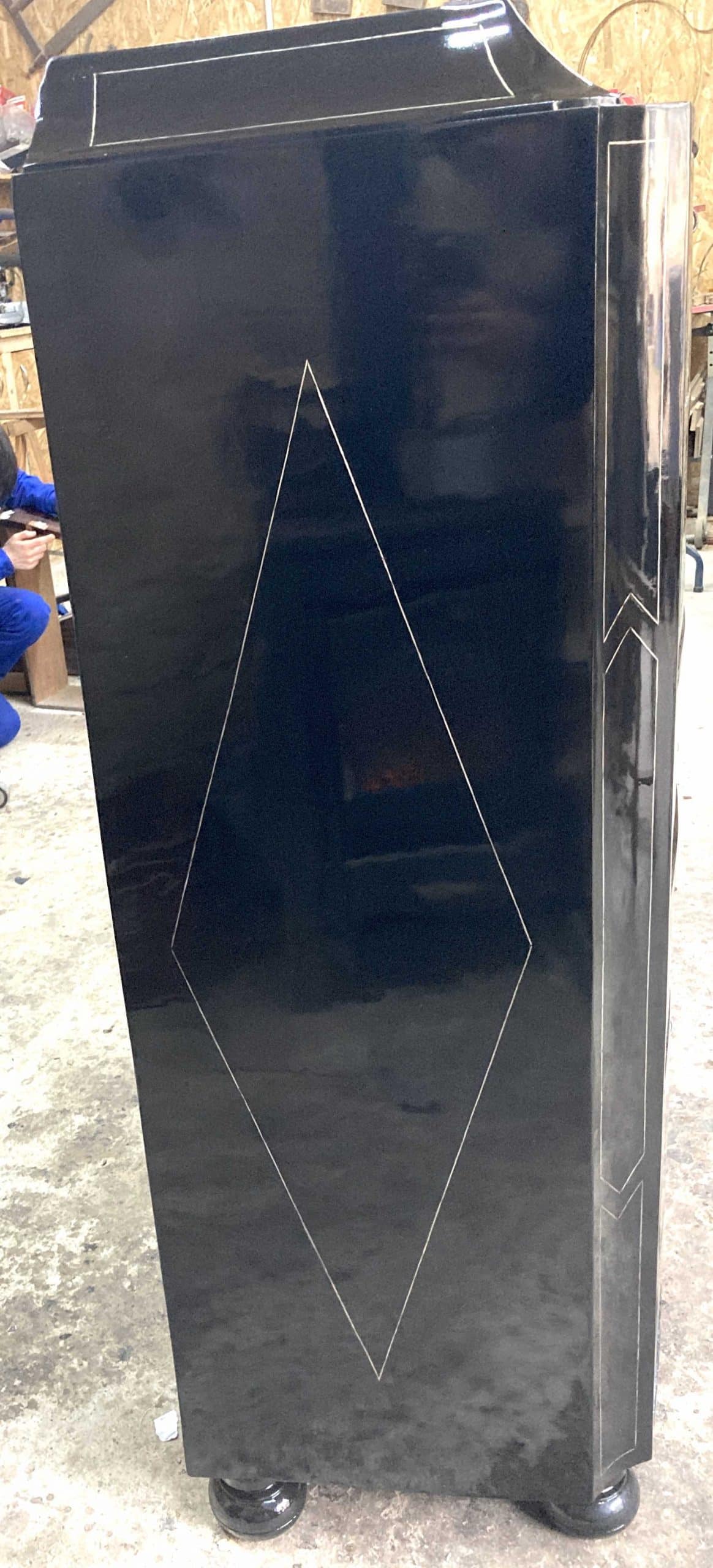
All the brass inlays were reattached, and the missing inlays were replaced. The missing walnut veneer was replaced with 3mm veneer, scraped and sanded before being glued with mammalian hide glue. New keys were fitted. The piece was then re-stained and finished with a clear French polish.
To see previous restorations : https://ebenisterie-mathieuvath.fr/en-ce-moment-a-latelier/
You can find this piece of furniture at Etienne Thuriet Antique Dealer
Magnificent restoration…and above all…a big THANK YOU for sharing.
THANKS
Thank you for sharing all this historical and technical information: congratulations on this study and the technical elements which comply with the ethics of restoration.
THANKS