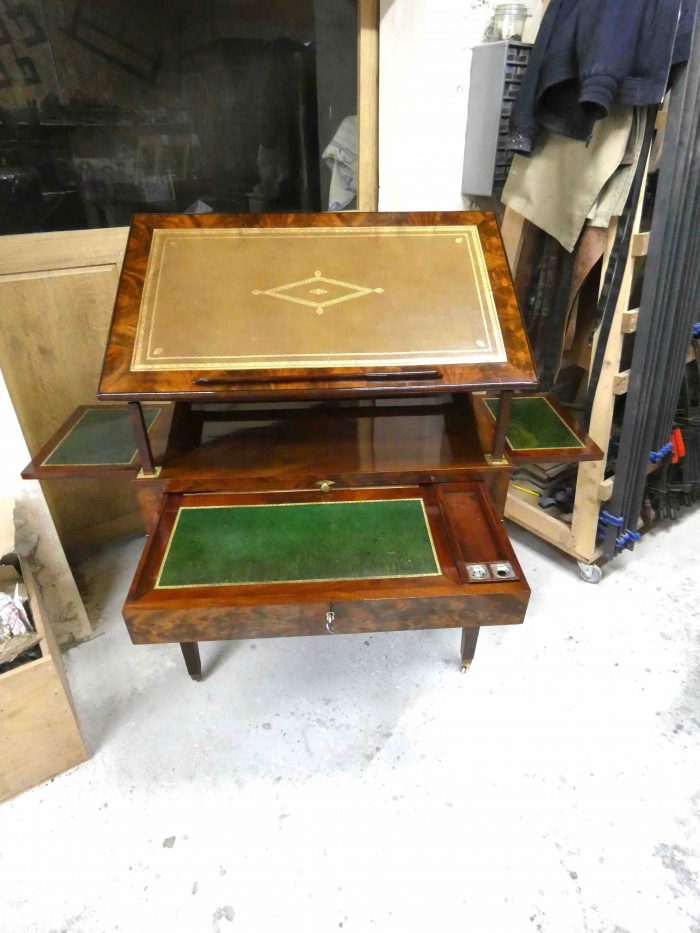
A little refresh for this lovely Tronchin-style table. Apart from a missing molding and a few small veneer chips on the legs, nothing too serious. A touch-up of the varnish was enough to give it a new lease on life.
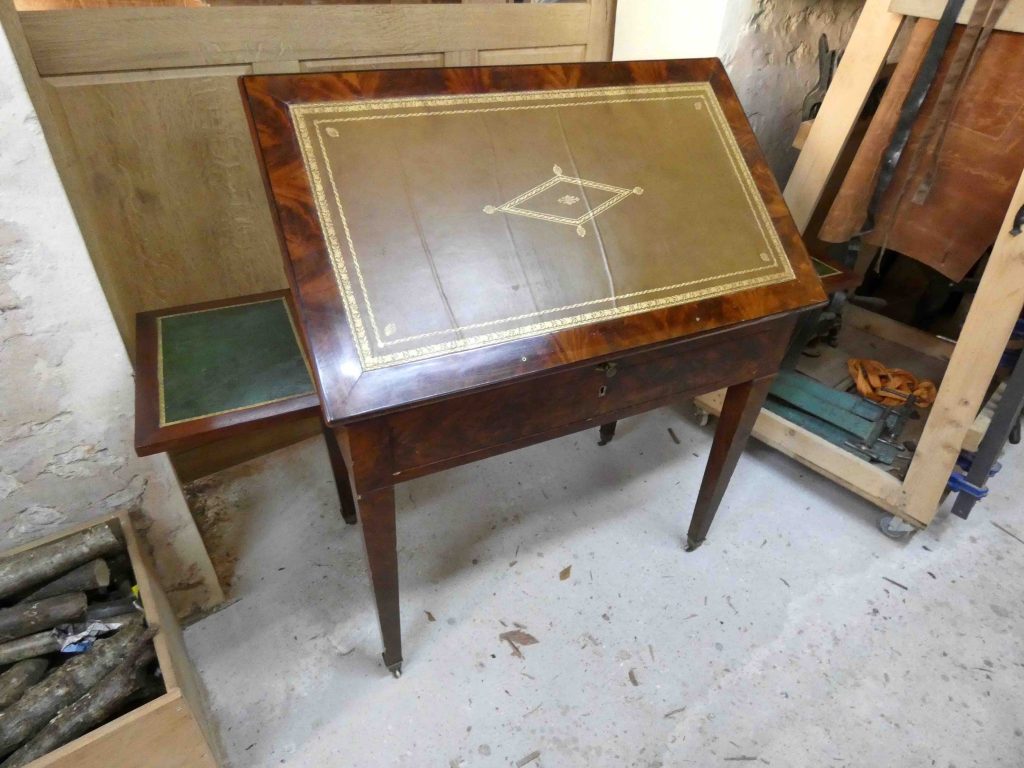
But do you know where this type of table comes from, and what it was used for?
Although today attributed to Théodore Tronchin, a Genevan physician (1709-1781), who at the time published works on bone diseases linked to poor posture at one's desk, it is difficult to know exactly who invented this table. It was already well-known in his time, but until then reserved for a privileged few. The inventory of the Château d'Angers in 1401 mentions a similar table. Philip II of Spain and Mazarin also owned a similar piece of furniture. Tronchin thus contributed to the revival and improvement of a forgotten piece of furniture, giving it prestige and lending it his name. Like all useful items in vogue, this one was widely imitated, without its inventor ever thinking to complain. A contemporary of Tronchin, Louis Dufour, a master cabinetmaker in Paris, similarly manufactured a "writing table that can be raised and lowered at will." On October 1, 1777, Le Mercure de France even provided a fairly complete description:« Mr. Dufour, a master carpenter and mechanic, has invented a table that raises and lowers by turning a simple crank. It can be fixed at the desired position and lowered with the greatest ease; the entire mechanism is concealed within the table's center and legs, which does not preclude the inclusion of drawers, as with other tables. This table is particularly convenient for asthmatics who can scarcely write except while standing. ».
Despite their practicality, these tables gradually disappeared at the end of the 18th century because they were considered too unstable. Fixed lecterns and tiered desks were then preferred.
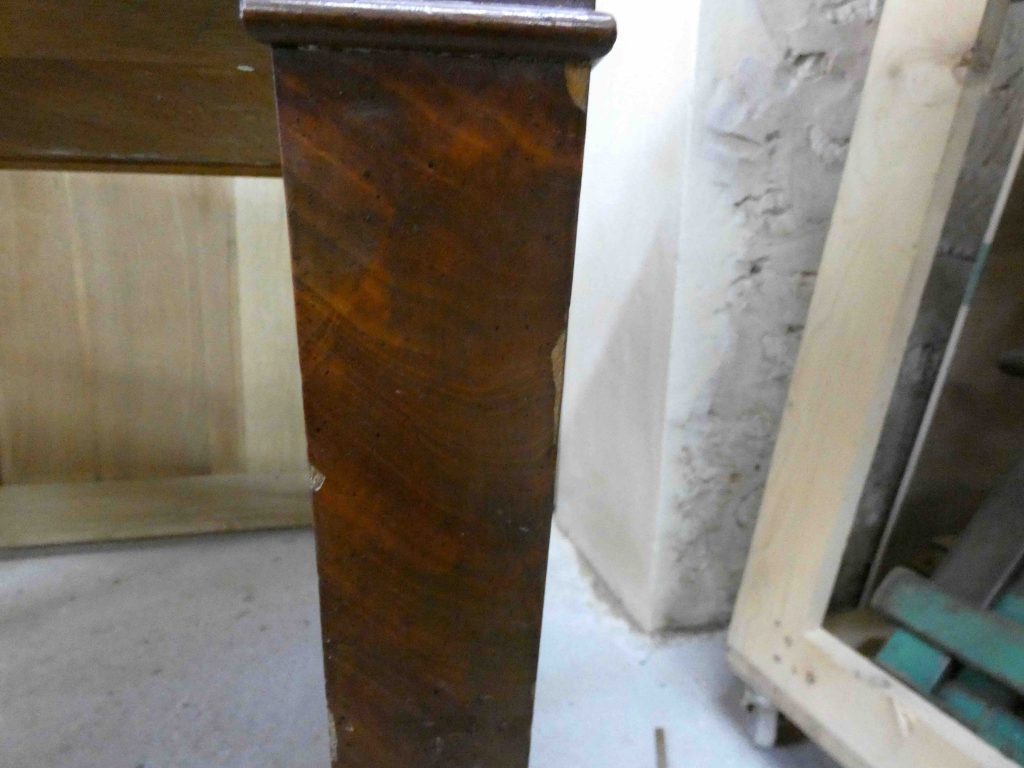
missing veneers 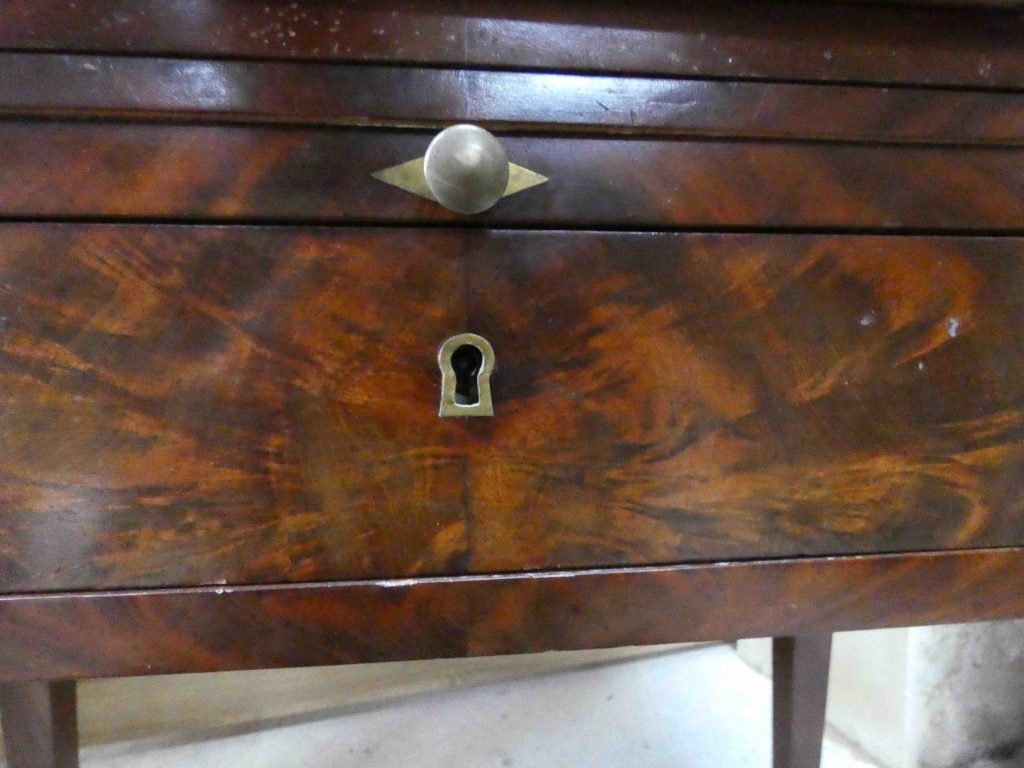
missing veneers 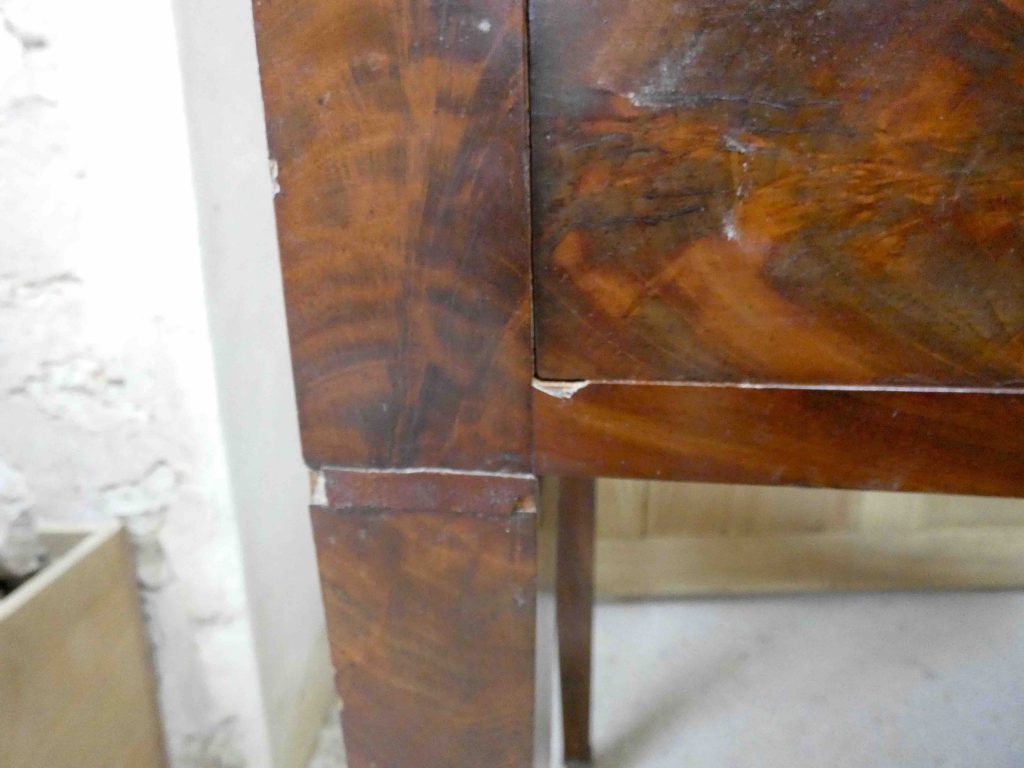
Missing molding 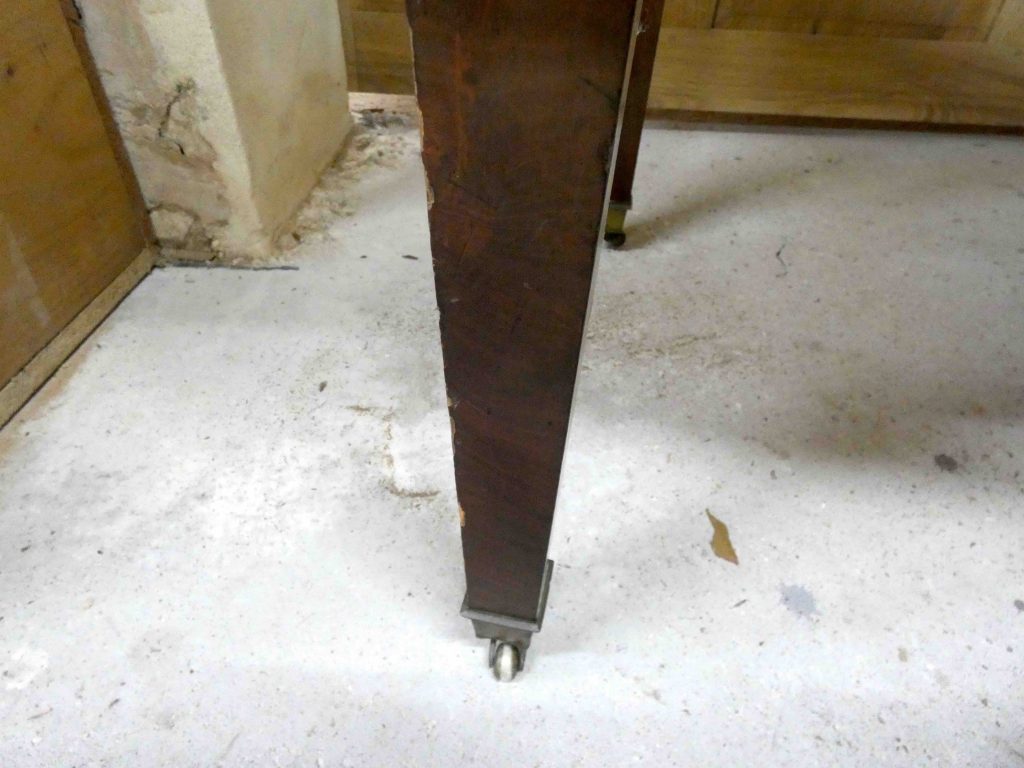
missing veneers 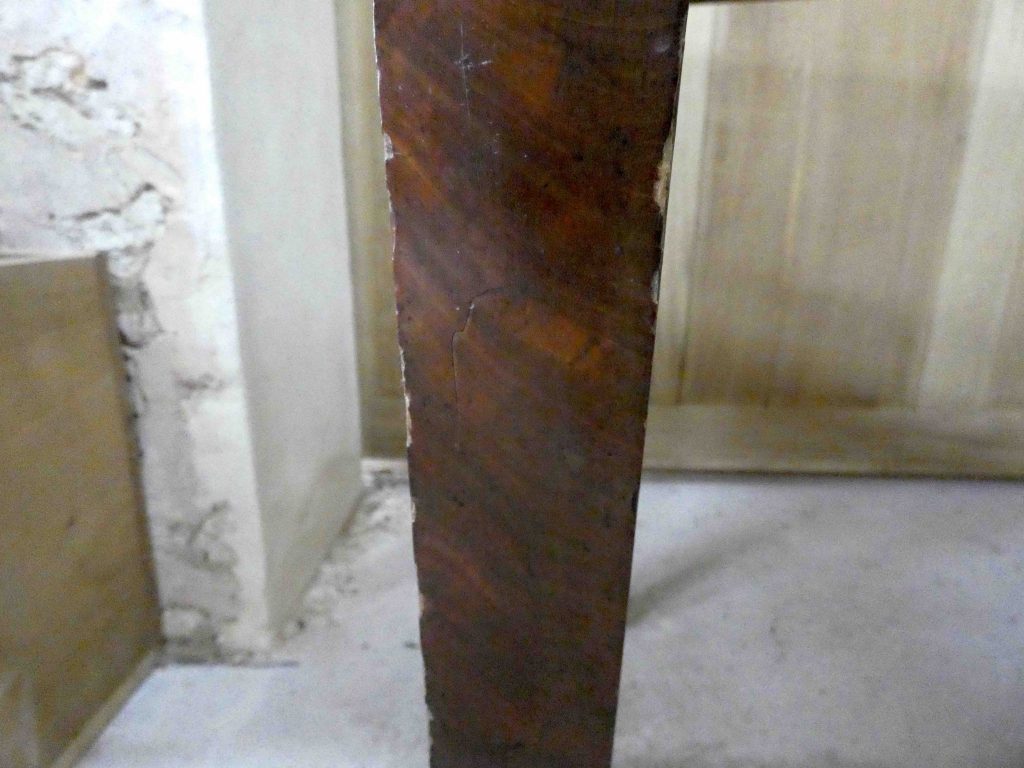
missing veneers 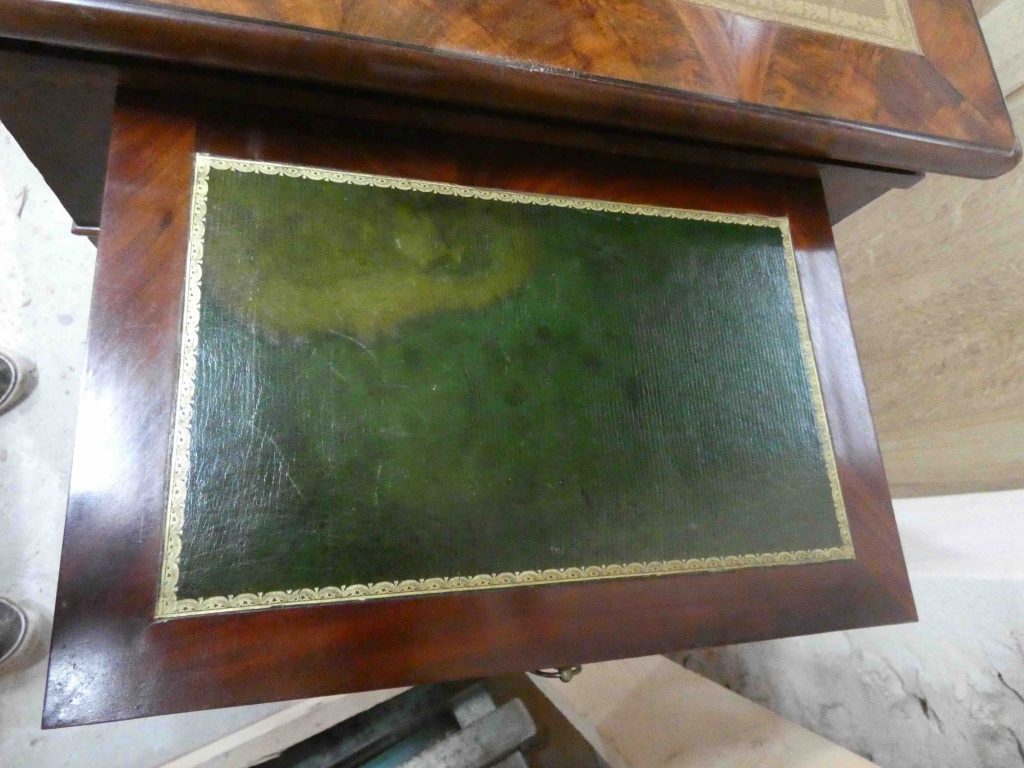
right pull 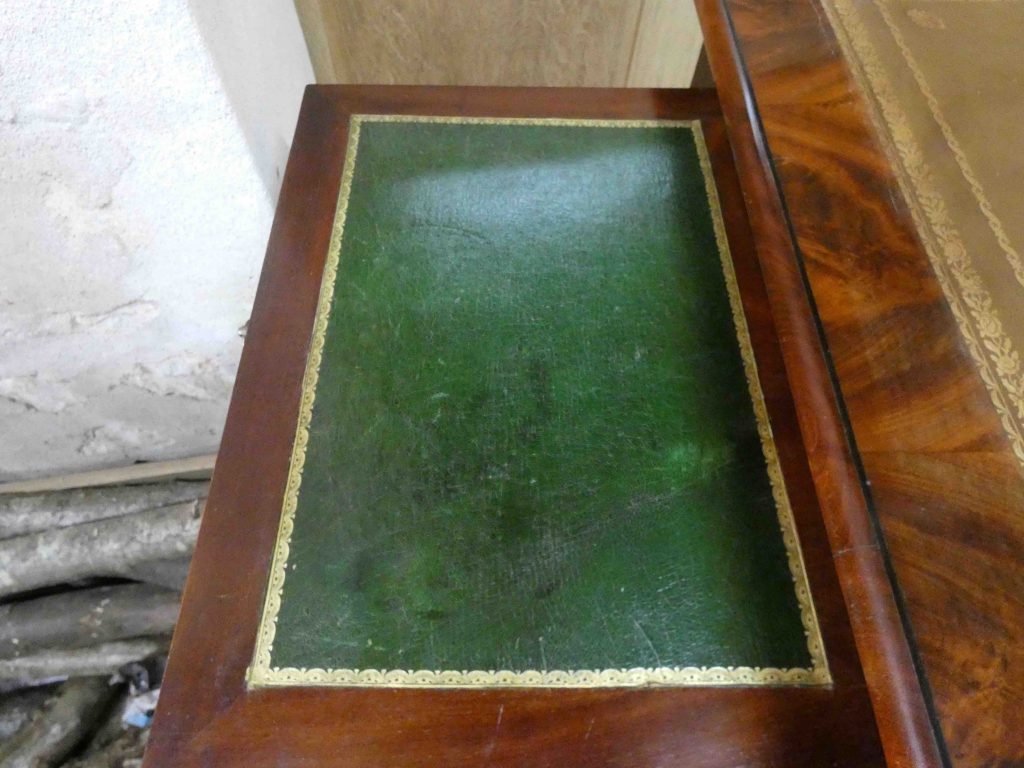
left pull 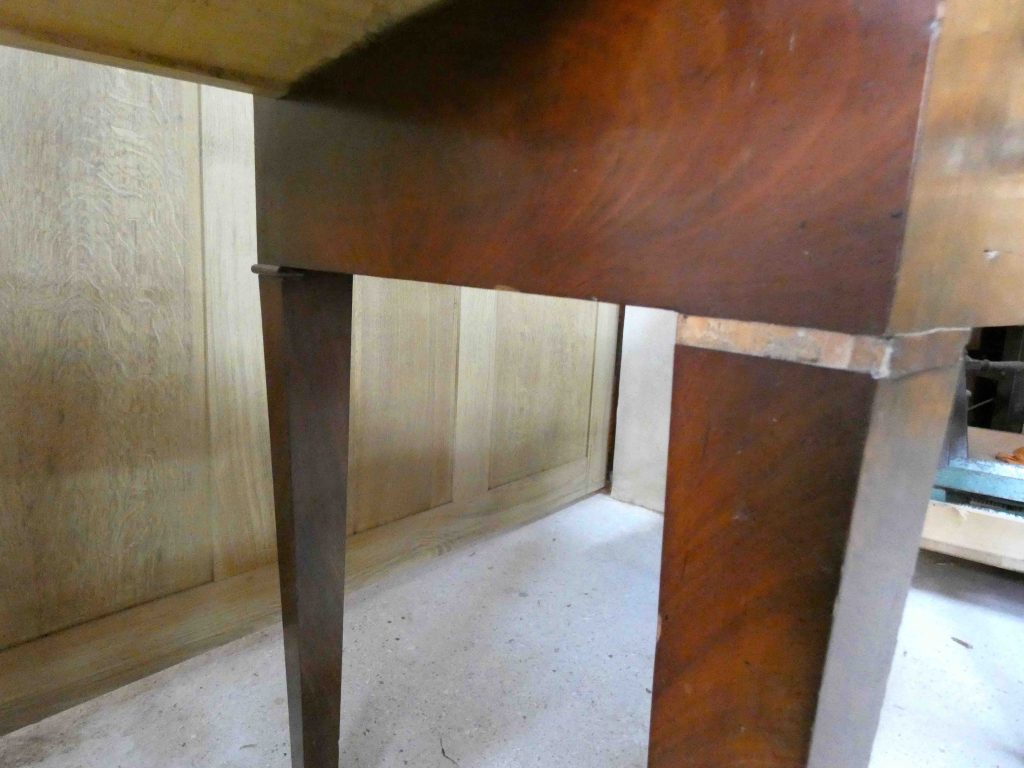
Missing molding 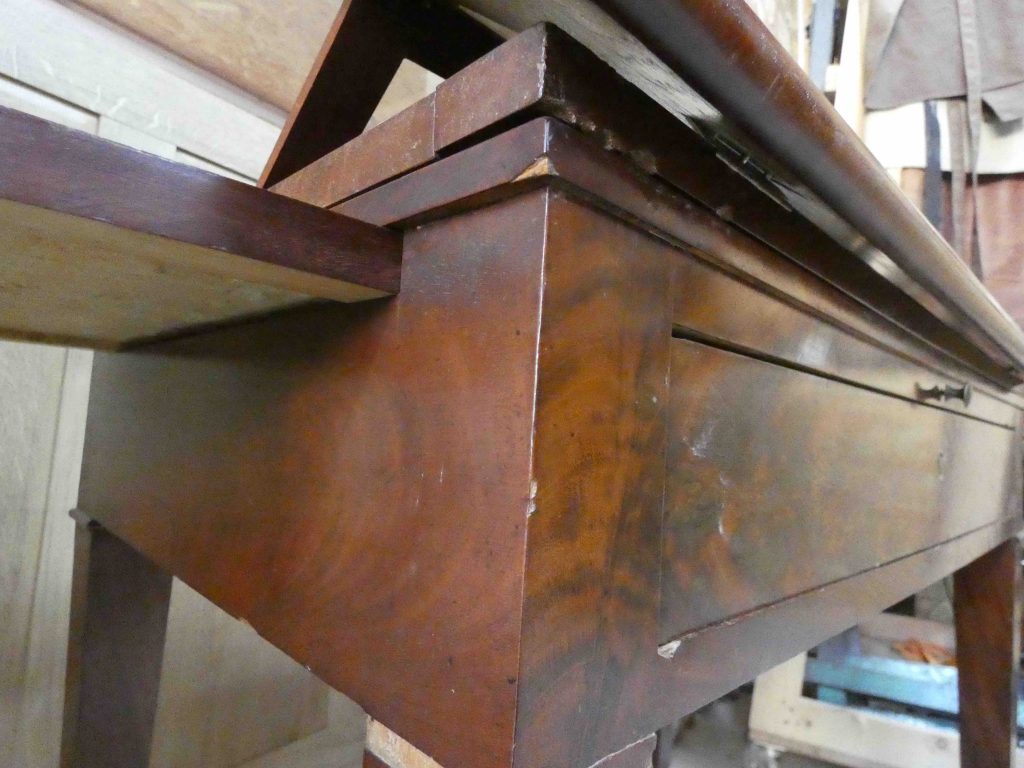
missing veneers 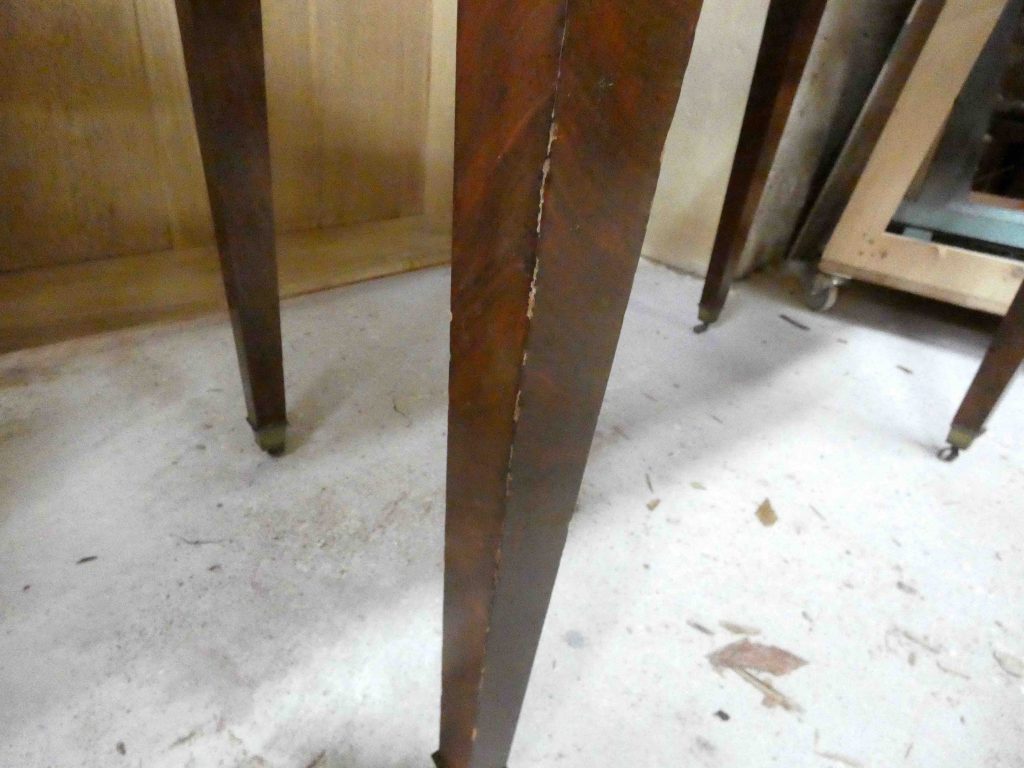
missing veneers 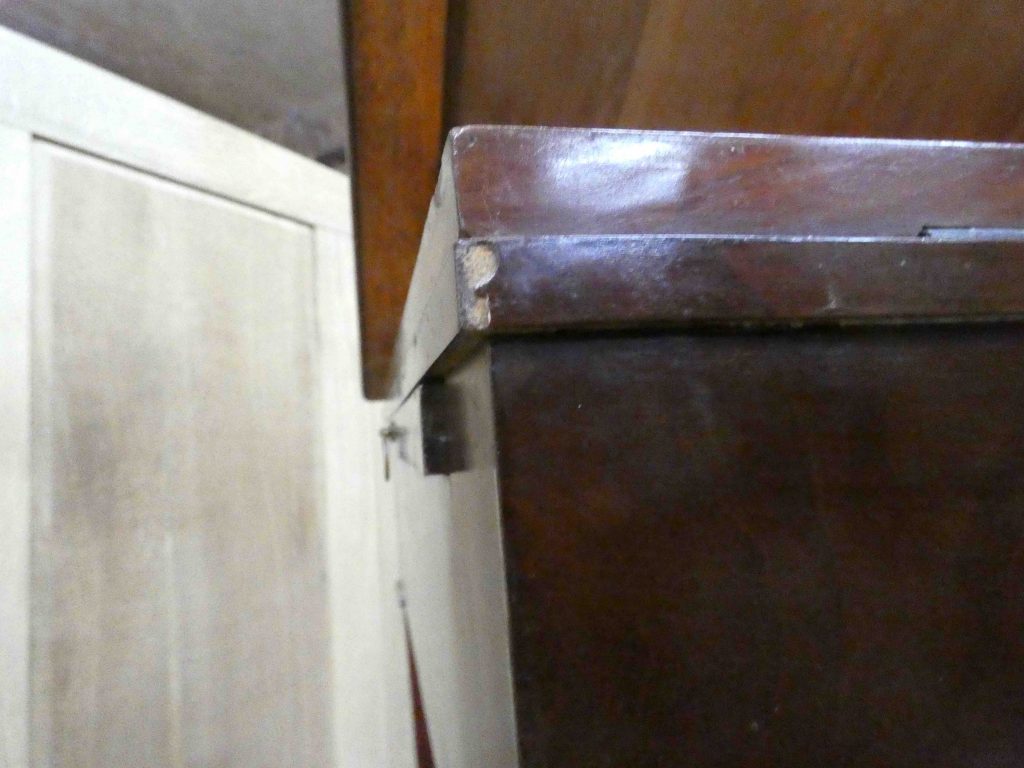
missing veneers 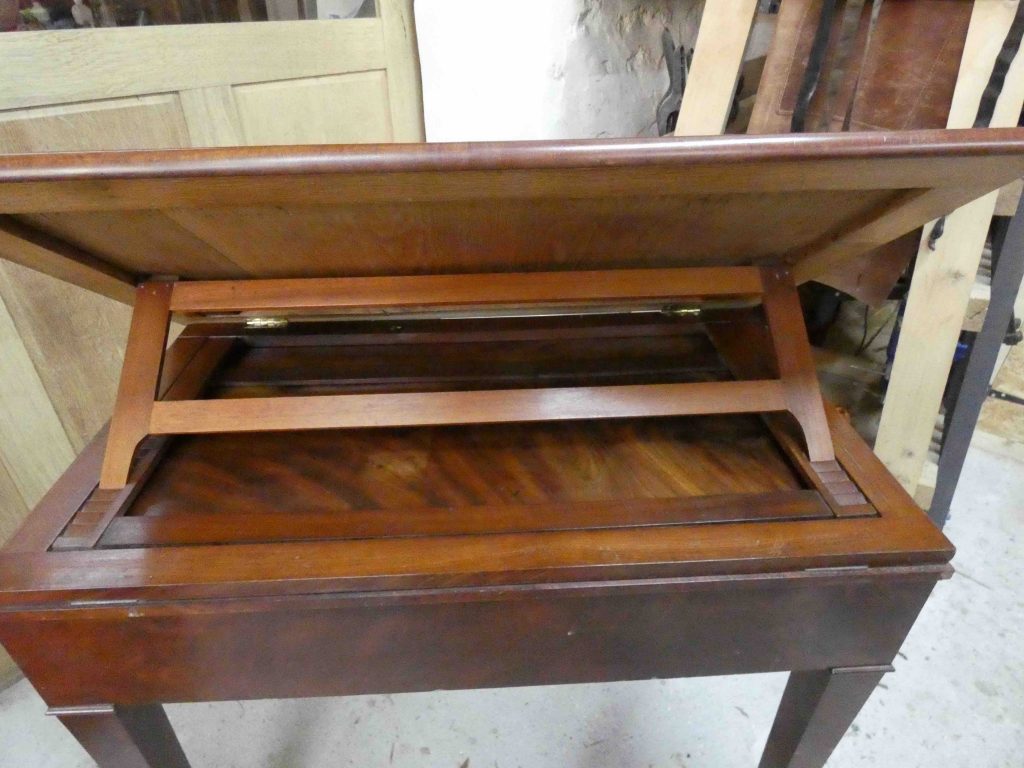
View of the rear mechanism
The two models of table with the trunk
The most elaborate model, which is also the most expensive, is equipped with a crank that activates the rack and pinion mechanism, raising the upper tabletop. One side of the table can thus be raised to a height of approximately 1.20 m. Once the desired height is reached, the tabletop can be raised in the other direction, its angle being maintained by a trestle. To lower the tabletop, simply press the button on the right side of the apron, located on a long, transverse iron rod, which then releases the bolts of the mechanism.
The second model is simpler to build and easier to operate, but less convenient because it lacks a crank. It consists of only two rack and pinion rods that slide within two legs located on the same longitudinal side. The upper part of the table is hinged on the other side. The side supported by the rods is lifted manually and locks automatically thanks to brass catches.
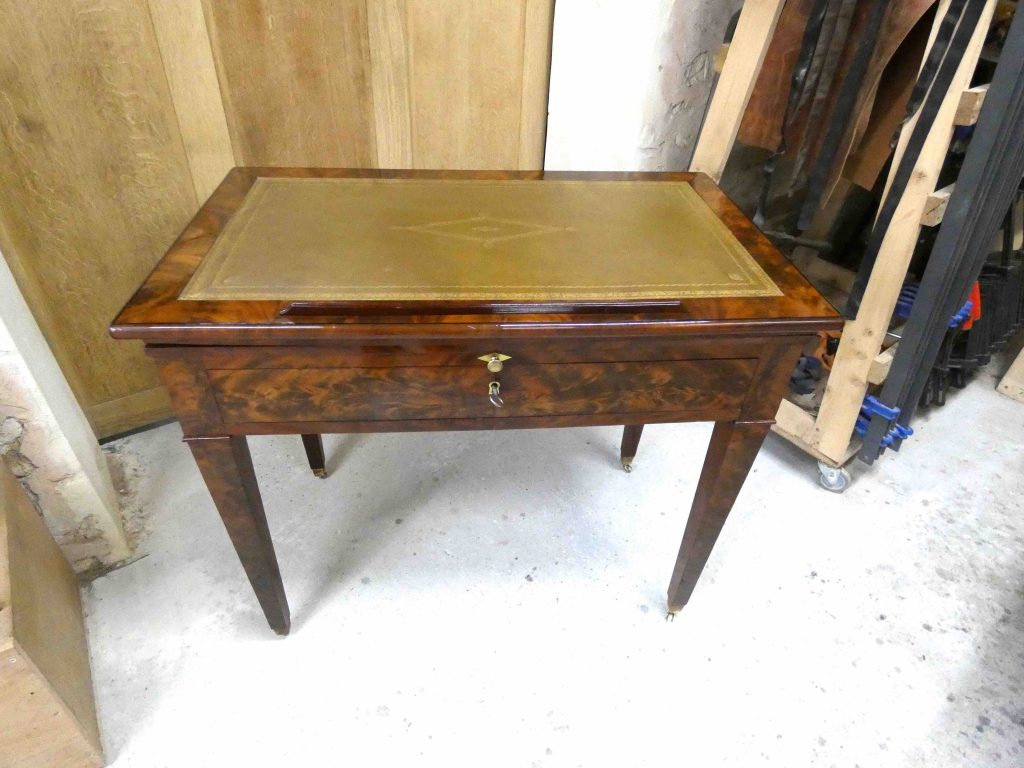
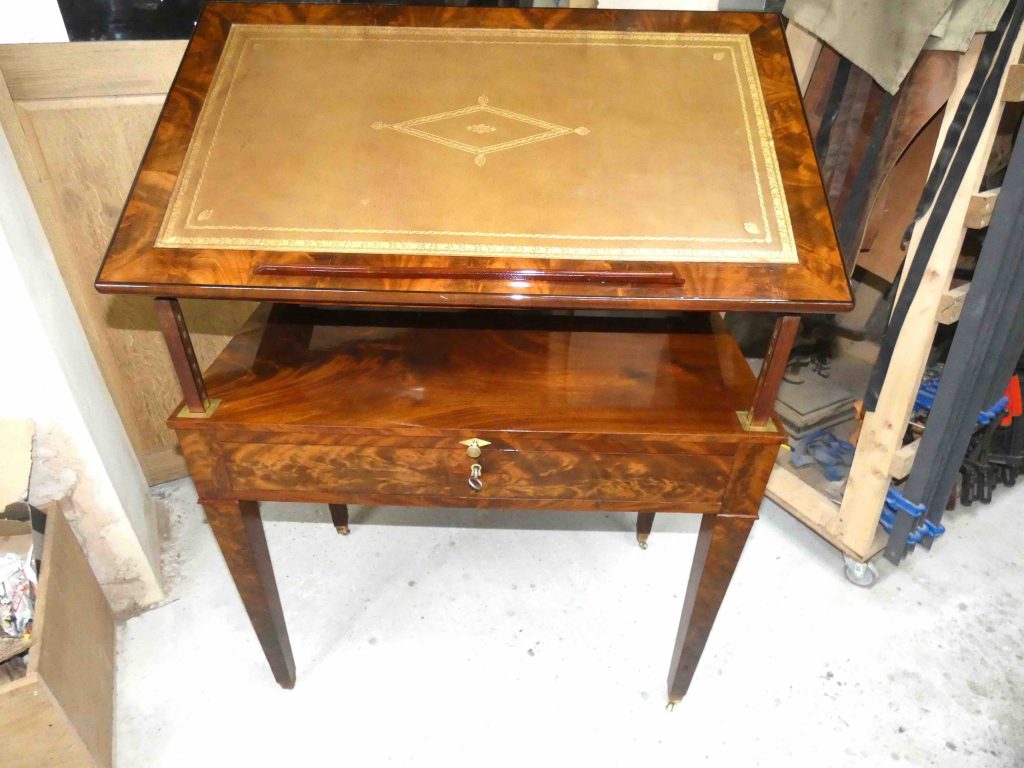
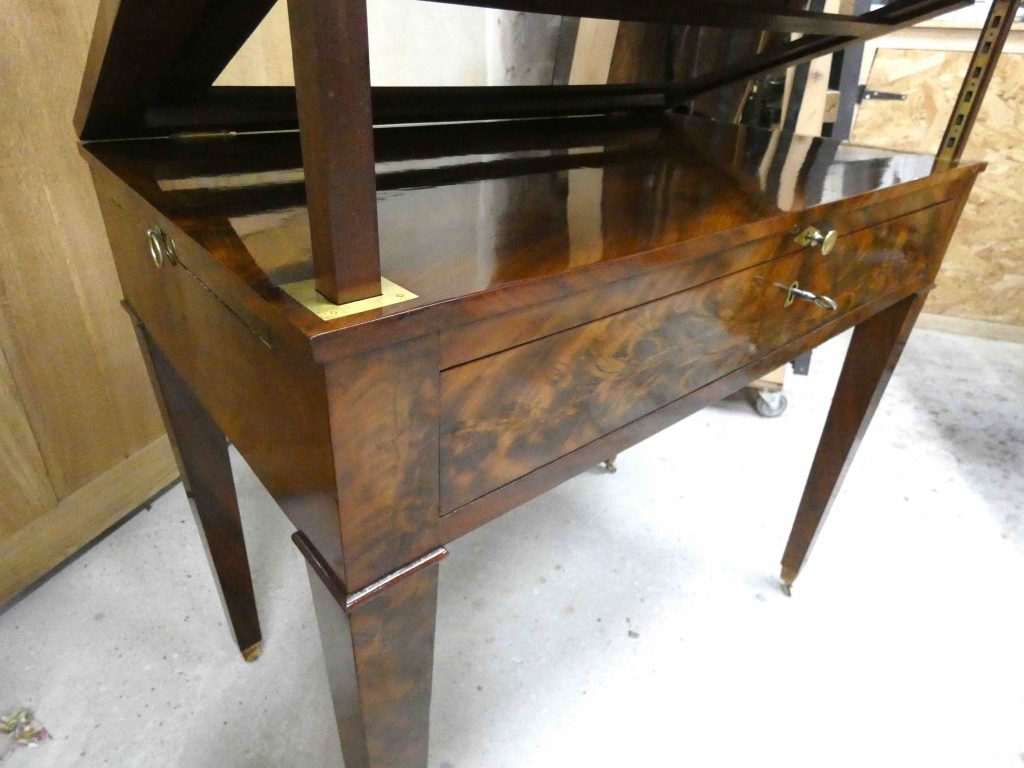
After restoration 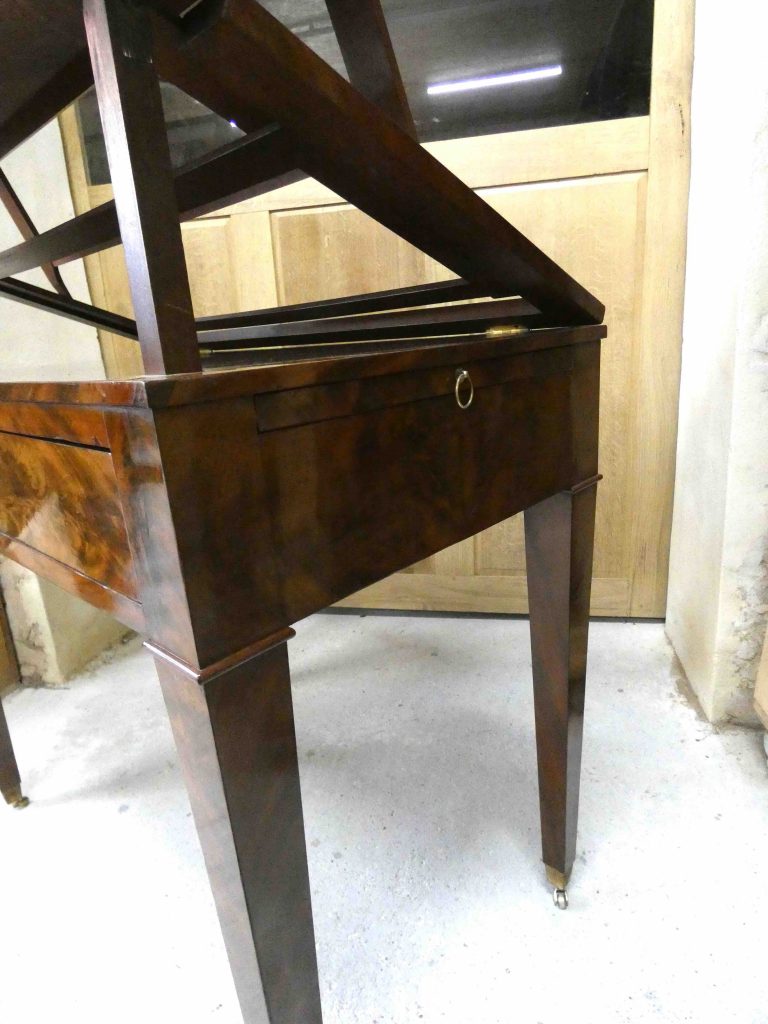
After restoration 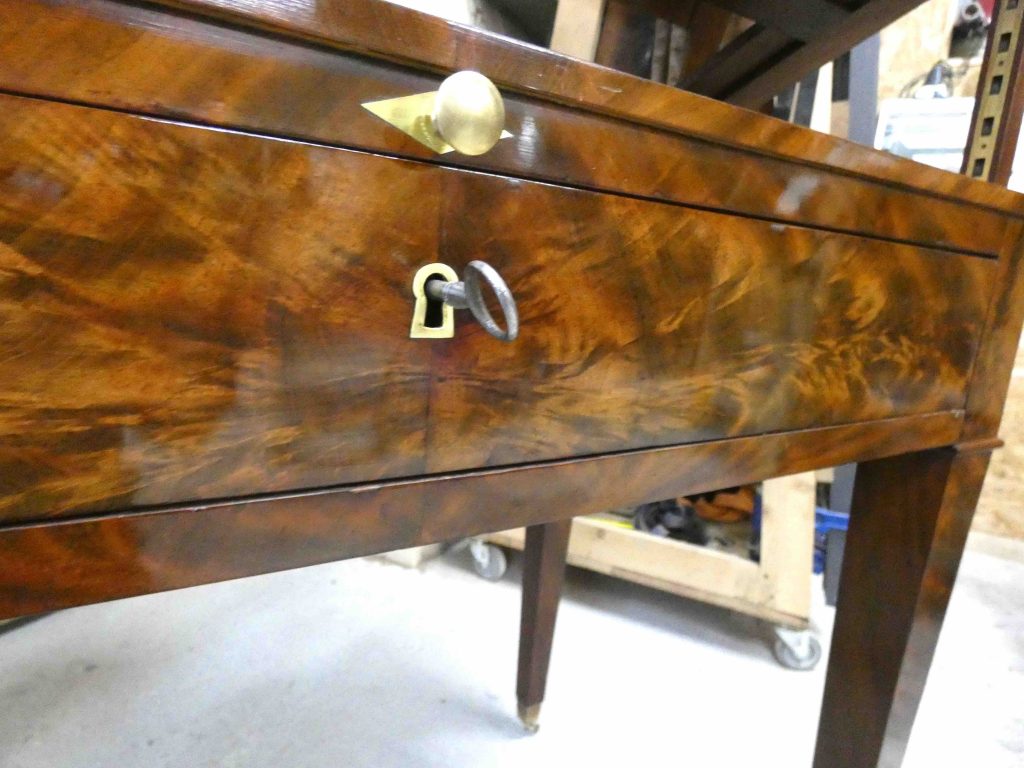
After restoration 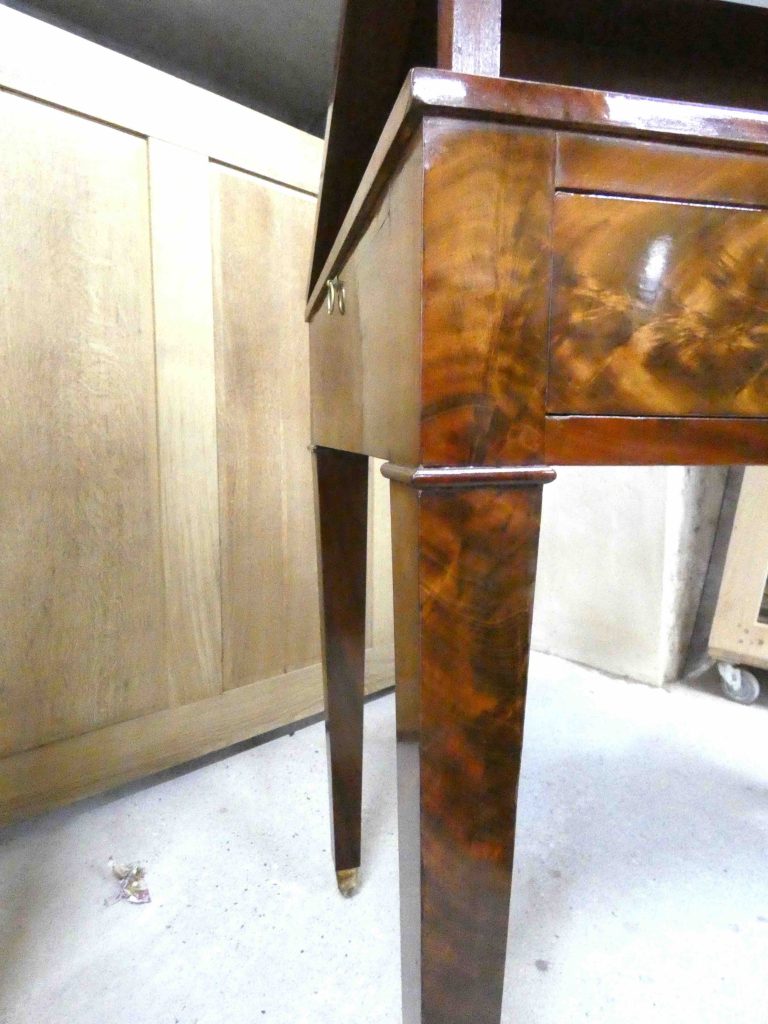
After restoration 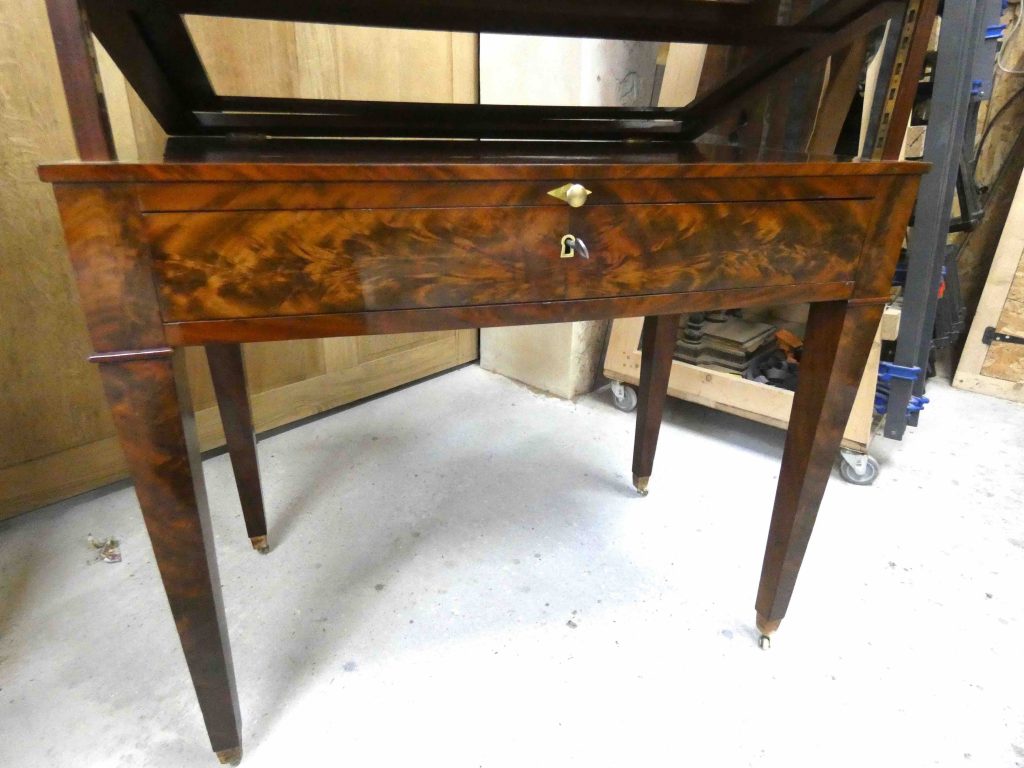
After restoration 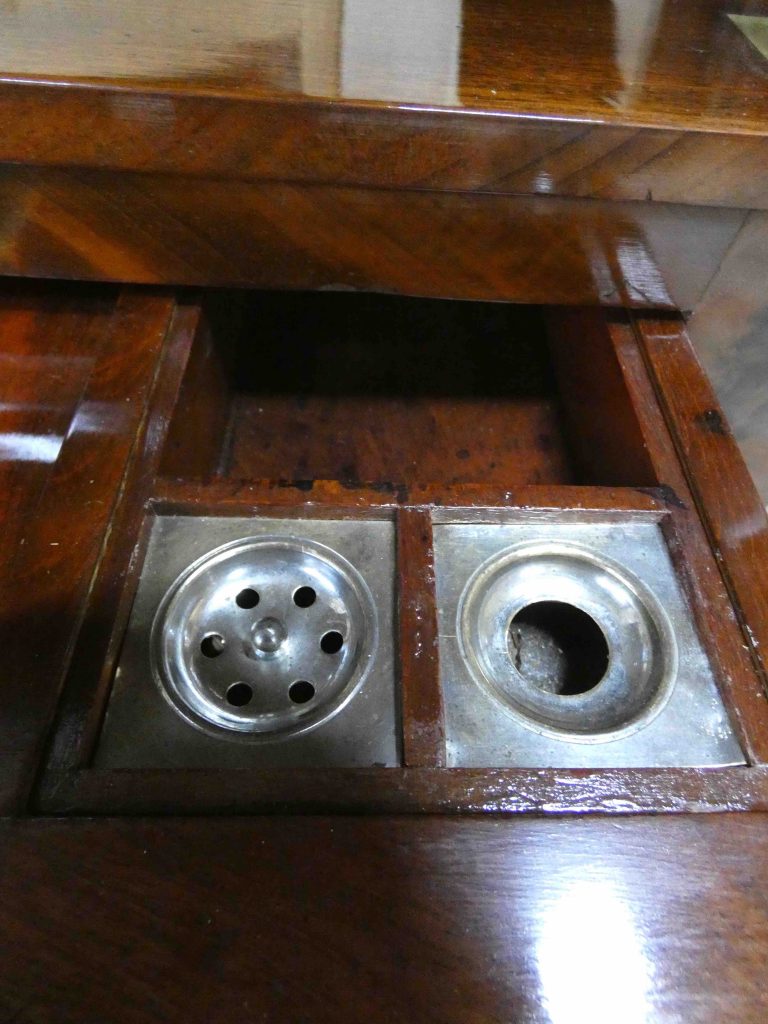
After restoration 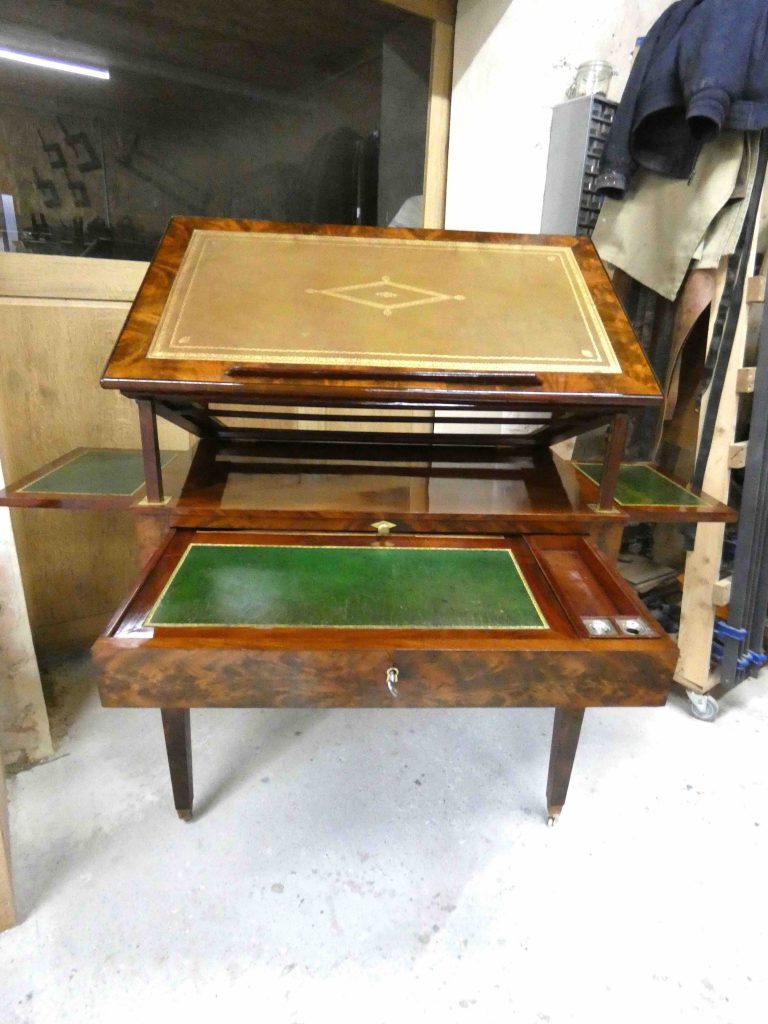
After restoration