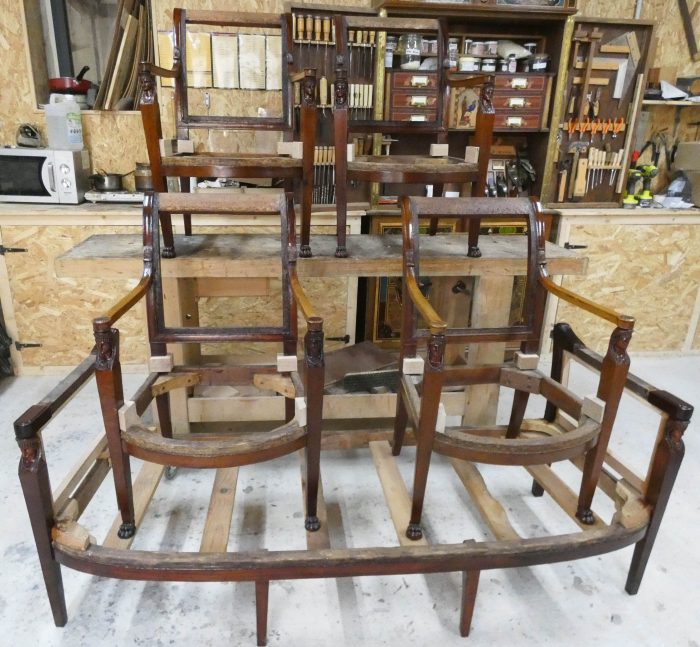
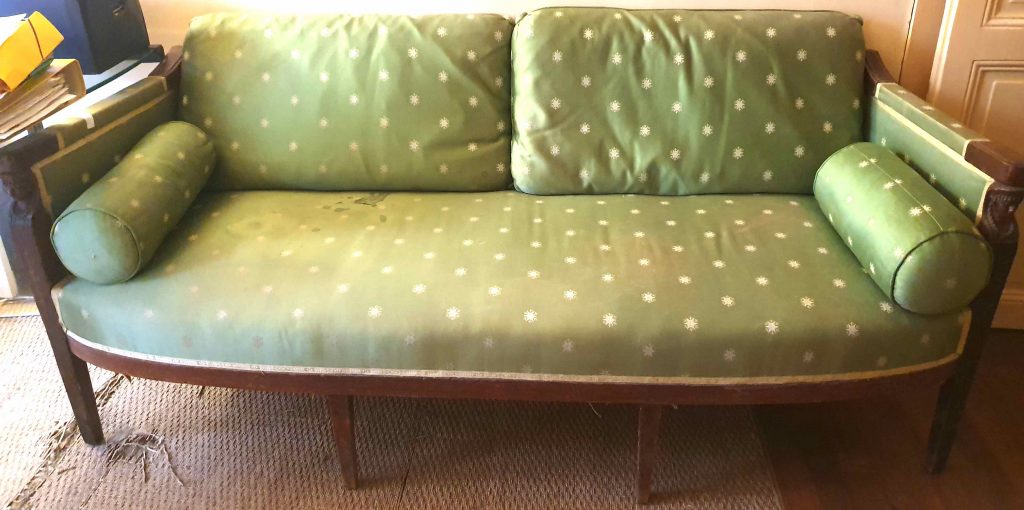
Before restoration
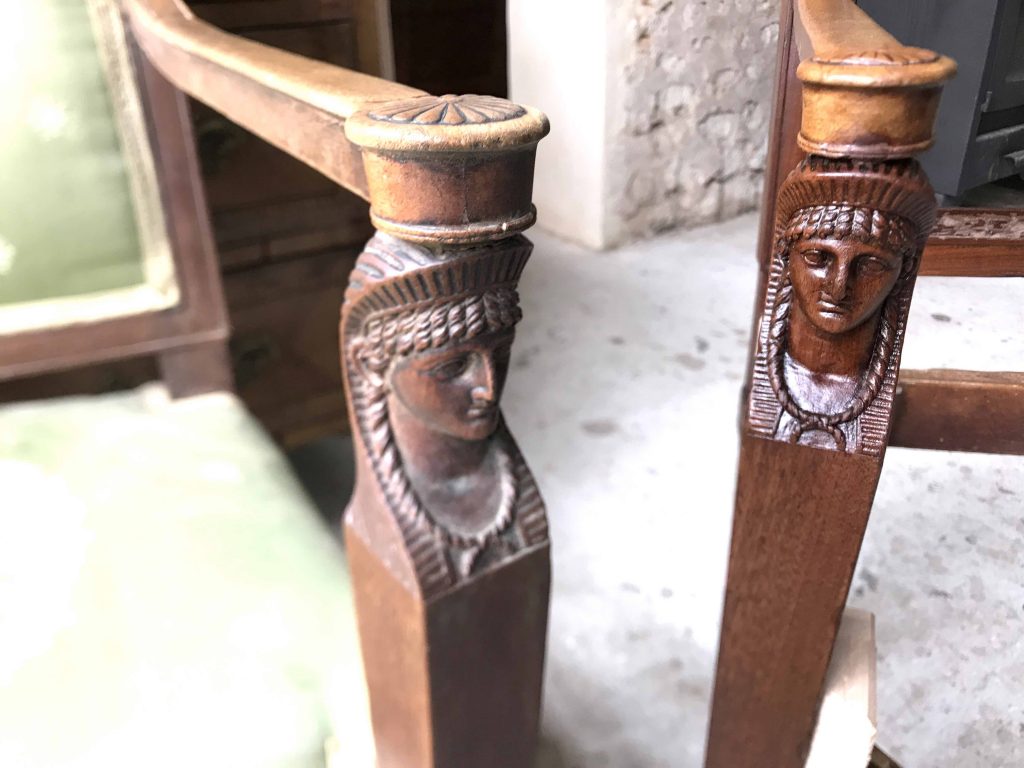
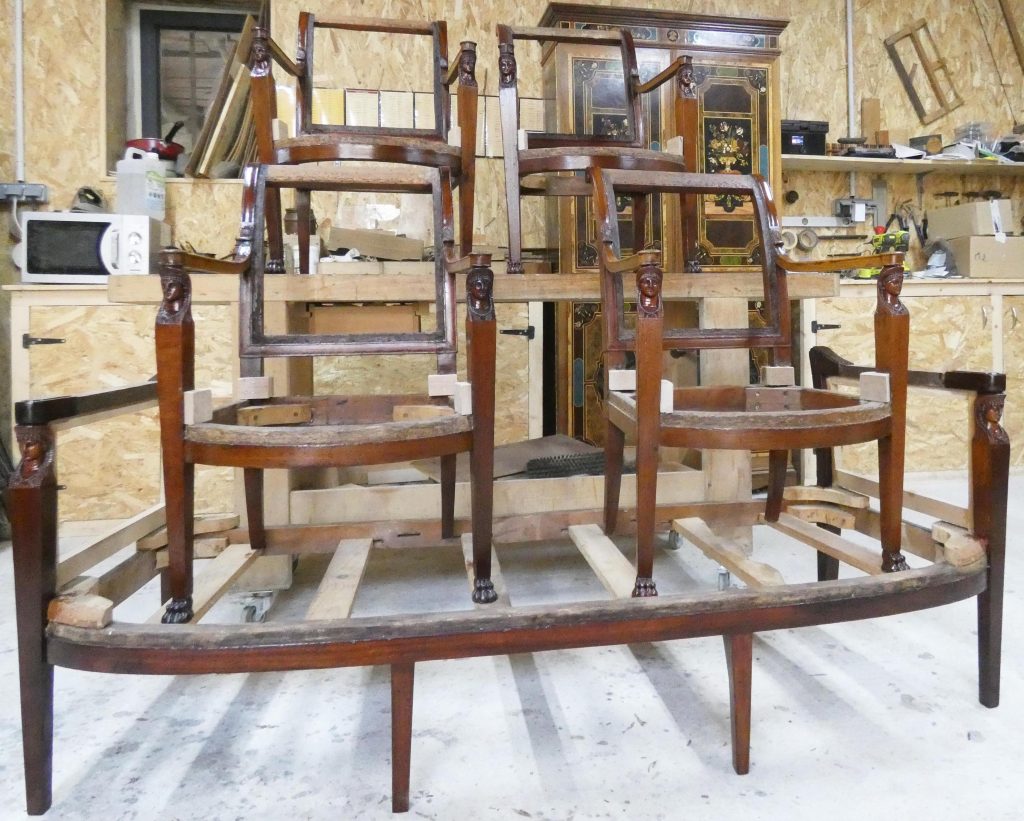
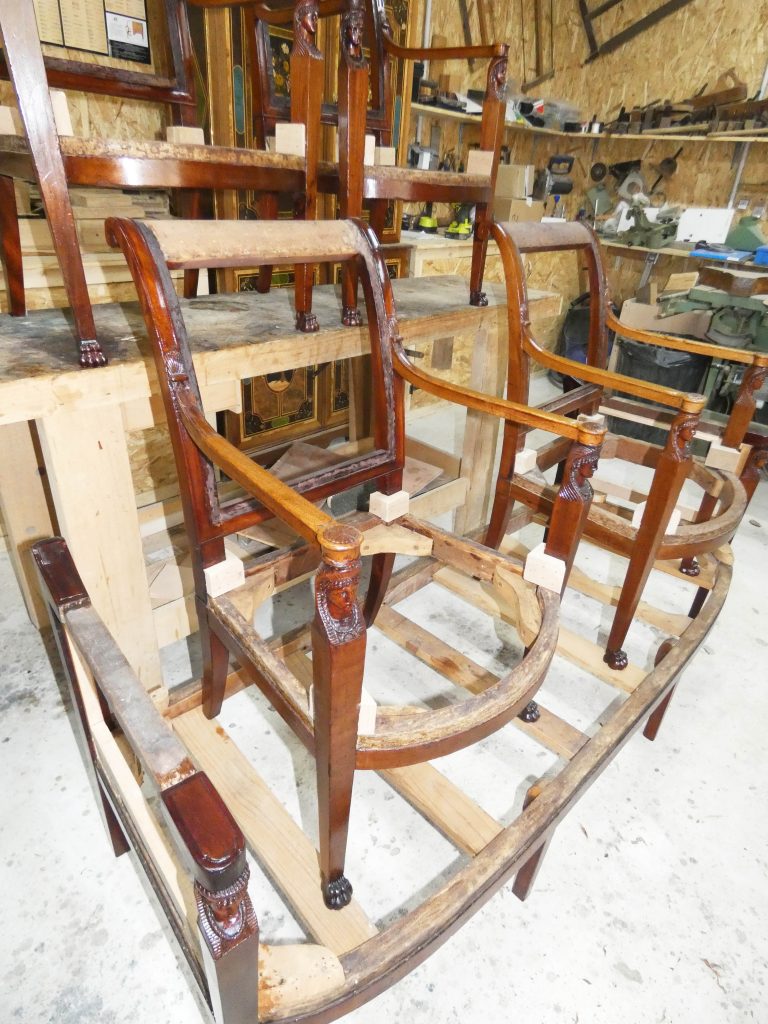
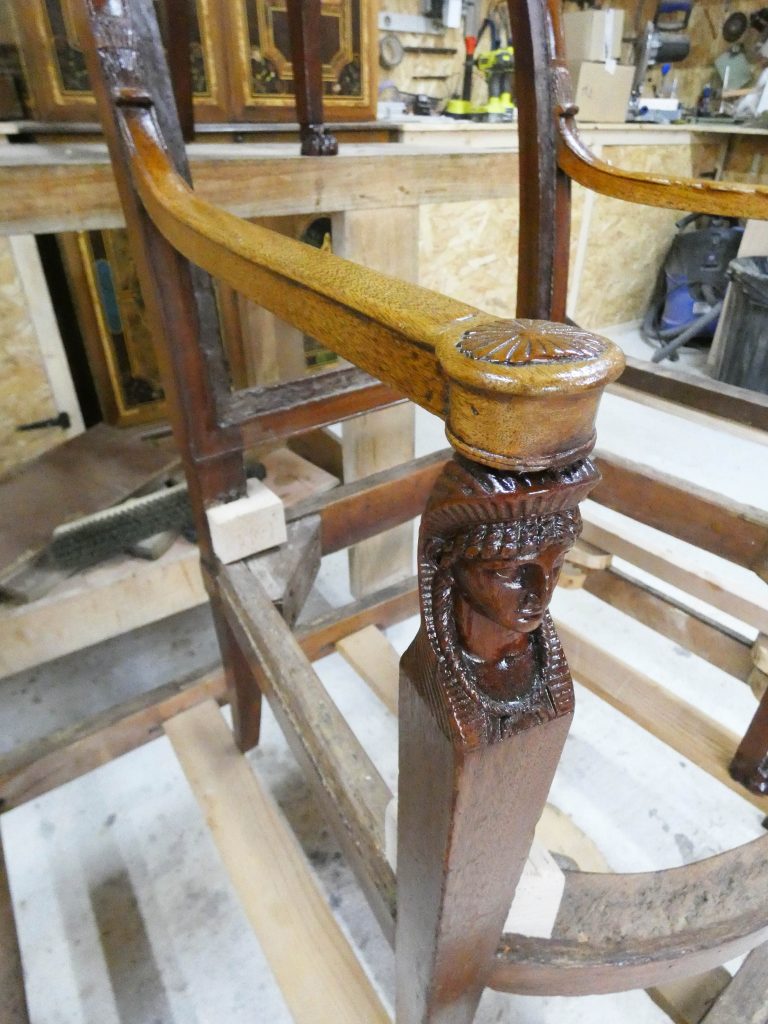
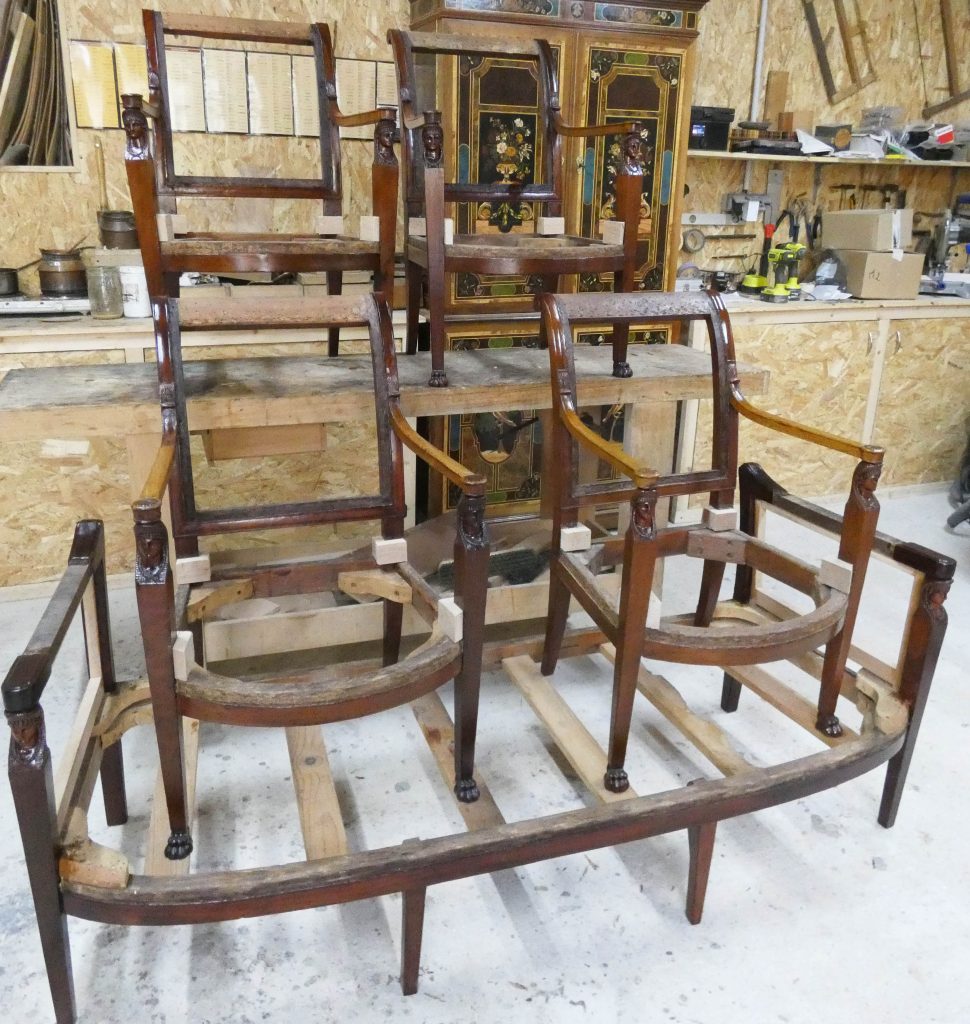
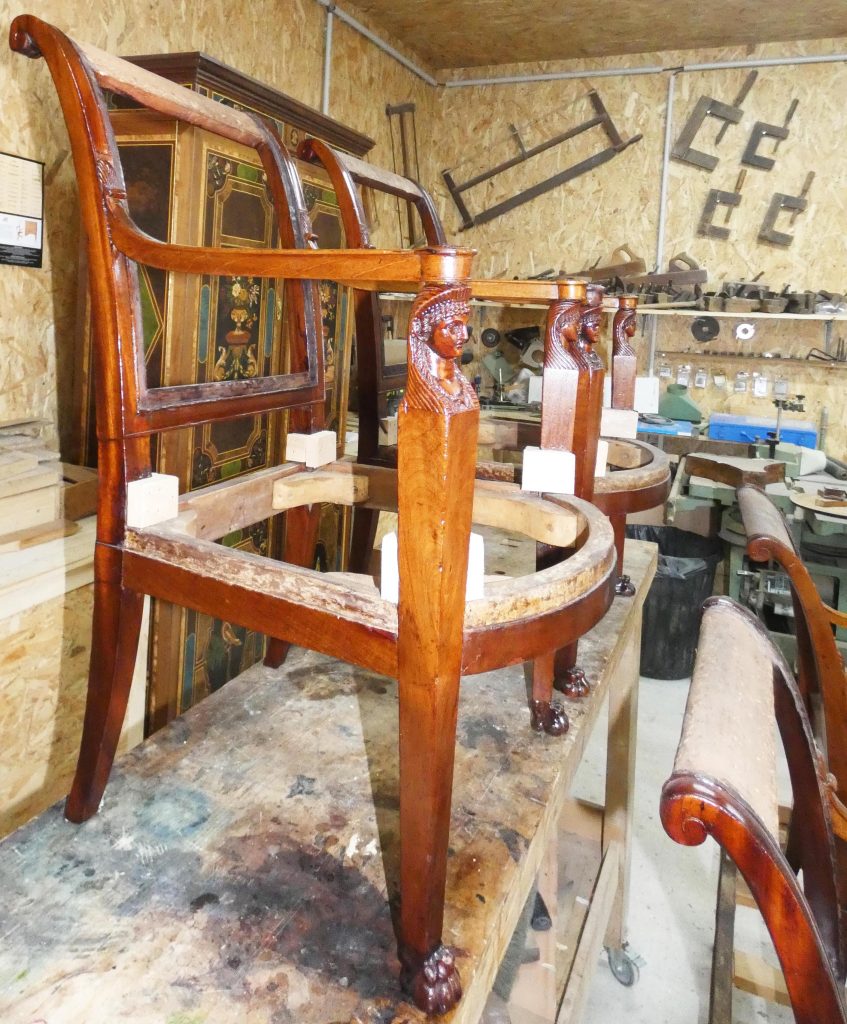
Extensive restoration and conservation work has been undertaken on this bench and its four armchairs from the Consulate period, stamped Jacob Frères, rue Meslée. The front and back legs are made of solid Cuban mahogany, while the crossbars are veneered. The armrests, supported by Egyptian heads, are made of light Saint-Domingue mahogany to create a contrast with the uprights. They are adorned with carved palmettes and rosettes in Cuban mahogany. The front legs are tapered and end in claw feet, while the rear legs are arched. The bench is a converted sofa.
- Bench H: 71.5 / L 168.5 / D: 66 cm
- Armchairs H: 90 / W: 57 / D: 52 cm
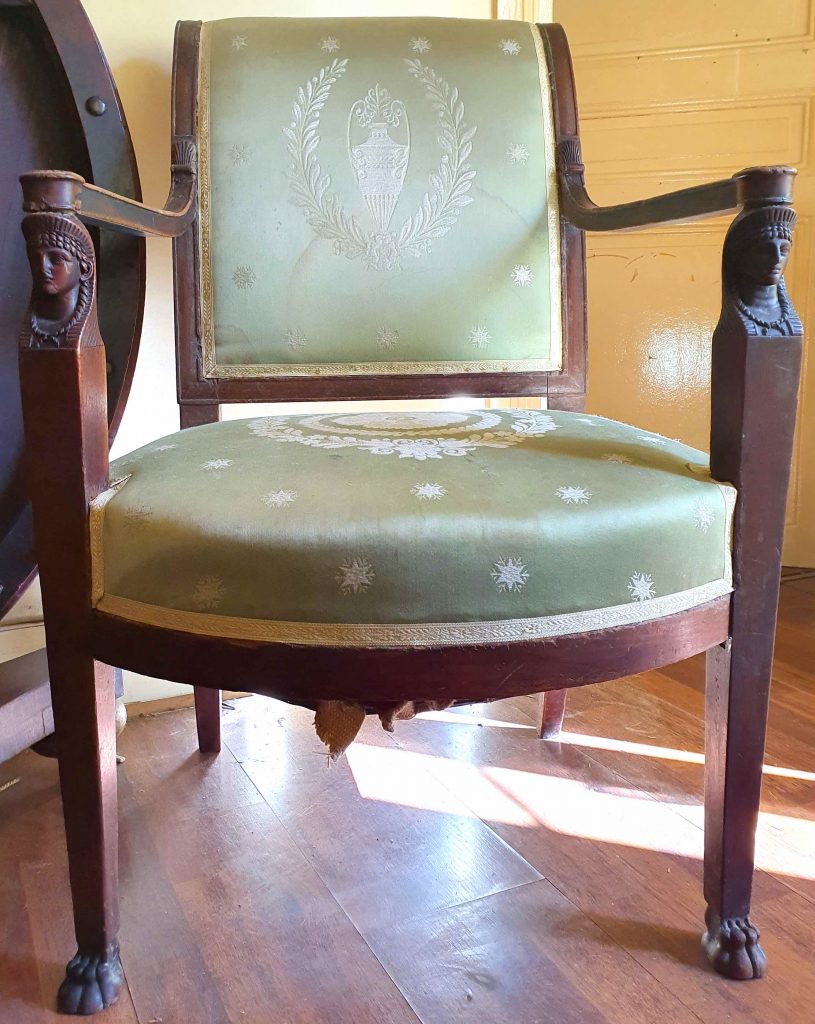
Before restoration 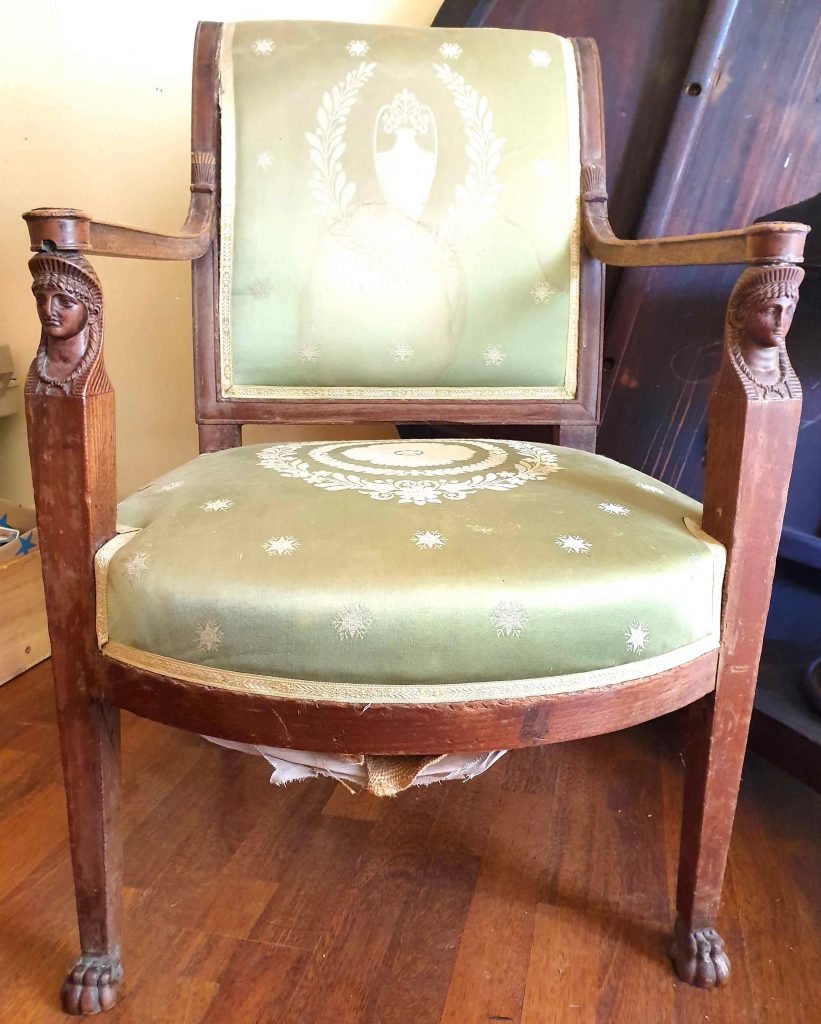
Before restoration
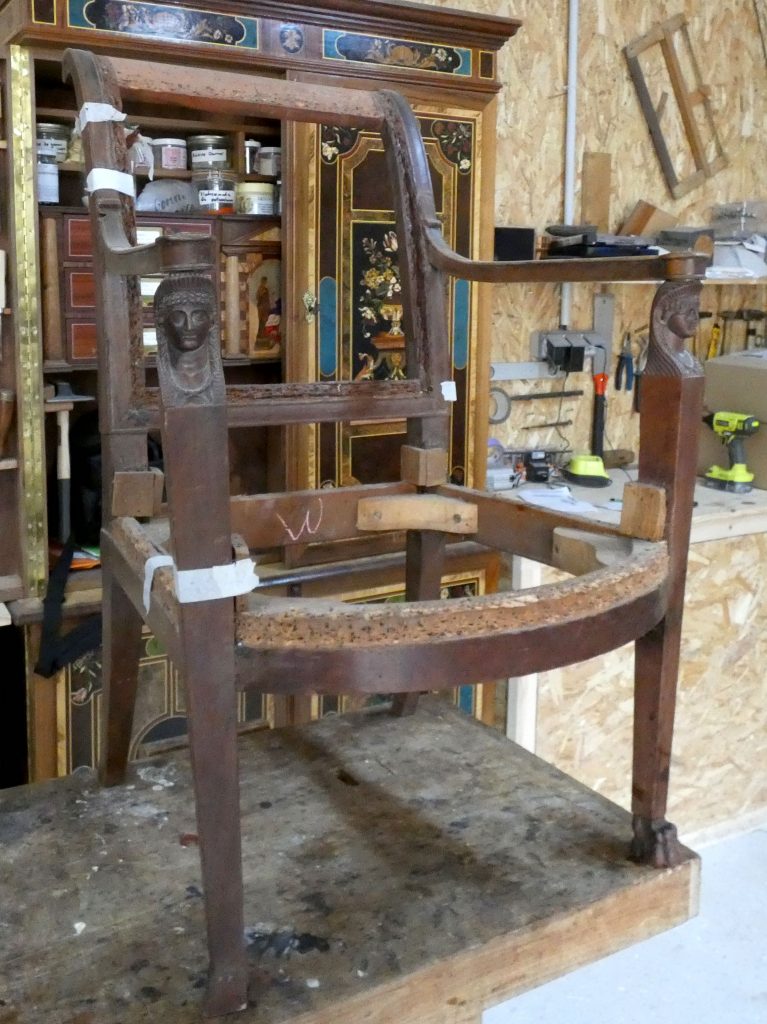
Before restoration 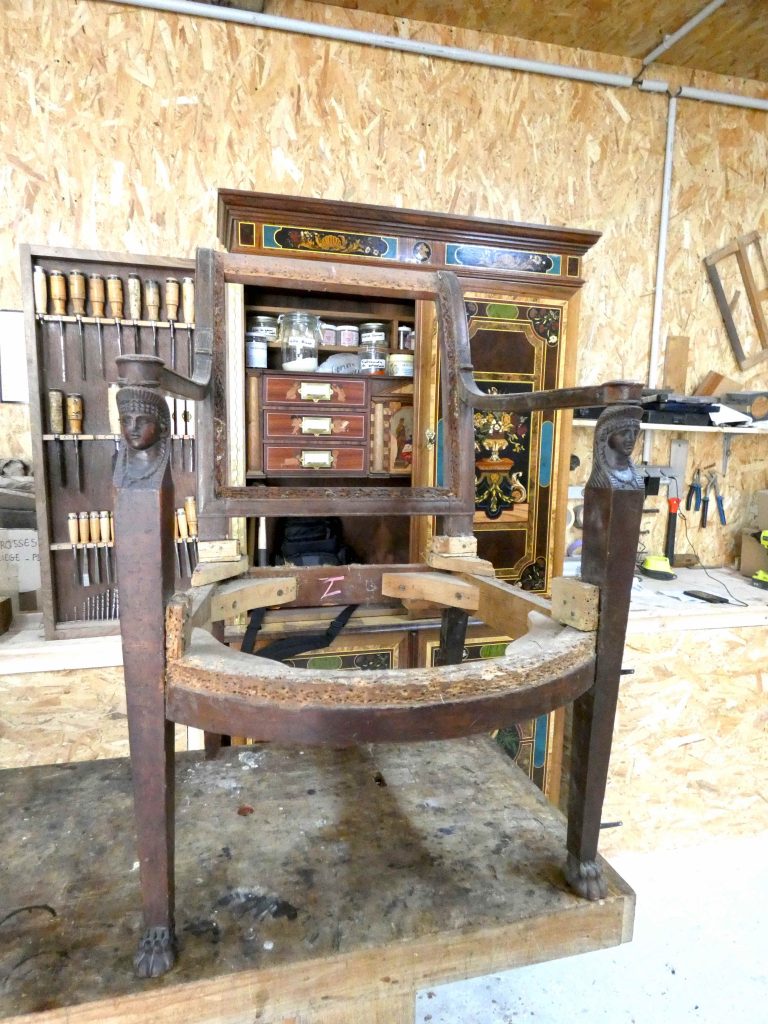
Before restoration
Due to successive reupholstering, the stamps have almost disappeared. They are nowhere to be found on the bench seat.
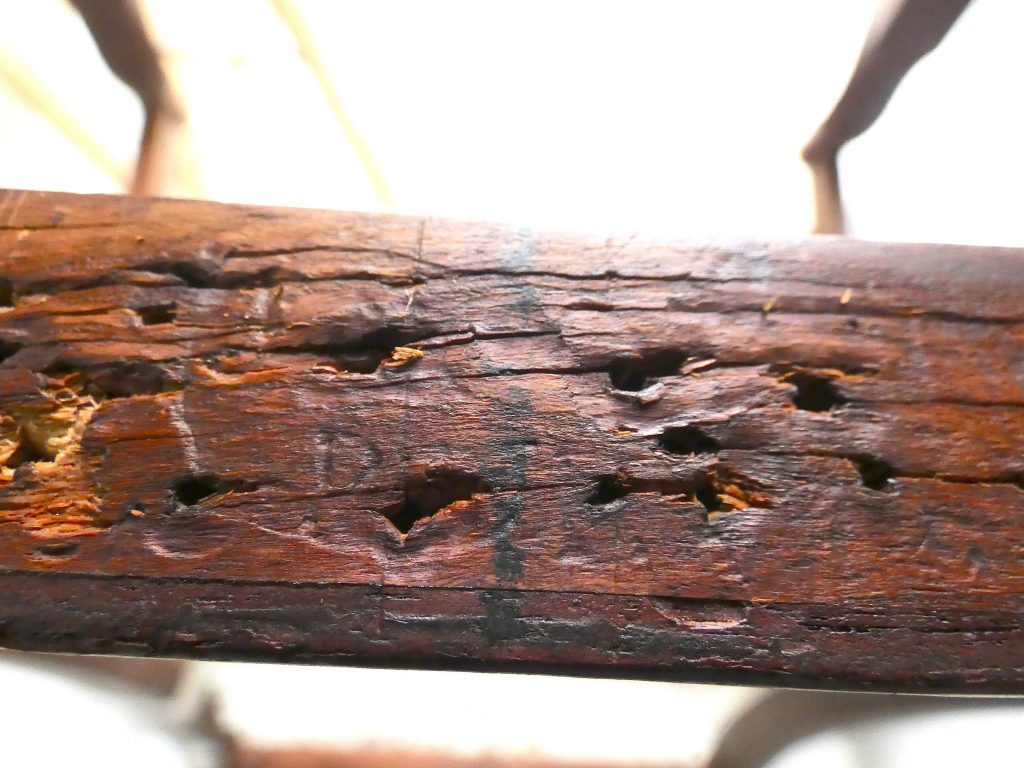
Stamp mark 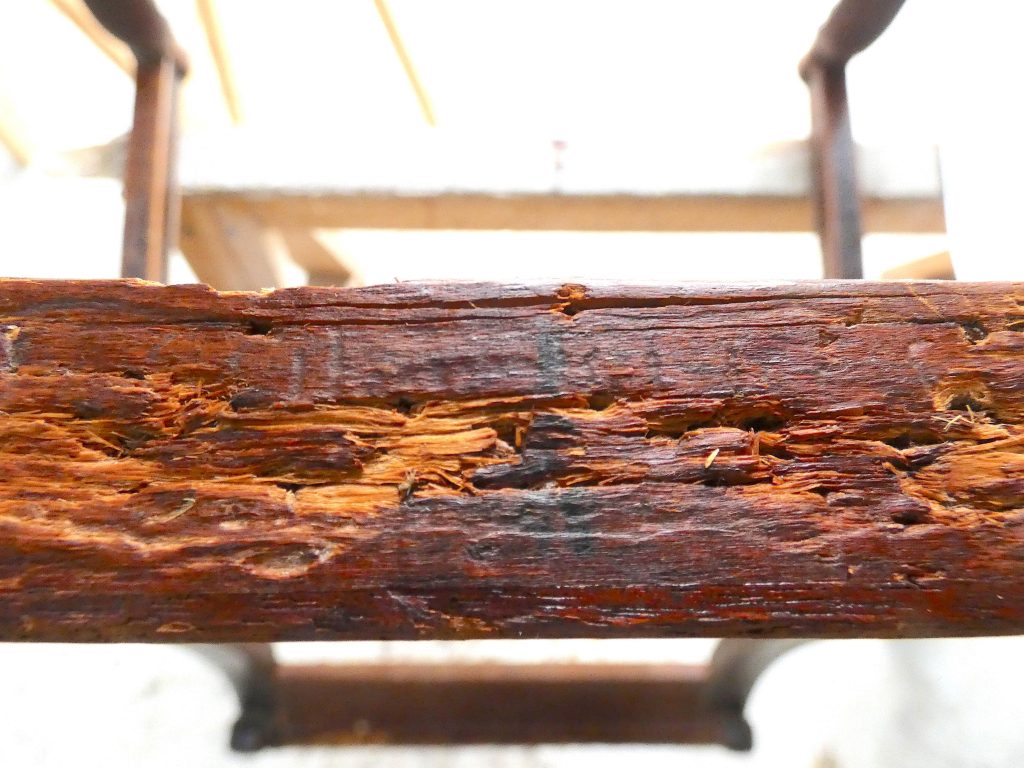
Stamp mark 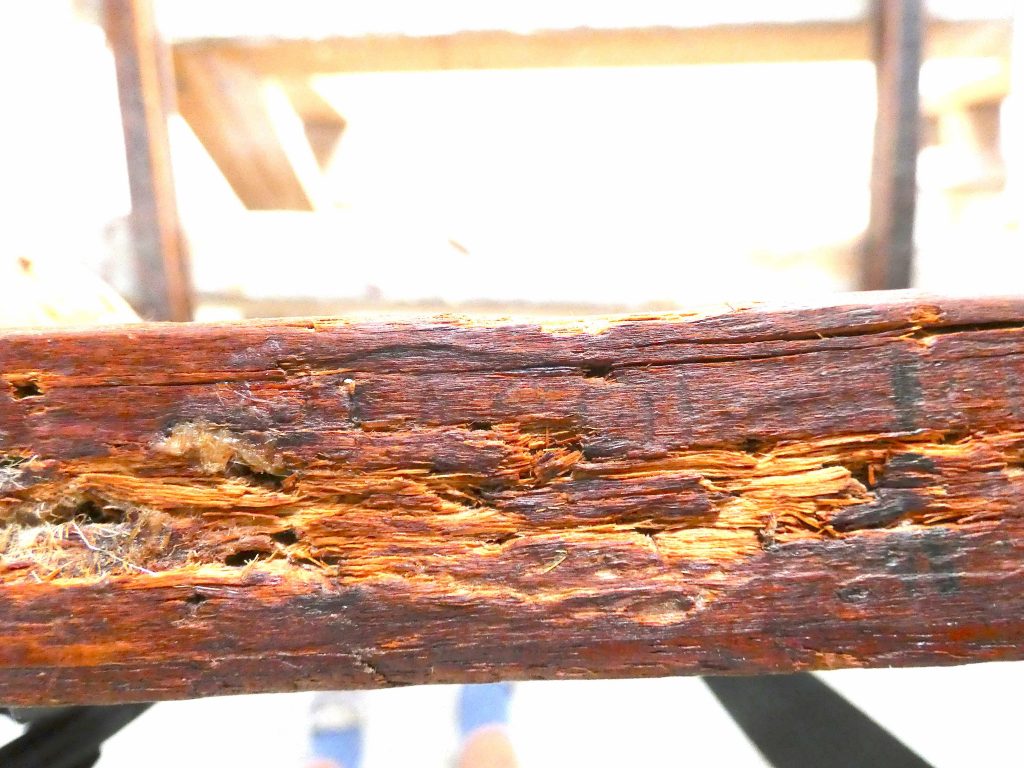
Stamp mark
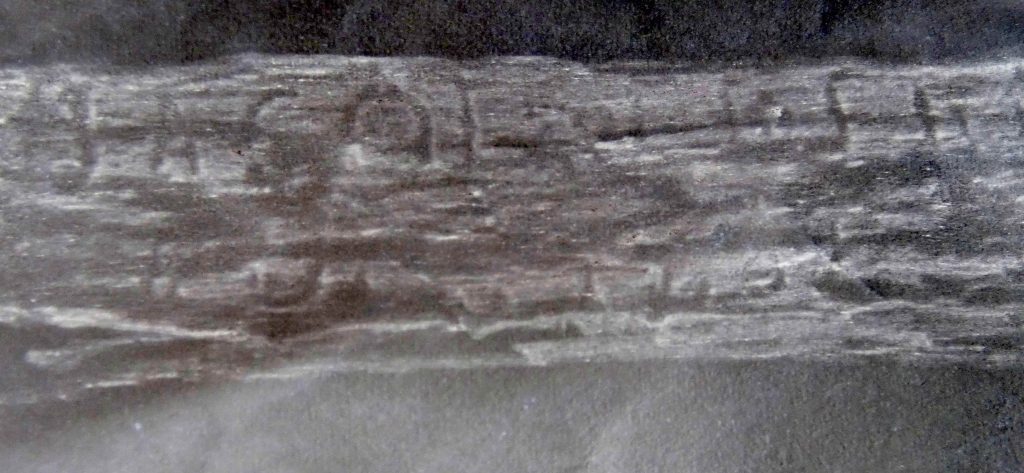

The Jacob Frères stamp corresponds to the association in 1796 of the two brothers Georges II (1768-1803) and François-Honoré-Georges (1770-1841) to take over the workshop of their father Georges Jacob.
This stamp was only used for 7 years. In 1803, following the death of Georges II, Georges Jacob Sr. founded a third company with his son François-Honoré and stamped JACOB.D R.MESLEE.
At the exhibitions of the products of Industry in Year IX (September 18, 1801) and Year X (September 22, 1802), The Jacob brothers were awarded a gold medal:« Their style is more distinctive, the details of the sculpture are treated with perfection » .
When Chaptal visited their factory in March 1803, he discovered many workshops: building carpentry, furniture carpentry, figure carving, ornamental carving, turning, painting and gilding, cabinetmaking, polishing, casting and molding, gilding on metals, molding, tapestry and mechanical locksmithing: 322 workers, 11 foremen and 9 apprentices worked there.
Their production, with its elegant lines and use of mahogany and various woods adorned with diverse inlays, still recalls that of the preceding period. Their new general style puts an end to the severity characterizing the Directoire style and allows for a first encounter with the rounded forms of the emerging Consulate period.
Josephine Bonaparte commissioned delicate, innovative furniture from the Jacob Brothers for her house on Rue Chantereine. Shortly afterward, they furnished Madame Récamier's residence on Rue du Mont Blanc, based on designs by the architect Berthault. Madame Récamier's bed (now in the Louvre Museum) was the first to feature the "boat" shape and swans as part of its decoration.
In 1800, the First Consul commissioned them to furnish all the rooms at Malmaison and the Tuileries Palace. Their other clients included General Moreau, Cambacérès, Gaudin, and Mademoiselle Mars.
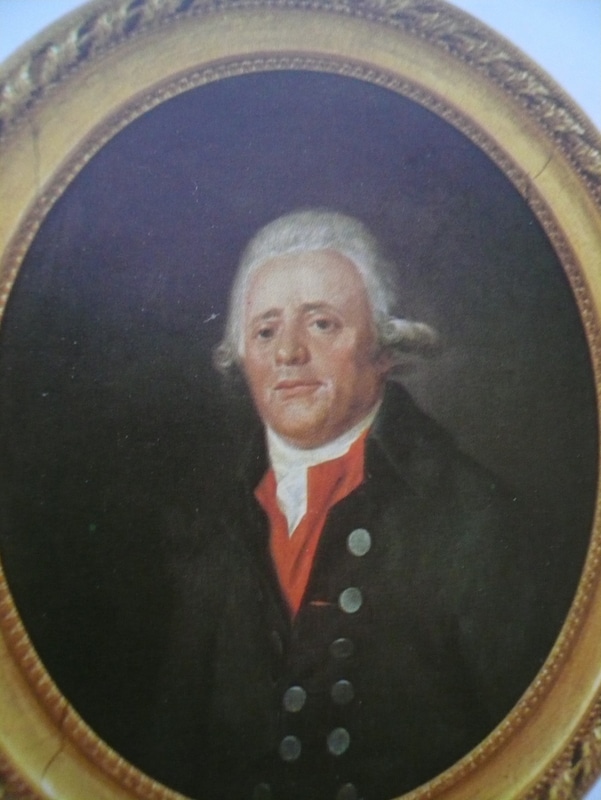
Restoration / Conservation
The work required on these pieces of furniture is twofold. The goal is to preserve as much as possible, but given that they are armchairs, it is essential that they regain their sturdiness in order to restore their function and halt their deterioration. Because when you look at these armchairs, you see that they have been literally butchered. Successive upholstery and reupholstering have completely ripped open the upholstery grooves. Not to mention the multitude of wood splinters caused by the hundreds of tacks that have been driven in and removed.
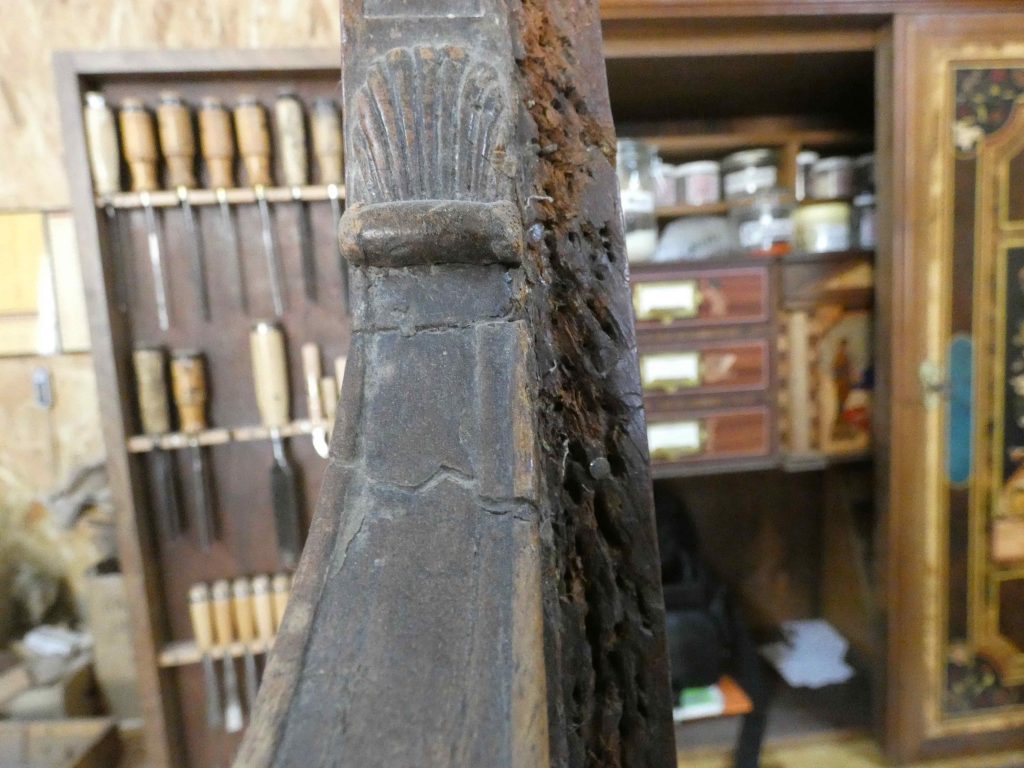
Old repair 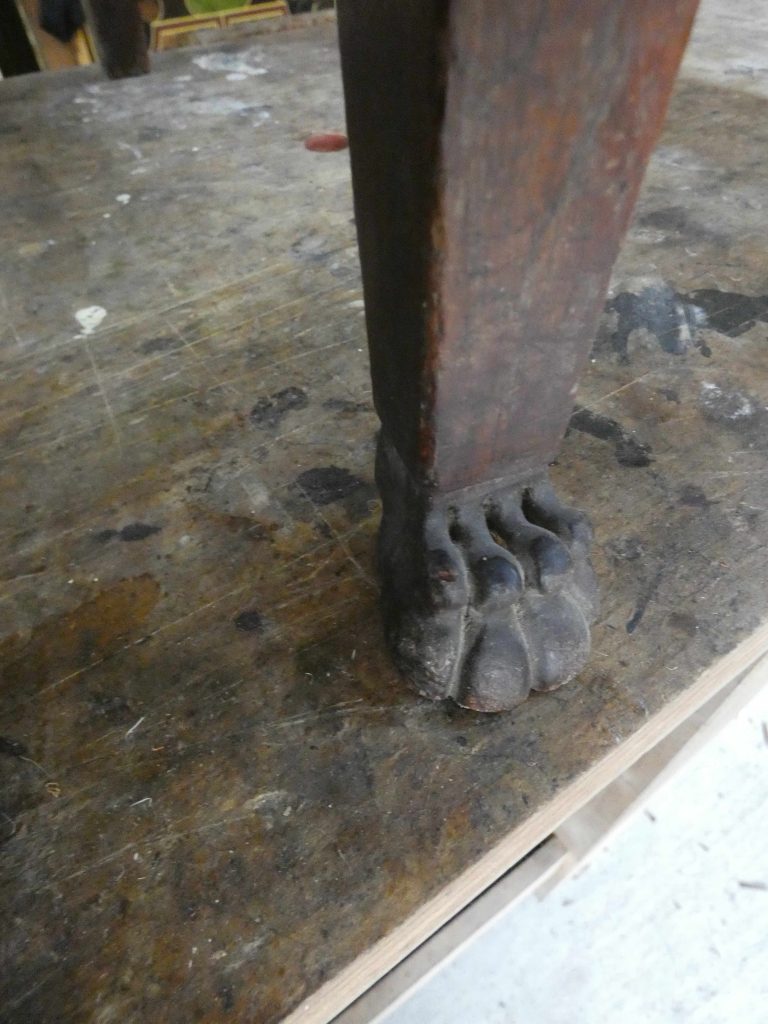
Detail of a lion's paw 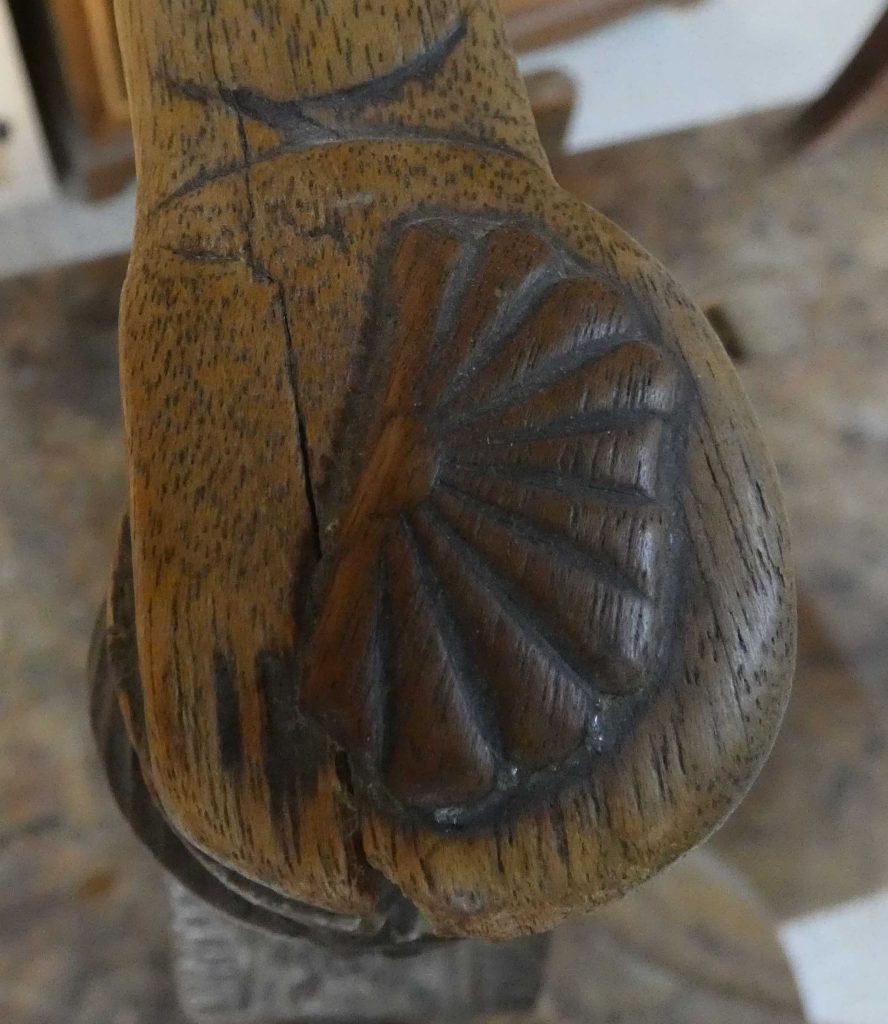
Partial loss of the rosette 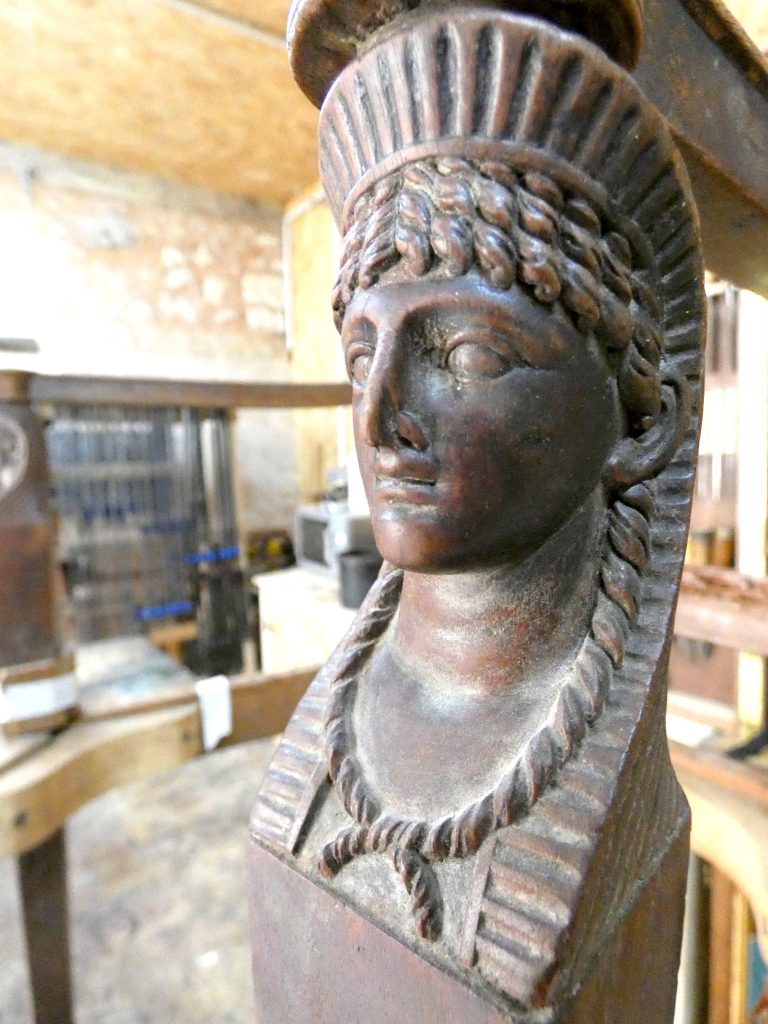
Detail of the Egyptian head sculpture 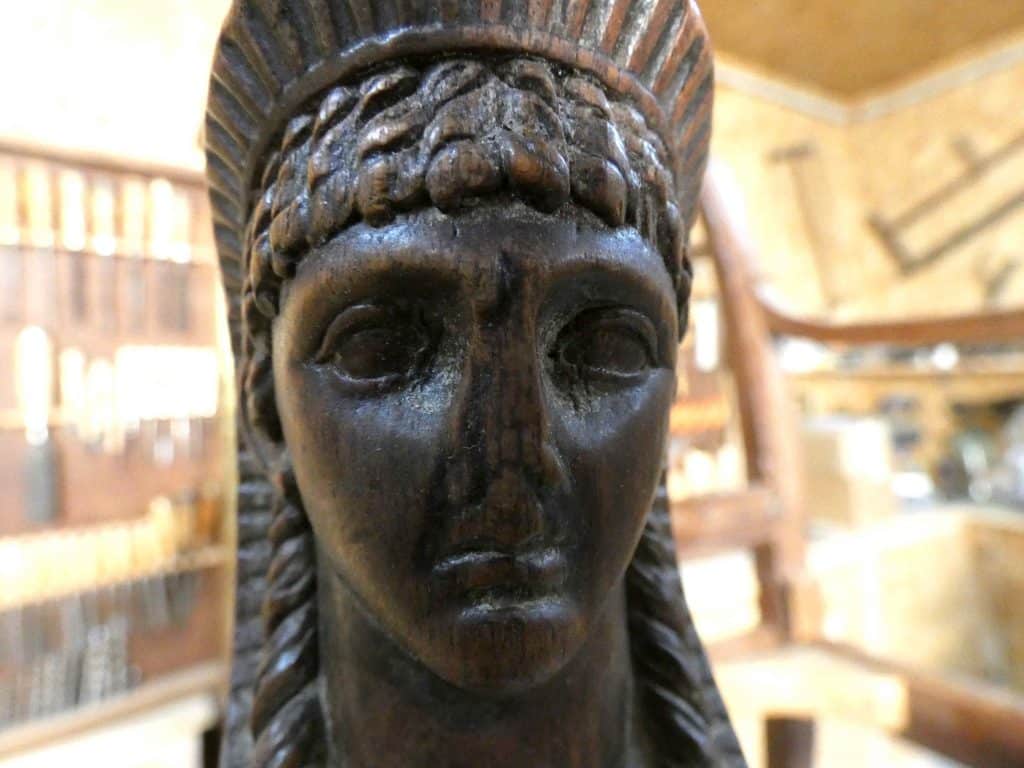
The nose is missing 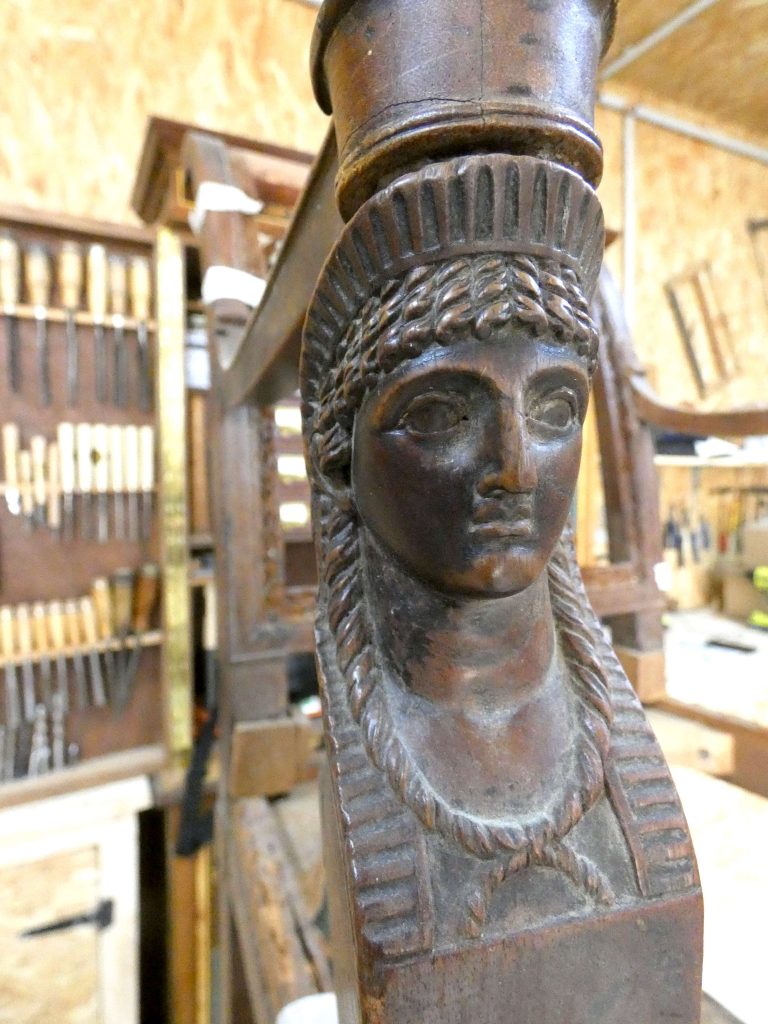
Detail of the Egyptian head sculpture
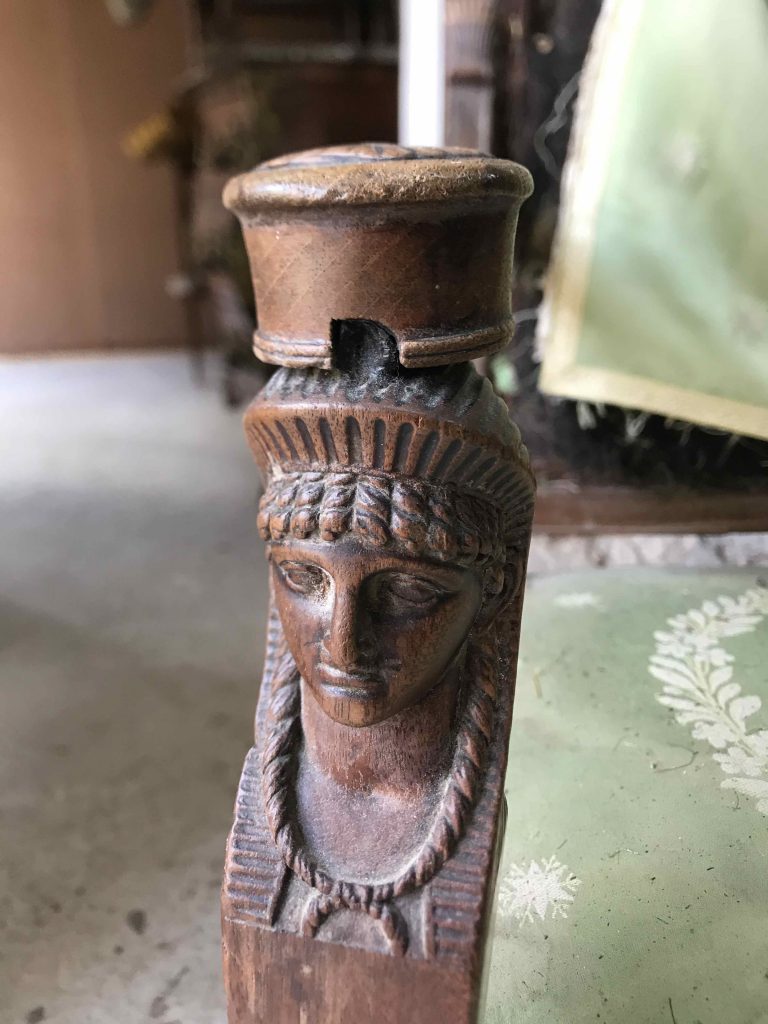
Lack of mass 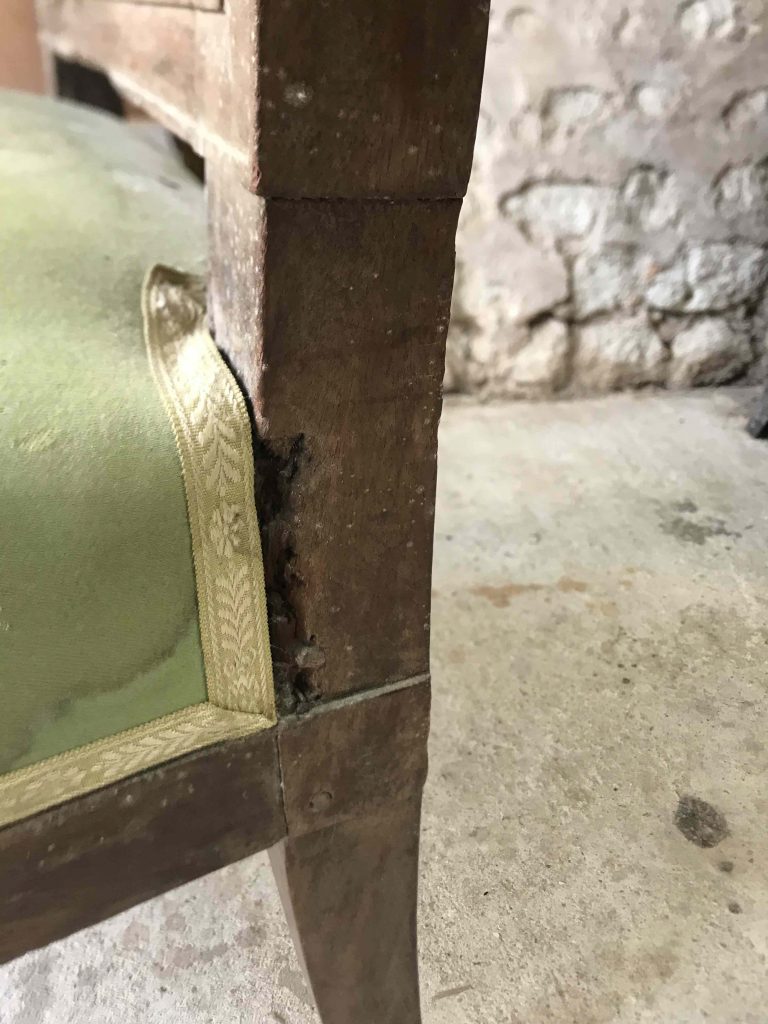
Lack of mahogany 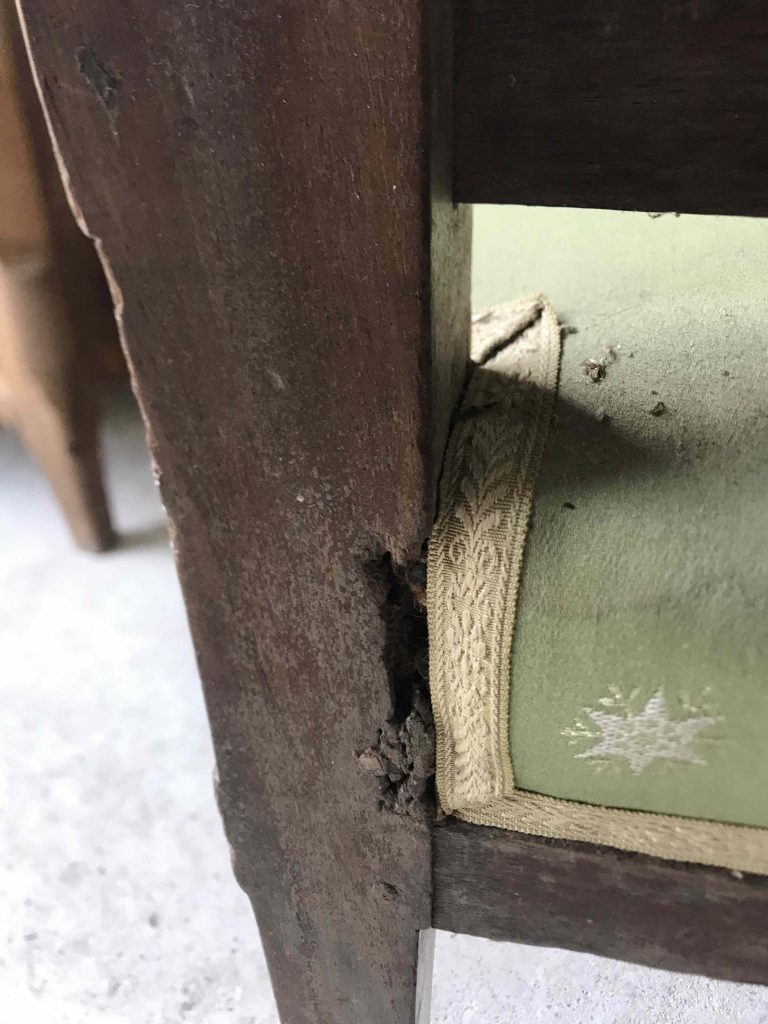
Lack of mahogany 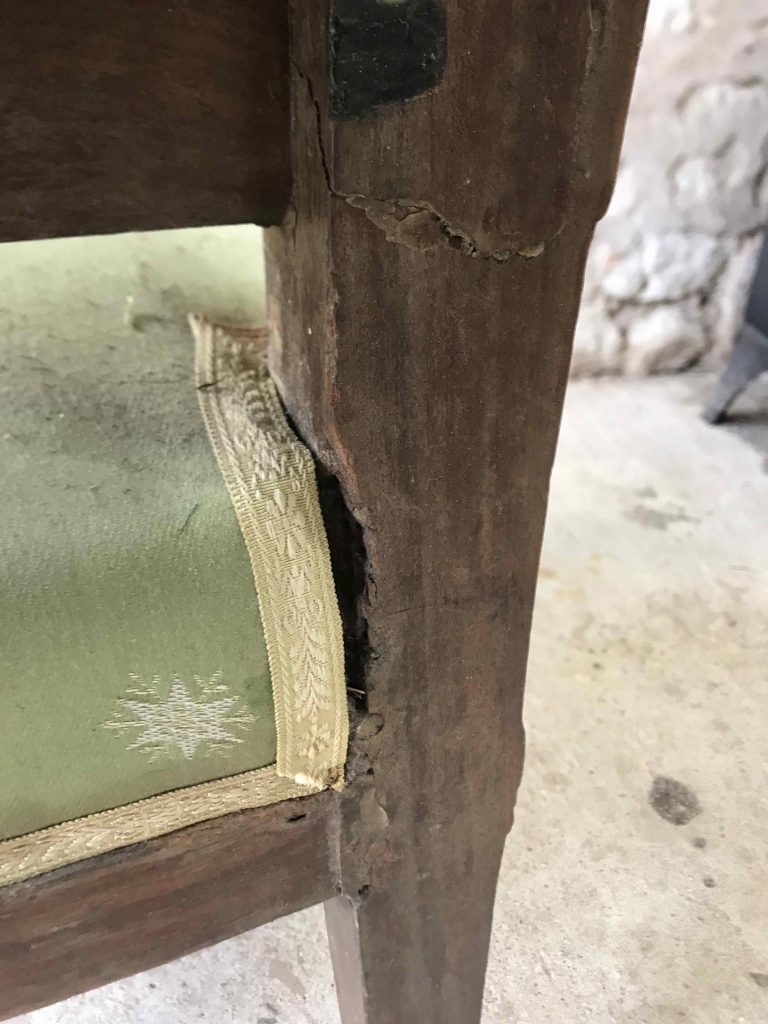
Lack of mahogany 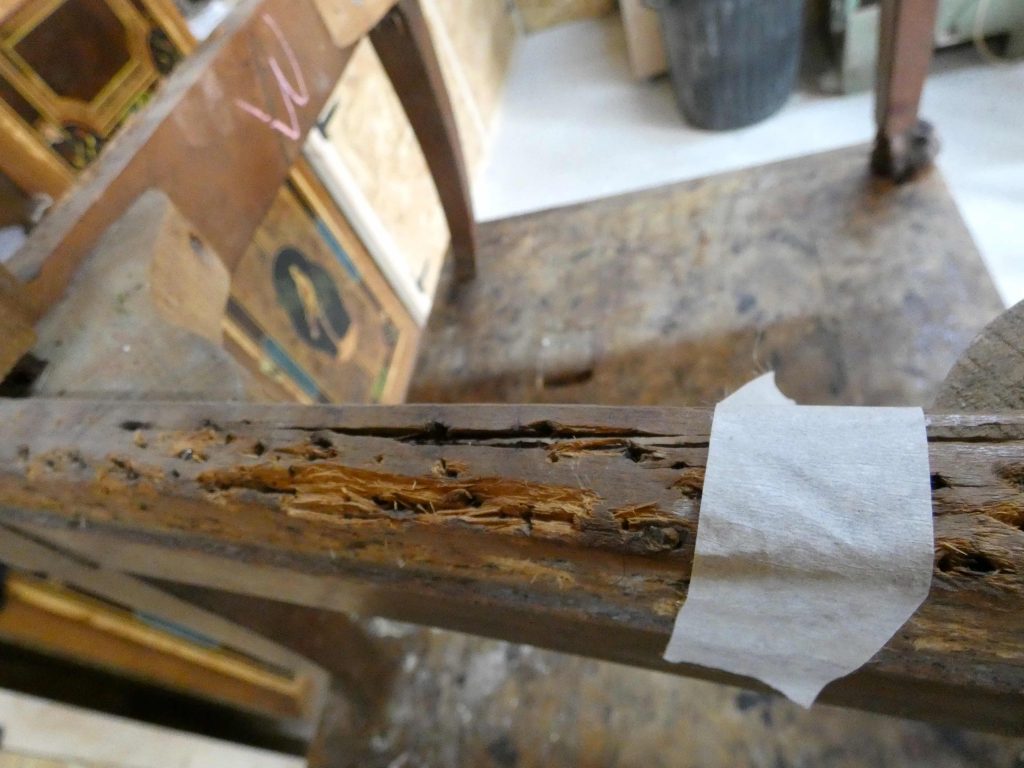
Split upholstery rebate 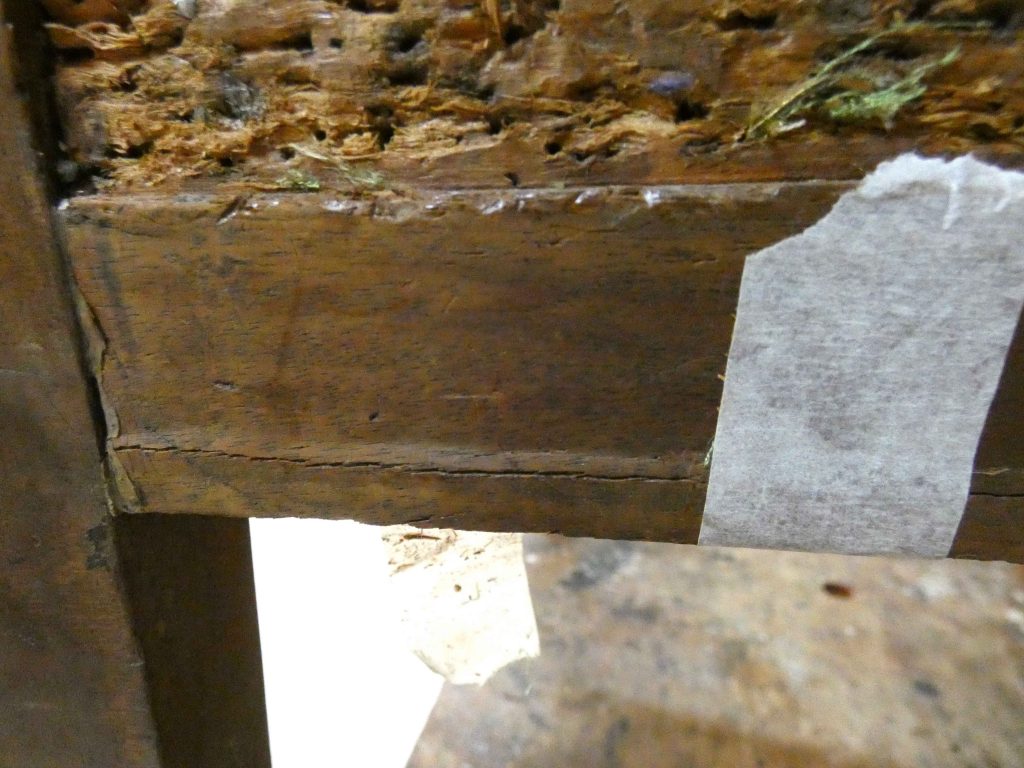
Split side rail 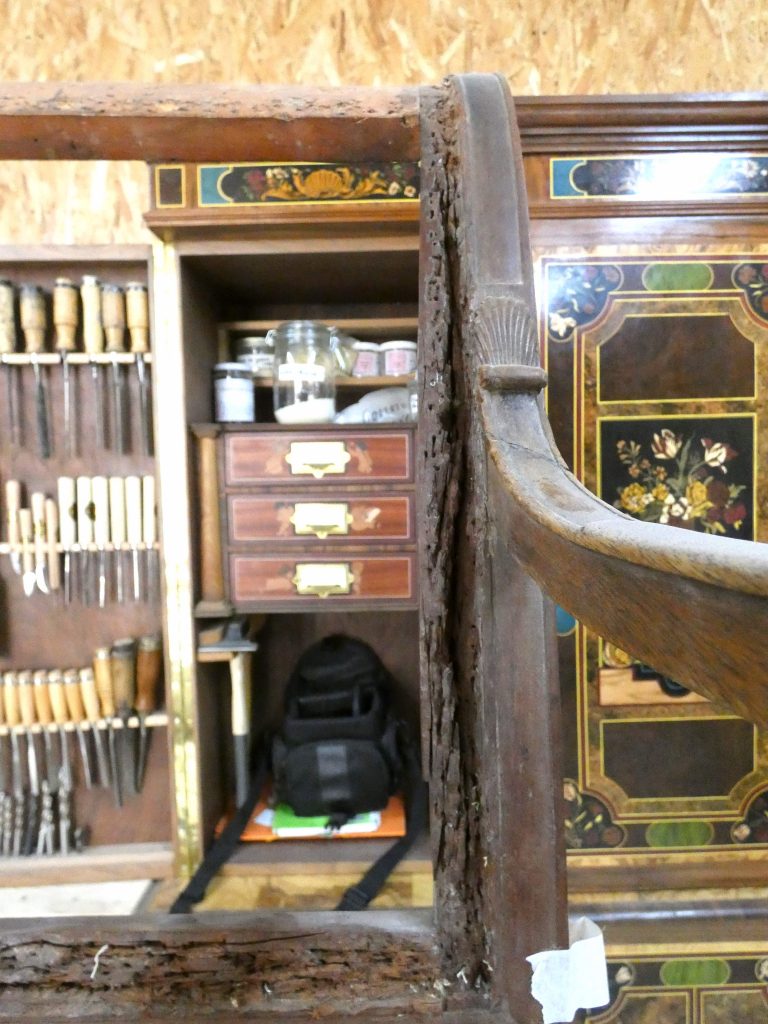
The rebate on the right rear pillar was split open and completely emptied. 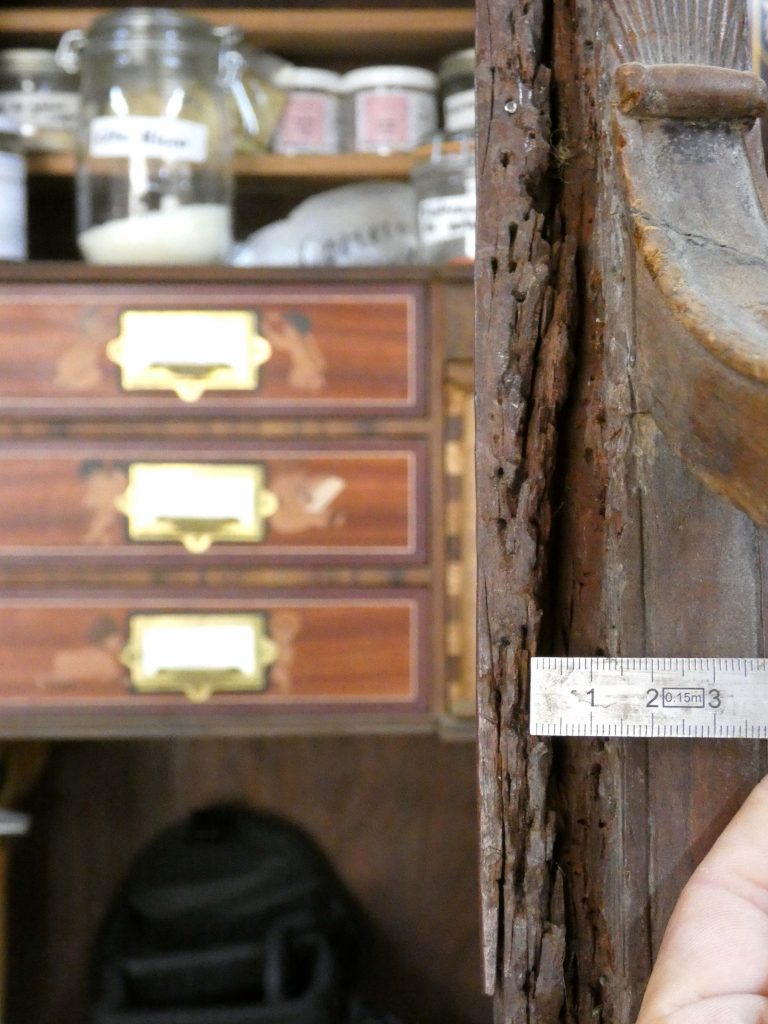
There is a 1 cm gap in the wood 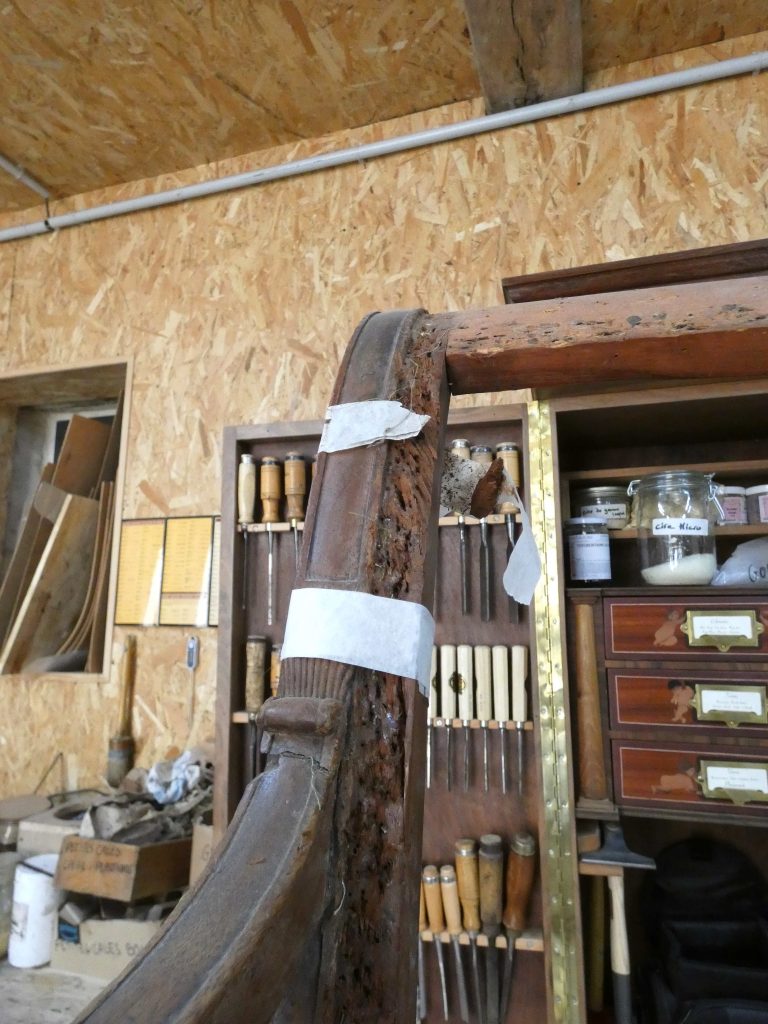
Split rebate 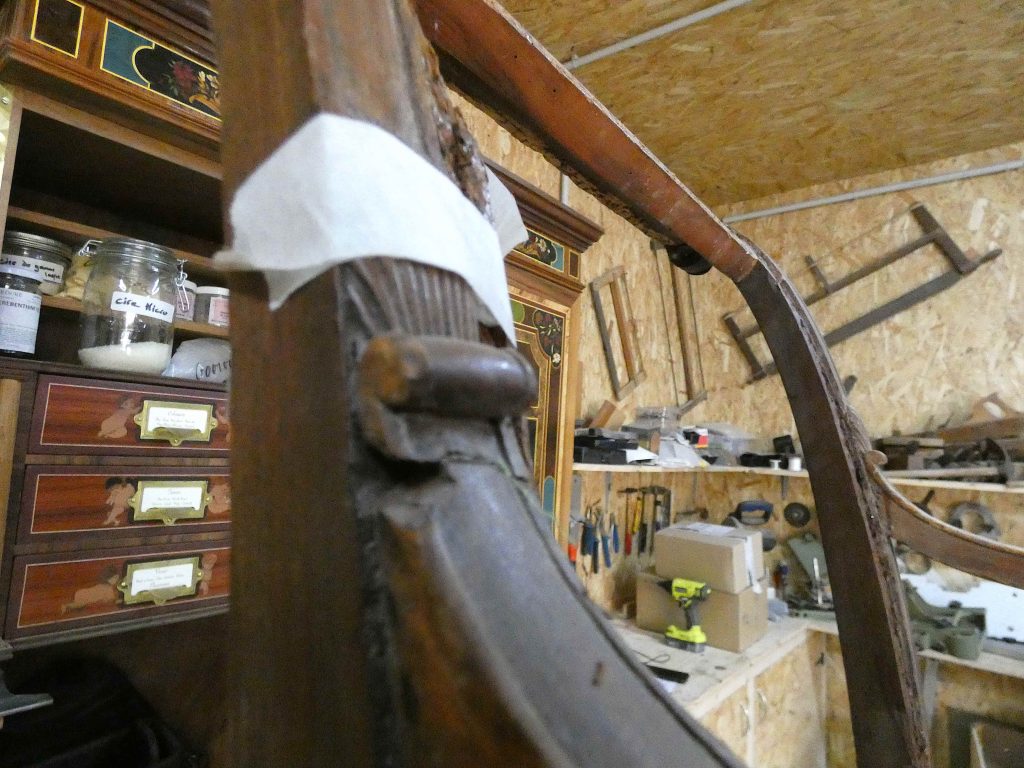
Wood shortage 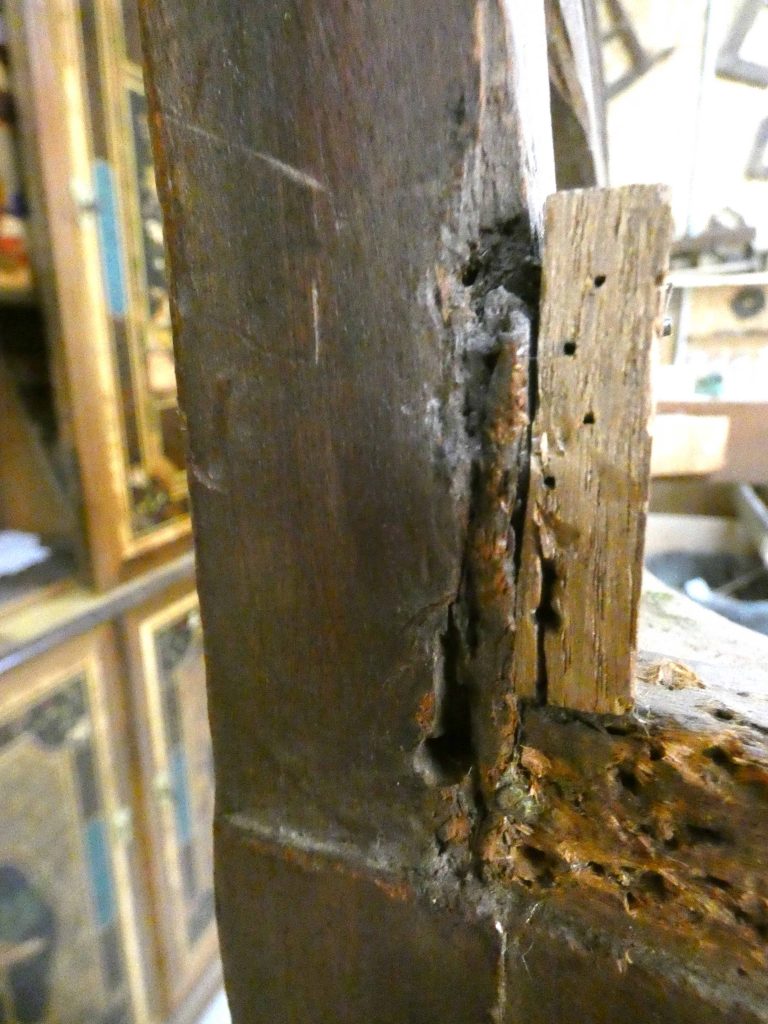
Wood shortage 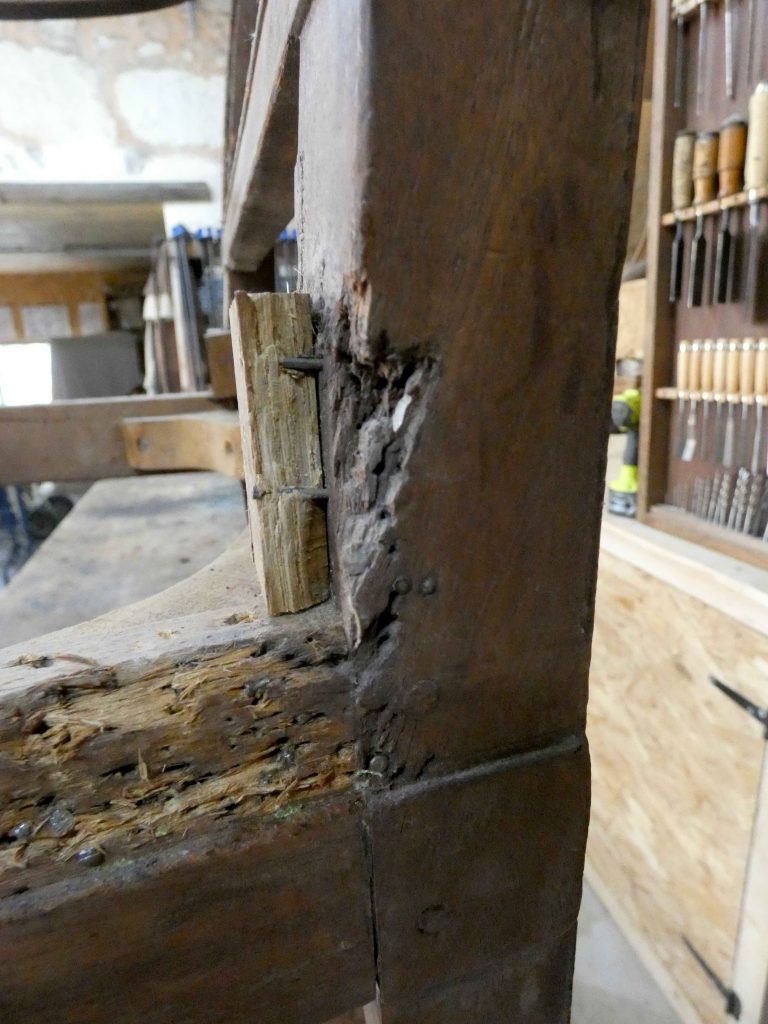
Lack of material 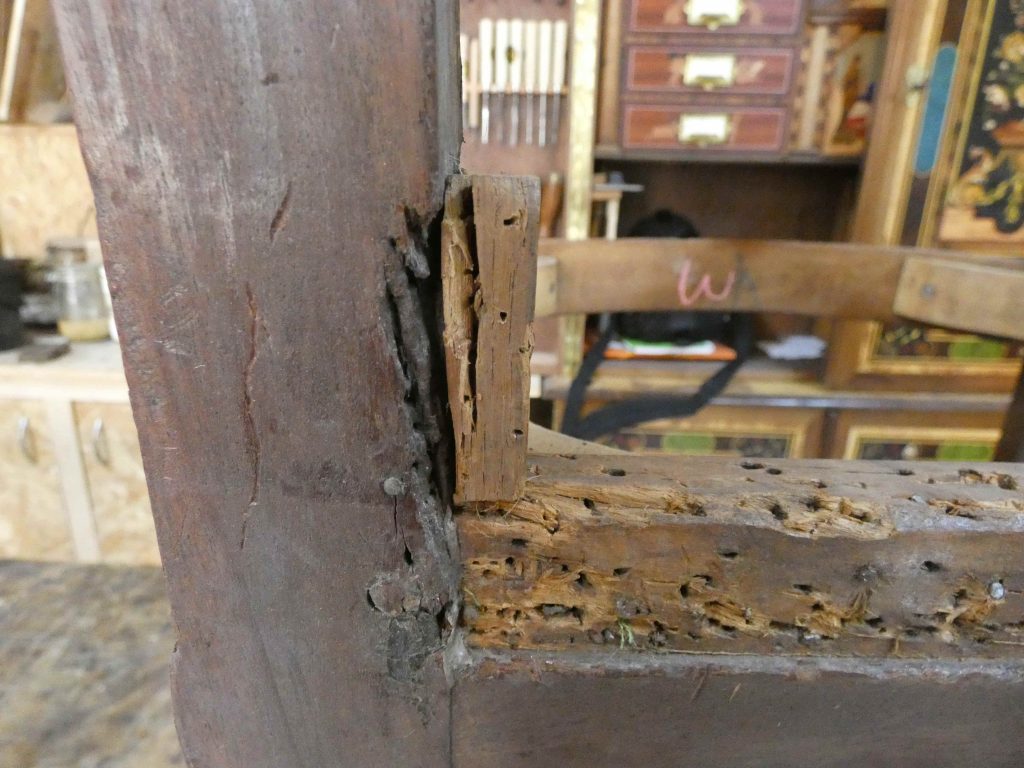
Lack of material 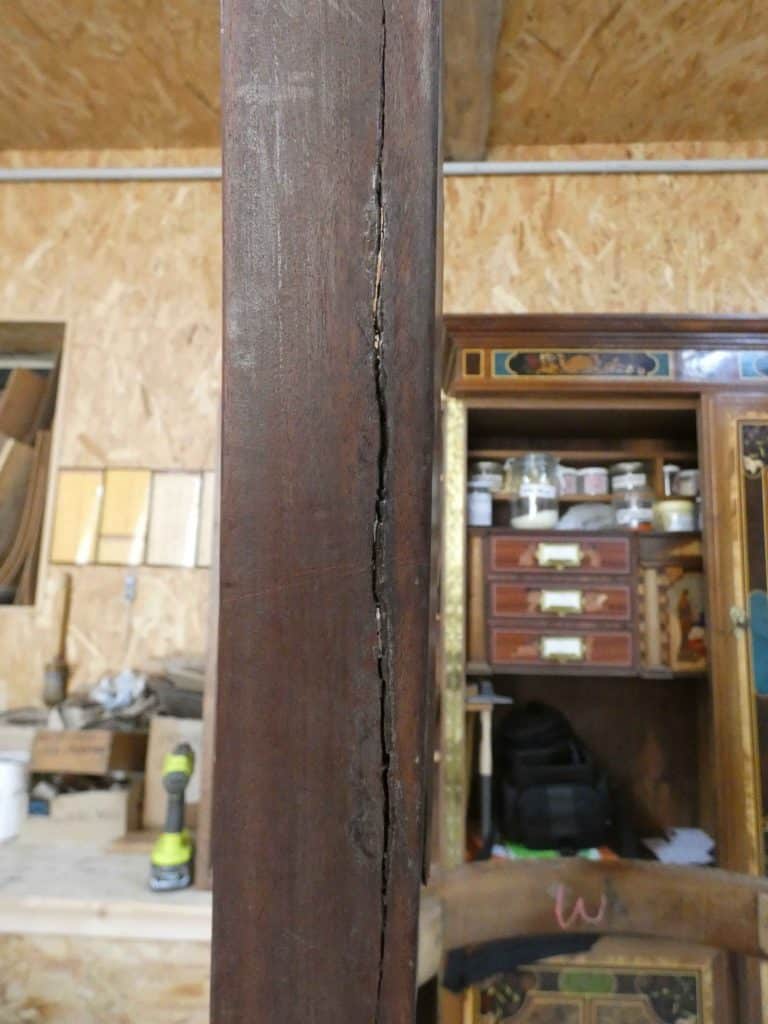
Split amount 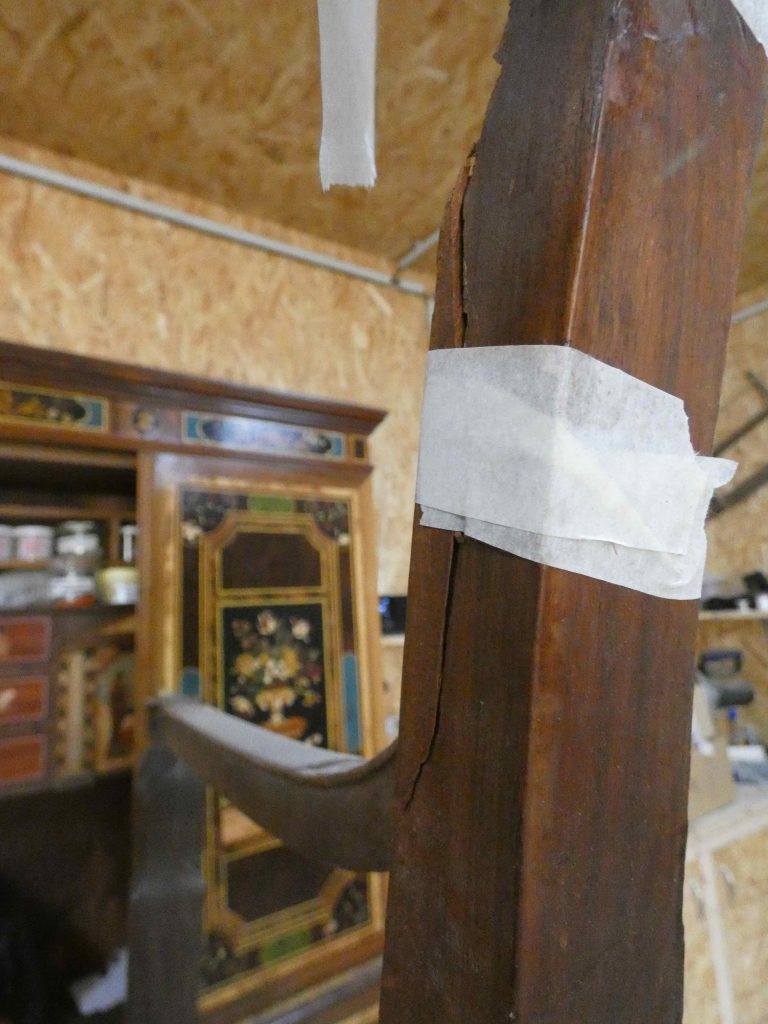
Wood Splinter 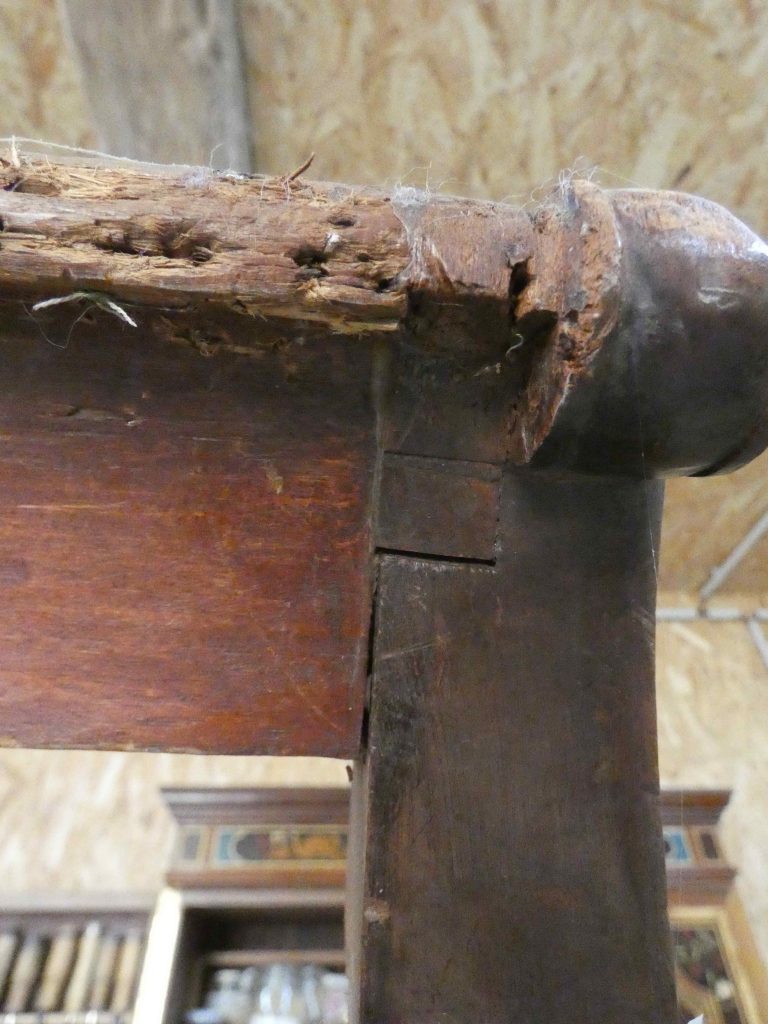
Wood Splinter 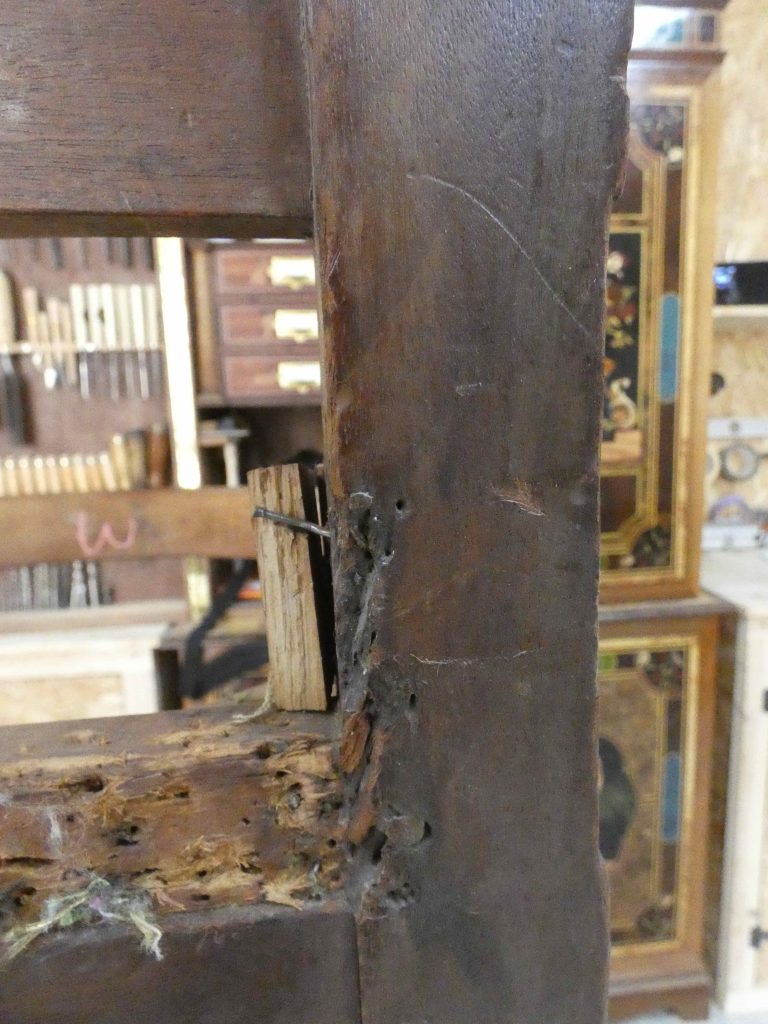
Wood shortage 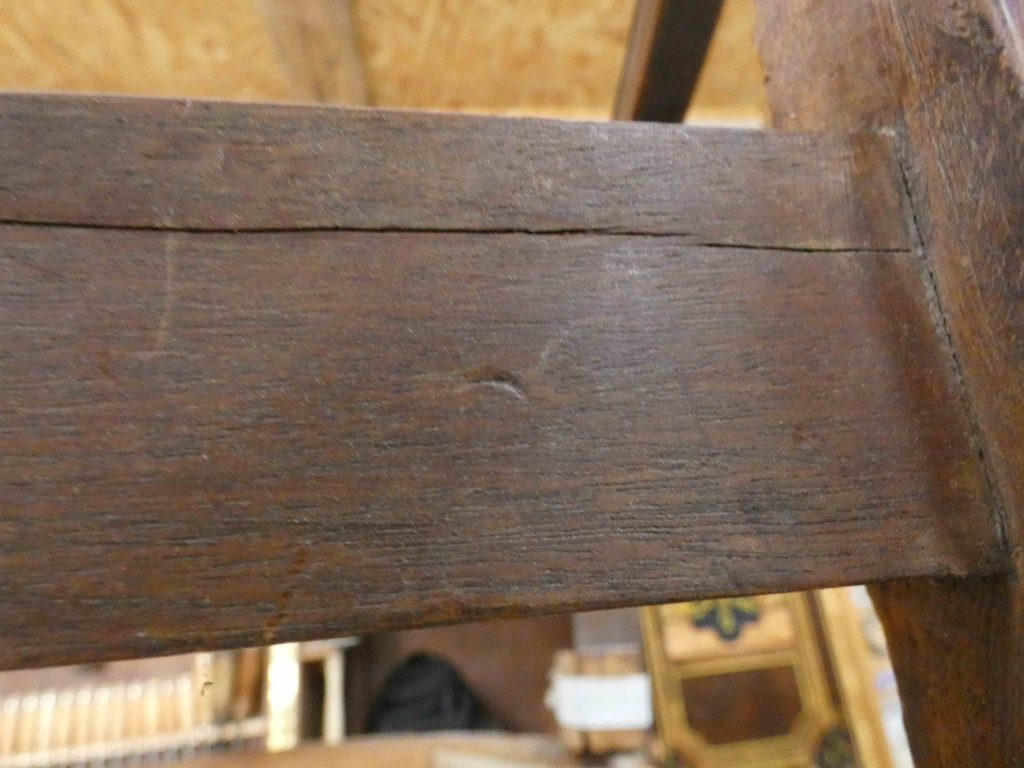
Split crossbar 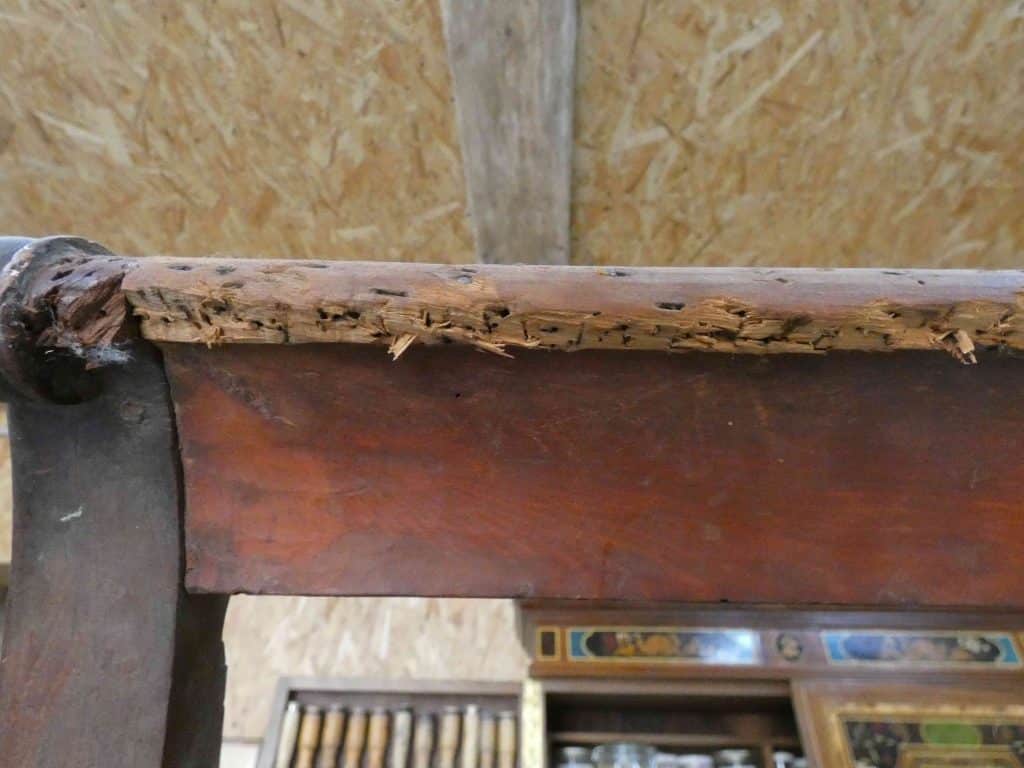
Lack of beech wood on the upper crossbeam 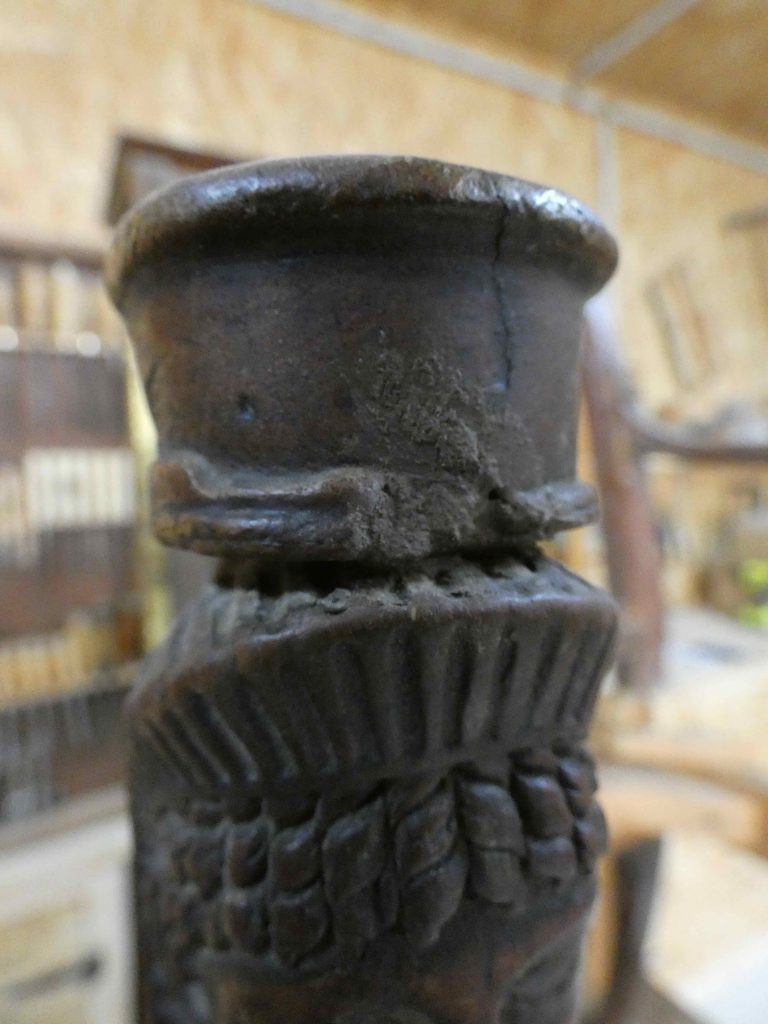
Lack of sculpture 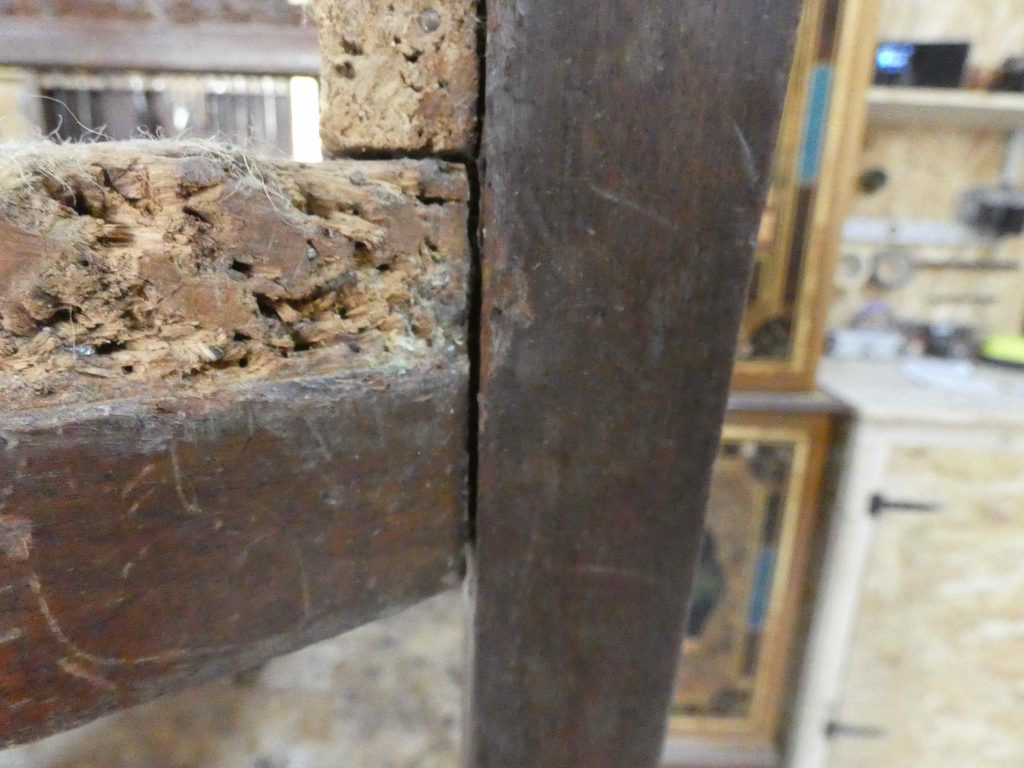
Detached assembly 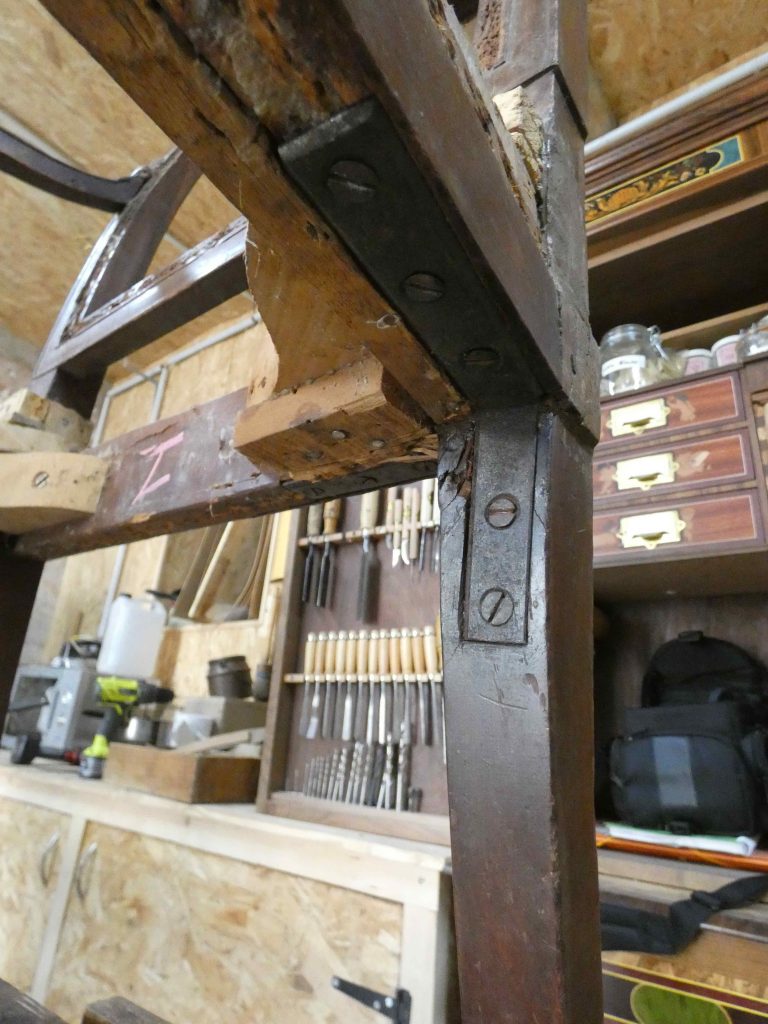
Metal bracket 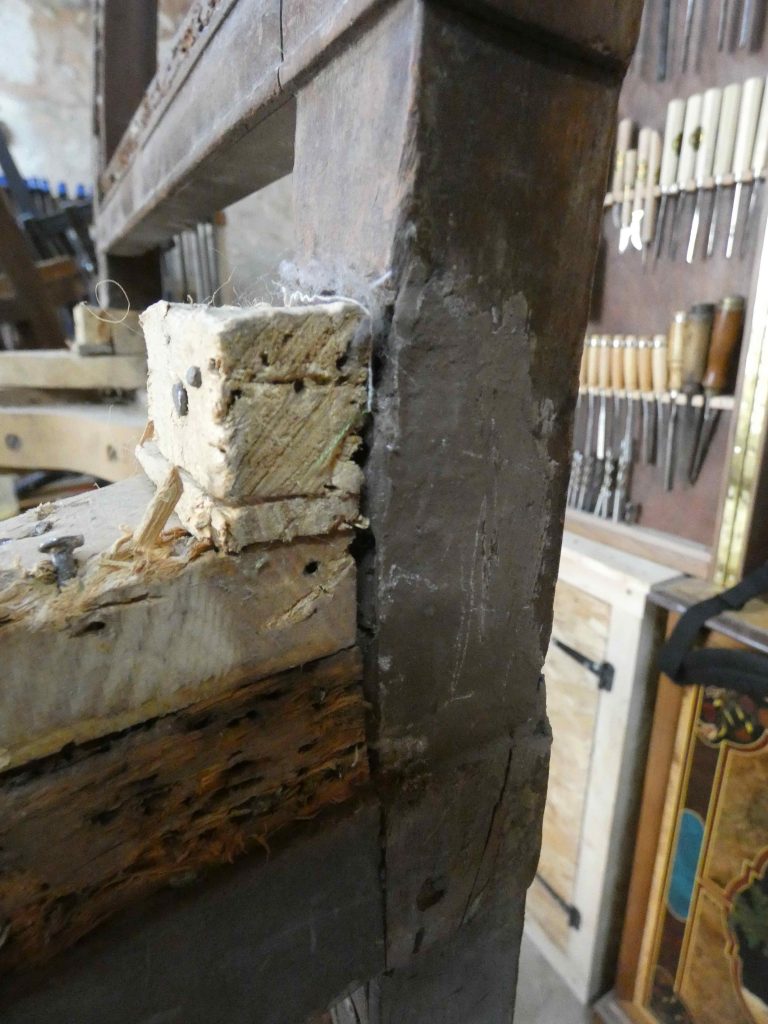
Spreading wooden paw 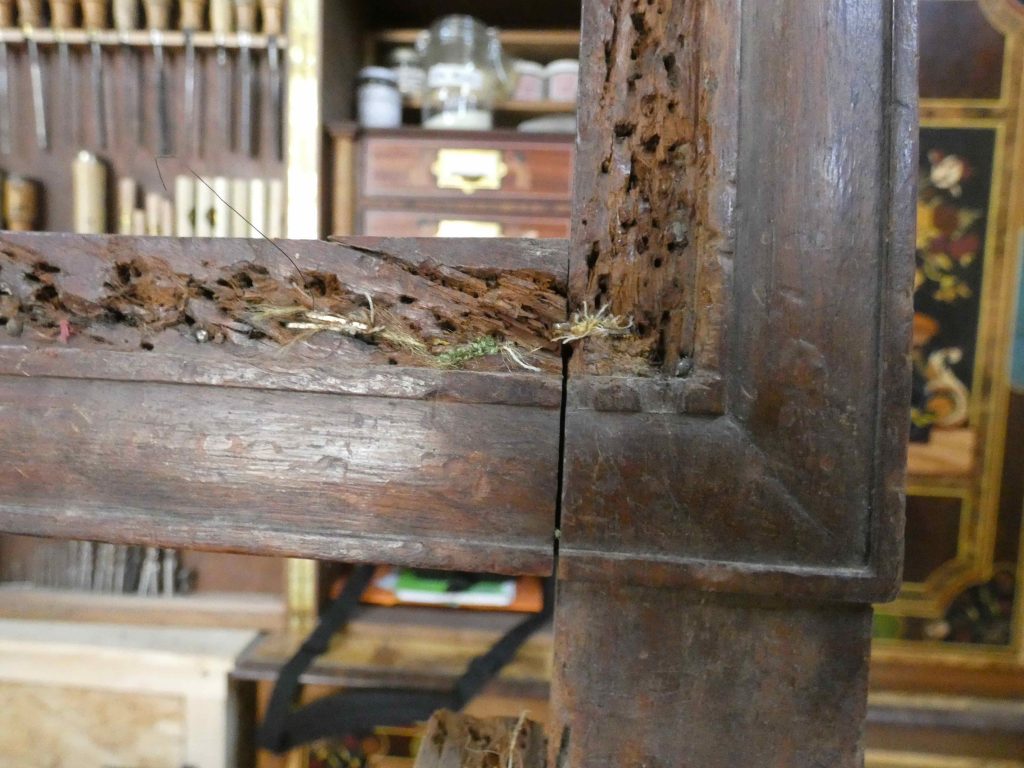
Detached assembly 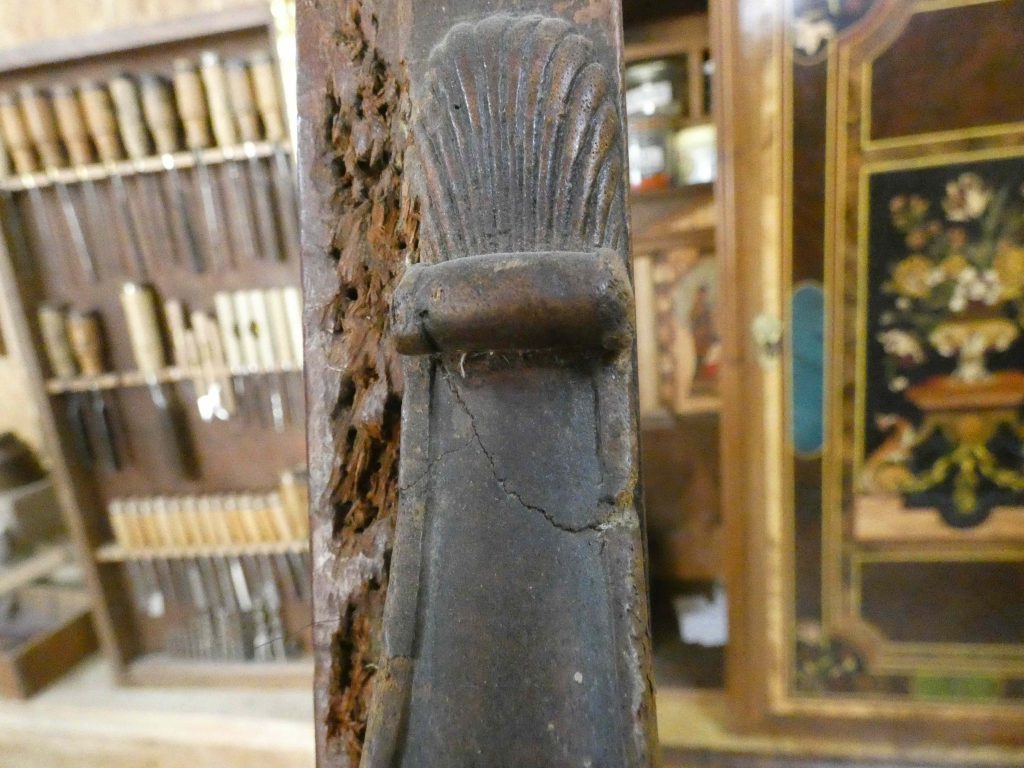
Broken armrest Old repair 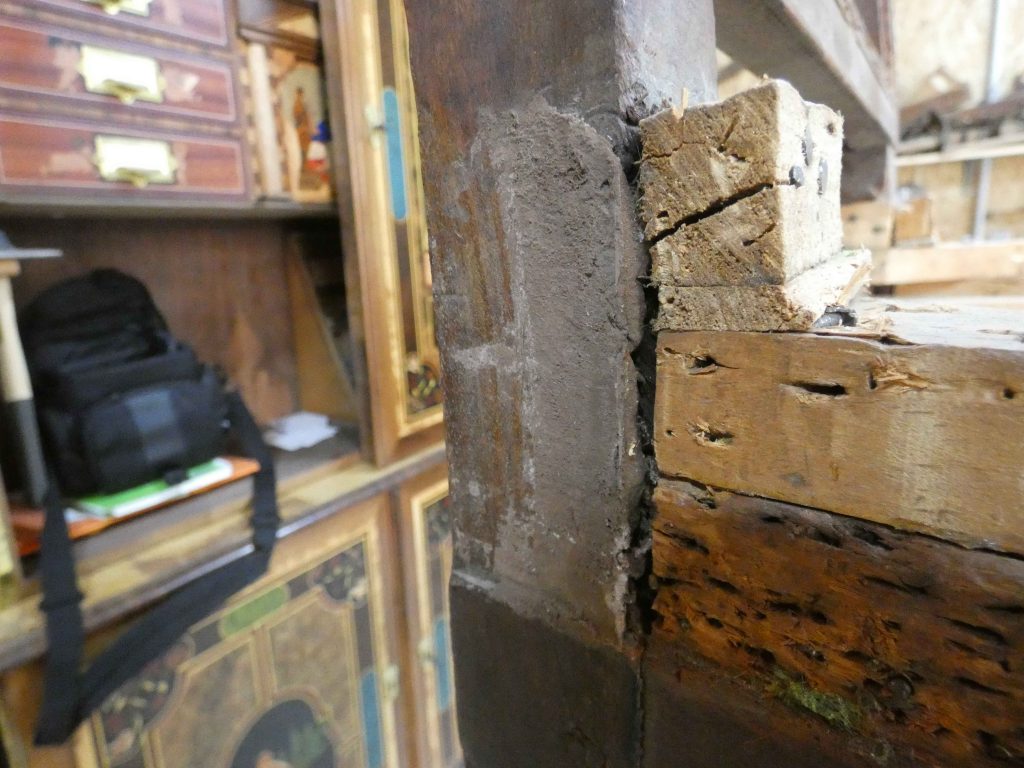
Plugging 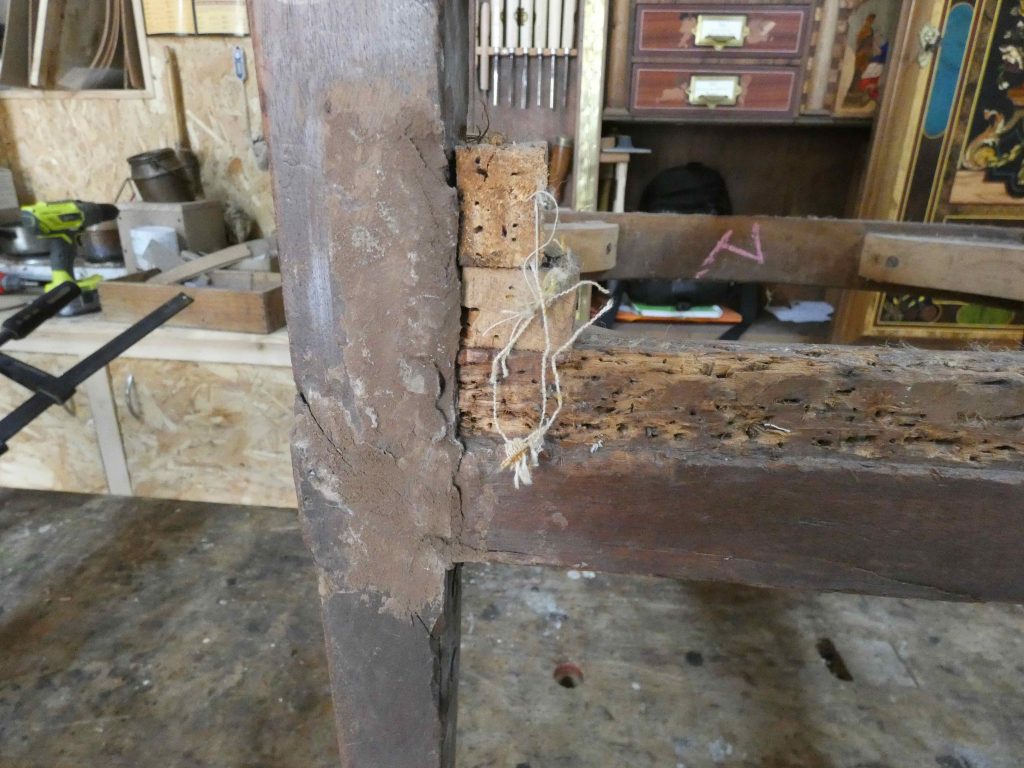
Masking a defect 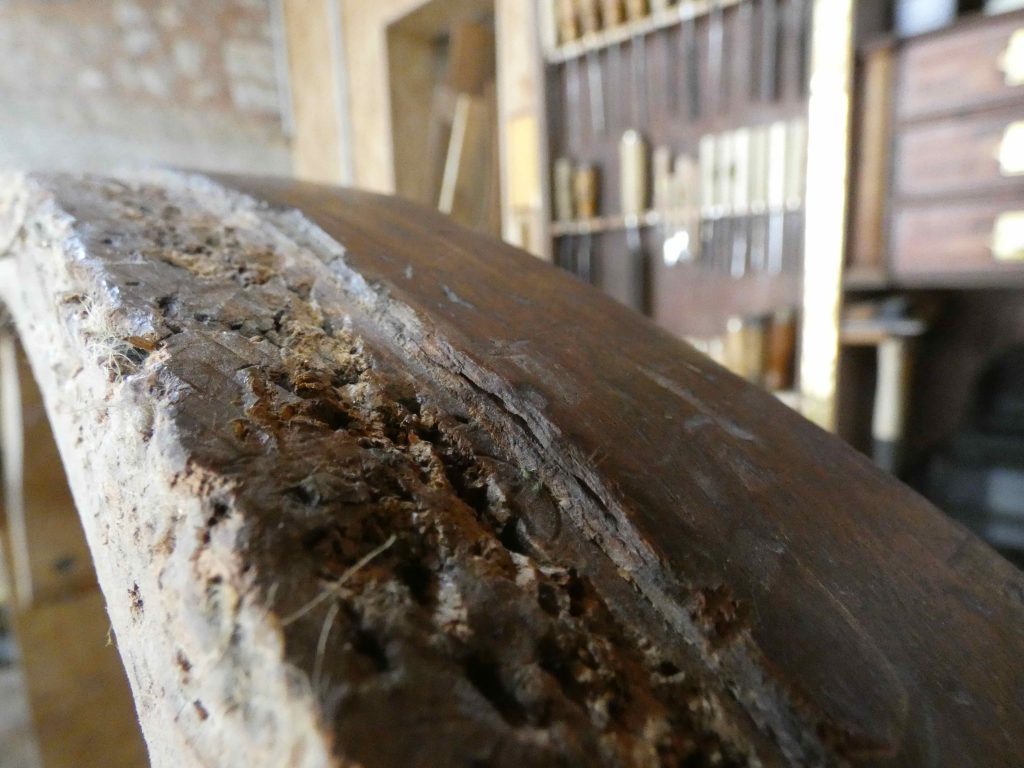
Veneer detached 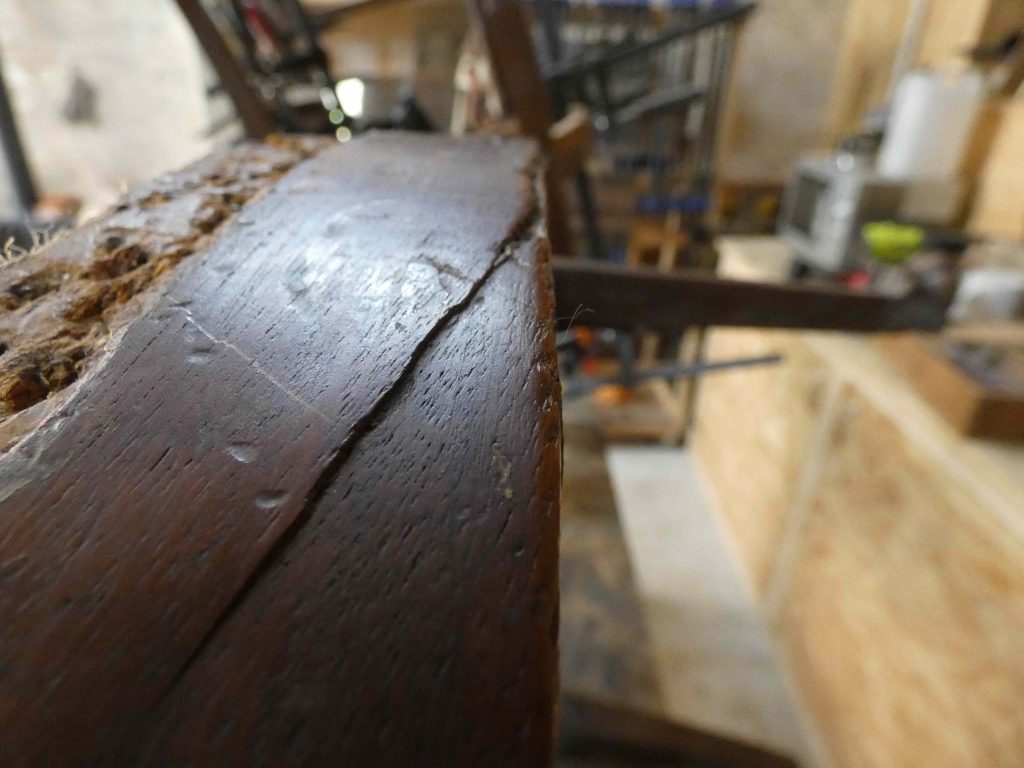
Split crossbar 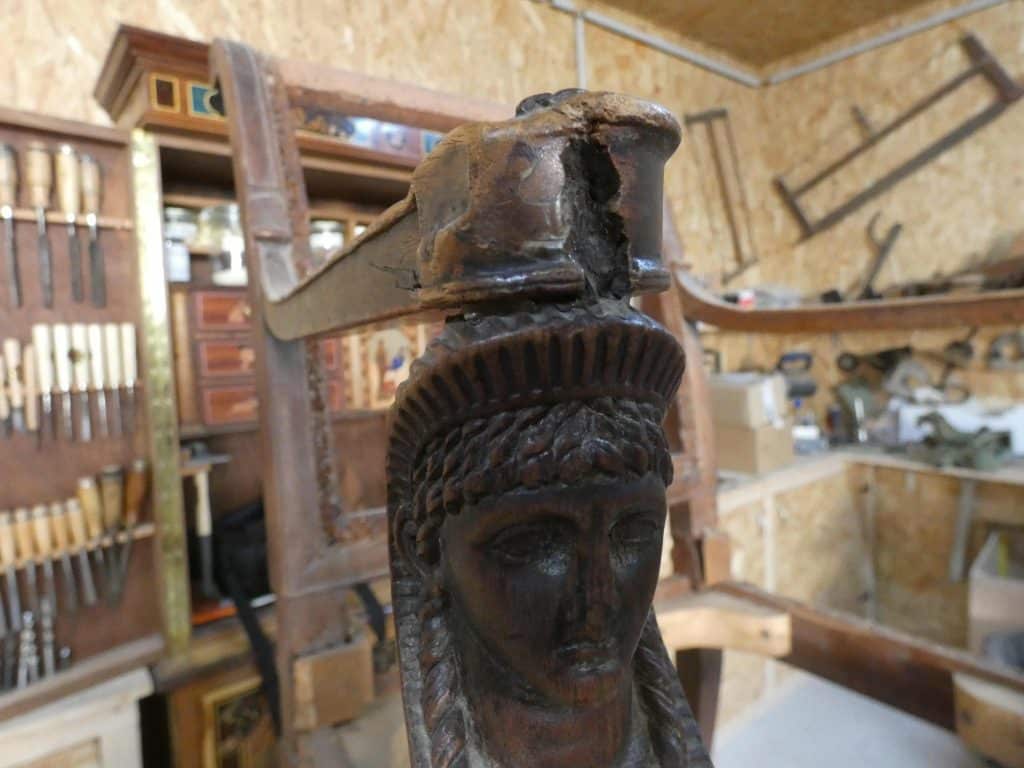
Wood Splinter Partial loss of the rosette 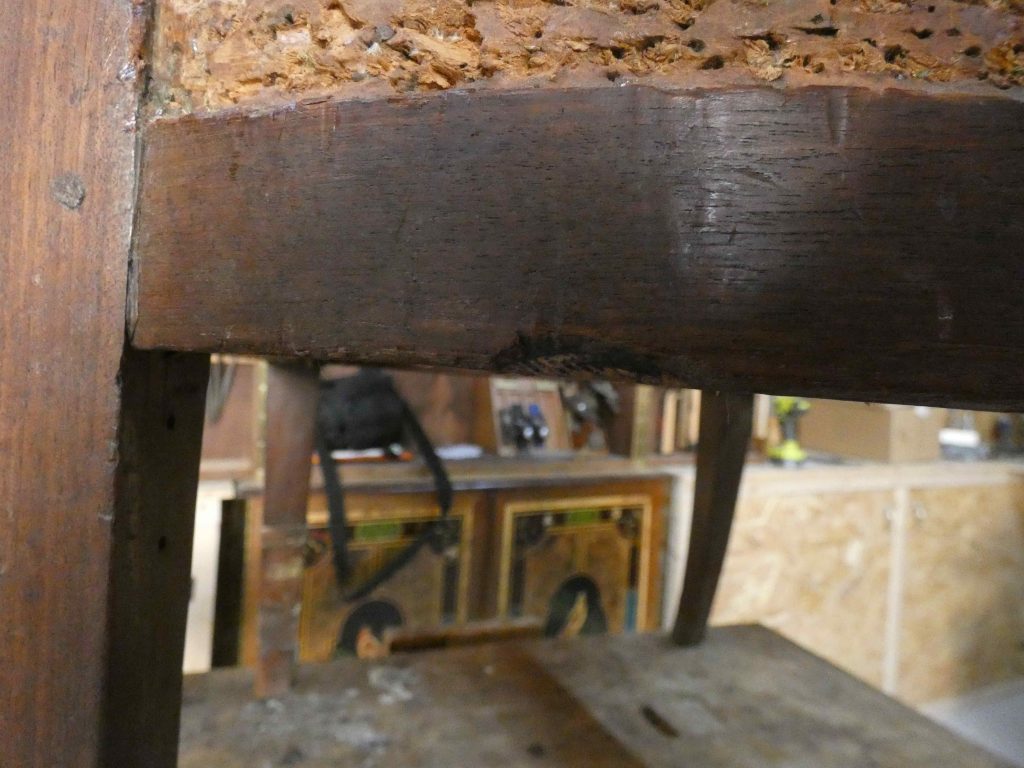
Lack of veneer 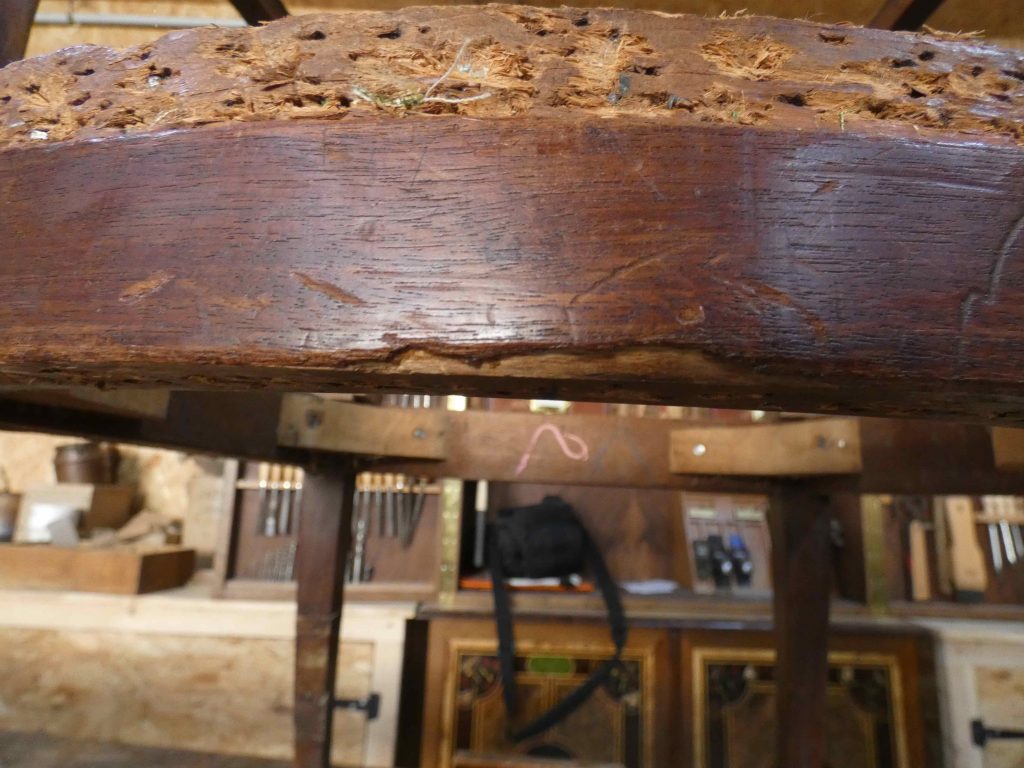
Lack of veneer 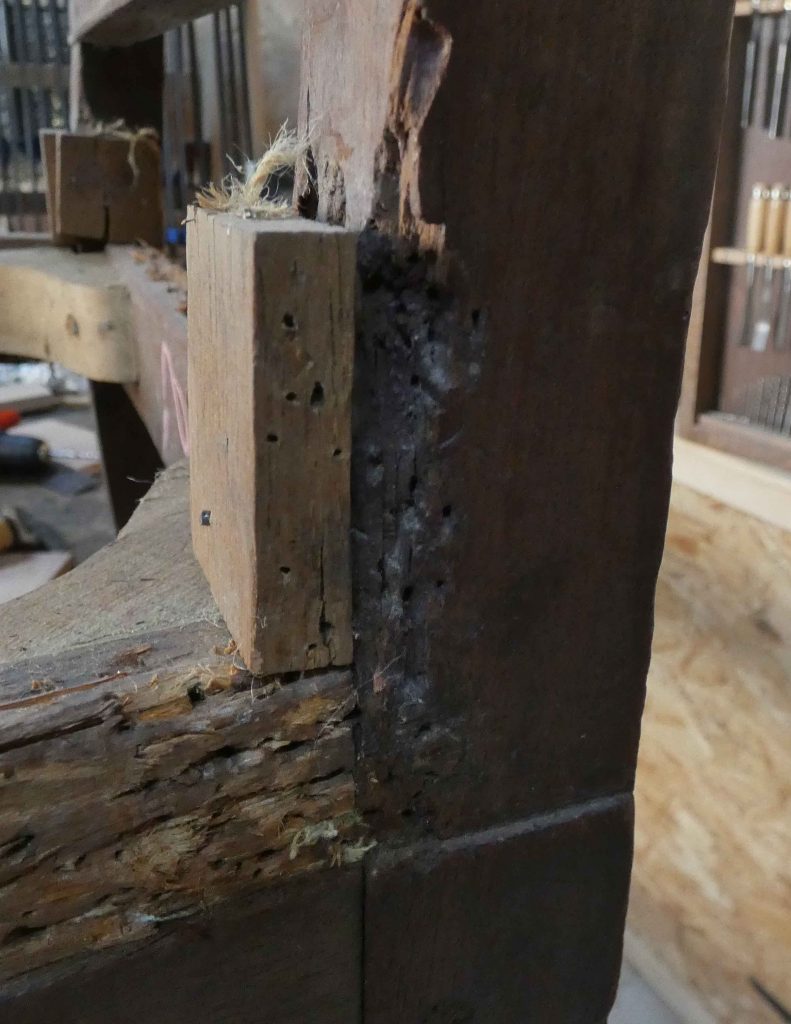
Wood shortage 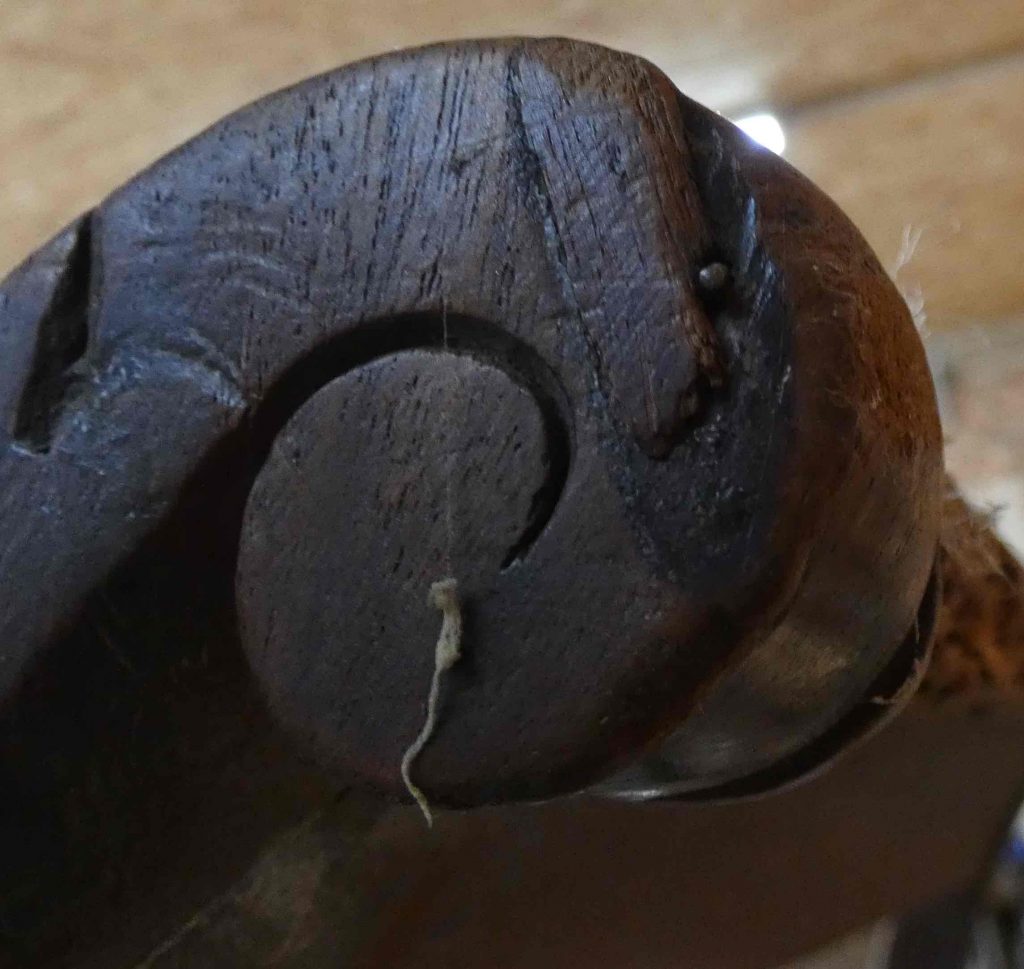
Old graft and lack 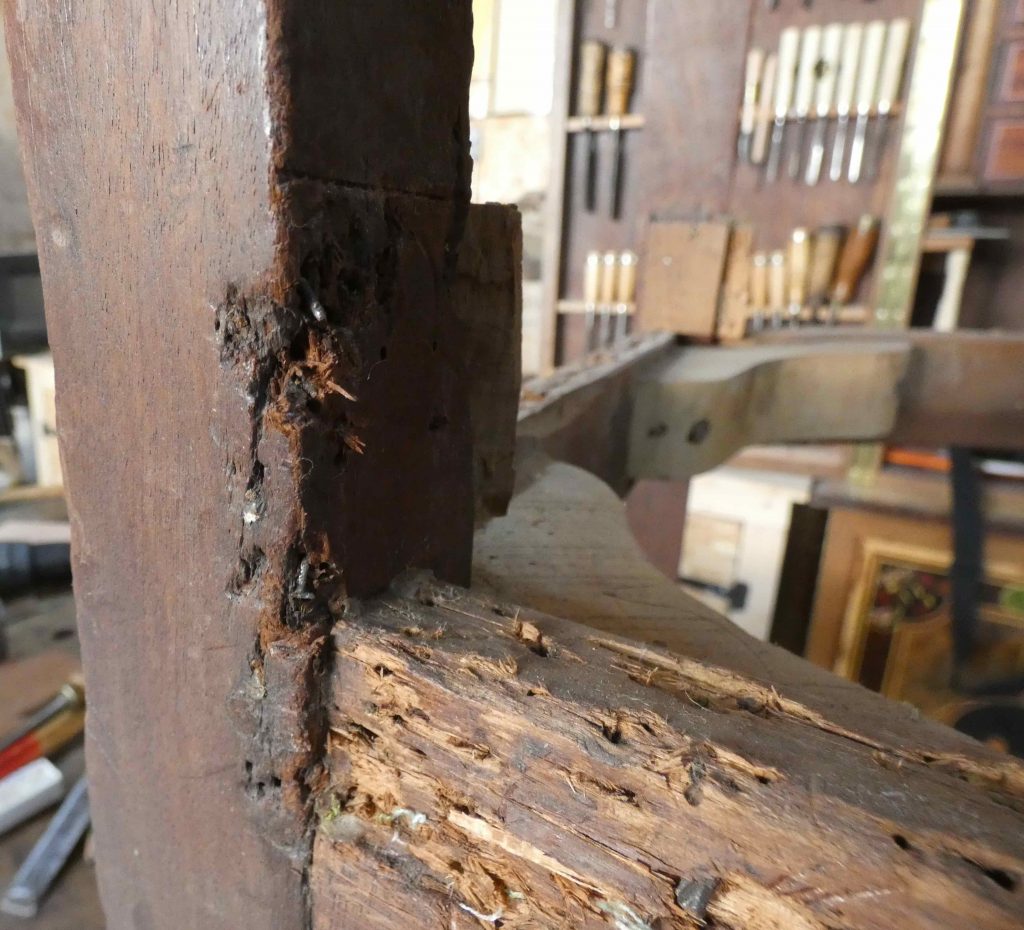
Wood splinters 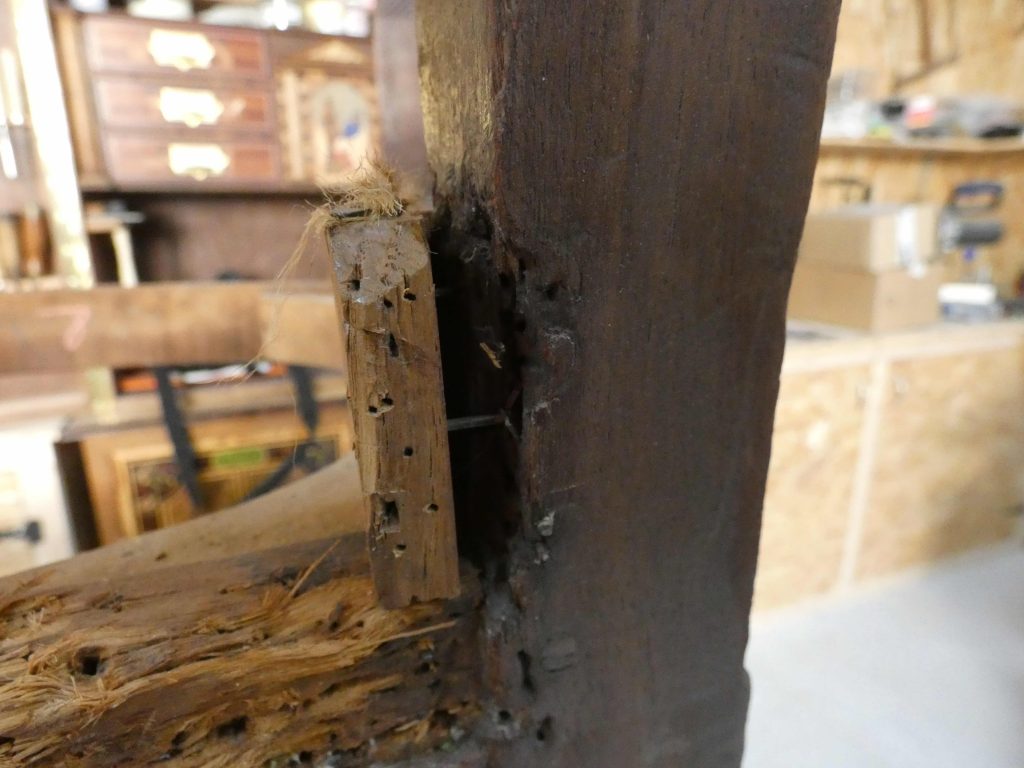
Wood shortage 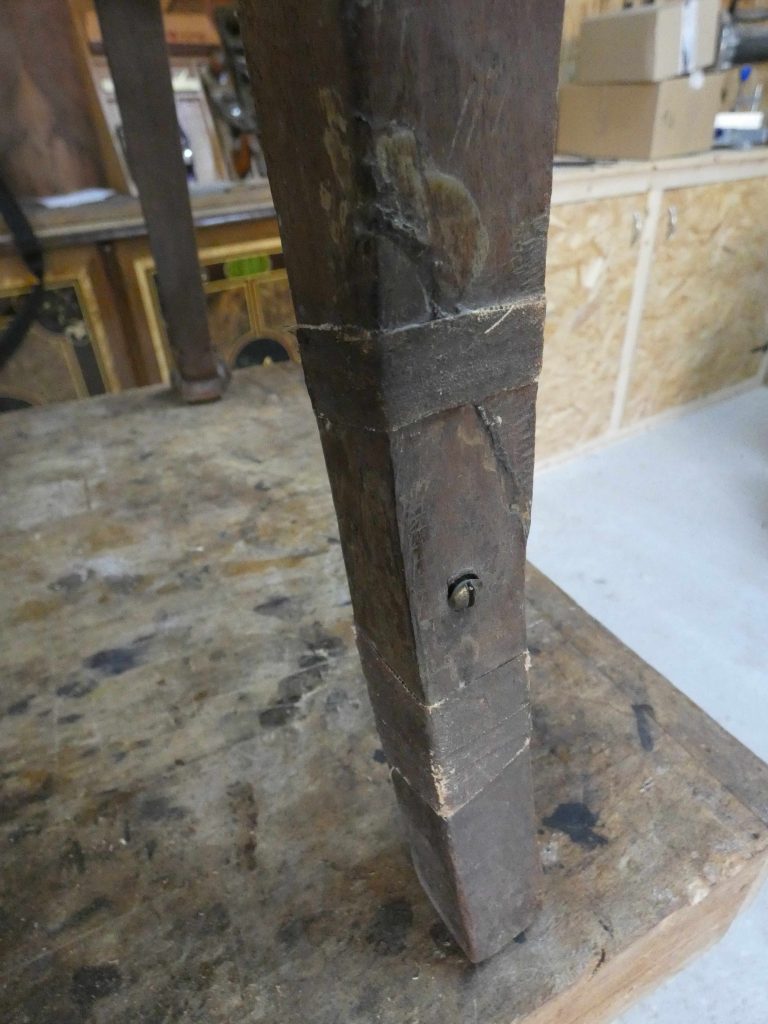
Broken foot 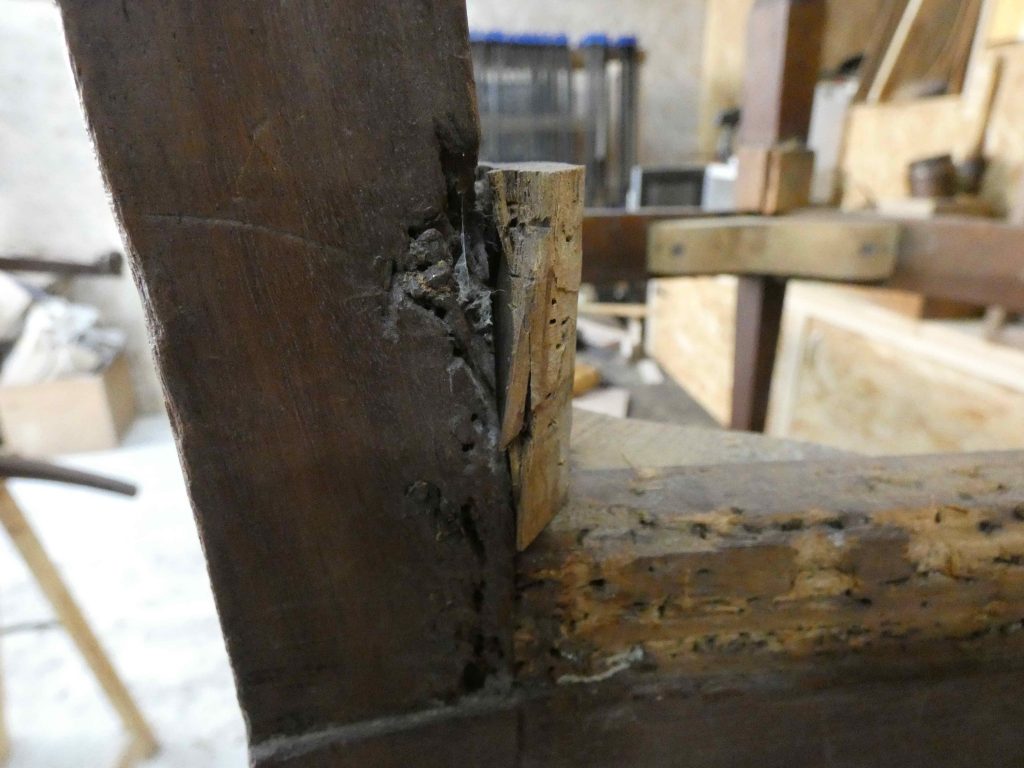
Wood shortages 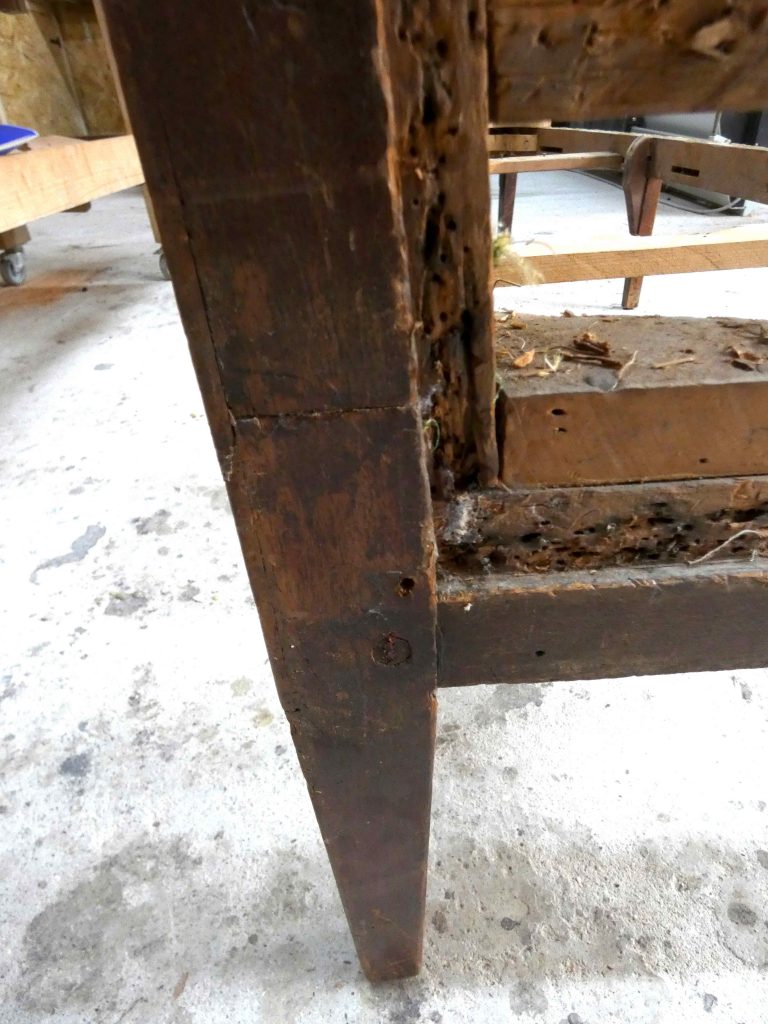
Broken foot 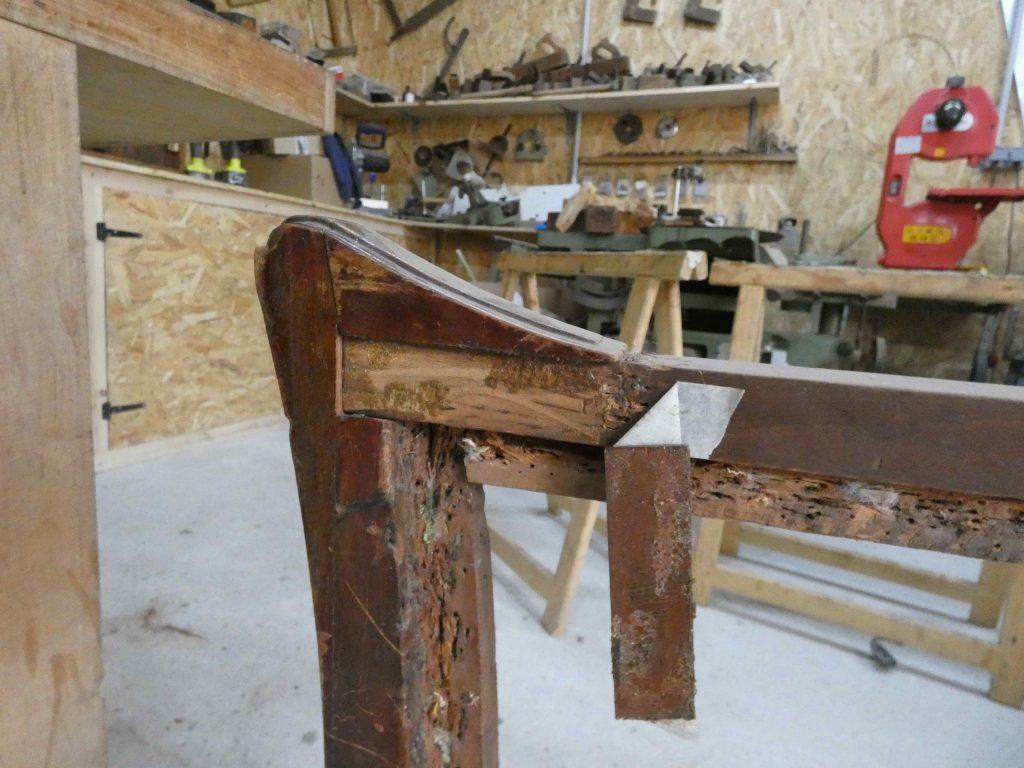
Detached mahogany plaque 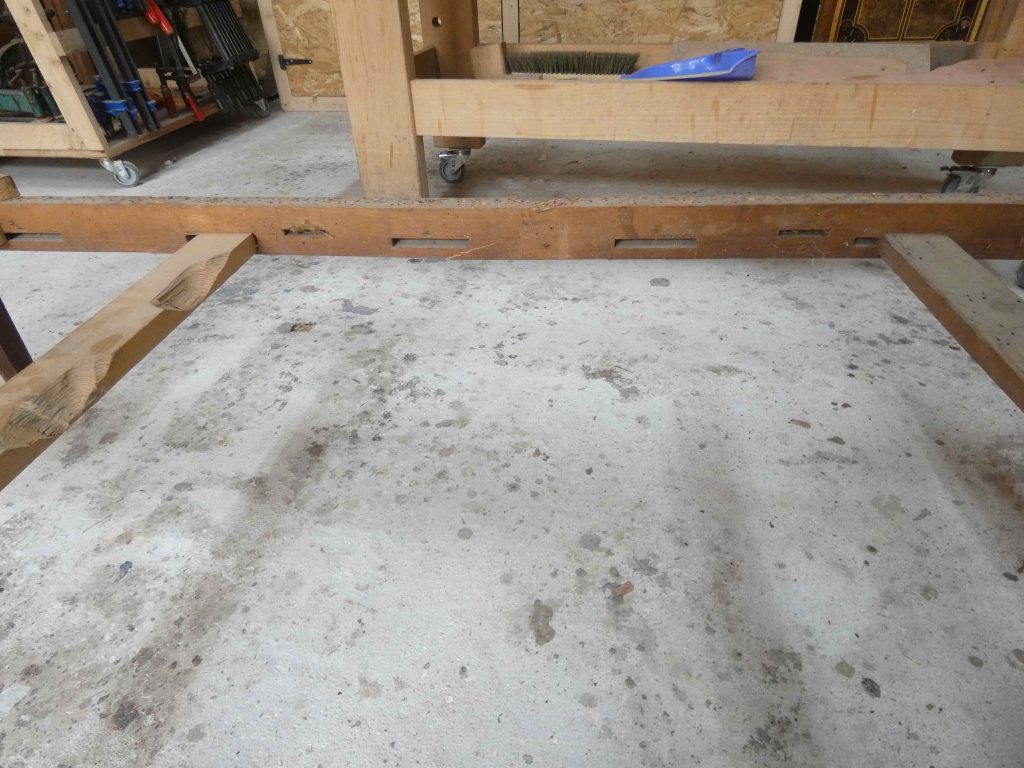
Missing crossbeams 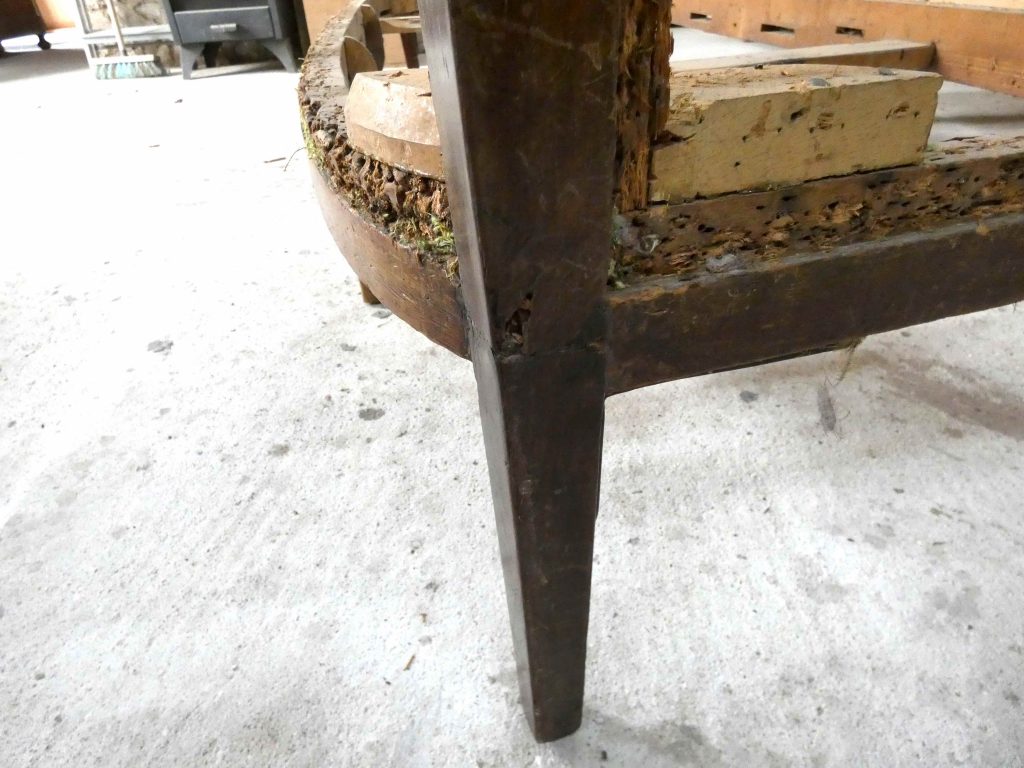
Broken foot 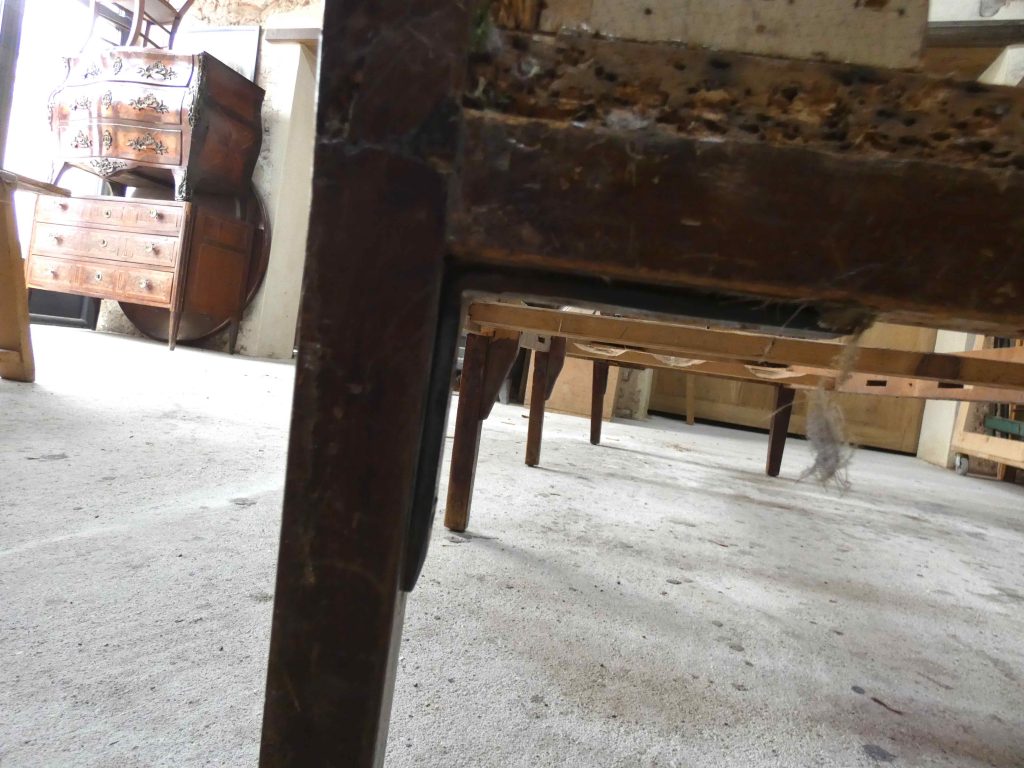
Metal bracket 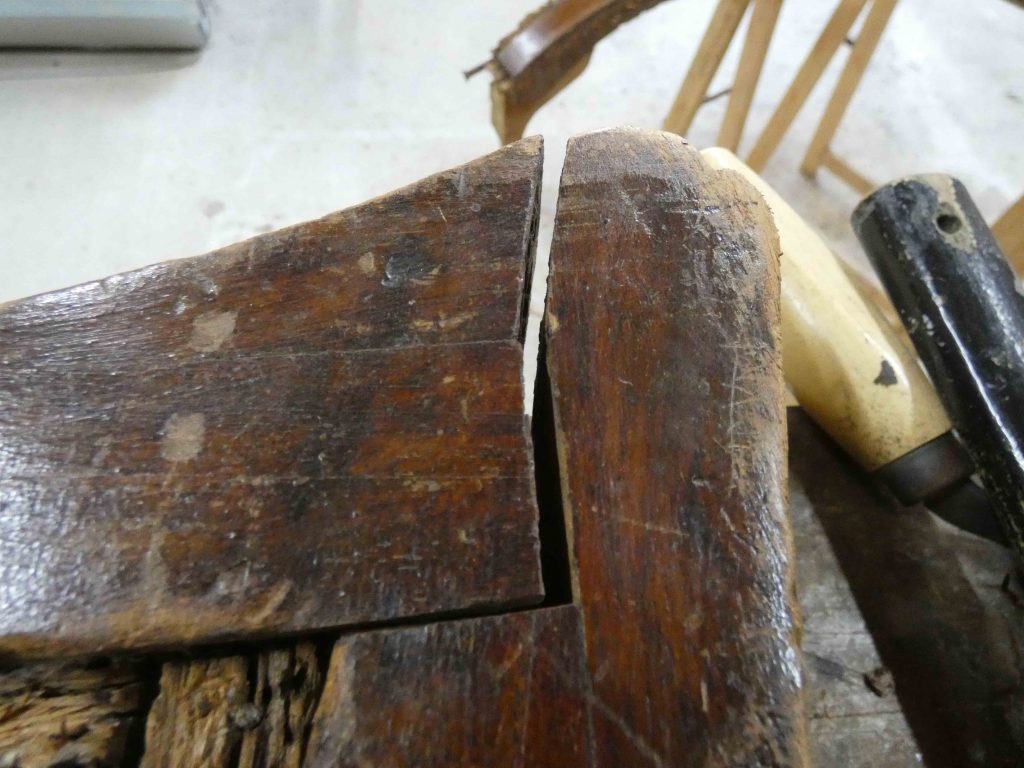
Detached assembly 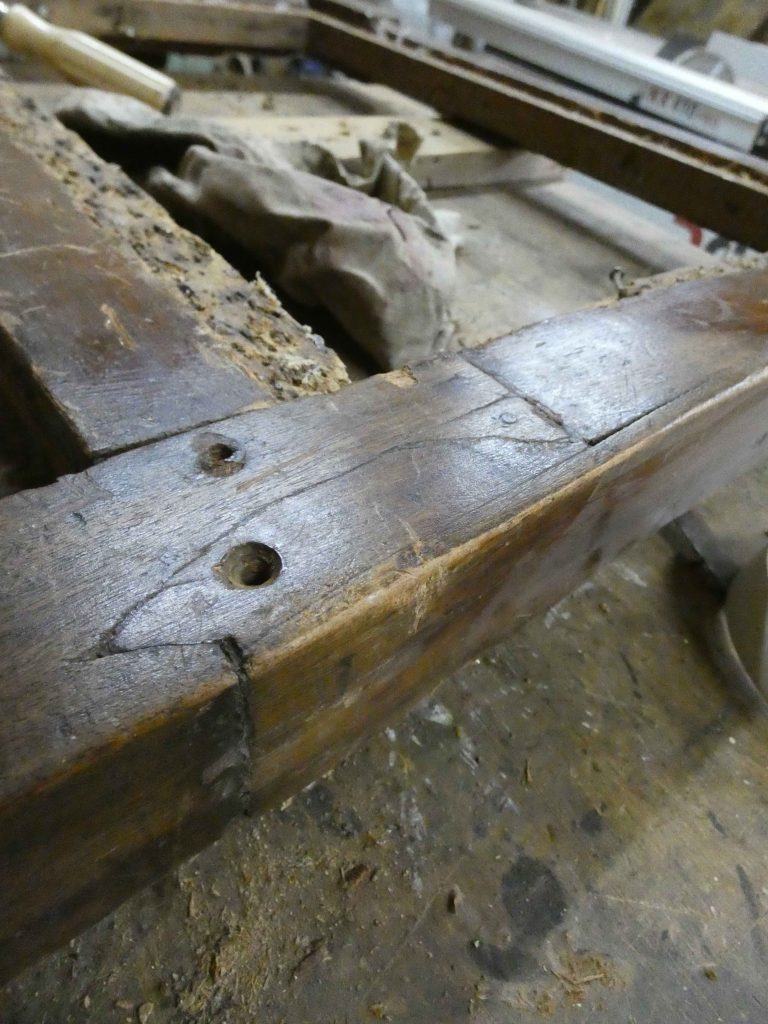
Screw into the mortise 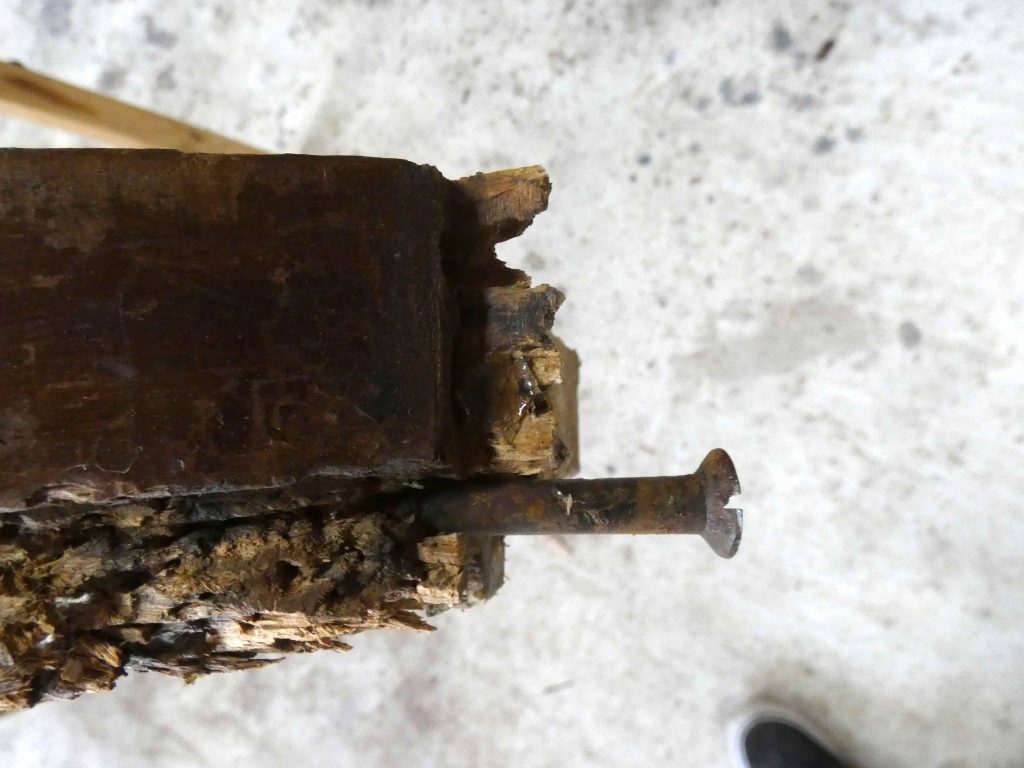
Screw into the tenon
However, since this is also a conservation project, traces of wear, small imperfections due to rubbing, dents, scratches, and the original finish will be preserved. The missing claw and the partial losses of the rosette will be replaced with resin casts so that they are easily identifiable as a restoration. They will, of course, not be visible to the naked eye.
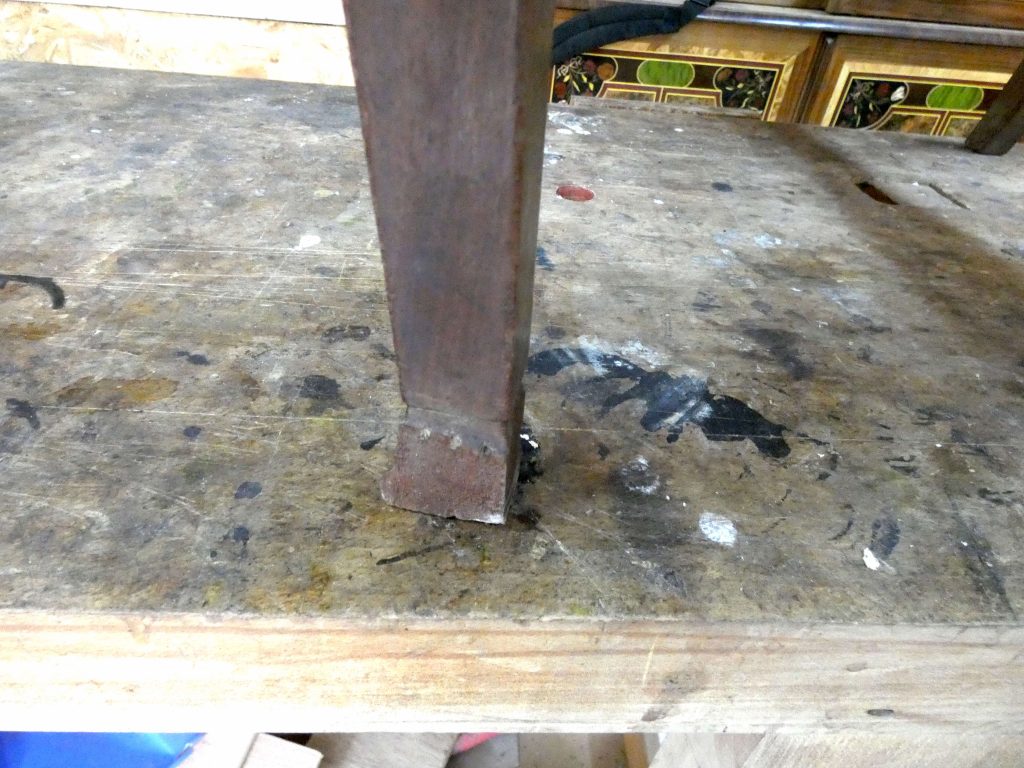
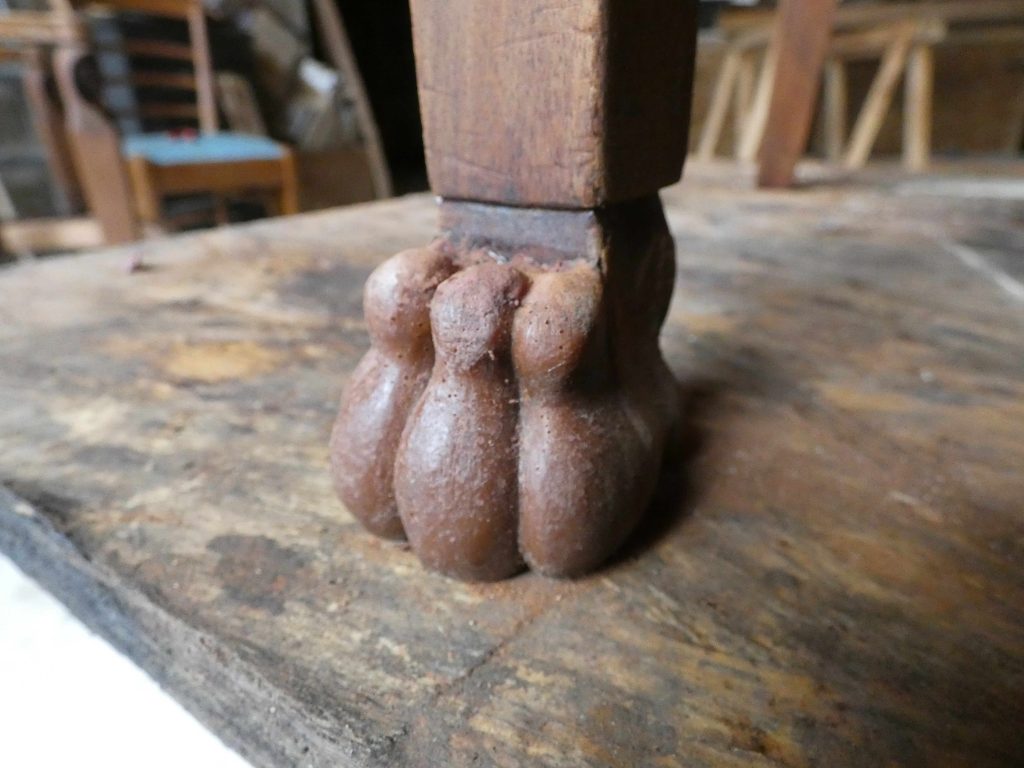
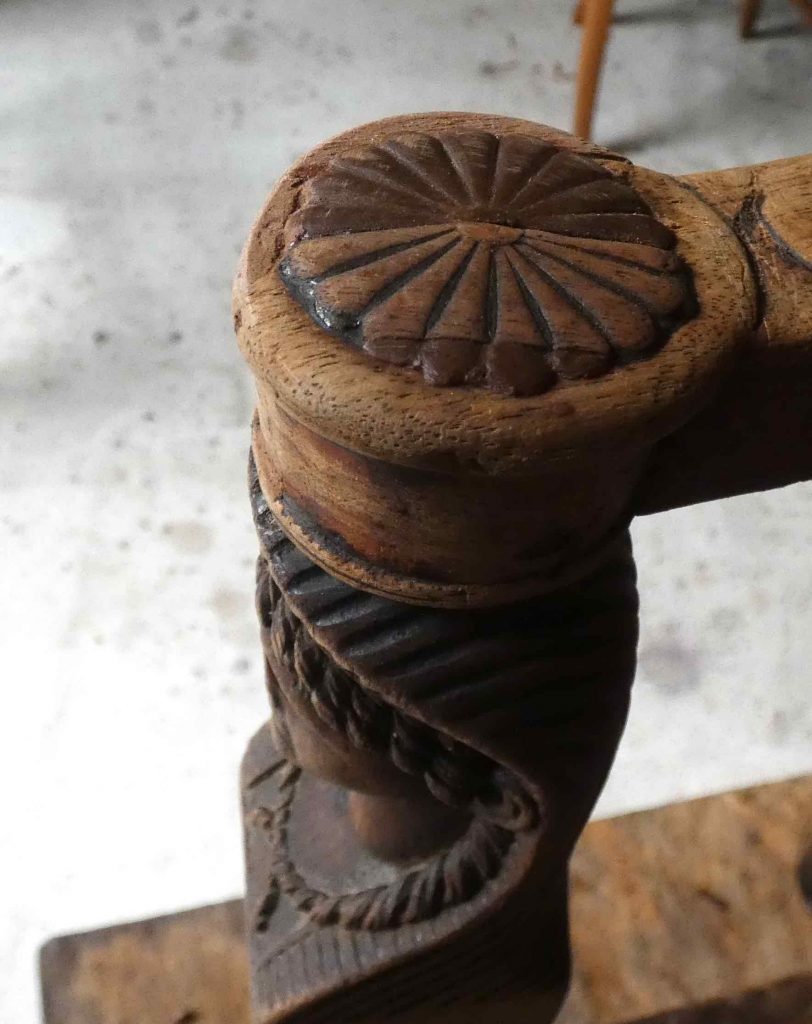
The armchairs were therefore all dismantled. It must be said that they were held together only by their upholstery. The most damaged leg was reinforced with wooden plates glued on all four sides using fish glue.
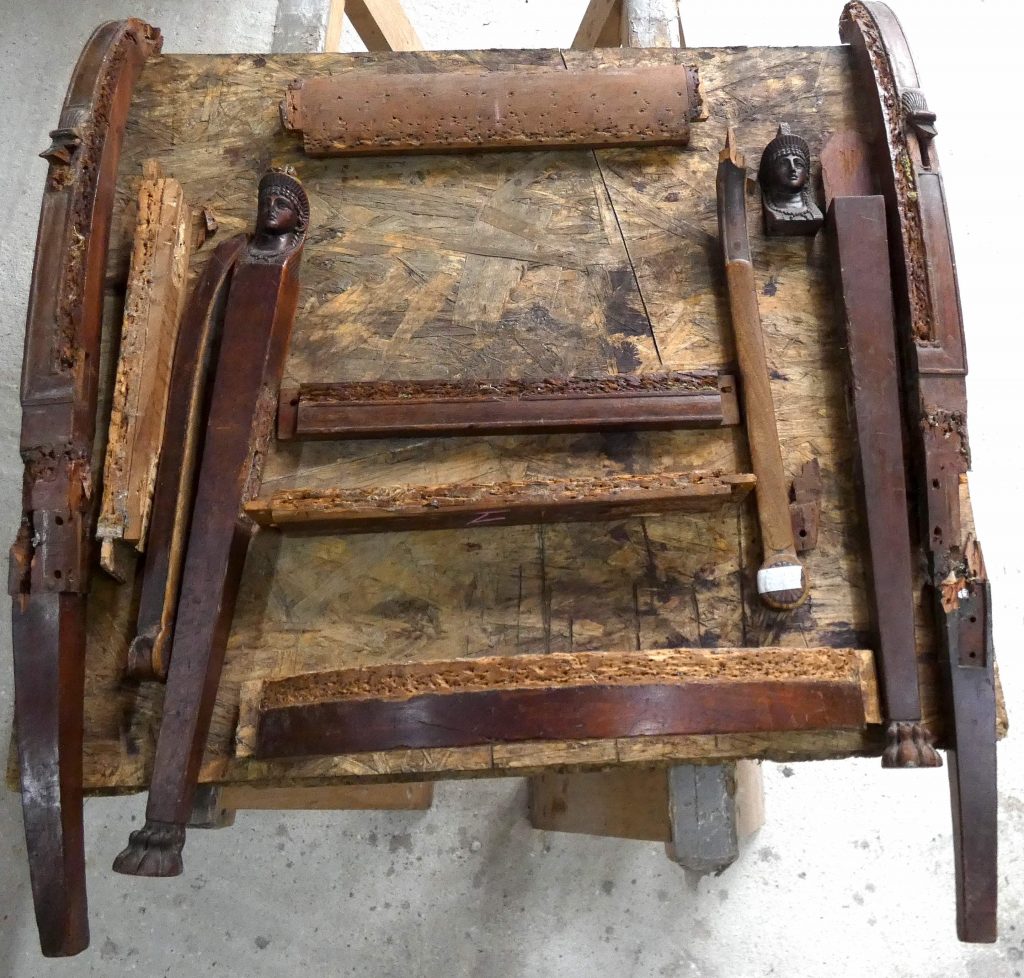
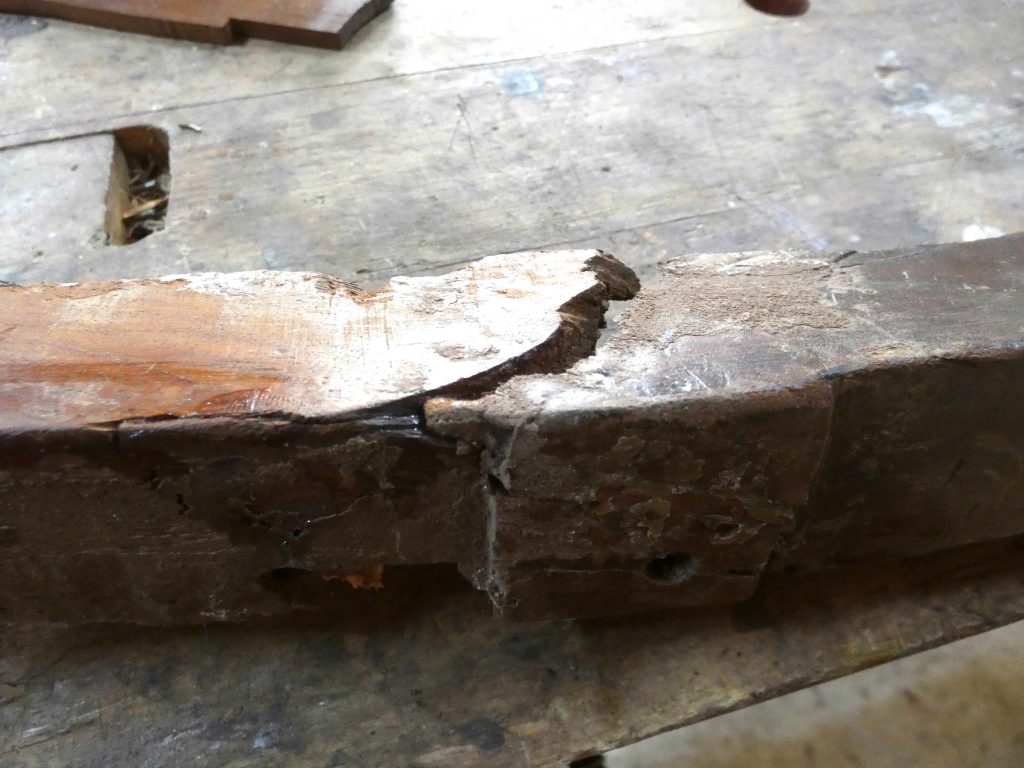
Broken foot 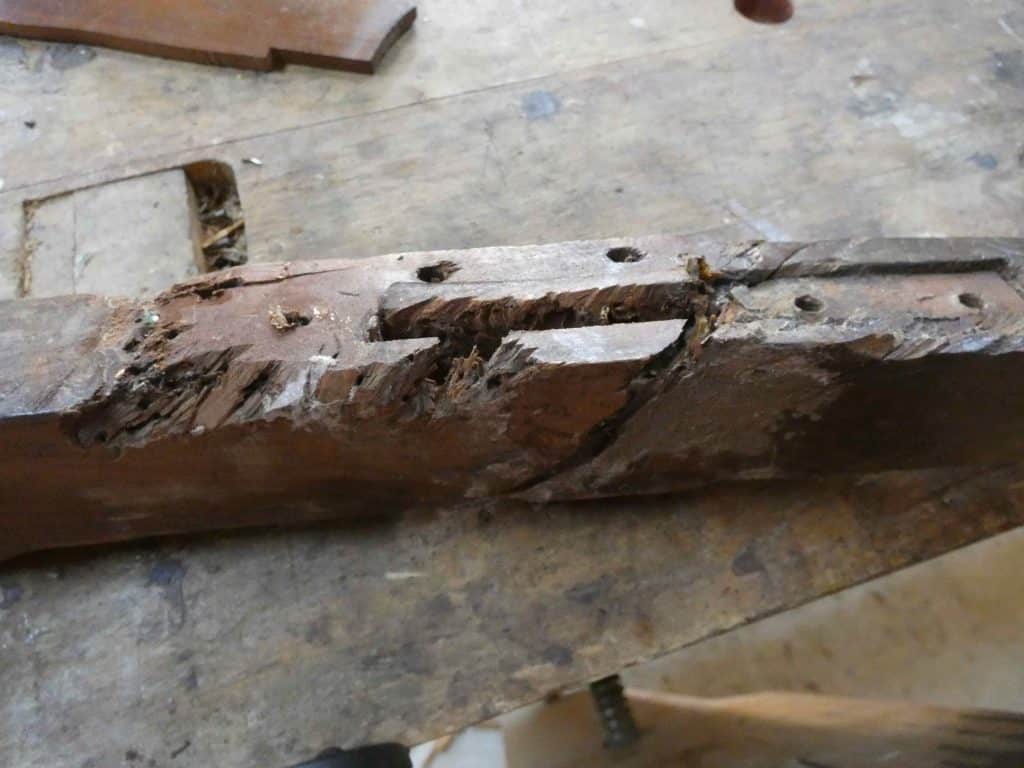
Broken foot 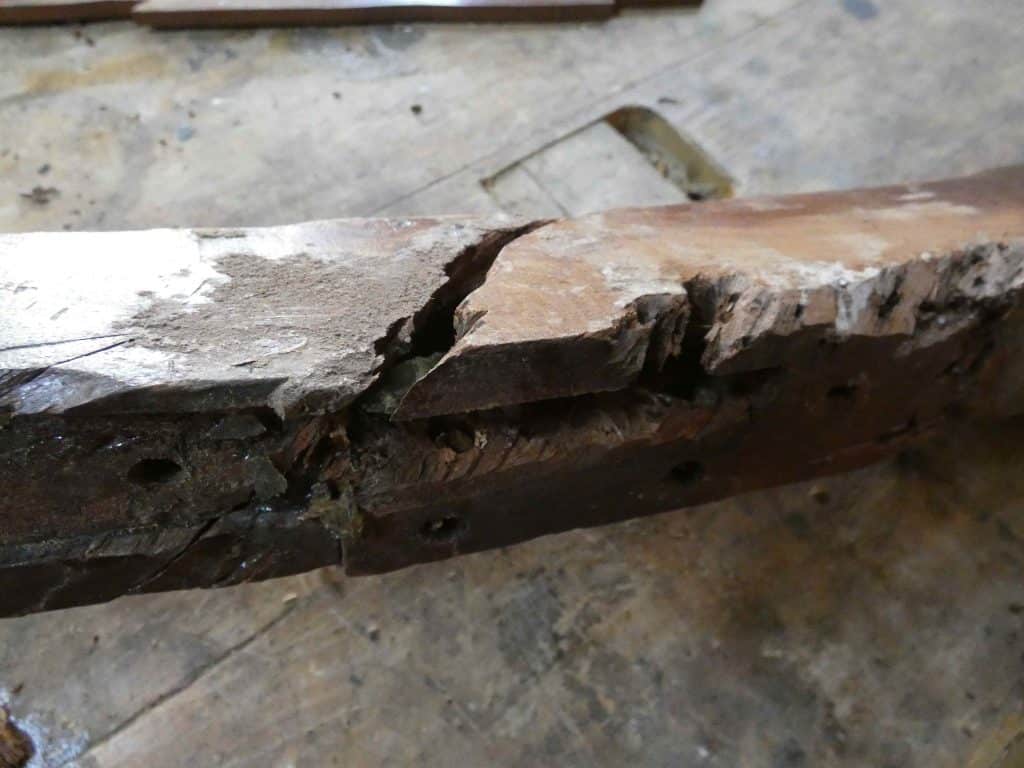
There is a 7 mm gap in the wood 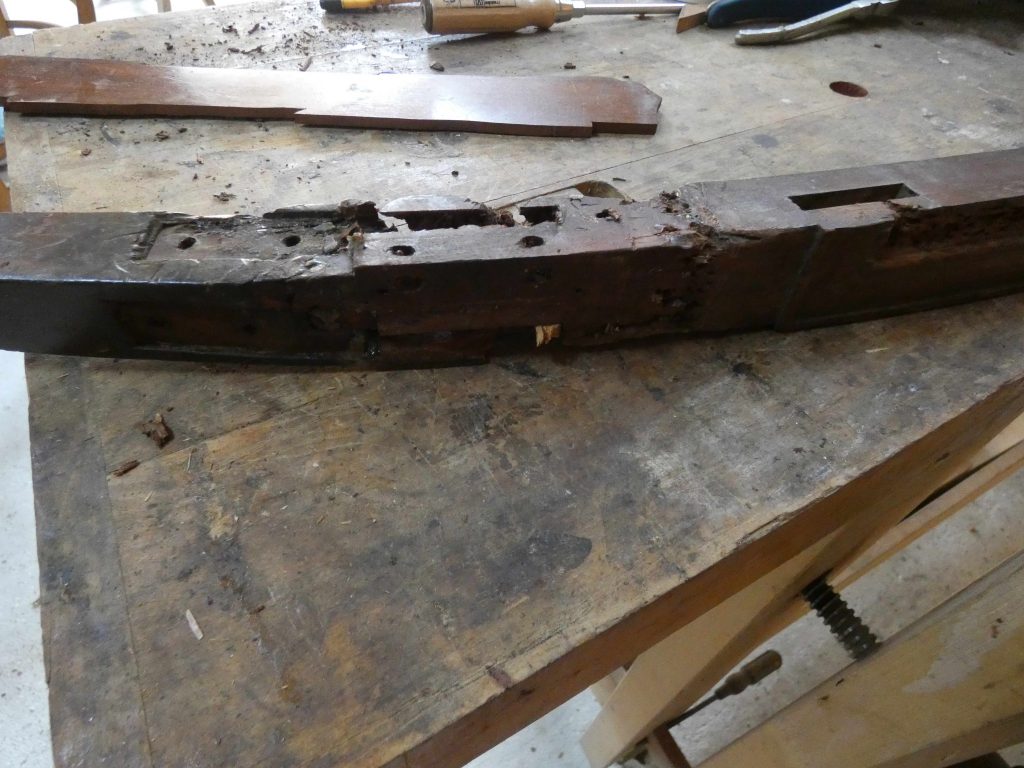
Broken foot and mark from a right angle
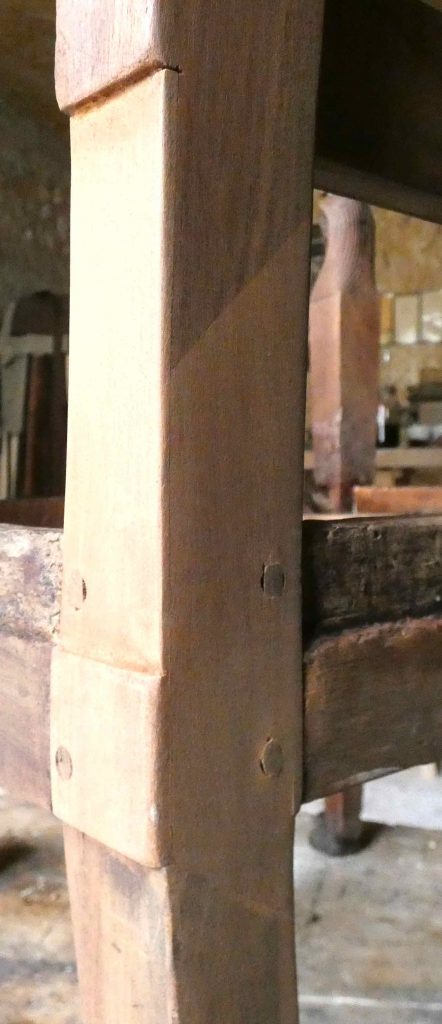
Grafts onto the broken foot 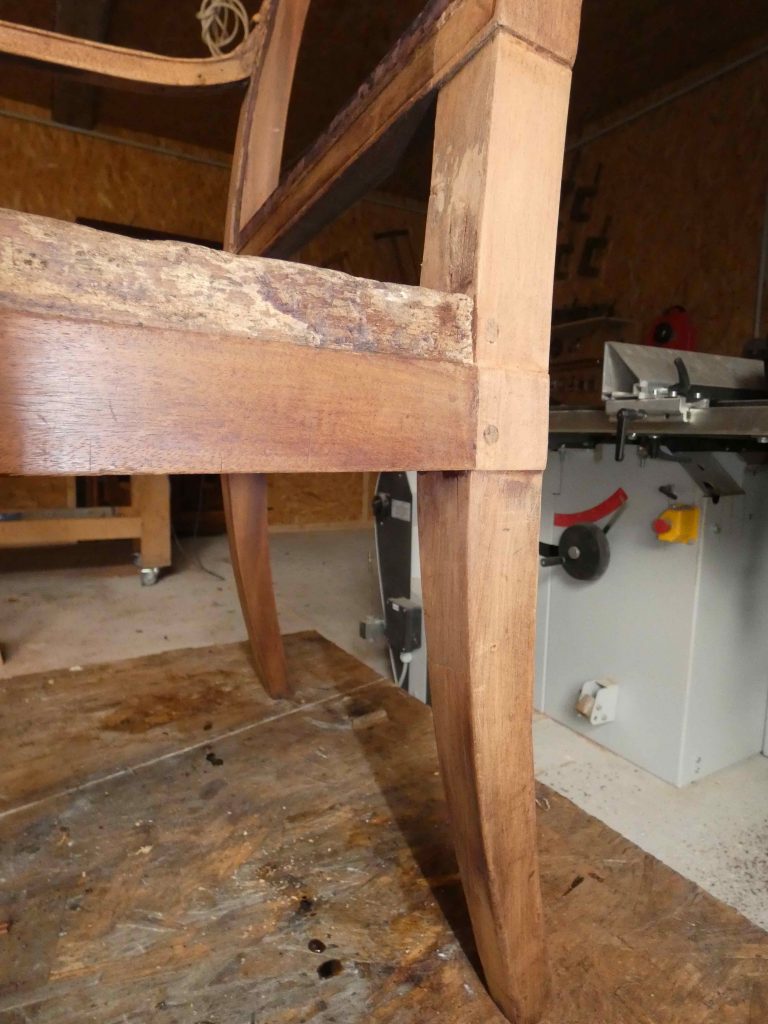
Foot reinforced 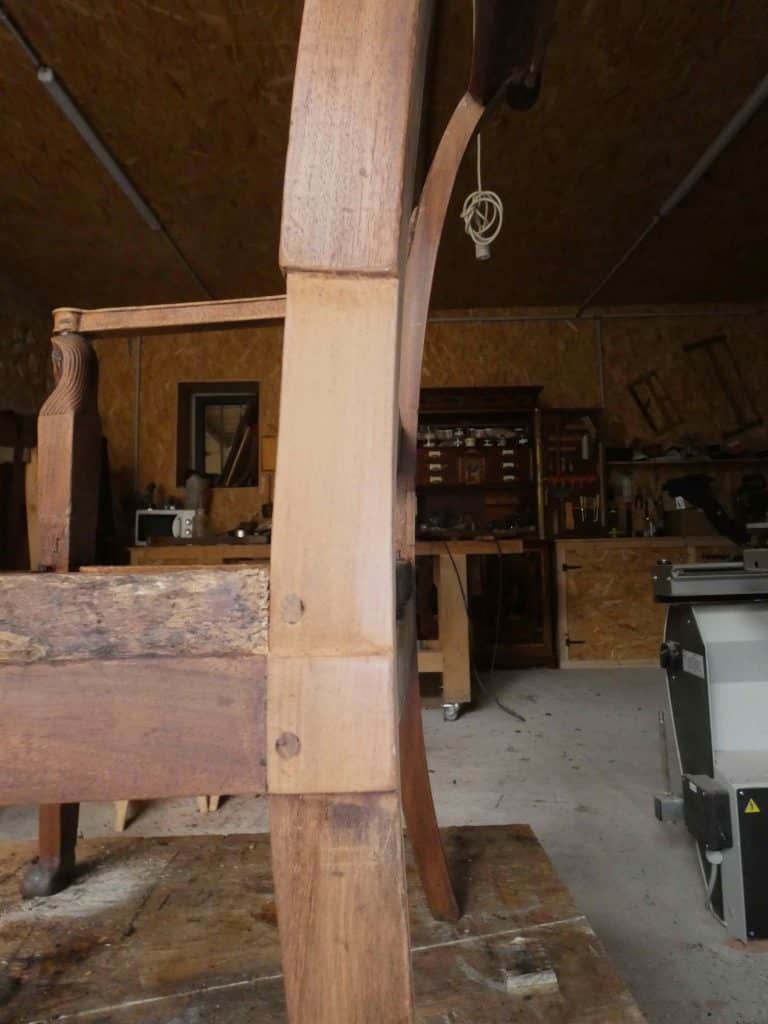
Front panel color
For areas where the wood is missing due to chips, these were filled by removing as little material as possible. Other small holes were filled with resin and then stained. Where the rebate was too damaged, it was replaced with beech so that the upholsterer could do his work properly without risk of breakage.
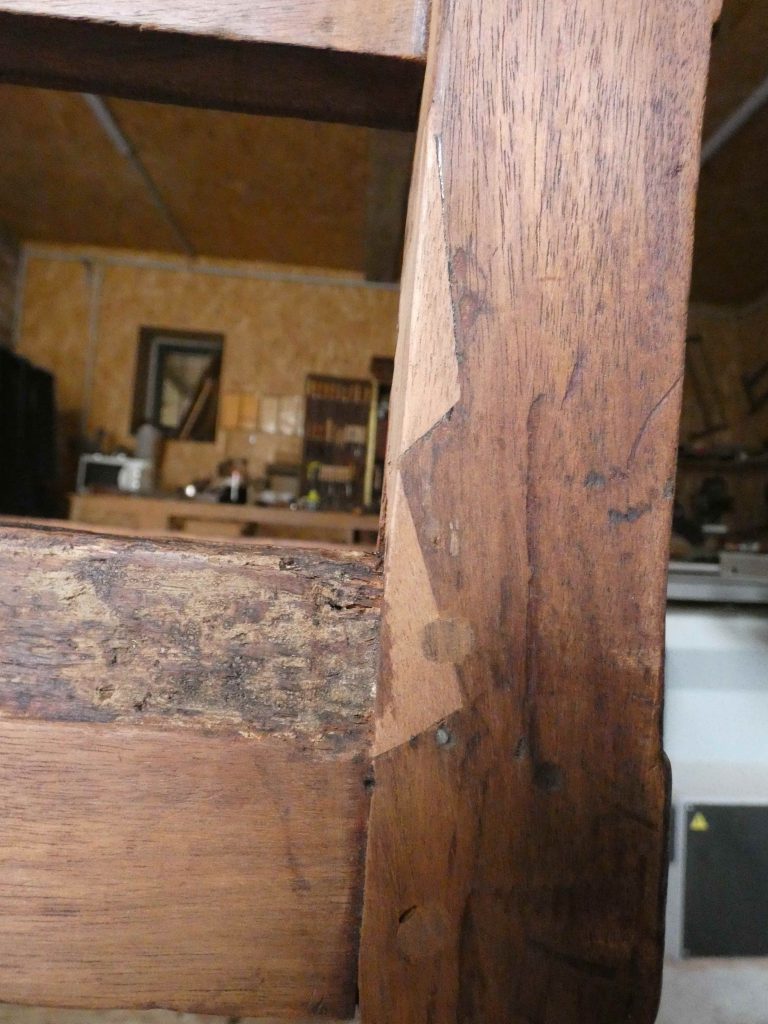
Mahogany grafts 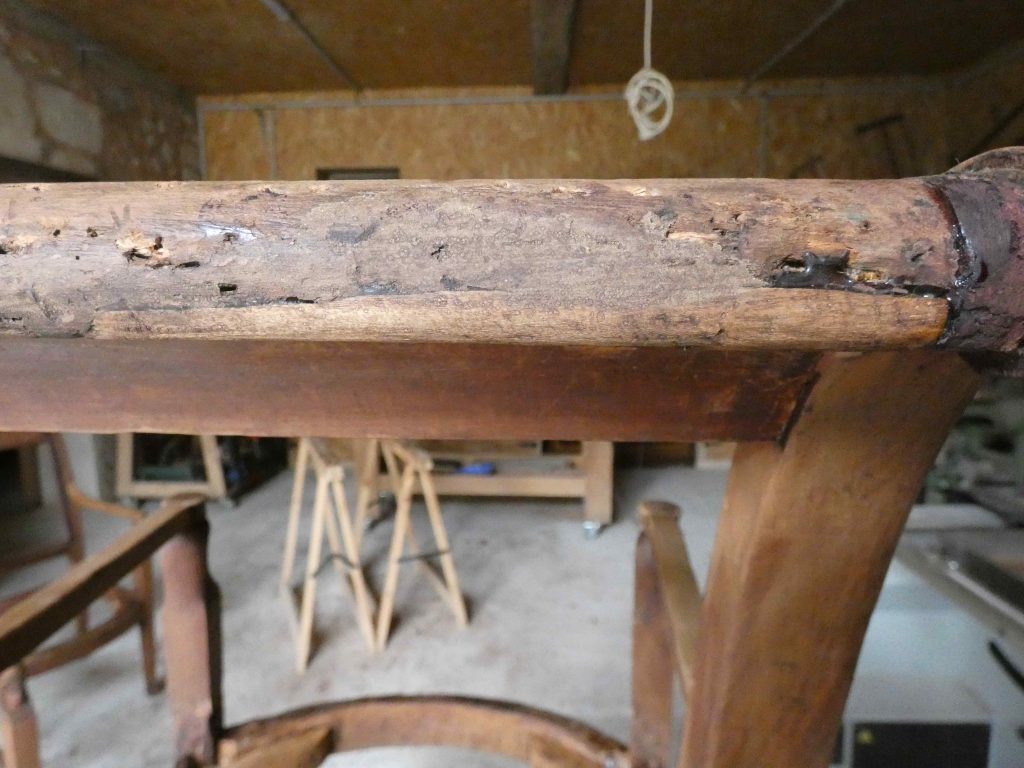
Beech graft onto the upper crossbeam 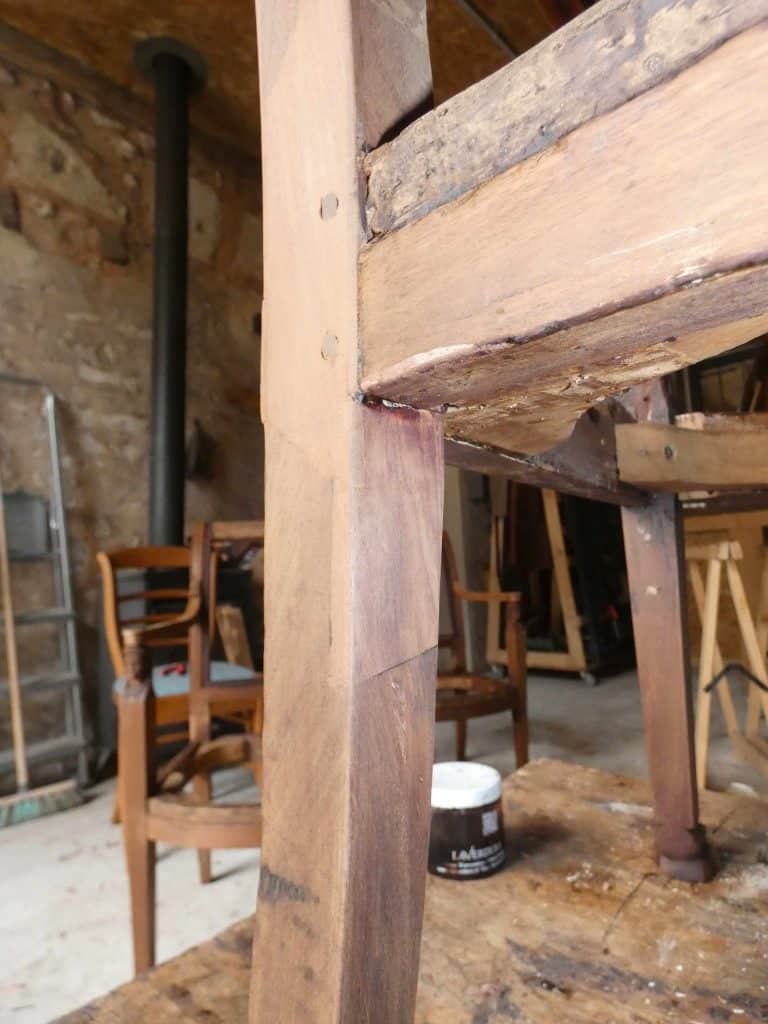
Broken foot stabilization plates 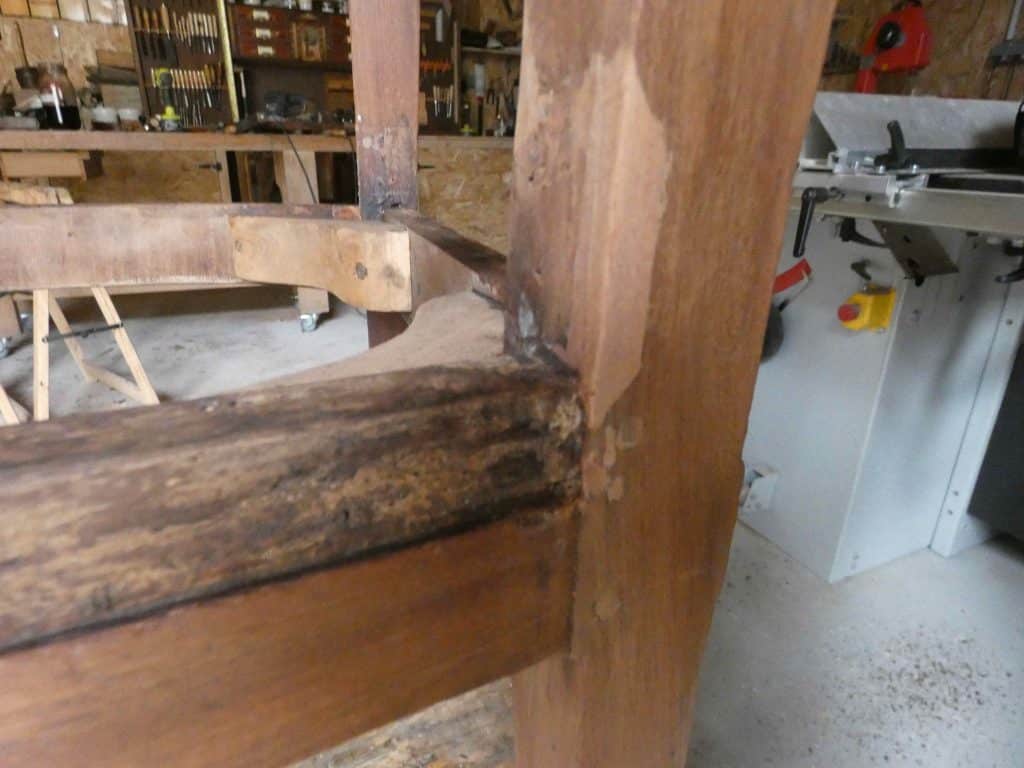
Mahogany graft 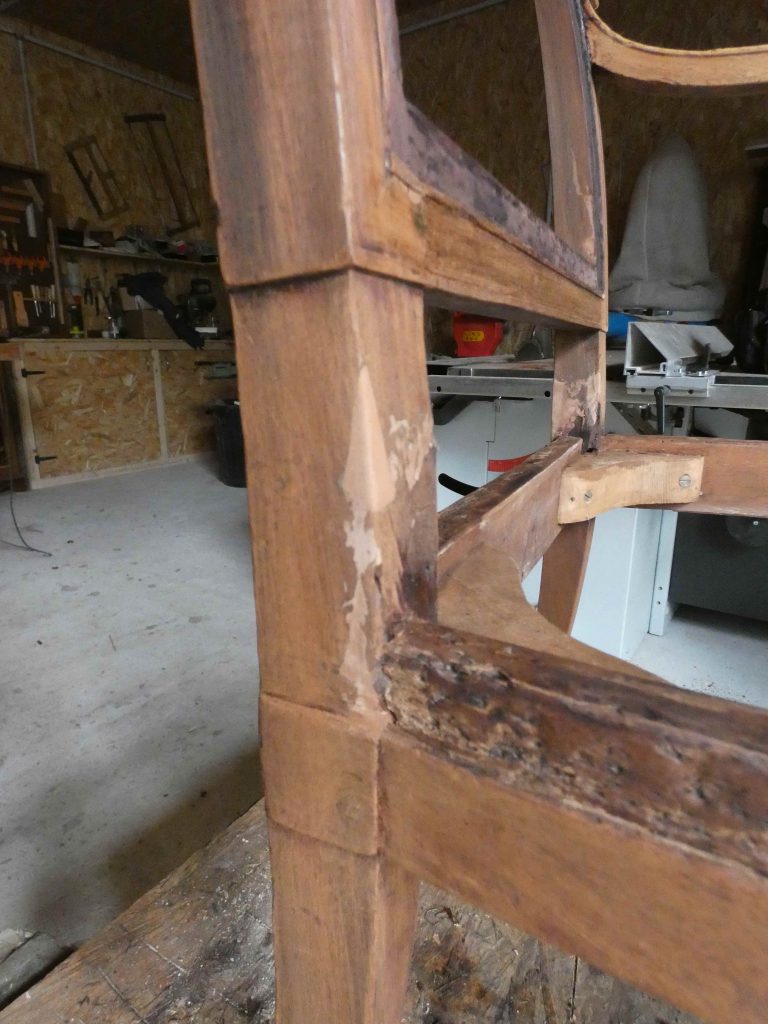
Resin grafting and sealing 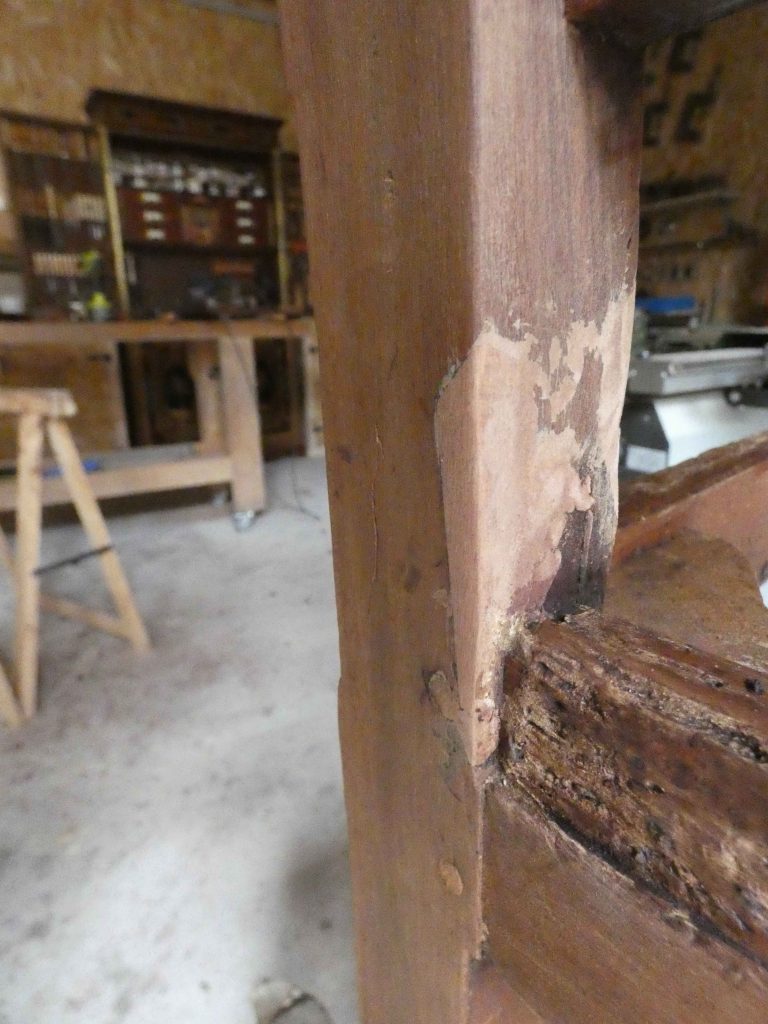
Mahogany graft 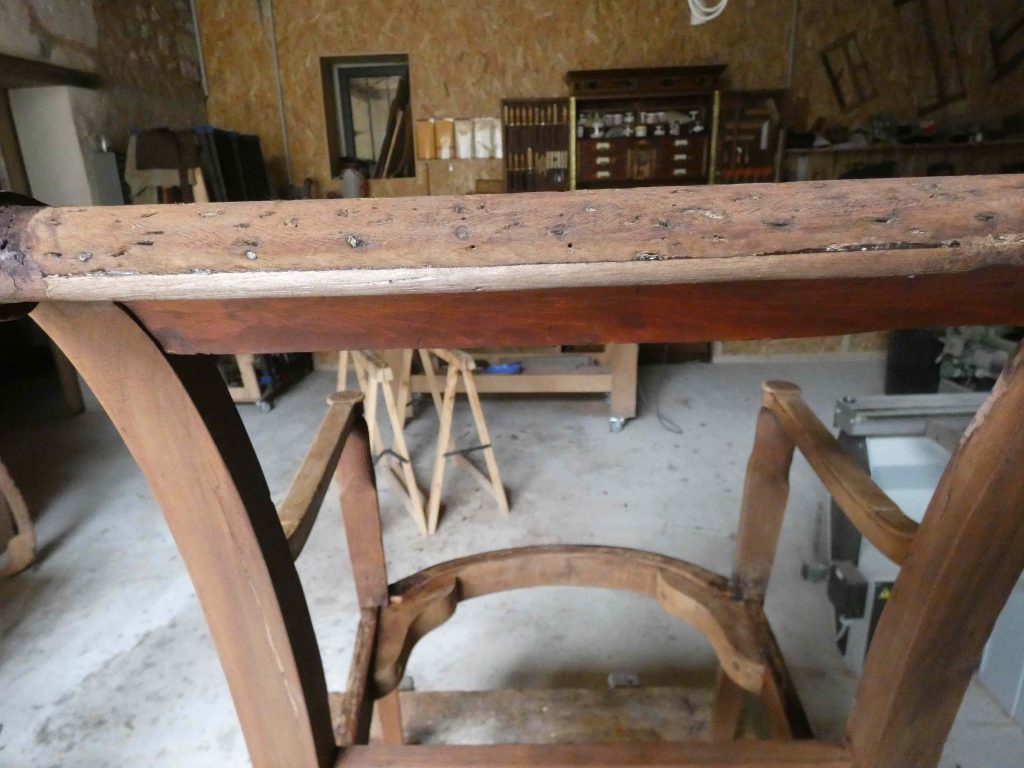
Beech grafting onto the rebate
The armchairs and the bench were glued back together with fish glue and re-pegged. The brackets were glued with hot glue and then screwed in place.
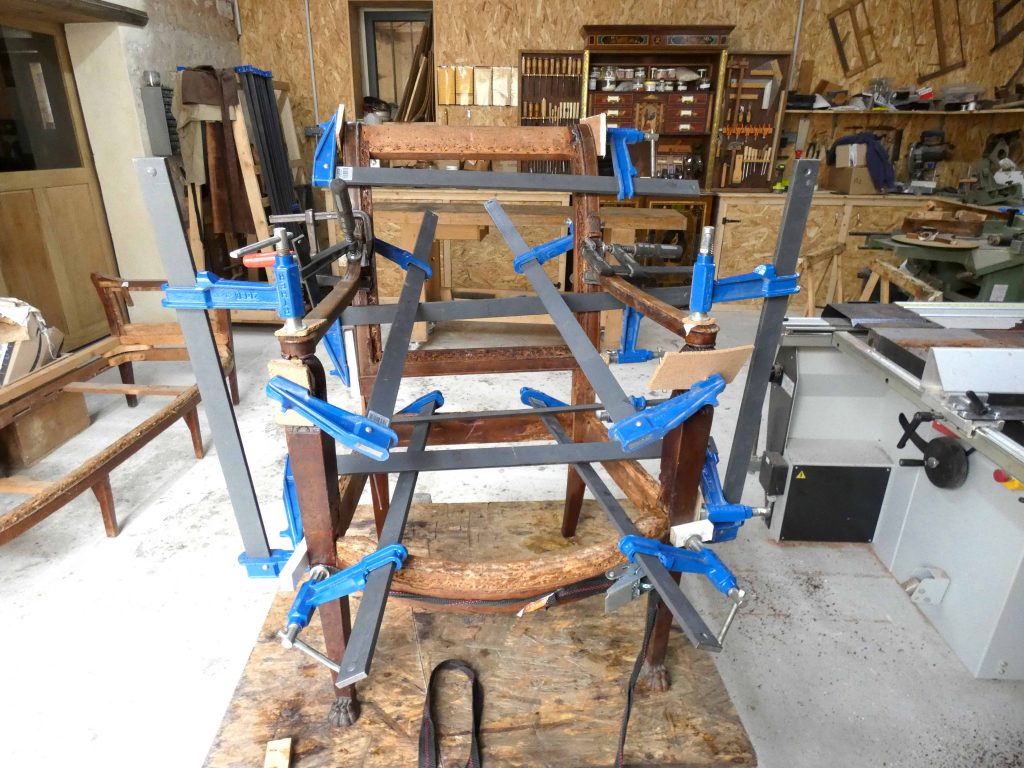
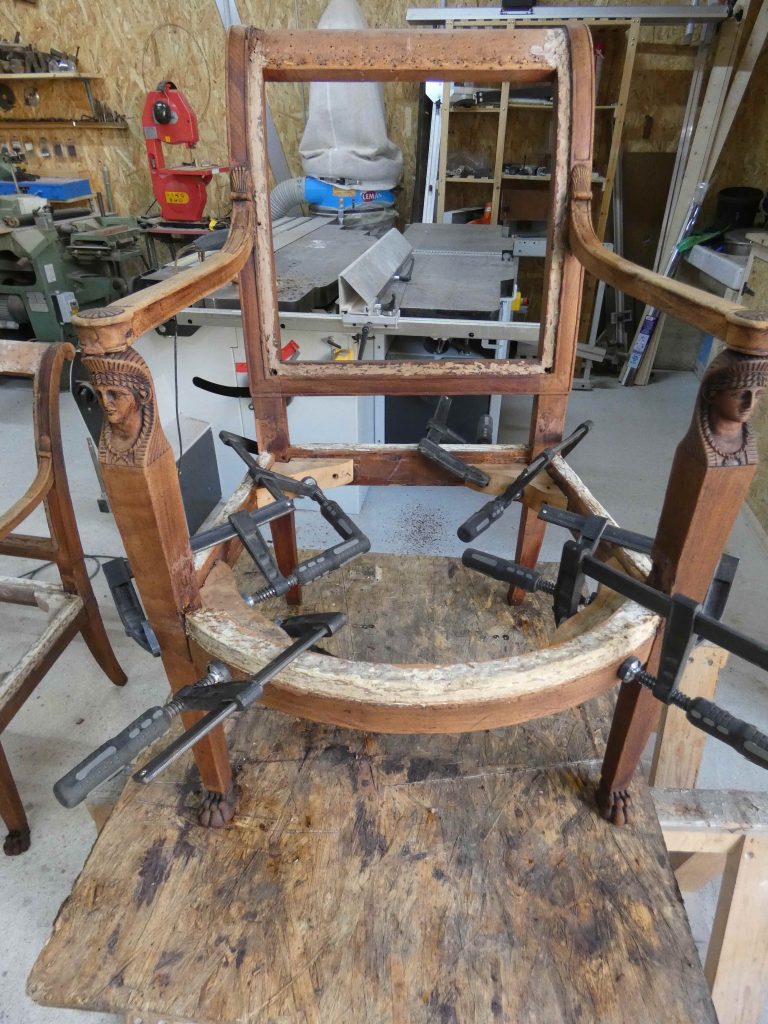
The front and back legs of the sofa were broken and had already been restored. It was therefore decided to make new grafts to restore their strength. For the front legs, the old restoration veneer was removed and then replaced with the same veneer. The side rails, which were not veneered with mahogany but simply stained, were veneered with Honduran mahogany.
All the rebates were filled with a sawdust-filled glue.
Grafting of solid wood onto the front right foot before reattaching the veneer 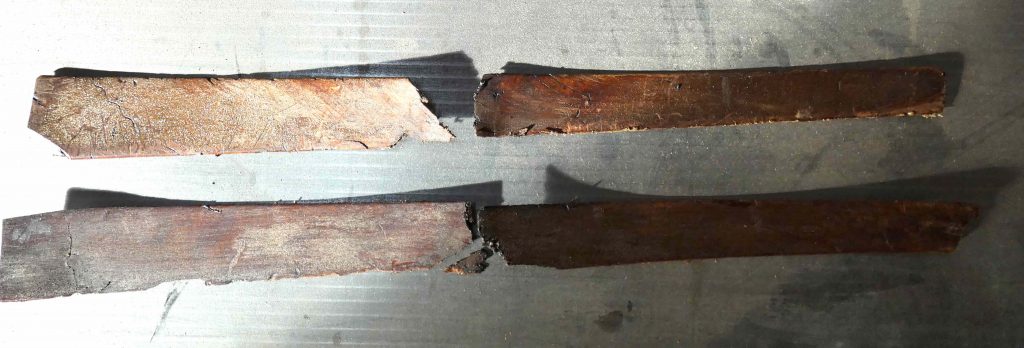
Right forefoot tackle 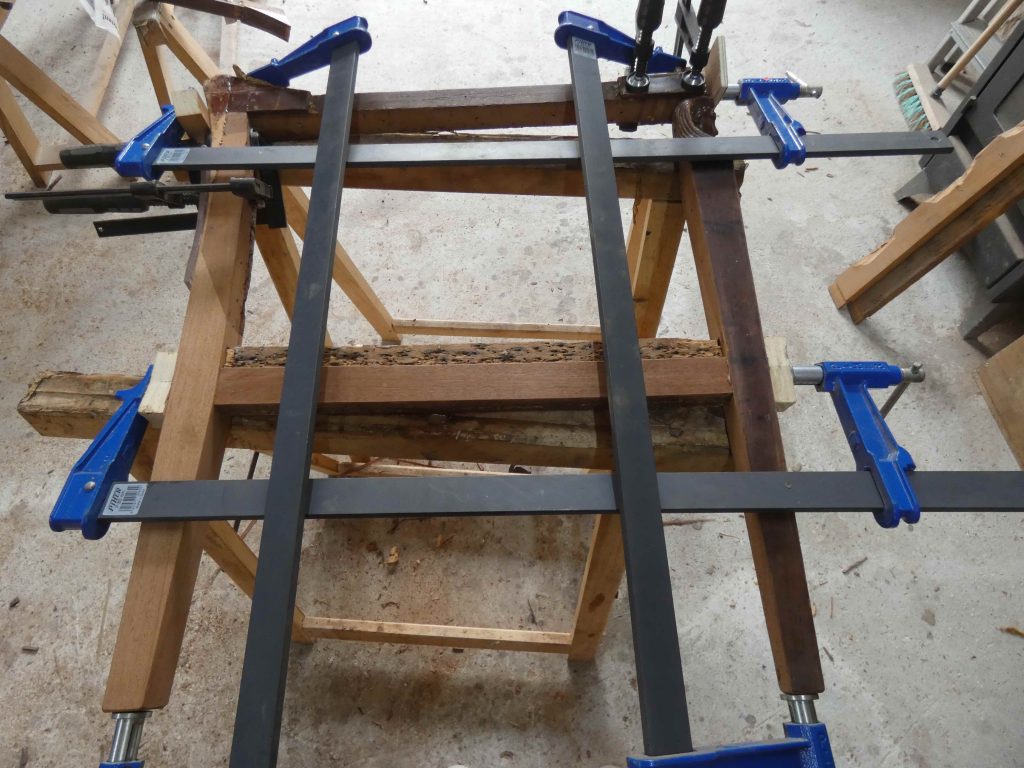
Regluing the sides of the bench seat
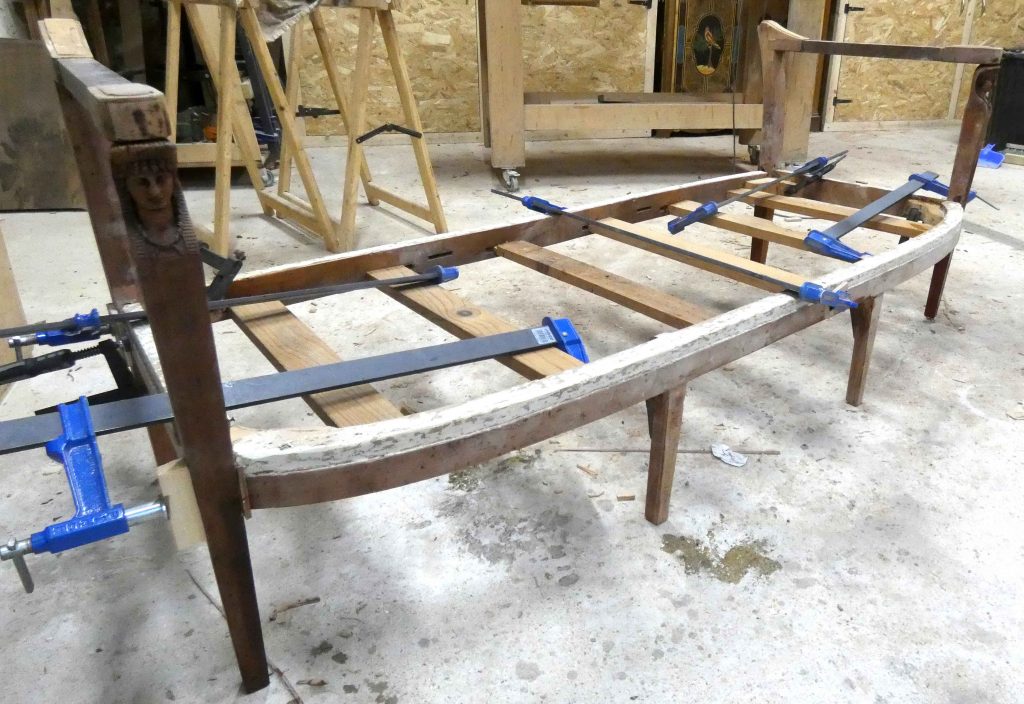
New beechwood cleats were glued and nailed in place.
After cleaning off the excess wax, the original finish was restored with alcohol and a varnish suitable for armchairs, the recipe for which is given by Dessaignes in his 1861 work.
To see previous restorations : https://ebenisterie-mathieuvath.fr/en-ce-moment-a-latelier/